EP2801615B1 - High-efficiency nanoparticle-type double-helical oligo-rna structure and method for preparing same - Google Patents
High-efficiency nanoparticle-type double-helical oligo-rna structure and method for preparing same Download PDFInfo
- Publication number
- EP2801615B1 EP2801615B1 EP13733748.1A EP13733748A EP2801615B1 EP 2801615 B1 EP2801615 B1 EP 2801615B1 EP 13733748 A EP13733748 A EP 13733748A EP 2801615 B1 EP2801615 B1 EP 2801615B1
- Authority
- EP
- European Patent Office
- Prior art keywords
- double
- stranded oligo
- rna
- oligo rna
- bound
- Prior art date
- Legal status (The legal status is an assumption and is not a legal conclusion. Google has not performed a legal analysis and makes no representation as to the accuracy of the status listed.)
- Active
Links
Images


Classifications
-
- A—HUMAN NECESSITIES
- A61—MEDICAL OR VETERINARY SCIENCE; HYGIENE
- A61K—PREPARATIONS FOR MEDICAL, DENTAL OR TOILETRY PURPOSES
- A61K9/00—Medicinal preparations characterised by special physical form
- A61K9/14—Particulate form, e.g. powders, Processes for size reducing of pure drugs or the resulting products, Pure drug nanoparticles
-
- A—HUMAN NECESSITIES
- A61—MEDICAL OR VETERINARY SCIENCE; HYGIENE
- A61P—SPECIFIC THERAPEUTIC ACTIVITY OF CHEMICAL COMPOUNDS OR MEDICINAL PREPARATIONS
- A61P31/00—Antiinfectives, i.e. antibiotics, antiseptics, chemotherapeutics
-
- A—HUMAN NECESSITIES
- A61—MEDICAL OR VETERINARY SCIENCE; HYGIENE
- A61P—SPECIFIC THERAPEUTIC ACTIVITY OF CHEMICAL COMPOUNDS OR MEDICINAL PREPARATIONS
- A61P35/00—Antineoplastic agents
-
- C—CHEMISTRY; METALLURGY
- C12—BIOCHEMISTRY; BEER; SPIRITS; WINE; VINEGAR; MICROBIOLOGY; ENZYMOLOGY; MUTATION OR GENETIC ENGINEERING
- C12N—MICROORGANISMS OR ENZYMES; COMPOSITIONS THEREOF; PROPAGATING, PRESERVING, OR MAINTAINING MICROORGANISMS; MUTATION OR GENETIC ENGINEERING; CULTURE MEDIA
- C12N15/00—Mutation or genetic engineering; DNA or RNA concerning genetic engineering, vectors, e.g. plasmids, or their isolation, preparation or purification; Use of hosts therefor
- C12N15/09—Recombinant DNA-technology
- C12N15/11—DNA or RNA fragments; Modified forms thereof; Non-coding nucleic acids having a biological activity
- C12N15/111—General methods applicable to biologically active non-coding nucleic acids
-
- C—CHEMISTRY; METALLURGY
- C12—BIOCHEMISTRY; BEER; SPIRITS; WINE; VINEGAR; MICROBIOLOGY; ENZYMOLOGY; MUTATION OR GENETIC ENGINEERING
- C12N—MICROORGANISMS OR ENZYMES; COMPOSITIONS THEREOF; PROPAGATING, PRESERVING, OR MAINTAINING MICROORGANISMS; MUTATION OR GENETIC ENGINEERING; CULTURE MEDIA
- C12N15/00—Mutation or genetic engineering; DNA or RNA concerning genetic engineering, vectors, e.g. plasmids, or their isolation, preparation or purification; Use of hosts therefor
- C12N15/09—Recombinant DNA-technology
- C12N15/11—DNA or RNA fragments; Modified forms thereof; Non-coding nucleic acids having a biological activity
- C12N15/113—Non-coding nucleic acids modulating the expression of genes, e.g. antisense oligonucleotides; Antisense DNA or RNA; Triplex- forming oligonucleotides; Catalytic nucleic acids, e.g. ribozymes; Nucleic acids used in co-suppression or gene silencing
-
- C—CHEMISTRY; METALLURGY
- C12—BIOCHEMISTRY; BEER; SPIRITS; WINE; VINEGAR; MICROBIOLOGY; ENZYMOLOGY; MUTATION OR GENETIC ENGINEERING
- C12N—MICROORGANISMS OR ENZYMES; COMPOSITIONS THEREOF; PROPAGATING, PRESERVING, OR MAINTAINING MICROORGANISMS; MUTATION OR GENETIC ENGINEERING; CULTURE MEDIA
- C12N2310/00—Structure or type of the nucleic acid
- C12N2310/10—Type of nucleic acid
- C12N2310/11—Antisense
-
- C—CHEMISTRY; METALLURGY
- C12—BIOCHEMISTRY; BEER; SPIRITS; WINE; VINEGAR; MICROBIOLOGY; ENZYMOLOGY; MUTATION OR GENETIC ENGINEERING
- C12N—MICROORGANISMS OR ENZYMES; COMPOSITIONS THEREOF; PROPAGATING, PRESERVING, OR MAINTAINING MICROORGANISMS; MUTATION OR GENETIC ENGINEERING; CULTURE MEDIA
- C12N2310/00—Structure or type of the nucleic acid
- C12N2310/10—Type of nucleic acid
- C12N2310/14—Type of nucleic acid interfering nucleic acids [NA]
-
- C—CHEMISTRY; METALLURGY
- C12—BIOCHEMISTRY; BEER; SPIRITS; WINE; VINEGAR; MICROBIOLOGY; ENZYMOLOGY; MUTATION OR GENETIC ENGINEERING
- C12N—MICROORGANISMS OR ENZYMES; COMPOSITIONS THEREOF; PROPAGATING, PRESERVING, OR MAINTAINING MICROORGANISMS; MUTATION OR GENETIC ENGINEERING; CULTURE MEDIA
- C12N2310/00—Structure or type of the nucleic acid
- C12N2310/30—Chemical structure
- C12N2310/35—Nature of the modification
- C12N2310/351—Conjugate
- C12N2310/3515—Lipophilic moiety, e.g. cholesterol
-
- C—CHEMISTRY; METALLURGY
- C12—BIOCHEMISTRY; BEER; SPIRITS; WINE; VINEGAR; MICROBIOLOGY; ENZYMOLOGY; MUTATION OR GENETIC ENGINEERING
- C12N—MICROORGANISMS OR ENZYMES; COMPOSITIONS THEREOF; PROPAGATING, PRESERVING, OR MAINTAINING MICROORGANISMS; MUTATION OR GENETIC ENGINEERING; CULTURE MEDIA
- C12N2320/00—Applications; Uses
- C12N2320/30—Special therapeutic applications
-
- C—CHEMISTRY; METALLURGY
- C12—BIOCHEMISTRY; BEER; SPIRITS; WINE; VINEGAR; MICROBIOLOGY; ENZYMOLOGY; MUTATION OR GENETIC ENGINEERING
- C12N—MICROORGANISMS OR ENZYMES; COMPOSITIONS THEREOF; PROPAGATING, PRESERVING, OR MAINTAINING MICROORGANISMS; MUTATION OR GENETIC ENGINEERING; CULTURE MEDIA
- C12N2320/00—Applications; Uses
- C12N2320/30—Special therapeutic applications
- C12N2320/32—Special delivery means, e.g. tissue-specific
-
- C—CHEMISTRY; METALLURGY
- C12—BIOCHEMISTRY; BEER; SPIRITS; WINE; VINEGAR; MICROBIOLOGY; ENZYMOLOGY; MUTATION OR GENETIC ENGINEERING
- C12N—MICROORGANISMS OR ENZYMES; COMPOSITIONS THEREOF; PROPAGATING, PRESERVING, OR MAINTAINING MICROORGANISMS; MUTATION OR GENETIC ENGINEERING; CULTURE MEDIA
- C12N2330/00—Production
- C12N2330/30—Production chemically synthesised
Definitions
- the present invention relates to a double-stranded oligo RNA structure with high efficacy which is chemically synthesized and is usefully utilized for treatment of cancer, an infectious disease, and the like.
- the double-stranded oligo RNA structure may have a structure in which hydrophilic materials and hydrophobic materials are conjugated to both ends of a double-stranded RNA by a simple covalent bond or a linker-mediated covalent bond and may be converted into a nanoparticle form in an aqueous solution by a hydrophobic interaction of the double-stranded oligo RNA structures.
- the present invention relates to a pharmaceutical composition containing the double-stranded oligo RNA structure, a method of preparing the double-stranded oligo RNA structure, and a technology of delivering a double-stranded oligo RNA using the double-stranded oligo RNA structure.
- RNA interference Since a role of an RNA interference (hereinafter, referred to as 'RNAi') had been recognized, it was found that the RNA interference sequence-specifically acts on mRNA in various kinds of mammalian cells ( Silence of the transcripts: RNA interference in medicine. J. Mol. Med., 2005, 83: 764-773 ).
- siRNA has a short-chain double-stranded RNA having 19 to 27 bases and is coupled to an RNA-induced silencing complex (RISC), whereby a guide (antisense) strand recognizes and degrades a target mRNA to sequence-specifically inhibit expression of a target gene ( Nucleic-acid therapeutics: basic principles and recent applications. Nature Reviews Drug Discovery. 2002. 1, 503-514 ).
- RISC RNA-induced silencing complex
- the long-chain double-stranded RNA delivered from the outside has a problem of eliciting a non-sequence-specific immune stimulation through interferon expression in a mammal cell; however, it was found that the problem may be overcome by a short-stranded siRNA ( Duplexes of 21-nucleotide RNAs mediate RNA interference in cultured mammalian cells. Nature. 2001. 411, 494-498 ).
- a chemically synthesized siRNA has a double strand of about 19 to 27 base pairs and consists of a 2-nt(nucleotide) overhang structure at 3' end, and in order that the double-stranded siRNA expresses an activity, the structure may consist of 3'-hydroxyl groups (OH) and 5'-phosphate groups (PO 4 ) ( Effect of asymmetric terminal structures of short RNA duplexes on the RNA interference activity and strand selection. Nucleic Acids Res 1 October 2008: 5812-5821 ; Strand-specific 5'-O-methylation of siRNA duplexes controls guide strand selection and targeting specificity. RNA 1 February 2008: 263-274 ).
- siRNA function in RNAi A chemical modification analysis. RNA 2003. 9: 1034-1048 ).
- siRNA has an effect of significantly inhibiting mRNA expression in vitro and in vivo, and the corresponding effect is maintained for a long time (Comparison of antisense oligonucleotides and siRNAs in cell culture and in vivo. Biochem. Biophys. Res. Commun. 2002. 296: 1000-1004 ).
- siRNA is complementarily coupled to a target mRNA to sequence-specifically regulate an expression of the target gene
- a mechanism of the siRNA has an advantage that a target to be capable of being applied may be remarkably increased as compared to the existing antibody-based medical product or chemical material (small molecular drug) ( Progress Towards in Vivo Use of siRNAs. MOLECULAR THERAPY. 2006 13(4):664-670 ).
- the siRNA In order to develop the siRNA as a therapeutic agent despite of excellent effect and variously usable range of the siRNA, the siRNA is required to be effectively delivered into a target cell by improving stability of the siRNA and a cell delivery efficiency ( Harnessing in vivo siRNA delivery for drug discovery and therapeutic development. Drug Discov Today. 2006 Jan; 11(1-2):67-73 ).
- the siRNA still has a non-specific innate immune stimulation, such that 2-methoxy-, 2-fluoro-substituents have been developed to overcome the non-specific innate immune stimulation.
- siRNA Since the siRNA is not capable of passing through a hydrophobic phospholipid bilayer of a cell due to negative charges thereof, it is difficult to be delivered into the cell through a simple diffusion.
- Liposomes, cationic surfactants, and the like are commonly used, and the use of carrier, that is, a fusion method of a gene with liposome or a method of using lipid or a polymer having cations has been known, or a method of chemically modifying siRNA or a method of using conjugate has been known ( Mechanisms and strategies for effective delivery of antisense and siRNA oligonucleotides. Nucleic Acids Res. 2008 Jul; 36(12):4158-71 ).
- siRNA Since the siRNA is not capable of passing through a hydrophobic phospholipid bilayer of a cell due to negative charges thereof, it is difficult to be delivered into the cell through a simple diffusion, such that in order to overcome the difficulty, methylphosphonate or peptide nucleic acid (PNA) is used in a basic binding structure of the siRNA.
- PNA peptide nucleic acid
- a carrier is used, for example, a fusion method of a gene with liposome or a method of using lipid or a polymer having cations is used ( Chemically modified siRNA: tools and applications. Drug Discov. Today. 2008 Oct; 13(19-20):842-855 ).
- a method of using a nanocarrier a method of using various polymers such as liposome, cationic polymer complex, and the like, is to carry siRNA on a nanocarrier by formation of nanoparticles to deliver siRNA.
- a method of using polymeric nanoparticle, polymer micelle, lipoplex, or the like is mainly used, wherein the lipoplex consists of cationic lipid to interact with anionic lipid of endosome of a cell, thereby eliciting a destabilization effect of the endosome to deliver the siRNA into a cell ( Mechanism of oligonucleotide release from cationic liposomes. Proc. Natl. Acad. Sci. USA. 1996 Oct 15; 93(21):11493-8 ).
- siRNA passenger sense strand
- siRNA passenger antisense strand
- stability of the siRNA may vary depending on properties of the chemical materials bound to ends of the siRNA sense (passenger) or antisense (guide) strand.
- a siRNA having a polymer compound such as polyethylene glycol (PEG) conjugated thereto interacts with an anionic phosphate group of siRNA in the presence of cationic materials to form a complex, thereby being a siRNA carrier having an improved stability
- PEG polyethylene glycol
- micelle consisting of polymer complexes has an extremely small size, significantly uniform distribution, and is spontaneously form, thereby being easy to manage quality of formulation and secure reproducibility, as compared to other systems used as a drug delivery vehicle, such as microsphere, nanoparticle, and the like.
- siRNA conjugate in which hydrophilic material which is a biocompatible polymer (for example, polyethylene glycol (PEG)) is conjugated to the siRNA by a simple covalent bond or a linker-mediated covalent bond, to thereby secure stability of siRNA and have effective cell membrane permeability was developed (see Korean Patent Publication No. 883471 ).
- hydrophilic material which is a biocompatible polymer (for example, polyethylene glycol (PEG)
- the technology of forming the self-assembling nanoparticles (SAMiRNA) by binding the hydrophobic materials and the hydrophilic materials to an end of the double-stranded oligo RNA has a possibility of RNA strand bias of a double-stranded oligo RNA, that is, RNAi functions may be inhibited depending on a position where the hydrophilic materials and the hydrophobic materials are bound to the end. Therefore, a technology of delivering a double-stranded oligo RNA capable of effectively permeating a cell membrane without inhibiting the functions of the double-stranded oligo RNA through optimization of the double-stranded oligo RNA structure is inevitably required to be developed.
- CA 2 871 888 discloses an siRNA conjugate and a method for its preparation, specifically a hybrid conjugate formed by covalently bonding siRNA and a polymeric compound for improving the in vivo stability of siRNA
- CA 2 761 749 discloses a siRNA-polymer conjugate, which is a hybrid conjugate formed by covalently bonding siRNA and a polymeric compound for improving the in vivo stability of siRNA.
- WO 2008/036825 discloses a duplex oligonucleotide complex comprising a sense strand that ranges in size from about 18 to about 30 nucleotides; an antisense strand that ranges in size from about 18 to about 30 nucleotides, wherein the antisense strand has significant levels of complementarity to both the sense strand and a target gene, and wherein the sense strand and the antisense strand form a duplex; a conjugate moiety that facilitates cellular delivery; and a linker molecule that is from about 3 to about 9 atoms in length and attaches the conjugate moiety to said sense strand; wherein between about 40% to about 90% of the nucleotides of the sense strand and between about 40% to about 90% of the nucleotides of the antisense strand are chemically modified nucleotides.
- RNAi RNA interference
- An object of the present invention is to provide a structure a self-assembling nanoparticle (SAMiRNA) with a maximized efficacy in vivo.
- SAMiRNA of the present invention means a nanoparticle formed by a hydrophobic interaction among hydrophobic materials in double-stranded oligo RNA structures in which hydrophilic materials and hydrophobic materials are bound to ends of a double-stranded oligo RNA.
- An object of the present invention is to find out that a RNAi function varies depending on positions of the hydrophilic materials and the hydrophobic materials bound to the double-stranded oligo RNA structure, and thus, is to provide a technology of delivering the SAMiRNA in which RNAi functions are maximized by optimization of the double-stranded oligo RNA structure forming the SAMiRNA.
- the double-stranded oligo RNA structure according to the present invention is a double-stranded oligo RNA structure comprising hydrophilic and hydrophobic material bound to a sense strand of the double-stranded oligo RNA, wherein the hydrophobic material is bound to 5' end of a sense strand of the double-stranded oligo RNA and the hydrophilic material is bound to 3' end thereof as shown in the following formula 4: A-X-5'S3'-Y-B pAS Formula 4 wherein A is a hydrophobic material, B is a hydrophilic material, X and Y are each a simple covalent bond or a linker-mediated covalent bond independently of each other, S is a sense strand of the double-stranded oligo RNA, and pAS is an antisense strand of the double-stranded oligo RNA, in which a phosphate group is bound to 5' end portion of the double-stranded oligo RNA.
- the double-stranded oligo RNA structure according to the present invention has a form in which the hydrophilic materials and the hydrophobic materials helping delivery into a cell are bound to the RNA by a simple covalent bond or a linker-mediated covalent bond to be capable of being self-assembled as the nanoparicle (SAMiRNA) in an aqueous solution, which may be used as an RNA inhibitor with a high efficacy significantly usable for treatment of cancer and infectious diseases, and the like, and may also be used as a pharmaceutical composition containing the double-stranded oligo RNA structure for treatment of diseases.
- an RNA inhibiting activity with a high efficacy may be provided even at a low concentration of the SAMiRNA dosage and thus could be used as a therapeutic agent of cancer and infectious diseases, and the like.
- the double-stranded oligo RNA structure according to the present invention may use the SAMiRNA which is a nanoparticular synthetic oligo RNA inhibitor and may maximize an efficacy in gene-specifically inhibiting RNA through a binding of the hydrophilic materials and the hydrophobic materials and 5' phosphorylation of an antisense strand in the SAMiRNA so as to have an optimized activity in vivo.
- SAMiRNA is a nanoparticular synthetic oligo RNA inhibitor and may maximize an efficacy in gene-specifically inhibiting RNA through a binding of the hydrophilic materials and the hydrophobic materials and 5' phosphorylation of an antisense strand in the SAMiRNA so as to have an optimized activity in vivo.
- the present invention provides a double-stranded oligo RNA structure comprising hydrophilic and hydrophobic material bound to a sense strand of the double-stranded oligo RNA, wherein the hydrophobic material is bound to 5' end of a sense strand of the double-stranded oligo RNA and the hydrophilic material is bound to 3' end thereof as shown in the following formula 4: A-X-5'S3'-Y-B pAS Formula 4 wherein A is a hydrophobic material, B is a hydrophilic material, X and Y are each a simple covalent bond or a linker-mediated covalent bond independently of each other, S is a sense strand of the double-stranded oligo RNA, and pAS is an antisense strand of the double-stranded oligo RNA, in which a phosphate group is bound to 5' end portion of the double-stranded oligo RNA.
- the double-stranded oligo RNA strand consists of 19 to 31 nucleotides in the double-stranded oligo RNA structure of the present invention.
- a double-stranded oligo RNA to any gene used for gene therapy or gene study or having a possibility therefore may also be adopted.
- the double-stranded oligo RNA has various modifications for providing resistance of nuclease and decreasing a non-specific immune stimulation in order to improve stability in vivo, wherein the modification may be one or two or more combinations selected from modification in which -OH group at 2' carbon in a sugar structure in one or more nucleotides is substituted with -CH 3 (methyl), - OCH 3 (methoxy), -NH 2 , -F(fluorine), -O-2-methoxyethyl-O-propyl, -O-2-methylthioethyl, -O-3-aminopropyl, -O-3-dimethylaminopropyl, -O-N-methylacetamido or -O-dimethylamidooxyethyl; modification in which oxygen in a sugar structure in nucleotides is substituted with sulfur; and modification to phosphorothioate or boranophosphophate, methyl phosphonate bindings from binding
- the hydrophobic material serves to generate a hydrophobic interaction to form the nanoparticle (SAMiRNA) consisting of the double-stranded oligo RAN structures.
- SAMiRNA nanoparticle
- carbon chain or cholesterol has an easy binding ability in synthesis of the double-stranded oligo RNA structure, which is significantly appropriate for preparation of the double-stranded oligo RNA structure of the present invention.
- the hydrophobic material has a molecular weight of 250 to 1,000.
- the hydrophobic material may include a steroid derivative, a glyceride derivative, glycerol ether, polypropylene glycol, unsaturated or saturated hydrocarbons containing 12 to 50 carbon atoms in a case of hydrocarbon chain, diacylphosphatidylcholine, fatty acid, phospholipid, lipopolyamine, and the like, as an example; but is not limited thereto. It is apparent to those skilled in the art that any hydrophobic materials are capable of being used as long as a material is to meet objects of the present invention.
- the steroid derivative may be selected from a group consisting of cholesterol, cholestanol, cholic acid, cholesteryl formate, cholestanyl formate, and cholestanyl amine
- the glyceride derivative may be selected from mono-, di-and tri-glyceride, and the like, wherein a fatty acid of the glyceride is a C 12 to C 50 unsaturated or saturated fatty acid.
- the hydrophilic material is preferably a cationic or non-ionic polymer material having a molecular weight of 200 to 10,000, more preferably, a non-ionic polymer material having a molecular weight of 1,000 to 2,000.
- non-ionic hydrophilic polymer compounds such as polyethylene glycol, polyvinyl pyrrolidone, polyoxazoline, and the like, are preferably used as the hydrophilic polymer compound, but are not necessarily limited thereto.
- a linker mediating the covalent bond is covalently bound to the hydrophilic material (or a hydrophobic material) at an end of the double-stranded oligo RNA, but is not particularly limited as long as the bond which is degraded in a specific environment is provided as needed. Therefore, any compound for the binding to activate the oligo RNA and/or the hydrophilic material (or hydrophobic material) in preparation of the double-stranded oligo RNA structure may be used as the linker.
- the covalent bond may be any one of a non-degradable bond or a degradable bond.
- examples of the non-degradable bond may include an amide bond or a phosphorylation bond
- examples of the degradable bond may include a disulfide bond, an acid degradable bond, an ester bond, an anhydride bond, a biodegradable bond or an enzymatically degradable bond, and the like, but the present invention is not necessarily limited thereto.
- the invention relates to a method of preparing a double-stranded oligo RNA structure as defined above comprising:
- the method may include:
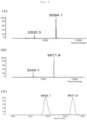
- the reactant when the preparation is completed, the reactant may be purified by high performance liquid chromatography (HPLC) and a molecular weight thereof may be measured by MALDI-TOF mass spectrometry to confirm whether or not a desired double-stranded oligo RNA and a double-stranded oligo RNA structure are prepared.
- HPLC high performance liquid chromatography
- the synthesizing of the RNA single strand of a complementary sequence to a sequence of the RNA single strand synthesized in the step (1) or (2'), which is an independent synthesis process may be performed before the step (1) or the step (1') or may be performed during any one step of the steps (1) to (4) or (1') to (5').
- the present invention relates to a method of preparing a double-stranded oligo RNA structure of claim 1 comprising:
- the functional group of the present invention is not limited as long as objects of the present invention may be achieved, preferably, may be selected from amine, thiol, carboxyl, aldehyde, biotin, and the like.
- the preparation method of the double-stranded oligo RNA structure may include: forming an RNA single strand based on a solid support containing the hydrophobic material bound thereto, covalently binding a hydrophilic material thereto to thereby prepare an RNA polymer structure and forming the double-stranded oligo RNA structure by annealing the RNA single strand and an RNA single strand of a complementary sequence thereto.
- a target specific ligand may be additionally provided with a specific position, in particular, an end, of the hydrophilic material bound to the double-stranded oligo RNA structure.
- the targeting moiety may be specifically bound to a receptor promoting internalization of a target cell, through receptor-mediated endocytosis (RME).
- the materials may be a target specific antibody, aptamer, peptide; or chemical materials including folate, N-acetyl galactosamine (NAG) and mannose, and the like, which are selected from a receptor specific ligand.
- the targeting moiety may be any material as long as the material is specifically bound to the target receptor to perform the delivery, and thus, is not limited to the antibody, aptamer, peptide, and chemical materials.
- the method of preparing the double-stranded oligo RNA structure containing a ligand bound thereto may include:
- the functional group of the present invention is not limited as long as objects of the present invention may be achieved, preferably, may be selected from amine, thiol, carboxyl, aldehyde, biotin, and the like.
- the double-stranded oligo RNA structure containing the reactant and the ligand bound thereto and the RNA single strand of a complementary sequence thereto may be separated and purified by high performance liquid chromatography (HPLC) and molecular weights thereof may be measured by MALDI-TOF mass spectrometry to confirm whether or not a desired double-stranded oligo RNA structure containing the ligand bound thereto and RNA complementary thereto are prepared.
- HPLC high performance liquid chromatography
- the synthesizing of the RNA single strand of a complementary sequence to a sequence of the RNA single strand synthesized in the step (2′′′), which is an independent synthesis process may be performed before the step (1′′′) or may be performed during any one step of the steps (1′′′) to (6′′′).
- the present invention provides a nanoparticle (SAMiRNA) comprising a double-stranded oligo RNA structure as defined above or a double-stranded oligo RNA structure containing a ligand bound thereto as defined above containing the ligand bound thereto.
- the double-stranded oligo RNA structure is amphipathic containing both of hydrophobic materials and hydrophilic materials, wherein the hydrophilic materials have affinity through an interaction such as hydrogen bond, and the like, with water molecules present in the body to be toward the outside and the hydrophobic materials are toward the inside by a hydrophobic interaction therebetween, thereby forming a thermodynamically stable nanoparticle (SAMiRNA).
- the hydrophobic material is positioned in the center of the nanoparticle and the hydrophilic material is positioned in an outside direction of the double-stranded oligo RNA, thereby forming the nanoparticle protecting the double-stranded oligo RNA (see FIG. 1 ).
- the formed nanoparticle may improve the intracellular delivery of the double-stranded oligo RNA and the function thereof, and may be utilized for a purpose of treating diseases. More specific synthesis of the structure and characteristics, intracellular delivery efficiency and effects of the nanoparticle (SAMiRNA) consisting of the double-stranded oligo RNA structure will be described by the following Examples in more detail.
- the present invention provides an in vitro method of controlling the expression of gene by using a double-stranded oligo RNA structure according to any one of claims 1 to 10, a double-stranded oligo RNA structure containing a ligand bound thereto according to claim 11, or a nanoparticle according to claim 16.
- a treatment method including: preparing nanoparticle (SAMiRNA) consisting of the double-stranded oligo RNA structure and administrating the nanoparticle (SAMiRNA) to the body of an animal.
- SAMiRNA nanoparticle consisting of the double-stranded oligo RNA structure
- the present invention provides a pharmaceutical composition
- a pharmaceutical composition comprising a double-stranded oligo RNA structure as defined above, a double-stranded oligo RNA structure containing a ligand bound thereto as defined above or a nanoparticle as defined above.
- composition of the present invention may be prepared by additionally containing at least one kind of pharmaceutically acceptable carrier in addition to the above-described effective components for administration.
- the pharmaceutically acceptable carrier is required to be compatible with the effective components of the present invention.
- One component selected from saline, sterile water, Ringer's solution, buffered saline, dextrose solution, maltodextrin solution, glycerol, ethanol and other components or a combination of two or more components thereof may be used, and other conventional additives such as antioxidant, buffer, fungistat, and the like, may be added thereto as needed.
- the composition may be prepared as a formulation for injection, such as an aqueous solution, suspension, emulsion, and the like, by additionally adding diluent, dispersant, surfactant, binder and lubricant thereto.
- a formulation for injection such as an aqueous solution, suspension, emulsion, and the like
- the composition is prepared as a lyophilized formulation.
- any method which is generally known in the corresponding art of the present invention may be used, wherein a stabilizer for lyophlization may be added thereto.
- the pharmaceutical composition of the present invention may be determined based on symptoms of the general patient and severity of the disease by a general expert in the art.
- the composition may be formulated with various types such as powder, tablet, capsule, solution, injection, ointment, syrup, and the like, and may be provided as a unit-dosage or a multi-dosage container, for example, a sealed ampoule, bottle, and the like.
- the pharmaceutical composition of the present invention may be orally or parenterally administered.
- Examples of an administration route of the pharmaceutical composition according to the present invention may include oral, intravenous, intramuscular, intra-arterial, intramedullary, intradural, intracardiac, transdermal, subcutaneous, intraperitoneal, intestinal, sublingual or topical administration, but the present invention is not limited thereto.
- the pharmaceutical composition of the present invention may be prepared as an appropriate formulation by known technology.
- the dosage of the composition may have various ranges thereof depending on weight, age, gender, health condition, diet, administration time, method, excretion rate the severity of disease, and the like, of a patient, and may be easily determined by a general expert in the art.
- Survivin a double-stranded oligo RNA to Survivin was used.
- the Survivin which is protein commonly expressed in most neoplastic tumors or transformed cell lines tested until now, is expected as an important target in cancer treatment ( Survivin: a new target for anti-cancer therapy. Cancer Treat Rev. 2009 Nov; 35(7): 553-62 ).
- the double-stranded oligo RNA to Survivin of the present invention consists of a sense strand of SEQ ID NO: 1 and an antisense strand of a complementary sequence thereto, and a double-stranded oligo RNA used as a control group consists of a sense strand of SEQ ID NO: 2 and an antisense strand of a complementary sequence thereto.
- Sequence of the double-stranded oligo RNA used in the present Examples is as follows:
- the double-stranded oligo RNA single strand was synthesized by a method of using ⁇ -cyanoethylphosphoramidite to connect phosphodiester bonds configuring an RNA framework (Polymer support oligonucleotide synthesis XVIII: use of beta-cyanoethyl-N,N-dialkylamino- /N-morpholinophosphoramidite of deoxynucleosides for the synthesis of DNA fragments simplifying deprotection and isolation of the final product. Nucleic Acids Res. 1984 Jun 11; 12(11): 4539-57 ).
- RNA single strand is obtained by starting the synthesis process on the solid support (CPG) containing nucleoside bound thereto and repeating a cycle including deblocking, coupling, capping, and oxidation.
- CPG solid support
- the RNA 384 Synthesizer (BIONEER, Korea) was used for a series of the corresponding synthesis process of the double-stranded oligo RNA.
- the double-stranded oligo RNA structures having the following structures were prepared for optimization of the double-stranded oligo RNA structure.
- Double strand oligo RNA structures prepared in the present invention have structures shown in the following Table 1, respectively.
- Table 1 Name of Structure Structure Details
- S is a sense strand of the double-stranded oligo RNA
- AS is an antisense strand of the double-stranded oligo RNA
- PO 4 is a phosphate group
- PEG is a hydrophilic material: polyethylene glycol
- C 24 is a hydrophobic material: tetradocosane containing a bisulfide bond
- 5' and 3' mean directionality of an end of the double-stranded oligo RNA.
- the synthesis of the sense strand of the double-stranded oligo RNA structure was performed using ⁇ -cyanoethylphosphoramidite to connect phosphodiester bonds configuring an RNA framework as described above and polyethylene glycol (PEG) was additionally bound to 5' end portion thereof, thereby preparing a sense strand of SAMiRNALP of the double-stranded oligo RNA structure.
- PEG polyethylene glycol
- the synthesis of the antisense strand was performed using ⁇ -cyanoethylphosphoramidite to connect phosphodiester bonds configuring an RNA framework as described above, then tetradocosane (C 24 ) containing a bisulfide bond which is the hydrophobic material, was additionally bound to 5' end portion thereof, thereby preparing an antisense strand of SAMiRNALP.
- a desired sense strand of S-SAMiRNALP was prepared by performing the reaction having 3' polyethylene glycol (PEG)-CPG prepared by Example 1 of the related art document ( Korean Patent Laid-Open Publication No. 2009-0042297 ) as a support, to synthesize a double-stranded oligo RNA-hydrophilic material structure having a sense strand containing PEG bound to 3' end portion thereof, and binding tetradocosane(C 24 ) containing a bisulfide bond to 5' end.
- PEG polyethylene glycol
- the antisense strand of a complementary sequence to the sense strand was prepared by a method of using ⁇ -cyanoethylphosphoramidite to connect phosphodiester bonds configuring an RNA framework as described above.
- a sense strand of AS-SAMiRNALP was prepared by a method of using ⁇ -cyanoethylphosphoramidite to connect phosphodiester bonds configuring an RNA framework as described above.
- a desired antisense strand performing an annealing with the sense strand of the AS-SAMiRNALP was prepared by performing the reaction having 3' PEG-CPG prepared by Example 1 of the related art document ( Korean Patent Laid-Open Publication No. 2009-0042297 ) as a support, to synthesize a double-stranded oligo RNA-hydrophilic polymer structure having an antisense strand containing PEG bound to 3' end portion thereof, and binding tetradocosane(C 24 ) containing a bisulfide bond to 5' end.
- S-SAMiRNALP-PO 4 has a sense strand containing a structure of hydrophilic materials and hydrophobic materials bound thereto and an antisense strand containing a phosphate group bound to 5' end portion thereof.
- the antisense strand of S-SAMiRNALP-PO 4 containing a phosphate group bound thereto was prepared by using a method comprising collecting the RNA single strand from CPG and treating a phosphorylation enzyme (kinase) to bind the phosphate group to 5' end.
- a phosphorylation enzyme kinase
- RNA single strand and the RNA-polymer structure were separated from CPG with 28 %(v/v) ammonia in a water bath at 60°C and protecting moiety was removed by deprotection reaction.
- the RNA single strand and the RNA-polymer structure from which the protecting moiety was removed were treated with N-methylpyrrolidone, triethylamine and triethylaminetrihydrofluoride at a volume ratio of 10:3:4, in an oven at 70°C, to remove 2' TBDMS(tertbutyldimethylsilyl).
- 3' amine-PEG-RNA was synthesized using a PEG phosphoramidite reagent in amine-CPG containing functional groups such as amine groups, and the like, bound thereto and a hydrophobic material such as C 24 was bound to the 3' amine-PEG-RNA oligo to synthesize 3' amine-PEG-RNA-C 24 , followed by treatment with 28 %(v/v) ammonia in a water bath at 60°C to separate the synthesized RNA single strand and the RNA-polymer structure from CPG and the protecting moiety was removed by deprotection reaction.
- RNA single strand and the RNA-polymer structure from which the protecting moiety was removed were treated with N-methylpyrrolidone, triethylamine and triethylaminetrihydrofluoride at a volume ratio of 10:3:4, in an oven at 70°C, to remove 2' TBDMS(tert-butyldimethylsilyl).
- the collected 3' amine-PEG-RNA-C 24 therefrom was subjected to an ester reaction with a bindable ligand material consisting of N-Hydroxysuccinimide ligand to synthesize a 3' ligand-bound PEG-RNA-C 24 oligo.
- RNA single strand, the RNA-polymer structure, and the RNA-polymer structure containing the ligand bound thereto were separated from the reactants by HPLC, and molecular weights thereof were measured by MALDI-TOF-MS (SHIMADZU, Japan) to confirm whether or not sequence and the RNA-polymer structure correspond to those to be synthesized.
- the sense strand and the antisense strand in an equivalent amount were mixed to each other and put into 1X annealing buffer (30 mM HEPES, 100 mM potassium acetate, 2 mM magnesium acetate, pH 7.0 to 7.5), followed by reaction in a constant temperature water bath at 90°C for 3 minutes and then reaction at 37°C, thereby preparing the desired SAMiRNALP and the desired S-SAMiRNALP-PO 4 containing a phosphate group bound thereto, respectively.
- Annealing of the prepared SAMiRNALP was confirmed by electrophoresis.
- S-SAMiRNALP and S-SAMiRNALP-PO 4 forms a nanoparticle, that is, micelle, by a hydrophobic interaction between the hydrophobic materials bound to the end of the double-stranded oligo RNA (see FIG. 1 ).
- SAMiRNA nanoparticle
- CMC critical micelle concentration
- TEM Transmission Electron Microscope
- Example 2-1 Measurement of Particle Size and polydispersity index (PDI) of Nanoparticle Consisting of SAMiRNALP
- a size of the nanoparticle was measured by zeta-potential measurement.
- the SAMiRNALP was dissolved into 1.5 ml of Dulbecco's phosphate buffered saline (DPBS) so as to have a concentration of 50 ⁇ g/ml and then treated by a ultrasonic homogenizer (Wiseclean, DAIHAN, Korea) so that a size of nanoparticle is homogenized (700 W; amplitude: 20 %).
- DPBS Dulbecco's phosphate buffered saline
- a size of the homogenized nanoparticle was measured by zeta-potential measurement (Nano-ZS, MALVERN, England) under conditions in which a refractive index to the material is 1.459, an absorption index is 0.001, a temperature of a solvent: PBS is 25°C and the corresponding viscosity and refractive index are 1.0200 and 1.335, respectively.
- zeta-potential measurement Na-ZS, MALVERN, England
- the nanoparticle consisting of S-SAMiRNALP had a size of about 150 nm and PDI of about 0.4 (see FIG. 3(A) ). As the PDI is low, the corresponding particles become uniformly distributed, and thus, it could be appreciated that the nanoparticle consisting of S-SAMiRNALP has a relatively uniform size. It was confirmed that the size of the nanoparticle consisting of the structure has an appropriate size to be intaken in the cell through endocytosis (Nanotoxicology: nanoparticles reconstruct lipids. Nat. Nanotechnol. 2009 Feb;4(2):84-5 ).
- Example 2-2 Measurement of Critical Micelle Concentration (CMC) of Nanoparticle Consisting of SAMiRNALP
- An amphiphile containing both of hydrophobic materials and hydrophilic materials in a single molecule may be a surfactant, wherein when the surfactant is dissolved into an aqueous solution, the hydrophobic groups thereof move toward the center portion to prevent water contact and the hydrophilic groups thereof moves toward the outside to form micelle.
- a concentration at which the micelle is initially formed is referred to as a critical micelle concentration (CMC).
- CMC critical micelle concentration
- a method of measuring CMC using fluorescent pigment is based on property of the fluorescent pigment in which the slope of the graph curve of the fluorescence intensity is rapidly changed before/after the micelle is formed.
- CMC of the nanoparticle consisting of S-SAMiRNALP 0.04 mM DPH (1,6-Diphenyl-1,3,5-hexatriene, SIGMA, USA) was prepared as the fluorescent pigment. 1 nmole/ ⁇ l of S-SAMiRNALP was diluted from a concentration of 0.0977 ⁇ g/ml to the maximum of 50 ⁇ g/ml with DPBS for each step to prepare S-SAMiRNALP samples having the total volume of 180 ⁇ l.
- the fluorescent value of the sample containing DPH and the fluorescent value of the sample containing the only methanol were measured and shown as a graph with respect to log value of the treated concentration of S-SAMiRNALP (X axis) (see FIG. 3(B) ).
- the fluorescent value measured for each concentration was rapidly increased while moving from a low concentration section to a high concentration section, wherein the concentration at the rapidly increased point is CMC concentration. Therefore, when drawing trend lines by dividing the low concentration section in which the fluorescent amount is not increased and the high concentration section in which the fluorescent amount is increased into several sections, an X value in an intersection of the two trend lines is CMC concentration. It was observed that the measured CMC of the nanoparticle consisting of S-SAMiRNALP is 2.53 ⁇ g/ml, which is significantly low, and thus, it was confirmed that the micelle may be formed by the nanoparticle consisting of S-SAMiRNALP even at a significantly low concentration.
- the nanoparticle consisting of S-SAMiRNALP was observed by TEM in order to confirm the shape thereof.
- the SAMiRNALP was dissolved into DPBS so as to have the final concentration of 100 ⁇ g/ml and treated by a ultrasonic homoginezer (Wiseclean, DAIHAN, Korea) so that a size of nanoparticle is homogenized (700 W; amplitude: 20 %).
- the nanoparticle consisting of S-SAMiRNALP was observed with a material having a high electron density through a negative staining method (see FIG. 3(C) ).
- fetal bovine serum 100 units/ml of penicillin and 100 ⁇ g/ml of streptomycin were added to an EMEM culture medium (ATCC-formulated eagle's minimum essential medium) containing HeLa acquired from American type Culture Collection (ATCC) and cultured at 37 °C and 5 % (v/v) CO 2 .
- EMEM culture medium ATCC-formulated eagle's minimum essential medium
- Example 3-2 Transformation of Tumor Cell Line Using Nanoparticle Consisting of SAMiRNALP
- the tumor cell line (1.3 X 10 5 ) cultured in Example 3-1 above were cultured in a 6-well plate in the EMEM culture medium for 18 hours under the same condition as Example 3-1 above, the medium was removed, and the equivalent amount of Opti-MEM medium per each well was deposited.
- each well of the tumor cell line in which the Opti-MEM is deposited was treated with a transfection solution at a concentration of 100 nM and 200 nM, and cultured at 37°C and 5 % (v/v) CO 2 for the total of 48 hours.
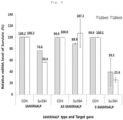
- RNA was extracted from the transfected cell line in Example 3-2 above, cDNA was synthesized, and an expression amount of mRNA of Survivin was relatively quantitative analyzed by real-time PCR according to a method disclosed in Korean Patent Laid-Open Publication No. 2009-0042297 (see FIG. 4 ).
- the nanoparticle consisting of AS-SAMiRNALP which is a case in which the structure was bound to the only antisense strand bound to the target mRNA in the double-stranded oligo RNA mechanism, shows a low inhibiting efficacy as compared to the existing nanoparticle consisting of SAMiRNALP.
- the nanoparticle consisting of S-SAMiRNALP which is a case in which the structure was bound to the only sense strand being contrary to the above case of nanoparticle consisting of AS-SAMiRNALP, shows a high inhibiting efficacy even at a low concentration as compared to the existing nanoparticle consisting of SAMiRNALP (see FIG. 4 ).
- Sur584 means SAMiRNALP having double-stranded oligo RNA sequence (SEQ ID NO: 1) specific to the target gene Survivin according to each structures of SAMiRNALP, and CON means SAMiRNALP including control group sequence (SEQ ID NO: 2) not affecting expression of the target gene.
- a degree of inhibiting expression of mRNA of the target gene was calculated with the expression amount of the target gene of a sample treated with Sur584 with respect to the expression amount of the target gene of a sample treated with CON by Comparative Quantitation.
- the nanoparticle consisting of S-SAMiRNALP which is the optimized structure was well delivered into the cell without a transfection material and thus, an effect of inhibiting expression of mRNA of the target gene was observed, which was confirmed to have an increase effect of the double-stranded oligo RNA by about three times or more (nanoparticle groups consisting of SAMiRNALP - 23.4% inhibition vs. nanoparticle groups consisting of S-SAMiRNALP - 77 % inhibition) when being treated with 100 nM, as compared to the existing nanoparticle consisting of SAMiRNAL.
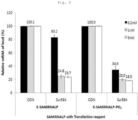
- S-SAMiRNALP of SEQ ID NO: 1 and S-SAMiRNALP-PO 4 of SEQ ID NO: 2 prepared by Example 1 above were transfected into Hela by a transfection material and expression of Survivin of the transfected tumor cell line was analyzed.
- Example 4-1 Transfection of Tumor Cell Line Using SAMiRNALP
- the tumor cell lines (1.3 X 10 5 ) cultured in Example 3-1 above were cultured in a 6-well plate in the EMEM culture medium for 18 hours under the same condition as Example 3-1 above, the medium was removed, and 800ml of Opti-MEM medium per each well was deposited.
- each transfection solution was deposited into each well of the tumor cell line containing Opti-MEM deposited therein and cultured for 6 hours, and Opti-MEM medium was removed.
- 2.5 ml of EMEM culture medium was deposited thereto and cultured at 37°C and 5 % (v/v) CO 2 for 24 hours.
- RNA was extracted from the transfected cell line in Example 4-1 above, cDNA was synthesized, and an expression amount of mRNA of Survivin gene was analyzed based on relative quantification by real-time PCR according to a method disclosed in Korean Patent Laid-Open Publication No. 2009-0042297 .
- S-SAMiRNALP-PO 4 showed relatively high efficacy of inhibiting expression as compared to S-SAMiRNALP, and in particular, high effect of inhibiting expression of the target gene was shown at a low concentration of 0.2 nM (see FIG. 5 ). It was observed that the RNA structure containing S-SAMiRNALP polymer bound thereto does not inhibit mechanism of RNAi, and in particular, in S-SAMiRNALP-PO 4 , an effect of double-stranded oligo RNA is increased by the additionally bound phosphate group.
- the double-stranded oligo RNA structure or the pharmaceutical composition containing the same according to the present invention may be significantly used for treatment of various diseases, and particularly, may exhibit the RNA inhibiting activity with high efficacy even at a low concentration of the SAMiRNA dosage and could be used as a therapeutic agent of cancer and infectious diseases, and the like.
Landscapes
- Health & Medical Sciences (AREA)
- Engineering & Computer Science (AREA)
- Life Sciences & Earth Sciences (AREA)
- Genetics & Genomics (AREA)
- Biomedical Technology (AREA)
- Chemical & Material Sciences (AREA)
- Organic Chemistry (AREA)
- Bioinformatics & Cheminformatics (AREA)
- Zoology (AREA)
- Wood Science & Technology (AREA)
- General Engineering & Computer Science (AREA)
- Biotechnology (AREA)
- Molecular Biology (AREA)
- General Health & Medical Sciences (AREA)
- Physics & Mathematics (AREA)
- Biophysics (AREA)
- Biochemistry (AREA)
- Microbiology (AREA)
- Plant Pathology (AREA)
- Pharmacology & Pharmacy (AREA)
- Veterinary Medicine (AREA)
- Public Health (AREA)
- Animal Behavior & Ethology (AREA)
- Medicinal Chemistry (AREA)
- General Chemical & Material Sciences (AREA)
- Nuclear Medicine, Radiotherapy & Molecular Imaging (AREA)
- Chemical Kinetics & Catalysis (AREA)
- Epidemiology (AREA)
- Oncology (AREA)
- Communicable Diseases (AREA)
- Pharmaceuticals Containing Other Organic And Inorganic Compounds (AREA)
- Medicines That Contain Protein Lipid Enzymes And Other Medicines (AREA)
- Medicinal Preparation (AREA)
Applications Claiming Priority (2)
| Application Number | Priority Date | Filing Date | Title |
|---|---|---|---|
| KR20120001711 | 2012-01-05 | ||
| PCT/KR2013/000035 WO2013103249A1 (ko) | 2012-01-05 | 2013-01-04 | 고효율 나노입자형 이중나선 올리고 rna 구조체 및 그의 제조방법 |
Publications (4)
| Publication Number | Publication Date |
|---|---|
| EP2801615A1 EP2801615A1 (en) | 2014-11-12 |
| EP2801615A4 EP2801615A4 (en) | 2015-08-19 |
| EP2801615B1 true EP2801615B1 (en) | 2025-06-25 |
| EP2801615C0 EP2801615C0 (en) | 2025-06-25 |
Family
ID=48745281
Family Applications (1)
| Application Number | Title | Priority Date | Filing Date |
|---|---|---|---|
| EP13733748.1A Active EP2801615B1 (en) | 2012-01-05 | 2013-01-04 | High-efficiency nanoparticle-type double-helical oligo-rna structure and method for preparing same |
Country Status (11)
| Country | Link |
|---|---|
| US (1) | US9326941B2 (ko) |
| EP (1) | EP2801615B1 (ko) |
| JP (1) | JP6060178B2 (ko) |
| KR (1) | KR101752812B1 (ko) |
| CN (2) | CN107988227A (ko) |
| AU (1) | AU2013206989B2 (ko) |
| BR (1) | BR112014016562B1 (ko) |
| CA (1) | CA2860527C (ko) |
| ES (1) | ES3034830T3 (ko) |
| RU (1) | RU2577227C1 (ko) |
| WO (1) | WO2013103249A1 (ko) |
Families Citing this family (18)
| Publication number | Priority date | Publication date | Assignee | Title |
|---|---|---|---|---|
| WO2013089522A1 (ko) * | 2011-12-15 | 2013-06-20 | (주)바이오니아 | 신규한 올리고뉴클레오티드 접합체 및 그 용도 |
| CN110592082A (zh) * | 2013-07-05 | 2019-12-20 | 柏业公司 | 呼吸疾病相关基因特异性siRNA、含有siRNA的双螺旋寡RNA结构及其用途 |
| BR112016000160B1 (pt) | 2013-07-05 | 2021-06-08 | Bioneer Corporation | estrutura de oligonucleotídeo tipo nanopartícula melhorada tendo alta eficiência e método para a preparação da mesma |
| CN105705639A (zh) | 2013-07-05 | 2016-06-22 | 柏业公司 | 登革病毒相关的基因特异性siRNA、包含该siRNA的双链寡RNA分子、和包含它们的用于抑制登革病毒复制的组合物 |
| EP3128008B1 (en) * | 2014-04-04 | 2024-05-29 | Bioneer Corporation | Double-stranded oligo rna and pharmaceutical composition comprising same for preventing or treating fibrosis or respiratory diseases |
| EP3368089B1 (en) | 2015-10-26 | 2025-11-05 | Translate Bio Ma, Inc. | Nanoparticle formulations for delivery of nucleic acid complexes |
| KR101861738B1 (ko) * | 2016-08-24 | 2018-05-29 | (주)바이오니아 | 마이크로 rna를 포함하는 이중나선 올리고 rna 구조체 |
| CN110225770B (zh) | 2016-12-14 | 2022-04-26 | 杨森生物科技公司 | 结合cd8a的纤连蛋白iii型结构域 |
| EP3554535A4 (en) | 2016-12-14 | 2020-10-21 | Janssen Biotech, Inc. | PD-L1 BINDING FIBRONECTIN TYPE III DOMAINS |
| EP3554561B1 (en) | 2016-12-14 | 2023-06-28 | Janssen Biotech, Inc. | Cd137 binding fibronectin type iii domains |
| NL2021258B1 (en) | 2018-06-14 | 2019-12-20 | Illumina Inc | Device for luminescent imaging |
| US11781138B2 (en) | 2019-10-14 | 2023-10-10 | Aro Biotherapeutics Company | FN3 domain-siRNA conjugates and uses thereof |
| CN119119240A (zh) | 2019-10-14 | 2024-12-13 | Aro生物疗法公司 | 结合cd71的纤维粘连蛋白iii型结构域 |
| WO2021076543A1 (en) | 2019-10-14 | 2021-04-22 | Aro Biotherapeutics Company | Epcam binding fibronectin type iii domains |
| CA3214552A1 (en) | 2021-04-14 | 2022-10-20 | Russell C. Addis | Cd71 binding fibronectin type iii domains |
| EP4323008A4 (en) | 2021-04-14 | 2026-02-25 | Aro Biotherapeutics Company | FN3-ARNSI DOMAIN CONJUGATES AND THEIR USES |
| CN114480377A (zh) * | 2022-01-27 | 2022-05-13 | 浙江浥眸生物科技有限公司 | 一种刷状核酸组装体和复合纳米粒子及其应用 |
| KR20250173666A (ko) | 2024-06-04 | 2025-12-11 | 서울시립대학교 산학협력단 | 핵산 코팅용 지질 조성물 및 이를 포함하는 핵산 전달체 |
Citations (1)
| Publication number | Priority date | Publication date | Assignee | Title |
|---|---|---|---|---|
| WO2008036825A2 (en) * | 2006-09-22 | 2008-03-27 | Dharmacon, Inc. | Duplex oligonucleotide complexes and methods for gene silencing by rna interference |
Family Cites Families (19)
| Publication number | Priority date | Publication date | Assignee | Title |
|---|---|---|---|---|
| US6005087A (en) | 1995-06-06 | 1999-12-21 | Isis Pharmaceuticals, Inc. | 2'-modified oligonucleotides |
| US5660985A (en) | 1990-06-11 | 1997-08-26 | Nexstar Pharmaceuticals, Inc. | High affinity nucleic acid ligands containing modified nucleotides |
| US5386023A (en) | 1990-07-27 | 1995-01-31 | Isis Pharmaceuticals | Backbone modified oligonucleotide analogs and preparation thereof through reductive coupling |
| US6221959B1 (en) * | 1994-11-18 | 2001-04-24 | Supratek Pharma, Inc. | Polynucleotide compositions |
| US6277967B1 (en) * | 1998-07-14 | 2001-08-21 | Isis Pharmaceuticals, Inc. | Carbohydrate or 2′-modified oligonucleotides having alternating internucleoside linkages |
| US6175001B1 (en) | 1998-10-16 | 2001-01-16 | The Scripps Research Institute | Functionalized pyrimidine nucleosides and nucleotides and DNA's incorporating same |
| US7700760B2 (en) * | 2002-02-20 | 2010-04-20 | Sirna Therapeutics, Inc. | RNA interference mediated inhibition of vascular cell adhesion molecule (VCAM) gene expression using short interfering nucleic acid (siNA) |
| US8969543B2 (en) | 2003-04-03 | 2015-03-03 | Bioneer Corporation | SiRNA-hydrophilic polymer conjugates for intracellular delivery of siRNA and method thereof |
| US8324365B2 (en) * | 2003-04-03 | 2012-12-04 | Korea Advanced Institute Of Science And Technology | Conjugate for gene transfer comprising oligonucleotide and hydrophilic polymer, polyelectrolyte complex micelles formed from the conjugate, and methods for preparation thereof |
| US20060014289A1 (en) * | 2004-04-20 | 2006-01-19 | Nastech Pharmaceutical Company Inc. | Methods and compositions for enhancing delivery of double-stranded RNA or a double-stranded hybrid nucleic acid to regulate gene expression in mammalian cells |
| RU2434942C2 (ru) * | 2004-09-28 | 2011-11-27 | Кварк Фармасьютикалс, Инк. | Олигорибонуклеотиды и способы их применения для лечения острой почечной недостаточности и других заболеваний |
| CA2619533C (en) | 2005-08-17 | 2014-02-04 | Bioneer Corporation | Sirna-hydrophilic polymer conjugates for intracellular delivery of sirna and method thereof |
| KR20090042297A (ko) | 2006-08-24 | 2009-04-29 | 알콘 리서치, 리미티드 | IOP―관련 증상을 치료하기 위한 그렘린의 RNAi 매개 억제 |
| WO2009045457A2 (en) * | 2007-10-02 | 2009-04-09 | Rxi Pharmaceuticals Corp. | Tripartite rnai constructs |
| WO2010074540A2 (ko) * | 2008-12-26 | 2010-07-01 | 주식회사 삼양사 | 음이온성 약물 함유 약제학적 조성물 및 그 제조방법 |
| KR101224828B1 (ko) * | 2009-05-14 | 2013-01-22 | (주)바이오니아 | siRNA 접합체 및 그 제조방법 |
| WO2012024526A2 (en) | 2010-08-20 | 2012-02-23 | Cerulean Pharma Inc. | Conjugates, particles, compositions, and related methods |
| WO2013089522A1 (ko) * | 2011-12-15 | 2013-06-20 | (주)바이오니아 | 신규한 올리고뉴클레오티드 접합체 및 그 용도 |
| US9649388B2 (en) * | 2012-01-18 | 2017-05-16 | Bioneer Corporation | Magnetic nanoparticle-samirna complex and method for preparing same |
-
2013
- 2013-01-04 JP JP2014551188A patent/JP6060178B2/ja active Active
- 2013-01-04 CA CA2860527A patent/CA2860527C/en active Active
- 2013-01-04 BR BR112014016562-9A patent/BR112014016562B1/pt active IP Right Grant
- 2013-01-04 RU RU2014132167/10A patent/RU2577227C1/ru active
- 2013-01-04 CN CN201711382331.6A patent/CN107988227A/zh active Pending
- 2013-01-04 KR KR1020147018685A patent/KR101752812B1/ko active Active
- 2013-01-04 US US14/370,035 patent/US9326941B2/en active Active
- 2013-01-04 WO PCT/KR2013/000035 patent/WO2013103249A1/ko not_active Ceased
- 2013-01-04 CN CN201380009937.9A patent/CN104114704A/zh active Pending
- 2013-01-04 ES ES13733748T patent/ES3034830T3/es active Active
- 2013-01-04 AU AU2013206989A patent/AU2013206989B2/en active Active
- 2013-01-04 EP EP13733748.1A patent/EP2801615B1/en active Active
Patent Citations (1)
| Publication number | Priority date | Publication date | Assignee | Title |
|---|---|---|---|---|
| WO2008036825A2 (en) * | 2006-09-22 | 2008-03-27 | Dharmacon, Inc. | Duplex oligonucleotide complexes and methods for gene silencing by rna interference |
Non-Patent Citations (2)
| Title |
|---|
| MARTINEZ J ET AL: "Single-stranded antisense siRNAs guide target RNA cleavage in RNAi", CELL, CELL PRESS, US, vol. 110, no. 5, 6 September 2002 (2002-09-06), pages 563 - 574, XP002257819, ISSN: 0092-8674, DOI: 10.1016/S0092-8674(02)00908-X * |
| NYKANEN A ET AL: "ATP requirements and small interfering RNA structure in the RNA interference pathway", CELL, vol. 107, 2 November 2001 (2001-11-02), pages 309 - 321, XP002969117, ISSN: 0092-8674, DOI: 10.1016/S0092-8674(01)00547-5 * |
Also Published As
| Publication number | Publication date |
|---|---|
| WO2013103249A1 (ko) | 2013-07-11 |
| AU2013206989B2 (en) | 2015-05-28 |
| CA2860527A1 (en) | 2013-07-11 |
| JP2015508998A (ja) | 2015-03-26 |
| US9326941B2 (en) | 2016-05-03 |
| CN104114704A (zh) | 2014-10-22 |
| JP6060178B2 (ja) | 2017-01-18 |
| EP2801615A4 (en) | 2015-08-19 |
| EP2801615A1 (en) | 2014-11-12 |
| KR101752812B1 (ko) | 2017-06-30 |
| ES3034830T3 (en) | 2025-08-25 |
| KR20140109927A (ko) | 2014-09-16 |
| CN107988227A (zh) | 2018-05-04 |
| US20150005364A1 (en) | 2015-01-01 |
| AU2013206989A1 (en) | 2014-07-24 |
| BR112014016562A8 (pt) | 2017-07-04 |
| BR112014016562B1 (pt) | 2021-08-10 |
| CA2860527C (en) | 2019-04-09 |
| BR112014016562A2 (pt) | 2017-06-13 |
| EP2801615C0 (en) | 2025-06-25 |
| RU2577227C1 (ru) | 2016-03-10 |
Similar Documents
| Publication | Publication Date | Title |
|---|---|---|
| EP2801615B1 (en) | High-efficiency nanoparticle-type double-helical oligo-rna structure and method for preparing same | |
| US10030243B2 (en) | Nanoparticle type oligonucleotide structure having high efficiency and method for preparing same | |
| EP2796150B1 (en) | Novel oligonucleotide conjugates and use thereof | |
| EP2565278A1 (en) | Method for the delivery of oligonucleotides | |
| KR20130068032A (ko) | 안정한 안티센스 올리고뉴클레오티드 접합체 및 그 제조방법 | |
| KR20130080727A (ko) | 리간드가 결합된 이중나선 올리고 rna 구조체 및 그 제조방법 |
Legal Events
| Date | Code | Title | Description |
|---|---|---|---|
| PUAI | Public reference made under article 153(3) epc to a published international application that has entered the european phase |
Free format text: ORIGINAL CODE: 0009012 |
|
| 17P | Request for examination filed |
Effective date: 20140704 |
|
| AK | Designated contracting states |
Kind code of ref document: A1 Designated state(s): AL AT BE BG CH CY CZ DE DK EE ES FI FR GB GR HR HU IE IS IT LI LT LU LV MC MK MT NL NO PL PT RO RS SE SI SK SM TR |
|
| DAX | Request for extension of the european patent (deleted) | ||
| RA4 | Supplementary search report drawn up and despatched (corrected) |
Effective date: 20150720 |
|
| RIC1 | Information provided on ipc code assigned before grant |
Ipc: C07H 21/02 20060101ALI20150714BHEP Ipc: A61K 31/7105 20060101ALI20150714BHEP Ipc: C12Q 1/68 20060101ALI20150714BHEP Ipc: C12N 15/11 20060101AFI20150714BHEP |
|
| STAA | Information on the status of an ep patent application or granted ep patent |
Free format text: STATUS: EXAMINATION IS IN PROGRESS |
|
| 17Q | First examination report despatched |
Effective date: 20170309 |
|
| GRAP | Despatch of communication of intention to grant a patent |
Free format text: ORIGINAL CODE: EPIDOSNIGR1 |
|
| STAA | Information on the status of an ep patent application or granted ep patent |
Free format text: STATUS: GRANT OF PATENT IS INTENDED |
|
| INTG | Intention to grant announced |
Effective date: 20250219 |
|
| GRAS | Grant fee paid |
Free format text: ORIGINAL CODE: EPIDOSNIGR3 |
|
| GRAA | (expected) grant |
Free format text: ORIGINAL CODE: 0009210 |
|
| STAA | Information on the status of an ep patent application or granted ep patent |
Free format text: STATUS: THE PATENT HAS BEEN GRANTED |
|
| AK | Designated contracting states |
Kind code of ref document: B1 Designated state(s): AL AT BE BG CH CY CZ DE DK EE ES FI FR GB GR HR HU IE IS IT LI LT LU LV MC MK MT NL NO PL PT RO RS SE SI SK SM TR |
|
| REG | Reference to a national code |
Ref country code: GB Ref legal event code: FG4D |
|
| REG | Reference to a national code |
Ref country code: CH Ref legal event code: EP |
|
| REG | Reference to a national code |
Ref country code: CH Ref legal event code: EP |
|
| REG | Reference to a national code |
Ref country code: IE Ref legal event code: FG4D |
|
| REG | Reference to a national code |
Ref country code: DE Ref legal event code: R096 Ref document number: 602013086852 Country of ref document: DE |
|
| REG | Reference to a national code |
Ref country code: ES Ref legal event code: FG2A Ref document number: 3034830 Country of ref document: ES Kind code of ref document: T3 Effective date: 20250825 |
|
| U01 | Request for unitary effect filed |
Effective date: 20250717 |
|
| U07 | Unitary effect registered |
Designated state(s): AT BE BG DE DK EE FI FR IT LT LU LV MT NL PT RO SE SI Effective date: 20250725 |
|
| PG25 | Lapsed in a contracting state [announced via postgrant information from national office to epo] |
Ref country code: GR Free format text: LAPSE BECAUSE OF FAILURE TO SUBMIT A TRANSLATION OF THE DESCRIPTION OR TO PAY THE FEE WITHIN THE PRESCRIBED TIME-LIMIT Effective date: 20250926 Ref country code: NO Free format text: LAPSE BECAUSE OF FAILURE TO SUBMIT A TRANSLATION OF THE DESCRIPTION OR TO PAY THE FEE WITHIN THE PRESCRIBED TIME-LIMIT Effective date: 20250925 |
|
| PG25 | Lapsed in a contracting state [announced via postgrant information from national office to epo] |
Ref country code: HR Free format text: LAPSE BECAUSE OF FAILURE TO SUBMIT A TRANSLATION OF THE DESCRIPTION OR TO PAY THE FEE WITHIN THE PRESCRIBED TIME-LIMIT Effective date: 20250625 |
|
| PG25 | Lapsed in a contracting state [announced via postgrant information from national office to epo] |
Ref country code: RS Free format text: LAPSE BECAUSE OF FAILURE TO SUBMIT A TRANSLATION OF THE DESCRIPTION OR TO PAY THE FEE WITHIN THE PRESCRIBED TIME-LIMIT Effective date: 20250925 |
|
| PG25 | Lapsed in a contracting state [announced via postgrant information from national office to epo] |
Ref country code: IS Free format text: LAPSE BECAUSE OF FAILURE TO SUBMIT A TRANSLATION OF THE DESCRIPTION OR TO PAY THE FEE WITHIN THE PRESCRIBED TIME-LIMIT Effective date: 20251025 |
|
| PGFP | Annual fee paid to national office [announced via postgrant information from national office to epo] |
Ref country code: GB Payment date: 20251204 Year of fee payment: 14 |
|
| PG25 | Lapsed in a contracting state [announced via postgrant information from national office to epo] |
Ref country code: SM Free format text: LAPSE BECAUSE OF FAILURE TO SUBMIT A TRANSLATION OF THE DESCRIPTION OR TO PAY THE FEE WITHIN THE PRESCRIBED TIME-LIMIT Effective date: 20250625 |
|
| U20 | Renewal fee for the european patent with unitary effect paid |
Year of fee payment: 14 Effective date: 20251205 |
|
| PG25 | Lapsed in a contracting state [announced via postgrant information from national office to epo] |
Ref country code: CZ Free format text: LAPSE BECAUSE OF FAILURE TO SUBMIT A TRANSLATION OF THE DESCRIPTION OR TO PAY THE FEE WITHIN THE PRESCRIBED TIME-LIMIT Effective date: 20250625 |
|
| PG25 | Lapsed in a contracting state [announced via postgrant information from national office to epo] |
Ref country code: PL Free format text: LAPSE BECAUSE OF FAILURE TO SUBMIT A TRANSLATION OF THE DESCRIPTION OR TO PAY THE FEE WITHIN THE PRESCRIBED TIME-LIMIT Effective date: 20250625 |
|
| PG25 | Lapsed in a contracting state [announced via postgrant information from national office to epo] |
Ref country code: SK Free format text: LAPSE BECAUSE OF FAILURE TO SUBMIT A TRANSLATION OF THE DESCRIPTION OR TO PAY THE FEE WITHIN THE PRESCRIBED TIME-LIMIT Effective date: 20250625 |
|
| REG | Reference to a national code |
Ref country code: CH Ref legal event code: U11 Free format text: ST27 STATUS EVENT CODE: U-0-0-U10-U11 (AS PROVIDED BY THE NATIONAL OFFICE) Effective date: 20260201 |
|
| PGFP | Annual fee paid to national office [announced via postgrant information from national office to epo] |
Ref country code: ES Payment date: 20260206 Year of fee payment: 14 |
|
| PGFP | Annual fee paid to national office [announced via postgrant information from national office to epo] |
Ref country code: CH Payment date: 20260201 Year of fee payment: 14 |
|
| PLBE | No opposition filed within time limit |
Free format text: ORIGINAL CODE: 0009261 |
|
| STAA | Information on the status of an ep patent application or granted ep patent |
Free format text: STATUS: NO OPPOSITION FILED WITHIN TIME LIMIT |