EP2801638B1 - Steel material for high-heat-input welding - Google Patents
Steel material for high-heat-input welding Download PDFInfo
- Publication number
- EP2801638B1 EP2801638B1 EP12870014.3A EP12870014A EP2801638B1 EP 2801638 B1 EP2801638 B1 EP 2801638B1 EP 12870014 A EP12870014 A EP 12870014A EP 2801638 B1 EP2801638 B1 EP 2801638B1
- Authority
- EP
- European Patent Office
- Prior art keywords
- mass
- less
- heat input
- toughness
- high heat
- Prior art date
- Legal status (The legal status is an assumption and is not a legal conclusion. Google has not performed a legal analysis and makes no representation as to the accuracy of the status listed.)
- Active
Links
Images
Classifications
-
- C—CHEMISTRY; METALLURGY
- C22—METALLURGY; FERROUS OR NON-FERROUS ALLOYS; TREATMENT OF ALLOYS OR NON-FERROUS METALS
- C22C—ALLOYS
- C22C38/00—Ferrous alloys, e.g. steel alloys
- C22C38/14—Ferrous alloys, e.g. steel alloys containing titanium or zirconium
-
- B—PERFORMING OPERATIONS; TRANSPORTING
- B23—MACHINE TOOLS; METAL-WORKING NOT OTHERWISE PROVIDED FOR
- B23K—SOLDERING OR UNSOLDERING; WELDING; CLADDING OR PLATING BY SOLDERING OR WELDING; CUTTING BY APPLYING HEAT LOCALLY, e.g. FLAME CUTTING; WORKING BY LASER BEAM
- B23K35/00—Rods, electrodes, materials, or media, for use in soldering, welding, or cutting
- B23K35/22—Rods, electrodes, materials, or media, for use in soldering, welding, or cutting characterised by the composition or nature of the material
- B23K35/24—Selection of soldering or welding materials proper
- B23K35/30—Selection of soldering or welding materials proper with the principal constituent melting at less than 1550°C
- B23K35/3053—Fe as the principal constituent
-
- B—PERFORMING OPERATIONS; TRANSPORTING
- B23—MACHINE TOOLS; METAL-WORKING NOT OTHERWISE PROVIDED FOR
- B23K—SOLDERING OR UNSOLDERING; WELDING; CLADDING OR PLATING BY SOLDERING OR WELDING; CUTTING BY APPLYING HEAT LOCALLY, e.g. FLAME CUTTING; WORKING BY LASER BEAM
- B23K35/00—Rods, electrodes, materials, or media, for use in soldering, welding, or cutting
- B23K35/22—Rods, electrodes, materials, or media, for use in soldering, welding, or cutting characterised by the composition or nature of the material
- B23K35/24—Selection of soldering or welding materials proper
- B23K35/30—Selection of soldering or welding materials proper with the principal constituent melting at less than 1550°C
- B23K35/3053—Fe as the principal constituent
- B23K35/3073—Fe as the principal constituent with Mn as next major constituent
-
- C—CHEMISTRY; METALLURGY
- C22—METALLURGY; FERROUS OR NON-FERROUS ALLOYS; TREATMENT OF ALLOYS OR NON-FERROUS METALS
- C22C—ALLOYS
- C22C38/00—Ferrous alloys, e.g. steel alloys
- C22C38/001—Ferrous alloys, e.g. steel alloys containing N
-
- C—CHEMISTRY; METALLURGY
- C22—METALLURGY; FERROUS OR NON-FERROUS ALLOYS; TREATMENT OF ALLOYS OR NON-FERROUS METALS
- C22C—ALLOYS
- C22C38/00—Ferrous alloys, e.g. steel alloys
- C22C38/002—Ferrous alloys, e.g. steel alloys containing In, Mg, or other elements not provided for in one single group C22C38/001 - C22C38/60
-
- C—CHEMISTRY; METALLURGY
- C22—METALLURGY; FERROUS OR NON-FERROUS ALLOYS; TREATMENT OF ALLOYS OR NON-FERROUS METALS
- C22C—ALLOYS
- C22C38/00—Ferrous alloys, e.g. steel alloys
- C22C38/005—Ferrous alloys, e.g. steel alloys containing rare earths, i.e. Sc, Y, Lanthanides
-
- C—CHEMISTRY; METALLURGY
- C22—METALLURGY; FERROUS OR NON-FERROUS ALLOYS; TREATMENT OF ALLOYS OR NON-FERROUS METALS
- C22C—ALLOYS
- C22C38/00—Ferrous alloys, e.g. steel alloys
- C22C38/02—Ferrous alloys, e.g. steel alloys containing silicon
-
- C—CHEMISTRY; METALLURGY
- C22—METALLURGY; FERROUS OR NON-FERROUS ALLOYS; TREATMENT OF ALLOYS OR NON-FERROUS METALS
- C22C—ALLOYS
- C22C38/00—Ferrous alloys, e.g. steel alloys
- C22C38/04—Ferrous alloys, e.g. steel alloys containing manganese
-
- C—CHEMISTRY; METALLURGY
- C22—METALLURGY; FERROUS OR NON-FERROUS ALLOYS; TREATMENT OF ALLOYS OR NON-FERROUS METALS
- C22C—ALLOYS
- C22C38/00—Ferrous alloys, e.g. steel alloys
- C22C38/08—Ferrous alloys, e.g. steel alloys containing nickel
-
- C—CHEMISTRY; METALLURGY
- C22—METALLURGY; FERROUS OR NON-FERROUS ALLOYS; TREATMENT OF ALLOYS OR NON-FERROUS METALS
- C22C—ALLOYS
- C22C38/00—Ferrous alloys, e.g. steel alloys
- C22C38/12—Ferrous alloys, e.g. steel alloys containing tungsten, tantalum, molybdenum, vanadium, or niobium
-
- C—CHEMISTRY; METALLURGY
- C22—METALLURGY; FERROUS OR NON-FERROUS ALLOYS; TREATMENT OF ALLOYS OR NON-FERROUS METALS
- C22C—ALLOYS
- C22C38/00—Ferrous alloys, e.g. steel alloys
- C22C38/16—Ferrous alloys, e.g. steel alloys containing copper
-
- C—CHEMISTRY; METALLURGY
- C22—METALLURGY; FERROUS OR NON-FERROUS ALLOYS; TREATMENT OF ALLOYS OR NON-FERROUS METALS
- C22C—ALLOYS
- C22C38/00—Ferrous alloys, e.g. steel alloys
- C22C38/18—Ferrous alloys, e.g. steel alloys containing chromium
- C22C38/28—Ferrous alloys, e.g. steel alloys containing chromium with titanium or zirconium
Definitions
- the present invention relates to structural steel plates used for various steel structures in fields such as shipbuilding, architecture, and civil engineering, and particularly to structural steel plates suitable for high heat input welding with a welding heat input of more than 300 kJ/cm.
- Structural steel plates used in fields such as shipbuilding, architecture, and civil engineering are generally welded into steel structures of desired shapes.
- structural steel plates used for such steel structures need to have both excellent base plate toughness and excellent weld toughness.
- high-efficiency high heat input welding such as submerged arc welding, electrogas arc welding, or electroslag welding, has been applied to welding procedures.
- a welding procedure using such high heat input welding requires structural steel plates with excellent weld toughness.
- the technique that mainly uses TiN has a problem in that titanium is not effective in reducing coarse austenite grains in the HAZ, which is heated to the TiN dissolution temperature range, and in that solute titanium and solute nitrogen embrittle the matrix microstructure and thus significantly decrease the toughness.
- the technique that uses titanium oxide has a problem in that it is difficult to uniformly and finely disperse the oxide.
- Patent Literature 2 One known technique that mainly uses TiN is disclosed in Patent Literature 2.
- boron is added to a welding material and steel plates to fix solute nitrogen, which is attributed to embrittlement adjacent to the fusion line, generated by the dissolution of TiN.
- the toughness of a high heat input weld can be improved in all of the weld metal, the HAZ, and the fusion line by adding boron to steel plates in an amount that does not adversely affect the toughness, by adding boron to the weld metal through a welding material (wire or flux) in a sufficient amount to inhibit precipitation of ferrite side plates from austenite grain boundaries, and by adding boron to the HAZ through diffusion from the weld metal in the minimum amount required to fix solute nitrogen generated by the dissolution of TiN.
- a welding material wire or flux
- a steel composition having a yield strength of 460 N/mm 2 or more and containing relatively large amounts of carbon and alloying elements contains several percent by volume of a hard brittle microstructure, called martensite-austenite constituents (also referred to as MA), formed in the fusion line microstructure after high heat input welding with a welding heat input of more than 300 kJ/cm.
- This microstructure has a problem in that it prevents a further improvement in toughness.
- Patent Literature 3 Patent Literature 4
- Patent Literature 5 Patent Literature 5
- Patent Literature 3 teaches that the formation of MA can be inhibited by reducing the carbon content while increasing the manganese content to reduce the transformation start temperature so that less carbon diffuses into untransformed austenite.
- Patent Literature 4 teaches that it is important to reduce the phosphorus content as well as the carbon and silicon contents to reduce the MA content of a high heat input welding HAZ.
- Patent Literature 5 teaches that elements such as chromium, molybdenum, and vanadium are deliberately added to allow bainite transformed at lower temperature to be formed at low cooling rate, thereby forming a film-shaped, rather than bulky, MA microstructure, while the carbon content is minimized to form a fine MA microstructure.
- Patent Literature 6 specifies the upper limit of the MA fraction of a HAZ formed after welding with a welding heat input of 130 kJ/cm or less.
- Patent Literature 7 discloses a technique for improving the high heat input HAZ toughness by forming fine crystal grains in the HAZ microstructure, rather than controlling MA.
- a slight amount of boron is added to a steel containing TiO to inhibit transformation from grain boundaries while a larger amount of manganese is added to increase the drive force of ferrite transformation and thus to increase the effect of TiO-MnS composite precipitates as intragranular nucleation sites, thereby forming fine crystal grains and improving the HAZ toughness.
- Patent Literature 8 discloses a technique for forming fine HAZ crystal grains by effecting aluminum deoxidization with a relatively large amount of aluminum to inhibit the formation of TiO and instead maximizing the pinning effect of TiN.
- Patent Literature 2 is an innovative technique in which solute nitrogen, which is generated by the dissolution of TiN and adversely affects the toughness adjacent to the fusion line, is fixed by boron diffused from the weld metal. This technique, however, cannot avoid a decrease in the effect of reducing coarse austenite grains due to the dissolution of TiN.
- the technique that uses titanium oxide still has a problem in that it is difficult to uniformly and finely disperse titanium oxide.
- Patent Literature 3 which is intended to reduce MA, requires niobium to be added in an amount of 0.03% by mass or more to compensate for a decrease in strength due to the reduced carbon content. This may result in the formation of MA.
- Patent Literature 4 can reduce MA and can also finely disperse nucleation sites by adding a proper amount of calcium. This technique, however, has a problem in that it requires the addition of nickel and thus involves high alloy cost.
- Patent Literature 5 is mainly intended to control the morphology of MA, rather than to reduce the MA volume fraction, and it is therefore difficult to drastically improve the high heat input HAZ toughness.
- the technique of Patent Literature 6 is directed to welding with a welding heat input of 130 kJ/cm or less and is therefore not useful for improving the toughness after high heat input welding with a heat input of more than 300 kJ/cm, which tends to form more MA.
- the technique of Patent Literature 7 may involve the adverse effects of MA due to the increased amount of manganese, which is an austenite-forming element.
- the technique of Patent Literature 8, which uses only TiN, is insufficient to form fine crystal grains, and it is difficult to achieve the low-temperature toughness to be achieved by the present invention.
- the present invention has been made to improve the high heat input HAZ toughness by reducing coarse austenite grains and MA while minimizing the alloy cost.
- An object of the present invention is to provide a structural steel plate for high heat input welding that has excellent HAZ toughness after high heat input welding with a welding heat input of more than 300 kJ/cm.
- the inventors have conducted extensive research to improve the toughness of a high-strength steel having a yield strength of 460 N/mm 2 or more in the HAZ adjacent to the fusion line after high heat input welding with a welding heat input of more than 300 kJ/cm.
- the inventors have made the following findings: 1. To reduce coarse austenite grains, it is effective to combine the pinning effects of titanium oxide and TiN; and 2. To reduce MA, it is effective to deliberately add manganese as an element effective in increasing the strength while minimizing the formation of MA and, at the same time, to reduce the content of phosphorus, which is an impurity element, to 0.008% by mass or less, thereby substantially eliminating the formation of MA.
- the inventors have found that the pinning effects of titanium oxide and TiN can be combined by optimizing the series of processing steps so that titanium oxide is uniformly and finely dispersed in a steel slab. This can be achieved by adding titanium while minimizing the content of aluminum, which is a highly deoxidizing element, in an initial deoxidizing step of a steelmaking process to ensure a sufficient amount of dissolved oxygen in the molten steel, and transferring the steel to a casting step immediately after the precipitation of titanium oxide.
- the MA content of the HAZ microstructure can be reduced by increasing manganese and reducing phosphorus so that untransformed austenite, which forms during cooling after high heat input welding and has a high carbon concentration, decomposes readily into cementite.
- the present invention provides a structural steel plate as defined in the appended claims.
- the present invention provides a structural steel plate having excellent HAZ toughness after high heat input welding with a welding heat input of more than 300 kJ/cm, it contributes significantly to an improvement in the quality of large structures constructed by high heat input welding such as submerged arc welding, electrogas arc welding, or electroslag welding.
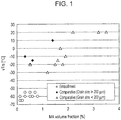
- Fig. 1 shows prior austenite grain diameter, MA area fraction, and simulated HAZ toughness.
- the present invention defines the constituent composition and the microstructure of a HAZ formed by high heat input welding with a heat input of more than 300 kJ/cm.
- the lower limit of the carbon content is set to 0.03% by mass to provide the strength required for structural steels.
- the upper limit of the carbon content is set to 0.08% by mass to inhibit the formation of MA.
- the carbon content is 0.035% to 0.068% by mass.
- Silicon which serves as a deoxidizing agent in a steelmaking process, needs to be present in an amount of 0.01% by mass or more.
- a silicon content of more than 0.15% by mass would degrade the base plate toughness and would also degrade the high heat input HAZ toughness because of the formation of MA.
- the silicon content should be 0.01% to 0.15% by mass, preferably 0.01% to 0.10% by mass.
- Manganese is an important element in the present invention and needs to be present in an amount of 1.8% by mass or more irrespective of other alloying elements to ensure sufficient base plate strength. Manganese allows untransformed austenite, which forms during cooling after high heat input welding and has a high carbon concentration, to decompose into cementite more readily than other alloying elements, such as nickel, and is therefore effective in inhibiting the formation of MA to ensure sufficient HAZ toughness. A manganese content of more than 2.6% by mass, however, would degrade the weld toughness. Thus, the manganese content should be 1.8% to 2.6% by mass, preferably 1.8% to 2.2% by mass, more preferably more than 2.0% to 2.2% by mass.
- Phosphorus is also an important element in the present invention.
- a phosphorus content of more than 0.008% by mass would inhibit the decomposition of untransformed austenite, which forms during cooling after high heat input welding and has a high carbon concentration, into cementite and would therefore degrade the toughness because of the formation of MA.
- the phosphorus content should be 0.008% by mass or less, preferably 0.006% by mass or less.
- Sulfur needs to be present in an amount of 0.0005% by mass or more to form MnS and CaS, which are effective in promoting intragranular transformation to improve the toughness.
- a sulfur content of more than 0.0040% by mass would degrade the base plate toughness.
- the sulfur content should be 0.0005% to 0.0040% by mass, preferably 0.0015% to 0.0030% by mass.
- a high aluminum content would inhibit the formation of titanium oxide and would therefore decrease the toughness because of the formation of coarse austenite grains adjacent to the high heat input welding fusion line.
- the aluminum content should be minimized in the present invention, although it may be present in an amount of up to 0.005% by mass.
- the aluminum content is 0.004% or less.
- Niobium 0.003% to 0.03% by Mass
- Niobium is an element effective in ensuring sufficient base plate strength and toughness and sufficient joint strength, although a niobium content of less than 0.003% is of limited effectiveness. A niobium content of more than 0.03% by mass, however, would degrade the toughness because of the formation of MA in the HAZ. Thus, the niobium content should be 0.003% to 0.03% by mass, preferably 0.005% to 0.02% by mass.
- Titanium 0.005% to 0.02% by Mass
- titanium disperses in the form of titanium oxide, which is a secondary deoxidation product, and excess titanium precipitates in the form of TiN. This reduces coarse austenite grains and also creates ferrite nucleation sites in the HAZ, thus contributing to improved toughness.
- Titanium oxide which contributes to pinning, is known to be more effective as its size becomes smaller.
- the present invention is intended to form titanium oxide having a size of 1.0 ⁇ m or less.
- a titanium content of less than 0.005% by mass would not provide a sufficient amount of titanium oxide to contribute to pinning.
- An excessive titanium content would result in the precipitation of excess titanium in the form of TiN, and not in the form of an oxide.
- a titanium content of more than 0.030% by mass would result in the formation of coarse TiN precipitations and would therefore not be effective in inhibiting the formation of coarse austenite grains.
- the titanium content should be 0.005% to 0.02% by mass.
- Nitrogen is an element necessary to provide the required TiN content.
- a nitrogen content of less than 0.0050% by mass would not provide a sufficient TiN content.
- a nitrogen content of more than 0.0080% by mass would decrease the HAZ toughness because of an increased amount of solute nitrogen in the region where TiN dissolves and would also decrease the weld metal toughness.
- the nitrogen content should be 0.0050% to 0.0080% by mass, preferably 0.0052% to 0.0080% by mass, more preferably 0.0055% to 0.0080% by mass.
- the ratio of titanium to nitrogen is preferably controlled within the range of 1.3 to 2.5 to sufficiently utilize the pinning effects of titanium oxide and TiN and to avoid decreased toughness due to excess solute nitrogen.
- Boron is an element that forms BN in the HAZ to reduce solute nitrogen and also creates ferrite nucleation sites.
- boron needs to be present in an amount of 0.0003% by mass or more.
- the boron content should be 0.0003% to 0.0025% by mass, preferably 0.0005% to 0.0020% by mass.
- a Ceq of more than 0.45 would result in an MA area fraction of more than 1.0% in the HAZ adjacent to the fusion line after high heat input welding and would therefore degrade the HAZ toughness.
- Ceq should be 0.33 to 0.45, preferably 0.37 to 0.42, more preferably 0.39 to 0.42.
- the structural steel plate according to the present invention may further contain vanadium, which functions as ferrite nucleation sites, and/or at least one of copper, nickel, chromium, and molybdenum, which have functions such as improving the strength.
- Vanadium contributes to improved base plate strength and toughness and also functions as ferrite nucleation sites in the form of VN. To achieve these effects, vanadium is preferably present in an amount of 0.03% by mass or more. A vanadium content of more than 0.2% by mass, however, would decrease the toughness. If the structural steel plate contains vanadium, the vanadium content is preferably 0.2% by mass or less, more preferably 0.1% by mass or less.
- Copper is an element effective in increasing the base plate strength. To achieve this effect, copper is preferably present in an amount of 0.2% by mass or more. An excessive copper content, however, would adversely affect the toughness. If the structural steel plate contains copper, the upper limit is preferably set to 1.0% by mass. More preferably, the copper content is 0.4% by mass or less.
- Nickel is an element effective in increasing the base plate strength. To achieve this effect, nickel is preferably present in an amount of 0.2% by mass or more. An excessive nickel content, however, would adversely affect the toughness. If the structural steel plate contains nickel, the upper limit is preferably set to 1.0% by mass. More preferably, the nickel content is 0.4% by mass or less.
- Chromium is an element effective in increasing the base plate strength. To achieve this effect, chromium is preferably present in an amount of 0.1% by mass or more. An excessive chromium content, however, would adversely affect the toughness. If the structural steel plate contains chromium, the upper limit is preferably set to 0.4% by mass.
- Molybdenum is an element effective in increasing the base plate strength. To achieve this effect, molybdenum is preferably present in an amount of 0.1% by mass or more. An excessive molybdenum content, however, would adversely affect the toughness. If the structural steel plate contains molybdenum, the upper limit is preferably set to 0.4% by mass.
- the structural steel plate according to the present invention may further contain at least one of calcium, magnesium, zirconium, and a rare earth metal.
- Calcium is an element effective in improving the toughness by fixing sulfur and dispersing oxysulfides. To achieve this effect, calcium is preferably present in an amount of at least 0.0005% by mass or more. A calcium content of more than 0.0050% by mass, however, would not provide any greater effect. If the structural steel plate contains calcium, the calcium content is preferably 0.0005% to 0.0050% by mass, more preferably 0.0010% to 0.0030% by mass.
- Magnesium is an element effective in improving the toughness by dispersing oxides. To achieve this effect, magnesium is preferably present in an amount of at least 0.0005% by mass or more. A magnesium content of more than 0.0050% by mass, however, would not provide any greater effect. If the structural steel plate contains magnesium, the magnesium content is preferably 0.0005% to 0.0050% by mass, more preferably 0.0010% to 0.0030% by mass.
- Zirconium is an element effective in improving the toughness by dispersing oxides. To achieve this effect, zirconium is preferably present in an amount of at least 0.001% by mass. A zirconium content of more than 0.02% by mass, however, would not provide any greater effect. If the structural steel plate contains zirconium, the zirconium content is preferably 0.001% to 0.02% by mass, more preferably 0.005% to 0.0015% by mass.
- Rare earth metals are elements effective in improving the toughness by dispersing oxides. To achieve this effect, a rare earth metal is preferably present in an amount of at least 0.001% by mass. A rare earth metal content of more than 0.02% by mass, however, would not provide any greater effect. If the structural steel plate contains a rare earth metal, the rare earth metal content is preferably 0.001% to 0.02% by mass, more preferably 0.005% to 0.0015% by mass.
- oxygen is present in an amount of 0.0010% or more to form titanium oxide.
- the oxygen content is 0.0040% or less.
- the HAZ microstructure adjacent to the fusion line has a prior austenite grain diameter of 200 ⁇ m or less and an MA area fraction of 1.0% or less.
- Fig. 1 is a graph showing the relationship between the MA fraction (% by volume) and vTrs (°C) of the HAZ in the examples shown in Table 2. This graph shows that the samples having a prior austenite grain diameter of 200 ⁇ m or less and an MA fraction of the HAZ of 1% by volume or less had a vTrs of -55°C or lower.
- the HAZ toughness level required in the present invention is equivalent to a vTrs of -55°C or lower.
- the present invention provides a technique for improving the toughness of a high heat input weld by inhibiting the growth of austenite grains and the formation of MA in the HAZ adjacent to the fusion line, in which coarse austenite grains tend to form because of the exposure to the highest temperature in the entire HAZ.
- the prior austenite grain diameter of the HAZ adjacent to the fusion line needs to be reduced to 200 ⁇ m or less, and the MA area fraction needs to be reduced to 1.0% or less.
- the HAZ adjacent to the fusion line refers to a HAZ extending 500 ⁇ m from the fusion line.
- the prior austenite grain diameter of the HAZ adjacent to the fusion line can be examined by polishing and etching a cross section of a weld and observing it under a light microscope.
- the MA in the HAZ adjacent to the fusion line can be examined by polishing and etching a cross section of a weld and observing it under a scanning electron microscope (SEM).
- SEM scanning electron microscope
- the HAZ microstructure adjacent to the fusion line contains MA, acicular ferrite, and bainite in major proportions and also contains other constituents such as ferrite and pearlite.
- the structural steel plate according to the present invention can be manufactured, for example, as follows.
- a hot metal is first refined into steel in a converter. After RH degasifying, the steel is subjected to continuous casting or to ingot casting and blooming to form slabs.
- the resulting slabs are reheated and hot-rolled.
- the hot-rolled plates are allowed to cool or are subjected to accelerated cooling or to heat treatment such as direct quenching and tempering, reheat quenching and tempering, or reheat normalizing and tempering.
- Steels having the compositions shown in Tables 1-1 and 1-2 were prepared in a high-frequency melting furnace with a capacity of 150 kg and were then hot-rolled into slabs having a thickness of 70 mm. After the slabs were heated at 1,150°C for 2 hours, they were further hot-rolled to a thickness of 30 mm at a temperature in the center along the thickness of 850°C and were then subjected to accelerated cooling at a cooling rate of 8°C/s.
- the cooling rate of a slab having a thickness of 30 mm in the center along the thickness was intended to simulate the cooling rate of a slab having a thickness of 60 mm at a position that is one fourth the thickness.
- round-bar tensile specimens including a parallel portion having a diameter of 14 mm and a length of 85 mm and having a gauge length of 70 mm and 2 mm V-notch Charpy impact specimens were cut from the rolled plates and were evaluated for base plate strength (yield stress YS and tensile strength TS) and toughness.
- the 2 mm V-notch Charpy specimens were evaluated for toughness by conducting a Charpy impact test in the range of -100°C to 40°C to determine the fracture transition temperature vTrs corresponding to a ductile fracture ratio of 50%.
- specimens having a width of 80 mm, a length of 80 mm, and a thickness of 15 mm were cut from the steel plates and were subjected to a simulated weld thermal cycle involving heating to 1,450°C and cooling from 800°C to 500°C in 270 seconds (equivalent to a HAZ after electrogas welding with a heat input of 400 kJ/cm).
- the simulated HAZ was evaluated for toughness using 2 mm V-notch Charpy impact specimens.
- the prior austenite grain diameter of the simulated HAZ was determined by developing the microstructure using nital etching, tracing prior austenite grains on five light micrographs at 100x magnification, performing imaging analysis on each prior austenite grain, and calculating the average circle-equivalent diameter thereof.
- the MA area fraction of the simulated HAZ was determined by developing MA using a two-step etching method, tracing MA on five SEM micrographs at 2,000x magnification, performing imaging analysis on each MA, and calculating the average area fraction thereof.
- Table 2 and Fig. 1 show the prior austenite grain diameter, the MA area fraction, and the simulated HAZ toughness along with the mechanical properties of the base plates. As shown in Table 2 and Fig. 1 , the invention examples had a prior austenite grain diameter of 200 ⁇ m or less and an MA area fraction of 1.0% or less and exhibited good simulated HAZ toughness.
- the comparative examples had a prior austenite grain diameter of more than 200 ⁇ m or an MA area fraction of more than 1.0% and exhibited poor simulated HAZ toughness.
- the absorption energies in the HAZ at -10°C and -40°C were also measured in the invention examples.
- the absorption energy vE -10 in the HAZ at -10°C ranged from 257 to 297 J.
- the absorption energy vE -40 in the HAZ at -40°C ranged from 217 to 242 J.
Landscapes
- Chemical & Material Sciences (AREA)
- Engineering & Computer Science (AREA)
- Mechanical Engineering (AREA)
- Materials Engineering (AREA)
- Metallurgy (AREA)
- Organic Chemistry (AREA)
- Heat Treatment Of Steel (AREA)
Applications Claiming Priority (1)
| Application Number | Priority Date | Filing Date | Title |
|---|---|---|---|
| PCT/JP2012/055892 WO2013128650A1 (ja) | 2012-03-01 | 2012-03-01 | 大入熱溶接用鋼材 |
Publications (3)
| Publication Number | Publication Date |
|---|---|
| EP2801638A1 EP2801638A1 (en) | 2014-11-12 |
| EP2801638A4 EP2801638A4 (en) | 2015-11-25 |
| EP2801638B1 true EP2801638B1 (en) | 2021-05-26 |
Family
ID=49081892
Family Applications (1)
| Application Number | Title | Priority Date | Filing Date |
|---|---|---|---|
| EP12870014.3A Active EP2801638B1 (en) | 2012-03-01 | 2012-03-01 | Steel material for high-heat-input welding |
Country Status (5)
| Country | Link |
|---|---|
| EP (1) | EP2801638B1 (da) |
| KR (1) | KR20140127870A (da) |
| CN (1) | CN104145038B (da) |
| DK (1) | DK2801638T3 (da) |
| WO (1) | WO2013128650A1 (da) |
Families Citing this family (3)
| Publication number | Priority date | Publication date | Assignee | Title |
|---|---|---|---|---|
| CN111055042A (zh) * | 2019-11-30 | 2020-04-24 | 江苏省沙钢钢铁研究院有限公司 | 一种疲劳性能优异的大热输入焊接接头 |
| CN112921150A (zh) * | 2021-01-29 | 2021-06-08 | 五矿营口中板有限责任公司 | 一种不含铝的适合于大线能焊接的低合金钢板的制造方法 |
| EP4610378A1 (de) * | 2024-02-28 | 2025-09-03 | Aktiengesellschaft der Dillinger Hüttenwerke | Stahl und verfahren zur herstellung sowie ein verfahren zur verarbeitung des stahls |
Citations (1)
| Publication number | Priority date | Publication date | Assignee | Title |
|---|---|---|---|---|
| WO2013088715A1 (ja) * | 2011-12-14 | 2013-06-20 | Jfeスチール株式会社 | 大入熱溶接用鋼材 |
Family Cites Families (16)
| Publication number | Priority date | Publication date | Assignee | Title |
|---|---|---|---|---|
| JPS5751243A (en) | 1980-09-12 | 1982-03-26 | Nippon Steel Corp | Steel products for welding |
| JPH03162522A (ja) * | 1989-11-22 | 1991-07-12 | Nippon Steel Corp | 大入熱溶接熱影響部靭性の優れた高張力厚鋼板の製造法 |
| JP3602471B2 (ja) | 2000-05-24 | 2004-12-15 | 株式会社神戸製鋼所 | 溶接性に優れた高張力鋼板およびその製造方法 |
| JP3722044B2 (ja) | 2001-10-31 | 2005-11-30 | Jfeスチール株式会社 | 溶接継手 |
| JP4523893B2 (ja) * | 2005-08-22 | 2010-08-11 | 新日本製鐵株式会社 | 母材及び溶接熱影響部の靱性に優れた引張強度590N/mm2級の溶接構造用鋼およびその製造方法 |
| JP4828284B2 (ja) | 2005-08-22 | 2011-11-30 | 新日本製鐵株式会社 | 溶接性と溶接熱影響部靱性の優れた60キロ鋼およびその製造方法 |
| CN100519809C (zh) * | 2006-03-27 | 2009-07-29 | 宝山钢铁股份有限公司 | 可超大线能量焊接低温用厚钢板及其制造方法 |
| JP4673784B2 (ja) | 2006-04-11 | 2011-04-20 | 新日本製鐵株式会社 | 優れた溶接熱影響部靭性を有する高強度鋼板およびその製造方法 |
| JP5098235B2 (ja) * | 2006-07-04 | 2012-12-12 | 新日鐵住金株式会社 | 低温靱性に優れたラインパイプ用高強度鋼管及びラインパイプ用高強度鋼板並びにそれらの製造方法 |
| EP2093302B1 (en) * | 2006-11-30 | 2017-01-25 | Nippon Steel & Sumitomo Metal Corporation | Weld steel pipe with excellent low-temperature toughness for high-strength line pipe and process for producing the same |
| JP5076658B2 (ja) | 2006-12-06 | 2012-11-21 | Jfeスチール株式会社 | 大入熱溶接用鋼材 |
| JP5135056B2 (ja) | 2008-05-15 | 2013-01-30 | 株式会社日本触媒 | 水硬性材料用収縮低減剤および水硬性材料用収縮低減剤組成物 |
| KR101386042B1 (ko) * | 2009-05-22 | 2014-04-16 | 제이에프이 스틸 가부시키가이샤 | 대입열 용접용 강재 |
| JP4681690B2 (ja) * | 2009-06-11 | 2011-05-11 | 新日本製鐵株式会社 | 大入熱溶接熱影響部靭性に優れた厚手高強度鋼板の製造方法、及び、大入熱溶接熱影響部靭性に優れた厚手高強度鋼板 |
| US8974610B2 (en) * | 2010-02-04 | 2015-03-10 | Nippon Steel & Sumitomo Metal Corporation | High-strength welded steel pipe and method for producing the same |
| JP2011241461A (ja) * | 2010-05-20 | 2011-12-01 | Kobe Steel Ltd | 溶接熱影響部の靭性に優れた厚鋼板 |
-
2012
- 2012-03-01 DK DK12870014.3T patent/DK2801638T3/da active
- 2012-03-01 KR KR20147025345A patent/KR20140127870A/ko not_active Ceased
- 2012-03-01 CN CN201280071038.7A patent/CN104145038B/zh active Active
- 2012-03-01 EP EP12870014.3A patent/EP2801638B1/en active Active
- 2012-03-01 WO PCT/JP2012/055892 patent/WO2013128650A1/ja not_active Ceased
Patent Citations (1)
| Publication number | Priority date | Publication date | Assignee | Title |
|---|---|---|---|---|
| WO2013088715A1 (ja) * | 2011-12-14 | 2013-06-20 | Jfeスチール株式会社 | 大入熱溶接用鋼材 |
Non-Patent Citations (1)
| Title |
|---|
| STANDARD: "ASTM Standard E1019-11. Test Methods for Determination of Carbon, Sulfur, Nitrogen, and Oxygen in Steel, Iron, Nickel, and Cobalt Alloys by Various Combustion and Fusion Techniques", 30 June 2011 (2011-06-30), West Conshohocken, PA, XP055615886, Retrieved from the Internet <URL:https://compass.astm.org/download/E1019-11.16120.pdf> [retrieved on 20190827], DOI: 10.1520/E1019-11 * |
Also Published As
| Publication number | Publication date |
|---|---|
| EP2801638A4 (en) | 2015-11-25 |
| EP2801638A1 (en) | 2014-11-12 |
| DK2801638T3 (da) | 2021-06-28 |
| KR20140127870A (ko) | 2014-11-04 |
| CN104145038A (zh) | 2014-11-12 |
| WO2013128650A1 (ja) | 2013-09-06 |
| CN104145038B (zh) | 2016-12-21 |
Similar Documents
| Publication | Publication Date | Title |
|---|---|---|
| JP7506306B2 (ja) | 大入熱溶接用高強度鋼板 | |
| EP2434027B1 (en) | Steel material for high heat input welding | |
| CA2775031C (en) | Low yield ratio, high strength and high uniform elongation steel plate and method for manufacturing the same | |
| KR101846759B1 (ko) | 강판 및 그 제조 방법 | |
| JP5076658B2 (ja) | 大入熱溶接用鋼材 | |
| EP1662014A1 (en) | Steel plate and welded steel tube exhibiting low yield ratio, high strength and high toughness and method for production thereof | |
| EP3617337A1 (en) | HIGH-Mn STEEL AND PRODUCTION METHOD THEREFOR | |
| JP5509685B2 (ja) | 超大入熱溶接熱影響部靭性に優れた低降伏比高張力厚鋼板およびその製造方法 | |
| EP3378962B1 (en) | High heat input welded steel material | |
| EP3533891A1 (en) | Steel for high heat input welding | |
| EP3128024B1 (en) | Welded joint | |
| TWI589708B (zh) | 高熱輸入熔接用鋼材 | |
| EP3128033A1 (en) | High-tensile-strength steel plate and process for producing same | |
| JP2009235549A (ja) | 超大入熱溶接熱影響部靭性に優れた低降伏比高張力厚鋼板の製造方法 | |
| EP2801638B1 (en) | Steel material for high-heat-input welding | |
| JP6237681B2 (ja) | 溶接熱影響部靭性に優れた低降伏比高張力鋼板 | |
| RU2135622C1 (ru) | Сталь, имеющая высокую ударную вязкость в зоне термического воздействия при сварке | |
| JP2014031544A (ja) | 大入熱溶接用鋼材 | |
| JP7260780B2 (ja) | 大入熱溶接用高強度鋼板 | |
| JP2005002476A (ja) | 溶接継手 | |
| JP2020204074A (ja) | 大入熱溶接用高強度鋼板 | |
| JP2012162793A (ja) | 大入熱溶接用鋼材 | |
| JP5493557B2 (ja) | 大入熱溶接用鋼材 | |
| JP2020033584A (ja) | 鋼板 | |
| TWI551387B (zh) | Large heat into the welding steel |
Legal Events
| Date | Code | Title | Description |
|---|---|---|---|
| PUAI | Public reference made under article 153(3) epc to a published international application that has entered the european phase |
Free format text: ORIGINAL CODE: 0009012 |
|
| 17P | Request for examination filed |
Effective date: 20140801 |
|
| AK | Designated contracting states |
Kind code of ref document: A1 Designated state(s): AL AT BE BG CH CY CZ DE DK EE ES FI FR GB GR HR HU IE IS IT LI LT LU LV MC MK MT NL NO PL PT RO RS SE SI SK SM TR |
|
| DAX | Request for extension of the european patent (deleted) | ||
| RA4 | Supplementary search report drawn up and despatched (corrected) |
Effective date: 20151022 |
|
| RIC1 | Information provided on ipc code assigned before grant |
Ipc: C22C 38/08 20060101ALI20151016BHEP Ipc: B23K 35/30 20060101ALI20151016BHEP Ipc: C22C 38/00 20060101ALI20151016BHEP Ipc: C22C 38/14 20060101AFI20151016BHEP Ipc: C22C 38/58 20060101ALI20151016BHEP Ipc: C22C 38/04 20060101ALI20151016BHEP Ipc: C22C 38/02 20060101ALI20151016BHEP Ipc: C22C 38/28 20060101ALI20151016BHEP Ipc: C22C 38/12 20060101ALI20151016BHEP Ipc: C22C 38/16 20060101ALI20151016BHEP |
|
| STAA | Information on the status of an ep patent application or granted ep patent |
Free format text: STATUS: EXAMINATION IS IN PROGRESS |
|
| 17Q | First examination report despatched |
Effective date: 20181122 |
|
| GRAP | Despatch of communication of intention to grant a patent |
Free format text: ORIGINAL CODE: EPIDOSNIGR1 |
|
| STAA | Information on the status of an ep patent application or granted ep patent |
Free format text: STATUS: GRANT OF PATENT IS INTENDED |
|
| INTG | Intention to grant announced |
Effective date: 20210202 |
|
| GRAS | Grant fee paid |
Free format text: ORIGINAL CODE: EPIDOSNIGR3 |
|
| GRAA | (expected) grant |
Free format text: ORIGINAL CODE: 0009210 |
|
| STAA | Information on the status of an ep patent application or granted ep patent |
Free format text: STATUS: THE PATENT HAS BEEN GRANTED |
|
| AK | Designated contracting states |
Kind code of ref document: B1 Designated state(s): AL AT BE BG CH CY CZ DE DK EE ES FI FR GB GR HR HU IE IS IT LI LT LU LV MC MK MT NL NO PL PT RO RS SE SI SK SM TR |
|
| REG | Reference to a national code |
Ref country code: GB Ref legal event code: FG4D |
|
| REG | Reference to a national code |
Ref country code: CH Ref legal event code: EP |
|
| REG | Reference to a national code |
Ref country code: AT Ref legal event code: REF Ref document number: 1396294 Country of ref document: AT Kind code of ref document: T Effective date: 20210615 |
|
| REG | Reference to a national code |
Ref country code: DE Ref legal event code: R096 Ref document number: 602012075707 Country of ref document: DE |
|
| REG | Reference to a national code |
Ref country code: IE Ref legal event code: FG4D |
|
| REG | Reference to a national code |
Ref country code: DK Ref legal event code: T3 Effective date: 20210624 |
|
| REG | Reference to a national code |
Ref country code: LT Ref legal event code: MG9D |
|
| REG | Reference to a national code |
Ref country code: AT Ref legal event code: MK05 Ref document number: 1396294 Country of ref document: AT Kind code of ref document: T Effective date: 20210526 |
|
| PG25 | Lapsed in a contracting state [announced via postgrant information from national office to epo] |
Ref country code: HR Free format text: LAPSE BECAUSE OF FAILURE TO SUBMIT A TRANSLATION OF THE DESCRIPTION OR TO PAY THE FEE WITHIN THE PRESCRIBED TIME-LIMIT Effective date: 20210526 Ref country code: BG Free format text: LAPSE BECAUSE OF FAILURE TO SUBMIT A TRANSLATION OF THE DESCRIPTION OR TO PAY THE FEE WITHIN THE PRESCRIBED TIME-LIMIT Effective date: 20210826 Ref country code: AT Free format text: LAPSE BECAUSE OF FAILURE TO SUBMIT A TRANSLATION OF THE DESCRIPTION OR TO PAY THE FEE WITHIN THE PRESCRIBED TIME-LIMIT Effective date: 20210526 Ref country code: LT Free format text: LAPSE BECAUSE OF FAILURE TO SUBMIT A TRANSLATION OF THE DESCRIPTION OR TO PAY THE FEE WITHIN THE PRESCRIBED TIME-LIMIT Effective date: 20210526 Ref country code: FI Free format text: LAPSE BECAUSE OF FAILURE TO SUBMIT A TRANSLATION OF THE DESCRIPTION OR TO PAY THE FEE WITHIN THE PRESCRIBED TIME-LIMIT Effective date: 20210526 |
|
| REG | Reference to a national code |
Ref country code: NL Ref legal event code: MP Effective date: 20210526 |
|
| PG25 | Lapsed in a contracting state [announced via postgrant information from national office to epo] |
Ref country code: PL Free format text: LAPSE BECAUSE OF FAILURE TO SUBMIT A TRANSLATION OF THE DESCRIPTION OR TO PAY THE FEE WITHIN THE PRESCRIBED TIME-LIMIT Effective date: 20210526 Ref country code: PT Free format text: LAPSE BECAUSE OF FAILURE TO SUBMIT A TRANSLATION OF THE DESCRIPTION OR TO PAY THE FEE WITHIN THE PRESCRIBED TIME-LIMIT Effective date: 20210927 Ref country code: NO Free format text: LAPSE BECAUSE OF FAILURE TO SUBMIT A TRANSLATION OF THE DESCRIPTION OR TO PAY THE FEE WITHIN THE PRESCRIBED TIME-LIMIT Effective date: 20210826 Ref country code: LV Free format text: LAPSE BECAUSE OF FAILURE TO SUBMIT A TRANSLATION OF THE DESCRIPTION OR TO PAY THE FEE WITHIN THE PRESCRIBED TIME-LIMIT Effective date: 20210526 Ref country code: GR Free format text: LAPSE BECAUSE OF FAILURE TO SUBMIT A TRANSLATION OF THE DESCRIPTION OR TO PAY THE FEE WITHIN THE PRESCRIBED TIME-LIMIT Effective date: 20210827 Ref country code: IS Free format text: LAPSE BECAUSE OF FAILURE TO SUBMIT A TRANSLATION OF THE DESCRIPTION OR TO PAY THE FEE WITHIN THE PRESCRIBED TIME-LIMIT Effective date: 20210926 Ref country code: SE Free format text: LAPSE BECAUSE OF FAILURE TO SUBMIT A TRANSLATION OF THE DESCRIPTION OR TO PAY THE FEE WITHIN THE PRESCRIBED TIME-LIMIT Effective date: 20210526 Ref country code: RS Free format text: LAPSE BECAUSE OF FAILURE TO SUBMIT A TRANSLATION OF THE DESCRIPTION OR TO PAY THE FEE WITHIN THE PRESCRIBED TIME-LIMIT Effective date: 20210526 |
|
| PG25 | Lapsed in a contracting state [announced via postgrant information from national office to epo] |
Ref country code: NL Free format text: LAPSE BECAUSE OF FAILURE TO SUBMIT A TRANSLATION OF THE DESCRIPTION OR TO PAY THE FEE WITHIN THE PRESCRIBED TIME-LIMIT Effective date: 20210526 |
|
| PG25 | Lapsed in a contracting state [announced via postgrant information from national office to epo] |
Ref country code: CZ Free format text: LAPSE BECAUSE OF FAILURE TO SUBMIT A TRANSLATION OF THE DESCRIPTION OR TO PAY THE FEE WITHIN THE PRESCRIBED TIME-LIMIT Effective date: 20210526 Ref country code: EE Free format text: LAPSE BECAUSE OF FAILURE TO SUBMIT A TRANSLATION OF THE DESCRIPTION OR TO PAY THE FEE WITHIN THE PRESCRIBED TIME-LIMIT Effective date: 20210526 Ref country code: SM Free format text: LAPSE BECAUSE OF FAILURE TO SUBMIT A TRANSLATION OF THE DESCRIPTION OR TO PAY THE FEE WITHIN THE PRESCRIBED TIME-LIMIT Effective date: 20210526 Ref country code: SK Free format text: LAPSE BECAUSE OF FAILURE TO SUBMIT A TRANSLATION OF THE DESCRIPTION OR TO PAY THE FEE WITHIN THE PRESCRIBED TIME-LIMIT Effective date: 20210526 Ref country code: RO Free format text: LAPSE BECAUSE OF FAILURE TO SUBMIT A TRANSLATION OF THE DESCRIPTION OR TO PAY THE FEE WITHIN THE PRESCRIBED TIME-LIMIT Effective date: 20210526 Ref country code: ES Free format text: LAPSE BECAUSE OF FAILURE TO SUBMIT A TRANSLATION OF THE DESCRIPTION OR TO PAY THE FEE WITHIN THE PRESCRIBED TIME-LIMIT Effective date: 20210526 |
|
| REG | Reference to a national code |
Ref country code: DE Ref legal event code: R097 Ref document number: 602012075707 Country of ref document: DE |
|
| PLBE | No opposition filed within time limit |
Free format text: ORIGINAL CODE: 0009261 |
|
| STAA | Information on the status of an ep patent application or granted ep patent |
Free format text: STATUS: NO OPPOSITION FILED WITHIN TIME LIMIT |
|
| 26N | No opposition filed |
Effective date: 20220301 |
|
| PG25 | Lapsed in a contracting state [announced via postgrant information from national office to epo] |
Ref country code: IS Free format text: LAPSE BECAUSE OF FAILURE TO SUBMIT A TRANSLATION OF THE DESCRIPTION OR TO PAY THE FEE WITHIN THE PRESCRIBED TIME-LIMIT Effective date: 20210926 Ref country code: AL Free format text: LAPSE BECAUSE OF FAILURE TO SUBMIT A TRANSLATION OF THE DESCRIPTION OR TO PAY THE FEE WITHIN THE PRESCRIBED TIME-LIMIT Effective date: 20210526 |
|
| PG25 | Lapsed in a contracting state [announced via postgrant information from national office to epo] |
Ref country code: IT Free format text: LAPSE BECAUSE OF FAILURE TO SUBMIT A TRANSLATION OF THE DESCRIPTION OR TO PAY THE FEE WITHIN THE PRESCRIBED TIME-LIMIT Effective date: 20210526 |
|
| PG25 | Lapsed in a contracting state [announced via postgrant information from national office to epo] |
Ref country code: MC Free format text: LAPSE BECAUSE OF FAILURE TO SUBMIT A TRANSLATION OF THE DESCRIPTION OR TO PAY THE FEE WITHIN THE PRESCRIBED TIME-LIMIT Effective date: 20210526 |
|
| REG | Reference to a national code |
Ref country code: CH Ref legal event code: PL |
|
| GBPC | Gb: european patent ceased through non-payment of renewal fee |
Effective date: 20220301 |
|
| REG | Reference to a national code |
Ref country code: BE Ref legal event code: MM Effective date: 20220331 |
|
| PG25 | Lapsed in a contracting state [announced via postgrant information from national office to epo] |
Ref country code: LU Free format text: LAPSE BECAUSE OF NON-PAYMENT OF DUE FEES Effective date: 20220301 Ref country code: LI Free format text: LAPSE BECAUSE OF NON-PAYMENT OF DUE FEES Effective date: 20220331 Ref country code: IE Free format text: LAPSE BECAUSE OF NON-PAYMENT OF DUE FEES Effective date: 20220301 Ref country code: GB Free format text: LAPSE BECAUSE OF NON-PAYMENT OF DUE FEES Effective date: 20220301 Ref country code: FR Free format text: LAPSE BECAUSE OF NON-PAYMENT OF DUE FEES Effective date: 20220331 Ref country code: CH Free format text: LAPSE BECAUSE OF NON-PAYMENT OF DUE FEES Effective date: 20220331 |
|
| PG25 | Lapsed in a contracting state [announced via postgrant information from national office to epo] |
Ref country code: BE Free format text: LAPSE BECAUSE OF NON-PAYMENT OF DUE FEES Effective date: 20220331 |
|
| PG25 | Lapsed in a contracting state [announced via postgrant information from national office to epo] |
Ref country code: HU Free format text: LAPSE BECAUSE OF FAILURE TO SUBMIT A TRANSLATION OF THE DESCRIPTION OR TO PAY THE FEE WITHIN THE PRESCRIBED TIME-LIMIT; INVALID AB INITIO Effective date: 20120301 |
|
| PG25 | Lapsed in a contracting state [announced via postgrant information from national office to epo] |
Ref country code: MK Free format text: LAPSE BECAUSE OF FAILURE TO SUBMIT A TRANSLATION OF THE DESCRIPTION OR TO PAY THE FEE WITHIN THE PRESCRIBED TIME-LIMIT Effective date: 20210526 Ref country code: CY Free format text: LAPSE BECAUSE OF FAILURE TO SUBMIT A TRANSLATION OF THE DESCRIPTION OR TO PAY THE FEE WITHIN THE PRESCRIBED TIME-LIMIT Effective date: 20210526 |
|
| PG25 | Lapsed in a contracting state [announced via postgrant information from national office to epo] |
Ref country code: TR Free format text: LAPSE BECAUSE OF FAILURE TO SUBMIT A TRANSLATION OF THE DESCRIPTION OR TO PAY THE FEE WITHIN THE PRESCRIBED TIME-LIMIT Effective date: 20210526 |
|
| PG25 | Lapsed in a contracting state [announced via postgrant information from national office to epo] |
Ref country code: MT Free format text: LAPSE BECAUSE OF FAILURE TO SUBMIT A TRANSLATION OF THE DESCRIPTION OR TO PAY THE FEE WITHIN THE PRESCRIBED TIME-LIMIT Effective date: 20210526 |
|
| PGFP | Annual fee paid to national office [announced via postgrant information from national office to epo] |
Ref country code: DK Payment date: 20260313 Year of fee payment: 15 Ref country code: DE Payment date: 20260128 Year of fee payment: 15 |