EP2801900A2 - Tragbare Vorrichtung und Verfahren zum Anzeigen von Objekten darin - Google Patents
Tragbare Vorrichtung und Verfahren zum Anzeigen von Objekten darin Download PDFInfo
- Publication number
- EP2801900A2 EP2801900A2 EP14167210.5A EP14167210A EP2801900A2 EP 2801900 A2 EP2801900 A2 EP 2801900A2 EP 14167210 A EP14167210 A EP 14167210A EP 2801900 A2 EP2801900 A2 EP 2801900A2
- Authority
- EP
- European Patent Office
- Prior art keywords
- touch
- relative velocity
- portable apparatus
- controller
- page
- Prior art date
- Legal status (The legal status is an assumption and is not a legal conclusion. Google has not performed a legal analysis and makes no representation as to the accuracy of the status listed.)
- Withdrawn
Links
Images










Classifications
-
- G—PHYSICS
- G06—COMPUTING OR CALCULATING; COUNTING
- G06F—ELECTRIC DIGITAL DATA PROCESSING
- G06F3/00—Input arrangements for transferring data to be processed into a form capable of being handled by the computer; Output arrangements for transferring data from processing unit to output unit, e.g. interface arrangements
- G06F3/01—Input arrangements or combined input and output arrangements for interaction between user and computer
- G06F3/048—Interaction techniques based on graphical user interfaces [GUI]
- G06F3/0487—Interaction techniques based on graphical user interfaces [GUI] using specific features provided by the input device, e.g. functions controlled by the rotation of a mouse with dual sensing arrangements, or of the nature of the input device, e.g. tap gestures based on pressure sensed by a digitiser
- G06F3/0488—Interaction techniques based on graphical user interfaces [GUI] using specific features provided by the input device, e.g. functions controlled by the rotation of a mouse with dual sensing arrangements, or of the nature of the input device, e.g. tap gestures based on pressure sensed by a digitiser using a touch-screen or digitiser, e.g. input of commands through traced gestures
- G06F3/04883—Interaction techniques based on graphical user interfaces [GUI] using specific features provided by the input device, e.g. functions controlled by the rotation of a mouse with dual sensing arrangements, or of the nature of the input device, e.g. tap gestures based on pressure sensed by a digitiser using a touch-screen or digitiser, e.g. input of commands through traced gestures for inputting data by handwriting, e.g. gesture or text
-
- G—PHYSICS
- G06—COMPUTING OR CALCULATING; COUNTING
- G06F—ELECTRIC DIGITAL DATA PROCESSING
- G06F3/00—Input arrangements for transferring data to be processed into a form capable of being handled by the computer; Output arrangements for transferring data from processing unit to output unit, e.g. interface arrangements
- G06F3/14—Digital output to display device ; Cooperation and interconnection of the display device with other functional units
-
- G—PHYSICS
- G06—COMPUTING OR CALCULATING; COUNTING
- G06F—ELECTRIC DIGITAL DATA PROCESSING
- G06F3/00—Input arrangements for transferring data to be processed into a form capable of being handled by the computer; Output arrangements for transferring data from processing unit to output unit, e.g. interface arrangements
- G06F3/01—Input arrangements or combined input and output arrangements for interaction between user and computer
- G06F3/048—Interaction techniques based on graphical user interfaces [GUI]
- G06F3/0484—Interaction techniques based on graphical user interfaces [GUI] for the control of specific functions or operations, e.g. selecting or manipulating an object, an image or a displayed text element, setting a parameter value or selecting a range
- G06F3/0485—Scrolling or panning
-
- G—PHYSICS
- G06—COMPUTING OR CALCULATING; COUNTING
- G06F—ELECTRIC DIGITAL DATA PROCESSING
- G06F3/00—Input arrangements for transferring data to be processed into a form capable of being handled by the computer; Output arrangements for transferring data from processing unit to output unit, e.g. interface arrangements
- G06F3/01—Input arrangements or combined input and output arrangements for interaction between user and computer
- G06F3/048—Interaction techniques based on graphical user interfaces [GUI]
-
- G—PHYSICS
- G06—COMPUTING OR CALCULATING; COUNTING
- G06F—ELECTRIC DIGITAL DATA PROCESSING
- G06F3/00—Input arrangements for transferring data to be processed into a form capable of being handled by the computer; Output arrangements for transferring data from processing unit to output unit, e.g. interface arrangements
- G06F3/01—Input arrangements or combined input and output arrangements for interaction between user and computer
- G06F3/048—Interaction techniques based on graphical user interfaces [GUI]
- G06F3/0487—Interaction techniques based on graphical user interfaces [GUI] using specific features provided by the input device, e.g. functions controlled by the rotation of a mouse with dual sensing arrangements, or of the nature of the input device, e.g. tap gestures based on pressure sensed by a digitiser
- G06F3/0488—Interaction techniques based on graphical user interfaces [GUI] using specific features provided by the input device, e.g. functions controlled by the rotation of a mouse with dual sensing arrangements, or of the nature of the input device, e.g. tap gestures based on pressure sensed by a digitiser using a touch-screen or digitiser, e.g. input of commands through traced gestures
Definitions
- the present disclosure relates to a portable apparatus and a method of displaying an object in the same.
- the present disclosure relates to a portable apparatus and a method of displaying an object in the same using a touch and/or a touch gesture.
- a portable apparatus has provided various services and functions. Recently, the number of services and functions provided by the portable apparatus is gradually increasing. Various applications which can be executed in the portable apparatus have been developed in order to improve an effective value of the portable apparatus and to satisfy various desires of users. Accordingly, one or more applications may be installed in a portable apparatus according to the related art which has a touch screen and which, similar to a smart phone, a portable phone, a notebook PC, and a tablet PC, is portable.
- each page of the e-book or the presentation document is constantly scrolled. Further, in a case of a presentation document which has a complicated layout and a plurality of objects, the objects inserted in a page of the presentation document are simultaneously scrolled in response to a scroll of the input means.
- an input means e.g., a mouse, a mouse wheel, a keyboard, or the like
- aspects of the present disclosure are to address at least the above-mentioned problems and/or disadvantages and to provide at least the advantages described below. Accordingly, the present disclosure has been made to solve the above-stated problems occurring in the prior art, and an aspect of the present disclosure provides portable apparatus and a method of displaying an object in the same using a touch and/or a touch gesture.
- a method of displaying an object of a portable apparatus includes displaying a page including objects on a touch screen, detecting a continuous movement of a touch in the page, and displaying the objects moving at a relative velocity, in response to the continuous movement of the touch.
- the method of displaying the object of the portable apparatus further includes determining whether an object, which moves at a relative velocity, among the objects overlaps another object, which moves at a relative velocity and which neighbors the third object.
- one object in the method of displaying the object of the portable apparatus, when one object gradually approaches another object to overlap and stops, one object has the relative velocity substantially identical to the relative velocity of another object.
- one object in the method of displaying the object of the portable apparatus, when one object gradually approaches another object to overlap, one object has the relative velocity to be changed in correspondence to the relative velocity of another object.
- a portable apparatus in accordance with another aspect of the present disclosure, includes a touch screen configured to display a page including at least one object, and a controller configured to control the touch screen, wherein the controller detects a touch on a page displayed on the touch screen and enables the touch screen to display the at least one object moving a relative velocity in correspondence to a continuous movement of the detected touch.
- a portable apparatus and a method of displaying an object of the portable apparatus which can display an object having a relative velocity in correspondence to a touch and/or a touch gesture, are provided.
- a portable apparatus and a method of displaying an object of the portable apparatus which can display an object having a relative velocity in correspondence to a direction of a touch and/or a touch gesture, are provided.
- a portable apparatus and a method of displaying an object of the portable apparatus which can determine whether an object overlaps another object in correspondence to a touch and/or a touch gesture, are provided.
- a portable apparatus and a method of displaying an object of the portable apparatus which can change a relative velocity of an object to correspond to a relative velocity of another object to overlap in correspondence to a touch and/or a touch gesture, are provided.
- a portable apparatus and a method of displaying an object of the portable apparatus which can control an object to have a relative velocity depending on a relative velocity of another object to overlap, in correspondence to a touch and/or a touch gesture, are provided.
- a portable apparatus and a method of displaying an object of the portable apparatus which can provide at least one feedback of a visual feedback, an auditory feedback, and a tactile feedback in correspondence to a touch and/or a touch gesture, are provided.
- first, second, and the like may be used to describe various structural elements. However, the terms do not limit the structural elements, but are only used to distinguish a structural element from another structural element. For example, without departing from the scope of the present disclosure, a first structural element can be named a second structural element. Similarly, the second structural element can be also named the first structural element.
- the term "and/or" refers to a combination of related items or any one item of the related items.
- the term "application” corresponds to an Operating System (OS) for a computer, or software which is executed on a mobile OS and is used by a user.
- the software includes a word processor, a spread sheet, a Social Network System (SNS), a chatting program, a map, a music player, a video player, and the like.
- SNS Social Network System
- a widget corresponds to a mini application which is one of Graphic User Interfaces (GUIs) smoothly supporting a mutual relation between a user and an application or an OS.
- GUIs Graphic User Interfaces
- widgets may include a weather widget, a calculator widget, a clock widget, and the like.
- the widgets can be created in a form of icons, and installed in a desktop PC, a portable apparatus, a blog, a café, a personal homepage, and the like.
- the widgets can be formed to use a corresponding service without a use of a web browser.
- the widgets may include short-cut icons for use in an execution of a designated application a direct contact to a designated path.
- an apparatus e.g., a portable apparatus
- mobile devices such as a cellular phone, a Personal Digital Assistant (PDA), a digital camera, a portable game console, an MP3 player, a Portable/Personal Multimedia Player (PMP), a handheld e-book, a tablet PC, a portable lap-top PC, a Global Positioning System (GPS) navigation, and devices such as a desktop PC, a high definition television (HDTV), an optical disc player, a set-top box, and the like capable of wireless communication or network communication consistent with that disclosed herein.
- PDA Personal Digital Assistant
- PMP Portable/Personal Multimedia Player
- GPS Global Positioning System
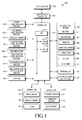
- FIG. 1 is a schematic block diagram illustrating a portable apparatus according to an embodiment of the present disclosure.
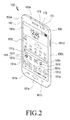
- FIG. 2 is a front perspective view illustrating a portable apparatus according to an embodiment of the present disclosure.
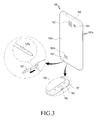
- FIG. 3 is a rear perspective view illustrating a portable apparatus according to an embodiment of the present disclosure.
- the portable apparatus 100 may include a controller 110, a mobile communication module 120, a sub-range communication module 130, a multimedia unit 140, a camera unit 150 a GPS unit 155, an Input/Output (I/O) module 160, a sensor unit 170, a storage unit 175, an electric power supply unit 180, a touch screen 190, and a touch screen controller 195.
- a controller 110 the mobile communication module 120, a sub-range communication module 130, a multimedia unit 140, a camera unit 150 a GPS unit 155, an Input/Output (I/O) module 160, a sensor unit 170, a storage unit 175, an electric power supply unit 180, a touch screen 190, and a touch screen controller 195.
- a controller 110 the portable apparatus 100 may include a controller 110, a mobile communication module 120, a sub-range communication module 130, a multimedia unit 140, a camera unit 150 a GPS unit 155, an Input/Output (I/O) module 160, a sensor unit 1
- the portable apparatus 100 can be connected by wired-cable or wirelessly to an external device (not shown) using the mobile communication unit 120, the sub-communication unit 130, and/or the connector 165.
- the external device may include another portable apparatus (not shown), a portable phone (not shown), a smart phone (not shown), a tablet PC (not shown), a server (not shown) and/or the like.
- the portable apparatus can be carried, and transmit and receive data, which has one or more touch screens.
- the portable apparatus includes a portable phone, a smart phone, a tablet PC, a 3D TV, a smart TV, an LED TV, an LCD TV, and the like.
- the portable apparatus includes peripheral devices which may be connected to the portable apparatus and devices capable of transmitting and receiving data to/from other devices located at a remote place.
- the portable apparatus 100 may include a touch screen 190 and a touch screen controller 195. Further, the portable apparatus 100 may include a controller 110, a mobile communication unit 120, a sub-communication unit 130, a multimedia unit 140, a camera unit 150, a GPS unit 155, an input/output unit 160, a sensor unit 170, a storage unit 175 and an electric power supply unit 180.
- the sub-communication unit 130 may include at least one of a wireless LAN unit 131 and a short-range communication unit 132.
- the multimedia unit 140 may include at least one of a broadcasting unit 141, an audio reproduction unit 142, and a video reproduction unit 143.
- the camera unit 150 may include at least one of a first camera 151 and a second camera 152.
- the camera unit 150 may also include a flash 153.
- the input/output unit 160 may include at least one of a button 161, a microphone 162, a speaker 163, a vibration motor 164, a connector 165, a keypad 166, and an input unit 167.
- the sensor unit 170 may include a proximity sensor 171, an illuminance sensor 172, and a gyro sensor 173.
- the controller 110 may include an Application Processor (AP) 111, a Read Only Memory (ROM) 112 in which a control program for controlling the portable apparatus 100 is stored, a Random Access Memory (RAM) 113 which stores signals or data to be input from the exterior of the portable apparatus 100 and is used as a memory region for storing an operation performed in the portable apparatus 100.
- AP Application Processor
- ROM Read Only Memory
- RAM Random Access Memory
- the controller 110 controls a whole operation of the portable apparatus 100 and a signal flow among internal structural elements 120, 130, 140, 150, 160, 170, 175, 180, 190, and 195 of the portable apparatus 100. Further, the controller 110 performs a function of processing data. The controller 110 controls an electric power supply from an electric power supply unit to the internal structural elements 120, 130, 140, 150, 160, 170, 175, 180, 190, and 195. Further, the controller 110 executes an OS and applications stored in the storage unit 175.
- the AP 111 may include a Graphic Processing Unit (GPU) (not shown) for a graphic processing.
- the AP 111 has a core (not shown) and the GPU configured by a System On Chip (SOC).
- SOC System On Chip
- the AP 111 may include a various number of cores.
- the AP 111 may include a single core, dual cores, triple cores, quad cores, and the like.
- the AP 111, the ROM 112, and the RAM 113 may be connected to one another through an internal bus.
- the controller 110 can control the mobile communication unit 120, the sub-communication unit 130, the multimedia unit 140, the camera unit 150, the GPS unit 155, the input/output unit 160, the sensor unit 170, the storage unit 175, the electric power supply unit 180, the touch screen 190, and the touch screen controller 195.
- the controller 110 displays a page including a plurality of objects on the touch screen, detects a touch on the page, and controls the touch screen to display the plurality of objects moving in a relative velocity in response to a continuous movement of the touch.
- the controller 110 controls the continuous movement of the touch to scroll the page in an upward, downward, left, or right direction from a detected position of the touch.
- the controller 110 controls a relative velocity of a first object among the plurality of objects to be determined to correspond to at least one of a vertical length of the first object of the plural objects and a vertical length of the page.
- the controller 110 controls the relative velocity of the first object among the plurality of the objects so that the first object moves slower than another object which has a longer vertical length, among the plural objects as the first object has a shorter vertical length.
- the controller 110 controls a relative velocity of a second object among the plurality of the objects to be determined to correspond to at least one of a horizontal length of the second object and a horizontal length of the page.
- the controller 110 controls the relative velocity of the second object among the plurality of the objects so that the second object moves slower than another object which has a longer horizontal length, among the plural objects as the second object has a shorter horizontal length.
- the controller 110 controls the relative velocity of the plural objects to be determined to correspond to each position of the plural objects arranged on the page.
- the controller 110 determines whether a third object moving in a relative velocity among the plural objects overlaps a fourth object adjacent to the third object and moving in a relative velocity.
- the controller 110 controls the third object to have the relative velocity substantially identical to the relative velocity of the fourth object which the third object overlap.
- the controller 110 controls the third object to have the relative velocity to be changeable depending on the relative velocity of the fourth object which the third object overlaps.
- the controller 110 controls to provide a feedback.
- the controller 110 further includes displaying a mini-map on a side of an upper portion of the page.
- the controller 110 can calculate the relative velocity of the plural objects, and controls the plural objects which move in the calculated relative velocity in proportion to the continuous movement of the touch, to be displayed. Further, the controller 110 may include a separate calculating unit capable of calculating a velocity and/or a relative velocity.
- the controller 110 can control the first object to have the relative velocity substantially identical to the relative velocity of the second object.
- the controller 110 can control the first object to have the relative velocity which depends on the relative velocity of the second object.
- the controller 110 controls a vibration motor and a speaker to respectively provide a tactile feedback and an auditory feedback in response to the continuous movement of the touch.
- controller may refer to the AP 111, the ROM 112, and the RAM 113.
- the mobile communication unit 120 Under a control of the controller 110, the mobile communication unit 120 enables the portable apparatus 100 to be connected to the external device through the mobile communication using one or more antennas (not shown).
- the mobile communication unit 120 transmits and receives a voice call, a video call, a Short Message Service (SMS), a Multimedia Message Service (MMS), and radio signals for a data communication to/from a portable terminal (not shown), a smart phone (not shown), a tablet PC, or another portable terminal (not shown), which has a phone number to be input in the portable apparatus 100.
- SMS Short Message Service
- MMS Multimedia Message Service
- the sub-communication unit 130 may include at least one of the wireless LAN unit 131 and the short-range communication unit 132.
- the sub-communication unit 130 may include only the wireless LAN unit 131, only the short-range communication unit 132, or both the wireless LAN unit 131 and the short-range communication unit 132.
- the wireless LAN unit 131 under a control of the controller 110, can be connected to the Internet using radio waves at a location where the AP (not shown) is arranged.
- the wireless LAN unit 131 supports the wireless LAN provision (IEEE802.11x) of the Institute of Electrical and Electronics Engineers (IEEE).
- the short-range communication unit 132 under a control of the controller 110, can perform a short-range communication between the portable apparatus 100 and the external device.
- the short-range communication unit may include an Infrared Data Association (IrDA) module, a Near Field Communication (NFC) module, and the like.
- the portable apparatus 100 may include at least one of the mobile communication unit 120, the wireless LAN unit 131, and the short-range communication unit 132 according to the configuration of the portable apparatus 100.
- the portable apparatus 100 may include a combination of the mobile communication unit 120, the wireless LAN unit 131, and the short-range communication unit 132.
- the term "communication unit” refers to the mobile communication unit 120 and the sub-communication unit 130.
- the communication unit can receive a sound source which a music application is able to execute, from the external device, under a control of the controller 110.
- the controller 110 can store the sound source which is received from the external device, in the storage unit.
- the multimedia unit 140 includes the broadcasting unit 141, the audio reproduction unit 142, and the video reproduction unit 143.
- the broadcasting unit 141 receives broadcasting signals(e.g., TV broadcasting signals, radio broadcasting signals, data broadcasting signals, and/or the like), and broadcasting added information(e.g., an Electric Program Guide (EPG) and an Electric Service Guide (ESG), and/or the like), which are transmitted from external broadcasting stations, and can reproduce the signals and the information using the touch screen, a video codec unit (not shown), and an audio codec unit (not shown).
- broadcasting signals e.g., TV broadcasting signals, radio broadcasting signals, data broadcasting signals, and/or the like
- broadcasting added information e.g., an Electric Program Guide (EPG) and an Electric Service Guide (ESG), and/or the like
- EPG Electric Program Guide
- ESG Electric Service Guide
- the audio reproduction unit 142 under a control of the controller 110, can reproduce audio sources(e.g., audio files which have an extension name of mp3, wma, ogg, wav, and the like), which are received from the exterior of the portable apparatus 100 and stored in the storage unit 175, by using the audio codec unit.
- audio sources e.g., audio files which have an extension name of mp3, wma, ogg, wav, and the like
- the audio reproduction unit 142 under a control of the controller 110, can reproduce an auditory feedback(e.g., an output of the audio source previously stored in the storage unit), to correspond to the continuous movement of the touch or the touch detected from the page.
- an auditory feedback e.g., an output of the audio source previously stored in the storage unit
- the video reproduction unit 143 under a control of the controller 110, can reproduce digital video files(e.g., files which have an extension name of mpeg, mpg, mp4, avi, mov, mkv, and the like) by using the video codec unit.
- digital video files e.g., files which have an extension name of mpeg, mpg, mp4, avi, mov, mkv, and the like
- Most applications which are installed in the portable apparatus 100 can reproduce the audio files and video files by using the audio codec unit and the video codec unit.
- the video reproduction unit 143 can reproduce the audio source by using the video codec unit or the audio codec unit.
- the multimedia unit 140 may include the audio reproduction unit 142 and the video reproduction unit 143 except for the broadcasting and communication unit 141 according to the performance and structure of the portable apparatus 100. Moreover, the audio reproduction unit 142 and the video reproduction unit 143 of the multimedia unit 140 may be included in the controller 110.
- the term "video codec” refers to one or more video codec units.
- the term "audio codec unit” refers to one or more audio codec units.
- the camera unit 150 may include at least one of a first camera 151 arranged on a front surface of the portable apparatus 100 and a second camera 152 arranged on a rear surface of the portable apparatus 100, which can photograph a stationary image or a video.
- the camera unit 150 may include one of the first camera 151 and the second camera152, or both the first camera 151 and the second camera 152.
- the first camera 151 and/or the second camera152 may include an auxiliary light source(e.g., a flash 153), for supplying an amount of light necessary for a photographing.
- An additional front camera may be arranged on the front surface of the portable apparatus and spaced apart from the first camera 151 at a distance of 2 cm ⁇ 8 cm, or an additional rear camera (not shown) may be arranged on the rear surface of the portable apparatus and spaced from the second camera 152 at a distance of 2 cm ⁇ 8 cm, so as to take a three-dimensional stationary image or a three-dimensional video under a control of the controller 110.
- the GPS unit 155 periodically receives information(e.g., position information and time information which the portable apparatus can receive from GPS satellites), from the plurality of GPS satellites (not shown) in the Earth's orbit.
- the portable apparatus 100 identifies the position and velocity thereof, and time by using signals received from the plurality of GPS satellites.
- the input/output unit 160 may include at least one of the buttons 161, the microphone 162, the speaker 163, the vibration motor 164, the connector 165, the keypad 166, and the input unit 167.
- the buttons 161 include a menu button 161b, a home button 161a and a back button 161c which are arranged at a lower portion of the front surface 100a of the portable apparatus 100.
- the buttons 161 may include an electric power source/lock button 161 d arranged on a side surface 100b and at least one volume button 161 e.
- the portable apparatus 100 may include only the home button 161 a.
- the buttons 161 can be implemented by touch buttons as well as physical buttons.
- the buttons 161 may be displayed on the touch screen 190.
- the microphone 162 receives voices or sounds from an external source to generate electric signals under a control of the controller 110.
- the electric signals generated by the microphone 162 can be converted by the audio codec unit, and then are stored in the storage unit 175 or output through the speaker 163.
- One or more microphones 162 may be arranged on the front surface 100a, the side surface 100b, and the rear surface 100c of the portable apparatus 100. Further, at least one microphone 162 may be arranged on only the side surface 100b of the portable apparatus 100.
- the speaker 163 can output sounds which correspond to various signals(e.g., radio signals), broadcasting signals, audio sources, video file or photographing, of the mobile communication unit 120, the sub-communication unit 130, the multimedia unit 140, or the camera unit 150 to the exterior of the portable apparatus 100 by using the audio codec unit under a control of the controller 110.
- signals e.g., radio signals
- broadcasting signals e.g., broadcasting signals
- audio sources e.g., video file or photographing
- the speaker 163 can output sounds(e.g., a touch operation sound for an input of a phone number, or a photographing button operation sound), corresponding to functions which the portable apparatus 100 carries out. At least one speaker 163 may be arranged on the front surface 100a, the side surface 100b, and the rear surface 100c of the portable apparatus 100. In the portable apparatus 100 shown in FIGS. 1 to 3 , the speakers 163a and 163b are respectively arranged on the front surface 100a and the rear surface 100c of the portable apparatus 100.
- the plural speakers 16a and 163b are arranged on the front surface 100a of the portable apparatus 100, or only one speaker 163 arranged on the front surface 100a of the portable apparatus 100 while the plural speakers 163b are arranged on the rear surface of the portable apparatus 100.
- At least one speaker (not shown) is arranged on a side surface 100b of the portable apparatus 100.
- the portable apparatus 100 which has the at least one speaker arranged on the side surface 100b thereof can provide a different sound output in comparison with another portable apparatus which has only the speakers arranged on a front surface 100a and a rear surface 100c thereof.
- the speaker 163 can output an auditory feedback corresponding to the touch or the continuous movement of the touch detected by the controller 110 under a control of the controller 110.
- the vibration motor 164 can convert electric signals into mechanical vibrations under a control of the controller 110.
- the vibration motor 164 may include a linear vibration motor, a bar type vibration motor, a coin type vibration motor, a piezoelectric vibration motor, and/or the like.
- the vibration motor 164 operates in the portable apparatus 100 under a control of the controller.
- One or more vibration motors 164 may be arranged in the portable apparatus 100. Further, the vibration motor 164 can vibrate the whole portable apparatus 100, or only a part of the portable apparatus 100.
- the vibration motor 164 can output a tactile feedback corresponding to a touch or a continuous movement of a touch detected on a page under a control of the controller 110. Further, the vibration motor 164 may provide various tactile feedbacks(e.g., the intensity and continuous time of the vibration), in response to a control command of the controller 110.
- the connector 165 can be used as an interface for connecting an external device (not shown) or the electric power source (not shown) to the portable apparatus 100. Under a control of the controller 110, the portable apparatus 100 can transmit data which is stored in the storage unit 175, to an external device through a wired cable connected to the connector 165, or receive data from the external device (not shown). The portable apparatus 100 can be supplied with electric power from an electric power source (not shown) through the wire cable connected to the connector 165, or charge a battery (not shown).
- the keypad 166 can receive a key input of a user to control the portable apparatus 100.
- the keypad 166 includes a physical keypad (not shown) formed on a front surface 100a of the portable apparatus 100 or a virtual keypad (not shown) displayed on the touch screen 190. It will be easily appreciated by a person skilled in the art that the physical keypad (not shown) arranged on the front surface 100a of the portable apparatus 100 may be excluded according to the performance or structure of the portable apparatus 100.
- the input unit 167 can be used to touch or select an object(e.g., a menu, a text, an image, a figure and an icon, displayed the touch screen or a page.
- the input unit 167 may include an electrostatic capacitive type, a resistance type, and an electromagnetic induction type of a touch screen and a virtual keyboard, by which letters can be input.
- the input unit 167 further includes a stylus pen or a haptic pen in which a pen vibration element(e.g., a vibration motor, an actuator, and/or the like), (not shown) vibrates using control information received from a communication unit of the portable apparatus 100.
- the vibration element may vibrate using not the control information received from the portable apparatus 100 but sensing information detected by a sensor(e.g., an acceleration sensor), (not shown) which is embedded in the input unit 167. It is easily appreciated by a person skilled in the art that the input unit 167 which is able to be inserted into an insertion opening of the portable apparatus 100 may be excluded according to the performance or the structure of the portable apparatus 100.
- a sensor e.g., an acceleration sensor
- the sensor unit 170 includes at least one sensor for detecting the status of the portable apparatus 100.
- the sensor unit 170 may include a proximity sensor 171 for detecting the absence or presence of a proximity to the portable apparatus 100, an illuminance sensor 172 for detecting an amount of light surrounding the portable apparatus 100, a gyro sensor 173 for detecting a direction using a rotational inertia of the portable apparatus 100, an acceleration sensor (not shown) for detecting an inclination of three axes(e.g., X, Y, and Z axes), of the portable apparatus, a gravity sensor for detecting an operational direction of the gravity, and an altimeter for detecting an altitude by measuring an atmospheric pressure, which are located at an upper portion of the front surface 100a of the portable apparatus 100 of a user, or the like.
- a proximity sensor 171 for detecting the absence or presence of a proximity to the portable apparatus 100
- an illuminance sensor 172 for detecting an amount of light surrounding the portable apparatus 100
- the at least one sensor included in the sensor unit 170 detects the status of the portable apparatus 100, and generates and transmits signals corresponding to the detection, to the controller 110. It is easily appreciated by a person skilled in the art that the sensor of the sensor unit 170 may be added to or excluded according to the performance of the portable terminal 100.
- the storage unit 175 can store signals or data input/output to correspond to operations of the mobile communication unit 120, the sub-communication unit 130, the multimedia unit 140, the camera unit 150, the GPS unit 155, the input/output unit 160, the sensor unit 170, and the touch screen 190.
- the storage unit 175 can store GUI relating to a control program for controlling the controller 110 and applications which are provided by a manufacturer and downloaded from the exterior, images for the GUI, user information, documentations, databases or related data.
- the storage unit 175 may store an execution screen which includes a page including an individual object or a plurality of objects, or an application including a plurality of objects, a size of the individual object(e.g., transverse length x lengthwise length), a layout of a page or application screen, a position of the individual object in the page, a type of the individual object(e.g., a text, an image, an audio file, a video file, the like, and a combination of one or more objects), a velocity of the individual object which is calculated by the controller, a relative velocity of an object, and the like.
- an execution screen which includes a page including an individual object or a plurality of objects, or an application including a plurality of objects, a size of the individual object(e.g., transverse length x lengthwise length), a layout of a page or application screen, a position of the individual object in the page, a type of the individual object(e.g., a text, an image, an audio file, a video
- the storage unit 175 may store touch information corresponding to a touch or a continuous movement of a touch(e.g., X and Y coordinates of a position of the detected touch), a touch detection time and the like, or hovering information(e.g., X, Y and Z coordinates of a hovering), a hovering time and the like, corresponding to a hovering.
- the storage unit 175 may store kinds of the continuous movements of the touch(e.g., a flick, a drag, or the like).
- the storage unit 175 may store an auditory feedback(e.g., sound source and the like), which is output from the speaker 163 to correspond to each input touch and can be recognized by a user, and a tactile feedback(e.g., a haptic pattern and the like), which is output from the vibration motor 164 and can be recognized by a user.
- an auditory feedback e.g., sound source and the like
- a tactile feedback e.g., a haptic pattern and the like
- the term “storage unit” refers to the storage unit 175, ROM and RAM in the controller, and a memory card inserted in the portable apparatus 100(e.g., a micro SD card, a memory stick, and the like).
- the storage unit may include a non-volatile memory, a volatile memory, a Hard Disk Drive (HDD), and a Solid State Drive (SSD).
- HDD Hard Disk Drive
- SSD Solid State Drive
- the electric power supply unit 180 under a control of the controller 110, can supply one or more batteries (not shown) which are disposed in the portable apparatus 100, with electric power.
- One or more batteries (not shown) are disposed between the rear surface 100c and the touch screen 190 arranged on the front surface 100a. Further, the electric power supply unit 180 can supply the portable apparatus 100 with electric power which is input from an external electric power source (not shown) through a wired cable connected to the connector 165.
- the touch screen 190 can provide a user with the GUI corresponding to various services(e.g., a voice call, a data transmission, broadcasting, photographing, or applications).
- the touch screen 190 transmits analog signals corresponding to a single touch or multi touches input through the GUI, to the touch screen controller 195.
- the touch screen 190 can receive a single touch or multi touches input by a touchable input unit 167 and a body(e.g., a finger including a thumb), of a user.
- a touch should not be limited to a contact of a body of a user or a touchable input unit 167 to the touch screen 190, and may include a non-contact(e.g., a hovering having a distance less than 30 mm between the touch screen 190 and the body of the user, or between the touch screen 190 and the input unit 167).
- a non-contact e.g., a hovering having a distance less than 30 mm between the touch screen 190 and the body of the user, or between the touch screen 190 and the input unit 167.
- the touch screen 190 may include a resistance type, an electrostatic capacitive type, an infrared type, an ultrasonic wave type of a touch screen, and/or the like.
- the touch screen controller 195 converts analog signals which correspond to a single touch and multi touches received from the touch screen 190, to digital signals(e.g., X and Y coordinates corresponding to the detected touch position), and transmits the digital signals to the controller 110.
- the controller 110 can calculate X and Y coordinates corresponding to the touch position on the touch screen 190 by using the digital signals received from the touch screen controller 195. Further, the controller 110 can control the touch screen 190 by using the digital signals received from the touch screen controller 195. For example, the controller 110 may display that a short-cut icon 191f is selected on the touch screen 190 or execute and display an application corresponding to the selected short-cut icon 191f, in response to the input touch.
- one or more touch screen controllers 195 can control one or more touch screens 190.
- the touch screen controllers 195 may be included in the controller 110 in correspondence to the performance or structure of the portable apparatus 100.
- At least one structural element may be added or excluded in correspondence to the performance of the portable apparatus 100.
- the positions of the structural elements may be changed in correspondence to the performance or structure of the portable apparatus.
- FIG. 2 is a front perspective view schematically illustrating a portable apparatus according to an embodiment of the present disclosure.
- FIG. 3 is a rear perspective view schematically illustrating a portable apparatus according to an embodiment of the present disclosure.
- the portable terminal 100 has the touch screen 190 positioned at a center portion of the front surface 100a thereof.
- a home screen is displayed on the touch screen 190.
- the portable apparatus 100 may have a plurality of different home screens.
- the home screen 191 has short-cut icons 191a,191b, 191c, 191d, 191e, 191f, 191g, 191h, and 191i, a weather widget 191j, a clock widget 191k, and the like which correspond to application and are selected by a user, displayed therein.
- the home screen 191 has a status bar 192 which displays a status of the portable apparatus 100 such as a battery charging status, an intensity of received signals, and a current time, at an upper portion thereof. According to various embodiments of the present disclosure, the home screen 191 of the portable apparatus 100 may not display the status bar 192 according to an OS.
- the portable apparatus 100 may have the first camera 151, the speaker 163a, the proximity sensor 171 and the illuminance sensor 172 which are arranged at an upper portion on the front surface 100a thereof. Further, the portable apparatus 100 may have the second camera 152, the flash 153, and the speaker 163b which are arranged on the rear surface thereof.
- the portable apparatus 100 may have the home button 161a, the menu button 161b, and the back button 161c which are arranged at a lower portion on the front surface thereof.
- the button 161 may be implemented by not the physical button but the touch button. Further, the button 161 may be displayed along with the home screen in the touch screen 190.
- the portable apparatus 100 may have the electric power/lock button 161 d, the volume button 161e, one or more microphones 162 and the like which are arranged on the side surface 100b thereof.
- the portable apparatus 100 has the connector 165 mounted on the side surface of the lower end thereof.
- the connector 165 may be connected to the external device by a wired cable.
- the portable apparatus 100 may have an insertion opening formed on the side surface of the lower end thereof, in which the input unit 167 having buttons 167a is inserted.
- the input unit 167 is inserted in the portable apparatus 100 through the insertion opening, and extracted out of the portable apparatus 100 when the input unit 167 is used.
- FIG. 4 is a flowchart schematically illustrating a method of displaying an object in a portable apparatus according to an embodiment of the present disclosure.
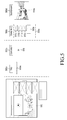
- FIG. 5 is a view illustrating an example of a page including an object in a portable apparatus according to an embodiment of the present disclosure.
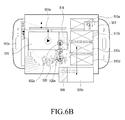
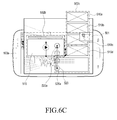
- FIGS. 6A , 6B , 6C , and 6D are views illustrating an example of a method of displaying an object in a portable apparatus according to an embodiment of the present disclosure.
- a page including a plurality of objects is displayed on the touch screen.
- the page 500 including at least one object is displayed on the touch screen 190.
- the total number of pages including the page 500 can be identified through a mini map 501 displayed at an upper portion of the page in a transparency of 50%. For example, a user may determine through the mini map 501 with the transparency that the total pages are nineteen.
- the total pages may be one file with an extension name of a file.
- the file may include a word processing file, a presentation file, a web page, and/or the like.
- the page included in one file may have one or more objects which can be scrolled in a relative velocity in correspondence to the continuous movements of the touch input by a user.
- the page 500 may be a screen in which an application (not shown) is executed and displayed on the touch screen 190.
- the page 500 includes a screen of a certain application, a screen of a gallery application, a screen of a SNS application, a screen of a music application, a screen of a video application or a screen of a diary application, or the like.
- various embodiments of the present disclosure are not limited to a screen of a specific application.
- the total pages can be displayed on the touch screen 190 when a user selects one executable application, or can be executed and displayed when a user selects a separate short-cut icon corresponding to the total pages.
- the page 500 may be formed with various objects.
- the page 500 may be formed with only one of texts 505, images 510a, 510b, 510c, and 510d, audios (not shown), and videos 515, or a combination of the texts 505, the images 510a, 510b, 510c, and 510d, the audios (not shown), and the video 515.
- Combinations of the objects may include, for example, a combination of text and image objects (not shown), a combination of text and video objects (not shown), and a combination of image and audio objects (not shown). Referring to FIGS.
- the page 500 can be formed with only one object as well as the plurality of objects.
- the page 500 may have various layouts in order to arrange the object.
- the layout of the page 500 may include a title 500a, a first content 500b, a second content 500c, and a background 500d.
- the title 500a is formed with the text object 505a
- the first content 500b is formed with the video object 515
- the second content 500c is formed with the image objects 510a, 510b, 510c, and 510d
- the text object 505b
- the background 500d is formed with the image object 510e.
- a plurality of image objects 510a, 510b, 510c, and 510d, and one text object 505b are grouped and form a first group of the objects 502a. Further, one background may be formed without the text object or the image object.
- the page 500 can be added, excluded, and changed according to at least one object and layout.
- the touch is detected on the page.
- the touch 520 input by a user is detected on the page 500 displaying the plurality of objects.
- the controller 110 detects the touch 520 on the page 500 through the touch screen 190 and the touch screen controller 195.
- the controller 110 receives position information(e.g., XI and Y1 coordinates) corresponding to a touch position 520a, corresponding to the touch 520 from the touch screen controller 195.
- the controller 110 can store a touch, a touch detection time(e.g., 12:45), and touch information(e.g., continuous touch time), touch pressure, and the like, corresponding to the touch, which are included in the received position information, in the storage unit.
- the touch 520 detected on the page 500 may be generated by one of fingers including a thumb or a touchable input unit 167.
- a touch is detected on the background 510e of the page 500.
- a touch may be detected on other objects 505, 510a, 510b, 510c, and 510d and 515 displayed on the page 500.
- the continuous movement of the touch 520 input by a user is detected on the page 500.
- the controller 110 can detect the continuous movement of the touch 520 of an upward direction to the electric power/lock button 161d from an initial touch position 520a through the touch screen 190 and the touch screen controller 195(e.g., a plurality of X and Y coordinates corresponding to the continuous touch from the initial touch position 520a to a final touch position 523a).
- the controller 110 receives plural pieces of position information corresponding to the continuous movements of the touch 520 from the touch screen controller 190(e.g., a plurality of X and Y coordinates corresponding to the continuous touch).
- the continuous movement of the touch 520 may include a continuous movement of a touch in an inverse direction(e.g., in a direction to the volume button 161e), against the continuous movement of the initially detected touch 520 to the electric button 161 d. It will be easily appreciated by a person skilled in the art that the direction of the continuous movement of the touch 520(e.g., the direction to the button 161d or 161e arranged on the side surface), can be changed according to a rotation of the portable apparatus 100.
- the continuous movement of the touch 520 can be held from the initial touch position 520a to the final touch position 523a in a state of maintaining the contact.
- the continuous movement of the touch 520 can be held from the initial touch position 520a to a first intermediate touch position 521a in a state of maintaining the contact. Further, the continuous movement of the touch 520 can be held from the initial touch position 520a to a second intermediate touch position 522a in a state of maintaining the contact.
- the first intermediate touch position 521a and the second intermediate touch position 522a are merely examples according to various embodiments of the present disclosure, and the controller 110 can detect many touch positions (not shown) among the initial touch position 520a, the first intermediate touch position 521 a, the second intermediate touch position 522a and the final touch position 523a.
- the continuous movement of the touch 520 means that the contact is continuously maintained for the movement of the touch(e.g., 10mm), from the initial touch position 520a to the final touch position 523a of a page.
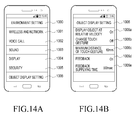
- FIGS. 14A and 14B are views illustrating an example of an object display setting according to an embodiment of the present disclosure.
- a determined distance in an object display setting 1006 can be input and/or changed through a minimum distance setting 1006c for the continuous movement(e.g., a touch gesture), of the touch.
- the plurality of objects 505, 510a, 510b, 510c, and 510d, and 515 displayed on the page 500 can be scrolled at a different and relative velocity according to the distance, the time, or the direction of the continuous movement of the touch 520. Further, the plurality of the objects 510a, 510b, 510c, and 510d, and 505b of the second content 500c correspond to the first group of the objects 502a, and accordingly can be scrolled in the same relative velocity.
- the page 500 can be scrolled in an upward, downward, left, or right direction from the initially detected position 520a in correspondence to the direction of the continuous movement of the touch 520.
- the touch gesture corresponding to the continuous movement of the touch 520 includes a flick or a drag, but is not limited thereto.
- the touch gesture can be selected from and/or changed to one of the flick and the drag through a menu of a touch gesture change 1006a of the object display setting 1006.
- the controller 110 can provide a user with a feedback in response to the detection of the continuous movement of the touch 520.
- the feedback can be provided in a form of one of a visual feedback, an auditory feedback, a tactile feedback, and/or the like.
- the controller 110 can provide the user with combinations of the visual feedback, the auditory feedback, and the tactile feedback.
- the visual feedback is provided in response to the detection of the continuous movement of the touch 520 by displaying a visual effect(e.g., an animation effect such as a separate image or a fade applied to a separate image distinguishably from the plurality of objects displayed on the touch screen 190).
- the auditory feedback is a sound responding to the detection of the continuous movement of the touch 520, and can be output by one of the first speaker 163a and the second speaker 163b, or both the first and second speakers 163a and 163b.
- the tactile feedback is a vibration responding to the detection of the continuous movement of the touch 520, and can be output by the vibration motor 164. At least one feedback may be held from the initially detected position 520a to the arrival 523a of the continuous movement of the touch 520.
- the feedback e.g., at least one of the visual feedback
- the auditory feedback e.g., the auditory feedback
- the tactile feedback corresponding to the continuous movement of the touch
- the feedback 1006d can be selected and/or changed by setting the feedback 1006d.
- at least one feedback can be input and/or changed by selecting a feedback providing time(e.g., 500 msec), when the feedback is provided to the user.
- At operation S404 it is determined whether at least one object is overlapped.
- the controller 110 determines whether at least one object among the plurality of objects is overlapped, in response to the continuous movement of the touch 520.
- the controller 110 can determine the absence or presence of the overlap of the at least one object by using the size and the position of the plural objects which are scrolled in a direction of the continuous movement of the touch 520.
- the controller 110 can determine that a video object 515 among the plurality of objects 505, 510a, 510b, 510c, and 510d, and 515 scrolled in the direction of the continuous movement of the touch 520 overlaps with a text object 505b. Further, the controller 110 can determine that a text object 505a overlaps with a video object 515 among the plurality of objects 505, 510a, 510b, 510c, and 510d, and 515 scrolled in the direction of the continuous movement of the touch 520.
- the controller 110 can determine that the video object 515 overlaps with the text object 505b when a part 516 of the video object 515 overlaps with a part 506 of the text object 505b. Further, the controller 110 can determine that the text object 505a overlaps with the video object 515 among the plurality of objects 505, 510a, 510b, 510c, and 510d, and 515 scrolled in the direction of the continuous movement of the touch 520. The controller 110 can determine that the text object 505a overlaps with the video object 515 by determining that a part of the text object 505a overlaps with a part of the video object 515.
- the controller 110 when the continuous movement of the touch 520 is carried out in a left direction to the speaker 163a, the controller 110 can determine that a part (not shown) of the video object 515 overlaps with a part (not shown) of the image object 510a and 510b. Further, when the continuous movement of the touch 520 is performed in a right direction to the speaker 163a, the controller 110 can determine that the whole region of the text object 505a does not overlap with the image object 510a and 510b.
- the controller 110 can determine the absence or presence of the overlap between the objects in response to the continuous movement of the touch 520.
- the controller 110 can determine the presence or absence of the overlap between the objects in response to the display of the page 500 including the plurality of the objects displayed on the touch screen 500.
- the controller 110 can determine the presence or the absence of the overlap between the objects in response to the detection of the initial touch 520 in the page 500.
- the controller 110 firstly can calculate the number of cases in which the overlap between the objects can be carried out before the direction of the continuous movement of the touch 520 is determined.
- the controller 110 displays the object having the changed relative velocity, in response to one of the continuous movement of the touch 520 and the overlap of the objects.
- the controller 110 scrolls the text object 505a along with the plurality of objects 510 and 515 having a different relative velocity in response to the continuous movement of the touch 520(e.g., the continuous movement of the touch 520 from the initial touch position 520a to the final touch position 523a).
- the controller 110 can scroll the text object 505a upwardly and slowly rather than scroll the plurality of the objects 510a, 510b, 510c, and 510d, and 515, in response to the continuous movement of the touch 520.
- the controller 110 When the continuous movement of the touch passes through the first intermediate touch position 521a, the controller 110 enables the text object 505a to slowly approach the video object 515 of the first content 500b which overlaps with the text object 505a, and stops scrolling of the text object 505a temporarily.
- a distance between the video object 515 and the text object 505a of which the scrolling is stopped may be changed depending on the layout of the page 500. For example, the distance between the text object 505a and the video object 515 is enough if the text object 505a does not appear to overlap with the video object 515.
- the controller 110 can scroll the text object 505a of which the scrolling is temporarily stopped, at relative velocity substantially identical to that of the video object 515(e.g., more than 95% of the relative velocity of the video object 515).
- the controller 110 can change the relative velocity of the text object 505a which is scrolled in response to the continuous movement of the touch 520, in correspondence to the video object 515.
- the controller 110 can make the relative velocity of the text object 505a to be changed in proportional to the relative velocity of the video object 515.
- the controller 110 can group the text object 505a and the video object 515 which have the identical relative velocity, and constitute a second object group 502b.
- the controller 110 scrolls the second group of the objects 502b along with the first object group 502a in response to the continuous movement of the touch 520(e.g., the continuous movement of the touch from the initial touch position 520a to the final touch position 523a).
- the controller 110 scrolls the second object group 502b upwardly and slowly rather than scroll the first object group 502a in response to the continuous movement of the touch 520.
- the second object group 502b is enabled to slowly approach the text object 505b of the second content 500c near the second object group 502b to be overlapped, and the scrolling is temporarily stopped.
- a distance between the text object 505b and the second object group 502b of which the scrolling is temporarily stopped can be changed depending on the layout of the page. For example, the distance between the second object group 502b and the text object 505b is enough if the second object group 502b does not appear to overlap with the text object 505b.
- the controller 110 can scroll the second object group 502b at a relative velocity substantially identical to that of the text object 505b(e.g., within 95% of the relative velocity of the text object 505b).
- the controller 110 can change the relative velocity of the second object group 502b which is scrolled in response to the continuous movement of the touch 520, in correspondence to the relative velocity of the text object 505b with which the second object group 502b overlaps.
- the controller 110 can change the relative velocity of the second object group 502b in proportional to the relative velocity of the text object 505b.
- the controller 110 can constitute a third object group 502c by grouping the second object group 502b and the first object group 502a including the text object 505b, which have the same relative velocity.
- the second object group 502b is constituted prior to the third object group502c.
- the controller 110 can scroll the plurality of objects 505, 510a, 510b, 510c, and 510d, and 515 in the page 500 at a different relative velocity until the continuous movement of the touch 520 arrives at the final touch position 523a.
- the controller 110 stops the scrolling of the plurality objects 505, 510a, 510b, 510c, and 510d, and 515 in the page 500.
- the controller 110 can scroll the object groups 502a, 502b and 502c until the continuous movement of the touch 520 arrives at the final touch position 523a.
- the controller 110 can display the page 500 and a part of another page (not shown) succeeding to the page 500.
- the controller 110 can provide a user with a feedback corresponding to a display of the succeeding page (not shown).
- the provided feedback is substantially identical to a feedback responding to the detection of the continuous movement of the touch 520, and the description of the provided feedback will be omitted.
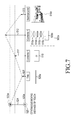
- FIG. 7 is a view illustrating an example of a movement distance between objects in a portable apparatus according to an embodiment of the present disclosure.
- moving distances 507, 512, 513 and 517 of the plural objects corresponding to the continuous moving distance of the touch 520 are briefly shown.
- the controller 110 can calculate a velocity of an individual object by using a size(e.g., the width X the length), of the individual object stored in the storage unit, the layout of the page or application, or a position in the page to which the individual object belongs.
- the controller 110 can calculate the relative velocity of the object depending on the continuous movement of the touch 520.
- the controller 110 can calculate the relative velocity between the individual objects by using a vector calculation on the basis of the continuous movement of the touch. Further, the controller 110 may set one of the individual objects 505, 510a, 510b, 510c, and 510d, and 515 as well as the continuous movement of the touch 520 as the basis of the relative velocity.
- the controller 110 can store the calculated velocity and relative velocity of the individual object in the storage unit.
- the plurality of objects 505, 510a, 510b, 510c, and 510d, and 515 has a moving distance to be changed according to a length(e.g., a length of the object when the continuous movement of the touch 520 is performed in the upward or downward direction), and a width of the object when the continuous movement of the touch 520, of the object corresponding to the continuous moving distance of the touch 520.
- the plurality of objects 505, 510a, 510b, 510c, and 510d, and 515 has an upward or downward moving distance to be changed according to a length of the page 500(e.g., a vertical length of the page when the continuous movement of the touch is performed in an upward or downward direction), and a horizontal length of the page when the continuous movement of the touch is performed in a left or right direction, corresponding to the continuous moving distance of the touch 520.
- the plurality of objects 505, 510a, 510b, 510c, and 510d, and 515 has an upward or downward moving distance to be changed according to a combination of the length of the object(e.g., a length of the object or a width of the object), and a length of the page 500, (e.g., a vertical length or a horizontal length), which correspond to the continuous moving direction of the touch 520. For example, when one object has a length longer than another object, one object can be rapidly moved.
- the object can be more slowly moved.
- the page has the vertical length of 300mm
- one object has the length of 50mm
- another object has the length of 100mm
- another object having the length of 100mm can be rapidly moved rather than one object having the length of 50mm.
- one object can be rapidly moved.
- one object can be slowly moved.
- one object has the length of 150 mm
- another object has the length of 300 mm
- another object having the length of 300 mm can be rapidly moved rather than one object having the length of 150 mm.
- the length of one object may include the lengths of the objects in a group generated by grouping the plurality of objects.
- the width of one object may include the widths of the objects in a group generated by grouping the plurality of objects.
- the text object 505a has a moving distance 507 shorter than a moving distance 512 of the image objects 510a, 510b, 510c and 510d and a moving distance 517 of the video object 515.
- the object having the shorter moving distance can be slowly moved rather than the object having the longer moving distance.
- the text object 505a can be slowly moved rather than the image objects 510a, 510b, 510c and 510d, and the video object 515.
- the controller 110 may calculate the velocity of each object by using the moving distances 507, 512, 513 and 517 of the individual objects.
- the controller 110 can calculate the velocity of the individual object by dividing the moving distance 507, 512, 513, or 517 of each object by time.
- the controller 110 can calculate the relative velocity of the individual object by using a vector calculation which has a size and a direction, on the basis of the continuous movement of the touch 520.
- the objects respectively may have a different relative velocity which is calculated on the basis of the continuous movement of the touch 520.
- the controller 110 can distinguishably scroll each object in the page 500 using a difference of the relative velocity of each object.
- the background 510e has a longer length in comparison with the other objects 505, 510 and 515, the background 510e can be slowly moved.
- the individual object has the relative velocity to be changed as the moving distance of the individual object is changed according to the position of the object in the page.
- one object (not shown) positioned at an upper portion of the page may have a relative velocity different from that of another object (not shown) positioned at a lower portion, (e.g., a position of the text object 505b of the page and in an identical line).
- the relative velocity of one object on the basis of the continuous movement of the touch is not changed but constantly held. Further, when one object overlaps another object, the relative velocity of one object can be changed on the basis of the continuous movement of the touch. For example, when one object approaches another object to be overlapped and temporarily stops, one object which moves again after temporarily stopping may have a relative velocity which is different from that before temporarily stopping. One object which moves again after temporarily stopping may have a relative velocity substantially identical to that of another object to be overlapped (e.g., the object may have a relative velocity more than 95% of a relative velocity of another object).
- the objects 510a, 510b, 510c, 510d and 505b which belong to the first object group 502a may have a relative velocity different from that of an object(e.g., the video object 515), which does not belong to the object group. Further, the objects 510a, 510b, 510c, 510d, and 505b which belong to one group(e.g., the first object group 502a), of the object groups 502a, 502b, 502c, 502d and 502e have the identical relative velocity.
- the controller 110 can change the page 500 to a succeeding another page (not shown) in correspondence to the continuous movement of the touch 520, shown in the mini map 501 of FIG. 6C .
- the moving distances 507, 512, 513 and 517 of the plural objects 505, 510a, 510b, 510c, and 510d, and 515 are described on the basis of the continuous moving distance 524 of the touch in the page 500.
- the moving distance of one object will be described on the basis of the continuous movement 524 of the touch in the page 500.
- the controller 110 displays the plural objects at a changed relative velocity in response to the continuous movement of the touch 520 when one object overlaps another object.
- the controller 110 displays the plurality of objects moving at the relative velocity in response to the continuous movement of the touch 520.
- the plurality of objects in the page 500 of FIG. 6D is distinguished from some objects of FIGS. 6A , 6B and 6C .
- the page 500 of FIG. 6D has no text object 505a in the title 500a, and can display the text object 505c having a width narrower than the text object 505b of the second content 500c.
- the video object 515 can be scrolled without overlapping.
- the controller 110 displays one object moving at the relative velocity, in response to the continuous movement of the touch.
- the controller 110 can scroll the video object along with the plurality of objects 505c, 510a, 510b, 510c and 510d, in response to the continuous movement, for example the continuous movement of the touch from the initial touch position 520a to the final touch position 523a, of the touch 520.
- the controller 110 can scroll the video object 515 in an upward direction more slowly than the plural objects 505c, 510a, 510b, 510c and 510d, in response to the continuous movement of the touch 520.
- the controller 110 can group the plurality of objects 505c, 510a, 510b, 510c and 510d having the substantially identical relative velocity, and constitute a fourth object group 502d.
- the controller 110 can scroll the video object 515 along the fourth object group 502d near the video object 515 and temporarily stop the scrolling.
- the controller 110 can temporarily stop the scrolling of the video object 515 within a distance(e.g., 3 mm), determined on the basis of a base line of the text object 505c.
- a distance between the text object 505c and the video object 515 of which the scrolling is temporarily stopped may be changed according to the layout of the page.
- the controller 110 can scroll the video object 515, which is temporarily stopped, at the relative velocity substantially identical to that of the fourth object group 502d (e.g., the video object 515 may be stopped at a relative velocity that is more than 95% of a relative velocity of another object),.
- the controller 110 can change the relative velocity of the video object 515 which is scrolled in response to the continuous movement of the touch 520, to correspond to the relative velocity of the fourth object group 502d.
- the controller 110 can change the relative velocity of the video object 515 to depend on the relative velocity of the fourth object group 502d.
- the controller 110 may group the video object 515 and the fourth object group 505d which have the substantially identical velocity so as to constitute the fifth object group 502e.
- the controller 110 can scroll the plurality of objects 505, 510a, 510b, 510c and 510d, and 515 in the page 500 at a different relative velocity until the continuous movement of the touch 520 arrives at the final touch position 523a.
- the controller 110 stops the scrolling of the plural objects 505, 510a, 510b, 510c and 510d, and 515 in the page. Further, the controller 110 can scroll the object groups 502d and 502e until the continuous movement of the touch 520 arrives at the final touch position 523a.
- the controller 110 can display a part of a page succeeding the page 500 on the touch screen 190.
- the controller 110 provides a user with a feedback responding to the display of the succeeding page (not shown).
- the provided feedback is substantially identical to the feedback responding to the detection of the continuous movement of the touch 520, and accordingly the description of the feedback will be omitted.
- the controller 110 can change the page 500 to a succeeding page in correspondence to the continuous moving direction of the touch 520.
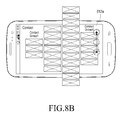
- FIGS. 8A , 8B , and 8C are views illustrating an example of a method of displaying an object in a portable apparatus according to an embodiment of the present disclosure.
- the controller 110 displays a contact address 600 including the plurality of objects.
- the contact address 600 includes a plurality of contact address groups 600a, 600b, 600c and 600d.
- the contact address groups can be classified into groups of family, friends, school, company, and/or the like.
- a layout of the contact address 600 may include a first contact address group 600a, a second contact address group 600b, a third contact address group 600c, and a fourth contact address group 600d.
- the contact address group 600a includes at least one contact address 601a, 601b, or 601c.
- the other contact address groups 600b, 600c and 600d also include at least one contact address.
- contact address group may include at least one contact address 602a, 602b, 602c, 602e, 602d, 602e, 602f, or 602g.
- contact address group 600c may include at least one contact address 603a, 603b, 603c, 603d, 603e, 603f, 603g, 603h, 603i, 603j, 603k, or 6031.
- contact address group 600d may include at least one contact address 604a, 604b, 604c, 604d, or 604e. It will be easily appreciated by a person skilled in the art that the contact address 600 may be added, excluded and changed according to the layout and the plural objects constituting the contact address 600.
- the controller 110 can scroll the plurality of contact address groups 600a, 600b, 600c and 600d at a different relative velocity in correspondence to the continuous movement(e.g., the continuous movement from the initial touch position 610a to the final touch position 613a through the first and second intermediate touch positions 611a and 612a), of the touch 610.
- the third contact address group 600c can be rapidly scrolled rather than the other contact address groups 600a, 600b and 600d.
- a method of displaying an object of the contact address 600 is substantially identical to the operations S401, 402, 403 and 406 of FIG. 4 , and the duplicate description of the method will be omitted.
- FIGS. 9A , 9B , and 9C are views illustrating an example of a method of displaying an object in a portable apparatus according to an embodiment of the present disclosure.
- the controller 110 displays a schedule 700 including a plurality of objects.
- the schedule 700 includes plural groups of a day of the week 700a, 700b, 700c, 700d, 700e, 700f and 700g.
- the schedule 700 may change a starting day of the week from the Sunday to the Monday.
- a layout of the schedule 700 includes Sunday 700a, Monday 700b, Tuesday 700c, Wednesday 700d, Thursday 700e, Friday 700f, and Saturday 700g.
- a group of Tuesday 700c includes a plurality of events 703a, 703b and 703c.
- the other groups of a day of the week 700a, 700b, 700d, 700e, 700f and 700g also include at least one contact address.
- a group of Sunday 700a includes an event 701a.
- a group of Monday 700b includes a plurality of events 702a and 702b.
- a group of Wednesday 700d includes a plurality of events 704a and 704b.
- a group of Thursday 700e includes a plurality of events 705a, 705b, 705c, 705d, and 705e.
- a group of Friday 700f includes a plurality of events 700f includes an event 706a.
- a group of Saturday 700g includes a plurality of events 707a and 707b. It will be easily appreciated by a person skilled in the art that the schedule 700 may be added, deleted, and changed according to the plurality of objects and the layout constituting the schedule 700.
- the controller 110 can scroll the plural groups 700a, 700b, 700c, 700d, 700e, 700f and 700g of the day of the week at a different relative velocity in correspondence to the continuous movement (e.g., the continuous movement from the initial touch position 710a to the final touch position 713a through the first and second intermediate touch positions 711a and 712a), of the touch 710.
- the group of the day of the week 700e can be rapidly scrolled rather than the other groups of the day of the week 700a, 700b, 700c, 700d, 700f and 700g.
- An individual event 700a is scrolled out of the touch screen 190 due to the rapid scrolling of the group of the day of the week 700e and not displayed, and the individual events 700h and 700i can be displayed in the touch screen 190.
- the controller 110 proceeds to operations S401, S402, S403, and S406.
- the method of displaying the object of the schedule 700 is substantially identical to the operations S401, S402, S403 and S406, and the duplicate description of the method will be omitted.
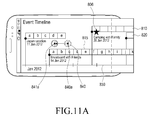
- FIG. 10 is a view illustrating an example of an event time line including the object in the portable apparatus according to another embodiment of the present disclosure.
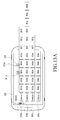
- FIGS. 11A , 11B , and 11C are views illustrating an example of a method of displaying an object in a portable apparatus according to an embodiment of the present disclosure.
- an event timeline 800 including a plurality of objects is displayed on the touch screen 190.
- the event timeline 800 may be an execution screen of an application (not shown) displayed on the touch screen 190.
- the event timeline 800 includes a schedule application, a gallery application, a social network service application, a diary application, and the like. However, according to various embodiments of the present disclosure the event timeline 800 is not limited thereto.
- the event timeline 800 may include a plurality of objects.
- the event timeline 800 is formed with various layouts in correspondence to an arrangement of the objects.
- the event time line 800 may include a first content group 800a including a plurality of events 805a, 805b, 805c, 805d and 805e corresponding to travel in Japan in January, 2012, a second content group 800b including a plurality of events 810a, 810b, 810c, 810d, 810e, 810f, 810g, and 810h corresponding to family camping 810 in January, 2012, a third content group 800c including a plurality of events 815a to 825s corresponding to snowboarding 815 along with friends in January, 2012, a fourth content group 800d including a plurality of events 820a, 820b, 820c, and 820d corresponding to travel 820 in Jeju in February, 2012, a fifth content group including a plurality of events 825a to 825i corresponding to my birthday 825 in February,
- event timeline 800 may be added, deleted and changed according to the plurality of objects and the layouts constituting the event timeline 800.
- the controller 110 can scroll the plurality of content groups 800a, 800b, 800c, 800d and 800e and the timeline 800f at a different relative velocity, corresponding to the continuous movement of the touch to a left direction(e.g., the continuous movement from the initial touch position 840a to the final touch position 843a through the first and second intermediate touch positions 841a and 842a).
- a star icon 806 may indicate an event 805a, which has priority, among the individual events 810a to 810h.
- the third content group 800c may be rapidly scrolled rather than the other content groups 800a, 800b, 800d and 800e. Some 800a to 800i of the individual events are scrolled out of the event timeline 800 and are not displayed due to the rapid scrolling of the third content group 800c, the residual events 800i to 800r can be scrolled in the timeline 800.
- the controller 110 proceeds to operations S401, S402, S403 and S406.
- the method of displaying the objects of the event timeline 800 is substantially identical to the operations S401, S402, S403 and S406 of FIG. 4 . Accordingly, the duplicate description will be omitted.
- FIG. 12 is a view illustrating an example of a movement distance between objects of a portable apparatus according to an embodiment of the present disclosure.
- moving distances 807, 811, 816, 821, 826, and 831 of the plural content groups 805,810, 815, 820, and 825, and the timeline 830 corresponding to a continuous moving distance 844 of the touch 840 are briefly shown.
- the plural objects 805,810, 815, 820, and 825 may have a different moving distance according to a length, for example a width of the content group in a case that the continuous movement of the touch is performed in a left or right direction, of the object corresponding to the continuous moving distance 844 of the touch 840.
- the first content group 800a has a shorter moving distance in comparison with the moving distance of the residual content groups except for the moving distance 821 of the fourth content group 800d.
- the content group having the shorter moving distance may be slowly moved rather than the content groups having a longer moving distance.
- the first content group 800a may be slowly moved in comparison with the residual content groups except for the fourth content group 800d.
- An example of the moving distance of the content groups 800a, 800b, 800c, 800d and 800e and the timeline 800f is substantially identical to that of FIG. 7 . Accordingly, the duplicate description will be omitted.
- FIGS. 13A , 13B , and 13C are views illustrating an example of a method of displaying an object in a portable apparatus according to an embodiment of the present disclosure.
- the controller 110 displays a gallery 900 including a plurality of objects.
- the gallery 900 includes a plurality of category groups 900a, 900b, 900c and 900d.
- the category groups can be classified into groups of sports, climbing, restaurants, and travel.
- the gallery 900 may include only one category group (not shown).
- the layout of the gallery 900 can include a first category group 900a, a second category group 900b, a third category group 900c, and a fourth category group 900d.
- the first category group 900a includes a plurality of images 901a to 901h.
- the other category groups 900b, 900c and 900d may include at least one object (e.g., an individual contact address, an image, and/or the like).
- the second category group 900b may include objects 902a to 902k.
- the third category group 900c may include objects 903a to 903g.
- the fourth category group 900d may include objects 904a to 904e. It will be easily appreciated by a person skilled in the art that the gallery 900 may be added, deleted and changed according to the plurality of objects and the layout constituting the gallery 900.
- the controller 110 can scroll the plurality of category groups 900a, 900b, 900c and 900d at a different relative velocity in correspondence to the continuous movement of the touch 910(e.g., the continuous movement from the initial touch position 910a to the final touch position 913a through first and second intermediate touch positions 911a and 912a).
- the second category group 900b can be rapidly scrolled rather than the other category groups 900a, 900c and 900d.
- the controller 110 proceeds to the operations S401, S402, S403 and S406 of FIG. 4 .
- the method of displaying the object of the gallery 900 is substantially identical to the operations S401, S402, S403 and S406. Accordingly, the duplicate description will be omitted.
- FIGS. 14A and 14B are views illustrating an example of an object display setting according to an embodiment of the present disclosure.
- a touch input by a user is detected through a short-cut icon 191e relating to an environment setting of a home screen 191 displayed on the touch screen 190.
- the controller 110 displays an environment setting screen 1000 in response to the touch (not shown) detected through the short-cut icon 191e relating to the environment setting.
- items of the displayed environment setting 1000 include a wireless and network 1001, a voice call 1002, a sound 1003, a display 1004, a security 1005, and a setting 1006 of displaying reproduction list. It will be easily appreciated by a person skilled in the art that the setting items displayed in the environment setting 1000 may be added or changed according to the configuration of the portable apparatus 100.
- a touch input by a user can be detected the object display setting 1006 of the environment setting screen 1000 displayed on the touch screen 190.
- the controller 110 displays the object display setting 1006 in response to the touch detected in the object display setting 1006.
- the object display setting 1006 may include menus of displaying an object at a relative velocity 1006a in which the object can be displayed at the relative velocity in response to the continuous movement of the touch in a state in which a present setting is on, changing a touch gesture 1006b in which a touch gesture(e.g., a flick, a drag, and/or the like), can be selected and changed in a state in which the present setting is off, setting a touch gesture minimum distance 1006c in which a minimum distance is set as the continuous movement of the touch in a state in which the present setting is 10 mm, selecting a feedback 1006d in which at least one of a visual feedback, an auditory feedback and a tactile feedback is selected in response to the continuous movement of the touch in a state in which the present setting is on, and setting a feedback supplying time 1006e in which a time when a feedback is provided to a user is set in a state in which the present setting is 500 msec.
- a touch gesture 1006b in which a touch gesture
- a reproduction list display setting 1006 can be selected and/or changed in the environment setting (not shown) displayed by selecting a menu button 161b in an application which can display an object at a relative velocity in response to the continuous movement of the touch although the reproduction display setting 1006 can be set in the environment setting 1000.
- Items of the reproduction list display setting 1006 may be added or deleted according to the configuration of the portable apparatus.
- any such software may be stored in a volatile or non-volatile storage device such as a ROM, or in a memory such as a RAM, a memory chip, a memory device or a memory integrated circuit, or in a storage medium, such as a Compact Disc (CD), a Digital Versatile Disc (DVD), a magnetic disk or a magnetic tape, which is optically or magnetically recordable and simultaneously, is readable by a machine (for example, a computer), regardless of whether the software can be deleted or rewritten.
- a volatile or non-volatile storage device such as a ROM
- a memory such as a RAM, a memory chip, a memory device or a memory integrated circuit
- a storage medium such as a Compact Disc (CD), a Digital Versatile Disc (DVD), a magnetic disk or a magnetic tape, which is optically or magnetically recordable and simultaneously, is readable by a machine (for example, a computer), regardless of whether the software can be deleted or rewritten.
- the method for controlling the apparatus for measuring coordinates of input from an input means may be implemented by a computer or a portable terminal including a controller and a memory
- the memory is an example of a non-transitory machine-readable storage medium suitable for storing a program or programs including instructions for implementing the embodiments of the present disclosure.
- the present disclosure includes a program including codes for implementing an apparatus or a method which is claimed in any claim of this specification, and a storage medium which stores this program and is readable by a machine (a computer or the like).
- this program may be electronically conveyed via any medium such as a communication signal transmitted through a wired or wireless connection, and the present disclosure suitably includes equivalents of this program.
Landscapes
- Engineering & Computer Science (AREA)
- Theoretical Computer Science (AREA)
- General Engineering & Computer Science (AREA)
- Human Computer Interaction (AREA)
- Physics & Mathematics (AREA)
- General Physics & Mathematics (AREA)
- User Interface Of Digital Computer (AREA)
- Position Input By Displaying (AREA)
- Digital Computer Display Output (AREA)
Applications Claiming Priority (1)
| Application Number | Priority Date | Filing Date | Title |
|---|---|---|---|
| KR1020130052125A KR20140132632A (ko) | 2013-05-08 | 2013-05-08 | 휴대 장치 및 휴대 장치의 오브젝트 표시 방법 |
Publications (2)
| Publication Number | Publication Date |
|---|---|
| EP2801900A2 true EP2801900A2 (de) | 2014-11-12 |
| EP2801900A3 EP2801900A3 (de) | 2015-03-04 |
Family
ID=50982746
Family Applications (1)
| Application Number | Title | Priority Date | Filing Date |
|---|---|---|---|
| EP14167210.5A Withdrawn EP2801900A3 (de) | 2013-05-08 | 2014-05-06 | Tragbare Vorrichtung und Verfahren zum Anzeigen von Objekten darin |
Country Status (3)
| Country | Link |
|---|---|
| US (1) | US20140333551A1 (de) |
| EP (1) | EP2801900A3 (de) |
| KR (1) | KR20140132632A (de) |
Cited By (2)
| Publication number | Priority date | Publication date | Assignee | Title |
|---|---|---|---|---|
| CN106559578A (zh) * | 2016-11-29 | 2017-04-05 | 努比亚技术有限公司 | 一种终端屏幕灭屏的方法及装置 |
| CN108604161A (zh) * | 2016-04-15 | 2018-09-28 | 华为技术有限公司 | 一种锁定列表对象的方法、装置及终端设备 |
Families Citing this family (54)
| Publication number | Priority date | Publication date | Assignee | Title |
|---|---|---|---|---|
| EP2480957B1 (de) | 2009-09-22 | 2017-08-09 | Apple Inc. | Einrichtung, verfahren und grafische benutzeroberfläche zum manipulieren von benutzeroberflächenobjekten |
| US8780069B2 (en) | 2009-09-25 | 2014-07-15 | Apple Inc. | Device, method, and graphical user interface for manipulating user interface objects |
| US9417754B2 (en) | 2011-08-05 | 2016-08-16 | P4tents1, LLC | User interface system, method, and computer program product |
| WO2013169845A1 (en) | 2012-05-09 | 2013-11-14 | Yknots Industries Llc | Device, method, and graphical user interface for scrolling nested regions |
| WO2013169849A2 (en) | 2012-05-09 | 2013-11-14 | Industries Llc Yknots | Device, method, and graphical user interface for displaying user interface objects corresponding to an application |
| WO2013169842A2 (en) | 2012-05-09 | 2013-11-14 | Yknots Industries Llc | Device, method, and graphical user interface for selecting object within a group of objects |
| CN104508618B (zh) | 2012-05-09 | 2018-01-05 | 苹果公司 | 用于针对在用户界面中执行的操作提供触觉反馈的设备、方法和图形用户界面 |
| WO2013169865A2 (en) | 2012-05-09 | 2013-11-14 | Yknots Industries Llc | Device, method, and graphical user interface for moving a user interface object based on an intensity of a press input |
| EP2847659B1 (de) | 2012-05-09 | 2019-09-04 | Apple Inc. | Vorrichtung, verfahren und grafische benutzerschnittstelle zum übergang zwischen anzeigezuständen als reaktion auf eine geste |
| WO2013169843A1 (en) | 2012-05-09 | 2013-11-14 | Yknots Industries Llc | Device, method, and graphical user interface for manipulating framed graphical objects |
| WO2013169846A1 (en) | 2012-05-09 | 2013-11-14 | Yknots Industries Llc | Device, method, and graphical user interface for displaying additional information in response to a user contact |
| WO2013169875A2 (en) | 2012-05-09 | 2013-11-14 | Yknots Industries Llc | Device, method, and graphical user interface for displaying content associated with a corresponding affordance |
| CN104487930A (zh) | 2012-05-09 | 2015-04-01 | 苹果公司 | 用于移动和放置用户界面对象的设备、方法和图形用户界面 |
| JP6031186B2 (ja) | 2012-05-09 | 2016-11-24 | アップル インコーポレイテッド | ユーザインタフェースオブジェクトを選択するためのデバイス、方法及びグラフィカルユーザインタフェース |
| WO2013169851A2 (en) | 2012-05-09 | 2013-11-14 | Yknots Industries Llc | Device, method, and graphical user interface for facilitating user interaction with controls in a user interface |
| EP2847662B1 (de) | 2012-05-09 | 2020-02-19 | Apple Inc. | Vorrichtung, verfahren und grafische benutzeroberfläche zur bereitstellung von feedback für sich ändernde aktivierungszustände eines benutzeroberflächenobjekts |
| HK1215094A1 (zh) | 2012-12-29 | 2016-08-12 | Apple Inc. | 用於根據具有模擬三維特徵的控制圖標的外觀變化來移動光標的設備、方法和圖形用戶界面 |
| AU2013368443B2 (en) | 2012-12-29 | 2016-03-24 | Apple Inc. | Device, method, and graphical user interface for transitioning between touch input to display output relationships |
| CN107831991B (zh) | 2012-12-29 | 2020-11-27 | 苹果公司 | 用于确定是滚动还是选择内容的设备、方法和图形用户界面 |
| AU2013368441B2 (en) | 2012-12-29 | 2016-04-14 | Apple Inc. | Device, method, and graphical user interface for forgoing generation of tactile output for a multi-contact gesture |
| WO2014105274A1 (en) | 2012-12-29 | 2014-07-03 | Yknots Industries Llc | Device, method, and graphical user interface for navigating user interface hierarchies |
| WO2014105279A1 (en) | 2012-12-29 | 2014-07-03 | Yknots Industries Llc | Device, method, and graphical user interface for switching between user interfaces |
| USD760275S1 (en) * | 2014-06-11 | 2016-06-28 | Le Shi Zhi Xin Electronic Technology (Tianjin) Limited | Display screen or portion thereof with animated graphical user interface |
| US10379599B2 (en) * | 2014-07-24 | 2019-08-13 | Samsung Electronics Co., Ltd. | Method for displaying items in an electronic device when the display screen is off |
| USD776713S1 (en) * | 2014-12-17 | 2017-01-17 | Rgi Informatics, Llc | Display device with a timeline graphical user interface |
| CN105843429A (zh) * | 2015-01-14 | 2016-08-10 | 深圳市华星光电技术有限公司 | 悬浮触控方法 |
| US9990107B2 (en) | 2015-03-08 | 2018-06-05 | Apple Inc. | Devices, methods, and graphical user interfaces for displaying and using menus |
| US10048757B2 (en) | 2015-03-08 | 2018-08-14 | Apple Inc. | Devices and methods for controlling media presentation |
| US9632664B2 (en) | 2015-03-08 | 2017-04-25 | Apple Inc. | Devices, methods, and graphical user interfaces for manipulating user interface objects with visual and/or haptic feedback |
| US9645732B2 (en) | 2015-03-08 | 2017-05-09 | Apple Inc. | Devices, methods, and graphical user interfaces for displaying and using menus |
| US10095396B2 (en) | 2015-03-08 | 2018-10-09 | Apple Inc. | Devices, methods, and graphical user interfaces for interacting with a control object while dragging another object |
| US9639184B2 (en) | 2015-03-19 | 2017-05-02 | Apple Inc. | Touch input cursor manipulation |
| US20170045981A1 (en) | 2015-08-10 | 2017-02-16 | Apple Inc. | Devices and Methods for Processing Touch Inputs Based on Their Intensities |
| US10152208B2 (en) | 2015-04-01 | 2018-12-11 | Apple Inc. | Devices and methods for processing touch inputs based on their intensities |
| US10200598B2 (en) | 2015-06-07 | 2019-02-05 | Apple Inc. | Devices and methods for capturing and interacting with enhanced digital images |
| US10346030B2 (en) | 2015-06-07 | 2019-07-09 | Apple Inc. | Devices and methods for navigating between user interfaces |
| US9830048B2 (en) | 2015-06-07 | 2017-11-28 | Apple Inc. | Devices and methods for processing touch inputs with instructions in a web page |
| US9891811B2 (en) * | 2015-06-07 | 2018-02-13 | Apple Inc. | Devices and methods for navigating between user interfaces |
| US9860451B2 (en) | 2015-06-07 | 2018-01-02 | Apple Inc. | Devices and methods for capturing and interacting with enhanced digital images |
| US9880735B2 (en) | 2015-08-10 | 2018-01-30 | Apple Inc. | Devices, methods, and graphical user interfaces for manipulating user interface objects with visual and/or haptic feedback |
| US10416800B2 (en) | 2015-08-10 | 2019-09-17 | Apple Inc. | Devices, methods, and graphical user interfaces for adjusting user interface objects |
| US10235035B2 (en) | 2015-08-10 | 2019-03-19 | Apple Inc. | Devices, methods, and graphical user interfaces for content navigation and manipulation |
| US10248308B2 (en) | 2015-08-10 | 2019-04-02 | Apple Inc. | Devices, methods, and graphical user interfaces for manipulating user interfaces with physical gestures |
| USD823337S1 (en) | 2016-07-29 | 2018-07-17 | Ebay Inc. | Display screen or a portion thereof with animated graphical user interface |
| USD823889S1 (en) * | 2016-07-29 | 2018-07-24 | Ebay Inc. | Display screen or a portion thereof with animated graphical user interface |
| USD812092S1 (en) * | 2016-07-29 | 2018-03-06 | Ebay Inc. | Display screen or a portion thereof with animated graphical user interface |
| USD844658S1 (en) * | 2017-01-20 | 2019-04-02 | Verisign, Inc. | Display screen or portion thereof with a sequential graphical user interface |
| US10904211B2 (en) | 2017-01-21 | 2021-01-26 | Verisign, Inc. | Systems, devices, and methods for generating a domain name using a user interface |
| USD882602S1 (en) | 2017-07-28 | 2020-04-28 | Verisign, Inc. | Display screen or portion thereof with a sequential graphical user interface of a mobile device |
| USD844649S1 (en) | 2017-07-28 | 2019-04-02 | Verisign, Inc. | Display screen or portion thereof with a sequential graphical user interface |
| USD918220S1 (en) * | 2018-06-13 | 2021-05-04 | Juniper Networks, Inc. | Display screen or portions thereof with animated graphical user interface |
| US10778534B2 (en) | 2018-06-13 | 2020-09-15 | Juniper Networks, Inc. | Virtualization infrastructure underlay network performance measurement and monitoring |
| USD870756S1 (en) * | 2019-02-15 | 2019-12-24 | Recentive Analytics | Display screen with an animated graphical user interface |
| USD940739S1 (en) * | 2020-07-02 | 2022-01-11 | Recentive Analytics, Inc. | Computer display screen with graphical user interface for scheduling events |
Family Cites Families (12)
| Publication number | Priority date | Publication date | Assignee | Title |
|---|---|---|---|---|
| JP3975148B2 (ja) * | 2002-10-04 | 2007-09-12 | 松下電器産業株式会社 | 地図表示装置 |
| AU2006252191B2 (en) * | 2006-12-21 | 2009-03-26 | Canon Kabushiki Kaisha | Scrolling Interface |
| JP4393565B1 (ja) * | 2008-08-28 | 2010-01-06 | 株式会社東芝 | 表示処理装置、表示処理方法、およびプログラム |
| JP5279646B2 (ja) * | 2008-09-03 | 2013-09-04 | キヤノン株式会社 | 情報処理装置、その動作方法及びプログラム |
| US8284170B2 (en) * | 2008-09-30 | 2012-10-09 | Apple Inc. | Touch screen device, method, and graphical user interface for moving on-screen objects without using a cursor |
| US8799816B2 (en) * | 2009-12-07 | 2014-08-05 | Motorola Mobility Llc | Display interface and method for displaying multiple items arranged in a sequence |
| US8839150B2 (en) * | 2010-02-10 | 2014-09-16 | Apple Inc. | Graphical objects that respond to touch or motion input |
| US8473860B2 (en) * | 2010-02-12 | 2013-06-25 | Microsoft Corporation | Multi-layer user interface with flexible parallel and orthogonal movement |
| JP5732218B2 (ja) * | 2010-09-21 | 2015-06-10 | 任天堂株式会社 | 表示制御プログラム、表示制御装置、表示制御システム、および表示制御方法 |
| CN103477304A (zh) * | 2011-02-10 | 2013-12-25 | 三星电子株式会社 | 包含触摸屏显示器的便携式设备以及控制它的方法 |
| KR101830965B1 (ko) * | 2011-08-03 | 2018-02-22 | 엘지전자 주식회사 | 이동 단말기 및 이동 단말기의 제어 방법 |
| WO2013169875A2 (en) * | 2012-05-09 | 2013-11-14 | Yknots Industries Llc | Device, method, and graphical user interface for displaying content associated with a corresponding affordance |
-
2013
- 2013-05-08 KR KR1020130052125A patent/KR20140132632A/ko not_active Withdrawn
-
2014
- 2014-03-21 US US14/221,832 patent/US20140333551A1/en not_active Abandoned
- 2014-05-06 EP EP14167210.5A patent/EP2801900A3/de not_active Withdrawn
Non-Patent Citations (1)
| Title |
|---|
| None |
Cited By (4)
| Publication number | Priority date | Publication date | Assignee | Title |
|---|---|---|---|---|
| CN108604161A (zh) * | 2016-04-15 | 2018-09-28 | 华为技术有限公司 | 一种锁定列表对象的方法、装置及终端设备 |
| CN108604161B (zh) * | 2016-04-15 | 2021-08-31 | 华为技术有限公司 | 一种锁定列表对象的方法、装置及终端设备 |
| CN106559578A (zh) * | 2016-11-29 | 2017-04-05 | 努比亚技术有限公司 | 一种终端屏幕灭屏的方法及装置 |
| CN106559578B (zh) * | 2016-11-29 | 2019-07-30 | 努比亚技术有限公司 | 一种终端屏幕灭屏的方法及装置 |
Also Published As
| Publication number | Publication date |
|---|---|
| US20140333551A1 (en) | 2014-11-13 |
| KR20140132632A (ko) | 2014-11-18 |
| EP2801900A3 (de) | 2015-03-04 |
Similar Documents
| Publication | Publication Date | Title |
|---|---|---|
| EP2801900A2 (de) | Tragbare Vorrichtung und Verfahren zum Anzeigen von Objekten darin | |
| US20210365159A1 (en) | Mobile device interfaces | |
| KR102481878B1 (ko) | 휴대 장치 및 휴대 장치의 화면 표시방법 | |
| US9690377B2 (en) | Mobile terminal and method for controlling haptic feedback | |
| US9406278B2 (en) | Portable device and method for controlling screen brightness thereof | |
| JP6297836B2 (ja) | 電子装置、及び電子装置のプレイリストの表示方法 | |
| US10126939B2 (en) | Portable device and method for controlling screen thereof | |
| CN106249985B (zh) | 便携设备和改变便携设备的屏幕的方法 | |
| US20140267094A1 (en) | Performing an action on a touch-enabled device based on a gesture | |
| EP2778884A2 (de) | Elektronische Vorrichtung und Verfahren zur Steuerung einer Bildschirmanzeige unter Verwendung von Temperatur und Feuchtigkeit | |
| US20150160834A1 (en) | Portable apparatus and method for displaying a screen thereof | |
| CN103577091A (zh) | 用于执行多个应用的显示装置和用于控制它的方法 | |
| KR20140139377A (ko) | 환경정보를 이용한 화면 표시 제어 장치 및 방법 | |
| EP3211515A1 (de) | Anzeigevorrichtung und verfahren zur steuerung der anzeigevorrichtung | |
| KR20140118663A (ko) | 메뉴 제공 방법 및 이를 위한 디바이스 | |
| KR20150032068A (ko) | 복수의 애플리케이션 실행 방법 및 이를 위한 디바이스 | |
| KR102306535B1 (ko) | 디바이스를 제어하는 방법 및 디바이스 |
Legal Events
| Date | Code | Title | Description |
|---|---|---|---|
| PUAI | Public reference made under article 153(3) epc to a published international application that has entered the european phase |
Free format text: ORIGINAL CODE: 0009012 |
|
| 17P | Request for examination filed |
Effective date: 20140506 |
|
| AK | Designated contracting states |
Kind code of ref document: A2 Designated state(s): AL AT BE BG CH CY CZ DE DK EE ES FI FR GB GR HR HU IE IS IT LI LT LU LV MC MK MT NL NO PL PT RO RS SE SI SK SM TR |
|
| AX | Request for extension of the european patent |
Extension state: BA ME |
|
| PUAL | Search report despatched |
Free format text: ORIGINAL CODE: 0009013 |
|
| AK | Designated contracting states |
Kind code of ref document: A3 Designated state(s): AL AT BE BG CH CY CZ DE DK EE ES FI FR GB GR HR HU IE IS IT LI LT LU LV MC MK MT NL NO PL PT RO RS SE SI SK SM TR |
|
| AX | Request for extension of the european patent |
Extension state: BA ME |
|
| RIC1 | Information provided on ipc code assigned before grant |
Ipc: G06F 3/0488 20130101AFI20150128BHEP Ipc: G06F 3/0485 20130101ALI20150128BHEP |
|
| R17P | Request for examination filed (corrected) |
Effective date: 20150904 |
|
| RBV | Designated contracting states (corrected) |
Designated state(s): AL AT BE BG CH CY CZ DE DK EE ES FI FR GB GR HR HU IE IS IT LI LT LU LV MC MK MT NL NO PL PT RO RS SE SI SK SM TR |
|
| STAA | Information on the status of an ep patent application or granted ep patent |
Free format text: STATUS: EXAMINATION IS IN PROGRESS |
|
| 17Q | First examination report despatched |
Effective date: 20180626 |
|
| STAA | Information on the status of an ep patent application or granted ep patent |
Free format text: STATUS: THE APPLICATION HAS BEEN WITHDRAWN |
|
| 18W | Application withdrawn |
Effective date: 20181023 |