EP2802132A1 - Procédé et système de détection du paramétrage d'appels indésirables dans un réseau de télécommunication - Google Patents
Procédé et système de détection du paramétrage d'appels indésirables dans un réseau de télécommunication Download PDFInfo
- Publication number
- EP2802132A1 EP2802132A1 EP14460025.1A EP14460025A EP2802132A1 EP 2802132 A1 EP2802132 A1 EP 2802132A1 EP 14460025 A EP14460025 A EP 14460025A EP 2802132 A1 EP2802132 A1 EP 2802132A1
- Authority
- EP
- European Patent Office
- Prior art keywords
- calls
- log
- subscriber
- module
- term
- Prior art date
- Legal status (The legal status is an assumption and is not a legal conclusion. Google has not performed a legal analysis and makes no representation as to the accuracy of the status listed.)
- Withdrawn
Links
Images
Classifications
-
- H—ELECTRICITY
- H04—ELECTRIC COMMUNICATION TECHNIQUE
- H04M—TELEPHONIC COMMUNICATION
- H04M3/00—Automatic or semi-automatic exchanges
- H04M3/38—Graded-service arrangements, i.e. some subscribers prevented from establishing certain connections
-
- H—ELECTRICITY
- H04—ELECTRIC COMMUNICATION TECHNIQUE
- H04M—TELEPHONIC COMMUNICATION
- H04M3/00—Automatic or semi-automatic exchanges
- H04M3/22—Arrangements for supervision, monitoring or testing
- H04M3/2281—Call monitoring, e.g. for law enforcement purposes; Call tracing; Detection or prevention of malicious calls
-
- H—ELECTRICITY
- H04—ELECTRIC COMMUNICATION TECHNIQUE
- H04M—TELEPHONIC COMMUNICATION
- H04M2201/00—Electronic components, circuits, software, systems or apparatus used in telephone systems
- H04M2201/18—Comparators
-
- H—ELECTRICITY
- H04—ELECTRIC COMMUNICATION TECHNIQUE
- H04M—TELEPHONIC COMMUNICATION
- H04M2203/00—Aspects of automatic or semi-automatic exchanges
- H04M2203/60—Aspects of automatic or semi-automatic exchanges related to security aspects in telephonic communication systems
- H04M2203/6027—Fraud preventions
Definitions
- the present invention relates to a method for detecting the setting up of unwanted calls in a telecommunications network and a system for detecting the setting up of unwanted calls in a telecommunications network, used particularly in cellular networks with architecture and network protocols enabling interactive services to internal and external subscribers.
- the international patent document WO 2011080638 A1 describes a method and a platform for illegal carrier detection for detecting phone numbers which illegally transfer the traffic from abroad into the GSM system and for detecting undesirable setting up of calls in a domestic telecommunications network.
- the European patent document EP 2466938 A1 discloses a method and apparatus for controlling data traffic in a wireless local area network using a wireless access point.
- the terminal of a wireless local area network after receiving information from a source device on a fraudulent call, generates a message for a specific access point to temporarily prohibit communication over the wireless local area network.
- the essence of the method for detecting the unwanted setting up of calls in a telecommunications network consists in that a service control module is used for real-time interactive control of electric signals containing messages of subscriber calls made in the telecommunications network by internal and external subscribers, whereby the electric signals containing such messages are analysed in a subscriber event analyser. Then, the electric signals with analysed messages are stored in a subscriber event logging module, from which electric signals are selectively drawn separately for a newly-activated subscriber account log and for an outgoing call log.
- the electric signals containing up-to-date messages on subscriber accounts, stored in the newly-activated subscriber account log, are transmitted simultaneously to a first unique outgoing call counter for short-term log data and to a second unique outgoing call counter for long-term log data.
- the electric signals containing data on the outgoing calls are drawn from the outgoing call log and are simultaneously transmitted to the short-term log of outgoing calls and to the long-term log of outgoing calls.
- the electric signals are transmitted from the short-term log of outgoing calls to the first unique outgoing call counter for short-term log data, and from the long-term log of outgoing calls to the second unique outgoing call counter for long-term log data.
- the electric signals are sent to a subscriber device location module.
- the subscriber device location module electric signals containing location data of the subscriber devices are read and location indices are assigned, and, after that, the electric signals containing location data of the subscriber devices are transmitted simultaneously to a module which processes results of analyses for calls from the short-term log and to a module which processes results of analyses for calls from the long-term log.
- Electric signals containing details of SIM card numbers of subscriber devices making fraudulent operations are drawn from a subscriber device suspicious location log, and those electric signals are simultaneously fed into the module which processes results of analyses for calls from the short-term log and into the module which processes results of analyses for calls from the long-term log, in which the electric signals are parameterised and correlations between them are established by comparing electric signals containing location details of subscribers executing legitimate procedures to electric signals containing location details of subscribers executing fraudulent procedures.
- Electric signals processed that way are transmitted to a module which generates results of analyses for calls from the short-term log and to a module which generates results of analyses for calls from the long-term log, which produce electric signals which set up parameters of a module blocking subscriber accounts. Then, the electric signals generated in the module blocking subscriber accounts are fed into the subscriber account parameter log, and electric signals modified in the subscriber account parameter log are used to control the procedure of the service control module.
- more than 2 test calls are initiated with unique subscriber device numbers, in a time interval lasting up to 4 hours, and in a long-term analysis of subscriber events more than 2 test calls are initiated with unique subscriber device numbers, in a time interval determined by the operator based on unwanted calls in a unit of time.
- the essence of the system for detecting the setting up of unwanted calls in a telecommunications network consists in that the output interface of the service control module is connected to the input of the subscriber event logging module via the subscriber event analyser.
- the first output of the subscriber event logging module is connected, via the newly-activated subscriber account log, to the first input of the first unique outgoing call counter for short-term log data and to the first input of the second unique outgoing call counter for long-term log data.
- the second output of the subscriber event logging module is connected, via the outgoing call log, to the input of the short-term log of outgoing calls and to the input of the long-term log of outgoing calls.
- the output of the short-term log of outgoing calls to the operator is connected to the second input of the first unique outgoing call counter for short-term log data, and the output of the long-term log of outgoing calls is connected to the second input of the second unique outgoing call counter for long-term log data.
- the output of the first unique outgoing call counter for short-term log data is connected to the first input of the subscriber device location module, and the output of the second unique outgoing call counter for long-term log data is connected to the second input of the subscriber device location module.
- the first output of the subscriber device location module is connected to the first input of the module which processes results of analyses for calls from the short-term log, and the second output of the subscriber device location module is connected to the first input of the module which processes results of analyses for calls from the long-term log.
- the module which processes results of analyses for calls from the short-term log is connected, via an input/output interface, to the subscriber device suspicious location log, which is connected, via an input/output interface, to the module which processes results of analyses for calls from the long-term log.
- the output of the module which processes results of analyses for calls from the short-term log is connected, via a module which generates results of analyses for calls from the short-term log, to the first input of the module blocking subscriber accounts.
- the output of the module which processes results of analyses for calls from the long-term log is connected, via a module which generates results of analyses for calls from the long-term log, to the second input of the module blocking subscriber accounts.
- the output of the module blocking subscriber accounts is connected to the subscriber account parameter log which, in turn, is connected, via an input/output interface, to the service control module.
- the main benefits of using the method and the system for detecting the setting up of unwanted calls in a telecommunications network, according to the invention, in relation to the existing state of the art, consist in immediate (real-time) detection of a telephone number, establishing the calendar date, the starting moment of the call and the connection, its duration, and the traffic profile of the SIM card of that telephone, and then, in an automatic blocking of the SIM card of the phone which makes illegal calls, thus preventing the loss of operator's profits resulting from the procedure of illegal setting up of calls.
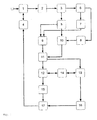
- An embodiment of the system for detecting the setting up of unwanted calls in a telecommunications network according to the invention is shown in the form of a block diagram.
- the service control module 1 is used for real-time interactive control of electric signals containing messages of subscriber calls made within the telecommunications network by internal and external subscribers. Electric signals containing those messages are analysed in the subscriber event analyser 2 and the calendar date, the start and end time of an (legal or illegal) event and the traffic profile of the SIM card are determined. Then, the electric signals with the analysed messages are stored in the subscriber event logging module 3 , from which electric signals are selectively drawn separately for the newly-activated subscriber account log 5 and for the outgoing call log 6 .
- the electric signals containing up-to-date messages of the subscriber accounts, stored in the newly-activated subscriber account log 5 , are transmitted simultaneously to the first unique outgoing call counter for short-term log data 9 and to the second unique outgoing call counter for long-term log data 10 , and the electric signals containing outgoing call data are drawn from the outgoing call log 6 and are simultaneously transmitted to the short-term log of outgoing calls 7 and to the long-term log of outgoing calls 8.
- the electric signals are transmitted from the short-term log of outgoing calls 7 to the first unique outgoing call counter for short-term log data 9 , and the electric signals are transmitted from the long-term log of outgoing calls 8 to the second unique outgoing call counter for long-term log data 10 , then, both from the first unique outgoing call counter for short-term log data 9 and from the second unique outgoing call counter for long-term log data 10 the electric signals are transmitted to the subscriber device location module 11 , in which the electric signals containing location data of the subscriber devices are read and location indices are assigned, and, after that, the electric signals containing location data of the subscriber devices are transmitted simultaneously to the module which processes results of analyses for calls from the short-term log 12 and to the module which processes results of analyses for calls from the long-term log 13 .
- the electric signals containing details of SIM card numbers of subscriber devices making fraudulent operations are drawn from the subscriber device suspicious location log 14 , and those electric signals are simultaneously fed into the module which processes results of analyses for calls from the short-term log 12 and into the module which processes results of analyses for calls from the long-term log 13 , in which the electric signals are parameterised and correlations between them are established by comparing electric signals containing location details of subscribers making legitimate operations to electric signals containing location details of subscribers making fraudulent operations.
- the electric signals processed that way are transmitted to the module which generates results of analyses for calls from the short-term log 15 and to the module which generates results of analyses for calls from the long-term log 16 , which produce the electric signals which set up parameters of the module blocking subscriber accounts 17 , and next, the electric signals generated in the module blocking subscriber accounts 17 are fed into the subscriber account parameter log 4 , and the electric signals modified in the subscriber account parameter log 4 are used to control the procedure of the service control module 1 .
- a test call in the short-term analysis of subscriber events more than 2 test calls are initiated with unique subscriber device numbers, in a time interval lasting up to 4 hours, and in a long-term analysis of subscriber events more than 2 test calls are initiated with unique subscriber device numbers, in a time interval determined by the operator based on unwanted calls in a unit of time.
- the output interface of the service control module 1 is connected to the input of the subscriber event logging module 3 via the subscriber event analyser 2 .
- the first output of the subscriber event logging module 3 is connected, via the newly-activated subscriber account log 5 , to the first input of the first unique outgoing call counter for short-term log data 9 and to the first input of the second unique outgoing call counter for long-term log data 10 .
- the second output of the subscriber event logging module 3 is connected, via the outgoing call log 6 , to the input of the short-term log of outgoing calls 7 and to the input of the long-term log of outgoing calls 8 .
- the output of the short-term log of outgoing calls 7 to the operator is connected to the second input of the first unique outgoing call counter for short-term log data 9
- the output of the long-term log of outgoing calls 8 is connected to the second input of the second unique outgoing call counter for long-term log data 10 .
- the output of the first unique outgoing call counter for short-term log data 9 is connected to the first input of the subscriber device location module 11
- the output of the second unique outgoing call counter for long-term log data 10 is connected to the second input of the subscriber device location module 110 .
- the first output of the subscriber device location module 11 is connected to the first input of the module which processes results of analyses for calls from the short-term log 12
- the second output of the subscriber device location module 11 is connected to the first input of the module which processes results of analyses for calls from the long-term log 13 .
- the module which processes results of analyses for calls from the short-term log 12 is connected, via an input/output interface, to the subscriber device suspicious location log 14 , which is connected, via an input/output interface, to the module which processes results of analyses for calls from the long-term log 13 .
- the output of the module which processes results of analyses for calls from the short-term log 12 is connected, via the module which generates results of analyses for calls from the short-term log 15 , to the first input of the module blocking subscriber accounts 17 .
- the output of the module which processes results of analyses for calls from the long-term log 13 is connected, via the module which generates results of analyses for calls from the long-term log 16 , to the second input of the module blocking subscriber accounts 17.
- the output of the module blocking subscriber accounts 17 is connected to the subscriber account parameter log 4 which, in turn, is connected, via an input/output interface, to the service control module 1 .
- the method and the system for detecting the setting up of unwanted calls in a telecommunications network are suitable for real-time determination of the location of illegal calls and the traffic profile of the SIM card and for immediate generation of electric signals with settings which allow an effective blockade of a specific subscriber account, thus preventing the loss of operator's profits due to the procedure of fraudulent setting up of calls.
Landscapes
- Engineering & Computer Science (AREA)
- Signal Processing (AREA)
- Computer Security & Cryptography (AREA)
- Technology Law (AREA)
- Monitoring And Testing Of Exchanges (AREA)
- Exchange Systems With Centralized Control (AREA)
- Telephonic Communication Services (AREA)
Applications Claiming Priority (1)
| Application Number | Priority Date | Filing Date | Title |
|---|---|---|---|
| PL403821A PL222772B1 (pl) | 2013-05-09 | 2013-05-09 | Sposób i układ do wykrywania niepożądanego zestawiania połączeń rozmównych w sieci telekomunikacyjnej |
Publications (1)
| Publication Number | Publication Date |
|---|---|
| EP2802132A1 true EP2802132A1 (fr) | 2014-11-12 |
Family
ID=50792400
Family Applications (1)
| Application Number | Title | Priority Date | Filing Date |
|---|---|---|---|
| EP14460025.1A Withdrawn EP2802132A1 (fr) | 2013-05-09 | 2014-04-30 | Procédé et système de détection du paramétrage d'appels indésirables dans un réseau de télécommunication |
Country Status (2)
| Country | Link |
|---|---|
| EP (1) | EP2802132A1 (fr) |
| PL (1) | PL222772B1 (fr) |
Cited By (1)
| Publication number | Priority date | Publication date | Assignee | Title |
|---|---|---|---|---|
| CN106161530A (zh) * | 2015-04-08 | 2016-11-23 | 联想(北京)有限公司 | 智能终端的控制方法及装置、云端服务器的管理方法 |
Citations (3)
| Publication number | Priority date | Publication date | Assignee | Title |
|---|---|---|---|---|
| US5495521A (en) * | 1993-11-12 | 1996-02-27 | At&T Corp. | Method and means for preventing fraudulent use of telephone network |
| WO2011080638A1 (fr) | 2009-12-31 | 2011-07-07 | Turkcell Teknoloji Arastirma Ve Gelistirme Anonim Sirketi | Plate-forme et procédé de détection de support illégal |
| EP2466938A1 (fr) | 2010-12-16 | 2012-06-20 | Research In Motion Limited | Procédé et appareil à utiliser dans le contrôle du trafic de données pour un terminal mobile sans fil utilisant un point d'accès sans fil |
-
2013
- 2013-05-09 PL PL403821A patent/PL222772B1/pl unknown
-
2014
- 2014-04-30 EP EP14460025.1A patent/EP2802132A1/fr not_active Withdrawn
Patent Citations (3)
| Publication number | Priority date | Publication date | Assignee | Title |
|---|---|---|---|---|
| US5495521A (en) * | 1993-11-12 | 1996-02-27 | At&T Corp. | Method and means for preventing fraudulent use of telephone network |
| WO2011080638A1 (fr) | 2009-12-31 | 2011-07-07 | Turkcell Teknoloji Arastirma Ve Gelistirme Anonim Sirketi | Plate-forme et procédé de détection de support illégal |
| EP2466938A1 (fr) | 2010-12-16 | 2012-06-20 | Research In Motion Limited | Procédé et appareil à utiliser dans le contrôle du trafic de données pour un terminal mobile sans fil utilisant un point d'accès sans fil |
Cited By (1)
| Publication number | Priority date | Publication date | Assignee | Title |
|---|---|---|---|---|
| CN106161530A (zh) * | 2015-04-08 | 2016-11-23 | 联想(北京)有限公司 | 智能终端的控制方法及装置、云端服务器的管理方法 |
Also Published As
| Publication number | Publication date |
|---|---|
| PL222772B1 (pl) | 2016-09-30 |
| PL403821A1 (pl) | 2014-11-10 |
Similar Documents
| Publication | Publication Date | Title |
|---|---|---|
| US11089152B2 (en) | Placement of a missed call | |
| CN104735272B (zh) | 一种骚扰电话的拦截方法及系统 | |
| EP3136677A1 (fr) | Procédé, dispositif et système de vérification de voix | |
| CN104243727A (zh) | 对诈骗电话进行大数据分析确认及拦截的系统和方法 | |
| EP3226528A1 (fr) | Procédé et système de détection de dérivation d'interconnexion utilisant des appels de test à des abonnés réels | |
| RU2429589C2 (ru) | Способ обнаружения мошенничества при роуминговых соединениях в сетях мобильной связи | |
| CN101873618A (zh) | 一种通信监控方法及装置 | |
| CN114221993A (zh) | 移动式GoIP设备监测方法、装置、存储介质及电子设备 | |
| CN114168423A (zh) | 异常号码的呼叫监控方法、装置、设备及存储介质 | |
| WO2012136285A1 (fr) | Système de détection de dérivation avec masquage de numéro | |
| CN104581668A (zh) | 一种紧急呼叫方法及电子设备 | |
| EP2802132A1 (fr) | Procédé et système de détection du paramétrage d'appels indésirables dans un réseau de télécommunication | |
| CN103220662B (zh) | 一种应用程序的处理方法和移动终端 | |
| EA028488B1 (ru) | Система обнаружения обходного канала соединения с телекоммуникационной сетью | |
| CN115733924A (zh) | 一种呼叫中心电话拦截数据识别系统 | |
| CN102547249A (zh) | 一种基于3g网络的视频监控点对点访问方法 | |
| CN112788016B (zh) | 一种非法用户识别方法、装置、电子设备及存储介质 | |
| CN1171025A (zh) | 无线通信系统中信道夺取的检测和防止 | |
| CN107147672A (zh) | 一种语音识别的验证方法 | |
| CN105450548A (zh) | 路由器控制方法、装置及系统 | |
| CN112004228B (zh) | 实人认证方法及系统 | |
| US11108914B2 (en) | Method and system for revenue maximization in a communication network | |
| CN111064850A (zh) | 基于通信网络实现骚扰电话防控与提醒的系统及方法 | |
| CN101873556A (zh) | 一种针对通信网络恶意信息的蜜罐捕获系统 | |
| CN104168549B (zh) | 信息发送方法及装置 |
Legal Events
| Date | Code | Title | Description |
|---|---|---|---|
| PUAI | Public reference made under article 153(3) epc to a published international application that has entered the european phase |
Free format text: ORIGINAL CODE: 0009012 |
|
| 17P | Request for examination filed |
Effective date: 20140430 |
|
| AK | Designated contracting states |
Kind code of ref document: A1 Designated state(s): AL AT BE BG CH CY CZ DE DK EE ES FI FR GB GR HR HU IE IS IT LI LT LU LV MC MK MT NL NO PL PT RO RS SE SI SK SM TR |
|
| AX | Request for extension of the european patent |
Extension state: BA ME |
|
| R17P | Request for examination filed (corrected) |
Effective date: 20150512 |
|
| RBV | Designated contracting states (corrected) |
Designated state(s): AL AT BE BG CH CY CZ DE DK EE ES FI FR GB GR HR HU IE IS IT LI LT LU LV MC MK MT NL NO PL PT RO RS SE SI SK SM TR |
|
| 17Q | First examination report despatched |
Effective date: 20170601 |
|
| STAA | Information on the status of an ep patent application or granted ep patent |
Free format text: STATUS: THE APPLICATION IS DEEMED TO BE WITHDRAWN |
|
| 18D | Application deemed to be withdrawn |
Effective date: 20171012 |