EP2803362B1 - Substance sensibilisant à l'insuline hépatique et repas de test pour une sensibilisation à l'insuline - Google Patents
Substance sensibilisant à l'insuline hépatique et repas de test pour une sensibilisation à l'insuline Download PDFInfo
- Publication number
- EP2803362B1 EP2803362B1 EP14168369.8A EP14168369A EP2803362B1 EP 2803362 B1 EP2803362 B1 EP 2803362B1 EP 14168369 A EP14168369 A EP 14168369A EP 2803362 B1 EP2803362 B1 EP 2803362B1
- Authority
- EP
- European Patent Office
- Prior art keywords
- hiss
- mammal
- insulin
- seq
- protein
- Prior art date
- Legal status (The legal status is an assumption and is not a legal conclusion. Google has not performed a legal analysis and makes no representation as to the accuracy of the status listed.)
- Active
Links
Images




Classifications
-
- C—CHEMISTRY; METALLURGY
- C07—ORGANIC CHEMISTRY
- C07K—PEPTIDES
- C07K14/00—Peptides having more than 20 amino acids; Gastrins; Somatostatins; Melanotropins; Derivatives thereof
- C07K14/435—Peptides having more than 20 amino acids; Gastrins; Somatostatins; Melanotropins; Derivatives thereof from animals; from humans
- C07K14/575—Hormones
- C07K14/62—Insulins
-
- A—HUMAN NECESSITIES
- A61—MEDICAL OR VETERINARY SCIENCE; HYGIENE
- A61K—PREPARATIONS FOR MEDICAL, DENTAL OR TOILETRY PURPOSES
- A61K38/00—Medicinal preparations containing peptides
- A61K38/16—Peptides having more than 20 amino acids; Gastrins; Somatostatins; Melanotropins; Derivatives thereof
- A61K38/17—Peptides having more than 20 amino acids; Gastrins; Somatostatins; Melanotropins; Derivatives thereof from animals; from humans
- A61K38/22—Hormones
- A61K38/28—Insulins
-
- A—HUMAN NECESSITIES
- A61—MEDICAL OR VETERINARY SCIENCE; HYGIENE
- A61P—SPECIFIC THERAPEUTIC ACTIVITY OF CHEMICAL COMPOUNDS OR MEDICINAL PREPARATIONS
- A61P1/00—Drugs for disorders of the alimentary tract or the digestive system
-
- A—HUMAN NECESSITIES
- A61—MEDICAL OR VETERINARY SCIENCE; HYGIENE
- A61P—SPECIFIC THERAPEUTIC ACTIVITY OF CHEMICAL COMPOUNDS OR MEDICINAL PREPARATIONS
- A61P3/00—Drugs for disorders of the metabolism
-
- A—HUMAN NECESSITIES
- A61—MEDICAL OR VETERINARY SCIENCE; HYGIENE
- A61P—SPECIFIC THERAPEUTIC ACTIVITY OF CHEMICAL COMPOUNDS OR MEDICINAL PREPARATIONS
- A61P3/00—Drugs for disorders of the metabolism
- A61P3/08—Drugs for disorders of the metabolism for glucose homeostasis
- A61P3/10—Drugs for disorders of the metabolism for glucose homeostasis for hyperglycaemia, e.g. antidiabetics
-
- A—HUMAN NECESSITIES
- A61—MEDICAL OR VETERINARY SCIENCE; HYGIENE
- A61P—SPECIFIC THERAPEUTIC ACTIVITY OF CHEMICAL COMPOUNDS OR MEDICINAL PREPARATIONS
- A61P7/00—Drugs for disorders of the blood or the extracellular fluid
-
- C—CHEMISTRY; METALLURGY
- C12—BIOCHEMISTRY; BEER; SPIRITS; WINE; VINEGAR; MICROBIOLOGY; ENZYMOLOGY; MUTATION OR GENETIC ENGINEERING
- C12Q—MEASURING OR TESTING PROCESSES INVOLVING ENZYMES, NUCLEIC ACIDS OR MICROORGANISMS; COMPOSITIONS OR TEST PAPERS THEREFOR; PROCESSES OF PREPARING SUCH COMPOSITIONS; CONDITION-RESPONSIVE CONTROL IN MICROBIOLOGICAL OR ENZYMOLOGICAL PROCESSES
- C12Q1/00—Measuring or testing processes involving enzymes, nucleic acids or microorganisms; Compositions therefor; Processes of preparing such compositions
- C12Q1/54—Measuring or testing processes involving enzymes, nucleic acids or microorganisms; Compositions therefor; Processes of preparing such compositions involving glucose or galactose
-
- G—PHYSICS
- G01—MEASURING; TESTING
- G01N—INVESTIGATING OR ANALYSING MATERIALS BY DETERMINING THEIR CHEMICAL OR PHYSICAL PROPERTIES
- G01N33/00—Investigating or analysing materials by specific methods not covered by groups G01N1/00 - G01N31/00
- G01N33/48—Biological material, e.g. blood, urine; Haemocytometers
- G01N33/50—Chemical analysis of biological material, e.g. blood, urine; Testing involving biospecific ligand binding methods; Immunological testing
- G01N33/66—Chemical analysis of biological material, e.g. blood, urine; Testing involving biospecific ligand binding methods; Immunological testing involving blood sugars, e.g. galactose
-
- G—PHYSICS
- G01—MEASURING; TESTING
- G01N—INVESTIGATING OR ANALYSING MATERIALS BY DETERMINING THEIR CHEMICAL OR PHYSICAL PROPERTIES
- G01N33/00—Investigating or analysing materials by specific methods not covered by groups G01N1/00 - G01N31/00
- G01N33/48—Biological material, e.g. blood, urine; Haemocytometers
- G01N33/50—Chemical analysis of biological material, e.g. blood, urine; Testing involving biospecific ligand binding methods; Immunological testing
- G01N33/74—Chemical analysis of biological material, e.g. blood, urine; Testing involving biospecific ligand binding methods; Immunological testing involving hormones or other non-cytokine intercellular protein regulatory factors such as growth factors, including receptors to hormones and growth factors
-
- G—PHYSICS
- G01—MEASURING; TESTING
- G01N—INVESTIGATING OR ANALYSING MATERIALS BY DETERMINING THEIR CHEMICAL OR PHYSICAL PROPERTIES
- G01N2333/00—Assays involving biological materials from specific organisms or of a specific nature
- G01N2333/435—Assays involving biological materials from specific organisms or of a specific nature from animals; from humans
- G01N2333/575—Hormones
- G01N2333/62—Insulins
-
- G—PHYSICS
- G01—MEASURING; TESTING
- G01N—INVESTIGATING OR ANALYSING MATERIALS BY DETERMINING THEIR CHEMICAL OR PHYSICAL PROPERTIES
- G01N2800/00—Detection or diagnosis of diseases
- G01N2800/04—Endocrine or metabolic disorders
- G01N2800/042—Disorders of carbohydrate metabolism, e.g. diabetes, glucose metabolism
-
- G—PHYSICS
- G01—MEASURING; TESTING
- G01N—INVESTIGATING OR ANALYSING MATERIALS BY DETERMINING THEIR CHEMICAL OR PHYSICAL PROPERTIES
- G01N2800/00—Detection or diagnosis of diseases
- G01N2800/04—Endocrine or metabolic disorders
- G01N2800/044—Hyperlipemia or hypolipemia, e.g. dyslipidaemia, obesity
-
- G—PHYSICS
- G01—MEASURING; TESTING
- G01N—INVESTIGATING OR ANALYSING MATERIALS BY DETERMINING THEIR CHEMICAL OR PHYSICAL PROPERTIES
- G01N2800/00—Detection or diagnosis of diseases
- G01N2800/32—Cardiovascular disorders
-
- G—PHYSICS
- G01—MEASURING; TESTING
- G01N—INVESTIGATING OR ANALYSING MATERIALS BY DETERMINING THEIR CHEMICAL OR PHYSICAL PROPERTIES
- G01N2800/00—Detection or diagnosis of diseases
- G01N2800/34—Genitourinary disorders
- G01N2800/347—Renal failures; Glomerular diseases; Tubulointerstitial diseases, e.g. nephritic syndrome, glomerulonephritis; Renovascular diseases, e.g. renal artery occlusion, nephropathy
Definitions
- the present invention relates generally to the diagnosis and treatment of metabolic disorders, and to pharmaceutical compounds which affect hyperglycemia, insulin resistance, Absence of Meal-Induced Insulin Sensitization (AMIS) syndrome, pre-diabetes, and diabetes.
- AMIS Meal-Induced Insulin Sensitization
- AMIS syndrome describes a cluster of related pathologies that include obesity, diabetes, cardiovascular disease, retinal and kidney failure, and the metabolic dysfunctions associated with the originally-named Syndrome X.
- the original name of the syndrome and the subsequent 13 attempts to rename it including the American Diabetes Association's renaming as Cardiometabolic Risk (CMR) (Grundy et al., 2005), did not determine a mechanistic link between the pathologies, other than as risk factors for other of the pathologies.
- CMR Cardiometabolic Risk
- AMIS syndrome is based on the discovery of the phenomenon and mechanism of Meal-induced Insulin Sensitization (MIS), and how Absence of Meal-induced Insulin Sensitization (AMIS) results in the initiation of a progressive, predictable cluster of pathologies that are not diagnosed until well into the AMIS syndrome.
- MIS Meal-induced Insulin Sensitization
- AMIS Absence of Meal-induced Insulin Sensitization
- MIS is demonstrated by a much larger hypoglycemic response to insulin after a meal as compared with the response to insulin in the fasted state, as first reported in 2001 by the present inventor in rats (Lautt et al., 2001) and later confirmed by the present inventor in humans (Patarrao et al., 2008).
- the degree of MIS is determined by the ability of pulses of insulin to cause the secretion of Hepatic Insulin Sensitizing Substance (HISS) from the liver.
- HISS is released from the liver in response to pulses of insulin, but only in the presence of 2 synergistic, permissive feeding signals, one neural via the hepatic parasympathetic nerves and one chemical through elevation of hepatic glutathione levels (Lautt et al., 2011).
- the nerve response is mediated by nitric oxide and cGMP.
- the feeding signals are activated by the presence of food in the upper GI tract, even if the food is a liquid injected into the stomach of anesthetized rats (Sadri et al., 2006). This knowledge of the biological role and signaling pathway of HISS is based on studies by the present inventor.
- HISS more than doubles the hypoglycemic effect of insulin in rats (Lautt et al., 2001), and triples the effect in humans (Patarrao et al., 2008).
- the proportion of nutrient energy stored as glycogen or lipids is dependent on the balance between HISS and insulin.
- HISS acts by selective stimulation of glucose uptake and storage as glycogen in skeletal muscle, heart and kidneys, but not the liver, adipose tissue, or pancreas (Fernandez et al., 2011).
- AMIS results in a reduction of at least 50% of the hypoglycemic response to secreted insulin for a single meal.
- AMIS occurs in states of stress (Seredycz et al., 2006).
- AMIS is induced by an isocaloric sucrose supplemented diet (Ribeiro et al., 2005), a high fat diet (Afonso et al., 2010), or fetal exposure to maternal consumption of alcohol (Sadri et al., 2003).
- AMIS occurs progressively with age (Lautt et al., 2008).
- Glucose levels are well maintained despite AMIS, as long as increased insulin secretion can compensate for lack of HISS action. Increased insulin secretion almost fully compensates the resulting mild hyperglycemia after about 2 hours. Insulin, however, stimulates adipocytes and hepatocytes to form lipids for peripheral fat storage. The result is that in AMIS, where increased insulin secretion is necessary to compensate for lack of HISS action, nutrient storage after a meal shifts from glycogen to lipids. AMIS accounts for postprandial hyperglycemia, hyperinsulinemia and hyperlipidemia.
- hyperglycemia can be controlled via the administration of insulin or cellular insulin sensitizers.
- this treatment is associated with adiposity since, as described above, insulin stimulates adipocytes and hepatocytes to form lipids for peripheral fat storage.
- Direct insulin action is not altered by feeding (Sadri et al., 2006) so that the increased response to a bolus of insulin is not sensitized at the cellular level but rather at the whole body homeostatic level.
- the biological activity of HISS has been well studied, and the pathologies of syndrome X have been shown to be strongly related to lack of HISS action, in the absence of altered direct insulin sensitivity (Xie et al., 2006).
- AMIS is prevented and reversed in diabetic rats by voluntary exercise (Chowdhury et al., 2011).
- the present inventors developed a therapeutic that restores the response to each meal when the 2 feeding signals are mimicked (Lautt et al., 2011) and a targeted synergistic antioxidant cocktail that prevents or strongly inhibits the long term effects of a high sugar diet and aging (Lautt et al., 2010) by preservation of the ability of insulin to cause secretion of HISS.
- HISS human immunosensus styrene-styrene-styrene-styrene-styrene-styrene-styrene-styrene-styrene-styrene-styrene-styrene-styrene-styrene-styrene-styrene-styrene-sulfenzyme et al., 2006).
- a Brazilian team claimed that bone morphogenetic protein 9 was HISS (Caperuto et al., 2008), but the molecule has no rapid hypoglycemic effect and only acts after several hours. HISS, in contrast, is metabolized as quickly as insulin.
- the present disclosure teaches an isolated peptide or protein comprising the amino sequence of SEQ ID NO:1 or an amino acid sequence having at least 70% or 80% or 90% identity therewith, the peptide or protein being nitrosylated at one or more of cysteine residues 7 and 19 of SEQ ID NO:1.
- the peptide or protein is nitrosylated at cysteine residues 7 and 19 of SEQ ID NO:1.
- Pharmaceutical compositions comprising the isolated peptide or protein or a pharmaceutically acceptable salt thereof, and a pharmaceutically-acceptable carrier are also taught.
- the disclosure also teaches a method of treating or preventing one or more of hyperglycemia, pre-diabetes, Absence of Meal-induced Insulin Sensitization (AMIS) Syndrome, diabetes, a functional deficiency in Hepatic Insulin Sensitizing Substance (HISS), or a combination thereof in a mammal, the method comprising administering a therapeutically effective amount of the pharmaceutical composition of the disclosure.
- AMIS Meal-induced Insulin Sensitization
- HISS Hepatic Insulin Sensitizing Substance
- the disclosure also teaches a method of treating or preventing obesity or left ventricle cardiac weakness, or a combination thereof in a mammal, the method comprising administering a therapeutically effective amount of the pharmaceutical composition of the disclosure.
- the disclosure also teaches a method of shifting nutrient storage in a livestock animal from muscle to fat, the method comprising administering an effective amount of the pharmaceutical composition of the disclosure to the livestock animal.
- the disclosure teaches a method of determining a therapeutically effective dose of the pharmaceutical composition of the disclosure for administration to a mammal with hyperglycemia, the method comprising:
- the methods of the disclosure may further comprise administering insulin to the mammal.
- the method of determining dosage may be repeated with the test dosage being increased by a pre-determined value. If the patient's measured blood glucose level is lower than average healthy blood glucose levels for that mammal, the method may be repeated with the test dosage being decreased by a pre-determined value.
- test meal for use in diagnosing AMIS Syndrome or for determining a therapeutically effective dose of the pharmaceutical composition of the disclosure, the test meal comprising a soy milk base and a pre-defined amount of glucose.
- the pre-defined amount of glucose may be 1 g per kilogram of a test subject's body weight.
- the liquid test meal of the disclosure may have a pre-defined volume of 3 1 ⁇ 3 ml per kilogram of a test subject's body weight.
- the disclosure also teaches a method to assess Absence of Meal-induced Insulin Sensitization (AMIS) Syndrome,in a mammalian patient comprising:
- HISS is a 29 amino acid peptide (FVNQHLCGSHLVEALYLVCGERGFFYTPK) that is nitrosylated at cysteine residues 7 and 19 (See SEQ ID NO:1).
- the primary sequence of HISS is similar to the B chain of human insulin, however, the cysteine residues which would otherwise link the mature B chain of insulin to the A chain by disulfide bridges are modified by nitrosylation.
- the kinetics of insulin and HISS are similar. After an intravenous injection, the action of both hormones increases to a peak and returns to baseline after 35 min minutes in rats and 90 min in humans.
- HISS is stable for at least 24 hours at room temperature, and retains its activity even after being frozen and reconstituted from powder.
- HISS is produced when insulin binds to receptors on the surface of the liver.
- the insulin is transported into the liver cells where it is acted upon by protein disulfide isomerase (PDI).
- PDI cleaves the insulin molecule into the A and B chain of insulin. Additional degradation of insulin occurs through the action of insulin degrading enzyme (IDE).
- IDE insulin degrading enzyme
- Glutathione (GSH) is a peptide that serves a wide range of functions in the liver and cycles between the oxidized and reduced state. GSH activity influences the activity of PDI.
- HISS may be used for treating hyperglycemia in a mammalian patient. It is believed that use of HISS to treat hyperglycemia spares the need for pancreatic secretion of insulin and therefore avoids the imbalanced nutrient storage after a meal as fat. Instead, since HISS is anabolic and glycogenic, nutrient storage after a meal is shifted to muscle, heart and kidneys. Addition of HISS to insulin administration can be used to mimic the normal healthy response to a meal and shift nutrient storage selectively to muscle, heart and kidneys. Alternatively HISS can be administered instead of insulin.
- HISS may also be used for treating type 2 diabetes, AMIS syndrome and obesity in a patient suffering from a functional deficiency in HISS.
- HISS may also be used in methods for diagnosing AMIS syndrome, even before insulin resistance, fasting hyperglycemia, adiposity, or elevated HBA1c occur.
- HISS has a positive anabolic effect on protein synthesis, and therefore it may be beneficial to administer HISS to meat-producing livestock to shift nutrient storage to muscle rather than fat.
- HISS action may also prevent left ventricular cardiac weakness.
- administering includes dispensing, delivering or applying HISS, e.g., HISS in a pharmaceutical formulation (as described herein), to a subject by any suitable route for delivery of the compound to the desired location in the subject, including delivery by either the parenteral or oral route, intramuscular injection, subcutaneous/intradermal injection, intravenous injection, buccal administration, transdermal delivery and administration by the rectal, colonic, intranasal or respiratory tract route.
- HISS e.g., HISS in a pharmaceutical formulation (as described herein)
- the present invention also provides pharmaceutically acceptable formulations comprising HISS.
- Such pharmaceutically acceptable formulations typically include HISS or a pharmaceutically acceptable salt thereof as well as a pharmaceutically acceptable carrier(s) and/or excipient(s).
- pharmaceutically acceptable carrier includes any and all solvents, dispersion media, coatings, antibacterial and anti fungal agents, isotonic and absorption delaying agents, excipients and the like that are physiologically compatible. The use of such media and agents for pharmaceutically active substances is well known in the art. Except in so far as any conventional media or agent is incompatible with the HISS, use thereof in the pharmaceutical compositions is contemplated.
- a pharmaceutical composition of the invention is formulated to be compatible with its intended route of administration.
- routes of administration include parenteral (e.g., intravenous, intradermal, subcutaneous), oral (e.g., inhalation), transdermal (topical), transmucosal, and rectal administration.
- Solutions or suspensions used for parenteral, intradermal, or subcutaneous application can include the following components: a sterile diluent such as water for injection, saline solution, fixed oils, polyethylene glycols, glycerine, propylene glycol or other synthetic solvents; antibacterial agents such as benzyl alcohol or methyl parabens; antioxidants such as ascorbic acid or sodium bisulfite; chelating agents such as ethylenediaminetetraacetic acid; buffers such as acetates, citrates or phosphates and agents for the adjustment of tonicity such as sodium chloride or dextrose. pH can be adjusted with acids or bases, such as hydrochloric acid or sodium hydroxide.
- the parenteral preparation can be enclosed in ampoules, disposable syringes or multiple dose vials made of glass or plastic.
- compositions suitable for injectable use include sterile aqueous solutions (where water soluble) or dispersions and sterile powders for the extemporaneous preparation of sterile injectable solutions or dispersion.
- suitable carriers include physiological saline, bacteriostatic water, Cremophor EI.TM. (BASF, Parsippany, N.J.) or phosphate buffered saline (PBS).
- the pharmaceutical composition must be sterile and should be fluid to the extent that easy syringability exists. It must be stable under the conditions of manufacture and storage and must be preserved against the contaminating action of microorganisms such as bacteria and fungi.
- the carrier can be a solvent or dispersion medium containing, for example, water, ethanol, polyol (for example, glycerol, propylene glycol, and liquid polyetheylene glycol, and the like), and suitable mixtures thereof.
- the proper fluidity can be maintained, for example, by the use of a coating such as lecithin, by the maintenance of the required particle size in the case of dispersion and by the use of surfactants.
- Prevention of the action of microorganisms can be achieved by various antibacterial and antifungal agents, for example, parabens, chlorobutanol, phenol, ascorbic acid, thimerosal, and the like.
- isotonic agents for example, sugars, polyalcohols such as manitol, sorbitol, sodium chloride in the composition.
- Prolonged absorption of the injectable compositions can be brought about by including in the composition an agent which delays absorption, for example, aluminum monostearate and gelatin.
- Sterile injectable solutions can be prepared by incorporating HISS or a pharmaceutically acceptable salt thereof in the required amount in an appropriate solvent with one or a combination of the ingredients enumerated above, as required, followed by filtered sterilization.
- dispersions are prepared by incorporating the angiogenesis inhibitor compound into a sterile vehicle which contains a basic dispersion medium and the required other ingredients from those enumerated above.
- the preferred methods of preparation are vacuum drying and freeze-drying which yields a powder of HISS or a pharmaceutically acceptable salt thereof plus any additional desired ingredient from a previously sterile-filtered solution thereof.
- Oral compositions generally include an inert diluent or an edible carrier. They can be enclosed in gelatin capsules or compressed into tablets. For the purpose of oral therapeutic administration, HISS or a pharmaceutically acceptable salt thereof can be incorporated with excipients and used in the form of tablets, troches, or capsules. Oral compositions can also include an enteric coating. Oral compositions can also be prepared using a fluid carrier for use as a mouthwash, wherein HISS or a pharmaceutically acceptable salt thereof in the fluid carrier is applied orally and swished and expectorated or swallowed. Pharmaceutically compatible binding agents, and/or adjuvant materials can be included as part of the composition.
- the tablets, pills, capsules, troches and the like can contain any of the following ingredients, or compounds of a similar nature: a binder such as microcrystalline cellulose, gum tragacanth or gelatin; an excipient such as starch or lactose, a disintegrating agent such as alginic acid, Primogel, or corn starch; a lubricant such as magnesium stearate or Sterotes; a glidant such as colloidal silicon dioxide; a sweetening agent such as sucrose or saccharin; or a flavoring agent such as peppermint, methyl salicylate, or orange flavoring.
- a binder such as microcrystalline cellulose, gum tragacanth or gelatin
- an excipient such as starch or lactose, a disintegrating agent such as alginic acid, Primogel, or corn starch
- a lubricant such as magnesium stearate or Sterotes
- a glidant such as colloidal silicon dioxide
- the HISS or a pharmaceutically acceptable salt thereof is delivered in the form of an aerosol spray from pressured container or dispenser which contains a suitable propellant, e.g., a gas such as carbon dioxide, or a nebulizer.
- a suitable propellant e.g., a gas such as carbon dioxide, or a nebulizer.
- Systemic administration can also be by transmucosal or transdermal means.
- penetrants appropriate to the barrier to be permeated are used in the formulation.
- penetrants are generally known in the art, and include, for example, for transmucosal administration, detergents, bile salts, and fusidic acid derivatives.
- Transmucosal administration can be accomplished through the use of nasal sprays or suppositories.
- the angiogenesis inhibitor compounds are formulated into ointments, salves, gels, or creams as generally known in the art.
- HISS or a pharmaceutically acceptable salt thereof can also be prepared in the form of suppositories (e.g., with conventional suppository bases such as cocoa butter and other glycerides) or retention enemas for rectal delivery.
- suppositories e.g., with conventional suppository bases such as cocoa butter and other glycerides
- retention enemas for rectal delivery.
- HISS or a pharmaceutically acceptable salt thereof is prepared with carriers that will protect the compound against rapid elimination from the body, such as a controlled release formulation, including implants and microencapsulated delivery systems.
- a controlled release formulation including implants and microencapsulated delivery systems.
- Biodegradable, biocompatible polymers can be used, such as ethylene vinyl acetate, polyanhydrides, polyglycolic acid, collagen, polyorthoesters, and polylactic acid. Methods for preparation of such formulations will be apparent to those skilled in the art.
- the materials can also be obtained commercially from Alza Corporation and Nova Pharmaceuticals, Inc.
- Liposomal suspensions can also be used as pharmaceutically acceptable carriers. These can be prepared according to methods known to those skilled in the art.
- HISS or a pharmaceutically acceptable salt thereof can also be incorporated into pharmaceutical compositions which allow for the sustained delivery of HISS or a pharmaceutically acceptable salt thereof to a subject for a period of at least several weeks to a month or more.
- Such formulations are described in U.S. Pat. 5,968,895 .
- Dosage unit form refers to physically discrete units suited as unitary dosages for the subject to be treated; each unit containing a predetermined quantity of HISS or a pharmaceutically acceptable salt thereof calculated to produce the desired therapeutic effect in association with the required pharmaceutical carrier.
- the specification for the dosage unit forms of the invention are dictated by and directly dependent on the unique characteristics of HISS or the pharmaceutically acceptable salt thereof and the particular therapeutic effect to be achieved, and the limitations inherent in the art of compounding HISS or a pharmaceutically acceptable salt thereof for the treatment of individuals.
- Therapeutic efficacy of HISS or a pharmaceutically acceptable salt thereof can be determined by standard pharmaceutical procedures in cell cultures or experimental animals, e.g., for determining the LD50 (the dose lethal to 50% of the population) and the ED50 (the dose therapeutically effective in 50% of the population).
- the dose ratio between toxic and therapeutic effects is the therapeutic index and it can be expressed as the ratio LD50/ED50.
- Compounds of HISS or a pharmaceutically acceptable salt thereof which exhibit large therapeutic indices are preferred.
- the data obtained from the cell culture assays and animal studies can be used in formulating a range of dose for use in humans.
- the dose of HISS or a pharmaceutically acceptable salt thereof lies preferably within a range of circulating concentrations that include the ED50 with little or no toxicity.
- the dose may vary within this range depending upon the dosage form employed and the route of administration utilized.
- the therapeutically effective dose can be estimated initially from cell culture assays.
- a dose may be formulated in animal models to achieve a circulating plasma concentration range that includes the IC50 (i.e., the concentration of HISS or a pharmaceutically acceptable salt thereof which achieves a half-maximal inhibition of symptoms) as determined in cell culture.
- IC50 i.e., the concentration of HISS or a pharmaceutically acceptable salt thereof which achieves a half-maximal inhibition of symptoms
- levels in plasma may be measured, for example, by high performance liquid chromatography.
- HISS+ HISS+
- HISS- atropine HISS-blocked and fasting rats
- Plasma was collected from HISS+ (fed) and HISS- (fed with atropine blockage of hepatic muscarinic receptors; and fasting) anesthetized rats (n 34 total) at 5, 10 and 15 minutes after the initiation of a 5 minute 100 mU/kg bolus insulin intravenous infusion. This time was chosen since insulin levels decrease to baseline in plasma within 5 minutes, however, the in vivo hypoglycemic response peaks at 15-20 minutes (Lautt et al., 2001) due to HISS action. HISS action is delayed by about 4 minutes, and peaks at 19 minutes in rats and 40 minutes in humans.
- Plasma HISS activity on glucose uptake was tested in cultured L6 skeletal muscle cells using optimal assay conditions (3.06 x 10 3 cells/well/6-well plate, 8-day full growth cycle, no starvation, final 6% plasma/DMEM, 45 min stimulation at 37°C with 2-3 washes in PBS) using fluorescent glucose analog, 2-(N-(7-nitrobenz-2-oxa-1,3-diazol-4-yl)amino)-2-deoxyglucose (2-NBDG, 0.22mM), as an indicator (excitation/emission, 467/542 nm).
- the net relative fluorescence unit (RFU) increase/test well was calculated by subtracting background RFU value in the control well (L6 cells+DMEM+2NBDG-HISS plasma/plate). Individual plasma samples were tested in 1-3 wells/sample with 2 measurements/well. Data were obtained from 19 culture plates from 11 experiments, and expressed as Mean ⁇ SE. *: P ⁇ 0.05; **: P ⁇ 0.01; ***: P ⁇ 0.0001, unpaired t tests.
- Fig. 3 shows the decrease in HISS activity in stimulating glucose uptake in body cells in vivo.
- the half-life of HISS activity was 8.21 min. This was calculated from an extrapolated slope of HISS effects on a glucose infusion profile curve using a euglycemic clamp (Lautt et al., 2001) following the rapid insulin sensitivity test (RIST) procedure as described in the literature (Lautt et al., 1998). Briefly, the RIST procedure involves a transient euglycemic clamp in response to a bolus administration of 50 mU/kg insulin. Euglycemia is maintained by infusion of glucose throughout the 35-minute period of insulin action.
- RIST rapid insulin sensitivity test
- the RIST index is the amount of glucose that was required in order to prevent blood glucose levels from declining in response to insulin.
- Baseline glycemia is established by comparison of glucose levels in blood taken at 5-minute intervals. The average of these stable glycemic values is used as the target glycemia to maintain throughout the RIST.
- Insulin is administered by constant infusion over a 5-minute period and blood glucose levels are sampled after the first minute of insulin administration and at 2-minute intervals thereafter with glucose levels being maintained at the target baseline through use of a variable glucose infusion. Typically the glucose infusion rate must be increased to a peak level between 15 and 20 minutes and no further glucose is required after 35 minutes from the onset of insulin administration.
- the total amount of glucose required to prevent hypoglycemia is referred to as the RIST index and is expressed as mg glucose/kg body weight.
- Fig. 4 shows the correlation between RIST index and RFU.
- the in vivo RIST index and in vitro L6 skeletal muscle cell glucose uptake, as represented by RFU, stimulated by the same HISS+/- plasma samples were plotted and analyzed by linear regression analysis. Increased RIST index correlated with increased glucose uptake in cultured L6 cells (overlapping data points invisible).
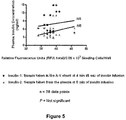
- Fig. 5 shows the correlation between plasma insulin concentration and RFU.
- Plasma insulin concentrations were quantified by ELISA using samples taken at 4 min 45 sec and 5 min of insulin infusion in the same rat. Individual insulin concentrations were plotted with glucose uptake response RFU in cultured L6 skeletal muscle cells stimulated by plasma from the same rats, and analyzed by linear regression analysis.
- HISS was shown to be stable at room temperature for at least 24 hr, but activity was destroyed at 56°C for 2 hr, demonstrating it is of protein in nature and suitable for clinical laboratory testing ( Fig. 6 ).
- Fig. 6 shows the results of a HISS activity stability test.
- Treated plasma was immediately tested in bioassay at the end of each treatment using optimal conditions. Data were obtained from 2 wells/pooled plasma group, 2 measurements/well, 4 culture plates, 2 experiments, and expressed as Mean ⁇ SE. **: P ⁇ 0.01, unpaired t test.
- Results show HISS activity is stable at room temperature but destroyed at 56°C demonstrating the protein nature of HISS molecule.
- the molecular weight of HISS was demonstrated to be around 3000 Da ( Fig. 7 ).
- Fig. 7 shows pooled HISS plasma serial molecular weight (MW) filtration.
- the 100 kDa flow-through fraction went into the 2 nd filtration by 3 kDa MW filtration centrifugal devices using optimal conditions (no prerinse, 1.2 ml/tube, 3000 g, 10, 30 and 60 min, 4°C).
- the high HISS activity present in the 10 min flow-through fraction of 3 kDa MW filters demonstrates HISS molecular weight being around 3 kDa.
- HISS was sequenced and found to be a peptide of 29 amino acids, FVNQHLCGSHLVEALYLVCGERGFFYTPK.
- HISS was demonstrated to contain at least one disulfide bond ( Fig. 8 ). Opening disulfide bond(s) can cause increased HISS activity, implying HISS activity is directly linked with modification on sulfur (S) atom(s) of the cysteine residue(s) in HISS molecule ( Fig. 8 ).
- Fig. 8 shows dithioerythritol (DTE) reduction of HISS+/- plasma.
- DTE dithioerythritol
- HISS molecule contains at least one disulfide bond and breaking the -S-S- bond(s) is associated with altered HISS activity, further confirming the protein structural feature of HISS molecule.
- HISS molecule The post translational modification on HISS molecule was shown to be nitrosylation ( Fig. 9 ). Removal of the NO group leads to decreased HISS activity ( Fig. 9 ).
- Fig. 9 shows S-Nitrosylation kit reduction of HISS+/- plasma.
- Results showed significantly decreased HISS activity in reduced plasma in comparison with non-reduced controls, demonstrating nitrosylation is present in HISS molecule and plays a critical role in HISS glucose uptake activity.
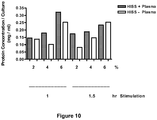
- Fig. 10 shows cultured L6 cell protein content change under HISS +/- plasma stimulation.
- Optimal growth conditions were used (3.06 x 10 3 cells/well/6-well plate, 8-day full growth cycle) with 4 hr cell starvation in DMEM culture medium only, and final 2, 4 and 6% HISS +/- plasma plus 5.55 mM glucose added as supplement per well for 1 and 1.5 hr stimulation time at 37°C.
- L6 cells were harvested by 1 wash with 2 ml PBS/well, lysed with 0.5 ml 0.1 N NaOH/well and stored at -80°C prior to protein quantification assay using Bio-Rad Protein Assay Standard Procedure. Data were collected from pooled 3 wells/sample from the same experiment.
- Results showed steady protein content increase with increased HISS+ plasma concentrations/well at both 1 and 1.5 hr stimulation time points, with background protein content increasing in the same trend but to lower levels in HISS- plasma stimulated wells.
- a suitable test meal for determining a therapeutically effective dose of HISS or for diagnosing AMIS Syndrome will have a soy milk base, a pre-defined amount of glucose, and optionally, flavouring.
- Soy milk has an appropriate combination of lipids, carbohydrate and protein to activate the feeding signals which allow insulin to stimulate HISS release.
- a test meal consisting of only sucrose or glucose, such as those commonly used in an oral glucose tolerance test, will not activate these feeding signals.
- Another limitation with a normal mixed meal is that the glucose elevation after a mixed meal is not sufficiently large for simple finger-prick blood glucose determinations to be useful as a sensitive indicator of glucose storing capacity. Soy milk therefore offers a convenient alternative to a mixed meal comprised of a wide range and combination of foods.
- the soy milk base can be provided in liquid or dried powder form.
- Glucose is then added to the soy milk base to create a high sugar load, which will result in larger hyperglycemic excursion than a normal mixed meal. Glucose by itself will not stimulate HISS release; however, a test meal according to the present disclosure stimulates both insulin and HISS release.
- Maintaining a standard dosage of glucose and soy milk is important for achieving standardized results between test subjects.
- the oral glucose tolerance test is given at the same dose for every body size, thus complicating comparisons of the degree of postrprandial hyperglycemia.
- the test meal is adjusted based on the subject's body weight.
- soy milk can be provided at 3 1/3 ml per kilogram of body mass (i.e. 250 ml for an average 75 kg subject).
- Glucose can then be added at a dosage of 1 gram per kilogram of body mass (i.e. 75 grams for an average 75 kg subject).
- the volume of the test meal is therefore adjusted according to body weight, as is its glucose content.
- the test meal is packaged in or with a container that includes calibrated markings which allow the user to determine the appropriate volume based on the subject's body mass.
- a test meal provided in liquid form is easier for many subjects to consume than other alternatives, such as dried oat biscuits marketed by CeproTM in Edmonton, Alberta.
- a liquid meal is often consumed more quickly by subjects and absorbed more rapidly than a dry meal, both of which improves standardization.
- a test meal consisting of pure glucose such as the test meal used in the oral glucose tolerance test
- a liquid soy-based test meal, particularly one with flavouring may be perceived by subjects as less unusual and therefore may be better tolerated.
- Liquid meals can also be easier to prepare in terms of standardizing the dosage and volume of the mean based on the subject's body mass.
- test meal may be designed to be reconstituted in water, pre-packaged as a liquid meal, or provided as a liquid soy milk base along with glucose to be added to a pre-defined volume of soy milk based on body weight.
- the dose of HISS or a pharmaceutically acceptable salt thereof to be administered can be estimated based on the dose of insulin that is being replaced.
- the appropriateness of the dose administered can be verified by showing improvement in a patient's glucose levels, evaluated exactly as insulin dose is verified and adjusted according to need.
- HISS or a pharmaceutically acceptable salt thereof and a pharmaceutically-acceptable carrier, and optionally insulin is administered to the patient based on his/her clinical condition and sensitivity to insulin.
- Response to the test meal may be used as an additional means of evaluating effective dosage.
- the patient drinks a standardized test meal according to Example 10 above.
- a blood sample should be taken from the patient and the glucose levels in the sample assayed. Finally, the patient's measured blood glucose levels should be compared to average healthy blood glucose levels.
- the method is repeated with the amount of HISS or a pharmaceutically acceptable salt thereof administered being increased. If the patient's measured blood glucose level is lower than average healthy blood glucose levels, the method is repeated with the amount of HISS or a pharmaceutically acceptable salt thereof administered being decreased.
- a HISS assay can be used to diagnose AMIS and detect the AMIS syndrome well before insulin resistance, fasting hyperglycemia, adiposity, or elevated HBA1c occurs.
- a fasted plasma sample is obtained from the patient.
- the patient is fed with a standardized test meal according to Example 10 above, and fed plasma samples are obtained from the patient at one or more time points up to about 120 minutes after the standardized test meal is eaten.
- HISS levels, and optionally insulin and/or glucose levels are assayed in the fasted and fed plasma samples, and the change in these levels upon feeding is determined.
- At least one fed plasma sample should be taken at about 20 to about 45 minutes after the standardized test meal is eaten and at least one other fed plasma sample should be taken at about 90 minutes to about 120 minutes after the standardized test meal is eaten.
- the 90 to 120 minute window provides valuable additional data, as a healthy response will show a return toward baseline for all 3 parameters by this time.
- the HISS, and optionally insulin and/or glucose levels, in both the fasted and fed plasma samples can be compared to average healthy values or with the subject's own past test results to evaluate interventions including diet, physical training, pharmaceuticals, nutraceuticals, alternative medical programs or lifestyle.
- the following alternate HISS assay can be used to diagnose AMIS and detect the AMIS syndrome well before insulin resistance, fasting hyperglycemia, adiposity, or elevated HBA1c occurs.
- a bolus intravenous insulin injection of 50 mU/Kg is administered to the subject, and the euglycemic clamp/RIST procedure (Patarrao et al., 2008) is used to detect direct insulin action in the fasted state.
- the RIST index obtained is the amount of glucose required to maintain a steady baseline glucose level after insulin administration.
- the patient consumes the standard test meal described in Example 10 above, and 90 minutes afterwards another bolus intravenous insulin injection of 50 mU/Kg is administered to the subject and the euglycemic clamp/RIST procedure is again used to detect direct insulin action, this time in the fed state.
Landscapes
- Health & Medical Sciences (AREA)
- Life Sciences & Earth Sciences (AREA)
- Chemical & Material Sciences (AREA)
- Engineering & Computer Science (AREA)
- Molecular Biology (AREA)
- General Health & Medical Sciences (AREA)
- Hematology (AREA)
- Medicinal Chemistry (AREA)
- Organic Chemistry (AREA)
- Immunology (AREA)
- Diabetes (AREA)
- Urology & Nephrology (AREA)
- Biomedical Technology (AREA)
- Biochemistry (AREA)
- Endocrinology (AREA)
- Bioinformatics & Cheminformatics (AREA)
- Zoology (AREA)
- Proteomics, Peptides & Aminoacids (AREA)
- Animal Behavior & Ethology (AREA)
- Public Health (AREA)
- Veterinary Medicine (AREA)
- Pharmacology & Pharmacy (AREA)
- Analytical Chemistry (AREA)
- Physics & Mathematics (AREA)
- Microbiology (AREA)
- Biotechnology (AREA)
- Gastroenterology & Hepatology (AREA)
- Food Science & Technology (AREA)
- General Physics & Mathematics (AREA)
- Cell Biology (AREA)
- Pathology (AREA)
- General Chemical & Material Sciences (AREA)
- Nuclear Medicine, Radiotherapy & Molecular Imaging (AREA)
- Chemical Kinetics & Catalysis (AREA)
- Genetics & Genomics (AREA)
- Biophysics (AREA)
- Wood Science & Technology (AREA)
- Emergency Medicine (AREA)
- Epidemiology (AREA)
- Toxicology (AREA)
Claims (7)
- Composition pharmaceutique pour utilisation dans le traitement prophylactique ou thérapeutique d'un ou de plusieurs des membres du groupe constitué par les suivants : hyperglycémie, prédiabète, syndrome de sensibilisation à l'insuline induit par l'absence de repas (AIMS), diabète, obésité, faiblesse cardiaque au ventricule gauche ou une combinaison de ceux-ci chez un mammifère, préférentiellement où le diabète est un diabète de Type 2, préférentiellement où le mammifère est un être humain, où la composition pharmaceutique comprend une protéine ou un peptide isolés constitués de la séquence d'acides aminés de SEQ ID NO:1, lesdits peptide ou protéine étant nitrosylés au niveau d'un ou de plusieurs des résidus cystéine 7 et 19 de SEQ ID NO:1, ou l'un des sels pharmaceutiquement acceptables de ceux-ci, et un vecteur pharmaceutiquement acceptable.
- Composition pharmaceutique de déplacement du stockage de nutriments chez un animal depuis les muscles vers les graisses, où la composition pharmaceutique comprend une protéine ou un peptide isolés constitués de la séquence d'acides aminés de SEQ ID NO:1, lesdits protéine ou peptide étant nitrosylés au niveau d'un ou de plusieurs des résidus cystéine 7 et 19 de SEQ ID NO:1, ou l'un des sels pharmaceutiquement acceptables de ceux-ci, et un vecteur pharmaceutiquement acceptable.
- Méthode de détermination d'une dose thérapeutiquement active d'une composition pharmaceutique pour administration à un mammifère souffrant d'hyperglycémie, où la composition pharmaceutique comprend une protéine ou un peptide isolés constitués de la séquence d'acides aminés de SEQ ID N0:1, lesdits protéine ou peptide étant nitrosylés au niveau d'un ou de plusieurs des résidus cystéine 7 et 19 de SEQ ID NO:1, ou l'un des sels pharmaceutiquement acceptables de ceux-ci, et un vecteur pharmaceutiquement acceptable, la méthode comprenant :a. l'alimentation d'un mammifère avec un repas test normalisé, où le mammifère s'est vu administrer la composition pharmaceutique à une dose d'essai ;b. l'évaluation des glycémies dans un échantillon sanguin obtenu auprès du mammifère ; etc. la comparaison des glycémies sanguines mesurées chez le mammifère aux glycémies sanguines moyennes en bonne santé pour ce mammifère ;où, si la glycémie sanguine mesurée du mammifère est supérieure aux glycémies sanguines moyennes en bonne santé pour ce mammifère, la méthode est répétée, la dose d'essai étant augmentée d'une valeur prédéterminée.
- Méthode selon la revendication 3, où, si la glycémie sanguine mesurée du mammifère est inférieure aux glycémies sanguines moyennes en bonne santé pour ce mammifère, la méthode est répétée, la dose d'essai étant diminuée d'une valeur prédéterminée.
- Méthode selon l'une quelconque des revendications 3 à 4, où le mammifère est un être humain.
- Méthode de déplacement du stockage de nutriments chez le bétail à viande vers les muscles plutôt que vers les graisses, comprenant l'administration au bétail d'une protéine ou d'un peptide isolés constitués de la séquence d'acides aminés de SEQ ID NO:1, lesdits protéine ou peptide étant nitrosylés au niveau d'un ou de plusieurs des résidus cystéine 7 et 19 de SEQ ID NO:1, ou l'un des sels pharmaceutiquement acceptables de ceux-ci, et un vecteur pharmaceutiquement acceptable.
- Méthode d'évaluation du syndrome de sensibilisation à l'insuline induit par l'absence de repas (AIMS), chez un patient mammifère comprenant : l'évaluation des niveaux d'une protéine ou d'un peptide isolés constitués de la séquence d'acides aminés de SEQ ID NO:1, lesdits protéine ou peptide étant nitrosylés au niveau d'un ou de plusieurs des résidus cystéine 7 et 19 de SEQ ID NO:1 dans un échantillon sanguin obtenu auprès d'un patient à jeun et d'un échantillon sanguin obtenu auprès d'un patient postprandial ; et la détermination de la variation des niveaux de la protéine ou du peptide isolés sous l'effet du repas.
Applications Claiming Priority (1)
| Application Number | Priority Date | Filing Date | Title |
|---|---|---|---|
| US201361823068P | 2013-05-14 | 2013-05-14 |
Publications (2)
| Publication Number | Publication Date |
|---|---|
| EP2803362A1 EP2803362A1 (fr) | 2014-11-19 |
| EP2803362B1 true EP2803362B1 (fr) | 2017-07-26 |
Family
ID=50729376
Family Applications (1)
| Application Number | Title | Priority Date | Filing Date |
|---|---|---|---|
| EP14168369.8A Active EP2803362B1 (fr) | 2013-05-14 | 2014-05-14 | Substance sensibilisant à l'insuline hépatique et repas de test pour une sensibilisation à l'insuline |
Country Status (4)
| Country | Link |
|---|---|
| US (1) | US9840547B2 (fr) |
| EP (1) | EP2803362B1 (fr) |
| AU (1) | AU2014202625B2 (fr) |
| CA (1) | CA2851912C (fr) |
Families Citing this family (1)
| Publication number | Priority date | Publication date | Assignee | Title |
|---|---|---|---|---|
| WO2022016290A1 (fr) | 2020-07-23 | 2022-01-27 | Scimar Ltd. | Repas d'épreuve, emballage de repas d'épreuve, procédé et utilisations associés |
Family Cites Families (6)
| Publication number | Priority date | Publication date | Assignee | Title |
|---|---|---|---|---|
| US5968895A (en) | 1996-12-11 | 1999-10-19 | Praecis Pharmaceuticals, Inc. | Pharmaceutical formulations for sustained drug delivery |
| AU2001276607A1 (en) * | 2000-08-11 | 2002-02-25 | Pfizer Inc. | Treatment of the insulin resistance syndrome with selective CGMP PDE5 inhibitors |
| US20030181461A1 (en) * | 2002-01-25 | 2003-09-25 | Lautt Wilfred Wayne | Use of phosphodiesterase antagonists to treat insulin resistance |
| DE10325797A1 (de) * | 2003-06-05 | 2005-01-05 | Schleiminger, Klaus | Cocktail und Verfahren zur Sojaproteinkonzentratherstellung |
| US20070009438A1 (en) * | 2003-08-26 | 2007-01-11 | Diamedica Inc. | Method for diagnosing diabetes type 2 using standardized mixed meal and calculated index values |
| CN102845529A (zh) * | 2012-01-10 | 2013-01-02 | 北京和美科盛生物技术有限公司 | 有效降低血脂的复合益生菌发酵豆乳饮料及制备方法 |
-
2014
- 2014-05-14 US US14/277,365 patent/US9840547B2/en active Active
- 2014-05-14 AU AU2014202625A patent/AU2014202625B2/en active Active
- 2014-05-14 CA CA2851912A patent/CA2851912C/fr active Active
- 2014-05-14 EP EP14168369.8A patent/EP2803362B1/fr active Active
Non-Patent Citations (1)
| Title |
|---|
| None * |
Also Published As
| Publication number | Publication date |
|---|---|
| US9840547B2 (en) | 2017-12-12 |
| CA2851912A1 (fr) | 2014-11-14 |
| US20140342981A1 (en) | 2014-11-20 |
| AU2014202625B2 (en) | 2018-11-08 |
| AU2014202625A1 (en) | 2014-12-04 |
| EP2803362A1 (fr) | 2014-11-19 |
| CA2851912C (fr) | 2022-08-30 |
Similar Documents
| Publication | Publication Date | Title |
|---|---|---|
| Hensen et al. | Impact of interleukin-1β antibody (canakinumab) on glycaemic indicators in patients with type 2 diabetes mellitus: results of secondary endpoints from a randomized, placebo-controlled trial | |
| Symons et al. | Aging does not impair the anabolic response to a protein-rich meal | |
| Fioramonti et al. | Ventromedial hypothalamic nitric oxide production is necessary for hypoglycemia detection and counterregulation | |
| EA022166B1 (ru) | Синтетические тритерпеноиды и их применение в лечении заболеваний | |
| Paddon-Jones et al. | Hypercortisolemia alters muscle protein anabolism following ingestion of essential amino acids | |
| KR20200037358A (ko) | 지방간 질환 및 지방간염의 치료에서의 glp-1/글루카곤 수용체 작용제 | |
| Ronchi et al. | Effects of two different somatostatin analogs on glucose tolerance in acromegaly | |
| HUE027989T2 (en) | A pharmaceutical composition for use in glycemic control in patients with type 2 diabetes | |
| Ahrén et al. | Incretin hormone secretion over the day | |
| Gore et al. | Relative influence of glucose and insulin on peripheral amino acid metabolism in severely burned patients | |
| Tessari | Changes in protein, carbohydrate, and fat metabolism with aging: possible role of insulin | |
| Laugero et al. | Exenatide improves hypertension in a rat model of the metabolic syndrome | |
| Nannipieri et al. | Defective regulation and action of atrial natriuretic peptide in type 2 diabetes | |
| WO2014025127A1 (fr) | Composition contenant un peptide c pour la prévention ou le traitement de troubles provoqués par une fuite vasculaire diabétique | |
| Hommel et al. | On the pathogenesis of arterial blood pressure elevation early in the course of diabetic nephropathy | |
| Soman et al. | Direct evidence for downregulation of insulin receptors by physiologic hyperinsulinemia in man | |
| EP2790721B1 (fr) | Fragments de ghréline non acylée pour l'utilisation dans le traitement du syndrome de prader-willi | |
| JP2010522332A (ja) | 1,5−アンヒドロ−d−グルシトールについてのアッセイを使用する糖尿病患者における薬剤有効性をモニターする方法 | |
| EP2803362B1 (fr) | Substance sensibilisant à l'insuline hépatique et repas de test pour une sensibilisation à l'insuline | |
| EP4623900A2 (fr) | Procédés et compositions pour la prévention du diabète de type 1 | |
| Shahouzehi et al. | Effect of L-carnitine administration on serum insulin and adiponectin levels, and AMPK, APPL1 and PPARγ gene expression in STZ-induced diabetic rat liver | |
| Meier et al. | The reduction in hepatic insulin clearance after oral glucose is not mediated by gastric inhibitory polypeptide (GIP) | |
| Lee et al. | Effects of somatostatin and pancreatic polypeptide on exocrine and endocrine pancreas in the rats | |
| JP5634985B2 (ja) | インスリン抵抗性およびβ−細胞機能障害に関連する疾患を治療するためのリメポリドを含む医薬組成物 | |
| Aljoda et al. | Novel Biomarker in Polycystic ovary syndrome (PCOS) infertile females with Diabetes Mellitus prone to atherosclerosis |
Legal Events
| Date | Code | Title | Description |
|---|---|---|---|
| PUAI | Public reference made under article 153(3) epc to a published international application that has entered the european phase |
Free format text: ORIGINAL CODE: 0009012 |
|
| 17P | Request for examination filed |
Effective date: 20140514 |
|
| AK | Designated contracting states |
Kind code of ref document: A1 Designated state(s): AL AT BE BG CH CY CZ DE DK EE ES FI FR GB GR HR HU IE IS IT LI LT LU LV MC MK MT NL NO PL PT RO RS SE SI SK SM TR |
|
| AX | Request for extension of the european patent |
Extension state: BA ME |
|
| R17P | Request for examination filed (corrected) |
Effective date: 20150511 |
|
| RBV | Designated contracting states (corrected) |
Designated state(s): AL AT BE BG CH CY CZ DE DK EE ES FI FR GB GR HR HU IE IS IT LI LT LU LV MC MK MT NL NO PL PT RO RS SE SI SK SM TR |
|
| 17Q | First examination report despatched |
Effective date: 20160630 |
|
| GRAP | Despatch of communication of intention to grant a patent |
Free format text: ORIGINAL CODE: EPIDOSNIGR1 |
|
| RIC1 | Information provided on ipc code assigned before grant |
Ipc: G01N 33/74 20060101ALI20170130BHEP Ipc: C12Q 1/54 20060101ALI20170130BHEP Ipc: A61K 38/28 20060101AFI20170130BHEP Ipc: C07K 14/62 20060101ALI20170130BHEP Ipc: G01N 33/66 20060101ALI20170130BHEP |
|
| INTG | Intention to grant announced |
Effective date: 20170224 |
|
| GRAS | Grant fee paid |
Free format text: ORIGINAL CODE: EPIDOSNIGR3 |
|
| GRAA | (expected) grant |
Free format text: ORIGINAL CODE: 0009210 |
|
| AK | Designated contracting states |
Kind code of ref document: B1 Designated state(s): AL AT BE BG CH CY CZ DE DK EE ES FI FR GB GR HR HU IE IS IT LI LT LU LV MC MK MT NL NO PL PT RO RS SE SI SK SM TR |
|
| REG | Reference to a national code |
Ref country code: GB Ref legal event code: FG4D |
|
| REG | Reference to a national code |
Ref country code: CH Ref legal event code: EP |
|
| REG | Reference to a national code |
Ref country code: AT Ref legal event code: REF Ref document number: 911844 Country of ref document: AT Kind code of ref document: T Effective date: 20170815 |
|
| REG | Reference to a national code |
Ref country code: IE Ref legal event code: FG4D |
|
| REG | Reference to a national code |
Ref country code: DE Ref legal event code: R096 Ref document number: 602014012175 Country of ref document: DE |
|
| REG | Reference to a national code |
Ref country code: NL Ref legal event code: MP Effective date: 20170726 |
|
| REG | Reference to a national code |
Ref country code: LT Ref legal event code: MG4D |
|
| REG | Reference to a national code |
Ref country code: AT Ref legal event code: MK05 Ref document number: 911844 Country of ref document: AT Kind code of ref document: T Effective date: 20170726 |
|
| PG25 | Lapsed in a contracting state [announced via postgrant information from national office to epo] |
Ref country code: HR Free format text: LAPSE BECAUSE OF FAILURE TO SUBMIT A TRANSLATION OF THE DESCRIPTION OR TO PAY THE FEE WITHIN THE PRESCRIBED TIME-LIMIT Effective date: 20170726 Ref country code: NL Free format text: LAPSE BECAUSE OF FAILURE TO SUBMIT A TRANSLATION OF THE DESCRIPTION OR TO PAY THE FEE WITHIN THE PRESCRIBED TIME-LIMIT Effective date: 20170726 Ref country code: LT Free format text: LAPSE BECAUSE OF FAILURE TO SUBMIT A TRANSLATION OF THE DESCRIPTION OR TO PAY THE FEE WITHIN THE PRESCRIBED TIME-LIMIT Effective date: 20170726 Ref country code: AT Free format text: LAPSE BECAUSE OF FAILURE TO SUBMIT A TRANSLATION OF THE DESCRIPTION OR TO PAY THE FEE WITHIN THE PRESCRIBED TIME-LIMIT Effective date: 20170726 Ref country code: SE Free format text: LAPSE BECAUSE OF FAILURE TO SUBMIT A TRANSLATION OF THE DESCRIPTION OR TO PAY THE FEE WITHIN THE PRESCRIBED TIME-LIMIT Effective date: 20170726 Ref country code: FI Free format text: LAPSE BECAUSE OF FAILURE TO SUBMIT A TRANSLATION OF THE DESCRIPTION OR TO PAY THE FEE WITHIN THE PRESCRIBED TIME-LIMIT Effective date: 20170726 Ref country code: NO Free format text: LAPSE BECAUSE OF FAILURE TO SUBMIT A TRANSLATION OF THE DESCRIPTION OR TO PAY THE FEE WITHIN THE PRESCRIBED TIME-LIMIT Effective date: 20171026 |
|
| PG25 | Lapsed in a contracting state [announced via postgrant information from national office to epo] |
Ref country code: IS Free format text: LAPSE BECAUSE OF FAILURE TO SUBMIT A TRANSLATION OF THE DESCRIPTION OR TO PAY THE FEE WITHIN THE PRESCRIBED TIME-LIMIT Effective date: 20171126 Ref country code: RS Free format text: LAPSE BECAUSE OF FAILURE TO SUBMIT A TRANSLATION OF THE DESCRIPTION OR TO PAY THE FEE WITHIN THE PRESCRIBED TIME-LIMIT Effective date: 20170726 Ref country code: BG Free format text: LAPSE BECAUSE OF FAILURE TO SUBMIT A TRANSLATION OF THE DESCRIPTION OR TO PAY THE FEE WITHIN THE PRESCRIBED TIME-LIMIT Effective date: 20171026 Ref country code: ES Free format text: LAPSE BECAUSE OF FAILURE TO SUBMIT A TRANSLATION OF THE DESCRIPTION OR TO PAY THE FEE WITHIN THE PRESCRIBED TIME-LIMIT Effective date: 20170726 Ref country code: GR Free format text: LAPSE BECAUSE OF FAILURE TO SUBMIT A TRANSLATION OF THE DESCRIPTION OR TO PAY THE FEE WITHIN THE PRESCRIBED TIME-LIMIT Effective date: 20171027 Ref country code: PL Free format text: LAPSE BECAUSE OF FAILURE TO SUBMIT A TRANSLATION OF THE DESCRIPTION OR TO PAY THE FEE WITHIN THE PRESCRIBED TIME-LIMIT Effective date: 20170726 Ref country code: LV Free format text: LAPSE BECAUSE OF FAILURE TO SUBMIT A TRANSLATION OF THE DESCRIPTION OR TO PAY THE FEE WITHIN THE PRESCRIBED TIME-LIMIT Effective date: 20170726 |
|
| PG25 | Lapsed in a contracting state [announced via postgrant information from national office to epo] |
Ref country code: RO Free format text: LAPSE BECAUSE OF FAILURE TO SUBMIT A TRANSLATION OF THE DESCRIPTION OR TO PAY THE FEE WITHIN THE PRESCRIBED TIME-LIMIT Effective date: 20170726 Ref country code: DK Free format text: LAPSE BECAUSE OF FAILURE TO SUBMIT A TRANSLATION OF THE DESCRIPTION OR TO PAY THE FEE WITHIN THE PRESCRIBED TIME-LIMIT Effective date: 20170726 Ref country code: CZ Free format text: LAPSE BECAUSE OF FAILURE TO SUBMIT A TRANSLATION OF THE DESCRIPTION OR TO PAY THE FEE WITHIN THE PRESCRIBED TIME-LIMIT Effective date: 20170726 |
|
| REG | Reference to a national code |
Ref country code: DE Ref legal event code: R097 Ref document number: 602014012175 Country of ref document: DE |
|
| REG | Reference to a national code |
Ref country code: FR Ref legal event code: PLFP Year of fee payment: 5 |
|
| PG25 | Lapsed in a contracting state [announced via postgrant information from national office to epo] |
Ref country code: SM Free format text: LAPSE BECAUSE OF FAILURE TO SUBMIT A TRANSLATION OF THE DESCRIPTION OR TO PAY THE FEE WITHIN THE PRESCRIBED TIME-LIMIT Effective date: 20170726 Ref country code: SK Free format text: LAPSE BECAUSE OF FAILURE TO SUBMIT A TRANSLATION OF THE DESCRIPTION OR TO PAY THE FEE WITHIN THE PRESCRIBED TIME-LIMIT Effective date: 20170726 Ref country code: EE Free format text: LAPSE BECAUSE OF FAILURE TO SUBMIT A TRANSLATION OF THE DESCRIPTION OR TO PAY THE FEE WITHIN THE PRESCRIBED TIME-LIMIT Effective date: 20170726 Ref country code: IT Free format text: LAPSE BECAUSE OF FAILURE TO SUBMIT A TRANSLATION OF THE DESCRIPTION OR TO PAY THE FEE WITHIN THE PRESCRIBED TIME-LIMIT Effective date: 20170726 |
|
| PLBE | No opposition filed within time limit |
Free format text: ORIGINAL CODE: 0009261 |
|
| STAA | Information on the status of an ep patent application or granted ep patent |
Free format text: STATUS: NO OPPOSITION FILED WITHIN TIME LIMIT |
|
| 26N | No opposition filed |
Effective date: 20180430 |
|
| PG25 | Lapsed in a contracting state [announced via postgrant information from national office to epo] |
Ref country code: SI Free format text: LAPSE BECAUSE OF FAILURE TO SUBMIT A TRANSLATION OF THE DESCRIPTION OR TO PAY THE FEE WITHIN THE PRESCRIBED TIME-LIMIT Effective date: 20170726 |
|
| REG | Reference to a national code |
Ref country code: CH Ref legal event code: PL |
|
| REG | Reference to a national code |
Ref country code: BE Ref legal event code: MM Effective date: 20180531 |
|
| PG25 | Lapsed in a contracting state [announced via postgrant information from national office to epo] |
Ref country code: MC Free format text: LAPSE BECAUSE OF FAILURE TO SUBMIT A TRANSLATION OF THE DESCRIPTION OR TO PAY THE FEE WITHIN THE PRESCRIBED TIME-LIMIT Effective date: 20170726 |
|
| REG | Reference to a national code |
Ref country code: IE Ref legal event code: MM4A |
|
| PG25 | Lapsed in a contracting state [announced via postgrant information from national office to epo] |
Ref country code: LI Free format text: LAPSE BECAUSE OF NON-PAYMENT OF DUE FEES Effective date: 20180531 Ref country code: CH Free format text: LAPSE BECAUSE OF NON-PAYMENT OF DUE FEES Effective date: 20180531 |
|
| PG25 | Lapsed in a contracting state [announced via postgrant information from national office to epo] |
Ref country code: LU Free format text: LAPSE BECAUSE OF NON-PAYMENT OF DUE FEES Effective date: 20180514 |
|
| PG25 | Lapsed in a contracting state [announced via postgrant information from national office to epo] |
Ref country code: IE Free format text: LAPSE BECAUSE OF NON-PAYMENT OF DUE FEES Effective date: 20180514 |
|
| PG25 | Lapsed in a contracting state [announced via postgrant information from national office to epo] |
Ref country code: BE Free format text: LAPSE BECAUSE OF NON-PAYMENT OF DUE FEES Effective date: 20180531 |
|
| PG25 | Lapsed in a contracting state [announced via postgrant information from national office to epo] |
Ref country code: MT Free format text: LAPSE BECAUSE OF NON-PAYMENT OF DUE FEES Effective date: 20180514 |
|
| PG25 | Lapsed in a contracting state [announced via postgrant information from national office to epo] |
Ref country code: TR Free format text: LAPSE BECAUSE OF FAILURE TO SUBMIT A TRANSLATION OF THE DESCRIPTION OR TO PAY THE FEE WITHIN THE PRESCRIBED TIME-LIMIT Effective date: 20170726 |
|
| PG25 | Lapsed in a contracting state [announced via postgrant information from national office to epo] |
Ref country code: HU Free format text: LAPSE BECAUSE OF FAILURE TO SUBMIT A TRANSLATION OF THE DESCRIPTION OR TO PAY THE FEE WITHIN THE PRESCRIBED TIME-LIMIT; INVALID AB INITIO Effective date: 20140514 Ref country code: PT Free format text: LAPSE BECAUSE OF FAILURE TO SUBMIT A TRANSLATION OF THE DESCRIPTION OR TO PAY THE FEE WITHIN THE PRESCRIBED TIME-LIMIT Effective date: 20170726 |
|
| PG25 | Lapsed in a contracting state [announced via postgrant information from national office to epo] |
Ref country code: MK Free format text: LAPSE BECAUSE OF NON-PAYMENT OF DUE FEES Effective date: 20170726 Ref country code: CY Free format text: LAPSE BECAUSE OF FAILURE TO SUBMIT A TRANSLATION OF THE DESCRIPTION OR TO PAY THE FEE WITHIN THE PRESCRIBED TIME-LIMIT Effective date: 20170726 |
|
| PG25 | Lapsed in a contracting state [announced via postgrant information from national office to epo] |
Ref country code: AL Free format text: LAPSE BECAUSE OF FAILURE TO SUBMIT A TRANSLATION OF THE DESCRIPTION OR TO PAY THE FEE WITHIN THE PRESCRIBED TIME-LIMIT Effective date: 20170726 |
|
| PGFP | Annual fee paid to national office [announced via postgrant information from national office to epo] |
Ref country code: DE Payment date: 20250528 Year of fee payment: 12 |
|
| PGFP | Annual fee paid to national office [announced via postgrant information from national office to epo] |
Ref country code: GB Payment date: 20250520 Year of fee payment: 12 |
|
| PGFP | Annual fee paid to national office [announced via postgrant information from national office to epo] |
Ref country code: FR Payment date: 20250526 Year of fee payment: 12 |