EP2803366A2 - Compositions pour le traitement ou la prévention de maladie liée a l'oxalate - Google Patents
Compositions pour le traitement ou la prévention de maladie liée a l'oxalate Download PDFInfo
- Publication number
- EP2803366A2 EP2803366A2 EP14180734.7A EP14180734A EP2803366A2 EP 2803366 A2 EP2803366 A2 EP 2803366A2 EP 14180734 A EP14180734 A EP 14180734A EP 2803366 A2 EP2803366 A2 EP 2803366A2
- Authority
- EP
- European Patent Office
- Prior art keywords
- oxalate
- enzymes
- reducing
- compositions
- pharmaceutical composition
- Prior art date
- Legal status (The legal status is an assumption and is not a legal conclusion. Google has not performed a legal analysis and makes no representation as to the accuracy of the status listed.)
- Granted
Links
Images




Classifications
-
- A—HUMAN NECESSITIES
- A61—MEDICAL OR VETERINARY SCIENCE; HYGIENE
- A61K—PREPARATIONS FOR MEDICAL, DENTAL OR TOILETRY PURPOSES
- A61K35/00—Medicinal preparations containing materials or reaction products thereof with undetermined constitution
- A61K35/66—Microorganisms or materials therefrom
- A61K35/74—Bacteria
-
- A—HUMAN NECESSITIES
- A61—MEDICAL OR VETERINARY SCIENCE; HYGIENE
- A61K—PREPARATIONS FOR MEDICAL, DENTAL OR TOILETRY PURPOSES
- A61K38/00—Medicinal preparations containing peptides
- A61K38/16—Peptides having more than 20 amino acids; Gastrins; Somatostatins; Melanotropins; Derivatives thereof
- A61K38/43—Enzymes; Proenzymes; Derivatives thereof
- A61K38/44—Oxidoreductases (1)
-
- A—HUMAN NECESSITIES
- A61—MEDICAL OR VETERINARY SCIENCE; HYGIENE
- A61K—PREPARATIONS FOR MEDICAL, DENTAL OR TOILETRY PURPOSES
- A61K38/00—Medicinal preparations containing peptides
- A61K38/16—Peptides having more than 20 amino acids; Gastrins; Somatostatins; Melanotropins; Derivatives thereof
- A61K38/43—Enzymes; Proenzymes; Derivatives thereof
- A61K38/44—Oxidoreductases (1)
- A61K38/443—Oxidoreductases (1) acting on CH-OH groups as donors, e.g. glucose oxidase, lactate dehydrogenase (1.1)
-
- A—HUMAN NECESSITIES
- A61—MEDICAL OR VETERINARY SCIENCE; HYGIENE
- A61K—PREPARATIONS FOR MEDICAL, DENTAL OR TOILETRY PURPOSES
- A61K38/00—Medicinal preparations containing peptides
- A61K38/16—Peptides having more than 20 amino acids; Gastrins; Somatostatins; Melanotropins; Derivatives thereof
- A61K38/43—Enzymes; Proenzymes; Derivatives thereof
- A61K38/45—Transferases (2)
-
- A—HUMAN NECESSITIES
- A61—MEDICAL OR VETERINARY SCIENCE; HYGIENE
- A61K—PREPARATIONS FOR MEDICAL, DENTAL OR TOILETRY PURPOSES
- A61K38/00—Medicinal preparations containing peptides
- A61K38/16—Peptides having more than 20 amino acids; Gastrins; Somatostatins; Melanotropins; Derivatives thereof
- A61K38/43—Enzymes; Proenzymes; Derivatives thereof
- A61K38/51—Lyases (4)
-
- A—HUMAN NECESSITIES
- A61—MEDICAL OR VETERINARY SCIENCE; HYGIENE
- A61K—PREPARATIONS FOR MEDICAL, DENTAL OR TOILETRY PURPOSES
- A61K38/00—Medicinal preparations containing peptides
- A61K38/16—Peptides having more than 20 amino acids; Gastrins; Somatostatins; Melanotropins; Derivatives thereof
- A61K38/43—Enzymes; Proenzymes; Derivatives thereof
- A61K38/54—Mixtures of enzymes or proenzymes covered by more than a single one of groups A61K38/44 - A61K38/46 or A61K38/51 - A61K38/53
-
- A—HUMAN NECESSITIES
- A61—MEDICAL OR VETERINARY SCIENCE; HYGIENE
- A61K—PREPARATIONS FOR MEDICAL, DENTAL OR TOILETRY PURPOSES
- A61K45/00—Medicinal preparations containing active ingredients not provided for in groups A61K31/00 - A61K41/00
- A61K45/06—Mixtures of active ingredients without chemical characterisation, e.g. antiphlogistics and cardiaca
-
- A—HUMAN NECESSITIES
- A61—MEDICAL OR VETERINARY SCIENCE; HYGIENE
- A61P—SPECIFIC THERAPEUTIC ACTIVITY OF CHEMICAL COMPOUNDS OR MEDICINAL PREPARATIONS
- A61P13/00—Drugs for disorders of the urinary system
- A61P13/04—Drugs for disorders of the urinary system for urolithiasis
-
- C—CHEMISTRY; METALLURGY
- C12—BIOCHEMISTRY; BEER; SPIRITS; WINE; VINEGAR; MICROBIOLOGY; ENZYMOLOGY; MUTATION OR GENETIC ENGINEERING
- C12Y—ENZYMES
- C12Y102/00—Oxidoreductases acting on the aldehyde or oxo group of donors (1.2)
- C12Y102/03—Oxidoreductases acting on the aldehyde or oxo group of donors (1.2) with oxygen as acceptor (1.2.3)
- C12Y102/03004—Oxalate oxidase (1.2.3.4)
-
- C—CHEMISTRY; METALLURGY
- C12—BIOCHEMISTRY; BEER; SPIRITS; WINE; VINEGAR; MICROBIOLOGY; ENZYMOLOGY; MUTATION OR GENETIC ENGINEERING
- C12Y—ENZYMES
- C12Y208/00—Transferases transferring sulfur-containing groups (2.8)
- C12Y208/03—CoA-transferases (2.8.3)
- C12Y208/03016—Formyl-CoA transferase (2.8.3.16)
-
- C—CHEMISTRY; METALLURGY
- C12—BIOCHEMISTRY; BEER; SPIRITS; WINE; VINEGAR; MICROBIOLOGY; ENZYMOLOGY; MUTATION OR GENETIC ENGINEERING
- C12Y—ENZYMES
- C12Y401/00—Carbon-carbon lyases (4.1)
- C12Y401/01—Carboxy-lyases (4.1.1)
- C12Y401/01002—Oxalate decarboxylase (4.1.1.2)
-
- C—CHEMISTRY; METALLURGY
- C12—BIOCHEMISTRY; BEER; SPIRITS; WINE; VINEGAR; MICROBIOLOGY; ENZYMOLOGY; MUTATION OR GENETIC ENGINEERING
- C12Y—ENZYMES
- C12Y401/00—Carbon-carbon lyases (4.1)
- C12Y401/01—Carboxy-lyases (4.1.1)
- C12Y401/01008—Oxalyl-CoA decarboxylase (4.1.1.8)
Definitions
- the present invention relates to compositions and methods for treating and preventing oxalate related conditions. More particularly, the invention relates to compositions and methods comprising oxalate-degrading or oxalate-reducing bacteria and enzymes.
- Kidney-urinary tract stone disease is a major health problem throughout the world. Most of the stones associated with urolithiasis are composed of calcium oxalate alone or calcium oxalate plus calcium phosphate. Other disease states have also been associated with excess oxalate. These include, vulvodynia, oxalosis associated with end-stage renal disease, cardiac conductance disorders, Crohn's disease, and other enteric disease states.
- Oxalic acid, and/or its salt, oxalate is found in a wide variety of foods, and is therefore, a component of many constituents in human and animal diets. Increased oxalate absorption may occur after foods containing elevated amounts of oxalic acid are eaten. Foods such as spinach and rhubarb are well known to contain high amounts of oxalate, but a multitude of other foods and beverages also contain oxalate. Because oxalate is found in such a wide variety of foods, diets that are low in oxalate and which are also palatable are hard to formulate. In addition, compliance with a low oxalate diet is often problematic.
- Oxalate which includes dietary oxalate that is absorbed as well as oxalate that is produced metabolically, is not further metabolized by tissue enzymes and must therefore be excreted. This excretion occurs mainly via the kidneys.
- the concentration of oxalate in kidney fluids is critical, with increased oxalate concentrations causing increased risk for the formation of calcium oxalate crystals and thus the subsequent formation of kidney stones.
- Kidney or urinary tract stone disease occurs in as many as 12% of the population in Western countries and about 70% of these stones are composed of calcium oxalate or of calcium oxalate plus calcium phosphate.
- Some individuals e.g., patients with intestinal disease such as Crohn's disease, inflammatory bowel disease, or steatorrhea and also patients that have undergone jejunoileal bypass surgery
- Desirable methods would include administration of oxalate-reducing compositions.
- compositions and methods for treating and preventing oxalate-related conditions comprise compositions and methods for treating and preventing oxalate-related conditions.
- Compositions of the present invention comprise among others, microorganisms that can reduce oxalate and compositions that comprise enzymes that reduce oxalate.
- Methods of the present invention comprise administering the compositions to treat or prevent oxalate-related conditions.
- One embodiment comprises methods which reduce the risk for developing oxalate-related disorders by reducing the amount of oxalate in the intestinal tract. This reduction in the intestinal tract leads to a reduction in systemic oxalate levels thereby promoting good health.
- a reduction in oxalate absorption is achieved by supplying oxalate-degrading bacteria to the intestinal tract.
- these bacteria are Oxalobacter formigenes. These bacteria use oxalate as a growth substrate. This utilization reduces the concentration of soluble oxalate in the intestine and, thus, the amount of oxalate available for absorption.
- a reduction of oxalate in the intestinal tract can also lead to removal of oxalate from the circulatory system.
- Methods of the present invention contemplate an overall reduction of the oxalate load in an individual.
- the subject invention provides methods and compositions for the delivery of O. formigenes to the intestinal tracts of persons who are at increased risk for oxalate-related disease. These bacteria and their progeny replicate in the intestine and remove oxalate from the intestinal tract, thereby reducing the amount of oxalate available for absorption and leading to increased oxalate excretion from the blood into the intestine.
- oxalate-degrading microbes other than O. formigenes which utilize oxalate as a substrate can also be used to achieve therapeutic oxalate degradation thereby reducing the risk of urolithiasis and other oxalate-related disorders.
- Such other microbes may be, for example, bacteria such as clostridia or pseudomonads.
- the present invention comprises methods and compositions for providing exogenous polynucleotides capable of conferring oxalate-reducing function to microorganisms that can be used to transform na ⁇ ve microorganisms, those originally unable to reduce oxalate, into microorganisms capable of reducing oxalate.
- compositions comprise the microbes that are used to degrade oxalate produce enzymes which confer upon these microbes the ability to degrade oxalate.
- the compositions may comprise microbes that are transformed with polynucleotide sequences which confer upon the transformed microbes the ability to degrade oxalate.
- Polynucleotide sequences that encode oxalate-reducing genes are contemplated by the present invention.
- Polynucleotide sequences coding for enzymes found in oxalate-reducing microorganisms, such as bacteria or fungi, or other oxalate-reducing enzymes can be used in the methods of the present invention.
- Polynucleotides may be used to transform cells so that the cells have more oxalate-reduction activity, the same oxalate-reduction activity, or less oxalate-reduction activity than naturally occurring oxalate reducing microorganisms. Polynucloetides may also be used in synthetic or ex vivo systems to provide proteins having oxalate reducing activity.
- enzymes formyl-CoA transferase and oxalyl-CoA decarboxylase have been identified as playing a role in oxalate degradation.
- Enzymes used in the methods and compositions of the present invention include, but are not limited to formyl-CoA transferase, oxalyl-CoA decarboxylase, oxalate oxidase, oxalate decarboxylase and other enzymes, cofactors, and co-enzymes that are substituents of oxalate degradation pathways or involved in oxalate metabolic pathways, particularly oxalate reduction.
- an appropriate host can be transformed with exogenous polynucleotides encoding these enzyme or enzyme related activities thereby conferring upon the transformed host the ability to augment oxalate degradation.
- the host may be, for example, a microbe which is particularly well adapted for oral administration and/or colonizing the intestines.
- the host may be a plant which, once transformed, will produce the desired enzyme activities thereby making these activities available in the intestine when the plant material is consumed.
- the transformed plant may have a lower amount of oxalate, optionally due to the actions of the proteins provided by the transformation, and thus when consumed, the plant will not provide as much oxalate to the diet as would a nontransformed plant.
- the present invention also comprises methods and compositions for plants transformed with oxalate-degrading or oxalate-reducing enzymes wherein these plants have enhanced resistance to fungi which require oxalate for their pathogenesis of plants or which produce oxalic acid as a mechanism for their pathogenesis of plants.
- the present invention also comprises methods and compositions comprising enzymes for reducing oxalate levels in order to treat or prevent oxalate related conditions. For example, a reduction in oxalate levels is achieved by administering enzymes which act to degrade oxalate. These enzymes may be isolated and purified or they may be administered as a cell lysate.
- the cell lysate may be made from any microorganism that has oxalate-reducing functions, for example, O. formigenes.
- the enzymes which are administered are one or more of the enzymes of the present invention such as, but not limited to, oxalate decarboxylase, oxalate oxidase, formyl-CoA transferase and oxalyl-CoA decarboxylase.
- additional factors which improve enzyme activity can be administered. These additional factors may be, for example, oxalyl CoA, MgCl 2 , and TPP (thiamine diphosphate, an active form of vitamin B 1 ).
- the compositions comprising enzymes comprise one or more enzymes, and optionally, cofactors, coenzymes, and other agents that enhance enzyme activity, individually or in combination.
- a reduction in oxalate levels is achieved by administering oxalate-degrading enzymes produced by a recombinant microbe, such as Escherichia coli which has been transformed to express oxalate-degrading enzymes.
- the recombinant host may be administered in either a viable or non-viable form.
- a further aspect of the subject invention pertains to pharmaceutical compositions and/or nutritional supplements for oral administration. These compositions release the oxalate degrading microbes, or oxalate degrading enzymes, in the intestines of humans or animals.
- the compositions of the present invention comprise pharmaceutically acceptable formulations.
- compositions of the present invention comprise a dose delivery system that provides the compositions to the desired locations, such as delivery of the compositions to the intestines of the recipient.
- the compositions of the present invention may be administered as a constituent of foods, such as milk, meats, and yogurt.
- a reduction in oxalate absorption is achieved in domesticated, agricultural, or exotic animals deficient in oxalate-degrading bacteria by administering oxalate-degrading microorganisms, plants, and enzymes individually or in combinations
- Methods of the present invention comprise treating or preventing oxalate-related conditions in humans and animals by administering an effective amount of oxalate reducing compositions comprising one or more oxalate reducing microorganisms, one or more oxalate reducing enzymes or combination and mixtures thereof.
- Oxalate-related conditions include, but are not limited to, hyperoxaluria, primary hyperoxaluria, idiopathic calcium oxalate kidney stone disease (urolithiasis), enteric hyperoxaluria, vulvodynia, oxalosis associated with end-stage renal disease, cardiac conductance disorders, inflammatory bowel disease, Crohn's disease and ulcerative colitis.
- compositions of the present invention comprise methods and compositions for oxalate reduction.
- compositions of the present invention comprise microorganisms, enzymes, polynucleotide sequences, vectors, cells, plants and animals that are capable of reducing oxalate.
- Compositions comprise microorganisms that are capable of reducing oxalate.
- microorganisms include, but are not limited to Oxalobacter formigenes, Pseudomonas, Clostridia, Lactobacilli, Bifidobacteria, some or all of which are capable of reducing oxalate, but also include microorganisms, such as bacteria or fungi that are transformed with exogenous polynucleotides so that oxalate reducing ability is conferred.
- microorganisms of the present invention include microorganisms that have been transformed with one or more oxalate-reducing vectors comprising endogeneous or exogeneous polynucleotide sequences that code for oxalate-reducing enzymes or associated activities such that the microorganisms are "super reducers".
- Super reducers have enhanced native oxalate reducing abilities, for example, in transformation of Oxalobactor formigenes with additional oxalate reducing sequences, or microorganisms that do not originally have oxalate reducing activity that are transformed with one or more sequences coding for oxalate reducing peptides resulting in enhanced oxalate reducing activity.
- the oxalate reducing activity encoding sequences may or may not intercalate into the genome or other vectors found in the microorganism. Such transformation may include provision of gene sequences that code for oxalate reducing proteins or peptides or may provide blocking nucleotides such as antisense or iRNA.
- compositions also comprise enzymes that are components of oxalate reduction pathways. Such compositions comprise one or more enzymes and optionally include cofactors, coenzymes, and other factors needed or desired for enzyme activity.
- Compositions comprise one or more enzymes including, but not limited to, oxalate reducing enzymes and other enzymes involved in oxalate metabolism found in plants, animals or humans.
- the compositions comprise one or more of the oxalate reducing enzymes taught herein.
- the term "one or more enzymes” means that one enzyme, such as formyl-CoA transferase is intended, or that more than one enzyme, for example formyl-CoA transferase and oxalate decarboxylase is intended. As is known in the art, the term does not mean one enzyme molecule, but multiples of molecules of one or more enzyme types.
- oxalate-degrading enzymes and oxalate-reducing enzymes are interchangeable and both refer to enzymes involved in the reduction or degradation of oxalate in any organism, or to active fragments or recombinant proteins comprising active fragments capable of reducing or degrading oxalate.
- Enzyme compositions of the present invention may also comprise formulations that provide protection of the active enzyme molecules from degradation by the stomach or intestinal environment.
- compositions of enzymes comprise compositions that can protect or cage the enzymes.
- the enzymes may be covalently linked to other compounds, including but not limited to PEG.
- the enzyme may be caged or entrapped within a structure such as inside a three dimensional mesh structure, for example, made from polymers that either degrade to release the enzymes or that have pore sizes that allow either the enzyme to leave the structure or the substrates to penetrate the structure to reach the enzymes.
- the pore size would allow low molecular weight oxalate and formate to diffuse to the area where the enzymes are present.
- the enzymes may or may not be covalently attached to the polymer structure.
- compositions of the present invention also comprise polynucleotide sequences that encode peptides or proteins that are involved in oxalate reduction pathways.
- polynucleotide sequences can be derived from any source and can be used in methods known to those skilled in the art, such as for transformation of cells of microbial, plant or animal origin, and including whole organisms.
- compositions of the present invention also include plants and animals that have altered oxalate reduction function.
- plants include plants that have been transformed by polynucleotide compositions so that the amount of oxalate in the plant is lowered or the amount of oxalic acid produced is increased when compared to untransformed plants.
- Compositions of the present invention also comprise animals that have an enhanced ability to reduce oxalate.
- animals having enhanced oxalate reduction abilities can be used as in vivo models for studying oxalate related conditions.
- Methods of the present invention comprise making and using the compositions of the present invention.
- Methods of the present invention comprise transforming cells, plants and animals by methods known to those skilled in the art for the introduction of exogenous polynucleotide sequences.
- Such polynucleotide sequences can be derived from any source and can be used in methods known to those skilled in the art, such as for transformation of cells of microbial, plant or animal origin, and including whole organisms.
- Methods also comprise making compositions comprising cell lysates having oxalate reducing activity, compositions comprising one or enzymes having oxalate reducing activity, and compositions comprising dietary constituents made from plants or microorganisms having altered oxalate levels.
- Methods of the present invention comprise using the compositions of the present invention. Such uses include providing polynucleotide sequences to cells to enhance or repress the oxalate reducing ability of the cells.
- the present invention comprises methods of administering the compositions of the present invention to plants or animals for altering the oxalate levels of the plant or animal. Methods also include dietary supplementation methods such that the compositions of the present invention are administered to plants or animals in food or fertilizer sources or concurrent with food or fertilizer sources to alter the oxalate levels in the food, during the digestion of the food or during the uptake by the plants.
- Methods of the present invention comprise methods of treating or preventing oxalate related conditions. Methods comprise administering the compositions of the present invention in amounts effective to alter the oxalate level in an organism. Such methods are effective for treatment of oxalate conditions in humans and animals including, but not limited to, hyperoxaluria, primary hyperoxaluria, idiopathic calcium oxalate kidney stone disease (urolithiasis), enteric hyperoxaluria, vulvodynia, oxalosis associated with end-stage renal disease, cardiac conductance disorders, inflammatory bowel disease, Crohn's disease and ulcerative colitis.
- hyperoxaluria hyperoxaluria
- primary hyperoxaluria idiopathic calcium oxalate kidney stone disease (urolithiasis)
- enteric hyperoxaluria enteric hyperoxaluria
- vulvodynia oxalosis associated with end-stage renal disease
- cardiac conductance disorders inflammatory bowel disease, Crohn
- the subject invention pertains to the introduction of compositions comprising one or more oxalate-degrading bacteria and/or enzymes into a human or animal intestinal tract where the activity of the compositions reduces the amount and/or concentration of oxalate present thereby reducing the risk of disease due to oxalate.
- the present invention comprises methods and compositions for the treatment and prevention of oxalate-related conditions in humans and animals.
- a method for treating oxalate conditions comprises administering a composition comprising one or more oxalate-reducing enzymes. Such compositions may be administered one or more times a day for one or more days depending on the severity of the oxalate-related condition or the amount of oxalate in the gut or body fluids of the human or animal. The treatments may continue as long as unwanted levels or oxalate are present in the human or animal.
- the enzyme composition may be administered one or more times a day for a range of time including from one day to years.
- the composition may be administered for the entire remaining lifespan of the human or animal.
- the methods for treating and preventing oxalate-related conditions comprise administering a composition comprising an effective amount of oxalate-reducing enzymes.
- the amount of enzyme in the composition comprises an amount of activity units of oxalate-reducing enzyme activity that will reduce a portion of the oxalate present in the intestines of the individual or a level of activity units of oxalate-reducing enzyme activity that will initiate a reduction in the amount of oxalate or maintain a lowered amount of oxalate in the individual compared to the amount of oxalate present before administration of the composition.
- the number of activity units of oxalate-reducing enzyme activity that can be used in a single dose composition can range from about 0.0001 units to about 5,000 units, from about 5 units to 100 units, and all ranges encompassed therein.
- the compositions may further include other enzymes, cofactors, substrates, coenzymes, minerals and other agents that are helpful in the reduction of oxalate.
- An unit of the enzyme is the amount of enzyme that will degrade one micromole of oxalate per minute at 37°C.
- the subject invention pertains to methods for the preparation and administration of compositions comprising cells of oxalate-degrading bacteria of the species, Oxalobacter formigenes, to the human or animal intestinal tract where the activity of the microbes reduces the amount of oxalate present in the intestine thereby causing a reduction of concentrations of oxalate in the kidneys and in other cellular fluids.
- the present invention comprises methods for the preparation and administration of compositions comprising one or more oxalate-degrading enzymes, derived from any source, to the human or animal intestinal tract where the activity of the one or more enzymes reduces the amount of oxalate present in the intestine and lead to a reduction of concentrations of oxalate in the kidneys and in other cellular fluids.
- the introduced cells or enzymes degrade oxalate and the bacteria may or may not replicate in the intestinal habitat so that progeny of the initial cells colonize the intestine and continue to remove oxalate.
- the presence of oxalate reducing bacteria or oxalate reducing bacteria reduces the risk for formation of kidney stones as well as other disease complications caused by oxalic acid.
- the specific strains of O. formigenes used are strains isolated from human intestinal samples. The strains are thus part of the normal human intestinal bacterial flora. However, since they are not present in all persons, or are present in insufficient numbers, the introduction of these organisms corrects a deficiency that exists in some humans.
- oxalate-degrading bacteria or oxalate reducing enzymes causes a reduction of oxalate in the intestinal contents.
- Some of the bacteria or administered enzymes carry out oxalate degradation at or near the site of absorption.
- the activity of the bacteria or administered enzymes decrease the level of absorption of dietary oxalate.
- a reduction in oxalate concentration in the intestines can also lead to a removal of oxalate from cells and the general circulation.
- a reduction of oxalate concentration in the intestines can also lead to enhanced secretion of oxalate into the intestine from the blood and thus reduce the amount of oxalate that needs to be excreted in urine.
- the methods of the subject invention for administering oxalate reducing bacteria or oxalate reducing enzymes can be used to treat or prevent oxalte-related conditions such as primary hyperoxaluria in addition to treatment of dietary hyperoxaluria.
- the compositions and methods of the subject invention are particularly advantageous in the promotion of healthy oxalate levels in humans and animals.
- compositions for the introduction of oxalate degrading bacteria or one or more oxalate degrading enzymes, alone or in combinations, into the intestine include bacteria or enzymes that have been lyophilized or frozen in liquid or paste form and encapsulated in a gel capsule or other enteric protection.
- the gel cap material is preferably a polymeric material which forms a delivery pill or capsule that is resistant to degradation by the gastric acidity and enzymes of the stomach but is degraded with concomitant release of oxalate-degrading compositions by the higher pH and bile acid contents in the intestine.
- the released composition then converts oxalate present in the intestine to harmless products.
- Pharmaceutical or nutriceutical carriers also can be combined with the bacteria or enzymes. These would include, for example, saline-phosphate buffer. Methods of the present invention comprise administration of oxalate-reducing compositions to the intestinal tract of humans or animals.
- Oxalate-reducing compositions comprising one or more oxalate reducing bacteria or one or more oxalate reducing enzymes, or combinations of bacteria and enzymes, to be administered can be delivered as capsules or microcapsules designed to protect the composition from adverse effects of acid stomach.
- enteric protective coating methods can be used. Descriptions of such enteric coatings include the use of cellulose acetate phthalate (CAP) ( Yacobi, A., E. H. Walega, 1988, Oral sustained release formulations: Dosing and evaluation, Pergammon Press ). Other descriptions of encapsulation technology include U.S. Pat. No. 5,286,495 , which is incorporated herein by reference.
- the compositions of the subject invention can also be formulated as suppositories.
- the one or more bacteria may be added as freshly harvested cells, freeze dried cells, or otherwise protected cells.
- the one or more enzymes may be added as lyophilized proteins, encapsulated or microencapsulated enzyme compositions, enzymes complexed to other materials to maintain activity of the enzymes, and other methods known to those skilled in the art for adding active enzymes to compositions.
- Foods may be supplemented with oxalate degrading compositions without affecting their taste or appearance. These foods may be, for example, yogurt, milk, peanut butter or chocolate.
- the oxalate degrading compositions including one or more microorganisms, one or more enzymes or combinations, degrade oxalate present in the intestines thus reducing absorption of oxalate into the bloodstream.
- oxalate degrading compositions include admixing a food material with an oxalate reducing composition.
- oxalate reducing microbes can be grown in media and separated from the media by, for example, centrifugation.
- Traditional yogurt cultures obtained from a commercial dairy can be mixed with the oxalate degrading microbial culture. This mixture of cultures then can be added to the basic dairy yogurt premix without adversely affecting taste or consistency.
- the yogurt can then be produced and packaged using traditional commercial procedures.
- the oxalate degrading bacteria can be added to already produced yogurts.
- an oxalate reducing composition comprising one or more oxalate reducing enzymes can be added to the yogurt bacterial culture or to the yogurt food product.
- Another example of the methods of the present invention is to add the oxalate reducing composition to milk after it has been homogenized and sterilized.
- Such a method is currently used in the dairy industry for adding Lactobacillus acidophilis organisms to milk.
- Any food source containing bacteria can be used by supplementing with oxalate-degrading bacteria.
- These food products include cheese or meat products that have desirable microorganisms added during processing.
- Foods comprising oxalate reducing compositions comprising oxalate reducing enzymes are not limited to those foods that comprise microorganisms, but include any food source in which active enzymes can be added.
- the materials commonly thought of as food materials can be used as carrier material for the enzymes so that the enzymes are active on oxalate present in the food material at any stage of production or growth of the food material, or any stage of or digestion by the human or animal, or on oxalate present in the gut.
- the subject invention provides a novel enzyme delivery system.
- This system comprises a plant which has been transformed with heterologous polynucleotide(s) to express oxalate-degrading enzymes.
- the enzyme-expressing transgenic plant may be administered to patients as a constituent of a salad, for example. Further, the enzyme-expressing plant may be administered to animals as a constituent of feed, for example, or grown in grazing pasture.
- the animals to which these products may be fed include, for example, cattle, pigs, dogs and cats.
- plants are genetically engineered to express oxalate-degrading enzymes. These transgenic plants are added to the diet, with the activity of the enzymes causing a decrease in the presence of oxalate.
- DNA sequences encoding these enzymes are known to those skilled in the art and are described in, for example, WO 98/16632 .
- the subject invention provides plants with enhanced resistance to microbial infections.
- the transformed plants of the subject invention are protected against microbes which require or use the presence of oxalate for plant pathogenicity.
- the plants of the subject invention, which are transformed to express oxalate-degrading enzymes are protected against, for example, certain fungi which need oxalate for pathogenicity.
- the genes encoding the enzymes can be modified to enhance expression and/or stability in plants. Also, the expression may be under the control of promoters which direct expression in particular tissues.
- the strains of bacteria for example, O. formigenes, used according to the subject invention are pure cultures that are isolated from anaerobic cultures that have been inoculated with dilutions of intestinal contents from normal ⁇ humans or, for use with animals, from normal animals.
- a special calcium oxalate containing medium that allows detection of oxalate degrading colonies can be used.
- the purity of each strain can be assured through the use of at least two subsequent repetitive cloning steps.
- Strains of O. formigenes useful according to the subject invention have been characterized based upon several tests, these include: patterns of cellular fatty acids, patterns of cellular proteins, DNA and RNA ( Jensen, N. S., M. J. Allison (1995) "Studies on the diversity among anaerobic oxalate degrading bacteria now in the species Oxalobacter formigenes" Abstr. to the General Meeting of the Amer. Soc. Microbiol., 1-29 ), and responses to oligonucleotide probes (Sidhu et al. 1996). Two groups of these bacteria (Groups I and II, both existing within the present description of the species) have been described. Strains used have been selected based upon oxalate degrading capacity, and evidence of the ability to colonize the human intestinal tract. Strains selected include representatives of both Groups I and II of the species.
- One embodiment of the present invention involves procedures for selection, preparation and administration of the appropriate oxalate-degrading bacteria to a diversity of subjects. Prominently, but not exclusively, these are persons or animals which do not harbor these bacteria in their intestines. These non-colonized or weakly-colonized persons or animals are identified using tests that allow for rapid and definitive detecting of O. formigenes even when the organisms are at relatively low concentrations in mixed bacterial populations such as are found in intestinal contents.
- the methods of the subject invention can also be used to treat individuals or animals whose oxalate-degrading bacteria have been depleted due to, for example, antibiotic treatment or in post-operative situations.
- the methods of the subject invention can also be used to treat individuals or animals who have colonies of oxalate-degrading bacteria but who still have unhealthy levels of oxalate due to, for example, oxalate susceptibility and/or excessive production of endogenous oxalate.
- Bacteria which can be used according to the subject invention can be identified by at least two methods:
- Pure cultures of O. formigenes strains can be grown in large fermenter batch cultures and cells can be harvested using techniques known to those skilled in the art. Cells from a selected single strain or mixtures of known strains can be treated as needed (e.g., freeze dried with trehalose or glycerol) to preserve viability and are then placed in capsules designed to protect the cells through their passage through the acid stomach (enteric coated capsules).
- Cells are ingested in quantities and at intervals determined by the needs of individuals. In some cases a single, or periodic, use may be all that is needed and in other cases regular ingestion (e.g., with meals) may be needed.
- the invention further pertains to administration to the human or animal intestinal tract of oxalate-degrading products or enzymes prepared from oxalate reducing organisms such as O . formigenes cells or from other sources, or by methods such as by recombinant means.
- oxalate degrading enzymes can be purified and prepared as a pharmaceutical or nutriceutical composition for oral consumption. In a preferred embodiment, these enzymes are produced recombinantly.
- DNA sequences encoding these enzymes are known to those skilled in the art and are described in, for example, WO 98/16632 . These sequences, or other sequences encoding oxalate-degrading proteins, can be expressed in a suitable host.
- the host may be, for example, E. coli or Lactobacillus.
- the transformed host would include appropriate regulatory and transporter signals.
- the expressed protein may be isolated, purified and administered as described herein.
- the recombinant host expressing the desired oxalate-degrading proteins may be administered.
- the recombinant host may be administered in either a viable or non-viable form.
- the enzymes are coated or otherwise formulated or modified to protect the enzymes so that they are not inactivated in the stomach, and are available to exert their oxalate-degrading activity in the small intestine. Examples of such formulations are known to those skilled in the art and are described in, for example, U.S. Pat. No. 5,286,495 .
- Oxalate degrading enzymes as used herein include all enzymes involved in oxalate pathways and include but are not limited to, oxalate oxidase, oxalate decarboxylase, formyl CoA transferase and oxalyl-CoA decarboxylase.
- Oxalate oxidase is expressed in higher plants and it catalyzes the oxygen dependent oxidation of oxalate to CO 2 with concomitant formation of H 2 O 2 .
- Oxalate oxidases have been purified from many sources for example, barley seedlings roots and leaves; beet stems and leaves; wheat germ; sorghum leaves; and banana peel.
- a rapid three step purification procedure has been developed to obtain oxalate oxidase from barley roots. The gene encoding the barley root oxalate oxidase has been cloned, sequenced and expressed.
- Oxalate decarboxylase is mainly present in fungi.
- a bacterial oxalate decarboxylase has been recently reported in B. subtilis and is encoded by the yvrk gene.
- Oxalate decarboxylases catalyze the degradation of free oxalate to CO 2 and formate. This enzyme has been reported in several fungi, including Myrothecium, verrucaria, certain strains of Aspergillus niger, and white rot fungus, Coriolus versicolor.
- the gene encoding the Flammulina velutipes oxalate decarboxylase has been cloned and sequenced; See WO 98/42827 .
- Oxalyl-CoA decarboxylase is active on a CoA-activated substrate and converts it into formyl-CoA.
- a formyl-CoA transferase then acts to exchange formate and oxalate on CoA.
- These enzymes have been studied in the oxalate degrading bacteria, Pseudomonas oxalaticus present in the soil and in Oxalobacter formigenes, residing in the gastrointestinal tract of vertebrates, including humans.
- O. formigenes has been shown to play a symbiotic relationship with its host by regulating oxalic acid absorption in the intestine as well as oxalic acid levels in plasma.
- oxalate-degrading enzyme includes but is not limited to oxalate oxidase, oxalate decarboxylase, oxalyl-CoA decarboxylase, and formyl-CoA transferase, and includes enzymes that are capable of interacting with oxalate or oxalic acid.
- These enzymes may be derived from natural sources or synthesized using recombinant means known in the art, and include all fragments, such as binding sites, active sites, or fragments capable of interacting with oxalate or oxalic acid. This term also includes but is not limited to all necessary cofactors, coenzymes, metals, or binding or substrate materials that are needed by the enzyme in interacting with oxalate or oxalic acid. The present invention also contemplates any binding partners of these enzymes and includes antibodies and antibody fragments that bind to or interact with the enzymes.
- O. formigenes is particularly advantageous because it is an anaerobe that does not grow in aerobic tissue environments and does not produce any compounds which are toxic to humans or animals.
- O. formigenes or a recombinant host other oxalate-degrading bacteria may be used, such as Clostridium, Bacillus subtilis, Pseudomonas, Lactobacilli, Bifidobacteria . Oxalate-degrading enzymes prepared from such alternative bacteria may be administered or the entire microbe may be administered.
- all aforementioned embodiments are applicable to domesticated, agricultural, or zoo-maintained animals suffering from deficient numbers of oxalate-degrading bacteria, as well as to humans.
- oxalate-degrading enzymes and/or microbes may be administered to house pets such as dogs, cats, rabbits, ferrets, guinea pigs, hamsters and gerbils, as well as to agricultural animals, such as horses, sheep, cows and pigs, or wild animals maintained for breeding purposes such as river otters Many animals that are capable of oxalate reduction lose that ability when captured.
- the present invention comprises methods and compositions for restoring lost or reduced oxalate reducing activity.
- One aspect of the present invention comprises treating animals retrieved from the wild that have lost or lowered oxalate reducing activity with the compositions taught herein.
- the present invention comprises compositions and methods for the administration of compositions comprising one or more oxalate-degrading bacteria, one ore more enzymes, or combinations of bacteria and enzymes, into a human or animal gastrointestinal tract. Such compositions and methods are effective in reducing the amount and/or concentration of oxalate present. Such methods and compositions are effective in treating and preventing oxalate related conditions.
- An aspect of the present invention comprises compositions and methods for the introduction of oxalate-degrading enzymes into the gastrointestinal tract of a human or animal.
- the present invention comprises methods for delivering one or more oxalate-degrading enzymes to the gastrointestinal tract of a human or animal as pharmaceutical and/or nutriceutical carrier compositions.
- Such enzymes include, but are not limited to oxalate oxidase, oxalate decarboxylase, oxalyl-CoA decarboxylase, and formyl-CoA transferase. These enzymes can be derived from sources known to those skilled in the art.
- the plant enzyme, oxalate oxidase (OXO) can be purified from Barley seedlings, and oxalate decarboxylase can be purified from bacterial or fungal sources.
- the oxalate-degrading enzymes can be derived by recombinant means.
- recombinant means such as cloning, expression and purification may be used to obtain oxalate reducing enzymes, for example the B. subtilis oxalate decarboxylase enzyme.
- Such recombinant methods are known to those skilled in the art.
- disclosed, in general, is the cloning and expression of B.
- subtilis oxalate decarboxylase (YvrK) gene The gene for oxalate decarboxylase protein (YvrK) has been cloned into the pET-9a and pET-14b plasmid (Novagen,WI), under the control of a strong bacteriophage T7 promoter, for over-expression as soluble cytosolic protein.
- the expression host was the E. coli strain BL 21(DE3) pLysS, a ⁇ DE3 lysogen deficient in proteases and which contains a chromosomal copy of the T7-RNA polymerase gene under the lacUV5 control.
- this strain carries a pET-compatible plasmid that encodes T7 lysozyme, a bifunctional enzyme that cuts a bond in the peptidoglycan layer of the cell wall and inhibits T7 RNA polymerase.
- This enables greater control of uninduced basal expression and allows the use of methods that disrupt the inner membrane, such as freeze-thaw, or mild detergents, etc.) to efficiently lyse the cell.
- Expression of the gene product is induced by the addition of isopropyl- ⁇ -D-thiogalactopyranoside (IPTG).
- IPTG isopropyl- ⁇ -D-thiogalactopyranoside
- an aspect of the present invention comprises methods comprising the administration of oxalate-degrading enzymes that have been produced by a recombinant microbe.
- a variety of expression vectors and hosts can be used to produce oxalate degrading enzymes as recombinant proteins, and such methods are known to those skilled in the art
- Another aspect of the present invention comprises methods for reducing oxalate absorption by supplying oxalate-degrading bacteria to the gastrointestinal tract of a human or animal.
- bacteria may include, but are not limited to, Oxalobacter formigenes, Clostridium, Lactobacilli, Bifidobacteria and Pseudomonas.
- O. formigenes has been isolated from human fecal specimens and cloned through the selection of individual colonies. This includes the isolate HC-1 which was originally obtained by Ixion Biotechnology in 1996 from Dr. Milton Allison. For example, frozen stocks of human strain HC-1, can be used.
- Methods of the present invention comprise enriching of the intestines with one or more species of oxalate-degrading bacteria, overall reducing of oxalate in the intestinal contents, reducing oxalate absorption in the intestines, reducing oxalate concentration in blood and renal fluids and reducing the deleterious effects on the body due to the presence of oxalate.
- an aspect of the present invention comprises compositions and methods for supplying oxalate-reducing bacteria and oxalate degrading enzymes, that can reduce oxalate to the intestinal tracts of persons having increased risk of oxalate-related diseases and/or conditions.
- Such diseases and conditions include but are not limited to hyperoxaluria, primary hyperoxaluria, idiopathic calcium oxalate kidney stone disease (urolithiasis), enteric hyperoxaluria, vulvodynia, oxalosis associated with end-stage renal disease, cardiac conductance disorders, inflammatory bowel disease, Crohn's disease, ulcerative colitis, persons having undergone jejunoileal bypass surgery, persons having insufficient concentrations of oxalate-degrading bacteria, and other enteric disease states.
- Humans and animals that have undergone antibiotic treatment, chemotherapeutic treatment or other treatments that change the intestinal flora are treated with the compositions and methods of the present invention.
- the present invention is used to restore oxalate reduction capability to humans or animals with changed intestinal flora. Increased levels of urinary oxalate excretion promote the formation of kidney stones, contribute to renal scarring, and may even result in kidney failure. Accordingly, an aspect of the present invention comprises compositions and methods for reducing the formation of kidney stones.
- an aspect of the present invention comprises compositions and methods for lowering blood levels of oxalate and increasing oxalate excretion by promoting excretion of oxalate from the blood via a transepithelial gradient of oxalate for colonic oxalate excretion.
- a method of the present invention comprises providing to the intestines of a human or animal a composition for lowering the oxalate concentration or level of a human or animal.
- Such lowering can comprise lowering of the amount of oxalate found in the intestines, in blood, in serum, in tissue fluids, and in other bodily fluids.
- One composition of the present invention comprises an O. formigenes paste prepared for oral administration.
- O. formigenes paste prepared for oral administration.
- a single stock vial of HC-1 is used to generate a seed culture in order to initiate growth in large-scale production fermentation.
- the bacteria from each fermentation are collected by centrifugation and blended with cryoprotective excipients, which provide protection against freeze-drying.
- the cell paste can also be subjected to freeze-drying resulting in a fine powder which has a potency in the range of 10 7 to 10 9 CFUs/gram.
- the resulting powder is placed into gelatin capsules that are enteric coated for safe delivery of the bacteria to the small intestine.
- compositions of the present invention comprise compositions made from extracts of one or more oxalate-reducing bacteria in the range from about 10 3 to about 10 12 cfus/gram, from about 10 3 to about 10 10 cfus/gram, from about 10 5 to about 10 12 cfus/gram, from about 10 5 to about 10 10 cfus/gram, from about 10 7 to about 10 9 cfus/gram, from about 10 7 to about 10 8 cfus/gram and all ranges in between.
- compositions of the present invention also comprise compositions comprising one or more enzymes that have activity in reducing oxalate.
- An aspect of the invention comprises administering an effective amount of an enzyme composition to the gastrointestinal tract of a human or animal.
- An effective amount of an enzyme composition is capable of reducing a portion of oxalate in the intestines or lowering the oxalate concentration in a human or animal from the level measured prior to administering the composition.
- Such measurement may be a measurement of oxalate present in the gut from food sources or may be a level measured in a body fluid like blood or urine.
- the present invention comprises methods for administering compositions containing O . formigenes to the gastrointestinal tracts of a human or animal. Subjects are preferably dosed with enteric capsules containing ⁇ 10 6 cfus of viable O. formigenes cells. Such dosing preferably occurs twice a day with two major meals.
- the present invention also comprises methods for administering oxalate reducing compositions comprising one or more oxalate reducing microorganisms, one or more oxalate reducing enzymes or combinations thereof.
- a method of the present invention comprises administering at least one time a day an effective amount of an oxalate reducing composition wherein the oxalate reducing composition comprises one or more oxalate reducing enzymes.
- Methods also include administering such compositions more than one time per day, more than two times per day, more than three times per day and in a range from 1 to 15 times per day.
- Such administrations may be continuously, as in every day for a period of days, weeks, months or years, or may occur at specific times to treat or prevent oxalate-related conditions.
- a person or animal may be administered oxalate reducing compositions at least once a day for years to treat or prevent oxalate-related conditions or a person or animal may be administered oxalate reducing compositions at least once a day only at times when oxalate-containing foods are ingested, or for a restricted time period, such as days or weeks, following procedures or treatments that interfere with normal bacterial flora.
- Such administration can occur through routes known for administration of pharmaceuticals. Administration through oral or intestinal routes, or in combination with food materials are contemplated by the present invention.
- compositions comprising bacteria that can colonize and establish themselves continuously in the gut could lead to the need for fewer administrations of oxalate-reducing compositions.
- Enteric coated capsules of O. formigenes cells can be ingested by patient populations at high risk for oxalate related disease. These include:
- composition of the present invention For example, a person with higher than normal endogenous oxalate levels is treated two times a day, with a capsule designed for delivery of its contents to the large intestine, wherein the capsule contains approximately 10 6 cfus of O. formigenes.
- the capsule is preferably given with food.
- the persons or animals who are low risk are treated two times a day, with a capsule designed for delivery of its contents to the large intestine, wherein the capsule contains at least 10 7 cfus of one or more oxalate reducing organisms, such as O. formigenes.
- the capsule is preferably given with food.
- Group II Oxalate diet for two hours as for Group I.
- Urine was collected from all the animals for the next five-hour period and analyzed for oxalate concentration.
- Group I Fed oxalate diet twice a day at 8:00-10:00 a.m. and 3:00 p.m-5:00 p.m.
- Group II Fed 1 capsule twice a day before feeding the oxalate diet as for Group I.
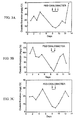
- Pigs are naturally colonized with Oxalobacter. Decolonization was achieved in experimental pigs by antibiotic supplementation of the diet. Pigs were fed Oxalobacter in culture broth, which they readily consumed. The pigs were fed a soybean/corn based feed supplemented with 1300 mg oxalate/kg. The basal diet contained 680 mg oxalate/kg. Results are shown in FIGS. 3a-c for three individual pigs.
- each pig was fed 1.0 g of cell paste with the morning meal.
- viable cell count is 2.1.x10 8 cells/ml, which extrapolates to 2.1.x10 13 cells per 100 L.
- the 100 L fermenter run provides us on the average 50-60 gm wet wt of cells. Therefore, 1 gm wet wt of cells is about 3.5 x 10 11 viable cells.
- the dose of 3.5 x 10 11 viable cells as indicated above could eliminate intestinal absorption of about 2.0 gm of oxalate present per kg diet (1300 mg added oxalate + 680 mg present in the diet). The animals consumed 1 kg diet per meal.
- the body weight of the pigs is about 200 lbs. and the digestive system of the pigs is believed to be very close to that of humans.
- the average daily consumption of oxalate is about 100-400 mg depending on the diet composition which is also split into three meals/day, therefore on an average a daily dose of 10 8 to 10 10 viable cells would be sufficient to prevent the dietary absorption of oxalate.
- An IxOC-3 formulation comprises freeze-dried viable cells of an oxalate reducing bacteria, such as O. formigenes.
- the formulation contains approximately 10 6 -10 7 cfus/ gram per dose.
- the formulation also comprises cyropreservation agents such as trehelose and maltodextrin.
- mice Male Harlan Sprague Dawley rats were randomly assigned to 3 groups (6 animals/group). Animals of group 1 served as the control group and were administered size 9 enteric coated placebo formulation twice daily by oral gavage at a dose level of 10 0 colony forming units (CFU). Animals of Groups 2 and 3 were administered Oxalobacter formigenes IxOC-3formulation in size 9 enteric coated capsule form twice daily by oral gavage at dose levels of 10 6 and 10 7 CFUs respectively. Capsule gavage was followed by an autoclaved tap water wash down for all three groups. Following an initial acclimatization period, all groups were feed a standard diet supplemented with 1% oxalate per gram.
- CFU colony forming units
- Test materials and the placebo control material were prepared following a standardized protocol. Prior to use, representative samples of each test material were analyzed to confirm identity, purity, and potency of the test capsules, as well as to confirm the absence of Oxalobacter formagenes in the placebo control material during the dosing period.
- Oxalobacter formigenes 1 g cell paste ( ⁇ 10 10 cfus/gram) bid with their main meals for 4 weeks. During this time period, all patients continued to take their normal medication, were asked to eat their normal diet, and to keep their fluid intake as high as normal. Except for spinach and rhubarb, foods high in oxalate were not forbidden. Oxolobacter colonization and its influence on urinary and oxalate plasma levels were measured in weeks 5 and 6. Teatment efficacy was followed in terms of urinary oxalate excretion in subjects with normal renal function and plasma oxalate in subjects with end-stage renal disease (ESRD).
- ESRD end-stage renal disease
- each size-2 capsule contains about 5-100 units of each enzyme.
- Enteric coated capsules of oxalate reducing compositions comprising oxalate reducing enzymes can be administered to patient populations at high risk for oxalate related disease. These include:
- composition of the present invention For example, a person with higher than normal endogenous oxalate levels is treated two times a day, with a capsule designed for delivery of its contents to the large intestine, wherein the capsule contains approximately an equivalent effective amount of an enzyme composition having enzyme activity similar to that provided by 10 7 cfus of an oxalate-reducing bacterium, such as O. formigenes.
- the capsule is preferably given with food.
- Enteric protected oxalate reducing compositions comprising a mixture of the oxalate reducing enzymes oxalate decarboxylase and/or oxalate oxidase , such as provided in enteric coated capsules can also be administered to individuals in populations at lower risk for oxalate-related disease or at risk for oxalate-related conditions.
- An effective amount of the enzyme composition is administered in the desired treatment regimen.
- compositions that contribute to oxalate-related condition.
- These patients could also routinely receive treatments of oxalate-reducing compositions, either as supplements or as additions to foods such as milk or yogurt.
- treatments of oxalate-reducing compositions either as supplements or as additions to foods such as milk or yogurt.
- These include persons that have lost populations of normal oxalate degrading bacteria due to: treatments with oral antibiotics or bouts of diarrheal disease, or infants.
- each size-2 capsule contains about 5-100 units of each enzyme.
- the capsule is preferably given with food.
Landscapes
- Health & Medical Sciences (AREA)
- Life Sciences & Earth Sciences (AREA)
- Chemical & Material Sciences (AREA)
- General Health & Medical Sciences (AREA)
- Engineering & Computer Science (AREA)
- Bioinformatics & Cheminformatics (AREA)
- Organic Chemistry (AREA)
- Animal Behavior & Ethology (AREA)
- Medicinal Chemistry (AREA)
- Pharmacology & Pharmacy (AREA)
- Public Health (AREA)
- Veterinary Medicine (AREA)
- Epidemiology (AREA)
- Gastroenterology & Hepatology (AREA)
- Immunology (AREA)
- Proteomics, Peptides & Aminoacids (AREA)
- Biochemistry (AREA)
- Genetics & Genomics (AREA)
- Wood Science & Technology (AREA)
- Zoology (AREA)
- General Engineering & Computer Science (AREA)
- Molecular Biology (AREA)
- Mycology (AREA)
- Microbiology (AREA)
- Nuclear Medicine, Radiotherapy & Molecular Imaging (AREA)
- Urology & Nephrology (AREA)
- Chemical Kinetics & Catalysis (AREA)
- General Chemical & Material Sciences (AREA)
- Medicines That Contain Protein Lipid Enzymes And Other Medicines (AREA)
- Medicines Containing Material From Animals Or Micro-Organisms (AREA)
- Acyclic And Carbocyclic Compounds In Medicinal Compositions (AREA)
- Medicinal Preparation (AREA)
- Enzymes And Modification Thereof (AREA)
- Organic Low-Molecular-Weight Compounds And Preparation Thereof (AREA)
- Medicines Containing Plant Substances (AREA)
Priority Applications (2)
| Application Number | Priority Date | Filing Date | Title |
|---|---|---|---|
| PL14180734T PL2803366T3 (pl) | 2004-06-15 | 2005-06-15 | Kompozycje do leczenia lub profilaktyki choroby związanej ze szczawianem |
| SI200532230T SI2803366T1 (sl) | 2004-06-15 | 2005-06-15 | Sestavki za zdravljenje ali preprečevanje z oksalatom-povezane bolezni |
Applications Claiming Priority (3)
| Application Number | Priority Date | Filing Date | Title |
|---|---|---|---|
| US10/868,242 US8486389B2 (en) | 1997-05-23 | 2004-06-15 | Compositions and methods for treating or preventing oxalate-related disease |
| PCT/US2005/021134 WO2005123116A2 (fr) | 2004-06-15 | 2005-06-15 | Compositions et procedes pour le traitement ou la prevention de maladie liee a l'oxalate |
| EP05786347.4A EP1771201B1 (fr) | 2004-06-15 | 2005-06-15 | Compositions et procedes pour le traitement ou la prevention de maladie liee a l'oxalate |
Related Parent Applications (1)
| Application Number | Title | Priority Date | Filing Date |
|---|---|---|---|
| EP05786347.4A Division EP1771201B1 (fr) | 2004-06-15 | 2005-06-15 | Compositions et procedes pour le traitement ou la prevention de maladie liee a l'oxalate |
Publications (3)
| Publication Number | Publication Date |
|---|---|
| EP2803366A2 true EP2803366A2 (fr) | 2014-11-19 |
| EP2803366A3 EP2803366A3 (fr) | 2015-02-18 |
| EP2803366B1 EP2803366B1 (fr) | 2018-08-01 |
Family
ID=35510266
Family Applications (2)
| Application Number | Title | Priority Date | Filing Date |
|---|---|---|---|
| EP14180734.7A Revoked EP2803366B1 (fr) | 2004-06-15 | 2005-06-15 | Compositions pour le traitement ou la prévention de maladie liée à l'oxalate |
| EP05786347.4A Expired - Lifetime EP1771201B1 (fr) | 2004-06-15 | 2005-06-15 | Compositions et procedes pour le traitement ou la prevention de maladie liee a l'oxalate |
Family Applications After (1)
| Application Number | Title | Priority Date | Filing Date |
|---|---|---|---|
| EP05786347.4A Expired - Lifetime EP1771201B1 (fr) | 2004-06-15 | 2005-06-15 | Compositions et procedes pour le traitement ou la prevention de maladie liee a l'oxalate |
Country Status (13)
| Country | Link |
|---|---|
| US (3) | US8486389B2 (fr) |
| EP (2) | EP2803366B1 (fr) |
| CN (2) | CN104998253A (fr) |
| CY (2) | CY1115745T1 (fr) |
| DK (2) | DK2803366T3 (fr) |
| ES (2) | ES2692148T3 (fr) |
| HK (1) | HK1216080A1 (fr) |
| LT (1) | LT2803366T (fr) |
| PL (2) | PL1771201T3 (fr) |
| PT (2) | PT1771201E (fr) |
| SI (2) | SI1771201T1 (fr) |
| TR (1) | TR201815200T4 (fr) |
| WO (1) | WO2005123116A2 (fr) |
Families Citing this family (29)
| Publication number | Priority date | Publication date | Assignee | Title |
|---|---|---|---|---|
| US8486389B2 (en) * | 1997-05-23 | 2013-07-16 | Oxthera, Inc. | Compositions and methods for treating or preventing oxalate-related disease |
| WO2003042380A2 (fr) * | 2001-10-05 | 2003-05-22 | Ixion Biotechnology, Inc. | Materiaux et procedes permettant de reduire les concentrations d'oxalate dans des fluides |
| US8877178B2 (en) | 2003-12-19 | 2014-11-04 | The Iams Company | Methods of use of probiotic bifidobacteria for companion animals |
| US7785635B1 (en) * | 2003-12-19 | 2010-08-31 | The Procter & Gamble Company | Methods of use of probiotic lactobacilli for companion animals |
| US20050158294A1 (en) | 2003-12-19 | 2005-07-21 | The Procter & Gamble Company | Canine probiotic Bifidobacteria pseudolongum |
| WO2005110469A2 (fr) * | 2004-05-07 | 2005-11-24 | Oxthera, Inc. | Procedes et compositions de reduction des concentrations d'oxalate |
| AU2006253007B2 (en) | 2005-05-31 | 2012-12-20 | Alimentary Health Ltd | Feline probiotic Bifidobacteria |
| EP2261323A1 (fr) | 2005-05-31 | 2010-12-15 | The Iams Company | Lactobacilles probiotiques félins |
| JP5199077B2 (ja) | 2005-06-10 | 2013-05-15 | アルタス ファーマシューティカルズ インコーポレイテッド | シュウ酸オキシダーゼ結晶の投与による、シュウ酸塩濃度を低下させるための方法 |
| WO2007070052A2 (fr) * | 2005-12-14 | 2007-06-21 | Oxthera, Inc. | Compositions pharmaceutiques et méthodes destinées à traiter ou prévenir une maladie associée à l'oxalate |
| JP5558002B2 (ja) | 2005-12-16 | 2014-07-23 | オクセラ インコーポレイテッド | シュウ酸塩低減化のための組成物および方法 |
| WO2008105911A2 (fr) * | 2006-08-02 | 2008-09-04 | Altus Pharmaceuticals Inc. | Oxalate décarboxylase cristallisé et procédés d'utilisation |
| RU2436581C2 (ru) | 2007-02-01 | 2011-12-20 | Дзе Иамс Компани | Способ уменьшения воспаления и снижения стресса у млекопитающего |
| US9771199B2 (en) | 2008-07-07 | 2017-09-26 | Mars, Incorporated | Probiotic supplement, process for making, and packaging |
| FR2936952A1 (fr) * | 2008-10-09 | 2010-04-16 | Monique Bellec | Administration par voie orale de medicaments et complements nutritionnels |
| CN101554237B (zh) * | 2009-03-16 | 2013-11-06 | 武汉康复得生物科技有限公司 | 植物纤维或微生物不溶组分中的草酸降解酶的制备方法 |
| PT2449098T (pt) * | 2009-07-02 | 2017-03-10 | Oxthera Intellectual Property Ab | Purificação e isolamento de enzimas de degradação de oxalato recombinantes e partículas secas por aspersão que contêm enzimas que degradam o oxalato |
| EP2270138B1 (fr) | 2009-07-02 | 2018-03-28 | OxThera Intellectual Property AB | Purification et isolation d'enzymes à dégradation d'oxalate recombinante |
| US8431122B2 (en) | 2009-07-02 | 2013-04-30 | Oxthera Intellectual Property Ab | Purification and isolation of recombinant oxalate degrading enzymes and spray-dried particles containing oxalate degrading enzymes |
| US10104903B2 (en) | 2009-07-31 | 2018-10-23 | Mars, Incorporated | Animal food and its appearance |
| CN108721612A (zh) * | 2009-11-25 | 2018-11-02 | 凯普托杰姆有限责任公司 | 草酸相关疾病治疗方法和组合物 |
| US9714456B2 (en) | 2013-01-18 | 2017-07-25 | Allena Pharmaceuticals, Inc. | Crystallized oxalate decarboxylase and methods of use |
| WO2014197806A2 (fr) | 2013-06-07 | 2014-12-11 | Allena Pharmaceuticals, Inc. | Compositions, méthodes et dispositifs de dialyse |
| WO2015002588A1 (fr) * | 2013-07-05 | 2015-01-08 | Oxthera Intellectual Property Ab | Sécrétagogues dérivés d'oxalobacter formigenes |
| CN107960105B (zh) | 2015-04-02 | 2025-05-16 | 武汉康复得生物科技股份有限公司 | 用于降解不溶性和可溶性草酸的高效草酸降解酶 |
| EP3468572B1 (fr) * | 2016-06-13 | 2022-03-02 | OxThera Intellectual Property AB | Compositions et méthodes de traitement ou de prévention d'affections liées à l'oxalate |
| US11566238B2 (en) | 2016-12-15 | 2023-01-31 | The Board Of Trustees Of The Leland Stanford Junior University | Compositions and methods for modulating growth of a genetically modified gut bacterial cell |
| WO2020018799A1 (fr) | 2018-07-18 | 2020-01-23 | The University Of Chicago | Compositions comprenant des peptides dérivés de sel1 et méthodes de traitement/prévention de taux d'oxalate en excès et pathologies/maladies associés à ceux-ci |
| US12421518B2 (en) | 2018-12-10 | 2025-09-23 | Tenza, Inc. | Methods and compositions for treating hyperoxaluria |
Citations (5)
| Publication number | Priority date | Publication date | Assignee | Title |
|---|---|---|---|---|
| US5286495A (en) | 1992-05-11 | 1994-02-15 | University Of Florida | Process for microencapsulating cells |
| WO1998016632A1 (fr) | 1996-09-27 | 1998-04-23 | University Of Florida | Matiere et procedes pour la detection d'oxalobacter |
| WO1998042827A2 (fr) | 1997-03-21 | 1998-10-01 | Pioneer Hi-Bred International, Inc. | Gene codant pour un oxalate decarboxylase isole a partir d'aspergillus phoenices |
| US5912125A (en) | 1994-06-20 | 1999-06-15 | University Of Florida | Materials and methods for detection of oxalobacter |
| US6214980B1 (en) | 1994-06-20 | 2001-04-10 | University Of Florida | Materials and methods for detection of Oxalobacte formigenes |
Family Cites Families (41)
| Publication number | Priority date | Publication date | Assignee | Title |
|---|---|---|---|---|
| US4205132A (en) * | 1978-07-17 | 1980-05-27 | Microlife Technics, Inc. | Lyophilization of bacteria |
| DE3030185A1 (de) | 1980-08-07 | 1982-04-08 | Kohlbecker, Günther, 3000 Hannover | Verfahren zur enzymatischen entfernung von oxalat mittels oxalat-oxidase |
| DE3204284A1 (de) | 1982-02-06 | 1983-08-18 | Kohlbecker, Günther, 3000 Hannover | Verfahren zur enzymatischen entfernung von sauerstoff |
| JPS5968344A (ja) | 1982-10-12 | 1984-04-18 | Agency Of Ind Science & Technol | 非対称機能膜及びその製法 |
| US4888182A (en) | 1983-04-11 | 1989-12-19 | Board Of Regents Of The University Of Texas System | Compositions and methods of treating calcium renal stones |
| US4539118A (en) | 1984-03-23 | 1985-09-03 | Sigma Chemical Company | Rapid, accurate method of separation of oxalate from urine and other biological fluids |
| US5263992A (en) * | 1986-10-17 | 1993-11-23 | Bio-Metric Systems, Inc. | Biocompatible device with covalently bonded biocompatible agent |
| US5427935A (en) * | 1987-07-24 | 1995-06-27 | The Regents Of The University Of Michigan | Hybrid membrane bead and process for encapsulating materials in semi-permeable hybrid membranes |
| US5279827A (en) | 1991-01-16 | 1994-01-18 | Allegheny-Singer Research Institute | Extract and pharmaceutical composition for treatment of calcium oxalate stone disease and viral infections |
| US5206219A (en) * | 1991-11-25 | 1993-04-27 | Applied Analytical Industries, Inc. | Oral compositions of proteinaceous medicaments |
| BR9307548A (pt) * | 1992-11-30 | 1999-06-01 | Zeneca Ltd | Fragmento de dna isolado molécula recombinante célula de planta transformada oxalato decarboxilase composição processo para proteger uma planta de ácido oxálico e planta |
| WO1994023593A1 (fr) * | 1993-04-16 | 1994-10-27 | Mccormick & Company, Inc. | Compositions de capsulage |
| US5554147A (en) * | 1994-02-01 | 1996-09-10 | Caphco, Inc. | Compositions and devices for controlled release of active ingredients |
| US5788687A (en) * | 1994-02-01 | 1998-08-04 | Caphco, Inc | Compositions and devices for controlled release of active ingredients |
| US5505713A (en) | 1994-04-01 | 1996-04-09 | Minimed Inc. | Indwelling catheter with stable enzyme coating |
| EP0764204B1 (fr) | 1994-05-18 | 2001-08-22 | Human Genome Sciences, Inc. | OXALYL-CoA DECARBOXYLASE HUMAINE |
| US5604111A (en) * | 1994-06-20 | 1997-02-18 | University Of Florida Research Foundation | Method and kit for detection of oxalate |
| US6033719A (en) * | 1996-04-25 | 2000-03-07 | Medtronic, Inc. | Method for covalent attachment of biomolecules to surfaces of medical devices |
| SE9603029D0 (sv) | 1996-08-20 | 1996-08-20 | Svenska Traeforskningsinst | Method for lowering the level of oxalic acid |
| US6355242B1 (en) * | 1997-05-23 | 2002-03-12 | Ixion Biotechnology, Inc. | Materials and methods for treating or preventing oxalate-related disease |
| JP4996780B2 (ja) * | 1997-05-23 | 2012-08-08 | オクセラ インコーポレイテッド | シュウ酸塩関連疾患を予防するためのシュウ酸塩分解微生物またはシュウ酸塩分解酵素 |
| US20040120941A1 (en) | 1997-05-23 | 2004-06-24 | Allison Milton J. | Materials and methods for treating or preventing oxalate-related disease |
| US8486389B2 (en) | 1997-05-23 | 2013-07-16 | Oxthera, Inc. | Compositions and methods for treating or preventing oxalate-related disease |
| US6080404A (en) * | 1997-09-05 | 2000-06-27 | University Of Florida | Materials and methods for removal of substances from fluids |
| US6566407B2 (en) * | 1997-11-05 | 2003-05-20 | Geltex Pharmaceuticals, Inc. | Method for reducing oxalate |
| US5985938A (en) * | 1997-11-05 | 1999-11-16 | Geltex Pharmaceuticals, Inc. | Method for reducing oxalate |
| US6203797B1 (en) | 1998-01-06 | 2001-03-20 | Stephen C. Perry | Dietary supplement and method for use as a probiotic, for alleviating the symptons associated with irritable bowel syndrome |
| US6153252A (en) * | 1998-06-30 | 2000-11-28 | Ethicon, Inc. | Process for coating stents |
| ATE429813T1 (de) | 1998-10-09 | 2009-05-15 | Gen Mills Inc | Verkapselung empfindlicher flüssiger komponenten in eine matrix zur gewinnung diskreter lagerbeständiger partikel |
| IT1309427B1 (it) * | 1999-05-28 | 2002-01-23 | Mendes S U R L | Composizione dietetica o farmaceutica utile per la prevenzione o iltrattamento dell'iperossaluria e suo uso |
| MXPA01012658A (es) | 1999-06-07 | 2003-10-15 | Nanosphere Inc | Metodos para recubrir particulas, y particulas producidas mediante los mismos. |
| DE10026541A1 (de) | 2000-05-27 | 2001-11-29 | Zeiss Carl | Vorrichtung zur präzisen Positionierung eines Bauteils, insbesondere eines optischen Bauteiles |
| WO2003042380A2 (fr) | 2001-10-05 | 2003-05-22 | Ixion Biotechnology, Inc. | Materiaux et procedes permettant de reduire les concentrations d'oxalate dans des fluides |
| US7407668B2 (en) * | 2002-01-24 | 2008-08-05 | Boston Scimed, Inc. | Medical articles having enzymatic surfaces for localized therapy |
| US6929940B1 (en) * | 2002-08-20 | 2005-08-16 | University Of Florida Research Foundation, Inc. | Polynucleotides encoding oxalate decarboxylase from Aspergillus niger and methods of use |
| AU2003274918A1 (en) | 2002-08-20 | 2004-03-11 | University Of Florida | Polynucleotide encoding oxalate decarboxylase from aspergillus niger and methods of use |
| WO2005110469A2 (fr) | 2004-05-07 | 2005-11-24 | Oxthera, Inc. | Procedes et compositions de reduction des concentrations d'oxalate |
| WO2007070052A2 (fr) * | 2005-12-14 | 2007-06-21 | Oxthera, Inc. | Compositions pharmaceutiques et méthodes destinées à traiter ou prévenir une maladie associée à l'oxalate |
| JP5558002B2 (ja) | 2005-12-16 | 2014-07-23 | オクセラ インコーポレイテッド | シュウ酸塩低減化のための組成物および方法 |
| WO2008105911A2 (fr) | 2006-08-02 | 2008-09-04 | Altus Pharmaceuticals Inc. | Oxalate décarboxylase cristallisé et procédés d'utilisation |
| US8431122B2 (en) | 2009-07-02 | 2013-04-30 | Oxthera Intellectual Property Ab | Purification and isolation of recombinant oxalate degrading enzymes and spray-dried particles containing oxalate degrading enzymes |
-
2004
- 2004-06-15 US US10/868,242 patent/US8486389B2/en not_active Expired - Fee Related
-
2005
- 2005-06-15 CN CN201510303264.9A patent/CN104998253A/zh active Pending
- 2005-06-15 PT PT57863474T patent/PT1771201E/pt unknown
- 2005-06-15 EP EP14180734.7A patent/EP2803366B1/fr not_active Revoked
- 2005-06-15 ES ES14180734.7T patent/ES2692148T3/es not_active Expired - Lifetime
- 2005-06-15 DK DK14180734.7T patent/DK2803366T3/en active
- 2005-06-15 TR TR2018/15200T patent/TR201815200T4/tr unknown
- 2005-06-15 ES ES05786347.4T patent/ES2522898T3/es not_active Expired - Lifetime
- 2005-06-15 DK DK05786347.4T patent/DK1771201T3/da active
- 2005-06-15 EP EP05786347.4A patent/EP1771201B1/fr not_active Expired - Lifetime
- 2005-06-15 CN CNA2005800241721A patent/CN101166421A/zh active Pending
- 2005-06-15 PT PT14180734T patent/PT2803366T/pt unknown
- 2005-06-15 SI SI200531905T patent/SI1771201T1/sl unknown
- 2005-06-15 WO PCT/US2005/021134 patent/WO2005123116A2/fr not_active Ceased
- 2005-06-15 PL PL05786347T patent/PL1771201T3/pl unknown
- 2005-06-15 PL PL14180734T patent/PL2803366T3/pl unknown
- 2005-06-15 LT LTEP14180734.7T patent/LT2803366T/lt unknown
- 2005-06-15 SI SI200532230T patent/SI2803366T1/sl unknown
-
2013
- 2013-06-17 US US13/919,266 patent/US10149866B2/en not_active Expired - Lifetime
-
2014
- 2014-10-16 CY CY20141100853T patent/CY1115745T1/el unknown
-
2016
- 2016-04-08 HK HK16104053.8A patent/HK1216080A1/zh unknown
-
2018
- 2018-09-18 US US16/134,793 patent/US10653726B2/en not_active Expired - Fee Related
- 2018-10-23 CY CY181101090T patent/CY1120782T1/el unknown
Patent Citations (6)
| Publication number | Priority date | Publication date | Assignee | Title |
|---|---|---|---|---|
| US5286495A (en) | 1992-05-11 | 1994-02-15 | University Of Florida | Process for microencapsulating cells |
| US5912125A (en) | 1994-06-20 | 1999-06-15 | University Of Florida | Materials and methods for detection of oxalobacter |
| US6090628A (en) | 1994-06-20 | 2000-07-18 | University Of Florida | Materials and methods for detection of Oxalobactor formigenes |
| US6214980B1 (en) | 1994-06-20 | 2001-04-10 | University Of Florida | Materials and methods for detection of Oxalobacte formigenes |
| WO1998016632A1 (fr) | 1996-09-27 | 1998-04-23 | University Of Florida | Matiere et procedes pour la detection d'oxalobacter |
| WO1998042827A2 (fr) | 1997-03-21 | 1998-10-01 | Pioneer Hi-Bred International, Inc. | Gene codant pour un oxalate decarboxylase isole a partir d'aspergillus phoenices |
Non-Patent Citations (12)
| Title |
|---|
| ALLISON ET AL.: "Oxalate degradation by gastrointestinal bacteria from humans", J. NUTR., vol. 116, 1986, pages 455 - 460 |
| ALLISON, M. J.; H. M. COOK: "Oxalate degradation by microbes of the large bowel of herbivores: the effect of dietary oxalate", SCIENCE, vol. 212, 1981, pages 675 - 676 |
| ALLISON, M. J.; H. M. COOK; D. B. MILNE; S. GALLAGHER; R. V. CLAYMAN: "Oxalate degradation by gastrointestinal bacteria from humans", J. NUTR., vol. 116, 1986, pages 455 - 460 |
| ALLISON, M. J.; K. A. DAWSON; W. R. MAYBERRY; J. G. FOSS: "Oxalabacter formigenes gen. nov., sp. nov.: oxalate-degrading anaerobes that inhabit the gastrointestinal tract", ARCH. MICROBIOL., vol. 141, 1985, pages 1 - 7 |
| ALLISON, M. J.; S. L. DANIEL; N. A. COMICK: "Calcium Oxalate in Biological Systems", 1995, CRC PRESS, article "Oxalate-degrading bacteria" |
| DANIEL, S. L.; P. A. HARTMAN; M. J. ALLISON: "Microbial degradation of oxalate in the gastrointestinal tracts of rats", APPL. ENVIRON. MICROBIOL., vol. 53, 1987, pages 1793 - 1797 |
| DAWSON, K. A.; M. J. ALLISON; P. A. HARTMAN: "Isolation and some characteristics of anaerobic oxalate-degrading bacteria the rumen", APPL. ENVIRON. MICROBIOL., vol. 40, 1980, pages 833 - 839 |
| DOANE, L. T.; M. LIEBMAN; D. R. CALDWELL: "Microbial oxalate degradation: effects on oxalate and calcium balance in humans", NUTRITION RESEARCH, vol. 9, 1989, pages 957 - 964 |
| DR. MILTON ALLISON, IXION BIOTECHNOLOGY, 1996 |
| JENSEN, N. S.; M. J. ALLISON: "Studies on the diversity among anaerobic oxalate degrading bacteria now in the species Oxalobacter formigenes", ABSTR. TO THE GENERAL MEETING OF THE AMER. SOC. MICROBIOL., 1995, pages 1 - 29 |
| SOLOMONS, C. C.; M. H. MELMED; S. M. HEITLER: "Calcium citrate for vulvar vestibulitis", JOURNAL OF REPRODUCTIVE MEDICINE, vol. 36, 1991, pages 879 - 882 |
| YACOBI, A.; E. H. WALEGA: "Oral sustained release formulations: Dosing and evaluation", 1988, PERGAMMON PRESS |
Also Published As
| Publication number | Publication date |
|---|---|
| TR201815200T4 (tr) | 2018-11-21 |
| EP1771201A4 (fr) | 2011-01-19 |
| US20190091268A1 (en) | 2019-03-28 |
| US10653726B2 (en) | 2020-05-19 |
| EP2803366B1 (fr) | 2018-08-01 |
| CY1120782T1 (el) | 2019-12-11 |
| LT2803366T (lt) | 2018-12-27 |
| SI1771201T1 (sl) | 2014-12-31 |
| CN104998253A (zh) | 2015-10-28 |
| PL1771201T3 (pl) | 2015-01-30 |
| HK1198922A1 (en) | 2015-06-19 |
| EP1771201A2 (fr) | 2007-04-11 |
| EP1771201B1 (fr) | 2014-08-13 |
| HK1216080A1 (zh) | 2016-10-14 |
| DK1771201T3 (da) | 2014-11-03 |
| US20040234514A1 (en) | 2004-11-25 |
| PL2803366T3 (pl) | 2018-12-31 |
| DK2803366T3 (en) | 2018-11-05 |
| EP2803366A3 (fr) | 2015-02-18 |
| PT2803366T (pt) | 2018-11-06 |
| CN101166421A (zh) | 2008-04-23 |
| US8486389B2 (en) | 2013-07-16 |
| US10149866B2 (en) | 2018-12-11 |
| US20140030324A1 (en) | 2014-01-30 |
| PT1771201E (pt) | 2014-11-06 |
| ES2522898T3 (es) | 2014-11-19 |
| ES2692148T3 (es) | 2018-11-30 |
| WO2005123116A2 (fr) | 2005-12-29 |
| CY1115745T1 (el) | 2017-01-25 |
| WO2005123116A3 (fr) | 2008-01-03 |
| SI2803366T1 (sl) | 2018-12-31 |
Similar Documents
| Publication | Publication Date | Title |
|---|---|---|
| US10653726B2 (en) | Compositions and methods for treating or preventing oxalate-related disease | |
| EP1962873B1 (fr) | Compositions pharmaceutiques à base de bacteries redusiant l'oxalate | |
| US6355242B1 (en) | Materials and methods for treating or preventing oxalate-related disease | |
| US6200562B1 (en) | Method for reducing absorption of dietary oxalate using enzymes and microbes | |
| US20040120941A1 (en) | Materials and methods for treating or preventing oxalate-related disease | |
| HK1198922B (en) | Compositions for treating or preventing oxalate-related disease | |
| HK1118423A (en) | Compositions and methods for treating or preventing oxalate-related disease | |
| HK1128871B (en) | Pharmaceutical compositions comprising oxalate-reducing bacteria | |
| HK1124538A (en) | Pharmaceutical compositions and methods for treating or preventing oxalate-related disease | |
| HK1124538B (en) | Pharmaceutical compositions and methods for treating or preventing oxalate-related disease |
Legal Events
| Date | Code | Title | Description |
|---|---|---|---|
| PUAI | Public reference made under article 153(3) epc to a published international application that has entered the european phase |
Free format text: ORIGINAL CODE: 0009012 |
|
| 17P | Request for examination filed |
Effective date: 20140812 |
|
| AC | Divisional application: reference to earlier application |
Ref document number: 1771201 Country of ref document: EP Kind code of ref document: P |
|
| AK | Designated contracting states |
Kind code of ref document: A2 Designated state(s): AT BE BG CH CY CZ DE DK EE ES FI FR GB GR HU IE IS IT LI LT LU MC NL PL PT RO SE SI SK TR |
|
| RIN1 | Information on inventor provided before grant (corrected) |
Inventor name: SIDHU, HARMEET |
|
| PUAL | Search report despatched |
Free format text: ORIGINAL CODE: 0009013 |
|
| AK | Designated contracting states |
Kind code of ref document: A3 Designated state(s): AT BE BG CH CY CZ DE DK EE ES FI FR GB GR HU IE IS IT LI LT LU MC NL PL PT RO SE SI SK TR |
|
| RIC1 | Information provided on ipc code assigned before grant |
Ipc: A61K 38/44 20060101ALI20150115BHEP Ipc: A61K 38/45 20060101ALI20150115BHEP Ipc: A61K 47/30 20060101AFI20150115BHEP Ipc: A61K 38/51 20060101ALI20150115BHEP |
|
| REG | Reference to a national code |
Ref country code: HK Ref legal event code: DE Ref document number: 1198922 Country of ref document: HK |
|
| 17Q | First examination report despatched |
Effective date: 20151023 |
|
| STAA | Information on the status of an ep patent application or granted ep patent |
Free format text: STATUS: EXAMINATION IS IN PROGRESS |
|
| REG | Reference to a national code |
Ref country code: DE Ref legal event code: R079 Ref document number: 602005054367 Country of ref document: DE Free format text: PREVIOUS MAIN CLASS: A61K0047300000 Ipc: A61K0038440000 |
|
| GRAP | Despatch of communication of intention to grant a patent |
Free format text: ORIGINAL CODE: EPIDOSNIGR1 |
|
| STAA | Information on the status of an ep patent application or granted ep patent |
Free format text: STATUS: GRANT OF PATENT IS INTENDED |
|
| RIC1 | Information provided on ipc code assigned before grant |
Ipc: A61K 38/44 20060101AFI20180112BHEP Ipc: A61K 38/51 20060101ALI20180112BHEP Ipc: A61K 38/45 20060101ALI20180112BHEP |
|
| INTG | Intention to grant announced |
Effective date: 20180208 |
|
| GRAS | Grant fee paid |
Free format text: ORIGINAL CODE: EPIDOSNIGR3 |
|
| GRAA | (expected) grant |
Free format text: ORIGINAL CODE: 0009210 |
|
| STAA | Information on the status of an ep patent application or granted ep patent |
Free format text: STATUS: THE PATENT HAS BEEN GRANTED |
|
| AC | Divisional application: reference to earlier application |
Ref document number: 1771201 Country of ref document: EP Kind code of ref document: P |
|
| AK | Designated contracting states |
Kind code of ref document: B1 Designated state(s): AT BE BG CH CY CZ DE DK EE ES FI FR GB GR HU IE IS IT LI LT LU MC NL PL PT RO SE SI SK TR |
|
| REG | Reference to a national code |
Ref country code: GB Ref legal event code: FG4D |
|
| REG | Reference to a national code |
Ref country code: CH Ref legal event code: EP Ref country code: AT Ref legal event code: REF Ref document number: 1023530 Country of ref document: AT Kind code of ref document: T Effective date: 20180815 |
|
| REG | Reference to a national code |
Ref country code: IE Ref legal event code: FG4D |
|
| REG | Reference to a national code |
Ref country code: DE Ref legal event code: R096 Ref document number: 602005054367 Country of ref document: DE |
|
| REG | Reference to a national code |
Ref country code: SE Ref legal event code: TRGR |
|
| REG | Reference to a national code |
Ref country code: DK Ref legal event code: T3 Effective date: 20181101 |
|
| REG | Reference to a national code |
Ref country code: PT Ref legal event code: SC4A Ref document number: 2803366 Country of ref document: PT Date of ref document: 20181106 Kind code of ref document: T Free format text: AVAILABILITY OF NATIONAL TRANSLATION Effective date: 20181023 |
|
| REG | Reference to a national code |
Ref country code: NL Ref legal event code: FP |
|
| REG | Reference to a national code |
Ref country code: ES Ref legal event code: FG2A Ref document number: 2692148 Country of ref document: ES Kind code of ref document: T3 Effective date: 20181130 |
|
| REG | Reference to a national code |
Ref country code: EE Ref legal event code: FG4A Ref document number: E016202 Country of ref document: EE Effective date: 20181016 |
|
| PG25 | Lapsed in a contracting state [announced via postgrant information from national office to epo] |
Ref country code: GR Free format text: LAPSE BECAUSE OF FAILURE TO SUBMIT A TRANSLATION OF THE DESCRIPTION OR TO PAY THE FEE WITHIN THE PRESCRIBED TIME-LIMIT Effective date: 20181102 Ref country code: BG Free format text: LAPSE BECAUSE OF FAILURE TO SUBMIT A TRANSLATION OF THE DESCRIPTION OR TO PAY THE FEE WITHIN THE PRESCRIBED TIME-LIMIT Effective date: 20181101 |
|
| PG25 | Lapsed in a contracting state [announced via postgrant information from national office to epo] |
Ref country code: RO Free format text: LAPSE BECAUSE OF FAILURE TO SUBMIT A TRANSLATION OF THE DESCRIPTION OR TO PAY THE FEE WITHIN THE PRESCRIBED TIME-LIMIT Effective date: 20180801 |
|
| REG | Reference to a national code |
Ref country code: DE Ref legal event code: R026 Ref document number: 602005054367 Country of ref document: DE |
|
| PLBI | Opposition filed |
Free format text: ORIGINAL CODE: 0009260 |
|
| PLAX | Notice of opposition and request to file observation + time limit sent |
Free format text: ORIGINAL CODE: EPIDOSNOBS2 |
|
| PG25 | Lapsed in a contracting state [announced via postgrant information from national office to epo] |
Ref country code: SK Free format text: LAPSE BECAUSE OF FAILURE TO SUBMIT A TRANSLATION OF THE DESCRIPTION OR TO PAY THE FEE WITHIN THE PRESCRIBED TIME-LIMIT Effective date: 20180801 |
|
| 26 | Opposition filed |
Opponent name: POHLMAN, SANDRA M. Effective date: 20190430 |
|
| PLBB | Reply of patent proprietor to notice(s) of opposition received |
Free format text: ORIGINAL CODE: EPIDOSNOBS3 |
|
| PG25 | Lapsed in a contracting state [announced via postgrant information from national office to epo] |
Ref country code: MC Free format text: LAPSE BECAUSE OF FAILURE TO SUBMIT A TRANSLATION OF THE DESCRIPTION OR TO PAY THE FEE WITHIN THE PRESCRIBED TIME-LIMIT Effective date: 20180801 |
|
| PG25 | Lapsed in a contracting state [announced via postgrant information from national office to epo] |
Ref country code: LU Free format text: LAPSE BECAUSE OF NON-PAYMENT OF DUE FEES Effective date: 20190615 |
|
| PGFP | Annual fee paid to national office [announced via postgrant information from national office to epo] |
Ref country code: FI Payment date: 20200617 Year of fee payment: 16 Ref country code: LT Payment date: 20200519 Year of fee payment: 16 Ref country code: IE Payment date: 20200617 Year of fee payment: 16 Ref country code: EE Payment date: 20200626 Year of fee payment: 16 Ref country code: TR Payment date: 20200605 Year of fee payment: 16 Ref country code: DE Payment date: 20200618 Year of fee payment: 16 Ref country code: PT Payment date: 20200520 Year of fee payment: 16 Ref country code: CH Payment date: 20200618 Year of fee payment: 16 Ref country code: DK Payment date: 20200616 Year of fee payment: 16 Ref country code: CZ Payment date: 20200603 Year of fee payment: 16 Ref country code: CY Payment date: 20200515 Year of fee payment: 16 Ref country code: FR Payment date: 20200623 Year of fee payment: 16 |
|
| PGFP | Annual fee paid to national office [announced via postgrant information from national office to epo] |
Ref country code: IS Payment date: 20200623 Year of fee payment: 16 Ref country code: SE Payment date: 20200616 Year of fee payment: 16 Ref country code: GB Payment date: 20200617 Year of fee payment: 16 Ref country code: NL Payment date: 20200617 Year of fee payment: 16 Ref country code: PL Payment date: 20200602 Year of fee payment: 16 Ref country code: SI Payment date: 20200525 Year of fee payment: 16 |
|
| PGFP | Annual fee paid to national office [announced via postgrant information from national office to epo] |
Ref country code: AT Payment date: 20200618 Year of fee payment: 16 |
|
| PGFP | Annual fee paid to national office [announced via postgrant information from national office to epo] |
Ref country code: ES Payment date: 20200701 Year of fee payment: 16 |
|
| PGFP | Annual fee paid to national office [announced via postgrant information from national office to epo] |
Ref country code: BE Payment date: 20200929 Year of fee payment: 16 Ref country code: IT Payment date: 20200626 Year of fee payment: 16 |
|
| REG | Reference to a national code |
Ref country code: AT Ref legal event code: UEP Ref document number: 1023530 Country of ref document: AT Kind code of ref document: T Effective date: 20180801 |
|
| PG25 | Lapsed in a contracting state [announced via postgrant information from national office to epo] |
Ref country code: HU Free format text: LAPSE BECAUSE OF FAILURE TO SUBMIT A TRANSLATION OF THE DESCRIPTION OR TO PAY THE FEE WITHIN THE PRESCRIBED TIME-LIMIT; INVALID AB INITIO Effective date: 20050615 |
|
| RDAF | Communication despatched that patent is revoked |
Free format text: ORIGINAL CODE: EPIDOSNREV1 |
|
| REG | Reference to a national code |
Ref country code: DE Ref legal event code: R103 Ref document number: 602005054367 Country of ref document: DE Ref country code: DE Ref legal event code: R064 Ref document number: 602005054367 Country of ref document: DE |
|
| REG | Reference to a national code |
Ref country code: LT Ref legal event code: MM4D |
|
| REG | Reference to a national code |
Ref country code: EE Ref legal event code: MM4A Ref document number: E016202 Country of ref document: EE Effective date: 20210630 |
|
| REG | Reference to a national code |
Ref country code: FI Ref legal event code: MAE |
|
| REG | Reference to a national code |
Ref country code: DK Ref legal event code: EBP Effective date: 20210630 |
|
| REG | Reference to a national code |
Ref country code: SE Ref legal event code: EUG |
|
| RDAG | Patent revoked |
Free format text: ORIGINAL CODE: 0009271 |
|
| STAA | Information on the status of an ep patent application or granted ep patent |
Free format text: STATUS: PATENT REVOKED |
|
| PG25 | Lapsed in a contracting state [announced via postgrant information from national office to epo] |
Ref country code: FI Free format text: LAPSE BECAUSE OF NON-PAYMENT OF DUE FEES Effective date: 20210615 Ref country code: CZ Free format text: LAPSE BECAUSE OF NON-PAYMENT OF DUE FEES Effective date: 20210615 Ref country code: CY Free format text: LAPSE BECAUSE OF NON-PAYMENT OF DUE FEES Effective date: 20210615 |
|
| REG | Reference to a national code |
Ref country code: CH Ref legal event code: PL |
|
| REG | Reference to a national code |
Ref country code: NL Ref legal event code: MM Effective date: 20210701 |
|
| REG | Reference to a national code |
Ref country code: CH Ref legal event code: PL Ref country code: AT Ref legal event code: MM01 Ref document number: 1023530 Country of ref document: AT Kind code of ref document: T Effective date: 20210615 |
|
| GBPC | Gb: european patent ceased through non-payment of renewal fee |
Effective date: 20210615 |
|
| REG | Reference to a national code |
Ref country code: FI Ref legal event code: MGE |
|
| 27W | Patent revoked |
Effective date: 20211022 |
|
| REG | Reference to a national code |
Ref country code: BE Ref legal event code: MM Effective date: 20210630 |
|
| PG25 | Lapsed in a contracting state [announced via postgrant information from national office to epo] |
Ref country code: LT Free format text: LAPSE BECAUSE OF NON-PAYMENT OF DUE FEES Effective date: 20210615 Ref country code: LI Free format text: LAPSE BECAUSE OF NON-PAYMENT OF DUE FEES Effective date: 20210630 Ref country code: GB Free format text: LAPSE BECAUSE OF NON-PAYMENT OF DUE FEES Effective date: 20210615 Ref country code: CH Free format text: LAPSE BECAUSE OF NON-PAYMENT OF DUE FEES Effective date: 20210630 Ref country code: AT Free format text: LAPSE BECAUSE OF NON-PAYMENT OF DUE FEES Effective date: 20210615 |
|
| REG | Reference to a national code |
Ref country code: SI Ref legal event code: KO00 Effective date: 20220310 |
|
| REG | Reference to a national code |
Ref country code: EE Ref legal event code: MF4A Ref document number: E016202 Country of ref document: EE Effective date: 20220301 |
|
| PG25 | Lapsed in a contracting state [announced via postgrant information from national office to epo] |
Ref country code: SE Free format text: LAPSE BECAUSE OF NON-PAYMENT OF DUE FEES Effective date: 20210616 Ref country code: NL Free format text: LAPSE BECAUSE OF NON-PAYMENT OF DUE FEES Effective date: 20210701 |
|
| REG | Reference to a national code |
Ref country code: AT Ref legal event code: MA03 Ref document number: 1023530 Country of ref document: AT Kind code of ref document: T Effective date: 20211022 |
|
| PG25 | Lapsed in a contracting state [announced via postgrant information from national office to epo] |
Ref country code: DK Free format text: LAPSE BECAUSE OF NON-PAYMENT OF DUE FEES Effective date: 20210630 |
|
| PG25 | Lapsed in a contracting state [announced via postgrant information from national office to epo] |
Ref country code: ES Free format text: LAPSE BECAUSE OF NON-PAYMENT OF DUE FEES Effective date: 20210616 |
|
| PG25 | Lapsed in a contracting state [announced via postgrant information from national office to epo] |
Ref country code: ES Free format text: LAPSE BECAUSE OF NON-PAYMENT OF DUE FEES Effective date: 20210616 |
|
| PG25 | Lapsed in a contracting state [announced via postgrant information from national office to epo] |
Ref country code: IE Free format text: LAPSE BECAUSE OF NON-PAYMENT OF DUE FEES Effective date: 20210615 |
|
| PG25 | Lapsed in a contracting state [announced via postgrant information from national office to epo] |
Ref country code: PT Free format text: LAPSE BECAUSE OF NON-PAYMENT OF DUE FEES Effective date: 20210615 |
|
| PG25 | Lapsed in a contracting state [announced via postgrant information from national office to epo] |
Ref country code: PT Free format text: LAPSE BECAUSE OF NON-PAYMENT OF DUE FEES Effective date: 20210615 |
|
| PG25 | Lapsed in a contracting state [announced via postgrant information from national office to epo] |
Ref country code: PL Free format text: LAPSE BECAUSE OF NON-PAYMENT OF DUE FEES Effective date: 20210615 |
|
| PG25 | Lapsed in a contracting state [announced via postgrant information from national office to epo] |
Ref country code: EE Free format text: LAPSE BECAUSE OF NON-PAYMENT OF DUE FEES Effective date: 20210630 |
|
| PG25 | Lapsed in a contracting state [announced via postgrant information from national office to epo] |
Ref country code: FR Free format text: LAPSE BECAUSE OF NON-PAYMENT OF DUE FEES Effective date: 20210630 |
|
| PG25 | Lapsed in a contracting state [announced via postgrant information from national office to epo] |
Ref country code: BE Free format text: LAPSE BECAUSE OF NON-PAYMENT OF DUE FEES Effective date: 20210630 |
|
| PG25 | Lapsed in a contracting state [announced via postgrant information from national office to epo] |
Ref country code: IT Free format text: LAPSE BECAUSE OF NON-PAYMENT OF DUE FEES Effective date: 20210615 |
|
| PG25 | Lapsed in a contracting state [announced via postgrant information from national office to epo] |
Ref country code: IS Free format text: LAPSE BECAUSE OF NON-PAYMENT OF DUE FEES Effective date: 20211228 |