EP2803385A1 - Implantierbares CRT-Gerät zur Stimulation beider Ventrikel und zur Erkennung von Erfassungsverlusten und anodischen Stimulationen - Google Patents
Implantierbares CRT-Gerät zur Stimulation beider Ventrikel und zur Erkennung von Erfassungsverlusten und anodischen Stimulationen Download PDFInfo
- Publication number
- EP2803385A1 EP2803385A1 EP14165460.8A EP14165460A EP2803385A1 EP 2803385 A1 EP2803385 A1 EP 2803385A1 EP 14165460 A EP14165460 A EP 14165460A EP 2803385 A1 EP2803385 A1 EP 2803385A1
- Authority
- EP
- European Patent Office
- Prior art keywords
- stimulation
- mode
- threshold
- biventricular
- parameter
- Prior art date
- Legal status (The legal status is an assumption and is not a legal conclusion. Google has not performed a legal analysis and makes no representation as to the accuracy of the status listed.)
- Granted
Links
Images


Classifications
-
- A—HUMAN NECESSITIES
- A61—MEDICAL OR VETERINARY SCIENCE; HYGIENE
- A61N—ELECTROTHERAPY; MAGNETOTHERAPY; RADIATION THERAPY; ULTRASOUND THERAPY
- A61N1/00—Electrotherapy; Circuits therefor
- A61N1/18—Applying electric currents by contact electrodes
- A61N1/32—Applying electric currents by contact electrodes alternating or intermittent currents
- A61N1/36—Applying electric currents by contact electrodes alternating or intermittent currents for stimulation
- A61N1/362—Heart stimulators
- A61N1/37—Monitoring; Protecting
- A61N1/371—Capture, i.e. successful stimulation
- A61N1/3712—Auto-capture, i.e. automatic adjustment of the stimulation threshold
-
- A—HUMAN NECESSITIES
- A61—MEDICAL OR VETERINARY SCIENCE; HYGIENE
- A61N—ELECTROTHERAPY; MAGNETOTHERAPY; RADIATION THERAPY; ULTRASOUND THERAPY
- A61N1/00—Electrotherapy; Circuits therefor
- A61N1/18—Applying electric currents by contact electrodes
- A61N1/32—Applying electric currents by contact electrodes alternating or intermittent currents
- A61N1/36—Applying electric currents by contact electrodes alternating or intermittent currents for stimulation
- A61N1/362—Heart stimulators
- A61N1/3627—Heart stimulators for treating a mechanical deficiency of the heart, e.g. congestive heart failure or cardiomyopathy
-
- A—HUMAN NECESSITIES
- A61—MEDICAL OR VETERINARY SCIENCE; HYGIENE
- A61N—ELECTROTHERAPY; MAGNETOTHERAPY; RADIATION THERAPY; ULTRASOUND THERAPY
- A61N1/00—Electrotherapy; Circuits therefor
- A61N1/18—Applying electric currents by contact electrodes
- A61N1/32—Applying electric currents by contact electrodes alternating or intermittent currents
- A61N1/36—Applying electric currents by contact electrodes alternating or intermittent currents for stimulation
- A61N1/362—Heart stimulators
- A61N1/365—Heart stimulators controlled by a physiological parameter, e.g. heart potential
- A61N1/36514—Heart stimulators controlled by a physiological parameter, e.g. heart potential controlled by a physiological quantity other than heart potential, e.g. blood pressure
- A61N1/36578—Heart stimulators controlled by a physiological parameter, e.g. heart potential controlled by a physiological quantity other than heart potential, e.g. blood pressure controlled by mechanical motion of the heart wall, e.g. measured by an accelerometer or microphone
-
- A—HUMAN NECESSITIES
- A61—MEDICAL OR VETERINARY SCIENCE; HYGIENE
- A61N—ELECTROTHERAPY; MAGNETOTHERAPY; RADIATION THERAPY; ULTRASOUND THERAPY
- A61N1/00—Electrotherapy; Circuits therefor
- A61N1/18—Applying electric currents by contact electrodes
- A61N1/32—Applying electric currents by contact electrodes alternating or intermittent currents
- A61N1/36—Applying electric currents by contact electrodes alternating or intermittent currents for stimulation
- A61N1/362—Heart stimulators
- A61N1/365—Heart stimulators controlled by a physiological parameter, e.g. heart potential
- A61N1/368—Heart stimulators controlled by a physiological parameter, e.g. heart potential comprising more than one electrode co-operating with different heart regions
- A61N1/3682—Heart stimulators controlled by a physiological parameter, e.g. heart potential comprising more than one electrode co-operating with different heart regions with a variable atrioventricular delay
-
- A—HUMAN NECESSITIES
- A61—MEDICAL OR VETERINARY SCIENCE; HYGIENE
- A61N—ELECTROTHERAPY; MAGNETOTHERAPY; RADIATION THERAPY; ULTRASOUND THERAPY
- A61N1/00—Electrotherapy; Circuits therefor
- A61N1/18—Applying electric currents by contact electrodes
- A61N1/32—Applying electric currents by contact electrodes alternating or intermittent currents
- A61N1/36—Applying electric currents by contact electrodes alternating or intermittent currents for stimulation
- A61N1/362—Heart stimulators
- A61N1/365—Heart stimulators controlled by a physiological parameter, e.g. heart potential
- A61N1/368—Heart stimulators controlled by a physiological parameter, e.g. heart potential comprising more than one electrode co-operating with different heart regions
- A61N1/3684—Heart stimulators controlled by a physiological parameter, e.g. heart potential comprising more than one electrode co-operating with different heart regions for stimulating the heart at multiple sites of the ventricle or the atrium
- A61N1/36842—Multi-site stimulation in the same chamber
-
- A—HUMAN NECESSITIES
- A61—MEDICAL OR VETERINARY SCIENCE; HYGIENE
- A61N—ELECTROTHERAPY; MAGNETOTHERAPY; RADIATION THERAPY; ULTRASOUND THERAPY
- A61N1/00—Electrotherapy; Circuits therefor
- A61N1/18—Applying electric currents by contact electrodes
- A61N1/32—Applying electric currents by contact electrodes alternating or intermittent currents
- A61N1/36—Applying electric currents by contact electrodes alternating or intermittent currents for stimulation
- A61N1/362—Heart stimulators
- A61N1/365—Heart stimulators controlled by a physiological parameter, e.g. heart potential
- A61N1/368—Heart stimulators controlled by a physiological parameter, e.g. heart potential comprising more than one electrode co-operating with different heart regions
- A61N1/3684—Heart stimulators controlled by a physiological parameter, e.g. heart potential comprising more than one electrode co-operating with different heart regions for stimulating the heart at multiple sites of the ventricle or the atrium
- A61N1/36843—Bi-ventricular stimulation
-
- A—HUMAN NECESSITIES
- A61—MEDICAL OR VETERINARY SCIENCE; HYGIENE
- A61N—ELECTROTHERAPY; MAGNETOTHERAPY; RADIATION THERAPY; ULTRASOUND THERAPY
- A61N1/00—Electrotherapy; Circuits therefor
- A61N1/18—Applying electric currents by contact electrodes
- A61N1/32—Applying electric currents by contact electrodes alternating or intermittent currents
- A61N1/36—Applying electric currents by contact electrodes alternating or intermittent currents for stimulation
- A61N1/362—Heart stimulators
- A61N1/365—Heart stimulators controlled by a physiological parameter, e.g. heart potential
- A61N1/368—Heart stimulators controlled by a physiological parameter, e.g. heart potential comprising more than one electrode co-operating with different heart regions
- A61N1/3686—Heart stimulators controlled by a physiological parameter, e.g. heart potential comprising more than one electrode co-operating with different heart regions configured for selecting the electrode configuration on a lead
-
- A—HUMAN NECESSITIES
- A61—MEDICAL OR VETERINARY SCIENCE; HYGIENE
- A61N—ELECTROTHERAPY; MAGNETOTHERAPY; RADIATION THERAPY; ULTRASOUND THERAPY
- A61N1/00—Electrotherapy; Circuits therefor
- A61N1/18—Applying electric currents by contact electrodes
- A61N1/32—Applying electric currents by contact electrodes alternating or intermittent currents
- A61N1/36—Applying electric currents by contact electrodes alternating or intermittent currents for stimulation
- A61N1/362—Heart stimulators
- A61N1/37—Monitoring; Protecting
- A61N1/371—Capture, i.e. successful stimulation
- A61N1/3712—Auto-capture, i.e. automatic adjustment of the stimulation threshold
- A61N1/3714—Atrial capture
Definitions
- the invention relates to "active implantable medical devices" as defined by Council Directive 90/385 / EEC of 20 June 1990.
- CTR Cardiac Resynchronization Therapy
- BVP Bi-Ventricular Pacing
- a CRT stimulator is disclosed in the EP 1 108 446 A1 (ELA Medical), which describes a device for applying between the respective instants of stimulation of the left and right ventricles a so-called variable delay delay (DVV or VVD), adjusted so as to resynchronize the contraction of the ventricles with fine optimization the patient's hemodynamic status.
- ELA Medical ELA Medical
- VV or VVD variable delay delay
- a simultaneous stimulation of the two ventricles is not always optimal, because it does not necessarily lead to a synchronous contraction of the two ventricles due, on the one hand, conduction delays within the myocardium that are not the same on the right and left and may depend on multiple factors and on the other hand, the location of the left ventricular lead, depending on whether it is a probe threaded into the coronary sinus or an epicardial probe. It is therefore desirable to establish a delay between the two stimulations, and to adjust this delay to resynchronize the contraction of the ventricles and thus ensure a fine optimization of the hemodynamics.
- DVV may be null, positive (the left ventricle is stimulated after the right ventricle), or negative (the right ventricle is stimulated after the left ventricle).
- the CRT devices further include a conventional "dual chamber" mode of operation in which the device monitors ventricular activity after a spontaneous atrial (sensing of an atrial depolarization P wave) or stimulated (application of an A pulse) event. atrial stimulation). At the same time, the device starts counting a delay called “atrioventricular delay” or “atrioventricular delay” (AVD or AVD) such that if no spontaneous ventricular activity (R wave) has been detected at the end of this period, then the device triggers a stimulation of this ventricle (application of a V pulse).
- atrioventricular delay or atrioventricular delay
- EA endocardial acceleration
- the EP 1 736 203 A1 (ELA Medical) describes a technique for simple, fast, automated, and accurate assessment of the impact of different parameters of CRT stimulation, including DAV and DVV delays, by performing a DAV scan in a given stimulation configuration. (ie, with a given DVV), to plot a characteristic that gives the peak endocardial acceleration ( PEA) acceleration rate as a function of the DAV, so as to select the optimal ⁇ DAV, DVV ⁇ pair .
- PEA peak endocardial acceleration
- the devices are provided with means of “capture test” to determine whether a stimulation was effective or not, and that on both ventricles.
- capture test to determine whether a stimulation was effective or not, and that on both ventricles.
- the capture test also makes it possible to evaluate the "training threshold", that is to say the minimum level of stimulation energy needed to provoke the depolarization of the ventricle (the training thresholds can be different between the right site and the left site). It is indeed necessary to adjust the amplitude and / or the width of the stimulation pulse so as, on the one hand, to guarantee that any stimulation will cause an evoked wave and that, on the other hand, the energy delivered will not will not be excessive not to overburden the life of the implant due to unnecessarily high consumption.
- the capture test should be performed at regular intervals, and it can also be done permanently, cycle-to-cycle.
- stimulation vectors that is to say the possibility of applying the stimulation between different pairs of electrodes chosen so as to optimize the therapy applied, each of the right and left probes being provided for this purpose with several selectively switchable electrodes.
- conventional "bipolar" stimulation is operated between an end electrode ( tip ) and an annular electrode (ring) disposed nearby on the right probe, or likewise on the left probe.
- the most recent CRT devices also offer a so-called “pseudo-bipolar” alternative, in which the left ventricle is stimulated between the tip tip of the left ventricular probe and the left the annular electrode (ring) or a defibrillation coil ( coil ) of the right ventricular lead.
- This configuration of "pseudo-bipolar" stimulation of the left ventricle is likely to provide advantages, in particular in terms of stimulation thresholds, or in case of risks of stimulation of the phrenic nerve.
- anodic stimulation causes fluctuations in the associated stimulation thresholds creating an increased correlative risk of loss of capture, as well as the possible occurrence of a phenomenon called "anodic stimulation".
- anodic stimulation is characterized by a reversal of the cathode and anode during stimulation, with the result that stimulation is not delivered in the normal way (ie only at the cathode) and that the depolarization wave induced by this inverse stimulation is not the desired one, with unexpected effects that may result.
- the wave evoked is normally generated at the cathode, that is to say on the left ventricular site.
- the depolarization wave of the left ventricle is not created only at the cathode (therefore at the level of the left ventricle), but also at the anode (therefore at the level of the right ventricle).
- the pulse intended to contract the left ventricle will also generate a depolarization on the right (phenomenon of "anodic stimulation").
- the depolarization wave corresponding to the pulse applied to the left will produce at the same time a depolarization in the right ventricle, losing the benefit of an anticipated left stimulation during the resynchronization therapy.
- this phenomenon can annihilate the beneficial effects of a programmed DVV, and lead to a sub-optimal resynchronization, characterized for example by a concomitant contraction of the two ventricles, thus a loss of DOV.
- the device can take appropriate measures, for example the modification of the stimulation configuration with switching to another stimulation vector not involving anodic stimulation (for example a pure bipolar vector, a unipolar vector, or another interventricular vector by selecting other electrodes of the right and / or left probes).
- another stimulation vector not involving anodic stimulation for example a pure bipolar vector, a unipolar vector, or another interventricular vector by selecting other electrodes of the right and / or left probes.
- the US 6,687,545 B1 describes a device making it possible to prove, during a capture test, such an anodic stimulation situation, exclusively from the various depolarization potentials detected - or not - on the various atrial and ventricular electrodes of the endocavitary and / or coronary probes already implanted in the patient.
- the proposal of this patent indeed aims to avoid the use of additional probes for measuring blood pressure, blood flow, cardiac impedance or movement of the walls of the heart, which would cause increased difficulties and costs.
- the aim of the invention is to propose a new technique for analyzing the efficacy of biventricular pacing, which makes it possible to identify in a much more precise and reliable manner not only a (true) loss of capture on the right and / or on the left. , but more importantly, the appearance of an anodic stimulation phenomenon.
- the detection of the stimulation threshold is operated indirectly, with a detection in a cavity different from that which is stimulated (typically, with stimulation of the left ventricle alone and detection of the signals collected in the right ventricle), the cycles with anodic stimulation must be excluded from the signal analysis for this test, as they are not representative and can not be correctly discriminated in capturing or non-capturing cycles.
- the aim of the invention is to propose a technique for automatically checking the efficiency of biventricular pacing, notably by using the endocardial acceleration signals (EA) collected during the automatic adjustment procedures of periodically performed AVDs and DVVs. If the analysis of these EA signals, or parameters derived from these signals, for different stimulation configurations reveals a lack of effectiveness of the CRT therapy, then the device will trigger an alert to update the capture thresholds and / or modify the stimulation configuration.
- EA endocardial acceleration signals
- the device further preferably comprises: means for pre-testing a plurality of stimulation patterns with different DVVs for a plurality of DAVs; and means for preliminary selection of the parameter EA predetermined characteristic among several possible EA parameters, depending on the results produced by the prior test means of a plurality of configurations, and / or means for determining the first threshold, according to the results produced by the prior test means of a plurality of configurations.
- the second means are in particular implemented if the first means determine that the difference between the values of the characteristic parameter EA obtained in biventricular mode and in the left mode exceeds the first threshold.
- the third means are then implemented if the second means determine that the difference between the values of the characteristic parameter EA obtained in biventricular mode and in right mode does not exceed the second threshold, and the sixth means are able to determine the occurrence a loss of capture on the left if the third means determine that the variation of the parameter EA characteristic for different DAVs in left mode does not exceed the third threshold.
- the fourth means are in particular implemented if the first means determine that the difference between the values of the characteristic parameter EA obtained in biventricular mode and in the left mode does not exceed the first threshold.
- the sixth means are then able to determine the occurrence of a loss of capture on the right if the fourth means determine that the variation of the parameter EA characteristic for different DAVs in right mode does not exceed the fourth threshold.
- the fifth means are implemented if the fourth means determine that the variation of the parameter EA characteristic for different DAVs in right mode exceeds the fourth threshold, and the sixth means are able to determine the presence of an anodic stimulation phenomenon if the fifths means determine that the variation of the characteristic EA parameter for different DVVs with stimulation of the left ventricle first, does not exceed the fifth threshold.
- the device further comprises means for updating the left ventricular or right ventricular stimulation energy, implemented in response to the determination of the occurrence of a loss of capture respectively on the left or on the right by the sixth means, and / or means for updating the left ventricular stimulation energy or for modifying the configuration of the stimulation electrodes, implemented in response to determining the presence of anodic stimulation phenomenon by the sixth means.
- the invention can be implemented by appropriate programming of the control software of a known pacemaker, for example pacemaker, resynchronizer type and / or defibrillator, comprising means for acquiring a signal provided by endocavity probes and / or one or more implanted sensors.
- a known pacemaker for example pacemaker, resynchronizer type and / or defibrillator, comprising means for acquiring a signal provided by endocavity probes and / or one or more implanted sensors.
- the invention can in particular be applied to implantable devices such as those of the Reply and Paradym families produced and marketed by Sorin CRM, Clamart, France.
- programmable microprocessor devices having circuitry for receiving, shaping, and processing electrical signals collected by implanted electrodes, and providing pacing pulses to these electrodes. It is possible to transmit there by telemetry software which will be stored in memory and executed to implement the functions of the invention which will be described below. The adaptation of these devices to the implementation of the functions of the invention is within the abilities of those skilled in the art, and it will not be described in detail.
- the method of the invention is implemented by mainly software means, by means of appropriate algorithms, executed automatically and recurrently by a microcontroller or a digital signal processor.
- a microcontroller or a digital signal processor For the sake of clarity, the various treatments applied will be decomposed and schematized by a number of distinct functional blocks presented in the form of interconnected circuits, but this representation is however only illustrative, these circuits comprising common elements. and corresponding in practice to a plurality of functions globally executed by the same software.
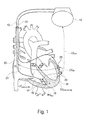
- the Figure 1 illustrates a typical biventricular pacing device, where a pulse generator 10 is associated with a first probe 12 implanted in the right ventricle 14. The head of this probe comprises two electrodes, namely a tip electrode 16 and an electrode proximal (ring) 18.
- This sensor may also be provided with a winding (coil) 20 forming defibrillation electrode, and also to collect an endocardial signal (EGM signal) in the right atrium 22.
- the device comprises a second probe 24, for example a probe disposed in the coronal network and comprising one or more electrodes such as 26 (distal tip electrode ) and 28 (proximal ring electrode ) disposed at neighborhood of the ventricle left 30. It is thus possible to provide concomitant stimulation, or with controlled temporal offset (DVV interventricular delay) of the two right and left ventricles to restore synchronization between these two cavities and improve the general hemodynamics of the patient.
- VV interventricular delay controlled temporal offset
- the right ventricle (RV) is generally stimulated by applying pulses between the end electrodes 16 and 18 of the probe 12: right ventricular pacing configuration designated "RV beep ".
- the electrical pulses are applied by the generator between the different pairs of electrodes just described, so as to locally induce a depolarization on the cathode electrode, which is the distal electrode 16 or 26 in the case of unipolar or bipolar stimulation, the anode being, as the case may be, the metal housing of the generator 10 or the proximal electrode 18 or 28.
- the cathode is the electrode 26 or 28 placed against the left ventricle, the anode being the electrode 18 or 20 of the right probe, respectively, used only to define a return of current to the generator.
- the depolarization wave of the left ventricle is not only created at the cathode (therefore at the level of the left ventricle), but also at the anode (therefore at the level of the ventricle right): in other words, the pulse intended to contract the left ventricle will also generate a depolarization on the right ("anodic stimulation" phenomenon).
- the phenomenon of anodic stimulation has the consequence that the depolarization wave corresponding to the pulse applied on the left will produce at the same time a depolarization in the right ventricle, losing the benefit of an anticipated left stimulation during the resynchronization therapy.
- the risk of occurrence of anodic stimulation is relatively high in a capture threshold test, which starts with high stimulation energy. This risk then decreases as the amplitude of stimulation is reduced, but the test algorithm has been deceived by misinterpreting the disappearance of the anodic stimulation (which it does not have). identified as such) by a loss of capture, leading to an erroneous classification of the successive cycles of the test between capturing and non-capturing cycles.
- the technique of the invention overcomes this difficulty, by a new technique for analyzing the effectiveness of biventricular pacing making it possible to identify not only a loss of capture on the right and / or on the left, but also and especially the appearance of anodic stimulation phenomenon.
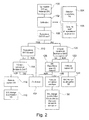
- the Figure 2 is a block diagram illustrating the various steps of this technique for analyzing and optimizing biventricular pacing according to the invention.
- the first step (block 100) is the execution of a conventional DAV and DVV optimization test by scanning the DAV for a given DVV, and then analyzing the variations of the EA signal resulting from these DAV changes.
- This scan is performed for at least three different DVVs, each for at least six VAD values, chosen shorter than those of the spontaneous AV conduction (PR / AR interval) of the patient.
- the object of step 104 is to select, among the various possible EA parameters, an EA parameter (or possibly several of these EA parameters) making it possible to better evaluate the effect of a modification of the configuration and the stimulation mode, in order to detect the presence of possible anodic stimulation and / or loss of left or right ventricular capture.
- This EA parameter is chosen by an operator.
- the step 106 for calculating the "equivalence threshold" of the selected parameter EA is intended to define a threshold that makes it possible to distinguish between two different hemodynamic situations, in a manner that is decorrelated from the intrinsic variability of the parameter EA.
- the Figure 4 illustrates an example of variation of these parameters, and one can decide that if, for example, the value of RMSE between DVV1 and DVV2 is lower than a predefined threshold (for example 10%, but this value can also depend on the variability intrinsic parameter EA on consecutive cycles keeping the same DVV), then the two configurations of stimulation will be considered as "equivalent”.
- a predefined threshold for example 10%, but this value can also depend on the variability intrinsic parameter EA on consecutive cycles keeping the same DVV
- This equivalence indicator will also be used to evaluate this same "equivalence", between different modes of stimulation (VG alone, DV alone or BiV).
- the evaluation of the effectiveness of the biventricular pacing begins with an equivalence test between a BiV mode stimulation and a VG mode alone stimulation (block 108).
- a negative response to this test corresponds to a normal case, insofar as biventricular stimulation reveals a different hemodynamic situation (therefore not equivalent) of a stimulation of the only left ventricle.
- the algorithm then tests the equivalence between the BiV and VD modes alone (block 110).
- the analysis then ends by returning a result indicating that biventricular pacing is consistent and effective (block 112). If, on the other hand, an equivalence is found between the modes of BiV and VD stimulation alone (block 110), this means that the biventricular pacing has brought nothing compared with a stimulation of the right ventricle alone.
- the algorithm analyzes (block 114), in VG mode alone, the variation of the parameter EA as a function of the AVD.
- the algorithm then tests the effect of a variation of the AVD on the parameter EA, in pacing mode VD alone (block 120, similar to block 114 but for a stimulation on the right).
- the Figure 5 illustrates an example of measurement results of the amplitude of the PEA according to the AVD for different values of DVV, in particular in the presence of anodic stimulation phenomenon, these results being presented in the form of a histogram on the Figure 6 , with for different DVVs the average of PEA values ranked according to the respective DVVs.
- the indications "LR nn” correspond to a stimulation of the left ventricle first, followed by that of the right ventricle, the numerical value nn indicating the applied DVV (for example 16, 32 and 48 ms).
- the indications “RL nn” correspond to the opposite situation, where the right ventricle is stimulated first.
- the reference “BiV0” indicates a biventricular stimulation at zero DVV, that is to say applied simultaneously on both ventricles.
- the illustrated example corresponds to a clinical case in which anodic stimulation is present during the stimulation of the left ventricle.
- the values of the parameter EA associated with configurations with left ventricular pacing first are all equivalent to those measured in BiV0 pure biventricular configuration, revealing the ineffectiveness of DVV application, regardless of the value of DVV.
- a right ventricular stimulation first in the example, RL16, RL32 and RL48 configurations
- a significant difference appears with respect to a pure biventricular pacing BiV0, revealing the effectiveness of the application of a DVV.
Landscapes
- Health & Medical Sciences (AREA)
- Cardiology (AREA)
- Heart & Thoracic Surgery (AREA)
- Life Sciences & Earth Sciences (AREA)
- Public Health (AREA)
- Engineering & Computer Science (AREA)
- Biomedical Technology (AREA)
- Nuclear Medicine, Radiotherapy & Molecular Imaging (AREA)
- Radiology & Medical Imaging (AREA)
- Animal Behavior & Ethology (AREA)
- General Health & Medical Sciences (AREA)
- Veterinary Medicine (AREA)
- Physiology (AREA)
- Biophysics (AREA)
- Hematology (AREA)
- Hospice & Palliative Care (AREA)
- Electrotherapy Devices (AREA)
Applications Claiming Priority (1)
| Application Number | Priority Date | Filing Date | Title |
|---|---|---|---|
| FR1354330 | 2013-05-14 |
Publications (2)
| Publication Number | Publication Date |
|---|---|
| EP2803385A1 true EP2803385A1 (de) | 2014-11-19 |
| EP2803385B1 EP2803385B1 (de) | 2016-04-06 |
Family
ID=48746038
Family Applications (1)
| Application Number | Title | Priority Date | Filing Date |
|---|---|---|---|
| EP14165460.8A Active EP2803385B1 (de) | 2013-05-14 | 2014-04-22 | Implantierbares CRT-Gerät zur Stimulation beider Ventrikel und zur Erkennung von Erfassungsverlusten und anodischen Stimulationen |
Country Status (2)
| Country | Link |
|---|---|
| US (3) | US9314636B2 (de) |
| EP (1) | EP2803385B1 (de) |
Cited By (3)
| Publication number | Priority date | Publication date | Assignee | Title |
|---|---|---|---|---|
| WO2017102780A1 (fr) * | 2015-12-18 | 2017-06-22 | Sorin Crm Sas | Dispositif médical implantable actif de type resynchroniseur cardiaque avec adaptation dynamique du délai atrioventriculaire en fonction d'un degré de fusion détecté et quantifié |
| CN107548313A (zh) * | 2015-02-26 | 2018-01-05 | 美敦力公司 | 使用加速度来监测起搏夺获 |
| CN113856045A (zh) * | 2021-10-22 | 2021-12-31 | 乐普医学电子仪器股份有限公司 | 一种用于植入式脉冲发生器的预警系统及方法 |
Families Citing this family (1)
| Publication number | Priority date | Publication date | Assignee | Title |
|---|---|---|---|---|
| EP2803385B1 (de) * | 2013-05-14 | 2016-04-06 | Sorin CRM SAS | Implantierbares CRT-Gerät zur Stimulation beider Ventrikel und zur Erkennung von Erfassungsverlusten und anodischen Stimulationen |
Citations (8)
| Publication number | Priority date | Publication date | Assignee | Title |
|---|---|---|---|---|
| EP0515319A2 (de) | 1991-05-21 | 1992-11-25 | SORIN BIOMEDICA CARDIO S.p.A. | Taktempfindlicher Herzschrittmacher |
| EP1108446A1 (de) | 1999-12-17 | 2001-06-20 | ELA MEDICAL (Société anonyme) | Implantierbare aktive Vorrichtung des Typs multisite mit Mitteln zum Resynchronisieren der Ventrikeln |
| EP1249254A2 (de) * | 2001-04-12 | 2002-10-16 | Pacesetter, Inc. | Sytem und Verfahren zur automatischen Selektion der Polung der Elektroden während Messung und Stimulation |
| US6687545B1 (en) | 2001-10-23 | 2004-02-03 | Pacesetter, Inc. | Cardiac stimulation system and method for performing automatic capture verification during bipolar stimulation |
| EP1736203A1 (de) | 2005-06-22 | 2006-12-27 | Ela Medical | Implantierbares medizinisches Gerät zur biventrikulären Stimulation und zur automatischen Optimierung der Anregungskonfiguration |
| EP2092885A1 (de) | 2008-02-20 | 2009-08-26 | Ela Medical | Analysevorrichtung eines endokardialen Beschleunigungssignals |
| US20100262204A1 (en) * | 2009-04-13 | 2010-10-14 | Mccabe Aaron R | Anodal Stimulation Detection and Avoidance |
| EP2495013A1 (de) | 2011-03-03 | 2012-09-05 | Sorin CRM SAS | Anordnung für die Suche nach einer optimalen Konfiguration eines Implantats zur bi-, tri- oder multiventrikulären Resynchronisation des Herzens |
Family Cites Families (5)
| Publication number | Priority date | Publication date | Assignee | Title |
|---|---|---|---|---|
| US8019409B2 (en) * | 2008-06-09 | 2011-09-13 | Pacesetter, Inc. | Cardiac resynchronization therapy optimization using electromechanical delay from realtime electrode motion tracking |
| EP2189182B1 (de) * | 2008-11-19 | 2011-06-08 | Ela Medical | Aktives medizinisches Implantat, das mit Testmitteln zur aurikulären Datenerfassung ausgestattet ist |
| EP2311524B1 (de) * | 2009-10-19 | 2011-06-22 | Sorin CRM SAS | Implantierbarer medizinischer Herzschrittmacher und Verfahren zur Optimierung des Implantatortes für interventrikuläre und atrioventrikuläre Intervalle |
| EP2412401B1 (de) * | 2010-07-26 | 2022-01-05 | Sorin CRM SAS | Aktives implantierbares medizinisches gerät mit mitteln zum ventrikulären einfangtesten durch auswertung eines endokardialen beschleunigungssignals |
| EP2803385B1 (de) * | 2013-05-14 | 2016-04-06 | Sorin CRM SAS | Implantierbares CRT-Gerät zur Stimulation beider Ventrikel und zur Erkennung von Erfassungsverlusten und anodischen Stimulationen |
-
2014
- 2014-04-22 EP EP14165460.8A patent/EP2803385B1/de active Active
- 2014-05-14 US US14/277,552 patent/US9314636B2/en active Active
-
2016
- 2016-04-15 US US15/130,653 patent/US9943693B2/en active Active
-
2018
- 2018-04-16 US US15/954,255 patent/US10441797B2/en active Active
Patent Citations (8)
| Publication number | Priority date | Publication date | Assignee | Title |
|---|---|---|---|---|
| EP0515319A2 (de) | 1991-05-21 | 1992-11-25 | SORIN BIOMEDICA CARDIO S.p.A. | Taktempfindlicher Herzschrittmacher |
| EP1108446A1 (de) | 1999-12-17 | 2001-06-20 | ELA MEDICAL (Société anonyme) | Implantierbare aktive Vorrichtung des Typs multisite mit Mitteln zum Resynchronisieren der Ventrikeln |
| EP1249254A2 (de) * | 2001-04-12 | 2002-10-16 | Pacesetter, Inc. | Sytem und Verfahren zur automatischen Selektion der Polung der Elektroden während Messung und Stimulation |
| US6687545B1 (en) | 2001-10-23 | 2004-02-03 | Pacesetter, Inc. | Cardiac stimulation system and method for performing automatic capture verification during bipolar stimulation |
| EP1736203A1 (de) | 2005-06-22 | 2006-12-27 | Ela Medical | Implantierbares medizinisches Gerät zur biventrikulären Stimulation und zur automatischen Optimierung der Anregungskonfiguration |
| EP2092885A1 (de) | 2008-02-20 | 2009-08-26 | Ela Medical | Analysevorrichtung eines endokardialen Beschleunigungssignals |
| US20100262204A1 (en) * | 2009-04-13 | 2010-10-14 | Mccabe Aaron R | Anodal Stimulation Detection and Avoidance |
| EP2495013A1 (de) | 2011-03-03 | 2012-09-05 | Sorin CRM SAS | Anordnung für die Suche nach einer optimalen Konfiguration eines Implantats zur bi-, tri- oder multiventrikulären Resynchronisation des Herzens |
Cited By (4)
| Publication number | Priority date | Publication date | Assignee | Title |
|---|---|---|---|---|
| CN107548313A (zh) * | 2015-02-26 | 2018-01-05 | 美敦力公司 | 使用加速度来监测起搏夺获 |
| WO2017102780A1 (fr) * | 2015-12-18 | 2017-06-22 | Sorin Crm Sas | Dispositif médical implantable actif de type resynchroniseur cardiaque avec adaptation dynamique du délai atrioventriculaire en fonction d'un degré de fusion détecté et quantifié |
| US11027134B2 (en) | 2015-12-18 | 2021-06-08 | Sorin Crm Sas | Active implantable medical device such as a cardiac resynchroniser with dynamic adaptation of an atrioventricular delay depending on a detected and quantified degree of fusion |
| CN113856045A (zh) * | 2021-10-22 | 2021-12-31 | 乐普医学电子仪器股份有限公司 | 一种用于植入式脉冲发生器的预警系统及方法 |
Also Published As
| Publication number | Publication date |
|---|---|
| US9943693B2 (en) | 2018-04-17 |
| US20160228714A1 (en) | 2016-08-11 |
| US10441797B2 (en) | 2019-10-15 |
| US20140343619A1 (en) | 2014-11-20 |
| US9314636B2 (en) | 2016-04-19 |
| EP2803385B1 (de) | 2016-04-06 |
| US20180296844A1 (en) | 2018-10-18 |
Similar Documents
| Publication | Publication Date | Title |
|---|---|---|
| EP2189182B1 (de) | Aktives medizinisches Implantat, das mit Testmitteln zur aurikulären Datenerfassung ausgestattet ist | |
| EP2070562B1 (de) | Medizinische Vorrichtung zur Bestimmung des Herzzustands eines Patienten, dem ein aktives Implantat zur biventrikulären Stimulation eingesetzt wurde | |
| EP2324885B1 (de) | Aktives medizinisches gerät mit mitteln zum einfangtesten durch auswertung eines kardialen vektogramms | |
| EP2499971B1 (de) | Adaptative Datenverarbeitungsvorrichtung eines endokardialen Beschleunigungssignals | |
| EP2412401B1 (de) | Aktives implantierbares medizinisches gerät mit mitteln zum ventrikulären einfangtesten durch auswertung eines endokardialen beschleunigungssignals | |
| EP2813260A1 (de) | Aktives implantierbares medizinisches Gerät zur Behandlung einer Herzinsuffizienz mit stochastischer Stimulation des Vagusnervs | |
| EP2737925A1 (de) | Aktive implantierbare Herzprothese mit Erfassung der aurikularen mechanischen Aktivität | |
| EP2311524B1 (de) | Implantierbarer medizinischer Herzschrittmacher und Verfahren zur Optimierung des Implantatortes für interventrikuläre und atrioventrikuläre Intervalle | |
| EP1736203B1 (de) | Implantierbares medizinisches Gerät zur biventrikulären Stimulation und zur automatischen Optimierung der Anregungskonfiguration | |
| EP2742971B1 (de) | Aktive implantierbare medizinische Vorrichtung vom Typ Herzschrittmacher mit Nachweistest durch vereinfachte Analyse eines Vektogramms | |
| EP2803385B1 (de) | Implantierbares CRT-Gerät zur Stimulation beider Ventrikel und zur Erkennung von Erfassungsverlusten und anodischen Stimulationen | |
| EP2471575B1 (de) | Implantierbare aktive medizinische Vorrichtung zur Aurikelstimulation für die Behandlung von diastolischer Herzinsuffizienz | |
| EP2495013B1 (de) | Anordnung für die Suche nach einer optimalen Konfiguration eines Implantats zur bi-, tri- oder multiventrikulären Resynchronisation des Herzens | |
| EP2508227B1 (de) | Implantierbare Herzprothese zur Resynchronisation des Herzens durch biventrikuläre Stimulation, die Mittel zur inversen Herzrekonfiguration umfasst | |
| EP2742973B1 (de) | Aktive implantierbare medizinische Vorrichtung vom Typ Herzschrittmacher mit Nachweis der anodischen Stimulation durch Vektogrammanalyse | |
| EP2712549A1 (de) | Vorrichtung zur Bewertung der zeitlichen ventrikulären Desynchronisierung | |
| EP3081257B1 (de) | Aktive implantierbare medizinische vorrichtung zur herzstimulation, die detektionsmittel für remodellierungserscheinungen oder inversen remodellierungserscheinungen des patienten umfasst | |
| EP3075413B1 (de) | Implantierbares medizinisches gerät für die biventrikuläre stimulation, umfassend mittel zur messung intraventrikulärer leitungszeit für die diagnose von herzdekompensation | |
| EP2881140B1 (de) | Implantierbare aktive medizinische Vorrichtung zur Doppelkammer-Stimulation für die Behandlung von Herzinsuffizienz mit erhaltener Auswurffraktion (HFpEF) | |
| EP2873436B1 (de) | Implantierbare aktive medizinische Vorrichtung zur biaurikulären Stimulation für die Behandlung von Herzinsuffizienz mit erhaltener Auswurffraktion (HFpEF) | |
| EP3517029B1 (de) | Aktive implantierbare medizinische vorrichtung, die mittel für die erfassung und quantifizierung von fusionssituationen umfasst | |
| EP3025758A1 (de) | Aktive implantierbare medizinische vorrichtung, insbesondere vom typ leadless-kapsel, mit detektion der zyklusweisen erfassung durch analyse eines signals für die endokardiale beschleunigung | |
| EP3042693B1 (de) | Aktive implantierbare medizinische vorrichtung, insbesondere vom typ autonome kapsel, mit dynamischer optimierung der energie der stimulationsimpulse | |
| EP3389770B1 (de) | Aktive implantierbare medizinische vorrichtung wie etwa ein herzresynchronisator mit dynamischer anpassung der atrioventrikulären verzögerung in abhängigkeit eines erfassten und quantifizierten fusionsgrades |
Legal Events
| Date | Code | Title | Description |
|---|---|---|---|
| PUAI | Public reference made under article 153(3) epc to a published international application that has entered the european phase |
Free format text: ORIGINAL CODE: 0009012 |
|
| 17P | Request for examination filed |
Effective date: 20140422 |
|
| AK | Designated contracting states |
Kind code of ref document: A1 Designated state(s): AL AT BE BG CH CY CZ DE DK EE ES FI FR GB GR HR HU IE IS IT LI LT LU LV MC MK MT NL NO PL PT RO RS SE SI SK SM TR |
|
| AX | Request for extension of the european patent |
Extension state: BA ME |
|
| R17P | Request for examination filed (corrected) |
Effective date: 20150417 |
|
| RBV | Designated contracting states (corrected) |
Designated state(s): AL AT BE BG CH CY CZ DE DK EE ES FI FR GB GR HR HU IE IS IT LI LT LU LV MC MK MT NL NO PL PT RO RS SE SI SK SM TR |
|
| GRAP | Despatch of communication of intention to grant a patent |
Free format text: ORIGINAL CODE: EPIDOSNIGR1 |
|
| INTG | Intention to grant announced |
Effective date: 20151014 |
|
| GRAS | Grant fee paid |
Free format text: ORIGINAL CODE: EPIDOSNIGR3 |
|
| GRAA | (expected) grant |
Free format text: ORIGINAL CODE: 0009210 |
|
| AK | Designated contracting states |
Kind code of ref document: B1 Designated state(s): AL AT BE BG CH CY CZ DE DK EE ES FI FR GB GR HR HU IE IS IT LI LT LU LV MC MK MT NL NO PL PT RO RS SE SI SK SM TR |
|
| REG | Reference to a national code |
Ref country code: GB Ref legal event code: FG4D Free format text: NOT ENGLISH |
|
| REG | Reference to a national code |
Ref country code: AT Ref legal event code: REF Ref document number: 787068 Country of ref document: AT Kind code of ref document: T Effective date: 20160415 Ref country code: CH Ref legal event code: EP |
|
| REG | Reference to a national code |
Ref country code: FR Ref legal event code: PLFP Year of fee payment: 3 |
|
| REG | Reference to a national code |
Ref country code: IE Ref legal event code: FG4D Free format text: LANGUAGE OF EP DOCUMENT: FRENCH |
|
| REG | Reference to a national code |
Ref country code: DE Ref legal event code: R096 Ref document number: 602014001341 Country of ref document: DE |
|
| REG | Reference to a national code |
Ref country code: LT Ref legal event code: MG4D Ref country code: NL Ref legal event code: MP Effective date: 20160406 |
|
| REG | Reference to a national code |
Ref country code: AT Ref legal event code: MK05 Ref document number: 787068 Country of ref document: AT Kind code of ref document: T Effective date: 20160406 |
|
| PG25 | Lapsed in a contracting state [announced via postgrant information from national office to epo] |
Ref country code: BE Free format text: LAPSE BECAUSE OF NON-PAYMENT OF DUE FEES Effective date: 20160430 |
|
| PG25 | Lapsed in a contracting state [announced via postgrant information from national office to epo] |
Ref country code: NL Free format text: LAPSE BECAUSE OF FAILURE TO SUBMIT A TRANSLATION OF THE DESCRIPTION OR TO PAY THE FEE WITHIN THE PRESCRIBED TIME-LIMIT Effective date: 20160406 |
|
| PG25 | Lapsed in a contracting state [announced via postgrant information from national office to epo] |
Ref country code: LT Free format text: LAPSE BECAUSE OF FAILURE TO SUBMIT A TRANSLATION OF THE DESCRIPTION OR TO PAY THE FEE WITHIN THE PRESCRIBED TIME-LIMIT Effective date: 20160406 Ref country code: NO Free format text: LAPSE BECAUSE OF FAILURE TO SUBMIT A TRANSLATION OF THE DESCRIPTION OR TO PAY THE FEE WITHIN THE PRESCRIBED TIME-LIMIT Effective date: 20160706 Ref country code: IS Free format text: LAPSE BECAUSE OF FAILURE TO SUBMIT A TRANSLATION OF THE DESCRIPTION OR TO PAY THE FEE WITHIN THE PRESCRIBED TIME-LIMIT Effective date: 20160806 Ref country code: PL Free format text: LAPSE BECAUSE OF FAILURE TO SUBMIT A TRANSLATION OF THE DESCRIPTION OR TO PAY THE FEE WITHIN THE PRESCRIBED TIME-LIMIT Effective date: 20160406 Ref country code: FI Free format text: LAPSE BECAUSE OF FAILURE TO SUBMIT A TRANSLATION OF THE DESCRIPTION OR TO PAY THE FEE WITHIN THE PRESCRIBED TIME-LIMIT Effective date: 20160406 |
|
| PG25 | Lapsed in a contracting state [announced via postgrant information from national office to epo] |
Ref country code: LV Free format text: LAPSE BECAUSE OF FAILURE TO SUBMIT A TRANSLATION OF THE DESCRIPTION OR TO PAY THE FEE WITHIN THE PRESCRIBED TIME-LIMIT Effective date: 20160406 Ref country code: PT Free format text: LAPSE BECAUSE OF FAILURE TO SUBMIT A TRANSLATION OF THE DESCRIPTION OR TO PAY THE FEE WITHIN THE PRESCRIBED TIME-LIMIT Effective date: 20160808 Ref country code: AT Free format text: LAPSE BECAUSE OF FAILURE TO SUBMIT A TRANSLATION OF THE DESCRIPTION OR TO PAY THE FEE WITHIN THE PRESCRIBED TIME-LIMIT Effective date: 20160406 Ref country code: HR Free format text: LAPSE BECAUSE OF FAILURE TO SUBMIT A TRANSLATION OF THE DESCRIPTION OR TO PAY THE FEE WITHIN THE PRESCRIBED TIME-LIMIT Effective date: 20160406 Ref country code: RS Free format text: LAPSE BECAUSE OF FAILURE TO SUBMIT A TRANSLATION OF THE DESCRIPTION OR TO PAY THE FEE WITHIN THE PRESCRIBED TIME-LIMIT Effective date: 20160406 Ref country code: SE Free format text: LAPSE BECAUSE OF FAILURE TO SUBMIT A TRANSLATION OF THE DESCRIPTION OR TO PAY THE FEE WITHIN THE PRESCRIBED TIME-LIMIT Effective date: 20160406 Ref country code: GR Free format text: LAPSE BECAUSE OF FAILURE TO SUBMIT A TRANSLATION OF THE DESCRIPTION OR TO PAY THE FEE WITHIN THE PRESCRIBED TIME-LIMIT Effective date: 20160707 |
|
| REG | Reference to a national code |
Ref country code: DE Ref legal event code: R097 Ref document number: 602014001341 Country of ref document: DE |
|
| REG | Reference to a national code |
Ref country code: IE Ref legal event code: MM4A |
|
| PG25 | Lapsed in a contracting state [announced via postgrant information from national office to epo] |
Ref country code: SK Free format text: LAPSE BECAUSE OF FAILURE TO SUBMIT A TRANSLATION OF THE DESCRIPTION OR TO PAY THE FEE WITHIN THE PRESCRIBED TIME-LIMIT Effective date: 20160406 Ref country code: RO Free format text: LAPSE BECAUSE OF FAILURE TO SUBMIT A TRANSLATION OF THE DESCRIPTION OR TO PAY THE FEE WITHIN THE PRESCRIBED TIME-LIMIT Effective date: 20160406 Ref country code: DK Free format text: LAPSE BECAUSE OF FAILURE TO SUBMIT A TRANSLATION OF THE DESCRIPTION OR TO PAY THE FEE WITHIN THE PRESCRIBED TIME-LIMIT Effective date: 20160406 Ref country code: CZ Free format text: LAPSE BECAUSE OF FAILURE TO SUBMIT A TRANSLATION OF THE DESCRIPTION OR TO PAY THE FEE WITHIN THE PRESCRIBED TIME-LIMIT Effective date: 20160406 Ref country code: EE Free format text: LAPSE BECAUSE OF FAILURE TO SUBMIT A TRANSLATION OF THE DESCRIPTION OR TO PAY THE FEE WITHIN THE PRESCRIBED TIME-LIMIT Effective date: 20160406 Ref country code: MC Free format text: LAPSE BECAUSE OF FAILURE TO SUBMIT A TRANSLATION OF THE DESCRIPTION OR TO PAY THE FEE WITHIN THE PRESCRIBED TIME-LIMIT Effective date: 20160406 |
|
| PLBE | No opposition filed within time limit |
Free format text: ORIGINAL CODE: 0009261 |
|
| STAA | Information on the status of an ep patent application or granted ep patent |
Free format text: STATUS: NO OPPOSITION FILED WITHIN TIME LIMIT |
|
| PG25 | Lapsed in a contracting state [announced via postgrant information from national office to epo] |
Ref country code: SM Free format text: LAPSE BECAUSE OF FAILURE TO SUBMIT A TRANSLATION OF THE DESCRIPTION OR TO PAY THE FEE WITHIN THE PRESCRIBED TIME-LIMIT Effective date: 20160406 |
|
| REG | Reference to a national code |
Ref country code: FR Ref legal event code: PLFP Year of fee payment: 4 |
|
| 26N | No opposition filed |
Effective date: 20170110 |
|
| PG25 | Lapsed in a contracting state [announced via postgrant information from national office to epo] |
Ref country code: SI Free format text: LAPSE BECAUSE OF FAILURE TO SUBMIT A TRANSLATION OF THE DESCRIPTION OR TO PAY THE FEE WITHIN THE PRESCRIBED TIME-LIMIT Effective date: 20160406 Ref country code: IE Free format text: LAPSE BECAUSE OF NON-PAYMENT OF DUE FEES Effective date: 20160422 |
|
| REG | Reference to a national code |
Ref country code: CH Ref legal event code: PL |
|
| PG25 | Lapsed in a contracting state [announced via postgrant information from national office to epo] |
Ref country code: LI Free format text: LAPSE BECAUSE OF NON-PAYMENT OF DUE FEES Effective date: 20170430 Ref country code: CH Free format text: LAPSE BECAUSE OF NON-PAYMENT OF DUE FEES Effective date: 20170430 |
|
| REG | Reference to a national code |
Ref country code: FR Ref legal event code: PLFP Year of fee payment: 5 |
|
| PG25 | Lapsed in a contracting state [announced via postgrant information from national office to epo] |
Ref country code: HU Free format text: LAPSE BECAUSE OF FAILURE TO SUBMIT A TRANSLATION OF THE DESCRIPTION OR TO PAY THE FEE WITHIN THE PRESCRIBED TIME-LIMIT; INVALID AB INITIO Effective date: 20140422 Ref country code: ES Free format text: LAPSE BECAUSE OF FAILURE TO SUBMIT A TRANSLATION OF THE DESCRIPTION OR TO PAY THE FEE WITHIN THE PRESCRIBED TIME-LIMIT Effective date: 20160406 |
|
| PG25 | Lapsed in a contracting state [announced via postgrant information from national office to epo] |
Ref country code: MK Free format text: LAPSE BECAUSE OF FAILURE TO SUBMIT A TRANSLATION OF THE DESCRIPTION OR TO PAY THE FEE WITHIN THE PRESCRIBED TIME-LIMIT Effective date: 20160406 Ref country code: LU Free format text: LAPSE BECAUSE OF NON-PAYMENT OF DUE FEES Effective date: 20160422 Ref country code: CY Free format text: LAPSE BECAUSE OF FAILURE TO SUBMIT A TRANSLATION OF THE DESCRIPTION OR TO PAY THE FEE WITHIN THE PRESCRIBED TIME-LIMIT Effective date: 20160406 Ref country code: MT Free format text: LAPSE BECAUSE OF FAILURE TO SUBMIT A TRANSLATION OF THE DESCRIPTION OR TO PAY THE FEE WITHIN THE PRESCRIBED TIME-LIMIT Effective date: 20160406 |
|
| PG25 | Lapsed in a contracting state [announced via postgrant information from national office to epo] |
Ref country code: BG Free format text: LAPSE BECAUSE OF FAILURE TO SUBMIT A TRANSLATION OF THE DESCRIPTION OR TO PAY THE FEE WITHIN THE PRESCRIBED TIME-LIMIT Effective date: 20160406 |
|
| PG25 | Lapsed in a contracting state [announced via postgrant information from national office to epo] |
Ref country code: TR Free format text: LAPSE BECAUSE OF FAILURE TO SUBMIT A TRANSLATION OF THE DESCRIPTION OR TO PAY THE FEE WITHIN THE PRESCRIBED TIME-LIMIT Effective date: 20160406 Ref country code: AL Free format text: LAPSE BECAUSE OF FAILURE TO SUBMIT A TRANSLATION OF THE DESCRIPTION OR TO PAY THE FEE WITHIN THE PRESCRIBED TIME-LIMIT Effective date: 20160406 |
|
| P01 | Opt-out of the competence of the unified patent court (upc) registered |
Effective date: 20230714 |
|
| PGFP | Annual fee paid to national office [announced via postgrant information from national office to epo] |
Ref country code: DE Payment date: 20250411 Year of fee payment: 12 |
|
| PGFP | Annual fee paid to national office [announced via postgrant information from national office to epo] |
Ref country code: GB Payment date: 20250417 Year of fee payment: 12 |
|
| PGFP | Annual fee paid to national office [announced via postgrant information from national office to epo] |
Ref country code: IT Payment date: 20250409 Year of fee payment: 12 |
|
| PGFP | Annual fee paid to national office [announced via postgrant information from national office to epo] |
Ref country code: FR Payment date: 20250430 Year of fee payment: 12 |
|
| REG | Reference to a national code |
Ref country code: DE Ref legal event code: R082 Ref document number: 602014001341 Country of ref document: DE Representative=s name: GULDE & PARTNER PATENT- UND RECHTSANWALTSKANZL, DE |