EP2804439A1 - Procédé d'accès aléatoire, terminal, station de base et système - Google Patents
Procédé d'accès aléatoire, terminal, station de base et système Download PDFInfo
- Publication number
- EP2804439A1 EP2804439A1 EP13755428.3A EP13755428A EP2804439A1 EP 2804439 A1 EP2804439 A1 EP 2804439A1 EP 13755428 A EP13755428 A EP 13755428A EP 2804439 A1 EP2804439 A1 EP 2804439A1
- Authority
- EP
- European Patent Office
- Prior art keywords
- access
- access sequence
- terminal
- sequence
- round
- Prior art date
- Legal status (The legal status is an assumption and is not a legal conclusion. Google has not performed a legal analysis and makes no representation as to the accuracy of the status listed.)
- Withdrawn
Links
- 238000000034 method Methods 0.000 title claims abstract description 50
- 230000005540 biological transmission Effects 0.000 claims abstract description 174
- 238000013507 mapping Methods 0.000 claims abstract description 5
- 238000010586 diagram Methods 0.000 description 16
- 238000004891 communication Methods 0.000 description 3
- 230000002301 combined effect Effects 0.000 description 2
- 239000013078 crystal Substances 0.000 description 2
- 238000005516 engineering process Methods 0.000 description 2
- 230000007774 longterm Effects 0.000 description 2
- 238000013139 quantization Methods 0.000 description 2
- 238000004364 calculation method Methods 0.000 description 1
- 238000010276 construction Methods 0.000 description 1
- 238000013461 design Methods 0.000 description 1
- 238000011161 development Methods 0.000 description 1
- 238000012986 modification Methods 0.000 description 1
- 230000004048 modification Effects 0.000 description 1
- 230000003287 optical effect Effects 0.000 description 1
- 230000000717 retained effect Effects 0.000 description 1
Images




Classifications
-
- H—ELECTRICITY
- H04—ELECTRIC COMMUNICATION TECHNIQUE
- H04W—WIRELESS COMMUNICATION NETWORKS
- H04W74/00—Wireless channel access
- H04W74/08—Non-scheduled access, e.g. ALOHA
-
- H—ELECTRICITY
- H04—ELECTRIC COMMUNICATION TECHNIQUE
- H04W—WIRELESS COMMUNICATION NETWORKS
- H04W74/00—Wireless channel access
- H04W74/08—Non-scheduled access, e.g. ALOHA
- H04W74/0866—Non-scheduled access, e.g. ALOHA using a dedicated channel for access
- H04W74/0891—Non-scheduled access, e.g. ALOHA using a dedicated channel for access for synchronized access
-
- H—ELECTRICITY
- H04—ELECTRIC COMMUNICATION TECHNIQUE
- H04B—TRANSMISSION
- H04B7/00—Radio transmission systems, i.e. using radiation field
- H04B7/24—Radio transmission systems, i.e. using radiation field for communication between two or more posts
- H04B7/26—Radio transmission systems, i.e. using radiation field for communication between two or more posts at least one of which is mobile
-
- H—ELECTRICITY
- H04—ELECTRIC COMMUNICATION TECHNIQUE
- H04W—WIRELESS COMMUNICATION NETWORKS
- H04W56/00—Synchronisation arrangements
- H04W56/0005—Synchronisation arrangements synchronizing of arrival of multiple uplinks
-
- H—ELECTRICITY
- H04—ELECTRIC COMMUNICATION TECHNIQUE
- H04W—WIRELESS COMMUNICATION NETWORKS
- H04W56/00—Synchronisation arrangements
- H04W56/004—Synchronisation arrangements compensating for timing error of reception due to propagation delay
- H04W56/0045—Synchronisation arrangements compensating for timing error of reception due to propagation delay compensating for timing error by altering transmission time
-
- H—ELECTRICITY
- H04—ELECTRIC COMMUNICATION TECHNIQUE
- H04W—WIRELESS COMMUNICATION NETWORKS
- H04W72/00—Local resource management
- H04W72/02—Selection of wireless resources by user or terminal
-
- H—ELECTRICITY
- H04—ELECTRIC COMMUNICATION TECHNIQUE
- H04W—WIRELESS COMMUNICATION NETWORKS
- H04W72/00—Local resource management
- H04W72/20—Control channels or signalling for resource management
- H04W72/23—Control channels or signalling for resource management in the downlink direction of a wireless link, i.e. towards a terminal
Definitions
- the present invention relates to the field of communications technologies, and in particular, to a method for performing random access by means of a physical random access channel (Physical Random Access Channel, PRACH), a terminal and a base station.
- a physical random access channel Physical Random Access Channel, PRACH
- PRACH Physical Random Access Channel
- a Long Term Evolution (Long Terms Evolution, LTE) system has very good performance in low-speed scenarios in which a terminal moves at a speed of 0-15 km/h, and continues to deliver relatively good performance when the terminal moves at a speed of 15-120 km/h; connectivity can be retained even when the terminal moves at a speed of 120-350 km/h or at a maximum speed of up to 500 km/h depending on frequency bands.
- LTE Long Term Evolution
- a terminal moves at a higher speed which may reach 800-1200 km/h. Due to the high moving speed of the terminal, a Doppler frequency shift of an access signal is greater on a same carrier.
- a base station of an LTE system in the prior art supports only cell coverage with a radius of 100 km, which is far from enough.
- Embodiments of the present invention provide a random access method to enable a terminal at a distance of more than 100 km from a base station to access a physical random access channel.
- the embodiments of the present invention further provide a corresponding terminal, a base station, and a system.
- a random access method includes:
- a random access method includes:
- a random access method includes:
- a random access method includes:
- a terminal includes:
- a terminal includes:
- a base station includes:
- a base station includes:
- a random access system includes a terminal and a base station, where the terminal is a terminal described in the foregoing technical solutions, and the base station is a base station described in the foregoing technical solutions.
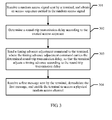
- an index of a leading access sequence used by a cell in which a terminal is located is obtained; according to the index of the leading access sequence, a specified number of access sequences used by the cell in which the terminal is located is found from a pre-created candidate sequence list, and any one access sequence is selected from the found specified number of access sequences as a first access sequence; the first access sequence is mapped onto a specified bandwidth according to a preset subcarrier spacing to generate a first random access signal, where the subcarrier spacing is less than 1.25 kHz; the first random access signal is sent to a base station, so that the base station determines a round-trip transmission delay according to the first access sequence in the random access signal; a timing advance adjustment command sent by the base station is received, where the timing advance adjustment command carries the round-trip transmission delay; and a timing advance is adjusted according to the round-trip transmission delay, and a first message is sent to the base station according to the adjusted timing advance so that the base station demodulates the first message and
- a subcarrier spacing is less than 1.25 kHz, and a timing advance is adjusted according to the subcarrier spacing, which enables a terminal at a distance of more than 100 km from a base station to access a physical random access channel.
- Embodiments of the present invention provide a random access method to enable a terminal at a distance of more than 100 km from a base station to access a physical random access channel.
- the embodiments of the present invention further provide a corresponding terminal, a base station, and a system. The following provides detailed descriptions separately.
- a random access method includes:
- Access of a terminal to a physical random access channel includes contention-based access or non-contention-based access.
- This embodiment of the present invention focuses on a contention-based random access procedure.
- the number of access sequences used by a terminal in each cell is specified beforehand. For example, 64 access sequences are usually used as candidate sequences for random access.
- a base station delivers, to each cell, the index of the leading access sequence in the 64 access sequences that each cell may use, so that a terminal of each cell may determine indexes of subsequent 63 access sequences according to the index of the leading access sequence where each index is corresponding to one access sequence, and the 64 access sequences are determined accordingly. For example, if the index of the leading access sequence which is sent by the base station to a cell is x, x to x+63 are corresponding to 64 access sequences.
- the terminal In a contending mode state, in order to access a PRACH, the terminal needs to select any one access sequence (Preamble sequence) when generating a random access signal.
- the access sequence is a ZC (Zadoff-Chu) sequence.
- Timing Advance, TA Timing Advance
- the time domain length of an access sequence needs to be greater than or equal to the round-trip transmission delay, which is expressed by a formula 1/ ⁇ f RA ⁇ R cell *2 /c, where ⁇ f RA is a subcarrier spacing, and R cell is a cell radius.
- ⁇ f RA is a subcarrier spacing
- R cell is a cell radius.
- ⁇ f RA When the cell radius is 100 km, ⁇ f RA needs to be less than or equal to 1.5 kHz.
- the carrier spacing in the prior art is 1.25 kHz; therefore, in order to ensure that the terminal more than 100 KM away can access a base station successfully, in particular to ensure that the terminal at a very long distance away can also access a PRACH successfully, for example, to ensure that the terminal at a distance of 200 km away is able to access a PRACH, the subcarrier spacing needs to be less than 1.25 kHz.
- the PRACH subcarrier spacing may be set to a positive value that satisfies ⁇ f RA ⁇ 671.3 Hz.
- the TA needs to be extended.
- L seq 1602
- not every access sequence among the access sequences is suitable for being a candidate access sequence.
- only an access sequence whose index is coprime to the access sequence length may be selected as a candidate access sequence, and then the candidate sequence list is created.
- a process of creating the candidate sequence list is: calculating the access sequence length according to the preset subcarrier spacing and the specified bandwidth; and determining an access sequence index range according to the access sequence length, selecting an access sequence as a candidate access sequence, where the access sequence length is coprime to an index of the access sequence, and creating the candidate sequence list.
- an access sequence not only needs to meet the coprime condition, but also needs to satisfy a requirement that a specified shift value d u be less than a preset threshold, where the specified shift value d u refers to a shift of a mirror peak output by a receiver against the round-trip delay when the frequency shift is I/T SEQ ; and T SEQ is the time domain length of an access sequence, and in fact, T SEQ is a reciprocal of the subcarrier spacing.
- an access sequence with a relatively small absolute value of d u needs to be selected. If the actual frequency shift can reach ⁇ N ⁇ f RA , an RTD estimation error may reach [-N*d u , N*d u ], which is converted into an absolute time [-( N * du )/( ⁇ f RA * L seq ), ( N * du )/( ⁇ f RA * L seq )]in unit of seconds, N is a quantized order.
- a range of d u may be set according to system tolerance of the RTD error, so as to determine the number of available access sequences.
- the preset threshold mentioned in this embodiment of the present invention is actually a d u value that satisfies maximum tolerance of the RTD error.
- d u refers to a shift of a mirror peak output by a receiver against the round-trip delay when the frequency shift is 1/T SEQ .
- N ZC is a fixed value
- d u depends on a value of u
- p also depends on the value of u. Therefore, the d u value of each sequence whose physical root sequence number is u may be regarded as a feature of the sequence itself.
- a process of creating a candidate sequence list may be described as: calculating the access sequence length according to the preset subcarrier spacing and the specified bandwidth; and determining an access sequence index range according to the access sequence length, selecting an access sequence as a candidate access sequence, where an index of the access sequence is coprime to the access sequence length and a specified shift value d u of the access sequence is less than a preset threshold, and creating the candidate sequence list.
- the preset threshold mentioned in this embodiment of the present invention is actually a d u value that satisfies maximum tolerance for the RTD error.
- any one access sequence needs to be selected from the candidate sequence list created according to the foregoing two solutions, and the selected access sequence is mapped onto a specified bandwidth according to a preset subcarrier spacing to generate a random access signal, where the subcarrier spacing is less than 1.25 kHz.
- the terminal needs only to select any one access sequence from the candidate sequence list that satisfies a condition that an index of each candidate access sequence is coprime to the access sequence length, and map the selected access sequence onto the specified bandwidth according to the preset subcarrier spacing to generate a random access signal, and then the random access procedure can be initiated.
- the terminal preferably selects any one access sequence from a candidate sequence list that satisfies both conditions that the index of each candidate access sequence is coprime to the access sequence length and d u is less than a preset threshold, to generate a random access signal and initiate a random access process, thereby avoiding generation of a too large Doppler frequency shift and impact on RTD determining.
- the terminal sends the random access signal generated in step 103 to the base station.
- the base station After receiving the random access signal, the base station obtains the first access sequence carried in the random access signal; and, after determining a specified number of access sequences used by the cell in which the terminal is located, the base station performs correlation on each access sequence among the specified number of determined access sequences and the first access sequence separately, and determines the round-trip transmission delay according to a location of a maximum peak value after the correlation.
- the base station determines a specified number of access sequences used by the cell in which the terminal is located, performs correlation on each access sequence among the specified number of determined access sequences and the first access sequence separately, and determines the round-trip transmission delay according to a location of a first-path peak value after the correlation, where one path of signals sent from the terminal becomes multiple paths of signals in a transmission process, and the first path refers to a path of signals that first arrives at the base station.
- Timing advance adjustment command sent by the base station, where the timing advance adjustment command carries the round-trip transmission delay determined by the base station.
- the base station After determining the round-trip transmission delay, the base station instructs the terminal to adjust a timing advance according to the round-trip transmission delay, for example, when the round-trip transmission delay is 1334 us, the TA is adjusted to 2564.
- the first message is sent to the base station according to the adjusted timing advance, where the first message includes an identifier of the terminal.
- the base station demodulates the first message, uses a second message to carry the terminal identifier that is carried in the first message, and sends the second message to the terminal.
- the terminal After receiving the second message, the terminal identifies the terminal identifier carried in the second message. If the terminal confirms that the terminal identifier in the second message is its own terminal identifier, the terminal sends an access response message to the base station, so that the base station confirms that the terminal has accessed the physical random access channel.
- the base station may receive the first messages sent from several terminals simultaneously. Because the base station can demodulate the first message of only one terminal, the base station uses the second message to carry an identifier of the terminal after the demodulation, so that the terminal confirms that the information is sent to the terminal.
- a frequency shift range [-N ⁇ f RA , N ⁇ f RA ] may be graded, and it is recommended that the first message be demodulated for each grade of the frequency shift range at an interval of 1 kHz.
- the frequency shift range is a result of combined effects of a crystal oscillator deviation between the base station and a UE, a carrier of a system, a moving speed and direction of the UE, and the like.
- quantization is merely performed according to a subcarrier spacing of a physical random access channel, where N is a quantized order.
- an index of a leading access sequence used by a cell in which a terminal is located is obtained; according to the index of the leading access sequence, a specified number of access sequences used by the cell in which the terminal is located is found from a pre-created candidate sequence list, and any one access sequence is selected from the found specified number of access sequences as a first access sequence; the first access sequence is mapped onto a specified bandwidth according to a preset subcarrier spacing to generate a first random access signal, where the subcarrier spacing is less than 1.25 kHz; the first random access signal is sent to a base station, so that the base station determines a round-trip transmission delay according to the first access sequence in the random access signal; a timing advance adjustment command sent by the base station is received, where the timing advance adjustment command carries the round-trip transmission delay; and a timing advance is adjusted according to the round-trip transmission delay, and a first message is sent to the base station according to the adjusted timing advance, so that the base station demodulates the first message and
- a subcarrier spacing is less than 1.25 kHz, and a timing advance is adjusted according to the subcarrier spacing, which enables a terminal at a distance of more than 100 km from a base station to access a physical random access channel.
- a random access method includes:
- Non-contention-based random access refers to a random access procedure performed by a terminal as indicated by a base station.
- a same candidate access sequence list is preset on the base station side and the terminal side.
- the random access indication information carries a specified access sequence index.
- the terminal After receiving the random access indication information, the terminal selects a second access sequence from a pre-created candidate sequence list according to the specified access sequence index.
- This embodiment of the present invention provides two solutions to creating a candidate sequence list. One solution is: calculating an access sequence length according to the preset subcarrier spacing and the specified bandwidth; and determining an access sequence index range according to the access sequence length, selecting an access sequence as a candidate access sequence, where the access sequence length is coprime to an index of the access sequence, and creating the candidate sequence list.
- the candidate sequence list created according to this solution is applicable to a low frequency shift scenario, where, if an access sequence corresponding to the specified access sequence index is an access sequence whose root sequence index is coprime to the length of the candidate access sequence, the terminal selects, from the candidate sequence list, the access sequence corresponding to the specified access sequence index as a second access sequence.
- the other solution is: calculating an access sequence length according to the preset subcarrier spacing and the specified bandwidth; and determining an access sequence index range according to the access sequence length, selecting an access sequence as a candidate access sequence, where the access sequence length is coprime to an index of the access sequence and a specified shift value d u is less than a preset threshold, and creating the candidate sequence list.
- the candidate sequence list created according to this solution is applicable to a high frequency shift scenario, where, when the access sequence specified by the base station needs to satisfy both of the following conditions: a root sequence index is coprime to the length of the candidate access sequence, and d u is less than a preset threshold, then the terminal selects, from the candidate sequence list, an access sequence corresponding to the specified access sequence index as a second access sequence.
- the terminal After selecting the second access sequence, the terminal maps the second access sequence onto the specified bandwidth according to the preset subcarrier spacing to generate a random access signal.
- the solution to adjusting the subcarrier spacing according to this embodiment of the present invention is the same as steps 102 and 103 described above, and details are not described herein again.
- step 104 This step is the same as step 104 described above, and details are not described herein again.
- non-contention-based access is applied, and the base station side already knows the sequence that is used when the terminal sends the random access signal, and therefore, the base station may, after receiving the random access signal, enable the terminal to receive a PRACH.
- step 106 This step is the same as step 106 described above, and details are not described herein again.
- random access indication information sent by a base station is received, where the random access indication information carries a specified access sequence index; according to the specified access sequence index, an access sequence corresponding to the specified access sequence index is selected from a pre-created candidate sequence list as a second access sequence, and the second access sequence is mapped onto a specified bandwidth according to a preset subcarrier spacing to generate a random access signal, where the subcarrier spacing is less than 1.25 kHz; the random access signal is sent to the base station, so that the base station determines a round-trip transmission delay according to the second access sequence in the random access signal; indication information of successful access to a physical random access channel which is sent by the base station is received, where the indication information of successful access carries the round-trip transmission delay; and a timing advance is adjusted according to the round-trip transmission delay to make the adjusted timing advance completely compensate for the round-trip transmission delay.
- the random access method according to this embodiment of the present invention enables a terminal, which is located far
- a random access method includes:
- a base station After receiving the random access signal sent by the terminal, a base station obtains a first access sequence from the random access signal.
- One solution is: determining a specified number of access sequences used by a cell in which the terminal is located, performing correlation on each access sequence among the specified number of determined access sequences and the first access sequence separately, and determining the round-trip transmission delay according to a location of a maximum peak value after the correlation.
- the other solution is: determining a specified number of access sequences used by a cell in which the terminal is located, performing correlation on each access sequence among the specified number of determined access sequences and the first access sequence separately, and determining the round-trip transmission delay according to a location of a first-path peak value after the correlation.
- a candidate sequence list in the base station is the same as a candidate sequence list in the terminal.
- the base station After determining the round-trip transmission delay, the base station sends a timing advance adjustment command to the terminal, where the timing advance adjustment command carries the determined round-trip transmission delay, so that the terminal adjusts a timing advance according to the round-trip transmission delay, for example, when the round-trip transmission delay is 1334 us, the TA is adjusted to 2564.
- a frequency shift range may be obtained first, and then the frequency shift range is graded; and the first message is demodulated within the graded frequency shift range separately. If a large frequency shift exists, the base station side may be unable to perform demodulation correctly.
- a frequency shift range [-N ⁇ f RA , N ⁇ f RA ] may be graded, and it is recommended that the first message be demodulated for each grade of the frequency shift range at an interval of 1 kHz.
- the frequency shift range is a result of combined effects of a crystal oscillator deviation between the base station and a UE, a carrier of a system, a moving speed and direction of the UE, and the like.
- quantization is merely performed according to a subcarrier spacing of a physical random access channel, where N is a quantized order.
- the base station After obtaining an identifier of the terminal from the first message, the base station sends a second message to the terminal, and uses the second message to carry the terminal identifier so that the terminal confirms that the information is sent to the terminal. After recognizing the terminal identifier carried in the second message, the terminal sends an access response message to the base station. The base station receives the access response message sent by the terminal, to confirm that the terminal has accessed a physical random access channel.
- a random access signal sent by a terminal is received, and a first access sequence is obtained from the random access signal; a round-trip transmission delay is determined according to the first access sequence; a timing advance adjustment command is sent to the terminal, where the timing advance adjustment command carries the determined round-trip transmission delay, so that the terminal adjusts a timing advance according to the round-trip transmission delay; and a first message sent by the terminal is received, the first message is demodulated, and the terminal accesses a physical random access channel.
- the random access method according to this embodiment of the present invention enables a terminal, which is located far away and moves at a high speed, to access a PRACH.
- a random access method includes:
- a base station specifies a random access sequence of the terminal when sending the random access indication information.
- the base station side receives the random access signal from the terminal, determines, according to an index of a leading access sequence of a cell in which the terminal is located, a specified number of access sequences used by the cell in which the terminal is located, performs correlation on each access sequence among the specified number of determined access sequences and the second access sequence separately, and determines the round-trip transmission delay according to a location of a maximum peak value after the correlation.
- the base station determines, according to an index of a leading access sequence of a cell in which the terminal is located, a specified number of access sequences used by the cell in which the terminal is located, performs correlation on each access sequence among the specified number of determined access sequences and the second access sequence separately, and determines the round-trip transmission delay according to a location of a first-path peak value after the correlation.
- non-contention-based access is applied, and the base station side already knows the sequence that is used when the terminal sends the random access signal, and therefore, the base station may, after receiving the random access signal, enable the terminal to receive a PRACH.
- random access indication information is sent to a terminal, where the random access indication information carries a second access sequence; a random access signal sent by the terminal is received, and the second access sequence is obtained from the random access signal; a round-trip transmission delay is determined according to the second access sequence; and indication information of successful access to a physical random access channel is sent to the terminal, where the indication information of successful access carries the round-trip transmission delay, so that the terminal adjusts a timing advance according to the round-trip transmission delay to make the adjusted timing advance completely compensate for the round-trip transmission delay.
- the random access method according to this embodiment of the present invention enables a terminal, which is located far away and moves at a high speed, to access a PRACH.
- a terminal includes:
- a first obtaining unit 501 obtains an index of a leading access sequence used by a cell in which a terminal is located; a first query unit 502 finds, from a pre-created candidate sequence list according to the index of the leading access sequence that is obtained by the first obtaining unit 501, a specified number of access sequences used by the cell in which the terminal is located; a first selecting unit 503 selects, from the specified number of access sequences found by the first query unit 502, any one access sequence as a first access sequence; a first signal generating unit 504 maps the first access sequence selected by the first selecting unit 503 onto a specified bandwidth according to a preset subcarrier spacing to generate a first random access signal, where the subcarrier spacing is less than 1.25 kHz; a first sending unit 505 sends the first random access signal generated by the first signal generating unit 504 to a base station, so that the base station determines a round-trip transmission delay according to the first access sequence in the random access signal; a first
- a terminal according to another embodiment of the present invention further includes:
- a terminal according to another embodiment of the present invention further includes:
- a terminal according to another embodiment of the present invention includes:
- a second receiving unit 511 receives random access indication information sent by a base station, where the random access indication information carries a specified access sequence index; a second selecting unit 512 selects, from a pre-created candidate sequence list according to the specified access sequence index received by the second receiving unit 511, an access sequence corresponding to the specified access sequence index as a second access sequence; a second signal generating unit 513 maps the second access sequence selected by the second selecting unit 512 onto a specified bandwidth according to a preset subcarrier spacing to generate a random access signal, where the subcarrier spacing is less than 1.25 kHz; a second sending unit 514 sends the random access signal generated by the second signal generating unit 513 to the base station, so that the base station determines a round-trip transmission delay according to the second access sequence in the random access signal; the second receiving unit 511 receives indication information of successful access to a physical random access channel which is sent by the base station, where the indication information of successful access carries the round-trip transmission delay;
- a terminal according to another embodiment of the present invention further includes:
- a terminal according to another embodiment of the present invention further includes:
- a base station includes:
- a third receiving unit 601 receives a random access signal sent by a terminal; a second obtaining unit 602 obtains a first access sequence carried in the random access signal received by the third receiving unit 601; a first determining unit 603 determines a round-trip transmission delay according to the first access sequence obtained by the second obtaining unit 602; a third sending unit 604 sends a timing advance adjustment command to the terminal, where the timing advance adjustment command carries the round-trip transmission delay determined by the first determining unit 603; the third receiving unit 601 receives a first message sent by the terminal; a demodulating unit 605 demodulates the first message received by the third receiving unit 601, and obtains an identifier of the terminal from the first message; the third sending unit 604 sends a second message to the terminal and uses the second message to carry the identifier of the terminal which is obtained by the demodulating unit 604; and the third receiving unit 601 receives an access response message sent by the terminal, so as to confirm that the terminal has
- the first determining unit 603 is specifically configured to determine, according to an index of a leading access sequence of a cell in which the terminal is located, a specified number of access sequences used by the cell in which the terminal is located, perform correlation on each access sequence among the specified number of determined access sequences and the first access sequence separately, and determine the round-trip transmission delay according to a location of a maximum peak value after the correlation; the first determining unit 603 is specifically configured to determine, according to an index of a leading access sequence of a cell in which the terminal is located, a specified number of access sequences used by the cell in which the terminal is located, perform correlation on each access sequence among the specified number of determined access sequences and the first access sequence separately, and determine the round-trip transmission delay according to a location of a first-path peak value after the performing correlation.
- the demodulating unit 605 includes:
- a base station includes:
- a fourth sending unit 611 sends random access indication information to a terminal, where the random access indication information carries a specified access sequence index; a fourth receiving unit 612 receives a random access signal sent by the terminal; a third obtaining unit 613 obtains a second access sequence from the random access signal received by the fourth receiving unit 612; a second determining unit 614 determines a round-trip transmission delay according to the second access sequence obtained by the third obtaining unit; and the fourth sending unit 611 sends indication information of successful access to a physical random access channel to the terminal, where the indication information of successful access carries the round-trip transmission delay, so that the terminal adjusts a timing advance according to the round-trip transmission delay to make the adjusted timing advance completely compensate for the round-trip transmission delay.
- the base station may ensure that a terminal is able to access a PRACH even when the terminal is located far away and moves at a high speed.
- the second determining unit 614 is specifically configured to determine, according to an index of a leading access sequence of a cell in which the terminal is located, a specified number of access sequences used by the cell in which the terminal is located, perform correlation on each access sequence among the specified number of determined access sequences and the second access sequence separately, and determine the round-trip transmission delay according to a location of a maximum peak value after the correlation; the second determining unit 614 is specifically configured to determine, according to an index of a leading access sequence of a cell in which the terminal is located, a specified number of access sequences used by the cell in which the terminal is located, perform correlation on each access sequence among the specified number of determined access sequences and the second access sequence separately, and determine the round-trip transmission delay according to a location of a first-path peak value after the correlation.
- a random access system includes a terminal 50 and a base station 60.
- the program may be stored in a computer readable storage medium, where the storage medium includes a ROM, a RAM, a magnetic disk, or an optical disc or the like.
Landscapes
- Engineering & Computer Science (AREA)
- Computer Networks & Wireless Communication (AREA)
- Signal Processing (AREA)
- Mobile Radio Communication Systems (AREA)
Applications Claiming Priority (2)
| Application Number | Priority Date | Filing Date | Title |
|---|---|---|---|
| CN201210050046.5A CN103298136B (zh) | 2012-02-29 | 2012-02-29 | 一种随机接入方法、终端、基站及系统 |
| PCT/CN2013/070523 WO2013127279A1 (fr) | 2012-02-29 | 2013-01-16 | Procédé d'accès aléatoire, terminal, station de base et système |
Publications (2)
| Publication Number | Publication Date |
|---|---|
| EP2804439A1 true EP2804439A1 (fr) | 2014-11-19 |
| EP2804439A4 EP2804439A4 (fr) | 2015-01-07 |
Family
ID=49081609
Family Applications (1)
| Application Number | Title | Priority Date | Filing Date |
|---|---|---|---|
| EP13755428.3A Withdrawn EP2804439A4 (fr) | 2012-02-29 | 2013-01-16 | Procédé d'accès aléatoire, terminal, station de base et système |
Country Status (6)
| Country | Link |
|---|---|
| US (1) | US20150003427A1 (fr) |
| EP (1) | EP2804439A4 (fr) |
| JP (1) | JP5901804B2 (fr) |
| KR (1) | KR20140130164A (fr) |
| CN (1) | CN103298136B (fr) |
| WO (1) | WO2013127279A1 (fr) |
Cited By (3)
| Publication number | Priority date | Publication date | Assignee | Title |
|---|---|---|---|---|
| CN107889238A (zh) * | 2016-09-30 | 2018-04-06 | 华为技术有限公司 | 资源配置的方法、网络设备和终端设备 |
| US11259261B2 (en) | 2017-06-23 | 2022-02-22 | Lg Electronics Inc. | Method and apparatus for transmitting and receiving uplink signals in a wireless communication system |
| US11265837B2 (en) * | 2017-03-24 | 2022-03-01 | Apple Inc. | System, method, and product for selecting timing information based on subcarrier spacing |
Families Citing this family (38)
| Publication number | Priority date | Publication date | Assignee | Title |
|---|---|---|---|---|
| WO2016065640A1 (fr) * | 2014-10-31 | 2016-05-06 | 华为技术有限公司 | Procédé et dispositif d'accès aléatoire |
| CN106471852B (zh) * | 2015-04-27 | 2021-10-22 | 华为技术有限公司 | 一种数据传输方法、装置及系统 |
| CN106304313A (zh) * | 2015-05-21 | 2017-01-04 | 中兴通讯股份有限公司 | 定时偏移的处理方法及装置 |
| JP6654690B2 (ja) | 2015-08-26 | 2020-02-26 | パナソニック インテレクチュアル プロパティ コーポレーション オブ アメリカPanasonic Intellectual Property Corporation of America | アンライセンスセルにおける改良されたランダムアクセス手順 |
| CN108476117B (zh) | 2016-01-11 | 2021-11-05 | 索尼公司 | 一种发送或接收数据的方法、通信装置、基础设施设备 |
| CN108496401B (zh) * | 2016-02-05 | 2021-02-12 | 华为技术有限公司 | 上行子载波间隔指示方法、基站及终端 |
| US20190068427A1 (en) * | 2016-03-10 | 2019-02-28 | Lg Electronics Inc. | Method for performing random access procedure for single tone transmission in wireless comunication system and apparatus therefor |
| JP6855701B2 (ja) * | 2016-08-10 | 2021-04-07 | ソニー株式会社 | 通信装置、通信方法及び記録媒体 |
| CN107734672B (zh) * | 2016-08-12 | 2020-02-14 | 华为技术有限公司 | 一种通信接入的方法和设备 |
| CN109644170B (zh) * | 2016-09-26 | 2021-08-03 | 华为技术有限公司 | 一种确定、发送小区参数集合的方法、设备及系统 |
| US10925064B2 (en) | 2016-09-30 | 2021-02-16 | Telefonaktiebolaget Lm Ericsson (Publ) | Random access method for multiple numerology operation |
| ES2920144T3 (es) | 2016-09-30 | 2022-08-01 | Ericsson Telefon Ab L M | Ajuste de temporización autónomo para un dispositivo inalámbrico |
| CN108243427B (zh) * | 2016-12-27 | 2021-07-23 | 北京亿阳信通科技有限公司 | 一种半径参数的优化方法及装置 |
| US11184931B2 (en) | 2017-04-28 | 2021-11-23 | Nec Corporation | Methods and apparatuses for timing advance adjustment |
| CN109565889B (zh) | 2017-05-03 | 2022-11-15 | Lg 电子株式会社 | 发送/接收随机接入信道的方法及其设备 |
| US11240774B2 (en) | 2017-06-02 | 2022-02-01 | Qualcomm Incorporated | Timing advance group for new radio |
| KR101992197B1 (ko) * | 2017-06-23 | 2019-06-24 | 엘지전자 주식회사 | 무선 통신 시스템에서 상향링크 신호를 송수신하는 방법 및 장치 |
| EP3664527B1 (fr) | 2017-08-11 | 2022-10-05 | LG Electronics Inc. | Procédé de réglage de temporisation de liaison montante dans un système de communication sans fil et dispositif associé |
| CN109495961B (zh) * | 2017-09-11 | 2020-11-10 | 电信科学技术研究院 | 一种时间提前量指示方法、基站、终端及装置 |
| CN109714826A (zh) * | 2017-10-26 | 2019-05-03 | 珠海市魅族科技有限公司 | 随机接入信道子载波带宽的配置或接收方法及装置 |
| EP3739974B1 (fr) | 2018-01-10 | 2026-03-04 | 1FINITY Inc. | Procédé et dispositif d'obtention de quantité d'avance temporelle de transmission en liaison montante et système de communication |
| US11160041B2 (en) * | 2018-06-18 | 2021-10-26 | Qualcomm Incorporated | Timing advance indication |
| US11075846B2 (en) * | 2018-06-18 | 2021-07-27 | Qualcomm Incorporated | Round-trip time signaling |
| CN111225450B (zh) * | 2018-11-26 | 2022-05-13 | 华为技术有限公司 | 适用于卫星通信的随机接入方法和装置 |
| US11997632B2 (en) * | 2019-04-01 | 2024-05-28 | Telefonaktiebolaget Lm Ericsson (Publ) | Methods for autonomous timing adjustment under high speed scenario |
| CN114845375A (zh) | 2019-04-23 | 2022-08-02 | 华为技术有限公司 | 一种通信方法、终端、网络设备及存储介质 |
| CN111988862B (zh) | 2019-05-21 | 2022-07-19 | 大唐移动通信设备有限公司 | 随机接入信道的选择、配置方法、接入设备及网络设备 |
| CN113647187A (zh) | 2019-08-05 | 2021-11-12 | Oppo广东移动通信有限公司 | 通信方法和通信装置 |
| CN111182566B (zh) * | 2019-12-31 | 2021-12-17 | 京信网络系统股份有限公司 | 上行时延的调整方法、装置、基站和存储介质 |
| JP6875569B2 (ja) * | 2020-01-30 | 2021-05-26 | パナソニック インテレクチュアル プロパティ コーポレーション オブ アメリカPanasonic Intellectual Property Corporation of America | ユーザ機器およびランダムアクセス方法 |
| US11678379B2 (en) * | 2020-02-25 | 2023-06-13 | Qualcomm Incorporated | Physical random access channel (PRACH) transmission in new radio (NR) |
| WO2021168702A1 (fr) * | 2020-02-26 | 2021-09-02 | Oppo广东移动通信有限公司 | Procédé d'accès aléatoire, dispositif de réseau et dispositif de terminal |
| BR112022020269A2 (pt) * | 2020-04-09 | 2022-12-06 | Huawei Tech Co Ltd | Método e aparelho para transmitir sinal de acesso aleatório |
| CN111988258B (zh) * | 2020-09-02 | 2021-05-04 | 南京林业大学 | 一种基于Zadoff-Chu序列的随机接入信号集合设计方法 |
| CN114567891B (zh) * | 2020-11-27 | 2025-04-25 | 宸芯科技股份有限公司 | 基于频偏校正的随机接入处理方法及装置 |
| CN116868549A (zh) * | 2021-02-09 | 2023-10-10 | 三菱电机株式会社 | 发送装置、接收装置、通信系统、控制电路、存储介质、发送方法和接收方法 |
| CN115941015B (zh) * | 2021-08-04 | 2025-11-07 | 展讯半导体(南京)有限公司 | 通信方法及装置、芯片、芯片模组、存储介质 |
| CN119254585A (zh) * | 2023-06-29 | 2025-01-03 | 中兴通讯股份有限公司 | 频偏估计值的确定方法、电子设备及计算机可读存储介质 |
Family Cites Families (11)
| Publication number | Priority date | Publication date | Assignee | Title |
|---|---|---|---|---|
| JP3512774B2 (ja) * | 2000-02-17 | 2004-03-31 | サムスン エレクトロニクス カンパニー リミテッド | 符号分割多重接続通信システムにおける共通パケットチャンネルを割り当てるための装置及び方法 |
| US8169944B2 (en) * | 2002-10-25 | 2012-05-01 | Qualcomm Incorporated | Random access for wireless multiple-access communication systems |
| EP2114104A3 (fr) * | 2006-05-04 | 2011-01-12 | Mitsubishi Electric Information Technology Centre Europe B.V. | Procédé pour l'estimation de retards multiples d'allers-retours lié à des terminaux cellulaires à partir d'un signal RACH reçu dans un intervalle de temps dédié multiplexé dans une trame multiplexe de trafic en liaison montante. |
| JP5441257B2 (ja) * | 2006-06-19 | 2014-03-12 | テキサス インスツルメンツ インコーポレイテッド | ワイヤレス・ネットワーク向けランダム・アクセス構造 |
| TWI581595B (zh) * | 2007-01-05 | 2017-05-01 | Lg電子股份有限公司 | 考量到頻率偏移下設定循環平移的方法 |
| US9516580B2 (en) * | 2007-03-19 | 2016-12-06 | Texas Instruments Incorporated | Enabling down link reception of system and control information from intra-frequency neighbors without gaps in the serving cell in evolved-UTRA systems |
| CN101296023B (zh) * | 2007-04-28 | 2013-02-27 | 中兴通讯股份有限公司 | 移动通讯系统中固定终端的上行同步方法 |
| CN101335986B (zh) * | 2007-06-28 | 2011-11-02 | 华为技术有限公司 | 随机接入的方法、网络设备以及用户设备 |
| WO2010002303A1 (fr) * | 2008-07-03 | 2010-01-07 | Telefonaktiebolaget L M Ericsson (Publ) | Détermination de séquences de préambules pour un accès aléatoire |
| US8717972B2 (en) * | 2009-10-29 | 2014-05-06 | Alcatel Lucent | Method for range extension in wireless communication systems |
| CN102244536A (zh) * | 2010-05-13 | 2011-11-16 | 中兴通讯股份有限公司 | 在移动通信系统中上行同步的方法和装置 |
-
2012
- 2012-02-29 CN CN201210050046.5A patent/CN103298136B/zh not_active Expired - Fee Related
-
2013
- 2013-01-16 EP EP13755428.3A patent/EP2804439A4/fr not_active Withdrawn
- 2013-01-16 KR KR20147025021A patent/KR20140130164A/ko not_active Ceased
- 2013-01-16 JP JP2014559066A patent/JP5901804B2/ja not_active Expired - Fee Related
- 2013-01-16 WO PCT/CN2013/070523 patent/WO2013127279A1/fr not_active Ceased
-
2014
- 2014-08-27 US US14/470,505 patent/US20150003427A1/en not_active Abandoned
Cited By (3)
| Publication number | Priority date | Publication date | Assignee | Title |
|---|---|---|---|---|
| CN107889238A (zh) * | 2016-09-30 | 2018-04-06 | 华为技术有限公司 | 资源配置的方法、网络设备和终端设备 |
| US11265837B2 (en) * | 2017-03-24 | 2022-03-01 | Apple Inc. | System, method, and product for selecting timing information based on subcarrier spacing |
| US11259261B2 (en) | 2017-06-23 | 2022-02-22 | Lg Electronics Inc. | Method and apparatus for transmitting and receiving uplink signals in a wireless communication system |
Also Published As
| Publication number | Publication date |
|---|---|
| JP5901804B2 (ja) | 2016-04-13 |
| EP2804439A4 (fr) | 2015-01-07 |
| KR20140130164A (ko) | 2014-11-07 |
| CN103298136A (zh) | 2013-09-11 |
| US20150003427A1 (en) | 2015-01-01 |
| WO2013127279A1 (fr) | 2013-09-06 |
| CN103298136B (zh) | 2016-11-23 |
| JP2015508971A (ja) | 2015-03-23 |
Similar Documents
| Publication | Publication Date | Title |
|---|---|---|
| EP2804439A1 (fr) | Procédé d'accès aléatoire, terminal, station de base et système | |
| CN110612769B (zh) | 执行随机接入过程的方法及其装置 | |
| US10548101B2 (en) | Method for accessing millimeter wave cell in wireless communication system and apparatus therefor | |
| KR102626661B1 (ko) | 무선 네트워크에서의 타이밍 어드밴스 결정 | |
| US9820244B2 (en) | Time-advanced random access channel transmission | |
| KR101904443B1 (ko) | 전력 절감, 범위 개선 및 개선된 검출을 위한 향상된 prach 방식 | |
| US9219589B2 (en) | Uplink transmission method and apparatus in carrier aggregation system | |
| JP6155518B2 (ja) | 超高速ランダム・アクセスを処理するための方法、装置およびシステム | |
| RU2572585C1 (ru) | Способ и система произвольного доступа для терминала в среде связи с высокоскоростными подвижными объектами | |
| EP2723129A1 (fr) | Procédé pour déterminer l'avance de synchronisation, équipement utilisateur et station de base | |
| KR101903358B1 (ko) | Sc-fdma 에서의 프리앰블 없는 업링크 동기화 | |
| WO2015145400A1 (fr) | Procédures d'accès aléatoire pour des communications du type machine | |
| TWM316584U (en) | Wireless communication system for adjusting uplink transmission timing for long term evolution handover | |
| JP2020519192A (ja) | ランダム接続過程を行う方法及びそのための装置 | |
| WO2009100562A1 (fr) | Procédé et appareil de localisation de dispositif mobile | |
| KR101232109B1 (ko) | 향상된 고속 거리 측정 성공 확률을 사용하여 핸드오버하기 위한 방법들 및 시스템들 | |
| US11546726B2 (en) | Receiver-based computation of transmitter parameters and state for communications beyond design ranges of a cellular network protocol | |
| US8391229B2 (en) | Method and apparatus for sequencing ZC sequences of a random access channel | |
| EP3634070A1 (fr) | Procédé d'accès aléatoire et station de base | |
| CN114095112B (zh) | 一种基于5g nr无线通信技术的长距离接入方法 | |
| CN106936560B (zh) | 一种帧同步方法、用户设备及基站 | |
| CN106465428A (zh) | 用于功率节省、范围改善和改善的检测的增强型prach方案 | |
| US12568355B2 (en) | Receiver-based computation of transmitter parameters and state for communications beyond design ranges of a cellular network protocol | |
| WO2018171524A1 (fr) | Procédés et dispositifs associés à un processus de synchronisation avec balayage de faisceau dans un réseau d'accès radio | |
| CN113727460A (zh) | 随机接入过程处理方法及装置 |
Legal Events
| Date | Code | Title | Description |
|---|---|---|---|
| PUAI | Public reference made under article 153(3) epc to a published international application that has entered the european phase |
Free format text: ORIGINAL CODE: 0009012 |
|
| 17P | Request for examination filed |
Effective date: 20140811 |
|
| AK | Designated contracting states |
Kind code of ref document: A1 Designated state(s): AL AT BE BG CH CY CZ DE DK EE ES FI FR GB GR HR HU IE IS IT LI LT LU LV MC MK MT NL NO PL PT RO RS SE SI SK SM TR |
|
| A4 | Supplementary search report drawn up and despatched |
Effective date: 20141209 |
|
| RIC1 | Information provided on ipc code assigned before grant |
Ipc: H04W 56/00 20090101ALI20141203BHEP Ipc: H04W 74/08 20090101AFI20141203BHEP |
|
| DAX | Request for extension of the european patent (deleted) | ||
| GRAP | Despatch of communication of intention to grant a patent |
Free format text: ORIGINAL CODE: EPIDOSNIGR1 |
|
| RIC1 | Information provided on ipc code assigned before grant |
Ipc: H04W 72/02 20090101ALI20170929BHEP Ipc: H04W 56/00 20090101ALI20170929BHEP Ipc: H04W 74/08 20090101AFI20170929BHEP Ipc: H04W 72/04 20090101ALI20170929BHEP |
|
| INTG | Intention to grant announced |
Effective date: 20171106 |
|
| STAA | Information on the status of an ep patent application or granted ep patent |
Free format text: STATUS: THE APPLICATION IS DEEMED TO BE WITHDRAWN |
|
| 18D | Application deemed to be withdrawn |
Effective date: 20180317 |