EP2805117B1 - Procédé et système de régulation de la ventilation dans un bâtiment - Google Patents
Procédé et système de régulation de la ventilation dans un bâtiment Download PDFInfo
- Publication number
- EP2805117B1 EP2805117B1 EP13702887.4A EP13702887A EP2805117B1 EP 2805117 B1 EP2805117 B1 EP 2805117B1 EP 13702887 A EP13702887 A EP 13702887A EP 2805117 B1 EP2805117 B1 EP 2805117B1
- Authority
- EP
- European Patent Office
- Prior art keywords
- ventilation
- mode
- indoor
- control parameters
- adjustable
- Prior art date
- Legal status (The legal status is an assumption and is not a legal conclusion. Google has not performed a legal analysis and makes no representation as to the accuracy of the status listed.)
- Active
Links
Images





Classifications
-
- F—MECHANICAL ENGINEERING; LIGHTING; HEATING; WEAPONS; BLASTING
- F24—HEATING; RANGES; VENTILATING
- F24F—AIR-CONDITIONING; AIR-HUMIDIFICATION; VENTILATION; USE OF AIR CURRENTS FOR SCREENING
- F24F11/00—Control or safety arrangements
- F24F11/0001—Control or safety arrangements for ventilation
-
- F—MECHANICAL ENGINEERING; LIGHTING; HEATING; WEAPONS; BLASTING
- F24—HEATING; RANGES; VENTILATING
- F24F—AIR-CONDITIONING; AIR-HUMIDIFICATION; VENTILATION; USE OF AIR CURRENTS FOR SCREENING
- F24F11/00—Control or safety arrangements
- F24F11/62—Control or safety arrangements characterised by the type of control or by internal processing, e.g. using fuzzy logic, adaptive control or estimation of values
- F24F11/63—Electronic processing
- F24F11/65—Electronic processing for selecting an operating mode
-
- F—MECHANICAL ENGINEERING; LIGHTING; HEATING; WEAPONS; BLASTING
- F24—HEATING; RANGES; VENTILATING
- F24F—AIR-CONDITIONING; AIR-HUMIDIFICATION; VENTILATION; USE OF AIR CURRENTS FOR SCREENING
- F24F7/00—Ventilation
- F24F7/007—Ventilation with forced flow
-
- F—MECHANICAL ENGINEERING; LIGHTING; HEATING; WEAPONS; BLASTING
- F24—HEATING; RANGES; VENTILATING
- F24F—AIR-CONDITIONING; AIR-HUMIDIFICATION; VENTILATION; USE OF AIR CURRENTS FOR SCREENING
- F24F11/00—Control or safety arrangements
- F24F11/30—Control or safety arrangements for purposes related to the operation of the system, e.g. for safety or monitoring
-
- F—MECHANICAL ENGINEERING; LIGHTING; HEATING; WEAPONS; BLASTING
- F24—HEATING; RANGES; VENTILATING
- F24F—AIR-CONDITIONING; AIR-HUMIDIFICATION; VENTILATION; USE OF AIR CURRENTS FOR SCREENING
- F24F7/00—Ventilation
- F24F2007/004—Natural ventilation using convection
-
- F—MECHANICAL ENGINEERING; LIGHTING; HEATING; WEAPONS; BLASTING
- F24—HEATING; RANGES; VENTILATING
- F24F—AIR-CONDITIONING; AIR-HUMIDIFICATION; VENTILATION; USE OF AIR CURRENTS FOR SCREENING
- F24F11/00—Control or safety arrangements
- F24F11/0001—Control or safety arrangements for ventilation
- F24F2011/0002—Control or safety arrangements for ventilation for admittance of outside air
-
- F—MECHANICAL ENGINEERING; LIGHTING; HEATING; WEAPONS; BLASTING
- F24—HEATING; RANGES; VENTILATING
- F24F—AIR-CONDITIONING; AIR-HUMIDIFICATION; VENTILATION; USE OF AIR CURRENTS FOR SCREENING
- F24F11/00—Control or safety arrangements
- F24F11/0001—Control or safety arrangements for ventilation
- F24F2011/0006—Control or safety arrangements for ventilation using low temperature external supply air to assist cooling
-
- F—MECHANICAL ENGINEERING; LIGHTING; HEATING; WEAPONS; BLASTING
- F24—HEATING; RANGES; VENTILATING
- F24F—AIR-CONDITIONING; AIR-HUMIDIFICATION; VENTILATION; USE OF AIR CURRENTS FOR SCREENING
- F24F2110/00—Control inputs relating to air properties
-
- F—MECHANICAL ENGINEERING; LIGHTING; HEATING; WEAPONS; BLASTING
- F24—HEATING; RANGES; VENTILATING
- F24F—AIR-CONDITIONING; AIR-HUMIDIFICATION; VENTILATION; USE OF AIR CURRENTS FOR SCREENING
- F24F2110/00—Control inputs relating to air properties
- F24F2110/10—Temperature
-
- F—MECHANICAL ENGINEERING; LIGHTING; HEATING; WEAPONS; BLASTING
- F24—HEATING; RANGES; VENTILATING
- F24F—AIR-CONDITIONING; AIR-HUMIDIFICATION; VENTILATION; USE OF AIR CURRENTS FOR SCREENING
- F24F2110/00—Control inputs relating to air properties
- F24F2110/10—Temperature
- F24F2110/12—Temperature of the outside air
-
- F—MECHANICAL ENGINEERING; LIGHTING; HEATING; WEAPONS; BLASTING
- F24—HEATING; RANGES; VENTILATING
- F24F—AIR-CONDITIONING; AIR-HUMIDIFICATION; VENTILATION; USE OF AIR CURRENTS FOR SCREENING
- F24F2110/00—Control inputs relating to air properties
- F24F2110/20—Humidity
-
- F—MECHANICAL ENGINEERING; LIGHTING; HEATING; WEAPONS; BLASTING
- F24—HEATING; RANGES; VENTILATING
- F24F—AIR-CONDITIONING; AIR-HUMIDIFICATION; VENTILATION; USE OF AIR CURRENTS FOR SCREENING
- F24F2110/00—Control inputs relating to air properties
- F24F2110/50—Air quality properties
- F24F2110/65—Concentration of specific substances or contaminants
- F24F2110/66—Volatile organic compounds [VOC]
-
- F—MECHANICAL ENGINEERING; LIGHTING; HEATING; WEAPONS; BLASTING
- F24—HEATING; RANGES; VENTILATING
- F24F—AIR-CONDITIONING; AIR-HUMIDIFICATION; VENTILATION; USE OF AIR CURRENTS FOR SCREENING
- F24F2110/00—Control inputs relating to air properties
- F24F2110/50—Air quality properties
- F24F2110/65—Concentration of specific substances or contaminants
- F24F2110/68—Radon
-
- F—MECHANICAL ENGINEERING; LIGHTING; HEATING; WEAPONS; BLASTING
- F24—HEATING; RANGES; VENTILATING
- F24F—AIR-CONDITIONING; AIR-HUMIDIFICATION; VENTILATION; USE OF AIR CURRENTS FOR SCREENING
- F24F2110/00—Control inputs relating to air properties
- F24F2110/50—Air quality properties
- F24F2110/65—Concentration of specific substances or contaminants
- F24F2110/70—Carbon dioxide
-
- F—MECHANICAL ENGINEERING; LIGHTING; HEATING; WEAPONS; BLASTING
- F24—HEATING; RANGES; VENTILATING
- F24F—AIR-CONDITIONING; AIR-HUMIDIFICATION; VENTILATION; USE OF AIR CURRENTS FOR SCREENING
- F24F2120/00—Control inputs relating to users or occupants
- F24F2120/10—Occupancy
-
- Y—GENERAL TAGGING OF NEW TECHNOLOGICAL DEVELOPMENTS; GENERAL TAGGING OF CROSS-SECTIONAL TECHNOLOGIES SPANNING OVER SEVERAL SECTIONS OF THE IPC; TECHNICAL SUBJECTS COVERED BY FORMER USPC CROSS-REFERENCE ART COLLECTIONS [XRACs] AND DIGESTS
- Y02—TECHNOLOGIES OR APPLICATIONS FOR MITIGATION OR ADAPTATION AGAINST CLIMATE CHANGE
- Y02B—CLIMATE CHANGE MITIGATION TECHNOLOGIES RELATED TO BUILDINGS, e.g. HOUSING, HOUSE APPLIANCES OR RELATED END-USER APPLICATIONS
- Y02B30/00—Energy efficient heating, ventilation or air conditioning [HVAC]
- Y02B30/70—Efficient control or regulation technologies, e.g. for control of refrigerant flow, motor or heating
Definitions
- the present invention relates to a method for controlling ventilation of an indoor area of a building, comprising the steps of ventilating the indoor area by means of mechanical ventilation and natural ventilation according to a ventilation mode selected among a plurality of ventilation modes, a set of adjustable control parameters and at least one measurement value from a sensor.
- the modern ventilation and climate control systems used today in particular in larger buildings such as schools and office buildings combine different ways of ventilating the building and often divide the building into zones such that the ventilation and/or temperature can be controlled in a smaller area, taking into consideration the specific conditions that apply in a specific area, such as air quality and temperature. For example if there are many people in an area there is a greater need for ventilating and cooling the room, while few people in an area requires less ventilation and maybe more heating of the room.
- the ventilation may be provided via opening of windows or through mechanical ventilation means that may condition the air before it enters the indoor area.
- HVAC heating, ventilation, and air conditioning
- US 2005/0144963 A control method and system for providing controlled circulation and/or ventilation levels in a building structure is disclosed.
- the system includes one or more sensors for sensing one or more environmental conditions in and/or around the building structure, including temperature, humidity, air quality sensors.
- the system settings includes set point values, system mode (e.g. heat, cool or off), whether the building is expected to be occupied or unoccupied, time of day, time of year etc.
- the HVAC system may adjust the circulation and/or ventilation time accordingly.
- the system may be set to an auto mode such that depending on the selected set values for e.g. temperature and humidity the ventilation/circulation is adjusted.
- a fresh air vent may optionally be used, providing fresh air through the ductwork by utilizing the fan at hand. The purpose is to obtain adaptive circulation/ventilation, while minimizing costs and wear on the equipment.
- EP 0 710 804 Another system for controlling the air quality for an indoor area divided into a plurality of zones is disclosed in EP 0 710 804 .
- the system comprises a plurality of sensors detecting temperature, CO 2 , volatile organic compounds and humidity, and a plurality of zone controllers.
- the measurement of the sensors are compared with central minimum and maximum threshold values and a central damper is modulated to vary the flow of outside air into the supply air stream based on this comparison.
- the purpose of this is to allow for efficiently controlling the air quality of an indoor area in a situation with low temperature and poor air quality.
- CA2 520 975 discloses a ventilation system upon which the preamble of appending claim 1 is based.
- each ventilation mode is associated with the set of adjustable control parameters, each having an adjustable value selected among a group of mode dependent adjustable values, and/or a set of fixed control parameters each having a mode dependent fixed value, controlling the mechanical ventilation and the natural ventilation by comparing the measurement value from the sensor with a correpsonding value of the control parameters of the ventilation mode such that a desired indoor climate defined by the ventilation mode is obtained.
- the ventilation allows the ventilation to be adjusted depending on the chosen mode, where the mode may contain certain limitations as to what the values of the control parameters may be and within what limits the adjustable values may be chosen from.
- the mode may contain certain limitations as to what the values of the control parameters may be and within what limits the adjustable values may be chosen from.
- the user is able to chose a mode that enables them to consider other aspects.
- the aspects may be that a lower degree of variance is accepted in the indoor temperature or it may be to choose a mode where the overall energy consumption is very low or where the modes are set to a certain security state, for example where the windows are kept closed during certain periods due to the risk of burglary while still obtaining the desired indoor climate.
- natural ventilation covers ventilation provided by any means of ventilation not consuming any energy while ventilating the area. This means that there are no energy used to move the air in and/or out of the building, energy is only used to keep the controls and sensors etc. up and running. It is an exchange of air to and from an indoor space as a result of pressure differences including wind and temperature differences between the inside and the outside.
- means for providing natural ventilation are an open window, a vent or a damper provided in the building envelope in e.g. a wall or a roof or as part of a ductwork.
- Vents may be used as well, including mechanical ventilation with heat recovery, where heat inside the building is used for heating up air coming from the outside, such that it is not as cold as it would be without heat recovery, or natural pulse ventilation, which is natural ventilation activated at certain intervals, for example briefly opening the window for for example one minute and then closing it again.
- heat recovery where heat inside the building is used for heating up air coming from the outside, such that it is not as cold as it would be without heat recovery
- natural pulse ventilation which is natural ventilation activated at certain intervals, for example briefly opening the window for for example one minute and then closing it again.
- control parameters both fixed and adjustable, comprise: night ventilation set point, mechanical ventilation during the night (yes/no), mechanical night cooling (yes/no), pulse ventilation, heat set point, outdoor temperature set point, indoor temperature set point, CO 2 threshold value, cooling set point, wind set point, rain (yes/no) etc.
- a control parameter is adjustable or fixed depends on the selected mode.
- a control parameter is adjustable it means that either the value is adjustable, e.g. the indoor temperature set point is adjustable from 22°C to 23°C or a ventilation means is adjustable.
- a ventilation means is adjustable.
- mechanical ventilation may be deactivated in a certain mode, and thereby the mechanical ventilation during the night has a fixed value, namely no.
- the indoor area may be a whole building or it may be a part of a building such that the building is divided into zones that may be controlled separately. It may also be so that the individual control parameters are controlled by an administrator centrally for the whole building within the given limits of the mode, and modes are selected by the users in the individual rooms or indoor areas. This contributes to a better indoor climate as the different zones may be ventilated by different ventilation means depending on the need and/or desire in a specific indoor area.
- the control parameters may comprise an outdoor temperature set point, preferably the ventilation modes define different outdoor temperature set points.
- the outdoor temperature set point may be both a fixed or an adjustable control parameter. If it is fixed it is determined by the mode, if it is adjustable it is adjustable within certain limits depending on the mode.
- the outdoor temperature is not adjustable in itself, but the ventilation means may be controlled in response the outdoor temperature set point.
- the adjustable control parameters may comprise an indoor temperature set point, preferably the ventilation modes define different indoor temperature set points.
- the ventilation modes define different indoor temperature set points.
- the different indoor temperature set points allow the indoor temperature set point to be associated with a particular mode.
- the adjustable control parameters may comprise an indoor air quality threshold value, preferably the ventilation modes define different indoor air quality threshold values, such that if the air quality is reduced, e.g. the CO 2 content is above a certain threshold value more ventilation may be provided.
- An air quality sensor may be provided to measure the content of one or more of CO 2 , humidity, radon, volatile organic compounds (VOCs) or bio-effluents in the air.
- VOCs are emitted by a wide array of objects comprising: paints and lacquers, paint strippers, cleaning supplies, pesticides, building materials and furnishings, office equipment such as copiers and printers, correction fluids and carbonless copy paper, graphics and craft materials including glues and adhesives, permanent markers, and photographic solutions etc. Although not all of them are noticeable they do affect the indoor climate and by setting a threshold value, the content of anyone of the above in the air can be reduced.
- Bio-effluents are emitted by people and include CO 2 , methane, odors etc. It has been shown that often there is a relationship between the content of CO 2 in the air and the amount of bio-effluents in general in the air. This means that instead of measuring on all these different air quality parameters, which are generated by people inside the room, computers etc., it is simpler to merely measuring the CO 2 content in the air and base the activation of a particular ventilation means on this measurement. If it is a room where only a few people in generally are present but there are many VOC's emitted from e.g. computer equipment, it may be desirable to measure on one of these other parameters as well.
- Each ventilation mode may comprise alternative settings, and each alternative setting is associated with the set of adjustable control parameters, each having an adjustable value selected among a group of mode dependent adjustable values, and/or a set of fixed control parameters each having a mode dependent fixed value.
- This alternative setting may be a season setting.
- each mode may be associated with one or more of a winter setting, a transitional setting (fall/spring), a summer setting where no mechanical cooling is provided and a summer setting where mechanical cooling is provided. If there is three alternative settings and three ventilations modes, all in all nine different ventilation options are present. So the mode dependent fixed values and the mode dependent adjustable values may also depend on this alternative setting.
- the advantage is that a better combination of ventilation means is obtained in terms of for example energy consumption, economy and/or user satisfaction when this alternative setting is also taken into consideration.
- Each ventilation mode may be associated with a consumption of a different amount of energy for providing the desired indoor climate.
- the system selects the optimal means of ventilation, thereby the user does not have to consider how the natural ventilation and mechanical ventilation or other ventilation means are mixed and used most sensibly.
- the energy consumed is not only tied to the amount of energy consumed by each means of ventilation but the overall picture is considered. For example when using natural ventilation and a window is opened, very little energy is used for air movement. However, if it is cold outside it will require energy to heat up the indoor area again after ventilating where cooler air has entered the indoor area. This is taken into consideration of the different modes and the natural ventilation and mechanical ventilation or other ventilation means is controlled accordingly. For all modes the purpose is to provide the user with a comfortable indoor climate given the user selected mode.
- the adjustable control parameters may comprise an indoor maximum temperature threshold value and an indoor minimum temperature threshold value defining an indoor temperature range, wherein the ventilation mode associated with the lowest amount of energy consumption defines an indoor temperature range that is wider than an indoor temperature range defined by a ventilation mode with a higher amount of energy consumption.
- the indoor temperature is allowed to vary more such that when it is cold outside, a lower temperature inside is accepted, before the heat or mechanical ventilation with heat recovery is activated, thereby reducing the amount of energy needed to heat the indoor area in order to reach the desired temperature range.
- a system for controlling ventilation of an indoor area of a building comprising:
- a sensor may be a thermometer, a clock, a calendar, a CO 2 sensor, a light sensor, a PIR sensor detecting presence in the room, an anemoscope, an anemometer, a rain sensor, a humidity sensor, a radon detector or other air quality detector.
- the one or more sensors may be provided separately from the control unit or they may be provided incorporated into the control unit.
- a control unit for controlling ventilation of an indoor area of a building is provided, the control unit is configured for ventilating the indoor area by activating the natural ventilation means and the mechanical ventilation means according to a ventilation mode selected among a plurality of ventilation modes, a set of adjustable control parameters and at least one measurement value from the sensor, wherein each ventilation mode is associated with the set of adjustable control parameters, each having an adjustable value selected among a group of mode dependent adjustable values, and/or a set of fixed control parameters each having a mode dependent fixed value, the control unit is configured for controlling the mechanical ventilation means and the natural ventilation means by comparing the measurement value from the sensor with a corresponding value of the control parameters of the ventilation mode such that a desired indoor climate defined by the ventilation mode is obtained.
- Fig. 1 shows a basic embodiment of a system 100 according to the invention.
- the system 100 is used for supplying ventilation in a building or in a part of a building.
- the system 100 comprises a control unit 101, here functioning as a central control unit, having a user interface such as a key pad or a touch screen.
- the control unit 101 is adapted to activate different means of ventilation, depending on the measurement from the indoor temperature sensor 102 and the outdoor temperature sensor 103.
- the different ventilation means comprise natural ventilation means 104 in the form of one or more windows alternatively it may be dampers or vents, mechanical ventilation means 105 in the form of a power driven ventilator, alternatively it may be a fan or ductwork distributing the air, and ventilation means with heat recovery 106 such as an heat exchanger or heat pump in connection with the mechanical ventilation.
- Further sensors or measurement equipment may be coupled to the system including a CO 2 sensor, a light sensor, a PIR sensor detecting presence in the room, an anemoscope, an anemometer, a rain sensor, a humidity sensor both indoors and outdoors, a radon detector or other air quality detector. The measurement values from these may be taken into consideration when controlling the ventilation.
- the ventilation means 104, 105, 106 are controlled in response to the measurement value received from the outdoor temperature sensor 103 and the indoor temperature sensor 102 by the control unit 101. How the system 100 is controlled, meaning what kind of ventilation means i.e. mechanical ventilation means, natural ventilation means or ventilation means with heat recovery is activated on what conditions, is determined based on three different modes, X, Y and Z. Each mode is associated with a different amount of energy consumption. Each mode may also be associated with a different season or outdoor temperature. Additionally each mode is associated with twelve different ventilation schemes. These schemes and the modes X, Y and Z will be explained in further detail below.
- the system 100 may be ventilating a whole building or just a part of a building.
- the building may be divided into zones such that each zone is controlled by a control unit on the local level where minor adjustments such as setting of the modes and setting of the indoor temperature set point may be performed, while the more substantial settings, e.g. the indoor maximum and minimum temperature threshold values, ventilation of the indoor area when there are no people present and other control parameters, may be controlled centrally for the whole building from a central control unit.
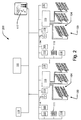
- An example of a system divided into zones is shown in fig. 2 .
- Fig. 2 shows a further developed embodiment of the invention.
- a system 200 is divided into two zones 120, 130.
- One or more zones may be present.
- a control unit 101 here functioning as a central control unit and will be called a central control unit in the following description for fig. 2 , controls both zones 120, 130.
- the central control unit 101 receives measurements from various sensors comprising one or more indoor sensor(s) 113 measuring temperature, humidity and CO 2 content in the air, a light sensor 112, a passive infrared (PIR) sensor 110 one or more outdoor weather sensor(s) 117 measuring temperature, wind speed, wind direction and rain.
- the system further comprises a power supply 118.
- the outdoor weather sensor 117 may also measure outdoor air quality parameters.
- Each zone comprises six windows controlled by an actuator controller 115.
- the actuator controller 115 may control the natural ventilation 104 in one or more zones. A variable number of windows may be present in each zone.
- the system 200 is furthermore equipped with a sunscreen 111. Approximately 3-5 times more energy is spent on cooling a building compared to heating a building, meaning that one or more sunscreens shielding the light coming from the windows can contribute to reducing the energy costs considerably.
- a heating device 116 such as a radiator is furthermore provided in each zone 120, 130 as well as mechanical ventilation 105.
- the mechanical ventilation 105 may merely contribute to the distribution of the outside air in the building, or the air may be heated or cooled before it enters the building. Preferably, if the outside air is below 15°C, the air is heated to e.g. approx. 15°C before it enters the indoor area, such that the air does not cool down the indoor area too much.
- each zone is provided with a local user controller 114 that may be used to select the ventilation mode or regulate the desired set point temperature or other settings that are desirable to control locally.
- each of the zones may also reflect a room and if one of the rooms is filled with people it is practical that the ventilation is adjusted for this room and not necessarily for the remaining rooms or zones. This is performed no matter if you are in an X, Y or Z mode, but the ventilation means used and/or the threshold values may be different for each of the modes.
- an outdoor air quality detector (not shown) may be positioned outside, such that for example windows are kept closed if there is a high concentration of smog in the air and air coming through the mechanical ventilation 105 is filtered before it enters the indoor area. This is preferably controlled centrally.
- the system 200 is adapted to control the indoor climate according to a set of modes X, Y and Z.
- the ventilation means 104, 105, 106 (not shown) and heating 116 is controlled based on preferably three modes and the measurements from the various sensors 110, 112, 113, 117.
- Each of the modes X, Y, Z is associated with 12 ventilation schemes - which will be described in detail below.
- For each ventilation scheme a combination of natural ventilation 104, mechanical ventilation 105, natural pulse ventilation, which is natural ventilation activated at certain intervals, and/or heating 116 or cooling is determined.
- the combination of the means of ventilation in each of the twelve schemes is to a wide extent the same for all three modes.
- the outdoor temperature set point for each mode may be selected from one of the following ranges: 0-5°C, 5-10°C and 10-15°C, respectively. In other climates or based on user preferences or building codes, other ranges may be used.
- the modes X, Y and Z are preferably also associated with one or more threshold values for (a) measurement value(s) from the indoor sensor(s) 113. So depending on what the measurement values are from the various sensor(s) and the selected mode a certain ventilation scheme is executed.
- the advantage of controlling both ventilation means and heating or cooling from a central control unit 101 is that as a user it may be difficult to see the overall consequences of regulating on one parameter (ventilation means and heating or cooling devices) on the remaining parameters.
- the user By joining all of these parameters in one system, the user only has to decide e.g. a desired temperature and a mode, and the system will regulate the ventilation means and heating or cooling devices accordingly. Thereby all parameters are considered and the optimal mix of heating and ventilation is obtained while the amount of energy - and thereby the economy - is taken into consideration as well.
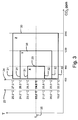
- Fig. 3 shows a diagram of an implementation of the modes.
- Three modes X, Y and Z are shown, more modes may be present.
- Each of the different modes X, Y and Z are associated with an indoor temperature set point 35, selected by the user or administrator, and a set of indoor maximum temperature threshold values 31 and indoor minimum temperature threshold values 32 for the indoor temperature set point defining an indoor temperature range and, in this case, an air quality threshold value 33 for the CO 2 content of the air inside the building.
- two temperature ranges are defined representing an indoor temperature in the winter 23 and an indoor temperature in the summer 24. All three modes X, Y and Z have the same indoor temperature set point 35. What differ between the modes in this figure are the indoor minimum and maximum temperature threshold values 31, 32.
- mode X has a narrower temperature range than mode Y and mode Z meaning that the indoor temperature should not change much from the indoor temperature set point 35 before a particular ventilation scheme 1-12 (see figs. 4-9 ) is activated in order to bring back the indoor temperature to the indoor temperature set point 35.
- the threshold value 33 for the CO 2 content of the air inside the building also varies for each of the modes. In the Z mode a greater content of CO 2 in the air is accepted than in the X and Y mode. Because a smaller content of CO 2 is accepted in the X mode it is necessary to ventilate the indoor area more. If the ventilating is performed by mechanical ventilation, both conditioning and moving of the air requires energy. In order to keep the indoor temperature close to the indoor set point temperature 35 and the CO 2 content in the air low, more energy is required, than for example in the Y or Z mode, where indoor temperature minimum and maximum threshold values 31, 32 are further apart and the air quality threshold value 33 for the CO 2 content in the air is higher.
- these temperature and air quality threshold values 31, 32, 33, or other threshold values set within the present threshold values it may also be so that no ventilation is required and therefore not activated as both the indoor temperature and the CO 2 content are within these other temperature and air quality threshold values.
- These other threshold values may be set for a specific mode such as the Z mode, such that for example the an indoor temperature range between 22-23°C and an air quality threshold value below 900 ppm, requires no ventilation.
- VOCs volatile organic compounds
- a ventilation scheme may be started when the air quality threshold value 33 are exceeded for these factors such as humidity, radon, bio-effluents or volatile organic compounds (VOCs).
- VOCs are emitted by a wide array of products including: people, paints and lacquers, paint strippers, cleaning supplies, pesticides, building materials and furnishings, office equipment such as copiers and printers, correction fluids and carbonless copy paper, graphics and craft materials including glues and adhesives, permanent markers, and photographic solutions.
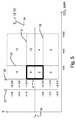
- Figs. 4 and 5 show the mode X and the ventilation schemes applied under different conditions.
- the indoor temperature range is represented on a scale for the wintertime 21 and the summertime 22.
- the mode X is in the present example characterized by a great focus on the indoor climate in the sense that the indoor temperature is kept very close to the indoor temperature set point 35 and the CO 2 content in the air is kept at a minimum.
- the natural ventilation channels such as windows are only opened when the outdoor temperature is above 15°C.
- the mode X uses more energy than the modes Z and Y because mechanical ventilation is used more frequently than natural ventilation compared to the Y and Z mode.
- the indoor maximum and minimum temperature threshold values 31, 32 are set only one degree Kelvin (K) from the indoor temperature set point 35 and only 500 ppm of CO 2 content in the air inside is allowed before the ventilation scheme is changed.
- K Kelvin
- These indoor temperature and air quality threshold values may vary as desired by the user or administrator.
- Each ventilation scheme in figs. 4-9 is denoted from 1-12.
- the outdoor temperature set point 34 is set to 15°C. At this temperature or higher (at least to a certain extent) if natural ventilation e.g. in the form of a window is activated/opened, it will feel like a pleasant breeze.
- the indoor area is ventilated by means of natural ventilation in ventilation scheme 1 if the measurement value from the outdoor temperature sensor is above the outdoor temperature set point 34 and the measurement value from indoor temperature sensor is between the indoor maximum temperature threshold value 31 for the indoor temperature set point and the indoor temperature set point 35.
- This ventilation scheme can also be seen in figs. 6 and 8 .
- the indoor area is ventilated by means of mechanical ventilation and ventilation with heat recovery 2, in order to retain the heat inside.
- the ventilation with heat recovery may be performed by a heat exchanger coupled to a ventilation ductwork. This ventilation scheme can also be seen in figs. 4-9 .
- the indoor area is ventilated by means of natural ventilation 7, 8.
- natural ventilation may be deactivated and the mechanical ventilation together with a cooling device 7 8, e.g. an air conditioner, may be activated instead.
- a cooling device 7 e.g. an air conditioner
- the indoor area is ventilated by means of mechanical ventilation supplemented by either a cooling device 11, 12, e.g. if the indoor temperature is pretty high e.g. 7 K above the indoor maximum temperature threshold value, or by natural ventilation 11 and 12, e.g. if the opening of a window will contribute to cooling of the indoor area either due to temperature differences between the inside and the outside or due to the wind.
- a cooling device 11, 12 e.g. if the indoor temperature is pretty high e.g. 7 K above the indoor maximum temperature threshold value
- natural ventilation 11 and 12 e.g. if the opening of a window will contribute to cooling of the indoor area either due to temperature differences between the inside and the outside or due to the wind.
- This ventilation scheme can also be seen in figs. 7 and 9 where the outdoor temperature is below the outdoor temperature set point 34.
- the indoor area is ventilated by means of natural ventilation and mechanical ventilation 3 if the measurement value from indoor temperature sensor is between the maximum indoor temperature threshold value 31 for the indoor temperature set point and the indoor temperature set point 35 and the measurement value from the indoor air quality sensor is above the set air quality threshold value 33, and the measurement value from outdoor temperature sensor is below the outdoor temperature set point 34.
- the natural ventilation is supplemented by mechanical ventilation if the CO 2 content in the air is above the air quality threshold value 33 in order to increase the air change in the indoor area.
- the indoor area is ventilated by means of mechanical ventilation and ventilation with heat recovery supplemented by natural pulse ventilation 4 if the measurement value from the indoor temperature sensor is between the minimum temperature threshold value 32 for the temperature set point and the indoor temperature set point 35 and the measurement value from an indoor air quality sensor is above the set air quality threshold value 33.
- Natural pulse ventilation means that the natural ventilation, e.g. the windows in the building, is only opened for a short period of time when the air outside is below the outdoor temperature set point. Opening the windows for a longer period may contribute to what feels like a draft. Instead if the natural ventilation is activated for only 5-10 minutes, it will contribute to the air change in the indoor area and the room will not get too cooled down.
- the natural pulse ventilation may be performed at intervals, e.g. every hour or when required.
- the indoor area is ventilated by means of mechanical ventilation, ventilation with heat recovery and natural pulse ventilation and heating the indoor area by means of a heating device 6 if the measurement value from the indoor temperature sensor is below the minimum temperature threshold value 32 for the temperature set point and the measurement value from the indoor air quality sensor is above the set air quality threshold value 33.
- the indoor area is ventilated by means of mechanical ventilation 9 if the measurement value from the outdoor temperature sensor is below the outdoor temperature set point 34.
- the indoor area is ventilated by means of natural pulse ventilation and mechanical ventilation 10 if the measurement value from indoor temperature sensor is between the maximum temperature threshold value 31 for the indoor temperature set point and the indoor temperature set point 35 and the measurement value from the indoor air quality sensor is above the set air quality threshold value 33, and the measurement value from outdoor temperature sensor is below the outdoor temperature set point 34.
- temperature and CO 2 content in the air may be taken into consideration. For example it may be a condition that the wind speed is below a certain wind speed set point, such as 8 m/s in order for the natural ventilation to be activated. If the wind speed is above this set point the natural ventilation is replaced by the mechanical ventilation or if the wind speed is above this set point windows or other sources of natural ventilation is only opened on the leeside of the building. The windows may also be left only half open if it is windy, such as wind speeds above 8 or 12 m/s. If it is raining the natural ventilation may also replaced by the mechanical ventilation.
- a certain wind speed set point such as 8 m/s in order for the natural ventilation to be activated.
- the wind speed is replaced by the mechanical ventilation or if the wind speed is above this set point windows or other sources of natural ventilation is only opened on the leeside of the building.
- the windows may also be left only half open if it is windy, such as wind speeds above 8 or 12 m/s. If it is raining the natural ventilation
- the indoor maximum and minimum temperature threshold values 31, 32 are not the same for all modes.
- the indoor maximum and minimum temperature threshold values 31, 32 varies.
- the indoor maximum temperature threshold value 31 is set to 2 K above the indoor temperature set point 35 and in the summer the indoor maximum temperature threshold value 31 is set to 1.5 K above the indoor temperature set point 35.
- the indoor maximum and minimum temperature threshold value 31, 32 may be changed by the user within certain limits as defined by the mode.
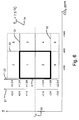
- Figs. 6 and 7 show the setting for the mode Y.
- the mode Y is in general characterized by a obtaining a balance between the indoor climate and the energy consumption.
- the natural ventilation such as windows is generally used when the outside temperature is above 7.5°C and when there is a surplus of heat inside or the CO 2 content in the air is above the air quality threshold value.
- the indoor temperature is allowed to vary to a greater extent than in the mode X before the indoor maximum and minimum temperature threshold values 31, 32 and for the temperature and the air quality threshold value 33 for the CO 2 content is exceeded and the ventilation scheme is changed.
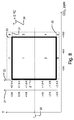
- Figs. 8 and 9 show the setting for the mode Z.
- the mode Z is in general characterized by very low energy consumption; the natural ventilation is used to a great extent in particular when the outside temperature is above 0°C.
- natural ventilation is preferably used exclusively and a higher content of CO 2 in the air is accepted than in the modes Y and X.
- the mode Z, and the other modes may further take presence of people in the indoor area into consideration such that no ventilation or minimum ventilation takes place when there are no people in the indoor area.
- the temperature may be lowered at night during the wintertime and cooling by means of a cooling device may be disabled during the summertime, in order to save energy. This applies to the Y mode as well.
- pulse ventilation may be disabled as well, as higher CO 2 levels may be accepted at least for shorter periods.
- the system When it comes to controlling the system centrally and locally, it may be decided that if the system is set to the Z mode centrally this setting and the associated set point temperature and/or threshold values for e.g. CO 2 cannot be overruled by the user locally. It may also be decided that the indoor temperature is allowed to vary plus minus 3 K, but the CO 2 content may not exceed 500 ppm.
- Fig. 10 show how the different ventilation modes X, Y, Z may be combined with different alternative settings A, B, C and how it affects the control of the ventilation means.
- the alternative settings A, B and C in this embodiment are associated with a season setting.
- A is associated with winter where there is a need for heating the indoor area
- B is associated with summer where no mechanical cooling is required
- C is associated with summer where mechanical cooling, such as air condition, is required.
- box 51, 52 and 53 there are generally more adjustable values and a higher energy consumption, while box 57, 58 and 59 generally have more fixed values and a lower energy consumption.
- mechanical ventilation is used if the outdoor temperature is low. Else natural ventilation will be used until a certain air quality threshold value has been reached or until the maximum indoor temperature threshold value has been reached. After that both natural and mechanical ventilation will be used until a further threshold value for the indoor temperature has been reached. When this is reached the natural and mechanical ventilation is turned off and only mechanical cooling in a separate unit, which includes fresh air, is used. Alternatively the mechanical ventilation includes a cooling unit and the mechanical ventilation is not switched off but is instead set to cool the air.
- the outdoor temperature set point is relatively high, this is a mode dependent adjustable value that may be raised but not lowered beyond a certain set point. Mechanical ventilation or mechanical cooling is allowed during the night time, this is a mode dependent adjustable value.
- no natural ventilation is used because it is to cold outside, this is a mode dependent fixed value where the outdoor temperature set point is associated the chosen ventilation mode.
- the air quality threshold value is set to standard as well as indoor heat temperature set point and the lowering of the temperature at night, these are mode dependent fixed values.
- Natural pulse ventilation may be used dependent on the outdoor temperature set point and the desire of the user, this is a mode dependent adjustable value.
- mechanical ventilation is used if the outdoor temperature is low. Else natural ventilation will be used until a certain air quality threshold value has been reached or until the maximum indoor temperature threshold value has been reached. After that both natural and mechanical ventilation will be used until a further threshold value for the indoor temperature has been reached. When this is reached the natural and mechanical ventilation is turned off and only mechanical cooling in a separate unit, which includes fresh air, is used. Alternatively the mechanical ventilation includes a cooling unit and the mechanical ventilation is not switched off but is instead set to cool the air.
- the air quality threshold value has been set to standard, as well as the outdoor temperature set point and the deactivated night ventilation and mechanical cooling, these are mode dependent fixed values.
- no natural ventilation is used because it is to cold outside, this is a mode dependent fixed value where the outdoor temperature set point is associated the chosen ventilation mode.
- the air quality threshold value is set high, this is a mode dependent adjustable value that may be set higher, at least up to a certain limit.
Landscapes
- Engineering & Computer Science (AREA)
- Chemical & Material Sciences (AREA)
- Combustion & Propulsion (AREA)
- Mechanical Engineering (AREA)
- General Engineering & Computer Science (AREA)
- Signal Processing (AREA)
- Physics & Mathematics (AREA)
- Fuzzy Systems (AREA)
- Mathematical Physics (AREA)
- Air Conditioning Control Device (AREA)
- Ventilation (AREA)
Claims (15)
- Procédé de commande de la ventilation d'une zone intérieure (120 ; 130) d'un bâtiment, comprenant les étapes de :ventilation de la zone intérieure (120 ; 130) à l'aide de la ventilation mécanique (105) et de la ventilation naturelle (104) selon un mode de ventilation (X ; Y ; Z) sélectionné parmi une pluralité de modes de ventilation (X ; Y ; Z), un ensemble de paramètres de commande ajustables et au moins une valeur de mesure d'un capteur (102 ; 103 ; 110 ; 113 ; 117), caractérisé parchaque mode de ventilation (X ; Y ; Z) est associé à l'ensemble de paramètres de commande ajustables (31 ; 32 ; 33 ; 34 ; 35), chacun présentant une valeur ajustable sélectionnée parmi un groupe de valeurs ajustables dépendantes du mode, et un ensemble de paramètres de commande fixes (34) présentant chacun une valeur fixe dépendante du mode,la commande de la ventilation mécanique (105) et de la ventilation naturelle (104) par la comparaison de la valeur de mesure du capteur (102 ; 103 ; 110 ; 113 ; 117), avec une valeur correspondante des paramètres de commande du mode de ventilation (X ; Y ; Z) de sorte qu'un climat intérieur souhaité défini par le mode de ventilation (X ; Y ; Z) soit obtenu.
- Procédé de commande de la ventilation selon la revendication 1, dans lequel dans chaque mode de ventilation, une valeur de chaque paramètre de commande, fixe ou ajustable, de ce mode de ventilation peut être enregistrée de sorte que lors de la commutation d'un premier mode de ventilation à un second mode de ventilation différent puis au premier mode de ventilation de nouveau, les paramètres de commande du premier mode de ventilation soient restaurés, de préférence les paramètres puissent être enregistrés sur un dispositif de stockage électronique et restaurés depuis celui-ci tel qu'un disque dur ou un disque dur SSD.
- Procédé de commande de la ventilation selon la revendication 2, dans lequel au moins deux paramètres de commande du premier mode sont établis chacun à différents paramètres dans le second mode.
- Procédé de commande de la ventilation selon l'une quelconque des revendications précédentes, dans lequel la commutation d'un mode de ventilation à un autre peut être effectuée par un utilisateur activant un seul bouton, icône ou similaire, moyennant quoi au moins deux paramètres de commande sont changés d'un mode à l'autre sans que l'utilisateur n'active d'autres boutons, icônes ou similaires.
- Procédé de commande de la ventilation selon l'une quelconque des revendications précédentes, dans lequel la commande de la ventilation est effectuée automatiquement.
- Procédé de commande de la ventilation selon l'une quelconque des revendications précédentes, dans lequel dans au moins deux des modes de ventilation, à la fois laventilation mécanique et naturelle, peuvent être activées selon la valeur du capteur.
- Procédé de commande de la ventilation selon l'une quelconque des revendications précédentes, dans lequel les paramètres de commande comprennent une valeur de consigne de température extérieure (34) et/ou une valeur de consigne de température intérieure (35), de préférence les modes de ventilation (X ; Y ; Z) définissent différentes valeurs de consigne de température extérieure (34) et/ou valeurs de consigne de température intérieure (35).
- Procédé de commande de la ventilation selon l'une quelconque des revendications précédentes, dans lequel les paramètres de commande ajustables (31 ; 32 ; 33 ; 34 ; 35) comprennent une valeur seuil de qualité d'air intérieur (33), de préférence les modes de ventilation (X ; Y ; Z) définissent différentes valeurs seuil de qualité d'air intérieur (33).
- Procédé de commande de la ventilation selon l'une quelconque des revendications précédentes, dans lequel chaque mode de ventilation (X ; Y ; Z) comprend des paramètres alternatifs (A ; B ; C) et chaque paramètre alternatif est associé à l'ensemble de paramètres de commande ajustables (31 ; 32 ; 33 ; 34 ; 35), chacun présentant une valeur ajustable sélectionnée parmi un groupe de valeurs ajustables dépendantes du mode et/ou un ensemble de paramètres de commande fixes (34) présentant chacun une valeur fixe dépendante du mode.
- Procédé de commande de la ventilation selon l'une quelconque des revendications précédentes, dans lequel chaque mode de ventilation (X ; Y ; Z) est associé à une consommation d'une différente quantité d'énergie pour fournir le climat intérieur souhaité.
- Procédé de commande de la ventilation selon la revendication 10, dans lequel les paramètres de commande ajustables (31 ; 32 ; 33 ; 34 ; 35) comprennent une valeur seuil de température maximale intérieure (31) et une valeur seuil de température minimale intérieure (32) définissant une plage de température intérieure, dans lequel le mode de ventilation (X ; Y ; Z) associé à la quantité la plus basse de consommation d'énergie définit une plage de température intérieure qui est plus large qu'une plage de température intérieure définie par un mode de ventilation (X ; Y ; Z) avec une quantité supérieure de consommation d'énergie.
- Procédé de commande de la ventilation selon la revendication 10, dans lequel les paramètres de commande ajustables (31 ; 32 ; 33 ; 34 ; 35) comprennent une valeur seuil de qualité d'air maximale intérieure (33), dans lequel le mode de ventilation (X ; Y ; Z) associé à la quantité la plus basse de consommation d'énergie définit une valeur seuil de qualité d'air maximale intérieure (33) qui est inférieure à la valeur seuil de qualité d'air maximale intérieure (33) définie par un mode de ventilation (X ; Y ; Z) avec une quantité supérieure de consommation d'énergie.
- Système de commande de la ventilation d'une zone intérieure (120 ; 130) d'un bâtiment comprenant :un moyen de ventilation naturelle (104),un moyen de ventilation mécanique (105),un capteur (102 ; 103 ; 110 ; 113 ; 117), etune unité de commande (101, 114) configurée pour ventiler la zone intérieure (120 ; 130) par activation du moyen de ventilation naturel (104) et du moyen de ventilation mécanique (105) selon un mode de ventilation (X ; Y ; Z) sélectionné parmi une pluralité de modes de ventilation (X ; Y ; Z), un ensemble de paramètres de commande ajustables (31 ; 32 ; 33 ; 34 ; 35) et au moins une valeur de mesure du capteur (102 ; 103 ; 110 ; 113 ; 117), caractérisé en ce quechaque mode de ventilation (X ; Y ; Z) est associé à l'ensemble de paramètres de commande ajustables (31 ; 32 ; 33 ; 34 ; 35), chacun présentant une valeur ajustable sélectionnée parmi un groupe de valeurs ajustables dépendantes du mode, et un ensemble de paramètres de commande fixes (34) présentant chacun une valeur fixe dépendant du mode,l'unité de commande (101, 114) est configurée pour commander le moyen de ventilation mécanique et le moyen de ventilation naturelle en comparant la valeur de mesure du capteur (102 ; 103 ; 110 ; 113 ; 117) avec une valeur correspondante des paramètres de commande du mode de ventilation (X ; Y ; Z) de sorte qu'un climat intérieur souhaité défini par le mode de ventilation (X ; Y ; Z) soit obtenu.
- Système de commande de la ventilation selon la revendication 13, configuré de sorte que dans chaque mode de ventilation, une valeur de chaque paramètre de commande, fixe ou ajustable, de ce mode de ventilation puisse être enregistrée de sorte que lors de la commutation d'un premier mode de ventilation à un second mode de ventilation différent puis au premier mode de ventilation de nouveau, les paramètres de commande du premier mode de ventilation soient restaurés, de préférence les paramètres puissent être enregistrés sur un dispositif de stockage électronique et restaurés depuis celui-ci tel qu'un disque dur ou un disque dur SSD.
- Système de commande de la ventilation selon l'une quelconque des revendications 13 à 14, dans lequel l'ensemble de paramètres de commande ajustables et/ou l'ensemble de paramètres de commande fixes comprend chacun au moins deux, de préférence au moins trois paramètres de commande.
Applications Claiming Priority (2)
| Application Number | Priority Date | Filing Date | Title |
|---|---|---|---|
| DKPA201270032 | 2012-01-18 | ||
| PCT/DK2013/050016 WO2013107461A1 (fr) | 2012-01-18 | 2013-01-18 | Procédé et système de régulation de la ventilation dans un bâtiment |
Publications (2)
| Publication Number | Publication Date |
|---|---|
| EP2805117A1 EP2805117A1 (fr) | 2014-11-26 |
| EP2805117B1 true EP2805117B1 (fr) | 2016-06-15 |
Family
ID=47678441
Family Applications (1)
| Application Number | Title | Priority Date | Filing Date |
|---|---|---|---|
| EP13702887.4A Active EP2805117B1 (fr) | 2012-01-18 | 2013-01-18 | Procédé et système de régulation de la ventilation dans un bâtiment |
Country Status (7)
| Country | Link |
|---|---|
| US (1) | US9464818B2 (fr) |
| EP (1) | EP2805117B1 (fr) |
| CN (1) | CN104067062A (fr) |
| AU (1) | AU2013211287B2 (fr) |
| CA (1) | CA2861413C (fr) |
| DK (1) | DK2805117T3 (fr) |
| WO (1) | WO2013107461A1 (fr) |
Cited By (1)
| Publication number | Priority date | Publication date | Assignee | Title |
|---|---|---|---|---|
| WO2023023826A1 (fr) * | 2021-08-26 | 2023-03-02 | Geoffrey Bond | Système de commande de ventilation |
Families Citing this family (50)
| Publication number | Priority date | Publication date | Assignee | Title |
|---|---|---|---|---|
| US8515584B2 (en) * | 2009-08-20 | 2013-08-20 | Transformative Wave Technologies Llc | Energy reducing retrofit method for a constant volume HVAC system |
| FR3013424B1 (fr) * | 2013-11-19 | 2018-11-23 | Aldes Aeraulique | Systeme de ventilation a simple flux pour batiment d’habitation et procede de pilotage associe |
| CA2966338C (fr) * | 2014-10-28 | 2023-12-19 | Airadvice For Homes, Inc. | Systeme de detection et de controle de la qualite de l'air interieur |
| ITUB20160028A1 (it) * | 2016-01-05 | 2017-07-05 | Giuseppe Spanti | Dispositivo per controllo remotto temperatura ambiente |
| DE102016205455A1 (de) * | 2016-04-01 | 2017-10-05 | Fraunhofer-Gesellschaft zur Förderung der angewandten Forschung e.V. | Vorrichtung und Verfahren zur Kontrolle des Raumklimas und damit ausgestattetes Gebäude |
| US11067955B2 (en) * | 2016-06-30 | 2021-07-20 | Johnson Controls Technology Company | HVAC system using model predictive control with distributed low-level airside optimization |
| US20180004171A1 (en) | 2016-06-30 | 2018-01-04 | Johnson Controls Technology Company | Hvac system using model predictive control with distributed low-level airside optimization and airside power consumption model |
| US11789415B2 (en) | 2016-06-30 | 2023-10-17 | Johnson Controls Tyco IP Holdings LLP | Building HVAC system with multi-level model predictive control |
| CN106016629B (zh) * | 2016-06-30 | 2022-06-10 | 于永康 | 一种室内空气质量、温度和湿度监测调节系统 |
| JP2018009745A (ja) * | 2016-07-14 | 2018-01-18 | 株式会社CoLife | 環境情報取得装置及び生活環境管理システム |
| FR3056708B1 (fr) * | 2016-09-29 | 2021-10-29 | Eoletec | Procede et dispositif de ventilation asservie |
| FR3059084B1 (fr) * | 2016-11-22 | 2019-10-25 | Muller Et Cie | Procede de regulation d'une installation de ventilation domestique avec protection contre un gaz polluant |
| US10808955B2 (en) * | 2017-03-16 | 2020-10-20 | Eeshan Tripathii | Environmentally efficient smart home air-quality network system |
| EP3444535A1 (fr) * | 2017-08-15 | 2019-02-20 | Koninklijke Philips N.V. | Unité, système et procédé de ventilation |
| FR3072764B1 (fr) * | 2017-10-24 | 2020-09-04 | Andre Amphoux | Systeme de gestion d'unites de ventilation |
| US10767878B2 (en) | 2017-11-21 | 2020-09-08 | Emerson Climate Technologies, Inc. | Humidifier control systems and methods |
| KR102472214B1 (ko) * | 2018-02-28 | 2022-11-30 | 삼성전자주식회사 | 에어 컨디셔닝 시스템에서 복합 제어 장치 및 방법 |
| CN108520313A (zh) * | 2018-03-16 | 2018-09-11 | 天津大学 | 一种通风方式计算平台计算方法 |
| CN108266851B (zh) * | 2018-03-20 | 2024-03-22 | 宋桦 | 一种基于窗式通风扇的室内通风系统及方法 |
| WO2019204792A1 (fr) | 2018-04-20 | 2019-10-24 | Emerson Climate Technologies, Inc. | Commande coordonnée de dispositifs et de systèmes autonomes et de qualité d'air intérieur de bâtiment |
| US11609004B2 (en) | 2018-04-20 | 2023-03-21 | Emerson Climate Technologies, Inc. | Systems and methods with variable mitigation thresholds |
| US12311308B2 (en) | 2018-04-20 | 2025-05-27 | Copeland Lp | Particulate-matter-size-based fan control system |
| US11486593B2 (en) | 2018-04-20 | 2022-11-01 | Emerson Climate Technologies, Inc. | Systems and methods with variable mitigation thresholds |
| US12259148B2 (en) | 2018-04-20 | 2025-03-25 | Copeland Lp | Computerized HVAC filter evaluation system |
| WO2019204788A1 (fr) | 2018-04-20 | 2019-10-24 | Emerson Climate Technologies, Inc. | Systèmes et procédés d'ajustement de seuils d'atténuation |
| US11371726B2 (en) | 2018-04-20 | 2022-06-28 | Emerson Climate Technologies, Inc. | Particulate-matter-size-based fan control system |
| US12018852B2 (en) | 2018-04-20 | 2024-06-25 | Copeland Comfort Control Lp | HVAC filter usage analysis system |
| WO2019204789A1 (fr) | 2018-04-20 | 2019-10-24 | Emerson Climate Technologies, Inc. | Systèmes et procédés d'étalonnage de capteur de qualité d'air intérieur |
| WO2019204779A1 (fr) | 2018-04-20 | 2019-10-24 | Emerson Climate Technologies, Inc. | Systèmes et procédés de surveillance de la qualité de l'air intérieur et de l'occupant |
| CN108426335A (zh) * | 2018-04-23 | 2018-08-21 | 广州市设计院 | 通风建筑、通风控制系统及方法 |
| CN109612045A (zh) * | 2018-12-13 | 2019-04-12 | 杭州龙碧科技有限公司 | 一种适用于建筑过渡季的自然通风与机械通风转换系统 |
| FR3104239B1 (fr) * | 2019-12-10 | 2022-09-09 | Electricite De France | système pilotant un dispositif de renouvellement d’air d’une zone et un dispositif de chauffage de la zone |
| IT202000001087A1 (it) | 2020-01-21 | 2021-07-21 | Fybra S R L | Metodo e sistema per il controllo della qualità dell’aria di un ambiente interno di un edificio |
| CN112325457B (zh) * | 2020-11-04 | 2021-12-17 | 上海市建筑科学研究院有限公司 | 一种多联机与复合新风联合运行控制方法与控制系统 |
| EP4278136A1 (fr) * | 2021-01-14 | 2023-11-22 | Honeywell International Inc. | Commande de ventilation dynamique pour un bâtiment |
| US12345436B2 (en) | 2021-01-14 | 2025-07-01 | Honeywell International Inc. | Dynamic ventilation control for a building |
| US11480358B2 (en) | 2021-02-25 | 2022-10-25 | Synapse Wireless, Inc. | Machine learning systems for modeling and balancing the activity of air quality devices in industrial applications |
| EP4063754B1 (fr) | 2021-03-24 | 2025-04-30 | Mitsubishi Electric R&D Centre Europe B.V. | Commande d'un système de ventilation passive d'un bâtiment |
| CN113883634B (zh) * | 2021-10-12 | 2022-11-25 | 南京师范大学 | 基于室外颗粒物平衡点浓度的新风控制系统的使用方法 |
| JP7843625B2 (ja) * | 2022-03-18 | 2026-04-10 | 三菱電機株式会社 | 換気システム、換気制御装置、換気制御方法およびプログラム |
| EP4299999A1 (fr) * | 2022-06-29 | 2024-01-03 | Honeywell International Inc. | Procédés et systèmes de fonctionnement d'un système cvca |
| EP4300000A1 (fr) * | 2022-06-29 | 2024-01-03 | Honeywell International Inc. | Procédé de fonctionnement d'un système cvca |
| US20240053034A1 (en) * | 2022-08-12 | 2024-02-15 | Viggiani and Associates dba Green Earth Systems | Ultraviolet Air Purifying System and Method |
| CN115978744B (zh) * | 2023-01-16 | 2024-10-22 | 浙江中广电器集团股份有限公司 | 一种新风空调器及其送新风运转控制方法 |
| PL446686A1 (pl) * | 2023-11-08 | 2025-05-12 | Inter Fusion Polska Spółka Z Ograniczoną Odpowiedzialnością | Okno |
| CN117889510B (zh) * | 2024-01-16 | 2024-06-18 | 华南理工大学 | 一种体育馆空间的通风系统及控制方法 |
| IT202400001971A1 (it) * | 2024-01-31 | 2025-07-31 | Fybra S R L | Metodo e sistema per la gestione di un impianto di climatizzazione di un ambiente |
| EP4660547A1 (fr) * | 2024-06-07 | 2025-12-10 | 2226 GmbH | Régulation de bâtiment pour fournir un environnement intérieur défini |
| CN118705739B (zh) * | 2024-08-30 | 2024-11-05 | 上海能誉科技股份有限公司 | 一种基于多季节模式的工厂通风控制方法、设备及介质 |
| CN119687545B (zh) * | 2025-02-24 | 2025-04-18 | 华南理工大学 | 建筑环境的节能调节方法、装置及系统 |
Family Cites Families (20)
| Publication number | Priority date | Publication date | Assignee | Title |
|---|---|---|---|---|
| US2737876A (en) * | 1952-12-17 | 1956-03-13 | Lester L Smith | Ventilator structure |
| SE441123B (sv) * | 1979-01-15 | 1985-09-09 | Soederberg Ramon | Ventilator med ett flertal kanalsektioner |
| US5520328A (en) * | 1994-11-03 | 1996-05-28 | Carrier Corporation | System for providing integrated zone indoor air quality control |
| US5971067A (en) * | 1996-02-15 | 1999-10-26 | Carrier Corporation | Air quality control system |
| CN2349490Y (zh) * | 1998-04-07 | 1999-11-17 | 廖裕隆 | 改良结构的空气对流器 |
| US6098893A (en) * | 1998-10-22 | 2000-08-08 | Honeywell Inc. | Comfort control system incorporating weather forecast data and a method for operating such a system |
| US6161764A (en) * | 1999-01-22 | 2000-12-19 | Honeywell International Inc. | Enhanced economizer controller |
| JP2002039579A (ja) * | 2000-07-21 | 2002-02-06 | Shimizu Corp | 24時間換気システム |
| ATE514907T1 (de) * | 2002-03-01 | 2011-07-15 | Vkr Holding As | Verfahren und steuersystem zum kontrollierten betrieb von beweglichen gliedern |
| US6988671B2 (en) * | 2003-05-05 | 2006-01-24 | Lux Products Corporation | Programmable thermostat incorporating air quality protection |
| US7222494B2 (en) | 2004-01-07 | 2007-05-29 | Honeywell International Inc. | Adaptive intelligent circulation control methods and systems |
| US7434413B2 (en) * | 2005-01-10 | 2008-10-14 | Honeywell International Inc. | Indoor air quality and economizer control methods and controllers |
| US7798418B1 (en) * | 2005-06-01 | 2010-09-21 | ABT Systems, LLC | Ventilation system control |
| CA2520975A1 (fr) * | 2005-10-04 | 2007-04-04 | Weihai Xue | Dispositif et methode de commande d'economiseur de ventilation et de climatisation |
| US20090001179A1 (en) * | 2006-02-14 | 2009-01-01 | Carrier Corporation | Energy Efficient House Ventilation |
| US20090013703A1 (en) * | 2007-07-09 | 2009-01-15 | Werner Ronald F | Natural air enery saving temperature assist system for central air conditioning / heating system |
| US8165719B2 (en) * | 2009-06-25 | 2012-04-24 | Kinney Laurence F | System and method for an electrical insulating shutter system |
| DK179101B1 (en) * | 2010-08-23 | 2017-10-30 | Inventilate Holding Aps | A method for controlling a ventilation system for the ventilation of an enclosure and a ventilation system |
| US8660708B2 (en) * | 2011-06-02 | 2014-02-25 | Pvt Solar, Inc. | Method and system for healthy home zoning control configured for efficient energy use and conservation of energy resources |
| US20110257795A1 (en) * | 2011-06-24 | 2011-10-20 | Pvt Solar, Inc. | Thermostat method and system for controlling solar energy utilization for efficient energy usage and conservation of energy resources |
-
2013
- 2013-01-18 CA CA2861413A patent/CA2861413C/fr active Active
- 2013-01-18 US US14/372,476 patent/US9464818B2/en active Active
- 2013-01-18 WO PCT/DK2013/050016 patent/WO2013107461A1/fr not_active Ceased
- 2013-01-18 EP EP13702887.4A patent/EP2805117B1/fr active Active
- 2013-01-18 AU AU2013211287A patent/AU2013211287B2/en active Active
- 2013-01-18 DK DK13702887.4T patent/DK2805117T3/en active
- 2013-01-18 CN CN201380006029.4A patent/CN104067062A/zh active Pending
Cited By (1)
| Publication number | Priority date | Publication date | Assignee | Title |
|---|---|---|---|---|
| WO2023023826A1 (fr) * | 2021-08-26 | 2023-03-02 | Geoffrey Bond | Système de commande de ventilation |
Also Published As
| Publication number | Publication date |
|---|---|
| US20150011154A1 (en) | 2015-01-08 |
| AU2013211287A1 (en) | 2014-07-24 |
| DK2805117T3 (en) | 2016-09-26 |
| US9464818B2 (en) | 2016-10-11 |
| CA2861413A1 (fr) | 2013-07-25 |
| CA2861413C (fr) | 2019-01-08 |
| AU2013211287B2 (en) | 2017-06-08 |
| EP2805117A1 (fr) | 2014-11-26 |
| WO2013107461A1 (fr) | 2013-07-25 |
| CN104067062A (zh) | 2014-09-24 |
Similar Documents
| Publication | Publication Date | Title |
|---|---|---|
| EP2805117B1 (fr) | Procédé et système de régulation de la ventilation dans un bâtiment | |
| US10900682B2 (en) | HVAC controller with indoor air quality scheduling | |
| Merema et al. | Demand controlled ventilation (DCV) in school and office buildings: Lessons learnt from case studies | |
| US20210095680A1 (en) | Integrated thermal comfort control system with variable mode of operation | |
| US6916239B2 (en) | Air quality control system based on occupancy | |
| US7168627B2 (en) | Electronically-controlled register vent for zone heating and cooling | |
| US7163156B2 (en) | System and method for zone heating and cooling | |
| US9273879B2 (en) | Occupancy-based wireless control of multiple environmental zones via a central controller | |
| US9500379B2 (en) | Methods of dehumidification control in unoccupied spaces | |
| US7266960B2 (en) | Single integrated humidity and ventilation control in an HVAC system | |
| US20100012737A1 (en) | Modular register vent for zone heating and cooling | |
| US20090001179A1 (en) | Energy Efficient House Ventilation | |
| US20080179053A1 (en) | System and method for zone thermostat budgeting | |
| US20120064818A1 (en) | Heat recovery and demand ventilationsystem | |
| WO2006041599A2 (fr) | Systeme et procede de chauffage et de refroidissement de zone | |
| DK2642213T3 (en) | A method for controlling a ventilation system in at least one room, and corresponding ventilation system | |
| Lorenzetti et al. | Pressure reset control of variable air volume ventilation systems. | |
| JPH09152152A (ja) | 建物用換気システム | |
| JP2009270770A (ja) | 空調制御装置および空調制御方法 |
Legal Events
| Date | Code | Title | Description |
|---|---|---|---|
| PUAI | Public reference made under article 153(3) epc to a published international application that has entered the european phase |
Free format text: ORIGINAL CODE: 0009012 |
|
| 17P | Request for examination filed |
Effective date: 20140702 |
|
| AK | Designated contracting states |
Kind code of ref document: A1 Designated state(s): AL AT BE BG CH CY CZ DE DK EE ES FI FR GB GR HR HU IE IS IT LI LT LU LV MC MK MT NL NO PL PT RO RS SE SI SK SM TR |
|
| DAX | Request for extension of the european patent (deleted) | ||
| RAP1 | Party data changed (applicant data changed or rights of an application transferred) |
Owner name: WINDOWMASTER A/S |
|
| GRAP | Despatch of communication of intention to grant a patent |
Free format text: ORIGINAL CODE: EPIDOSNIGR1 |
|
| INTG | Intention to grant announced |
Effective date: 20160108 |
|
| GRAS | Grant fee paid |
Free format text: ORIGINAL CODE: EPIDOSNIGR3 |
|
| GRAA | (expected) grant |
Free format text: ORIGINAL CODE: 0009210 |
|
| AK | Designated contracting states |
Kind code of ref document: B1 Designated state(s): AL AT BE BG CH CY CZ DE DK EE ES FI FR GB GR HR HU IE IS IT LI LT LU LV MC MK MT NL NO PL PT RO RS SE SI SK SM TR |
|
| REG | Reference to a national code |
Ref country code: CH Ref legal event code: EP Ref country code: GB Ref legal event code: FG4D |
|
| REG | Reference to a national code |
Ref country code: IE Ref legal event code: FG4D |
|
| REG | Reference to a national code |
Ref country code: AT Ref legal event code: REF Ref document number: 806713 Country of ref document: AT Kind code of ref document: T Effective date: 20160715 |
|
| REG | Reference to a national code |
Ref country code: DE Ref legal event code: R096 Ref document number: 602013008574 Country of ref document: DE |
|
| REG | Reference to a national code |
Ref country code: CH Ref legal event code: NV Representative=s name: FIAMMENGHI-FIAMMENGHI, CH |
|
| REG | Reference to a national code |
Ref country code: DK Ref legal event code: T3 Effective date: 20160922 |
|
| REG | Reference to a national code |
Ref country code: LT Ref legal event code: MG4D |
|
| REG | Reference to a national code |
Ref country code: NL Ref legal event code: MP Effective date: 20160615 |
|
| PG25 | Lapsed in a contracting state [announced via postgrant information from national office to epo] |
Ref country code: LT Free format text: LAPSE BECAUSE OF FAILURE TO SUBMIT A TRANSLATION OF THE DESCRIPTION OR TO PAY THE FEE WITHIN THE PRESCRIBED TIME-LIMIT Effective date: 20160615 Ref country code: FI Free format text: LAPSE BECAUSE OF FAILURE TO SUBMIT A TRANSLATION OF THE DESCRIPTION OR TO PAY THE FEE WITHIN THE PRESCRIBED TIME-LIMIT Effective date: 20160615 Ref country code: NO Free format text: LAPSE BECAUSE OF FAILURE TO SUBMIT A TRANSLATION OF THE DESCRIPTION OR TO PAY THE FEE WITHIN THE PRESCRIBED TIME-LIMIT Effective date: 20160915 |
|
| REG | Reference to a national code |
Ref country code: AT Ref legal event code: MK05 Ref document number: 806713 Country of ref document: AT Kind code of ref document: T Effective date: 20160615 |
|
| PG25 | Lapsed in a contracting state [announced via postgrant information from national office to epo] |
Ref country code: SE Free format text: LAPSE BECAUSE OF FAILURE TO SUBMIT A TRANSLATION OF THE DESCRIPTION OR TO PAY THE FEE WITHIN THE PRESCRIBED TIME-LIMIT Effective date: 20160615 Ref country code: LV Free format text: LAPSE BECAUSE OF FAILURE TO SUBMIT A TRANSLATION OF THE DESCRIPTION OR TO PAY THE FEE WITHIN THE PRESCRIBED TIME-LIMIT Effective date: 20160615 Ref country code: NL Free format text: LAPSE BECAUSE OF FAILURE TO SUBMIT A TRANSLATION OF THE DESCRIPTION OR TO PAY THE FEE WITHIN THE PRESCRIBED TIME-LIMIT Effective date: 20160615 Ref country code: GR Free format text: LAPSE BECAUSE OF FAILURE TO SUBMIT A TRANSLATION OF THE DESCRIPTION OR TO PAY THE FEE WITHIN THE PRESCRIBED TIME-LIMIT Effective date: 20160916 Ref country code: HR Free format text: LAPSE BECAUSE OF FAILURE TO SUBMIT A TRANSLATION OF THE DESCRIPTION OR TO PAY THE FEE WITHIN THE PRESCRIBED TIME-LIMIT Effective date: 20160615 Ref country code: RS Free format text: LAPSE BECAUSE OF FAILURE TO SUBMIT A TRANSLATION OF THE DESCRIPTION OR TO PAY THE FEE WITHIN THE PRESCRIBED TIME-LIMIT Effective date: 20160615 |
|
| PG25 | Lapsed in a contracting state [announced via postgrant information from national office to epo] |
Ref country code: IT Free format text: LAPSE BECAUSE OF FAILURE TO SUBMIT A TRANSLATION OF THE DESCRIPTION OR TO PAY THE FEE WITHIN THE PRESCRIBED TIME-LIMIT Effective date: 20160615 Ref country code: SK Free format text: LAPSE BECAUSE OF FAILURE TO SUBMIT A TRANSLATION OF THE DESCRIPTION OR TO PAY THE FEE WITHIN THE PRESCRIBED TIME-LIMIT Effective date: 20160615 Ref country code: EE Free format text: LAPSE BECAUSE OF FAILURE TO SUBMIT A TRANSLATION OF THE DESCRIPTION OR TO PAY THE FEE WITHIN THE PRESCRIBED TIME-LIMIT Effective date: 20160615 Ref country code: IS Free format text: LAPSE BECAUSE OF FAILURE TO SUBMIT A TRANSLATION OF THE DESCRIPTION OR TO PAY THE FEE WITHIN THE PRESCRIBED TIME-LIMIT Effective date: 20161015 Ref country code: CZ Free format text: LAPSE BECAUSE OF FAILURE TO SUBMIT A TRANSLATION OF THE DESCRIPTION OR TO PAY THE FEE WITHIN THE PRESCRIBED TIME-LIMIT Effective date: 20160615 Ref country code: RO Free format text: LAPSE BECAUSE OF FAILURE TO SUBMIT A TRANSLATION OF THE DESCRIPTION OR TO PAY THE FEE WITHIN THE PRESCRIBED TIME-LIMIT Effective date: 20160615 |
|
| PG25 | Lapsed in a contracting state [announced via postgrant information from national office to epo] |
Ref country code: PL Free format text: LAPSE BECAUSE OF FAILURE TO SUBMIT A TRANSLATION OF THE DESCRIPTION OR TO PAY THE FEE WITHIN THE PRESCRIBED TIME-LIMIT Effective date: 20160615 Ref country code: PT Free format text: LAPSE BECAUSE OF FAILURE TO SUBMIT A TRANSLATION OF THE DESCRIPTION OR TO PAY THE FEE WITHIN THE PRESCRIBED TIME-LIMIT Effective date: 20161017 Ref country code: SM Free format text: LAPSE BECAUSE OF FAILURE TO SUBMIT A TRANSLATION OF THE DESCRIPTION OR TO PAY THE FEE WITHIN THE PRESCRIBED TIME-LIMIT Effective date: 20160615 Ref country code: ES Free format text: LAPSE BECAUSE OF FAILURE TO SUBMIT A TRANSLATION OF THE DESCRIPTION OR TO PAY THE FEE WITHIN THE PRESCRIBED TIME-LIMIT Effective date: 20160615 Ref country code: BE Free format text: LAPSE BECAUSE OF FAILURE TO SUBMIT A TRANSLATION OF THE DESCRIPTION OR TO PAY THE FEE WITHIN THE PRESCRIBED TIME-LIMIT Effective date: 20160615 Ref country code: AT Free format text: LAPSE BECAUSE OF FAILURE TO SUBMIT A TRANSLATION OF THE DESCRIPTION OR TO PAY THE FEE WITHIN THE PRESCRIBED TIME-LIMIT Effective date: 20160615 |
|
| REG | Reference to a national code |
Ref country code: DE Ref legal event code: R097 Ref document number: 602013008574 Country of ref document: DE |
|
| PLBE | No opposition filed within time limit |
Free format text: ORIGINAL CODE: 0009261 |
|
| STAA | Information on the status of an ep patent application or granted ep patent |
Free format text: STATUS: NO OPPOSITION FILED WITHIN TIME LIMIT |
|
| 26N | No opposition filed |
Effective date: 20170316 |
|
| PG25 | Lapsed in a contracting state [announced via postgrant information from national office to epo] |
Ref country code: SI Free format text: LAPSE BECAUSE OF FAILURE TO SUBMIT A TRANSLATION OF THE DESCRIPTION OR TO PAY THE FEE WITHIN THE PRESCRIBED TIME-LIMIT Effective date: 20160615 |
|
| PG25 | Lapsed in a contracting state [announced via postgrant information from national office to epo] |
Ref country code: MC Free format text: LAPSE BECAUSE OF FAILURE TO SUBMIT A TRANSLATION OF THE DESCRIPTION OR TO PAY THE FEE WITHIN THE PRESCRIBED TIME-LIMIT Effective date: 20160615 |
|
| REG | Reference to a national code |
Ref country code: FR Ref legal event code: ST Effective date: 20170929 |
|
| PG25 | Lapsed in a contracting state [announced via postgrant information from national office to epo] |
Ref country code: FR Free format text: LAPSE BECAUSE OF NON-PAYMENT OF DUE FEES Effective date: 20170131 |
|
| REG | Reference to a national code |
Ref country code: IE Ref legal event code: MM4A |
|
| PG25 | Lapsed in a contracting state [announced via postgrant information from national office to epo] |
Ref country code: LU Free format text: LAPSE BECAUSE OF NON-PAYMENT OF DUE FEES Effective date: 20170118 |
|
| PG25 | Lapsed in a contracting state [announced via postgrant information from national office to epo] |
Ref country code: IE Free format text: LAPSE BECAUSE OF NON-PAYMENT OF DUE FEES Effective date: 20170118 |
|
| PG25 | Lapsed in a contracting state [announced via postgrant information from national office to epo] |
Ref country code: MT Free format text: LAPSE BECAUSE OF NON-PAYMENT OF DUE FEES Effective date: 20170118 |
|
| PG25 | Lapsed in a contracting state [announced via postgrant information from national office to epo] |
Ref country code: AL Free format text: LAPSE BECAUSE OF FAILURE TO SUBMIT A TRANSLATION OF THE DESCRIPTION OR TO PAY THE FEE WITHIN THE PRESCRIBED TIME-LIMIT Effective date: 20160615 |
|
| PG25 | Lapsed in a contracting state [announced via postgrant information from national office to epo] |
Ref country code: HU Free format text: LAPSE BECAUSE OF FAILURE TO SUBMIT A TRANSLATION OF THE DESCRIPTION OR TO PAY THE FEE WITHIN THE PRESCRIBED TIME-LIMIT; INVALID AB INITIO Effective date: 20130118 |
|
| PG25 | Lapsed in a contracting state [announced via postgrant information from national office to epo] |
Ref country code: BG Free format text: LAPSE BECAUSE OF FAILURE TO SUBMIT A TRANSLATION OF THE DESCRIPTION OR TO PAY THE FEE WITHIN THE PRESCRIBED TIME-LIMIT Effective date: 20160615 |
|
| PG25 | Lapsed in a contracting state [announced via postgrant information from national office to epo] |
Ref country code: CY Free format text: LAPSE BECAUSE OF FAILURE TO SUBMIT A TRANSLATION OF THE DESCRIPTION OR TO PAY THE FEE WITHIN THE PRESCRIBED TIME-LIMIT Effective date: 20160615 |
|
| PG25 | Lapsed in a contracting state [announced via postgrant information from national office to epo] |
Ref country code: MK Free format text: LAPSE BECAUSE OF FAILURE TO SUBMIT A TRANSLATION OF THE DESCRIPTION OR TO PAY THE FEE WITHIN THE PRESCRIBED TIME-LIMIT Effective date: 20160615 |
|
| PG25 | Lapsed in a contracting state [announced via postgrant information from national office to epo] |
Ref country code: TR Free format text: LAPSE BECAUSE OF FAILURE TO SUBMIT A TRANSLATION OF THE DESCRIPTION OR TO PAY THE FEE WITHIN THE PRESCRIBED TIME-LIMIT Effective date: 20160615 |
|
| P01 | Opt-out of the competence of the unified patent court (upc) registered |
Effective date: 20230516 |
|
| PGFP | Annual fee paid to national office [announced via postgrant information from national office to epo] |
Ref country code: DK Payment date: 20251215 Year of fee payment: 14 |
|
| REG | Reference to a national code |
Ref country code: CH Ref legal event code: U11 Free format text: ST27 STATUS EVENT CODE: U-0-0-U10-U11 (AS PROVIDED BY THE NATIONAL OFFICE) Effective date: 20260201 |
|
| PGFP | Annual fee paid to national office [announced via postgrant information from national office to epo] |
Ref country code: GB Payment date: 20260121 Year of fee payment: 14 |
|
| PGFP | Annual fee paid to national office [announced via postgrant information from national office to epo] |
Ref country code: DE Payment date: 20260122 Year of fee payment: 14 |
|
| PGFP | Annual fee paid to national office [announced via postgrant information from national office to epo] |
Ref country code: CH Payment date: 20260201 Year of fee payment: 14 |