EP2805987A1 - Procédé pour la fabrication de composite de particules magnétiques - Google Patents
Procédé pour la fabrication de composite de particules magnétiques Download PDFInfo
- Publication number
- EP2805987A1 EP2805987A1 EP12866176.6A EP12866176A EP2805987A1 EP 2805987 A1 EP2805987 A1 EP 2805987A1 EP 12866176 A EP12866176 A EP 12866176A EP 2805987 A1 EP2805987 A1 EP 2805987A1
- Authority
- EP
- European Patent Office
- Prior art keywords
- magnetic
- solution
- particles
- oil
- manufacturing
- Prior art date
- Legal status (The legal status is an assumption and is not a legal conclusion. Google has not performed a legal analysis and makes no representation as to the accuracy of the status listed.)
- Withdrawn
Links
- 238000004519 manufacturing process Methods 0.000 title claims abstract description 47
- 238000000034 method Methods 0.000 title claims abstract description 27
- 239000006249 magnetic particle Substances 0.000 title abstract description 23
- 239000002131 composite material Substances 0.000 title abstract description 8
- 239000002122 magnetic nanoparticle Substances 0.000 claims abstract description 71
- 239000002245 particle Substances 0.000 claims abstract description 67
- 229920002521 macromolecule Polymers 0.000 claims abstract description 48
- 230000005415 magnetization Effects 0.000 claims abstract description 43
- 238000002156 mixing Methods 0.000 claims abstract description 34
- 239000004848 polyfunctional curative Substances 0.000 claims abstract description 11
- 230000005291 magnetic effect Effects 0.000 claims description 193
- 239000011246 composite particle Substances 0.000 claims description 98
- 239000000203 mixture Substances 0.000 claims description 84
- 239000001913 cellulose Substances 0.000 claims description 53
- 229920002678 cellulose Polymers 0.000 claims description 53
- 239000003921 oil Substances 0.000 claims description 45
- 235000019198 oils Nutrition 0.000 claims description 41
- IXPNQXFRVYWDDI-UHFFFAOYSA-N 1-methyl-2,4-dioxo-1,3-diazinane-5-carboximidamide Chemical compound CN1CC(C(N)=N)C(=O)NC1=O IXPNQXFRVYWDDI-UHFFFAOYSA-N 0.000 claims description 33
- 235000010413 sodium alginate Nutrition 0.000 claims description 33
- 239000000661 sodium alginate Substances 0.000 claims description 33
- 229940005550 sodium alginate Drugs 0.000 claims description 33
- OKKJLVBELUTLKV-UHFFFAOYSA-N Methanol Chemical compound OC OKKJLVBELUTLKV-UHFFFAOYSA-N 0.000 claims description 21
- 239000000126 substance Substances 0.000 claims description 16
- KFZMGEQAYNKOFK-UHFFFAOYSA-N Isopropanol Chemical compound CC(C)O KFZMGEQAYNKOFK-UHFFFAOYSA-N 0.000 claims description 14
- 238000003756 stirring Methods 0.000 claims description 14
- OKTJSMMVPCPJKN-UHFFFAOYSA-N Carbon Chemical compound [C] OKTJSMMVPCPJKN-UHFFFAOYSA-N 0.000 claims description 7
- 229910052799 carbon Inorganic materials 0.000 claims description 7
- YXFVVABEGXRONW-UHFFFAOYSA-N Toluene Chemical compound CC1=CC=CC=C1 YXFVVABEGXRONW-UHFFFAOYSA-N 0.000 claims description 6
- 238000005406 washing Methods 0.000 claims description 6
- 150000001875 compounds Chemical class 0.000 claims description 3
- 229920001661 Chitosan Polymers 0.000 claims description 2
- 235000019483 Peanut oil Nutrition 0.000 claims description 2
- 239000004372 Polyvinyl alcohol Substances 0.000 claims description 2
- 235000019486 Sunflower oil Nutrition 0.000 claims description 2
- 235000005687 corn oil Nutrition 0.000 claims description 2
- 239000002285 corn oil Substances 0.000 claims description 2
- 239000012208 gear oil Substances 0.000 claims description 2
- 239000008169 grapeseed oil Substances 0.000 claims description 2
- 239000010720 hydraulic oil Substances 0.000 claims description 2
- 239000010705 motor oil Substances 0.000 claims description 2
- 239000004006 olive oil Substances 0.000 claims description 2
- 235000008390 olive oil Nutrition 0.000 claims description 2
- 239000000312 peanut oil Substances 0.000 claims description 2
- 229920002451 polyvinyl alcohol Polymers 0.000 claims description 2
- 229920002545 silicone oil Polymers 0.000 claims description 2
- 239000003549 soybean oil Substances 0.000 claims description 2
- 235000012424 soybean oil Nutrition 0.000 claims description 2
- 239000002600 sunflower oil Substances 0.000 claims description 2
- 229910052723 transition metal Inorganic materials 0.000 claims description 2
- 239000000243 solution Substances 0.000 abstract description 143
- 239000007791 liquid phase Substances 0.000 abstract description 4
- 230000008569 process Effects 0.000 abstract description 3
- 239000011259 mixed solution Substances 0.000 abstract 4
- 239000012071 phase Substances 0.000 description 68
- UQSXHKLRYXJYBZ-UHFFFAOYSA-N Iron oxide Chemical compound [Fe]=O UQSXHKLRYXJYBZ-UHFFFAOYSA-N 0.000 description 64
- 239000011238 particulate composite Substances 0.000 description 55
- XLYOFNOQVPJJNP-UHFFFAOYSA-N water Substances O XLYOFNOQVPJJNP-UHFFFAOYSA-N 0.000 description 43
- 229920000642 polymer Polymers 0.000 description 29
- 238000002474 experimental method Methods 0.000 description 20
- 239000000047 product Substances 0.000 description 16
- HEMHJVSKTPXQMS-UHFFFAOYSA-M Sodium hydroxide Chemical compound [OH-].[Na+] HEMHJVSKTPXQMS-UHFFFAOYSA-M 0.000 description 15
- XEEYBQQBJWHFJM-UHFFFAOYSA-N Iron Chemical compound [Fe] XEEYBQQBJWHFJM-UHFFFAOYSA-N 0.000 description 13
- 238000002360 preparation method Methods 0.000 description 12
- 238000004458 analytical method Methods 0.000 description 11
- 210000004027 cell Anatomy 0.000 description 11
- 239000007788 liquid Substances 0.000 description 10
- 238000006116 polymerization reaction Methods 0.000 description 9
- 238000006243 chemical reaction Methods 0.000 description 8
- 238000000576 coating method Methods 0.000 description 8
- SZVJSHCCFOBDDC-UHFFFAOYSA-N ferrosoferric oxide Chemical compound O=[Fe]O[Fe]O[Fe]=O SZVJSHCCFOBDDC-UHFFFAOYSA-N 0.000 description 8
- 229910052742 iron Inorganic materials 0.000 description 8
- -1 silane compound Chemical class 0.000 description 8
- 125000000524 functional group Chemical group 0.000 description 7
- 239000000696 magnetic material Substances 0.000 description 7
- 239000000463 material Substances 0.000 description 7
- 239000004793 Polystyrene Substances 0.000 description 6
- 239000008346 aqueous phase Substances 0.000 description 6
- 239000011248 coating agent Substances 0.000 description 6
- 238000000926 separation method Methods 0.000 description 6
- 239000006185 dispersion Substances 0.000 description 5
- 238000001035 drying Methods 0.000 description 5
- 230000001965 increasing effect Effects 0.000 description 5
- 239000002923 metal particle Substances 0.000 description 5
- 239000000178 monomer Substances 0.000 description 5
- 239000012074 organic phase Substances 0.000 description 5
- 229920002223 polystyrene Polymers 0.000 description 5
- VHUUQVKOLVNVRT-UHFFFAOYSA-N Ammonium hydroxide Chemical compound [NH4+].[OH-] VHUUQVKOLVNVRT-UHFFFAOYSA-N 0.000 description 4
- LRHPLDYGYMQRHN-UHFFFAOYSA-N N-Butanol Chemical compound CCCCO LRHPLDYGYMQRHN-UHFFFAOYSA-N 0.000 description 4
- PXHVJJICTQNCMI-UHFFFAOYSA-N Nickel Chemical compound [Ni] PXHVJJICTQNCMI-UHFFFAOYSA-N 0.000 description 4
- 239000011324 bead Substances 0.000 description 4
- 230000008901 benefit Effects 0.000 description 4
- 238000009826 distribution Methods 0.000 description 4
- 238000005516 engineering process Methods 0.000 description 4
- 239000010419 fine particle Substances 0.000 description 4
- 239000002861 polymer material Substances 0.000 description 4
- 239000002244 precipitate Substances 0.000 description 4
- 230000000630 rising effect Effects 0.000 description 4
- 229910000077 silane Inorganic materials 0.000 description 4
- 241000894007 species Species 0.000 description 4
- 239000004094 surface-active agent Substances 0.000 description 4
- ZWEHNKRNPOVVGH-UHFFFAOYSA-N 2-Butanone Chemical compound CCC(C)=O ZWEHNKRNPOVVGH-UHFFFAOYSA-N 0.000 description 3
- SGVYKUFIHHTIFL-UHFFFAOYSA-N 2-methylnonane Chemical compound CCCCCCCC(C)C SGVYKUFIHHTIFL-UHFFFAOYSA-N 0.000 description 3
- CSCPPACGZOOCGX-UHFFFAOYSA-N Acetone Chemical compound CC(C)=O CSCPPACGZOOCGX-UHFFFAOYSA-N 0.000 description 3
- IMNFDUFMRHMDMM-UHFFFAOYSA-N N-Heptane Chemical compound CCCCCCC IMNFDUFMRHMDMM-UHFFFAOYSA-N 0.000 description 3
- 239000000427 antigen Substances 0.000 description 3
- 102000036639 antigens Human genes 0.000 description 3
- 108091007433 antigens Proteins 0.000 description 3
- 238000007385 chemical modification Methods 0.000 description 3
- 238000000975 co-precipitation Methods 0.000 description 3
- YCOZIPAWZNQLMR-UHFFFAOYSA-N heptane - octane Natural products CCCCCCCCCCCCCCC YCOZIPAWZNQLMR-UHFFFAOYSA-N 0.000 description 3
- 239000011148 porous material Substances 0.000 description 3
- 239000002904 solvent Substances 0.000 description 3
- 238000003892 spreading Methods 0.000 description 3
- 230000007480 spreading Effects 0.000 description 3
- QRIMLDXJAPZHJE-UHFFFAOYSA-N 2,3-dihydroxypropyl 2-methylprop-2-enoate Chemical compound CC(=C)C(=O)OCC(O)CO QRIMLDXJAPZHJE-UHFFFAOYSA-N 0.000 description 2
- AFABGHUZZDYHJO-UHFFFAOYSA-N 2-Methylpentane Chemical compound CCCC(C)C AFABGHUZZDYHJO-UHFFFAOYSA-N 0.000 description 2
- BANXPJUEBPWEOT-UHFFFAOYSA-N 2-methyl-Pentadecane Chemical compound CCCCCCCCCCCCCC(C)C BANXPJUEBPWEOT-UHFFFAOYSA-N 0.000 description 2
- GXDHCNNESPLIKD-UHFFFAOYSA-N 2-methylhexane Natural products CCCCC(C)C GXDHCNNESPLIKD-UHFFFAOYSA-N 0.000 description 2
- 108091003079 Bovine Serum Albumin Proteins 0.000 description 2
- LFQSCWFLJHTTHZ-UHFFFAOYSA-N Ethanol Chemical compound CCO LFQSCWFLJHTTHZ-UHFFFAOYSA-N 0.000 description 2
- VTLYFUHAOXGGBS-UHFFFAOYSA-N Fe3+ Chemical compound [Fe+3] VTLYFUHAOXGGBS-UHFFFAOYSA-N 0.000 description 2
- SXRSQZLOMIGNAQ-UHFFFAOYSA-N Glutaraldehyde Chemical compound O=CCCCC=O SXRSQZLOMIGNAQ-UHFFFAOYSA-N 0.000 description 2
- CERQOIWHTDAKMF-UHFFFAOYSA-M Methacrylate Chemical compound CC(=C)C([O-])=O CERQOIWHTDAKMF-UHFFFAOYSA-M 0.000 description 2
- BLRPTPMANUNPDV-UHFFFAOYSA-N Silane Chemical compound [SiH4] BLRPTPMANUNPDV-UHFFFAOYSA-N 0.000 description 2
- 150000001335 aliphatic alkanes Chemical class 0.000 description 2
- 239000000908 ammonium hydroxide Substances 0.000 description 2
- 238000013459 approach Methods 0.000 description 2
- 239000007864 aqueous solution Substances 0.000 description 2
- 229940098773 bovine serum albumin Drugs 0.000 description 2
- 125000003178 carboxy group Chemical group [H]OC(*)=O 0.000 description 2
- 229910017052 cobalt Inorganic materials 0.000 description 2
- 239000010941 cobalt Substances 0.000 description 2
- GUTLYIVDDKVIGB-UHFFFAOYSA-N cobalt atom Chemical compound [Co] GUTLYIVDDKVIGB-UHFFFAOYSA-N 0.000 description 2
- 238000007796 conventional method Methods 0.000 description 2
- 239000008367 deionised water Substances 0.000 description 2
- 229910021641 deionized water Inorganic materials 0.000 description 2
- 230000001419 dependent effect Effects 0.000 description 2
- 238000001514 detection method Methods 0.000 description 2
- 230000000694 effects Effects 0.000 description 2
- 230000002708 enhancing effect Effects 0.000 description 2
- 238000010438 heat treatment Methods 0.000 description 2
- DCAYPVUWAIABOU-UHFFFAOYSA-N hexadecane Chemical compound CCCCCCCCCCCCCCCC DCAYPVUWAIABOU-UHFFFAOYSA-N 0.000 description 2
- 238000009396 hybridization Methods 0.000 description 2
- 238000003018 immunoassay Methods 0.000 description 2
- ZUBZATZOEPUUQF-UHFFFAOYSA-N isononane Chemical compound CCCCCCC(C)C ZUBZATZOEPUUQF-UHFFFAOYSA-N 0.000 description 2
- CJBFZKZYIPBBTO-UHFFFAOYSA-N isotetradecane Natural products CCCCCCCCCCCC(C)C CJBFZKZYIPBBTO-UHFFFAOYSA-N 0.000 description 2
- 239000000314 lubricant Substances 0.000 description 2
- 230000005389 magnetism Effects 0.000 description 2
- 229910052751 metal Inorganic materials 0.000 description 2
- 239000002184 metal Substances 0.000 description 2
- 239000007769 metal material Substances 0.000 description 2
- 230000004048 modification Effects 0.000 description 2
- 238000012986 modification Methods 0.000 description 2
- VLKZOEOYAKHREP-UHFFFAOYSA-N n-Hexane Chemical compound CCCCCC VLKZOEOYAKHREP-UHFFFAOYSA-N 0.000 description 2
- 229920005615 natural polymer Polymers 0.000 description 2
- 229910052759 nickel Inorganic materials 0.000 description 2
- BKIMMITUMNQMOS-UHFFFAOYSA-N nonane Chemical compound CCCCCCCCC BKIMMITUMNQMOS-UHFFFAOYSA-N 0.000 description 2
- TVMXDCGIABBOFY-UHFFFAOYSA-N octane Chemical compound CCCCCCCC TVMXDCGIABBOFY-UHFFFAOYSA-N 0.000 description 2
- 238000007415 particle size distribution analysis Methods 0.000 description 2
- 229920000036 polyvinylpyrrolidone Polymers 0.000 description 2
- 235000013855 polyvinylpyrrolidone Nutrition 0.000 description 2
- 239000001267 polyvinylpyrrolidone Substances 0.000 description 2
- 102000004169 proteins and genes Human genes 0.000 description 2
- 239000000376 reactant Substances 0.000 description 2
- 230000004044 response Effects 0.000 description 2
- BGHCVCJVXZWKCC-UHFFFAOYSA-N tetradecane Chemical compound CCCCCCCCCCCCCC BGHCVCJVXZWKCC-UHFFFAOYSA-N 0.000 description 2
- 230000001988 toxicity Effects 0.000 description 2
- 231100000419 toxicity Toxicity 0.000 description 2
- IIYFAKIEWZDVMP-UHFFFAOYSA-N tridecane Chemical compound CCCCCCCCCCCCC IIYFAKIEWZDVMP-UHFFFAOYSA-N 0.000 description 2
- 238000009827 uniform distribution Methods 0.000 description 2
- 235000015112 vegetable and seed oil Nutrition 0.000 description 2
- 239000008158 vegetable oil Substances 0.000 description 2
- 229940043268 2,2,4,4,6,8,8-heptamethylnonane Drugs 0.000 description 1
- PTTPXKJBFFKCEK-UHFFFAOYSA-N 2-Methyl-4-heptanone Chemical compound CC(C)CC(=O)CC(C)C PTTPXKJBFFKCEK-UHFFFAOYSA-N 0.000 description 1
- CNPVJWYWYZMPDS-UHFFFAOYSA-N 2-methyldecane Chemical compound CCCCCCCCC(C)C CNPVJWYWYZMPDS-UHFFFAOYSA-N 0.000 description 1
- GTJOHISYCKPIMT-UHFFFAOYSA-N 2-methylundecane Chemical compound CCCCCCCCCC(C)C GTJOHISYCKPIMT-UHFFFAOYSA-N 0.000 description 1
- HRPVXLWXLXDGHG-UHFFFAOYSA-N Acrylamide Chemical compound NC(=O)C=C HRPVXLWXLXDGHG-UHFFFAOYSA-N 0.000 description 1
- 102000014914 Carrier Proteins Human genes 0.000 description 1
- 229920002307 Dextran Polymers 0.000 description 1
- 102000004190 Enzymes Human genes 0.000 description 1
- 108090000790 Enzymes Proteins 0.000 description 1
- NHTMVDHEPJAVLT-UHFFFAOYSA-N Isooctane Chemical compound CC(C)CC(C)(C)C NHTMVDHEPJAVLT-UHFFFAOYSA-N 0.000 description 1
- VVQNEPGJFQJSBK-UHFFFAOYSA-N Methyl methacrylate Chemical compound COC(=O)C(C)=C VVQNEPGJFQJSBK-UHFFFAOYSA-N 0.000 description 1
- DFPAKSUCGFBDDF-UHFFFAOYSA-N Nicotinamide Chemical group NC(=O)C1=CC=CN=C1 DFPAKSUCGFBDDF-UHFFFAOYSA-N 0.000 description 1
- 108091005461 Nucleic proteins Proteins 0.000 description 1
- 239000004698 Polyethylene Substances 0.000 description 1
- XSQUKJJJFZCRTK-UHFFFAOYSA-N Urea Chemical compound NC(N)=O XSQUKJJJFZCRTK-UHFFFAOYSA-N 0.000 description 1
- 125000002252 acyl group Chemical group 0.000 description 1
- 238000004220 aggregation Methods 0.000 description 1
- 230000002776 aggregation Effects 0.000 description 1
- 238000007605 air drying Methods 0.000 description 1
- 125000003158 alcohol group Chemical group 0.000 description 1
- 125000003172 aldehyde group Chemical group 0.000 description 1
- 150000001412 amines Chemical class 0.000 description 1
- 238000003556 assay Methods 0.000 description 1
- 108091008324 binding proteins Proteins 0.000 description 1
- 239000004202 carbamide Substances 0.000 description 1
- 150000001718 carbodiimides Chemical class 0.000 description 1
- 125000002915 carbonyl group Chemical group [*:2]C([*:1])=O 0.000 description 1
- 239000003054 catalyst Substances 0.000 description 1
- 238000006555 catalytic reaction Methods 0.000 description 1
- 239000004568 cement Substances 0.000 description 1
- 238000005119 centrifugation Methods 0.000 description 1
- 239000003153 chemical reaction reagent Substances 0.000 description 1
- 238000009833 condensation Methods 0.000 description 1
- 230000005494 condensation Effects 0.000 description 1
- 238000007596 consolidation process Methods 0.000 description 1
- 238000001816 cooling Methods 0.000 description 1
- 239000011258 core-shell material Substances 0.000 description 1
- 230000008878 coupling Effects 0.000 description 1
- 238000010168 coupling process Methods 0.000 description 1
- 238000005859 coupling reaction Methods 0.000 description 1
- 238000004132 cross linking Methods 0.000 description 1
- 230000007547 defect Effects 0.000 description 1
- 239000000412 dendrimer Substances 0.000 description 1
- 229920000736 dendritic polymer Polymers 0.000 description 1
- 238000006193 diazotization reaction Methods 0.000 description 1
- JVSWJIKNEAIKJW-UHFFFAOYSA-N dimethyl-hexane Natural products CCCCCC(C)C JVSWJIKNEAIKJW-UHFFFAOYSA-N 0.000 description 1
- SNRUBQQJIBEYMU-UHFFFAOYSA-N dodecane Chemical compound CCCCCCCCCCCC SNRUBQQJIBEYMU-UHFFFAOYSA-N 0.000 description 1
- 238000005538 encapsulation Methods 0.000 description 1
- 125000004185 ester group Chemical group 0.000 description 1
- 230000005294 ferromagnetic effect Effects 0.000 description 1
- 230000006870 function Effects 0.000 description 1
- 238000013537 high throughput screening Methods 0.000 description 1
- 125000002887 hydroxy group Chemical group [H]O* 0.000 description 1
- 239000003547 immunosorbent Substances 0.000 description 1
- 239000003999 initiator Substances 0.000 description 1
- 229910052500 inorganic mineral Inorganic materials 0.000 description 1
- JEIPFZHSYJVQDO-UHFFFAOYSA-N iron(III) oxide Inorganic materials O=[Fe]O[Fe]=O JEIPFZHSYJVQDO-UHFFFAOYSA-N 0.000 description 1
- 230000001788 irregular Effects 0.000 description 1
- VKPSKYDESGTTFR-UHFFFAOYSA-N isododecane Natural products CC(C)(C)CC(C)CC(C)(C)C VKPSKYDESGTTFR-UHFFFAOYSA-N 0.000 description 1
- KUVMKLCGXIYSNH-UHFFFAOYSA-N isopentadecane Natural products CCCCCCCCCCCCC(C)C KUVMKLCGXIYSNH-UHFFFAOYSA-N 0.000 description 1
- 150000002576 ketones Chemical class 0.000 description 1
- 238000005461 lubrication Methods 0.000 description 1
- 239000010721 machine oil Substances 0.000 description 1
- 239000006148 magnetic separator Substances 0.000 description 1
- 230000007246 mechanism Effects 0.000 description 1
- 239000000693 micelle Substances 0.000 description 1
- 239000004005 microsphere Substances 0.000 description 1
- 239000011707 mineral Substances 0.000 description 1
- DIOQZVSQGTUSAI-UHFFFAOYSA-N n-butylhexane Natural products CCCCCCCCCC DIOQZVSQGTUSAI-UHFFFAOYSA-N 0.000 description 1
- 229940094933 n-dodecane Drugs 0.000 description 1
- 239000002086 nanomaterial Substances 0.000 description 1
- 102000039446 nucleic acids Human genes 0.000 description 1
- 108020004707 nucleic acids Proteins 0.000 description 1
- 150000007523 nucleic acids Chemical class 0.000 description 1
- 235000019476 oil-water mixture Nutrition 0.000 description 1
- 229920000620 organic polymer Polymers 0.000 description 1
- 230000005298 paramagnetic effect Effects 0.000 description 1
- 239000011236 particulate material Substances 0.000 description 1
- 229920000573 polyethylene Polymers 0.000 description 1
- 239000002243 precursor Substances 0.000 description 1
- 238000003825 pressing Methods 0.000 description 1
- BDERNNFJNOPAEC-UHFFFAOYSA-N propan-1-ol Chemical compound CCCO BDERNNFJNOPAEC-UHFFFAOYSA-N 0.000 description 1
- 108090000623 proteins and genes Proteins 0.000 description 1
- 238000011002 quantification Methods 0.000 description 1
- 239000002096 quantum dot Substances 0.000 description 1
- 230000002285 radioactive effect Effects 0.000 description 1
- 238000007670 refining Methods 0.000 description 1
- 238000011160 research Methods 0.000 description 1
- 230000000717 retained effect Effects 0.000 description 1
- 150000003839 salts Chemical class 0.000 description 1
- 238000012216 screening Methods 0.000 description 1
- 238000007789 sealing Methods 0.000 description 1
- 150000004756 silanes Chemical class 0.000 description 1
- 238000000638 solvent extraction Methods 0.000 description 1
- 239000000725 suspension Substances 0.000 description 1
- 238000010557 suspension polymerization reaction Methods 0.000 description 1
- 229920001059 synthetic polymer Polymers 0.000 description 1
- RSJKGSCJYJTIGS-UHFFFAOYSA-N undecane Chemical compound CCCCCCCCCCC RSJKGSCJYJTIGS-UHFFFAOYSA-N 0.000 description 1
- 235000013311 vegetables Nutrition 0.000 description 1
- 239000002699 waste material Substances 0.000 description 1
- 229910000859 α-Fe Inorganic materials 0.000 description 1
Images





Classifications
-
- C—CHEMISTRY; METALLURGY
- C08—ORGANIC MACROMOLECULAR COMPOUNDS; THEIR PREPARATION OR CHEMICAL WORKING-UP; COMPOSITIONS BASED THEREON
- C08J—WORKING-UP; GENERAL PROCESSES OF COMPOUNDING; AFTER-TREATMENT NOT COVERED BY SUBCLASSES C08B, C08C, C08F, C08G or C08H
- C08J3/00—Processes of treating or compounding macromolecular substances
- C08J3/20—Compounding polymers with additives, e.g. colouring
- C08J3/205—Compounding polymers with additives, e.g. colouring in the presence of a continuous liquid phase
- C08J3/21—Compounding polymers with additives, e.g. colouring in the presence of a continuous liquid phase the polymer being premixed with a liquid phase
- C08J3/215—Compounding polymers with additives, e.g. colouring in the presence of a continuous liquid phase the polymer being premixed with a liquid phase at least one additive being also premixed with a liquid phase
-
- C—CHEMISTRY; METALLURGY
- C08—ORGANIC MACROMOLECULAR COMPOUNDS; THEIR PREPARATION OR CHEMICAL WORKING-UP; COMPOSITIONS BASED THEREON
- C08K—Use of inorganic or non-macromolecular organic substances as compounding ingredients
- C08K9/00—Use of pretreated ingredients
- C08K9/10—Encapsulated ingredients
-
- C—CHEMISTRY; METALLURGY
- C08—ORGANIC MACROMOLECULAR COMPOUNDS; THEIR PREPARATION OR CHEMICAL WORKING-UP; COMPOSITIONS BASED THEREON
- C08K—Use of inorganic or non-macromolecular organic substances as compounding ingredients
- C08K2201/00—Specific properties of additives
- C08K2201/01—Magnetic additives
-
- C—CHEMISTRY; METALLURGY
- C08—ORGANIC MACROMOLECULAR COMPOUNDS; THEIR PREPARATION OR CHEMICAL WORKING-UP; COMPOSITIONS BASED THEREON
- C08K—Use of inorganic or non-macromolecular organic substances as compounding ingredients
- C08K2201/00—Specific properties of additives
- C08K2201/011—Nanostructured additives
Definitions
- the present invention relates to a manufacturing method of magnetic composite particles and, more particularly, to a method of manufacturing the magnetic composite particles with steps of controlling the solution mixing.
- magnetic particles in biomedical is quite extensive. These magnetic particles are often used in separation or screening of biological molecules, especially the more popular magnetic particles composite.
- the structure of magnetic composite particle comprises a magnetic particle, which is modified by natural or synthetic polymer, and normally contributes to the advantages including maintaining the stability and dispersibility, enhancing the binding ability and specificity for the biological molecules, such as nucleic acids or proteins, reducing the toxicity, improving the biocompatibility, and increasing the water solubility.
- the particle size of the magnetic composite particle often ranges from nanometer to micron and each has its applicability when it is commonly used in proteins or antibodies coupled to the magnetic composite particles.
- the immune magnetic composite particles are utilized for separating the specific cells based on the usage of antibodies coupled to the magnetic composite particles binding to the surface antigens of the target cells, and then the magnetic composite particles bound cells are absorbed and retained in the external magnetic field, thereby achieving the effect of separating the target cell.
- the quantity of magnetic composite particles in micron level is far less than the magnetic composite particles in nano level, but the magnetic composite particles in micron level display higher magnetic force in view of the overall magnetic force per unit of the cell, thus resulting in better separation.
- BD IMagnetTM magnetic particles have a particle size of about 0.1 to 0.45 microns, ranging between nano-level and micron-level, and the surface of this magnetic particle exhibits monoclonal antibodies, which can adsorb specific cells via magnetic separator tube, then separation is performed.
- Norway Dynal products Dynabeads® magnetic beads, whose material is polystyrene (Polystyrene, PS) and particle size is about 2.8 microns.
- this magnetic bead is used to bind to specific antibodies for selectively adsorbing specific cells, followed by providing magnetic field for separating cells, and truncating by specific enzyme on the binding site between the antibody on the surface of magnetic bead and the antigen of the cell surface for obtaining the target cells.
- Sera-Mag® magnetic particle whose particle size is about 1 micron.
- American Polysciences, Inc products BioMag® beads, whose particle size is about 1 micron, core is consisting of iron oxide, and outer layer is coated with a layer of silane compound (silane).
- silane compound silane
- super-paramagnetic particulate material is quite remarkable by its characteristic only displaying the magnetism in the case of applied external magnetic field, and there's no magnetic in the opposite condition.
- the magnetism displayed on Super-paramagnetic particulate can be controlled by adjusting the external magnetic field, and this technology can be applied in respect of the magnetic field.
- the aforementioned conventional manufacturing method of the magnetic composite particles can be divided into two categories: one is a method of coating, in which the magnetic metal material is served as the nuclear, and then coated with a polymer to form the outer shell, the other is a method of spreading, in which the magnetic metal material uniformly disperse in the polymer material, or fill the holes of the polymer.
- the silane compound is usually used to coat the magnetic metal particles to form the magnetic composite particles with particle size of about 0.1 to 10 microns, mainly applied in immunosorbent assay.
- polymer materials formed with non-silane compounds can also be applied to coat the magnetic metal particles to form the magnetic composite particles.
- U.S. Patent No. 4,267,234 discloses the usage of poly-glutaraldehyde polymer coated magnetic metal particles and a polymer having an aldehyde group can be coupled to the antibody or antigen. This patent also discloses that this polymer can also be mixed with polyvinylpyrrolidone (PVP) or methacrylate in polymer or monomer to increase its applicability.
- PVP polyvinylpyrrolidone
- 4,554,088 discloses the usage of silane-based polymer-coated iron oxide ((Fe 3 O 4 ) particle, which is modified via diazotization, or by carbodiimide or glutaraldehyde, etc., for preparation of magnetic polymer particles, which can be coupled antibodies and applied to biochemical separation techniques.
- U.S. Patent No. 4,783,336 discloses a method to coat the iron oxide particles by polyacrolein polymer.
- U.S. Patent No. 6,204,033 discloses an approach of coating ferromagnetic or superparamagnetic substance via the pure polyethylene polymer.
- 4,795,698 disclose a method of coating the iron oxide particles by natural polymers (such as dextran) and bovine serum albumin (BSA), respectively.
- ROC Patent No. 169,427 also discloses a method of using organic polymer polystyrene or methacrylate as the shell to coat the magnetic iron oxide ferrite.
- the above-mentioned patents are based on using the polymer to coat the magnetic particles, thus the magnetic composite particles form the central core with the magnetic particles and form the surface with the functional groups of the polymer.
- U.S. Patent No. 5,320,944 discloses a magnetic polymer particle formed by coat the polystyrene polymer particles with a layer of magnetic substance composed of oxidized iron, cobalt and nickel, which is applied in immunoassay.
- an alternative method of spreading is often utilized to making the magnetic composite particles.
- Such method is usually to perform the magnetic metal substance dispersed uniformly in the polymer material by using the polymer-based polymerization monomer to uniformly mix with the magnetic material or to fill the holes in the polymer material.
- the magnetic polymer particle is obtained.
- U.S. Patent No. 4,454,234 discloses a submicron magnetic composite particles which is formed by mixing acrylamide with N'N'-methylenebisacryl-amide and magnetic particles (LaMn 2 Ge 2 ) and performing the polymerization reaction under a temperature of 37 °C, followed by modifying the original ester group to carboxyl group or acid amide group and catalytic reaction, and then to be applied in binding protein.
- U.S. Patent No. 4454,234 discloses a submicron magnetic composite particles which is formed by mixing acrylamide with N'N'-methylenebisacryl-amide and magnetic particles (LaMn 2 Ge 2 ) and performing the polymerization reaction under a temperature of 37 °C, followed by modifying the original ester group to carboxyl group or acid amide group and catalytic reaction, and then to be applied in binding protein.
- 4,358,388 discloses a suspension polymerization process of oil-in-water, in which the monomer uniformly mix with the magnetic metal particles (ferroferric oxide), initiator and solvent, etc., and further emulsifies the suspension in the organic phase and be added into the aqueous phase to perform polymerization to form the magnetic polymer particles with uniform distribution of magnetic particles inside thereof.
- the monomer uniformly mix with the magnetic metal particles (ferroferric oxide), initiator and solvent, etc.
- the manufacturing method of the aforementioned U.S. Seradyn's product, Sera-Mag® magnetic particles is an alternative typical manufacturing method of the magnetic composite particles, in which the polystyrene particles are prepared, then processed by modification of introducing the carboxyl group to the surface, embedding the surface of the particle with a layer of magnetic materials thereto, and coating the particles with non-styrenic polymer (encapsulation), and finally obtaining the particles via this method will be referred to the magnetic core-shell particles.
- 4,654,276 discloses a porous micron polymer particle synthesized by mixing methyl methacrylate (MMA) with glyceryl methacrylate (GMA) and other kinds of monomers, then uniformly mixing the synthetic porous micron polymer particle with salts, which are used to form iron oxide divalent iron (Fe (II)) and ferric iron (Fe (III)), or materials required for preparation of other types of magnetic particles, followed by adding ammonium hydroxide (NH 4 OH) and heating, so that the magnetic particles are generated in the pores of the polymer and engaged into the pores thereto.
- MMA methyl methacrylate
- GMA glyceryl methacrylate
- NH 4 OH ammonium hydroxide
- a magnetic composite particle which has uniform shape, narrow distribution size and good quality can be obtained, but the magnetic particles are generated within the pores of the polymer, resulting in limitations of its manufacturing and application level.
- the precursors of the magnetic substance and the related reagents must be diffused into the fine particles of the polymer and contact and react with each other, and then a magnetic substance is thus produced.
- this method has its limitations in the kind of available magnetic materials and the magnetic material amount of the magnetic composite particles (the magnetic material amount per unit of volume), so that the magnetization of the magnetic composite particles also reaches its cap.
- the manufacturing process of the magnetic composite particles usually comprises the steps of performing complicated chemical polymerization or adding various surfactants, thus limits the available types of polymer and the magnetic metal species and limiting the application of the finished products. Furthermore, due to the complicated chemical polymerization must be performed during the manufacturing process of the magnetic composite particles, there exists considerable technical problems and cost burden in both materials modification and mass production, and those become the issues needed to overcome in the technical field.
- a primary objective of this invention is to provide a manufacturing method of magnetic composite particles including the step of controlling the interface tension between oil and water.
- the manufacturing method of magnetic composite particles includes the following steps:
- Another objective of this invention is to provide a manufacturing method of magnetic composite particles including the step of controlling the interface tension between oil and water, thereby controlling the particle size of the magnetic composite particles and adjusting the magnetization to meet the demands for producing diverse magnetization of magnetic composite particles.
- a further objective of this invention is to provide a manufacturing method of magnetic composite particles including the step of mixing the magnetic nano-particles with the water-soluble macromolecules in a particular ratio of weight into a first mixture solution. Due to the magnetization of the magnetic composite particles depends on the content of magnetic nano-particles, this method controls the magnetization of the magnetic composite particles by controlling the ratio of weight of the aforementioned magnetic nano-particles to weight of the aqueous macromolecule solution.
- Yet another objective of this invention is to provide a manufacturing method of magnetic composite particles including the step of mixing the disperse phase solution with the first mixture solution not only in a particular ratio of volume but also at a particular speed of rotation by a rotational stir into a second mixture solution.
- the purpose of controlling the particle size of the magnetic composite particles is achieved because of controlling the ratio of volume and the speed of rotation.
- Still another objective of this invention is to provide a manufacturing method of magnetic composite particles, in which the manufacturing process is simple, the cost is lower than the conventional technology, and the magnetic composite particles can be made to a variety of products.
- this present invention mainly controls the magnetization of the products by controlling the content of the magnetic nano-particles in the magnetic composite particles.
- this invention further controls the interface tension existed between two mutually immiscible liquid phases to produce the magnetic composite particles with specific particle size, narrow and uniform distribution of particle size, and diverse magnetization by utilizing the principle of "two-phase immiscible" in colloidal solution.
- Fig. 1 is a flow chart of illustrating the manufacturing method of the magnetic composite particles according to a first preferred embodiment of the present invention.
- the manufacturing method of the magnetic composite particles includes the following steps.
- Step S11 Providing magnetic nano-particles.
- the provided magnetic nano-particles can be magnetic or superparamagnetic.
- the type and method of preparing the magnetic nano-particles are not limited in this invention. Besides, the commercially finished or semi-finished or self-made magnetic nano-particles can also be used.
- the magnetic nano-particles exhibits the magnetic characteristic due to the unpaired electrons contributed to the composition of magnetic nano-particles.
- the magnetic nano-particles generally exhibit magnetic properties when the composition in compound elements of the magnetic nano-particles contains iron, cobalt, nickel, etc.
- the magnetic nano-particles are compounds with chemical formula of FexMy(VIA)z, in which M is an inner transition metal element, VIA is a Group VIA element, x is not less than zero, and y and z are non-zero positive numbers.
- this kind of magnetic composite particles is manufactured by conventional chemical co-precipitation method.
- the iron-containing reactants are mixed well in a specific molar ratio as well as stirred at a particular speed of rotation by a rotational stir.
- a catalyst is added timely to promote the reaction.
- the reaction environment is provided with a particular temperature to perform a sufficient reaction and form a precipitate at this temperature.
- the precipitate and therefore the ferroferric oxide (Fe 3 O 4 )-containing magnetic nano-particles with magnetization and particular size is obtained by the way of centrifugation.
- Step S12 Providing water-soluble macromolecules, and dissolving the water-soluble macromolecules into an aqueous macromolecule solution.
- species of the water-soluble macromolecules There is no particular limitation in species of the water-soluble macromolecules. Namely, these various water-soluble macromolecules derived from different sources and completely dissolved in water or an aqueous solution can be used to prepare the aqueous macromolecule solution.
- the aqueous macromolecule solution can be made by dissolving the water-soluble macromolecules selected from the group consisting of cellulose, sodium alginate, chitosan, and polyvinyl alcohol, etc.
- Step S13 Well mixing the magnetic nano-particles with the aqueous macromolecule solution in a particular ratio of weight into a first mixture solution.
- users can well mix the aqueous macromolecules solution, prepared according to the needs by choosing a specific water-soluble macromolecule following the step S12, with the magnetic nano-particles, provided following the step S 11, in a particular ratio of weight to prepare the first mixture solution.
- the aforementioned particular ratio of weight refers to the ratio of weight of the magnetic nano-particles to weight of the aqueous macromolecules solution.
- the particular ratio of weight should be more than zero and less than or equal to one, and the preferable ratio ranges between 0.1 and 1.
- the ratio of weight of the magnetic nano-particles to weight of the aqueous macromolecules solution (w/w) ranges between 1:1 and 1:10. In other words, the weight of the magnetic nano-particles must be less than or equal to the weight of the aqueous macromolecules solution.
- the key points of determining the final magnetization of the magnetic composite particles include the magnetization of the magnetic nano-particle itself, and the ratio of weight of the magnetic nano-particles to weight of the aqueous macromolecules solution. Further, the value of the ratio can be adjusted by demands to a default value within the aforementioned range, such that the magnetization of the magnetic composite particles changes with this default value. Hence, users can adjust the magnetization of the magnetic composite particles according to the different demands or in response to the purposes of the subsequent products magnetic composite particles. Accordingly, the magnetic composite particles provided can be used in a more effective and extensive manner, which thereby further reduces the cost of producing or purchasing the magnetic nano-particles, and improves the productivity and application benefits of the magnetic composite particles.
- Step S14 Providing a disperse phase solution and well mixing it with the first mixture solution into a second mixture solution in a particular ratio of volume at a speed of rotation by a rotational stir.
- the principle of "two-phase immiscible" for oil and water is applied and described in the following.
- dispersed phase two different phases existing in the colloidal solution
- continuous phase in which the dispersed phase is composed of fine particles or droplets throughout the entire continuous phase.
- the conventional "two-phase immiscible" generally refers to that an organic phase and an aqueous phase are immiscible.
- different forms of dispersion are produced by mixing two different phases according to different mixing conditions such as mixing temperature, mixing rate, and different methods.
- mixing temperature a mixing rate
- mixing rate mixing rate
- the phase in form of droplets is called as a dispersed phase system and the other is the continuous phase.
- the term "two-phase immiscible” as described in this present invention refers to the phenomenon that one liquid is immiscible with the other liquid.
- the aforementioned form of dispersion for the organic phase and the aqueous phase can be divided into two categories: (1) an aqueous phase dispersed in the organic phase is called as “water in oil” W/O (water in oil) type; and (2) the organic phase dispersed in the aqueous phase is called as “oil in water” O/W (oil in water) type.
- the "two-phase immiscible” term in this present invention specifically refers to a water-oil hybrid system consisting of oil phase and water phase, in which the two phases are immiscible.
- the characteristic or principle of water-oil immiscible is already known for those skilled in the art, and would be briefly described in the following to facilitate illustration of the features in this present invention.
- ⁇ G free energy of the system
- T the absolute temperature
- ⁇ S the entropy
- ⁇ U the internal energy of the system
- the present invention provides a manufacturing method of magnetic composite particles without the step of adding surfactant, comprising the steps of:
- the aforementioned feature "two-phase immiscible" is applied, and means that an interface tension is formed during hybridization of water and oil.
- the oil-water interface tension is operated and controlled by adjusting the ratio of volume of the dispersed phase solution to volume of the first mixture solution.
- the second mixture solution provides an oil-water hybrid system for implementing the manufacturing of the magnetic composite particles in this present invention, thereby achieving the purpose of controlling the particle size of the magnetic composite particles.
- the said particular ratio of volume of the dispersed phase solution to volume of the first mixture solution ranges between 1 and 40. Namely, during the step S14 for preparation of the second mixture solution, the ratio of volume of the dispersed phase solution to volume of the first mixture solution ranges between 1:1 and 40:1. In other words, the volume of the dispersed phase solution must be larger than or equal to the volume of the first mixture solution.
- the speed of rotation it means the method of rotation and stirring utilized to mix the dispersed phase solution with the first mixture solution.
- the speed of rotation can be adjusted according to the demands, as well as the particle size of the magnetic composite particles formed in the second mixture solution can be affected by the speed of rotation ranging between 200 rpm and 14000 rpm.
- the speed of rotation is greater than 1000 rpm, it is easier to cause the magnetic composite particles deformed or broken, which may affect the quality of the magnetic composite particles.
- the preferable value of the speed of rotation ranges between 600 rpm to 1000 rpm.
- the aforementioned disperse phase solution is generally defined as the liquid or solution which is mutually immiscible with the first mixture solution. Due to the type of the dispersed phase solution in this present invention is not limited, it can be machine oil, including the lubricant for lubrication, cooling and sealing mechanism of mechanical friction device, it can be mineral, vegetable or synthetic lubricant, such as vacuum pump oil, silicone oil, motor oil, gear oil, hydraulic oil and so on, it can be vegetable oil, including the vegetable oil processed by pressing, solvent extraction or by further refining production, such as soybean oil, grape seed oil, sunflower oil, peanut oil, olive oil, corn oil and so on, it can be alkanes with high carbon numbers, including liquid alkanes with carbon numbers ranging between 5 and 17, such as n-alkyl having a carbon number of 6 to 16, n-hexane, n-heptane, n-octane, n-nonane, n-decane alkoxy, n-undecane
- the oil material is mutually immiscible with the first mixture solution, exhibits the interface tension falling within the scope of the aforementioned interface tension (ranging between 0.1 mN/m and 50 mN/m), thereby achieving the purpose of controlling the interface tension, it can be served as the dispersed phase solution.
- step S14 due to the dispersed phase solution is mutually immiscible with the first mixture solution, an interface is formed between the aforementioned dispersed phase solution and the aforementioned first mixture solution, and the interface has an interface tension value ranging between 0.1 mN/m and 50 mN/m.
- an interface tension is provided at the same time, and the interface tension represents the energy state of the aforementioned second mixture solution. Accordingly, this interface tension has become the critical factor in determining the dispersion state of substance in second mixture solution, thereby affecting the subsequent particle size of the magnetic composite particles in the second mixture solution.
- Step S15 Finally, a hardener is added to the second mixture solution to produce the magnetic composite particles.
- a specific hardener is added in coordination with the components of the second mixture solution, thus producing the phenomena of aggregation, cross-linking, cement, polymerization, bonding, curing, consolidation or others between the composed molecules of the magnetic composite particles in the second mixture solution, and thereby a variety of magnetic composite particle products are prepared.
- the particle size of the magnetic composite particles ranges between 10 ⁇ m and 70 ⁇ m, as well as the magnetization of the magnetic composite particles ranges between 14 emu/g and 42 emu/g.
- the ratio of V oil / V water, the interface tension value, and the speed of rotation are the main factors controlling the particle size of the magnetic composite particles, in which the preferable ratio of V oil / V water ranges between 2 and 20, the more preferable ratio of V oil / V water ranges between 3 and 10, and the particle size is increased with the rising ratio of V oil / V water.
- the preferable value of the interface tension ranges between 2 mN/m and 40 mN/m
- the more preferable value of the interface tension ranges between 5 mN/m and 30 mN/m
- the preferable value of the speed of rotation ranges between 400 rpm and 1200 rpm.
- Step S16 provides a washing process with the washing solution consisting of isopropanol and methanol to wash the magnetic composite particles generated in the step S 15.
- the solvent species and solvent composition of the washing solution, and the frequency and duration of the washing time are not limited, for example, different concentration of methanol and isopropanol, or a mixture solution containing methanol and isopropanol can be used to perform the washing step.
- a further step S17 which provides a dry process can be performed after completing the step S16.
- the method utilized to perform the dry process is not limited, for example, air drying or drying by heating, etc., can be used to dry the magnetic composite particles.
- the manufacturing method of the magnetic composite particles in this present invention provides a diverse choice of the combination of the magnetic nano-particles and the water-soluble macromolecule solution.
- users can choose a variety of magnetic nano-particles and a variety of water-soluble macromolecule solution to mix to form the first mixture solution, thereby producing diversified magnetic composite particle products.
- the magnetization of the magnetic fine particles can be controlled in the manufacturing method of the magnetic composite particles in this present invention, it can be made according to the user application requirements for the composite magnetic particles (such as to reduce the toxicity, to improve the compatibility of biomolecules, to enhance the biological application, to enhance the specificity of magnetic coupling, etc.), for enhancing or reducing the magnetization of the magnetic composite particles, and for obtaining diversified magnetic composite particle.
- the object of reducing the unnecessary waste of materials or reducing the producing cost is achieved.
- the described particles can be selected according to different purposes and replaced by micron-particles or non-magnetic nano-particles, such as carbon spheres, quantum dots, fluorescent molecules or dendritic molecule (dendrimer) and other fine particle products by referring to the manufacturing method of the magnetic composite particles in this present invention, but not limited to these products.
- those skilled in the art can perform the chemical modification of the magnetic composite particles according to the purpose by referring the conventional chemical modification method, such as introducing a functional group (e.g. amine, hydroxyl, acyl, carbonyl group) to the surface of the magnetic composite particles.
- a functional group e.g. amine, hydroxyl, acyl, carbonyl group
- molecules or materials with functional groups can be performed by single-coating or multilayer-coating to the outer of the magnetic composite particles by referring the conventional chemical modification method.
- default functional groups also can be introduced by polymerization during manufacturing the magnetic composite particles for obtaining the magnetic composite particles with default functional groups. But there is no particular limitation in the type of functional groups.
- the manufacturing method of the magnetic composite particles in this present invention is accompanied with usage of magnetic nano-particles and water-soluble macromolecules.
- the magnetic nano-particles are obtained from preparation or pre-selection in advance, and therefore a wide range of species can be chosen to serve as the magnetic nano-particles, such as magnetic nano-materials with high or low magnetization.
- the magnetization of the magnetic composite particles can be therefore controlled by adjusting the ratio of weight of the magnetic nano-particles to weight of the aqueous macromolecule solution.
- step (1) to step (5) of the manufacturing method can prepare and produce diversified magnetic composite particles with a variety of magnetization ranging between 14 emu/g to 42 emu/g.
- the surfactant is often utilized to stabilize the hybrid material for well and uniformly mixing the macromolecule solution with the magnetic particles, and the complicated and expensive chemical polymerization is even often performed to produce the magnetic composite particle.
- the present invention adopts a relatively simple procedure of controlling the water-oil interface tension for achieving the purpose of uniformly mixing and controlling the particle size of the magnetic composite particles, thereby reducing the production cost.
- the surface of the magnetic composite particles provided in this present invention can further bonds to different functional groups or be modified by physical and chemical methods in addition to exhibits the magnetization, thereby displaying a wide range of application and high economic value.
- the applicable scope also includes bio-detection method or clinical detection analysis (e.g., immunoassay, chemiluminescence analysis, radio-active analysis), biomedical research, and high-throughput screening technology, etc.
- the iron oxide magnetic nano-particles via the chemical co-precipitation as followed: Mixing the divalent iron ions with the trivalent iron ions in a molar ratio of 1:2 at a speed of rotation of 300 rpm, and adjusting the pH value of the reaction to 12 by 1 M NaOH solution. After the reaction is performed at 60 to 1 hour, the black precipitate is then centrifuged at high speed of rotation and deionized water is added to the dispersion, thus a magnetic iron oxide magnetic nano-particles c (Fe 3 O 4 ) with an average particle size about 10 nm is prepared.
- the water-soluble cellulose macromolecules are provided to dissolve in 6% sodium hydroxide and 4% urea aqueous solution at low temperature to form a cellulose aqueous macromolecule solution.
- first mixture solutions are prepared by mixing the above-prepared iron oxide magnetic nano-particles with the cellulose aqueous macromolecule solution in different ratio of weight (To facilitate description, hereinafter referred to as W iron oxide magnetic nano-particles / W cellulose):
- Sample A which is prepared under the ratio of W iron oxide magnetic nanoparticles / W cellulose of 0.25
- Sample B which is prepared under the ratio of W iron oxide magnetic nanoparticles / W cellulose of 0.5
- Sample C which is prepared under the ratio of W iron oxide magnetic nanoparticles / W cellulose of 1.
- an oil phase is provided as the dispersed phase solution, and the above-mentioned samples A, B, and C are respectively mixed well with the dispersed phase solution at a particular speed of rotation by a rotational stir to form the three second mixture solutions.
- a hardener is added to the second mixture solutions for preparation of cellulose magnetic particulate composites A, B, and C, respectively. And then, these cellulose magnetic particulate composites A, B, and C are later analyzed for their magnetization, as the analysis results shown in Fig. 2 .
- Fig. 2 is an analytic histogram result indicating the magnetization of the above-mentioned three cellulose magnetic particulate composites A, B, and C according to the first experiment of the present invention.
- the magnetization of the cellulose magnetic particulate composites A, B, and C are about 12.5 emu/g, 24.6 emu/g, and 42.7 emu/g, respectively.
- the magnetization data of the cellulose magnetic particulate composites A, B, and C clearly shows that the magnetization of the cellulose magnetic particulate composite is increased with the rising ratio of W iron oxide magnetic nanoparticles / W cellulose.
- the magnetization of the first mixture solution will affect the magnetization of the finished cellulose magnetic particulate composite, as well as the magnetization of the cellulose magnetic particulate composite changes with the above-mentioned "ratio of weight of the iron oxide magnetic nano-particles to weight of the cellulose aqueous macromolecule solution".
- the ratio of W iron oxide magnetic nanoparticles drawn / W cellulose of 1 is applied to prepare the first mixture solution.
- an oil phase is used as the disperse phase solution to mix and stir at a speed of rotation of 800 rpm for preparing four kinds of second mixture solutions with different "ratio of volume of the disperse phase solution to volume of the first mixture solution" (To facilitate description, hereinafter referred to as "V oil / V water”):
- Sample D which is prepared under the ratio of V oil / V water of 2
- Sample E which is prepared under the ratio of V oil / V water of 5
- Sample F which is prepared under the ratio of V oil / V water of 10
- the final is called as Sample G, which is prepared under the ratio of V oil / V water of 20.
- a hardener is added to the above-mentioned four kinds of second mixture solutions respectively for preparation of four kinds of cellulose magnetic particulate composites D, E, F, and G, respectively.
- the species of hardener can be alcohol or ketone, such as methanol, ethanol, propanol, butanol, isopropanol, butanol, acetone, methyl ethyl ketone, isobutyl ketone, etc.
- isopropanol and methanol are used to wash the above-mentioned four kinds of cellulose magnetic particulate composites, followed by drying and obtaining the cellulose magnetic particulate composites.
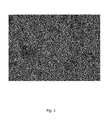
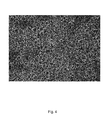
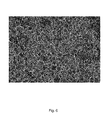
- Fig. 3 to Fig. 6 respectively illustrate the electron microscopic photograph of the cellulose magnetic particulate composites D, E, F, and G.
- these cellulose magnetic particulate composites provided in Experiment 1 of this present invention represent spherical appearance and uniform size.
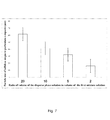
- Fig. 7 is an analytic result of the magnetization indicated by histogram according to the first experiment of the present invention, which indicates that the particle size of the cellulose magnetic particulate composite D ranges between 10 ⁇ m and 20 ⁇ m, the particle size of the cellulose magnetic particulate composite E ranges between 20 ⁇ m and 40 ⁇ m, the particle size of the cellulose magnetic particulate composite F ranges between 30 ⁇ m and 50 ⁇ m, the particle size of the cellulose magnetic particulate composite G ranges between 50 ⁇ m and 70 ⁇ m. Accordingly, the analysis result sufficiently indicates that the magnetization of the cellulose magnetic particulate composite changes with the ratio of V oil / V water.
- the second mixture solution called Sample H is prepared while the ratio of V oil / V water of the disperse phase solution (oil phase) is 10, followed by respectively mixing the quantitative Sample H with five levels of speed of rotation by the rotational stir.
- these five types of cellulose magnetic particulate composites are prepared respectively as follows: cellulose magnetic particulate composite H400, which is prepared at the speed of rotation of 400 rpm, cellulose magnetic particulate composite H600, which is prepared at the speed of rotation of 600 rpm, cellulose magnetic particulate composite H1000, which is prepared at the speed of rotation of 1000 rpm, and cellulose magnetic particulate composite H1200, which is prepared at the speed of rotation of 1200 rpm.
- the particle size distribution of these five cellulose magnetic particulate composites is analyzed and the analysis result is illustrated in Fig. 8 , which obviously shows that the particle size of the cellulose magnetic particulate composite changes with the speed of rotation.
- the iron oxide magnetic nano-particles via the chemical co-precipitation as followed: Mixing the divalent iron ions with the trivalent iron ions in a molar ratio of 1:2 at a speed of rotation of 300 rpm, and adjusting the pH value of the reaction to 12 by 1 M NaOH solution. After the reaction is performed at 60 °C to 1 hour, the black precipitate is then centrifuged at high speed of rotation and deionized water is added to the dispersion, thus a magnetic iron oxide magnetic nano-particles c (Fe 3 O 4 ) with an average particle size about 10 nm is prepared.
- the water-soluble sodium alginate macromolecules are provided to dissolve in water at low temperature to form an aqueous cellulose macromolecule solution.
- first mixture solutions are prepared by mixing the above-prepared iron oxide magnetic nano-particles with the sodium alginate aqueous macromolecule solution in different ratio of weight (To facilitate description, hereinafter referred to as W iron oxide magnetic nano-particles / W sodium alginate):
- Sample A' which is prepared under the ratio of W iron oxide magnetic nanoparticles / W sodium alginate of 0.25
- Sample B' which is prepared under the ratio of W iron oxide magnetic nanoparticles / W sodium alginate of 0.5
- Sample C' which is prepared under the ratio of W iron oxide magnetic nanoparticles / W sodium alginate of 1.
- an oil phase is provided as the dispersed phase solution, and the above-mentioned samples A', B', and C' are respectively mixed well with the dispersed phase solution at a particular speed of rotation by a rotational stir to form the three second mixture solution.
- a hardener is added to the second mixture solutions for preparation of sodium alginate magnetic particulate composites A', B', and C', respectively. And then, these sodium alginate magnetic particulate composites A', B', and C' are later analyzed for their magnetization, as the analysis results shown in Fig. 9 .
- Fig. 9 is an analytic histogram result indicating the magnetization of the above-mentioned three sodium alginate magnetic particulate composites A', B', and C' according to the second experiment of the present invention.
- the magnetization of the sodium alginate magnetic particulate composites A', B', and C' are about 13.6 emu/g, 24.8 emu/g, and 40.9 emu/g, respectively.
- the magnetization data of the sodium alginate magnetic particulate composites A', B', and C' clearly shows that the magnetization of the sodium alginate magnetic particulate composite changes with the ratio of W iron oxide magnetic nanoparticles / W sodium alginate, similar with the result shown in Experiment 1.
- the magnetization of the first mixture solution will affect the magnetization of the finished sodium alginate magnetic particulate composite, as well as the magnetization of the sodium alginate magnetic particulate composite changes with the ratio of W iron oxide magnetic nano-particles / W sodium alginate.
- the ratio of W iron oxide magnetic nanoparticles / W sodium alginate of 1 is applied to prepare the first mixture solution.
- an oil phase is used as the disperse phase solution to mix and stir at a speed of rotation of 800 rpm for preparing four kinds of second mixture solutions with different "ratio of volume of the disperse phase solution to volume of the first mixture solution" (To facilitate description, hereinafter referred to as "V oil / V water”):
- Sample D' which is prepared under the ratio of V oil / V water of 2
- Sample E' which is prepared under the ratio of V oil / V water of 5
- the third is called as Sample F', which is prepared under the ratio of V oil / V water of 10
- the final is called as Sample G', which is prepared under the ratio of V oil / V water of 20.
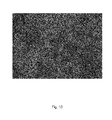
- FIG. 10 it illustrates the electron microscopic photograph of the sodium alginate magnetic particulate composite E'.
- these sodium alginate magnetic particulate composites provided in Experiment 2 of this present invention represent spherical appearance and uniform size.
- the photograph of E' is taken as the example for illustration and explanation.
- this analysis result indicates that the ratio of V oil / V water between the disperse phase solution and the second mixture solution can affect the particle size of the sodium alginate magnetic particulate composite.
Landscapes
- Chemical & Material Sciences (AREA)
- Health & Medical Sciences (AREA)
- Chemical Kinetics & Catalysis (AREA)
- Medicinal Chemistry (AREA)
- Polymers & Plastics (AREA)
- Organic Chemistry (AREA)
- Hard Magnetic Materials (AREA)
- Compositions Of Macromolecular Compounds (AREA)
- Soft Magnetic Materials (AREA)
Applications Claiming Priority (1)
| Application Number | Priority Date | Filing Date | Title |
|---|---|---|---|
| PCT/CN2012/000087 WO2013106948A1 (fr) | 2012-01-18 | 2012-01-18 | Procédé pour la fabrication de composite de particules magnétiques |
Publications (2)
| Publication Number | Publication Date |
|---|---|
| EP2805987A1 true EP2805987A1 (fr) | 2014-11-26 |
| EP2805987A4 EP2805987A4 (fr) | 2015-09-09 |
Family
ID=48798462
Family Applications (1)
| Application Number | Title | Priority Date | Filing Date |
|---|---|---|---|
| EP12866176.6A Withdrawn EP2805987A4 (fr) | 2012-01-18 | 2012-01-18 | Procédé pour la fabrication de composite de particules magnétiques |
Country Status (3)
| Country | Link |
|---|---|
| EP (1) | EP2805987A4 (fr) |
| CN (1) | CN104080840B (fr) |
| WO (1) | WO2013106948A1 (fr) |
Families Citing this family (3)
| Publication number | Priority date | Publication date | Assignee | Title |
|---|---|---|---|---|
| CN111974360B (zh) * | 2019-05-24 | 2023-05-16 | 中元汇吉生物技术股份有限公司 | 一种磁性微球、制备方法及其用途 |
| CN113731378A (zh) * | 2021-09-17 | 2021-12-03 | 新疆师范大学 | 一种用于油水分离的Fe3O4/HA/CSMNPs及制备方法、应用 |
| CN116272702B (zh) * | 2022-11-22 | 2023-09-26 | 广州蔚捷生物医药科技有限公司 | 一种生物纳米微球及其制备方法和应用 |
Family Cites Families (20)
| Publication number | Priority date | Publication date | Assignee | Title |
|---|---|---|---|---|
| US169427A (en) | 1875-11-02 | Improvement in combined toy guns and horns | ||
| US4169804A (en) * | 1976-08-19 | 1979-10-02 | Minnesota Mining And Manufacturing Company | Magnetically responsive composite microparticle |
| US4267234A (en) | 1978-03-17 | 1981-05-12 | California Institute Of Technology | Polyglutaraldehyde synthesis and protein bonding substrates |
| FR2480764B1 (fr) | 1980-04-18 | 1985-10-04 | Rhone Poulenc Spec Chim | Latex de polymeres magnetiques et procede de preparation |
| IL63220A (en) | 1981-07-01 | 1985-09-29 | Yeda Res & Dev | Process for production of polyacrolein microspheres |
| US4454234A (en) | 1981-12-30 | 1984-06-12 | Czerlinski George H | Coated magnetizable microparticles, reversible suspensions thereof, and processes relating thereto |
| US4452773A (en) | 1982-04-05 | 1984-06-05 | Canadian Patents And Development Limited | Magnetic iron-dextran microspheres |
| US4554088A (en) | 1983-05-12 | 1985-11-19 | Advanced Magnetics Inc. | Magnetic particles for use in separations |
| US4795698A (en) | 1985-10-04 | 1989-01-03 | Immunicon Corporation | Magnetic-polymer particles |
| US4654276A (en) | 1986-04-29 | 1987-03-31 | International Business Machines Corporation | Magnetic recording medium with an underlayer and a cobalt-based magnetic layer |
| EP0333879B1 (fr) * | 1987-09-25 | 1996-04-10 | Mitsubishi Rayon Co., Ltd. | Procede de production en continu d'un polymere granulaire et procede de regulation de la granulometrie de polymere |
| JP2979414B2 (ja) | 1989-09-29 | 1999-11-15 | 富士レビオ株式会社 | 磁性粒子およびそれを用いた免疫測定法 |
| DE4127657B4 (de) * | 1991-08-21 | 2008-03-13 | Chemagen Biopolymer-Technologie Aktiengesellschaft | Perlförmige Polyvinylalkoholgele für die Aufreinigung und Auftrennung biologischer Flüssigkeiten, Verfahren zu ihrer Herstellung und Verwendung |
| DE19528029B4 (de) * | 1995-07-31 | 2008-01-10 | Chemagen Biopolymer-Technologie Aktiengesellschaft | Magnetische Polymerpartikel auf der Basis von Polyvinylalkohol, Verfahren für ihre Herstellung und Verwendung |
| US6413489B1 (en) * | 1997-04-15 | 2002-07-02 | Massachusetts Institute Of Technology | Synthesis of nanometer-sized particles by reverse micelle mediated techniques |
| DE10355409A1 (de) * | 2003-11-25 | 2005-06-30 | Magnamedics Gmbh | Sphärische, magnetische Silicagel-Träger mit vergrößerter Oberfläche für die Aufreinigung von Nukleinsäuren |
| CN100573747C (zh) * | 2005-03-30 | 2009-12-23 | 深圳市人民医院 | 纳米磁性微球的制备方法 |
| CN1872028A (zh) * | 2006-04-28 | 2006-12-06 | 深圳市人民医院 | 一种免疫磁性纳米微球及其制备方法和用途 |
| CN1994469A (zh) * | 2006-09-13 | 2007-07-11 | 上海师范大学 | 生物降解磁性纳米颗粒及其制法和应用 |
| DE102007059939A1 (de) * | 2007-12-12 | 2009-06-18 | Müller-Schulte, Detlef, Dr. | Auflösbare, magnetische und unmagnetische Polymerträger zur Abtrennung und Wiedergewinnung von Zellen und Biosubstanzen |
-
2012
- 2012-01-18 WO PCT/CN2012/000087 patent/WO2013106948A1/fr not_active Ceased
- 2012-01-18 EP EP12866176.6A patent/EP2805987A4/fr not_active Withdrawn
- 2012-01-18 CN CN201280060932.4A patent/CN104080840B/zh not_active Expired - Fee Related
Also Published As
| Publication number | Publication date |
|---|---|
| EP2805987A4 (fr) | 2015-09-09 |
| CN104080840B (zh) | 2016-08-31 |
| WO2013106948A1 (fr) | 2013-07-25 |
| CN104080840A (zh) | 2014-10-01 |
Similar Documents
| Publication | Publication Date | Title |
|---|---|---|
| US5662824A (en) | Magnetically attractable particles and method | |
| Ma et al. | Synthesis and surface modification of magnetic particles for application in biotechnology and biomedicine | |
| EP1287359B1 (fr) | Nanoparticules enrobees de silice | |
| Ma et al. | Applications of magnetic materials separation in biological nanomedicine | |
| EP2854776B1 (fr) | Système et procédé de synthèse de microparticules | |
| US7754278B2 (en) | Magnetic polymer microbeads and method for preparing the same | |
| US20100006795A1 (en) | Preparation of polymer particles | |
| WO2004021370A1 (fr) | Particule magnetique et procede de preparation correspondant | |
| JP2012017332A (ja) | 複合ナノスフェアおよびそれらの生体分子との複合体 | |
| EP1883818B1 (fr) | Microparticules magnétiquement réactives présentant des temps de réponse accrus | |
| WO1999019000A1 (fr) | Microspheres en polymere de taille controlee a noyaux ultra-paramagnetiques | |
| CN101977711A (zh) | 被覆金属微粒及其制造方法 | |
| EP3508850A1 (fr) | Particules composites magnétiques et leur procédé de production, et particules pour dosage immunologique | |
| CN102030952A (zh) | 一种磁性核壳高分子复合材料微球及其制备方法 | |
| EP2805987A1 (fr) | Procédé pour la fabrication de composite de particules magnétiques | |
| DE10035953A1 (de) | Sphärische, magnetische Silica-Partikel mit einstellbarer Teilchen- und Porengröße sowie einstellbarem Magnetgehalt für die Aufreinigung von Nukleinsäuren und anderen Biomolekülen | |
| CN1539913A (zh) | 荧光磁性多功能纳米材料及其制备方法 | |
| Liu et al. | Preparation and characterization of superparamagnetic functional polymeric microparticles | |
| JP2018132505A (ja) | 磁性体複合粒子およびその製造方法、並びに免疫測定用粒子 | |
| TWI446924B (zh) | 磁性微粒複合物之製作方法 | |
| US20240316222A1 (en) | Polymer microsphere and preparation method thereof | |
| JP4548598B2 (ja) | 磁性粒子およびその製造方法、ならびに生化学用担体 | |
| CN115127973A (zh) | 荧光磁珠及其制作方法 | |
| CN115127975A (zh) | 荧光磁珠及其制作方法 | |
| CN115127972A (zh) | 磁珠及其制作方法 |
Legal Events
| Date | Code | Title | Description |
|---|---|---|---|
| PUAI | Public reference made under article 153(3) epc to a published international application that has entered the european phase |
Free format text: ORIGINAL CODE: 0009012 |
|
| 17P | Request for examination filed |
Effective date: 20140717 |
|
| AK | Designated contracting states |
Kind code of ref document: A1 Designated state(s): AL AT BE BG CH CY CZ DE DK EE ES FI FR GB GR HR HU IE IS IT LI LT LU LV MC MK MT NL NO PL PT RO RS SE SI SK SM TR |
|
| DAX | Request for extension of the european patent (deleted) | ||
| RA4 | Supplementary search report drawn up and despatched (corrected) |
Effective date: 20150806 |
|
| RIC1 | Information provided on ipc code assigned before grant |
Ipc: C08K 3/10 20060101ALI20150731BHEP Ipc: C08J 3/16 20060101AFI20150731BHEP |
|
| 17Q | First examination report despatched |
Effective date: 20170619 |
|
| STAA | Information on the status of an ep patent application or granted ep patent |
Free format text: STATUS: THE APPLICATION IS DEEMED TO BE WITHDRAWN |
|
| 18D | Application deemed to be withdrawn |
Effective date: 20180928 |