EP2806239B1 - Réfrigérateur et son procédé de fabrication - Google Patents
Réfrigérateur et son procédé de fabrication Download PDFInfo
- Publication number
- EP2806239B1 EP2806239B1 EP14167120.6A EP14167120A EP2806239B1 EP 2806239 B1 EP2806239 B1 EP 2806239B1 EP 14167120 A EP14167120 A EP 14167120A EP 2806239 B1 EP2806239 B1 EP 2806239B1
- Authority
- EP
- European Patent Office
- Prior art keywords
- hole
- space part
- housing
- body part
- refrigerator
- Prior art date
- Legal status (The legal status is an assumption and is not a legal conclusion. Google has not performed a legal analysis and makes no representation as to the accuracy of the status listed.)
- Not-in-force
Links
Images





Classifications
-
- F—MECHANICAL ENGINEERING; LIGHTING; HEATING; WEAPONS; BLASTING
- F16—ENGINEERING ELEMENTS AND UNITS; GENERAL MEASURES FOR PRODUCING AND MAINTAINING EFFECTIVE FUNCTIONING OF MACHINES OR INSTALLATIONS; THERMAL INSULATION IN GENERAL
- F16L—PIPES; JOINTS OR FITTINGS FOR PIPES; SUPPORTS FOR PIPES, CABLES OR PROTECTIVE TUBING; MEANS FOR THERMAL INSULATION IN GENERAL
- F16L59/00—Thermal insulation in general
- F16L59/06—Arrangements using an air layer or vacuum
-
- F—MECHANICAL ENGINEERING; LIGHTING; HEATING; WEAPONS; BLASTING
- F25—REFRIGERATION OR COOLING; COMBINED HEATING AND REFRIGERATION SYSTEMS; HEAT PUMP SYSTEMS; MANUFACTURE OR STORAGE OF ICE; LIQUEFACTION SOLIDIFICATION OF GASES
- F25D—REFRIGERATORS; COLD ROOMS; ICE-BOXES; COOLING OR FREEZING APPARATUS NOT OTHERWISE PROVIDED FOR
- F25D23/00—General constructional features
- F25D23/08—Parts formed wholly or mainly of plastics materials
-
- C—CHEMISTRY; METALLURGY
- C08—ORGANIC MACROMOLECULAR COMPOUNDS; THEIR PREPARATION OR CHEMICAL WORKING-UP; COMPOSITIONS BASED THEREON
- C08J—WORKING-UP; GENERAL PROCESSES OF COMPOUNDING; AFTER-TREATMENT NOT COVERED BY SUBCLASSES C08B, C08C, C08F, C08G or C08H
- C08J9/00—Working-up of macromolecular substances to porous or cellular articles or materials; After-treatment thereof
- C08J9/0014—Use of organic additives
- C08J9/0023—Use of organic additives containing oxygen
-
- C—CHEMISTRY; METALLURGY
- C08—ORGANIC MACROMOLECULAR COMPOUNDS; THEIR PREPARATION OR CHEMICAL WORKING-UP; COMPOSITIONS BASED THEREON
- C08J—WORKING-UP; GENERAL PROCESSES OF COMPOUNDING; AFTER-TREATMENT NOT COVERED BY SUBCLASSES C08B, C08C, C08F, C08G or C08H
- C08J9/00—Working-up of macromolecular substances to porous or cellular articles or materials; After-treatment thereof
- C08J9/0014—Use of organic additives
- C08J9/0052—Organo-metallic compounds
-
- F—MECHANICAL ENGINEERING; LIGHTING; HEATING; WEAPONS; BLASTING
- F25—REFRIGERATION OR COOLING; COMBINED HEATING AND REFRIGERATION SYSTEMS; HEAT PUMP SYSTEMS; MANUFACTURE OR STORAGE OF ICE; LIQUEFACTION SOLIDIFICATION OF GASES
- F25D—REFRIGERATORS; COLD ROOMS; ICE-BOXES; COOLING OR FREEZING APPARATUS NOT OTHERWISE PROVIDED FOR
- F25D23/00—General constructional features
-
- F—MECHANICAL ENGINEERING; LIGHTING; HEATING; WEAPONS; BLASTING
- F25—REFRIGERATION OR COOLING; COMBINED HEATING AND REFRIGERATION SYSTEMS; HEAT PUMP SYSTEMS; MANUFACTURE OR STORAGE OF ICE; LIQUEFACTION SOLIDIFICATION OF GASES
- F25D—REFRIGERATORS; COLD ROOMS; ICE-BOXES; COOLING OR FREEZING APPARATUS NOT OTHERWISE PROVIDED FOR
- F25D23/00—General constructional features
- F25D23/02—Doors; Covers
-
- F—MECHANICAL ENGINEERING; LIGHTING; HEATING; WEAPONS; BLASTING
- F25—REFRIGERATION OR COOLING; COMBINED HEATING AND REFRIGERATION SYSTEMS; HEAT PUMP SYSTEMS; MANUFACTURE OR STORAGE OF ICE; LIQUEFACTION SOLIDIFICATION OF GASES
- F25D—REFRIGERATORS; COLD ROOMS; ICE-BOXES; COOLING OR FREEZING APPARATUS NOT OTHERWISE PROVIDED FOR
- F25D23/00—General constructional features
- F25D23/06—Walls
-
- F—MECHANICAL ENGINEERING; LIGHTING; HEATING; WEAPONS; BLASTING
- F25—REFRIGERATION OR COOLING; COMBINED HEATING AND REFRIGERATION SYSTEMS; HEAT PUMP SYSTEMS; MANUFACTURE OR STORAGE OF ICE; LIQUEFACTION SOLIDIFICATION OF GASES
- F25D—REFRIGERATORS; COLD ROOMS; ICE-BOXES; COOLING OR FREEZING APPARATUS NOT OTHERWISE PROVIDED FOR
- F25D23/00—General constructional features
- F25D23/06—Walls
- F25D23/062—Walls defining a cabinet
- F25D23/064—Walls defining a cabinet formed by moulding, e.g. moulding in situ
-
- F—MECHANICAL ENGINEERING; LIGHTING; HEATING; WEAPONS; BLASTING
- F25—REFRIGERATION OR COOLING; COMBINED HEATING AND REFRIGERATION SYSTEMS; HEAT PUMP SYSTEMS; MANUFACTURE OR STORAGE OF ICE; LIQUEFACTION SOLIDIFICATION OF GASES
- F25D—REFRIGERATORS; COLD ROOMS; ICE-BOXES; COOLING OR FREEZING APPARATUS NOT OTHERWISE PROVIDED FOR
- F25D23/00—General constructional features
- F25D23/06—Walls
- F25D23/065—Details
- F25D23/067—Supporting elements
-
- C—CHEMISTRY; METALLURGY
- C08—ORGANIC MACROMOLECULAR COMPOUNDS; THEIR PREPARATION OR CHEMICAL WORKING-UP; COMPOSITIONS BASED THEREON
- C08J—WORKING-UP; GENERAL PROCESSES OF COMPOUNDING; AFTER-TREATMENT NOT COVERED BY SUBCLASSES C08B, C08C, C08F, C08G or C08H
- C08J2205/00—Foams characterised by their properties
- C08J2205/04—Foams characterised by their properties characterised by the foam pores
- C08J2205/05—Open cells, i.e. more than 50% of the pores are open
-
- C—CHEMISTRY; METALLURGY
- C08—ORGANIC MACROMOLECULAR COMPOUNDS; THEIR PREPARATION OR CHEMICAL WORKING-UP; COMPOSITIONS BASED THEREON
- C08J—WORKING-UP; GENERAL PROCESSES OF COMPOUNDING; AFTER-TREATMENT NOT COVERED BY SUBCLASSES C08B, C08C, C08F, C08G or C08H
- C08J2375/00—Characterised by the use of polyureas or polyurethanes; Derivatives of such polymers
- C08J2375/04—Polyurethanes
-
- F—MECHANICAL ENGINEERING; LIGHTING; HEATING; WEAPONS; BLASTING
- F25—REFRIGERATION OR COOLING; COMBINED HEATING AND REFRIGERATION SYSTEMS; HEAT PUMP SYSTEMS; MANUFACTURE OR STORAGE OF ICE; LIQUEFACTION SOLIDIFICATION OF GASES
- F25D—REFRIGERATORS; COLD ROOMS; ICE-BOXES; COOLING OR FREEZING APPARATUS NOT OTHERWISE PROVIDED FOR
- F25D2201/00—Insulation
- F25D2201/10—Insulation with respect to heat
- F25D2201/12—Insulation with respect to heat using an insulating packing material
- F25D2201/126—Insulation with respect to heat using an insulating packing material of cellular type
- F25D2201/1262—Insulation with respect to heat using an insulating packing material of cellular type with open cells
-
- F—MECHANICAL ENGINEERING; LIGHTING; HEATING; WEAPONS; BLASTING
- F25—REFRIGERATION OR COOLING; COMBINED HEATING AND REFRIGERATION SYSTEMS; HEAT PUMP SYSTEMS; MANUFACTURE OR STORAGE OF ICE; LIQUEFACTION SOLIDIFICATION OF GASES
- F25D—REFRIGERATORS; COLD ROOMS; ICE-BOXES; COOLING OR FREEZING APPARATUS NOT OTHERWISE PROVIDED FOR
- F25D2201/00—Insulation
- F25D2201/10—Insulation with respect to heat
- F25D2201/14—Insulation with respect to heat using subatmospheric pressure
-
- Y—GENERAL TAGGING OF NEW TECHNOLOGICAL DEVELOPMENTS; GENERAL TAGGING OF CROSS-SECTIONAL TECHNOLOGIES SPANNING OVER SEVERAL SECTIONS OF THE IPC; TECHNICAL SUBJECTS COVERED BY FORMER USPC CROSS-REFERENCE ART COLLECTIONS [XRACs] AND DIGESTS
- Y10—TECHNICAL SUBJECTS COVERED BY FORMER USPC
- Y10T—TECHNICAL SUBJECTS COVERED BY FORMER US CLASSIFICATION
- Y10T29/00—Metal working
- Y10T29/49—Method of mechanical manufacture
- Y10T29/4998—Combined manufacture including applying or shaping of fluent material
- Y10T29/49993—Filling of opening
Definitions
- the present invention relates to a refrigerator with excellent insulation performance and a method of manufacturing the same, and more particularly, to a refrigerator including a door with excellent insulation performance.
- refrigerators which are an appliance to store foods at low temperature, maintain the temperature of a storage compartment at refrigerating or freezing temperature using a freezing cycle, and are electric products capable of keeping stored foods cool or frozen.
- EP 0 860 669 A1 relates to a thermal insulator cabinet having high thermal insulating ability and long-term reliability.
- the thermal insulator cabinet includes a gas-tight container that is filled with a charging gas and a continuous spacing core and a gas-storage container that communicates with the gas-tight container and is filled with an absorbent for absorbing at least the charging gas, wherein the gas-storage container absorbs the charging gas to make inside of the gas-tight container a state of reduced pressure.
- US 5 575 871 A discloses a method comprising the heating of an open cell rigid polyurethane foam at a temperature not lower than the temperature at which its storage modulus of elasticity begins to decrease and enclosing the thus-thermoformed polyurethane foam in a gas barrier material and evacuating the interior of a enclosure.
- FIG. 1 is a view illustrating a structure of a conventional refrigerator 10.
- the refrigerator 10 includes a main body 20 to form a storage space so as to store foods, doors 30 to open or close a refrigerating compartment 27 and a freezing compartment 28, and a machinery compartment to perform a refrigerant condensation cycle.
- the main body 20 includes an inner case 24 to form a storage space, an outer case 22 to accommodate the inner case 24, and a heat insulation material disposed between the inner case 24 and the outer case 22. Due to such a heat insulation material, effect of external temperature on a temperature in a storage space is prevented.
- polyurethane foam formed through injection of a polyurethane foam solution and foaming of the solution, is filled between the outer case 22 and the inner case 24.
- Closed cell polyurethane foam is formed between the inner case 24 and the outer case 22 of a commercially available refrigerator, but such a structure has gas inside cells and thus has a thermal conductivity of 0.0160 kcal/mhr°C, which is not good performance.
- refrigerator doors are frequently opened or closed and thus are easily affected by external temperature and, recently, use of door-in-door refrigerators is increasing and thus insulation problems thereof due to frequent opening or closing of doors occur.
- the thickness of a heat insulation material has to be secured to some extent, which means that the thickness of the heat insulation material increases.
- the thickness of a wall between an inner case and an outer case increases and, accordingly, the size of a refrigerator increases.
- the vacuum space portion has a large sectional area and thus insulation performance of a refrigerator is dramatically deteriorated by even little increase in pressure due to air permeation and moisture permeation from the outside. This is because insulation performance obtained by such a vacuum space portion can be maintained only under high vacuum.
- the present invention is directed to a refrigerator and a method of manufacturing the same that substantially obviate one or more problems due to limitations and disadvantages of the related art.
- An object of the present invention is to provide a refrigerator with superior insulation performance and a method of manufacturing the same.
- Another object of the present invention is to provide a refrigerator using a vacuum heat insulation material that maintains a vacuum state and serves to support a structure of the refrigerator and a method of manufacturing the same.
- Another object of the present invention is to provide a vacuum heat insulation material that retains insulation performance and structural stability despite external impact or predetermined reduction in degree of vacuum and a refrigerator using the same.
- a further object of the present invention is to provide a more efficient material and fabrication shape of a housing for forming a space to accommodate a vacuum heat insulation material.
- a refrigerator includes a main body including a storage compartment to accommodate a substance to be stored and a door for selectively opening or closing the storage compartment, wherein the door includes a housing to form an external appearance of the door, a space part disposed in the housing and having a predetermined volume, a hole to allow communication between inner and outer sides of the space part, and a core material being an open cell polyurethane foam formed by a foam material injected via the hole to fill the space part.
- the foam material for formation of the open cell polyurethane foam may be injected via a pipe inserted into the hole.
- the space part may be vacuum evacuated via the pipe inserted into the hole.
- the hole may include an injection hole for injection of the foam material and an exhaust hole for forming a predetermined degree of vacuum in the space part.
- Injection of the foam material via the injection hole and discharge of air inside the space part into the outside via the exhaust hole may be simultaneously performed.
- the injection hole and the exhaust hole may be formed at a surface of the housing facing the storage compartment.
- the space part may include a getter for absorption of gas.
- the housing may include a body part having an opening and a cover for closing the opening of the body part.
- the body part and the cover may be formed of acrylonitrile-butadiene-styrene (ABS) resin, and a hole may be formed in the body part.
- ABS acrylonitrile-butadiene-styrene
- the body part and the cover may be adhered to each other by thermal fusion, and inner circumferential surfaces of the body part and the cover may be plated.
- the plating process may be performed by electroplating, chemical plating, hot dipping, evaporation deposition plating, diffusion coating, ion plating, or the like.
- the housing may be formed of a metal material. In this case, a boundary portion between adjacent surfaces of the housing may be sealed by welding.
- the hole may be sealed by a sealing member.
- the core material may be disposed in a space between the outer case that forms the external appearance of the main body and the inner case disposed in the outer case and forming the storage compartment of the main body.
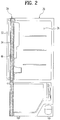
- the refrigerator according to the present invention includes a main body 20 to form storage compartments 26 and doors 30 rotatably arranged at the main body 20.
- the main body 20 includes an outer case 22 to form an external appearance of the main body 20 and an inner case 24 that is disposed inside the outer case 22 and forms the storage compartments 26 within the main body 20.
- the storage compartments 26 of the main body 20 include a refrigerating compartment 27 and a freezing compartment 28.
- the refrigerating compartment 27 and the freezing compartment 28 may be provided at inner sides thereof with a plurality of drawers and shelves to accommodate various food.
- the door 30 of the refrigerating compartment 27 or the freezing compartment 28 may be provided at a rear surface thereof with a plurality of baskets to accommodate food and, as desired, may be provided with an ice maker, a dispenser, a home bar, or the like.
- FIG. 2 is a sectional view of a refrigerator according to an embodiment of the present invention in which a vacuum heat insulation material is applied only to doors of the refrigerator.
- FIG. 3 is a sectional view of the refrigerator of FIG. 2 in which the core material 46 fills the doors thereof and a space between the outer case 22 and the inner case 24 and thus serves as a supporting body and a vacuum heat insulation material.
- FIGs. 4 and 5 are perspective views of the door 30 according to the present invention.
- the door 30 opens or closes the storage compartment 26 of the main body 20 and includes a space part 49 (see Fig. 6 ) having a predetermined volume and a housing 34 having a hole 42 to allow communication between inner and outer sides of the space part 49, in which the space part 49 and the housing 34 form an external appearance of the door 30.
- a foam material is injected into the space part 49 via the hole 42 and a core material, which is open cell polyurethane foam formed by the foaming solution, fills the space part 49.
- the housing 34 may be formed of a metal material or acrylonitrile-butadiene-styrene (ABS) resin, but embodiments of the present invention are not limited thereto.
- ABS acrylonitrile-butadiene-styrene
- the shape of the door 30 is formed by bending the steel and a boundary portion between adjacent surfaces of the housing 34 is sealed by welding. In this case, an increase in pressure of the space part 49 caused by gas generated from the housing 34 maybe prevented.
- the housing 34 may be formed of ABS resin.
- the housing 34 is designed to include a body part 340 having an opening and a cover 342 to close the opening of the body part 340.
- the hole 42 may be arranged at the body part 340.
- the body part 340 is closed by the cover 342 through thermal fusion (see 45 of FIG. 9 ).
- the housing 34 is formed of ABS resin and designed to include the body part 340 and the cover 342, a smaller number of thermal fusion portions 45 is formed than in a case in which steel is bent and boundary portions thereof are welded, and thus, a risk of welding defects decreases. Thus, it is more desirable in maintaining a vacuum state.
- the housing 34 when the housing 34 is made of ABS resin, gas may be generated from the ABS resin. Gases generated from a material of the housing 34 may affect a predetermined degree of vacuum formed in the space part 49 and thus need to be prevented.
- a process of plating (see 43) an inner circumferential surface of the housing 34 may be further performed. Through the plating process, discharge of gas generated from ABS resin to the space part 49 may be prevented.
- the plating process may be performed by electroplating, chemical plating, hot dipping, evaporation deposition plating, diffusion coating, ion plating, or the like.
- the housing 34 is made of ABS resin, it is easier to form a complicated shape of a door liner inside the refrigerator.
- FIG. 4 is a perspective view illustrating a case in which the hole 42 is arranged in the housing 34.
- FIG. 5 is a view illustrating a case in which a pipe 44 is inserted into the hole 42.
- the hole 42 is a path through which a foam material is injected into the sealed housing 34 and for vacuum evacuation after foaming.
- the hole may be one or more holes.
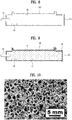
- FIG. 6 is a sectional view illustrating the housing 34 in which two holes are formed.
- the holes may include an injection hole 420 for injection of a foam material and an exhaust hole 422 for forming a predetermined degree of vacuum in the space part 49. Air present in the space part 49 may be discharged via the exhaust hole 422.
- the foam material for formation of the open cell polyurethane foam is injected via the pipe 44 inserted into the hole 42. Upon injecting the foam material via the injection hole 420, air inside the space part 49 may be discharged to the outside via the exhaust hole 422.
- injection hole 420 and the exhaust hole 422 may be arranged at the same surface of the housing 34.
- arrangement of the injection hole 420 and the exhaust hole 422 at the same surface may be desirable in consideration of an air flow path in which air descends due to pushing of the foaming solution, flows towards an exhaust port and air ascends, thereby more efficiently inducing air exhaust.
- the injection hole 420 and the exhaust hole 422 may be formed at the same position. That is, injection of the foam material and air exhaust may be performed using a single hole.
- a getter 40 Before injection of the foaming solution, a getter 40 may be inserted.
- the getter 40 serves to absorb gas or moisture generated inside the space part 49.
- FIG. 7 is a sectional view of the housing 34 in which, after completing injection of the foam material via the pipe 44 inserted into the injection hole 420, the pipe 44 is removed and the injection hole 420 is sealed.
- the space part 49 is vacuum evacuated via the pipe 44 inserted into the exhaust hole 422. Air in the open cell of the core material 46 is also vacuum evacuated and thus the space part 49 may form a predetermined degree of vacuum.
- a vacuum state determines insulation performance of the refrigerator according to the present invention.
- the refrigerator may include a space part having a predetermined volume between the outer case 22 and the inner case 24.
- a hole to allow communication between inner and outer sides of the space part may be arranged at any one of the outer case 22 and the inner case 24.
- the space part may be filled with a foam material via the hole, and a core material, which is open cell polyurethane foam formed by the foaming solution, may fill the space part.
- the space part is vacuum evacuated via the hole.
- the exhaust hole 422 may be sealed by a sealing member.
- FIG. 10 is a scanning electron microscope (SEM) image of the open cell polyurethane foam.
- the space part 49 arranged in the housing 34 is filled with a foam material for forming the open cell polyurethane foam via the hole. After injection of the foaming solution, the open cell polyurethane foam is formed through foaming.
- the open cell polyurethane foam has to maintain low thermal conductivity for a long period of time.
- Such low thermal conductivity largely depends upon the size of cells of the open cell polyurethane foam, and thus, it is necessary to minimize cell size to prepare an open cell polyurethane foam for forming a core material of a vacuum heat insulation material.
- a second considering factor to use the open cell polyurethane foam as a core material of a vacuum heat insulation material is a cell opening rate.
- gas of a foaming agent present in cells leaks towards the core material as time elapses even though initial insulation is excellent.
- vacuum pressure of foam of a vacuum heat insulation material is reduced and, accordingly, insulation performance of the foam is significantly deteriorated.
- the open cell polyurethane foam which is a core material, has a relatively small cell size and a very high cell opening rate and is used as a core material of a vacuum heat insulation material and thus may exhibit efficient insulation performance even in a relatively low degree of vacuum.
- the open cell polyurethane foam may be well suited to building structures or impact absorption, or for use as a core material of a vacuum heat insulation material.
- a reactive cell opening composition including a base oil and a metal salt of a fatty acid having a hydroxyl group capable of reacting with an isocyanate group may be added to the foaming solution.
- the reactive cell opening composition may be formed as a grease-type mixture composition using a silicon oil surfactant or the like as a base oil and thus may maintain dispersibility at the molecular level.
- a cell opening agent is chemically combined to a polyurethane main chain by reaction between a hydroxyl group (-OH) of a reactive cell opening agent and isocyanate (-NCO) and thus the reactive cell opening composition may perform effective cell opening performance at the molecular level.
- the base oil is not particularly limited so long as it is capable of satisfactorily dispersing a reactive cell opening agent in the form of a metal salt of a fatty acid.
- the base oil may be an oil-type surfactant.
- the same surfactant as that used as a component of a polyol composition, which will be described below, may be used.
- the base oil may be a silicon oil surfactant.
- silicon oil surfactants are commercially available and embodiments of the present invention are not limited thereto.
- the reactive cell opening agent is a metal salt of a fatty acid having a hydroxyl group capable of reacting with an isocyanate group.
- a synthesis method of the reactive cell opening agent is not limited and the reactive cell opening agent may be obtained by reaction between a fatty acid having a hydroxyl group and a metal hydroxide.
- a metal salt may be separately synthesized and then added to the reactive cell opening composition, and neutralization may be induced in the composition by adding a fatty acid and a metal hydroxide to the base oil.
- the fatty acid may be a saturated or unsaturated fatty acid and may be selected from among C 8 -C 30 fatty acids.
- the fatty acid may be a saturated fatty acid.
- saturated fatty acids include, but are not limited to, caprylic acid (C8), capric acid (C10), lauric acid (C12), myristic acid (C16), palmitic acid (C16), stearic acid (C18), arachidic acid (C20), behenic acid (C22), and lignoceric acid (C24).
- the hydroxyl group may be a primary hydroxyl group positioned at the end of a fatty acid.
- the hydroxyl group may be a secondary hydroxyl group positioned at the middle of a hydrocarbon group of a fatty acid, for example, 12-hydroxystearic acid (12HSA).
- the metal hydroxide may be lithium hydroxide (LiOH), sodium hydroxide (NaOH), potassium hydroxide (KOH), calcium hydroxide (Ca(OH) 2 ), and the like, but embodiments of the present invention are not limited thereto.
- the amount of the reactive cell opening agent which is a metal salt of a fatty acid, may be 10 wt% to 50 wt% based on 100 parts by weight of the cell opening composition.
- the amount of the reactive cell opening agent is less than 10 wt%, to adjust the concentration of the cell opening agent needed for a polyol composition to prepare polyurethane foam, the cell opening composition is used in a relatively large amount and thus an excess of base oil is added, which causes instability of a foaming system.
- the concentration of the reactive cell opening agent in the cell opening composition is excessively high and thus the viscosity of the composition dramatically increases and, accordingly, it is difficult to disperse the cell opening agent in the base oil at the molecular level.
- a polyol composition including a polyol and a cell opening agent in combination is used.
- the cell opening agent may be added, to the polyol composition, as a metal salt of a fatty acid having a hydroxyl group capable of reacting with isocyanate
- the cell opening agent may be the cell opening agent described above and thus a detailed description thereof will be omitted herein.
- the cell opening agent may be directly added to the polyol composition and may be added in the form of the above-described cell opening composition to the polyol composition.
- the cell opening agent may be added in the form of a cell opening composition, which is suitable for dispersion of the cell opening agent.
- the base oil of the cell opening composition may be a polyol composition component, for example, a silicon oil surfactant.
- the polyol composition forms polyurethane foam through reaction with a polyisocyanate composition.
- the polyol composition may use formulations used for formation of conventional polyurethane foams.
- a polyol composition for preparation of a closed cell hard polyurethane foam optimized for use as a heat insulation material may also be used.
- general polyol formulations used to prepare an open cell hard polyurethane foam may also be used.
- the polyol formulations may include a polyol as a main component and a foam stabilizer, such as a surfactant, a catalyst, a nucleating agent, a foaming agent, a cell opening agent, or the like.
- the surfactant and the cell opening agent may be components of the cell opening composition described above.
- the same polyetherpolyols as those used to prepare a general hard polyurethane foam may be used alone or in combination.
- the amount of the polyol may be 70 wt% to 95 wt% based on 100 parts by weight of the polyol composition.
- polyols include, but are not limited to, alkylene glycols (e.g., ethylene glycol, propylene glycol, 1,4-butane diol, 1,6-hexane diol, and the like), glycol ethers (e.g., diethylene glycol, triethylene glycol, dipropylene glycol, tripropylene glycol, and the like), glycerin, trimethylolpropane, tertiary amine-containing polyols (e.g., triethanolamine, triisopropanolamine, and adducts of ethylene oxides such as ethylene diamine, toluene diamine, and the like and/or propylene oxides), polyether polyols, and polyester polyols.
- alkylene glycols e.g., ethylene glycol, propylene glycol, 1,4-butane diol, 1,6-hexane diol, and the like
- glycol ethers
- a suitable polyether polyol may be an alkylene oxide such as ethylene oxide, propylene oxide, or 1,2-butylene oxide or a polymer of a mixture of these alkylene oxides.
- the polyether may be a polymer of a mixture of polypropylene oxide or propylene oxide and a small amount (about 12 wt% or less) of ethylene oxide. These preferable polyethers may be capped with about 30 wt% or less of ethylene oxide.
- Polyester polyols may also be used.
- the polyester polyols include reaction products of a polyol, preferably diol and polycarboxylic acid or an anhydride thereof, preferably dicarboxylic acid or an anhydride thereof.
- the polycarboxylic acid or the anhydride thereof may be aliphatic, alicyclic, aromatic and/or heterocyclic and may be substituted with a functional group such as a halogen atom.
- the polycarboxylic acid may be unsaturated.
- Examples of polycarboxylic acids include succinic acid, adipic acid, terephthalic acid, isophthalic acid, a trimellitic anhydride, a phthalic anhydride, maleic acid, a maleic anhydride, and fumaric acid.
- Polyols used to prepare polyester polyols may have an equivalent weight of about 150 or less and include ethylene glycol, 1,2- and 1,3-propylene glycol, 1,4- and 2,3-butane diol, 1,6-hexane diol, 1,8-octane diol, neopentyl glycol, cyclohexane dimethanol, 2-methyl-1,3-propane diol, glycerin, trimethylol propane, 1,2,6-hexane triol, 1,2,4-butane triol, trimethylolethane, pentaerythritol, quinitol, mannitol, sorbitol, methyl glycoside, diethylene glycol, triethylene glycol, tetraethylene glycol, dipropylene glycol, dibutylene glycol, and the like.
- the polyol may have a hydroxyl value of 350 to 450 mgKOH/g.
- a polyurethane product with low hardness due to low crosslinking density during reaction may be formed.
- the hydroxyl value of the polyol exceeds 450 mgKOH/g, a polyurethane product easily breakable due to excessively high crosslinking density during reaction may be formed.
- the foam stabilizer may be a silicon-based surfactant, for example, the base oil of the reactive cell opening composition described above.
- the surfactant used as the foam stabilizer may be the same material as that used to prepare a general hard polyurethane foam for high heat insulation, and a mixture of one or more kinds may be used to form a foam having a microporous structure that provides heat insulation performance.
- the foam stabilizer may be a mixture of B-8462 (manufactured by Gold Schmidt Co.) and Niax L-6900 (manufactured by Momentive Specialty Chemicals).
- the amount of the foam stabilizer (i.e., base oil) may be 0.5 to 5.0 parts by weight based on 100 parts by weight of the polyol.
- foam stabilization defects may be caused due to low concentration, or the size and distribution of cells may be non-uniform.
- the amount of the foam stabilizer exceeds 5.0 parts by weight, foaming defects according to instability of a foaming system due to excessive formation of an aqueous surfactant may be caused.
- the amount of the cell opening agent may be 0.2 to 3.0 parts by weight based on 100 parts by weight of the polyol.
- a cell opening rate may be reduced according to a low concentration of the cell opening agent.
- the amount of the cell opening agent exceeds 3.0 parts by weight, the size and size distribution of cells may be non-uniform due to excessive formulation of a solid cell opening agent or mechanical abrasion or the like due to excessive presence of a solid-phase cell opening agent in a foaming system may be caused.
- a nucleating agent may be used.
- a perfluoroalkane-based compound may be used and the amount thereof may be 1.0 to 5.0 parts by weight based on 100 parts by weight of the polyol.
- the polyol composition may further include a foaming agent.
- a hydrocarbon-based physical foaming agent generally used as a non-halogen-based environmentally friendly foaming agent, such as cyclopentane may be used and, as desired, a small amount of water may be added as a chemical foaming agent.
- the polyol composition may further include a catalyst, and a general catalyst used to prepare a hard polyurethane foam may be added in a general catalyst amount and these catalysts may be used alone or in combination.
- the catalyst may be a basic amine, for example, secondary aliphatic amine, imidazole, amidine, alkanolamine, Lewis acid, or a metal-organic compound, in particular a tin-based compound.
- a metal carboxylate in particular potassium acetate and a solution thereof may be used as an isocyanurate catalyst.
- the present invention also provides an open cell polyurethane foam formed by reaction between a polyol composition including a polyol and a cell opening agent in combination and a polyisocyanate composition including a polyisocyanate compound, in which the cell opening agent is a metal salt of a fatty acid having a hydroxyl group capable of reacting with isocyanate.
- a polyol composition including a polyol and a cell opening agent in combination
- a polyisocyanate composition including a polyisocyanate compound, in which the cell opening agent is a metal salt of a fatty acid having a hydroxyl group capable of reacting with isocyanate.
- the open cell polyurethane foam formed according to the present invention has a cell size of 100 ⁇ m or less that is much smaller than that of a conventional open cell polyurethane foam and may have a cell opening rate of 80%, particularly 90%, more particularly 98% or more.
- the open cell polyurethane foam is used as a core material of a vacuum heat insulation material and thus may exhibit efficient heat insulation performance even in a relatively low degree of vacuum and may be well suited to building structures or impact absorption or for use as a core material of a vacuum heat insulation material. It is assumed that these significant effects are obtained by chemically combining a metal salt of a fatty acid having a hydroxyl group capable of reacting with isocyanate, used as the cell opening agent, to a polyurethane chain.
- the polyisocyanate composition includes a polyisocyanate compound.
- the polyisocyanate compound means a compound having two or more isocyanate groups.
- a compound used to prepare a general hard polyurethane foam may be used.
- the polyisocyanate compound may be at least one isocyanate selected from the group consisting of diphenyl methane diisocyanate (MDI), toluene diisocyanate (TDI), hexamethylene diisocyanate (HDI), dicyclohexylmethane diisocyanate (H12MDI), and isoporonediisocyanate (IPDI).
- MDI diphenyl methane diisocyanate
- TDI toluene diisocyanate
- HDI hexamethylene diisocyanate
- H12MDI dicyclohexylmethane diisocyanate
- IPDI isoporonediisocyanate
- the polyisocyanate compound a product obtained by chemical reaction of a modified multifunctional isocyanate, i.e., organic diisocyanate and/or polyisocyanate, may be used.
- the polyisocyanate compound may be selected from among diisocyanate and/or polyisocyanate containing an uretdione group, a carbamate group, an isocyanurate group, a carbodiimide group, an allophanate group and/or a urethane group.
- the polyisocyanate may have a NCO% of 25% to 35%.
- the above-described reactive cell opening composition may maintain dispersibility at the molecular level by being formed as a grease-type mixture composition using a silicon oil surfactant or the like as a base oil and may perform effective cell opening performance at the molecular level by chemically combining a cell opening agent to a polyurethane main chain.
- a silicon oil surfactant or the like as a base oil
- cell opening may be effectively performed using a relatively small amount of a cell opening agent.
- Table 1 shows a mix ratio represented by wt% of LiOH to the silicon surfactant,_and molecular weights and mixed amounts of LiOH and 12HSA.
- Table 1 Compound Molecular weight(g/mole) Amount Composition ratio LiOH 23.9 22.1 g 30 wt% 12HSA 300 277.9 g Silicon oil - 700.0 g 70 wt%
- Components shown in Table 2 below were mixed in amounts quantified according to composition ratios shown in Table 2 at room temperature (25°C) for 4 to 5 seconds using a mechanical mixer with high RPM and the resulting mixture was poured into an open mold having a size of 20x20 cm and a rectangular box shape to induce foam formation. After the reaction was completed, the formed foam was subjected to aging for 24 hours and cut and the size of the cell was measured using a scanning electron microscope (SEM) and is illustrated in Table2.
- SEM scanning electron microscope
- the foam fills the inside of the housing and thus may support the structure of the refrigerator and maintain a vacuum state over a long period of time. That is, the open cell hard polyurethane foam acts as a supporting body of the inside of the housing and has a cell opening rate of 90% or more and thus internal gases leak from cells in a vacuum state, leading to an empty state of the cells.
- heat insulation performance corresponds to about 0.0130kcal/mhr°C.
- heat insulation performance may be enhanced to 0.0070kcal/mhr°C or less.
- heat insulation performance may be increased by 50% or more as compared to conventional refrigerators.
- FIG. 11 is a graph showing a relationship among pressure, cell diameter, and thermal conductivity.
- the open cell polyurethane foam having a cell diameter of about 100 ⁇ m, which is a core material may maintain low thermal conductivity at a pressure of 1 Pa or less.
- the door 30 or the main body 20 is entirely heat-insulated using a vacuum layer and thus heat insulation performance of the refrigerator is increased by 50% or more as compared to conventional refrigerators and air permeation, moisture permeation, and rapid deterioration of heat insulation performance due to increase in pressure by internally generated gases may be prevented.
- the space part 49 having a predetermined volume and the housing 34 having a hole to allow communication between inner and outer sides of the space part 49 are arranged, and the pipe 44 is inserted into the injection hole 420 through which a foam material is injected (operation S1).
- the foam material is injected into the space part 49 via the pipe 44 (operation S2).
- the getter 40 may be inserted before injection of the foaming solution.
- the foam material is foamed to form the core material 46 formed of an open cell polyurethane foam (operation S3).
- a reactive cell opening agent may be added.
- an exhausting process for removal of air in the space part 49 via the exhaust hole 422 may be performed.
- the space part 49 is vacuum evacuated via the pipe 44 inserted into the exhaust hole 422 (operation S5).
- the pipe 44 inserted into the exhaust hole 422 is removed and the exhaust hole 422 is sealed, thereby forming a completely sealed space (operation S6).
- the core material 46 is prepared so as to have the same shape as that of the door 30 or the main body 20 of the refrigerator and then put into the housing 34 to form the external appearance of the door 30.
- the core material 46 is positioned inside the housing 34 and then the housing 34 is sealed. For this operation, the pipe 44 is inserted into the housing 34 to vacuum evacuate the inside of the housing 34 there through.
- a refrigerator including a door, the inside of which is filled with a vacuum heat insulation material according to the present invention, may be manufactured.
- the manufacturing method may also be applied to a space between the outer case 22 and the inner case 24 of the main body 20 of the refrigerator.
- a refrigerator with excellent heat insulation performance and a method of manufacturing the same may be provided.
- a refrigerator using a vacuum heat insulation material that maintains a vacuum state and serves to support the structure of the refrigerator and a method of manufacturing the same.
- a vacuum heat insulation material that maintains heat insulation performance and structural stability in spite of external impact or reduction in a predetermined degree of vacuum and a refrigerator using the same may be provided.
- a more efficient material and fabrication shape of a housing for formation of a space to accommodate a vacuum heat insulation material may be provided.
Landscapes
- Engineering & Computer Science (AREA)
- Chemical & Material Sciences (AREA)
- General Engineering & Computer Science (AREA)
- Mechanical Engineering (AREA)
- Combustion & Propulsion (AREA)
- Thermal Sciences (AREA)
- Physics & Mathematics (AREA)
- Health & Medical Sciences (AREA)
- Organic Chemistry (AREA)
- Polymers & Plastics (AREA)
- Medicinal Chemistry (AREA)
- Chemical Kinetics & Catalysis (AREA)
- Materials Engineering (AREA)
- Emergency Medicine (AREA)
- Refrigerator Housings (AREA)
Claims (10)
- Réfrigérateur comprenant :un corps principal (20) comprenant un compartiment de stockage (26, 28),une porte (30) pour l'ouverture ou la fermeture sélectives du compartiment de stockage (26, 28), ladite porte (30) comprenant :caractérisé en ce queun coffrage (34) destiné à donner son aspect extérieur à la porte (30) et comportant une partie d'espace (49) ;un trou (42) permettant la communication entre l'intérieur et l'extérieur de la partie d'espace (49), ledit trou (42) comprenant un trou d'injection (420) pour l'injection de la mousse et un trou d'échappement (422) pour l'évacuation de l'air présent dans la partie d'espace (49) ; etune mousse polyuréthane à cellules ouvertes formée par une mousse injectée dans la partie d'espace (49) par le trou (42),où la partie d'espace (49) est soumise au vide et étanchéifiée,où le coffrage (34) comporte une partie de corps (340) avec une ouverture et un couvercle (342) pour obturer l'ouverture de la partie de corps (340),
la partie de corps (340) et le couvercle (342) sont en résine acrylonitrile-butadiène-styrène (ABS), et la partie de corps (340) et le couvercle (342) adhèrent l'un à l'autre par fusion thermique (45),
le trou d'injection (420) et le trou d'échappement (422) sont formés sur la même surface de la partie de corps (340), et la mousse est prévue pour être injectée par le trou d'injection (420), et
le trou d'échappement (422) est prévu pour évacuer simultanément l'air à l'intérieur de la partie d'espace (49) vers l'extérieur,
les surfaces circonférentielles intérieures de la partie de corps (340) et le couvercle (342) sont revêtues ou reçoivent un dépôt de métal (43) pour empêcher l'échappement de gaz généré par la résine ABS vers la partie d'espace (49). - Réfrigérateur selon la revendication 1, où la mousse est injectable dans la partie d'espace (49) par un conduit (44) inséré dans le trou d'injection (420), et la partie d'espace (49) est soumise au vide par un conduit inséré dans le trou d'échappement (422).
- Réfrigérateur selon la revendication 1 ou la revendication 2, comprenant en outre un élément de joint pour étanchéifier le trou (42).
- Réfrigérateur selon l'une des revendications 1 à 3, où la partie d'espace (49) comprend un piège à gaz (40) pour l'absorption de gaz ou d'humidité.
- Réfrigérateur selon l'une des revendications 1 à 4, où la mousse polyuréthane à cellules ouvertes est formée par réaction entre une composition de polyol comprenant un polyol et un agent d'ouverture cellulaire et une composition de polyisocyanate comprenant un composé de polyisocyanate,
l'agent d'ouverture cellulaire étant un sel métallique d'un acide gras présentant un groupe hydroxyle apte à réagir avec l'isocyanate. - Réfrigérateur selon la revendication 6, où la mousse polyuréthane à cellules ouvertes présente un taux d'ouverture cellulaire de 90 % ou plus.
- Réfrigérateur selon la revendication 5 ou la revendication 6, où la mousse polyuréthane à cellules ouvertes présente une grandeur de cellule moyenne égale ou inférieure à 100 µm.
- Procédé de fabrication d'un réfrigérateur comprenant une porte (30) présentant un coffrage ayant un trou d'injection (420) pour l'injection de la mousse et un trou d'échappement (422) pour l'évacuation de l'air présent dans la partie d'espace (49) permettant la communication entre l'intérieur et l'extérieur d'une partie d'espace et donnant son aspect extérieur à la porte, le coffrage comprenant une partie de corps avec une ouverture et un couvercle pour obturer l'ouverture de la partie de corps, le trou étant présenté sur la partie de corps, et la partie de corps et le couvercle étant en résine acrylonitrile-butadiène-styrène (ABS), ledit procédé comprenant :le revêtement d'une surface circonférentielle extérieure du coffrage pour empêcher un échappement de gaz généré par la résine ABS vers la partie d'espace ;la fusion thermique du couvercle sur la partie de corps du coffrage ;l'insertion (S1) d'un conduit dans le trou d'injection (420) ;l'injection (S2) d'une mousse dans la partie d'espace par le conduit ;la formation (S3) d'une mousse polyuréthane à cellules ouvertes par moussage de la solution de mousse ;la soumission au vide (S5) de la partie d'espace par le trou d'échappement (422) ; etl'étanchéification (S6) du trou d'injection (420) et du trou d'échappement (422),caractérisé en ce que
le trou d'injection (420) et le trou d'échappement (422) sont formés sur la même surface de la partie de corps (340),
l'injection et un processus de soumission au vide pour l'évacuation de l'air à l'intérieur de la partie d'espace (49) par le trou d'échappement (422) sont exécutés simultanément. - Procédé selon la revendication 8, comprenant en outre l'ajout d'un agent d'ouverture cellulaire pour la formation de cellules ouvertes après injection.
- Procédé selon la revendication 8 ou la revendication 9, comprenant en outre la mise en place d'un piège à gaz avant injection.
Applications Claiming Priority (1)
| Application Number | Priority Date | Filing Date | Title |
|---|---|---|---|
| KR1020130057554A KR20140137108A (ko) | 2013-05-22 | 2013-05-22 | 냉장고 및 이의 제조방법 |
Publications (3)
| Publication Number | Publication Date |
|---|---|
| EP2806239A2 EP2806239A2 (fr) | 2014-11-26 |
| EP2806239A3 EP2806239A3 (fr) | 2015-05-27 |
| EP2806239B1 true EP2806239B1 (fr) | 2017-10-18 |
Family
ID=50630691
Family Applications (1)
| Application Number | Title | Priority Date | Filing Date |
|---|---|---|---|
| EP14167120.6A Not-in-force EP2806239B1 (fr) | 2013-05-22 | 2014-05-06 | Réfrigérateur et son procédé de fabrication |
Country Status (4)
| Country | Link |
|---|---|
| US (1) | US20140346942A1 (fr) |
| EP (1) | EP2806239B1 (fr) |
| KR (1) | KR20140137108A (fr) |
| CN (1) | CN104180595A (fr) |
Cited By (1)
| Publication number | Priority date | Publication date | Assignee | Title |
|---|---|---|---|---|
| US11592230B2 (en) | 2015-08-03 | 2023-02-28 | Lg Electronics Inc. | Vacuum adiabatic body and refrigerator |
Families Citing this family (85)
| Publication number | Priority date | Publication date | Assignee | Title |
|---|---|---|---|---|
| US9221210B2 (en) | 2012-04-11 | 2015-12-29 | Whirlpool Corporation | Method to create vacuum insulated cabinets for refrigerators |
| US9140481B2 (en) | 2012-04-02 | 2015-09-22 | Whirlpool Corporation | Folded vacuum insulated structure |
| US9845988B2 (en) | 2014-02-18 | 2017-12-19 | Supercooler Technologies, Inc. | Rapid spinning liquid immersion beverage supercooler |
| US20150102716A1 (en) * | 2013-10-15 | 2015-04-16 | General Electric Company | Refrigerator appliance and a method for manufacturing the same |
| US10149487B2 (en) | 2014-02-18 | 2018-12-11 | Supercooler Technologies, Inc. | Supercooled beverage crystallization slush device with illumination |
| US10302354B2 (en) | 2013-10-28 | 2019-05-28 | Supercooler Technologies, Inc. | Precision supercooling refrigeration device |
| US9989300B1 (en) | 2013-10-28 | 2018-06-05 | Supercooler Technologies, Inc. | Modular refrigeration device |
| US10052819B2 (en) | 2014-02-24 | 2018-08-21 | Whirlpool Corporation | Vacuum packaged 3D vacuum insulated door structure and method therefor using a tooling fixture |
| US9689604B2 (en) | 2014-02-24 | 2017-06-27 | Whirlpool Corporation | Multi-section core vacuum insulation panels with hybrid barrier film envelope |
| JPWO2015186345A1 (ja) * | 2014-06-03 | 2017-04-20 | パナソニックIpマネジメント株式会社 | 真空断熱体、ならびに、これを用いた断熱容器および断熱壁 |
| US9476633B2 (en) | 2015-03-02 | 2016-10-25 | Whirlpool Corporation | 3D vacuum panel and a folding approach to create the 3D vacuum panel from a 2D vacuum panel of non-uniform thickness |
| US10161669B2 (en) | 2015-03-05 | 2018-12-25 | Whirlpool Corporation | Attachment arrangement for vacuum insulated door |
| US9897370B2 (en) | 2015-03-11 | 2018-02-20 | Whirlpool Corporation | Self-contained pantry box system for insertion into an appliance |
| JP2016196933A (ja) * | 2015-04-06 | 2016-11-24 | パナソニックIpマネジメント株式会社 | 真空断熱体 |
| USD778687S1 (en) | 2015-05-28 | 2017-02-14 | Supercooler Technologies, Inc. | Supercooled beverage crystallization slush device with illumination |
| US9441779B1 (en) | 2015-07-01 | 2016-09-13 | Whirlpool Corporation | Split hybrid insulation structure for an appliance |
| US10228182B2 (en) | 2015-07-15 | 2019-03-12 | Lg Electronics Inc. | Door for home appliance, home appliance, and method for manufacturing the same |
| KR102456642B1 (ko) | 2015-08-03 | 2022-10-19 | 엘지전자 주식회사 | 진공단열체 및 냉장고 |
| KR102497139B1 (ko) * | 2015-08-03 | 2023-02-07 | 엘지전자 주식회사 | 진공단열체 |
| KR102502160B1 (ko) * | 2015-08-03 | 2023-02-21 | 엘지전자 주식회사 | 진공단열체 및 냉장고 |
| KR102529853B1 (ko) | 2015-08-03 | 2023-05-08 | 엘지전자 주식회사 | 진공단열체, 진공단열체의 제조방법, 다공성물질패키지, 및 냉장고 |
| KR20170016188A (ko) | 2015-08-03 | 2017-02-13 | 엘지전자 주식회사 | 진공단열체 및 냉장고 |
| KR102447245B1 (ko) | 2015-08-03 | 2022-09-27 | 엘지전자 주식회사 | 진공단열체 및 냉장고 |
| WO2017023094A1 (fr) | 2015-08-03 | 2017-02-09 | Lg Electronics Inc. | Corps adiabatique sous vide et réfrigérateur |
| KR102529852B1 (ko) * | 2015-08-03 | 2023-05-08 | 엘지전자 주식회사 | 진공단열체 및 냉장고 |
| KR102442973B1 (ko) | 2015-08-03 | 2022-09-14 | 엘지전자 주식회사 | 진공단열체 및 냉장고 |
| KR102498210B1 (ko) * | 2015-08-03 | 2023-02-09 | 엘지전자 주식회사 | 진공단열체 및 냉장고 |
| KR102466469B1 (ko) | 2015-08-03 | 2022-11-11 | 엘지전자 주식회사 | 진공단열체 및 냉장고 |
| KR102525551B1 (ko) | 2015-08-03 | 2023-04-25 | 엘지전자 주식회사 | 진공단열체 및 냉장고 |
| KR102466470B1 (ko) * | 2015-08-04 | 2022-11-11 | 엘지전자 주식회사 | 진공단열체 및 냉장고 |
| US10222116B2 (en) | 2015-12-08 | 2019-03-05 | Whirlpool Corporation | Method and apparatus for forming a vacuum insulated structure for an appliance having a pressing mechanism incorporated within an insulation delivery system |
| US12508751B2 (en) | 2015-12-08 | 2025-12-30 | Whirlpool Corporation | Insulation compaction device and method for forming an insulated structure for an appliance |
| US11052579B2 (en) | 2015-12-08 | 2021-07-06 | Whirlpool Corporation | Method for preparing a densified insulation material for use in appliance insulated structure |
| US10429125B2 (en) | 2015-12-08 | 2019-10-01 | Whirlpool Corporation | Insulation structure for an appliance having a uniformly mixed multi-component insulation material, and a method for even distribution of material combinations therein |
| US10041724B2 (en) | 2015-12-08 | 2018-08-07 | Whirlpool Corporation | Methods for dispensing and compacting insulation materials into a vacuum sealed structure |
| US10422573B2 (en) | 2015-12-08 | 2019-09-24 | Whirlpool Corporation | Insulation structure for an appliance having a uniformly mixed multi-component insulation material, and a method for even distribution of material combinations therein |
| US20170159998A1 (en) * | 2015-12-08 | 2017-06-08 | Whirlpool Corporation | Insulation compaction device and method for forming an insulated structure for an appliance |
| US10808987B2 (en) | 2015-12-09 | 2020-10-20 | Whirlpool Corporation | Vacuum insulation structures with multiple insulators |
| US11994336B2 (en) | 2015-12-09 | 2024-05-28 | Whirlpool Corporation | Vacuum insulated structure with thermal bridge breaker with heat loop |
| US10422569B2 (en) * | 2015-12-21 | 2019-09-24 | Whirlpool Corporation | Vacuum insulated door construction |
| US9840042B2 (en) | 2015-12-22 | 2017-12-12 | Whirlpool Corporation | Adhesively secured vacuum insulated panels for refrigerators |
| US9752818B2 (en) | 2015-12-22 | 2017-09-05 | Whirlpool Corporation | Umbilical for pass through in vacuum insulated refrigerator structures |
| US10018406B2 (en) | 2015-12-28 | 2018-07-10 | Whirlpool Corporation | Multi-layer gas barrier materials for vacuum insulated structure |
| US10610985B2 (en) | 2015-12-28 | 2020-04-07 | Whirlpool Corporation | Multilayer barrier materials with PVD or plasma coating for vacuum insulated structure |
| US10030905B2 (en) | 2015-12-29 | 2018-07-24 | Whirlpool Corporation | Method of fabricating a vacuum insulated appliance structure |
| US10807298B2 (en) * | 2015-12-29 | 2020-10-20 | Whirlpool Corporation | Molded gas barrier parts for vacuum insulated structure |
| US11247369B2 (en) | 2015-12-30 | 2022-02-15 | Whirlpool Corporation | Method of fabricating 3D vacuum insulated refrigerator structure having core material |
| CN105627678A (zh) * | 2016-02-17 | 2016-06-01 | 北京明泰朗繁精密设备有限公司 | 一种保温结构、其制备方法及冰箱 |
| WO2017180126A1 (fr) * | 2016-04-14 | 2017-10-19 | Whirlpool Corporation | Réfrigérateur à isolation sous vide à double armoire, doté de meneau structural en mousse |
| US10712080B2 (en) | 2016-04-15 | 2020-07-14 | Whirlpool Corporation | Vacuum insulated refrigerator cabinet |
| EP3443284B1 (fr) | 2016-04-15 | 2020-11-18 | Whirlpool Corporation | Structure de réfrigérateur à isolation sous vide, dotée de caractéristiques tridimensionnelles |
| EP3452766B1 (fr) | 2016-05-03 | 2023-04-19 | Whirlpool Corporation | Réfrigérateur avec une isolation sous vide et un ensemble support de charnière |
| US11320193B2 (en) | 2016-07-26 | 2022-05-03 | Whirlpool Corporation | Vacuum insulated structure trim breaker |
| CN109476813B (zh) | 2016-07-29 | 2022-05-31 | 陶氏环球技术有限责任公司 | 绝热设备 |
| WO2018034665A1 (fr) * | 2016-08-18 | 2018-02-22 | Whirlpool Corporation | Compartiment de machine pour une structure isolée sous vide |
| EP3507554B1 (fr) | 2016-08-30 | 2023-08-02 | Whirlpool Corporation | Procédé pour la fabrication d'un disjoncteur à pont thermique en plastique surmoulé scellé hermétiquement avec doublure et enveloppe pour une structure isolée sous vide |
| EP3516285B1 (fr) | 2016-09-26 | 2022-05-18 | Whirlpool Corporation | Appareil comprenant une structure isolée sous vide |
| WO2018063182A1 (fr) | 2016-09-28 | 2018-04-05 | Whirlpool Corporation | Panneau structural pour un appareil ayant des composants estampillés et son procédé |
| EP3523584B1 (fr) * | 2016-10-04 | 2022-08-24 | Whirlpool Corporation | Formations structurales incorporées à l'intérieur d'une structure isolée sous vide |
| EP3526531A4 (fr) | 2016-10-11 | 2020-06-17 | Whirlpool Corporation | Armoire structurale pour appareil incorporant des boîtes métalliques unitaires |
| JP7012224B2 (ja) * | 2016-10-20 | 2022-01-28 | パナソニックIpマネジメント株式会社 | 真空断熱体及びこれを用いた断熱容器並びに断熱壁 |
| CN106738582A (zh) * | 2016-11-25 | 2017-05-31 | 芜湖君如保温材料有限公司 | 一种水箱盖一次成型工艺 |
| WO2018101954A1 (fr) * | 2016-12-02 | 2018-06-07 | Whirlpool Corporation | Ensemble support de charnière |
| EP3548816A4 (fr) * | 2016-12-02 | 2020-07-01 | Whirlpool Corporation | Ensemble support charnière |
| US10352613B2 (en) | 2016-12-05 | 2019-07-16 | Whirlpool Corporation | Pigmented monolayer liner for appliances and methods of making the same |
| KR102602658B1 (ko) * | 2016-12-12 | 2023-11-16 | 엘지전자 주식회사 | 냉장고 |
| US11085690B2 (en) | 2017-01-18 | 2021-08-10 | Whirlpool Corporation | Increased vacuum port area for achieving faster vacuum evacuation time in vacuum insulated structures |
| EP3571453B1 (fr) | 2017-01-18 | 2023-05-24 | Whirlpool Corporation | Utilisation sur des tubes d'en bord pour obtenir un temps d'évacuation de vide plus rapide dans des structures isolées sous vide |
| US11029080B2 (en) * | 2017-01-18 | 2021-06-08 | Whirlpool Corporation | Use of rigid or permeable conduits for achieving faster vacuum evacuation time in vacuum insulated structures |
| KR20180090055A (ko) | 2017-02-02 | 2018-08-10 | 엘지전자 주식회사 | 진공단열체 및 냉장고 |
| TR201706617A2 (tr) | 2017-05-05 | 2018-11-21 | Arcelik As | Kapi sacinda dayanim takvi̇yeli̇ buzdolabi kapisi ve üreti̇m yöntemi̇ |
| US11300354B2 (en) * | 2017-10-05 | 2022-04-12 | Whirlpool Corporation | Filling ports for insulated structures incorporated within an appliance |
| DE102018207444A1 (de) * | 2018-05-15 | 2019-11-21 | Bayerische Motoren Werke Aktiengesellschaft | Verfahren zur Herstellung eines Strukturbauteils |
| JP7450553B2 (ja) | 2018-05-16 | 2024-03-15 | エルジー エレクトロニクス インコーポレイティド | 衣類処理装置 |
| US10907888B2 (en) | 2018-06-25 | 2021-02-02 | Whirlpool Corporation | Hybrid pigmented hot stitched color liner system |
| KR102545719B1 (ko) * | 2018-06-27 | 2023-06-21 | 엘지전자 주식회사 | 진공단열체 및 냉장고 |
| US10907891B2 (en) | 2019-02-18 | 2021-02-02 | Whirlpool Corporation | Trim breaker for a structural cabinet that incorporates a structural glass contact surface |
| US11313611B2 (en) | 2019-05-01 | 2022-04-26 | Whirlpool Corporation | Construction method for vacuum insulated door |
| US12070924B2 (en) | 2020-07-27 | 2024-08-27 | Whirlpool Corporation | Appliance liner having natural fibers |
| US11236939B1 (en) | 2020-09-18 | 2022-02-01 | Whirlpool Corporation | Walled structure for an appliance with wide sealable aperture for depositing insulation matertal within the walled structure |
| KR20220059319A (ko) * | 2020-11-02 | 2022-05-10 | 엘지전자 주식회사 | 진공단열체 및 진공단열체의 제조방법 |
| CN112302377B (zh) * | 2020-11-03 | 2022-01-21 | 海盾智联物联网科技河北有限公司 | 一种钣金咬合结构、售水站外壳、售水站及其制造工艺 |
| CN112497626B (zh) * | 2020-11-17 | 2022-04-08 | 安徽智汇和科技服务有限公司 | 电器箱体发泡方法 |
| US11624547B2 (en) | 2021-06-14 | 2023-04-11 | Whirlpool Corporation | Bin attachment assembly for a trim breaker |
| US11906379B2 (en) * | 2021-12-06 | 2024-02-20 | Whirlpool Corporation | Insulated structure for an appliance |
Citations (1)
| Publication number | Priority date | Publication date | Assignee | Title |
|---|---|---|---|---|
| JP2001132892A (ja) * | 1999-11-02 | 2001-05-18 | Mitsubishi Electric Corp | 真空断熱装置 |
Family Cites Families (19)
| Publication number | Priority date | Publication date | Assignee | Title |
|---|---|---|---|---|
| US2710993A (en) * | 1952-07-09 | 1955-06-21 | Gen Electric | Insulated door structures |
| US5066437A (en) * | 1990-03-19 | 1991-11-19 | Barito Robert W | Method for insulating thermal devices |
| TW256842B (fr) * | 1991-12-17 | 1995-09-11 | Takeda Pharm Industry Co Ltd | |
| CN1108924C (zh) * | 1993-07-19 | 2003-05-21 | 三井武田化学株式会社 | 绝热材料及其生产方法 |
| DE19520020A1 (de) * | 1995-05-31 | 1996-12-05 | Bosch Siemens Hausgeraete | Wärmeisolierendes Gehäuse |
| DE29613093U1 (de) * | 1996-07-29 | 1997-11-27 | Bayer Ag, 51373 Leverkusen | Fixiertes Vakuumisolierpaneel sowie ein dieses fixierte Vakuumisolierpaneel enthaltendes Kühlmöbelelement |
| US5934085A (en) * | 1997-02-24 | 1999-08-10 | Matsushita Electric Industrial Co., Ltd. | Thermal insulator cabinet and method for producing the same |
| US20020190412A1 (en) * | 2001-06-18 | 2002-12-19 | Chin-Chen Huang | In-die control method for manufacturing super thin housings for semiconductor memory cards |
| US6505570B1 (en) * | 2001-11-28 | 2003-01-14 | Tachi-S Co., Ltd. | Method for forming a foamed product integral with trim cover assembly |
| US6868688B2 (en) * | 2002-01-18 | 2005-03-22 | Kendro Laboratory Products, Inc. | Access tunnel for low temperature freezing systems |
| AU2002238861A1 (en) * | 2002-03-13 | 2003-09-22 | Matsushita Refrigeration Company | Refrigerator |
| US6958365B2 (en) * | 2003-05-13 | 2005-10-25 | Eastman Kodak Company | Manufacturing process for open celled microcellular foam |
| CN1288407C (zh) * | 2003-12-25 | 2006-12-06 | 河南新飞电器有限公司 | 一种电冰箱门体的制造方法 |
| CN100532910C (zh) * | 2004-06-03 | 2009-08-26 | 松下电器产业株式会社 | 真空绝热材料和、配备真空绝热材料的保冷设备 |
| WO2007011178A1 (fr) * | 2005-07-20 | 2007-01-25 | Lg Electronics Inc. | Porte de refrigerateur et son procede de fabrication |
| JP2009541673A (ja) * | 2006-06-22 | 2009-11-26 | ビーエーエスエフ ソシエタス・ヨーロピア | 断熱要素 |
| US8186844B2 (en) * | 2009-02-27 | 2012-05-29 | Electrolux Home Products, Inc. | Front-to-back showcase lighting for a refrigerator |
| CN102003860A (zh) * | 2009-09-03 | 2011-04-06 | 上海杜氏实业有限公司 | 一种节能型冷藏冷冻箱 |
| AU2010241227B2 (en) * | 2009-11-13 | 2012-03-01 | Fisher & Paykel Appliances Limited | Appliance Door |
-
2013
- 2013-05-22 KR KR1020130057554A patent/KR20140137108A/ko not_active Ceased
-
2014
- 2014-05-06 EP EP14167120.6A patent/EP2806239B1/fr not_active Not-in-force
- 2014-05-13 CN CN201410199644.8A patent/CN104180595A/zh active Pending
- 2014-05-22 US US14/284,614 patent/US20140346942A1/en not_active Abandoned
Patent Citations (1)
| Publication number | Priority date | Publication date | Assignee | Title |
|---|---|---|---|---|
| JP2001132892A (ja) * | 1999-11-02 | 2001-05-18 | Mitsubishi Electric Corp | 真空断熱装置 |
Cited By (1)
| Publication number | Priority date | Publication date | Assignee | Title |
|---|---|---|---|---|
| US11592230B2 (en) | 2015-08-03 | 2023-02-28 | Lg Electronics Inc. | Vacuum adiabatic body and refrigerator |
Also Published As
| Publication number | Publication date |
|---|---|
| CN104180595A (zh) | 2014-12-03 |
| US20140346942A1 (en) | 2014-11-27 |
| EP2806239A2 (fr) | 2014-11-26 |
| KR20140137108A (ko) | 2014-12-02 |
| EP2806239A3 (fr) | 2015-05-27 |
Similar Documents
| Publication | Publication Date | Title |
|---|---|---|
| EP2806239B1 (fr) | Réfrigérateur et son procédé de fabrication | |
| US10456962B2 (en) | Heat-insulating wall, and heat-insulating housing and method for producing the same | |
| KR101955730B1 (ko) | 냉각 장치에서 진공 절연 패널의 고정 | |
| JP2011241988A (ja) | 断熱箱体および冷蔵庫 | |
| RU2641119C2 (ru) | Способ получения полиуретановой пены с эмульгированным пенообразователем | |
| US20080280120A1 (en) | Thermally Insulating Molded Element | |
| EP2880070B1 (fr) | Procédé assisté sous vide pour la fabrication d'une mousse de polyuréthane | |
| JP2002543225A (ja) | 連続気泡ポリウレタン硬質発泡体 | |
| EP2767556A1 (fr) | Composition d'ouverture de cellule réactive, composition de polyol et mousse de polyuréthane à cellules ouvertes | |
| CN103374112B (zh) | 隔热门和隔热箱体 | |
| JPH11248344A (ja) | 冷蔵庫と冷凍庫の断熱箱体および断熱扉 | |
| US20170096539A1 (en) | Method for the production of polyurethane foam | |
| JP5891106B2 (ja) | 硬質ウレタンフォーム、硬質ウレタンフォームを用いた冷蔵庫の断熱扉及び断熱箱体、硬質ウレタンフォーム製造用プレミックスポリオール並びに断熱箱体又は断熱扉の製造方法 | |
| KR102576400B1 (ko) | 폴리우레탄 적층체의 제조 방법 및 이로부터 제조된 적층체 | |
| JP5801247B2 (ja) | 断熱扉、断熱箱体及び断熱扉の製造方法 | |
| CN103374113B (zh) | 硬质聚氨酯泡沫体和硬质聚氨酯泡沫体制造用预混合多醇 | |
| JP2000171148A (ja) | 保冷装置 | |
| JP5878423B2 (ja) | 硬質ポリウレタンフォーム及び硬質ポリウレタンフォーム製造用プレミックスポリオール | |
| JPWO2013140806A1 (ja) | 断熱箱体および冷蔵庫 | |
| ES2767257T3 (es) | Modificaciones de recipientes para minimizar los defectos durante el flujo de poliuretano reactivo | |
| JP2017198396A (ja) | 冷蔵庫 | |
| KR20110039788A (ko) | 에어로겔을 이용한 냉장고용 후판 | |
| MXPA00007526A (en) | Process for rigid polyurethane foams |
Legal Events
| Date | Code | Title | Description |
|---|---|---|---|
| PUAI | Public reference made under article 153(3) epc to a published international application that has entered the european phase |
Free format text: ORIGINAL CODE: 0009012 |
|
| 17P | Request for examination filed |
Effective date: 20140605 |
|
| AK | Designated contracting states |
Kind code of ref document: A2 Designated state(s): AL AT BE BG CH CY CZ DE DK EE ES FI FR GB GR HR HU IE IS IT LI LT LU LV MC MK MT NL NO PL PT RO RS SE SI SK SM TR |
|
| AX | Request for extension of the european patent |
Extension state: BA ME |
|
| PUAL | Search report despatched |
Free format text: ORIGINAL CODE: 0009013 |
|
| AK | Designated contracting states |
Kind code of ref document: A3 Designated state(s): AL AT BE BG CH CY CZ DE DK EE ES FI FR GB GR HR HU IE IS IT LI LT LU LV MC MK MT NL NO PL PT RO RS SE SI SK SM TR |
|
| AX | Request for extension of the european patent |
Extension state: BA ME |
|
| RIC1 | Information provided on ipc code assigned before grant |
Ipc: F25D 23/02 20060101ALI20150423BHEP Ipc: F25D 23/06 20060101AFI20150423BHEP |
|
| RBV | Designated contracting states (corrected) |
Designated state(s): AL AT BE BG CH CY CZ DE DK EE ES FI FR GB GR HR HU IE IS IT LI LT LU LV MC MK MT NL NO PL PT RO RS SE SI SK SM TR |
|
| 17Q | First examination report despatched |
Effective date: 20160121 |
|
| 17Q | First examination report despatched |
Effective date: 20160727 |
|
| GRAP | Despatch of communication of intention to grant a patent |
Free format text: ORIGINAL CODE: EPIDOSNIGR1 |
|
| INTG | Intention to grant announced |
Effective date: 20170331 |
|
| GRAS | Grant fee paid |
Free format text: ORIGINAL CODE: EPIDOSNIGR3 |
|
| GRAA | (expected) grant |
Free format text: ORIGINAL CODE: 0009210 |
|
| AK | Designated contracting states |
Kind code of ref document: B1 Designated state(s): AL AT BE BG CH CY CZ DE DK EE ES FI FR GB GR HR HU IE IS IT LI LT LU LV MC MK MT NL NO PL PT RO RS SE SI SK SM TR |
|
| RAP1 | Party data changed (applicant data changed or rights of an application transferred) |
Owner name: LG ELECTRONICS INC. |
|
| REG | Reference to a national code |
Ref country code: GB Ref legal event code: FG4D |
|
| REG | Reference to a national code |
Ref country code: CH Ref legal event code: EP |
|
| REG | Reference to a national code |
Ref country code: AT Ref legal event code: REF Ref document number: 938332 Country of ref document: AT Kind code of ref document: T Effective date: 20171115 Ref country code: IE Ref legal event code: FG4D |
|
| REG | Reference to a national code |
Ref country code: DE Ref legal event code: R096 Ref document number: 602014015870 Country of ref document: DE |
|
| REG | Reference to a national code |
Ref country code: NL Ref legal event code: MP Effective date: 20171018 |
|
| REG | Reference to a national code |
Ref country code: LT Ref legal event code: MG4D |
|
| REG | Reference to a national code |
Ref country code: AT Ref legal event code: MK05 Ref document number: 938332 Country of ref document: AT Kind code of ref document: T Effective date: 20171018 |
|
| PG25 | Lapsed in a contracting state [announced via postgrant information from national office to epo] |
Ref country code: NL Free format text: LAPSE BECAUSE OF FAILURE TO SUBMIT A TRANSLATION OF THE DESCRIPTION OR TO PAY THE FEE WITHIN THE PRESCRIBED TIME-LIMIT Effective date: 20171018 |
|
| PG25 | Lapsed in a contracting state [announced via postgrant information from national office to epo] |
Ref country code: SE Free format text: LAPSE BECAUSE OF FAILURE TO SUBMIT A TRANSLATION OF THE DESCRIPTION OR TO PAY THE FEE WITHIN THE PRESCRIBED TIME-LIMIT Effective date: 20171018 Ref country code: NO Free format text: LAPSE BECAUSE OF FAILURE TO SUBMIT A TRANSLATION OF THE DESCRIPTION OR TO PAY THE FEE WITHIN THE PRESCRIBED TIME-LIMIT Effective date: 20180118 Ref country code: FI Free format text: LAPSE BECAUSE OF FAILURE TO SUBMIT A TRANSLATION OF THE DESCRIPTION OR TO PAY THE FEE WITHIN THE PRESCRIBED TIME-LIMIT Effective date: 20171018 Ref country code: ES Free format text: LAPSE BECAUSE OF FAILURE TO SUBMIT A TRANSLATION OF THE DESCRIPTION OR TO PAY THE FEE WITHIN THE PRESCRIBED TIME-LIMIT Effective date: 20171018 Ref country code: LT Free format text: LAPSE BECAUSE OF FAILURE TO SUBMIT A TRANSLATION OF THE DESCRIPTION OR TO PAY THE FEE WITHIN THE PRESCRIBED TIME-LIMIT Effective date: 20171018 |
|
| PG25 | Lapsed in a contracting state [announced via postgrant information from national office to epo] |
Ref country code: AT Free format text: LAPSE BECAUSE OF FAILURE TO SUBMIT A TRANSLATION OF THE DESCRIPTION OR TO PAY THE FEE WITHIN THE PRESCRIBED TIME-LIMIT Effective date: 20171018 Ref country code: IS Free format text: LAPSE BECAUSE OF FAILURE TO SUBMIT A TRANSLATION OF THE DESCRIPTION OR TO PAY THE FEE WITHIN THE PRESCRIBED TIME-LIMIT Effective date: 20180218 Ref country code: LV Free format text: LAPSE BECAUSE OF FAILURE TO SUBMIT A TRANSLATION OF THE DESCRIPTION OR TO PAY THE FEE WITHIN THE PRESCRIBED TIME-LIMIT Effective date: 20171018 Ref country code: GR Free format text: LAPSE BECAUSE OF FAILURE TO SUBMIT A TRANSLATION OF THE DESCRIPTION OR TO PAY THE FEE WITHIN THE PRESCRIBED TIME-LIMIT Effective date: 20180119 Ref country code: HR Free format text: LAPSE BECAUSE OF FAILURE TO SUBMIT A TRANSLATION OF THE DESCRIPTION OR TO PAY THE FEE WITHIN THE PRESCRIBED TIME-LIMIT Effective date: 20171018 Ref country code: RS Free format text: LAPSE BECAUSE OF FAILURE TO SUBMIT A TRANSLATION OF THE DESCRIPTION OR TO PAY THE FEE WITHIN THE PRESCRIBED TIME-LIMIT Effective date: 20171018 Ref country code: BG Free format text: LAPSE BECAUSE OF FAILURE TO SUBMIT A TRANSLATION OF THE DESCRIPTION OR TO PAY THE FEE WITHIN THE PRESCRIBED TIME-LIMIT Effective date: 20180118 |
|
| REG | Reference to a national code |
Ref country code: DE Ref legal event code: R097 Ref document number: 602014015870 Country of ref document: DE |
|
| PG25 | Lapsed in a contracting state [announced via postgrant information from national office to epo] |
Ref country code: CZ Free format text: LAPSE BECAUSE OF FAILURE TO SUBMIT A TRANSLATION OF THE DESCRIPTION OR TO PAY THE FEE WITHIN THE PRESCRIBED TIME-LIMIT Effective date: 20171018 Ref country code: DK Free format text: LAPSE BECAUSE OF FAILURE TO SUBMIT A TRANSLATION OF THE DESCRIPTION OR TO PAY THE FEE WITHIN THE PRESCRIBED TIME-LIMIT Effective date: 20171018 Ref country code: EE Free format text: LAPSE BECAUSE OF FAILURE TO SUBMIT A TRANSLATION OF THE DESCRIPTION OR TO PAY THE FEE WITHIN THE PRESCRIBED TIME-LIMIT Effective date: 20171018 Ref country code: SK Free format text: LAPSE BECAUSE OF FAILURE TO SUBMIT A TRANSLATION OF THE DESCRIPTION OR TO PAY THE FEE WITHIN THE PRESCRIBED TIME-LIMIT Effective date: 20171018 |
|
| PLBE | No opposition filed within time limit |
Free format text: ORIGINAL CODE: 0009261 |
|
| STAA | Information on the status of an ep patent application or granted ep patent |
Free format text: STATUS: NO OPPOSITION FILED WITHIN TIME LIMIT |
|
| PG25 | Lapsed in a contracting state [announced via postgrant information from national office to epo] |
Ref country code: SM Free format text: LAPSE BECAUSE OF FAILURE TO SUBMIT A TRANSLATION OF THE DESCRIPTION OR TO PAY THE FEE WITHIN THE PRESCRIBED TIME-LIMIT Effective date: 20171018 Ref country code: IT Free format text: LAPSE BECAUSE OF FAILURE TO SUBMIT A TRANSLATION OF THE DESCRIPTION OR TO PAY THE FEE WITHIN THE PRESCRIBED TIME-LIMIT Effective date: 20171018 Ref country code: RO Free format text: LAPSE BECAUSE OF FAILURE TO SUBMIT A TRANSLATION OF THE DESCRIPTION OR TO PAY THE FEE WITHIN THE PRESCRIBED TIME-LIMIT Effective date: 20171018 Ref country code: PL Free format text: LAPSE BECAUSE OF FAILURE TO SUBMIT A TRANSLATION OF THE DESCRIPTION OR TO PAY THE FEE WITHIN THE PRESCRIBED TIME-LIMIT Effective date: 20171018 |
|
| 26N | No opposition filed |
Effective date: 20180719 |
|
| PG25 | Lapsed in a contracting state [announced via postgrant information from national office to epo] |
Ref country code: SI Free format text: LAPSE BECAUSE OF FAILURE TO SUBMIT A TRANSLATION OF THE DESCRIPTION OR TO PAY THE FEE WITHIN THE PRESCRIBED TIME-LIMIT Effective date: 20171018 |
|
| REG | Reference to a national code |
Ref country code: CH Ref legal event code: PL |
|
| GBPC | Gb: european patent ceased through non-payment of renewal fee |
Effective date: 20180506 |
|
| REG | Reference to a national code |
Ref country code: BE Ref legal event code: MM Effective date: 20180531 |
|
| PG25 | Lapsed in a contracting state [announced via postgrant information from national office to epo] |
Ref country code: MC Free format text: LAPSE BECAUSE OF FAILURE TO SUBMIT A TRANSLATION OF THE DESCRIPTION OR TO PAY THE FEE WITHIN THE PRESCRIBED TIME-LIMIT Effective date: 20171018 |
|
| REG | Reference to a national code |
Ref country code: IE Ref legal event code: MM4A |
|
| PG25 | Lapsed in a contracting state [announced via postgrant information from national office to epo] |
Ref country code: LI Free format text: LAPSE BECAUSE OF NON-PAYMENT OF DUE FEES Effective date: 20180531 Ref country code: CH Free format text: LAPSE BECAUSE OF NON-PAYMENT OF DUE FEES Effective date: 20180531 |
|
| PG25 | Lapsed in a contracting state [announced via postgrant information from national office to epo] |
Ref country code: LU Free format text: LAPSE BECAUSE OF NON-PAYMENT OF DUE FEES Effective date: 20180506 |
|
| PG25 | Lapsed in a contracting state [announced via postgrant information from national office to epo] |
Ref country code: GB Free format text: LAPSE BECAUSE OF NON-PAYMENT OF DUE FEES Effective date: 20180506 Ref country code: FR Free format text: LAPSE BECAUSE OF NON-PAYMENT OF DUE FEES Effective date: 20180531 Ref country code: IE Free format text: LAPSE BECAUSE OF NON-PAYMENT OF DUE FEES Effective date: 20180506 |
|
| PG25 | Lapsed in a contracting state [announced via postgrant information from national office to epo] |
Ref country code: BE Free format text: LAPSE BECAUSE OF NON-PAYMENT OF DUE FEES Effective date: 20180531 |
|
| PG25 | Lapsed in a contracting state [announced via postgrant information from national office to epo] |
Ref country code: MT Free format text: LAPSE BECAUSE OF NON-PAYMENT OF DUE FEES Effective date: 20180506 |
|
| PG25 | Lapsed in a contracting state [announced via postgrant information from national office to epo] |
Ref country code: TR Free format text: LAPSE BECAUSE OF FAILURE TO SUBMIT A TRANSLATION OF THE DESCRIPTION OR TO PAY THE FEE WITHIN THE PRESCRIBED TIME-LIMIT Effective date: 20171018 |
|
| PG25 | Lapsed in a contracting state [announced via postgrant information from national office to epo] |
Ref country code: PT Free format text: LAPSE BECAUSE OF FAILURE TO SUBMIT A TRANSLATION OF THE DESCRIPTION OR TO PAY THE FEE WITHIN THE PRESCRIBED TIME-LIMIT Effective date: 20171018 Ref country code: HU Free format text: LAPSE BECAUSE OF FAILURE TO SUBMIT A TRANSLATION OF THE DESCRIPTION OR TO PAY THE FEE WITHIN THE PRESCRIBED TIME-LIMIT; INVALID AB INITIO Effective date: 20140506 |
|
| PG25 | Lapsed in a contracting state [announced via postgrant information from national office to epo] |
Ref country code: MK Free format text: LAPSE BECAUSE OF NON-PAYMENT OF DUE FEES Effective date: 20171018 Ref country code: CY Free format text: LAPSE BECAUSE OF FAILURE TO SUBMIT A TRANSLATION OF THE DESCRIPTION OR TO PAY THE FEE WITHIN THE PRESCRIBED TIME-LIMIT Effective date: 20171018 |
|
| PG25 | Lapsed in a contracting state [announced via postgrant information from national office to epo] |
Ref country code: AL Free format text: LAPSE BECAUSE OF FAILURE TO SUBMIT A TRANSLATION OF THE DESCRIPTION OR TO PAY THE FEE WITHIN THE PRESCRIBED TIME-LIMIT Effective date: 20171018 |
|
| PGFP | Annual fee paid to national office [announced via postgrant information from national office to epo] |
Ref country code: DE Payment date: 20240405 Year of fee payment: 11 |
|
| REG | Reference to a national code |
Ref country code: DE Ref legal event code: R119 Ref document number: 602014015870 Country of ref document: DE |
|
| PG25 | Lapsed in a contracting state [announced via postgrant information from national office to epo] |
Ref country code: DE Free format text: LAPSE BECAUSE OF NON-PAYMENT OF DUE FEES Effective date: 20251202 |