EP2806425B1 - Système et procédé de vérification de haut-parleur - Google Patents
Système et procédé de vérification de haut-parleur Download PDFInfo
- Publication number
- EP2806425B1 EP2806425B1 EP14169542.9A EP14169542A EP2806425B1 EP 2806425 B1 EP2806425 B1 EP 2806425B1 EP 14169542 A EP14169542 A EP 14169542A EP 2806425 B1 EP2806425 B1 EP 2806425B1
- Authority
- EP
- European Patent Office
- Prior art keywords
- speaker
- speech
- voiceprint
- target
- audio
- Prior art date
- Legal status (The legal status is an assumption and is not a legal conclusion. Google has not performed a legal analysis and makes no representation as to the accuracy of the status listed.)
- Active
Links
Images



Classifications
-
- H—ELECTRICITY
- H04—ELECTRIC COMMUNICATION TECHNIQUE
- H04M—TELEPHONIC COMMUNICATION
- H04M3/00—Automatic or semi-automatic exchanges
- H04M3/42—Systems providing special services or facilities to subscribers
- H04M3/50—Centralised arrangements for answering calls; Centralised arrangements for recording messages for absent or busy subscribers ; Centralised arrangements for recording messages
- H04M3/51—Centralised call answering arrangements requiring operator intervention, e.g. call or contact centers for telemarketing
- H04M3/523—Centralised call answering arrangements requiring operator intervention, e.g. call or contact centers for telemarketing with call distribution or queueing
-
- G—PHYSICS
- G10—MUSICAL INSTRUMENTS; ACOUSTICS
- G10L—SPEECH ANALYSIS TECHNIQUES OR SPEECH SYNTHESIS; SPEECH RECOGNITION; SPEECH OR VOICE PROCESSING TECHNIQUES; SPEECH OR AUDIO CODING OR DECODING
- G10L25/00—Speech or voice analysis techniques not restricted to a single one of groups G10L15/00 - G10L21/00
- G10L25/48—Speech or voice analysis techniques not restricted to a single one of groups G10L15/00 - G10L21/00 specially adapted for particular use
- G10L25/51—Speech or voice analysis techniques not restricted to a single one of groups G10L15/00 - G10L21/00 specially adapted for particular use for comparison or discrimination
-
- G—PHYSICS
- G10—MUSICAL INSTRUMENTS; ACOUSTICS
- G10L—SPEECH ANALYSIS TECHNIQUES OR SPEECH SYNTHESIS; SPEECH RECOGNITION; SPEECH OR VOICE PROCESSING TECHNIQUES; SPEECH OR AUDIO CODING OR DECODING
- G10L17/00—Speaker identification or verification techniques
-
- G—PHYSICS
- G10—MUSICAL INSTRUMENTS; ACOUSTICS
- G10L—SPEECH ANALYSIS TECHNIQUES OR SPEECH SYNTHESIS; SPEECH RECOGNITION; SPEECH OR VOICE PROCESSING TECHNIQUES; SPEECH OR AUDIO CODING OR DECODING
- G10L17/00—Speaker identification or verification techniques
- G10L17/02—Preprocessing operations, e.g. segment selection; Pattern representation or modelling, e.g. based on linear discriminant analysis [LDA] or principal components; Feature selection or extraction
-
- H—ELECTRICITY
- H04—ELECTRIC COMMUNICATION TECHNIQUE
- H04M—TELEPHONIC COMMUNICATION
- H04M3/00—Automatic or semi-automatic exchanges
- H04M3/42—Systems providing special services or facilities to subscribers
- H04M3/50—Centralised arrangements for answering calls; Centralised arrangements for recording messages for absent or busy subscribers ; Centralised arrangements for recording messages
- H04M3/51—Centralised call answering arrangements requiring operator intervention, e.g. call or contact centers for telemarketing
-
- H—ELECTRICITY
- H04—ELECTRIC COMMUNICATION TECHNIQUE
- H04M—TELEPHONIC COMMUNICATION
- H04M2201/00—Electronic components, circuits, software, systems or apparatus used in telephone systems
- H04M2201/41—Electronic components, circuits, software, systems or apparatus used in telephone systems using speaker recognition
Definitions
- US 2012/263285 A1 describes systems, methods, and media for disambiguating call data. Embodiments of US 2012/263285 may be utilized to disambiguate or differentiate the call data of fraudsters from the call data of legitimate customers and to enroll fraudsters in a blacklist.
- WO 2006/126183 A2 describes an apparatus and method for detecting a fraud or fraud attempt in a captured interaction. According to WO 2006/126183 A2 , if a total fraud or fraud attempt probability threshold exceeds a threshold, a notification is issued.
- U.S. Patent No.: 7,769,588 describes a method of operating a man-machine interface unit that includes classifying at least one utterance of a speaker to be of a first type or a second type.
- a call center can record conversations for quality assurance and other purposes.
- the call center may also perform speaker verification to verify the identity of the customer calling the call center. To do so, the call center separates the customer's speech from the agent's speech.
- a call center can do this by recording a call in stereo; that is, recording the customer on one audio channel and the agent on another channel.
- the call center may not have stereo recording technology, or may want to record in mono (i.e., single channel) to save space on a media drive storing the recordings.
- the call center has the capability to record its agents more than its customers because the agents are its employees. Therefore, the call center can build a reliable voiceprint based on high quality data for each of its agents. Recorded data of customers can be more sparse for the call center, so a voiceprint of the customer can be reliable, but of a lower quality, for example.
- a call center that records in mono segments the audio file based on the two speakers recorded in the audio file.
- One way to segment the audio file is to use blind segmentation program that separates the two speakers using their acoustic difference. Speaker verification with the agent's voiceprint is used to detect which of the resulting files contains the agent's speech and which file contains the customer's speech.
- Another way to segment the audio file is to identify the agent, or known speaker, based on the reliable voiceprint.
- the call center can then isolate the speech of the customer by knowing where the known speaker's speech is in the mono audio file. From there, the call center can verify the speech of the customer, or target speaker, by using the voiceprint of the customer.
- the system uses the voiceprint of the known speaker to discard the speech belonging to that speaker and use the remaining speech recording(s) to either create a voiceprint for the target speaker or verify an existing voiceprint for a target speaker.
- Speaker segmentation and verification can also be used in other contexts outside of call centers. For example, in the public security context, a recording of a suspect by a law enforcement officer can be recorded, segmented and verified. A person of ordinary skill in the art can recognize other contexts for such a system. Call centers, as described herein, can be replaced by other environments that employ speakers segmentation and verification.
- Fig. 1 is a block diagram 100 illustrating example embodiment of speaker verification in a single channel (e.g., mono) audio file.
- a target speaker 104 converses with a known speaker 106 through a call center 102.
- the target speaker 104 is a caller to the call center 102
- the known speaker 106 is an agent of the call center 102. Because the known speaker 106 is an agent of the call center 102, the call center 102 can have plenty of stored recordings of the known speaker 106 that can be employed to generate an accurate voiceprint of the known speaker 106.
- the call center 102 may or may not have a voiceprint of the target speaker 104; however, because the target speaker 104 is a caller to the call center 102, it is likely that the call center has more recordings or longer recordings of the known speaker 106 compared to the target speaker 104. Therefore, the voiceprint of the known speaker 106 is likely to be more accurate than a voiceprint of the target speaker 104. In this manner, the goal of the system described herein is to leverage the more accurate voiceprint of the known speaker 106 to isolate the speech of the target speaker 104 and verify the identity of the target speaker 104.
- the call center 102 after or while recording the conversation between the target speaker 104 and the known speaker 106, generates a single channel audio file of the conversation 108.
- the call center 102 sends the single channel audio file 108 to a speaker verification module 112 over a network 110.
- the speaker verification module 112 is configured to receive the single channel audio file 108, extract the target speaker's speech from the single channel audio file 108, and verify that the target speaker's 104 identity.
- the speaker verification module 112 includes an extraction module 114.
- the extraction module 114 receives the single channel audio file 108 and the known speaker's voiceprint 124.
- the extraction module 114 based on the known speaker's voiceprint 124, flags the portions of the single channel audio file 108 with the known speaker's speech for extraction and removal.
- the extraction module 114 therefore, generates an extracted target speaker file 116 that does not contain the known speaker's 106 speech and only contains the target speaker's 104 speech.
- the extracted target speaker file 116 is forwarded to a verification module 118.
- the verification module 118 compares the extracted target speaker file 116 to a target speaker voiceprint 120.
- the system issues a verification of the target speaker 122.
- the verification module 118 does not issue the verification.
- Fig. 2 is a block diagram 200 illustrating an example embodiment of a single channel audio file 202 with recordings from a target speaker conversing with a known speaker.
- the single channel audio file 202 includes target speaker segments 204a-c and known speaker segments 206a-b. The segments are interspersed according to a back-and-forth flow of a conversation. As the single channel audio file 202 is mono, not stereo, the file itself does not distinguish between the target speaker segments 204a-c, and known speaker segments 206a-b.
- Fig. 3 is a block diagram 300 of a single channel audio file 302 after speaker segmentation in accordance with the present invention.
- the single channel audio file 302 contains target speaker segments 304a-c, just as in Fig. 2 . However, instead of the known speaker segments 206a-b as in Fig. 2 , the single channel audio file 302 of Fig. 3 includes discarded speaker segments 306a-b.
- the target speaker segments 304a-c are sent to a speaker verification system (not shown). Any speaker verification system known in the art may be used.
- Fig. 4A is a flow diagram 400 illustrating an example embodiment of a method employed by the present invention.
- the method segments speech from a mono audio source (e.g., a file) into untagged single speaker audio files (402).
- the method applies a known voiceprint to the segmented untagged single speaker audio files (404).
- Applying the known voiceprint can include tagging speech of the known speaker (e.g., the speaker indicated by the voiceprint).
- the method verifies and discards the tagged file, which is the file most likely to be from the known speaker (406).
- the method verifies the remaining file of the target speaker with a target speaker voiceprint, if a target speaker voiceprint is available (408).
- the method outputs the target speaker audio (410).
- Fig. 4B is a block diagram 450 illustrating an example embodiment of an extraction module 452 employed by the present invention.
- the extraction module includes a recording module 454 which records a mono audio file 456.
- the mono audio file 456 is forwarded to a segmentation module 457, which separates the mono audio file 456 into untagged single speaker audio files 458.
- the untagged single audio files 458 are separate audio files with distinct speakers. Any segmentation system known in the art may be used.
- the identity of the speakers within the untagged single audio files 458 is unknown at this point.
- the segmentation module 457 forwards the untagged single speaker audio files 458 to a verification module 460.
- the verification module 460 loads a known speaker voiceprint 464 from a database 462 and determines a suspected target speaker file 466 by identifying the known speaker file and assuming that the other untagged single speaker audio file 458 contains speech of the target speaker.
- the known file can then be discarded, and the suspected target speaker file 466 can be optionally verified using a target speaker voiceprint.
- Fig. 5 is a graph 500 illustrating an example embodiment of false accept rates and false reject rates for different methods of handling mono recordings.
- the graph 500 shows a threshold axis 502 and a false accept/reject axis 504.
- a common method includes employing segmentation of the verified file and seeking a maximal score on both verified files. This results in the mono false accept rate 506, which is shown to be the highest.
- the stereo ideal case false accept rate 508 is shown.
- the invention false accept rate 510 is shown to be approximately equal to the stereo case. All three methods had the equal or equivalent false reject rates 512.
- a "common speakers library” supports locating a speaker that is present in a number of recordings. For example, a common speakers library may store 10 agent-customer recordings where the same agent is speaking in each recording. The common speakers library allows the speech for the common speaker to be accumulated from multiple recordings such that a more accurate voiceprint can be created.
- segmentation was performed on each audio file, resulting in two or more segments, or sides, of each audio file. Each side was verified against both the agent and the target user. If the agent score of a side was higher than a threshold, then that side was discarded. The maximum user score among the remaining sides was used as the user scores. If all sides were removed, then a low negative value of -5 was used, which causes a rejection.
- the results from the experiment show agent side rejection improves the accuracy significantly, and leads to accuracy matching the stereo case.
- the experiment employed a full stereo recording, and mono recordings using fast speaker segmentation and accurate speaker segmentation.
- Accurate speaker segmentation generally uses more parameters than fast speaker segmentation, and correspondingly, uses more processing time and/or power.
- the system had a 1% error rate and a 1% error rate when using agent verification to remove the agent audio.
- the error rate was 1.3%.
- the error rate when the target side was unknown was 1.2%, which is an improvement over the results of the full stereo and fast segmentation tests. Further, when using agent verification to remove the agent side, the error was 0.9%, another improvement over the full stereo and fast segmentation tests.
- Fig. 6 is a block diagram 600 illustrating an example embodiment of a system employing the present invention.
- An extraction module 606 receives a single channel audio file 602 and a known speaker voiceprint 604. The extraction module extracts the target speaker from the single channel audio file 602 by removing the known speaker based on the known speaker voiceprint 604. The extraction module transfers a processed audio file 608 to a reporting module 610. The reporting module 610 reports a reported audio file 612 to a system, such as a network 614.
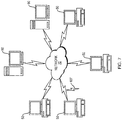
- Fig. 7 illustrates a computer network or similar digital processing environment in which embodiments of the present invention may be implemented.
- Client computer(s)/devices 50 and server computer(s) 60 provide processing, storage, and input/output devices executing application programs and the like.
- the client computer(s)/devices 50 can also be linked through communications network 70 to other computing devices, including other client devices/processes 50 and server computer(s) 60.
- the communications network 70 can be part of a remote access network, a global network (e.g., the Internet), a worldwide collection of computers, local area or wide area networks, and gateways that currently use respective protocols (TCP/IP, Bluetooth®, etc.) to communicate with one another.
- Other electronic device/computer network architectures are suitable.
- Fig. 8 is a diagram of an example internal structure of a computer (e.g., client processor/device 50 or server computers 60) in the computer system of Fig. 7 .
- Each computer 50, 60 contains a system bus 79, where a bus is a set of hardware lines used for data transfer among the components of a computer or processing system.
- the system bus 79 is essentially a shared conduit that connects different elements of a computer system (e.g., processor, disk storage, memory, input/output ports, network ports, etc.) that enables the transfer of information between the elements.
- Attached to the system bus 79 is an I/O device interface 82 for connecting various input and output devices (e.g., keyboard, mouse, displays, printers, speakers, etc.) to the computer 50, 60.
- a network interface 86 allows the computer to connect to various other devices attached to a network (e.g., network 70 of Fig. 7 ).
- Memory 90 provides volatile storage for computer software instructions 92 and data 94 used to implement an embodiment of the present invention (e.g., structure generation module, computation module, and speaker segmentation code detailed above).
- Disk storage 95 provides non-volatile storage for computer software instructions 92 and data 94 used to implement an embodiment of the present invention.
- a central processor unit 84 is also attached to the system bus 79 and provides for the execution of computer instructions.
- the processor routines 92 and data 94 are a computer program product (generally referenced 92), including a non-transitory computer-readable medium (e.g., a removable storage medium such as one or more DVD-ROM's, CD-ROM's, diskettes, tapes, etc.) that provides at least a portion of the software instructions for the invention system.
- the computer program product 92 can be installed by any suitable software installation procedure, as is well known in the art.
- at least a portion of the software instructions may also be downloaded over a cable communication and/or wireless connection.
- the invention programs are a computer program propagated signal product embodied on a propagated signal on a propagation medium (e.g., a radio wave, infrared wave, laser wave, sound wave, or electrical wave propagated over a global network such as the Internet or other network(s)).
- a propagation medium e.g., a radio wave, infrared wave, laser wave, sound wave, or electrical wave propagated over a global network such as the Internet or other network(s)
- Such carrier medium or signals may be employed to provide at least a portion of the software instructions for the present invention routines/program 92.
- the propagated signal is an analog carrier wave or digital signal carried on the propagated medium.
- the propagated signal may be a digitized signal propagated over a global network (e.g., the Internet), a telecommunications network, or other network.
- the propagated signal is a signal that is transmitted over the propagation medium over a period of time, such as the instructions for a software application sent in packets over a network over a period of milliseconds, seconds, minutes, or longer.
Landscapes
- Engineering & Computer Science (AREA)
- Physics & Mathematics (AREA)
- Signal Processing (AREA)
- Health & Medical Sciences (AREA)
- Audiology, Speech & Language Pathology (AREA)
- Human Computer Interaction (AREA)
- Acoustics & Sound (AREA)
- Multimedia (AREA)
- Business, Economics & Management (AREA)
- Marketing (AREA)
- Computational Linguistics (AREA)
- Computer Vision & Pattern Recognition (AREA)
- Telephonic Communication Services (AREA)
- Circuit For Audible Band Transducer (AREA)
Claims (11)
- Procédé de vérification de haut-parleur, le procédé comprenant :la création d'une bibliothèque de haut-parleurs commune comprenant de multiples enregistrements de conversations (108) entre un haut-parleur connu (106) et un autre haut-parleur, le haut-parleur connu (106) parlant dans chaque enregistrement des multiples enregistrements ;l'utilisation de la bibliothèque de haut-parleurs commune pour localiser la parole du haut-parleur connu (106) par la segmentation de chaque enregistrement des multiples enregistrements en fichiers audio segmentés sur la base des différences acoustiques ;l'accumulation de la parole du haut-parleur connu (106) localisée à partir des multiples enregistrements afin de créer une empreinte vocale de haut-parleur connu (124 ; 464 ; 604) pour le haut-parleur connu (106) ;l'identification de la parole d'un haut-parleur cible, au moyen de l'empreinte vocale de haut-parleur connu (124 ; 464 ; 604) pour exclure des segments de parole de la parole du haut-parleur connu d'un enregistrement audio à canal unique (108 ; 202 ; 302 ; 456 ; 602) d'une conversation entre le haut-parleur connu (106) et le haut-parleur cible (104), l'enregistrement audio à canal unique (108 ; 202 ; 302 ; 456 ; 602) comprenant la parole du haut-parleur cible et la parole du haut-parleur connu, l'empreinte vocale de haut-parleur connu (124 ; 464 ; 604) correspondant au haut-parleur connu (106), le haut-parleur cible (104) et le haut-parleur connu (106) étant des haut-parleurs différents ; etla vérification du haut-parleur cible (104) sur la base d'une empreinte vocale de haut-parleur cible (120), la vérification comprenant la segmentation de l'enregistrement audio à canal unique (108 ; 202 ; 302 ; 456 ; 602) en au moins deux segments audio (458), la vérification chaque segment audio des au moins deux segments audio (458) par rapport à la fois à l'empreinte vocale de haut-parleur connue (124 ; 464 ; 604) et à l'empreinte vocale de haut-parleur cible (120), et le rejet de chaque segment audio des au moins deux segments audio (458) qui comprend une parole correspondant à l'empreinte vocale de haut-parleur connu (124 ; 464 ; 604) au-dessus d'un seuil, dans lequel le haut-parleur cible est vérifié sur la base d'un segment audio, parmi les segments audio restants, ce qui donne un score le plus élevé pour l'empreinte vocale de haut-parleur cible.
- Procédé selon la revendication 1, dans lequel le haut-parleur connu (106) est un agent d'un centre d'appel (102) et le haut-parleur cible (104) est un appelant du centre d'appel (102) qui est en conversation avec l'agent.
- Procédé selon la revendication 1 ou la revendication 2, comprenant en outre :l'association d'un premier segment des au moins deux segments audio au haut-parleur connu (106) par la mise en correspondance de l'empreinte vocale de haut-parleur connu (124 ; 464 ; 604) avec le premier segment ;le rejet du premier segment ; etl'association d'un second segment des au moins deux segments audio au haut-parleur cible.
- Procédé selon la revendication 3, comprenant en outre le renvoi du second segment.
- Procédé selon l'une quelconque des revendications précédentes, et :a) comprenant en outre l'enregistrement de l'enregistrement audio à canal unique (108 ; 202 ; 302 ; 456 ; 602) ; oub) comprenant en outre le signalement d'une représentation de la parole de haut-parleur cible (116 ; 608 ; 612) identifié ; ouc) comprenant en outre l'extraction de la parole de haut-parleur cible (116) au moyen de l'empreinte vocale de haut-parleur cible (120) et de l'empreinte vocale de haut-parleur connu (124 ; 464 ; 604).
- Système de vérification de haut-parleur, le système comprenant :une bibliothèque de haut-parleurs commune comprenant de multiples enregistrements de conversations (108) entre un haut-parleur connu (106) et un autre haut-parleur, le haut-parleur connu (106) parlant dans chaque enregistrement des multiples enregistrements ;un module d'accumulation configuré pour utiliser la bibliothèque de haut-parleurs commune pour localiser la parole de haut-parleur connu (106) par la segmentation de chaque enregistrement des multiples enregistrements en fichiers audio segmentés sur la base des différences acoustiques et pour accumuler la parole du haut-parleur connu (106) localisée à partir des multiples enregistrements afin de créer une empreinte vocale de haut-parleur connu (124 ; 464 ; 604) pour le haut-parleur connu (106) ;un module d'extraction (452 ; 606) configuré pour identifier la parole d'un haut-parleur cible, au moyen de l'empreinte vocale de haut-parleur connu (124 ; 464 ; 604) pour exclure des segments de parole de la parole du haut-parleur connu d'un enregistrement audio à canal unique (108 ; 202 ; 302 ; 456 ; 602) d'une conversation (108) entre le haut-parleur connu (106) et le haut-parleur cible (104), l'enregistrement audio à canal unique (108 ; 202 ; 302 ; 456 ; 602) comprenant la parole du haut-parleur cible et la parole du haut-parleur connu, l'empreinte vocale de haut-parleur connu (124 ; 464 ; 604) correspondant au haut-parleur connu (106), le haut-parleur cible (104) et le haut-parleur connu (106) étant des haut-parleurs différents ;un module de rapport (610) configuré pour signaler une représentation de la parole de haut-parleur cible (116 ; 608 ; 612) identifiée ; etun module de vérification (460) configuré pour vérifier le haut-parleur cible (104) sur la base d'une empreinte vocale de haut-parleur cible (120), dans lequel le module d'extraction est en outre configuré pour segmenter l'enregistrement audio à canal unique (108 ; 202 ; 302 ; 456 ; 602) en au moins deux segments audio (458) et rejeter chaque segment audio des au moins deux segments audio (458) qui comprend une parole correspondant à l'empreinte vocale de haut-parleur connu (124 ; 464 ; 604) au-dessus d'un seuil, et dans lequel le module de vérification est en outre configuré pour vérifier chaque segment audio des au moins deux segments audio (458) par rapport à la fois à l'empreinte vocale de haut-parleur connue (124 ; 464 ; 604) et à l'empreinte vocale de haut-parleur cible (120), dans lequel le haut-parleur cible est vérifié sur la base d'un segment audio, parmi les segments audio restants, ce qui donne un score plus élevé pour l'empreinte vocale de haut-parleur cible.
- Système selon la revendication 6, dans lequel le haut-parleur connu (106) est un agent d'un centre d'appel (102) et le haut-parleur cible (104) est un appelant du centre d'appel (102) qui est en conversation avec l'agent.
- Système selon la revendication 6 ou la revendication 7, dans lequel le module d'extraction (452 ; 606) est en outre configuré pour associer un premier enregistrement des au moins deux segments audio (458) au haut-parleur connu (106) par la mise en correspondance du haut-parleur connu empreinte vocale (124 ; 464 ; 604) avec le premier segment, pour rejeter le premier segment, et pour associer un second enregistrement des au moins deux segments audio (458) au haut-parleur cible (104).
- Système selon la revendication 8, comprenant en outre un module de retour configuré pour renvoyer le second segment.
- Système selon l'une quelconque des revendications 6 à 9, et :a) comprenant en outre un module d'enregistrement (454) configuré pour enregistrer l'enregistrement audio à canal unique (108 ; 202 ; 302 ; 456 ; 602) ; oub) dans lequel le module de signalisation (610) est configuré pour signaler la représentation de la parole de haut-parleur cible (116 ; 608 ; 612) identifiée par la signalisation de la parole extraite de la parole de haut-parleur cible identifiée et/ou un score et/ou un pointeur et/ou des données codées et/ou un signal ; ouc) dans lequel le module d'extraction (452 ; 606) est en outre configuré pour extraire la parole de haut-parleur cible au moyen de l'empreinte vocale de haut-parleur cible (120) et de l'empreinte vocale de haut-parleur connu (124 ; 464 ; 604).
- Support non transitoire lisible par ordinateur configuré pour stocker des instructions pour la vérification de haut-parleur, les instructions, lorsqu'elles sont chargées et exécutées par un processeur, amenant le processeur à :créer une bibliothèque de haut-parleurs commune comprenant de multiples enregistrements de conversations (108) entre un haut-parleur connu (106) et un autre haut-parleur, le haut-parleur connu (106) parlant dans chaque enregistrement des multiples enregistrements ;utiliser la bibliothèque de haut-parleurs commune pour localiser la parole du haut-parleur connu (106) par la segmentation de chaque enregistrement des multiples enregistrements sur la base des différences acoustiques ;accumuler la parole du haut-parleur connu (106) localisée à partir des multiples enregistrements afin de créer une empreinte vocale de haut-parleur connu (124 ; 464 ; 602) pour le haut-parleur connu (106) ;identifier la parole d'un haut-parleur cible, au moyen de l'empreinte vocale de haut-parleur connu (124 ; 464 ; 602) pour exclure des segments de parole de la parole du haut-parleur connu d'un enregistrement audio à canal unique (108 ; 202 ; 302 ; 456 ; 602) d'une conversation (108) entre le haut-parleur connu (106) et le haut-parleur cible (104), l'enregistrement audio à canal unique (108 ; 202 ; 302 ; 456 ; 602) comprenant la parole du haut-parleur cible et la parole du haut-parleur connu, l'empreinte vocale de haut-parleur connu (124 ; 464 ; 604) correspondant au haut-parleur connu (106), le haut-parleur cible (104) et le haut-parleur connu (106) étant des haut-parleurs différents ; et àvérifier le haut-parleur cible (104) sur la base d'une empreinte vocale de haut-parleur cible (120), dans lequel, pour vérifier le haut-parleur cible (104), les instructions amènent en outre le processeur à segmenter l'enregistrement audio à canal unique (108 ; 202 ; 302 ; 456 ; 602) en au moins deux segments audio (458), vérifier chaque segment audio des au moins deux segments audio (458) par rapport à la fois à l'empreinte vocale de haut-parleur connue (124 ; 464 ; 604) et à l'empreinte vocale de haut-parleur cible (120), et à rejeter chaque segment audio des au moins deux segments audio (458) qui comprend une parole correspondant à l'empreinte vocale de haut-parleur connu (124 ; 464 ; 604) au-dessus d'un seuil, dans lequel le haut-parleur cible est vérifié sur la base d'un segment audio, parmi les segments audio restants, ce qui donne un score le plus élevé pour l'empreinte vocale de haut-parleur cible.
Applications Claiming Priority (1)
| Application Number | Priority Date | Filing Date | Title |
|---|---|---|---|
| US13/900,163 US9258425B2 (en) | 2013-05-22 | 2013-05-22 | Method and system for speaker verification |
Publications (3)
| Publication Number | Publication Date |
|---|---|
| EP2806425A2 EP2806425A2 (fr) | 2014-11-26 |
| EP2806425A3 EP2806425A3 (fr) | 2014-12-24 |
| EP2806425B1 true EP2806425B1 (fr) | 2020-07-08 |
Family
ID=50736001
Family Applications (1)
| Application Number | Title | Priority Date | Filing Date |
|---|---|---|---|
| EP14169542.9A Active EP2806425B1 (fr) | 2013-05-22 | 2014-05-22 | Système et procédé de vérification de haut-parleur |
Country Status (2)
| Country | Link |
|---|---|
| US (1) | US9258425B2 (fr) |
| EP (1) | EP2806425B1 (fr) |
Families Citing this family (29)
| Publication number | Priority date | Publication date | Assignee | Title |
|---|---|---|---|---|
| CN102760434A (zh) * | 2012-07-09 | 2012-10-31 | 华为终端有限公司 | 一种声纹特征模型更新方法及终端 |
| US9406298B2 (en) | 2013-02-07 | 2016-08-02 | Nuance Communications, Inc. | Method and apparatus for efficient i-vector extraction |
| US9865266B2 (en) | 2013-02-25 | 2018-01-09 | Nuance Communications, Inc. | Method and apparatus for automated speaker parameters adaptation in a deployed speaker verification system |
| US9258425B2 (en) | 2013-05-22 | 2016-02-09 | Nuance Communications, Inc. | Method and system for speaker verification |
| US9721571B2 (en) * | 2015-06-14 | 2017-08-01 | Nice Ltd. | System and method for voice print generation |
| US9728191B2 (en) * | 2015-08-27 | 2017-08-08 | Nuance Communications, Inc. | Speaker verification methods and apparatus |
| US9928840B2 (en) | 2015-10-16 | 2018-03-27 | Google Llc | Hotword recognition |
| CN107016999B (zh) | 2015-10-16 | 2022-06-14 | 谷歌有限责任公司 | 热词识别 |
| US9747926B2 (en) * | 2015-10-16 | 2017-08-29 | Google Inc. | Hotword recognition |
| US9697836B1 (en) | 2015-12-30 | 2017-07-04 | Nice Ltd. | Authentication of users of self service channels |
| US10592649B2 (en) | 2017-08-09 | 2020-03-17 | Nice Ltd. | Authentication via a dynamic passphrase |
| CN107682786A (zh) * | 2017-10-31 | 2018-02-09 | 广东小天才科技有限公司 | 一种麦克风设备抗干扰方法及麦克风设备 |
| CN108257605B (zh) * | 2018-02-01 | 2021-05-04 | Oppo广东移动通信有限公司 | 多通道录音方法、装置及电子设备 |
| CN108492830B (zh) * | 2018-03-28 | 2020-08-14 | 深圳市声扬科技有限公司 | 声纹识别方法、装置、计算机设备和存储介质 |
| CN108766443A (zh) * | 2018-05-30 | 2018-11-06 | Oppo广东移动通信有限公司 | 匹配阈值的调整方法、装置、存储介质及电子设备 |
| CN109256136B (zh) * | 2018-08-31 | 2021-09-17 | 三星电子(中国)研发中心 | 一种语音识别方法和装置 |
| CN110164452B (zh) * | 2018-10-10 | 2023-03-10 | 腾讯科技(深圳)有限公司 | 一种声纹识别的方法、模型训练的方法以及服务器 |
| US10978095B2 (en) * | 2018-11-06 | 2021-04-13 | International Business Machines Corporation | Control of incoming calls |
| CN111199741A (zh) * | 2018-11-20 | 2020-05-26 | 阿里巴巴集团控股有限公司 | 声纹识别方法、声纹验证方法、装置、计算设备及介质 |
| US10885920B2 (en) * | 2018-12-31 | 2021-01-05 | Nice Ltd | Method and system for separating and authenticating speech of a speaker on an audio stream of speakers |
| US11076043B2 (en) * | 2019-10-04 | 2021-07-27 | Red Box Recorders Limited | Systems and methods of voiceprint generation and use in enforcing compliance policies |
| CN111785291B (zh) * | 2020-07-02 | 2024-07-02 | 北京捷通华声科技股份有限公司 | 语音分离方法和语音分离装置 |
| CN114005451A (zh) * | 2020-07-28 | 2022-02-01 | 阿里巴巴集团控股有限公司 | 发声对象确定方法、装置、计算设备和介质 |
| CN111916052B (zh) * | 2020-07-30 | 2021-04-27 | 北京声智科技有限公司 | 一种语音合成方法及装置 |
| US11522994B2 (en) * | 2020-11-23 | 2022-12-06 | Bank Of America Corporation | Voice analysis platform for voiceprint tracking and anomaly detection |
| CN113366567B (zh) * | 2021-05-08 | 2024-06-04 | 腾讯音乐娱乐科技(深圳)有限公司 | 一种声纹识别方法、歌手认证方法、电子设备及存储介质 |
| CN113707183B (zh) * | 2021-09-02 | 2024-04-19 | 北京奇艺世纪科技有限公司 | 一种视频中的音频处理方法及装置 |
| CN116312598A (zh) * | 2023-03-21 | 2023-06-23 | 广东工业大学 | 一种基于时域的第三者插话语音过滤方法 |
| CN119323954A (zh) * | 2024-09-24 | 2025-01-17 | 江苏慧言智语安全科技有限公司 | 一种基于深度学习的对话音频声纹自动采集方法 |
Citations (3)
| Publication number | Priority date | Publication date | Assignee | Title |
|---|---|---|---|---|
| US7769588B2 (en) * | 2002-07-25 | 2010-08-03 | Sony Deutschland Gmbh | Spoken man-machine interface with speaker identification |
| US20110282661A1 (en) * | 2010-05-11 | 2011-11-17 | Nice Systems Ltd. | Method for speaker source classification |
| CN102760434A (zh) * | 2012-07-09 | 2012-10-31 | 华为终端有限公司 | 一种声纹特征模型更新方法及终端 |
Family Cites Families (16)
| Publication number | Priority date | Publication date | Assignee | Title |
|---|---|---|---|---|
| US5864810A (en) | 1995-01-20 | 1999-01-26 | Sri International | Method and apparatus for speech recognition adapted to an individual speaker |
| US6141644A (en) | 1998-09-04 | 2000-10-31 | Matsushita Electric Industrial Co., Ltd. | Speaker verification and speaker identification based on eigenvoices |
| US9088645B2 (en) * | 2001-12-12 | 2015-07-21 | International Business Machines Corporation | Intermediary device initiated caller identification |
| US7299177B2 (en) * | 2003-05-30 | 2007-11-20 | American Express Travel Related Services Company, Inc. | Speaker recognition in a multi-speaker environment and comparison of several voice prints to many |
| US9113001B2 (en) * | 2005-04-21 | 2015-08-18 | Verint Americas Inc. | Systems, methods, and media for disambiguating call data to determine fraud |
| US7386105B2 (en) | 2005-05-27 | 2008-06-10 | Nice Systems Ltd | Method and apparatus for fraud detection |
| US7937269B2 (en) | 2005-08-22 | 2011-05-03 | International Business Machines Corporation | Systems and methods for providing real-time classification of continuous data streams |
| WO2007131530A1 (fr) | 2006-05-16 | 2007-11-22 | Loquendo S.P.A. | Compensation de la variabilité intersession pour extraction automatique d'informations à partir de la voix |
| US9247056B2 (en) * | 2007-02-28 | 2016-01-26 | International Business Machines Corporation | Identifying contact center agents based upon biometric characteristics of an agent's speech |
| US9431006B2 (en) | 2009-07-02 | 2016-08-30 | Apple Inc. | Methods and apparatuses for automatic speech recognition |
| US8554562B2 (en) | 2009-11-15 | 2013-10-08 | Nuance Communications, Inc. | Method and system for speaker diarization |
| US9042867B2 (en) | 2012-02-24 | 2015-05-26 | Agnitio S.L. | System and method for speaker recognition on mobile devices |
| US9406298B2 (en) | 2013-02-07 | 2016-08-02 | Nuance Communications, Inc. | Method and apparatus for efficient i-vector extraction |
| US20140222423A1 (en) | 2013-02-07 | 2014-08-07 | Nuance Communications, Inc. | Method and Apparatus for Efficient I-Vector Extraction |
| US9865266B2 (en) | 2013-02-25 | 2018-01-09 | Nuance Communications, Inc. | Method and apparatus for automated speaker parameters adaptation in a deployed speaker verification system |
| US9258425B2 (en) | 2013-05-22 | 2016-02-09 | Nuance Communications, Inc. | Method and system for speaker verification |
-
2013
- 2013-05-22 US US13/900,163 patent/US9258425B2/en active Active
-
2014
- 2014-05-22 EP EP14169542.9A patent/EP2806425B1/fr active Active
Patent Citations (4)
| Publication number | Priority date | Publication date | Assignee | Title |
|---|---|---|---|---|
| US7769588B2 (en) * | 2002-07-25 | 2010-08-03 | Sony Deutschland Gmbh | Spoken man-machine interface with speaker identification |
| US20110282661A1 (en) * | 2010-05-11 | 2011-11-17 | Nice Systems Ltd. | Method for speaker source classification |
| CN102760434A (zh) * | 2012-07-09 | 2012-10-31 | 华为终端有限公司 | 一种声纹特征模型更新方法及终端 |
| EP2821992A1 (fr) * | 2012-07-09 | 2015-01-07 | Huawei Device Co., Ltd. | Procédé de mise à jour de modèle de caractéristiques d'empreinte vocale et terminal |
Non-Patent Citations (1)
| Title |
|---|
| D A REYNOLDS ET AL: "The MIT Lincoln Laboratory RT-04F Diarization Systems: Applications to Broadcast Audio and Telephone Conversations", NIST RICH TRANSCRIPTION WORKSHOP NOVEMBER, 1 November 2004 (2004-11-01), XP055475959, Retrieved from the Internet <URL:https://www.ll.mit.edu/mission/cybersec/publications/publication-files/full_papers/0501_torres.pdf> [retrieved on 20180516] * |
Also Published As
| Publication number | Publication date |
|---|---|
| US20140348308A1 (en) | 2014-11-27 |
| EP2806425A3 (fr) | 2014-12-24 |
| EP2806425A2 (fr) | 2014-11-26 |
| US9258425B2 (en) | 2016-02-09 |
Similar Documents
| Publication | Publication Date | Title |
|---|---|---|
| EP2806425B1 (fr) | Système et procédé de vérification de haut-parleur | |
| US12205588B2 (en) | Detecting and suppressing voice queries | |
| US9571652B1 (en) | Enhanced diarization systems, media and methods of use | |
| US10657463B2 (en) | Bot-based data collection for detecting phone solicitations | |
| US10249304B2 (en) | Method and system for using conversational biometrics and speaker identification/verification to filter voice streams | |
| EP4042415B1 (fr) | Vecteurs z : plongement de locuteurs à partir de signaux audio bruts à l'aide de sincnet, d'une architecture cnn étendu et de techniques d'augmentation dans le réseau | |
| US9113001B2 (en) | Systems, methods, and media for disambiguating call data to determine fraud | |
| US9203962B2 (en) | Systems, methods, and media for determining fraud patterns and creating fraud behavioral models | |
| US8306814B2 (en) | Method for speaker source classification | |
| US8141152B1 (en) | Method to detect spam over internet telephony (SPIT) | |
| US20150381801A1 (en) | Systems, methods, and media for disambiguating call data to determine fraud | |
| WO2017076314A1 (fr) | Procédé de traitement et système pour l'identification adaptative d'appels indésirables | |
| CN113780407B (zh) | 一种数据检测方法、装置、电子设备及存储介质 | |
| Prasad et al. | Characterizing robocalls with multiple vantage points | |
| KR102878037B1 (ko) | 지능형 에이전트 기반의 보이스피싱 자동 대처 방법 및 시스템 | |
| Ramasubramanian | Speaker spotting: Automatic telephony surveillance for homeland security | |
| CN120954416A (zh) | 一种基于声纹识别的跨号码用户画像关联及智能对话优化方法 |
Legal Events
| Date | Code | Title | Description |
|---|---|---|---|
| PUAL | Search report despatched |
Free format text: ORIGINAL CODE: 0009013 |
|
| PUAI | Public reference made under article 153(3) epc to a published international application that has entered the european phase |
Free format text: ORIGINAL CODE: 0009012 |
|
| 17P | Request for examination filed |
Effective date: 20140522 |
|
| AK | Designated contracting states |
Kind code of ref document: A2 Designated state(s): AL AT BE BG CH CY CZ DE DK EE ES FI FR GB GR HR HU IE IS IT LI LT LU LV MC MK MT NL NO PL PT RO RS SE SI SK SM TR |
|
| AX | Request for extension of the european patent |
Extension state: BA ME |
|
| AK | Designated contracting states |
Kind code of ref document: A3 Designated state(s): AL AT BE BG CH CY CZ DE DK EE ES FI FR GB GR HR HU IE IS IT LI LT LU LV MC MK MT NL NO PL PT RO RS SE SI SK SM TR |
|
| AX | Request for extension of the european patent |
Extension state: BA ME |
|
| RIC1 | Information provided on ipc code assigned before grant |
Ipc: H04M 3/51 20060101ALI20141120BHEP Ipc: G10L 17/02 20130101ALI20141120BHEP Ipc: G10L 25/51 20130101AFI20141120BHEP |
|
| R17P | Request for examination filed (corrected) |
Effective date: 20150624 |
|
| RBV | Designated contracting states (corrected) |
Designated state(s): AL AT BE BG CH CY CZ DE DK EE ES FI FR GB GR HR HU IE IS IT LI LT LU LV MC MK MT NL NO PL PT RO RS SE SI SK SM TR |
|
| 17Q | First examination report despatched |
Effective date: 20160720 |
|
| STAA | Information on the status of an ep patent application or granted ep patent |
Free format text: STATUS: EXAMINATION IS IN PROGRESS |
|
| GRAP | Despatch of communication of intention to grant a patent |
Free format text: ORIGINAL CODE: EPIDOSNIGR1 |
|
| STAA | Information on the status of an ep patent application or granted ep patent |
Free format text: STATUS: GRANT OF PATENT IS INTENDED |
|
| INTG | Intention to grant announced |
Effective date: 20200109 |
|
| GRAS | Grant fee paid |
Free format text: ORIGINAL CODE: EPIDOSNIGR3 |
|
| GRAA | (expected) grant |
Free format text: ORIGINAL CODE: 0009210 |
|
| STAA | Information on the status of an ep patent application or granted ep patent |
Free format text: STATUS: THE PATENT HAS BEEN GRANTED |
|
| AK | Designated contracting states |
Kind code of ref document: B1 Designated state(s): AL AT BE BG CH CY CZ DE DK EE ES FI FR GB GR HR HU IE IS IT LI LT LU LV MC MK MT NL NO PL PT RO RS SE SI SK SM TR |
|
| REG | Reference to a national code |
Ref country code: AT Ref legal event code: REF Ref document number: 1289328 Country of ref document: AT Kind code of ref document: T Effective date: 20200715 Ref country code: CH Ref legal event code: EP |
|
| REG | Reference to a national code |
Ref country code: DE Ref legal event code: R096 Ref document number: 602014067422 Country of ref document: DE |
|
| REG | Reference to a national code |
Ref country code: IE Ref legal event code: FG4D |
|
| REG | Reference to a national code |
Ref country code: LT Ref legal event code: MG4D |
|
| REG | Reference to a national code |
Ref country code: AT Ref legal event code: MK05 Ref document number: 1289328 Country of ref document: AT Kind code of ref document: T Effective date: 20200708 |
|
| REG | Reference to a national code |
Ref country code: NL Ref legal event code: MP Effective date: 20200708 |
|
| PG25 | Lapsed in a contracting state [announced via postgrant information from national office to epo] |
Ref country code: HR Free format text: LAPSE BECAUSE OF FAILURE TO SUBMIT A TRANSLATION OF THE DESCRIPTION OR TO PAY THE FEE WITHIN THE PRESCRIBED TIME-LIMIT Effective date: 20200708 Ref country code: SE Free format text: LAPSE BECAUSE OF FAILURE TO SUBMIT A TRANSLATION OF THE DESCRIPTION OR TO PAY THE FEE WITHIN THE PRESCRIBED TIME-LIMIT Effective date: 20200708 Ref country code: BG Free format text: LAPSE BECAUSE OF FAILURE TO SUBMIT A TRANSLATION OF THE DESCRIPTION OR TO PAY THE FEE WITHIN THE PRESCRIBED TIME-LIMIT Effective date: 20201008 Ref country code: ES Free format text: LAPSE BECAUSE OF FAILURE TO SUBMIT A TRANSLATION OF THE DESCRIPTION OR TO PAY THE FEE WITHIN THE PRESCRIBED TIME-LIMIT Effective date: 20200708 Ref country code: NO Free format text: LAPSE BECAUSE OF FAILURE TO SUBMIT A TRANSLATION OF THE DESCRIPTION OR TO PAY THE FEE WITHIN THE PRESCRIBED TIME-LIMIT Effective date: 20201008 Ref country code: GR Free format text: LAPSE BECAUSE OF FAILURE TO SUBMIT A TRANSLATION OF THE DESCRIPTION OR TO PAY THE FEE WITHIN THE PRESCRIBED TIME-LIMIT Effective date: 20201009 Ref country code: AT Free format text: LAPSE BECAUSE OF FAILURE TO SUBMIT A TRANSLATION OF THE DESCRIPTION OR TO PAY THE FEE WITHIN THE PRESCRIBED TIME-LIMIT Effective date: 20200708 Ref country code: PT Free format text: LAPSE BECAUSE OF FAILURE TO SUBMIT A TRANSLATION OF THE DESCRIPTION OR TO PAY THE FEE WITHIN THE PRESCRIBED TIME-LIMIT Effective date: 20201109 Ref country code: LT Free format text: LAPSE BECAUSE OF FAILURE TO SUBMIT A TRANSLATION OF THE DESCRIPTION OR TO PAY THE FEE WITHIN THE PRESCRIBED TIME-LIMIT Effective date: 20200708 Ref country code: FI Free format text: LAPSE BECAUSE OF FAILURE TO SUBMIT A TRANSLATION OF THE DESCRIPTION OR TO PAY THE FEE WITHIN THE PRESCRIBED TIME-LIMIT Effective date: 20200708 |
|
| PG25 | Lapsed in a contracting state [announced via postgrant information from national office to epo] |
Ref country code: IS Free format text: LAPSE BECAUSE OF FAILURE TO SUBMIT A TRANSLATION OF THE DESCRIPTION OR TO PAY THE FEE WITHIN THE PRESCRIBED TIME-LIMIT Effective date: 20201108 Ref country code: LV Free format text: LAPSE BECAUSE OF FAILURE TO SUBMIT A TRANSLATION OF THE DESCRIPTION OR TO PAY THE FEE WITHIN THE PRESCRIBED TIME-LIMIT Effective date: 20200708 Ref country code: RS Free format text: LAPSE BECAUSE OF FAILURE TO SUBMIT A TRANSLATION OF THE DESCRIPTION OR TO PAY THE FEE WITHIN THE PRESCRIBED TIME-LIMIT Effective date: 20200708 Ref country code: PL Free format text: LAPSE BECAUSE OF FAILURE TO SUBMIT A TRANSLATION OF THE DESCRIPTION OR TO PAY THE FEE WITHIN THE PRESCRIBED TIME-LIMIT Effective date: 20200708 |
|
| PG25 | Lapsed in a contracting state [announced via postgrant information from national office to epo] |
Ref country code: NL Free format text: LAPSE BECAUSE OF FAILURE TO SUBMIT A TRANSLATION OF THE DESCRIPTION OR TO PAY THE FEE WITHIN THE PRESCRIBED TIME-LIMIT Effective date: 20200708 |
|
| REG | Reference to a national code |
Ref country code: DE Ref legal event code: R097 Ref document number: 602014067422 Country of ref document: DE |
|
| PG25 | Lapsed in a contracting state [announced via postgrant information from national office to epo] |
Ref country code: EE Free format text: LAPSE BECAUSE OF FAILURE TO SUBMIT A TRANSLATION OF THE DESCRIPTION OR TO PAY THE FEE WITHIN THE PRESCRIBED TIME-LIMIT Effective date: 20200708 Ref country code: CZ Free format text: LAPSE BECAUSE OF FAILURE TO SUBMIT A TRANSLATION OF THE DESCRIPTION OR TO PAY THE FEE WITHIN THE PRESCRIBED TIME-LIMIT Effective date: 20200708 Ref country code: DK Free format text: LAPSE BECAUSE OF FAILURE TO SUBMIT A TRANSLATION OF THE DESCRIPTION OR TO PAY THE FEE WITHIN THE PRESCRIBED TIME-LIMIT Effective date: 20200708 Ref country code: IT Free format text: LAPSE BECAUSE OF FAILURE TO SUBMIT A TRANSLATION OF THE DESCRIPTION OR TO PAY THE FEE WITHIN THE PRESCRIBED TIME-LIMIT Effective date: 20200708 Ref country code: SM Free format text: LAPSE BECAUSE OF FAILURE TO SUBMIT A TRANSLATION OF THE DESCRIPTION OR TO PAY THE FEE WITHIN THE PRESCRIBED TIME-LIMIT Effective date: 20200708 Ref country code: RO Free format text: LAPSE BECAUSE OF FAILURE TO SUBMIT A TRANSLATION OF THE DESCRIPTION OR TO PAY THE FEE WITHIN THE PRESCRIBED TIME-LIMIT Effective date: 20200708 |
|
| PLBE | No opposition filed within time limit |
Free format text: ORIGINAL CODE: 0009261 |
|
| STAA | Information on the status of an ep patent application or granted ep patent |
Free format text: STATUS: NO OPPOSITION FILED WITHIN TIME LIMIT |
|
| PG25 | Lapsed in a contracting state [announced via postgrant information from national office to epo] |
Ref country code: AL Free format text: LAPSE BECAUSE OF FAILURE TO SUBMIT A TRANSLATION OF THE DESCRIPTION OR TO PAY THE FEE WITHIN THE PRESCRIBED TIME-LIMIT Effective date: 20200708 |
|
| 26N | No opposition filed |
Effective date: 20210409 |
|
| PG25 | Lapsed in a contracting state [announced via postgrant information from national office to epo] |
Ref country code: SK Free format text: LAPSE BECAUSE OF FAILURE TO SUBMIT A TRANSLATION OF THE DESCRIPTION OR TO PAY THE FEE WITHIN THE PRESCRIBED TIME-LIMIT Effective date: 20200708 |
|
| PG25 | Lapsed in a contracting state [announced via postgrant information from national office to epo] |
Ref country code: SI Free format text: LAPSE BECAUSE OF FAILURE TO SUBMIT A TRANSLATION OF THE DESCRIPTION OR TO PAY THE FEE WITHIN THE PRESCRIBED TIME-LIMIT Effective date: 20200708 |
|
| REG | Reference to a national code |
Ref country code: CH Ref legal event code: PL |
|
| PG25 | Lapsed in a contracting state [announced via postgrant information from national office to epo] |
Ref country code: MC Free format text: LAPSE BECAUSE OF FAILURE TO SUBMIT A TRANSLATION OF THE DESCRIPTION OR TO PAY THE FEE WITHIN THE PRESCRIBED TIME-LIMIT Effective date: 20200708 Ref country code: LI Free format text: LAPSE BECAUSE OF NON-PAYMENT OF DUE FEES Effective date: 20210531 Ref country code: LU Free format text: LAPSE BECAUSE OF NON-PAYMENT OF DUE FEES Effective date: 20210522 Ref country code: CH Free format text: LAPSE BECAUSE OF NON-PAYMENT OF DUE FEES Effective date: 20210531 |
|
| REG | Reference to a national code |
Ref country code: BE Ref legal event code: MM Effective date: 20210531 |
|
| PG25 | Lapsed in a contracting state [announced via postgrant information from national office to epo] |
Ref country code: IE Free format text: LAPSE BECAUSE OF NON-PAYMENT OF DUE FEES Effective date: 20210522 |
|
| PG25 | Lapsed in a contracting state [announced via postgrant information from national office to epo] |
Ref country code: FR Free format text: LAPSE BECAUSE OF NON-PAYMENT OF DUE FEES Effective date: 20210531 |
|
| PG25 | Lapsed in a contracting state [announced via postgrant information from national office to epo] |
Ref country code: BE Free format text: LAPSE BECAUSE OF NON-PAYMENT OF DUE FEES Effective date: 20210531 |
|
| PG25 | Lapsed in a contracting state [announced via postgrant information from national office to epo] |
Ref country code: HU Free format text: LAPSE BECAUSE OF FAILURE TO SUBMIT A TRANSLATION OF THE DESCRIPTION OR TO PAY THE FEE WITHIN THE PRESCRIBED TIME-LIMIT; INVALID AB INITIO Effective date: 20140522 |
|
| P01 | Opt-out of the competence of the unified patent court (upc) registered |
Effective date: 20230510 |
|
| PG25 | Lapsed in a contracting state [announced via postgrant information from national office to epo] |
Ref country code: CY Free format text: LAPSE BECAUSE OF FAILURE TO SUBMIT A TRANSLATION OF THE DESCRIPTION OR TO PAY THE FEE WITHIN THE PRESCRIBED TIME-LIMIT Effective date: 20200708 |
|
| REG | Reference to a national code |
Ref country code: GB Ref legal event code: 732E Free format text: REGISTERED BETWEEN 20240215 AND 20240221 |
|
| PG25 | Lapsed in a contracting state [announced via postgrant information from national office to epo] |
Ref country code: MK Free format text: LAPSE BECAUSE OF FAILURE TO SUBMIT A TRANSLATION OF THE DESCRIPTION OR TO PAY THE FEE WITHIN THE PRESCRIBED TIME-LIMIT Effective date: 20200708 |
|
| PG25 | Lapsed in a contracting state [announced via postgrant information from national office to epo] |
Ref country code: TR Free format text: LAPSE BECAUSE OF FAILURE TO SUBMIT A TRANSLATION OF THE DESCRIPTION OR TO PAY THE FEE WITHIN THE PRESCRIBED TIME-LIMIT Effective date: 20200708 |
|
| REG | Reference to a national code |
Ref country code: DE Ref legal event code: R082 Ref document number: 602014067422 Country of ref document: DE Representative=s name: GLOBAL IP EUROPE PATENTANWALTSKANZLEI, DE Ref country code: DE Ref legal event code: R081 Ref document number: 602014067422 Country of ref document: DE Owner name: MICROSOFT TECHNOLOGY LICENSING, LLC, REDMOND, US Free format text: FORMER OWNER: NUANCE COMMUNICATIONS, INC., BURLINGTON, MASS., US |
|
| PG25 | Lapsed in a contracting state [announced via postgrant information from national office to epo] |
Ref country code: MT Free format text: LAPSE BECAUSE OF FAILURE TO SUBMIT A TRANSLATION OF THE DESCRIPTION OR TO PAY THE FEE WITHIN THE PRESCRIBED TIME-LIMIT Effective date: 20200708 |
|
| PGFP | Annual fee paid to national office [announced via postgrant information from national office to epo] |
Ref country code: DE Payment date: 20250423 Year of fee payment: 12 |
|
| PGFP | Annual fee paid to national office [announced via postgrant information from national office to epo] |
Ref country code: GB Payment date: 20250423 Year of fee payment: 12 |