EP2806702B1 - Verfahren, basisstation und benutzergerät für direktzugriff - Google Patents
Verfahren, basisstation und benutzergerät für direktzugriff Download PDFInfo
- Publication number
- EP2806702B1 EP2806702B1 EP13749260.9A EP13749260A EP2806702B1 EP 2806702 B1 EP2806702 B1 EP 2806702B1 EP 13749260 A EP13749260 A EP 13749260A EP 2806702 B1 EP2806702 B1 EP 2806702B1
- Authority
- EP
- European Patent Office
- Prior art keywords
- information
- prach sequence
- random access
- base station
- prach
- Prior art date
- Legal status (The legal status is an assumption and is not a legal conclusion. Google has not performed a legal analysis and makes no representation as to the accuracy of the status listed.)
- Active
Links
Images






Classifications
-
- H—ELECTRICITY
- H04—ELECTRIC COMMUNICATION TECHNIQUE
- H04W—WIRELESS COMMUNICATION NETWORKS
- H04W74/00—Wireless channel access
- H04W74/08—Non-scheduled access, e.g. ALOHA
- H04W74/0833—Random access procedures, e.g. with 4-step access
-
- H—ELECTRICITY
- H04—ELECTRIC COMMUNICATION TECHNIQUE
- H04L—TRANSMISSION OF DIGITAL INFORMATION, e.g. TELEGRAPHIC COMMUNICATION
- H04L5/00—Arrangements affording multiple use of the transmission path
- H04L5/003—Arrangements for allocating sub-channels of the transmission path
- H04L5/0044—Allocation of payload; Allocation of data channels, e.g. PDSCH or PUSCH
-
- H—ELECTRICITY
- H04—ELECTRIC COMMUNICATION TECHNIQUE
- H04W—WIRELESS COMMUNICATION NETWORKS
- H04W40/00—Communication routing or communication path finding
-
- H—ELECTRICITY
- H04—ELECTRIC COMMUNICATION TECHNIQUE
- H04W—WIRELESS COMMUNICATION NETWORKS
- H04W72/00—Local resource management
-
- H—ELECTRICITY
- H04—ELECTRIC COMMUNICATION TECHNIQUE
- H04W—WIRELESS COMMUNICATION NETWORKS
- H04W72/00—Local resource management
- H04W72/50—Allocation or scheduling criteria for wireless resources
- H04W72/54—Allocation or scheduling criteria for wireless resources based on quality criteria
-
- H—ELECTRICITY
- H04—ELECTRIC COMMUNICATION TECHNIQUE
- H04W—WIRELESS COMMUNICATION NETWORKS
- H04W74/00—Wireless channel access
- H04W74/08—Non-scheduled access, e.g. ALOHA
- H04W74/0833—Random access procedures, e.g. with 4-step access
- H04W74/0838—Random access procedures, e.g. with 4-step access using contention-free random access [CFRA]
Definitions
- the present invention relates to a mobile communications technology, and in particular, to a random access method, a base station, and a user equipment.
- M2M machine-to-machine
- smartphone services of small packets often need to be transmitted.
- a daemon of a smartphone often initiates services of small packets whose data amount is generally less than 200 bytes.
- the services of small packets are characterized by small amounts of data and by being transmitted periodically or aperiodically.
- a user equipment Before initiating a service of small packets, a user equipment (UE) needs to perform random access as described for example in WO 2011/099151 A1 . Because the services of small packets have a very small amount of data but lead to very large signaling overhead and delay in the random access process, the transmission efficiency of services of small packets is very low.
- the present invention provides random access methods, a base station, and a user equipment according to the independent claims, which are used to improve transmission efficiency of services of small packets. Additional embodiments of the invention are described in the dependent claims.
- FIG. 1 is a flowchart of a random access method according to an embodiment of the present invention. As shown in FIG. 1 , the method in this embodiment includes:
- Step 101 A UE obtains a physical random access channel (PRACH) sequence (Preamble).
- PRACH physical random access channel
- the random access method in this embodiment is applicable to both the non-contention-based random access process and the contention-based random access process.
- the UE selects a PRACH sequence locally at random. If the random access process in this embodiment is a contention-based random access process, the UE may obtain a PRACH sequence from PRACH scheduling information that is sent by a base station by using a physical downlink control channel (PDCCH) command (order).
- PDCCH physical downlink control channel
- Step 102 The UE sends the obtained PRACH sequence to the base station to perform random access, and carries first information when sending the PRACH sequence so that the base station receives the first information in a random access process.
- the first information includes one or a combination of a radio resource control (RRC) request, a buffer status report (BSR), a shared channel, and control signaling.
- RRC radio resource control
- BSR buffer status report
- the UE after obtaining the PRACH sequence, the UE sends the obtained PRACH sequence to the base station to perform random access. If another service of the UE needs to be implemented, the UE carries the first information when sending the PRACH sequence corresponding to the another service, and sends the first information to the base station so that the base station receives the first information in the random access process, which improves transmission efficiency of the another service.
- the another service is a service of small packets, that is, a service whose data amount is relatively small.
- the another service may be: creating an RRC connection, reporting a BSR, transmitting a shared channel or transmitting control signaling, and the like.
- the first information may be an RRC request, a BSR, a shared channel, or control signaling.
- the another service may be a combination of various services mentioned above.
- the first information may be a combination of different types of information mentioned above.
- the another service includes creating an RRC connection and reporting a BSR, and therefore, the first information includes an RRC request and a BSR.
- the UE needs to perform uplink random access first. For example, if the UE needs to create an RRC connection, the UE needs to perform uplink random access first, and cannot create the RRC connection until the random access succeeds. For another example, if the UE needs to report a BSR, the UE needs to perform uplink random access before creating the RRC connection, and cannot report the BSR until the RRC connection is created successfully. That is, in the prior art, a service of small packets cannot be implemented until completion of random access. The access process leads to large signaling overhead and delay, and deteriorates transmission efficiency of the service of small packets.
- the PRACH sequence sent by the UE to the base station carries the first information corresponding to another service, so that the UE can receive the first information in the random access process, which improves transmission efficiency of the first information.
- the first information is signaling data such as an RRC request and control signaling
- the method provided in this embodiment can transmit multiple pieces of signaling in a single exchange process, which reduces signaling exchange, saves the signaling overhead and transmission delay, improves signaling data transmission efficiency, further reduces signaling exchange, and improves transmission efficiency of other signaling or service data.
- the method provided in this embodiment sends the service data to the base station in the random access process, which makes it unnecessary to transmit the service data after completion of the signaling exchange in the random access process, and improves service data transmission efficiency.
- the UE before obtaining the PRACH sequence, receives the PRACH configuration information that is sent by the base station and intended for use when the UE carries the first information when sending the PRACH sequence. Correspondingly, the UE obtains the PRACH sequence according to the received configuration information.
- a detailed process of the UE carries the first information when sending the PRACH sequence so that the base station receives the first information in the random access process is: The UE multiplexes the first information and the PRACH sequence, sends a multiplexing result to the base station so that the base station receives the first information in the random access process.
- the UE may perform at least one of cyclical redundancy check (CRC) check bit addition, channel coding, scrambling, and modulation for the first information.
- CRC cyclical redundancy check
- the UE may perform at least one of orthogonal code spreading, discrete Fourier transformation (DFT), resource mapping, inverse fast Fourier transformation (IFFT), and cyclic prefix (CP) addition for the multiplexing result of the first information and the PRACH sequence, and then send a result of the at least one operation for the multiplexing result to the base station so that the base station receives the first information in the random access process.
- DFT discrete Fourier transformation
- IFFT inverse fast Fourier transformation
- CP cyclic prefix
- the multiplexing, by the UE, the first information and the PRACH sequence includes: multiplying or convolving, by the UE, the first information and the PRACH sequence; or, performing, by the UE, resource configuration for the first information according to the PRACH configuration information.
- the UE may modulate the first information first to generate a modulated symbol, and then the UE multiplies or convolves the modulated symbol and the PRACH sequence together correspondingly to obtain a multiplexing result.
- the UE performs resource mapping for the multiplexing result, and then sends it to the base station so that the base station receives the first information in the random access process.
- the UE may perform channel coding for the first information.
- the UE modulates the channel-coded first information to generate the modulated symbol.
- the UE may add a CRC check bit to the first information.
- the UE performs channel coding for the first information with the added CRC check bit.
- the UE may scramble the channel-coded first information.
- the UE modulates the scrambled first information to generate the modulated symbol.
- the UE may perform IFFT transformation for the resource mapping result, and then add a cyclic prefix to the IFFT transformation result.
- the UE adds a cyclic prefix, which is different from those of other IFFT transformation results, before at least one IFFT transformation result.
- the UE may add a first cyclic prefix before a first IFFT transformation result, and add no cyclic prefix before other IFFT transformation results; or, the UE may add a first cyclic prefix before a first IFFT transformation result, and add a second cyclic prefix before other IFFT transformation results respectively, where the first cyclic prefix and the second cyclic prefix have different lengths.
- the UE may perform orthogonal code spreading for the modulated symbol.
- the UE may perform orthogonal code spreading for the obtained multiplexing result.
- the UE performs orthogonal code spreading for the IFFT transformation result after performing IFFT transformation for the resource mapping result.
- the UE may perform resource mapping for the multiplexing result in a frequency domain first and in a time domain later.
- the UE may map the multiplexing result onto discontinuous subcarriers.
- the UE may map the multiplexing result onto at least one discontinuous subcarrier in a frequency hopping manner.
- the UE may map the processing result onto one timeslot, one subframe, or multiple subframes, where the multiple subframes are multiple continuous subframes or multiple subframes that are at least one subframe apart.
- the multiplying, by the UE, the modulated symbol and the PRACH sequence together correspondingly includes: if the PRACH sequence in a specific resource includes multiple same PRACH sequences (that is, multiple same PRACH sequences are employed), multiplying, by the UE, each modulated symbol by one PRACH sequence in the multiple same PRACH sequences; or, if the PRACH sequence in a specific resource includes multiple different PRACH sequences (that is, multiple different PRACH sequences are employed), multiplying, by the UE, each modulated symbol by one PRACH sequence in the multiple different PRACH sequences; or, if the PRACH sequence in a specific resource includes multiple different PRACH sequences and at least one PRACH sequence is not multiplied by the modulated symbol, multiplying, by the UE, each modulated symbol by one PRACH sequence in the multiple different PRACH sequences, where the one PRACH sequence is one of other PRACH sequences than the PRACH sequences that are not multiplied by the modulated symbol, where the specific resource is a timeslot, a subframe,
- a first PRACH sequence and a last PRACH sequence in the multiple different PRACH sequences are not multiplied by the modulated symbol.
- the process of the UE carrying the first information when sending the PRACH sequence so that the base station receives the first information in the random access process includes: modulating, by the UE, the first information to generate a modulated symbol; performing, by the UE, resource mapping for the modulated symbol according to the PRACH configuration information; and, sending, by the UE, the PRACH sequence and the modulated symbol together to the base station so that the base station receives the first information in the random access process, where, the PRACH configuration includes the PRACH sequence and/or resource mapping information of the PRACH sequence.
- the performing, by the UE, resource mapping for the modulated symbol according to PRACH configuration information includes: determining, by the UE, a mapping start point of the modulated symbol in a time domain and/or a frequency domain according to the PRACH sequence and the resource mapping information of the PRACH sequence, and then performing resource mapping for the modulated symbol in the time domain and/or the frequency domain according to the determined mapping start point in the time domain and/or the frequency domain.
- the UE determines that an end time point of a subframe mapped from the PRACH sequence is a mapping start point of the modulated symbol in the time domain, and then maps the modulated symbol onto at least two subframes; or, the UE determines that a time point at a specified interval after a subframe mapped from the PRACH sequence is a mapping start point of the modulated symbol in the time domain, and then maps the modulated symbol onto at least one subframe; or, the UE determines that an end time point of a subframe mapped from the PRACH sequence is a mapping start point of the modulated symbol in the time domain, and then maps the modulated symbol and the PRACH sequence onto the same subframe.
- the process of the UE carrying the first information when sending the PRACH sequence so that the base station receives the first information in the random access process includes: mapping, by the UE, a status of the first information to a format of the PRACH sequence, and expressing the first information by using the format of the PRACH sequence.
- the UE determines whether the data amount of the first information is less than a preset threshold; and if the UE determines that the data amount of the first information is less than the preset threshold, the UE performs the operation of carrying the first information when sending the PRACH sequence so that the base station receives the first information in the random access process.
- the UE may determine the data amount of the first information on its own initiative according to the PRACH configuration. Therefore, the UE further carries the data amount of the first information when sending the PRACH sequence so that the base station knows the size of the first information and can receive the first information successfully.
- the method may further include at most two of the following operations:
- the following embodiment of the present invention describes detailed implementation of transmitting the first information in a contention-based random access process.
- FIG. 2A is a flowchart of a contention-based random access method according to an embodiment of the present invention. As shown in FIG. 2A , the method in this embodiment includes: Step 201: A UE obtains a PRACH sequence.
- step 201 mainly means that the UE selects or generates the PRACH sequence locally at random.
- the UE receives PRACH configuration information delivered by a base station, where the PRACH configuration information mainly includes an index required by the UE for generating a PRACH sequence. Then the UE selects an index in the PRACH configuration information, generates a corresponding PRACH sequence according to the index, or selects a PRACH sequence corresponding to the index among existing PRACH sequences according to the index.
- the UE may obtain one PRACH sequence or multiple PRACH sequences.
- the length of the PRACH sequence obtained by the UE may be fixed or not. If the length is not fixed, the UE may configure the length of the PRACH sequence before obtaining the PRACH sequence, that is, predetermine the length of the PRACH sequence. For example, the UE may receive higher layer signaling, dynamic signaling, a broadcast message, or the like from the base station, and configure the length of the PRACH sequence as indicated by the higher layer signaling, the dynamic signaling, or the broadcast message. Then the base station obtains the PRACH sequence of the configured length.
- Step 202 The UE modulates first information to generate a modulated symbol.
- the UE implements another service at the same time when performing contention-based random access.
- the data of another service implemented by the UE at the same time is recorded as first information.
- the first information may be one or a combination of an RRC request, a BSR, a shared channel, and control signaling.
- the UE determines the first information according to the implemented services. After determining the first information, the UE modulates the first information to generate a modulated symbol.
- the UE may modulate the first information by using quadrature phase shift keying (QPSK), 16-symbol quadrature amplitude modulation (QAM) that is known as 16QAM, or 64-symbol quadrature amplitude modulation (64QAM), or a similar modulation scheme, so as to generate the modulated symbol.
- QPSK quadrature phase shift keying
- QAM 16-symbol quadrature amplitude modulation
- 64QAM 64-symbol quadrature amplitude modulation
- the UE may map the PRACH configuration and modulation scheme, that is, use different modulation schemes under different PRACH configuration conditions.
- the UE may obtain the corresponding modulation scheme according to the PRACH configuration, and then modulate the first information by using the obtained modulation scheme, so as to generate the modulated symbol,
- the PRACH configuration mainly includes the PRACH sequence used in the random access and/or resource mapping information of the PRACH sequence.
- the resource mapping information of the PRACH sequence includes the mapping information of the PRACH sequence in a time domain, for example, information such as occupied timeslots and subframes, and includes the mapping information in a frequency domain, for example, information such as occupied subcarriers.
- Step 203 The UE multiplies or convolves the modulated symbol and the obtained PRACH sequence together correspondingly to obtain a multiplexing result.
- the UE after obtaining the modulated symbol as a result of modulating the first information, the UE multiplies or convolves each modulated symbol and the obtained PRACH sequence together correspondingly so that the PRACH sequence also carries the first information.
- This implementation manner is equivalent to code division multiplexing for the first information and the PRACH sequence.
- the number of PRACH sequences obtained by the UE may be one or more.
- Each modulated symbol may be multiplied by the same PRACH sequence or multiplied by different PRACH sequences.
- M modulated symbols are obtained as a result of modulating the first information: y1, y2, y3, ..., and yM.
- the result of multiplying the PRACH sequence by each modulated symbol y1, y2, y3, ..., and yM is zc1, zc2, ..., zcM.
- the UE selects a PRACH sequence, multiple same PRACH sequences need to be applied on a specific resource.
- the UE multiplies each modulated symbol by one PRACH sequence in the multiple same PRACH sequences, that is, zc1, zc2, ..., and zcM are the same.
- the multiple different PRACH sequences may be used on a specific resource.
- the UE may multiply each modulated symbol by one PRACH sequence in the multiple different PRACH sequences.
- zc1, zc2, ..., and zcM may be the same as or different from each other. For example, if the number of multiple different PRACH sequences selected by the UE is equal to the number of modulated symbols, zc1, zc2, ..., and zcM are different from each other.
- zc1, zc2, ..., and zcM are the same and others are different from each other.
- zc1 and zc2 may be the same PRACH sequence
- zc3, zc4, and zc6 may be the same PRACH sequence
- zc2, zc7, and zcM may be different PRACH sequences, and the like.
- the UE may multiply each modulated symbol by one PRACH sequence in the multiple different PRACH sequences, where the one PRACH sequence is one of other PRACH sequences than the PRACH sequences that are not multiplied by the modulated symbol.
- the number of PRACH sequences selected by the UE is not limited so long as at least one PRACH sequence is not multiplied by any modulated symbol.
- the PRACH sequence multiplied by one modulated symbol may be the same as or different from the PRACH sequence multiplied by another modulated symbol.
- zc1, zc2, ..., and zcM may be the same as or different from each other.
- at least one PRACH sequence does not participate in carrying the first information so that the base station can perform channel estimation by using the PRACH sequence that does not carry the first information.
- a first PRACH sequence and a last PRACH sequence in the multiple different PRACH sequences may be not multiplied by any modulated symbol, that is, the first PRACH sequence and the last PRACH sequence are not used for carrying the first information.
- This implementation manner helps the base station to perform an interpolation operation for other PRACH sequences by using the first PRACH sequence and the last PRACH sequence, and facilitates channel estimation.
- the first PRACH sequence and the last PRACH sequence are termed with reference to the order of the UE sending the PRACH sequence. That is, the PRACH sequence first sent by the UE is the first PRACH sequence, and the PRACH sequence last sent by the UE is the last PRACH sequence.
- the specific resource may be a timeslot, a subframe, or multiple subframes, where the multiple subframes may be multiple continuous subframes or multiple subframes that are at least one subframe apart. That is, the multiple subframes may be continuous or discontinuous.
- the specific resource may also be a frequency domain resource such as at least one subcarrier.
- Step 204 The UE performs resource mapping for the multiplexing result, and then sends it to the base station so that the base station receives the first information in a random access process.
- a result of multiplying or convolving a modulated symbol and a PRACH sequence together is a multiplexing result. In this way, the UE obtains multiple multiplexing results.
- the UE may perform resource mapping for the multiple multiplexing results in a frequency domain first and in a time domain later.
- the UE performs resource mapping for the multiple multiplexing results successively. From the perspective of one result (that is, one multiplexing result) of multiplying or convolving a modulated symbol and a PRACH sequence, the resource mapping performed by the UE for the multiplexing result is resource mapping in the frequency domain; from the perspective of results (that is, two multiplexing results) of multiplying or convolving two consecutive modulated symbols and a PRACH sequence, the resource mapping performed by the UE for two consecutive multiplexing results is resource mapping in the time domain.
- one result that is, one multiplexing result
- results that is, two multiplexing results
- the UE may map multiple multiplexing results onto one timeslot (that is, a half subframe), one subframe, or multiple subframes, where the multiple subframes may be multiple continuous subframes or multiple subframes that are at least one subframe apart.
- the UE may map the multiplexing result onto discontinuous subcarriers.
- the UE may map multiple multiplexing results onto at least one discontinuous subcarrier in a frequency hopping manner.
- the mapping in a frequency hopping manner means that the frequency domain resources for mapping the multiplexing results at different time points according to certain rules have different locations. As shown in FIG.
- the multiplexing result of multiplying or convolving the modulated symbol and the PRACH sequence together at the n th time point is mapped onto the k th subcarrier
- the multiplexing result of multiplying or convolving the modulated symbol and the PRACH sequence together at the (n+Y) th time point is mapped onto the (K+(M-1)) th and the (K+M) th subcarriers
- the multiplexing result of multiplying or convolving the modulated symbol and the PRACH sequence together at the (n+X) th time point is mapped onto the first and the second subcarriers.
- step 204 after performing resource mapping for the result of multiplying or convolving the modulated symbol and the PRACH sequence together, the UE may perform IFFT for the resource mapping result, and then add a CP to the IFFT transformation result and send the result to the base station.
- the UE performs IFFT transformation for the result of multiplying or convolving each modulated symbol and the PRACH sequence together to obtain multiple IFFT transformation results (each IFFT transformation result is actually a sequence).
- FIG. 2C is a schematic diagram of step 203 and step 204, in which the modulated symbols y1, y2, y3, ..., and yM are processed to obtain multiple IFFT transformation results.
- the UE's adding a CP to the IFFT transformation result may refer to adding one or more CPs.
- a preferred implementation manner of the UE adding a CP to the IFFT transformation result is: The UE adds a CP, which is different from those of other IFFT transformation results, before at least one IFFT transformation result. In other words, after the UE adds the CP to the IFFT transformation result, at least one IFFT transformation result needs to exist whose added CP is different from those of other IFFT transformation results.
- a preferred implementation manner of adding a CP includes: adding, by the UE, a first CP before a first IFFT transformation result, and adding no CP before other IFFT transformation results.
- FIG. 2D is a schematic diagram of the implementation manner.
- Another preferred implementation manner of adding a CP includes: adding, by the UE, the first CP before the first IFFT transformation result, and adding a second CP before other IFFT transformation results respectively.
- the first CP and the second CP have the same or different lengths.
- the first CP is longer than the second CP.
- FIG. 2E is a schematic diagram of the implementation manner.
- q1, q2, ..., and qM represent an IFFT transformation result respectively, and the GT after qM represents a guard interval.
- steps 202 to 204 may be regarded as a specific implementation manner of step 102.
- the UE multiplies or convolves the modulated symbol derived from modulation of the first information and the selected PRACH sequence together correspondingly, and therefore, the PRACH sequence also carries the first information, the PRACH sequence sent to the base station also carries the first information, and the UE can receive the first information in a random access process, which improves transmission efficiency of the first information.
- This implementation manner is easy to implement.
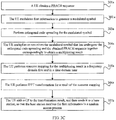
- FIG. 3A is a flowchart of a contention-based random access method according to another embodiment of the present invention. This embodiment may be implemented based on the embodiment shown in FIG. 2A . As shown in FIG. 3A , the method in this embodiment includes: Step 301: The UE obtains the PRACH sequence.
- step 201 For this step, reference may be made to the description about step 201, and no repeated description is given here any further.
- Step 302 The UE modulates the first information to generate the modulated symbol.
- Step 303 The UE multiplies or convolves the modulated symbol and the obtained PRACH sequence together correspondingly to obtain the multiplexing result.
- step 302 and step 303 reference may be made to the descriptions about step 202 and step 203, and no repeated description is given here any further.
- Step 304 The UE performs the resource mapping for the multiplexing result in the frequency domain first and in the time domain later.
- Step 305 The UE performs the IFFT transformation for the resource mapping result, and then performs orthogonal code spreading for the IFFT transformation result.
- the UE after performing the IFFT transformation for the resource mapping result, the UE further performs the orthogonal code spreading for the IFFT transformation result, that is, multiplies each IFFT transformation result by an orthogonal code. This can multiply more users, and help improve the resource usage rate.
- FIG. 3B is a schematic diagram of performing orthogonal code spreading for an IFFT transformation result. As shown in FIG. 3B , q1, q2, ..., qM-1, and qM are multiplied by orthogonal codes w0, w1, ..., wM-2, and wM-1 respectively.
- the UE may use an orthogonal code sequence whose length is the same as the number of the IFFT transformation results.
- the orthogonal codes w0, w1, ..., wM-2, and wM-1 are different from each other, and make up an orthogonal sequence whose length is M.
- the UE may use an orthogonal code sequence whose length is less than the number of the IFFT transformation results. Therefore, the UE may perform the orthogonal code spreading for the IFFT transformation result by repeatedly using the orthogonal code.
- the UE uses an orthogonal code sequence whose length is 2, that is, an orthogonal code sequence that includes two orthogonal codes denoted by Wa and Wb, where Wa and Wb are column vectors whose length is 2, and wa, wb, wc, and wd are elements in the two column vectors.
- w0 and w1 for multiplying by q1 and q2 are wa and wb respectively
- w2 and w3 for multiplying by q3 and q4 are wc and wd
- wM-2 and wM-1 for multiplying by qM-1 and qM are wa and wb respectively.
- Step 306 The UE adds a CP to a result of the orthogonal code spreading, and then sends the result to the base station so that the base station receives the first information in the random access process.
- the UE does not add a CP to the result of the IFFT transformation, but adds a CP to the result of the orthogonal code spreading.
- Step 304 to step 306 may be regarded as another specific implementation manner of step 204.
- steps 302 to 306 may be regarded as a specific implementation manner of step 102.
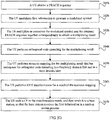
- the UE may not only perform orthogonal code spreading for the IFFT transformation result, but also modulate the first modulated symbol, and, after generating a modulated symbol, perform orthogonal code spreading for the modulated symbol, that is, multiply each modulated symbol by the orthogonal code directly.
- the procedure of this implementation manner includes steps 301a to 307a. Steps 301a to 307a are similar to steps 301 to 306, and are not detailed here any further.
- the UE may perform orthogonal code spreading for the multiplexing result, that is, multiply each multiplexing result by the orthogonal code directly.
- the procedure of this implementation manner includes steps 301b to 307b. Steps 301b to 307b are similar to steps 301 to 306, and are not detailed here any further.
- the UE performs orthogonal code spreading for the IFFT transformation result, the modulated symbol, or the multiplexing result, which helps multiplex multiple users and improves the resource usage rate.
- FIG. 4 is a flowchart of a contention-based random access method according to another embodiment of the present invention. This embodiment may be implemented based on any embodiment shown in FIG. 2A , FIG. 3A , FIG. 3C , and FIG. 3D . The following description assumes that this embodiment is implemented based on the embodiment shown in FIG. 2A .
- the method in this embodiment includes: Step 401: The UE obtains the PRACH sequence.
- Step 402 The UE performs channel coding for the first information.
- the UE implements another service at the same time when performing contention-based random access.
- the data of another service implemented by the UE at the same time is recorded as first information.
- the first information may be one or a combination of an RRC request, a BSR, a shared channel, and control signaling.
- the UE determines the first information according to the implemented services. After determining the first information, the UE performs channel coding for the first information, which improves transmission efficiency.
- the UE performs channel coding for the first information by means of RM coding (Reed Muller coding), diagonal modulation and coding, convolutional coding, or Turbo coding.
- RM coding Random Muller coding
- diagonal modulation and coding diagonal modulation and coding
- convolutional coding convolutional coding
- Turbo coding Turbo coding
- the UE may add a CRC check bit to the first information before performing channel coding for the first information.
- Step 403 The UE modulates the channel-coded first information to generate the modulated symbol.
- the UE may modulate, by using a modulation scheme such as QPSK, 16QAM, or 64QAM, or a modulation scheme corresponding to the PRACH configuration, the first information after the first information is channel-coded or after a CRC check bit is added to the first information and the first information is channel-coded, so as to generate the modulated symbol.
- a modulation scheme such as QPSK, 16QAM, or 64QAM, or a modulation scheme corresponding to the PRACH configuration
- Step 404 The UE multiplies or convolves the modulated symbol and the obtained PRACH sequence together correspondingly to obtain the multiplexing result.
- step 404 reference may be made to the description about step 203.
- Step 405 The UE performs the resource mapping for the multiplexing result.
- Step 406 The UE performs the IFFT transformation for the resource mapping result, adds the CP to the IFFT transformation result, and then sends the result to the base station so that the base station receives the first information in the random access process.
- step 405 and step 406 reference may be made to the description about step 204, and no repeated description is given here any further.
- steps 402 to 406 may be regarded as a specific implementation manner of step 102.
- the UE performs channel coding before modulating the first information or adding a CRC check bit, which ensures correct transmission of the first information and improves transmission quality of the first information.
- FIG. 5 is a flowchart of a contention-based random access method according to another embodiment of the present invention. This embodiment may be implemented based on the embodiments described above. As shown in FIG. 5 , the method includes:
- a scrambling sequence used in the scrambling is generated according to a timeslot number or a subframe number or a cell identifier.
- Step 505 The UE modulates the scrambled first information to generate the modulated symbol.
- Step 506 The UE multiplies or convolves the modulated symbol and the obtained PRACH sequence together correspondingly to obtain the multiplexing result.
- Step 507 The UE performs the orthogonal code spreading for the multiplexing result.
- Step 508 The UE performs the resource mapping for the multiplexing result that has undergone the orthogonal code spreading.
- Step 509 The UE performs the IFFT transformation for the resource mapping result, adds the CP to the IFFT transformation result, and then sends the result to the base station so that the base station receives the first information in the random access process.
- the UE scrambles the first information to randomize interference.
- FIG. 6A is a flowchart of a contention-based random access method according to another embodiment of the present invention. As shown in FIG. 6A , the method in this embodiment includes: Step 601: A UE obtains a PRACH sequence.
- step 201 For this step, reference may be made to the description about step 201, and no repeated description is given here any further.
- Step 602 The UE modulates first information to generate a modulated symbol.
- the UE implements another service at the same time when performing contention-based random access.
- the data of another service implemented by the UE at the same time is recorded as first information.
- the first information may be one or a combination of an RRC request, a BSR, a shared channel, and control signaling.
- the UE determines the first information according to the implemented services. After determining the first information, the UE modulates the first information to generate a modulated symbol.
- the UE may modulate the first information by using a modulation scheme such as QPSK, 16QAM, or 64QAM, so as to generate the modulated symbol.
- Step 603 The UE performs resource mapping for the modulated symbol according to PRACH configuration information, and then sends the PRACH sequence and the modulated symbol together to a base station so that the base station receives the first information in a random access process.
- the UE after obtaining the PRACH sequence, the UE performs resource mapping for the PRACH sequence so as to send the PRACH sequence to the base station.
- the UE performs resource mapping for the modulated symbol derived from modulation of the first information.
- the PRACH configuration mainly includes the PRACH sequence used in the random access and/or resource mapping information of the PRACH sequence. This implementation manner is mainly time division multiplexing and frequency division multiplexing for the first information and the PRACH sequence.
- An implementation manner of the UE performing resource mapping for the modulated symbol according to PRACH configuration information includes: determining, by the UE, a mapping start point of the modulated symbol in a time domain and/or a frequency domain according to the PRACH sequence and/or the resource mapping information of the PRACH sequence, and then performing resource mapping for the modulated symbol in the time domain and/or the frequency domain according to the determined mapping start point in the time domain and/or the frequency domain.
- the UE may perform resource mapping for the modulated symbol according to only the PRACH sequence. For example, the UE may directly map the modulated symbol onto the resource location corresponding to the PRACH sequence obtained by the UE.
- the start point of the resource location corresponding to the PRACH sequence is the mapping start point of the modulated symbol in the time domain and the frequency domain.
- the UE may also perform resource mapping for the modulated symbol according to only the resource mapping location of the PRACH sequence regardless of the PRACH sequence. For example, the UE may map the modulated symbol to a location behind the resource locations of all PRACH sequences or the resource location of a specified PRACH sequence.
- the UE determines the mapping location of the modulated symbol in the time domain and/or frequency domain according to the PRACH sequence and/or the mapping of the PRACH sequence in the time domain or frequency domain, which avoids conflict with the PRACH sequence.
- the PRACH sequence may be long or short.
- PRACH sequences of two lengths exist in the prior art, where one length is 839 and the other length is 139.
- "according to the PRACH sequence” mainly refers to: determining a mapping relationship between the modulated symbol and the PRACH sequence in the time domain according to the length of the PRACH sequence. If the length of the PRACH sequence is 839, the PRACH sequence occupies a long time in the time domain, and the UE may map the PRACH sequence and the modulated symbol onto at least two subframes. If the length of the PRACH sequence is 139, the PRACH sequence occupies few time resources in the time domain, and the UE may map the PRACH sequence and the modulated symbol onto the same subframe.
- the length of the PRACH sequence is not limited to 839 and 139.
- the length of the PRACH sequence may be fixed or adjustable.
- the length of the PRACH sequence may be configured by means of higher layer signaling, dynamic signaling, a broadcast message, or the like.
- the UE receives the higher layer signaling or the dynamic signaling or the broadcast message, and configures the length of the PRACH sequence as indicated by the higher layer signaling, the dynamic signaling, or the broadcast message.
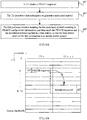
- the UE may use one of the following processes to determine a mapping start point of the modulated symbol in a time domain according to the PRACH sequence and the resource mapping information of the PRACH sequence, and then performs resource mapping for the modulated symbol in the time domain according to the determined mapping start point in the time domain:
- Process 1 The UE determines that an end time point of a subframe mapped from the PRACH sequence is a mapping start point of the modulated symbol in the time domain, and then maps the modulated symbol onto at least two subframes.
- the mapping status is shown in FIG. 6B .
- the PRACH sequence may have a length of 839 or a length of 139 or an adjustable length, and the length is not limited.
- the PRACH sequence may be a sequence of a sounding signal (sounding).
- Process 2 The UE determines that a time point at a specified interval after the subframe mapped from the PRACH sequence is the mapping start point of the modulated symbol in the time domain, and then maps the modulated symbol onto at least one subframe. For example, if the PRACH sequence is mapped to subframe K and the pre-specified interval is M subframes, subframe n+Y is the mapping start point of the modulated symbol in the time domain, and the time domain resources (that is, subframes) allocated to the modulated symbol begin with subframe K+M. The mapping status is shown in FIG. 6C . This implementation manner does not limit the length of the PRACH sequence and whether the length is fixed.
- Process 3 The UE determines that an end time point of a subframe mapped from the PRACH sequence is a mapping start point of the modulated symbol in the time domain, and then maps the modulated symbol and the PRACH sequence onto the same subframe.
- the mapping status is shown in FIG. 6D . That is, the UE maps the PRACH sequence and the modulated symbol onto the same subframe, and sends them to the base station.
- the PRACH sequence is preferably a short sequence.
- the PRACH sequence may be a short sequence in the prior art, or a newly defined short sequence.
- the horizontal coordinate is time (t)
- the vertical coordinate is frequency (f)
- TTI represents a subframe
- the illustrated maximum frequency is the system bandwidth.
- the UE may perform IFFT for each resource mapping result, and then add a CP to the IFFT transformation result and send the result to the base station.
- steps 602 to 603 may be regarded as a specific implementation manner of step 102.
- the UE performs resource mapping for the PRACH sequence and the modulated symbol derived from modulation of the first information, correlates the mapping of the modulated symbol derived from modulation of the first information with the resource mapping process of the PRACH sequence, and therefore, the sent PRACH sequence carries the first information, and the UE can receive the first information in a random access process, which improves transmission efficiency of the first information.
- This embodiment is simple and easy to implement.
- the UE may perform channel coding, add a CRC check bit, perform scrambling, or the like for the first information, which improves transmission performance of the first information.
- the UE may perform orthogonal code spreading for the modulated symbol; or, after performing IFFT transformation for the resource mapping result, the UE may perform orthogonal code spreading for the IFFT transformation result to multiplex more users.
- FIG. 7 is a flowchart of a non-contention-based random access method according to another embodiment of the present invention. As shown in FIG. 7 , the method in this embodiment includes: Step 701: A UE obtains a PRACH sequence.
- step 201 specifically means that the UE selects a PRACH sequence locally at random.
- Step 702 The UE maps the status of first information to the format of the PRACH sequence, and expresses the first information by using the format of the PRACH sequence.
- the UE implements another service at the same time when performing contention-based random access.
- the data of another service implemented by the UE at the same time is recorded as first information.
- the first information may be one or a combination of an RRC request, a BSR, a shared channel, and control signaling.
- the UE will map (0,0,0,0,0,0), (0,0,0,0,0,1), ..., and (1,1,1,1,1,1) to PRACH sequence 0, PRACH sequence 1, ..., and PRACH 63 respectively in a one-to-one relationship.
- the UE when the UE sends the first information (0,0,0,0,0,0) to a base station, the UE sends PRACH sequence 0 to the base station to both implement random access and carry the first information (0,0,0,0,0,0) to the base station.
- Step 703 The UE sends the obtained PRACH sequence to the base station, and therefore, the base station can receive the PRACH sequence to perform random access and can receive the first information carried in the received PRACH sequence in a random access process.
- the UE After mapping the first information to the PRACH sequence, the UE sends the mapped PRACH sequence to the base station. Specifically, the UE performs resource mapping for the PRACH sequence, performs IFFT transformation, adds a CP to a result of the IFFT transformation, and sends the result to the base station.
- the base station and the UE prearrange the mapping relationship between the first information and the PRACH sequence. Therefore, after receiving the PRACH sequence, the base station can identify not only the need of performing a random access process according to the PRACH sequence, but also the first information expressed by the PRACH sequence, that is, the base station receives the first information while receiving the PRACH sequence or performing the random access process.
- steps 702 to 703 may be regarded as a specific implementation manner of step 102.
- the UE maps the status of the first information to the format of the PRACH sequence, and expresses the first information by using the format of the sent PRACH sequence, and therefore, the first information is carried in the sent PRACH sequence, and the base station receives the first information in the random access process, which improves transmission efficiency of the first information.
- This implementation manner is easy to implement. Because the transmission data amount remains unchanged but the information amount increases, the transmission efficiency is relatively improved.
- the UE after performing IFFT transformation for the resource mapping result, the UE performs orthogonal code spreading for the IFFT transformation result to multiplex more users and improve the resource usage rate.
- Operation 1 The UE receives an RAR sent by the base station.
- the base station After the UE sends a PRACH sequence to the base station to perform random access and carries the first information when sending the PRACH sequence, the base station receives the PRACH sequence and the first information. If the base station receives the PRACH sequence and the first information successfully, the base station returns an RAR to the UE. Correspondingly, the UE receives the RAR sent by the base station.
- Operation 2 The UE initiates a scheduling transmission process to the base station to transmit data.
- the UE may continue to initiate a scheduling transmission process to the base station to continue transmitting data.
- the type of data transmitted in the scheduling transmission process depends on the type of the first information. If the first information is an RRC request, the data transmitted in the scheduling transmission process is mainly signaling data in other signaling exchange processes than the random access process, or service data. That is, the scheduling transmission process mainly transmits other signaling data or service data. If the first information is data such as shared channel or control signaling, the scheduling transmission process mainly transmits signaling data generated in creating an RRC connection in the random access process, for example, an RRC request.
- Operation 3 The UE receives a random access success message sent by the base station.
- the base station may send a random access success message to the UE to indicate the random access success to the UE.
- the UE after carrying the first information when sending the PRACH sequence to the base station, the UE continues to receive the RAR returned by the base station, initiates a scheduling transmission process to the base station, and receives the random access success message sent by the base station. In this way, the entire random access process is complete.
- the base station receives the first information in the random access process, which saves operation steps of transmitting the first information and improves efficiency of the first information no matter whether the first information is signaling data or service data.
- the services implemented by the UE in the random access process are preferably services of small packets, that is, the data amount of the services is small. Therefore, before the UE sends a PRACH sequence to the base station and carries the first information when sending the PRACH sequence so that the base station receives the first information in the random access process, the UE may determine whether the data amount (that is, size) of the first information is less than a preset threshold, that is, determine whether the service corresponding to the first information is a service of small packets.
- the UE determines that the data amount of the first information is less than the preset threshold, it indicates that the service corresponding to the first information is a service of small packets, and therefore, the UE performs the operation of sending a PRACH sequence to the base station and carrying the first information when sending the PRACH sequence so that the base station receives the first information in the random access process. If the UE determines that the data amount of the first information is greater than or equal to the preset threshold, it indicates that the service corresponding to the first information is not a service of small packets, and therefore, the UE uses the prior art to complete the random access process and then implements the service.
- the data amount of the first information is L bits and the set threshold is X bits, if L ⁇ X, it indicates that the service corresponding to the first information is a service of small packets; conversely, it indicates that the service corresponding to the first information is a not service of small packets.
- the UE in this embodiment predetermines whether the service corresponding to the first information is a service of small packets, and transmits the first information in the random access process only if determining that the service corresponding to the first information is a service of small packets, which improves the success rate of transmitting the first information.
- the UE may determine the data amount of the first information.
- the UE may determine the data amount of the first information according to the scheduling information of the base station, that is, the data amount of the first information is notified by the base station to the UE by means of the scheduling information. In this implementation manner, the UE does not need to notify the data amount of the first information to the base station.
- the UE may not only determine the data amount of the first information according to the scheduling information of the base station, but also determine the data amount of the first information on its own initiative. For example, according to the PRACH configuration, the UE determines the data amount of the first information that can be carried in the random access process. In this implementation manner, the base station does not know the data amount of the first information, and therefore, the UE uses the sent PRACH sequence to also carry the data amount of the first information so that the base station knows the size of the first information and can receive the first information successfully.
- FIG. 8 is a flowchart of a random access method according to another embodiment of the present invention. As shown in FIG. 8 , the method in this embodiment includes:
- the first information includes one or a combination of an RRC request, a BSR, a shared channel, and control signaling.
- the base station collaborates with the UE and receives the first information sent by the UE in the random access process.
- this embodiment saves the operation steps of receiving the first information and improves the receiving efficiency.
- the base station may perform at most two of the following operations: Operation 1: The base station sends an RAR to the UE.
- the base station may send an RAR to the UE to indicate the successful receiving of the PRACH sequence and the first information.
- Operation 2 The base station receives data sent by the UE in a scheduling transmission process.
- the UE After the UE sends a PRACH sequence to the base station to perform random access and carries the first information when sending the PRACH sequence, the UE may continue to initiate a scheduling transmission process to the base station to continue transmitting data. Therefore, the base station receives the data sent in the scheduling transmission process.
- Operation 3 The base station sends a random access success message to the UE.
- the base station After receiving the PRACH sequence and the first information, the base station determines completion and success of the random access process, and, in this scenario, the base station may send a random access success message to the UE to indicate the random access success to the UE.
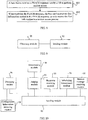
- FIG 9 is a schematic structural diagram of a UE according to an embodiment of the present invention. As shown in FIG. 9 , the UE in this embodiment includes an obtaining module 91 and a sending module 92.
- the obtaining module 91 is adapted to obtain a PRACH sequence.
- the sending module 92 is connected with the obtaining module 91, and is adapted to send the PRACH sequence obtained by the obtaining module 91 to a base station to perform random access, and carry first information when sending the PRACH sequence so that the base station receives the first information in a random access process.
- the first information may include one or a combination of an RRC request, a BSR, a shared channel, and control signaling.
- the function modules of the UE in this embodiment may be used to implement the procedure of the random access method shown in FIG. 1 , and their detailed working principles are not detailed here any further. For details, see the description in the method embodiment.
- the UE in this embodiment carries the first information when sending the PRACH sequence to the base station so that the base station receives the first information in the random access process. If the first information is signaling data, by transmitting signaling data in the random access process, the UE in this embodiment reduces signaling exchange, saves the signaling overhead and delay, and improves the data transmission efficiency; if the first information is service data, by transmitting service data in the random access process, the UE in this embodiment makes it unnecessary to transmit the service data after completion of the signaling exchange and also improves the data transmission efficiency.
- FIG. 10 is a schematic structural diagram of a UE according to another embodiment of the present invention. This embodiment is implemented based on the embodiment shown in FIG 9 . As shown in FIG. 10 , the UE in this embodiment further includes a configuration information receiving module.
- the configuration information receiving module 98 is adapted to receive the PRACH configuration information that is sent by the base station and intended for use when the UE carries the first information when sending the PRACH sequence.
- the obtaining module 91 is specifically adapted to obtain the PRACH sequence according to the PRACH configuration information received by the configuration information receiving module.
- the configuration information receiving module 98 is connected with the obtaining module 91.
- the sending module 92 in this embodiment is specifically adapted to multiplex the first information and the PRACH sequence so that the base station receives the first information in the random access process.
- the sending module 92 in this embodiment is further adapted to: before multiplexing the first information and the PRACH sequence, perform at least one of CRC bit addition, channel coding, scrambling, and modulation for the first information.
- a scrambling sequence used in the scrambling is preferably generated according to a timeslot number or a subframe number or a cell identifier.
- the sending module 92 may specifically perform channel coding for the first information by means of RM coding, diagonal modulation and coding, convolutional coding, or Turbo coding.
- the sending module 92 is specifically adapted to modulate the first information to generate a modulated symbol.
- the sending module 92 is specifically adapted to modulate the first information by using a modulation scheme such as QPSK, 16QAM, 64QAM, or a modulation scheme corresponding to the PRACH configuration, so as to generate the modulated symbol.
- the sending module 92 in this embodiment may be further adapted to: after multiplexing the first information and the PRACH sequence, perform at least one of orthogonal code spreading, Fourier transformation, resource mapping, IFFT, and cyclic prefix addition for the multiplexing result of the first information and the PRACH sequence, and send a result of the at least one operation for the multiplexing result to the base station so that the base station receives the first information in the random access process.
- the sending module 92 may be specifically adapted to perform IFFT transformation for the multiplexing result, and then add a CP to an IFFT transformation result.
- the sending module 92 may be more specifically adapted to add a CP, which is different from those of other IFFT transformation results, before at least one IFFT transformation result. For example, the sending module 92 may add a first CP before a first IFFT transformation result, and add no CP before other IFFT transformation results. For another example, the sending module 92 may add the first CP before the first IFFT transformation result, and add a second CP before other IFFT transformation results respectively, where the first CP and the second CP have the same or different lengths.
- the sending module 92 may specifically perform orthogonal code spreading for the multiplexing result by repeatedly using the same orthogonal code block.
- the sending module 92 may specifically perform resource mapping for the multiplexing result in a frequency domain first and in a time domain later. More specifically, the sending module 92 may map the multiplexing result onto discontinuous subcarriers. Further, preferably, in the frequency domain, the sending module 92 may map the multiplexing result onto at least one discontinuous subcarrier in a frequency hopping manner. In the time domain, the sending module 92 may map the multiplexing result onto one timeslot, one subframe, or multiple subframes, where the multiple subframes are multiple continuous subframes or multiple subframes that are at least one subframe apart.
- the sending module 92 may be specifically adapted to multiply each modulated symbol by one PRACH sequence in the multiple same PRACH sequences; or if the PRACH sequence obtained by the obtaining module 91 in a specific resource includes multiple different PRACH sequences, the sending module 92 may be specifically adapted to multiply each modulated symbol by one PRACH sequence in the multiple different PRACH sequences; or if the PRACH sequence obtained by the obtaining module 91 in a specific resource includes multiple different PRACH sequences and at least one PRACH sequence is not multiplied by the modulated symbol, the sending module 92 may be specifically adapted to multiply each modulated symbol by one PRACH sequence in the multiple different PRACH sequences, where the one PRACH sequence is one of other PRACH sequences than the PRACH sequences that are not multiplied by the modulated symbol, where the specific resource may be a timeslot, a subframe, or multiple subframes, where the multiple subframes may be multiple
- the sending module 92 may be more specifically adapted to avoid multiplying a first PRACH sequence and a last PRACH sequence in the multiple different PRACH sequences by the modulated symbol.
- the PRACH configuration information includes the PRACH sequence and/or resource mapping information of the PRACH sequence.
- the sending module 92 is specifically adapted to determine a mapping start point of the modulated symbol in a time domain and/or a frequency domain according to the PRACH sequence and/or the resource mapping information of the PRACH sequence, and then perform resource mapping for the modulated symbol in the time domain and/or the frequency domain according to the determined mapping start point in the time domain and/or the frequency domain.
- the sending module 92 is more specifically adapted to determine that an end time point of a subframe mapped from the PRACH sequence is a mapping start point of the modulated symbol in the time domain, and then map the modulated symbol onto at least two subframes; or the sending module 92 is more specifically adapted to determine that a time point at a specified interval after a subframe mapped from the PRACH sequence is a mapping start point of the modulated symbol in the time domain, and then map the modulated symbol onto at least one subframe; or the sending module 92 is more specifically adapted to determine that an end time point of a subframe mapped from the PRACH sequence is a mapping start point of the modulated symbol in the time domain, and then map the modulated symbol and the PRACH sequence onto the same subframe.
- the sending module 92 in this embodiment may be further adapted to map the status of the first information to the format of the PRACH sequence, and express the first information by using the format of the PRACH sequence.
- the UE in this embodiment further includes a judging module 93.
- the judging module 93 is connected with the sending module 92, and is adapted to: determine whether a data amount of the first information is less than a preset threshold, and, if determining that the data amount of the first information is less than the preset threshold, trigger the sending module 92 to perform an operation of carrying the first information when sending the PRACH sequence so that the base station receives the first information in a random access process.
- the UE in this embodiment may further include a determining module 94.
- the determining module 94 is connected with the judging module 93, and is adapted to determine the data amount of the first information according to the PRACH configuration, and deliver a determined result to the judging module 93.
- the sending module 92 is further adapted to carry the data amount of the first information when sending the PRACH sequence so that the base station knows the data amount of the first information.
- the sending module 92 is further connected with the determining module 94.
- the UE in this embodiment may include any one of the following modules or a combination thereof:
- the response receiving module 95, the scheduling transmission module 96, and the success message receiving module 97 are connected with the sending module 92.
- the UE in this embodiment may include a configuring module.
- the configuring module 98 is adapted to receive higher layer signaling or dynamic signaling or a broadcast message, and configure the length of the PRACH sequence as indicated by the higher layer signaling or the dynamic signaling or the broadcast message.
- the UE in this embodiment carries the first information when sending the PRACH sequence to the base station so that the base station receives the first information in the random access process. If the first information is signaling data, by transmitting signaling data in the random access process, the UE in this embodiment reduces signaling exchange, saves the signaling overhead and delay, and improves the data transmission efficiency; if the first information is service data, by transmitting service data in the random access process, the UE in this embodiment makes it unnecessary to transmit the service data after completion of the signaling exchange and also improves the data transmission efficiency.
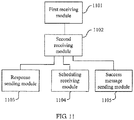
- FIG. 11 is a schematic structural diagram of a base station according to an embodiment of the present invention. As shown in FIG. 11 , the base station in this embodiment includes a first receiving module 1101 and a second receiving module 1102.
- the first receiving module 1101 is adapted to receive a PRACH sequence sent by a UE to perform random access.
- the second receiving module 1102 is connected with the first receiving module 1101, and is adapted to: when the first receiving module 1101 receives the PRACH sequence, receive first information carried in the PRACH sequence, so as to receive the first information in the random access process.
- the first information includes one or a combination of an RRC request, a BSR, a shared channel, and control signaling.
- the base station in this embodiment may include any one of the following modules or a combination thereof:
- the function modules of the base station in this embodiment may be used to implement the procedure of the random access method shown in FIG. 8 , and their detailed working principles are not detailed here any further. For details, see the description in the method embodiment.
- the base station in this embodiment receives the first information in the PRACH sequence when receiving the PRACH sequence sent by the UE. If the first information is signaling data, by transmitting other signaling in the random access process, the base station in this embodiment can reduce signaling exchange, save the signaling overhead and delay, and improve data transmission efficiency; if the first information is service data, by transmitting service data in the random access process, the base station in this embodiment can make it unnecessary to transmit the service data after completion of the signaling exchange and also improves the data transmission efficiency.
- the aforementioned program may be stored in a computer readable storage medium.
- the storage medium includes any medium capable of storing program code, such as a ROM, a RAM, a magnetic disk, or an optical disc.
Landscapes
- Engineering & Computer Science (AREA)
- Signal Processing (AREA)
- Computer Networks & Wireless Communication (AREA)
- Mobile Radio Communication Systems (AREA)
Claims (16)
- Direktzugriffsverfahren, umfassend:Erhalten (101) durch ein Benutzergerät, UE, einer physischen Direktzugriffskanal(PRACH)-sequenz; undSenden (102) durch das UE der PRACH-Sequenz zu einer Basisstation, um einen Direktzugriff durchzuführen, und derartiges Übermitteln von ersten Informationen, wenn die PRACH-Sequenz gesendet wird, dass die Basisstation die ersten Informationen in einem Direktzugriffsprozess erhält;dadurch gekennzeichnet, dassdie PRACH-Sequenz, die von dem UE zu der Basisstation gesendet wird, die ersten Informationen entsprechend einem Dienst von kleinen Paketen übermittelt; unddas derartige Übermitteln der ersten Informationen, wenn die PRACH-Sequenz gesendet wird, dass die Basisstation die ersten Informationen in einem Direktzugriffsprozess erhält, Folgendes umfasst:
Multiplexen durch das UE der ersten Informationen und der PRACH-Sequenz und Senden eines Multiplexergebnisses zu der Basisstation. - Direktzugriffsverfahren nach Anspruch 1, wobei: vor dem Multiplexen durch das UE der ersten Informationen und der PRACH-Sequenz das Verfahren ferner Folgendes umfasst:Modulieren (202) durch das UE der ersten Informationen zum Erzeugen eines modulierten Symbols; undwobei das Multiplexen durch das UE der ersten Informationen und der PRACH-Sequenz Folgendes umfasst:
entsprechendes derartiges Zusammenmultiplizieren oder -falten durch das UE des modulieren Symbols und der PRACH-Sequenz, dass die PRACH-Sequenz die ersten Informationen übermittelt. - Direktzugriffsverfahren nach Anspruch 1, wobei: vor dem Multiplexen durch das UE der ersten Informationen und der PRACH-Sequenz das Verfahren ferner Folgendes umfasst:Durchführen durch das UE mindestens einer zyklischen Redundanzprüfung, CRC, Bit-Addition, Kanalcodierung, Scrambling und Modulation für die ersten Informationen;nach dem Multiplexen durch das UE der ersten Informationen und der PRACH-Sequenz das Verfahren ferner Folgendes umfasst:Durchführen durch das UE mindestens einer/eines einer Orthogonalcodespreizung, einer Fourier-Transformation, eines Ressourcenmappings, einer umgekehrten Fast-Fourier-Transformation, IFFT und einer zyklischen Präfixaddition für das Multiplexergebnis; unddas Senden durch das UE eines Multiplexergebnisses zu der Basisstation Folgendes umfasst:
Senden durch das UE eines verarbeiteten Multiplexergebnisses zu der Basisstation. - Direktzugriffsverfahren nach Anspruch 3, wobei: eine Scramblingsequenz, die bei dem Scrambling verwendet wird, gemäß einer Zeitschlitzanzahl oder einer Teilrahmenanzahl oder einer Zellkennung erzeugt wird.
- Direktzugriffsverfahren nach Anspruch 1, wobei: das derartige Übermitteln der ersten Informationen, wenn die PRACH-Sequenz gesendet wird, dass die Basisstation die ersten Informationen in einem Direktzugriffsprozess erhält, Folgendes umfasst:
Ausdrücken durch das UE der ersten Informationen durch Verwenden eines Formats der PRACH-Sequenz. - Direktzugriffsverfahren nach einem der Ansprüche 1 bis 5, wobei die ersten Informationen eine(n) oder eine Kombination einer Funkressourcensteuerungs(RRC)-aufforderung, eines Pufferstatusberichts, BSR, eines gemeinsam genutzten Kanals und von Steuersignalisierung aufweisen.
- Direktzugriffsverfahren, umfassend:Erhalten (801) durch eine Basisstation einer physischen Direktzugriffskanal(PRACH)-sequenz, die von einem Benutzergerät, UE, gesendet wird, um einen Direktzugriff durchzuführen;Erhalten (802) durch die Basisstation, wenn die PRACH-Sequenz erhalten wird (801), von ersten Informationen, die in der PRACH-Sequenz übermittelt werden, um die ersten Informationen in dem Direktzugriffsprozess zu erhalten;dadurch gekennzeichnet, dassdie erhaltene PRACH-Sequenz, die von dem UE zu der Basisstation gesendet wird, die ersten Informationen entsprechend einem Dienst von kleinen Paketen übermittelt; unddas Erhalten (802) durch die Basisstation, wenn die PRACH-Sequenz erhalten wird (801), der ersten Informationen, die in der PRACH-Sequenz übermittelt werden, um die ersten Informationen in dem Direktzugriffsprozess zu erhalten, Folgendes umfasst:
Erhalten durch die Basisstation eines Multiplexergebnisses der ersten Informationen und der PRACH-Sequenz, die durch das UE gemultiplext werden, die von dem UE gesendet werden. - Direktzugriffsverfahren nach Anspruch 7, wobei die ersten Informationen eine(n) oder eine Kombination einer Funkressourcensteuerungs(RRC)-aufforderung, eines Pufferstatusberichts, BSR, eines gemeinsam genutzten Kanals und von Steuersignalisierung aufweisen.
- Benutzergerät, das Folgendes aufweist:ein Gewinnungsmodul (91), das angepasst ist, um eine physische Direktzugriffskanal(PRACH)-sequenz zu gewinnen; undein Sendemodul (92), das angepasst ist, um die PRACH-Sequenz zu einer Basisstation zu senden, um einen Direktzugriff durchzuführen, und derart erste Informationen zu übermitteln, wenn die PRACH-Sequenz gesendet wird, dass die Basisstation die ersten Informationen in einem Direktzugriffsprozess erhält;dadurch gekennzeichnet, dassdie PRACH-Sequenz, die von dem UE zu der Basisstation gesendet wird, die ersten Informationen entsprechend einem Dienst von kleinen Paketen übermittelt;das Sendemodul (92) spezifisch angepasst ist, um die ersten Informationen und die PRACH-Sequenz zu multiplexen und derart ein Multiplexergebnis zu der Basisstation zu senden, dass die Basisstation die ersten Informationen in einem Direktzugriffsprozess erhält.
- Benutzergerät nach Anspruch 9, wobei das Sendemodul (92) spezifisch angepasst ist, um die ersten Informationen zu modulieren, um ein moduliertes Symbol zu erzeugen; und das modulierte Symbol und die PRACH-Sequenz entsprechend derart zusammen zu multiplizieren und falten, dass die PRACH-Sequenz die ersten Informationen übermittelt.
- Benutzergerät nach Anspruch 9, wobei das Sendemodul (92) ferner angepasst ist, um:vor dem Multiplexen der ersten Informationen und der PRACH-Sequenz mindestens eine einer zyklischen Redundanzprüfung, CRC, Bitaddition, Kanalcodierung, Scrambling und Modulation für die ersten Informationen durchzuführen; unddas Sendemodul (92) ferner angepasst ist, um: nach dem Multiplexen der ersten Informationen und der PRACH-Sequenz mindestens eine(s) einer Orthogonalspreizcodierung, einer Fourier-Transformation, eines Ressourcenmappings, einer umgekehrten Fast-Fourier-Transformation, IFFT und einer zyklischen Präfixaddition für das Multiplexergebnis durchzuführen und ein Ergebnis der mindestens einen Operation für das Multiplexergebnis derart zu der Basisstation zu senden, dass die Basisstation die ersten Informationen in dem Direktzugriffsprozess erhält.
- Benutzergerät nach Anspruch 11, wobei: eine Scramblingsequenz, die bei der Scrambling verwendet wird, gemäß einer Zeitschlitzanzahl oder einer Teilrahmenanzahl oder einer Zellkennung erzeugt wird.
- Benutzergerät nach Anspruch 9, wobei das Sendemodul (92) spezifisch angepasst ist, um die ersten Informationen durch Verwenden eines Formats der PRACH-Sequenz auszudrücken.
- Benutzergerät nach einem der Ansprüche 9 bis 13, wobei die ersten Informationen eine(n) oder eine Kombination einer Funkressourcensteuerungs(RRC)-aufforderung, eines Pufferstatusberichts, BSR, eines gemeinsam genutzten Kanals und von Steuersignalisierung aufweisen.
- Basisstation, die Folgendes aufweist:ein erstes Erhaltungsmodul (1101), das angepasst ist, um eine physische Direktzugriffskanal(PRACH)-sequenz zu erhalten, die von einem Benutzergerät, UE, gesendet wird, um einen Direktzugriff durchzuführen; undein zweites Erhaltungsmodul (1102), das angepasst ist, um: wenn das erste Erhaltungsmodul (1101) die PRACH-Sequenz erhält, erste Informationen zu erhalten, die in der PRACH-Sequenz übermittelt werden, um die ersten Informationen in dem Direktzugriffsprozess zu erhalten;dadurch gekennzeichnet, dass die erhaltene PRACH-Sequenz, die von dem UE zu der Basisstation gesendet wird, die ersten Informationen entsprechend einem Dienst von kleinen Paketen übermittelt; unddas zweite Erhaltungsmodul (1102) spezifisch zum Erhalten eines Multiplexergebnisses der ersten Informationen und der PRACH-Sequenz, die von dem UE gemultiplext werden, die von dem UE gesendet werden, angepasst ist.
- Basisstation nach Anspruch 15, wobei die ersten Informationen eine(n) oder eine Kombination einer Funkressourcensteuerungs(RRC)-aufforderung, eines Pufferstatusberichts, BSR, eines gemeinsam genutzten Kanals und von Steuersignalisierung aufweisen.
Priority Applications (2)
| Application Number | Priority Date | Filing Date | Title |
|---|---|---|---|
| EP21158565.8A EP3893587B1 (de) | 2012-02-15 | 2013-02-16 | Direktzugriffsverfahren, basisstation und benutzergerät |
| EP19177564.2A EP3609282B1 (de) | 2012-02-15 | 2013-02-16 | Direktzugriffsverfahren, basisstation und benutzergerät |
Applications Claiming Priority (2)
| Application Number | Priority Date | Filing Date | Title |
|---|---|---|---|
| CN201210034106.4A CN103260250B (zh) | 2012-02-15 | 2012-02-15 | 随机接入方法、基站及用户设备 |
| PCT/CN2013/071608 WO2013120456A1 (zh) | 2012-02-15 | 2013-02-16 | 随机接入方法、基站及用户设备 |
Related Child Applications (3)
| Application Number | Title | Priority Date | Filing Date |
|---|---|---|---|
| EP21158565.8A Division EP3893587B1 (de) | 2012-02-15 | 2013-02-16 | Direktzugriffsverfahren, basisstation und benutzergerät |
| EP19177564.2A Division EP3609282B1 (de) | 2012-02-15 | 2013-02-16 | Direktzugriffsverfahren, basisstation und benutzergerät |
| EP19177564.2A Division-Into EP3609282B1 (de) | 2012-02-15 | 2013-02-16 | Direktzugriffsverfahren, basisstation und benutzergerät |
Publications (3)
| Publication Number | Publication Date |
|---|---|
| EP2806702A1 EP2806702A1 (de) | 2014-11-26 |
| EP2806702A4 EP2806702A4 (de) | 2014-12-03 |
| EP2806702B1 true EP2806702B1 (de) | 2019-07-31 |
Family
ID=48963877
Family Applications (3)
| Application Number | Title | Priority Date | Filing Date |
|---|---|---|---|
| EP21158565.8A Active EP3893587B1 (de) | 2012-02-15 | 2013-02-16 | Direktzugriffsverfahren, basisstation und benutzergerät |
| EP13749260.9A Active EP2806702B1 (de) | 2012-02-15 | 2013-02-16 | Verfahren, basisstation und benutzergerät für direktzugriff |
| EP19177564.2A Active EP3609282B1 (de) | 2012-02-15 | 2013-02-16 | Direktzugriffsverfahren, basisstation und benutzergerät |
Family Applications Before (1)
| Application Number | Title | Priority Date | Filing Date |
|---|---|---|---|
| EP21158565.8A Active EP3893587B1 (de) | 2012-02-15 | 2013-02-16 | Direktzugriffsverfahren, basisstation und benutzergerät |
Family Applications After (1)
| Application Number | Title | Priority Date | Filing Date |
|---|---|---|---|
| EP19177564.2A Active EP3609282B1 (de) | 2012-02-15 | 2013-02-16 | Direktzugriffsverfahren, basisstation und benutzergerät |
Country Status (5)
| Country | Link |
|---|---|
| US (1) | US9386603B2 (de) |
| EP (3) | EP3893587B1 (de) |
| CN (2) | CN103260250B (de) |
| ES (1) | ES3051367T3 (de) |
| WO (1) | WO2013120456A1 (de) |
Families Citing this family (30)
| Publication number | Priority date | Publication date | Assignee | Title |
|---|---|---|---|---|
| KR101975483B1 (ko) * | 2012-06-20 | 2019-05-07 | 삼성전자주식회사 | 디바이스 간 직접 통신을 수행하는 시스템에서 패킷 전송 방법 및 장치 |
| JP2015185956A (ja) * | 2014-03-20 | 2015-10-22 | 株式会社Nttドコモ | ユーザ装置及び基地局 |
| CN104981022B (zh) * | 2014-04-04 | 2020-07-10 | 北京三星通信技术研究有限公司 | 数据传输的方法、基站及终端 |
| EP3179813B1 (de) | 2014-09-30 | 2023-04-05 | Huawei Technologies Co., Ltd. | Endgerät, basisstation, netzwerksteuergerät, systems und übertragungsverfahren |
| CN105900515B (zh) * | 2014-10-31 | 2019-05-07 | 华为技术有限公司 | 一种随机接入方法和设备 |
| JP6377860B2 (ja) | 2014-12-29 | 2018-08-22 | テレフオンアクチーボラゲット エルエム エリクソン(パブル) | ランダムアクセスプリアンブルを生成し及び検出するための方法及びデバイス |
| WO2016149865A1 (zh) * | 2015-03-20 | 2016-09-29 | 富士通株式会社 | 数据传输方法、装置以及通信系统 |
| CN108476490A (zh) * | 2016-01-22 | 2018-08-31 | 富士通株式会社 | 随机接入与数据传输的装置、方法以及通信系统 |
| US10143015B2 (en) * | 2016-03-18 | 2018-11-27 | Qualcomm Incorporated | Contention-based random access in unlicensed spectrum |
| KR20180035638A (ko) | 2016-09-29 | 2018-04-06 | 삼성전자주식회사 | RRC Inactive 및 active 상태에서 data 전송 결정 및 방법 및 장치 |
| CN108271271B (zh) * | 2016-12-30 | 2019-12-31 | 维沃移动通信有限公司 | 一种随机接入方法、发送端及接收端 |
| KR102327348B1 (ko) * | 2017-03-20 | 2021-11-17 | 광동 오포 모바일 텔레커뮤니케이션즈 코포레이션 리미티드 | 시스템 정보를 전송하는 방법, 기지국 및 단말기 |
| CN108632885B (zh) | 2017-03-21 | 2021-02-12 | 华为技术有限公司 | 缓存器状态报告发送的方法、终端设备和网络设备 |
| JP6921962B2 (ja) | 2017-05-03 | 2021-08-18 | エルジー エレクトロニクス インコーポレイティド | ランダムアクセスチャネルを送受信する方法及びそのための装置 |
| GB2562113B (en) * | 2017-05-05 | 2022-04-06 | Tcl Communication Ltd | Methods and devices associated with determination of a sequence parameter in a radio access network |
| WO2018227615A1 (zh) | 2017-06-16 | 2018-12-20 | 北京小米移动软件有限公司 | 一种数据调度方法及装置 |
| CN110622597B (zh) * | 2017-07-27 | 2022-02-15 | 华为技术有限公司 | 信息的传输方法和设备 |
| CN109391342B (zh) | 2017-08-04 | 2020-10-23 | 华为技术有限公司 | 一种数据传输方法、相关设备及系统 |
| WO2019061257A1 (en) * | 2017-09-29 | 2019-04-04 | Qualcomm Incorporated | INCREASING THE CAPACITY OF PHYSICAL RANDOM ACCESS USING ORTHOGONAL COVER CODES |
| CN111226491A (zh) | 2018-02-07 | 2020-06-02 | Oppo广东移动通信有限公司 | 链路重新配置的方法和终端设备 |
| EP3886525B1 (de) | 2018-02-14 | 2025-07-16 | Guangdong Oppo Mobile Telecommunications Corp., Ltd. | Drahtloskommunikationsverfahren und -vorrichtung |
| CN113613267B (zh) * | 2018-04-02 | 2024-05-14 | 北京三星通信技术研究有限公司 | 同步信号块映射周期确定的方法及设备 |
| CN110958589B (zh) * | 2018-09-26 | 2021-08-03 | 华为技术有限公司 | 数据传输方法、装置及存储介质 |
| WO2020133469A1 (zh) * | 2018-12-29 | 2020-07-02 | Oppo广东移动通信有限公司 | 随机接入方法、终端设备和网络设备 |
| US20220103314A1 (en) * | 2019-01-11 | 2022-03-31 | Ntt Docomo, Inc. | Method executed by user equipment, method executed by base station, user equipment, and base station |
| CN111867123B (zh) * | 2019-04-26 | 2022-12-06 | 华为技术有限公司 | 随机接入方法和通信装置 |
| US12574921B2 (en) | 2020-04-08 | 2026-03-10 | Interdigital Patent Holdings, Inc. | Methods, apparatus and systems for uplink transmission of small data |
| EP4124146B1 (de) * | 2020-04-27 | 2025-07-23 | Huawei Technologies Co., Ltd. | Kommunikationsverfahren und kommunikationsvorrichtung |
| US20220007420A1 (en) * | 2020-07-01 | 2022-01-06 | Qualcomm Incorporated | Spreading aspects of random access channel procedure |
| CN111970765B (zh) * | 2020-08-10 | 2022-05-31 | 杭州电子科技大学 | 一种大规模终端接入方法及系统 |
Family Cites Families (17)
| Publication number | Priority date | Publication date | Assignee | Title |
|---|---|---|---|---|
| KR100800658B1 (ko) * | 2005-08-25 | 2008-02-01 | 삼성전자주식회사 | 주파수 오버레이 통신 시스템에서 셀 획득 시스템 및 방법 |
| JPWO2007037414A1 (ja) * | 2005-09-30 | 2009-04-16 | パナソニック株式会社 | 無線通信移動局装置およびrachデータ送信方法 |
| CN100461956C (zh) * | 2006-01-12 | 2009-02-11 | 华为技术有限公司 | 采用不同随机接入试探数据包接入无线通信系统的方法及装置 |
| CN101094506A (zh) * | 2006-06-23 | 2007-12-26 | 华为技术有限公司 | 一种随机接入的方法、系统、发射装置和接收装置 |
| KR101319872B1 (ko) * | 2006-10-04 | 2013-10-29 | 엘지전자 주식회사 | 제어 신호 송신 방법 및 이를 위한 통신 자원 할당 방법 |
| MY164442A (en) * | 2006-10-23 | 2017-12-15 | Interdigital Tech Corp | Method and apparatus for sending a channel quality indication via a shared channel |
| CN101810047A (zh) * | 2007-09-27 | 2010-08-18 | 交互数字专利控股公司 | 为在增强型rach中发送消息部分而分配无线电资源的方法及设备 |
| CN102625467B (zh) * | 2008-01-07 | 2015-12-09 | 三星电子株式会社 | 传输随机接入前导信号的设备和方法 |
| KR101643430B1 (ko) * | 2008-08-04 | 2016-07-27 | 파나소닉 인텔렉츄얼 프로퍼티 코포레이션 오브 아메리카 | 단말 장치, 수신 방법, 및 집적 회로 |
| CN101686544A (zh) * | 2008-09-22 | 2010-03-31 | 中兴通讯股份有限公司 | 专用随机接入资源的分配方法和基站 |
| KR101559794B1 (ko) * | 2009-02-17 | 2015-10-13 | 엘지전자 주식회사 | 시퀀스 생성 방법 및 이를 위한 장치 |
| JP2011019080A (ja) * | 2009-07-08 | 2011-01-27 | Sharp Corp | 無線通信システム、基地局装置、移動局装置、無線通信方法、基地局装置の制御プログラムおよび移動局装置の制御プログラム |
| WO2011099151A1 (ja) * | 2010-02-12 | 2011-08-18 | 富士通株式会社 | 無線通信装置、無線通信システムおよび無線通信方法 |
| CN102271415B (zh) * | 2010-06-01 | 2016-06-15 | 中兴通讯股份有限公司 | 随机接入过程与载波操作过程冲突的处理方法和系统 |
| CN102325382B (zh) * | 2011-06-30 | 2016-01-20 | 电信科学技术研究院 | 随机接入方法和设备 |
| CN102264150B (zh) * | 2011-08-01 | 2018-01-02 | 中兴通讯股份有限公司 | 载波聚合中的prach传输方法及装置 |
| US9247563B2 (en) * | 2011-12-23 | 2016-01-26 | Blackberry Limited | Method implemented in a user equipment |
-
2012
- 2012-02-15 CN CN201210034106.4A patent/CN103260250B/zh active Active
- 2012-02-15 CN CN201610911955.1A patent/CN106572543B/zh active Active
-
2013
- 2013-02-16 WO PCT/CN2013/071608 patent/WO2013120456A1/zh not_active Ceased
- 2013-02-16 EP EP21158565.8A patent/EP3893587B1/de active Active
- 2013-02-16 EP EP13749260.9A patent/EP2806702B1/de active Active
- 2013-02-16 EP EP19177564.2A patent/EP3609282B1/de active Active
- 2013-02-16 ES ES21158565T patent/ES3051367T3/es active Active
-
2014
- 2014-08-15 US US14/460,899 patent/US9386603B2/en active Active
Non-Patent Citations (1)
| Title |
|---|
| MOTOROLA: "RACH Design for EUTRA", 3GPP DRAFT; R1-060387_UL RACH, 3RD GENERATION PARTNERSHIP PROJECT (3GPP), MOBILE COMPETENCE CENTRE ; 650, ROUTE DES LUCIOLES ; F-06921 SOPHIA-ANTIPOLIS CEDEX ; FRANCE, vol. RAN WG1, no. Denver, USA; 20060209, 9 February 2006 (2006-02-09), XP050101333 * |
Also Published As
| Publication number | Publication date |
|---|---|
| CN106572543B (zh) | 2020-10-23 |
| EP3609282B1 (de) | 2021-03-17 |
| EP3893587A1 (de) | 2021-10-13 |
| WO2013120456A1 (zh) | 2013-08-22 |
| EP3893587B1 (de) | 2025-08-27 |
| EP2806702A1 (de) | 2014-11-26 |
| ES3051367T3 (en) | 2025-12-26 |
| CN106572543A (zh) | 2017-04-19 |
| CN103260250B (zh) | 2016-12-07 |
| US20150003375A1 (en) | 2015-01-01 |
| EP2806702A4 (de) | 2014-12-03 |
| EP3609282A1 (de) | 2020-02-12 |
| CN103260250A (zh) | 2013-08-21 |
| US9386603B2 (en) | 2016-07-05 |
Similar Documents
| Publication | Publication Date | Title |
|---|---|---|
| US9386603B2 (en) | Random access method, base station, and user equipment | |
| US11388710B2 (en) | Uplink information sending method and apparatus, downlink information sending method and apparatus, downlink information receiving method and apparatus and system scheduling method and apparatus | |
| US11533744B2 (en) | Resource scheduling method, terminal device, and network device | |
| CN105393618B (zh) | 信号传输方法、装置、通信系统、终端和基站 | |
| EP3254523B1 (de) | Uplink-konfliktbasierter mehrfachzugriff für mobilfunk-iot | |
| CN111769928B (zh) | 一种被用于无线通信的用户设备、基站中的方法和装置 | |
| US10735228B2 (en) | Uplink access method, apparatus, and system | |
| EP2276283A1 (de) | Verfahren für bandbreitenanforderung und vergabe in einem drahtlosen kommunikationssystem und vorrichtung dafür | |
| EP3606251B1 (de) | Informationssendeverfahren und -vorrichtung, endgerät und speichermedium | |
| EP2107700A1 (de) | Mobilkommunikationssystem, endgerät, basisstationseinrichtung und datenkommunikationsverfahren | |
| WO2022030479A1 (ja) | 端末装置、基地局装置、および、通信方法 | |
| CN113711679B (zh) | 随机接入中的信息传输 | |
| WO2018173208A1 (ja) | 基地局装置、端末装置、無線通信システム、および無線通信方法 | |
| CN110708147B (zh) | Harq反馈信息的传输、指示方法及装置、存储介质、终端、基站 | |
| JP2025170459A (ja) | 端末装置、および、基地局装置 |
Legal Events
| Date | Code | Title | Description |
|---|---|---|---|
| PUAI | Public reference made under article 153(3) epc to a published international application that has entered the european phase |
Free format text: ORIGINAL CODE: 0009012 |
|
| 17P | Request for examination filed |
Effective date: 20140818 |
|
| AK | Designated contracting states |
Kind code of ref document: A1 Designated state(s): AL AT BE BG CH CY CZ DE DK EE ES FI FR GB GR HR HU IE IS IT LI LT LU LV MC MK MT NL NO PL PT RO RS SE SI SK SM TR |
|
| A4 | Supplementary search report drawn up and despatched |
Effective date: 20141103 |
|
| RIC1 | Information provided on ipc code assigned before grant |
Ipc: H04W 74/08 20090101AFI20141028BHEP |
|
| DAX | Request for extension of the european patent (deleted) | ||
| STAA | Information on the status of an ep patent application or granted ep patent |
Free format text: STATUS: EXAMINATION IS IN PROGRESS |
|
| 17Q | First examination report despatched |
Effective date: 20170920 |
|
| RIC1 | Information provided on ipc code assigned before grant |
Ipc: H04L 5/00 20060101ALI20181217BHEP Ipc: H04W 74/08 20090101AFI20181217BHEP |
|
| GRAP | Despatch of communication of intention to grant a patent |
Free format text: ORIGINAL CODE: EPIDOSNIGR1 |
|
| STAA | Information on the status of an ep patent application or granted ep patent |
Free format text: STATUS: GRANT OF PATENT IS INTENDED |
|
| INTG | Intention to grant announced |
Effective date: 20190225 |
|
| RIN1 | Information on inventor provided before grant (corrected) |
Inventor name: LIU, JIANGHUA Inventor name: QUAN, WEI Inventor name: LIU, KUNPENG Inventor name: CHEN, YUHUA |
|
| GRAS | Grant fee paid |
Free format text: ORIGINAL CODE: EPIDOSNIGR3 |
|
| GRAA | (expected) grant |
Free format text: ORIGINAL CODE: 0009210 |
|
| STAA | Information on the status of an ep patent application or granted ep patent |
Free format text: STATUS: THE PATENT HAS BEEN GRANTED |
|
| AK | Designated contracting states |
Kind code of ref document: B1 Designated state(s): AL AT BE BG CH CY CZ DE DK EE ES FI FR GB GR HR HU IE IS IT LI LT LU LV MC MK MT NL NO PL PT RO RS SE SI SK SM TR |
|
| REG | Reference to a national code |
Ref country code: CH Ref legal event code: EP Ref country code: GB Ref legal event code: FG4D |
|
| REG | Reference to a national code |
Ref country code: AT Ref legal event code: REF Ref document number: 1162370 Country of ref document: AT Kind code of ref document: T Effective date: 20190815 |
|
| REG | Reference to a national code |
Ref country code: IE Ref legal event code: FG4D |
|
| REG | Reference to a national code |
Ref country code: DE Ref legal event code: R096 Ref document number: 602013058498 Country of ref document: DE |
|
| REG | Reference to a national code |
Ref country code: NL Ref legal event code: MP Effective date: 20190731 |
|
| REG | Reference to a national code |
Ref country code: LT Ref legal event code: MG4D |
|
| REG | Reference to a national code |
Ref country code: AT Ref legal event code: MK05 Ref document number: 1162370 Country of ref document: AT Kind code of ref document: T Effective date: 20190731 |
|
| PG25 | Lapsed in a contracting state [announced via postgrant information from national office to epo] |
Ref country code: LT Free format text: LAPSE BECAUSE OF FAILURE TO SUBMIT A TRANSLATION OF THE DESCRIPTION OR TO PAY THE FEE WITHIN THE PRESCRIBED TIME-LIMIT Effective date: 20190731 Ref country code: FI Free format text: LAPSE BECAUSE OF FAILURE TO SUBMIT A TRANSLATION OF THE DESCRIPTION OR TO PAY THE FEE WITHIN THE PRESCRIBED TIME-LIMIT Effective date: 20190731 Ref country code: AT Free format text: LAPSE BECAUSE OF FAILURE TO SUBMIT A TRANSLATION OF THE DESCRIPTION OR TO PAY THE FEE WITHIN THE PRESCRIBED TIME-LIMIT Effective date: 20190731 Ref country code: NL Free format text: LAPSE BECAUSE OF FAILURE TO SUBMIT A TRANSLATION OF THE DESCRIPTION OR TO PAY THE FEE WITHIN THE PRESCRIBED TIME-LIMIT Effective date: 20190731 Ref country code: BG Free format text: LAPSE BECAUSE OF FAILURE TO SUBMIT A TRANSLATION OF THE DESCRIPTION OR TO PAY THE FEE WITHIN THE PRESCRIBED TIME-LIMIT Effective date: 20191031 Ref country code: PT Free format text: LAPSE BECAUSE OF FAILURE TO SUBMIT A TRANSLATION OF THE DESCRIPTION OR TO PAY THE FEE WITHIN THE PRESCRIBED TIME-LIMIT Effective date: 20191202 Ref country code: NO Free format text: LAPSE BECAUSE OF FAILURE TO SUBMIT A TRANSLATION OF THE DESCRIPTION OR TO PAY THE FEE WITHIN THE PRESCRIBED TIME-LIMIT Effective date: 20191031 Ref country code: SE Free format text: LAPSE BECAUSE OF FAILURE TO SUBMIT A TRANSLATION OF THE DESCRIPTION OR TO PAY THE FEE WITHIN THE PRESCRIBED TIME-LIMIT Effective date: 20190731 Ref country code: HR Free format text: LAPSE BECAUSE OF FAILURE TO SUBMIT A TRANSLATION OF THE DESCRIPTION OR TO PAY THE FEE WITHIN THE PRESCRIBED TIME-LIMIT Effective date: 20190731 |
|
| PG25 | Lapsed in a contracting state [announced via postgrant information from national office to epo] |
Ref country code: IS Free format text: LAPSE BECAUSE OF FAILURE TO SUBMIT A TRANSLATION OF THE DESCRIPTION OR TO PAY THE FEE WITHIN THE PRESCRIBED TIME-LIMIT Effective date: 20191130 Ref country code: RS Free format text: LAPSE BECAUSE OF FAILURE TO SUBMIT A TRANSLATION OF THE DESCRIPTION OR TO PAY THE FEE WITHIN THE PRESCRIBED TIME-LIMIT Effective date: 20190731 Ref country code: GR Free format text: LAPSE BECAUSE OF FAILURE TO SUBMIT A TRANSLATION OF THE DESCRIPTION OR TO PAY THE FEE WITHIN THE PRESCRIBED TIME-LIMIT Effective date: 20191101 Ref country code: AL Free format text: LAPSE BECAUSE OF FAILURE TO SUBMIT A TRANSLATION OF THE DESCRIPTION OR TO PAY THE FEE WITHIN THE PRESCRIBED TIME-LIMIT Effective date: 20190731 Ref country code: LV Free format text: LAPSE BECAUSE OF FAILURE TO SUBMIT A TRANSLATION OF THE DESCRIPTION OR TO PAY THE FEE WITHIN THE PRESCRIBED TIME-LIMIT Effective date: 20190731 Ref country code: ES Free format text: LAPSE BECAUSE OF FAILURE TO SUBMIT A TRANSLATION OF THE DESCRIPTION OR TO PAY THE FEE WITHIN THE PRESCRIBED TIME-LIMIT Effective date: 20190731 |
|
| PG25 | Lapsed in a contracting state [announced via postgrant information from national office to epo] |
Ref country code: TR Free format text: LAPSE BECAUSE OF FAILURE TO SUBMIT A TRANSLATION OF THE DESCRIPTION OR TO PAY THE FEE WITHIN THE PRESCRIBED TIME-LIMIT Effective date: 20190731 |
|
| PG25 | Lapsed in a contracting state [announced via postgrant information from national office to epo] |
Ref country code: PL Free format text: LAPSE BECAUSE OF FAILURE TO SUBMIT A TRANSLATION OF THE DESCRIPTION OR TO PAY THE FEE WITHIN THE PRESCRIBED TIME-LIMIT Effective date: 20190731 Ref country code: DK Free format text: LAPSE BECAUSE OF FAILURE TO SUBMIT A TRANSLATION OF THE DESCRIPTION OR TO PAY THE FEE WITHIN THE PRESCRIBED TIME-LIMIT Effective date: 20190731 Ref country code: EE Free format text: LAPSE BECAUSE OF FAILURE TO SUBMIT A TRANSLATION OF THE DESCRIPTION OR TO PAY THE FEE WITHIN THE PRESCRIBED TIME-LIMIT Effective date: 20190731 Ref country code: IT Free format text: LAPSE BECAUSE OF FAILURE TO SUBMIT A TRANSLATION OF THE DESCRIPTION OR TO PAY THE FEE WITHIN THE PRESCRIBED TIME-LIMIT Effective date: 20190731 Ref country code: RO Free format text: LAPSE BECAUSE OF FAILURE TO SUBMIT A TRANSLATION OF THE DESCRIPTION OR TO PAY THE FEE WITHIN THE PRESCRIBED TIME-LIMIT Effective date: 20190731 |
|
| PG25 | Lapsed in a contracting state [announced via postgrant information from national office to epo] |
Ref country code: SM Free format text: LAPSE BECAUSE OF FAILURE TO SUBMIT A TRANSLATION OF THE DESCRIPTION OR TO PAY THE FEE WITHIN THE PRESCRIBED TIME-LIMIT Effective date: 20190731 Ref country code: SK Free format text: LAPSE BECAUSE OF FAILURE TO SUBMIT A TRANSLATION OF THE DESCRIPTION OR TO PAY THE FEE WITHIN THE PRESCRIBED TIME-LIMIT Effective date: 20190731 Ref country code: CZ Free format text: LAPSE BECAUSE OF FAILURE TO SUBMIT A TRANSLATION OF THE DESCRIPTION OR TO PAY THE FEE WITHIN THE PRESCRIBED TIME-LIMIT Effective date: 20190731 Ref country code: IS Free format text: LAPSE BECAUSE OF FAILURE TO SUBMIT A TRANSLATION OF THE DESCRIPTION OR TO PAY THE FEE WITHIN THE PRESCRIBED TIME-LIMIT Effective date: 20200224 |
|
| REG | Reference to a national code |
Ref country code: DE Ref legal event code: R097 Ref document number: 602013058498 Country of ref document: DE |
|
| PLBE | No opposition filed within time limit |
Free format text: ORIGINAL CODE: 0009261 |
|
| STAA | Information on the status of an ep patent application or granted ep patent |
Free format text: STATUS: NO OPPOSITION FILED WITHIN TIME LIMIT |
|
| PG2D | Information on lapse in contracting state deleted |
Ref country code: IS |
|
| PG25 | Lapsed in a contracting state [announced via postgrant information from national office to epo] |
Ref country code: IS Free format text: LAPSE BECAUSE OF FAILURE TO SUBMIT A TRANSLATION OF THE DESCRIPTION OR TO PAY THE FEE WITHIN THE PRESCRIBED TIME-LIMIT Effective date: 20191030 |
|
| 26N | No opposition filed |
Effective date: 20200603 |
|
| PG25 | Lapsed in a contracting state [announced via postgrant information from national office to epo] |
Ref country code: SI Free format text: LAPSE BECAUSE OF FAILURE TO SUBMIT A TRANSLATION OF THE DESCRIPTION OR TO PAY THE FEE WITHIN THE PRESCRIBED TIME-LIMIT Effective date: 20190731 |
|
| REG | Reference to a national code |
Ref country code: DE Ref legal event code: R119 Ref document number: 602013058498 Country of ref document: DE |
|
| REG | Reference to a national code |
Ref country code: CH Ref legal event code: PL |
|
| REG | Reference to a national code |
Ref country code: BE Ref legal event code: MM Effective date: 20200229 |
|
| PG25 | Lapsed in a contracting state [announced via postgrant information from national office to epo] |
Ref country code: LU Free format text: LAPSE BECAUSE OF NON-PAYMENT OF DUE FEES Effective date: 20200216 Ref country code: MC Free format text: LAPSE BECAUSE OF FAILURE TO SUBMIT A TRANSLATION OF THE DESCRIPTION OR TO PAY THE FEE WITHIN THE PRESCRIBED TIME-LIMIT Effective date: 20190731 |
|
| PG25 | Lapsed in a contracting state [announced via postgrant information from national office to epo] |
Ref country code: CH Free format text: LAPSE BECAUSE OF NON-PAYMENT OF DUE FEES Effective date: 20200229 Ref country code: LI Free format text: LAPSE BECAUSE OF NON-PAYMENT OF DUE FEES Effective date: 20200229 |
|
| PG25 | Lapsed in a contracting state [announced via postgrant information from national office to epo] |
Ref country code: IE Free format text: LAPSE BECAUSE OF NON-PAYMENT OF DUE FEES Effective date: 20200216 Ref country code: DE Free format text: LAPSE BECAUSE OF NON-PAYMENT OF DUE FEES Effective date: 20200901 Ref country code: FR Free format text: LAPSE BECAUSE OF NON-PAYMENT OF DUE FEES Effective date: 20200229 |
|
| PG25 | Lapsed in a contracting state [announced via postgrant information from national office to epo] |
Ref country code: BE Free format text: LAPSE BECAUSE OF NON-PAYMENT OF DUE FEES Effective date: 20200229 |
|
| PG25 | Lapsed in a contracting state [announced via postgrant information from national office to epo] |
Ref country code: MT Free format text: LAPSE BECAUSE OF FAILURE TO SUBMIT A TRANSLATION OF THE DESCRIPTION OR TO PAY THE FEE WITHIN THE PRESCRIBED TIME-LIMIT Effective date: 20190731 Ref country code: CY Free format text: LAPSE BECAUSE OF FAILURE TO SUBMIT A TRANSLATION OF THE DESCRIPTION OR TO PAY THE FEE WITHIN THE PRESCRIBED TIME-LIMIT Effective date: 20190731 |
|
| PG25 | Lapsed in a contracting state [announced via postgrant information from national office to epo] |
Ref country code: MK Free format text: LAPSE BECAUSE OF FAILURE TO SUBMIT A TRANSLATION OF THE DESCRIPTION OR TO PAY THE FEE WITHIN THE PRESCRIBED TIME-LIMIT Effective date: 20190731 |
|
| P01 | Opt-out of the competence of the unified patent court (upc) registered |
Effective date: 20230524 |
|
| PGFP | Annual fee paid to national office [announced via postgrant information from national office to epo] |
Ref country code: GB Payment date: 20260106 Year of fee payment: 14 |