EP2808341A1 - Utilisation de chaperons moléculaires pour augmenter la fabrication de protéines sécrétées recombinantes dans les cellules de mammifères - Google Patents
Utilisation de chaperons moléculaires pour augmenter la fabrication de protéines sécrétées recombinantes dans les cellules de mammifères Download PDFInfo
- Publication number
- EP2808341A1 EP2808341A1 EP14162830.5A EP14162830A EP2808341A1 EP 2808341 A1 EP2808341 A1 EP 2808341A1 EP 14162830 A EP14162830 A EP 14162830A EP 2808341 A1 EP2808341 A1 EP 2808341A1
- Authority
- EP
- European Patent Office
- Prior art keywords
- expression
- recombinant protein
- protein
- host cell
- expression vector
- Prior art date
- Legal status (The legal status is an assumption and is not a legal conclusion. Google has not performed a legal analysis and makes no representation as to the accuracy of the status listed.)
- Granted
Links
- 102000007056 Recombinant Fusion Proteins Human genes 0.000 title claims abstract description 99
- 108010008281 Recombinant Fusion Proteins Proteins 0.000 title claims abstract description 99
- 108010006519 Molecular Chaperones Proteins 0.000 title claims abstract description 84
- 102000005431 Molecular Chaperones Human genes 0.000 title claims abstract description 70
- 238000004519 manufacturing process Methods 0.000 title claims abstract description 31
- 210000004962 mammalian cell Anatomy 0.000 title claims description 28
- 238000000034 method Methods 0.000 claims abstract description 84
- 230000014509 gene expression Effects 0.000 claims abstract description 82
- 210000004027 cell Anatomy 0.000 claims description 221
- 239000013604 expression vector Substances 0.000 claims description 101
- 108090000623 proteins and genes Proteins 0.000 claims description 82
- 102000004169 proteins and genes Human genes 0.000 claims description 74
- 102100032859 Protein AMBP Human genes 0.000 claims description 59
- 239000012634 fragment Substances 0.000 claims description 59
- 102000004082 Calreticulin Human genes 0.000 claims description 51
- 108090000549 Calreticulin Proteins 0.000 claims description 51
- 101800001691 Inter-alpha-trypsin inhibitor light chain Proteins 0.000 claims description 49
- 108010056891 Calnexin Proteins 0.000 claims description 48
- 102000001690 Factor VIII Human genes 0.000 claims description 40
- 108010054218 Factor VIII Proteins 0.000 claims description 39
- 108020002326 glutamine synthetase Proteins 0.000 claims description 36
- 102000005396 glutamine synthetase Human genes 0.000 claims description 35
- 229960000301 factor viii Drugs 0.000 claims description 34
- 108010042283 HSP40 Heat-Shock Proteins Proteins 0.000 claims description 27
- 102000004447 HSP40 Heat-Shock Proteins Human genes 0.000 claims description 26
- 230000001747 exhibiting effect Effects 0.000 claims description 16
- 230000001131 transforming effect Effects 0.000 claims description 13
- 230000002708 enhancing effect Effects 0.000 claims description 12
- 238000012258 culturing Methods 0.000 claims description 9
- 239000001963 growth medium Substances 0.000 claims description 9
- 230000010354 integration Effects 0.000 claims description 4
- 102000034342 Calnexin Human genes 0.000 claims 3
- 230000001965 increasing effect Effects 0.000 abstract description 6
- 108020004414 DNA Proteins 0.000 description 119
- 239000000047 product Substances 0.000 description 60
- 101100507655 Canis lupus familiaris HSPA1 gene Proteins 0.000 description 53
- 102100021868 Calnexin Human genes 0.000 description 45
- 210000004978 chinese hamster ovary cell Anatomy 0.000 description 41
- -1 Erp57 Proteins 0.000 description 26
- 230000009466 transformation Effects 0.000 description 19
- 230000028327 secretion Effects 0.000 description 17
- 238000001890 transfection Methods 0.000 description 17
- 230000000694 effects Effects 0.000 description 13
- 150000001413 amino acids Chemical group 0.000 description 12
- RXWNCPJZOCPEPQ-NVWDDTSBSA-N puromycin Chemical compound C1=CC(OC)=CC=C1C[C@H](N)C(=O)N[C@H]1[C@@H](O)[C@H](N2C3=NC=NC(=C3N=C2)N(C)C)O[C@@H]1CO RXWNCPJZOCPEPQ-NVWDDTSBSA-N 0.000 description 12
- 239000013598 vector Substances 0.000 description 12
- 230000003248 secreting effect Effects 0.000 description 10
- 239000002299 complementary DNA Substances 0.000 description 8
- 238000003757 reverse transcription PCR Methods 0.000 description 8
- 238000010367 cloning Methods 0.000 description 7
- 239000002773 nucleotide Substances 0.000 description 7
- 125000003729 nucleotide group Chemical group 0.000 description 7
- 239000003153 chemical reaction reagent Substances 0.000 description 6
- 239000002609 medium Substances 0.000 description 6
- 108090000765 processed proteins & peptides Proteins 0.000 description 6
- 229950010131 puromycin Drugs 0.000 description 6
- 108091081024 Start codon Proteins 0.000 description 5
- 229940079593 drug Drugs 0.000 description 5
- 239000003814 drug Substances 0.000 description 5
- 230000002018 overexpression Effects 0.000 description 5
- 108091026890 Coding region Proteins 0.000 description 4
- 108091028043 Nucleic acid sequence Proteins 0.000 description 4
- 108010076504 Protein Sorting Signals Proteins 0.000 description 4
- 101150115114 dnaJ gene Proteins 0.000 description 4
- 239000012737 fresh medium Substances 0.000 description 4
- 230000002068 genetic effect Effects 0.000 description 4
- 239000013612 plasmid Substances 0.000 description 4
- 102000004196 processed proteins & peptides Human genes 0.000 description 4
- QTBSBXVTEAMEQO-UHFFFAOYSA-N Acetic acid Chemical compound CC(O)=O QTBSBXVTEAMEQO-UHFFFAOYSA-N 0.000 description 3
- 108020004705 Codon Proteins 0.000 description 3
- YQYJSBFKSSDGFO-UHFFFAOYSA-N Epihygromycin Natural products OC1C(O)C(C(=O)C)OC1OC(C(=C1)O)=CC=C1C=C(C)C(=O)NC1C(O)C(O)C2OCOC2C1O YQYJSBFKSSDGFO-UHFFFAOYSA-N 0.000 description 3
- 241000588724 Escherichia coli Species 0.000 description 3
- 108091029865 Exogenous DNA Proteins 0.000 description 3
- 102000006010 Protein Disulfide-Isomerase Human genes 0.000 description 3
- 238000006243 chemical reaction Methods 0.000 description 3
- 210000003527 eukaryotic cell Anatomy 0.000 description 3
- 210000003734 kidney Anatomy 0.000 description 3
- 230000000670 limiting effect Effects 0.000 description 3
- 238000005259 measurement Methods 0.000 description 3
- 238000010369 molecular cloning Methods 0.000 description 3
- 229920001184 polypeptide Polymers 0.000 description 3
- 108020003519 protein disulfide isomerase Proteins 0.000 description 3
- 241000699800 Cricetinae Species 0.000 description 2
- 241000699802 Cricetulus griseus Species 0.000 description 2
- 238000002965 ELISA Methods 0.000 description 2
- LFQSCWFLJHTTHZ-UHFFFAOYSA-N Ethanol Chemical compound CCO LFQSCWFLJHTTHZ-UHFFFAOYSA-N 0.000 description 2
- 241000238631 Hexapoda Species 0.000 description 2
- 108060005987 Kallikrein Proteins 0.000 description 2
- 102000001399 Kallikrein Human genes 0.000 description 2
- 102100037097 Protein disulfide-isomerase A3 Human genes 0.000 description 2
- 101710106224 Protein disulfide-isomerase A3 Proteins 0.000 description 2
- 238000004458 analytical method Methods 0.000 description 2
- 238000003556 assay Methods 0.000 description 2
- 230000009286 beneficial effect Effects 0.000 description 2
- 230000008094 contradictory effect Effects 0.000 description 2
- 238000010790 dilution Methods 0.000 description 2
- 239000012895 dilution Substances 0.000 description 2
- 238000005516 engineering process Methods 0.000 description 2
- 230000003203 everyday effect Effects 0.000 description 2
- 238000002955 isolation Methods 0.000 description 2
- 230000031852 maintenance of location in cell Effects 0.000 description 2
- 230000001404 mediated effect Effects 0.000 description 2
- SXTAYKAGBXMACB-UHFFFAOYSA-N methionine sulfoximine Chemical compound CS(=N)(=O)CCC(N)C(O)=O SXTAYKAGBXMACB-UHFFFAOYSA-N 0.000 description 2
- 210000001672 ovary Anatomy 0.000 description 2
- 102000040430 polynucleotide Human genes 0.000 description 2
- 108091033319 polynucleotide Proteins 0.000 description 2
- 239000002157 polynucleotide Substances 0.000 description 2
- 230000000644 propagated effect Effects 0.000 description 2
- 238000000746 purification Methods 0.000 description 2
- 238000012163 sequencing technique Methods 0.000 description 2
- 230000035899 viability Effects 0.000 description 2
- 108091032973 (ribonucleotides)n+m Proteins 0.000 description 1
- WALUVDCNGPQPOD-UHFFFAOYSA-M 2,3-di(tetradecoxy)propyl-(2-hydroxyethyl)-dimethylazanium;bromide Chemical compound [Br-].CCCCCCCCCCCCCCOCC(C[N+](C)(C)CCO)OCCCCCCCCCCCCCC WALUVDCNGPQPOD-UHFFFAOYSA-M 0.000 description 1
- 241000282693 Cercopithecidae Species 0.000 description 1
- 101100007328 Cocos nucifera COS-1 gene Proteins 0.000 description 1
- 102000053602 DNA Human genes 0.000 description 1
- 229920002307 Dextran Polymers 0.000 description 1
- 108700041152 Endoplasmic Reticulum Chaperone BiP Proteins 0.000 description 1
- 102100021451 Endoplasmic reticulum chaperone BiP Human genes 0.000 description 1
- 102000004190 Enzymes Human genes 0.000 description 1
- 108090000790 Enzymes Proteins 0.000 description 1
- 108010023321 Factor VII Proteins 0.000 description 1
- 238000012413 Fluorescence activated cell sorting analysis Methods 0.000 description 1
- WQZGKKKJIJFFOK-GASJEMHNSA-N Glucose Natural products OC[C@H]1OC(O)[C@H](O)[C@@H](O)[C@@H]1O WQZGKKKJIJFFOK-GASJEMHNSA-N 0.000 description 1
- 108010027992 HSP70 Heat-Shock Proteins Proteins 0.000 description 1
- 102000018932 HSP70 Heat-Shock Proteins Human genes 0.000 description 1
- 102000002812 Heat-Shock Proteins Human genes 0.000 description 1
- 108010004889 Heat-Shock Proteins Proteins 0.000 description 1
- 101000898052 Homo sapiens Calnexin Proteins 0.000 description 1
- WHUUTDBJXJRKMK-VKHMYHEASA-N L-glutamic acid Chemical compound OC(=O)[C@@H](N)CCC(O)=O WHUUTDBJXJRKMK-VKHMYHEASA-N 0.000 description 1
- FFEARJCKVFRZRR-BYPYZUCNSA-N L-methionine Chemical compound CSCC[C@H](N)C(O)=O FFEARJCKVFRZRR-BYPYZUCNSA-N 0.000 description 1
- FBOZXECLQNJBKD-ZDUSSCGKSA-N L-methotrexate Chemical compound C=1N=C2N=C(N)N=C(N)C2=NC=1CN(C)C1=CC=C(C(=O)N[C@@H](CCC(O)=O)C(O)=O)C=C1 FBOZXECLQNJBKD-ZDUSSCGKSA-N 0.000 description 1
- 229930193140 Neomycin Natural products 0.000 description 1
- 206010035226 Plasma cell myeloma Diseases 0.000 description 1
- 102000016227 Protein disulphide isomerases Human genes 0.000 description 1
- 108050004742 Protein disulphide isomerases Proteins 0.000 description 1
- 101000702488 Rattus norvegicus High affinity cationic amino acid transporter 1 Proteins 0.000 description 1
- 108020004511 Recombinant DNA Proteins 0.000 description 1
- 240000004808 Saccharomyces cerevisiae Species 0.000 description 1
- 235000014680 Saccharomyces cerevisiae Nutrition 0.000 description 1
- 108060008682 Tumor Necrosis Factor Proteins 0.000 description 1
- 108060008683 Tumor Necrosis Factor Receptor Proteins 0.000 description 1
- 108010084455 Zeocin Proteins 0.000 description 1
- HMNZFMSWFCAGGW-XPWSMXQVSA-N [3-[hydroxy(2-hydroxyethoxy)phosphoryl]oxy-2-[(e)-octadec-9-enoyl]oxypropyl] (e)-octadec-9-enoate Chemical compound CCCCCCCC\C=C\CCCCCCCC(=O)OCC(COP(O)(=O)OCCO)OC(=O)CCCCCCC\C=C\CCCCCCCC HMNZFMSWFCAGGW-XPWSMXQVSA-N 0.000 description 1
- 238000000246 agarose gel electrophoresis Methods 0.000 description 1
- 239000000556 agonist Substances 0.000 description 1
- 230000001580 bacterial effect Effects 0.000 description 1
- 230000008901 benefit Effects 0.000 description 1
- 230000015572 biosynthetic process Effects 0.000 description 1
- 210000004556 brain Anatomy 0.000 description 1
- 239000001506 calcium phosphate Substances 0.000 description 1
- 229910000389 calcium phosphate Inorganic materials 0.000 description 1
- 235000011010 calcium phosphates Nutrition 0.000 description 1
- 238000004113 cell culture Methods 0.000 description 1
- 210000000170 cell membrane Anatomy 0.000 description 1
- 230000008859 change Effects 0.000 description 1
- 239000003795 chemical substances by application Substances 0.000 description 1
- 239000003593 chromogenic compound Substances 0.000 description 1
- 210000000349 chromosome Anatomy 0.000 description 1
- 238000003776 cleavage reaction Methods 0.000 description 1
- 230000004186 co-expression Effects 0.000 description 1
- IAKHMKGGTNLKSZ-UHFFFAOYSA-N colchicine Chemical compound C1CC(NC(C)=O)C2=CC(=O)C(OC)=CC=C2C2=C1C=C(OC)C(OC)=C2OC IAKHMKGGTNLKSZ-UHFFFAOYSA-N 0.000 description 1
- 239000012531 culture fluid Substances 0.000 description 1
- 230000003247 decreasing effect Effects 0.000 description 1
- 230000007812 deficiency Effects 0.000 description 1
- 230000002950 deficient Effects 0.000 description 1
- 238000004520 electroporation Methods 0.000 description 1
- 239000003623 enhancer Substances 0.000 description 1
- 238000007824 enzymatic assay Methods 0.000 description 1
- 235000020774 essential nutrients Nutrition 0.000 description 1
- 238000002474 experimental method Methods 0.000 description 1
- 238000001943 fluorescence-activated cell sorting Methods 0.000 description 1
- 102000037865 fusion proteins Human genes 0.000 description 1
- 108020001507 fusion proteins Proteins 0.000 description 1
- 239000008103 glucose Substances 0.000 description 1
- 108010017007 glucose-regulated proteins Proteins 0.000 description 1
- 229930195712 glutamate Natural products 0.000 description 1
- ZDXPYRJPNDTMRX-UHFFFAOYSA-N glutamine Natural products OC(=O)C(N)CCC(N)=O ZDXPYRJPNDTMRX-UHFFFAOYSA-N 0.000 description 1
- 102000057386 human CANX Human genes 0.000 description 1
- 230000002209 hydrophobic effect Effects 0.000 description 1
- 238000003018 immunoassay Methods 0.000 description 1
- 239000003550 marker Substances 0.000 description 1
- 239000012913 medium supplement Substances 0.000 description 1
- 229930182817 methionine Natural products 0.000 description 1
- 229960000485 methotrexate Drugs 0.000 description 1
- QNTJKRDAWNRWRV-UHFFFAOYSA-M methyl sulfate;trimethyl(propyl)azanium Chemical compound COS([O-])(=O)=O.CCC[N+](C)(C)C QNTJKRDAWNRWRV-UHFFFAOYSA-M 0.000 description 1
- 201000000050 myeloid neoplasm Diseases 0.000 description 1
- 229960004927 neomycin Drugs 0.000 description 1
- 238000010899 nucleation Methods 0.000 description 1
- 150000007523 nucleic acids Chemical group 0.000 description 1
- 239000002245 particle Substances 0.000 description 1
- 230000037361 pathway Effects 0.000 description 1
- CWCMIVBLVUHDHK-ZSNHEYEWSA-N phleomycin D1 Chemical compound N([C@H](C(=O)N[C@H](C)[C@@H](O)[C@H](C)C(=O)N[C@@H]([C@H](O)C)C(=O)NCCC=1SC[C@@H](N=1)C=1SC=C(N=1)C(=O)NCCCCNC(N)=N)[C@@H](O[C@H]1[C@H]([C@@H](O)[C@H](O)[C@H](CO)O1)O[C@@H]1[C@H]([C@@H](OC(N)=O)[C@H](O)[C@@H](CO)O1)O)C=1N=CNC=1)C(=O)C1=NC([C@H](CC(N)=O)NC[C@H](N)C(N)=O)=NC(N)=C1C CWCMIVBLVUHDHK-ZSNHEYEWSA-N 0.000 description 1
- 125000002924 primary amino group Chemical group [H]N([H])* 0.000 description 1
- 238000012545 processing Methods 0.000 description 1
- 230000020978 protein processing Effects 0.000 description 1
- 238000003908 quality control method Methods 0.000 description 1
- 230000002829 reductive effect Effects 0.000 description 1
- 230000008844 regulatory mechanism Effects 0.000 description 1
- 238000011160 research Methods 0.000 description 1
- 230000000717 retained effect Effects 0.000 description 1
- 230000007017 scission Effects 0.000 description 1
- 210000002966 serum Anatomy 0.000 description 1
- 239000012679 serum free medium Substances 0.000 description 1
- 239000004017 serum-free culture medium Substances 0.000 description 1
- 238000012807 shake-flask culturing Methods 0.000 description 1
- 238000010561 standard procedure Methods 0.000 description 1
- 238000003786 synthesis reaction Methods 0.000 description 1
- 238000012360 testing method Methods 0.000 description 1
- 238000013518 transcription Methods 0.000 description 1
- 230000035897 transcription Effects 0.000 description 1
- 239000012096 transfection reagent Substances 0.000 description 1
- 230000014616 translation Effects 0.000 description 1
- QORWJWZARLRLPR-UHFFFAOYSA-H tricalcium bis(phosphate) Chemical compound [Ca+2].[Ca+2].[Ca+2].[O-]P([O-])([O-])=O.[O-]P([O-])([O-])=O QORWJWZARLRLPR-UHFFFAOYSA-H 0.000 description 1
- 102000003390 tumor necrosis factor Human genes 0.000 description 1
- 102000003298 tumor necrosis factor receptor Human genes 0.000 description 1
- 238000012795 verification Methods 0.000 description 1
- 230000003612 virological effect Effects 0.000 description 1
Images







Classifications
-
- C—CHEMISTRY; METALLURGY
- C12—BIOCHEMISTRY; BEER; SPIRITS; WINE; VINEGAR; MICROBIOLOGY; ENZYMOLOGY; MUTATION OR GENETIC ENGINEERING
- C12P—FERMENTATION OR ENZYME-USING PROCESSES TO SYNTHESISE A DESIRED CHEMICAL COMPOUND OR COMPOSITION OR TO SEPARATE OPTICAL ISOMERS FROM A RACEMIC MIXTURE
- C12P21/00—Preparation of peptides or proteins
- C12P21/02—Preparation of peptides or proteins having a known sequence of two or more amino acids, e.g. glutathione
-
- C—CHEMISTRY; METALLURGY
- C07—ORGANIC CHEMISTRY
- C07K—PEPTIDES
- C07K14/00—Peptides having more than 20 amino acids; Gastrins; Somatostatins; Melanotropins; Derivatives thereof
- C07K14/435—Peptides having more than 20 amino acids; Gastrins; Somatostatins; Melanotropins; Derivatives thereof from animals; from humans
-
- C—CHEMISTRY; METALLURGY
- C07—ORGANIC CHEMISTRY
- C07K—PEPTIDES
- C07K14/00—Peptides having more than 20 amino acids; Gastrins; Somatostatins; Melanotropins; Derivatives thereof
- C07K14/435—Peptides having more than 20 amino acids; Gastrins; Somatostatins; Melanotropins; Derivatives thereof from animals; from humans
- C07K14/745—Blood coagulation or fibrinolysis factors
- C07K14/755—Factors VIII, e.g. factor VIII C (AHF), factor VIII Ag (VWF)
-
- C—CHEMISTRY; METALLURGY
- C07—ORGANIC CHEMISTRY
- C07K—PEPTIDES
- C07K14/00—Peptides having more than 20 amino acids; Gastrins; Somatostatins; Melanotropins; Derivatives thereof
- C07K14/81—Protease inhibitors
- C07K14/8107—Endopeptidase (E.C. 3.4.21-99) inhibitors
- C07K14/811—Serine protease (E.C. 3.4.21) inhibitors
- C07K14/8114—Kunitz type inhibitors
-
- C—CHEMISTRY; METALLURGY
- C12—BIOCHEMISTRY; BEER; SPIRITS; WINE; VINEGAR; MICROBIOLOGY; ENZYMOLOGY; MUTATION OR GENETIC ENGINEERING
- C12N—MICROORGANISMS OR ENZYMES; COMPOSITIONS THEREOF; PROPAGATING, PRESERVING, OR MAINTAINING MICROORGANISMS; MUTATION OR GENETIC ENGINEERING; CULTURE MEDIA
- C12N15/00—Mutation or genetic engineering; DNA or RNA concerning genetic engineering, vectors, e.g. plasmids, or their isolation, preparation or purification; Use of hosts therefor
- C12N15/09—Recombinant DNA-technology
- C12N15/63—Introduction of foreign genetic material using vectors; Vectors; Use of hosts therefor; Regulation of expression
- C12N15/79—Vectors or expression systems specially adapted for eukaryotic hosts
- C12N15/85—Vectors or expression systems specially adapted for eukaryotic hosts for animal cells
-
- C—CHEMISTRY; METALLURGY
- C12—BIOCHEMISTRY; BEER; SPIRITS; WINE; VINEGAR; MICROBIOLOGY; ENZYMOLOGY; MUTATION OR GENETIC ENGINEERING
- C12N—MICROORGANISMS OR ENZYMES; COMPOSITIONS THEREOF; PROPAGATING, PRESERVING, OR MAINTAINING MICROORGANISMS; MUTATION OR GENETIC ENGINEERING; CULTURE MEDIA
- C12N5/00—Undifferentiated human, animal or plant cells, e.g. cell lines; Tissues; Cultivation or maintenance thereof; Culture media therefor
-
- C—CHEMISTRY; METALLURGY
- C12—BIOCHEMISTRY; BEER; SPIRITS; WINE; VINEGAR; MICROBIOLOGY; ENZYMOLOGY; MUTATION OR GENETIC ENGINEERING
- C12P—FERMENTATION OR ENZYME-USING PROCESSES TO SYNTHESISE A DESIRED CHEMICAL COMPOUND OR COMPOSITION OR TO SEPARATE OPTICAL ISOMERS FROM A RACEMIC MIXTURE
- C12P21/00—Preparation of peptides or proteins
-
- C—CHEMISTRY; METALLURGY
- C12—BIOCHEMISTRY; BEER; SPIRITS; WINE; VINEGAR; MICROBIOLOGY; ENZYMOLOGY; MUTATION OR GENETIC ENGINEERING
- C12N—MICROORGANISMS OR ENZYMES; COMPOSITIONS THEREOF; PROPAGATING, PRESERVING, OR MAINTAINING MICROORGANISMS; MUTATION OR GENETIC ENGINEERING; CULTURE MEDIA
- C12N2501/00—Active agents used in cell culture processes, e.g. differentation
- C12N2501/07—Heat shock proteins
-
- C—CHEMISTRY; METALLURGY
- C12—BIOCHEMISTRY; BEER; SPIRITS; WINE; VINEGAR; MICROBIOLOGY; ENZYMOLOGY; MUTATION OR GENETIC ENGINEERING
- C12N—MICROORGANISMS OR ENZYMES; COMPOSITIONS THEREOF; PROPAGATING, PRESERVING, OR MAINTAINING MICROORGANISMS; MUTATION OR GENETIC ENGINEERING; CULTURE MEDIA
- C12N2501/00—Active agents used in cell culture processes, e.g. differentation
- C12N2501/998—Proteins not provided for elsewhere
-
- C—CHEMISTRY; METALLURGY
- C12—BIOCHEMISTRY; BEER; SPIRITS; WINE; VINEGAR; MICROBIOLOGY; ENZYMOLOGY; MUTATION OR GENETIC ENGINEERING
- C12N—MICROORGANISMS OR ENZYMES; COMPOSITIONS THEREOF; PROPAGATING, PRESERVING, OR MAINTAINING MICROORGANISMS; MUTATION OR GENETIC ENGINEERING; CULTURE MEDIA
- C12N2510/00—Genetically modified cells
- C12N2510/02—Cells for production
Definitions
- the present invention relates to the general field of recombinant protein production in a mammalian host cell. Specifically, the present invention relates to enhanced production of a secreted recombinant protein product by coexpressing at least one chaperone protein in the mammalian host cell.
- molecular chaperone proteins catalyze disulfide bond exchange and assist in the proper folding of newly synthesized proteins. This observation has led to a large number of studies and proposed uses for these quality control proteins. For example, increasing pDI (protein disulfide isomerase) activity in bacterial, yeast and insect cell expression systems can have beneficial effects on protein solubility and folding and, in some cases, can lead to an increase in the secretion of heterologous proteins (1-7).
- pDI protein disulfide isomerase
- Molecular chaperones have not had the same level of success on recombinant protein expression and secretion in mammalian cell systems.
- overexpression of the pDI chaperone in Chinese hamster ovary (CHO) cells not only had no effect on the secretion levels of IL-15, but also caused a decrease in secretion, and an increase in cellular retention of a tumor necrosis factor receptor-Fc fusion protein (TNFR:Fc) (13).
- TNFR:Fc tumor necrosis factor receptor-Fc fusion protein
- Other studies have shown that overexpression of the BiP chaperone in mammalian cells can lead to increased cellular retention and decreased secretion of recombinant proteins (14-15 and U.S. Patent No. 4,912,040 ).
- the regulatory mechanisms involved in protein processing within the mammalian cell are complex, and probably involve the cooperation of many of these chaperone proteins. Therefore, one cannot predict whether a particular chaperone will lead to an increase in the production of a certain
- the '597 patent does not enable one of skill in the art to use chaperones to improve the production and secretion of a recombinant protein in eukaryotic cells.
- the state of art does not teach one to predict what effect a particular chaperone will have in the production and secretion of a given recombinant protein in cell culture models such as those described herein. The applicants were therefore surprised to find that when the chaperones described in this study were transfected into mammalian cell lines expressing a secreted, recombinant protein, the resultant effect was an overall increase in the production of the secreted protein.
- the present invention relates to mammalian cells, methods and reagents therefor, for enhanced expression of a secreted recombinant protein product in a mammalian host cell.
- a mammalian host cell for enhanced expression of a recombinant protein product having genetic material coding for expression of said recombinant protein product and transformed with at least one expression vector comprising DNA encoding a chaperone protein selected from the group consisting of calnexin, calreticulin, Erp57, Hsp40, and Hsp70.
- the recombinant protein product is secreted.
- the genetic material coding for expression of said recombinant protein product is integrated into host cell DNA.
- the mammalian host cell is further transformed with an expression vector comprising DNA encoding a glutamine synthetase protein.
- the recombinant protein product comprises bikunin, Factor VIII, IL2SA, or fragment thereof.
- the transformation occurs with an expression vector comprising DNA encoding calnexin, calreticulin, Erp57, Hsp40, and Hsp70.
- the transformation occurs with a first expression vector comprising DNA encoding calreticulin and a second expression vector.
- a method for producing a mammalian host cell for enhanced expression of a target recombinant protein or fragment thereof comprises providing a mammalian cell having genetic material coding for expression of a target recombinant protein or fragment thereof; and transforming the mammalian cell with at least one expression vector comprising DNA encoding a chaperone protein selected from the group consisting of calnexin, calreticulin, Erp57, Hsp40, and Hsp70.
- the recombinant protein product is secreted.
- the genetic material coding for expression of said recombinant protein product is integrated into host cell DNA.
- the mammalian host cell is further transformed with an expression vector comprising DNA encoding a glutamine synthetase protein.
- the recombinant protein product comprises bikunin, Factor VIII, IL2SA, or fragment thereof.
- the transformation occurs with an expression vector comprising DNA encoding calnexin, calreticulin, Erp57, Hsp40, or Hsp70.
- the transformation occurs with a first expression vector comprising DNA encoding calreticulin and a second expression vector comprising DNA encoding Erp57.
- a method for producing a secreted recombinant protein product comprising the steps of: culturing a mammalian host cell, said mammalian host cell having genetic material coding for expression, of said recombinant protein product and transformed with at least one expression vector comprising DNA encoding a chaperone protein selected from the group consisting of calnexin, calreticulin, Erp57, hsp40, and Hsp70; and recovering from the culture medium the recombinant protein product so produced and secreted.
- a chaperone protein selected from the group consisting of calnexin, calreticulin, Erp57, hsp40, and Hsp70
- the recombinant protein product is secreted.
- the genetic material coding for expression of said recombinant protein product is integrated into host cell DNA.
- the mammalian host cell is further transformed with an expression vector comprising DNA encoding a glutamine synthetase protein.
- the recombinant protein product comprises bikunin, Factor VIII, IL2SA, or fragment thereof.
- the transformation occurs with an expression vector comprising DNA encoding calnexin, calreticulin, Erp57, Hsp40, or Hsp70.
- the transformation occurs with a first expression vector comprising DNA encoding calreticulin and a second expression vector comprising DNA encoding Erp57.
- a method for enhancing yield of a recombinant protein or fragment thereof in a mammalian cell comprising providing a first cell line having genetic material coding for expression of said recombinant protein product or fragment thereof and introducing at least one chaperone protein expression vector into said first cell line so as to form a modified cell line; and selecting from said modified cell line at least one second cell line exhibiting enhanced yield of the recombinant protein or fragment thereof.
- the recombinant protein product is secreted.
- the genetic material coding for expression of said recombinant protein product is integrated into host cell DNA.
- the mammalian host cell is further transformed with an expression vector comprising DNA encoding a glutamine synthetase protein.
- the recombinant protein product comprises bikunin, Factor VIII, IL2SA, or fragment thereof.
- the chaperone expression vector comprises DNA encoding calnexin, calreticulin, Erp57, Hsp40, or Hsp70.
- said introducing occurs with a first chaperone expression vector comprising DNA encoding calreticulin and a second chaperone expression vector comprising DNA encoding Erp57.
- At least one second cell line is produced from said first cell line by selecting a portion of said first cell line exhibiting integration of the chaperone protein expression vector into host DNA.
- a method for enhancing yield of a recombinant protein or fragment thereof in a mammalian cell comprises introducing genetic material coding for a recombinant protein or fragment thereof into a cell line exhibiting enhanced chaperone protein expression.
- the recombinant protein product is secreted.
- the genetic material coding for expression of said recombinant protein product is integrated into host cell DNA.
- the cell is further transformed with an expression vector comprising DNA encoding a glutamine synthetase protein.
- the recombinant protein product comprises bikunin, Factor VIII, IL2SA, or fragment thereof.
- the chaperone protein comprises calnexin, calreticulin, Erp57, Hsp40, or Hsp70.
- the chaperone protein comprises calreticulin and Erp57.
- the present invention relates to a method and reagents therefor, for enhanced expression of a secreted recombinant protein product in a mammalian host cell.
- a mammalian host cell for enhanced expression of a recombinant protein product comprises genetic material coding for expression of said recombinant protein product and is further transformed with at least one expression vector comprising DNA encoding a chaperone protein selected from the group consisting of calnexin, calreticulin, Erp57, Hsp40, and Hsp70.
- the mammalian host cell is stably transformed with the genetic material coding for expression of said recombinant protein product.
- mammalian host cell is used to refer to a mammalian cell which has been transfected, or is capable of being transfected with a nucleic acid sequence and then of expressing a selected gene of interest.
- the term includes the progeny of the parent cell, whether or not the progeny is identical in morphology or in genetic make-up to the original parent, so long as the selected gene is present.
- Suitable mammalian cells for use in the present invention include, but are not limited to Chinese hamster ovary (CHO) cells, baby hamster kidney (BHK) cells, human HeLa cells, monkey COS-1 cell, human embryonic kidney 293 cells, mouse myeloma NSO and human HKB cells ( US Patent No. 6,136,599 ).
- the other cell lines are readily available from the ATCC.
- transfection is used to refer to the uptake of foreign or exogenous DNA by a cell, and a cell has been "transfected" when the exogenous DNA has been introduced inside the cell membrane.
- transfection techniques are well known in the art and are disclosed herein. See, e.g., Graham et al., 1973, Virology 52:456 ; Sambrook et al., Molecular Cloning, A Laboratory Manual (Cold Spring Harbor Laboratories, 1989 ); Davis et al., Basic Methods in Molecular Biology (Elsevier, 1986 ); and Chu et al., 1981, Gene 13:197 .
- Such techniques can be used to introduce one or more exogenous DNA moieties into suitable host cells.
- Suitable techniques of transfection for use in the present invention include, but are not limited to calcium phosphate-mediated transfection, DEAE-dextran mediated transfection, and electroporation.
- Cationic lipid transfection using commercially available reagents including the Boehringer Mannheim Transfection Reagent (N->1-(2,3-Dioleoyloxy)propyl-N,N,N-trimethyl ammoniummethylsulfate, Boehringer Mannheim, Indianapolis, Ind.) or LIPOFECTIN or LIPOFECTAMIN or DMRIE reagent (GIBCO-BRL, Gaithersburg, MD) may also be used.
- the term "super transfection” refers to transfecting more than one expression vectors to a host cell already expressing a recombinant gene.
- transformation refers to a change in a cell's genetic characteristics, and a cell has been transformed when it has been modified to contain a new DNA.
- a cell is transformed where it is genetically modified from its native state.
- the transforming DNA may recombine with that of the cell by physically integrating into a chromosome of the cell, may be maintained transiently as an episomal element without being replicated, or may replicate independently as a plasmid.
- a cell is considered to have been stably transformed when the DNA is replicated with the division of the cell.
- modified cell line refers to a cell line either transiently or stably transformed with one or more DNA constructs.
- Polynucleotides, genetic material, recombinant DNA molecules, expression vectors, and such, used in the practice of the present invention may be isolated using standard cloning methods such as those described by Sambrook et al. (Molecular Cloning: A Laboratory Manual, Second Edition, Cold Spring Harbor, N.Y., 1989 ; which is incorporated herein by reference).
- the polynucleotides coding for a recombinant protein product of the present invention may be synthesized using standard techniques that are well known in the art, such as by synthesis on an automated DNA synthesizer.
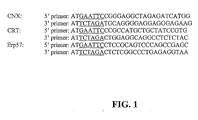
- DNA sequences encoding the calnexin protein are synthesized by RT-PCR using primers depicted in Figure 1 .
- an "expression vector” refers to a DNA molecule, or a clone of such a molecule, which has been modified through human intervention to contain segments of DNA combined and juxtaposed in a manner that would not otherwise exist in nature.
- DNA constructs may be engineered to include a first DNA segment encoding a polypeptide of the present invention operably linked to additional DNA segments required for the expression of the first DNA segment.
- additional DNA segments will generally include promoters and transcription terminators and may further include enhancers and other elements.
- One or more selectable markers may also be included.
- DNA constructs useful for expressing cloned DNA segments in a variety of prokaryotic and eukaryotic host cells can be prepared from readily available components or purchased from commercial suppliers.
- DNA constructs may also contain DNA segments necessary to direct the secretion of a polypeptide or protein of interest. Such DNA segments may include at least one secretory signal sequence.
- Secretory signal sequences also called leader sequences, prepro sequences and/or pre sequences, are amino acid sequences that act to direct the secretion of mature polypeptides or proteins from a cell. Such sequences are characterized by a core of hydrophobic amino acids and are typically (but not exclusively) found at the amino termini of newly synthesized proteins. Very often the secretory peptide is cleaved from the mature protein during secretion. Such secretory peptides contain processing sites that allow cleavage of the secretory peptide from the mature protein as it passes through the secretory pathway.
- a recombinant protein may contain a secretory signal sequence in its original amino acid sequence, or may be engineered to become a secreted protein by inserting an engineered secretory signal sequence into its original amino acid sequence.
- suitable promoters, terminators and secretory signals is well within the level of ordinary skill in the art. Expression of cloned genes in cultured mammalian cells and in E. coli, for example, is discussed in detail in Sambrook et al. (Molecular Cloning: A Laboratory Manual, Second Edition, Cold Spring Harbor, N.Y., 1989 ; which is incorporated herein by reference).
- recombinant protein product refers to a recombinant protein or fragment thereof expressed from the genetic material introduced into the host mammalian cell.
- the cell may be maintained either transiently transformed or stably transformed with said DNA construct.
- Introduction of multiple DNA constructs, and selection of cells containing the multiple DNA constructs can be done either simultaneously or, more preferably, sequentially.
- the technique of establishing a cell line stably transformed with a genetic material or expression vector is well known in the art (Current Protocols in Molecular Biology).
- the growth medium will select for cells containing the DNA construct by, for example, drug selection or deficiency in an essential nutrient, which is complemented by a selectable marker on the DNA construct or co-transfected with the DNA construct.
- Cultured mammalian cells are generally cultured in commercially available serum-containing or serum-free medium. Selection of a medium appropriate for the particular host cell used is within the level of ordinary skill in the art.
- Suitable selectable markers for drug selection used in this invention include, but are not limited to, neomycin (G418), hygromycin, puromycin, zeocin, colchine, methotrexate, and methionine sulfoximine.
- individual clones may be selected and screened for high expressing clones.
- Methods of establishing cloned cell line are well known in the art, including, but not limited to, using a cloning cylinder, or by limiting dilution.
- Expression of the recombinant product of interest from each clone can be measured by methods such as, but not limited to, immunoassay, enzymatic assay, or chromogenic assay.
- Cell line stably transformed with a first DNA construct may be then used as host cell for transfection with a second or more DNA constructs, and subjected to different drug selections.
- a mammalian host cell with enhanced expression and secretion of bikunin protein or fragment thereof wherein the mammalian host cell is further transformed with at least one expression vector comprising DNA encoding a chaperone protein selected from the group consisting of calnexin, calreticulin, Erp57, Hsp40, and Hsp70.
- a chaperone protein selected from the group consisting of calnexin, calreticulin, Erp57, Hsp40, and Hsp70.
- the mammalian host cell with enhanced expression and secretion of bikunin is a CHO cell.
- bikunin refers to any protein, which has at least one Kunitz domain. Kunitz-type domains have been described in references such as Laskowski et al., 1980, Ann Rev Biochem. 49:593-626 ; and U.S. Patent No. 5,914,315 (June 22, 1999 ).
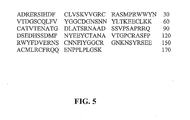
- the term bikunin used herein refers to the amino acid sequence shown in Figure 5 . Other bikunin proteins and fragments thereof are described in U.S.
- the invention provides a mammalian host cell with enhanced expression and secretion of Factor VIII protein or fragment thereof, and the mammalian host cell is further transformed with at least one expression vector comprising DNA encoding a chaperone protein selected from the group consisting of calnexin, calreticulin, Erp57, Hsp40, and Hsp70.
- a chaperone protein selected from the group consisting of calnexin, calreticulin, Erp57, Hsp40, and Hsp70.
- the Factor VIII protein has the sequence depicted in U.S. Patent No. 4,965,199 (incorporated herein by reference in its entirety).
- the mammalian host cell with enhanced expression and secretion of Factor VIII is a BHK cell.
- the invention provides a mammalian host cell with enhanced expression and secretion of IL2SA protein or fragment thereof, and the mammalian host cell is further transformed with at least one expression vector comprising DNA encoding a chaperone protein selected from the group consisting of calnexin, calreticulin, Erp57, Hsp40, and Hsp70.
- a chaperone protein selected from the group consisting of calnexin, calreticulin, Erp57, Hsp40, and Hsp70.
- the IL2SA protein has the sequence depicted in US patent No. 6,348,192 (incorporated herein by reference in its entirety).
- the mammalian host cell with enhanced expression and secretion of IL2SA is a CHO cell.
- the mammalian host cell is further transformed with an expression vector encoding a glutamine synthetase protein.
- the present invention also provides a method for producing a mammalian host cell for enhanced expression of a target recombinant protein or fragment thereof comprising: providing a mammalian cell having genetic material coding for expression of a target recombinant protein or fragment thereof; and transforming the mammalian cell with at least one expression vector comprising DNA encoding a chaperone protein selected from the group consisting of calnexin, calreticulin, Erp57, Hsp40, and Hsp70.
- a chaperone protein selected from the group consisting of calnexin, calreticulin, Erp57, Hsp40, and Hsp70.
- the genetic material coding for expression of said recombinant protein product is integrated into host cell DNA.
- the mammalian host cell is further transformed with an expression vector comprising DNA encoding a glutamine synthetase protein.
- the recombinant protein product is bilcunin or fragment thereof and the transformation occurs with an expression vector comprising DNA encoding calnexin, Erp57, calreticulin, or Hsp70.
- the recombinant protein product is Factor VIII or fragment thereof and the transformation occurs with a first expression vector comprising DNA encoding calreticulin and a second expression vector comprising DNA encoding Erp57.
- the recombinant protein product is Factor VIII or fragment thereof and the transformation occurs with an expression vector comprising DNA encoding calnexin or Hsp70.
- the recombinant protein product is IL2SA or fragment thereof and the transformation occurs with an expression vector comprising DNA encoding Hsp70.
- the present invention also provides a method for producing a secreted recombinant protein product comprising culturing a mammalian host cell, said mammalian host cell having a genetic material coding for expression of said recombinant product and further transformed with at least one expression vector comprising DNA encoding a chaperone protein elected from the group consisting of calnexin, calreticulin, Erp57, Hsp40, and Hsp70; and recovering from the culture medium the bikunin protein or fragment thereof so produced and secreted.
- the method for producing a secreted recombinant protein product comprising culturing a mammalian host cell, wherein the mammalian host cell is stably transformed with a genetic material coding for the expression of said recombinant product.
- the method for producing a secreted recombinant protein product further comprises transfecting the mammalian host cell with an expression vector encoding a glutamine synthetase protein.
- One embodiment of the invention provides a method of producing a bikunin protein or fragment thereof, comprising culturing a mammalian host cell expressing bikunin or fragment thereof, and at least one of the chaperone proteins selected from the group consisting of calnexin, calreticulin, Erp57, Hsp40, and Hsp70; and recovering from the culture medium the bikunin protein or fragment thereof so produced and secreted.
- a method for enhanced production of a recombinant bikunin protein in a CHO cell wherein a genetic material coding for expression of said recombinant bikunin has been previously introduced into a first CHO cell line (as described in U.S. Patent Application Serial No. 09/441,654 to Chan filed November 12, 1999 , incorporated herein by reference), comprising the steps of: inserting at least one chaperone protein expression vector into said first CHO cell line so as to form a modified CHO cell line; and selecting from said modified CHO cell line at least one second cell exhibiting enhanced yield of the recombinant bikunin protein.
- the method for enhancing recombinant bikunin yield in a CHO cell line comprises introducing a genetic material for such bikunin into a CHO cell line, wherein the CHO cell line exhibits enhanced chaperone protein expression.
- a method for enhanced production of a recombinant Factor VIII protein in a BHK cells comprising the steps of: inserting at least one chaperone protein expression vector into said first BHK cell line so as to form a modified BHK cell line; and selecting from said modified BHK cell line at least one second cell exhibiting enhanced yield of the recombinant Factor VIII protein.
- the method for enhancing recombinant Factor VIII yield in a BHK cell line comprises introducing a genetic material for such Factor VIII into a BHK cell line, wherein the BHK cell line exhibits enhanced chaperone protein expression.
- the present invention also provides a method for enhanced production of a recombinant IL2SA protein into a CHO cell, wherein a genetic material coding for expression of said recombinant IL2SA has been previously introduced into a first CHO cell line, comprising the steps of: inserting at least one chaperone protein expression vector into said first CHO cell line so as to form a modified CHO cell line; and selecting from said modified CHO cell line at least one second cell exhibiting enhanced yield of the recombinant IL2SA protein.
- the method for enhancing recombinant IL2SA yield in a CHO cell line comprises introducing a genetic material for such IL2SA into a CHO cell line, wherein the CHO cell line exhibits enhanced chaperone protein expression.
- the PCR reactions were performed using high fidelity PFU enzyme (Stratagene). Bands of the expected size were purified, digested with EcoR I and Xba I and cloned into the similarly digested pCI-neo vector. Recombinant vectors from this step were propagated in E. Coli followed by isolation and purification of the vector sequences.
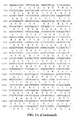
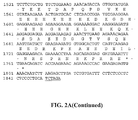
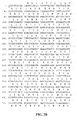
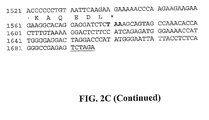
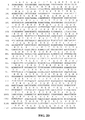
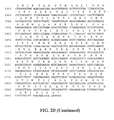
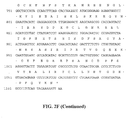
- the sequence inserts representing the chaperones were sequenced using primers binding just outside the multiple cloning sites of the vector as well as within the chaperone sequence. Sequencing was done using the Big Dye terminator method on MJ Research's thermal cycler and analyzed using an ABI 310 Genetic Analyzer. The cDNA sequences of human calnexin, clareticulin and Erp57 are shown in Figures 2A-2C .
- the primer sequences of Hsp 70 were derived from the previously published sequence for the human heat shock protein (Hsp70) gene [9].
- the F-Hsp70 and R-Hsp70 primers included either an EcoRI or XbaI sequence respectively.
- the desired PCR fragment was purified by agarose gel electrophoresis and confirmed by nucleotide sequencing.
- the full-length human Hsp70 cDNA fragment was then inserted into the EcoRI and XbaI cloning sites of the pCI-neo vector to form the pCI-neo-Hsp70 vector.
- the pCI-neo-Hsp70 vector was propagated in E. Coli followed by isolation and purification of the vector sequences.
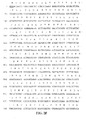
- pCI-neo-Hsp70 plasmid DNA was sequenced by ABI PRISM 310 Genetic Analyzer. The sequence of human Hsp70 is shown in Figure 2D .
- Bikunin production is increased in CHO cells after transfection of an ER chaperone such as calnexin, calreticulin, Erp57 or Hsp70.
- an ER chaperone such as calnexin, calreticulin, Erp57 or Hsp70.
- a CHO cell line secreting the Bikunin recombinant protein ( U.S. Patent Application Serial No. 09/441654 , incorporated herein by reference) was super transfected with various combinations of the ER chaperones, calnexin (CNX), calreticulin (CRT), ERp57 or Hsp70 followed by selection with G418. Populations were obtained and screened by kallikrein assay ( U.S. Patent Application Serial No. 09/441,654 , incorporated herein by reference).
- bikunin standarts or culture fluid was serially diluted and incubated with an equal volume of kallikrein at 37°C for 30 minutes, after which a chromogenic substrate, N-benzoyl-Pro-Phe-Arg-pNA, was added. The reaction was incubated for 15 minutes before the addition of 50% acetic acid. The amount of p-nitroanilide released was measured at 405 nM.
- Populations showing the highest Bikunin titers were then single cell cloned and growth expanded over a period of several weeks. Clones showing consistently higher Bikunin titers (2-4x) relative to the control CF9-20 cells were retained and expanded into shake flasks for further analysis. These clones were further narrowed based on Bikunin titers and growth characteristics demonstrated while growing in the shake flask environment. Final candidate clones were selected after several rounds and extensive analyses at the shake flask stage.
- the specific Bikunin production rate for all cell lines is expressed as pg Bikunin/cell/day (SPR).
- SPR specific Bikunin production rate for all cell lines.
- SPR pg Bikunin/cell/day
- cells were harvested and transferred into fresh media and incubated for 24 hours at 37°C in shaking flasks. The following day, cells were harvested again, counted and re-suspended into fresh media of the same volume and incubated similarly for another 24 hours.
- Bikunin activity measurements (pg/cell/day) were conducted on samples of the spent media. The same procedure was repeated every day until the cell number and viability started to decrease.
- Example 3 Recombinant Factor VIII production is increased in BHK cells after transfection with ER chaperones.
- MWCB1 Stable Factor VIII producing cells
- pPUR a vector containing puromycin-resistant gene
- Approximately 4 x 10 6 MWCB1 cells were transfected with a total of 5 ⁇ g of DNA using the DMRIE-C reagent and OPTI-MEM medium (Life Technology, MD) in 6-well plates.
- OPTI-MEM medium Life Technology, MD
- Recombinant CHO cells (as described in Example 2) expressing high levels of bikunin, and recombinant BHK cells (as described in Example 3) expressing high levels of recombinant Factor VIII (rFVIII) were super-transfected with pHyg (plasmid conferring hygromycin resistance) and pBiP.
- the transfection conditions and selection conditions were same as in Example 2.
- clones were evaluated for productivity for bikunin and rFVIII activity. No significant difference in the specific productivity of clones derived from cells transfected only with the control vector (pHyg) and clones derived from cells transfected with pBiP.
- Example 5 Transfection of IL2SA - producing clone with Glutamine Synthetase (GS) and Hsp70.
- IL2SA IL2 selective agonist
- U.S. Patent No. 6,348,192 included herein by reference in its entirety
- CHO cell line 49-19-H42 (a clonal variant of ATCC deposit PTA-8)
- PCI-GS a clonal variant of ATCC deposit PTA-8
- 4 x 10 6 cells were transfected with 2.5 ⁇ g of plasmid DNA using DMRIE-C reagents and OPTI-MEM medium (Life Technology, MD) in 6-well plates according to manufacturer's instructions.
- GS and Hsp70 proteins were confirmed by FACS analysis using a flow cytometer.
- the "GS positive" cells were cultured in a glutamine-free medium supplement with 5.6 mM glutamate and 4 g/L glucose. The doubling time of these clones varied from 24 to 48 hr.
- a comparison of the productivity of the parent and clones is shown in Table 3.
- a 2- 4 fold increase in overall titer and a 2 -3 fold increase in specific productivity was observed in all the single cell clones when compared against either the pool or the parental line. Table 3.
Landscapes
- Health & Medical Sciences (AREA)
- Chemical & Material Sciences (AREA)
- Life Sciences & Earth Sciences (AREA)
- Organic Chemistry (AREA)
- Genetics & Genomics (AREA)
- Engineering & Computer Science (AREA)
- Zoology (AREA)
- Wood Science & Technology (AREA)
- Biochemistry (AREA)
- General Health & Medical Sciences (AREA)
- Biotechnology (AREA)
- Bioinformatics & Cheminformatics (AREA)
- Molecular Biology (AREA)
- General Engineering & Computer Science (AREA)
- Biomedical Technology (AREA)
- Biophysics (AREA)
- Microbiology (AREA)
- Proteomics, Peptides & Aminoacids (AREA)
- Gastroenterology & Hepatology (AREA)
- Medicinal Chemistry (AREA)
- Toxicology (AREA)
- Chemical Kinetics & Catalysis (AREA)
- General Chemical & Material Sciences (AREA)
- Physics & Mathematics (AREA)
- Plant Pathology (AREA)
- Hematology (AREA)
- Cell Biology (AREA)
- Micro-Organisms Or Cultivation Processes Thereof (AREA)
- Preparation Of Compounds By Using Micro-Organisms (AREA)
- Peptides Or Proteins (AREA)
- Enzymes And Modification Thereof (AREA)
Applications Claiming Priority (3)
| Application Number | Priority Date | Filing Date | Title |
|---|---|---|---|
| US48350503P | 2003-06-27 | 2003-06-27 | |
| EP20100013146 EP2338911B1 (fr) | 2003-06-27 | 2004-03-16 | Utilisation de chaperons moléculaires pour augmenter la fabrication de protéines sécrétées recombinantes dans les cellules de mammifères |
| EP04801776.8A EP1641825B1 (fr) | 2003-06-27 | 2004-03-16 | Utilisation de chaperons moleculaires pour augmenter la fabrication de proteines secretees recombinantes dans les cellules mammaliennes |
Related Parent Applications (4)
| Application Number | Title | Priority Date | Filing Date |
|---|---|---|---|
| EP04801776.8A Division-Into EP1641825B1 (fr) | 2003-06-27 | 2004-03-16 | Utilisation de chaperons moleculaires pour augmenter la fabrication de proteines secretees recombinantes dans les cellules mammaliennes |
| EP04801776.8A Division EP1641825B1 (fr) | 2003-06-27 | 2004-03-16 | Utilisation de chaperons moleculaires pour augmenter la fabrication de proteines secretees recombinantes dans les cellules mammaliennes |
| EP20100013146 Division-Into EP2338911B1 (fr) | 2003-06-27 | 2004-03-16 | Utilisation de chaperons moléculaires pour augmenter la fabrication de protéines sécrétées recombinantes dans les cellules de mammifères |
| EP20100013146 Division EP2338911B1 (fr) | 2003-06-27 | 2004-03-16 | Utilisation de chaperons moléculaires pour augmenter la fabrication de protéines sécrétées recombinantes dans les cellules de mammifères |
Publications (2)
| Publication Number | Publication Date |
|---|---|
| EP2808341A1 true EP2808341A1 (fr) | 2014-12-03 |
| EP2808341B1 EP2808341B1 (fr) | 2017-04-26 |
Family
ID=34102653
Family Applications (3)
| Application Number | Title | Priority Date | Filing Date |
|---|---|---|---|
| EP20100013146 Expired - Lifetime EP2338911B1 (fr) | 2003-06-27 | 2004-03-16 | Utilisation de chaperons moléculaires pour augmenter la fabrication de protéines sécrétées recombinantes dans les cellules de mammifères |
| EP14162830.5A Expired - Lifetime EP2808341B1 (fr) | 2003-06-27 | 2004-03-16 | Utilisation de chaperons moléculaires pour augmenter la fabrication de protéines sécrétées recombinantes dans les cellules de mammifères |
| EP04801776.8A Expired - Lifetime EP1641825B1 (fr) | 2003-06-27 | 2004-03-16 | Utilisation de chaperons moleculaires pour augmenter la fabrication de proteines secretees recombinantes dans les cellules mammaliennes |
Family Applications Before (1)
| Application Number | Title | Priority Date | Filing Date |
|---|---|---|---|
| EP20100013146 Expired - Lifetime EP2338911B1 (fr) | 2003-06-27 | 2004-03-16 | Utilisation de chaperons moléculaires pour augmenter la fabrication de protéines sécrétées recombinantes dans les cellules de mammifères |
Family Applications After (1)
| Application Number | Title | Priority Date | Filing Date |
|---|---|---|---|
| EP04801776.8A Expired - Lifetime EP1641825B1 (fr) | 2003-06-27 | 2004-03-16 | Utilisation de chaperons moleculaires pour augmenter la fabrication de proteines secretees recombinantes dans les cellules mammaliennes |
Country Status (6)
| Country | Link |
|---|---|
| US (8) | US7244616B2 (fr) |
| EP (3) | EP2338911B1 (fr) |
| JP (2) | JP4712694B2 (fr) |
| CA (3) | CA2529369C (fr) |
| ES (3) | ES2538794T3 (fr) |
| WO (1) | WO2005010046A1 (fr) |
Families Citing this family (25)
| Publication number | Priority date | Publication date | Assignee | Title |
|---|---|---|---|---|
| US7244616B2 (en) | 2003-06-27 | 2007-07-17 | Bayer Pharmaceuticals Corporation | Use of molecular chaperones for the enhanced production of secreted, recombinant proteins in mammalian cells |
| JP2005073621A (ja) * | 2003-09-01 | 2005-03-24 | Japan Science & Technology Agency | 脳腫瘍マーカーと脳腫瘍の診断方法 |
| US9057061B2 (en) * | 2003-12-23 | 2015-06-16 | Novozymes Biopharma Dk A/S | Gene expression technique |
| GB0329681D0 (en) * | 2003-12-23 | 2004-01-28 | Delta Biotechnology Ltd | Gene expression technique |
| GB0512707D0 (en) * | 2005-06-22 | 2005-07-27 | Delta Biotechnology Ltd | Gene expression technique |
| WO2007123489A1 (fr) | 2006-04-21 | 2007-11-01 | Agency For Science, Technology And Research | Procédé de production de protéine recombinante dans des cellules cho |
| NZ580043A (en) * | 2007-03-02 | 2012-04-27 | Boehringer Ingelheim Pharma | Improvement of protein production through increased expression of mutated start domain protein cert |
| US8540985B2 (en) | 2008-06-26 | 2013-09-24 | Orphazyme Aps | Use of Hsp70 as a regulator of enzymatic activity |
| US8399631B2 (en) * | 2008-09-11 | 2013-03-19 | Calretex Llc | Compositions and methods for purifying calreticulin |
| RU2013125923A (ru) | 2010-11-30 | 2015-01-10 | Орфазиме Апс | СПОСОБЫ УВЕЛИЧЕНИЯ ВНУТРИКЛЕТОЧНОЙ АКТИВНОСТИ Hsp70 |
| US9567577B2 (en) | 2012-03-12 | 2017-02-14 | Ares Trading S.A. | Expression vector comprising a polynucleotide encoding a modified glutamine synthetase and a method for preparing a target protein employing the same |
| EP2674495A1 (fr) * | 2012-06-14 | 2013-12-18 | Sanofi | Système d'expression dans CHO |
| FI3536797T3 (fi) * | 2013-02-01 | 2023-03-23 | Selexis Sa | Siirtogeenin tehostettu ilmentäminen ja prosessointi |
| EP3099808A2 (fr) * | 2014-01-31 | 2016-12-07 | Biogen MA Inc. | Méthodes d'augmentation de production de protéines dans des cellules de mammifères |
| US10709700B2 (en) | 2014-09-15 | 2020-07-14 | Orphazyme A/S | Arimoclomol formulation |
| EP3442530A1 (fr) | 2016-04-13 | 2019-02-20 | Orphazyme A/S | Protéines de choc thermique et homéostasie du cholestérol |
| KR20210059796A (ko) | 2016-04-29 | 2021-05-25 | 오르파짐 에이/에스 | 글루코세레브로시다제 연관 장애를 치료하기 위한 아리모클로몰 |
| GB201708866D0 (en) * | 2017-06-02 | 2017-07-19 | Univ Cape Town | Expression of chaperone proteins in planta for increased expression of heterologous polypeptides of interest |
| KR102185312B1 (ko) * | 2017-10-25 | 2020-12-02 | 재단법인 지능형 바이오 시스템 설계 및 합성 연구단 | 목적 단백질의 가용화용 조성물 및 이의 용도 |
| CN109988777A (zh) * | 2017-12-29 | 2019-07-09 | 南京金斯瑞生物科技有限公司 | 谷氨酰胺合成酶基因以及应用 |
| EP3810622A4 (fr) | 2018-06-21 | 2022-04-06 | NanoMed Holdings Pty Ltd | Promédicaments amphiphiles à base de platine |
| KR20230128462A (ko) | 2020-11-19 | 2023-09-05 | 제브라 덴마크 에이/에스 | 아리모클로몰 시트레이트 및 이의 중간체를 제조하기 위한 공정 |
| AU2022235471A1 (en) * | 2021-03-10 | 2023-09-21 | Sumitomo Pharma Co., Ltd. | Method for producing fusion protein |
| US20240150807A1 (en) * | 2021-03-10 | 2024-05-09 | Sumitomo Pharma Co., Ltd. | Method for Producing Cysteine Knot Protein |
| WO2025037708A1 (fr) * | 2023-08-16 | 2025-02-20 | Korea Advanced Institute Of Science And Technology | Procédé de sélection d'une lignée cellulaire exprimant des niveaux élevés de protéines recombinées faisant appel à un vecteur d'expression clivé de glutamine synthétase |
Citations (10)
| Publication number | Priority date | Publication date | Assignee | Title |
|---|---|---|---|---|
| US4912040A (en) | 1986-11-14 | 1990-03-27 | Genetics Institute, Inc. | Eucaryotic expression system |
| US4965199A (en) | 1984-04-20 | 1990-10-23 | Genentech, Inc. | Preparation of functional human factor VIII in mammalian cells using methotrexate based selection |
| WO1994008012A1 (fr) * | 1992-10-02 | 1994-04-14 | Research Corporation Technologies, Inc. | Procedes d'augmentation de la secretion de proteines surexprimees |
| AU679448B2 (en) | 1992-06-12 | 1997-07-03 | Merck Sharp & Dohme Corp. | Method for increasing production of disulfide bonded recombinant proteins by (saccharomyces cerevisiae) |
| WO1997033996A2 (fr) | 1996-03-11 | 1997-09-18 | Bayer Corporation | Bikunine humaine |
| US5914315A (en) | 1993-11-05 | 1999-06-22 | Zymogenetics, Inc. | Human Kunitz-type inhibitors and compositions thereof |
| WO2000037099A2 (fr) | 1998-12-22 | 2000-06-29 | Bayer Aktiengesellschaft | Technique permettant d'accelerer le debit de clairance mucociliaire en utilisant un inhibiteur de serine protease de type kunitz |
| US6136599A (en) | 1998-12-10 | 2000-10-24 | Bayer Corporation | Human hybrid host cell for mammalian gene expression |
| US6348192B1 (en) | 1999-05-11 | 2002-02-19 | Bayer Corporation | Interleukin-2 mutein expressed from mammalian cells |
| US6451597B2 (en) | 1999-05-28 | 2002-09-17 | Photogen, Inc. | Method for enhanced protein stabilization and for production of cell lines useful for production of such stabilized proteins |
Family Cites Families (14)
| Publication number | Priority date | Publication date | Assignee | Title |
|---|---|---|---|---|
| US4649132A (en) | 1983-03-31 | 1987-03-10 | Scripps Clinic And Research Foundation | Treatment of Factor VIII inhibitors |
| US5149637A (en) | 1987-04-06 | 1992-09-22 | Scripps Clinic & Research Foundation | Recombinant Factor VIIIC fragments |
| US5002874A (en) * | 1987-09-17 | 1991-03-26 | Genetics Institute, Inc. | Genetically engineered eucaryotic host cells capable of expressing modified forms of eIF-2α |
| GB2237288A (en) * | 1989-10-18 | 1991-05-01 | Celltech Ltd | Amplification of a heterologous gene in recombinant eukaryotic host cells |
| DE4113750A1 (de) | 1991-04-26 | 1992-10-29 | Boehringer Mannheim Gmbh | Verbesserung der renaturierung bei der sekretion von disulfidverbrueckten proteinen |
| JP3656277B2 (ja) | 1995-05-17 | 2005-06-08 | 味の素株式会社 | 組換えdna法によるトランスグルタミナーゼの効率的製造法 |
| FR2755446B1 (fr) | 1996-11-04 | 1999-01-08 | Inst Curie | Lignees cellulaires stables exprimant la proteine cftr ou un mutant de cette proteine, outil de selection de molecules ayant un effet sur le transport intracellulaire de ces proteines |
| US6476194B1 (en) * | 1999-06-29 | 2002-11-05 | National Research Council Of Canada | Method for folding unfolded proteins |
| JP2003050104A (ja) | 2001-08-07 | 2003-02-21 | Kyocera Corp | 画像形成装置における光学センサ装置 |
| KR100476347B1 (ko) * | 2002-09-30 | 2005-03-16 | 한국과학기술원 | 샤페론 단백질의 발현량을 조절함으로써 목적 단백질을 대량으로 생산하는 방법 |
| US7244616B2 (en) | 2003-06-27 | 2007-07-17 | Bayer Pharmaceuticals Corporation | Use of molecular chaperones for the enhanced production of secreted, recombinant proteins in mammalian cells |
| US7226781B1 (en) * | 2003-07-24 | 2007-06-05 | Belyaev Alexander S | Chaperone expression genomes |
| TWI567593B (zh) | 2014-12-18 | 2017-01-21 | 明基電通股份有限公司 | 能夠自動切換操作模式的多功能滑鼠裝置及其方法 |
| US9703894B2 (en) | 2015-09-25 | 2017-07-11 | International Business Machines Corporation | Stored data with temporal proximity analysis for very large scale data with very low built in latency |
-
2004
- 2004-03-03 US US10/792,571 patent/US7244616B2/en not_active Expired - Lifetime
- 2004-03-16 EP EP20100013146 patent/EP2338911B1/fr not_active Expired - Lifetime
- 2004-03-16 CA CA2529369A patent/CA2529369C/fr not_active Expired - Lifetime
- 2004-03-16 ES ES10013146.5T patent/ES2538794T3/es not_active Expired - Lifetime
- 2004-03-16 CA CA2850891A patent/CA2850891C/fr not_active Expired - Lifetime
- 2004-03-16 EP EP14162830.5A patent/EP2808341B1/fr not_active Expired - Lifetime
- 2004-03-16 CA CA2977618A patent/CA2977618A1/fr not_active Abandoned
- 2004-03-16 WO PCT/US2004/007993 patent/WO2005010046A1/fr not_active Ceased
- 2004-03-16 ES ES04801776.8T patent/ES2514465T3/es not_active Expired - Lifetime
- 2004-03-16 ES ES14162830.5T patent/ES2634623T3/es not_active Expired - Lifetime
- 2004-03-16 EP EP04801776.8A patent/EP1641825B1/fr not_active Expired - Lifetime
- 2004-03-16 JP JP2006517077A patent/JP4712694B2/ja not_active Expired - Lifetime
-
2007
- 2007-06-14 US US11/818,507 patent/US7951588B2/en not_active Expired - Lifetime
-
2010
- 2010-06-23 JP JP2010143013A patent/JP5117542B2/ja not_active Expired - Lifetime
-
2011
- 2011-05-25 US US13/115,417 patent/US8192985B2/en not_active Expired - Lifetime
-
2012
- 2012-05-04 US US13/464,543 patent/US8409857B1/en not_active Expired - Fee Related
-
2013
- 2013-03-06 US US13/786,614 patent/US20130189776A1/en not_active Abandoned
- 2013-03-13 US US13/800,084 patent/US8772027B2/en not_active Expired - Lifetime
- 2013-03-13 US US13/799,564 patent/US8765466B2/en not_active Expired - Lifetime
-
2014
- 2014-06-06 US US14/298,437 patent/US9284591B2/en not_active Expired - Lifetime
Patent Citations (10)
| Publication number | Priority date | Publication date | Assignee | Title |
|---|---|---|---|---|
| US4965199A (en) | 1984-04-20 | 1990-10-23 | Genentech, Inc. | Preparation of functional human factor VIII in mammalian cells using methotrexate based selection |
| US4912040A (en) | 1986-11-14 | 1990-03-27 | Genetics Institute, Inc. | Eucaryotic expression system |
| AU679448B2 (en) | 1992-06-12 | 1997-07-03 | Merck Sharp & Dohme Corp. | Method for increasing production of disulfide bonded recombinant proteins by (saccharomyces cerevisiae) |
| WO1994008012A1 (fr) * | 1992-10-02 | 1994-04-14 | Research Corporation Technologies, Inc. | Procedes d'augmentation de la secretion de proteines surexprimees |
| US5914315A (en) | 1993-11-05 | 1999-06-22 | Zymogenetics, Inc. | Human Kunitz-type inhibitors and compositions thereof |
| WO1997033996A2 (fr) | 1996-03-11 | 1997-09-18 | Bayer Corporation | Bikunine humaine |
| US6136599A (en) | 1998-12-10 | 2000-10-24 | Bayer Corporation | Human hybrid host cell for mammalian gene expression |
| WO2000037099A2 (fr) | 1998-12-22 | 2000-06-29 | Bayer Aktiengesellschaft | Technique permettant d'accelerer le debit de clairance mucociliaire en utilisant un inhibiteur de serine protease de type kunitz |
| US6348192B1 (en) | 1999-05-11 | 2002-02-19 | Bayer Corporation | Interleukin-2 mutein expressed from mammalian cells |
| US6451597B2 (en) | 1999-05-28 | 2002-09-17 | Photogen, Inc. | Method for enhanced protein stabilization and for production of cell lines useful for production of such stabilized proteins |
Non-Patent Citations (24)
| Title |
|---|
| "Current Protocols in Molecular Biology", 2003, JOHN WILEY & SONS, INC. |
| AILOR, E.; BETENBAUGH, M. J.: "Modifying secretion and post-translational processing in insect cells", CURR. OPIN. BIOTECHNOL., vol. 10, 1999, pages 142 - 145 |
| AILOR, E.; BETENBAUGH, M. J.: "Overexpression of a cytosolic chaperone to improve solubility and secretion of a recombinant IgG protein in insect cells", BIOTECHNOL. BIOENG., vol. 58, 1998, pages 196 - 203, XP009118822 |
| CHU ET AL., GENE, vol. 13, 1981, pages 197 |
| CONESA ANA ET AL: "Calnexin overexpression increases manganese peroxidase production in Aspergillus niger", APPLIED AND ENVIRONMENTAL MICROBIOLOGY, vol. 68, no. 2, February 2002 (2002-02-01), pages 846 - 851, XP002293059, ISSN: 0099-2240 * |
| DAVIS ET AL.: "Basic Methods in Molecular Biology", 1986, ELSEVIER |
| DAVIS, R.; SCHOOLEY, K.; RASMUSSEN, B.; THOMAS, J.; REDDY, P.: "Effect of PDI Overexpression on Recombinant Protein Secretion in CHO Cells", BIOTECHNOL. PROG., vol. 16, 2000, pages 736 - 743, XP055211235, DOI: doi:10.1021/bp000107q |
| DOMER, A. J.; WASLEY, L. C.; KAUFMAN, R. J.: "Overexpression of GRP78 mitigates stress induction of glucose regulated proteins and blocks secretion of selective proteins in Chinese hamster ovary cells", EMBO J., vol. 11, 1992, pages 1563 - 1571 |
| DOMER, A. J.; WASLEY, L. C.; RANEY, P.; HAUGEJORDEN, S.; GREEN, M.; KAUFMAN, R. J.: "The stress response in Chinese hamster ovary cells. Regulation of ERp72 and protein disulfide isomerase expression and secretion", J. BIOL. CHEM, vol. 265, 1990, pages 22029 - 22034 |
| DUNN, A.; LUZ, J. M.; NATALIA, D.; GAMBLE, J. A.; FREEDMAN, R. B.; TUITE, M. F.: "Protein disulphide isomerase (PDI) is required for the secretion of a native disulphide- bonded protein from Saccharomyces cerevisiae", BIOCHEM. SOC. TRANS., vol. 23, 1995, pages 78S |
| GRAHAM ET AL., VIROLOGY, vol. 52, 1973, pages 456 |
| HSU, T. A.; BETENBAUGH, M. J.: "Co-expression of molecular chaperone BiP improves immunoglobulin solubility and IgG secretion from Trichoplusia in insect cells", BIOTECLZNOL. PROG., vol. 13, 1997, pages 96 - 104 |
| HSU, T. A.; EIDEN, J. J.; BOURGAREL, P.; MEO, T.; BETENBAUGH, M. J.: "Effects of coexpressing chaperone BiP on functional antibody production in the baculovirus system", PROTEIN EXPR. PURIF, vol. 5, 1994, pages 595 - 603, XP024799884, DOI: doi:10.1006/prep.1994.1082 |
| HSU, T. A; WATSON, S.; EIDEN, J. J.; BETENBAUGH, M. J.: "Rescue of immunoglobulins from insolubility is facilitated by PDI in the baculovirus expression system", PROTEIN EXPR. PURIF., vol. 7, 1996, pages 281 - 288, XP002129475, DOI: doi:10.1006/prep.1996.0040 |
| ITO HIROMICHI ET AL: "Calreticulin is directly involved in anti-alpha3 integrin antibody-mediated secretion and activation of matrix metalloprotease-2", BIOCHEMICAL AND BIOPHYSICAL RESEARCH COMMUNICATIONS, vol. 283, no. 2, 4 May 2001 (2001-05-04), pages 297 - 302, XP002293061, ISSN: 0006-291X * |
| KAUFMAN RANDAL J ET AL: "Biosynthesis, assembly and secretion of coagulation factor VIII", BLOOD COAGULATION AND FIBRINOLYSIS, vol. 8, no. SUPPL. 2, December 1997 (1997-12-01), pages S3 - S14, XP009034682, ISSN: 0957-5235 * |
| LASKOWSLD ET AL.: "Ann Rev Biochem.", vol. 49, 1980, pages: 593 - 626 |
| OSTERMEIER, M.; DE SUTTER, K.; GEORGIOU, G.: "Eukaryotic protein disulfide isomerase complements Escherichia coli dsbA mutants and increases the yield of a heterologous secreted protein with disulfide bonds", J. BIOL. CHEM., vol. 271, 1996, pages 10616 - 10622, XP002089211, DOI: doi:10.1074/jbc.271.18.10616 |
| ROBINSON, A. S.; HINES, V.; WITTRUP, K. D.: "Protein disulfide isomerase overexpression increases secretion of foreign proteins in Saccharoniyces cerevisiae", BIOTECHNOLOGY, vol. 12, 1994, pages 381 - 384, XP002070977, DOI: doi:10.1038/nbt0494-381 |
| SAMBROOK ET AL.: "Molecular Cloning, A Laboratory Manual", 1989, COLD SPRING HARBOR LABORATORIES |
| SAMBROOK ET AL.: "Molecular Cloning: A Laboratory Manual, Second Edition,", 1989, COLD SPRING HARBOR |
| SHUSTA, E. V.; RAINES, R. T.; PLUCKTHUN, A.; WITTRUP, K. D.: "Increasing the secretory capacity of Sacclzaronzyces cerevisiae for production of single-chain antibody fragments", NAT. BIO-TECHNOL., vol. 16, 1998, pages 773 - 777, XP002138520, DOI: doi:10.1038/nbt0898-773 |
| TATE CHRISTOPHER G ET AL: "Molecular chaperones stimulate the functional expression of the cocaine-sensitive serotonin transporter", JOURNAL OF BIOLOGICAL CHEMISTRY, vol. 274, no. 25, 18 June 1999 (1999-06-18), pages 17551 - 17558, XP002293060, ISSN: 0021-9258 * |
| WUNDERLICH, M.; GLOCKSHUBER, R.: "In vivo control of redox potential during protein folding catalyzed by bacterial protein disulfide-isomerase (DsbA", J. BIOL. CHEM, vol. 268, 1993, pages 24547 - 24550, XP002561132 |
Also Published As
| Publication number | Publication date |
|---|---|
| US8765466B2 (en) | 2014-07-01 |
| US8409857B1 (en) | 2013-04-02 |
| US7951588B2 (en) | 2011-05-31 |
| WO2005010046A1 (fr) | 2005-02-03 |
| CA2977618A1 (fr) | 2005-02-03 |
| US20130189776A1 (en) | 2013-07-25 |
| US20120009670A1 (en) | 2012-01-12 |
| JP4712694B2 (ja) | 2011-06-29 |
| US20090104664A1 (en) | 2009-04-23 |
| EP2338911B1 (fr) | 2015-05-06 |
| US20130330820A1 (en) | 2013-12-12 |
| CA2850891A1 (fr) | 2005-02-03 |
| JP5117542B2 (ja) | 2013-01-16 |
| US20150037841A1 (en) | 2015-02-05 |
| EP2338911A1 (fr) | 2011-06-29 |
| JP2010263903A (ja) | 2010-11-25 |
| US9284591B2 (en) | 2016-03-15 |
| CA2529369A1 (fr) | 2005-02-03 |
| CA2850891C (fr) | 2017-10-10 |
| ES2514465T3 (es) | 2014-10-28 |
| US20050048608A1 (en) | 2005-03-03 |
| EP1641825B1 (fr) | 2014-09-03 |
| US7244616B2 (en) | 2007-07-17 |
| EP2808341B1 (fr) | 2017-04-26 |
| ES2538794T3 (es) | 2015-06-24 |
| US8772027B2 (en) | 2014-07-08 |
| US8192985B2 (en) | 2012-06-05 |
| US20130330819A1 (en) | 2013-12-12 |
| ES2634623T3 (es) | 2017-09-28 |
| JP2007524381A (ja) | 2007-08-30 |
| CA2529369C (fr) | 2014-07-15 |
| EP1641825A1 (fr) | 2006-04-05 |
Similar Documents
| Publication | Publication Date | Title |
|---|---|---|
| US9284591B2 (en) | Use of molecular chaperones for the enhanced production of secreted, recombinant proteins in mammalian cells | |
| JP5432117B2 (ja) | 宿主細胞中の組換えタンパク質の発現を増進するための組換え発現ベクター要素(rEVE) | |
| JP2003510087A (ja) | アポトーシス阻害剤を用いた組換えタンパク質の作成方法 | |
| CN102007146A (zh) | 用于制备多克隆蛋白质的方法 | |
| CN102498212B (zh) | Cho/cert细胞系 | |
| JP6861637B2 (ja) | グロビン遺伝子クラスターの制御エレメントを含む真核性の発現ベクター | |
| JP7826509B2 (ja) | 選択マーカーとしての新規グルタミン合成酵素変異体 | |
| CN120152986A (zh) | 一种稳定、高滴度大规模生产重组蛋白的新型表达平台 | |
| JP2002507894A (ja) | 真核生物宿主細胞においてタンパク質の分泌を増加するための方法 | |
| HK1167429A (en) | Cho/cert cell lines |
Legal Events
| Date | Code | Title | Description |
|---|---|---|---|
| PUAI | Public reference made under article 153(3) epc to a published international application that has entered the european phase |
Free format text: ORIGINAL CODE: 0009012 |
|
| 17P | Request for examination filed |
Effective date: 20140331 |
|
| AC | Divisional application: reference to earlier application |
Ref document number: 2338911 Country of ref document: EP Kind code of ref document: P Ref document number: 1641825 Country of ref document: EP Kind code of ref document: P |
|
| AK | Designated contracting states |
Kind code of ref document: A1 Designated state(s): DE ES FR GB IT |
|
| RIN1 | Information on inventor provided before grant (corrected) |
Inventor name: CHAN, SHAM-YUEN Inventor name: TANG, HSINYI, YVETTE Inventor name: WU, YONGJIAN Inventor name: TAO, YIWEN Inventor name: KELLY, RUTH |
|
| RAP1 | Party data changed (applicant data changed or rights of an application transferred) |
Owner name: BAYER HEALTHCARE LLC |
|
| R17P | Request for examination filed (corrected) |
Effective date: 20150603 |
|
| RBV | Designated contracting states (corrected) |
Designated state(s): DE ES FR GB IT |
|
| 17Q | First examination report despatched |
Effective date: 20160401 |
|
| GRAP | Despatch of communication of intention to grant a patent |
Free format text: ORIGINAL CODE: EPIDOSNIGR1 |
|
| INTG | Intention to grant announced |
Effective date: 20161111 |
|
| GRAS | Grant fee paid |
Free format text: ORIGINAL CODE: EPIDOSNIGR3 |
|
| GRAA | (expected) grant |
Free format text: ORIGINAL CODE: 0009210 |
|
| RIN1 | Information on inventor provided before grant (corrected) |
Inventor name: CHAN, SHAM-YUEN Inventor name: WU, YONGJIAN Inventor name: KELLY, RUTH Inventor name: TANG, HSINYI, YVETTE Inventor name: TAO, YIWEN |
|
| AC | Divisional application: reference to earlier application |
Ref document number: 1641825 Country of ref document: EP Kind code of ref document: P Ref document number: 2338911 Country of ref document: EP Kind code of ref document: P |
|
| AK | Designated contracting states |
Kind code of ref document: B1 Designated state(s): DE ES FR GB IT |
|
| REG | Reference to a national code |
Ref country code: GB Ref legal event code: FG4D |
|
| REG | Reference to a national code |
Ref country code: DE Ref legal event code: R096 Ref document number: 602004051175 Country of ref document: DE |
|
| REG | Reference to a national code |
Ref country code: ES Ref legal event code: FG2A Ref document number: 2634623 Country of ref document: ES Kind code of ref document: T3 Effective date: 20170928 |
|
| REG | Reference to a national code |
Ref country code: DE Ref legal event code: R097 Ref document number: 602004051175 Country of ref document: DE |
|
| REG | Reference to a national code |
Ref country code: FR Ref legal event code: PLFP Year of fee payment: 15 |
|
| PLBE | No opposition filed within time limit |
Free format text: ORIGINAL CODE: 0009261 |
|
| STAA | Information on the status of an ep patent application or granted ep patent |
Free format text: STATUS: NO OPPOSITION FILED WITHIN TIME LIMIT |
|
| 26N | No opposition filed |
Effective date: 20180129 |
|
| PGFP | Annual fee paid to national office [announced via postgrant information from national office to epo] |
Ref country code: FR Payment date: 20230221 Year of fee payment: 20 |
|
| PGFP | Annual fee paid to national office [announced via postgrant information from national office to epo] |
Ref country code: IT Payment date: 20230228 Year of fee payment: 20 Ref country code: GB Payment date: 20230216 Year of fee payment: 20 Ref country code: DE Payment date: 20230222 Year of fee payment: 20 |
|
| P01 | Opt-out of the competence of the unified patent court (upc) registered |
Effective date: 20230507 |
|
| PGFP | Annual fee paid to national office [announced via postgrant information from national office to epo] |
Ref country code: ES Payment date: 20230406 Year of fee payment: 20 |
|
| REG | Reference to a national code |
Ref country code: DE Ref legal event code: R071 Ref document number: 602004051175 Country of ref document: DE |
|
| REG | Reference to a national code |
Ref country code: GB Ref legal event code: PE20 Expiry date: 20240315 |
|
| PG25 | Lapsed in a contracting state [announced via postgrant information from national office to epo] |
Ref country code: GB Free format text: LAPSE BECAUSE OF EXPIRATION OF PROTECTION Effective date: 20240315 |
|
| REG | Reference to a national code |
Ref country code: ES Ref legal event code: FD2A Effective date: 20240506 |
|
| PG25 | Lapsed in a contracting state [announced via postgrant information from national office to epo] |
Ref country code: ES Free format text: LAPSE BECAUSE OF EXPIRATION OF PROTECTION Effective date: 20240317 |
|
| PG25 | Lapsed in a contracting state [announced via postgrant information from national office to epo] |
Ref country code: ES Free format text: LAPSE BECAUSE OF EXPIRATION OF PROTECTION Effective date: 20240317 |