EP2809075A2 - Procédé et appareil de commutation de canal utilisant des tables PSI pré-acquises - Google Patents
Procédé et appareil de commutation de canal utilisant des tables PSI pré-acquises Download PDFInfo
- Publication number
- EP2809075A2 EP2809075A2 EP14155640.7A EP14155640A EP2809075A2 EP 2809075 A2 EP2809075 A2 EP 2809075A2 EP 14155640 A EP14155640 A EP 14155640A EP 2809075 A2 EP2809075 A2 EP 2809075A2
- Authority
- EP
- European Patent Office
- Prior art keywords
- channel
- information
- channel information
- pmt
- pat
- Prior art date
- Legal status (The legal status is an assumption and is not a legal conclusion. Google has not performed a legal analysis and makes no representation as to the accuracy of the status listed.)
- Withdrawn
Links
Images





Classifications
-
- H—ELECTRICITY
- H04—ELECTRIC COMMUNICATION TECHNIQUE
- H04N—PICTORIAL COMMUNICATION, e.g. TELEVISION
- H04N21/00—Selective content distribution, e.g. interactive television or video on demand [VOD]
- H04N21/40—Client devices specifically adapted for the reception of or interaction with content, e.g. set-top-box [STB]; Operations thereof
- H04N21/47—End-user applications
- H04N21/482—End-user interface for programme selection
-
- H—ELECTRICITY
- H04—ELECTRIC COMMUNICATION TECHNIQUE
- H04N—PICTORIAL COMMUNICATION, e.g. TELEVISION
- H04N21/00—Selective content distribution, e.g. interactive television or video on demand [VOD]
- H04N21/20—Servers specifically adapted for the distribution of content, e.g. VOD servers; Operations thereof
- H04N21/23—Processing of content or additional data; Elementary server operations; Server middleware
- H04N21/236—Assembling of a multiplex stream, e.g. transport stream, by combining a video stream with other content or additional data, e.g. inserting a URL [Uniform Resource Locator] into a video stream, multiplexing software data into a video stream; Remultiplexing of multiplex streams; Insertion of stuffing bits into the multiplex stream, e.g. to obtain a constant bit-rate; Assembling of a packetised elementary stream
- H04N21/2362—Generation or processing of Service Information [SI]
-
- H—ELECTRICITY
- H04—ELECTRIC COMMUNICATION TECHNIQUE
- H04N—PICTORIAL COMMUNICATION, e.g. TELEVISION
- H04N5/00—Details of television systems
- H04N5/44—Receiver circuitry for the reception of television signals according to analogue transmission standards
- H04N5/50—Tuning indicators; Automatic tuning control
-
- H—ELECTRICITY
- H04—ELECTRIC COMMUNICATION TECHNIQUE
- H04N—PICTORIAL COMMUNICATION, e.g. TELEVISION
- H04N21/00—Selective content distribution, e.g. interactive television or video on demand [VOD]
- H04N21/40—Client devices specifically adapted for the reception of or interaction with content, e.g. set-top-box [STB]; Operations thereof
- H04N21/41—Structure of client; Structure of client peripherals
- H04N21/426—Internal components of the client ; Characteristics thereof
- H04N21/42607—Internal components of the client ; Characteristics thereof for processing the incoming bitstream
- H04N21/4263—Internal components of the client ; Characteristics thereof for processing the incoming bitstream involving specific tuning arrangements, e.g. two tuners
-
- H—ELECTRICITY
- H04—ELECTRIC COMMUNICATION TECHNIQUE
- H04N—PICTORIAL COMMUNICATION, e.g. TELEVISION
- H04N21/00—Selective content distribution, e.g. interactive television or video on demand [VOD]
- H04N21/40—Client devices specifically adapted for the reception of or interaction with content, e.g. set-top-box [STB]; Operations thereof
- H04N21/43—Processing of content or additional data, e.g. demultiplexing additional data from a digital video stream; Elementary client operations, e.g. monitoring of home network or synchronising decoder's clock; Client middleware
- H04N21/433—Content storage operation, e.g. storage operation in response to a pause request, caching operations
- H04N21/4332—Content storage operation, e.g. storage operation in response to a pause request, caching operations by placing content in organized collections, e.g. local EPG data repository
-
- H—ELECTRICITY
- H04—ELECTRIC COMMUNICATION TECHNIQUE
- H04N—PICTORIAL COMMUNICATION, e.g. TELEVISION
- H04N21/00—Selective content distribution, e.g. interactive television or video on demand [VOD]
- H04N21/40—Client devices specifically adapted for the reception of or interaction with content, e.g. set-top-box [STB]; Operations thereof
- H04N21/43—Processing of content or additional data, e.g. demultiplexing additional data from a digital video stream; Elementary client operations, e.g. monitoring of home network or synchronising decoder's clock; Client middleware
- H04N21/434—Disassembling of a multiplex stream, e.g. demultiplexing audio and video streams, extraction of additional data from a video stream; Remultiplexing of multiplex streams; Extraction or processing of SI; Disassembling of packetised elementary stream
- H04N21/4345—Extraction or processing of SI, e.g. extracting service information from an MPEG stream
-
- H—ELECTRICITY
- H04—ELECTRIC COMMUNICATION TECHNIQUE
- H04N—PICTORIAL COMMUNICATION, e.g. TELEVISION
- H04N21/00—Selective content distribution, e.g. interactive television or video on demand [VOD]
- H04N21/40—Client devices specifically adapted for the reception of or interaction with content, e.g. set-top-box [STB]; Operations thereof
- H04N21/43—Processing of content or additional data, e.g. demultiplexing additional data from a digital video stream; Elementary client operations, e.g. monitoring of home network or synchronising decoder's clock; Client middleware
- H04N21/438—Interfacing the downstream path of the transmission network originating from a server, e.g. retrieving encoded video stream packets from an IP network
- H04N21/4383—Accessing a communication channel
- H04N21/4384—Accessing a communication channel involving operations to reduce the access time, e.g. fast-tuning for reducing channel switching latency
-
- H—ELECTRICITY
- H04—ELECTRIC COMMUNICATION TECHNIQUE
- H04N—PICTORIAL COMMUNICATION, e.g. TELEVISION
- H04N21/00—Selective content distribution, e.g. interactive television or video on demand [VOD]
- H04N21/40—Client devices specifically adapted for the reception of or interaction with content, e.g. set-top-box [STB]; Operations thereof
- H04N21/45—Management operations performed by the client for facilitating the reception of or the interaction with the content or administrating data related to the end-user or to the client device itself, e.g. learning user preferences for recommending movies, resolving scheduling conflicts
- H04N21/462—Content or additional data management e.g. creating a master electronic programme guide from data received from the Internet and a Head-end or controlling the complexity of a video stream by scaling the resolution or bit-rate based on the client capabilities
- H04N21/4622—Retrieving content or additional data from different sources, e.g. from a broadcast channel and the Internet
-
- H—ELECTRICITY
- H04—ELECTRIC COMMUNICATION TECHNIQUE
- H04N—PICTORIAL COMMUNICATION, e.g. TELEVISION
- H04N21/00—Selective content distribution, e.g. interactive television or video on demand [VOD]
- H04N21/60—Network structure or processes for video distribution between server and client or between remote clients; Control signalling between clients, server and network components; Transmission of management data between server and client, e.g. sending from server to client commands for recording incoming content stream; Communication details between server and client
- H04N21/61—Network physical structure; Signal processing
- H04N21/6156—Network physical structure; Signal processing specially adapted to the upstream path of the transmission network
- H04N21/6175—Network physical structure; Signal processing specially adapted to the upstream path of the transmission network involving transmission via Internet
-
- H—ELECTRICITY
- H04—ELECTRIC COMMUNICATION TECHNIQUE
- H04N—PICTORIAL COMMUNICATION, e.g. TELEVISION
- H04N21/00—Selective content distribution, e.g. interactive television or video on demand [VOD]
- H04N21/60—Network structure or processes for video distribution between server and client or between remote clients; Control signalling between clients, server and network components; Transmission of management data between server and client, e.g. sending from server to client commands for recording incoming content stream; Communication details between server and client
- H04N21/61—Network physical structure; Signal processing
- H04N21/6106—Network physical structure; Signal processing specially adapted to the downstream path of the transmission network
- H04N21/6125—Network physical structure; Signal processing specially adapted to the downstream path of the transmission network involving transmission via Internet
Definitions
- the present invention is related to a method for receiving broadcast signals, more specifically, a method for switching broadcast channels.
- IPTV services which provide two-way TV services through the Internet, are in common use along with the TV services using conventional broadcasting networks.
- An IPTV is connected to a set-top box which converts IP video signals to standard TV signals and if a switched video service (SVS) system is used, can connect selectively to a broadband network channel or a service such as a subscriber service and a movie according to a user's preference.
- SVS switched video service
- the IPTV has advantages such as high quality video and various additional services as well as two-way interactivity not found in the analog broadcasting such as the conventional terrestrial broadcasting.
- IPTVs when a user watching a particular channel attempts to switch to another one, conventional IPTVs cause a time delay (zapping delay) longer than that of analog broadcasting until channel switching is completed.
- the channel zapping time developed at the time of switching channels of IPTVs results from a transmission and reception method used for the IPTVs; thus, there needs a method for reducing the channel zapping time in a broadcasting system such as the IPTV.
- the present invention provides a method and apparatus for switching channels which reduce channel zapping time inherent in channel switching.
- a method for switching channels in a method for switching channels carried out by a media play apparatus, a method for switching channels according to one embodiment of the present invention intended to solve the aforementioned problem comprises obtaining information about a plurality of channels; receiving a channel switching signal; and generating channel data according to the channel switching signal by using the obtained channel information.
- the obtaining information about a plurality of channels can comprise obtaining channel information by using at least one idling tuner among a plurality of tuners.
- the obtaining channel information by using at least one idling tuner among a plurality of tuners can comprise obtaining channel information of a channel not included in a transport stream under reception.
- the channel information can be transported being contained in a program association table (PAT) or program map table (PMT) including identifiers for a plurality of transport streams.
- PAT program association table
- PMT program map table
- the PAT or PMT can further include an identifier indicating a transport stream in which the PAT or PMT is included.
- the channel information can be transported being contained in the PAT or PMT of a transport stream, and the channel information can further include channel information of a channel contained in another transport stream.
- the obtaining information of a plurality of channels can comprise obtaining channel information by using an IP network.
- the obtaining information about a plurality of channels can comprise receiving channel information from a transport stream received by using a tuner; and receiving channel information of a channel not included in the transport stream from a server by using an IP network.
- an apparatus for switching channels according to one embodiment of the present invention to solve the aforementioned problem comprises at least one tuner obtaining information about a plurality of channels; and a controller extracting channel information from the channel data and generating channel data according to a received channel switching signal by using the previously obtained channel information.
- the apparatus for switching channels can obtain the channel information by using at least one idling tuner.
- the idling tuner can obtain channel information of a channel not included in a transport stream under reception.
- the channel information can be transported being contained in a PAT or PMT including identifiers of a plurality of transport streams.
- the channel information can correspond to a PAT or PMT which includes only channel information of a channel contained in another transport stream.
- the channel information is a PAT or PMT which further includes channel information of a channel included in another transport stream, and the PAT or PMT can further include an identifier indicating a transport stream in which the PAT or PMT is included.
- the apparatus for switching channels can further comprise an IP transceiver which receives channel information from a server by using an IP network.
- the IP transceiver can receive channel information of a channel from a server, the channel being not included in a transport stream received through the tuner.
- the apparatus for switching channels can further comprise memory in which obtained channel information is stored, and the controller can store the obtained channel information in the memory when channel information stored in the memory is different from the obtained channel information and perform channel switching according to the channel switching signal by using the channel information stored in the memory.
- a media data transport packet in a media data transport packet, comprises transport stream identifiers for a plurality of media data.
- the media data transport packet includes a PAT or PMT, and the PAT or PMT can each include the transport stream identifier for a plurality of media data.
- first and second can be used for describing various components but the components should not be limited by the terms. The terms are introduced only for the purpose of distinguishing one component from the others. For example, a first component may be called a second component without departing from the scope of the present invention and vice versa.
- the term of and/or indicates a combination of a plurality of related items described or any one of a plurality of related items described.
- a component If a component is said to be “linked” or “connected” to a different component, the component may be directly linked or connected to the different component but a third component may exist to connect the two components even though the two components may be connected directly. On the other hand, if a component is said to be “linked directly” or “connected directly” to another component, it should be interpreted that there is no further component between the two components.
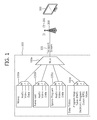
- FIG. 1 is a conceptual illustration of generating and transporting a transport stream.
- FIG. 1 illustrates a TS generator 100, TS transporter 200, and TS receiver 300.
- the TS generator 100 aggregates a movie, news cast, sport program, and data table into a transport stream (TS) by using a multiplexer, and the generated TS is delivered to the TS transporter 200.
- the TS generated in the TS generator 100 includes a movie, news cast, sport program, and data table.
- the movie, news, and sport program contains audio, video, and data; and can be played in the TS receiver 300 afterwards.
- audio, video, and data of a movie are multiplexed in the multiplexer 100a, and a data object containing the movie program is generated.
- news cast and sport program are each multiplexed in the multiplexer 100b, 100c.
- the data table includes a PMT (Program Map Table), EPG (Electronic Program Guide), and other information; the data table further includes information related to transport of a TS carried out by the TS transporter 200 and reception and use of a TS by the TS receiver 300.
- the PMT, EPG, and so on of the data table are multiplexed in the multiplexer 100d, and a data object containing the data table is generated.
- the individual data objects generated by multiplexing in the respective multiplexers 100a, 100b, 100c, 100d are multiplexed one more time in a multiplexer 100e, generating a TS.
- the TS transporter 200 receives a TS generated in the TS generator 100 and transports the received TS to the TS receiver 300 by using wired or wireless communication.
- the TS transporter 200 transports a TS by using satellite, terrestrial, cable, or other communication means.
- the TS transporter 200 transports a TS to a designated frequency band so that each individual TS can occupy a separate frequency band.
- the TS receiver 300 can obtain information needed to receive a TS by using the data table included in the TS.
- a TS includes a plurality of services such as a movie, news, TV, radio, and data channel.
- the TS can include information such as PAT (Program Association Table), PMT (Program Map Table), and SDT (Service Description Table) in the data table.
- FIG. 2 illustrates channels (services) allocated in the respective frequency bands, showing allocated frequency bands of a broadcast satellite, Astra 19.2 and transponders (TPs) for the respective frequency bands.
- TP allocated frequency bands
- TPs transponders
- the TP may denote one frequency band comprising multiple channels.
- a channel is usually referred to as a service. Therefore, the TP may be regarded as a particular frequency band including various services.
- the number of a TP allocated to 10729 MHz frequency band is 50 and the corresponding channel name is canal+.
- the TP 51 allocated to 10744 MHz frequency band multiple channels such as ARD digital, Ranschau 24, Einsfestival, and Eins Plus are found in the 10744 MHz frequency band.
- the PID meant for extracting AV (Audio Video) data of each channel (or service).
- AV Audio Video
- the video PID (VPID) to service tagesschau 24 channel of TP 51 is 101 while the audio PID (APID) is 102.
- the VPID to service Pheonix channel is 501 while the corresponding APID is 503.
- FIG. 3 is a block diagram of an apparatus 360 for switching channels according to one embodiment of the present invention.
- the apparatus 360 for switching channels can be installed in the TS receiver.
- the TS receiver may be an apparatus capable of receiving and playing a TS, such as a set-top box and a smart TV.
- the apparatus for switching channels can comprise an IP transceiver 305, receiver 310, tuner unit 320, PSI managing unit 330, controller 340, and output unit 350.
- the IP transceiver 305 renders data received from the controller 340 into IP packets and transmits the IP packets to a network. And the IP transceiver 305 delivers data obtained by receiving IP packets from the network to the controller 340.
- the IP transceiver 305 can request channel-related information about a particular channel from a server of a broadcasting station and in response to the request, receive from the server the channel-related information of a channel requested through the network.
- the channel-related information may be PSI information described later.
- the receiver 310 may denote a means for receiving radio waves.
- the receiver 310 may be an antenna.
- the receiver can deliver a received signal to the tuner unit 320.
- the tuner unit 320 can perform tuning based on a signal received from the receiver.
- the tuner unit 320 can perform tuning intended for receiving a TS by designating a frequency band.
- the tuner unit 320 can comprise a plurality of tuners; the tuner unit 320 can receive a TS of one frequency band by using one or more tuners.
- the tuner unit 320 can receive a TS from a plurality of frequency bands by using a plurality of tuners. When the individual tuners are tuned to the respective frequency bands, the tuner 320 can receive a TS according to each frequency band.
- the tuner unit 320 can deliver a TS generated from a received signal and other information to the PSI managing unit 330 and the controller 340. Meanwhile, in another embodiment of the present invention, the tuner 320 may not deliver 322 information directly to the PSI managing unit 330. In this case, the information can be delivered indirectly by a different entity. For example, the controller 340 may deliver the information delivered to the controller 340 to the PSI managing unit 330.
- the PSI managing unit 330 can manage program specific information (PSI) of each channel.
- the PSI can include information about multiplexing of program streams within a TS and network information.
- the PSI can include PAT (Program Association Table), PMT (Program Map Table), or CAT (Conditional Access Table).
- the PAT is a table carrying PIDs of PMTs.
- the PID of a PAT can be zero.
- the PMT is a table carrying PIDs of audio, video, and data stream constituting a program.
- the CAT is a table carrying conditional access management information.
- the PSI managing unit 330 can extract channel information such as PID and deliver the extracted channel information to the controller 340.
- the controller 340 can control the overall operation of an apparatus for switching channels.
- the controller 340 can control interaction and data flow of the receiver 310, tuner unit 320, PSI managing unit 330, and output unit 350.
- the controller 340 can be implemented to carry out a function of the PSI managing unit 330.
- the controller 340 demuxes a TS into audio, video, and data part to service each channel.
- the controller 340 to separate the TS into video, audio, and the like, can use the aforementioned PID.
- the PMT may carry the PID.
- the controller 340 to obtain the PMT, obtains a TS by tuning a tuner to the frequency band of a TP, obtains the PSI from the TS, and extract the PMT of the corresponding channel from the PAT contained in the PSI.
- the controller 340 extracts the PID from PSI information at the time of channel switching and by using the extracted PID, extracts audio and video data. In this case, a predetermined time period is required for channel switching.
- PIDs meant for audio and video of a channel can be pre-stored.
- the controller 340 may search channels for PIDs or store the PIDs by receiving channel information at the time of channel switching.
- the PID may be a PID of audio or video.
- the controller 340 can store PIDs of audio and video while searching the channels.
- the controller 340 while searching the channels by using one tuner, can store PIDs of audio and video of a channel found.
- the controller 340 can store PIDs of channels by receiving channel information related to channels switching at the time of channel switching.
- the related channels may be other channels of a TP including the channels switching or channels belonging to a set comprising channels of interest preset along with the channels switching.
- the controller 340 can change and store the PID.
- the controller 340 decides change of PID in case the stored PID differs from the PID of a received channel, or change of a channel's PID is reflected in the information of the received channel.
- the controller 340 may store PIDs of the whole channels belonging to the TP to which the channel to be switched belongs, or check each PID of the whole channels belonging to the TP to which the channel to be switched belongs whether the PIDs have changed and store only the PIDs which have been changed. Similarly, irrespective of whether the PID of a channel to be switched has been changed, the controller 340 checks whether the PIDs of channels included in a TP to which the channels to be switched belong have been changed, and if it is found that the PIDs have been changed, the controller 340 stores the PID of the corresponding channel. In this case, too, the controller 340 can store the PID of audio and video data of a switched channel while switching channels by using one tuner.
- the controller 340 obtains PIDs by receiving channel information of the whole channels when the apparatus for switching channels enters a waiting mode or stays in the waiting mode, and if the PID of a channel is changed, the controller 340 stores the PID of the corresponding channel. In case the apparatus for switching channels enters the waiting mode, too, an update of the PID can be carried out by one tuner.
- the controller 340 can search for channel information by using an idling tuner.
- An idling tuner refers to a tuner not currently used, and for example, it can be a tuner not receiving a TS.
- an idling tuner not receiving a TS can be employed to store or update PIDs by receiving channel information of other channels.
- the number of idling tuners is two or more, a plurality of channel information can be received simultaneously from a plurality of TPs by using all the tuners available.
- the above examples of receiving channel information by using one tuner can be carried out by using an idling tuner.
- the idling tuner can be employed to receive the channel information.
- the controller 340 may search the channels by using an idling tuner and receive channel information and store PIDs of the channels.
- the controller 340 can receive channel information by using the idling tuner. In these examples, too, in case the number of idling tuners is two or more, a plurality of channel information can be received at the same time from multiple TPs by using all the tuners available.
- the controller 340 can receive channel information from a server by using the IP transceiver 305.
- the controller 340 can receive the channel information by using the IP transceiver as well as the tuner described above.
- the controller 340 may employ the tuner to receive channel information of channels included in a TP to which currently switching channels or channels under reception belong and to update PIDs while the controller 340 may utilize the IP transceiver 305 to receive channel information of channels included in other TPs but the TP and to update the PIDs.
- the controller 340 can receive channel information by using only the IP transceiver without employing a tuner. For example, in case the tuner is not in good reception conditions or no idling tuner is available, the controller 340 can receive channel information from a server of a broadcasting station by using the IP transceiver and obtain PIDs. For example, the controller 340 may receive channel information of a TP to which a TS-receiving channel belongs by using the IP transceiver 305 or receive channel information of the whole TPs.
- the controller 340 can transmit to the server a request inquiring about whether the PID of a particular channel has been changed, and the server, in response to the request, can transmit only the PID information of a channel, the PID of which has been changed to the apparatus for switching channels. In case no channel shows the PID change, the server may not reply to the request at all.
- the controller 340 receives only the PID information of the channel, the PID of which has been changed, changes the PID, and stores the changed PID.
- the request inquiring of PID change transmitted to the server by the controller 340 may include information about time at which the PID is updated in the apparatus for switching channels. Therefore, the server can transmit the PID of a channel, the PID of which has been changed, to the apparatus for switching channels after the update time.
- An apparatus for switching channels can store PID information of a plurality of elementary streams (ESs) included in a plurality of TSs in the PSI managing unit 340 beforehand by using a plurality of tuners.
- the PSI managing unit 330 obtains PSI from the obtained TS and extracts PMT of the corresponding channel from the PAT of the obtained PSI. And the PSI managing unit 330 extracts PIDs within the extracted PMT. Then the PSI managing unit 330 provides the extracted PID according to a request of the controller 340. In other words, the PSI managing unit 330 extracts PIDs from PSI information of a plurality of TSs independently of channel switching and stores the extracted PIDs.
- ESs elementary streams
- the controller 340 requests from the PSI managing unit 330 the PID of a channel to switch, and the PSI managing unit 330 provides the PID of the corresponding channel according to a request of the controller 340.
- the controller 340 can extract audio and video data by using the PID received from the PSI managing unit 330. In this case, a series of processes for the controller 340 to extract PIDs from a TS at the time of channel switching may be skipped. In other words, the time required for switching channels can be reduced.
- the PSI is a value which can be changed as time passes; in the case of a set-top box equipped with a plurality of tuners, PID information of an ES (Elementary Stream) can be extracted periodically by receiving at least one of PSI data of the whole TPs searched by employing the resources of tuners not in use.
- PID information of an ES Elementary Stream
- the extracted information may include all the information to reduce the time required for channel switching.
- the extracted information may include SI (System Information), PSI (Program Specific Information), and so on.
- the extracted channel information can be stored in the RAM or flash memory though not shown in FIG. 3 but included in the apparatus for switching channels.
- the controller 340 by using channel information stored in the RAM or flash memory, can play audio and video by performing AV filtering immediately after tuning of the tuner without extracting PIDs at the time of channel switching.
- the PSI information generated at the TS generator 100 and transmitted to the TS receiver 300 can further comprise at least one of PSI_other, PAT_other, PMT_other, and PID_other.
- PSI_other is a PSI set of at least one other TS not belonging to the corresponding TS.
- PAT_other is a parameter representing the PAT value of at least one other TS rather than the corresponding TS and refers to a set of such parameters.
- PMT_other is a parameter representing the PMT value of at least one other TS rather than the corresponding TS and refers to a set of such parameters.
- PID_other is also a parameter representing the PID value of at least one other TS rather than the corresponding TS and refers to a set of such parameters.
- the apparatus for switching channels can extract PSI, PAT, PMT, or PID of other TP from the corresponding TS along with reception of the corresponding TS.
- the apparatus for switching channels can receive at least one of PSI_other, PAT_other, PMT_other, and PID_other, which can be received by using an idling tuner or from a server by using the IP transceiver 305.
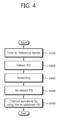
- FIG. 4 is a flow diagram of a method for switching channels according to one embodiment of the present invention.
- the tuner 320 in response to the control of the controller, tunes a received signal to a frequency band of a particular TP S410. Due to the tuning, a particular TS is obtained.
- the PSI managing unit 330 extracts PSI from the TS and extracts PID from the extracted PSI S420.
- the controller 340 extracts audio and video data from the TS by using the PID extracted from the PSI managing unit 330; and proceeds streaming of media by displaying the extracted audio and video data in the output unit 350.
- the PSI managing unit 330 re-obtains PSI information of other channels in the middle of media data streaming S440. And the PSI managing unit 330 extracts PIDs from the obtained PSI information.
- the apparatus for switching channels can obtain information of other channels by using an idling tuner in addition to the tuner receiving a particular TS for streaming of media data.
- the S440 step can be carried out at regular intervals.
- the re-obtaining PSI information at the step of S440 is just an example; the channel information obtained again by the PSI managing unit may include SI, PAT, PMT, PID, and other information as well as PSI.
- the PID being included in the PAT or PMT, can be delivered from the TS generator 100 to the TS receiver 300.
- the step of S440 can be carried out to obtain PSI_other. In this case, no separate tuner is required to obtain channel information of other channels.
- the step of S440 can be carried out to obtain at least one of PAT_other, PMT_other, and PID_other as at least one of PAT_other, PMT_other, and PID_other is included in the TS.
- PAT_other is a set expression of PAT, which can be expressed in the form of an array, list, and the like.
- PMT_other and PID_other can also be expressed as a set of PMTs and PIDs.
- PSI included in the TS may include all the PSI of other TSs.
- an actual field may be introduced to distinguish the corresponding PSI of the TS from the PSI of other TSs.
- the PSI can be included in the TS in the form of an array, list, and the like.
- any one of PAT, PMT, and PID can be included in the TS along with PAT, PMT, and PID information of other TSs, and at this time, the actual field, which distinguishes the PAT, PMT, and PID information of the TS from the PAT, PMT, and PID information of other TSs, can be included therein together.
- an actual field meant for distinguishing information of the TS from the information of other TSs may not be used; to identify information of the TS, the corresponding information of the TS may be placed at a specific position among a plurality of PSI, PAT, PMT, PID, and other information.
- a channel switching signal audio and video data are extracted from the TS of a channel switched by using the PID extracted by employing the PSI information re-obtained before receiving the channel switching signal S450.
- the channel information obtained in the step of re-obtaining channel information S440 can be stored in the memory.
- the re-obtained PSI can use the PSI stored in the memory.
- Receiving the channel switching signal can be carried out by receiving the user's channel switching input triggered as the TS receiver 300 displays channel information on the display unit.
- FIG. 5 illustrates the conventional PAT.
- FIG. 6 illustrates the conventional PMT.
- FIG. 7 illustrates a transport_stream_id according to one embodiment of the present invention.
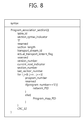
- FIG. 8 illustrates a PAT according to another embodiment of the present invention.
- FIG. 9 illustrates a PMT according to one embodiment of the present invention.
- FIG. 7 illustrates a transport_stream_id according to one embodiment of the present invention.
- the transport_stream_id according to one embodiment of the present invention can be constructed in various ways. For example, with reference to the transport_stream_id of FIG. 7 , an Actual_transport_stream_flag representing the ID of the corresponding TS appears first, and the IDs of other TSs follow the flag in a sequential order of transport_stream_id1, transport_stream_id2, ..., transport_stream_idn.
- PAT further includes an Actual_transport_stream_flag and includes a revised Transport_stream_id field.
- the Transport_stream_id field includes both the ID of a current TS and the ID of other TS.
- IDs of a plurality of TSs enables a receiver of the TS to obtain IDs of other TSs without receiving other TSs. Therefore, a TS receiving apparatus doesn't have to make a tuner tuned to the frequency band of other TP to obtain information of the TS.
- the Actual_transport_Stream_flag is a flag representing the ID of the corresponding TS.
- the flag specifies at which position of the Transport_stream_id the ID of the TS is located.
- the Actual_transport_stream_id specifies in the form of an index at which cell of the array the ID of the TS is located.
- the Actual_transport_stream_id can be made to represent the ID of the corresponding TS while the Transport_stream_id is made to represent IDs of other TSs.
- FIG. 6 illustrates the conventional PMT.
- the conventional PMT since the conventional PMT is transported and received together with an associated PAT in a TS, the conventional PMT does not include a field representing the ID of an associated TS.
- FIG. 9 illustrates a PMT according to one embodiment of the present invention.
- the PMT according to one embodiment of the present invention further includes Transport_stream_id. Since a plurality of Transport_stream_ids are transported to carry out a method for switching channels according to one embodiment of the present invention, the PMT marks the matched Transport_stream_id.
- PMTs belonging to other TSs may be transported being included in a TS.
- each PMT needs to further include the Transport_stream_id.
- a PMT may include multiple program_numbers and PIDs of ESs (elementary_PIDs) as a PAT includes multiple IDs of TSs.
- PATs and PMTs belonging to TSs different from each other are configured to further include Transport_stream_id fields to indicate the IDs of the respective TSs and can be included in one TS.
- Transport_stream_id fields to indicate the IDs of the respective TSs and can be included in one TS.
- a plurality of PATs not belonging to the corresponding TS are included in the TS being configured in the form of PAT_other; in the same way, a plurality of PMTs not belonging to the corresponding TS can be included in the TS being configured in the form of PMT_other.
- the aforementioned PAT and PMT can be compressed before being constructed.
- a method and apparatus for switching channels according to embodiments of the present invention described above stores channel information such as PSI or PID prior to channel switching and generates audio and video data of a switched channel by using the stored channel information.
- the present invention removes a process of calculating channel information such as PSI or PID of a channel to be switched to at the time of channel switching, thereby achieving the effect of reducing channel zapping time.
Landscapes
- Engineering & Computer Science (AREA)
- Multimedia (AREA)
- Signal Processing (AREA)
- Databases & Information Systems (AREA)
- Human Computer Interaction (AREA)
- Two-Way Televisions, Distribution Of Moving Picture Or The Like (AREA)
- Circuits Of Receivers In General (AREA)
Applications Claiming Priority (1)
| Application Number | Priority Date | Filing Date | Title |
|---|---|---|---|
| KR20130051739A KR20140132507A (ko) | 2013-05-08 | 2013-05-08 | 선취득한 psi를 사용하는 채널 변경 방법 및 장치 |
Publications (2)
| Publication Number | Publication Date |
|---|---|
| EP2809075A2 true EP2809075A2 (fr) | 2014-12-03 |
| EP2809075A3 EP2809075A3 (fr) | 2015-03-04 |
Family
ID=50287851
Family Applications (1)
| Application Number | Title | Priority Date | Filing Date |
|---|---|---|---|
| EP14155640.7A Withdrawn EP2809075A3 (fr) | 2013-05-08 | 2014-02-18 | Procédé et appareil de commutation de canal utilisant des tables PSI pré-acquises |
Country Status (4)
| Country | Link |
|---|---|
| US (1) | US9271045B2 (fr) |
| EP (1) | EP2809075A3 (fr) |
| KR (1) | KR20140132507A (fr) |
| CN (1) | CN104144355B (fr) |
Cited By (1)
| Publication number | Priority date | Publication date | Assignee | Title |
|---|---|---|---|---|
| WO2017086587A1 (fr) * | 2015-11-17 | 2017-05-26 | 삼성전자 주식회사 | Dispositif électronique et procédé de fonctionnement associé |
Families Citing this family (3)
| Publication number | Priority date | Publication date | Assignee | Title |
|---|---|---|---|---|
| US9716735B2 (en) | 2015-02-18 | 2017-07-25 | Viasat, Inc. | In-transport multi-channel media delivery |
| US9961004B2 (en) | 2015-02-18 | 2018-05-01 | Viasat, Inc. | Popularity-aware bitrate adaptation of linear programming for mobile communications |
| KR20160146022A (ko) * | 2015-06-11 | 2016-12-21 | 삼성전자주식회사 | 디스플레이장치, 사용자단말기 및 그 제어방법 |
Family Cites Families (18)
| Publication number | Priority date | Publication date | Assignee | Title |
|---|---|---|---|---|
| KR0182004B1 (ko) | 1995-11-28 | 1999-05-01 | 김광호 | Mpeg-2 시스템 디코더에서의 채널 호핑 타임 감소방법 |
| US6445306B1 (en) * | 1999-03-31 | 2002-09-03 | Koninklijke Philips Electronics N.V. | Remote control program selection by genre |
| US7853974B2 (en) * | 1999-10-05 | 2010-12-14 | Thomson Licensing | System for collating data from multiple sources to form a composite program guide for display |
| KR100421360B1 (ko) * | 2001-11-03 | 2004-03-06 | 엘지전자 주식회사 | 디지털 방송 프로그램의 부가기능 표시 장치 및 그 방법 |
| US6897904B2 (en) * | 2002-01-04 | 2005-05-24 | Microsoft Corporation | Method and apparatus for selecting among multiple tuners |
| JP2007525038A (ja) * | 2003-01-09 | 2007-08-30 | トムソン ライセンシング | Wlan配信のためmpegトランスポートストリームをipパケットに変換する方法及び装置 |
| US20040181813A1 (en) * | 2003-02-13 | 2004-09-16 | Takaaki Ota | Methods and systems for rapid channel change within a digital system |
| KR100710387B1 (ko) * | 2005-06-14 | 2007-04-24 | 엘지전자 주식회사 | 채널 정보 관리 기능을 갖는 이동통신단말기 및 이것의 채널 정보 관리 방법 |
| KR101258987B1 (ko) * | 2005-08-02 | 2013-04-26 | 삼성전자주식회사 | 방송 수신 장치 및 방송 수신 장치의 채널 전환 방법 |
| CN100574366C (zh) * | 2005-09-29 | 2009-12-23 | 上海乐金广电电子有限公司 | 数字电缆机顶盒内的信道转换方法 |
| KR100755695B1 (ko) * | 2005-11-01 | 2007-09-05 | 삼성전자주식회사 | 방송 수신 장치를 통하여 인터넷에 접속하기 위한 방법 및이를 위한 장치 |
| EP4236302A3 (fr) * | 2006-10-30 | 2023-10-18 | TiVo Solutions Inc. | Procédé et appareil pour télécharger des données de programme auxiliaires sur un dvr |
| CN101193025B (zh) * | 2006-11-24 | 2010-05-19 | 鸿富锦精密工业(深圳)有限公司 | 接入点及其信道切换方法 |
| KR101358850B1 (ko) * | 2007-03-23 | 2014-02-05 | 삼성전자주식회사 | 방송 수신 장치 및 방송 수신 장치에서 애플리케이션을실행하는 방법 |
| KR101464508B1 (ko) * | 2007-07-13 | 2014-11-26 | 삼성전자주식회사 | 자동 채널 설정이 가능한 iptv 및 그의 자동 채널 설정방법 |
| CN101617529B (zh) * | 2007-10-16 | 2011-12-07 | 松下电器产业株式会社 | 广播接收装置及广播接收方法 |
| US9027062B2 (en) * | 2009-10-20 | 2015-05-05 | Time Warner Cable Enterprises Llc | Gateway apparatus and methods for digital content delivery in a network |
| JP5025716B2 (ja) | 2009-12-09 | 2012-09-12 | 三菱電機株式会社 | デジタル放送受信装置、デジタル放送受信方法及びコンピュータプログラム |
-
2013
- 2013-05-08 KR KR20130051739A patent/KR20140132507A/ko not_active Withdrawn
-
2014
- 2014-02-06 US US14/174,163 patent/US9271045B2/en not_active Expired - Fee Related
- 2014-02-18 EP EP14155640.7A patent/EP2809075A3/fr not_active Withdrawn
- 2014-03-04 CN CN201410077043.XA patent/CN104144355B/zh not_active Expired - Fee Related
Non-Patent Citations (1)
| Title |
|---|
| None |
Cited By (2)
| Publication number | Priority date | Publication date | Assignee | Title |
|---|---|---|---|---|
| WO2017086587A1 (fr) * | 2015-11-17 | 2017-05-26 | 삼성전자 주식회사 | Dispositif électronique et procédé de fonctionnement associé |
| US10812750B2 (en) | 2015-11-17 | 2020-10-20 | Samsung Electronics Co., Ltd. | Electronic device and operation method therefor |
Also Published As
| Publication number | Publication date |
|---|---|
| CN104144355B (zh) | 2018-10-02 |
| US20140337887A1 (en) | 2014-11-13 |
| US9271045B2 (en) | 2016-02-23 |
| CN104144355A (zh) | 2014-11-12 |
| EP2809075A3 (fr) | 2015-03-04 |
| KR20140132507A (ko) | 2014-11-18 |
Similar Documents
| Publication | Publication Date | Title |
|---|---|---|
| US11528519B2 (en) | Method and apparatus for transmitting and receiving signaling information associated with multimedia content | |
| US20060184965A1 (en) | Method for providing electronic program guide for digital broadcasting | |
| US9807432B2 (en) | Method for transmitting services information in different types of broadcasting networks and unit for processing said information | |
| US20110138433A1 (en) | System and method for broadcasting video with a secondary audio source | |
| US9554171B2 (en) | Method for transmitting and receiving a broadcast signal and a broadcast receiver using the method | |
| JPH1127593A (ja) | ディジタルテレビジョン受像機の電子プログラムガイド情報更新方法及び装置 | |
| KR20120083747A (ko) | 방송통신 융합형 서비스를 위한 전송 방법 및 장치 | |
| EP2061166A2 (fr) | Améliorations de ou liées à des réseaux de diffusion | |
| KR20130079686A (ko) | 디지털 방송 시스템에서 초고화질 방송 송수신 방법 및 장치 | |
| CN101188714A (zh) | 广播发送设备、发送广播数据的方法、广播接收器和接收广播数据的方法 | |
| US9271045B2 (en) | Method and apparatus of channel switching using pre-acquisited PSI table | |
| CN104768058A (zh) | 一种机顶盒快速切换台技术 | |
| US20170195729A1 (en) | Method to optimize the transmission of a set of television channels | |
| CN107911635A (zh) | 基于数字电视的卫星网络扫描方法、数字电视及存储装置 | |
| KR20070079278A (ko) | 수신자 제한 시스템을 이용하는 디지털 멀티미디어시스템에서 수신기의 채널 전환 시간 단축 장치 및 방법 | |
| US9172899B2 (en) | Method and apparatus for determining that received broadcasting signals from different input ports are the same content | |
| KR100739108B1 (ko) | 고속채널전환 디지털방송수신장치 및 그 방법 | |
| JP2002320167A (ja) | 車載用ディジタル放送受信機及びその番組案内表示方法 | |
| JP4595241B2 (ja) | 放送システム、放送装置、受信装置 | |
| EP2603015A1 (fr) | Changement automatique de canal sur la base de metadata reçus | |
| KR100502007B1 (ko) | 방송 수신기의 채널 검색 방법 | |
| KR101942541B1 (ko) | 전자 프로그램 가이드를 처리하는 방법 및 이를 위한 영상 표시 기기 | |
| US9553911B1 (en) | System, method and computer readable medium for managing program switch requests | |
| KR20060067047A (ko) | 디지털 방송 시스템에서 데이터 정보의 서비스를 위한장치 및 방법 | |
| KR20050047616A (ko) | 방송 수신기의 채널 검색 방법 |
Legal Events
| Date | Code | Title | Description |
|---|---|---|---|
| PUAI | Public reference made under article 153(3) epc to a published international application that has entered the european phase |
Free format text: ORIGINAL CODE: 0009012 |
|
| 17P | Request for examination filed |
Effective date: 20140218 |
|
| AK | Designated contracting states |
Kind code of ref document: A2 Designated state(s): AL AT BE BG CH CY CZ DE DK EE ES FI FR GB GR HR HU IE IS IT LI LT LU LV MC MK MT NL NO PL PT RO RS SE SI SK SM TR |
|
| AX | Request for extension of the european patent |
Extension state: BA ME |
|
| PUAL | Search report despatched |
Free format text: ORIGINAL CODE: 0009013 |
|
| AK | Designated contracting states |
Kind code of ref document: A3 Designated state(s): AL AT BE BG CH CY CZ DE DK EE ES FI FR GB GR HR HU IE IS IT LI LT LU LV MC MK MT NL NO PL PT RO RS SE SI SK SM TR |
|
| AX | Request for extension of the european patent |
Extension state: BA ME |
|
| RIC1 | Information provided on ipc code assigned before grant |
Ipc: H04N 21/462 20110101ALI20150129BHEP Ipc: H04N 21/433 20110101ALI20150129BHEP Ipc: H04N 21/426 20110101ALI20150129BHEP Ipc: H04N 21/2362 20110101AFI20150129BHEP Ipc: H04N 21/438 20110101ALI20150129BHEP |
|
| R17P | Request for examination filed (corrected) |
Effective date: 20150904 |
|
| RBV | Designated contracting states (corrected) |
Designated state(s): AL AT BE BG CH CY CZ DE DK EE ES FI FR GB GR HR HU IE IS IT LI LT LU LV MC MK MT NL NO PL PT RO RS SE SI SK SM TR |
|
| 17Q | First examination report despatched |
Effective date: 20151202 |
|
| STAA | Information on the status of an ep patent application or granted ep patent |
Free format text: STATUS: THE APPLICATION IS DEEMED TO BE WITHDRAWN |
|
| 18D | Application deemed to be withdrawn |
Effective date: 20160413 |