EP2810559A1 - Aufgewärmtes erfrischungstuch und verfahren zur herstellung von aufgewärmten erfrischungstüchern - Google Patents
Aufgewärmtes erfrischungstuch und verfahren zur herstellung von aufgewärmten erfrischungstüchern Download PDFInfo
- Publication number
- EP2810559A1 EP2810559A1 EP20130743291 EP13743291A EP2810559A1 EP 2810559 A1 EP2810559 A1 EP 2810559A1 EP 20130743291 EP20130743291 EP 20130743291 EP 13743291 A EP13743291 A EP 13743291A EP 2810559 A1 EP2810559 A1 EP 2810559A1
- Authority
- EP
- European Patent Office
- Prior art keywords
- towel
- mpm
- wet hand
- composition
- hand towel
- Prior art date
- Legal status (The legal status is an assumption and is not a legal conclusion. Google has not performed a legal analysis and makes no representation as to the accuracy of the status listed.)
- Withdrawn
Links
- 238000004519 manufacturing process Methods 0.000 title claims description 16
- 239000000203 mixture Substances 0.000 claims abstract description 76
- 239000000758 substrate Substances 0.000 claims abstract description 25
- XEFQLINVKFYRCS-UHFFFAOYSA-N Triclosan Chemical compound OC1=CC(Cl)=CC=C1OC1=CC=C(Cl)C=C1Cl XEFQLINVKFYRCS-UHFFFAOYSA-N 0.000 claims abstract description 17
- UWYHMGVUTGAWSP-JKIFEVAISA-N oxacillin Chemical compound N([C@@H]1C(N2[C@H](C(C)(C)S[C@@H]21)C(O)=O)=O)C(=O)C1=C(C)ON=C1C1=CC=CC=C1 UWYHMGVUTGAWSP-JKIFEVAISA-N 0.000 claims abstract description 17
- 229960001019 oxacillin Drugs 0.000 claims abstract description 17
- UUUGYDOQQLOJQA-UHFFFAOYSA-L vanadyl sulfate Chemical compound [V+2]=O.[O-]S([O-])(=O)=O UUUGYDOQQLOJQA-UHFFFAOYSA-L 0.000 claims abstract description 15
- 229910000352 vanadyl sulfate Inorganic materials 0.000 claims abstract description 15
- 238000005406 washing Methods 0.000 claims description 35
- 241000894006 Bacteria Species 0.000 description 56
- 239000007864 aqueous solution Substances 0.000 description 44
- 230000000844 anti-bacterial effect Effects 0.000 description 32
- XLYOFNOQVPJJNP-UHFFFAOYSA-N water Substances O XLYOFNOQVPJJNP-UHFFFAOYSA-N 0.000 description 31
- 150000001875 compounds Chemical class 0.000 description 26
- 238000000034 method Methods 0.000 description 24
- 230000000840 anti-viral effect Effects 0.000 description 23
- 241000700605 Viruses Species 0.000 description 21
- 238000011282 treatment Methods 0.000 description 21
- 238000012360 testing method Methods 0.000 description 20
- 239000000243 solution Substances 0.000 description 19
- 230000000694 effects Effects 0.000 description 14
- 238000007689 inspection Methods 0.000 description 14
- 230000001580 bacterial effect Effects 0.000 description 12
- 239000011734 sodium Substances 0.000 description 12
- 238000004140 cleaning Methods 0.000 description 11
- 239000003795 chemical substances by application Substances 0.000 description 10
- 230000000843 anti-fungal effect Effects 0.000 description 8
- 238000005259 measurement Methods 0.000 description 8
- 241000193755 Bacillus cereus Species 0.000 description 7
- 239000002609 medium Substances 0.000 description 7
- VZSRBBMJRBPUNF-UHFFFAOYSA-N 2-(2,3-dihydro-1H-inden-2-ylamino)-N-[3-oxo-3-(2,4,6,7-tetrahydrotriazolo[4,5-c]pyridin-5-yl)propyl]pyrimidine-5-carboxamide Chemical compound C1C(CC2=CC=CC=C12)NC1=NC=C(C=N1)C(=O)NCCC(N1CC2=C(CC1)NN=N2)=O VZSRBBMJRBPUNF-UHFFFAOYSA-N 0.000 description 6
- 235000015097 nutrients Nutrition 0.000 description 6
- 239000000126 substance Substances 0.000 description 6
- 229920001817 Agar Polymers 0.000 description 5
- 241000191967 Staphylococcus aureus Species 0.000 description 5
- 239000008272 agar Substances 0.000 description 5
- 239000003242 anti bacterial agent Substances 0.000 description 5
- 238000013329 compounding Methods 0.000 description 5
- 238000007598 dipping method Methods 0.000 description 5
- 230000002906 microbiologic effect Effects 0.000 description 5
- 239000004745 nonwoven fabric Substances 0.000 description 5
- 238000007788 roughening Methods 0.000 description 5
- 229920000742 Cotton Polymers 0.000 description 4
- 239000005708 Sodium hypochlorite Substances 0.000 description 4
- 239000004744 fabric Substances 0.000 description 4
- 208000015181 infectious disease Diseases 0.000 description 4
- 230000002458 infectious effect Effects 0.000 description 4
- 238000011081 inoculation Methods 0.000 description 4
- 229910044991 metal oxide Inorganic materials 0.000 description 4
- 150000004706 metal oxides Chemical class 0.000 description 4
- 230000003020 moisturizing effect Effects 0.000 description 4
- SUKJFIGYRHOWBL-UHFFFAOYSA-N sodium hypochlorite Chemical compound [Na+].Cl[O-] SUKJFIGYRHOWBL-UHFFFAOYSA-N 0.000 description 4
- 239000012085 test solution Substances 0.000 description 4
- 230000002411 adverse Effects 0.000 description 3
- -1 alkali metal salt Chemical class 0.000 description 3
- 239000003443 antiviral agent Substances 0.000 description 3
- 238000012258 culturing Methods 0.000 description 3
- 239000003599 detergent Substances 0.000 description 3
- 230000002289 effect on microbe Effects 0.000 description 3
- 239000003960 organic solvent Substances 0.000 description 3
- 238000003860 storage Methods 0.000 description 3
- 239000004753 textile Substances 0.000 description 3
- 241000712461 unidentified influenza virus Species 0.000 description 3
- HMUNWXXNJPVALC-UHFFFAOYSA-N 1-[4-[2-(2,3-dihydro-1H-inden-2-ylamino)pyrimidin-5-yl]piperazin-1-yl]-2-(2,4,6,7-tetrahydrotriazolo[4,5-c]pyridin-5-yl)ethanone Chemical compound C1C(CC2=CC=CC=C12)NC1=NC=C(C=N1)N1CCN(CC1)C(CN1CC2=C(CC1)NN=N2)=O HMUNWXXNJPVALC-UHFFFAOYSA-N 0.000 description 2
- YLZOPXRUQYQQID-UHFFFAOYSA-N 3-(2,4,6,7-tetrahydrotriazolo[4,5-c]pyridin-5-yl)-1-[4-[2-[[3-(trifluoromethoxy)phenyl]methylamino]pyrimidin-5-yl]piperazin-1-yl]propan-1-one Chemical compound N1N=NC=2CN(CCC=21)CCC(=O)N1CCN(CC1)C=1C=NC(=NC=1)NCC1=CC(=CC=C1)OC(F)(F)F YLZOPXRUQYQQID-UHFFFAOYSA-N 0.000 description 2
- IJGRMHOSHXDMSA-UHFFFAOYSA-N Atomic nitrogen Chemical compound N#N IJGRMHOSHXDMSA-UHFFFAOYSA-N 0.000 description 2
- 241001660259 Cereus <cactus> Species 0.000 description 2
- 235000005956 Cosmos caudatus Nutrition 0.000 description 2
- PEDCQBHIVMGVHV-UHFFFAOYSA-N Glycerine Chemical compound OCC(O)CO PEDCQBHIVMGVHV-UHFFFAOYSA-N 0.000 description 2
- FAPWRFPIFSIZLT-UHFFFAOYSA-M Sodium chloride Chemical compound [Na+].[Cl-] FAPWRFPIFSIZLT-UHFFFAOYSA-M 0.000 description 2
- 229940121375 antifungal agent Drugs 0.000 description 2
- QVGXLLKOCUKJST-UHFFFAOYSA-N atomic oxygen Chemical compound [O] QVGXLLKOCUKJST-UHFFFAOYSA-N 0.000 description 2
- 230000003115 biocidal effect Effects 0.000 description 2
- 238000004364 calculation method Methods 0.000 description 2
- 230000000052 comparative effect Effects 0.000 description 2
- 239000004615 ingredient Substances 0.000 description 2
- 239000000463 material Substances 0.000 description 2
- 229910052751 metal Inorganic materials 0.000 description 2
- 239000002184 metal Substances 0.000 description 2
- 239000001301 oxygen Substances 0.000 description 2
- 229910052760 oxygen Inorganic materials 0.000 description 2
- 238000002360 preparation method Methods 0.000 description 2
- 239000000344 soap Substances 0.000 description 2
- 239000011780 sodium chloride Substances 0.000 description 2
- 241000894007 species Species 0.000 description 2
- 239000007921 spray Substances 0.000 description 2
- KIUKXJAPPMFGSW-DNGZLQJQSA-N (2S,3S,4S,5R,6R)-6-[(2S,3R,4R,5S,6R)-3-Acetamido-2-[(2S,3S,4R,5R,6R)-6-[(2R,3R,4R,5S,6R)-3-acetamido-2,5-dihydroxy-6-(hydroxymethyl)oxan-4-yl]oxy-2-carboxy-4,5-dihydroxyoxan-3-yl]oxy-5-hydroxy-6-(hydroxymethyl)oxan-4-yl]oxy-3,4,5-trihydroxyoxane-2-carboxylic acid Chemical compound CC(=O)N[C@H]1[C@H](O)O[C@H](CO)[C@@H](O)[C@@H]1O[C@H]1[C@H](O)[C@@H](O)[C@H](O[C@H]2[C@@H]([C@@H](O[C@H]3[C@@H]([C@@H](O)[C@H](O)[C@H](O3)C(O)=O)O)[C@H](O)[C@@H](CO)O2)NC(C)=O)[C@@H](C(O)=O)O1 KIUKXJAPPMFGSW-DNGZLQJQSA-N 0.000 description 1
- LDXJRKWFNNFDSA-UHFFFAOYSA-N 2-(2,4,6,7-tetrahydrotriazolo[4,5-c]pyridin-5-yl)-1-[4-[2-[[3-(trifluoromethoxy)phenyl]methylamino]pyrimidin-5-yl]piperazin-1-yl]ethanone Chemical compound C1CN(CC2=NNN=C21)CC(=O)N3CCN(CC3)C4=CN=C(N=C4)NCC5=CC(=CC=C5)OC(F)(F)F LDXJRKWFNNFDSA-UHFFFAOYSA-N 0.000 description 1
- WZFUQSJFWNHZHM-UHFFFAOYSA-N 2-[4-[2-(2,3-dihydro-1H-inden-2-ylamino)pyrimidin-5-yl]piperazin-1-yl]-1-(2,4,6,7-tetrahydrotriazolo[4,5-c]pyridin-5-yl)ethanone Chemical compound C1C(CC2=CC=CC=C12)NC1=NC=C(C=N1)N1CCN(CC1)CC(=O)N1CC2=C(CC1)NN=N2 WZFUQSJFWNHZHM-UHFFFAOYSA-N 0.000 description 1
- PUKLDDOGISCFCP-JSQCKWNTSA-N 21-Deoxycortisone Chemical compound C1CC2=CC(=O)CC[C@]2(C)[C@@H]2[C@@H]1[C@@H]1CC[C@@](C(=O)C)(O)[C@@]1(C)CC2=O PUKLDDOGISCFCP-JSQCKWNTSA-N 0.000 description 1
- YKCSYIYQRSVLAK-UHFFFAOYSA-N 3,5-dimethyl-2-phenylmorpholine Chemical compound CC1NC(C)COC1C1=CC=CC=C1 YKCSYIYQRSVLAK-UHFFFAOYSA-N 0.000 description 1
- FJKROLUGYXJWQN-UHFFFAOYSA-N 4-hydroxybenzoic acid Chemical compound OC(=O)C1=CC=C(O)C=C1 FJKROLUGYXJWQN-UHFFFAOYSA-N 0.000 description 1
- 244000063299 Bacillus subtilis Species 0.000 description 1
- 235000014469 Bacillus subtilis Nutrition 0.000 description 1
- ZKQDCIXGCQPQNV-UHFFFAOYSA-N Calcium hypochlorite Chemical compound [Ca+2].Cl[O-].Cl[O-] ZKQDCIXGCQPQNV-UHFFFAOYSA-N 0.000 description 1
- 241000222122 Candida albicans Species 0.000 description 1
- ZAMOUSCENKQFHK-UHFFFAOYSA-N Chlorine atom Chemical compound [Cl] ZAMOUSCENKQFHK-UHFFFAOYSA-N 0.000 description 1
- 241001480036 Epidermophyton floccosum Species 0.000 description 1
- 241000588724 Escherichia coli Species 0.000 description 1
- LFQSCWFLJHTTHZ-UHFFFAOYSA-N Ethanol Chemical compound CCO LFQSCWFLJHTTHZ-UHFFFAOYSA-N 0.000 description 1
- FCYKAQOGGFGCMD-UHFFFAOYSA-N Fulvic acid Natural products O1C2=CC(O)=C(O)C(C(O)=O)=C2C(=O)C2=C1CC(C)(O)OC2 FCYKAQOGGFGCMD-UHFFFAOYSA-N 0.000 description 1
- 241000233866 Fungi Species 0.000 description 1
- RJQXTJLFIWVMTO-TYNCELHUSA-N Methicillin Chemical compound COC1=CC=CC(OC)=C1C(=O)N[C@@H]1C(=O)N2[C@@H](C(O)=O)C(C)(C)S[C@@H]21 RJQXTJLFIWVMTO-TYNCELHUSA-N 0.000 description 1
- AFCARXCZXQIEQB-UHFFFAOYSA-N N-[3-oxo-3-(2,4,6,7-tetrahydrotriazolo[4,5-c]pyridin-5-yl)propyl]-2-[[3-(trifluoromethoxy)phenyl]methylamino]pyrimidine-5-carboxamide Chemical compound O=C(CCNC(=O)C=1C=NC(=NC=1)NCC1=CC(=CC=C1)OC(F)(F)F)N1CC2=C(CC1)NN=N2 AFCARXCZXQIEQB-UHFFFAOYSA-N 0.000 description 1
- OAICVXFJPJFONN-UHFFFAOYSA-N Phosphorus Chemical compound [P] OAICVXFJPJFONN-UHFFFAOYSA-N 0.000 description 1
- 239000004698 Polyethylene Substances 0.000 description 1
- 108010039918 Polylysine Proteins 0.000 description 1
- 241000588767 Proteus vulgaris Species 0.000 description 1
- 241001138501 Salmonella enterica Species 0.000 description 1
- 241000293871 Salmonella enterica subsp. enterica serovar Typhi Species 0.000 description 1
- 241000446764 Shigella dysenteriae 3 Species 0.000 description 1
- 241000223238 Trichophyton Species 0.000 description 1
- 238000010521 absorption reaction Methods 0.000 description 1
- 239000002253 acid Substances 0.000 description 1
- 229910052783 alkali metal Inorganic materials 0.000 description 1
- 239000003429 antifungal agent Substances 0.000 description 1
- 125000004429 atom Chemical group 0.000 description 1
- 239000012752 auxiliary agent Substances 0.000 description 1
- 241000385540 bacterium 10 Species 0.000 description 1
- 230000003796 beauty Effects 0.000 description 1
- 230000005540 biological transmission Effects 0.000 description 1
- 239000007844 bleaching agent Substances 0.000 description 1
- 229940095731 candida albicans Drugs 0.000 description 1
- 239000000460 chlorine Substances 0.000 description 1
- 229910052801 chlorine Inorganic materials 0.000 description 1
- 238000001816 cooling Methods 0.000 description 1
- 239000002537 cosmetic Substances 0.000 description 1
- 238000009990 desizing Methods 0.000 description 1
- 238000010790 dilution Methods 0.000 description 1
- 239000012895 dilution Substances 0.000 description 1
- 238000001035 drying Methods 0.000 description 1
- 239000000839 emulsion Substances 0.000 description 1
- 230000007613 environmental effect Effects 0.000 description 1
- BEFDCLMNVWHSGT-UHFFFAOYSA-N ethenylcyclopentane Chemical compound C=CC1CCCC1 BEFDCLMNVWHSGT-UHFFFAOYSA-N 0.000 description 1
- 230000001747 exhibiting effect Effects 0.000 description 1
- 239000000835 fiber Substances 0.000 description 1
- 229940095100 fulvic acid Drugs 0.000 description 1
- 239000002509 fulvic acid Substances 0.000 description 1
- 239000011521 glass Substances 0.000 description 1
- 235000011187 glycerol Nutrition 0.000 description 1
- 229960005150 glycerol Drugs 0.000 description 1
- 229920002674 hyaluronan Polymers 0.000 description 1
- 229960003160 hyaluronic acid Drugs 0.000 description 1
- GPRLSGONYQIRFK-UHFFFAOYSA-N hydron Chemical compound [H+] GPRLSGONYQIRFK-UHFFFAOYSA-N 0.000 description 1
- 230000002401 inhibitory effect Effects 0.000 description 1
- 238000011835 investigation Methods 0.000 description 1
- 150000002500 ions Chemical class 0.000 description 1
- 238000004900 laundering Methods 0.000 description 1
- 230000007774 longterm Effects 0.000 description 1
- 239000006210 lotion Substances 0.000 description 1
- 229960003085 meticillin Drugs 0.000 description 1
- 244000005700 microbiome Species 0.000 description 1
- VLKZOEOYAKHREP-UHFFFAOYSA-N n-Hexane Chemical compound CCCCCC VLKZOEOYAKHREP-UHFFFAOYSA-N 0.000 description 1
- 229910052757 nitrogen Inorganic materials 0.000 description 1
- 239000006916 nutrient agar Substances 0.000 description 1
- 125000004430 oxygen atom Chemical group O* 0.000 description 1
- 239000002245 particle Substances 0.000 description 1
- 230000000149 penetrating effect Effects 0.000 description 1
- 229910052698 phosphorus Inorganic materials 0.000 description 1
- 239000011574 phosphorus Substances 0.000 description 1
- 239000004033 plastic Substances 0.000 description 1
- 229920003023 plastic Polymers 0.000 description 1
- 229920000573 polyethylene Polymers 0.000 description 1
- 238000003825 pressing Methods 0.000 description 1
- 229940007042 proteus vulgaris Drugs 0.000 description 1
- 238000012113 quantitative test Methods 0.000 description 1
- 238000007670 refining Methods 0.000 description 1
- 229940109850 royal jelly Drugs 0.000 description 1
- 229940075582 sorbic acid Drugs 0.000 description 1
- 235000010199 sorbic acid Nutrition 0.000 description 1
- 239000004334 sorbic acid Substances 0.000 description 1
- 235000020712 soy bean extract Nutrition 0.000 description 1
- 238000001228 spectrum Methods 0.000 description 1
- 238000005507 spraying Methods 0.000 description 1
- 230000001954 sterilising effect Effects 0.000 description 1
- 238000004659 sterilization and disinfection Methods 0.000 description 1
- 238000003756 stirring Methods 0.000 description 1
- 239000000271 synthetic detergent Substances 0.000 description 1
- 230000009897 systematic effect Effects 0.000 description 1
- 229910052723 transition metal Inorganic materials 0.000 description 1
- 230000003612 virological effect Effects 0.000 description 1
- 238000004804 winding Methods 0.000 description 1
- 239000002023 wood Substances 0.000 description 1
Images

Classifications
-
- A—HUMAN NECESSITIES
- A01—AGRICULTURE; FORESTRY; ANIMAL HUSBANDRY; HUNTING; TRAPPING; FISHING
- A01N—PRESERVATION OF BODIES OF HUMANS OR ANIMALS OR PLANTS OR PARTS THEREOF; BIOCIDES, e.g. AS DISINFECTANTS, AS PESTICIDES OR AS HERBICIDES; PEST REPELLANTS OR ATTRACTANTS; PLANT GROWTH REGULATORS
- A01N43/00—Biocides, pest repellants or attractants, or plant growth regulators containing heterocyclic compounds
- A01N43/90—Biocides, pest repellants or attractants, or plant growth regulators containing heterocyclic compounds having two or more relevant hetero rings, condensed among themselves or with a common carbocyclic ring system
-
- A—HUMAN NECESSITIES
- A01—AGRICULTURE; FORESTRY; ANIMAL HUSBANDRY; HUNTING; TRAPPING; FISHING
- A01N—PRESERVATION OF BODIES OF HUMANS OR ANIMALS OR PLANTS OR PARTS THEREOF; BIOCIDES, e.g. AS DISINFECTANTS, AS PESTICIDES OR AS HERBICIDES; PEST REPELLANTS OR ATTRACTANTS; PLANT GROWTH REGULATORS
- A01N25/00—Biocides, pest repellants or attractants, or plant growth regulators, characterised by their forms, or by their non-active ingredients or by their methods of application, e.g. seed treatment or sequential application; Substances for reducing the noxious effect of the active ingredients to organisms other than pests
- A01N25/34—Shaped forms, e.g. sheets, not provided for in any other sub-group of this main group
-
- A—HUMAN NECESSITIES
- A01—AGRICULTURE; FORESTRY; ANIMAL HUSBANDRY; HUNTING; TRAPPING; FISHING
- A01N—PRESERVATION OF BODIES OF HUMANS OR ANIMALS OR PLANTS OR PARTS THEREOF; BIOCIDES, e.g. AS DISINFECTANTS, AS PESTICIDES OR AS HERBICIDES; PEST REPELLANTS OR ATTRACTANTS; PLANT GROWTH REGULATORS
- A01N31/00—Biocides, pest repellants or attractants, or plant growth regulators containing organic oxygen or sulfur compounds
- A01N31/08—Oxygen or sulfur directly attached to an aromatic ring system
- A01N31/16—Oxygen or sulfur directly attached to an aromatic ring system with two or more oxygen or sulfur atoms directly attached to the same aromatic ring system
-
- A—HUMAN NECESSITIES
- A01—AGRICULTURE; FORESTRY; ANIMAL HUSBANDRY; HUNTING; TRAPPING; FISHING
- A01N—PRESERVATION OF BODIES OF HUMANS OR ANIMALS OR PLANTS OR PARTS THEREOF; BIOCIDES, e.g. AS DISINFECTANTS, AS PESTICIDES OR AS HERBICIDES; PEST REPELLANTS OR ATTRACTANTS; PLANT GROWTH REGULATORS
- A01N59/00—Biocides, pest repellants or attractants, or plant growth regulators containing elements or inorganic compounds
- A01N59/16—Heavy metals; Compounds thereof
-
- A—HUMAN NECESSITIES
- A61—MEDICAL OR VETERINARY SCIENCE; HYGIENE
- A61K—PREPARATIONS FOR MEDICAL, DENTAL OR TOILETRY PURPOSES
- A61K31/00—Medicinal preparations containing organic active ingredients
- A61K31/075—Ethers or acetals
- A61K31/085—Ethers or acetals having an ether linkage to aromatic ring nuclear carbon
-
- A—HUMAN NECESSITIES
- A61—MEDICAL OR VETERINARY SCIENCE; HYGIENE
- A61K—PREPARATIONS FOR MEDICAL, DENTAL OR TOILETRY PURPOSES
- A61K31/00—Medicinal preparations containing organic active ingredients
- A61K31/33—Heterocyclic compounds
- A61K31/395—Heterocyclic compounds having nitrogen as a ring hetero atom, e.g. guanethidine or rifamycins
- A61K31/41—Heterocyclic compounds having nitrogen as a ring hetero atom, e.g. guanethidine or rifamycins having five-membered rings with two or more ring hetero atoms, at least one of which being nitrogen, e.g. tetrazole
- A61K31/425—Thiazoles
- A61K31/429—Thiazoles condensed with heterocyclic ring systems
- A61K31/43—Compounds containing 4-thia-1-azabicyclo [3.2.0] heptane ring systems, i.e. compounds containing a ring system of the formula, e.g. penicillins, penems
- A61K31/431—Compounds containing 4-thia-1-azabicyclo [3.2.0] heptane ring systems, i.e. compounds containing a ring system of the formula, e.g. penicillins, penems containing further heterocyclic rings, e.g. ticarcillin, azlocillin, oxacillin
-
- A—HUMAN NECESSITIES
- A61—MEDICAL OR VETERINARY SCIENCE; HYGIENE
- A61K—PREPARATIONS FOR MEDICAL, DENTAL OR TOILETRY PURPOSES
- A61K33/00—Medicinal preparations containing inorganic active ingredients
- A61K33/24—Heavy metals; Compounds thereof
-
- A—HUMAN NECESSITIES
- A61—MEDICAL OR VETERINARY SCIENCE; HYGIENE
- A61K—PREPARATIONS FOR MEDICAL, DENTAL OR TOILETRY PURPOSES
- A61K8/00—Cosmetics or similar toiletry preparations
- A61K8/02—Cosmetics or similar toiletry preparations characterised by special physical form
- A61K8/0208—Tissues; Wipes; Patches
-
- A—HUMAN NECESSITIES
- A61—MEDICAL OR VETERINARY SCIENCE; HYGIENE
- A61K—PREPARATIONS FOR MEDICAL, DENTAL OR TOILETRY PURPOSES
- A61K8/00—Cosmetics or similar toiletry preparations
- A61K8/18—Cosmetics or similar toiletry preparations characterised by the composition
- A61K8/19—Cosmetics or similar toiletry preparations characterised by the composition containing inorganic ingredients
-
- A—HUMAN NECESSITIES
- A61—MEDICAL OR VETERINARY SCIENCE; HYGIENE
- A61K—PREPARATIONS FOR MEDICAL, DENTAL OR TOILETRY PURPOSES
- A61K8/00—Cosmetics or similar toiletry preparations
- A61K8/18—Cosmetics or similar toiletry preparations characterised by the composition
- A61K8/19—Cosmetics or similar toiletry preparations characterised by the composition containing inorganic ingredients
- A61K8/23—Sulfur; Selenium; Tellurium; Compounds thereof
-
- A—HUMAN NECESSITIES
- A61—MEDICAL OR VETERINARY SCIENCE; HYGIENE
- A61K—PREPARATIONS FOR MEDICAL, DENTAL OR TOILETRY PURPOSES
- A61K8/00—Cosmetics or similar toiletry preparations
- A61K8/18—Cosmetics or similar toiletry preparations characterised by the composition
- A61K8/30—Cosmetics or similar toiletry preparations characterised by the composition containing organic compounds
- A61K8/33—Cosmetics or similar toiletry preparations characterised by the composition containing organic compounds containing oxygen
- A61K8/34—Alcohols
- A61K8/347—Phenols
-
- A—HUMAN NECESSITIES
- A61—MEDICAL OR VETERINARY SCIENCE; HYGIENE
- A61K—PREPARATIONS FOR MEDICAL, DENTAL OR TOILETRY PURPOSES
- A61K8/00—Cosmetics or similar toiletry preparations
- A61K8/18—Cosmetics or similar toiletry preparations characterised by the composition
- A61K8/30—Cosmetics or similar toiletry preparations characterised by the composition containing organic compounds
- A61K8/49—Cosmetics or similar toiletry preparations characterised by the composition containing organic compounds containing heterocyclic compounds
-
- A—HUMAN NECESSITIES
- A61—MEDICAL OR VETERINARY SCIENCE; HYGIENE
- A61P—SPECIFIC THERAPEUTIC ACTIVITY OF CHEMICAL COMPOUNDS OR MEDICINAL PREPARATIONS
- A61P31/00—Antiinfectives, i.e. antibiotics, antiseptics, chemotherapeutics
- A61P31/04—Antibacterial agents
-
- A—HUMAN NECESSITIES
- A61—MEDICAL OR VETERINARY SCIENCE; HYGIENE
- A61P—SPECIFIC THERAPEUTIC ACTIVITY OF CHEMICAL COMPOUNDS OR MEDICINAL PREPARATIONS
- A61P31/00—Antiinfectives, i.e. antibiotics, antiseptics, chemotherapeutics
- A61P31/12—Antivirals
-
- A—HUMAN NECESSITIES
- A61—MEDICAL OR VETERINARY SCIENCE; HYGIENE
- A61Q—SPECIFIC USE OF COSMETICS OR SIMILAR TOILETRY PREPARATIONS
- A61Q19/00—Preparations for care of the skin
- A61Q19/10—Washing or bathing preparations
-
- B—PERFORMING OPERATIONS; TRANSPORTING
- B05—SPRAYING OR ATOMISING IN GENERAL; APPLYING FLUENT MATERIALS TO SURFACES, IN GENERAL
- B05D—PROCESSES FOR APPLYING FLUENT MATERIALS TO SURFACES, IN GENERAL
- B05D7/00—Processes, other than flocking, specially adapted for applying liquids or other fluent materials to particular surfaces or for applying particular liquids or other fluent materials
- B05D7/24—Processes, other than flocking, specially adapted for applying liquids or other fluent materials to particular surfaces or for applying particular liquids or other fluent materials for applying particular liquids or other fluent materials
-
- D—TEXTILES; PAPER
- D06—TREATMENT OF TEXTILES OR THE LIKE; LAUNDERING; FLEXIBLE MATERIALS NOT OTHERWISE PROVIDED FOR
- D06M—TREATMENT, NOT PROVIDED FOR ELSEWHERE IN CLASS D06, OF FIBRES, THREADS, YARNS, FABRICS, FEATHERS OR FIBROUS GOODS MADE FROM SUCH MATERIALS
- D06M11/00—Treating fibres, threads, yarns, fabrics or fibrous goods made from such materials, with inorganic substances or complexes thereof; Such treatment combined with mechanical treatment, e.g. mercerising
- D06M11/32—Treating fibres, threads, yarns, fabrics or fibrous goods made from such materials, with inorganic substances or complexes thereof; Such treatment combined with mechanical treatment, e.g. mercerising with oxygen, ozone, ozonides, oxides, hydroxides or percompounds; Salts derived from anions with an amphoteric element-oxygen bond
- D06M11/36—Treating fibres, threads, yarns, fabrics or fibrous goods made from such materials, with inorganic substances or complexes thereof; Such treatment combined with mechanical treatment, e.g. mercerising with oxygen, ozone, ozonides, oxides, hydroxides or percompounds; Salts derived from anions with an amphoteric element-oxygen bond with oxides, hydroxides or mixed oxides; with salts derived from anions with an amphoteric element-oxygen bond
-
- D—TEXTILES; PAPER
- D06—TREATMENT OF TEXTILES OR THE LIKE; LAUNDERING; FLEXIBLE MATERIALS NOT OTHERWISE PROVIDED FOR
- D06M—TREATMENT, NOT PROVIDED FOR ELSEWHERE IN CLASS D06, OF FIBRES, THREADS, YARNS, FABRICS, FEATHERS OR FIBROUS GOODS MADE FROM SUCH MATERIALS
- D06M11/00—Treating fibres, threads, yarns, fabrics or fibrous goods made from such materials, with inorganic substances or complexes thereof; Such treatment combined with mechanical treatment, e.g. mercerising
- D06M11/51—Treating fibres, threads, yarns, fabrics or fibrous goods made from such materials, with inorganic substances or complexes thereof; Such treatment combined with mechanical treatment, e.g. mercerising with sulfur, selenium, tellurium, polonium or compounds thereof
- D06M11/55—Treating fibres, threads, yarns, fabrics or fibrous goods made from such materials, with inorganic substances or complexes thereof; Such treatment combined with mechanical treatment, e.g. mercerising with sulfur, selenium, tellurium, polonium or compounds thereof with sulfur trioxide; with sulfuric acid or thiosulfuric acid or their salts
- D06M11/56—Sulfates or thiosulfates other than of elements of Groups 3 or 13 of the Periodic Table
-
- D—TEXTILES; PAPER
- D06—TREATMENT OF TEXTILES OR THE LIKE; LAUNDERING; FLEXIBLE MATERIALS NOT OTHERWISE PROVIDED FOR
- D06M—TREATMENT, NOT PROVIDED FOR ELSEWHERE IN CLASS D06, OF FIBRES, THREADS, YARNS, FABRICS, FEATHERS OR FIBROUS GOODS MADE FROM SUCH MATERIALS
- D06M13/00—Treating fibres, threads, yarns, fabrics or fibrous goods made from such materials, with non-macromolecular organic compounds; Such treatment combined with mechanical treatment
- D06M13/10—Treating fibres, threads, yarns, fabrics or fibrous goods made from such materials, with non-macromolecular organic compounds; Such treatment combined with mechanical treatment with compounds containing oxygen
- D06M13/152—Treating fibres, threads, yarns, fabrics or fibrous goods made from such materials, with non-macromolecular organic compounds; Such treatment combined with mechanical treatment with compounds containing oxygen having a hydroxy group bound to a carbon atom of a six-membered aromatic ring
- D06M13/156—Treating fibres, threads, yarns, fabrics or fibrous goods made from such materials, with non-macromolecular organic compounds; Such treatment combined with mechanical treatment with compounds containing oxygen having a hydroxy group bound to a carbon atom of a six-membered aromatic ring containing halogen atoms
-
- D—TEXTILES; PAPER
- D06—TREATMENT OF TEXTILES OR THE LIKE; LAUNDERING; FLEXIBLE MATERIALS NOT OTHERWISE PROVIDED FOR
- D06M—TREATMENT, NOT PROVIDED FOR ELSEWHERE IN CLASS D06, OF FIBRES, THREADS, YARNS, FABRICS, FEATHERS OR FIBROUS GOODS MADE FROM SUCH MATERIALS
- D06M13/00—Treating fibres, threads, yarns, fabrics or fibrous goods made from such materials, with non-macromolecular organic compounds; Such treatment combined with mechanical treatment
- D06M13/322—Treating fibres, threads, yarns, fabrics or fibrous goods made from such materials, with non-macromolecular organic compounds; Such treatment combined with mechanical treatment with compounds containing nitrogen
- D06M13/402—Amides imides, sulfamic acids
- D06M13/418—Cyclic amides, e.g. lactams; Amides of oxalic acid
-
- D—TEXTILES; PAPER
- D06—TREATMENT OF TEXTILES OR THE LIKE; LAUNDERING; FLEXIBLE MATERIALS NOT OTHERWISE PROVIDED FOR
- D06M—TREATMENT, NOT PROVIDED FOR ELSEWHERE IN CLASS D06, OF FIBRES, THREADS, YARNS, FABRICS, FEATHERS OR FIBROUS GOODS MADE FROM SUCH MATERIALS
- D06M16/00—Biochemical treatment of fibres, threads, yarns, fabrics, or fibrous goods made from such materials, e.g. enzymatic
-
- A—HUMAN NECESSITIES
- A61—MEDICAL OR VETERINARY SCIENCE; HYGIENE
- A61K—PREPARATIONS FOR MEDICAL, DENTAL OR TOILETRY PURPOSES
- A61K2800/00—Properties of cosmetic compositions or active ingredients thereof or formulation aids used therein and process related aspects
- A61K2800/20—Chemical, physico-chemical or functional or structural properties of the composition as a whole
- A61K2800/24—Thermal properties
- A61K2800/242—Exothermic; Self-heating; Heating sensation
Definitions
- the present invention relates to a wet hand towel (Oshibori) which contains a composition having an antibacterial activity and antiviral activity, and a method for producing the wet hand towel.
- a wet hand towel for rent based on a fiber product such as towel, or a disposable wet hand towel based on paper or nonwoven fabric is mainly known.
- bacteria or viruses may attach to and grow in the wet hand towel.
- Patent Literature 1 discloses a disposable wet hand towel which has an antifungal effect with the use of an aqueous solution including ⁇ -polylysine and an alkali metal salt of sorbic acid.
- Patent Literature 1 JP 2009-149575 A
- the disposable wet hand towel of Patent Literature 1 may allow various kinds of bacteria and viruses to attach to and grow in the wet hand towel depending on environments for use and storage, it is desirable to have an antibacterial activity against various kinds of bacteria and an antiviral activity against various kinds of viruses.
- a wet hand towel for rent is used in a rental destination such as a restaurant, showroom, office and beauty parlor, in which the wet hand towel is offered to a user. After the wet hand towel for rent has been used, the wet hand towel will be recovered and washed, followed by reused.
- the "Guideline for sanitary treatment of wet hand towel etc.” from the Ministry of Health, Labor and Welfare requires that the number of bacterium after the washing should be equal to or less than the standard value.
- a wet hand towel for rent is used in so various environments that various kinds of bacteria or viruses may attach to and propagate in the wet hand towel for rent. Accordingly, it is required that such a wet hand towel for rent have an antibacterial activity against not only a specific bacterium but also various kinds of bacteria, and an antiviral activity against not only a specific virus but also various kinds of viruses.
- a composition which has an antibacterial activity against various kinds of bacteria and an antiviral activity against various kinds of viruses it is considered that a plurality of compounds are combined, each of which has an antibacterial activity against a specific bacterium or an antiviral activity against a specific virus.
- the plurality of compounds are randomly selected to be combined, the combined compounds often react to each other or inhibit the individual antibacterial activity or antiviral activity. Therefore, it is difficult to acquire such a composition which has an antibacterial activity against various kinds of bacteria and an antiviral activity against various kinds of viruses.
- An object of the present invention is to provide a wet hand towel (Oshibori) having an antibacterial activity against various kinds of bacteria and an antiviral activity against various kinds of viruses, and a method for producing a wet hand towel.
- a wet hand towel has a substrate containing a composition including VOSO 4 , K 11 H[(VO) 3 (SbW 9 O 33 ) 2 ], Na 9 [SbW 9 O 33 ], oxacillin and 5-chloro-2-(2,4-dichlorophenoxy)phenol.
- a method for producing a wet hand towel includes the steps of: preparing a substrate; and allowing the substrate to contain a composition comprising VOSO 4 , K 11 H[(VO) 3 (SbW 9 O 33 ) 2 ], Na 9 [SbW 9 O 33 ], oxacillin and 5-chloro-2-(2,4-dichlorophenoxy)phenol.
- the method for producing a wet hand towel includes the step of washing the substrate, wherein the step of washing is performed before the step of allowing to contain.
- a wet hand towel having an antibacterial activity against various kinds of bacteria and an antiviral activity against various kinds of viruses and a method for producing a wet hand towel can be provided.
- a wet hand towel has a substrate containing a composition including VOSO 4 , K 11 H[(VO) 3 (SbW 9 O 33 ) 2 ], Na 9 [SbW 9 O 33 ], oxacillin and 5-chloro-2-(2,4-dichlorophenoxy)phenol.
- a substrate of the wet hand towel according to the present invention a towel, nonwoven fabric, paper or the like may be used.
- a material of the towel cotton or the like is used.
- allowing the substrate to contain a predetermined amount or more of water may result in the wet hand towel.
- a towel is mainly used as a substrate.
- the wet hand towel of this embodiment is a so-called wet hand towel for rent, that is a towel is used in a rental destination and then the used towel is recovered.
- washing the wet hand towel according to this embodiment is performed so as to fulfill the "Guideline for sanitary treatment of wet hand towel etc.” from the Ministry of Health, Labor and Welfare.
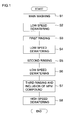
- FIG. 1 is a flowchart that illustrates a process for producing the wet hand towel according to the first embodiment.
- Main washing is performed in which in a cleaning tank of a laundry machine are put the towel that has been used in a restaurant or the like and then recovered, and a detergent (step S1), followed by low speed dewatering for a predetermined period of time (step S2).
- the main washing is performed under a middle water level for a predetermined period of time equal to or more than 10 minutes at a predetermined temperature (equal to or more than 60°C) .
- first rinsing is performed for a predetermined period of time at a predetermined temperature in which the water level in the cleaning tank is brought high with the use of clean water (step S3), followed by low speed dewatering for a predetermined period of time (step S4).
- second rinsing is performed for a predetermined period of time at a predetermined temperature in which the water level in the cleaning tank is brought high with the use of clean water, along with a bleaching powder or sodium hypochlorite is added therein so that the free chlorine level reaches 250 ppm (step S5), followed by low speed dewatering for a predetermined period of time (step S6).
- step S7 third rinsing is performed for a predetermined period of time at a predetermined temperature in which the water level in the cleaning tank is brought middle with the use of clean water, along with an MPM composition is added therein.
- the MPM composition is formulated from VOSO 4 , K 11 H[(VO) 3 (SbW 9 O 33 ) 2 ], Na 9 [SbW 9 O 33 ], oxacillin and irgasan (systematic name: 5-chloro-2-(2,4-dichlorophenoxy)phenol) at a predetermined ratio.
- the compounding ratio of these compounds is not particularly limited, but in the MPM composition are included VOSO 4 of preferably 0.1 to 20 mol, more preferably 4 to 8 mol, Na 9 [SbW 9 O 33 ] of preferably 0.1 to 30 mol, more preferably 10 to 20 mol, oxacillin of preferably 0.1 to 30 mol, more preferably 5 to 15 mol, and irgasan of preferably 1 mol or less, more preferably 0.2 mol or less, with respect to [(VO) 3 (SbW 9 O 33 ) 2 ] of 1 mol.
- VOSO 4 , K 11 H[(VO) 3 (SbW 9 O 33 ) 2 ], Na 9 [SbW 9 O 33 ] and oxacillin be used at a molar ratio of 5.5 : 1 : 17.3 : 12.5 in the order.
- the compounding amount of irgasan be less than each of the compounding amounts of the other four compounds, for example the compounding amount of irgasan being around 10 % of K 11 H[(VO) 3 (SbW 9 O 33 ) 2 ] at a molar ratio.
- VOSO 4 , K 11 H[(VO) 3 (SbW 9 O 33 ) 2 ] and Na 9 [SbW 9 O 33 ], which constitute the MPM composition, are compounds belonging to a metal oxide cluster, called polyoxometalates (PM compounds).
- the PM compounds are metal oxide cluster compounds having polyacid ions, and each of the compounds belonging to the PM compounds has its own bioactivity such as an antibacterial activity and antiviral activity, as disclosed in Literature 2 ( Journal of Materials Chemistry, volume 15, pages 4773 to 4782, 2005, Royal Society of Chemistry ).
- a poly acid means a metal oxide cluster compound constituted by a transition metal element (such as W(VI) and V(V)), which has a structure in which typically 4 or 6 oxygen atoms are coordinated to a metal atom or the like to form a tetrahedron or octahedron as a basic unit, and the basic units couple with each other through their edges or peak points.
- a transition metal element such as W(VI) and V(V)
- Oxacillin is an antibiotic substance exhibiting an activity against bacteria such as Staphylococcus aureus, as well as a compound showing an activity against viruses such as influenza virus.
- the antibacterial activity obtained can be higher than that obtained in case where oxacillin is used alone.
- irgasan is a compound having an antibacterial activity against common bacteria.
- the MPM aqueous solution should be prepared such that each of the compounds which constitute the MPM composition has a minimum effective concentration or higher.
- the compounds of VOSO 4 , K 11 H[(VO) 3 (SbW 9 O 33 ) 2 ], Na 9 [SbW 9 O 33 ], oxacillin and irgasan, which constitute the MPM composition have the concentrations in the MPM aqueous solution preferably from 1 to 50, from 10 to 300, from 50 to 1500, from 5 to 200 and from 0.01 to 3 ⁇ g/mL, respectively, more preferably from 20 to 40, from 50 to 150, from 500 to 1300, from 50 to 200, and from 0.1 to 1 ⁇ g/mL, respectively.
- the compounds of VOSO 4 , K 11 H[(VO) 3 (SbW 9 O 33 ) 2 ], Na 9 [SbW 9 O 33 ], oxacillin and irgasan, which constitute the MPM composition have the concentrations in the MPM aqueous solution particularly preferably of 25, 115, 1000, 100 and 0.6 ⁇ g/mL, respectively.
- the MPM composition can maintain the antibacterial activity and antiviral activity, and such activities are relatively stable even when temperature is raised.
- the compounds which constitute the MPM composition do not react to each other, nor inhibit the antibacterial activities or antiviral activities the individual compounds have.
- they are safe compounds so as not to cause skin surface roughening on the human body.
- the MPM composition is a safe compound so as not to accumulate in the human body.
- step S8 high speed dewatering is performed for a predetermined period of time.
- This step allows the towel to contain a predetermined amount of water and further the MPM composition.
- forming the towel into a predetermined shape will result in the wet hand towel of the present invention.
- the forming the towel into the predetermined shape can be achieved through folding or winding up the towel.
- the towel may be wrapped with a film or the like.
- the discharged water including the MPM composition and the like drained from the cleaning tank is collected in a treatment tank that performs a discharged water treatment by a microbiological treatment method.
- the wet hand towel having an antibacterial activity against various kinds of bacteria and an antiviral activity against various kinds of viruses.
- an aqueous solution rather than an organic solvent
- the MPM composition it is also possible to prevent the effect on the human body, such as skin surface roughening.
- the wet hand towel it is also possible for the wet hand towel to contain at a low cost a composition having an excellent antibacterial activity and excellent antiviral activity. Furthermore, the MPM composition has also an antifungal effect, and thus it is possible for the wet hand towel to contain at a low cost a composition having an antifungal effect. Moreover, the discharged water including the MPM composition does not have such an adverse effect on microorganisms (bacteria) as to deaden them in the treatment tank that performs a microbiological treatment method.
- microorganisms bacteria
- the MPM composition is contained in a towel during the third rinsing
- the MPM composition may be contained in a towel during any of the steps as long as the MPM composition can be contained in the towel.
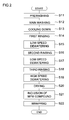
- the MPM composition may be contained into a towel during the first rinsing or the second rinsing, or alternatively a towel may be immersed in the MPM aqueous solution inside a towel dipping tank after the high speed dewatering, in such a way as step S21 in FIG. 2 as described below, thereby the MPM aqueous solution infiltrating into the towel.
- a towel may be formed into a predetermined shape, and then sprayed with the MPM aqueous solution or the like, thereby the MPM composition being contained in the towel.
- a new towel is put into a cleaning tank, and prewashing is performed under a predetermined water level for several minutes at a predetermined temperature without the drum being rotated (step S11). Then, a desizing agent and a refining and penetrating agent are put therein, and main washing is performed under a predetermined water level for a predetermined period of time equal to or more than 10 minutes at a predetermined temperature such as 80°C (step S12), followed by cooling down for a predetermined period of time at a predetermined temperature such as 60°C (step S13).
- step S14 to step S17 in which the treatments are the same as those indicated in step S3 to step S6 in the flow chart of FIG. 1 , respectively, so the description thereof is omitted.
- third rinsing is performed for a predetermined period of time at a predetermined temperature in which the water level in the cleaning tank is brought to a predetermined level with the use of clean water, along with Niccanon (made by Nicca Chemical Co., Ltd.) is added to reach 1 g/L (step S18), followed by high speed dewatering for a predetermined period of time (step S19) .
- the towel that has undergone the high speed dewatering is taken out of the cleaning tank, and the towel is dried for a predetermined period of time at 80°C in a drying machine (step 20). Thereafter, the towel is allowed to contain the above-mentioned MPM composition (step S21).
- the method for allowing to contain the MPM composition may include, but not particularly limited to, a method for immersing a towel in an aqueous solution in which the MPM composition is dissolved, or a method for spraying to a towel the aqueous solution in which the MPM composition is dissolved.
- the towels When the towel is immersed, for example, clean water and the MPM composition are put in a towel dipping tank that has a stirring function, and then stirred to form the aqueous solution in which the MPM composition is dissolved (the MPM aqueous solution), and subsequently the towel taken out of the cleaning tank is put in the towel dipping tank to be immersed.
- the compounds of VOSO 4 , K 11 H[(VO) 3 (SbW 9 O 33 ) 2 ], Na 9 [SbW 9 O 33 ], oxacillin and irgasan, which constitute the MPM composition have the concentrations in the MPM aqueous solution preferably of at least 25, 115, 1000, 100 and 0.6 ⁇ g/mL, respectively.
- the towel may be immersed with the use of a crane equipped with a jig for immersing a towel.
- the towel may be immersed in the MPM aqueous solution with the aid of a buoyancy preventing weight attached to the towel. After the MPM aqueous solution has sufficiently infiltrated into the towel in the towel dipping tank, the towel is taken out of the towel dipping tank, lifted and left as it is until the MPM aqueous solution drops from the towel. Then, the towel is pressed with the use of a pressing machine for several minutes.
- step S22 may produce the wet hand towel according to the embodiment.
- the moisture-vapor transmission rate of the film used in this embodiment is preferably equal to or lower than a predetermined value.
- the discharged water including the MPM composition and the like drained from the cleaning tank is collected in a treatment tank that performs a discharged water treatment by a microbiological treatment method.
- the method for producing a wet hand towel of this second embodiment it is possible to produce the wet hand towel having an antibacterial activity against various kinds of bacteria and an antiviral activity against various kinds of viruses.
- an aqueous solution rather than an organic solvent
- the MPM composition it is also possible to prevent the effect on the human body, such as skin surface roughening.
- the wet hand towel it is also possible for the wet hand towel to contain at a low cost a composition having an excellent antibacterial activity and excellent antiviral activity. Furthermore, the MPM composition has also an antifungal effect, and thus it is possible for the wet hand towel to contain at a low cost a composition having an antifungal effect. Moreover, the discharged water including the MPM composition does not have such an adverse effect on microorganisms (bacteria) as to deaden them in the treatment tank that performs a microbiological treatment method.
- microorganisms bacteria
- a laundry machine is not particularly limited for use in the above-mentioned first and second embodiments.
- a laundry machine may be used that has one cleaning tank, a batch-type laundry machine may be used that individually performs a prewashing, main washing, rinsing and the like in a single tank, or a continuous-type laundry machine may be used that has a plurality of baths in parallel each for prewashing, main washing, rinsing and the like so as to perform laundering while moving the object to be laundered such as a towel among the baths.
- a roll substrate made of paper or nonwoven fabrics, and a wrapping film are set on a wet hand towel producing machine (step S31). Then, the substrate is folded to a predetermined size by the wet hand towel producing machine, and the MPM aqueous solution is sprayed to the folded substrate from above and below (step S32). Thereafter, the substrate is cut to a predetermined size by a rotary cutter that the wet hand towel producing machine has (step S33), and the cut substrate is wrapped with the film (step S34), with the result that the wet hand towel of the embodiment may be produced.
- the wet hand towel having an antibacterial activity against various kinds of bacteria and an antiviral activity against various kinds of viruses.
- an aqueous solution rather than an organic solvent
- the MPM composition it is also possible to prevent the effect on the human body, such as skin surface roughening.
- the wet hand towel it is also possible for the wet hand towel to contain at a low cost a composition having an excellent antibacterial activity and excellent antiviral activity.
- the third embodiment paper or nonwoven fabric is used as a substrate, it is possible to produce a disposable wet hand towel having an excellent antibacterial activity and excellent antiviral activity. Furthermore, the MPM composition has also an antifungal effect, and thus it is possible for the wet hand towel to contain at a low cost a composition having an antifungal effect.
- wet hand towel produced through the method for producing a wet hand towel according to the third embodiment will satisfy the sanitary standard for a paper wet hand towel prescribed by Japan Cleansing Wipes Industry Association.
- the wet hand towel produced through this third embodiment may be in the form such that the substrate pieces cut to a predetermined size in step S33 are individually wrapped piece by piece, or may be in the form of so-called wet wipe such that the plurality of substrate pieces cut to a predetermined size in step S33 are stored in a package such as a bottle so as to be taken out of this package piece by piece.
- the substrate In order to be taken out piece by piece, it is preferable for the substrate to be formed into a folded or rolled shape suitable to be taken out piece by piece through an output port provided through the package.
- the wet hand towel is allowed to contain the MPM composition, but the wet hand towel may further be allowed to contain another ingredient such as a medical agent.
- the MPM aqueous solution is sprayed in which another medicinal solution for wet hand towel, moisturizing agent or the like has been further added.
- the moisturizing agent include fulvic acid, hyaluronic acid, royal jelly, glycerin and soybean extract.
- the MPM aqueous solution does not inhibit the effect of such another medicinal solution for wet hand towel, moisturizing agent or the like, and the antibacterial activity, antiviral activity and antifungal efficiency of the MPM aqueous solution are not also inhibited by such another medicinal solution for wet hand towel, moisturizing agent or the like.
- the wet hand towel is allowed to contain the MPM composition
- soap such as hand soap
- a sanitary product such as a mask and cotton swab
- detergents such as for residence, kitchen and cloth, which are for use in a lavatory, bath, kitchen, tableware, cloth or the like, may be allowed to contain the MPM composition.
- a cosmetic product such as lotion or emulsion may be allowed to contain the MPM composition.
- a filter for exhaust of a car may be allowed to contain the MPM composition
- a filter of an air-conditioner may be allowed to contain the MPM composition.
- the MPM aqueous solution may be filled in a spray can so as to be used as an antibacterial and antiviral agent for residence, which is for use in, for example, a floor or wall in a house or the like, tiles of a table or the like installed in a house, and a fixture and furniture made of metal, plastic, glass, wood or the like in a house.
- the MPM aqueous solution may be filled in a spray can so as to be used as an antibacterial and antiviral agent for kitchen, or an antibacterial and antiviral agent for cloth, which is for use in a lavatory, bath, kitchen, cloth, or the like.
- the MPM aqueous solution may be used as an antifungal agent.
- the MPM aqueous solution does not inhibit the effect of another ingredient such as a medical agent, and the antibacterial activity and antiviral activity of the MPM aqueous solution are not also inhibited by another medical agent or the like, as described above, the MPM aqueous solution may also be allowed to contain such another medical agent or the like.
- the MIC (minimum growth inhibitory concentration) of the MPM aqueous solution is indicated in Table 1, where the MPM composition is dissolved in water in which VOSO 4 , K 11 H[(VO) 3 (SbW 9 O 33 ) 2 ], Na 9 [SbW 9 O 33 ], oxacillin and irgasan are combined at a molar ratio of 5.5 : 1 : 17.3 : 12.5 : 0.1 in the order.
- the MPM aqueous solution has a wide antibacterial spectrum.
- the MPM aqueous solution has an activity against wide bacterial species.
- the MPM aqueous solution has also an activity against MRSA (methicillin-resistant Staphylococcus aureus ) .
- the MPM aqueous solution is stable as an aqueous solution, and thus the long term storage is also possible.
- a towel as a specimen was washed, dewatered and rinsed with the use of a washing machine (150K washer) .
- the steps in which the washing machine was used were performed as indicated in Table 2.
- a main washing was performed one time and a rinsing was performed three times, in each of the main washing and the second rinsing being added 2000 cc of sodium hypochlorite having a concentration of 12%.
- the main washing were further added 1800 cc of synthetic detergent (Cosmo Clean) and 500 cc of TK2000 (alkaline auxiliary agent).
- an MPM composition as 100 cc of an MPM aqueous solution including 25, 115, 1000, 100 and 0.6 ⁇ g/mL of VOSO 4 , K 11 H[(VO) 3 (SbW 9 O 33 ) 2 ], Na 9 [SbW 9 O 33 ], oxacillin and irgasan, respectively, the compounding ratio of which at a molar ratio was 5.5 : 1 : 17.3 : 12.5 : 0.1 in the order. ⁇ Table 2 ⁇ Step Time (minutes) detergents etc.
- a Stomachere method was performed to yield an extract, which was then used as a sample.
- a towel used in the Stomachere method to yield the extract three kinds of towels were used, including a towel just after the washing was performed, a towel stored at room temperature in a factory for one week from the washing, and a towel stored at room temperature in a factory for two weeks from the washing.
- two specimens (towels) were subjected to the test for washing.
- the number of bacterium for the common bacterium that resulted from the sample cultured in the Petri dish for one specimen (towel), and the number of bacterium for the common bacterium that resulted from the sample cultured in the Petri dish for another specimen (towel) were indicated as A-1 and A-2 in Table 3, respectively.
- Example 1-1 The same treatment as that in Example 1-1 was performed except that the amount of the MPM aqueous solution added in the third rinsing was 150 cc.
- the number of bacterium for the common bacterium that resulted from the sample cultured in the Petri dish for one specimen (towel), and the number of bacterium for the common bacterium that resulted from the sample cultured in the Petri dish for another specimen (towel) were indicated as B-1 and B-2 in Table 3, respectively.
- Example 1-1 The washing, rinsing and dewatering of a towel were performed with the use of a washing machine in the same way as Example 1-1. Thereafter, an influenza virus had been sprayed to the towel, and 1 hour after the influenza virus had been sprayed, a Stomachere method was performed to yield an extract, which was then used as a sample.
- Example 2-1 The same treatment as that in Example 2-1 was performed except that the amount of the MPM aqueous solution added in the third rinsing was 150 cc. Note that four specimens were subjected to this manipulation and the corresponding results and mean values were indicated in Table 3.
- Example 2-1 The same treatment as that in Example 2-1 was performed except that the MPM aqueous solution was not added in the third rinsing. Note that four specimens were subjected to this manipulation and the corresponding results and mean values were indicated in Table 4.
- Table 4 Specimen number Infectious titer of virus Mean infectious titer of virus
- Example 2-1 1 1.5 ⁇ 10 3 PFU/mL 1.15 ⁇ 10 3 PFU/mL 2 4 ⁇ 10 2 PFU/mL 3 2.6 ⁇ 10 3 PFU/mL 4 1 ⁇ 10 2 PFU/mL
- Example 2-2 1 1.5 ⁇ 10 2 PFU/mL 2.5 ⁇ 10 2 PFU/mL 2 4.5 ⁇ 10 2 PFU/mL 3 1.25 ⁇ 10 2 PFU/mL 4 2.75 ⁇ 10 2 PFU/mL Comparative Example 2-1 1 8.25 ⁇ 10 9 PFU/mL 7.06 ⁇ 10 4 PFU/mL 2 5.75 ⁇ 10 4 PFU/mL 3 4.75 ⁇ 10 4 PFU/mL 4 9.5 ⁇ 10 4
- an antiviral effect of the MPM composition is demonstrated such that the mean infectious titer of virus when the MPM composition is used becomes approximately 1/100 of that when the MPM composition is not used.
- the washing, rinsing and dewatering of a towel were performed with the use of a washing machine in the same way as Example 1-1. Thereafter, based on 10 quantitative test, 10.1 bacterial solution absorption method in JIS L 1902:2008 of "Testing for antibacterial activity and efficacy on textile products", an antibacterial activity test for the towel as a specimen was performed. In the antibacterial activity test, one bacterial strain of Becillus cereus IFO13494 was used. In addition, the specimen was not subjected to a high pressure steam sterilization (121°C, 15 minutes) . Moreover, a towel was used as a control to which the MPM aqueous solution had not been added in the third rinsing.
- Example 3-1 The same test as that in Example 3-1 was performed except that the type of bacterium used in the antibacterial activity test was Becillus cereus IFO13494 (spore) .
- the result is indicated in Table 6.
- ⁇ Table 6 Bacterium tested Section Test piece Number of living bacterium per test piece Measurement -1 Measurement -2 Measurement -3 Bacillus cereus (spore) Just after inoculation Control 1.7 ⁇ 10 4 1.5 ⁇ 10 4 1.9 ⁇ 10 9 After culture at 37°C for 18 hours Specimen 1.7 ⁇ 10 4 1.3 ⁇ 10 4 1.6X10 4 Control 2.8 ⁇ 10 5 1.8 ⁇ 10 5 1.6-10 5
- Control standard textile (cotton) Solution for preparation of bacterial solution: 1/20 concentration of Nutrient Broth Method for measuring number of living bacterium: pour plate culturing method
- the washing, rinsing and dewatering of a towel were performed with the use of a washing machine in the same way as Example 1-1, and a Stomachere method was performed to yield an extract, which was then used as a sample.
- the sample was diluted so as to produce specimen diluted solutions (100 times, 1000 times, and 10000 times diluted solutions from the specimen, which were prepared with 1/20 concentration of Nutrient Broth), into 10 mL of each of which 0.1 mL of a test bacterial solution was inoculated to produce a test solution.
- test bacterial solution used was prepared such that a test bacterium (Staphylococcus aureus, IID 1677 (MRSA)) had been cultured in Nutrient Agar (Difco) at 37°C ⁇ 1°C for 16 to 20 hours, and then suspended in 1/20 concentration of Nutrient Broth (Difco) so as to have the number of bacterium 10 6 to 10 7 /mL.
- a test bacterium Staphylococcus aureus, IID 1677 (MRSA)
- test solution was stored at 37°C ⁇ 1°C, and each of the test solutions at the starting time, 15 seconds later, 1 hour later and 24 hours later was immediately diluted 10 times on a medium for measuring the number of bacterium, allowing the number of living bacterium in the test solution to be measured.
- a medium for measuring the number of bacterium a SCDLP agar medium (made by Nihon Pharmaceutical Co., Ltd.) was used, which would undergo cultivation according to a pour plate culturing method at 35°C ⁇ 1°C for 2 days.
- the discharged water including the MPM composition drained from the washing machine used in the process like Example 1-1 was collected in a treatment tank.
- the individual items were measured, including the hydrogen-ion concentration (pH), chemical oxygen demand (COD), biochemical oxygen demand (BOD), suspended substance (SS), extractive substance in normal-hexane, number of coliform group, total nitrogen, and total phosphorus. Note that the measurement was performed three times in total with a difference in date or time. The result is indicated in Table 8.
- the discharged water in the treatment tank satisfies the environmental standard, and does not have such an adverse effect on microorganisms (bacteria) as to deaden them in the treatment tank that performs a microbiological treatment method.
Landscapes
- Health & Medical Sciences (AREA)
- Life Sciences & Earth Sciences (AREA)
- General Health & Medical Sciences (AREA)
- Engineering & Computer Science (AREA)
- Animal Behavior & Ethology (AREA)
- Public Health (AREA)
- Veterinary Medicine (AREA)
- Chemical & Material Sciences (AREA)
- Epidemiology (AREA)
- Birds (AREA)
- Textile Engineering (AREA)
- Wood Science & Technology (AREA)
- Agronomy & Crop Science (AREA)
- Pest Control & Pesticides (AREA)
- Environmental Sciences (AREA)
- Zoology (AREA)
- Dentistry (AREA)
- Plant Pathology (AREA)
- Inorganic Chemistry (AREA)
- Pharmacology & Pharmacy (AREA)
- Medicinal Chemistry (AREA)
- Chemical Kinetics & Catalysis (AREA)
- General Chemical & Material Sciences (AREA)
- Toxicology (AREA)
- Biomedical Technology (AREA)
- Emergency Medicine (AREA)
- Dermatology (AREA)
- Microbiology (AREA)
- Biochemistry (AREA)
- Organic Chemistry (AREA)
- Nuclear Medicine, Radiotherapy & Molecular Imaging (AREA)
- Oncology (AREA)
- Communicable Diseases (AREA)
- Virology (AREA)
- Agricultural Chemicals And Associated Chemicals (AREA)
- Body Washing Hand Wipes And Brushes (AREA)
- Detergent Compositions (AREA)
- Organic Low-Molecular-Weight Compounds And Preparation Thereof (AREA)
Applications Claiming Priority (2)
| Application Number | Priority Date | Filing Date | Title |
|---|---|---|---|
| JP2012017500 | 2012-01-31 | ||
| PCT/JP2013/051470 WO2013115061A1 (ja) | 2012-01-31 | 2013-01-24 | おしぼり及びおしぼりの製造方法 |
Publications (2)
| Publication Number | Publication Date |
|---|---|
| EP2810559A1 true EP2810559A1 (de) | 2014-12-10 |
| EP2810559A4 EP2810559A4 (de) | 2015-08-12 |
Family
ID=48905103
Family Applications (1)
| Application Number | Title | Priority Date | Filing Date |
|---|---|---|---|
| EP13743291.0A Withdrawn EP2810559A4 (de) | 2012-01-31 | 2013-01-24 | Aufgewärmtes erfrischungstuch und verfahren zur herstellung von aufgewärmten erfrischungstüchern |
Country Status (10)
| Country | Link |
|---|---|
| US (1) | US9332760B2 (de) |
| EP (1) | EP2810559A4 (de) |
| JP (2) | JP5314219B1 (de) |
| KR (1) | KR101489128B1 (de) |
| AU (1) | AU2013216182B8 (de) |
| CA (1) | CA2863214A1 (de) |
| HK (1) | HK1198868A1 (de) |
| MY (1) | MY166786A (de) |
| SG (1) | SG11201404335TA (de) |
| WO (2) | WO2013115061A1 (de) |
Cited By (1)
| Publication number | Priority date | Publication date | Assignee | Title |
|---|---|---|---|---|
| CN112055538A (zh) * | 2018-05-31 | 2020-12-08 | Vb日本技术株式会社 | 抗菌和抗病毒组合物以及水溶液 |
Families Citing this family (4)
| Publication number | Priority date | Publication date | Assignee | Title |
|---|---|---|---|---|
| TWI829815B (zh) * | 2019-11-21 | 2024-01-21 | 日商Vb日本科技股份有限公司 | 抗菌抗病毒組成物、水溶液、肥皂類、衛生用品、住宅用洗滌劑、廚房用洗滌劑、衣料用洗滌劑、住宅用抗菌抗病毒劑、廚房用抗菌抗病毒劑、衣料用抗菌抗病毒劑、化妝品、濕巾及濕手帕 |
| US11622930B2 (en) | 2020-09-23 | 2023-04-11 | Yoshiharu Masui | Antimicrobial agent |
| WO2022230405A1 (ja) * | 2021-04-28 | 2022-11-03 | 三菱鉛筆株式会社 | 抗菌・抗ウイルス塗料、抗菌・抗ウイルス塗料の製造方法および抗菌・抗ウイルス塗膜の製造方法 |
| JP7278638B2 (ja) * | 2021-09-22 | 2023-05-22 | Vbジャパンテクノロジー株式会社 | 抗老化用おしぼり及び抗老化用衛生用品 |
Family Cites Families (13)
| Publication number | Priority date | Publication date | Assignee | Title |
|---|---|---|---|---|
| US4111844A (en) * | 1975-12-15 | 1978-09-05 | Ciba-Geigy Corporation | Synergistic microbicidal composition |
| JP4420997B2 (ja) * | 1999-02-08 | 2010-02-24 | 利博 山瀬 | 抗ウィルス剤 |
| JP2005098374A (ja) * | 2003-09-24 | 2005-04-14 | Dainatsukusu:Kk | 湿式摩擦材 |
| JP2005298374A (ja) * | 2004-04-08 | 2005-10-27 | Rikogaku Shinkokai | 抗ウイルス抗菌組成物 |
| JP2005325083A (ja) * | 2004-05-17 | 2005-11-24 | Rikogaku Shinkokai | 抗ウイルス剤 |
| JP2006273837A (ja) * | 2005-03-28 | 2006-10-12 | Tokyo Institute Of Technology | 抗vrsa剤 |
| JP2006340949A (ja) * | 2005-06-10 | 2006-12-21 | Daio Paper Corp | 抗菌性を有するウェットタイプ拭き取り用品 |
| JP2008119433A (ja) * | 2006-11-15 | 2008-05-29 | Daiwa Kagaku Kogyo Kk | 紙おしぼり・お手ふきの保存方法 |
| JP2009149575A (ja) | 2007-12-21 | 2009-07-09 | Kao Corp | 抗菌剤 |
| AU2009220147A1 (en) * | 2008-03-07 | 2009-09-11 | Lectec Corporation | Hand sanitizing patch |
| US20090259157A1 (en) * | 2008-04-14 | 2009-10-15 | Tom Thomas | Method for imparting antimicrobial characteristics to hydrophilic fabrics |
| JP2010022606A (ja) * | 2008-07-18 | 2010-02-04 | Mitsuaki Hatanaka | おしぼりの洗浄殺菌方法 |
| JP5436001B2 (ja) * | 2009-03-27 | 2014-03-05 | 小林製薬株式会社 | 含浸製品、及び該製品に使用される基布含浸液 |
-
2013
- 2013-01-24 US US14/372,375 patent/US9332760B2/en not_active Expired - Fee Related
- 2013-01-24 EP EP13743291.0A patent/EP2810559A4/de not_active Withdrawn
- 2013-01-24 WO PCT/JP2013/051470 patent/WO2013115061A1/ja not_active Ceased
- 2013-01-24 CA CA 2863214 patent/CA2863214A1/en not_active Abandoned
- 2013-01-24 JP JP2013516395A patent/JP5314219B1/ja not_active Expired - Fee Related
- 2013-01-24 MY MYPI2014701947A patent/MY166786A/en unknown
- 2013-01-24 KR KR1020147023903A patent/KR101489128B1/ko not_active Expired - Fee Related
- 2013-01-24 JP JP2013516394A patent/JP5314218B1/ja not_active Expired - Fee Related
- 2013-01-24 WO PCT/JP2013/051471 patent/WO2013115062A1/ja not_active Ceased
- 2013-01-24 HK HK14112518.2A patent/HK1198868A1/en unknown
- 2013-01-24 SG SG11201404335TA patent/SG11201404335TA/en unknown
- 2013-01-24 AU AU2013216182A patent/AU2013216182B8/en not_active Ceased
Cited By (1)
| Publication number | Priority date | Publication date | Assignee | Title |
|---|---|---|---|---|
| CN112055538A (zh) * | 2018-05-31 | 2020-12-08 | Vb日本技术株式会社 | 抗菌和抗病毒组合物以及水溶液 |
Also Published As
| Publication number | Publication date |
|---|---|
| AU2013216182B8 (en) | 2014-11-13 |
| AU2013216182A1 (en) | 2014-08-14 |
| SG11201404335TA (en) | 2014-10-30 |
| JP5314218B1 (ja) | 2013-10-16 |
| WO2013115062A1 (ja) | 2013-08-08 |
| MY166786A (en) | 2018-07-23 |
| AU2013216182B2 (en) | 2014-10-30 |
| JPWO2013115062A1 (ja) | 2015-05-11 |
| WO2013115061A1 (ja) | 2013-08-08 |
| HK1198868A1 (en) | 2015-06-19 |
| US9332760B2 (en) | 2016-05-10 |
| US20140363520A1 (en) | 2014-12-11 |
| JPWO2013115061A1 (ja) | 2015-05-11 |
| EP2810559A4 (de) | 2015-08-12 |
| CA2863214A1 (en) | 2013-08-08 |
| KR101489128B1 (ko) | 2015-02-02 |
| JP5314219B1 (ja) | 2013-10-16 |
| KR20140108741A (ko) | 2014-09-12 |
Similar Documents
| Publication | Publication Date | Title |
|---|---|---|
| US9332760B2 (en) | Wet hand towel and method for producing the same | |
| JP6802068B2 (ja) | 水溶性ポリマーおよび水溶性抗菌剤を含む液体抗菌剤 | |
| JP6726100B2 (ja) | 抗菌・抗かび加工製品の製法およびそれによって得られる抗菌・抗かび加工製品 | |
| US11985971B2 (en) | Antibacterial and antiviral composition, aqueous solution, soaps, sanitary product, house detergent, kitchen detergent, clothing detergent, antibacterial and antiviral agent for house, antibacterial and antiviral agent for kitchen, antibacterial and antiviral agent for clothes, cosmetics, wet wipe, and wet hand towel | |
| JP3716276B2 (ja) | ヒノキチオール水溶液の製造方法 | |
| TWI829815B (zh) | 抗菌抗病毒組成物、水溶液、肥皂類、衛生用品、住宅用洗滌劑、廚房用洗滌劑、衣料用洗滌劑、住宅用抗菌抗病毒劑、廚房用抗菌抗病毒劑、衣料用抗菌抗病毒劑、化妝品、濕巾及濕手帕 | |
| JP5279973B1 (ja) | リネン製品の製造方法及びクリーニング方法 | |
| CN108728261B (zh) | 一种环保物理抑菌洗液及其用途 | |
| US4753749A (en) | Microbiocidal cleaning agent and preparation thereof | |
| JPH10168757A (ja) | 繊維製品の抗菌性能付与方法 | |
| CN116158980B (zh) | 一种抑菌湿巾及其制备方法和应用 | |
| WO2026058774A1 (ja) | 抗菌性繊維構造物およびその製造方法 | |
| EP4291626A1 (de) | Antimikrobielle zusammensetzung | |
| CN118530787A (zh) | 基于季铵盐类表面活性剂的协同细菌抑制效果组合物 | |
| DE1170585B (de) | Keimtoetende Mittel | |
| CH368582A (de) | Keimtötendes Mittel | |
| DE2033119A1 (de) | Waschhilfsmittelzubereitung, die Geweben selbst samtisierende Eigenschaften ver leiht | |
| JP2001131865A (ja) | 赤ワインブドウ液による繊維の抗菌加工製造法 | |
| HK1235627A1 (en) | Liquid antimicrobial comprising polyvinylalcohol and two water-soluble antimicrobial agents | |
| HK1235627B (en) | Liquid antimicrobial comprising polyvinylalcohol and two water-soluble antimicrobial agents |
Legal Events
| Date | Code | Title | Description |
|---|---|---|---|
| PUAI | Public reference made under article 153(3) epc to a published international application that has entered the european phase |
Free format text: ORIGINAL CODE: 0009012 |
|
| 17P | Request for examination filed |
Effective date: 20140807 |
|
| AK | Designated contracting states |
Kind code of ref document: A1 Designated state(s): AL AT BE BG CH CY CZ DE DK EE ES FI FR GB GR HR HU IE IS IT LI LT LU LV MC MK MT NL NO PL PT RO RS SE SI SK SM TR |
|
| AX | Request for extension of the european patent |
Extension state: BA ME |
|
| DAX | Request for extension of the european patent (deleted) | ||
| REG | Reference to a national code |
Ref country code: HK Ref legal event code: DE Ref document number: 1198868 Country of ref document: HK |
|
| RA4 | Supplementary search report drawn up and despatched (corrected) |
Effective date: 20150713 |
|
| RIC1 | Information provided on ipc code assigned before grant |
Ipc: A61P 31/04 20060101ALI20150707BHEP Ipc: A01N 43/90 20060101AFI20150707BHEP Ipc: A61K 31/055 20060101ALI20150707BHEP Ipc: A01N 59/00 20060101ALI20150707BHEP Ipc: D06M 13/35 20060101ALI20150707BHEP Ipc: A01N 31/16 20060101ALI20150707BHEP Ipc: A47K 7/00 20060101ALI20150707BHEP Ipc: A61K 33/24 20060101ALI20150707BHEP Ipc: A61P 31/12 20060101ALI20150707BHEP Ipc: A61K 31/431 20060101ALI20150707BHEP Ipc: D06M 13/156 20060101ALI20150707BHEP Ipc: A01P 3/00 20060101ALI20150707BHEP |
|
| STAA | Information on the status of an ep patent application or granted ep patent |
Free format text: STATUS: THE APPLICATION HAS BEEN WITHDRAWN |
|
| 18W | Application withdrawn |
Effective date: 20170928 |
|
| REG | Reference to a national code |
Ref country code: HK Ref legal event code: WD Ref document number: 1198868 Country of ref document: HK |