EP2811607A1 - Local energy system - Google Patents
Local energy system Download PDFInfo
- Publication number
- EP2811607A1 EP2811607A1 EP13002924.2A EP13002924A EP2811607A1 EP 2811607 A1 EP2811607 A1 EP 2811607A1 EP 13002924 A EP13002924 A EP 13002924A EP 2811607 A1 EP2811607 A1 EP 2811607A1
- Authority
- EP
- European Patent Office
- Prior art keywords
- power
- local
- grid
- power grid
- controlled
- Prior art date
- Legal status (The legal status is an assumption and is not a legal conclusion. Google has not performed a legal analysis and makes no representation as to the accuracy of the status listed.)
- Withdrawn
Links
Images

Classifications
-
- H—ELECTRICITY
- H02—GENERATION; CONVERSION OR DISTRIBUTION OF ELECTRIC POWER
- H02J—ELECTRIC POWER NETWORKS; CIRCUIT ARRANGEMENTS OR SYSTEMS FOR SUPPLYING OR DISTRIBUTING ELECTRIC POWER; SYSTEMS FOR STORING ELECTRIC ENERGY
- H02J3/00—Circuit arrangements for AC mains or AC distribution networks
- H02J3/12—Arrangements for adjusting voltage in AC networks by changing a characteristic of the network load
- H02J3/14—Arrangements for adjusting voltage in AC networks by changing a characteristic of the network load by switching loads on to, or off from, the networks, e.g. progressively balanced loading
-
- H—ELECTRICITY
- H02—GENERATION; CONVERSION OR DISTRIBUTION OF ELECTRIC POWER
- H02J—ELECTRIC POWER NETWORKS; CIRCUIT ARRANGEMENTS OR SYSTEMS FOR SUPPLYING OR DISTRIBUTING ELECTRIC POWER; SYSTEMS FOR STORING ELECTRIC ENERGY
- H02J3/00—Circuit arrangements for AC mains or AC distribution networks
- H02J3/38—Arrangements for feeding a single network from two or more generators or sources in parallel; Arrangements for feeding already energised networks from additional generators or sources in parallel
- H02J3/381—Dispersed generators
-
- H—ELECTRICITY
- H02—GENERATION; CONVERSION OR DISTRIBUTION OF ELECTRIC POWER
- H02J—ELECTRIC POWER NETWORKS; CIRCUIT ARRANGEMENTS OR SYSTEMS FOR SUPPLYING OR DISTRIBUTING ELECTRIC POWER; SYSTEMS FOR STORING ELECTRIC ENERGY
- H02J2101/00—Supply or distribution of decentralised, dispersed or local electric power generation
- H02J2101/20—Dispersed power generation using renewable energy sources
- H02J2101/22—Solar energy
- H02J2101/24—Photovoltaics
-
- H—ELECTRICITY
- H02—GENERATION; CONVERSION OR DISTRIBUTION OF ELECTRIC POWER
- H02J—ELECTRIC POWER NETWORKS; CIRCUIT ARRANGEMENTS OR SYSTEMS FOR SUPPLYING OR DISTRIBUTING ELECTRIC POWER; SYSTEMS FOR STORING ELECTRIC ENERGY
- H02J2105/00—Networks for supplying or distributing electric power characterised by their spatial reach or by the load
- H02J2105/40—Networks for supplying or distributing electric power characterised by their spatial reach or by the load characterised by the loads connecting to the networks or being supplied by the networks
- H02J2105/42—Home appliances
-
- H—ELECTRICITY
- H02—GENERATION; CONVERSION OR DISTRIBUTION OF ELECTRIC POWER
- H02J—ELECTRIC POWER NETWORKS; CIRCUIT ARRANGEMENTS OR SYSTEMS FOR SUPPLYING OR DISTRIBUTING ELECTRIC POWER; SYSTEMS FOR STORING ELECTRIC ENERGY
- H02J2105/00—Networks for supplying or distributing electric power characterised by their spatial reach or by the load
- H02J2105/50—Networks for supplying or distributing electric power characterised by their spatial reach or by the load for selectively controlling the operation of the loads
- H02J2105/52—Networks for supplying or distributing electric power characterised by their spatial reach or by the load for selectively controlling the operation of the loads for limitation of the power consumption in the networks or in one section of the networks, e.g. load shedding or peak shaving
-
- Y—GENERAL TAGGING OF NEW TECHNOLOGICAL DEVELOPMENTS; GENERAL TAGGING OF CROSS-SECTIONAL TECHNOLOGIES SPANNING OVER SEVERAL SECTIONS OF THE IPC; TECHNICAL SUBJECTS COVERED BY FORMER USPC CROSS-REFERENCE ART COLLECTIONS [XRACs] AND DIGESTS
- Y02—TECHNOLOGIES OR APPLICATIONS FOR MITIGATION OR ADAPTATION AGAINST CLIMATE CHANGE
- Y02B—CLIMATE CHANGE MITIGATION TECHNOLOGIES RELATED TO BUILDINGS, e.g. HOUSING, HOUSE APPLIANCES OR RELATED END-USER APPLICATIONS
- Y02B70/00—Technologies for an efficient end-user side electric power management and consumption
- Y02B70/30—Systems integrating technologies related to power network operation and communication or information technologies for improving the carbon footprint of the management of residential or tertiary loads, i.e. smart grids as climate change mitigation technology in the buildings sector, including also the last stages of power distribution and the control, monitoring or operating management systems at local level
-
- Y—GENERAL TAGGING OF NEW TECHNOLOGICAL DEVELOPMENTS; GENERAL TAGGING OF CROSS-SECTIONAL TECHNOLOGIES SPANNING OVER SEVERAL SECTIONS OF THE IPC; TECHNICAL SUBJECTS COVERED BY FORMER USPC CROSS-REFERENCE ART COLLECTIONS [XRACs] AND DIGESTS
- Y02—TECHNOLOGIES OR APPLICATIONS FOR MITIGATION OR ADAPTATION AGAINST CLIMATE CHANGE
- Y02B—CLIMATE CHANGE MITIGATION TECHNOLOGIES RELATED TO BUILDINGS, e.g. HOUSING, HOUSE APPLIANCES OR RELATED END-USER APPLICATIONS
- Y02B70/00—Technologies for an efficient end-user side electric power management and consumption
- Y02B70/30—Systems integrating technologies related to power network operation and communication or information technologies for improving the carbon footprint of the management of residential or tertiary loads, i.e. smart grids as climate change mitigation technology in the buildings sector, including also the last stages of power distribution and the control, monitoring or operating management systems at local level
- Y02B70/3225—Demand response systems, e.g. load shedding, peak shaving
-
- Y—GENERAL TAGGING OF NEW TECHNOLOGICAL DEVELOPMENTS; GENERAL TAGGING OF CROSS-SECTIONAL TECHNOLOGIES SPANNING OVER SEVERAL SECTIONS OF THE IPC; TECHNICAL SUBJECTS COVERED BY FORMER USPC CROSS-REFERENCE ART COLLECTIONS [XRACs] AND DIGESTS
- Y02—TECHNOLOGIES OR APPLICATIONS FOR MITIGATION OR ADAPTATION AGAINST CLIMATE CHANGE
- Y02E—REDUCTION OF GREENHOUSE GAS [GHG] EMISSIONS, RELATED TO ENERGY GENERATION, TRANSMISSION OR DISTRIBUTION
- Y02E10/00—Energy generation through renewable energy sources
- Y02E10/50—Photovoltaic [PV] energy
- Y02E10/56—Power conversion systems, e.g. maximum power point trackers
-
- Y—GENERAL TAGGING OF NEW TECHNOLOGICAL DEVELOPMENTS; GENERAL TAGGING OF CROSS-SECTIONAL TECHNOLOGIES SPANNING OVER SEVERAL SECTIONS OF THE IPC; TECHNICAL SUBJECTS COVERED BY FORMER USPC CROSS-REFERENCE ART COLLECTIONS [XRACs] AND DIGESTS
- Y04—INFORMATION OR COMMUNICATION TECHNOLOGIES HAVING AN IMPACT ON OTHER TECHNOLOGY AREAS
- Y04S—SYSTEMS INTEGRATING TECHNOLOGIES RELATED TO POWER NETWORK OPERATION, COMMUNICATION OR INFORMATION TECHNOLOGIES FOR IMPROVING THE ELECTRICAL POWER GENERATION, TRANSMISSION, DISTRIBUTION, MANAGEMENT OR USAGE, i.e. SMART GRIDS
- Y04S20/00—Management or operation of end-user stationary applications or the last stages of power distribution; Controlling, monitoring or operating thereof
- Y04S20/20—End-user application control systems
- Y04S20/222—Demand response systems, e.g. load shedding, peak shaving
-
- Y—GENERAL TAGGING OF NEW TECHNOLOGICAL DEVELOPMENTS; GENERAL TAGGING OF CROSS-SECTIONAL TECHNOLOGIES SPANNING OVER SEVERAL SECTIONS OF THE IPC; TECHNICAL SUBJECTS COVERED BY FORMER USPC CROSS-REFERENCE ART COLLECTIONS [XRACs] AND DIGESTS
- Y04—INFORMATION OR COMMUNICATION TECHNOLOGIES HAVING AN IMPACT ON OTHER TECHNOLOGY AREAS
- Y04S—SYSTEMS INTEGRATING TECHNOLOGIES RELATED TO POWER NETWORK OPERATION, COMMUNICATION OR INFORMATION TECHNOLOGIES FOR IMPROVING THE ELECTRICAL POWER GENERATION, TRANSMISSION, DISTRIBUTION, MANAGEMENT OR USAGE, i.e. SMART GRIDS
- Y04S20/00—Management or operation of end-user stationary applications or the last stages of power distribution; Controlling, monitoring or operating thereof
- Y04S20/20—End-user application control systems
- Y04S20/242—Home appliances
Definitions
- the present invention relates to a local energy system and a method for operating a local energy system, in particular for home and building technology.
- Fig. 3 is a conventional local energy system for home and building technology illustrated.
- the known home and building technology with a regenerative energy system has in a building 10, a local power grid 12, which is connected via a network connection 18 to a public power grid.
- a regenerative power generator in the form of a photovoltaic system 22 and a plurality of consumers 14, 16 are connected. These consumers include, for example, a heat pump 16 for domestic water heating and other electrical consumers 14.
- the power generated by the photovoltaic system 22 is fed via a solar inverter 24 in the local power grid / low-voltage network 12 of the building 10.
- a solar power meter 26 measures the total energy supplied by the solar inverter 24 into the local power grid 12.
- the energy fed into the local power grid 12 by the solar inverter 24 is either consumed by the electrical consumers 14, 16 or fed via the grid connection 18 into the public power grid.
- a grid connection counter 20 measures the amount of energy consumed by the local power grid 12 from the power grid from the photovoltaic system 22 in the power grid fed amount of energy.
- the local energy system comprises a local power grid, which is connected via a network connection to a power supply network; at least one power controlled consumer connected to the local power grid; at least one local power generator connected to the local power grid; and a grid connection counter, which is the one from the local power grid from the power grid detected power and amount of energy and the power and energy supplied by the at least one local power generator in the power grid detected, and is characterized in that a control device is provided, which is coupled to the power supply meter and which is designed to a time and a height to control a power consumption of the at least one power-controlled consumer from the local power grid as a function of the power fed into the power grid by the at least one local power generator.
- the self-consumption of self-generated from local energy sources stream can be increased when using power controlled consumers, the self-consumption of self-generated from local energy sources stream.
- the increase of the self-consumption share can lead to a relief of the power grid in an advantageous manner.
- self-consumption is partly subsidized by the state, so that the energy costs for the user of the energy system are lower.
- an increase in the self-consumption share can also lead to a greater independence of the user from the power grid.
- the controller controls the time and the amount of power consumption of the at least one power controlled load.
- the power-controlled consumer is only put into operation by the control device when sufficient self-generated power is available in the local power grid, and its power consumption is also modulated by the control device such that it becomes a full-time power supply during its entire operating time as high as possible, is best supplied completely by the electricity generated by the regenerative energy generator.
- this energy management according to the invention can only be used with power-controlled consumers. Especially in the case of such power-regulated consumers, however, it is often possible to put them into operation at arbitrary (daily) times and / or independently of a current user behavior, so that in practice this restriction represents no or at least no appreciable disadvantage.
- heat pumps for hot water heating usually only once a day taken into operation to produce a larger supply of hot water and the warm water can be sufficiently heated in different power levels.
- a local power network should be understood as any type of power network which is locally limited (for example in a house, building, company premises, school complex, etc.). Preferably, only a limited number of consumers can be connected to the local power grid.
- the local power grid is preferably not freely accessible to any third party.
- the local power grid is preferably a low-voltage network, but the invention can in principle also be used for medium and high-voltage grids.
- a power supply network is to be understood as any type of power network which is preferably made publicly available by an electricity provider.
- the term "power controlled consumer” in this context is intended to include any type of electrical consumers whose operation is possible with different power consumption or in different power levels. To be distinguished from such electrical consumers, which can only be switched on and off, ie only with a single fixed predetermined power level can be operated.
- the performance-regulated consumers in this sense include heat pumps, heat pumps for domestic water heating, heat pumps for space heating, brine, water and air heat pumps, heating elements, electric motors with speed control, air conditioning and equipment, fans and fans, compressors, pumps, electromagnetic actuators, cooling and Freezers and the like.
- Particularly advantageous is the use of the invention in connection with a heat pump, in particular a heat pump for domestic water heating or space heating as soupgeregeltem consumer.
- the power-controlled consumers in the context of the invention also include electrical energy storage for storing the electrical energy, directly via batteries or indirectly via compressed air or hydrogen storage for later consumption, as well as electrical charging systems for charging electrical consumers (eg batteries of electric vehicles).
- the local energy system of the invention has at least one such power controlled consumer, i. one, two, three or more such regulated consumers.
- at least one such power controlled consumer i. one, two, three or more such regulated consumers.
- all are preferably controlled by the (central) control device in the manner according to the invention.
- the control device controls both the time (time, duration, etc.) and the amount of power consumption of the at least one power-controlled consumer.
- This modulation of the power consumption is preferably carried out continuously, quasi-continuously, in sections continuously, stepwise, stepwise or the like.
- control device is designed to control the power consumption of the at least one power-controlled consumer from the local power grid such that the at least one local power generator into the power grid supplied power (if possible) is greater than or equal to zero. This means that the power-controlled consumer can only be operated by the power generated by the energy system itself and no additional power from the power grid is required.
- the power-controlled consumer is connected via a frequency converter to the local power grid and controls the controller to this frequency converter so that it modulates the power consumption of the at least one power controlled load from the local power grid, i. varies in height, if necessary.
- control device is also designed to reduce the power consumption of the at least one power-controlled consumer from the local power grid in dependence on forecasts concerning power generation by the at least one local power generator and / or power consumption of other consumers connected to the local power grid to control.
- the power-controlled consumer is (if possible) only put into operation by the control device when the surplus of the current generated by the energy system itself is to be expected for a sufficiently long time.
- the predictions may preferably be based on empirical values of power generation and power consumption in the power system for past time periods, weather forecasts, power management system programming, and the like.
- the local energy generator is a regenerative energy generator.
- the term local energy generator in this context includes any type of device that is suitable for obtaining electrical energy from regenerative energy sources.
- renewable energy generators include, in particular, photovoltaic systems, wind power plants Biomass, biogas, or with other regeneratively produced fuels such as hydrogen or methane powered cogeneration plants and the like.
- non-regenerative energy generators include e.g. natural gas cogeneration plants that are not modulating in the simplified, common version, but provide a constant electrical power during operation.
- the invention also provides a method for operating a local energy system with a local power grid, which is connected via a network connection to a power supply network, at least one power-controlled consumer, which is connected to the local power grid, and at least one local power generator, which to the local Power supply is connected, wherein according to the invention, a time and a level of power consumption of the at least one power controlled load from the local power supply in dependence on the fed from the at least one local power generator in the power grid power.
- control device for the local energy system of the invention or for carrying out the method according to the invention.
- the control device is in particular designed to provide a time and a level of power consumption of at least one power-controlled consumer from a local power grid Control dependence on the power fed by at least one local power generator in a power grid.
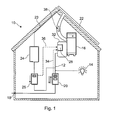
- a local regenerative energy system according to a preferred embodiment of the invention is illustrated.
- the same or corresponding components are identified by the same reference numerals as in the conventional local energy system of Fig. 3 ,
- a building 10 for example a private house, a school building, a company building or a business enterprise, has a local power grid 12, to which numerous electrical consumers 14 (eg lighting, media equipment, telephone systems, household appliances, etc.) and one or more power-controlled consumers 16 (eg heat pumps, air conditioners, fans, heating elements, electric motors with speed control, compressors, pumps, electromagnetic actuators, refrigerators and freezers, energy storage, chargers, etc.) are connected or connectable.
- the local power grid 12 of the building 10 For example, a heat pump for domestic water heating or space heating connected as a power-controlled consumer 16.
- the local power network 12 of the building 10 is connected via a network connection 18 to a (public) power supply network.
- a grid connection counter 20 records the power and energy consumed by the local power grid 12 from the power grid.
- a photovoltaic system 22 is mounted on the building 10, in this embodiment on the roof of the building.
- regenerative energy generators such as, for example, wind power plants, cogeneration plants fed with regenerative fuels, and the like.
- an air heat pump 16 is provided, which sucks 38 air below the photovoltaic modules 22 via a hot air duct.
- the air between the photovoltaic modules 22 and the building roof is heated. This additional heating of the air increases the efficiency of the air heat pump 16.
- the photovoltaic modules 22 are forcibly ventilated via the hot air duct 38 and thus cooled, which in turn increases the efficiency of the photovoltaic system.
- the exhaust air of the heat pump 16 can be used for space cooling of the building 10 and / or for further cooling of the photovoltaic modules.
- the direct current generated by the photovoltaic system 22 with appropriate solar radiation is fed via a power line 23 to a solar inverter 24, which converts the generated direct current into a suitable for the local power grid 12 alternating current.
- An (optional) solar power meter 26 measures the power and amount of energy generated by the photovoltaic system 22 and fed into the local power grid 12.
- the consumers 14, 16 should be supplied as much as possible from the power generated by the photovoltaic system 22. If the electricity demand of the consumers 14, 16 exceeds this self-generated current of the energy system, then the local power grid 12 additionally draws energy from the power supply network via the grid connection 18. If, on the other hand, the amount of electricity generated by the photovoltaic system exceeds the electricity demand of the consumers 14, 16, then the energy system feeds this energy surplus into the power supply network via the grid connection 18. Depending on the energy balance, the grid connection meter 20 detects either the power and energy consumed by the local power grid 12 from the power grid or the power and the amount of energy fed into the power grid by the power system.
- the operation of the heat pump 16 is controlled by a controller 28 via a frequency converter 32.
- the control device 28 is coupled via a signal line 34 to the mains connection counter 20 and optionally via a further signal line 36 also to the solar power meter 26.
- the signal lines 34, 36 may be wired or wireless (e.g., by radio).
- the control device 28 is informed via these signal lines 34, 36 of the counters 20, 26 in particular the current energy balance. That is, the control device 28 is informed by means of signal line 34 about the difference between the power generated by the photovoltaic system 22 and the power of the consumer 14 or the power fed into the power grid or the power related thereto. By means of optional additional signal line 36, the control device 28 can detect or calculate the power profile of generator 22 and load 14 and use this information for the optimal switch-on time of the power-modulated load 16.
- the control device 28 is designed so that the self-consumption portion of the local regenerative energy system is as high as possible and thus optimized.
- the connected to the local power grid 12 of the building 10 consumers 14, 16 should be operated as far as possible with the electricity generated by the photovoltaic system 22.
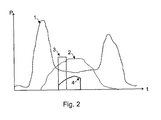
- Fig. 2 illustrates in this context the course of energy or the power consumption P in the course of a day.
- the curve 1 shows by way of example the power consumption of the consumers 14 of the building 10 (without the heat pump 16).
- the curve 2 shows an example of the solar power fed by the photovoltaic system 22 on a sunny winter day in the local power grid 12.
- the power consumption of the consumer 14 usually exceeds the solar power generated by the photovoltaic system 22 in the morning and evening hours (curve 1 runs above curve 2). During these periods, the local power grid 12 of the building 10 must additionally draw energy from the power grid.
- the self-consumption portion of the regenerative energy system could be increased in this context, for example, by a changed or adapted user behavior or additional electrical energy storage such as batteries.
- the heat pump 16 is operated as possible when the solar power generated by the photovoltaic system 22 exceeds the power consumption of the other consumers 14 (curve 2 runs above curve 1).
- the control device 28 is in this respect designed so that it turns on the heat pump 16 when the solar power generated by the photovoltaic system 22 exceeds the power consumption of the other electrical loads by a predetermined value (see curve 3 in FIG Fig. 2 ). This usually means, however, that the energy requirement of the heat pump 16 is not completely by that of the Photovoltaic system 22 generated solar power can be covered (sum of the curves 1 and 3 larger than curve 2).
- the solution approach of the regenerative energy system of the invention therefore goes one step further.
- the control device 28 of the energy system is designed such that it can modulate the power consumption of the heat pump 16. That It controls not only the time, but also the amount of power consumption of the heat pump 16. This modulation of the power consumption takes place by means of the frequency converter 32 associated with the heat pump 16. Such power modulation is possible because the heat pump 16 is not necessarily operated at maximum power in order to warm the process water, and the warming of the process water does not necessarily have to be completed within a short period of time.
- the controller 28 controls the time and amount of power consumption of the heat pump 16 from the local power grid 12 in response to the power being fed into the grid from the photovoltaic system 22, i.e., the power level. depending on the current energy balance of the local energy system.
- the control device 28 controls the power consumption of the heat pump 16 from the local power grid 12 if possible so that the power fed into the power grid by the photovoltaic system 22 is greater than or equal to zero, i. no energy needs to be drawn from the power grid.
- Fig. 2 is the inventively modulated power consumption of the heat pump 16 is illustrated by the curve 4. It is in Fig. 2 In addition, it can be seen that during the entire operating period of the heat pump 16, the sum of the power consumption of the heat pump 16 (curve 4) and the further consumer 14 (curve 1) corresponds at most to the generated solar power output (curve 2).
- the maximum power consumption of the heat pump 16 is in each case by the controller 28 with the aim of self-consumption optimization predetermined, ie continuously adapted to the requirements for the optimization of self-consumption share.
- the integral below curve 4 approximately corresponds to the integral below curve 3.
- the heat pump 16 consumes about as much total energy for heating the process water as in the conventional power consumption (curve 3).
- the switch-on time can additionally be selected differently in order to further increase the self-consumption proportion of the regenerative energy system.
- the control device 28 for controlling the power consumption of the heat pump 16 can also take into account forecasts relating to a power generation by the photovoltaic system 22 (curve 2) and / or a power consumption of the further consumers 14 (curve 1).
- the course of the curve 2 for the current day can be estimated on the basis of weather forecasts and empirical values.
- the course of the curve 1 for the current day can be estimated, for example, based on empirical values and programming of an energy management system. From these estimates of curves 1 and 2 for the further course of the day, the control device 28 can determine an optimal switch-on time for the heat pump 16, for which the power balances described above then apply for the entire operating period of the heat pump 16.
- the only temporarily available energy of the photovoltaic system can be optimally used or stored (in the form of heat energy).
- the heat capacity of the building itself can be used as energy storage.
- the heat pump 16 for example, in the winter months on sunny days, the rooms heat up the building 10 by 2 ° C, so that the rooms are comfortably warm in the evening, before they cool down again by 2 ° C at night.
- the electric power required for space heating conventionally required in the morning and in the evening can be minimized.
- the above-described local energy system can be operated in the same way with two or more power-controlled consumers 16.
- a central control device 28 is preferably used.
- individual, coupled-together control devices 28 for controlling the power-controlled consumers 16.
Landscapes
- Engineering & Computer Science (AREA)
- Power Engineering (AREA)
- Supply And Distribution Of Alternating Current (AREA)
Abstract
Ein lokales Energiesystem enthält ein lokales Stromnetz (12), welches über einen Netzanschluss (18) an ein Stromversorgungsnetz angeschlossen ist; wenigstens einen leistungsgeregelten Verbraucher (16), welcher an das lokale Stromnetz (12) angeschlossen ist; wenigstens einen Iokalen Energieerzeuger (22), welcher an das lokale Stromnetz (12) angeschlossen ist; und einen Netzanschlusszähler (20), welcher die von dem lokalen Stromnetz (12) aus dem Stromversorgungsnetz bezogene Leistung und die von dem wenigstens einen lokalen Energieerzeuger (22) in das Stromversorgungsnetz eingespeiste Leistung erfasst. Ferner ist eine Steuereinrichtung (28) vorgesehen, welche mit dem Netzanschlusszähler (20) gekoppelt ist und welche eine Zeit und eine Höhe einer Leistungsaufnahme des wenigstens einen leistungsgeregelten Verbrauchers (16) aus dem lokalen Stromnetz (12) in Abhängigkeit von der von dem wenigstens einen lokalen Energieerzeuger (22) in das Stromversorgungsnetz eingespeisten Leistung steuert.
Description
Die vorliegende Erfindung betrifft ein lokales Energiesystem sowie ein Verfahren zum Betreiben eines lokalen Energiesystems, insbesondere für die Haus- und Gebäudetechnik.The present invention relates to a local energy system and a method for operating a local energy system, in particular for home and building technology.
In
Der von der Photovoltaikanlage 22 erzeugte Strom wird über einen Solarwechselrichter 24 in das lokale Stromnetz / Niederspannungsnetz 12 des Gebäudes 10 eingespeist. Ein Solarstromzähler 26 misst die gesamte durch den Solarwechselrichter 24 ins lokale Stromnetz 12 eingespeiste Energie.The power generated by the
Die durch den Solarwechselrichter 24 ins lokale Stromnetz 12 eingespeiste Energie wird wahlweise von den elektrischen Verbrauchern 14, 16 verbraucht oder über den Netzanschluss 18 in das öffentliche Stromversorgungsnetz eingespeist. Ein Netzanschlusszähler 20 misst dabei die von dem lokalen Stromnetz 12 aus dem Stromversorgungsnetz bezogene Energiemenge bzw. die von der Photovoltaikanlage 22 in das Stromversorgungsnetz eingespeiste Energiemenge.The energy fed into the
Es ist in diesem Zusammenhang von Vorteil und zum Teil auch staatlich gefördert, den Eigenverbrauchsanteil des in oder an Gebäuden 10 selbst produzierten Stroms, beispielsweise aus Photovoltaik, zu erhöhen. Am Markt werden dazu Lösungen angeboten, welche die Wärmepumpen 16 dann einschalten, wenn die Energieerzeugung der Photovoltaikanlage 22 die Leistungsaufnahme der weiteren Verbraucher 14 erwartungsgemäß oder tatsächlich messtechnische ermittelt um einen bestimmten Wert überschreitet.In this context, it is advantageous and sometimes state-subsidized to increase the self-consumption share of the electricity produced in or on
Aufgrund der üblicherweise schwankenden Energieerzeugung der Photovoltaikanlage und auch des üblicherweise schwankenden (Gesamt-)Energieverbrauchs der weiteren Verbraucher in dem Gebäude, kann mit dieser herkömmlichen Lösung jedoch nicht verhindert werden, dass die Leistungsaufnahme der Wärmepumpe zu einem relativ großen Anteil aus dem Stromversorgungsnetz gedeckt wird.Due to the usually fluctuating power generation of the photovoltaic system and also the usually fluctuating (total) energy consumption of the other consumers in the building, however, can not be prevented with this conventional solution that the power consumption of the heat pump is covered to a relatively large proportion of the power grid.
Es ist deshalb eine Aufgabe der vorliegenden Erfindung, ein verbessertes lokales Energiesystem zu schaffen, mit welchem höhere Eigenverbrauchsanteile erzielt werden können.It is therefore an object of the present invention to provide an improved local power system with which higher self-consumption rates can be achieved.
Diese Aufgabe wird gelöst durch die Lehre der unabhängigen Ansprüche 1 und 6. Bevorzugte Ausgestaltungen und Weiterbildungen der Erfindung sind Gegenstand der jeweiligen abhängigen Ansprüche.This object is achieved by the teaching of independent claims 1 and 6. Preferred embodiments and further developments of the invention are the subject of the respective dependent claims.
Das lokale Energiesystem gemäß der Erfindung weist ein lokales Stromnetz, welches über einen Netzanschluss an ein Stromversorgungsnetz angeschlossen ist; wenigstens einen leistungsgeregelten Verbraucher, welcher an das lokale Stromnetz angeschlossen ist; wenigstens einen lokalen Energieerzeuger, welcher an das lokale Stromnetz angeschlossen ist; und einen Netzanschlusszähler, welcher die von dem lokalen Stromnetz aus dem Stromversorgungsnetz bezogene Leistung und Energiemenge und die von dem wenigstens einen lokalen Energieerzeuger in das Stromversorgungsnetz eingespeiste Leistung und Energiemenge erfasst, auf und ist dadurch gekennzeichnet, dass eine Steuereinrichtung vorgesehen ist, welche mit dem Netzanschlusszähler gekoppelt ist und welche ausgebildet ist, um eine Zeit und eine Höhe einer Leistungsaufnahme des wenigstens einen leistungsgeregelten Verbrauchers aus dem lokalen Stromnetz in Abhängigkeit von der von dem wenigstens einen lokalen Energieerzeuger in das Stromversorgungsnetz eingespeisten Leistung zu steuern.The local energy system according to the invention comprises a local power grid, which is connected via a network connection to a power supply network; at least one power controlled consumer connected to the local power grid; at least one local power generator connected to the local power grid; and a grid connection counter, which is the one from the local power grid from the power grid detected power and amount of energy and the power and energy supplied by the at least one local power generator in the power grid detected, and is characterized in that a control device is provided, which is coupled to the power supply meter and which is designed to a time and a height to control a power consumption of the at least one power-controlled consumer from the local power grid as a function of the power fed into the power grid by the at least one local power generator.
Mit dem lokalen Energiesystem der Erfindung kann bei der Verwendung von leistungsgeregelten Verbrauchern der Eigenverbrauchsanteil des aus lokalen Energiequellen selbst erzeugten Stroms erhöht werden. Die Erhöhung des Eigenverbrauchsanteils kann in vorteilhafter Weise zu einer Entlastung des Stromversorgungsnetzes führen. Außerdem wird der Eigenverbrauch zum Teil staatlich gefördert, sodass die Energiekosten für den Nutzer des Energiesystems geringer werden. Schließlich kann eine Erhöhung des Eigenverbrauchsanteils auch zu einer größeren Unabhängigkeit des Nutzers vom Stromversorgungsnetz führen.With the local energy system of the invention can be increased when using power controlled consumers, the self-consumption of self-generated from local energy sources stream. The increase of the self-consumption share can lead to a relief of the power grid in an advantageous manner. In addition, self-consumption is partly subsidized by the state, so that the energy costs for the user of the energy system are lower. Finally, an increase in the self-consumption share can also lead to a greater independence of the user from the power grid.
Während bei den eingangs beschriebenen herkömmlichen Energiesystemen bereits Lösungen existieren, bei denen Verbraucher in Abhängigkeit von der von dem wenigstens einen lokalen Energieerzeuger in das Stromversorgungsnetz eingespeisten Leistung ein- und ausgeschaltet werden, d.h. nur dann in Betrieb genommen werden, wenn genügend selbst erzeugter Strom vorhanden ist, werden bei dem lokalen Energiesystem der Erfindung durch die Steuereinrichtung die Zeit und die Höhe der Leistungsaufnahme des wenigstens einen leistungsgeregelten Verbrauchers gesteuert. Mit anderen Worten, wird der leistungsgeregelte Verbraucher von der Steuereinrichtung nur dann in Betrieb genommen, wenn genügend selbst erzeugter Strom im lokalen Stromnetz zur Verfügung steht, und wird außerdem seine Leistungsaufnahme durch die Steuereinrichtung so moduliert, dass er während seiner gesamten Betriebszeit zu einem möglichst hohen Anteil, am besten vollständig durch den vom regenerativen Energieerzeuger erzeugten Strom versorgt wird. Da eine Drosselung der Leistungsaufnahme nicht bei allen Arten von elektrischen Verbrauchern möglich ist, ist dieses erfindungsgemäße Energiemanagement nur bei leistungsgeregelten Verbrauchern einsetzbar. Gerade bei solchen leistungsgeregelten Verbrauchern besteht aber häufig die Möglichkeit, diese zu beliebigen (Tages-) Zeiten und/oder unabhängig von einem aktuellen Nutzerverhalten in Betrieb zu nehmen, sodass diese Einschränkung in der Praxis keinen oder zumindest keinen nennenswerten Nachteil darstellt. So werden beispielsweise Wärmepumpen zur Brauchwassererwärmung in der Regel ohnehin nur einmal am Tag in Betrieb genommen, um einen größeren Vorrat an warmem Wasser zu erzeugen und das warme Wasser kann auch in unterschiedlichen Leistungsstufen ausreichend erwärmt werden.While in the conventional energy systems described above already exist solutions in which consumers are switched on and off depending on the power fed from the at least one local power generator in the power grid, ie only be put into operation when sufficient self-generated electricity is available In the local power system of the invention, the controller controls the time and the amount of power consumption of the at least one power controlled load. In other words, the power-controlled consumer is only put into operation by the control device when sufficient self-generated power is available in the local power grid, and its power consumption is also modulated by the control device such that it becomes a full-time power supply during its entire operating time as high as possible, is best supplied completely by the electricity generated by the regenerative energy generator. Since a reduction in power consumption is not possible for all types of electrical consumers, this energy management according to the invention can only be used with power-controlled consumers. Especially in the case of such power-regulated consumers, however, it is often possible to put them into operation at arbitrary (daily) times and / or independently of a current user behavior, so that in practice this restriction represents no or at least no appreciable disadvantage. For example, heat pumps for hot water heating usually only once a day taken into operation to produce a larger supply of hot water and the warm water can be sufficiently heated in different power levels.
Unter einem lokalen Stromnetz soll in diesem Zusammenhang jede Art von Stromnetz verstanden werden, welches lokal begrenzt ist (zum Beispiel in einem Haus, Gebäude, Firmengelände, Schulkomplex, etc.). An das lokale Stromnetz kann vorzugsweise nur eine begrenzte Anzahl von Verbrauchern angeschlossen werden. Das lokale Stromnetz ist vorzugsweise nicht für beliebige Dritte frei zugänglich. Bei dem lokalen Stromnetz handelt es sich vorzugsweise um ein Niederspannungsnetz, die Erfindung ist jedoch grundsätzlich auch für Mittel- und Hochspannungsnetze einsetzbar.In this context, a local power network should be understood as any type of power network which is locally limited (for example in a house, building, company premises, school complex, etc.). Preferably, only a limited number of consumers can be connected to the local power grid. The local power grid is preferably not freely accessible to any third party. The local power grid is preferably a low-voltage network, but the invention can in principle also be used for medium and high-voltage grids.
Unter einem Stromversorgungsnetz soll in diesem Zusammenhang jede Art von Stromnetz verstanden werden, welches von einem Stromanbieter vorzugsweise öffentlich bereitgestellt wird.In this context, a power supply network is to be understood as any type of power network which is preferably made publicly available by an electricity provider.
Der Begriff des leistungsgeregelten Verbrauchers soll in diesem Zusammenhang jede Art von elektrischen Verbrauchern umfassen, deren Betrieb mit unterschiedlichen Leistungsaufnahmen bzw. in unterschiedlichen Leistungsstufen möglich ist. Hiervon zu unterscheiden sind solche elektrischen Verbraucher, die lediglich ein- und ausgeschaltet werden können, d.h. nur mit einer einzigen fest vorgegebenen Leistungsstufe betrieben werden können. Zu den leistungsgeregelten Verbrauchern in diesem Sinne zählen insbesondere Wärmepumpen, Wärmepumpen zur Brauchwassererwärmung, Wärmepumpen zur Raumheizung, Sole, Wasser und Luftwärmepumpen, Heizstäbe, Elektromotoren mit Drehzahlregelung, Klimaanlagen und -geräte, Lüfter und Ventilatoren, Kompressoren, Pumpen, elektromagnetische Aktuatoren, Kühl- und Gefrierschränke und dergleichen. Besonders vorteilhaft ist der Einsatz der Erfindung in Zusammenhang mit einer Wärmepumpe, insbesondere einer Wärmepumpe zur Brauchwassererwärmung oder zur Raumheizung als leistungsgeregeltem Verbraucher. Zu den leistungsgeregelten Verbrauchern im Sinne der Erfindung zählen darüber hinaus auch elektrische Energiespeicher zum Speichern der elektrischen Energie, direkt über Akkus oder indirekt über Druckluft oder Wasserstoffspeicher für einen späteren Verbrauch, sowie elektrische Ladesysteme zum Aufladen elektrischer Verbraucher (z.B. Akkus von Elektrofahrzeugen).The term "power controlled consumer" in this context is intended to include any type of electrical consumers whose operation is possible with different power consumption or in different power levels. To be distinguished from such electrical consumers, which can only be switched on and off, ie only with a single fixed predetermined power level can be operated. Among the performance-regulated consumers in this sense include heat pumps, heat pumps for domestic water heating, heat pumps for space heating, brine, water and air heat pumps, heating elements, electric motors with speed control, air conditioning and equipment, fans and fans, compressors, pumps, electromagnetic actuators, cooling and Freezers and the like. Particularly advantageous is the use of the invention in connection with a heat pump, in particular a heat pump for domestic water heating or space heating as Leistungsgeregeltem consumer. The power-controlled consumers in the context of the invention also include electrical energy storage for storing the electrical energy, directly via batteries or indirectly via compressed air or hydrogen storage for later consumption, as well as electrical charging systems for charging electrical consumers (eg batteries of electric vehicles).
Das lokale Energiesystem der Erfindung weist wenigstens einen solchen leistungsgeregelten Verbraucher auf, d.h. einen, zwei, drei oder mehr solcher leistungsgeregelter Verbraucher. Im Fall von zwei oder mehr leistungsgeregelten Verbrauchern werden vorzugsweise alle von der (zentralen) Steuereinrichtung in der erfindungsgemäßen Weise angesteuert.The local energy system of the invention has at least one such power controlled consumer, i. one, two, three or more such regulated consumers. In the case of two or more power-controlled consumers, all are preferably controlled by the (central) control device in the manner according to the invention.
Die Steuereinrichtung steuert sowohl die Zeit (Zeitpunkt, Zeitdauer, etc.) als auch die Höhe der Leistungsaufnahme des wenigstens einen leistungsgeregelten Verbrauchers. Diese Modulation der Leistungsaufnahme erfolgt vorzugsweise kontinuierlich, quasi-kontinuierlich, abschnittsweise kontinuierlich, schrittweise, stufenweise oder dergleichen.The control device controls both the time (time, duration, etc.) and the amount of power consumption of the at least one power-controlled consumer. This modulation of the power consumption is preferably carried out continuously, quasi-continuously, in sections continuously, stepwise, stepwise or the like.
In einer bevorzugten Ausgestaltung der Erfindung ist die Steuereinrichtung ausgebildet, um die Leistungsaufnahme des wenigstens einen leistungsgeregelten Verbrauchers aus dem lokalen Stromnetz derart zu steuern, dass die von dem wenigstens einen lokale Energieerzeuger in das Stromversorgungsnetz eingespeiste Leistung (möglichst) größer oder gleich Null ist. Dies bedeutet, dass der leistungsgeregelte Verbraucher ausschließlich durch den vom Energiesystem selbst erzeugten Strom betrieben werden kann und kein Bezug von zusätzlichem Strom aus dem Stromversorgungsnetz erforderlich ist.In a preferred embodiment of the invention, the control device is designed to control the power consumption of the at least one power-controlled consumer from the local power grid such that the at least one local power generator into the power grid supplied power (if possible) is greater than or equal to zero. This means that the power-controlled consumer can only be operated by the power generated by the energy system itself and no additional power from the power grid is required.
In einer weiteren bevorzugten Ausgestaltung der Erfindung ist der leistungsgeregelte Verbraucher über einen Frequenzumrichter an das lokale Stromnetz angeschlossen und steuert die Steuereinrichtung diesen Frequenzumrichter derart an, dass er die Leistungsaufnahme des wenigstens einen leistungsgeregelten Verbrauchers aus dem lokalen Stromnetz moduliert, d.h. in der Höhe variiert, falls erforderlich.In a further preferred embodiment of the invention, the power-controlled consumer is connected via a frequency converter to the local power grid and controls the controller to this frequency converter so that it modulates the power consumption of the at least one power controlled load from the local power grid, i. varies in height, if necessary.
In einer weiteren bevorzugten Ausgestaltung der Erfindung ist die Steuereinrichtung auch ausgebildet, um die Leistungsaufnahme des wenigstens einen leistungsgeregelten Verbrauchers aus dem lokalen Stromnetz in Abhängigkeit von Vorhersagen betreffend eine Stromerzeugung durch den wenigstens einen lokalen Energieerzeuger und/oder eine Leistungsaufnahme weiterer an das lokale Stromnetz angeschlossener Verbraucher zu steuern. Mit dieser Maßnahme kann erreicht werden, dass der leistungsgeregelte Verbraucher (möglichst) nur dann von der Steuereinrichtung in Betrieb genommen ist, wenn der Überschuss des vom Energiesystem selbst erzeugten Stroms für eine ausreichend lange Zeit zu erwarten ist. Die Vorhersagen können vorzugsweise auf Basis von Erfahrungswerten der Stromerzeugung und des Stromverbrauchs im Energiesystem für vergangene Zeiträume, aus Wettervorhersagen, aus Programmierungen des Energiemanagementsystems und dergleichen basieren.In a further preferred embodiment of the invention, the control device is also designed to reduce the power consumption of the at least one power-controlled consumer from the local power grid in dependence on forecasts concerning power generation by the at least one local power generator and / or power consumption of other consumers connected to the local power grid to control. With this measure it can be achieved that the power-controlled consumer is (if possible) only put into operation by the control device when the surplus of the current generated by the energy system itself is to be expected for a sufficiently long time. The predictions may preferably be based on empirical values of power generation and power consumption in the power system for past time periods, weather forecasts, power management system programming, and the like.
In einer weiteren alternativen Ausgestaltung der Erfindung ist der lokale Energieerzeuger ein regenerativer Energieerzeuger. Der Begriff des lokalen Energieerzeugers umfasst in diesem Zusammenhang jede Art von Vorrichtung, die geeignet ist, elektrische Energie aus regenerativen Energiequellen zu gewinnen. Zu den regenerativen Energieerzeugern zählen in diesem Zusammenhang insbesondere Photovoltaikanlagen, Windkraftanlagen, mit Biomasse, Biogas, oder mit sonstigen regenativ erzeugten Brennstoffen wie z.B. Wasserstoff oder Methan gespeisten Kraftwärmekopplungsanlagen und dergleichen.In a further alternative embodiment of the invention, the local energy generator is a regenerative energy generator. The term local energy generator in this context includes any type of device that is suitable for obtaining electrical energy from regenerative energy sources. In this context, renewable energy generators include, in particular, photovoltaic systems, wind power plants Biomass, biogas, or with other regeneratively produced fuels such as hydrogen or methane powered cogeneration plants and the like.
Alternativ dazu kann ein lokaler Energieerzeuger aus nicht regenerativen, also konventionellen Energiequellen Energie gewinnen. Zu den nicht regenerativen Energieerzeugern gehört z.B. mit Erdgas betriebene Kraftwärmekopplungsanlagen, die in der vereinfachten verbreiteten Ausführung nicht modulierend betrieben werden, sondern bei Betrieb eine konstante elektrische Leistung liefern.Alternatively, a local energy producer from non-renewable, so conventional energy sources can gain energy. The non-regenerative energy generators include e.g. natural gas cogeneration plants that are not modulating in the simplified, common version, but provide a constant electrical power during operation.
Gegenstand der Erfindung ist auch ein Verfahren zum Betreiben eines lokalen Energiesystems mit einem lokalen Stromnetz, welches über einen Netzanschluss an ein Stromversorgungsnetz angeschlossen ist, wenigstens einem leistungsgeregelten Verbraucher, welcher an das lokale Stromnetz angeschlossen ist, und wenigstens einem lokalen Energieerzeuger, welcher an das lokale Stromnetz angeschlossen ist, bei welchem erfindungsgemäß eine Zeit und eine Höhe einer Leistungsaufnahme des wenigstens einen leistungsgeregelten Verbrauchers aus dem lokalen Stromnetz in Abhängigkeit von der von dem wenigstens einen lokalen Energieerzeuger in das Stromversorgungsnetz eingespeisten Leistung gesteuert werden.The invention also provides a method for operating a local energy system with a local power grid, which is connected via a network connection to a power supply network, at least one power-controlled consumer, which is connected to the local power grid, and at least one local power generator, which to the local Power supply is connected, wherein according to the invention, a time and a level of power consumption of the at least one power controlled load from the local power supply in dependence on the fed from the at least one local power generator in the power grid power.
Mit diesem Verfahren lassen sich die gleichen Vorteile erzielen wie sie oben in Zusammenhang mit dem lokalen Energiesystem der Erfindung beschrieben worden sind. Bezüglich der Vorteile, der bevorzugten Ausgestaltungen und der Begriffsdefinitionen wird an dieser Stelle nur auf die obigen Ausführungen in Zusammenhang mit dem lokalen Energiesystem der Erfindung verwiesen.The same advantages can be achieved with this method as have been described above in connection with the local energy system of the invention. With regard to the advantages, the preferred embodiments and the definitions of terms, reference is made at this point only to the above statements in connection with the local energy system of the invention.
Gegenstand der Erfindung ist schließlich auch eine Steuereinrichtung für das lokale Energiesystem der Erfindung bzw. zur Durchführung des erfindungsgemäßen Verfahrens. Die Steuereinrichtung ist insbesondere ausgebildet, um eine Zeit und eine Höhe einer Leistungsaufnahme wenigstens eines leistungsgeregelten Verbrauchers aus einem lokalen Stromnetz in Abhängigkeit von der von wenigstens einem lokalen Energieerzeuger in ein Stromversorgungsnetz eingespeisten Leistung zu steuern.Finally, the subject of the invention is also a control device for the local energy system of the invention or for carrying out the method according to the invention. The control device is in particular designed to provide a time and a level of power consumption of at least one power-controlled consumer from a local power grid Control dependence on the power fed by at least one local power generator in a power grid.
Obige sowie weitere Merkmale und Vorteile der Erfindung werden aus der nachfolgenden Beschreibung eines bevorzugten, nicht-einschränkenden Ausführungsbeispiels unter Bezugnahme auf die beiliegenden Zeichnungen besser verständlich. Darin zeigen:
- Fig. 1
- eine schematische Darstellung eines lokalen Energiesystems gemäß einem bevorzugten Ausführungsbeispiel der vorliegenden Erfindung;
- Fig. 2
- ein schematisches Leistungs-Tageszeit-Diagramm zur Veranschaulichung der Funktionsweise des lokalen Energiesystems von
Fig. 1 ; und - Fig. 3
- eine schematische Darstellung eines herkömmlichen lokalen Energiesystems.
- Fig. 1
- a schematic representation of a local power system according to a preferred embodiment of the present invention;
- Fig. 2
- a schematic performance time-of-day diagram illustrating the operation of the local energy system of
Fig. 1 ; and - Fig. 3
- a schematic representation of a conventional local energy system.
In
Ein Gebäude 10, zum Beispiel ein privates Haus, ein Schulgebäude, ein Firmengebäude oder ein Gewerbebetrieb, besitzt ein lokales Stromnetz 12, an welches zahlreiche elektrische Verbraucher 14 (z.B. Beleuchtung, Mediengeräte, Telefonanlagen, Haushaltsgeräte, etc.) sowie ein oder mehrere leistungsgeregelte Verbraucher 16 (z.B. Wärmepumpen, Klimageräte, Lüfter, Heizstäbe, Elektromotoren mit Drehzahlregelung, Kompressoren, Pumpen, elektromagnetische Aktuatoren, Kühl- und Gefrierschränke, Energiespeicher, Ladegeräte, etc.) angeschlossen bzw. anschließbar sind. Im vorliegenden Ausführungsbeispiel ist an das lokale Stromnetz 12 des Gebäudes 10 beispielhaft eine Wärmepumpe zur Brauchwassererwärmung oder Raumheizung als leistungsgeregelter Verbraucher 16 angeschlossen.A
Das lokale Stromnetz 12 des Gebäudes 10 ist über einen Netzanschluss 18 an ein (öffentliches) Stromversorgungsnetz angeschlossen. Ein Netzanschlusszähler 20 erfasst dabei die vom lokalen Stromnetz 12 aus dem Stromversorgungsnetz bezogene Leistung und Energiemenge.The
An dem Gebäude 10, in diesem Ausführungsbeispiel auf dem Dach des Gebäudes, ist eine Photovoltaikanlage 22 angebracht. Anstelle oder zusätzlich zu der Photovoltaikanlage können auch andere regenerative Energieerzeuger, wie beispielsweise Windkraftanlagen, mit regenerativen Kraftstoffen gespeiste Kraftwärmekopplungsanlagen und dergleichen vorgesehen sein.On the
In diesem speziellen Ausführungsbeispiel ist eine Luftwärmepumpe 16 vorgesehen, welche über einen Warmluftkanal 38 Luft unterhalb der Photovoltaikmodule 22 ansaugt. Bei Sonneneinstrahlung wird die Luft zwischen den Photovoltaikmodulen 22 und dem Gebäudedach erwärmt. Diese zusätzliche Erwärmung der Luft erhöht den Wirkungsgrad der Luftwärmepumpe 16. Andererseits werden die Photovoltaikmodule 22 über den Warmluftkanal 38 zwangsbelüftet und damit gekühlt, was wiederum den Wirkungsgrad der Photovoltaikanlage steigert. Des Weiteren kann die Abluft der Wärmepumpe 16 zur Raumkühlung des Gebäudes 10 und/oder zur weiteren Kühlung der Photovoltaikmodule benutzt werden.In this particular embodiment, an
Der von der Photovoltaikanlage 22 bei entsprechender Sonneneinstrahlung erzeugte Gleichstrom wird über eine Stromleitung 23 einem Solarwechselrichter 24 zugeführt, der den erzeugten Gleichstrom in einen für das lokale Stromnetz 12 geeigneten Wechselstrom umwandelt. Ein (optionaler) Solarstromzähler 26 misst dabei die von der Photovoltaikanlage 22 erzeugte und in das lokale Stromnetz 12 eingespeiste Leistung und Energiemenge.The direct current generated by the
In diesem regenerativen Energiesystem sollen die Verbraucher 14, 16 möglichst aus dem von der Photovoltaikanlage 22 erzeugten Strom versorgt werden. Übersteigt der Strombedarf der Verbraucher 14, 16 diesen selbst erzeugten Strom des Energiesystems, so bezieht das lokale Stromnetz 12 über den Netzanschluss 18 zusätzlich Energie aus dem Stromversorgungsnetz. Übersteigt hingegen die von der Photovoltaikanlage erzeugte Strommenge den Strombedarf der Verbraucher 14, 16, so speist das Energiesystem diesen Energieüberschuss über den Netzanschluss 18 in das Stromversorgungsnetz ein. Der Netzanschlusszähler 20 erfasst dabei - je nach Energiebilanz - entweder die vom lokalen Stromnetz 12 aus dem Stromversorgungsnetz bezogene Leistung und Energiemenge oder die vom Energiesystem in das Stromversorgungsnetz eingespeiste Leistung und Energiemenge.In this regenerative energy system, the
Der Betrieb der Wärmepumpe 16 wird von einer Steuereinrichtung 28 über einen Frequenzumrichter 32 gesteuert. Dabei ist die Steuereinrichtung 28 über eine Signalleitung 34 mit dem Netzanschlusszähler 20 und optional über eine weitere Signalleitung 36 auch mit dem Solarstromzähler 26 gekoppelt. Die Signalleitungen 34, 36 können drahtgebunden oder drahtlos (z.B. per Funk) ausgebildet sein.The operation of the
Der Steuereinrichtung 28 wird über diese Signalleitungen 34, 36 von den Zählern 20, 26 insbesondere die aktuelle Energiebilanz mitgeteilt. D.h. die Steuereinrichtung 28 ist mittels Signalleitung 34 über die Differenz zwischen der von der Photovoltaikanlage 22 erzeugten Leistung und der Leistung der Verbraucher 14 bzw. die in das Stromversorgungsnetz eingespeiste Leistung oder die aus diesem bezogene Leistung informiert. Mittels optionaler zusätzlicher Signalleitung 36 kann die Steuereinrichtung 28 das Leistungsprofil von Erzeuger 22 und Verbraucher 14 erfassen bzw. berechnen und diese Information für den optimalen Einschaltzeitpunk des leistungsmodulierten Verbrauchers 16 verwenden.The
Die Steuereinrichtung 28 ist so ausgebildet, dass der Eigenverbrauchsanteil des lokalen regenerativen Energiesystems möglichst hoch und damit optimiert ist. Mit anderen Worten sollen die an das lokale Stromnetz 12 des Gebäudes 10 angeschlossenen Verbraucher 14, 16 soweit möglich mit dem von der Photovoltaikanlage 22 erzeugten Strom betrieben werden.The
Wie in
Zur Erhöhung des Eigenverbrauchsanteils des regenerativen Energiesystems wird die Wärmepumpe 16 möglichst dann betrieben, wenn der von der Photovoltaikanlage 22 erzeugte Solarstrom den Stromverbrauch der weiteren Verbraucher 14 übersteigt (Kurve 2 verläuft oberhalb Kurve 1). In herkömmlichen Energiesystemen, wie in der eingangs beschriebenen
Der Lösungsansatz des regenerativen Energiesystems der Erfindung geht daher noch einen Schritt weiter. Die Steuereinrichtung 28 des Energiesystems ist so ausgebildet, dass sie die Leistungsaufnahme der Wärmepumpe 16 modulieren kann. D.h. sie steuert nicht nur die Zeit, sondern auch die Höhe der Leistungsaufnahme der Wärmepumpe 16. Diese Modulation der Leistungsaufnahme erfolgt mit Hilfe des der Wärmepumpe 16 zugeordneten Frequenzumrichters 32. Eine solche Leistungsmodulation ist möglich, weil die Wärmepumpe 16 nicht notwendigerweise mit der maximalen Leistung betrieben werden muss, um das Brauchwasser zu erwärmen, und die Erwärmung des Brauchwassers nicht notwendigerweise innerhalb eines kurzen Zeitraums abgeschlossen sein muss.The solution approach of the regenerative energy system of the invention therefore goes one step further. The
Die Steuereinrichtung 28 steuert die Zeit und die Höhe der Leistungsaufnahme der Wärmepumpe 16 aus dem lokalen Stromnetz 12 in Abhängigkeit von der von der Photovoltaikanlage 22 in das Stromversorgungsnetz eingespeisten Leistung, d.h. in Abhängigkeit von der aktuellen Energiebilanz des lokalen Energiesystems. Dabei steuert die Steuereinrichtung 28 die Leistungsaufnahme der Wärmepumpe 16 aus dem lokalen Stromnetz 12 möglichst so, dass die von der Photovoltaikanlage 22 in das Stromversorgungsnetz eingespeiste Leistung größer oder gleich Null ist, d.h. keine Energie aus dem Stromversorgungsnetz bezogen werden muss.The
In
Außerdem entspricht das Integral unter Kurve 4 etwa dem Integral unter der Kurve 3. Mit anderen Worten verbraucht die Wärmepumpe 16 im Fall der modulierten Leistungsaufnahme (Kurve 4) insgesamt etwa genauso viel Energie zur Erwärmung des Brauchwassers wie bei der herkömmlichen Leistungsaufnahme (Kurve 3).In addition, the integral below
Neben der Modulation der Leistungsaufnahme der Wärmepumpe 16 kann zusätzlich auch noch der Einschaltzeitpunkt anders gewählt werden, um den Eigenverbrauchsanteil des regenerativen Energiesystems weiter zu erhöhen. So kann die Steuereinrichtung 28 zum Steuern der Leistungsaufnahme der Wärmepumpe 16 zum Beispiel auch noch Vorhersagen betreffend eine Stromerzeugung durch die Photovoltaikanlage 22 (Kurve 2) und/oder eine Leistungsaufnahme der weiteren Verbraucher 14 (Kurve 1) berücksichtigen. Beispielsweise kann anhand von Wettervorhersagen und Erfahrungswerten der Verlauf der Kurve 2 für den aktuellen Tag abgeschätzt werden. Ebenso kann beispielsweise anhand von Erfahrungswerten und Programmierungen eines Energiemanagementsystems der Verlauf der Kurve 1 für den aktuellen Tag abgeschätzt werden. Aus diesen Abschätzungen der Kurven 1 und 2 für den weiteren Tagesverlauf kann die Steuereinrichtung 28 einen optimalen Einschaltzeitpunkt für die Wärmepumpe 16 bestimmen, für den dann die oben beschriebenen Leistungsbilanzen für die gesamte Betriebsdauer der Wärmepumpe 16 gelten.In addition to the modulation of the power consumption of the
Mit dem lokalen Energiesystem der Erfindung kann die nur temporär zur Verfügung stehende Energie der Photovoltaikanlage optimal genutzt bzw. (in Form von Wärmeenergie) gespeichert werden.With the local energy system of the invention, the only temporarily available energy of the photovoltaic system can be optimally used or stored (in the form of heat energy).
In modernen, insbesondere gut isolierten Gebäuden kann auch die Wärmekapazität des Gebäudes selbst als Energiespeicher genutzt werden. So kann die Wärmepumpe 16 zum Beispiel im Winterhalbjahr an sonnigen Tagen die Räume des Gebäudes 10 um 2°C aufheizen, sodass die Räume dann abends gemütlich warm sind, bevor sie sich nachts wieder um 2°C abkühlen. Hierdurch kann die herkömmlicherweise morgens und abends benötigte elektrische Leistung zur Raumheizung minimiert werden.In modern, especially well-insulated buildings, the heat capacity of the building itself can be used as energy storage. Thus, the
Das oben beschriebene lokale Energiesystem kann in gleicher Weise auch mit zwei oder mehr leistungsgeregelten Verbrauchern 16 betrieben werden. In diesem Fall wird vorzugsweise eine zentrale Steuereinrichtung 28 verwendet. Alternativ können auch einzelne, miteinander gekoppelte Steuereinrichtungen 28 zum Ansteuern der leistungsgeregelten Verbraucher 16 eingesetzt werden.The above-described local energy system can be operated in the same way with two or more power-controlled
- 1010
- Gebäudebuilding
- 1212
- lokales Stromnetzlocal power grid
- 1414
- Verbraucherconsumer
- 1616
- leistungsgeregelte VerbraucherPerformance-regulated consumers
- 1818
- Netzanschlussmains connection
- 2020
- NetzanschlusszählerPower supply counter
- 2222
- Photovoltaikanlagephotovoltaic system
- 2323
- Stromleitungpower line
- 2424
- SolarwechselrichterSolar inverters
- 2626
- SolarstromzählerSolar electricity meters
- 2828
- Steuereinrichtungcontrol device
- 3030
- Steuerleitungcontrol line
- 3232
- Frequenzumrichterfrequency converter
- 3434
- Signalleitungsignal line
- 3636
- Signalleitungsignal line
- 3838
- WarmluftkanalWarm air duct
Claims (14)
einem lokalen Stromnetz (12), welches über einen Netzanschluss (18) an ein Stromversorgungsnetz angeschlossen ist;
wenigstens einem leistungsgeregelten Verbraucher (16), welcher an das lokale Stromnetz (12) angeschlossen ist;
wenigstens einem lokalen Energieerzeuger (22), welcher an das lokale Stromnetz (12) angeschlossen ist; und
einem Netzanschlusszähler (20), welcher die von dem lokalen Stromnetz (12) aus dem Stromversorgungsnetz bezogene Leistung und die von dem wenigstens einen lokalen regenerativen Energieerzeuger (22) in das Stromversorgungsnetz eingespeiste Leistung erfasst,
dadurch gekennzeichnet, dass
eine Steuereinrichtung (28) vorgesehen ist, welche mit dem Netzanschlusszähler (20) gekoppelt ist und welche ausgebildet ist, um eine Zeit und eine Höhe einer Leistungsaufnahme des wenigstens einen leistungsgeregelten Verbrauchers (16) aus dem lokalen Stromnetz (12) in Abhängigkeit von der von dem wenigstens einen lokalen Energieerzeuger (22) in das Stromversorgungsnetz eingespeisten Leistung zu steuern.Local energy system, with
a local power network (12) which is connected via a network connection (18) to a power supply network;
at least one power controlled consumer (16) connected to the local power grid (12);
at least one local power generator (22) connected to the local power grid (12); and
a grid connection counter (20) which detects the power drawn from the power grid by the local power grid (12) and the power fed into the power grid by the at least one local regenerative power generator (22),
characterized in that
a control device (28) is provided, which is coupled to the mains connection counter (20) and which is designed to determine a time and a level of power consumption of the at least one power-controlled consumer (16) from the local power supply (12) in dependence on the to control the at least one local power generator (22) fed into the power grid power.
dadurch gekennzeichnet, dass
die Steuereinrichtung (28) ausgebildet ist, um die Leistungsaufnahme des wenigstens einen leistungsgeregelten Verbrauchers (16) aus dem lokalen Stromnetz (12) derart zu steuern, dass die von dem wenigstens einen lokalen Energieerzeuger (22) in das Stromversorgungsnetz eingespeiste Leistung größer oder gleich Null ist.Local energy system according to claim 1,
characterized in that
the control device (28) is designed to control the power consumption of the at least one power-controlled consumer (16) from the local power grid (12) such that the power fed into the power grid by the at least one local power generator (22) is greater than or equal to zero is.
dadurch gekennzeichnet, dass
der leistungsgeregelte Verbraucher (16) über einen Frequenzumrichter (32) an das lokale Stromnetz (12) angeschlossen ist; und
die Steuereinrichtung (28) diesen Frequenzumrichter (32) ansteuert, um die Leistungsaufnahme des wenigstens einen leistungsgeregelten Verbrauchers (16) aus dem lokalen Stromnetz (12) zu modulieren.Local energy system according to claim 1 or 2,
characterized in that
the power controlled consumer (16) is connected to the local power grid (12) via a frequency converter (32); and
the control device (28) controls this frequency converter (32) in order to modulate the power consumption of the at least one power-controlled consumer (16) from the local power grid (12).
dadurch gekennzeichnet, dass
die Steuereinrichtung (28) ausgebildet ist, um die Leistungsaufnahme des wenigstens einen leistungsgeregelten Verbrauchers (16) aus dem lokalen Stromnetz (12) in Abhängigkeit von Vorhersagen betreffend eine Stromerzeugung durch den wenigstens einen lokalen Energieerzeuger (22) und/oder eine Leistungsaufnahme weiterer an das lokale Stromnetz (12) angeschlossener Verbraucher (14) zu steuern.Local energy system according to one of the preceding claims,
characterized in that
the control device (28) is designed to control the power consumption of the at least one power-controlled consumer (16) from the local power grid (12) in dependence on forecasts concerning power generation by the at least one local power generator (22) and / or power consumption to the local power grid (12) connected consumers (14) to control.
dadurch gekennzeichnet, dass
der wenigstens eine leistungsgeregelte Verbraucher (16) eine Wärmepumpe, insbesondere eine Wärmepumpe zur Brauchwassererwärmung oder zur Raumheizung aufweist.Local energy system according to one of the preceding claims,
characterized in that
the at least one power-controlled consumer (16) has a heat pump, in particular a heat pump for hot water heating or space heating.
dadurch gekennzeichnet, dass
der lokale Energieerzeuger ein regenerativer Energieerzeuger ist.Local energy system according to one of the preceding claims,
characterized in that
the local power generator is a regenerative power generator.
dadurch gekennzeichnet, dass
eine Zeit und eine Höhe einer Leistungsaufnahme des wenigstens einen leistungsgeregelten Verbrauchers (16) aus dem lokalen Stromnetz (12) in Abhängigkeit von der von dem wenigstens einen lokalen Energieerzeuger (22) in das Stromversorgungsnetz eingespeisten Leistung gesteuert werden.Method for operating a local energy system with a local power network (12), which is connected via a network connection (18) to a power supply network, at least one power-controlled consumer (16), which is connected to the local power grid (12), and at least one local Energy producers (22), which is connected to the local power grid (12),
characterized in that
a time and a level of power consumption of the at least one power controlled consumer (16) from the local power grid (12) are controlled in dependence on the power fed into the power grid by the at least one local power generator (22).
dadurch gekennzeichnet, dass
die Leistungsaufnahme des wenigstens einen leistungsgeregelten Verbrauchers (16) aus dem lokalen Stromnetz (12) derart gesteuert wird, dass die von dem wenigstens einen lokalen Energieerzeuger (22) in das Stromversorgungsnetz eingespeiste Leistung größer oder gleich Null ist.Method according to claim 7,
characterized in that
the power consumption of the at least one power-controlled consumer (16) from the local power grid (12) is controlled such that the power fed into the power grid by the at least one local power generator (22) is greater than or equal to zero.
dadurch gekennzeichnet, dass
die Leistungsaufnahme des wenigstens einen leistungsgeregelten Verbrauchers (16) aus dem lokalen Stromnetz (12) über einen Frequenzumrichter (32) zu moduliert wird.Method according to claim 7 or 8,
characterized in that
the power consumption of the at least one power-controlled consumer (16) from the local power grid (12) via a frequency converter (32) is modulated.
dadurch gekennzeichnet, dass
die Leistungsaufnahme des wenigstens einen leistungsgeregelten Verbrauchers (16) aus dem lokalen Stromnetz (12) in Abhängigkeit von Vorhersagen betreffend eine Stromerzeugung durch den wenigstens einen lokalen Energieerzeuger (22) und/oder eine Leistungsaufnahme weiterer an das lokale Stromnetz (12) angeschlossener Verbraucher (14) gesteuert wird.Method according to one of claims 7 to 9,
characterized in that
the power consumption of the at least one power-controlled consumer (16) from the local power grid (12) in dependence on forecasts concerning power generation by the at least one local power generator (22) and / or power consumption of further consumers connected to the local power grid (12) ) is controlled.
dadurch gekennzeichnet, dass
die von dem lokalen Stromnetz (12) aus dem Stromversorgungsnetz bezogene Leistung bzw. die von dem wenigstens einen lokalen Energieerzeuger (22) in das Stromversorgungsnetz eingespeiste Leistung erfasst werden.Method according to one of claims 7 to 10,
characterized in that
the power received by the local power grid (12) from the power grid or the power supplied by the at least one local power generator (22) into the power grid is detected.
dadurch gekennzeichnet, dass
der wenigstens eine leistungsgeregelte Verbraucher (16) eine Wärmepumpe, insbesondere eine Wärmepumpe zur Brauchwassererwärmung oder zur Raumheizung aufweist.Method according to one of claims 7 to 11,
characterized in that
the at least one power-controlled consumer (16) has a heat pump, in particular a heat pump for hot water heating or space heating.
dadurch gekennzeichnet, dass
der lokale Energieerzeuger durch regenerative Energien gespeist wird.Method according to one of claims 7 to 12,
characterized in that
the local energy producer is fed by renewable energies.
Priority Applications (1)
| Application Number | Priority Date | Filing Date | Title |
|---|---|---|---|
| EP13002924.2A EP2811607A1 (en) | 2013-06-06 | 2013-06-06 | Local energy system |
Applications Claiming Priority (1)
| Application Number | Priority Date | Filing Date | Title |
|---|---|---|---|
| EP13002924.2A EP2811607A1 (en) | 2013-06-06 | 2013-06-06 | Local energy system |
Publications (1)
| Publication Number | Publication Date |
|---|---|
| EP2811607A1 true EP2811607A1 (en) | 2014-12-10 |
Family
ID=51845620
Family Applications (1)
| Application Number | Title | Priority Date | Filing Date |
|---|---|---|---|
| EP13002924.2A Withdrawn EP2811607A1 (en) | 2013-06-06 | 2013-06-06 | Local energy system |
Country Status (1)
| Country | Link |
|---|---|
| EP (1) | EP2811607A1 (en) |
Cited By (1)
| Publication number | Priority date | Publication date | Assignee | Title |
|---|---|---|---|---|
| WO2024160905A1 (en) * | 2023-01-31 | 2024-08-08 | SWH Innovations GmbH | System for obtaining renewable energy |
Citations (3)
| Publication number | Priority date | Publication date | Assignee | Title |
|---|---|---|---|---|
| DE29605277U1 (en) * | 1996-03-21 | 1997-07-24 | Urban, Uwe, 38364 Schöningen | System for the generation of electrical energy and thermal energy by solar modules |
| DE202011005048U1 (en) * | 2011-04-08 | 2011-10-11 | Rudolf Baier | Electrical power distribution device for a building |
| US20120232706A1 (en) * | 2010-11-10 | 2012-09-13 | Panasonic Corporation | Operation planning method, operation planning device, heat pump hot water supply system operation method, and heat pump hot water supply and heating system operation method |
-
2013
- 2013-06-06 EP EP13002924.2A patent/EP2811607A1/en not_active Withdrawn
Patent Citations (3)
| Publication number | Priority date | Publication date | Assignee | Title |
|---|---|---|---|---|
| DE29605277U1 (en) * | 1996-03-21 | 1997-07-24 | Urban, Uwe, 38364 Schöningen | System for the generation of electrical energy and thermal energy by solar modules |
| US20120232706A1 (en) * | 2010-11-10 | 2012-09-13 | Panasonic Corporation | Operation planning method, operation planning device, heat pump hot water supply system operation method, and heat pump hot water supply and heating system operation method |
| DE202011005048U1 (en) * | 2011-04-08 | 2011-10-11 | Rudolf Baier | Electrical power distribution device for a building |
Cited By (1)
| Publication number | Priority date | Publication date | Assignee | Title |
|---|---|---|---|---|
| WO2024160905A1 (en) * | 2023-01-31 | 2024-08-08 | SWH Innovations GmbH | System for obtaining renewable energy |
Similar Documents
| Publication | Publication Date | Title |
|---|---|---|
| EP3381102B1 (en) | Domestic energy generation installation and operating method for operating a domestic energy generation installation | |
| EP3590169B1 (en) | Energy management method for an energy system, and energy system | |
| EP2293409B1 (en) | Isolated unit of an isolated energy network for communicating energy requests to a further isolated unit | |
| DE202011005048U1 (en) | Electrical power distribution device for a building | |
| DE102012202465A1 (en) | Power supply system for supplying electric current to e.g. house to charge battery of hybrid car, has storage device storing surplus of electric solar when amount of electricity is larger than amount of electric current consumed by load | |
| DE102018116845A1 (en) | Method of operating a heat pump | |
| DE102011090141A1 (en) | Method and device for using electrical energy of a device connected to a household power network for generating renewable electrical energy | |
| DE102012011119A1 (en) | Local energy system | |
| WO2016138885A1 (en) | Method for controlling the energy consumption of a building unit, and decentralized energy supply unit | |
| WO2014023724A2 (en) | Photovoltaic storage system | |
| DE102018206214A1 (en) | Method for operating a power supply system | |
| EP2843788A2 (en) | Method for operating a power plant system | |
| EP2761716A2 (en) | Pv system having a safeguard against feeding into a public power distribution network | |
| DE102017125282A1 (en) | Energy management system for predictive determination and regulation of a flow temperature of a building heating | |
| DE102010001874A1 (en) | Storage e.g. lithium ion accumulator, for storing electrical power in e.g. wind power station for supplying electrical power to consumer in single family house, has control controlling delivery and receiving of energy from/by mains | |
| DE102011010791A1 (en) | Grid-connected system for local production of renewable electric energy, has power management unit having local energy storage connected to local load and external power supply system | |
| DE102013003469A1 (en) | Method for room- or building heating under partial use of renewable, volatile electrical energy, involves supplying electrical energy in electro-thermal storage for heating room or building by using controller | |
| EP2685580A2 (en) | Device for determining and/or controlling an operating time of a consumer coupled to a power plant, in particular photovoltaic power plant, and an energy storage device, and method for operating an energy storage device coupled to a power plant | |
| DE102010014146A1 (en) | Method for voltage supply of alternate current voltage-consumer or for feeding electric power into a public power supply or mains supply, involves providing connection to public power supply and power inverter | |
| DE202013105950U1 (en) | Arrangement for operating at least one consumer with the electrical power of a regenerative energy source | |
| DE202012101240U1 (en) | Energy Management System | |
| DE102005001143A1 (en) | Method and device for consumer-individual supply of electrical energy | |
| EP2811607A1 (en) | Local energy system | |
| DE102023102702A1 (en) | OWN CONSUMPTION OPTIMIZATION FOR HOUSEHOLD NETWORKS WITH BATTERY STORAGE | |
| CN118095796A (en) | IES adjustable capacity assessment method, device, equipment and medium based on conditional risk value |
Legal Events
| Date | Code | Title | Description |
|---|---|---|---|
| PUAI | Public reference made under article 153(3) epc to a published international application that has entered the european phase |
Free format text: ORIGINAL CODE: 0009012 |
|
| 17P | Request for examination filed |
Effective date: 20130606 |
|
| AK | Designated contracting states |
Kind code of ref document: A1 Designated state(s): AL AT BE BG CH CY CZ DE DK EE ES FI FR GB GR HR HU IE IS IT LI LT LU LV MC MK MT NL NO PL PT RO RS SE SI SK SM TR |
|
| AX | Request for extension of the european patent |
Extension state: BA ME |
|
| R17P | Request for examination filed (corrected) |
Effective date: 20150131 |
|
| RBV | Designated contracting states (corrected) |
Designated state(s): AL AT BE BG CH CY CZ DE DK EE ES FI FR GB GR HR HU IE IS IT LI LT LU LV MC MK MT NL NO PL PT RO RS SE SI SK SM TR |
|
| 17Q | First examination report despatched |
Effective date: 20170209 |
|
| STAA | Information on the status of an ep patent application or granted ep patent |
Free format text: STATUS: THE APPLICATION IS DEEMED TO BE WITHDRAWN |
|
| 18D | Application deemed to be withdrawn |
Effective date: 20170620 |