EP2811772A1 - Procédé et appareil d'attribution de ressources de station de base et serveur de coopération multicellulaire utilisant un canal de signal de liaison montante - Google Patents
Procédé et appareil d'attribution de ressources de station de base et serveur de coopération multicellulaire utilisant un canal de signal de liaison montante Download PDFInfo
- Publication number
- EP2811772A1 EP2811772A1 EP13743382.7A EP13743382A EP2811772A1 EP 2811772 A1 EP2811772 A1 EP 2811772A1 EP 13743382 A EP13743382 A EP 13743382A EP 2811772 A1 EP2811772 A1 EP 2811772A1
- Authority
- EP
- European Patent Office
- Prior art keywords
- enb
- resource allocation
- resources
- allocated
- allocation information
- Prior art date
- Legal status (The legal status is an assumption and is not a legal conclusion. Google has not performed a legal analysis and makes no representation as to the accuracy of the status listed.)
- Granted
Links
Images






Classifications
-
- H—ELECTRICITY
- H04—ELECTRIC COMMUNICATION TECHNIQUE
- H04W—WIRELESS COMMUNICATION NETWORKS
- H04W72/00—Local resource management
- H04W72/04—Wireless resource allocation
-
- H—ELECTRICITY
- H04—ELECTRIC COMMUNICATION TECHNIQUE
- H04B—TRANSMISSION
- H04B7/00—Radio transmission systems, i.e. using radiation field
- H04B7/02—Diversity systems; Multi-antenna system, i.e. transmission or reception using multiple antennas
- H04B7/022—Site diversity; Macro-diversity
- H04B7/024—Co-operative use of antennas of several sites, e.g. in co-ordinated multipoint or co-operative multiple-input multiple-output [MIMO] systems
-
- H—ELECTRICITY
- H04—ELECTRIC COMMUNICATION TECHNIQUE
- H04W—WIRELESS COMMUNICATION NETWORKS
- H04W16/00—Network planning, e.g. coverage or traffic planning tools; Network deployment, e.g. resource partitioning or cells structures
- H04W16/02—Resource partitioning among network components, e.g. reuse partitioning
- H04W16/04—Traffic adaptive resource partitioning
-
- H—ELECTRICITY
- H04—ELECTRIC COMMUNICATION TECHNIQUE
- H04W—WIRELESS COMMUNICATION NETWORKS
- H04W68/00—User notification, e.g. alerting and paging, for incoming communication, change of service or the like
- H04W68/02—Arrangements for increasing efficiency of notification or paging channel
-
- H—ELECTRICITY
- H04—ELECTRIC COMMUNICATION TECHNIQUE
- H04W—WIRELESS COMMUNICATION NETWORKS
- H04W72/00—Local resource management
- H04W72/20—Control channels or signalling for resource management
- H04W72/21—Control channels or signalling for resource management in the uplink direction of a wireless link, i.e. towards the network
-
- H—ELECTRICITY
- H04—ELECTRIC COMMUNICATION TECHNIQUE
- H04W—WIRELESS COMMUNICATION NETWORKS
- H04W74/00—Wireless channel access
- H04W74/08—Non-scheduled access, e.g. ALOHA
-
- H—ELECTRICITY
- H04—ELECTRIC COMMUNICATION TECHNIQUE
- H04W—WIRELESS COMMUNICATION NETWORKS
- H04W16/00—Network planning, e.g. coverage or traffic planning tools; Network deployment, e.g. resource partitioning or cells structures
- H04W16/02—Resource partitioning among network components, e.g. reuse partitioning
-
- H—ELECTRICITY
- H04—ELECTRIC COMMUNICATION TECHNIQUE
- H04W—WIRELESS COMMUNICATION NETWORKS
- H04W72/00—Local resource management
- H04W72/20—Control channels or signalling for resource management
- H04W72/27—Control channels or signalling for resource management between access points
Definitions
- the present disclosure relates to a method and apparatus for resource allocation in a base station and a server for multi-cell coordination using an uplink signal channel.
- Inter-Cell Interference Coordination (ICIC)
- FFR Fractional Frequency Reuse
- CoMP Coordinated Multiple Point
- FIG. 1 illustrates a cell including a plurality of Radio Remote Heads (RRHs) according to the related art.
- RRHs Radio Remote Heads
- FIG. 1 illustrates a cell including a plurality of Radio Remote Heads (RRHs) according to the related art.
- RRHs Radio Remote Heads
- FIG. 1 illustrates a cell including a plurality of Radio Remote Heads (RRHs) according to the related art.
- RRHs Radio Remote Heads
- the uplink channel may be generally divided into a signal channel and a traffic channel.
- the signal channel indicates a channel that includes only physical-layer information without information related to the Medium Access Control (MAC) layer or higher.
- the sounding reference signal (SRS) and demodulation reference signal (DMRS) correspond to the signal channel.
- the traffic channel includes information related to the MAC layer or higher.
- the PUCCH and PUSCH correspond to the traffic channel.
- utilization of the signal channel transmitting physical-layer information only has an advantage over utilization of the traffic channel.
- an aspect of the present disclosure is to provide a resource allocation method and apparatus for a base station and a server that realize multi-cell coordination using an uplink signal channel.
- a method of resource allocation for a base station for multi-cell coordination using an uplink signal channel may include: receiving resource allocation information containing information on resources allocated to the base station (eNB); receiving, when there is a need to change the allocated resources, changed resource allocation information containing information on changed resources; and distributing the changed resources to user equipments.
- an apparatus of resource allocation for a base station for multi-cell coordination using an uplink signal channel may include: a communication unit to communicate with a server; and a control unit to control a process of receiving resource allocation information containing information on resources allocated to the base station (eNB), receiving, when there is a need to change the allocated resources, changed resource allocation information containing information on changed resources, and distributing the changed resources to user equipments.
- a communication unit to communicate with a server
- a control unit to control a process of receiving resource allocation information containing information on resources allocated to the base station (eNB), receiving, when there is a need to change the allocated resources, changed resource allocation information containing information on changed resources, and distributing the changed resources to user equipments.
- a method of resource allocation for a server for multi-cell coordination using an uplink signal channel may include: allocating resources to a base station (eNB); sending resource allocation information containing information on the allocated resources; and sending, when there is a need to change the allocated resources, changed resource allocation information containing information on changed resources.
- eNB base station
- an apparatus of resource allocation for a server for multi-cell coordination using an uplink signal channel may include: a communication unit to communicate with a base station (eNB); and a control unit to control a process of allocating resources to the eNB, sending resource allocation information containing information on the allocated resources, and sending, when there is a need to change the allocated resources, changed resource allocation information containing information on changed resources.
- eNB base station
- control unit to control a process of allocating resources to the eNB, sending resource allocation information containing information on the allocated resources, and sending, when there is a need to change the allocated resources, changed resource allocation information containing information on changed resources.
- multi-cell coordination using an uplink signal channel may be realized through resource allocation by a base station and a server.
- a “resource” denotes an uplink signaling channel resource.
- an eNB has to obtain information needed to detect the signal channel of a neighbor eNB. That is, the eNB has to obtain information on time-frequency resources and codes (or sequences) used by the neighbor eNB.
- the eNB should not use the same time-frequency resources as those used by the neighbor eNB.
- Uplink signal channel resources may be allocated through resource indexing.
- uplink signal channel resources of interest for multi-cell coordination are divided into minimum allocation units.
- An allocation unit indicates a minimum amount of a resource allocable to one eNB.
- the eNB distributes a portion of allocated resources to user equipments.
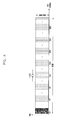
- FIG. 2 illustrates allocation units for the signal channel according to an embodiment of the present disclosure.
- FIG. 2 depicts examples of allocation units when the signal channel is a Sounding Reference Signal (SRS).
- SRS Sounding Reference Signal
- an SRS period can be used.
- the maximum SRS period is 320 ms.
- the SRS is allocated in the minimum unit of 4 ms. In this case, total 80 resources may be allocated to eNBs.
- the time resource is divided in the minimum unit as shown in FIG. 2 , it is possible to prevent the time resource from varying according to the system bandwidth. That is, even when the system bandwidth is changed to 5, 10 or 20 MHz, the same scheme can be applied.
- TTIs Transmission Time Intervals
- eNB in LTE, one TTI corresponds to 1 ms
- TTIs are divided in an interlaced manner. Shaded TTIs indicate TTIs allocated to an eNB of interest.
- FIG. 3 illustrates allocation units for the signal channel according to another embodiment of the present disclosure. Here, four minimally allocable TTIs are consecutively allocated.
- FIG. 4 illustrates a system for multi-cell coordination using uplink signal channels according to an embodiment of the present disclosure.
- the Self Organizing Network (SON) Server interconnects individual eNBs at the topmost layer, and each eNB communicates user equipments (UEs).
- UEs user equipments
- a user equipment may communicate not only with the attached eNB but also with a neighbor eNB.
- one eNB has to obtain information needed to detect the signal channel of a neighbor eNB and should not use the same time-frequency resource as that used by the neighbor eNB.
- FIG. 5 illustrates a configuration of a resource allocation apparatus for a base station according to an embodiment of the present disclosure.
- the resource allocation apparatus 500 of a base station may include a communication unit 510 and a control unit 520.
- the communication unit 510 sends and receives data to and from an external entity.
- the communication unit 510 may connect to a server and receive resource allocation information therefrom.
- the communication unit 510 may also receive information that is needed to detect a signal sent by a user equipment communicating with a neighbor eNB from the server.
- the information needed for detection may include information necessary for resource index and sequence generation.
- the communication unit 510 may send a collision message and a notification message to the server and receive corresponding responses therefrom.
- the communication unit 510 is capable of communicating with a neighbor eNB.
- the communication unit 510 may receive resource allocation information from the neighbor eNB and send resource allocation information of the attached eNB to the neighbor eNB.
- the control unit 520 controls overall operations of individual components of the eNB.
- the control unit 520 may control a process of receiving resource allocation information containing information on resources allocated to the eNB, receiving, if there is a need to change the allocated resources, changed resource allocation information containing information on changed resources, and distributing the changed resources to user equipments.
- the control unit 520 may include a resource distributor 521 and a collision determiner 522.
- the resource distributor 521 may distribute resources allocated to the eNB to user equipments. In one embodiment, if there is no need to change the allocated resources, the resource distributor 521 may directly distribute the allocated resources to a user equipment. If there is a need to change the allocated resources, the resource distributor 521 may receive changed resource allocation information containing information on changed resources from the server and then distribute the changed resources to a user equipment.
- the collision determiner 522 determines whether resources allocated to the eNB collide with resources allocated to a neighbor eNB. Upon determining that resources allocated to the eNB collide with resources allocated to the neighbor eNB, the collision determiner 522 may control the communication unit 510 to send a collision message. In one embodiment, if resources allocated to the eNB are the same as resources allocated to the neighbor eNB, the collision determiner 522 may declare a collision. The collision determiner 522 may control the communication unit 510 to send a collision message together with resource allocation information of the neighbor eNB.
- the control unit 520 may control the communication unit 510 to send a notification message when it is necessary to establish a relation with a new neighbor eNB, and may control the communication unit 510 to receive resource allocation information containing information on changed resources as a reply to the notification message.
- control unit 520, the resource distributor 521 and the collision determiner 522 are depicted as separate blocks, and the resource distributor 521 and the collision determiner 522 are depicted as having distinct functions. However, this is solely for ease of description, and it is not required to divide functions as such. For example, the control unit 520 may directly perform the functions of the resource distributor 521 and collision determiner 522.
- FIG. 6 illustrates a configuration of a resource allocation apparatus for a server according to an embodiment of the present disclosure.
- the resource allocation apparatus 600 for the server may include a communication unit 610 and a control unit 620.
- the server may be a SON server.
- the communication unit 610 sends and receives data to and from an external entity.
- the communication unit 610 may connect to an eNB and send resource allocation information thereto.
- the communication unit 610 may also send information that is needed to detect a signal sent by a user equipment communicating with a neighbor eNB.
- the information needed for detection may include information necessary for resource index and sequence generation.
- the communication unit 610 may receive a collision message and a notification message from an eNB and send corresponding responses thereto.
- the control unit 620 controls overall operations of individual components of the server.
- the control unit 620 may control a process of allocating resources to an eNB, sending resource allocation information containing information on resources allocated to the eNB, and sending, if there is a need to change the allocated resources, changed resource allocation information containing information on changed resources.
- the control unit 620 may include a resource allocator 621 and a collision determiner 622.
- the resource allocator 621 may allocate resources to an eNB and change the resources allocated to the eNB if necessary. In addition, the resource allocator 621 may control the communication unit 610 to send resource allocation information containing information on allocated resources to the eNB.
- the resource allocator 621 may change the resources allocated to the eNB and control the communication unit 610 to send changed resource allocation information as a reply to the collision message.
- the resource allocator 621 may receive resource allocation information from the neighbor eNB and replace the resources allocated to the eNB with resources not allocated to the neighbor eNB on the basis of the received resource allocation information of the neighbor eNB.
- the collision determiner 622 Upon reception of a notification message indicating necessity of establishing a relation with a new neighbor eNB, the collision determiner 622 determines whether resources allocated to the eNB collide with resources allocated to the new neighbor eNB. Upon determining that resources allocated to the eNB collide with resources allocated to the new neighbor eNB, the collision determiner 622 may change the resources allocated to the eNB and control the communication unit 610 to send resource allocation information containing information on the changed resources as a reply to the notification message.
- the collision determiner 622 may declare a collision if resources allocated to the eNB are the same as resources allocated to the new neighbor eNB.
- control unit 620 the resource allocator 621 and the collision determiner 622 are depicted as separate blocks, and the resource allocator 621 and the collision determiner 622 are depicted as having distinct functions. However, this is solely for ease of description, and it is not required to divide functions as such. For example, the control unit 620 may directly perform the functions of the resource allocator 621 and collision determiner 622.
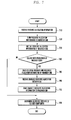
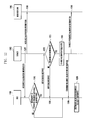
- FIG. 7 is a flowchart of a resource allocation method for a base station according to an embodiment of the present disclosure.
- the control unit 520 in an eNB receives resource allocation information containing information on allocated resources from the server.
- the control unit 520 may also receive information that is needed to detect a signal sent by a user equipment communicating with a neighbor eNB from the server.
- the information needed for detection may include information necessary for resource index and sequence generation.
- the control unit 520 sends the received resource allocation information to the neighbor eNB.
- the control unit 520 receives resource allocation information of the neighbor eNB.
- the control unit 520 determines whether resources allocated to the eNB collide with resources allocated to the neighbor eNB on the basis of the resource allocation information of the eNB and the neighbor eNB.
- resources allocated to the eNB are the same as resources allocated to the neighbor eNB, a collision is declared.
- the range for collision determination includes up to a two-tier neighbor eNB (i.e. a third eNB connected with the eNB under consideration through a neighbor eNB of the eNB under consideration).
- resources allocated to the eNB under consideration are identical to those allocated to an immediate neighbor eNB or identical to those allocated to a two-tier neighbor eNB, a collision may be declared.
- one eNB may obtain information needed for detecting a signal channel of a neighbor eNB and may check a resource collision with the neighbor eNB on the basis of the received information.
- a resource collision For realization of multi-cell coordination using an uplink signal channel, to avoid a collision, it is necessary to check whether the same resources are used by different eNBs with which a user equipment may communicate.
- the control unit 520 Upon determining that resources allocated to the eNB collide with resources allocated to the neighbor eNB at operation 740, the control unit 520 proceeds to operation 750 at which the control unit 520 sends a collision message indicating a resource collision between the eNB and the neighbor eNB to the server. At operation 760, the control unit 520 receives changed resource allocation information as a reply to the collision message. At operation 770, the control unit 520 sends the changed resource allocation information to the neighbor eNB. Thereafter, at operation 780, the control unit 520 distributes allocated resources to the user equipment. At transmission of the collision message to the server, resource allocation information of the neighbor eNB may also be transmitted so that the server may refer to the same for resource change.
- control unit 520 Upon determining that resources allocated to the eNB do not collide with resources allocated to the neighbor eNB at operation 740, the control unit 520 proceeds to operation 780 at which the control unit 520 distributes allocated resources to the user equipment.
- an eNB checks occurrence of a resource collision, it is necessary for the eNB to exchange resource allocation information with a neighbor eNB through communication.
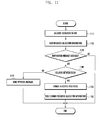
- FIG. 8 is a flowchart of a resource allocation method for the server according to an embodiment of the present disclosure.
- the control unit 620 in the server allocates resources to an eNB. Resource allocation is performed through resource indexing as described in connection with FIGS. 2 and 3 .
- the control unit 620 sends resource allocation information containing information on allocated resources to the eNB.
- the control unit 620 may also send information that is needed to detect a signal sent by a user equipment communicating with a neighbor eNB. The information needed for detection may include information necessary for resource index and sequence generation.
- control unit 620 checks whether a collision message is received from the eNB. If a collision message is received, the control unit 620 proceeds to operation 840 at which the control unit 620 changes the resources allocated to the eNB. At operation 850, the control unit 620 sends changed resource allocation information to the eNB.
- the control unit 620 may receive resource allocation information of the eNB and its neighbor eNB, randomly select resources not on the resource index list on the basis of the received resource allocation information, and replace the resources allocated to the eNB with the selected resources. Additionally, when location information is available, the server may change resources allocated to one eNB according to the minimum reuse distance (MRD).
- MRD minimum reuse distance
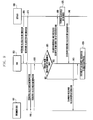
- FIG. 9 is a sequence diagram illustrating interactions between the base station and server according to an embodiment of the present disclosure.
- the server 903 allocates resources to individual eNBs 901 and 902 and sends resource allocation information thereto.
- the server 903 may also send information that is needed to detect a signal sent by a user equipment communicating with a neighbor eNB.
- the information needed for detection may include information necessary for resource index and sequence generation.
- the eNB 902 sends the received resource allocation information to the neighbor eNB 901.
- the neighbor eNB 901 sends the received resource allocation information to the eNB 902.
- the eNB 902 checks whether resources used by the eNB 902 collide with resources used by the neighbor eNB 901 on the basis of the resource allocation information received from the neighbor eNB.
- the eNB 902 Upon determining that resources used by the eNB 902 collide with resources used by the neighbor eNB 901, at operation 930, the eNB 902 sends a collision message and resource allocation information of the neighbor eNB 901 to the server 903.
- the server 903 changes the resources allocated to the eNB 902.
- the server 903 sends changed resource allocation information to the eNB 902.
- the eNB 902 Upon reception of the changed resource allocation information, at operation 945, the eNB 902 forwards the changed resource allocation information to the neighbor eNB 901. Thereafter, at operation 950, the eNB 902 distributes the allocated resources to user equipments.
- the eNB 902 Upon determining that resources used by the eNB 902 do not collide with resources used by the neighbor eNB 901 at operation 925, the eNB 902 proceeds to operation 950 at which the eNB 902 distributes the allocated resources to user equipments.
- FIG. 10 is a flowchart of a resource allocation method for the base station according to another embodiment of the present disclosure.
- the control unit 620 of an eNB receives resource allocation information containing information on allocated resources from the server.
- the control unit 520 may also receive information that is needed to detect a signal sent by a user equipment communicating with a neighbor eNB from the server.
- the information needed for detection may include information necessary for resource index and sequence generation.
- the control unit 520 determines whether it is necessary to establish a relation with a new neighbor eNB.
- ANR Automatic Neighbor Relation
- the control unit 520 may obtain resource allocation information of the new neighbor eNB.
- control unit 520 Upon determining that it is necessary to establish a relation with a new neighbor eNB, the control unit 520 proceeds to operation 1030 at which the control unit 520 sends a notification message to the server.
- the control unit 520 may send resource allocation information of the new neighbor eNB together with the notification message so that the server may refer to the same for collision checking.
- the control unit 520 receives an approval message or changed resource allocation information as a reply to the notification message from the server.
- the control unit 520 distributes the allocated resources to user equipments. When an approval message is received, originally allocated resources are distributed; and when changed resource allocation information is received, change resources are distributed.
- control unit 520 Upon determining that it is not necessary to establish a relation with a new neighbor eNB at operation 1020, the control unit 520 proceeds to operation 1050 at which the control unit 520 distributes the allocated resources to user equipments.
- FIG. 11 is a flowchart of a resource allocation method for the server according to another embodiment of the present disclosure.
- the control unit 620 in the server allocates resources to an eNB. Resource allocation is performed through resource indexing as described in connection with FIGS. 2 and 3 .
- the control unit 620 sends resource allocation information containing information on allocated resources to the eNB.
- the control unit 620 may also send information that is needed to detect a signal sent by a user equipment communicating with a neighbor eNB. The information needed for detection may include information necessary for resource index and sequence generation.
- the control unit 620 checks whether a notification message indicating necessity of establishing a relation with a new neighbor eNB is received from the eNB. If a notification message indicating necessity of establishing a relation with a new neighbor eNB is received, the control unit 620 proceeds to operation 1140 at which the control unit 620 determines whether a collision between the resources allocated to the eNB and those allocated to the new neighbor eNB is present. The control unit 620 may declare a resource collision if the resources allocated to the eNB are the same as those allocated to the new neighbor eNB.
- control unit 620 Upon determining that the resources allocated to the eNB collide with those allocated to the new neighbor eNB at operation 1140, the control unit 620 proceeds to operation 1150 at which the control unit 620 changes the resources allocated to the eNB. At operation 1160, the control unit 620 sends changed resource allocation information to the eNB.
- control unit 620 may select a resource index that is neither used by an immediate neighbor eNB nor used by a two-tier neighbor eNB. In addition, when the control unit 620 sends changed resource allocation information to the eNB under consideration, it may also send the same to neighbor eNBs thereof.
- the server determines occurrence of a resource collision
- the server sends resource allocation information of one eNB to its neighbor eNBs.
- each eNB may obtain information needed to detect the signal channel of its neighbor eNB.
- control unit 620 Upon determining that the resources allocated to the eNB do not collide with those allocated to the new neighbor eNB at operation 1140, the control unit 620 proceeds to operation 1170 at which the control unit 620 sends an approval message to the eNB.
- FIG. 12 is a sequence diagram illustrating interactions between the base station and server according to another embodiment of the present disclosure.
- the server 1202 allocates resources to individual eNBs 1201 and 1203 and sends resource allocation information thereto.
- the server 903 may also send information that is needed to detect a signal sent by a user equipment communicating with a neighbor eNB.
- the information needed for detection may include information necessary for resource index and sequence generation.
- the eNB 1201 determines whether it is necessary to establish a relation with a new neighbor eNB. Upon determining that it is necessary to establish a relation with a new neighbor eNB, at operation 1220, the eNB 1201 sends a notification message to the server 1202.
- the server 1202 Upon reception of the notification message, at operation 1225, the server 1202 determines whether the resources allocated to the eNB collide with those allocated to the new neighbor eNB. Upon determining that the resources allocated to the eNB do not collide with those allocated to the new neighbor eNB, at operation 1230, the server 1202 sends an approval message to the eNB 1201. Upon determining that the resources allocated to the eNB collide with those allocated to the new neighbor eNB, at operation 1235, the server 1202 changes the resources allocated to the eNB 1201. Thereafter, at operation 1240, the server 1202 sends changed resource allocation information to the eNB 1201. At operation 1245, the server 1202 sends the changed resource allocation information of the eNB 1201 to the neighbor eNB 1203.
- the eNB 1201 Upon reception of the changed resource allocation information, at operation 1250, the eNB 1201 distributes the allocated resources to user equipments. Upon determining that it is not necessary to establish a relation with a new neighbor eNB at operation 1215, at operation 1250, the eNB 1201 distributes the allocated resources to user equipments.
Landscapes
- Engineering & Computer Science (AREA)
- Computer Networks & Wireless Communication (AREA)
- Signal Processing (AREA)
- Mobile Radio Communication Systems (AREA)
Applications Claiming Priority (2)
| Application Number | Priority Date | Filing Date | Title |
|---|---|---|---|
| KR1020120009896A KR20130088572A (ko) | 2012-01-31 | 2012-01-31 | 상향링크 신호 채널을 이용한 다중 셀 협력을 위한 기지국과 서버의 자원 할당 방법 및 그 장치 |
| PCT/KR2013/000403 WO2013115511A1 (fr) | 2012-01-31 | 2013-01-18 | Procédé et appareil d'attribution de ressources de station de base et serveur de coopération multicellulaire utilisant un canal de signal de liaison montante |
Publications (3)
| Publication Number | Publication Date |
|---|---|
| EP2811772A1 true EP2811772A1 (fr) | 2014-12-10 |
| EP2811772A4 EP2811772A4 (fr) | 2015-09-09 |
| EP2811772B1 EP2811772B1 (fr) | 2019-07-31 |
Family
ID=48905500
Family Applications (1)
| Application Number | Title | Priority Date | Filing Date |
|---|---|---|---|
| EP13743382.7A Active EP2811772B1 (fr) | 2012-01-31 | 2013-01-18 | Procédé et appareil d'attribution de ressources de station de base et serveur de coopération multicellulaire utilisant un canal de signal de liaison montante |
Country Status (4)
| Country | Link |
|---|---|
| US (1) | US9839007B2 (fr) |
| EP (1) | EP2811772B1 (fr) |
| KR (1) | KR20130088572A (fr) |
| WO (1) | WO2013115511A1 (fr) |
Cited By (1)
| Publication number | Priority date | Publication date | Assignee | Title |
|---|---|---|---|---|
| EP4255069A1 (fr) * | 2022-03-29 | 2023-10-04 | MediaTek Inc. | Opérations améliorées de sous-bande monoradio et multiradio à liaisons multiples dans des communications sans fil |
Families Citing this family (5)
| Publication number | Priority date | Publication date | Assignee | Title |
|---|---|---|---|---|
| KR102391248B1 (ko) * | 2015-10-13 | 2022-04-27 | 삼성전자 주식회사 | 무선 통신 시스템 내 협력 통신 방법 및 장치 |
| KR102557530B1 (ko) * | 2016-12-08 | 2023-07-20 | 한국전자통신연구원 | 서버 및 서버에 의해 수행되는 무선 통신 네트워크의 제어 방법 |
| KR102143424B1 (ko) * | 2016-12-09 | 2020-10-15 | 한국전자통신연구원 | 서비스 레벨에 기초한 접속 제어 방법 및 장치 |
| US20210289475A1 (en) * | 2020-03-13 | 2021-09-16 | Qualcomm Incorporated | Resource assignment and packet collision avoidance in sidelink communications |
| US20230132052A1 (en) * | 2021-10-21 | 2023-04-27 | Qualcomm Incorporated | Cooperative operation for sidelink bandwidth part |
Family Cites Families (9)
| Publication number | Priority date | Publication date | Assignee | Title |
|---|---|---|---|---|
| JP2004207840A (ja) * | 2002-12-24 | 2004-07-22 | Nec Corp | 無線リソース管理方法及びそれに用いる管理装置、基地局及び端末 |
| US20050047368A1 (en) | 2003-08-25 | 2005-03-03 | Kotzin Michael D. | Handover during packet sessions in wireless communications networks and methods |
| KR20090012714A (ko) | 2007-07-31 | 2009-02-04 | 삼성전자주식회사 | 무선 통신 시스템에서 홈 기지국을 자기 조직화하는 장치및 방법 |
| US7773513B2 (en) * | 2008-10-30 | 2010-08-10 | Motorola, Inc. | Admission control for a heterogeneous communication system |
| US8693316B2 (en) * | 2009-02-10 | 2014-04-08 | Qualcomm Incorporated | Access point resource negotiation and allocation over a wireless interface |
| JP2010199910A (ja) | 2009-02-25 | 2010-09-09 | Hitachi Ltd | 無線通信システム、基地局、端末及び通信装置 |
| KR101547545B1 (ko) * | 2009-04-20 | 2015-09-04 | 삼성전자주식회사 | 무선 통신 시스템의 기지국간 간섭 제거를 위한 방법 및 이를 위한 장치 |
| JP5317877B2 (ja) | 2009-07-29 | 2013-10-16 | 京セラ株式会社 | 通信システム、基地局および通信方法 |
| WO2011119750A1 (fr) | 2010-03-23 | 2011-09-29 | Interdigital Patent Holdings, Inc. | Procédé, appareil et système permettant une coordination de ressources dans des réseaux cellulaires |
-
2012
- 2012-01-31 KR KR1020120009896A patent/KR20130088572A/ko not_active Withdrawn
-
2013
- 2013-01-18 EP EP13743382.7A patent/EP2811772B1/fr active Active
- 2013-01-18 US US14/376,072 patent/US9839007B2/en active Active
- 2013-01-18 WO PCT/KR2013/000403 patent/WO2013115511A1/fr not_active Ceased
Cited By (1)
| Publication number | Priority date | Publication date | Assignee | Title |
|---|---|---|---|---|
| EP4255069A1 (fr) * | 2022-03-29 | 2023-10-04 | MediaTek Inc. | Opérations améliorées de sous-bande monoradio et multiradio à liaisons multiples dans des communications sans fil |
Also Published As
| Publication number | Publication date |
|---|---|
| WO2013115511A1 (fr) | 2013-08-08 |
| US20140357287A1 (en) | 2014-12-04 |
| US9839007B2 (en) | 2017-12-05 |
| EP2811772A4 (fr) | 2015-09-09 |
| EP2811772B1 (fr) | 2019-07-31 |
| KR20130088572A (ko) | 2013-08-08 |
Similar Documents
| Publication | Publication Date | Title |
|---|---|---|
| US11546030B2 (en) | Method and apparatus for beam recovery of single/multi-beam pair link (BPL) in multi-beam based system | |
| US11323908B2 (en) | Method of allocating CSI-RS for beam management | |
| US10548055B2 (en) | Network node, wireless device, methods and computer programs | |
| KR101701312B1 (ko) | 멀티 채널 상태 정보의 보고 방법 및 장치 | |
| KR20220156502A (ko) | Rrm 측정 방법 및 장치, 그리고 rrm 측정을 위한 신호를 시그널링하는 방법 및 장치 | |
| US10313904B2 (en) | Method and apparatus for transmitting and receiving data in wireless communication system supporting unlicensed band | |
| EP3429245A1 (fr) | Dispositif terminal, et dispositif station de base | |
| CN107197526B (zh) | 无线通信系统、基站、移动台以及无线通信方法 | |
| EP2568717B1 (fr) | Procédé, dispositif et système de transmission de signal | |
| EP2826285B1 (fr) | Procédés et dispositifs pour mesurer un brouillage par un canal dans un réseau radio | |
| CN112292894A (zh) | 用于多trp传输/面板的csi报告 | |
| US20100267408A1 (en) | Inter-cell interference coordination method and apparatus for wireless communication system | |
| EP4062546B1 (fr) | Procédés de coordination d'interférence d'une liaison latérale et noeud de réseau associé, noeuds sans fil et équipement utilisateur | |
| EP2979506B1 (fr) | Découverte de noeuds en fonction des motifs de découverte attribués | |
| US9839007B2 (en) | Method and apparatus for resource allocation of base station, and server for multi-cell cooperation using uplink signal channel | |
| CN117063515A (zh) | 用于报告频率偏移的方法、设备和系统 | |
| WO2017054618A1 (fr) | Procédé de traitement de brouillage, station de base et équipement de réseau | |
| KR20120015927A (ko) | 무선통신 시스템 및 그 무선통신 시스템에서 기준 신호 처리 방법 | |
| EP3526917B1 (fr) | Procédés et appareil d'attribution de ressources radio dans un réseau sans fil | |
| KR101502136B1 (ko) | 무선 통신 시스템 및 그 시스템에서의 무선 자원 스케줄링 방법 | |
| JP7200155B2 (ja) | 端末、信号送信方法、基地局、及び無線通信システム | |
| US20220278783A1 (en) | Base station, method, program, and recording medium | |
| JP6107914B2 (ja) | 無線通信システム、基地局、移動局、及び無線通信方法 | |
| AU2015258201B2 (en) | Wireless communication system, base station, mobile station, and wireless communication method | |
| KR101311514B1 (ko) | 무선 통신 시스템 및 그 시스템에서의 무선 자원 스케줄링 방법 |
Legal Events
| Date | Code | Title | Description |
|---|---|---|---|
| PUAI | Public reference made under article 153(3) epc to a published international application that has entered the european phase |
Free format text: ORIGINAL CODE: 0009012 |
|
| 17P | Request for examination filed |
Effective date: 20140730 |
|
| AK | Designated contracting states |
Kind code of ref document: A1 Designated state(s): AL AT BE BG CH CY CZ DE DK EE ES FI FR GB GR HR HU IE IS IT LI LT LU LV MC MK MT NL NO PL PT RO RS SE SI SK SM TR |
|
| AX | Request for extension of the european patent |
Extension state: BA ME |
|
| DAX | Request for extension of the european patent (deleted) | ||
| RA4 | Supplementary search report drawn up and despatched (corrected) |
Effective date: 20150810 |
|
| RIC1 | Information provided on ipc code assigned before grant |
Ipc: H04W 72/04 20090101AFI20150804BHEP Ipc: H04W 16/02 20090101ALN20150804BHEP |
|
| STAA | Information on the status of an ep patent application or granted ep patent |
Free format text: STATUS: EXAMINATION IS IN PROGRESS |
|
| 17Q | First examination report despatched |
Effective date: 20180622 |
|
| RIC1 | Information provided on ipc code assigned before grant |
Ipc: H04B 7/024 20170101ALI20181122BHEP Ipc: H04W 16/02 20090101ALN20181122BHEP Ipc: H04W 72/04 20090101AFI20181122BHEP |
|
| RIC1 | Information provided on ipc code assigned before grant |
Ipc: H04W 72/04 20090101AFI20181219BHEP Ipc: H04W 16/02 20090101ALN20181219BHEP Ipc: H04B 7/024 20170101ALI20181219BHEP |
|
| REG | Reference to a national code |
Ref country code: DE Ref legal event code: R079 Ref document number: 602013058491 Country of ref document: DE Free format text: PREVIOUS MAIN CLASS: H04W0016020000 Ipc: H04W0072040000 |
|
| GRAP | Despatch of communication of intention to grant a patent |
Free format text: ORIGINAL CODE: EPIDOSNIGR1 |
|
| STAA | Information on the status of an ep patent application or granted ep patent |
Free format text: STATUS: GRANT OF PATENT IS INTENDED |
|
| RIC1 | Information provided on ipc code assigned before grant |
Ipc: H04W 16/02 20090101ALN20190122BHEP Ipc: H04B 7/024 20170101ALI20190122BHEP Ipc: H04W 72/04 20090101AFI20190122BHEP |
|
| RIC1 | Information provided on ipc code assigned before grant |
Ipc: H04W 72/04 20090101AFI20190125BHEP Ipc: H04W 16/02 20090101ALN20190125BHEP Ipc: H04B 7/024 20170101ALI20190125BHEP |
|
| INTG | Intention to grant announced |
Effective date: 20190220 |
|
| GRAS | Grant fee paid |
Free format text: ORIGINAL CODE: EPIDOSNIGR3 |
|
| GRAA | (expected) grant |
Free format text: ORIGINAL CODE: 0009210 |
|
| STAA | Information on the status of an ep patent application or granted ep patent |
Free format text: STATUS: THE PATENT HAS BEEN GRANTED |
|
| AK | Designated contracting states |
Kind code of ref document: B1 Designated state(s): AL AT BE BG CH CY CZ DE DK EE ES FI FR GB GR HR HU IE IS IT LI LT LU LV MC MK MT NL NO PL PT RO RS SE SI SK SM TR |
|
| REG | Reference to a national code |
Ref country code: CH Ref legal event code: EP Ref country code: GB Ref legal event code: FG4D |
|
| REG | Reference to a national code |
Ref country code: AT Ref legal event code: REF Ref document number: 1162356 Country of ref document: AT Kind code of ref document: T Effective date: 20190815 |
|
| REG | Reference to a national code |
Ref country code: IE Ref legal event code: FG4D |
|
| REG | Reference to a national code |
Ref country code: DE Ref legal event code: R096 Ref document number: 602013058491 Country of ref document: DE |
|
| REG | Reference to a national code |
Ref country code: NL Ref legal event code: FP |
|
| REG | Reference to a national code |
Ref country code: LT Ref legal event code: MG4D |
|
| REG | Reference to a national code |
Ref country code: AT Ref legal event code: MK05 Ref document number: 1162356 Country of ref document: AT Kind code of ref document: T Effective date: 20190731 |
|
| PG25 | Lapsed in a contracting state [announced via postgrant information from national office to epo] |
Ref country code: PT Free format text: LAPSE BECAUSE OF FAILURE TO SUBMIT A TRANSLATION OF THE DESCRIPTION OR TO PAY THE FEE WITHIN THE PRESCRIBED TIME-LIMIT Effective date: 20191202 Ref country code: NO Free format text: LAPSE BECAUSE OF FAILURE TO SUBMIT A TRANSLATION OF THE DESCRIPTION OR TO PAY THE FEE WITHIN THE PRESCRIBED TIME-LIMIT Effective date: 20191031 Ref country code: BG Free format text: LAPSE BECAUSE OF FAILURE TO SUBMIT A TRANSLATION OF THE DESCRIPTION OR TO PAY THE FEE WITHIN THE PRESCRIBED TIME-LIMIT Effective date: 20191031 Ref country code: AT Free format text: LAPSE BECAUSE OF FAILURE TO SUBMIT A TRANSLATION OF THE DESCRIPTION OR TO PAY THE FEE WITHIN THE PRESCRIBED TIME-LIMIT Effective date: 20190731 Ref country code: LT Free format text: LAPSE BECAUSE OF FAILURE TO SUBMIT A TRANSLATION OF THE DESCRIPTION OR TO PAY THE FEE WITHIN THE PRESCRIBED TIME-LIMIT Effective date: 20190731 Ref country code: HR Free format text: LAPSE BECAUSE OF FAILURE TO SUBMIT A TRANSLATION OF THE DESCRIPTION OR TO PAY THE FEE WITHIN THE PRESCRIBED TIME-LIMIT Effective date: 20190731 Ref country code: FI Free format text: LAPSE BECAUSE OF FAILURE TO SUBMIT A TRANSLATION OF THE DESCRIPTION OR TO PAY THE FEE WITHIN THE PRESCRIBED TIME-LIMIT Effective date: 20190731 Ref country code: SE Free format text: LAPSE BECAUSE OF FAILURE TO SUBMIT A TRANSLATION OF THE DESCRIPTION OR TO PAY THE FEE WITHIN THE PRESCRIBED TIME-LIMIT Effective date: 20190731 |
|
| PG25 | Lapsed in a contracting state [announced via postgrant information from national office to epo] |
Ref country code: IS Free format text: LAPSE BECAUSE OF FAILURE TO SUBMIT A TRANSLATION OF THE DESCRIPTION OR TO PAY THE FEE WITHIN THE PRESCRIBED TIME-LIMIT Effective date: 20191130 Ref country code: AL Free format text: LAPSE BECAUSE OF FAILURE TO SUBMIT A TRANSLATION OF THE DESCRIPTION OR TO PAY THE FEE WITHIN THE PRESCRIBED TIME-LIMIT Effective date: 20190731 Ref country code: RS Free format text: LAPSE BECAUSE OF FAILURE TO SUBMIT A TRANSLATION OF THE DESCRIPTION OR TO PAY THE FEE WITHIN THE PRESCRIBED TIME-LIMIT Effective date: 20190731 Ref country code: LV Free format text: LAPSE BECAUSE OF FAILURE TO SUBMIT A TRANSLATION OF THE DESCRIPTION OR TO PAY THE FEE WITHIN THE PRESCRIBED TIME-LIMIT Effective date: 20190731 Ref country code: ES Free format text: LAPSE BECAUSE OF FAILURE TO SUBMIT A TRANSLATION OF THE DESCRIPTION OR TO PAY THE FEE WITHIN THE PRESCRIBED TIME-LIMIT Effective date: 20190731 Ref country code: GR Free format text: LAPSE BECAUSE OF FAILURE TO SUBMIT A TRANSLATION OF THE DESCRIPTION OR TO PAY THE FEE WITHIN THE PRESCRIBED TIME-LIMIT Effective date: 20191101 |
|
| PG25 | Lapsed in a contracting state [announced via postgrant information from national office to epo] |
Ref country code: TR Free format text: LAPSE BECAUSE OF FAILURE TO SUBMIT A TRANSLATION OF THE DESCRIPTION OR TO PAY THE FEE WITHIN THE PRESCRIBED TIME-LIMIT Effective date: 20190731 |
|
| PG25 | Lapsed in a contracting state [announced via postgrant information from national office to epo] |
Ref country code: IT Free format text: LAPSE BECAUSE OF FAILURE TO SUBMIT A TRANSLATION OF THE DESCRIPTION OR TO PAY THE FEE WITHIN THE PRESCRIBED TIME-LIMIT Effective date: 20190731 Ref country code: RO Free format text: LAPSE BECAUSE OF FAILURE TO SUBMIT A TRANSLATION OF THE DESCRIPTION OR TO PAY THE FEE WITHIN THE PRESCRIBED TIME-LIMIT Effective date: 20190731 Ref country code: DK Free format text: LAPSE BECAUSE OF FAILURE TO SUBMIT A TRANSLATION OF THE DESCRIPTION OR TO PAY THE FEE WITHIN THE PRESCRIBED TIME-LIMIT Effective date: 20190731 Ref country code: PL Free format text: LAPSE BECAUSE OF FAILURE TO SUBMIT A TRANSLATION OF THE DESCRIPTION OR TO PAY THE FEE WITHIN THE PRESCRIBED TIME-LIMIT Effective date: 20190731 Ref country code: EE Free format text: LAPSE BECAUSE OF FAILURE TO SUBMIT A TRANSLATION OF THE DESCRIPTION OR TO PAY THE FEE WITHIN THE PRESCRIBED TIME-LIMIT Effective date: 20190731 |
|
| PG25 | Lapsed in a contracting state [announced via postgrant information from national office to epo] |
Ref country code: CZ Free format text: LAPSE BECAUSE OF FAILURE TO SUBMIT A TRANSLATION OF THE DESCRIPTION OR TO PAY THE FEE WITHIN THE PRESCRIBED TIME-LIMIT Effective date: 20190731 Ref country code: SK Free format text: LAPSE BECAUSE OF FAILURE TO SUBMIT A TRANSLATION OF THE DESCRIPTION OR TO PAY THE FEE WITHIN THE PRESCRIBED TIME-LIMIT Effective date: 20190731 Ref country code: IS Free format text: LAPSE BECAUSE OF FAILURE TO SUBMIT A TRANSLATION OF THE DESCRIPTION OR TO PAY THE FEE WITHIN THE PRESCRIBED TIME-LIMIT Effective date: 20200224 Ref country code: SM Free format text: LAPSE BECAUSE OF FAILURE TO SUBMIT A TRANSLATION OF THE DESCRIPTION OR TO PAY THE FEE WITHIN THE PRESCRIBED TIME-LIMIT Effective date: 20190731 |
|
| REG | Reference to a national code |
Ref country code: DE Ref legal event code: R097 Ref document number: 602013058491 Country of ref document: DE |
|
| PLBE | No opposition filed within time limit |
Free format text: ORIGINAL CODE: 0009261 |
|
| STAA | Information on the status of an ep patent application or granted ep patent |
Free format text: STATUS: NO OPPOSITION FILED WITHIN TIME LIMIT |
|
| PG2D | Information on lapse in contracting state deleted |
Ref country code: IS |
|
| PG25 | Lapsed in a contracting state [announced via postgrant information from national office to epo] |
Ref country code: IS Free format text: LAPSE BECAUSE OF FAILURE TO SUBMIT A TRANSLATION OF THE DESCRIPTION OR TO PAY THE FEE WITHIN THE PRESCRIBED TIME-LIMIT Effective date: 20191030 |
|
| 26N | No opposition filed |
Effective date: 20200603 |
|
| PG25 | Lapsed in a contracting state [announced via postgrant information from national office to epo] |
Ref country code: SI Free format text: LAPSE BECAUSE OF FAILURE TO SUBMIT A TRANSLATION OF THE DESCRIPTION OR TO PAY THE FEE WITHIN THE PRESCRIBED TIME-LIMIT Effective date: 20190731 Ref country code: MC Free format text: LAPSE BECAUSE OF FAILURE TO SUBMIT A TRANSLATION OF THE DESCRIPTION OR TO PAY THE FEE WITHIN THE PRESCRIBED TIME-LIMIT Effective date: 20190731 |
|
| REG | Reference to a national code |
Ref country code: CH Ref legal event code: PL |
|
| GBPC | Gb: european patent ceased through non-payment of renewal fee |
Effective date: 20200118 |
|
| REG | Reference to a national code |
Ref country code: BE Ref legal event code: MM Effective date: 20200131 |
|
| PG25 | Lapsed in a contracting state [announced via postgrant information from national office to epo] |
Ref country code: FR Free format text: LAPSE BECAUSE OF NON-PAYMENT OF DUE FEES Effective date: 20200131 Ref country code: GB Free format text: LAPSE BECAUSE OF NON-PAYMENT OF DUE FEES Effective date: 20200118 Ref country code: LU Free format text: LAPSE BECAUSE OF NON-PAYMENT OF DUE FEES Effective date: 20200118 |
|
| PG25 | Lapsed in a contracting state [announced via postgrant information from national office to epo] |
Ref country code: CH Free format text: LAPSE BECAUSE OF NON-PAYMENT OF DUE FEES Effective date: 20200131 Ref country code: BE Free format text: LAPSE BECAUSE OF NON-PAYMENT OF DUE FEES Effective date: 20200131 Ref country code: LI Free format text: LAPSE BECAUSE OF NON-PAYMENT OF DUE FEES Effective date: 20200131 |
|
| PG25 | Lapsed in a contracting state [announced via postgrant information from national office to epo] |
Ref country code: IE Free format text: LAPSE BECAUSE OF NON-PAYMENT OF DUE FEES Effective date: 20200118 |
|
| PG25 | Lapsed in a contracting state [announced via postgrant information from national office to epo] |
Ref country code: MT Free format text: LAPSE BECAUSE OF FAILURE TO SUBMIT A TRANSLATION OF THE DESCRIPTION OR TO PAY THE FEE WITHIN THE PRESCRIBED TIME-LIMIT Effective date: 20190731 Ref country code: CY Free format text: LAPSE BECAUSE OF FAILURE TO SUBMIT A TRANSLATION OF THE DESCRIPTION OR TO PAY THE FEE WITHIN THE PRESCRIBED TIME-LIMIT Effective date: 20190731 |
|
| PG25 | Lapsed in a contracting state [announced via postgrant information from national office to epo] |
Ref country code: MK Free format text: LAPSE BECAUSE OF FAILURE TO SUBMIT A TRANSLATION OF THE DESCRIPTION OR TO PAY THE FEE WITHIN THE PRESCRIBED TIME-LIMIT Effective date: 20190731 |
|
| PGFP | Annual fee paid to national office [announced via postgrant information from national office to epo] |
Ref country code: NL Payment date: 20251223 Year of fee payment: 14 |
|
| PGFP | Annual fee paid to national office [announced via postgrant information from national office to epo] |
Ref country code: DE Payment date: 20251222 Year of fee payment: 14 |