EP2814982B9 - Nouveau procédé destiné à pronostiquer les chances de survie de patients souffrant d'une leucémie myélomonocytaire chronique - Google Patents
Nouveau procédé destiné à pronostiquer les chances de survie de patients souffrant d'une leucémie myélomonocytaire chronique Download PDFInfo
- Publication number
- EP2814982B9 EP2814982B9 EP13707823.4A EP13707823A EP2814982B9 EP 2814982 B9 EP2814982 B9 EP 2814982B9 EP 13707823 A EP13707823 A EP 13707823A EP 2814982 B9 EP2814982 B9 EP 2814982B9
- Authority
- EP
- European Patent Office
- Prior art keywords
- seq
- genes
- tkt
- gene
- g6pd
- Prior art date
- Legal status (The legal status is an assumption and is not a legal conclusion. Google has not performed a legal analysis and makes no representation as to the accuracy of the status listed.)
- Not-in-force
Links
Images



Classifications
-
- C—CHEMISTRY; METALLURGY
- C12—BIOCHEMISTRY; BEER; SPIRITS; WINE; VINEGAR; MICROBIOLOGY; ENZYMOLOGY; MUTATION OR GENETIC ENGINEERING
- C12Q—MEASURING OR TESTING PROCESSES INVOLVING ENZYMES, NUCLEIC ACIDS OR MICROORGANISMS; COMPOSITIONS OR TEST PAPERS THEREFOR; PROCESSES OF PREPARING SUCH COMPOSITIONS; CONDITION-RESPONSIVE CONTROL IN MICROBIOLOGICAL OR ENZYMOLOGICAL PROCESSES
- C12Q1/00—Measuring or testing processes involving enzymes, nucleic acids or microorganisms; Compositions therefor; Processes of preparing such compositions
- C12Q1/68—Measuring or testing processes involving enzymes, nucleic acids or microorganisms; Compositions therefor; Processes of preparing such compositions involving nucleic acids
- C12Q1/6876—Nucleic acid products used in the analysis of nucleic acids, e.g. primers or probes
- C12Q1/6883—Nucleic acid products used in the analysis of nucleic acids, e.g. primers or probes for diseases caused by alterations of genetic material
- C12Q1/6886—Nucleic acid products used in the analysis of nucleic acids, e.g. primers or probes for diseases caused by alterations of genetic material for cancer
-
- G—PHYSICS
- G01—MEASURING; TESTING
- G01N—INVESTIGATING OR ANALYSING MATERIALS BY DETERMINING THEIR CHEMICAL OR PHYSICAL PROPERTIES
- G01N33/00—Investigating or analysing materials by specific methods not covered by groups G01N1/00 - G01N31/00
- G01N33/48—Biological material, e.g. blood, urine; Haemocytometers
- G01N33/50—Chemical analysis of biological material, e.g. blood, urine; Testing involving biospecific ligand binding methods; Immunological testing
- G01N33/53—Immunoassay; Biospecific binding assay; Materials therefor
- G01N33/575—Immunoassay; Biospecific binding assay; Materials therefor for cancer
- G01N33/57505—Immunoassay; Biospecific binding assay; Materials therefor for cancer of the blood, e.g. leukaemia
-
- C—CHEMISTRY; METALLURGY
- C12—BIOCHEMISTRY; BEER; SPIRITS; WINE; VINEGAR; MICROBIOLOGY; ENZYMOLOGY; MUTATION OR GENETIC ENGINEERING
- C12Q—MEASURING OR TESTING PROCESSES INVOLVING ENZYMES, NUCLEIC ACIDS OR MICROORGANISMS; COMPOSITIONS OR TEST PAPERS THEREFOR; PROCESSES OF PREPARING SUCH COMPOSITIONS; CONDITION-RESPONSIVE CONTROL IN MICROBIOLOGICAL OR ENZYMOLOGICAL PROCESSES
- C12Q2600/00—Oligonucleotides characterized by their use
- C12Q2600/106—Pharmacogenomics, i.e. genetic variability in individual responses to drugs and drug metabolism
-
- C—CHEMISTRY; METALLURGY
- C12—BIOCHEMISTRY; BEER; SPIRITS; WINE; VINEGAR; MICROBIOLOGY; ENZYMOLOGY; MUTATION OR GENETIC ENGINEERING
- C12Q—MEASURING OR TESTING PROCESSES INVOLVING ENZYMES, NUCLEIC ACIDS OR MICROORGANISMS; COMPOSITIONS OR TEST PAPERS THEREFOR; PROCESSES OF PREPARING SUCH COMPOSITIONS; CONDITION-RESPONSIVE CONTROL IN MICROBIOLOGICAL OR ENZYMOLOGICAL PROCESSES
- C12Q2600/00—Oligonucleotides characterized by their use
- C12Q2600/118—Prognosis of disease development
-
- C—CHEMISTRY; METALLURGY
- C12—BIOCHEMISTRY; BEER; SPIRITS; WINE; VINEGAR; MICROBIOLOGY; ENZYMOLOGY; MUTATION OR GENETIC ENGINEERING
- C12Q—MEASURING OR TESTING PROCESSES INVOLVING ENZYMES, NUCLEIC ACIDS OR MICROORGANISMS; COMPOSITIONS OR TEST PAPERS THEREFOR; PROCESSES OF PREPARING SUCH COMPOSITIONS; CONDITION-RESPONSIVE CONTROL IN MICROBIOLOGICAL OR ENZYMOLOGICAL PROCESSES
- C12Q2600/00—Oligonucleotides characterized by their use
- C12Q2600/158—Expression markers
-
- G—PHYSICS
- G01—MEASURING; TESTING
- G01N—INVESTIGATING OR ANALYSING MATERIALS BY DETERMINING THEIR CHEMICAL OR PHYSICAL PROPERTIES
- G01N2800/00—Detection or diagnosis of diseases
- G01N2800/52—Predicting or monitoring the response to treatment, e.g. for selection of therapy based on assay results in personalised medicine; Prognosis
-
- G—PHYSICS
- G01—MEASURING; TESTING
- G01N—INVESTIGATING OR ANALYSING MATERIALS BY DETERMINING THEIR CHEMICAL OR PHYSICAL PROPERTIES
- G01N2800/00—Detection or diagnosis of diseases
- G01N2800/60—Complex ways of combining multiple protein biomarkers for diagnosis
Definitions
- CMML Chronic myelomonocytic leukemia
- FAB French American british
- WHO World Health Organization
- This reclassification allows considering the heterogeneity of the CMML syndrome in diagnosis and prognosis. Despite this heterogeneity, the diagnosis of CMML is definitely straightforward in the presence of a combination of persistent blood monocytosis and fewer than 20% blasts in peripheral blood and bone marrow.
- CMML cytogenetic abnormality that helps to confirm the CMML diagnosis.
- CMML is mainly characterized by a persistent peripheral monocytosis (>1 x 10 9 /l), less than 20% blasts in blood and bone marrow, and a variable degree of dysplasia in one or more myeloid lineages.
- CMML patients often showed heterogeneity in cytogenetics, and these cytogenetic markers have therefore a poor prognostic value. Major difficulties are faced in the clinical classification of this disease and the variable risk of its progression.
- TET2 mutations are linked to a poor prognosis ( Kohlmann, A. et al., Journal of Clinical Oncology ,2010 ; Tefferi A et al., Leukemia, 2009 ; Kosmider O et al., Haematologica, 2009 ).
- AML acute myeloid leukemia
- the disease is greatly heterogeneous in term of clinical course, a part of the patients displaying an indolent and stable disease, other displaying a more aggressive disease. Criteria for initiating a therapy in CMML are not well established, and depend on the physician's experience.
- GEP gene expression profiles
- the present Inventors have found 5 new strong molecular prognostic markers including the G6PD, 6PGD, TKT, CEACAM4 and ELANE genes. All are predominantly linked to a promyelocytic phenotype according to Amazonia, the public DNA microarray database. Likewise, a clear distinction between two sets of patients has been observed for the first time, depending reliably on the expression levels of each of these markers: patients having a "bad" prognosis of survival, with median time survival (MTS) of 21 months (less than two years), and patients having a "good” prognosis of survival, with MTS of 83 months (almost 4 years).
- MTS median time survival
- the present Inventors have found that the survival chances of patients suffering from chronic myelomonocytic leukaemia can be assessed on the simple analysis of the expression level in PBMC cells of a set of 5 genes or homologous thereof, and comparison with the expression level of the same genes in PBMCs of healthy patients.
- CMML chronic myelomonocytic leukaemia
- a method for in vitro determining the prognosis of CMML in a human patient suffering thereof comprising at least the following steps:
- CMML suffering patient is a human subject showing persistent blood monocytosis and fewer than 20% blasts (myeloblasts, monoblasts and/or promonocytes) in peripheral blood and bone marrow.
- the present invention enables to "prognose” (or to "determine the prognosis” of) the future life-span of a patient suffering from CMML, i.e. to predict the outcome of said disease in terms of month-survival for said patient, said patient being treated or not against this disease.
- test sample designates any sample that may be taken from a CMML suffering patient, such as a serum sample, a plasma sample, a urine sample, a blood sample, a lymph sample, or a biopsy.
- the test sample for the determination of the gene expression levels is a peripheral blood sample comprising peripheral blood mononuclear cells (PBMC).
- PBMC samples can be obtained by a completely non-invasive harmless blood collection from the patient, followed by a classical ficoll separation as described in Cytotherapy (Janssen WE et al., 2010). More preferably, purity of the PBMC sample is up to 70%, preferably up to 80 % and more preferably up to 90% as classically obtained by Ficoll purification processes.
- expression profile may designate the expression levels of a group of at least two genes chosen in the group consisting of G6PD (SEQ ID NO:2 or 3), 6PGD (SEQ ID NO:4), TKT (SEQ ID NO:9 or 10), CEACAM4 (SEQ ID NO:11) and ELANE (SEQ ID NO:23) or homologous thereof.
- G6PD SEQ ID NO:2 or 3
- 6PGD SEQ ID NO:4
- TKT SEQ ID NO:9 or 10
- CEACAM4 SEQ ID NO:11
- ELANE SEQ ID NO:23
- the expression level of the five genes G6PD (SEQ ID NO:2 or 3), 6PGD (SEQ ID NO:4), TKT ( SEQ ID NO:9 or 10), CEACAM4 (SEQ ID NO:11) and ELANE (SEQ ID NO:23) is measured, and the expression profile of the invention therefore consists of the expression level of these five genes.
- a sixth gene can also be used in the method of the invention.
- This sixth gene is the LYZ gene of SEQ ID NO:1. Also disclosed is the expression level of at least four, preferably five, and more preferably six of the genes chosen in the group consisting of LYZ (SEQ ID NO:1), G6PD (SEQ ID NO:2 or 3), 6PGD (SEQ ID NO:4), TKT (SEQ ID NO:9 or 10), CEACAM4 (SEQ ID NO:11) and ELANE (SEQ ID NO:23) or homologous thereof is measured in the method of the invention.
- the expression level of the six genes LYZ (SEQ ID NO:1, G6PD (SEQ ID NO:2 or 3), 6PGD (SEQ ID NO:4), TKT (SEQ ID NO:9 or 10), CEACAM4 (SEQ ID NO:11) and ELANE (SEQ ID NO:23) is measured, and the expression profile consists of the expression level of these genes.
- sequence similarity in all its grammatical forms, refers to the degree of identity or correspondence between nucleic acid sequences.
- two nucleic acid sequences are "homologous" when at least about 80%, alternatively at least about 81%, alternatively at least about 82%, alternatively at least about 83%, alternatively at least about 84%, alternatively at least about 85%, alternatively at least about 86%, alternatively at least about 87%, alternatively at least about 88%, alternatively at least about 89%, alternatively at least about 90%, alternatively at least about 91%, alternatively at least about 92%, alternatively at least about 93%, alternatively at least about 94%, alternatively at least about 95%, alternatively at least about 96%, alternatively at least about 97%, alternatively at least about 98%, alternatively at least about 99% of the nucleic acids are similar.
- the similar or homologous nucleic acid are similar.
- each gene expression level may be measured by any technology known by a man skilled in the art.
- each gene expression level may be measured at the genomic and/or nucleic and/ or proteic level.
- measuring the expression levels of the said genes is performed by measuring the amount of nucleic acid transcripts of each gene.
- the amount of nucleic acid transcripts of each gene can be measured by any technology known by a man skilled in the art.
- the measure can be carried out directly on extracted messenger RNA (mRNA) sample, or on retrotranscribed complementary DNA (cDNA) prepared from extracted mRNA by technologies well-known in the art.
- the amount of nucleic acid transcript may be measured using any technology known by a man skilled in the art, including microarrays, quantitative PCR, DNA chips, hybridization wit labelled probes, or flow lateral dipstick (Surasilp T et al., Mol Cell Probes. 2011).
- the expression levels are determined using quantitative PCR. Quantitative or real-time, PCR is a well-known and easily available technology for those skilled in the art and does therefore not need a precise description.
- the measuring level is preferably performed by including an invariant endogenous reference gene (such as the RPS19 gene), in the RNA / DNA detection assay to correct for sample to sample variations in PCR (or hybridization) efficiency and errors in sample quantification.
- an invariant endogenous reference gene such as the RPS19 gene
- the expression levels of the said genes are determined by the use of nucleic microarrays.
- a "nucleic microarray” consists of different nucleic acid probes that are attached to a substrate, which can be a microchip, a glass slide or a microsphere-sized bead.
- a microchip may be constituted of polymers, plastics, resins, polysaccharides, silica or silica-based materials, carbon, metals, inorganic glasses, or nitrocellulose.
- Probes can be nucleic acids such as cDNAs ("cDNA microarray”) or oligonucleotides (“oligonucleotide microarray”), and the oligonucleotides may be about 25 to about 60 base pairs or less in length.
- a target nucleic sample can be labelled, contacted with the microarray in hybridization conditions, leading to the formation of complexes between target nucleic acids that are complementary to probe sequences attached to the microarray surface. The presence of labelled hybridized complexes can then be detected.
- Many variants of the microarray hybridization technology are available to the man skilled in the art.
- the nucleic acid microarray is an oligonucleotide microarray comprising or consisting of 5 oligonucleotides specific for the 5 genes G6PD (SEQ ID NO:2 or 3), 6PGD (SEQ ID NO:4), TKT (SEQ ID NO:9 or 10), CEACAM4 (SEQ ID NO:11) and ELANE (SEQ ID NO:23) (see Table 1 below).
- the microarray also comprises the LYZ gene of SEQ ID NO:1.
- the oligonucleotides are about 50 bases in length. It is acknowledged that the nucleic acid microarray, or oligonucleotide microarray encompass the microarrays specific for the homologous genes as defined below.
- Suitable oligonucleotides may be designed, based on the genomic sequence of each gene (see Genbank accession numbers), using any method of microarray oligonucleotide design known in the art.
- any available software developed for the design of microarray oligonucleotides may be used, such as, for instance, the OligoArray software (available at http://berry.engin.umich.edu/oligoarray/), the GoArrays software (available at http://www.isima.fr/bioinfo/goarrays/), the Array Designer software (available at http://www.premierbiosoft.com/dnamicroarray/index.html), the Primer3 software (available at http://frodo.wi.mit.edu/primer3/primer3_code.html), or the Promide software (available at http://oligos.molgen.mpg.de/).
- measuring the expression levels of the said gene is performed by measuring the respective levels of the encoded proteins of the said genes, for example by employing antibody-based detection methods such as immunohistochemistry or western blot analysis, proteic microarray, flow cytometry or flow lateral dipstick ( Surasilp T et al., Mol Cell Probes. 2011 ).
- Said encoded proteins are namely: SEQ ID NO: 12 for the LYZ protein, SEQ ID NO:13 or 14 for the G6PD protein, SEQ ID NO:15 for the 6PGD protein, SEQ ID NO:24 for the ELANE protein, SEQ ID NO:20 or 21 for the TKT protein and SEQ ID NO:22 for the CEACAM4 protein.
- antibodies, aptamers, or affibodies microarrays are mainly used, most of the time antibodies microarrays (Hall et al, 2007).
- the antibodies, aptamers, or affibodies are attached to various supports using various attachment methods, using a contact or non-contact spotter (Hall et al, 2007).
- suitable supports include glass and silicon microscope slides, nitrocellulose, microwells (for instance made of a silicon elastomer) (Hall et al, 2007).
- a coating is generally added. Examples of coatings for random attachment (i.e.
- resulting in a random orientation of attached proteins to the support include aldehyde- and epoxy-derivatized coatings for random attachment through amines, and nitrocellulose, gel pads or poly-L-lysine coatings (Hall et al, 2007).
- coatings for non random attachment include nickel coating fro use with His6-tag proteins, and streptavidin coating for use with biotinylated proteins (Hall et al, 2007).
- two main technologies can be used: 1) direct labelling, single capture assays and 2) dual-antibody sandwich immunoassays (Kingsmore, 2006).
- proteins contains in one or more samples are labelled with distinct labels (generally fluorescent or radioisotope labels), hybridized to the microarray, and labelled hybridized proteins are directly detected (Kingsmore, 2006).
- label generally fluorescent or radioisotope labels
- dual-antibody sandwich immunoassays the sample is hybridized to the microarray, and a secondary tagged antibody is added.
- a third labelled (generally fluorescent or radioisotope label) antibody specific for the tag of the secondary antibody is then used for detection (Kingsmore, 2006).
- Further details concerning antibodies microarrays may be found in Haab, 2005 and Eckel-Passow et al, 2005. Examples of commercial antibody microarrays include those commercialized by Clontech Laboratories, Invitrogen, Eurogentec, Kinexus etc...
- the determination of the survival prognostic according to the method of the invention is carried out thanks to the comparison of the expression profile of the above-mentioned genes with at least one reference profile.
- a reference profile is, in the context of the present invention, obtained from a "control sample", i.e. from a test sample obtained from a human subject who is known to be healthy.
- said reference profile has been obtained from several healthy subjects (for example from at least 5 healthy subjects) by measuring the expression level of each gene and by calculating a mean thereof.
- the terms "a control sample of a known healthy human subject” therefore mean "at least one control sample of at least one known healthy human subject”.
- the comparison of a tested sample with a control sample (or of a tested expression profile to a reference expression profile) can be done using statistical models or machine learning methods which aim is to predict a clinical response (e.g.: 0 if bad prognosis, 1 if good prognosis) based on a combination of the explanatory variables (the genes).
- Statistical models such as logistic regression and fisher linear discriminant analysis are particularly relevant to predict outcome.
- Other discriminating algorithms include kNN (k nearest neighbour), decision trees, SVM (support vector machine), NN (neural networks) and forest.
- the PLS regression, MIPP, sparse linear discrimination and PAM are particularly relevant to give prediction in the case of pangenomic analysis with small reference samples.
- cross validation methods such as leave-one-out should be applied to the models.
- the comparison step of the method of the invention can be for example performed by calculating the ratio between the expression level of each gene in the tested sample and in the control reference sample.
- G6PD SEQ ID NO:2 or 3
- 6PGD SEQ ID NO:4
- TKT SEQ ID NO:9 or 10
- CEACAM4 SEQ ID NO:11
- ELANE SEQ ID NO:23
- long-term survival refers to survival of at least 70 months, preferably 75 months and more preferably 80 months after the sample collection has been performed, the patient being treated or not.
- the term “higher expression level” means that the expression level of a gene in said test sample is strictly superior to the one in said control sample, because said gene is up-regulated in said test sample.
- the term “higher” corresponds to a ratio [expression level in said test sample / expression level in said control sample] which is superior to 1 for said gene.
- G6PD SEQ ID NO:2 or 3
- 6PGD SEQ ID NO:4
- LILRB1 SEQ ID NO:5 or 6 or 7 or 8
- TKT SEQ ID NO:9 or 10
- CEACAM4 SEQ ID NO:11
- ELANE ELANE
- G6PD SEQ ID NO:2 or 3
- 6PGD SEQ ID NO:4
- TKT SEQ ID NO:9 or 10
- CEACAM4 SEQ ID NO:11
- ELANE ELANE
- G6PD SEQ ID NO:2 or 3
- 6PGD SEQ ID NO:4
- TKT SEQ ID NO:9 or 10
- CEACAM4 SEQ ID NO:11
- ELANE ELANE
- Kits according to the present invention are defined in the appended claim 6.
- the application also describes a kit for in vitro determining the prognosis of chronic myelomonocytic leukaemia in a human patient suffering thereof, comprising:
- the kit can also comprise a reagent capable of specifically detecting the expression level of the LYZ gene of SEQ ID NO:1.
- reagent capable of specifically detecting the expression level of is meant a reagent specifically intented for the specific determination of said expression levels, either on the transcription (RNA) or on the translation (proteic) levels.
- This definition excludes generic reagents useful for the determination of the expression level of any gene, such as taq polymerase or an amplification buffer, although such reagents may also be included in a kit according to the invention.
- the reagent(s) for specifically detecting the expression level of the genes comprising, or consisting of, the 6 genes from Table 1 or homologous thereof, preferably include specific amplification primers and/or probes for the specific quantitative amplification of transcripts of genes of Table 1, and/or a nucleic microarray for the detection of genes of Table 1.
- the determination of the expression levels may thus be performed using quantitative PCR and/or a nucleic microarray, preferably an oligonucleotide microarray.
- the instructions for the determination of the survival of CMML suffering patients preferably include at least one reference expression profile, or at least one reference sample for obtaining a reference expression profile.
- the determination of the patient survival is carried out by comparison with the test sample and the reference sample as described above.
- the application is also directed to a nucleic acid microarray comprising or consisting of nucleic acids specific for the 6 genes from Table 1 or homologous thereof.
- Said nucleic acid microarray may comprise additional nucleic acids specific for genes other genes.
- said microarray consists of nucleic acids specific for the 6 genes of Table 1 above.
- said nucleic acid microarray is therefore an oligonucleotide microarray comprising or consisting of oligonucleotides specific for the 6 genes from Table 1.
- nucleic acid microarrays All the embodiments concerning nucleic acid microarrays and methods of preparing them have been developed above de facto apply to the nucleic acid microarray of the invention.
- the present application also relates to a mRNA prognostic signature for predicting outcome of a patient suffering from chronic myelomonocytic leukaemia, independently from other factors, comprising one or more up-regulated mRNAs of the genes chosen in the group consisting of: the LYZ (SEQ ID NO:1), G6PD (SEQ ID NO:2 or 3), 6PGD (SEQ ID NO:4), TKT (SEQ ID NO:9 or 10), CEACAM4 (SEQ ID NO:11) and ELANE (SEQ ID NO:23) genes or homologous thereof, as compared with mRNA of same genes expressed in normal cells.
- the LYZ SEQ ID NO:1
- G6PD SEQ ID NO:2 or 3
- 6PGD SEQ ID NO:4
- TKT SEQ ID NO:9 or 10
- CEACAM4 SEQ ID NO:11
- ELANE SEQ ID NO:23
- the expression level of at least three, preferably four, more preferably five genes chosen in the group consisting of the ELANE (SEQ ID NO:23), G6PD (SEQ ID NO:2 or 3), 6PGD (SEQ ID NO:4), TKT (SEQ ID NO:9 or 10) and CEACAM4 (SEQ ID NO:11) genes or homologous thereof is measured in the method of the application.
- said expression levels of said genes are measured in PBMC cells, obtained either from the patient, or from a reference healthy human subject.
- the present application also relates to a method for determining if patients suffering from chronic myelomonocytic leukaemia will have a short-term survival or a long-term survival comprising the steps of:
- This method enables for example to identify and select the patients belonging to each group (short- or long-term survival patient groups) which can be used in particular clinical trials. It can advantageously be used as pharmacogenomic information in companion diagnostic tests. These pharmacogenomic biomarkers can help differentiate patient into responder and non responder groups, which can help estimate drug effectiveness, avoid toxicity and adverse effects, increase drug safety and adjust drug dosage and are therefore encouraged by several health authorities.
- the method of the invention enables for example to select those requiring an aggressive treatment (such as bone marrow transplant) from those requiring "only" supportive care (administration of blood product support and/or hematopoietic growth factors).
- short-term survival patient groups will be preferentially included in clinical trials involving bone marrow transplantation (stem cell transplantation), or aggressive chemotherapy, for example with hypomethylating agents such as 5-azacytidine, decitabine, or lenalidomide.
- said predictive model is reduced to practice by calculating an index as follows: First, the expression levels of each of the five genes are measured in a patient sample and are compared to the reference expression. A ratio is calculated, leading to the calculation of a "fold change". This fold change is compared to cut-off values, and patients are then dichotomised (+1 or -1 for gene value under or below the significant cut-off) for each significant gene and pondered by the beta-coefficient of each genes (which have been calculated from Kaplan-Me ⁇ er analysis).
- the expression level of all the five genes ELANE (SEQ ID NO:23), G6PD (SEQ ID NO:2 or 3), 6PGD (SEQ ID NO:4), TKT (SEQ ID NO:9 or 10) and CEACAM4 (SEQ ID NO:11) is measured.
- said predictive model comprises:
- index I is calculated as follows:
- the calculated index I is then compared to the value 1 so as to determine if said patient will have long- or short-term survival:
- CMML Chronic myelomonocytic leukaemia
- FAB French American British
- MDS/MPN myelodysplastic/myeloproliferative neoplasm
- CMML CMML ⁇ CMML ⁇ CMML ⁇ CMML ⁇ CMML ⁇ CMML ⁇ CMML ⁇ CMML ⁇ CMML ⁇ CMML ⁇ CMML ⁇ CMML ⁇ CMML ⁇ ⁇ CMML ⁇ ⁇ ⁇ ⁇ ⁇ ⁇ ⁇ ⁇ ⁇ ⁇ ⁇ ⁇ ⁇ ⁇ ⁇ ⁇ ⁇ ⁇ ⁇ ⁇ ⁇ ⁇ ⁇ ⁇ ⁇ ⁇ ⁇ ⁇ ⁇ ⁇ ⁇ ⁇ ⁇ ⁇ ⁇ ⁇ ⁇ ⁇ ⁇ ⁇ ⁇ ⁇ ⁇ ⁇ ⁇ ⁇ ⁇ ⁇ ⁇ ⁇ ⁇ ⁇ ⁇ ⁇ ⁇ ⁇ ⁇ ⁇ ⁇ ⁇ ⁇ ⁇ ⁇ ⁇ ⁇ ⁇ ⁇ ⁇ ⁇ ⁇ ⁇ ⁇ ⁇ ⁇ ⁇ ⁇ ⁇ ⁇ ⁇ ⁇ ⁇ ⁇ ⁇ ⁇ ⁇ ⁇ ⁇ ⁇ ⁇ ⁇
- RAS and TET2 are the most frequently affected genes. Twenty two per cent of patients exhibit point mutations of RAS genes ( NRAS , KRAS ) at diagnosis or during the disease course and as many as 50% present TET2 mutations (Ricci et al ., 2010; Kosmider et al ., 2009). With respect to clinical data, Kosmider et al. suggest that the prevalence of TET2 mutations is higher in CMML than in any other myeloid disease and is associated with a trend to a lower overall survival rate.
- NGS next-generation sequencing
- GEP gene expression profiling
- CMML diagnosis was defined according to the World Health Organization (WHO) criteria, as previously published (Reiter et al ., 2009; Orazi & Germing, 2008; Vardiman et al ., 2002).
- WHO World Health Organization
- the patients signed informed consent to participation in the study in accordance with the Declaration of Helsinki.
- the study was approved by the ethic board of Nimes University.
- PBMCs were collected in the Centre Hospitalier Universitaire (CHU) of Nimes from 32 patients who were newly diagnosed. All samples in this study were obtained from untreated patients at the time of diagnosis. For 14 patients, paired material at presentation and at different periods of follow-up was also available for gene expression analyses.
- AML samples include 4 de novo and 12 secondary AML (transformed CMML). Control samples of PBMC obtained from three healthy donors were used as reference.
- Genes were selected from transcriptomic data established by SAGE methodology from acute myeloid leukaemia models, normal polymorphonuclear and monocytic cells (Piquemal et al ., 2002; Bertrand et al ., 2004; Quere et al ., 2007; Rivals et al ., 2007). Differential gene expression analyses were performed as previously described (Piquemal et al ., 2002).
- SAGE libraries data are available at GEO (http://www.ncbi.nlm.nih.gov/geo/) under accession number GSM32698: untreated U937 cell line; GSM32699: differentiated U937 cell line; GSM151619: untreated NB4 cell line; GSM151622: differentiated NB4 cell line.
- the SAGE libraries were described in Rivals et al and Bertrand et al for normal monocytes and granulocytes, respectively (Rivals et al ., 2007; Bertrand et al ., 2004).
- 92 transcripts showing significant variation following myeloid cell differentiation and 1 calibration marker were selected for high-throughput real-time polymerase chain reaction (PCR) analysis.
- the listing of the 93 genes is provided in supplementary data. They correspond to transcripts over-expressed in leukaemia differentiated cells, cell cycle genes and transcripts already known as cancer-related genes (Piquemal et al ., 2002; Quowski et al ., 2007).
- MILE Microarray Innovations in Leukaemia
- All samples were obtained from untreated patients at the time of diagnosis. These data are publicly available via GEO under accession number GSE13204. Information on survival and clinical parameters were provided by Pr Mills's group.
- the index was calculated by the sum of the dichotomised value pondered by the beta-coefficient of each gene (Kassambara et al ., 2011). Statistical comparisons were done with Mann-Whitney, Chi-square, or unpaired or paired Student's t tests.
- the networks were generated through the use of Ingenuity Pathways Analysis (Ingenuity ® Systems, www.ingenuity.com). A data set containing gene identifiers and corresponding expression values was uploaded into the application. Each gene identifier was mapped to its corresponding gene object in the Ingenuity Pathways Knowledge Base. These genes, called focus genes, were overlaid onto a global molecular network developed from information contained in the Ingenuity Pathways Knowledge Base. Networks of these focus genes were then algorithmically generated based on their connectivity.
- Gene expression data were extracted from the Oncomine Cancer Microarray database (http://www.oncomine.org) (Rhodes et al ., 2004) and the Amazonia database (http://amazonia.montp.inserm.fr) (Le Carrour et al ., 2010).
- CMML patients A total of 32 CMML patients including 21 males (66%) and 11 females (34%) were studied. Their main clinical and haematological characteristics are shown in Table I. We had same proportions of different clinical parameters as previously described (Such et al ., 2011). Median age was 76 years (range 45-86). According to FAB criteria, 15 patients (47%) had MD-CMML and 17 patients (53%) had MP-CMML. According to WHO classification, 27 patients (90%) were diagnosed as having CMML-1 and 3 patients (10%) as having CMML-2. Karyotype was normal in 20 patients (63%) and abnormal in 4 patients (13%); data were not available for 8 patients (25%).
- OS curve was plotted ( Fig 2 ). Patients were distributed between two groups: good (dotted grey) and poor survival (black) with 50% of patients in each group. As shown in figure 2 , OS was significantly increased in patients with low survival index score. The 10-year OS was 94% in the good prognosis group versus 19% in the poor prognosis group.
- TKT was found to be over-expressed in leukaemia, lymphoma, myeloma and expressed in 10/13 solid tumours.
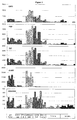
- Amazonia, TKT, G6PD, PGD, ELANE and CEACAM4 displayed a myeloid phenotype and were expressed in normal bone marrow ( Fig 3 ).
- ELANE shows a promyelocytic restricted pattern, as TKT, G6PD, PGD and CEACAM4 are also expressed in immature and differentiated granulocytes and in monocyte populations.
- GEP allowed for detecting new biologically and prognostically relevant subtypes despite the genetic heterogeneity of the disease (Moreaux et al ., 2011; Wouters et al ., 2009; Bresolin et al ., 2010).
- the objective of our study was to select genetic markers which could be proposed as new tool for prognosis in CMML.
- CMML complementary metal-oxide-semiconductorone
- microfluldic low density arrays we profiled a series of 32 untreated CMML patients at diagnosis.
- CEACAM4 a carcinoembryonic antigen (CEA) family member, is uniquely expressed on primary human granulocytes (Schmitter et al ., 2007). CEACAM proteins are well-known markers associated with progression of colorectal tumours.
- TKT was the more frequently involved as it was found to be over-expressed in leukaemia, lymphoma, myeloma and major solid tumours.
- the molecular markers identified in the present study could facilitate the identification of key pathways and abnormal cell subtypes involved in CMML.
- CMML complex metal-oxide-semiconductor
- all of them displayed a myeloid phenotype as they are mainly expressed in immature and differentiated granulocytes.
- ELANE shows the more restricted phenotype as it's exclusively expressed in promyelocytic cells.
- Droin et al. (2010) explored the cellular heterogeneity of the leukaemia clone and underlined the presence of immature dysplastic granulocytes in the peripheral blood.
- Table I Clinical, haematological and molecular features of the 32 CMML patients Peripheral Blood Bone Marrow Treatment at sampling Progression after sampling Time to progression (months) N° sex / age (years) WBC (G / l) Monocytes (G / l) Blasts (%) Monocytes (%) Karyotype Chemo. Transfu.
Landscapes
- Health & Medical Sciences (AREA)
- Life Sciences & Earth Sciences (AREA)
- Chemical & Material Sciences (AREA)
- Immunology (AREA)
- Engineering & Computer Science (AREA)
- Organic Chemistry (AREA)
- Proteomics, Peptides & Aminoacids (AREA)
- Pathology (AREA)
- Analytical Chemistry (AREA)
- Molecular Biology (AREA)
- Wood Science & Technology (AREA)
- Genetics & Genomics (AREA)
- Zoology (AREA)
- Physics & Mathematics (AREA)
- Biotechnology (AREA)
- Hematology (AREA)
- Biochemistry (AREA)
- General Health & Medical Sciences (AREA)
- Microbiology (AREA)
- Urology & Nephrology (AREA)
- Biomedical Technology (AREA)
- Hospice & Palliative Care (AREA)
- Oncology (AREA)
- Biophysics (AREA)
- Bioinformatics & Cheminformatics (AREA)
- General Engineering & Computer Science (AREA)
- General Physics & Mathematics (AREA)
- Food Science & Technology (AREA)
- Cell Biology (AREA)
- Medicinal Chemistry (AREA)
- Measuring Or Testing Involving Enzymes Or Micro-Organisms (AREA)
Claims (10)
- Procédé pour déterminer in vitro le pronostic de la leucémie myélomonocytaire chronique chez un patient humain qui en est atteint, qui comprend les étapes suivantes consistant à :a) mesurer le niveau d'expression des cinq gènes G6PD (SEQ ID NO: 2 ou 3), 6PGD (SEQ ID NO: 4), TKT (SEQ ID NO: 9 ou 10), CEACAM4 (SEQ ID NO: 11) et ELANE (SEQ ID NO: 23) dans un échantillon test qui est un échantillon de cellules mononucléées du sang périphérique (PBMC) dudit patient humain,b) comparer lesdits niveaux d'expression au niveau d'expression desdits au moins cinq gènes dans l'échantillon témoin d'un sujet humain connu en bonne santé,c) prédire l'évolution de la leucémie myélomonocytaire chronique chez ledit patient.
- Procédé selon la revendication 1, dans lequel le taux d'expression le plus haut au moins des gènes G6PD (SEQ ID NO: 2 ou 3), 6PGD (SEQ ID NO: 4), TKT (SEQ ID NO: 9 ou 10), CEACAM4 (SEQ ID NO:11) et ELANE (SEQ ID NO: 23) dans ledit échantillon test, par rapport audit échantillon témoin, indique la survie à long terme dudit patient humain.
- Procédé selon la revendication 1, dans lequel le taux d'expression le plus bas au moins des gènes G6PD (SEQ ID NO: 2 ou 3), 6PGD (SEQ ID NO: 4), TKT (SEQ ID NO: 9 ou 10), CEACAM4 (SEQ ID NO: 11) et ELANE (SEQ ID NO: 23), indique la survie à court terme dudit patient humain.
- Procédé selon l'une quelconque des revendications 1 à 3, dans lequel l'étape a) comprend la mesure des niveaux des produits de transcription de l'ARN ou de l'ADNc desdits gènes en employant des méthodes de détection basées sur l'acide nucléique telles que les micro-réseaux, la PCR quantitative, les puces à ADN, l'hybridation à l'aide de sondes marquées ou le dosage immuno-chromatographique à flux latéral sur bâtonnet.
- Procédé selon l'une quelconque des revendications 1 à 3, dans lequel l'étape a) comprend la mesure des niveaux des protéines respectives desdits gènes en employant des méthodes de détection basées sur les anticorps telles que l'immunohistochimie ou l'analyse par Western Blot.
- Kit pour déterminer le pronostic de la leucémie myélomonocytaire chronique chez un patient humain qui en est atteint, comprenant des amorces et/ou des sondes d'amplification spécifiques pour l'amplification quantitative spécifique de produits de transcription afin de détecter spécifiquement le niveau d'expression au moins des cinq gènes G6PD (SEQ ID NO: 2 ou 3), 6PGD (SEQ ID NO: 4), TKT (SEQ ID NO: 9 ou 10), CEACAM4 (SEQ ID NO: 11) et ELANE (SEQ ID NO: 23).
- Procédé pour déterminer si les patients atteints de leucémie myélomonocytaire chronique auront une survie à court terme ou une survie à long terme, comprenant les étapes consistant à :a) prélever un échantillon test sur ledit patient humain,b) déterminer le niveau d'expression des cinq gènes G6PD (SEQ ID NO: 2 ou 3), 6PGD (SEQ ID NO: 4), TKT (SEQ ID NO: 9 ou 10), CEACAM4 (SEQ ID NO: 11) et ELANE (SEQ ID NO: 23) dans ledit échantillon test qui est un échantillon de cellules mononucléées du sang périphérique (PBMC) dudit patient,c) appliquer un modèle prédictif pour déterminer si ledit patient aura une survie à court terme ou une survie à long terme.
- Procédé selon la revendication 7, dans lequel ledit modèle prédictif comprend :i) le calcul du rapport entre le niveau d'expression desdits gènes dans ledit échantillon test et le niveau d'expression des mêmes gènes dans l'échantillon témoin d'un sujet humain connu en bonne santé,ii) la comparaison dudit rapport avec des valeurs seuils pour chaque gène et la détermination des facteurs de dichotomisation pour chaque gène,iii) la pondération desdits facteurs de dichotomisation par un coefficient bêta prédéterminé pour chaque gène, etiv) le calcul d'un indice I qui est la somme desdits facteurs dichotomisés pondérés par lesdits coefficients bêta desdits gènes pour ledit patient.
- Procédé selon la revendication 8, dans lequel lesdites valeurs seuils sont les suivantes :
Nom du gène Valeurs seuils ELANE 3,40 G6PD 1,15 TKT 1,2 PGD 1,22 CEACAM4 1,34 Nom du gène Rapport du niveau moyen d'expression (fold change) Facteur de dichotomisation : D = ELANE b +1 si b > 3,40 ; -1 si b ≤ 3,40 G6PD c +1 si c > 1,15 ; -1 si c ≤ 1,15 TKT d +1 si d > 1, 2 ; -1 si d ≤ 1,2 PGD e +1 si e > 1,22 ; -1 si e ≤ 1,22 CEACAM4 f +1 si f > 1,34 ; -1 si f ≤ 1,34 - Procédé selon les revendications 8 ou 9, dans lequel lesdits coefficients bêta sont les suivants :
Nom du gène Coefficient bêta (β) ELANE 2,01784191521554 G6PD 1,28224877578792 TKT 1,35358578043486 PGD 1,71153730912409 CEACAM4 2,0942792881
Priority Applications (1)
| Application Number | Priority Date | Filing Date | Title |
|---|---|---|---|
| EP13707823.4A EP2814982B9 (fr) | 2012-02-17 | 2013-02-18 | Nouveau procédé destiné à pronostiquer les chances de survie de patients souffrant d'une leucémie myélomonocytaire chronique |
Applications Claiming Priority (3)
| Application Number | Priority Date | Filing Date | Title |
|---|---|---|---|
| EP12305187 | 2012-02-17 | ||
| EP13707823.4A EP2814982B9 (fr) | 2012-02-17 | 2013-02-18 | Nouveau procédé destiné à pronostiquer les chances de survie de patients souffrant d'une leucémie myélomonocytaire chronique |
| PCT/EP2013/053204 WO2013121048A1 (fr) | 2012-02-17 | 2013-02-18 | Nouveau procédé destiné à pronostiquer les chances de survie de patients souffrant d'une leucémie myélomonocytaire chronique |
Publications (3)
| Publication Number | Publication Date |
|---|---|
| EP2814982A1 EP2814982A1 (fr) | 2014-12-24 |
| EP2814982B1 EP2814982B1 (fr) | 2016-10-05 |
| EP2814982B9 true EP2814982B9 (fr) | 2017-02-22 |
Family
ID=47833031
Family Applications (1)
| Application Number | Title | Priority Date | Filing Date |
|---|---|---|---|
| EP13707823.4A Not-in-force EP2814982B9 (fr) | 2012-02-17 | 2013-02-18 | Nouveau procédé destiné à pronostiquer les chances de survie de patients souffrant d'une leucémie myélomonocytaire chronique |
Country Status (4)
| Country | Link |
|---|---|
| US (1) | US20160017429A1 (fr) |
| EP (1) | EP2814982B9 (fr) |
| CA (1) | CA2864773A1 (fr) |
| WO (1) | WO2013121048A1 (fr) |
-
2013
- 2013-02-18 US US14/378,727 patent/US20160017429A1/en not_active Abandoned
- 2013-02-18 WO PCT/EP2013/053204 patent/WO2013121048A1/fr not_active Ceased
- 2013-02-18 EP EP13707823.4A patent/EP2814982B9/fr not_active Not-in-force
- 2013-02-18 CA CA2864773A patent/CA2864773A1/fr not_active Abandoned
Also Published As
| Publication number | Publication date |
|---|---|
| EP2814982A1 (fr) | 2014-12-24 |
| WO2013121048A1 (fr) | 2013-08-22 |
| US20160017429A1 (en) | 2016-01-21 |
| EP2814982B1 (fr) | 2016-10-05 |
| CA2864773A1 (fr) | 2013-08-22 |
Similar Documents
| Publication | Publication Date | Title |
|---|---|---|
| AU2011302004B2 (en) | Molecular diagnostic test for cancer | |
| CN103717755A (zh) | 预测dlbcl患者对于抗-cd20治疗的响应 | |
| US20220186317A1 (en) | Predicting breast cancer recurrence | |
| EP3090265B1 (fr) | Profils de gènes du cancer de la prostate et procédés de leur utilisation | |
| JP2009528825A (ja) | デュークスb大腸がんの再発を予測するための分子的解析 | |
| WO2014071279A2 (fr) | Fusions géniques et jonctions autrement épissées associées au cancer du sein | |
| US20150344962A1 (en) | Methods for evaluating breast cancer prognosis | |
| EP3009842B1 (fr) | Procédé de support de diagnostic du risque de récurrence de cancer colorectal, programme et système informatique | |
| KR101847815B1 (ko) | 삼중음성유방암의 아형 분류 방법 | |
| CN116121390A (zh) | 癌症预后和免疫治疗适用性的标志物及其应用 | |
| US8530155B2 (en) | Methods for diagnosis of common acute lymphoblastic leukemia by determining the level of gene expression | |
| CN101120255A (zh) | 用于实体肿瘤预后的药物基因组学标志 | |
| EP2138589A1 (fr) | Signature moléculaire de degré de tumeur du foie et utilisation pour évaluer le pronostic et le régime thérapeutique | |
| EP2814982B1 (fr) | Nouveau procédé destiné à pronostiquer les chances de survie de patients souffrant d'une leucémie myélomonocytaire chronique | |
| WO2007137366A1 (fr) | Indicateurs de diagnostic et de pronostic du cancer | |
| Bou Samra et al. | New prognostic markers, determined using gene expression analyses, reveal two distinct subtypes of chronic myelomonocytic leukaemia patients | |
| KR20090025898A (ko) | 폐암 환자의 폐암 재발 위험을 예측하기 위한 마커, 키트,마이크로어레이 및 방법 | |
| WO2011035249A2 (fr) | Procédés de détection de thrombocytose à l'aide de biomarqueurs | |
| EP3252165A1 (fr) | Procédé pour le pronostic d'un myélome multiple | |
| CN116783309A (zh) | 用于检测和预测癌症和/或cin3的方法 | |
| EP2607494A1 (fr) | Biomarqueurs pour l'évaluation du risque de cancer des poumons | |
| JP6757560B2 (ja) | 大腸癌の再発リスク診断を補助する方法、プログラムおよびコンピュータシステム | |
| CN120989238A (zh) | 用于鼻咽癌免疫治疗适用性的检测系统及方法 | |
| CN119546782A (zh) | 高风险鼻咽癌的检测方法 | |
| HK1238718A1 (en) | Prostate cancer gene profiles and methods of using the same |
Legal Events
| Date | Code | Title | Description |
|---|---|---|---|
| PUAI | Public reference made under article 153(3) epc to a published international application that has entered the european phase |
Free format text: ORIGINAL CODE: 0009012 |
|
| 17P | Request for examination filed |
Effective date: 20140916 |
|
| AK | Designated contracting states |
Kind code of ref document: A1 Designated state(s): AL AT BE BG CH CY CZ DE DK EE ES FI FR GB GR HR HU IE IS IT LI LT LU LV MC MK MT NL NO PL PT RO RS SE SI SK SM TR |
|
| AX | Request for extension of the european patent |
Extension state: BA ME |
|
| DAX | Request for extension of the european patent (deleted) | ||
| 17Q | First examination report despatched |
Effective date: 20150616 |
|
| GRAP | Despatch of communication of intention to grant a patent |
Free format text: ORIGINAL CODE: EPIDOSNIGR1 |
|
| INTG | Intention to grant announced |
Effective date: 20151204 |
|
| GRAS | Grant fee paid |
Free format text: ORIGINAL CODE: EPIDOSNIGR3 |
|
| GRAP | Despatch of communication of intention to grant a patent |
Free format text: ORIGINAL CODE: EPIDOSNIGR1 |
|
| INTG | Intention to grant announced |
Effective date: 20160512 |
|
| GRAS | Grant fee paid |
Free format text: ORIGINAL CODE: EPIDOSNIGR3 |
|
| GRAA | (expected) grant |
Free format text: ORIGINAL CODE: 0009210 |
|
| AK | Designated contracting states |
Kind code of ref document: B1 Designated state(s): AL AT BE BG CH CY CZ DE DK EE ES FI FR GB GR HR HU IE IS IT LI LT LU LV MC MK MT NL NO PL PT RO RS SE SI SK SM TR |
|
| REG | Reference to a national code |
Ref country code: GB Ref legal event code: FG4D |
|
| REG | Reference to a national code |
Ref country code: CH Ref legal event code: EP |
|
| REG | Reference to a national code |
Ref country code: AT Ref legal event code: REF Ref document number: 834730 Country of ref document: AT Kind code of ref document: T Effective date: 20161015 |
|
| REG | Reference to a national code |
Ref country code: IE Ref legal event code: FG4D |
|
| REG | Reference to a national code |
Ref country code: DE Ref legal event code: R096 Ref document number: 602013012392 Country of ref document: DE |
|
| REG | Reference to a national code |
Ref country code: CH Ref legal event code: NV Representative=s name: MICHELI AND CIE SA, CH |
|
| REG | Reference to a national code |
Ref country code: NL Ref legal event code: MP Effective date: 20161005 |
|
| REG | Reference to a national code |
Ref country code: FR Ref legal event code: PLFP Year of fee payment: 5 |
|
| REG | Reference to a national code |
Ref country code: LT Ref legal event code: MG4D |
|
| PG25 | Lapsed in a contracting state [announced via postgrant information from national office to epo] |
Ref country code: LV Free format text: LAPSE BECAUSE OF FAILURE TO SUBMIT A TRANSLATION OF THE DESCRIPTION OR TO PAY THE FEE WITHIN THE PRESCRIBED TIME-LIMIT Effective date: 20161005 |
|
| REG | Reference to a national code |
Ref country code: AT Ref legal event code: MK05 Ref document number: 834730 Country of ref document: AT Kind code of ref document: T Effective date: 20161005 |
|
| PG25 | Lapsed in a contracting state [announced via postgrant information from national office to epo] |
Ref country code: NO Free format text: LAPSE BECAUSE OF FAILURE TO SUBMIT A TRANSLATION OF THE DESCRIPTION OR TO PAY THE FEE WITHIN THE PRESCRIBED TIME-LIMIT Effective date: 20170105 Ref country code: GR Free format text: LAPSE BECAUSE OF FAILURE TO SUBMIT A TRANSLATION OF THE DESCRIPTION OR TO PAY THE FEE WITHIN THE PRESCRIBED TIME-LIMIT Effective date: 20170106 Ref country code: SE Free format text: LAPSE BECAUSE OF FAILURE TO SUBMIT A TRANSLATION OF THE DESCRIPTION OR TO PAY THE FEE WITHIN THE PRESCRIBED TIME-LIMIT Effective date: 20161005 Ref country code: LT Free format text: LAPSE BECAUSE OF FAILURE TO SUBMIT A TRANSLATION OF THE DESCRIPTION OR TO PAY THE FEE WITHIN THE PRESCRIBED TIME-LIMIT Effective date: 20161005 |
|
| PG25 | Lapsed in a contracting state [announced via postgrant information from national office to epo] |
Ref country code: HR Free format text: LAPSE BECAUSE OF FAILURE TO SUBMIT A TRANSLATION OF THE DESCRIPTION OR TO PAY THE FEE WITHIN THE PRESCRIBED TIME-LIMIT Effective date: 20161005 Ref country code: NL Free format text: LAPSE BECAUSE OF FAILURE TO SUBMIT A TRANSLATION OF THE DESCRIPTION OR TO PAY THE FEE WITHIN THE PRESCRIBED TIME-LIMIT Effective date: 20161005 Ref country code: PL Free format text: LAPSE BECAUSE OF FAILURE TO SUBMIT A TRANSLATION OF THE DESCRIPTION OR TO PAY THE FEE WITHIN THE PRESCRIBED TIME-LIMIT Effective date: 20161005 Ref country code: FI Free format text: LAPSE BECAUSE OF FAILURE TO SUBMIT A TRANSLATION OF THE DESCRIPTION OR TO PAY THE FEE WITHIN THE PRESCRIBED TIME-LIMIT Effective date: 20161005 Ref country code: IS Free format text: LAPSE BECAUSE OF FAILURE TO SUBMIT A TRANSLATION OF THE DESCRIPTION OR TO PAY THE FEE WITHIN THE PRESCRIBED TIME-LIMIT Effective date: 20170205 Ref country code: AT Free format text: LAPSE BECAUSE OF FAILURE TO SUBMIT A TRANSLATION OF THE DESCRIPTION OR TO PAY THE FEE WITHIN THE PRESCRIBED TIME-LIMIT Effective date: 20161005 Ref country code: ES Free format text: LAPSE BECAUSE OF FAILURE TO SUBMIT A TRANSLATION OF THE DESCRIPTION OR TO PAY THE FEE WITHIN THE PRESCRIBED TIME-LIMIT Effective date: 20161005 Ref country code: RS Free format text: LAPSE BECAUSE OF FAILURE TO SUBMIT A TRANSLATION OF THE DESCRIPTION OR TO PAY THE FEE WITHIN THE PRESCRIBED TIME-LIMIT Effective date: 20161005 Ref country code: BE Free format text: LAPSE BECAUSE OF FAILURE TO SUBMIT A TRANSLATION OF THE DESCRIPTION OR TO PAY THE FEE WITHIN THE PRESCRIBED TIME-LIMIT Effective date: 20161005 Ref country code: PT Free format text: LAPSE BECAUSE OF FAILURE TO SUBMIT A TRANSLATION OF THE DESCRIPTION OR TO PAY THE FEE WITHIN THE PRESCRIBED TIME-LIMIT Effective date: 20170206 |
|
| REG | Reference to a national code |
Ref country code: DE Ref legal event code: R097 Ref document number: 602013012392 Country of ref document: DE |
|
| PG25 | Lapsed in a contracting state [announced via postgrant information from national office to epo] |
Ref country code: EE Free format text: LAPSE BECAUSE OF FAILURE TO SUBMIT A TRANSLATION OF THE DESCRIPTION OR TO PAY THE FEE WITHIN THE PRESCRIBED TIME-LIMIT Effective date: 20161005 Ref country code: DK Free format text: LAPSE BECAUSE OF FAILURE TO SUBMIT A TRANSLATION OF THE DESCRIPTION OR TO PAY THE FEE WITHIN THE PRESCRIBED TIME-LIMIT Effective date: 20161005 Ref country code: CZ Free format text: LAPSE BECAUSE OF FAILURE TO SUBMIT A TRANSLATION OF THE DESCRIPTION OR TO PAY THE FEE WITHIN THE PRESCRIBED TIME-LIMIT Effective date: 20161005 Ref country code: RO Free format text: LAPSE BECAUSE OF FAILURE TO SUBMIT A TRANSLATION OF THE DESCRIPTION OR TO PAY THE FEE WITHIN THE PRESCRIBED TIME-LIMIT Effective date: 20161005 Ref country code: SK Free format text: LAPSE BECAUSE OF FAILURE TO SUBMIT A TRANSLATION OF THE DESCRIPTION OR TO PAY THE FEE WITHIN THE PRESCRIBED TIME-LIMIT Effective date: 20161005 |
|
| PLBE | No opposition filed within time limit |
Free format text: ORIGINAL CODE: 0009261 |
|
| STAA | Information on the status of an ep patent application or granted ep patent |
Free format text: STATUS: NO OPPOSITION FILED WITHIN TIME LIMIT |
|
| PG25 | Lapsed in a contracting state [announced via postgrant information from national office to epo] |
Ref country code: BG Free format text: LAPSE BECAUSE OF FAILURE TO SUBMIT A TRANSLATION OF THE DESCRIPTION OR TO PAY THE FEE WITHIN THE PRESCRIBED TIME-LIMIT Effective date: 20170105 Ref country code: SM Free format text: LAPSE BECAUSE OF FAILURE TO SUBMIT A TRANSLATION OF THE DESCRIPTION OR TO PAY THE FEE WITHIN THE PRESCRIBED TIME-LIMIT Effective date: 20161005 Ref country code: IT Free format text: LAPSE BECAUSE OF FAILURE TO SUBMIT A TRANSLATION OF THE DESCRIPTION OR TO PAY THE FEE WITHIN THE PRESCRIBED TIME-LIMIT Effective date: 20161005 |
|
| 26N | No opposition filed |
Effective date: 20170706 |
|
| PG25 | Lapsed in a contracting state [announced via postgrant information from national office to epo] |
Ref country code: SI Free format text: LAPSE BECAUSE OF FAILURE TO SUBMIT A TRANSLATION OF THE DESCRIPTION OR TO PAY THE FEE WITHIN THE PRESCRIBED TIME-LIMIT Effective date: 20161005 |
|
| REG | Reference to a national code |
Ref country code: FR Ref legal event code: PLFP Year of fee payment: 6 |
|
| PG25 | Lapsed in a contracting state [announced via postgrant information from national office to epo] |
Ref country code: MT Free format text: LAPSE BECAUSE OF NON-PAYMENT OF DUE FEES Effective date: 20170218 |
|
| PGFP | Annual fee paid to national office [announced via postgrant information from national office to epo] |
Ref country code: LU Payment date: 20190116 Year of fee payment: 7 |
|
| PGFP | Annual fee paid to national office [announced via postgrant information from national office to epo] |
Ref country code: MC Payment date: 20190122 Year of fee payment: 7 Ref country code: CH Payment date: 20190218 Year of fee payment: 7 Ref country code: GB Payment date: 20190215 Year of fee payment: 7 Ref country code: DE Payment date: 20190211 Year of fee payment: 7 Ref country code: IE Payment date: 20190118 Year of fee payment: 7 |
|
| PG25 | Lapsed in a contracting state [announced via postgrant information from national office to epo] |
Ref country code: HU Free format text: LAPSE BECAUSE OF FAILURE TO SUBMIT A TRANSLATION OF THE DESCRIPTION OR TO PAY THE FEE WITHIN THE PRESCRIBED TIME-LIMIT; INVALID AB INITIO Effective date: 20130218 |
|
| PG25 | Lapsed in a contracting state [announced via postgrant information from national office to epo] |
Ref country code: CY Free format text: LAPSE BECAUSE OF FAILURE TO SUBMIT A TRANSLATION OF THE DESCRIPTION OR TO PAY THE FEE WITHIN THE PRESCRIBED TIME-LIMIT Effective date: 20161005 |
|
| PG25 | Lapsed in a contracting state [announced via postgrant information from national office to epo] |
Ref country code: MK Free format text: LAPSE BECAUSE OF FAILURE TO SUBMIT A TRANSLATION OF THE DESCRIPTION OR TO PAY THE FEE WITHIN THE PRESCRIBED TIME-LIMIT Effective date: 20161005 |
|
| PG25 | Lapsed in a contracting state [announced via postgrant information from national office to epo] |
Ref country code: TR Free format text: LAPSE BECAUSE OF FAILURE TO SUBMIT A TRANSLATION OF THE DESCRIPTION OR TO PAY THE FEE WITHIN THE PRESCRIBED TIME-LIMIT Effective date: 20161005 |
|
| PG25 | Lapsed in a contracting state [announced via postgrant information from national office to epo] |
Ref country code: AL Free format text: LAPSE BECAUSE OF FAILURE TO SUBMIT A TRANSLATION OF THE DESCRIPTION OR TO PAY THE FEE WITHIN THE PRESCRIBED TIME-LIMIT Effective date: 20161005 |
|
| REG | Reference to a national code |
Ref country code: DE Ref legal event code: R119 Ref document number: 602013012392 Country of ref document: DE |
|
| REG | Reference to a national code |
Ref country code: CH Ref legal event code: PL |
|
| GBPC | Gb: european patent ceased through non-payment of renewal fee |
Effective date: 20200218 |
|
| PG25 | Lapsed in a contracting state [announced via postgrant information from national office to epo] |
Ref country code: LU Free format text: LAPSE BECAUSE OF NON-PAYMENT OF DUE FEES Effective date: 20200218 Ref country code: MC Free format text: LAPSE BECAUSE OF NON-PAYMENT OF DUE FEES Effective date: 20200302 |
|
| PG25 | Lapsed in a contracting state [announced via postgrant information from national office to epo] |
Ref country code: LI Free format text: LAPSE BECAUSE OF NON-PAYMENT OF DUE FEES Effective date: 20200229 Ref country code: CH Free format text: LAPSE BECAUSE OF NON-PAYMENT OF DUE FEES Effective date: 20200229 |
|
| PG25 | Lapsed in a contracting state [announced via postgrant information from national office to epo] |
Ref country code: DE Free format text: LAPSE BECAUSE OF NON-PAYMENT OF DUE FEES Effective date: 20200901 Ref country code: IE Free format text: LAPSE BECAUSE OF NON-PAYMENT OF DUE FEES Effective date: 20200218 Ref country code: GB Free format text: LAPSE BECAUSE OF NON-PAYMENT OF DUE FEES Effective date: 20200218 |
|
| PGFP | Annual fee paid to national office [announced via postgrant information from national office to epo] |
Ref country code: FR Payment date: 20240112 Year of fee payment: 12 |
|
| PG25 | Lapsed in a contracting state [announced via postgrant information from national office to epo] |
Ref country code: FR Free format text: LAPSE BECAUSE OF NON-PAYMENT OF DUE FEES Effective date: 20250228 |