EP2815548B1 - Procédé et appareil d'estimation de canal de liaison montante amélioré de récepteur en râteau général - Google Patents
Procédé et appareil d'estimation de canal de liaison montante amélioré de récepteur en râteau général Download PDFInfo
- Publication number
- EP2815548B1 EP2815548B1 EP13704541.5A EP13704541A EP2815548B1 EP 2815548 B1 EP2815548 B1 EP 2815548B1 EP 13704541 A EP13704541 A EP 13704541A EP 2815548 B1 EP2815548 B1 EP 2815548B1
- Authority
- EP
- European Patent Office
- Prior art keywords
- receiver
- channel
- estimate
- channel estimate
- channel estimation
- Prior art date
- Legal status (The legal status is an assumption and is not a legal conclusion. Google has not performed a legal analysis and makes no representation as to the accuracy of the status listed.)
- Not-in-force
Links
- 238000000034 method Methods 0.000 title claims description 29
- 239000011159 matrix material Substances 0.000 claims description 30
- 230000006870 function Effects 0.000 description 8
- 239000013598 vector Substances 0.000 description 6
- 230000000694 effects Effects 0.000 description 3
- 230000015654 memory Effects 0.000 description 3
- 238000005562 fading Methods 0.000 description 2
- 230000008054 signal transmission Effects 0.000 description 2
- 108010003272 Hyaluronate lyase Proteins 0.000 description 1
- 238000003491 array Methods 0.000 description 1
- 238000005311 autocorrelation function Methods 0.000 description 1
- 230000005540 biological transmission Effects 0.000 description 1
- 230000015556 catabolic process Effects 0.000 description 1
- 230000002596 correlated effect Effects 0.000 description 1
- 239000013078 crystal Substances 0.000 description 1
- 238000006731 degradation reaction Methods 0.000 description 1
- 230000003111 delayed effect Effects 0.000 description 1
- 239000000284 extract Substances 0.000 description 1
- 238000001914 filtration Methods 0.000 description 1
- 230000002452 interceptive effect Effects 0.000 description 1
Images
Classifications
-
- H—ELECTRICITY
- H04—ELECTRIC COMMUNICATION TECHNIQUE
- H04L—TRANSMISSION OF DIGITAL INFORMATION, e.g. TELEGRAPHIC COMMUNICATION
- H04L25/00—Baseband systems
- H04L25/02—Details ; arrangements for supplying electrical power along data transmission lines
- H04L25/0202—Channel estimation
- H04L25/024—Channel estimation channel estimation algorithms
- H04L25/0242—Channel estimation channel estimation algorithms using matrix methods
- H04L25/0244—Channel estimation channel estimation algorithms using matrix methods with inversion
-
- H—ELECTRICITY
- H04—ELECTRIC COMMUNICATION TECHNIQUE
- H04B—TRANSMISSION
- H04B1/00—Details of transmission systems, not covered by a single one of groups H04B3/00 - H04B13/00; Details of transmission systems not characterised by the medium used for transmission
- H04B1/69—Spread spectrum techniques
- H04B1/707—Spread spectrum techniques using direct sequence modulation
- H04B1/7097—Interference-related aspects
- H04B1/711—Interference-related aspects the interference being multi-path interference
- H04B1/7115—Constructive combining of multi-path signals, i.e. RAKE receivers
-
- H—ELECTRICITY
- H04—ELECTRIC COMMUNICATION TECHNIQUE
- H04L—TRANSMISSION OF DIGITAL INFORMATION, e.g. TELEGRAPHIC COMMUNICATION
- H04L25/00—Baseband systems
- H04L25/02—Details ; arrangements for supplying electrical power along data transmission lines
- H04L25/0202—Channel estimation
- H04L25/0204—Channel estimation of multiple channels
-
- H—ELECTRICITY
- H04—ELECTRIC COMMUNICATION TECHNIQUE
- H04L—TRANSMISSION OF DIGITAL INFORMATION, e.g. TELEGRAPHIC COMMUNICATION
- H04L25/00—Baseband systems
- H04L25/02—Details ; arrangements for supplying electrical power along data transmission lines
- H04L25/0202—Channel estimation
- H04L25/021—Estimation of channel covariance
-
- H—ELECTRICITY
- H04—ELECTRIC COMMUNICATION TECHNIQUE
- H04L—TRANSMISSION OF DIGITAL INFORMATION, e.g. TELEGRAPHIC COMMUNICATION
- H04L25/00—Baseband systems
- H04L25/02—Details ; arrangements for supplying electrical power along data transmission lines
- H04L25/03—Shaping networks in transmitter or receiver, e.g. adaptive shaping networks
- H04L25/03006—Arrangements for removing intersymbol interference
Definitions
- Wireless communication systems typically include a plurality of base stations strategically located to provide wireless communication coverage over a selected area or region.
- Each base station typically serves a cell that includes a plurality of sectors.
- Specially-designed data packets are required to achieve low-latency internet-type data communications.
- Systems that allow for data communications often include a scheduled uplink channel that is shared among various users. Different users will have different channel conditions depending on the location of the mobile station, a velocity of the mobile station and other known factors. Accordingly, different users will have different burst rates on the scheduled uplink.
- Typical systems for processing data signals transmitted on an uplink communication channel and received at a base station include a rake receiver.
- a general rake receiver includes a technique that uses several baseband correlators to individually process several signal multipath components. The correlator outputs are combined to achieve improved communication, reliability and performance.
- rake receivers have certain limitations. For example, rake receivers generate weighted coefficients to be correlated with a signal destined for a user equipment on the uplink or downlink communication channel. Conventional rake receivers determine such weights based on available channel estimates. However, these channel estimates may be delayed due to the timing relationship between a base station and a user equipment. Furthermore, the channel undergoes a Doppler effect, which causes further distortion of these estimates. Such limitations may contribute to degradation of the performance of the wireless system.
- EP 1 107 524 A2 teaches a channel estimation for communication system, in particular a method of operating a communications receiver.
- the method receives a communications signal which is transmitted via a channel, where the communications signal comprises received known pilot data (DP) and received information data (DI), the known pilot data and information data being sequentially transmitted.
- DP known pilot data
- DI received information data
- WO 02/29978 A2 teaches a method and apparatus for automatic frequency control in a CDMA receiver. It is an object of the present invention to provide a technique for estimating an error between a carrier frequency of a transmitted signal and a local frequency reference in a receiver that accounts for Doppler offset and crystal frequency error. It is yet another object of the present invention to provide a technique for estimating a frequency error between a local frequency reference of a receiver and carrier frequencies of multiple transmitters.
- US 6,850,505 B2 teaches a method and an apparatus for Doppler frequency estimation.
- a channel estimate generator generates a plurality of channel estimates and a Doppler frequency estimator uses two or more channel estimates to generate a Doppler frequency estimate.
- the Doppler frequency estimator generates the Doppler frequency estimate by calculating the normalized distance between two consecutive channel estimates.
- Embodiments provide a method and/or apparatus for channel estimation.
- an apparatus for channel estimation includes a first receiver configured to obtain a first channel estimate associated with a communication channel between the apparatus and a user equipment.
- the apparatus also a second receiver.
- the second receiver includes a channel estimation unit and a normal receiver processing unit.
- the channel estimation unit is configured to compute a second channel estimate of channel conditions associated with the communication channel.
- the normal receiver processing unit is configured to compute weights using the second channel estimation unit.
- the channel estimation unit is further configured to obtain a delay between the obtaining of the first channel estimate and the computing of the weights, and to compute the second channel estimate using the delay and the first channel estimate.
- the first receiver is a RAKE receiver and the second receiver is a general-RAKE receiver.
- the first receiver is configured to obtain a Doppler estimate
- the channel estimation unit is configured to compute the second channel estimate using the delay, the first channel estimate, and the Doppler estimate.
- the first receiver and the second receiver each include a number of sub-receivers, and the first and second receivers obtain sub-receiver information indicating positional information of the sub-receivers.
- the channel estimation unit is configured to compute the second channel estimated based on the delay, the first channel estimate, the Doppler estimate, and the sub-receiver information.
- the channel estimation unit determines whether Doppler estimates are available from the first receiver.
- the channel estimation unit generates a correlation matrix based on the Doppler estimates if the Doppler estimates are available from the first receiver, and the channel estimation unit computes the second channel estimate using the correlation matrix.
- the channel estimation unit generates a sample correlation matrix if the Doppler estimates are not available from the first receiver.
- the channel estimation unit computes the second channel estimate using the correlation matrix.
- the channel estimation unit computes coefficients using the correlation matrix or the sample correlation matrix, and the channel estimation unit computes the second channel estimate based on the computed coefficients and the first channel estimate.
- the method for channel estimation includes obtaining, by a first receiver, a first channel estimate associated with a communication channel between a base station and a user equipment.
- the method further includes computing, by a second receiver, a second channel estimate associated with the communication channel.
- the method further includes obtaining, by the second receiver, a delay between when the first channel estimate was obtained by the first receiver and when weights are computed by the second receiver.
- Such existing hardware may include one or more Central Processing Units (CPUs), digital signal processors (DSPs), application-specific-integrated-circuits, field programmable gate arrays (FPGAs) computers or the like machines that once programmed become particular machines.
- CPUs Central Processing Units
- DSPs digital signal processors
- FPGAs field programmable gate arrays
- user equipment may be considered synonymous to, and may hereafter be occasionally referred to, as a terminal, mobile unit, mobile station, mobile user, subscriber, user, remote station, access terminal, receiver, etc., and may describe a remote user of wireless resources in a wireless communication network.
- BS may be considered synonymous to and/or referred to as a base transceiver station (BTS), NodeB, extended Node B (eNB), femto cell, access point, etc. and may describe equipment that provides the radio baseband functions for data and/or voice connectivity between a network and one or more users.
- BTS base transceiver station
- eNB extended Node B
- femto cell access point, etc.
- equipment that provides the radio baseband functions for data and/or voice connectivity between a network and one or more users.
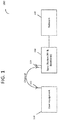
- FIG. 1 illustrates a wireless system 100 according to an embodiment.
- the wireless system 100 includes one or more user equipments 110, and a base station 130 that is connected to a network 140.
- the network 140 may be considered the core network and includes one or more gateways for routing information to other components connected to the network 140.
- the network 140 may perform other known functions associated with a core network. Also, because the components of the network 140 are well known, the details of the network 140 are omitted for the sake of brevity.
- the user equipment 110 includes an antenna 115 for the reception and transmission of signals from and to the base station 130. Although one antenna is shown in FIG. 1 , the embodiments encompass any number of antennas.
- the base station 130 includes one or more antennas 120 for the reception and transmission of signals from and to the user equipment 110 and/or the network 140. These signals are transmitted over one or more air interfaces. Techniques for establishing and maintaining the air interfaces between the user equipment 110 and the base station 130 or the base station 130 and the network 140 are well known.
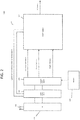
- FIG. 2 illustrates the details of the base station 130 according to an embodiment.
- the base station 130 includes the one or more antennas 120, a radio-frequency (RF) unit 131, a base band unit 132, a RAKE receiver 133, and a general-RAKE (GRAKE) receiver 134.
- a RAKE receiver is a type of radio receiver designed to counter the effects of multipath fading.
- the RAKE receiver 133 includes a number of "sub-receivers" (e.g., called fingers), each assigned to a different multipath component. Each sub-receiver or finger independently decodes a single multipath component.
- the RAKE receiver 133 may be constructed using well-known methods.
- a GRAKE receiver is similar to the RAKE receiver.
- the GRAKE receiver includes a number of sub-receivers, or "fingers," each sub-receiver assigned to a different multipath component.
- the GRAKE receiver additionally implements a (i) finger placement algorithm (e.g., L 0 RAKE to L GRAKE fingers) and (ii) a linear minimum mean square error (LMMSE) solution that may reduce the effect of a dispersive channel.
- the GRAKE receiver may partially restore the lost orthogonality between the spreading codes from the desired base station.
- the GRAKE receiver may "whiten" interfering signals from other sources (e.g., neighboring cells, other systems, receiver filtering).
- the finger placement algorithm and the LMMSE solution may be implemented according to known methods.
- the GRAKE receiver 134 is further explained with reference to FIG. 3 .
- the RF unit 131 receives the signal from the user equipment 110 via the antenna 120.
- the RF unit 130 extracts and down-converts the received signal in a known manner.
- the base band unit 132 converts the signal outputted from the RF unit 131 into a baseband signal in a well-known manner.
- the RAKE receiver 133 obtains sub-receiver information or "finger" information.
- the sub-receiver information includes information indicating a number of sub-receivers ("fingers") and positional information indicating the position of the sub-receivers.
- the positional information may include sub-receiver offsets.
- the sub-receiver offsets include information indicating a time delay measured in fractions of chip duration.
- the RAKE receiver 133 additionally receives network messages from the network 140 via base station 130 (shown in FIG. 1 ).
- the network messages include information indicating the spreading factors (e.g., orthogonal variable spreading factor (OVSF)) and scrambling codes (SV). Based on the received spreading factors and scrambling codes, the RAKE receiver 133 computes the channel estimates and the Doppler estimates.
- OVSF orthogonal variable spreading factor
- SV scrambling codes
- the RAKE receiver 133 determines the channel estimates and Doppler estimates according to any type of known channel estimation method.
- the RAKE receiver 133 sends the sub-receiver information, the channel estimates and the Doppler estimates to the GRAKE receiver 134 for further processing.
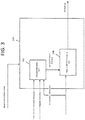
- FIG. 3 illustrates the GRAKE receiver 134 according to an example embodiment.
- the GRAKE receiver 134 may compute the delay span using a finger location algorithm that determines how to place the E GRAKE finger using a priori knowledge of the L RAKE finger positions.
- the finger location algorithm may be implemented according to methods that are well known.
- the GRAKE receiver 134 retrieves the baseband signal from the baseband unit 132, the sub-receiver information from the RAKE receiver 133 and the GRAKE receiver 134, and the channel estimates and the Doppler estimates from the RAKE receiver 133.
- the GRAKE receiver 134 uses this information to compute the GRAKE (GR) weights to be applied to the outgoing signal.
- the GRAKE receiver 134 includes a channel estimation unit 135 and a normal GRAKE processing unit 136.
- the RAKE receiver 133 and the GRAKE receiver 134 each include one or more processors for performing their respective functions.
- the channel estimation unit 135 and the normal GRAKE processing unit 136 execute on the one or more processors.
- the channel estimation unit 135 computes an improved channel estimate.
- the improved channel estimate improves on the original channel estimates determined in the RAKE receiver 133.
- the normal GRAKE processing unit 136 computes the GR weights using the improved channel estimate in a known manner.
- the channel estimation unit 135 may take into account the difference between a slot value computed by the RAKE receiver 133 and a slot value computed in the normal GRAKE processing unit 136 in order to provide a more accurate channel estimate.
- This slot difference may be any type of value.
- the slot difference may be measured or estimated in real-time by the base station 130.
- the channel estimation unit 135 may obtain a slot delay from an internal memory, which stores the slot delay as a fixed value. Alternatively, the slot delay may be obtained based on an estimation process performed by the base station 130.
- a slot may be defined by the 3GPP physical layer specification 25.211 for the DPCCH channel. For example, a slot may be defined such that there are 15 slots per frame.
- the slot delay is the numerical difference between the slot number when the channel estimate was computed in the RAKE receiver 133 and the slot number when the weights were computed in the normal GRAKE processing unit 136.
- the channel estimation unit 135 predicts the improved channel estimation unit based on the slot delay, the Doppler estimates, and the original channel estimates.
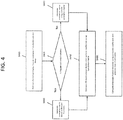
- FIG. 4 illustrates a method for determining an improved channel estimate according to an embodiment.
- the channel estimation unit 135 retrieves the original channel estimates and the Doppler estimates that were computed in the RAKE receiver 133.
- the channel estimation unit 135 may retrieve the original channel estimates without obtaining the Doppler estimates. Further, the channel estimation unit 135 retrieves the slot delay information as previously described.
- step S420 the channel estimation unit 135 determines whether the Doppler estimates are available from the RAKE receiver 133. If the Doppler estimates are available, in step S440, the channel estimation unit 135 generates a correlation matrix based on the Doppler estimates. However, if the Doppler estimates are not available, in step S430, the channel estimation unit 135 generates the correlation matrix using a sample correlation matrix.
- the correlation matrix of the 1-th channel tap R hh,l may be represented as follows: Eq.
- R h h , l R h h , l 0 R h h , l 1 ... R h h , l p R h h , l ⁇ 1 R h h , l 0 ... ... ... ... R h h , l ⁇ p R h h , l ⁇ p + 1 ... R h h , l 0
- , i j 0 i ⁇ j
- the channel estimation unit 135 computes the correlation matrix by approximating the sample correlation matrix that uses the available channel estimates from the previous frames.
- the channel estimation unit 135 computes autoregression (AR) coefficients using the correlation matrix with a Yule-Walker Equation.
- the predicted channel estimates ⁇ n are computed at intervals of time N, 2N,..., MN (slot rate).
- the normal GRAKE processing unit 136 receives the improved channel estimates from the channel estimation unit 135 and sub-receiver information from the RAKE receiver 133, and computes the GR weights according to methods that are well known.
Landscapes
- Engineering & Computer Science (AREA)
- Computer Networks & Wireless Communication (AREA)
- Signal Processing (AREA)
- Power Engineering (AREA)
- Physics & Mathematics (AREA)
- Mathematical Physics (AREA)
- Mobile Radio Communication Systems (AREA)
Claims (9)
- Appareil d'estimation de canal, comprenant :un premier récepteur (133) configuré pour obtenir une première estimation de canal évaluant des conditions de canal associées à un canal de communication entre l'appareil et un équipement utilisateur ; etun deuxième récepteur (134) comprenant une unité d'estimation de canal (135) configurée pour calculer une deuxième estimation de canal évaluant des conditions de canal associées au canal de communication en fonction au moins de la première estimation de canal et une unité de traitement de canal du récepteur (136) configurée pour calculer des poids en fonction de la deuxième estimation de canal, l'unité d'estimation de canal étant en outre configurée pour obtenir un retard entre l'obtention de la première estimation de canal et le calcul des poids, et ajuster la deuxième estimation canal en fonction du retard,dans lequel l'unité d'estimation de canal (135) est configurée pour
déterminer si des estimations Doppler sont disponibles à partir du premier récepteur (133),
générer une matrice de corrélation en fonction des estimations Doppler si les estimations Doppler sont disponibles à partir du premier récepteur, ou en fonction d'une matrice de corrélation d'échantillon si les estimations Doppler ne sont pas disponibles à partir du premier récepteur, et
calculer la deuxième estimation de canal à l'aide de la matrice de corrélation. - Appareil selon la revendication 1, dans lequel le premier récepteur est un récepteur RAKE et le deuxième récepteur est un récepteur GRAKE.
- Appareil selon la revendication 1, dans lequel
le premier récepteur est configuré pour obtenir une estimation Doppler, et
l'unité d'estimation de canal est configurée pour calculer la deuxième estimation de canal à l'aide du retard, de la première estimation de canal et de l'estimation Doppler. - Appareil selon la revendication 3, dans lequel
le premier récepteur et le deuxième récepteur comprennent chacun un certain nombre de récepteurs secondaires, et le premier et le deuxième récepteurs obtiennent des informations de récepteur secondaire indiquant des données de position des récepteurs secondaires, et
l'unité d'estimation de canal est configurée pour calculer la deuxième estimation de canal en fonction du retard, de la première estimation de canal, de l'estimation Doppler et des informations de récepteur secondaire. - Appareil selon la revendication 1, dans lequel l'unité d'estimation de canal calcule des coefficients à l'aide de la matrice de corrélation ou la matrice de corrélation d'échantillon, et l'unité d'estimation de canal calcule la deuxième estimation de canal en fonction des coefficients calculés et de la première estimation de canal.
- Procédé d'estimation de canal, comprenant les étapes suivantes :obtenir (S410), par un appareil d'estimation de canal, une première estimation de canal associée à un canal de communication entre une station de base et un équipement utilisateur ;calculer (S450), par l'appareil d'estimation de canal, une deuxième estimation de canal associée à la communication en fonction au moins de la première estimation de canal, et des poids en fonction de la deuxième estimation de canal ;obtenir, par l'appareil d'estimation de canal, un retard entre l'obtention et le calcul des poids ; etajuster la deuxième estimation de canal en fonction du retard,comprenant en outre les étapes suivantes :déterminer, par un deuxième récepteur de l'appareil d'estimation de canal, si des estimations Doppler sont disponibles à partir d'un premier récepteur de l'appareil d'estimation de canal ; etgénérer, par le deuxième récepteur, une matrice de corrélation en fonction des estimations Doppler si les estimations Doppler sont disponibles à partir du premier récepteur, ou en fonction d'une matrice de corrélation d'échantillon si les estimations Doppler ne sont pas disponibles à partir du premier récepteur,dans lequel l'étape de calcul consiste à calculer la deuxième estimation de canal à l'aide de la matrice de corrélation.
- Procédé selon la revendication 6, comprenant en outre les étapes suivantes :obtenir, par le premier récepteur de l'appareil d'estimation de canal, une estimation Doppler,dans lequel l'étape de calcul consiste à calculer la deuxième estimation de canal à l'aide du retard, de la première estimation de canal et de l'estimation Doppler.
- Procédé selon la revendication 7, comprenant en outre les étapes suivantes :obtenir, par le premier et le deuxième récepteurs de l'appareil d'estimation de canal, des informations de récepteur secondaire indiquant des données de position de récepteurs secondaires,dans lequel l'étape de calcul consiste à calculer la deuxième estimation de canal en fonction du retard, de la première estimation de canal, de l'estimation Doppler et des informations de récepteur secondaire.
- Procédé selon la revendication 6, comprenant en outre les étapes suivantes :
calculer, par le deuxième récepteur, des coefficients à l'aide de la matrice de corrélation ou de la matrice de corrélation d'échantillon, dans lequel l'étape de calcul d'une deuxième estimation de canal consiste à calculer la deuxième estimation de canal en fonction des coefficients calculés et de la première estimation de canal.
Applications Claiming Priority (2)
| Application Number | Priority Date | Filing Date | Title |
|---|---|---|---|
| US13/399,457 US8644436B2 (en) | 2012-02-17 | 2012-02-17 | Method and apparatus for enhanced uplink general rake channel estimation |
| PCT/US2013/024690 WO2013122771A1 (fr) | 2012-02-17 | 2013-02-05 | Procédé et appareil d'estimation de canal de liaison montante amélioré de récepteur en râteau général |
Publications (2)
| Publication Number | Publication Date |
|---|---|
| EP2815548A1 EP2815548A1 (fr) | 2014-12-24 |
| EP2815548B1 true EP2815548B1 (fr) | 2018-08-15 |
Family
ID=47716181
Family Applications (1)
| Application Number | Title | Priority Date | Filing Date |
|---|---|---|---|
| EP13704541.5A Not-in-force EP2815548B1 (fr) | 2012-02-17 | 2013-02-05 | Procédé et appareil d'estimation de canal de liaison montante amélioré de récepteur en râteau général |
Country Status (6)
| Country | Link |
|---|---|
| US (1) | US8644436B2 (fr) |
| EP (1) | EP2815548B1 (fr) |
| JP (1) | JP6126629B2 (fr) |
| KR (1) | KR101624069B1 (fr) |
| CN (1) | CN104255005B (fr) |
| WO (1) | WO2013122771A1 (fr) |
Families Citing this family (1)
| Publication number | Priority date | Publication date | Assignee | Title |
|---|---|---|---|---|
| CN115378767B (zh) * | 2021-05-21 | 2024-01-09 | 维沃移动通信有限公司 | 延迟多普勒域信道信息反馈方法、装置及电子设备 |
Citations (2)
| Publication number | Priority date | Publication date | Assignee | Title |
|---|---|---|---|---|
| EP1107524A2 (fr) * | 1999-11-30 | 2001-06-13 | Texas Instruments Incorporated | Estimation de canal pour un système de communication |
| WO2002029978A2 (fr) * | 2000-10-04 | 2002-04-11 | Telefonaktiebolaget Lm Ericsson (Publ) | Procede et appareil pour la commande de frequence automatique dans un recepteur cdma |
Family Cites Families (7)
| Publication number | Priority date | Publication date | Assignee | Title |
|---|---|---|---|---|
| US6850505B1 (en) * | 1999-09-01 | 2005-02-01 | Telefonaktiebolaget L M Ericsson (Publ) | Method and apparatus for Doppler frequency estimation |
| CN100349383C (zh) * | 2004-04-14 | 2007-11-14 | 华为技术有限公司 | 一种信道估计的方法和装置 |
| US7894514B2 (en) | 2005-09-29 | 2011-02-22 | Alcatel-Lucent Usa Inc. | Receiver techniques for wireless communication |
| US7680218B2 (en) * | 2005-10-25 | 2010-03-16 | Telefonaktiebolaget Lm Ericsson (Publ) | Method and apparatus for communication channel estimation |
| US7933314B2 (en) * | 2006-06-22 | 2011-04-26 | Telefonaktiebolaget Lm Ericsson (Publ) | Method and apparatus for communication receiver despreading resource management |
| JP5163507B2 (ja) * | 2009-01-14 | 2013-03-13 | 富士通株式会社 | 受信機、通信システムおよび通信方法 |
| US8699553B2 (en) * | 2010-02-19 | 2014-04-15 | Telefonaktiebolaget Lm Ericsson (Publ) | Data-aided SIR estimation |
-
2012
- 2012-02-17 US US13/399,457 patent/US8644436B2/en not_active Expired - Fee Related
-
2013
- 2013-02-05 JP JP2014557683A patent/JP6126629B2/ja not_active Expired - Fee Related
- 2013-02-05 KR KR1020147022911A patent/KR101624069B1/ko not_active Expired - Fee Related
- 2013-02-05 CN CN201380009610.1A patent/CN104255005B/zh not_active Expired - Fee Related
- 2013-02-05 EP EP13704541.5A patent/EP2815548B1/fr not_active Not-in-force
- 2013-02-05 WO PCT/US2013/024690 patent/WO2013122771A1/fr not_active Ceased
Patent Citations (2)
| Publication number | Priority date | Publication date | Assignee | Title |
|---|---|---|---|---|
| EP1107524A2 (fr) * | 1999-11-30 | 2001-06-13 | Texas Instruments Incorporated | Estimation de canal pour un système de communication |
| WO2002029978A2 (fr) * | 2000-10-04 | 2002-04-11 | Telefonaktiebolaget Lm Ericsson (Publ) | Procede et appareil pour la commande de frequence automatique dans un recepteur cdma |
Also Published As
| Publication number | Publication date |
|---|---|
| KR101624069B1 (ko) | 2016-05-24 |
| CN104255005A (zh) | 2014-12-31 |
| WO2013122771A1 (fr) | 2013-08-22 |
| CN104255005B (zh) | 2017-05-17 |
| US8644436B2 (en) | 2014-02-04 |
| JP6126629B2 (ja) | 2017-05-10 |
| EP2815548A1 (fr) | 2014-12-24 |
| US20130216011A1 (en) | 2013-08-22 |
| JP2015508966A (ja) | 2015-03-23 |
| KR20140114044A (ko) | 2014-09-25 |
Similar Documents
| Publication | Publication Date | Title |
|---|---|---|
| EP1941644B1 (fr) | Methode et appareil pour une estimation de canal et de bruit | |
| EP1987599B1 (fr) | Suppression d'interférence à complexité réduite pour des communications sans fil | |
| EP2162994B1 (fr) | Procédé efficace de formation et de partage de matrice de covariance des dégradations | |
| US20080304554A1 (en) | Method and apparatus for estimating impairment covariance matrices using unoccupied spreading codes | |
| US7965796B2 (en) | Channel estimation in a radio receiver | |
| US20080075216A1 (en) | Cluster path processor time alignment for signal suppression/separation in a wireless device | |
| JP2006518168A5 (fr) | ||
| JPH11252045A (ja) | 干渉除去装置及び干渉除去方法 | |
| US20130215801A1 (en) | Time varying channels having pilots | |
| JP2010507303A (ja) | 受信信号処理において用いる、モデル化された障害相関期間のサブセットを選択するための方法及び装置 | |
| US8259854B2 (en) | Channel estimation using common and dedicated pilots | |
| US7489732B2 (en) | Decreasing computational complexity of TD-SCDMA measurement process | |
| EP1480350A1 (fr) | Détermination d'une estimation de canal d'un canal de transmission | |
| EP2815548B1 (fr) | Procédé et appareil d'estimation de canal de liaison montante amélioré de récepteur en râteau général | |
| EP2250776B1 (fr) | Procédé et appareil d'estimation de canal pour un traitement de signaux de communication | |
| Ristaniemi et al. | Code timing acquisition for DS-CDMA in fading channels by differential correlations | |
| CN103988444B (zh) | 非冗余均衡 | |
| US8897339B2 (en) | Method and arrangement of increasing impairment co-variance matrix estimation accuracy | |
| WO2000049720A2 (fr) | Procede de synchronisation de recepteur a spectre etale | |
| US7995640B2 (en) | Dynamic interpolation location | |
| EP2158686B1 (fr) | Procédé et appareil pour estimer des matrices de covariance d'altération utilisant des codes d'étalement non occupés | |
| Framjee | Some Considerations of Performance and Capacity of Voice Over IP High Bit Rate Wireless Reverse Links |
Legal Events
| Date | Code | Title | Description |
|---|---|---|---|
| PUAI | Public reference made under article 153(3) epc to a published international application that has entered the european phase |
Free format text: ORIGINAL CODE: 0009012 |
|
| 17P | Request for examination filed |
Effective date: 20140917 |
|
| AK | Designated contracting states |
Kind code of ref document: A1 Designated state(s): AL AT BE BG CH CY CZ DE DK EE ES FI FR GB GR HR HU IE IS IT LI LT LU LV MC MK MT NL NO PL PT RO RS SE SI SK SM TR |
|
| AX | Request for extension of the european patent |
Extension state: BA ME |
|
| DAX | Request for extension of the european patent (deleted) | ||
| GRAP | Despatch of communication of intention to grant a patent |
Free format text: ORIGINAL CODE: EPIDOSNIGR1 |
|
| STAA | Information on the status of an ep patent application or granted ep patent |
Free format text: STATUS: GRANT OF PATENT IS INTENDED |
|
| INTG | Intention to grant announced |
Effective date: 20170703 |
|
| GRAJ | Information related to disapproval of communication of intention to grant by the applicant or resumption of examination proceedings by the epo deleted |
Free format text: ORIGINAL CODE: EPIDOSDIGR1 |
|
| STAA | Information on the status of an ep patent application or granted ep patent |
Free format text: STATUS: REQUEST FOR EXAMINATION WAS MADE |
|
| STAA | Information on the status of an ep patent application or granted ep patent |
Free format text: STATUS: EXAMINATION IS IN PROGRESS |
|
| INTC | Intention to grant announced (deleted) | ||
| 17Q | First examination report despatched |
Effective date: 20171127 |
|
| GRAP | Despatch of communication of intention to grant a patent |
Free format text: ORIGINAL CODE: EPIDOSNIGR1 |
|
| STAA | Information on the status of an ep patent application or granted ep patent |
Free format text: STATUS: GRANT OF PATENT IS INTENDED |
|
| INTG | Intention to grant announced |
Effective date: 20180305 |
|
| RAP1 | Party data changed (applicant data changed or rights of an application transferred) |
Owner name: ALCATEL LUCENT |
|
| GRAS | Grant fee paid |
Free format text: ORIGINAL CODE: EPIDOSNIGR3 |
|
| GRAA | (expected) grant |
Free format text: ORIGINAL CODE: 0009210 |
|
| STAA | Information on the status of an ep patent application or granted ep patent |
Free format text: STATUS: THE PATENT HAS BEEN GRANTED |
|
| AK | Designated contracting states |
Kind code of ref document: B1 Designated state(s): AL AT BE BG CH CY CZ DE DK EE ES FI FR GB GR HR HU IE IS IT LI LT LU LV MC MK MT NL NO PL PT RO RS SE SI SK SM TR |
|
| REG | Reference to a national code |
Ref country code: CH Ref legal event code: EP Ref country code: GB Ref legal event code: FG4D Ref country code: AT Ref legal event code: REF Ref document number: 1031066 Country of ref document: AT Kind code of ref document: T Effective date: 20180815 |
|
| REG | Reference to a national code |
Ref country code: IE Ref legal event code: FG4D |
|
| REG | Reference to a national code |
Ref country code: DE Ref legal event code: R096 Ref document number: 602013041980 Country of ref document: DE |
|
| REG | Reference to a national code |
Ref country code: NL Ref legal event code: MP Effective date: 20180815 |
|
| REG | Reference to a national code |
Ref country code: LT Ref legal event code: MG4D |
|
| REG | Reference to a national code |
Ref country code: AT Ref legal event code: MK05 Ref document number: 1031066 Country of ref document: AT Kind code of ref document: T Effective date: 20180815 |
|
| PG25 | Lapsed in a contracting state [announced via postgrant information from national office to epo] |
Ref country code: NO Free format text: LAPSE BECAUSE OF FAILURE TO SUBMIT A TRANSLATION OF THE DESCRIPTION OR TO PAY THE FEE WITHIN THE PRESCRIBED TIME-LIMIT Effective date: 20181115 Ref country code: BG Free format text: LAPSE BECAUSE OF FAILURE TO SUBMIT A TRANSLATION OF THE DESCRIPTION OR TO PAY THE FEE WITHIN THE PRESCRIBED TIME-LIMIT Effective date: 20181115 Ref country code: RS Free format text: LAPSE BECAUSE OF FAILURE TO SUBMIT A TRANSLATION OF THE DESCRIPTION OR TO PAY THE FEE WITHIN THE PRESCRIBED TIME-LIMIT Effective date: 20180815 Ref country code: IS Free format text: LAPSE BECAUSE OF FAILURE TO SUBMIT A TRANSLATION OF THE DESCRIPTION OR TO PAY THE FEE WITHIN THE PRESCRIBED TIME-LIMIT Effective date: 20181215 Ref country code: AT Free format text: LAPSE BECAUSE OF FAILURE TO SUBMIT A TRANSLATION OF THE DESCRIPTION OR TO PAY THE FEE WITHIN THE PRESCRIBED TIME-LIMIT Effective date: 20180815 Ref country code: NL Free format text: LAPSE BECAUSE OF FAILURE TO SUBMIT A TRANSLATION OF THE DESCRIPTION OR TO PAY THE FEE WITHIN THE PRESCRIBED TIME-LIMIT Effective date: 20180815 Ref country code: LT Free format text: LAPSE BECAUSE OF FAILURE TO SUBMIT A TRANSLATION OF THE DESCRIPTION OR TO PAY THE FEE WITHIN THE PRESCRIBED TIME-LIMIT Effective date: 20180815 Ref country code: GR Free format text: LAPSE BECAUSE OF FAILURE TO SUBMIT A TRANSLATION OF THE DESCRIPTION OR TO PAY THE FEE WITHIN THE PRESCRIBED TIME-LIMIT Effective date: 20181116 Ref country code: FI Free format text: LAPSE BECAUSE OF FAILURE TO SUBMIT A TRANSLATION OF THE DESCRIPTION OR TO PAY THE FEE WITHIN THE PRESCRIBED TIME-LIMIT Effective date: 20180815 Ref country code: SE Free format text: LAPSE BECAUSE OF FAILURE TO SUBMIT A TRANSLATION OF THE DESCRIPTION OR TO PAY THE FEE WITHIN THE PRESCRIBED TIME-LIMIT Effective date: 20180815 |
|
| PG25 | Lapsed in a contracting state [announced via postgrant information from national office to epo] |
Ref country code: AL Free format text: LAPSE BECAUSE OF FAILURE TO SUBMIT A TRANSLATION OF THE DESCRIPTION OR TO PAY THE FEE WITHIN THE PRESCRIBED TIME-LIMIT Effective date: 20180815 Ref country code: HR Free format text: LAPSE BECAUSE OF FAILURE TO SUBMIT A TRANSLATION OF THE DESCRIPTION OR TO PAY THE FEE WITHIN THE PRESCRIBED TIME-LIMIT Effective date: 20180815 Ref country code: LV Free format text: LAPSE BECAUSE OF FAILURE TO SUBMIT A TRANSLATION OF THE DESCRIPTION OR TO PAY THE FEE WITHIN THE PRESCRIBED TIME-LIMIT Effective date: 20180815 |
|
| PG25 | Lapsed in a contracting state [announced via postgrant information from national office to epo] |
Ref country code: ES Free format text: LAPSE BECAUSE OF FAILURE TO SUBMIT A TRANSLATION OF THE DESCRIPTION OR TO PAY THE FEE WITHIN THE PRESCRIBED TIME-LIMIT Effective date: 20180815 Ref country code: PL Free format text: LAPSE BECAUSE OF FAILURE TO SUBMIT A TRANSLATION OF THE DESCRIPTION OR TO PAY THE FEE WITHIN THE PRESCRIBED TIME-LIMIT Effective date: 20180815 Ref country code: RO Free format text: LAPSE BECAUSE OF FAILURE TO SUBMIT A TRANSLATION OF THE DESCRIPTION OR TO PAY THE FEE WITHIN THE PRESCRIBED TIME-LIMIT Effective date: 20180815 Ref country code: IT Free format text: LAPSE BECAUSE OF FAILURE TO SUBMIT A TRANSLATION OF THE DESCRIPTION OR TO PAY THE FEE WITHIN THE PRESCRIBED TIME-LIMIT Effective date: 20180815 Ref country code: EE Free format text: LAPSE BECAUSE OF FAILURE TO SUBMIT A TRANSLATION OF THE DESCRIPTION OR TO PAY THE FEE WITHIN THE PRESCRIBED TIME-LIMIT Effective date: 20180815 Ref country code: CZ Free format text: LAPSE BECAUSE OF FAILURE TO SUBMIT A TRANSLATION OF THE DESCRIPTION OR TO PAY THE FEE WITHIN THE PRESCRIBED TIME-LIMIT Effective date: 20180815 |
|
| REG | Reference to a national code |
Ref country code: DE Ref legal event code: R097 Ref document number: 602013041980 Country of ref document: DE |
|
| PG25 | Lapsed in a contracting state [announced via postgrant information from national office to epo] |
Ref country code: SM Free format text: LAPSE BECAUSE OF FAILURE TO SUBMIT A TRANSLATION OF THE DESCRIPTION OR TO PAY THE FEE WITHIN THE PRESCRIBED TIME-LIMIT Effective date: 20180815 Ref country code: DK Free format text: LAPSE BECAUSE OF FAILURE TO SUBMIT A TRANSLATION OF THE DESCRIPTION OR TO PAY THE FEE WITHIN THE PRESCRIBED TIME-LIMIT Effective date: 20180815 Ref country code: SK Free format text: LAPSE BECAUSE OF FAILURE TO SUBMIT A TRANSLATION OF THE DESCRIPTION OR TO PAY THE FEE WITHIN THE PRESCRIBED TIME-LIMIT Effective date: 20180815 |
|
| PLBE | No opposition filed within time limit |
Free format text: ORIGINAL CODE: 0009261 |
|
| STAA | Information on the status of an ep patent application or granted ep patent |
Free format text: STATUS: NO OPPOSITION FILED WITHIN TIME LIMIT |
|
| 26N | No opposition filed |
Effective date: 20190516 |
|
| PG25 | Lapsed in a contracting state [announced via postgrant information from national office to epo] |
Ref country code: SI Free format text: LAPSE BECAUSE OF FAILURE TO SUBMIT A TRANSLATION OF THE DESCRIPTION OR TO PAY THE FEE WITHIN THE PRESCRIBED TIME-LIMIT Effective date: 20180815 |
|
| REG | Reference to a national code |
Ref country code: CH Ref legal event code: PL |
|
| PG25 | Lapsed in a contracting state [announced via postgrant information from national office to epo] |
Ref country code: MC Free format text: LAPSE BECAUSE OF FAILURE TO SUBMIT A TRANSLATION OF THE DESCRIPTION OR TO PAY THE FEE WITHIN THE PRESCRIBED TIME-LIMIT Effective date: 20180815 Ref country code: LU Free format text: LAPSE BECAUSE OF NON-PAYMENT OF DUE FEES Effective date: 20190205 |
|
| REG | Reference to a national code |
Ref country code: BE Ref legal event code: MM Effective date: 20190228 |
|
| REG | Reference to a national code |
Ref country code: IE Ref legal event code: MM4A |
|
| PG25 | Lapsed in a contracting state [announced via postgrant information from national office to epo] |
Ref country code: CH Free format text: LAPSE BECAUSE OF NON-PAYMENT OF DUE FEES Effective date: 20190228 Ref country code: LI Free format text: LAPSE BECAUSE OF NON-PAYMENT OF DUE FEES Effective date: 20190228 |
|
| PG25 | Lapsed in a contracting state [announced via postgrant information from national office to epo] |
Ref country code: IE Free format text: LAPSE BECAUSE OF NON-PAYMENT OF DUE FEES Effective date: 20190205 |
|
| PG25 | Lapsed in a contracting state [announced via postgrant information from national office to epo] |
Ref country code: BE Free format text: LAPSE BECAUSE OF NON-PAYMENT OF DUE FEES Effective date: 20190228 |
|
| PG25 | Lapsed in a contracting state [announced via postgrant information from national office to epo] |
Ref country code: TR Free format text: LAPSE BECAUSE OF FAILURE TO SUBMIT A TRANSLATION OF THE DESCRIPTION OR TO PAY THE FEE WITHIN THE PRESCRIBED TIME-LIMIT Effective date: 20180815 |
|
| PG25 | Lapsed in a contracting state [announced via postgrant information from national office to epo] |
Ref country code: MT Free format text: LAPSE BECAUSE OF NON-PAYMENT OF DUE FEES Effective date: 20190205 Ref country code: PT Free format text: LAPSE BECAUSE OF FAILURE TO SUBMIT A TRANSLATION OF THE DESCRIPTION OR TO PAY THE FEE WITHIN THE PRESCRIBED TIME-LIMIT Effective date: 20181215 |
|
| PG25 | Lapsed in a contracting state [announced via postgrant information from national office to epo] |
Ref country code: CY Free format text: LAPSE BECAUSE OF FAILURE TO SUBMIT A TRANSLATION OF THE DESCRIPTION OR TO PAY THE FEE WITHIN THE PRESCRIBED TIME-LIMIT Effective date: 20180815 |
|
| PG25 | Lapsed in a contracting state [announced via postgrant information from national office to epo] |
Ref country code: HU Free format text: LAPSE BECAUSE OF FAILURE TO SUBMIT A TRANSLATION OF THE DESCRIPTION OR TO PAY THE FEE WITHIN THE PRESCRIBED TIME-LIMIT; INVALID AB INITIO Effective date: 20130205 |
|
| PGFP | Annual fee paid to national office [announced via postgrant information from national office to epo] |
Ref country code: FR Payment date: 20220118 Year of fee payment: 10 |
|
| PG25 | Lapsed in a contracting state [announced via postgrant information from national office to epo] |
Ref country code: MK Free format text: LAPSE BECAUSE OF FAILURE TO SUBMIT A TRANSLATION OF THE DESCRIPTION OR TO PAY THE FEE WITHIN THE PRESCRIBED TIME-LIMIT Effective date: 20180815 |
|
| PGFP | Annual fee paid to national office [announced via postgrant information from national office to epo] |
Ref country code: GB Payment date: 20221230 Year of fee payment: 11 |
|
| PGFP | Annual fee paid to national office [announced via postgrant information from national office to epo] |
Ref country code: DE Payment date: 20221230 Year of fee payment: 11 |
|
| PG25 | Lapsed in a contracting state [announced via postgrant information from national office to epo] |
Ref country code: FR Free format text: LAPSE BECAUSE OF NON-PAYMENT OF DUE FEES Effective date: 20230228 |
|
| REG | Reference to a national code |
Ref country code: DE Ref legal event code: R119 Ref document number: 602013041980 Country of ref document: DE |
|
| GBPC | Gb: european patent ceased through non-payment of renewal fee |
Effective date: 20240205 |
|
| PG25 | Lapsed in a contracting state [announced via postgrant information from national office to epo] |
Ref country code: DE Free format text: LAPSE BECAUSE OF NON-PAYMENT OF DUE FEES Effective date: 20240903 |
|
| PG25 | Lapsed in a contracting state [announced via postgrant information from national office to epo] |
Ref country code: GB Free format text: LAPSE BECAUSE OF NON-PAYMENT OF DUE FEES Effective date: 20240205 |
|
| PG25 | Lapsed in a contracting state [announced via postgrant information from national office to epo] |
Ref country code: GB Free format text: LAPSE BECAUSE OF NON-PAYMENT OF DUE FEES Effective date: 20240205 Ref country code: DE Free format text: LAPSE BECAUSE OF NON-PAYMENT OF DUE FEES Effective date: 20240903 |