EP2815577B1 - Dispositif d'affichage autostéroscopique et procédé de commande - Google Patents
Dispositif d'affichage autostéroscopique et procédé de commande Download PDFInfo
- Publication number
- EP2815577B1 EP2815577B1 EP13709048.6A EP13709048A EP2815577B1 EP 2815577 B1 EP2815577 B1 EP 2815577B1 EP 13709048 A EP13709048 A EP 13709048A EP 2815577 B1 EP2815577 B1 EP 2815577B1
- Authority
- EP
- European Patent Office
- Prior art keywords
- views
- display
- viewer
- viewing
- distance
- Prior art date
- Legal status (The legal status is an assumption and is not a legal conclusion. Google has not performed a legal analysis and makes no representation as to the accuracy of the status listed.)
- Active
Links
Images




Classifications
-
- H—ELECTRICITY
- H04—ELECTRIC COMMUNICATION TECHNIQUE
- H04N—PICTORIAL COMMUNICATION, e.g. TELEVISION
- H04N13/00—Stereoscopic video systems; Multi-view video systems; Details thereof
- H04N13/30—Image reproducers
-
- G—PHYSICS
- G02—OPTICS
- G02B—OPTICAL ELEMENTS, SYSTEMS OR APPARATUS
- G02B27/00—Optical systems or apparatus not provided for by any of the groups G02B1/00 - G02B26/00, G02B30/00
- G02B27/0093—Optical systems or apparatus not provided for by any of the groups G02B1/00 - G02B26/00, G02B30/00 with means for monitoring data relating to the user, e.g. head-tracking, eye-tracking
-
- G—PHYSICS
- G02—OPTICS
- G02B—OPTICAL ELEMENTS, SYSTEMS OR APPARATUS
- G02B30/00—Optical systems or apparatus for producing three-dimensional [3D] effects, e.g. stereoscopic images
-
- H—ELECTRICITY
- H04—ELECTRIC COMMUNICATION TECHNIQUE
- H04N—PICTORIAL COMMUNICATION, e.g. TELEVISION
- H04N13/00—Stereoscopic video systems; Multi-view video systems; Details thereof
- H04N13/10—Processing, recording or transmission of stereoscopic or multi-view image signals
- H04N13/106—Processing image signals
- H04N13/111—Transformation of image signals corresponding to virtual viewpoints, e.g. spatial image interpolation
- H04N13/117—Transformation of image signals corresponding to virtual viewpoints, e.g. spatial image interpolation the virtual viewpoint locations being selected by the viewers or determined by viewer tracking
-
- H—ELECTRICITY
- H04—ELECTRIC COMMUNICATION TECHNIQUE
- H04N—PICTORIAL COMMUNICATION, e.g. TELEVISION
- H04N13/00—Stereoscopic video systems; Multi-view video systems; Details thereof
- H04N13/30—Image reproducers
- H04N13/302—Image reproducers for viewing without the aid of special glasses, i.e. using autostereoscopic displays
-
- H—ELECTRICITY
- H04—ELECTRIC COMMUNICATION TECHNIQUE
- H04N—PICTORIAL COMMUNICATION, e.g. TELEVISION
- H04N13/00—Stereoscopic video systems; Multi-view video systems; Details thereof
- H04N13/30—Image reproducers
- H04N13/302—Image reproducers for viewing without the aid of special glasses, i.e. using autostereoscopic displays
- H04N13/305—Image reproducers for viewing without the aid of special glasses, i.e. using autostereoscopic displays using lenticular lenses, e.g. arrangements of cylindrical lenses
-
- H—ELECTRICITY
- H04—ELECTRIC COMMUNICATION TECHNIQUE
- H04N—PICTORIAL COMMUNICATION, e.g. TELEVISION
- H04N13/00—Stereoscopic video systems; Multi-view video systems; Details thereof
- H04N13/30—Image reproducers
- H04N13/349—Multi-view displays for displaying three or more geometrical viewpoints without viewer tracking
- H04N13/351—Multi-view displays for displaying three or more geometrical viewpoints without viewer tracking for displaying simultaneously
-
- H—ELECTRICITY
- H04—ELECTRIC COMMUNICATION TECHNIQUE
- H04N—PICTORIAL COMMUNICATION, e.g. TELEVISION
- H04N13/00—Stereoscopic video systems; Multi-view video systems; Details thereof
- H04N13/30—Image reproducers
- H04N13/356—Image reproducers having separate monoscopic and stereoscopic modes
- H04N13/359—Switching between monoscopic and stereoscopic modes
-
- H—ELECTRICITY
- H04—ELECTRIC COMMUNICATION TECHNIQUE
- H04N—PICTORIAL COMMUNICATION, e.g. TELEVISION
- H04N13/00—Stereoscopic video systems; Multi-view video systems; Details thereof
- H04N13/30—Image reproducers
- H04N13/366—Image reproducers using viewer tracking
- H04N13/368—Image reproducers using viewer tracking for two or more viewers
-
- H—ELECTRICITY
- H04—ELECTRIC COMMUNICATION TECHNIQUE
- H04N—PICTORIAL COMMUNICATION, e.g. TELEVISION
- H04N13/00—Stereoscopic video systems; Multi-view video systems; Details thereof
- H04N13/30—Image reproducers
- H04N13/366—Image reproducers using viewer tracking
- H04N13/373—Image reproducers using viewer tracking for tracking forward-backward translational head movements, i.e. longitudinal movements
-
- H—ELECTRICITY
- H04—ELECTRIC COMMUNICATION TECHNIQUE
- H04N—PICTORIAL COMMUNICATION, e.g. TELEVISION
- H04N13/00—Stereoscopic video systems; Multi-view video systems; Details thereof
- H04N13/30—Image reproducers
- H04N13/366—Image reproducers using viewer tracking
- H04N13/376—Image reproducers using viewer tracking for tracking left-right translational head movements, i.e. lateral movements
-
- H—ELECTRICITY
- H04—ELECTRIC COMMUNICATION TECHNIQUE
- H04N—PICTORIAL COMMUNICATION, e.g. TELEVISION
- H04N13/00—Stereoscopic video systems; Multi-view video systems; Details thereof
- H04N13/30—Image reproducers
- H04N13/398—Synchronisation thereof; Control thereof
-
- H—ELECTRICITY
- H04—ELECTRIC COMMUNICATION TECHNIQUE
- H04N—PICTORIAL COMMUNICATION, e.g. TELEVISION
- H04N13/00—Stereoscopic video systems; Multi-view video systems; Details thereof
- H04N13/30—Image reproducers
- H04N13/302—Image reproducers for viewing without the aid of special glasses, i.e. using autostereoscopic displays
- H04N13/31—Image reproducers for viewing without the aid of special glasses, i.e. using autostereoscopic displays using parallax barriers
Definitions
- This invention relates to an autostereoscopic display device of the type that comprises a display panel having an array of display pixels for producing a display and an imaging arrangement for directing different views to different spatial positions.
- a first example of an imaging arrangement for use in this type of display is a barrier, for example with slits that are sized and positioned in relation to the underlying pixels of the display.
- the barrier is positioned in front of the display panel and is designed so that light from the odd and even pixel columns is directed towards the left and right eye of the viewer, respectively.
- a drawback of this type of two-view display design is that the viewer has to be at a fixed position, and can only move approximately 3 cm to the left or right.
- the barrier arrangement is simple to produce but is not light efficient.
- a preferred alternative is therefore to use a lens arrangement as the imaging arrangement.
- an array of elongate lenticular elements can be provided extending parallel to one another and overlying the display pixel array, and the display pixels are observed through these lenticular elements.
- the lenticular elements are provided as a sheet of elements, each of which comprises an elongate semi-cylindrical lens element.
- the lenticular elements extend in the column direction of the display panel, with each lenticular element overlying a respective group of two or more adjacent columns of display pixels.
- each lenticule is associated with two columns of display pixels
- the display pixels in each column provide a vertical slice of a respective two dimensional sub-image.
- the lenticular sheet directs these two slices and corresponding slices from the display pixel columns associated with the other lenticules, to the left and right eyes of a user positioned in front of the sheet, so that the user observes a single stereoscopic image.
- the sheet of lenticular elements thus provides a light output directing function.
- each lenticule is associated with a group of four or more adjacent display pixels in the row direction. Corresponding columns of display pixels in each group are arranged appropriately to provide a vertical slice from a respective two dimensional sub-image. As a user's head is moved from left to right, a series of successive, different, stereoscopic views are perceived creating, for example, a look-around impression.
- the above described device provides an effective three dimensional display.
- the perceived resolution of each view along the horizontal direction will be reduced by a factor of n relative to the 2D case.
- the resolution will remain the same.
- the use of a barrier or lenticular that is slanted can reduce this disparity between resolution in the horizontal and vertical direction. In that case, the resolution loss can be distributed evenly between the horizontal and vertical directions.
- the individual views are each in so-called viewing cones, and these viewing cones typically repeat across the field of view.
- the viewing experience is hampered by the fact that the viewers are not entirely free in choosing their location from which to view a 3D monitor or television: at the boundaries between viewing cones the 3D effect is absent and annoying ghost images appear.
- cone transitions represent a first problem with known autostereoscopic displays. It is known to use head tracking to track the position of the eyes of a viewer. The displayed images can then be controlled in dependence on the viewer position, so that viewing cone transitions are avoided. Another problem is that various formats exist for the stereo image content. Most content is currently provided as two separate image, in a two view stream. Most multi-view displays are not suitable for a two view stream unless a digital conversion based on depth estimation is used to interpolate new views. Similarly, two view displays can only be used with a two view stream and cannot be configured for multiple viewers. The 3D perception is then only possible within a very narrow range of viewing distance.
- EP 2 320 668 discloses a multi-view display with viewer tracking, in which the images are controlled depending on the viewer position.
- US 2011/0310223 discloses a multi-view display in which viewing parameters depend on a viewing zone of the viewer.
- the invention provides an autostereoscopic display device comprising: a pixellated display panel; an imaging arrangement for directing the light associated with different display pixels of the display panel to different directions, such that at least three viewing areas are defined to which different images can be displayed simultaneously; a viewer tracking system for tracking a viewer and determining a position of a viewer with respect to the display panel; a processor for processing image content and to drive the display panel, wherein the processor drives the display panel to display a number of different views which is dependent on at least the distance of the viewer from the display panel.
- This arrangement enables the way views are allocated to the different viewing locations (as defined by the physical/optical design of the display) to be dynamically controlled in dependence on the position of a viewer. This enables the image sharpness to be increased, and it enables cone boundary transitions to be avoided.
- view overlap is high, for example if an object is imaged far in front of behind the original display plane, the sharpness deteriorates. Reducing the number of different views within a cone reduces this view overlap.
- a first number of views can be displayed, and for a second, greater, viewing distance, a second, greater, number of views is displayed.
- the views can be repeated in multiple display output cones, and the distance threshold can be such that the cone width at that distance is less than a threshold which is in the range 15cm to 40cm. This means the cone width is a small number of times greater than the eye separation of the viewer, for example 3 to 4 times.
- the processor can also be adapted to derive a speed of movement of the viewer, and if the speed exceeds a first threshold, the number of different views is set to 1. This means if the viewer is moving too fast for the multiple views to be reliably positioned, a 2D mode can be enabled. Also, if the speed exceeds a threshold (the same or different), the ordering of the different views can be changed to soften the visibility of cone transitions, for example when it is detected that the viewer is moving faster then a tracking system can follow. The issue of cone transitions is for example discussed in WO2005091050 .
- a first set of views can each be displayed in only one viewing area and a second set of views can each be displayed at least in two adjacent viewing areas.
- Views that are not visible to the user can be provided with images which are repeats of those that can be seen by the viewer, and this again reduces the number of views and thereby reduces crosstalk and increases sharpness.
- the invention provides a method of driving an autostereoscopic display device comprising:
- the invention can be implemented as a computer program adapted to process the image data before driving the display panel.
- the invention provides an autostereoscopic display device in which a viewer tracking system determines a position of a viewer with respect to the display panel.
- the display panel is controlled to display a number of different views which is dependent on at least the distance of the viewer from the display panel. This enables the number of views to optimised with respect to the viewer position and optionally also the speed of movement of the viewer.
- Figure 1 is a schematic perspective view of a known direct view autostereoscopic display device 1.
- the known device 1 comprises a liquid crystal display panel 3 of the active matrix type that acts as a spatial light modulator to produce the display.
- the display panel 3 has an orthogonal array of display pixels 5 arranged in rows and columns. For the sake of clarity, only a small number of display pixels 5 are shown in the Figure. In practice, the display panel 3 might comprise about one thousand rows and several thousand columns of display pixels 5.
- the structure of the liquid crystal display panel 3 is entirely conventional.
- the panel 3 comprises a pair of spaced transparent glass substrates, between which an aligned twisted nematic or other liquid crystal material is provided.
- the substrates carry patterns of transparent indium tin oxide (ITO) electrodes on their facing surfaces.
- Polarising layers are also provided on the outer surfaces of the substrates.
- Each display pixel 5 comprises opposing electrodes on the substrates, with the intervening liquid crystal material therebetween.
- the shape and layout of the display pixels 5 are determined by the shape and layout of the electrodes.
- the display pixels 5 are regularly spaced from one another by gaps.
- Each display pixel 5 is associated with a switching element, such as a thin film transistor (TFT) or thin film diode (TFD).
- TFT thin film transistor
- TFD thin film diode
- the display pixels are operated to produce the display by providing addressing signals to the switching elements, and suitable addressing schemes will be known to those skilled in the art.
- the display panel 3 is illuminated by a light source 7 comprising, in this case, a planar backlight extending over the area of the display pixel array. Light from the light source 7 is directed through the display panel 3, with the individual display pixels 5 being driven to modulate the light and produce the display.
- a light source 7 comprising, in this case, a planar backlight extending over the area of the display pixel array. Light from the light source 7 is directed through the display panel 3, with the individual display pixels 5 being driven to modulate the light and produce the display.
- the display device 1 also comprises a lenticular sheet 9, arranged over the display side of the display panel 3, which performs a view forming function.
- the lenticular sheet 9 comprises a row of lenticular elements 11 extending parallel to one another, of which only one is shown with exaggerated dimensions for the sake of clarity.
- the lenticular elements 11 are in the form of convex cylindrical lenses, and they act as a light output directing means to provide different images, or views, from the display panel 3 to the eyes of a user positioned in front of the display device 1.
- the autostereoscopic display device 1 shown in Figure 1 is capable of providing several different perspective views in different directions.
- each lenticular element 11 overlies a small group of display pixels 5 in each row.
- the lenticular element 11 projects each display pixel 5 of a group in a different direction, so as to form the several different views.
- the user's head moves from left to right, his/her eyes will receive different ones of the several views, in turn.
- Figure 2 shows the principle of operation of a lenticular type imaging arrangement as described above and shows the backlight 20, display device 24 such as an LCD and the lenticular array 28.
- Figure 2 shows how the lenticular arrangement 28 directs different pixel outputs to three different spatial locations.
- Figure 3 shows the principle of operation of a barrier type imaging arrangement showing the backlight 20, barrier device 22 and display device 24 such as an LCD.
- Figure 3 shows how the barrier device 22 provides a patterned light output. This means that different pixels are illuminated by discontinuous light source regions, with the effect that a light directing function is implemented. As shown, pixels 29a for one view are illuminated from one direction and pixels 29b for another view are illuminated from another direction. The two eyes of the viewer receive light modulated by different pixels of the display.
- This invention is in part concerned with the problem of view repetition, which is explained below.
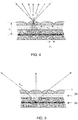
- Figure 4 shows a cross-section of the layout of a multi-view autostereoscopic display.
- Each pixel underneath a certain lenticular lens will contribute to a specific view. All pixels underneath this lens will together contribute to a cone of views.
- the width of this cone is determined by the combination of several parameters: it depends on the distance D from the pixel plane to the plane of the lenticular lenses. It also depends on the lens pitch P L .
- Figure 5 is a close-up of Figure 4 , and shows that the light emitted by a pixel of the display 24 is collected by the lenticular lens closest to the pixel but also by neighbouring lenses of the lenticular arrangement. This is the origin of the occurrence of repeated cones of views.
- n is the average index of refraction of the materials in between the pixel plane and the plane of the lenticular lenses (typically, n is typically in the range from 1.0 (air) to 1.6).
- P L is the pure horizontal pitch
- D is the distance from the lens base to the pixel structure.
- the total number of views is limited to typically 9 or 15. These views have an angular width of typically 1°-2°.
- the views and the cones have the property that they are periodic. If the user walks around the display he will cross the boundaries between adjacent viewing cones. In a certain region the images in both eyes will not properly match, as for the viewer shown to the right in Figure 6 .
- the left eye will receive e.g. the 9 th image and the right eye will receive e.g. the 1 st image.
- the left and right images are reversed, which means that the image is pseudoscopic.
- the invention uses a viewer tracking system to track at least the position of the viewer (and thereby derive the distance from the display screen) and optionally also the speed of movement of the viewer, particularly in a lateral direction.
- the autostereoscopic display 70 is designed to display a plurality of views in repeating image cones (for example as shown in Figure 6 ).
- Image data 72 is received. This may comprise two-view image data, in which case the display can be driven in a two-view mode. Alternatively, additional views can be interpolated by image processing techniques.
- the image data is provided in the form of a number of different views corresponding to the number of views per viewing cone which the display 70 is designed for.
- a viewer tracking system 74 is provided. This is able to determine at least the distance d of the viewer 76 from the display panel, but optionally also the viewer speed of movement v, at least the component thereof in a lateral direction as shown.
- the image data is processed by a processor 78 before driving the display 70 using the viewer tracking information obtained.
- the system of the invention enables the number and order of the views displayed to be varied based on the position and/or moving speed of the viewer.
- the viewer tracking system 74 can be a face or person tracking system able to measure the position and size of a face in a recorded image or video.
- the tracking system can derive the distance d of the viewer for example by measuring the eye distance, or by analysing the viewer's face using a stereo camera.
- the viewer tracking system can for example be based on an image processing face tracking algorithm, a radar system, a system based on wearable indicators, an infrared red eye generator and detector.
- Any known face tracking, body tracking or distance measuring system can be used, that enables at least the distance d to the viewer to be determined.
- the physical design of the display 70 is not altered by the system of the invention.
- the methods which can be implemented by the invention are based on image processing and display driving.
- the system of the invention controls the allocation of images to the different viewing areas defined by the physical design of the display 70. For example, a lower number of views can be displayed by providing identical image content to two viewing areas- which would have different images applied if the maximum number of views were to be displayed.
- lowering the number of views displayed by a certain display design increases the sharpness of a 3D image, at the cost of freedom of movement and possible number of viewers.
- the optimal number of different images for the user can be determined.
- the cone width W C of an autostereoscopic display depends on the optics and the viewing distance D V for which the display is designed.
- the optics define the angle size of the cone as explained above.
- the system of the invention can be controlled to implement various possible methods, described below.
- Figure 8 shows a viewer close to the display, and the display is configured to display only two views (right R and left L). To display two views, the two views are repeated in the various viewing areas within each cone. For example if the display optics are designed as a nine-view system, five/four left views and four/five right views can be displayed. This does not increase the resolution of the views, but it does reduce cross talk and thereby reduce image blurring.
- the display can be switched to the two view mode when the viewing distance is lower than a threshold.
- mode switching can take place if the viewing distance d is such that the eye separation is greater than 0.25 times the cone width at that viewing distance. If the ratio becomes smaller than 0.25 the display can be switched to an autostereoscopic mode with more than two views.
- the threshold of 0.25 can be different, for example between 0.2 and 0.3 or even between 0.1 and ,0.5.
- N V 2 if E / W C > 0.25
- E is the eye separation
- a fixed eye separation can be assumed, for example 6cm.
- the cone width threshold W C is 24cm. This threshold may be anywhere between 15 and 40cm for example.
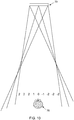
- Figure 9 shows the display with a viewer further from the display, and thereby operated in the multiple view mode.
- Nine different views (numbered -4 to +4) are shown.
- the system can also be used to detect the speed of movement of the viewer.
- the display can again switch to a single view mode (a 2D mode) so that it is prevented that the user will see a left-right inverted image when cone boundaries are passed.
- Another use of speed tracking is to change the order of viewpoints across the cone width, to a non-linear order, when the movement is faster than the a tracker can follow. This can be carried out to soften the visibility of cone transitions.
- a view order (for a nine view system) within the cones could be -1 -3 -2 -1 0 1 2 3 1 instead of -4 -3 -2 -1 0 1 2 3 4 as shown in Figure 9 .
- the largest difference in view number is 2 (views 3 and 1 within the viewing cone or views 1 and -1 at the cone boundary..
- the largest difference in view number of adjacently displayed views can be set to be 2.
- the display can be designed so that the viewing distance compensation is most effective.
- the display can be designed such that at a default viewing distance (for which the display is designed), the cone width is smaller than 4 times the eye distance E, for example less than 30cm.
- the cone width can be designed to be smaller than 3 times the eye distance E, which will correspond to around 20cm.
- the default viewing distance can for example be equal to 2 times the display width.
- the distance system will switch to a two-view mode when the viewer is at the designed distance from the display, and will only give more views when the viewer is further away.
- the default distance is thus for a single close up view, using the display as a monitor, but the display can be used at a larger viewing distance by multiple users
- the amount of visible crosstalk is reduced by setting the views within a cone which are not visible to the viewer (even if they move slightly) to be the same as the views which are visible to the viewer. In this way, a first set of views is displayed in only one viewing area each (views 1, 0 and -1) and a second set of views (views 2 and -2) are displayed at least in two adjacent viewing areas each.
- the central views are displayed once, and the lateral edge views are displayed three times.
- the images displayed within a cone are selected depending on the relative position of the viewer within the cone.
- the invention is especially applicable to monitor sized displays which can switch between a mode for multiple viewers at larger distance and a configuration where one viewer is using the display from close-by where the display will switch to the sharpest mode possible: a two-view system.
- the viewer tracking system can look for the closest viewer to the display, and use this closest viewer to judge whether to switch display mode.
- the display can remain in multiple view mode whenever more than one viewer is detected, and only switch to the two view mode when there is a single viewer being tracked, and when that single viewer is close to the display panel.
- the invention can be used in barrier or lenticular systems, or indeed other optical systems, for example using microlenses.
- the invention has been described in connection with an LCD display, but it can be applied to other display technologies, such as OLED displays.
- the system can include stereo to multiview conversion.
- the depth information can be scaled when the display is switched to a low number of views or to the stereo (2 view) mode.
- the generated disparity differences can be made at least 20 % larger to increase the depth effect.
Landscapes
- Engineering & Computer Science (AREA)
- Multimedia (AREA)
- Signal Processing (AREA)
- Physics & Mathematics (AREA)
- General Physics & Mathematics (AREA)
- Optics & Photonics (AREA)
- Testing, Inspecting, Measuring Of Stereoscopic Televisions And Televisions (AREA)
- Stereoscopic And Panoramic Photography (AREA)
Claims (10)
- Dispositif d'affichage autostéréoscopique (70, 74, 78) comprenant :un panneau d'affichage pixélisé (3) ;un agencement d'imagerie (9) destiné à diriger la lumière associée à différents pixels d'affichage du panneau d'affichage dans différentes directions, de sorte qu'au moins trois zones de visualisation soient définies sur lesquelles différentes images peuvent être affichées simultanément, lesdites zones de visualisation étant formées dans des cônes de visualisation de sortie d'affichage, chacune possédant une largeur de cône, lesdits cônes de visualisation se répétant à travers un champ de vision ;un système de suivi de spectateur (74) destiné à suivre un spectateur et déterminer la position d'un spectateur par rapport au panneau d'affichage ; un processeur (78) destiné à traiter le contenu de l'image afin de régler le nombre de vues et pour commander le panneau d'affichage, ledit processeur commandant le panneau d'affichage pour afficher différents nombres de vues dans chaque cône de visualisation dépendant au moins de la distance à laquelle le spectateur se situe par rapport au panneau d'affichage,pour une première distance de visualisation inférieure au seuil de distance, deux vues au total sont affichées, et pour une seconde distance de visualisation supérieure, un second nombre de vues supérieur est affiché, le seuil de distance étant de sorte que la largeur du cône à cette distance soit comprise entre 13 et 40 cm.
- Dispositif selon la revendication 1, ledit processeur étant adapté pour dériver une vitesse de déplacement du spectateur, et si la vitesse dépasse un premier seuil, ledit nombre de vues différentes étant fixé à 1.
- Dispositif selon l'une quelconque des revendications précédentes, ledit processeur étant adapté pour dériver une vitesse de déplacement du spectateur et si la vitesse dépasse un second seuil, l'ordre des différentes vues étant modifié.
- Dispositif selon l'une quelconque des revendications précédentes, à l'intérieur de chaque cône de visualisation, se trouvant une pluralité de zones de visualisation sur lesquelles différentes images peuvent être affichées simultanément, et un premier ensemble de vues étant affichées chacune dans uniquement une zone de visualisation et un second ensemble de vues étant affichées chacune dans au moins deux zones de visualisation adjacentes.
- Dispositif selon l'une quelconque des revendications précédentes, ladite largeur de cône à une distance d'observation égale à deux fois la largeur du panneau d'affichage étant inférieure à 30 cm.
- Procédé de commande d'un dispositif d'affichage autostéréoscopique (70, 74, 78) comprenant :la direction de la lumière associée aux différents pixels d'affichage d'un panneau d'affichage pixélisé (3)dans différentes directions, de sorte qu'au moins trois zones de visualisation soient définies sur lesquelles différentes images peuvent être affichées simultanément, lesdites zones de visualisation étant formées dans des cônes de visualisation de sortie d'affichage, lesdits cônes de visualisation se répétant à travers un champ de vision ;le suivi d'un spectateur et la détermination d'une position du spectateur par rapport au panneau d'affichage ;le traitement du contenu d'image et la commande au panneau d'affichage d'afficher un nombre de vues différentes à l'intérieur de chaque cône de visualisation dépendant au moins de la distance à laquelle le spectateur se situe par rapport au panneau d'affichage,pour une première distance de visualisation inférieure au seuil de distance, deux vues au total sont affichées, et pour une seconde distance de visualisation supérieure, un second nombre de vues supérieur est affiché, le seuil de distance étant de sorte que la largeur du cône à cette distance soit comprise entre 13 et 40 cm.
- Procédé selon la revendication 6, comprenant la dérivation d'une vitesse de déplacement du spectateur, si la vitesse dépasse un premier seuil, le nombre de vues différentes étant fixé à 1.
- Procédé selon la revendication 6 ou 7, comprenant la dérivation d'une vitesse de déplacement du spectateur, si la vitesse dépasse un second seuil, ledit ordre des différentes vues étant modifié.
- Procédé selon l'une quelconque des revendications 6 à 8, dans chaque cône, se trouvant une pluralité de zones de visualisation sur lesquelles différentes images peuvent être affichées simultanément,
ledit procédé comprenant l'affichage d'un premier ensemble de vues, chacune uniquement dans une zone de visualisation, et l'affichage d'un second ensemble de vues, chacune dans au moins deux zones de visualisation adjacentes. - Programme informatique adapté pour mettre en oeuvre le procédé selon l'une quelconque des revendications 6 à 9 lorsque ledit programme est exécuté sur un ordinateur.
Applications Claiming Priority (2)
| Application Number | Priority Date | Filing Date | Title |
|---|---|---|---|
| GB1202691.0A GB2499426A (en) | 2012-02-16 | 2012-02-16 | Autostereoscopic display device with viewer tracking system |
| PCT/EP2013/052599 WO2013120785A2 (fr) | 2012-02-16 | 2013-02-08 | Dispositif d'affichage autostéroscopique et procédé de commande |
Publications (2)
| Publication Number | Publication Date |
|---|---|
| EP2815577A2 EP2815577A2 (fr) | 2014-12-24 |
| EP2815577B1 true EP2815577B1 (fr) | 2019-07-03 |
Family
ID=45939739
Family Applications (1)
| Application Number | Title | Priority Date | Filing Date |
|---|---|---|---|
| EP13709048.6A Active EP2815577B1 (fr) | 2012-02-16 | 2013-02-08 | Dispositif d'affichage autostéroscopique et procédé de commande |
Country Status (7)
| Country | Link |
|---|---|
| US (1) | US9479767B2 (fr) |
| EP (1) | EP2815577B1 (fr) |
| JP (1) | JP6242818B2 (fr) |
| KR (1) | KR20150004323A (fr) |
| CN (1) | CN104272733B (fr) |
| GB (1) | GB2499426A (fr) |
| WO (1) | WO2013120785A2 (fr) |
Families Citing this family (37)
| Publication number | Priority date | Publication date | Assignee | Title |
|---|---|---|---|---|
| US20160295200A1 (en) * | 2013-11-20 | 2016-10-06 | Koninklijke Philips N.V. | Generaton of images for an autostereoscopic multi-view display |
| US10291907B2 (en) | 2014-01-23 | 2019-05-14 | Telefonaktiebolaget Lm Ericsson (Publ) | Multi-view display control for channel selection |
| DE102014205519A1 (de) * | 2014-03-25 | 2015-10-01 | Robert Bosch Gmbh | Verfahren und Vorrichtung zum Anpassen einer Anzeige eines autostereoskopischen Displays für ein Fahrzeug |
| GB2527548A (en) * | 2014-06-25 | 2015-12-30 | Sharp Kk | Variable barrier pitch correction |
| CN107148590A (zh) * | 2014-11-07 | 2017-09-08 | 索尼公司 | 显示设备和显示控制方法 |
| US11468639B2 (en) * | 2015-02-20 | 2022-10-11 | Microsoft Technology Licensing, Llc | Selective occlusion system for augmented reality devices |
| US10638119B2 (en) | 2015-05-05 | 2020-04-28 | Koninklijke Philips N.V. | Generation of image for an autostereoscopic display |
| WO2017022769A1 (fr) * | 2015-08-04 | 2017-02-09 | 株式会社ソニー・インタラクティブエンタテインメント | Visiocasque, procédé de commande d'affichage, et programme |
| KR102415502B1 (ko) * | 2015-08-07 | 2022-07-01 | 삼성전자주식회사 | 복수의 사용자를 위한 라이트 필드 렌더링 방법 및 장치 |
| EP3406077A1 (fr) * | 2015-12-29 | 2018-11-28 | Koninklijke Philips N.V. | Dispositif d'affichage autostéréoscopique et procédé d'affichage |
| CN105739707B (zh) * | 2016-03-04 | 2018-10-02 | 京东方科技集团股份有限公司 | 电子设备、脸部识别跟踪方法和三维显示方法 |
| FR3071625B1 (fr) * | 2017-09-26 | 2019-09-27 | Alioscopy | Systeme et procede d'affichage d'une image autostereoscopique a 2 points de vue sur un ecran d'affichage autostereoscopique a n points de vue et procede de controle d'affichage sur un tel ecran d'affichage |
| US10298921B1 (en) | 2018-02-27 | 2019-05-21 | Looking Glass Factory, Inc. | Superstereoscopic display with enhanced off-angle separation |
| CN109188700B (zh) * | 2018-10-30 | 2021-05-11 | 京东方科技集团股份有限公司 | 光学显示系统及ar/vr显示装置 |
| EP3687168A1 (fr) * | 2019-01-24 | 2020-07-29 | Ultra-D Coöperatief U.A. | Attribution de numéros de vue pour afficher des éléments d'un affichage autostéréoscopique |
| TWI683131B (zh) * | 2019-03-21 | 2020-01-21 | 大陸商信泰光學(深圳)有限公司 | 光學裝置及其照明模組 |
| CN111722400B (zh) | 2019-03-21 | 2022-08-16 | 信泰光学(深圳)有限公司 | 光学装置及其照明模块 |
| JP7516781B2 (ja) * | 2020-03-04 | 2024-07-17 | 富士フイルムビジネスイノベーション株式会社 | 表示システム、表示制御装置及びプログラム |
| US11449004B2 (en) | 2020-05-21 | 2022-09-20 | Looking Glass Factory, Inc. | System and method for holographic image display |
| WO2021243037A1 (fr) | 2020-05-27 | 2021-12-02 | Looking Glass Factory, Inc. | Système et procédé pour des dispositifs d'affichage holographique |
| WO2021262860A1 (fr) | 2020-06-23 | 2021-12-30 | Looking Glass Factory, Inc. | Système et procédé de communication holographique |
| WO2022086580A1 (fr) * | 2020-10-21 | 2022-04-28 | Google Llc | Résolution dynamique de conflits de profondeur en téléprésence |
| WO2022119940A1 (fr) | 2020-12-01 | 2022-06-09 | Looking Glass Factory, Inc. | Système et procédé de traitement d'images tridimensionnelles |
| TWI800959B (zh) | 2021-10-22 | 2023-05-01 | 宏碁股份有限公司 | 眼球追蹤方法及眼球追蹤裝置 |
| NL2030186B1 (en) | 2021-12-17 | 2023-06-28 | Dimenco Holding B V | Autostereoscopic display device presenting 3d-view and 3d-sound |
| NL2030187B1 (en) | 2021-12-18 | 2023-06-28 | Dimenco Holding B V | Method and device for cancelling distortion and displacement of a displayed three dimensional image |
| NL2030325B1 (en) | 2021-12-28 | 2023-07-03 | Dimenco Holding B V | Scaling of three-dimensional content for an autostereoscopic display device |
| NL2030326B1 (en) * | 2021-12-29 | 2023-07-04 | Dimenco Holding B V | Autostereoscopic display device having a remote body tracking system |
| TWI806379B (zh) | 2022-01-24 | 2023-06-21 | 宏碁股份有限公司 | 特徵點位置偵測方法及電子裝置 |
| NL2032281B1 (en) | 2022-06-25 | 2024-01-09 | Dimenco Holding B V | Autostereoscopic display system comprising a plurality of autostereoscopic display devices |
| TWI832573B (zh) | 2022-11-22 | 2024-02-11 | 宏碁股份有限公司 | 多視域顯示裝置 |
| NL2033733B1 (en) | 2022-12-15 | 2024-06-20 | Dimenco Holding B V | Method for scaling size and depth in videoconferencing |
| KR20240144549A (ko) | 2023-03-23 | 2024-10-02 | 삼성디스플레이 주식회사 | 표시 장치 및 이의 구동 방법 |
| JPWO2024203571A1 (fr) | 2023-03-28 | 2024-10-03 | ||
| NL2035227B1 (en) | 2023-06-29 | 2025-01-09 | Dimenco Holding B V | Graphical pointer for an autostereoscopic display device |
| NL2035452B1 (en) | 2023-07-21 | 2025-02-04 | Dimenco Holding B V | Method for displaying a stereoscopic content on an autostereoscopic display screen of which a part is observable by only one eye of a viewer |
| US12587629B2 (en) | 2023-08-30 | 2026-03-24 | Looking Glass Factory, Inc. | Augmented superstereoscopic display |
Citations (1)
| Publication number | Priority date | Publication date | Assignee | Title |
|---|---|---|---|---|
| US20110310233A1 (en) * | 2010-06-21 | 2011-12-22 | Microsoft Corporation | Optimization of a Multi-View Display |
Family Cites Families (25)
| Publication number | Priority date | Publication date | Assignee | Title |
|---|---|---|---|---|
| GB2297876A (en) * | 1995-02-09 | 1996-08-14 | Sharp Kk | Observer tracking autostereoscopic display |
| JP3229824B2 (ja) * | 1995-11-15 | 2001-11-19 | 三洋電機株式会社 | 立体映像表示装置 |
| US7190518B1 (en) * | 1996-01-22 | 2007-03-13 | 3Ality, Inc. | Systems for and methods of three dimensional viewing |
| GB2324428A (en) * | 1997-04-17 | 1998-10-21 | Sharp Kk | Image tracking; observer tracking stereoscopic display |
| JP2000098299A (ja) * | 1998-09-18 | 2000-04-07 | Sanyo Electric Co Ltd | 立体映像表示装置 |
| JP3802474B2 (ja) * | 2002-10-21 | 2006-07-26 | 三洋電機株式会社 | 立体映像表示装置 |
| US7692640B2 (en) * | 2003-09-30 | 2010-04-06 | Koninklijke Philips Electronics N.V. | Motion control for image rendering |
| US9316841B2 (en) | 2004-03-12 | 2016-04-19 | Koninklijke Philips N.V. | Multiview display device |
| WO2007043988A1 (fr) * | 2005-09-16 | 2007-04-19 | Stereographics Corporation | Procede et appareil destines a optimiser la vision d'un stereogramme lenticulaire |
| JP2009077234A (ja) * | 2007-09-21 | 2009-04-09 | Toshiba Corp | 三次元画像処理装置、方法及びプログラム |
| WO2009096510A1 (fr) * | 2008-01-31 | 2009-08-06 | Kabushiki Kaisha Kenwood | Procédé de reconnaissance de disque optique, dispositif à disque optique, et logiciel |
| WO2009095862A1 (fr) * | 2008-02-01 | 2009-08-06 | Koninklijke Philips Electronics N.V. | Dispositif d'affichage autostéréoscopique |
| TWI527429B (zh) * | 2008-10-28 | 2016-03-21 | 皇家飛利浦電子股份有限公司 | 三維顯示系統 |
| DE102009009443B3 (de) * | 2009-02-14 | 2010-09-23 | Fraunhofer-Gesellschaft zur Förderung der angewandten Forschung e.V. | Monitor und Verfahren zum Darstellen autostereoskopisch wahrnehmbarer Bilder |
| WO2010136921A2 (fr) * | 2009-05-28 | 2010-12-02 | Koninklijke Philips Electronics N.V. | Dispositif d'affichage autostéréoscopique |
| KR101615111B1 (ko) * | 2009-06-16 | 2016-04-25 | 삼성전자주식회사 | 다시점 영상 표시 장치 및 방법 |
| KR101057098B1 (ko) * | 2009-07-10 | 2011-08-16 | (주)엔디스 | 광시야각 입체 디스플레이의 휘도 플리커 제어장치 및 그 방법 |
| JP5356952B2 (ja) * | 2009-08-31 | 2013-12-04 | レムセン イノベーション、リミティッド ライアビリティー カンパニー | 表示装置 |
| KR101629479B1 (ko) * | 2009-11-04 | 2016-06-10 | 삼성전자주식회사 | 능동 부화소 렌더링 방식 고밀도 다시점 영상 표시 시스템 및 방법 |
| US8633972B2 (en) * | 2010-03-03 | 2014-01-21 | Fraunhofer-Geselschaft zur Foerderung der angewandten Forschung e.V. | Method for displaying image information and autostereoscopic screen |
| JP2011205358A (ja) * | 2010-03-25 | 2011-10-13 | Fujifilm Corp | ヘッドマウントディスプレイ装置 |
| TWI462568B (zh) * | 2010-10-29 | 2014-11-21 | Au Optronics Corp | 立體顯示器之影像顯示方法 |
| US20130265398A1 (en) * | 2010-10-29 | 2013-10-10 | Bradley Neal Suggs | Three-Dimensional Image Based on a Distance of a Viewer |
| JP5978695B2 (ja) * | 2011-05-27 | 2016-08-24 | 株式会社Jvcケンウッド | 裸眼立体ディスプレイ装置及び視点調整方法 |
| WO2013107467A1 (fr) * | 2012-01-17 | 2013-07-25 | Sony Ericsson Mobile Communications Ab | Équipement électronique portatif et procédé de commande d'un affichage auto-stéréoscopique |
-
2012
- 2012-02-16 GB GB1202691.0A patent/GB2499426A/en not_active Withdrawn
-
2013
- 2013-02-08 JP JP2014556996A patent/JP6242818B2/ja active Active
- 2013-02-08 WO PCT/EP2013/052599 patent/WO2013120785A2/fr not_active Ceased
- 2013-02-08 EP EP13709048.6A patent/EP2815577B1/fr active Active
- 2013-02-08 US US14/379,081 patent/US9479767B2/en active Active
- 2013-02-08 CN CN201380019924.XA patent/CN104272733B/zh active Active
- 2013-02-08 KR KR20147025718A patent/KR20150004323A/ko not_active Ceased
Patent Citations (1)
| Publication number | Priority date | Publication date | Assignee | Title |
|---|---|---|---|---|
| US20110310233A1 (en) * | 2010-06-21 | 2011-12-22 | Microsoft Corporation | Optimization of a Multi-View Display |
Also Published As
| Publication number | Publication date |
|---|---|
| US20150281682A1 (en) | 2015-10-01 |
| US9479767B2 (en) | 2016-10-25 |
| CN104272733B (zh) | 2017-03-08 |
| WO2013120785A2 (fr) | 2013-08-22 |
| CN104272733A (zh) | 2015-01-07 |
| JP2015515165A (ja) | 2015-05-21 |
| KR20150004323A (ko) | 2015-01-12 |
| JP6242818B2 (ja) | 2017-12-06 |
| GB2499426A (en) | 2013-08-21 |
| WO2013120785A3 (fr) | 2013-10-24 |
| GB201202691D0 (en) | 2012-04-04 |
| EP2815577A2 (fr) | 2014-12-24 |
Similar Documents
| Publication | Publication Date | Title |
|---|---|---|
| EP2815577B1 (fr) | Dispositif d'affichage autostéroscopique et procédé de commande | |
| JP5710330B2 (ja) | 表示装置 | |
| EP3017335B1 (fr) | Dispositif d'affichage auto-stéréoscopique avec un module de rétro-éclairage laminé et deux réseaux lenticulaires | |
| US20120092339A1 (en) | Multi-view autostereoscopic display device | |
| KR100878130B1 (ko) | 이용자 제어를 가진 자동입체 이미지 디스플레이 장치 및 방법 | |
| JP5762998B2 (ja) | 表示装置および電子機器 | |
| KR102197536B1 (ko) | 이동 플리커가 감소된 입체영상 표시장치 | |
| EP3225025B1 (fr) | Dispositif d'affichage et son procédé de commande | |
| JP2010524309A (ja) | 三次元表示する方法および構成 | |
| JP2010282090A (ja) | 立体表示装置 | |
| US20150237334A1 (en) | Stereoscopic display device | |
| KR20160058327A (ko) | 입체 영상 표시 장치 | |
| KR20150055322A (ko) | 다시점 영상 디스플레이 장치 및 그 다시점 영상 디스플레이 방법 | |
| US10715792B2 (en) | Display device and method of controlling the same | |
| CN105681778B (zh) | 一种三维显示装置及其驱动方法 | |
| KR102279816B1 (ko) | 무안경 입체영상표시장치 | |
| KR101908511B1 (ko) | 입체 영상 표시 장치 및 이의 구동 방법 | |
| KR20130015936A (ko) | 입체영상 디스플레이 장치 및 방법 | |
| KR20130000692A (ko) | 입체영상 디스플레이 장치 및 방법 | |
| KR101697591B1 (ko) | 입체영상표시장치 및 그 구동방법 | |
| KR101190050B1 (ko) | 입체영상 표시장치 및 그 구동 방법 | |
| KR101239230B1 (ko) | 입체영상 표시장치 및 그 구동 방법 |
Legal Events
| Date | Code | Title | Description |
|---|---|---|---|
| PUAI | Public reference made under article 153(3) epc to a published international application that has entered the european phase |
Free format text: ORIGINAL CODE: 0009012 |
|
| 17P | Request for examination filed |
Effective date: 20140915 |
|
| AK | Designated contracting states |
Kind code of ref document: A2 Designated state(s): AL AT BE BG CH CY CZ DE DK EE ES FI FR GB GR HR HU IE IS IT LI LT LU LV MC MK MT NL NO PL PT RO RS SE SI SK SM TR |
|
| AX | Request for extension of the european patent |
Extension state: BA ME |
|
| DAX | Request for extension of the european patent (deleted) | ||
| STAA | Information on the status of an ep patent application or granted ep patent |
Free format text: STATUS: EXAMINATION IS IN PROGRESS |
|
| 17Q | First examination report despatched |
Effective date: 20170407 |
|
| REG | Reference to a national code |
Ref country code: DE Ref legal event code: R079 Ref document number: 602013057354 Country of ref document: DE Free format text: PREVIOUS MAIN CLASS: H04N0013040000 Ipc: H04N0013305000 |
|
| RIC1 | Information provided on ipc code assigned before grant |
Ipc: H04N 13/398 20180101ALI20181220BHEP Ipc: H04N 13/351 20180101ALI20181220BHEP Ipc: H04N 13/376 20180101ALI20181220BHEP Ipc: H04N 13/117 20180101ALI20181220BHEP Ipc: H04N 13/305 20180101AFI20181220BHEP Ipc: H04N 13/359 20180101ALI20181220BHEP Ipc: H04N 13/373 20180101ALI20181220BHEP Ipc: H04N 13/368 20180101ALI20181220BHEP |
|
| GRAP | Despatch of communication of intention to grant a patent |
Free format text: ORIGINAL CODE: EPIDOSNIGR1 |
|
| STAA | Information on the status of an ep patent application or granted ep patent |
Free format text: STATUS: GRANT OF PATENT IS INTENDED |
|
| INTG | Intention to grant announced |
Effective date: 20190206 |
|
| GRAS | Grant fee paid |
Free format text: ORIGINAL CODE: EPIDOSNIGR3 |
|
| GRAA | (expected) grant |
Free format text: ORIGINAL CODE: 0009210 |
|
| STAA | Information on the status of an ep patent application or granted ep patent |
Free format text: STATUS: THE PATENT HAS BEEN GRANTED |
|
| AK | Designated contracting states |
Kind code of ref document: B1 Designated state(s): AL AT BE BG CH CY CZ DE DK EE ES FI FR GB GR HR HU IE IS IT LI LT LU LV MC MK MT NL NO PL PT RO RS SE SI SK SM TR |
|
| REG | Reference to a national code |
Ref country code: GB Ref legal event code: FG4D |
|
| REG | Reference to a national code |
Ref country code: CH Ref legal event code: EP Ref country code: AT Ref legal event code: REF Ref document number: 1152419 Country of ref document: AT Kind code of ref document: T Effective date: 20190715 |
|
| REG | Reference to a national code |
Ref country code: IE Ref legal event code: FG4D |
|
| REG | Reference to a national code |
Ref country code: DE Ref legal event code: R096 Ref document number: 602013057354 Country of ref document: DE |
|
| REG | Reference to a national code |
Ref country code: NL Ref legal event code: MP Effective date: 20190703 |
|
| REG | Reference to a national code |
Ref country code: LT Ref legal event code: MG4D |
|
| REG | Reference to a national code |
Ref country code: AT Ref legal event code: MK05 Ref document number: 1152419 Country of ref document: AT Kind code of ref document: T Effective date: 20190703 |
|
| PG25 | Lapsed in a contracting state [announced via postgrant information from national office to epo] |
Ref country code: CZ Free format text: LAPSE BECAUSE OF FAILURE TO SUBMIT A TRANSLATION OF THE DESCRIPTION OR TO PAY THE FEE WITHIN THE PRESCRIBED TIME-LIMIT Effective date: 20190703 Ref country code: BG Free format text: LAPSE BECAUSE OF FAILURE TO SUBMIT A TRANSLATION OF THE DESCRIPTION OR TO PAY THE FEE WITHIN THE PRESCRIBED TIME-LIMIT Effective date: 20191003 Ref country code: HR Free format text: LAPSE BECAUSE OF FAILURE TO SUBMIT A TRANSLATION OF THE DESCRIPTION OR TO PAY THE FEE WITHIN THE PRESCRIBED TIME-LIMIT Effective date: 20190703 Ref country code: PT Free format text: LAPSE BECAUSE OF FAILURE TO SUBMIT A TRANSLATION OF THE DESCRIPTION OR TO PAY THE FEE WITHIN THE PRESCRIBED TIME-LIMIT Effective date: 20191104 Ref country code: NL Free format text: LAPSE BECAUSE OF FAILURE TO SUBMIT A TRANSLATION OF THE DESCRIPTION OR TO PAY THE FEE WITHIN THE PRESCRIBED TIME-LIMIT Effective date: 20190703 Ref country code: AT Free format text: LAPSE BECAUSE OF FAILURE TO SUBMIT A TRANSLATION OF THE DESCRIPTION OR TO PAY THE FEE WITHIN THE PRESCRIBED TIME-LIMIT Effective date: 20190703 Ref country code: NO Free format text: LAPSE BECAUSE OF FAILURE TO SUBMIT A TRANSLATION OF THE DESCRIPTION OR TO PAY THE FEE WITHIN THE PRESCRIBED TIME-LIMIT Effective date: 20191003 Ref country code: LT Free format text: LAPSE BECAUSE OF FAILURE TO SUBMIT A TRANSLATION OF THE DESCRIPTION OR TO PAY THE FEE WITHIN THE PRESCRIBED TIME-LIMIT Effective date: 20190703 Ref country code: FI Free format text: LAPSE BECAUSE OF FAILURE TO SUBMIT A TRANSLATION OF THE DESCRIPTION OR TO PAY THE FEE WITHIN THE PRESCRIBED TIME-LIMIT Effective date: 20190703 Ref country code: SE Free format text: LAPSE BECAUSE OF FAILURE TO SUBMIT A TRANSLATION OF THE DESCRIPTION OR TO PAY THE FEE WITHIN THE PRESCRIBED TIME-LIMIT Effective date: 20190703 |
|
| PG25 | Lapsed in a contracting state [announced via postgrant information from national office to epo] |
Ref country code: GR Free format text: LAPSE BECAUSE OF FAILURE TO SUBMIT A TRANSLATION OF THE DESCRIPTION OR TO PAY THE FEE WITHIN THE PRESCRIBED TIME-LIMIT Effective date: 20191004 Ref country code: IS Free format text: LAPSE BECAUSE OF FAILURE TO SUBMIT A TRANSLATION OF THE DESCRIPTION OR TO PAY THE FEE WITHIN THE PRESCRIBED TIME-LIMIT Effective date: 20191103 Ref country code: LV Free format text: LAPSE BECAUSE OF FAILURE TO SUBMIT A TRANSLATION OF THE DESCRIPTION OR TO PAY THE FEE WITHIN THE PRESCRIBED TIME-LIMIT Effective date: 20190703 Ref country code: RS Free format text: LAPSE BECAUSE OF FAILURE TO SUBMIT A TRANSLATION OF THE DESCRIPTION OR TO PAY THE FEE WITHIN THE PRESCRIBED TIME-LIMIT Effective date: 20190703 Ref country code: AL Free format text: LAPSE BECAUSE OF FAILURE TO SUBMIT A TRANSLATION OF THE DESCRIPTION OR TO PAY THE FEE WITHIN THE PRESCRIBED TIME-LIMIT Effective date: 20190703 Ref country code: ES Free format text: LAPSE BECAUSE OF FAILURE TO SUBMIT A TRANSLATION OF THE DESCRIPTION OR TO PAY THE FEE WITHIN THE PRESCRIBED TIME-LIMIT Effective date: 20190703 |
|
| PG25 | Lapsed in a contracting state [announced via postgrant information from national office to epo] |
Ref country code: TR Free format text: LAPSE BECAUSE OF FAILURE TO SUBMIT A TRANSLATION OF THE DESCRIPTION OR TO PAY THE FEE WITHIN THE PRESCRIBED TIME-LIMIT Effective date: 20190703 |
|
| PG25 | Lapsed in a contracting state [announced via postgrant information from national office to epo] |
Ref country code: IT Free format text: LAPSE BECAUSE OF FAILURE TO SUBMIT A TRANSLATION OF THE DESCRIPTION OR TO PAY THE FEE WITHIN THE PRESCRIBED TIME-LIMIT Effective date: 20190703 Ref country code: RO Free format text: LAPSE BECAUSE OF FAILURE TO SUBMIT A TRANSLATION OF THE DESCRIPTION OR TO PAY THE FEE WITHIN THE PRESCRIBED TIME-LIMIT Effective date: 20190703 Ref country code: EE Free format text: LAPSE BECAUSE OF FAILURE TO SUBMIT A TRANSLATION OF THE DESCRIPTION OR TO PAY THE FEE WITHIN THE PRESCRIBED TIME-LIMIT Effective date: 20190703 Ref country code: DK Free format text: LAPSE BECAUSE OF FAILURE TO SUBMIT A TRANSLATION OF THE DESCRIPTION OR TO PAY THE FEE WITHIN THE PRESCRIBED TIME-LIMIT Effective date: 20190703 Ref country code: PL Free format text: LAPSE BECAUSE OF FAILURE TO SUBMIT A TRANSLATION OF THE DESCRIPTION OR TO PAY THE FEE WITHIN THE PRESCRIBED TIME-LIMIT Effective date: 20190703 |
|
| PG25 | Lapsed in a contracting state [announced via postgrant information from national office to epo] |
Ref country code: SK Free format text: LAPSE BECAUSE OF FAILURE TO SUBMIT A TRANSLATION OF THE DESCRIPTION OR TO PAY THE FEE WITHIN THE PRESCRIBED TIME-LIMIT Effective date: 20190703 Ref country code: IS Free format text: LAPSE BECAUSE OF FAILURE TO SUBMIT A TRANSLATION OF THE DESCRIPTION OR TO PAY THE FEE WITHIN THE PRESCRIBED TIME-LIMIT Effective date: 20200224 Ref country code: SM Free format text: LAPSE BECAUSE OF FAILURE TO SUBMIT A TRANSLATION OF THE DESCRIPTION OR TO PAY THE FEE WITHIN THE PRESCRIBED TIME-LIMIT Effective date: 20190703 |
|
| REG | Reference to a national code |
Ref country code: DE Ref legal event code: R097 Ref document number: 602013057354 Country of ref document: DE |
|
| PLBE | No opposition filed within time limit |
Free format text: ORIGINAL CODE: 0009261 |
|
| STAA | Information on the status of an ep patent application or granted ep patent |
Free format text: STATUS: NO OPPOSITION FILED WITHIN TIME LIMIT |
|
| PG2D | Information on lapse in contracting state deleted |
Ref country code: IS |
|
| 26N | No opposition filed |
Effective date: 20200603 |
|
| PG25 | Lapsed in a contracting state [announced via postgrant information from national office to epo] |
Ref country code: SI Free format text: LAPSE BECAUSE OF FAILURE TO SUBMIT A TRANSLATION OF THE DESCRIPTION OR TO PAY THE FEE WITHIN THE PRESCRIBED TIME-LIMIT Effective date: 20190703 |
|
| REG | Reference to a national code |
Ref country code: CH Ref legal event code: PL |
|
| PG25 | Lapsed in a contracting state [announced via postgrant information from national office to epo] |
Ref country code: LU Free format text: LAPSE BECAUSE OF NON-PAYMENT OF DUE FEES Effective date: 20200208 Ref country code: MC Free format text: LAPSE BECAUSE OF FAILURE TO SUBMIT A TRANSLATION OF THE DESCRIPTION OR TO PAY THE FEE WITHIN THE PRESCRIBED TIME-LIMIT Effective date: 20190703 |
|
| PG25 | Lapsed in a contracting state [announced via postgrant information from national office to epo] |
Ref country code: CH Free format text: LAPSE BECAUSE OF NON-PAYMENT OF DUE FEES Effective date: 20200229 Ref country code: LI Free format text: LAPSE BECAUSE OF NON-PAYMENT OF DUE FEES Effective date: 20200229 |
|
| PG25 | Lapsed in a contracting state [announced via postgrant information from national office to epo] |
Ref country code: IE Free format text: LAPSE BECAUSE OF NON-PAYMENT OF DUE FEES Effective date: 20200208 |
|
| PG25 | Lapsed in a contracting state [announced via postgrant information from national office to epo] |
Ref country code: MT Free format text: LAPSE BECAUSE OF FAILURE TO SUBMIT A TRANSLATION OF THE DESCRIPTION OR TO PAY THE FEE WITHIN THE PRESCRIBED TIME-LIMIT Effective date: 20190703 Ref country code: CY Free format text: LAPSE BECAUSE OF FAILURE TO SUBMIT A TRANSLATION OF THE DESCRIPTION OR TO PAY THE FEE WITHIN THE PRESCRIBED TIME-LIMIT Effective date: 20190703 |
|
| PG25 | Lapsed in a contracting state [announced via postgrant information from national office to epo] |
Ref country code: MK Free format text: LAPSE BECAUSE OF FAILURE TO SUBMIT A TRANSLATION OF THE DESCRIPTION OR TO PAY THE FEE WITHIN THE PRESCRIBED TIME-LIMIT Effective date: 20190703 |
|
| REG | Reference to a national code |
Ref country code: DE Ref legal event code: R081 Ref document number: 602013057354 Country of ref document: DE Owner name: DIMENCO HOLDING B.V., NL Free format text: FORMER OWNER: DIMENCO B.V., VELDHOVEN, NL |
|
| REG | Reference to a national code |
Ref country code: BE Ref legal event code: HC Owner name: DIMENCO HOLDING B.V.; NL Free format text: DETAILS ASSIGNMENT: CHANGE OF OWNER(S), CHANGE OF OWNER(S) NAME; FORMER OWNER NAME: DIMENCO B.V. Effective date: 20221122 |
|
| P01 | Opt-out of the competence of the unified patent court (upc) registered |
Effective date: 20230525 |
|
| PGFP | Annual fee paid to national office [announced via postgrant information from national office to epo] |
Ref country code: GB Payment date: 20260112 Year of fee payment: 14 |
|
| PGFP | Annual fee paid to national office [announced via postgrant information from national office to epo] |
Ref country code: DE Payment date: 20260114 Year of fee payment: 14 |
|
| PGFP | Annual fee paid to national office [announced via postgrant information from national office to epo] |
Ref country code: BE Payment date: 20260113 Year of fee payment: 14 |
|
| PGFP | Annual fee paid to national office [announced via postgrant information from national office to epo] |
Ref country code: FR Payment date: 20260108 Year of fee payment: 14 |