EP2817263B1 - Procédé permettant de réduire le carbone organique total dans de l'eau hypersaline - Google Patents
Procédé permettant de réduire le carbone organique total dans de l'eau hypersaline Download PDFInfo
- Publication number
- EP2817263B1 EP2817263B1 EP13705985.3A EP13705985A EP2817263B1 EP 2817263 B1 EP2817263 B1 EP 2817263B1 EP 13705985 A EP13705985 A EP 13705985A EP 2817263 B1 EP2817263 B1 EP 2817263B1
- Authority
- EP
- European Patent Office
- Prior art keywords
- rpm
- range
- ppm
- hypersaline
- organic carbon
- Prior art date
- Legal status (The legal status is an assumption and is not a legal conclusion. Google has not performed a legal analysis and makes no representation as to the accuracy of the status listed.)
- Active
Links
- OKTJSMMVPCPJKN-UHFFFAOYSA-N Carbon Chemical compound [C] OKTJSMMVPCPJKN-UHFFFAOYSA-N 0.000 title claims description 32
- 229910052799 carbon Inorganic materials 0.000 title claims description 32
- 238000000034 method Methods 0.000 title claims description 29
- XLYOFNOQVPJJNP-UHFFFAOYSA-N water Substances O XLYOFNOQVPJJNP-UHFFFAOYSA-N 0.000 title description 2
- PEDCQBHIVMGVHV-UHFFFAOYSA-N Glycerine Chemical compound OCC(O)CO PEDCQBHIVMGVHV-UHFFFAOYSA-N 0.000 claims description 63
- 239000000243 solution Substances 0.000 claims description 41
- 244000005700 microbiome Species 0.000 claims description 39
- HPALAKNZSZLMCH-UHFFFAOYSA-M sodium;chloride;hydrate Chemical compound O.[Na+].[Cl-] HPALAKNZSZLMCH-UHFFFAOYSA-M 0.000 claims description 39
- 239000012267 brine Substances 0.000 claims description 38
- 238000013019 agitation Methods 0.000 claims description 32
- 241000204988 Haloferax mediterranei Species 0.000 claims description 24
- 229960005150 glycerol Drugs 0.000 claims description 23
- 235000011187 glycerol Nutrition 0.000 claims description 23
- FAPWRFPIFSIZLT-UHFFFAOYSA-M Sodium chloride Chemical compound [Na+].[Cl-] FAPWRFPIFSIZLT-UHFFFAOYSA-M 0.000 claims description 22
- 239000000725 suspension Substances 0.000 claims description 18
- 230000012010 growth Effects 0.000 claims description 15
- 239000000203 mixture Substances 0.000 claims description 15
- 239000011780 sodium chloride Substances 0.000 claims description 12
- 238000000855 fermentation Methods 0.000 claims description 8
- 230000004151 fermentation Effects 0.000 claims description 8
- 235000013619 trace mineral Nutrition 0.000 claims description 8
- 239000011573 trace mineral Substances 0.000 claims description 8
- 239000000470 constituent Substances 0.000 claims description 7
- UIIMBOGNXHQVGW-UHFFFAOYSA-M Sodium bicarbonate Chemical compound [Na+].OC([O-])=O UIIMBOGNXHQVGW-UHFFFAOYSA-M 0.000 claims description 6
- 229910052802 copper Inorganic materials 0.000 claims description 5
- 229910052742 iron Inorganic materials 0.000 claims description 5
- 229910052748 manganese Inorganic materials 0.000 claims description 5
- 239000013028 medium composition Substances 0.000 claims description 5
- 230000009972 noncorrosive effect Effects 0.000 claims description 5
- 229910052725 zinc Inorganic materials 0.000 claims description 5
- TWRXJAOTZQYOKJ-UHFFFAOYSA-L Magnesium chloride Chemical compound [Mg+2].[Cl-].[Cl-] TWRXJAOTZQYOKJ-UHFFFAOYSA-L 0.000 claims description 4
- CSNNHWWHGAXBCP-UHFFFAOYSA-L Magnesium sulfate Chemical compound [Mg+2].[O-][S+2]([O-])([O-])[O-] CSNNHWWHGAXBCP-UHFFFAOYSA-L 0.000 claims description 4
- 150000001242 acetic acid derivatives Chemical class 0.000 claims description 4
- NLXLAEXVIDQMFP-UHFFFAOYSA-N Ammonia chloride Chemical compound [NH4+].[Cl-] NLXLAEXVIDQMFP-UHFFFAOYSA-N 0.000 claims description 3
- 229910021578 Iron(III) chloride Inorganic materials 0.000 claims description 3
- 239000007836 KH2PO4 Substances 0.000 claims description 3
- 239000010842 industrial wastewater Substances 0.000 claims description 3
- RBTARNINKXHZNM-UHFFFAOYSA-K iron trichloride Chemical compound Cl[Fe](Cl)Cl RBTARNINKXHZNM-UHFFFAOYSA-K 0.000 claims description 3
- 238000002156 mixing Methods 0.000 claims description 3
- 229910000402 monopotassium phosphate Inorganic materials 0.000 claims description 3
- GNSKLFRGEWLPPA-UHFFFAOYSA-M potassium dihydrogen phosphate Chemical compound [K+].OP(O)([O-])=O GNSKLFRGEWLPPA-UHFFFAOYSA-M 0.000 claims description 3
- 229910000030 sodium bicarbonate Inorganic materials 0.000 claims description 3
- UXVMQQNJUSDDNG-UHFFFAOYSA-L Calcium chloride Chemical compound [Cl-].[Cl-].[Ca+2] UXVMQQNJUSDDNG-UHFFFAOYSA-L 0.000 claims description 2
- 239000001110 calcium chloride Substances 0.000 claims description 2
- 229910001628 calcium chloride Inorganic materials 0.000 claims description 2
- 229910001629 magnesium chloride Inorganic materials 0.000 claims description 2
- 229910052943 magnesium sulfate Inorganic materials 0.000 claims description 2
- 206010001497 Agitation Diseases 0.000 description 30
- 238000002474 experimental method Methods 0.000 description 30
- 239000002609 medium Substances 0.000 description 20
- 239000012895 dilution Substances 0.000 description 11
- 238000010790 dilution Methods 0.000 description 11
- 230000000694 effects Effects 0.000 description 10
- 229910002092 carbon dioxide Inorganic materials 0.000 description 9
- CURLTUGMZLYLDI-UHFFFAOYSA-N Carbon dioxide Chemical compound O=C=O CURLTUGMZLYLDI-UHFFFAOYSA-N 0.000 description 8
- 230000003247 decreasing effect Effects 0.000 description 8
- 238000005868 electrolysis reaction Methods 0.000 description 8
- 239000012528 membrane Substances 0.000 description 7
- 239000000758 substrate Substances 0.000 description 7
- 239000004696 Poly ether ether ketone Substances 0.000 description 6
- JUPQTSLXMOCDHR-UHFFFAOYSA-N benzene-1,4-diol;bis(4-fluorophenyl)methanone Chemical compound OC1=CC=C(O)C=C1.C1=CC(F)=CC=C1C(=O)C1=CC=C(F)C=C1 JUPQTSLXMOCDHR-UHFFFAOYSA-N 0.000 description 6
- 229920002530 polyetherether ketone Polymers 0.000 description 6
- ZAMOUSCENKQFHK-UHFFFAOYSA-N Chlorine atom Chemical compound [Cl] ZAMOUSCENKQFHK-UHFFFAOYSA-N 0.000 description 5
- 239000000460 chlorine Substances 0.000 description 5
- 229910052801 chlorine Inorganic materials 0.000 description 5
- 239000000306 component Substances 0.000 description 5
- 239000007789 gas Substances 0.000 description 5
- 238000004519 manufacturing process Methods 0.000 description 5
- 241000204946 Halobacterium salinarum Species 0.000 description 4
- 238000004458 analytical method Methods 0.000 description 4
- 239000005388 borosilicate glass Substances 0.000 description 4
- 239000002351 wastewater Substances 0.000 description 4
- YXFVVABEGXRONW-UHFFFAOYSA-N Toluene Chemical compound CC1=CC=CC=C1 YXFVVABEGXRONW-UHFFFAOYSA-N 0.000 description 3
- 150000001413 amino acids Chemical class 0.000 description 3
- 230000003698 anagen phase Effects 0.000 description 3
- 230000002401 inhibitory effect Effects 0.000 description 3
- 230000002829 reductive effect Effects 0.000 description 3
- AGNTUZCMJBTHOG-UHFFFAOYSA-N 3-[3-(2,3-dihydroxypropoxy)-2-hydroxypropoxy]propane-1,2-diol Chemical compound OCC(O)COCC(O)COCC(O)CO AGNTUZCMJBTHOG-UHFFFAOYSA-N 0.000 description 2
- 241000894741 Halorubrum vacuolatum Species 0.000 description 2
- 241001147452 Natronococcus occultus Species 0.000 description 2
- 241000204971 Natronomonas pharaonis Species 0.000 description 2
- 241000892938 Natronorubrum tibetense Species 0.000 description 2
- 229910019142 PO4 Inorganic materials 0.000 description 2
- CDBYLPFSWZWCQE-UHFFFAOYSA-L Sodium Carbonate Chemical compound [Na+].[Na+].[O-]C([O-])=O CDBYLPFSWZWCQE-UHFFFAOYSA-L 0.000 description 2
- QAOWNCQODCNURD-UHFFFAOYSA-L Sulfate Chemical compound [O-]S([O-])(=O)=O QAOWNCQODCNURD-UHFFFAOYSA-L 0.000 description 2
- QVGXLLKOCUKJST-UHFFFAOYSA-N atomic oxygen Chemical compound [O] QVGXLLKOCUKJST-UHFFFAOYSA-N 0.000 description 2
- 239000001569 carbon dioxide Substances 0.000 description 2
- 239000003795 chemical substances by application Substances 0.000 description 2
- 230000007797 corrosion Effects 0.000 description 2
- 238000005260 corrosion Methods 0.000 description 2
- 125000004122 cyclic group Chemical group 0.000 description 2
- 239000011521 glass Substances 0.000 description 2
- 239000004615 ingredient Substances 0.000 description 2
- WRUGWIBCXHJTDG-UHFFFAOYSA-L magnesium sulfate heptahydrate Chemical compound O.O.O.O.O.O.O.[Mg+2].[O-]S([O-])(=O)=O WRUGWIBCXHJTDG-UHFFFAOYSA-L 0.000 description 2
- 239000012533 medium component Substances 0.000 description 2
- 230000004060 metabolic process Effects 0.000 description 2
- 239000001301 oxygen Substances 0.000 description 2
- 229910052760 oxygen Inorganic materials 0.000 description 2
- NBIIXXVUZAFLBC-UHFFFAOYSA-K phosphate Chemical compound [O-]P([O-])([O-])=O NBIIXXVUZAFLBC-UHFFFAOYSA-K 0.000 description 2
- 239000010452 phosphate Substances 0.000 description 2
- 229920000642 polymer Polymers 0.000 description 2
- 239000000523 sample Substances 0.000 description 2
- 239000000126 substance Substances 0.000 description 2
- 229910021653 sulphate ion Inorganic materials 0.000 description 2
- ZXCYIJGIGSDJQQ-UHFFFAOYSA-N 2,3-dichloropropan-1-ol Chemical compound OCC(Cl)CCl ZXCYIJGIGSDJQQ-UHFFFAOYSA-N 0.000 description 1
- 239000002028 Biomass Substances 0.000 description 1
- 239000004215 Carbon black (E152) Substances 0.000 description 1
- CTKINSOISVBQLD-UHFFFAOYSA-N Glycidol Chemical compound OCC1CO1 CTKINSOISVBQLD-UHFFFAOYSA-N 0.000 description 1
- FYYHWMGAXLPEAU-UHFFFAOYSA-N Magnesium Chemical compound [Mg] FYYHWMGAXLPEAU-UHFFFAOYSA-N 0.000 description 1
- 241000736806 Natrialba magadii Species 0.000 description 1
- 241000169176 Natronobacterium gregoryi Species 0.000 description 1
- 241000179982 Natronococcus amylolyticus Species 0.000 description 1
- 241001312746 Salinibacter ruber Species 0.000 description 1
- 230000006978 adaptation Effects 0.000 description 1
- 238000005273 aeration Methods 0.000 description 1
- 150000001491 aromatic compounds Chemical class 0.000 description 1
- WPYMKLBDIGXBTP-UHFFFAOYSA-N benzoic acid Chemical compound OC(=O)C1=CC=CC=C1 WPYMKLBDIGXBTP-UHFFFAOYSA-N 0.000 description 1
- 238000010170 biological method Methods 0.000 description 1
- QHFQAJHNDKBRBO-UHFFFAOYSA-L calcium chloride hexahydrate Chemical compound O.O.O.O.O.O.[Cl-].[Cl-].[Ca+2] QHFQAJHNDKBRBO-UHFFFAOYSA-L 0.000 description 1
- 238000001311 chemical methods and process Methods 0.000 description 1
- 239000011248 coating agent Substances 0.000 description 1
- 238000000576 coating method Methods 0.000 description 1
- 150000001875 compounds Chemical class 0.000 description 1
- 238000001816 cooling Methods 0.000 description 1
- 239000010779 crude oil Substances 0.000 description 1
- 230000001419 dependent effect Effects 0.000 description 1
- 238000009826 distribution Methods 0.000 description 1
- 238000003379 elimination reaction Methods 0.000 description 1
- 238000011156 evaluation Methods 0.000 description 1
- 239000001963 growth medium Substances 0.000 description 1
- 229910000856 hastalloy Inorganic materials 0.000 description 1
- 229930195733 hydrocarbon Natural products 0.000 description 1
- 150000002430 hydrocarbons Chemical class 0.000 description 1
- 239000012535 impurity Substances 0.000 description 1
- 230000000670 limiting effect Effects 0.000 description 1
- 239000011777 magnesium Substances 0.000 description 1
- 229910052749 magnesium Inorganic materials 0.000 description 1
- DHRRIBDTHFBPNG-UHFFFAOYSA-L magnesium dichloride hexahydrate Chemical compound O.O.O.O.O.O.[Mg+2].[Cl-].[Cl-] DHRRIBDTHFBPNG-UHFFFAOYSA-L 0.000 description 1
- 238000005259 measurement Methods 0.000 description 1
- 230000000813 microbial effect Effects 0.000 description 1
- NJTGANWAUPEOAX-UHFFFAOYSA-N molport-023-220-454 Chemical compound OCC(O)CO.OCC(O)CO NJTGANWAUPEOAX-UHFFFAOYSA-N 0.000 description 1
- 235000015097 nutrients Nutrition 0.000 description 1
- 230000003287 optical effect Effects 0.000 description 1
- 238000002203 pretreatment Methods 0.000 description 1
- 239000002994 raw material Substances 0.000 description 1
- 230000029058 respiratory gaseous exchange Effects 0.000 description 1
- 238000005070 sampling Methods 0.000 description 1
- 239000012047 saturated solution Substances 0.000 description 1
- 238000013341 scale-up Methods 0.000 description 1
- 230000035945 sensitivity Effects 0.000 description 1
- 239000011734 sodium Substances 0.000 description 1
- 229910000029 sodium carbonate Inorganic materials 0.000 description 1
Images

Classifications
-
- C—CHEMISTRY; METALLURGY
- C02—TREATMENT OF WATER, WASTE WATER, SEWAGE, OR SLUDGE
- C02F—TREATMENT OF WATER, WASTE WATER, SEWAGE, OR SLUDGE
- C02F3/00—Biological treatment of water, waste water, or sewage
- C02F3/34—Biological treatment of water, waste water, or sewage characterised by the microorganisms used
-
- C—CHEMISTRY; METALLURGY
- C02—TREATMENT OF WATER, WASTE WATER, SEWAGE, OR SLUDGE
- C02F—TREATMENT OF WATER, WASTE WATER, SEWAGE, OR SLUDGE
- C02F2209/00—Controlling or monitoring parameters in water treatment
- C02F2209/05—Conductivity or salinity
Definitions
- the present invention is directed to a method for the reduction of total organic carbon in hypersaline water.
- Hypersaline solutions are an important raw material for different chemical processes.
- One of the most important processes worldwide is the electrolysis of sodium chloride solution for the production of chlorine.
- This membrane based process is feed with saturated sodium chloride solution with a saline content of up to 25 wt.-%. Due to the high sensitivity of the membrane to the impurities, sodium chloride feed stream must be clean enough to avoid the damage of the membrane which affects significant decrease in membrane lifetime and voltage increase.
- Effluent brines from other industrial processes may be usable as a feed stream to this electro-membrane process. Since effluent brines usually contain high amount of organic carbon, it is necessary to reduce the total organic carbon (TOC) content as much as it is required by the electro-membrane process.
- TOC total organic carbon
- the US Patent Application 2011/0180475 is directed to a process for the treatment of wastewater by adding a consortium of isolated halophilic microorganisms capable of biodegrading crude oil in brine.
- the TOC content of the wastewater varies between 550 mg/l and 600 mg/l.
- the hydrocarbon content is reduced by a batch fermentation combined with a membrane based process, whereby type and characteristics of the metabolized ingredients is not further differentiated.
- the wastewater has a salinity of approximately 3,5 wt.-%, which is far away from the requested salinity necessary for the effective electrolysis of sodium chloride solution for the production of chlorine.
- the underlying problem of the invention is to provide a biological method for the reduction of specific substances as part of the total organic carbon (TOC) in hypersaline solution.
- the present invention relates to a method for the reduction of total organic carbon in a hypersaline solution, including the following steps:
- TOC total organic carbon
- hypersaline solution describes saturated solutions with a high salinity. The solutions are mostly suitable for the production of chlorine in electrolysis.
- different constituents of the hypersaline solution means all constituents which are necessary to cultivate the added suspension of microorganisms without taking the whole solution. Brine is an industrial product in terms of hypersaline solution and therefore used in parallel to the term "hypersaline solution”.
- halophilic or "haloalkaliphilic” with respect to the microorganism suspension describes at least one microorganism that is isolated from saline or hypersaline environment and provide as suspension.
- the suspension can also comprise a consortium of halophilic/haloalkaliphilic microorganisms. These microorganisms are able to metabolize organic carbon, in particular glycerol, in a hypersaline environment.
- the majority of the TOC content in the hypersaline solution was glycerol (propane-1,2,3-triol), 2,3-epoxy-1-propanol, 2,3-dichlor-1-propanol, moreover, even its derivatives in lower amounts.
- glycerol also acetates and/or derivates and oligomers are main constituents of the organic carbon content.
- the hypersaline solution has a salinity of at least ⁇ 15 %, preferably ⁇ 20 %, more preferably ⁇ 25 %. This range is the ideal content when used as feed stream in chlorine production by electrolysis. This saline content can be found in different industrial wastewater.
- the hypersaline solution is industrial wastewater, preferable brine.
- the isolated microorganism can be serve a suspension of a single strain or as consortium of different strains cultivated in common. This suspension is added to the hypersaline solution thereby forming a composition of the hypersaline solution and the microorganism.
- microorganisms in the microorganism suspension is selected from the group of halophilic strains consisting of Haloferax mediterranei.
- the analytic results showed that glycerol; cyclic glycerol and tri-glycerol can be taken up considerably by two of the halophilic strains, Haloferax mediterranei (HFX) and Halobacterium salinarum (NRC).
- Halobacterium salinarum could only be cultivated on a defined medium, which contains amino acids.
- Concerning further scale-up issues, the utilization of amino acids in the medium for the strains are difficult to be carried out in industrial scale.
- the microorganism suspension is based on the halophilic strain Haloferax mediterranei.
- the hypersaline solution has an initial total organic carbon content (TOC) in the range of 400 ppm to 2500 ppm, preferably 600 ppm to 2500 ppm and a remaining total organic carbon content of less than 100 ppm, preferably less than 50 ppm, more preferably less than 10 ppm.
- TOC initial total organic carbon content
- the residual glycerol concentration is also a cornerstone in the method. If the method is carried out as continuous fermentation and the culture residual substrate concentration is not zero in steady-state, the culture is not only limited by the C-source, other limitations are also present.
- a defined medium is added to the composition provided in step a).
- This defined medium includes all necessary growth elements for the strains that are not present in the hypersaline solution.
- the medium is as such a nutrient or culture medium for the strains, chosen before. It can be provided as standard medium with all necessary elements or as reduced medium, e.g. trace elements, in addition to the elements already present in the hypersaline solution.
- the cultivation is based on defined conditions comprising the following fermentation process parameter:
- the pH range depends on the specific choice of the microorganism strains. For halophilic and/or haloalkaliphilic microorganisms is the pH range from 6,8 to 9,5. The same applies for the cultivation temperature which also depends on the choice of the strains and could vary from 36°C up to 39°C. The selection of the right agitation is affected by the balance between disruption of cells and increase of cell activity in the bioreactor.
- the air inlet varies in a range of 0,1 to 1,5 vvm (volume gas per volume reactor and minute).
- the cultivation in step b) leads to a growth rate of the microorganisms that ranges from 0,010 1/h to 0,045 1/h, preferably 0,020 to 0,035 1/h.
- the exponential growth phase can be characterized by the base consumption, since the exponential curve, which can be fit to the base consumption curve, shows the maximum growth rate ( ⁇ max ) in the batch phase.
- the method is carried out as batch, fed-batch or continuous fermentation process in a non-corrosive bioreactor.
- a non-corrosive bioreactor for example a special non-corrosive borsilicate bioreactors is Labfors PEEK by Infors AG, Switzerland.
- Another aspect of the invention is directed to a medium composition for halophilic microorganisms, preferably Haloferax mediterranei, comprising the following components: Glycerol 1,5 to 10 to g/l, NH 4 Cl 2 g/l, KH 2 PO 4 0,06 to 0,3 g/l, FeCl 3 0,005 g/l, NaCl 194 to 250 g/l, MgCl 2 x 6H 2 O 3,2 to 16 g/l, MgSO 4 x 7H 2 O 4,8 to 24 to g/l, CaCl 2 x 6H 2 O 1 g/l, KCl 5 g/l, NaHCO 3 0,2 g/l, KBr 0,5 g/l, and
- Trace element solution (Fe, Cu, Mn, Zn) 1 ml.
- the medium is as such a synthetic one and can be used for the pre-cultivation of the strains as well as in combination with the hypersaline solution.
- Ideal growing conditions of halophiles, with Labfors PEEK reactor are given by applying the following parameters:
- Another aspect of the invention is directed to the mixture of the medium composition and at least one cultured Haloferax mediterranei, and hypersaline brine, wherein the concentration of the brine in relation to the mixture is ⁇ 90 %, preferably ⁇ 75%, more preferably ⁇ 50%.
- Example 1 selection of microorganisms
- the selected microorganisms were cultivated in shake flasks both in their complex as well as defined media and in brine.
- the strains were cultivated in shake-flasks. Regarding the results of the shake-flask experiments, the analytic results showed that glycerol; cyclic glycerol and tri-glycerol can be taken up considerably by two chosen halophilic strains, Haloferax mediterranei (HFX) and Halobacterium salinarum (NRC). The best defined media and pH ranges were also chosen for both strains for further quantitative studies in bioreactor.
- HFX Haloferax mediterranei
- NRC Halobacterium salinarum
- haloalkaliphilc strains four of them ( Natronomonas pharaonis, Natronococcus occultus, Halorubrum vacuolatum, Natronorubrum tibetense ) were successfully cultivated in defined medium with the carbon source glycerol in shake flasks. Due to the limitations of the shake-flask experiments, e.g. no pH control or no aeration can be done; further consequences could not be drawn. Hence, further study were carried out in bioreactor, which is suitable for cultivations in hypersaline environments and equipped with non-corrosive elements.
- the strain HFX was chosen to carry out batch and continuous experiments in the bioreactor.
- the defined medium for the strain HFX was the following (Table 1): Component g/L Glycerol 10 NH 4 Cl 2 KH 2 PO 4 0.3 FeCl 3 0,005 NaCl 194 MgCl 2 .6H 2 O 16 MgSO 4 .7H 2 O 24 CaCl 2 .6H 2 O 1 KCl 5 NaHCO 3 0,2 KBr 0,5 pH 7,2 Trace element solution (Fe, Cu, Mn, Zn) 1mL
- the defined medium for the haloalkaliphilc strains were as follows (Table 2): Component g/L Glycerol 10 NaCl 198,7 Na 2 CO 3 18,55 KCl 2,01 Na 2 HPO 4 .7H 2 O 0,32 NaH 2 PO 4 .7H 2 O 0,49 MgSO 4 .7H 2 O 0,246 pH 9,2 Trace element solution (Fe, Cu, Mn, Zn) 1mL
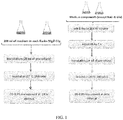
- the aim of the batch experiments was to investigate the feasibility of the cultivation of halophiles on defined medium in the bioreactor.
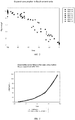
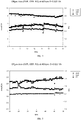
- the main markers of growth in the exponential growth phase for instance, the base consumption and the substrate uptake, can be observed ( Fig. 2 and Fig. 3).
- Fig. 2 shows the characteristics of the substrate uptake in different batch experiments.
- the exponential growth phase can be characterized by the base consumption, since the exponential curve, which can be fit to the base consumption curve, shows the maximum growth rate ( ⁇ max ) in the batch phase.
- the exponent of the fitted exponential curve gives estimation to the maximum growth rate ( ⁇ value, 0,043 1/h).
- agitation was switched from 400 rpm to 500 rpm and to 600 rpm in continuous operation mode.
- the effects of the agitation change were observed on the activity in the bioreactor.
- the medium components which were necessary for the microbial growth were added to the brine.
- the medium composition in Table 1 every inorganic component except NaCl was added.
- the substrate concentration was completed to 10g/L in the brine, as in the synthetic medium.
- the glycerol concentration in the feed for the continuous culture was independent from the synthetic:brine feeding ratio and could be considered as constant.
- the reason for the longer waiting times might be the longer adaptation times of the cells to the brine feed. For example, 5 days were spent with waiting for the steady-state after switching to 20% pre-treated brine, the O 2 signal was constantly increasing and the CO 2 signal was constantly decreasing.
- the decreasing turbidity of the bioreactor could be detected. Additionally, the color of the bioreactor was also constantly turning into less reddish.
Landscapes
- Life Sciences & Earth Sciences (AREA)
- Microbiology (AREA)
- Biodiversity & Conservation Biology (AREA)
- Hydrology & Water Resources (AREA)
- Engineering & Computer Science (AREA)
- Environmental & Geological Engineering (AREA)
- Water Supply & Treatment (AREA)
- Chemical & Material Sciences (AREA)
- Organic Chemistry (AREA)
- Micro-Organisms Or Cultivation Processes Thereof (AREA)
- Preparation Of Compounds By Using Micro-Organisms (AREA)
- Apparatus Associated With Microorganisms And Enzymes (AREA)
Claims (10)
- Méthode de réduction du carbone organique total dans une solution hypersaline, comportant les étapes suivantes :a) la fourniture d'une composition par le mélange de la solution hypersaline ou de différents constituants de la solution hypersaline avec au moins une suspension de microorganismes halophiles et/ou haloalcaliphiles en culture,b) la culture de la composition fournie dans l'étape a) dans des conditions définies dans lesquelles les microorganismes sont capables de métaboliser du propane-1,2,3-triol, des acétates, et/ou des oligomères et des dérivés de ceux-ci, comme partie de la teneur en carbone organique total, et par conséquent la réduction du carbone organique total,dans laquelle les conditions définies dans l'étape b) comprennent les paramètres suivants de procédé de fermentation :- un pH dans la plage allant de 6,8 à 9,5,- une température dans la plage allant de 36°C à 39°C,- une agitation dans la plage allant de 200 tours/min à 700 tours/min,- une entrée d'air dans la plage allant de 0,1 à 1,5 VVm,où les microorganismes dans la suspension de microorganismes sont choisis dans le groupe constitué par les souches halophiles et sont constitués par Haloferax mediterranei.
- Méthode selon la revendication 1, dans laquelle la solution hypersaline possède une salinité d'au moins ≥ 15%, préférablement ≥ 20%, plus préférablement ≥ 25%.
- Méthode selon la revendication 1 ou 2, dans laquelle la solution hypersaline est constituée d'eaux usées industrielles, préférablement de saumure.
- Méthode selon l'une quelconque des revendications précédentes, dans laquelle la solution hypersaline possède une teneur initiale en carbone organique total dans la plage allant de 400 ppm à 2500 ppm, préférablement de 600 ppm à 2500 ppm et une teneur restante en carbone organique total inférieure à 100 ppm, préférablement inférieure à 50 ppm, plus préférablement inférieure à 10 ppm.
- Méthode selon l'une quelconque des revendications précédentes, dans laquelle un milieu défini est ajouté à la composition fournie dans l'étape a).
- Méthode selon l'une quelconque des revendications précédentes, dans laquelle- le pH se trouve dans la plage allant de 6,8 à 8,0 pour la suspension de microorganismes halophiles, et/ou- la température est de 38°C, et/ou- l'agitation se trouve dans la plage allant de 300 tours/min à 600 tours/min, préférablement de 400 tours/min à 500 tours/min, et/ou- l'entrée d'air se trouve dans la plage allant de 0,15 à 1 VVm, préférablement de 0,2-0,5 VVm.
- Méthode selon l'une quelconque des revendications précédentes, dans laquelle la culture dans l'étape b) conduit à un taux de croissance des microorganismes qui va de 0,010 l/h à 0,045 l/h, préférablement de 0,020 à 0,035 l/h.
- Méthode selon l'une quelconque des revendications précédentes, où la méthode est mise en oeuvre sous forme de procédé de fermentation classique, de fermentation à écoulement discontinu ou de fermentation continue dans un bioréacteur non corrosif.
- Méthode selon l'une des revendications 5 à 8, dans laquelle le milieu défini est une composition de milieu pour microorganismes halophiles, à savoir Haloferax mediterranei, comprenant les composants suivants :a) glycérol : 1,5 à 10 g/lb) NH4Cl : 2 g/l,c) KH2PO4 : 0,06 à 0,3 g/ld) FeCl3 : 0,005 g/l,e) NaCl : 194 à 250 g/l,f) MgCl2·6H2O : 3,2 à 16 g/l,g) MgSO4 ·7H2O : 4,8 à 24 g/l,h) CaCl2·6H2O : 1 g/l,i) KCl : 5 g/l,j) NaHCO3 : 0,2 g/l,k) KBr : 0,5 g/l, etl) solution d'oligo-éléments (Fe, Cu, Mn, Zn) : 1 ml.
- Méthode selon la revendication 9, dans laquelle on fournit un mélange de la composition de milieu selon la revendication 9, au moins une suspension de microorganismes halophiles en culture, à savoir Haloferax mediterranei, et une saumure hypersaline, où la concentration de la saumure par rapport au mélange est ≤ 90%, préférablement ≤ 75%, plus préférablement ≤ 50%.
Priority Applications (1)
| Application Number | Priority Date | Filing Date | Title |
|---|---|---|---|
| EP13705985.3A EP2817263B1 (fr) | 2012-02-22 | 2013-02-21 | Procédé permettant de réduire le carbone organique total dans de l'eau hypersaline |
Applications Claiming Priority (3)
| Application Number | Priority Date | Filing Date | Title |
|---|---|---|---|
| EP12156586.5A EP2631219A1 (fr) | 2012-02-22 | 2012-02-22 | Procédé pour la réduction de carbone organique total dans l'eau hypersaline |
| PCT/EP2013/053487 WO2013124375A2 (fr) | 2012-02-22 | 2013-02-21 | Procédé permettant de réduire le carbone organique total dans de l'eau hypersaline |
| EP13705985.3A EP2817263B1 (fr) | 2012-02-22 | 2013-02-21 | Procédé permettant de réduire le carbone organique total dans de l'eau hypersaline |
Publications (2)
| Publication Number | Publication Date |
|---|---|
| EP2817263A2 EP2817263A2 (fr) | 2014-12-31 |
| EP2817263B1 true EP2817263B1 (fr) | 2019-04-03 |
Family
ID=47749819
Family Applications (2)
| Application Number | Title | Priority Date | Filing Date |
|---|---|---|---|
| EP12156586.5A Withdrawn EP2631219A1 (fr) | 2012-02-22 | 2012-02-22 | Procédé pour la réduction de carbone organique total dans l'eau hypersaline |
| EP13705985.3A Active EP2817263B1 (fr) | 2012-02-22 | 2013-02-21 | Procédé permettant de réduire le carbone organique total dans de l'eau hypersaline |
Family Applications Before (1)
| Application Number | Title | Priority Date | Filing Date |
|---|---|---|---|
| EP12156586.5A Withdrawn EP2631219A1 (fr) | 2012-02-22 | 2012-02-22 | Procédé pour la réduction de carbone organique total dans l'eau hypersaline |
Country Status (2)
| Country | Link |
|---|---|
| EP (2) | EP2631219A1 (fr) |
| WO (1) | WO2013124375A2 (fr) |
Families Citing this family (6)
| Publication number | Priority date | Publication date | Assignee | Title |
|---|---|---|---|---|
| JP2019528169A (ja) | 2016-08-25 | 2019-10-10 | コベストロ、ドイチュラント、アクチエンゲゼルシャフトCovestro Deutschland Ag | 耐塩性ハロモナス種(Halomonas sp.)による高塩分環境からのギ酸塩触媒反応 |
| EP3375862A1 (fr) | 2017-01-10 | 2018-09-19 | Covestro Deutschland AG | Biodégradation d'aniline d'environnements hypersalés utilisant des micro-organismes halophiles |
| EP3502063A1 (fr) * | 2017-12-19 | 2019-06-26 | Covestro Deutschland AG | Procédé continu pour réduire la quantité des substances organiques dans les eaux usées |
| EP3502065A1 (fr) | 2017-12-19 | 2019-06-26 | Covestro Deutschland AG | Biodégradation de polluants organiques par une archéobactérie halophile |
| CN111936430B (zh) * | 2018-03-09 | 2025-02-18 | 科思创知识产权两合公司 | 通过用极端嗜盐生物的生物预处理再循环富含碱金属硫酸盐的废水 |
| EP4063331A1 (fr) * | 2021-03-23 | 2022-09-28 | Covestro Deutschland AG | Biodégradation de contaminants organiques par des micro-organismes halophiles soumis à des limites nutritives |
Family Cites Families (2)
| Publication number | Priority date | Publication date | Assignee | Title |
|---|---|---|---|---|
| ES2019169A6 (es) * | 1989-10-13 | 1991-06-01 | Univ De Alicante Vicerrestorad | Procedimiento de fermentacion para la produccion de celulas bacterianas que acumulan polihidrosialcanoatos. |
| WO2010008268A1 (fr) * | 2008-07-15 | 2010-01-21 | Universiti Putra Malaysia | Procédé de traitement des eaux usées |
-
2012
- 2012-02-22 EP EP12156586.5A patent/EP2631219A1/fr not_active Withdrawn
-
2013
- 2013-02-21 WO PCT/EP2013/053487 patent/WO2013124375A2/fr not_active Ceased
- 2013-02-21 EP EP13705985.3A patent/EP2817263B1/fr active Active
Non-Patent Citations (1)
| Title |
|---|
| None * |
Also Published As
| Publication number | Publication date |
|---|---|
| WO2013124375A2 (fr) | 2013-08-29 |
| WO2013124375A3 (fr) | 2013-11-21 |
| EP2631219A1 (fr) | 2013-08-28 |
| EP2817263A2 (fr) | 2014-12-31 |
Similar Documents
| Publication | Publication Date | Title |
|---|---|---|
| EP2817263B1 (fr) | Procédé permettant de réduire le carbone organique total dans de l'eau hypersaline | |
| Corsino et al. | Simultaneous nitritation–denitritation for the treatment of high-strength nitrogen in hypersaline wastewater by aerobic granular sludge | |
| Hu et al. | Simultaneous nitrification and denitrification of hypersaline wastewater by a robust bacterium Halomonas salifodinae from a repeated-batch acclimation | |
| Blackburne et al. | Kinetic characterisation of an enriched Nitrospira culture with comparison to Nitrobacter | |
| Dan et al. | Comparative evaluation of yeast and bacterial treatment of high salinity wastewater based on biokinetic coefficients | |
| Bergaust et al. | Transcription and activities of NOx reductases in Agrobacterium tumefaciens: the influence of nitrate, nitrite and oxygen availability | |
| Qu et al. | Heterotrophic nitrification and aerobic denitrification by a novel groundwater origin cold-adapted bacterium at low temperatures | |
| Fang et al. | Bioaugmentation of biological contact oxidation reactor (BCOR) with phenol-degrading bacteria for coal gasification wastewater (CGW) treatment | |
| Marina et al. | Kinetic models for nitrogen inhibition in ANAMMOX and nitrification process on deammonification system at room temperature | |
| Timmers et al. | Growth and activity of ANME clades with different sulfate and sulfide concentrations in the presence of methane | |
| Zhang et al. | Effect of inorganic carbon on nitrogen removal and microbial communities of CANON process in a membrane bioreactor | |
| Epsztein et al. | High-rate hydrogenotrophic denitrification in a pressurized reactor | |
| Konopka | Microbial physiological state at low growth rate in natural and engineered ecosystems | |
| EP3502063A1 (fr) | Procédé continu pour réduire la quantité des substances organiques dans les eaux usées | |
| Xu et al. | Evaluation of high density algal cultivation for secondary wastewater polishing | |
| US20190218126A1 (en) | Formate catalysis from hypersaline environments by a halotolerant halomonas sp. | |
| LaPara et al. | Adaptations in bacterial catabolic enzyme activity and community structure in membrane-coupled bioreactors fed simple synthetic wastewater | |
| Phankhajon et al. | Algicidal activity of an actinomycete strain, Streptomyces rameus, against Microcystis aeruginosa | |
| Lapierre et al. | Feeding strategies for Sporosarcina pasteurii cultivation unlock more efficient production of ureolytic biomass for MICP | |
| Chen et al. | Short-term batch studies on biological removal of chromium from synthetic wastewater using activated sludge biomass | |
| Mainka et al. | Reducing organic load from industrial residual process brine with a novel halophilic mixed culture: Scale-up and long-term piloting of an integrated bioprocess | |
| EP4313884A1 (fr) | Biodégradation de contaminants organiques par micro-organismes halophiles sous limitation de nutriments | |
| Dong et al. | Identification of a phosphotriesterase-like lactonase in Klebsiella sp. and enhancement of its biofouling mitigation potential by γ-caprolactone | |
| Chapman et al. | Improved methods for the cultivation of the chemolithoautotrophic bacterium Nitrosomonas europaea | |
| JP2009072738A (ja) | βデンプン含有廃液の処理方法 |
Legal Events
| Date | Code | Title | Description |
|---|---|---|---|
| PUAI | Public reference made under article 153(3) epc to a published international application that has entered the european phase |
Free format text: ORIGINAL CODE: 0009012 |
|
| 17P | Request for examination filed |
Effective date: 20140919 |
|
| AK | Designated contracting states |
Kind code of ref document: A2 Designated state(s): AL AT BE BG CH CY CZ DE DK EE ES FI FR GB GR HR HU IE IS IT LI LT LU LV MC MK MT NL NO PL PT RO RS SE SI SK SM TR |
|
| AX | Request for extension of the european patent |
Extension state: BA ME |
|
| RIN1 | Information on inventor provided before grant (corrected) |
Inventor name: RITTMANN, SIMON Inventor name: HENSSEN, GERHARD Inventor name: HERWIG, CHRISTOPH Inventor name: LORANTFY, BETTINA Inventor name: JAZINI, MOHAMMADHADI Inventor name: POHL, WERNER |
|
| DAX | Request for extension of the european patent (deleted) | ||
| STAA | Information on the status of an ep patent application or granted ep patent |
Free format text: STATUS: EXAMINATION IS IN PROGRESS |
|
| RAP1 | Party data changed (applicant data changed or rights of an application transferred) |
Owner name: THYSSENKRUPP UHDE CHLORINE ENGINEERS GMBH |
|
| 17Q | First examination report despatched |
Effective date: 20180221 |
|
| GRAP | Despatch of communication of intention to grant a patent |
Free format text: ORIGINAL CODE: EPIDOSNIGR1 |
|
| STAA | Information on the status of an ep patent application or granted ep patent |
Free format text: STATUS: GRANT OF PATENT IS INTENDED |
|
| INTG | Intention to grant announced |
Effective date: 20181011 |
|
| GRAS | Grant fee paid |
Free format text: ORIGINAL CODE: EPIDOSNIGR3 |
|
| GRAA | (expected) grant |
Free format text: ORIGINAL CODE: 0009210 |
|
| STAA | Information on the status of an ep patent application or granted ep patent |
Free format text: STATUS: THE PATENT HAS BEEN GRANTED |
|
| AK | Designated contracting states |
Kind code of ref document: B1 Designated state(s): AL AT BE BG CH CY CZ DE DK EE ES FI FR GB GR HR HU IE IS IT LI LT LU LV MC MK MT NL NO PL PT RO RS SE SI SK SM TR |
|
| REG | Reference to a national code |
Ref country code: GB Ref legal event code: FG4D |
|
| REG | Reference to a national code |
Ref country code: CH Ref legal event code: EP Ref country code: AT Ref legal event code: REF Ref document number: 1115509 Country of ref document: AT Kind code of ref document: T Effective date: 20190415 |
|
| REG | Reference to a national code |
Ref country code: DE Ref legal event code: R096 Ref document number: 602013053245 Country of ref document: DE |
|
| REG | Reference to a national code |
Ref country code: IE Ref legal event code: FG4D |
|
| REG | Reference to a national code |
Ref country code: NL Ref legal event code: MP Effective date: 20190403 |
|
| REG | Reference to a national code |
Ref country code: LT Ref legal event code: MG4D |
|
| PG25 | Lapsed in a contracting state [announced via postgrant information from national office to epo] |
Ref country code: NL Free format text: LAPSE BECAUSE OF FAILURE TO SUBMIT A TRANSLATION OF THE DESCRIPTION OR TO PAY THE FEE WITHIN THE PRESCRIBED TIME-LIMIT Effective date: 20190403 |
|
| PG25 | Lapsed in a contracting state [announced via postgrant information from national office to epo] |
Ref country code: ES Free format text: LAPSE BECAUSE OF FAILURE TO SUBMIT A TRANSLATION OF THE DESCRIPTION OR TO PAY THE FEE WITHIN THE PRESCRIBED TIME-LIMIT Effective date: 20190403 Ref country code: AL Free format text: LAPSE BECAUSE OF FAILURE TO SUBMIT A TRANSLATION OF THE DESCRIPTION OR TO PAY THE FEE WITHIN THE PRESCRIBED TIME-LIMIT Effective date: 20190403 Ref country code: CZ Free format text: LAPSE BECAUSE OF FAILURE TO SUBMIT A TRANSLATION OF THE DESCRIPTION OR TO PAY THE FEE WITHIN THE PRESCRIBED TIME-LIMIT Effective date: 20190403 Ref country code: PT Free format text: LAPSE BECAUSE OF FAILURE TO SUBMIT A TRANSLATION OF THE DESCRIPTION OR TO PAY THE FEE WITHIN THE PRESCRIBED TIME-LIMIT Effective date: 20190803 Ref country code: SE Free format text: LAPSE BECAUSE OF FAILURE TO SUBMIT A TRANSLATION OF THE DESCRIPTION OR TO PAY THE FEE WITHIN THE PRESCRIBED TIME-LIMIT Effective date: 20190403 Ref country code: NO Free format text: LAPSE BECAUSE OF FAILURE TO SUBMIT A TRANSLATION OF THE DESCRIPTION OR TO PAY THE FEE WITHIN THE PRESCRIBED TIME-LIMIT Effective date: 20190703 Ref country code: HR Free format text: LAPSE BECAUSE OF FAILURE TO SUBMIT A TRANSLATION OF THE DESCRIPTION OR TO PAY THE FEE WITHIN THE PRESCRIBED TIME-LIMIT Effective date: 20190403 Ref country code: LT Free format text: LAPSE BECAUSE OF FAILURE TO SUBMIT A TRANSLATION OF THE DESCRIPTION OR TO PAY THE FEE WITHIN THE PRESCRIBED TIME-LIMIT Effective date: 20190403 Ref country code: FI Free format text: LAPSE BECAUSE OF FAILURE TO SUBMIT A TRANSLATION OF THE DESCRIPTION OR TO PAY THE FEE WITHIN THE PRESCRIBED TIME-LIMIT Effective date: 20190403 |
|
| PG25 | Lapsed in a contracting state [announced via postgrant information from national office to epo] |
Ref country code: LV Free format text: LAPSE BECAUSE OF FAILURE TO SUBMIT A TRANSLATION OF THE DESCRIPTION OR TO PAY THE FEE WITHIN THE PRESCRIBED TIME-LIMIT Effective date: 20190403 Ref country code: RS Free format text: LAPSE BECAUSE OF FAILURE TO SUBMIT A TRANSLATION OF THE DESCRIPTION OR TO PAY THE FEE WITHIN THE PRESCRIBED TIME-LIMIT Effective date: 20190403 Ref country code: BG Free format text: LAPSE BECAUSE OF FAILURE TO SUBMIT A TRANSLATION OF THE DESCRIPTION OR TO PAY THE FEE WITHIN THE PRESCRIBED TIME-LIMIT Effective date: 20190703 Ref country code: GR Free format text: LAPSE BECAUSE OF FAILURE TO SUBMIT A TRANSLATION OF THE DESCRIPTION OR TO PAY THE FEE WITHIN THE PRESCRIBED TIME-LIMIT Effective date: 20190704 Ref country code: PL Free format text: LAPSE BECAUSE OF FAILURE TO SUBMIT A TRANSLATION OF THE DESCRIPTION OR TO PAY THE FEE WITHIN THE PRESCRIBED TIME-LIMIT Effective date: 20190403 |
|
| PG25 | Lapsed in a contracting state [announced via postgrant information from national office to epo] |
Ref country code: IS Free format text: LAPSE BECAUSE OF FAILURE TO SUBMIT A TRANSLATION OF THE DESCRIPTION OR TO PAY THE FEE WITHIN THE PRESCRIBED TIME-LIMIT Effective date: 20190803 |
|
| REG | Reference to a national code |
Ref country code: DE Ref legal event code: R097 Ref document number: 602013053245 Country of ref document: DE |
|
| PG25 | Lapsed in a contracting state [announced via postgrant information from national office to epo] |
Ref country code: DK Free format text: LAPSE BECAUSE OF FAILURE TO SUBMIT A TRANSLATION OF THE DESCRIPTION OR TO PAY THE FEE WITHIN THE PRESCRIBED TIME-LIMIT Effective date: 20190403 Ref country code: SK Free format text: LAPSE BECAUSE OF FAILURE TO SUBMIT A TRANSLATION OF THE DESCRIPTION OR TO PAY THE FEE WITHIN THE PRESCRIBED TIME-LIMIT Effective date: 20190403 Ref country code: EE Free format text: LAPSE BECAUSE OF FAILURE TO SUBMIT A TRANSLATION OF THE DESCRIPTION OR TO PAY THE FEE WITHIN THE PRESCRIBED TIME-LIMIT Effective date: 20190403 Ref country code: RO Free format text: LAPSE BECAUSE OF FAILURE TO SUBMIT A TRANSLATION OF THE DESCRIPTION OR TO PAY THE FEE WITHIN THE PRESCRIBED TIME-LIMIT Effective date: 20190403 |
|
| PLBE | No opposition filed within time limit |
Free format text: ORIGINAL CODE: 0009261 |
|
| STAA | Information on the status of an ep patent application or granted ep patent |
Free format text: STATUS: NO OPPOSITION FILED WITHIN TIME LIMIT |
|
| PG25 | Lapsed in a contracting state [announced via postgrant information from national office to epo] |
Ref country code: SM Free format text: LAPSE BECAUSE OF FAILURE TO SUBMIT A TRANSLATION OF THE DESCRIPTION OR TO PAY THE FEE WITHIN THE PRESCRIBED TIME-LIMIT Effective date: 20190403 Ref country code: IT Free format text: LAPSE BECAUSE OF FAILURE TO SUBMIT A TRANSLATION OF THE DESCRIPTION OR TO PAY THE FEE WITHIN THE PRESCRIBED TIME-LIMIT Effective date: 20190403 |
|
| 26N | No opposition filed |
Effective date: 20200106 |
|
| PG25 | Lapsed in a contracting state [announced via postgrant information from national office to epo] |
Ref country code: TR Free format text: LAPSE BECAUSE OF FAILURE TO SUBMIT A TRANSLATION OF THE DESCRIPTION OR TO PAY THE FEE WITHIN THE PRESCRIBED TIME-LIMIT Effective date: 20190403 |
|
| PG25 | Lapsed in a contracting state [announced via postgrant information from national office to epo] |
Ref country code: SI Free format text: LAPSE BECAUSE OF FAILURE TO SUBMIT A TRANSLATION OF THE DESCRIPTION OR TO PAY THE FEE WITHIN THE PRESCRIBED TIME-LIMIT Effective date: 20190403 |
|
| REG | Reference to a national code |
Ref country code: CH Ref legal event code: PL |
|
| GBPC | Gb: european patent ceased through non-payment of renewal fee |
Effective date: 20200221 |
|
| REG | Reference to a national code |
Ref country code: BE Ref legal event code: MM Effective date: 20200229 |
|
| PG25 | Lapsed in a contracting state [announced via postgrant information from national office to epo] |
Ref country code: MC Free format text: LAPSE BECAUSE OF FAILURE TO SUBMIT A TRANSLATION OF THE DESCRIPTION OR TO PAY THE FEE WITHIN THE PRESCRIBED TIME-LIMIT Effective date: 20190403 Ref country code: LU Free format text: LAPSE BECAUSE OF NON-PAYMENT OF DUE FEES Effective date: 20200221 |
|
| PG25 | Lapsed in a contracting state [announced via postgrant information from national office to epo] |
Ref country code: LI Free format text: LAPSE BECAUSE OF NON-PAYMENT OF DUE FEES Effective date: 20200229 Ref country code: CH Free format text: LAPSE BECAUSE OF NON-PAYMENT OF DUE FEES Effective date: 20200229 |
|
| PG25 | Lapsed in a contracting state [announced via postgrant information from national office to epo] |
Ref country code: FR Free format text: LAPSE BECAUSE OF NON-PAYMENT OF DUE FEES Effective date: 20200229 Ref country code: IE Free format text: LAPSE BECAUSE OF NON-PAYMENT OF DUE FEES Effective date: 20200221 Ref country code: GB Free format text: LAPSE BECAUSE OF NON-PAYMENT OF DUE FEES Effective date: 20200221 |
|
| PG25 | Lapsed in a contracting state [announced via postgrant information from national office to epo] |
Ref country code: BE Free format text: LAPSE BECAUSE OF NON-PAYMENT OF DUE FEES Effective date: 20200229 |
|
| PGFP | Annual fee paid to national office [announced via postgrant information from national office to epo] |
Ref country code: DE Payment date: 20210217 Year of fee payment: 9 Ref country code: AT Payment date: 20210218 Year of fee payment: 9 |
|
| PG25 | Lapsed in a contracting state [announced via postgrant information from national office to epo] |
Ref country code: MT Free format text: LAPSE BECAUSE OF FAILURE TO SUBMIT A TRANSLATION OF THE DESCRIPTION OR TO PAY THE FEE WITHIN THE PRESCRIBED TIME-LIMIT Effective date: 20190403 Ref country code: CY Free format text: LAPSE BECAUSE OF FAILURE TO SUBMIT A TRANSLATION OF THE DESCRIPTION OR TO PAY THE FEE WITHIN THE PRESCRIBED TIME-LIMIT Effective date: 20190403 |
|
| PG25 | Lapsed in a contracting state [announced via postgrant information from national office to epo] |
Ref country code: MK Free format text: LAPSE BECAUSE OF FAILURE TO SUBMIT A TRANSLATION OF THE DESCRIPTION OR TO PAY THE FEE WITHIN THE PRESCRIBED TIME-LIMIT Effective date: 20190403 |
|
| REG | Reference to a national code |
Ref country code: DE Ref legal event code: R119 Ref document number: 602013053245 Country of ref document: DE |
|
| REG | Reference to a national code |
Ref country code: AT Ref legal event code: MM01 Ref document number: 1115509 Country of ref document: AT Kind code of ref document: T Effective date: 20220221 |
|
| PG25 | Lapsed in a contracting state [announced via postgrant information from national office to epo] |
Ref country code: AT Free format text: LAPSE BECAUSE OF NON-PAYMENT OF DUE FEES Effective date: 20220221 |
|
| PG25 | Lapsed in a contracting state [announced via postgrant information from national office to epo] |
Ref country code: DE Free format text: LAPSE BECAUSE OF NON-PAYMENT OF DUE FEES Effective date: 20220901 |
|
| REG | Reference to a national code |
Ref country code: AT Ref legal event code: UEP Ref document number: 1115509 Country of ref document: AT Kind code of ref document: T Effective date: 20190403 |