EP2819052A1 - Verfahren und Server zur Bearbeitung einer Zugriffsanfrage von einem Endgerät auf eine IT-Ressource - Google Patents
Verfahren und Server zur Bearbeitung einer Zugriffsanfrage von einem Endgerät auf eine IT-Ressource Download PDFInfo
- Publication number
- EP2819052A1 EP2819052A1 EP14173765.0A EP14173765A EP2819052A1 EP 2819052 A1 EP2819052 A1 EP 2819052A1 EP 14173765 A EP14173765 A EP 14173765A EP 2819052 A1 EP2819052 A1 EP 2819052A1
- Authority
- EP
- European Patent Office
- Prior art keywords
- server
- platform
- terminal
- authentication
- access
- Prior art date
- Legal status (The legal status is an assumption and is not a legal conclusion. Google has not performed a legal analysis and makes no representation as to the accuracy of the status listed.)
- Granted
Links
Images



Classifications
-
- H—ELECTRICITY
- H04—ELECTRIC COMMUNICATION TECHNIQUE
- H04L—TRANSMISSION OF DIGITAL INFORMATION, e.g. TELEGRAPHIC COMMUNICATION
- H04L63/00—Network architectures or network communication protocols for network security
- H04L63/08—Network architectures or network communication protocols for network security for authentication of entities
-
- G—PHYSICS
- G06—COMPUTING OR CALCULATING; COUNTING
- G06F—ELECTRIC DIGITAL DATA PROCESSING
- G06F21/00—Security arrangements for protecting computers, components thereof, programs or data against unauthorised activity
- G06F21/30—Authentication, i.e. establishing the identity or authorisation of security principals
- G06F21/31—User authentication
-
- G—PHYSICS
- G06—COMPUTING OR CALCULATING; COUNTING
- G06F—ELECTRIC DIGITAL DATA PROCESSING
- G06F21/00—Security arrangements for protecting computers, components thereof, programs or data against unauthorised activity
- G06F21/30—Authentication, i.e. establishing the identity or authorisation of security principals
- G06F21/31—User authentication
- G06F21/34—User authentication involving the use of external additional devices, e.g. dongles or smart cards
-
- G—PHYSICS
- G06—COMPUTING OR CALCULATING; COUNTING
- G06F—ELECTRIC DIGITAL DATA PROCESSING
- G06F21/00—Security arrangements for protecting computers, components thereof, programs or data against unauthorised activity
- G06F21/30—Authentication, i.e. establishing the identity or authorisation of security principals
- G06F21/31—User authentication
- G06F21/41—User authentication where a single sign-on provides access to a plurality of computers
-
- G—PHYSICS
- G06—COMPUTING OR CALCULATING; COUNTING
- G06F—ELECTRIC DIGITAL DATA PROCESSING
- G06F21/00—Security arrangements for protecting computers, components thereof, programs or data against unauthorised activity
- G06F21/30—Authentication, i.e. establishing the identity or authorisation of security principals
- G06F21/44—Program or device authentication
-
- G—PHYSICS
- G06—COMPUTING OR CALCULATING; COUNTING
- G06F—ELECTRIC DIGITAL DATA PROCESSING
- G06F21/00—Security arrangements for protecting computers, components thereof, programs or data against unauthorised activity
- G06F21/60—Protecting data
- G06F21/604—Tools and structures for managing or administering access control systems
-
- G—PHYSICS
- G06—COMPUTING OR CALCULATING; COUNTING
- G06F—ELECTRIC DIGITAL DATA PROCESSING
- G06F21/00—Security arrangements for protecting computers, components thereof, programs or data against unauthorised activity
- G06F21/60—Protecting data
- G06F21/62—Protecting access to data via a platform, e.g. using keys or access control rules
- G06F21/6218—Protecting access to data via a platform, e.g. using keys or access control rules to a system of files or objects, e.g. local or distributed file system or database
-
- H—ELECTRICITY
- H04—ELECTRIC COMMUNICATION TECHNIQUE
- H04L—TRANSMISSION OF DIGITAL INFORMATION, e.g. TELEGRAPHIC COMMUNICATION
- H04L63/00—Network architectures or network communication protocols for network security
- H04L63/08—Network architectures or network communication protocols for network security for authentication of entities
- H04L63/0815—Network architectures or network communication protocols for network security for authentication of entities providing single-sign-on or federations
-
- H—ELECTRICITY
- H04—ELECTRIC COMMUNICATION TECHNIQUE
- H04L—TRANSMISSION OF DIGITAL INFORMATION, e.g. TELEGRAPHIC COMMUNICATION
- H04L63/00—Network architectures or network communication protocols for network security
- H04L63/08—Network architectures or network communication protocols for network security for authentication of entities
- H04L63/083—Network architectures or network communication protocols for network security for authentication of entities using passwords
-
- H—ELECTRICITY
- H04—ELECTRIC COMMUNICATION TECHNIQUE
- H04L—TRANSMISSION OF DIGITAL INFORMATION, e.g. TELEGRAPHIC COMMUNICATION
- H04L9/00—Cryptographic mechanisms or cryptographic arrangements for secret or secure communications; Network security protocols
- H04L9/32—Cryptographic mechanisms or cryptographic arrangements for secret or secure communications; Network security protocols including means for verifying the identity or authority of a user of the system or for message authentication, e.g. authorization, entity authentication, data integrity or data verification, non-repudiation, key authentication or verification of credentials
- H04L9/3226—Cryptographic mechanisms or cryptographic arrangements for secret or secure communications; Network security protocols including means for verifying the identity or authority of a user of the system or for message authentication, e.g. authorization, entity authentication, data integrity or data verification, non-repudiation, key authentication or verification of credentials using a predetermined code, e.g. password, passphrase or PIN
-
- H—ELECTRICITY
- H04—ELECTRIC COMMUNICATION TECHNIQUE
- H04L—TRANSMISSION OF DIGITAL INFORMATION, e.g. TELEGRAPHIC COMMUNICATION
- H04L2209/00—Additional information or applications relating to cryptographic mechanisms or cryptographic arrangements for secret or secure communication H04L9/00
- H04L2209/24—Key scheduling, i.e. generating round keys or sub-keys for block encryption
Definitions
- the invention relates to the general field of telecommunications, including so-called “cloud computing” systems, also known as “cloud computing” systems.
- It relates more particularly to a user's access to an entity such as a company, to computing resources made available to this entity by a cloud computing system.
- cloud computing is a model that allows users to access, via a network, on demand and self-service, to IT resources such as storage space, computing power, applications, network resources, software or services, which are virtualized (ie made virtual) and shared.
- the computer resources are no longer on a local server of an entity or on a user's computer, but are, in accordance with the cloud computing concept, dematerialized in a cloud composed of several remote servers interconnected with one another, and accessed by users via for example a network application.
- This allows users to access these resources in a scalable manner without having to manage the underlying infrastructure for managing these resources, which is often complex.
- Such an identity management and access control mechanism if it makes it possible to secure access to resources made available by the cloud computing system and to guarantee a separation of resources intended for different client entities, is lacking. however flexibility. Indeed, only one predefined access control model is adopted for all customer accounts. This unique model may not be suitable for all client entities.
- the invention thus proposes a secure mechanism for controlling access to computing resources made available to a client entity by a cloud computing system based on a functional device distinct from the platform of the cloud computing service provider, to know about a server placed upstream of this platform.
- the server is intended to control a user's access to an account of a client entity registered with a platform of a cloud computing service provider and through which computer resources are offered to the client entity by this platform. .
- the user seeking access via a terminal to a computer resource reserved for the client entity is authenticated by an authentication and authorization module of the server dedicated thereto.
- This authentication is based on the use of parameter (s) for authentication of the user with the server, which has or has been defined beforehand between the user (or more precisely his terminal) and the server, and / or where appropriate, exchanged between them .
- authentication parameters of any entity A to any entity B is understood to mean elements that make it possible to generate and / or process (manipulate) authentication data of the user.
- entity A to entity B that is to say data that will be used by the entity A to prove its identity to the entity B and thus be authenticated by the entity B.
- authentication means may designate a secret encryption key shared between (ie owned by) entity A and entity B, or a public and private key pair owned respectively by entity B and entity A and which will make it possible to generate and process authentication data such as, for example, a digital signature, a certificate or a security token or token enabling entity B to verify the identity of entity A.
- the server also performs a check to ensure that the authenticated user is authorized to access the required resource.
- it uses an access control model and an access control policy associated with this model obtained by the server for the client entity, ie personalized and defined for this client entity specifically.
- the access control model is derived from a metadata file describing elements defining this model (eg role, action, subject, view) and a structure of these elements (eg expected format and / or attribute (s)).
- the model and the access control policy are therefore easily configurable (in the example considered above by providing a separate metadata file for each model envisaged), and can be dynamically modified by the client entity so as to allow an access control adapted to its needs at a given moment and to the access policy that it wishes to implement for its resources and its users.
- the authentication and authorization module may include an updating unit able to detect a change of the model and / or the access control policy in a new model and / or or a new access control policy, and obtain this new template and / or access control policy for use in the verification step.
- the server applies an updated model and / or access control policy that is relevant to the client entity during the access control it performs.
- the mechanism and the server according to the invention make it possible to take into account easily and in real time modifications or updates of its access policy decided by the client entity.
- the invention provides a separate authentication and authorization module for each client entity of the cloud computing service provider, which of course makes it possible to distinguish between identity management and access control. for these different entities.
- Each authentication and authorization module can be a software module (eg an instance of a software application or a "bundle" in English) or physical, isolated from other authentication and authorization modules run by the server. This mechanism thus offers the possibility of easily applying various access control models (and access policies) to different client entities at the server level while protecting access to the resources intended for these entities. This results in great flexibility compared to the prior art.
- the invention offers great modularity: it is indeed possible to easily add an authentication and authorization module at the server when a new client entity is served by the service provider, and vice versa. delete such a module without impacting the access control implemented for the other client entities. Similarly, it is possible to define new users for a client entity and / or remove them at the server level, transparently for the service provider platform.
- the server transfers the access request to the platform of the service provider: this request is advantageously modified before being transferred using authentication parameter (s) of the client entity with the platform so as to enable the authentication of the client entity to which the user is attached by the service provider platform.
- the invention thus offers the possibility of easily interfacing the processing method and the server with the existing cloud computing service solutions described above, which have their own authentication and authorization module.
- the service provider platform no longer needs to manage user accounts attached to an account of a client entity, nor the rights attached to these user accounts: it can simply manage only the account of this client entity .
- Authentication data and user accounts are managed centrally by the server.
- the verification step further comprises obtaining information relating to the availability of the computer resource from the platform.
- the authentication and verification module associated with the client entity can also take into account the current availability of the resource (ie when the request is received) at the level of the client. platform, and adapt according to this availability, its decision to allow or not access to this resource by the terminal.
- the request derived from the access request of the terminal further comprises information representative of the success of the user authentication and verification steps.
- This information allows the service provider's platform to ensure that user authentication has been completed upstream.
- the decryption of the first authentication data makes it possible to authenticate the user: in fact, a decryption of this first authentication data is only possible if the user has used to generate a key corresponding to the key held. by the server and associated with this user (eg private key associated with the public key or secret key shared with the server).
- This variant has a preferred application when the server has knowledge of the parameters and / or the authentication data of the client entity with the platform of the cloud computing service provider.
- the server can then integrate in the request derived from the access request of the terminal authentication data that allows the platform of the service provider to ensure that the access request comes from a terminal with the parameters. authentication of the client entity (and therefore a priori authorized and / or recognized by the client entity), and if necessary, authenticate this terminal.
- the second authentication data may be integrated (or included) in the third authentication data.
- the third authentication data may be an encrypted (possibly condensed) version of the second authentication data using the third encryption key held by the server.
- the third authentication data item can be generated using the third encryption key from the said at least part of the access request and / or the identifier used to generate the second signature.
- This second variant has a preferred application when, on the other hand, the server does not have knowledge of the parameters and / or authentication data of the client entity with the platform of the cloud computing service provider, for example in a Ensuring the confidentiality and security of the client's client account settings with the cloud service provider. Thanks to the second and third encryption keys, the server can indeed continue to reliably authenticate the terminal user without accessing the authentication parameters of the client entity with the provider's platform. while ensuring that the request that is transferred to the service provider's platform contains the entity's authentication data client to secure access to the resources made available to the client entity by the platform. This avoids, when the server belongs to a third party (ie distinct from the client entity and the cloud computing service provider), an attack of this server in order to obtain the parameters (and / or the authentication data ) of the client entity's account with the cloud service provider.
- a third party ie distinct from the client entity and the cloud computing service provider
- the authentication data (first, second and / or third) are digital signatures.
- This type of authentication data advantageously offers the possibility to the server and / or the platform to check the integrity of the requests reaching them.
- the second embodiment described above relies not only on the server and the processing method implemented by it but also on the platform of the cloud service provider that is able to process the request transferred by the server. and which contains the second and the third signatures.
- the delivery method further comprises, prior to the provisioning step, a verification step that the client entity is authorized to access the computer resource required by the terminal.
- the different steps of the processing method and / or the supply method are determined by computer program instructions.
- the invention also relates to a computer program on an information medium, this program being capable of being implemented in a server or more generally in a computer, this program comprising instructions adapted to the implementation of steps of a method of treatment as described above.
- the invention also relates to a computer program on an information carrier, this program being capable of being implemented in a platform of a cloud service provider or more generally in a computer, this program comprising instructions adapted to the implementation of the steps of a supply method as described above.
- These programs can use any programming language, and be in the form of source codes, object codes, or intermediate codes between source codes and object codes, such as in a partially compiled form, or in any other desirable shape.
- the invention also relates to a computer-readable information medium, comprising instructions of a computer program as mentioned above.
- the information carrier may be any entity or device capable of storing the program.
- the medium may comprise storage means, such as a ROM, for example a CD ROM or a microelectronic circuit ROM, or a magnetic recording medium, for example a floppy disk or a disk. hard.
- the information medium may be a transmissible medium such as an electrical or optical signal, which may be conveyed via an electrical or optical cable, by radio or by other means.
- the program according to the invention can be downloaded in particular on an Internet type network.
- the information carrier may be an integrated circuit in which the program is incorporated, the circuit being adapted to execute or to be used in the execution of the method in question.
- this server and this platform are in accordance with the second variant described above.
- processing method the delivery method, the server, the platform of the cloud computing service provider, and the system according to the invention present in combination all or part of aforementioned characteristics.
- the figure 1 represents, in its environment, a system 1 according to the invention in a first embodiment in which the system 1 makes it possible to control access by a user U attached to a so-called client entity E, to a computing resource R1 via a terminal 2.
- the resource R1 is a resource selected from a set of computer resources RE made available to the client entity E by a platform 3 of a cloud computing service provider.
- the set of resources RE includes for example a storage space, computing power, applications, network resources, software or services, virtualized and shared.
- the client entity E is for example here an enterprise to which is attached a plurality of users, including the user U.
- the client entity E has, to access the computer resources RE, a client account registered with the platform 3.
- This client account is protected by one or more authentication parameters (second authentication parameters within the meaning of the invention) allowing the platform 3 to identify the entity E.
- authentication parameters of any entity A with any entity B are elements that make it possible to generate and / or process (manipulate) authentication data of the entity A to entity B, ie data that will be used by entity A to prove its identity to entity B and thus be authenticated by entity B.
- these authentication parameters comprise a pair of encryption keys comprising a public key PK-E and a private key SK-E, associated with an identifier of the entity E (such as for example a name or a customer account number or an e-mail address, etc.) marked E-ID.
- This key pair is defined here by the platform 3 when registering the entity E.
- the private key SK-E is provided by the platform 3 to the entity E, and is intended to be kept secret by that entity. or at least to be disclosed in a restricted way (for example to entities or people of confidence) to avoid a usurpation of his client account with platform 3.
- PK-E public key is kept here in memory by the platform 3 in association with the identifier ID-E in the customer account of the entity E.
- the private key pair SK-E and public PK-E is generated by a trusted entity known per se, the private key SK-E being provided by this trusted entity to the entity E, while the key PK-E is brought to the attention of Platform 3.
- the system 1 comprises the platform 3 as well as a server 4 according to the invention, located between the terminal 2 and the platform 3, and more specifically, in a flow-off of the requests of access to the resources of the RE set set to the disposition of the entity E by the platform 3, sent by the user U via his terminal 2.
- the server 4 can be indifferently located at the client entity E, at the provider of the cloud computing service (in a functional entity or hardware separate from platform 3) or from a third party, separate from the client entity E and the cloud computing service provider.
- this server 4 realizes a control of the access to the resources of the set RE by the users of the client entity E, and therefore notably by the user U. For this purpose, it maintains a plurality of accounts attached to these users and associated with the client entity E, each user account comprising an identifier of the user and authentication parameters of this user with the server 4 (first authentication parameters within the meaning of the invention).
- these authentication parameters comprise a private / public key pair defined by the server 4 during the registration of each user.
- the private key has been provided by the server 4 to the user in a secure manner, for example via his terminal, and is intended to be kept secret by the latter.
- the server 4 has a registered account for the user U of the client entity E, in which are stored a user U ID-U and a PK-U public key associated with a private key SK- U owned by user U on his terminal 2.
- the server 4 has also, stored in memory, the ID-E identifier of the entity E and the private key SK-E assigned to the entity E by the platform 3 These parameters were provided here by the entity E when it was subscribed, for example to the access control service offered by the server 4.
- the server 4 here has the hardware architecture of a computer, as represented in FIG. figure 2 . It comprises in particular a processor 4A, a read-only memory 4B, a random access memory 4C, a non-volatile memory 4D, in which are stored in particular the accounts of the users attached to the client entity E (and therefore the account of the user U comprising the identifier ID-U and the public key PK-U), the identifier ID-E and the private key SK-E of the entity E, as well as communication means 4E with in particular the platform 3 and the terminal 2
- These communication means 4E include for example a network card, known per se and not detailed here, or any other means of communication on a telecommunications network.
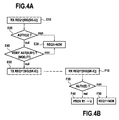
- the read-only memory 4B of the server constitutes a recording medium in accordance with the invention, readable by the processor 4A and on which is recorded a computer program according to the invention, comprising instructions for performing the steps of a processing method according to the invention, described later with reference to the Figure 4A in the first embodiment.
- units 7, 8, 10, 11, and 9 have roles that are similar to the roles of the Policy Enforcement Point (PEP), Policy Decision Point (PDP), and Policy Information Point (PIP) roles, respectively.
- PEP Policy Enforcement Point
- PDP Policy Decision Point
- PIP Policy Information Point
- PAP The Policy Administration Point
- Policy Repository Policy Repository
- XACML Extensible Access Control Markup Language
- platform 3 provides a cloud computing service to a number of different client entities (for example, it provides the client entity E with the resource set RE, and another client entity E 'a set of resources RE' distinct from the set RE)
- the server 4 can integrate several authentication and validation modules having a structure and a mode of operation identical to those of the authentication module and authorization 5, and which are each dedicated to a separate client entity (in the example envisaged above, an authentication and authorization module dedicated to the client entity E making it possible to control access to the resources of RE and an authentication and authorization module dedicated to the client entity E 'making it possible to control access to the resources of R-E').
- These modules are preferably isolated functionally or physically from each other in order to separate the access control management from the different entities.
- these are separate software modules (also called instances) isolated from each other on separate virtual machines, or separate hardware modules hosted by different physical servers.
- simplification we are limited to a client entity, namely the client entity E.
- cloud computing service provider platform 3 also has the hardware architecture of a computer, as shown in FIG. figure 3 .
- it comprises a processor 3A, a read-only memory 3B, a random access memory 3C, a non-volatile memory 3D (in which the account of the client entity E is stored, and in particular the identifier ID-E and the public encryption key PK-E), as well as 3E communication means including the server 4.
- These communication means 3E include for example a network card, known per se and not detailed here, or any other means of communication on a telecommunications network.
- the ROM 3B of the platform is a recording medium, readable by the processor 3A and on which is recorded a computer program comprising instructions for performing the steps of a method of providing access to a computer. resource made available to entity E described now with reference to the Figure 4B in the first embodiment.
- This access request REQ1 comprises the identifier ID-U of the user U, a request body in which in particular is identified the resource R1 , as well as according to the first embodiment, a first authentication data of the user U with the server 4 generated using the private encryption key SK-U of the user U.
- this first authentication datum is here a digital signature SIG (SK-U) generated by applying to the request body (or to a determined part of this body) and to the identifier ID-U, a hash function HASH known per se (eg MD5 or SHA function).
- the digest (or thumbprint) resulting from this operation is then encrypted using an asymmetric encryption algorithm, with the private encryption key SK-U, to give the digital signature SIG (SK-U). No limitation is attached to the encryption algorithm used.
- the access request REQ1 is received by the server 4 via its communication means 4E, and transmitted to the authentication unit 6 of the authentication and authorization module 5 of the server 4 associated with the entity E (step E10).
- the authentication unit 6 performs the authentication of the user U using the user authentication parameters U stored in the non-volatile memory 4D (step E20).
- the PK-U public encryption key uses the PK-U public encryption key to decrypt the digital signature SIG (SK-U) contained in the access request REQ1 (with a decryption algorithm corresponding to the encryption algorithm used by the terminal 2 to generate the signature SIG (SK-U)).
- decryption is possible only if the PK-U public key corresponds to the private key used by the terminal 2 to generate the signature included in the request. This decryption, if executed successfully, thus makes it possible to authenticate the user U.
- the authentication unit 6 also evaluates here a digital fingerprint by applying to the body of the request REQ1 and to the identifier ID-U the hash function HACH. He compares this digital fingerprint with the result of decryption. An identity of these two elements ensures the integrity of the access request REQ1 received by the server 4.
- the access request REQ1 is rejected by the authentication unit 6 and the terminal 2 is informed (step E30).
- the access request is transferred by the authentication unit 6 to the processing unit 7 of the authentication and authorization module 5 of the server 4 to verify that the user U is authorized to access the server. resource R1.
- the processing unit 7 Upon receipt of the request REQ1, the processing unit 7 queries the verification unit 8 of the authentication and authorization module 5 to check the access rights of the user U (step E40).
- the verification unit 8 identifies the access control model MOD and the access control policy ⁇ (eg, this subject has the permission or not to perform such action on such object) defined by the entity E for its access policy to its resources.
- the access control model MOD is derived (i.e obtained) from a metadata file describing the different elements defining this model as well as their structure. This metadata file was provided beforehand to the server 4 by the entity E via the administration unit 11, or built by this administration unit 11 from information provided by the entity E. It is stored here in the non-volatile memory 4D of the server 4.
- An example of a metadata file describing an Extensible Markup Language (XML) access control model is given in Appendix 1.
- This file has three parts. The first part (1) specifies the model name. The second part (2) specifies the elements of the model (ie the different entities defined in this model), and if necessary their respective attributes. The third part (3) specifies the format of the access control policies corresponding to this model.
- Appendix 2 illustrates an example of such a META-RBAC metadata file edited for the known access control model RBAC.
- the "Subject" element is associated with the attribute "Role”, each subject being associated with a role in the RBAC model (eg a possible role for a subject (ie a user or a service) within a company is "Admin", “Manager”, “Employee”, etc.).
- the third part (3) specifies the form that the processing rules defined by the access control policies applied in the context of this model must take. In this case, these rules must specify for a subject, an action, an object (eg resource R1), and a role associated with the subject, the access rights granted ("permission").
- MOD access control model applied by the verification unit 8 is an RBAC access control model derived from the META-RBAC metadata file schematically illustrated in Appendix 2.
- the metadata file describing the MOD access control model to be applied by the verification unit 8 may have to evolve over time, especially if the entity E decides to make changes in its access policy.
- the entity E may decide to replace the RBAC model described in the META-RBAC file with an OrBAC model, as described in the document A. Abu El Kalam et al. entitled “Organization Based Access Control,” 4th IEEE International Workshop on Policies for Distributed Systems and Networks, 2003 .
- a new metadata file designated by META-OrBAC on the figure 1 and represented in broken lines, is provided to the server 4.
- the authentication and authorization module 5 comprises means for detecting such a change in the access control model (by detecting the presence the new META-OrBAC metadata file), and report to the verification unit 8 the change of this model. It recovers (ie gets) then the META-OrBAC file describing the new model to take into account, and applies this new model during its subsequent verifications.
- the invention thus offers not only the possibility of defining a personalized model for each entity E, but also of dynamically and easily changing the access control model over time.
- the access control policy ⁇ is obtained by the verification unit 8 by consulting the directory 9 of the access control policies: it extracts from this directory the access control policy associated with the model defined in the file of access control. META-RBAC metadata. It is assumed that this directory was previously provisioned by the entity E via the administration unit 11.
- the verification unit 8 also consults the management unit 10 in order to obtain information relating to the resource required by the terminal 2, that is to say with the resource R1.
- the management unit 10 interrogates the synchronization unit 12 with the platform 3 of the authentication and authorization module 5 in order to know the current availability of the resource R1, and communicates this information back to the management unit 10 which reports to the verification unit 8.
- the verification unit 8 then applies the access control model MOD and the access policy ⁇ thus obtained to the request REQ1 of the user U (in other words to the user U and to the resource R1 required) in taking into account availability information of the resource R1 communicated by the synchronization unit 12, and determines whether the user U is authorized to access the resource R1 (step E40). It informs the processing unit 7 of the result of this determination.
- the verification unit 8 determines that the user U is not authorized to access the resource R1 If the verification unit 8 determines that the user U is not authorized to access the resource R1, the access request REQ1 is rejected by the processing unit 7 of the authentication and authorization module 5 server 4, and the user U is informed via its terminal 2 (step E30). The access request REQ1 is not transferred to the platform 3 and the user U does not have access via his terminal 2 to the resource R1.
- the processing unit 7 transmits to the platform 3 of the cloud service provider, via the communication means 4E of the server 4, an access request REQ1 'derived from the access request REQ1 (step E50).
- the processing unit 7 builds the request REQ1 'from the request REQ1 in which it replaces the identifier ID-U of the user U with the identifier ID-E of the entity E (the user U not necessarily known from platform 3), and the signature SIG (SK-U) by a second authentication datum of entity E with platform 3 generated using the encryption key SK-E owned by the server 4.
- this second authentication data is a digital signature SIG (SK-E) generated by applying to the body of the request REQ1 (or to a determined part of this request body) and to the identifier ID-E a hash function HASH '(the function HASH' can be identical or distinct from the function HASH).
- the digest resulting from this operation is then encrypted using an asymmetric encryption algorithm, with the encryption private key SK-E, to give the digital signature SIG (SK-E). No limitation is attached to the encryption algorithm used.
- the request REQ1 'derived from the request REQ1 therefore contains the body of the request REQ1, the identifier ID-E and the signature SIG (SK-E).
- the server 4 using to generate the request REQ1 'the authentication parameters of the entity E with the platform 3, hides the specific information of the user U to the platform 3.
- the platform 3 has no so no need to manage user accounts for entity E.
- the server 4 also includes in the request REQ1 'information representative of the success of the authentication steps of the user and checking the authorization of the user U to access the resource R1.
- This information can optionally be encrypted using the private encryption key SK-E.
- the platform 3 via its validation module, proceeds to the authentication of the entity E, using the authentication parameters of the entity E stored in the nonvolatile memory 3D (step F20).
- the public encryption key PK-E uses the public encryption key PK-E to decrypt the digital signature SIG (SK-E) contained in the access request REQ1 '(and a decryption algorithm corresponding to the encryption algorithm used by the server 4 to generate SIG (SK-E)).
- decryption is possible only if the public key PK-E corresponds to the private key used by the server 4 to generate the signature included in the request. This decryption, if successfully executed, thus makes it possible to authenticate the entity E.
- the validation module of the platform 3 also evaluates here a digital footprint by applying to the body of the request REQ1 included in the request REQ1 'and to the identifier ID-E the hash function HACH'. It compares this digital fingerprint with the result of decryption of the SIG (SK-E) signature. An identity of the two elements makes it possible to ensure the integrity of the access request REQ1 'received by the platform 3.
- the platform 3 can also verify that the resource R1 required is a resource for the entity E, in a manner known per se.
- the access request REQ1 ' is rejected by the validation module of the platform 3 and the server 4 is informed (step F30).
- the server 4 informs the user U of this failure via its terminal 2.
- the platform 3 informs the server 4 of the success of the authentication of the entity E and provides the required access to the resource R1 at the terminal 2 (step F40).
- the server 4 holds the authentication parameters of the entity E with the platform 3.
- the server 4 which acts as an intermediary between the terminal 2 and the platform 3 can be at either the E (or the U) user, the cloud service provider, or a third party entity separate from the E entity and the cloud computing service provider.
- the entity E may be reluctant to disclose its parameters and / or its authentication data to the platform 3 to the server 4.
- the invention advantageously allows, in a second embodiment described now, to handle such a constraint.
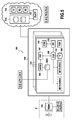
- the figure 5 illustrates a system 101 according to the invention according to this second embodiment.
- the elements of the system 101 that are similar or identical in their function (s) to the System elements 1 are designated by the same references + 100 (eg terminal 2 -> terminal 102, platform 3 -> platform 103, etc.) and are not described again in detail.
- FIGS. 6A and 6B illustrate the main steps of the processing method and the delivery method as implemented by the server 104 and the platform 103 respectively in the second embodiment.
- This access request REQ101 includes the identifier ID-U of the user U and a body of request in which in particular is identified the resource R1.
- the access request REQ101 is received by the server 104 via its communication means 104E, and transmitted to the authentication unit 106 of the authentication and authorization module 105 of the server 104 associated with the entity E (step E110).
- the authentication unit 106 performs the authentication of the user U using the user authentication parameters U stored in the non-volatile memory 104D (first authentication data within the meaning of the invention ) (step E120).
- PK-U public encryption key to decrypt the digital signature SIG (SK-U) contained in the access request REQ101.
- decryption is possible only if the PK-U public key corresponds to the private key used by the terminal 102 to generate the signature included in the request. This decryption, if executed successfully, thus makes it possible to authenticate the user U.
- the authentication unit 106 also evaluates a digital fingerprint here by applying to the body of the request REQ101 and to the identifier ID-U the hash function HACH. He compares this digital fingerprint with the result of decryption. An identity of these two elements ensures the integrity of the access request REQ101 received by the server 104.
- the access request REQ101 is rejected by the authentication unit 106 and the terminal 102 is informed (step E130).
- the access request is transferred by the authentication unit 106 to the processing unit 107 of the authentication and authorization module 105 of the server 104 to verify that the user U is authorized to access the server. resource R1 (step E140).
- This verification is carried out in the second embodiment by the processing units 107, verification 108, management 110, administration 111 and synchronization 112 identically to the verification carried out by the processing units 7, verification 8 , management 10, administration 11 and synchronization 12 in the first embodiment.
- the access request REQ101 is rejected by the processing unit 107 of the authentication and authorization module 105 of the server 104, and the user U is informed via his terminal 102 (step E130).
- the access request REQ101 is not transferred to the platform 103 and the user U does not have access via his terminal 102 to the resource R1.
- the processing unit 107 transmits to the platform 103 of the cloud computing service provider, via the communication means 104E of the server 104, an access request REQ101 'derived from the access request REQ101 (step E150).
- the processing unit 107 constructs the request REQ101 'from the request REQ101 in which it replaces the identifier ID-U of the user U with the identifier ID- E of the entity E (the user U is not necessarily known from the platform 103), and the signatures SIG (SK-U) and SIG (SK-E) by a third piece of authentication data SIG (SK- S) in which is included the digital signature SIG (SK-E).
- This third authentication data SIG (SK-S) is generated here by encrypting the digital signature SIG (SK-E) using the encryption private key SK-S and a third asymmetric encryption algorithm (separate or identical to that used by the terminal 102 to generate the signatures SIG (SK-U) and SIG (SK-E)).
- the request REQ101 'thus contains the body of the request 101 and the signature SIG (SK-S) generated from the signature SIG (SK-E). It thus includes for the purposes of the invention the two signatures SIG (SK-S) and SIG (SK-E).
- the server 104 also includes in the REQ101 'request information representative of the success of the authentication steps of the user and verification of the authorization of the user U to access the resource R1.
- This information can optionally be encrypted using the private encryption key SK-S.
- the platform 103 via its validation module, proceeds to the authentication of the entity E, using the authentication parameters of the entity E stored in the non-volatile memory 103D (step F120).
- the validation module of the platform 3 also evaluates here a digital fingerprint by applying to the body of the request REQ101 'and to the identifier ID-E the hash function HACH'. He compares this digital fingerprint with the result of decryption. An identity of these two elements ensures the integrity of the access request REQ101 'received by the platform 103.
- the platform 103 can also verify that the resource R1 required is a resource for the entity E, in a manner known per se.
- the access request REQ101 ' is rejected by the validation module of the platform 103 and the server 104 is informed (step F130).
- the server 104 in turn informs the user U of this failure via his terminal 102.
- the platform 103 informs the server 104 of the success of the authentication of the entity E and provides the required access to the resource R1 to the terminal 102 (step F140).
- This second embodiment therefore allows the server 104 to control the access to the resources made available to the entity E by the platform 103 of the cloud service provider without knowing the authentication parameters of the entity. E at the platform. This limits the damage for the entity E in the event of an attack on the integrity of the server 104. By holding only the private key SK-S of the server 104, a malicious entity can not access the resources made available by the server. entity E by the platform 103.
- the request REQ101 'transmitted to the platform 103 contains a third authentication data SIG (SK-S) generated by encrypting the signature SIG (SK-E), so that the signature SIG ( SK-E) is integrated during its transmission in the request 101 'in the authentication data SIG (SK-S).
- SK-S third authentication data SIG
- the third authentication data GIS may be a digital signature of the signature SIG (SK-E) generated using the private encryption key SK-S. of the server 104, a hash function HASH "and an asymmetric encryption algorithm, the request REQ101 'derived from the access request REQ101 can then comprise the two signatures SIG (SK-S) and SIG (SK- E) to allow the platform 103 not only to authenticate the entity E but also to verify the integrity of the request REQ101 'after decrypting the signature SIG (SK-S).
- the third authentication data SIG may be a digital signature generated from the identifier ID-E and the body of the request REQ101 used by the terminal. 102 to generate the signature SIG (SK-E) (or the same part of the body of the request as that used by the terminal 102).
- the request REQ101 'derived from the access request REQ101 can then include the two signatures SIG (SK-S) and SIG (SK-E) to enable the platform 103 not only to authenticate the entity E but also to check the integrity of the request REQ101 'after decryption of the signatures SIG (SK-S) and SIG (SK-E) and comparison of the results of these decryptions.
- the authentication data used in the invention can indifferently result from an encryption of specific elements or digital signatures of such elements, depending on whether the we want to control the integrity of the requests carrying this authentication data.
- a protection mechanism such as that implemented in this second embodiment is not limited to an access control server such as server 104 and to a provider platform cloud computing service such as platform 103.
- This mechanism can be applied to any type of entity A seeking to access directly or via an entity A 'to a service or resource offered by entity B, via an entity C with which the entity A (or A ') has an account and to which the entity A is reluctant to disclose its parameters and / or its authentication data to the entity B.
- entity C playing the intermediaries between the entities A (or A ') and B is also known by the term "broker" in English.
- asymmetric encryption schemes based on a public encryption key and a private encryption key have been considered.
- the authentication parameters within the meaning of the invention then comprise these secret keys, which are used to generate and process the authentication data.
Landscapes
- Engineering & Computer Science (AREA)
- Computer Security & Cryptography (AREA)
- Theoretical Computer Science (AREA)
- Computer Hardware Design (AREA)
- General Engineering & Computer Science (AREA)
- General Physics & Mathematics (AREA)
- Physics & Mathematics (AREA)
- Software Systems (AREA)
- Computer Networks & Wireless Communication (AREA)
- Signal Processing (AREA)
- Health & Medical Sciences (AREA)
- Bioethics (AREA)
- General Health & Medical Sciences (AREA)
- Computing Systems (AREA)
- Databases & Information Systems (AREA)
- Automation & Control Theory (AREA)
- Storage Device Security (AREA)
- Computer And Data Communications (AREA)
Applications Claiming Priority (1)
| Application Number | Priority Date | Filing Date | Title |
|---|---|---|---|
| FR1356099A FR3007551A1 (fr) | 2013-06-25 | 2013-06-25 | Procede et serveur de traitement d'une requete d'acces d'un terminal a une ressource informatique |
Publications (2)
| Publication Number | Publication Date |
|---|---|
| EP2819052A1 true EP2819052A1 (de) | 2014-12-31 |
| EP2819052B1 EP2819052B1 (de) | 2018-08-01 |
Family
ID=49753262
Family Applications (1)
| Application Number | Title | Priority Date | Filing Date |
|---|---|---|---|
| EP14173765.0A Active EP2819052B1 (de) | 2013-06-25 | 2014-06-24 | Verfahren und Server zur Bearbeitung einer Zugriffsanfrage von einem Endgerät auf eine IT-Ressource |
Country Status (3)
| Country | Link |
|---|---|
| US (1) | US9729531B2 (de) |
| EP (1) | EP2819052B1 (de) |
| FR (1) | FR3007551A1 (de) |
Cited By (4)
| Publication number | Priority date | Publication date | Assignee | Title |
|---|---|---|---|---|
| CN105100500A (zh) * | 2015-08-31 | 2015-11-25 | 电子科技大学 | 基于移动云计算的临界数据卸载方法 |
| WO2018193191A1 (fr) * | 2017-04-21 | 2018-10-25 | Orange | Procédé de gestion d'un système informatique en nuage |
| WO2018193190A1 (fr) * | 2017-04-21 | 2018-10-25 | Orange | Procédé de gestion d'un système informatique à allocation dynamique de ressources |
| FR3106949A1 (fr) * | 2020-01-30 | 2021-08-06 | Orange | Procédé de vérification du caractère humain d’un utilisateur pour l’accès à un service |
Families Citing this family (22)
| Publication number | Priority date | Publication date | Assignee | Title |
|---|---|---|---|---|
| US9350735B1 (en) * | 2013-12-31 | 2016-05-24 | Emc Corporation | Context-based dynamic information rights management |
| CN106161566A (zh) * | 2015-04-24 | 2016-11-23 | 中兴通讯股份有限公司 | 一种云计算数据中心访问管理方法和云计算数据中心 |
| US10038722B2 (en) * | 2015-09-03 | 2018-07-31 | Vmware, Inc. | Access control policy management in a cloud services environment |
| TWI582607B (zh) * | 2015-11-02 | 2017-05-11 | 廣達電腦股份有限公司 | 動態資源管理系統及其方法 |
| RU2694081C2 (ru) * | 2015-12-08 | 2019-07-09 | Владимир Михайлович Шишканов | Система автоматизированного обслуживания общественного питания |
| US10298589B2 (en) * | 2016-01-27 | 2019-05-21 | International Business Machines Corporation | User abstracted RBAC in a multi tenant environment |
| US10791097B2 (en) | 2016-04-14 | 2020-09-29 | Sophos Limited | Portable encryption format |
| US10681078B2 (en) | 2016-06-10 | 2020-06-09 | Sophos Limited | Key throttling to mitigate unauthorized file access |
| US9984248B2 (en) | 2016-02-12 | 2018-05-29 | Sophos Limited | Behavioral-based control of access to encrypted content by a process |
| US10650154B2 (en) | 2016-02-12 | 2020-05-12 | Sophos Limited | Process-level control of encrypted content |
| US10686827B2 (en) | 2016-04-14 | 2020-06-16 | Sophos Limited | Intermediate encryption for exposed content |
| US10628597B2 (en) * | 2016-04-14 | 2020-04-21 | Sophos Limited | Just-in-time encryption |
| GB2551983B (en) | 2016-06-30 | 2020-03-04 | Sophos Ltd | Perimeter encryption |
| US10382428B2 (en) * | 2016-09-21 | 2019-08-13 | Mastercard International Incorporated | Systems and methods for providing single sign-on authentication services |
| US10027669B2 (en) | 2016-10-26 | 2018-07-17 | Intuit Inc. | Authorization to access a server in the cloud without obtaining an initial secret |
| US10412097B1 (en) | 2017-01-24 | 2019-09-10 | Intuit Inc. | Method and system for providing distributed authentication |
| US10366240B1 (en) | 2017-01-25 | 2019-07-30 | Intuit Inc. | Authorization to access a server in the cloud without obtaining an initial secret |
| US10915649B2 (en) * | 2018-09-10 | 2021-02-09 | Sap Se | Association-based access control delegation |
| CN109753783B (zh) * | 2018-11-28 | 2020-09-08 | 北京友信科技有限公司 | 一种基于机器学习的单点登录方法、装置及计算机可读存储介质 |
| CN114969801B (zh) * | 2021-02-25 | 2025-01-21 | 浪潮云洲工业互联网有限公司 | 一种基于区块链的数据授权访问方法、设备及介质 |
| CN114201777B (zh) * | 2022-02-16 | 2022-08-05 | 浙江网商银行股份有限公司 | 数据处理方法及系统 |
| CN115022074B (zh) * | 2022-06-24 | 2024-10-11 | 中国电信股份有限公司 | 用户认证授权方法、装置、介质及设备 |
Citations (1)
| Publication number | Priority date | Publication date | Assignee | Title |
|---|---|---|---|---|
| US6192405B1 (en) * | 1998-01-23 | 2001-02-20 | Novell, Inc. | Method and apparatus for acquiring authorized access to resources in a distributed system |
Family Cites Families (9)
| Publication number | Priority date | Publication date | Assignee | Title |
|---|---|---|---|---|
| US7703128B2 (en) * | 2003-02-13 | 2010-04-20 | Microsoft Corporation | Digital identity management |
| US8452881B2 (en) * | 2004-09-28 | 2013-05-28 | Toufic Boubez | System and method for bridging identities in a service oriented architecture |
| US7562382B2 (en) * | 2004-12-16 | 2009-07-14 | International Business Machines Corporation | Specializing support for a federation relationship |
| US20090007097A1 (en) * | 2007-06-29 | 2009-01-01 | Hinton Heather M | Product install and configuration providing choice of new installation and re-use of existing installation |
| US8984589B2 (en) * | 2010-04-27 | 2015-03-17 | Accenture Global Services Limited | Cloud-based billing, credential, and data sharing management system |
| US9560036B2 (en) * | 2010-07-08 | 2017-01-31 | International Business Machines Corporation | Cross-protocol federated single sign-on (F-SSO) for cloud enablement |
| US8544068B2 (en) * | 2010-11-10 | 2013-09-24 | International Business Machines Corporation | Business pre-permissioning in delegated third party authorization |
| US8745718B1 (en) * | 2012-08-20 | 2014-06-03 | Jericho Systems Corporation | Delivery of authentication information to a RESTful service using token validation scheme |
| US9613190B2 (en) * | 2014-04-23 | 2017-04-04 | Intralinks, Inc. | Systems and methods of secure data exchange |
-
2013
- 2013-06-25 FR FR1356099A patent/FR3007551A1/fr active Pending
-
2014
- 2014-06-24 US US14/313,993 patent/US9729531B2/en active Active
- 2014-06-24 EP EP14173765.0A patent/EP2819052B1/de active Active
Patent Citations (1)
| Publication number | Priority date | Publication date | Assignee | Title |
|---|---|---|---|---|
| US6192405B1 (en) * | 1998-01-23 | 2001-02-20 | Novell, Inc. | Method and apparatus for acquiring authorized access to resources in a distributed system |
Non-Patent Citations (8)
| Title |
|---|
| A. ABOU EL KALAM ET AL.: "Organization Based Access Control", 4TH IEEE INTERNATIONAL WORKSHOP ON POLICIES FOR DISTRIBUTED SYSTEMS AND NETWORKS, 2003 |
| A. ABOU EL KALAM ET AL: "Organization based access control", POLICY '03 PROCEEDINGS OF THE 4TH IEEE INTERNATIONAL WORKSHOP ON POLICIES FOR DISTRIBUTED SYSTEMS AND NETWORKS, 6 June 2003 (2003-06-06), pages 1 - 12, XP055065287, Retrieved from the Internet <URL:http://ieeexplore.ieee.org/ielx5/8577/27164/01206966.pdf?tp=&arnumber=1206966&isnumber=27164> [retrieved on 20130604] * |
| INC. AMAZON: "AWS Identity and Access Management", AMAZON WEB SERVICES, 8 May 2010 (2010-05-08), XP055097543, Retrieved from the Internet <URL:http://awsdocs.s3.amazonaws.com/IAM/latest/iam-ug.pdf> [retrieved on 20140121] * |
| MARY E THOMPSON ET AL, PROCEEDINGS OF THE 8 TH USENIX SECURITY SYMPOSIUM WASHINGTON, 26 August 1999 (1999-08-26), XP055097711, Retrieved from the Internet <URL:http://static.usenix.org/publications/library/proceedings/sec99/full_papers/thompson/thompson.pdf> [retrieved on 20140122] * |
| R-S. SANDHU ET AL.: "Role-Based Access Control Models", IEEE COMPUTER, vol. 29, no. 2, 1996, pages 38 - 47, XP000556012, DOI: doi:10.1109/2.485845 |
| SANDHU R S: "ROLE-BASED ACCESS CONTROL MODELS", COMPUTER, IEEE, US, vol. 29, no. 2, 1 February 1996 (1996-02-01), pages 38 - 47, XP000556012, ISSN: 0018-9162, DOI: 10.1109/2.485845 * |
| SOMCHART FUGKEAW: "Achieving privacy and security in multi-owner data outsourcing", DIGITAL INFORMATION MANAGEMENT (ICDIM), 2012 SEVENTH INTERNATIONAL CONFERENCE ON, IEEE, 22 August 2012 (2012-08-22), pages 239 - 244, XP032271877, ISBN: 978-1-4673-2428-1, DOI: 10.1109/ICDIM.2012.6360134 * |
| WEB SERVICES AMAZON: "AWS Security Token Service Using Temporary Security Credentials", 15 June 2011 (2011-06-15), XP055098228, Retrieved from the Internet <URL:http://awsdocs.s3.amazonaws.com/STS/latest/sts-ug.pdf> [retrieved on 20140123] * |
Cited By (8)
| Publication number | Priority date | Publication date | Assignee | Title |
|---|---|---|---|---|
| CN105100500A (zh) * | 2015-08-31 | 2015-11-25 | 电子科技大学 | 基于移动云计算的临界数据卸载方法 |
| CN105100500B (zh) * | 2015-08-31 | 2017-11-03 | 电子科技大学 | 基于移动云计算的临界数据卸载方法 |
| WO2018193191A1 (fr) * | 2017-04-21 | 2018-10-25 | Orange | Procédé de gestion d'un système informatique en nuage |
| WO2018193190A1 (fr) * | 2017-04-21 | 2018-10-25 | Orange | Procédé de gestion d'un système informatique à allocation dynamique de ressources |
| FR3065554A1 (fr) * | 2017-04-21 | 2018-10-26 | Orange | Procede de gestion d'un systeme informatique en nuage |
| FR3065555A1 (fr) * | 2017-04-21 | 2018-10-26 | Orange | Procede de gestion d'un systeme informatique a allocation dynamique de ressources |
| US11621961B2 (en) | 2017-04-21 | 2023-04-04 | Orange | Method for managing a cloud computing system |
| FR3106949A1 (fr) * | 2020-01-30 | 2021-08-06 | Orange | Procédé de vérification du caractère humain d’un utilisateur pour l’accès à un service |
Also Published As
| Publication number | Publication date |
|---|---|
| US20140380048A1 (en) | 2014-12-25 |
| US9729531B2 (en) | 2017-08-08 |
| EP2819052B1 (de) | 2018-08-01 |
| FR3007551A1 (fr) | 2014-12-26 |
Similar Documents
| Publication | Publication Date | Title |
|---|---|---|
| EP2819052B1 (de) | Verfahren und Server zur Bearbeitung einer Zugriffsanfrage von einem Endgerät auf eine IT-Ressource | |
| EP3008872B1 (de) | Verfahren zur authentifizierung eines endgeräts durch ein gateway eines internen netzes mit schutz durch eine einheit zur bereitstellung von sicherem zugang | |
| EP2884716B1 (de) | Authentifizierungsmechanismus über jeton | |
| EP3446436B1 (de) | Verfahren zur erzeugung eines sicherheitstoken durch ein mobiles endgerät | |
| EP3547203A1 (de) | Methode und system für die zugriffsverwaltung von personenbezogenen daten mithilfe eines intelligenten vertrags | |
| FR3041195A1 (fr) | Procede d'acces a un service en ligne au moyen d'un microcircuit securise et de jetons de securite restreignant l'utilisation de ces jetons a leur detenteur legitime | |
| EP2441207A1 (de) | Kryptografisches verfahren für anonyme authentifizierung und separate identifizierung eines benutzers | |
| WO2006021661A2 (fr) | Procede d'authentification securisee pour la mise en œuvre de services sur un reseau de transmission de donnees | |
| FR2964812A1 (fr) | Procede d'authentification pour l'acces a un site web | |
| US20230421370A1 (en) | Secure cloud storage and retrieval of client-side encrypted files | |
| CA3142763A1 (fr) | Procede de chiffrement et de stockage de fichiers informatiques et dispositif de chiffrement et de stockage associe. | |
| EP2881886A1 (de) | Verfahren zur Herstellung einer Vertrauensbeziehung für das Teilen von Ressourcen zweier Teilnehmer in einem Cloud-Netzwerk | |
| WO2022208016A1 (fr) | Procédé et système informatique de stockage decentralisé et de partage de fichiers numériques certifiés | |
| WO2022137192A1 (fr) | Procédé et dispositif de contrôle de l'accès à un service utilisant une chaîne de blocs | |
| EP1514377A1 (de) | Schnittstellenverfahren- und einrichtung zum online-austausch von inhaltsdaten auf sichere weise | |
| FR3057122A1 (fr) | Procede et dispositif de detection d'intrusions sur un reseau utilisant un algorithme de chiffrement homomorphe | |
| EP3673633B1 (de) | Verfahren zur authentifizierung eines benutzers mit einem authentifizierungsserver | |
| EP4078893B1 (de) | Verfahren und vorrichtung zur kontrolle des anonymen zugriffs auf eine kollaborative anonymisierungsplattform | |
| FR3121243A1 (fr) | Gestion de droits d’accès à des fichiers numériques avec possible délégation des droits | |
| FR3073998B1 (fr) | Procede numerique de controle d'acces a un objet, une ressource ou service par un utilisateur | |
| WO2021156078A1 (fr) | Procédé et dispositif d'évaluation de correspondance d'ensembles de données structurées protégées par le chiffrement | |
| WO2007012782A2 (fr) | Procede et systeme de gestion securisee de donnees entre un serveur et un client | |
| FR2865337A1 (fr) | Systeme et procede de securite pour coupe-feu et produit associe | |
| WO2021165625A1 (fr) | Procede de calcul d'une cle de session, procede de recuperation d'une telle cle de session | |
| EP1992104B1 (de) | Authentifizierung einer computervorrichtung auf benutzerebene |
Legal Events
| Date | Code | Title | Description |
|---|---|---|---|
| PUAI | Public reference made under article 153(3) epc to a published international application that has entered the european phase |
Free format text: ORIGINAL CODE: 0009012 |
|
| 17P | Request for examination filed |
Effective date: 20140624 |
|
| AK | Designated contracting states |
Kind code of ref document: A1 Designated state(s): AL AT BE BG CH CY CZ DE DK EE ES FI FR GB GR HR HU IE IS IT LI LT LU LV MC MK MT NL NO PL PT RO RS SE SI SK SM TR |
|
| AX | Request for extension of the european patent |
Extension state: BA ME |
|
| R17P | Request for examination filed (corrected) |
Effective date: 20150625 |
|
| RBV | Designated contracting states (corrected) |
Designated state(s): AL AT BE BG CH CY CZ DE DK EE ES FI FR GB GR HR HU IE IS IT LI LT LU LV MC MK MT NL NO PL PT RO RS SE SI SK SM TR |
|
| STAA | Information on the status of an ep patent application or granted ep patent |
Free format text: STATUS: EXAMINATION IS IN PROGRESS |
|
| 17Q | First examination report despatched |
Effective date: 20170320 |
|
| GRAP | Despatch of communication of intention to grant a patent |
Free format text: ORIGINAL CODE: EPIDOSNIGR1 |
|
| STAA | Information on the status of an ep patent application or granted ep patent |
Free format text: STATUS: GRANT OF PATENT IS INTENDED |
|
| RIC1 | Information provided on ipc code assigned before grant |
Ipc: G06F 21/60 20130101ALI20180104BHEP Ipc: G06F 21/44 20130101AFI20180104BHEP Ipc: H04L 29/06 20060101ALI20180104BHEP Ipc: H04L 9/32 20060101ALI20180104BHEP Ipc: G06F 21/34 20130101ALI20180104BHEP Ipc: G06F 21/62 20130101ALI20180104BHEP |
|
| INTG | Intention to grant announced |
Effective date: 20180123 |
|
| RIN1 | Information on inventor provided before grant (corrected) |
Inventor name: HE, RUAN Inventor name: QIAN, XIANGJUN |
|
| GRAJ | Information related to disapproval of communication of intention to grant by the applicant or resumption of examination proceedings by the epo deleted |
Free format text: ORIGINAL CODE: EPIDOSDIGR1 |
|
| STAA | Information on the status of an ep patent application or granted ep patent |
Free format text: STATUS: EXAMINATION IS IN PROGRESS |
|
| GRAR | Information related to intention to grant a patent recorded |
Free format text: ORIGINAL CODE: EPIDOSNIGR71 |
|
| GRAS | Grant fee paid |
Free format text: ORIGINAL CODE: EPIDOSNIGR3 |
|
| STAA | Information on the status of an ep patent application or granted ep patent |
Free format text: STATUS: GRANT OF PATENT IS INTENDED |
|
| GRAA | (expected) grant |
Free format text: ORIGINAL CODE: 0009210 |
|
| STAA | Information on the status of an ep patent application or granted ep patent |
Free format text: STATUS: THE PATENT HAS BEEN GRANTED |
|
| INTC | Intention to grant announced (deleted) | ||
| INTG | Intention to grant announced |
Effective date: 20180613 |
|
| AK | Designated contracting states |
Kind code of ref document: B1 Designated state(s): AL AT BE BG CH CY CZ DE DK EE ES FI FR GB GR HR HU IE IS IT LI LT LU LV MC MK MT NL NO PL PT RO RS SE SI SK SM TR |
|
| REG | Reference to a national code |
Ref country code: GB Ref legal event code: FG4D Free format text: NOT ENGLISH |
|
| REG | Reference to a national code |
Ref country code: CH Ref legal event code: EP Ref country code: AT Ref legal event code: REF Ref document number: 1025146 Country of ref document: AT Kind code of ref document: T Effective date: 20180815 |
|
| REG | Reference to a national code |
Ref country code: IE Ref legal event code: FG4D Free format text: LANGUAGE OF EP DOCUMENT: FRENCH |
|
| REG | Reference to a national code |
Ref country code: DE Ref legal event code: R096 Ref document number: 602014029425 Country of ref document: DE |
|
| REG | Reference to a national code |
Ref country code: NL Ref legal event code: MP Effective date: 20180801 |
|
| REG | Reference to a national code |
Ref country code: LT Ref legal event code: MG4D |
|
| REG | Reference to a national code |
Ref country code: AT Ref legal event code: MK05 Ref document number: 1025146 Country of ref document: AT Kind code of ref document: T Effective date: 20180801 |
|
| PG25 | Lapsed in a contracting state [announced via postgrant information from national office to epo] |
Ref country code: FI Free format text: LAPSE BECAUSE OF FAILURE TO SUBMIT A TRANSLATION OF THE DESCRIPTION OR TO PAY THE FEE WITHIN THE PRESCRIBED TIME-LIMIT Effective date: 20180801 Ref country code: LT Free format text: LAPSE BECAUSE OF FAILURE TO SUBMIT A TRANSLATION OF THE DESCRIPTION OR TO PAY THE FEE WITHIN THE PRESCRIBED TIME-LIMIT Effective date: 20180801 Ref country code: IS Free format text: LAPSE BECAUSE OF FAILURE TO SUBMIT A TRANSLATION OF THE DESCRIPTION OR TO PAY THE FEE WITHIN THE PRESCRIBED TIME-LIMIT Effective date: 20181201 Ref country code: RS Free format text: LAPSE BECAUSE OF FAILURE TO SUBMIT A TRANSLATION OF THE DESCRIPTION OR TO PAY THE FEE WITHIN THE PRESCRIBED TIME-LIMIT Effective date: 20180801 Ref country code: NL Free format text: LAPSE BECAUSE OF FAILURE TO SUBMIT A TRANSLATION OF THE DESCRIPTION OR TO PAY THE FEE WITHIN THE PRESCRIBED TIME-LIMIT Effective date: 20180801 Ref country code: BG Free format text: LAPSE BECAUSE OF FAILURE TO SUBMIT A TRANSLATION OF THE DESCRIPTION OR TO PAY THE FEE WITHIN THE PRESCRIBED TIME-LIMIT Effective date: 20181101 Ref country code: AT Free format text: LAPSE BECAUSE OF FAILURE TO SUBMIT A TRANSLATION OF THE DESCRIPTION OR TO PAY THE FEE WITHIN THE PRESCRIBED TIME-LIMIT Effective date: 20180801 Ref country code: NO Free format text: LAPSE BECAUSE OF FAILURE TO SUBMIT A TRANSLATION OF THE DESCRIPTION OR TO PAY THE FEE WITHIN THE PRESCRIBED TIME-LIMIT Effective date: 20181101 Ref country code: GR Free format text: LAPSE BECAUSE OF FAILURE TO SUBMIT A TRANSLATION OF THE DESCRIPTION OR TO PAY THE FEE WITHIN THE PRESCRIBED TIME-LIMIT Effective date: 20181102 Ref country code: PL Free format text: LAPSE BECAUSE OF FAILURE TO SUBMIT A TRANSLATION OF THE DESCRIPTION OR TO PAY THE FEE WITHIN THE PRESCRIBED TIME-LIMIT Effective date: 20180801 Ref country code: SE Free format text: LAPSE BECAUSE OF FAILURE TO SUBMIT A TRANSLATION OF THE DESCRIPTION OR TO PAY THE FEE WITHIN THE PRESCRIBED TIME-LIMIT Effective date: 20180801 |
|
| PG25 | Lapsed in a contracting state [announced via postgrant information from national office to epo] |
Ref country code: AL Free format text: LAPSE BECAUSE OF FAILURE TO SUBMIT A TRANSLATION OF THE DESCRIPTION OR TO PAY THE FEE WITHIN THE PRESCRIBED TIME-LIMIT Effective date: 20180801 Ref country code: LV Free format text: LAPSE BECAUSE OF FAILURE TO SUBMIT A TRANSLATION OF THE DESCRIPTION OR TO PAY THE FEE WITHIN THE PRESCRIBED TIME-LIMIT Effective date: 20180801 Ref country code: HR Free format text: LAPSE BECAUSE OF FAILURE TO SUBMIT A TRANSLATION OF THE DESCRIPTION OR TO PAY THE FEE WITHIN THE PRESCRIBED TIME-LIMIT Effective date: 20180801 |
|
| PG25 | Lapsed in a contracting state [announced via postgrant information from national office to epo] |
Ref country code: ES Free format text: LAPSE BECAUSE OF FAILURE TO SUBMIT A TRANSLATION OF THE DESCRIPTION OR TO PAY THE FEE WITHIN THE PRESCRIBED TIME-LIMIT Effective date: 20180801 Ref country code: EE Free format text: LAPSE BECAUSE OF FAILURE TO SUBMIT A TRANSLATION OF THE DESCRIPTION OR TO PAY THE FEE WITHIN THE PRESCRIBED TIME-LIMIT Effective date: 20180801 Ref country code: IT Free format text: LAPSE BECAUSE OF FAILURE TO SUBMIT A TRANSLATION OF THE DESCRIPTION OR TO PAY THE FEE WITHIN THE PRESCRIBED TIME-LIMIT Effective date: 20180801 Ref country code: RO Free format text: LAPSE BECAUSE OF FAILURE TO SUBMIT A TRANSLATION OF THE DESCRIPTION OR TO PAY THE FEE WITHIN THE PRESCRIBED TIME-LIMIT Effective date: 20180801 Ref country code: CZ Free format text: LAPSE BECAUSE OF FAILURE TO SUBMIT A TRANSLATION OF THE DESCRIPTION OR TO PAY THE FEE WITHIN THE PRESCRIBED TIME-LIMIT Effective date: 20180801 |
|
| REG | Reference to a national code |
Ref country code: DE Ref legal event code: R097 Ref document number: 602014029425 Country of ref document: DE |
|
| PG25 | Lapsed in a contracting state [announced via postgrant information from national office to epo] |
Ref country code: DK Free format text: LAPSE BECAUSE OF FAILURE TO SUBMIT A TRANSLATION OF THE DESCRIPTION OR TO PAY THE FEE WITHIN THE PRESCRIBED TIME-LIMIT Effective date: 20180801 Ref country code: SM Free format text: LAPSE BECAUSE OF FAILURE TO SUBMIT A TRANSLATION OF THE DESCRIPTION OR TO PAY THE FEE WITHIN THE PRESCRIBED TIME-LIMIT Effective date: 20180801 Ref country code: SK Free format text: LAPSE BECAUSE OF FAILURE TO SUBMIT A TRANSLATION OF THE DESCRIPTION OR TO PAY THE FEE WITHIN THE PRESCRIBED TIME-LIMIT Effective date: 20180801 |
|
| PLBE | No opposition filed within time limit |
Free format text: ORIGINAL CODE: 0009261 |
|
| STAA | Information on the status of an ep patent application or granted ep patent |
Free format text: STATUS: NO OPPOSITION FILED WITHIN TIME LIMIT |
|
| 26N | No opposition filed |
Effective date: 20190503 |
|
| PG25 | Lapsed in a contracting state [announced via postgrant information from national office to epo] |
Ref country code: SI Free format text: LAPSE BECAUSE OF FAILURE TO SUBMIT A TRANSLATION OF THE DESCRIPTION OR TO PAY THE FEE WITHIN THE PRESCRIBED TIME-LIMIT Effective date: 20180801 |
|
| PG25 | Lapsed in a contracting state [announced via postgrant information from national office to epo] |
Ref country code: MC Free format text: LAPSE BECAUSE OF FAILURE TO SUBMIT A TRANSLATION OF THE DESCRIPTION OR TO PAY THE FEE WITHIN THE PRESCRIBED TIME-LIMIT Effective date: 20180801 |
|
| REG | Reference to a national code |
Ref country code: CH Ref legal event code: PL |
|
| REG | Reference to a national code |
Ref country code: BE Ref legal event code: MM Effective date: 20190630 |
|
| PG25 | Lapsed in a contracting state [announced via postgrant information from national office to epo] |
Ref country code: TR Free format text: LAPSE BECAUSE OF FAILURE TO SUBMIT A TRANSLATION OF THE DESCRIPTION OR TO PAY THE FEE WITHIN THE PRESCRIBED TIME-LIMIT Effective date: 20180801 |
|
| PG25 | Lapsed in a contracting state [announced via postgrant information from national office to epo] |
Ref country code: IE Free format text: LAPSE BECAUSE OF NON-PAYMENT OF DUE FEES Effective date: 20190624 |
|
| PG25 | Lapsed in a contracting state [announced via postgrant information from national office to epo] |
Ref country code: LI Free format text: LAPSE BECAUSE OF NON-PAYMENT OF DUE FEES Effective date: 20190630 Ref country code: LU Free format text: LAPSE BECAUSE OF NON-PAYMENT OF DUE FEES Effective date: 20190624 Ref country code: BE Free format text: LAPSE BECAUSE OF NON-PAYMENT OF DUE FEES Effective date: 20190630 Ref country code: CH Free format text: LAPSE BECAUSE OF NON-PAYMENT OF DUE FEES Effective date: 20190630 |
|
| PG25 | Lapsed in a contracting state [announced via postgrant information from national office to epo] |
Ref country code: PT Free format text: LAPSE BECAUSE OF FAILURE TO SUBMIT A TRANSLATION OF THE DESCRIPTION OR TO PAY THE FEE WITHIN THE PRESCRIBED TIME-LIMIT Effective date: 20181201 |
|
| PG25 | Lapsed in a contracting state [announced via postgrant information from national office to epo] |
Ref country code: CY Free format text: LAPSE BECAUSE OF FAILURE TO SUBMIT A TRANSLATION OF THE DESCRIPTION OR TO PAY THE FEE WITHIN THE PRESCRIBED TIME-LIMIT Effective date: 20180801 |
|
| PG25 | Lapsed in a contracting state [announced via postgrant information from national office to epo] |
Ref country code: HU Free format text: LAPSE BECAUSE OF FAILURE TO SUBMIT A TRANSLATION OF THE DESCRIPTION OR TO PAY THE FEE WITHIN THE PRESCRIBED TIME-LIMIT; INVALID AB INITIO Effective date: 20140624 Ref country code: MT Free format text: LAPSE BECAUSE OF FAILURE TO SUBMIT A TRANSLATION OF THE DESCRIPTION OR TO PAY THE FEE WITHIN THE PRESCRIBED TIME-LIMIT Effective date: 20180801 |
|
| PG25 | Lapsed in a contracting state [announced via postgrant information from national office to epo] |
Ref country code: MK Free format text: LAPSE BECAUSE OF FAILURE TO SUBMIT A TRANSLATION OF THE DESCRIPTION OR TO PAY THE FEE WITHIN THE PRESCRIBED TIME-LIMIT Effective date: 20180801 |
|
| PGFP | Annual fee paid to national office [announced via postgrant information from national office to epo] |
Ref country code: DE Payment date: 20250520 Year of fee payment: 12 |
|
| PGFP | Annual fee paid to national office [announced via postgrant information from national office to epo] |
Ref country code: GB Payment date: 20250520 Year of fee payment: 12 |
|
| PGFP | Annual fee paid to national office [announced via postgrant information from national office to epo] |
Ref country code: FR Payment date: 20250520 Year of fee payment: 12 |