EP2820864B1 - Système d'ajustement et procédé d'ajustement d'un système auditif bimodal et système auditif - Google Patents
Système d'ajustement et procédé d'ajustement d'un système auditif bimodal et système auditif Download PDFInfo
- Publication number
- EP2820864B1 EP2820864B1 EP12708988.6A EP12708988A EP2820864B1 EP 2820864 B1 EP2820864 B1 EP 2820864B1 EP 12708988 A EP12708988 A EP 12708988A EP 2820864 B1 EP2820864 B1 EP 2820864B1
- Authority
- EP
- European Patent Office
- Prior art keywords
- fitting
- software module
- data
- hearing
- hearing instrument
- Prior art date
- Legal status (The legal status is an assumption and is not a legal conclusion. Google has not performed a legal analysis and makes no representation as to the accuracy of the status listed.)
- Active
Links
Images
Classifications
-
- H—ELECTRICITY
- H04—ELECTRIC COMMUNICATION TECHNIQUE
- H04R—LOUDSPEAKERS, MICROPHONES, GRAMOPHONE PICK-UPS OR LIKE ACOUSTIC ELECTROMECHANICAL TRANSDUCERS; ELECTRIC HEARING AIDS; PUBLIC ADDRESS SYSTEMS
- H04R25/00—Electric hearing aids
- H04R25/70—Adaptation of deaf aid to hearing loss, e.g. initial electronic fitting
-
- H—ELECTRICITY
- H04—ELECTRIC COMMUNICATION TECHNIQUE
- H04R—LOUDSPEAKERS, MICROPHONES, GRAMOPHONE PICK-UPS OR LIKE ACOUSTIC ELECTROMECHANICAL TRANSDUCERS; ELECTRIC HEARING AIDS; PUBLIC ADDRESS SYSTEMS
- H04R25/00—Electric hearing aids
- H04R25/55—Electric hearing aids using an external connection, either wireless or wired
- H04R25/554—Electric hearing aids using an external connection, either wireless or wired using a wireless connection, e.g. between microphone and amplifier or using Tcoils
-
- H—ELECTRICITY
- H04—ELECTRIC COMMUNICATION TECHNIQUE
- H04R—LOUDSPEAKERS, MICROPHONES, GRAMOPHONE PICK-UPS OR LIKE ACOUSTIC ELECTROMECHANICAL TRANSDUCERS; ELECTRIC HEARING AIDS; PUBLIC ADDRESS SYSTEMS
- H04R2225/00—Details of deaf aids covered by H04R25/00, not provided for in any of its subgroups
- H04R2225/55—Communication between hearing aids and external devices via a network for data exchange
-
- H—ELECTRICITY
- H04—ELECTRIC COMMUNICATION TECHNIQUE
- H04R—LOUDSPEAKERS, MICROPHONES, GRAMOPHONE PICK-UPS OR LIKE ACOUSTIC ELECTROMECHANICAL TRANSDUCERS; ELECTRIC HEARING AIDS; PUBLIC ADDRESS SYSTEMS
- H04R2225/00—Details of deaf aids covered by H04R25/00, not provided for in any of its subgroups
- H04R2225/67—Implantable hearing aids or parts thereof not covered by H04R25/606
-
- H—ELECTRICITY
- H04—ELECTRIC COMMUNICATION TECHNIQUE
- H04R—LOUDSPEAKERS, MICROPHONES, GRAMOPHONE PICK-UPS OR LIKE ACOUSTIC ELECTROMECHANICAL TRANSDUCERS; ELECTRIC HEARING AIDS; PUBLIC ADDRESS SYSTEMS
- H04R25/00—Electric hearing aids
- H04R25/55—Electric hearing aids using an external connection, either wireless or wired
- H04R25/552—Binaural
-
- H—ELECTRICITY
- H04—ELECTRIC COMMUNICATION TECHNIQUE
- H04R—LOUDSPEAKERS, MICROPHONES, GRAMOPHONE PICK-UPS OR LIKE ACOUSTIC ELECTROMECHANICAL TRANSDUCERS; ELECTRIC HEARING AIDS; PUBLIC ADDRESS SYSTEMS
- H04R25/00—Electric hearing aids
- H04R25/55—Electric hearing aids using an external connection, either wireless or wired
- H04R25/558—Remote control, e.g. of amplification, frequency
Definitions
- the present invention is related to a fitting system for a bimodal hearing system, a method for fitting such a hearing system and a corresponding bimodal hearing system.
- a hearing system combining a hearing instrument on one side of the head and a cochlear implant (CI) on the other side of the head consisting of a speech processor in the combination with a headpiece and an implanted device, a so called bimodal hearing system, is well known for improving the perception of a hearing impaired user.
- CI cochlear implant
- DE 10 2008 060 056 A1 describes such a bimodal hearing system with a cochlear implant and a corresponding fitting system, called external device.
- the fitting system is used for fitting the hearing instrument, i.e. adapting the hearing instrument to user specific needs.
- the fitting is performed by connecting the hearing instrument and the cochlear implant to the fitting system and by executing a fitting software on the fitting system for fitting the hearing instrument according to information concerning the cochlear implant.
- the present invention has the objective to propose an improved fitting system for a bimodal hearing system, an improved method for fitting such a hearing system and a corresponding bimodal hearing system.
- hearing instrument a hearing device is understood, which is worn in or adjacent to the user's ear with the objective to improve the user's acoustical perception.
- a hearing instrument refers to:
- a hearing device may be applied behind the ear, in the ear or completely in the ear canal.
- a hearing device Under an implantable device a hearing device is understood, which is at least partly implanted in the user with the objective to improve the acoustical perception of the user.
- a "cochlear implant” is an implantable device which is connected to the cochlea of the user, in particular via means for electrical or mechanical stimulation.
- a speech processor body worn or BTE or ITE
- a head piece and an actual implanted part may together constitute the implantable device.
- the implantable device is understood in a broad generic meaning, whereas the "implanted part” or shortly “implant” is a specific part of the implantable device that is actually implanted in the user.
- fitting embraces a user specific adaptation of the operational behavior of the hearing system, in particular of the hearing instrument and/or the implantable device.
- the signal processing of the hearing system is adapted, for example by changing the configuration of its signal processing parameters.
- the fitting involves adjusting of filtering characteristics of the hearing system, in particular its filter coefficients.
- the fitting is accomplished by an audiologist, also called a fitter, at the audiologist's office or at a service center for hearing systems.
- the audiologist determines the user's hearing abilities by performing acoustic tests with diagnostic test equipment, interprets the results of the tests and adapts the signal processing of the hearing system accordingly.
- the audiologist typically uses a fitting system, which assists the audiologist to perform the fitting.
- Such a fitting system is able to execute a specific computer program, called fitting software.
- fitting software A specific module of this fitting software, a fitting software module, is designed for fitting a specific type of hearing device, for example the hearing instrument or the implantable device.
- a “bimodal" hearing system refers to a hearing system, which comprises at least a combination of two different hearing devices, namely a hearing instrument that is used on one ear of the user and an implantable device that is used on the other ear of the user, in particular a cochlear implant.
- the hearing system may also comprise further devices such as a remote control.
- the present invention involves a fitting system for a bimodal hearing system, wherein the fitting system is operationally connectable to a hearing instrument and to an implantable device and the fitting system comprises a first fitting software module for fitting the hearing instrument. Thereby the fitting system further comprises a second fitting software module for fitting the implantable device by considering data of the hearing instrument received from the first fitting software module via a data interface and vice versa.
- the operational behavior of the implantable device is coordinated to the fitting or operational behavior of the hearing instrument and/or vice versa.
- This coordination refers to a mutual or unilateral coordination of the operational behavior, also called “synchronization”.
- This synchronization may or may not include a “time synchronization”, which is used to merely establish a physical time relation between two devices.
- the invention is particular advantageous, because the operational behavior of an implantable device is significantly different from the operational behavior of a hearing instrument and therefore the consideration of the fitting of the hearing instrument provides a seamless overall behavior of the hearing system to the user and thus additional attractiveness, especially for the potential user of the implantable device.
- the implantable device is not regarded as the more relevant device, i.e. the implantable device is fitted in dependence of the hearing instrument or according to a mutual dependence with the hearing instrument.
- the dependence is often just the other way around from what is commonly done, namely to fit the hearing instrument in dependence of the implantable device.
- fitting system according to the invention provides the following advantages:
- the fitting system according to the invention is particularly advantageous, because it efficiently combines different fitting procedures and takes advantage of the integral knowledge of each ear's physiology/hearing loss. This is based on the fact that the fitting of an implantable device is significantly different from the fitting of a hearing instrument, i.e. the fitting procedures are audiologically different with respect to workflow and/or fitting methods.
- an implantable device such as a cochlear implant and the corresponding fitting software module is classified as medical class 3 product, which implies slow release cycles to fulfill the demands by regulatory bodies (FDA, TUV, etc.).
- the hearing instrument and the corresponding fitting software module is a medical class 2a product, which allows frequent launches of new software releases to the market, e.g. every six months or sooner.
- an implantable device requires an exact reproducibility of the fitting software module for a significantly longer time than for a hearing instrument. This makes the life time of a fitting software module for implantable device incompatible to the fast pace of the hearing instrument market.
- At least one of the first fitting software module and the second fitting software module is configured to at least one of transmit and receive the data as configuration data, in particular as fitting related data.
- the first fitting software module and/or the second fitting software module is configured to transmit and/or receive the transferred data as configuration data.
- the first fitting software module and the second fitting software module are configured for a mutual, in particular concurrent or common, coordination between the fitting of the implantable device and the fitting of the hearing instrument.
- This provides for a particular efficient fitting of the hearing system, because the time between fitting iterations is minimized. For example, complex adaptations of one or both of the hearing devices can be achieved within the same fitting session.
- the fitting system comprises a fourth software module for providing a common graphical user interface (GUI) for the first fitting software module and the second fitting software module.
- GUI graphical user interface
- the common graphical user interface is combined with network storage. This provides for particular efficient and/or comfortable user data management.
- the data interface is at least one of a standardized interface and an internal interface, in particular a COM or SOA interface.
- the standardized interface also called formalized interface, defines the transferring of the data, in particular at least one of the type of interconnection, the format of the data to be transferred and the data protocol.
- each fitting software module can be exchanged or updated without affecting the other fitting software module. This is particularly advantageous in the case that the fitting software modules are produced by different vendors.
- the local software interface is a COM interface (Component Object Model), i.e. a direct data exchange between both fitting software modules running concurrently on the same fitting system.
- COM interface Component Object Model
- the data interface is based on service oriented architecture (SOA), wherein a data server provides services such as data access for the first and/or second fitting software module acting as client.
- SOA service oriented architecture
- the data server does not need to be physically present on the same computer as one or both of the first two fitting modules, but on any suitable server, connected over the intranet or internet, thereby potentially separating the two fitting modules physically as well as their concurrency in usage.
- the data interface is configured to use remote procedure calls (RPC) and in another further example, the data interface is configured to use a remote data connection such as an intranet or an internet connection.
- RPC remote procedure calls
- the data interface is configured to use a data connection, which directly, in particular wirelessly, connects the hearing instrument to the implantable device or to use an intermediate device, in particular a remote control or a mobile phone, which in this description and the claims is also called a smart phone.
- the hearing instrument and/or the implantable device acts as a communication relay for a unidirectional or bidirectional transfer of data between fitting software modules.
- the data interface is configured to use an intermediate device, for example a remote control or a smart phone
- this intermediate device also acts as communication relay.
- the intermediate device may also be configured by the first and/or second fitting software module.
- the data interface is connected to a memory unit, in particular a network storage unit, for, in particular intermittently, storing the data to be transferred. This way asynchronous access to the transferred data is provided as shared data over time and location.
- the memory unit is located in at least one of the hearing instrument, the implantable device or an intermediate device such as a remote control or a memory stick or a smart phone.
- the devices may act as storage, in particular for offline communication purposes.
- the memory unit or network storage is of simple file type storage, i.e. one or multiple files are stored locally or on a network.
- the data may also be stored at a database such as a SQL database.
- the network storage may be located within a local network, for example a network of a clinic or a hearing device service center, but may also be placed somewhere on the web.
- the data interface comprises means for securing the data to be transferred.
- security means such as means for privacy protection, ensuring data integrity, authentication, authorization or accessibility.
- the data is secured by encrypting the data, for example by SSL (secure socket layer).
- the first fitting software module comprises security means for establishing entitlement to perform the fitting of the implantable device, in particular the fitting of the cochlear implant.
- the invention involves a method for fitting a bimodal hearing system by using a fitting system that comprises an initial fitting software module.
- the method comprises the steps of:
- the invention involves a method for fitting a bimodal hearing system by using a fitting system that comprises an initial fitting software module.
- the method comprises the steps of:
- the implantable part of the implantable device does not contain persistent data.
- the 'fitting' as such is stored in the not implanted part of the implantable device, e.g. in the speech processor (BTE or body worn).
- the fitting system comprises a further fitting software module being connected to the initial fitting software module via a data interface and the step of providing of the data related to the hearing instrument comprises the steps of:
- the fitting system comprises a further fitting software module being connected to the initial fitting software module via a data interface and the step of providing of the data related to the hearing instrument comprises the steps of:
- the invention involves a method for fitting a bimodal hearing system by using a fitting system comprising an initial fitting software module and a further fitting software module being connected to the initial fitting software module via a data interface.
- the method comprises the steps of:
- the data interface uses a direct, in particular a wireless, data connection established between the hearing instrument and the implantable device or an intermediate device, in particular a remote control or smart phone.
- the providing of data comprises the step of providing configuration data, in particular at least one of:
- the hearing program also called a set of signal processing parameters, controls the signal processing of the hearing system or its components in dependence to a specific acoustic situation, for example in a noisy environment or in a situation related to a telephone call.
- the hearing program may be chosen manually by the user or automatically by the hearing instrument and/or the implantable device. Further embodiments of the method according to the invention and their advantages correspond to the embodiments and advantages of the previously mentioned fitting system according to the invention.
- the invention involves a bimodal hearing system that comprises a hearing instrument and an implantable device that is operationally connectable to a fitting system according to any one of the previous device embodiments.
- the bimodal hearing system comprises a direct, in particular wireless, data connection between the hearing instrument and the implantable device for being used as part of the data interface. This way an efficient use of existing communication resources such as transmitter and/or receiver can be achieved.
- the implantable device and/or the hearing instrument comprises a communication unit for providing a, in particular wireless, data connection for the data to be transferred by the data interface.
- the invention involves a bimodal hearing system comprising a hearing instrument and an implantable device being operationally connected to the hearing instrument.
- the bimodal hearing system is configured to coordinate the operational behavior between the implantable device and the hearing instrument, in particular to coordinate the use of at least one component of the bimodal hearing system, further in particular to coordinate the selection of an input source.
- This way efficient use of available resources can be achieved, for example a coordinated and/or common use of a microphone, a wirelessly connected audio stream or a T-coil.
- the hearing instrument comprises a housing, an input transducer such as a microphone, a processing unit and an output transducer such as a loudspeaker.
- the transducers convert an acoustical signal to an, in particular analog or digital, electrical signal or vice versa and may be based on electromagnetic, electrodynamic, electrostatic, piezoelectric or piezoresistive technology.
- the input transducer may also be a remote device, for example a remote microphone or a stationary or mobile telephone, which receives and converts an acoustical input signal remotely and transmits the converted signal to the processing unit of the hearing device via a wireless connection.
- the implantable device comprises an output transducer that converts the intermediate signal into an electrical signal and/or a mechanical signal such as mechanical vibrations.
- the output transducer is configured to apply the mechanical signal directly to the hearing bone of the user or to convert the electrical signal into a further electrical signal that is applied directly to the acoustic organ of the user, e.g. to the cochlea.
- the invention proposes a hearing system that comprises several constituents, which are operationally connectable and which may be located at different places.
- said constituents are meant to be worn or carried by the user.
- the constituents of the hearing system can be constituents for the left or the right ear of the user, a remote control, a remote input transducer or a remote output transducer.
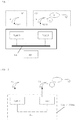
- a hearing instrument HI and an implantable device, embodied by a cochlear implant CI are both operationally connected to the fitting system for transferring fitting data such as configuration data, in particular first fitting data FDHI is transferred from the first fitting software module FSWHI to the hearing instrument HI and second fitting data FDCI is transferred from the second fitting software module FSWCI to the cochlear implant CI. Further, the first fitting software module FSWHI and the second fitting software module FSWCI are operationally interconnected via the data interface DI.
- the terms “first” and “second” or “initial” and “further” do not imply a sequence or hierarchy of steps, they merely help to distinguish between the different fitting software modules and the different fitting data.
- operationally connected is understood in the meaning that the operation of a second device being connected to a first device is depending on the operation of this first device, even with the presence of one or more interconnecting devices.
- the hearing instrument HI comprises an earpiece 2 with a microphone (not shown) as input transducer, a signal processing unit (not shown) and a loudspeaker (not shown) as output transducer.
- the processing unit is operationally connected on its input side to the microphone for receiving an input signal, in particular an audio input signal.
- the signal processing unit is operationally connected to the loudspeaker for forwarding an output signal to the loudspeaker of the earpiece 2.
- the cochlear implant CI comprises a microphone (not shown), a speech processor 4, a headpiece 6 and an implant 8 (also called implanted part) with an electrode array. Similar to the above, the speech processor 4 is operationally connected on its input side to the microphone for receiving an input signal. However, on its output side, the speech processor 4 is operationally connected via a wireless connection to the implant 8 for forwarding the output signal to the electrode array of the implant 8.
- the data interface DI is implemented by a data bus or data backbone to provide a bidirectional exchange of data.
- the data interface DI is a standardized interface, such that the first fitting software module being produced by a first vendor can exchange data with the second fitting software module being produced by a another vendor.
- the exchanged data is related to the fitting of the bimodal hearing system, i.e. related to the fitting of the hearing instrument HI and the cochlear implant CI.
- the exchanged data is configuration data comprising:
- each of the fitting software modules knows the fitting data of the peer device.
- the fitting of the cochlear implant CI is accomplished by considering of the fitting of the hearing instrument HI and vice versa.
- This mutual fitting produces a coordinated overall configuration of the bimodal hearing system. For example, a control command (e.g. initiated on a remote control) leads to coordinated behavior between the cochlear implant CI and the hearing instrument HI.
- a network storage NS is attached via a network connection to the data interface DI.
- the network storage is a database, which gives access to fitting related data via a local network located at the audiologist's office.
- the data interface DI is configured to use this network storage, for intermittently storing the exchanged data.
- both, the first fitting software module FSWHI and the second fitting software module FSWCI, are able to access the fitting related data in a shared manner.
- the network storage allows asynchronous data access over time and location.
- Fig. 2 shows a simplified block diagram according to Fig. 1 , wherein the data interface DI is a local software interface.
- the first fitting software module FSWHI, the second fitting software module FSWCI and the local software interface are combined by using a common framework CFW and a common graphical user interface CGUI (indicated by a dashed line).
- the local software interface is implemented by using a COM interface, in particular by a direct data transfer between the first fitting software module FSWHI and the second fitting software module FSWCI, both running concurrently on the same fitting system.
- the combination of the first and second fitting software module FSWHI, FSWCI under a common graphical user interface CGUI provides for sharing of common tasks such as client data handling or report generation.
- the common graphical user interface CGUI graphically aligns the module appearance to the audiologist.
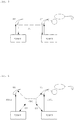
- Fig. 3 shows a simplified block diagram according to Fig. 1 , wherein the data interface DI uses an existing wireless data connection, which has been established to directly interconnect the hearing instrument HI and the cochlear implant CI.
- the data interface DI uses the hearing instrument HI and the cochlear implant CI as communication relays.
- the hearing instrument HI and/or the cochlear implant CI may also comprise a memory to provide a temporary storage for offline communication purposes or they may be configured to initiate a direct communication connection.
- Fig. 4 shows a simplified block diagram according to Fig. 1 , wherein the data interface DI uses a common remote control CRC or a smart phone as communication relay.
- the remote control controls the operational behavior of the hearing instrument HI and/or the cochlear implant CI.
- the remote control RC is configured by the first fitting software module FSWHI and/or the second fitting software module FSWCI.
- the remote control RC or smart phone takes over the role of a communication relay and provides a bidirectional transfer of data between the first fitting software module FSWHI and the second fitting software module FSWCI and vice versa.
Landscapes
- Engineering & Computer Science (AREA)
- Computer Networks & Wireless Communication (AREA)
- Health & Medical Sciences (AREA)
- General Health & Medical Sciences (AREA)
- Neurosurgery (AREA)
- Otolaryngology (AREA)
- Physics & Mathematics (AREA)
- Acoustics & Sound (AREA)
- Signal Processing (AREA)
- Prostheses (AREA)
Claims (13)
- Système de mise en place pour un système auditif bimodal, le système de mise en place pouvant être raccordé de façon opérationnelle à un instrument auditif (HI) et à un dispositif implantable (CI) et comprenant :- un premier module logiciel de mise en place (FSWHI) pour mettre en place l'instrument auditif (HI), et- un deuxième module logiciel de mise en place (FSWCI) pour mettre en place le dispositif implantable (CI),- dans lequel le premier module logiciel de mise en place (FSWHI) est disposé de sorte que la mise en place de l'instrument auditif (HI) est réalisée en prenant en compte les données de configuration relatives au dispositif implantable (CI) reçues depuis le deuxième module logiciel de mise en place (FSWCI) via une interface de données (DI), et/ou- dans lequel le deuxième module logiciel de mise en place (FSWCI) est disposé de sorte que la mise en place du dispositif implantable (CI) est réalisée en tenant compte des données de configuration relatives à l'instrument auditif (HI) reçues depuis le premier module logiciel de mise en place (FSWHI) via l'interface de données (DI).
- Système de mise en place selon la revendication 1, dans lequel au moins un du premier module logiciel de mise en place (FSWHI) et du deuxième module logiciel de mise en place (FSWCI) est configuré pour au moins transmettre ou recevoir les données de configuration associées, en particulier sous forme de données associées de mise en place.
- Système de mise en place selon la revendication 1 ou 2, dans lequel le premier module logiciel de mise en place (FSWHI) et le deuxième module logiciel de mise en place (FSWCI) sont configurés pour une coordination mutuelle, en particulier concomitante ou commune, entre la mise en place du dispositif implantable (CI) et la mise en place de l'instrument auditif (HI).
- Système de mise en place selon l'une des revendications précédentes, dans lequel le système de mise en place comprend un troisième module logiciel pour fournir un cadre commun (CFW) pour le premier module logiciel de mise en place (FSWHI) et le deuxième module logiciel de mise en place (FSWCI).
- Système de mise en place selon l'une des revendications précédentes, dans lequel le système de mise en place comprend un quatrième module logiciel pour fournir une interface utilisateur graphique commune (CGUI) pour le premier module logiciel de mise en place (FSWHI) et le deuxième module logiciel de mise en place (FSWCI).
- Système de mise en place selon l'une des revendications précédentes, dans lequel l'interface de données (DI) est au moins une interface parmi une interface standardisée et une interface interne, en particulier une interface COM ou SOA.
- Système de mise en place selon l'une des revendications précédentes, dans lequel l'interface de données (DI) est configurée pour utiliser une connexion de données qui connecte directement, en particulier sans fil, l'instrument auditif (HI) au dispositif implantable (CI) ou pour utiliser un dispositif intermédiaire (CRC), en particulier une télécommande ou un smartphone.
- Système de mise en place selon l'une des revendications précédentes, dans lequel l'interface de données (DI) est raccordée à une unité de mémoire, en particulier une unité de stockage en réseau, pour stocker, en particulier par intermittence, les données de configuration à transférer.
- Système de mise en place selon l'une des revendications précédentes, dans lequel l'interface de données (DI) comprend des moyens pour sécuriser les données de configuration à transférer.
- Procédé pour mettre en place un système auditif bimodal comprenant un dispositif implantable (CI) et un instrument auditif (HI) en utilisant un système de mise en place comprenant un premier module logiciel de mise en place (FSWCI), le procédé comprenant les étapes consistant à :- raccorder de façon opérationnelle le dispositif implantable (CI) au système de mise en place ;- fournir les données de configuration associées à l'instrument auditif (HI) au premier module logiciel de mise en place (FSWCI) ; et- mettre en place le dispositif implantable (CI) en utilisant le premier module logiciel de mise en place (FSWCI), lequel considère les données de configuration fournies.
- Procédé selon la revendication 10, dans lequel le système de mise en place comprend un autre module logiciel de mise en place (FSWHI) raccordé au premier module logiciel de mise en place (FSWCI) via une interface de données (DI), et dans lequel l'étape consistant à fournir les données de configuration associées à l'instrument auditif (HI) comprend les étapes consistant à :- raccorder de façon opérationnelle l'instrument auditif (HI) au système de mise en place ;- mettre en place l'instrument auditif (HI) en utilisant l'autre module logiciel de mise en place (FSWHI) ; et- transférer les données de configuration associées à l'instrument auditif (HI) depuis l'autre module logiciel de mise en place (FSWHI) vers le premier module logiciel de mise en place (FSWCI) via l'interface de données (DI).
- Procédé selon la revendication 11, dans lequel l'interface de données (DI) utilise une connexion de données directe, en particulier sans fil, établie entre l'instrument auditif (HI) et le dispositif implantable (CI) ou un dispositif intermédiaire (CRC), en particulier une télécommande ou un smartphone.
- Procédé selon l'une des revendications 10 à 12, dans lequel les données de configuration comprennent au moins un élément parmi :- des données relatives au programme auditif, en particulier au moins un élément parmi un numéro, un type, un ordre de commutation et une séquence de commutation,- des données relatives à la source d'entrée par programme auditif,- des données audiologiques, en particulier au moins un élément parmi une perte auditive et/ou une prescription de gain,- des informations pour synchroniser les actions d'un utilisateur, en particulier le réglage du volume ou le changement d'un programme auditif,- des données indiquant une conséquence, en particulier au moins un élément parmi une conséquence technique et une conséquence perceptuelle,- des données spécifiques de l'utilisateur, en particulier au moins un élément parmi le nom, l'adresse et le numéro de téléphone,- au moins un élément parmi bande passante audiologique, une fréquence de coupure et un chevauchement d'une bande passante audio entre l'instrument auditif (HI) et le dispositif implantable (CI), et- des données relatives à un décalage d'alignement entre l'instrument auditif (HI) et le dispositif implantable (CI).
Applications Claiming Priority (1)
| Application Number | Priority Date | Filing Date | Title |
|---|---|---|---|
| PCT/US2012/027090 WO2013130061A1 (fr) | 2012-02-29 | 2012-02-29 | Système de mise en place pour un système auditif bimodal, procédé correspondant et système auditif |
Publications (2)
| Publication Number | Publication Date |
|---|---|
| EP2820864A1 EP2820864A1 (fr) | 2015-01-07 |
| EP2820864B1 true EP2820864B1 (fr) | 2018-11-21 |
Family
ID=45833519
Family Applications (1)
| Application Number | Title | Priority Date | Filing Date |
|---|---|---|---|
| EP12708988.6A Active EP2820864B1 (fr) | 2012-02-29 | 2012-02-29 | Système d'ajustement et procédé d'ajustement d'un système auditif bimodal et système auditif |
Country Status (4)
| Country | Link |
|---|---|
| US (1) | US20160007128A1 (fr) |
| EP (1) | EP2820864B1 (fr) |
| CN (1) | CN104255043A (fr) |
| WO (1) | WO2013130061A1 (fr) |
Families Citing this family (6)
| Publication number | Priority date | Publication date | Assignee | Title |
|---|---|---|---|---|
| US9723415B2 (en) * | 2015-06-19 | 2017-08-01 | Gn Hearing A/S | Performance based in situ optimization of hearing aids |
| US10575108B2 (en) * | 2015-08-24 | 2020-02-25 | Cochlear Limited | Prosthesis functionality control and data presentation |
| DK3391665T3 (da) * | 2015-12-15 | 2020-11-16 | Sonova Ag | Metode til anvendelse af et høreapparat |
| EP3334187B1 (fr) * | 2016-12-08 | 2021-03-31 | GN Hearing A/S | Dispositifs serveurs et procédés de configuration à distance d'un dispositif auditif |
| EP3913930A1 (fr) | 2016-12-08 | 2021-11-24 | GN Hearing A/S | Dispositifs auditifs, dispositifs d'accessoires utilisateur et procédé de mise à jour d'une configuration de dispositif auditif |
| US11412333B2 (en) * | 2017-11-15 | 2022-08-09 | Starkey Laboratories, Inc. | Interactive system for hearing devices |
Family Cites Families (5)
| Publication number | Priority date | Publication date | Assignee | Title |
|---|---|---|---|---|
| WO2005097255A1 (fr) * | 2004-04-02 | 2005-10-20 | Advanced Bionics Corporation | Procedes et systemes de reglage d'une stimulation acoustique et electrique |
| US8265765B2 (en) * | 2005-12-08 | 2012-09-11 | Cochlear Limited | Multimodal auditory fitting |
| DE102008060056B4 (de) | 2008-12-02 | 2011-12-15 | Siemens Medical Instruments Pte. Ltd. | Verfahren und Hörgerätesystem zur Anpassung einer bimodalen Versorgung |
| US8694112B2 (en) * | 2010-07-30 | 2014-04-08 | Advanced Bionics Ag | Methods and systems for fitting a bilateral cochlear implant patient using a single sound processor |
| US8855324B2 (en) * | 2011-06-29 | 2014-10-07 | Cochlear Limited | Systems, methods, and article of manufacture for configuring a hearing prosthesis |
-
2012
- 2012-02-29 US US14/379,117 patent/US20160007128A1/en not_active Abandoned
- 2012-02-29 CN CN201280070904.0A patent/CN104255043A/zh active Pending
- 2012-02-29 WO PCT/US2012/027090 patent/WO2013130061A1/fr not_active Ceased
- 2012-02-29 EP EP12708988.6A patent/EP2820864B1/fr active Active
Non-Patent Citations (1)
| Title |
|---|
| None * |
Also Published As
| Publication number | Publication date |
|---|---|
| US20160007128A1 (en) | 2016-01-07 |
| WO2013130061A1 (fr) | 2013-09-06 |
| CN104255043A (zh) | 2014-12-31 |
| EP2820864A1 (fr) | 2015-01-07 |
Similar Documents
| Publication | Publication Date | Title |
|---|---|---|
| US20220331599A1 (en) | Relay interface for connecting an implanted medical device to an external electronics device | |
| EP2820864B1 (fr) | Système d'ajustement et procédé d'ajustement d'un système auditif bimodal et système auditif | |
| US9883294B2 (en) | Configurable hearing system | |
| US9774965B2 (en) | Method for fitting a hearing device as well as an arrangement for fitting the hearing device | |
| US9398386B2 (en) | Method for remote fitting of a hearing device | |
| US11785404B2 (en) | Method and system of fitting a hearing device | |
| DK2742701T3 (en) | METHOD OF PROVIDING REMOTE SUPPORT FOR A USER OF A PERSONAL HEARING SYSTEM AND SYSTEM FOR IMPLEMENTING THIS METHOD | |
| CN110999325B (zh) | 用于对听力设备进行适配的方法和系统 | |
| US11889269B2 (en) | Systems and methods for remote loading of a sound processing program onto a sound processor included within a cochlear implant system | |
| EP3530008B1 (fr) | Dispositif auditif sans fil comprenant des tables d'appariement séparées | |
| US20220337964A1 (en) | Fitting Two Hearing Devices Simultaneously | |
| US10105539B2 (en) | Configuring a stimulation unit of a hearing device | |
| EP4266704A1 (fr) | Unité cros pour un système de dispositif auditif cros | |
| US11546704B2 (en) | Pre-pairing of hearing aids | |
| CN113365198A (zh) | 将设置数据组从第一听力装置传输到第二听力装置的方法 | |
| US20250175750A1 (en) | Hearing instrument configuration system | |
| EP4492825A1 (fr) | Prothèse auditive et système sans fil d'implant cochléaire | |
| Sockalingam | Implantable Auditory Technologies. | |
| Kirchheimer | Hearing Aids Prescribed by Our Doctor of Audiology |
Legal Events
| Date | Code | Title | Description |
|---|---|---|---|
| PUAI | Public reference made under article 153(3) epc to a published international application that has entered the european phase |
Free format text: ORIGINAL CODE: 0009012 |
|
| 17P | Request for examination filed |
Effective date: 20140819 |
|
| AK | Designated contracting states |
Kind code of ref document: A1 Designated state(s): AL AT BE BG CH CY CZ DE DK EE ES FI FR GB GR HR HU IE IS IT LI LT LU LV MC MK MT NL NO PL PT RO RS SE SI SK SM TR |
|
| AX | Request for extension of the european patent |
Extension state: BA ME |
|
| DAX | Request for extension of the european patent (deleted) | ||
| RAP1 | Party data changed (applicant data changed or rights of an application transferred) |
Owner name: SONOVA AG Owner name: BRUNNER, CHRISTIAN |
|
| 17Q | First examination report despatched |
Effective date: 20160224 |
|
| STAA | Information on the status of an ep patent application or granted ep patent |
Free format text: STATUS: EXAMINATION IS IN PROGRESS |
|
| GRAP | Despatch of communication of intention to grant a patent |
Free format text: ORIGINAL CODE: EPIDOSNIGR1 |
|
| STAA | Information on the status of an ep patent application or granted ep patent |
Free format text: STATUS: GRANT OF PATENT IS INTENDED |
|
| INTG | Intention to grant announced |
Effective date: 20180629 |
|
| GRAS | Grant fee paid |
Free format text: ORIGINAL CODE: EPIDOSNIGR3 |
|
| GRAA | (expected) grant |
Free format text: ORIGINAL CODE: 0009210 |
|
| STAA | Information on the status of an ep patent application or granted ep patent |
Free format text: STATUS: THE PATENT HAS BEEN GRANTED |
|
| AK | Designated contracting states |
Kind code of ref document: B1 Designated state(s): AL AT BE BG CH CY CZ DE DK EE ES FI FR GB GR HR HU IE IS IT LI LT LU LV MC MK MT NL NO PL PT RO RS SE SI SK SM TR |
|
| REG | Reference to a national code |
Ref country code: CH Ref legal event code: EP |
|
| REG | Reference to a national code |
Ref country code: IE Ref legal event code: FG4D |
|
| REG | Reference to a national code |
Ref country code: DE Ref legal event code: R096 Ref document number: 602012053758 Country of ref document: DE |
|
| REG | Reference to a national code |
Ref country code: AT Ref legal event code: REF Ref document number: 1068978 Country of ref document: AT Kind code of ref document: T Effective date: 20181215 |
|
| REG | Reference to a national code |
Ref country code: NL Ref legal event code: MP Effective date: 20181121 |
|
| REG | Reference to a national code |
Ref country code: AT Ref legal event code: MK05 Ref document number: 1068978 Country of ref document: AT Kind code of ref document: T Effective date: 20181121 |
|
| PG25 | Lapsed in a contracting state [announced via postgrant information from national office to epo] |
Ref country code: FI Free format text: LAPSE BECAUSE OF FAILURE TO SUBMIT A TRANSLATION OF THE DESCRIPTION OR TO PAY THE FEE WITHIN THE PRESCRIBED TIME-LIMIT Effective date: 20181121 Ref country code: IS Free format text: LAPSE BECAUSE OF FAILURE TO SUBMIT A TRANSLATION OF THE DESCRIPTION OR TO PAY THE FEE WITHIN THE PRESCRIBED TIME-LIMIT Effective date: 20190321 Ref country code: NO Free format text: LAPSE BECAUSE OF FAILURE TO SUBMIT A TRANSLATION OF THE DESCRIPTION OR TO PAY THE FEE WITHIN THE PRESCRIBED TIME-LIMIT Effective date: 20190221 Ref country code: AT Free format text: LAPSE BECAUSE OF FAILURE TO SUBMIT A TRANSLATION OF THE DESCRIPTION OR TO PAY THE FEE WITHIN THE PRESCRIBED TIME-LIMIT Effective date: 20181121 Ref country code: ES Free format text: LAPSE BECAUSE OF FAILURE TO SUBMIT A TRANSLATION OF THE DESCRIPTION OR TO PAY THE FEE WITHIN THE PRESCRIBED TIME-LIMIT Effective date: 20181121 Ref country code: LV Free format text: LAPSE BECAUSE OF FAILURE TO SUBMIT A TRANSLATION OF THE DESCRIPTION OR TO PAY THE FEE WITHIN THE PRESCRIBED TIME-LIMIT Effective date: 20181121 Ref country code: HR Free format text: LAPSE BECAUSE OF FAILURE TO SUBMIT A TRANSLATION OF THE DESCRIPTION OR TO PAY THE FEE WITHIN THE PRESCRIBED TIME-LIMIT Effective date: 20181121 Ref country code: BG Free format text: LAPSE BECAUSE OF FAILURE TO SUBMIT A TRANSLATION OF THE DESCRIPTION OR TO PAY THE FEE WITHIN THE PRESCRIBED TIME-LIMIT Effective date: 20190221 Ref country code: LT Free format text: LAPSE BECAUSE OF FAILURE TO SUBMIT A TRANSLATION OF THE DESCRIPTION OR TO PAY THE FEE WITHIN THE PRESCRIBED TIME-LIMIT Effective date: 20181121 |
|
| PG25 | Lapsed in a contracting state [announced via postgrant information from national office to epo] |
Ref country code: PT Free format text: LAPSE BECAUSE OF FAILURE TO SUBMIT A TRANSLATION OF THE DESCRIPTION OR TO PAY THE FEE WITHIN THE PRESCRIBED TIME-LIMIT Effective date: 20190321 Ref country code: RS Free format text: LAPSE BECAUSE OF FAILURE TO SUBMIT A TRANSLATION OF THE DESCRIPTION OR TO PAY THE FEE WITHIN THE PRESCRIBED TIME-LIMIT Effective date: 20181121 Ref country code: NL Free format text: LAPSE BECAUSE OF FAILURE TO SUBMIT A TRANSLATION OF THE DESCRIPTION OR TO PAY THE FEE WITHIN THE PRESCRIBED TIME-LIMIT Effective date: 20181121 Ref country code: SE Free format text: LAPSE BECAUSE OF FAILURE TO SUBMIT A TRANSLATION OF THE DESCRIPTION OR TO PAY THE FEE WITHIN THE PRESCRIBED TIME-LIMIT Effective date: 20181121 Ref country code: GR Free format text: LAPSE BECAUSE OF FAILURE TO SUBMIT A TRANSLATION OF THE DESCRIPTION OR TO PAY THE FEE WITHIN THE PRESCRIBED TIME-LIMIT Effective date: 20190222 Ref country code: AL Free format text: LAPSE BECAUSE OF FAILURE TO SUBMIT A TRANSLATION OF THE DESCRIPTION OR TO PAY THE FEE WITHIN THE PRESCRIBED TIME-LIMIT Effective date: 20181121 |
|
| GRAT | Correction requested after decision to grant or after decision to maintain patent in amended form |
Free format text: ORIGINAL CODE: EPIDOSNCDEC |
|
| PG25 | Lapsed in a contracting state [announced via postgrant information from national office to epo] |
Ref country code: IT Free format text: LAPSE BECAUSE OF FAILURE TO SUBMIT A TRANSLATION OF THE DESCRIPTION OR TO PAY THE FEE WITHIN THE PRESCRIBED TIME-LIMIT Effective date: 20181121 Ref country code: CZ Free format text: LAPSE BECAUSE OF FAILURE TO SUBMIT A TRANSLATION OF THE DESCRIPTION OR TO PAY THE FEE WITHIN THE PRESCRIBED TIME-LIMIT Effective date: 20181121 Ref country code: PL Free format text: LAPSE BECAUSE OF FAILURE TO SUBMIT A TRANSLATION OF THE DESCRIPTION OR TO PAY THE FEE WITHIN THE PRESCRIBED TIME-LIMIT Effective date: 20181121 Ref country code: DK Free format text: LAPSE BECAUSE OF FAILURE TO SUBMIT A TRANSLATION OF THE DESCRIPTION OR TO PAY THE FEE WITHIN THE PRESCRIBED TIME-LIMIT Effective date: 20181121 |
|
| REG | Reference to a national code |
Ref country code: DE Ref legal event code: R097 Ref document number: 602012053758 Country of ref document: DE |
|
| PG25 | Lapsed in a contracting state [announced via postgrant information from national office to epo] |
Ref country code: SM Free format text: LAPSE BECAUSE OF FAILURE TO SUBMIT A TRANSLATION OF THE DESCRIPTION OR TO PAY THE FEE WITHIN THE PRESCRIBED TIME-LIMIT Effective date: 20181121 Ref country code: EE Free format text: LAPSE BECAUSE OF FAILURE TO SUBMIT A TRANSLATION OF THE DESCRIPTION OR TO PAY THE FEE WITHIN THE PRESCRIBED TIME-LIMIT Effective date: 20181121 Ref country code: RO Free format text: LAPSE BECAUSE OF FAILURE TO SUBMIT A TRANSLATION OF THE DESCRIPTION OR TO PAY THE FEE WITHIN THE PRESCRIBED TIME-LIMIT Effective date: 20181121 Ref country code: SK Free format text: LAPSE BECAUSE OF FAILURE TO SUBMIT A TRANSLATION OF THE DESCRIPTION OR TO PAY THE FEE WITHIN THE PRESCRIBED TIME-LIMIT Effective date: 20181121 |
|
| PLBE | No opposition filed within time limit |
Free format text: ORIGINAL CODE: 0009261 |
|
| STAA | Information on the status of an ep patent application or granted ep patent |
Free format text: STATUS: NO OPPOSITION FILED WITHIN TIME LIMIT |
|
| REG | Reference to a national code |
Ref country code: CH Ref legal event code: PL |
|
| 26N | No opposition filed |
Effective date: 20190822 |
|
| PG25 | Lapsed in a contracting state [announced via postgrant information from national office to epo] |
Ref country code: LU Free format text: LAPSE BECAUSE OF NON-PAYMENT OF DUE FEES Effective date: 20190228 Ref country code: MC Free format text: LAPSE BECAUSE OF FAILURE TO SUBMIT A TRANSLATION OF THE DESCRIPTION OR TO PAY THE FEE WITHIN THE PRESCRIBED TIME-LIMIT Effective date: 20181121 Ref country code: SI Free format text: LAPSE BECAUSE OF FAILURE TO SUBMIT A TRANSLATION OF THE DESCRIPTION OR TO PAY THE FEE WITHIN THE PRESCRIBED TIME-LIMIT Effective date: 20181121 |
|
| REG | Reference to a national code |
Ref country code: BE Ref legal event code: MM Effective date: 20190228 |
|
| REG | Reference to a national code |
Ref country code: IE Ref legal event code: MM4A |
|
| PG25 | Lapsed in a contracting state [announced via postgrant information from national office to epo] |
Ref country code: LI Free format text: LAPSE BECAUSE OF NON-PAYMENT OF DUE FEES Effective date: 20190228 Ref country code: CH Free format text: LAPSE BECAUSE OF NON-PAYMENT OF DUE FEES Effective date: 20190228 |
|
| PG25 | Lapsed in a contracting state [announced via postgrant information from national office to epo] |
Ref country code: IE Free format text: LAPSE BECAUSE OF NON-PAYMENT OF DUE FEES Effective date: 20190228 |
|
| PG25 | Lapsed in a contracting state [announced via postgrant information from national office to epo] |
Ref country code: BE Free format text: LAPSE BECAUSE OF NON-PAYMENT OF DUE FEES Effective date: 20190228 |
|
| PG25 | Lapsed in a contracting state [announced via postgrant information from national office to epo] |
Ref country code: TR Free format text: LAPSE BECAUSE OF FAILURE TO SUBMIT A TRANSLATION OF THE DESCRIPTION OR TO PAY THE FEE WITHIN THE PRESCRIBED TIME-LIMIT Effective date: 20181121 |
|
| PG25 | Lapsed in a contracting state [announced via postgrant information from national office to epo] |
Ref country code: MT Free format text: LAPSE BECAUSE OF NON-PAYMENT OF DUE FEES Effective date: 20190228 |
|
| PG25 | Lapsed in a contracting state [announced via postgrant information from national office to epo] |
Ref country code: CY Free format text: LAPSE BECAUSE OF FAILURE TO SUBMIT A TRANSLATION OF THE DESCRIPTION OR TO PAY THE FEE WITHIN THE PRESCRIBED TIME-LIMIT Effective date: 20181121 |
|
| PG25 | Lapsed in a contracting state [announced via postgrant information from national office to epo] |
Ref country code: HU Free format text: LAPSE BECAUSE OF FAILURE TO SUBMIT A TRANSLATION OF THE DESCRIPTION OR TO PAY THE FEE WITHIN THE PRESCRIBED TIME-LIMIT; INVALID AB INITIO Effective date: 20120229 |
|
| PG25 | Lapsed in a contracting state [announced via postgrant information from national office to epo] |
Ref country code: MK Free format text: LAPSE BECAUSE OF FAILURE TO SUBMIT A TRANSLATION OF THE DESCRIPTION OR TO PAY THE FEE WITHIN THE PRESCRIBED TIME-LIMIT Effective date: 20181121 |
|
| PGFP | Annual fee paid to national office [announced via postgrant information from national office to epo] |
Ref country code: GB Payment date: 20260227 Year of fee payment: 15 |
|
| PGFP | Annual fee paid to national office [announced via postgrant information from national office to epo] |
Ref country code: DE Payment date: 20260227 Year of fee payment: 15 |
|
| PGFP | Annual fee paid to national office [announced via postgrant information from national office to epo] |
Ref country code: FR Payment date: 20260225 Year of fee payment: 15 |