EP2821072A1 - Stimulation pharmacologique afin de faciliter et restaurer des fonctions pour se tenir debout et marcher dans des troubles de la moelle épinière - Google Patents
Stimulation pharmacologique afin de faciliter et restaurer des fonctions pour se tenir debout et marcher dans des troubles de la moelle épinière Download PDFInfo
- Publication number
- EP2821072A1 EP2821072A1 EP20130174477 EP13174477A EP2821072A1 EP 2821072 A1 EP2821072 A1 EP 2821072A1 EP 20130174477 EP20130174477 EP 20130174477 EP 13174477 A EP13174477 A EP 13174477A EP 2821072 A1 EP2821072 A1 EP 2821072A1
- Authority
- EP
- European Patent Office
- Prior art keywords
- adrenergic receptor
- agonist
- spinal cord
- locomotion
- composition according
- Prior art date
- Legal status (The legal status is an assumption and is not a legal conclusion. Google has not performed a legal analysis and makes no representation as to the accuracy of the status listed.)
- Withdrawn
Links
- 230000000638 stimulation Effects 0.000 title claims abstract description 28
- 208000029033 Spinal Cord disease Diseases 0.000 title claims abstract description 27
- 230000006870 function Effects 0.000 title description 14
- 230000000144 pharmacologic effect Effects 0.000 title description 6
- 102000030484 alpha-2 Adrenergic Receptor Human genes 0.000 claims abstract description 59
- 108020004101 alpha-2 Adrenergic Receptor Proteins 0.000 claims abstract description 59
- 230000033001 locomotion Effects 0.000 claims abstract description 59
- 239000000556 agonist Substances 0.000 claims abstract description 46
- 239000000203 mixture Substances 0.000 claims abstract description 35
- 239000005557 antagonist Substances 0.000 claims abstract description 33
- 208000020431 spinal cord injury Diseases 0.000 claims abstract description 19
- 239000008194 pharmaceutical composition Substances 0.000 claims abstract description 13
- 230000008685 targeting Effects 0.000 claims abstract description 13
- 230000002747 voluntary effect Effects 0.000 claims abstract description 12
- GJSURZIOUXUGAL-UHFFFAOYSA-N Clonidine Chemical compound ClC1=CC=CC(Cl)=C1NC1=NCCN1 GJSURZIOUXUGAL-UHFFFAOYSA-N 0.000 claims description 29
- 229960002896 clonidine Drugs 0.000 claims description 29
- 239000000674 adrenergic antagonist Substances 0.000 claims description 24
- 239000000048 adrenergic agonist Substances 0.000 claims description 13
- SGOFAUSEYBZKDQ-UHFFFAOYSA-N brl-44408 Chemical group C1C2=CC=CC=C2C(C)N1CC1=NCCN1 SGOFAUSEYBZKDQ-UHFFFAOYSA-N 0.000 claims description 13
- 239000000384 adrenergic alpha-2 receptor agonist Substances 0.000 claims description 12
- 229940126157 adrenergic receptor agonist Drugs 0.000 claims description 12
- 239000000952 serotonin receptor agonist Substances 0.000 claims description 8
- 102000005962 receptors Human genes 0.000 abstract description 49
- 108020003175 receptors Proteins 0.000 abstract description 49
- 230000000903 blocking effect Effects 0.000 abstract description 10
- 230000006872 improvement Effects 0.000 abstract description 5
- 230000002195 synergetic effect Effects 0.000 abstract description 3
- 239000013543 active substance Substances 0.000 abstract description 2
- 230000003137 locomotive effect Effects 0.000 description 30
- 241000700159 Rattus Species 0.000 description 23
- 230000000694 effects Effects 0.000 description 18
- 210000000278 spinal cord Anatomy 0.000 description 13
- 238000000034 method Methods 0.000 description 12
- 241001465754 Metazoa Species 0.000 description 11
- 241000699670 Mus sp. Species 0.000 description 11
- 208000037265 diseases, disorders, signs and symptoms Diseases 0.000 description 8
- 229940079593 drug Drugs 0.000 description 8
- 239000003814 drug Substances 0.000 description 8
- 238000012549 training Methods 0.000 description 8
- 241000282326 Felis catus Species 0.000 description 7
- 230000005021 gait Effects 0.000 description 7
- 230000002474 noradrenergic effect Effects 0.000 description 7
- 229940044601 receptor agonist Drugs 0.000 description 7
- 239000000018 receptor agonist Substances 0.000 description 7
- 108060003345 Adrenergic Receptor Proteins 0.000 description 6
- 102000017910 Adrenergic receptor Human genes 0.000 description 6
- 210000003766 afferent neuron Anatomy 0.000 description 6
- 230000037396 body weight Effects 0.000 description 6
- 230000002964 excitative effect Effects 0.000 description 6
- 238000002474 experimental method Methods 0.000 description 6
- 238000002347 injection Methods 0.000 description 6
- 239000007924 injection Substances 0.000 description 6
- 208000014674 injury Diseases 0.000 description 6
- 210000001153 interneuron Anatomy 0.000 description 6
- 210000003141 lower extremity Anatomy 0.000 description 6
- 230000003040 nociceptive effect Effects 0.000 description 6
- 238000012360 testing method Methods 0.000 description 6
- 241000282412 Homo Species 0.000 description 5
- 150000001875 compounds Chemical class 0.000 description 5
- 230000003902 lesion Effects 0.000 description 5
- 230000001095 motoneuron effect Effects 0.000 description 5
- 210000003594 spinal ganglia Anatomy 0.000 description 5
- 230000004913 activation Effects 0.000 description 4
- QBWCMBCROVPCKQ-UHFFFAOYSA-N chlorous acid Chemical compound OCl=O QBWCMBCROVPCKQ-UHFFFAOYSA-N 0.000 description 4
- 208000035475 disorder Diseases 0.000 description 4
- 230000001976 improved effect Effects 0.000 description 4
- 238000004519 manufacturing process Methods 0.000 description 4
- 230000004936 stimulating effect Effects 0.000 description 4
- 238000011282 treatment Methods 0.000 description 4
- 208000027418 Wounds and injury Diseases 0.000 description 3
- 238000010171 animal model Methods 0.000 description 3
- 210000004027 cell Anatomy 0.000 description 3
- 230000001713 cholinergic effect Effects 0.000 description 3
- 230000006378 damage Effects 0.000 description 3
- 230000006735 deficit Effects 0.000 description 3
- 201000010099 disease Diseases 0.000 description 3
- 210000003414 extremity Anatomy 0.000 description 3
- 210000002683 foot Anatomy 0.000 description 3
- 210000001926 inhibitory interneuron Anatomy 0.000 description 3
- 230000001730 monoaminergic effect Effects 0.000 description 3
- 210000003205 muscle Anatomy 0.000 description 3
- 239000002831 pharmacologic agent Substances 0.000 description 3
- 230000000272 proprioceptive effect Effects 0.000 description 3
- 230000002269 spontaneous effect Effects 0.000 description 3
- 230000008733 trauma Effects 0.000 description 3
- NMSAVNXFCXMJJY-GFCCVEGCSA-N 2-[(1r)-1-[2-(3-nitrophenyl)phenoxy]ethyl]-4,5-dihydro-1h-imidazole Chemical compound O([C@H](C)C=1NCCN=1)C1=CC=CC=C1C1=CC=CC(N(=O)=O)=C1 NMSAVNXFCXMJJY-GFCCVEGCSA-N 0.000 description 2
- 206010001497 Agitation Diseases 0.000 description 2
- 108091026890 Coding region Proteins 0.000 description 2
- 208000019430 Motor disease Diseases 0.000 description 2
- 241000699660 Mus musculus Species 0.000 description 2
- 206010033799 Paralysis Diseases 0.000 description 2
- 239000004480 active ingredient Substances 0.000 description 2
- 239000000695 adrenergic alpha-agonist Substances 0.000 description 2
- 238000004458 analytical method Methods 0.000 description 2
- 230000006399 behavior Effects 0.000 description 2
- 230000033228 biological regulation Effects 0.000 description 2
- 210000004556 brain Anatomy 0.000 description 2
- 238000006243 chemical reaction Methods 0.000 description 2
- 239000003795 chemical substances by application Substances 0.000 description 2
- 230000001684 chronic effect Effects 0.000 description 2
- 229940078069 clonidine injection Drugs 0.000 description 2
- 238000009826 distribution Methods 0.000 description 2
- 239000003937 drug carrier Substances 0.000 description 2
- 230000001771 impaired effect Effects 0.000 description 2
- 230000002401 inhibitory effect Effects 0.000 description 2
- 229940090044 injection Drugs 0.000 description 2
- 238000007918 intramuscular administration Methods 0.000 description 2
- 238000007913 intrathecal administration Methods 0.000 description 2
- 238000002684 laminectomy Methods 0.000 description 2
- 238000011068 loading method Methods 0.000 description 2
- 230000006742 locomotor activity Effects 0.000 description 2
- 230000001537 neural effect Effects 0.000 description 2
- 230000000926 neurological effect Effects 0.000 description 2
- 230000036407 pain Effects 0.000 description 2
- 238000005192 partition Methods 0.000 description 2
- 238000011458 pharmacological treatment Methods 0.000 description 2
- 108090000623 proteins and genes Proteins 0.000 description 2
- 210000003314 quadriceps muscle Anatomy 0.000 description 2
- 239000002464 receptor antagonist Substances 0.000 description 2
- 229940044551 receptor antagonist Drugs 0.000 description 2
- 230000004044 response Effects 0.000 description 2
- 230000001629 suppression Effects 0.000 description 2
- 238000011830 transgenic mouse model Methods 0.000 description 2
- 238000011144 upstream manufacturing Methods 0.000 description 2
- SFLSHLFXELFNJZ-QMMMGPOBSA-N (-)-norepinephrine Chemical compound NC[C@H](O)C1=CC=C(O)C(O)=C1 SFLSHLFXELFNJZ-QMMMGPOBSA-N 0.000 description 1
- 108050002822 Alpha 2A adrenoceptor Proteins 0.000 description 1
- 108050000738 Alpha 2B adrenoceptor Proteins 0.000 description 1
- 102100022815 Alpha-2A adrenergic receptor Human genes 0.000 description 1
- 102100036666 Alpha-2B adrenergic receptor Human genes 0.000 description 1
- 101100180402 Caenorhabditis elegans jun-1 gene Proteins 0.000 description 1
- 241000282472 Canis lupus familiaris Species 0.000 description 1
- 241000700198 Cavia Species 0.000 description 1
- 241000282693 Cercopithecidae Species 0.000 description 1
- 241000246142 Chamaecytisus Species 0.000 description 1
- 241000699666 Mus <mouse, genus> Species 0.000 description 1
- 101000720033 Mus musculus Alpha-2C adrenergic receptor Proteins 0.000 description 1
- 208000002038 Muscle Hypertonia Diseases 0.000 description 1
- 208000008238 Muscle Spasticity Diseases 0.000 description 1
- 206010028980 Neoplasm Diseases 0.000 description 1
- 241000283973 Oryctolagus cuniculus Species 0.000 description 1
- 206010033892 Paraplegia Diseases 0.000 description 1
- 108700008625 Reporter Genes Proteins 0.000 description 1
- 241000282887 Suidae Species 0.000 description 1
- 239000000150 Sympathomimetic Substances 0.000 description 1
- 239000004809 Teflon Substances 0.000 description 1
- 229920006362 Teflon® Polymers 0.000 description 1
- 230000002159 abnormal effect Effects 0.000 description 1
- 230000009471 action Effects 0.000 description 1
- 230000001800 adrenalinergic effect Effects 0.000 description 1
- 102000004305 alpha Adrenergic Receptors Human genes 0.000 description 1
- 108090000861 alpha Adrenergic Receptors Proteins 0.000 description 1
- VREFGVBLTWBCJP-UHFFFAOYSA-N alprazolam Chemical compound C12=CC(Cl)=CC=C2N2C(C)=NN=C2CN=C1C1=CC=CC=C1 VREFGVBLTWBCJP-UHFFFAOYSA-N 0.000 description 1
- 238000000540 analysis of variance Methods 0.000 description 1
- 229940124748 beta 2 agonist Drugs 0.000 description 1
- 244000309464 bull Species 0.000 description 1
- 201000011510 cancer Diseases 0.000 description 1
- 150000003943 catecholamines Chemical class 0.000 description 1
- 210000003169 central nervous system Anatomy 0.000 description 1
- 238000012512 characterization method Methods 0.000 description 1
- 238000007405 data analysis Methods 0.000 description 1
- 238000011161 development Methods 0.000 description 1
- 206010012601 diabetes mellitus Diseases 0.000 description 1
- 239000002270 dispersing agent Substances 0.000 description 1
- 238000006073 displacement reaction Methods 0.000 description 1
- 210000001951 dura mater Anatomy 0.000 description 1
- 230000002526 effect on cardiovascular system Effects 0.000 description 1
- 239000003995 emulsifying agent Substances 0.000 description 1
- 108010048367 enhanced green fluorescent protein Proteins 0.000 description 1
- 201000006674 extrapulmonary tuberculosis Diseases 0.000 description 1
- 238000009472 formulation Methods 0.000 description 1
- 238000002695 general anesthesia Methods 0.000 description 1
- 210000000527 greater trochanter Anatomy 0.000 description 1
- 230000002779 inactivation Effects 0.000 description 1
- 208000015181 infectious disease Diseases 0.000 description 1
- 230000000977 initiatory effect Effects 0.000 description 1
- 230000003993 interaction Effects 0.000 description 1
- 238000007912 intraperitoneal administration Methods 0.000 description 1
- 238000011813 knockout mouse model Methods 0.000 description 1
- 230000004807 localization Effects 0.000 description 1
- 239000000463 material Substances 0.000 description 1
- 230000007246 mechanism Effects 0.000 description 1
- 230000001404 mediated effect Effects 0.000 description 1
- 210000001872 metatarsal bone Anatomy 0.000 description 1
- 210000000878 metatarsophalangeal joint Anatomy 0.000 description 1
- 230000004048 modification Effects 0.000 description 1
- 238000012986 modification Methods 0.000 description 1
- 230000000877 morphologic effect Effects 0.000 description 1
- 230000010004 neural pathway Effects 0.000 description 1
- 230000002232 neuromuscular Effects 0.000 description 1
- 229960002748 norepinephrine Drugs 0.000 description 1
- SFLSHLFXELFNJZ-UHFFFAOYSA-N norepinephrine Natural products NCC(O)C1=CC=C(O)C(O)=C1 SFLSHLFXELFNJZ-UHFFFAOYSA-N 0.000 description 1
- 230000037361 pathway Effects 0.000 description 1
- 239000008024 pharmaceutical diluent Substances 0.000 description 1
- 239000000546 pharmaceutical excipient Substances 0.000 description 1
- 238000002360 preparation method Methods 0.000 description 1
- 230000008569 process Effects 0.000 description 1
- 102000004169 proteins and genes Human genes 0.000 description 1
- 238000011002 quantification Methods 0.000 description 1
- 238000011084 recovery Methods 0.000 description 1
- 230000001624 sedative effect Effects 0.000 description 1
- 210000003625 skull Anatomy 0.000 description 1
- 238000012453 sprague-dawley rat model Methods 0.000 description 1
- 229910001220 stainless steel Inorganic materials 0.000 description 1
- 239000010935 stainless steel Substances 0.000 description 1
- 238000007619 statistical method Methods 0.000 description 1
- 238000012109 statistical procedure Methods 0.000 description 1
- 230000008093 supporting effect Effects 0.000 description 1
- 238000011477 surgical intervention Methods 0.000 description 1
- 238000001356 surgical procedure Methods 0.000 description 1
- 239000000375 suspending agent Substances 0.000 description 1
- 210000002820 sympathetic nervous system Anatomy 0.000 description 1
- 229940127230 sympathomimetic drug Drugs 0.000 description 1
- 208000024891 symptom Diseases 0.000 description 1
- 238000007910 systemic administration Methods 0.000 description 1
- 230000001225 therapeutic effect Effects 0.000 description 1
- XFYDIVBRZNQMJC-UHFFFAOYSA-N tizanidine Chemical class ClC=1C=CC2=NSN=C2C=1NC1=NCCN1 XFYDIVBRZNQMJC-UHFFFAOYSA-N 0.000 description 1
- 230000009466 transformation Effects 0.000 description 1
- 230000001960 triggered effect Effects 0.000 description 1
- 239000003981 vehicle Substances 0.000 description 1
- XLYOFNOQVPJJNP-UHFFFAOYSA-N water Substances O XLYOFNOQVPJJNP-UHFFFAOYSA-N 0.000 description 1
Images


Classifications
-
- A—HUMAN NECESSITIES
- A61—MEDICAL OR VETERINARY SCIENCE; HYGIENE
- A61K—PREPARATIONS FOR MEDICAL, DENTAL OR TOILETRY PURPOSES
- A61K45/00—Medicinal preparations containing active ingredients not provided for in groups A61K31/00 - A61K41/00
- A61K45/06—Mixtures of active ingredients without chemical characterisation, e.g. antiphlogistics and cardiaca
-
- A—HUMAN NECESSITIES
- A61—MEDICAL OR VETERINARY SCIENCE; HYGIENE
- A61K—PREPARATIONS FOR MEDICAL, DENTAL OR TOILETRY PURPOSES
- A61K31/00—Medicinal preparations containing organic active ingredients
- A61K31/33—Heterocyclic compounds
- A61K31/395—Heterocyclic compounds having nitrogen as a ring hetero atom, e.g. guanethidine or rifamycins
- A61K31/41—Heterocyclic compounds having nitrogen as a ring hetero atom, e.g. guanethidine or rifamycins having five-membered rings with two or more ring hetero atoms, at least one of which being nitrogen, e.g. tetrazole
- A61K31/42—Oxazoles
- A61K31/421—1,3-Oxazoles, e.g. pemoline, trimethadione
-
- A—HUMAN NECESSITIES
- A61—MEDICAL OR VETERINARY SCIENCE; HYGIENE
- A61K—PREPARATIONS FOR MEDICAL, DENTAL OR TOILETRY PURPOSES
- A61K31/00—Medicinal preparations containing organic active ingredients
- A61K31/13—Amines
- A61K31/135—Amines having aromatic rings, e.g. ketamine, nortriptyline
- A61K31/136—Amines having aromatic rings, e.g. ketamine, nortriptyline having the amino group directly attached to the aromatic ring, e.g. benzeneamine
-
- A—HUMAN NECESSITIES
- A61—MEDICAL OR VETERINARY SCIENCE; HYGIENE
- A61K—PREPARATIONS FOR MEDICAL, DENTAL OR TOILETRY PURPOSES
- A61K31/00—Medicinal preparations containing organic active ingredients
- A61K31/33—Heterocyclic compounds
- A61K31/395—Heterocyclic compounds having nitrogen as a ring hetero atom, e.g. guanethidine or rifamycins
- A61K31/41—Heterocyclic compounds having nitrogen as a ring hetero atom, e.g. guanethidine or rifamycins having five-membered rings with two or more ring hetero atoms, at least one of which being nitrogen, e.g. tetrazole
- A61K31/4164—1,3-Diazoles
-
- A—HUMAN NECESSITIES
- A61—MEDICAL OR VETERINARY SCIENCE; HYGIENE
- A61K—PREPARATIONS FOR MEDICAL, DENTAL OR TOILETRY PURPOSES
- A61K31/00—Medicinal preparations containing organic active ingredients
- A61K31/33—Heterocyclic compounds
- A61K31/395—Heterocyclic compounds having nitrogen as a ring hetero atom, e.g. guanethidine or rifamycins
- A61K31/41—Heterocyclic compounds having nitrogen as a ring hetero atom, e.g. guanethidine or rifamycins having five-membered rings with two or more ring hetero atoms, at least one of which being nitrogen, e.g. tetrazole
- A61K31/4164—1,3-Diazoles
- A61K31/4168—1,3-Diazoles having a nitrogen attached in position 2, e.g. clonidine
-
- A—HUMAN NECESSITIES
- A61—MEDICAL OR VETERINARY SCIENCE; HYGIENE
- A61K—PREPARATIONS FOR MEDICAL, DENTAL OR TOILETRY PURPOSES
- A61K31/00—Medicinal preparations containing organic active ingredients
- A61K31/33—Heterocyclic compounds
- A61K31/395—Heterocyclic compounds having nitrogen as a ring hetero atom, e.g. guanethidine or rifamycins
- A61K31/41—Heterocyclic compounds having nitrogen as a ring hetero atom, e.g. guanethidine or rifamycins having five-membered rings with two or more ring hetero atoms, at least one of which being nitrogen, e.g. tetrazole
- A61K31/4164—1,3-Diazoles
- A61K31/4178—1,3-Diazoles not condensed 1,3-diazoles and containing further heterocyclic rings, e.g. pilocarpine, nitrofurantoin
-
- A—HUMAN NECESSITIES
- A61—MEDICAL OR VETERINARY SCIENCE; HYGIENE
- A61K—PREPARATIONS FOR MEDICAL, DENTAL OR TOILETRY PURPOSES
- A61K9/00—Medicinal preparations characterised by special physical form
- A61K9/0012—Galenical forms characterised by the site of application
- A61K9/0019—Injectable compositions; Intramuscular, intravenous, arterial, subcutaneous administration; Compositions to be administered through the skin in an invasive manner
-
- A—HUMAN NECESSITIES
- A61—MEDICAL OR VETERINARY SCIENCE; HYGIENE
- A61N—ELECTROTHERAPY; MAGNETOTHERAPY; RADIATION THERAPY; ULTRASOUND THERAPY
- A61N1/00—Electrotherapy; Circuits therefor
- A61N1/02—Details
- A61N1/04—Electrodes
- A61N1/05—Electrodes for implantation or insertion into the body, e.g. heart electrode
- A61N1/0551—Spinal or peripheral nerve electrodes
-
- A—HUMAN NECESSITIES
- A61—MEDICAL OR VETERINARY SCIENCE; HYGIENE
- A61N—ELECTROTHERAPY; MAGNETOTHERAPY; RADIATION THERAPY; ULTRASOUND THERAPY
- A61N1/00—Electrotherapy; Circuits therefor
- A61N1/18—Applying electric currents by contact electrodes
- A61N1/32—Applying electric currents by contact electrodes alternating or intermittent currents
- A61N1/36—Applying electric currents by contact electrodes alternating or intermittent currents for stimulation
- A61N1/36003—Applying electric currents by contact electrodes alternating or intermittent currents for stimulation of motor muscles, e.g. for walking assistance
-
- A—HUMAN NECESSITIES
- A61—MEDICAL OR VETERINARY SCIENCE; HYGIENE
- A61P—SPECIFIC THERAPEUTIC ACTIVITY OF CHEMICAL COMPOUNDS OR MEDICINAL PREPARATIONS
- A61P25/00—Drugs for disorders of the nervous system
Definitions
- the present invention relates to the field of pharmacology.
- it relates to the pharmacological treatment of spinal cord disorders through the selective targeting of ⁇ 2 adrenergic receptors.
- Neuromotor disorders such as spinal cord injury (SCI) and stroke lead to distinct impairments of motor pattern generation and balance ( Courtine, G., et al. Transformation of nonfunctional spinal circuits into functional states after the loss of brain input. Nat Neurosci 12, 1333-1342 (2009 ); Harkema, S.J., et al. Human lumbosacral spinal cord interprets loading during stepping. J Neurophysiol 77, 797-811, 1997 ).
- the ⁇ 2 adrenergic agonist clonidine is known to induce a marked facilitation of locomotion in cats with a complete spinal cord injury (SCI) ( Barbeau, Chau and Rossignol, Noradrenergic agonists and locomotor training affect locomotor recovery after cord transection in adult cats. 1993. Brain Res Bull; 30(3-4):387-93 ).
- SCI spinal cord injury
- the development of drugs engaging the ⁇ 2 adrenergic system for facilitating locomotion and neurorehabilitation in humans with SCI is therefore an object of study. However, application of these pharmacological agents in humans with SCI has yielded conflicting results.
- WO200203918 discloses the use of ⁇ 2-agonists for recovering locomotive functions and/or neuromuscular strength following spinal cord injuries.
- An adrenergic receptor is targeted but different from the ⁇ 2.
- US2011160253 discloses deuterated Tizanidine for treating diseases and conditions that are beneficially treated by administering an ⁇ 2-adrenoceptor agonist.
- the activity of said receptors is modulated in a cell of the central nervous system.
- muscle hypertonia and muscle spasticity associated with SCI is cited.
- no specific targeting of selected adrenergic receptor subtypes is mentioned in the document and no reference is made to recovering locomotive function.
- ⁇ 2 receptor agonist lacking significant ⁇ -2a receptor activity is used for treating motor disorders.
- the ⁇ -2 receptor agonist can be an ⁇ 2c receptor agonist.
- Spinal cord disorders, as SCI, are not listed among the motor disorders which can be treated.
- an ⁇ 2 agonist composition which may comprise an ⁇ 2 agonist (either an ⁇ 2b or 2c selective agonist or an ⁇ 2 pan-agonist) having activity at the ⁇ 2b and/or ⁇ 2c adrenergic receptor subtypes plus comprising an additional component selected from the group consisting of an ⁇ 1 receptor antagonist or an ⁇ 2A receptor antagonist or both.
- Said composition is disclosed for treating symptoms of diabetes.
- ⁇ 2a and ⁇ 2c adrenergic receptor subtypes play opposite roles in the control of locomotion: when stimulated, the ⁇ 2a receptor has an overpowering effect and triggers a clear dysfacilitation of locomotion; on the contrary, ⁇ 2c receptor stimulation triggers a clear facilitation of locomotion.
- specifically blocking the ⁇ 2a adrenergic receptor subtype provides for a clear facilitation in walking.
- a pharmaceutical composition comprising at least one molecule selectively targeting an ⁇ 2 adrenergic receptor subtype selected from the group consisting of ⁇ 2c and ⁇ 2a for use for facilitating, and also restoring by suitable means, standing and walking in a subject affected by a spinal cord disorder.
- said composition comprises an ⁇ 2c adrenergic receptor agonist.
- said composition comprises an ⁇ 2a adrenergic receptor antagonist.
- the composition of the invention comprises both an ⁇ 2c adrenergic receptor agonist and an ⁇ 2a adrenergic receptor antagonist.
- the ⁇ 2a adrenergic receptor antagonist can be administered in combination with an ⁇ 2 non-specific receptor agonist, for example clonidine, in order to obtain a more marked facilitation of locomotion.
- an ⁇ 2 non-specific receptor agonist for example clonidine
- said composition comprises an ⁇ 2a adrenergic receptor antagonist as the molecule selectively targeting an ⁇ 2 adrenergic receptor subtype and an ⁇ 2 non-specific receptor agonist.
- kits-of-parts comprising an ⁇ 2c adrenergic receptor agonist and an ⁇ 2a adrenergic receptor antagonist in separate or unitary unit doses is another object of the present invention.
- kits-of-parts comprising an ⁇ 2 adrenergic receptor agonist and an ⁇ 2a adrenergic receptor antagonist in separate or unitary unit doses is also an object of the present invention.
- a robotic interface capable of evaluating, enabling and training motor pattern generation and balance in subjects with neuromotor impairments, or any other means for rehabilitation of locomotor functions, in particular for restoring voluntary control of locomotion can also be used together with any of the compositions of the invention for further facilitating locomotion in subjects with spinal cord disorders.
- the combination of pharmacological stimulation through the compositions or the kits-of parts of the invention with a robotic training and optionally also with an epidural electrical stimulation allow for the restoring of voluntary control of locomotion. All these further embodiments are objects of the present invention.
- compositions or of the kits-of-parts of the invention in combination with a robotic interface and optionally in further combination with a device for epidural electrical stimulation, for use for restoring voluntary control of locomotion in a subject with a spinal cord disorder.
- a method for restoring voluntary control of locomotion in a subject with a spinal cord disorder comprising the steps of:
- a spinal cord disorder is a disorder wherein the spinal cord is damaged or impaired.
- a spinal cord disorder can be caused by trauma, infection factors (for example, extrapulmonary tuberculosis), cancer diseases or stroke.
- the spinal cord disorder can be a spinal cord injury.
- spinal cord injury refers to any injury to the spinal cord that is caused by trauma.
- an adrenergic agonist is a compound which stimulates a response from an adrenergic receptor.
- an adrenergic antagonist is a compound that acts to inhibit the action of catecholamines at the adrenergic receptors.
- Alpha-2 adrenergic receptors are presently classified into three subtypes based on their pharmacological and molecular characterization: ⁇ -2a/d ( ⁇ -2a in humans and ⁇ -2d in rats); ⁇ -2b; and ⁇ -2c.
- Alpha-2 adrenergic receptors subtypes a and c are predominantly inhibitory.
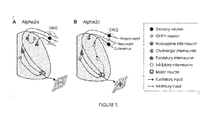
- the ⁇ -2a receptor subtype is predominantly expressed on myelinated proprioceptive and cutaneous afferent neurons located in dorsal root ganglions (DRG), on nociceptive inhibitory interneurons and cholinergic excitatory interneurons ("partition cells").
- the ⁇ 2c receptor subtype is mostly expressed on nociceptive primary afferent neurons and excitatory cutaneous interneurons.
- blocking the ⁇ 2a receptor subtype provides for a clear facilitation in walking, while a similar facilitation is obtained by stimulating the ⁇ 2c receptor subtype.
- a pharmaceutical composition comprising at least one molecule selectively targeting an ⁇ 2 adrenergic receptor subtype selected from the group consisting of ⁇ 2c and ⁇ 2a for use for facilitating standing and walking in a subject affected by a spinal cord disorder.
- said spinal cord disorder is spinal cord injury.
- said composition comprises an ⁇ 2c adrenergic receptor agonist.
- said composition comprises an ⁇ 2a adrenergic receptor antagonist.
- the composition of the invention comprises both an ⁇ 2c adrenergic receptor agonist and an ⁇ 2a adrenergic receptor antagonist.
- the ⁇ 2a adrenergic receptor antagonist can be administered in combination with an ⁇ 2 non-specific receptor agonist, for example clonidine, in order to obtain a more marked facilitation of locomotion.
- an ⁇ 2 non-specific receptor agonist for example clonidine
- said composition comprises an ⁇ 2a adrenergic receptor antagonist as the molecule selectively targeting an ⁇ 2 adrenergic receptor subtype and an ⁇ 2 non-specific receptor agonist.
- compositions of the invention are herein referred to also as cocktails.
- Alpha-adrenergic agonists are a class of sympathomimetic agents that selectively stimulates alpha-adrenergic receptors.
- An ⁇ 2c agonist is an agent that stimulates the ⁇ 2c receptor.
- an agonist specific for the ⁇ 2c adrenergic receptor suitable for the present invention is ( R )-3-Nitrobiphenyline.
- ( R )-3-Nitrobiphenyline is a drug which acts as an ⁇ 2-adrenergic agonist, predominantly for the ⁇ 2c subtype, but as well as being a weak antagonist at the ⁇ 2a and ⁇ 2b subtypes ( Crassous PA, Cardinaletti C, Carrieri A, Bruni B, Di Vaira M, Gentili F, Ghelfi F, Giannella M, Paris H, Piergentili A, Quaglia W, Schaak S, Vesprini C, Pigini M (August 2007).
- the ⁇ 2 adrenergic receptor agonist is preferably clonidine.
- a pharmaceutical composition comprising an ⁇ 2a adrenergic receptor antagonist
- it is preferably BRL-44408 (2-[(4,5-Dihydro-1H-imidazol-2-yl)methyl]-2,3-dihydro-1-methyl-1H-isoindole)
- Novel alpha 2-adrenoceptor antagonists show selectivity for alpha 2A- and alpha 2B-adrenoceptor subtypes. Young P, Berge J, Chapman H, Cawthorne MA. Eur J Pharmacol. 1989 Sep 22;168(3):381-6 ).
- a robotic interface capable of evaluating, enabling and training motor pattern generation and balance in subjects with neuromotor impairments, or any other means for rehabilitation of locomotor functions, in particular for restoring voluntary control of locomotion can also be used together with any of the pharmaceutical compositions of the invention for facilitating locomotion and restoring standing and walking in subjects with spinal cord disorders.
- the combination of pharmacological stimulation through the compositions of the invention with a robotic training and optionally also with an epidural electrical stimulation allows for the restoring of voluntary control of locomotion.
- compositions or of the kits-of-parts of the invention in combination with a robotic interface and optionally in further combination with a device for epidural electrical stimulation, for use for restoring voluntary control of locomotion in a subject with a spinal cord disorder.
- Said robotic interface is, for example, an automated, servocontrolled body weight support system.
- steps a-c of said method can be performed simultaneously, sequentially or in any desired order.
- a 5-HT1 and/or 5-HT7 serotonergic agonist can be used in combination with the active agents of the invention for facilitating and also restoring standing and walking in a subject affected by a spinal cord disorder.
- said agonist is 8-OHDPAT.
- 8-OHDPAT is a 5-HT-1,7 agonist commonly used in experimental models such as laboratory animals, for example rat, for training, facilitating and/or restoring locomotion ( Controlling specific locomotor behaviors through multidimensional monoaminergic modulation of spinal circuitries. Musienko P, van den Brand R,Marchendorfer O, Roy RR, Gerasimenko Y, Edgerton VR, Courtine GJ. Neurosci. 2011 Jun 22;31(25):9264-78 ). It has been found that when 8-OHDPAT is used in combination with the ⁇ 2c stimulation or the ⁇ 2a blocking or both of them, a further facilitation of locomotion is observed.
- the composition of the invention comprises an ⁇ 2c agonist and a 5-HT1 and/or 5-HT7 serotonergic agonist or an ⁇ 2a antagonist and a 5-HT1 and/or 5-HT7 serotonergic agonist or an ⁇ 2c agonist and an ⁇ 2a antagonist and a 5-HT1 and/or 5-HT7 serotonergic agonist or an ⁇ 2 agonist and an ⁇ 2a antagonist and a 5-HT1 and/or 5-HT7 serotonergic agonist.
- a method of treatment of a spinal cord disorder comprising selectively targeting an ⁇ 2 adrenergic receptor subtype selected from the group consisting of ⁇ 2c and ⁇ 2a in a subject in need thereof is also an object of the present invention.
- the ⁇ 2c receptor subtype can be selectively stimulated by administering a specific ⁇ 2c agonist while the ⁇ 2a subtype can be selectively blocked by administering an ⁇ 2a antagonist.
- a combination of an ⁇ 2c agonist and an ⁇ 2a antagonist can be administered.
- an unspecific ⁇ 2 agonist can also be administered in said method of treatment in combination with a specific ⁇ 2a antagonist.
- the method of the invention thus provides for administration of an ⁇ 2c adrenergic receptor agonist and/or an ⁇ 2a adrenergic receptor antagonist to a patient with a spinal cord disorder due to an injury to the spinal cord or other conditions, leading to loss of locomotor activity, in an amount effective to treat and improve the injury or condition, in particular effective for facilitating and also restoring standing and walking.
- an unspecific ⁇ 2 agonist can be administered together with an ⁇ 2a antagonist.
- All said compositions optionally further comprise a 5-HT1 and/or 5-HT7 serotonergic agonist, preferably 8-OHDPAT.
- An effective amount is an amount which significantly improves and/or enhances locomotor function. This is readily established by a skilled practitioner based on before and after comparisons of the patient's condition using any known means.
- the therapeutically effective dose can be estimated initially in animal models, usually mice, rats, guinea pigs, rabbits, dogs, pigs or monkeys.
- suitable dosages for a composition of an ⁇ 2a antagonist and an ⁇ 2 agonist for rat and cat are 4-5 mg/kg of ⁇ 2a antagonist i/p and 0.4 mg/kg of ⁇ 2 agonist.
- the animal model may also be used to determine the appropriate dose range. Such information can then be used to determine useful doses and routes for administration in humans.
- HED Human Equivalent Dose
- compositions are in the form of a preparation for intrathecal and systemic administration, but other forms are equally suitable for carrying out the present invention.
- the person skilled in the art will decide the effective time of administration, depending on the patient's conditions, degree of severity of the disease, response of the patient and any other clinical parameter within the general knowledge of this matter.
- a preferred administration route is injection.
- the skilled in the art can decide to administer the compositions of the invention through any suitable route.
- compositions according to the present invention contain, along with the active ingredient, at least one pharmaceutically acceptable vehicle or excipient.
- pharmaceutically acceptable vehicle or excipient may be particularly useful formulation coadjuvants, e.g. solubilising agents, dispersing agents, suspension agents, and emulsifying agents.
- compositions for use in the present invention are well within the normal skill of the ordinary practitioner in the art. General knowledge is sufficient to provide any information for carrying out this aspect of the invention. Reference can be made to Remington's Pharmaceutical Sciences Handbook, last editi on or any other equivalent textbook and manual.
- Kit-of-parts are also provided with the present invention.
- a kit-of-parts comprising an ⁇ 2c adrenergic receptor agonist and an ⁇ 2a adrenergic receptor antagonist in separate or unitary unit doses is a further embodiment of the present invention.
- Said unit doses can be administered separately, simultaneously or sequentially.
- the two compounds are administered sequentially in separate unit doses, wherein the unit comprising the ⁇ 2a adrenergic receptor antagonist is administered before the unit comprising the ⁇ 2c adrenergic receptor agonist.
- a kit-of-parts comprising an ⁇ 2 adrenergic receptor agonist and an ⁇ 2a adrenergic receptor antagonist in separate or unitary unit doses is also an other embodiment of the present invention.
- Said unit doses can be administered separately, simultaneously or sequentially.
- the two unit doses are administered sequentially, wherein the unit comprising the a2a adrenergic receptor antagonist is administered before the unit comprising the ⁇ 2 adrenergic receptor agonist.
- the unit dose comprising the ⁇ 2 agonist for example clonidine
- the unit dose comprising the ⁇ 2a antagonist is administered simultaneously with the unit dose comprising the ⁇ 2a antagonist, since the ⁇ 2a antagonist effect is faster then the ⁇ 2 agonist effect.
- kit-of parts above described can also further comprise a 5-HT1 and/or 5-HT7 serotonergic agonist, preferably 8-OHDPAT, optionally in a separate unit dose.
- said unit dose is administered separately, simultaneously or sequentially with the unit dose comprising the ⁇ 2c agonist or the ⁇ 2 agonist or the ⁇ 2a antagonist. In a preferred embodiment, it is administered simultaneously.
- Unit-dose forms refers to physically discrete units suitable for human and animal subjects and packaged individually as is known in the art. Each unit-dose contains a predetermined quantity of the therapeutically active compound sufficient to produce the desired therapeutic effect, in association with the required pharmaceutical carrier, vehicle or diluent.
- mice were conducted on adult female Sprague Dawley (300 g body weight). Functional testings in mice were carried out in ⁇ 2a and ⁇ 2c knockout animals aged 3-5 months, from both gender, obtained from L. Hein (University of Freiburg, Germany). The generation of the mouse lines lacking ⁇ 2-adrenoreceptor subtypes has been previously described in detail ( Abnormal regulation of the sympathetic nervous system in alpha2A-adrenergic receptor knockout mice. Altman JD, Trendelenburg AU, MacMillan L, Bernstein D, Limbird L, Starke K, Kobilka BK, Hein L. Mol Pharmacol.
- Link RE Stevens MS, Kulatunga M, Scheinin M, Barsh GS, Kobilka BK. Mol Pharmacol. 1995 Jul;48(1):48-55 ; Cardiovascular regulation in mice lacking alpha2-adrenergic receptor subtypes b and c.
- Link RE Desai K, Hein L, Stevens ME, Chruscinski A, Bernstein D, Barsh GS, Kobilka BK. Science. 1996 Aug 9;273(5276):803-5 ).
- BAC transgenic mice expressing the reporter protein GFP upstream the coding sequence of the ⁇ 2a or ⁇ 2c receptor subtype (strains 014248-UCD and 030098-UCD MMRRC, USA). All procedures were approved by the Veterinary Office of the Canton of Vaud, Switzerland. Animals were housed individually on a 12 h light/dark cycle, with access to food and water ad libitum.
- Bipolar intramuscular EMG electrodes using the same wire type as above were inserted bilaterally in the midbelly of the tibialis anterior (TA), midbelly of the vastus lateralis (VL), distal deep compartment of the semitendinosus (St), and medial deep region of the medial gastrocnemius (MG) muscles. All electrode wires were connected to a percutaneous amphenol connector cemented to the rat skull. In the same surgical intervention, the spinal cord was transected completely at a midthoracic level (T7) (Courtine et al., 2009).
- monopolar rectangular pulses (0.2 ms duration) were delivered at 40 Hz using two constant-current stimulators (AM Systems) connected to the electrodes positioned at L2 and S1.
- the stimulation was delivered between the active electrode (L2 or S1) and an indifferent ground located subcutaneously on the lateral aspect of the body.
- the frequency and intensity of stimulation was adjusted (40 Hz, 0.2 ms, 50 - 200 ⁇ A) to obtain optimal facilitation of stepping visually. All experimental testing followed the same protocol.
- Each testing session consisted of a series of 10 - 20 steps first with spontaneous locomotion and then with EES alone, followed (10 min later) by a series of 10 - 20 steps with or without EES under a given pharmacological agent ( Figure 1A ).
- EMG EMG signals (2 kHz) were amplified, filtered (10-1000 Hz bandpass), stored, and analyzed offline to compute the amplitude, duration, and timing of individual bursts (Courtine et al., 2009).
- PC principal component
- the ⁇ 2a antagonist BRL-44408 (4-5 mg/kg) conversely improved locomotion ( Figure 2B ), modulating various parameters in opposite directions compared with clonidine ( Figure 3 ).
- Blocking ⁇ 2a receptors reduced paw dragging ( Figure 3 ) and substantially improved the step height.
- KO mice knockout mice. Electrical epidural stimulation was applied as described in Example 1. Two groups of spinal mice lacking ⁇ 2a or ⁇ 2c receptors were injected with clonidine, a non specific agonist of the alpha 2 receptor subtypes ( Figure 4 ). In the ⁇ 2a KO mice, clonidine injection triggered a facilitation of the locomotor function, an increase of the movement magnitudes of the hindlimb joints as well as an improvement of locomotor stability ( Figure 4A ). Conversely, clonidine injection in ⁇ 2c KO mice resulted in a significant blocking of the locomotor abilities of the animal ( Figure 4B ).
- Alpha 2 receptors subtypes a and c are predominantly inhibitory.
- the ⁇ 2a receptor subtype is predominantly expressed on myelinated proprioceptive and cutaneous afferent neurons located in dorsal root ganglions (DRG), on nociceptive inhibitory interneurons and cholinergic excitatory interneurons.
- DRG dorsal root ganglions
- BRL-44408 the specific 2a antagonist
- the ⁇ 2c receptor subtype is mostly expressed on nociceptive primary afferent neurons and excitatory cutaneous interneurons.
- the ⁇ 2c subtype is mostly expressed on nociceptive primary afferent neurons and excitatory cutaneous interneurons ( Figure 5B ).
- the locomotor pattern is tremendously facilitated.
- ⁇ 2a and ⁇ 2c noradrenergic receptors subtypes are distributed on counteracting neuronal pathways and play opposite roles in the control of locomotor functions.
- Stimulation of the ⁇ 2a subtype significantly impaired the spinal locomotor network whereas ⁇ 2c receptor activation had a clearly facilitating effect.
- Simultaneous suppression of the ⁇ 2a receptors by BRL-44408 and ⁇ 2c receptors activation by Clonidine remarkably recovered the locomotor function in the previously paralyzed mice, rats and cats.
Landscapes
- Health & Medical Sciences (AREA)
- Life Sciences & Earth Sciences (AREA)
- Animal Behavior & Ethology (AREA)
- General Health & Medical Sciences (AREA)
- Public Health (AREA)
- Veterinary Medicine (AREA)
- Chemical & Material Sciences (AREA)
- Medicinal Chemistry (AREA)
- Pharmacology & Pharmacy (AREA)
- Epidemiology (AREA)
- Biomedical Technology (AREA)
- Engineering & Computer Science (AREA)
- Nuclear Medicine, Radiotherapy & Molecular Imaging (AREA)
- Radiology & Medical Imaging (AREA)
- Neurosurgery (AREA)
- Neurology (AREA)
- Heart & Thoracic Surgery (AREA)
- Orthopedic Medicine & Surgery (AREA)
- Cardiology (AREA)
- Physical Education & Sports Medicine (AREA)
- Dermatology (AREA)
- Bioinformatics & Cheminformatics (AREA)
- Chemical Kinetics & Catalysis (AREA)
- General Chemical & Material Sciences (AREA)
- Organic Chemistry (AREA)
- Pharmaceuticals Containing Other Organic And Inorganic Compounds (AREA)
- Medicines That Contain Protein Lipid Enzymes And Other Medicines (AREA)
Priority Applications (3)
| Application Number | Priority Date | Filing Date | Title |
|---|---|---|---|
| EP20130174477 EP2821072A1 (fr) | 2013-07-01 | 2013-07-01 | Stimulation pharmacologique afin de faciliter et restaurer des fonctions pour se tenir debout et marcher dans des troubles de la moelle épinière |
| PCT/EP2014/063654 WO2015000800A1 (fr) | 2013-07-01 | 2014-06-27 | Stimulation pharmacologique pour faciliter et restaurer les fonctions de position debout et de marche dans des troubles moteurs liés à la moelle épinière |
| US14/902,556 US10632105B2 (en) | 2013-07-01 | 2014-06-27 | Pharmacological stimulation to facilitate and restore standing and walking functions in spinal cord motor disorders |
Applications Claiming Priority (1)
| Application Number | Priority Date | Filing Date | Title |
|---|---|---|---|
| EP20130174477 EP2821072A1 (fr) | 2013-07-01 | 2013-07-01 | Stimulation pharmacologique afin de faciliter et restaurer des fonctions pour se tenir debout et marcher dans des troubles de la moelle épinière |
Publications (1)
| Publication Number | Publication Date |
|---|---|
| EP2821072A1 true EP2821072A1 (fr) | 2015-01-07 |
Family
ID=48698959
Family Applications (1)
| Application Number | Title | Priority Date | Filing Date |
|---|---|---|---|
| EP20130174477 Withdrawn EP2821072A1 (fr) | 2013-07-01 | 2013-07-01 | Stimulation pharmacologique afin de faciliter et restaurer des fonctions pour se tenir debout et marcher dans des troubles de la moelle épinière |
Country Status (3)
| Country | Link |
|---|---|
| US (1) | US10632105B2 (fr) |
| EP (1) | EP2821072A1 (fr) |
| WO (1) | WO2015000800A1 (fr) |
Families Citing this family (20)
| Publication number | Priority date | Publication date | Assignee | Title |
|---|---|---|---|---|
| CA2823592C (fr) | 2011-01-03 | 2021-11-23 | The Regents Of The University Of California | Stimulation epidurale a haute densite pour faciliter la locomotion, la posture, le mouvement volontaire et le retablissement de la fonction d'autonomie, sexuelle, vasomotrice et c ognitive apres lesion neurologique |
| JP2014533183A (ja) | 2011-11-11 | 2014-12-11 | ニューロイネイブリング テクノロジーズ インコーポレイテッド | 運動神経、感覚、自律、性的、血管運動および認知機能の回復を可能にするための非侵襲性神経調節装置 |
| AU2014228794B2 (en) | 2013-03-15 | 2019-04-18 | The Regents Of The University Of California | Multi-site transcutaneous electrical stimulation of the spinal cord for facilitation of locomotion |
| US10137299B2 (en) | 2013-09-27 | 2018-11-27 | The Regents Of The University Of California | Engaging the cervical spinal cord circuitry to re-enable volitional control of hand function in tetraplegic subjects |
| US11077009B2 (en) | 2015-07-03 | 2021-08-03 | Ecole Polytechnique Federale De Lausanne (Epfl) | Apparatus to apply forces in a three-dimensional space |
| US11097122B2 (en) | 2015-11-04 | 2021-08-24 | The Regents Of The University Of California | Magnetic stimulation of the spinal cord to restore control of bladder and/or bowel |
| US10981004B2 (en) | 2015-12-22 | 2021-04-20 | Ecole Polytechnique Federale De Lausanne (Epfl) | System for selective spatiotemporal stimulation of the spinal cord |
| EP4378520A1 (fr) | 2015-12-22 | 2024-06-05 | Ecole Polytechnique Fédérale de Lausanne (EPFL) | Système de stimulation spatio-temporelle sélective de la moelle épinière |
| US11235154B2 (en) | 2017-02-17 | 2022-02-01 | The University Of British Columbia | Apparatus and methods for maintaining physiological functions |
| WO2018217791A1 (fr) | 2017-05-23 | 2018-11-29 | The Regents Of The University Of California | Accès aux réseaux spinaux dans le traitement de la dysfonction sexuelle |
| DE20168827T1 (de) | 2017-06-30 | 2021-01-21 | Gtx Medical B.V. | System zur neuromodulierung |
| US12357828B2 (en) | 2017-12-05 | 2025-07-15 | Ecole Polytechnique Federale De Lausanne (Epfl) | System for planning and/or providing neuromodulation |
| ES3058711T3 (en) | 2017-12-05 | 2026-03-12 | Ecole Polytechnique Fed Lausanne Epfl | A system for planning and/or providing neuromodulation |
| JP2021534877A (ja) | 2018-08-23 | 2021-12-16 | ザ リージェンツ オブ ザ ユニバーシティ オブ カリフォルニアThe Regents Of The University Of California | 神経根麻痺、馬尾症候群、及び上肢機能の回復のための非侵襲性脊髄刺激 |
| DE18205817T1 (de) | 2018-11-13 | 2020-12-24 | Gtx Medical B.V. | Sensor in bekleidung von gliedmassen oder schuhwerk |
| ES2911465T3 (es) | 2018-11-13 | 2022-05-19 | Onward Medical N V | Sistema de control para la reconstrucción y/o restauración del movimiento de un paciente |
| EP3695878B1 (fr) | 2019-02-12 | 2023-04-19 | ONWARD Medical N.V. | Système de neuromodulation |
| DE19211698T1 (de) | 2019-11-27 | 2021-09-02 | Onward Medical B.V. | Neuromodulation system |
| EP3827875B1 (fr) | 2019-11-27 | 2023-07-05 | ONWARD Medical N.V. | Systeme de neuromodulation |
| WO2021206741A1 (fr) * | 2020-04-09 | 2021-10-14 | Delahoussaye Kevin | Modulation de la concentration en neurotransmetteurs |
Citations (9)
| Publication number | Priority date | Publication date | Assignee | Title |
|---|---|---|---|---|
| WO2002003918A2 (fr) | 2000-07-07 | 2002-01-17 | New York Medical College | Traitement de pathologies neurales resultant de lesions de la moelle epiniere ou d'autres causes |
| US20030139422A1 (en) * | 2000-03-14 | 2003-07-24 | The Children's Medical Center Corporation | Method for improving respiratory function and inhibiting muscular degeneration |
| US20050059664A1 (en) | 2003-09-12 | 2005-03-17 | Allergan, Inc. | Novel methods for identifying improved, non-sedating alpha-2 agonists |
| US20060293359A1 (en) | 2003-06-25 | 2006-12-28 | Allergan, Inc. | Methods and compositions for the treatment of diabetes |
| WO2007057508A2 (fr) * | 2005-11-18 | 2007-05-24 | Orion Corporation | Traitement de la douleur |
| US20090202518A1 (en) * | 2005-05-13 | 2009-08-13 | The Feinstein Institute Of Medical Research | Treatment of sepsis and inflammation with alpha2A Adrenergic antagonists |
| US20110160253A1 (en) | 2008-05-28 | 2011-06-30 | Harbeson Scott L | Deuterated tizanidine |
| US20110160265A1 (en) | 2007-10-18 | 2011-06-30 | Luhrs Lauren M B | Method of treating motor disorders with alpha-2b adrenergic receptor agonists |
| EP2351561A2 (fr) | 2002-05-21 | 2011-08-03 | Allergan, Inc. | Nouvelles méthodes et compositions pour alléger la douleur |
Family Cites Families (11)
| Publication number | Priority date | Publication date | Assignee | Title |
|---|---|---|---|---|
| US4742054A (en) * | 1982-11-23 | 1988-05-03 | Naftchi Nosrat E | Treatment of mammals suffering from damage to the central nervous system |
| US5958933A (en) * | 1982-11-23 | 1999-09-28 | Naftchi; N. Eric | Neurologically active compounds and compounds with multiple activities |
| AU2895192A (en) * | 1992-10-23 | 1994-05-24 | Regents Of The University Of California, The | Substances having the growth-promoting effect of amyloid precursor protein |
| US6281207B1 (en) * | 1999-09-15 | 2001-08-28 | Reed Richter | Treatment of movement disorders by administration of mirtazapine |
| AU2001255448A1 (en) * | 2000-04-17 | 2001-10-30 | Stephen B. Liggett | Alpha-2 adrenergic receptor polymorphisms |
| US7091232B2 (en) * | 2002-05-21 | 2006-08-15 | Allergan, Inc. | 4-(substituted cycloalkylmethyl) imidazole-2-thiones, 4-(substituted cycloalkenylmethyl) imidazole-2-thiones, 4-(substituted cycloalkylmethyl) imidazol-2-ones and 4-(substituted cycloalkenylmethyl) imidazol-2-ones and related compounds |
| WO2006026850A1 (fr) * | 2004-09-07 | 2006-03-16 | Universite Laval | Composition et procede permettant d'induire ou de restaurer des fonctions locomotrices chez l'animal |
| EP1858502A1 (fr) * | 2005-03-04 | 2007-11-28 | Acure Pharma AB | Méthodes et préparations pharmaceutiques pour le traitement de dégâts neurologiques |
| US7462138B2 (en) | 2005-07-01 | 2008-12-09 | The University Of Hartford | Ambulatory suspension and rehabilitation apparatus |
| US7856264B2 (en) | 2005-10-19 | 2010-12-21 | Advanced Neuromodulation Systems, Inc. | Systems and methods for patient interactive neural stimulation and/or chemical substance delivery |
| EP2114906B1 (fr) * | 2007-02-02 | 2014-08-06 | F. Hoffmann-La Roche AG | Composés de 2-aminooxazoline comme ligands du taar1 pour des troubles du snc |
-
2013
- 2013-07-01 EP EP20130174477 patent/EP2821072A1/fr not_active Withdrawn
-
2014
- 2014-06-27 US US14/902,556 patent/US10632105B2/en active Active
- 2014-06-27 WO PCT/EP2014/063654 patent/WO2015000800A1/fr not_active Ceased
Patent Citations (10)
| Publication number | Priority date | Publication date | Assignee | Title |
|---|---|---|---|---|
| US20030139422A1 (en) * | 2000-03-14 | 2003-07-24 | The Children's Medical Center Corporation | Method for improving respiratory function and inhibiting muscular degeneration |
| WO2002003918A2 (fr) | 2000-07-07 | 2002-01-17 | New York Medical College | Traitement de pathologies neurales resultant de lesions de la moelle epiniere ou d'autres causes |
| US7135497B1 (en) * | 2000-07-07 | 2006-11-14 | New York Medical College | Treating neural conditions resulting from spinal cord contusions and other causes |
| EP2351561A2 (fr) | 2002-05-21 | 2011-08-03 | Allergan, Inc. | Nouvelles méthodes et compositions pour alléger la douleur |
| US20060293359A1 (en) | 2003-06-25 | 2006-12-28 | Allergan, Inc. | Methods and compositions for the treatment of diabetes |
| US20050059664A1 (en) | 2003-09-12 | 2005-03-17 | Allergan, Inc. | Novel methods for identifying improved, non-sedating alpha-2 agonists |
| US20090202518A1 (en) * | 2005-05-13 | 2009-08-13 | The Feinstein Institute Of Medical Research | Treatment of sepsis and inflammation with alpha2A Adrenergic antagonists |
| WO2007057508A2 (fr) * | 2005-11-18 | 2007-05-24 | Orion Corporation | Traitement de la douleur |
| US20110160265A1 (en) | 2007-10-18 | 2011-06-30 | Luhrs Lauren M B | Method of treating motor disorders with alpha-2b adrenergic receptor agonists |
| US20110160253A1 (en) | 2008-05-28 | 2011-06-30 | Harbeson Scott L | Deuterated tizanidine |
Non-Patent Citations (26)
| Title |
|---|
| ALTMAN JD; TRENDELENBURG AU; MACMILLAN L; BERNSTEIN D; LIMBIRD L; STARKE K; KOBILKA BK; HEIN L: "Abnormal regulation of the sympathetic nervous system in alpha2A-adrenergic receptor knockout mice", MOL PHARMACOL., vol. 56, no. 1, July 1999 (1999-07-01), pages 154 - 61 |
| BARBEAU; CHAU; ROSSIGNOL: "Noradrenergic agonists and locomotor training affect locomotor recovery after cord transection in adult cats", BRAIN RES BULL, vol. 30, no. 3-4, 1993, pages 387 - 93 |
| CHAU C; BARBEAU H; ROSSIGNOL S: "Effects of intrathecal apha1- and alpha2-noradrenergic agonists and norepinephrine on locomotion in chronic spinal cats", J NEUROPHYSIOL., vol. 79, no. 6, June 1998 (1998-06-01), pages 2941 - 63 |
| CHRISTOPHER K. THOMPSON ET AL: "Methods to Quantify Pharmacologically Induced Alterations in Motor Function in Human Incomplete SCI", JOURNAL OF VISUALIZED EXPERIMENTS, no. 50, 18 April 2011 (2011-04-18), XP055095100, ISSN: 1940-087X, DOI: 10.3791/2148 * |
| COURTINE G; GERASIMENKO Y; VAN DEN BRAND R; YEW A; MUSIENKO P; ZHONG H; SONG B; AO Y; ICHIYAMA RM; LAVROV , ROY RR: "Transformation of nonfunctional spinal circuits into functional states after the loss of brain input", NAT NEUROSCI., vol. 12, no. 10, October 2009 (2009-10-01), pages 1333 - 42 |
| COURTINE G; ROY RR; HODGSON J; MCKAY H; RAVEN J; ZHONG H; YANG H; TUSZYNSKI MH; EDGERTON VR: "Kinematic and EMG determinants in quadrupedal locomotion of a non-human primate (Rhesus", J NEUROPHYSIOL., vol. 93, no. 6, June 2005 (2005-06-01), pages 3127 - 45 |
| COURTINE G; SONG B; ROY RR; ZHONG H; HERRMANN JE; AO Y; QI J; EDGERTON VR; SOFRONIEW MV: "Recovery of supraspinal control of stepping via indirect propriospinal relay connections after spinal cord injury", NAT MED., vol. 14, no. 1, January 2008 (2008-01-01), pages 69 - 74 |
| COURTINE, G. ET AL.: "Transformation of nonfunctional spinal circuits into functional states after the loss of brain input", NAT NEUROSCI, vol. 12, 2009, pages 1333 - 1342 |
| CRASSOUS PA; CARDINALETTI C; CARRIERI A; BRUNI B; DI VAIRA M; GENTILI F; GHELFI F; GIANNELLA M; PARIS H; PIERGENTILI A: "Alpha2- adrenoreceptors profile modulation. 3.1 (R)-(+)-m-nitrobiphenyline, a new efficient and alpha2C- subtype selective agonist", JOURNAL OF MEDICINAL CHEMISTRY, vol. 50, no. 16, August 2007 (2007-08-01), pages 3964 - 8 |
| DIETZ V; COLOMBO G; JENSEN L; BAUMGARTNER L: "Locomotor capacity of spinal cord in paraplegic patients", ANN NEUROL., vol. 37, no. 5, May 1995 (1995-05-01), pages 574 - 82 |
| DOMINGO ANTOINETTE ET AL: "A Systematic Review of the Effects of Pharmacological Agents on Walking Function in People with Spinal Cord Injury", JOURNAL OF NEUROTRAUMA, vol. 29, no. 5, March 2012 (2012-03-01), pages 865 - 879, XP002718353 * |
| DOMINICI N; KELLER U; VALLERY H; FRIEDLI L; VAN DEN BRAND R; STARKEY ML; MUSIENKO P; RIENER R: "Versatile robotic interface to evaluate, enable and train locomotion and balance after neuromotor disorders", NAT MED., vol. 18, no. 7, July 2012 (2012-07-01), pages 1142 - 7 |
| GRILLNER S; ZANGGER P: "On the central generation of locomotion in the low spinal cat", EXP BRAIN RES., 1979 |
| HARKEMA, S.J. ET AL.: "Human lumbosacral spinal cord interprets loading during stepping", J NEUROPHYSIOL, vol. 77, 1997, pages 797 - 811 |
| LAVROV , DY CJ; FONG AJ; GERASIMENKO Y; COURTINE G; ZHONG H; ROY RR; EDGERTON VR: "Epidural stimulation induced modulation of spinal locomotor networks in adult spinal rats", J NEUROSCI., 2008 |
| LINK RE; DESAI K; HEIN L; STEVENS ME; CHRUSCINSKI A; BERNSTEIN D; BARSH GS; KOBILKA BK: "Cardiovascular regulation in mice lacking alpha2-adrenergic receptor subtypes b and c", SCIENCE, vol. 273, no. 5276, 9 August 1996 (1996-08-09), pages 803 - 5 |
| LINK RE; STEVENS MS; KULATUNGA M; SCHEININ M; BARSH GS; KOBILKA BK: "Targeted inactivation of the gene encoding the mouse alpha 2c-adrenoceptor homolog", MOL PHARMACOL., vol. 48, no. 1, July 1995 (1995-07-01), pages 48 - 55 |
| MUSIENKO P; VAN DEN BRAND R; MARZENDORFER O; ROY RR; GERASIMENKO Y; EDGERTON VR; COURTINE G.: "Controlling specific locomotor behaviors through multidimensional monoaminergic modulation of spinal circuitries", J NEUROSCIENCE, vol. 31, no. 25, 22 June 2011 (2011-06-22), pages 9264 - 78 |
| MUSIENKO P; VAN DEN BRAND R; MARZENDORFER O; ROY RR; GERASIMENKO Y; EDGERTON VR; COURTINE GJ: "Controlling specific locomotor behaviors through multidimensional monoaminergic modulation of spinal circuitries", NEUROSCI., vol. 31, no. 25, 22 June 2011 (2011-06-22), pages 9264 - 78 |
| NATHALIE GIROUX ET AL: "Autoradiographic study of ?1- and ?2-noradrenergic and serotonin1A receptors in the spinal cord of normal and chronically transected cats", THE JOURNAL OF COMPARATIVE NEUROLOGY, vol. 406, no. 3, 12 April 1999 (1999-04-12), pages 402 - 414, XP055094949, ISSN: 0021-9967, DOI: 10.1002/(SICI)1096-9861(19990412)406:3<402::AID-CNE8>3.0.CO;2-F * |
| PARAG GAD ET AL: "Development of a multi-electrode array for spinal cord epidural stimulation to facilitate stepping and standing after a complete spinal cord injury in adult rats", JOURNAL OF NEUROENGINEERING AND REHABILITATION, BIOMED CENTRAL, LONDON, GB, vol. 10, no. 1, 21 January 2013 (2013-01-21), pages 2, XP021142278, ISSN: 1743-0003, DOI: 10.1186/1743-0003-10-2 * |
| PIERRE-ANTOINE CRASSOUS ET AL: "[alpha] 2 -Adrenoreceptors Profile Modulation. 3. 1 ( R )-(+)- m -Nitrobiphenyline, a New Efficient and [alpha] 2C -Subtype Selective Agonist", JOURNAL OF MEDICINAL CHEMISTRY, vol. 50, no. 16, 1 August 2007 (2007-08-01), pages 3964 - 3968, XP055094793, ISSN: 0022-2623, DOI: 10.1021/jm061487a * |
| PUKE M J C ET AL: "The spinal analgesic role of alpha2-adrenoceptor subtypes in rats after peripheral nerve section", EUROPEAN JOURNAL OF PHARMACOLOGY, ELSEVIER SCIENCE, NL, vol. 260, no. 2-3, 1 August 1994 (1994-08-01), pages 227 - 232, XP023750575, ISSN: 0014-2999, [retrieved on 19940801], DOI: 10.1016/0014-2999(94)90341-7 * |
| VAN DEN BRAND R; HEUTSCHI J; BARRAUD Q; DIGIOVANNA J; BARTHOLDI K; HUERLIMANN M; FRIEDLI L; VOLLENWEIDER; MORAUD EM; DUIS S, SCIENCE, vol. 336, no. 6085, 1 June 2012 (2012-06-01), pages 1182 - 5 |
| YOUNG P ET AL: "Novel alpha2-adrenoceptor antagonists show selectivity for alpha2A- and alpha2B-adrenoceptor subtypes", EUROPEAN JOURNAL OF PHARMACOLOGY, ELSEVIER SCIENCE, NL, vol. 168, no. 3, 22 September 1989 (1989-09-22), pages 381 - 386, XP025545064, ISSN: 0014-2999, [retrieved on 19890922] * |
| YOUNG P; BERGE J; CHAPMAN H; CAWTHORNE MA: "Novel alpha 2-adrenoceptor antagonists show selectivity for alpha 2A- and alpha 2B-adrenoceptor subtypes", EUR J PHARMACOL., vol. 168, no. 3, 22 September 1989 (1989-09-22), pages 381 - 6 |
Also Published As
| Publication number | Publication date |
|---|---|
| WO2015000800A1 (fr) | 2015-01-08 |
| US20160158204A1 (en) | 2016-06-09 |
| US10632105B2 (en) | 2020-04-28 |
Similar Documents
| Publication | Publication Date | Title |
|---|---|---|
| US10632105B2 (en) | Pharmacological stimulation to facilitate and restore standing and walking functions in spinal cord motor disorders | |
| US11202911B2 (en) | System to deliver adaptive epidural and/or subdural electrical spinal cord stimulation to facilitate and restore locomotion after a neuromotor impairment | |
| Musienko et al. | Controlling specific locomotor behaviors through multidimensional monoaminergic modulation of spinal circuitries | |
| Bouyer et al. | Contribution of cutaneous inputs from the hindpaw to the control of locomotion. I. Intact cats | |
| US10391015B2 (en) | Apparatus and method for restoring voluntary control of locomotion in neuromotor impairments | |
| Gerasimenko et al. | Epidural stimulation: comparison of the spinal circuits that generate and control locomotion in rats, cats and humans | |
| Shah et al. | Variability in step training enhances locomotor recovery after a spinal cord injury | |
| Chen et al. | Sequential therapy of anti-Nogo-A antibody treatment and treadmill training leads to cumulative improvements after spinal cord injury in rats | |
| US10279167B2 (en) | System to deliver adaptive epidural and/or subdural electrical spinal cord stimulation to facilitate and restore locomotion after a neuromotor impairment | |
| Gerasimenko et al. | Epidural spinal cord stimulation plus quipazine administration enable stepping in complete spinal adult rats | |
| Young | Spasticity: a review | |
| Stewart et al. | Modulation of locomotor patterns and spasticity with clonidine in spinal cord injured patients | |
| Barthélemy et al. | Nonlocomotor and locomotor hindlimb responses evoked by electrical microstimulation of the lumbar cord in spinalized cats | |
| Oza et al. | Trunk robot rehabilitation training with active stepping reorganizes and enriches trunk motor cortex representations in spinal transected rats | |
| S. ofstoetter et al. | Probing the human spinal locomotor circuits by phasic step-induced feedback and by tonic electrical and pharmacological neuromodulation | |
| Frigon et al. | Differential modulation of crossed and uncrossed reflex pathways by clonidine in adult cats following complete spinal cord injury | |
| Ichihara et al. | Neuromuscular electrical stimulation of the hindlimb muscles for movement therapy in a rodent model | |
| Frigon | The cat model of spinal cord injury | |
| Askari et al. | The effect of timing electrical stimulation to robotic-assisted stepping on neuromuscular activity and associated kinematics | |
| Bretzner et al. | Functional contribution of glutamatergic neurons of medullary reticular nuclei to locomotor recovery after spinal cord injury | |
| Dorofeev et al. | The role of cutaneous afferents in controlling locomotion evoked by epidural stimulation of the spinal cord in decerebrate cats | |
| Heffernan et al. | The Orthotic Effect of Functional Electrical Stimulation on Reactive Stepping for People With Incomplete Spinal Cord Injury | |
| Knikou et al. | Probing the human spinal locomotor circuits by phasic step-induced feedback and by tonic electrical and pharmacological neuromodulation | |
| Hsieh | Robot-driven epidural spinal cord stimulation compared with conventional stimulation in adult spinalized rats | |
| Kuczynski | Lack of recovery of left-right symmetry during prolonged asymmetrical locomotion in the intact and chronic spinal-transected adult cat |
Legal Events
| Date | Code | Title | Description |
|---|---|---|---|
| PUAI | Public reference made under article 153(3) epc to a published international application that has entered the european phase |
Free format text: ORIGINAL CODE: 0009012 |
|
| 17P | Request for examination filed |
Effective date: 20130701 |
|
| AK | Designated contracting states |
Kind code of ref document: A1 Designated state(s): AL AT BE BG CH CY CZ DE DK EE ES FI FR GB GR HR HU IE IS IT LI LT LU LV MC MK MT NL NO PL PT RO RS SE SI SK SM TR |
|
| AX | Request for extension of the european patent |
Extension state: BA ME |
|
| RIN1 | Information on inventor provided before grant (corrected) |
Inventor name: MUSIENKO, PAVEL Inventor name: COURTINE, GREGOIRE Inventor name: BARRAUD, QUENTIN |
|
| STAA | Information on the status of an ep patent application or granted ep patent |
Free format text: STATUS: THE APPLICATION IS DEEMED TO BE WITHDRAWN |
|
| 18D | Application deemed to be withdrawn |
Effective date: 20150708 |