EP2821501A1 - Verfahren und vorrichtung zur erkennung von mikrodeletion in einem chromosomalen sts-bereich - Google Patents
Verfahren und vorrichtung zur erkennung von mikrodeletion in einem chromosomalen sts-bereich Download PDFInfo
- Publication number
- EP2821501A1 EP2821501A1 EP12870229.7A EP12870229A EP2821501A1 EP 2821501 A1 EP2821501 A1 EP 2821501A1 EP 12870229 A EP12870229 A EP 12870229A EP 2821501 A1 EP2821501 A1 EP 2821501A1
- Authority
- EP
- European Patent Office
- Prior art keywords
- value
- ratio
- dna samples
- sequencing
- region
- Prior art date
- Legal status (The legal status is an assumption and is not a legal conclusion. Google has not performed a legal analysis and makes no representation as to the accuracy of the status listed.)
- Granted
Links
Images






Classifications
-
- C—CHEMISTRY; METALLURGY
- C12—BIOCHEMISTRY; BEER; SPIRITS; WINE; VINEGAR; MICROBIOLOGY; ENZYMOLOGY; MUTATION OR GENETIC ENGINEERING
- C12Q—MEASURING OR TESTING PROCESSES INVOLVING ENZYMES, NUCLEIC ACIDS OR MICROORGANISMS; COMPOSITIONS OR TEST PAPERS THEREFOR; PROCESSES OF PREPARING SUCH COMPOSITIONS; CONDITION-RESPONSIVE CONTROL IN MICROBIOLOGICAL OR ENZYMOLOGICAL PROCESSES
- C12Q1/00—Measuring or testing processes involving enzymes, nucleic acids or microorganisms; Compositions therefor; Processes of preparing such compositions
- C12Q1/68—Measuring or testing processes involving enzymes, nucleic acids or microorganisms; Compositions therefor; Processes of preparing such compositions involving nucleic acids
- C12Q1/6813—Hybridisation assays
- C12Q1/6827—Hybridisation assays for detection of mutation or polymorphism
Definitions
- Embodiments of the present disclosure generally relate to genetic engineering technology, more particularly to a method of detecting a micro-deletion in a sequence tagged site region of a chromosome and an apparatus thereof.
- Deletion is a phenomenon of occurring partial loss of chromosome or DNA molecules in a genome, which is one most important reason leading to genetic mutation.
- PCR Polymerase Chain Reaction
- STS sequence tagged site region of a chromosome
- the PCR technique is a method of selectively amplify certain of special region in DNA in vitro by means of simulating a pattern of DNA replication in vivo.
- Using PCR technique has advantages of rapidity and convenience when detecting a small amount of sites; besides it requires knowing the sequences at both ends of a certain region of DNA in advance for probe design, by which it requires that these micro-deletions in the sequence tagged site region of the chromosome should be reported in advance.
- detection using PCR technique may have a huge limitation; in addition, when the sequence tagged site region to be detected having a relative larger number of sites, or particularly when detecting, the traditional detection using PCR technique has been unable to meet such requirement, thus a novel method for research is further required.
- a main technical problem solved by the present disclosure is to provide a method of detecting a micro-deletion in a sequence tagged site region of a chromosome and an apparatus thereof, which may detect the micro-deletion in the sequence tagged site region of the chromosome when facing a large amount of samples with limited cost, and may also detect unreported micro-deletions in the sequence tagged site region of the chromosome.
- one technical solution used by the present disclosure is: providing a method of detecting a micro-deletion in a sequence tagged site region of a chromosome, which comprises:
- the step of analyzing the sequencing data using the mathematical statistics test further comprises:
- the step of subjecting the sequencing depth value of the sequence tagged site region to normalization further comprises:
- the step of detecting the outlier of the sequencing depth value of the sequence tagged site region further comprises:
- the method further comprises:
- step of detecting the outlier of the sequencing depth value of the sequence tagged site region further comprises:
- the step of detecting the outlier of the sequencing depth value of the sequence tagged site region further comprises:
- the step of obtaining the capture probe further comprises:
- the mixture library of the plurality of DNA samples is constructed by following steps:
- the DNA library is constructed by following steps:
- the method further comprises:
- the step of subjecting the sequencing data to the quality control further comprises:
- the step of filtering out the first unqualified data in the sequencing data, to obtain the first qualified sequencing data further comprises:
- the step of filtering out the second unqualified sequencing data further comprises:
- the step of filtering out the third unqualified sequencing data further comprises:
- an apparatus for detecting a micro-deletion in a sequence tagged site region of a chromosome which may comprises:
- the micro-deletion result obtaining device further comprises:
- the sequencing depth value normalizing unit is used in dividing all of the sequencing depth values of each of the plurality of DNA samples for a same region by an average depth value of each of the plurality of DNA samples, to obtain the normalized depth values of the plurality of DNA samples for the same region.
- the micro-deletion result obtaining unit further comprises:
- the micro-deletion obtaining unit still further comprises:
- the micro-deletion obtaining unit still further comprises:
- the micro-deletion obtaining unit still further comprises:
- the capture probe obtaining device further comprises:
- the apparatus provided by the present disclosure may further comprise a mixture library constructing device, wherein the mixture library constructing device further comprises:
- the apparatus provided by the present disclosure may further comprise a quality control device, wherein the quality control device further comprises:
- a further technical solution used by the present disclosure is: providing computer a readable medium comprising an order, configured to perform the above method by a processer.
- Advantages of the present disclosure may comprise: being different from the prior art, the method of detecting the micro-deletion in the sequence tagged site region of the chromosome and the apparatus thereof, by which obtains the capture probe covering an entire sequence tagged site region of a chromosome and captures DNA sequence of the sequence tagged site region from a plurality of DNA samples after being hybridized with a mixture library of the plurality of DNA samples, may efficiently and accurately detect reported or unreported micro-deletions in a sequence tagged site-related region of a chromosome with a large amount of DNA samples; besides the process of the analyzing the sequencing data using a mathematical statistics method is scientific, stable, with a high sensitivity, a low false positive rate, which may be used in effective analysis for the micro-deletions.
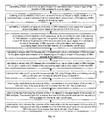
- Fig.1 is a flow chart showing a method of detecting a micro-deletion in a sequence tagged site region of a chromosome according to an embodiment of the present disclosure. As shown in Fig.1 , the method comprises:
- Sequence tagged-site is a short single-copy DNA sequence of known map location serving as a marker, which can be uniquely-mapped by PCR amplification, for producing a site for map-making, namely, detection with an order of a series of STS may make a map of a genomic region.
- a probe is a short single-strand DNA or RNA fragment (about 20 to 500 bp), for detecting a complementary nucleic acid sequence thereof.
- step 102 hybridizing the capture probe with a mixture library of a plurality of DNA samples, to capture the DNA sequence of the sequence tagged site region from the plurality of DNA samples.
- mixture libraries refers to all DNA sequences for sequencing obtained by mixing a plurality of DNA libraries for a plurality of single DNA samples. Specific steps for constructing the mixture library are described below in details.
- step 103 sequencing the captured DNA sequence of the sequence tagged site region to obtain sequencing data.
- step 104 analyzing the sequencing data using a mathematical statistics method, to obtain a result showing a presence or an absence of the micro-deletion in the sequence tagged site region of the chromosome in each of the plurality of DNA samples.
- Mathematical statistics is one branch of mathematics developing with a development of probability theory, studying on how to effectively optimize, arrange and analyze data affected by random factors, by which may infer or predict an issue under consideration, providing basis and suggestions for making a certain decision or taking a certain action.
- the step of obtaining the capture probe further comprises:
- DNA sequence of the sequence tagged site region in chromosome Y may be found based on the location coordinate.
- step 202 selecting a qualified DNA sequence of the sequence tagged site region meeting requirement for designing the capture probe.
- the capturing efficiency of a chip may be affected by repeatability and GC content of DNA sequence, which may resulting in error capture. Thus, it is very important to select a qualified DNA sequence meeting requirement for designing the capture probe.
- step 203 designing and synthesizing the capture probe based on the qualified DNA sequence.
- the capture probe generally has a length of 60 to 150 bp, GC content between a range of 40% to 70%.
- a plurality of probes are required for covering the entire DNA sequence, besides an overlap presents between two of the capture probes, in which the overlap general has a length of 20 bp.
- a location coordinate of DNA sequence in the sequence tagged site region of a chromosome is found in genomic database; and then the location coordinated is submitted to a company providing DNA capture service; and then designation and synthesis of the capture probe are completed by such company.
- the mixture library of the plurality of DNA samples is constructed by following steps:
- step 302 mixing the plurality of DNA libraries with a predetermined ratio.
- the plurality of DNA libraries may be mixed equally or with a predetermined ratio.
- step 303 determining the resulting mixture as the mixture library, if the resulting mixture meets a requirement of quality control.
- the mixture libraries of the plurality of DNA samples is subjecting to quantification, and to quality control to remove exogenous impurity.
- the step of constructing a plurality of DNA libraries for a plurality of single DNA samples, for each of the plurality of single DNA samples, the DNA library is constructed by following steps:
- the obtained DNA fragments have a length of 200 to 300bp, and the captured probed has a length of about 80bp, as the length of the DNA fragments being as 200 to 300bp may resulting in a relative higher capture efficiency; in addition, the sequencing depth value is generally 200 to 300bp by PE sequencing after probe capturing.
- the method further comprises: subjecting the sequencing data to a quality control.
- the step of subjecting the sequencing data to the quality control further comprises:
- the step of filtering out the first unqualified data in the sequencing data, to obtain the first qualified sequencing data further comprises:
- high-throughput sequencing technique may be Illumina Hiseq 2000 sequencing technique, or may be other high-throughput sequencing techniques existing in the art.
- Different sequencers or conditions may use different standard for filtering out unqualified sequencing data, for example, a certain standard may be used when sequencing by Illumina Hiseq 2000: a sequence containing more than 50% bases having a quality value lower than a certain threshold is regarded as an unqualified sequence, in which the certain threshold for low quality value depends on specific sequencing technique; a sequence containing more than 10% undetermined bases (as base N in a sequencing result by Illumina Hiseq 2000) is regarded as an unqualified sequence; except for sample adaptor sequence, those qualified sequencing data are aligned to other exogenous sequences introduced by experiment, such as various adaptor sequences. If the exogenous sequence presents, then an entire sequence containing the exogenous sequence is regarded as being unqualified.
- the step of filtering out the second unqualified sequencing data further comprises:
- the quartiles of a ranked set of data values in an ascending order are the three points that divide the data set into four equal groups, each group comprising a quarter of the data.
- a first quartile (designated Q1), also known as "a smaller quartile", namely a lower quartile, equals to the 25%-th value in the ranked set of all data values.
- a second quartile (designated Q2), also known as a median, equals to the 50%-th value in the ranked set of all data values.
- a third quartile (designated Q2) also known as "a larger quartile" an upper quartile, equals to the 75%-th value in the ranked set of all data values.
- An interquartile range (designated IQR) is the difference between the upper quartile and the lower quartile.
- Each of the Q1, Q2 and Q3 is regarded as a demarcation point regardless values of such variances thereof, by which all of data values are divided into four equal parts.
- a trend of variances of the data values may be analyzed by comparing Q1 and Q3.
- the quartile has also been broadly applied in designing box-plot in statistics.
- the box-plot refers to a diagram composed of a box and two segments plotted with a set of data which are five statistical magnitudes (features), not only directly reflecting distribution of the set of data, but also being capable to analyze a plurality of data. Such five statistical magnitudes are maximum value, minimum value, median and two of quartiles.
- step 702 filtering out unqualified sequencing data of which has a sequencing depth value beyond a range of from Q1-1.5IQR to Q3+1.5IQR, to obtain the second qualified sequencing data.
- X-coordinate indicates a region depth distribution
- Y-coordinate indicates a region frequency for the same depth value.
- Fig.8 is a histogram showing a filtered out sample having an outlier of sequencing depth value.
- Fig.9 is a histogram showing a sample having normal sequencing depth value.
- the step of filtering out the third unqualified sequencing data further comprises:
- X-coordinate indicates depth distribution of the plurality of samples for a same region
- Y-coordinate indicates region frequency with a same sequencing depth value
- Fig.11 is a histogram showing a filtered out region having an outlier of sequencing depth value.
- the step of analyzing the sequencing data using the mathematical statistics test further comprises:
- the step 1202 still further comprises:
- the method further comprises:
- a sequencing depth value of a sample having a micro-deletion should be an outlier of a normal distribution obtained with the samples having no micro-deletion.
- An appropriated mathematical statistics method is used to detect an outlier of the sequencing depth values for each region, by which a region having an outlier of the sequencing depth values is determined as a region having micro-deletion.
- a method of determining whether a sequencing depth value for a given region is an outlier comprises: obtaining a normal distribution curve with all of non-outliers for the given region, based on calculated mean value and variance of all normalized depth values of each of the plurality of DNA samples for the given region, after filtering out outliers of the sequencing depth values; calculating a probability (p.value) for each of the plurality of DNA samples in every region with a specific sequencing depth value, based on the normal distribution curve; determining an appropriate first probability cut-off value (p.value-cutoff) for these probabilities; and obtaining a result R1 showing the presence of the micro-deletion in the given region, if the probability for one of the plurality of DNA samples in the given region with the specific sequencing depth value is smaller than the first probability cut-off value.
- a method of determining the probability cut-off value may comprise: calculating the probability (p.value) for each of the plurality of DNA samples in every region with a sequencing depth value in the normal distribution according to the above-mentioned method; determining the presence or the absence of micro-deletion within more sample regions under a relaxed cut-off value; and subjecting these sample regions to experimental verification, to determine the presence or the absence of micro-deletion.
- a method of experimental verification may comprise: designing an appropriated probe; subjecting DNA of such sample regions to PCR reaction; determining whether PCR amplification product is normal, to determine the presence or the absence of micro-deletion. After obtaining information showing whether micro-deletion presents in such sample regions, an appropriate probability cut-off value may be selected, to have data with best false negative value and false positive value.
- the step of detecting the outlier of the sequencing depth value of the sequence tagged site region further comprises:
- the ratio between sequencing depth value of the region having micro-deletion and the median of all sequencing depth values of the plurality of DNA samples is usually smaller, and the ratio between sequencing depth value of the region having micro-deletion and the median of sequencing depth values of all regions is also usually smaller.
- a method based on decision tree using an appropriate parameter may be used in verifying an outlier of sequencing depth value.
- Specific steps of the method based on decision tree may comprise: calculating a first ratio between a sequencing depth value of a sample region to be tested and a median of all sequencing depth values of a plurality of DNA samples; determining a result showing an absence of micro-deletion if the first ratio is greater than a first certain cut-off value; calculating a second ratio between the sequencing depth value of the sample region to be tested and a median of the median of the sequencing depth values of all regions, if the first ratio is smaller than the first certain cut-off value; determining the result showing an absence of micro-deletion if the second ratio is greater than a second certain cut-off value, and determining a result showing a presence of micro-deletion if the second ratio is smaller than the second certain cut-off value.
- Determination of a cut-off value in decision tree test is calculated by Iterative Dichotomiser 3 (ID3) algorithm of decision tree ( Mitchell, Tom M. Machine Learning. McGraw-Hill, 1997 ). Kernel of the ID3 algorithm comprises: during selecting an attribute among internodes of the decision tree, information gain is taken as a standard for attribute selection, such that when subjecting each of non-leaf node to tests, the maximum class information regarding the tested record may be obtained.
- ID3 Iterative Dichotomiser 3
- selecting different attributes may create different decision tree, thus selecting an appropriate attribute may create a simple decision tree.
- an attribute is generally selected by a heuristic information-based method.
- the attribute selected by the heuristic method may comprise highest amount of information, resulting in a decision tree having minimum branches.
- there are two distributes to be selected namely, a ratio T1 (D/S) between the sequencing depth value of sample region and a median of sequencing depth value of sample region, a ratio T2 (D/R) between sequencing depth value of the plurality of DNA sample for a same region and a median of sequencing depth value of the plurality of DNA samples for a same region.
- a method of calculating information gain may comprise:
- ID3 algorithm calculates a gain rate of each attibute at each required division, and divids based on an attribute having the maximum gain rate.
- Table 1 detection of unreal account in a community Log density Friends density whether or not using a real head portrait whether or not being a real account s s no no s l yes yes l m yes yes m m yes yes l m yes yes m l no yes m s no no l m no yes m s no yes s s yes no
- the gain information of log density was 0.276.
- the gain information of H and F respectively were 0.033 and 0.553 using the same method.
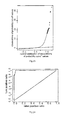
- F had the maximum information gain, F was selected as the attribute for the first division, a result after the first division was shown as Fig.16 .
- the step of detecting the outlier of the sequencing depth value of the sequence tagged site region further comprises:
- a strategy combining the above two method comprises: predetermining a relaxed p.value - cut-off value, and filtering resulting data based on decision tree, to obtain the result showing presence of micro-deletion in the sequence tagged site region of the chromosome.
- the method of detecting the micro-deletion in the sequence tagged site region of the chromosome and the apparatus thereof by which obtains the capture probe covering an entire sequence tagged site region of a chromosome and captures DNA sequence of the sequence tagged site region from a plurality of DNA samples after being hybridized with a mixture library of the plurality of DNA samples, may efficiently and accurately detect reported or unreported micro-deletions in a sequence tagged site-related region of a chromosome with a large amount of DNA samples; besides the step of analyzing by the mathematical statistics method in the present disclosure may be based on a normal distribution, or may be based on an analysis method of decision tree, or may be based on a combination thereof, followed by an experimental verification, such process of information analysis is scientific, stable, with a high sensitivity, a low false positive rate, which may be used in effective analysis for the micro-deletions.
- the current example took an example of detecting a micro-deletion in a sequence tagged site region of chromosome Y, but not limited with chromosome Y.
- a total 11 sample including 10 infertility samples and 1 health human sample were used in the current example, which were subjected to hybridization with a Nimblegen (Roche) chip after being library-constructed together.
- the number of samples in the current example was used to illustrated the present disclosure, but not limited to the number of samples for one experiment.
- Reagents used in the current example were shown as Table 2. Table 2. Reagents used in the current example of the present disclosure Reagent Model Manufacturer QIAquick PCR Purification Kit 28106 QIAGEN 10 ⁇ Polynucleotide Kinase Buffer B904 Enzymatics dNTP Solution Set N201L Enzymatics T4 DNA Polymerase P708L Enzymatics Klenow Enzyme P706L Enzymatics T4 Polynucleotide Kinase Y904L Enzymatics 10 ⁇ blue buffer B011 Enzymatics 25 mM dATP 28406501V GE Klenow (3'-5' exo-) P701-LC-L Enzymatics 2 ⁇ Rapid ligation buffer B101 Enzymatics T4 DNA Ligase (Rapid) L603-HC-L Enzymatics PE/PE Index Adapter oligo mix (40 ⁇ M) Invitrogen MiniElute PCR Purification Kit 28006 QIAGEN Platinum
- the step of constructing the plurality of DNA libraries for the plurality of single DNA samples included: breaking the genome DNA into DNA fragments having a predetermined size by means of a physical or chemical method, to obtain broken DNA fragments.
- the fragmented sample was subjected to quality test by electrophoresis, then the qualified sample was purified by QIAquick PCR Purification Kit, and then the purified sample was dissolved in 32 ⁇ L of an elution buffer.
- the major bands of qualified DNA are centralized between 200 bp to 300 bp.
- the step of constructing the plurality of DNA libraries for the plurality of single DNA samples included: subjecting the DNA fragments to end-repairing, to obtain end-repaired DNA fragments with a phosphorylated end.
- DNA obtained from the previous step was formulated into a reaction system for end-repairing according to the following composition in a 1.5 mL centrifuge tube shown in Table 4.
- Table 4 Reaction system for end-repairing DNA sample 75 ⁇ L 10 ⁇ Polynucleotide Kinase Buffer 10 ⁇ L dNTP Solution Set (10 mM each) 4 ⁇ L T4 DNA Polymerase 5 ⁇ L Klenow Fragment 1 ⁇ L T4 Polynucleotide Kinase 5 ⁇ L Total volume 100 ⁇ L
- the tube containing 100 ⁇ L of the above reaction mixture was placed on a Thermomixter (Eppendorf) set at 20°C, and allowed the reaction for 30 min. After the reaction was completed, the obtained sample was purified using QIAquick PCR Purification Kit (Qiagen). Then, the purified sample was dissolved in 32 ⁇ L of ddH 2 O for sufficient dissolve.
- DNA obtained from the previous step was formulated into a reaction system for adding a base A according to the following composition in a 1.5 mL centrifuge tube shown in Table 5.
- Table 5 Reaction system for adding a base A to the end-repaired DNA fragments DNA 32 ⁇ L 10 ⁇ blue buffer 5 ⁇ L dATP (1mM) 10 ⁇ L Klenow (3'-5' exo-) 3 ⁇ L Total volume 50 ⁇ L
- the tube containing 50 ⁇ L of the above reaction mixture was placed on a Thermomixter (Eppendorf) set at 37°C, and allowed the reaction for 30 min. After the reaction was completed, the obtained sample was purified using QIAquick PCR Purification Kit (Qiagen). Then, the purified sample was dissolved in 15 ⁇ L of ddH 2 O for sufficient dissolve.
- DNA obtained from the previous step was formulated into a reaction system for ligating an index adaptor according to the following composition in a 1.5 mL centrifuge tube shown in Table 6. Table 6. Reaction system for ligating an index adaptor DNA added with a base "A" 15 ⁇ L 2 ⁇ Rapid ligation buffer 25 ⁇ L PE/PE index Adapter oligo mix (40 ⁇ M) 5 ⁇ L T4 DNA Ligase (Rapid) 5 ⁇ L Total volume 50 ⁇ L
- the tube containing 50 ⁇ L of the above reaction mixture was placed on a Thermomixter (Eppendorf) set at 20°C, and allowed the reaction for 15 min. After the reaction was completed, the obtained sample was purified using MiniElute PCR Purification Kit (Qiagen). Then, the purified sample was dissolved in 25 ⁇ L of the elution buffer.
- PCR amplification system DNA containing adaptor sequence 25 ⁇ L 10 ⁇ pfx amplification buffer 10 ⁇ L MgSO 4 (50mM) 4 ⁇ L dNTP mix (10mM) 4 ⁇ L Platinum ® Pfx DNA Polymerase 2 ⁇ L PCR Primer PE 1.0/PE Index Primer 1.0 (10pM) 10 ⁇ L PCR Primer PE 2.0/PE Index Primer 2.0 (index, 10pM) 10 ⁇ L ddH 2 O 35 ⁇ L Total volume 100 ⁇ L
- the obtained amplification product was purified using QIAquick PCR Purification Kit with 30 ⁇ L of elution buffer.
- the mixture library of the plurality of DNA samples was constructed by following steps:
- the captured library was subjected to PCR amplification with a reaction system of 150 ⁇ L of Phusion Mix, 4.2 ⁇ L of each of upstream primer and downstream primer (Multiplexing Sequencing Primers and Phix Control Kit), 80 ⁇ L of the purified product in the elution buffer and 85 ⁇ L of ddH 2 O. After divided into 6 tubes, the tubes containing the mixture were subjected to PCR amplification for 16 cycles. After PCR reaction, the 6 tubes containing amplified products were mixed together, and the mixed amplification product was subjecting to beads purification using QIAquick PCR Purification Kit. The purified product having a length of 300 to 450 bp was eluted with 50 ⁇ L of elution buffer.
- Length size and content of the inserted fragments contained in the obtained library were detected by Bioanalyzer analysis system (Agilent, Santa Clara, USA). And concentration of the obtained library was accurately quantified by Q-PCR.
- step VIIII The qualified library obtained in step VIIII was subjected to sequencing on computer, which could refer to HiSeq 2000 User Guide. Catalog # SY-940-1001 Part # 15011190 Rev B, Illumina.
- the step of detecting the outlier of the sequencing depth value of the sequence tagged site region further comprises:
- a relaxed cut-off value p.value 10 -6 was predetermined, and obtained positive result was subjected to classification by decision tree, so as to further decrease the false positive rate, and then a site of micro-deletion in the sample region was obtained.
- the step of detecting the outlier of the sequencing depth value of the sequence tagged site region further comprised:
- the present disclosure also provides a computer readable medium comprising an order, configured to perform the method according to the above-mentioned method by a processer, which is omitted for concise consideration.
- Fig.25 is a schematic diagram showing an apparatus for detecting a micro-deletion in a sequence tagged site region of a chromosome according to an embodiment of the present disclosure.
- the apparatus of the present disclosure may comprise:
- the capture probe obtaining device 2501 is for obtaining a capture probe corresponding to DNA sequence of the sequence tagged site region.
- Sequence tagged-site is a short single-copy DNA sequence of known map location serving as a marker, which can be uniquely-mapped by PCR amplification, for producing a site for map-making, namely, detection with an order of a series of STS may make a map of a genomic region.
- a probe is a short single-strand DNA or RNA fragment (about 20 to 500 bp), for detecting a complementary nucleic acid sequence thereof.
- the hybridizing device 2502 is for hybridizing the capture probe with a mixture library of a plurality of DNA samples, to capture the DNA sequence of the sequence tagged site region from the plurality of DNA samples.
- mixture libraries refers to all DNA sequences for sequencing obtained by mixing a plurality of DNA libraries for a plurality of single DNA samples. Specific steps for constructing the mixture library are described above in details.
- the sequencing data obtaining device 2503 is for sequencing the captured DNA sequence of the sequence tagged site region to obtain sequencing data.
- the micro-deletion result obtaining device 2504 is for analyzing the sequencing data using a mathematical statistics method, to obtain a result showing a presence or an absence of the micro-deletion in the sequence tagged site region of the chromosome in each of the plurality of DNA samples.
- the capture probe obtaining device 2501 further comprises:
- the genome database (GDB, http://www.gdb.org/) is a database of saving and process genomic map for human genome project (HGP).
- DDB constructs encyclopedia for human genome, besides constructing the genomic map, also develops a method of describing genome content of sequence level, comprising sequence variation and description with other functions and phenotype.
- GDB database saves data by an object model, providing service of searching a Web-based data object.
- a user may search various kinds of objects, and view the genomic map by means of graphics mode.
- DNA sequence in the sequence tagged site region of chromosome Y may be found based on the location coordinate of human genome reference sequence Hg19 (http://genome.ucsc.edu/).
- the location coordinate at which the DNA sequence in the sequence tagged site region of a chromosome was found in genome database, which was submitted to Roche-NimbleGen or other companies providing DNA capturing service. Designation and synthesis were completed by such companies.
- the apparatus of the present disclosure further comprises a mixture library constructing device, wherein the mixture library constructing device further comprises:
- the apparatus of the present disclosure further comprises: a quality control device, wherein the quality control device further comprises:
- the micro-deletion result obtaining device further comprises:
- the sequencing depth value normalizing unit is specifically used in dividing all of the sequencing depth values of each of the plurality of DNA samples for a same region by an average depth value of each of the plurality of DNA samples, to obtain the normalized depth values of the plurality of DNA samples for the same region.
- the micro-deletion result obtaining unit further comprises:
- the micro-deletion obtaining unit still further comprises:
- the micro-deletion obtaining unit still further comprises:
- the micro-deletion obtaining unit still further comprises:
- the apparatus of detecting the micro-deletion in the sequence tagged site region of the chromosome and the apparatus thereof, by which obtains the capture probe covering an entire sequence tagged site region of a chromosome and captures DNA sequence of the sequence tagged site region from a plurality of DNA samples after being hybridized with a mixture library of the plurality of DNA samples, may efficiently and accurately detect reported or unreported micro-deletions in a sequence tagged site-related region of a chromosome with a large amount of DNA samples; besides the mathematical statistics analysis method used by the present disclosure may base on a normal distribution, an analysis method of decision tree, or a combination thereof followed by an experimental verification, which is scientific, stable, with a high sensitivity, a low false positive rate, being used in effective analysis for the micro-deletions.
Landscapes
- Chemical & Material Sciences (AREA)
- Life Sciences & Earth Sciences (AREA)
- Organic Chemistry (AREA)
- Proteomics, Peptides & Aminoacids (AREA)
- Zoology (AREA)
- Wood Science & Technology (AREA)
- Health & Medical Sciences (AREA)
- Engineering & Computer Science (AREA)
- Microbiology (AREA)
- Biochemistry (AREA)
- Biotechnology (AREA)
- Molecular Biology (AREA)
- Biophysics (AREA)
- Analytical Chemistry (AREA)
- Physics & Mathematics (AREA)
- Immunology (AREA)
- Bioinformatics & Cheminformatics (AREA)
- General Engineering & Computer Science (AREA)
- General Health & Medical Sciences (AREA)
- Genetics & Genomics (AREA)
- Measuring Or Testing Involving Enzymes Or Micro-Organisms (AREA)
- Investigating Or Analysing Biological Materials (AREA)
Applications Claiming Priority (1)
| Application Number | Priority Date | Filing Date | Title |
|---|---|---|---|
| PCT/CN2012/071648 WO2013127049A1 (zh) | 2012-02-27 | 2012-02-27 | 一种检测染色体sts区域微缺失的方法及其装置 |
Publications (3)
| Publication Number | Publication Date |
|---|---|
| EP2821501A1 true EP2821501A1 (de) | 2015-01-07 |
| EP2821501A4 EP2821501A4 (de) | 2015-11-11 |
| EP2821501B1 EP2821501B1 (de) | 2018-09-19 |
Family
ID=49081520
Family Applications (1)
| Application Number | Title | Priority Date | Filing Date |
|---|---|---|---|
| EP12870229.7A Active EP2821501B1 (de) | 2012-02-27 | 2012-02-27 | Verfahren und vorrichtung zur erkennung von mikrodeletion in einem chromosomalen sts-bereich |
Country Status (5)
| Country | Link |
|---|---|
| EP (1) | EP2821501B1 (de) |
| CN (1) | CN104145028B (de) |
| ES (1) | ES2701775T3 (de) |
| RU (1) | RU2610691C2 (de) |
| WO (1) | WO2013127049A1 (de) |
Families Citing this family (13)
| Publication number | Priority date | Publication date | Assignee | Title |
|---|---|---|---|---|
| CN105779433A (zh) * | 2014-12-15 | 2016-07-20 | 天津华大基因科技有限公司 | 试剂盒及其用途 |
| CN105779432A (zh) * | 2014-12-15 | 2016-07-20 | 天津华大基因科技有限公司 | 试剂盒及其用途 |
| CN105779435A (zh) * | 2014-12-15 | 2016-07-20 | 天津华大基因科技有限公司 | 试剂盒及其用途 |
| CN105779434A (zh) * | 2014-12-15 | 2016-07-20 | 天津华大基因科技有限公司 | 试剂盒及其用途 |
| CN106554993A (zh) * | 2015-09-30 | 2017-04-05 | 广州华大基因医学检验所有限公司 | 试剂盒及其用途 |
| CN106916881A (zh) * | 2015-12-28 | 2017-07-04 | 广州华大基因医学检验所有限公司 | 试剂盒及其用途 |
| CN105925663A (zh) * | 2016-03-30 | 2016-09-07 | 广州精科生物技术有限公司 | 试剂盒、试剂盒的用途及检测目标区域变异的方法及系统 |
| CN105986032A (zh) * | 2016-03-30 | 2016-10-05 | 广州精科生物技术有限公司 | 试剂盒、建库方法以及检测目标区域变异的方法及系统 |
| CN105925666A (zh) * | 2016-03-30 | 2016-09-07 | 广州精科生物技术有限公司 | 试剂盒、试剂盒的用途及检测目标区域变异的方法及系统 |
| CN106755454A (zh) * | 2017-01-06 | 2017-05-31 | 杭州杰毅麦特医疗器械有限公司 | 一种分子标签核酸检测方法 |
| CN109402241A (zh) * | 2017-08-07 | 2019-03-01 | 深圳华大基因研究院 | 鉴定和分析古dna样本的方法 |
| CN109063959A (zh) * | 2018-06-22 | 2018-12-21 | 深圳弘睿康生物科技有限公司 | 一种样本质量控制分析方法和系统 |
| CN117051129B (zh) * | 2023-10-10 | 2024-03-22 | 瑞因迈拓科技(广州)有限公司 | 一种微生物检测背景菌阈值设定方法及其应用 |
Family Cites Families (5)
| Publication number | Priority date | Publication date | Assignee | Title |
|---|---|---|---|---|
| WO2008030065A1 (en) * | 2006-09-08 | 2008-03-13 | Macrogen Inc. | Microarray chip and method for detection of chromosomal abnormality |
| US20090176226A1 (en) * | 2008-01-02 | 2009-07-09 | Children's Medical Center Corporation | Method for diagnosing autism spectrum disorder |
| US8003326B2 (en) * | 2008-01-02 | 2011-08-23 | Children's Medical Center Corporation | Method for diagnosing autism spectrum disorder |
| KR20090112235A (ko) * | 2008-04-24 | 2009-10-28 | 박민구 | 인간 y 염색체 미세결실 분석용 칩 및 이를 통한 특발성불임 스크리닝 검사 |
| RU2402771C2 (ru) * | 2008-10-10 | 2010-10-27 | Татьяна Павловна Шкурат | Способ скрининга сердечно-сосудистых заболеваний и биочип для осуществления этого способа |
-
2012
- 2012-02-27 WO PCT/CN2012/071648 patent/WO2013127049A1/zh not_active Ceased
- 2012-02-27 RU RU2014138794A patent/RU2610691C2/ru active IP Right Revival
- 2012-02-27 CN CN201280070387.7A patent/CN104145028B/zh active Active
- 2012-02-27 ES ES12870229T patent/ES2701775T3/es active Active
- 2012-02-27 EP EP12870229.7A patent/EP2821501B1/de active Active
Also Published As
| Publication number | Publication date |
|---|---|
| RU2014138794A (ru) | 2016-04-20 |
| CN104145028A (zh) | 2014-11-12 |
| RU2610691C2 (ru) | 2017-02-14 |
| WO2013127049A1 (zh) | 2013-09-06 |
| CN104145028B (zh) | 2016-10-12 |
| EP2821501A4 (de) | 2015-11-11 |
| EP2821501B1 (de) | 2018-09-19 |
| ES2701775T3 (es) | 2019-02-25 |
Similar Documents
| Publication | Publication Date | Title |
|---|---|---|
| EP2821501B1 (de) | Verfahren und vorrichtung zur erkennung von mikrodeletion in einem chromosomalen sts-bereich | |
| US11371074B2 (en) | Method and system for determining copy number variation | |
| EP3052651B1 (de) | Systeme und verfahren zum nachweis von strukturvarianten | |
| AU2010330936B2 (en) | Restriction enzyme based whole genome sequencing | |
| Kivioja et al. | Counting absolute number of molecules using unique molecular identifiers | |
| WO2012042374A2 (en) | Method of determining number or concentration of molecules | |
| EP3702457A1 (de) | Reagenzien, kits und verfahren zur molekularen barcodierung | |
| EP3674413A1 (de) | Sonde und verfahren zur sequenzierung einer zielregion mit hohem durchsatz zur detektion von genmutationen sowie bekannten und unbekannten genfusionsproteinen | |
| EP3018604B1 (de) | Verfahren zur zuweisung von zielangereicherten sequenzauslesungen zu einer genomischen position | |
| CN107557874A (zh) | 适用于单细胞全基因组甲基化与转录组共测序的文库建立方法及其应用 | |
| KR20170133270A (ko) | 분자 바코딩을 이용한 초병렬 시퀀싱을 위한 라이브러리 제조방법 및 그의 용도 | |
| CN103571822B (zh) | 一种用于新一代测序分析的多重目的dna片段富集方法 | |
| EP1889924B1 (de) | Verfahren zum Design von Sonden zum Nachweis von Zielsequenzen und Verfahren zum Nachweis von Zielsequenzen mittels Sonden | |
| US20240301466A1 (en) | Efficient duplex sequencing using high fidelity next generation sequencing reads | |
| EP3795685A1 (de) | Verfahren zur erzeugung einer dna-bibliothek zur ermöglichung der detektion und meldung von niederfrequenzvarianten | |
| CN104834833A (zh) | 单核苷酸多态性的检测方法及装置 | |
| JPWO2017145739A1 (ja) | 染色体数定量方法 | |
| Edwards | Whole-genome sequencing for marker discovery | |
| JP2021534803A (ja) | 無細胞核酸試料におけるアレル不均衡を検出するための方法およびシステム | |
| EP4259826A1 (de) | Verfahren zur sequenzierung von polynukleotidfragmenten aus beiden enden | |
| JP2006170670A (ja) | 遺伝子発現量規格化方法、プログラム、並びにシステム | |
| JP2024543250A (ja) | 等温線形増幅されたプローブを利用する標的の濃縮および定量 | |
| HK40011397A (en) | Methods for non-invasive prenatal determination of aneuploidy using targeted next generation sequencing of biallelic snps |
Legal Events
| Date | Code | Title | Description |
|---|---|---|---|
| PUAI | Public reference made under article 153(3) epc to a published international application that has entered the european phase |
Free format text: ORIGINAL CODE: 0009012 |
|
| 17P | Request for examination filed |
Effective date: 20140924 |
|
| AK | Designated contracting states |
Kind code of ref document: A1 Designated state(s): AL AT BE BG CH CY CZ DE DK EE ES FI FR GB GR HR HU IE IS IT LI LT LU LV MC MK MT NL NO PL PT RO RS SE SI SK SM TR |
|
| AX | Request for extension of the european patent |
Extension state: BA ME |
|
| DAX | Request for extension of the european patent (deleted) | ||
| RA4 | Supplementary search report drawn up and despatched (corrected) |
Effective date: 20151009 |
|
| RIC1 | Information provided on ipc code assigned before grant |
Ipc: C12Q 1/68 20060101AFI20151002BHEP |
|
| 17Q | First examination report despatched |
Effective date: 20160719 |
|
| STAA | Information on the status of an ep patent application or granted ep patent |
Free format text: STATUS: EXAMINATION IS IN PROGRESS |
|
| GRAP | Despatch of communication of intention to grant a patent |
Free format text: ORIGINAL CODE: EPIDOSNIGR1 |
|
| STAA | Information on the status of an ep patent application or granted ep patent |
Free format text: STATUS: GRANT OF PATENT IS INTENDED |
|
| INTG | Intention to grant announced |
Effective date: 20170922 |
|
| GRAJ | Information related to disapproval of communication of intention to grant by the applicant or resumption of examination proceedings by the epo deleted |
Free format text: ORIGINAL CODE: EPIDOSDIGR1 |
|
| STAA | Information on the status of an ep patent application or granted ep patent |
Free format text: STATUS: EXAMINATION IS IN PROGRESS |
|
| INTC | Intention to grant announced (deleted) | ||
| RAP1 | Party data changed (applicant data changed or rights of an application transferred) |
Owner name: BGI GENOMICS CO., LTD. |
|
| GRAJ | Information related to disapproval of communication of intention to grant by the applicant or resumption of examination proceedings by the epo deleted |
Free format text: ORIGINAL CODE: EPIDOSDIGR1 |
|
| STAA | Information on the status of an ep patent application or granted ep patent |
Free format text: STATUS: GRANT OF PATENT IS INTENDED |
|
| GRAP | Despatch of communication of intention to grant a patent |
Free format text: ORIGINAL CODE: EPIDOSNIGR1 |
|
| INTG | Intention to grant announced |
Effective date: 20180312 |
|
| GRAS | Grant fee paid |
Free format text: ORIGINAL CODE: EPIDOSNIGR3 |
|
| GRAA | (expected) grant |
Free format text: ORIGINAL CODE: 0009210 |
|
| STAA | Information on the status of an ep patent application or granted ep patent |
Free format text: STATUS: THE PATENT HAS BEEN GRANTED |
|
| AK | Designated contracting states |
Kind code of ref document: B1 Designated state(s): AL AT BE BG CH CY CZ DE DK EE ES FI FR GB GR HR HU IE IS IT LI LT LU LV MC MK MT NL NO PL PT RO RS SE SI SK SM TR |
|
| REG | Reference to a national code |
Ref country code: GB Ref legal event code: FG4D |
|
| REG | Reference to a national code |
Ref country code: CH Ref legal event code: EP |
|
| REG | Reference to a national code |
Ref country code: AT Ref legal event code: REF Ref document number: 1043326 Country of ref document: AT Kind code of ref document: T Effective date: 20181015 |
|
| REG | Reference to a national code |
Ref country code: IE Ref legal event code: FG4D |
|
| REG | Reference to a national code |
Ref country code: DE Ref legal event code: R096 Ref document number: 602012051403 Country of ref document: DE |
|
| REG | Reference to a national code |
Ref country code: NL Ref legal event code: MP Effective date: 20180919 |
|
| PG25 | Lapsed in a contracting state [announced via postgrant information from national office to epo] |
Ref country code: NO Free format text: LAPSE BECAUSE OF FAILURE TO SUBMIT A TRANSLATION OF THE DESCRIPTION OR TO PAY THE FEE WITHIN THE PRESCRIBED TIME-LIMIT Effective date: 20181219 Ref country code: BG Free format text: LAPSE BECAUSE OF FAILURE TO SUBMIT A TRANSLATION OF THE DESCRIPTION OR TO PAY THE FEE WITHIN THE PRESCRIBED TIME-LIMIT Effective date: 20181219 Ref country code: SE Free format text: LAPSE BECAUSE OF FAILURE TO SUBMIT A TRANSLATION OF THE DESCRIPTION OR TO PAY THE FEE WITHIN THE PRESCRIBED TIME-LIMIT Effective date: 20180919 Ref country code: RS Free format text: LAPSE BECAUSE OF FAILURE TO SUBMIT A TRANSLATION OF THE DESCRIPTION OR TO PAY THE FEE WITHIN THE PRESCRIBED TIME-LIMIT Effective date: 20180919 Ref country code: FI Free format text: LAPSE BECAUSE OF FAILURE TO SUBMIT A TRANSLATION OF THE DESCRIPTION OR TO PAY THE FEE WITHIN THE PRESCRIBED TIME-LIMIT Effective date: 20180919 Ref country code: LT Free format text: LAPSE BECAUSE OF FAILURE TO SUBMIT A TRANSLATION OF THE DESCRIPTION OR TO PAY THE FEE WITHIN THE PRESCRIBED TIME-LIMIT Effective date: 20180919 Ref country code: GR Free format text: LAPSE BECAUSE OF FAILURE TO SUBMIT A TRANSLATION OF THE DESCRIPTION OR TO PAY THE FEE WITHIN THE PRESCRIBED TIME-LIMIT Effective date: 20181220 |
|
| REG | Reference to a national code |
Ref country code: LT Ref legal event code: MG4D |
|
| REG | Reference to a national code |
Ref country code: ES Ref legal event code: FG2A Ref document number: 2701775 Country of ref document: ES Kind code of ref document: T3 Effective date: 20190225 |
|
| PG25 | Lapsed in a contracting state [announced via postgrant information from national office to epo] |
Ref country code: HR Free format text: LAPSE BECAUSE OF FAILURE TO SUBMIT A TRANSLATION OF THE DESCRIPTION OR TO PAY THE FEE WITHIN THE PRESCRIBED TIME-LIMIT Effective date: 20180919 Ref country code: LV Free format text: LAPSE BECAUSE OF FAILURE TO SUBMIT A TRANSLATION OF THE DESCRIPTION OR TO PAY THE FEE WITHIN THE PRESCRIBED TIME-LIMIT Effective date: 20180919 Ref country code: AL Free format text: LAPSE BECAUSE OF FAILURE TO SUBMIT A TRANSLATION OF THE DESCRIPTION OR TO PAY THE FEE WITHIN THE PRESCRIBED TIME-LIMIT Effective date: 20180919 |
|
| REG | Reference to a national code |
Ref country code: AT Ref legal event code: MK05 Ref document number: 1043326 Country of ref document: AT Kind code of ref document: T Effective date: 20180919 |
|
| PG25 | Lapsed in a contracting state [announced via postgrant information from national office to epo] |
Ref country code: RO Free format text: LAPSE BECAUSE OF FAILURE TO SUBMIT A TRANSLATION OF THE DESCRIPTION OR TO PAY THE FEE WITHIN THE PRESCRIBED TIME-LIMIT Effective date: 20180919 Ref country code: CZ Free format text: LAPSE BECAUSE OF FAILURE TO SUBMIT A TRANSLATION OF THE DESCRIPTION OR TO PAY THE FEE WITHIN THE PRESCRIBED TIME-LIMIT Effective date: 20180919 Ref country code: NL Free format text: LAPSE BECAUSE OF FAILURE TO SUBMIT A TRANSLATION OF THE DESCRIPTION OR TO PAY THE FEE WITHIN THE PRESCRIBED TIME-LIMIT Effective date: 20180919 Ref country code: IS Free format text: LAPSE BECAUSE OF FAILURE TO SUBMIT A TRANSLATION OF THE DESCRIPTION OR TO PAY THE FEE WITHIN THE PRESCRIBED TIME-LIMIT Effective date: 20190119 Ref country code: PL Free format text: LAPSE BECAUSE OF FAILURE TO SUBMIT A TRANSLATION OF THE DESCRIPTION OR TO PAY THE FEE WITHIN THE PRESCRIBED TIME-LIMIT Effective date: 20180919 Ref country code: AT Free format text: LAPSE BECAUSE OF FAILURE TO SUBMIT A TRANSLATION OF THE DESCRIPTION OR TO PAY THE FEE WITHIN THE PRESCRIBED TIME-LIMIT Effective date: 20180919 Ref country code: EE Free format text: LAPSE BECAUSE OF FAILURE TO SUBMIT A TRANSLATION OF THE DESCRIPTION OR TO PAY THE FEE WITHIN THE PRESCRIBED TIME-LIMIT Effective date: 20180919 |
|
| PG25 | Lapsed in a contracting state [announced via postgrant information from national office to epo] |
Ref country code: SK Free format text: LAPSE BECAUSE OF FAILURE TO SUBMIT A TRANSLATION OF THE DESCRIPTION OR TO PAY THE FEE WITHIN THE PRESCRIBED TIME-LIMIT Effective date: 20180919 Ref country code: SM Free format text: LAPSE BECAUSE OF FAILURE TO SUBMIT A TRANSLATION OF THE DESCRIPTION OR TO PAY THE FEE WITHIN THE PRESCRIBED TIME-LIMIT Effective date: 20180919 Ref country code: PT Free format text: LAPSE BECAUSE OF FAILURE TO SUBMIT A TRANSLATION OF THE DESCRIPTION OR TO PAY THE FEE WITHIN THE PRESCRIBED TIME-LIMIT Effective date: 20190119 |
|
| REG | Reference to a national code |
Ref country code: DE Ref legal event code: R097 Ref document number: 602012051403 Country of ref document: DE |
|
| PLBE | No opposition filed within time limit |
Free format text: ORIGINAL CODE: 0009261 |
|
| STAA | Information on the status of an ep patent application or granted ep patent |
Free format text: STATUS: NO OPPOSITION FILED WITHIN TIME LIMIT |
|
| PG25 | Lapsed in a contracting state [announced via postgrant information from national office to epo] |
Ref country code: DK Free format text: LAPSE BECAUSE OF FAILURE TO SUBMIT A TRANSLATION OF THE DESCRIPTION OR TO PAY THE FEE WITHIN THE PRESCRIBED TIME-LIMIT Effective date: 20180919 |
|
| 26N | No opposition filed |
Effective date: 20190620 |
|
| REG | Reference to a national code |
Ref country code: CH Ref legal event code: PL |
|
| PG25 | Lapsed in a contracting state [announced via postgrant information from national office to epo] |
Ref country code: LU Free format text: LAPSE BECAUSE OF NON-PAYMENT OF DUE FEES Effective date: 20190227 Ref country code: SI Free format text: LAPSE BECAUSE OF FAILURE TO SUBMIT A TRANSLATION OF THE DESCRIPTION OR TO PAY THE FEE WITHIN THE PRESCRIBED TIME-LIMIT Effective date: 20180919 Ref country code: MC Free format text: LAPSE BECAUSE OF FAILURE TO SUBMIT A TRANSLATION OF THE DESCRIPTION OR TO PAY THE FEE WITHIN THE PRESCRIBED TIME-LIMIT Effective date: 20180919 |
|
| REG | Reference to a national code |
Ref country code: BE Ref legal event code: MM Effective date: 20190228 |
|
| REG | Reference to a national code |
Ref country code: IE Ref legal event code: MM4A |
|
| PG25 | Lapsed in a contracting state [announced via postgrant information from national office to epo] |
Ref country code: CH Free format text: LAPSE BECAUSE OF NON-PAYMENT OF DUE FEES Effective date: 20190228 Ref country code: LI Free format text: LAPSE BECAUSE OF NON-PAYMENT OF DUE FEES Effective date: 20190228 |
|
| PG25 | Lapsed in a contracting state [announced via postgrant information from national office to epo] |
Ref country code: IE Free format text: LAPSE BECAUSE OF NON-PAYMENT OF DUE FEES Effective date: 20190227 |
|
| PG25 | Lapsed in a contracting state [announced via postgrant information from national office to epo] |
Ref country code: BE Free format text: LAPSE BECAUSE OF NON-PAYMENT OF DUE FEES Effective date: 20190228 |
|
| PG25 | Lapsed in a contracting state [announced via postgrant information from national office to epo] |
Ref country code: TR Free format text: LAPSE BECAUSE OF FAILURE TO SUBMIT A TRANSLATION OF THE DESCRIPTION OR TO PAY THE FEE WITHIN THE PRESCRIBED TIME-LIMIT Effective date: 20180919 |
|
| PG25 | Lapsed in a contracting state [announced via postgrant information from national office to epo] |
Ref country code: MT Free format text: LAPSE BECAUSE OF NON-PAYMENT OF DUE FEES Effective date: 20190227 |
|
| PG25 | Lapsed in a contracting state [announced via postgrant information from national office to epo] |
Ref country code: CY Free format text: LAPSE BECAUSE OF FAILURE TO SUBMIT A TRANSLATION OF THE DESCRIPTION OR TO PAY THE FEE WITHIN THE PRESCRIBED TIME-LIMIT Effective date: 20180919 |
|
| PG25 | Lapsed in a contracting state [announced via postgrant information from national office to epo] |
Ref country code: HU Free format text: LAPSE BECAUSE OF FAILURE TO SUBMIT A TRANSLATION OF THE DESCRIPTION OR TO PAY THE FEE WITHIN THE PRESCRIBED TIME-LIMIT; INVALID AB INITIO Effective date: 20120227 |
|
| PG25 | Lapsed in a contracting state [announced via postgrant information from national office to epo] |
Ref country code: MK Free format text: LAPSE BECAUSE OF FAILURE TO SUBMIT A TRANSLATION OF THE DESCRIPTION OR TO PAY THE FEE WITHIN THE PRESCRIBED TIME-LIMIT Effective date: 20180919 |
|
| P01 | Opt-out of the competence of the unified patent court (upc) registered |
Effective date: 20230526 |
|
| PGFP | Annual fee paid to national office [announced via postgrant information from national office to epo] |
Ref country code: GB Payment date: 20260219 Year of fee payment: 15 |
|
| PGFP | Annual fee paid to national office [announced via postgrant information from national office to epo] |
Ref country code: ES Payment date: 20260309 Year of fee payment: 15 |
|
| PGFP | Annual fee paid to national office [announced via postgrant information from national office to epo] |
Ref country code: DE Payment date: 20260206 Year of fee payment: 15 |
|
| PGFP | Annual fee paid to national office [announced via postgrant information from national office to epo] |
Ref country code: IT Payment date: 20260210 Year of fee payment: 15 |
|
| PGFP | Annual fee paid to national office [announced via postgrant information from national office to epo] |
Ref country code: FR Payment date: 20260227 Year of fee payment: 15 |