EP2822210B1 - Verfahren zur Datenübertragungszeitsteuerung und diskontinuierlichen Empfangshandhabung unter gemeinsamem TDD-FDD-Betrieb und zugehörige Kommunikationsvorrichtung - Google Patents
Verfahren zur Datenübertragungszeitsteuerung und diskontinuierlichen Empfangshandhabung unter gemeinsamem TDD-FDD-Betrieb und zugehörige Kommunikationsvorrichtung Download PDFInfo
- Publication number
- EP2822210B1 EP2822210B1 EP14175264.2A EP14175264A EP2822210B1 EP 2822210 B1 EP2822210 B1 EP 2822210B1 EP 14175264 A EP14175264 A EP 14175264A EP 2822210 B1 EP2822210 B1 EP 2822210B1
- Authority
- EP
- European Patent Office
- Prior art keywords
- cell
- transmission
- subframe
- tdd
- pucch
- Prior art date
- Legal status (The legal status is an assumption and is not a legal conclusion. Google has not performed a legal analysis and makes no representation as to the accuracy of the status listed.)
- Active
Links
Images



Classifications
-
- H—ELECTRICITY
- H04—ELECTRIC COMMUNICATION TECHNIQUE
- H04L—TRANSMISSION OF DIGITAL INFORMATION, e.g. TELEGRAPHIC COMMUNICATION
- H04L5/00—Arrangements affording multiple use of the transmission path
- H04L5/14—Two-way operation using the same type of signal, i.e. duplex
-
- H—ELECTRICITY
- H04—ELECTRIC COMMUNICATION TECHNIQUE
- H04L—TRANSMISSION OF DIGITAL INFORMATION, e.g. TELEGRAPHIC COMMUNICATION
- H04L1/00—Arrangements for detecting or preventing errors in the information received
- H04L1/004—Arrangements for detecting or preventing errors in the information received by using forward error control
- H04L1/0076—Distributed coding, e.g. network coding, involving channel coding
- H04L1/0077—Cooperative coding
-
- H—ELECTRICITY
- H04—ELECTRIC COMMUNICATION TECHNIQUE
- H04L—TRANSMISSION OF DIGITAL INFORMATION, e.g. TELEGRAPHIC COMMUNICATION
- H04L1/00—Arrangements for detecting or preventing errors in the information received
- H04L1/12—Arrangements for detecting or preventing errors in the information received by using return channel
- H04L1/16—Arrangements for detecting or preventing errors in the information received by using return channel in which the return channel carries supervisory signals, e.g. repetition request signals
- H04L1/18—Automatic repetition systems, e.g. Van Duuren systems
- H04L1/1829—Arrangements specially adapted for the receiver end
- H04L1/1854—Scheduling and prioritising arrangements
-
- H—ELECTRICITY
- H04—ELECTRIC COMMUNICATION TECHNIQUE
- H04L—TRANSMISSION OF DIGITAL INFORMATION, e.g. TELEGRAPHIC COMMUNICATION
- H04L5/00—Arrangements affording multiple use of the transmission path
- H04L5/0001—Arrangements for dividing the transmission path
- H04L5/0003—Two-dimensional division
- H04L5/0005—Time-frequency
- H04L5/0007—Time-frequency the frequencies being orthogonal, e.g. OFDM(A) or DMT
- H04L5/001—Time-frequency the frequencies being orthogonal, e.g. OFDM(A) or DMT the frequencies being arranged in component carriers
-
- H—ELECTRICITY
- H04—ELECTRIC COMMUNICATION TECHNIQUE
- H04L—TRANSMISSION OF DIGITAL INFORMATION, e.g. TELEGRAPHIC COMMUNICATION
- H04L5/00—Arrangements affording multiple use of the transmission path
- H04L5/003—Arrangements for allocating sub-channels of the transmission path
- H04L5/0053—Allocation of signalling, i.e. of overhead other than pilot signals
- H04L5/0055—Physical resource allocation for ACK/NACK
-
- H—ELECTRICITY
- H04—ELECTRIC COMMUNICATION TECHNIQUE
- H04W—WIRELESS COMMUNICATION NETWORKS
- H04W28/00—Network traffic management; Network resource management
- H04W28/02—Traffic management, e.g. flow control or congestion control
- H04W28/04—Error control
Definitions
- the present invention relates to a communication device and a method for assigning data transmission timing under joint Time Division Duplex (TDD) and Frequency Division Duplex (FDD) operation.
- TDD Time Division Duplex
- FDD Frequency Division Duplex
- LTE Long Term Evolution
- the LTE Advanced is a major enhancement of the LTE standard.
- the LTE Advanced should be compatible with LTE equipment, and should share frequency bands with the LTE communication system.
- One of the important LTE Advanced benefits is its ability to take advantage of advanced topology networks, wherein optimized heterogeneous networks have a mix of macros with low power nodes such as pico cells, femto cells and new relay nodes.
- carrier aggregation is supported in an LTE Advanced system to leverage unused or vacant resources for enhanced throughput performance. It essentially aggregates multiple component carriers (CC) at a user equipment (UE) so that multiple component carriers can be transmitted simultaneously.
- the CA can be applied to aggregate both contiguous and non-contiguous CCs.
- the network may configure the UE to aggregate a different number of CCs originating from a single evolved NodeB (eNB) or from different eNBs. In such a situation, the UE can simultaneously receive radio frequency (RF) signals via multiple CCs with single or multiple receivers and simultaneously transmit RF signals via multiple CCs with single or multiple transmitters.
- RF radio frequency
- a record of configured set of CCs aggregated for signal and data transmission may be maintained by both the UE and the eNB for keeping information regarding the configured CCs for the UE.
- the aggregated component carriers should operate under the same duplexing mode. In other words, they should all belong to either time division duplex (TDD) CC or frequency division duplex (FDD) CC.
- TDD time division duplex
- FDD frequency division duplex
- This limitation reduces effort on the design of the whole CA mechanism.
- FDD and TDD component carriers are aggregated jointly, the physical uplink control channel (PUCCH), e.g. hybrid automatic repeat request (HARQ) acknowledgement (ACK) or negative-acknowledgement (NACK), feedback timing should be redesigned from legacy systems because FDD does not fall into any TDD configurations.
- PUCCH physical uplink control channel
- HARQ hybrid automatic repeat request
- ACK negative-acknowledgement
- feedback timing should be redesigned from legacy systems because FDD does not fall into any TDD configurations.
- the PUCCH is transmitted on a primary cell (a PCell, or a primary carrier) while a downlink transmission (e.g. PDSCH transmission) may happen on the primary carrier or secondary cells (SCells, or secondary carriers).
- a downlink transmission e.g. PDSCH transmission
- SCells secondary cells
- the associated feedback of the downlink transmission in a serving cell (which may be the primary cell or other carriers in CA) cannot be fed back on the primary cell by directly following the serving cell feedback timing. Otherwise, the UE might be forced to have PUCCH transmission within a downlink subframe on the primary cell and cause severe interference or system errors. In some cases, the UE may be forced to drop the PUCCH.
- HARQ round trip time (RTT) Timer when an FDD CC and a TDD CC are aggregated to transmit to the UE, it is not clear in the prior art how long a HARQ round trip time (RTT) Timer should be set by the UE. Inappropriate setting of the HARQ RTT Timer could cause certain issues to the communication system or increase the system delay time. For example, when a PCell of the UE is on the TDD CC, the UE may need to transmit HARQ feedbacks (ACK or NACK) on a PUCCH to the PCell for reception of downlink data on an FDD CC.
- ACK or NACK HARQ feedbacks
- 8 milliseconds may not be long enough for the HARQ RTT timer of the downlink HARQ process for reception of data on the FDD CC, so the UE may not monitor the PDCCH for a retransmission corresponding to the downlink HARQ process after the HARQ RTT timer and drx-RetransmissionTimer expire. Therefore, the UE cannot receive a retransmission if the retransmission is transmitted after the HARQ RTT timer and drx-RetransmissionTimer expire.
- setting the HARQ RTT timer to a longer value would cause the receiver of the UE to keep awake unnecessarily. In such a situation, the UE does not switch its receiver to a sleep mode, which therefore wastes the battery power of the UE.
- YONG LI ET AL "Control Channel Design for Carrier Aggregation between LTE FDD and LTE TDD Systems", VEHICULAR TECHNOLOGY CONFERENCE (VTC SPRING), 2012 IEEE 75th, IEEE, 6 May 2012(2012-05-06), pages 1-5, XP032202278, DOI: 10.1109/VETECS.2012.6239853, ISBN: 987-1-4673-0989-9 and " 3rd Generation Partnership Project; Technical Specification Group Radio Access Network; Evolved Universal Terrestrial Radio Access (E-UTRA); Physical layer procedures (Release 11)", 3GPP Standard; 3GPP TS 36.213, 3rd Generation Partnership Project (3GPP), vol. RAN WG1, no. V11.3.0, 25 June 2013 (2013-06-25), pages 1-176 may be regarded as background art useful for understanding the invention.
- An objective of the present invention is to provide a communication device and a method for assigning transmission timing of Physical Uplink Control Channel (PUCCH) configured with jointly aggregated in Frequency Division Duplex (FDD) and Time Division Duplex (TDD) carrier aggregation in a wireless communication system.
- PUCCH Physical Uplink Control Channel
- FDD Frequency Division Duplex
- TDD Time Division Duplex
- the present invention discloses a communication device for assigning transmission timing of Physical Uplink Control Channel (PUCCH) configured with jointly aggregated Time Division Duplex (TDD) and Frequency Division Duplex (FDD) component carriers.
- the communication device includes a processing means; and a storage unit, coupled to the processing means, for storing a program code, wherein the program code instructs the processing means to execute the following steps: receiving a first downlink (DL) transmission on a first cell; determining a first uplink (UL) transmission timing in a first subframe for a corresponding feedback in response to the first DL transmission in a second subframe on the first cell, where the second subframe is k subframes prior to the first subframe; and transmitting the corresponding feedback of the first DL transmission in the first subframe on a second cell according to the first UL transmission timing of the first DL transmission of the first cell; wherein the first cell is on a TDD component carrier and the first cell has no PUCCH to transmit the corresponding feedback of the first DL transmission; and
- this disclosure further discloses a communication device for assigning transmission timing of Physical Uplink Control Channel (PUCCH) configured with jointly aggregated Time Division Duplex (TDD) and Frequency Division Duplex (FDD) component carriers.
- the communication device includes a processing means; and a storage unit, coupled to the processing means, for storing a program code, wherein the program code instructs the processing means to execute the following steps: receiving a first downlink (DL) transmission on a first cell; determining a first uplink (UL) transmission timing of the first cell by associating a UL subframe on a second cell with at least one DL subframe on the first cell, wherein every DL subframe on the first cell is associated to one UL subframe on the second cell, and wherein the at least one DL subframe is k subframes prior to the UL subframe; and transmitting a corresponding feedback of the first DL transmission in the associated UL subframe on the second cell; wherein the first cell is on an FDD component carrier and the first cell
- this disclosure further discloses a communication device configured with jointly aggregated Time Division Duplex (TDD) and Frequency Division Duplex (FDD) component carriers.
- the communication device includes a processing means; and a storage unit, coupled to the processing means, for storing a program code, wherein the program code instructs the processing means to execute the following steps: receiving a first downlink (DL) data from an first component carrier (CC); and setting a first round trip time (RTT) Timer to a period for reception of retransmission on the first CC when the communication device is configured with a first Physical Uplink Control Channel (PUCCH) on a second CC for transmitting an acknowledge (ACK) or a negative-acknowledge (NACK) feedback for the first DL data; if the first CC is an FDD CC and the second CC is a TDD CC, the period equals to 4+k subframes, wherein k is an interval between a DL transmission of the first DL data and a transmission of the ACK or
- DL
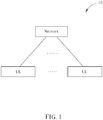
- Fig. 1 is a schematic diagram of a wireless communication system 10 according to an example of the present invention.
- the wireless communication system 10 is briefly composed of a network and a plurality of user equipments (UEs).
- UEs user equipments
- the network and the communication devices are simply utilized for illustrating the structure of the wireless communication system 10.
- the network can be a universal terrestrial radio access network (UTRAN) comprising a plurality of Node-Bs (NBs) in a universal mobile telecommunications system (UMTS).
- UTRAN universal terrestrial radio access network
- NBs Node-Bs
- UMTS universal mobile telecommunications system
- the network can be an evolved UTRAN (E-UTRAN) comprising a plurality of evolved NBs (eNBs) and/or relays in a long term evolution (LTE) system or a LTE-Advanced (LTE-A) system.
- E-UTRAN evolved UTRAN
- eNBs evolved NBs
- LTE-A LTE-Advanced
- the UEs can be mobile devices such as mobile phones, laptops, tablet computers, electronic books, and portable computer systems.
- the network and the UE can be regarded as a transmitter or receiver depending on the transmission direction, e.g., for an uplink (UL), the UE is the transmitter and the network is the receiver, and for a downlink (DL), the network is the transmitter and the UE is the receiver.
- UL uplink
- DL downlink
- the network can also include both the UTRAN/E-UTRAN and a core network, wherein the core network includes network entities such as Mobility Management Entity (MME), Serving Gateway (S-GW), Packet Data Network (PDN) Gateway (P-GW), Self-Organizing Networks (SON) server and/or Radio Network Controller (RNC), etc.
- MME Mobility Management Entity
- S-GW Serving Gateway
- PDN Packet Data Network
- P-GW Packet Data Network Gateway
- SON Self-Organizing Networks
- RNC Radio Network Controller
- the network may be processed only by the UTRAN/E-UTRAN and decisions corresponding to the information are made at the UTRAN/E-UTRAN.
- the UTRAN/E-UTRAN may forward the information to the core network, and the decisions corresponding to the information are made at the core network after the core network processes the information.
- the information can be processed by both the UTRAN/E-UTRAN and the core network, and the decisions are made after coordination and/or cooperation are performed by the
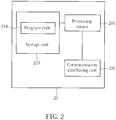
- the communication device 20 can be a communication device or the network shown in Fig. 1 , but is not limited herein.
- the communication device 20 may include a processing means 200 such as a microprocessor or Application Specific Integrated Circuit (ASIC), a storage unit 210 and a communication interfacing unit 220.
- the processing means 200 may be a DSP processor, a baseband processor, and/or a cellular modem.
- the storage unit 210 may be any data storage device that can store a program code 214, accessed and executed by the processing means 200.
- Examples of the storage unit 210 include but are not limited to a subscriber identity module (SIM), read-only memory (ROM), flash memory, random-access memory (RAM), CD-ROM/DVD-ROM, magnetic tape, hard disk and optical data storage device.
- SIM subscriber identity module
- ROM read-only memory
- RAM random-access memory
- CD-ROM/DVD-ROM magnetic tape
- hard disk hard disk
- optical data storage device examples include but are not limited to a subscriber identity module (SIM), read-only memory (ROM), flash memory, random-access memory (RAM), CD-ROM/DVD-ROM, magnetic tape, hard disk and optical data storage device.
- the communication interfacing unit 220 is preferably a transceiver and is used to transmit and receive signals (e.g., messages or packets) according to processing results of the processing means 200.
- Fig. 3 is a flowchart of a process 30 according to an example of the present invention.
- the process 30 is utilized for assigning transmission timing of Physical Uplink Control Channel (PUCCH) on an FDD component carrier for a mobile device configured with jointly aggregated TDD and FDD component carriers (CCs).
- the mobile device may be the UE in the wireless communication system 10, but is not limited herein.
- the process 30 may be implemented by the communication device 20 and compiled into the program code 214 to instruct the processing means 200 to execute the following steps:
- the mobile device is configured with at least an FDD CC and a TDD CC aggregated to transmit to the mobile device.
- the mobile device may receive a DL transmission (e.g., Physical Downlink Shared Channel) in subframe n on a first cell (e.g. secondary cell SC1), and transmit a corresponding feedback (e.g., a PUCCH transmission of a HARQ ACK, NACK, or the like) on a second cell (e.g. primary cell PC1).
- the primary cell PC1 is on an FDD component carrier and the secondary cell SC1 is on a TDD component carrier.
- the corresponding PUCCH transmission happens in subframe n on the FDD primary cell PC1.
- the index k may be constant over all subframe numbers.
- k may be equal to 4. That is, a PUCCH transmission happens in subframe n on the FDD primary cell PC1 after detection of a PDSCH transmission on the TDD secondary cell SC1 within subframe n-4.
- the PUCCH transmission timing of the TDD secondary cell SC1 is the same as the feedback timing of a legacy FDD component carrier, where there is no joint operation/aggregation of FDD and TDD component carriers at the mobile device. This example can reduce the retransmission latency even when the serving cell is on a TDD component carrier.
- the index k may belong to a downlink association set K depending on the subframe number of the first subframe and the UL-DL configuration of the secondary cell SC1.
- An example of the downlink association set K is defined in TABLE I.
- the PUCCH transmission timing of the TDD secondary cell SC1 is the same as the feedback timing of a legacy TDD component carrier, where there is no joint operation/aggregation of FDD and TDD component carriers at the mobile device.
- the mobile device when the mobile device is configured with an FDD primary cell which is jointly aggregated with a TDD secondary cell having UL-DL configuration 0, the mobile device assigns a UL transmission timing of the TDD secondary cell such that a corresponding PUCCH transmission happens within subframe 2 on the FDD primary cell if the mobile device detects that there is a PDSCH transmission on the TDD secondary cell in subframe 2-6 (i.e., subframe 6 of the previous radio frame), a corresponding PUCCH transmission happens within subframe 4 on the FDD primary cell if the mobile device detects that there is a PDSCH transmission on the TDD secondary cell in subframe 4-4 (i.e., subframe 0), a corresponding PUCCH transmission happens within subframe 7 on the FDD primary cell if the mobile device detects that there is a PDSCH transmission on the TDD secondary cell in subframe 7-6 (i.e., subframe 1), and a corresponding PUCCH transmission happens within subframe 9 on the FDD primary cell if the mobile device detects
- another secondary cell SC2 may be configured to jointly aggregate with the primary cell PC1 and the secondary cell SC1 at the mobile device.
- the PUCCH timing of the secondary cell SC2 may be assigned to be the same as the PUCCH timing of the secondary cell SC1.
- the PUCCH timing of the secondary cell SC2 may also be assigned in the same manner as the PUCCH timing of the secondary cell SC1 assigned for the mobile device. If the secondary cell SC2 has the same TDD UL-DL configuration as the secondary cell SC1, the PUCCH timing of the secondary cell SC2 and the PUCCH timing of the secondary cell SC1 may be the same, but they are independently assigned by the mobile device. If the secondary cell SC2 has different TDD UL-DL configuration from the secondary cell SC1, the PUCCH timing of the secondary cell SC2 may be assigned independently, irrespective of the PUCCH timing of the secondary cell SC1.
- the index k is k1 for the secondary cell SC1 and the index k is k2 for the secondary cell SC2, where k1 and k2 have no correlation to each other.
- k1 may be a constant over all subframe numbers while k2 may belong to the downlink association set K defined in TABLE I.
- k1 and k2 may both belong to the downlink association K defined in TABLE I, where the PUCCH timing of the secondary cell SC1 and the PUCCH timing of the secondary cell SC2 depend on their own UL-DL configurations, respectively.
- the secondary cell SC1 and the secondary cell SC2 may use a reference TDD configuration which depends on a combination of their own TDD configurations, and their PUCCH timing follows the PUCCH feedback timing of the reference TDD configuration. More specifically, when the mobile device is configured with two TDD secondary cells, a reference TDD configuration may be determined according to the combination of TDD configurations of the secondary cell SC1 and the secondary cell SC2. The reference TDD configuration may be determined based on the conditions and TABLE II as follows.
- the corresponding feedback may be a Hybrid Automatic Repeat Request (HARQ) feedback corresponding to the DL transmission in the second subframe in a DL HARQ process.
- the HARQ feedback may be a HARQ acknowledgement (ACK), a HARQ negative-acknowledgement (NACK), or any other messages in response to the DL transmission from the secondary cell.
- Fig. 5 is a flowchart of a process 50, not forming part of the present invention.
- the process 50 is utilized for assigning transmission timing of Physical Uplink Control Channel (PUCCH) on a TDD component carrier for a mobile device configured with jointly aggregated TDD and FDD component carriers (CCs).
- the mobile device may be the UE in the wireless communication system 10, but is not limited herein.
- the process 30 may be implemented by the communication device 20 and compiled into the program code 214 to instruct the processing means 200 to execute the following steps:
- the mobile device is configured with at least an FDD CC and a TDD CC aggregated to transmit to the mobile device.
- the mobile device may receive a DL transmission (e.g., Physical Downlink Shared Channel) in subframe n on a first cell (e.g., secondary cell SC3), and transmit a corresponding feedback (e.g., a PUCCH transmission of a HARQ ACK, NACK, or the like) on a second cell (e.g., primary cell PC2)
- the primary cell PC2 is on a TDD component carrier and the secondary cell SC3 is on an FDD component carrier.
- the PUCCH transmission timing cannot follow the feedback timing of a legacy FDD component carrier since not all of the subframes on the primary cell PC2 are uplink subframes. Also, the PUCCH transmission timing cannot follow the feedback timing of a legacy TDD component carrier with the same configuration as the primary cell PC1. Therefore, in an aspect of the present invention downlink association is made for DL subframes on the secondary cell SC3 to the UL subframes on the TDD primary cell PC2.
- the DL subframes on the FDD secondary cell SC3 may be associated to the closest UL subframe on the TDD primary cell PC2, where there are at least 4 subframes between the UL subframe and the associated DL subframe.
- the index k belongs to a downlink association set K2 depending on the subframe number of the UL subframe and the UL-DL configuration of the TDD primary cell PC2.
- the downlink association set K2 for FDD serving cell to TDD primary cell may be extended from the downlink association set K for TDD serving cell where more indices are added to make downlink association for all DL subframes on the secondary cell SC3.
- the indices ⁇ k0, k1, ..., k M-1 ⁇ in the downlink association set K2 are designed to fall in a range which is the same as the indices in the downlink association set K for TDD serving cell. That is, k falls between 4 and 6 if the TDD primary cell is configured with UL-DL Configuration 0, k falls between 4 and 7 if the TDD primary cell is configured with UL-DL Configuration 1, k falls between 4 and 8 if the TDD primary cell is configured with UL-DL Configuration 2, k falls between 4 and 11 if the TDD primary cell is configured with UL-DL Configuration 3, k falls between 4 and 12 if the TDD primary cell is configured with UL-DL Configuration 4, k falls between 4 and 13 if the TDD primary cell is configured with UL-DL Configuration 5, and k falls between 4 and 7 if the TDD primary cell is configured with UL-DL Configuration 6.
- An exemplary downlink association set K2 is defined in TABLE III.
- TABLE III Downlink association set K2: ⁇ k0, k1, ...k M-1 ⁇ for FDD serving cell to TDD primary cell Primary Cell UL-DL Configuration Subframe n 0 1 2 3 4 5 6 7 8 9 0 - - 6,5,4 4 4 - - 6,5,4 4 1 - - 7, 6,5,4 4 - - - 7, 6,5,4 4 - 2 - - 8, 7, 4, 6, 5 - - - - 8, 7, 4, 6, 5 - - 3 - - 7, 6, 11, 10, 9, 8 6, 5 5, 4 - - - - - 4 - - 12, 8, 7, 11, 10, 9 6, 5, 4, 7 - - - - - - - 5 - 13, 12, 9, 8, 7, 5, 4, 11, 6, 10 - - - - - - 6 - - 7, 5, 4 7 5 - - 7, 5, 4 7, 4 - - 7, 4 - -
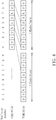
- mobile device when the mobile device is configured with a TDD primary cell with UL-DL configuration 2 which jointly aggregates an FDD secondary cell, mobile device associates DL subframes on the FDD serving cell to UL subframes on the TDD primary cell as the association shown in Fig. 6 .
- TABLE III is an example of the present invention.
- the indices in certain subframes may be relocated to make the number of indices in the downlink association set K2 for each UL subframe more balanced.
- another secondary cell SC4 may be configured to jointly aggregate with the primary cell PC2 and the secondary cell SC3 at the mobile device.
- the PUCCH timing of the secondary cell SC4 may be assigned to be the same as the PUCCH timing of the secondary cell SC3.
- a reference TDD configuration may be determined according to a combination of TDD configurations of the TDD primary cell PC2 and the secondary cell SC4.
- the PUCCH timing of the secondary cell SC4 may be assigned to follow a PUCCH feedback timing of the reference TDD configuration, while the PUCCH timing of the secondary cell SC3 follows the process 50 wherein the index k belongs to the downlink association set K2 mentioned previously.
- the PUCCH timing of the secondary cell SC4 may be assigned to follow a PUCCH feedback timing of the reference TDD configuration, while the PUCCH timing of the secondary cell SC3 is assigned by associating the UL subframe on the TDD primary cell PC2 with at least one DL subframe on the secondary cell SC3 based on assuming the UL-DL configuration of the TDD primary cell PC2 is the reference TDD configuration.
- the reference TDD configuration may be determined based on the conditions and TABLE IV as follows.
- the PUCCH timing should be known by both the mobile device and the base station to which the mobile device connects.
- the network may assign UL transmission timing in its base station in a manner similar or corresponded to the steps performed in the mobile device for receiving the feedback from the mobile device.
- the mobile device knows the resource to transmit the PUCCH and the base station knows the resource to receive the PUCCH.
- the PUCCH transmission may happen on a cell which is not a primary cell (i.e., a secondary cell) and the proposed method can be directly reused.
- a radio interface protocol of the communication system 10 may include three layers: the Physical Layer (L1), the Data Link Layer (L2), and the Network Layer (L3), wherein a control plane of L3 is a Radio Resource Control (RRC) layer, and L2 is further divided into a Packet Data Convergence Protocol (PDCP) layer, a Radio Link Control (RLC) layer and a Medium Access Control (MAC) layer.
- RRC Radio Resource Control
- PDCP Packet Data Convergence Protocol
- RLC Radio Link Control
- MAC Medium Access Control
- the main services and functions of the MAC layer may include a discontinuous reception (DRX) functionality.
- the mobile device may be configured by the RRC layer with the DRX functionality that allows the mobile device to discontinuously monitor a Physical Downlink Control Channel (PDCCH) carrying information about resource allocation of a Downlink Shared Channel (DL-SCH) and scheduling grants.
- the DRX functionality is operated based on parameters such as DRX Cycle, drx-InactivityTimer, drx-RetransmissionTimer, drxShortCycleTimer, drxStartOffset, HARQ RTT Timer, and onDurationTimer, PDCCH-subframe.
- the HARQ RTT Timer is used to specify the minimum amount of subframe(s) before a DL HARQ retransmission is expected by the mobile device.
- These DRX related parameters may be configured by a DRX-configuration information element (IE) of the RRC layer.
- IE DRX-configuration information element
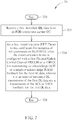
- Fig. 7 is a flowchart of a process 70, not forming part of the present invention.
- the process 70 is utilized for handling a HARQ RTT timer for a mobile device configured with jointly aggregated TDD and FDD component carriers (CCs).
- the mobile device may be the UE in the wireless communication system 10, but is not limited herein.
- the process 30 may be implemented by the communication device 20 and compiled into the program code 214 to instruct the processing means 200 to execute the following steps:
- the mobile device when the mobile device is configured with a PUCCH on the TDD CC for transmitting an ACK/NACK feedback (or a HARQ ACK/NACK feedback) for downlink data received from the FDD CC, the mobile device may apply 4+k subframes (or 4+k milliseconds) for a HARQ RTT Timer used for a downlink HARQ process for reception of retransmission on the FDD CC, wherein k is an interval between a first subframe where a downlink transmission is received and a second subframe where an uplink transmission of HARQ feedback associated to the downlink transmission for the downlink HARQ process is transmitted.
- the parameter k may be determined in accordance with the abovementioned downlink association set K2 (e.g., TABLE III).
- the downlink transmission may be a new transmission or a retransmission.
- the mobile device may be configured with a primary cell on the TDD CC and a secondary cell on the FDD CC, where the secondary cell and the primary cell are aggregated to transmit to the mobile device.
- a network configuring the TDD CC and the FDD CC to the mobile device is forbidden to transmit a DL retransmission associated to the DL transmission earlier than the 4+k subframes after a subframe where the DL transmission is transmitted.
- the network when the network receives the HARQ feedback which is a HARQ NACK or the network does not receive the HARQ feedback, the network is forbidden to transmit the DL retransmission associated to the DL transmission earlier than the 4 subframes after a subframe where the HARQ feedback is received.
- the mobile device when the mobile device is configured with a PUCCH on the TDD CC for transmitting HARQ feedback for downlink data received from the TDD CC, the mobile device may also apply 4+k subframes (or 4+k milliseconds) for a HARQ RTT Timer used for a downlink HARQ process for reception of retransmission of the downlink data on the TDD CC, wherein k is an interval between a downlink transmission and an uplink transmission of HARQ feedback associated to the downlink transmission for the downlink HARQ process.
- the mobile device may receive the DL data on the TDD CC and transmit the associated HARQ feedback on the same TDD CC.
- the RTT Timer is also set to 4+k subframes for reception of retransmission on the TDD CC.
- the network configuring the TDD CC and the FDD CC to the mobile device is forbidden to transmit a DL retransmission associated to the DL transmission earlier than the 4+k subframes after a subframe where the DL transmission is transmitted.
- the network receives the HARQ feedback which is a HARQ NACK or the network does not receive the HARQ feedback, the network is forbidden to transmit the DL retransmission associated to the DL transmission earlier than the 4 subframes after a subframe where the HARQ feedback is received.
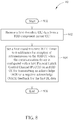
- Fig. 8 is a flowchart of a process 80 according to an example of the present invention.
- the process 80 is utilized for handling a HARQ RTT timer for a mobile device configured with jointly aggregated TDD and FDD component carriers (CCs).
- the mobile device may be the UE in the wireless communication system 10, but is not limited herein.
- the process 30 may be implemented by the communication device 20 and compiled into the program code 214 to instruct the processing means 200 to execute the following steps:
- the mobile device when the mobile device is configured with a PUCCH on the FDD CC for transmitting an ACK/NACK feedback (or a HARQ ACK/NACK feedback) for a DL transmission of a downlink data received from the TDD CC, the mobile device applies 8 subframes (or 8 milliseconds) for a HARQ RTT Timer used for a downlink HARQ process for reception of retransmission on the TDD CC.
- the downlink transmission may be a new transmission or a retransmission.
- the mobile device may be configured with a primary cell on the FDD CC and a secondary cell on the TDD CC, where the secondary cell and the primary cell are aggregated to transmit to the mobile device.
- a network configuring the TDD CC and the FDD CC to the mobile device is forbidden to transmit a DL retransmission associated to the DL transmission/retransmission earlier than the 8 subframes after a subframe where the DL transmission is transmitted.
- the network receives the HARQ feedback which is a HARQ NACK or the network does not receive the HARQ feedback, the network is forbidden to transmit the DL retransmission associated to the DL transmission earlier than the 4 subframes after a subframe where the HARQ feedback is received.
- the mobile device when the mobile device is configured with a PUCCH on the FDD CC for transmitting HARQ feedback for downlink data received from the FDD CC, the mobile device applies 8 subframes (or 8 milliseconds) for a HARQ RTT Timer used for a downlink HARQ process for reception of retransmission of the downlink data on the FDD CC.
- the mobile device may receive the DL data on the FDD CC and transmit the associated HARQ feedback on the same FDD CC. Under such condition, the RTT Timer is also set to 8 subframes for reception of retransmission on the FDD CC.
- the network configuring the TDD CC and the FDD CC to the mobile device is forbidden to transmit a DL retransmission associated to the DL transmission/retransmission earlier than the 8 subframes after a subframe where the DL transmission is transmitted.
- the network receives the HARQ feedback which is a HARQ NACK or the network does not receive the HARQ feedback, the network is forbidden to transmit the DL retransmission associated to the DL transmission earlier than the 4 subframes after a subframe where the HARQ feedback is received.
- the mobile device may be configured by the network with a PUCCH transmitted on the FDD CC and a PUCCH transmitted the TDD CC.
- the mobile device may set a first RTT Timer to 8 subframes for reception of retransmission of a first DL data on the FDD CC for a first DL HARQ process and set a second RTT timer to 4+k subframes for reception of retransmission of a second DL data on the TDD CC for a second DL HARQ process, wherein k is an interval between reception of the second DL data and an uplink transmission of HARQ feedback associated to the second DL data for the second DL HARQ process.
- the abovementioned steps of the processes 30, 50, 70 and 80 including suggested steps may be realized by means of hardware, software, firmware, or an electronic system.
- Examples of hardware may include analog, digital and mixed circuits known as microcircuit, microchip, or silicon chip.
- Examples of the electronic system may include a system on chip (SOC), system in package (SiP), a computer on module (COM), and the communication device 20. It is noted that any of the abovementioned steps of the processes 30, 50, 70 and 80 including suggested steps may be combined by means of hardware, software, firmware, or an electronic system.
- the present invention provides the communication device and the method for assigning PUCCH transmission timing joint operation/aggregation of FDD and TDD component carriers.
- the mobile device when the mobile device is configured with a PUCCH on the TDD CC for transmitting HARQ feedback for downlink data received from the FDD CC, the mobile device applies 4+k subframes for a HARQ RTT Timer, where k is an interval between a DL transmission of the downlink data and the transmission of ACK/NACK feedback for the downlink data.
- the mobile device when the mobile device is configured with a PUCCH on the FDD CC for transmitting HARQ feedback for downlink data received from the TDD CC, the mobile device applies 8 subframes for a HARQ RTT Timer.
- the mobile device can set the RTT Timer appropriately under joint TDD and FDD operation, which assures the mobile device can switch its receiver to a sleep mode for appropriate time frames in order to save battery power and wake up to receive a retransmission of the downlink data at the correct moment.
Landscapes
- Engineering & Computer Science (AREA)
- Signal Processing (AREA)
- Computer Networks & Wireless Communication (AREA)
- Mobile Radio Communication Systems (AREA)
Claims (8)
- Eine Kommunikationsvorrichtung für die Zuordnung des Übertragungszeitpunkts eines physikalischen Uplink-Steuerkanals (PUCCH), konfiguriert mit kombinierten Zeitduplex(TDD)- und Frequenzduplex(FDD)-Einzelkanälen (CC), die Folgendes beinhaltet:ein Verarbeitungsmittel (200); undeine Speichereinheit (210), die mit dem Verarbeitungsmittel (200) gekoppelt ist, zur Speicherung eines Programmcodes (214), wobei der Programmcode (214) das Verarbeitungsmittel anweist, die folgenden Schritte auszuführen, gekennzeichnet durch:Empfangen einer ersten Downlink(DL)-Übertragung in einer ersten Zelle;Bestimmen eines ersten Uplink(UL)-Übertragungszeitpunkts in einem ersten Teilrahmen für ein entsprechendes Feedback als Antwort auf die erste DL-Übertragung in einem zweiten Teilrahmen an die erste Zelle, wobei der zweite Teilrahmen k Teilrahmen vor dem ersten Teilrahmen liegt;Übertragen des entsprechenden Feedbacks der ersten DL-Übertragung in dem ersten Teilrahmen an eine zweite Zelle, entsprechend dem ersten UL-Übertragungszeitpunkt der ersten DL-Übertragung der ersten Zelle;Empfangen einer zweiten DL-Übertragung in einer dritten Zelle; undunabhängiges Bestimmen eines zweiten UL-Übertragungszeitpunkts der zweiten DL-Übertragung der dritten Zelle, ungeachtet des ersten UL-Übertragungszeitpunkts der ersten DL-Übertragung der ersten Zelle;wobei sich die erste Zelle auf einem TDD-CC befindet und die erste Zelle keinen PUCCH besitzt, um das entsprechende Feedback der ersten DL-Übertragung zu übertragen;wobei sich die zweite Zelle auf einem FDD-CC befindet und die zweite Zelle einen PUCCH verwendet, um das entsprechende Feedback der ersten DL-Übertragung der ersten Zelle zu übertragen; undwobei die dritte Zelle ein TDD-CC ist und eine andere TDD-Konfiguration besitzt als die erste Zelle.
- Kommunikationsvorrichtung gemäß Anspruch 1, wobei k über alle Teilrahmen-Nummern konstant ist.
- Kommunikationsvorrichtung gemäß Anspruch 1, wobei k zu einem Downlink-Zuordnungssatz gehört, der von der Teilrahmen-Nummer des ersten Teilrahmens an die zweite Zelle und der UL-DL-Konfiguration der ersten Zelle abhängt.
- Kommunikationsvorrichtung gemäß Anspruch 1, wobei der Programmcode das Verarbeitungsmittel weiterhin anweist, die folgenden Schritte auszuführen:Setzen eines HARQ(hybride automatische Wiederholungsanfrage)-RTT(Paketumlaufzeit)-Timers auf 8 Teilrahmen für das Empfangen der Rückübertragung der ersten DL-Übertragung an die erste Zelle.
- Ein Verfahren für die Zuordnung des Übertragungszeitpunkts eines physikalischen Uplink-Steuerkanals (PUCCH), konfiguriert mit kombinierten Zeitduplex(TDD)- und Frequenzduplex(FDD)-Einzelkanälen (CC), für eine Kommunikationsvorrichtung, wobei das Verfahren Folgendes beinhaltet:Empfangen einer ersten Downlink(DL)-Übertragung in einer ersten Zelle;Bestimmen eines ersten Uplink(UL)-Übertragungszeitpunkts in einem ersten Teilrahmen für ein entsprechendes Feedback als Antwort auf die erste DL-Übertragung in einem zweiten Teilrahmen an die erste Zelle, wobei der zweite Teilrahmen k Teilrahmen vor dem ersten Teilrahmen liegt;Übertragen des entsprechenden Feedbacks der ersten DL-Übertragung in dem ersten Teilrahmen an eine zweite Zelle, entsprechend dem ersten UL-Übertragungszeitpunkt der ersten DL-Übertragung der ersten Zelle;Empfangen einer zweiten DL-Übertragung in einer dritten Zelle; undunabhängiges Bestimmen eines zweiten UL-Übertragungszeitpunkts der zweiten DL-Übertragung der dritten Zelle, ungeachtet des ersten UL-Übertragungszeitpunkts der ersten DL-Übertragung der ersten Zelle;wobei sich die erste Zelle auf einem TDD-CC befindet und die erste Zelle keinen PUCCH besitzt, um das entsprechende Feedback der ersten DL-Übertragung zu übertragen;wobei sich die zweite Zelle auf einem FDD-CC befindet und die zweite Zelle einen PUCCH verwendet, um das entsprechende Feedback der ersten DL-Übertragung der ersten Zelle zu übertragen; undwobei die dritte Zelle ein TDD-CC ist und eine andere TDD-Konfiguration besitzt als die erste Zelle.
- Verfahren gemäß Anspruch 5, wobei k über alle Teilrahmen-Nummern konstant ist.
- Verfahren gemäß Anspruch 5, wobei k zu einem Downlink-Zuordnungssatz gehört, der von der Teilrahmen-Nummer des ersten Teilrahmens an die zweite Zelle und der UL-DL-Konfiguration der ersten Zelle abhängt.
- Verfahren gemäß Anspruch 5, das weiterhin Folgendes beinhaltet:Setzen eines HARQ(hybride automatische Wiederholungsanfrage)-RTT(Paketumlaufzeit)-Timers auf 8 Teilrahmen für das Empfangen der Rückübertragung der ersten DL-Übertragung an die erste Zelle.
Applications Claiming Priority (2)
| Application Number | Priority Date | Filing Date | Title |
|---|---|---|---|
| US201361841435P | 2013-07-01 | 2013-07-01 | |
| US201361877268P | 2013-09-12 | 2013-09-12 |
Publications (3)
| Publication Number | Publication Date |
|---|---|
| EP2822210A2 EP2822210A2 (de) | 2015-01-07 |
| EP2822210A3 EP2822210A3 (de) | 2015-03-25 |
| EP2822210B1 true EP2822210B1 (de) | 2017-11-29 |
Family
ID=51062698
Family Applications (1)
| Application Number | Title | Priority Date | Filing Date |
|---|---|---|---|
| EP14175264.2A Active EP2822210B1 (de) | 2013-07-01 | 2014-07-01 | Verfahren zur Datenübertragungszeitsteuerung und diskontinuierlichen Empfangshandhabung unter gemeinsamem TDD-FDD-Betrieb und zugehörige Kommunikationsvorrichtung |
Country Status (3)
| Country | Link |
|---|---|
| US (1) | US9794050B2 (de) |
| EP (1) | EP2822210B1 (de) |
| CN (1) | CN104283659B (de) |
Families Citing this family (20)
| Publication number | Priority date | Publication date | Assignee | Title |
|---|---|---|---|---|
| US9559817B2 (en) * | 2013-07-19 | 2017-01-31 | Sharp Kabushiki Kaisha | Systems and methods for carrier aggregation |
| US10237020B2 (en) * | 2013-07-19 | 2019-03-19 | Sharp Kabushiki Kaisha | Systems and methods for carrier aggregation |
| CN106165329A (zh) * | 2013-08-09 | 2016-11-23 | 联发科技股份有限公司 | 自适应tdd系统中ul控制信道的物理资源分配 |
| US10382184B2 (en) * | 2013-08-09 | 2019-08-13 | Industrial Technology Research Institute | Method of handling communication operation and related communication device |
| CN105474568B (zh) * | 2013-08-23 | 2017-10-17 | 瑞典爱立信有限公司 | 用于下行链路调度和混合自动重复请求定时的节点和方法 |
| JP6031017B2 (ja) * | 2013-09-26 | 2016-11-24 | 株式会社Nttドコモ | ユーザ端末、基地局及び無線通信方法 |
| TWI641278B (zh) * | 2014-03-11 | 2018-11-11 | Lg電子股份有限公司 | 在載波聚合系統中計算非連續接收定時器的方法及其裝置 |
| US10631194B2 (en) * | 2014-03-21 | 2020-04-21 | Nokia Solutions And Networks Oy | Cross reporting of empty or non-empty buffers in dual connectivity |
| CN106464453A (zh) * | 2014-04-29 | 2017-02-22 | Lg电子株式会社 | 用于在载波聚合系统中配置harq rtt定时器的方法及其装置 |
| WO2016119173A1 (zh) * | 2015-01-29 | 2016-08-04 | 华为技术有限公司 | Pucch配置方法和装置 |
| US9936519B2 (en) | 2015-03-15 | 2018-04-03 | Qualcomm Incorporated | Self-contained time division duplex (TDD) subframe structure for wireless communications |
| US10342012B2 (en) | 2015-03-15 | 2019-07-02 | Qualcomm Incorporated | Self-contained time division duplex (TDD) subframe structure |
| US10075970B2 (en) * | 2015-03-15 | 2018-09-11 | Qualcomm Incorporated | Mission critical data support in self-contained time division duplex (TDD) subframe structure |
| US9814058B2 (en) | 2015-05-15 | 2017-11-07 | Qualcomm Incorporated | Scaled symbols for a self-contained time division duplex (TDD) subframe structure |
| US9992790B2 (en) | 2015-07-20 | 2018-06-05 | Qualcomm Incorporated | Time division duplex (TDD) subframe structure supporting single and multiple interlace modes |
| US10003438B2 (en) * | 2016-01-26 | 2018-06-19 | Qualcomm Incorporated | Relay operation for latency sensitive reliable data exchange |
| US10404418B2 (en) | 2016-06-28 | 2019-09-03 | Htc Corporation | Device and method of handling uplink transmission |
| US10440729B2 (en) * | 2016-07-28 | 2019-10-08 | Qualcomm Incorporated | Transmission of Ultra-Reliable Low-Latency Communications (URLLC) over Time Division Duplex (TDD) using a URLLC configuration for a TDD subframe |
| EP4304277A4 (de) * | 2021-03-03 | 2025-03-19 | LG Electronics Inc. | Benutzergerätebetriebsverfahren in zusammenhang mit psfch- und pucch-übertragung in sidelink in einem drahtloskommunikationssystem |
| CN120021334A (zh) * | 2023-11-17 | 2025-05-20 | 华为技术有限公司 | 一种通信方法及装置 |
Family Cites Families (7)
| Publication number | Priority date | Publication date | Assignee | Title |
|---|---|---|---|---|
| WO2010148192A1 (en) * | 2009-06-18 | 2010-12-23 | Interdigital Patent Holdings, Inc. | Operating in a discontinuous reception mode employing carrier aggregation |
| TWI486018B (zh) * | 2009-10-23 | 2015-05-21 | Ind Tech Res Inst | 無線中繼轉傳系統的傳送方法及其中繼台 |
| CN106455100B (zh) * | 2010-06-18 | 2019-06-28 | 寰发股份有限公司 | 通信设备间协调传输及指定近似空白子帧模式的方法 |
| EP2636174B1 (de) * | 2010-11-05 | 2018-10-17 | BlackBerry Limited | Harq soft bit puffer partitionierung für träger aggregation |
| KR101875611B1 (ko) * | 2010-11-22 | 2018-07-06 | 엘지전자 주식회사 | 무선 통신 시스템에서 하향링크 전송에 대한 확인응답의 전송 방법 및 장치 |
| US9363820B2 (en) * | 2011-08-11 | 2016-06-07 | Industrial Technology Research Institute | Method of uplink control information transmission |
| US9215040B2 (en) * | 2011-09-23 | 2015-12-15 | Futurewei Technologies, Inc. | Hybrid in-band/out-of-band relays |
-
2014
- 2014-07-01 EP EP14175264.2A patent/EP2822210B1/de active Active
- 2014-07-01 US US14/320,662 patent/US9794050B2/en active Active
- 2014-07-01 CN CN201410326563.XA patent/CN104283659B/zh active Active
Non-Patent Citations (1)
| Title |
|---|
| None * |
Also Published As
| Publication number | Publication date |
|---|---|
| EP2822210A3 (de) | 2015-03-25 |
| US20150003304A1 (en) | 2015-01-01 |
| CN104283659B (zh) | 2018-02-06 |
| EP2822210A2 (de) | 2015-01-07 |
| CN104283659A (zh) | 2015-01-14 |
| US9794050B2 (en) | 2017-10-17 |
Similar Documents
| Publication | Publication Date | Title |
|---|---|---|
| EP2822210B1 (de) | Verfahren zur Datenübertragungszeitsteuerung und diskontinuierlichen Empfangshandhabung unter gemeinsamem TDD-FDD-Betrieb und zugehörige Kommunikationsvorrichtung | |
| JP6892912B2 (ja) | アップリンクスケジュール指定の2段階シグナリング | |
| TWI572223B (zh) | 在鏈結錨與增幅器網路中之資料重傳技術 | |
| KR102313331B1 (ko) | Fdd-tdd 캐리어 어그리게이션을 위한 감소된 지연 harq 프로세스 타임라인 | |
| EP3606153B1 (de) | Endgerätevorrichtung, basisstationsvorrichtung, kommunikationsverfahren und integrierte schaltung | |
| EP2835928B1 (de) | Verfahren zur Handhabung der Kommunikationsoperation | |
| US10820341B2 (en) | Determination of requirement of UE processing time in NR | |
| CN110800234A (zh) | 物理共享信道传输至确收延迟优化 | |
| CN103368710B (zh) | 处理混合自动重传请求回传的方法及其通信装置 | |
| EP3216148B1 (de) | Verkürzung der verarbeitungszeit für übertragung und empfang mit niedriger latenz | |
| CA2939930C (en) | Tdd and fdd joint carrier aggregation in lte-advanced | |
| JP2018078564A (ja) | アンテナ切替えダイバーシティのための動的なトリガアルゴリズム | |
| CN103096494B (zh) | 基于跨载波调度的数据传输方法、用户设备和基站 | |
| US20140105224A1 (en) | Retransmissions in a Communication System Using Almost Blank Subframes | |
| KR20170088853A (ko) | 무선 통신 시스템에서 레이턴시를 감소시키기 위한 기술들 | |
| CN110651496A (zh) | 终端装置、基站装置、通信方法以及集成电路 | |
| CN106134278B (zh) | 无线通信系统中发送和接收用于设备对设备通信的信号的方法及其装置 | |
| EP2757726B1 (de) | Verfahren zur handhabung von kommunikationsoperationen und zugehörige kommunikationsvorrichtung |
Legal Events
| Date | Code | Title | Description |
|---|---|---|---|
| PUAI | Public reference made under article 153(3) epc to a published international application that has entered the european phase |
Free format text: ORIGINAL CODE: 0009012 |
|
| 17P | Request for examination filed |
Effective date: 20140701 |
|
| AK | Designated contracting states |
Kind code of ref document: A2 Designated state(s): AL AT BE BG CH CY CZ DE DK EE ES FI FR GB GR HR HU IE IS IT LI LT LU LV MC MK MT NL NO PL PT RO RS SE SI SK SM TR |
|
| AX | Request for extension of the european patent |
Extension state: BA ME |
|
| PUAL | Search report despatched |
Free format text: ORIGINAL CODE: 0009013 |
|
| RAP1 | Party data changed (applicant data changed or rights of an application transferred) |
Owner name: HTC CORPORATION |
|
| AK | Designated contracting states |
Kind code of ref document: A3 Designated state(s): AL AT BE BG CH CY CZ DE DK EE ES FI FR GB GR HR HU IE IS IT LI LT LU LV MC MK MT NL NO PL PT RO RS SE SI SK SM TR |
|
| AX | Request for extension of the european patent |
Extension state: BA ME |
|
| RIC1 | Information provided on ipc code assigned before grant |
Ipc: H04L 1/18 20060101AFI20150216BHEP Ipc: H04L 5/00 20060101ALI20150216BHEP |
|
| RBV | Designated contracting states (corrected) |
Designated state(s): AL AT BE BG CH CY CZ DE DK EE ES FI FR GB GR HR HU IE IS IT LI LT LU LV MC MK MT NL NO PL PT RO RS SE SI SK SM TR |
|
| 17Q | First examination report despatched |
Effective date: 20160212 |
|
| STAA | Information on the status of an ep patent application or granted ep patent |
Free format text: STATUS: EXAMINATION IS IN PROGRESS |
|
| REG | Reference to a national code |
Ref country code: DE Ref legal event code: R079 Ref document number: 602014017801 Country of ref document: DE Free format text: PREVIOUS MAIN CLASS: H04L0001180000 Ipc: H04L0005140000 |
|
| GRAP | Despatch of communication of intention to grant a patent |
Free format text: ORIGINAL CODE: EPIDOSNIGR1 |
|
| STAA | Information on the status of an ep patent application or granted ep patent |
Free format text: STATUS: GRANT OF PATENT IS INTENDED |
|
| RIC1 | Information provided on ipc code assigned before grant |
Ipc: H04L 1/00 20060101ALI20170612BHEP Ipc: H04L 1/18 20060101ALI20170612BHEP Ipc: H04L 5/00 20060101ALI20170612BHEP Ipc: H04L 5/14 20060101AFI20170612BHEP |
|
| INTG | Intention to grant announced |
Effective date: 20170703 |
|
| GRAS | Grant fee paid |
Free format text: ORIGINAL CODE: EPIDOSNIGR3 |
|
| GRAA | (expected) grant |
Free format text: ORIGINAL CODE: 0009210 |
|
| STAA | Information on the status of an ep patent application or granted ep patent |
Free format text: STATUS: THE PATENT HAS BEEN GRANTED |
|
| AK | Designated contracting states |
Kind code of ref document: B1 Designated state(s): AL AT BE BG CH CY CZ DE DK EE ES FI FR GB GR HR HU IE IS IT LI LT LU LV MC MK MT NL NO PL PT RO RS SE SI SK SM TR |
|
| REG | Reference to a national code |
Ref country code: CH Ref legal event code: EP |
|
| REG | Reference to a national code |
Ref country code: AT Ref legal event code: REF Ref document number: 951304 Country of ref document: AT Kind code of ref document: T Effective date: 20171215 |
|
| REG | Reference to a national code |
Ref country code: IE Ref legal event code: FG4D |
|
| REG | Reference to a national code |
Ref country code: DE Ref legal event code: R096 Ref document number: 602014017801 Country of ref document: DE |
|
| REG | Reference to a national code |
Ref country code: NL Ref legal event code: FP |
|
| REG | Reference to a national code |
Ref country code: LT Ref legal event code: MG4D |
|
| REG | Reference to a national code |
Ref country code: AT Ref legal event code: MK05 Ref document number: 951304 Country of ref document: AT Kind code of ref document: T Effective date: 20171129 |
|
| PG25 | Lapsed in a contracting state [announced via postgrant information from national office to epo] |
Ref country code: SE Free format text: LAPSE BECAUSE OF FAILURE TO SUBMIT A TRANSLATION OF THE DESCRIPTION OR TO PAY THE FEE WITHIN THE PRESCRIBED TIME-LIMIT Effective date: 20171129 Ref country code: FI Free format text: LAPSE BECAUSE OF FAILURE TO SUBMIT A TRANSLATION OF THE DESCRIPTION OR TO PAY THE FEE WITHIN THE PRESCRIBED TIME-LIMIT Effective date: 20171129 Ref country code: LT Free format text: LAPSE BECAUSE OF FAILURE TO SUBMIT A TRANSLATION OF THE DESCRIPTION OR TO PAY THE FEE WITHIN THE PRESCRIBED TIME-LIMIT Effective date: 20171129 Ref country code: ES Free format text: LAPSE BECAUSE OF FAILURE TO SUBMIT A TRANSLATION OF THE DESCRIPTION OR TO PAY THE FEE WITHIN THE PRESCRIBED TIME-LIMIT Effective date: 20171129 Ref country code: NO Free format text: LAPSE BECAUSE OF FAILURE TO SUBMIT A TRANSLATION OF THE DESCRIPTION OR TO PAY THE FEE WITHIN THE PRESCRIBED TIME-LIMIT Effective date: 20180228 |
|
| PG25 | Lapsed in a contracting state [announced via postgrant information from national office to epo] |
Ref country code: BG Free format text: LAPSE BECAUSE OF FAILURE TO SUBMIT A TRANSLATION OF THE DESCRIPTION OR TO PAY THE FEE WITHIN THE PRESCRIBED TIME-LIMIT Effective date: 20180228 Ref country code: AT Free format text: LAPSE BECAUSE OF FAILURE TO SUBMIT A TRANSLATION OF THE DESCRIPTION OR TO PAY THE FEE WITHIN THE PRESCRIBED TIME-LIMIT Effective date: 20171129 Ref country code: HR Free format text: LAPSE BECAUSE OF FAILURE TO SUBMIT A TRANSLATION OF THE DESCRIPTION OR TO PAY THE FEE WITHIN THE PRESCRIBED TIME-LIMIT Effective date: 20171129 Ref country code: RS Free format text: LAPSE BECAUSE OF FAILURE TO SUBMIT A TRANSLATION OF THE DESCRIPTION OR TO PAY THE FEE WITHIN THE PRESCRIBED TIME-LIMIT Effective date: 20171129 Ref country code: LV Free format text: LAPSE BECAUSE OF FAILURE TO SUBMIT A TRANSLATION OF THE DESCRIPTION OR TO PAY THE FEE WITHIN THE PRESCRIBED TIME-LIMIT Effective date: 20171129 Ref country code: GR Free format text: LAPSE BECAUSE OF FAILURE TO SUBMIT A TRANSLATION OF THE DESCRIPTION OR TO PAY THE FEE WITHIN THE PRESCRIBED TIME-LIMIT Effective date: 20180301 |
|
| REG | Reference to a national code |
Ref country code: FR Ref legal event code: PLFP Year of fee payment: 5 |
|
| PG25 | Lapsed in a contracting state [announced via postgrant information from national office to epo] |
Ref country code: SK Free format text: LAPSE BECAUSE OF FAILURE TO SUBMIT A TRANSLATION OF THE DESCRIPTION OR TO PAY THE FEE WITHIN THE PRESCRIBED TIME-LIMIT Effective date: 20171129 Ref country code: CY Free format text: LAPSE BECAUSE OF FAILURE TO SUBMIT A TRANSLATION OF THE DESCRIPTION OR TO PAY THE FEE WITHIN THE PRESCRIBED TIME-LIMIT Effective date: 20171129 Ref country code: EE Free format text: LAPSE BECAUSE OF FAILURE TO SUBMIT A TRANSLATION OF THE DESCRIPTION OR TO PAY THE FEE WITHIN THE PRESCRIBED TIME-LIMIT Effective date: 20171129 Ref country code: DK Free format text: LAPSE BECAUSE OF FAILURE TO SUBMIT A TRANSLATION OF THE DESCRIPTION OR TO PAY THE FEE WITHIN THE PRESCRIBED TIME-LIMIT Effective date: 20171129 Ref country code: CZ Free format text: LAPSE BECAUSE OF FAILURE TO SUBMIT A TRANSLATION OF THE DESCRIPTION OR TO PAY THE FEE WITHIN THE PRESCRIBED TIME-LIMIT Effective date: 20171129 |
|
| REG | Reference to a national code |
Ref country code: DE Ref legal event code: R097 Ref document number: 602014017801 Country of ref document: DE |
|
| PG25 | Lapsed in a contracting state [announced via postgrant information from national office to epo] |
Ref country code: SM Free format text: LAPSE BECAUSE OF FAILURE TO SUBMIT A TRANSLATION OF THE DESCRIPTION OR TO PAY THE FEE WITHIN THE PRESCRIBED TIME-LIMIT Effective date: 20171129 Ref country code: IT Free format text: LAPSE BECAUSE OF FAILURE TO SUBMIT A TRANSLATION OF THE DESCRIPTION OR TO PAY THE FEE WITHIN THE PRESCRIBED TIME-LIMIT Effective date: 20171129 Ref country code: RO Free format text: LAPSE BECAUSE OF FAILURE TO SUBMIT A TRANSLATION OF THE DESCRIPTION OR TO PAY THE FEE WITHIN THE PRESCRIBED TIME-LIMIT Effective date: 20171129 Ref country code: PL Free format text: LAPSE BECAUSE OF FAILURE TO SUBMIT A TRANSLATION OF THE DESCRIPTION OR TO PAY THE FEE WITHIN THE PRESCRIBED TIME-LIMIT Effective date: 20171129 |
|
| PLBE | No opposition filed within time limit |
Free format text: ORIGINAL CODE: 0009261 |
|
| STAA | Information on the status of an ep patent application or granted ep patent |
Free format text: STATUS: NO OPPOSITION FILED WITHIN TIME LIMIT |
|
| 26N | No opposition filed |
Effective date: 20180830 |
|
| PG25 | Lapsed in a contracting state [announced via postgrant information from national office to epo] |
Ref country code: SI Free format text: LAPSE BECAUSE OF FAILURE TO SUBMIT A TRANSLATION OF THE DESCRIPTION OR TO PAY THE FEE WITHIN THE PRESCRIBED TIME-LIMIT Effective date: 20171129 |
|
| REG | Reference to a national code |
Ref country code: CH Ref legal event code: PL |
|
| PG25 | Lapsed in a contracting state [announced via postgrant information from national office to epo] |
Ref country code: LU Free format text: LAPSE BECAUSE OF NON-PAYMENT OF DUE FEES Effective date: 20180701 Ref country code: MC Free format text: LAPSE BECAUSE OF FAILURE TO SUBMIT A TRANSLATION OF THE DESCRIPTION OR TO PAY THE FEE WITHIN THE PRESCRIBED TIME-LIMIT Effective date: 20171129 |
|
| REG | Reference to a national code |
Ref country code: BE Ref legal event code: MM Effective date: 20180731 |
|
| REG | Reference to a national code |
Ref country code: IE Ref legal event code: MM4A |
|
| PG25 | Lapsed in a contracting state [announced via postgrant information from national office to epo] |
Ref country code: IE Free format text: LAPSE BECAUSE OF NON-PAYMENT OF DUE FEES Effective date: 20180701 Ref country code: CH Free format text: LAPSE BECAUSE OF NON-PAYMENT OF DUE FEES Effective date: 20180731 Ref country code: LI Free format text: LAPSE BECAUSE OF NON-PAYMENT OF DUE FEES Effective date: 20180731 |
|
| PG25 | Lapsed in a contracting state [announced via postgrant information from national office to epo] |
Ref country code: BE Free format text: LAPSE BECAUSE OF NON-PAYMENT OF DUE FEES Effective date: 20180731 |
|
| PG25 | Lapsed in a contracting state [announced via postgrant information from national office to epo] |
Ref country code: MT Free format text: LAPSE BECAUSE OF NON-PAYMENT OF DUE FEES Effective date: 20180701 |
|
| PG25 | Lapsed in a contracting state [announced via postgrant information from national office to epo] |
Ref country code: TR Free format text: LAPSE BECAUSE OF FAILURE TO SUBMIT A TRANSLATION OF THE DESCRIPTION OR TO PAY THE FEE WITHIN THE PRESCRIBED TIME-LIMIT Effective date: 20171129 |
|
| PG25 | Lapsed in a contracting state [announced via postgrant information from national office to epo] |
Ref country code: HU Free format text: LAPSE BECAUSE OF FAILURE TO SUBMIT A TRANSLATION OF THE DESCRIPTION OR TO PAY THE FEE WITHIN THE PRESCRIBED TIME-LIMIT; INVALID AB INITIO Effective date: 20140701 Ref country code: PT Free format text: LAPSE BECAUSE OF FAILURE TO SUBMIT A TRANSLATION OF THE DESCRIPTION OR TO PAY THE FEE WITHIN THE PRESCRIBED TIME-LIMIT Effective date: 20171129 |
|
| PG25 | Lapsed in a contracting state [announced via postgrant information from national office to epo] |
Ref country code: MK Free format text: LAPSE BECAUSE OF NON-PAYMENT OF DUE FEES Effective date: 20171129 |
|
| PG25 | Lapsed in a contracting state [announced via postgrant information from national office to epo] |
Ref country code: AL Free format text: LAPSE BECAUSE OF FAILURE TO SUBMIT A TRANSLATION OF THE DESCRIPTION OR TO PAY THE FEE WITHIN THE PRESCRIBED TIME-LIMIT Effective date: 20171129 Ref country code: IS Free format text: LAPSE BECAUSE OF FAILURE TO SUBMIT A TRANSLATION OF THE DESCRIPTION OR TO PAY THE FEE WITHIN THE PRESCRIBED TIME-LIMIT Effective date: 20180329 |
|
| REG | Reference to a national code |
Ref country code: DE Ref legal event code: R082 Ref document number: 602014017801 Country of ref document: DE Representative=s name: WAGNER & GEYER PARTNERSCHAFT MBB PATENT- UND R, DE |
|
| P01 | Opt-out of the competence of the unified patent court (upc) registered |
Effective date: 20230602 |
|
| PGFP | Annual fee paid to national office [announced via postgrant information from national office to epo] |
Ref country code: GB Payment date: 20250605 Year of fee payment: 12 |
|
| PGFP | Annual fee paid to national office [announced via postgrant information from national office to epo] |
Ref country code: NL Payment date: 20250613 Year of fee payment: 12 |
|
| PGFP | Annual fee paid to national office [announced via postgrant information from national office to epo] |
Ref country code: FR Payment date: 20250610 Year of fee payment: 12 |
|
| PGFP | Annual fee paid to national office [announced via postgrant information from national office to epo] |
Ref country code: DE Payment date: 20250604 Year of fee payment: 12 |