EP2822901B1 - Système et procédé de traitement de l'eau - Google Patents
Système et procédé de traitement de l'eau Download PDFInfo
- Publication number
- EP2822901B1 EP2822901B1 EP13757417.4A EP13757417A EP2822901B1 EP 2822901 B1 EP2822901 B1 EP 2822901B1 EP 13757417 A EP13757417 A EP 13757417A EP 2822901 B1 EP2822901 B1 EP 2822901B1
- Authority
- EP
- European Patent Office
- Prior art keywords
- wastewater
- liquid
- water
- oxygen
- facility
- Prior art date
- Legal status (The legal status is an assumption and is not a legal conclusion. Google has not performed a legal analysis and makes no representation as to the accuracy of the status listed.)
- Active
Links
Images




Classifications
-
- C—CHEMISTRY; METALLURGY
- C02—TREATMENT OF WATER, WASTE WATER, SEWAGE, OR SLUDGE
- C02F—TREATMENT OF WATER, WASTE WATER, SEWAGE, OR SLUDGE
- C02F3/00—Biological treatment of water, waste water, or sewage
- C02F3/02—Aerobic processes
- C02F3/12—Activated sludge processes
- C02F3/26—Activated sludge processes using pure oxygen or oxygen-rich gas
-
- C—CHEMISTRY; METALLURGY
- C02—TREATMENT OF WATER, WASTE WATER, SEWAGE, OR SLUDGE
- C02F—TREATMENT OF WATER, WASTE WATER, SEWAGE, OR SLUDGE
- C02F2301/00—General aspects of water treatment
- C02F2301/04—Flow arrangements
- C02F2301/043—Treatment of partial or bypass streams
-
- Y—GENERAL TAGGING OF NEW TECHNOLOGICAL DEVELOPMENTS; GENERAL TAGGING OF CROSS-SECTIONAL TECHNOLOGIES SPANNING OVER SEVERAL SECTIONS OF THE IPC; TECHNICAL SUBJECTS COVERED BY FORMER USPC CROSS-REFERENCE ART COLLECTIONS [XRACs] AND DIGESTS
- Y02—TECHNOLOGIES OR APPLICATIONS FOR MITIGATION OR ADAPTATION AGAINST CLIMATE CHANGE
- Y02W—CLIMATE CHANGE MITIGATION TECHNOLOGIES RELATED TO WASTEWATER TREATMENT OR WASTE MANAGEMENT
- Y02W10/00—Technologies for wastewater treatment
- Y02W10/10—Biological treatment of water, waste water, or sewage
Definitions
- the present invention relates to the treatment of water and, more particularly, to a system and method for taking liquid from inside a wastewater treatment plant or other treatment process and supersaturating the liquid with oxygen or another gas, and then re-injecting that supersaturated liquid back into the portion of the plant or process where a specified Biochemical Oxygen Demand (“BOD”) or Chemical Oxygen Demand (“COD”) reduction is required or where Dissolved Oxygen (“DO”) levels need to meet certain operational, regulatory or permit limits.
- BOD Biochemical Oxygen Demand
- COD Chemical Oxygen Demand
- DO Dissolved Oxygen
- Wastewater treatment is the process of removing contaminants from wastewater and raw sewage, involving effluents from runoff, domestic, commercial or industrial waste. Treatment involves using physical, chemical and biological processes to remove physical, chemical and biological contaminants.
- the primary objective of any wastewater process is to produce an environmentally safe, fluid waste stream and a solid waste that is suitable for disposal or reuse or return to the natural environment in a benign form acceptable to applicable regulations.
- Wastewater treatment and water system treatment are referred to collectively, where appropriate, as a "Water System.”
- Water system treatment is the process of removing contaminants from natural and manmade sources of water, including streams, rivers, lakes, ponds, lagoons, wells and any other body or source of water that may or may not involve a dedicated plant and may be performed in situ or under existing conditions.
- a typical wastewater treatment process involves two or three stages: primary, secondary and tertiary treatment.
- Primary treatment involves removing solids from the wastewater stream by using screens, bars and/or holding the sewage in a quiescent basin such as a grit chamber, where heavy solids can settle to the bottom while oil, grease and lighter solids float to the surface. The settled and floating material can be separated and removed and the remaining liquid may be discharged or subjected to further treatment.
- Secondary treatment is typically performed by indigenous, water-borne micro-organisms in a managed habitat, such as an aeration basin followed by a settlement process, like that performed by a clarifier, to separate and remove solids. Secondary treatment usually involves a separation process to remove the micro-organisms from the treated water prior to discharge or tertiary treatment. The remaining treated wastewater can then be disinfected and discharged into the environment in streams, rivers, or used for groundwater recharge or agricultural irrigation. The solids are usually retained for further biological breakdown and then disposal, at this stage, unless the plant has tertiary treatment or is required to meet additional discharge limits that require supplemental treatment.
- Tertiary treatment is an additional supplement treatment or combination of treatments and processes to allow plant effluent to meet more stringent discharge requirements.
- Tertiary treatment is usually site specific and typically focuses on removing additional specific constituents in the wastewater stream, such as nitrogen, phosphorus, etc.
- the effluent is disinfected to substantially reduce the number or micro-organisms so the effluent can be used for drinking, bathing, irrigation and the like, which is typically done in a chlorine contact chamber.
- activated sludge uses aerobic bacteria in the presence of oxygen, so that the bacteria can oxidize carbonaceous (biological) matter, nitrogenous matter, chemical matter, remove phosphate, drive off entrained gases, generate a biological floc that facilitates settlement of suspended solids and generate a liquor that is low in dissolved or suspended material (“Aerobic Processing").
- This type of treatment can be very effective, it is relatively expensive because of the significant amount of power required to operate the blowers that supply air into the aeration basins, and associated pumps and motors, all of which are required to supply oxygen to the process.
- Air diffuser systems or jet aerators that inject air bubbles into the basin have been used on a limited basis to reduce costs.
- the key consideration for selecting a diffuser is to make sure it will produce the required oxygen transfer rate to achieve the desired level of dissolved oxygen (DO) in the fluid in the basin.
- DO dissolved oxygen
- Most of these applications also rely on using ambient air for the source of oxygen, which contains approximately 20.9% oxygen. The result is that a great of energy is wasted moving 79% of the volume of air that provides little or no benefit to the aerobic process.
- the Process includes flowing oxygen or ozone or another gas into the altered fluid forming an altered fluid mixture. Then, the altered mixture is flowed into the inner chamber of a multi-chamber device at a second pressure, which is lower than the first pressure. The altered fluid mixture is then passed from the inner chamber through a plurality of funnels forming a turbid fluid condition at a focus point in an outside chamber to dissolve nano-sized oxygen particles into the fluid at an increased concentration, thereby forming supersaturated oxygenated water.
- the integrated Process for creating a supersaturated liquid described above is not generally suitable for use in a system for wastewater treatment such as wastewater treatment plants or other types of systems such as lagoons ("Water System") where the source water has suspended material present, without substantial adaptation to mitigate the negative effect of suspended solids and materials in the water source stream.
- Field testing of the technology in potential wastewater applications identified a variety of materials that impair the process including but not limited to: organic or biological material, hair, floss, rags, egg shells, grit, silt, paper, metals, small pebbles, plastic, etc.
- the level (volume, size, composition, etc.) of this type of material depends upon the source of the water supply within the Water System, such as the collection system that supplies wastewater to wastewater treatment plant.
- WO 2012/084023 discloses a waste water treatment system including a tank with an inlet and an outlet.
- the tank includes a means for extracting liquid from the tank via the outlet, oxygenating or superoxygenating it and reintroducing it into the tank.
- Oxygenation or superoxygenation are carried out by supplying oxygen through a gas supply device through a pressure pipe, which connects with recycling ducting.
- US 2010/264080 discloses a sewage treatment plant with a membrane bioreactor (MBR) in which raw untreated or partially treated wastewater (influent) and/or mixed liquor in the intensified process is superoxygenated.
- MLR membrane bioreactor
- the influent is superoxygenated such that membrane air scouring requirements are reduced.
- US 7270314 discloses a method for treating a fluid to increase oxygen content while reducing surface tension.
- the invention relates to Water Systems, processes and plants, in which super-oxygenated liquid is introduced for treating organic and chemical material in the system process or plant.
- One application for the invention is in a wastewater treatment plant of the type shown in FIG. 1 .
- sewage domestic, commercial or industrial
- the primary stage 10 typically includes a quiescent basin such as a grit chamber 12 for holding raw sewage so that heavier solids can settle to the bottom while oil, grease and lighter solids can float to the surface. After the settled and floating material is removed, the remaining liquid may be discharged as shown by arrow 14.
- a secondary treatment stage 16 which for the present invention is performed by removing indigenous, water-borne organic material in the form micro-organisms in a managed habitat, such as an aeration basin 18.
- the secondary treatment for the present invention involves a separation process to remove the micro-organisms from the treated water prior to settlement in a clarifier and then discharge for either disinfection and discharge to the local environment or subsequent tertiary treatment, illustrated by the arrow 20.
- the tertiary treatment stage 22 performs additional treatment so the effluent is clean enough to meet higher quality discharge requirements.
- Tertiary treatment can be performed using a variety of techniques depending upon the treatment objectives.
- the effluent is also disinfected to substantially reduce the number of micro-organisms so that the effluent can be used for drinking, bathing, irrigation and the like.
- the disinfecting step can be performed in a chlorine contact chamber 26, from which effluent is discharged as shown by arrow 28.
- An important aspect of the invention is to reduce or preferably, to eliminate air diffusers or jet aerators (not shown), and their associated blowers and power equipment, which have typically been used in the aeration basin 18 for raising dissolved oxygen (DO) to the desired level for aerobic processing.
- air diffusers or jet aerators not shown
- blowers and power equipment which have typically been used in the aeration basin 18 for raising dissolved oxygen (DO) to the desired level for aerobic processing.
- supersaturated oxygen is added to elevate the dissolved oxygen (DO) in the aeration basin to the desired level for effective conversion of the organic matter.
- the source for the supersaturated oxygen is through the Process, which includes a device called a surface tension modification generator (STMG).
- STMG surface tension modification generator
- An example of such a device is described in U.S. Patents 7,048,786 ; 7,270,314 ; 7,491,340 and 7,544,323 .
- the STMG described in those patents physically changes the characteristics of the fluid and creates an altered fluid.
- An energy wave or an electromagnetic wave is applied to the fluid, and the wave travels along the fluid for a defined distance to modify a physical characteristic of the fluid, forming an altered fluid.
- oxygen, ozone or another gas is flowed into the altered fluid forming an altered fluid mixture.
- the altered mixture is flowed into the inner chamber of a multi-chamber device at a second pressure, which is lower than the first pressure.
- the altered fluid mixture is then passed from the inner chamber through a plurality of funnels forming a violent turbid fluid condition at a focus point in an outside chamber to dissolve nano-sized oxygen particles into the fluid at an increased concentration, thereby forming supersaturated oxygenated fluid.
- Alternative methods can be used for forming a supersaturated oxygenated fluid in the Process for introduction into oxygenating aeration basins (not part of this invention). These methods include, but are not limited to, (1) air injection, including through course and fine bubble diffusers, (2) side stream injection using a venturi or other method for mixing water and air, oxygen or other gases, (3) known pressurized oxygen delivery systems, such as Speece cones, downflow bubble contactors or sparging methods, (4) U-Tube contactor delivery and mixing systems, (5) liquid oxygen delivery and mixing systems, (6) high purity oxygen and pressure swing adsorption oxygen delivery and mixing systems, (7) cryogenic air separation delivery and mixing systems, (8) jet aerators, (9) commercial oxygen delivery and mixing systems. Any such method must be able to form supersaturated oxygenated fluid with an oxygen concentration sufficient to elevate the dissolved oxygen (DO) in the desired location in the Water System, to a level for effective conversion of the organic matter.
- DO dissolved oxygen
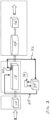
- FIG. 2 shows liquid being taken from the grit chamber 12 for introduction into the aeration basin 18.
- care must be taken to manage flow in order to maintain a continuous process because the liquid supply tends to be uneven and may make this source unsuitable for a continuous process when flow rates are not predictable or have a wide variance.
- a screen 30 is provided at the outlet of the grit chamber for restricting particle size to ⁇ 6.4 mm ( ⁇ 1/4") size or less before the liquid is circulated through the conduit 32 and into the STMG 34 for performing the Process.
- the STMG 34 includes a filter 36 for filtering suspended material down to 400 - 1500 microns. After the liquid is supersaturated with oxygen sufficient to raise the DO in the aeration basin to the desired level, supersaturated liquid is introduced into the aeration basin 18 through a conduit 36.
- Pumps are used to circulate liquid from the grit chamber, or other source of liquid in the examples and embodiment described below, are of the type well known in the art of water treatment systems. These pumps are capable of handling a fluid with high TSS and organic or biological material, hair, floss, rags, egg shells, grit, silt, small pebbles, plastic, metals, etc. before it is filtered in advance of the Process. These types of pumps are typically referred to in the industry as trash pumps, solids pumps or sewage pumps and must be reliable and low maintenance and avoid clogging, felting and plugging.
- Liquid from the grit chamber is of a very poor quality and typically has medium TSS (+/-500 Mg/L), and a relatively high solids count.
- the screen 30 can be a passive suction screen of the type used in well water applications for screening out sand and rocks from water wells. Such a screen can be designed in a way that will provide initial coarse screening of the suspended solids and material and limit the potential negative impact on existing processes.
- Design considerations include utilizing designs commonly applied to down hole, water well sand screens to restrict sand from entering water wells, which are sold by a number of vendors and fabricators of equipment for the water well industry.
- the longitudinal screen openings must be designed with a certain minimum square area relative to fluid flow rate to minimize the pressure differential across the screen which in turn minimizes plugging resulting from the adhesion of solids on the screen surface; screen openings of a sufficiently restrictive size to limit the flow of suspended material that would otherwise impair or degrade the process.
- Such screens can be designed and specified by one with ordinary skill in the art in order to maintain flow across the screen face to velocities of 0.03 m/s (0.1 feet per second) or less to prevent caking or plugging of the screens.
- the inlet screen must be designed to be sufficiently diffused across the basin to minimize local hydraulic imbalances, and fabricated to fit within the logistical and operational constraints of the specific plant design or Water System where the water supply is sourced.
- the screen should also be designed in such a configuration to prevent air from entering the system and breaking the primary seal on the suction side of the water supply, and to avoid negatively impacting the operations of the plant itself or the water supply on a material basis.
- the screen can be fabricated from a variety of known materials, from PVC to steel, stainless steel, ceramic, glass, fiberglass, metal, elastomeric materials, carbon fiber, etc. depending upon the particular water environment.
- Such screens are available from known sources such as Johnson Screens, 11939 Aldine Westfield Rd., Houston TX 77093.
- the filter 36 is self-cleaning with low energy requirements and low water demand during rinse cycles in a continuous flow operation required by the process, and have the following characteristics:
- a filter suitable for this purpose is a the ORB Series brush screen filter, Model ORB- 04-PE, which is a self-cleaning, continuous flow filter manufactured by Orival, 40 N. Van Brunt St., Englewood, NJ 07631. There are a number of similar self-cleaning, low-pressure filters that could be substituted for this part of the application.
- FIG. 3 shows an embodiment of the invention where liquid is taken from the aeration basin 18, circulated through the Process, and then re -introduced into the aeration basin 18. This is the optimal source for liquid to be treated because it has no negative impact on plant hydraulics and allows for a closed loop application of the process.
- a screen 40 is provided at the outlet of the aeration basin for restricting particle size to ⁇ 6.4 mm ( ⁇ 1/4") size or less before the liquid is circulated through the conduit 42 and into the STMG 34.
- the STMG 34 includes a filter 36 for filtering suspended material down to 400 - 1500 microns. After the liquid is supersaturated with oxygen sufficient to raise the DO in the aeration basin or Water Source to the desired level, the liquid is re-introduced into the aeration basin 18 through a conduit 44.
- the screen 30 can be a passive suction screen of the type used in drinking and irrigation water wells, with the characteristics described above in conjunction with FIG. 2 .
- the pumps (not shown) and filter 36 can also have the same characteristics as the ones described above in conjunction with FIG. 2 .
- FIG. 4 shows liquid being taken from the clarifier 24, circulated through the STMG, and then introduced into the aeration basin 18.
- a screen 46 is provided at the outlet of the clarifier 24 for restricting particle size to ⁇ 6.4 mm ( ⁇ 1/4") size or less before the liquid is circulated through the conduit 48 and into the Process 34.
- the STMG 34 includes a filter 36 for filtering suspended material down to 400 - 1500 microns. After the liquid is supersaturated with oxygen to raise the DO in the aeration basin to the desired level, it is introduced into the aeration basin 18 through a conduit 50.
- the screen 46 can be a passive suction screen having the characteristics described above in conjunction with FIG 2 .
- the pumps (not shown) and filter 36 can also have the same characteristics as the ones described above in conjunction with FIG. 2 .
- FIG. 5 shows liquid being taken from effluent steam 28 after treatment in the tertiary stage 22, circulated through a conduit 52 into the STMG 34, and then introduced into the aeration basin 18 through a conduit 54. Because the liquid has been completely treated there is no need for a screen or filter.
- Test #1 took place at a permanent in ground wastewater treatment plant with a capacity of 946 m 3 /day (250,000 gallons per day) (GPD) with secondary treatment that had two mirrored trains of flow with centralized clarifiers.
- the test focused on 1 ⁇ 2 of the plant and the Process was supplied from the clarifier.
- the test results confirmed that the Process could completely eliminate all of the blowers used for aeration, while maintaining acceptable DO levels of > 2.0 ppm or mg/L, reducing net solids and creating net power savings of 50-70% over prior operating conditions.
- the flow rates averaged 303-454 L/min (80-120 GPM) with the water sourced from the clarifier using no screen and screens similar to the detail on the attached schematic design.
- the DO of the output water from the Process was sufficient to raise the overall DO levels of the basin to the test result levels and were approximately 200-250% saturation.
- Test #2 took place at a package wastewater treatment plant with a capacity of 1136 m 3 /day (300,000 gallons per day) (GPD) with secondary treatment that had a single train of flow with centralized clarifiers.
- the liquid was taken from the clarifier, with typical TSS of ⁇ 500 mg/L and circulated through the Process and then introduced into the aeration basin.
- the flow rates averaged 303-454 L/min (80-120 GPM). with the water sourced from the clarifier using no screen and screens similar to the detail on the attached schematic design.
- the DO of the output water from the Process was sufficient to raise the overall DO levels of the basin to the test result levels and were approximately 200-250% saturation.
- the test results confirmed that the Process could completely was able to improve the DO levels in the aeration basins by > 250%, reduce solids and improve the overall health of the plant while achieving electric power savings of 51%.
- Test #3 took place at a larger package wastewater treatment plant with a capacity of 900,000 GPD that was split into two trains, one side which operated normally and the other side with an liquid taken from the clarifier, circulated through the Process, and then introduced into the aeration basin.
- This test site was on one side of a two-train plant (two independent wastewater treatment systems) with a total of 7 aeration basins and 2 clarifiers. The liquid was taken from the clarifier, circulated through the Process and then introduced into the aeration basin.
- the Process was able to improve the DO levels of the aeration basin by over 400% while reducing overall power demand on the entire plant by 35%, reducing solids and improving the overall health of the plant by restoring DO levels to appropriate levels.
- the flow rates varied between 378-454L/min (100-120 GPM) and was sourced from the clarifier with TSS ⁇ 500 mg/l and a variety of screen configurations were utilized.
- the DO of the output water from the Process was sufficient to raise the overall DO levels of the basin to the test result levels and were approximately 200-250% saturation. Plugging from organic and inorganic debris suspended in the clarifier impaired the process, by reducing flow and requiring physical clearing of the Process until the proper screening solution was discovered and designed to fit the specific local circumstances while not impairing the routine operation of the plant.
- Test #4 took place at a larger package wastewater treatment plant with a capacity of 4542 m 3 /day (1,200,000 GPD) that was split into four trains of 2-3 aeration basins per train (9 total) and 4 clarifiers of approximately equal size. Average daily flow at the plant was approximately 90-100% or more of design capacity.
- Two separate Process boxes were installed at the site that and the site was plumbed to allow sourcing of the water from a variety of sources within the plant including the effluent of the plant, the clarifier or from the aeration basin. Specific local logistics prevented the sourcing of water from the equalization chamber or from another non-potable or potable water source. Each box served 2 of the process trains or approximately 50% of the plant capacity.
- Each box flowed Process water in a range of flows from 341-719 L/min (90-190 GPM) depending upon the source and discharge requirements of the configuration.
- the daily equivalent flow was approximately 2082 m 3 / day (550,000 GPD) (719 L/min (190 GPM) ⁇ 1440 minutes/day ⁇ 2 boxes) or the equivalent of 45.6% of the plant capacity.
- Various configurations of screens were installed until the above discovered design criteria was found and various flow configurations were experimented with to discover the best approach for various different installation configurations that would limit the introduction of solids, prevent the introduction of air to the system and minimize the impact on existing plant operations.
- the aeration basin also contained a variety of fibrous and solid material that impaired the process and required commercially infeasible shutdowns and maintenance to restore the process.
- the amount of suspended material present when water was sourced from the clarifier with TSS ⁇ 500 mg/l also impaired the process to an extent that required screening and filtering.
- FIG. 6 shows the components of a representative natural or manmade Water System, which includes the STMG 34 connected to receive liquid from a water source, which can be one or more of a river or stream 60, a pond or lake 62, a man-made water treatment lagoon 64, a water source such as a holding tank 66 and/or an underground well 68, shown by the arrows 60a, 62a, 64a, 66a and 68a, respectively.
- the liquid is introduced into the STMG 34 from a header 70, as shown by the arrow 72, through the filter 36, which are similar to the STMG and filter described above for previous examples. Appropriate screens (not shown) are used for screening liquid from each of these sources, which have the same characteristics described above for previous examples.
- the supersaturated liquid is reintroduced into one or more of the river or stream 60, the pond or lake 62, the water treatment lagoon 64, the water source such as a holding tank 66 and/or the underground well 68, as shown by the arrows 60b, 62b, 64b, 66b and 68b, respectively.
- the water source such as a holding tank 66 and/or the underground well 68, as shown by the arrows 60b, 62b, 64b, 66b and 68b, respectively.
Landscapes
- Life Sciences & Earth Sciences (AREA)
- Biodiversity & Conservation Biology (AREA)
- Microbiology (AREA)
- Hydrology & Water Resources (AREA)
- Engineering & Computer Science (AREA)
- Environmental & Geological Engineering (AREA)
- Water Supply & Treatment (AREA)
- Chemical & Material Sciences (AREA)
- Organic Chemistry (AREA)
- Biological Treatment Of Waste Water (AREA)
- Treatment Of Water By Oxidation Or Reduction (AREA)
Claims (2)
- Procédé de traitement d'eaux usées pour séparer la matière organique des eaux usées, comprenant les étapes consistant à :a. introduire des eaux usées dans une installation de traitement, l'installation de traitement comprenant une chambre avec gravier (12) et un bain d'aération (18) ;b. enlever une partie des eaux usées du bain d'aération ;c. sursaturer ladite partie d'eaux usées avec de l'oxygène pour former un liquide sursaturé qui a une concentration en oxygène suffisante pour élever l'oxygène dissous dans les eaux usées étant traitées dans l'installation à un niveau suffisant pour la séparation efficace de la matière organique des eaux usées ;d. introduire le liquide sursaturé dans les eaux usées dans le bain d'aération (18) ; ete. décharger les eaux usées traitées de l'installation,l'étape de sursaturation des eaux usées comprenant en outre les étapes de filtration des eaux usées pour filtrer la matière en suspension jusqu'à 400 à 1 500 micromètres et introduire les eaux usées filtrées dans un générateur de modification de tension de surface (STMG) pour former de l'eau oxygénée sursaturée etavant l'étape de filtration des eaux usées, la teneur en solides des eaux usées ayant été abaissée à une taille de particule de taille < 6,4 mm (< ¼") ou moins.
- Système de traitement d'eaux usées par séparation de la matière organique des eaux usées, comprenant :a. une installation pour séparer la matière organique des eaux usées, l'installation comprenant une chambre à gravier (12) et un bain d'aération (18) ;b. des moyens (32) pour enlever une partie des eaux usées du bain d'aération ;c. un oxygénateur (34) pour sursaturer une partie des eaux usées enlevées, l'oxygénateur étant disposé pour former un liquide sursaturé qui a une concentration en oxygène suffisante pour élever l'oxygène dissous dans les eaux usées étant traitées dans l'installation à un niveau suffisant pour la séparation efficace de la matière organique des eaux usées ;d. des moyens (38) pour introduire le liquide sursaturé dans les eaux usées dans le bain d'aération ; ete. des moyens (28) pour décharger les eaux usées traitées de l'installation,l'oxygénateur (34) comprenant un générateur de modification de tension de surface (STMG) pour former de l'eau oxygénée sursaturée,le système comprenant en outre un filtre (36) pour filtrer la matière en suspension dans les eaux usées enlevées jusqu'à 400 à 1 500 micromètres, avant que les eaux usées filtrées ne soient introduites dans le générateur de modification de tension de surface (STMG),le système comprenant en outre un écran (30) pour abaisser la teneur en solides des eaux usées enlevées avant la filtration à une taille de particule de taille < 6,4 mm (1/4") ou moins.
Applications Claiming Priority (2)
| Application Number | Priority Date | Filing Date | Title |
|---|---|---|---|
| US13/413,445 US20130233809A1 (en) | 2012-03-06 | 2012-03-06 | Water treatment system and method |
| PCT/US2013/029126 WO2013134264A1 (fr) | 2012-03-06 | 2013-03-05 | Système et procédé de traitement de l'eau |
Publications (3)
| Publication Number | Publication Date |
|---|---|
| EP2822901A1 EP2822901A1 (fr) | 2015-01-14 |
| EP2822901A4 EP2822901A4 (fr) | 2015-08-12 |
| EP2822901B1 true EP2822901B1 (fr) | 2024-04-10 |
Family
ID=49113124
Family Applications (1)
| Application Number | Title | Priority Date | Filing Date |
|---|---|---|---|
| EP13757417.4A Active EP2822901B1 (fr) | 2012-03-06 | 2013-03-05 | Système et procédé de traitement de l'eau |
Country Status (3)
| Country | Link |
|---|---|
| US (1) | US20130233809A1 (fr) |
| EP (1) | EP2822901B1 (fr) |
| WO (1) | WO2013134264A1 (fr) |
Families Citing this family (3)
| Publication number | Priority date | Publication date | Assignee | Title |
|---|---|---|---|---|
| US11208339B2 (en) * | 2016-08-26 | 2021-12-28 | Krüger A/S | Treatment of wastewater |
| US10584045B1 (en) * | 2019-03-29 | 2020-03-10 | Richard E. Speece | Conversion of secondary clarifier into an oxic bioreactor by superoxygenation |
| US11479489B1 (en) | 2022-04-27 | 2022-10-25 | Pure Muskegon Development Company, LLC | Ground water contamination remediation using a man-made surface water feature |
Citations (6)
| Publication number | Priority date | Publication date | Assignee | Title |
|---|---|---|---|---|
| US4094774A (en) * | 1974-06-06 | 1978-06-13 | Smith Eugene J | Method and apparatus for oxygenating aerobically decomposable liquors |
| US4171263A (en) * | 1974-08-28 | 1979-10-16 | Fmc Corporation | Pressurized oxygenation of sewage |
| WO2005115598A2 (fr) * | 2004-05-25 | 2005-12-08 | The Board Of Trustees Of The University Of Arkansas | Système et méthode pour dissoudre du gaz dans des liquides |
| US7048786B1 (en) * | 2004-06-01 | 2006-05-23 | James Richard Von Krosigk | Apparatus for treating a fluid to increase oxygen concentration and reduce surface tension |
| WO2007024893A1 (fr) * | 2005-08-23 | 2007-03-01 | Skyblue Waters Usa, Inc. | Systeme et procede de traitement des eaux usees |
| WO2007103153A2 (fr) * | 2006-03-01 | 2007-09-13 | Vost Environmental Technologies | Procedes et dispositifs destines a ameliorer l'aeration a partir de membranes en immersion orientees verticalement |
Family Cites Families (11)
| Publication number | Priority date | Publication date | Assignee | Title |
|---|---|---|---|---|
| US4235719A (en) * | 1978-03-27 | 1980-11-25 | Fmc Corporation | Pressurized oxygenation system and method |
| US4983296A (en) * | 1989-08-03 | 1991-01-08 | Texaco Inc. | Partial oxidation of sewage sludge |
| US5292442A (en) * | 1992-10-01 | 1994-03-08 | Texaco Inc. | Process for disposing of sewage sludge |
| RU2046759C1 (ru) * | 1993-05-25 | 1995-10-27 | Акционерное общество Научно-производственная фирма "Бифар" | Способ насыщения жидкости газом под давлением |
| US7008535B1 (en) * | 2000-08-04 | 2006-03-07 | Wayne State University | Apparatus for oxygenating wastewater |
| US7270314B1 (en) * | 2004-06-01 | 2007-09-18 | Innovative Industries, Inc. | Method for treating a fluid to increase oxygen concentration and reduce surface tension using a direct current generator or an electromagnetic field generator |
| WO2007008630A2 (fr) * | 2005-07-07 | 2007-01-18 | Procorp Tech Llc | Reacteur de sequençage a flottation et chargement non continu et procede de traitement des eaux usees |
| KR100806472B1 (ko) * | 2007-02-22 | 2008-02-21 | 한상배 | 부상분리와 여과, 막분리 및 바이오필터 기능이 구비된수처리장치 |
| US8017019B2 (en) * | 2007-06-14 | 2011-09-13 | Kansas State University Research Foundation | Fluidized bed precipitator with optimized solids settling and solids handling features for use in recovering phosphorus from wastewater |
| US8052874B2 (en) * | 2009-04-20 | 2011-11-08 | Ovivo Luxembourg S.a.r.l. | Method using membrane bioreactor with reduced air scour requirements |
| WO2012084023A1 (fr) | 2010-12-21 | 2012-06-28 | Stigebrandt Hydroteknik Ab | Appareil et procédé pour délivrer un gaz à un liquide à l'intérieur d'un réceptacle et utilisation d'un tel appareil |
-
2012
- 2012-03-06 US US13/413,445 patent/US20130233809A1/en not_active Abandoned
-
2013
- 2013-03-05 WO PCT/US2013/029126 patent/WO2013134264A1/fr not_active Ceased
- 2013-03-05 EP EP13757417.4A patent/EP2822901B1/fr active Active
Patent Citations (6)
| Publication number | Priority date | Publication date | Assignee | Title |
|---|---|---|---|---|
| US4094774A (en) * | 1974-06-06 | 1978-06-13 | Smith Eugene J | Method and apparatus for oxygenating aerobically decomposable liquors |
| US4171263A (en) * | 1974-08-28 | 1979-10-16 | Fmc Corporation | Pressurized oxygenation of sewage |
| WO2005115598A2 (fr) * | 2004-05-25 | 2005-12-08 | The Board Of Trustees Of The University Of Arkansas | Système et méthode pour dissoudre du gaz dans des liquides |
| US7048786B1 (en) * | 2004-06-01 | 2006-05-23 | James Richard Von Krosigk | Apparatus for treating a fluid to increase oxygen concentration and reduce surface tension |
| WO2007024893A1 (fr) * | 2005-08-23 | 2007-03-01 | Skyblue Waters Usa, Inc. | Systeme et procede de traitement des eaux usees |
| WO2007103153A2 (fr) * | 2006-03-01 | 2007-09-13 | Vost Environmental Technologies | Procedes et dispositifs destines a ameliorer l'aeration a partir de membranes en immersion orientees verticalement |
Also Published As
| Publication number | Publication date |
|---|---|
| US20130233809A1 (en) | 2013-09-12 |
| EP2822901A1 (fr) | 2015-01-14 |
| WO2013134264A1 (fr) | 2013-09-12 |
| EP2822901A4 (fr) | 2015-08-12 |
Similar Documents
| Publication | Publication Date | Title |
|---|---|---|
| KR101334995B1 (ko) | 나노 및 마이크로 버블을 이용한 하폐수 재이용 중수도 장치 | |
| CN101333049A (zh) | 一种含油含盐污水深度处理回用方法 | |
| CN1258486C (zh) | 废水的处理方法和装置 | |
| CN104556562A (zh) | 一种工业园区废水的深度处理方法 | |
| US20060175263A1 (en) | Methods and systems for treating wastewater | |
| CN101269903B (zh) | 炼油污水的进一步深度处理工艺及装置 | |
| CN106892499A (zh) | 一种多介质曝气生物滤池及其处理中药饮片废水的方法 | |
| JP4515868B2 (ja) | 水処理システム | |
| KR101541070B1 (ko) | 고도처리장치 | |
| BG109181A (bg) | Метод и устройство за дълбоко биологично пречистване на отпадни води | |
| WO2021163560A1 (fr) | Systèmes et procédés de traitement et de purification d'eau de production huileuse et gazeuse, de fluides de forage et d'eaux usées | |
| US20130233809A1 (en) | Water treatment system and method | |
| US10604429B2 (en) | System and method for treating wastewater | |
| CN203065238U (zh) | 新型地埋式一体化导流曝气生物滤池 | |
| CN205222939U (zh) | 一种污水处理厂提标改造组合装置 | |
| JP3972406B2 (ja) | 厨芥処理装置 | |
| WO2006078797A2 (fr) | Procedes et systemes de traitement des eaux usees | |
| CN107651809B (zh) | 一种动车部件高浓度洗涤废水的处理装置和处理方法 | |
| JP2006205155A (ja) | 嫌気槽とそれを含んだ排水処理システム | |
| CN111410375A (zh) | 高速公路服务区污水再利用装置及方法 | |
| CN104609679A (zh) | 根据循环式生物学处理的下水、废水处理装置 | |
| KR20150081920A (ko) | 하수의 고도처리 장치 및 방법 | |
| CN213012497U (zh) | 一种河道污水微生物强化处理系统 | |
| KR20150016770A (ko) | 연못의 생태계 조절 시스템 | |
| KR20040015538A (ko) | 무반송 연속 정화공정을 이용한 하천수처리설비 및하천수처리공법 |
Legal Events
| Date | Code | Title | Description |
|---|---|---|---|
| PUAI | Public reference made under article 153(3) epc to a published international application that has entered the european phase |
Free format text: ORIGINAL CODE: 0009012 |
|
| 17P | Request for examination filed |
Effective date: 20141006 |
|
| AK | Designated contracting states |
Kind code of ref document: A1 Designated state(s): AL AT BE BG CH CY CZ DE DK EE ES FI FR GB GR HR HU IE IS IT LI LT LU LV MC MK MT NL NO PL PT RO RS SE SI SK SM TR |
|
| AX | Request for extension of the european patent |
Extension state: BA ME |
|
| DAX | Request for extension of the european patent (deleted) | ||
| RA4 | Supplementary search report drawn up and despatched (corrected) |
Effective date: 20150714 |
|
| RIC1 | Information provided on ipc code assigned before grant |
Ipc: C02F 7/00 20060101AFI20150708BHEP Ipc: B01F 3/04 20060101ALI20150708BHEP |
|
| RAP1 | Party data changed (applicant data changed or rights of an application transferred) |
Owner name: SUPEROX WASTEWATER CO., LLC. |
|
| RIN1 | Information on inventor provided before grant (corrected) |
Inventor name: GRAHAM, TODD DAMERON Inventor name: ROBERTS, GEOFFREY DORMING |
|
| 111L | Licence recorded |
Designated state(s): AL AT BE BG CH CY CZ DE DK EE ES FI FR GB GR HR HU IE IS IT LT LU LV MC MK MT NL NO PL PT RO RS SE SI SK SM TR Free format text: EXCLUSIVE LICENSE Name of requester: O2NRG LTD, GB Effective date: 20160106 |
|
| STAA | Information on the status of an ep patent application or granted ep patent |
Free format text: STATUS: EXAMINATION IS IN PROGRESS |
|
| 17Q | First examination report despatched |
Effective date: 20171213 |
|
| REG | Reference to a national code |
Ref country code: DE Ref legal event code: R079 Free format text: PREVIOUS MAIN CLASS: C02F0007000000 Ipc: C02F0003260000 Ref country code: DE Ref legal event code: R079 Ref document number: 602013085552 Country of ref document: DE Free format text: PREVIOUS MAIN CLASS: C02F0007000000 Ipc: C02F0003260000 |
|
| GRAJ | Information related to disapproval of communication of intention to grant by the applicant or resumption of examination proceedings by the epo deleted |
Free format text: ORIGINAL CODE: EPIDOSDIGR1 |
|
| GRAP | Despatch of communication of intention to grant a patent |
Free format text: ORIGINAL CODE: EPIDOSNIGR1 |
|
| GRAP | Despatch of communication of intention to grant a patent |
Free format text: ORIGINAL CODE: EPIDOSNIGR1 |
|
| STAA | Information on the status of an ep patent application or granted ep patent |
Free format text: STATUS: GRANT OF PATENT IS INTENDED |
|
| RIC1 | Information provided on ipc code assigned before grant |
Ipc: C02F 3/26 20060101AFI20230926BHEP |
|
| INTG | Intention to grant announced |
Effective date: 20231016 |
|
| GRAS | Grant fee paid |
Free format text: ORIGINAL CODE: EPIDOSNIGR3 |
|
| GRAA | (expected) grant |
Free format text: ORIGINAL CODE: 0009210 |
|
| STAA | Information on the status of an ep patent application or granted ep patent |
Free format text: STATUS: THE PATENT HAS BEEN GRANTED |
|
| RAP3 | Party data changed (applicant data changed or rights of an application transferred) |
Owner name: SUPEROX WASTEWATER CO., LLC. |
|
| 111L | Licence recorded |
Designated state(s): AL AT BE BG CH CY CZ DE DK EE ES FI FR GB GR HR HU IE IS IT LT LU LV MC MK MT NL NO PL PT RO RS SE SI SK SM TR Free format text: EXCLUSIVE LICENSE Name of requester: O2NRG LTD, GB Effective date: 20160106 |
|
| AK | Designated contracting states |
Kind code of ref document: B1 Designated state(s): AL AT BE BG CH CY CZ DE DK EE ES FI FR GB GR HR HU IE IS IT LI LT LU LV MC MK MT NL NO PL PT RO RS SE SI SK SM TR |
|
| REG | Reference to a national code |
Ref country code: GB Ref legal event code: FG4D |
|
| REG | Reference to a national code |
Ref country code: CH Ref legal event code: EP |
|
| REG | Reference to a national code |
Ref country code: DE Ref legal event code: R096 Ref document number: 602013085552 Country of ref document: DE |
|
| REG | Reference to a national code |
Ref country code: IE Ref legal event code: FG4D |
|
| REG | Reference to a national code |
Ref country code: LT Ref legal event code: MG9D |
|
| REG | Reference to a national code |
Ref country code: NL Ref legal event code: MP Effective date: 20240410 |
|
| REG | Reference to a national code |
Ref country code: AT Ref legal event code: MK05 Ref document number: 1674767 Country of ref document: AT Kind code of ref document: T Effective date: 20240410 |
|
| PG25 | Lapsed in a contracting state [announced via postgrant information from national office to epo] |
Ref country code: NL Free format text: LAPSE BECAUSE OF FAILURE TO SUBMIT A TRANSLATION OF THE DESCRIPTION OR TO PAY THE FEE WITHIN THE PRESCRIBED TIME-LIMIT Effective date: 20240410 |
|
| PG25 | Lapsed in a contracting state [announced via postgrant information from national office to epo] |
Ref country code: NL Free format text: LAPSE BECAUSE OF FAILURE TO SUBMIT A TRANSLATION OF THE DESCRIPTION OR TO PAY THE FEE WITHIN THE PRESCRIBED TIME-LIMIT Effective date: 20240410 |
|
| PG25 | Lapsed in a contracting state [announced via postgrant information from national office to epo] |
Ref country code: IS Free format text: LAPSE BECAUSE OF FAILURE TO SUBMIT A TRANSLATION OF THE DESCRIPTION OR TO PAY THE FEE WITHIN THE PRESCRIBED TIME-LIMIT Effective date: 20240810 |
|
| PG25 | Lapsed in a contracting state [announced via postgrant information from national office to epo] |
Ref country code: BG Free format text: LAPSE BECAUSE OF FAILURE TO SUBMIT A TRANSLATION OF THE DESCRIPTION OR TO PAY THE FEE WITHIN THE PRESCRIBED TIME-LIMIT Effective date: 20240410 |
|
| PG25 | Lapsed in a contracting state [announced via postgrant information from national office to epo] |
Ref country code: HR Free format text: LAPSE BECAUSE OF FAILURE TO SUBMIT A TRANSLATION OF THE DESCRIPTION OR TO PAY THE FEE WITHIN THE PRESCRIBED TIME-LIMIT Effective date: 20240410 Ref country code: FI Free format text: LAPSE BECAUSE OF FAILURE TO SUBMIT A TRANSLATION OF THE DESCRIPTION OR TO PAY THE FEE WITHIN THE PRESCRIBED TIME-LIMIT Effective date: 20240410 |
|
| PG25 | Lapsed in a contracting state [announced via postgrant information from national office to epo] |
Ref country code: GR Free format text: LAPSE BECAUSE OF FAILURE TO SUBMIT A TRANSLATION OF THE DESCRIPTION OR TO PAY THE FEE WITHIN THE PRESCRIBED TIME-LIMIT Effective date: 20240711 |
|
| PG25 | Lapsed in a contracting state [announced via postgrant information from national office to epo] |
Ref country code: PT Free format text: LAPSE BECAUSE OF FAILURE TO SUBMIT A TRANSLATION OF THE DESCRIPTION OR TO PAY THE FEE WITHIN THE PRESCRIBED TIME-LIMIT Effective date: 20240812 |
|
| PG25 | Lapsed in a contracting state [announced via postgrant information from national office to epo] |
Ref country code: ES Free format text: LAPSE BECAUSE OF FAILURE TO SUBMIT A TRANSLATION OF THE DESCRIPTION OR TO PAY THE FEE WITHIN THE PRESCRIBED TIME-LIMIT Effective date: 20240410 |
|
| PG25 | Lapsed in a contracting state [announced via postgrant information from national office to epo] |
Ref country code: AT Free format text: LAPSE BECAUSE OF FAILURE TO SUBMIT A TRANSLATION OF THE DESCRIPTION OR TO PAY THE FEE WITHIN THE PRESCRIBED TIME-LIMIT Effective date: 20240410 |
|
| PG25 | Lapsed in a contracting state [announced via postgrant information from national office to epo] |
Ref country code: PL Free format text: LAPSE BECAUSE OF FAILURE TO SUBMIT A TRANSLATION OF THE DESCRIPTION OR TO PAY THE FEE WITHIN THE PRESCRIBED TIME-LIMIT Effective date: 20240410 |
|
| PG25 | Lapsed in a contracting state [announced via postgrant information from national office to epo] |
Ref country code: LV Free format text: LAPSE BECAUSE OF FAILURE TO SUBMIT A TRANSLATION OF THE DESCRIPTION OR TO PAY THE FEE WITHIN THE PRESCRIBED TIME-LIMIT Effective date: 20240410 |
|
| PG25 | Lapsed in a contracting state [announced via postgrant information from national office to epo] |
Ref country code: PT Free format text: LAPSE BECAUSE OF FAILURE TO SUBMIT A TRANSLATION OF THE DESCRIPTION OR TO PAY THE FEE WITHIN THE PRESCRIBED TIME-LIMIT Effective date: 20240812 Ref country code: PL Free format text: LAPSE BECAUSE OF FAILURE TO SUBMIT A TRANSLATION OF THE DESCRIPTION OR TO PAY THE FEE WITHIN THE PRESCRIBED TIME-LIMIT Effective date: 20240410 Ref country code: NO Free format text: LAPSE BECAUSE OF FAILURE TO SUBMIT A TRANSLATION OF THE DESCRIPTION OR TO PAY THE FEE WITHIN THE PRESCRIBED TIME-LIMIT Effective date: 20240710 Ref country code: LV Free format text: LAPSE BECAUSE OF FAILURE TO SUBMIT A TRANSLATION OF THE DESCRIPTION OR TO PAY THE FEE WITHIN THE PRESCRIBED TIME-LIMIT Effective date: 20240410 Ref country code: IS Free format text: LAPSE BECAUSE OF FAILURE TO SUBMIT A TRANSLATION OF THE DESCRIPTION OR TO PAY THE FEE WITHIN THE PRESCRIBED TIME-LIMIT Effective date: 20240810 Ref country code: HR Free format text: LAPSE BECAUSE OF FAILURE TO SUBMIT A TRANSLATION OF THE DESCRIPTION OR TO PAY THE FEE WITHIN THE PRESCRIBED TIME-LIMIT Effective date: 20240410 Ref country code: GR Free format text: LAPSE BECAUSE OF FAILURE TO SUBMIT A TRANSLATION OF THE DESCRIPTION OR TO PAY THE FEE WITHIN THE PRESCRIBED TIME-LIMIT Effective date: 20240711 Ref country code: FI Free format text: LAPSE BECAUSE OF FAILURE TO SUBMIT A TRANSLATION OF THE DESCRIPTION OR TO PAY THE FEE WITHIN THE PRESCRIBED TIME-LIMIT Effective date: 20240410 Ref country code: ES Free format text: LAPSE BECAUSE OF FAILURE TO SUBMIT A TRANSLATION OF THE DESCRIPTION OR TO PAY THE FEE WITHIN THE PRESCRIBED TIME-LIMIT Effective date: 20240410 Ref country code: BG Free format text: LAPSE BECAUSE OF FAILURE TO SUBMIT A TRANSLATION OF THE DESCRIPTION OR TO PAY THE FEE WITHIN THE PRESCRIBED TIME-LIMIT Effective date: 20240410 Ref country code: AT Free format text: LAPSE BECAUSE OF FAILURE TO SUBMIT A TRANSLATION OF THE DESCRIPTION OR TO PAY THE FEE WITHIN THE PRESCRIBED TIME-LIMIT Effective date: 20240410 Ref country code: RS Free format text: LAPSE BECAUSE OF FAILURE TO SUBMIT A TRANSLATION OF THE DESCRIPTION OR TO PAY THE FEE WITHIN THE PRESCRIBED TIME-LIMIT Effective date: 20240710 |
|
| REG | Reference to a national code |
Ref country code: DE Ref legal event code: R097 Ref document number: 602013085552 Country of ref document: DE |
|
| PG25 | Lapsed in a contracting state [announced via postgrant information from national office to epo] |
Ref country code: DK Free format text: LAPSE BECAUSE OF FAILURE TO SUBMIT A TRANSLATION OF THE DESCRIPTION OR TO PAY THE FEE WITHIN THE PRESCRIBED TIME-LIMIT Effective date: 20240410 |
|
| PG25 | Lapsed in a contracting state [announced via postgrant information from national office to epo] |
Ref country code: EE Free format text: LAPSE BECAUSE OF FAILURE TO SUBMIT A TRANSLATION OF THE DESCRIPTION OR TO PAY THE FEE WITHIN THE PRESCRIBED TIME-LIMIT Effective date: 20240410 |
|
| PG25 | Lapsed in a contracting state [announced via postgrant information from national office to epo] |
Ref country code: CZ Free format text: LAPSE BECAUSE OF FAILURE TO SUBMIT A TRANSLATION OF THE DESCRIPTION OR TO PAY THE FEE WITHIN THE PRESCRIBED TIME-LIMIT Effective date: 20240410 |
|
| PG25 | Lapsed in a contracting state [announced via postgrant information from national office to epo] |
Ref country code: SK Free format text: LAPSE BECAUSE OF FAILURE TO SUBMIT A TRANSLATION OF THE DESCRIPTION OR TO PAY THE FEE WITHIN THE PRESCRIBED TIME-LIMIT Effective date: 20240410 Ref country code: RO Free format text: LAPSE BECAUSE OF FAILURE TO SUBMIT A TRANSLATION OF THE DESCRIPTION OR TO PAY THE FEE WITHIN THE PRESCRIBED TIME-LIMIT Effective date: 20240410 |
|
| PG25 | Lapsed in a contracting state [announced via postgrant information from national office to epo] |
Ref country code: SM Free format text: LAPSE BECAUSE OF FAILURE TO SUBMIT A TRANSLATION OF THE DESCRIPTION OR TO PAY THE FEE WITHIN THE PRESCRIBED TIME-LIMIT Effective date: 20240410 |
|
| PG25 | Lapsed in a contracting state [announced via postgrant information from national office to epo] |
Ref country code: SM Free format text: LAPSE BECAUSE OF FAILURE TO SUBMIT A TRANSLATION OF THE DESCRIPTION OR TO PAY THE FEE WITHIN THE PRESCRIBED TIME-LIMIT Effective date: 20240410 Ref country code: SK Free format text: LAPSE BECAUSE OF FAILURE TO SUBMIT A TRANSLATION OF THE DESCRIPTION OR TO PAY THE FEE WITHIN THE PRESCRIBED TIME-LIMIT Effective date: 20240410 Ref country code: RO Free format text: LAPSE BECAUSE OF FAILURE TO SUBMIT A TRANSLATION OF THE DESCRIPTION OR TO PAY THE FEE WITHIN THE PRESCRIBED TIME-LIMIT Effective date: 20240410 Ref country code: EE Free format text: LAPSE BECAUSE OF FAILURE TO SUBMIT A TRANSLATION OF THE DESCRIPTION OR TO PAY THE FEE WITHIN THE PRESCRIBED TIME-LIMIT Effective date: 20240410 Ref country code: DK Free format text: LAPSE BECAUSE OF FAILURE TO SUBMIT A TRANSLATION OF THE DESCRIPTION OR TO PAY THE FEE WITHIN THE PRESCRIBED TIME-LIMIT Effective date: 20240410 Ref country code: CZ Free format text: LAPSE BECAUSE OF FAILURE TO SUBMIT A TRANSLATION OF THE DESCRIPTION OR TO PAY THE FEE WITHIN THE PRESCRIBED TIME-LIMIT Effective date: 20240410 |
|
| PG25 | Lapsed in a contracting state [announced via postgrant information from national office to epo] |
Ref country code: IT Free format text: LAPSE BECAUSE OF FAILURE TO SUBMIT A TRANSLATION OF THE DESCRIPTION OR TO PAY THE FEE WITHIN THE PRESCRIBED TIME-LIMIT Effective date: 20240410 |
|
| PLBE | No opposition filed within time limit |
Free format text: ORIGINAL CODE: 0009261 |
|
| STAA | Information on the status of an ep patent application or granted ep patent |
Free format text: STATUS: NO OPPOSITION FILED WITHIN TIME LIMIT |
|
| 26N | No opposition filed |
Effective date: 20250113 |
|
| PGFP | Annual fee paid to national office [announced via postgrant information from national office to epo] |
Ref country code: DE Payment date: 20250331 Year of fee payment: 13 |
|
| PG25 | Lapsed in a contracting state [announced via postgrant information from national office to epo] |
Ref country code: SI Free format text: LAPSE BECAUSE OF FAILURE TO SUBMIT A TRANSLATION OF THE DESCRIPTION OR TO PAY THE FEE WITHIN THE PRESCRIBED TIME-LIMIT Effective date: 20240410 |
|
| PGFP | Annual fee paid to national office [announced via postgrant information from national office to epo] |
Ref country code: FR Payment date: 20250331 Year of fee payment: 13 |
|
| PG25 | Lapsed in a contracting state [announced via postgrant information from national office to epo] |
Ref country code: SE Free format text: LAPSE BECAUSE OF FAILURE TO SUBMIT A TRANSLATION OF THE DESCRIPTION OR TO PAY THE FEE WITHIN THE PRESCRIBED TIME-LIMIT Effective date: 20240410 |
|
| PG25 | Lapsed in a contracting state [announced via postgrant information from national office to epo] |
Ref country code: MC Free format text: LAPSE BECAUSE OF FAILURE TO SUBMIT A TRANSLATION OF THE DESCRIPTION OR TO PAY THE FEE WITHIN THE PRESCRIBED TIME-LIMIT Effective date: 20240410 |
|
| REG | Reference to a national code |
Ref country code: CH Ref legal event code: H13 Free format text: ST27 STATUS EVENT CODE: U-0-0-H10-H13 (AS PROVIDED BY THE NATIONAL OFFICE) Effective date: 20251024 |
|
| PG25 | Lapsed in a contracting state [announced via postgrant information from national office to epo] |
Ref country code: LU Free format text: LAPSE BECAUSE OF NON-PAYMENT OF DUE FEES Effective date: 20250305 |
|
| REG | Reference to a national code |
Ref country code: BE Ref legal event code: MM Effective date: 20250331 |
|
| PG25 | Lapsed in a contracting state [announced via postgrant information from national office to epo] |
Ref country code: BE Free format text: LAPSE BECAUSE OF NON-PAYMENT OF DUE FEES Effective date: 20250331 |
|
| PG25 | Lapsed in a contracting state [announced via postgrant information from national office to epo] |
Ref country code: CH Free format text: LAPSE BECAUSE OF NON-PAYMENT OF DUE FEES Effective date: 20250331 |
|
| PG25 | Lapsed in a contracting state [announced via postgrant information from national office to epo] |
Ref country code: IE Free format text: LAPSE BECAUSE OF NON-PAYMENT OF DUE FEES Effective date: 20250305 |
|
| PGFP | Annual fee paid to national office [announced via postgrant information from national office to epo] |
Ref country code: GB Payment date: 20260330 Year of fee payment: 14 |