EP2823620B1 - Amélioration des performances ipsec et de la sécurité contre l'écoute électronique - Google Patents
Amélioration des performances ipsec et de la sécurité contre l'écoute électronique Download PDFInfo
- Publication number
- EP2823620B1 EP2823620B1 EP13715867.1A EP13715867A EP2823620B1 EP 2823620 B1 EP2823620 B1 EP 2823620B1 EP 13715867 A EP13715867 A EP 13715867A EP 2823620 B1 EP2823620 B1 EP 2823620B1
- Authority
- EP
- European Patent Office
- Prior art keywords
- sub
- sas
- cluster
- data packets
- ipsec
- Prior art date
- Legal status (The legal status is an assumption and is not a legal conclusion. Google has not performed a legal analysis and makes no representation as to the accuracy of the status listed.)
- Active
Links
Images


Classifications
-
- H—ELECTRICITY
- H04—ELECTRIC COMMUNICATION TECHNIQUE
- H04L—TRANSMISSION OF DIGITAL INFORMATION, e.g. TELEGRAPHIC COMMUNICATION
- H04L63/00—Network architectures or network communication protocols for network security
- H04L63/16—Implementing security features at a particular protocol layer
-
- H—ELECTRICITY
- H04—ELECTRIC COMMUNICATION TECHNIQUE
- H04L—TRANSMISSION OF DIGITAL INFORMATION, e.g. TELEGRAPHIC COMMUNICATION
- H04L63/00—Network architectures or network communication protocols for network security
- H04L63/18—Network architectures or network communication protocols for network security using different networks or channels, e.g. using out of band channels
-
- H—ELECTRICITY
- H04—ELECTRIC COMMUNICATION TECHNIQUE
- H04L—TRANSMISSION OF DIGITAL INFORMATION, e.g. TELEGRAPHIC COMMUNICATION
- H04L63/00—Network architectures or network communication protocols for network security
- H04L63/16—Implementing security features at a particular protocol layer
- H04L63/164—Implementing security features at a particular protocol layer at the network layer
-
- H—ELECTRICITY
- H04—ELECTRIC COMMUNICATION TECHNIQUE
- H04L—TRANSMISSION OF DIGITAL INFORMATION, e.g. TELEGRAPHIC COMMUNICATION
- H04L63/00—Network architectures or network communication protocols for network security
- H04L63/04—Network architectures or network communication protocols for network security for providing a confidential data exchange among entities communicating through data packet networks
- H04L63/0428—Network architectures or network communication protocols for network security for providing a confidential data exchange among entities communicating through data packet networks wherein the data content is protected, e.g. by encrypting or encapsulating the payload
- H04L63/0485—Networking architectures for enhanced packet encryption processing, e.g. offloading of IPsec packet processing or efficient security association look-up
-
- H—ELECTRICITY
- H04—ELECTRIC COMMUNICATION TECHNIQUE
- H04L—TRANSMISSION OF DIGITAL INFORMATION, e.g. TELEGRAPHIC COMMUNICATION
- H04L63/00—Network architectures or network communication protocols for network security
- H04L63/06—Network architectures or network communication protocols for network security for supporting key management in a packet data network
Definitions
- Networked devices may be required to communicate across a variety of networks. Some devices may require that such communications remain secure. Devices that are interconnected via a secured network may rely on the security measures inherent in the secured network to provide such security for any cross-network communications. These devices may also be required to communicate across unsecured networks. For instance, a host may communicate with another host, client, network, etc. via the Internet, which may be partially, unevenly, and/or completely unsecured. A communication may only be as secure as the weakest level of security provided to the communication at any point between the sender and the receiver. In order to maintain security for communications traversing an unsecured network, a network device may employ various security protocols. For example, a source network device may negotiate a secure connection and/or communication with a destination network device as long as both network devices are configured to employ the same security protocol(s).
- the disclosure includes a network element (NE) comprising a memory device configured to store instructions, and a processor configured to execute the instructions by dividing a first plurality of data packets of a data flow into a first plurality of sub-flows, and causing the first plurality of sub-flows to be transmitted to a second NE via a network, wherein the first plurality of sub-flows are transmitted using a first Internet Protocol Security (IPsec) security association (SA) cluster comprising a plurality of parallel sub-SAs.
- IPsec Internet Protocol Security
- SA security association
- the disclosure includes a NE comprising a processor configured to create an IPsec SA cluster comprising a first plurality of sub-SAs between the NE and a second NE using an internet key exchange (IKE) or an IKE version 2 (IKEv2), wherein the first sub-SAs are unidirectional, and wherein the first sub-SAs are configured to transport a first plurality of data packets in a common direction.
- IKE internet key exchange
- IKEv2 IKE version 2
- the disclosure includes a method comprising setting up multiple IPsec SA sub-tunnels, and clustering the SA sub-tunnels together to form an SA cluster.
- IPsec is a security protocol suite that comprises security protocols for securing internet protocol (IP) communications across various networks, as discussed in Internet Engineering Task Force (IETF) document request for comment (RFC) 4301.
- IPsec may secure communications in the IP layer (e.g. layer 3 and/or network layer of the Open Systems Interconnection (OSI) model).
- IPsec may be an end-to-end security scheme that may protect data flows (e.g. communications) between security gateways.
- IPsec may employ a unidirectional SA pair to protect a data flow comprising data packets. For example, a local security gateway may employ a first SA for protecting communications transmitted to a remote security gateway and a second SA for protecting communications received from a remote security gateway.
- IPsec may also allow for an SA bundle, disclosed in RFC 2401, section 4.3, which may comprise an SA nested within an SA (e.g. a tunnel within a tunnel). IPsec may be limited to employing SA pairs and/or SA bundle pairs. IPsec may transmit packets across an SA in a sequential manner. Also, each SA may be assigned a unique security parameter index (SPI). As such, an eavesdropping node may receive all packets traversing a tunnel protected by an SA by monitoring a single network node and may correlate the packets using the SPI. In the event that the eavesdropping node defeats the SA security measures, the eavesdropping node may have complete access to the entire data flow.
- SPI security parameter index
- IPsec data protection may be increased by splitting a data flow into a plurality of sub-flows and transmitting the sub-flows in parallel (e.g. via subtunnels and/or transport communications.)
- a sub-SA may be set up independently for each sub-flow.
- the sub-SAs may be combined to form an SA cluster.
- Each sub-SA may comprise a unique SPI.
- the sub-SAs of an SA cluster may or may not employ different network paths between a local security gateway and a remote security gateway.
- an eavesdropping node may not have access to all sub-flows by monitoring a single node along a network path and may not be aware of the existence, number, or routes of the other network paths.
- each sub-SA may comprise a unique SPI
- an eavesdropping node obtaining packets from multiple sub-flows may also be unable to correlate the data packets to determine that they are related to the same flow.
- parallel transmission of sub-flows may allow for increased transmission efficiency over serial transmission.
- SA clusters may be further described in IETF document draft-zhang-ipsecme-multi-path-ipsec-02.
- the method and/or system may enhance security service by spreading the data traffic onto multiple paths. For example, such spreading may increase the difficulty for an attacker to accomplish intercepting all the packets as different routes may be used. Even when the same route is used, the attacker/eavesdropper may have difficulty determining which set of SAs are part of a particular clustered SA, which may increase the difficulty in decrypting the intercepted packets. Also, the selection of multiple paths may provide increased reliability (e.g. in case of link failure.) The use of multiple SAs may also provide additional options for optimized performance and optimal network control. These techniques may enhance the security service provided by IPsec. An SA cluster may provide the option of performing different cryptographic transformations on the different packets. In addition, an SA cluster may also provide the option of transmitting packets along the different paths.
- FIG. 1 is a schematic diagram of an embodiment of an IPsec security architecture 100.
- the IPsec security architecture 100 may comprise hosts 150 and hosts 151, which may communicate via security gateways 110 and 112 across routers 120 positioned in an unsecured network 130.
- Hosts 150 and 151 may be connected to security gateways 110 and 112 via secured connections 143 and 144, respectively.
- Hosts 150 and 151 may wish to communicate across unsecured network 130.
- Security gateway 110 may setup a unidirectional SA 141 for transmissions to security gateway 112, for example by using IKE and/or IKEv2.
- security gateway 112 may setup a unidirectional SA 142 for transmissions to security gateway 110, which may result in an SA pair.
- Host 150 may transmit data to host 151 by communicating with security gateway 110 via secured connections 143, which may transmit communications to security gateway 112 across unsecured network 130 via routers 120 using SA 141. Such communications may then be routed to host 151 via secured connection 144, resulting in end-to-end security for the transmitted communication.
- Host 151 may transmit data packets to host 152 in substantially the same manner, but may employ SA 142 in place of SA 141.
- a host such as hosts 150 and 151, may be any device that communicates with another host via a network.
- a host 150 and/or 151 may comprise a server, a client terminal, or combinations thereof.
- Hosts 150 and 151 may be configured to communicate data for purposes of sharing resources, responding to service requests, application hosting, etc.
- host 150 may comprise a client terminal
- host 151 may comprise a server
- host 151 may host an application and respond to application requests from host 150.
- hosts 150 and 151 may each comprise resources such as virtual machines (VMs), storage space, processing resources, etc., and may dynamically relocate data, applications, etc. over a network connection.
- VMs virtual machines
- a security gateway such as security gateways 110 and 112 may be any NE positioned at the edge of a secured network.
- a secured network may comprise secured connections such as secured connections 143 and 144.
- the security gateways 110 and 112 may provide security for any devices positioned inside and/or communications traversing the secured network.
- the security gateways 110 and 112 may prevent unauthorized access to the secured network (e.g. a firewall) and implement security protocols for communications leaving the secured network. For example, if hosts 150 and 151 are each positioned in a data center, security gateways 110 and 112 may be positioned at the edge of the data center network such that all traffic leaving the secured network passes through the gateways 110 and/or 112.
- Security gateways 110 and 112 may receive data from hosts 150 and 151, respectively, and initiate a communication session by creating IPsec SAs 141 and 142 across unsecured network 130 (e.g. the Internet). Security gateways 110 and 112 may exchange security keys, for example by using IKE and/or IKEv2, for the purpose of creating such SAs.
- IPsec SAs such as SAs 141 and 142, may operate in transport mode or tunnel mode.
- transport mode a payload of a data packet (e.g. the actual data being transmitted) may be encrypted while a header of the data packet comprising data packet routing information may not be encrypted.
- tunnel mode the entire data packet may be encrypted.
- SAs may also comprise data and/or algorithms to support authentication header (AH) and/or encapsulating security payload (ESP) operations.
- AH may provide connectionless integrity and data origin authentication for data flows.
- ESP may provide data packet confidentiality (e.g. encapsulation), data origin authentication, connectionless integrity, anti-replay service, and flow confidentiality.
- SAs 141 and 142 may each be unidirectional.
- SAs 141 and 142 may be required to communicate data packets between security gateways 110 and 112.
- SAs 141 and 142 may each comprise an SA bundle.
- An SA bundle may comprise two nested SAs (e.g. a tunnel within a tunnel).
- an SA bundle may comprise an AH SA inside a ESP SA.
- IPsec security architecture 100 may be limited to providing a single SA pair and/or a single SA pair bundle (e.g. SA 141 and SA 142) for each secured communication between security gateways 110 and 112.
- Each SA may comprise a separate SPI which may be used as an index in a SA database (SAD) and may, in combination with SA destination address, be used to uniquely identify the SA and determine the encryption keys and protocols associated with the SA.
- SAD SA database
- Routers 120 may be any NE or group of NEs positioned in unsecured network 130. Routers may receive data packets from security gateway 110 and forward the data packets to security gateway 112 and vice versa. Routers 120 may route packets using OSI layer 2, layer 2.5, and/or layer 3 technologies. Routers 120 may make routing decisions based on headers of the data packets. If the data packets are encapsulated (e.g. ESP), the routers 120 may make routing decisions based on the headers of the encapsulated packets without being aware of the data stored in the data packet header and/or payload. The routers 120 may provide end-to-end connectivity between security gateway 110 and security gateway 112. The routers 120 may make up a single network path for SA 141 and a single network path for SA 142. The network path for SA 141 may or may not be the same path as the network path for SA 142.
- OSI layer 2, layer 2.5, and/or layer 3 technologies Routers 120 may make routing decisions based on headers of the data
- the IPsec protocols suite specifies an example of a base architecture 100 for IPsec compliant systems.
- the IPsec protocol suite describes how a set of security services is provided for traffic, for example in the IP layer, in both the IP version four (IPv4) and IP version six (IPv6) environments.
- IPv4 IP version four
- IPv6 IP version six
- SAs as concepts of IPsec.
- the SAs (e.g. SAs 141 and 142) may define a simplex connection that may afford security services to the traffic carried by the connection.
- Security services may be afforded to an SA by the use of AH, or ESP, but may not be provided by both in a single SA.
- AH and ESP may be further described in IETF documents RFC 4302 and RFC 4303.
- both AH and ESP protection are to be applied to a traffic stream, then two SAs may be created and coordinated to effect protection through iterated application of the security protocols (e.g. nested SAs). Since one SA may be used to carry uni-cast traffic, a pair of SAs (e.g. SAs 141 and 142) may be established in point-to-point communication. The two SAs 141 and 142 may create one uni-cast IPsec tunnel between the two security gateways 110 and 112.
- the SPI which may comprise a 32-bit value, may be used by a receiver to identify the SA to which an incoming data packet should be bound. The SPI assignment may be completed at the creator of the SA, which may be the receiving side.
- each security gateway 110 and 112 may assign a local SPI and each maintain knowledge of the counterpart's SPI.
- each party e.g. gateway 110 or 112, respectively
- may employ the SPI of the other party e.g. gateway 112 or 110, respectively
- FIG. 1 depicts only SAs positioned between security gateways 110 and 112 (e.g. SAs 141 and 142), a host, such as hosts 150 and/or 151 may communicate directly with a gateway, such as gateway 110 and/or 112 via an SA in some embodiments.
- a host such as hosts 150 and/or 151 may communicate directly with a gateway, such as gateway 110 and/or 112 via an SA in some embodiments.
- a client terminal acting as a host may not be positioned on a secure network. In that case, the client terminal may communicate directly with the security gateway across the unsecured network 130 using SAs.
- FIG. 2 is a schematic diagram of another embodiment of an IPsec security architecture 200.
- Architecture 200 may comprise hosts 250 and 251, secured connections 243 and 244, security gateways 210 and 212, and routers 221 and 222, which may be substantially similar to hosts 140 and 141, secured connections 143 and 144, security gateways 110 and 112, and routers 120, respectively.
- the security gateways 210 and 212 may communicate via SA cluster 241 and SA cluster 242.
- SA clusters 241 and 242 may each comprise a plurality of parallel sub-SAs.
- Parallel sub-SAs may be plurality of unidirectional sub-SAs with the same source node (e.g. security gateway 210), same destination node (e.g. security gateway 212), and that may each transport a portion of the same data flow.
- SA cluster 241 may comprise parallel sub-SAs 241a and 241b
- SA cluster 242 may comprise parallel sub-SAs 242a and 242b.
- An SA cluster may be different from an SA bundle in that sub-SAs may not be nested.
- a sub-SA may comprise an SA bundle in some embodiments.
- SA clusters 241 and 242 may comprise as many sub-SAs as are desired for a specified communication.
- Sub-SAs 241a and 241b may each be similar to SA 141, and sub-SAs 242a and 242b may be similar to SA 242, respectively.
- each sub-SA may only transport and/or encapsulate a portion of a data flow.
- security gateway 210 may wish to transmit a data flow comprising a plurality of data packets to security gateway 212 via SA cluster 241.
- Security gateway 210 may alternate packets between sub-SAs 241a and 241b, send more packets on sub-SA 241a than on sub-SA 241b, partition the flow into discrete data packet blocks and alternate blocks between sub-SAs 241a-241b, etc.
- Sub-SAs may each comprise a different SPI, and therefore an SA cluster 241 and/or 242 may comprise a plurality of SPIs.
- Sub-SAs of an SA cluster may employ the same route or a different route between security gateways.
- SA cluster 241 may comprise sub-SA 241a which may employ a route via routers 221 and sub-SA 241b which employs a route via routers 222, respectively.
- SA cluster 242 may comprise sub-SAs 242a and 242b, which may both employ a route via routers 221.
- Architecture 200 may allow data flows to be split and routed in ways that may be unpredictable by an eavesdropping node.
- each SA cluster may comprise an unknown number of sub-SAs, the eavesdropping node may be unaware of the exact number of data packets that are related to a particular data flow.
- each SA cluster may comprise a plurality of SPIs, an eavesdropping node may be unable to correlate any data packets obtained, and may be unable to determine that the data packets are related to the same data flow.
- the eavesdropping node may be unable to obtain all of the data packets of the flow by monitoring a single network node and may be unable to determine which other network nodes should be monitored to obtain the remaining data packets.
- SA clusters 241 and/or 242 may add significant uncertainty to the eavesdropping and/or hacking process, and may thus strengthen security over an unsecured network.
- the ability to transmit data packets in parallel sub-SAs may allow for transmission optimization. For example, if routers 221 become congested, outgoing data packets may be shifted from sub-SA 241a to 241b without terminating the communication session.
- parallel transmission of the data flow packets may allow for increased processing efficiency with parallel processors when compared to the serial processing of the data flow packets that may be required by architecture 100. For example, SA lookup, sequence number generation, and/or anti-replay checks may be performed in parallel when data flow packets are transmitted in parallel.
- Architecture 200 may employ Abstract Syntax Notation one (ASN.1) to implement the creation and use of SA clusters.
- ASN.1 definition may be to create an SA cluster (e.g. SA cluster 241 and/or 242), based on the number of sub-SAs (e.g. sub-SAs 241a and 241b or 242a, and 242b, respectively), and also to select the appropriate sub-SA for sub-flow transmission:
- extSeqNum, seqOverflow, and fragCheck attributes may be Boolean values (e.g. may contain the value of true or false), and may be set to indicate whether the entity creating the SA cluster (e.g. the sub-flow sender) should set a sixty four bit or a thirty two bit counter, rekey or terminate the cluster in case of a sequence number overflow, and statefully check or not statefully check for flow fragmentation, respectively.
- the Lifetime attribute may indicate the lifetime of the SA cluster and/or of a particular sub-SA, where lifetime may be the amount of time an SA cluster and/or sub-SA remains active without receiving and/or transmitting data.
- the SA cluster may be set to never time out.
- the SPI attribute may be employed by an administrator to manually set an SPI value and may be ignored if an SPI is automatically generated.
- the algorithms attribute may indicate other processing algorithms used to create and/or employ the SA cluster and/or sub-SAs.
- the tunnel attribute may be used to indicate whether the SA cluster and/or the sub-SAs use tunnel and/or transport mode and any options associated with tunnel mode.
- the saCount attribute may be a variable and may be set to an integer or other value to indicate the number of sub-SAs to be created for a SA cluster.
- the selectSA attribute may be a variable and may be set to an integer or other value to correspond with SASelAlgoType. selectSA may be used by the sender to select a sub-SA for transmission of a particular sub-flow.
- SASelAlgoType may be a variable and may be set to an integer or other value to indicate a particular selection algorithm.
- SASelAlgoType may be set to a value of zero to indicate a round-robin selection algorithm, a value of one to indicate a random selection algorithm, other values to indicate other selection algorithms (e.g. user defined, apportion based on SA path latency, apportion based on SA path guaranteed Quality of Service, etc.)
- Round robin may be a selection algorithm that assigns equal portions of a data flow to each sub-SA.
- Data confidentiality may be the protection of transmitted data from passive attacks, such as eavesdropping.
- IPsec implementation e.g. architecture 100
- all IP datagrams may be transmitted inside one IPsec tunnel, which may be afforded protection by one SA.
- a set of SAs e.g. sub-SAs 241a, 241b, 242a, and/or 242b
- SAs may be employed to protect the traffic.
- Multiple tunnels may be setup between two entities and then clustered together to form one clustered tunnel (e.g. SA cluster 241 and/or 242.)
- One IP packet may still be protected by a single SA.
- the sending entity may split the traffic among all these sub-SAs.
- the receiving entity may multiplex the traffic from the plurality of IPsec tunnels.
- the tunnels clustered together may be termed sub-tunnels.
- the SAs for the sub-tunnels may be termed sub-SAs.
- the IP traffic which may be protected inside one clustered tunnel, may be split among all the sub-tunnels.
- SA cluster may be used to describe the combination of SAs through which the traffic must be processed to satisfy a security policy. As multiple sub-tunnels are set up for the same flow of traffic between two secure entities, the physical paths may be different.
- the processing order of these clustered SAs may be a local matter as all these SAs may or may not be not nested SAs.
- SA clustering may be performed by the sender and that the receiving entity may be unaware of the existence of the SA cluster at the IP layer.
- traffic multiplexing may be performed by an upper layer process and not directly performed by an IPsec process as the receiver may have no mechanism to correlate SA cluster traffic across multiple sub-SAs at the IP layer.
- upper layer processes may employ other methods to collect multiplex the traffic (e.g. by correlating sequence numbers related to upper layer processes, etc.)
- the sub-SA may comprise its own soft and hard lifetime. However, there may not be a lifetime for SA cluster. Architecture 200 may not change the maintenance of each sub-SA. If one sub-SA becomes invalid (e.g. timeout), such sub-SA may not be used for further packet processing. If a SA cluster ceases to hold any valid sub-SAs, the SA cluster may become invalid.
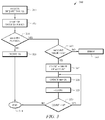
- FIG. 3 is a flow chart of an embodiment of a method 300 of creating an SA cluster.
- a NE such as security gateway 210 and/or 212
- the method 300 may retrieve a security policy for the SA.
- the security policy may be stored in a security policy database (SPD), which may be located on the NE and/or may be accessed from another NE such as a management NE.
- the security policy may be used to determine the processing parameters and/or crypto key materials that will be associated with the SA.
- the method 300 may check the security policy to determine in an saCount variable is present. The method 300 may proceed to step 316 if the saCount variable is not present and proceed to step 320 if the saCount is present.
- the saCount variable is not present, which may mean that a single SA (e.g. SA 141) has been specified by the security policy.
- the method 300 may create the SA, for example by using IKE and/or IKEv2, proceed to step 318 and end.
- the saCount variable may be present, which may mean that a SA cluster is specified by the security policy.
- the value of the saCount variable may indicate the number of sub-SAs in the SA cluster. If the value of the saCount variable is not greater than or equal to one, the method 300 may proceed to step 322 and return an error as a cluster may require at least one sub-SA. If the value of saCount is greater than or equal to one, the method 300 may proceed to step 324.
- the method of may create a count variable and set the value of the count variable equal to the value of the saCount variable.
- the method 300 may create a sub-SA (e.g. by using IKE and/or IKEv2).
- the value of the count variable may be decremented by one.
- the method 300 may determine if the value of the count variable is greater than zero. If the value of the count variable remains greater than zero, the method 300 may return to step 326 and create additional SAs as dictated by the value of the count variable. One the value of the count variable reaches zero at step 330, the method 300 may proceed to step 318 and end. As such, the sub-SAs may be created based on the security policy and added to the SA cluster.
- an SA cluster setup may comprise multiple sub-SA setups.
- the subtunnels may be setup independently. After setup, the sub-tunnels can be added to the cluster one by one. The exact manner of adding the sub-SAs into the SA cluster may be a local matter. All the collaborative sub-tunnels may comprise different SPI values. There may be no limitation on how many sub-tunnels may be used for one clustered tunnel. Both the sending entity and the receiving entity may agree on the SA cluster specifications before any IPsec traffic is transmitted through any of the sub-tunnels. New sub-SAs may be setup and joined to the SA cluster even after the traffic begins to flow inside the clustered tunnel. Even though the sub-tunnels may be independent, they may share only one sequence number source. Each IPsec packet carried inside the clustered tunnel may comprise a unique sequence number.
- All the sub-tunnels may be set up independently.
- the traffic through the different subtunnels may employ the same route.
- the traffic may also employ different routes based on the routing policy, for example by using equal cost multipath routing.
- the SA cluster may be fully interoperable with IPsec implementation under architecture 100 if a device designed for architecture 100 does not support SA clusters.
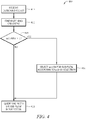
- FIG. 4 is a flow chart of an embodiment of a method 400 of selecting a sub-SA for a data sub-flow.
- an outbound packet may be received, for example by a security gateway 210 and/or 212.
- the method 400 may query the SPD to find the SPD entry that matches the flow to which the packet from step 410 belongs.
- the method 400 may determine if the saCount value stored in the SPD entry is greater than one. The method may proceed to step 418 if the saCount value is not greater than one and proceed to step 416 if the saCount value is greater than one.
- the method 400 may query an SA database (SAD) using the SPI of the SA and the flow information to find data to perform SA encapsulation and/or transport. If the count value is one or less, there may be only one SA and SA selection may not be needed. If the count value is greater than one, at step 416 the method 400 may select a sub-SA for the sub-flow according to a sub-SA selection algorithm (e.g. selectSA and/or SASelAlgoType). Once the sub-SA is selected, the method may proceed to step 418 and query the SAD using the SPI of the selected sub-SA. In this manner, data packets of a flow may be distributed between sub-SAs by using the selection algorithm. The selection algorithm may alternate packets between sub-SAs for both data traffic efficiency and security reasons as discussed hereinabove.
- SAD SA database
- the sending entity may split and/or alternate the IPsec traffic through a plurality of sub-tunnels.
- the SA cluster When the SA cluster is selected for the traffic processing based on security policy configuration, one sub-SA may be chosen for outbound IPsec processing for a specified packet.
- Local implementation may determine which SA should be applied to the specified IP packet. Except that the sequence numbering may be shared among all sub-SAs, other processing procedures associated with architecture 100 may not be altered.
- a local implementation at the sending entity may choose any method to obtain the sequence number for a packet, which may be independent of sub-SA selection.
- each sub-SA may generate its own sequence numbering, which may not require sequence number sharing between sub_SAs.
- FIG. 5 is a flow chart of an embodiment of a method 500 of receiving data via an SA cluster.
- Anti-replay may be a function of IPsec, and may be employed to prevent a receiving NE from processing the same packet multiple times. If a single SA is employed, packets may be received in sequential order, which may allow the receiving NE to discard any new packet received with a sequence number lower than the sequence number of the last packet received. When an SA cluster is employed, packets may be transmitted in parallel. As such, data packets may be received out of order if sequence number sharing is employed.
- Method 500 may be employed to implement an anti-replay function when employing an SA cluster via the use of an anti-replay bitmap.
- an inbound packet may be received, for example by a security gateway 210 and/or 212.
- the method may determine if anti-replay is employed by the SA, for example by querying the SPD using the SPI. If anti-replay is not employed for the SA, the method 500 may proceed to step 514 and process the packet. If anti-replay is employed, the method 500 may proceed to step 516.
- the method 500 may obtain the data packet's sequence number and compare the sequence number to the anti-replay bitmap.
- the anti-replay bitmap may comprise all possible sequence numbers with corresponding values (e.g.
- the method 500 may determine whether the sequence number is set in the anti-replay bitmap. If the sequence number is set (e.g. to a value of one), the method may determine that a packet with the sequence number has already been received, proceed to step 520, and drop the packet. If the sequence number is not set (e.g. to a value of one), the method may determine that a packet with the sequence number has not been received and may proceed to step 522. At step 522, the method may update the anti-replay bitmap to indicate that the packet associated with the sequence number has been received (e.g. by setting the corresponding value to a value of zero). The method 500 may then proceed to step 514 and process the packet.
- the selection of a sub-SA on the receiver side may be a similar process to the selection of a single SA, both of which may be based on SPI and IP address information.
- the use of multiple sub-tunnels may cause out-of-order delivery of IPsec packets for the secure communication channel between two entities.
- the sequence number in the data packet IPsec header can be used if the receiving entity needs to maintain the sending order.
- all the sub-tunnels may use one shared anti-replay bitmap at the receiving entity. The anti-replay check may be completed against the SA cluster instead of a particular sub-SA.
- the reorder process may be completed at an aggregate node and/or an end host (e.g. host 240 and/or 241), based on the topology of a particular network, in a manner similar to TCP reorder and/or IP reassembly.
- an end host e.g. host 240 and/or 241
- FIG. 6 is a schematic diagram of an embodiment of a network element (NE) 600, which may comprise a security gateway 110, 112, 210, and/or 212, a host 140, 141, 240, and/or 241, and/or routers 120, 221, and/or 222.
- NE network element
- FIG. 6 is a schematic diagram of an embodiment of a network element (NE) 600, which may comprise a security gateway 110, 112, 210, and/or 212, a host 140, 141, 240, and/or 241, and/or routers 120, 221, and/or 222.
- NE 600 encompasses a broad range of devices of which NE 600 is merely an example.
- NE 600 is included for purposes of clarity of discussion, but is in no way meant to limit the application of the present disclosure to a particular NE embodiment or class of NE embodiments.
- At least some of the features/methods described in the disclosure may be implemented in whole or in part in a network apparatus or component such as an NE 600.
- a network apparatus or component such as an NE 600.
- the features/methods in the disclosure may be implemented using hardware, firmware, and/or software installed to run on hardware.
- the NE 600 may be any device that transports frames through a network, e.g., a switch, router, bridge, server, a client, etc.
- the NE 600 may comprise transceivers (Tx/Rx) 610, which may be transmitters, receivers, or combinations thereof.
- a Tx/Rx 610 may be coupled to plurality of downstream ports 620 for transmitting and/or receiving frames from other nodes, and a Tx/Rx 610 coupled to plurality of upstream ports 650 for transmitting and/or receiving frames from other nodes.
- a processor 630 may be coupled to the Tx/Rxs 610 to process the frames and/or determine which nodes to send frames to.
- the processor 630 may comprise one or more multi-core processors and/or memory devices 632, which may function as data stores, buffers, etc.
- Processor 630 may be implemented as a general processor or may be part of one or more application specific integrated circuits (ASICs) and/or digital signal processors (DSPs).
- the downstream ports 620 and/or upstream ports 650 may contain electrical and/or optical transmitting and/or receiving components.
- NE 600 may or may not be a routing component that makes routing decisions.
- a design that is still subject to frequent change may be preferred to be implemented in software, because re-spinning a hardware implementation is more expensive than re-spinning a software design.
- a design that is stable that will be produced in large volume may be preferred to be implemented in hardware, for example in an ASIC, because for large production runs the hardware implementation may be less expensive than the software implementation.
- a design may be developed and tested in a software form and later transformed, by well-known design rules, to an equivalent hardware implementation in an application specific integrated circuit that hardwires the instructions of the software. In the same manner as a machine controlled by a new ASIC is a particular machine or apparatus, likewise a computer that has been programmed and/or loaded with executable instructions may be viewed as a particular machine or apparatus.
- R Rl + k * (Ru - Rl), wherein k is a variable ranging from 1 percent to 100 percent with a 1 percent increment, i.e., k is 1 percent, 2 percent, 3 percent, 4 percent, 7 percent, ..., 70 percent, 71 percent, 72 percent, ..., 97 percent, 96 percent, 97 percent, 98 percent, 99 percent, or 100 percent.
- k is a variable ranging from 1 percent to 100 percent with a 1 percent increment, i.e., k is 1 percent, 2 percent, 3 percent, 4 percent, 7 percent, ..., 70 percent, 71 percent, 72 percent, ..., 97 percent, 96 percent, 97 percent, 98 percent, 99 percent, or 100 percent.
- any numerical range defined by two R numbers as defined in the above is also specifically disclosed.
Landscapes
- Engineering & Computer Science (AREA)
- Computer Security & Cryptography (AREA)
- Computer Hardware Design (AREA)
- Computing Systems (AREA)
- General Engineering & Computer Science (AREA)
- Computer Networks & Wireless Communication (AREA)
- Signal Processing (AREA)
- Data Exchanges In Wide-Area Networks (AREA)
Claims (15)
- Élément de réseau (NE) (600), comprenant :une mémoire (632) configurée pour stocker des instructions, etun processeur (630) configuré pour exécuter les instructions :en divisant une première pluralité de paquets de données d'un flux de données en une première pluralité de flux auxiliaires, eten amenant la transmission de la première pluralité de flux auxiliaires vers un second élément NE par l'intermédiaire d'un réseau,dans lequel la première pluralité des flux auxiliaires est transmise en utilisant un premier groupe d'associations de sécurité, SA, à l'ensemble de protocoles de sécurité Internet, IPsec, comprenant une pluralité d'associations SA auxiliaires en parallèle, etles différentes associations SA auxiliaires en parallèle sont établies indépendamment pour la première pluralité de flux auxiliaires, respectivement.
- Élément de réseau NE (600) selon la revendication 1, dans lequel une première des associations SA auxiliaires traverse un trajet de réseau différent de celui d'une deuxième des associations SA auxiliaires.
- Élément de réseau NE (600) selon la revendication 1, dans lequel les associations SA auxiliaires ne sont pas imbriquées.
- Élément de réseau NE (600) selon la revendication 1, dans lequel les paquets de données du flux de données sont répartis dans la première pluralité d'associations SA auxiliaires en utilisant un algorithme de sélection.
- Élément de réseau NE (600) selon la revendication 1, dans lequel le processeur (630) est en outre configuré pour recevoir une seconde pluralité de flux auxiliaires en provenance du second élément NE par l'intermédiaire d'un second groupe d'associations SA au protocole de sécurité IPsec.
- Élément de réseau NE (600) selon la revendication 5, dans lequel la seconde pluralité de flux auxiliaires comprend une seconde pluralité de paquets de données, et dans lequel le processeur (630) est en outre configuré pour exécuter les instructions en exécutant une fonction anti reproduction sur la seconde pluralité de paquets de données en utilisant une structure de mappe binaire anti reproduction.
- Élément de réseau NE (600) selon la revendication 1, dans lequel la première pluralité de paquets de données comprend pour chacun un numéro de séquence, dans lequel le numéro de séquence est déterminé sur la base du flux auxiliaire avec lequel un paquet de données est associé et n'est pas déterminé sur la base du flux de données.
- Élément de réseau NE (600) selon l'une quelconque des revendications 1 à 7, dans lequel :le processeur est en outre configuré pour créer un groupe d'associations de sécurité, SA, à l'ensemble de protocoles de sécurité Internet, IPsec, comprenant une première pluralité d'associations SA auxiliaires entre l'élément de réseau NE (600) et un second élément NE utilisant un protocole d'échange de clés Internet, IKE, ou un protocole IKE de version 2, IKEv2,dans lequel les premières associations SA auxiliaires sont unidirectionnelles, etdans lequel les premières associations SA auxiliaires sont configurées pour transporter une première pluralité de paquets de données dans une direction commune.
- Élément de réseau NE (600) selon la revendication 8, dans lequel le processeur (600) est en outre configuré pour utiliser les premières associations SA auxiliaires dans le but de transmettre une première pluralité de paquets de données vers le second élément NE par l'intermédiaire d'un réseau pendant une session de communication, le processeur (600) étant en outre configuré pour recevoir une seconde pluralité de paquets provenant du second élément NE pas intermédiaire du réseau pendant la session de communication, et la seconde pluralité de paquets de données étant reçue par l'intermédiaire d'un second groupe d'associations SA au protocole de sécurité IPsec comprenant une seconde pluralité d'associations SA auxiliaires.
- Élément de réseau NE (600) selon la revendication 9, dans lequel la seconde pluralité d'associations SA auxiliaires est unidirectionnelle, les secondes associations SA auxiliaires étant configurées pour transporter des paquets de données dans une direction commune, et les secondes associations SA auxiliaires étant configurés pour transporter des paquets de données dans une direction opposée à celle des premières associations SA auxiliaires.
- Élément de réseau NE (600) selon la revendication 8, dans lequel le processeur (600) est en outre configuré pour créer le groupe d'associations SA en traitant un attribut saCount, la valeur associée à l'attribut saCount indiquant une quantité de premières associations SA auxiliaires dans le groupe d'associations SA.
- Élément de réseau NE (600) selon la revendication 8, dans lequel le processeur (600) est en outre configuré pour créer le groupe d'associations SA en traitant un attribut selectSA, la valeur associée à l'attribut selectSA indiquant un algorithme de sélection permettant de choisir une association SA auxiliaire en vue de la transmission d'un flux auxiliaire associé à la première pluralité de paquets de données.
- Procédé comprenant :l'établissement de multiples tunnels auxiliaires d'associations de sécurité, SA, à l'ensemble de protocoles de sécurité Internet, IPsec, etle regroupement des tunnels auxiliaires d'associations SA pour former un groupe d'associations SA comprenant une pluralité d'associations SA auxiliaires en parallèle,la pluralité d'associations SA auxiliaires en parallèle étant établie indépendamment pour une première pluralité de flux auxiliaires dans lesquels est divisé un flux de données, respectivement, la première pluralité de flux auxiliaire étant transmises en utilisant le groupe d'associations SA vers un second élément NE par l'intermédiaire d'un réseau.
- Procédé selon la revendication 13, dans lequel les tunnels auxiliaires sont établis indépendamment, et dans lequel les tunnels auxiliaires sont ajoutés au groupe d'associations SA l'un après l'autre, le procédé comprenant en outre la séparation ou la mise en alternance d'un trafic au protocole de sécurité IPsec au travers des tunnels auxiliaires.
- Procédé selon la revendication 14, dans lequel le groupe d'associations SA ne comprend pas de durée de vie, et dans lequel les tunnels auxiliaires utilisent une structure de mappe binaire anti reproduction partagée au niveau d'une entité de réception.
Applications Claiming Priority (2)
| Application Number | Priority Date | Filing Date | Title |
|---|---|---|---|
| US201261618359P | 2012-03-30 | 2012-03-30 | |
| PCT/US2013/034415 WO2013149041A1 (fr) | 2012-03-30 | 2013-03-28 | Amélioration des performances ipsec et de la sécurité contre l'écoute électronique |
Publications (2)
| Publication Number | Publication Date |
|---|---|
| EP2823620A1 EP2823620A1 (fr) | 2015-01-14 |
| EP2823620B1 true EP2823620B1 (fr) | 2016-03-23 |
Family
ID=48087763
Family Applications (1)
| Application Number | Title | Priority Date | Filing Date |
|---|---|---|---|
| EP13715867.1A Active EP2823620B1 (fr) | 2012-03-30 | 2013-03-28 | Amélioration des performances ipsec et de la sécurité contre l'écoute électronique |
Country Status (5)
| Country | Link |
|---|---|
| US (1) | US9021577B2 (fr) |
| EP (1) | EP2823620B1 (fr) |
| JP (2) | JP6052391B2 (fr) |
| CN (1) | CN104247367B (fr) |
| WO (1) | WO2013149041A1 (fr) |
Cited By (1)
| Publication number | Priority date | Publication date | Assignee | Title |
|---|---|---|---|---|
| US10609008B2 (en) | 2017-06-08 | 2020-03-31 | Nxp Usa, Inc. | Securing an electronically transmitted communication |
Families Citing this family (30)
| Publication number | Priority date | Publication date | Assignee | Title |
|---|---|---|---|---|
| US9516065B2 (en) * | 2014-12-23 | 2016-12-06 | Freescale Semiconductor, Inc. | Secure communication device and method |
| US9923874B2 (en) * | 2015-02-27 | 2018-03-20 | Huawei Technologies Co., Ltd. | Packet obfuscation and packet forwarding |
| JP6845215B2 (ja) * | 2015-07-24 | 2021-03-17 | アップル インコーポレイテッドApple Inc. | セルラマネージャとユーザ機器(ue)との間でwlanノードを介して通信する装置、システム及び方法 |
| US10051000B2 (en) * | 2015-07-28 | 2018-08-14 | Citrix Systems, Inc. | Efficient use of IPsec tunnels in multi-path environment |
| US10250578B2 (en) * | 2015-11-03 | 2019-04-02 | Qualcomm Incorporated | Internet key exchange (IKE) for secure association between devices |
| WO2017084688A1 (fr) * | 2015-11-16 | 2017-05-26 | Telefonaktiebolaget Lm Ericsson (Publ) | Procédé permettant d'améliorer l'acheminement de paquets de données |
| CN106254204A (zh) * | 2016-09-28 | 2016-12-21 | 乐视控股(北京)有限公司 | 云环境下的Ipsec 隧道生命期的配置方法及装置 |
| US10798071B2 (en) | 2017-07-31 | 2020-10-06 | Cisco Technology, Inc. | IPSEC anti-relay window with quality of service |
| CN109756326B (zh) * | 2017-11-07 | 2022-04-08 | 中兴通讯股份有限公司 | 量子加密通信方法、设备及计算机可读存储介质 |
| US10924274B1 (en) * | 2017-12-07 | 2021-02-16 | Junioer Networks, Inc. | Deterministic distribution of rekeying procedures for a scaling virtual private network (VPN) |
| US10873455B2 (en) * | 2018-03-15 | 2020-12-22 | Cisco Technology, Inc. | Techniques for encryption key rollover synchronization in a network |
| EP3595255A1 (fr) * | 2018-07-12 | 2020-01-15 | Nokia Solutions and Networks Oy | Amélioration de la sécurité du réseau par l´établissement d´une pluralité d´associations de sécurité actives pour un identifiant de politique de sécurité |
| WO2020098675A1 (fr) * | 2018-11-15 | 2020-05-22 | Huawei Technologies Co., Ltd. | Remise à la clé d'une association de sécurité sa |
| CN113169959B (zh) | 2018-11-15 | 2023-03-24 | 华为技术有限公司 | 对安全联盟sa进行密钥更新 |
| CN109379391B (zh) * | 2018-12-25 | 2021-06-01 | 北京物芯科技有限责任公司 | 一种基于IPSec的通信方法、装置、设备和储存介质 |
| CN111385259B (zh) * | 2018-12-28 | 2023-09-01 | 中兴通讯股份有限公司 | 一种数据传输方法、装置、相关设备及存储介质 |
| US11656992B2 (en) | 2019-05-03 | 2023-05-23 | Western Digital Technologies, Inc. | Distributed cache with in-network prefetch |
| US11368298B2 (en) | 2019-05-16 | 2022-06-21 | Cisco Technology, Inc. | Decentralized internet protocol security key negotiation |
| CN110381034B (zh) * | 2019-06-25 | 2022-02-22 | 苏州浪潮智能科技有限公司 | 一种报文处理方法、装置、设备及可读存储介质 |
| US11323290B2 (en) | 2020-03-25 | 2022-05-03 | Juniper Networks, Inc. | Establishing a network micro-tunnel within a network tunnel |
| US11765250B2 (en) | 2020-06-26 | 2023-09-19 | Western Digital Technologies, Inc. | Devices and methods for managing network traffic for a distributed cache |
| US11675706B2 (en) | 2020-06-30 | 2023-06-13 | Western Digital Technologies, Inc. | Devices and methods for failure detection and recovery for a distributed cache |
| US11736417B2 (en) * | 2020-08-17 | 2023-08-22 | Western Digital Technologies, Inc. | Devices and methods for network message sequencing |
| WO2022046075A1 (fr) * | 2020-08-28 | 2022-03-03 | Siemens Industry Software, Inc. | Procédé et système de traitement de protocole |
| US12088470B2 (en) | 2020-12-18 | 2024-09-10 | Western Digital Technologies, Inc. | Management of non-volatile memory express nodes |
| EP4060936B1 (fr) | 2021-03-16 | 2026-04-29 | Nokia Solutions and Networks Oy | Traitement amélioré de flux ipsec |
| US12301690B2 (en) | 2021-05-26 | 2025-05-13 | Western Digital Technologies, Inc. | Allocation of distributed cache |
| US12149358B2 (en) | 2021-06-21 | 2024-11-19 | Western Digital Technologies, Inc. | In-network failure indication and recovery |
| CN113615134B (zh) | 2021-06-29 | 2025-07-18 | 新华三技术有限公司 | 一种报文转发方法、装置、网络节点及存储介质 |
| WO2023287463A1 (fr) * | 2021-07-15 | 2023-01-19 | Vmware, Inc. | Gestion de fenêtres anti-rejeu dans des connexions à chemins multiples entre passerelles |
Family Cites Families (16)
| Publication number | Priority date | Publication date | Assignee | Title |
|---|---|---|---|---|
| JP2000315997A (ja) * | 1999-04-30 | 2000-11-14 | Toshiba Corp | 暗号通信方法及びノード装置 |
| GB2365717B (en) * | 2000-05-24 | 2004-01-21 | Ericsson Telefon Ab L M | IPsec processing |
| US7280540B2 (en) * | 2001-01-09 | 2007-10-09 | Stonesoft Oy | Processing of data packets within a network element cluster |
| US7426566B2 (en) * | 2001-01-17 | 2008-09-16 | International Business Machines Corporation | Methods, systems and computer program products for security processing inbound communications in a cluster computing environment |
| US6941366B2 (en) * | 2001-01-17 | 2005-09-06 | International Business Machines Corporation | Methods, systems and computer program products for transferring security processing between processors in a cluster computing environment |
| US7613699B2 (en) * | 2001-08-03 | 2009-11-03 | Itt Manufacturing Enterprises, Inc. | Apparatus and method for resolving security association database update coherency in high-speed systems having multiple security channels |
| JP3672517B2 (ja) * | 2001-10-05 | 2005-07-20 | 沖電気工業株式会社 | 通信装置 |
| JP3678200B2 (ja) * | 2002-01-11 | 2005-08-03 | Kddi株式会社 | 通信内容の秘匿性向上のための経路分散装置 |
| JP2005136739A (ja) * | 2003-10-30 | 2005-05-26 | Furukawa Electric Co Ltd:The | データ中継方法、データ中継装置、データ中継システム |
| JP2007089085A (ja) * | 2005-09-26 | 2007-04-05 | Tokyo Electric Power Co Inc:The | ノード間通信制御方法、ノード間通信方法、ホームエージェント及びノード・コンピュータ |
| WO2008039506A2 (fr) * | 2006-09-27 | 2008-04-03 | Cipheroptics, Inc. | Deploiement de reseaux prives virtuels de groupe et de groupes de securite sur un reseau d'entreprise de bout en bout et cryptage ip pour rpv |
| US8272046B2 (en) * | 2007-11-13 | 2012-09-18 | Cisco Technology, Inc. | Network mobility over a multi-path virtual private network |
| US8763108B2 (en) * | 2007-11-29 | 2014-06-24 | Qualcomm Incorporated | Flow classification for encrypted and tunneled packet streams |
| US7944854B2 (en) * | 2008-01-04 | 2011-05-17 | Cisco Technology, Inc. | IP security within multi-topology routing |
| US8316113B2 (en) * | 2008-12-19 | 2012-11-20 | Watchguard Technologies, Inc. | Cluster architecture and configuration for network security devices |
| JP2012010254A (ja) * | 2010-06-28 | 2012-01-12 | Fujitsu Ltd | 通信装置、通信方法及び通信システム |
-
2013
- 2013-03-28 CN CN201380015156.0A patent/CN104247367B/zh active Active
- 2013-03-28 JP JP2015503587A patent/JP6052391B2/ja active Active
- 2013-03-28 WO PCT/US2013/034415 patent/WO2013149041A1/fr not_active Ceased
- 2013-03-28 EP EP13715867.1A patent/EP2823620B1/fr active Active
- 2013-03-28 US US13/852,736 patent/US9021577B2/en active Active
-
2016
- 2016-10-06 JP JP2016198057A patent/JP6288802B2/ja active Active
Cited By (1)
| Publication number | Priority date | Publication date | Assignee | Title |
|---|---|---|---|---|
| US10609008B2 (en) | 2017-06-08 | 2020-03-31 | Nxp Usa, Inc. | Securing an electronically transmitted communication |
Also Published As
| Publication number | Publication date |
|---|---|
| EP2823620A1 (fr) | 2015-01-14 |
| CN104247367A (zh) | 2014-12-24 |
| JP6052391B2 (ja) | 2016-12-27 |
| US20130263249A1 (en) | 2013-10-03 |
| JP2015515210A (ja) | 2015-05-21 |
| WO2013149041A1 (fr) | 2013-10-03 |
| JP2017028740A (ja) | 2017-02-02 |
| JP6288802B2 (ja) | 2018-03-07 |
| CN104247367B (zh) | 2017-08-04 |
| US9021577B2 (en) | 2015-04-28 |
Similar Documents
| Publication | Publication Date | Title |
|---|---|---|
| EP2823620B1 (fr) | Amélioration des performances ipsec et de la sécurité contre l'écoute électronique | |
| US11283772B2 (en) | Method and system for sending a message through a secure connection | |
| US9185097B2 (en) | Method and system for traffic engineering in secured networks | |
| US6484257B1 (en) | System and method for maintaining N number of simultaneous cryptographic sessions using a distributed computing environment | |
| US20030074584A1 (en) | System and method for maintaining N number of simultaneous cryptographic sessions using a distributed computing environment | |
| US20110113236A1 (en) | Methods, systems, and computer readable media for offloading internet protocol security (ipsec) processing using an ipsec proxy mechanism | |
| US20110296186A1 (en) | System and method for providing secured access to services | |
| US20110252228A1 (en) | Method and apparatus for ensuring packet transmission security | |
| US20100268935A1 (en) | Methods, systems, and computer readable media for maintaining flow affinity to internet protocol security (ipsec) sessions in a load-sharing security gateway | |
| Hohendorf et al. | Secure End-to-End Transport Over SCTP. | |
| Arora et al. | Comparison of VPN protocols–IPSec, PPTP, and L2TP | |
| Guide et al. | Security Architecture for the Internet Protocol | |
| Rosen | IPsec | |
| Schneider et al. | Network Working Group D. Maughan Request for Comments: 2408 National Security Agency Category: Standards Track M. Schertler Securify, Inc. |
Legal Events
| Date | Code | Title | Description |
|---|---|---|---|
| PUAI | Public reference made under article 153(3) epc to a published international application that has entered the european phase |
Free format text: ORIGINAL CODE: 0009012 |
|
| 17P | Request for examination filed |
Effective date: 20141010 |
|
| AK | Designated contracting states |
Kind code of ref document: A1 Designated state(s): AL AT BE BG CH CY CZ DE DK EE ES FI FR GB GR HR HU IE IS IT LI LT LU LV MC MK MT NL NO PL PT RO RS SE SI SK SM TR |
|
| AX | Request for extension of the european patent |
Extension state: BA ME |
|
| DAX | Request for extension of the european patent (deleted) | ||
| GRAP | Despatch of communication of intention to grant a patent |
Free format text: ORIGINAL CODE: EPIDOSNIGR1 |
|
| INTG | Intention to grant announced |
Effective date: 20150930 |
|
| GRAS | Grant fee paid |
Free format text: ORIGINAL CODE: EPIDOSNIGR3 |
|
| GRAA | (expected) grant |
Free format text: ORIGINAL CODE: 0009210 |
|
| AK | Designated contracting states |
Kind code of ref document: B1 Designated state(s): AL AT BE BG CH CY CZ DE DK EE ES FI FR GB GR HR HU IE IS IT LI LT LU LV MC MK MT NL NO PL PT RO RS SE SI SK SM TR |
|
| REG | Reference to a national code |
Ref country code: GB Ref legal event code: FG4D |
|
| REG | Reference to a national code |
Ref country code: CH Ref legal event code: EP |
|
| REG | Reference to a national code |
Ref country code: AT Ref legal event code: REF Ref document number: 784137 Country of ref document: AT Kind code of ref document: T Effective date: 20160415 |
|
| REG | Reference to a national code |
Ref country code: IE Ref legal event code: FG4D |
|
| REG | Reference to a national code |
Ref country code: DE Ref legal event code: R096 Ref document number: 602013005727 Country of ref document: DE |
|
| REG | Reference to a national code |
Ref country code: FR Ref legal event code: PLFP Year of fee payment: 4 |
|
| REG | Reference to a national code |
Ref country code: LT Ref legal event code: MG4D |
|
| REG | Reference to a national code |
Ref country code: NL Ref legal event code: MP Effective date: 20160323 |
|
| PG25 | Lapsed in a contracting state [announced via postgrant information from national office to epo] |
Ref country code: FI Free format text: LAPSE BECAUSE OF FAILURE TO SUBMIT A TRANSLATION OF THE DESCRIPTION OR TO PAY THE FEE WITHIN THE PRESCRIBED TIME-LIMIT Effective date: 20160323 Ref country code: NO Free format text: LAPSE BECAUSE OF FAILURE TO SUBMIT A TRANSLATION OF THE DESCRIPTION OR TO PAY THE FEE WITHIN THE PRESCRIBED TIME-LIMIT Effective date: 20160623 Ref country code: GR Free format text: LAPSE BECAUSE OF FAILURE TO SUBMIT A TRANSLATION OF THE DESCRIPTION OR TO PAY THE FEE WITHIN THE PRESCRIBED TIME-LIMIT Effective date: 20160624 Ref country code: HR Free format text: LAPSE BECAUSE OF FAILURE TO SUBMIT A TRANSLATION OF THE DESCRIPTION OR TO PAY THE FEE WITHIN THE PRESCRIBED TIME-LIMIT Effective date: 20160323 |
|
| REG | Reference to a national code |
Ref country code: AT Ref legal event code: MK05 Ref document number: 784137 Country of ref document: AT Kind code of ref document: T Effective date: 20160323 |
|
| PG25 | Lapsed in a contracting state [announced via postgrant information from national office to epo] |
Ref country code: NL Free format text: LAPSE BECAUSE OF FAILURE TO SUBMIT A TRANSLATION OF THE DESCRIPTION OR TO PAY THE FEE WITHIN THE PRESCRIBED TIME-LIMIT Effective date: 20160323 Ref country code: BE Free format text: LAPSE BECAUSE OF NON-PAYMENT OF DUE FEES Effective date: 20160331 Ref country code: RS Free format text: LAPSE BECAUSE OF FAILURE TO SUBMIT A TRANSLATION OF THE DESCRIPTION OR TO PAY THE FEE WITHIN THE PRESCRIBED TIME-LIMIT Effective date: 20160323 Ref country code: LV Free format text: LAPSE BECAUSE OF FAILURE TO SUBMIT A TRANSLATION OF THE DESCRIPTION OR TO PAY THE FEE WITHIN THE PRESCRIBED TIME-LIMIT Effective date: 20160323 Ref country code: SE Free format text: LAPSE BECAUSE OF FAILURE TO SUBMIT A TRANSLATION OF THE DESCRIPTION OR TO PAY THE FEE WITHIN THE PRESCRIBED TIME-LIMIT Effective date: 20160323 Ref country code: LT Free format text: LAPSE BECAUSE OF FAILURE TO SUBMIT A TRANSLATION OF THE DESCRIPTION OR TO PAY THE FEE WITHIN THE PRESCRIBED TIME-LIMIT Effective date: 20160323 |
|
| PG25 | Lapsed in a contracting state [announced via postgrant information from national office to epo] |
Ref country code: PL Free format text: LAPSE BECAUSE OF FAILURE TO SUBMIT A TRANSLATION OF THE DESCRIPTION OR TO PAY THE FEE WITHIN THE PRESCRIBED TIME-LIMIT Effective date: 20160323 Ref country code: IS Free format text: LAPSE BECAUSE OF FAILURE TO SUBMIT A TRANSLATION OF THE DESCRIPTION OR TO PAY THE FEE WITHIN THE PRESCRIBED TIME-LIMIT Effective date: 20160723 Ref country code: EE Free format text: LAPSE BECAUSE OF FAILURE TO SUBMIT A TRANSLATION OF THE DESCRIPTION OR TO PAY THE FEE WITHIN THE PRESCRIBED TIME-LIMIT Effective date: 20160323 |
|
| REG | Reference to a national code |
Ref country code: CH Ref legal event code: PL |
|
| PG25 | Lapsed in a contracting state [announced via postgrant information from national office to epo] |
Ref country code: RO Free format text: LAPSE BECAUSE OF FAILURE TO SUBMIT A TRANSLATION OF THE DESCRIPTION OR TO PAY THE FEE WITHIN THE PRESCRIBED TIME-LIMIT Effective date: 20160323 Ref country code: ES Free format text: LAPSE BECAUSE OF FAILURE TO SUBMIT A TRANSLATION OF THE DESCRIPTION OR TO PAY THE FEE WITHIN THE PRESCRIBED TIME-LIMIT Effective date: 20160323 Ref country code: SM Free format text: LAPSE BECAUSE OF FAILURE TO SUBMIT A TRANSLATION OF THE DESCRIPTION OR TO PAY THE FEE WITHIN THE PRESCRIBED TIME-LIMIT Effective date: 20160323 Ref country code: AT Free format text: LAPSE BECAUSE OF FAILURE TO SUBMIT A TRANSLATION OF THE DESCRIPTION OR TO PAY THE FEE WITHIN THE PRESCRIBED TIME-LIMIT Effective date: 20160323 Ref country code: SK Free format text: LAPSE BECAUSE OF FAILURE TO SUBMIT A TRANSLATION OF THE DESCRIPTION OR TO PAY THE FEE WITHIN THE PRESCRIBED TIME-LIMIT Effective date: 20160323 Ref country code: CZ Free format text: LAPSE BECAUSE OF FAILURE TO SUBMIT A TRANSLATION OF THE DESCRIPTION OR TO PAY THE FEE WITHIN THE PRESCRIBED TIME-LIMIT Effective date: 20160323 Ref country code: PT Free format text: LAPSE BECAUSE OF FAILURE TO SUBMIT A TRANSLATION OF THE DESCRIPTION OR TO PAY THE FEE WITHIN THE PRESCRIBED TIME-LIMIT Effective date: 20160725 |
|
| REG | Reference to a national code |
Ref country code: IE Ref legal event code: MM4A |
|
| PG25 | Lapsed in a contracting state [announced via postgrant information from national office to epo] |
Ref country code: BE Free format text: LAPSE BECAUSE OF FAILURE TO SUBMIT A TRANSLATION OF THE DESCRIPTION OR TO PAY THE FEE WITHIN THE PRESCRIBED TIME-LIMIT Effective date: 20160323 |
|
| REG | Reference to a national code |
Ref country code: DE Ref legal event code: R097 Ref document number: 602013005727 Country of ref document: DE |
|
| RAP2 | Party data changed (patent owner data changed or rights of a patent transferred) |
Owner name: HUAWEI TECHNOLOGIES CO., LTD. |
|
| PLBE | No opposition filed within time limit |
Free format text: ORIGINAL CODE: 0009261 |
|
| STAA | Information on the status of an ep patent application or granted ep patent |
Free format text: STATUS: NO OPPOSITION FILED WITHIN TIME LIMIT |
|
| PG25 | Lapsed in a contracting state [announced via postgrant information from national office to epo] |
Ref country code: CH Free format text: LAPSE BECAUSE OF NON-PAYMENT OF DUE FEES Effective date: 20160331 Ref country code: IE Free format text: LAPSE BECAUSE OF NON-PAYMENT OF DUE FEES Effective date: 20160328 Ref country code: DK Free format text: LAPSE BECAUSE OF FAILURE TO SUBMIT A TRANSLATION OF THE DESCRIPTION OR TO PAY THE FEE WITHIN THE PRESCRIBED TIME-LIMIT Effective date: 20160323 Ref country code: LI Free format text: LAPSE BECAUSE OF NON-PAYMENT OF DUE FEES Effective date: 20160331 |
|
| REG | Reference to a national code |
Ref country code: FR Ref legal event code: PLFP Year of fee payment: 5 |
|
| PG25 | Lapsed in a contracting state [announced via postgrant information from national office to epo] |
Ref country code: BG Free format text: LAPSE BECAUSE OF FAILURE TO SUBMIT A TRANSLATION OF THE DESCRIPTION OR TO PAY THE FEE WITHIN THE PRESCRIBED TIME-LIMIT Effective date: 20160623 |
|
| 26N | No opposition filed |
Effective date: 20170102 |
|
| PG25 | Lapsed in a contracting state [announced via postgrant information from national office to epo] |
Ref country code: SI Free format text: LAPSE BECAUSE OF FAILURE TO SUBMIT A TRANSLATION OF THE DESCRIPTION OR TO PAY THE FEE WITHIN THE PRESCRIBED TIME-LIMIT Effective date: 20160323 |
|
| PG25 | Lapsed in a contracting state [announced via postgrant information from national office to epo] |
Ref country code: MT Free format text: LAPSE BECAUSE OF FAILURE TO SUBMIT A TRANSLATION OF THE DESCRIPTION OR TO PAY THE FEE WITHIN THE PRESCRIBED TIME-LIMIT Effective date: 20160323 |
|
| REG | Reference to a national code |
Ref country code: FR Ref legal event code: PLFP Year of fee payment: 6 |
|
| PG25 | Lapsed in a contracting state [announced via postgrant information from national office to epo] |
Ref country code: HU Free format text: LAPSE BECAUSE OF FAILURE TO SUBMIT A TRANSLATION OF THE DESCRIPTION OR TO PAY THE FEE WITHIN THE PRESCRIBED TIME-LIMIT; INVALID AB INITIO Effective date: 20130328 |
|
| PG25 | Lapsed in a contracting state [announced via postgrant information from national office to epo] |
Ref country code: CY Free format text: LAPSE BECAUSE OF FAILURE TO SUBMIT A TRANSLATION OF THE DESCRIPTION OR TO PAY THE FEE WITHIN THE PRESCRIBED TIME-LIMIT Effective date: 20160323 Ref country code: MK Free format text: LAPSE BECAUSE OF FAILURE TO SUBMIT A TRANSLATION OF THE DESCRIPTION OR TO PAY THE FEE WITHIN THE PRESCRIBED TIME-LIMIT Effective date: 20160323 Ref country code: LU Free format text: LAPSE BECAUSE OF NON-PAYMENT OF DUE FEES Effective date: 20160328 Ref country code: MC Free format text: LAPSE BECAUSE OF FAILURE TO SUBMIT A TRANSLATION OF THE DESCRIPTION OR TO PAY THE FEE WITHIN THE PRESCRIBED TIME-LIMIT Effective date: 20160323 Ref country code: MT Free format text: LAPSE BECAUSE OF FAILURE TO SUBMIT A TRANSLATION OF THE DESCRIPTION OR TO PAY THE FEE WITHIN THE PRESCRIBED TIME-LIMIT Effective date: 20160331 |
|
| PG25 | Lapsed in a contracting state [announced via postgrant information from national office to epo] |
Ref country code: TR Free format text: LAPSE BECAUSE OF FAILURE TO SUBMIT A TRANSLATION OF THE DESCRIPTION OR TO PAY THE FEE WITHIN THE PRESCRIBED TIME-LIMIT Effective date: 20160323 Ref country code: AL Free format text: LAPSE BECAUSE OF FAILURE TO SUBMIT A TRANSLATION OF THE DESCRIPTION OR TO PAY THE FEE WITHIN THE PRESCRIBED TIME-LIMIT Effective date: 20160323 |
|
| REG | Reference to a national code |
Ref country code: DE Ref legal event code: R079 Ref document number: 602013005727 Country of ref document: DE Free format text: PREVIOUS MAIN CLASS: H04L0029060000 Ipc: H04L0065000000 |
|
| PGFP | Annual fee paid to national office [announced via postgrant information from national office to epo] |
Ref country code: GB Payment date: 20260209 Year of fee payment: 14 |
|
| PGFP | Annual fee paid to national office [announced via postgrant information from national office to epo] |
Ref country code: DE Payment date: 20260204 Year of fee payment: 14 |
|
| PGFP | Annual fee paid to national office [announced via postgrant information from national office to epo] |
Ref country code: IT Payment date: 20260220 Year of fee payment: 14 |
|
| PGFP | Annual fee paid to national office [announced via postgrant information from national office to epo] |
Ref country code: FR Payment date: 20260209 Year of fee payment: 14 |