EP2823708B1 - Biozidpartikel aus methyliertem Polystyren - Google Patents
Biozidpartikel aus methyliertem Polystyren Download PDFInfo
- Publication number
- EP2823708B1 EP2823708B1 EP14186256.5A EP14186256A EP2823708B1 EP 2823708 B1 EP2823708 B1 EP 2823708B1 EP 14186256 A EP14186256 A EP 14186256A EP 2823708 B1 EP2823708 B1 EP 2823708B1
- Authority
- EP
- European Patent Office
- Prior art keywords
- beads
- biocidal
- polystyrene
- methylated polystyrene
- halamine
- Prior art date
- Legal status (The legal status is an assumption and is not a legal conclusion. Google has not performed a legal analysis and makes no representation as to the accuracy of the status listed.)
- Expired - Lifetime
Links
- 239000004793 Polystyrene Substances 0.000 title claims description 97
- 229920002223 polystyrene Polymers 0.000 title claims description 97
- 230000003115 biocidal effect Effects 0.000 title claims description 73
- 239000002245 particle Substances 0.000 title description 12
- 239000011324 bead Substances 0.000 claims description 111
- 229920000642 polymer Polymers 0.000 claims description 52
- 229910052801 chlorine Inorganic materials 0.000 claims description 36
- 239000000460 chlorine Substances 0.000 claims description 35
- WJRBRSLFGCUECM-UHFFFAOYSA-N hydantoin Chemical compound O=C1CNC(=O)N1 WJRBRSLFGCUECM-UHFFFAOYSA-N 0.000 claims description 28
- 229940091173 hydantoin Drugs 0.000 claims description 19
- WKBOTKDWSSQWDR-UHFFFAOYSA-N Bromine atom Chemical group [Br] WKBOTKDWSSQWDR-UHFFFAOYSA-N 0.000 claims description 13
- GDTBXPJZTBHREO-UHFFFAOYSA-N bromine Chemical group BrBr GDTBXPJZTBHREO-UHFFFAOYSA-N 0.000 claims description 12
- 229910052794 bromium Chemical group 0.000 claims description 11
- 125000001997 phenyl group Chemical group [H]C1=C([H])C([H])=C(*)C([H])=C1[H] 0.000 claims description 11
- 125000001309 chloro group Chemical group Cl* 0.000 claims description 9
- YAMHXTCMCPHKLN-UHFFFAOYSA-N imidazolidin-2-one Chemical compound O=C1NCCN1 YAMHXTCMCPHKLN-UHFFFAOYSA-N 0.000 claims description 8
- 239000011148 porous material Substances 0.000 claims description 7
- 125000004178 (C1-C4) alkyl group Chemical group 0.000 claims description 6
- 125000003118 aryl group Chemical group 0.000 claims description 6
- 238000004132 cross linking Methods 0.000 claims description 5
- IZXIZTKNFFYFOF-UHFFFAOYSA-N 2-Oxazolidone Chemical group O=C1NCCO1 IZXIZTKNFFYFOF-UHFFFAOYSA-N 0.000 claims description 4
- ZFSLODLOARCGLH-UHFFFAOYSA-N isocyanuric acid Chemical compound OC1=NC(O)=NC(O)=N1 ZFSLODLOARCGLH-UHFFFAOYSA-N 0.000 claims description 3
- 239000002243 precursor Substances 0.000 description 43
- XLYOFNOQVPJJNP-UHFFFAOYSA-N water Substances O XLYOFNOQVPJJNP-UHFFFAOYSA-N 0.000 description 39
- ZMXDDKWLCZADIW-UHFFFAOYSA-N N,N-Dimethylformamide Chemical compound CN(C)C=O ZMXDDKWLCZADIW-UHFFFAOYSA-N 0.000 description 27
- ZAMOUSCENKQFHK-UHFFFAOYSA-N Chlorine atom Chemical compound [Cl] ZAMOUSCENKQFHK-UHFFFAOYSA-N 0.000 description 25
- 239000000203 mixture Substances 0.000 description 18
- 239000002250 absorbent Substances 0.000 description 16
- 230000002745 absorbent Effects 0.000 description 16
- 239000000463 material Substances 0.000 description 15
- 235000019645 odor Nutrition 0.000 description 15
- QGZKDVFQNNGYKY-UHFFFAOYSA-N Ammonia Chemical compound N QGZKDVFQNNGYKY-UHFFFAOYSA-N 0.000 description 14
- QTBSBXVTEAMEQO-UHFFFAOYSA-N Acetic acid Chemical compound CC(O)=O QTBSBXVTEAMEQO-UHFFFAOYSA-N 0.000 description 12
- 229910052783 alkali metal Inorganic materials 0.000 description 11
- -1 alkali metal salt Chemical class 0.000 description 11
- 238000006243 chemical reaction Methods 0.000 description 11
- 238000000034 method Methods 0.000 description 11
- 230000001473 noxious effect Effects 0.000 description 9
- 239000000523 sample Substances 0.000 description 9
- 241000894006 Bacteria Species 0.000 description 8
- 229920001131 Pulp (paper) Polymers 0.000 description 8
- 150000001875 compounds Chemical class 0.000 description 8
- 244000005700 microbiome Species 0.000 description 8
- 239000000843 powder Substances 0.000 description 8
- 239000002585 base Substances 0.000 description 7
- 239000000835 fiber Substances 0.000 description 7
- 238000002329 infrared spectrum Methods 0.000 description 7
- 238000011068 loading method Methods 0.000 description 7
- 125000001570 methylene group Chemical group [H]C([H])([*:1])[*:2] 0.000 description 7
- 239000008188 pellet Substances 0.000 description 7
- 238000002360 preparation method Methods 0.000 description 7
- IJGRMHOSHXDMSA-UHFFFAOYSA-N Atomic nitrogen Chemical compound N#N IJGRMHOSHXDMSA-UHFFFAOYSA-N 0.000 description 6
- PPBRXRYQALVLMV-UHFFFAOYSA-N Styrene Chemical compound C=CC1=CC=CC=C1 PPBRXRYQALVLMV-UHFFFAOYSA-N 0.000 description 6
- 150000001340 alkali metals Chemical class 0.000 description 6
- 229910021529 ammonia Inorganic materials 0.000 description 6
- 210000001124 body fluid Anatomy 0.000 description 6
- 238000009835 boiling Methods 0.000 description 6
- 238000001914 filtration Methods 0.000 description 6
- 230000002779 inactivation Effects 0.000 description 6
- BWHMMNNQKKPAPP-UHFFFAOYSA-L potassium carbonate Chemical compound [K+].[K+].[O-]C([O-])=O BWHMMNNQKKPAPP-UHFFFAOYSA-L 0.000 description 6
- AKHNMLFCWUSKQB-UHFFFAOYSA-L sodium thiosulfate Chemical compound [Na+].[Na+].[O-]S([O-])(=O)=S AKHNMLFCWUSKQB-UHFFFAOYSA-L 0.000 description 6
- 235000019345 sodium thiosulphate Nutrition 0.000 description 6
- 238000004659 sterilization and disinfection Methods 0.000 description 6
- 206010021639 Incontinence Diseases 0.000 description 5
- 229910052736 halogen Inorganic materials 0.000 description 5
- 150000002367 halogens Chemical group 0.000 description 5
- QJGQUHMNIGDVPM-UHFFFAOYSA-N nitrogen group Chemical group [N] QJGQUHMNIGDVPM-UHFFFAOYSA-N 0.000 description 5
- 150000003839 salts Chemical class 0.000 description 5
- 238000004448 titration Methods 0.000 description 5
- YIROYDNZEPTFOL-UHFFFAOYSA-N 5,5-Dimethylhydantoin Chemical compound CC1(C)NC(=O)NC1=O YIROYDNZEPTFOL-UHFFFAOYSA-N 0.000 description 4
- CSCPPACGZOOCGX-UHFFFAOYSA-N Acetone Chemical compound CC(C)=O CSCPPACGZOOCGX-UHFFFAOYSA-N 0.000 description 4
- LFQSCWFLJHTTHZ-UHFFFAOYSA-N Ethanol Chemical compound CCO LFQSCWFLJHTTHZ-UHFFFAOYSA-N 0.000 description 4
- 241001465754 Metazoa Species 0.000 description 4
- 241000588770 Proteus mirabilis Species 0.000 description 4
- 239000005708 Sodium hypochlorite Substances 0.000 description 4
- 238000000354 decomposition reaction Methods 0.000 description 4
- 125000000623 heterocyclic group Chemical group 0.000 description 4
- 229910052757 nitrogen Inorganic materials 0.000 description 4
- 244000052769 pathogen Species 0.000 description 4
- 229920000098 polyolefin Polymers 0.000 description 4
- 230000009467 reduction Effects 0.000 description 4
- SUKJFIGYRHOWBL-UHFFFAOYSA-N sodium hypochlorite Chemical compound [Na+].Cl[O-] SUKJFIGYRHOWBL-UHFFFAOYSA-N 0.000 description 4
- 0 CN(C(C(*)(*)N1*)=O)C1=O Chemical compound CN(C(C(*)(*)N1*)=O)C1=O 0.000 description 3
- KZBUYRJDOAKODT-UHFFFAOYSA-N Chlorine Chemical group ClCl KZBUYRJDOAKODT-UHFFFAOYSA-N 0.000 description 3
- 241000588724 Escherichia coli Species 0.000 description 3
- KWYUFKZDYYNOTN-UHFFFAOYSA-M Potassium hydroxide Chemical compound [OH-].[K+] KWYUFKZDYYNOTN-UHFFFAOYSA-M 0.000 description 3
- 230000008901 benefit Effects 0.000 description 3
- 239000003139 biocide Substances 0.000 description 3
- 230000015572 biosynthetic process Effects 0.000 description 3
- 125000001246 bromo group Chemical group Br* 0.000 description 3
- 125000002915 carbonyl group Chemical group [*:2]C([*:1])=O 0.000 description 3
- 238000001035 drying Methods 0.000 description 3
- 239000012530 fluid Substances 0.000 description 3
- 230000000415 inactivating effect Effects 0.000 description 3
- 239000002054 inoculum Substances 0.000 description 3
- 244000000010 microbial pathogen Species 0.000 description 3
- 229910000027 potassium carbonate Inorganic materials 0.000 description 3
- 238000009877 rendering Methods 0.000 description 3
- 239000007858 starting material Substances 0.000 description 3
- 238000003756 stirring Methods 0.000 description 3
- 229920000247 superabsorbent polymer Polymers 0.000 description 3
- 239000004583 superabsorbent polymers (SAPs) Substances 0.000 description 3
- MYRTYDVEIRVNKP-UHFFFAOYSA-N 1,2-Divinylbenzene Chemical compound C=CC1=CC=CC=C1C=C MYRTYDVEIRVNKP-UHFFFAOYSA-N 0.000 description 2
- DZNJSBHVDXLTIK-UHFFFAOYSA-N 1-(hydroxymethyl)imidazolidine-2,4-dione Chemical compound OCN1CC(=O)NC1=O DZNJSBHVDXLTIK-UHFFFAOYSA-N 0.000 description 2
- OKTJSMMVPCPJKN-UHFFFAOYSA-N Carbon Chemical compound [C] OKTJSMMVPCPJKN-UHFFFAOYSA-N 0.000 description 2
- 229920003043 Cellulose fiber Polymers 0.000 description 2
- 241000233866 Fungi Species 0.000 description 2
- 239000004698 Polyethylene Substances 0.000 description 2
- 239000004743 Polypropylene Substances 0.000 description 2
- 240000004808 Saccharomyces cerevisiae Species 0.000 description 2
- VYPSYNLAJGMNEJ-UHFFFAOYSA-N Silicium dioxide Chemical compound O=[Si]=O VYPSYNLAJGMNEJ-UHFFFAOYSA-N 0.000 description 2
- 241000191967 Staphylococcus aureus Species 0.000 description 2
- 241000700605 Viruses Species 0.000 description 2
- 239000000443 aerosol Substances 0.000 description 2
- 239000003570 air Substances 0.000 description 2
- 229910000288 alkali metal carbonate Inorganic materials 0.000 description 2
- 150000008041 alkali metal carbonates Chemical class 0.000 description 2
- 239000007864 aqueous solution Substances 0.000 description 2
- 239000007900 aqueous suspension Substances 0.000 description 2
- 239000004202 carbamide Substances 0.000 description 2
- 229910052799 carbon Inorganic materials 0.000 description 2
- 230000001332 colony forming effect Effects 0.000 description 2
- 238000001816 cooling Methods 0.000 description 2
- 239000000945 filler Substances 0.000 description 2
- 238000009472 formulation Methods 0.000 description 2
- 230000002140 halogenating effect Effects 0.000 description 2
- 150000001469 hydantoins Chemical class 0.000 description 2
- 125000005647 linker group Chemical group 0.000 description 2
- 239000007788 liquid Substances 0.000 description 2
- 238000004519 manufacturing process Methods 0.000 description 2
- 230000007246 mechanism Effects 0.000 description 2
- 229920000573 polyethylene Polymers 0.000 description 2
- 229920001155 polypropylene Polymers 0.000 description 2
- XAEFZNCEHLXOMS-UHFFFAOYSA-M potassium benzoate Chemical compound [K+].[O-]C(=O)C1=CC=CC=C1 XAEFZNCEHLXOMS-UHFFFAOYSA-M 0.000 description 2
- 150000003242 quaternary ammonium salts Chemical class 0.000 description 2
- 239000000376 reactant Substances 0.000 description 2
- 230000035484 reaction time Effects 0.000 description 2
- JHJLBTNAGRQEKS-UHFFFAOYSA-M sodium bromide Chemical compound [Na+].[Br-] JHJLBTNAGRQEKS-UHFFFAOYSA-M 0.000 description 2
- 238000000967 suction filtration Methods 0.000 description 2
- 238000003786 synthesis reaction Methods 0.000 description 2
- 239000012209 synthetic fiber Substances 0.000 description 2
- 229920002994 synthetic fiber Polymers 0.000 description 2
- 238000012360 testing method Methods 0.000 description 2
- XSQUKJJJFZCRTK-UHFFFAOYSA-N urea group Chemical group NC(=O)N XSQUKJJJFZCRTK-UHFFFAOYSA-N 0.000 description 2
- 210000002700 urine Anatomy 0.000 description 2
- 238000005406 washing Methods 0.000 description 2
- SIQZJFKTROUNPI-UHFFFAOYSA-N 1-(hydroxymethyl)-5,5-dimethylhydantoin Chemical compound CC1(C)N(CO)C(=O)NC1=O SIQZJFKTROUNPI-UHFFFAOYSA-N 0.000 description 1
- CNIGTNPXWSLRPH-UHFFFAOYSA-N 2,2,4-trimethyl-1-oxidoimidazol-1-ium Chemical compound CC1=NC(C)(C)[N+]([O-])=C1 CNIGTNPXWSLRPH-UHFFFAOYSA-N 0.000 description 1
- GOZUKDFGVNBSAZ-UHFFFAOYSA-N 2,2,5,5-tetramethylimidazolidin-4-one Chemical compound CC1(C)NC(=O)C(C)(C)N1 GOZUKDFGVNBSAZ-UHFFFAOYSA-N 0.000 description 1
- HNMRXHKSSFYJBH-UHFFFAOYSA-N 3-[(4-ethenylphenyl)methyl]-5,5-dimethylimidazolidine-2,4-dione Chemical compound O=C1C(C)(C)NC(=O)N1CC1=CC=C(C=C)C=C1 HNMRXHKSSFYJBH-UHFFFAOYSA-N 0.000 description 1
- 229940123208 Biguanide Drugs 0.000 description 1
- ZKQDCIXGCQPQNV-UHFFFAOYSA-N Calcium hypochlorite Chemical compound [Ca+2].Cl[O-].Cl[O-] ZKQDCIXGCQPQNV-UHFFFAOYSA-N 0.000 description 1
- 241000222122 Candida albicans Species 0.000 description 1
- BVKZGUZCCUSVTD-UHFFFAOYSA-L Carbonate Chemical compound [O-]C([O-])=O BVKZGUZCCUSVTD-UHFFFAOYSA-L 0.000 description 1
- 241000186145 Corynebacterium ammoniagenes Species 0.000 description 1
- 108090000790 Enzymes Proteins 0.000 description 1
- 102000004190 Enzymes Human genes 0.000 description 1
- 241000282412 Homo Species 0.000 description 1
- DGAQECJNVWCQMB-PUAWFVPOSA-M Ilexoside XXIX Chemical compound C[C@@H]1CC[C@@]2(CC[C@@]3(C(=CC[C@H]4[C@]3(CC[C@@H]5[C@@]4(CC[C@@H](C5(C)C)OS(=O)(=O)[O-])C)C)[C@@H]2[C@]1(C)O)C)C(=O)O[C@H]6[C@@H]([C@H]([C@@H]([C@H](O6)CO)O)O)O.[Na+] DGAQECJNVWCQMB-PUAWFVPOSA-M 0.000 description 1
- 241000589242 Legionella pneumophila Species 0.000 description 1
- 239000012425 OXONE® Substances 0.000 description 1
- 229910019142 PO4 Inorganic materials 0.000 description 1
- ZLMJMSJWJFRBEC-UHFFFAOYSA-N Potassium Chemical compound [K] ZLMJMSJWJFRBEC-UHFFFAOYSA-N 0.000 description 1
- 241000589517 Pseudomonas aeruginosa Species 0.000 description 1
- 241000588756 Raoultella terrigena Species 0.000 description 1
- 241000702670 Rotavirus Species 0.000 description 1
- KEAYESYHFKHZAL-UHFFFAOYSA-N Sodium Chemical compound [Na] KEAYESYHFKHZAL-UHFFFAOYSA-N 0.000 description 1
- 108010046334 Urease Proteins 0.000 description 1
- IWTYTFSSTWXZFU-QPJJXVBHSA-N [(e)-3-chloroprop-1-enyl]benzene Chemical compound ClC\C=C\C1=CC=CC=C1 IWTYTFSSTWXZFU-QPJJXVBHSA-N 0.000 description 1
- 230000009471 action Effects 0.000 description 1
- 239000002671 adjuvant Substances 0.000 description 1
- PNEYBMLMFCGWSK-UHFFFAOYSA-N aluminium oxide Inorganic materials [O-2].[O-2].[O-2].[Al+3].[Al+3] PNEYBMLMFCGWSK-UHFFFAOYSA-N 0.000 description 1
- 150000001408 amides Chemical class 0.000 description 1
- 150000003863 ammonium salts Chemical group 0.000 description 1
- 230000003466 anti-cipated effect Effects 0.000 description 1
- 239000004599 antimicrobial Substances 0.000 description 1
- QVGXLLKOCUKJST-UHFFFAOYSA-N atomic oxygen Chemical group [O] QVGXLLKOCUKJST-UHFFFAOYSA-N 0.000 description 1
- 244000052616 bacterial pathogen Species 0.000 description 1
- 150000004283 biguanides Chemical class 0.000 description 1
- 239000008280 blood Substances 0.000 description 1
- 210000004369 blood Anatomy 0.000 description 1
- 244000309464 bull Species 0.000 description 1
- 229940095731 candida albicans Drugs 0.000 description 1
- QGJOPFRUJISHPQ-NJFSPNSNSA-N carbon disulfide-14c Chemical compound S=[14C]=S QGJOPFRUJISHPQ-NJFSPNSNSA-N 0.000 description 1
- 238000006555 catalytic reaction Methods 0.000 description 1
- 229920002678 cellulose Polymers 0.000 description 1
- 239000001913 cellulose Substances 0.000 description 1
- 239000003153 chemical reaction reagent Substances 0.000 description 1
- 238000005660 chlorination reaction Methods 0.000 description 1
- 238000000576 coating method Methods 0.000 description 1
- 239000000356 contaminant Substances 0.000 description 1
- 239000013068 control sample Substances 0.000 description 1
- 229920001577 copolymer Polymers 0.000 description 1
- 239000008358 core component Substances 0.000 description 1
- 239000002537 cosmetic Substances 0.000 description 1
- 239000003431 cross linking reagent Substances 0.000 description 1
- 239000010730 cutting oil Substances 0.000 description 1
- 239000002781 deodorant agent Substances 0.000 description 1
- 230000001419 dependent effect Effects 0.000 description 1
- 239000000645 desinfectant Substances 0.000 description 1
- 230000000249 desinfective effect Effects 0.000 description 1
- 238000001514 detection method Methods 0.000 description 1
- CEJLBZWIKQJOAT-UHFFFAOYSA-N dichloroisocyanuric acid Chemical compound ClN1C(=O)NC(=O)N(Cl)C1=O CEJLBZWIKQJOAT-UHFFFAOYSA-N 0.000 description 1
- 201000010099 disease Diseases 0.000 description 1
- 208000037265 diseases, disorders, signs and symptoms Diseases 0.000 description 1
- 239000012153 distilled water Substances 0.000 description 1
- 230000009977 dual effect Effects 0.000 description 1
- 239000000975 dye Substances 0.000 description 1
- 238000005516 engineering process Methods 0.000 description 1
- 239000004744 fabric Substances 0.000 description 1
- 239000003205 fragrance Substances 0.000 description 1
- 125000000524 functional group Chemical group 0.000 description 1
- 238000007306 functionalization reaction Methods 0.000 description 1
- 239000011521 glass Substances 0.000 description 1
- 230000026030 halogenation Effects 0.000 description 1
- 238000005658 halogenation reaction Methods 0.000 description 1
- 229920001519 homopolymer Polymers 0.000 description 1
- 150000004678 hydrides Chemical class 0.000 description 1
- 239000001257 hydrogen Substances 0.000 description 1
- 229910052739 hydrogen Inorganic materials 0.000 description 1
- 125000004435 hydrogen atom Chemical group [H]* 0.000 description 1
- XLYOFNOQVPJJNP-UHFFFAOYSA-M hydroxide Chemical compound [OH-] XLYOFNOQVPJJNP-UHFFFAOYSA-M 0.000 description 1
- 125000002768 hydroxyalkyl group Chemical group 0.000 description 1
- 150000008624 imidazolidinones Chemical class 0.000 description 1
- 230000006872 improvement Effects 0.000 description 1
- 238000011065 in-situ storage Methods 0.000 description 1
- 208000015181 infectious disease Diseases 0.000 description 1
- 239000003456 ion exchange resin Substances 0.000 description 1
- 229920003303 ion-exchange polymer Polymers 0.000 description 1
- 229940115932 legionella pneumophila Drugs 0.000 description 1
- 230000007774 longterm Effects 0.000 description 1
- 230000010534 mechanism of action Effects 0.000 description 1
- MYWUZJCMWCOHBA-VIFPVBQESA-N methamphetamine Chemical compound CN[C@@H](C)CC1=CC=CC=C1 MYWUZJCMWCOHBA-VIFPVBQESA-N 0.000 description 1
- 125000002496 methyl group Chemical group [H]C([H])([H])* 0.000 description 1
- 239000011859 microparticle Substances 0.000 description 1
- 238000002156 mixing Methods 0.000 description 1
- 230000004048 modification Effects 0.000 description 1
- 238000012986 modification Methods 0.000 description 1
- 125000002950 monocyclic group Chemical group 0.000 description 1
- 231100000252 nontoxic Toxicity 0.000 description 1
- 230000003000 nontoxic effect Effects 0.000 description 1
- 238000010943 off-gassing Methods 0.000 description 1
- 239000003921 oil Substances 0.000 description 1
- 150000002894 organic compounds Chemical class 0.000 description 1
- 239000011368 organic material Substances 0.000 description 1
- 239000005416 organic matter Substances 0.000 description 1
- 239000003960 organic solvent Substances 0.000 description 1
- 230000003647 oxidation Effects 0.000 description 1
- 238000007254 oxidation reaction Methods 0.000 description 1
- NBIIXXVUZAFLBC-UHFFFAOYSA-K phosphate Chemical compound [O-]P([O-])([O-])=O NBIIXXVUZAFLBC-UHFFFAOYSA-K 0.000 description 1
- 239000010452 phosphate Substances 0.000 description 1
- XYFCBTPGUUZFHI-UHFFFAOYSA-O phosphonium Chemical compound [PH4+] XYFCBTPGUUZFHI-UHFFFAOYSA-O 0.000 description 1
- 239000000049 pigment Substances 0.000 description 1
- 238000007747 plating Methods 0.000 description 1
- 229920000314 poly p-methyl styrene Polymers 0.000 description 1
- 229910052700 potassium Inorganic materials 0.000 description 1
- 239000011591 potassium Substances 0.000 description 1
- NNFCIKHAZHQZJG-UHFFFAOYSA-N potassium cyanide Chemical compound [K+].N#[C-] NNFCIKHAZHQZJG-UHFFFAOYSA-N 0.000 description 1
- OKBMCNHOEMXPTM-UHFFFAOYSA-M potassium peroxymonosulfate Chemical compound [K+].OOS([O-])(=O)=O OKBMCNHOEMXPTM-UHFFFAOYSA-M 0.000 description 1
- 230000003389 potentiating effect Effects 0.000 description 1
- 230000002265 prevention Effects 0.000 description 1
- 230000008569 process Effects 0.000 description 1
- 238000000746 purification Methods 0.000 description 1
- 210000002345 respiratory system Anatomy 0.000 description 1
- 230000001235 sensitizing effect Effects 0.000 description 1
- 238000007086 side reaction Methods 0.000 description 1
- 239000000377 silicon dioxide Substances 0.000 description 1
- 238000002791 soaking Methods 0.000 description 1
- 229910052708 sodium Inorganic materials 0.000 description 1
- 239000011734 sodium Substances 0.000 description 1
- 239000012312 sodium hydride Substances 0.000 description 1
- 229910000104 sodium hydride Inorganic materials 0.000 description 1
- CRWJEUDFKNYSBX-UHFFFAOYSA-N sodium;hypobromite Chemical compound [Na+].Br[O-] CRWJEUDFKNYSBX-UHFFFAOYSA-N 0.000 description 1
- 239000007787 solid Substances 0.000 description 1
- 239000000243 solution Substances 0.000 description 1
- 239000002904 solvent Substances 0.000 description 1
- 238000003860 storage Methods 0.000 description 1
- 125000003011 styrenyl group Chemical group [H]\C(*)=C(/[H])C1=C([H])C([H])=C([H])C([H])=C1[H] 0.000 description 1
- 229940124530 sulfonamide Drugs 0.000 description 1
- 150000003456 sulfonamides Chemical class 0.000 description 1
- 238000007039 two-step reaction Methods 0.000 description 1
- 238000003828 vacuum filtration Methods 0.000 description 1
- 239000010457 zeolite Substances 0.000 description 1
Classifications
-
- C—CHEMISTRY; METALLURGY
- C08—ORGANIC MACROMOLECULAR COMPOUNDS; THEIR PREPARATION OR CHEMICAL WORKING-UP; COMPOSITIONS BASED THEREON
- C08F—MACROMOLECULAR COMPOUNDS OBTAINED BY REACTIONS ONLY INVOLVING CARBON-TO-CARBON UNSATURATED BONDS
- C08F8/00—Chemical modification by after-treatment
- C08F8/02—Alkylation
-
- A—HUMAN NECESSITIES
- A01—AGRICULTURE; FORESTRY; ANIMAL HUSBANDRY; HUNTING; TRAPPING; FISHING
- A01N—PRESERVATION OF BODIES OF HUMANS OR ANIMALS OR PLANTS OR PARTS THEREOF; BIOCIDES, e.g. AS DISINFECTANTS, AS PESTICIDES OR AS HERBICIDES; PEST REPELLANTS OR ATTRACTANTS; PLANT GROWTH REGULATORS
- A01N59/00—Biocides, pest repellants or attractants, or plant growth regulators containing elements or inorganic compounds
-
- A—HUMAN NECESSITIES
- A01—AGRICULTURE; FORESTRY; ANIMAL HUSBANDRY; HUNTING; TRAPPING; FISHING
- A01N—PRESERVATION OF BODIES OF HUMANS OR ANIMALS OR PLANTS OR PARTS THEREOF; BIOCIDES, e.g. AS DISINFECTANTS, AS PESTICIDES OR AS HERBICIDES; PEST REPELLANTS OR ATTRACTANTS; PLANT GROWTH REGULATORS
- A01N25/00—Biocides, pest repellants or attractants, or plant growth regulators, characterised by their forms, or by their non-active ingredients or by their methods of application, e.g. seed treatment or sequential application; Substances for reducing the noxious effect of the active ingredients to organisms other than pests
-
- C—CHEMISTRY; METALLURGY
- C08—ORGANIC MACROMOLECULAR COMPOUNDS; THEIR PREPARATION OR CHEMICAL WORKING-UP; COMPOSITIONS BASED THEREON
- C08F—MACROMOLECULAR COMPOUNDS OBTAINED BY REACTIONS ONLY INVOLVING CARBON-TO-CARBON UNSATURATED BONDS
- C08F8/00—Chemical modification by after-treatment
- C08F8/30—Introducing nitrogen atoms or nitrogen-containing groups
Definitions
- biocidal polymers e.g., quaternary ammonium salts, phosphonium materials, halogenated sulfonamides, and biguanides (see Trends Polym. Sci. 4:364 (1996 ))
- biocidal polymers e.g., quaternary ammonium salts, phosphonium materials, halogenated sulfonamides, and biguanides (see Trends Polym. Sci. 4:364 (1996 )
- N-halamines a relatively new class of compounds known as N-halamines has been shown to have far superior properties including biocidal efficacy, long-term stability, and rechargeability once the efficacy has been lost.
- biocidal N-halamine polymer is poly-1,3-dichloro-5-methyl-5-(4'-vinylphenyl)hydantoin, which is an inexpensive derivative of polystyrene, and which was first described in U.S. Patent No. 5,490,983 .
- the polymer is effective against a broad spectrum of pathogens including Staphylococcus aureus , Pseudomonas aeruginosa , Escherichia coli , Candida albicans , Klebsiella terrigena , Legionella pneumophila , and rotavirus, among others.
- the polymer causes large log reductions in contact times on the order of a few seconds in water disinfectant applications.
- the polymer is effective at pH values at least in the range of 4.5 to 9.0 and at temperatures at least in the range of 4°C to 37°C, and is capable of action even in water containing heavy chlorine demand caused by bioburden.
- the biocidal hydantoin polymer is insoluble in water and organic compounds and will thus not migrate in liquid media.
- the polymer is stable for long periods of time in dry storage (a shelf life of at least one year at ambient temperature).
- the polymer can be produced on an industrial scale. Furthermore, all evidence obtained to date suggests that the polymer is non-toxic and non-sensitizing to humans and animals upon contact.
- a variety of microorganisms such as certain bacteria, fungi, and yeasts are capable of aiding the decomposition of bodily fluids, such as urine and blood, or in the formation of biofilms, that produce undesirable odors in otherwise useful commercial products.
- Bacteria such as Bacterium ammoniagenes and Proteus mirabilis are known to accentuate the decomposition of urea to form noxious ammonia gas through a urease enzyme catalysis mechanism (see for example U. S. Patent No. 5,992, 351 ).
- the polymer poly-1, 3-dichloro-5-methyl-5-(4'-vinylphenyl) hydantoin has been shown to be effective at inactivating Proteus mirabilis and thus minimizing the undesirable odor created by ammonia gas (see US 2003/0143187 A1 a published continuation of US 09/685,963 ).
- the polymer is insoluble in bodily fluids so as not to migrate to skin surfaces, thus rendering it useful for disposable diapers, incontinence pads, bandages, sanitary napkins, and pantiliners.
- US 2002/0077612 A1 describes an absorbent swimwear garment having an antimicrobial agent based on hydantoin chemistry for the purpose of eliminating or reducing the level of bacteria in swim water.
- a polymer having repeating styrene units that have pendant halogenated and nonhalogenated N-halamine groups linked to the benzene ring of the styrene through a methylene group is described herein.
- the non-halogenated forms are referred to as N-halamine precursors.
- the present invention relates to a biocidal methylated polystyrene having pendant N-halamine groups, wherein said polystyrene is from 3 to 10% crosslinked.
- An N-halamine group is a heterocyclic, monocyclic 4 to 7 membered ring, wherein at least 3 members of the ring are carbon, from 1 to 3 members of the ring are nitrogen heteroatom, from 0 to 1 member of the ring is oxygen heteroatom, and wherein 0 to 2 carbon members are carbonyl. At least one ring nitrogen has a chlorine or bromine atom bonded to it.
- a precursor N-halamine group is the heterocyclic group without any chlorine or bromine atoms on any ring nitrogens.
- a precursor N-halamine group has a hydrogen, or a hydroxy alkyl group bonded to all ring nitrogens that are not bonded to a linking group.
- the linking group is a methylene group.
- N-halamine and N-halamine precursor groups bonds the N-halamine or N-halamine precursor group to the benzene ring of polystyrene.
- Representative of N-halamine and N-halamine precursor groups are the halogenated and nonhalogenated hydantoins, imidazolidinones, oxazolidinones, and isocyanurates.
- the polymeric compounds of the invention are derived from methylated polystyrene particles.
- the particles can be used in absorbent articles that have an absorbent core with absorbent material.
- Methylated polystyrene refers to a polystyrene having a methylene group bonded to the benzene ring of the polystyrene. The methylene group is a linkage to the N-halamine or N-halamine precursor group.
- a representative methylated polystyrene is poly(p-methyl)styrene.
- a representative functionalized methylated polystyrene is poly(p-chloromethyl)styrene.
- chloromethylated polystyrene crosslinked with divinylbenzene is used as a starting material for making the compounds of the invention.
- other crosslinking agents may be utilized.
- Anticipated uses for the biocidal compounds of this invention are for the disinfection of a variety of bacteria-carrying media, including, but not limited to, water, oil, and air.
- the compounds of the invention can be combined with absorbent materials and incorporated into absorbent products for the disinfection and the prevention of noxious odors caused by the decomposition of organic materials contained in bodily fluids.
- N-halamine precursors are made biocidal when at least one ring nitrogen is bonded to a halogen.
- the halogen may be either a chlorine or bromine atom.
- porous beads of highly crosslinked functionalized methylated polystyrene reactive toward N-halamine precursors may be used as the starting material.
- the methylated polystyrene is functionalized by placing a halogen, such as a chlorine atom, on the methyl group, making the polystyrene reactive toward a N-halamine or a N-halamine precursor group.
- a polystyrene having a N-halamine precursor group bonded to at least some of the benzene rings of the polystyrene by a methylene group is described herein.
- a biocidal N-halamine group bonded to at least some of the benzene rings of the polystyrene by a methylene group is described herein.
- a method for making a methylated polystyrene having pendant N-halamine precursor groups includes reacting a functionalized methylated polystyrene with an N-halamine precursor and an alkali metal base to produce a methylated polystyrene having pendant N-halamine precursor groups.
- the appropriated functionalized methylated polystyrene may be reacted with an N-halamine precursor and the base for from 12 to 96 hours at a temperature of from 70° to 120°C.
- To make the polystyrene biocidal requires halogenating the methylated polystyrene having pendant N-halamine precursor groups to produce the biocidal methylated polystyrene having pendant N-halamine groups.
- An alternate description of making a methylated polystyrene having pendant N-halamine precursor groups includes reacting an N-halamine precursor with an alkali metal base to produce an alkali metal salt of the N-halamine precursor.
- the N-halamine precursor may be reacted with the alkali metal base for from 15 minutes to 2 hours at a temperature of from 25° to 100°C.
- the method includes reacting the alkali metal salt of the N-halamine precursor with a functionalized methylated polystyrene to produce a methylated polystyrene having pendant N-halamine precursor groups.
- the appropriated functionalized methylated polystyrene may be reacted with the N-halamine precursor salt for from 4 to 96 hours at a temperature of from 70° to 120°C.
- Either method of making a methylated polystyrene having pendant N-halamine precursor groups is used to make the biocidal derivative, and involves halogenating the methylated polystyrene having pendant N-halamine precursor groups to produce the biocidal methylated polystyrene having pendant N-halamine groups.
- biocidal polymeric compounds in filters for the disinfection of water and air is described herein.
- Biocidal compounds made as described herein using chloromethylated polystyrene beads as a starting material require fewer steps to synthesize and produce less chlorine outgassing than the previously produced N-halamine polymer of U.S. Patent No. 5,490,983 to Worley et al. , while maintaining a reasonable biocidal efficacy.
- Chloromethylated polystyrene beads have been utilized in the past to prepare ion-exchange resins and weakly biocidal polyquaternary ammonium salts ( U.S. Patent No. 4,349,646 and U.S. Patent No. 4,826,924 ), but have not been functionalized with potent biocidal N-halamine moieties.
- biocidal methylated polystyrene which is a biocidal polymer comprising a repeating unit, with the formula: characterized in that the biocidal polymer is a bead comprising pores, wherein the biocidal polymer bead is made from chloromethylated polystyrene having a degree of crosslinking of 3 to 10 percent by weight, and wherein R is an N-halamine group selected from a hydantoin, imidazolidinone, isocyanurate, or oxazolidinone group.
- the moieties R of the repeating unit are selected from among the following N-halamines when X is chlorine or bromine: wherein R 1 , R 2 , R 3 , and R 4 are independently selected from C 1 -C 4 alkyl, phenyl, or aryl; X is chlorine, or bromine. "Independently selected” encompasses all the combinations of the one or more R n groups possible with the moieties selected from C 1 -C 4 alkyl, phenyl and aryl. Thus, the R n groups can all be the same group or can all different groups or any other combination.
- the repeating unit appears consecutively if the polymeric compound is a homopolymer, or alternatively with one or more different repeating units if the polymeric compound is a copolymer.
- N-halamine and N-halamine precursor groups are either a halogenated or nonhalogenated hydantoin, imidazolidinone, oxazolidinone, or isocyanurate.
- a methylated polystyrene having pendant N-halamine precursor groups is described herein.
- the methylated polystyrene is derived from highly crosslinked chloromethylated polystyrene.
- the methylated polystyrene having pendant N-halamine groups is biocidal by virtue of the halogen bonded to a nitrogen of the heterocyclic moiety.
- the methylated polystyrenes of the invention are highly crosslinked and therefore are insoluble polymer beads.
- the methylated polystyrene having pendant N-halamine groups is a biocidal polymer bead.
- the biocidal polymer beads can be employed in a filter for water, cutting oils, or air disinfection.
- the biocidal polymer beads can be mixed with an absorbent material.
- Suitable absorbent materials include the materials in disposable diapers, including natural and synthetic fibers. Among the natural fibers are cellulose fibers, most commonly derived from wood pulp. Synthetic fibers include polyolefins, among others. Polyolefins include polypropylene and polyethylene. Superabsorbent polymers may be combined with the biocidal polymers of the present invention.
- the biocidal polymer of the invention can make up from 0.1 to 5.0 weight percent, more preferably a weight percent of 1.0 for applications involving bodily fluids, including disposable diapers, infant swimwear, incontinence pads, bandages, sanitary napkins, pantiliners, mattress covers, shoe inserts, sponges, and animal litter.
- the weight percent is based on the combined weight of the polymer and any absorbent core components, such as wood pulp, any synthetic or natural fibers, cellulose fibers, polyolefin fibers, and superabsorbent polymers.
- a weight percent of from 0.1 to 2.0, more preferably a weight percent from 0.5 to 1.0 is considered suitable. The weight percent is based on the combined weight of polymer and any filler materials.
- the biocidal polymer beads of the invention will inactivate pathogenic microorganisms and viruses contained in water or air media that comes in contact with the beads. In some applications, it is desirable to allow the media to flow through and contact the beads.
- the biocidal beads prevent or minimize noxious odors. It is believed the biocidal beads inactivate the microorganisms that enhance the decomposition of organic matter in bodily fluids to ammonia or other noxious materials. When biocidal, the beads will prevent or minimize noxious odors in air filters by inactivation of microorganisms including those that cause mildew and molds, as well as those from any liquid or aerosol which might contact the surface of the beads.
- the mechanism of action of the biocidal polymer is believed to be a result of surface contact of the microorganism with chlorine or bromine atoms covalently bound to the N-halamine groups of the polymer.
- the chlorine or bromine atoms are transferred to the cells of the microorganisms where they cause inactivation through a mechanism not completely understood, but probably involving oxidation of essential groups contained within the enzymes comprising the organisms.
- a wide variety of cartridge filtration devices can be used that incorporate the biocidal polymer beads, including very large units in small water treatment plants and in the air-handling systems of large aircraft, hotels, and convention centers, and small filters as might be employed in household carafes and for faucets and portable devices for backpacking and military field use.
- a broad variety of absorbent and filler materials can be used in combination with the biocidal polymer to aid in preventing noxious odors.
- Absorbent materials are able to hold fluids, aerosol particles, and solid contaminants for sufficient periods of time such that the biocidal polymer beads can make contact with the odor-causing microorganisms.
- Absorbent materials include, but are not limited to, swellable clays, zeolites, alumina, silica, cellulose, wood pulp, superabsorbent polymers and fibers, including polyolefin fibers, such as polypropylene fibers and polyethylene fibers.
- the absorbent material can contain further adjuvants such as deodorants, fragrances, pigments, dyes, and mixtures of these for cosmetic purposes.
- the biocidal polymer beads can be used within the absorbent cores of diapers, incontinence products, infant swimwear, pantiliners, and sanitary napkins.
- a marked advantage of the biocidal polymer beads of this invention over prior odor-controlling technology is that the beads of the invention are much more effective biocides against pathogenic microorganisms, such as S . aureus and P. aeruginosa , than are the commercial biocides, such as the quaternary ammonium salts.
- the biocidal polymer beads can serve a dual function: inactivation of odor-causing microorganisms and inactivation of disease-causing pathogens. For this reason, the biocidal polymer beads will have widespread use in medical sittings.
- methylated polystyrene having pendant N-halamine precursor groups and methylated polystyrene having pendent N-halamine groups are described herein.
- a methylated polystyrene is obtained that has been functionalized to react toward an N-halamine precursor or an N-halamine group.
- Methylated polystyrene may be functionalized by bonding a chlorine atom to the methylene group.
- One representative functionalized methylated polystyrene is poly(p-chloromethyl)styrene.
- Crosslinked poly(chloromethyl)styrene is available from commercial vendors ranging up in size from very small microparticle sizes.
- the particles size of the biocidal polymer bead is preferably in the range of from 100 to 1500 ⁇ m, more preferably in the range of from 200 to 800 ⁇ m. Particle sizes within these ranges provide adequate flow characteristics for microbiologically contaminated fluids and lessen the risk of exposure of the respiratory systems of workers to fine aerosolized particles.
- the biocidal polymer beads should have pore sizes in the range of from 10 to 100 nm, more preferably, in the range of from 30 to 70 nm.
- the porous structure is advantageous in the synthetic reaction step because the highly crosslinked beads are insoluble in organic solvents and water.
- the degree of crosslinking of the starting chloromethylated polystyrene should be in the range of from 3 to 10 weight percent to ensure hardness and lack of solubility. In one embodiment, the degree of crosslinking is from 5 to 8 weight percent.
- highly crosslinked, porous chloromethylated polystyrene beads that can be used in the synthetic reaction step of this invention. Providers of crosslinked chloromethylated polystyrene beads include the Suqing Group (Jiangyin, Jiangsu, PRC) and the Purolite Company (Philadelphia, PA).
- Representative methods of making a methylated polystyrene having pendant N-halamine precursors are as follows. Clean, highly crosslinked porous chloromethylated polystyrene beads may be suspended in a medium, such as DMF. The chloromethylated polystyrene beads are reacted with an N-halamine precursor, such as 5,5-dimethylhydantoin, in the presence of an alkali metal carbonate, such as potassium carbonate, at a temperature from 70° to 120°C, preferably about 95°C, for 12 to 96 hours to yield the methylated polystyrene having pendant N-halamine precursor groups. The time for this reaction is typically 72 hours when an alkali metal carbonate is employed.
- the alkali metal salt of the N-halamine precursor is prepared first by reacting an N-halamine precursor with an alkali metal base for from 15 minutes to two hours at a temperature of from 25° to 100°C.
- the alkali metal base is preferably a carbonate, a hydroxide, or a hydride, and includes an alkali metal chosen from sodium or potassium. The reaction time between the N-halamine precursor and chloromethylated polystyrene is reduced if the alkali metal salt of the N-halamine precursor is prepared first.
- the salt is then used in the subsequent reaction between the alkali metal salt of the N-halamine precursor with the chloromethylated polystyrene to yield the methylated polystyrene having pendant N-halamine precursor groups.
- the time and temperature for this subsequent reaction is from 4 to 96 hours at a temperature of from 70° to 120°C, but typically is 12 hours or less.
- the overall preparation time can be reduced by employing the latter two-step reaction method.
- the isolated product beads made through either method are washed in boiling water for purification purposes.
- an aqueous suspension of the bead is chlorinated or brominated to render the bead biocidal.
- Halogenation is accomplished by exposing the bead to a source of free chlorine (e.g., gaseous chlorine, sodium hypochlorite, calcium hypochlorite, sodium dichloroisocyanurate) or free bromine (e.g., liquid bromine, sodium bromide/potassium peroxymonosulfate) in aqueous base.
- a source of free chlorine e.g., gaseous chlorine, sodium hypochlorite, calcium hypochlorite, sodium dichloroisocyanurate
- free bromine e.g., liquid bromine, sodium bromide/potassium peroxymonosulfate
- the reactor is preferably chilled to 10°C to prevent undesirable side reactions.
- Ambient temperature can be employed for the other noted sources of free halogen, and the reactions can be carried out in a reactor or in situ in a cartridge filter packed with the unhalogenated precursor. Using these methods, typical loadings of 6-7% by weight chlorine and 8-9% by weight bromine on the beads are generally obtained.
- the potassium salt of 5,5-dimethylhydantoin was prepared by reacting 25.6 grams (0.2 mole) of 5,5-dimethylhydantoin with 11.2 grams (0.2 mole) of potassium hydroxide in 100 mL of boiling ethanol with stirring. The ethanol and product water were removed under vacuum to obtain the white salt. The salt was added to 200 mL of anhydrous DMF and heated to 95°C until all of the salt dissolved. Then 8.12 grams (about 0.048 mole of active chlorine) cleaned chloromethylated polystyrene beads were added and the mixture was heated with stirring at about 100°C for 12 hours.
- Example 1 The unreacted potassium salt of the hydantoin and the DMF were recycled for further use, and the beads functionalized with hydantoin groups were washed and dried under vacuum at 85°C until constant weight as in Example 1.
- the weight of the beads prepared in this manner was 11.0 grams (35.5% by weight add-on). Chlorination of the beads as in Example 1 produced a chlorine loading of 6.3% by weight. This alternate method of preparing the chlorinated beads would appear to be superior to that in Example 1 as the reaction time for functionalization with the hydantoin moiety is reduced considerably (from 72 to 12 hours).
- Methylated polystyrene hydantoin beads (5.0 grams) prepared as described in Example 1 were suspended in a solution containing 40 mL of 10% sodium hypobromite and 40 mL of water. The pH was adjusted to 7.0 using 2 N acetic acid. The mixture was stirred for 1 hour at 25°C. The brominated beads were removed by filtration, washed with three 100 mL portions of water, and dried under vacuum until constant weight was obtained. The bromine content determined by sodium thiosulfate/iodometric titration was 8.2% by weight. An infrared spectrum of a small sample of the beads (crushed to a powder) in a KBr pellet exhibited prominent bands at 1714 and 1776 cm -1 consistent with the presence of a monobrominated hydantoin functional group.
- TMIO 2,2,5,5-tetramethylimidazolidin-4-one
- the mixture was stirred at 95°C for 48 hours, cooled, filtered, and the beads functionalized with imidazolidinone groups were washed with two 100 mL portions of water and then held in boiling water for 15 minutes. After filtration, the beads were again washed with two 100 mL portions of water and then dried under vacuum at 75°C until constant weight (6.65 g) was obtained. The percent by weight add-on was 10.8%. This add-on percentage was lower than for the other beads described in previous examples.
- Chlorinated methylated polystyrene hydantoin beads prepared as described in Example 1 were dried under vacuum at about 50°C until constant weight was obtained. These beads were stored in a capped brown bottle. Periodically over 90 days samples were removed for analytical determination of chlorine content using a sodium thiosulfate/iodometric titration procedure. The data are shown in Table 1.
- Table 1 Stability of Chlorinated Methylated Polystyrene Hydantoin Beads Time (days) Weight Percent Cl %Decrease in Cl 0 6.30 -- 14 6.13 2.7 28 5.90 6.3 60 5.68 9.8 96 5.49 12.9
- the beads as prepared in Examples 1-4 were tested for biocidal activity against two pathogens contained in water. In the tests, about 3.3-3.4 g of biocidal halogenated beads were packed into glass columns having inside diameter 1.3 cm to a length of about 7.6 cm; the empty bed volumes of the beads ranged from 2.9 to 4.4 mL. Identical sample columns of unhalogenated beads were prepared to be used as controls.
- Beads prepared as described in Example 1 containing chlorine loadings of about 6.2% by weight were evaluated as to their efficacies in controlling ammonia generation through inactivation of Proteus mirabilis.
- Blends of 5-10 mg of chlorinated beads and 1.0 g of wood pulp (0.5 or 1.0% by weight beads) were prepared by mixing with 200 mL of distilled water in a blender (Hamilton Beach 7 Blend Master Model 57100, whip setting). Following vacuum filtration, which produced wood-pulp pads, and drying in air at 25°C, the samples were placed in Petri dishes.
- the formulation included 9 mL of a mixture of 25 mL of pooled human female urine and 1.25 g of urea and 1 mL of an aqueous suspension of about 1.3 x 10 8 CFU/mL of Proteus mirabilis.
- Each sample including a control of wood pulp with nonhalogenated polymer, was inoculated with 1 mL of the formulation described above, and the Petri dishes were sealed with parafilm and incubated at 37°C for 24 hours. The samples were then measured for ammonia production using Drager tubes (Fisher Scientific, Pittsburgh, PA, and Lab Safety Supply, Janesville, WI) capable of detection in the range 0.25 to 30 mg/L.
- Drager tubes Fisher Scientific, Pittsburgh, PA, and Lab Safety Supply, Janesville, WI
- the control sample registered an ammonia concentration greater than 30 mg/L in a contact time interval of 2 to 4 hours, while the chlorinated samples (0.5 and 1.0% bead/wood pulp mixtures) registered ammonia concentrations of only 1.5 to 2.0 mg/L after 4 hours contact and only about 2.0 mg/L after 24 hours contact.
- porous chlorinated beads are highly effective at preventing ammonia generation and hence noxious odor even at very low blends with an absorbent material like wood pulp.
Landscapes
- Chemical & Material Sciences (AREA)
- Life Sciences & Earth Sciences (AREA)
- Health & Medical Sciences (AREA)
- General Health & Medical Sciences (AREA)
- Environmental Sciences (AREA)
- Medicinal Chemistry (AREA)
- Pest Control & Pesticides (AREA)
- Engineering & Computer Science (AREA)
- Dentistry (AREA)
- Organic Chemistry (AREA)
- Wood Science & Technology (AREA)
- Zoology (AREA)
- Agronomy & Crop Science (AREA)
- General Chemical & Material Sciences (AREA)
- Chemical Kinetics & Catalysis (AREA)
- Plant Pathology (AREA)
- Polymers & Plastics (AREA)
- Inorganic Chemistry (AREA)
- Toxicology (AREA)
- Addition Polymer Or Copolymer, Post-Treatments, Or Chemical Modifications (AREA)
- Agricultural Chemicals And Associated Chemicals (AREA)
- Absorbent Articles And Supports Therefor (AREA)
- Manufacture Of Porous Articles, And Recovery And Treatment Of Waste Products (AREA)
- Solid-Sorbent Or Filter-Aiding Compositions (AREA)
- Compositions Of Macromolecular Compounds (AREA)
- Orthopedics, Nursing, And Contraception (AREA)
Claims (12)
- Biozides methyliertes Polystyren mit N-Halamin-Seitengruppen, wobei das genannte Polystyren von 3 % bis 10 % vernetzt ist.
- Biozides methyliertes Polystyren nach Anspruch 1, das ein biozides Polymer ist, umfassend:eine Wiederholungseinheit mit der folgenden Formel:

wobei R eine N-Halamin-Gruppe ist, ausgewählt aus einer Hydantoin-, Imidazolidinon-, Isocyanurat- oder Oxazolidinon-Gruppe. - Biozides methyliertes Polystyren nach Anspruch 2, dadurch gekennzeichnet, dass R

- Biozides methyliertes Polystyren nach Anspruch 2, dadurch gekennzeichnet, dass R
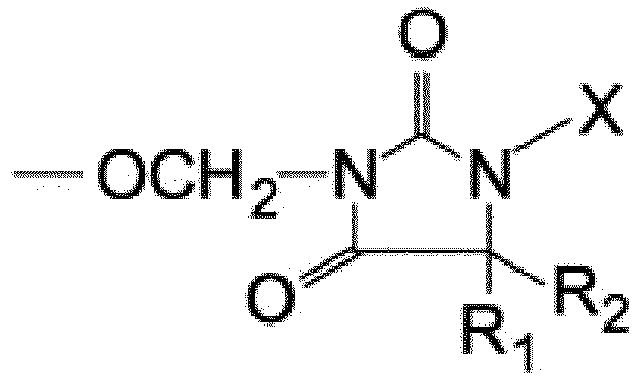
- Biozides methyliertes Polystyren nach Anspruch 2, dadurch gekennzeichnet, dass R
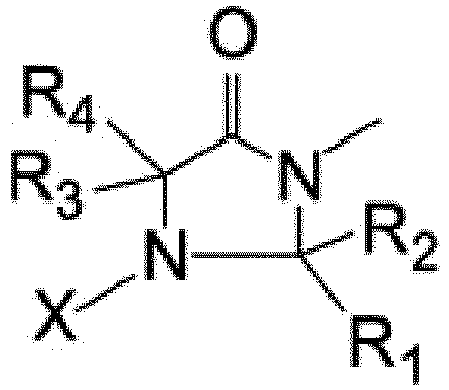
- Biozides methyliertes Polystyren nach Anspruch 2, dadurch gekennzeichnet, dass R

- Biozides methyliertes Polystyren nach Anspruch 2, dadurch gekennzeichnet, dass R

- Biozides methyliertes Polystyren nach Anspruch 2, dadurch gekennzeichnet, dass der Vernetzungsgrad des chlormethylierten Polystyrens von 5 Gew.-% bis 8 Gew.-% beträgt.
- Biozides methyliertes Polystyren nach Anspruch 2, dadurch gekennzeichnet, dass eine Größe der Poren im Bereich von 30 nm bis 70 nm liegt.
- Biozides methyliertes Polystyren nach Anspruch 2, dadurch gekennzeichnet, dass eine Größe des Kügelchens im Bereich von 100 µm bis 1500 µm liegt.
- Biozides methyliertes Polystyren nach Anspruch 2, dadurch gekennzeichnet, dass eine Größe des Kügelchens im Bereich von 200 µm bis 800 µm liegt.
- Biozides methyliertes Polystyren nach Anspruch 2, dadurch gekennzeichnet, dass eine Größe der Poren im Bereich von 10 nm bis 100 nm liegt.
Applications Claiming Priority (2)
| Application Number | Priority Date | Filing Date | Title |
|---|---|---|---|
| US10/287,449 US7687072B2 (en) | 2002-10-31 | 2002-10-31 | Biocidal particles of methylated polystyrene |
| EP03776593A EP1555877A2 (de) | 2002-10-31 | 2003-10-30 | Biozide methylierte polystyrolpartikel |
Related Parent Applications (1)
| Application Number | Title | Priority Date | Filing Date |
|---|---|---|---|
| EP03776593A Division EP1555877A2 (de) | 2002-10-31 | 2003-10-30 | Biozide methylierte polystyrolpartikel |
Publications (2)
| Publication Number | Publication Date |
|---|---|
| EP2823708A1 EP2823708A1 (de) | 2015-01-14 |
| EP2823708B1 true EP2823708B1 (de) | 2017-07-05 |
Family
ID=32175700
Family Applications (3)
| Application Number | Title | Priority Date | Filing Date |
|---|---|---|---|
| EP14186256.5A Expired - Lifetime EP2823708B1 (de) | 2002-10-31 | 2003-10-30 | Biozidpartikel aus methyliertem Polystyren |
| EP10183255A Ceased EP2269456A3 (de) | 2002-10-31 | 2003-10-30 | Biozide Partikel aus methyliertem Polystyrol |
| EP03776593A Ceased EP1555877A2 (de) | 2002-10-31 | 2003-10-30 | Biozide methylierte polystyrolpartikel |
Family Applications After (2)
| Application Number | Title | Priority Date | Filing Date |
|---|---|---|---|
| EP10183255A Ceased EP2269456A3 (de) | 2002-10-31 | 2003-10-30 | Biozide Partikel aus methyliertem Polystyrol |
| EP03776593A Ceased EP1555877A2 (de) | 2002-10-31 | 2003-10-30 | Biozide methylierte polystyrolpartikel |
Country Status (12)
| Country | Link |
|---|---|
| US (3) | US7687072B2 (de) |
| EP (3) | EP2823708B1 (de) |
| JP (2) | JP4652056B2 (de) |
| KR (1) | KR101052733B1 (de) |
| CN (1) | CN100594788C (de) |
| AU (1) | AU2003284358A1 (de) |
| BR (1) | BRPI0315757B1 (de) |
| CA (1) | CA2503377A1 (de) |
| MX (2) | MXPA05004429A (de) |
| PL (1) | PL376707A1 (de) |
| WO (1) | WO2004040978A2 (de) |
| ZA (1) | ZA200503187B (de) |
Families Citing this family (42)
| Publication number | Priority date | Publication date | Assignee | Title |
|---|---|---|---|---|
| WO2006135406A2 (en) * | 2004-08-31 | 2006-12-21 | Triton Systems, Inc. | Functionalized dendritic polymers for the capture and neutralization of biological and chemical agents |
| KR100622714B1 (ko) * | 2004-12-14 | 2006-09-19 | 현대자동차주식회사 | 자동차의 내장재에 적용 가능한 항균 고분자 |
| US20060147847A1 (en) * | 2004-12-30 | 2006-07-06 | Guire Patrick E | Antimicrobial compositions and methods |
| US7541398B2 (en) * | 2005-01-03 | 2009-06-02 | Board Of Regents, The University Of Texas System | Method for transformation of conventional and commercially important polymers into durable and rechargeable antimicrobial polymeric materials |
| WO2006074455A2 (en) * | 2005-01-03 | 2006-07-13 | Board Of Regents, The University Of Texas System | Method for transformation of conventional and commercially important polymers into durable and rechargeable antimicrobial polymeric materials |
| US20060169645A1 (en) * | 2005-01-31 | 2006-08-03 | Hsueh Angela M | Water treatment systems and techniques principally for use on-board aircraft |
| US7666317B2 (en) * | 2005-01-31 | 2010-02-23 | MAC Aerospace Industries, Inc. | Methods and systems for disinfecting potable water supplies |
| US20070062884A1 (en) | 2005-08-11 | 2007-03-22 | Board Of Regents, The University Of Texas System | N-halamines compounds as multifunctional additives |
| US7998886B2 (en) * | 2005-10-24 | 2011-08-16 | Milliken & Company | Hindered amine treated textiles |
| KR100644932B1 (ko) | 2005-11-01 | 2006-11-14 | 재단법인서울대학교산학협력재단 | 항균성 고분자 |
| US8486428B2 (en) * | 2006-03-27 | 2013-07-16 | Board Of Regents, The University Of Texas System | Compositions and methods for making and using acyclic N-halamine-based biocidal polymeric materials and articles |
| WO2008019940A1 (en) * | 2006-08-17 | 2008-02-21 | Unilever Nv | Aqueous media purification method and device comprising a functionalised polyhipe resin |
| EP1889811A1 (de) * | 2006-08-17 | 2008-02-20 | Unilever N.V. | Reinigungsverfahren und -vorrichtung mit funktionalisiertem Polyhipeharz |
| US8211361B2 (en) * | 2007-03-26 | 2012-07-03 | Board Of Regents, The University Of Texas System | N-halamine-based rechargeable biofilm-controlling tubular devices, method of making and using |
| US7858539B2 (en) * | 2007-04-09 | 2010-12-28 | Milliken & Company | Processes for generating halamine compounds on textile substrates to produce antimicrobial finish |
| FR2917402A1 (fr) * | 2007-06-18 | 2008-12-19 | Gemac Sa | Utilisation de monolithes pour la depollution de l'eau |
| EP2201069A2 (de) * | 2007-09-19 | 2010-06-30 | Board of Regents, The University of Texas System | Farbmittelbasierte n-halaminzusammensetzungen, ihr herstellungsverfahren und ihre verwendung |
| US8567612B2 (en) * | 2008-04-15 | 2013-10-29 | Nanoh2O, Inc. | Hybrid TFC RO membranes with nitrogen additives |
| TW201105369A (en) * | 2009-05-29 | 2011-02-16 | Alcon Res Ltd | N-halamine formulations with enhanced antimicrobial activity |
| US8535654B2 (en) * | 2009-09-04 | 2013-09-17 | Auburn University | Disinfecting and detoxifying meta-aramid particles |
| CA2776248C (en) * | 2009-10-02 | 2016-06-14 | Research In Motion Limited | Determining establishment causes for emergency sessions |
| US9028807B2 (en) | 2012-04-05 | 2015-05-12 | Ues, Inc. | Synthesis models for antimicrobial agents via the halogenation of organic/inorganic composites |
| CA2869634C (en) * | 2012-05-17 | 2018-11-27 | University Of Manitoba | Biocidal compounds and methods for using same |
| JP6184670B2 (ja) * | 2012-08-31 | 2017-08-23 | 株式会社リブドゥコーポレーション | 吸収体、および、これを用いた吸収性物品 |
| EP3186333A2 (de) * | 2014-08-28 | 2017-07-05 | Zhengbing Cao | Antimikrobielle zusammensetzungen und verfahren mit neuartigem polymerbindungssystem |
| CN107072194A (zh) * | 2014-10-14 | 2017-08-18 | 哈洛资源公司 | 包含纳米颗粒的聚合杂化物颗粒和用途 |
| US10178866B2 (en) * | 2014-10-21 | 2019-01-15 | Auburn University | N-halamine containing fibrous compositions and uses thereof |
| CN104587979B (zh) * | 2014-12-31 | 2016-10-05 | 珠海健帆生物科技股份有限公司 | 一种高效血液净化吸附剂及其制备方法 |
| US10899718B2 (en) * | 2016-09-02 | 2021-01-26 | Bridgestone Corporation | Polymers functionalized with N-protected hydantoin compounds |
| CN107125263B (zh) * | 2017-03-20 | 2020-05-08 | 浙江工商大学 | 一种复合杀菌微球及其制备方法和应用 |
| CN107011467B (zh) * | 2017-03-20 | 2019-04-16 | 浙江工商大学 | 一种功能化杀菌微球及其制备方法和应用 |
| CN208250021U (zh) * | 2017-11-16 | 2018-12-18 | 杭州泽沃贸易有限公司 | 净化滤芯及净水杯 |
| CA3089595A1 (en) | 2018-01-26 | 2019-08-01 | Strix (Usa), Inc. | Liquid container lid and apparatus and methods of use |
| JP2020029446A (ja) * | 2018-08-24 | 2020-02-27 | 高知県公立大学法人 | ポリスリレンを主骨格とする微細粒子を利用した藻の増殖を抑制する方法 |
| CN111072707B (zh) * | 2019-12-27 | 2023-04-25 | 山东科技大学 | 一种多官能团杀菌化合物及其制备方法和应用 |
| CN113968604A (zh) | 2020-07-24 | 2022-01-25 | 施特里克斯有限公司 | 用于处理供动物食用的水的系统和方法 |
| CN114644384A (zh) | 2020-12-18 | 2022-06-21 | 施特里克斯有限公司 | 用于对水进行消毒的系统 |
| WO2022129957A1 (en) | 2020-12-18 | 2022-06-23 | Strix Limited | Method and system for disinfecting water for animal consumption |
| WO2022129956A1 (en) | 2020-12-18 | 2022-06-23 | Strix Limited | Method of disinfecting water |
| CN114644383A (zh) | 2020-12-18 | 2022-06-21 | 施特里克斯有限公司 | 用于对水进行消毒的方法 |
| EP4263441A1 (de) * | 2020-12-18 | 2023-10-25 | Auburn University | Verwendung von polymerperlen zur entfernung von oxidativen verbindungen aus flüssigkeiten |
| CN115888834B (zh) * | 2022-10-31 | 2024-07-19 | 南京邮电大学 | 一种接枝n-卤胺的金属有机框架光催化杀菌剂及其制备方法与应用 |
Family Cites Families (45)
| Publication number | Priority date | Publication date | Assignee | Title |
|---|---|---|---|---|
| JP718008A (de) | ||||
| US2225384A (en) * | 1940-12-17 | Printing colors and process of | ||
| US3519608A (en) * | 1965-01-07 | 1970-07-07 | Rohm & Haas | Unsaturated - acyloxyalkyl - 2 - oxazolidinones,polymers thereof and methods of making the monomers and polymers |
| US4000293A (en) * | 1974-12-18 | 1976-12-28 | Interx Research Corporation | Method of inhibiting bacterial growth with certain selected 3-chloro-2-oxazolidinones |
| US3931213A (en) * | 1974-12-18 | 1976-01-06 | Interx Research Corporation | 3-Chloro-2-oxazolidinones |
| US4012565A (en) * | 1975-05-30 | 1977-03-15 | The United States Of America As Represented By The Secretary Of Agriculture | Photodegradable polyolefin composition containing an N-halo hydantoin |
| US3994904A (en) * | 1976-03-08 | 1976-11-30 | Miles Laboratories, Inc. | 3-Substituted -5-phenyl-5-pyridyl hydantoins |
| US4349646A (en) * | 1980-01-31 | 1982-09-14 | Research Foundation Of State University Of New York | Water insoluble disinfectant composition |
| US4351884A (en) | 1980-09-02 | 1982-09-28 | Mobil Oil Corporation | Shaped articles from poly(p-methylstyrene) blends |
| US4420590A (en) * | 1981-04-06 | 1983-12-13 | Halex, Inc. | Bacteriocidal resins and disinfection of water therewith |
| NL8302941A (nl) * | 1983-08-22 | 1985-03-18 | Legrand Hubrecht Levinus | Werkwijze en inrichting voor het van elkaar scheiden van de bestanddelen van een mengsel van olie, water en vuil. |
| US4478984A (en) * | 1983-09-23 | 1984-10-23 | Smithkline Beckman Corporation | Synthesis of benzhydrylamine resins |
| JPS6088008A (ja) * | 1983-10-20 | 1985-05-17 | Asahi Chem Ind Co Ltd | キレ−ト樹脂の製法 |
| US4767542A (en) * | 1986-03-31 | 1988-08-30 | Ppg Industries, Inc. | Method for disinfecting aqueous medium with N,N'-dihalo-2-imidazolidinones |
| US4681948A (en) * | 1986-03-31 | 1987-07-21 | Ppg Industries, Inc. | N,N'dihalo-2-imidazolidinones |
| US4843130A (en) * | 1987-04-17 | 1989-06-27 | Otsuka Kagaku Kabushiki Kaisha | Antibacterial polymer |
| US4955392A (en) * | 1987-09-08 | 1990-09-11 | Reuben Sorkin | Condom of thermoplastic elastomer and polyolefin film |
| US4842932A (en) * | 1988-03-08 | 1989-06-27 | Basf Corporation | Fiber-containing yarn possessing antimicrobial activity |
| US5126057A (en) * | 1990-01-22 | 1992-06-30 | Auburn Research Foundation | Disinfecting with N,N'-dihaloimidazolidin-4-ones |
| US5057612A (en) * | 1990-01-22 | 1991-10-15 | Auburn Research Foundation | N,n'-dihaloimidazolidin-4-ones |
| US5004760A (en) * | 1990-02-16 | 1991-04-02 | The Dow Chemical Company | Biocidal foams |
| JP2872749B2 (ja) * | 1990-05-11 | 1999-03-24 | 日本たばこ産業株式会社 | オキサゾリドン誘導体からなる単量体、重合体および活性水素化合物吸着剤 |
| US5284157A (en) * | 1991-07-26 | 1994-02-08 | Ortho Pharmaceutical Corporation | Elastomeric film products with improved chemical resistance |
| CA2131289C (en) * | 1992-03-03 | 2003-10-14 | Reginald Keith Whiteley | A disinfecting composition |
| US5338859A (en) * | 1993-02-12 | 1994-08-16 | Hoechst Celanese Corporation | Process for the production of calcium salts of hydantoic acids |
| CA2158170C (en) | 1993-03-12 | 2009-01-20 | Shelby D. Worley | Novel polymeric cyclic n-halamine biocidal compounds |
| US6294185B1 (en) * | 1993-03-12 | 2001-09-25 | Auburn University | Monomeric and polymeric cyclic amine and N-halamine compounds |
| JPH0718008A (ja) * | 1993-07-05 | 1995-01-20 | Res Inst For Prod Dev | 微小真球状樹脂の製造法 |
| US5683709A (en) * | 1994-05-05 | 1997-11-04 | Ciba Vision Corporation | Poly(benzalkonium salt) as an anti-microbial agent for aqueous drug compositions |
| US6335358B1 (en) * | 1995-04-12 | 2002-01-01 | President And Fellows Of Harvard College | Lactacystin analogs |
| KR0174066B1 (ko) * | 1995-08-14 | 1999-04-01 | 김상응 | 항균방취 섬유용 폴리에스테르의 제조방법 |
| US5785963A (en) * | 1996-03-27 | 1998-07-28 | Lonza, Inc. | Polymeric hydantoin quaternary compounds, methods of making |
| US5882357A (en) * | 1996-09-13 | 1999-03-16 | The Regents Of The University Of California | Durable and regenerable microbiocidal textiles |
| US5981668A (en) * | 1996-10-31 | 1999-11-09 | Sanyo Chemical Industries, Ltd. | Anti-bacterial water absorbing agent and anti-bacterial water absorbent material |
| US5992351A (en) | 1997-04-03 | 1999-11-30 | The Clorox Company | Clumpable animal litter with improved odor control |
| KR100227100B1 (ko) * | 1997-09-02 | 1999-10-15 | 한형수 | T/r 혼방 및 교직물의 발수, 발유, 방오 및 항균 가공방법 |
| US5902818A (en) * | 1997-12-09 | 1999-05-11 | Auburn University | Surface active N-halamine compounds |
| JP3026080B2 (ja) | 1998-07-03 | 2000-03-27 | 三洋化成工業株式会社 | 消臭性/抗菌性吸水剤、その製法および吸収性物品 |
| SE9902396L (sv) | 1999-06-23 | 2000-12-24 | Bjoern Lindberg | Nytt förfarande och anordning för att utöva förfarandet |
| US6482756B2 (en) | 1999-07-27 | 2002-11-19 | Milliken & Company | Method of retaining antimicrobial properties on a halamine-treated textile substrate while simultaneously reducing deleterious odor and skin irritation effects |
| AU2001266939A1 (en) | 2000-07-13 | 2002-01-30 | Auburn University | Biocidal polyamides and methods |
| AU2001296765A1 (en) * | 2000-10-10 | 2002-04-22 | Auburn University | Use of n-halamine biocidal polymer for odor control |
| US6823530B2 (en) * | 2000-10-27 | 2004-11-30 | Kimberly-Clark Worldwide, Inc. | Antimicrobial treatment for swimwear |
| US6548054B2 (en) * | 2001-09-06 | 2003-04-15 | Auburn University | Biocidal polystyrene hydantoin particles |
| JP2003306482A (ja) * | 2002-04-15 | 2003-10-28 | Japan Science & Technology Corp | ポリマー固定化固相試薬物質 |
-
2002
- 2002-10-31 US US10/287,449 patent/US7687072B2/en not_active Expired - Fee Related
-
2003
- 2003-10-30 MX MXPA05004429A patent/MXPA05004429A/es active IP Right Grant
- 2003-10-30 PL PL376707A patent/PL376707A1/pl not_active Application Discontinuation
- 2003-10-30 BR BRPI0315757-1A patent/BRPI0315757B1/pt not_active IP Right Cessation
- 2003-10-30 JP JP2004550178A patent/JP4652056B2/ja not_active Expired - Fee Related
- 2003-10-30 WO PCT/US2003/034298 patent/WO2004040978A2/en not_active Ceased
- 2003-10-30 EP EP14186256.5A patent/EP2823708B1/de not_active Expired - Lifetime
- 2003-10-30 MX MX2009012436A patent/MX339515B/es unknown
- 2003-10-30 AU AU2003284358A patent/AU2003284358A1/en not_active Abandoned
- 2003-10-30 CN CN200380102397A patent/CN100594788C/zh not_active Expired - Lifetime
- 2003-10-30 EP EP10183255A patent/EP2269456A3/de not_active Ceased
- 2003-10-30 KR KR1020057007615A patent/KR101052733B1/ko not_active Expired - Fee Related
- 2003-10-30 EP EP03776593A patent/EP1555877A2/de not_active Ceased
- 2003-10-30 CA CA002503377A patent/CA2503377A1/en not_active Abandoned
-
2005
- 2005-04-20 ZA ZA200503187A patent/ZA200503187B/en unknown
-
2009
- 2009-10-05 US US12/573,336 patent/US20100029797A1/en not_active Abandoned
- 2009-11-05 JP JP2009254474A patent/JP2010018820A/ja not_active Withdrawn
-
2011
- 2011-10-25 US US13/280,529 patent/US8598246B2/en not_active Expired - Fee Related
Also Published As
| Publication number | Publication date |
|---|---|
| AU2003284358A1 (en) | 2004-06-07 |
| MXPA05004429A (es) | 2005-07-26 |
| JP2006504850A (ja) | 2006-02-09 |
| JP2010018820A (ja) | 2010-01-28 |
| CA2503377A1 (en) | 2004-05-21 |
| WO2004040978A3 (en) | 2004-08-19 |
| AU2003284358A8 (en) | 2004-06-07 |
| CN1708226A (zh) | 2005-12-14 |
| WO2004040978A2 (en) | 2004-05-21 |
| US20100029797A1 (en) | 2010-02-04 |
| KR20050083876A (ko) | 2005-08-26 |
| KR101052733B1 (ko) | 2011-07-29 |
| EP1555877A2 (de) | 2005-07-27 |
| HK1086719A1 (en) | 2006-09-29 |
| MX339515B (es) | 2016-05-30 |
| EP2269456A2 (de) | 2011-01-05 |
| US20040086480A1 (en) | 2004-05-06 |
| EP2269456A3 (de) | 2012-02-15 |
| PL376707A1 (pl) | 2006-01-09 |
| JP4652056B2 (ja) | 2011-03-16 |
| ZA200503187B (en) | 2006-06-28 |
| BRPI0315757B1 (pt) | 2015-06-30 |
| CN100594788C (zh) | 2010-03-24 |
| US8598246B2 (en) | 2013-12-03 |
| EP2823708A1 (de) | 2015-01-14 |
| BR0315757A (pt) | 2005-09-06 |
| US7687072B2 (en) | 2010-03-30 |
| US20120035284A1 (en) | 2012-02-09 |
Similar Documents
| Publication | Publication Date | Title |
|---|---|---|
| EP2823708B1 (de) | Biozidpartikel aus methyliertem Polystyren | |
| US6852312B2 (en) | Biocidal polystyrene hydantoin particles | |
| US5104649A (en) | Surface-functionalized biocidal polymers | |
| JP2005529956A (ja) | 殺菌被覆および殺菌材料で使用する複素環式ハラミン置換シロキサン | |
| AU6404694A (en) | Novel polymeric cyclic n-halamine biocidal compounds | |
| JP2003267953A (ja) | ビス型第四アンモニウム塩化合物及び抗菌剤 | |
| HK1086719B (en) | Biocidal particles of methylated polystyrene | |
| HK1123159B (en) | Highly crosslinked biocidal polystyrene hydantoin particles |
Legal Events
| Date | Code | Title | Description |
|---|---|---|---|
| 17P | Request for examination filed |
Effective date: 20140924 |
|
| AC | Divisional application: reference to earlier application |
Ref document number: 1555877 Country of ref document: EP Kind code of ref document: P |
|
| AK | Designated contracting states |
Kind code of ref document: A1 Designated state(s): AT BE BG CH CY CZ DE DK EE ES FI FR GB GR HU IE IT LI LU MC NL PT RO SE SI SK TR |
|
| PUAI | Public reference made under article 153(3) epc to a published international application that has entered the european phase |
Free format text: ORIGINAL CODE: 0009012 |
|
| R17P | Request for examination filed (corrected) |
Effective date: 20150714 |
|
| RBV | Designated contracting states (corrected) |
Designated state(s): AT BE BG CH CY CZ DE DK EE ES FI FR GB GR HU IE IT LI LU MC NL PT RO SE SI SK TR |
|
| 17Q | First examination report despatched |
Effective date: 20151201 |
|
| GRAP | Despatch of communication of intention to grant a patent |
Free format text: ORIGINAL CODE: EPIDOSNIGR1 |
|
| INTG | Intention to grant announced |
Effective date: 20170127 |
|
| GRAS | Grant fee paid |
Free format text: ORIGINAL CODE: EPIDOSNIGR3 |
|
| GRAA | (expected) grant |
Free format text: ORIGINAL CODE: 0009210 |
|
| AC | Divisional application: reference to earlier application |
Ref document number: 1555877 Country of ref document: EP Kind code of ref document: P |
|
| AK | Designated contracting states |
Kind code of ref document: B1 Designated state(s): AT BE BG CH CY CZ DE DK EE ES FI FR GB GR HU IE IT LI LU MC NL PT RO SE SI SK TR |
|
| REG | Reference to a national code |
Ref country code: GB Ref legal event code: FG4D |
|
| REG | Reference to a national code |
Ref country code: CH Ref legal event code: EP |
|
| REG | Reference to a national code |
Ref country code: AT Ref legal event code: REF Ref document number: 905913 Country of ref document: AT Kind code of ref document: T Effective date: 20170715 |
|
| REG | Reference to a national code |
Ref country code: IE Ref legal event code: FG4D |
|
| REG | Reference to a national code |
Ref country code: DE Ref legal event code: R096 Ref document number: 60350396 Country of ref document: DE |
|
| REG | Reference to a national code |
Ref country code: NL Ref legal event code: MP Effective date: 20170705 |
|
| PG25 | Lapsed in a contracting state [announced via postgrant information from national office to epo] |
Ref country code: SE Free format text: LAPSE BECAUSE OF FAILURE TO SUBMIT A TRANSLATION OF THE DESCRIPTION OR TO PAY THE FEE WITHIN THE PRESCRIBED TIME-LIMIT Effective date: 20170705 Ref country code: NL Free format text: LAPSE BECAUSE OF FAILURE TO SUBMIT A TRANSLATION OF THE DESCRIPTION OR TO PAY THE FEE WITHIN THE PRESCRIBED TIME-LIMIT Effective date: 20170705 Ref country code: FI Free format text: LAPSE BECAUSE OF FAILURE TO SUBMIT A TRANSLATION OF THE DESCRIPTION OR TO PAY THE FEE WITHIN THE PRESCRIBED TIME-LIMIT Effective date: 20170705 |
|
| PGFP | Annual fee paid to national office [announced via postgrant information from national office to epo] |
Ref country code: DE Payment date: 20171030 Year of fee payment: 15 |
|
| PG25 | Lapsed in a contracting state [announced via postgrant information from national office to epo] |
Ref country code: GR Free format text: LAPSE BECAUSE OF FAILURE TO SUBMIT A TRANSLATION OF THE DESCRIPTION OR TO PAY THE FEE WITHIN THE PRESCRIBED TIME-LIMIT Effective date: 20171006 Ref country code: BG Free format text: LAPSE BECAUSE OF FAILURE TO SUBMIT A TRANSLATION OF THE DESCRIPTION OR TO PAY THE FEE WITHIN THE PRESCRIBED TIME-LIMIT Effective date: 20171005 Ref country code: ES Free format text: LAPSE BECAUSE OF FAILURE TO SUBMIT A TRANSLATION OF THE DESCRIPTION OR TO PAY THE FEE WITHIN THE PRESCRIBED TIME-LIMIT Effective date: 20170705 |
|
| PGFP | Annual fee paid to national office [announced via postgrant information from national office to epo] |
Ref country code: AT Payment date: 20171027 Year of fee payment: 15 |
|
| REG | Reference to a national code |
Ref country code: DE Ref legal event code: R097 Ref document number: 60350396 Country of ref document: DE |
|
| PG25 | Lapsed in a contracting state [announced via postgrant information from national office to epo] |
Ref country code: CZ Free format text: LAPSE BECAUSE OF FAILURE TO SUBMIT A TRANSLATION OF THE DESCRIPTION OR TO PAY THE FEE WITHIN THE PRESCRIBED TIME-LIMIT Effective date: 20170705 Ref country code: DK Free format text: LAPSE BECAUSE OF FAILURE TO SUBMIT A TRANSLATION OF THE DESCRIPTION OR TO PAY THE FEE WITHIN THE PRESCRIBED TIME-LIMIT Effective date: 20170705 Ref country code: RO Free format text: LAPSE BECAUSE OF FAILURE TO SUBMIT A TRANSLATION OF THE DESCRIPTION OR TO PAY THE FEE WITHIN THE PRESCRIBED TIME-LIMIT Effective date: 20170705 |
|
| PLBE | No opposition filed within time limit |
Free format text: ORIGINAL CODE: 0009261 |
|
| STAA | Information on the status of an ep patent application or granted ep patent |
Free format text: STATUS: NO OPPOSITION FILED WITHIN TIME LIMIT |
|
| PG25 | Lapsed in a contracting state [announced via postgrant information from national office to epo] |
Ref country code: MC Free format text: LAPSE BECAUSE OF FAILURE TO SUBMIT A TRANSLATION OF THE DESCRIPTION OR TO PAY THE FEE WITHIN THE PRESCRIBED TIME-LIMIT Effective date: 20170705 Ref country code: IT Free format text: LAPSE BECAUSE OF FAILURE TO SUBMIT A TRANSLATION OF THE DESCRIPTION OR TO PAY THE FEE WITHIN THE PRESCRIBED TIME-LIMIT Effective date: 20170705 Ref country code: EE Free format text: LAPSE BECAUSE OF FAILURE TO SUBMIT A TRANSLATION OF THE DESCRIPTION OR TO PAY THE FEE WITHIN THE PRESCRIBED TIME-LIMIT Effective date: 20170705 Ref country code: SK Free format text: LAPSE BECAUSE OF FAILURE TO SUBMIT A TRANSLATION OF THE DESCRIPTION OR TO PAY THE FEE WITHIN THE PRESCRIBED TIME-LIMIT Effective date: 20170705 |
|
| REG | Reference to a national code |
Ref country code: CH Ref legal event code: PL |
|
| 26N | No opposition filed |
Effective date: 20180406 |
|
| GBPC | Gb: european patent ceased through non-payment of renewal fee |
Effective date: 20171030 |
|
| REG | Reference to a national code |
Ref country code: IE Ref legal event code: MM4A |
|
| REG | Reference to a national code |
Ref country code: FR Ref legal event code: ST Effective date: 20180629 |
|
| PG25 | Lapsed in a contracting state [announced via postgrant information from national office to epo] |
Ref country code: LU Free format text: LAPSE BECAUSE OF NON-PAYMENT OF DUE FEES Effective date: 20171030 Ref country code: CH Free format text: LAPSE BECAUSE OF NON-PAYMENT OF DUE FEES Effective date: 20171031 Ref country code: LI Free format text: LAPSE BECAUSE OF NON-PAYMENT OF DUE FEES Effective date: 20171031 Ref country code: GB Free format text: LAPSE BECAUSE OF NON-PAYMENT OF DUE FEES Effective date: 20171030 |
|
| REG | Reference to a national code |
Ref country code: BE Ref legal event code: MM Effective date: 20171031 |
|
| PG25 | Lapsed in a contracting state [announced via postgrant information from national office to epo] |
Ref country code: BE Free format text: LAPSE BECAUSE OF NON-PAYMENT OF DUE FEES Effective date: 20171031 Ref country code: FR Free format text: LAPSE BECAUSE OF NON-PAYMENT OF DUE FEES Effective date: 20171031 Ref country code: SI Free format text: LAPSE BECAUSE OF FAILURE TO SUBMIT A TRANSLATION OF THE DESCRIPTION OR TO PAY THE FEE WITHIN THE PRESCRIBED TIME-LIMIT Effective date: 20170705 |
|
| PG25 | Lapsed in a contracting state [announced via postgrant information from national office to epo] |
Ref country code: IE Free format text: LAPSE BECAUSE OF NON-PAYMENT OF DUE FEES Effective date: 20171030 |
|
| REG | Reference to a national code |
Ref country code: AT Ref legal event code: UEP Ref document number: 905913 Country of ref document: AT Kind code of ref document: T Effective date: 20170705 |
|
| REG | Reference to a national code |
Ref country code: DE Ref legal event code: R119 Ref document number: 60350396 Country of ref document: DE |
|
| REG | Reference to a national code |
Ref country code: AT Ref legal event code: MM01 Ref document number: 905913 Country of ref document: AT Kind code of ref document: T Effective date: 20181030 |
|
| PG25 | Lapsed in a contracting state [announced via postgrant information from national office to epo] |
Ref country code: HU Free format text: LAPSE BECAUSE OF FAILURE TO SUBMIT A TRANSLATION OF THE DESCRIPTION OR TO PAY THE FEE WITHIN THE PRESCRIBED TIME-LIMIT; INVALID AB INITIO Effective date: 20031030 |
|
| PG25 | Lapsed in a contracting state [announced via postgrant information from national office to epo] |
Ref country code: DE Free format text: LAPSE BECAUSE OF NON-PAYMENT OF DUE FEES Effective date: 20190501 |
|
| PG25 | Lapsed in a contracting state [announced via postgrant information from national office to epo] |
Ref country code: AT Free format text: LAPSE BECAUSE OF NON-PAYMENT OF DUE FEES Effective date: 20181030 Ref country code: CY Free format text: LAPSE BECAUSE OF FAILURE TO SUBMIT A TRANSLATION OF THE DESCRIPTION OR TO PAY THE FEE WITHIN THE PRESCRIBED TIME-LIMIT Effective date: 20170705 |
|
| PG25 | Lapsed in a contracting state [announced via postgrant information from national office to epo] |
Ref country code: TR Free format text: LAPSE BECAUSE OF FAILURE TO SUBMIT A TRANSLATION OF THE DESCRIPTION OR TO PAY THE FEE WITHIN THE PRESCRIBED TIME-LIMIT Effective date: 20170705 |
|
| PG25 | Lapsed in a contracting state [announced via postgrant information from national office to epo] |
Ref country code: PT Free format text: LAPSE BECAUSE OF FAILURE TO SUBMIT A TRANSLATION OF THE DESCRIPTION OR TO PAY THE FEE WITHIN THE PRESCRIBED TIME-LIMIT Effective date: 20170705 |