EP2824964A1 - Procédé de régulation de charge pour système de communication sans fil et système de communication sans fil - Google Patents
Procédé de régulation de charge pour système de communication sans fil et système de communication sans fil Download PDFInfo
- Publication number
- EP2824964A1 EP2824964A1 EP12873824.2A EP12873824A EP2824964A1 EP 2824964 A1 EP2824964 A1 EP 2824964A1 EP 12873824 A EP12873824 A EP 12873824A EP 2824964 A1 EP2824964 A1 EP 2824964A1
- Authority
- EP
- European Patent Office
- Prior art keywords
- communication system
- message
- wireless communication
- load
- notification message
- Prior art date
- Legal status (The legal status is an assumption and is not a legal conclusion. Google has not performed a legal analysis and makes no representation as to the accuracy of the status listed.)
- Withdrawn
Links
- 238000004891 communication Methods 0.000 title claims abstract description 476
- 238000000034 method Methods 0.000 title claims abstract description 40
- 238000012545 processing Methods 0.000 claims description 32
- 230000007774 longterm Effects 0.000 claims description 6
- 230000003247 decreasing effect Effects 0.000 abstract description 4
- 230000011664 signaling Effects 0.000 description 16
- 230000000694 effects Effects 0.000 description 10
- 230000008569 process Effects 0.000 description 10
- 238000010586 diagram Methods 0.000 description 9
- 230000006870 function Effects 0.000 description 6
- 230000008878 coupling Effects 0.000 description 4
- 238000010168 coupling process Methods 0.000 description 4
- 238000005859 coupling reaction Methods 0.000 description 4
- 230000007423 decrease Effects 0.000 description 4
- 238000010295 mobile communication Methods 0.000 description 4
- 230000005540 biological transmission Effects 0.000 description 3
- 230000004044 response Effects 0.000 description 3
- 102000018059 CS domains Human genes 0.000 description 2
- 108050007176 CS domains Proteins 0.000 description 2
- 230000004075 alteration Effects 0.000 description 2
- 238000005516 engineering process Methods 0.000 description 2
- 230000007246 mechanism Effects 0.000 description 2
- 238000012986 modification Methods 0.000 description 2
- 230000004048 modification Effects 0.000 description 2
- 238000012546 transfer Methods 0.000 description 2
- 238000013475 authorization Methods 0.000 description 1
- 230000008030 elimination Effects 0.000 description 1
- 238000003379 elimination reaction Methods 0.000 description 1
- 230000003287 optical effect Effects 0.000 description 1
- 238000004806 packaging method and process Methods 0.000 description 1
- 238000003672 processing method Methods 0.000 description 1
- 238000011084 recovery Methods 0.000 description 1
Images

Classifications
-
- H—ELECTRICITY
- H04—ELECTRIC COMMUNICATION TECHNIQUE
- H04W—WIRELESS COMMUNICATION NETWORKS
- H04W28/00—Network traffic management; Network resource management
- H04W28/02—Traffic management, e.g. flow control or congestion control
- H04W28/0289—Congestion control
-
- H—ELECTRICITY
- H04—ELECTRIC COMMUNICATION TECHNIQUE
- H04L—TRANSMISSION OF DIGITAL INFORMATION, e.g. TELEGRAPHIC COMMUNICATION
- H04L47/00—Traffic control in data switching networks
- H04L47/10—Flow control; Congestion control
- H04L47/12—Avoiding congestion; Recovering from congestion
- H04L47/122—Avoiding congestion; Recovering from congestion by diverting traffic away from congested entities
-
- H—ELECTRICITY
- H04—ELECTRIC COMMUNICATION TECHNIQUE
- H04W—WIRELESS COMMUNICATION NETWORKS
- H04W28/00—Network traffic management; Network resource management
- H04W28/02—Traffic management, e.g. flow control or congestion control
- H04W28/10—Flow control between communication endpoints
- H04W28/12—Flow control between communication endpoints using signalling between network elements
-
- H—ELECTRICITY
- H04—ELECTRIC COMMUNICATION TECHNIQUE
- H04W—WIRELESS COMMUNICATION NETWORKS
- H04W72/00—Local resource management
- H04W72/50—Allocation or scheduling criteria for wireless resources
- H04W72/56—Allocation or scheduling criteria for wireless resources based on priority criteria
Definitions
- the present invention relates to a wireless communication technology field, and particularly, to a load control method and device for a wireless communication system.
- 3GPP The 3rd Generation Partnership Project, the 3rd generation partnership project
- LTE Long Term Evolution, long term evolution
- a new mobile communication network architecture is defined under the guidance of the LTE, and the architecture only reserves a PS (Packet Switched, packet switched) domain, so the architecture is called as an EPS (Evolved Packet System, evolved packet system) or an SAE (System Architecture Evolution, system architecture evolution).
- PS Packet Switched, packet switched
- SAE System Architecture Evolution, system architecture evolution
- An architecture diagram of an LTE system is shown in Fig. 1 .
- An E-UTRAN is an evolved eNB (base station), and is responsible for modulation and demodulation of data.
- a serving gateway (Serving Gateway) and a PDN gateway (Public Data Network Gateway) are evolved gateways, and are responsible for forwarding a data packet.
- An MME Mobility Management Entity, mobility management entity
- An evolved network does not provide a voice function of traditional circuit switch, and only provides a high rate data bearing service.
- voice service data are generally controlled by an IMS (IP Multimedia Subsystem, IP multimedia subsystem), so in the SAE/LTE a voice service is generally called as a VoIP voice service.
- a traditional voice service is generally borne on a network based on circuit switch. Deployment of the LTE in an initial phase is hotspot coverage, but a network providing a circuit domain voice service, for example, a GSM (Global System of Mobile communication, global system of mobile communication)/ a UMTS (Universal Mobile Telecommunications System, universal mobile telecommunications system) or a CDMA (Code Division Multiple Access, code division multiple access) 2000 1x (first generation mobile communication system for short) may be regarded as a full coverage to some extent.
- GSM Global System of Mobile communication, global system of mobile communication
- UMTS Universal Mobile Telecommunications System, universal mobile telecommunications system
- CDMA Code Division Multiple Access, code division multiple access 2000 1x
- the IMS may not be deployed, and a high rate data service is mainly provided. Accordingly, a mechanism falling back to a CS (Circuit Switch, circuit switch) domain from the LTE system to support a voice call is needed.
- CS Circuit Switch, circuit switch
- many operators of a 1x network desire that the network is gradually transited to the LTE system and a service of the CS domain may be transferred to a terminal when the terminal is served in the LTE network.
- CSFB Circuit Switch, circuit switch
- SMS Short Message Service, short message service
- a mechanism is needed to reduce the congestion, namely when user signaling and the SMS borne by a control plane reach a capacity threshold of a control plane system, the network may selectively discard the SMS or discard some unessential SMS to ensure a success rate of user signaling transmission. Or when a priority of some SMS is very high, the network may discard or delay transmission of some unessential user signaling.
- the present operators simultaneously own the LTE and the CDMA networks or the LTE and the UMTS/GSM networks, it is needed to simultaneously consider two or more access networks, rather than merely the LTE network for the signaling congestion.
- a 1x CS IWS can not know the current load condition of the MME and/or the eNB and continuously sends a 1x SMS message to the MME through an S102 interface; and because the MME does not analyze a 1x air interface message packaged by the S102 interface, and can not determine packaged contents of the 1x air interface message, it can not select and discard certain 1x air interface signaling.
- the E-UTRAN can not differently treat the 1x air interface signaling. For the same reason, when a 1x network is congested, the current MME can not determine whether the 1x network is congested, and still sends a 1x message to a 1x system through the IWS, thus further increasing the congestion of the 1x system.
- a method for performing load control between the CDMA2000 network and the LTE network in the prior art includes: two cells, namely "activity type (Activity Type)" and "activity priority (Activity Priority)", are carried in an A21-1x Air Interface Signaling message used for packaging a CDMA2000 air interface message.
- the above-mentioned "activity type” may be used for distinguishing a short message or a voice call, and the above-mentioned "activity priority” is extended to an IWS to MME direction and used for indicating the priority of the packaged 1x message.
- the MME determines how to process the 1x air interface message transmitted by the 1xCS IWS according to "activity type” and "activity priority” information.
- the above-mentioned method is a priority processing method of UE granularity.
- the MME receives the type and the priority of the 1x message from the IWS, and may determine how to process the 1x message according to this information, for example, to delay processing the 1x message or to discard the 1x message.
- the inventor discovers that the method for performing load control between the CDMA2000 network and the LTE network in the prior art at least has the following problem: the method is based on the UE granularity, and the MME needs to identify the activity types and the activity priorities of all the 1x messages from the IWS, so that coupling degree of the LTE network and the CDMA network is increased.
- the MME needs additional process resources for analyzing and processing the 1x message, so that the processing complexity of the MME is increased.
- the MME has already been in a high load state, it still needs to continuously receive and process the message from the IWS, and the load of the MME is further increased.
- Embodiments of the present invention provide a load control method and device for a wireless communication system, to realize effective control on a load of the wireless communication system.
- a load control method for a wireless communication system includes:
- a load control method for a wireless communication system includes:
- a wireless communication system includes:
- a wireless communication system includes:
- the first communication system sends the load notification message to the second communication system, so that when the first communication system is overloaded, the second communication system stops sending the message to the first communication system or sends the message of the specific priority and/or the specific type to the first communication system according to the indication information in the load notification message.
- messages sent to the first communication system are decreased, the load of the first communication system is reduced, and the robustness of the first communication system is enhanced.
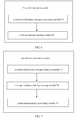
- An embodiment provides a load control method for a wireless communication system, of which a specific processing flow is shown in Fig. 2 , including the following processing steps.
- Step 21 when a load of a first communication system is higher than a set threshold value, the first communication system sends a load notification message to a second communication system.
- the MME in the LTE system when the load of an MME or an E-UTRAN or an air interface in the LTE system is greater than the set threshold value, the MME in the LTE system sends the load notification message carrying congestion state information and congestion control information to a network interoperation entity in the wireless communication system based on the circuit domain, wherein the congestion state information is used for indicating that the LTE system is overloaded, and the congestion control information is used for indicating that it is stopped to send a message to the LTE system or used for indicating indication information that a message of a specific priority and/or a specific type is sent to the LTE system.
- the first communication system is a wireless communication system based on a circuit domain and the second communication system is an LTE system
- a network interoperation entity in the wireless communication system based on the circuit domain sends the load notification message carrying congestion state information and congestion control information to an MME in the LTE system, wherein the congestion state information is used for indicating that the wireless communication system based on the circuit domain is overloaded, and the congestion control information is used for indicating that it is stopped to send a message to the wireless communication system based on the circuit domain or used for indicating that a message of a specific priority and/or a specific type is sent to the wireless communication system based on the circuit domain.
- the above-mentioned wireless communication system based on the circuit domain may be a CDMA 2000 or a GSM/UMTS system
- the network interoperation entity in the wireless communication system based on the circuit domain may be a 1xCS IWS of the CDMA2000 system or an MSC (Mobile Switching Center, mobile switching center) of the GSM/UMTS system.
- the MME in the LTE system sends the load notification message to an eAN (evolved access network) in the CDMA HRPD communication system, wherein the load notification message carries indication information that it is stopped to send a message to the LTE system or carries indication information that a message of a specific priority is sent to the LTE system.
- eAN evolved access network
- the first communication system is a CDMA HRPD communication system and the second communication system is an LTE system
- an eAN in the CDMA HRPD communication system sends the load notification message to an MME in the LTE system, wherein the load notification message carries indication information that it is stopped to send a message to the CDMA HRPD communication system or carries indication information that a message of a specific priority is sent to the CDMA HRPD communication system.
- the load notification message includes an existing message defined on a communication interface between the first communication system and the second communication system or a message added on a communication interface between the first communication system and the second communication system.
- Step 22 the second communication system implements congestion control according to indication information in the load notification message.
- the congestion control may include stopping sending a message to the first communication system or sending a message of a specific priority and/or a specific type to the first communication system.
- the first communication system is an LTE system and the second communication system is a wireless communication system based on a circuit domain
- the wireless communication system based on the circuit domain determines that the LTE system is overloaded according to the congestion state information carried in the load notification message, and stops sending the message to the MME or only sends the message of the specific priority and/or the specific type to the MME according to the congestion control information in the load notification message.
- the MME in the LTE system determines that the wireless communication system based on the circuit domain is overloaded according to the congestion state information carried in the load notification message, and stops sending the message to the wireless communication system based on the circuit domain or only sends the message of the specific priority and/or the specific type to the wireless communication system based on the circuit domain according to the congestion control information in the load notification message.
- the message of the specific type may include a message related to an SMS or a voice call or an emergency service or position registration.
- the message of the specific priority includes a message of which a priority value is higher than or equal to a set threshold, wherein the set threshold is set by an operator or a manufacturer by itself.
- the "priority" may indicate a priority of a user sending the message, or a priority of the message, or a priority of a call service or an SMS service corresponding to the message.
- the "message of the specific priority” includes a message sent by a user of which a priority value is higher than or equal to a set threshold, wherein the set threshold is set by the operator or the manufacturer by itself.
- an eAN in the CDMA HRPD communication system receives the load notification message sent by an MME in the LTE system, wherein the load notification message carries indication information that it is stopped to send the message to the LTE system or carries indication information that the message of the specific priority is sent to the LTE system; and the eAN stops sending the message to the MME or sends the message of the specific priority to the LTE system according to the indication information carried in the load notification message.
- an MME in the LTE system receives the load notification message sent by an eAN in the CDMA HRPD communication system, wherein the load notification message carries indication information that it is stopped to send the message to the CDMA HRPD communication system or carries indication information that only the message of the specific priority is sent to the CDMA HRPD communication system; and the MME stops sending the message to the eAN or sends the message of the specific priority to the eAN according to the indication information carried in the load notification message.
- the first communication system when the load of the first communication system is lower than the set threshold value, the first communication system sends another load notification message carrying congestion state information and congestion control information to the network interoperation entity in the wireless communication system based on the circuit domain, wherein the congestion state information indicates that overload of the first communication system is back to normal, and the congestion control information indicates that the message is normally sent to the first communication system.
- the second communication system After the second communication system receives the another load notification message, the second communication system removes the congestion control on the first communication system, and normally sends the message to the first communication system.
- the first communication system sends the load notification message to the second communication system, so that when the first communication system is overloaded, the second communication system stops sending the message to the first communication system or only sends the message of the specific priority and/or the specific type to the first communication system according to the indication information in the load notification message. Because messages sent to the first communication system are decreased, the load of the first communication system is reduced.
- the first communication system is an LTE system
- the second communication system is a CDMA 2000 1x system
- a network load of the LTE system is higher than the set threshold value.
- It may be caused by a high load of an MME or an E-UTRAN or an air interface that the network load of the LTE system is higher than the set threshold value.
- the load includes an uplink or a downlink load, and reasons causing the high load are diverse and include but are not limited to the following aspects: insufficient processing resources, insufficient transmission resources, insufficient air interface resources, congestion of a control plane, or congestion of a user plane.
- the MME of the LTE system sends a load notification message to a 1xCS IWS in the CDMA 2000 system through an S102 interface.
- the load notification message may be an added A21-Overload Notification (overload notification) message or an extended A21-Event Notification (event notification) message or an extended other A21 message or a new message defined on an interface, which is newly defined, used for transmitting an A21-overload notification message.
- An additional event information field is added in a certain cell (such as Event info cell) parameter of the added A21-Overload Notification message or in a certain cell (such as A21 Event cell) parameter of the extended A21-Event Notification message.
- Different values of the additional event information field express that the first communication system is overloaded and it is needed to stop sending the message to the first communication system; or, different values of the additional event information field express indication information that the first communication system is overloaded and it is only needed to send the message of the specific priority and/or the specific type to the first communication system; or, different values of the additional event information field express that the first communication system is not overloaded.
- the 1xCS IWS After the 1xCS IWS receives the above-mentioned overload message, the 1xCS IWS acquires overload information of the LTE network and performs corresponding processing, and the corresponding processing includes:
- the congestion control of the embodiment of the present invention is performed according to the load condition of a network element.
- the above-mentioned load notification message may be an extended A21-Event Notification message
- the 1x CS IWS may send an A21-ACK message to the MME for acknowledging that the extended A21-Event Notification message is successfully received.
- An additional event information field may be added in a certain cell (such as A21 Event cell) parameter of the extended A21-Event Notification message, and after the second communication system determines that the first communication system is overloaded according to different values of the additional event information field, the second communication system stops sending the message to the first communication system; or, after the second communication system determines that the first communication system overloaded according to different values of the additional event information field, the second communication system sends indication information of a message of a specific priority and/or a specific type to the first communication system; or, the second communication system determines that the first communication system is not overloaded according to different values of the additional event information field.
- a certain cell such as A21 Event cell
- A21 Message Type expresses a type of an A21 message. For example, when a value of the A21 Message Type is 4, it expresses an event notification. Correlation ID (correlation ID) is used for message matching.
- Mobile Identity (mobile identity) expresses all users if all are set as 0.
- A21 Event (A21 event) is used for indicating an event happening.
- An Additional Event Info (additional event information) field is added in the A21 Event cell parameter in the embodiment of the present invention, and an extended A21 Event cell parameter is shown in Table 2 below.
- Table 2 A21 Event Cell Parameter 7 6 5 4 3 2 1 0
- A21 Element Identifier [09H] Length Event (High Bit) Additional Event Info ... (Low Bit) Event: a value included in this field is used for indicating an event happening, and an added value expresses overload. Meanings of values of this field are shown in Table 3 below.
- Additional Event Info an additional event information field, an information cell format of this field and meanings of values being shown in Table 4 below.
- Start/Stop expresses high load when set as 1, and expresses that it is back to normal when set as 0.
- a sender MME herein
- MME sets all subsequent fields as 0, and a receiver (1x CS IWS herein) should ignore the subsequent fields.
- SMS short message: expresses that it is stopped to send a message related to a short message when set as 1; and expresses that a message related to a short message may be sent when set as 0.
- Non-emergency service expresses that it is stopped to send messages related to all non-emergency services when set as 1; and expresses that messages related to all services may be sent when set as 0.
- Priority incl expresses that a priority field is included when set as 1, and expresses that a priority field is not included when set as 0.
- a priority threshold value expresses that it is stopped to send a message having a priority lower than the priority threshold, and expresses that it is stopped to send all messages when set as 000.
- the 1x CS IWS After the 1x CS IWS receives the above-mentioned extended A21-Event Notification message, the 1x CS IWS adopts different operations respectively according to different values of Event and Additional Event Info in the extended A21-Event Notification message.
- the adopted different operations may include: stopping sending any 1x message to the MME; or, only sending a 1x message related to a short message; or, only sending a 1x message related to a voice call; or, only sending a 1x messages related to an emergency service; or, only sending a 1x message having a priority higher than a certain priority threshold; or, only sending a 1x message having a priority higher than a certain priority threshold and related to a voice call; or, only sending a 1x message having a priority higher than a certain priority threshold and related to a short message; or, only sending a 1x message having a priority higher than a certain priority threshold and related to an emergency service.
- the 1x CS IWS only sends the 1x message related to the voice to the MME.
- the 1x CS IWS only sends the 1x message related to the voice call and having a priority higher than a threshold value defined in the Priority field to the MME.
- the above-mentioned load notification message may be an added A21-Overload Notification message, and information cells included in this message are shown in Table 5 below. Table 5 A21-Overload Notification information Cell Information Cells A21 Message Type Correlation ID Event info
- the A21 message type is defined as a new value 0DH, and the definition of the Event Info field is similar to that of the Additional Event Info in Table 4 and is not described redundantly herein.
- the MME sends the A21-Overload Notification message to the 1x CS IWS, and the 1x CS IWS adopts different operations respectively according to different values of the Event info field in the received A21-Overload Notification message, wherein the different operations may include: stopping sending any 1x message to the MME; or, only sending a 1x message related to a short message; or, only sending a 1x message related to a voice call; or, only sending a 1x message related to an emergency service; or, only sending a 1x message having a priority higher than a certain priority threshold; or, only sending a 1x message having a priority higher than a certain priority threshold and related to a voice call; or, only sending a 1x message having a priority higher than a certain priority threshold and related to a short message; or, only sending a 1x message having a priority higher than a certain priority threshold and related to an emergency service.
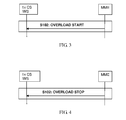
- high load start and stop may also be expressed by A21-Overload Start and A21-Overload Stop respectively.
- the MME sends an A21-Overload Start message to the 1x CS IWS.
- the MME sends an A21-Overload Stop message to the 1x CS IWS.
- the LTE system when the load of the LTE system is very heavy, the LTE system actively informs the load state of the LTE system to the 1xCS IWS, and requests the 1xCS IWS to stop or decrease the message sent to the LTE system, so as to reduce the load of the LTE system.
- the 1x system may inform the load information of the 1x system to the LTE system, so that the LTE system stops or decreases the information sent to the 1x system.
- the 1xCS IWS may send a notification message to another 1x network node, and inform processing operation after the 1xCS IWS receives the above-mentioned load notification message to the another 1x network node, so that the another 1x network node adopts corresponding processing operation.
- the above-mentioned notification message is a 1x message sent between the MME and the IWS through the A21 interface. Definition of the 1x message herein may be referred to 3GPP2 A.S0014.
- the 1x message may bear a message related to a 1x SMS or a 1x call/registration.
- an Overload Notification message on an A1/A1p interface (an interface between the MSC and a BSC) may be added, and the message is a BSMAP (Base Station Management Application Part, base station management application part) message and includes the following fields shown in Table 6.
- Table 6 A21-Overload Notification information Cell Message Type Load Info
- a value of the Message Type field is a new value 70H, and a format and a value of the Load Info field are shown in Table 4 above.
- the 1xCS IWS When the 1xCS IWS stops sending a 1x message of a SMS type to the MME, the 1xCS IWS extends a value of an existing IE "Cause” and adds a new value "overload” in ADDS Page Ack or ADDS Transfer Ack of an A1/A1p message. By sending the ADDS Page Ack or the ADDS Transfer Ack to the MSC, the 1xCS IWS informs the MSC that the 1xCS IWS no longer sends the 1x SMS to the UE residing in the LTE system due to overload of the LTE system.
- the 1xCS IWS When the 1xCS IWS stops sending a 1x message having a priority lower than a certain priority threshold to the MME, the 1xCS IWS extends a value of an existing IE "Cause” and adds a new value "overload” in an Assignment Failure or Handoff Failure message of an A1/A1p message. By sending the Assignment Failure or Handoff Failure message to the MSC, the 1xCS IWS informs the MSC that the 1xCS IWS no longer sends the 1x message to the UE residing in the LTE system due to overload of the LTE system. Based on this, priority threshold information may be simultaneously added in the message, so that the MSC determines whether to send the 1x message to the 1xCS IWS subsequently according to the priority threshold information.
- the 1xCS IWS When the 1xCS IWS only sends a 1x message related to an emergency service to the MME, the 1xCS IWS extends a value of an existing IE "Cause” and adds a new value "overload, emergency service only" in an Assignment Failure or Handoff Failure message of an A1/A1p message.
- the 1xCS IWS informs the MSC that the 1xCS IWS sends the 1x message to the UE residing in the LTE system only when the UE has the emergency service needing to be initiated due to overload of the LTE system.
- the 1xCS IWS When the congestion of the MME or the LTE system is eliminated and the 1xCS IWS receives a notification message about congestion elimination from the MME, an overload IE is added or an existing IE is extended in the A1/A1p message in a BS to MSC direction.
- the 1xCS IWS informs the MSC that the congestion of the MME or the LTE system has been eliminated and the MSC may send the 1x message to the UE residing in the LTE system.
- the embodiment of the present invention is simultaneously suitable for congestion control of the LTE and the UMTS/GSM systems.
- An SGs interface between the MME and an MSC Server supports congestion control signaling
- an S3 interface between the MME and an SGSN supports congestion control signaling.
- the 1xCS IWS may send the notification message to another 1x network node, and informs the processing operation after the 1xCS IWS receives the above-mentioned load notification message to the another 1x network node, so that the another 1x network node adopts the corresponding processing operation.
- 3GPP and 3GPP2 also define an intercommunication standard of packet data services of an LTE network and a CDMA HRPD (evolved High Rate Packet Data, evolved high rate packet data) network, and support accessing to an EPC and switching data services of the CDMA HRPD network.
- CDMA HRPD evolved High Rate Packet Data, evolved high rate packet data
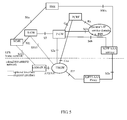
- FIG. 5 A schematic diagram of a network architecture of the access of the CDMA HRPD network to the EPC is shown in Fig. 5 , wherein HSGW and eAN/ePCF are upgraded original CDMA HRPD network entities.
- the EPC network entity To support the access of CDMA 2000 eHRPD, added functions of the EPC network entity include MME, S-GW, P-GW and PCRF.
- the S101 interface is an interface for pre-registration and signaling handover between the MME and the eAN, and the MME may inform the load condition of the LTE network to the eAN through the S101 interface to realize load control under inter-system interoperation.
- the MME in the LTE system sends a load notification message to the eAN in the CDMA HRPD communication system, wherein the load notification message carries indication information that it is stopped to send a message to the LTE system or a message of a specific priority is sent to the LTE system.
- the S101 interface involves Notification Request (notification request) and Notification Response (notification response) messages for supporting interoperation of the MME and the eAN.
- the Notification Request message should be sent to an opposite end by the MME or the eAN to inform a certain event or fact, and the Notification Response message should be sent to an opposite end eAN or MME by the MME or the eAN to respond to the Notification Request message.
- the above-mentioned Notification Request message may be extended, and the extended Notification Request message is used as the load notification message.
- Start/Stop expresses high load when set as 1, and expresses that it is back to normal when set as 0. When this field is 0, a sender sets all subsequent fields as 0, and a receiver should ignore the subsequent fields.
- Priority incl expresses that a priority field is included when set as 1, and expresses that a priority field is not included when set as 0.
- a priority threshold value expresses that it is stopped to send a message having a priority lower than the priority threshold, and expresses that it is stopped to send all messages when set as 000.
- the Start/Stop in the LoadInfo field is set as 1 and the value of the Priority incl is 0, the eAN stops sending a message to the MME according to the indication. Further, the eAN may instruct an HSGW not to send data by sending XOFF signaling to the HSGW.
- Start/Stop in the LoadInfo field is set as 1 and the Priority incl is set as 1, the eAN only sends a message of which a priority is higher than a threshold value defined in the Priority field to the MME.
- a trigger condition that the MME sends the Notification Request message to the eAN may be high load of the MME or the E-UTRAN.
- the MME sends another Notification Request message to the eAN, wherein the Start/Stop in the LoadInfo field is set as 0. Then, messages are continuously and normally sent between the MME and the eAN.
- a new S101 message may also be defined to carry overload information.
- a message type 8 is used to express the Overload Notification message, and a field of the new S101 message only needs the above-mentioned LoadInfo field.
- An embodiment provides a first wireless communication system, of which a specific result is shown in Fig. 6 , including the following modules:
- the load notification message constructing module 61 is further configured to construct the first load notification message carrying first congestion state information and first congestion control information when the load of an MME or an E-UTRAN or an air interface in the LTE system is greater than the set threshold value, wherein the first congestion state information is used for indicating that the LTE system is overloaded, and the first congestion control information is used for indicating that it is stopped to send the message to the LTE system or that only the message of the specific priority is sent to the LTE system.
- the load notification message constructing module 61 is further configured to construct a second load notification message carrying second congestion state information and second congestion control information when the load of the LTE system is back to normal, wherein the second congestion state information indicates that the load of the LTE system is back to normal, and the second congestion control information indicates that the message is normally sent to the LTE system.
- the load notification message sending module 62 is further configured to send the second load notification message to a network interoperation entity in the wireless communication system based on the circuit domain through the MME in the LTE system.
- the load notification message constructing module 61 is further configured to construct the first load notification message carrying first congestion state information and first congestion control information when the load of the wireless communication system based on the circuit domain is greater than the set threshold value, wherein the first congestion state information indicates that the wireless communication system based on the circuit domain is overloaded, and the first congestion control information indicates that it is stopped to send the message to the wireless communication system based on the circuit domain or that the message of the specific priority is sent to the wireless communication system based on the circuit domain.
- the load notification message constructing module 61 is further configured to construct a second load notification message carrying second congestion state information and second congestion control information when the load of the wireless communication system based on the circuit domain is back to normal, wherein the second congestion state information indicates that the load of the wireless communication system based on the circuit domain is back to normal, and the second congestion control information indicates that the message is normally sent to the wireless communication system based on the circuit domain.
- the load notification message sending module 62 is further configured to send the second load notification message to an MME in the LTE system through a network interoperation entity in the wireless communication system based on the circuit domain.
- the load notification message constructing module 61 is further configured to add an additional event information field in an Event info cell parameter of an added A21-Overload Notification message or in an A21 Event cell parameter of an extended A21-Event Notification message when the wireless communication system based on the circuit domain is a CDMA2000 and the first load notification message is the added A21-Overload Notification message or the extended A21-Event Notification message; and by different values of the additional event information field, express that the wireless communication system is overloaded and it is stopped to send the message to the wireless communication system; or, indication information that the wireless communication system is overloaded and the message of the specific priority and/or the specific type is sent to the wireless communication system; or, that the wireless communication system is not overloaded.
- the load notification message constructing module 61 is further configured to construct a load notification message carrying congestion state information and congestion control information when the load of an MME or an E-UTRAN or an air interface in the LTE system is greater than the set threshold value, wherein the congestion state information indicates that the LTE system is overloaded, and the congestion control information indicates that it is stopped to send the message to the LTE system or that the message of the specific priority is sent to the LTE system; or,
- the load notification message constructing module is further configured to construct a load notification message carrying congestion state information and congestion control information when the load of the CDMA HRPD communication system is greater than the set threshold value, wherein the congestion state information indicates that the CDMA HRPD communication system is overloaded, and the congestion control information indicates that it is stopped to send the message to the CDMA HRPD communication system or that the message of the specific priority is sent to the CDMA HRPD communication system.
- An embodiment also provides another wireless communication system, of which a specific structure is shown in Fig. 7 , including the following modules:
- the load notification message receiving module 71 is further configured to, when the another wireless communication system is an LTE system and the communication system is a wireless communication system based on a circuit domain, receive the load notification message carrying congestion state information and congestion control information and sent by an MME in the LTE system through a network interoperation entity in the wireless communication system based on the circuit domain, wherein the congestion state information indicates that the LTE system is overloaded, and the congestion control information indicates that it is stopped to send the message to the LTE system or that the message of the specific priority is sent to the LTE system; or, the congestion state information indicates that the load of the LTE system is back to normal, and the congestion control information indicates that the message is normally sent to the LTE system; or,
- the another wireless communication system is a wireless communication system based on a circuit domain and the second communication system is an LTE system
- receive the load notification message carrying congestion state information and congestion control information and sent by a network interoperation entity in the wireless communication system based on the circuit domain through an MME in the LTE system
- the congestion state information indicates that the wireless communication system based on the circuit domain is overloaded
- the congestion control information indicates that it is stopped to send the message to the wireless communication system based on the circuit domain or that the message of the specific priority is sent to the wireless communication system based on the circuit domain
- the congestion state information indicates that the load of the wireless communication system based on the circuit domain is back to normal
- the congestion control information indicates that the message is normally sent to the wireless communication system based on the circuit domain.
- the message sending control processing module 72 is further configured to, when the wireless communication system based on the circuit domain is a CDMA2000, the load notification message is an added A21-Overload Notification message or an extended A21-Event Notification message and an additional event information field is added in an Event info cell parameter of the added A21-Overload Notification message or in an A21 Event cell parameter of the extended A21- Event Notification message, according to different values of the additional event information field, determine that the another wireless communication system is overloaded, and stop sending the message to the another wireless communication system; or, determine that the another wireless communication system is overloaded, and send indication information of the message of the specific priority and/or the specific type to the another wireless communication system; or, determine that the another wireless communication system is not overloaded, and normally send the message to the another wireless communication system.
- the load notification message is an added A21-Overload Notification message or an extended A21-Event Notification message and an additional event information field is added in an Event info cell parameter of the added A21-Overload Notification message or in an A
- the message sending control processing module 72 is further configured to, when the another wireless communication system is an LTE system and the communication system is a CDMA HRPD communication system, receive the load notification message carrying congestion state information and congestion control information and sent by an MME in the LTE system through an eAN in the CDMA HRPD communication system, wherein the congestion state information indicates that the LTE system is overloaded, and the congestion control information indicates that it is stopped to send the message to the LTE system or that the message of the specific priority is sent to the LTE system; or, when the another wireless communication system is a CDMA HRPD communication system and the wireless communication system is an LTE system, receive the load notification message carrying congestion state information and congestion control information and sent by an eAN in the CDMA HRPD communication system through an MME in the LTE system, wherein the congestion state information indicates that the CDMA HRPD communication system is overloaded, and the congestion control information indicates that it is stopped to send the message to the CDMA HRPD communication system or that the message of the specific priority is sent to the CDMA HRPD communication system.
- the wireless communication system may further include:
- system and “network” are always used interchangeably herein.
- the term “and/or” herein merely describes association relations between associated objects, and expresses three relations, for example, A and/or B may express three conditions, namely A exists separately, A and B exist simultaneously and B exists separately.
- the character “/” herein generally expresses a relation of "or" between the front and back associated objects.
- the first communication system sends the load notification message to the second communication system, so that when the first communication system is overloaded, the second communication system stops sending the message to the first communication system or sends the message of the specific priority and/or the specific type to the first communication system according to the indication information in the load notification message.
- messages sent to the first communication system are decreased, the load of the first communication system is reduced and the robustness of the first communication system is enhanced.
- the LTE system when the load of the LTE system is very heavy, the LTE system actively informs the 1xCS IWS the load state of the LTE network, and requests the 1xCS IWS to stop or decrease the message sent to the LTE system, so as to reduce the load of the LTE system.
- the 1x system may inform the LTE system the load information of the 1x system, so that the LTE system stops or decreases the information sent to the 1x system.
- the congestion processing of the 1x message is executed in the 1x CS IWS (not congested), so that the load of the LTE system is not increased, and the robustness of the LTE system is enhanced.
- the LTE system may still selectively process the 1x message under congestion, thus ensuring smooth operation of the service. Because the congestion control is based on a network element granularity, the MME does not need to additionally process 1x messages of all the UEs, thus the processing complexity of the MME is reduced.
- the disclosed systems, devices and methods may be realized in other manners.
- the embodiments of the above-described devices are only exemplary, for example, the division of the modules or units is only a logic function division, other division manners may be adopted in practice, e.g., a plurality of units or components may be combined or integrated in another system, or some features may be omitted or are not executed.
- the displayed or discussed mutual coupling or direct coupling or communication connection may be indirect coupling or communication connection of devices or units through some interfaces, and may be in electrical, mechanical or other forms.
- the units illustrated as separate components may be or may not be physically separated, and the components displayed as units may be or may not be physical units, that is to say, the components may be positioned at one place or may also be distributed on a plurality of network units.
- the objectives of the solutions of the embodiments may be fulfilled by selecting part of or all of the units according to actual needs.
- the functional units may be integrated in one processing unit, or may separately and physically exist, or two or more of the functional units may be integrated in one unit.
- the above-mentioned integrated units may be implemented in the form of hardware or software functional units.
- the integrated units When the integrated units are implemented in the form of software functional units and sold or used as independent products, the integrated units may be stored in a computer readable storage medium.
- the technical solution of the present invention substantially, or the part of the present invention making contribution to the prior art, or all of or part of the technical solution may be embodied in the form of a software product, and the computer software product is stored in a storage medium, which includes a plurality of instructions enabling computer equipment (which may be a personal computer, a server, or network equipment and the like) or a processor to execute all of or part of the steps in the methods of the embodiments of the present invention.
- the aforementioned storage medium includes various kinds of medium that may store program codes, such as a U disk, a mobile hard disk, a read-only memory (ROM, Read-Only Memory), a random access memory (RAM, Random Access Memory), a magnetic disk, an optical disk, or the like.
- program codes such as a U disk, a mobile hard disk, a read-only memory (ROM, Read-Only Memory), a random access memory (RAM, Random Access Memory), a magnetic disk, an optical disk, or the like.
Landscapes
- Engineering & Computer Science (AREA)
- Computer Networks & Wireless Communication (AREA)
- Signal Processing (AREA)
- Mobile Radio Communication Systems (AREA)
Applications Claiming Priority (1)
| Application Number | Priority Date | Filing Date | Title |
|---|---|---|---|
| PCT/CN2012/073600 WO2013149401A1 (fr) | 2012-04-06 | 2012-04-06 | Procédé de régulation de charge pour système de communication sans fil et système de communication sans fil |
Publications (2)
| Publication Number | Publication Date |
|---|---|
| EP2824964A1 true EP2824964A1 (fr) | 2015-01-14 |
| EP2824964A4 EP2824964A4 (fr) | 2015-03-18 |
Family
ID=49299938
Family Applications (1)
| Application Number | Title | Priority Date | Filing Date |
|---|---|---|---|
| EP12873824.2A Withdrawn EP2824964A4 (fr) | 2012-04-06 | 2012-04-06 | Procédé de régulation de charge pour système de communication sans fil et système de communication sans fil |
Country Status (4)
| Country | Link |
|---|---|
| US (1) | US20150055475A1 (fr) |
| EP (1) | EP2824964A4 (fr) |
| CN (1) | CN103797843A (fr) |
| WO (1) | WO2013149401A1 (fr) |
Cited By (1)
| Publication number | Priority date | Publication date | Assignee | Title |
|---|---|---|---|---|
| WO2016122219A3 (fr) * | 2015-01-29 | 2016-09-15 | Samsung Electronics Co., Ltd. | Procédé de traitement de surcharge pour un système de communication radio et des équipements de réseau d'accès |
Families Citing this family (3)
| Publication number | Priority date | Publication date | Assignee | Title |
|---|---|---|---|---|
| US20170019230A1 (en) * | 2015-07-13 | 2017-01-19 | Qualcomm Incorporated | Communicating a Data Payload and an Acknowledgment of the Data Payload on Different Channels |
| FR3043515A1 (fr) * | 2015-11-10 | 2017-05-12 | Orange | Procede de gestion du trafic reseau relatif a un mecanisme de signalisation de presence d'un terminal |
| CN110875953B (zh) * | 2018-09-04 | 2023-03-24 | 中兴通讯股份有限公司 | 一种过负荷控制方法、装置、设备及可读存储介质 |
Family Cites Families (20)
| Publication number | Priority date | Publication date | Assignee | Title |
|---|---|---|---|---|
| CN100358388C (zh) * | 2004-03-04 | 2007-12-26 | Ut斯达康通讯有限公司 | 动态信道分配方法 |
| US7587206B2 (en) * | 2005-08-26 | 2009-09-08 | Alcatel-Lucent Usa Inc. | Providing overload control in relatively high-speed wireless data networks |
| US20080056125A1 (en) * | 2006-09-06 | 2008-03-06 | Nokia Corporation | Congestion control in a wireless network |
| CN101115299A (zh) * | 2007-07-25 | 2008-01-30 | 上海华为技术有限公司 | 一种对用户接入进行控制的方法及装置 |
| US8660009B2 (en) * | 2008-01-30 | 2014-02-25 | Telefonaktiebolaget L M Ericsson (Publ) | Core network processing load reduction |
| CN101610494B (zh) * | 2008-06-16 | 2013-04-24 | 华为技术有限公司 | 实现过载控制或差异化服务的方法、系统及设备 |
| WO2010105422A1 (fr) * | 2009-03-18 | 2010-09-23 | 华为技术有限公司 | Procédé, dispositif et système d'acquisition d'informations de charge |
| CN101854665B (zh) * | 2009-04-03 | 2013-07-10 | 电信科学技术研究院 | 一种lte系统的负荷控制方法、装置和系统 |
| IN2012DN02395A (fr) * | 2009-10-13 | 2015-08-21 | Ericsson Telefon Ab L M | |
| CN101765145A (zh) * | 2009-12-22 | 2010-06-30 | 中兴通讯股份有限公司 | 无线通信系统中拥塞判决及解除方法和装置 |
| US8867362B2 (en) * | 2010-01-15 | 2014-10-21 | Telefonaktiebolaget Lm Ericsson (Publ) | Congestion control for interworking between networks |
| WO2011160308A1 (fr) * | 2010-06-25 | 2011-12-29 | 华为技术有限公司 | Procédé permettant de traiter un encombrement de réseau, dispositif de réseau et système de réseau |
| CN102316431A (zh) * | 2010-06-29 | 2012-01-11 | 中国移动通信集团公司 | 一种网络信令拥塞控制方法及其装置 |
| US20120170503A1 (en) * | 2010-12-30 | 2012-07-05 | Motorola, Inc. | Method and apparatus for controlling network access in a multi-technology wireless communication system |
| CN102111815B (zh) * | 2011-02-28 | 2013-12-18 | 华为技术有限公司 | 负荷均衡的控制方法及装置 |
| US9137733B2 (en) * | 2011-03-15 | 2015-09-15 | At&T Mobility Ii Llc | Dynamic control of cell reselection parameters |
| CN102223675B (zh) * | 2011-06-08 | 2014-06-04 | 大唐移动通信设备有限公司 | 拥塞告警及处理方法、系统和设备 |
| EP2742736B1 (fr) * | 2011-08-11 | 2020-02-26 | Intel Corporation | Interdiction d'accès étendue |
| US9949166B2 (en) * | 2012-01-23 | 2018-04-17 | Intel Corporation | Extended access barring (EAB) signaling for a core network (CN) and node |
| US9313685B2 (en) * | 2012-02-06 | 2016-04-12 | Zte Corporation | Enhancement of access control for CDMA2000 |
-
2012
- 2012-04-06 CN CN201280000505.7A patent/CN103797843A/zh active Pending
- 2012-04-06 EP EP12873824.2A patent/EP2824964A4/fr not_active Withdrawn
- 2012-04-06 WO PCT/CN2012/073600 patent/WO2013149401A1/fr not_active Ceased
-
2014
- 2014-09-29 US US14/500,813 patent/US20150055475A1/en not_active Abandoned
Cited By (1)
| Publication number | Priority date | Publication date | Assignee | Title |
|---|---|---|---|---|
| WO2016122219A3 (fr) * | 2015-01-29 | 2016-09-15 | Samsung Electronics Co., Ltd. | Procédé de traitement de surcharge pour un système de communication radio et des équipements de réseau d'accès |
Also Published As
| Publication number | Publication date |
|---|---|
| CN103797843A (zh) | 2014-05-14 |
| EP2824964A4 (fr) | 2015-03-18 |
| US20150055475A1 (en) | 2015-02-26 |
| WO2013149401A1 (fr) | 2013-10-10 |
Similar Documents
| Publication | Publication Date | Title |
|---|---|---|
| US12041505B2 (en) | Method for managing PDU session in wireless communication system and apparatus therefor | |
| US11729675B2 (en) | Method and apparatus for performing a voice service handover to a circuit switched domain voice service | |
| US10716083B2 (en) | Tracking area assignment method in wireless communication system and device therefor | |
| JP6696580B2 (ja) | データ伝送のための制御プレーンおよびユーザプレーンの選択 | |
| US10362511B2 (en) | Method and apparatus for determining PDU session identity in wireless communication system | |
| US10187910B2 (en) | Method and apparatus for resuming RRC connection in wireless communication system | |
| KR101783699B1 (ko) | 핸드오버 중에 단일 무선 영상 통화 연속성을 지원하는 방법 및 시스템 | |
| US9668182B2 (en) | Security capability negotiation method, system, and equipment | |
| KR102135394B1 (ko) | 무선 통신 시스템에서 혼잡 제어 방법 및 이를 위한 장치 | |
| US9516567B2 (en) | Methods and apparatus to handle bearers during circuit switched fallback operation | |
| US10827394B2 (en) | Triggering selective fallback based on user subscription information | |
| KR20190020142A (ko) | 무선 통신 시스템에서 네트워크간 상호연동 방법 및 이를 위한 장치 | |
| US8867471B2 (en) | Method, device, and system for reporting radio access network element information | |
| EP2836016B1 (fr) | Procédé et appareil pour un transfert de service à commutation de paquets dans des systèmes de communication sans fil | |
| US10091761B2 (en) | Apparatus and method for paging in wireless communication system | |
| KR20130015529A (ko) | 이동통신 시스템에서 위치 기반 pcc 제어 방법 및 시스템, 위치 기반 pcc 제어를 위한 패킷 데이터 네트워크 게이트웨이 장치 | |
| JP2016513418A (ja) | サービス制御方法、モビリティ管理エンティティ及び移動交換局 | |
| US20220116798A1 (en) | Data transmission method, apparatus, and device | |
| US20180227235A1 (en) | Policy determining method and apparatus | |
| US20150055475A1 (en) | Load control method for wireless communication system and wireless communication system | |
| CN104081821B (zh) | 视频呼叫的反向切换的方法和装置 | |
| KR101405544B1 (ko) | 가입자 위치정보 관리 장치 및 방법 | |
| CN103987132B (zh) | 一种业务处理方法、系统以及相关设备 |
Legal Events
| Date | Code | Title | Description |
|---|---|---|---|
| PUAI | Public reference made under article 153(3) epc to a published international application that has entered the european phase |
Free format text: ORIGINAL CODE: 0009012 |
|
| 17P | Request for examination filed |
Effective date: 20141007 |
|
| AK | Designated contracting states |
Kind code of ref document: A1 Designated state(s): AL AT BE BG CH CY CZ DE DK EE ES FI FR GB GR HR HU IE IS IT LI LT LU LV MC MK MT NL NO PL PT RO RS SE SI SK SM TR |
|
| AX | Request for extension of the european patent |
Extension state: BA ME |
|
| A4 | Supplementary search report drawn up and despatched |
Effective date: 20150212 |
|
| RIC1 | Information provided on ipc code assigned before grant |
Ipc: H04W 28/02 20090101ALI20150206BHEP Ipc: H04W 28/08 20090101AFI20150206BHEP |
|
| DAX | Request for extension of the european patent (deleted) | ||
| 17Q | First examination report despatched |
Effective date: 20161125 |
|
| STAA | Information on the status of an ep patent application or granted ep patent |
Free format text: STATUS: THE APPLICATION IS DEEMED TO BE WITHDRAWN |
|
| 18D | Application deemed to be withdrawn |
Effective date: 20180515 |