EP2826865A1 - Verfahren und system zur bestimmung der existenz einer kopiezahlvariante in einer genomprobe und computerlesbares medium - Google Patents
Verfahren und system zur bestimmung der existenz einer kopiezahlvariante in einer genomprobe und computerlesbares medium Download PDFInfo
- Publication number
- EP2826865A1 EP2826865A1 EP20120865785 EP12865785A EP2826865A1 EP 2826865 A1 EP2826865 A1 EP 2826865A1 EP 20120865785 EP20120865785 EP 20120865785 EP 12865785 A EP12865785 A EP 12865785A EP 2826865 A1 EP2826865 A1 EP 2826865A1
- Authority
- EP
- European Patent Office
- Prior art keywords
- reads
- determining
- breakpoints
- value
- candidate
- Prior art date
- Legal status (The legal status is an assumption and is not a legal conclusion. Google has not performed a legal analysis and makes no representation as to the accuracy of the status listed.)
- Granted
Links
Images




Classifications
-
- C—CHEMISTRY; METALLURGY
- C12—BIOCHEMISTRY; BEER; SPIRITS; WINE; VINEGAR; MICROBIOLOGY; ENZYMOLOGY; MUTATION OR GENETIC ENGINEERING
- C12Q—MEASURING OR TESTING PROCESSES INVOLVING ENZYMES, NUCLEIC ACIDS OR MICROORGANISMS; COMPOSITIONS OR TEST PAPERS THEREFOR; PROCESSES OF PREPARING SUCH COMPOSITIONS; CONDITION-RESPONSIVE CONTROL IN MICROBIOLOGICAL OR ENZYMOLOGICAL PROCESSES
- C12Q1/00—Measuring or testing processes involving enzymes, nucleic acids or microorganisms; Compositions therefor; Processes of preparing such compositions
- C12Q1/68—Measuring or testing processes involving enzymes, nucleic acids or microorganisms; Compositions therefor; Processes of preparing such compositions involving nucleic acids
- C12Q1/6844—Nucleic acid amplification reactions
-
- C—CHEMISTRY; METALLURGY
- C12—BIOCHEMISTRY; BEER; SPIRITS; WINE; VINEGAR; MICROBIOLOGY; ENZYMOLOGY; MUTATION OR GENETIC ENGINEERING
- C12Q—MEASURING OR TESTING PROCESSES INVOLVING ENZYMES, NUCLEIC ACIDS OR MICROORGANISMS; COMPOSITIONS OR TEST PAPERS THEREFOR; PROCESSES OF PREPARING SUCH COMPOSITIONS; CONDITION-RESPONSIVE CONTROL IN MICROBIOLOGICAL OR ENZYMOLOGICAL PROCESSES
- C12Q1/00—Measuring or testing processes involving enzymes, nucleic acids or microorganisms; Compositions therefor; Processes of preparing such compositions
- C12Q1/68—Measuring or testing processes involving enzymes, nucleic acids or microorganisms; Compositions therefor; Processes of preparing such compositions involving nucleic acids
- C12Q1/6809—Methods for determination or identification of nucleic acids involving differential detection
-
- C—CHEMISTRY; METALLURGY
- C12—BIOCHEMISTRY; BEER; SPIRITS; WINE; VINEGAR; MICROBIOLOGY; ENZYMOLOGY; MUTATION OR GENETIC ENGINEERING
- C12Q—MEASURING OR TESTING PROCESSES INVOLVING ENZYMES, NUCLEIC ACIDS OR MICROORGANISMS; COMPOSITIONS OR TEST PAPERS THEREFOR; PROCESSES OF PREPARING SUCH COMPOSITIONS; CONDITION-RESPONSIVE CONTROL IN MICROBIOLOGICAL OR ENZYMOLOGICAL PROCESSES
- C12Q1/00—Measuring or testing processes involving enzymes, nucleic acids or microorganisms; Compositions therefor; Processes of preparing such compositions
- C12Q1/68—Measuring or testing processes involving enzymes, nucleic acids or microorganisms; Compositions therefor; Processes of preparing such compositions involving nucleic acids
- C12Q1/6869—Methods for sequencing
-
- G—PHYSICS
- G06—COMPUTING OR CALCULATING; COUNTING
- G06F—ELECTRIC DIGITAL DATA PROCESSING
- G06F30/00—Computer-aided design [CAD]
- G06F30/20—Design optimisation, verification or simulation
-
- G—PHYSICS
- G16—INFORMATION AND COMMUNICATION TECHNOLOGY [ICT] SPECIALLY ADAPTED FOR SPECIFIC APPLICATION FIELDS
- G16B—BIOINFORMATICS, i.e. INFORMATION AND COMMUNICATION TECHNOLOGY [ICT] SPECIALLY ADAPTED FOR GENETIC OR PROTEIN-RELATED DATA PROCESSING IN COMPUTATIONAL MOLECULAR BIOLOGY
- G16B20/00—ICT specially adapted for functional genomics or proteomics, e.g. genotype-phenotype associations
- G16B20/10—Ploidy or copy number detection
-
- G—PHYSICS
- G16—INFORMATION AND COMMUNICATION TECHNOLOGY [ICT] SPECIALLY ADAPTED FOR SPECIFIC APPLICATION FIELDS
- G16B—BIOINFORMATICS, i.e. INFORMATION AND COMMUNICATION TECHNOLOGY [ICT] SPECIALLY ADAPTED FOR GENETIC OR PROTEIN-RELATED DATA PROCESSING IN COMPUTATIONAL MOLECULAR BIOLOGY
- G16B30/00—ICT specially adapted for sequence analysis involving nucleotides or amino acids
-
- G—PHYSICS
- G16—INFORMATION AND COMMUNICATION TECHNOLOGY [ICT] SPECIALLY ADAPTED FOR SPECIFIC APPLICATION FIELDS
- G16B—BIOINFORMATICS, i.e. INFORMATION AND COMMUNICATION TECHNOLOGY [ICT] SPECIALLY ADAPTED FOR GENETIC OR PROTEIN-RELATED DATA PROCESSING IN COMPUTATIONAL MOLECULAR BIOLOGY
- G16B30/00—ICT specially adapted for sequence analysis involving nucleotides or amino acids
- G16B30/10—Sequence alignment; Homology search
-
- G—PHYSICS
- G16—INFORMATION AND COMMUNICATION TECHNOLOGY [ICT] SPECIALLY ADAPTED FOR SPECIFIC APPLICATION FIELDS
- G16B—BIOINFORMATICS, i.e. INFORMATION AND COMMUNICATION TECHNOLOGY [ICT] SPECIALLY ADAPTED FOR GENETIC OR PROTEIN-RELATED DATA PROCESSING IN COMPUTATIONAL MOLECULAR BIOLOGY
- G16B5/00—ICT specially adapted for modelling or simulations in systems biology, e.g. gene-regulatory networks, protein interaction networks or metabolic networks
Definitions
- Embodiments of the present disclosure generally relate to a method of determining whether copy number variation presents in a genome sample, and a system and a computer readable medium thereof.
- PDD Pre-implantation Genetic Diagnosis
- PPS Pre-implantation Genetic Screening
- a field of assisted reproductive technology involves analysis with a single germ cell, a single blastomeric cell or an embryonic cell
- a field of non-invasive prenatal diagnosis technology involves problem of detecting a trace of fetal cells in maternal peripheral blood
- Metagenomics involves analysis with a single or a trace of biological cell in environment
- disease or physical research involves analysis with a single cell in tissue or body fluid.
- Embodiments of the present disclosure seek to solve at least one of the problems existing in prior art to at least some extent.
- Embodiments of a first broad aspect of the present disclosure provide a method of determining whether copy number variation presents in a genome sample.
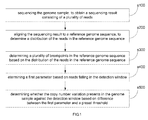
- the method may comprise following steps: sequencing the genome sample, to obtain a sequencing result consisting of a plurality of reads; aligning the sequencing result to a reference genome sequence, to determine a distribution of the reads in the reference genome sequence; determining a plurality of breakpoints in the reference genome sequence based on the distribution of the reads in the reference genome sequence, wherein the number of reads has significance at both sides of the breakpoints; determining a detection window in the reference genome based on the plurality of the breakpoints; determining a first parameter based on reads falling in the detection window; and determining whether the copy number variation presents in the genome sample against the detection window based on difference between the first parameter and a preset threshold.
- whether copy number variation presents in a genome sample may be effectively determined, which is suitable for various copy number variations, included but not limited to aneuploidy of chromosome, deletion of chromosome, and addition, micro-deletion and micro-repetition of chromosome fragments.
- Embodiments of a second broad aspect of the present disclosure provide a system for determining whether copy number variation presents in a genome sample.
- the system may comprise:
- Embodiments of a third broad aspect of the present disclosure provide a computer readable medium.
- the computer readable medium is configured to perform by a processer to determine whether copy number variation presents in a genome sample through following steps: aligning the sequencing result to a reference genome sequence, to determine a distribution of the reads in the reference genome sequence; determining a plurality of breakpoints in the reference genome sequence based on the distribution of the reads in the reference genome sequence, wherein the number of reads has significance at both sides of the breakpoints; determining a detection window in the reference genome based on the plurality of the breakpoints; determining a first parameter based on reads falling in the detection window; and determining whether the copy number variation presents in the genome sample against the detection window based on difference between the first parameter and a preset threshold.
- the method of determining whether copy number variation presents in a genome sample may be effectively implemented, so as to effectively determine whether copy number variation presents in a genome sample, which is suitable for various copy number variations, included but not limited to aneuploidy of chromosome, deletion of chromosome, and addition, micro-deletion and micro-repetition of chromosome fragments.
- CNV copy number variation
- the method of determining whether copy number variation presents in a genome sample comprises:
- S100 sequencing the genome sample, to obtain a sequencing result consisting of a plurality of reads
- types of the genome samples with which the method of the present disclosure are not subjected to special restrictions which may be a whole genome or a part of a genome, for example, chromosome or chromosome fragment.
- the method of determining whether copy number variation presents in a genome sample may further comprise a step of extracting the genome sample from a biological sample.
- the biological sample may be directly used as raw material, for obtaining information regarding whether the biological sample has copy number variation, so as to reflect health status of organisms.
- the used biological sample is not subjected to special restrictions.
- the biological sample is any one selected from a group consisting of blood, urine, saliva, tissue, germ cells, oosperm, blastomere and embryo. It would be appreciated by those skilled in the art that different biological samples may be used for analyzing different diseases. Accordingly, these samples may be conveniently obtained from organisms, and different samples may be used specifically directing to certain diseases, so as to selecting specific means for analyzing the certain diseases. For example, for a subject possibly suffering a certain cancer, a sample may be collected from cancerous tissue or juxtacancerous tissue, from which cells are further isolated for analysis, accordingly, whether such tissue become cancerous may be accurately determined as early as possible. According a specific example of the present disclosure, a single cell may be used as the biological sample.
- a single cell may be isolated from a biological sample using at least one of dilution, mouth-controlled pipette, micromanipulation (micro-dissection is preferred), flow cytometry isolation, microfluidics. Accordingly, a single cell may be effectively and conveniently obtained from a biological sample, to implement subsequent steps. Then, efficiency of determining whether copy number variation presents in a genome sample may be further improved.
- the step of sequencing the genome sample further comprises following sub-steps of: firstly amplifying the genome sample, to obtain an amplified genome sample; secondly, constructing a sequencing-library with the amplified genome sample; finally sequencing the constructed sequencing-library, to obtain the sequencing result consisting of a plurality of reads. Accordingly, whole genome information of the sequencing result of the genome sample may be effectively obtained, and a single cell genome or a trace of nucleic acid sample may be subjected to effective sequencing, which may further improve efficiency of determining whether copy number variation presents in a genome sample.
- a detailed process of constructing a genome sequencing-library may refer to a specification provided by sequencing-instrument manufacturer, such as Illumina Company, for example Multiplexing Sample Preparation Guide (Part#1005063; Feb 2010), which is incorporated herein by reference.
- the method may further comprise a step of lysing the single cell, to release whole genome of the single cell.
- a step of lysing the single cell to release whole genome of the single cell.
- methods of lysing the single cell to release whole genome are not subjected to special restrictions, as long as the single cell is lysed, preferably the single cell is fully lysed.
- the single cell is lysed using an alkaline lysate, to release whole genome of the single cell.
- Inventors of the present disclosure find out that the step of lysing the single cell may effectively lyse the single cell to release whole genome, and accuracy may be improved when subjecting the released whole genome to sequencing, which may further improve efficiency of determining whether copy number variation presents in a genome sample.
- a PCR-based method may be used, for example PEP-PCR, DOP-PCR and OmniPlex WGA; a non-PCR-based method may be also used, for example Multiple Displacement Amplification (MDA).
- MDA Multiple Displacement Amplification
- the PCR-based method is preferably used, for example OmniPlex WGA.
- a commercial kit including but not limited to GenomePlex from Sigma Aldrich, PicoPlex from Rubicon Genomics, REPLI-g from Qiagen, illustra GenomiPhi from GE Healthcare and etc, may be used.
- the single cell whole genome may be amplified by OmniPlex WGA. Accordingly, the whole genome may be effectively amplified, which may further improve efficiency of determining whether copy number variation presents in a genome sample.
- the sub-step of sequencing the whole genome sequencing-library is performed by at least one selected from Next-Generation sequencing technology consisting of Hiseq system of Illumina Company, Miseq system of Illumina Company, Genome Analyzer (GA) system of Illumina Company, 454 FLX of Roche Company, SOLiD system of Applied Biosystems Company, Ion Torrent system of Life TECH Company. Accordingly, characteristics of high-throughput and deep sequencing of these sequencing apparatus may be used, which further improves efficiency of determining whether copy number variation presents in a genome sample.
- Next-Generation sequencing technology consisting of Hiseq system of Illumina Company, Miseq system of Illumina Company, Genome Analyzer (GA) system of Illumina Company, 454 FLX of Roche Company, SOLiD system of Applied Biosystems Company, Ion Torrent system of Life TECH Company.
- sequencing methods and apparatuses may also be used for whole genome sequencing, for example Third-Generation sequencing technology (i.e., single molecule sequencing technology) such as any one of HeliScope system from Helicos BioSciences Company, RS system from PacBio Company and etc., as well as more advanced sequencing technology which may be developed later.
- Third-Generation sequencing technology i.e., single molecule sequencing technology
- HeliScope system from Helicos BioSciences Company
- RS system from PacBio Company and etc.
- lengths of sequencing data obtained by whole genome sequencing are not subjected to special restrictions.
- the plurality of sequencing data have an average length of about 50 bp.
- sequencing data having a length of about 50 bp may greatly faciliate subjecting the sequencing data to analyzing, which improves analysis efficiency and significantly reduces cost for analysis, by which further improves efficiency of determining chromosome aneuploidy of a single cell and reduces cost of determining chromosome aneuploidy of a single cell.
- Term of "average length” used herein refers to a mean value of length values of every sequencing data.
- the obtained sequencing result includes a plurality of sequencing data.
- the obtained sequencing result is aligned to a reference genome sequence, so as to determine a location of the obtained sequencing result in the reference genome sequence.
- any known methods may be used to calculate the total number of these sequencing data.
- software provided by sequencing instrument manufacturer may be used for analysis.
- Short Oligonucleotide Analysis Package (SOAP) and Burrows-Wheeler Aligner (BWA) are preferably used, which align reads to a reference genome sequence, to obtain a location of reads in the reference sequence.
- a default parameter provided by program of the software may be used in alignment, or a parameter may be selected by those skilled in the art as required.
- SOAPaligner/soap2 is used as alignment software.
- the reference genome sequence may be a standard human genome reference sequence in NCBI database (for example may be hg18, NCBI Build 36); or may be a part of a known genome sequence, for example may be at least one sequence selected from a group consisting of human chromosome 21, chromosome 18, chromosome 13, chromosome X and chromosome Y.
- sequences which are uniquely aligned to the reference genome sequence may be selected for subsequent analysis. Accordingly, interference to analysis of copy number variation by repeat sequences may be avoided, which further improves efficiency of determining whether copy number variation presents in a genome sample.
- S300 determining a plurality of breakpoints in the reference genome sequence based on the distribution of the reads in the reference genome sequence
- breakpoints refers to such kind of sites in a genome, in which the number of the reads on either side of the site are significantly different between these two regions.
- the number of the reads corresponded in the region also changes significantly. Accordingly, after determining a plurality of breakpoints, copy number variation probably presents in a region between two successive breakpoints may be preliminary determined.
- the step of determining a plurality of breakpoints in the reference genome sequence further comprises following sub-steps:
- the sub-step of determining p value of the site further comprises:
- the step of subjecting all of the relative numbers of the reads falling in each of the plurality of primary windows to Run-Test further comprises: subjecting the relative number of reads falling in each of the plurality of primary windows Ri to a correction of GC content, to obtain corrected relative number of reads R ⁇ i ; determining the normalized number of reads falling in each of the plurality of primary windows Zi based on the corrected relative number of reads; and subjecting all of the normalized numbers of reads falling in each of the plurality of primary windows Zi to Run-Test.
- the corrected relative number of reads R ⁇ i is obtained by following steps:
- the number of reads may be subjected to correlation by GC content.
- an interference caused by bias of genome amplification may be eliminated, by which improves accuracy and efficiency of determining whether copy number variation presents in a genome sample.
- the step of determining a detection window in the reference genome based on the plurality of the breakpoints further comprises:
- the p value of the candidate breakpoint is obtained by following steps:
- the final p value is obtained by following steps:
- the final p value is 1.1 X 10 -50 .
- the step of determining the first parameter based on reads falling in the detection windows further comprises: determining a mean value among all of the normalized numbers of reads falling in each of the plurality of primary windows Z which are included in the detection windows, in which the mean value of the normalized number of reads Z is taken as the first parameter.
- the normalized number of reads has been specifically described above, which is omitted herein for brevity.
- S500 determining whether the copy number variation presents in the genome sample against the detection window based on difference between the first parameter and a preset threshold
- the determined first parameter may be compared with a preset threshold, then based on difference between the first parameter and the present threshold, whether the copy number variation presents in the genome sample is determined regarding the specific detection window.
- the number of reads falling in a certain window is positively related to content of the certain window in chromosome or genome, accordingly by subjecting reads deriving from a certain window in the sequencing result to statistical analysis, whether the copy number variation presents in the genome sample may be effectively determined based on the certain window.
- Term of "preset threshold" used herein refers to relative parameter based on the certain window obtained by repeating the operations and analysis in the above embodiments using a normal genome sample having a known sequence.
- relative parameter based on the certain window and relative parameter of normal cells may be obtained by same sequencing conditions and mathematics methods.
- the relative parameter of normal cells may be used as the preset threshold.
- term “preset” used herein should be broadly understood, which may be predetermined by experiment, or may be obtained by parallel experiments when analyzing the biological sample.
- Term “parallel experiment” should be broadly understood, which may refer to sequencing and analyzing unknown and known samples at the same time, or may refer to performing the steps of sequencing and analyzing under same conditions successively.
- the preset threshold comprises a first threshold and a second threshold, by comparing the first parameter Z to the first threshold and the second threshold, in the case of the first parameter Z smaller than the first threshold, copy number reducing is determined (i.e., deletion), in the case of the first parameter Z greater than the second threshold, copy number increasing is determined (i.e., addition), accordingly which type of the copy number variation may be determined.
- ⁇ 0.05 is set as a boundary of significance, by which type of the copy number variation is further determined.
- copy number variation is the major factor inducing birth defect, which is also very common in embryo cultured in vitro, being a major reason leading to failure of reproduction in vitro. Copy number variation is also a pathogenic factor to many diseases such as cancer.
- the whole genome amplification is technique which can perform amplification in a range of whole genome with a single cell, a plurality cells or a trace of nucleic acid sample, which may increase sample amount on the premise of maintaining representativeness of the whole genome, to achieve the required sample amount.
- a problem of amplification bias presents in the whole genome amplification, which brings in deviation to subsequent analysis.
- the method of determining whether copy number variation presents in a genome sample according to embodiments of the present disclosure after the single cell or a trace of nucleic acid sample has been subjected to whole genome amplification, data is obtained by sequencing technology for analysis of copy number variation.
- a problem of having difficulties in analyzing with a single cell or a trace of nucleic acid sample is solved by the whole genome amplification, on the other hand, bias to analyzing copy number variation induced by the whole genome amplification is avoided, which makes detection more accurate and more comprehensive, particularly detection efficiency may be further improved by a correlation of GC content.
- different indexes are introduced, by which a plurality samples may be subjected to test at the same time, which further improves efficiency of determining whether copy number variation presents in a genome sample.
- screening and diagnosing copy number variation prior to embryo implantation or noninvasive screening of fetal copy number variation may be determined, which is benefit to provide genetic counseling and basis for clinic decision; prenatal diagnosis may effectively prevent implantation of embryo with lesion, to present newborns with defects.
- a system for determining whether copy number variation presents in a genome sample may effectively implement the method of determining whether copy number variation presents in a genome sample above-described, so as to effectively determine whether copy number variation presents in the genome sample.
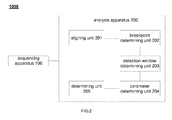
- the system 1000 for determining whether copy number variation presents in a genome sample comprises: a sequencing apparatus 100 and an analysis apparatus 200.
- the sequencing apparatus 100 is configured to sequence the genome sample, to obtain a sequencing result consisting of a plurality of reads.
- the system 1000 for determining whether copy number variation presents in a genome sample may further comprise a genome extracting apparatus (not shown in Figs).
- the genome extracting apparatus is configured to extract the genome sample from a biological sample, and the genome extracting apparatus is connected to the sequencing apparatus 100 for providing the genome sample.
- the biological sample may be directly used as raw material, to obtain information whether copy number variation presents in the biological sample, so as to reflect health status of organisms.
- the sequencing apparatus 100 may further comprise: a genome amplifying unit, a sequencing-library constructing unit and a sequencing unit, in which the genome amplifying unit is configured to amplify the genome sample; the sequencing-library constructing unit, connected to the genome amplifying unit, is configured to construct a sequencing-library with the amplified genome sample; and the sequencing unit, connected to the sequencing-library constructing unit, is configured to sequence the sequencing-library.
- the sub-step of sequencing the whole genome sequencing-library is performed by at least one selected from Next-Generation sequencing technology (such as Hiseq system of Illumina Company, Miseq system of Illumina Company, Genome Analyzer (GA) system of Illumina Company, 454 FLX of Roche Company, SOLiD system of Applied Biosystems Company, Ion Torrent system of Life Technologie Company) and single molecule sequencing apparatus. Accordingly, characteristics of high-throughput and deep sequencing of these sequencing apparatus may be used, which further improves efficiency of determining whether copy number variation presents in a genome sample.
- the analysis apparatus 200 is connected to the sequencing apparatus 100, to determine whether copy number variation presents in a genome sample based on the sequencing result.
- the analysis apparatus 200 further comprises: an aligning unit 201, a breakpoint determining unit 202, a detection window determining unit 203, a parameter determining unit 204 and a determining unit 205, in which the aligning unit 201 is configured to align the sequencing result to a reference genome sequence, to determine a distribution of the reads in the reference genome sequence.
- the aligning unit 201 is configured to align the sequencing result to a reference genome sequence, to determine a distribution of the reads in the reference genome sequence.
- a known human genome sequence is preserved in the aligning unit 201 as the reference genome sequence, optionally, the reference genome sequence is at least one selected from human chromosome 21, chromosome 18, chromosome 13, chromosome X and chromosome Y.
- the breakpoint determining unit 202 connected to the aligning unit 201, is configured to determine a plurality of breakpoints in the reference genome sequence, based on the distribution of the reads in the reference genome sequence, as described above, the number of reads has significance between two sides of the breakpoints.
- the detection window determining unit 203 connected to the breakpoint determining unit 202, is configured to determine a detection window in the reference genome based on the plurality of the breakpoints.
- the parameter determining unit 204 connected to the detection window determining unit, is configured to determine a first parameter based on reads falling in the detection window.
- the determining unit 205 connected to the parameter determining unit 204, configured to determine whether the copy number variation presents in the genome sample against the detection window based on difference between the first parameter and a preset threshold.
- the breakpoint determining unit 202 further comprises a module for performing following sub-steps:
- the reference genome sequence is divided into a plurality of primary windows having a predetermined length, and reads falling in each of the plurality of primary windows are determined.
- reads contained in the obtained sequencing result may be aligned to the reference genome sequence, by which reads falling in each of the plurality of primary windows may be determined.
- each of the primary windows may have same or different length; an overlap may present between primary windows, as long as information of each primary window is known; each of the primary windows is preferably has a same length.
- each of the plurality of primary windows may have a length of 100 to 200 Kbp, preferably 150 Kbp.
- the number of the primary windows located at both sides of the site is not subjected to special restrictions, according to a specific example of the present disclosure, 100 of the primary windows may be selected from either side of the site respectively.
- p value of the site is determined; such p value may reflect significant difference of the number of reads between two sides of the site.
- the p value of the site is smaller than a final p value, the site is determined as the breakpoints.
- a range of the final p value may be determined by subjecting a known sequence sample to parallel analysis, according to a specific example of the present disclosure, the final p value is 1.1 X 10 -50 .
- the breakpoint determining unit 202 further comprises a module for performing following sub-steps:
- the breakpoint determining unit 202 further comprises a module for performing followings to subject all of the relative numbers of the reads falling in each of the plurality of primary windows to Run-Test:
- the corrected relative number of reads R ⁇ i is obtained by a module for performing following steps:
- the detection window determining unit further comprises a module for performing followings:
- the p value of the candidate breakpoint is obtained by following steps:
- the final p value is obtained by following steps:
- the final p value is 1.1 X 10 -50 .
- the parameter determining unit 204 further comprises a module for performing followings: determining a mean value among all of the normalized numbers of reads falling in each of the plurality of primary windows Z which are included in the detection windows, in which the mean value of the normalized number of reads Z is taken as the first parameter.
- a preset threshold is preserved in the determining unit 205, accordingly, the determining unit 205 may compare the first parameter determined in the parameter determining unit 204, so as to determine whether copy number variation presents in the obtained detection windows, in which according to embodiments of the present disclosure, the preset threshold comprises: a first threshold and a second threshold, by comparing the first parameter Z to the first threshold and the second threshold, in the case of the first parameter Z smaller than the first threshold, copy number reducing is determined (i.e., deletion), in the case of the first parameter Z greater than the second threshold, copy number increasing is determined (i.e., addition), accordingly which type of the copy number variation may be determined.
- ⁇ 0.05 is set as a boundary of significance, by which type of the copy number variation is further determined.
- the method of determining whether copy number variation presents in a genome sample according to embodiments of the present disclosure may be effectively implemented, so as to effectively determine whether copy number variation presents in the genome sample, which is suitable for various copy number variations, included but not limited to aneuploidy of chromosome, deletion of chromosome, and addition, micro-deletion and micro-repetition of chromosome fragments.
- a computer readable medium configured to perform by a processer to determine whether copy number variation presents in a genome sample through following steps: aligning the sequencing result to a reference genome sequence, to determine a distribution of the reads in the reference genome sequence; determining a plurality of breakpoints in the reference genome sequence based on the distribution of the reads in the reference genome sequence, wherein the number of reads has significance at both sides of the breakpoints; determining a detection window in the reference genome based on the plurality of the breakpoints; determining a first parameter based on reads falling in the detection window; and determining whether the copy number variation presents in the genome sample against the detection window based on difference between the first parameter and a preset threshold.
- the method of determining whether copy number variation presents in a genome sample may be effectively implemented, so as to effectively determine whether copy number variation presents in the genome sample, which is suitable for various copy number variations, included but not limited to aneuploidy of chromosome, deletion of chromosome, and addition, micro-deletion and micro-repetition of chromosome fragments.
- the method of determining whether copy number variation presents in a genome sample used in examples comprises:
- Example 1 Copy number variation dection of fetal fragments with an embryo single cell sample, and chromosome aneuploid detection with an embryo single cell sample
- GenomePlex ® Single Cell Whole Genome Amplification Kit from Sigma Aldrich Company was used in whole genome amplification with the two embryo single cell samples in the current example.
- the embryo single cell sample was trophoblast cell of the fifth day blastocysts, which was isolated from blastaea by a laser capture microdissection method. After the two embryo single cell samples were lysed, the whole genome amplification was performed in accordance with instructions for kit provided by manufacturer.
- sequencing in the current example, Hiseq2000 sequencing platform from Illumina Company was used in sequencing the amplified whole genome DNA from the two embryo single cell sample.
- sequencing-library construction and sequencing on computer were performed, by which generated about 0.36 G data volume of each sample, distinguished by different index sequences.
- alignment software SOAP2 the reads obtained by sequencing were aligned to human genome reference sequencing in NCBI database, Build 36, to locate the obtained reads in the human genome reference sequence.
- Data analysis a) calculating the relative number of reads of a testingsample and a control sample (the control sample refered to a sample had normal karyotype)
- the human genome reference sequence was divided into a plurality of windows having a length of 150K bp.
- the number of the reads obtained in step 2) falling in each window r i,j was calculated, in which the subscript i represented No.
- Table.1 List of M s in each GC content region during correction Sample S1 Sample S2 Sample S1 Sample S2 s GC M s GC M s S GC M s GC M s 1 0.255 ⁇ 0.256 2.45 0.255 ⁇ 0.256 2.74 118 0.433 ⁇ 0.434 -0.23 0.452 ⁇ 0.453 -0.06 2 0.314 ⁇ 0.315 0.04 0.336 ⁇ 0.337 -0.26 119 0.434 ⁇ 0.435 -0.21 0.453 ⁇ 0.454 -0.15 3 0.317 ⁇ 0.318 0.22 0.337 ⁇ 0.338 -0.21 120 0.435 ⁇ 0.436 -0.25 0.454 ⁇ 0.455 -0.22 4 0.319 ⁇ 0.32 0.01 0.338 ⁇ 0.339 -0.18 121 0.436 ⁇ 0.437 -0.25 0.455 ⁇ 0.456 -0.16 5 0.32 ⁇ 0.321 0.19 0.339 ⁇ 0.34 0.16 122 0.437 ⁇ 0.438 -0.24 0.456 ⁇ 0.457 -0.19 6 0.321 ⁇ 0.3
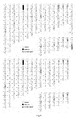
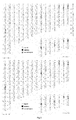
- Example 1 Using the embryo single cell sample same as that in Example 1, all steps were rereated as Example 1 except the genome DNA was directly subjected to sequencing (without firstly subjected to whole genome amplification). Comparision result between Example 1 and Example 2 was shown in Table 3, Fig.4 and Fig.5 . Table 3. Comparision result of detecting copy number variation of reads obtained by subjected each genome sample to whole genome amplification and not to whole genome amplification No.
- chromosome sequencing result of embryo single cell genome DNA (without subjected to WGA) sequencing result of embryo single cell genome DNA by the method of the present disclosure determining result S1 5 deletion: Deletion: consistent 10,002-23,312,155 63,429-23,496,649 12 repeat: repeat: consistent 145,741-14,780,155 16,037-18,926,068 S2 21 21 trisomy 21 trisomy consistent
- the method, system and computer readable medium of determining whether copy number variation presents in a genome sample of the present disclosure may be effectively used to determine whether copy number variation presents in a genome sample.
Landscapes
- Life Sciences & Earth Sciences (AREA)
- Chemical & Material Sciences (AREA)
- Physics & Mathematics (AREA)
- Engineering & Computer Science (AREA)
- Health & Medical Sciences (AREA)
- Bioinformatics & Cheminformatics (AREA)
- Proteomics, Peptides & Aminoacids (AREA)
- Analytical Chemistry (AREA)
- Biotechnology (AREA)
- General Health & Medical Sciences (AREA)
- Biophysics (AREA)
- Organic Chemistry (AREA)
- Theoretical Computer Science (AREA)
- Bioinformatics & Computational Biology (AREA)
- Evolutionary Biology (AREA)
- Medical Informatics (AREA)
- Spectroscopy & Molecular Physics (AREA)
- Wood Science & Technology (AREA)
- Zoology (AREA)
- Molecular Biology (AREA)
- Genetics & Genomics (AREA)
- General Engineering & Computer Science (AREA)
- Microbiology (AREA)
- Biochemistry (AREA)
- Immunology (AREA)
- Chemical Kinetics & Catalysis (AREA)
- Computer Hardware Design (AREA)
- Evolutionary Computation (AREA)
- Geometry (AREA)
- General Physics & Mathematics (AREA)
- Physiology (AREA)
- Measuring Or Testing Involving Enzymes Or Micro-Organisms (AREA)
- Investigating Or Analysing Biological Materials (AREA)
Applications Claiming Priority (1)
| Application Number | Priority Date | Filing Date | Title |
|---|---|---|---|
| PCT/CN2012/070680 WO2013107048A1 (zh) | 2012-01-20 | 2012-01-20 | 确定样本基因组中是否存在拷贝数变异的方法、系统和计算机可读介质 |
Publications (4)
| Publication Number | Publication Date |
|---|---|
| EP2826865A1 true EP2826865A1 (de) | 2015-01-21 |
| EP2826865A4 EP2826865A4 (de) | 2015-05-27 |
| EP2826865B1 EP2826865B1 (de) | 2017-06-21 |
| EP2826865B8 EP2826865B8 (de) | 2017-08-16 |
Family
ID=48798533
Family Applications (1)
| Application Number | Title | Priority Date | Filing Date |
|---|---|---|---|
| EP12865785.5A Active EP2826865B8 (de) | 2012-01-20 | 2012-01-20 | Verfahren und system zur bestimmung der existenz einer kopiezahlvariante in einer genomprobe und computerlesbares medium |
Country Status (10)
| Country | Link |
|---|---|
| US (1) | US20150012252A1 (de) |
| EP (1) | EP2826865B8 (de) |
| JP (1) | JP5938484B2 (de) |
| KR (1) | KR101770884B1 (de) |
| CN (1) | CN105392894B (de) |
| AU (1) | AU2012366077B2 (de) |
| IL (1) | IL233691B (de) |
| RU (1) | RU2593708C2 (de) |
| SG (1) | SG11201404079SA (de) |
| WO (1) | WO2013107048A1 (de) |
Cited By (1)
| Publication number | Priority date | Publication date | Assignee | Title |
|---|---|---|---|---|
| WO2017161201A1 (en) * | 2016-03-16 | 2017-09-21 | Cynvenio Biosystems Inc. | Cancer detection assay and related compositions, methods and systems |
Families Citing this family (28)
| Publication number | Priority date | Publication date | Assignee | Title |
|---|---|---|---|---|
| EP3204882B1 (de) | 2014-10-10 | 2025-01-01 | Life Technologies Corporation | Verfahren, systeme und computerlesbare medien zur berechnung korrigierter amplicon-abdeckungen |
| CN108090325B (zh) * | 2016-11-23 | 2022-01-25 | 中国科学院昆明动物研究所 | 一种应用β-稳定性分析单细胞测序数据的方法 |
| CN109097457A (zh) * | 2017-06-20 | 2018-12-28 | 深圳华大智造科技有限公司 | 确定核酸样本中预定位点突变类型的方法 |
| CN107590362B (zh) * | 2017-08-21 | 2019-12-06 | 武汉菲沙基因信息有限公司 | 一种基于长读序测序判断重叠组装正误的方法 |
| CN108251532B (zh) * | 2018-03-29 | 2021-12-28 | 上海锐翌生物科技有限公司 | 基于ngs技术的粪便dna结直肠肿瘤多基因预测模型 |
| CN108573125B (zh) * | 2018-04-19 | 2022-05-13 | 上海亿康医学检验所有限公司 | 一种基因组拷贝数变异的检测方法及包含该方法的装置 |
| WO2020047694A1 (zh) * | 2018-09-03 | 2020-03-12 | 深圳华大智造科技有限公司 | 确定新发突变在胚胎中的遗传状态的方法和装置 |
| CN111379032B (zh) * | 2018-12-28 | 2024-07-23 | 北京贝瑞和康生物技术有限公司 | 一种用于构建同时实现基因组拷贝数变异检测和基因突变检测的测序文库的方法和试剂盒 |
| CN111383717B (zh) * | 2018-12-29 | 2024-10-18 | 北京安诺优达医学检验实验室有限公司 | 一种构建生物信息分析参照数据集的方法及系统 |
| CN111916150B (zh) * | 2019-05-10 | 2024-09-06 | 北京贝瑞和康生物技术有限公司 | 一种基因组拷贝数变异的检测方法和装置 |
| CN114502744B (zh) * | 2019-12-11 | 2023-06-23 | 深圳华大基因股份有限公司 | 一种基于血液循环肿瘤dna的拷贝数变异检测方法和装置 |
| CN111968701B (zh) * | 2020-08-27 | 2022-10-04 | 北京吉因加科技有限公司 | 检测指定基因组区域体细胞拷贝数变异的方法和装置 |
| CN112562787B (zh) * | 2020-12-03 | 2021-09-07 | 江苏先声医学诊断有限公司 | 一种基于ngs平台的基因大片段重排检测方法 |
| EP4397773A4 (de) * | 2021-08-30 | 2025-09-10 | Guangzhou Burning Rock Dx Co Ltd | Kopienzahlvariationsdetektionsverfahren und anwendung davon |
| CN114220481B (zh) * | 2021-11-25 | 2023-09-08 | 深圳思勤医疗科技有限公司 | 基于全基因组测序完成待测样本的核型分析的方法、系统和计算机可读介质 |
| CN114999573B (zh) * | 2022-04-14 | 2023-07-07 | 哈尔滨因极科技有限公司 | 一种基因组变异检测方法及检测系统 |
| CN114792548B (zh) * | 2022-06-14 | 2022-09-09 | 北京贝瑞和康生物技术有限公司 | 校正测序数据、检测拷贝数变异的方法、设备和介质 |
| CN114758720B (zh) * | 2022-06-14 | 2022-09-02 | 北京贝瑞和康生物技术有限公司 | 用于检测拷贝数变异的方法、设备和介质 |
| CN115579054B (zh) * | 2022-11-17 | 2023-06-02 | 北京大学 | 单细胞拷贝数变异探测方法、装置、设备及介质 |
| CN117995269A (zh) * | 2022-12-30 | 2024-05-07 | 深圳市真迈生物科技有限公司 | 一种基因组拷贝数变异分析的方法、装置及存储介质 |
| CN116453588A (zh) * | 2023-04-12 | 2023-07-18 | 深圳华大基因股份有限公司 | 基于全基因组测序的strc基因拷贝数变异检测方法 |
| CN116240273B (zh) * | 2023-04-19 | 2023-08-15 | 北京优迅医学检验实验室有限公司 | 一种基于低深度全基因组测序的判断母源污染比例的方法及其应用 |
| CN116863998B (zh) * | 2023-06-21 | 2024-04-05 | 扬州大学 | 一种基于遗传算法的全基因组预测方法及其应用 |
| CN117275573B (zh) * | 2023-10-24 | 2025-12-12 | 南京格致基因生物科技有限公司 | 一种基于软硬件协同计算染色体拷贝数的方法 |
| CN117116344B (zh) * | 2023-10-25 | 2024-07-19 | 北京大学第三医院(北京大学第三临床医学院) | 一种单细胞水平pmp22重复变异的检测系统和方法 |
| CN117935907B (zh) * | 2024-01-31 | 2024-09-03 | 苏州贝康医疗器械有限公司 | 真假基因的拷贝数变异的检测方法和装置 |
| CN119091954B (zh) * | 2024-09-03 | 2025-05-30 | 浙江洛兮医学检验实验室有限公司 | 一种基于测序深度的拷贝数变异检测流程方法 |
| CN120048341B (zh) * | 2025-02-19 | 2026-04-21 | 西安交通大学 | 一种基于三代测序数据和泛基因组的结构变异检测算法、系统、设备及介质 |
Family Cites Families (8)
| Publication number | Priority date | Publication date | Assignee | Title |
|---|---|---|---|---|
| US20030082606A1 (en) * | 2001-09-04 | 2003-05-01 | Lebo Roger V. | Optimizing genome-wide mutation analysis of chromosomes and genes |
| DK2002016T3 (da) * | 2006-04-12 | 2010-03-29 | Medical Res Council | Fremgangsmåde til bestemmelse af kopital |
| US7702468B2 (en) * | 2006-05-03 | 2010-04-20 | Population Diagnostics, Inc. | Evaluating genetic disorders |
| CA3069082C (en) * | 2008-09-20 | 2022-03-22 | The Board Of Trustees Of The Leland Stanford Junior University | Noninvasive diagnosis of fetal aneuploidy by sequencing |
| CN102858995B (zh) | 2009-09-10 | 2016-10-26 | 森特瑞隆技术控股公司 | 靶向测序方法 |
| EP2513341B1 (de) * | 2010-01-19 | 2017-04-12 | Verinata Health, Inc | Identifizierung von polymorphen sequenzen in mischungen aus genomischer dna durch gesamtgenomsequenzierung |
| EP2591433A4 (de) * | 2010-07-06 | 2017-05-17 | Life Technologies Corporation | Systeme und verfahren zur erkennung von kopiennummervariationen |
| ES2741966T3 (es) * | 2011-12-31 | 2020-02-12 | Bgi Genomics Co Ltd | Método para detectar una variación genética |
-
2012
- 2012-01-20 WO PCT/CN2012/070680 patent/WO2013107048A1/zh not_active Ceased
- 2012-01-20 EP EP12865785.5A patent/EP2826865B8/de active Active
- 2012-01-20 CN CN201280067240.2A patent/CN105392894B/zh active Active
- 2012-01-20 JP JP2014552471A patent/JP5938484B2/ja active Active
- 2012-01-20 SG SG11201404079SA patent/SG11201404079SA/en unknown
- 2012-01-20 RU RU2014134175/10A patent/RU2593708C2/ru active IP Right Revival
- 2012-01-20 US US14/373,072 patent/US20150012252A1/en not_active Abandoned
- 2012-01-20 KR KR1020147023080A patent/KR101770884B1/ko active Active
- 2012-01-20 AU AU2012366077A patent/AU2012366077B2/en active Active
-
2014
- 2014-07-17 IL IL233691A patent/IL233691B/en active IP Right Grant
Cited By (1)
| Publication number | Priority date | Publication date | Assignee | Title |
|---|---|---|---|---|
| WO2017161201A1 (en) * | 2016-03-16 | 2017-09-21 | Cynvenio Biosystems Inc. | Cancer detection assay and related compositions, methods and systems |
Also Published As
| Publication number | Publication date |
|---|---|
| KR101770884B1 (ko) | 2017-09-05 |
| SG11201404079SA (en) | 2014-10-30 |
| AU2012366077B2 (en) | 2016-01-21 |
| EP2826865B8 (de) | 2017-08-16 |
| CN105392894B (zh) | 2018-05-29 |
| KR20140114442A (ko) | 2014-09-26 |
| HK1215454A1 (zh) | 2016-08-26 |
| JP5938484B2 (ja) | 2016-06-22 |
| CN105392894A (zh) | 2016-03-09 |
| AU2012366077A1 (en) | 2014-08-07 |
| RU2593708C2 (ru) | 2016-08-10 |
| JP2015506684A (ja) | 2015-03-05 |
| IL233691B (en) | 2019-01-31 |
| RU2014134175A (ru) | 2016-03-20 |
| EP2826865A4 (de) | 2015-05-27 |
| EP2826865B1 (de) | 2017-06-21 |
| IL233691A0 (en) | 2014-09-30 |
| US20150012252A1 (en) | 2015-01-08 |
| WO2013107048A1 (zh) | 2013-07-25 |
Similar Documents
| Publication | Publication Date | Title |
|---|---|---|
| EP2826865B1 (de) | Verfahren und system zur bestimmung der existenz einer kopiezahlvariante in einer genomprobe und computerlesbares medium | |
| Xiao et al. | Toward best practice in cancer mutation detection with whole-genome and whole-exome sequencing | |
| US11031100B2 (en) | Size-based sequencing analysis of cell-free tumor DNA for classifying level of cancer | |
| CN111052249A (zh) | 确定预定染色体保守区域的方法、确定样本基因组中是否存在拷贝数变异的方法、系统和计算机可读介质 | |
| CN106367512A (zh) | 一种鉴定样本中肿瘤负荷的方法和系统 | |
| CN105765076B (zh) | 一种染色体非整倍性检测方法及装置 | |
| CN119193784A (zh) | 一种基于片段组学快速检测cfDNA中微量gDNA污染的质控方法 | |
| Qian et al. | Noninvasive prenatal screening for common fetal aneuploidies using single-molecule sequencing | |
| KR102519739B1 (ko) | 2단계 Z-score에 기반한 비침습적 산전 검사 방법 및 장치 | |
| EP4711472A1 (de) | Auf dna-nanobällen basierendes verfahren zum nachweis chromosomaler aneuploidien und kopienzahlvariationen in zirkulierender freier fötaler dna | |
| KR20200085144A (ko) | 모체 시료 중 태아 분획을 결정하는 방법 | |
| HK1215454B (en) | Method and system for determining whether copy number variation exists in sample genome, and computer readable medium | |
| CN104205106A (zh) | 确定胎儿染色体非整倍性的方法、系统和计算机可读介质 | |
| HK40019612A (en) | Size-based analysis of dna for classification of cancer | |
| HK1261405B (en) | Size-based analysis of dna for classification of cancer | |
| HK40017257A (en) | Method for determining predetermined chromosomal conserved region, method for determining presence or absence of copy number variation in sample genome, and system and computer readable medium | |
| GB2564846A (en) | Prenatal screening and diagnostic system and method |
Legal Events
| Date | Code | Title | Description |
|---|---|---|---|
| PUAI | Public reference made under article 153(3) epc to a published international application that has entered the european phase |
Free format text: ORIGINAL CODE: 0009012 |
|
| 17P | Request for examination filed |
Effective date: 20140808 |
|
| AK | Designated contracting states |
Kind code of ref document: A1 Designated state(s): AL AT BE BG CH CY CZ DE DK EE ES FI FR GB GR HR HU IE IS IT LI LT LU LV MC MK MT NL NO PL PT RO RS SE SI SK SM TR |
|
| AX | Request for extension of the european patent |
Extension state: BA ME |
|
| DAX | Request for extension of the european patent (deleted) | ||
| RA4 | Supplementary search report drawn up and despatched (corrected) |
Effective date: 20150423 |
|
| RIC1 | Information provided on ipc code assigned before grant |
Ipc: C12Q 1/68 20060101AFI20150417BHEP Ipc: G06F 19/22 20110101ALI20150417BHEP |
|
| 17Q | First examination report despatched |
Effective date: 20160405 |
|
| GRAJ | Information related to disapproval of communication of intention to grant by the applicant or resumption of examination proceedings by the epo deleted |
Free format text: ORIGINAL CODE: EPIDOSDIGR1 |
|
| GRAP | Despatch of communication of intention to grant a patent |
Free format text: ORIGINAL CODE: EPIDOSNIGR1 |
|
| STAA | Information on the status of an ep patent application or granted ep patent |
Free format text: STATUS: EXAMINATION IS IN PROGRESS |
|
| GRAP | Despatch of communication of intention to grant a patent |
Free format text: ORIGINAL CODE: EPIDOSNIGR1 |
|
| STAA | Information on the status of an ep patent application or granted ep patent |
Free format text: STATUS: GRANT OF PATENT IS INTENDED |
|
| INTG | Intention to grant announced |
Effective date: 20170124 |
|
| GRAS | Grant fee paid |
Free format text: ORIGINAL CODE: EPIDOSNIGR3 |
|
| GRAA | (expected) grant |
Free format text: ORIGINAL CODE: 0009210 |
|
| STAA | Information on the status of an ep patent application or granted ep patent |
Free format text: STATUS: THE PATENT HAS BEEN GRANTED |
|
| AK | Designated contracting states |
Kind code of ref document: B1 Designated state(s): AL AT BE BG CH CY CZ DE DK EE ES FI FR GB GR HR HU IE IS IT LI LT LU LV MC MK MT NL NO PL PT RO RS SE SI SK SM TR |
|
| REG | Reference to a national code |
Ref country code: GB Ref legal event code: FG4D |
|
| REG | Reference to a national code |
Ref country code: CH Ref legal event code: EP |
|
| REG | Reference to a national code |
Ref country code: IE Ref legal event code: FG4D |
|
| REG | Reference to a national code |
Ref country code: AT Ref legal event code: REF Ref document number: 902991 Country of ref document: AT Kind code of ref document: T Effective date: 20170715 |
|
| RAP2 | Party data changed (patent owner data changed or rights of a patent transferred) |
Owner name: BGI GENOMICS CO., LTD. |
|
| REG | Reference to a national code |
Ref country code: DE Ref legal event code: R096 Ref document number: 602012033839 Country of ref document: DE |
|
| REG | Reference to a national code |
Ref country code: DE Ref legal event code: R082 Ref document number: 602012033839 Country of ref document: DE Representative=s name: MAIWALD PATENTANWALTSGESELLSCHAFT MBH, DE Ref country code: DE Ref legal event code: R082 Ref document number: 602012033839 Country of ref document: DE Representative=s name: MAIWALD PATENTANWALTS- UND RECHTSANWALTSGESELL, DE |
|
| REG | Reference to a national code |
Ref country code: NL Ref legal event code: MP Effective date: 20170621 |
|
| PG25 | Lapsed in a contracting state [announced via postgrant information from national office to epo] |
Ref country code: GR Free format text: LAPSE BECAUSE OF FAILURE TO SUBMIT A TRANSLATION OF THE DESCRIPTION OR TO PAY THE FEE WITHIN THE PRESCRIBED TIME-LIMIT Effective date: 20170922 Ref country code: HR Free format text: LAPSE BECAUSE OF FAILURE TO SUBMIT A TRANSLATION OF THE DESCRIPTION OR TO PAY THE FEE WITHIN THE PRESCRIBED TIME-LIMIT Effective date: 20170621 Ref country code: FI Free format text: LAPSE BECAUSE OF FAILURE TO SUBMIT A TRANSLATION OF THE DESCRIPTION OR TO PAY THE FEE WITHIN THE PRESCRIBED TIME-LIMIT Effective date: 20170621 Ref country code: NO Free format text: LAPSE BECAUSE OF FAILURE TO SUBMIT A TRANSLATION OF THE DESCRIPTION OR TO PAY THE FEE WITHIN THE PRESCRIBED TIME-LIMIT Effective date: 20170921 Ref country code: LT Free format text: LAPSE BECAUSE OF FAILURE TO SUBMIT A TRANSLATION OF THE DESCRIPTION OR TO PAY THE FEE WITHIN THE PRESCRIBED TIME-LIMIT Effective date: 20170621 |
|
| REG | Reference to a national code |
Ref country code: LT Ref legal event code: MG4D |
|
| REG | Reference to a national code |
Ref country code: AT Ref legal event code: MK05 Ref document number: 902991 Country of ref document: AT Kind code of ref document: T Effective date: 20170621 |
|
| PG25 | Lapsed in a contracting state [announced via postgrant information from national office to epo] |
Ref country code: NL Free format text: LAPSE BECAUSE OF FAILURE TO SUBMIT A TRANSLATION OF THE DESCRIPTION OR TO PAY THE FEE WITHIN THE PRESCRIBED TIME-LIMIT Effective date: 20170621 Ref country code: BG Free format text: LAPSE BECAUSE OF FAILURE TO SUBMIT A TRANSLATION OF THE DESCRIPTION OR TO PAY THE FEE WITHIN THE PRESCRIBED TIME-LIMIT Effective date: 20170921 Ref country code: LV Free format text: LAPSE BECAUSE OF FAILURE TO SUBMIT A TRANSLATION OF THE DESCRIPTION OR TO PAY THE FEE WITHIN THE PRESCRIBED TIME-LIMIT Effective date: 20170621 Ref country code: RS Free format text: LAPSE BECAUSE OF FAILURE TO SUBMIT A TRANSLATION OF THE DESCRIPTION OR TO PAY THE FEE WITHIN THE PRESCRIBED TIME-LIMIT Effective date: 20170621 Ref country code: SE Free format text: LAPSE BECAUSE OF FAILURE TO SUBMIT A TRANSLATION OF THE DESCRIPTION OR TO PAY THE FEE WITHIN THE PRESCRIBED TIME-LIMIT Effective date: 20170621 |
|
| PG25 | Lapsed in a contracting state [announced via postgrant information from national office to epo] |
Ref country code: EE Free format text: LAPSE BECAUSE OF FAILURE TO SUBMIT A TRANSLATION OF THE DESCRIPTION OR TO PAY THE FEE WITHIN THE PRESCRIBED TIME-LIMIT Effective date: 20170621 Ref country code: CZ Free format text: LAPSE BECAUSE OF FAILURE TO SUBMIT A TRANSLATION OF THE DESCRIPTION OR TO PAY THE FEE WITHIN THE PRESCRIBED TIME-LIMIT Effective date: 20170621 Ref country code: RO Free format text: LAPSE BECAUSE OF FAILURE TO SUBMIT A TRANSLATION OF THE DESCRIPTION OR TO PAY THE FEE WITHIN THE PRESCRIBED TIME-LIMIT Effective date: 20170621 Ref country code: SK Free format text: LAPSE BECAUSE OF FAILURE TO SUBMIT A TRANSLATION OF THE DESCRIPTION OR TO PAY THE FEE WITHIN THE PRESCRIBED TIME-LIMIT Effective date: 20170621 Ref country code: AT Free format text: LAPSE BECAUSE OF FAILURE TO SUBMIT A TRANSLATION OF THE DESCRIPTION OR TO PAY THE FEE WITHIN THE PRESCRIBED TIME-LIMIT Effective date: 20170621 |
|
| REG | Reference to a national code |
Ref country code: FR Ref legal event code: PLFP Year of fee payment: 7 |
|
| PG25 | Lapsed in a contracting state [announced via postgrant information from national office to epo] |
Ref country code: SM Free format text: LAPSE BECAUSE OF FAILURE TO SUBMIT A TRANSLATION OF THE DESCRIPTION OR TO PAY THE FEE WITHIN THE PRESCRIBED TIME-LIMIT Effective date: 20170621 Ref country code: IT Free format text: LAPSE BECAUSE OF FAILURE TO SUBMIT A TRANSLATION OF THE DESCRIPTION OR TO PAY THE FEE WITHIN THE PRESCRIBED TIME-LIMIT Effective date: 20170621 Ref country code: PL Free format text: LAPSE BECAUSE OF FAILURE TO SUBMIT A TRANSLATION OF THE DESCRIPTION OR TO PAY THE FEE WITHIN THE PRESCRIBED TIME-LIMIT Effective date: 20170621 Ref country code: IS Free format text: LAPSE BECAUSE OF FAILURE TO SUBMIT A TRANSLATION OF THE DESCRIPTION OR TO PAY THE FEE WITHIN THE PRESCRIBED TIME-LIMIT Effective date: 20171021 Ref country code: ES Free format text: LAPSE BECAUSE OF FAILURE TO SUBMIT A TRANSLATION OF THE DESCRIPTION OR TO PAY THE FEE WITHIN THE PRESCRIBED TIME-LIMIT Effective date: 20170621 |
|
| REG | Reference to a national code |
Ref country code: DE Ref legal event code: R097 Ref document number: 602012033839 Country of ref document: DE |
|
| PLBE | No opposition filed within time limit |
Free format text: ORIGINAL CODE: 0009261 |
|
| STAA | Information on the status of an ep patent application or granted ep patent |
Free format text: STATUS: NO OPPOSITION FILED WITHIN TIME LIMIT |
|
| PG25 | Lapsed in a contracting state [announced via postgrant information from national office to epo] |
Ref country code: DK Free format text: LAPSE BECAUSE OF FAILURE TO SUBMIT A TRANSLATION OF THE DESCRIPTION OR TO PAY THE FEE WITHIN THE PRESCRIBED TIME-LIMIT Effective date: 20170621 |
|
| 26N | No opposition filed |
Effective date: 20180322 |
|
| PG25 | Lapsed in a contracting state [announced via postgrant information from national office to epo] |
Ref country code: SI Free format text: LAPSE BECAUSE OF FAILURE TO SUBMIT A TRANSLATION OF THE DESCRIPTION OR TO PAY THE FEE WITHIN THE PRESCRIBED TIME-LIMIT Effective date: 20170621 |
|
| REG | Reference to a national code |
Ref country code: CH Ref legal event code: PL |
|
| PG25 | Lapsed in a contracting state [announced via postgrant information from national office to epo] |
Ref country code: LU Free format text: LAPSE BECAUSE OF NON-PAYMENT OF DUE FEES Effective date: 20180120 |
|
| REG | Reference to a national code |
Ref country code: IE Ref legal event code: MM4A |
|
| REG | Reference to a national code |
Ref country code: BE Ref legal event code: MM Effective date: 20180131 |
|
| PG25 | Lapsed in a contracting state [announced via postgrant information from national office to epo] |
Ref country code: BE Free format text: LAPSE BECAUSE OF NON-PAYMENT OF DUE FEES Effective date: 20180131 Ref country code: LI Free format text: LAPSE BECAUSE OF NON-PAYMENT OF DUE FEES Effective date: 20180131 Ref country code: CH Free format text: LAPSE BECAUSE OF NON-PAYMENT OF DUE FEES Effective date: 20180131 |
|
| PG25 | Lapsed in a contracting state [announced via postgrant information from national office to epo] |
Ref country code: IE Free format text: LAPSE BECAUSE OF NON-PAYMENT OF DUE FEES Effective date: 20180120 |
|
| PG25 | Lapsed in a contracting state [announced via postgrant information from national office to epo] |
Ref country code: MC Free format text: LAPSE BECAUSE OF FAILURE TO SUBMIT A TRANSLATION OF THE DESCRIPTION OR TO PAY THE FEE WITHIN THE PRESCRIBED TIME-LIMIT Effective date: 20170621 |
|
| PG25 | Lapsed in a contracting state [announced via postgrant information from national office to epo] |
Ref country code: MT Free format text: LAPSE BECAUSE OF NON-PAYMENT OF DUE FEES Effective date: 20180120 |
|
| PG25 | Lapsed in a contracting state [announced via postgrant information from national office to epo] |
Ref country code: TR Free format text: LAPSE BECAUSE OF FAILURE TO SUBMIT A TRANSLATION OF THE DESCRIPTION OR TO PAY THE FEE WITHIN THE PRESCRIBED TIME-LIMIT Effective date: 20170621 |
|
| PG25 | Lapsed in a contracting state [announced via postgrant information from national office to epo] |
Ref country code: HU Free format text: LAPSE BECAUSE OF FAILURE TO SUBMIT A TRANSLATION OF THE DESCRIPTION OR TO PAY THE FEE WITHIN THE PRESCRIBED TIME-LIMIT; INVALID AB INITIO Effective date: 20120120 Ref country code: PT Free format text: LAPSE BECAUSE OF FAILURE TO SUBMIT A TRANSLATION OF THE DESCRIPTION OR TO PAY THE FEE WITHIN THE PRESCRIBED TIME-LIMIT Effective date: 20170621 |
|
| PG25 | Lapsed in a contracting state [announced via postgrant information from national office to epo] |
Ref country code: MK Free format text: LAPSE BECAUSE OF NON-PAYMENT OF DUE FEES Effective date: 20170621 Ref country code: CY Free format text: LAPSE BECAUSE OF FAILURE TO SUBMIT A TRANSLATION OF THE DESCRIPTION OR TO PAY THE FEE WITHIN THE PRESCRIBED TIME-LIMIT Effective date: 20170621 |
|
| PG25 | Lapsed in a contracting state [announced via postgrant information from national office to epo] |
Ref country code: AL Free format text: LAPSE BECAUSE OF FAILURE TO SUBMIT A TRANSLATION OF THE DESCRIPTION OR TO PAY THE FEE WITHIN THE PRESCRIBED TIME-LIMIT Effective date: 20170621 |
|
| P01 | Opt-out of the competence of the unified patent court (upc) registered |
Effective date: 20230530 |
|
| PGFP | Annual fee paid to national office [announced via postgrant information from national office to epo] |
Ref country code: GB Payment date: 20260127 Year of fee payment: 15 |
|
| PGFP | Annual fee paid to national office [announced via postgrant information from national office to epo] |
Ref country code: DE Payment date: 20260114 Year of fee payment: 15 |
|
| PGFP | Annual fee paid to national office [announced via postgrant information from national office to epo] |
Ref country code: FR Payment date: 20260128 Year of fee payment: 15 |