EP2828400B1 - Verfahren zum bewerten der rna-qualität - Google Patents
Verfahren zum bewerten der rna-qualität Download PDFInfo
- Publication number
- EP2828400B1 EP2828400B1 EP13710858.5A EP13710858A EP2828400B1 EP 2828400 B1 EP2828400 B1 EP 2828400B1 EP 13710858 A EP13710858 A EP 13710858A EP 2828400 B1 EP2828400 B1 EP 2828400B1
- Authority
- EP
- European Patent Office
- Prior art keywords
- rna
- degradation
- cdna
- mrna
- primer
- Prior art date
- Legal status (The legal status is an assumption and is not a legal conclusion. Google has not performed a legal analysis and makes no representation as to the accuracy of the status listed.)
- Active
Links
Images









Classifications
-
- C—CHEMISTRY; METALLURGY
- C12—BIOCHEMISTRY; BEER; SPIRITS; WINE; VINEGAR; MICROBIOLOGY; ENZYMOLOGY; MUTATION OR GENETIC ENGINEERING
- C12Q—MEASURING OR TESTING PROCESSES INVOLVING ENZYMES, NUCLEIC ACIDS OR MICROORGANISMS; COMPOSITIONS OR TEST PAPERS THEREFOR; PROCESSES OF PREPARING SUCH COMPOSITIONS; CONDITION-RESPONSIVE CONTROL IN MICROBIOLOGICAL OR ENZYMOLOGICAL PROCESSES
- C12Q1/00—Measuring or testing processes involving enzymes, nucleic acids or microorganisms; Compositions therefor; Processes of preparing such compositions
- C12Q1/68—Measuring or testing processes involving enzymes, nucleic acids or microorganisms; Compositions therefor; Processes of preparing such compositions involving nucleic acids
- C12Q1/6844—Nucleic acid amplification reactions
- C12Q1/686—Polymerase chain reaction [PCR]
-
- C—CHEMISTRY; METALLURGY
- C12—BIOCHEMISTRY; BEER; SPIRITS; WINE; VINEGAR; MICROBIOLOGY; ENZYMOLOGY; MUTATION OR GENETIC ENGINEERING
- C12Q—MEASURING OR TESTING PROCESSES INVOLVING ENZYMES, NUCLEIC ACIDS OR MICROORGANISMS; COMPOSITIONS OR TEST PAPERS THEREFOR; PROCESSES OF PREPARING SUCH COMPOSITIONS; CONDITION-RESPONSIVE CONTROL IN MICROBIOLOGICAL OR ENZYMOLOGICAL PROCESSES
- C12Q1/00—Measuring or testing processes involving enzymes, nucleic acids or microorganisms; Compositions therefor; Processes of preparing such compositions
- C12Q1/68—Measuring or testing processes involving enzymes, nucleic acids or microorganisms; Compositions therefor; Processes of preparing such compositions involving nucleic acids
- C12Q1/6809—Methods for determination or identification of nucleic acids involving differential detection
Definitions
- the present description refers to methods for the assessment of RNA quality in a sample.
- Stable RNA is used as a reference for the assessment of RNA quality, wherein the stable RNA has low susceptibility to nuclease degradation.
- Nucleic acid analysis is most important in molecular diagnostics and molecular research. For quantitative analysis the most popular and accurate technology is quantitative real-time polymerase chain reaction (qPCR). Specific DNA targets are easy to quantify with qPCR. The DNA molecule is stable, resistant, and easy to purify. RNA targets are much more challenging. The RNA molecule is not particularly stable. It is self-cleaved at low as well as high pH and at elevated temperature. It is susceptible to UV-light and many chemicals, which either cleave it or modify it such that the RNA cannot be reverse transcribed into cDNA for subsequent qPCR analysis, it is also prone to cleavage by nucleases. Degraded RNA may escape detection and partially degraded RNA may be erroneously quantified.
- qPCR quantitative real-time polymerase chain reaction
- RNA integrity is essential, since degradation may affect the compared RNAs differently.
- the importance of RNA quality in quantitative analysis has led to the development of methods to assess sample integrity.
- electrophoresis The RNA contained in a matrix is separated based on length in an electric field and stained. Initially agarose gels were used, but have been replaced by more powerful systems such as capillary electrophoresis and microfluidics represented by the Bioanalyzer (Agilent), ExperionTM System (Bio-Rad), QIAxel (Qiagen) and the ScreenTape (Agilent).
- RNA Integrity Number RIN
- RQI RNA quality indicator
- RINe RNA Integrity Number Equivalent
- the approach works well, but suffers from the fact that most of the RNA, typically > 80%, is ribosomal RNA (rRNA) and the electropherogram is dominated by the 18S and 28S rRNA species (in mammalian systems). Hence, the approach assesses the quality of rRNA rather than of the targeted mRNA. Since rRNA molecules are very different from mRNA molecules, for example they have neither 5'-CAP nor A-tail and they are complexed with ribosomal proteins in the cell, they may experience different degradation. Hence, the quality measure obtained from electrophoretic analysis of RNA may not be relevant for expression analysis.
- a method to assess the integrity of mRNA directly is known in the art ( WO 2005/090609 A1 ; Swift et al., BioTechniques 28 (2000) 524-531 ).
- the method is based on directed reverse transcription of the RNA molecule to produce cDNA.
- the reverse transcription is initiated at the mRNA 3'-end by hybridizing an oligo(T) primer to the A-tail of mRNA or by hybridizing a gene specific primer to a particular mRNA target.
- the cDNA is then amplified using two PCR assays targeting sequences at different distances from the RT primer.
- One PCR assay amplifies a sequence closer to the RT primer and hence to the mRNA 3'-end and the other PCR assay amplifies a sequence further away from the RT primer.
- the two PCR assays may share reverse primer, if they extend differently, but not the forward primer. If the mRNA was intact the RT primer is expected to be extended all the way to the mRNA 5'-end and the two PCR assays shall produce the same amount of amplicon, which is readily measured if the PCR is performed as qPCR.
- a sample contains fragmented nucleic acids or oligonucleotides (even very short ones), these will act as primers in the reverse transcription, and the effect of the necessary directional priming will be obscured. Since all degraded samples contain fragments that may prime the reverse transcription the dynamic range of the 3'/5' assay is inherently limited. Another limitation of the 3'/5' assay is that it only detects partially fragmented RNA; it will not reflect total loss of mRNA due to degradation. This is serious drawback since nucleolytic degradation, which is of major concern in biological samples, often degrades an mRNA fully once degradation is initiated. Exonucleases bind either the 3' or 5' end of the mRNA and degrades its full length to very short fragments. These fragments go undetected by the 3'/5' assay.
- the technical problem underlying the present description was to provide an improved method which overcomes the above drawbacks and allows for a more accurate assessment of the quality of the RNA used as a starting material for analysis and in particular for RT-qPCR experiments.
- the present description is directed to a method for the quality control of RNA used as a starting material for RNA analysis in particular by RT-qPCR.
- the improvement is based on the fact that the assay for assessing the quality is performed using RNA which is highly resistant to degradation processes, particularly to degradation processes caused by nucleases.
- the present description is directed to a method for RNA quality control in real-time PCR experiments, the method comprising the steps of preparing cDNA from RNA, quantifying by amplification at least one amplicon of a first cDNA, wherein the first cDNA derives from mRNA, quantifying by amplification at least one amplicon of a second cDNA, wherein the second cDNA derives from comparably stable "tester" RNA such as ribosomal RNA, mitochondrial RNA, chloroplast RNA and small nuclear RNA, assessing the quality of the mRNA by comparing the amount of the at least one amplicon of the first cDNA with the amount of the at least one amplicon of the second cDNA. In most cases the stable RNA has low susceptibility to nuclease degradation.
- the following steps are performed separately from the two quantification steps and the assessment step described in the previous paragraph. Quantifying by amplification at least two amplicons of the second cDNA, and assessing the quality of the stable RNA by comparing the amounts of the at least two amplicons of the second cDNA.
- the above step of preparing cDNA from RNA is performed by using random sequence primers, oligo-dT-primers, sequence specific primers or a mixture thereof.
- the mRNA derives from a gene with an expression that is essentially invariant of the physiological status of a cell, in a particular when a drug treatment is being studied.
- the mRNA derives from Alu repeats.
- testing RNA is a mitochondrial RNA or chloroplast RNA.
- mitochondrial RNA is MTCO1.
- the testing RNA is a ribosomal RNA.
- the testing RNA is a small nuclear RNA such as U3, U6 or the like.
- said testing RNA is selected from a goup of U3 and 18s RNA.
- the comparison of the step of assessing the quality of the mRNA in the sample is performed using the geometric mean expression of multiple mRNAs.
- the amplification of the at least two amplicons of the second cDNA is performed using one common primer for the at least two amplicons.
- at least one of the primers used for preparing cDNA from RNA present in the sample is identical to at least one of the primers used for the quantification by amplification of at least one amplicon of the second cDNA, wherein the second cDNA derives from stable RNA.
- the first of the at least two amplicons mentioned above has a length of less than 100 bp and the second of the at least two amplicons mentioned above has a length of at least 100 bp.
- the first set of primers comprises random sequence primers, oligo-dT-primers, sequence specific primers or a mixture thereof.
- the second set of primers specifically binds within a gene with an expression that is essentially invariant of the treatment studied.
- the second set of primers specifically binds within Alu repeats.
- the third set of primers is designed such that at least two amplicons are amplified, the first of the at least two amplicons has a length of less than 100 bp and wherein the second of the at least two amplicons has a length of at least 100 bp.
- the amplification of the at least two amplicons is performed using one common primer.
- the stable RNA is a mitochondrial RNA or chloroplast RNA.
- the mitochondrial RNA is MTCO1.
- the term "amplicon” refers to a nucleic acid molecule comprising a nucleotide sequence.
- the term “amplicon” refers to a nucleic acid molecule comprising a nucleotide sequence, wherein the nucleic acid molecule was generated by performing an amplification reaction, such as qPCR.
- the length and the sequence of the nucleic acid molecule are determined by the sequence and the binding sites of the primers used in the amplification reaction. Amplicons according to the description may range in lengths from 20 to 400 bp. Three lengths of amplicons are of importance within the description: Short amplicons (S) shorter than 100 bp, medium length amplicons (M) from 100 to 200 bp, and long amplicons (L) longer than 300 bp.
- 3'/5' assay is used herein as known to the expert skilled in the art and refers to the strategy to test integrity of RNA as described in Nolan et al., Nat. Protoc. 1 (2006) 1559-1582 and variations of it that are obvious to a person skilled in the art.
- cDNA refers to a nucleotide sequence complementary or identical to an RNA sequence in either single stranded or double stranded form.
- the terms “complementary” or “complementarity” are used in reference to polynucleotides related by the base-pairing rules.
- the sequence “5'-A-G-T-3'” is complementary to the sequence “3'-T-C-A-5'.”
- Complementarity may be “partial,” in which only some of the nucleic acids' bases are matched according to the base pairing rules. Or, there may be “complete” or “total” complementarity between the nucleic acids. The degree of complementarity between nucleic acid strands has significant effects on, for example, the efficiency and strength of hybridization between nucleic acid strands, amplification specificity, etc.
- fragment refers to a nucleic acid molecule comprising a nucleotide sequence. Particularly, the term “fragment” refers to a nucleic acid molecule comprising a nucleotide sequence, wherein the nucleic acid molecule is a part of a longer native nucleic acid molecule, such as native RNA molecule, typically generated by degradation or cleavage of the native molecule.
- gene specific primer refers to a nucleic acid molecule comprising a nucleotide sequence.
- gene specific primer refers to a synthetic nucleic acid molecule, typically an oligonucleotide of length 7 - 50 bases, usually predominantly composed of natural deoxyribonucleosides, though ribonucleosides and various synthetic variants such as locked nucleotides (LNA), peptide nucleotides (PNA) and the like may be used in part or fully.
- LNA locked nucleotides
- PNA peptide nucleotides
- the gene specific primer has a sequence that is sufficiently complementary to a sequence in particular RNA molecules to hybridize to it and act as primer for an extension reaction by a suitable polymerase such as a reverse transcriptase.
- hybridization is used in reference to the pairing of complementary nucleic acids. Hybridization and the strength of hybridization (i.e., the strength of the association between the nucleic acids) is impacted by such factors as the degree of complementary between the nucleic acids, stringency of the conditions involved, the Tm of the formed hybrid, and the G:C ratio within the nucleic acids. While the description is not limited to a particular set of hybridization conditions, stringent hybridization conditions are preferably employed. Stringent hybridization conditions are sequence-dependent and will differ with varying environmental parameters (e.g., salt concentrations, and presence of organics).
- stringent conditions are selected to be about 5°C to 20°C lower than the thermal melting point (Tm) for the specific nucleic acid sequence at a defined ionic strength and pH.
- Tm thermal melting point
- stringent conditions are about 5°C to 10°C lower than the thermal melting point for a specific nucleic acid bound to a complementary nucleic acid.
- the Tm is the temperature (under defined ionic strength and pH) at which 50% of a nucleic acid (e.g., tag nucleic acid) hybridizes to a perfectly matched probe.
- mRNA refers to pre-mRNA, pre-mRNA transcripts, mRNA, transcript processing intermediates, mature mRNA used for translation and transcripts from a gene or genes, or nucleic acids derived therefrom.
- Transcript processing includes processes such as splicing, editing, modifying and degrading.
- mRNA including samples include, but are not limited to mRNA, mRNA transcripts of the gene or genes, RNA transcribed from amplified DNA, cRNA transcribed from cDNA, DNA amplified from the genes, and the like.
- nucleic acid is used herein as known to the expert skilled in the art and refers to a macromolecule composed of chains of monomeric nucleotides, wherein each nucleotide consists of three components: a nitrogenous heterocyclic base, which is either a purine or pyrimidine; a pentose sugar; and a phosphate group.
- nucleic acid molecule refers to any nucleic acid containing molecule, including but not limited to, DNA or RNA.
- the term encompasses sequences that include any of the known base analogs of DNA and RNA including, but not limited to, 4-acetylcytosine, 8-hydroxy-N6-methyladenosine, aziridinylcytosine, pseudoisocytosine, 5-(carboxyhydroxylmethyl) uracil, 5-fluorouracil, 5-bromouracil, 5-carboxymethylaminomethyl- 2-thiouracil, 5-carboxymethylaminomethyluracil, dihydrouracil, inosine, N6-isopentenyladenine, 1-methyladenine, 1-methylpseudouracil, 1-methylguanine, 1-methylinosine, 2,2-dimethylguanine, 2-methyladenine, 2-methylguanine, 3-methylcytosine, 5-methylcytosine, N6-methyladenine,
- oligo-dT-primer is used herein as known to the expert skilled in the art and refers to a synthetic oligonucleotide that hybridizes with substantial affinity to an uninterrupted stretch of adenine nucleotides in RNA or DNA.
- the bases of the oligo-dT-primer as referred to here are composed of essentially only thymine residues that may be deoxyribonucleotides or ribonucleotides (oligo-T-primer) and may contain modified nucleotides, such as LNA and PNA.
- the oligo-dT-primer may also have one or more anchor nucleotides, i.e., one or several other nucleotides at its 3'-terminal.
- oligonucleotide refers to a molecule comprised of two or more deoxyribonucleotides or ribonucleotides, preferably more than three, and usually more than ten. The exact size will depend on many factors, which in turn depends on the ultimate function or use of the oligonucleotide.
- the oligonucleotide may be generated in any manner, including chemical synthesis, DNA replication, reverse transcription, or a combination thereof.
- the term oligonucleotide may also be used interchangeably with the term “polynucleotide.”
- PCR polymerase chain reaction
- PCR refers to a method for increasing the concentration of a specific segment of a target sequence (amplicon) in a mixture of genomic DNA without cloning or purification.
- This process for amplifying the target sequence consists of introducing a large excess of two primers to the DNA mixture containing the desired target sequence, followed by a precise sequence of thermal cycling in the presence of a DNA polymerase.
- the two primers are complementary to their respective strands of the double stranded target sequence.
- the mixture is denatured and the primers then annealed to their complementary sequences within the target molecule.
- the primers are extended with a polymerase so as to form a new pair of complementary strands.
- the steps of denaturation, primer annealing, and polymerase extension can be repeated many times (i.e., denaturation, annealing and extension constitute one "cycle”; there can be numerous “cycles”) to obtain a high concentration of an amplified segment (amplicon) of the desired target sequence.
- the length of the amplified segment (amplicon) of the desired target sequence is determined by the relative positions of the primers with respect to each other, and therefore, this length is a controllable parameter.
- PCR it is possible to amplify a single copy of a specific target sequence in genomic DNA to a level detectable by several different methodologies known to those skilled in the art.
- any oligonucleotide or polynucleotide sequence can be amplified with the appropriate set of primer molecules.
- the amplified segments created by the PCR process itself are, themselves, efficient templates for subsequent PCR amplifications.
- the term "primer” refers to an oligonucleotide, whether occurring naturally as in a purified restriction digest or produced synthetically, that is capable of acting as a point of initiation of synthesis when placed under conditions in which synthesis of a primer extension product that is complementary to a nucleic acid strand is induced, (i.e., in the presence of nucleotides and an inducing agent such as DNA polymerase and at a suitable temperature and pH).
- the primer is preferably single stranded for maximum efficiency in amplification, but may alternatively be double stranded. If double stranded, the primer is first treated to separate its strands before being used to prepare extension products.
- the primer is an oligodeoxyribonucleotide.
- the primer must be sufficiently long to prime the synthesis of extension products in the presence of the inducing agent. The exact lengths of the primers will depend on many factors, including temperature, source of primer and the use of the method.
- probe refers to an oligonucleotide (i.e., a sequence of nucleotides), whether occurring naturally as in a purified restriction digest or produced synthetically, recombinantly or by PCR amplification, that is capable of hybridizing to at least a portion of another oligonucleotide of interest.
- a probe may be single-stranded or double-stranded, however in the present description the probes are intended to be single stranded. Probes are useful in the detection, identification and isolation of particular gene sequences.
- random primer or “random sequence primer” is used herein as known to the expert skilled in the art and refers to a primer or a set of primers having a random sequence of 4, 5, 6, 7, 8, 9, 10, 11, 12 or more nucleotides that represent the majority or at least a substantial part of all sequences of that particular length.
- random sequence in this context means that the position of alignment and binding of the primer to a target nucleic acid is substantially indeterminate regarding the template under conditions wherein the primer is used to initiate polymerization of a complementary nucleic acid.
- reaction mixture refers to an aqueous solution comprising various reagents used for amplification of one or more target nucleic acids, including enzymes, aqueous buffers, salts, primers, target nucleic acid, and nucleoside triphosphates.
- the mixture can be either a complete or incomplete amplification reaction mixture.
- qPCR real time PCR
- a signal e.g. a fluorescence signal
- the signal increases in direct proportion to the amount of produced amplicon.
- FRET Fluorescence Resonance Energy Transfer
- RNA quality control is used herein as known to the expert skilled in the art and refers to a quality control method for assessing the initial quality of RNA introduced into analysis usually by reverse transcription followed by a method to quantify DNA such as real-time PCR, microarray hybridization or sequencing or the like. In particular it is assessed if the quantification of RNA by the chosen method is reliable or not, due to the quality of the RNA tested.
- RT-qPCR refers to reverse transcription PCR followed by quantitative amplification.
- RT-qPCR is used to transcribe RNA into complementary DNA (cDNA) under the usage of the enzyme reverse transcriptase. Subsequently, the cDNA is applied to amplification by PCR.
- sample is used in its broadest sense. In one sense, it is meant to include a nucleic acid specimen obtained from any source.
- Biological nucleic acid samples may be obtained from animals (including humans) and encompass nucleic acids isolated from fluids, solids, tissues, etc.
- Biological nucleic acid sample may also come from non-human animals, including, but are not limited to, vertebrates such as rodents, non-human primates, ovines, bovines, ruminants, lagomorphs, porcines, caprines, equines, canines, felines, aves, etc.
- Biological nucleic acids may also be obtained from prokaryotes, like bacteria and other non-animal eukaryotes such as plants. It is contemplated that the present description is not limited by the source of nucleic acids sample, and any nucleic acid from any biological Kingdom finds utility in methods as described herein.
- the term "set of primers” is used herein as known to the expert skilled in the art and refers to a group of primers which is required for carrying out an amplification, such as a PCR.
- the set of primers consists of at least one primer.
- the set of primers may consist of at least two primers, which specifically bind to two different positions of the nucleic acid template.
- Two primers flanking a sequence of interest, which is amplified during the amplification reaction, are called forward and reverse primer, respectively.
- Such forward and reverse primer is also referred to as primer pair.
- the terms forward and reversed primers are here primarily used for convenience to label the two primers in pair different. The labeling originates from that used in primer design software.
- set of primers may also refer to a multitude of different primers, such as random sequence primers.
- the term may also refer to primers utilized in at least two assays. If two assays according to the description are performed, two forward and two reverse primers are used in order to produce two amplicons. If three assays according to the description are performed, three pairs of primers are used in order to produce three amplicons.
- testing RNA (herein also referred to as “stable RNA”) is used herein as known to the expert skilled in the art and refers to RNA that is more resistant to at least some forms of degradation, usually degradation involving RNA nucleases, than average or bulk mRNA.
- the stable RNA can be chemically different or naturally modified as compared to regular mRNA.
- the testing RNA may comprise a modified or less common 5'-cap structure. Such modification may be m 3 2,2,7 GpppN, m 7 GpppNm 2'-O , m 7 GpppNm 2'-O pNm 2'-O p, or ⁇ -methyl-phosphate.
- the testing RNA may lack the 5'-cap structure.
- testing RNA can comprise a poly-A-tail or the stable RNA can lack the poly-A-tail. Possible are also combinations of the above elements, which are comprised within the stable RNA: i) a modified 5'-cap structure and a poly-A-tail, ii) a modified 5'-cap structure and no poly-A-tail, iii) no 5'-cap structure but a poly-A-tail, iv) no 5'-cap structure and no poly-A-tail.
- the term "testing RNA” further refers to RNA which can be compartmentalized in the cell to be protected from nucleases.
- RNA may originate from structural or metabolic genes, which under conditions of inhibited transcription in some cell lines show longest half-lives ( Sharova, L.V. et al., DNA Res. 16 (2009) 45-58 ).
- testing RNA particularly refers to RNAs selected from a group of ribosomal RNA, mitochondrial RNA, chloroplast RNA and small nuclear RNA.As described here such stable testing RNA can be mitochondrially encoded cytochrome c oxidase I (MTCO1), also known as cytochrome c oxidase I (COX1), transcript which is less susceptible to degradation by RNases as compared to nucleus encoded mRNA.
- MTCO1 mitochondrially encoded cytochrome c oxidase I
- COX1 cytochrome c oxidase I
- Other testing RNAs include ribosomal 18S RNA and the structural U3.
- mRNA or RNA with high susceptibility to degradation exhibits a high degree degradation, which means that a pool of mRNA or RNA which was originally present in the cell or tissue is strongly affected by degradation processes leading to extensive fragmentation of the mRNA or RNA molecules.
- mRNA or RNA with low susceptibility to degradation exhibits a low degree of degradation or no degeneration, which means that a pool of mRNA or RNA which was originally present in the cell or tissue is slightly or not affected by degradation processes.
- the bulk of mRNA or RNA molecules with low susceptibility within that pool are unaffected by the degradation processes and are thus still present in essentially their original lengths.
- the first step in gene expression experiments is the isolation of RNA from a sample.
- the sample can originate from any organism, such as human, monkey, rabbit, goat, mouse, rat, fish, bacteria, virus, parasite, fungi and can be isolated from the organism but also from other specimens such as but not limited to water, soil, air, scrapes.
- the sample can be fixed by any crosslinking agent known in the art, such as formalin.
- the sample is a formalin fixed paraffin embedded (FFPE) sample. Due to the formalin fixation, the samples can exhibit a high degree of RNA degradation. The degradation induced by the formalin fixation can be regarded as physical and/or chemical degradation. During formalin fixation the proteins within the tissue are crosslinked via covalent chemical bonds.
- RNAlater® RNAstable®
- PaxGene® blood or tissue alcohol, HOPE®, GenTegraTM and the like.
- degradation processes can be of physical nature, e.g. degradation induced by UV light, heat or shear forces. Such physical degradation, however, can also be induced by fixation of samples with crosslinking substances. Furthermore, degradation processes can be of enzymatic nature, e.g.
- nucleases typically ribonucleases (also called RNases), which can be exoribonucleases such as RNase A, RNase H, RNase I, RNase III, RNase L, RNase P, RNase PhyM, RNase T1, RNase T2, RNase U2, RNase VI, RNase V or endoribonucleases PNpase, RNase PH, RNase II, RNase R, RNase D, RNase T, oligoribonuclease, exoribonuclease I and exoribonulcease II.
- RNases ribonucleases
- nucleases degrading the RNA can originate from the sample studied but can also come externally.
- RNA quality in a sample is essential.
- One aspect of the description is a method to assess RNA quality in a sample for more reliable and accurate results in gene expression analysis.
- the method comprises the steps of preparing cDNA from RNA present in the sample, quantifying by amplification at least one amplicon of a first cDNA in the sample, wherein the first cDNA derives from mRNA, quantifying by amplification at least one amplicon of a second cDNA, wherein the second cDNA derives from stable RNA, assessing the quality of the mRNA in the sample by comparing the amount of the at least one amplicon of the first cDNA with the amount of the at least one amplicon of the second cDNA, wherein the stable RNA used to produce the second cDNA has low susceptibility to nuclease degradation.
- These steps are basically used for assessing the grade of degradation caused by enzymes, such as nucleases.
- the mRNA to be analyzed or mRNA, from which information on the grade of degradation can be extrapolated to the mRNA to be analyzed, is compared to the stable RNA not affected by enzymatic degradation.
- the method comprises the step of preparing cDNA from RNA present in the sample.
- the RNA molecules present in a sample are converted into cDNA by reverse transcription.
- the conversion of RNA present in the sample into cDNA is performed, i.e. the conversion by reverse transcriptase leads to the production of a pool of cDNA molecules reflecting a part of or all RNA molecules present in the sample.
- the reverse transcription can be performed with any of the methods known in the art, such as methods using random sequence primers, oligo-dT-primers, sequence specific primers or a mixture thereof.
- a mixture of random sequence primers and oligo(dT) primers may be used producing cDNA at higher yield.
- the length of the random sequence primers can vary from 4 to 20 nucleotides. In a specific embodiment the length of the random sequence primers can vary from 5 to 10 nucleotides. In a more specific embodiment the length of the random sequence primers is exactly 6 nucleotides. All reagents which are necessary to perform reverse transcription such as buffers, primers and desoxynucleotides are well known in the art. Furthermore, an optimization of concentrations used in the context of the present description can be obtained through routine experimentation.
- the step of preparing cDNA from RNA present in the sample is followed by quantifying by amplification at least one amplicon of a first cDNA in the sample, wherein the first cDNA derives from mRNA, and quantifying by amplification at least one amplicon of a second cDNA, wherein the second cDNA derives from stable RNA.
- at least one of the primers used for the reverse transcription described above is identical to at least one of the primers used for the amplification of the at least one amplicon of the second cDNA. This strategy is particularly advantageous in 1-step RT-qPCR protocols.
- the following additional steps may be performed optionally: quantifying by amplification at least two amplicons of the second cDNA and assessing the quality of the stable RNA in the sample by comparing the amounts of the at least two amplicons of the second cDNA. Particularly advantageous is the use of three amplicons which are amplified from the second cDNA.
- the at least two or three amplicons can originate from adjacent or overlapping sequences of the second cDNA.
- the mRNA derives from a gene with an expression that is essentially invariant of the treatment studied.
- the mRNA derives from Alu repeats.
- the mRNA and the stable RNA derives from a gene with an expression that is essentially invariant of the treatment studied.
- a good candidate for the normal mRNA as reference is one or more of the reference genes used in the study, since the criterion when selecting reference gene is their expression should be stable, hence invariant of the treatment studied.
- RNA quality for qPCR experiments is a method for assessing RNA quality for qPCR experiments. This can be performed by comparing the amplification of two different RNAs.
- One of these RNAs may be a normal mRNA with 5'-cap and 3'-A-tail to have normal sensitivity towards nucleolytic digestion (herein referred to as "mRNA"), while the second RNA shall be different from normal mRNAs to be less susceptible to nucleolytic degradation.
- the second RNA (testing RNA) may be metabolic RNA, structural RNA, mitochondrial RNA or chloroplast RNA.
- the RNA may lack 5'-cap or may have a different 5'-cap and/or lacks 3'-A-tail or have a different A-tail.
- the stable RNA may comprise a modified 5'-cap structure or may lack the 5'-cap structure. In one embodiment, the stable RNA may comprise a poly-A-tail or may lack the poly-A-tail. In one embodiment the stable testing RNA may comprise a modified 5'-cap structure and a poly-A-tail. In one embodiment the stable RNA may lack the 5'-cap structure and may lack the poly-A-tail. In another embodiment the stable RNA may comprise a modified 5'-cap structure or may lack the 5'-cap structure. In another embodiment, the stable RNA may lack the modified 5'-cap structure and may comprise a poly-A-tail.
- the stable RNA which shall be used as testing RNA can also be compartmentalized in the cell to be protected from nucleases.
- Various types of RNA were tested and it was unexpectedly found that the stable RNA for mitochondrially encoded cytochrome c oxidase I (MTCO1), also known as cytochrome c oxidase I (COX1), to be particlularly less susceptible to degradation.
- MTCO1 stable RNA is mitochondrially transcribed, thus compartmentalized, and it lacks the normal 5'-Cap structure and 3' A-tail.
- the stable RNA is a mitochondrial RNA.
- the mitochondrial RNA is In another specific embodiment, the stable RNA is a chloroplast RNA.
- the structural U3 RNA has been identified to be particularly stable and usefull for the present inventive method. The very extensive or even complete degradation of mRNA in a sample is assessed by comparing the amplification of the stable RNA with normal mRNA as reference.
- the stable RNA is structural U3.
- the mRNA derives from a gene with an expression that is essentially invariant of the physiological status of the cell, in particular when changes of the physiological status of a cell due to different drug treatment methods are studied.
- the mRNA derives from Alu repeats.
- the mRNA and the testing RNA derives from a gene with an expression that is essentially invariant of the treatment studied.
- a good candidate for the normal mRNA as reference is one or more of the reference genes used in the study.
- the present description provides in general improved methods for the quality control of RNA used as a starting material for PCR and qPCR experiments.
- the improvement is based on the fact that the assay for assessing the quality is performed using cDNA generated from RNA by reverse transcription, wherein the RNA is less susceptible to degradation processes.
- Partial degradation of mRNA can be assessed by amplifying a target cDNA with multiple assays.
- degradation of mRNA can be assessed by amplifying a target cDNA with two assays, i.e. quantifying by amplification two amplicons of a cDNA.
- degradation of mRNA can be assessed by amplifying a target cDNA with three assays, i.e. quantifying by amplification three amplicons of the cDNA. It is not important what region of the cDNA the assays amplify and produce the amplicons from; a particular assay may or may not be located 5' of any other.
- the assays shall result in amplicons that differ in length and they shall have similar PCR efficiencies. A minimum of two assays is needed, however, three assays provide a more accurate assessment of RNA quality.
- the amplicon lengths for the at least two amplicons produced in the two assays are for the short amplicon ⁇ 100 bp and for the long amplicon at least 100.
- the amplicon lengths for the at least two amplicons produced in the two assays are for the short amplicon ⁇ 100 bp and for the long amplicon 100 - 200 bp.
- the amplification of the at least two amplicons is performed using one common primer for the at least two amplicons.
- the amplicon lengths for the three amplicons produced in the three assays are for the short amplicon (S) ⁇ 100 bp, for the medium amplicon (M) 100 - 200 bp and for the long amplicon (L) > 300 bp.
- the amplification of the three amplicons is performed using one common primer. The shorter amplicon sequences are thus encompassed by the longer, which reduces any amplification bias.
- the two or three assays described in the previous paragraph are performed on stable testing RNA, such as metabolic RNA, structural RNA, mitochondrial RNA or chloroplast RNA. In one embodiment, the two or three assays are performed on mitochondrial RNA. In one embodiment, the two or three assays are performed on In another embodiment, the two or three assays are performed on structural U3 RNA.
- stable testing RNA such as metabolic RNA, structural RNA, mitochondrial RNA or chloroplast RNA.
- the two or three assays are performed on mitochondrial RNA.
- the two or three assays are performed on In another embodiment, the two or three assays are performed on structural U3 RNA.
- Cq is the number of amplification cycles needed to reach a particular threshold fluorescence level in qPCR.
- the differential yield of amplicons of different lengths produced from the same RNA does not reflect degradation beyond the length of the shortest amplicon. Hence, degradation by mechanisms that digest the RNA into very short fragments, as many nucleases do, is not sensed by this strategy.
- RNA quality is assessed in the sample by comparing the amount of the amplicon of the first cDNA deriving from mRNA with the amount of the amplicon of the second cDNA deriving from stable RNA. In one embodiment, this comparison is performed using the geometric mean expression of multiple mRNAs. This averages out random variation in the reference genes' expressions providing under some conditions a more stable norm.
- RNA quality can also be assessed in the sample by comparing the amount of the amplicon of the first cDNA deriving from mRNA with the amount of the amplicon of the second cDNA deriving from stable testing RNA, wherein the mRNA is transcribed from Alu repeats in the human genome.
- the first cDNA is generated with primers amplifying the Alu repeats in the human genome which is a very common sequence in the transcriptome.
- Expression of genes producing transcripts that encompass the common sequence may be regarded to be invariant of treatment, as due to the very large number of such transcripts their overall expression is usually reasonably invariant of treatment and a suitable norm.
- detection formats For performing qPCR, different detection formats are known in the art.
- the below mentioned detection formats provide an easy and straight forward possibility for gene expression analysis:
- a single-stranded Hybridization Probe is labeled with two components.
- the first component is excited with light of a suitable wavelength, the absorbed energy is transferred to the second component, the so-called quencher, according to the principle of fluorescence resonance energy transfer.
- the hybridization probe binds to the target DNA and is degraded by the 5'-3' exonuclease activity of the Taq Polymerase during the subsequent elongation phase.
- the excited fluorescent component and the quencher are spatially separated from one another and thus a fluorescence emission of the first component can be measured.
- TaqMan probe assays are disclosed in detail in US 5,210,015 , US 5,538,848 , and US 5,487,972 .
- TaqMan hybridization probes and reagent mixtures are disclosed in US 5,804,375 .
- hybridization probes are also labeled with a first component and with a quencher, the labels preferably being located at both ends of the probe.
- both components are in spatial vicinity in solution.
- After hybridization to the target nucleic acids both components are separated from one another such that after excitation with light of a suitable wavelength the fluorescence emission of the first component can be measured ( US 5,118,801 ).
- the FRET Hybridization Probe test format is especially useful for all kinds of homogenous hybridization assays ( Matthews, J.A., and Kricka, L.J., Analytical Biochemistry 169 (1988) 1-25 ). It is characterized by two single-stranded hybridization probes which are used simultaneously and are complementary to adjacent sites of the same strand of the amplified target nucleic acid. Both probes are labeled with different fluorescent components. When excited with light of a suitable wavelength, a first component transfers the absorbed energy to the second component according to the principle of fluorescence resonance energy transfer such that a fluorescence emission of the second component can be measured when both hybridization probes bind to adjacent positions of the target molecule to be detected. Alternatively to monitoring the increase in fluorescence of the FRET acceptor component, it is also possible to monitor fluorescence decrease of the FRET donor component as a quantitative measurement of hybridization event.
- the FRET Hybridization Probe format may be used in real time PCR, in order to detect the amplified target DNA.
- the FRET-Hybridization Probe format has been proven to be highly sensitive, exact and reliable ( WO 97/46707 ; WO 97/46712 ; WO 97/46714 ).
- it is also possible to use a fluorescent-labeled primer and only one labeled oligonucleotide probe Bernard, P.S., et al., Analytical Biochemistry 255 (1998) 101-107 ). In this regard, it may be chosen arbitrarily, whether the primer is labeled with the FRET donor or the FRET acceptor compound.
- the respective amplification product can also be detected according to the description by a fluorescent DNA binding dye which emits a corresponding fluorescence signal upon interaction with the double-stranded nucleic acid after excitation with light of a suitable wavelength.
- the dyes SybrGreenI and SybrGold have proven to be particularly suitable for this application. Intercalating dyes can alternatively be used.
- a respective melting curve analysis US 6,174,670 .
- Fresh liver was collected from sacrificed mice.
- One part of the mouse liver was cut into pieces and immediately frozen in liquid nitrogen to prevent any degradation before the start of a controlled experiment.
- One piece of the liver was taken out at a time left at ambient temperature for 0, 10, 20, 40, 60 or 120 minutes, where after the RNA was extracted. These data are henceforth referred to as pieces of liver.
- One part of the frozen liver was placed in a mortar filled with the liquid nitrogen and grounded into powder. Also the liver powder was taken out from the liquid nitrogen and left at ambient temperature for 0, 1, 5, 10, 30, 60, 90 and 120 minutes, where after the RNA was extracted.
- the RNA was analyzed by capillary electrophoresis with the Bio-Rad Experion.
- the electropherogram traces are dominated by the ribosomal RNAs and show their degradation with time, reflected by the disappearance of the two intense slow migrating bands dominating at 0 minutes and the appearance of a manifold of fast migrating bands giving a smeary appearance at later times ( Figures 1A and 1B ).
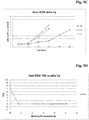
- Analysis of the traces using the ExperionTM software to calculate the RNA Quality Index (RQI) shows RQI decreases steeply with time during at least 60 minutes, where after RQI levels off at a value between 3 and 4 ( Figures 1C and ID).
- the samples were also analyzed spectroscopically using the Nanodrop.
- RNAs For most RNAs the Cq values increase with time, reflecting reduction in the amount of amplifiable material caused by degradation. Most surprisingly, exceedingly large variation in the degradation kinetics of the different RNAs was observed. While the measured amount of some mRNAs decreases by more than 99 % (Cq increases by more than 7 cycles), the amounts of other RNAs are virtually unaffected. Even more surprisingly, in fact, totally unexpected is our finding that the most stable RNAs are chemically different from normal mRNAs and/or are compartmentalized, in particular located in the mitochondria within the cell; the most stable RNAs in our study are: 18S, MTCO1 (mitochondrial cytochrome oxidase subunit 1), and U3.
- RNAs in particular MTCO1
- MTCO1 a stable RNA
- a regular mRNA Such comparison with the common reference genes TBP, YWHAZ, and GAPDH is shown in Figure 2B .
- TBP, YWHAZ, and GAPDH Such comparison with the common reference genes TBP, YWHAZ, and GAPDH is shown in Figure 2B .
- the data are presented as differences in Cq values normalized to 0 at time 0 before the onset of degradation. In all comparisons the difference between Cq values of the normal mRNA and the MTCO1 according to the present description increases with time smoothly throughout the studied time interval reaching differences of 4-7 cycles.
- Figure 2C compares MTCO1 with another reference gene, PPIA, and with the structural 18S RNA. Comparison of MTCO1 and PPIA clearly reflects mRNA degradation, while comparison with 18S shows very little variation. Clearly, as taught herein comparison of MTCOI or other stable non-mRNA, with a reference mRNA reflects integrity of the mRNAs in a sample.
- RNA integrity assessed is compared to RNA integrity assessed by capillary electrophoresis using the Bio-Rad Experion, which is currently state of the art technique, in Figure 3 .
- the present description demonstrates assessing RNA quality by comparing amounts of MTCO1 and PPIA measured with qPCR. Correlation is clear: as the standard index RQI decreases the measured ratio MTCOI to PPIA according to the present description, increases, evidencing MTCO1 becoming more abundant than PPIA as RNA generally degrades.
- RNA 70 ng/ ⁇ l was heated in a 1.5 ml Eppendorf tube to 95°C. 10 ⁇ l samples were collected at 0, 1, 10, 20, 40 and 60 minutes for analysis with capillary electrophoreses in the ExperionTM and with RT-qPCR.
- Figure 4 shows electrophoretic traces measured with the Experion. The gradual degradation of ribosomal RNA with time is clearly reflected by the disappearance of two dominant slowly migrating bands and the appearance of fast migrating smear.
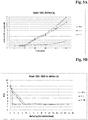
- the amount of PCR product produced by the M assay relative to the L assay (M:L), S assay relative to L assay (S:L), and the S assay relative to the M assay (S:M) are shown in Figure 5A .
- the ratios M:L and S:L increase dramatically with extended heating evidencing much higher yields of the M and S assays relative to the L assay, reflecting degradation of RNA, most likely into fragments.
- the S:M ratio increases with extended heating. Here the change is initially moderate, but the degree of change increases as the degradation proceeds. This suggest that the S:M ratio is not very sensitive to the initial phase of the degradation, when the fragments are still rather long, but as degradation becomes more extensive the changes are sensitively reflected by the S:M ratio.
- FIG. 5B compares the sensitivities of current state of the art measurement of RNA quality by capillary electrophoreses quantified as RQI with measurements of expression ratios according to the present description on the heat induced RNA degradation. It is seen that the initial phase of degradation reflected by RQI dropping from about 8 to 2 both methods sense the changes. While the RQI drops abruptly, most likely reflecting high impact on the ribosomal RNAs that dominate the electropherogram, the measured amplicon ratios as disclosed by the present description, increase gradually reflecting much higher sensitivity to the degree of RNA integrity. Once RQI reaches a value about 2 it does not change meaningfully anymore, while the amplicon ratios continue to decrease reflecting the ongoing additional degradation of the mRNAs that is obviously not sensed by the RQI.
- Figure 5C shows the L:M, L:S and M:S ratios of B2M measured as function of heat inactivation. All three ratios increase with incubation time. The L:M and L:S ratios can only be followed for the first 20 minutes of degradation. There after the long B2M assay is degraded to such extent that the measured Cq values become uncertain. Still, degradation beyond 20 minutes is monitored by the M.S ratio.
- Figure 5E shows the M:L, S:L and S:M MTCO1 ratios measured as function of heat inactivation. All three ratios increase with incubation time and the mRNA degradation is obvious.
- RNA A pool of human RNA (90 ng/ ⁇ l) placed in a 1.5ml Eppendorf tube was exposed to UV light. The tube had thin plastic cover to mitigate the effect of the UV radiation. 10 ⁇ l fractions were removed after 0, 1, 10, 20, 40 and 60 minutes for analysis by capillary electrophoreses or by RT-qPCR. The RNA quality was tested according to the present description based on differential PCR yields of amplicons of varying length using the same markers (18S, B2M and MITCO1) as in Example 4. The RNA degradation was also monitored using state of the art capillary electrophoresis on the Bio-Rad ExperionTM calculating RQI values from the electropherogram.
- FIG. 6A The measured electropherograms as function UV irradiation are shown in Figure 6A . Only very small changes are seen by visual inspection, which is reflected by the calculated RQI values.
- Figure 6B shows changes in the M:L, S:L and S:M ratios using marker 18S. The S:M ratio stays essentially constant, reflecting very modest degradation. The M:L and S:L ratios, however, are sensitive to the degradation and increase with irradiation time.
- Figure 6C compares the measured M:L and S:L ratios according to the disclosure with the state of the art capillary electrophoresis.
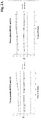
- Results presented in Figure 7 show that the three different length amplicons of MTCO1 are produced at the same relative amounts irrespectively of the length of degradation.
- different length amplicons shown to be very sensitive to monitor degradation induced by heat or UV light, are not sensitive to spontaneous RNA degradation at ambient temperature. Rather, spontaneous RNA degradation at ambient temperature can be assed comparing the expression of a stable RNA, such as MTCO1, 18S or U3, with that of a reference mRNA as demonstrated in Examples 1 and 2.
- FFPE fixation is standard procedure to preserve morphology of tissue samples, but it is also known to damage RNA. The degree of RNA damage is often variable and should be assessed for analysis. Highly degraded samples are not suitable for analysis and money and resources can be saved by testing RNA quality in samples.
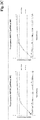
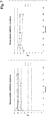
- Figure 8A shows analysis results based on marker MTCO1 of five FFPE samples. Raw data in the form of Cq values for the three amplicons of different length are shown. For all samples it is clearly seen that highest yield (lowest Cq) is obtained for the shortest amplicon, followed by the intermediate length amplicon.
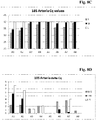
- FFPE arteria samples were analyzed using 18S as marker. Three PCR's were performed yielding amplicons of three different lengths. The measured Cq values are presented in Figure 8C . For samples A1, A2, A6 and A7 clear trend is seen with Cq increasing with amplicon length as taught herein. For samples A3 and A4 the L an M assays give no product, with Cq values saturating at 40. Since Cq could be measured for the shortest assay we still can assess reasonably the RNA quality, which here must be very poor. In sample A5 none of the three assays gave product as reflected by saturating Cq's, evidencing the RNA in this sample is totally degraded and cannot be reliably analyzed with qPCR.
- rat RNA 100 ng/ ⁇ l was heated in a 1.5 ml Eppendorf tube to 95°C. 5.5 ⁇ l samples were collected at 0, 1, 10, 20, 40, 60, 120 and 240 minutes for analysis with capillary electrophoresis (ExperionTM System, Bio-Rad) and subsequent RT-qPCR.
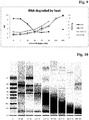
- Figure 10 shows electrophoretic traces measured with the ExperionTM System. The gradual degradation of ribosomal RNA with time is clearly reflected by the disappearance of two dominant slowly migrating bands and the appearance of fast migrating smear.
- the amount of PCR product produced by the L assays relative to the corresponding S assays are shown as the difference in Cq-values (deltaCq) in Figure 9 .
- the deltaCqs increase for all three targets with extended heating evidencing higher yields of the S assays relative to the L assays, reflecting degradation of RNA.
- the change is initially moderate, but increases as the degradation proceeds (time scale is shown non-linear).
- Figure 9 includes comparison with the sensitivity of measurement of RNA quality by capillary electrophoresis quantified as RQI as known in the art. The initial phase of degradation reduces the RQI rapidly until it reaches a plateau at a value of about 2 after 20 minutes.
- the deltaCq for 18S RNA continues to increase all the way up to 240 minutes of degradation reflecting the higher sensitivity of the novel method.
- the deltaCq of B2M and MTCO1 show the same trend as 18S RNA until the Cq-values for the long assays reach too high values to give reliable ratios (after 60 and 120 minutes, respectively).
- the reduction in RQI probably reflects accumulation of short fragments between 500 and 1500bp which raises background and have substantial effect on the RQI value, while not necessarily reflecting the overall degradation.
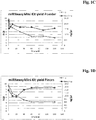
- the deltaCq of the studied markers in Figure 11 do not show any sharp change between 40 and 60 minutes.
- B2M shows expected smooth increase over the entire studied range and 18S RNA shows an increase only for the last two time points.
- the new method clearly correlates much better with overall changes in the electropherogram than the RQI does.
- the stable marker MTCO1 shows no significant degradation over the studied time range.
- RNA from each sample was extracted and analyzed with capillary electrophoresis in the ExperionTM System and separately with RT-qPCR using the novel method.
- Figure 14 shows the electrophoretic traces measured with the ExperionTM System. The gradual degradation of ribosomal RNA with time is reflected by the disappearance of two dominant slowly migrating bands and the appearance of a fast migrating smear.
- the RQI value obviously mainly reflects the degradation of ribosomal RNA and not of the mRNA, which is of prime interest. Degradation of mRNA in the sample is clearly reflected by the increasing deltaCq of the B2M marker.
- the stable 18S RNA marker that is a ribosomal RNA, is less sensitive to degradation and does better reflect more severe degradation, which occurs between 60 and 240 minutes.
- the stable marker MTCO1 does not show any sign of degradation even after 2 hours at room temperature.
Landscapes
- Chemical & Material Sciences (AREA)
- Life Sciences & Earth Sciences (AREA)
- Organic Chemistry (AREA)
- Zoology (AREA)
- Wood Science & Technology (AREA)
- Proteomics, Peptides & Aminoacids (AREA)
- Health & Medical Sciences (AREA)
- Engineering & Computer Science (AREA)
- Analytical Chemistry (AREA)
- Microbiology (AREA)
- Immunology (AREA)
- Molecular Biology (AREA)
- Biotechnology (AREA)
- Biophysics (AREA)
- Physics & Mathematics (AREA)
- Biochemistry (AREA)
- Bioinformatics & Cheminformatics (AREA)
- General Engineering & Computer Science (AREA)
- General Health & Medical Sciences (AREA)
- Genetics & Genomics (AREA)
- Chemical Kinetics & Catalysis (AREA)
- Measuring Or Testing Involving Enzymes Or Micro-Organisms (AREA)
Claims (7)
- Verfahren zum Bewerten der RNA-Qualität in einer Probe, wobei das Verfahren folgende Schritte umfasst:a) das Herstellen von cDNA aus RNA,b) das Quantifizieren mindestens eines Amplikons einer ersten cDNA mittels Amplifikation, wobei die erste cDNA von einer mRNA abgeleitet ist, die als Ausgangsmaterial für eine RNA-Analyse verwendet wird,c) das Quantifizieren mindestens eines Amplikons einer zweiten cDNA mittels Amplifikation, wobei die zweite cDNA von einer Test-RNA abgeleitet ist, wobei die Test-RNA mitochondriale RNA ist,d) das Bewerten der mRNA-Qualität durch Vergleichen der Menge des mindestens einen Amplikons der ersten cDNA mit der Menge des mindestens einen Amplikons der zweiten cDNA.
- Verfahren nach Anspruch 1, wobei die folgenden zusätzlichen Schritte durchgeführt werden:e) das Quantifizieren mindestens zweier Amplikone der zweiten cDNA mittels Amplifikation getrennt von den Schritten b) bis c),f) das Bewerten der Test-RNA-Qualität durch Vergleichen der Mengen der mindestens zwei Amplikons der zweiten cDNA.
- Verfahren nach Anspruch 2, wobei die Amplifikation der mindestens zwei Amplikone in Schritt e) unter Verwendung eines gemeinsamen Primers für die mindestens zwei Amplikone durchgeführt wird.
- Verfahren nach den Ansprüchen 1-3, wobei die mRNA aus einem Gen mit einer Expression, die im Wesentlichen invariant gegenüber dem physiologischen Zustand einer Zelle ist, abgeleitet ist.
- Verfahren nach den Ansprüchen 1-4, wobei der Vergleich in Schritt d) unter Verwendung des geometrischen Mittelwerts der Expression mehrerer mRNA durchgeführt wird.
- Verfahren nach den Ansprüchen 1-5, wobei mindestens einer der in Schritt a) verwendeten Primer identisch mit mindestens einem der in Schritt c) verwendeten Primer ist.
- Verfahren nach den Ansprüchen 2-6, wobei das erste der mindestens zwei Amplikone in Schritt e) eine Länge von weniger als 100 bp aufweist und wobei das zweite der mindestens zwei Amplikone in Schritt e) eine Länge von mindestens 100 bp aufweist.
Priority Applications (1)
| Application Number | Priority Date | Filing Date | Title |
|---|---|---|---|
| EP13710858.5A EP2828400B1 (de) | 2012-03-21 | 2013-03-20 | Verfahren zum bewerten der rna-qualität |
Applications Claiming Priority (3)
| Application Number | Priority Date | Filing Date | Title |
|---|---|---|---|
| EP12160602 | 2012-03-21 | ||
| EP13710858.5A EP2828400B1 (de) | 2012-03-21 | 2013-03-20 | Verfahren zum bewerten der rna-qualität |
| PCT/EP2013/055832 WO2013139860A1 (en) | 2012-03-21 | 2013-03-20 | Methods for assessing rna quality |
Publications (2)
| Publication Number | Publication Date |
|---|---|
| EP2828400A1 EP2828400A1 (de) | 2015-01-28 |
| EP2828400B1 true EP2828400B1 (de) | 2018-09-19 |
Family
ID=47902002
Family Applications (1)
| Application Number | Title | Priority Date | Filing Date |
|---|---|---|---|
| EP13710858.5A Active EP2828400B1 (de) | 2012-03-21 | 2013-03-20 | Verfahren zum bewerten der rna-qualität |
Country Status (3)
| Country | Link |
|---|---|
| US (1) | US9932633B2 (de) |
| EP (1) | EP2828400B1 (de) |
| WO (1) | WO2013139860A1 (de) |
Families Citing this family (1)
| Publication number | Priority date | Publication date | Assignee | Title |
|---|---|---|---|---|
| CN111286542B (zh) * | 2020-02-17 | 2023-05-16 | 浙江海洋大学 | 一种用于估测鱼类死亡时间的引物及其应用 |
Family Cites Families (6)
| Publication number | Priority date | Publication date | Assignee | Title |
|---|---|---|---|---|
| US5118801A (en) | 1988-09-30 | 1992-06-02 | The Public Health Research Institute | Nucleic acid process containing improved molecular switch |
| US5210015A (en) | 1990-08-06 | 1993-05-11 | Hoffman-La Roche Inc. | Homogeneous assay system using the nuclease activity of a nucleic acid polymerase |
| US5538848A (en) | 1994-11-16 | 1996-07-23 | Applied Biosystems Division, Perkin-Elmer Corp. | Method for detecting nucleic acid amplification using self-quenching fluorescence probe |
| JP4540754B2 (ja) | 1996-06-04 | 2010-09-08 | ユニバーシティ オブ ユタ リサーチ ファウンデーション | Pcr中のハイブリダイゼーションのモニタリング |
| ES2253778T3 (es) | 1996-06-04 | 2006-06-01 | University Of Utah Research Foundation | Sistema y metodos de monitorizacion de una amplificacion de adn mediante fluorescencia. |
| US20060063170A1 (en) | 2004-03-18 | 2006-03-23 | Arcturus Bioscience, Inc. | Determination of RNA quality |
-
2013
- 2013-03-20 US US14/385,602 patent/US9932633B2/en active Active
- 2013-03-20 WO PCT/EP2013/055832 patent/WO2013139860A1/en not_active Ceased
- 2013-03-20 EP EP13710858.5A patent/EP2828400B1/de active Active
Non-Patent Citations (1)
| Title |
|---|
| C. R. GALIVETI ET AL: "Application of housekeeping npcRNAs for quantitative expression analysis of human transcriptome by real-time PCR", RNA, vol. 16, no. 2, 1 February 2010 (2010-02-01), US, pages 450 - 461, XP055319165, ISSN: 1355-8382, DOI: 10.1261/rna.1755810 * |
Also Published As
| Publication number | Publication date |
|---|---|
| EP2828400A1 (de) | 2015-01-28 |
| WO2013139860A1 (en) | 2013-09-26 |
| US9932633B2 (en) | 2018-04-03 |
| US20150044685A1 (en) | 2015-02-12 |
Similar Documents
| Publication | Publication Date | Title |
|---|---|---|
| EP1896617B1 (de) | Multiplex-amplifikation kurzer nukleinsäuren | |
| US8710208B2 (en) | Method to quantify siRNAs, miRNAs and polymorphic miRNAs | |
| CN105018603B (zh) | 一种基于三重放大反应串联的恒温指数放大技术及其在microRNA检测中的应用 | |
| US20090087858A1 (en) | Two-color Real-time/End-point Quantitation of MicroRNAs (miRNAs) | |
| Zhu et al. | Label‐Free Detection of MicroRNA: Two‐Step Signal Enhancement with a Hairpin‐Probe‐Based Graphene Fluorescence Switch and Isothermal Amplification | |
| US20060003337A1 (en) | Detection of small RNAS | |
| Goldman et al. | High affinity γPNA sandwich hybridization assay for rapid detection of short nucleic acid targets with single mismatch discrimination | |
| WO2012075230A1 (en) | Detecting mutations in dna | |
| Sun et al. | Hybridization-initiated exonuclease resistance strategy for simultaneous detection of multiple microRNAs | |
| JP5207355B2 (ja) | 標的ヌクレオチド配列を有する核酸の検出方法、プローブセット、及び核酸の識別方法 | |
| Wang et al. | Target-initiated labeling for the dual-amplified detection of multiple microRNAs | |
| EP2828400B1 (de) | Verfahren zum bewerten der rna-qualität | |
| US20070015187A1 (en) | Methods for rna profiling | |
| EP2251436B1 (de) | Sirna-nachweisverfahren | |
| CN108026569A (zh) | 用于催化性测定的方法和组合物 | |
| Brownstein | [11] Sample Labeling: An Overview | |
| US20090117575A1 (en) | Detection Probe Acting by Molecular Recognition | |
| CN111373042A (zh) | 用于选择性扩增核酸的寡核苷酸 |
Legal Events
| Date | Code | Title | Description |
|---|---|---|---|
| PUAI | Public reference made under article 153(3) epc to a published international application that has entered the european phase |
Free format text: ORIGINAL CODE: 0009012 |
|
| 17P | Request for examination filed |
Effective date: 20141021 |
|
| AK | Designated contracting states |
Kind code of ref document: A1 Designated state(s): AL AT BE BG CH CY CZ DE DK EE ES FI FR GB GR HR HU IE IS IT LI LT LU LV MC MK MT NL NO PL PT RO RS SE SI SK SM TR |
|
| AX | Request for extension of the european patent |
Extension state: BA ME |
|
| DAX | Request for extension of the european patent (deleted) | ||
| STAA | Information on the status of an ep patent application or granted ep patent |
Free format text: STATUS: EXAMINATION IS IN PROGRESS |
|
| 17Q | First examination report despatched |
Effective date: 20161118 |
|
| GRAP | Despatch of communication of intention to grant a patent |
Free format text: ORIGINAL CODE: EPIDOSNIGR1 |
|
| STAA | Information on the status of an ep patent application or granted ep patent |
Free format text: STATUS: GRANT OF PATENT IS INTENDED |
|
| INTG | Intention to grant announced |
Effective date: 20180214 |
|
| GRAS | Grant fee paid |
Free format text: ORIGINAL CODE: EPIDOSNIGR3 |
|
| RIN1 | Information on inventor provided before grant (corrected) |
Inventor name: KUBISTA, MICHAEL Inventor name: BJOERKMAN, JENS |
|
| GRAA | (expected) grant |
Free format text: ORIGINAL CODE: 0009210 |
|
| STAA | Information on the status of an ep patent application or granted ep patent |
Free format text: STATUS: THE PATENT HAS BEEN GRANTED |
|
| AK | Designated contracting states |
Kind code of ref document: B1 Designated state(s): AL AT BE BG CH CY CZ DE DK EE ES FI FR GB GR HR HU IE IS IT LI LT LU LV MC MK MT NL NO PL PT RO RS SE SI SK SM TR |
|
| REG | Reference to a national code |
Ref country code: GB Ref legal event code: FG4D |
|
| RIN1 | Information on inventor provided before grant (corrected) |
Inventor name: BJOERKMAN, JENS Inventor name: KUBISTA, MIKAEL |
|
| REG | Reference to a national code |
Ref country code: CH Ref legal event code: EP |
|
| REG | Reference to a national code |
Ref country code: AT Ref legal event code: REF Ref document number: 1043327 Country of ref document: AT Kind code of ref document: T Effective date: 20181015 |
|
| REG | Reference to a national code |
Ref country code: IE Ref legal event code: FG4D |
|
| REG | Reference to a national code |
Ref country code: DE Ref legal event code: R096 Ref document number: 602013043840 Country of ref document: DE |
|
| REG | Reference to a national code |
Ref country code: NL Ref legal event code: MP Effective date: 20180919 |
|
| PG25 | Lapsed in a contracting state [announced via postgrant information from national office to epo] |
Ref country code: SE Free format text: LAPSE BECAUSE OF FAILURE TO SUBMIT A TRANSLATION OF THE DESCRIPTION OR TO PAY THE FEE WITHIN THE PRESCRIBED TIME-LIMIT Effective date: 20180919 Ref country code: BG Free format text: LAPSE BECAUSE OF FAILURE TO SUBMIT A TRANSLATION OF THE DESCRIPTION OR TO PAY THE FEE WITHIN THE PRESCRIBED TIME-LIMIT Effective date: 20181219 Ref country code: GR Free format text: LAPSE BECAUSE OF FAILURE TO SUBMIT A TRANSLATION OF THE DESCRIPTION OR TO PAY THE FEE WITHIN THE PRESCRIBED TIME-LIMIT Effective date: 20181220 Ref country code: LT Free format text: LAPSE BECAUSE OF FAILURE TO SUBMIT A TRANSLATION OF THE DESCRIPTION OR TO PAY THE FEE WITHIN THE PRESCRIBED TIME-LIMIT Effective date: 20180919 Ref country code: FI Free format text: LAPSE BECAUSE OF FAILURE TO SUBMIT A TRANSLATION OF THE DESCRIPTION OR TO PAY THE FEE WITHIN THE PRESCRIBED TIME-LIMIT Effective date: 20180919 Ref country code: NO Free format text: LAPSE BECAUSE OF FAILURE TO SUBMIT A TRANSLATION OF THE DESCRIPTION OR TO PAY THE FEE WITHIN THE PRESCRIBED TIME-LIMIT Effective date: 20181219 Ref country code: RS Free format text: LAPSE BECAUSE OF FAILURE TO SUBMIT A TRANSLATION OF THE DESCRIPTION OR TO PAY THE FEE WITHIN THE PRESCRIBED TIME-LIMIT Effective date: 20180919 |
|
| REG | Reference to a national code |
Ref country code: LT Ref legal event code: MG4D |
|
| PG25 | Lapsed in a contracting state [announced via postgrant information from national office to epo] |
Ref country code: HR Free format text: LAPSE BECAUSE OF FAILURE TO SUBMIT A TRANSLATION OF THE DESCRIPTION OR TO PAY THE FEE WITHIN THE PRESCRIBED TIME-LIMIT Effective date: 20180919 Ref country code: AL Free format text: LAPSE BECAUSE OF FAILURE TO SUBMIT A TRANSLATION OF THE DESCRIPTION OR TO PAY THE FEE WITHIN THE PRESCRIBED TIME-LIMIT Effective date: 20180919 Ref country code: LV Free format text: LAPSE BECAUSE OF FAILURE TO SUBMIT A TRANSLATION OF THE DESCRIPTION OR TO PAY THE FEE WITHIN THE PRESCRIBED TIME-LIMIT Effective date: 20180919 |
|
| REG | Reference to a national code |
Ref country code: AT Ref legal event code: MK05 Ref document number: 1043327 Country of ref document: AT Kind code of ref document: T Effective date: 20180919 |
|
| PG25 | Lapsed in a contracting state [announced via postgrant information from national office to epo] |
Ref country code: CZ Free format text: LAPSE BECAUSE OF FAILURE TO SUBMIT A TRANSLATION OF THE DESCRIPTION OR TO PAY THE FEE WITHIN THE PRESCRIBED TIME-LIMIT Effective date: 20180919 Ref country code: RO Free format text: LAPSE BECAUSE OF FAILURE TO SUBMIT A TRANSLATION OF THE DESCRIPTION OR TO PAY THE FEE WITHIN THE PRESCRIBED TIME-LIMIT Effective date: 20180919 Ref country code: EE Free format text: LAPSE BECAUSE OF FAILURE TO SUBMIT A TRANSLATION OF THE DESCRIPTION OR TO PAY THE FEE WITHIN THE PRESCRIBED TIME-LIMIT Effective date: 20180919 Ref country code: IT Free format text: LAPSE BECAUSE OF FAILURE TO SUBMIT A TRANSLATION OF THE DESCRIPTION OR TO PAY THE FEE WITHIN THE PRESCRIBED TIME-LIMIT Effective date: 20180919 Ref country code: IS Free format text: LAPSE BECAUSE OF FAILURE TO SUBMIT A TRANSLATION OF THE DESCRIPTION OR TO PAY THE FEE WITHIN THE PRESCRIBED TIME-LIMIT Effective date: 20190119 Ref country code: ES Free format text: LAPSE BECAUSE OF FAILURE TO SUBMIT A TRANSLATION OF THE DESCRIPTION OR TO PAY THE FEE WITHIN THE PRESCRIBED TIME-LIMIT Effective date: 20180919 Ref country code: AT Free format text: LAPSE BECAUSE OF FAILURE TO SUBMIT A TRANSLATION OF THE DESCRIPTION OR TO PAY THE FEE WITHIN THE PRESCRIBED TIME-LIMIT Effective date: 20180919 Ref country code: NL Free format text: LAPSE BECAUSE OF FAILURE TO SUBMIT A TRANSLATION OF THE DESCRIPTION OR TO PAY THE FEE WITHIN THE PRESCRIBED TIME-LIMIT Effective date: 20180919 Ref country code: PL Free format text: LAPSE BECAUSE OF FAILURE TO SUBMIT A TRANSLATION OF THE DESCRIPTION OR TO PAY THE FEE WITHIN THE PRESCRIBED TIME-LIMIT Effective date: 20180919 |
|
| PG25 | Lapsed in a contracting state [announced via postgrant information from national office to epo] |
Ref country code: PT Free format text: LAPSE BECAUSE OF FAILURE TO SUBMIT A TRANSLATION OF THE DESCRIPTION OR TO PAY THE FEE WITHIN THE PRESCRIBED TIME-LIMIT Effective date: 20190119 Ref country code: SM Free format text: LAPSE BECAUSE OF FAILURE TO SUBMIT A TRANSLATION OF THE DESCRIPTION OR TO PAY THE FEE WITHIN THE PRESCRIBED TIME-LIMIT Effective date: 20180919 Ref country code: SK Free format text: LAPSE BECAUSE OF FAILURE TO SUBMIT A TRANSLATION OF THE DESCRIPTION OR TO PAY THE FEE WITHIN THE PRESCRIBED TIME-LIMIT Effective date: 20180919 |
|
| REG | Reference to a national code |
Ref country code: DE Ref legal event code: R097 Ref document number: 602013043840 Country of ref document: DE |
|
| PLBE | No opposition filed within time limit |
Free format text: ORIGINAL CODE: 0009261 |
|
| STAA | Information on the status of an ep patent application or granted ep patent |
Free format text: STATUS: NO OPPOSITION FILED WITHIN TIME LIMIT |
|
| PG25 | Lapsed in a contracting state [announced via postgrant information from national office to epo] |
Ref country code: DK Free format text: LAPSE BECAUSE OF FAILURE TO SUBMIT A TRANSLATION OF THE DESCRIPTION OR TO PAY THE FEE WITHIN THE PRESCRIBED TIME-LIMIT Effective date: 20180919 |
|
| 26N | No opposition filed |
Effective date: 20190620 |
|
| PG25 | Lapsed in a contracting state [announced via postgrant information from national office to epo] |
Ref country code: MC Free format text: LAPSE BECAUSE OF FAILURE TO SUBMIT A TRANSLATION OF THE DESCRIPTION OR TO PAY THE FEE WITHIN THE PRESCRIBED TIME-LIMIT Effective date: 20180919 Ref country code: SI Free format text: LAPSE BECAUSE OF FAILURE TO SUBMIT A TRANSLATION OF THE DESCRIPTION OR TO PAY THE FEE WITHIN THE PRESCRIBED TIME-LIMIT Effective date: 20180919 |
|
| PG25 | Lapsed in a contracting state [announced via postgrant information from national office to epo] |
Ref country code: LU Free format text: LAPSE BECAUSE OF NON-PAYMENT OF DUE FEES Effective date: 20190320 |
|
| REG | Reference to a national code |
Ref country code: BE Ref legal event code: MM Effective date: 20190331 |
|
| PG25 | Lapsed in a contracting state [announced via postgrant information from national office to epo] |
Ref country code: IE Free format text: LAPSE BECAUSE OF NON-PAYMENT OF DUE FEES Effective date: 20190320 |
|
| PG25 | Lapsed in a contracting state [announced via postgrant information from national office to epo] |
Ref country code: BE Free format text: LAPSE BECAUSE OF NON-PAYMENT OF DUE FEES Effective date: 20190331 |
|
| PG25 | Lapsed in a contracting state [announced via postgrant information from national office to epo] |
Ref country code: TR Free format text: LAPSE BECAUSE OF FAILURE TO SUBMIT A TRANSLATION OF THE DESCRIPTION OR TO PAY THE FEE WITHIN THE PRESCRIBED TIME-LIMIT Effective date: 20180919 |
|
| PG25 | Lapsed in a contracting state [announced via postgrant information from national office to epo] |
Ref country code: MT Free format text: LAPSE BECAUSE OF NON-PAYMENT OF DUE FEES Effective date: 20190320 |
|
| PG25 | Lapsed in a contracting state [announced via postgrant information from national office to epo] |
Ref country code: CY Free format text: LAPSE BECAUSE OF FAILURE TO SUBMIT A TRANSLATION OF THE DESCRIPTION OR TO PAY THE FEE WITHIN THE PRESCRIBED TIME-LIMIT Effective date: 20180919 |
|
| PG25 | Lapsed in a contracting state [announced via postgrant information from national office to epo] |
Ref country code: HU Free format text: LAPSE BECAUSE OF FAILURE TO SUBMIT A TRANSLATION OF THE DESCRIPTION OR TO PAY THE FEE WITHIN THE PRESCRIBED TIME-LIMIT; INVALID AB INITIO Effective date: 20130320 |
|
| PG25 | Lapsed in a contracting state [announced via postgrant information from national office to epo] |
Ref country code: MK Free format text: LAPSE BECAUSE OF FAILURE TO SUBMIT A TRANSLATION OF THE DESCRIPTION OR TO PAY THE FEE WITHIN THE PRESCRIBED TIME-LIMIT Effective date: 20180919 |
|
| PGFP | Annual fee paid to national office [announced via postgrant information from national office to epo] |
Ref country code: CH Payment date: 20250401 Year of fee payment: 13 |
|
| REG | Reference to a national code |
Ref country code: CH Ref legal event code: U11 Free format text: ST27 STATUS EVENT CODE: U-0-0-U10-U11 (AS PROVIDED BY THE NATIONAL OFFICE) Effective date: 20260401 |
|
| PGFP | Annual fee paid to national office [announced via postgrant information from national office to epo] |
Ref country code: GB Payment date: 20260220 Year of fee payment: 14 |
|
| PGFP | Annual fee paid to national office [announced via postgrant information from national office to epo] |
Ref country code: DE Payment date: 20260219 Year of fee payment: 14 |
|
| PGFP | Annual fee paid to national office [announced via postgrant information from national office to epo] |
Ref country code: FR Payment date: 20260219 Year of fee payment: 14 |