EP2829062B1 - Procédé de prediction de texture inter-couche pour codage vidéo - Google Patents
Procédé de prediction de texture inter-couche pour codage vidéo Download PDFInfo
- Publication number
- EP2829062B1 EP2829062B1 EP13713331.0A EP13713331A EP2829062B1 EP 2829062 B1 EP2829062 B1 EP 2829062B1 EP 13713331 A EP13713331 A EP 13713331A EP 2829062 B1 EP2829062 B1 EP 2829062B1
- Authority
- EP
- European Patent Office
- Prior art keywords
- weight
- predictor
- enhancement layer
- block
- video
- Prior art date
- Legal status (The legal status is an assumption and is not a legal conclusion. Google has not performed a legal analysis and makes no representation as to the accuracy of the status listed.)
- Active
Links
Images





Classifications
-
- H—ELECTRICITY
- H04—ELECTRIC COMMUNICATION TECHNIQUE
- H04N—PICTORIAL COMMUNICATION, e.g. TELEVISION
- H04N19/00—Methods or arrangements for coding, decoding, compressing or decompressing digital video signals
- H04N19/30—Methods or arrangements for coding, decoding, compressing or decompressing digital video signals using hierarchical techniques, e.g. scalability
-
- H—ELECTRICITY
- H04—ELECTRIC COMMUNICATION TECHNIQUE
- H04N—PICTORIAL COMMUNICATION, e.g. TELEVISION
- H04N19/00—Methods or arrangements for coding, decoding, compressing or decompressing digital video signals
- H04N19/10—Methods or arrangements for coding, decoding, compressing or decompressing digital video signals using adaptive coding
- H04N19/102—Methods or arrangements for coding, decoding, compressing or decompressing digital video signals using adaptive coding characterised by the element, parameter or selection affected or controlled by the adaptive coding
- H04N19/103—Selection of coding mode or of prediction mode
- H04N19/105—Selection of the reference unit for prediction within a chosen coding or prediction mode, e.g. adaptive choice of position and number of pixels used for prediction
-
- H—ELECTRICITY
- H04—ELECTRIC COMMUNICATION TECHNIQUE
- H04N—PICTORIAL COMMUNICATION, e.g. TELEVISION
- H04N19/00—Methods or arrangements for coding, decoding, compressing or decompressing digital video signals
- H04N19/10—Methods or arrangements for coding, decoding, compressing or decompressing digital video signals using adaptive coding
- H04N19/134—Methods or arrangements for coding, decoding, compressing or decompressing digital video signals using adaptive coding characterised by the element, parameter or criterion affecting or controlling the adaptive coding
- H04N19/154—Measured or subjectively estimated visual quality after decoding, e.g. measurement of distortion
-
- H—ELECTRICITY
- H04—ELECTRIC COMMUNICATION TECHNIQUE
- H04N—PICTORIAL COMMUNICATION, e.g. TELEVISION
- H04N19/00—Methods or arrangements for coding, decoding, compressing or decompressing digital video signals
- H04N19/10—Methods or arrangements for coding, decoding, compressing or decompressing digital video signals using adaptive coding
- H04N19/134—Methods or arrangements for coding, decoding, compressing or decompressing digital video signals using adaptive coding characterised by the element, parameter or criterion affecting or controlling the adaptive coding
- H04N19/167—Position within a video image, e.g. region of interest [ROI]
-
- H—ELECTRICITY
- H04—ELECTRIC COMMUNICATION TECHNIQUE
- H04N—PICTORIAL COMMUNICATION, e.g. TELEVISION
- H04N19/00—Methods or arrangements for coding, decoding, compressing or decompressing digital video signals
- H04N19/10—Methods or arrangements for coding, decoding, compressing or decompressing digital video signals using adaptive coding
- H04N19/169—Methods or arrangements for coding, decoding, compressing or decompressing digital video signals using adaptive coding characterised by the coding unit, i.e. the structural portion or semantic portion of the video signal being the object or the subject of the adaptive coding
- H04N19/182—Methods or arrangements for coding, decoding, compressing or decompressing digital video signals using adaptive coding characterised by the coding unit, i.e. the structural portion or semantic portion of the video signal being the object or the subject of the adaptive coding the unit being a pixel
-
- H—ELECTRICITY
- H04—ELECTRIC COMMUNICATION TECHNIQUE
- H04N—PICTORIAL COMMUNICATION, e.g. TELEVISION
- H04N19/00—Methods or arrangements for coding, decoding, compressing or decompressing digital video signals
- H04N19/10—Methods or arrangements for coding, decoding, compressing or decompressing digital video signals using adaptive coding
- H04N19/169—Methods or arrangements for coding, decoding, compressing or decompressing digital video signals using adaptive coding characterised by the coding unit, i.e. the structural portion or semantic portion of the video signal being the object or the subject of the adaptive coding
- H04N19/187—Methods or arrangements for coding, decoding, compressing or decompressing digital video signals using adaptive coding characterised by the coding unit, i.e. the structural portion or semantic portion of the video signal being the object or the subject of the adaptive coding the unit being a scalable video layer
-
- H—ELECTRICITY
- H04—ELECTRIC COMMUNICATION TECHNIQUE
- H04N—PICTORIAL COMMUNICATION, e.g. TELEVISION
- H04N19/00—Methods or arrangements for coding, decoding, compressing or decompressing digital video signals
- H04N19/10—Methods or arrangements for coding, decoding, compressing or decompressing digital video signals using adaptive coding
- H04N19/169—Methods or arrangements for coding, decoding, compressing or decompressing digital video signals using adaptive coding characterised by the coding unit, i.e. the structural portion or semantic portion of the video signal being the object or the subject of the adaptive coding
- H04N19/17—Methods or arrangements for coding, decoding, compressing or decompressing digital video signals using adaptive coding characterised by the coding unit, i.e. the structural portion or semantic portion of the video signal being the object or the subject of the adaptive coding the unit being an image region, e.g. an object
- H04N19/176—Methods or arrangements for coding, decoding, compressing or decompressing digital video signals using adaptive coding characterised by the coding unit, i.e. the structural portion or semantic portion of the video signal being the object or the subject of the adaptive coding the unit being an image region, e.g. an object the region being a block, e.g. a macroblock
-
- H—ELECTRICITY
- H04—ELECTRIC COMMUNICATION TECHNIQUE
- H04N—PICTORIAL COMMUNICATION, e.g. TELEVISION
- H04N19/00—Methods or arrangements for coding, decoding, compressing or decompressing digital video signals
- H04N19/30—Methods or arrangements for coding, decoding, compressing or decompressing digital video signals using hierarchical techniques, e.g. scalability
- H04N19/33—Methods or arrangements for coding, decoding, compressing or decompressing digital video signals using hierarchical techniques, e.g. scalability in the spatial domain
-
- H—ELECTRICITY
- H04—ELECTRIC COMMUNICATION TECHNIQUE
- H04N—PICTORIAL COMMUNICATION, e.g. TELEVISION
- H04N19/00—Methods or arrangements for coding, decoding, compressing or decompressing digital video signals
- H04N19/46—Embedding additional information in the video signal during the compression process
-
- H—ELECTRICITY
- H04—ELECTRIC COMMUNICATION TECHNIQUE
- H04N—PICTORIAL COMMUNICATION, e.g. TELEVISION
- H04N19/00—Methods or arrangements for coding, decoding, compressing or decompressing digital video signals
- H04N19/50—Methods or arrangements for coding, decoding, compressing or decompressing digital video signals using predictive coding
- H04N19/59—Methods or arrangements for coding, decoding, compressing or decompressing digital video signals using predictive coding involving spatial sub-sampling or interpolation, e.g. alteration of picture size or resolution
Definitions
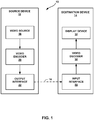
- video encoder 20 and video decoder 30 may each be integrated with an audio encoder and decoder, and may include appropriate MUX-DEMUX units, or other hardware and software, to handle encoding of both audio and video in a common data stream or separate data streams. If applicable, MUX-DEMUX units may conform to the ITU H.223 multiplexer protocol, or other protocols such as the user datagram protocol (UDP).
- MUX-DEMUX units may conform to the ITU H.223 multiplexer protocol, or other protocols such as the user datagram protocol (UDP).
- the JCT-VC is working on development of the HEVC standard.
- the HEVC standardization efforts are based on an evolving model of a video coding device referred to as the HEVC Test Model (HM).
- HM presumes several additional capabilities of video coding devices relative to existing devices according to, e.g., ITU-T H.264/AVC. For example, whereas H.264 provides nine intra-prediction encoding modes, the HM may provide as many as thirty-three intra-prediction encoding modes.
- the working model of the HM describes that a video frame or picture may be divided into a sequence of treeblocks or largest coding units (LCU) that include both luma and chroma samples.
- Syntax data within a bitstream may define a size for the LCU, which is a largest coding unit in terms of the number of pixels.
- a slice includes a number of consecutive treeblocks in coding order.
- a video frame or picture may be partitioned into one or more slices.
- Each treeblock may be split into coding units (CUs) according to a quadtree.
- a quadtree data structure includes one node per CU, with a root node corresponding to the treeblock. If a CU is split into four sub-CUs, the node corresponding to the CU includes four leaf nodes, each of which corresponds to one of the sub-CUs.
- Each node of the quadtree data structure may provide syntax data for the corresponding CU.
- a node in the quadtree may include a split flag, indicating whether the CU corresponding to the node is split into sub-CUs.
- Syntax elements for a CU may be defined recursively, and may depend on whether the CU is split into sub-CUs. If a CU is not split further, it is referred as a leaf-CU.
- four sub-CUs of a leaf-CU will also be referred to as leaf-CUs even if there is no explicit splitting of the original leaf-CU. For example, if a CU at 16x16 size is not split further, the four 8x8 sub-CUs will also be referred to as leaf-CUs although the 16x16 CU was never split.
- a CU has a similar purpose as a macroblock of the H.264 standard, except that a CU does not have a size distinction.
- a treeblock may be split into four child nodes (also referred to as sub-CUs), and each child node may in turn be a parent node and be split into another four child nodes.
- Syntax data associated with a coded bitstream may define a maximum number of times a treeblock may be split, referred to as a maximum CU depth, and may also define a minimum size of the coding nodes.
- a leaf-CU having one or more PUs may also include one or more transform units (TUs).
- the transform units may be specified using an RQT (also referred to as a TU quadtree structure), as discussed above.
- RQT also referred to as a TU quadtree structure
- a split flag may indicate whether a leaf-CU is split into four transform units. Then, each transform unit may be split further into further sub-TUs. When a TU is not split further, it may be referred to as a leaf-TU.
- all the leaf-TUs belonging to a leaf-CU share the same intra prediction mode. That is, the same intra-prediction mode is generally applied to calculate predicted values for all TUs of a leaf-CU.
- Video encoder 20 may further send syntax data, such as block-based syntax data, frame-based syntax data, and GOP-based syntax data, to video decoder 30, e.g., in a frame header, a block header, a slice header, or a GOP header.
- the GOP syntax data may describe a number of frames in the respective GOP, and the frame syntax data may indicate an encoding/prediction mode used to encode the corresponding frame.
- pixels from the base layer block corresponding to the current enhancement layer block provide better predictors than pixels from other enhancement layer blocks.
- the determination of when a pixel is close enough to an adjacent enhancement layer block to affect the weighting applied to the predictors can be determined by the video coder based on an intra-prediction direction for the current enhancement layer block.
- the video coder can also select the first weighting factor and the second weighting factor based on a scaling ratio. For example, larger scaling ratios can generally correspond to higher values for the second weighting factor.
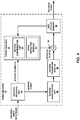
- video decoder 30 forms a decoded video block by summing the residual blocks from inverse transform unit 78 with the corresponding predictive blocks generated by motion compensation unit 72.
- Summer 90 represents the component or components that perform this summation operation.
- a deblocking filter may also be applied to filter the decoded blocks in order to remove blockiness artifacts.
- Other loop filters may also be used to smooth pixel transitions, or otherwise improve the video quality.
- the decoded video blocks in a given frame or picture are then stored in reference picture memory 92, which stores reference pictures used for subsequent motion compensation.
- Reference frame memory 82 also stores decoded video for later presentation on a display device, such as display device 32 of FIG. 1 .
- Mode 1 is selected, then pixels a, e, i and m are predicted by setting them equal to pixel A, and pixels b, f, j and n are predicted by setting them equal to pixel B, etc.
- pixels a, b, c and d are predicted by setting them equal to pixel I, and pixels e, f, g and h are predicted by setting them equal to pixel J, etc.
- Mode 1 is a predictor in the vertical direction; and Mode 2 is a predictor in the horizontal direction.
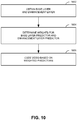
- the weighting coefficients for each predictor can vary based on pixel location.
- the weighting coefficients can be different for different pixel locations inside a predictor.
- a weighted combination of predictors based on quantization parameters or spatial scaling ratios may be used.
- a quantization parameter QP
- the lower the QP value the higher the quality of a predictor.
- the QP difference between the base layer block and the enhancement layer block can be used as a factor in determining weighting parameters.
- such computer-readable storage media can comprise RAM, ROM, EEPROM, CD-ROM or other optical disk storage, magnetic disk storage, or other magnetic storage devices, flash memory, or any other medium that can be used to store desired program code in the form of instructions or data structures and that can be accessed by a computer.
- any connection is properly termed a computer-readable medium.
- a computer-readable medium For example, if instructions are transmitted from a website, server, or other remote source using a coaxial cable, fiber optic cable, twisted pair, digital subscriber line (DSL), or wireless technologies such as infrared, radio, and microwave, then the coaxial cable, fiber optic cable, twisted pair, DSL, or wireless technologies such as infrared, radio, and microwave are included in the definition of medium.
- DSL digital subscriber line
Landscapes
- Engineering & Computer Science (AREA)
- Multimedia (AREA)
- Signal Processing (AREA)
- Compression Or Coding Systems Of Tv Signals (AREA)
Claims (14)
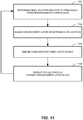
- Procédé de codage de vidéo numérique, comportant :l'obtention d'informations vidéo associées à une couche de base et une couche d'amélioration correspondante ;la détermination d'une première pondération associée à un prédicteur de couche de base, Pb, et une seconde pondération associée à un prédicteur de couche d'amélioration, Pe, ledit procédé caractérisé en ce que :le prédicteur de couche de base, Pb, est formé au moyen de la structure reconstruite d'un bloc de couche de base pour prédire la structure d'un bloc de couche d'amélioration correspondant (700), et le prédicteur de couche d'amélioration, Pe, est formé au moyen de l'intra-prédiction d'un bloc de couche d'amélioration provenant d'un bloc voisin de pixels reconstruits ;le codage d'un pixel courant dans la trame d'une couche d'amélioration sur la base d'un prédicteur final, Pf, caractérisé en ce que le prédicteur final, Pf, comporte une combinaison constituée du prédicteur de couche de base, Pb, pondéré en fonction de la première pondération et du prédicteur de couche d'amélioration, Pe, pondéré en fonction de la seconde pondération, caractérisé en ce que :
la première pondération et la seconde pondération sont déterminées comme une fonction d'une distance (1102) entre l'emplacement actuel des pixels codés dans un bloc de couche d'amélioration actuel (700) et une bordure (702, 706) d'un bloc de couche d'amélioration voisin (720), et caractérisé en ce que :la seconde pondération augmente généralement en ce qui concerne les pixels plus proches de la bordure (710) ;la première pondération augmente généralement en ce qui concerne les pixels plus éloignés de la bordure (1106) ; et en ce quepour chaque emplacement de pixel, la somme de la première pondération et de la seconde pondération doit être égale à une constante prédéterminée de 1 (1106). - Procédé de décodage de vidéo numérique, comportant :l'obtention d'informations vidéo associées à une couche de base et une couche d'amélioration correspondante ;la détermination d'une première pondération associée à un prédicteur de couche de base, Pb, et une seconde pondération associée à un prédicteur de couche d'amélioration, Pe, ledit procédé caractérisé en ce que :le prédicteur de couche de base, Pb, est formé au moyen de la structure reconstruite d'un bloc de couche de base pour prédire la structure d'un bloc de couche d'amélioration correspondant (700), et le prédicteur de couche d'amélioration, Pe, est formé au moyen de l'intra-prédiction d'un bloc de couche d'amélioration provenant d'un bloc voisin de pixels reconstruits ;le décodage d'un pixel courant dans la trame d'une couche d'amélioration sur la base d'un prédicteur final, Pf, caractérisé en ce que le prédicteur final, Pf, comporte une combinaison constituée du prédicteur de couche de base, Pb, pondéré en fonction de la première pondération et du prédicteur de couche d'amélioration, Pe, pondéré en fonction de la seconde pondération, caractérisé en ce que :
la première pondération et la seconde pondération sont déterminées comme une fonction d'une distance (1102) entre l'emplacement actuel des pixels codés dans un bloc de couche d'amélioration actuel (700) et une bordure (702, 706) d'un bloc de couche d'amélioration voisin (720), et caractérisé en ce que :la seconde pondération augmente généralement en ce qui concerne les pixels plus proches de la bordure (710) ;la première pondération augmente généralement en ce qui concerne les pixels plus éloignés de la bordure (1106) ; pour chaque emplacement de pixel, la somme de la première pondération et de la seconde pondération doit être égale à une constante prédéterminée de 1 (1106). - Procédé de la revendication 1, caractérisé en ce que la seconde pondération est supérieure à la première pondération en ce qui concerne les pixels de la couche d'amélioration sensiblement adjacents aux blocs de couche d'amélioration précédemment codés.
- Procédé de la revendication 2, caractérisé en ce que la seconde pondération est supérieure à la première pondération en ce qui concerne les pixels de la couche d'amélioration sensiblement adjacents aux blocs de couche d'amélioration précédemment décodés.
- Procédé de la revendication 1, caractérisé en ce que la première pondération est supérieure à la seconde pondération en ce qui concerne les pixels de la couche d'amélioration les plus éloignés des blocs de couche d'amélioration précédemment codés.
- Procédé de la revendication 2, caractérisé en ce que la première pondération est supérieure à la seconde pondération en ce qui concerne les pixels de la couche d'amélioration les plus éloignés des blocs de couche d'amélioration précédemment décodés.
- Procédé de la revendication 1 ou de la revendication 2, caractérisé en ce que les informations vidéo comprennent une ou plusieurs directions intra-prédiction, un emplacement de pixel, un paramètre de quantification et un rapport de mise à l'échelle spatiale.
- Procédé de la revendication 1 ou de la revendication 2, caractérisé en ce que la seconde pondération est déterminée comme une fonction d'un paramètre de quantification de la couche de base, QP1, et d'un paramètre de quantification de la couche d'amélioration, QP2.
- Procédé de la revendication 8, caractérisé en ce que la seconde pondération augmente généralement à mesure que la valeur de QP1 à QP2 augmente.
- Procédé de la revendication 1 ou de la revendication 2, caractérisé en ce que la seconde pondération est déterminée comme une fonction du rapport de mise à l'échelle spatiale.
- Procédé de la revendication 10, caractérisé en ce que la seconde pondération augmente généralement à mesure que le rapport de mise à l'échelle spatiale augmente.
- Support de stockage lisible par ordinateur, comportant des instructions exécutables par un processeur d'un appareil, les instructions permettant à l'appareil d'exécuter le procédé décrit dans l'une quelconque des revendications précédentes.
- Appareil de codage de vidéo numérique, ledit appareil comportant :une mémoire configurée pour stocker les informations vidéo associées à une couche de base et à la couche d'amélioration correspondante ; etun processeur en communication avec la mémoire, configuré pour :déterminer une première pondération associée à un prédicteur de couche de base, Pb, et une seconde pondération associée à un prédicteur de couche d'amélioration, Pe, caractérisé en ce que le prédicteur de couche de base est formé au moyen de la structure reconstruite d'un bloc de couche de base pour prédire la structure d'un bloc de couche d'amélioration correspondant (700), et le prédicteur de la couche d'amélioration, Pe, est formé au moyen de l'intra-prédiction d'un bloc de couche d'amélioration provenant d'un bloc voisin de pixels reconstruits ; etcoder un pixel courant dans la trame d'une couche d'amélioration sur la base d'un prédicteur final, Pf, caractérisé en ce que le prédicteur final, Pf, comporte une combinaison constituée du prédicteur de couche de base, Pb, pondéré en fonction de la première pondération et du prédicteur de couche d'amélioration, Pe, pondéré en fonction de la seconde pondération, caractérisé en ce que :
la première pondération et la seconde pondération sont déterminées comme une fonction d'une distance (1102) entre l'emplacement actuel des pixels codés dans un bloc de couche d'amélioration actuel (700) et une bordure (702, 706) d'un bloc de couche d'amélioration voisin (720), et caractérisé en ce que :la seconde pondération augmente généralement en ce qui concerne les pixels plus proches de la bordure (710) ;la première pondération augmente généralement en ce qui concerne les pixels plus éloignés de la bordure (1106) ; et en ce quepour chaque emplacement de pixel, la somme de la première pondération et de la seconde pondération doit être égale à une constante prédéterminée de 1 (1106). - Appareil de décodage de vidéo numérique, comportant :une mémoire configurée pour stocker les informations vidéo associées à une couche de base et à la couche d'amélioration correspondante ; etun processeur en communication avec la mémoire, le processeur configuré pour :déterminer une première pondération associée à un prédicteur de couche de base, Pb, et une seconde pondération associée à un prédicteur de couche d'amélioration, Pe, caractérisé en ce que le prédicteur de couche de base, Pb, est formé au moyen de la structure reconstruite d'un bloc de couche de base pour prédire la structure d'un bloc de couche d'amélioration correspondant (700), et le prédicteur de la couche d'amélioration, Pe, est formé au moyen de l'intra-prédiction d'un bloc de couche d'amélioration provenant d'un bloc voisin de pixels reconstruits ; etdécoder un pixel courant dans la trame d'une couche d'amélioration sur la base d'un prédicteur final, Pf, caractérisé en ce que le prédicteur final, Pf, comporte une combinaison constituée du prédicteur de couche de base, Pb, pondéré en fonction de la première pondération et du prédicteur de couche d'amélioration, Pe, pondéré en fonction de la seconde pondération, caractérisé en ce que :
la première pondération et la seconde pondération sont déterminées comme une fonction d'une distance (1102) entre l'emplacement actuel des pixels codés dans un bloc de couche d'amélioration actuel (700) et une bordure (702, 706) d'un bloc de couche d'amélioration voisin (720), et caractérisé en ce que :la seconde pondération augmente généralement en ce qui concerne les pixels plus proches de la bordure (710) ;la première pondération augmente généralement en ce qui concerne les pixels plus éloignés de la bordure (1106) ; etpour chaque emplacement de pixel, la somme de la première pondération et de la seconde pondération doit être égale à une constante prédéterminée de 1 (1106).
Applications Claiming Priority (4)
| Application Number | Priority Date | Filing Date | Title |
|---|---|---|---|
| US201261614450P | 2012-03-22 | 2012-03-22 | |
| US201261707620P | 2012-09-28 | 2012-09-28 | |
| US13/838,270 US9392274B2 (en) | 2012-03-22 | 2013-03-15 | Inter layer texture prediction for video coding |
| PCT/US2013/033068 WO2013142558A1 (fr) | 2012-03-22 | 2013-03-20 | Prédiction de texture inter-couches pour codage vidéo |
Publications (2)
| Publication Number | Publication Date |
|---|---|
| EP2829062A1 EP2829062A1 (fr) | 2015-01-28 |
| EP2829062B1 true EP2829062B1 (fr) | 2019-04-17 |
Family
ID=49211796
Family Applications (1)
| Application Number | Title | Priority Date | Filing Date |
|---|---|---|---|
| EP13713331.0A Active EP2829062B1 (fr) | 2012-03-22 | 2013-03-20 | Procédé de prediction de texture inter-couche pour codage vidéo |
Country Status (8)
| Country | Link |
|---|---|
| US (1) | US9392274B2 (fr) |
| EP (1) | EP2829062B1 (fr) |
| JP (1) | JP6199371B2 (fr) |
| KR (1) | KR20140139571A (fr) |
| CN (1) | CN104255027B (fr) |
| ES (1) | ES2736308T3 (fr) |
| HU (1) | HUE043633T2 (fr) |
| WO (1) | WO2013142558A1 (fr) |
Families Citing this family (12)
| Publication number | Priority date | Publication date | Assignee | Title |
|---|---|---|---|---|
| WO2014000168A1 (fr) * | 2012-06-27 | 2014-01-03 | Intel Corporation | Prédiction de résidus entre des couches et entre des canaux |
| US20150139323A1 (en) * | 2012-07-24 | 2015-05-21 | Electronics And Telecommunications Research Institute | Method of decoding images and device using same |
| RU2666305C1 (ru) * | 2012-09-28 | 2018-09-06 | Сони Корпорейшн | Устройство и способ кодирования, устройство и способ декодирования |
| KR101650742B1 (ko) * | 2012-09-28 | 2016-08-24 | 인텔 코포레이션 | 인터-레이어 인트라 모드 예측 |
| WO2014072571A1 (fr) * | 2012-10-01 | 2014-05-15 | Nokia Corporation | Procédé et appareil de codage vidéo évolutif |
| GB2509311B (en) * | 2012-12-21 | 2016-12-14 | Canon Kk | Method and device for determining residual data for encoding or decoding at least part of an image |
| EP3085089B1 (fr) * | 2013-12-22 | 2019-11-20 | LG Electronics Inc. | Codage vidéo optmisé prévoyant une pondération dans les domaines transformé et spatial |
| US9986251B2 (en) * | 2014-05-01 | 2018-05-29 | Arris Enterprises Llc | Reference layer and scaled reference layer offsets for scalable video coding |
| US10636121B2 (en) * | 2016-01-12 | 2020-04-28 | Shanghaitech University | Calibration method and apparatus for panoramic stereo video system |
| WO2017121549A1 (fr) * | 2016-01-12 | 2017-07-20 | Telefonaktiebolaget Lm Ericsson (Publ) | Prédiction à base de fréquence |
| EP3827588B1 (fr) * | 2018-07-26 | 2025-08-06 | Google LLC | Attribution de débit de couche spatiale |
| WO2020150080A1 (fr) * | 2019-01-14 | 2020-07-23 | Interdigital Vc Holdings, Inc. | Procédé et appareil de codage et de décodage vidéo avec adaptation d'un flux optique bidirectionnel à une prédiction pondérée |
Family Cites Families (10)
| Publication number | Priority date | Publication date | Assignee | Title |
|---|---|---|---|---|
| CA2127151A1 (fr) * | 1993-09-21 | 1995-03-22 | Atul Puri | Codage et decodage video a gradation spatiale |
| KR20080006607A (ko) * | 2005-04-12 | 2008-01-16 | 노키아 코포레이션 | 편차 제어를 통한 움직임 보상된 미세 입도 규모 가변성비디오 부호화를 위한 방법 및 시스템 |
| US8315308B2 (en) * | 2006-01-11 | 2012-11-20 | Qualcomm Incorporated | Video coding with fine granularity spatial scalability |
| KR100781525B1 (ko) * | 2006-04-06 | 2007-12-03 | 삼성전자주식회사 | 가중 평균합을 이용하여 fgs 계층을 인코딩 및디코딩하는 방법 및 장치 |
| GB2440004A (en) * | 2006-07-10 | 2008-01-16 | Mitsubishi Electric Inf Tech | Fine granularity scalability encoding using a prediction signal formed using a weighted combination of the base layer and difference data |
| US8422555B2 (en) | 2006-07-11 | 2013-04-16 | Nokia Corporation | Scalable video coding |
| US8175158B2 (en) | 2008-01-04 | 2012-05-08 | Sharp Laboratories Of America, Inc. | Methods and systems for inter-layer image prediction parameter determination |
| EP2243297B1 (fr) | 2008-02-05 | 2017-03-08 | Thomson Licensing | Procédés et appareil pour la segmentation implicite de blocs dans le codage et le décodage vidéo |
| US8711948B2 (en) | 2008-03-21 | 2014-04-29 | Microsoft Corporation | Motion-compensated prediction of inter-layer residuals |
| CN102308579B (zh) | 2009-02-03 | 2017-06-06 | 汤姆森特许公司 | 位深可分级中使用平滑参考帧的运动补偿的方法和设备 |
-
2013
- 2013-03-15 US US13/838,270 patent/US9392274B2/en active Active
- 2013-03-20 JP JP2015501871A patent/JP6199371B2/ja active Active
- 2013-03-20 WO PCT/US2013/033068 patent/WO2013142558A1/fr not_active Ceased
- 2013-03-20 ES ES13713331T patent/ES2736308T3/es active Active
- 2013-03-20 CN CN201380015150.3A patent/CN104255027B/zh active Active
- 2013-03-20 EP EP13713331.0A patent/EP2829062B1/fr active Active
- 2013-03-20 HU HUE13713331A patent/HUE043633T2/hu unknown
- 2013-03-20 KR KR1020147029399A patent/KR20140139571A/ko not_active Ceased
Non-Patent Citations (1)
| Title |
|---|
| None * |
Also Published As
| Publication number | Publication date |
|---|---|
| WO2013142558A1 (fr) | 2013-09-26 |
| JP6199371B2 (ja) | 2017-09-20 |
| JP2015514362A (ja) | 2015-05-18 |
| CN104255027B (zh) | 2017-11-24 |
| HUE043633T2 (hu) | 2019-08-28 |
| US20130251030A1 (en) | 2013-09-26 |
| EP2829062A1 (fr) | 2015-01-28 |
| US9392274B2 (en) | 2016-07-12 |
| KR20140139571A (ko) | 2014-12-05 |
| ES2736308T3 (es) | 2019-12-27 |
| CN104255027A (zh) | 2014-12-31 |
Similar Documents
| Publication | Publication Date | Title |
|---|---|---|
| EP3357247B1 (fr) | Prédiction intra vidéo améliorée utilisant une combinaison de prédictions dépendant de la position pour codage vidéo | |
| EP2893704B1 (fr) | Mode de prédiction pondérée pour un codage vidéo échelonnable | |
| US9392274B2 (en) | Inter layer texture prediction for video coding | |
| KR102182441B1 (ko) | 비디오 코딩에서 hevc 확장들을 위한 다중 계층들의 저복잡도 지원 | |
| EP2893703B1 (fr) | Adaption de base de transformation en codage vidéo échelonnable | |
| EP2873233B1 (fr) | Prédiction résiduelle généralisée de codage vidéo échelonnable et de codage vidéo 3d | |
| US20130287109A1 (en) | Inter-layer prediction through texture segmentation for video coding | |
| EP2891310A2 (fr) | Perfectionnements apportés à la prédiction intra pour un codage vidéo échelonnable | |
| WO2013040394A1 (fr) | Modes de codage hybrides de vecteurs de mouvement pour codage vidéo | |
| WO2015066525A1 (fr) | Prédiction résiduelle de couleur pour codage vidéo | |
| EP2898692A1 (fr) | Prédiction résiduelle inter-vues perfectionnée dans un codage vidéo multivue ou tridimensionnel | |
| WO2014052631A1 (fr) | Fusion de couche de base et modes amvp pour codage vidéo | |
| WO2014036162A1 (fr) | Amélioration de l'ordre des modes les plus probables dans la prédiction intra pour le codage vidéo échelonnable | |
| WO2013184949A1 (fr) | Sous-échantillonnage d'informations en mode prédiction dans un codage de couche d'amélioration | |
| WO2014028403A1 (fr) | Dispositif et procédé de codage d'informations vidéo au moyen d'un candidat de vecteur de mouvement de couche de base | |
| WO2013184810A1 (fr) | Prédiction de texture bi-couche pour un codage vidéo | |
| WO2014011555A1 (fr) | Reconstruction et lissage de référence spatiale et temporelle de domaine de différence adaptatif | |
| WO2014025698A1 (fr) | Prédiction de différence pondérée dans le cadre d'une prédiction résiduelle généralisée | |
| WO2014078703A1 (fr) | Sélection de transformation à l'intérieur d'une couche de base (dst vs. dct) en codage vidéo | |
| WO2014011501A1 (fr) | Extension du codage de différence de vecteur de mouvement pour une couche d'amélioration | |
| US20140044168A1 (en) | Device and method for scalable coding of video information | |
| EP2936819A1 (fr) | Filtre de déblocage à tampon de ligne réduit |
Legal Events
| Date | Code | Title | Description |
|---|---|---|---|
| PUAI | Public reference made under article 153(3) epc to a published international application that has entered the european phase |
Free format text: ORIGINAL CODE: 0009012 |
|
| 17P | Request for examination filed |
Effective date: 20140901 |
|
| AK | Designated contracting states |
Kind code of ref document: A1 Designated state(s): AL AT BE BG CH CY CZ DE DK EE ES FI FR GB GR HR HU IE IS IT LI LT LU LV MC MK MT NL NO PL PT RO RS SE SI SK SM TR |
|
| AX | Request for extension of the european patent |
Extension state: BA ME |
|
| DAX | Request for extension of the european patent (deleted) | ||
| STAA | Information on the status of an ep patent application or granted ep patent |
Free format text: STATUS: EXAMINATION IS IN PROGRESS |
|
| 17Q | First examination report despatched |
Effective date: 20171103 |
|
| REG | Reference to a national code |
Ref country code: DE Ref legal event code: R079 Ref document number: 602013053983 Country of ref document: DE Free format text: PREVIOUS MAIN CLASS: H04N0007260000 Ipc: H04N0019105000 |
|
| GRAP | Despatch of communication of intention to grant a patent |
Free format text: ORIGINAL CODE: EPIDOSNIGR1 |
|
| STAA | Information on the status of an ep patent application or granted ep patent |
Free format text: STATUS: GRANT OF PATENT IS INTENDED |
|
| RIC1 | Information provided on ipc code assigned before grant |
Ipc: H04N 19/167 20140101ALI20180912BHEP Ipc: H04N 19/182 20140101ALI20180912BHEP Ipc: H04N 19/105 20140101AFI20180912BHEP Ipc: H04N 19/154 20140101ALI20180912BHEP Ipc: H04N 19/30 20140101ALI20180912BHEP Ipc: H04N 19/187 20140101ALI20180912BHEP |
|
| INTG | Intention to grant announced |
Effective date: 20181011 |
|
| GRAS | Grant fee paid |
Free format text: ORIGINAL CODE: EPIDOSNIGR3 |
|
| GRAA | (expected) grant |
Free format text: ORIGINAL CODE: 0009210 |
|
| STAA | Information on the status of an ep patent application or granted ep patent |
Free format text: STATUS: THE PATENT HAS BEEN GRANTED |
|
| AK | Designated contracting states |
Kind code of ref document: B1 Designated state(s): AL AT BE BG CH CY CZ DE DK EE ES FI FR GB GR HR HU IE IS IT LI LT LU LV MC MK MT NL NO PL PT RO RS SE SI SK SM TR |
|
| REG | Reference to a national code |
Ref country code: GB Ref legal event code: FG4D |
|
| REG | Reference to a national code |
Ref country code: CH Ref legal event code: EP |
|
| REG | Reference to a national code |
Ref country code: DE Ref legal event code: R096 Ref document number: 602013053983 Country of ref document: DE |
|
| REG | Reference to a national code |
Ref country code: AT Ref legal event code: REF Ref document number: 1122828 Country of ref document: AT Kind code of ref document: T Effective date: 20190515 Ref country code: IE Ref legal event code: FG4D |
|
| REG | Reference to a national code |
Ref country code: NL Ref legal event code: FP |
|
| REG | Reference to a national code |
Ref country code: HU Ref legal event code: AG4A Ref document number: E043633 Country of ref document: HU |
|
| REG | Reference to a national code |
Ref country code: LT Ref legal event code: MG4D |
|
| PG25 | Lapsed in a contracting state [announced via postgrant information from national office to epo] |
Ref country code: NO Free format text: LAPSE BECAUSE OF FAILURE TO SUBMIT A TRANSLATION OF THE DESCRIPTION OR TO PAY THE FEE WITHIN THE PRESCRIBED TIME-LIMIT Effective date: 20190717 Ref country code: HR Free format text: LAPSE BECAUSE OF FAILURE TO SUBMIT A TRANSLATION OF THE DESCRIPTION OR TO PAY THE FEE WITHIN THE PRESCRIBED TIME-LIMIT Effective date: 20190417 Ref country code: SE Free format text: LAPSE BECAUSE OF FAILURE TO SUBMIT A TRANSLATION OF THE DESCRIPTION OR TO PAY THE FEE WITHIN THE PRESCRIBED TIME-LIMIT Effective date: 20190417 Ref country code: PT Free format text: LAPSE BECAUSE OF FAILURE TO SUBMIT A TRANSLATION OF THE DESCRIPTION OR TO PAY THE FEE WITHIN THE PRESCRIBED TIME-LIMIT Effective date: 20190817 Ref country code: AL Free format text: LAPSE BECAUSE OF FAILURE TO SUBMIT A TRANSLATION OF THE DESCRIPTION OR TO PAY THE FEE WITHIN THE PRESCRIBED TIME-LIMIT Effective date: 20190417 Ref country code: LT Free format text: LAPSE BECAUSE OF FAILURE TO SUBMIT A TRANSLATION OF THE DESCRIPTION OR TO PAY THE FEE WITHIN THE PRESCRIBED TIME-LIMIT Effective date: 20190417 |
|
| PG25 | Lapsed in a contracting state [announced via postgrant information from national office to epo] |
Ref country code: BG Free format text: LAPSE BECAUSE OF FAILURE TO SUBMIT A TRANSLATION OF THE DESCRIPTION OR TO PAY THE FEE WITHIN THE PRESCRIBED TIME-LIMIT Effective date: 20190717 Ref country code: PL Free format text: LAPSE BECAUSE OF FAILURE TO SUBMIT A TRANSLATION OF THE DESCRIPTION OR TO PAY THE FEE WITHIN THE PRESCRIBED TIME-LIMIT Effective date: 20190417 Ref country code: RS Free format text: LAPSE BECAUSE OF FAILURE TO SUBMIT A TRANSLATION OF THE DESCRIPTION OR TO PAY THE FEE WITHIN THE PRESCRIBED TIME-LIMIT Effective date: 20190417 Ref country code: LV Free format text: LAPSE BECAUSE OF FAILURE TO SUBMIT A TRANSLATION OF THE DESCRIPTION OR TO PAY THE FEE WITHIN THE PRESCRIBED TIME-LIMIT Effective date: 20190417 Ref country code: GR Free format text: LAPSE BECAUSE OF FAILURE TO SUBMIT A TRANSLATION OF THE DESCRIPTION OR TO PAY THE FEE WITHIN THE PRESCRIBED TIME-LIMIT Effective date: 20190718 |
|
| REG | Reference to a national code |
Ref country code: AT Ref legal event code: MK05 Ref document number: 1122828 Country of ref document: AT Kind code of ref document: T Effective date: 20190417 |
|
| REG | Reference to a national code |
Ref country code: ES Ref legal event code: FG2A Ref document number: 2736308 Country of ref document: ES Kind code of ref document: T3 Effective date: 20191227 |
|
| PG25 | Lapsed in a contracting state [announced via postgrant information from national office to epo] |
Ref country code: IS Free format text: LAPSE BECAUSE OF FAILURE TO SUBMIT A TRANSLATION OF THE DESCRIPTION OR TO PAY THE FEE WITHIN THE PRESCRIBED TIME-LIMIT Effective date: 20190817 |
|
| REG | Reference to a national code |
Ref country code: DE Ref legal event code: R097 Ref document number: 602013053983 Country of ref document: DE |
|
| PG25 | Lapsed in a contracting state [announced via postgrant information from national office to epo] |
Ref country code: SK Free format text: LAPSE BECAUSE OF FAILURE TO SUBMIT A TRANSLATION OF THE DESCRIPTION OR TO PAY THE FEE WITHIN THE PRESCRIBED TIME-LIMIT Effective date: 20190417 Ref country code: CZ Free format text: LAPSE BECAUSE OF FAILURE TO SUBMIT A TRANSLATION OF THE DESCRIPTION OR TO PAY THE FEE WITHIN THE PRESCRIBED TIME-LIMIT Effective date: 20190417 Ref country code: RO Free format text: LAPSE BECAUSE OF FAILURE TO SUBMIT A TRANSLATION OF THE DESCRIPTION OR TO PAY THE FEE WITHIN THE PRESCRIBED TIME-LIMIT Effective date: 20190417 Ref country code: EE Free format text: LAPSE BECAUSE OF FAILURE TO SUBMIT A TRANSLATION OF THE DESCRIPTION OR TO PAY THE FEE WITHIN THE PRESCRIBED TIME-LIMIT Effective date: 20190417 Ref country code: AT Free format text: LAPSE BECAUSE OF FAILURE TO SUBMIT A TRANSLATION OF THE DESCRIPTION OR TO PAY THE FEE WITHIN THE PRESCRIBED TIME-LIMIT Effective date: 20190417 Ref country code: DK Free format text: LAPSE BECAUSE OF FAILURE TO SUBMIT A TRANSLATION OF THE DESCRIPTION OR TO PAY THE FEE WITHIN THE PRESCRIBED TIME-LIMIT Effective date: 20190417 |
|
| PLBE | No opposition filed within time limit |
Free format text: ORIGINAL CODE: 0009261 |
|
| STAA | Information on the status of an ep patent application or granted ep patent |
Free format text: STATUS: NO OPPOSITION FILED WITHIN TIME LIMIT |
|
| PG25 | Lapsed in a contracting state [announced via postgrant information from national office to epo] |
Ref country code: SM Free format text: LAPSE BECAUSE OF FAILURE TO SUBMIT A TRANSLATION OF THE DESCRIPTION OR TO PAY THE FEE WITHIN THE PRESCRIBED TIME-LIMIT Effective date: 20190417 |
|
| 26N | No opposition filed |
Effective date: 20200120 |
|
| PG25 | Lapsed in a contracting state [announced via postgrant information from national office to epo] |
Ref country code: TR Free format text: LAPSE BECAUSE OF FAILURE TO SUBMIT A TRANSLATION OF THE DESCRIPTION OR TO PAY THE FEE WITHIN THE PRESCRIBED TIME-LIMIT Effective date: 20190417 |
|
| PG25 | Lapsed in a contracting state [announced via postgrant information from national office to epo] |
Ref country code: SI Free format text: LAPSE BECAUSE OF FAILURE TO SUBMIT A TRANSLATION OF THE DESCRIPTION OR TO PAY THE FEE WITHIN THE PRESCRIBED TIME-LIMIT Effective date: 20190417 |
|
| PG25 | Lapsed in a contracting state [announced via postgrant information from national office to epo] |
Ref country code: MC Free format text: LAPSE BECAUSE OF FAILURE TO SUBMIT A TRANSLATION OF THE DESCRIPTION OR TO PAY THE FEE WITHIN THE PRESCRIBED TIME-LIMIT Effective date: 20190417 |
|
| REG | Reference to a national code |
Ref country code: CH Ref legal event code: PL |
|
| REG | Reference to a national code |
Ref country code: BE Ref legal event code: MM Effective date: 20200331 |
|
| PG25 | Lapsed in a contracting state [announced via postgrant information from national office to epo] |
Ref country code: LU Free format text: LAPSE BECAUSE OF NON-PAYMENT OF DUE FEES Effective date: 20200320 |
|
| PG25 | Lapsed in a contracting state [announced via postgrant information from national office to epo] |
Ref country code: LI Free format text: LAPSE BECAUSE OF NON-PAYMENT OF DUE FEES Effective date: 20200331 Ref country code: CH Free format text: LAPSE BECAUSE OF NON-PAYMENT OF DUE FEES Effective date: 20200331 Ref country code: IE Free format text: LAPSE BECAUSE OF NON-PAYMENT OF DUE FEES Effective date: 20200320 |
|
| PG25 | Lapsed in a contracting state [announced via postgrant information from national office to epo] |
Ref country code: BE Free format text: LAPSE BECAUSE OF NON-PAYMENT OF DUE FEES Effective date: 20200331 |
|
| PG25 | Lapsed in a contracting state [announced via postgrant information from national office to epo] |
Ref country code: MT Free format text: LAPSE BECAUSE OF FAILURE TO SUBMIT A TRANSLATION OF THE DESCRIPTION OR TO PAY THE FEE WITHIN THE PRESCRIBED TIME-LIMIT Effective date: 20190417 Ref country code: CY Free format text: LAPSE BECAUSE OF FAILURE TO SUBMIT A TRANSLATION OF THE DESCRIPTION OR TO PAY THE FEE WITHIN THE PRESCRIBED TIME-LIMIT Effective date: 20190417 |
|
| PG25 | Lapsed in a contracting state [announced via postgrant information from national office to epo] |
Ref country code: MK Free format text: LAPSE BECAUSE OF FAILURE TO SUBMIT A TRANSLATION OF THE DESCRIPTION OR TO PAY THE FEE WITHIN THE PRESCRIBED TIME-LIMIT Effective date: 20190417 |
|
| PGFP | Annual fee paid to national office [announced via postgrant information from national office to epo] |
Ref country code: ES Payment date: 20250409 Year of fee payment: 13 |
|
| PGFP | Annual fee paid to national office [announced via postgrant information from national office to epo] |
Ref country code: FI Payment date: 20251230 Year of fee payment: 14 |
|
| PGFP | Annual fee paid to national office [announced via postgrant information from national office to epo] |
Ref country code: NL Payment date: 20260211 Year of fee payment: 14 |
|
| PGFP | Annual fee paid to national office [announced via postgrant information from national office to epo] |
Ref country code: GB Payment date: 20260211 Year of fee payment: 14 |
|
| PGFP | Annual fee paid to national office [announced via postgrant information from national office to epo] |
Ref country code: DE Payment date: 20260213 Year of fee payment: 14 |
|
| PGFP | Annual fee paid to national office [announced via postgrant information from national office to epo] |
Ref country code: IT Payment date: 20260310 Year of fee payment: 14 |
|
| PGFP | Annual fee paid to national office [announced via postgrant information from national office to epo] |
Ref country code: HU Payment date: 20260225 Year of fee payment: 14 |
|
| PGFP | Annual fee paid to national office [announced via postgrant information from national office to epo] |
Ref country code: FR Payment date: 20260209 Year of fee payment: 14 |