EP2829146B1 - Système et procédé pour supporter la commutation entre un réseau à commutation de paquets et un réseau à commutation de circuits - Google Patents
Système et procédé pour supporter la commutation entre un réseau à commutation de paquets et un réseau à commutation de circuits Download PDFInfo
- Publication number
- EP2829146B1 EP2829146B1 EP13722536.3A EP13722536A EP2829146B1 EP 2829146 B1 EP2829146 B1 EP 2829146B1 EP 13722536 A EP13722536 A EP 13722536A EP 2829146 B1 EP2829146 B1 EP 2829146B1
- Authority
- EP
- European Patent Office
- Prior art keywords
- tune
- ran
- base station
- serving cells
- temporary
- Prior art date
- Legal status (The legal status is an assumption and is not a legal conclusion. Google has not performed a legal analysis and makes no representation as to the accuracy of the status listed.)
- Active
Links
Images






Classifications
-
- H—ELECTRICITY
- H04—ELECTRIC COMMUNICATION TECHNIQUE
- H04W—WIRELESS COMMUNICATION NETWORKS
- H04W68/00—User notification, e.g. alerting and paging, for incoming communication, change of service or the like
- H04W68/12—Inter-network notification
-
- H—ELECTRICITY
- H04—ELECTRIC COMMUNICATION TECHNIQUE
- H04B—TRANSMISSION
- H04B1/00—Details of transmission systems, not covered by a single one of groups H04B3/00 - H04B13/00; Details of transmission systems not characterised by the medium used for transmission
- H04B1/005—Details of transmission systems, not covered by a single one of groups H04B3/00 - H04B13/00; Details of transmission systems not characterised by the medium used for transmission adapting radio receivers, transmitters andtransceivers for operation on two or more bands, i.e. frequency ranges
- H04B1/0053—Details of transmission systems, not covered by a single one of groups H04B3/00 - H04B13/00; Details of transmission systems not characterised by the medium used for transmission adapting radio receivers, transmitters andtransceivers for operation on two or more bands, i.e. frequency ranges with common antenna for more than one band
-
- H—ELECTRICITY
- H04—ELECTRIC COMMUNICATION TECHNIQUE
- H04W—WIRELESS COMMUNICATION NETWORKS
- H04W72/00—Local resource management
- H04W72/20—Control channels or signalling for resource management
- H04W72/21—Control channels or signalling for resource management in the uplink direction of a wireless link, i.e. towards the network
-
- H—ELECTRICITY
- H04—ELECTRIC COMMUNICATION TECHNIQUE
- H04W—WIRELESS COMMUNICATION NETWORKS
- H04W76/00—Connection management
- H04W76/10—Connection setup
- H04W76/15—Setup of multiple wireless link connections
- H04W76/16—Involving different core network technologies, e.g. a packet-switched [PS] bearer in combination with a circuit-switched [CS] bearer
-
- H—ELECTRICITY
- H04—ELECTRIC COMMUNICATION TECHNIQUE
- H04W—WIRELESS COMMUNICATION NETWORKS
- H04W76/00—Connection management
- H04W76/20—Manipulation of established connections
- H04W76/25—Maintenance of established connections
-
- H—ELECTRICITY
- H04—ELECTRIC COMMUNICATION TECHNIQUE
- H04W—WIRELESS COMMUNICATION NETWORKS
- H04W76/00—Connection management
- H04W76/20—Manipulation of established connections
- H04W76/28—Discontinuous transmission [DTX]; Discontinuous reception [DRX]
-
- H—ELECTRICITY
- H04—ELECTRIC COMMUNICATION TECHNIQUE
- H04W—WIRELESS COMMUNICATION NETWORKS
- H04W76/00—Connection management
- H04W76/20—Manipulation of established connections
- H04W76/27—Transitions between radio resource control [RRC] states
-
- H—ELECTRICITY
- H04—ELECTRIC COMMUNICATION TECHNIQUE
- H04W—WIRELESS COMMUNICATION NETWORKS
- H04W88/00—Devices specially adapted for wireless communication networks, e.g. terminals, base stations or access point devices
- H04W88/02—Terminal devices
- H04W88/06—Terminal devices adapted for operation in multiple networks or having at least two operational modes, e.g. multi-mode terminals
-
- H—ELECTRICITY
- H04—ELECTRIC COMMUNICATION TECHNIQUE
- H04W—WIRELESS COMMUNICATION NETWORKS
- H04W92/00—Interfaces specially adapted for wireless communication networks
- H04W92/04—Interfaces between hierarchically different network devices
- H04W92/10—Interfaces between hierarchically different network devices between terminal device and access point, i.e. wireless air interface
Definitions
- the present invention relates generally to the operation of User Equipment (UE) in a wireless communication network, and more particularly to a system and procedure for controlling communications between the UE and a base station in a radio access network (RAN).
- UE User Equipment
- RAN radio access network
- CS circuit switched
- PS packet switched
- some UEs implement functionality that allows them to transition from communicating with a PS network, e.g., via an LTE network, to communicating with a CS network, e.g., via IS95/CDMA network.
- the UEs enter an idle mode with respect to the CS network after registering with the CS network, and begin communicating over the PS network.
- the CS network may provide the UE with services notifications. For example, the CS network may alert the UE to an incoming call.
- the UE may autonomously transition from the PS network to the CS network for a short period of time to perform some function associated with a CS network idle mode, or more specifically, some function associated with the Radio Resource Control (RRC) idle mode associated with the RAN that connects the UE to the CS network, such as to read a paging channel, check paging notifications for incoming calls, or perform a location update procedure.
- RRC Radio Resource Control
- Some UEs have two or more receivers, and thus, can maintain connections to both the CS and PS networks. However, not all UEs can establish and maintain two different connections. Particularly, some UEs have only a single transceiver, and thus, must temporarily "tune-out" of one network, e.g., the PS network, to communicate with the other, e.g., the CS network. For a UE, "tuning out" of the PS network can be problematic, particularly if there is data in the downlink buffers. More specifically, a UE would have to tune-out of the PS network for up to two seconds to perform a task, and therefore would risk being dropped by the PS network.
- Those UEs having dual receivers may be simultaneously connected to both an LTE network for PS services, and a CS network, e.g., a CDMA 1XRTT network, for CS services. This may be accomplished using a first receiver chain in the UE to monitor the LTE network, or the PS network via the LTE network, and a second receiver chain in the UE to monitor the CS network.
- a UE in idle mode in both the LTE/PS and CS networks is able to perform idle mode cell reselection and page monitoring independently in both networks at the same time.
- a UE having dual receivers functions more or less as one LTE UE and one CDMA UE combined together.
- the UE when the UE is operating in Carrier Aggregation (CA) mode in the PS network, i.e., the UE is configured with one or more secondary serving cells, the UE may not be able to simultaneously monitor the CS network and all of its serving cells, i.e., its Primary serving Cell (PCell) and Secondary serving Cells (SCells), in the PS network.
- the second receiver chain of the UE would have to be shared between the CS network and the one or more secondary serving cells also using the receiver. The UE would therefore need to "tune-out" on one or more secondary serving cells of the PS network in order to perform a task in the CS network.
- CA Carrier Aggregation
- a UE having dual receivers may perform an LTE access upon being paged by the CS network.
- the access serves to inform the LTE network of the page received from the CS network, and that the UE may be unreachable by the LTE network while it is connected to the CS network.
- 3GPP Third Generation Partnership Project
- TS Technical Specification
- E-UTRA Evolved Universal Terrestrial Radio Access
- E-UTRAN Evolved Universal Terrestrial Radio Access Network
- both single and multiple transceiver UEs can "tune-out" of a network
- conventional methods do not define a solution that functions for both types of UEs - i.e., single transceiver and dual or multiple transceiver UEs.
- one potential solution for dealing with the problems associated with tuning-out of a secondary cell is provided in 3GPP TSG-RAN WG2 #77 R2-120306, "Dynamic activation and de-activation of secondary cells during carrier aggregration", Qualcomm Inc., publication date 30.01.2012, XP050565173 .
- the solution defined therein is for dual-transceiver UEs and does not consider situations in which the UE tunes-out completely, such as would be the case of a single receiver UE tuning out of a Primary Cell (PCell), also denoted Primary serving Cell, in a non-carrier aggregation (CA) configuration.
- PCell Primary Cell
- CA non-carrier aggregation
- Embodiments of the present invention provides a system and method that permits User Equipment (UE) to initiate a "tune-out” procedure by signaling the intention to "tune-out” to a base station in a Radio Access Network (RAN) connected to a packet switched (PS) network.
- UE User Equipment
- RAN Radio Access Network
- PS packet switched
- to "tune-out" of a network means that a UE transitions away, e.g., temporarily, from communicating with one network, e.g., a PS network, to perform some function, such as to communicate signals and/or data with a different network, e.g., a CS network, or to perform some other function that would allow the UE to benefit from such a “tune-out.”
- a UE transitions away, e.g., temporarily, from communicating with one network, e.g., a PS network, to perform some function, such as to communicate signals and/or data with a different network, e.g., a CS network, or to perform some other function that would allow the UE to benefit from such a “tune-out.”
- Such functions include, but are not limited to, functions that would allow the UE to reduce its draw on battery resources, for example.
- the present invention provides a method for controlling communications between the UE and a base station in a RAN.
- the UE comprises first and second transceivers, each having a corresponding receiver.
- the UE is also configured with one or more serving cells for communicating with the RAN.
- the UE monitors the RAN on a specific serving cell of the one or more serving cells using a first receiver of the first and second transceivers, and indicates, to the base station, a temporary tune-out from the RAN on at least one of the first receiver and a second receiver of the first and second transceivers.
- a corresponding UE comprising a communication interface and a programmable controller.
- the communication interface comprises a plurality of transceivers.
- Each transceiver comprises a corresponding receiver and is configured to communicate with the RAN via the base station.
- the programmable controller is operatively connected to the plurality of transceivers, and in one embodiment, is configured to monitor the RAN on a specific serving cell of the one or more serving cells using a first receiver of the first and second transceivers, and indicate to the base station in the RAN a temporary tune-out from the RAN on at least one of the first receiver and a second receiver of the first and second transceivers.
- the disclosure provides a method for controlling communications between a UE and a base station in a RAN.
- This embodiment is performed at the base station.
- the base station configures the UE with one or more serving cells for communicating with the RAN.
- the base station receives, from the UE, an indication that at least one of a first receiver of the UE monitoring a specific serving cell of the one or more serving cells, and a second receiver of the UE, will temporarily tune-out from the RAN.
- the present disclosure also provides a base station, such as an eNB, for example, configured to control communications between the UE and the base station.
- the base station comprises a communication interface and a programmable controller operatively connected to the communication interface.
- the programmable controller configures the UE with one or more serving cells for communicating with the RAN, and receives, from the UE, an indication that at least one of a first receiver of the UE monitoring a specific serving cell of the one or more serving cells, and a second receiver of the UE, will temporarily tune-out from the RAN.
- the base station or eNB may configure the UE to send indications with information indicating when and/or how often the UE will tune-out on one or more serving cells of the UE.
- Embodiments of the present invention provide a system and method by which a UE having multiple transceivers can indicate its intention to temporarily "tune-out" of a PS network, or more specifically, of a RAN connected to a PS network, to perform some desired function. More specifically, the embodiments provide a means by which a UE may indicate which specific serving cells are affected by the tune-out. The UE may perform the tune-out function, for example, to transition to a CS network, or more specifically, to a RAN connected to a CS network, to listen to a paging channel, check paging notifications for incoming calls, or perform a location area update, or to reduce the draw on its battery resources.
- FIG. 1 illustrates a high-level, functional block diagram of a communications system 10.
- system 10 comprises a packet switched core network (PSCN) 12 and a circuit switched core network (CSCN) 14.
- PSCN 12 connects to a packet data network (PDN), such as the Internet (not shown), and as is known in the art, communicates signals and data with a User Equipment (UE) 20 via a Radio Access Network (RAN) 16, e.g., the Evolved Universal Terrestrial Radio Access Network or E-UTRAN.
- PDN packet data network
- UE User Equipment
- RAN Radio Access Network
- the RAN 16 may implement any standards known in the art; however, in one embodiment, the RAN 16 conforms to the Long Term Evolution (LTE) protocol and its extensions defined by the Third Generation Partnership Project (3GPP).
- LTE Long Term Evolution
- 3GPP Third Generation Partnership Project
- the RAN 16 includes one or more base stations referred to as eNodeBs (eNB).
- eNB eNodeB
- Each eNB in the RAN 16 provides wireless communication service to a plurality of UEs, such as UE 20, within a geographical area, or cell.
- the CSCN 14 comprises a network that connects to a circuit switched network such as the Public Services Telephone Network (PSTN) (not shown).
- PSTN Public Services Telephone Network
- the CSCN 14 provides primarily voice services and low rate data services to the UE 20 over an air interface via one or more base stations (BS) in a RAN 18.
- BS base stations
- the RAN 18 may also operate according to any known standards. However, in one embodiment, the RAN 18 operates according to the well-known IS95/CDMA standards. Thus, the RAN 16 may operate according to one radio access technology and the RAN 18 may operate according to another radio access technology.
- the UE 20, having multiple transceivers, may have one of its receivers tuned to the RAN 18, and thus, receive service notifications from the CSCN 14 relating to circuit switched services. For example, in this manner, the UE 20 may receive paging messages alerting the UE 20 to incoming voice calls.
- the UE 20 may, upon registering with the PSCN 12, request that the PSCN 12 forwards circuit services notifications to the UE 20 via RAN 16. Thereafter, whenever the PSCN 12 receives a notification, e.g., an incoming call from the CSCN 14 for the UE 20, the PSCN 12 sends that notification to the UE 20 via the RAN 16.
- the UE 20 may transition to the RAN 18 to communicate with the CSCN 14, and return back to the PSCN 12 and RAN 16 when complete.
- the UE 20 may also need to autonomously transition to the CSCN 14 from time to time to perform some scheduled function, such as read a paging channel or perform a location services update, for example. In these cases, the UE 20 must "tune-out" of the RAN 16 and PSCN 12 and temporarily transition to communicating with the CSCN 14 via RAN 18 to perform the function. However, the UE 20 is currently not required to notify the RAN 16 and/or PSCN 12 when it will transition to the CSCN 14. Such procedures can be problematic because they may cause unexpected behavior in the RAN 16 and/or PSCN 12 networks.
- the UE 20 may still have to tune-out of one or more of its serving cells while listening to the CS network if the UE 20 is configured to have all transceivers tuned to the RAN 16, e.g. the LTE network. Even in cases when the UE 20 listens to the LTE network on at least one serving cell and is capable of UL transmissions, there is currently no way for the UE 20 to indicate to the RAN 16 a tune-out of a serving cell in order to communicate with another network, e.g. the CS network. Therefore, a tune-out, even on a secondary cell, could lead to uncontrolled behavior and unnecessary packet losses.
- a UE such as UE 20 first indicates to the base station, e. g., the eNB, in the RAN 16 that it will temporarily "tune-out" for some period of time.
- the UE 20 identifies which of its serving cells will be affected by the tune-out.
- the UE 20 may transition from communicating with the RAN 16 /PSCN 12 to communicating with the RAN 18 /CSCN 14.
- the UE 20 may transition to read a paging channel, check paging notifications for incoming calls, or to perform a location update procedure. Regardless of the reason for the transition, however, the base station or eNB in RAN 16 may temporarily suspend communicating data with the UE 20.
- the UE 20 When the UE 20 is ready to transition back to the RAN 16 /PSCN 12, the UE 20 sends a "tune-in" message to notify its presence to RAN 16. The base station or eNB in RAN 16 then resumes normal operations with the UE 20.
- FIG. 2 is a signal diagram illustrating a method 30 of supporting such a transition by the UE 20 from the PSCN 12 to the CSCN 14 and back again.
- the UE 20 first sends a Media Access Control (MAC) Control Element (CE) to the base station, e.g., eNB 80, in RAN 16 to indicate the intention to temporarily tune-out of the RAN 16 and PSCN 12 (line 32).
- the MAC CE is sent via the uplink shared channel (UL-SCH), and includes, for example, information that identifies the UE 20, the Logical Channel Identifier (LCID), and a cell index that, as described in more detail later, allows the UE 20 to identify which of its serving cells will be affected by the tune-out.
- UL-SCH uplink shared channel
- LCID Logical Channel Identifier
- the base station e.g., eNB 80
- the base station may perform the actions necessary to avoid radio link failure and/or dropped calls for the UE 20. This may include, for example, temporarily stopping the scheduling of the data for the UE 20 (box 34).
- the base station or eNB 80 may then send an Activation/Deactivation (A/D) MAC CE to the UE 20 (line 36).
- A/D MAC CE is optional, and thus, the base station or eNB 80 may or may not send this message to the UE 20.
- the UE 20 then transitions from the RAN 16 and PSCN 12 to communicate with the CSCN 14 via a BS 90 in RAN 18 (line 38).
- the UE 20 may perform a location update function, read a paging channel, check paging notifications for incoming calls, or perform some other function associated with the CSCN 14.
- the UE 20 will send another MAC CE including the LCID to the base station or eNB 80 via the Physical Uplink Control Channel (PUCCH) (line 40).
- PUCCH Physical Uplink Control Channel
- the UE 20 sends this MAC CE to indicate to the base station or eNB 80 that it is back from the tune-out, and therefore, listening to the base station or eNB 80 on its receivers.
- the base station or eNB 80 may then (optionally) send another A/D MAC CE to the UE 20 (line 42).
- the base station or eNB 80 may activate the SCell in this A/D MAC CE when the UE 20 has tuned-in again on the SCell.
- the base station or eNB 80 can then resume scheduling and normal operations with the UE 20 on the SCell (box 44).
- Some UEs 20 may be configured to provide a MAC control element to the base station or eNB 80 to signal when it performs a tune-out procedure, thereby enabling the UE 20 to indicate either a one-time, periodic, or a-periodic tune-away or tune-out.
- the UE 20 may send a Scheduling Request (SR) message to the base station or eNB 80 to indicate that it has "tuned back" to RAN 16, e.g. the LTE network.
- SR Scheduling Request
- the UE 20 might still have the receiver tuned to a primary serving cell, e.g., the LTE primary serving cell.
- the base station or eNB 80 may not be able to determine whether a given SR indicates that the UE 20 is requesting to transmit data on its primary serving cell, or whether the UE 20 is indicating that it has "tuned back in” to one or more of its secondary serving cells.
- the reason for the UE 20 having sent the SR may be ambiguous to the base station or eNB 80.
- embodiments of the present invention also provide a system and method informing a base station, e.g., an eNB 80, of when it will tune-out and/or tune back in. More specifically, embodiments of the present invention configure the 20 to indicate a one-time tune-out, a periodic tune-out, or an a-periodic tune-out.
- the indications include parameters that indicate, for example, a periodicity for the tune-out, a System Frame Number (SFN), and when the tune-out will occur. Other parameters are also possible.
- Embodiments of the present invention also configure the UE 20 to include information of whether the tune-out will impact the UEs 20 Primary Cell (PCell), and/or one or more of the UEs 20 Secondary Cells (SCell) in one or more of the messages previously described.
- PCell Primary Cell
- SCell Secondary Cells
- the embodiments of the present invention may be utilized as stand-alone embodiments, or they may be used to complement other messages or MAC CE(s) configured to provide similar information, and/or in cases where the UE 20 needs to indicate an impact on one or more specific serving cells.
- the UE 20 in a message sent to the base station, e.g., the eNB 80, the UE 20 is configured to indicate that the message applies for one or more specific serving cells.
- the message may comprise, for example, a MAC CE, and ties the identification of specific serving cells to the tune-out.
- the MAC CE is a tune-out message that indicates which of the cell(s) serving the UE 20 will be impacted by the tune-out.
- the MAC CE is generated to include a bitmap that indicates which serving cell(s) that are affected.
- Figures 3-5 illustrate some possible exemplary implementations of such a bitmap that indicates the affected serving cells.
- the bitmaps and the MAC CEs illustrated in these figures are merely exemplary. To be valid and usable with the embodiments of the present invention, the bitmap does not necessarily have to include the fields shown in the example. Similarly, the illustrated locations of the bitmap in the message are not essential, and thus, are also exemplary and used for illustrative purposes only.
- the fields seen in the MAC CEs of Figures 3-5 may be located in any order and/or could also be located in a MAC CE having a different number of fields or different types of fields than shown in the figures.
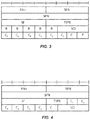
- FIG. 3 illustrates one exemplary implementation of a MAC CE tune-out message.
- This embodiment of the MAC CE implements an 8-bit bitmap to indicate which of the serving cells are affected by the tune-out.
- the 8-bit bitmap corresponds to the cell indices of the SCells and the PCell, which are sometimes, indicated using the terms SCelllndex or ServCelllndex.
- SCelllndex or ServCelllndex.
- the first 7 bits of the bitmap in Figure 3 correspond to the cell index, e.g., sometimes indicated asSCelllndex, of a secondary serving cell in descending order, where C i corresponds to cell index i.
- the last bit of the bitmap, P corresponds to the PCell.
- These bits are set to identify which of the serving cell(s) will be affected by the tune-out. Particularly, those serving cell(s) that will be affected by the tune-out are indicated with value of 1 (or alternatively, value 0). All serving cells that are not affected by the tune-out, however, are indicated using the other value (i.e., 0 or 1).
- the base station or eNB 80 is configured to ignore the indication.
- one possible implementation for defining the bits C 1 -C 7 and P may be as follows.
- C i if there is a SCell configured with SCelllndex i, this field indicates whether the SCell with SCelllndex i is affected by the UE 20 tune-out indicated by this MAC CE. Otherwise, the base station or eNB 80 shall ignore the C i field.
- the C i field is set to "1" to indicate that the SCell with SCelllndex i is affected by the tune-out, and set to "0" to indicate that the SCell with SCelllndex i is not affected by the tune-out.
- the C i field is set to "0" to indicate that the SCell with SCelllndex i is affected by the tune-out, and set to "1" to indicate that the SCell with SCelllndex i is not affected by the tune-out.
- This field indicates whether the PCell is affected by the UE 20 tune-out indicated by this MAC CE.
- the P field is set to "1" to indicate that the PCell is affected by the tune-out, and set to "0" to indicate that the PCell is not affected by the tune-out.
- the P field is set to "0" to indicate that the PCell is affected by the tune-out, and set to "1" to indicate that the PCell is not affected by the tune-out.
- Figure 4 illustrates another exemplary implementation of the MAC CE configured to utilize the same principle as previously described for Figure 3 .
- the embodiment of Figure 5 also indicates a tune-out impact for one or more SCells, but uses only a 7-bit bitmap C 1 -C 7 rather than an 8-bit bitmap.
- C 1 -C 7 are utilized for indicating the impact (or lack of impact) on an SCell, as described above, but the PCell does not have a separate field.
- all 7 bits of the bitmap are set to "0" (or alternatively, "1") to indicate tune-outs that impact the PCell.
- a tune-out on the PCell also implicitly defines a tune-out on all configured SCells.
- Figure 5 illustrates an embodiment of the MAC CE structure that may be used either with or without modifications. Particularly, assuming that the "TYPE" field shown in Figure 5 has at least one unused value, the value, or range of values, is used to indicate that this message is a one-time tune-out message, a periodic tune-out message, or an a-periodic tune-out message that applies to a SCell instead of a the PCell. If the TYPE field is set to another value, or a specific range of values are set, the tune-out message applies for the PCell only.
- the unused value(s) of the TYPE field could also be utilized to indicate to the base station or eNB 80 that the UE 20 has provided information about which SCell(s) it will perform a tune-out on using some or all reserved bits of the MAC CE.
- This embodiment of using a type value as an indication could be combined with the example implementation using a 7-bit bitmap previously described.
- the TYPE field can be used to indicate whether the UE 20 will or will not tune-out on the PCell.
- a bitmap such as the bitmaps seen in Figures 3 and 4 , for example, can then be used to indicate which SCell(s), if any, that the UE 20 will tune-out on in addition to the PCell.
- embodiments of the present invention provide a method for the UE 20 to indicate to the base station or eNB 80 that it is back from the tune-out, and thus, is listening to the base station or eNB 80 on some or all of its receivers.
- the UE 20 may send a tune-in message to the base station or eNB 80 when the UE 20 has returned to listening to the Radio Access Technology (RAT) that the UE 20 temporarily ceased to monitor.
- the tune-in message may, for example, correspond to a MAC CE, and may include a MAC subheader having a unique and/or pre-defined LCID value.
- the tune-in message may also contain information that identifies which configured serving cell(s) are no longer affected by the UE's 20 tune-out.
- the tune-in message may correspond to the feedback or response messages sent by the UE 20 to the base station or eNB 80 once the base station or eNB 80 resumes scheduling and normal operations with the UE 20, as previously described.
- the UE 20 sends a tune-in message only if the UE 20 is no longer monitoring another RAT on one or more receivers.
- tune-in message may, for example, comprise, a 7 or 8-bit bitmap structured as previously described.
- the UE 20 sends a tune-in message only if the UE 20 is no longer monitoring another RAT on any of its receivers.
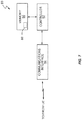
- FIG. 6 is a block diagram illustrating some components of an exemplary UE 20 configured to operate according to one or more embodiments of the present invention.
- UE 20 comprises a programmable controller 70, a memory 72, a user I/O interface 74, and a communications interface 76.
- the user I/O interface 74 provides the components necessary for a user to interact with the UE 20.
- the communications interface 76 comprises one or more transceivers that facilitate the communications with the RANs 16, 18, over the respective air interfaces.
- the memory 72 may comprise any solid state memory or computer readable media known in the art. Suitable examples of such media include, but are not limited to, Read Only Memory (ROM), Dynamic Random Access Memory (DRAM), Flash, or a device capable of reading computer-readable media, such as optical or magnetic media.
- ROM Read Only Memory
- DRAM Dynamic Random Access Memory
- Flash or a device capable of reading computer-readable media, such as optical or magnetic media.
- the programmable controller 70 may be implemented by one or more microprocessors, hardware, firmware, or a combination thereof, and generally controls the operation of the UE 20 according to the appropriate standards for both the LTE-based RAN 16 and the IS95/CDMA-based RAN 18. Such functions include, but are not limited to, communicating with the base station or eNB 80 to indicate the intention to temporarily "tune-out" of the RAN 16 /PSCN 12, as well as to "tune-in” to indicate its return, as previously described in this application.
- the programmable controller 70 may be configured to implement logic and instructions 78 to perform embodiments of the present invention as previously described.
- FIG 7 illustrates an exemplary base station or eNB 80 according to one embodiment of the present invention.
- the base station or eNB 80 comprises a programmable controller 82, a communications interface 84, and a memory 86.
- the communications interface 84 may, for example, comprise a transmitter and receiver configured to operate in an LTE system or other similar system. As is known in the art, the transmitter and receiver are coupled to one or more antennas (not shown) and communicate with the UE 20 over the LTE-based air interface.
- Memory 86 may comprise any solid state memory or computer readable media known in the art. Suitable examples of such media include, but are not limited to, ROM, DRAM, Flash, or a device capable of reading computer-readable media, such as optical or magnetic media.
- the programmable controller 82 controls the operation of the base station or eNB 80 in accordance with the LTE standard.
- the functions of the controller 82 may be implemented by one or more microprocessors, hardware, firmware, or a combination thereof, and include performing the functions to grant and support the temporary tune-outs requested by the UE 20.
- the controller 82 may be configured to according to logic and instructions 88 stored in memory 86 to communicate the MAC Control Elements with the UE 20, as well as to suspend scheduling and other functions regarding the UE 20 to avoid radio link failure and dropped calls while the UE 20 is tuned out of the RAN 16 /PSCN 12.
- the embodiments of the present invention provide advantages and benefits not realized by conventional systems and methods.
- the present embodiments provide a solution in which the base station or eNB 80 is not only aware of when the UE 20 tunes-out, but also on which serving cells (if multiple) as well as when the UE 20 ends the tune-out or tunes back in.
- the present embodiments enable the UE 20 to indicate that it will tune-out on one or more serving cells, as well as to indicate that it has tuned-in, even if the UE 20 was only tuned-out on a subset of its configured serving cells.
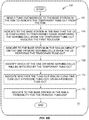
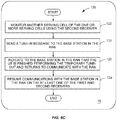
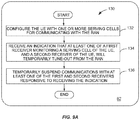
- FIGS 8A-8C are flow diagrams illustrating methods 90, 100, and 120, respectively, for controlling communications between the UE 20 and a base station or eNB 80 in a radio access network RAN 16.
- the UE 20 comprises, for illustrative purposes, first and second transceivers. Each transceiver includes a corresponding receiver configured to communicate on respective first and second carriers. Additionally, the UE 20 is configured with one or more serving cells for communicating with the RAN 16.
- the methods 90, 100, and 120 are all performed at the UE 20 by the programmable controller 70.
- FIG 8A is a flow diagram illustrating a method 90 according to one embodiment wherein the programmable controller 70 of UE 20 controls communications between the UE 20 and the base station or eNB 80 in a radio access network RAN 16.
- Method 90 begins with the programmable controller 70 monitoring the RAN 16 on a specific serving cell, of the one or more serving cells, using a first receiver of the first and second transceivers (box 92).
- the programmable controller at UE 20 indicates to the base station or eNB 80 in RAN 16 a temporary tune-out from the RAN 16 on at least one of the first receiver and a second receiver of the first and second transceivers (box 94).
- the programmable controller 70 temporarily suspends communications with the base station or eNB 80 in RAN 16 on the at least one of the first and second receivers (box 96). In some embodiments, the programmable controller 70 at UE 20 may temporarily suspend the communications responsive to receiving an acknowledgement message from the base station or eNB 80.
- Figure 8B is a flow diagram illustrating a method 100 of how the programmable controller 70 at the UE 20 may be configured to indicate the intention to tune-out of the RAN 16 according to embodiments of the present disclosure.
- the programmable controller 70 may send a tune-out message to the base station or eNB 80 in the RAN 16 to indicate the temporary tune-out from the RAN 16 (box 102).
- the tune-out message may include any information needed or desired, but in one embodiment, the tune-out message includes information that indicates one or more of a UE 20 identifier, a Logical Channel Identifier (LCID), a cell index that identifies which of the one or more serving cells will be affected by the temporary tune-out, a System Frame Number (SFN), and a time that the tune-out will occur.
- LCID Logical Channel Identifier
- SFN System Frame Number
- the programmable controller 70 may indicate to the base station or eNB 80 in RAN 16 that the UE 20 is configured to temporarily cease monitoring the specific serving cell (box 104). In another embodiment, the programmable controller 70 may indicate to the base station or eNB 80 in the RAN 16, an impact on the one or more serving cells when the UE 20 performs the temporary tune-out (box 106). In such embodiments, the programmable controller 70 may identify which of the one or more serving cells will be affected by the temporary tune-out (box 108).
- the programmable controller 70 at the UE 20 may, in one embodiment, indicate whether the tune-out will be a one-time tune-out, a periodic tune-out, or an a-periodic tune-out (box 110). In embodiments where the tune-out is a periodic tune-out, the programmable controller 70 at the UE 20 may indicate a periodicity for the periodic tune-out (box 112).
- FIG 8C is a flow diagram illustrating a method 120 in which the programmable controller 70 controls the UE 20 to resume communications with the RAN 16.
- the UE 20 may monitor, or may already be monitoring, another serving cell of the one or more serving cells using the second receiver (box 122).
- the programmable controller 70 sends a tune-in message to the base station or eNB 80 in RAN 16 via a Physical Uplink Control Channel (PUCCH) to indicate that the UE 20 is once again monitoring the RAN (16) on at least one of the specific serving cell and the another serving cell (box 124).
- PUCCH Physical Uplink Control Channel
- the tune-in message may comprise any information needed or desired, but in one embodiment, the tune-in message comprises one or more of a Logical Channel Identifier (LCID) and a cell index identifying which of the one or more serving cells will no longer be affected by the temporary tune-out. More specifically, the programmable controller 70 may indicate to the base station or eNB 80 in the RAN 16, that the UE 20 is finished performing the temporary tune-out and returns to communicate with the RAN 16 (box 126). The programmable controller 70 then resumes communications with the base station or eNB 80 in the RAN 16 on the at least one of the first and second receivers (box 128).
- LCID Logical Channel Identifier
- Figures 9A-9B are flow diagrams illustrating methods 130 and 140 respectively, for controlling communications between the UE 20 and a base station, e.g., eNB 80, in RAN 16.
- the methods 130 and 140 are all performed at the base station, e.g., eNB 80, in RAN 16 by the programmable controller 82.
- Figure 9A is a flow diagram illustrating a method 130 wherein the programmable controller 82 of base station or eNB 80 controls communications between the UE 20 and the base station or eNB 80 in a radio access network RAN 16.
- the base station or eNB 80 configures the UE 20 with one or more serving cells for communicating with the RAN 16 (box 132).
- the programmable controller 82 at the base station or eNB 80 then receives, from the UE 20, an indication that at least one of a first receiver of the UE 20 monitoring a specific serving cell of the one or more serving cells, and a second receiver of the UE 20, will temporarily tune-out from the RAN 16 (box 134).
- the programmable controller 82 Responsive to receiving the indication from the UE 20, the programmable controller 82 temporarily suspends communications with at least one of the first and second receivers (box 136). In some embodiments, the programmable controller 82 at the base station or eNB 80 may send an acknowledgement to the UE 20 upon receiving the tune-out message.
- Figure 9B illustrates a method 140 wherein the programmable controller 82 at base station or eNB 80 resumes communications with the UE 20 according to another embodiment.
- the programmable controller 82 at the base station or eNB 80 temporarily stops scheduling data for the at least one of the first and second receivers (box 142) to suspend communications with the at least one of the first and second receivers.
- the base station or eNB 80 receives a tune-in message indicating that the UE 20 is finished performing the temporary tune-out and returns to communicate with the RAN 16 (box 144).
- the programmable controller 82 resumes scheduling data for the at least one of the first and second receivers (box 146).
- the programmable controller 82 at the base station or eNB 80 may also send an acknowledgement to the UE 20 upon receiving the tune-in message.
Landscapes
- Engineering & Computer Science (AREA)
- Computer Networks & Wireless Communication (AREA)
- Signal Processing (AREA)
- Mobile Radio Communication Systems (AREA)
Claims (15)
- Procédé, mis en œuvre par un équipement utilisateur, UE (20) pour commander des communications entre l'UE (20) et une station de base (80) dans un réseau d'accès radio, RAN (16), l'UE (20) comprenant un ou plusieurs émetteurs-récepteurs, ayant chacun un récepteur correspondant, l'UE (20) configuré avec une ou plusieurs cellules de desserte pour communiquer avec le RAN (16), ladite ou lesdites cellules de desserte comprenant une cellule de desserte primaire, PCell, le procédé comprenant :la surveillance (92) du RAN (16) sur une cellule de desserte spécifique parmi ladite ou lesdites cellules de desserte en utilisant un premier récepteur parmi le ou les émetteurs-récepteurs ; etl'envoi (102) d'un message de décrochage à la station de base (80) dans le RAN (16), le message configuré pour :indiquer (94), à la station de base (80), un décrochage temporaire par rapport au RAN (16) sur au moins un récepteur parmi le ou les émetteurs-récepteurs ; etindiquer (106), à la station de base (80), un impact sur la ou les cellules de desserte lorsque l'UE (20) met en œuvre le décrochage temporaire ; etidentifier (108) celles parmi la ou des cellules de desserte qui seront affectées par le décrochage temporaire,dans lequel l'impact sur la ou les cellules de desserte est indiqué en utilisant un élément de commande, CE, de commande d'accès au support, MAC, qui inclut des informations quant à savoir si oui ou non la PCell sera affectée par le décrochage temporaire.
- Procédé selon la revendication 1 dans lequel l'indication (94) du décrochage temporaire par rapport au RAN (16) comprend le fait d'indiquer (104), par l'UE (20) à la station de base (80) dans le RAN (16), que l'UE (20) est configuré pour interrompre temporairement la surveillance de la cellule de desserte spécifique lorsque le décrochage temporaire implique le premier récepteur.
- Procédé selon l'une quelconque des revendications 1 ou 2 dans lequel l'indication (94) du décrochage temporaire par rapport au RAN (16) comprend le fait d'indiquer (110) si le décrochage sera un décrochage ponctuel, un décrochage périodique, ou un décrochage apériodique.
- Procédé selon la revendication 3 dans lequel si le décrochage comprend un décrochage périodique, l'indication (94) du décrochage temporaire par rapport au RAN (16) comprend en outre l'indication (112) à la station de base (80) dans le RAN (16) d'une périodicité pour le décrochage périodique.
- Procédé selon l'une quelconque des revendications 1 à 4 dans lequel le message de décrochage inclut des informations qui indiquent un ou plusieurs parmi un identificateur d'UE (20), un identificateur de canal logique, LCID, un indice de cellule qui identifie celles parmi la ou les cellules de desserte qui seront affectées par le décrochage temporaire, un numéro de trame système, SFN, et un moment auquel le décrochage va se produire.
- Procédé selon l'une quelconque des revendications 1 à 5 comprenant en outre une mise en suspens temporaire (96) de communications avec la station de base (80) dans le RAN (16) sur l'au moins un récepteur.
- Procédé selon la revendication 6, comprenant en outre :le fait d'indiquer (126), à la station de base (80) dans le RAN (16), que l'UE (20) termine de mettre en œuvre le décrochage temporaire et revient à la communication avec le RAN (16) ; etla reprise (128) des communications avec la station de base (80) dans le RAN (16) sur l'au moins un récepteur.
- Procédé selon la revendication 7 comprenant en outre la surveillance (122) d'une autre cellule de desserte parmi la ou des cellules de desserte en utilisant un deuxième récepteur, et dans lequel le fait d'indiquer (126) à la station de base (80) dans le RAN (16) que l'UE (20) termine de mettre en œuvre le décrochage temporaire et revient à la communication avec le RAN (16) comprend l'envoi (124) message de mise à l'écoute à la station de base (80) dans le RAN (16) via un canal de commande de liaison montante physique, PUCCH, pour indiquer que l'UE (20) surveille une nouvelle fois le RAN (16) sur au moins l'une parmi la cellule de desserte spécifique et l'autre cellule de desserte, le message de mise à l'écoute incluant un ou plusieurs parmi un identificateur de canal logique, LCID, et un indice de cellule identifiant celles parmi la ou les cellules de desserte qui ne seront plus affectées par le décrochage temporaire.
- Équipement utilisateur, UE (20) configuré pour commander des communications entre l'UE (20) et une station de base (80) dans un réseau d'accès radio, RAN (16), l'UE (20) étant configurable avec une ou plusieurs cellules de desserte pour communiquer avec le RAN (16), ladite ou lesdites cellules de desserte comprenant une cellule de desserte primaire, PCell, et l'UE (20) comprenant :une interface de communication (76) comprenant un ou plusieurs émetteurs-récepteurs, chaque émetteur-récepteur ayant un récepteur correspondant et configuré pour communiquer avec le RAN (16) via une station de base (80) ; etun contrôleur programmable (70) connecté de façon opérationnelle à l'émetteur-récepteur ou aux émetteurs-récepteurs, et configuré pour :surveiller (92) le RAN (16) sur une cellule de desserte spécifique parmi la ou les cellules de desserte en utilisant un premier récepteur parmi le ou les émetteurs-récepteurs ; etenvoyer (102) un message de décrochage à la station de base (80) dans le RAN (16), le message de décrochage configuré pour :indiquer (94) un décrochage temporaire par rapport au RAN (16) sur au moins un récepteur parmi le ou les émetteurs-récepteurs ;indiquer (106) à la station de base (80) dans le RAN (16), un impact sur la ou les cellules de desserte lorsque l'UE (20) met en œuvre le décrochage temporaire ; etidentifier (108) celles parmi la ou des cellules de desserte qui seront affectées par le décrochage temporaire,dans lequel l'impact sur la ou les cellules de desserte est indiqué en utilisant un élément de commande, CE, de commande d'accès au support, MAC, qui inclut des informations quant à savoir si oui ou non la PCell sera affectée par le décrochage temporaire.
- Procédé de commande de communications entre un équipement utilisateur, UE, (20) et une station de base (80) dans un réseau d'accès radio, RAN (16), le procédé mis en œuvre par la station de base (80) et comprenant :la configuration (132) de l'UE (20) avec une ou plusieurs cellules de desserte pour communiquer avec le RAN (16), ladite ou lesdites cellules de desserte comprenant une cellule de desserte primaire, PCell ; etla réception (134), depuis l'UE (20), d'un message de décrochage configuré pour :indiquer, à la station de base (80), qu'au moins un récepteur de l'UE (20), va se décrocher temporairement du RAN (16) ;indiquer à la station de base (80) dans le RAN (16), un impact sur la ou les cellules de desserte lorsque l'UE (20) met en œuvre le décrochage temporaire ; etidentifier, à la station de base (80), celles parmi la ou des cellules de desserte qui seront affectées par le décrochage temporaire,dans lequel l'impact sur la ou les cellules de desserte est indiqué en utilisant un élément de commande, CE, de commande d'accès au support, MAC, qui inclut des informations quant à savoir si oui ou non la PCell sera affectée par le décrochage temporaire.
- Procédé selon la revendication 10 comprenant en outre la mise en suspens temporaire (136) de communications vers l'au moins un récepteur en réponse à la réception de l'indication.
- Procédé selon la revendication 11 dans lequel la mise en suspens temporaire (136) de communications vers l'au moins un récepteur comprend l'arrêt temporaire (142) de planification de données pour l'au moins un récepteur au niveau de la station de base (80) dans le RAN (16).
- Procédé selon l'une quelconque des revendications 11 ou 12, comprenant en outre :la réception (144), depuis l'UE (20), d'un message de mise à l'écoute indiquant que l'UE (20) termine de mettre en œuvre le décrochage temporaire et revient à la communication avec le RAN (16) ; etla reprise (146) de planification de données pour l'au moins un récepteur en réponse à la réception du message de mise à l'écoute depuis l'UE (20).
- Procédé selon l'une quelconque des revendications 10 à 13 comprenant en outre l'envoi d'un message d'accusé de réception à l'UE (20) en réponse à la réception de l'un et/ou de l'autre parmi les messages de décrochage et de mise à l'écoute depuis l'UE (20).
- Station de base (80) dans un réseau d'accès radio, RAN (16), configurée pour commander des communications entre un équipement utilisateur (UE) (20) et la station de base (80), la station de base (80) comprenant :une interface de communication (84) configurée pour communiquer avec un UE (20) ; etun contrôleur programmable (82) connecté de façon opérationnelle à l'interface de communication (84) et configuré pour :configurer (132) l'UE (20) avec une ou plusieurs cellules de desserte pour communiquer avec le RAN (16), ladite ou lesdites cellules de desserte comprenant une cellule de desserte primaire, PCell ; etrecevoir (134), de l'UE (20), un message de décrochage configuré pour :indiquer, à la station de base (80), qu'au moins un récepteur de l'UE (20), va se décrocher temporairement du RAN (16) ;indiquer, à la station de base (80), un impact sur la ou les cellules de desserte lorsque l'UE (20) met en œuvre le décrochage temporaire ; etidentifier, à la station de base (80), celles parmi la ou des cellules de desserte qui seront affectées par le décrochage temporaire,dans laquelle l'impact sur la ou les cellules de desserte est indiqué en utilisant un élément de commande, CE, de commande d'accès au support, MAC, qui inclut des informations quant à savoir si oui ou non la PCell sera affectée par le décrochage temporaire.
Applications Claiming Priority (4)
| Application Number | Priority Date | Filing Date | Title |
|---|---|---|---|
| US201261612935P | 2012-03-19 | 2012-03-19 | |
| US201261614348P | 2012-03-22 | 2012-03-22 | |
| US201261649765P | 2012-05-21 | 2012-05-21 | |
| PCT/IB2013/052187 WO2013140343A1 (fr) | 2012-03-19 | 2013-03-20 | Système et procédé pour supporter la commutation entre un réseau à commutation de paquets et un réseau à commutation de circuits |
Publications (2)
| Publication Number | Publication Date |
|---|---|
| EP2829146A1 EP2829146A1 (fr) | 2015-01-28 |
| EP2829146B1 true EP2829146B1 (fr) | 2020-01-15 |
Family
ID=48142055
Family Applications (2)
| Application Number | Title | Priority Date | Filing Date |
|---|---|---|---|
| EP13717342.3A Active EP2829144B1 (fr) | 2012-03-19 | 2013-03-19 | Système et procédé pour prendre en charge une commutation entre un réseau à commutation de paquets et réseau à commutation de circuits |
| EP13722536.3A Active EP2829146B1 (fr) | 2012-03-19 | 2013-03-20 | Système et procédé pour supporter la commutation entre un réseau à commutation de paquets et un réseau à commutation de circuits |
Family Applications Before (1)
| Application Number | Title | Priority Date | Filing Date |
|---|---|---|---|
| EP13717342.3A Active EP2829144B1 (fr) | 2012-03-19 | 2013-03-19 | Système et procédé pour prendre en charge une commutation entre un réseau à commutation de paquets et réseau à commutation de circuits |
Country Status (4)
| Country | Link |
|---|---|
| US (2) | US9622287B2 (fr) |
| EP (2) | EP2829144B1 (fr) |
| CN (1) | CN104205992B (fr) |
| WO (2) | WO2013141804A1 (fr) |
Families Citing this family (7)
| Publication number | Priority date | Publication date | Assignee | Title |
|---|---|---|---|---|
| EP2829144B1 (fr) | 2012-03-19 | 2018-05-30 | Telefonaktiebolaget LM Ericsson (publ) | Système et procédé pour prendre en charge une commutation entre un réseau à commutation de paquets et réseau à commutation de circuits |
| JP2015088997A (ja) * | 2013-10-31 | 2015-05-07 | 株式会社Nttドコモ | 移動局 |
| US9232556B2 (en) * | 2014-03-06 | 2016-01-05 | Apple Inc. | User equipment with improved tune-away performance during measurement |
| US9986479B2 (en) | 2016-03-01 | 2018-05-29 | Qualcomm Incorporated | Carrier prioritization for tune-away |
| US10778124B2 (en) * | 2017-02-24 | 2020-09-15 | General Electric Company | Integrated monitoring of an electric motor assembly |
| US10986661B2 (en) | 2018-09-27 | 2021-04-20 | Lenovo (Singapore) Pte. Ltd. | Transmitting a physical downlink shared channel after losing uplink synchronization |
| US11166307B2 (en) * | 2018-09-27 | 2021-11-02 | Lenovo (Singapore) Pte. Ltd. | Transmitting a physical downlink shared channel after losing uplink synchronization |
Family Cites Families (19)
| Publication number | Priority date | Publication date | Assignee | Title |
|---|---|---|---|---|
| US20030194033A1 (en) | 1998-05-21 | 2003-10-16 | Tiedemann Edward G. | Method and apparatus for coordinating transmission of short messages with hard handoff searches in a wireless communications system |
| US7054290B1 (en) | 2000-03-07 | 2006-05-30 | Telefonaktiebolaget Lm Ericsson (Publ) | Methods and apparatus for dual mode operation in a wireless communication system |
| US20020122401A1 (en) * | 2001-03-02 | 2002-09-05 | Zeng-Jun Xiang | System and method in a wireless telecommunication network for placing a voice call on hold and conducting a data session |
| JP4000123B2 (ja) * | 2004-03-15 | 2007-10-31 | 株式会社東芝 | 無線送信装置及び方法 |
| US20090207790A1 (en) | 2005-10-27 | 2009-08-20 | Qualcomm Incorporated | Method and apparatus for settingtuneawaystatus in an open state in wireless communication system |
| TWM360524U (en) * | 2007-08-13 | 2009-07-01 | Interdigital Patent Holdings | Apparatus to reduce radio resource overhead associated with intermittent traffic |
| US9913206B2 (en) * | 2008-03-21 | 2018-03-06 | Interdigital Patent Holdings, Inc. | Method and apparatus for searching for closed subscriber group cells |
| KR101122095B1 (ko) * | 2009-01-05 | 2012-03-19 | 엘지전자 주식회사 | 불필요한 재전송 방지를 위한 임의접속 기법 및 이를 위한 단말 |
| TW201039576A (en) | 2009-04-17 | 2010-11-01 | Ralink Technology Corp | Wireless transceiver device and method capable of preventing collision in an electronic device |
| US20110059739A1 (en) * | 2009-09-09 | 2011-03-10 | Chien-Jen Huang | Method of Radio Access Technology Selection and Related Communication Device |
| JP5403678B2 (ja) * | 2009-10-21 | 2014-01-29 | Necカシオモバイルコミュニケーションズ株式会社 | 無線通信端末、無線通信システム及びコンピュータプログラム |
| US9179395B2 (en) | 2010-01-18 | 2015-11-03 | Qualcomm Incorporated | Method and apparatus for mitigating data loss during autonomous system information reading |
| KR101829832B1 (ko) * | 2010-03-26 | 2018-02-19 | 엘지전자 주식회사 | 무선 통신 시스템에서 신호 송수신 방법 및 이를 위한 장치 |
| US9084262B2 (en) | 2010-07-22 | 2015-07-14 | Qualcomm Incorporated | Coordinating transmission hold and resume in TD-SCDMA |
| WO2013012371A1 (fr) | 2011-07-20 | 2013-01-24 | Telefonaktiebolaget L M Ericsson (Publ) | Repli à commutation de circuits pour une radio mobile |
| EP2557889B1 (fr) * | 2011-08-12 | 2019-07-17 | BlackBerry Limited | Messagerie simplifiée d'ue+enb |
| US9526091B2 (en) * | 2012-03-16 | 2016-12-20 | Intel Corporation | Method and apparatus for coordination of self-optimization functions in a wireless network |
| EP2829144B1 (fr) | 2012-03-19 | 2018-05-30 | Telefonaktiebolaget LM Ericsson (publ) | Système et procédé pour prendre en charge une commutation entre un réseau à commutation de paquets et réseau à commutation de circuits |
| US8971278B2 (en) * | 2013-01-29 | 2015-03-03 | Qualcomm Incorporated | Methods and apparatuses for opportunistic advertising beacon transmission on non-serving wireless channels |
-
2013
- 2013-03-19 EP EP13717342.3A patent/EP2829144B1/fr active Active
- 2013-03-19 US US14/383,729 patent/US9622287B2/en active Active
- 2013-03-19 WO PCT/SE2013/050304 patent/WO2013141804A1/fr not_active Ceased
- 2013-03-19 CN CN201380015468.1A patent/CN104205992B/zh active Active
- 2013-03-20 US US14/385,512 patent/US9655162B2/en not_active Expired - Fee Related
- 2013-03-20 EP EP13722536.3A patent/EP2829146B1/fr active Active
- 2013-03-20 WO PCT/IB2013/052187 patent/WO2013140343A1/fr not_active Ceased
Non-Patent Citations (1)
| Title |
|---|
| QUALCOMM INCORPORATED: "Dynamic activation and de-activation of secondary cells during carrier", 3GPP DRAFT; R2-120306 DYNAMIC DEACTIVATION OF SECONDARY CELLS, 3RD GENERATION PARTNERSHIP PROJECT (3GPP), MOBILE COMPETENCE CENTRE ; 650, ROUTE DES LUCIOLES ; F-06921 SOPHIA-ANTIPOLIS CEDEX ; FRANCE, vol. RAN WG2, no. Dresden, Germany; 20120210, 30 January 2012 (2012-01-30), XP050565137 * |
Also Published As
| Publication number | Publication date |
|---|---|
| US9622287B2 (en) | 2017-04-11 |
| CN104205992B (zh) | 2018-05-15 |
| EP2829144B1 (fr) | 2018-05-30 |
| US20150029980A1 (en) | 2015-01-29 |
| EP2829146A1 (fr) | 2015-01-28 |
| WO2013141804A1 (fr) | 2013-09-26 |
| CN104205992A (zh) | 2014-12-10 |
| EP2829144A1 (fr) | 2015-01-28 |
| WO2013140343A1 (fr) | 2013-09-26 |
| US9655162B2 (en) | 2017-05-16 |
| US20150018036A1 (en) | 2015-01-15 |
Similar Documents
| Publication | Publication Date | Title |
|---|---|---|
| US11902186B2 (en) | Communication terminal | |
| JP7332814B2 (ja) | マルチsim動作のためのユーザ機器及び方法 | |
| US9854464B2 (en) | Method of avoiding IDC interference in a wireless communication system and apparatus for same | |
| EP2765822B1 (fr) | Procédé et appareil pour contrôler l'accès d'un équipement utilisateur dans un système de communication sans fil | |
| US10667322B2 (en) | Method and apparatus for changing connection state of terminal | |
| US9173149B2 (en) | Method for adjusting cell reselection priority for avoiding IDC interference in wireless communication system and device for same | |
| EP2774282B1 (fr) | L'enregistrement d'informations sur l'échec d'une procédure d'accès aléatoire | |
| US10149231B2 (en) | Method and apparatus for receiving extended access barring parameters in wireless communication system | |
| US9655162B2 (en) | System and method for supporting switching between a packet-switched network and a circuit-switched network | |
| KR101260754B1 (ko) | 시스템 정보 수신의 처리 방법 및 이와 관련된 통신 장치 | |
| WO2022082584A1 (fr) | Procédés et appareils pour un mécanisme de désactivation de scg et un mécanisme d'activation de scg dans un scénario mr-dc | |
| US20220418009A1 (en) | Ue capability signaling to support enhancements of a random access operation for 5g new radio (nr) in unlicensed spectrum (nr-u) | |
| CN115315988A (zh) | 一种请求系统广播信息的方法及装置、终端设备 | |
| KR102644416B1 (ko) | 멀티-usim 중단 및 최적화된 재개 | |
| US10674393B2 (en) | Method and apparatus for performing application specific congestion control for data communication in wireless communication system | |
| EP4387366A1 (fr) | Procédé de commande de transmission, et appareil associé | |
| US9392505B2 (en) | Method for reporting information on multiband capability to network at user equipment in wireless communication system and an apparatus therefor | |
| CA3211339A1 (fr) | Procede et appareil pour une communication de liaison laterale |
Legal Events
| Date | Code | Title | Description |
|---|---|---|---|
| PUAI | Public reference made under article 153(3) epc to a published international application that has entered the european phase |
Free format text: ORIGINAL CODE: 0009012 |
|
| 17P | Request for examination filed |
Effective date: 20140917 |
|
| AK | Designated contracting states |
Kind code of ref document: A1 Designated state(s): AL AT BE BG CH CY CZ DE DK EE ES FI FR GB GR HR HU IE IS IT LI LT LU LV MC MK MT NL NO PL PT RO RS SE SI SK SM TR |
|
| AX | Request for extension of the european patent |
Extension state: BA ME |
|
| DAX | Request for extension of the european patent (deleted) | ||
| STAA | Information on the status of an ep patent application or granted ep patent |
Free format text: STATUS: EXAMINATION IS IN PROGRESS |
|
| 17Q | First examination report despatched |
Effective date: 20180227 |
|
| REG | Reference to a national code |
Ref country code: DE Ref legal event code: R079 Ref document number: 602013065098 Country of ref document: DE Free format text: PREVIOUS MAIN CLASS: H04W0076020000 Ipc: H04W0076280000 |
|
| GRAP | Despatch of communication of intention to grant a patent |
Free format text: ORIGINAL CODE: EPIDOSNIGR1 |
|
| STAA | Information on the status of an ep patent application or granted ep patent |
Free format text: STATUS: GRANT OF PATENT IS INTENDED |
|
| RIC1 | Information provided on ipc code assigned before grant |
Ipc: H04W 88/06 20090101ALN20191017BHEP Ipc: H04W 76/28 20180101AFI20191017BHEP Ipc: H04W 76/16 20180101ALI20191017BHEP |
|
| INTG | Intention to grant announced |
Effective date: 20191111 |
|
| RIN1 | Information on inventor provided before grant (corrected) |
Inventor name: MUELLER, WALTER, GEHARD, ALOIS Inventor name: LANGEREIS, ALEXANDER Inventor name: FARONIUS, CAROLA Inventor name: BOSTROEM, LISA Inventor name: SKAERBY, CHRISTIAN Inventor name: PARSONS, ERIC |
|
| GRAS | Grant fee paid |
Free format text: ORIGINAL CODE: EPIDOSNIGR3 |
|
| GRAA | (expected) grant |
Free format text: ORIGINAL CODE: 0009210 |
|
| STAA | Information on the status of an ep patent application or granted ep patent |
Free format text: STATUS: THE PATENT HAS BEEN GRANTED |
|
| AK | Designated contracting states |
Kind code of ref document: B1 Designated state(s): AL AT BE BG CH CY CZ DE DK EE ES FI FR GB GR HR HU IE IS IT LI LT LU LV MC MK MT NL NO PL PT RO RS SE SI SK SM TR |
|
| REG | Reference to a national code |
Ref country code: CH Ref legal event code: EP Ref country code: GB Ref legal event code: FG4D |
|
| REG | Reference to a national code |
Ref country code: IE Ref legal event code: FG4D |
|
| REG | Reference to a national code |
Ref country code: DE Ref legal event code: R096 Ref document number: 602013065098 Country of ref document: DE |
|
| REG | Reference to a national code |
Ref country code: AT Ref legal event code: REF Ref document number: 1226296 Country of ref document: AT Kind code of ref document: T Effective date: 20200215 |
|
| REG | Reference to a national code |
Ref country code: NL Ref legal event code: MP Effective date: 20200115 |
|
| REG | Reference to a national code |
Ref country code: LT Ref legal event code: MG4D |
|
| PG25 | Lapsed in a contracting state [announced via postgrant information from national office to epo] |
Ref country code: RS Free format text: LAPSE BECAUSE OF FAILURE TO SUBMIT A TRANSLATION OF THE DESCRIPTION OR TO PAY THE FEE WITHIN THE PRESCRIBED TIME-LIMIT Effective date: 20200115 Ref country code: NL Free format text: LAPSE BECAUSE OF FAILURE TO SUBMIT A TRANSLATION OF THE DESCRIPTION OR TO PAY THE FEE WITHIN THE PRESCRIBED TIME-LIMIT Effective date: 20200115 Ref country code: PT Free format text: LAPSE BECAUSE OF FAILURE TO SUBMIT A TRANSLATION OF THE DESCRIPTION OR TO PAY THE FEE WITHIN THE PRESCRIBED TIME-LIMIT Effective date: 20200607 Ref country code: FI Free format text: LAPSE BECAUSE OF FAILURE TO SUBMIT A TRANSLATION OF THE DESCRIPTION OR TO PAY THE FEE WITHIN THE PRESCRIBED TIME-LIMIT Effective date: 20200115 Ref country code: NO Free format text: LAPSE BECAUSE OF FAILURE TO SUBMIT A TRANSLATION OF THE DESCRIPTION OR TO PAY THE FEE WITHIN THE PRESCRIBED TIME-LIMIT Effective date: 20200415 |
|
| PG25 | Lapsed in a contracting state [announced via postgrant information from national office to epo] |
Ref country code: HR Free format text: LAPSE BECAUSE OF FAILURE TO SUBMIT A TRANSLATION OF THE DESCRIPTION OR TO PAY THE FEE WITHIN THE PRESCRIBED TIME-LIMIT Effective date: 20200115 Ref country code: BG Free format text: LAPSE BECAUSE OF FAILURE TO SUBMIT A TRANSLATION OF THE DESCRIPTION OR TO PAY THE FEE WITHIN THE PRESCRIBED TIME-LIMIT Effective date: 20200415 Ref country code: GR Free format text: LAPSE BECAUSE OF FAILURE TO SUBMIT A TRANSLATION OF THE DESCRIPTION OR TO PAY THE FEE WITHIN THE PRESCRIBED TIME-LIMIT Effective date: 20200416 Ref country code: LV Free format text: LAPSE BECAUSE OF FAILURE TO SUBMIT A TRANSLATION OF THE DESCRIPTION OR TO PAY THE FEE WITHIN THE PRESCRIBED TIME-LIMIT Effective date: 20200115 Ref country code: SE Free format text: LAPSE BECAUSE OF FAILURE TO SUBMIT A TRANSLATION OF THE DESCRIPTION OR TO PAY THE FEE WITHIN THE PRESCRIBED TIME-LIMIT Effective date: 20200115 Ref country code: IS Free format text: LAPSE BECAUSE OF FAILURE TO SUBMIT A TRANSLATION OF THE DESCRIPTION OR TO PAY THE FEE WITHIN THE PRESCRIBED TIME-LIMIT Effective date: 20200515 |
|
| REG | Reference to a national code |
Ref country code: DE Ref legal event code: R097 Ref document number: 602013065098 Country of ref document: DE |
|
| PG25 | Lapsed in a contracting state [announced via postgrant information from national office to epo] |
Ref country code: RO Free format text: LAPSE BECAUSE OF FAILURE TO SUBMIT A TRANSLATION OF THE DESCRIPTION OR TO PAY THE FEE WITHIN THE PRESCRIBED TIME-LIMIT Effective date: 20200115 Ref country code: CZ Free format text: LAPSE BECAUSE OF FAILURE TO SUBMIT A TRANSLATION OF THE DESCRIPTION OR TO PAY THE FEE WITHIN THE PRESCRIBED TIME-LIMIT Effective date: 20200115 Ref country code: SK Free format text: LAPSE BECAUSE OF FAILURE TO SUBMIT A TRANSLATION OF THE DESCRIPTION OR TO PAY THE FEE WITHIN THE PRESCRIBED TIME-LIMIT Effective date: 20200115 Ref country code: SM Free format text: LAPSE BECAUSE OF FAILURE TO SUBMIT A TRANSLATION OF THE DESCRIPTION OR TO PAY THE FEE WITHIN THE PRESCRIBED TIME-LIMIT Effective date: 20200115 Ref country code: EE Free format text: LAPSE BECAUSE OF FAILURE TO SUBMIT A TRANSLATION OF THE DESCRIPTION OR TO PAY THE FEE WITHIN THE PRESCRIBED TIME-LIMIT Effective date: 20200115 Ref country code: DK Free format text: LAPSE BECAUSE OF FAILURE TO SUBMIT A TRANSLATION OF THE DESCRIPTION OR TO PAY THE FEE WITHIN THE PRESCRIBED TIME-LIMIT Effective date: 20200115 Ref country code: MC Free format text: LAPSE BECAUSE OF FAILURE TO SUBMIT A TRANSLATION OF THE DESCRIPTION OR TO PAY THE FEE WITHIN THE PRESCRIBED TIME-LIMIT Effective date: 20200115 Ref country code: LT Free format text: LAPSE BECAUSE OF FAILURE TO SUBMIT A TRANSLATION OF THE DESCRIPTION OR TO PAY THE FEE WITHIN THE PRESCRIBED TIME-LIMIT Effective date: 20200115 Ref country code: ES Free format text: LAPSE BECAUSE OF FAILURE TO SUBMIT A TRANSLATION OF THE DESCRIPTION OR TO PAY THE FEE WITHIN THE PRESCRIBED TIME-LIMIT Effective date: 20200115 |
|
| REG | Reference to a national code |
Ref country code: CH Ref legal event code: PL |
|
| REG | Reference to a national code |
Ref country code: AT Ref legal event code: MK05 Ref document number: 1226296 Country of ref document: AT Kind code of ref document: T Effective date: 20200115 |
|
| PLBE | No opposition filed within time limit |
Free format text: ORIGINAL CODE: 0009261 |
|
| STAA | Information on the status of an ep patent application or granted ep patent |
Free format text: STATUS: NO OPPOSITION FILED WITHIN TIME LIMIT |
|
| 26N | No opposition filed |
Effective date: 20201016 |
|
| REG | Reference to a national code |
Ref country code: BE Ref legal event code: MM Effective date: 20200331 |
|
| PG25 | Lapsed in a contracting state [announced via postgrant information from national office to epo] |
Ref country code: LU Free format text: LAPSE BECAUSE OF NON-PAYMENT OF DUE FEES Effective date: 20200320 |
|
| PG25 | Lapsed in a contracting state [announced via postgrant information from national office to epo] |
Ref country code: AT Free format text: LAPSE BECAUSE OF FAILURE TO SUBMIT A TRANSLATION OF THE DESCRIPTION OR TO PAY THE FEE WITHIN THE PRESCRIBED TIME-LIMIT Effective date: 20200115 Ref country code: FR Free format text: LAPSE BECAUSE OF NON-PAYMENT OF DUE FEES Effective date: 20200331 Ref country code: CH Free format text: LAPSE BECAUSE OF NON-PAYMENT OF DUE FEES Effective date: 20200331 Ref country code: IT Free format text: LAPSE BECAUSE OF FAILURE TO SUBMIT A TRANSLATION OF THE DESCRIPTION OR TO PAY THE FEE WITHIN THE PRESCRIBED TIME-LIMIT Effective date: 20200115 Ref country code: LI Free format text: LAPSE BECAUSE OF NON-PAYMENT OF DUE FEES Effective date: 20200331 Ref country code: IE Free format text: LAPSE BECAUSE OF NON-PAYMENT OF DUE FEES Effective date: 20200320 |
|
| PG25 | Lapsed in a contracting state [announced via postgrant information from national office to epo] |
Ref country code: PL Free format text: LAPSE BECAUSE OF FAILURE TO SUBMIT A TRANSLATION OF THE DESCRIPTION OR TO PAY THE FEE WITHIN THE PRESCRIBED TIME-LIMIT Effective date: 20200115 Ref country code: BE Free format text: LAPSE BECAUSE OF NON-PAYMENT OF DUE FEES Effective date: 20200331 Ref country code: SI Free format text: LAPSE BECAUSE OF FAILURE TO SUBMIT A TRANSLATION OF THE DESCRIPTION OR TO PAY THE FEE WITHIN THE PRESCRIBED TIME-LIMIT Effective date: 20200115 |
|
| PG25 | Lapsed in a contracting state [announced via postgrant information from national office to epo] |
Ref country code: TR Free format text: LAPSE BECAUSE OF FAILURE TO SUBMIT A TRANSLATION OF THE DESCRIPTION OR TO PAY THE FEE WITHIN THE PRESCRIBED TIME-LIMIT Effective date: 20200115 Ref country code: MT Free format text: LAPSE BECAUSE OF FAILURE TO SUBMIT A TRANSLATION OF THE DESCRIPTION OR TO PAY THE FEE WITHIN THE PRESCRIBED TIME-LIMIT Effective date: 20200115 Ref country code: CY Free format text: LAPSE BECAUSE OF FAILURE TO SUBMIT A TRANSLATION OF THE DESCRIPTION OR TO PAY THE FEE WITHIN THE PRESCRIBED TIME-LIMIT Effective date: 20200115 |
|
| PG25 | Lapsed in a contracting state [announced via postgrant information from national office to epo] |
Ref country code: MK Free format text: LAPSE BECAUSE OF FAILURE TO SUBMIT A TRANSLATION OF THE DESCRIPTION OR TO PAY THE FEE WITHIN THE PRESCRIBED TIME-LIMIT Effective date: 20200115 Ref country code: AL Free format text: LAPSE BECAUSE OF FAILURE TO SUBMIT A TRANSLATION OF THE DESCRIPTION OR TO PAY THE FEE WITHIN THE PRESCRIBED TIME-LIMIT Effective date: 20200115 |
|
| PGFP | Annual fee paid to national office [announced via postgrant information from national office to epo] |
Ref country code: GB Payment date: 20260327 Year of fee payment: 14 |
|
| PGFP | Annual fee paid to national office [announced via postgrant information from national office to epo] |
Ref country code: DE Payment date: 20260327 Year of fee payment: 14 |