EP2829599A1 - Verfahren zum einschleusen exogener dna durch überwindung der beschränkungsmodifikationsbarriere eines zielbakteriums - Google Patents
Verfahren zum einschleusen exogener dna durch überwindung der beschränkungsmodifikationsbarriere eines zielbakteriums Download PDFInfo
- Publication number
- EP2829599A1 EP2829599A1 EP13764964.6A EP13764964A EP2829599A1 EP 2829599 A1 EP2829599 A1 EP 2829599A1 EP 13764964 A EP13764964 A EP 13764964A EP 2829599 A1 EP2829599 A1 EP 2829599A1
- Authority
- EP
- European Patent Office
- Prior art keywords
- bce
- dna
- nham
- seq
- inducing
- Prior art date
- Legal status (The legal status is an assumption and is not a legal conclusion. Google has not performed a legal analysis and makes no representation as to the accuracy of the status listed.)
- Withdrawn
Links
Images






Classifications
-
- C—CHEMISTRY; METALLURGY
- C12—BIOCHEMISTRY; BEER; SPIRITS; WINE; VINEGAR; MICROBIOLOGY; ENZYMOLOGY; MUTATION OR GENETIC ENGINEERING
- C12N—MICROORGANISMS OR ENZYMES; COMPOSITIONS THEREOF; PROPAGATING, PRESERVING, OR MAINTAINING MICROORGANISMS; MUTATION OR GENETIC ENGINEERING; CULTURE MEDIA
- C12N15/00—Mutation or genetic engineering; DNA or RNA concerning genetic engineering, vectors, e.g. plasmids, or their isolation, preparation or purification; Use of hosts therefor
- C12N15/09—Recombinant DNA-technology
- C12N15/63—Introduction of foreign genetic material using vectors; Vectors; Use of hosts therefor; Regulation of expression
- C12N15/70—Vectors or expression systems specially adapted for E. coli
-
- C—CHEMISTRY; METALLURGY
- C12—BIOCHEMISTRY; BEER; SPIRITS; WINE; VINEGAR; MICROBIOLOGY; ENZYMOLOGY; MUTATION OR GENETIC ENGINEERING
- C12N—MICROORGANISMS OR ENZYMES; COMPOSITIONS THEREOF; PROPAGATING, PRESERVING, OR MAINTAINING MICROORGANISMS; MUTATION OR GENETIC ENGINEERING; CULTURE MEDIA
- C12N1/00—Microorganisms; Compositions thereof; Processes of propagating, maintaining or preserving microorganisms or compositions thereof; Processes of preparing or isolating a composition containing a microorganism; Culture media therefor
- C12N1/20—Bacteria; Culture media therefor
-
- C—CHEMISTRY; METALLURGY
- C12—BIOCHEMISTRY; BEER; SPIRITS; WINE; VINEGAR; MICROBIOLOGY; ENZYMOLOGY; MUTATION OR GENETIC ENGINEERING
- C12N—MICROORGANISMS OR ENZYMES; COMPOSITIONS THEREOF; PROPAGATING, PRESERVING, OR MAINTAINING MICROORGANISMS; MUTATION OR GENETIC ENGINEERING; CULTURE MEDIA
- C12N1/00—Microorganisms; Compositions thereof; Processes of propagating, maintaining or preserving microorganisms or compositions thereof; Processes of preparing or isolating a composition containing a microorganism; Culture media therefor
- C12N1/20—Bacteria; Culture media therefor
- C12N1/205—Bacterial isolates
-
- C—CHEMISTRY; METALLURGY
- C12—BIOCHEMISTRY; BEER; SPIRITS; WINE; VINEGAR; MICROBIOLOGY; ENZYMOLOGY; MUTATION OR GENETIC ENGINEERING
- C12N—MICROORGANISMS OR ENZYMES; COMPOSITIONS THEREOF; PROPAGATING, PRESERVING, OR MAINTAINING MICROORGANISMS; MUTATION OR GENETIC ENGINEERING; CULTURE MEDIA
- C12N15/00—Mutation or genetic engineering; DNA or RNA concerning genetic engineering, vectors, e.g. plasmids, or their isolation, preparation or purification; Use of hosts therefor
- C12N15/09—Recombinant DNA-technology
- C12N15/63—Introduction of foreign genetic material using vectors; Vectors; Use of hosts therefor; Regulation of expression
- C12N15/74—Vectors or expression systems specially adapted for prokaryotic hosts other than E. coli, e.g. Lactobacillus, Micromonospora
-
- C—CHEMISTRY; METALLURGY
- C12—BIOCHEMISTRY; BEER; SPIRITS; WINE; VINEGAR; MICROBIOLOGY; ENZYMOLOGY; MUTATION OR GENETIC ENGINEERING
- C12N—MICROORGANISMS OR ENZYMES; COMPOSITIONS THEREOF; PROPAGATING, PRESERVING, OR MAINTAINING MICROORGANISMS; MUTATION OR GENETIC ENGINEERING; CULTURE MEDIA
- C12N15/00—Mutation or genetic engineering; DNA or RNA concerning genetic engineering, vectors, e.g. plasmids, or their isolation, preparation or purification; Use of hosts therefor
- C12N15/09—Recombinant DNA-technology
- C12N15/63—Introduction of foreign genetic material using vectors; Vectors; Use of hosts therefor; Regulation of expression
- C12N15/74—Vectors or expression systems specially adapted for prokaryotic hosts other than E. coli, e.g. Lactobacillus, Micromonospora
- C12N15/75—Vectors or expression systems specially adapted for prokaryotic hosts other than E. coli, e.g. Lactobacillus, Micromonospora for Bacillus
-
- C—CHEMISTRY; METALLURGY
- C12—BIOCHEMISTRY; BEER; SPIRITS; WINE; VINEGAR; MICROBIOLOGY; ENZYMOLOGY; MUTATION OR GENETIC ENGINEERING
- C12N—MICROORGANISMS OR ENZYMES; COMPOSITIONS THEREOF; PROPAGATING, PRESERVING, OR MAINTAINING MICROORGANISMS; MUTATION OR GENETIC ENGINEERING; CULTURE MEDIA
- C12N9/00—Enzymes; Proenzymes; Compositions thereof; Processes for preparing, activating, inhibiting, separating or purifying enzymes
- C12N9/10—Transferases (2.)
- C12N9/1003—Transferases (2.) transferring one-carbon groups (2.1)
- C12N9/1007—Methyltransferases (general) (2.1.1.)
-
- C—CHEMISTRY; METALLURGY
- C12—BIOCHEMISTRY; BEER; SPIRITS; WINE; VINEGAR; MICROBIOLOGY; ENZYMOLOGY; MUTATION OR GENETIC ENGINEERING
- C12Y—ENZYMES
- C12Y201/00—Transferases transferring one-carbon groups (2.1)
- C12Y201/01—Methyltransferases (2.1.1)
- C12Y201/01037—DNA (cytosine-5-)-methyltransferase (2.1.1.37)
-
- C—CHEMISTRY; METALLURGY
- C12—BIOCHEMISTRY; BEER; SPIRITS; WINE; VINEGAR; MICROBIOLOGY; ENZYMOLOGY; MUTATION OR GENETIC ENGINEERING
- C12R—INDEXING SCHEME ASSOCIATED WITH SUBCLASSES C12C - C12Q, RELATING TO MICROORGANISMS
- C12R2001/00—Microorganisms ; Processes using microorganisms
- C12R2001/01—Bacteria or Actinomycetales ; using bacteria or Actinomycetales
- C12R2001/185—Escherichia
- C12R2001/19—Escherichia coli
Definitions
- the present invention relates to the biotechnical field, and especially relates to a method for introducing an exogenous DNA by overcoming the restriction modification barrier of a target bacterium.
- the bacterial restriction modification system consists of restriction endonucleases (restriction enzymes) and DNA methyltransferases, and the former are able to specifically recognize and cleave DNA while the latter are able to add a methyl modification to a base of DNA to prevent the cleavage of DNA by restriction enzymes.
- the Restriction modification system is able to selectively degrade exogenous DNA invading into bacteria to enable self-protection of bacteria. Restriction modification systems are divided into four major types, according to their subunit constitutions, cleavage sites, sequence specificities, and co-factor characteristics. Subunits of restriction enzymes of the restriction modification systems type I, type II, and type III are able to recognize and cleave non-methylated DNA.
- Such a complex modification-cleavage mode considerably protects the safety of bacteria's own DNA and is used as a main means of bacteria for effectively preventing invasion of exogenous DNA released by bacteriophages and dead bacteria in the environment. Meanwhile, this also becomes the main barrier for introducing an exogenous DNA into bacteria and enabling genetic manipulation by using molecular biological methods. The genetic manipulation of bacteria having multiple restriction modification systems is especially difficult.
- the first strategy is modifying exogenous DNAs, including in vitro modification and in vivo modification of E . coli.
- exogenous DNAs including in vitro modification and in vivo modification of E . coli.
- in vitro modification of exogenous DNAs using crude protein extract (containing DNA methyltransferase) of the target bacterium enables transformation of Helicobacter pylori, Bacillus cereus, and Bacillus weihenstephanensis ( Molecular Microbiology, 37, 1066-1074 , Applied and Environmental Microbiology, 74, 7817-7820 ); or cloning and expression of DNA methyltransferase of the target bacterium in E.
- the second type i.e., a method for inactivating restriction modification systems, includes inactivation by physical means and gene knockout.
- Restriction enzymes of a number of bacteria are not heat-sensitive and cannot be transitorily inactivated by heating; if a bacterium contains multiple restriction modification systems, a lot of time and effort are needed to knockout restriction enzyme genes one by one, and meanwhile, knockout of restriction enzymes also causes the target bacterium to be infected by bacteriophages, which is extremely adverse to the construction of strains for industrial microbial fermentation.
- the techniques have poor generality and may be only applicable to one or a few types of bacteria.
- An object of the present invention is to provide a method for introducing an exogenous DNA molecule into a target bacterium.
- the method provided in the present invention comprises the steps of
- said recombinant vector is one which coexpresses all DNA methyltransferases obtained by inserting all DNA-methyltransferase-encoding genes into an expression plasmid; and each DNA-methyltransferase-encoding gene in the recombinant vector described above can use respective promoters or share one promoter (constituting an operon structure).
- said inducing and culturing comprises a temperature induction or induction using an inducing agent such as arabinose, IPTG, xylose, or rhamnose.
- said inducing and culturing comprises culturing the recombinant bacterium B under inducing conditions; the optimal inducing conditions are that said recombinant bacterium B is inducing and culturing in a liquid culture medium containing arabinose at a final concentration of 0.2% by mass; the temperature for said inducing and culturing is 25°C-37°C and the time for said inducing and culturing is 3-24 hours; and the temperature for said inducing and culturing is preferably 30°C and the time for said inducing and culturing is preferably 12 hours.
- the optimal inducing conditions are that said recombinant bacterium B is inducing and culturing in a liquid culture medium containing arabinose at a final concentration of 0.2% by mass; the temperature for said inducing and culturing is 25°C-37°C and the time for said inducing and culturing is 3-24 hours; and the temperature for said inducing and
- said exogenous DNA molecule can be, but is not limited to, pAD123, pAD43-25, pMK3, pMK4, pHCMC02, pHCMC04, pDG148StuI, pWYE748, or pBBR1-MCS5-P Nham_3450 -GFP.
- a step of determining all DNA-methyltransferase-encoding genes in the genome of the target bacterium may be included:
- Said E. coli with no restriction modification system is an E. coli wherein all known restriction enzymes and DNA methyltransferases including, but is not limited to, Dam, Dcm, EcoKI, Mrr, McrA, and Mrr have been deleted.
- the E. coli provided in the invention has a deposit accession number of CGMCC No. 5925.
- the invention is significant to the construction of the genetic manipulation system of intractable bacteria having multiple restriction modification systems.
- Competent cells of the strain TOP10 was prepared; a plasmid pKD46 (No. 7739, purchased from Coli Genetic Stock Center, U.S., simply referred to as CGSC below) was transformed into the strain TOP10, and ampicillin-resistant transformants were screened at 30°C to obtain TOP10/pKD46.
- a plasmid pKD46 No. 7739, purchased from Coli Genetic Stock Center, U.S., simply referred to as CGSC below
- the PCR product of a positive recombinant should have a size of 1816bp, while the original gene had a size of 1980bp. Positive recombinants were picked and were subject to continuous culture in an LB liquid culture medium at 42°C for three passages to eliminate plasmid pKD46 and obtain a strain TOP10 dcm ::CmR.
- a single colony of the strain TOP10 dcm ::CmR was picked after dilution and plate coating to prepare an electrotransformation competent strain; a plasmid pCP20 (No. 7629, purchased from CGSC, U.S.) was transformed into the strain TOP10 dcm ::CmR; after screening for recombinants with ampicillin-resistant recombinants, a single colony was cultured in an LB medium without antibiotics at 30 °C until OD 600 0.2, and then temperature was increased to 42°C for overnight culture. A non-resistant LB plate was coated after bacterial solution was diluted, and a single colony was picked and subject to colony PCR identification using primers WB064 and WB065. The amplification product of a positive recombinant with chloramphenicol resistance gene eliminated should have a size of 886bp ( FIG. 1 ), and this positive recombinant was designated as TOP10 ⁇ dcm ::FRT.
- Wild-type gene recA (1236bp) was amplified with primers WB253 and WB254 using chromosomal DNA ofE. coli W3110 (No. 4474, purchased from CGSC, U.S.) as the template, and was ligated to sites Not I and BamH I of vector pKOV (Catalog No. 25769, purchased from Addgene, U.S.) to obtain pKOV- recA.
- pKOV-recA was transformed into the strain TOP10 ⁇ dcm ::FRT, chloramphenicol-resistant transformants were screened at 30°C, transformants were picked and subsequently cultured overnight in a liquid LB medium at 42°C, and an LB plate containing chloramphenicol was coated to allow pKOV- recA to be integrated into the site recA1 of the chromosome. After a single colony is obtained, colony PCR was performed using primers WB255 and WB256. If there is a PCR band greater than 7Kb, it is demonstrated that pKOV -recA has been integrated into the chromosome.
- the steps of knockout of gene dam were the same as those of dcm, and amplification primers for the chloramphenicol resistance gene were WB087 and WB088, and outer detection primers were WB062 and WB063.
- the amplification product had a size of 740bp after genes were knocked out, while the original gene had a size of 1356bp ( FIG. 2 ).
- strain EC135 was deposited in China General Microbiological Culture Collection Center (simply referred to as CGMCC; Address: No.1 Beichen West Road, Chaoyang District, Beijing, Institute Of Microbiology Chinese Academy of Sciences, Postal Code 100101) on March 21, 2012, with a Deposit No. of CGMCC No. 5925, and the category thereof was designated as Escherichia coli.
- PCR primers used in the invention Name of Primer Sequence of Primer (5'-3') WB089 WB090 WB064 TGCTGAAGCTACCGCAAACCATG WB065 GCACTCCCAGACAATCAATACGC WB253 ATAAGAATGCGGCCGCCACTTGATACTGTATGAGCATACAG WB254 CGCGGATCCCGGGATGTTGATTCTGTCATGGCAT WB255 ATTACCCGGCGGGAATGCTTCAG WB256 TTTACGTCGCAGTTCTTGCTCAC WB087 WB088 WB062 GGCCGATCTGAAGTAATCAAGGT WB063 TCCAGATAGCTCAGAGGTGTCGC WB325 ATGCCATAGCATTTTTATCC WB475 CGTAGTTTATTCATGAATTCCTCCTTCAACTATGTACTTGAGGTAATCGA WB476 TCGATTACCTCAAGTACATAGTTGAAGGAGGAATTCATGAATAATA
- Genome-wide sequences of the strain TA208 have been determined and its GenBank No. is CP002627. There are in total 5 putative DNA-methyltransferase-encoding genes on its chromosome, locus_tags of these genes are BAMTA208_06525, BAMTA208_6715, BAMTA208_14440, BAMTA208_19835, and BAMTA208_16660, respectively. PCR amplification results of five gene fragments were shown in FIG. 3 .
- plasmid pBAD43 containing BAMTA208_06525 a plasmid pBAD43 containing BAMTA208_6715
- a plasmid pBAD43 containing BAMTA208_14440 a plasmid pBAD43 containing BAMTA208_19835
- a plasmid pBAD43 containing BAMTA208_16660 the 5 types of plasmids were respectively transformed into E. coli EC135 to obtain recombinant bacteria 1-5. Plasmids of recombinant bacteria 1-5 were extracted and sent for sequencing in order to verify correctness, and consequently the recombinant bacteria were positive recombinant bacteria.
- Dot hybridization verification the recombinant bacteria 1-5 verified to be positive were induced to express methyltransferases (arabinose at a final concentration of 0.2% by mass was added after culturing in an LB medium until OD 600 0.2, and induction was performed at 30°C for 12 hours), and then total DNAs were extracted using DNeasy Blood and Tissue Kit (Qiagen) to obtain DNA1-DNA5.
- DNA1-DNA5 obtained above were respectively boiled for 3min to be denaturized into single strands, which were subsequently inserted into an ice-water mixture for quenching.
- EC135/pBAD43 pBAD43 transferred into EC135) was used as a negative control.
- Total DNAs of EC135/pBAD43 and 5 samples DNA1-DNA5 were all spotted onto a Protran BA85 nitrocellulose film (Whatman) at 450ng, 150ng, and 50ng, which was repeated on three films.
- the films were placed in 5% skim milk powder formulated with TBST (200 mM NaCl, 0.1% Tween20, 50 mM Tris-HCl, pH7.4) after 2min UV crosslinking, and were blocked at room temperature (25°C) for 1 hour.
- 500 ng of plasmid pWYE724 (see FIG. 5 for the plasmid map, and the sequence thereof is SEQ ID NO: 1) was double-cleaved by EcoR I and Sal I, and was mixed with the PCR total products described above after being recovered by cutting, and then by using a lithium acetate transformation method ( Methods in Enzymology, 350, 87-96 .), Saccharomyces cerevisiae DAY414 was transformed (Mds3 regulates morphogenesis in Candida albicans through the TOR pathway, Zacchi LF, Gomez-Raja J, Davis DA, Molecular and Cellular Biology, 2010, 30: 3695-3710 , publically available from Institute Of Microbiology Chinese Academy of Sciences).
- the plasmid pM.Bam was transformed into the strain EC135 obtained in example 1, and cleavage verification was performed according to the method described above.
- the correct transformant was EC135/pM.Bam, which was a host precisely simulated in a pattern of Bacillus amyloliquefaciens TA208 DNA methylation.
- methyltransferase genes in EC135/pM.Bam were allowed to be expressed by inducing at 30 °C for 12 hours using arabinose at a final concentration of 0.2%.
- Total DNAs were extracted and dot hybridization detection was performed using chromosomal DNA of the strain TA208 as a control according to the method described above in 1, and the result was that there was no significant difference in the hybridization between EC135/pM.Bam and TA208, which demonstrated that methyltransferases were all expressed, and which demonstrated that EC135/pM.Bam is a recombinant bacterium co-expressing all DNA-methyltransferase-encoding genes.
- shuttle plasmid pAD43-25 was respectively transferred into TOP10 and EC135, and was then transferred into TA208 after modification to obtain TA208/pAD43-25 (TOP10) and TA208/pAD43-25 (EC135) respectively.
- shuttle plasmids pAD123 (5952bp, No. ECE165, purchased from BGSC, U.S.), pMK3 (7214bp, No. ECE15, purchased from BGSC, U.S.), pMK4 (5585bp, No. ECE16, purchased from BGSC, U.S.), pHCMC02 (6866bp, No. ECE188, purchased from BGSC, U.S.), pHCMC04 (8089bp, No. ECE189, purchased from BGSC, U.S.), and pDG148StuI (8272bp No. ECE145, purchased from BGSC, U.S.) were respectively transferred into EC135/pM.Bam, TOP10, and EC135, and were then transferred into TA208 after modification to obtain the following, respectively:
- the transformation efficiency is: the number of single colonies (CFU) ⁇ (the volume of recovered solution after transformation/the volume of coated bacterial solution) ⁇ the dilution ratio of recovered solution/the amount of shuttle plasmids used in transformation ( ⁇ g).
- Plasmids of single colonies for each strain were extracted simultaneously and an electrophoretic or sequencing comparison with a plasmid before transformation was performed, and the result showed an identical size and demonstrated that these strains were positive plasmids in which an exogenous DNA molecule was transferred.
- the method for preparing an integration plasmid pWYE748 containing a homologous arm of gene upp and chloramphenicol resistance gene was as follows: Using primers WB607 and WB608 as the primers and chromosomal DNA of TA208 as the template, a homologous arm 641bp upstream of gene upp was subject to PCR amplification; using WB609 and WB610 as primers and a plasmid pMK4 as the template, chloramphenicol resistance gene 906bp was subject to amplification; using WB611 and WB612 as the primers and chromosomal DNA of TA208 as the template, a homologous arm 669bp downstream of gene upp was subject to PCR amplification; and the three stages of the PCR products were recovered by cutting the gel, and were then mixed (1 ⁇ L each) and used as templates.
- PCR was performed again using WB607 and WB612 as primers to obtain a fragment of 2216bp.
- the PCR product was cloned to a plasmid pMD19-T (Catalog No. D106A, Taraka), and the resultant plasmid was the integration plasmid pWYE748.
- the integration plasmid pWYE748 was modified in EC135/pM.Bam, and then the strain TA208 was transformed and chloramphenicol-resistant transformants were screened.
- Amplification identification was performed with primers WB605 and WB606, using DNA of the transformant and genomic DNA of wild-type TA208 as the templates.
- the results of amplification were shown as in FIG. 9 , and the amplification size of the transformant was 2375bp (gene upp was inserted into the chloramphenicol resistance gene), while the original size of chloramphenicol resistance gene of wild-type TA208 was 2049bp, which demonstrated that an exogenous gene was transferred and the integration was successful, and the transformant was designated as BS043.
- BS043 has included an exogenous gene, and the method thereof is: Strains BS043 were grown on MM culture media (see Molecular Microbiology, 46, 25-36 . for the components of the culture media, and 100mg/L adenosine was added) with/without 10 ⁇ M 5-fluorouracil (Catalog No. F6627, Sigma) added, and a strain TA208 was used as a control. Results were shown in FIG. 10 , and it can be seen: BS043 can grow on the culture medium with 10 ⁇ M 5-fluorouracil added, which demonstrated that an exogenous gene was transferred and the integration was successful. However, in EC135 and TOP10, TA208 was transformed several times by the extracted integration plasmid pWYE748 and it failed to obtain any transformant.
- Example 3 The introduction of an exogenous DNA molecule into Bacillus cereus ATCC 10987 by overcoming restriction modification barrier
- Genome-wide sequences of the strain ATCC 10987 have been disclosed and its GenBank No. is AE017194.
- GenBank No. GenBank No.
- locus_tags of these genes are BCE_0841-BCE_0842, BCE_0839-BCE_0842, BCE_0365, BCE_0392, BCE_0393, BCE_4605, BCE_5606, BCE_5607, and BCE_1018, respectively.
- BCE_0841-BCE_0842, BCE_0839-BCE_0842, BCE_0365, BCE_0392, BCE_0393, BCE_4605, BCE_5606, BCE_5607, and BCE_1018 were respectively cloned to sites between Nhe I and Kpn I, Nco I and Kpn I, Nhe I and Kpn I, Nhe I and Kpn I, Nhe I and Kpn I, Nhe I and Kpn I, Nhe I and Kpn I, Nhe I and Kpn I, Nhe I and Xba I, and Nhe I and Kpn I of a plasmid pBAD43, so as to obtain a plasmid pBAD43 containing BCE_0841-BCE_0842, a plasmid pBAD43 containing BCE_0839-BCE_0842, a plasmid pBAD43 containing BCE_0365, a
- the aforementioned types of plasmids were respectively transformed into E. coli EC 135 to obtain recombinant bacteria 1-9.
- Plasmids of recombinant bacteria 1-9 were extracted and sent for sequencing in order to verify correctness, and consequently the recombinant bacteria are positive recombinant bacteria.
- DNA1-DNA9 obtained above were boiled for 3min to be denaturized into single strands, which were subsequently inserted into an ice-water mixture for quenching. EC135/pBAD43 was used as a negative control.
- Total DNAs of EC135/pBAD43 and 9 samples DNA1-DNA9 were all spotted onto a Protran BA85 nitrocellulose film (Whatman) at 450ng, 150ng, and 50ng, which was repeated on three films.
- the films were placed in 5% skim milk powder formulated with TBST (200 mM NaCl, 0.1% Tween20, 50 mM Tris-HCl, pH7.4) after 2min UV crosslinking, and were blocked at room temperature for 1 hour.
- a plasmid pBAD43 containing BCE_0393 (SEQ ID NO: 6), a plasmid pBAD43 containing BCE_4605 (SEQ ID NO: 7), a plasmid pBAD43 containing BCE_5606 (SEQ ID NO: 8), a plasmid pBAD43 containing BCE_5607 (SEQ ID NO: 9), a plasmid pBAD43 containing BCE_0365 (SEQ ID NO: 10), and a plasmid pBAD43 containing BCE_0392 (SEQ ID NO: 11) as templates respectively, with WB325 and WB575 (having a size of 2160bp) as primers used for BCE_0393, WB576 and WB577 (having a size of 1102bp) for BCE_4605, WB578 and WB579 (having a size of 1345bp) for BCE_5606, WB580
- the 6 PCR products were respectively recovered by cutting the gel, and equal proportions of the 6 PCR products were mixed and concentrated to a total volume 50 ⁇ L to obtain PCR total products.
- plasmid pWYE724 500 ng was double-cleaved by EcoR I and Sal I, and was mixed with the PCR total products described above after being recovered by cutting, and then by using a lithium acetate transformation method ( Methods in Enzymology, 350, 87-96 .), Saccharomyces cerevisiae DAY414 was transformed. Transformants were screened on a plate of a complete synthetic culture medium without tryptophan added (SC trp-, Beijing FunGenome Co., Ltd.). A single colony was picked into a YPD culture medium, and a yeast plasmid was extracted using a glass bead method ( Nucleic Acids Research, 20, 3790 ). The plasmid was transformed into E.
- coli TOP10 transformants were screened using an LB plate containing 100 ⁇ g/mL spectinomycin, and Hind III single cleavage was performed after the plasmid was extracted.
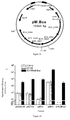
- a correct recombinant plasmid should generate five bands 6544bp, 4237bp, 3642bp, 1315bp, and 827bp (as shown in FIG. 12 ), which was designated as pM.Bce (the structural schematic diagram was shown in FIG. 13 ), and was sent for sequencing to demonstrate that the result was correct.
- the plasmid pM.Bce was transformed into the strain EC135 obtained in example 1, and cleavage verification was performed according to the method described above.
- the correct transformant is EC135/pM.Bce, which is a host precisely simulated in a pattern of Bacillus cereus ATCC 10987 DNA methylation.
- methyltransferase genes were allowed to be expressed by inducing EC135/pM.Bce at 30 °C for 12 hours using arabinose induction with a final concentration of 0.2%.
- Total DNAs were extracted and dot hybridization detection was performed using chromosomal DNA of the strain ATCC 10987 as a control according to the aforementioned method, and the result was that there was no significant difference in the hybridization between EC135/pM.Bce and ATCC 10987, which demonstrated that methyltransferases were all expressed, and which demonstrated that EC135/pM.Bce was a recombinant bacterium co-expressing all DNA-methyltransferase-encoding genes.
- Shuttle plasmids were respectively transferred into EC135/pM.Bce, EC135, and TOP10, the plasmids were extracted after arabinose induction (see aforementioned methods), and strains ATCC 10987 were respectively transformed using the same method as in "I" of Example 2.
- the shuttle plasmids described above were pAD43-25, pAD123, pMK3, pMK4, and pHCMC02, and the following were respectively obtained:
- the transformation efficiency was calculated. 4 transformants were picked randomly for DNA verification by extracting plasmids. The experiment was repeated three times and the result employs the average value ⁇ the standard deviation.
- Plasmids of single colonies for each strain were extracted simultaneously and an electrophoretic or sequencing comparison with a plasmid before transformation was performed, and the result showed an identical size and demonstrated that these strains were positive plasmids in which an exogenous DNA molecule was transferred.
- Example 4 The introduction of an exogenous DNA molecule into Nitrobacter hamburgensis X14 by overcoming restriction modification barrier
- Genome-wide sequences of the strain X14 have been disclosed and their GenBank Nos. are CP000319, CP000320, CP000321, and CP000322.
- GenBank Nos. There are total 10 putative DNA-methyltransferase-encoding genes on the chromosome, locus_tags of these genes are Nham_0569, Nham_0582, Nham_0803, Nham_0842, Nham_1185, Nham_1353, Nham_2515, Nham_3225, Nham_3845, and Nham_4499, respectively.
- Nham_0569, Nham_0582, Nham_0803, Nham_0842, Nham_1185, Nham_1353, Nham_2515, Nham_3225, Nham_3845, and Nham_4499 were respectively cloned to sites between EcoR I and Kpn I, EcoR I and Kpn I, Nhe I and Kpn I, Nhe I and Kpn I, EcoR I and Kpn I, EcoR I and Kpn I, Nhe I and Kpn I, EcoR I and Kpn I, Nhe I and Kpn I, EcoR I and Kpn I, Nhe I and Kpn I, and EcoR I and Kpn I of a plasmid pBAD43, so as to obtain a plasmid pBAD43 containing Nham_0569, a plasmid pBAD43 containing Nham_0582, a plasmid pBAD43 containing Nham_0803, a
- Plasmids of recombinant bacteria 1-10 were extracted and sent for sequencing in order to verify correctness, and consequently the recombinant bacteria are positive recombinant bacteria.
- DNA1-DNA10 obtained above were boiled for 3min to be denaturized into single strands, which were subsequently inserted into an ice-water mixture for quenching. EC135/pBAD43 was used as a negative control.
- Total DNAs of EC135/pBAD43 and 10 samples DNA1-DNA10 were all spotted onto a Protran BA85 nitrocellulose film (Whatman) at 450ng, 150ng, and 50ng, which was repeated on three films.
- the films were placed in 5% skim milk powder formulated with TBST (200 mM NaCl, 0.1% Tween20, 50 mM Tris-HCl, pH7.4) after 2min UV crosslinking, and were blocked at room temperature for 1 hour.
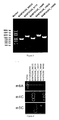
- Results were shown in FIG. 15 (in which m6A/m4C/m5C were results of hybridizations using different antibodies). It can be seen that Nham_0569, Nham_0582, Nham_0803, and Nham_3225 have activities of methylation modification and are DNA methyltransferase genes.
- a plasmid pBAD43 containing Nham_0569 (SEQ ID NO: 12), containing Nham_0582 (SEQ ID NO: 13), a plasmid pBAD43 containing Nham_0803 (SEQ ID NO: 14), and a plasmid pBAD43 containing Nham_3225 (SEQ ID NO: 15), as templates respectively, with WB325 and WB585 (having a size of 648bp) as primers used for Nham_0569, WB586 and WB587 (having a size of 1983bp) for Nham_0582, WB588 and WB589 (having a size of 1317bp) for Nham_0803, and WB590 and WB326 (having a size of 1131 bp) for Nham_3225, the sequences of the primers being as shown in Table 1, PCR amplification was performed to obtain 4 PCR products respectively.
- the 4 PCR products were respectively recovered by cutting the gel, and equal proportions of the 4 PCR products were mixed and concentrated to a total volume 50 ⁇ L to obtain PCR total products.
- plasmid pWYE724 500 ng was double-cleaved by EcoR I and Sal I, and was mixed with the PCR total products described above after being recovered by cutting, and then by using a lithium acetate transformation method ( Methods in Enzymology, 350, 87-96 .), Saccharomyces cerevisiae DAY414 was transformed. Transformants were screened on a plate of a complete synthetic culture medium without tryptophan added (SC trp-, Beijing FunGenome Co., Ltd.). A single colony was picked into a YPD culture medium, and a yeast plasmid was extracted using a glass bead method ( Nucleic Acids Research, 20, 3790 ). The plasmid was transformed into E.
- coli TOP10 transformants were screened using an LB plate containing 100 ⁇ g/mL spectinomycin, and BamHI single cleavage was performed after the plasmid was extracted.
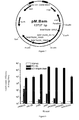
- a correct recombinant plasmid should generate four bands 8217bp, 3848bp, 1003bp, and 343bp (as shown in FIG. 16 ), which was designated as pM.Nham (the structural schematic diagram was shown in FIG. 17 ), and was sent for sequencing to demonstrate that the result was correct.
- pM.Bce was transformed into the strain EC135 obtained in example 1, and cleavage verification was performed according to the method described above.
- the correct transformant was EC135/pM.Nham, which was a host precisely simulated in a pattern of Nitrobacter hamburgensis X14 DNA methylation.
- the particular method for constructing a plasmid pBBR1-MCS5-P Nham_3450 -GFP was: Using WB654 and WB655 as primers and the genome of the strain X14 as the template, a gene Nham_3450 promoter fragment 216bp was subject to amplification.
- gene GFP 717bp was subject to amplification; the two PCR products were recovered by cutting the gel and were selected (1 ⁇ L each) as templates, and PCR was performed again using WB654 and WB650 as primers to obtain a PCR product of 933bp, which was cloned into sites Sal I and Pst I of a plasmid pBBR1-MCS5 (Four new derivatives of the broad-host-range cloning vector pBBR1MCS, carrying different antibiotic-resistance cassettes.
Landscapes
- Health & Medical Sciences (AREA)
- Genetics & Genomics (AREA)
- Life Sciences & Earth Sciences (AREA)
- Engineering & Computer Science (AREA)
- Chemical & Material Sciences (AREA)
- Organic Chemistry (AREA)
- Zoology (AREA)
- Wood Science & Technology (AREA)
- Bioinformatics & Cheminformatics (AREA)
- Biotechnology (AREA)
- General Engineering & Computer Science (AREA)
- Biomedical Technology (AREA)
- General Health & Medical Sciences (AREA)
- Biochemistry (AREA)
- Microbiology (AREA)
- Molecular Biology (AREA)
- Plant Pathology (AREA)
- Biophysics (AREA)
- Physics & Mathematics (AREA)
- Medicinal Chemistry (AREA)
- Tropical Medicine & Parasitology (AREA)
- Virology (AREA)
- Micro-Organisms Or Cultivation Processes Thereof (AREA)
- Enzymes And Modification Thereof (AREA)
Applications Claiming Priority (2)
| Application Number | Priority Date | Filing Date | Title |
|---|---|---|---|
| CN2012100801246A CN102618476B (zh) | 2012-03-23 | 2012-03-23 | 一种克服靶细菌限制修饰障碍导入外源dna的方法 |
| PCT/CN2013/071730 WO2013139193A1 (zh) | 2012-03-23 | 2013-02-21 | 一种克服靶细菌限制修饰障碍导入外源dna的方法 |
Publications (2)
| Publication Number | Publication Date |
|---|---|
| EP2829599A1 true EP2829599A1 (de) | 2015-01-28 |
| EP2829599A4 EP2829599A4 (de) | 2016-01-13 |
Family
ID=46558690
Family Applications (1)
| Application Number | Title | Priority Date | Filing Date |
|---|---|---|---|
| EP13764964.6A Withdrawn EP2829599A4 (de) | 2012-03-23 | 2013-02-21 | Verfahren zum einschleusen exogener dna durch überwindung der beschränkungsmodifikationsbarriere eines zielbakteriums |
Country Status (5)
| Country | Link |
|---|---|
| US (1) | US9605268B2 (de) |
| EP (1) | EP2829599A4 (de) |
| JP (1) | JP6140804B2 (de) |
| CN (1) | CN102618476B (de) |
| WO (1) | WO2013139193A1 (de) |
Cited By (1)
| Publication number | Priority date | Publication date | Assignee | Title |
|---|---|---|---|---|
| EP4370665A4 (de) * | 2021-07-15 | 2025-08-13 | Univ North Carolina State | Zusammensetzungen, verfahren und systeme für verbesserte dna-transformation in bakterien |
Families Citing this family (7)
| Publication number | Priority date | Publication date | Assignee | Title |
|---|---|---|---|---|
| CN102618476B (zh) | 2012-03-23 | 2013-09-04 | 中国科学院微生物研究所 | 一种克服靶细菌限制修饰障碍导入外源dna的方法 |
| CN105002162A (zh) * | 2015-08-05 | 2015-10-28 | 广东省微生物研究所 | 一种用于转化不同菌株的外源质粒体外甲基化修饰的方法 |
| CN107974473B (zh) * | 2017-12-15 | 2020-06-19 | 内蒙古伊品生物科技有限公司 | 谷氨酸的发酵生产及后处理 |
| CN111154683B (zh) * | 2020-01-19 | 2022-05-13 | 南京工业大学 | 一种食甲基丁酸杆菌的优化培养方法及其应用 |
| WO2021224797A1 (en) * | 2020-05-05 | 2021-11-11 | Superbrewed Food, Inc. | Compositions comprising exogenous homologous dna and uses thereof |
| CN114574467B (zh) * | 2022-01-21 | 2023-05-23 | 华南农业大学 | 一种基因表达调控系统及其应用 |
| CN115772490B (zh) * | 2022-12-07 | 2026-02-10 | 清华大学 | 一种工程菌及其构建方法和应用 |
Family Cites Families (5)
| Publication number | Priority date | Publication date | Assignee | Title |
|---|---|---|---|---|
| GB0011186D0 (en) | 2000-05-09 | 2000-06-28 | Agrol Limited | Modification of bacteria |
| CN101600797A (zh) * | 2007-04-25 | 2009-12-09 | 乔苗 | 环状甲基化dna中的定点诱变 |
| CN102071211B (zh) * | 2009-11-25 | 2012-12-05 | 中国科学院微生物研究所 | 一种使产丁醇梭菌易于遗传操作的方法及其易于遗传操作的突变体 |
| JP5673996B2 (ja) * | 2010-03-31 | 2015-02-18 | 国立大学法人神戸大学 | 好熱性微生物の形質転換方法 |
| CN102618476B (zh) * | 2012-03-23 | 2013-09-04 | 中国科学院微生物研究所 | 一种克服靶细菌限制修饰障碍导入外源dna的方法 |
-
2012
- 2012-03-23 CN CN2012100801246A patent/CN102618476B/zh active Active
-
2013
- 2013-02-21 US US14/385,940 patent/US9605268B2/en active Active
- 2013-02-21 JP JP2015502066A patent/JP6140804B2/ja active Active
- 2013-02-21 EP EP13764964.6A patent/EP2829599A4/de not_active Withdrawn
- 2013-02-21 WO PCT/CN2013/071730 patent/WO2013139193A1/zh not_active Ceased
Cited By (1)
| Publication number | Priority date | Publication date | Assignee | Title |
|---|---|---|---|---|
| EP4370665A4 (de) * | 2021-07-15 | 2025-08-13 | Univ North Carolina State | Zusammensetzungen, verfahren und systeme für verbesserte dna-transformation in bakterien |
Also Published As
| Publication number | Publication date |
|---|---|
| CN102618476A (zh) | 2012-08-01 |
| US9605268B2 (en) | 2017-03-28 |
| US20150050740A1 (en) | 2015-02-19 |
| JP6140804B2 (ja) | 2017-05-31 |
| CN102618476B (zh) | 2013-09-04 |
| WO2013139193A1 (zh) | 2013-09-26 |
| EP2829599A4 (de) | 2016-01-13 |
| JP2015515268A (ja) | 2015-05-28 |
Similar Documents
| Publication | Publication Date | Title |
|---|---|---|
| US9605268B2 (en) | Method for introducing an exogenous DNA by overcoming the restriction modification barrier of a target bacterium | |
| EP3556860B1 (de) | Auf gen cas3 vom typ-i-b crispr-cas-system basierendes geneditierungsverfahren | |
| Choi et al. | An improved method for rapid generation of unmarked Pseudomonas aeruginosa deletion mutants | |
| Al-Hinai et al. | Novel system for efficient isolation of Clostridium double-crossover allelic exchange mutants enabling markerless chromosomal gene deletions and DNA integration | |
| Yan et al. | Electroporation-based genetic manipulation in type I methanotrophs | |
| JP2023002712A (ja) | S.ピオゲネスcas9変異遺伝子及びこれによってコードされるポリペプチド | |
| Santangelo et al. | Thermococcus kodakarensis genetics: TK1827-encoded β-glycosidase, new positive-selection protocol, and targeted and repetitive deletion technology | |
| Zheng et al. | Development of a simvastatin selection marker for a hyperthermophilic acidophile, Sulfolobus islandicus | |
| Woodruff et al. | Engineering improved ethanol production in Escherichia coli with a genome-wide approach | |
| US12331326B2 (en) | Genetically engineered Vibrio sp. and uses thereof | |
| Christensen et al. | Genetic manipulation of Vibrio fischeri | |
| Bost et al. | Application of the endogenous CRISPR-Cas type ID system for genetic engineering in the thermoacidophilic archaeon Sulfolobus acidocaldarius | |
| Lo Sciuto et al. | Generation of stable and unmarked conditional mutants in Pseudomonas aeruginosa | |
| WO2021258580A1 (zh) | 一种基于CRISPR/Cas12a的体外大片段DNA克隆方法及其应用 | |
| US8927254B2 (en) | Pyrococcus furiosus strains and methods of using same | |
| US20200399586A1 (en) | Genome-wide rationally-designed mutations leading to enhanced lysine production in e. coli | |
| Goldstrohm et al. | Regulated deadenylation in vitro | |
| Houkes et al. | Design, construction and optimization of a synthetic RNA polymerase operon in Escherichia coli | |
| US20250066800A1 (en) | Functional DNA Cassette and Plasmid | |
| Robinson et al. | In vitro shuttle mutagenesis using engineered mariner transposons | |
| Boob et al. | Discovery, characterization, and application of chromosomal integration sites in the hyperthermophilic archaeon Sulfolobus islandicus | |
| Zheng et al. | Recombineering-assisted linear CRISPR/Cas9-mediated multiplex genome editing (ReaL-MGE) for bacterial metabolic engineering | |
| Valera et al. | Identification of the minimal bacterial 2′-deoxy-7-amido-7-deazaguanine synthesis machinery | |
| JP2804436B2 (ja) | ストレプトミセス属菌および大腸菌の新規の細菌プラスミドシャトルベクター | |
| Sciuto et al. | in Pseudomonas aeruginosa |
Legal Events
| Date | Code | Title | Description |
|---|---|---|---|
| PUAI | Public reference made under article 153(3) epc to a published international application that has entered the european phase |
Free format text: ORIGINAL CODE: 0009012 |
|
| 17P | Request for examination filed |
Effective date: 20140930 |
|
| AK | Designated contracting states |
Kind code of ref document: A1 Designated state(s): AL AT BE BG CH CY CZ DE DK EE ES FI FR GB GR HR HU IE IS IT LI LT LU LV MC MK MT NL NO PL PT RO RS SE SI SK SM TR |
|
| AX | Request for extension of the european patent |
Extension state: BA ME |
|
| DAX | Request for extension of the european patent (deleted) | ||
| RA4 | Supplementary search report drawn up and despatched (corrected) |
Effective date: 20151214 |
|
| RIC1 | Information provided on ipc code assigned before grant |
Ipc: C12R 1/01 20060101ALI20151208BHEP Ipc: C12R 1/07 20060101ALI20151208BHEP Ipc: C12R 1/085 20060101ALI20151208BHEP Ipc: C12N 1/21 20060101AFI20151208BHEP Ipc: C12R 1/19 20060101ALI20151208BHEP Ipc: C12N 15/24 20060101ALI20151208BHEP Ipc: C12N 1/20 20060101ALI20151208BHEP |
|
| STAA | Information on the status of an ep patent application or granted ep patent |
Free format text: STATUS: EXAMINATION IS IN PROGRESS |
|
| 17Q | First examination report despatched |
Effective date: 20161027 |
|
| STAA | Information on the status of an ep patent application or granted ep patent |
Free format text: STATUS: THE APPLICATION IS DEEMED TO BE WITHDRAWN |
|
| 18D | Application deemed to be withdrawn |
Effective date: 20180613 |