EP2830284B1 - Procédé de mise en mémoire cache pour un système de stockage distribué, noeud et support lisible par ordinateur - Google Patents
Procédé de mise en mémoire cache pour un système de stockage distribué, noeud et support lisible par ordinateur Download PDFInfo
- Publication number
- EP2830284B1 EP2830284B1 EP12891167.4A EP12891167A EP2830284B1 EP 2830284 B1 EP2830284 B1 EP 2830284B1 EP 12891167 A EP12891167 A EP 12891167A EP 2830284 B1 EP2830284 B1 EP 2830284B1
- Authority
- EP
- European Patent Office
- Prior art keywords
- lock
- data stripe
- client node
- owner
- read
- Prior art date
- Legal status (The legal status is an assumption and is not a legal conclusion. Google has not performed a legal analysis and makes no representation as to the accuracy of the status listed.)
- Active
Links
Images


Classifications
-
- H—ELECTRICITY
- H04—ELECTRIC COMMUNICATION TECHNIQUE
- H04L—TRANSMISSION OF DIGITAL INFORMATION, e.g. TELEGRAPHIC COMMUNICATION
- H04L67/00—Network arrangements or protocols for supporting network services or applications
- H04L67/50—Network services
- H04L67/56—Provisioning of proxy services
- H04L67/568—Storing data temporarily at an intermediate stage, e.g. caching
-
- G—PHYSICS
- G06—COMPUTING OR CALCULATING; COUNTING
- G06F—ELECTRIC DIGITAL DATA PROCESSING
- G06F11/00—Error detection; Error correction; Monitoring
- G06F11/07—Responding to the occurrence of a fault, e.g. fault tolerance
- G06F11/08—Error detection or correction by redundancy in data representation, e.g. by using checking codes
- G06F11/10—Adding special bits or symbols to the coded information, e.g. parity check, casting out 9's or 11's
- G06F11/1076—Parity data used in redundant arrays of independent storages, e.g. in RAID systems
-
- G—PHYSICS
- G06—COMPUTING OR CALCULATING; COUNTING
- G06F—ELECTRIC DIGITAL DATA PROCESSING
- G06F12/00—Accessing, addressing or allocating within memory systems or architectures
- G06F12/14—Protection against unauthorised use of memory or access to memory
- G06F12/1458—Protection against unauthorised use of memory or access to memory by checking the subject access rights
- G06F12/1466—Key-lock mechanism
-
- H—ELECTRICITY
- H04—ELECTRIC COMMUNICATION TECHNIQUE
- H04L—TRANSMISSION OF DIGITAL INFORMATION, e.g. TELEGRAPHIC COMMUNICATION
- H04L67/00—Network arrangements or protocols for supporting network services or applications
- H04L67/01—Protocols
- H04L67/10—Protocols in which an application is distributed across nodes in the network
- H04L67/1097—Protocols in which an application is distributed across nodes in the network for distributed storage of data in networks, e.g. transport arrangements for network file system [NFS], storage area networks [SAN] or network attached storage [NAS]
-
- G—PHYSICS
- G06—COMPUTING OR CALCULATING; COUNTING
- G06F—ELECTRIC DIGITAL DATA PROCESSING
- G06F2211/00—Indexing scheme relating to details of data-processing equipment not covered by groups G06F3/00 - G06F13/00
- G06F2211/10—Indexing scheme relating to G06F11/10
- G06F2211/1002—Indexing scheme relating to G06F11/1076
- G06F2211/1028—Distributed, i.e. distributed RAID systems with parity
-
- G—PHYSICS
- G06—COMPUTING OR CALCULATING; COUNTING
- G06F—ELECTRIC DIGITAL DATA PROCESSING
- G06F2212/00—Indexing scheme relating to accessing, addressing or allocation within memory systems or architectures
- G06F2212/10—Providing a specific technical effect
- G06F2212/1041—Resource optimization
- G06F2212/1044—Space efficiency improvement
-
- G—PHYSICS
- G06—COMPUTING OR CALCULATING; COUNTING
- G06F—ELECTRIC DIGITAL DATA PROCESSING
- G06F2212/00—Indexing scheme relating to accessing, addressing or allocation within memory systems or architectures
- G06F2212/15—Use in a specific computing environment
- G06F2212/154—Networked environment
Definitions
- the present invention relate to storage technologies, and in particular, to a caching method for a distributed storage system, a node, and a computer readable medium.
- multiple node devices are connected to form a cluster, where the multiple node devices all have a data storage function. All node devices are connected through a front-end network (Front-End Network) and a back-end network (Back-End Network).
- the front-end network is used for exchange of requests and data between user services and the distributed storage system
- the back-end network is used for exchange of requests and data between node devices inside the distributed storage system.
- a distributed storage system user data is stripped into stripes (Stripe), and then data strips (Strip) of a stripe are distributed to hard disks of different node devices and stored there.
- an application server When accessing user data, an application server first sends an access request to one node device through the front-end network, and then, the node device reads, through the back-end network, data strips where the user data is located to the local node device, restores the data strips to the user data by using a disk array (Redundant Array of Independent Disks, RAID for short) algorithm or an erasure code algorithm, and returns the user data to the application server through the front-end network.
- a disk array Redundant Array of Independent Disks, RAID for short
- each node device caches in its cache hot-spot data blocks of the local node device.
- the node device needs to obtain data blocks that constitute the data stripe from caches of node devices. If the required data blocks cannot be obtained from the caches of the node devices, the node device further needs to access hard disks of the node devices and obtain the data blocks from the hard disks. Then, the node device aggregates, rebuilds and performs redundancy check on the obtained data blocks to obtain the data stripe.
- each node device caches in its cache hot-spot file data stripes obtained according to statistics by the node device.
- the node device When a node device needs to obtain a data stripe, the node device first obtains the data stripe from its own cache. If the required data stripe cannot be obtained from the cache of the node device, the node device further needs to obtain the data stripe from other node devices in turn. If the data stripe cannot be obtained from the caches of the other node devices, the node device needs to obtain the data stripe from hard disks of the node devices.
- the data caching technology adopted in a distributed storage system is one of the aforesaid two caching methods or a combination thereof.
- each node device determines, according to access statistics, hot-spot content among content stored in its hard disk and caches the hot-spot content in a cache. Because each node device performs the caching independently, it is possible that the same content is cached in different node devices. As a result, the cache utilization rate of node devices is low.
- WO 2006014573 relates to a plurality of access nodes sharing access to data on a storage network implement a directory based cache ownership scheme.
- One node designated as a global coordinator, maintains a directory (e.g., table or other data structure) storing information about I/O operations by the access nodes.
- the other nodes send requests to the global coordinator when an I/O operation is to be performed on identified data. Ownership of that data in the directory is given to the first requesting node. Ownership may transfer to another node if the directory entry is unused or quiescent.
- the distributed directory-based cache coherency allows for reducing bandwidth requirements between geographically separated access nodes by allowing localized (cached) access to remote data.
- the present invention provides a caching method for a distributed storage system, in order to overcome the defect in the prior art and increase the cache utilization rate of node devices.
- the present invention provides a data stripe owner server node and a lock client node, in order to overcome the defect in the prior art and increases the cache utilization rate of node devices.
- the present invention provides a computer readable medium, in order to overcome the defect in the prior art and increase the cache utilization rate of node devices.
- the present invention provides a caching method for a distributed storage system, including:
- an implementation manner is further provided, where:
- an implementation manner is further provided, where, after the returning to the lock client node a response message indicating that the owner of the data stripe is the lock client node, the method further includes: receiving, by the lock server node device from the lock client node, a request message for changing the owner of the data stripe to another lock client node; changing, by the lock server node device, the owner of the data stripe to the another lock client node; and returning, by the lock server node device to the lock client node, a response message indicating success in changing the owner of the data stripe, so that the lock client node deletes the data stripe from a local cache and the another lock client node caches the data stripe.
- an implementation manner is further provided, where, when the data stripe owner server node is integrated with a lock server node device,
- the present invention provides a caching method for a distributed storage system, including:
- the method further includes:
- an implementation manner is further provided, where, before the sending, by a lock client node to the lock server node device, a read lock notification or a write lock notification on a data stripe, the method further includes:
- the method further includes:
- the present invention provides a lock server node device, including:
- an implementation manner is further provided, where:
- the present invention provides a lock client node, including:
- an implementation manner is further provided, where:
- lock client node further includes a searching unit, where:
- an implementation manner is further provided, where:
- the present invention provides a data stripe owner server node, including a processor, a memory, a communication interface, and a bus, where: the processor, the memory, and the communication interface communicate through the bus; the memory is configured to store an execution instruction; the communication interface is configured to communicate with a first lock client node and a second lock client node; and when the data stripe owner server node is running, the processor executes the execution instruction stored by the memory so that the data stripe owner server node executes any one of the above caching methods for a distributed storage system.
- the present invention provides a lock client node, including a processor, a memory, a communication interface, and a bus, where: the processor, the memory, and the communication interface communicate through the bus; the memory is configured to store an execution instruction; the communication interface is configured to communicate with a data stripe owner server node and other lock client nodes; and when the lock client node is running, the processor executes the execution instruction stored by the memory so that the lock client node executes any one of the above caching methods for a distributed storage system.
- the present invention provides a computer readable medium, including a computer execution instruction, where the computer execution instruction is used to instruct a data stripe owner server node to execute any one of the above methods.
- the present invention provides a computer readable medium, including a computer execution instruction, where the computer execution instruction is used to instruct a lock client node to execute any one of the above methods.
- a data stripe owner server node when receiving a read lock notification received for the first time or a write lock notification on a data stripe, a data stripe owner server node records a lock client node that initiates the notification as an owner of the data stripe, and the lock client node caches the data stripe; and, when receiving a read lock notification on the data stripe which is not received for the first time, the data stripe owner server node notifies, according to the record, a lock client node that initiates the notification of the owner of the data stripe, and the lock client node that initiates the notification reads the data stripe from a cache of the owner.
- the data stripe owner server node records and notifies an owner of a data stripe, so that one data stripe is cached only once in its owner in the entire distributed storage system, and lock client nodes can read the data stripe from the owner. This avoids the problem that the same data stripe is cached in different node devices and increases the cache utilization rate of node devices.
- FIG. 1 is a schematic structural diagram of a distributed storage system according to Embodiment 1 of the present invention.
- the distributed storage system in Embodiment 1 of the present invention is applicable to caching methods in the embodiments hereinafter of the present invention.
- a distributed storage system includes multiple lock client nodes and multiple lock server nodes.
- one or more data stripe owner server nodes are added on the basis of the distributed storage system in the prior art.
- One operation process involves multiple lock client nodes, one lock server node, and one data stripe owner server node. As shown in FIG 1 , multiple lock client nodes, one lock server node, and one data stripe owner server node in the distributed storage system are shown in FIG.
- lock client node a lock server node
- data stripe owner server node a lock client node, a lock server node, and a data stripe owner node are set separately.
- one lock client node, one lock server node, and one data stripe owner server node may be simultaneously set on each node device, and in each operation process, a lock server node set on one node device acts as a lock server node of the operation, and a data stripe owner server node set on the node device acts as a data stripe owner server node of the operation.
- a data stripe owner server node and a lock server node may be set separately and execute their respective functions.
- a data stripe owner server node and a lock server node may be set in combination, that is, a lock server node in the prior art is improved to execute operations executed by a data stripe owner server node disclosed in the embodiments of the present invention on the basis of operations executed by the lock server node in the prior art.
- a caching method in a case where a data stripe owner server node and a lock server node are set separately is described in the following by using Embodiment 2 and Embodiment 3 of the present invention.
- FIG 2a is a schematic flowchart of a caching method for a distributed storage system according to Embodiment 2 of the present invention. As shown in FIG 2 , the method includes the following process.
- Step 101 A data stripe owner server node receives from a lock client node a lock notification on a data stripe, and determines the lock notification.
- Step 102 When the lock notification is a read lock notification received for the first time or a write lock notification, the data stripe owner server node records the lock client node as an owner of the data stripe, and returns to the lock client node a response message indicating that the owner of the data stripe is the lock client node, so that the lock client node caches the data stripe.
- the data stripe owner server node receives from a first lock client node a read lock notification received for the first time on a data stripe or a write lock notification on the data stripe.
- the data stripe owner server node records the first lock client node as an owner of the data stripe and returns to the first lock client node a response message indicating that the owner of the data stripe is the first lock client node, so that the first lock client node caches the data stripe.
- the first lock client node After obtaining a read lock authorization or a write lock authorization from a lock server node, the first lock client node sends a lock notification to the owner server node, where the notification carries an identity of the data stripe corresponding to the lock and carries a read lock identifier when the lock is a read lock or a write lock identifier when the lock is a write lock, to notify, through the lock notification, the owner server node that the first lock client node has obtained a read lock or a write lock on the data stripe. Attribute information of data stripes is recorded in the data stripe owner server node. The owner server node receives the lock notification sent by the first lock client node and searches recorded attribute information of data stripes according to the data stripe identity carried in the lock notification. If the lock notification carries a read lock identifier and a read lock corresponding to the data stripe is not found in the recorded attribute information of the data stripes, the owner server node determines that a read lock notification on the data stripe is received for
- FIG. 2b is a schematic structural diagram of attribute information of N data stripes in Embodiment 2 of the present invention.
- an identity (identity, ID for short) of the data stripe is recorded and correspondingly, an ID of a lock client node currently holding a lock on the data stripe, a lock type, and an ID of an owner of the data stripe are recorded.
- the lock type is used to indicate that the lock of the data stripe is a read lock or a write lock.
- a lock client node that holds a read lock on a data stripe can read the data stripe, while a lock client node that holds a write lock on a data stripe can write or modify the data stripe.
- a write lock takes priority over a read lock.
- other lock client nodes may also hold read locks on the data stripe; and when a lock client node holds a write lock on a data stripe, other lock client nodes are prohibited from holding read locks or write locks on the data stripe.
- three lock client nodes currently holding locks on the data stripe are recorded. It is understandable that the embodiment of the present invention does not limit lock client nodes currently holding locks on a data stripe.
- Step 103 When the lock notification is a read lock notification which is not received for the first time, the data stripe owner server node returns to the lock client node a response message that includes owner information of the data stripe, so that the lock client node reads the data stripe from a cache of an owner of the data stripe.
- the data stripe owner server node receives from a second lock client node a read lock notification on the data stripe which is not received for the first time
- the data stripe owner server node returns to the second lock client node a response message indicating that the owner of the data stripe is the first lock client node, so that the second lock client node reads the data stripe from a cache of the first lock client node.
- the data stripe owner server node when receiving a read lock notification received for the first time or a write lock notification on a data stripe, the data stripe owner server node records the lock client node that initiates the notification as an owner of the data stripe, and the lock client node caches the data stripe; and, when receiving a read lock notification on the data stripe which is not received for the first time, the data stripe owner server node notifies, according to the record, the lock client node that initiates the notification of the owner of the data stripe, and the lock client node that initiates the notification reads the data stripe from a cache of the owner.
- the data stripe owner server node records and notifies an owner of a data stripe, so that one data stripe is cached only once in a lock client node corresponding to the owner of the data stripe in the entire distributed storage system, and lock client nodes can read the data stripe from the owner. This avoids the problem that the same data stripe is cached in different node devices and increases the cache utilization rate of node devices.
- the method may further include: when the lock notification is a read lock notification, searching, by the data stripe owner server node, the recorded attribute information of the data stripes for attribute information of the data stripe, and if the attribute information of the data stripe is not found, determining that the read lock notification is a read lock notification received for the first time.
- the method further includes: receiving, by the data stripe owner server node from the first lock client node, a request message for changing the owner of the data stripe to a third lock client node; changing, by the data stripe owner server node, the owner of the data stripe to the third lock client node; and returning, by the data stripe owner server node the first lock client node, a response message indicating success in changing the owner of the data stripe, so that the first lock client node deletes the data stripe from a local cache and the third lock client node caches the data stripe.
- the ownership of the data stripe is transferred to the third lock client node. This implements dynamic change of the owner of the data stripe and relieves the cache load of the first lock client node, thereby implementing better load balancing in data stripe caching.
- the read lock notification may be a read lock request and the write lock notification may be a write lock request.
- the returning to the first lock client node a response message indicating that the owner of the data stripe is the first lock client node further includes: returning to the first lock client node a lock success response message.
- the returning to a second client node a response message indicating that the owner of the data stripe is the first lock client node further includes: returning to the second lock client node a lock success response message.
- the notification By integrating the data stripe owner server node in a lock server node device, when a lock client node sends a read lock notification or a write lock notification to the data stripe owner server node, the notification also carries a read lock request or a write lock request to the lock server node device. This avoids sending another read lock request or write lock request to the lock server node device, reduces signaling between system devices, and increases the efficiency in reading or writing data stripes.
- FIG 3 is a schematic flowchart of a caching method for a distributed storage system according to Embodiment 3 of the present invention. As shown in FIG. 3 , the method includes the following process.
- Step 201 A lock client node sends to a data stripe owner server node a read lock notification or a write lock notification on a data stripe.
- Step 202 The lock client node receives from the data stripe owner server node a response message indicating that an owner of the data stripe is the lock client node, and the lock client node caches the data stripe.
- Step 203 When the lock client node receives an ID of the data stripe owner from the data stripe owner server node, the lock client node compares the ID of the data stripe owner with an ID of the lock client node, and if the two IDs are different, the lock client node reads the data stripe from a cache of a lock client node corresponding to the ID of the data stripe owner.
- the method further includes: when receiving a read lock notification received for the first time on the data stripe or a write lock notification on the data stripe, recording, by the data stripe owner server node, the lock client node as the owner of the data stripe.
- the method further includes: if the lock notification sent by the lock client node to the owner server node is a write lock notification on the data stripe, caching, by the lock client node, the data stripe and then sending a degrade lock request to a lock server node, so that the lock server node modifies the record to that the lock client node holds a read lock on the data stripe.
- the lock server node modifies the record to that the lock client node holds a read lock on the data stripe.
- the lock client node after the lock client node that holds the write lock caches the data stripe locally, the lock client node sends a degrade request actively to the lock server node to degrade the write lock to a read lock, so that when another lock client requests a read lock, it is unnecessary to recall the write lock. This saves the time to initiate a read lock operation subsequently and increases the efficiency of caching processing.
- the method further includes: receiving, by the lock client node from an application server, a read request or a write request on the data stripe; searching locally, by the lock client node, for the read lock or the write lock on the data stripe; if the read lock or the write lock on the data stripe is found, determining the owner of the data stripe according to the read lock or a write lock on the data stripe, and reading the data stripe from or writing the data stripe to the owner of the data stripe; and if the read lock or the write lock on the data stripe is not found, executing the step of sending, by a lock client node to a data stripe owner server node a read lock notification or a write lock notification on a data stripe.
- the method further includes: when a cache deletion rate of the lock client node in a unit time is greater than or equal to a preset proportion of a total cache volume of the lock client node, sending, by the lock client node to the data stripe owner server node, a request message for changing the owner of the data stripe to a target lock client node, so that the data stripe owner server node changes the owner of the data stripe to the target lock client node; and receiving, by the lock client node from the data stripe owner server node, a response message indicating success in changing the owner of the data stripe, deleting the data stripe from a local cache, and sending the data stripe to the target lock client node, so that the target lock client node caches the data stripe.
- Data stripes migrate dynamically between caches of lock client nodes. This overcomes the defect that the cache utilization efficiency is low because of frequent cache deletion on the lock client node and can maintain balanced cache utilization on each lock client node in the entire system, which
- the reading, by the lock client node the data stripe from a lock client node corresponding to the ID of the data stripe owner specifically includes: sending, by the lock client node to the lock client node corresponding to the ID of the data stripe owner, a read request on the data stripe, so that the lock client node corresponding to the ID of the data stripe owner searches locally cached data for the data stripe, and if the data stripe is found, returns the data stripe to the lock client node, and otherwise, reads data strips of the data stripe from lock client nodes in the distributed storage system, constructs the data stripe, and returns the data stripe to the lock client node.
- Embodiment 3 of the present invention when a lock client node sends a read lock notification received for the first time or a write lock notification on a data stripe, the lock client node caches the data stripe, and the data stripe owner server node records the lock client node as an owner of the data stripe; and, when a lock client node sends a read lock notification on the data stripe which is not received for the first time, the data stripe owner server node notifies, according to the record, the lock client node of the owner of the data stripe, and the lock client node reads the data stripe from a cache of the owner.
- the data stripe owner server node records and notifies an owner of a data stripe, so that one data stripe is cached only once in its owner in the entire distributed storage system, and lock client nodes can read the data stripe from the owner. This avoids the problem that the same data stripe is cached in different node devices and increases the cache utilization rate of node devices.
- Embodiment 2 and Embodiment 3 of the present invention The caching method in the case where a data stripe owner server node and a lock server node are set separately is described by using Embodiment 2 and Embodiment 3 of the present invention.
- an owner server node and a lock server node may further be combined, where one node is configured to execute operations of both the owner server node and the lock server node.
- a lock server node in the prior art may be improved to execute operations executed by the owner server node disclosed in the embodiments of the present invention on the basis of operations executed by the lock server node in the prior art.
- a lock server node described in the fourth to eighth embodiments of the present invention is the above improved lock server node, and a lock request sent by a lock client node to the lock server node is taken as a lock notification.
- a lock client node sends a read lock request to the lock server node
- the lock server node executes operations of a lock server node in the prior art
- the lock server node takes the read lock request as a read lock notification and executes operations of the owner server node disclosed by the present invention.
- the lock server node executes operations of a lock server node in the prior art
- the lock server node takes the write lock request as a write lock notification and executes operations of the owner server node disclosed by the present invention.
- FIG 4 is a signaling flowchart of a caching method for a distributed storage system according to Embodiment 4 of the present invention.
- Embodiment 4 of the present invention it is assumed that, in the distributed storage system, a read lock operation on a data stripe appears for the first time or a read lock operation on the data stripe appears for the first time after the data stripe is deleted.
- the method includes the following process.
- Step 301 A first lock client node receives from an application server a read request on a data stripe.
- step 302 is executed. In the embodiment of the present invention, it is assumed that the read lock is not found.
- Step 302 The first lock client node sends to a lock server node a read lock request on the data stripe.
- Step 303 The lock server node records the first lock client node as an owner of the data stripe.
- the lock server node After receiving a stripe lock request, the lock server node first checks whether attribute information of the data stripe exists in the record, and if the attribute information of the data stripe does not exist, generates an attribute information record of the data stripe, and otherwise, checks the attribute information of the data stripe for information on a lock client node that holds a lock. In Embodiment 4 of the present invention, it is assumed that the attribute information of the data stripe does not exist. If no record related to the data stripe exists, it indicates that the data stripe is requested for the first time in the system or requested for the first time after deletion.
- the lock server node adds information related to the first lock client node that currently requests a lock to the record, records the first lock client node as an owner of the data stripe, and records an owner ID corresponding to the first lock client node as an ID of the first lock client node.
- Step 304 The lock server node returns to the first lock client node a response message indicating that the owner of the data stripe is the first lock client node.
- the lock server nodes returns a lock success response message to the first lock client node, where the message indicates to the first lock client node that the owner of the data stripe is the first lock client node, and the first lock client node records locally that the owner ID of the data stripe is the ID of the first lock client node.
- Step 305 The first lock client node caches the data stripe.
- the first lock client node discovers, according to the information returned by the lock server node, that the first lock client node itself is the owner of the data stripe.
- the first lock client node requests cache space from a local global uniform cache, reads data strips of the data stripe from other lock client nodes, constructs the data stripe in the local global uniform cache, and returns the data stripe to the application server. After reading the data strips of the data stripe from the other lock client nodes, constructing the data stripe according to the data strips, and completing the construction, the first lock client node can obtain the data strip and redundancy data of the data strip.
- the first lock client node only caches the data stripe but not caches the redundancy data of the data stripe, which further increases the cache utilization rate of nodes in the distributed storage system.
- this manner may also be adopted to perform caching.
- FIG 5 is a signaling flowchart of a caching method for a distributed storage system according to Embodiment 5 of the present invention.
- a second lock client node reads a data stripe after a first lock client node caches the data stripe.
- the method includes the following process.
- Step 401 The second lock client node receives from an application server a read request on the data stripe.
- the second lock client node searches locally for a read lock on the data stripe, and if the read lock is found, reads the data stripe from a lock client node which is an owner of the data stripe and indicated in the read lock of the data stripe. Otherwise, step 402 is executed. In the embodiment of the present invention, it is assumed that the read lock is not found. Step 402: The second lock client node sends to a lock server node a read lock request on the data stripe.
- Step 403 The lock server node returns to the second lock client node a response message indicating that the owner of the data stripe is the first lock client node.
- the lock server node After receiving a stripe lock request, the lock server node first checks whether attribute information of the data stripe exists in the record, and if the attribute information of the data stripe does not exist, generates an attribute information record of the data stripe, and otherwise, checks the attribute information of the data stripe for information on a lock client node that holds a lock. In Embodiment 5 of the present invention, it is assumed that attribute information of the data stripe exists. If the attribute information of the data stripe exists, the lock server node can learn the owner of the data stripe according to the attribute information.
- the lock server node adds an ID of the second lock client node that currently requests a lock to the attribute information of the data stripe, and sets an owner flag corresponding to the ID of the second lock client node to a preset value that indicates a non-owner.
- the lock server node returns a lock success response message to the second lock client node, where the message indicates to the second lock client node that the owner of the data stripe is the first lock client node.
- the second lock client node reads the data stripe from a cache of the first lock client node, which specifically includes the following steps.
- Step 404 The second lock client node sends a read request on the data stripe to the first lock client node.
- the second lock client node records locally, according to the information returned by the lock server node, that the owner ID of the data stripe is an ID of the first lock client node.
- the second lock client node learns that the second lock client node is not the owner of the data stripe, and then generates a read request on the data stripe and sends the request to the first lock client node through a back-end network.
- Step 405 The first lock client node returns the data stripe to the second lock client node.
- the first lock client node after receiving the read request on the data stripe of the second lock client node, the first lock client node obtains the data stripe from a local global uniform cache, and returns the data stripe directly to the second lock client node.
- Step 406 The second lock client node returns the data stripe to the application server.
- the second lock client node sends the data stripe to the application server after receiving a read data stripe response of the first lock client node.
- FIG. 6 is a signaling flowchart of a caching method for a distributed storage system according to Embodiment 6 of the present invention.
- a second lock client node writes a data stripe after a first lock client node caches the data stripe.
- the method includes the following process.
- Step 501 The second lock client node receives from an application server a write request on the data stripe.
- the second lock client node searches locally for a write lock on the data stripe, and if the write lock is found, writes the data stripe to a lock client node which is an owner of the data stripe and indicated in the write lock on the data stripe. If the second lock client node finds the write lock on the data stripe locally, it indicates that, before this time, the lock server node has already granted the write lock on the data stripe to the second lock client node. According to a write lock granting rule, before granting the write lock to the second lock client node, the lock server node records the owner of the data stripe as the second lock client node.
- step 502 is executed. In the embodiment of the present invention, it is assumed that the write lock is not found.
- Step 502 The second lock client node sends to a lock server node a write lock request on the data stripe.
- Step 503 The lock server node sends to the first lock client node a lock recall request on the data stripe.
- the lock server node After receiving a stripe lock request, the lock server node first checks whether attribute information of the data stripe exists in the record, and if the attribute information of the data stripe does not exist, generates an attribute information record of the data stripe, and otherwise, checks the attribute information of the data stripe for information on a lock client node that holds a lock. In Embodiment 6 of the present invention, it is assumed that the attribute information of the data stripe exists. If the attribute information of the data stripe exists, the lock server node can learn lock client nodes that hold a read lock or the write lock on the data stripe. The lock server node generates requests for recalling the locks of the data stripe held by these lock client nodes and sends the requests to the corresponding lock client nodes.
- the lock server node Assuming that the first lock client node holds a read lock on the data stripe, the lock server node generates a request for recalling the read lock of the data stripe held by the first lock client node, and sends the request to the first lock client node.
- Step 504 The first lock client node returns a lock recall success response message to the lock server node.
- the first lock client node first checks whether the lock is still in use. If the lock is not in use, the first lock client node directly returns the lock recall success response message to the lock server node. If the lock is in use, the first lock client node waits for release of the lock and then returns the lock recall success response message to the lock server node. If the first lock client node is the owner of the data stripe, before sending the lock recall success response message, the first lock client node first deletes the data stripe in a global uniform cache of the first lock client node from the global uniform cache.
- Step 505 The lock server node records the second lock client node as the owner of the data stripe.
- the lock server node After receiving the lock recall success response message, the lock server node records the second lock client node that requests the write lock of the data stripe in the attribute information of the data stripe, and records the second lock client node as the owner of the data stripe.
- Step 506 The lock server node returns a stripe write lock success response message to the second lock client node.
- Step 507 The second lock client node caches the data stripe.
- the second lock client node After receiving the stripe write lock success response message of the lock server node, the second lock client node requests stripe cache space from the local global uniform cache, receives from the application server the data stripe that needs to be written and stores the data stripe in the local global uniform cache, and then writes data strips of the data stripe to the corresponding lock client nodes.
- Step 508 The second lock client node sends a degrade lock request to the lock server node.
- the second lock client node After the data writing is successful, the second lock client node generates a degrade lock request and sends the request to the lock server node, where the request indicates degrading of the write lock on the data stripe to a read lock.
- Step 509 The lock server node modifies the record to that the second lock client node holds a read lock on the data stripe.
- the lock server node modifies a lock type corresponding to the second lock client node from "write lock” to "read lock".
- FIG 7 is a signaling flowchart of a caching method for a distributed storage system according to Embodiment 7 of the present invention.
- Embodiment 7 of the present invention it is assumed that, when data is deleted because a first lock client node which is an owner is short of caching space, a second lock client node reads the data stripe from the first lock client node.
- the method includes the following process.
- Step 601 The second lock client node sends a read request on the data stripe to the first lock client node.
- an owner of a data stripe is the first lock client node.
- the second lock client node learns that the first lock client node is the owner, and then sends a read request on the data stripe to the first lock client node, to request reading of the data stripe from a cache of the first lock client node.
- Step 602 The first lock client node searches cached resources for the data stripe.
- the first lock client node first searches cached resources for the data stripe. If the data stripe is found, the first lock client node directly returns the data stripe to the second lock client node; and if the data stripe is not found, it indicates that data deletion occurs on the first lock client node, and the data stripe has been deleted, and step 603 will be executed. In Embodiment 7 of the present invention, it is assumed that the data stripe is not found.
- Step 603 The first lock client node reads data strips of the data stripe from lock client nodes in the distributed storage system and constructs the data stripe.
- the first lock client node actively initiates data read requests to lock client nodes in the distributed storage system, reads data strips of the data stripe from the lock client nodes, and reconstructs the data stripe in a global cache of the first lock client node.
- Step 604 The first lock client node returns the data stripe to the second lock client node.
- FIG 8 is a signaling flowchart of a caching method for a distributed storage system according to Embodiment 8 of the present invention.
- Embodiment 8 of the present invention it is assumed that data stripes migrate dynamically between lock client nodes.
- a basic rule is to cache a data stripe in a lock client node that first accesses the data stripe.
- cache deletion will occur frequently on the lock client nodes for caching, which seriously impacts the value of caching.
- Frequently accessed data stripes in caches are called cache hot spots. Therefore, to maintain balanced cache utilization on each storage server in the entire system, hot spots must be able to migrate dynamically between caches of the lock client nodes.
- the method includes the following process.
- Step 701 A first lock client node determines whether to enable dynamic migration.
- each lock client node determines whether a cache hot spot exists in its cache, and enables dynamic migration if the cache hot spot exists.
- a method for detecting whether a cache hot spot exists in the global uniform cache of the distributed storage system includes: detecting periodically a cache deletion rate of each lock client node in a unit time; and when the cache deletion rate of a lock client node in a unit time exceeds a preset proportion of a total cache volume of the lock client node, defining that a cache hot spot exists in the lock client node and a hot spot migration operation is required, where the lock client node actively transfers the cache hot spot dynamically to another lock client node.
- the preset proportion may be 20%.
- the first lock client node determines whether to enable dynamic migration. When a cache deletion rate of the first lock client node in a unit time is greater than or equal to a preset proportion of a total cache volume of the first lock client node, the first lock client node determines to enable dynamic migration. In the embodiment of the present invention, it is assumed that the cache deletion rate of the first lock client node in a unit time is greater than or equal to the preset proportion of the total cache volume of the first lock client node.
- An implementation manner includes: setting a monitor that is connected to the lock client nodes and reporting, by each lock client node, to the monitor periodically a cache deletion rate of the lock client node in a unit time.
- the monitor collects cache utilization states of the lock client nodes periodically and pushes cache hot spot information to the lock client nodes, where the cache hot spot information includes IDs of lock client nodes that meet the cache hot spot condition.
- Each lock client node determines whether it is a cache spot hot according to whether the cache hot spot information includes an ID of the lock client node, and if it is a cache hot spot, enables a dynamic cache migration task.
- An execution cycle of the dynamic cache migration task is a sum of a heartbeat cycle where the lock client nodes report their deletion rates to the monitor and a cycle where the monitor obtains deletion rates of the lock client nodes.
- An end condition of the migration is that a current execution cycle is complete and next cache hot spot information does not include the ID of the lock client node.
- Step 702 A second lock client node sends a read request on the data stripe to the first lock client node.
- Step 702 is an optional step.
- step 702 is executed first, where the second lock client node sends a read request on the data stripe to the first lock client node, and then step 703 is executed.
- step 703 is executed directly.
- Step 703 The first lock client node sends a request message for owner change to a lock server node.
- the first lock client node sends the request message for owner change to the lock server node, where the message includes an ID of the data stripe and an ID of a target lock client node and indicates requesting change of the owner of the data stripe to the target lock client node. That is, the first lock client node sends to the lock server node a request message for changing the owner of the data stripe to the target lock client node.
- the target lock client node is the second lock client node.
- the first lock client node generates the change owner request after receiving the read request on the data stripe from the second lock client node. In a second implementation manner, the first lock client node generates the request message for owner change actively.
- Step 704 The lock server node changes the owner of the data stripe to the target lock client node.
- the lock server node modifies the owner information of the data stripe to change the owner of the data stripe to the target lock client node.
- Step 705 The lock server node returns to the first lock client node a response message indicating success in changing the owner of the data stripe.
- Step 706 The first lock client node sends the data stripe to the second lock client node.
- the first lock client node further returns a read data success response message to the second lock client node.
- Step 707 The first lock client node deletes the data stripe from a local cache.
- the first lock client node after receiving the response message indicating success in changing the owner of the data stripe, deletes the data stripe from the cache of the first lock client node actively.
- Step 708 The second lock client node caches the data stripe.
- step 702 after receiving the read data success response message, the second lock client node caches the data stripe in a local global cache of the second lock client node and returns a response message to the application server. If the above process does not include step 702, the first lock client node pushes the data stripe to the local global cache of the second lock client node actively.
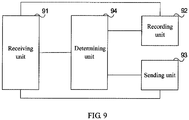
- FIG 9 is a schematic structural diagram of a data stripe owner server node according to Embodiment 9 of the present invention.
- the data stripe owner server node at least includes a receiving unit 91, a recording unit 92, and a sending unit 93 and a determining unit 94.
- the receiving unit 91 is configured to receive from a lock client node a lock notification on a data stripe.
- the determining unit 94 is configured to determine the lock notification.
- the recording unit 92 is configured to: when the determining unit determines that the lock notification is a read lock notification received for the first time or a write lock notification, record the lock client node as an owner of the data stripe.
- the sending unit 93 is configured to: when the determining unit determines that the lock notification is a read lock notification received for the first time or a write lock notification, return to the lock client node a response message indicating that the owner of the data stripe is the lock client node, so that the lock client node caches the data stripe; and when the determining unit determines that the lock notification is a read lock notification which is not received for the first time, return to the lock client node a response message that includes owner information of the data stripe, so that the lock client node reads the data stripe from a cache of an owner of the data stripe.
- the determining unit 94 is specifically configured to: when the lock notification is a read lock notification, search recorded attribute information of data stripes for attribute information of the data stripe, and if the attribute information of the data stripe is not found, determine that the read lock notification is a read lock notification received for the first time.
- the receiving unit 91 is configured to receive from the lock client node a request message for changing the owner of the data stripe to another lock client node.
- the recording unit 92 is further configured to change the owner of the data stripe to the another lock client node.
- the sending unit 92 is further configured to return to the lock client node a response message indicating success in changing the owner of the data stripe, so that the lock client node deletes the data stripe from a local cache and the another lock client node caches the data stripe.
- the read lock notification includes a read lock request and the write lock notification includes a write lock request.
- the sending unit 93 is further configured to return to the lock client node a lock success response message.
- the data stripe owner server node in Embodiment 9 of the present invention can be configured to execute the caching method in the second to eighth embodiments of the present invention.
- For specific implementation processes and technical effects of the data stripe owner server node reference may be made to the second to eighth embodiments of the present invention, and details are not described herein again.
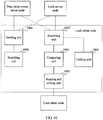
- FIG 10 is a schematic structural diagram of a lock client node according to Embodiment 10 of the present invention.
- the lock client node at least includes a sending unit 1001, a receiving unit 1002, a comparing unit 1003, a caching unit 1004, and a reading and writing unit 1005.
- the sending unit 1001 is configured to send to a data stripe owner server node a read lock notification or a write lock notification on a data stripe.
- the receiving unit 1002 is configured to receive from the data stripe owner server node a response message indicating that an owner of the data stripe is the lock client node, or receive from the data stripe owner server node an ID of an owner of the data stripe.
- the comparing unit 1003 is configured to compare the ID of the data stripe owner with an ID of the lock client node, and when the two IDs are different, activate the reading and writing unit 1005.
- the caching unit 1004 is configured to: when the receiving unit receives from the data stripe owner server node the response message indicating that the owner of the data stripe is the lock client node, cache the data stripe.
- the reading and writing unit 1005 is configured to read the data stripe from a cache of a lock client node corresponding to the ID of the data stripe owner.
- the sending unit 1001 is configured to send a degrade lock request to a lock server node, so that the lock server node modifies a record to that the lock client node holds a read lock on the data stripe.
- the lock client node may include a searching unit 1006.
- the receiving unit 1002 is further configured to receive from an application server a read request or a write request on the data stripe.
- the searching unit 1006 is configured to search locally for a read lock or a write lock on the data stripe; if the read lock or the write lock on the data stripe is found, determine the owner of the data stripe according to the read lock or write lock on the data stripe, and activate the reading and writing unit 1005; and if the read lock or the write lock on the data stripe is not found, activate the sending unit 1001.
- the reading and writing unit 1005 is further configured to read the data stripe from or write the data stripe to the owner of the data stripe.
- the caching unit 1004 is configured to: when a deletion rate in a unit time is greater than or equal to a preset proportion of a total cache volume of the lock client node, control the sending unit 1001 to send to the data stripe owner server node a request message for changing the owner of the data stripe to a target lock client node, and further configured to: according to a response message that is received by the receiving unit 1002 and indicates success in changing the owner of the data stripe, delete the data stripe from a local cache and control the sending unit 1001 to send the data stripe to the target lock client node.
- the sending unit 1001 is further configured to send, according to control of the caching unit 1004, to the data stripe owner server node the request message for changing the owner of the data stripe to the target lock client node, so that the data stripe owner server node changes the owner of the data stripe to the target lock client node.
- the sending unit 1001 is further configured to send the data stripe to the target lock client node according to control of the caching unit 1004, so that the target lock client node caches the data stripe.
- the receiving unit 1002 is further configured to receive from the data stripe owner server node the response message indicating success in changing the owner of the data stripe.
- the reading and writing unit 1005 is specifically configured to send a read request on the data stripe to a lock client node corresponding to the ID of the data stripe owner, so that the lock client node corresponding to the ID of the data stripe owner searches locally cached data for the data stripe, and if the data stripe is found, returns the data stripe to the reading and writing unit 1005, and otherwise, reads data strips of the data stripe from lock client nodes in the distributed storage system, constructs the data stripe, and returns the data stripe to the reading and writing unit 1005.
- the lock client node in Embodiment 10 of the present invention can be configured to execute the caching method in the second to eighth embodiments of the present invention. For specific implementation processes and technical effects of the lock client node, reference may be made to the second to eighth embodiments of the present invention, and details are not described herein again.
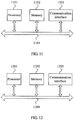
- FIG 11 is a schematic structural diagram of a data stripe owner server node according to Embodiment 11 of the present invention.
- the data stripe owner server node at least includes a processor 1101, a memory 1102, a communication interface 1103, and a bus 1104.
- the processor 1101, the memory 1102, and the communication interface 1103 communicate through the bus 1104.
- the memory 1102 is configured to store a program.
- the program includes a program code which includes a computer execution instruction.
- the memory 1102 may be a high-speed RAM memory, or a non-volatile memory (non-volatile memory), for example, at least one magnetic disk memory.
- the communication interface 1103 is configured to communicate with a first lock client node and a second lock client node.
- the processor 1101 is configured to execute an execution instruction stored by the memory 1102, and may be a single-core or multi-core central processing unit (Central Processing Unit, CPU), or an application specific integrated circuit (Application Specific Integrated Circuit, ASIC), or one or more integrated circuits allocated to implement the embodiments of the present invention.
- CPU Central Processing Unit
- ASIC Application Specific Integrated Circuit
- the processor 1101 runs the program to execute the following instructions:
- the data stripe owner server node in Embodiment 11 of the present invention can be configured to execute the caching method in the second to eighth embodiments of the present invention.
- For specific implementation processes and technical effects of the data stripe owner server node reference may be made to the second to eighth embodiments of the present invention, and details are not described herein again.
- FIG 12 is a schematic structural diagram of a lock client node according to Embodiment 12 of the present invention.
- the lock client node at least includes a processor 1201, a memory 1202, a communication interface 1203, and a bus 1204.
- the processor 1201, the memory 1202, and the communication interface 1203 communicate through the bus 1204.
- the memory 1202 is configured to store a program.
- the program includes a program code which includes a computer execution instruction.
- the memory 1202 may be a high-speed RAM memory, or a non-volatile memory (non-volatile memory), for example, at least one magnetic disk memory.
- the processor 1201 is configured to execute an execution instruction stored by the memory 1202, and may be a single-core or multi-core central processing unit (Central Processing Unit, CPU), or an application specific integrated circuit (Application Specific Integrated Circuit, ASIC), or one or more integrated circuits allocated to implement the embodiments of the present invention.
- CPU Central Processing Unit
- ASIC Application Specific Integrated Circuit
- the communication interface 10203 is configured to communicate with a data stripe owner server node and other lock client nodes.
- the processor 1202 runs the program to execute the following instructions:
- the lock client node in Embodiment 12 of the present invention can be configured to execute the caching method in the second to eighth embodiments of the present invention.
- For specific implementation processes and technical effects of the lock client node reference may be made to the second to eighth embodiments of the present invention, and details are not described herein again.
- Embodiment 13 of the present invention provides a computer readable medium, including a computer execution instruction used to instruct a data stripe owner server node to execute the method in Embodiment 2 of the present invention.
- Embodiment 14 of the present invention provides a computer readable medium, including a computer execution instruction used to instruct a lock client node to execute the method in Embodiment 3 of the present invention.
- a computer execution instruction used to instruct a lock client node to execute the method in Embodiment 3 of the present invention.
- the present invention can be implemented by hardware, or firmware, or a combination thereof.
- the aforesaid functions may be stored in a computer readable medium or transferred as one or more instructions or codes in a computer readable medium.
- the computer readable medium includes a computer storage medium and a communication medium, where the communication medium includes any medium that facilitates transfer of a computer program from one place to another.
- the storage medium may be any available computer accessible medium.
- the computer readable medium may include a RAM, a ROM, an EEPROM, a CD-ROM, other optical disk storages or magnetic disk storage media, other magnetic storage devices, or any other medium that can be used to carry or store desired program codes in form of instructions or data structures and can be accessed by a computer.
- any connection can be a computer readable medium when appropriate.
- disks (Disk) and discs (disc) used in the present invention include compact discs (CD), laser discs, digital versatile discs (DVD), floppy disks, and blue-ray discs, where a disk generally replicates data magnetically and a disc replicates data optically using laser.
- CD compact discs
- DVD digital versatile discs
- floppy disks and blue-ray discs, where a disk generally replicates data magnetically and a disc replicates data optically using laser.
Landscapes
- Engineering & Computer Science (AREA)
- Theoretical Computer Science (AREA)
- Computer Networks & Wireless Communication (AREA)
- Signal Processing (AREA)
- Physics & Mathematics (AREA)
- General Engineering & Computer Science (AREA)
- General Physics & Mathematics (AREA)
- Quality & Reliability (AREA)
- Computer Security & Cryptography (AREA)
- Information Retrieval, Db Structures And Fs Structures Therefor (AREA)
Claims (14)
- Procédé de mise en mémoire cache pour système de stockage distribué, consistant à :recevoir (S302, S402), par le dispositif de noeud serveur de verrouillage en provenance d'un noeud client de verrouillage, une notification de verrouillage sur une bande de données, et déterminer la notification de verrouillage ;quand la notification de verrouillage est une notification de verrouillage en lecture reçue pour la première fois ou une notification de verrouillage en écriture, enregistrer (S303), par le dispositif de noeud serveur de verrouillage, le noeud client de verrouillage en guise de propriétaire de la bande de données, et renvoyer (S304) au noeud client de verrouillage un message de réponse indiquant que le propriétaire de la bande de données est le noeud client de verrouillage, de sorte que le noeud client de verrouillage mette en mémoire cache la bande de données, la notification de verrouillage en lecture comprenant une demande de verrouillage en lecture, la notification de verrouillage en écriture comprenant une demande de verrouillage en écriture, le renvoi au noeud client de verrouillage d'un message de réponse indiquant que le propriétaire de la bande de données est le noeud client de verrouillage consistant en outre à : renvoyer au noeud client de verrouillage un message de réponse de verrouillage réussi ; etquand la notification de verrouillage est une notification de verrouillage en lecture qui n'est pas reçue pour la première fois, renvoyer (S403), par le dispositif de noeud serveur de verrouillage, au noeud client de verrouillage, un message de réponse comprenant une information de propriétaire de la bande de données, de sorte que le noeud client de verrouillage lise la bande de données à partir d'une mémoire cache d'un propriétaire, selon ladite information de propriétaire, de la bande de données, le renvoi au noeud client de verrouillage d'un message de réponse comprenant une information de propriétaire de la bande de données consistant en outre à : renvoyer au noeud client de verrouillage un message de réponse de verrouillage réussi ;le message de réponse de verrouillage réussi indiquant que le noeud client de verrouillage a obtenu un verrouillage en lecture ou un verrouillage en écriture sur la bande de données, que le noeud client de verrouillage qui maintient un verrouillage en lecture sur une bande de données peut lire la bande de données, tandis qu'un noeud client de verrouillage qui maintient un verrouillage en écriture sur une bande de données peut écrire dans la bande de données ou la modifier.
- Procédé selon la revendication 1, le procédé consistant en outre, après la réception, par le dispositif de noeud serveur de verrouillage en provenance d'un noeud client de verrouillage, d'une notification de verrouillage sur une bande de données, à :quand la notification de verrouillage est une notification de verrouillage en lecture, rechercher, par le dispositif de noeud serveur de verrouillage, une information d'attribut de la bande de données parmi des informations d'attribut enregistrées de bandes de données, et si l'information d'attribut de la bande de données n'est pas trouvée, déterminer que la notification de verrouillage en lecture est une notification de verrouillage en lecture reçue pour la première fois.
- Procédé selon la revendication 1 ou 2, le procédé consistant en outre, après le renvoi au noeud client de verrouillage d'un message de réponse indiquant que le propriétaire de la bande de données est le noeud client de verrouillage, à :recevoir, par le dispositif de noeud serveur de verrouillage en provenance du noeud client de verrouillage, un message de demande pour changer le propriétaire de la bande de données pour un autre noeud client de verrouillage ;changer, par le dispositif de noeud serveur de verrouillage, le propriétaire de la bande de données pour l'autre noeud client de verrouillage ; etrenvoyer, par le dispositif de noeud serveur de verrouillage au noeud client de verrouillage, un message de réponse indiquant la réussite du changement de propriétaire de la bande de données, de sorte que le noeud client de verrouillage efface la bande de données d'une mémoire cache locale et que l'autre noeud client de verrouillage mette en mémoire cache la bande de données.
- Procédé de mise en mémoire cache pour système de stockage distribué, consistant à :envoyer, par un noeud client de verrouillage à un dispositif de noeud serveur de verrouillage, une notification de verrouillage en lecture ou une notification de verrouillage en écriture sur une bande de données, la notification de verrouillage en lecture comprend une demande de verrouillage en lecture, et la notification de verrouillage en écriture comprenant une demande de verrouillage en écriture ;quand le noeud client de verrouillage reçoit en provenance du dispositif de noeud serveur de verrouillage un message de réponse indiquant qu'un propriétaire de la bande de données est le noeud client de verrouillage, mettre en mémoire cache, par le noeud client de verrouillage, la bande de données, le message de réponse comprenant en outre un message de réponse de verrouillage réussi ; etquand le noeud client de verrouillage reçoit, par l'intermédiaire d'un message de réponse, un identifiant (ID) d'un propriétaire de la bande de données en provenance du dispositif de noeud serveur de verrouillage, comparer, par le noeud client de verrouillage, l'ID du propriétaire de bande de données à un ID du noeud client de verrouillage, et si les deux ID sont différents, lire, par le noeud client de verrouillage, la bande de données à partir d'une mémoire cache d'un noeud client de verrouillage correspondant à l'ID du propriétaire de bande de données, le message de réponse comprenant en outre un message de réponse de verrouillage réussi ;le message de réponse de verrouillage réussi indiquant que le noeud client de verrouillage a obtenu un verrouillage en lecture ou un verrouillage en écriture sur la bande de données, que le noeud client de verrouillage qui maintient un verrouillage en lecture sur une bande de données peut lire la bande de données, tandis qu'un noeud client de verrouillage qui maintient un verrouillage en écriture sur une bande de données peut écrire dans la bande de données ou la modifier.
- Procédé selon la revendication 4, consistant en outre à :si la notification de verrouillage envoyée par le noeud client de verrouillage au dispositif de noeud serveur de verrouillage est une notification de verrouillage en écriture sur la bande de données, mettre en mémoire cache, par le noeud client de verrouillage, la bande de données, puis envoyer une demande de déclassement de verrouillage à un noeud serveur de verrouillage, de sorte que le noeud serveur de verrouillage modifie l'enregistrement sur le noeud client de verrouillage maintenant un verrouillage en lecture sur la bande de données.
- Procédé selon l'une quelconque des revendications 4 et 5, le procédé consistant en outre, avant l'envoi, par un noeud client de verrouillage au dispositif de noeud serveur de verrouillage, d'une notification de verrouillage en lecture ou d'une notification de verrouillage en écriture sur une bande de données, à :recevoir, par le noeud client de verrouillage en provenance d'un serveur d'applications, une demande de lecture ou une demande d'écriture sur la bande de données ;rechercher localement, par le noeud client de verrouillage, le verrouillage en lecture ou un verrouillage en écriture sur la bande de données ;si le verrouillage en lecture ou le verrouillage en écriture sur la bande de données est trouvé, déterminer le propriétaire de la bande de données selon le verrouillage en lecture ou le verrouillage en écriture sur la bande de données, et lire la bande de données à partir du propriétaire de la bande de données ou écrire la bande de données dans le propriétaire de la bande de données ; etsi le verrouillage en lecture ou le verrouillage en écriture sur la bande de données n'est pas trouvé, exécuter l'étape consistant à envoyer, par un noeud client de verrouillage au dispositif de noeud serveur de verrouillage, une notification de verrouillage en lecture ou une notification de verrouillage en écriture sur une bande de données.
- Procédé selon l'une quelconque des revendications 4 à 6, consistant en outre à :quand un taux d'effacement de mémoire cache du noeud client de verrouillage dans une unité de temps est supérieur ou égal à une proportion prédéfinie d'un volume total de mémoire cache du noeud client de verrouillage, envoyer, par le noeud client de verrouillage au dispositif de noeud serveur de verrouillage, un message de demande pour changer le propriétaire de la bande de données pour un noeud client de verrouillage cible, de sorte que le noeud serveur propriétaire de bande de données change le propriétaire de la bande de données pour le noeud client de verrouillage cible ; etrecevoir, par le noeud client de verrouillage en provenance du dispositif de noeud serveur de verrouillage, un message de réponse indiquant la réussite du changement de propriétaire de la bande de données, effacer la bande de données d'une mémoire cache locale, et envoyer la bande de données au noeud client de verrouillage cible, de sorte que le noeud client de verrouillage cible mette en mémoire cache la bande de données.
- Dispositif de noeud serveur de verrouillage, comprenant :une unité de réception, conçue pour recevoir en provenance d'un noeud client de verrouillage, une notification de verrouillage sur une bande de données ;une unité de détermination, conçue pour déterminer la notification de verrouillage ;une unité d'enregistrement, conçue pour : quand l'unité de détermination détermine que la notification de verrouillage est une notification de verrouillage en lecture reçue pour la première fois ou une notification de verrouillage en écriture, enregistrer le noeud client de verrouillage en tant que propriétaire de la bande de données ; etune unité d'envoi, conçue pour : quand l'unité de détermination détermine que la notification de verrouillage est une notification de verrouillage en lecture reçue pour la première fois ou une notification de verrouillage en écriture, renvoyer au noeud client de verrouillage un message de réponse indiquant que le propriétaire de la bande de données est le noeud client de verrouillage, de sorte que le noeud client de verrouillage mette en mémoire cache la bande de données, la notification de verrouillage en lecture comprenant une demande de verrouillage en lecture, la notification de verrouillage en écriture comprenant une demande de verrouillage en écriture, le renvoi au noeud client de verrouillage d'un message de réponse indiquant que le propriétaire de la bande de données est le noeud client de verrouillage consistant en outre à : renvoyer au noeud client de verrouillage un message de réponse de verrouillage réussi ; et quand l'unité de détermination détermine que la notification de verrouillage est une notification de verrouillage en lecture qui n'est pas reçue pour la première fois, renvoyer au noeud client de verrouillage un message de réponse comprenant une information de propriétaire de la bande de données, de sorte que le noeud client de verrouillage lise la bande de données à partir d'une mémoire cache d'un propriétaire, selon ladite information de propriétaire, de la bande de données, le renvoi au noeud client de verrouillage d'un message de réponse comprenant une information de propriétaire de la bande de données consistant en outre à : renvoyer au noeud client de verrouillage un message de réponse de verrouillage réussi ;le message de réponse de verrouillage réussi indiquant que le noeud client de verrouillage a obtenu un verrouillage en lecture ou un verrouillage en écriture sur la bande de données, que le noeud client de verrouillage qui maintient un verrouillage en lecture sur une bande de données peut lire la bande de données, tandis qu'un noeud client de verrouillage qui maintient un verrouillage en écriture sur une bande de données peut écrire dans la bande de données ou la modifier.
- Dispositif de noeud serveur de verrouillage selon la revendication 8, dans lequel l'unité de détermination est spécifiquement conçue pour : quand la notification de verrouillage est une notification de verrouillage en lecture, rechercher une information d'attribut de la bande de données parmi des informations d'attribut enregistrées de bandes de données, et si l'information d'attribut de la bande de données n'est pas trouvée, déterminer que la notification de verrouillage en lecture est une notification de verrouillage en lecture reçue pour la première fois.
- Dispositif de noeud serveur de verrouillage selon la revendication 8 ou 9, dans lequel :l'unité de réception est en outre conçue pour recevoir, en provenance du noeud client de verrouillage, un message de demande pour changer le propriétaire de la bande de données pour un autre noeud client de verrouillage ;l'unité d'enregistrement est en outre conçue pour changer le propriétaire de la bande de données pour l'autre noeud client de verrouillage ; etl'unité d'envoi est en outre conçue pour renvoyer au noeud client de verrouillage un message de réponse indiquant la réussite du changement de propriétaire de la bande de données, de sorte que le noeud client de verrouillage efface la bande de données d'une mémoire cache locale et que l'autre noeud client de verrouillage mette en mémoire cache la bande de données.
- Noeud client de verrouillage, comprenant :une unité d'envoi, conçue pour envoyer à un noeud serveur de verrouillage une notification de verrouillage en lecture ou une notification de verrouillage en écriture sur une bande de données, la notification de verrouillage en lecture comprend une demande de verrouillage en lecture, et la notification de verrouillage en écriture comprenant une demande de verrouillage en écriture ;une unité de réception, conçue pour recevoir, en provenance du dispositif de noeud serveur de verrouillage, un message de réponse indiquant qu'un propriétaire de la bande de données est le noeud client de verrouillage, ou recevoir, en provenance du dispositif de noeud serveur de verrouillage, par l'intermédiaire d'un message de réponse, un ID d'un propriétaire de la bande de données, le message de réponse, dans les deux cas, comprenant en outre un message de réponse de verrouillage réussi, et le message de réponse de verrouillage réussi indiquant que le noeud client de verrouillage a obtenu un verrouillage en lecture ou un verrouillage en écriture sur la bande de données, que le noeud client de verrouillage qui maintient un verrouillage en lecture sur une bande de données peut lire la bande de données, tandis qu'un noeud client de verrouillage qui maintient un verrouillage en écriture sur une bande de données peut écrire dans la bande de données ou la modifier ;une unité de comparaison, conçue pour comparer l'ID du propriétaire de bande de données à un ID du noeud client de verrouillage, et si les deux ID sont différents, activer une unité de lecture et d'écriture ;une unité de mise en mémoire cache, conçue pour : quand l'unité de réception reçoit, en provenance du dispositif de noeud serveur de verrouillage, le message de réponse indiquant que le propriétaire de la bande de données est le noeud client de verrouillage, mettre en mémoire cache la bande de données ; etl'unité de lecture et d'écriture étant conçue pour lire la bande de données à partir d'une mémoire cache d'un noeud client de verrouillage correspondant à l'ID du propriétaire de bande de données.
- Noeud selon la revendication 11, dans lequel :l'unité d'envoi est en outre conçue pour envoyer une demande de déclassement de verrouillage au dispositif de noeud serveur de verrouillage, de sorte que le dispositif de noeud serveur de verrouillage modifie un enregistrement sur le noeud client de verrouillage maintenant un verrouillage en lecture sur la bande de données.
- Noeud selon la revendication 11 ou 12, comprenant en outre une unité de recherche, dans laquelle :l'unité de réception est en outre conçue pour recevoir, en provenance d'un serveur d'applications, une demande de lecture ou une demande d'écriture sur la bande de données ;l'unité de recherche étant conçue pour rechercher localement le verrouillage en lecture ou un verrouillage en écriture sur la bande de données ; si le verrouillage en lecture ou le verrouillage en écriture sur la bande de données est trouvé, déterminer le propriétaire de la bande de données selon le verrouillage en lecture ou le verrouillage en écriture sur la bande de données, et activer l'unité de lecture et d'écriture ; et si le verrouillage en lecture ou le verrouillage en écriture sur la bande de données n'est pas trouvé, activer l'unité d'envoi ; etl'unité de lecture et d'écriture étant en outre conçue pour lire la bande de données à partir du propriétaire de la bande de données ou écrire la bande de données dans le propriétaire de la bande de données.
- Noeud selon l'une quelconque des revendications 11 à 13, dans lequel :l'unité de mise en mémoire cache est en outre conçue pour : quand un taux d'effacement dans une unité de temps est supérieur ou égal à une proportion prédéfinie d'un volume total de mémoire cache du noeud client de verrouillage, contrôler l'unité d'envoi pour envoyer au dispositif de noeud serveur de verrouillage un message de demande pour changer le propriétaire de la bande de données pour un noeud client de verrouillage cible ; et en outre conçue pour : selon un message de réponse reçu par l'unité de réception et indiquant la réussite du changement de propriétaire de la bande de données, effacer la bande de données d'une mémoire cache locale, et contrôler l'unité d'envoi pour envoyer la bande de données au noeud client de verrouillage cible ;l'unité d'envoi est en outre conçue pour envoyer, selon le contrôle de l'unité de mise en mémoire cache, au dispositif de noeud serveur de verrouillage le message de demande pour changer le propriétaire de la bande de données pour le noeud client de verrouillage cible, de sorte que le dispositif de noeud serveur de verrouillage change le propriétaire de la bande de données pour le noeud client de verrouillage cible ; et en outre conçue pour envoyer la bande de données au noeud client de verrouillage cible selon le contrôle de l'unité de mise en mémoire cache, de sorte que le noeud client de verrouillage cible mette en mémoire cache la bande de données ; etl'unité de réception est en outre conçue pour recevoir, en provenance du dispositif de noeud serveur de verrouillage, le message de réponse indiquant la réussite du changement de propriétaire de la bande de données.
Applications Claiming Priority (1)
| Application Number | Priority Date | Filing Date | Title |
|---|---|---|---|
| PCT/CN2012/087842 WO2014101108A1 (fr) | 2012-12-28 | 2012-12-28 | Procédé de mise en mémoire cache pour un système de stockage distribué, nœud et support lisible par ordinateur |
Publications (3)
| Publication Number | Publication Date |
|---|---|
| EP2830284A1 EP2830284A1 (fr) | 2015-01-28 |
| EP2830284A4 EP2830284A4 (fr) | 2015-05-20 |
| EP2830284B1 true EP2830284B1 (fr) | 2017-03-22 |
Family
ID=49535837
Family Applications (1)
| Application Number | Title | Priority Date | Filing Date |
|---|---|---|---|
| EP12891167.4A Active EP2830284B1 (fr) | 2012-12-28 | 2012-12-28 | Procédé de mise en mémoire cache pour un système de stockage distribué, noeud et support lisible par ordinateur |
Country Status (7)
| Country | Link |
|---|---|
| US (1) | US9424204B2 (fr) |
| EP (1) | EP2830284B1 (fr) |
| JP (1) | JP6301318B2 (fr) |
| CN (1) | CN103392167B (fr) |
| AU (1) | AU2012398211B2 (fr) |
| CA (1) | CA2896123C (fr) |
| WO (1) | WO2014101108A1 (fr) |
Families Citing this family (29)
| Publication number | Priority date | Publication date | Assignee | Title |
|---|---|---|---|---|
| CN103559319B (zh) * | 2013-11-21 | 2017-07-07 | 华为技术有限公司 | 分布式集群文件系统的缓存同步方法和设备 |
| CN104113587B (zh) * | 2014-06-23 | 2017-08-01 | 华中科技大学 | 一种分布式文件系统客户端元数据缓存优化方法 |
| CN104536916B (zh) * | 2014-12-18 | 2018-04-10 | 华为技术有限公司 | 一种多核系统的仲裁方法及多核系统 |
| CN104932953B (zh) * | 2015-06-04 | 2017-11-21 | 华为技术有限公司 | 一种数据分发方法、数据存储方法、相关装置以及系统 |
| US20170097887A1 (en) * | 2015-10-02 | 2017-04-06 | Netapp, Inc. | Storage Controller Cache Having Reserved Parity Area |
| CN105183670B (zh) * | 2015-10-27 | 2018-11-27 | 北京百度网讯科技有限公司 | 用于分布式缓存系统的数据处理方法和装置 |
| BR112017006639B1 (pt) | 2015-12-31 | 2022-12-13 | Huawei Technologies Co., Ltd | Método, aparelho e sistema de gravação de dados |
| CN105573682B (zh) * | 2016-02-25 | 2018-10-30 | 浪潮(北京)电子信息产业有限公司 | 一种san存储系统及其数据读写方法 |
| CN107239474B (zh) * | 2016-03-29 | 2021-05-04 | 创新先进技术有限公司 | 一种数据记录方法及装置 |
| CN106156334B (zh) * | 2016-07-06 | 2019-11-22 | 益佳科技(北京)有限责任公司 | 内存数据处理设备及内存数据处理方法 |
| US10191854B1 (en) * | 2016-12-06 | 2019-01-29 | Levyx, Inc. | Embedded resilient distributed dataset systems and methods |
| CN106850856A (zh) * | 2017-03-28 | 2017-06-13 | 南京卓盛云信息科技有限公司 | 一种分布式存储系统及其同步缓存方法 |
| CN107239235B (zh) * | 2017-06-02 | 2020-07-24 | 苏州浪潮智能科技有限公司 | 一种多控多活raid同步方法及系统 |
| CN107330061B (zh) * | 2017-06-29 | 2021-02-02 | 苏州浪潮智能科技有限公司 | 一种基于分布式存储的文件删除方法及装置 |
| CN107608626B (zh) * | 2017-08-16 | 2020-05-19 | 华中科技大学 | 一种基于ssd raid阵列的多级缓存及缓存方法 |
| CN107623722A (zh) * | 2017-08-21 | 2018-01-23 | 云宏信息科技股份有限公司 | 一种远端数据缓存方法、电子设备及存储介质 |
| US10685010B2 (en) * | 2017-09-11 | 2020-06-16 | Amazon Technologies, Inc. | Shared volumes in distributed RAID over shared multi-queue storage devices |
| US10365980B1 (en) * | 2017-10-31 | 2019-07-30 | EMC IP Holding Company LLC | Storage system with selectable cached and cacheless modes of operation for distributed storage virtualization |
| US10474545B1 (en) * | 2017-10-31 | 2019-11-12 | EMC IP Holding Company LLC | Storage system with distributed input-output sequencing |
| US10831670B2 (en) * | 2017-11-22 | 2020-11-10 | Blackberry Limited | Method and system for low latency data management |
| US11209997B2 (en) | 2017-11-22 | 2021-12-28 | Blackberry Limited | Method and system for low latency data management |
| CN110413217B (zh) * | 2018-04-28 | 2023-08-11 | 伊姆西Ip控股有限责任公司 | 管理存储系统的方法、设备和计算机程序产品 |
| CN110347516B (zh) * | 2019-06-27 | 2023-03-24 | 河北科技大学 | 一种面向细粒度读写锁的软件自动重构方法及装置 |
| CN110442558B (zh) * | 2019-07-30 | 2023-12-29 | 深信服科技股份有限公司 | 数据处理方法、分片服务器、存储介质及装置 |
| US20210232442A1 (en) * | 2020-01-29 | 2021-07-29 | International Business Machines Corporation | Moveable distributed synchronization objects |
| CN111651464B (zh) * | 2020-04-15 | 2024-02-23 | 北京皮尔布莱尼软件有限公司 | 数据处理方法、系统及计算设备 |
| US20230146076A1 (en) * | 2021-11-08 | 2023-05-11 | Rubrik, Inc. | Backing file system with cloud object store |
| CN114860167B (zh) * | 2022-04-29 | 2024-11-12 | 重庆紫光华山智安科技有限公司 | 数据存储方法、装置、电子设备及存储介质 |
| WO2024026784A1 (fr) * | 2022-08-04 | 2024-02-08 | 华为技术有限公司 | Procédé et appareil de traitement de transaction, nœud et support de stockage lisible par ordinateur |
Family Cites Families (21)
| Publication number | Priority date | Publication date | Assignee | Title |
|---|---|---|---|---|
| JP3596021B2 (ja) * | 1994-03-04 | 2004-12-02 | 三菱電機株式会社 | データリンク情報制御方式 |
| US7200623B2 (en) * | 1998-11-24 | 2007-04-03 | Oracle International Corp. | Methods to perform disk writes in a distributed shared disk system needing consistency across failures |
| US6446237B1 (en) * | 1998-08-04 | 2002-09-03 | International Business Machines Corporation | Updating and reading data and parity blocks in a shared disk system |
| US6148414A (en) * | 1998-09-24 | 2000-11-14 | Seek Systems, Inc. | Methods and systems for implementing shared disk array management functions |
| US6490615B1 (en) * | 1998-11-20 | 2002-12-03 | International Business Machines Corporation | Scalable cache |
| US6742135B1 (en) * | 2000-11-07 | 2004-05-25 | At&T Corp. | Fault-tolerant match-and-set locking mechanism for multiprocessor systems |
| JP2002251313A (ja) * | 2001-02-23 | 2002-09-06 | Fujitsu Ltd | キャッシュサーバ及び分散キャッシュサーバシステム |
| US7406519B2 (en) * | 2001-11-13 | 2008-07-29 | Microsoft Corporation | Method and system for locking resources in a distributed environment |
| US6757790B2 (en) * | 2002-02-19 | 2004-06-29 | Emc Corporation | Distributed, scalable data storage facility with cache memory |
| US7200715B2 (en) * | 2002-03-21 | 2007-04-03 | Network Appliance, Inc. | Method for writing contiguous arrays of stripes in a RAID storage system using mapped block writes |
| US6990560B2 (en) * | 2003-01-16 | 2006-01-24 | International Business Machines Corporation | Task synchronization mechanism and method |
| US8543781B2 (en) * | 2004-02-06 | 2013-09-24 | Vmware, Inc. | Hybrid locking using network and on-disk based schemes |
| US7975018B2 (en) * | 2004-07-07 | 2011-07-05 | Emc Corporation | Systems and methods for providing distributed cache coherence |
| JP5408140B2 (ja) | 2008-10-23 | 2014-02-05 | 富士通株式会社 | 認証システム、認証サーバおよび認証方法 |
| US8103838B2 (en) * | 2009-01-08 | 2012-01-24 | Oracle America, Inc. | System and method for transactional locking using reader-lists |
| CN101706802B (zh) * | 2009-11-24 | 2013-06-05 | 成都市华为赛门铁克科技有限公司 | 一种数据写入、修改及恢复的方法、装置及服务器 |
| US8156368B2 (en) * | 2010-02-22 | 2012-04-10 | International Business Machines Corporation | Rebuilding lost data in a distributed redundancy data storage system |
| US8103904B2 (en) * | 2010-02-22 | 2012-01-24 | International Business Machines Corporation | Read-other protocol for maintaining parity coherency in a write-back distributed redundancy data storage system |
| JP5661355B2 (ja) * | 2010-07-09 | 2015-01-28 | 株式会社野村総合研究所 | 分散キャッシュシステム |
| CN102387204B (zh) * | 2011-10-21 | 2014-12-10 | 中国科学院计算技术研究所 | 维护集群缓存一致性的方法及系统 |
| US9383932B2 (en) * | 2013-12-27 | 2016-07-05 | Intel Corporation | Data coherency model and protocol at cluster level |
-
2012
- 2012-12-28 EP EP12891167.4A patent/EP2830284B1/fr active Active
- 2012-12-28 JP JP2015514321A patent/JP6301318B2/ja active Active
- 2012-12-28 CN CN201280003290.4A patent/CN103392167B/zh active Active
- 2012-12-28 WO PCT/CN2012/087842 patent/WO2014101108A1/fr not_active Ceased
- 2012-12-28 AU AU2012398211A patent/AU2012398211B2/en active Active
- 2012-12-28 CA CA2896123A patent/CA2896123C/fr active Active
-
2014
- 2014-10-08 US US14/509,471 patent/US9424204B2/en active Active
Non-Patent Citations (1)
| Title |
|---|
| None * |
Also Published As
| Publication number | Publication date |
|---|---|
| US9424204B2 (en) | 2016-08-23 |
| AU2012398211A1 (en) | 2015-07-30 |
| CA2896123A1 (fr) | 2014-07-03 |
| JP2015525392A (ja) | 2015-09-03 |
| CN103392167A (zh) | 2013-11-13 |
| EP2830284A4 (fr) | 2015-05-20 |
| CN103392167B (zh) | 2016-08-03 |
| US20150026417A1 (en) | 2015-01-22 |
| CA2896123C (fr) | 2018-02-13 |
| JP6301318B2 (ja) | 2018-03-28 |
| EP2830284A1 (fr) | 2015-01-28 |
| AU2012398211B2 (en) | 2016-12-08 |
| WO2014101108A1 (fr) | 2014-07-03 |
Similar Documents
| Publication | Publication Date | Title |
|---|---|---|
| US9424204B2 (en) | Caching method for distributed storage system, a lock server node, and a lock client node | |
| CN113672175B (zh) | 分布式对象存储方法、装置和设备及计算机存储介质 | |
| JP7263314B2 (ja) | 分散ストアによる高可用性データベース | |
| US8510508B2 (en) | Storage subsystem and storage system architecture performing storage virtualization and method thereof | |
| JP3944449B2 (ja) | 計算機システム、磁気ディスク装置、および、ディスクキャッシュ制御方法 | |
| US11307776B2 (en) | Method for accessing distributed storage system, related apparatus, and related system | |
| EP3553647B1 (fr) | Procédé, appareil et système d'écriture de données | |
| US9940042B2 (en) | Distributed storage system, and data-access method therefor | |
| CN107329704B (zh) | 一种缓存镜像方法及控制器 | |
| CN108363641A (zh) | 一种主备机数据传递方法、控制节点以及数据库系统 | |
| WO2018068626A1 (fr) | Procédé, dispositif et système de gestion d'un verrou de disque | |
| WO2019062856A1 (fr) | Procédé et appareil de reconstruction de données, et système de stockage de données | |
| US10936499B2 (en) | Method, device and computer programme product for storage management | |
| CN109302448A (zh) | 一种数据处理方法及装置 | |
| CN109254958A (zh) | 分布式数据读写方法、设备及系统 | |
| CN105278882A (zh) | 一种分布式文件系统的磁盘管理方法 | |
| US10057348B2 (en) | Storage fabric address based data block retrieval | |
| CN112860480A (zh) | 一种双活存储系统及其处理数据的方法 | |
| CN117032596B (zh) | 数据访问方法及装置、存储介质及电子设备 | |
| US20130151785A1 (en) | Directory replacement method and device | |
| CN103685359B (zh) | 数据处理方法及装置 | |
| US20240126847A1 (en) | Authentication method and apparatus, and storage system | |
| CN119690357B (zh) | 存储系统中的数据管理方法、装置、设备、介质及产品 | |
| CN114579514B (zh) | 一种基于多计算节点的文件处理方法、装置及设备 | |
| US11695852B1 (en) | Managing overlapping communications between downtiering and invalidating cached data among nodes in a storage system |
Legal Events
| Date | Code | Title | Description |
|---|---|---|---|
| PUAI | Public reference made under article 153(3) epc to a published international application that has entered the european phase |
Free format text: ORIGINAL CODE: 0009012 |
|
| 17P | Request for examination filed |
Effective date: 20141023 |
|
| AK | Designated contracting states |
Kind code of ref document: A1 Designated state(s): AL AT BE BG CH CY CZ DE DK EE ES FI FR GB GR HR HU IE IS IT LI LT LU LV MC MK MT NL NO PL PT RO RS SE SI SK SM TR |
|
| AX | Request for extension of the european patent |
Extension state: BA ME |
|
| RA4 | Supplementary search report drawn up and despatched (corrected) |
Effective date: 20150420 |
|
| RIC1 | Information provided on ipc code assigned before grant |
Ipc: G06F 12/14 20060101ALI20150414BHEP Ipc: H04L 29/08 20060101AFI20150414BHEP |
|
| 17Q | First examination report despatched |
Effective date: 20151210 |
|
| DAX | Request for extension of the european patent (deleted) | ||
| GRAJ | Information related to disapproval of communication of intention to grant by the applicant or resumption of examination proceedings by the epo deleted |
Free format text: ORIGINAL CODE: EPIDOSDIGR1 |
|
| GRAP | Despatch of communication of intention to grant a patent |
Free format text: ORIGINAL CODE: EPIDOSNIGR1 |
|
| GRAP | Despatch of communication of intention to grant a patent |
Free format text: ORIGINAL CODE: EPIDOSNIGR1 |
|
| RIC1 | Information provided on ipc code assigned before grant |
Ipc: H04L 29/08 20060101AFI20160919BHEP Ipc: G06F 11/10 20060101ALI20160919BHEP Ipc: G06F 12/14 20060101ALI20160919BHEP |
|
| INTG | Intention to grant announced |
Effective date: 20161006 |
|
| GRAS | Grant fee paid |
Free format text: ORIGINAL CODE: EPIDOSNIGR3 |
|
| GRAA | (expected) grant |
Free format text: ORIGINAL CODE: 0009210 |
|
| AK | Designated contracting states |
Kind code of ref document: B1 Designated state(s): AL AT BE BG CH CY CZ DE DK EE ES FI FR GB GR HR HU IE IS IT LI LT LU LV MC MK MT NL NO PL PT RO RS SE SI SK SM TR |
|
| REG | Reference to a national code |
Ref country code: GB Ref legal event code: FG4D |
|
| REG | Reference to a national code |
Ref country code: CH Ref legal event code: EP |
|
| REG | Reference to a national code |
Ref country code: AT Ref legal event code: REF Ref document number: 878753 Country of ref document: AT Kind code of ref document: T Effective date: 20170415 |
|
| REG | Reference to a national code |
Ref country code: IE Ref legal event code: FG4D |
|
| REG | Reference to a national code |
Ref country code: DE Ref legal event code: R096 Ref document number: 602012030339 Country of ref document: DE |
|
| REG | Reference to a national code |
Ref country code: NL Ref legal event code: MP Effective date: 20170322 |
|
| PG25 | Lapsed in a contracting state [announced via postgrant information from national office to epo] |
Ref country code: LT Free format text: LAPSE BECAUSE OF FAILURE TO SUBMIT A TRANSLATION OF THE DESCRIPTION OR TO PAY THE FEE WITHIN THE PRESCRIBED TIME-LIMIT Effective date: 20170322 Ref country code: FI Free format text: LAPSE BECAUSE OF FAILURE TO SUBMIT A TRANSLATION OF THE DESCRIPTION OR TO PAY THE FEE WITHIN THE PRESCRIBED TIME-LIMIT Effective date: 20170322 Ref country code: NO Free format text: LAPSE BECAUSE OF FAILURE TO SUBMIT A TRANSLATION OF THE DESCRIPTION OR TO PAY THE FEE WITHIN THE PRESCRIBED TIME-LIMIT Effective date: 20170622 Ref country code: HR Free format text: LAPSE BECAUSE OF FAILURE TO SUBMIT A TRANSLATION OF THE DESCRIPTION OR TO PAY THE FEE WITHIN THE PRESCRIBED TIME-LIMIT Effective date: 20170322 Ref country code: GR Free format text: LAPSE BECAUSE OF FAILURE TO SUBMIT A TRANSLATION OF THE DESCRIPTION OR TO PAY THE FEE WITHIN THE PRESCRIBED TIME-LIMIT Effective date: 20170623 |
|
| REG | Reference to a national code |
Ref country code: LT Ref legal event code: MG4D |
|
| REG | Reference to a national code |
Ref country code: AT Ref legal event code: MK05 Ref document number: 878753 Country of ref document: AT Kind code of ref document: T Effective date: 20170322 |
|
| PG25 | Lapsed in a contracting state [announced via postgrant information from national office to epo] |
Ref country code: BG Free format text: LAPSE BECAUSE OF FAILURE TO SUBMIT A TRANSLATION OF THE DESCRIPTION OR TO PAY THE FEE WITHIN THE PRESCRIBED TIME-LIMIT Effective date: 20170622 Ref country code: LV Free format text: LAPSE BECAUSE OF FAILURE TO SUBMIT A TRANSLATION OF THE DESCRIPTION OR TO PAY THE FEE WITHIN THE PRESCRIBED TIME-LIMIT Effective date: 20170322 Ref country code: RS Free format text: LAPSE BECAUSE OF FAILURE TO SUBMIT A TRANSLATION OF THE DESCRIPTION OR TO PAY THE FEE WITHIN THE PRESCRIBED TIME-LIMIT Effective date: 20170322 Ref country code: SE Free format text: LAPSE BECAUSE OF FAILURE TO SUBMIT A TRANSLATION OF THE DESCRIPTION OR TO PAY THE FEE WITHIN THE PRESCRIBED TIME-LIMIT Effective date: 20170322 |
|
| PG25 | Lapsed in a contracting state [announced via postgrant information from national office to epo] |
Ref country code: NL Free format text: LAPSE BECAUSE OF FAILURE TO SUBMIT A TRANSLATION OF THE DESCRIPTION OR TO PAY THE FEE WITHIN THE PRESCRIBED TIME-LIMIT Effective date: 20170322 |
|
| PG25 | Lapsed in a contracting state [announced via postgrant information from national office to epo] |
Ref country code: AT Free format text: LAPSE BECAUSE OF FAILURE TO SUBMIT A TRANSLATION OF THE DESCRIPTION OR TO PAY THE FEE WITHIN THE PRESCRIBED TIME-LIMIT Effective date: 20170322 Ref country code: IT Free format text: LAPSE BECAUSE OF FAILURE TO SUBMIT A TRANSLATION OF THE DESCRIPTION OR TO PAY THE FEE WITHIN THE PRESCRIBED TIME-LIMIT Effective date: 20170322 Ref country code: EE Free format text: LAPSE BECAUSE OF FAILURE TO SUBMIT A TRANSLATION OF THE DESCRIPTION OR TO PAY THE FEE WITHIN THE PRESCRIBED TIME-LIMIT Effective date: 20170322 Ref country code: SK Free format text: LAPSE BECAUSE OF FAILURE TO SUBMIT A TRANSLATION OF THE DESCRIPTION OR TO PAY THE FEE WITHIN THE PRESCRIBED TIME-LIMIT Effective date: 20170322 Ref country code: ES Free format text: LAPSE BECAUSE OF FAILURE TO SUBMIT A TRANSLATION OF THE DESCRIPTION OR TO PAY THE FEE WITHIN THE PRESCRIBED TIME-LIMIT Effective date: 20170322 Ref country code: CZ Free format text: LAPSE BECAUSE OF FAILURE TO SUBMIT A TRANSLATION OF THE DESCRIPTION OR TO PAY THE FEE WITHIN THE PRESCRIBED TIME-LIMIT Effective date: 20170322 Ref country code: RO Free format text: LAPSE BECAUSE OF FAILURE TO SUBMIT A TRANSLATION OF THE DESCRIPTION OR TO PAY THE FEE WITHIN THE PRESCRIBED TIME-LIMIT Effective date: 20170322 |
|
| REG | Reference to a national code |
Ref country code: FR Ref legal event code: PLFP Year of fee payment: 6 |
|
| PG25 | Lapsed in a contracting state [announced via postgrant information from national office to epo] |
Ref country code: SM Free format text: LAPSE BECAUSE OF FAILURE TO SUBMIT A TRANSLATION OF THE DESCRIPTION OR TO PAY THE FEE WITHIN THE PRESCRIBED TIME-LIMIT Effective date: 20170322 Ref country code: PL Free format text: LAPSE BECAUSE OF FAILURE TO SUBMIT A TRANSLATION OF THE DESCRIPTION OR TO PAY THE FEE WITHIN THE PRESCRIBED TIME-LIMIT Effective date: 20170322 Ref country code: IS Free format text: LAPSE BECAUSE OF FAILURE TO SUBMIT A TRANSLATION OF THE DESCRIPTION OR TO PAY THE FEE WITHIN THE PRESCRIBED TIME-LIMIT Effective date: 20170722 Ref country code: PT Free format text: LAPSE BECAUSE OF FAILURE TO SUBMIT A TRANSLATION OF THE DESCRIPTION OR TO PAY THE FEE WITHIN THE PRESCRIBED TIME-LIMIT Effective date: 20170724 |
|
| REG | Reference to a national code |
Ref country code: DE Ref legal event code: R097 Ref document number: 602012030339 Country of ref document: DE |
|
| PLBE | No opposition filed within time limit |
Free format text: ORIGINAL CODE: 0009261 |
|
| STAA | Information on the status of an ep patent application or granted ep patent |
Free format text: STATUS: NO OPPOSITION FILED WITHIN TIME LIMIT |
|
| PG25 | Lapsed in a contracting state [announced via postgrant information from national office to epo] |
Ref country code: DK Free format text: LAPSE BECAUSE OF FAILURE TO SUBMIT A TRANSLATION OF THE DESCRIPTION OR TO PAY THE FEE WITHIN THE PRESCRIBED TIME-LIMIT Effective date: 20170322 |
|
| 26N | No opposition filed |
Effective date: 20180102 |
|
| PG25 | Lapsed in a contracting state [announced via postgrant information from national office to epo] |
Ref country code: SI Free format text: LAPSE BECAUSE OF FAILURE TO SUBMIT A TRANSLATION OF THE DESCRIPTION OR TO PAY THE FEE WITHIN THE PRESCRIBED TIME-LIMIT Effective date: 20170322 |
|
| REG | Reference to a national code |
Ref country code: CH Ref legal event code: PL |
|
| REG | Reference to a national code |
Ref country code: IE Ref legal event code: MM4A |
|
| PG25 | Lapsed in a contracting state [announced via postgrant information from national office to epo] |
Ref country code: MT Free format text: LAPSE BECAUSE OF NON-PAYMENT OF DUE FEES Effective date: 20171228 Ref country code: LU Free format text: LAPSE BECAUSE OF NON-PAYMENT OF DUE FEES Effective date: 20171228 |
|
| REG | Reference to a national code |
Ref country code: BE Ref legal event code: MM Effective date: 20171231 |
|
| PG25 | Lapsed in a contracting state [announced via postgrant information from national office to epo] |
Ref country code: IE Free format text: LAPSE BECAUSE OF NON-PAYMENT OF DUE FEES Effective date: 20171228 |
|
| PG25 | Lapsed in a contracting state [announced via postgrant information from national office to epo] |
Ref country code: BE Free format text: LAPSE BECAUSE OF NON-PAYMENT OF DUE FEES Effective date: 20171231 Ref country code: CH Free format text: LAPSE BECAUSE OF NON-PAYMENT OF DUE FEES Effective date: 20171231 Ref country code: LI Free format text: LAPSE BECAUSE OF NON-PAYMENT OF DUE FEES Effective date: 20171231 |
|
| PG25 | Lapsed in a contracting state [announced via postgrant information from national office to epo] |
Ref country code: HU Free format text: LAPSE BECAUSE OF FAILURE TO SUBMIT A TRANSLATION OF THE DESCRIPTION OR TO PAY THE FEE WITHIN THE PRESCRIBED TIME-LIMIT; INVALID AB INITIO Effective date: 20121228 Ref country code: MC Free format text: LAPSE BECAUSE OF FAILURE TO SUBMIT A TRANSLATION OF THE DESCRIPTION OR TO PAY THE FEE WITHIN THE PRESCRIBED TIME-LIMIT Effective date: 20170322 |
|
| PG25 | Lapsed in a contracting state [announced via postgrant information from national office to epo] |
Ref country code: CY Free format text: LAPSE BECAUSE OF FAILURE TO SUBMIT A TRANSLATION OF THE DESCRIPTION OR TO PAY THE FEE WITHIN THE PRESCRIBED TIME-LIMIT Effective date: 20170322 |
|
| PG25 | Lapsed in a contracting state [announced via postgrant information from national office to epo] |
Ref country code: MK Free format text: LAPSE BECAUSE OF FAILURE TO SUBMIT A TRANSLATION OF THE DESCRIPTION OR TO PAY THE FEE WITHIN THE PRESCRIBED TIME-LIMIT Effective date: 20170322 |
|
| PG25 | Lapsed in a contracting state [announced via postgrant information from national office to epo] |
Ref country code: TR Free format text: LAPSE BECAUSE OF FAILURE TO SUBMIT A TRANSLATION OF THE DESCRIPTION OR TO PAY THE FEE WITHIN THE PRESCRIBED TIME-LIMIT Effective date: 20170322 |
|
| PG25 | Lapsed in a contracting state [announced via postgrant information from national office to epo] |
Ref country code: AL Free format text: LAPSE BECAUSE OF FAILURE TO SUBMIT A TRANSLATION OF THE DESCRIPTION OR TO PAY THE FEE WITHIN THE PRESCRIBED TIME-LIMIT Effective date: 20170322 |
|
| REG | Reference to a national code |
Ref country code: DE Ref legal event code: R079 Ref document number: 602012030339 Country of ref document: DE Free format text: PREVIOUS MAIN CLASS: H04L0029080000 Ipc: H04L0065000000 |
|
| PGFP | Annual fee paid to national office [announced via postgrant information from national office to epo] |
Ref country code: DE Payment date: 20251104 Year of fee payment: 14 |
|
| PGFP | Annual fee paid to national office [announced via postgrant information from national office to epo] |
Ref country code: GB Payment date: 20251114 Year of fee payment: 14 |
|
| PGFP | Annual fee paid to national office [announced via postgrant information from national office to epo] |
Ref country code: FR Payment date: 20251110 Year of fee payment: 14 |