EP2830496B1 - Procédé et appareil pour le traitement d'enregistrements des sons d'un patient - Google Patents
Procédé et appareil pour le traitement d'enregistrements des sons d'un patient Download PDFInfo
- Publication number
- EP2830496B1 EP2830496B1 EP13768257.1A EP13768257A EP2830496B1 EP 2830496 B1 EP2830496 B1 EP 2830496B1 EP 13768257 A EP13768257 A EP 13768257A EP 2830496 B1 EP2830496 B1 EP 2830496B1
- Authority
- EP
- European Patent Office
- Prior art keywords
- cough
- pneumonia
- sounds
- features
- pneumonic
- Prior art date
- Legal status (The legal status is an assumption and is not a legal conclusion. Google has not performed a legal analysis and makes no representation as to the accuracy of the status listed.)
- Active
Links
Images










Classifications
-
- A—HUMAN NECESSITIES
- A61—MEDICAL OR VETERINARY SCIENCE; HYGIENE
- A61B—DIAGNOSIS; SURGERY; IDENTIFICATION
- A61B7/00—Instruments for auscultation
- A61B7/003—Detecting lung or respiration noise
-
- A—HUMAN NECESSITIES
- A61—MEDICAL OR VETERINARY SCIENCE; HYGIENE
- A61B—DIAGNOSIS; SURGERY; IDENTIFICATION
- A61B5/00—Measuring for diagnostic purposes; Identification of persons
- A61B5/08—Measuring devices for evaluating the respiratory organs
- A61B5/0823—Detecting or evaluating cough events
-
- A—HUMAN NECESSITIES
- A61—MEDICAL OR VETERINARY SCIENCE; HYGIENE
- A61B—DIAGNOSIS; SURGERY; IDENTIFICATION
- A61B5/00—Measuring for diagnostic purposes; Identification of persons
- A61B5/72—Signal processing specially adapted for physiological signals or for diagnostic purposes
- A61B5/7235—Details of waveform analysis
- A61B5/7264—Classification of physiological signals or data, e.g. using neural networks, statistical classifiers, expert systems or fuzzy systems
-
- A—HUMAN NECESSITIES
- A61—MEDICAL OR VETERINARY SCIENCE; HYGIENE
- A61B—DIAGNOSIS; SURGERY; IDENTIFICATION
- A61B5/00—Measuring for diagnostic purposes; Identification of persons
- A61B5/74—Details of notification to user or communication with user or patient; User input means
- A61B5/742—Details of notification to user or communication with user or patient; User input means using visual displays
-
- A—HUMAN NECESSITIES
- A61—MEDICAL OR VETERINARY SCIENCE; HYGIENE
- A61B—DIAGNOSIS; SURGERY; IDENTIFICATION
- A61B7/00—Instruments for auscultation
- A61B7/02—Stethoscopes
- A61B7/04—Electric stethoscopes
-
- G—PHYSICS
- G10—MUSICAL INSTRUMENTS; ACOUSTICS
- G10L—SPEECH ANALYSIS TECHNIQUES OR SPEECH SYNTHESIS; SPEECH RECOGNITION; SPEECH OR VOICE PROCESSING TECHNIQUES; SPEECH OR AUDIO CODING OR DECODING
- G10L25/00—Speech or voice analysis techniques not restricted to a single one of groups G10L15/00 - G10L21/00
- G10L25/48—Speech or voice analysis techniques not restricted to a single one of groups G10L15/00 - G10L21/00 specially adapted for particular use
- G10L25/51—Speech or voice analysis techniques not restricted to a single one of groups G10L15/00 - G10L21/00 specially adapted for particular use for comparison or discrimination
- G10L25/66—Speech or voice analysis techniques not restricted to a single one of groups G10L15/00 - G10L21/00 specially adapted for particular use for comparison or discrimination for extracting parameters related to health condition
-
- G—PHYSICS
- G16—INFORMATION AND COMMUNICATION TECHNOLOGY [ICT] SPECIALLY ADAPTED FOR SPECIFIC APPLICATION FIELDS
- G16H—HEALTHCARE INFORMATICS, i.e. INFORMATION AND COMMUNICATION TECHNOLOGY [ICT] SPECIALLY ADAPTED FOR THE HANDLING OR PROCESSING OF MEDICAL OR HEALTHCARE DATA
- G16H50/00—ICT specially adapted for medical diagnosis, medical simulation or medical data mining; ICT specially adapted for detecting, monitoring or modelling epidemics or pandemics
- G16H50/20—ICT specially adapted for medical diagnosis, medical simulation or medical data mining; ICT specially adapted for detecting, monitoring or modelling epidemics or pandemics for computer-aided diagnosis, e.g. based on medical expert systems
-
- G—PHYSICS
- G16—INFORMATION AND COMMUNICATION TECHNOLOGY [ICT] SPECIALLY ADAPTED FOR SPECIFIC APPLICATION FIELDS
- G16H—HEALTHCARE INFORMATICS, i.e. INFORMATION AND COMMUNICATION TECHNOLOGY [ICT] SPECIALLY ADAPTED FOR THE HANDLING OR PROCESSING OF MEDICAL OR HEALTHCARE DATA
- G16H50/00—ICT specially adapted for medical diagnosis, medical simulation or medical data mining; ICT specially adapted for detecting, monitoring or modelling epidemics or pandemics
- G16H50/30—ICT specially adapted for medical diagnosis, medical simulation or medical data mining; ICT specially adapted for detecting, monitoring or modelling epidemics or pandemics for calculating health indices; for individual health risk assessment
-
- A—HUMAN NECESSITIES
- A61—MEDICAL OR VETERINARY SCIENCE; HYGIENE
- A61B—DIAGNOSIS; SURGERY; IDENTIFICATION
- A61B5/00—Measuring for diagnostic purposes; Identification of persons
- A61B5/08—Measuring devices for evaluating the respiratory organs
- A61B5/0803—Recording apparatus specially adapted therefor
-
- G—PHYSICS
- G06—COMPUTING OR CALCULATING; COUNTING
- G06F—ELECTRIC DIGITAL DATA PROCESSING
- G06F2218/00—Aspects of pattern recognition specially adapted for signal processing
- G06F2218/08—Feature extraction
-
- G—PHYSICS
- G06—COMPUTING OR CALCULATING; COUNTING
- G06F—ELECTRIC DIGITAL DATA PROCESSING
- G06F2218/00—Aspects of pattern recognition specially adapted for signal processing
- G06F2218/12—Classification; Matching
-
- G—PHYSICS
- G10—MUSICAL INSTRUMENTS; ACOUSTICS
- G10L—SPEECH ANALYSIS TECHNIQUES OR SPEECH SYNTHESIS; SPEECH RECOGNITION; SPEECH OR VOICE PROCESSING TECHNIQUES; SPEECH OR AUDIO CODING OR DECODING
- G10L25/00—Speech or voice analysis techniques not restricted to a single one of groups G10L15/00 - G10L21/00
- G10L25/27—Speech or voice analysis techniques not restricted to a single one of groups G10L15/00 - G10L21/00 characterised by the analysis technique
- G10L25/30—Speech or voice analysis techniques not restricted to a single one of groups G10L15/00 - G10L21/00 characterised by the analysis technique using neural networks
-
- Y—GENERAL TAGGING OF NEW TECHNOLOGICAL DEVELOPMENTS; GENERAL TAGGING OF CROSS-SECTIONAL TECHNOLOGIES SPANNING OVER SEVERAL SECTIONS OF THE IPC; TECHNICAL SUBJECTS COVERED BY FORMER USPC CROSS-REFERENCE ART COLLECTIONS [XRACs] AND DIGESTS
- Y02—TECHNOLOGIES OR APPLICATIONS FOR MITIGATION OR ADAPTATION AGAINST CLIMATE CHANGE
- Y02A—TECHNOLOGIES FOR ADAPTATION TO CLIMATE CHANGE
- Y02A90/00—Technologies having an indirect contribution to adaptation to climate change
- Y02A90/10—Information and communication technologies [ICT] supporting adaptation to climate change, e.g. for weather forecasting or climate simulation
Definitions
- the present invention relates to a method and device for processing cough sounds of a patient.
- the present invention relates to a method and device for diagnosing pneumonia from patient cough sounds.
- Cough is a defense mechanism of the body to clear the respiratory tract from foreign materials which is inhaled accidentally or produced internally by infections [1]. It is a common symptom in a range of respiratory diseases such as asthma and whooping cough (pertussis) as well as pneumonia, which is the leading cause of death in children under 5 years of age. It has been estimated [2] that pneumonia causes over 1.6 million deaths in this group per year, with more than 97% [3] of cases occurring in the developing world. The world health organization (WHO) also reported that in those countries, pertussis has became one of the major childhood morbidities with an estimated 50 million cases and 300,000 deaths every year [4].
- WHO world health organization
- physicians may also seek quantitative information on coughs, such as the frequency of occurrence of cough events over a given time interval. This information can be used to determine the nature (e.g., acute, chronic) and the severity of coughs as well as to monitor the efficacy of treatment.
- physicians heavily rely on subjective reports of patients or their carers. There is a great need for an automated device capable of counting the number of coughs, especially in childhood diseases. More importantly, technology capable of automatically extracting cough events from long pediatric recordings is needed in order to facilitate the diagnosis of diseases such as pneumonia, pertussis and asthma.
- HACC Hull Automatic Cough Counter
- LCD Leicester Cough Monitor
- LCM Leicester Cough Monitor
- PulmoTrack PulmoTrack
- the performances of these devices are varied.
- the HACC claimed a sensitivity and specificity of (80%, 96%) [5].
- the figures for LifeShirt, Pulmotrack, LCM, and Vitalojak are (78%, 99%), (94%, 96%), (85.7%, 99.9%), and (97.5%, 97.7%) respectively [6, 10-13]. They relied on sound intensity dependent techniques, making them susceptible to variations in recording conditions and the particular instruments used. To the best of the inventors' knowledge, none of these commercial devices have been tested on pediatric populations.
- Cough sounds carry critically useful information on the state of the airways.
- the existing devices use method that can detect only the presence of events (“Cough Detection”) but are unable to automatically extract cough events (“Cough Segmentation”) for further analysis. Thus they are limited to the counting of coughs.
- Cough Segmentation requires, in addition to Cough Detection capabilities, the knowledge on the exact beginning as well as the end of each cough event. It is known that inter-cough gaps, the durations of the coughs, and the amplitude of coughs may carry information related to respiratory diseases [14].
- Pneumonia is the leading killer of young children around the world. It accounts for more than 19% of under-five child deaths each year. It's a disease of poverty and is strongly related with malnutrition and poor healthcare facilities. As a result childhood pneumonia deaths are critically high in developing countries. Pneumonia is also a problem among the aged people throughout the world.
- Pneumonia is defined as an infection in the lungs with accumulation of inflammatory cells and secretions in the alveoli.
- the common symptoms of the Pneumonia includes, cough, difficulty in breathing, fever, headaches, loss of appetite, runny nose, and wheezing.
- severe pneumonia cases young infants struggle for breath and may suffer convulsions, skin pallor, unconsciousness, hypothermia and lethargy.
- Pneumonia is a difficult disease to diagnose.
- Current methods of diagnosis include clinical examination (eg: physical signs, chest auscultation), bio-chemical testing (eg: sputum analysis, oxygen saturation) and medical imaging (eg: chest X-rays and in some cases X-ray CT).
- Chest X-ray is considered as a commonly available reference standard for diagnosing pneumonia. However, it is not a golden standard. In early stages of the disease, or when the disease involves a part of the lung not easily seen in CXR, pneumonia can be difficult to diagnose using CXR alone. Moreover, sometimes CXR results can be misleading due to lung scarring or congestive heart failure, which can mimic pneumonia in CXR. Even though X-ray CT may provide better outcomes, they are not widely available even in tertiary care hospitals in developing countries. Sputum tests require laboratory cultures and can take a minimum 2-3 days making them too slow for initial diagnosis.
- a positive sputum test does not necessarily indicate the presence of pneumonia because many of the pathogens causing pneumonia are naturally present in the throats of healthy people. Therefore, sputum test is mainly done to check the sensitiveness of a particular antibiotic that has already been started on a patient.
- the clinical examination together with the chest auscultation via stethoscopes is the frontline approach used in the initial diagnosis of pneumonia in a clinical setting; X-ray may be used to confirm a diagnosis when available.
- WHO World Health Organization
- a child presenting with difficult breathing or cough is diagnosed with pneumonia if they have tachyponea (fast breathing).
- Fast breathing is defined as 60 breaths or more in infants less than 2 months, 50 breaths or more per minute for the infants between 2 months to 12 months and 40 breaths or more per minute for children age between 12 months to 5 year old [ref 3, 4].
- Chest in-drawing, skin pallor and unconsciousness may indicate severe pneumonia and also belong in WHO Danger Signs. This system is easier to implement in the field and is designed to have a high sensitivity of diagnosis (about 90% patients with the disease are picked up).
- WHO guidelines suffer from poor specificity of diagnosis; a large number of patients without pneumonia are also picked up as having pneumonia. The specificity of WHO algorithm is known to be about 20%.
- a computational device (52) to process a sound recording of a patient (501) the method characterized by the steps of:
- the pattern classifier comprises an artificial neural network (300).
- the artificial neural network (300) comprises a time delay neural network (TDNN).
- TDNN time delay neural network
- the TDNN (300) has a hidden layer (303) between an output layer (305) and an input layer (307) with 10 to 50 neurons in the hidden layer (303).
- the method includes calculating a bispectrum for further classification of the cough segments.
- the method further comprises diagnosing a disease related state based on the segments of the patient sounds classified as cough sounds and presenting the diagnosis on the display under control of the computational device.
- the method includes monitoring patient data from one or more of a: breathing detection sensor, temperature sensor, movement sensor, EEG sensor, oxygen level sensor.
- the method includes categorizing cough sounds as being “wet cough” or “non-wet cough” sounds (1506).
- the classification procedure comprises of any one of: a logistic regression model; an artificial neural network; a Bayes classifier; a hidden Markov model; a support vector machine.
- the diseased cough index (1207) comprises a pneumonic cough index.
- the method includes deeming the patient to be suffering from pneumonia based on the pneumonic cough index.
- the pneumonic cough index is compared to a predetermined threshold.
- a computational device including at least one electronic processor (70) in communication with an electronic memory (62, 64, 66) containing instructions for the processor to carry out the method.
- the cough recording system consisted of low-noise microphones 53, 55 having a hypercardiod beam pattern (Model NT3, RODE ® , Sydney, Australia), followed by a pre-amplifier 52 and A/D converter 51 (Model Mobile Pre-USB, M-Audio ® , CA, USA) for the signal acquisition.
- the output of the Mobile Pre-USB was connected to the USB port 50 of a laptop computer 52.
- the nominal distance from the microphones to the mouth of subject 42 was 50 cm. The actual distance could vary from 40 cm to 100 cm due to the subject movement.
- the proposed method did not depend on the sound intensity and the results were independent of the mouth to microphone distance.
- the computer system 52 operates as a cough / non-cough classification system and/or a cough based diagnosis system according to preferred embodiments of various aspects of the present invention, while executing a computer program which will be described shortly.
- Personal Computer system 52 includes data entry devices in the form of pointing device 60 and keyboard 58 and a data output device in the form of display 56.
- the data entry and output devices are coupled to a processing box 54 which includes a central processing unit 70.
- the display 56 comprises a human-machine interface for presenting the results of various classification procedures implemented by the methods described herein. Other human-machine interfaces are also possible, such as a smart phone or a printer for example.
- Central processing unit (CPU) 70 interfaces with storage devices that are readable by machine and which tangibly embody programs of instructions that are executable by the CPU. These storage devices include RAM 62, ROM 64 and secondary storage devices i.e. a magnetic hard disk 66 and optical disk reader 48, via mainboard 68.
- the personal computer system also includes a USB port 50 for communication with the external ADC module 51 which pre-amplifies, filters and digitises signals from microphones 53 and 55. The microphones pick up sounds, e.g. cough sounds, from the subject 42 lying on bed 40.
- Secondary storage device 66 is a magnetic data storage medium that bears tangible instructions, for execution by central processor 70. These instructions will typically have been installed from an installation disk such as optical disk 46 although they might also be provided in a memory integrated circuit or via a computer network from a remote server installation.
- the instructions constitute a software product 72 that is loaded into the electronic memory of RAM 62. When executed the instructions cause computer system 52 to operate as a cough-based diagnosis system, and/or a cough or non-cough patient sound classifier, and in particular to implement a one of a number of methods that will be described shortly.
- the computational device that has been shown comprises a personal computer, e.g. a desktop or laptop computer
- a dedicated medical device and also a smartphone loaded with an application, i.e. an "app" for implementing one or more of the methods described herein.
- the phone's onboard microphone may be used to monitor the patient sounds or alternatively one or more high quality external microphones may be connected to the smartphone for such monitoring.
- the smartphone may transmit digital recordings of patient sounds to a distant computer which then processes the digital recordings, via cellular telephone networks and/or the Internet, according to the methods that are described herein.
- the results of the processing may be transmitted back to the smartphone for display thereon or alternatively be displayed on an electronic display device under the control of the distant computer.
- the computational device may also be interfaced to a number of patient sensors such as a movement sensor; EEG sensor; Oxygen level sensor, breathing detection sensor, temperature sensor for example.
- the data from these sensors may also be used during performance of the various methods described herein.
- FIG. 2 An automated method to extract s c [n] from the recording r[n] is provided.
- the block diagram of the overall method is shown in Fig. 2 . It comprises of four main processes: (a) noise reduction, (b) feature extraction from sub-blocks of data, (c) classification of the sub-blocks of data into cough group (CG) and non-cough group (NG) classes, and (d) identifying/forming cough segments by appropriately grouping CG/NG-classified contiguous sub-blocks of data.
- CG cough group
- NG non-cough group
- r[n] In order to reduce the background noise b[n] , we processed r[n] through two different filters: (a) a high pass filter (HPF), and, (b) a power spectral subtractions (PSS) filter.
- HPF high pass filter
- PSS power spectral subtractions
- the HPF was designed as a fourth-order Butterworth filter. It was used to reduce the low frequency interference that may come from the movement of the microphone stands or the bed.
- the PSS filter was employed to reduce the locally stationary background noise. It estimates the clean sound signal by subtracting the power spectral of original sound signal with estimated background noise [15].
- SNR signal to ratio
- ⁇ [n] is used as the input to the feature extraction unit.
- cough sounds are often considered as a combination of four different phases [1]: inspiratory, contractive, compressive, and expulsive.
- the inspiratory phase is initiated by breathing in and terminated by the closure of the glottis, supraglottis sphincters, or both.
- the contractive phase groups of respiratory muscles contract against glottal structures leading to the compressive phase characterized by marked elevation of alveolar, pleural, and sub glottis airway pressures.
- the expulsive phase the glottis opens quickly followed by rapid exhalation of air under a large pressure gradient. The rapid movement of air expelled from the lung generates the cough sounds with contributions coming from different areas of the respiratory system.
- the mechanism of cough sounds production shares some similarities to that of speech production.
- the Cough Segmentation technique starts by classifying each and every data sub-block s k [n] into the two non-overlapping categories of Cough Group (CG) and non-Cough Group (NG) based on the feature vector f k,j .
- section 2.2.3 we describe the pattern classification scheme we developed for this CG/NG classification at the sub-block level.
- ANN Artificial Neural Network
- ANN has several advantages in that its capable of classifying data using non-linear decision boundaries, based on a process of supervised learning with a set of given examples. It has a proven ability to work with limited training data sets compared to conventional methods [25].
- TDNN Time Delay Neural Network
- TDNN is capable of classifying data sub-blocks s k [n] discounting temporal translations [26] of the input feature set.
- TDDN we show the structure of TDDN in Fig. 3 . It comprised of an input layer, a hidden layer, and an output layer.
- TDNN we used d successive feature vectors of the matrix G j , to classify a sub-block as a CG/NG class.
- To classify the next sub-block we shifted the input by a sub-block the right, and used the next group of feature vectors. We performed this process from the beginning to the end of matrix G j , thus all of the sub-blocks in ⁇ [n], can be classified into CG/NG class.
- TDS training
- VDS validation
- TeDS testing
- the proportions of TDS, VDS, and TeDS from the database are (40%, 30%, and 30%, respectively).
- C m , m 1, 2, ..., M , where M is the total number of random partitions used in this work. All classification data set were analyzed independently. We effectively used our data set by applying K-fold cross validation method using the random sub-sampling technique.
- the matrix W k was used as a target in the training process. Note that the dimension of W k is similar to G j .
- TDNN used in this study has the parameters as prescribed in Table 3.
- net c The linear and sigmoid functions were selected as activation function between layers.
- Nguyen-Widrow initialization method To determine the initial weight and bias, we used the Nguyen-Widrow initialization method.
- RPROP resilient back propagation
- stopping criteria (a) the mean squared error ( mse ) of the training data was less than 10 -5 , (b) the validation error began increasing, and (c) a minimum gradient in training performance of 10 -10 was reached. Unless the training was stopped earlier, the neural network was allowed to train up to 100 epochs.
- the group of contiguous elements in ⁇ k was defined as cough segment candidates.
- w ⁇ k ⁇ 1 , for w ⁇ k ⁇ ⁇ 0 , for w ⁇ k ⁇ ⁇ (S3) Compute the duration ( ⁇ s ) of the corresponding segments containing '1' in ⁇ k . This process is carried by determining the start and end of each segment.
- Starting k 1 , find the smallest value of k (say k a ) where all sub-blocks ⁇ k correspond to the category of NG class.
- Steps (S1)-(S4) describe the method to determine the beginning and the end of each segment of s c [n] and to discount segments of s nc [n] in a recording. In order to validate the results, all obtained cough segments in w ⁇ k were compared with cough segments in W k .
- each cough segment ( ⁇ s ) by a combined process of visual observation and listening.
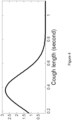
- the smoothed probability density function of ⁇ s is illustrated in Fig. 4 .
- the feature vector f k ⁇ M k F k Z k S k N k ⁇ for each sub-block of s k [n].
- the sub-block size N 882 (20 ms).
- the selected sub-block size is the basic unit for feature extraction of MFCC. Smaller sizes (e.g., 10 ms), generally lead to distorted results, because of very few samples involved in Mel-filter integration; larger sizes have tendency to increase the word error rate [28].
- the feature vector f k contains 22 elements: 14 coefficients of M k (including log energy and the 0 th - 12 th cepstral coefficients), 5 coefficients of F k , and 1 coefficient of each Z k , S k , and N k .
- pdf probability density function
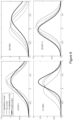
- Fig. 7 exhibits the pdf of formant frequencies.
- the statistical distribution (mean, standard deviation, skewness, and kurtosis) of formant frequencies of F(1), F(3), and F(5) between CG and AS are distinguishable.
- the distribution of F(2) in CG, CY, VC, and AS seem similar, however CG has the lowest mean (-0.06).
- the distribution of F(4) in TS has the lowest mean among the classes (-0.003).
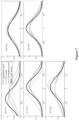
- Fig. 8 we illustrate the NGS index of CG, CY, VC, and AS.
- the NGS has the potential to discriminate CG from VC and CY ( Fig. 7(D) ).
- Fig. 6(B) it could be seen that ZCR can be used to discriminate CG from AS.
- the pdf of the features shows that there are no dominant feature which can be used alone as an input for TDNN to classify CG/NG class. Hence, to obtain the maximum benefit of each component of the features, we combined them and used d successive of features vector as the input of TDNN to classify CG/NG class.
- sensitivity TP / TP + FN ⁇ 100
- specificity TN / FP + TN ⁇ 100
- TP True Positive
- TN True Negative
- FP False Positive
- FN False Negative
- TDS 98.34 98.35 VDS 85.24 85.24 TeDS 90.32 90.35 20 TDS 98.12 98.13 VDS 86.80 86.61 TeDS 91.51 91.51 30 TDS 98.31 98.32 VDS 85.03 85.05 TeDS 90.24 90.25 40 TDS 98.41 98.41 VDS 85.57 85.57 TeDS 91.45 91.45 50 TDS 98.43 98.43 VDS 85.69 85.69 TeDS 89.89 89.92
- the classification result using ⁇ Z k S hk N k ⁇ shows the lowest sensitivity and specificity (79.95 and 99.98) respectively.
- the combination ⁇ M k F k ⁇ has a higher result with 89.37% of sensitivity and specificity.
- the combination of ⁇ M k F k Z k S hk N k ⁇ achieved the best sensitivity and specificity of 91.51%.
- Fig. 9(A) shows the signal from the noise reduction process while Fig. 9(B) illustrates the output signal from TDNN-based classification ( ⁇ k ).
- Fig. 9(B) we show the output of the network net c representing the approximation of the state of CG and NG classes (1 and 0, respectively).
- the groups of sub-blocks associated to cough sounds formed segments with value close to 1, and otherwise for the groups of sub-blocks from the non-cough sounds. From the Fig.
- each element in a segment represents the class of 20 ms sub-block.
- we can compute the duration of a segment by multiplying the number of elements between the beginning and the end of a segment with 20 ms.
- the proposed method effectively segments the cough (CG1 - CG6) even though they have different intensity and duration. Moreover, although cough sound CG3 is overlapped with speech, the method is capable of extracting the corresponding cough sound.
- the false segment (FD) shown in Fig. 9(D) also has been eliminated.
- Figure 11 illustrates the output of the segmentation method in a typical signal which contains cough sounds intermixed with cry sounds.
- the method successfully extracted the two cough sounds from the signal and only detected one false segment from a long duration of cry.
- FIG. 12 there is shown a block diagram illustrating a method according to a preferred embodiment of a further aspect of the present invention.
- the method illustrated in Figure 12 is developed for the diagnosis of particular disease states, for example Pneumonia/-non-Pneumonia classification, associated with a patient.
- Pneumonia/-non-Pneumonia classification associated with a patient.
- a further classification method is discussed at the end of this specification.
- the data acquisition environment for this work is Respiratory Medicine Unit of the Sardjito Hospital, Gadjah Mada University, Indonesia.
- Our subject population includes individuals with symptoms of respiratory disease. Patients admitted to the general ward of the hospital were assessed by a clinician for the presented symptoms. All the observations were documented in a standard sheet. Observations included presence of cough, runny nose, fever, breathing difficulty, diarrhoea etc. Clinician also recorded Temperature, Breathing rate, SpO2 and Heart rate.
- Table 8 lists the inclusion and exclusion criteria. All patients fulfilling the inclusion criteria were approached. An informed consent was made. Patients were recruited within first 12 hours of their admission. After the informed consent continuous sound recordings were made for next 4-6 hours. Table 8. Inclusion and Exclusion Criteria Used in the study Inclusion Criteria Exclusion Criteria - Patients with symptoms of chest infection : At least 2 of - Advanced disease where recovery is not expected eg terminal lung cancer - Cough - Sputum - Droplet precautions - Increased breathlessness - NIV required - Temperature >37.5° - No Consent - Consent
- the sound recordings were made in the general adult ward of the hospital. Patient shared the room with 5 other patients separated by curtains. The patients were accompanied by their family members. The attending physician regularly visited the patient, however no confidential information related to the patient was recorded.
- the common noise present in the recordings were from celling fan, foot step, speech, door banging, trolley movement and other ambiguity noises from outside the room.
- Figure 12 shows the block diagram of the overall algorithm developed for the Pneumonia/-non-Pneumonia classification
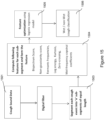
- Figure 15 shows the block diagram of the algorithm developed for the Wet/non-Wet cough sound classification.
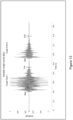
- Figure 13 shows a sample of cough sound data with two cough events. Start and end of the cough events were manually marked after careful listening. After the manual scoring of start and end of cough events we followed the following steps to compute mathematical features from the cough event data.
- Step 1 In the first step we classified each cough event into one of the two categories, 'Pneumonic Cough' or ⁇ non-Pneumonic Cough'. To solve this problem, we formed a feature vector for each cough event and derive a model, which can separate the cough events into two categories. Different models were derived with different feature set as shown in the Table 9. Table 9. Derived logistic-regression model for classification of cough event into categories 'Pneumonic Cough' and 'non-Pneumonic Cough'. ' ⁇ ' indicates the inclusion of that feature in model design. Breathing index was calculated by subtracting the breathing threshold from the recorded breathing rate.
- Logistic Regression statistical model For the cough classification we used Logistic Regression statistical model. It is a generalized linear model, uses several predictors (independent variables) to estimate the probability of a categorical event (dependent variable).
- ⁇ 0 is called the intercept and ⁇ 1 , ⁇ 2 and so on are called the regression coefficient of independent variables (features) x 1 , x 2 respectively.
- Logistic regression model were designed using the MATLAB statistical toolbox version 7.5. Features were selected to include only the best independent variables (variables with low 'p' value) that facilitate the classification, in the final model. The final model is then used to estimate the probability P and each cough event is classified as belonging to either of the two categories using a probability threshold P th .
- Step 2 In the second step for each patient, we summed number of ⁇ Pneumonia cough' and computed an index called ⁇ Pneumonic Cough Index (PCI)' using (9).
- PCI Total number of Pneumonic cough Total number of cough
- Step 3 In the third step we applied a predetermined threshold PCI th (optimized for high sensitivity while keeping specificity>75%) to the PCI to classify patient into two classes, ⁇ Class I - Pneumonia' and ⁇ Class II - non-Pneumonia'.
- PCI th optimal for high sensitivity while keeping specificity>75%
- Total of 541 cough events were analysed from the 81 subjects sound recording (minimum 2, maximum 12, and on average 6.6+2.14 cough events).
- Out of 81 subjects 50 were Pneumonia patients and 31 were non-pneumonia patients.
- Non-pneumonia patients included with diseases such as, Asthma - 11, Bronchitis - 8, Rhinopharyngitis - 6 and others (weezing, tonsilopharanzitis, heart disease, larangomalaysia, foreign body inhalation) - 6.
- Chest x-ray was performed on all suspected pneumonia patients.
- Nineteen patients on which chest x-ray was not performed 8 were asthma, 5 Rhinopharyngitis, 2 bronhitis and 4 other disease patients.
- Table 10 gives the age and gender statistics of the patient database.
- Table 11 shows the contingency table for Pneumonia diagnosis using WHO criteria and Clinically diagnosed Pneumonia cases for our database of 81 subjects.
- Table 11. Contingency table for pneumonia diagnosis using WHO criteria vs Clinically diagnosed Pneumonia. BPM - Breaths per minute. WHO criteria. [Cough OR Difficult Breathing & Fast breathing] Sensitivity Specificity Accuracy 92 26 66.67 Threshold for fast breathing used are Clinically Confirmed Diagnosis ⁇ 2 months - 60 BPM 2 - 11 months - 50 BPM WHO Criteria 46 23 12 - 60 months - 40 4 8 > 60 months - 20 BPM
- Table 12 shows the training and testing classification results in separating cough events into two categories using designed 4 logistic regression models given in table 9.
- Table 12. Classification results for cough events into two categories ('Pneumonic cough' and non-Pneumonic cough') using different Logistic Regression models as shown in table 3, following the method given in section 2.D Step 1.
- Selected cough features used to develop the model were BSG, FF1, FF2, FF4, ZCR, MFCC3 and MFCC6.
- Table 13 gives the pneumonia classification results using Pneumonic Cough Index.
- LR-Model5 gives the best classification results for cough events classification (mean sensitivity and specificity were 85.6 ⁇ 8% and 80.1 ⁇ 12% respectively).
- LR-Model4 performed better than LR-Model5. It achieved the mean sensitivity and specificity of 86.2 ⁇ 9.6 and 84.3 ⁇ 15 respectively.
- Table 13 Results for Pneumonic Cough Index based pneumonia diagnosis after only selected cough features were used in the model training. Cough Features selected were BI, FF1, FF2, Zcr, MFCC coefficients 4,6 and 9.
- Total of 178 cough events from 46 subjects were analyzed.
- the male to female ratio of the subjects in database was 1:1.
- the mean age of the subjects was 3 years and 1 month.
- Out of 178 cough events 82 were Wet and 96 were, as classified by reference standard. We used 70% (124 cough events) of the cough events for training and 30% (54 cough events) for testing the model. Training and testing cough events were randomly chosen using a random number generator. To validate the model, we generated 200 different training and testing dataset from the 178 cough events.
- the mean sensitivity and specificity for Wet/non-wet classification using LR-model was 74.8 ⁇ 9% and 69.9 ⁇ 9.4% respectively for testing datasets, when all the cough features were used to train the model.
- Mean sensitivity and specificity values jumped to 79 ⁇ 9% and 72.7 ⁇ 8.7% when only selected cough features were used.
- the selected features were 1 each from BSG, LogE and Kurt; 2 from NGS; 3 from ZCR; 5 from formant frequency; and 9 from MFCC.
- Table 14 shows the mean sensitivity, specificity, accuracy and kappa results for training and testing datasets.
- Figure 16 shows the histogram plots for the sensitivity and specificity obtained using 200 training and testing datasets.
- Table 15 shows the contingency table for the best LR-model among 200. It has the sensitivity of 90%, specificity of 80% and a high kappa agreement of 0.71.
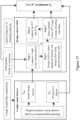
- the overall approach of the method is summarised in Fig. 17 .
- the method consists of three main stages: the acquisition of data from subjects, the development of features and the training of pattern classifiers, and, the prospective validation and performance evaluation of the technology.
- Section 2A-2C we provide details of these steps.
- a paediatric clinician assessed the patient for the presented symptoms. All the observations such as the presence of cough, runny nose, fever, breathing difficulty, diarrhoea etc. were documented in a standard sheet.
- the database also contained routine demographic information and the results of clinical (eg. chest auscultation, breathing rate, oxymetry, temperature) as well as laboratory (eg: blood, sputum analysis) investigations.
- the reference standard used for Pneumonia diagnosis in this discussion is the overall diagnosis provided by physicians, on the basis of clinical presentation, laboratory tests, chest X-ray and the clinical course of the disease. In order to minimize the radiation exposure to children, X-ray was performed only on subjects clinically suspected of pneumonia, or if there was a clear clinical need for it. Thus, not all subjects in our database had undergone X-ray imaging.
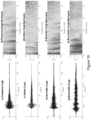
- Fig. 19 shows typical examples of (a)pneumonia-cough, (c)asthma-cough, (e)bronchitis-cough and (g)bronchiolitis-cough waveforms and their corresponding power spectrogram. A clear characteristic difference between the pneumonia-cough and other-coughs in duration and power spectrogram magnitude can be seen.
- the first step we compute a feature matrix.
- the second step we design automatic classifiers using the feature matrix from step 1 to classify cough sounds into ⁇ pneumonic cough' and ⁇ non-pneumonic cough' classes.
- the third step we select an optimal classifier and in the fourth step we define a new index called Pneumonic Cough Index (PCI) to identify patients with pneumonia.
- PCI Pneumonic Cough Index
- Step-1 Extraction and Augmentation of Cough Features
- our first target is to extract features from cough sounds to be used in the pneumonia diagnosis algorithm.
- Mathematical features from each cough event in D md were computed as follows :
- BR breathing rate
- Age age of the patient in months. While fever is a common symptom of pneumonia, it is not specific to pneumonia. A similar observation holds for the breathing rate.
- LRM Logistic-regression model
- Cough events drawn from a subject with a diagnostic classification of pneumonia are labelled pneumonic coughs and vice versa.
- a model is derived using a regression function to estimate the probability Y given the independent cough features (i.e.
- f 1 , f 2 ,...f F are the elements of feature vector F c (independent variables), ⁇ 0 is called the intercept and ⁇ 1 , ⁇ 2 and so on are called the regression coefficient of independent variables.
- ⁇ 0 is called the intercept
- ⁇ 1 , ⁇ 2 is called the regression coefficient of independent variables.
- ROC Receiver-Operating Curve
- LOV leave-1-out cross validation
- Step 3 Selecting a good model from N md LRMs - From the candidate LRMs that use the selected features F c s as the input features, we selected one model as the best based on the k-mean clustering algorithm.
- target is to divide q data points in d -dimensional space into k clusters, so that within the cluster sum of squared distance from the centroid is minimized.
- R fc Once R fc is chosen, we fix all the parameters of the model and completely terminate the training process. The model R fc is then used as the best model to classify each individual cough event into 'pneumonic-cough' or 'non-pneumonic-cough' groups.
- PCI Pneumonic Cough Index
- Figure 4 shows a typical example of pneumonia-cough, asthma-cough, bronchitis-cough and bronchiolitis-cough waveforms and their corresponding power spectrogram.
- the pneumonia-cough is of short duration with widely spread power spectrum up-to 20 kHz.
- other coughs are of long duration with power spectrum up-to 15 kHz.
- the cough sound waveforms were generally clean with high signal-to-noise-ratio (SNR).
- SNR signal-to-noise-ratio
- Table 19 shows the contingency table for Pneumonia diagnosis using WHO criteria and clinically diagnosed Pneumonia.
- WHO Criteria [Cough and/or breathing difficulty] Sensitivity Specificity Accuracy 86% 22% Threshold for fast breathing used are ⁇ 2 months - 60 BPM 2-11 months - 50 BPM 12 - 60 months - 40 > 60 months - 20 BPM
- WHO guidelines for pneumonia diagnosis in community settings are designed for children with age group of 2 months to 5 years 18 . "Infants less than 2 months with signs of pneumonia are referred promptly to the nearest health facility because they are at high risk of suffering severe illness or death" 18 . Therefore table 19 is generated using #68 subjects in our database, which falls in the age range 2 months to 5 years. WHO criteria achieved a high sensitivity of 83% in picking clinically confirmed pneumonia cases, however presented with a poor specificity of 47%.
- D md Training/Validation dataset
- D pv Prospective study dataset.
- Feature Matrix Following the method given in section 2-B [Step 1] we computed feature matrix M c .
- Pneumonic Cough Classification using LRM before feature selection For F 1 feature combination (only mathematical features of cough), the mean training sensitivity and specificity over 66 LRMs in classifying cough events into Pneumonic and non-pneumonic cough classes were 81 ⁇ 1%. Validation sensitivity and specificity were 63% and 52% respectively. When BrI was included as feature, sensitivity and specificity of validation set jumped to 71% and 55% respectively. And when all the features, Age, presence of fever and BrI were included in train LRM along with mathematical features of cough, sensitivity and specificity further increased to 73% and 62% respective. Table 20 gives the performance of the model in classifying cough events into Pneumonic and non-pneumonic cough classes using different combination of features.
- Table 22 gives the performance of the model after feature selection in classifying cough events into Pneumonic and non-pneumonic cough classes. Table 22 - Performance of the LRM models in classifying cough events into ⁇ pneumonic cough' and ⁇ non-pneumonic cough' classes on training/validation dataset D md when selected features were used to train the model.
- PCI based classification From designed LRMs for each F c s using data from robust model R fc was selected using k-mean clustering method as discussed in section 2-B [Step 3]. The chosen model R fc and all its parameters were fixed for use in step [4] of section 2-B. Using the definition given in section 2-B [Step 4], PCI index was computed for each patient. By ROC analysis a PCI th was selected and applied on PCI to classify patients into 'Pneumonia' and 'non-Pneumonia'. Table 23 shows the PCI based pneumonia/non-pneumonia classification results for 6 feature combinations F c s .
- Table 25 shows the performance of model in classifying patients into pneumonia and non-pneumonia.
- Selected LRM model Prospective Dataset D pv Sens Spec Acc PPV NPV K
- R f 1 C f S 94% 75% 88% 89% 86% 0.72
- R f5 C f S + BrI + Fever 88% 75% 84% 88% 75% 0.63
- R f6 C f S + BrI + Age + Fever 82% 100% 88% 100% 73% 0.75
- R f1 which used only cough features has sensitivity and specificity of 83% and 58% respectively.
- top 3 performing models were R f1 , R f3 , R f4 and R f6 all with kappa agreement greater than 0.7, substantial agreement.
- R f1 achieved a high sensitivity and specificity of 94% and 75% respectively.
- the preceding has provided an automated procedure to diagnose pneumonia using cough sounds.
- the method is based on initially classifying individual cough events into ⁇ pneumonic cough' and 'non-pneumonic cough' classes and then calculating a Pneumoic Cough Index (PCI) over all the cough events recorded.
- PCI Pneumoic Cough Index
- Figure 20 shows the block diagram of the automated cough classification process using logistic regression. It is divided into four stages, (A) data acquisition process (B) creating a cough sound database and classification into wet/dry classes by expert scorer (C) designing of automatic classifier (D) testing of classifier on prospective cough sound dataset.
- A data acquisition process
- B creating a cough sound database
- C designing of automatic classifier
- D testing of classifier on prospective cough sound dataset.
- Table 26 lists the inclusion and exclusion criteria of subjects. Table 26 - Inclusion and Exclusion Criteria for Subjects Inclusion Criteria Exclusion Criteria - Patients with symptoms of chest - Advanced disease where infection : At least 2 of recovery is not expected eg - Cough terminal lung cancer - Sputum - Droplet precautions -Increased breathlessness - NIV required -Temperature >37.5° - No Consent -Consent
- N be the number of patients whose sound recording is used and C be total number of cough events from N patients. These C cough events were manually segmented after screening though 6-8 hours of the sound data of each patient. There is no accepted method for automatic marking of start and end of a cough event. Manual marking is still considered the gold standard. After careful listening start and end of all cough events were manually marked.
- DS11 be the subset of DS1 containing those cough events on which both scorers agreed on the class of cough sounds.
- C11 cough events in DS11 Use cough events in DS11 to design automatic classifier model. This is a three step process.
- Step 1 Cough event Feature matrix computation: In this step, feature vector containing 'F' mathematical features is computed from each of C11 cough events and a cough event feature matrix 'M DS11 ' of size, C11 ⁇ F was formed. To compute 'F' features from a cough event use below steps.
- LRM Logistic-regression model
- f 1 , f 2 ,...f F are the elements of feature vector (independent variables), ⁇ 0 is called the intercept and ⁇ 1 , ⁇ 2 and so on are called the regression coefficient of independent variables.
- ⁇ 0 is called the intercept
- ⁇ 1 , ⁇ 2 is called the regression coefficient of independent variables.
- ROC Receiver-Operating Curve
- LOV technique involves using data from all cough events except one to train the model and one cough event to validate the model. This process was systematically repeated C11 times such that each cough event in DS11 was used as the validation data once. This resulted in L C11 number of LRMs.
- Step 3 Selecting a good model from L C11 LRMs : From L C11 LRMs we selected one model as the best, using the k-mean clustering algorithm 9 to test on prospective study dataset DS2.
- target is to divide q data points in d- dimensional space into k clusters, so that within the cluster sum of squared distance from the centroid is minimized.
- Step 1 Following the procedure described in section C [Step 1] and using the cough events from dataset DS2, compute the cough event feature matrix M DS2 of size C2 ⁇ F.
- C2 is total cough events in DS2 and 'F' is feature vector.
- the inventors used sound recording data from N 78 patients (41 were male and 37 were female).
- Table 27 gives the demographic and clinical details of the patients.
- Table 28 shows the contingency table between two scorers in classifying cough sounds from DS1 and DS2, into two classes wet and dry.
- FIG. 21 shows a typical example of dry cough waveform and wet cough waveform from two patients, ids #35 & #38 respectively.
- the cough sound waveforms were generally clean with high signal-to-noise-ratio (SNR).
- SNR signal-to-noise-ratio
- Figures 23A and 22B are histograms of SNR for the cough sound in DS11 and DS2.
- the mean training sensitivity and specificity for the 310 LRMs were 92 ⁇ 1% and 93 ⁇ 0.5% respectively. Validation sensitivity and specificity for these models were 62% and 84% respectively.
- MFCC based features were most dominant. Out of 31 selected features, 19 features were contributed from different MFCC components. After MFCC formant frequencies made second most dominant contribution with 5 features. Moreover except for 4 th formant frequency and pitch based features, which were completely omitted, all other features contributed with features from at-least one sub-segment towards building of final LRM model.
- LRM LRM
- 310 designed LRMs using data from DS11, optimal model was selected using k-mean clustering method as discussed in section II-C-[Step 3]. Models were clustered into two groups, high performance model and low performance models based on model parameters and performance measures. Of 310 models, 202 were clustered in high performance model group and 108 into low performance model group. LRM model #26 has the lowest mean square error value with respect to centroid of the high performance models. This model was chosen and all its parameters were fixed for future use. was tested on prospective dataset DS2. Performance of on prospective dataset DS2: Table 31 gives the classification results of against expert scorers.
- Table 33 shows the performance of the LRM on DS11 and DS2 when matched for age and gender.
- Table 33 - LRM validation results for dataset DS11 and prospective dataset DS2 with age and gender matched.
- Embodiments of the present invention encompass an automated, objective method to classify cough sounds in to wet and dry categories. As far as the inventors are aware know, this is the first attempt to develop objective technology for the dry/wet classification of pediatric cough sounds, espcially in diseases such as pneumonia.
- the results presented herein are based on 536 cough events from 78 subjects, compared to existing work which use no more than 30 coughs in their descriptive analyses. For these reasons no other work has been availble to directly compare the results against.
- the reference method used for the assessment of our technology is the subjective classification of cough sounds into wet/dry classes by two pediatric respiratory physicians from different countries. These scorers were blinded to the actual clinical diagnosis of the subjects.
- Cough is an early symptom of diseases such as pneumonia, bronchitis and bronchiolitis.
- the accurate assessment of this symptom is a crucial factor in diagnosing acute diseases or the monitoring of chronic symptoms and treatment efficacy. It is known that in children, wet coughs are more likely to be associated with lower respiratory tract infections 3 .
- the subjective classification of wet coughs has low sensitivity as a method of detecting airway mucus, even in the hands of expert clinicians. Accurate, objective technology for the classification of dry/wet coughs is currently unavailable either at the commercial or research levels. To the best of our knowledge, this work is the first attempt in the world to develop such technology.
- the methods described herein may be simultaneously implemented with other potential technologies such as microwave imaging and ultrasound imaging that may be capable of detecting consolidations and mucus in lungs.
- a method which is capable of extracting cough sounds from a recording by defining the beginning and the end of the cough segments has been described herein.
- a set of different features were computed from the sound signal and used as an input to a decision engine, for example an adaptive neural network-based pattern recognition algorithm or a logistic regression model.
- the proposed method achieved segmentation sensitivity and specificity of about 95%. This method can be used as the front-end of cough analysis system; hence the quantitative and qualitative information from a larger number of cough sounds in a recording can be analyzed automatically.
Landscapes
- Health & Medical Sciences (AREA)
- Engineering & Computer Science (AREA)
- Life Sciences & Earth Sciences (AREA)
- Public Health (AREA)
- Medical Informatics (AREA)
- Biomedical Technology (AREA)
- General Health & Medical Sciences (AREA)
- Physics & Mathematics (AREA)
- Veterinary Medicine (AREA)
- Molecular Biology (AREA)
- Animal Behavior & Ethology (AREA)
- Surgery (AREA)
- Heart & Thoracic Surgery (AREA)
- Pathology (AREA)
- Pulmonology (AREA)
- Biophysics (AREA)
- Acoustics & Sound (AREA)
- Epidemiology (AREA)
- Physiology (AREA)
- Data Mining & Analysis (AREA)
- Primary Health Care (AREA)
- Databases & Information Systems (AREA)
- Signal Processing (AREA)
- Artificial Intelligence (AREA)
- Audiology, Speech & Language Pathology (AREA)
- Computational Linguistics (AREA)
- Human Computer Interaction (AREA)
- Multimedia (AREA)
- Evolutionary Computation (AREA)
- Fuzzy Systems (AREA)
- Mathematical Physics (AREA)
- Computer Vision & Pattern Recognition (AREA)
- Psychiatry (AREA)
- Measurement Of The Respiration, Hearing Ability, Form, And Blood Characteristics Of Living Organisms (AREA)
- Surgical Instruments (AREA)
- Measuring Pulse, Heart Rate, Blood Pressure Or Blood Flow (AREA)
- Measuring And Recording Apparatus For Diagnosis (AREA)
Claims (14)
- Procédé de fonctionnement d'un dispositif informatique (52) pour traiter un enregistrement sonore d'un patient (501), le procédé étant caractérisé par les étapes consistant à :extraire des caractéristiques de coefficients cepstraux de fréquence Mel (MFCC) (209), fréquence des formants (211), taux de passage par zéro (213), entropie de Shannon (215) et non-gaussianité (217) de sons de patient dans l'enregistrement pour former des vecteurs de caractéristiques (223) ;classer (225) des segments comme sons de toux (1001) sur la base des caractéristiques extraites avec un classificateur de motifs (300) ; etprésenter un diagnostic d'un état lié à une maladie sur un dispositif d'affichage (56) sous le contrôle du dispositif informatique (52) sur la base de segments (1001) des sons de patient (501) classés comme sons de toux, le diagnostic présenté étant la pneumonie.
- Procédé selon la revendication 1, dans lequel le classificateur de motifs comprend un réseau neuronal artificiel (300).
- Procédé selon la revendication 2, dans lequel le réseau neuronal artificiel (300) comprend un réseau neuronal à retard temporel (TDNN).
- Procédé selon la revendication 3, dans lequel le TDNN (300) a une couche cachée (303) entre une couche de sortie (305) et une couche d'entrée (307) avec 10 à 50 neurones dans la couche cachée (303).
- Procédé selon l'une quelconque des revendications 1 à 4, comportant le calcul d'un bispectre pour une classification supplémentaire des segments de toux.
- Procédé selon la revendication 1, comprenant en outre le diagnostic d'un état pneumonique sur la base des segments des sons de patient classés comme sons de toux et la présentation du diagnostic sur le dispositif d'affichage sous le contrôle du dispositif informatique.
- Procédé selon la revendication 6, comportant la surveillance de données de patient provenant d'un ou plusieurs parmi un : capteur de détection de respiration, capteur de température, capteur de mouvement, capteur EEG, capteur de niveau d'oxygène.
- Procédé selon la revendication 1, comportant la catégorisation de sons de toux comme étant des sons de « toux grasse » ou « toux non grasse » (1506).
- Procédé selon la revendication 6 ou la revendication 7, comportant les étapes consistant à :catégoriser des événements de toux des sons de patient comme étant soit pneumoniques soit non pneumoniques en traitant des caractéristiques extraites d'événements de toux selon une procédure de classification ;calculer un indice de toux pneumonique indiquant la proportion d'événements de toux pneumoniques catégorisés ; etconsidérer que le patient souffre de l'état pathologique pneumonique dans le cas où l'indice de toux pneumonique répond à une exigence prédéterminée.
- Procédé selon la revendication 9, dans lequel la procédure de classification comprend l'un quelconque parmi : un modèle de régression logistique ; un réseau neuronal artificiel ; un classificateur bayésien ; un modèle de Markov caché ; une machine à vecteurs de support.
- Procédé selon la revendication 9 ou la revendication 10, comportant la comparaison de l'indice de toux pneumonique à un seuil et le fait de considérer que le patient souffre de pneumonie sur la base de la comparaison.
- Procédé selon l'une quelconque des revendications 9 à 11, comportant l'application d'un ensemble d'apprentissage audit un quelconque parmi :un modèle de régression logistique ; un réseau neuronal artificiel ; un classificateur bayésien ; un modèle de Markov caché ; une machine à vecteurs de support ;l'ensemble d'apprentissage comportant des sons non pneumoniques enregistrés à partir de patients souffrant d'une ou plusieurs des affections suivantes : l'asthme, la bronchite, la rhinopharyngite, la respiration sifflante, l'amygdalo-pharyngite, une maladie cardiaque, la laryngomalacie, le paludisme et une inhalation de corps étranger.
- Dispositif informatique (52) comportant au moins un processeur électronique (70) en communication avec une mémoire électronique (62, 64, 66) contenant des instructions pour que le processeur réalise un procédé selon l'une quelconque des revendications précédentes.
- Support lisible par machine (46) portant des instructions tangibles pour l'exécution par un ou des processeurs électroniques (70) pour réaliser un procédé selon l'une quelconque des revendications 1 à 12.
Priority Applications (1)
| Application Number | Priority Date | Filing Date | Title |
|---|---|---|---|
| EP23169487.8A EP4241676A3 (fr) | 2012-03-29 | 2013-03-28 | Procédé et appareil pour le traitement d'enregistrements des sons d'un patient |
Applications Claiming Priority (2)
| Application Number | Priority Date | Filing Date | Title |
|---|---|---|---|
| AU2012901255A AU2012901255A0 (en) | 2012-03-29 | A method and apparatus for processing patient sounds | |
| PCT/AU2013/000323 WO2013142908A1 (fr) | 2012-03-29 | 2013-03-28 | Procédé et appareil pour le traitement des sons anatomiques de patients |
Related Child Applications (1)
| Application Number | Title | Priority Date | Filing Date |
|---|---|---|---|
| EP23169487.8A Division EP4241676A3 (fr) | 2012-03-29 | 2013-03-28 | Procédé et appareil pour le traitement d'enregistrements des sons d'un patient |
Publications (3)
| Publication Number | Publication Date |
|---|---|
| EP2830496A1 EP2830496A1 (fr) | 2015-02-04 |
| EP2830496A4 EP2830496A4 (fr) | 2015-12-16 |
| EP2830496B1 true EP2830496B1 (fr) | 2023-04-26 |
Family
ID=49257951
Family Applications (2)
| Application Number | Title | Priority Date | Filing Date |
|---|---|---|---|
| EP13768257.1A Active EP2830496B1 (fr) | 2012-03-29 | 2013-03-28 | Procédé et appareil pour le traitement d'enregistrements des sons d'un patient |
| EP23169487.8A Withdrawn EP4241676A3 (fr) | 2012-03-29 | 2013-03-28 | Procédé et appareil pour le traitement d'enregistrements des sons d'un patient |
Family Applications After (1)
| Application Number | Title | Priority Date | Filing Date |
|---|---|---|---|
| EP23169487.8A Withdrawn EP4241676A3 (fr) | 2012-03-29 | 2013-03-28 | Procédé et appareil pour le traitement d'enregistrements des sons d'un patient |
Country Status (8)
| Country | Link |
|---|---|
| US (1) | US10098569B2 (fr) |
| EP (2) | EP2830496B1 (fr) |
| JP (1) | JP6435257B2 (fr) |
| KR (1) | KR102081241B1 (fr) |
| CN (2) | CN110353685B (fr) |
| AU (1) | AU2013239327B2 (fr) |
| ES (1) | ES2947765T3 (fr) |
| WO (1) | WO2013142908A1 (fr) |
Families Citing this family (166)
| Publication number | Priority date | Publication date | Assignee | Title |
|---|---|---|---|---|
| CN105193443A (zh) | 2010-04-16 | 2015-12-30 | 田纳西大学研究基金会 | 用于预测胃肠损害的系统和方法 |
| EP2608714A4 (fr) * | 2010-08-25 | 2017-03-08 | Diacoustic Medical Devices (Pty) Ltd | Système et procédé de classification d'un bruit de c ur |
| US11315687B2 (en) * | 2012-06-18 | 2022-04-26 | AireHealth Inc. | Method and apparatus for training and evaluating artificial neural networks used to determine lung pathology |
| CN103730130B (zh) * | 2013-12-20 | 2019-03-01 | 中国科学院深圳先进技术研究院 | 一种病理嗓音的检测系统 |
| JP6320109B2 (ja) * | 2014-03-27 | 2018-05-09 | 旭化成株式会社 | 心疾患識別装置 |
| EP2945084A1 (fr) * | 2014-05-12 | 2015-11-18 | Electrosalus Biyomedikal Sanayi ve Ticaret Anonim Sirketi | Acquisition de données d'auscultation, système de communication et d'évaluation intégrant des installations mobiles |
| US9186479B1 (en) | 2014-06-05 | 2015-11-17 | Morphy Inc. | Methods and systems for gathering human biological signals and controlling a bed device |
| EP3202131A4 (fr) * | 2015-05-15 | 2017-08-09 | SZ DJI Technology Co., Ltd. | Système et procédé de correction de couleur |
| US9687208B2 (en) * | 2015-06-03 | 2017-06-27 | iMEDI PLUS Inc. | Method and system for recognizing physiological sound |
| WO2017060828A1 (fr) | 2015-10-08 | 2017-04-13 | Cordio Medical Ltd. | Évaluation d'une affection pulmonaire par analyse de la parole |
| US10105092B2 (en) | 2015-11-16 | 2018-10-23 | Eight Sleep Inc. | Detecting sleeping disorders |
| US20170135883A1 (en) * | 2015-11-16 | 2017-05-18 | Eight Sleep Inc. | Adjustable bedframe and operating methods |
| US10154932B2 (en) | 2015-11-16 | 2018-12-18 | Eight Sleep Inc. | Adjustable bedframe and operating methods for health monitoring |
| US9899034B2 (en) * | 2015-12-22 | 2018-02-20 | Intel IP Corporation | Technologies for robust crying detection using temporal characteristics of acoustic features |
| EP3692923B1 (fr) | 2016-02-17 | 2022-06-29 | Sanolla Ltd | Stéthoscopes numériques et systèmes d'auscultation et d'imagerie |
| US11116478B2 (en) | 2016-02-17 | 2021-09-14 | Sanolla Ltd. | Diagnosis of pathologies using infrasonic signatures |
| US9998487B2 (en) * | 2016-04-25 | 2018-06-12 | General Electric Company | Domain level threat detection for industrial asset control system |
| CN105962897B (zh) * | 2016-04-27 | 2018-10-02 | 南京理工大学 | 一种自适应的鼾声信号检测方法 |
| US10592733B1 (en) * | 2016-05-20 | 2020-03-17 | Educational Testing Service | Computer-implemented systems and methods for evaluating speech dialog system engagement via video |
| WO2018011113A1 (fr) * | 2016-07-14 | 2018-01-18 | Koninklijke Philips N.V. | Système et procédé pour surveiller les symptômes de l'asthme |
| US10008218B2 (en) | 2016-08-03 | 2018-06-26 | Dolby Laboratories Licensing Corporation | Blind bandwidth extension using K-means and a support vector machine |
| CN106364542B (zh) * | 2016-09-20 | 2018-08-21 | 智易行科技(武汉)有限公司 | 基于支持向量机的多传感器融合智能婴儿体态安抚方法 |
| WO2018053604A1 (fr) * | 2016-09-26 | 2018-03-29 | The University Of Queensland | Procédé et appareil de diagnostic automatique d'un état pathologique |
| CN110520053B (zh) * | 2016-11-15 | 2022-08-23 | 勃林格殷格翰维特梅迪卡有限公司 | 预测特定呼吸道病原体的方法 |
| JP6907553B2 (ja) * | 2017-01-23 | 2021-07-21 | 富士フイルムビジネスイノベーション株式会社 | 咳検知装置及びプログラム |
| WO2018141013A2 (fr) * | 2017-02-01 | 2018-08-09 | ResApp Health Limited | Procédés et appareil de détection de toux dans des environnements de bruit de fond |
| EP3592231A1 (fr) * | 2017-03-10 | 2020-01-15 | Masimo Corporation | Détecteur de pneumonie |
| US20200129115A1 (en) * | 2017-04-06 | 2020-04-30 | Brown University | Improved diagnostic instrument and methods |
| KR101924852B1 (ko) * | 2017-04-14 | 2018-12-04 | 네이버 주식회사 | 네트워크에 연결된 음향기기와의 멀티모달 인터렉션 방법 및 시스템 |
| WO2018204934A1 (fr) | 2017-05-05 | 2018-11-08 | Canary Speech, LLC | Sélection de caractéristiques vocales pour des modèles de construction pour détecter des conditions médicales |
| CN107591162B (zh) * | 2017-07-28 | 2021-01-12 | 南京邮电大学 | 基于模式匹配的哭声识别方法及智能看护系统 |
| WO2019023879A1 (fr) * | 2017-07-31 | 2019-02-07 | 深圳和而泰智能家居科技有限公司 | Procédé et dispositif de reconnaissance de son de toux, et support d'informations |
| CN107693043B (zh) * | 2017-08-18 | 2019-10-11 | 中国人民解放军总医院 | 肠鸣音信号的非线性动力学分析方法 |
| US12029606B2 (en) | 2017-09-05 | 2024-07-09 | Sanolla Ltd. | Electronic stethoscope with enhanced features |
| CN110021435A (zh) * | 2017-09-07 | 2019-07-16 | 医疗财团法人徐元智先生医药基金会亚东纪念医院 | 嗓音侦测分类系统 |
| WO2019060298A1 (fr) | 2017-09-19 | 2019-03-28 | Neuroenhancement Lab, LLC | Procédé et appareil de neuro-activation |
| EP3471027A1 (fr) * | 2017-10-13 | 2019-04-17 | Siemens Aktiengesellschaft | Procédé de détermination d'un modèle de prédiction guidé par les données mis en uvre par ordinateur |
| CN108053841A (zh) * | 2017-10-23 | 2018-05-18 | 平安科技(深圳)有限公司 | 利用语音进行疾病预测的方法及应用服务器 |
| AU2018354718B2 (en) * | 2017-10-27 | 2024-06-06 | Ecole De Technologie Superieure | In-ear nonverbal audio events classification system and method |
| EP3709881A1 (fr) | 2017-11-17 | 2020-09-23 | Koninklijke Philips N.V. | Détection de toux dans un système d'assistance respiratoire |
| US11717686B2 (en) | 2017-12-04 | 2023-08-08 | Neuroenhancement Lab, LLC | Method and apparatus for neuroenhancement to facilitate learning and performance |
| USD865167S1 (en) | 2017-12-20 | 2019-10-29 | Bat Call D. Adler Ltd. | Digital stethoscope |
| US11864880B2 (en) * | 2017-12-21 | 2024-01-09 | The University Of Queensland | Method for analysis of cough sounds using disease signatures to diagnose respiratory diseases |
| US10957335B2 (en) * | 2017-12-28 | 2021-03-23 | Sleep Number Corporation | Home automation having user privacy protections |
| CN108090686B (zh) * | 2017-12-29 | 2022-01-25 | 北京大学 | 一种医疗事件风险评估分析方法及系统 |
| US12280219B2 (en) | 2017-12-31 | 2025-04-22 | NeuroLight, Inc. | Method and apparatus for neuroenhancement to enhance emotional response |
| US11318277B2 (en) | 2017-12-31 | 2022-05-03 | Neuroenhancement Lab, LLC | Method and apparatus for neuroenhancement to enhance emotional response |
| GB2584242B (en) | 2018-01-09 | 2022-09-14 | Eight Sleep Inc | Systems and methods for detecting a biological signal of a user of an article of furniture |
| GB2584241B (en) | 2018-01-19 | 2023-03-08 | Eight Sleep Inc | Sleep pod |
| KR20190113390A (ko) * | 2018-03-28 | 2019-10-08 | (주)오상헬스케어 | 호흡 질환 진단 장치 및 호흡 질환 모니터링 방법 |
| WO2019194843A1 (fr) * | 2018-04-05 | 2019-10-10 | Google Llc | Système et procédé de génération d'informations de diagnostic médical au moyen d'un apprentissage profond et d'une compréhension sonore |
| US11364361B2 (en) | 2018-04-20 | 2022-06-21 | Neuroenhancement Lab, LLC | System and method for inducing sleep by transplanting mental states |
| WO2019216320A1 (fr) * | 2018-05-08 | 2019-11-14 | 国立大学法人徳島大学 | Appareil d'apprentissage automatique, appareil d'analyse, procédé d'apprentissage automatique et procédé d'analyse |
| EA201800377A1 (ru) * | 2018-05-29 | 2019-12-30 | Пт "Хэлси Нэтворкс" | Способ диагностики заболеваний органов дыхания и система для его реализации |
| GB2578417B (en) * | 2018-06-11 | 2022-09-28 | Hunt Dev Uk Ltd | Airway sampling device and associated methods |
| US20210090593A1 (en) * | 2018-06-29 | 2021-03-25 | Deeply Inc. | Method and device for analyzing real-time sound |
| EP3817650A4 (fr) * | 2018-07-02 | 2022-04-13 | 3M Innovative Properties Company | Système de détection et procédé de surveillance de processus dépendants du temps |
| US10832673B2 (en) | 2018-07-13 | 2020-11-10 | International Business Machines Corporation | Smart speaker device with cognitive sound analysis and response |
| US10832672B2 (en) | 2018-07-13 | 2020-11-10 | International Business Machines Corporation | Smart speaker system with cognitive sound analysis and response |
| GB2578418B (en) * | 2018-07-25 | 2022-06-15 | Audio Analytic Ltd | Sound detection |
| KR102092543B1 (ko) * | 2018-08-31 | 2020-03-24 | 재단법인 아산사회복지재단 | 폐음을 이용한 폐 정보 획득 방법, 그 장치 및 그 프로그램 |
| US11298101B2 (en) * | 2018-08-31 | 2022-04-12 | The Trustees Of Dartmouth College | Device embedded in, or attached to, a pillow configured for in-bed monitoring of respiration |
| CN113382683A (zh) | 2018-09-14 | 2021-09-10 | 纽罗因恒思蒙特实验有限责任公司 | 改善睡眠的系统和方法 |
| US11380351B2 (en) * | 2018-09-20 | 2022-07-05 | Samsung Electronics Co., Ltd. | System and method for pulmonary condition monitoring and analysis |
| US10847177B2 (en) | 2018-10-11 | 2020-11-24 | Cordio Medical Ltd. | Estimating lung volume by speech analysis |
| US20210338154A1 (en) * | 2018-10-17 | 2021-11-04 | The University Of Queensland | A method and apparatus for diagnosis of maladies from patient sounds |
| US20200135334A1 (en) * | 2018-10-26 | 2020-04-30 | AIRx Health, Inc. | Devices and methods for remotely managing chronic medical conditions |
| CN109498228B (zh) * | 2018-11-06 | 2021-03-30 | 林枫 | 基于咳嗽音反馈的肺康复治疗装置 |
| US11055575B2 (en) | 2018-11-13 | 2021-07-06 | CurieAI, Inc. | Intelligent health monitoring |
| JP2022513910A (ja) * | 2018-12-13 | 2022-02-09 | リミナル サイエンシズ インコーポレイテッド | 音響刺激のためのウェアラブルデバイス用のシステムおよび方法 |
| EP3897379A4 (fr) * | 2018-12-20 | 2022-09-21 | University of Washington | Détection d'une respiration agonique à l'aide d'un dispositif intelligent |
| CN113330516A (zh) * | 2019-01-22 | 2021-08-31 | 费森尤斯医疗保健控股公司 | 用于生成匿名声学指纹的系统和方法 |
| EP3935581A4 (fr) | 2019-03-04 | 2022-11-30 | Iocurrents, Inc. | Compression et communication de données à l'aide d'un apprentissage automatique |
| US12494224B2 (en) | 2019-03-12 | 2025-12-09 | Cordio Medical Ltd. | Analyzing speech using speech-sample alignment and segmentation based on acoustic features |
| US11024327B2 (en) | 2019-03-12 | 2021-06-01 | Cordio Medical Ltd. | Diagnostic techniques based on speech models |
| US12512114B2 (en) | 2019-03-12 | 2025-12-30 | Cordio Medical Ltd. | Analyzing speech using speech models and segmentation based on acoustic features |
| US11011188B2 (en) | 2019-03-12 | 2021-05-18 | Cordio Medical Ltd. | Diagnostic techniques based on speech-sample alignment |
| US12488805B2 (en) | 2019-03-12 | 2025-12-02 | Cordio Medical Ltd. | Using optimal articulatory event-types for computer analysis of speech |
| CN113544776B (zh) * | 2019-03-12 | 2024-08-27 | 科蒂奥医疗公司 | 基于语音样本对准的诊断技术 |
| BR112021020315A2 (pt) | 2019-04-16 | 2021-12-14 | Entac Medical Inc | Detecção e análise intensificadas de sinais acústicos biológicos |
| US11786694B2 (en) | 2019-05-24 | 2023-10-17 | NeuroLight, Inc. | Device, method, and app for facilitating sleep |
| MX2021014721A (es) * | 2019-05-30 | 2022-04-06 | Insurance Services Office Inc | Sistemas y metodos para aprendizaje de maquina de atributos de voz. |
| CN111883174A (zh) * | 2019-06-26 | 2020-11-03 | 深圳数字生命研究院 | 声音的识别方法及装置、存储介质和电子装置 |
| US11948690B2 (en) * | 2019-07-23 | 2024-04-02 | Samsung Electronics Co., Ltd. | Pulmonary function estimation |
| DE102019210929B4 (de) * | 2019-07-24 | 2023-07-20 | Zf Friedrichshafen Ag | Computerimplementiertes Verfahren zum maschinellen Lernen von Husten- und/oder Niesgeräuschen von ein Beförderungsmittel nutzenden Fahrgästen, um bei erkannten Husten- und/oder Niesgeräuschen Maßnahmen zur Reinigung des Beförderungsmittels einzuleiten, und Steuergerät, Verfahren, Vorrichtung, Beförderungsmittel und Computerprogramm zum Einleiten der Maßnahmen |
| CN110367934B (zh) * | 2019-07-25 | 2023-02-03 | 深圳大学 | 一种基于非语音身体声音的健康监测方法及监测系统 |
| US11526780B2 (en) * | 2019-08-05 | 2022-12-13 | Microsoft Technology Licensing, Llc | Converting nonnative skills for conversational computing interfaces |
| US12527493B2 (en) | 2019-08-19 | 2026-01-20 | The University Of Queensland | Method and apparatus for processing asthma patient cough sound for application of appropriate therapy |
| US10709414B1 (en) | 2019-10-21 | 2020-07-14 | Sonavi Labs, Inc. | Predicting a respiratory event based on trend information, and applications thereof |
| US10702239B1 (en) | 2019-10-21 | 2020-07-07 | Sonavi Labs, Inc. | Predicting characteristics of a future respiratory event, and applications thereof |
| US12433506B2 (en) * | 2019-10-21 | 2025-10-07 | Sonavi Labs, Inc. | Digital stethoscope for counting coughs, and applications thereof |
| US10716534B1 (en) | 2019-10-21 | 2020-07-21 | Sonavi Labs, Inc. | Base station for a digital stethoscope, and applications thereof |
| US10709353B1 (en) | 2019-10-21 | 2020-07-14 | Sonavi Labs, Inc. | Detecting a respiratory abnormality using a convolution, and applications thereof |
| US10750976B1 (en) * | 2019-10-21 | 2020-08-25 | Sonavi Labs, Inc. | Digital stethoscope for counting coughs, and applications thereof |
| US11741986B2 (en) * | 2019-11-05 | 2023-08-29 | Samsung Electronics Co., Ltd. | System and method for passive subject specific monitoring |
| CN110946554A (zh) * | 2019-11-27 | 2020-04-03 | 深圳和而泰家居在线网络科技有限公司 | 咳嗽类型识别方法、装置及系统 |
| US20210161502A1 (en) * | 2019-12-03 | 2021-06-03 | Samsung Electronics Co., Ltd. | System and method for determining a likelihood of paradoxical vocal cord motion (pvcm) in a person |
| CN115053300A (zh) * | 2019-12-16 | 2022-09-13 | 瑞爱普健康有限公司 | 从受试者声音诊断呼吸疾病 |
| US20230039619A1 (en) * | 2019-12-16 | 2023-02-09 | ResApp Health Limited | Method and apparatus for automatic cough detection |
| CN111179967B (zh) * | 2019-12-17 | 2022-05-24 | 华南理工大学 | 颈脊髓损伤患者真假咳嗽音线性分类算法、介质和设备 |
| US20210199503A1 (en) * | 2019-12-26 | 2021-07-01 | Industrial Technology Research Institute | Data processing system disposed on sensor and method thereof |
| CN111009263A (zh) * | 2019-12-28 | 2020-04-14 | 哈尔滨工业大学 | 一种用于肺部啰音识别的系统及方法 |
| CN111260835B (zh) * | 2020-01-19 | 2022-08-09 | 上海瑞皇管业科技股份有限公司 | 城市综合管廊监控报警系统及其控制方法 |
| KR102152902B1 (ko) * | 2020-02-11 | 2020-09-07 | 주식회사 엘솔루 | 음성 인식 모델을 학습시키는 방법 및 상기 방법을 이용하여 학습된 음성 인식 장치 |
| US11484211B2 (en) | 2020-03-03 | 2022-11-01 | Cordio Medical Ltd. | Diagnosis of medical conditions using voice recordings and auscultation |
| US11468908B2 (en) | 2020-04-15 | 2022-10-11 | Optum, Inc. | Hybrid input machine learning frameworks |
| CN111584069B (zh) * | 2020-05-07 | 2023-04-18 | 成都兰途网络科技有限公司 | 基于语音深-浅特征堆栈稀疏自动编码的精神病识别系统 |
| US11240579B2 (en) | 2020-05-08 | 2022-02-01 | Level 42 Ai | Sensor systems and methods for characterizing health conditions |
| KR102394882B1 (ko) * | 2020-05-11 | 2022-05-04 | 한양대학교 산학협력단 | 감염 질환을 모니터링 및 진단하는 방법 및 장치 |
| US20220104725A9 (en) * | 2020-05-13 | 2022-04-07 | Ali IMRAN | Screening of individuals for a respiratory disease using artificial intelligence |
| US20230190140A1 (en) * | 2020-05-19 | 2023-06-22 | Resmed Sensor Technologies Limited | Methods and apparatus for detection and monitoring of health parameters |
| BR112022024759A2 (pt) * | 2020-06-04 | 2022-12-27 | Entac Medical Inc | Dispositivos e métodos para previsão in vivo de comprometimentos e eventos funcionais |
| CN111653273A (zh) * | 2020-06-09 | 2020-09-11 | 杭州叙简科技股份有限公司 | 一种基于智能手机的院外肺炎初步识别方法 |
| US11219386B2 (en) | 2020-06-15 | 2022-01-11 | Cirrus Logic, Inc. | Cough detection |
| US11134354B1 (en) | 2020-06-15 | 2021-09-28 | Cirrus Logic, Inc. | Wear detection |
| JP2023529674A (ja) * | 2020-06-18 | 2023-07-11 | レスアップ ヘルス リミテッド | 被験者音声におけるイベント検出 |
| US11417342B2 (en) | 2020-06-29 | 2022-08-16 | Cordio Medical Ltd. | Synthesizing patient-specific speech models |
| KR20230028370A (ko) | 2020-07-13 | 2023-02-28 | 다인기술 주식회사 | 음향 신호를 분석하여 기침을 계수하는 방법, 이를 수행하는 서버 및 비일시성의 컴퓨터 판독 가능 기록 매체 |
| US12502002B2 (en) * | 2020-08-12 | 2025-12-23 | Sky Bacon Technology Holdings, Llc | Method for analyzing sound data for use in an anti-snoring system and apparatus |
| KR102241399B1 (ko) * | 2020-08-25 | 2021-04-16 | 주식회사 쓰리빌리언 | 증상의 질병 특이도 측정 시스템 |
| JP2024500594A (ja) * | 2020-09-04 | 2024-01-10 | レベル・フォーティツー・エーアイ・インコーポレイテッド | 非接触センサーシステムおよび方法 |
| EP4211701B1 (fr) | 2020-09-09 | 2025-12-24 | Sparrow Acoustics Inc. | Procédé et système destinés à réaliser un traitement dans le domaine temporel d'un signal de forme d'onde |
| CN112233700A (zh) * | 2020-10-09 | 2021-01-15 | 平安科技(深圳)有限公司 | 基于音频的用户状态识别方法、装置及存储介质 |
| US11862188B2 (en) * | 2020-10-22 | 2024-01-02 | Google Llc | Method for detecting and classifying coughs or other non-semantic sounds using audio feature set learned from speech |
| US12383160B2 (en) * | 2020-11-02 | 2025-08-12 | Insubiq Inc. | System and method for automatic detection of disease-associated respiratory sounds |
| US12334105B2 (en) | 2020-11-23 | 2025-06-17 | Cordio Medical Ltd. | Detecting impaired physiological function by speech analysis |
| CN112472066B (zh) * | 2020-11-25 | 2024-09-20 | 陈向军 | 呼吸障碍监测终端、监测器和系统 |
| KR102445294B1 (ko) * | 2020-11-30 | 2022-09-20 | 한국전자기술연구원 | 호흡음을 포함한 생체신호 기반 호흡기 감염증 진단 방법 및 시스템 |
| CN112754502A (zh) * | 2021-01-12 | 2021-05-07 | 曲阜师范大学 | 一种基于脑电信号的音乐自动切换方法 |
| EP4284243A4 (fr) * | 2021-01-28 | 2024-06-12 | Sivan, Danny | Détection de maladies et de virus par fréquence ultrasonore |
| US12518777B2 (en) | 2021-03-10 | 2026-01-06 | Covid Cough, Inc. | Systems and methods for authentication using sound-based vocalization analysis |
| WO2022198105A1 (fr) | 2021-03-19 | 2022-09-22 | Covid Cough, Inc. | Classificateurs de signature de données de signal entraînés avec des bibliothèques de signatures de données de signal et un plan stratégique dérivé par apprentissage automatique |
| WO2022204573A1 (fr) | 2021-03-25 | 2022-09-29 | Covid Cough, Inc. | Systèmes et procédés d'intégration et de développement hybrides de pipelines |
| RU2752453C1 (ru) * | 2021-03-29 | 2021-07-28 | Елена Алексеевна Терешко | Телемедицинский терминал для осмотра и тестирования работников промышленных и транспортных предприятий |
| US20220331591A1 (en) * | 2021-04-16 | 2022-10-20 | SpineStim NM LLC | Spinal cord stimulator electrode positioning system |
| CN113158916B (zh) * | 2021-04-26 | 2022-04-22 | 华南理工大学 | 一种咳嗽音自动识别算法、装置、介质和设备 |
| US20220384040A1 (en) * | 2021-05-27 | 2022-12-01 | Disney Enterprises Inc. | Machine Learning Model Based Condition and Property Detection |
| CN115414025A (zh) * | 2021-05-31 | 2022-12-02 | 华为技术有限公司 | 筛查方法、设备、存储介质及程序产品 |
| USD1042851S1 (en) | 2021-06-16 | 2024-09-17 | Sanolla Ltd. | Medical diagnostic device |
| KR20240044420A (ko) * | 2021-08-03 | 2024-04-04 | 다인기술 주식회사 | 음향 신호를 분석하여 연하장애 가능성을 평가하는 방법, 이를 수행하는 서버 및 비일시성의 컴퓨터 판독 가능 기록 매체 |
| KR102580057B1 (ko) * | 2021-08-23 | 2023-09-21 | 한양대학교 산학협력단 | 웨어러블 디바이스 및 그 동작방법 |
| KR102410650B1 (ko) * | 2021-10-09 | 2022-06-17 | 전상현 | 비대면 종합 건강 관리 서비스 제공방법 |
| CN114041779A (zh) * | 2021-11-26 | 2022-02-15 | 河南牧原智能科技有限公司 | 用于对牲畜呼吸道疾病进行识别的识别系统和计算机设备 |
| KR102376188B1 (ko) * | 2021-12-15 | 2022-03-17 | 가천대학교 산학협력단 | 딥러닝 기반의 호흡음 분류를 위한 피쳐정보 선택방법 및 시스템 |
| CN114299925B (zh) * | 2021-12-31 | 2024-11-01 | 江苏省省级机关医院 | 一种基于语音对帕金森病患者吞咽困难症状重要性度量指标的获取方法和系统 |
| KR102429256B1 (ko) | 2021-12-31 | 2022-08-04 | 주식회사 에이슬립 | 음향 정보를 통해 사용자의 수면 상태를 분석하기 위한 방법, 컴퓨팅 장치 및 컴퓨터 프로그램 |
| US11948599B2 (en) * | 2022-01-06 | 2024-04-02 | Microsoft Technology Licensing, Llc | Audio event detection with window-based prediction |
| US12539047B2 (en) | 2022-04-07 | 2026-02-03 | The Regents Of The University Of California | Synthetic generation of face videos with plethysmograph physiology |
| WO2023220683A2 (fr) * | 2022-05-11 | 2023-11-16 | Covid Cough, Inc. | Systèmes et procédés d'extraction de caractéristiques acoustiques et de modèle de diviseur double |
| TWI859854B (zh) * | 2022-05-12 | 2024-10-21 | 財團法人工業技術研究院 | 晶片的設計方法及裝置 |
| TWI820704B (zh) | 2022-05-12 | 2023-11-01 | 財團法人工業技術研究院 | 聲音訊號的分析方法及裝置、晶片的設計方法及裝置 |
| US20230386504A1 (en) * | 2022-05-27 | 2023-11-30 | National Yang Ming Chiao Tung University | System and method for pathological voice recognition and computer-readable storage medium |
| KR20250025053A (ko) * | 2022-06-17 | 2025-02-21 | 주식회사 엔씨소프트 | 지정된 모션이 캡쳐된 시점을 추출하는 전자 장치 및 방법 |
| CN114822567B (zh) * | 2022-06-22 | 2022-09-27 | 天津大学 | 一种基于能量算子的病理嗓音频谱重构方法 |
| CN117770790A (zh) * | 2022-09-28 | 2024-03-29 | 华为技术有限公司 | 呼吸健康检测方法及可穿戴电子设备 |
| WO2024081343A1 (fr) * | 2022-10-14 | 2024-04-18 | The Johns Hopkins University | Systèmes et procédés de diagnostic basé sur l'acoustique |
| CN115731948A (zh) * | 2022-11-25 | 2023-03-03 | 华中科技大学同济医学院附属同济医院 | 一种声音数据的处理系统以及方法 |
| AU2024214504A1 (en) * | 2023-01-31 | 2025-09-11 | Hyfe Inc | Methods for automatic cough detection and uses thereof |
| US12518774B2 (en) | 2023-02-05 | 2026-01-06 | Cordio Medical Ltd. | Identifying optimal articulatory event-types for computer analysis of speech |
| CN116312551A (zh) * | 2023-04-04 | 2023-06-23 | 波江生命科学(上海)有限公司 | 用于肺功能指标的音频处理方法、装置及计算设备 |
| CN116269239B (zh) * | 2023-04-06 | 2025-12-02 | 上海交通大学医学院附属瑞金医院 | 一种双模态复合肿瘤治疗系统 |
| US12555595B2 (en) | 2023-05-18 | 2026-02-17 | Cordio Medical Ltd. | Converting a sequence of speech records of a human subject into a sequence of indicators of a physiological state of the subject |
| CN117122346A (zh) * | 2023-08-29 | 2023-11-28 | 四川用联信息技术有限公司 | 一种基于小波包分解的健康状况评估方法 |
| CN117357754A (zh) * | 2023-11-15 | 2024-01-09 | 江苏麦麦医疗科技有限公司 | 智能家居制氧机及控制系统 |
| US20250160676A1 (en) * | 2023-11-16 | 2025-05-22 | Samsung Electronics Co., Ltd. | Ambient snore detection on iot devices with microphones |
| CN120279954A (zh) * | 2025-05-13 | 2025-07-08 | 北京大学人民医院 | 基于人工智能的机械通气患者气道声学监测管理优化方法、系统、电子设备、介质和程序产品 |
Citations (2)
| Publication number | Priority date | Publication date | Assignee | Title |
|---|---|---|---|---|
| US20110208521A1 (en) * | 2008-08-14 | 2011-08-25 | 21Ct, Inc. | Hidden Markov Model for Speech Processing with Training Method |
| US20120004749A1 (en) * | 2008-12-10 | 2012-01-05 | The University Of Queensland | Multi-parametric analysis of snore sounds for the community screening of sleep apnea with non-gaussianity index |
Family Cites Families (18)
| Publication number | Priority date | Publication date | Assignee | Title |
|---|---|---|---|---|
| US5598508A (en) * | 1991-10-18 | 1997-01-28 | Goldman; Julian M. | Real-time waveform analysis using artificial neural networks |
| US6436057B1 (en) * | 1999-04-22 | 2002-08-20 | The United States Of America As Represented By The Department Of Health And Human Services, Centers For Disease Control And Prevention | Method and apparatus for cough sound analysis |
| US6443907B1 (en) * | 2000-10-06 | 2002-09-03 | Biomedical Acoustic Research, Inc. | Acoustic detection of respiratory conditions |
| JP2003038460A (ja) | 2001-08-03 | 2003-02-12 | Mitsubishi Pharma Corp | 咳嗽音検出装置、咳嗽音検出方法、咳嗽音検出プログラム及び情報記憶媒体 |
| US20080082018A1 (en) * | 2003-04-10 | 2008-04-03 | Sackner Marvin A | Systems and methods for respiratory event detection |
| US7207948B2 (en) * | 2004-06-24 | 2007-04-24 | Vivometrics, Inc. | Systems and methods for monitoring cough |
| AU2004229488B2 (en) * | 2003-04-10 | 2011-07-14 | Adidas Ag | Systems and methods for respiratory event detection |
| AU2005258237A1 (en) * | 2004-06-24 | 2006-01-05 | Adidas Ag | Systems and methods for monitoring cough |
| JP2007125360A (ja) * | 2005-10-05 | 2007-05-24 | Konica Minolta Medical & Graphic Inc | 咳検出装置 |
| US7479115B2 (en) * | 2006-08-25 | 2009-01-20 | Savic Research, Llc | Computer aided diagnosis of lung disease |
| JP2008178635A (ja) | 2007-01-26 | 2008-08-07 | Konica Minolta Medical & Graphic Inc | 咳漱解析装置 |
| GB0711524D0 (en) | 2007-06-15 | 2007-07-25 | Univ Leuven Kath | Online recognition and localisation of sick pig cough sounds |
| EP2299910B1 (fr) * | 2008-06-17 | 2016-08-03 | Koninklijke Philips N.V. | Surveillance acoustique d'un patient à l'aide d'un analyseur de son et des microphones |
| CA2748021C (fr) * | 2008-12-22 | 2016-08-16 | Pneumoflex Systems, Llc | Pression induite par contraction involontaire comme outil de diagnostic medical utilisant le test de toux comme reflexe involontaire |
| US20120071777A1 (en) * | 2009-09-18 | 2012-03-22 | Macauslan Joel | Cough Analysis |
| US8758262B2 (en) * | 2009-11-25 | 2014-06-24 | University Of Rochester | Respiratory disease monitoring system |
| CN101894551B (zh) * | 2010-07-02 | 2012-05-09 | 华南理工大学 | 一种咳嗽自动识别装置 |
| US8784311B2 (en) * | 2010-10-05 | 2014-07-22 | University Of Florida Research Foundation, Incorporated | Systems and methods of screening for medical states using speech and other vocal behaviors |
-
2013
- 2013-03-28 CN CN201910202125.5A patent/CN110353685B/zh active Active
- 2013-03-28 US US14/389,291 patent/US10098569B2/en active Active
- 2013-03-28 CN CN201380028268.XA patent/CN104321015A/zh active Pending
- 2013-03-28 EP EP13768257.1A patent/EP2830496B1/fr active Active
- 2013-03-28 ES ES13768257T patent/ES2947765T3/es active Active
- 2013-03-28 KR KR1020147030062A patent/KR102081241B1/ko active Active
- 2013-03-28 AU AU2013239327A patent/AU2013239327B2/en active Active
- 2013-03-28 EP EP23169487.8A patent/EP4241676A3/fr not_active Withdrawn
- 2013-03-28 JP JP2015502020A patent/JP6435257B2/ja active Active
- 2013-03-28 WO PCT/AU2013/000323 patent/WO2013142908A1/fr not_active Ceased
Patent Citations (2)
| Publication number | Priority date | Publication date | Assignee | Title |
|---|---|---|---|---|
| US20110208521A1 (en) * | 2008-08-14 | 2011-08-25 | 21Ct, Inc. | Hidden Markov Model for Speech Processing with Training Method |
| US20120004749A1 (en) * | 2008-12-10 | 2012-01-05 | The University Of Queensland | Multi-parametric analysis of snore sounds for the community screening of sleep apnea with non-gaussianity index |
Also Published As
| Publication number | Publication date |
|---|---|
| CN104321015A (zh) | 2015-01-28 |
| CN110353685B (zh) | 2022-03-04 |
| JP2015514456A (ja) | 2015-05-21 |
| AU2013239327B2 (en) | 2018-08-23 |
| WO2013142908A1 (fr) | 2013-10-03 |
| US10098569B2 (en) | 2018-10-16 |
| JP6435257B2 (ja) | 2018-12-05 |
| EP4241676A3 (fr) | 2023-10-18 |
| ES2947765T3 (es) | 2023-08-18 |
| KR102081241B1 (ko) | 2020-02-25 |
| EP4241676A2 (fr) | 2023-09-13 |
| EP2830496A1 (fr) | 2015-02-04 |
| CN110353685A (zh) | 2019-10-22 |
| AU2013239327A1 (en) | 2014-11-06 |
| US20150073306A1 (en) | 2015-03-12 |
| KR20140142330A (ko) | 2014-12-11 |
| EP2830496A4 (fr) | 2015-12-16 |
Similar Documents
| Publication | Publication Date | Title |
|---|---|---|
| US10098569B2 (en) | Method and apparatus for processing patient sounds | |
| Abeyratne et al. | Cough sound analysis can rapidly diagnose childhood pneumonia | |
| Swarnkar et al. | Automatic identification of wet and dry cough in pediatric patients with respiratory diseases | |
| Xu et al. | Listen2cough: Leveraging end-to-end deep learning cough detection model to enhance lung health assessment using passively sensed audio | |
| EP3727148B1 (fr) | Méthode d'analyse des sons de la toux à l'aide de signatures pathologiques pour diagnostiquer des maladies respiratoires | |
| Dafna et al. | Automatic detection of whole night snoring events using non-contact microphone | |
| Rayan et al. | Utilizing CNN-LSTM techniques for the enhancement of medical systems | |
| Shi et al. | Theory and Application of Audio‐Based Assessment of Cough | |
| Qian et al. | Automatic detection, segmentation and classification of snore related signals from overnight audio recording | |
| Sharan et al. | Automated cough sound analysis for detecting childhood pneumonia | |
| Datta et al. | Automated lung sound analysis for detecting pulmonary abnormalities | |
| WO2019216320A1 (fr) | Appareil d'apprentissage automatique, appareil d'analyse, procédé d'apprentissage automatique et procédé d'analyse | |
| Aly et al. | A new model to detect COVID-19 coughing and breathing sound symptoms classification from CQT and mel spectrogram image representation using deep learning | |
| Gupta et al. | Correlating spirometry findings with auscultation sounds for diagnosis of respiratory diseases | |
| Srinivasan et al. | Machine learning in the evaluation of voice and swallowing in the head and neck cancer patient | |
| Wen et al. | Assessing chronic obstructive pulmonary disease risk based on exhalation and cough sounds | |
| Hong et al. | A robust audio classification system for detecting pulmonary edema | |
| Çavuşoğlu et al. | Acoustics of snoring and automatic snore sound detection in children | |
| Ali et al. | Cough detection using mobile phone accelerometer and machine learning techniques | |
| Koravanavar et al. | Lung Sound Based Pulmonary Disease Classification Using Deep Learning | |
| Sreerama | Respiratory sound analysis for the evidence of lung health | |
| Markandeya et al. | Severity analysis of upper airway obstructions: oesophageal pressure versus snoring sounds | |
| Yamashita | Construction of suitable DNN-HMM for classification between normal and abnormal respiration | |
| Kim et al. | Breathing-Sounds Analysis of Patients with a Tracheostomy Tube to Assess the Status of Airway Obstruction Using Artificial Intelligence (AI) | |
| Shrivastava et al. | Assessment of respiratory disorders using MFCC and LPC applied to machine learning algorithms. |
Legal Events
| Date | Code | Title | Description |
|---|---|---|---|
| PUAI | Public reference made under article 153(3) epc to a published international application that has entered the european phase |
Free format text: ORIGINAL CODE: 0009012 |
|
| 17P | Request for examination filed |
Effective date: 20141029 |
|
| AK | Designated contracting states |
Kind code of ref document: A1 Designated state(s): AL AT BE BG CH CY CZ DE DK EE ES FI FR GB GR HR HU IE IS IT LI LT LU LV MC MK MT NL NO PL PT RO RS SE SI SK SM TR |
|
| AX | Request for extension of the european patent |
Extension state: BA ME |
|
| DAX | Request for extension of the european patent (deleted) | ||
| RIC1 | Information provided on ipc code assigned before grant |
Ipc: G06F 19/00 20110101ALI20151104BHEP Ipc: A61B 7/00 20060101ALI20151104BHEP Ipc: G06K 9/00 20060101ALI20151104BHEP Ipc: A61B 5/08 20060101AFI20151104BHEP |
|
| RA4 | Supplementary search report drawn up and despatched (corrected) |
Effective date: 20151112 |
|
| STAA | Information on the status of an ep patent application or granted ep patent |
Free format text: STATUS: EXAMINATION IS IN PROGRESS |
|
| 17Q | First examination report despatched |
Effective date: 20200110 |
|
| GRAP | Despatch of communication of intention to grant a patent |
Free format text: ORIGINAL CODE: EPIDOSNIGR1 |
|
| STAA | Information on the status of an ep patent application or granted ep patent |
Free format text: STATUS: GRANT OF PATENT IS INTENDED |
|
| RIC1 | Information provided on ipc code assigned before grant |
Ipc: G10L 25/30 20130101ALN20221103BHEP Ipc: G16H 50/30 20180101ALI20221103BHEP Ipc: G16H 50/20 20180101ALI20221103BHEP Ipc: G10L 25/66 20130101ALI20221103BHEP Ipc: G06K 9/00 20060101ALI20221103BHEP Ipc: A61B 7/04 20060101ALI20221103BHEP Ipc: A61B 7/00 20060101ALI20221103BHEP Ipc: A61B 5/00 20060101ALI20221103BHEP Ipc: A61B 5/08 20060101AFI20221103BHEP |
|
| INTG | Intention to grant announced |
Effective date: 20221121 |
|
| RAP3 | Party data changed (applicant data changed or rights of an application transferred) |
Owner name: THE UNIVERSITY OF QUEENSLAND |
|
| RIN1 | Information on inventor provided before grant (corrected) |
Inventor name: AMRULLOH, YUSUF, A. Inventor name: SWANKAR, VINAYAK Inventor name: ABEYRATNE, UDANTHA, R. |
|
| GRAS | Grant fee paid |
Free format text: ORIGINAL CODE: EPIDOSNIGR3 |
|
| GRAA | (expected) grant |
Free format text: ORIGINAL CODE: 0009210 |
|
| STAA | Information on the status of an ep patent application or granted ep patent |
Free format text: STATUS: THE PATENT HAS BEEN GRANTED |
|
| AK | Designated contracting states |
Kind code of ref document: B1 Designated state(s): AL AT BE BG CH CY CZ DE DK EE ES FI FR GB GR HR HU IE IS IT LI LT LU LV MC MK MT NL NO PL PT RO RS SE SI SK SM TR |
|
| REG | Reference to a national code |
Ref country code: GB Ref legal event code: FG4D |
|
| REG | Reference to a national code |
Ref country code: CH Ref legal event code: EP |
|
| REG | Reference to a national code |
Ref country code: DE Ref legal event code: R096 Ref document number: 602013083683 Country of ref document: DE |
|
| REG | Reference to a national code |
Ref country code: AT Ref legal event code: REF Ref document number: 1562268 Country of ref document: AT Kind code of ref document: T Effective date: 20230515 |
|
| REG | Reference to a national code |
Ref country code: IE Ref legal event code: FG4D |
|
| P01 | Opt-out of the competence of the unified patent court (upc) registered |
Effective date: 20230602 |
|
| REG | Reference to a national code |
Ref country code: ES Ref legal event code: FG2A Ref document number: 2947765 Country of ref document: ES Kind code of ref document: T3 Effective date: 20230818 |
|
| REG | Reference to a national code |
Ref country code: LT Ref legal event code: MG9D |
|
| REG | Reference to a national code |
Ref country code: NL Ref legal event code: MP Effective date: 20230426 |
|
| REG | Reference to a national code |
Ref country code: AT Ref legal event code: MK05 Ref document number: 1562268 Country of ref document: AT Kind code of ref document: T Effective date: 20230426 |
|
| PG25 | Lapsed in a contracting state [announced via postgrant information from national office to epo] |
Ref country code: NL Free format text: LAPSE BECAUSE OF FAILURE TO SUBMIT A TRANSLATION OF THE DESCRIPTION OR TO PAY THE FEE WITHIN THE PRESCRIBED TIME-LIMIT Effective date: 20230426 |
|
| PG25 | Lapsed in a contracting state [announced via postgrant information from national office to epo] |
Ref country code: SE Free format text: LAPSE BECAUSE OF FAILURE TO SUBMIT A TRANSLATION OF THE DESCRIPTION OR TO PAY THE FEE WITHIN THE PRESCRIBED TIME-LIMIT Effective date: 20230426 Ref country code: PT Free format text: LAPSE BECAUSE OF FAILURE TO SUBMIT A TRANSLATION OF THE DESCRIPTION OR TO PAY THE FEE WITHIN THE PRESCRIBED TIME-LIMIT Effective date: 20230828 Ref country code: NO Free format text: LAPSE BECAUSE OF FAILURE TO SUBMIT A TRANSLATION OF THE DESCRIPTION OR TO PAY THE FEE WITHIN THE PRESCRIBED TIME-LIMIT Effective date: 20230726 Ref country code: AT Free format text: LAPSE BECAUSE OF FAILURE TO SUBMIT A TRANSLATION OF THE DESCRIPTION OR TO PAY THE FEE WITHIN THE PRESCRIBED TIME-LIMIT Effective date: 20230426 |
|
| PG25 | Lapsed in a contracting state [announced via postgrant information from national office to epo] |
Ref country code: RS Free format text: LAPSE BECAUSE OF FAILURE TO SUBMIT A TRANSLATION OF THE DESCRIPTION OR TO PAY THE FEE WITHIN THE PRESCRIBED TIME-LIMIT Effective date: 20230426 Ref country code: PL Free format text: LAPSE BECAUSE OF FAILURE TO SUBMIT A TRANSLATION OF THE DESCRIPTION OR TO PAY THE FEE WITHIN THE PRESCRIBED TIME-LIMIT Effective date: 20230426 Ref country code: LV Free format text: LAPSE BECAUSE OF FAILURE TO SUBMIT A TRANSLATION OF THE DESCRIPTION OR TO PAY THE FEE WITHIN THE PRESCRIBED TIME-LIMIT Effective date: 20230426 Ref country code: LT Free format text: LAPSE BECAUSE OF FAILURE TO SUBMIT A TRANSLATION OF THE DESCRIPTION OR TO PAY THE FEE WITHIN THE PRESCRIBED TIME-LIMIT Effective date: 20230426 Ref country code: IS Free format text: LAPSE BECAUSE OF FAILURE TO SUBMIT A TRANSLATION OF THE DESCRIPTION OR TO PAY THE FEE WITHIN THE PRESCRIBED TIME-LIMIT Effective date: 20230826 Ref country code: HR Free format text: LAPSE BECAUSE OF FAILURE TO SUBMIT A TRANSLATION OF THE DESCRIPTION OR TO PAY THE FEE WITHIN THE PRESCRIBED TIME-LIMIT Effective date: 20230426 Ref country code: GR Free format text: LAPSE BECAUSE OF FAILURE TO SUBMIT A TRANSLATION OF THE DESCRIPTION OR TO PAY THE FEE WITHIN THE PRESCRIBED TIME-LIMIT Effective date: 20230727 |
|
| PG25 | Lapsed in a contracting state [announced via postgrant information from national office to epo] |
Ref country code: FI Free format text: LAPSE BECAUSE OF FAILURE TO SUBMIT A TRANSLATION OF THE DESCRIPTION OR TO PAY THE FEE WITHIN THE PRESCRIBED TIME-LIMIT Effective date: 20230426 |
|
| PG25 | Lapsed in a contracting state [announced via postgrant information from national office to epo] |
Ref country code: SK Free format text: LAPSE BECAUSE OF FAILURE TO SUBMIT A TRANSLATION OF THE DESCRIPTION OR TO PAY THE FEE WITHIN THE PRESCRIBED TIME-LIMIT Effective date: 20230426 |
|
| REG | Reference to a national code |
Ref country code: DE Ref legal event code: R097 Ref document number: 602013083683 Country of ref document: DE |
|
| PG25 | Lapsed in a contracting state [announced via postgrant information from national office to epo] |
Ref country code: SM Free format text: LAPSE BECAUSE OF FAILURE TO SUBMIT A TRANSLATION OF THE DESCRIPTION OR TO PAY THE FEE WITHIN THE PRESCRIBED TIME-LIMIT Effective date: 20230426 Ref country code: SK Free format text: LAPSE BECAUSE OF FAILURE TO SUBMIT A TRANSLATION OF THE DESCRIPTION OR TO PAY THE FEE WITHIN THE PRESCRIBED TIME-LIMIT Effective date: 20230426 Ref country code: RO Free format text: LAPSE BECAUSE OF FAILURE TO SUBMIT A TRANSLATION OF THE DESCRIPTION OR TO PAY THE FEE WITHIN THE PRESCRIBED TIME-LIMIT Effective date: 20230426 Ref country code: EE Free format text: LAPSE BECAUSE OF FAILURE TO SUBMIT A TRANSLATION OF THE DESCRIPTION OR TO PAY THE FEE WITHIN THE PRESCRIBED TIME-LIMIT Effective date: 20230426 Ref country code: DK Free format text: LAPSE BECAUSE OF FAILURE TO SUBMIT A TRANSLATION OF THE DESCRIPTION OR TO PAY THE FEE WITHIN THE PRESCRIBED TIME-LIMIT Effective date: 20230426 Ref country code: CZ Free format text: LAPSE BECAUSE OF FAILURE TO SUBMIT A TRANSLATION OF THE DESCRIPTION OR TO PAY THE FEE WITHIN THE PRESCRIBED TIME-LIMIT Effective date: 20230426 |
|
| PLBE | No opposition filed within time limit |
Free format text: ORIGINAL CODE: 0009261 |
|
| STAA | Information on the status of an ep patent application or granted ep patent |
Free format text: STATUS: NO OPPOSITION FILED WITHIN TIME LIMIT |
|
| 26N | No opposition filed |
Effective date: 20240129 |
|
| PG25 | Lapsed in a contracting state [announced via postgrant information from national office to epo] |
Ref country code: SI Free format text: LAPSE BECAUSE OF FAILURE TO SUBMIT A TRANSLATION OF THE DESCRIPTION OR TO PAY THE FEE WITHIN THE PRESCRIBED TIME-LIMIT Effective date: 20230426 |
|
| PG25 | Lapsed in a contracting state [announced via postgrant information from national office to epo] |
Ref country code: SI Free format text: LAPSE BECAUSE OF FAILURE TO SUBMIT A TRANSLATION OF THE DESCRIPTION OR TO PAY THE FEE WITHIN THE PRESCRIBED TIME-LIMIT Effective date: 20230426 |
|
| REG | Reference to a national code |
Ref country code: CH Ref legal event code: PL |
|
| PG25 | Lapsed in a contracting state [announced via postgrant information from national office to epo] |
Ref country code: BG Free format text: LAPSE BECAUSE OF FAILURE TO SUBMIT A TRANSLATION OF THE DESCRIPTION OR TO PAY THE FEE WITHIN THE PRESCRIBED TIME-LIMIT Effective date: 20230426 |
|
| PG25 | Lapsed in a contracting state [announced via postgrant information from national office to epo] |
Ref country code: LU Free format text: LAPSE BECAUSE OF NON-PAYMENT OF DUE FEES Effective date: 20240328 |
|
| PG25 | Lapsed in a contracting state [announced via postgrant information from national office to epo] |
Ref country code: MC Free format text: LAPSE BECAUSE OF FAILURE TO SUBMIT A TRANSLATION OF THE DESCRIPTION OR TO PAY THE FEE WITHIN THE PRESCRIBED TIME-LIMIT Effective date: 20230426 |
|
| PG25 | Lapsed in a contracting state [announced via postgrant information from national office to epo] |
Ref country code: MC Free format text: LAPSE BECAUSE OF FAILURE TO SUBMIT A TRANSLATION OF THE DESCRIPTION OR TO PAY THE FEE WITHIN THE PRESCRIBED TIME-LIMIT Effective date: 20230426 Ref country code: LU Free format text: LAPSE BECAUSE OF NON-PAYMENT OF DUE FEES Effective date: 20240328 Ref country code: BG Free format text: LAPSE BECAUSE OF FAILURE TO SUBMIT A TRANSLATION OF THE DESCRIPTION OR TO PAY THE FEE WITHIN THE PRESCRIBED TIME-LIMIT Effective date: 20230426 |
|
| REG | Reference to a national code |
Ref country code: BE Ref legal event code: MM Effective date: 20240331 |
|
| PG25 | Lapsed in a contracting state [announced via postgrant information from national office to epo] |
Ref country code: BE Free format text: LAPSE BECAUSE OF NON-PAYMENT OF DUE FEES Effective date: 20240331 |
|
| PG25 | Lapsed in a contracting state [announced via postgrant information from national office to epo] |
Ref country code: BE Free format text: LAPSE BECAUSE OF NON-PAYMENT OF DUE FEES Effective date: 20240331 Ref country code: CH Free format text: LAPSE BECAUSE OF NON-PAYMENT OF DUE FEES Effective date: 20240331 |
|
| PGFP | Annual fee paid to national office [announced via postgrant information from national office to epo] |
Ref country code: DE Payment date: 20250210 Year of fee payment: 13 |
|
| PGFP | Annual fee paid to national office [announced via postgrant information from national office to epo] |
Ref country code: IE Payment date: 20250224 Year of fee payment: 13 |
|
| PGFP | Annual fee paid to national office [announced via postgrant information from national office to epo] |
Ref country code: FR Payment date: 20250210 Year of fee payment: 13 |
|
| PGFP | Annual fee paid to national office [announced via postgrant information from national office to epo] |
Ref country code: IT Payment date: 20250312 Year of fee payment: 13 Ref country code: GB Payment date: 20250213 Year of fee payment: 13 |
|
| PGFP | Annual fee paid to national office [announced via postgrant information from national office to epo] |
Ref country code: TR Payment date: 20250220 Year of fee payment: 13 |
|
| PGFP | Annual fee paid to national office [announced via postgrant information from national office to epo] |
Ref country code: ES Payment date: 20250409 Year of fee payment: 13 |
|
| PG25 | Lapsed in a contracting state [announced via postgrant information from national office to epo] |
Ref country code: CY Free format text: LAPSE BECAUSE OF FAILURE TO SUBMIT A TRANSLATION OF THE DESCRIPTION OR TO PAY THE FEE WITHIN THE PRESCRIBED TIME-LIMIT; INVALID AB INITIO Effective date: 20130328 |
|
| PG25 | Lapsed in a contracting state [announced via postgrant information from national office to epo] |
Ref country code: HU Free format text: LAPSE BECAUSE OF FAILURE TO SUBMIT A TRANSLATION OF THE DESCRIPTION OR TO PAY THE FEE WITHIN THE PRESCRIBED TIME-LIMIT; INVALID AB INITIO Effective date: 20130328 |