EP2831046B1 - N-cyclylamide als nematizide - Google Patents
N-cyclylamide als nematizide Download PDFInfo
- Publication number
- EP2831046B1 EP2831046B1 EP13707636.0A EP13707636A EP2831046B1 EP 2831046 B1 EP2831046 B1 EP 2831046B1 EP 13707636 A EP13707636 A EP 13707636A EP 2831046 B1 EP2831046 B1 EP 2831046B1
- Authority
- EP
- European Patent Office
- Prior art keywords
- spp
- trifluoromethyl
- phenyl
- cis
- cyclobutyl
- Prior art date
- Legal status (The legal status is an assumption and is not a legal conclusion. Google has not performed a legal analysis and makes no representation as to the accuracy of the status listed.)
- Active
Links
- 0 B[C@@](*)(*[C@]1(C)*)C1=NO Chemical compound B[C@@](*)(*[C@]1(C)*)C1=NO 0.000 description 7
- DVFVNJHIVAPTMS-UHFFFAOYSA-N Cc1ccccc1C(F)(F)F Chemical compound Cc1ccccc1C(F)(F)F DVFVNJHIVAPTMS-UHFFFAOYSA-N 0.000 description 3
- NUSPNQIVLCBYAP-UHFFFAOYSA-N Cc1ncccc1C(F)(F)F Chemical compound Cc1ncccc1C(F)(F)F NUSPNQIVLCBYAP-UHFFFAOYSA-N 0.000 description 3
- VUPRXJGQBKPZNW-UHFFFAOYSA-N Cc1c(C(F)(F)F)nccn1 Chemical compound Cc1c(C(F)(F)F)nccn1 VUPRXJGQBKPZNW-UHFFFAOYSA-N 0.000 description 2
- AOYVIESJJAWOAM-UHFFFAOYSA-N Cc1cccnc1C(F)(F)F Chemical compound Cc1cccnc1C(F)(F)F AOYVIESJJAWOAM-UHFFFAOYSA-N 0.000 description 2
- HTACLMRDQGOSRB-CUXHJGIESA-N C/C(/C(/F)=C\CF)=C(/C=C)\F Chemical compound C/C(/C(/F)=C\CF)=C(/C=C)\F HTACLMRDQGOSRB-CUXHJGIESA-N 0.000 description 1
- FRRWJEZOZDWFDA-SREVYHEPSA-N C/C(/N)=C(/NCCC#C)\Cl Chemical compound C/C(/N)=C(/NCCC#C)\Cl FRRWJEZOZDWFDA-SREVYHEPSA-N 0.000 description 1
- WWKXGUOEHLSINL-VVRUXRSYSA-N C/C=C(/C)\C(\CC(F)(F)F)=C/C=C Chemical compound C/C=C(/C)\C(\CC(F)(F)F)=C/C=C WWKXGUOEHLSINL-VVRUXRSYSA-N 0.000 description 1
- SXBKPMBYEXCCMP-DLSJRCFDSA-N C/C=N\C(\C)=C(/CC1C(C)=C1)\C(F)(F)F Chemical compound C/C=N\C(\C)=C(/CC1C(C)=C1)\C(F)(F)F SXBKPMBYEXCCMP-DLSJRCFDSA-N 0.000 description 1
- YUCGIKTVAIPINQ-UHFFFAOYSA-N Cc(c(C(F)(F)F)ccc1)c1F Chemical compound Cc(c(C(F)(F)F)ccc1)c1F YUCGIKTVAIPINQ-UHFFFAOYSA-N 0.000 description 1
- MZLSNIREOQCDED-UHFFFAOYSA-N Cc(c(F)ccc1)c1F Chemical compound Cc(c(F)ccc1)c1F MZLSNIREOQCDED-UHFFFAOYSA-N 0.000 description 1
- WZHWPZQQPWKEAV-UHFFFAOYSA-N Cc(nccn1)c1Cl Chemical compound Cc(nccn1)c1Cl WZHWPZQQPWKEAV-UHFFFAOYSA-N 0.000 description 1
- FJSKXQVRKZTKSI-UHFFFAOYSA-N Cc1c(C)[o]cc1 Chemical compound Cc1c(C)[o]cc1 FJSKXQVRKZTKSI-UHFFFAOYSA-N 0.000 description 1
- HPYNZHMRTTWQTB-UHFFFAOYSA-N Cc1c(C)nccc1 Chemical compound Cc1c(C)nccc1 HPYNZHMRTTWQTB-UHFFFAOYSA-N 0.000 description 1
- OXQOBQJCDNLAPO-UHFFFAOYSA-N Cc1c(C)nccn1 Chemical compound Cc1c(C)nccn1 OXQOBQJCDNLAPO-UHFFFAOYSA-N 0.000 description 1
- YFKPBFKOUVIQTN-UHFFFAOYSA-N Cc1ccccc1OC(F)(F)F Chemical compound Cc1ccccc1OC(F)(F)F YFKPBFKOUVIQTN-UHFFFAOYSA-N 0.000 description 1
- IRIHSZDBTACXCT-UHFFFAOYSA-N Cc1ncccc1F Chemical compound Cc1ncccc1F IRIHSZDBTACXCT-UHFFFAOYSA-N 0.000 description 1
- LTVUWYWSBSSVHV-UHFFFAOYSA-N ClC1=[I]C(Cl)=CC=C1 Chemical compound ClC1=[I]C(Cl)=CC=C1 LTVUWYWSBSSVHV-UHFFFAOYSA-N 0.000 description 1
- XANOKUAMKCJWFW-UHFFFAOYSA-N FC(CC=C1)C=C1Cl Chemical compound FC(CC=C1)C=C1Cl XANOKUAMKCJWFW-UHFFFAOYSA-N 0.000 description 1
Classifications
-
- A—HUMAN NECESSITIES
- A01—AGRICULTURE; FORESTRY; ANIMAL HUSBANDRY; HUNTING; TRAPPING; FISHING
- A01N—PRESERVATION OF BODIES OF HUMANS OR ANIMALS OR PLANTS OR PARTS THEREOF; BIOCIDES, e.g. AS DISINFECTANTS, AS PESTICIDES OR AS HERBICIDES; PEST REPELLANTS OR ATTRACTANTS; PLANT GROWTH REGULATORS
- A01N37/00—Biocides, pest repellants or attractants, or plant growth regulators containing organic compounds containing a carbon atom having three bonds to hetero atoms with at the most two bonds to halogen, e.g. carboxylic acids
- A01N37/18—Biocides, pest repellants or attractants, or plant growth regulators containing organic compounds containing a carbon atom having three bonds to hetero atoms with at the most two bonds to halogen, e.g. carboxylic acids containing the group —CO—N<, e.g. carboxylic acid amides or imides; Thio analogues thereof
-
- C—CHEMISTRY; METALLURGY
- C07—ORGANIC CHEMISTRY
- C07D—HETEROCYCLIC COMPOUNDS
- C07D405/00—Heterocyclic compounds containing both one or more hetero rings having oxygen atoms as the only ring hetero atoms, and one or more rings having nitrogen as the only ring hetero atom
- C07D405/14—Heterocyclic compounds containing both one or more hetero rings having oxygen atoms as the only ring hetero atoms, and one or more rings having nitrogen as the only ring hetero atom containing three or more hetero rings
-
- A—HUMAN NECESSITIES
- A01—AGRICULTURE; FORESTRY; ANIMAL HUSBANDRY; HUNTING; TRAPPING; FISHING
- A01N—PRESERVATION OF BODIES OF HUMANS OR ANIMALS OR PLANTS OR PARTS THEREOF; BIOCIDES, e.g. AS DISINFECTANTS, AS PESTICIDES OR AS HERBICIDES; PEST REPELLANTS OR ATTRACTANTS; PLANT GROWTH REGULATORS
- A01N43/00—Biocides, pest repellants or attractants, or plant growth regulators containing heterocyclic compounds
- A01N43/02—Biocides, pest repellants or attractants, or plant growth regulators containing heterocyclic compounds having rings with one or more oxygen or sulfur atoms as the only ring hetero atoms
- A01N43/04—Biocides, pest repellants or attractants, or plant growth regulators containing heterocyclic compounds having rings with one or more oxygen or sulfur atoms as the only ring hetero atoms with one hetero atom
- A01N43/20—Biocides, pest repellants or attractants, or plant growth regulators containing heterocyclic compounds having rings with one or more oxygen or sulfur atoms as the only ring hetero atoms with one hetero atom three- or four-membered rings
-
- A—HUMAN NECESSITIES
- A01—AGRICULTURE; FORESTRY; ANIMAL HUSBANDRY; HUNTING; TRAPPING; FISHING
- A01N—PRESERVATION OF BODIES OF HUMANS OR ANIMALS OR PLANTS OR PARTS THEREOF; BIOCIDES, e.g. AS DISINFECTANTS, AS PESTICIDES OR AS HERBICIDES; PEST REPELLANTS OR ATTRACTANTS; PLANT GROWTH REGULATORS
- A01N43/00—Biocides, pest repellants or attractants, or plant growth regulators containing heterocyclic compounds
- A01N43/34—Biocides, pest repellants or attractants, or plant growth regulators containing heterocyclic compounds having rings with one nitrogen atom as the only ring hetero atom
- A01N43/40—Biocides, pest repellants or attractants, or plant growth regulators containing heterocyclic compounds having rings with one nitrogen atom as the only ring hetero atom six-membered rings
-
- A—HUMAN NECESSITIES
- A01—AGRICULTURE; FORESTRY; ANIMAL HUSBANDRY; HUNTING; TRAPPING; FISHING
- A01N—PRESERVATION OF BODIES OF HUMANS OR ANIMALS OR PLANTS OR PARTS THEREOF; BIOCIDES, e.g. AS DISINFECTANTS, AS PESTICIDES OR AS HERBICIDES; PEST REPELLANTS OR ATTRACTANTS; PLANT GROWTH REGULATORS
- A01N43/00—Biocides, pest repellants or attractants, or plant growth regulators containing heterocyclic compounds
- A01N43/48—Biocides, pest repellants or attractants, or plant growth regulators containing heterocyclic compounds having rings with two nitrogen atoms as the only ring hetero atoms
- A01N43/50—1,3-Diazoles; Hydrogenated 1,3-diazoles
-
- A—HUMAN NECESSITIES
- A01—AGRICULTURE; FORESTRY; ANIMAL HUSBANDRY; HUNTING; TRAPPING; FISHING
- A01N—PRESERVATION OF BODIES OF HUMANS OR ANIMALS OR PLANTS OR PARTS THEREOF; BIOCIDES, e.g. AS DISINFECTANTS, AS PESTICIDES OR AS HERBICIDES; PEST REPELLANTS OR ATTRACTANTS; PLANT GROWTH REGULATORS
- A01N43/00—Biocides, pest repellants or attractants, or plant growth regulators containing heterocyclic compounds
- A01N43/48—Biocides, pest repellants or attractants, or plant growth regulators containing heterocyclic compounds having rings with two nitrogen atoms as the only ring hetero atoms
- A01N43/54—1,3-Diazines; Hydrogenated 1,3-diazines
-
- A—HUMAN NECESSITIES
- A61—MEDICAL OR VETERINARY SCIENCE; HYGIENE
- A61K—PREPARATIONS FOR MEDICAL, DENTAL OR TOILETRY PURPOSES
- A61K31/00—Medicinal preparations containing organic active ingredients
- A61K31/16—Amides, e.g. hydroxamic acids
- A61K31/165—Amides, e.g. hydroxamic acids having aromatic rings, e.g. colchicine, atenolol, progabide
- A61K31/166—Amides, e.g. hydroxamic acids having aromatic rings, e.g. colchicine, atenolol, progabide having the carbon of a carboxamide group directly attached to the aromatic ring, e.g. procainamide, procarbazine, metoclopramide, labetalol
-
- A—HUMAN NECESSITIES
- A61—MEDICAL OR VETERINARY SCIENCE; HYGIENE
- A61K—PREPARATIONS FOR MEDICAL, DENTAL OR TOILETRY PURPOSES
- A61K31/00—Medicinal preparations containing organic active ingredients
- A61K31/33—Heterocyclic compounds
- A61K31/335—Heterocyclic compounds having oxygen as the only ring hetero atom, e.g. fungichromin
- A61K31/337—Heterocyclic compounds having oxygen as the only ring hetero atom, e.g. fungichromin having four-membered rings, e.g. taxol
-
- A—HUMAN NECESSITIES
- A61—MEDICAL OR VETERINARY SCIENCE; HYGIENE
- A61P—SPECIFIC THERAPEUTIC ACTIVITY OF CHEMICAL COMPOUNDS OR MEDICINAL PREPARATIONS
- A61P31/00—Antiinfectives, i.e. antibiotics, antiseptics, chemotherapeutics
-
- A—HUMAN NECESSITIES
- A61—MEDICAL OR VETERINARY SCIENCE; HYGIENE
- A61P—SPECIFIC THERAPEUTIC ACTIVITY OF CHEMICAL COMPOUNDS OR MEDICINAL PREPARATIONS
- A61P33/00—Antiparasitic agents
-
- A—HUMAN NECESSITIES
- A61—MEDICAL OR VETERINARY SCIENCE; HYGIENE
- A61P—SPECIFIC THERAPEUTIC ACTIVITY OF CHEMICAL COMPOUNDS OR MEDICINAL PREPARATIONS
- A61P33/00—Antiparasitic agents
- A61P33/14—Ectoparasiticides, e.g. scabicides
-
- A—HUMAN NECESSITIES
- A61—MEDICAL OR VETERINARY SCIENCE; HYGIENE
- A61P—SPECIFIC THERAPEUTIC ACTIVITY OF CHEMICAL COMPOUNDS OR MEDICINAL PREPARATIONS
- A61P43/00—Drugs for specific purposes, not provided for in groups A61P1/00-A61P41/00
-
- C—CHEMISTRY; METALLURGY
- C07—ORGANIC CHEMISTRY
- C07C—ACYCLIC OR CARBOCYCLIC COMPOUNDS
- C07C211/00—Compounds containing amino groups bound to a carbon skeleton
- C07C211/33—Compounds containing amino groups bound to a carbon skeleton having amino groups bound to carbon atoms of rings other than six-membered aromatic rings
- C07C211/34—Compounds containing amino groups bound to a carbon skeleton having amino groups bound to carbon atoms of rings other than six-membered aromatic rings of a saturated carbon skeleton
- C07C211/37—Compounds containing amino groups bound to a carbon skeleton having amino groups bound to carbon atoms of rings other than six-membered aromatic rings of a saturated carbon skeleton being further substituted by halogen atoms or by nitro or nitroso groups
-
- C—CHEMISTRY; METALLURGY
- C07—ORGANIC CHEMISTRY
- C07C—ACYCLIC OR CARBOCYCLIC COMPOUNDS
- C07C231/00—Preparation of carboxylic acid amides
- C07C231/10—Preparation of carboxylic acid amides from compounds not provided for in groups C07C231/02 - C07C231/08
-
- C—CHEMISTRY; METALLURGY
- C07—ORGANIC CHEMISTRY
- C07C—ACYCLIC OR CARBOCYCLIC COMPOUNDS
- C07C233/00—Carboxylic acid amides
- C07C233/64—Carboxylic acid amides having carbon atoms of carboxamide groups bound to carbon atoms of six-membered aromatic rings
- C07C233/66—Carboxylic acid amides having carbon atoms of carboxamide groups bound to carbon atoms of six-membered aromatic rings having the nitrogen atom of at least one of the carboxamide groups bound to a carbon atom of a hydrocarbon radical substituted by halogen atoms or by nitro or nitroso groups
-
- C—CHEMISTRY; METALLURGY
- C07—ORGANIC CHEMISTRY
- C07C—ACYCLIC OR CARBOCYCLIC COMPOUNDS
- C07C233/00—Carboxylic acid amides
- C07C233/64—Carboxylic acid amides having carbon atoms of carboxamide groups bound to carbon atoms of six-membered aromatic rings
- C07C233/67—Carboxylic acid amides having carbon atoms of carboxamide groups bound to carbon atoms of six-membered aromatic rings having the nitrogen atom of at least one of the carboxamide groups bound to a carbon atom of a hydrocarbon radical substituted by singly-bound oxygen atoms
-
- C—CHEMISTRY; METALLURGY
- C07—ORGANIC CHEMISTRY
- C07C—ACYCLIC OR CARBOCYCLIC COMPOUNDS
- C07C251/00—Compounds containing nitrogen atoms doubly-bound to a carbon skeleton
- C07C251/32—Oximes
- C07C251/34—Oximes with oxygen atoms of oxyimino groups bound to hydrogen atoms or to carbon atoms of unsubstituted hydrocarbon radicals
- C07C251/44—Oximes with oxygen atoms of oxyimino groups bound to hydrogen atoms or to carbon atoms of unsubstituted hydrocarbon radicals with the carbon atom of at least one of the oxyimino groups being part of a ring other than a six-membered aromatic ring
-
- C—CHEMISTRY; METALLURGY
- C07—ORGANIC CHEMISTRY
- C07C—ACYCLIC OR CARBOCYCLIC COMPOUNDS
- C07C251/00—Compounds containing nitrogen atoms doubly-bound to a carbon skeleton
- C07C251/32—Oximes
- C07C251/34—Oximes with oxygen atoms of oxyimino groups bound to hydrogen atoms or to carbon atoms of unsubstituted hydrocarbon radicals
- C07C251/48—Oximes with oxygen atoms of oxyimino groups bound to hydrogen atoms or to carbon atoms of unsubstituted hydrocarbon radicals with the carbon atom of at least one of the oxyimino groups bound to a carbon atom of a six-membered aromatic ring
-
- C—CHEMISTRY; METALLURGY
- C07—ORGANIC CHEMISTRY
- C07C—ACYCLIC OR CARBOCYCLIC COMPOUNDS
- C07C255/00—Carboxylic acid nitriles
- C07C255/49—Carboxylic acid nitriles having cyano groups bound to carbon atoms of six-membered aromatic rings of a carbon skeleton
- C07C255/58—Carboxylic acid nitriles having cyano groups bound to carbon atoms of six-membered aromatic rings of a carbon skeleton containing cyano groups and singly-bound nitrogen atoms, not being further bound to other hetero atoms, bound to the carbon skeleton
-
- C—CHEMISTRY; METALLURGY
- C07—ORGANIC CHEMISTRY
- C07D—HETEROCYCLIC COMPOUNDS
- C07D213/00—Heterocyclic compounds containing six-membered rings, not condensed with other rings, with one nitrogen atom as the only ring hetero atom and three or more double bonds between ring members or between ring members and non-ring members
- C07D213/02—Heterocyclic compounds containing six-membered rings, not condensed with other rings, with one nitrogen atom as the only ring hetero atom and three or more double bonds between ring members or between ring members and non-ring members having three double bonds between ring members or between ring members and non-ring members
- C07D213/04—Heterocyclic compounds containing six-membered rings, not condensed with other rings, with one nitrogen atom as the only ring hetero atom and three or more double bonds between ring members or between ring members and non-ring members having three double bonds between ring members or between ring members and non-ring members having no bond between the ring nitrogen atom and a non-ring member or having only hydrogen or carbon atoms directly attached to the ring nitrogen atom
- C07D213/60—Heterocyclic compounds containing six-membered rings, not condensed with other rings, with one nitrogen atom as the only ring hetero atom and three or more double bonds between ring members or between ring members and non-ring members having three double bonds between ring members or between ring members and non-ring members having no bond between the ring nitrogen atom and a non-ring member or having only hydrogen or carbon atoms directly attached to the ring nitrogen atom with hetero atoms or with carbon atoms having three bonds to hetero atoms with at the most one bond to halogen, e.g. ester or nitrile radicals, directly attached to ring carbon atoms
- C07D213/78—Carbon atoms having three bonds to hetero atoms, with at the most one bond to halogen, e.g. ester or nitrile radicals
- C07D213/81—Amides; Imides
-
- C—CHEMISTRY; METALLURGY
- C07—ORGANIC CHEMISTRY
- C07D—HETEROCYCLIC COMPOUNDS
- C07D213/00—Heterocyclic compounds containing six-membered rings, not condensed with other rings, with one nitrogen atom as the only ring hetero atom and three or more double bonds between ring members or between ring members and non-ring members
- C07D213/02—Heterocyclic compounds containing six-membered rings, not condensed with other rings, with one nitrogen atom as the only ring hetero atom and three or more double bonds between ring members or between ring members and non-ring members having three double bonds between ring members or between ring members and non-ring members
- C07D213/04—Heterocyclic compounds containing six-membered rings, not condensed with other rings, with one nitrogen atom as the only ring hetero atom and three or more double bonds between ring members or between ring members and non-ring members having three double bonds between ring members or between ring members and non-ring members having no bond between the ring nitrogen atom and a non-ring member or having only hydrogen or carbon atoms directly attached to the ring nitrogen atom
- C07D213/60—Heterocyclic compounds containing six-membered rings, not condensed with other rings, with one nitrogen atom as the only ring hetero atom and three or more double bonds between ring members or between ring members and non-ring members having three double bonds between ring members or between ring members and non-ring members having no bond between the ring nitrogen atom and a non-ring member or having only hydrogen or carbon atoms directly attached to the ring nitrogen atom with hetero atoms or with carbon atoms having three bonds to hetero atoms with at the most one bond to halogen, e.g. ester or nitrile radicals, directly attached to ring carbon atoms
- C07D213/78—Carbon atoms having three bonds to hetero atoms, with at the most one bond to halogen, e.g. ester or nitrile radicals
- C07D213/81—Amides; Imides
- C07D213/82—Amides; Imides in position 3
-
- C—CHEMISTRY; METALLURGY
- C07—ORGANIC CHEMISTRY
- C07D—HETEROCYCLIC COMPOUNDS
- C07D239/00—Heterocyclic compounds containing 1,3-diazine or hydrogenated 1,3-diazine rings
- C07D239/02—Heterocyclic compounds containing 1,3-diazine or hydrogenated 1,3-diazine rings not condensed with other rings
- C07D239/24—Heterocyclic compounds containing 1,3-diazine or hydrogenated 1,3-diazine rings not condensed with other rings having three or more double bonds between ring members or between ring members and non-ring members
- C07D239/28—Heterocyclic compounds containing 1,3-diazine or hydrogenated 1,3-diazine rings not condensed with other rings having three or more double bonds between ring members or between ring members and non-ring members with hetero atoms or with carbon atoms having three bonds to hetero atoms with at the most one bond to halogen, directly attached to ring carbon atoms
-
- C—CHEMISTRY; METALLURGY
- C07—ORGANIC CHEMISTRY
- C07D—HETEROCYCLIC COMPOUNDS
- C07D239/00—Heterocyclic compounds containing 1,3-diazine or hydrogenated 1,3-diazine rings
- C07D239/02—Heterocyclic compounds containing 1,3-diazine or hydrogenated 1,3-diazine rings not condensed with other rings
- C07D239/24—Heterocyclic compounds containing 1,3-diazine or hydrogenated 1,3-diazine rings not condensed with other rings having three or more double bonds between ring members or between ring members and non-ring members
- C07D239/28—Heterocyclic compounds containing 1,3-diazine or hydrogenated 1,3-diazine rings not condensed with other rings having three or more double bonds between ring members or between ring members and non-ring members with hetero atoms or with carbon atoms having three bonds to hetero atoms with at the most one bond to halogen, directly attached to ring carbon atoms
- C07D239/30—Halogen atoms or nitro radicals
-
- C—CHEMISTRY; METALLURGY
- C07—ORGANIC CHEMISTRY
- C07D—HETEROCYCLIC COMPOUNDS
- C07D241/00—Heterocyclic compounds containing 1,4-diazine or hydrogenated 1,4-diazine rings
- C07D241/02—Heterocyclic compounds containing 1,4-diazine or hydrogenated 1,4-diazine rings not condensed with other rings
- C07D241/10—Heterocyclic compounds containing 1,4-diazine or hydrogenated 1,4-diazine rings not condensed with other rings having three double bonds between ring members or between ring members and non-ring members
- C07D241/14—Heterocyclic compounds containing 1,4-diazine or hydrogenated 1,4-diazine rings not condensed with other rings having three double bonds between ring members or between ring members and non-ring members with hetero atoms or with carbon atoms having three bonds to hetero atoms with at the most one bond to halogen, e.g. ester or nitrile radicals, directly attached to ring carbon atoms
- C07D241/24—Carbon atoms having three bonds to hetero atoms with at the most one bond to halogen, e.g. ester or nitrile radicals
-
- C—CHEMISTRY; METALLURGY
- C07—ORGANIC CHEMISTRY
- C07D—HETEROCYCLIC COMPOUNDS
- C07D305/00—Heterocyclic compounds containing four-membered rings having one oxygen atom as the only ring hetero atoms
- C07D305/02—Heterocyclic compounds containing four-membered rings having one oxygen atom as the only ring hetero atoms not condensed with other rings
- C07D305/04—Heterocyclic compounds containing four-membered rings having one oxygen atom as the only ring hetero atoms not condensed with other rings having no double bonds between ring members or between ring members and non-ring members
- C07D305/08—Heterocyclic compounds containing four-membered rings having one oxygen atom as the only ring hetero atoms not condensed with other rings having no double bonds between ring members or between ring members and non-ring members with hetero atoms or with carbon atoms having three bonds to hetero atoms with at the most one bond to halogen, e.g. ester or nitrile radicals, directly attached to ring atoms
-
- C—CHEMISTRY; METALLURGY
- C07—ORGANIC CHEMISTRY
- C07D—HETEROCYCLIC COMPOUNDS
- C07D307/00—Heterocyclic compounds containing five-membered rings having one oxygen atom as the only ring hetero atom
- C07D307/02—Heterocyclic compounds containing five-membered rings having one oxygen atom as the only ring hetero atom not condensed with other rings
- C07D307/34—Heterocyclic compounds containing five-membered rings having one oxygen atom as the only ring hetero atom not condensed with other rings having two or three double bonds between ring members or between ring members and non-ring members
- C07D307/56—Heterocyclic compounds containing five-membered rings having one oxygen atom as the only ring hetero atom not condensed with other rings having two or three double bonds between ring members or between ring members and non-ring members with hetero atoms or with carbon atoms having three bonds to hetero atoms with at the most one bond to halogen, e.g. ester or nitrile radicals, directly attached to ring carbon atoms
- C07D307/68—Carbon atoms having three bonds to hetero atoms with at the most one bond to halogen
-
- C—CHEMISTRY; METALLURGY
- C07—ORGANIC CHEMISTRY
- C07D—HETEROCYCLIC COMPOUNDS
- C07D405/00—Heterocyclic compounds containing both one or more hetero rings having oxygen atoms as the only ring hetero atoms, and one or more rings having nitrogen as the only ring hetero atom
- C07D405/02—Heterocyclic compounds containing both one or more hetero rings having oxygen atoms as the only ring hetero atoms, and one or more rings having nitrogen as the only ring hetero atom containing two hetero rings
- C07D405/10—Heterocyclic compounds containing both one or more hetero rings having oxygen atoms as the only ring hetero atoms, and one or more rings having nitrogen as the only ring hetero atom containing two hetero rings linked by a carbon chain containing aromatic rings
-
- C—CHEMISTRY; METALLURGY
- C07—ORGANIC CHEMISTRY
- C07D—HETEROCYCLIC COMPOUNDS
- C07D405/00—Heterocyclic compounds containing both one or more hetero rings having oxygen atoms as the only ring hetero atoms, and one or more rings having nitrogen as the only ring hetero atom
- C07D405/02—Heterocyclic compounds containing both one or more hetero rings having oxygen atoms as the only ring hetero atoms, and one or more rings having nitrogen as the only ring hetero atom containing two hetero rings
- C07D405/12—Heterocyclic compounds containing both one or more hetero rings having oxygen atoms as the only ring hetero atoms, and one or more rings having nitrogen as the only ring hetero atom containing two hetero rings linked by a chain containing hetero atoms as chain links
-
- C—CHEMISTRY; METALLURGY
- C07—ORGANIC CHEMISTRY
- C07D—HETEROCYCLIC COMPOUNDS
- C07D407/00—Heterocyclic compounds containing two or more hetero rings, at least one ring having oxygen atoms as the only ring hetero atoms, not provided for by group C07D405/00
- C07D407/02—Heterocyclic compounds containing two or more hetero rings, at least one ring having oxygen atoms as the only ring hetero atoms, not provided for by group C07D405/00 containing two hetero rings
- C07D407/12—Heterocyclic compounds containing two or more hetero rings, at least one ring having oxygen atoms as the only ring hetero atoms, not provided for by group C07D405/00 containing two hetero rings linked by a chain containing hetero atoms as chain links
-
- C—CHEMISTRY; METALLURGY
- C07—ORGANIC CHEMISTRY
- C07C—ACYCLIC OR CARBOCYCLIC COMPOUNDS
- C07C2601/00—Systems containing only non-condensed rings
- C07C2601/04—Systems containing only non-condensed rings with a four-membered ring
Definitions
- the present invention relates to novel cyclobutylcarboxamide compounds, a process for the preparation of these compounds and their use as nematicides.
- Cyclalkylcarboxamides are described, for example, in WO 09/043784 , WO06/122952 , WO06/122955 , WO05/103006 , WO05/103004 and WO04/014842 .
- Novel cyclobutylcarboxamides have now been found characterized by a cis substituted cyclobutyl ring, which show good nematicidal activity.
- the present invention thus relates to compounds of the formula I wherein
- the compounds of formula (I) and, where appropriate, the tautomers thereof, in each case in free form or in salt form, can be present in the form of one of the isomers which are possible or as a mixture of these, for example in the form of pure isomers, such as antipodes and/or diastereomers, or as isomer mixtures, such as enantiomer mixtures, for example racemates, diastereomer mixtures or racemate mixtures, depending on the number, absolute and relative configuration of asymmetric carbon atoms which occur in the molecule and/or depending on the configuration of non-aromatic double bonds which occur in the molecule; the invention relates to the pure isomers and also to all isomer mixtures which are possible and is to be understood in each case in this sense hereinabove and hereinbelow, even when stereochemical details are not mentioned specifically in each case.
- the compounds of the invention may contain one or more asymmetric carbon atoms, for example, at the -CR 3 R 4 - group or Y in -CR 12 CR 13 - or on its substituents, and the compounds of formula (I) may exist as enantiomers (or as pairs of diastereoisomers) or as mixtures of such.
- the invention also covers salts and N-oxides of each compound for formula (I).
- salts of chemical compounds are in equilibrium with their corresponding non salt forms, salts share the biological utility of the non salt forms.
- salts of compounds of the invention may be useful for control of invertebrate pests and animal parasites.
- Salts amongst agriculturally and/or physiologically tolerable salts include acid-addition salts with inorganic or organic acids such as hydrobromic, hydrochloric, nitric, phosphoric, sulfuric, acetic, butyric, fumaric, lactic, maleic, malonic, oxalic, propionic, salicylic, tartaric, 4-toluenesulfonic or valeric acids.
- Suitable amongst agriculturally and/or physiologically tolerable salts can also be the salts of those cations which do not adversely affect the pesticidal and/or parasiticidal action of the compounds of formula (I).
- especially suitable cations are the ions of the alkali metals including sodium, potassium and lithium, of the alkaline earth metals including calcium and magnesium, and of the transition metals including manganese, copper, iron, zinc, cobalt, lead, silver, nickel, and also ammonium or organic ammonium including monoalkylammonium, dialkylammonium, trialkylammonium, tetraalkylammonium, monoalkenylammonium, dialkenylammonium, trialkenylammonium, monoalkynylammonium, dialkynylammonium, monoalkanolammonium, dialkanolammonium, C5-C6-cycloalkylammonium, piperidinium, morpholinium, pyrroli
- Alkyl groups can be in the form of a straight or branched chain and are, for example, methyl, ethyl, 1-propyl, prop-2-yl, 1-butyl, but-2-yl, or 2-methyl-prop-2-yl.
- the alkyl group (either alone or as part of a larger group, such as alkoxy-, alkylsulfanyl-, alkylsulfinyl-, alkylsulfonyl-, alkylcarbonyl- or alkoxycarbonyl-), in each embodiment of the invention, is preferably C1-C3-alkyl, more preferably C1-C2-alkyl, especially methyl group.
- alkoxy examples are methoxy, ethoxy, propoxy, n-butoxy, isobutoxy and also their isomeric groups; preferably, independent of other embodiments, methoxy and ethoxy, especially methoxy.
- Alkenyl groups can be in the form of straight or branched chains, and can be, where appropriate, of either the ( E )- or ( Z )-configuration. Examples are vinyl and allyl.
- the alkenyl group, in each embodiment of the invention, is preferably a C2-C3 -alkenyl group, more preferably vinyl or allyl group.
- Alkynyl groups can be in the form of straight or branched chains. Examples are ethynyl and propargyl.
- the alkynyl group, in each embodiment of the invention, is preferably a C2-C3-alkynyl group, more preferably propargyl group.
- Halogen is fluorine, chlorine, bromine or iodine; halogen, in each embodiment of the invention, is fluorine, chlorine, or bromine; especially fluorine or chlorine.
- Haloalkyl groups are alkyl groups which are substituted by one or more of the same or different halogen atoms and are, for example, fluoromethyl, difluoromethyl, trifluoromethyl, chlorodifluoromethyl and 2,2,2-trifluoro-ethyl.
- haloalkyl group (either alone or as part of a larger group, such as haloalkoxy-, haloalkylsulfanyl-, haloalkylsulfinyl- or haloalkylsulfonyl-), in each embodiment of the invention, is preferably trifluoromethyl.
- examples are fluoromethoxy, difluoromethoxy, trifluoromethoxy, 2,2,2-trifluoroethoxy, 1,1,2,2-tetrafluoroethoxy, 2-fluoroethoxy, 2-chloroethoxy, 2,2-difluoroethoxy and 2,2,2-trichloroethoxy; preferably difluoromethoxy, 2,2,2-trifluoroethoxy, 2-chloroethoxy and trifluoromethoxy
- Cycloalkyl groups are mono-cyclic and are, for example, cyclopropyl, cyclobutyl, cyclopentyl and cyclohexyl.
- the C3-C6-cycloalkyl group in each embodiment of the invention, is preferably a C3-C5-cycloakyl, more preferably a C3-C4-cycloalkyl group, especially a C3-cycloalkyl group.
- the cycloalkyl moiety is preferably substituted by one to four substituents, more preferably by one to three substituents, such as one or two substituents, especially by one substitutent.
- Alkoxycarbonyl is, for example, methoxycarbonyl, ethoxycarbonyl, propoxycarbonyl, isopropoxycarbonyl, n-butoxycarbonyl, isobutoxycarbonyl, sec-butoxycarbonyl and tert-butoxycarbonyl; preferred are methoxycarbonyl, ethoxycarbonyl and isopropoxycarbonyl.
- Alkylsulfanyl group is, for example, methylsulfanyl, ethylsulfanyl, propylsulfanyl, isopropylsulfanyl, n-butylsulfanyl, isobutylsulfanyl, sec-butylsulfanyl and tert-butylsulfanyl
- haloalkylsulfanyl are chloro- and/or fluoro-halogenated substituents thereof, such as difluoromethylsulfanyl, trifluoromethylsulfanyl, chlorodifluoromethylsulfanyl and 2,2,2-trifluoro-ethylsulfanyl.
- Alkylsulfinyl is, for example, methylsulfinyl, ethylsulfinyl, propylsulfinyl, isopropylsulfinyl, n-butylsulfinyl, isobutylsulfinyl, sec-butylsulfinyl, and tert-butylsulfinyl.
- haloalkylsulfinyl are chloro- and/or fluoro-halogenated substituents thereof, such as difluoromethylsulfinyl, trifluoromethylsulfinyl, chlorodifluoromethylsulfinyl and 2,2,2-trifluoro-ethylsufhinyl.
- Alkylsulfonyl group is, for example, methylsulfonyl, ethylsulfonyl, propylsulfonyl, isopropylsulfonyl, n-butylsulfonyl, isobutylsulfonyl, sec-butylsulfonyl and tert-butylsulfonyl.
- haloalkylsulfonyl are chloro- and/or fluoro-halogenated substituents thereof, such as difluoromethylsulfonyl, trifluoromethylsulfonyl, chlorodifluoromethylsulfonyl and 2,2,2-trifluoro-ethylsulfonyl.
- Alkoxyalkyl is, for example, methoxymethyl, 2-methoxyethyl, ethoxymethyl, 2-ethoxyethyl, n-propoxymethyl, n-propoxy-2-ethyl, isopropoxymethyl and 1-isopropoxyethyl.
- the alkoxyalkyl group in each embodiment of the invention,is preferably a C1-C4-alkoxy-C1-C4-alkyl, more preferably a C1-C2-alkoxy-methyl, such as methoxymethyl and ethoxymethyl groups.
- Aryl groups are aromatic ring systems which can be mono-, bi- or tricyclic. Examples of such rings include phenyl, naphthyl, anthracenyl, indenyl or phenanthrenyl. Preferred aryl groups are phenyl and naphthyl, phenyl being most preferred.
- cycloalkylcarbonyl examples include cyclopropylcarbonyl, cyclobutylcarbonyl, cyclopentylcarbonyl and cyclohexylcarbonyl; preferred are cyclopropylcarbonyl and cyclobutylcarbonyl.
- cycloalkoxycarbonyl examples include cyclopropyloxycarbonyl, cyclobutyloxycarbonyl, cyclopentyloxycarbonyl and cyclohexyloxycarbonyl; preferred are cyclopropyloxycarbonyl and cyclobutyloxycarbonyl.
- heteroaryl refers to aromatic ring systems containing at least one heteroatom and consisting either of a single ring or of two fused rings.
- single rings will contain up to 3 and bicyclic systems up to 5, heteroatoms, which will preferably be chosen from nitrogen, oxygen and sulphur.
- Examples of such groups include furyl, thienyl, pyrrolyl, pyrazolyl, imidazolyl, 1,2,3-triazolyl, 1,2,4-triazolyl, oxazolyl, isoxazolyl, thiazolyl, isothiazolyl, 1,2,4-oxadiazolyl, 1,3,4-oxadiazolyl, 1,2,5-oxadiazolyl, 1,2,3-thiadiazolyl, 1,2,4-thiadiazolyl, 1,3,4-thiadiazolyl, 1,2,5-thiadiazolyl, pyridyl, pyrimidinyl, pyridazinyl, pyrazinyl, 1,2,3-triazinyl, 1,2,4-triazinyl, 1,3,5-triazinyl, benzofuryl, benzisofuryl, benzothienyl, benzisothienyl, indolyl, isoindolyl, in
- the compounds of the formula I may occur in different tautomeric forms.
- the invention covers all those tautomeric forms and mixtures thereof.
- A is an optionally substituted 5- or 6-membered heteroaromatic ring, which contains, preferably, an oxygen atom or one or two nitrogen atoms, such as furyl, pyridyl, pyrimidinyl, pyrazinyl, and pyridazinyl, in particular pyridyl, or A is preferably an optionally substituted phenyl.
- A is a optionally substituted 6-membered heteroaromatic ring, which contains 1 or 2 nitrogen atoms (e.g. pyridyl, pyrimidinyl, pyrazinyl, and pyridazinyl, in particular pyridyl) or A is preferably an optionally substituted phenyl.
- nitrogen atoms e.g. pyridyl, pyrimidinyl, pyrazinyl, and pyridazinyl, in particular pyridyl
- A is preferably an optionally substituted phenyl.
- Preferred substituents (R6) is selected from C1-C4-alkyl, C1-C4-haloalkyl (in particular di- and trifluoromethyl), C1-C4-haloalkoxy, cyano and halogen, in particular trifluoromethyl, fluoro and chloro.
- A is pyridyl, pyrimidinyl, pyrazinyl, or phenyl, which can be unsubstituted or substituted by one or two of substituents R6, which can be selected independently from chloro, fluoro, trifluoromethyl, methyl, bromo, and cyano.
- the preferable point or points of attachment of these substituents is ortho to the point of attachment of A to C(O)NR5.
- A is 2,6-difluorophenyl (A1); 3-chloro-2-pyrazinyl (A2); 3-trifluoromethyl-2-pyridyl (A3); 2-trifluoromethyl-3-pyridyl (A5); 2-trifluoromethyl-phenyl (A6); 2-chloro-3-pyridyl (A7); 3-methyl-2-pyridyl (A11); 2-methyl-3-pyridyl (A22); 3-methyl-2-pyrazinyl (A24); 3-bromo-2-pyrazinyl (A25); 3-trifluoromethyl-2-pyrazinyl (A26); and 2-cyanophenyl (A29).
- Particularly preferred A is selected from 3-chloro-2-pyrazinyl (A2); 3-trifluoromethyl-2-pyridyl (A3); 2-trifluoromethyl-3-pyridyl (A5); 2-trifluoromethyl-phenyl (A6); 2-chloro-3-pyridyl (A7); 3-methyl-2-pyrazinyl (A24); 3-bromo-2-pyrazinyl (A25); and 3-trifluoromethyl-2-pyrazinyl (A26).
- Especially preferred A is selected from 3-chloro-2-pyrazinyl (A2); 3-trifluoromethyl-2-pyridyl (A3); 2-trifluoromethyl-3-pyridyl (A5); 2-trifluoromethyl-phenyl (A6); 2-chloro-3-pyridyl (A7); and 3-trifluoromethyl-2-pyrazinyl (A26); advantageously 3-chloro-2-pyrazinyl (A2); 2-trifluoromethyl-3-pyridyl (A5); 2-trifluoromethyl-phenyl (A6); and 3-trifluoromethyl-2-pyrazinyl (A26).
- Y is O or CR12R13, where R12 and R13 are, independently of each other, hydrogen, halogen, cyano, C1-C4-alkyl or C1-C4-haloalkyl. In an embodiment, independent of other embodiments, R12 and R13 are both hydrogen.
- R1, R2, R3 and R4 are, independently of each other, hydrogen, halogen, C1-C4-alkyl or C1-C4-haloalkyl. In an embodiment, independent of other embodiments, R1, R2, R3 and R4 are each hydrogen.
- Y when Y is CR12R13, five or six of R1, R2, R3, R4, R12 and R13 are hydrogen. In an preferred embodiment, Y is CR12R13, then R1, R3, R4, R12 and R13 are each hydrogen, and R2 is either cyano or C1-C4-alkoxy, such as methoxy.
- each of R1, R2, R3 and R4 are hydrogen.
- R5 is hydrogen
- B is phenyl substituted by substituents (R8).
- substituent R8 independently from each other, is selected from halogen, cyano, C1-C4-alkyl, C1-C4-alkoxy, C1-C4-haloalkyl, C1-C4-haloalkoxy, C1-C4-alkylthio, C1-C4-haloalkylthio, cyclopropyl, cyclobutyl, cyclopentyl, C1-C4-haloalkyl-C3-C6-cycloalkyl, phenyl, phenoxy, cyclopentyloxy, allyl, propargyl, allyloxy, propargyloxy, C1-C4-alkylsulfoxide, C1-C4-haloalkylsulfoxide, C1-C4-alkylsulfonyl,
- Substitutent R10 is preferably selected from C1-C4-alkyl, C1-C4-alkoxy, C1-C4-haloalkyl, C1-C4-alkylthio and halogen.
- B is a phenyl substituted 1 to 3 substituents, independently selected from halogen, cyano, C1-C4-haloalkyl, C1-C4-haloalkoxy, and C3-C6-cycloalkyl.
- the substitutents are independently selected from bromo, chloro, fluoro, trifluoromethyl, difluoromethoxy, trifluoromethoxy and cyclopropyl.
- B is a phenyl, substituted by 1 to 3 substituents, independently selected from halogen, cyclopropyl, C1-C4-haloalkylcyclopropyl, C1-C4-haloalkyl and C1-C4-haloalkoxy
- A is a phenyl, furyl, pyridyl, pyrimidinyl, pyrazinyl or pyridazinyl, which rings, independently of each other, are unsubstituted or substituted by 1 to 3 substituents, independently selected, from C1-C4-alkyl, C1-C4-haloalkyl, C1-C4-alkoxy, C1-C4-haloalkoxy, cyano and halogen
- Y is O or CH2, and R1, R2, R3, R4 and R5 are hydrogen.
- B is especially a phenyl substituted by 1 to 3 substituents, independently selected from fluoro, chloro, bromo, trifluoromethyl and trifluoromethoxy.
- A is especially a phenyl, pyridyl, pyrazinyl or pyrimidinyl, which rings are, independently of each other, unsubstituted or substituted by 1 to 3 substituents, independently selected from fluoro, methyl and trifluoromethyl.
- B is a phenyl substituted by 1 to 3 substituents, independently selected from fluoro, chloro, trifluoromethyl, cyclopropyl, trifluoromethylcyclopropyl, difluoromethoxy or trifluoromethoxy
- A is a phenyl, pyridyl or pyrazinyl, which rings, independentl of each other, are unsubstituted or substituted by 1 to 3 substituents, independently selected from chloro, bromo, fluoro, methyl, cyano, and trifluoromethyl
- Y is O or CH2, and R1, R2, R3, R4 and R5 are hydrogen.
- B is especially a phenyl substituted by 1 to 3 substituents, independently from fluoro, chloro, difluoromethoxy or trifluoromethoxy
- A is especially a phenyl, pyrazinyl or pyridyl, which rings, independently of each other, are substituted by 1 to 3 substituents, independently selected from chloro, fluoro, methyl and trifluoromethyl.
- B is a phenyl substituted by 1 to 3 substituents, independently selected, from halogen, C1-C4-haloalkyl, and C1-C4-haloalkoxy;
- A is phenyl, pyridyl or pyrazinyl, which rings, independently of each other, are mono-substituted by a halogen or C1-C4-haloalkyl;
- Y is O or CH2; and R1, R2, R3, R4 and R5 are hydrogen.
- B is especially a phenyl substituted by 1 to 2 substituents, independently selected, from fluoro, chloro, trifluromethyl, difluoromethoxy and trifluoromethoxy;
- A is especially a phenyl, pyrazinyl or pyridyl, which rings are mono-substituted by substituents from chloro, fluoro or trifluoromethyl.
- a compound of formula I is where Y is CH2; B is mono or di-halogen substituted phenyl; R1 to R5 are each hydrogen and A is selected from phenyl, pyrazinyl or pyridyl, each of which is mono- or disubstituted, independently of each other, by substituents independently selected from halogen and C1-C4-haloalkyl, preferably A is mono-substituted.
- a base such as triethylamine, Hunig base, sodium bicarbonate, sodium carbonate
- a coupling agent such as benzotriazol-1-yloxytris(dimethylamino) phosphoniumhexafluorophosphate, bis-(2-oxo-3-oxazolidinyl)-phosphinic acid chloride (BOP-Cl), N,N'-dicyclohexylcarbodiimide (DCC) or 1,1'-carbonyl-diimidazole (CDI), may be used.
- BOP-Cl bis-(2-oxo-3-oxazolidinyl)-phosphinic acid chloride
- DCC N,N'-dicyclohexylcarbodiimide
- CDI 1,1'-carbonyl-diimidazole
- the reactants can be reacted in the presence of a base.
- suitable bases are alkali metal or alkaline earth metal hydroxides, alkali metal or alkaline earth metal hydrides, alkali metal or alkaline earth metal amides, alkali metal or alkaline earth metal alkoxides, alkali metal or alkaline earth metal acetates, alkali metal or alkaline earth metal carbonates, alkali metal or alkaline earth metal dialkylamides or alkali metal or alkaline earth metal alkylsilylamides, alkylamines, alkylenediamines, free or N-alkylated saturated or unsaturated cycloalkylamines, basic heterocycles, ammonium hydroxides and carbocyclic amines.
- Examples which may be mentioned are sodium hydroxide, sodium hydride, sodium amide, sodium methoxide, sodium acetate, sodium carbonate, potassium tert-butoxide, potassium hydroxide, potassium carbonate, potassium hydride, lithium diisopropylamide, potassium bis(trimethylsilyl)amide, calcium hydride, triethylamine, diisopropylethylamine, triethylenediamine, cyclohexylamine, N-cyclohexyl-N,N-dimethylamine, N,N-diethylaniline, pyridine, 4-(N,N-dimethylamino)pyridine, quinuclidine, N-methylmorpholine, benzyltrimethylammonium hydroxide and 1,8-diazabicyclo[5.4.0]undec-7-ene (DBU).
- DBU 1,8-diazabicyclo[5.4.0]undec-7-ene
- the reactants can be reacted with each other as such, i.e. without adding a solvent or diluent. In most cases, however, it is advantageous to add an inert solvent or diluent or a mixture of these. If the reaction is carried out in the presence of a base, bases which are employed in excess, such as triethylamine, pyridine, N-methylmorpholine or N,N-diethylaniline, may also act as solvents or diluents.
- the reaction is advantageously carried out in a temperature range from approximately-80°C to approximately +140°C, preferably from approximately -30°C to approximately +100°C, in many cases in the range between ambient temperature and approximately +80°C.
- a compound of formula (I) can be converted in a manner known per se into another compound of formula (I) by replacing one or more substituents of the starting compound of formula (I) in the customary manner by (an)other substituent(s) according to the invention.
- Salts of compounds of formula (I) can be prepared in a manner known per se.
- acid addition salts of compounds of formula (I) are obtained by treatment with a suitable acid or a suitable ion exchanger reagent and salts with bases are obtained by treatment with a suitable base or with a suitable ion exchanger reagent.
- a salt is chosen depending on its tolerances for compound's use, such as agricultural or physiological tolerance.
- Salts of compounds of formula (I) can be converted in the customary manner into the free compounds I, acid addition salts, for example, by treatment with a suitable basic compound or with a suitable ion exchanger reagent and salts with bases, for example, by treatment with a suitable acid or with a suitable ion exchanger reagent.
- Salts of compounds of formula (I) can be converted in a manner known per se into other salts of compounds of formula (I), acid addition salts, for example, into other acid addition salts, for example by treatment of a salt of inorganic acid such as hydrochloride with a suitable metal salt such as a sodium, barium or silver salt, of an acid, for example with silver acetate, in a suitable solvent in which an inorganic salt which forms, for example silver chloride, is insoluble and thus precipitates from the reaction mixture.
- a salt of inorganic acid such as hydrochloride
- a suitable metal salt such as a sodium, barium or silver salt
- the compounds of formula (I), which have salt-forming properties can be obtained in free form or in the form of salts.
- Diastereomer mixtures or racemate mixtures of compounds of formula (I), in free form or in salt form, which can be obtained depending on which starting materials and procedures have been chosen can be separated in a known manner into the pure diasteromers or racemates on the basis of the physicochemical differences of the components, for example by fractional crystallization, distillation and/or chromatography.
- Enantiomer mixtures such as racemates, which can be obtained in a similar manner can be resolved into the optical antipodes by known methods, for example by recrystallization from an optically active solvent, by chromatography on chiral adsorbents, for example high-performance liquid chromatography (HPLC) on acetyl celulose, with the aid of suitable microorganisms, by cleavage with specific, immobilized enzymes, via the formation of inclusion compounds, for example using chiral crown ethers, where only one enantiomer is complexed, or by conversion into diastereomeric salts, for example by reacting a basic end-product racemate with an optically active acid, such as a carboxylic acid, for example camphoric, tartaric or malic acid, or sulfonic acid, for example camphorsulfonic acid, and separating the diastereomer mixture which can be obtained in this manner, for example by fractional crystallization based on their differing solubilities, to give
- Pure diastereomers or enantiomers can be obtained according to the invention not only by separating suitable isomer mixtures, but also by generally known methods of diastereoselective or enantioselective synthesis, for example by carrying out the process according to the invention with starting materials of a suitable stereochemistry.
- N-oxides can be prepared by reacting a compound of the formula (I) with a suitable oxidizing agent, for example the H 2 O 2 /urea adduct in the presence of an acid anhydride, e.g. trifluoroacetic anhydride.
- a suitable oxidizing agent for example the H 2 O 2 /urea adduct
- an acid anhydride e.g. trifluoroacetic anhydride
- the compounds of formula (I) and, where appropriate, the tautomers thereof, in each case in free form or in salt form, can, if appropriate, also be obtained in the form of hydrates and/or include other solvents, for example those which may have been used for the crystallization of compounds which are present in solid form.
- the invention is further directed to intermediate compounds having formulae (II), and (XlXa), which may be used in the preparation of the compounds of formula (I).
- any preferred substitutent of formula (I) in connection with each of B, Y, R1, R2, R3, R4, and R5 is also a preferred substituent, independent of formula (I), for formula (II) in context of B, Y, R1, R2, R3, R4, and R5 respectively .
- R1 to R5 are each hydrogen and B is a phenyl, substituted by 1 to 3 substituents, independently selected from halogen, cyclopropyl, C1-C4-haloalkylcyclopropyl, C1-C4-haloalkyl and C1-C4-haloalkoxy.
- Y is CH2
- R1 to R5 are each hydrogen and B is a phenyl substituted by 1 to 3 substituents, independently selected from fluoro, chloro, trifluoromethyl, cyclopropyl, trifluoromethylcyclopropyl and trifluoromethoxy.
- Y is CH2
- R1 to R5 are each hydrogen and B is a mono or di-halogen substituted phenyl.
- any preferred substitutent of formula (I) in connection with each of B, Y, R1, R3, and R4, is also a preferred substituent, independent of formula (I), for formula (XIXa) in context of B, Y, R1, R3, and R4 respectively .
- Y is CH2, R1, R3 and R4 are each hydrogen and B is a phenyl, substituted by 1 to 3 substituents, independently selected from halogen, cyclopropyl, C1-C4-haloalkylcyclopropyl, C1-C4-haloalkyl and C1-C4-haloalkoxy.
- Y is CH2, R1, R3 and R4 are each hydrogen and B is a phenyl substituted by 1 to 3 substituents, independently selected from fluoro, chloro, trifluoromethyl, cyclopropyl, trifluoromethylcyclopropyl and trifluoromethoxy.
- Y is CH2, R1, R3 and R4 are each hydrogen and B is a mono or di-halogen substituted phenyl.
- the invention is further illustrated by making available the following individual compounds of formula (IA) listed below in Tables 1 to 33.
- Tables 1 to 33 which follow the Table Y below, make available 163 compounds of the formula (IA) in which Y, R 1 , R 2 , R 3 , R 4 , R 9a ,R 9b and R 9c are the substituents defined in Table Y and A is the substituent defined in the relevant Table 1 to 33.
- Table 1 individualises 163 compounds of formula (IA) wherein for each row of Table Y, the A substituent is as defined in Table 1; similarly, Table 2 individualises 163 compounds of formula (IA) wherein for each row of Table Y, the A substituent is as defined in Table 2; and so on for Tables 3 to 33.
- Table 1 provides 163 compounds of formula (IA), wherein A is (2,6-difluorophenyl) wherein the broken line indicates the point of attachment of the group A to the amide group, and Y, R 1 , R 2 , R 3 , R 4 , R 9a , R 9b and R 9c are as defined in each row of Table Y.
- compound 1.001 has the following structure:
- Table 2 provides 163 compounds of formula (IA) wherein A is 3-chloro-2-pyrazinyl (A2) and Y, R 1 , R 2 , R 3 , R 4 , R 9a , R 9b and R 9c are as defined in each row of Table Y.
- Table 3 provides 163 compounds of formula (IA) wherein A is 3-trifluoromethyl-2-pyridyl (A3) and Y, R 1 , R 2 , R 3 , R 4 , R 9a , R 9b and R 9c are as defined in each row of Table Y.
- Table 4 provides 163 compounds of formula (IA) wherein A is 3-chloro-2-pyridyl (A4) and Y, R 1 , R 2 , R 3 , R 4 , R 9a , R 9b and R 9c are as defined in each row of Table Y.
- Table 5 provides 163 compounds of formula (IA) wherein A is 2-trifluoromethyl-3-pyridyl (A5) and Y, R 1 , R 2 , R 3 , R 4 , R 9a , R 9b and R 9c are as defined in each row of Table Y.
- Table 6 provides 163 compounds of formula (IA) wherein A is 2-trifluoromethyl-phenyl (A6) and Y, R 1 , R 2 , R 3 , R 4 , R 9a , R 9b and R 9c are as defined in each row of Table Y.
- Table 7 provides 163 compounds of formula (IA) wherein A is 2-chloro-3-pyridyl (A7) and Y, R 1 , R 2 , R 3 , R 4 , R 9a , R 9b and R 9c are as defined in each row of Table Y.
- Table 8 provides 163 compounds of formula (IA) wherein A is 2-fluoro-6-trifluoromethyl-phenyl (A8) and Y, R 1 , R 2 , R 3 , R 4 , R 9a , R 9b and R 9c are as defined in each row of Table Y.
- Table 9 provides 163 compounds of formula (IA) wherein A is 2-tolyl (A9) and Y, R 1 , R 2 , R 3 , R 4 , R 9a , R 9b and R 9c are as defined in each row of Table Y.
- Table 10 provides 163 compounds of formula (IA) wherein A is 2-pyrimidinyl (A10) and Y, R 1 , R 2 , R 3 , R 4 , R 9a , R 9b and R 9c are as defined in each row of Table Y.
- Table 11 provides 163 compounds of formula (IA) wherein A is 3-methyl-2-pyridyl (A11) and Y, R 1 , R 2 , R 3 , R 4 , R 9a , R 9b and R 9c are as defined in each row of Table Y.
- Table 12 provides 163 compounds of formula (IA) wherein A is 2-fluorophenyl (A12) and Y, R 1 , R 2 , R 3 , R 4 , R 9a , R 9b and R 9c are as defined in each row of Table Y.
- Table 13 provides 163 compounds of formula (IA) wherein A is 2-chlorophenyl (A13) and Y, R 1 , R 2 , R 3 , R 4 , R 9a , R 9b and R 9c are as defined in each row of Table Y.
- Table 14 provides 163 compounds of formula (IA) wherein A is 2-bromophenyl (A14) and Y, R 1 , R 2 , R 3 , R 4 , R 9a , R 9b and R 9c are as defined in each row of Table Y.
- Table 15 provides 163 compounds of formula (IA) wherein A is 2-iodophenyl (A15) and Y, R 1 , R 2 , R 3 , R 4 , R 9a , R 9b and R 9c are as defined in each row of Table Y.
- Table 16 provides 163 compounds of formula (IA) wherein A is 2,6-dichlorophenyl (A16) and Y, R 1 , R 2 , R 3 , R 4 , R 9a , R 9b and R 9c are as defined in each row of Table Y.
- Table 17 provides 163 compounds of formula (IA) wherein A is 2-chloro-6-fluoro-phenyl (A17) and Y, R 1 , R 2 , R 3 , R 4 , R 9a , R 9b and R 9c are as defined in each row of Table Y.
- Table 18 provides 163 compounds of formula (IA) wherein A is 2,4,6-trifluorophenyl (A18) and Y, R 1 , R 2 , R 3 , R 4 , R 9a , R 9b and R 9c are as defined in each row of Table Y.
- Table 19 provides 163 compounds of formula (IA) wherein A is 2-trifluoromethoxy-phenyl (A19) and Y, R 1 , R 2 , R 3 , R 4 , R 9a , R 9b and R 9c are as defined in each row of Table Y.
- Table 20 provides 163 compounds of formula (IA) wherein A is 2-fluoro-6-methyl-phenyl (A20) and Y, R 1 , R 2 , R 3 , R 4 , R 9a , R 9b and R 9c are as defined in each row of Table Y.
- Table 21 provides 163 compounds of formula (IA) wherein A is 2-fluoro-6-methoxy-phenyl (A21) and Y, R 1 , R 2 , R 3 , R 4 , R 9a , R 9b and R 9c are as defined in each row of Table Y.
- Table 22 provides 163 compounds of formula (IA) wherein A is 2-methyl-3-pyridyl (A22) and R 1 , R 2 , R 3 , R 4 , R 9a , R 9b and R 9c are as defined in each row of Table Y.
- Table 23 provides 163 compounds of formula (IA) wherein A is 3-fluoro-2-pyridyl (A23) and Y, R 1 , R 2 , R 3 , R 4 , R 9a , R 9b and R 9c are as defined in each row of Table Y.
- Table 24 provides 163 compounds of formula (IA) wherein A is 3-methyl-2-pyrazinyl (A24) and Y, R 1 , R 2 , R 3 , R 4 , R 9a , R 9b and R 9c are as defined in each row of Table Y.
- Table 25 provides 163 compounds of formula (IA) wherein A is 3-bromo-2-pyrazinyl (A25) and Y, R 1 , R 2 , R 3 , R 4 , R 9a , R 9b and R 9c are as defined in each row of Table Y.
- Table 26 provides 163 compounds of formula (IA) wherein A is 3-trifluoromethyl-2-pyrazinyl (A26) and Y, R 1 , R 2 , R 3 , R 4 , R 9a , R 9b and R 9c are as defined in each row of Table Y.
- Table 27 provides 163 compounds of formula (IA) wherein A is 2-methyl-3-furyl (A27) and Y, R 1 , R 2 , R 3 , R 4 , R 9a , R 9b and R 9c are as defined in each row of Table Y.
- Table 28 provides 163 compounds of formula (IA) wherein A is 5-chloro-4-pyrimidinyl (A28) and Y, R 1 , R 2 , R 3 , R 4 , R 9a , R 9b and R 9c are as defined in each row of Table Y.
- Table 29 provides 163 compounds of formula (IA) wherein A is 2-cyanophenyl (A29) and Y, R 1 , R 2 , R 3 , R 4 , R 9a , R 9b and R 9c are as defined in each row of Table Y.
- Table 30 provides 163 compounds of formula (IA) wherein A is 2-trifluoromethylthio-phenyl (A30) and Y, R 1 , R 2 , R 3 , R 4 , R 9a , R 9b and R 9c are as defined in each row of Table
- Table 31 provides 163 compounds of formula (IA) wherein A is 2-fluoro-3-pyridyl (A31) and Y, R 1 , R 2 , R 3 , R 4 , R 9a , R 9b and R 9c are as defined in each row of Table Y.
- Table 32 provides 163 compounds of formula (IA) wherein A is 3-(difluoromethyl)-1-methyl-pyrazol-4-yl (A32) and R 1 , R 2 , R 3 , R 4 , R 9a , R 9b and R 9c are as defined in each row of Table Y.
- Table 33 provides 163 compounds of formula (IA) wherein A is 3-(trifluoromethyl)-1-methyl-pyrazol-4-yl (A33) and R 1 , R 2 , R 3 , R 4 , R 9a , R 9b and R 9c are as defined in each row of Table Y.
- formula (II) made available are those where the substitutents B, Y, R1, R2, R3, R4 and R5 in formula (II) correspond to each row of Table Y above in context of formula (Ia). So for example, a compound of formula (II) in context of row Y.001 would be B is 4-chloro phenyl; Y is CH2; and R1 to R5 are each hydrogen.
- formula (XIXa) made available are those where the substitutents B, Y, R1, R2, R3, and R4 in formula (XIXa) correspond to each row of Table Y above in context of formula (Ia). So for example, a compound of formula (XIXa) in context of row Y.001 would be B is 4-chloro phenyl; Y is CH2; and R1 to R4 are each hydrogen.
- a compound of formula (I) has been found to control the damage caused by a pest and/or fungi.
- a compound of formula (I) can be used in agriculture.
- the invention is moreover directed to a method of controlling damage and/or yield loss caused by a pest and/or fungi which comprises applying to a pest, to a locus of a pest, or to a plant susceptible to attack by a pest and/or fungi or to a plant propagation material an effective amount of a compound of formula (I).
- the compounds according to the invention can be used for controlling, i. e. containing or destroying, pests and/or fungi which occur in particular on plants, especially on useful plants and ornamentals in agriculture, in horticulture and in forests, or on organs, such as fruits, flowers, foliage, stalks, tubers, seeds or roots, of such plants, and in some cases even plant organs which are formed at a later point in time remain protected against these pests.
- the compounds of formula (I) according to the invention are preventively and/or curatively valuable active ingredients in the field of pest control, even at low rates of application, which can be used against pesticide resistant pests and fungi, which compounds of formula (I) have a very favorable biocidal spectrum and are well tolerated by warm-blooded species, fish and plants.
- the compounds according to the invention may act against all or individual developmental stages of normally sensitive, but also resistant, animal pests, such as insects or representatives of the order Acarina.
- the insecticidal or acaricidal activity of the compounds according to the invention can manifest itself directly, i. e. in destruction of the pests, which takes place either immediately or only after some time has elapsed, for example during ecdysis, or indirectly, for example in a reduced oviposition and/or hatching rate, a good activity corresponding to a destruction rate (mortality) of at least 50 to 60%.
- the compounds of formula I according to the invention have, for practical purposes, a very advantageous spectrum of activities for protecting animals and useful plants against attack and damage by nematodes. Accordingly, the present invention also makes available a nematicidal composition comprising compounds of the invention, such as formula (I).
- the invention also relates to a method of controlling damage to plant and parts thereof by plant parasitic nematodes (Endoparasitic-, Semiendoparasitic-and Ectoparasitic nematodes), especially plant parasitic nematodes such as root knot nematodes, Meloidogyne hapla, Meloidogyne incognita, Meloidogyne javanica, Meloidogyne arenaria and other Meloidogyne species; cyst-forming nematodes, Globodera rostochiensis and other Globodera species; Heterodera avenae, Heterodera glycines, Heterodera schachtii, Heterodera trifolii, and other Heterodera species; Seed gall nematodes, Anguina species; Stem and foliar nematodes
- the nematode species Meloidogyne spp., Heterodera spp., Rotylenchus spp. and Pratylenchus spp. can be controlled by compounds of the invention.
- animal pests are:
- the invention may also relate to a method of controlling or preventing infestation of useful plants by phytopathogenic microorganisms, wherein a compound of formula (I) is applied as acitve ingredient to the plants, to parts thereof or the locus thereof.
- the compounds of formula (I) according to the invention are distinguished by activity, by being well tolerated by plants and by being environmentally safe. They have very useful curative, preventive and systemic properties and are used for protecting numerous useful plants.
- the compounds of formula (I) can be used to inhibit or destroy the diseases that occur on plants or parts of plants (fruit, blossoms, leaves, stems, tubers, roots) of different useful plants, while at the same time protecting also those parts of the plants that grow later e.g. from phytopathogenic microorganisms.
- compounds of formula (I) as dressing agents for the treatment of plant propagation material, in particular of seeds (fruit, tubers, grains) and plant cuttings (e.g. rice), for the protection against fungal infections as well as against phytopathogenic fungi occurring in the soil.
- fungi examples include: Fungi imperfecti (e.g. Botrytis, Pyricularia, Helminthosporium, Fusarium, Septoria, Cercospora and Alternaria); Basidiomycetes (e.g. Rhizoctonia, Hemileia, Puccinia); the Ascomycetes classes (e.g. Venturia and Erysiphe, Podosphaera, Monilinia, Uncinula); Oomycetes classes (e.g.
- Phytophthora, Pythium, Plasmopara Zygomycetes (e.g., Rhizopus spp.); family Phakopsoraceae, particularly those of the genus Phakopsora, for example Phakopsora pachyrhizi, which is also referred to as Asian soybean rust, and those of the family Pucciniaceae, particularly those of the genus Puccinia such as Puccinia graminis, also known as stem rust or black rust, which is a problem disease in cereal plants and Puccinia recondita, also known as brown rust.
- family Phakopsoraceae particularly those of the genus Phakopsora, for example Phakopsora pachyrhizi, which is also referred to as Asian soybean rust
- Pucciniaceae particularly those of the genus Puccinia
- Puccinia graminis also known as stem rust or black rust
- brown rust Puccini
- Trichoderma sp. Trichoderma sp., Aspergillus sp., and Gibber ellafujikuroi);
- the fungicide composition according to the present invention may also be used against fungal diseases liable to grow on or inside timber.
- the term "timber" means all types of species of wood, and all types of working of this wood intended for construction, for example solid wood, high-density wood, laminated wood, and plywood.
- the method for treating timber according to the invention mainly consists in contacting one or more compounds of the present invention, or a composition according to the invention; this includes for example direct application, spraying, dipping, injection or any other suitable means.
- Compounds of this invention are effective for controlling nematode, insect, acarid pests and/or fungal pathogens of agronomic plants, both growing and harvested, when employed alone, they may also be used in combination with other biological active agents used in agriculture, such as one or more nematicides, insecticides, acaricides, fungicides, bactericides, plant activator, molluscicide, and pheromones (whether chemical or biological). Mixing the compounds of the invention or the compositions thereof in the use form as pesticides with other pesticides frequently results in a broader pesticidal spectrum of action.
- formula (I) compounds of this invention may be used effectively in conjunction or combination with pyrethroids, neonicotinoids, macrolides, diamides, phosphates, carbamates, cyclodienes, formamidines, phenol tin compounds, chlorinated hydrocarbons, benzoylphenyl ureas, pyrroles and the like.
- compositions according to the invention can be broadened considerably, and adapted to prevailing circumstances, by adding, for example, one or more insecticidally, acaricidally, nematicidally and/or fungicidally active agents.
- the combinations compounds of formula (I) with other insecticidally, acaricidally, nematicidally and/or fungicidally active agents may also have further surprising advantages which can also be described, in a wider sense, as synergistic activity. For example, better tolerance by plants, reduced phytotoxicity, pests or fungi can be controlled in their different development stages or better behaviour during their production, for example during grinding or mixing, during their storage or during their use.
- TX means "one compound selected from the 163 compounds of each of Tables 1 to 33 of the present invention”.
- the mass ratio of of any two ingredients in each combination is selected as to give the desired, for example, synergistic action. In general, the mass ratio would vary depending on the specific ingredient and how many ingredients are present in the combination. Generally, the mass ratio between any two ingredients in any combination of the present invention, independently of one another, is from 100:1 to 1:100, including from 99:1, 98:2, 97:3, 96:4, 95:5, 94:6, 93:7, 92:8, 91:9, 90:10, 89:11, 88:12, 87:13, 86:14, 85:15, 84:16, 83:17, 82:18, 81:19, 80:20, 79:21, 78:22, 77:23, 76:24, 75:25, 74:26, 73:27, 72:28, 71:29, 70:30, 69:31, 68:32, 67:33, 66:34, 65:45, 64:46, 63:47,
- Preferred mass ratios between any two components of present invention are from 75:1 to 1:75, more preferably, 50:1 to 1.50, especially 25:1 to 1:25, advantageously 10:1 to 1:10, such as 5:1 to 1:5, for example 1:3 to 3:1.
- the mixing ratios are understood to include, on the one hand, ratios by mass and also, on other hand, molar ratios.
- Examples of application methods for the compounds of the invention amd compositions thereof, that is the methods of controlling pests / fungi in the agriculture, are spraying, atomizing, dusting, brushing on, dressing, scattering or pouring - which are to be selected to suit the intended aims of the prevailing circumstances.
- a preferred method of application in agriculture is application to the foliage of the plants (foliar application), it being possible to select frequency and rate of application to match the danger of infestation with the pest/fungi in question.
- the active ingredient can reach the plants via the root system (systemic action), by applying the compound to the locus of the plants, for example by application of a liquid composition of the compound into the soil (by drenching), or by applying a solid form of the compound in the form of granules to the soil (soil application).
- granules can be metered into the flooded paddy-field.
- Typical rates of application per hectare is generally 1 to 2000 g of active ingredient per hectare, in particular 10 to 1000 g/ha, preferably 10 to 600 g/ha, such as 50 to 300 g/ha.
- the compounds of the invention and compositions thereof are also suitable for the protection of plant propagation material, for example seeds, such as fruit, tubers or kernels, or nursery plants, against pests of the abovementioned type.
- the propagation material can be treated with the compound prior to planting, for example seed can be treated prior to sowing.
- the compound can be applied to seed kernels (coating), either by soaking the kernels in a liquid composition or by applying a layer of a solid composition. It is also possible to apply the compositions when the propagation material is planted to the site of application, for example into the seed furrow during drilling.
- These treatment methods for plant propagation material and the plant propagation material thus treated are further subjects of the invention.
- Typical treatment rates would depend on the plant and pest/fungi to be controlled and are generally between 1 to 200 grams per 100 kg of seeds, preferably between 5 to 150 grams per 100 kg of seeds, such as between 10 to 100 grams per 100 kg of seeds.
- seed embraces seeds and plant propagules of all kinds including but not limited to true seeds, seed pieces, suckers, corns, bulbs, fruit, tubers, grains, rhizomes, cuttings, cut shoots and the like and means in a preferred embodiment true seeds.
- the present invention also comprises seeds coated or treated with or containing a compound of formula I.
- coated or treated with and/or containing generally signifies that the active ingredient is for the most part on the surface of the seed at the time of application, although a greater or lesser part of the ingredient may penetrate into the seed material, depending on the method of application.
- the seed product When the said seed product is (re)planted, it may absorb the active ingredient.
- the present invention makes available a plant propagation material adhered thereto with a compound of formula (I). Further, it is hereby made available, a composition comprising a plant propagation material treated with a compound of formula (I).
- Seed treatment comprises all suitable seed treatment techniques known in the art, such as seed dressing, seed coating, seed dusting, seed soaking and seed pelleting.
- the seed treatment application of the compound formula I can be carried out by any known methods, such as spraying or by dusting the seeds before sowing or during the sowing/planting of the seeds.
- Suitable target plants are, in particular, cereals, such as wheat, barley, rye, oats, rice, maize or sorghum; beet, such as sugar or fodder beet; fruit, for example pomaceous fruit, stone fruit or soft fruit, such as apples, pears, plums, peaches, almonds, cherries or berries, for example strawberries, raspberries or blackberries; leguminous plants, such as beans, lentils, peas or soya; oil plants, such as oilseed rape, mustard, poppies, olives, sunflowers, coconut, castor, cocoa or ground nuts; cucurbits, such as pumpkins, cucumbers or melons; fibre plants, such as cotton, flax, hemp or jute; citrus fruit, such as oranges, lemons, grapefruit or tangerines; vegetables, such as spinach, lettuce, asparagus, cabbages, carrots, onions, tomatoes, potatoes or bell peppers; Lauraceae, such as avocado, Cinnamonium or camphor; and also tobacco, nuts,
- the plant is selected from cereals, corn, soybean, rice, sugarcane, vegetables and oil plants.
- plant is to be understood as including also plants which have been so transformed by the use of recombinant DNA techniques that they are capable of synthesising one or more selectively acting toxins, such as are known, for example, from toxin-producing bacteria, especially those of the genus Bacillus.
- Toxins that can be expressed by such transgenic plants include, for example, insecticidal proteins from Bacillus cereus or Bacillus popilliae; or insecticidal proteins from Bacillus thuringiensis, such as ⁇ -endotoxins, e.g. Cry1Ab, Cry1Ac, Cry1F, Cry1Fa2, Cry2Ab, Cry3A, Cry3Bb1 or Cry9C, or vegetative insecticidal proteins (Vip), e.g. Vip1, Vip2, Vip3 or Vip3A; or insecticidal proteins of bacteria colonising nematodes, for example Photorhabdus spp.
- insecticidal proteins from Bacillus cereus or Bacillus popilliae such as ⁇ -endotoxins, e.g. Cry1Ab, Cry1Ac, Cry1F, Cry1Fa2, Cry2Ab, Cry3A, Cry3Bb1 or Cry9C, or vegeta
- Xenorhabdus spp. such as Photorhabdus luminescens, Xenorhabdus nematophilus
- toxins produced by animals such as scorpion toxins, arachnid toxins, wasp toxins and other insect-specific neurotoxins
- toxins produced by fungi such as Streptomycetes toxins, plant lectins, such as pea lectins, barley lectins or snowdrop lectins
- agglutinins proteinase inhibitors, such as trypsin inhibitors, serine protease inhibitors, patatin, cystatin, papain inhibitors
- steroid metabolism enzymes such as 3-hydroxysteroidoxidase, ecdysteroid-UDP-glycosyl-transferase, cholesterol oxidases, ecd
- ⁇ -endotoxins for example Cry1Ab, Cry1Ac, Cry1F, Cry1Fa2, Cry2Ab, Cry3A, Cry3Bb1 or Cry9C, or vegetative insecticidal proteins (Vip), for example Vip1, Vip2, Vip3 or Vip3A, expressly also hybrid toxins, truncated toxins and modified toxins.
- Hybrid toxins are produced recombinantly by a new combination of different domains of those proteins (see, for example, WO 02/15701 ).
- Truncated toxins for example a truncated Cry1Ab, are known.
- modified toxins one or more amino acids of the naturally occurring toxin are replaced.
- amino acid replacements preferably non-naturally present protease recognition sequences are inserted into the toxin, such as, for example, in the case of Cry3A055, a cathepsin-G-recognition sequence is inserted into a Cry3A toxin (see WO 03/018810 ).
- Examples of such toxins or transgenic plants capable of synthesising such toxins are disclosed, for example, in EP-A-0 374 753 , WO 93/07278 , WO 95/34656 , EP-A-0 427 529 , EP-A-451 878 and WO 03/052073 .
- Cryl-type deoxyribonucleic acids and their preparation are known, for example, from WO 95/34656 , EP-A-0 367 474 , EP-A-0 401 979 and WO 90/13651 .
- the toxin contained in the transgenic plants imparts to the plants tolerance to harmful insects.
- insects can occur in any taxonomic group of insects, but are especially commonly found in the beetles (Coleoptera), two-winged insects (Diptera) and butterflies (Lepidoptera).
- Transgenic plants containing one or more genes that code for an insecticidal resistance and express one or more toxins are known and some of them are commercially available. Examples of such plants are: YieldGard® (maize variety that expresses a Cry1Ab toxin); YieldGard Rootworm® (maize variety that expresses a Cry3Bb1 toxin); YieldGard Plus® (maize variety that expresses a Cry1Ab and a Cry3Bb1 toxin); Starlink® (maize variety that expresses a Cry9C toxin); Herculex I® (maize variety that expresses a Cry1 Fa2 toxin and the enzyme phosphinothricine N-acetyltransferase (PAT) to achieve tolerance to the herbicide glufosinate ammonium); NuCOTN 33B® (cotton variety that expresses a Cry1Ac toxin); Bollgard I® (cotton variety that expresse
- transgenic plants are:
- a compound of the present invention is used in the form of a composition (e.g. formulation) containing a carrier.
- a compound of the invention and compositions thereof can be used in various forms such as aerosol dispenser, capsule suspension, cold fogging concentrate, dustable powder, emulsifiable concentrate, emulsion oil in water, emulsion water in oil, encapsulated granule, fine granule, flowable concentrate for seed treatment, gas (under pressure), gas generating product, granule, hot fogging concentrate, macrogranule, microgranule, oil dispersible powder, oil miscible flowable concentrate, oil miscible liquid, paste, plant rodlet, powder for dry seed treatment, seed coated with a pesticide, soluble concentrate, soluble powder, solution for seed treatment, suspension concentrate (flowable concentrate), ultra low volume (ulv) liquid, ultra low volume (ulv) suspension, water dispersible granules or tablets, water dispersible powder for slurry treatment, water soluble granules or tablets, water
- a formulation typically comprises a liquid or solid carrier and optionally one or more customary formulaton auxiliaries, which may be solid or liquid auxiliaries, for example unepoxidized or epoxidized vegetable oils (for example epoxidized coconut oil, rapeseed oil or soya oil), antifoams, for example silicone oil, preservatives, clays, inorganic compounds, viscosity regulators, surfactant, binders and/or tackifiers.
- customary formulaton auxiliaries for example unepoxidized or epoxidized vegetable oils (for example epoxidized coconut oil, rapeseed oil or soya oil), antifoams, for example silicone oil, preservatives, clays, inorganic compounds, viscosity regulators, surfactant, binders and/or tackifiers.
- composition may also further comprise a fertilizer, a micronutrient donor or other preparations which influence the growth of plants as well as comprising a combination containing the compound of the invention with one or more other biologically active agents, such as bactericides, fungicides, nematocides, plant activators, acaricides, and insecticides.
- a fertilizer such as bactericides, fungicides, nematocides, plant activators, acaricides, and insecticides.
- the present invention also makes available a composition
- a composition comprising a compound of the invention and an agronomicaly carrier and optionally one or more customary formulation auxiliaries.
- compositions are prepared in a manner known per se, in the absence of auxiliaries for example by grinding, screening and/or compressing a solid compound of the present invention and in the presence of at least one auxiliary for example by intimately mixing and/or grinding the compound of the present invention with the auxiliary (auxiliaries).
- auxiliaries for example by grinding, screening and/or compressing a solid compound of the present invention
- at least one auxiliary for example by intimately mixing and/or grinding the compound of the present invention with the auxiliary (auxiliaries).
- the grinding/milling of the compounds is to ensure specific particle size.
- compositions for use in agriculture are emulsifiable concentrates, suspension concentrates, microemulsions, oil dispersibles, directly sprayable or dilutable solutions, spreadable pastes, dilute emulsions, soluble powders, dispersible powders, wettable powders, dusts, granules or encapsulations in polymeric substances, which comprise - at least - a compound according to the invention and the type of composition is to be selected to suit the intended aims and the prevailing circumstances.
- suitable liquid carriers are unhydrogenated or partially hydrogenated aromatic hydrocarbons, preferably the fractions C 8 to C 12 of alkylbenzenes, such as xylene mixtures, alkylated naphthalenes or tetrahydronaphthalene, aliphatic or cycloaliphatic hydrocarbons, such as paraffins or cyclohexane, alcohols such as ethanol, propanol or butanol, glycols and their ethers and esters such as propylene glycol, dipropylene glycol ether, ethylene glycol or ethylene glycol monomethyl ether or ethylene glycol monoethyl ether, ketones, such as cyclohexanone, isophorone or diacetone alcohol, strongly polar solvents, such as N-methylpyrrolid-2-one, dimethyl sulfoxide or N,N-dimethylformamide, water, unepoxidized or epoxidized vegetable oils, such as unexpodized or ep
- solid carriers which are used for example for dusts and dispersible powders are, as a rule, ground natural minerals such as calcite, talc, kaolin, montmorillonite or attapulgite.
- ground natural minerals such as calcite, talc, kaolin, montmorillonite or attapulgite.
- highly disperse silicas or highly disperse absorbtive polymers are also possible to add highly disperse silicas or highly disperse absorbtive polymers.
- Suitable particulate adsorptive carriers for granules are porous types, such as pumice, brick grit, sepiolite or bentonite, and suitable non-sorptive carrier materials are calcite or sand.
- a large number of granulated materials of inorganic or organic nature can be used, in particular dolomite or comminuted plant residues.
- Suitable surface-active compounds are, depending on the type of the active ingredient to be formulated, non-ionic, cationic and/or anionic surfactants or surfactant mixtures which have good emulsifying, dispersing and wetting properties.
- the surfactants mentioned below are only to be considered as examples; a large number of further surfactants which are conventionally used in the art of formulation and suitable according to the invention are described in the relevant literature.
- Suitable non-ionic surfactants are, especially, polyglycol ether derivatives of aliphatic or cycloaliphatic alcohols, of saturated or unsaturated fatty acids or of alkyl phenols which may contain approximately 3 to approximately 30 glycol ether groups and approximately 8 to approximately 20 carbon atoms in the (cyclo)aliphatic hydrocarbon radical or approximately 6 to approximately 18 carbon atoms in the alkyl moiety of the alkyl phenols.
- water-soluble polyethylene oxide adducts with polypropylene glycol, ethylenediaminopolypropylene glycol or alkyl polypropylene glycol having 1 to approximately 10 carbon atoms in the alkyl chain and approximately 20 to approximately 250 ethylene glycol ether groups and approximately 10 to approximately 100 propylene glycol ether groups.
- the abovementioned compounds contain 1 to approximately 5 ethylene glycol units per propylene glycol unit.
- nonylphenoxypolyethoxyethanol castor oil polyglycol ether, polypropylene glycol/polyethylene oxide adducts, tributylphenoxypolyethoxyethanol, polyethylene glycol or octylphenoxypolyethoxyethanol.
- fatty acid esters of polyoxyethylene sorbitan such as polyoxyethylene sorbitan trioleate.
- the cationic surfactants are, especially, quarternary ammonium salts which generally have at least one alkyl radical of approximately 8 to approximately 22 C atoms as substituents and as further substituents (unhalogenated or halogenated) lower alkyl or hydroxyalkyl or benzyl radicals.
- the salts are preferably in the form of halides, methylsulfates or ethylsulfates. Examples are stearyltrimethylammonium chloride and benzylbis(2-chloroethyl)ethylammonium bromide.
- Suitable anionic surfactants are water-soluble soaps or water-soluble synthetic surface-active compounds.
- suitable soaps are the alkali, alkaline earth or (unsubstituted or substituted) ammonium salts of fatty acids having approximately 10 to approximately 22 C atoms, such as the sodium or potassium salts of oleic or stearic acid, or of natural fatty acid mixtures which are obtainable for example from coconut or tall oil; mention must also be made of the fatty acid methyl taurates.
- synthetic surfactants are used more frequently, in particular fatty sulfonates, fatty sulfates, sulfonated benzimidazole derivatives or alkylaryl sulfonates.
- the fatty sulfonates and fatty sulfates are present as alkali, alkaline earth or (substituted or unsubstituted) ammonium salts and they generally have an alkyl radical of approximately 8 to approximately 22 C atoms, alkyl also to be understood as including the alkyl moiety of acyl radicals; examples which may be mentioned are the sodium or calcium salts of lignosulfonic acid, of the dodecylsulphuric ester or of a fatty alcohol sulfate mixture prepared from natural fatty acids. This group also includes the salts of the sulphuric esters and sulfonic acids of fatty alcohol/ethylene oxide adducts.
- the sulfonated benzimidazole derivatives preferably contain 2 sulphonyl groups and a fatty acid radical of approximately 8 to approximately 22 C atoms.
- alkylarylsulfonates are the sodium, calcium or triethanolammonium salts of decylbenzenesulfonic acid, of dibutylnaphthalenesulfonic acid or of a naphthalenesulfonic acid/formaldehyde condensate.
- suitable phosphates such as salts of the phosphoric ester of a p-nonylphenol/(4-14)ethylene oxide adduct, or phospholipids.
- the compositions comprise 0.1 to 99%, especially 0.1 to 95%, of compound according to the present invention and 1 to 99.9%, especially 5 to 99.9%, of at least one solid or liquid carrier, it being possible as a rule for 0 to 25%, especially 0.1 to 20%, of the composition to be surfactants (% in each case meaning percent by weight).
- surfactants % in each case meaning percent by weight.
- Emulsifiable concentrates active ingredient: 1 to 95%, preferably 5 to 20% surfactant: 1 to 30%, preferably 10 to 20 % solvent: 5 to 98%, preferably 70 to 85% Dusts: active ingredient: 0.1 to 10%, preferably 0.1 to 1% solid carrier: 99.9 to 90%, preferably 99.9 to 99%
- Suspension concentrates and flowable concentrates active ingredient: 5 to 75%, preferably 10 to 50% water: 94 to 24%, preferably 88 to 30% surfactant: 1 to 40%, preferably 2 to 30%
- Granulates: active ingredient: 0.5 to 30%, preferably 3 to 15% solid carrier: 99.5 to 70%, preferably 97 to 85% Formulation examples (% percent by weight)
- Example F1 Emulsion concentrates a
- Example F2 Solutions a) b) c) d) Active ingredient 80 % 10 % 5 % 95 % Ethylene glycol monomethyl ether 20 % - - - Polyethylene glycol MW 400 - 70 % - - N-Methylpyrrolid-2-one - 20 % - Epoxidized coconut oil - 1 % 5 % Petroleum ether (boiling range: 160-190°) - - 94 % - The solutions are suitable for use in the form of microdrops.
- Example F3 Granules a) b) c) d) Active ingredient 5 % 10 % 8 % 21 % Kaolin 94 % - 79 % 54 % Highly disperse silica 1 % - 13 % 7 % Attapulgite - 90 % - 18 % The active ingredient is dissolved in dichloromethane, the solution is sprayed onto the carrier(s), and the solvent is subsequently evaporated in vacuo.
- Example F4 Dusts a) b) Active ingredient 2 % 5 % Highly disperse silica 1 % 5 % Talc 97 % - Kaolin - 90 % Ready-to-use dusts are obtained by intimately mixing the carriers and the active ingredient.
- Example F5 Wettable powders a) b) c) Active ingredient 25 % 50 % 75 % Sodium lignosulfonate 5 % 5 % - Sodium lauryl sulfate 3 % - 5 % Sodium diisobutyl-naphthalenesulfonate - 6 % 10 % Octylphenoxypolyethylene glycol ether (7-8 mol of EO) - 2 % - Highly disperse silica 5 % 10 % 10 % Kaolin 62 % 27 % - The active ingredient is mixed with the additives and the mixture is ground thoroughly in a suitable mill. This gives wettable powders, which can be diluted with water to give suspensions of any desired concentration.
- Example F6 Extruder granules Active ingredient 10 % Sodium lignosulfonate 2 % Carboxymethylcellulose 1 % Kaolin 87 % The active ingredient is mixed with the additives, and the mixture is ground, moistened with water, extruded, granulated and dried in a stream of air.
- Example F7 Coated granules Active ingredient 3 % Polyethylene glycol (MW 200) 3 % Kaolin 94 % In a mixer, the finely ground active ingredient is applied uniformLy to the kaolin, which has been moistened with the polyethylene glycol. This gives dust-free coated granules.
- Example F8 Suspension concentrate Active ingredient 40 % Ethylene glycol 10 % Nonylphenoxypolyethylene glycol ether (15 mol of EO) 6 % Sodium lignosulfonate 10 % Carboxymethylcellulose 1 % 37 % aqueous formaldehyde solution 0.2 % Silicone oil (75 % aqueous emulsion) 0.8 % Water 32 % The finely ground active ingredient is mixed intimately with the additives. Suspensions of any desired concentration can be prepared from the thus resulting suspension concentrate by dilution with water.
- Example F9 Powders for dry seed treatment a) b) c) active ingredient 25 % 50 % 75 % light mineral oil 5 % 5 % 5 % highly dispersed silicic acid 5 % 5 % - Kaolin 65 % 40 % - Talcum - - 20 % The combination is thoroughly mixed with the adjuvants and the mixture is thoroughly ground in a suitable mill, affording powders that can be used directly for seed treatment.
- Example F10 Emulsifiable concentrate active ingredient 10 % octylphenol polyethylene glycol ether (4-5 mol of ethylene oxide) 3 % calcium dodecylbenzenesulfonate 3 % castor oil polyglycol ether (35 mol of ethylene oxide) 4 % Cyclohexanone 30 % xylene mixture 50 % Emulsions of any required dilution, which can be used in plant protection, can be obtained from this concentrate by dilution with water.
- Example F11 Flowable concentrate for seed treatment active ingredients 40 % propylene glycol 5 % copolymer butanol PO/EO 2 % Tristyrenephenole with 10-20 moles EO 2 % 1,2-benzisothiazolin-3-one (in the form of a 20% solution in water) 0.5 % monoazo-pigment calcium salt 5 % Silicone oil (in the form of a 75 % emulsion in water) 0.2 % Water 45.3 % The finely ground combination is intimately mixed with the adjuvants, giving a suspension concentrate from which suspensions of any desired dilution can be obtained by dilution with water. Using such dilutions, living plants as well as plant propagation material can be treated and protected against infestation by microorganisms, by spraying, pouring or immersion.
- foliar formulation types for pre-mix compositions are:
- examples of seed treatment formulation types for pre-mix compositions are:
- formulation types suitable for tank-mix compositions are solutions, dilute emulsions, suspensions, or a mixture thereof, and dusts.
- the methods of application such as foliar, drench, spraying, atomizing, dusting, scattering, coating or pouring, are chosen in accordance with the intended objectives and the prevailing circumstances.
- the tank-mix compositions are generally prepared by diluting with a solvent (for example, water) the one or more pre-mix compositions containing different pesticides, and optionally further auxiliaries.
- a solvent for example, water
- Suitable carriers and adjuvants can be solid or liquid and are the substances ordinarily employed in formulation technology, e.g. natural or regenerated mineral substances, solvents, dispersants, wetting agents, tackifiers, thickeners, binders or fertilizers.
- a tank-mix formulation for foliar or soil application comprises 0.1 to 20%, especially 0.1 to 15 %, of the desired ingredients, and 99.9 to 80 %, especially 99.9 to 85 %, of a solid or liquid auxiliaries (including, for example, a solvent such as water), where the auxiliaries can be a surfactant in an amount of 0 to 20 %, especially 0.1 to 15 %, based on the tank-mix formulation.
- auxiliaries including, for example, a solvent such as water
- a pre-mix formulation for foliar application comprises 0.1 to 99.9 %, especially 1 to 95 %, of the desired ingredients, and 99.9 to 0.1 %, especially 99 to 5 %, of a solid or liquid adjuvant (including, for example, a solvent such as water), where the auxiliaries can be a surfactant in an amount of 0 to 50 %, especially 0.5 to 40 %, based on the pre-mix formulation.
- a solid or liquid adjuvant including, for example, a solvent such as water
- a tank-mix formulation for seed treatment application comprises 0.25 to 80%, especially 1 to 75 %, of the desired ingredients, and 99.75 to 20 %, especially 99 to 25 %, of a solid or liquid auxiliaries (including, for example, a solvent such as water), where the auxiliaries can be a surfactant in an amount of 0 to 40 %, especially 0.5 to 30 %, based on the tank-mix formulation.
- auxiliaries including, for example, a solvent such as water
- a pre-mix formulation for seed treatment application comprises 0.5 to 99.9 %, especially 1 to 95 %, of the desired ingredients, and 99.5 to 0.1 %, especially 99 to 5 %, of a solid or liquid adjuvant (including, for example, a solvent such as water), where the auxiliaries can be a surfactant in an amount of 0 to 50 %, especially 0.5 to 40 %, based on the pre-mix formulation.
- a solid or liquid adjuvant including, for example, a solvent such as water
- Preferred seed treatment pre-mix formulations are aqueous suspension concentrates.
- the formulation can be applied to the seeds using conventional treating techniques and machines, such as fluidized bed techniques, the roller mill method, rotostatic seed treaters, and drum coaters. Other methods, such as spouted beds may also be useful.
- the seeds may be presized before coating. After coating, the seeds are typically dried and then transferred to a sizing machine for sizing. Such procedures are known in the art.
- the pre-mix compositions of the invention contain 0.5 to 99.9 especially 1 to 95, advantageously 1 to 50 , %, by mass of the desired ingredients, and 99.5 to 0.1, especially 99 to 5, %, by mass of a solid or liquid adjuvant (including, for example, a solvent such as water), where the auxiliaries (or adjuvant) can be a surfactant in an amount of 0 to 50, especially 0.5 to 40, %, by mass based on the mass of the pre-mix formulation.
- a solid or liquid adjuvant including, for example, a solvent such as water
- a compound of the formula (I) is in a preferred embodiment, independent of any other embodiments, is in the form of a plant propagation material treating (or protecting) composition, wherein said plant propagation material protecting composition comprises additionally a colouring agent.
- the plant propagation material protecting composition or mixture may also comprise at least one polymer from water-soluble and water-dispersible film-forming polymers that improve the adherence of the active ingredients to the treated plant propagation material, which polymer generally has an average molecular weight of at least 10,000 to about 100,000.
- combinations of the present invention i.e. those comprising a compound of the present invention and one or more other biological active agents
- the ingredients of a combination are applied sequentially (i.e., one after the other), the ingredients are applied sequentially within a reasonable period of each other to attain the biological performance, such as within a few hours or days.
- the order of applying the ingredients in the combination i.e., whether the compounds of formula (I) should be applied first or not is not essential for working the present invention.
- ingredients of the combinations may be applied as a composition containing the combination, in which case (A) the compound of formula (I) and the one or more other ingredients in the combinations can be obtained from separate formulation sources and mixed together (known as a tank-mix, ready-to-apply, spray broth, or slurry), or (B) the compound of formula (I) and the one or more other ingredients can be obtained as single formulation mixture source (known as a pre-mix,ready-mix, concentrate, or formulated product).
- A the compound of formula (I) and the one or more other ingredients in the combinations can be obtained from separate formulation sources and mixed together (known as a tank-mix, ready-to-apply, spray broth, or slurry), or
- B) the compound of formula (I) and the one or more other ingredients can be obtained as single formulation mixture source (known as a pre-mix,ready-mix, concentrate, or formulated product).
- a compound according to the present invention is applied as a combination. Accordingly, the present invention also provides a composition comprising a compound according the invention as herein described and one or more other biological active agents, and optionally one or more customary formulation auxiliaries; which may be in the form of a tank-mix or pre-mix composition.
- the combinations according to the invention also can have surprising advantageous properties which can also be described, in a wider sense, as synergistic activity.
- advantageous properties that may be mentioned are: advantageous behaviour during formulation and/or upon application, for example upon grinding, sieving, emulsifying, dissolving or dispensing; increased storage stability; improved stability to light; more advantageous degradability; improved toxicological and/or ecotoxicological behaviour; or any other advantages familiar to a person skilled in the art.
- the compounds of the present invention for use in agriculture is preferably as a nematicide.
- the compounds of the present invention may also find application in other fields, such as one or more of protection of stored goods and store rooms, the protection of raw materials (such as wood and textiles), floor coverings and buildings, and in hygiene management - especially the protection of humans, domestic animals and productive livestock against pests.
- the invention therefore also makes available pesticidal compositions for such uses and the methods therefor.
- the composition would need to be modified for use in a particular use, and a skilled person would be able to make available such compositions for any particular use.
- compositions according to the invention are active against ectoparasites such as hard ticks, soft ticks, mange mites, harvest mites, flies (biting and licking), parasitic fly larvae, lice, hair lice, bird lice and fleas.
- ectoparasites such as hard ticks, soft ticks, mange mites, harvest mites, flies (biting and licking), parasitic fly larvae, lice, hair lice, bird lice and fleas.
- compositions according to the invention are also suitable for protecting against insect infestation in the case of materials such as wood, textiles, plastics, adhesives, glues, paints, paper and card, leather, floor coverings and buildings.
- the compositions according to the invention can be used, for example, against the following pests: beetles such as Hylotrupes b Camillus, Chlorophorus pilosis, Anobium punctatum, Xestobium rufovillosum, Ptilinuspecticornis, Dendrobium pertinex, Ernobius mollis, Priobium carpini, Lyctus brunneus, Lyctus africanus, Lyctus planicollis, Lyctus linearis, Lyctus pubescens, Trogoxylon aequale, Minthesrugicollis, Xyleborus spec.,Tryptodendron spec., Apate monachus, Bostrychus capucins, Heterobostrychus brun
- hymenopterans such as Sirex juvencus, Urocerus gigas, Urocerus gigas taignus and Urocerus augur, and termites such as Kalotermes flavicollis, Cryptotermes brevis, Heterotermes indicola, Reticulitermes flavipes, Reticulitermes santonensis, Reticulitermes lucifugus, Mastotermes darwiniensis, Zootermopsis nevadensis and Coptotermes formosanus, and bristletails such as Lepisma saccharina.
- the invention also provides compounds (I) for use in a method for treating, curing, controlling, preventing and protecting warm-blooded animals, including humans, and fish against infestation and infection by helminths, arachnids and arthropod endo- and ectoparasites which comprises orally, topically or parenterally administering or applying to said animals an anthelmintically, acaricidally or endo- or ectoparasiticidally effective amount of compound of formula (I).
- the compounds (I) for use in a method are particularly useful for controlling and preventing helminth, nemtode, acarid and arthropod endo- and ectoparasitic infestations and infections in warm-blooded animals such as cattle, sheep, swine, camels, deer, horses, poultry, fish, rabbits, goats, mink, fox, chinchillas, dogs and cats as well as humans.
- compounds of invention are especially useful for the control of helminths and nematodes.
- helminths are members of the class Trematoda, commonly known as flukes or flatworms, especially members of the genera Fasciola, Fascioloides, Paramphistomu, Dicrocoelium, Eurytrema, Ophisthorchis, Fasciolopsis, Echinostoma and Paragonimus.
- Nematodes which can be controlled by the formula (I) compounds include the genera Haemonchus, Ostertagia, Cooperia, Oesphagastomu, Nematodirus, Dictyocaulus, Trichuris, Dirofilaria, Ancyclostoma, Ascaria and the like.
- the compound of this invention may also control endoparasitic arthropod infestations such as cattle grub and stomach bot.
- acarid and arthropod ectoparasitic infestations in warm-blooded animals and fish including biting lice, sucking lice, bot flies, biting flies, muscoid flies, flies, myiasitic fly larvae, gnats, mosquitoes, fleas, mites, ticks, nasal bots, keds and chiggers may be controlled, prevented or eliminated by the compounds of this invention.
- Biting lice include members of Mallophaga such as Bovicola bovis, Trichodectes canis and Damilina ovis.
- Sucking lice include members of Anoplura such as Haematopinus eurysternus, Haematopinus suis, Linognathus vituli and Solenopotes capillatus.
- Biting flies include members of Haematobia.
- Ticks include Boophilus, Rhipicephalus, Ixodes, Hyalomma, Amblyomma and Dermacentor.
- the compounds of the invention may also be used to control mites which are parasitic on warm-blooded mammals and poultry including mites of the orders Acariformes and Parasitiformes.
- the compounds of the invention may be formulated as animal feeds, animal feed premixes, animal feed concentrates, pills, solutions, pastes, suspensions, drenches, gels, tablets, boluses and capsules.
- the compounds of the invention may be administered to the animals in their drinking water.
- the dosage form chosen should provide the animal with about 0.01 mg/kg to 100 g/kg of animal body weight per day of the compound of the invention.
- the compounds of the invention may be administered to animals parenterally, for example, by intraruminal, intramuscular, intravenous or subcutaneous injection.
- the compounds of the invention may be dispersed or dissolved in a physiologically acceptable carrier for subcutaneous injection.
- the compounds of the invention may be formulated into an implant for subcutaneous administration.
- the compounds of the invention may be transdermally administered to animals.
- the dosage form chosen should provide the animal with about 0.01 mg/kg to 100 mg/kg of animal body weight per day of the compound of the invention.
- the compounds of the invention may also be applied topically to the animals in the form of dips, dusts, powders, collars, medallions, sprays and pour-on formulations.
- dips and sprays usually contain about 0.5 ppm to 5,000 ppm and preferably about 1 ppm to 3,000 ppm of the compound of the invention.
- the compounds of the invention may be formulated as ear tags for animals, particularly quadrupeds such as cattle and sheep.
- the compounds of the invention may also be used in combination or conjunction with one or more other parasiticidal compounds (to broaden the spectrum of activity) including, but not limited to, anthelmintics, such as benzimidazoles, piperazine, levamisole, pyrantel, praziquantel and the like; endectocides such as avermectins, milbemycins and the like; ectoparasiticides such as arylpyrroles, organophosphates, carbamates, gamabutyric acid inhibitors including fipronil, pyrethroids, spinosads, imidacloprid and the like; insect growth regulators such as pyriproxyfen, cyromazine and the like; and chitin synthase inhibitors such as benzoylureas including flufenoxuron.
- anthelmintics such as benzimidazoles, piperazine, levamisole, pyrantel, pra
- the parasiticidal compositions of the present invention include a parasiticidally effective amount of a compound of the invention or combinations thereof admixed with one or more physiologically tolerable inert, solid or liquid carriers known from veterinary medicinal practice for oral, percutaneous and topical administration.
- Such compositions may comprise further additives, such as stabilizers, anifoams, viscosity regulators, binders and tackifiers, whereas commercial products will preferably be formulated as concentrates, the end user will normally employ dilute formulations.
- compositions according to the present invention may also be used for the preparation of composition useful to curatively or preventively treat human and animal fungal diseases such as, for example, mycoses, dermatoses, trichophyton diseases and candidiases or diseases caused by Aspergillus spp., for example Aspergillus fumigatus.
- fungal diseases such as, for example, mycoses, dermatoses, trichophyton diseases and candidiases or diseases caused by Aspergillus spp., for example Aspergillus fumigatus.
- a compound of formula (I) is a anti-helminth compound.
- a compound of formula (I) is a pesticidal compound, preferably a nematicidal compound.
- Table 57 shows selected melting point, selected HPLC-MS, and selected NMR data for compounds of the present invention. CDCl 3 was used as the solvent for NMR measurements, unless otherwise stated. No attempt is made to list all characterising data in all cases.
- 57.012 2.13 (IH, m); 2.39 (2H, m); 2.62 (IH, m); 4.28 (IH, m); 5.17 (IH, m); 7.33 (3H, m); 7.42 (IH, d); 7.75 (1 H, br d); 8.76 (1 H, d).
- 57.013 2.18 (IH, m); 2.35 (2H, m); 2.62 (IH, m); 3.39 (IH, m); 5.07 (IH, m); 7.20 (2H, d); 7.27 (2H, d); 7.38 (1 H, t); 7.75 (IH, br d); 8.75 (2H, d).
- Spectra were recorded on a Mass Spectrometer from Waters (SQD or ZQ Single quadrupole mass spectrometer) equipped with an electrospray source (Polarity: positive or negative ions, Capillary: 3.00 kV, Cone range: 30-60 V, Extractor: 2.00 V, Source Temperature: 150°C, Desolvation Temperature: 350°C, Cone Gas Flow: 0 L/Hr, Desolvation Gas Flow: 650 L/Hr, Mass range: 100 to 900 Da) and an Acquity UPLC from Waters: Binary pump, heated column compartment and diode-array detector. Solvent degasser, binary pump, heated column compartment and diode-array detector. Column:
- Table 58 is a list of characterised compounds of the formula Ie. This represents formula I, wherein B is 4-chlorophenyl, A is A6, Y is CH 2 and R1, R3, R4, and R5 are H. Cpd no. R2a m.p.[°C] Retention time [min.] M+H + 58.001 -OMe 85 - 93 58.002 -CN 130 - 136
- Type of column Waters ACQUITY UPLC HSS T3; Column length: 30 mm; Internal diameter of column: 2.1 mm; Particle Size: 1.8 micron; Temperature: 60°C.
- the following compounds showed a greater than 80% reduction of galling compared to the untreated control: 57.009, 57.010, 57.011, 57.017, 57.012, 57.015, 57.014, 57.006, 57.016, 57.018, 57.020, 57.021, 57.022, 57.023, 57.024, 57.025, 57.028, 57.029, 57.030, 57.031, 57.033, 57.035, 57.036, 57.037, 57.039, 57.047, 57.048, 57.051, 57.052, 57.054, 57.055, 57.056, 57.057.
- the following compounds showed a greater than 80% reduction of galling compared to the untreated control: 57.001, 57.002, 57.003, 57.004, 57.005, 57.006, 57.007, 57.008, 57.010, 57.011, 57.014, 57.015, 57.016, 57.017, 57.018, 57.020, 57.021, 57.022, 57.023, 57.024, 57.025, 57.026, 57.028, 57.029, 57.031, 57.032, 57.033, 57.034, 57.035, 57.036, 57.037, 57.039, 57.040, 57.041, 57.042, 57.047, 57.048, 57.051, 57.052, 57.054, 57.055, 57.056, 57.057
- 0.5 ml of an aqueous solution of the test compound (200 ppm or 20 ppm) is pipetted into each of the three wells.
- 0.5 ml of a nematode suspension containing approximately 200 - 500 J2 larvae of heterodera schachtii are added to each well. After storing in the dark at 25 °C for 48 hours, the mobility of the larvae was assessed and averaged over the three wells.
- Nematodes were 0 to 40% active in wells treated with 20ppm of compounds 57.033, 57.035, 57.036, 57.037, 57.040, 57.041, 57.043, 57.044, 57.055, 57.056, 57.057.
- Nematodes were 0 to 40% active in wells treated with 200ppm of compounds 57.007, 57.008, 57.009, 57.010, 57.011, 57.017, 57.018, 57.020, 57.022, 57.023, 57.024, 57.025, 57.028, 57.029, 57.030, 57.031, 57.039, 57.047, 57.048.
- Table 59 shows the comparison of the nematicidal activity of the cis isomers, which are the subject of this present invention with their corresponding trans isomers.
- the trans isomers were obtained using method P2 above and separated from their cis isomers as described in method P2d. In the table they are numbered according to their cis isomers with the suffix "trans" as shown in this example of 57-009 and 57-009trans Table 59 Cpd No. stereochemistry Nem 1 Nem 2 m.p.
Landscapes
- Chemical & Material Sciences (AREA)
- Organic Chemistry (AREA)
- Life Sciences & Earth Sciences (AREA)
- Health & Medical Sciences (AREA)
- General Health & Medical Sciences (AREA)
- Engineering & Computer Science (AREA)
- Plant Pathology (AREA)
- Pest Control & Pesticides (AREA)
- Dentistry (AREA)
- Agronomy & Crop Science (AREA)
- Wood Science & Technology (AREA)
- Zoology (AREA)
- Environmental Sciences (AREA)
- Veterinary Medicine (AREA)
- Pharmacology & Pharmacy (AREA)
- Animal Behavior & Ethology (AREA)
- Public Health (AREA)
- Medicinal Chemistry (AREA)
- Epidemiology (AREA)
- Chemical Kinetics & Catalysis (AREA)
- General Chemical & Material Sciences (AREA)
- Nuclear Medicine, Radiotherapy & Molecular Imaging (AREA)
- Tropical Medicine & Parasitology (AREA)
- Oncology (AREA)
- Bioinformatics & Cheminformatics (AREA)
- Communicable Diseases (AREA)
- Pharmaceuticals Containing Other Organic And Inorganic Compounds (AREA)
- Pyridine Compounds (AREA)
- Organic Low-Molecular-Weight Compounds And Preparation Thereof (AREA)
- Agricultural Chemicals And Associated Chemicals (AREA)
- Plural Heterocyclic Compounds (AREA)
- Catching Or Destruction (AREA)
- Epoxy Compounds (AREA)
- Furan Compounds (AREA)
- Medicines That Contain Protein Lipid Enzymes And Other Medicines (AREA)
- Acyclic And Carbocyclic Compounds In Medicinal Compositions (AREA)
- Nitrogen And Oxygen Or Sulfur-Condensed Heterocyclic Ring Systems (AREA)
Claims (21)
- Verbindung der Formel (I)
 Y für O, C=O oder CR12R13 steht,A für einen 5- oder 6-gliedrigen heteroaromatischen Ring mit 1 bis 3 jeweils unabhängig voneinander aus Sauerstoff, Stickstoff und Schwefel ausgewählten Heteroatomen oder einen Phenylring steht, wobei der heteroaromatische Ring oder das Phenyl gegebenenfalls durch ein oder mehrere R6 substituiert ist,R6 unabhängig voneinander für Halogen, Cyano, C1-C4-Alkyl, C1-C4-Halogenalkyl, C1-C4-Alkoxy, C1-C4-Halogenalkoxy, C1-C4-Halogenalkylthio, C1-C4-Alkoxy-C1-C4-alkyl oder C1-C4-Halogenalkoxy-C1-C4-alkyl steht, R1, R2, R3, R4, R12 und R13 unabhängig voneinander für Wasserstoff, Halogen, Cyano, C1-C4-Alkyl, C1-C4-Alkoxy oder C1-C4-Halogenalkyl stehen,R5 für Wasserstoff, Methoxy oder Hydroxy steht,B für durch ein oder mehrere R8 substituiertes Phenyl steht,R8 unabhängig voneinander für Halogen, Cyano oder eine Gruppe L-R9 steht, wobei L jeweils unabhängig voneinander für eine Bindung, -O-, -O(C(O)-, -NR7-,-NR7CO-, -NR7S(O)n-, -S(O)n-, -S(O)nNR7-, -COO- oder CONR7- steht,n für 0, 1 oder 2 steht,R7 für Wasserstoff, C1-C4-Alkyl, C1-C4-Halogenalkyl, Benzyl oder Phenyl steht, wobei Benzyl und Phenyl unsubstituiert oder durch Halogen, Cyano, C1-C4-Alkyl oder C1-C4-Halogenalkyl substituiert sind,R9 unabhängig voneinander für unsubstituiertes oder durch ein oder mehrere R10 substituiertes C1-C6-Alkyl, unsubstituiertes oder durch ein oder mehrere R10 substituiertes C3-C6-Cyclyalkyl, unsubstituiertes oder durch ein oder mehrere R10 substituiertes C6-C14-Bicycloalkyl, unsubstituiertes oder durch ein oder mehrere R10 substituiertes C2-C6-Alkenyl, unsubstituiertes oder durch ein oder mehrere R10 substituiertes C2-C6-Alkinyl, unsubstituiertes oder durch ein oder mehrere R10 substituiertes Phenyl oder unsubstituiertes oder durch ein oder mehrere R10 substituiertes Heteroaryl steht,R10 unabhängig voneinander für Halogen, Cyano, C1-C4-Alkyl, C1-C4-Halogenalkyl, C1-C4-Alkoxy, C1-C4-Halogenalkoxy, C1-C4-Alkylthio, C1-C4-Halogenalkylthio, C3-C6-Alkenyloxy oder C3-C6-Alkinyloxy steht,oder ein Salz oder N-Oxid davon,wobei B und A-CO-NR5 am viergliedrigen Ring cis zueinander stehen,oder ein Tautomer oder Stereoisomer dieser Verbindungen.
 - Verbindung nach Anspruch 1, wobei Y für 0 oder CH3 steht,A für einen 6-gliedrigen heteroaromatischen Ring mit 1 bis 2 Stickstoffatomen oder einen Phenylring steht, wobei der heteroaromatische Ring oder das Phenyl gegebenenfalls durch ein oder mehrere R6 subsituiert sind,R6 unabhängig voneinander für Halogen, Cyano, C1-C4-Alkyl, C1-C4-Halogenalkyl oder C1-C4-Halogenalkoxy steht,R1, R2, R3, R4 und R5 jeweils für Wasserstoff stehen,B für durch ein oder mehrere R8 substituiertes Phenyl steht,R8 unabhängig voneinander aus Halogen, Cyano, C1-C4-Alkyl, C1-C4-Halogenalkyl, C1-C4-Halogenalkoxy und C3-C6-Cycloalkyl ausgewählt ist.
- Verbindung nach Anspruch 1 oder 2, wobei A für einen 6-gliedrigen heteroaromatischen Ring mit 1 bis 2 Stickstoffatomen und mit 1 bis 3 aus R6 ausgewählten Substituenten oder einen Phenylring mit 1 oder 3 aus R6 ausgewählten Substituenten steht.
- Verbindung nach einem der Ansprüche 1 bis 3, wobei B für ein durch 1 bis 3 R8-Substituenten substituiertes Phenyl steht.
- Verbindung nach einem der Ansprüche 1 bis 4, wobei B für ein durch 1 bis 3 unabhängig voneinander aus Fluor, Chlor, Trifluormethyl, Cyclopropyl, Difluormethoxy und Trifluormethoxy ausgewählte Substituenten substituiertes Phenyl steht,
A für Phenyl, Pyridyl oder Pyrazinyl steht, wobei diese Ringe unabhängig voneinander unsubstituiert oder durch 1 bis 3 unabhängig voneinander aus Chlor, Brom, Fluor, Methyl, Cyano und Trifluormethyl ausgewählte Subsituenten substituiert sind, Y für 0 oder CH2 steht und R1, R2, R3, R4 und R5 jeweils für Wasserstoff stehen. - Verbindung nach einem der Ansprüche 1 bis 5, wobeiY für CH2 steht,B für mono- der dihalogensubstituiertes Phenyl steht,A aus Phenyl, Pyrazinyl und Pyridyl ausgewählt ist, die jeweils durch unabhängig voneinander aus Halogen und C1-C4-Halogenalkyl ausgewählte Substituenten mono- oder disubstituiert sind,R1, R2, R3, R4 und R5 jeweils für Wasserstoff stehen.
- Verbindung nach Anspruch 1, wobei die Verbindung aus einer der Verbindungen 1 bis 118 der Formel (Id)
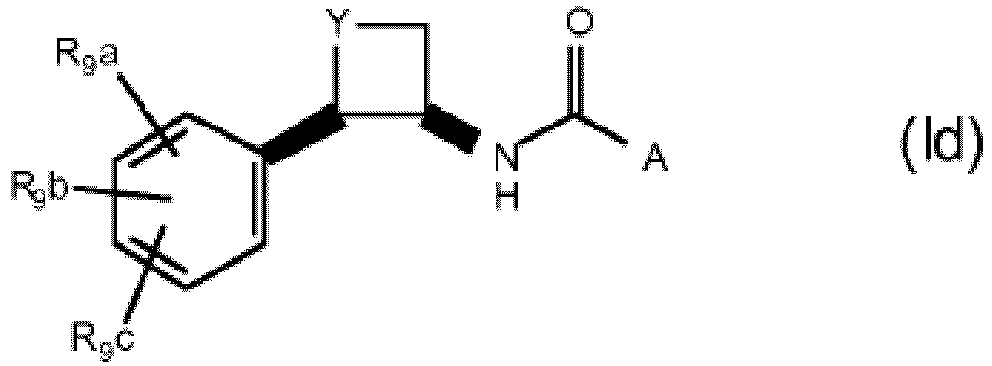 ausgewählt ist, oder ein Salz N-Oxid davon,wobei Y, R9a, R9b, R9c und A wie in der folgenden Tabelle definiert sind:
Verb. Nr. Y R9a,R9b, R9c* A 1 CH2 4-OCF3 
2 CH2 4-OCF3 
3 CH2 4-OCF3 
4 O 4-Cl 
5 CH2 4-Cl 
6 CH2 4-Cl 
7 CH2 4-Cl 
8 CH2 2,4-Cl2 
9 CH2 2,4-Cl2 
10 O 4-F 
11 CH2 2,4-Cl2 
12 CH2 2,4-Cl2 
13 CH2 4-Cl 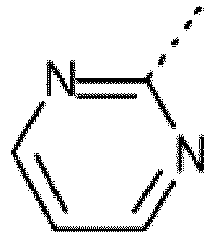
14 CH2 2-F,4-Cl 
15 CH2 2-F,4-Cl 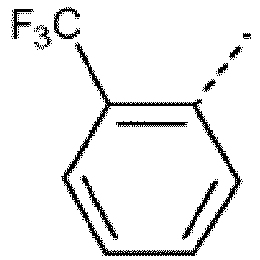
16 CH2 4-OCHF2 
17 CH2 4-OCHF2 
18 CH2 4-Cl 
19 CH2 4-Cl 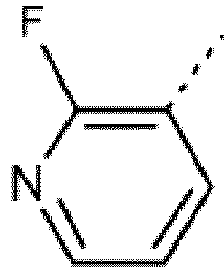
20 CH2 4-Cl 
21 CH2 4-Cl 
22 CH2 4-Cl 
23 CH2 4-Cl 
24 CH2 4-Cl 
25 CH2 2,4-Cl2 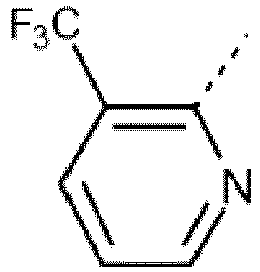
26 CH2 2,4-Cl2 
27 CH2 2,4-Cl2 
28 CH2 2,4-Cl2 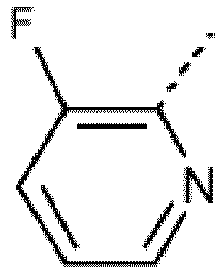
29 CH2 2,4-Cl2 
30 CH2 2,4-Cl2 
31 CH2 2,4-Cl2 
32 CH2 4-F 
33 CH2 4-F 
34 CH2 4-Br 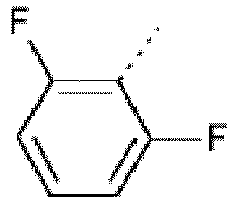
35 CH2 4-Br 
36 nicht getestet 4-F 
37 CH2 4-Br 
38 CH2 4-cPr 
39 CH2 4-CN 
40 CH2 4-F 
41 CH2 4-F 
42 CH2 4-F 
43 CH2 4-F 
44 CH2 4-F 
45 CH2 4-Br 
46 CH2 4-Br 
47 O 2,4,6-F3 
48 O 4-OCHF2 
49 O 4-CF3 
50 O 2-F, 4-CF3 
51 O 2,4-F2 
52 O 2,4,6-F3 
53 O 4-F 
54 O 4-F 
55 O 2,4-F2 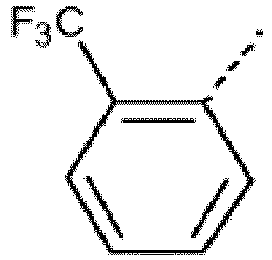
56 O 2,4-F2 
57 O 2,4,6-F3 
58 CH2 2,4-F2 
59 CH2 2,4-F2 
60 CH2 2,4-F2 
61 CH2 2,4-F2 
62 CH2 2-Cl, 4-CF3 
63 CH2 2-Cl, 4-CF3 
64 CH2 2-Cl, 4-CF3 
65 CH2 2-Cl, 4-CF3 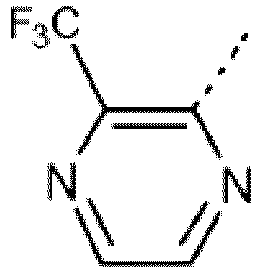
66 CH2 2-F, 4-CF3 
67 CH2 2-F, 4-CF3 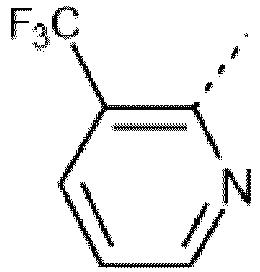
68 CH2 2-F, 4-CF3 
69 CH2 2-F, 4-CF3 
70 CH2 2,4-Cl2 
71 CH2 2,4-Cl2 
72 CH2 2,4-Cl2 
73 CH2 2,4-Cl2 
74 CH2 2,4-Cl2 
75 CH2 2,4-Cl2 
76 CH2 2,4-Cl2 
77 CH2 2,4-Cl2 
78 CH2 2,4-Cl2 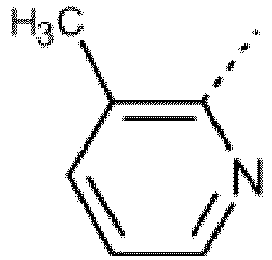
79 CH2 2,4-Cl2 
80 CH2 2,4-Cl2 
81 CH2 2,4-Cl2 
82 CH2 2,4-Cl2 
83 CH2 2,4-Cl2 
84 CH2 2,4-Cl2 
85 CH2 2,4-Cl2 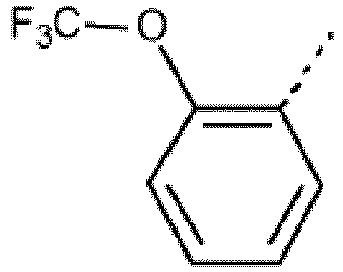
86 CH2 2,4-Cl2 
87 CH2 2,4-Cl2 
88 CH2 2,4-Cl2 
89 CH2 2,4-Cl2 
90 CH2 2,4-Cl2 
91 CH2 4-Cl 
92 CH2 4-Cl 
93 CH2 4-Cl 
94 CH2 4-Cl 
95 CH2 4-Cl 
96 CH2 4-Cl 
97 CH2 4-Cl 
98 CH2 4-Cl 
99 CH2 4-Cl 
100 CH2 4-Cl 
101 CH2 4-Cl 
102 CH2 4-Cl 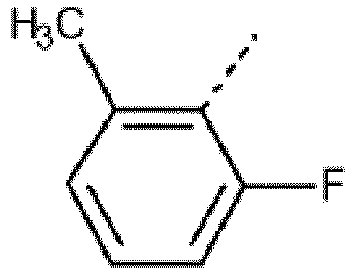
103 CH2 4-Cl 
104 CH2 4-Cl 
105 CH2 4-Cl 
106 CH2 4-Cl 
107 CH2 4-Cl 
108 CH2 4-Cl 
109 CH2 4-Cl 
110 CH2 4-Cl 
111 CH2 4-Cl 
112 CH2 2-Cl, 4-F 
113 CH2 2-Cl, 4-F 
114 CH2 2-Cl, 4-Br 
115 CH2 2,4-F2 
116 CH2 4-OCF3 
117 CH2 2-F, 4-Cl 
118 CH2 2-Cl, 4-F  und wobei, wenn nicht anders definiert, die Reste R9a, R9b und R9c jeweils für Wasserstoff stehen,oder ein Tautomer oder Stereoisomer dieser Verbindungen.
 - Verbindung oder ein Salz oder N-Oxid davon nach Anspruch 1, ausgewählt ausN-[(1,2-cis)-2-(4-Chlorphenyl)cyclobutyl]-2-(trifluormethyl)pyridin-3-carbonsäureamid,N-[(1,2-cis)-2-(2,4-Dichlorphenyl)cyclobutyl]-2,6-difluorbenzamid,N-[(1,2-cis)-2-(2,4-Dichlorphenyl)cyclobutyl]-2-(trifluormethyl)benzamid,N-[(1,2-cis)-2-(2,4-Dichlorphenyl)cyclobutyl]-2-(trifluormethyl)pyridin-3-carbonsäureamid,N-[(1,2-cis)-2-(2,4-Difluorphenyl)cyclobutyl]-2-(trifluormethyl)benzamid,N-[(1,2-cis)-2-(2,4-Difluorphenyl)cyclobutyl]-2-(trifluormethyl)pyridin-3-carbonsäureamid,N-[(1,2-cis)-2-(2,4-Difluorphenyl)cyclobutyl]-3-(trifluormethyl)pyrazin-2-carbonsäureamid,N-[(1,2-cis)-2-[2-Chlor-4-(trifluormethyl)phenyl]-cyclobutyl]-3-(trifluormethyl)pyridin-2-carbonsäure-amid,N-[(1,2-cis)-2-[2-Chlor-4-(trifluormethyl)phenyl]-cyclobutyl]-2-(trifluormethyl)pyridin-3-carbonsäureamid,N-[(1,2-cis)-2-[2-Chlor-4-(trifluormethyl)phenyl]-cyclobutyl]-3-(trifluormethyl)pyrazin-2-carbonsäureamid,N-[(1,2-cis)-2-[2-Fluor-4-(trifluormethyl)phenyl]-cyclobutyl]-2-(trifluormethyl)benzamid,N-[(1,2-cis)-2-[2-Fluor-4-(trifluormethyl)phenyl]-cyclobutyl]-3-(trifluormethyl)pyridin-2-carbonsäureamid,N-[(1,2-cis)-2-[2-Fluor-4-(trifluormethyl)phenyl]-cyclobutyl]-2-(trifluormethyl)pyridin-3-carbonsäureamid,N-[(1,2-cis)-2-[2-Fluor-4-(trifluormethyl)phenyl]-cyclobutyl]-3-(trifluormethyl)pyrazin-2-carbonsäureamid,2-(Trifluormethyl)-N-[(2,3-cis)-2-(2,4,6-trifluor-phenyl)oxetan-3-yl]benzamid,2,6-Difluor-N-[(2,3-cis)-2-(2,4,6-trifluorphenyl)-oxetan-3-yl]benzamid,N-[(2,3-cis)-2-(2,4-Difluorphenyl)oxetan-3-yl]-2-(trifluormethyl)benzamid,N-[(2,3-cis)-2-(2,4-Difluorphenyl)oxetan-3-yl]-2-(trifluormethyl)pyridin-3-carbonsäureamid,3-Chlor-N-[(1,2-cis)-2-(2,4-dichlorphenyl)cyclobutyl]-pyrazin-2-carbonsäureamid,N-[(1,2-cis)-2-(2,4-Dichlorphenyl)cyclobutyl]-3-(trifluormethyl)pyridin-2-carbonsäureamid, 3-Chlor-N-[(1,2-cis)-2-(2,4-dichlorphenyl)-cyclobutyl]pyridin-2-carbonsäureamid,N-[(1,2-cis)-2-(2,4-Dichlorphenyl)cyclobutyl]-2-methylpyridin-3-carbonsäureamid,N-[(1,2-cis)-2-(2,4-Dichlorphenyl)cyclobutyl]-3-methylpyridin-2-carbonsäureamid,N-[(1,2-cis)-2-(2,4-Difluorphenyl)cyclobutyl]-2-(trifluormethyl)pyridin-3-carbonsäureamid,2-Chlor-N-[(1,2-cis)-2-(2,4-dichlorphenyl)cyclobutyl]-nicotinamid,N-[(1,2-cis)-2-(2-Chlor-4-fluorphenyl)cyclobutyl]-2-(trifluormethyl)pyridin-3-carbonsäureamid,N-[(1,2-cis)-2-(2-Chlor-4-fluorphenyl)cyclobutyl]-3-(trifluormethyl)pyridin-2-carbonsäureamid,N-[(1,2-cis)-2-(4-Brom-2-chlorphenyl)cyclobutyl]-3-(trifluormethyl)pyridin-2-carbonsäureamid,N-[(1,2-cis)-2-(2,4-Difluorphenyl)cyclobutyl]-3-(trifluormethyl)pyridin-2-carbonsäureamid,N-[(1,2-cis)-2-(4-Methoxyphenyl)cyclobutyl]-3-(trifluormethyl)pyridin-2-carbonsäureamid,N-[(1,2-cis)-2-(4-Chlor-2-fluorphenyl)cyclobutyl]-3-(trifluormethyl)pyridin-2-carbonsäureamid undN-[(1,2-cis)-2-(2-Chlor-4-fluorphenyl)cyclobutyl]-2-(trifluormethyl)benzamid,oder ein Tautomer oder Stereoisomer dieser Verbindungen.
- Pestizide Zusammensetzung, welche zusätzlich zu Formulierungsadjuvantien eine pestizid wirksame Menge einer Verbindung der Formel I nach einem der Ansprüche 1 bis 8 umfasst.
- Zusammensetzung nach Anspruch 9, welche weiterhin einen oder mehrere andere insektizide, akarizide, nematizide und/oder fungizide Wirkstoffe umfasst.
- Verfahren zur Bekämpfung einer durch einen Schädling und/oder einen Pilz verursachten Schädigung und/oder eines solchen Ertragsverlusts, bei dem man auf einen Schädling oder eine gegenüber einem Befall durch einen Schädling und/oder Pilz empfindliche Pflanze oder auf deren Standort oder auf ein Pflanzenfortpflanzungsmaterial eine wirksame Menge einer wie in einem der Ansprüche 1 bis 8 definierten Verbindung oder einer wie in Anspruch 9 oder 10 definierten Zusammensetzung aufbringt.
- Verfahren zum Schützen von Pflanzenfortpflanzungsmaterial gegen eine durch einen Schädling und/oder Pilz verursachte Schädigung und/oder einen solchen Ertragsverlust, bei dem man auf das Pflanzenfortpflanzungsmaterial oder die Stelle, an der das Fortpflanzungsmaterial gepflanzt wird, eine wirksame Menge einer wie in einem der Ansprüche 1 bis 8 definierten Verbindung oder einer wie in Anspruch 9 oder 10 definierten Zusammensetzung aufbringt.
- Verfahren nach Anspruch 11 oder 12, wobei die Schädigung bzw. der Verlust durch eine Schadnematode verursacht wird.
- Beschichtetes Pflanzenfortpflanzungsmaterial, wobei die Beschichtung des Pflanzenfortpflanzungsmaterials eine wie in einem der Ansprüche 1 bis 8 definierte Verbindung umfasst.
- Pharmazeutische Zusammensetzung zur Bekämpfung von Helminthen, Arachniden oder arthropodalen Endo- oder Ektoparasiten, welche eine wie in einem der Ansprüche 1 bis 8 definierten Verbindung, einen physiologisch verträglichen Träger und gegebenenfalls eine oder mehrere herkömmliche Formulierungshilfsmittel umfasst.
- Pharmazeutische Zusammensetzung, welche eine wie in einem der Ansprüche 1 bis 8 definierte Verbindung, einen physiologisch verträglichen Träger und gegebenenfalls ein oder mehrere herkömmliche Formulierungshilfsmittel umfasst, zur Prävention einer Infektion mit Krankheiten, die durch Helminthen, Arachniden oder arthropodale Endo- oder Ektoparasiten übertragen werden.
- Zusammensetzung nach Anspruch 15 oder 16, welcher weiterhin einen oder mehrere andere biologisch wirksame Verbindungen umfasst.
- Verbindung nach einem der Ansprüche 1 bis 8 zur Bekämpfung und Prävention von Befall und Infektionen durch endo- und ektoparasitische Nematoden bei Warmblütern, umfassend die Injektion, die topische Anwendung oder die orale Verabreichung einer Zusammensetzung nach Anspruch 15 oder 16.
- Verfahren zur Herstellung einer Verbindung der Formel I nach Anspruch 1, bei dem man eine Verbindung der Formel II

A-C (=O) -R* (III),
in welcher A wie in Anspruch 1 definiert ist und R* für Halogen, Hydroxy oder C1-C6-Alkoxy steht, umsetzt. - Verbindungen der Formel (XIXa)


- Verbindungen der Formel (II)
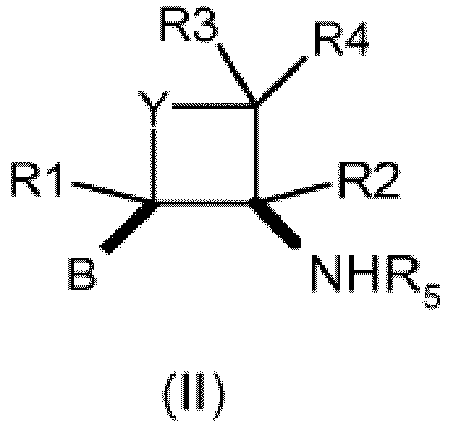

Priority Applications (1)
| Application Number | Priority Date | Filing Date | Title |
|---|---|---|---|
| EP13707636.0A EP2831046B1 (de) | 2012-03-26 | 2013-03-06 | N-cyclylamide als nematizide |
Applications Claiming Priority (3)
| Application Number | Priority Date | Filing Date | Title |
|---|---|---|---|
| EP12161190.9A EP2644595A1 (de) | 2012-03-26 | 2012-03-26 | N-Cyclylamide als Nematizide |
| EP13707636.0A EP2831046B1 (de) | 2012-03-26 | 2013-03-06 | N-cyclylamide als nematizide |
| PCT/EP2013/054461 WO2013143811A1 (en) | 2012-03-26 | 2013-03-06 | N-cyclylamides as nematicides |
Publications (2)
| Publication Number | Publication Date |
|---|---|
| EP2831046A1 EP2831046A1 (de) | 2015-02-04 |
| EP2831046B1 true EP2831046B1 (de) | 2016-07-13 |
Family
ID=47827210
Family Applications (2)
| Application Number | Title | Priority Date | Filing Date |
|---|---|---|---|
| EP12161190.9A Ceased EP2644595A1 (de) | 2012-03-26 | 2012-03-26 | N-Cyclylamide als Nematizide |
| EP13707636.0A Active EP2831046B1 (de) | 2012-03-26 | 2013-03-06 | N-cyclylamide als nematizide |
Family Applications Before (1)
| Application Number | Title | Priority Date | Filing Date |
|---|---|---|---|
| EP12161190.9A Ceased EP2644595A1 (de) | 2012-03-26 | 2012-03-26 | N-Cyclylamide als Nematizide |
Country Status (24)
| Country | Link |
|---|---|
| US (1) | US9414589B2 (de) |
| EP (2) | EP2644595A1 (de) |
| JP (1) | JP6153597B2 (de) |
| KR (1) | KR101952701B1 (de) |
| CN (2) | CN104203916B (de) |
| AR (1) | AR090488A1 (de) |
| AU (1) | AU2013242350B2 (de) |
| BR (1) | BR112014023769B1 (de) |
| CA (1) | CA2866227C (de) |
| CL (1) | CL2014002533A1 (de) |
| CO (1) | CO7091186A2 (de) |
| DK (1) | DK2831046T3 (de) |
| EA (1) | EA025551B1 (de) |
| ES (1) | ES2590504T3 (de) |
| HU (1) | HUE028914T2 (de) |
| LT (1) | LT2831046T (de) |
| MX (1) | MX343829B (de) |
| PH (1) | PH12014502169A1 (de) |
| PL (1) | PL2831046T3 (de) |
| PT (1) | PT2831046T (de) |
| TW (1) | TWI592389B (de) |
| UA (1) | UA113643C2 (de) |
| WO (1) | WO2013143811A1 (de) |
| ZA (1) | ZA201406525B (de) |
Families Citing this family (55)
| Publication number | Priority date | Publication date | Assignee | Title |
|---|---|---|---|---|
| EP2891492B1 (de) * | 2012-08-30 | 2022-11-09 | The University of Tokyo | Endoparasitenbekämpfungsmittel |
| UY35543A (es) * | 2013-04-30 | 2014-11-28 | Bayer Cropscience Ag | N-(fenilcicloalquil)carboxamidas y n-(fenilcicloalquil)tiocarboxamidas nematicidas |
| USRE50724E1 (en) * | 2013-07-08 | 2026-01-06 | Syngenta Crop Protection Ag | 4-membered ring carboxamides used as nematicides |
| MX2016001641A (es) * | 2013-08-13 | 2016-05-02 | Syngenta Participations Ag | Ciclobutilcarboxamidas como nematicidas. |
| UY35772A (es) | 2013-10-14 | 2015-05-29 | Bayer Cropscience Ag | Nuevos compuestos plaguicidas |
| WO2016066644A1 (en) * | 2014-10-29 | 2016-05-06 | Bayer Cropscience Aktiengesellschaft | N-(phenylcycloalkyl)carboxamides and n-(phenylcycloalkyl)thiocarboxamides as fungicides |
| JP6979039B2 (ja) | 2016-07-06 | 2021-12-08 | クロップ エンハンスメント、インコーポレイテッド | 農業用用途のための非毒性コーティング濃縮物 |
| US12329053B2 (en) | 2016-07-06 | 2025-06-17 | Crop Enhancement, Inc. | Nontoxic coating concentrates for agricultural uses |
| CN106588770A (zh) * | 2016-12-08 | 2017-04-26 | 河北桑迪亚医药技术有限责任公司 | 环丙基二苯基锍三氟甲磺酸盐作为硫叶立德试剂的应用及一种制备四元环酮的方法 |
| BR112019012322A2 (pt) | 2016-12-20 | 2019-11-19 | Syngenta Participations Ag | n-ciclobutil-tiazol-5-carboxamidas com atividade nematicida |
| UA126812C2 (uk) | 2017-08-09 | 2023-02-08 | Сінгента Партісіпейшнс Аг | Способи контролю або попередження зараження рослин сої фітопатогенними мікроорганізмами |
| EP3710422B1 (de) | 2017-11-16 | 2026-01-07 | Syngenta Crop Protection AG | Verfahren zur herstellung von enantiomerisch und diastereomerisch angereicherten cyclobutanaminen und -amiden |
| EP3726988B1 (de) * | 2017-12-20 | 2024-11-13 | Syngenta Crop Protection AG | Verfahren zur kontrolle oder verhinderung der infestation von okra, melonen, tomaten und kartoffeln durch phytopathogene mikroorganismen |
| AR114251A1 (es) * | 2018-02-13 | 2020-08-12 | Syngenta Participations Ag | Formas cristalinas de n-[2-(2,4-diclorofenil)ciclobutil]-2-(trifluorometl)piridin-3-carboxamida |
| WO2020058160A1 (en) * | 2018-09-19 | 2020-03-26 | Syngenta Participations Ag | Methods of controlling or preventing infestation of cereal plants by the phytopathogenic microorganism fusarium pseudograminearum |
| EA202191996A1 (ru) * | 2019-01-23 | 2022-01-28 | Сингента Кроп Протекшн Аг | Способы контроля или предупреждения заражения растений сои фитопатогенными микроорганизмами |
| EP3914078A1 (de) | 2019-01-23 | 2021-12-01 | Syngenta Crop Protection AG | Verfahren zur kontrolle oder vorbeugung des befalls von maispflanzen durch phytopatogene mikroorganismen |
| WO2020152117A1 (en) | 2019-01-23 | 2020-07-30 | Syngenta Crop Protection Ag | Methods of controlling or preventing infestation of rice plants by the phytopathogenic microorganism gibberella fujikuroi |
| US20220354118A1 (en) | 2019-10-02 | 2022-11-10 | Syngenta Crop Protection Ag | Methods of controlling or preventing infestation of banana plants by phytopathogenic microorganisms of the genus pseudocercospora |
| EP4073042A1 (de) * | 2019-12-10 | 2022-10-19 | Syngenta Crop Protection AG | Verfahren zur steuerung oder vorbeugung des befalls von erdnusspflanzen mit phytopatogenen mikroorganismen |
| CN114787133B (zh) * | 2019-12-10 | 2024-01-05 | 先正达农作物保护股份公司 | 控制或预防植物被壳球孢属物种的植物病原性微生物侵染的方法 |
| PH12022551915A1 (en) * | 2020-01-30 | 2024-01-08 | Syngenta Crop Protection Ag | Methods of controlling or preventing panama disease in banana plants |
| EP4199721B1 (de) * | 2020-08-19 | 2024-08-07 | Syngenta Crop Protection AG | Verfahren zur bekämpfung oder verhütung eines befalls von pflanzen durch pflanzenparasitäre nematoden der gattung aphelenchoides spp., insbesondere aphelenchoides besseyi |
| CN111990405A (zh) * | 2020-09-15 | 2020-11-27 | 美丰农业科技(上海)有限公司 | 一种含有氟吡菌酰胺和Cyclobutrifluram的杀线虫农用组合物 |
| WO2022073797A1 (en) | 2020-10-08 | 2022-04-14 | Basf Se | Mixtures containing cyclobutrifluram |
| MX2023007050A (es) | 2020-12-17 | 2023-06-23 | Syngenta Crop Protection Ag | Metodos para controlar o prevenir la infestacion de plantas por un microorganismo fitopatogeno del genero aspergillus. |
| CN112619204B (zh) * | 2020-12-31 | 2022-04-08 | 浙江锦华新材料股份有限公司 | 一种深度脱水干燥剂及其在合成甲基三丁酮肟基硅烷的应用 |
| CN115067342B (zh) * | 2021-03-15 | 2024-01-26 | 江苏龙灯化学有限公司 | 一种控制复合病害的组合物 |
| CN115067343B (zh) * | 2021-03-15 | 2023-09-29 | 江苏龙灯化学有限公司 | 一种杀线虫组合物 |
| CN115067341B (zh) * | 2021-03-15 | 2024-03-01 | 江苏龙灯化学有限公司 | 一种杀线虫组合物 |
| UY39674A (es) * | 2021-03-19 | 2022-10-31 | Syngenta Crop Protection Ag | Nueva composición de concentrado en suspensión de ciclobutrifluram acuosa. |
| CN117042609A (zh) | 2021-03-19 | 2023-11-10 | 先正达农作物保护股份公司 | 环丁氟仑悬浮液浓缩物组合物 |
| EP4169382A1 (de) | 2021-10-22 | 2023-04-26 | Bayer AG | Verwendung von cyclobutrifluram zur verringerung der mykotoxinkontamination in pflanzen |
| AU2022379897B2 (en) | 2021-10-29 | 2026-04-02 | Syngenta Crop Protection Ag | Fungicidal compositions comprising fludioxonil |
| JP2024540114A (ja) | 2021-10-29 | 2024-10-31 | シンジェンタ クロップ プロテクション アクチェンゲゼルシャフト | 殺菌・殺カビ組成物 |
| CN114176087A (zh) * | 2021-12-20 | 2022-03-15 | 青岛滕润翔检测评价有限公司 | 一种农药组合物及其应用 |
| PY22108501A (es) | 2021-12-21 | 2023-07-04 | Syngenta Crop Protection Ag | "composición agroquímica" |
| PY22108518A (es) | 2021-12-21 | 2023-07-04 | Syngenta Crop Protection Ag | "composición agroquímica estable a alta temperatura" |
| CN114208839A (zh) * | 2021-12-23 | 2022-03-22 | 青岛海利尔生物科技有限公司 | 一种杀线虫组合物及其用途 |
| CN114163382B (zh) * | 2021-12-23 | 2024-02-27 | 海利尔药业集团股份有限公司 | 一种环丁酰胺类化合物或其作为农药可接受的盐、组合物及其用途 |
| CN114271281B (zh) * | 2022-01-13 | 2023-05-30 | 青岛海利尔生物科技有限公司 | 一种杀线虫组合物及其应用 |
| CN114375958B (zh) * | 2022-01-24 | 2023-09-15 | 青岛海利尔生物科技有限公司 | 一种含Cyclobutrifluram的杀线虫组合物及其应用 |
| KR20250111144A (ko) | 2022-11-24 | 2025-07-22 | 신젠타 크롭 프로텍션 아게 | 토양 미생물 집단의 개선을 위한 조성물 및 방법 |
| JP2025537912A (ja) | 2022-11-24 | 2025-11-20 | シンジェンタ クロップ プロテクション アクチェンゲゼルシャフト | 植物特性を改善するための方法 |
| WO2024141326A1 (en) | 2022-12-30 | 2024-07-04 | Syngenta Crop Protection Ag | Compositions comprising 4-membered ring carboxamide compounds |
| KR20250150080A (ko) * | 2023-02-17 | 2025-10-17 | 코말 부칸왈라 | 화합물, 이의 조성물 및 살선충제로서의 이의 용도 |
| WO2025026292A1 (zh) * | 2023-08-02 | 2025-02-06 | 青岛清原化合物有限公司 | 四元环酰胺类化合物及其应用 |
| CN120266853A (zh) * | 2023-08-22 | 2025-07-08 | 青岛海利尔生物科技有限公司 | 一种杀菌组合物及其应用 |
| CN118047694A (zh) * | 2023-09-07 | 2024-05-17 | 青岛清原化合物有限公司 | 四元环酰胺类化合物及其应用 |
| CN119638618A (zh) * | 2023-09-16 | 2025-03-18 | 青岛清原化合物有限公司 | 一种四元环酰胺类化合物及其应用 |
| CN119707924A (zh) * | 2023-09-27 | 2025-03-28 | 青岛清原化合物有限公司 | 一种四元环酰胺类化合物及其应用 |
| CN120004791A (zh) * | 2023-11-14 | 2025-05-16 | 青岛清原化合物有限公司 | 四元环酰胺类化合物及其应用 |
| CN117941693B (zh) * | 2024-01-29 | 2025-08-08 | 青岛海利尔生物科技有限公司 | 一种含三唑类化合物的杀菌组合物 |
| WO2026027609A1 (en) | 2024-08-02 | 2026-02-05 | Syngenta Crop Protection Ag | Methods for controlling or preventing infestation of plants by a phytopathogenic microorganism of the genus ustilaginoidea |
| WO2026027608A1 (en) | 2024-08-02 | 2026-02-05 | Syngenta Crop Protection Ag | Methods for controlling or preventing infestation of plants by a phytopathogenic microorganism of the genus alternaria |
Family Cites Families (26)
| Publication number | Priority date | Publication date | Assignee | Title |
|---|---|---|---|---|
| BR8600161A (pt) | 1985-01-18 | 1986-09-23 | Plant Genetic Systems Nv | Gene quimerico,vetores de plasmidio hibrido,intermediario,processo para controlar insetos em agricultura ou horticultura,composicao inseticida,processo para transformar celulas de plantas para expressar uma toxina de polipeptideo produzida por bacillus thuringiensis,planta,semente de planta,cultura de celulas e plasmidio |
| AU7517987A (en) * | 1986-05-23 | 1987-12-22 | Chevron Research Company | 1-carboalkoxyalkyl-3-alkoxy-4-(2'-carboxyphenyl)-azet-2-ones as plant growth regulators and selective herbicides |
| US5169629A (en) | 1988-11-01 | 1992-12-08 | Mycogen Corporation | Process of controlling lepidopteran pests, using bacillus thuringiensis isolate denoted b.t ps81gg |
| EP0374753A3 (de) | 1988-12-19 | 1991-05-29 | American Cyanamid Company | Insektizide Toxine, Gene, die diese Toxine kodieren, Antikörper, die sie binden, sowie transgene Pflanzenzellen und transgene Pflanzen, die diese Toxine exprimieren |
| GB8910624D0 (en) | 1989-05-09 | 1989-06-21 | Ici Plc | Bacterial strains |
| CA2015951A1 (en) | 1989-05-18 | 1990-11-18 | Mycogen Corporation | Novel bacillus thuringiensis isolates active against lepidopteran pests, and genes encoding novel lepidopteran-active toxins |
| EP0427529B1 (de) | 1989-11-07 | 1995-04-19 | Pioneer Hi-Bred International, Inc. | Larven abtötende Lektine und darauf beruhende Pflanzenresistenz gegen Insekten |
| UA48104C2 (uk) | 1991-10-04 | 2002-08-15 | Новартіс Аг | Фрагмент днк, який містить послідовність,що кодує інсектицидний протеїн, оптимізовану для кукурудзи,фрагмент днк, який забезпечує направлену бажану для серцевини стебла експресію зв'язаного з нею структурного гена в рослині, фрагмент днк, який забезпечує специфічну для пилку експресію зв`язаного з нею структурного гена в рослині, рекомбінантна молекула днк, спосіб одержання оптимізованої для кукурудзи кодуючої послідовності інсектицидного протеїну, спосіб захисту рослин кукурудзи щонайменше від однієї комахи-шкідника |
| US5530195A (en) | 1994-06-10 | 1996-06-25 | Ciba-Geigy Corporation | Bacillus thuringiensis gene encoding a toxin active against insects |
| EP1114030B1 (de) | 1998-09-15 | 2005-06-01 | Syngenta Participations AG | als herbicide verwendbare pyridin-ketone |
| AU2001285900B2 (en) | 2000-08-25 | 2005-02-17 | Syngenta Participations Ag | Novel insecticidal toxins derived from bacillus thuringiensis insecticidal crystal proteins |
| US7230167B2 (en) | 2001-08-31 | 2007-06-12 | Syngenta Participations Ag | Modified Cry3A toxins and nucleic acid sequences coding therefor |
| AR037856A1 (es) | 2001-12-17 | 2004-12-09 | Syngenta Participations Ag | Evento de maiz |
| EP1388535A1 (de) * | 2002-08-07 | 2004-02-11 | Aventis Pharma Deutschland GmbH | Acylierte Arylcycloalkylamine und ihre Anwendung als Arzneimittelwirkstoff |
| CN1946695B (zh) | 2004-04-26 | 2012-04-04 | 拜尔农科股份公司 | 可用作杀真菌剂的2-吡啶基环烷基羧酰胺衍生物 |
| EP1591442A1 (de) | 2004-04-26 | 2005-11-02 | Bayer CropScience S.A. | 2-Pyridinylcycloalkylbenzamidderivate und ihre Verwendung als Fungizide |
| CA2572032C (en) * | 2004-06-26 | 2012-12-04 | Merial Limited | Pesticidal agents on the basis of 1-aryl-aminopyrrol |
| DE102005007160A1 (de) | 2005-02-16 | 2006-08-24 | Basf Ag | Pyrazolcarbonsäureanilide, Verfahren zu ihrer Herstellung und sie enthaltende Mittel zur Bekämpfung von Schadpilzen |
| EP1885698A1 (de) * | 2005-05-18 | 2008-02-13 | Bayer CropScience S.A. | 2-pyridinylcycloalkylbenzamid-derivate und ihre verwendung als fungizide |
| ES2360133T3 (es) * | 2005-05-18 | 2011-06-01 | Bayer Cropscience Ag | Nuevos derivados de 2-piridinilcicloalquilcarboxamida como fungicidas. |
| EA014297B1 (ru) | 2005-10-25 | 2010-10-29 | Зингента Партисипейшнс Аг | Гетероциклические амиды, применимые в качестве микробиоцидов |
| WO2008013622A2 (en) | 2006-07-27 | 2008-01-31 | E. I. Du Pont De Nemours And Company | Fungicidal azocyclic amides |
| CL2008001647A1 (es) | 2007-06-08 | 2008-10-10 | Syngenta Participations Ag | Compuestos derivados de feniletil-amida de acido-1h-pirazol-4-carboxilico; compuestos derivados de (feniletil)amina; metodo para controlar o prevenir la infestacion de plantas por parte de microorganismos fitopatogenos; y composicion para el control |
| ES2460897T3 (es) | 2007-10-04 | 2014-05-14 | F. Hoffmann-La Roche Ag | Derivados de ciclopropil aril amida y usos de los mismos |
| TWI508962B (zh) | 2009-04-22 | 2015-11-21 | Du Pont | 氮雜環醯胺之固體形態 |
| WO2011051243A1 (en) | 2009-10-29 | 2011-05-05 | Bayer Cropscience Ag | Active compound combinations |
-
2012
- 2012-03-26 EP EP12161190.9A patent/EP2644595A1/de not_active Ceased
-
2013
- 2013-03-06 US US14/382,555 patent/US9414589B2/en active Active
- 2013-03-06 CN CN201380016682.9A patent/CN104203916B/zh active Active
- 2013-03-06 EA EA201401054A patent/EA025551B1/ru not_active IP Right Cessation
- 2013-03-06 AU AU2013242350A patent/AU2013242350B2/en active Active
- 2013-03-06 MX MX2014010551A patent/MX343829B/es active IP Right Grant
- 2013-03-06 CA CA2866227A patent/CA2866227C/en active Active
- 2013-03-06 UA UAA201411494A patent/UA113643C2/uk unknown
- 2013-03-06 KR KR1020147029423A patent/KR101952701B1/ko active Active
- 2013-03-06 WO PCT/EP2013/054461 patent/WO2013143811A1/en not_active Ceased
- 2013-03-06 LT LTEP13707636.0T patent/LT2831046T/lt unknown
- 2013-03-06 PL PL13707636T patent/PL2831046T3/pl unknown
- 2013-03-06 EP EP13707636.0A patent/EP2831046B1/de active Active
- 2013-03-06 JP JP2015502176A patent/JP6153597B2/ja active Active
- 2013-03-06 DK DK13707636.0T patent/DK2831046T3/en active
- 2013-03-06 BR BR112014023769-7A patent/BR112014023769B1/pt active IP Right Grant
- 2013-03-06 ES ES13707636.0T patent/ES2590504T3/es active Active
- 2013-03-06 CN CN201710055377.0A patent/CN106748814B/zh active Active
- 2013-03-06 HU HUE13707636A patent/HUE028914T2/en unknown
- 2013-03-06 PT PT137076360T patent/PT2831046T/pt unknown
- 2013-03-25 TW TW102110454A patent/TWI592389B/zh active
- 2013-03-25 AR ARP130100962A patent/AR090488A1/es active IP Right Grant
-
2014
- 2014-09-04 ZA ZA2014/06525A patent/ZA201406525B/en unknown
- 2014-09-24 CL CL2014002533A patent/CL2014002533A1/es unknown
- 2014-09-24 CO CO14211581A patent/CO7091186A2/es unknown
- 2014-09-26 PH PH12014502169A patent/PH12014502169A1/en unknown
Also Published As
Similar Documents
| Publication | Publication Date | Title |
|---|---|---|
| EP2831046B1 (de) | N-cyclylamide als nematizide | |
| US9040708B2 (en) | Pesticidal compounds | |
| US10548317B2 (en) | Pesticidally active pyrazole derivatives | |
| US9408392B2 (en) | Compounds | |
| US9497965B2 (en) | Pesticidal compounds | |
| EP2773631B1 (de) | Pestizidverbindungen | |
| US20140287916A1 (en) | Pesticidal compounds | |
| WO2014076272A1 (en) | Pesticidal compounds | |
| US11142519B2 (en) | Pesticidally active pyrazole derivatives | |
| WO2015052103A1 (en) | Pesticidally active n-iminopyridinium ylide compounds | |
| US9738595B2 (en) | Carboxamide compounds |
Legal Events
| Date | Code | Title | Description |
|---|---|---|---|
| PUAI | Public reference made under article 153(3) epc to a published international application that has entered the european phase |
Free format text: ORIGINAL CODE: 0009012 |
|
| 17P | Request for examination filed |
Effective date: 20141027 |
|
| AK | Designated contracting states |
Kind code of ref document: A1 Designated state(s): AL AT BE BG CH CY CZ DE DK EE ES FI FR GB GR HR HU IE IS IT LI LT LU LV MC MK MT NL NO PL PT RO RS SE SI SK SM TR |
|
| AX | Request for extension of the european patent |
Extension state: BA ME |
|
| DAX | Request for extension of the european patent (deleted) | ||
| GRAJ | Information related to disapproval of communication of intention to grant by the applicant or resumption of examination proceedings by the epo deleted |
Free format text: ORIGINAL CODE: EPIDOSDIGR1 |
|
| GRAP | Despatch of communication of intention to grant a patent |
Free format text: ORIGINAL CODE: EPIDOSNIGR1 |
|
| GRAP | Despatch of communication of intention to grant a patent |
Free format text: ORIGINAL CODE: EPIDOSNIGR1 |
|
| INTG | Intention to grant announced |
Effective date: 20151119 |
|
| INTG | Intention to grant announced |
Effective date: 20160201 |
|
| GRAS | Grant fee paid |
Free format text: ORIGINAL CODE: EPIDOSNIGR3 |
|
| GRAA | (expected) grant |
Free format text: ORIGINAL CODE: 0009210 |
|
| AK | Designated contracting states |
Kind code of ref document: B1 Designated state(s): AL AT BE BG CH CY CZ DE DK EE ES FI FR GB GR HR HU IE IS IT LI LT LU LV MC MK MT NL NO PL PT RO RS SE SI SK SM TR |
|
| REG | Reference to a national code |
Ref country code: GB Ref legal event code: FG4D |
|
| REG | Reference to a national code |
Ref country code: AT Ref legal event code: REF Ref document number: 812182 Country of ref document: AT Kind code of ref document: T Effective date: 20160715 Ref country code: CH Ref legal event code: EP |
|
| REG | Reference to a national code |
Ref country code: IE Ref legal event code: FG4D |
|
| REG | Reference to a national code |
Ref country code: DE Ref legal event code: R096 Ref document number: 602013009333 Country of ref document: DE |
|
| REG | Reference to a national code |
Ref country code: PT Ref legal event code: SC4A Ref document number: 2831046 Country of ref document: PT Date of ref document: 20160907 Kind code of ref document: T Free format text: AVAILABILITY OF NATIONAL TRANSLATION Effective date: 20160831 |
|
| REG | Reference to a national code |
Ref country code: NL Ref legal event code: FP |
|
| REG | Reference to a national code |
Ref country code: DK Ref legal event code: T3 Effective date: 20160912 |
|
| REG | Reference to a national code |
Ref country code: RO Ref legal event code: EPE |
|
| REG | Reference to a national code |
Ref country code: GB Ref legal event code: 732E Free format text: REGISTERED BETWEEN 20160915 AND 20160921 |
|
| REG | Reference to a national code |
Ref country code: ES Ref legal event code: FG2A Ref document number: 2590504 Country of ref document: ES Kind code of ref document: T3 Effective date: 20161122 |
|
| REG | Reference to a national code |
Ref country code: HU Ref legal event code: AG4A Ref document number: E028914 Country of ref document: HU |
|
| PG25 | Lapsed in a contracting state [announced via postgrant information from national office to epo] |
Ref country code: FI Free format text: LAPSE BECAUSE OF FAILURE TO SUBMIT A TRANSLATION OF THE DESCRIPTION OR TO PAY THE FEE WITHIN THE PRESCRIBED TIME-LIMIT Effective date: 20160713 Ref country code: RS Free format text: LAPSE BECAUSE OF FAILURE TO SUBMIT A TRANSLATION OF THE DESCRIPTION OR TO PAY THE FEE WITHIN THE PRESCRIBED TIME-LIMIT Effective date: 20160713 Ref country code: HR Free format text: LAPSE BECAUSE OF FAILURE TO SUBMIT A TRANSLATION OF THE DESCRIPTION OR TO PAY THE FEE WITHIN THE PRESCRIBED TIME-LIMIT Effective date: 20160713 Ref country code: IS Free format text: LAPSE BECAUSE OF FAILURE TO SUBMIT A TRANSLATION OF THE DESCRIPTION OR TO PAY THE FEE WITHIN THE PRESCRIBED TIME-LIMIT Effective date: 20161113 Ref country code: NO Free format text: LAPSE BECAUSE OF FAILURE TO SUBMIT A TRANSLATION OF THE DESCRIPTION OR TO PAY THE FEE WITHIN THE PRESCRIBED TIME-LIMIT Effective date: 20161013 |
|
| REG | Reference to a national code |
Ref country code: FR Ref legal event code: PLFP Year of fee payment: 5 |
|
| PG25 | Lapsed in a contracting state [announced via postgrant information from national office to epo] |
Ref country code: SE Free format text: LAPSE BECAUSE OF FAILURE TO SUBMIT A TRANSLATION OF THE DESCRIPTION OR TO PAY THE FEE WITHIN THE PRESCRIBED TIME-LIMIT Effective date: 20160713 Ref country code: LV Free format text: LAPSE BECAUSE OF FAILURE TO SUBMIT A TRANSLATION OF THE DESCRIPTION OR TO PAY THE FEE WITHIN THE PRESCRIBED TIME-LIMIT Effective date: 20160713 |
|
| REG | Reference to a national code |
Ref country code: GR Ref legal event code: EP Ref document number: 20160402292 Country of ref document: GR Effective date: 20170117 |
|
| REG | Reference to a national code |
Ref country code: DE Ref legal event code: R097 Ref document number: 602013009333 Country of ref document: DE |
|
| PG25 | Lapsed in a contracting state [announced via postgrant information from national office to epo] |
Ref country code: EE Free format text: LAPSE BECAUSE OF FAILURE TO SUBMIT A TRANSLATION OF THE DESCRIPTION OR TO PAY THE FEE WITHIN THE PRESCRIBED TIME-LIMIT Effective date: 20160713 |
|
| PLBE | No opposition filed within time limit |
Free format text: ORIGINAL CODE: 0009261 |
|
| STAA | Information on the status of an ep patent application or granted ep patent |
Free format text: STATUS: NO OPPOSITION FILED WITHIN TIME LIMIT |
|
| PG25 | Lapsed in a contracting state [announced via postgrant information from national office to epo] |
Ref country code: SM Free format text: LAPSE BECAUSE OF FAILURE TO SUBMIT A TRANSLATION OF THE DESCRIPTION OR TO PAY THE FEE WITHIN THE PRESCRIBED TIME-LIMIT Effective date: 20160713 Ref country code: BG Free format text: LAPSE BECAUSE OF FAILURE TO SUBMIT A TRANSLATION OF THE DESCRIPTION OR TO PAY THE FEE WITHIN THE PRESCRIBED TIME-LIMIT Effective date: 20161013 |
|
| 26N | No opposition filed |
Effective date: 20170418 |
|
| PG25 | Lapsed in a contracting state [announced via postgrant information from national office to epo] |
Ref country code: SI Free format text: LAPSE BECAUSE OF FAILURE TO SUBMIT A TRANSLATION OF THE DESCRIPTION OR TO PAY THE FEE WITHIN THE PRESCRIBED TIME-LIMIT Effective date: 20160713 |
|
| PG25 | Lapsed in a contracting state [announced via postgrant information from national office to epo] |
Ref country code: MC Free format text: LAPSE BECAUSE OF FAILURE TO SUBMIT A TRANSLATION OF THE DESCRIPTION OR TO PAY THE FEE WITHIN THE PRESCRIBED TIME-LIMIT Effective date: 20160713 |
|
| REG | Reference to a national code |
Ref country code: IE Ref legal event code: MM4A |
|
| PG25 | Lapsed in a contracting state [announced via postgrant information from national office to epo] |
Ref country code: LU Free format text: LAPSE BECAUSE OF NON-PAYMENT OF DUE FEES Effective date: 20170306 |
|
| REG | Reference to a national code |
Ref country code: FR Ref legal event code: PLFP Year of fee payment: 6 |
|
| PG25 | Lapsed in a contracting state [announced via postgrant information from national office to epo] |
Ref country code: IE Free format text: LAPSE BECAUSE OF NON-PAYMENT OF DUE FEES Effective date: 20170306 |
|
| PG25 | Lapsed in a contracting state [announced via postgrant information from national office to epo] |
Ref country code: MT Free format text: LAPSE BECAUSE OF NON-PAYMENT OF DUE FEES Effective date: 20170306 |
|
| PG25 | Lapsed in a contracting state [announced via postgrant information from national office to epo] |
Ref country code: AL Free format text: LAPSE BECAUSE OF FAILURE TO SUBMIT A TRANSLATION OF THE DESCRIPTION OR TO PAY THE FEE WITHIN THE PRESCRIBED TIME-LIMIT Effective date: 20160713 |
|
| REG | Reference to a national code |
Ref country code: AT Ref legal event code: UEP Ref document number: 812182 Country of ref document: AT Kind code of ref document: T Effective date: 20160713 |
|
| PG25 | Lapsed in a contracting state [announced via postgrant information from national office to epo] |
Ref country code: CY Free format text: LAPSE BECAUSE OF FAILURE TO SUBMIT A TRANSLATION OF THE DESCRIPTION OR TO PAY THE FEE WITHIN THE PRESCRIBED TIME-LIMIT Effective date: 20160713 |
|
| PG25 | Lapsed in a contracting state [announced via postgrant information from national office to epo] |
Ref country code: MK Free format text: LAPSE BECAUSE OF FAILURE TO SUBMIT A TRANSLATION OF THE DESCRIPTION OR TO PAY THE FEE WITHIN THE PRESCRIBED TIME-LIMIT Effective date: 20160713 |
|
| P01 | Opt-out of the competence of the unified patent court (upc) registered |
Effective date: 20230530 |
|
| PGFP | Annual fee paid to national office [announced via postgrant information from national office to epo] |
Ref country code: ES Payment date: 20250423 Year of fee payment: 13 |
|
| PGFP | Annual fee paid to national office [announced via postgrant information from national office to epo] |
Ref country code: CH Payment date: 20250401 Year of fee payment: 13 |
|
| REG | Reference to a national code |
Ref country code: SK Ref legal event code: PC4A Ref document number: E 22055 Country of ref document: SK Owner name: SYNGENTA CROP PROTECTION AG, BASEL, CH Free format text: FORMER OWNER: SYNGENTA PARTICIPATIONS AG, BASEL, CH Effective date: 20251111 Ref country code: SK Ref legal event code: TC4A Ref document number: E 22055 Country of ref document: SK Owner name: SYNGENTA PARTICIPATIONS AG, BASEL, CH Effective date: 20251111 |
|
| REG | Reference to a national code |
Ref country code: AT Ref legal event code: PC Ref document number: 812182 Country of ref document: AT Kind code of ref document: T Owner name: SYNGENTA CROP PROTECTION AG, CH Effective date: 20260114 |
|
| REG | Reference to a national code |
Ref country code: DE Ref legal event code: R081 Ref document number: 602013009333 Country of ref document: DE Owner name: SYNGENTA CROP PROTECTION AG, CH Free format text: FORMER OWNER: SYNGENTA PARTICIPATIONS AG, BASEL, CH |
|
| REG | Reference to a national code |
Ref country code: NL Ref legal event code: PD Owner name: SYNGENTA CROP PROTECTION AG; CH Free format text: DETAILS ASSIGNMENT: CHANGE OF OWNER(S), MERGE; FORMER OWNER NAME: SYNGENTA PARTICIPATIONS AG Effective date: 20260206 |
|
| REG | Reference to a national code |
Ref country code: CH Ref legal event code: R14 Free format text: ST27 STATUS EVENT CODE: U-0-0-R10-R14 (AS PROVIDED BY THE NATIONAL OFFICE) Effective date: 20260323 |
|
| REG | Reference to a national code |
Ref country code: CH Ref legal event code: U11 Free format text: ST27 STATUS EVENT CODE: U-0-0-U10-U11 (AS PROVIDED BY THE NATIONAL OFFICE) Effective date: 20260401 |
|
| PGFP | Annual fee paid to national office [announced via postgrant information from national office to epo] |
Ref country code: GB Payment date: 20260319 Year of fee payment: 14 Ref country code: LT Payment date: 20260213 Year of fee payment: 14 |
|
| PGFP | Annual fee paid to national office [announced via postgrant information from national office to epo] |
Ref country code: DK Payment date: 20260323 Year of fee payment: 14 Ref country code: DE Payment date: 20260320 Year of fee payment: 14 |
|
| PGFP | Annual fee paid to national office [announced via postgrant information from national office to epo] |
Ref country code: AT Payment date: 20260318 Year of fee payment: 14 |
|
| PGFP | Annual fee paid to national office [announced via postgrant information from national office to epo] |
Ref country code: RO Payment date: 20260223 Year of fee payment: 14 Ref country code: BE Payment date: 20260323 Year of fee payment: 14 Ref country code: IT Payment date: 20260320 Year of fee payment: 14 |
|
| PGFP | Annual fee paid to national office [announced via postgrant information from national office to epo] |
Ref country code: HU Payment date: 20260226 Year of fee payment: 14 Ref country code: NL Payment date: 20260323 Year of fee payment: 14 |
|
| PGFP | Annual fee paid to national office [announced via postgrant information from national office to epo] |
Ref country code: FR Payment date: 20260323 Year of fee payment: 14 |
|
| PGFP | Annual fee paid to national office [announced via postgrant information from national office to epo] |
Ref country code: TR Payment date: 20260216 Year of fee payment: 14 |
|
| PGFP | Annual fee paid to national office [announced via postgrant information from national office to epo] |
Ref country code: CZ Payment date: 20260223 Year of fee payment: 14 Ref country code: PT Payment date: 20260216 Year of fee payment: 14 |
|
| PGFP | Annual fee paid to national office [announced via postgrant information from national office to epo] |
Ref country code: GR Payment date: 20260320 Year of fee payment: 14 Ref country code: PL Payment date: 20260210 Year of fee payment: 14 |
|
| PGFP | Annual fee paid to national office [announced via postgrant information from national office to epo] |
Ref country code: SK Payment date: 20260213 Year of fee payment: 14 |