EP2832115B1 - Vorrichtung und verfahren zum erzeugen eines nahklangeffektes in einem audio-system - Google Patents
Vorrichtung und verfahren zum erzeugen eines nahklangeffektes in einem audio-system Download PDFInfo
- Publication number
- EP2832115B1 EP2832115B1 EP13712572.0A EP13712572A EP2832115B1 EP 2832115 B1 EP2832115 B1 EP 2832115B1 EP 13712572 A EP13712572 A EP 13712572A EP 2832115 B1 EP2832115 B1 EP 2832115B1
- Authority
- EP
- European Patent Office
- Prior art keywords
- focus
- audio
- loudspeakers
- basic
- channels
- Prior art date
- Legal status (The legal status is an assumption and is not a legal conclusion. Google has not performed a legal analysis and makes no representation as to the accuracy of the status listed.)
- Active
Links
Images







Classifications
-
- H—ELECTRICITY
- H04—ELECTRIC COMMUNICATION TECHNIQUE
- H04S—STEREOPHONIC SYSTEMS
- H04S7/00—Indicating arrangements; Control arrangements, e.g. balance control
- H04S7/30—Control circuits for electronic adaptation of the sound field
-
- H—ELECTRICITY
- H04—ELECTRIC COMMUNICATION TECHNIQUE
- H04S—STEREOPHONIC SYSTEMS
- H04S5/00—Pseudo-stereo systems, e.g. in which additional channel signals are derived from monophonic signals by means of phase shifting, time delay or reverberation
- H04S5/02—Pseudo-stereo systems, e.g. in which additional channel signals are derived from monophonic signals by means of phase shifting, time delay or reverberation of the pseudo four-channel type, e.g. in which rear channel signals are derived from two-channel stereo signals
-
- H—ELECTRICITY
- H04—ELECTRIC COMMUNICATION TECHNIQUE
- H04S—STEREOPHONIC SYSTEMS
- H04S3/00—Systems employing more than two channels, e.g. quadraphonic
-
- H—ELECTRICITY
- H04—ELECTRIC COMMUNICATION TECHNIQUE
- H04S—STEREOPHONIC SYSTEMS
- H04S7/00—Indicating arrangements; Control arrangements, e.g. balance control
- H04S7/30—Control circuits for electronic adaptation of the sound field
- H04S7/302—Electronic adaptation of stereophonic sound system to listener position or orientation
-
- H—ELECTRICITY
- H04—ELECTRIC COMMUNICATION TECHNIQUE
- H04R—LOUDSPEAKERS, MICROPHONES, GRAMOPHONE PICK-UPS OR LIKE ACOUSTIC ELECTROMECHANICAL TRANSDUCERS; ELECTRIC HEARING AIDS; PUBLIC ADDRESS SYSTEMS
- H04R2499/00—Aspects covered by H04R or H04S not otherwise provided for in their subgroups
- H04R2499/10—General applications
- H04R2499/13—Acoustic transducers and sound field adaptation in vehicles
-
- H—ELECTRICITY
- H04—ELECTRIC COMMUNICATION TECHNIQUE
- H04S—STEREOPHONIC SYSTEMS
- H04S2420/00—Techniques used stereophonic systems covered by H04S but not provided for in its groups
- H04S2420/13—Application of wave-field synthesis in stereophonic audio systems
-
- H—ELECTRICITY
- H04—ELECTRIC COMMUNICATION TECHNIQUE
- H04S—STEREOPHONIC SYSTEMS
- H04S7/00—Indicating arrangements; Control arrangements, e.g. balance control
- H04S7/30—Control circuits for electronic adaptation of the sound field
- H04S7/302—Electronic adaptation of stereophonic sound system to listener position or orientation
- H04S7/303—Tracking of listener position or orientation
Definitions
- the present invention relates to the creation of proximity sound effects and, in particular, to an apparatus and method for creating proximity sound effects in audio systems.
- the present application is related to the state of the art in channel-based surround sound audio reproduction and object-based scene rendering.
- surround sound systems that reproduce audio with a plurality of loudspeakers placed around a so called sweet spot.
- a sweet spot is the place where the listener should be positioned to perceive an optimal spatial impression of the audio content.
- Most popular systems that work like that are regular 5.1 or 7.1 systems with 5 or 7 loudspeakers positioned on a circle or sphere around the listener and a low frequency effect channel.
- the audio signals to feed the loudspeakers are either created during the production process by a mixer (e.g. motion picture sound track) or are generated in real-time, e.g. in interactive gaming scenarios.
- State-of-the-art surround sound systems can produce sounds placed nearly in any direction with respect of a listener positioned in the sweet spot of a system. What is not possible to reproduce with existing 5.1 or 7.1 surround sound are auditory events that the listener perceives in a close distance to his head.
- WFS Wave Field Synthesis
- HOA Higher Order Ambisonic
- Wave Field Synthesis systems using a much larger number of loudspeakers than regular surround sound systems are able to position auditory events outside and even inside the room [1, 2].
- the sources which are positioned inside the room are usually called “focused sources” because they are calculated to focus sound energy at a specific spot located within the loudspeaker array.
- Typical WFS systems comprise an array of loudspeakers around the listener. However, the amount of loudspeakers needed usually is very high leading to the use of expensive loudspeaker panels with small loudspeaker drivers.
- a WFS system is combined with regular, but larger and more powerful speakers to be able to combine the high resolution of sound localization that WFS provides with the powerful sound levels that typical live public address (PA) systems can provide.
- PA live public address
- [6] a combination of a WFS system with additional large single loudspeakers is described where the additional loudspeakers are meant to support the WFS system in terms of sound level. The delay between those two systems is set so that the sound of the WFS speakers arrives at the listener position before the sound of the additional loudspeakers. This is done in order to use the precedence effect; the listeners will localize the source according to the sound of the WFS system with the higher localization resolution while the additional loudspeakers will help increase the perceived loudness without significantly affecting the localization perception of the sound source.
- WFS can reproduce several types of audio objects (e.g. point sources and plane waves [1])
- the high resolution of localization for sources farer away is usually not required at home.
- the object of the present invention is to provide improved concepts for creating proximity sound effects.
- the object of the present invention is solved by an apparatus according to claim 1, by an apparatus according to claim 4, by a system according to claim 11, by a sound system according to claim 12, by a method according to claim 13, by a method according to claim 14 and by a computer program according to claim 15.
- the sound system comprises at least two loudspeakers of a basic system and at least three loudspeakers of a focus system.
- Each of the loudspeakers of the basic system and of the focus system has a position in an environment.
- the apparatus comprises a basic channel provider for providing basic system audio channels to drive the loudspeakers of the basic system.
- the apparatus comprises a focused source renderer for providing focus system audio channels to drive the loudspeakers of the focus system.
- the focused source renderer is configured to calculate a plurality of delay values for the loudspeakers of the focus system based on the positions of the loudspeakers of the focus system and based on a position of a focus point.
- the focused source renderer is configured to generate at least three focus group audio channels for at least some of the loudspeakers of the focus system based on the plurality of delay values and based on a focus audio base signal to provide the focus system audio channels.
- the focused source renderer may be configured to generate the at least three focus group audio channels for the at least some of the loudspeakers of the focus system based on the plurality of delay values and based on the focus audio base signal so that an audio output produced by the loudspeakers of the focus system, when being driven by the focus system audio channels, allows localizing the position of the focus point by a listener in the environment.
- the focused source renderer is configured to generate the at least three focus group audio channels for the at least some of the loudspeakers of the focus system based on the plurality of delay values and based on the focus audio base signal so that an audio output produced by the loudspeakers of the focus system, when being driven by the focus system audio channels, allows localizing the focus audio base signal at the position of the focus point.
- the basic system may be a surround system
- the sound system may comprise at least four speakers of the surround system as the at least two speakers of the basic system
- the basic channel provider may be a surround channel provider for providing surround system audio channels as the basic system audio channels to drive the loudspeakers of the surround system.
- the basic system may be a stereo system
- the sound system may comprise two speakers of the stereo system as the at least two speakers of the basic system.
- the basic system may be a 2.1 stereo system comprising two stereo loudspeakers and an additional subwoofer loudspeaker
- the sound system may comprise the two stereo loudspeakers of the 2.1 stereo system and the additional subwoofer loudspeaker as the at least two speakers of the basic system.
- the focused source renderer may be adapted to generate the at least three focus group audio channels, so that the position of the focus point is closer to a position of a sweet spot in the environment than any other position of one of the loudspeakers of the basic system and so that the position of the focus point is closer to the position of the sweet spot than any other position of one of the loudspeakers of the focus system.
- the basic channel provider may be configured to generate the basic system audio channels based on the focus audio base signal and based on panning information for blending the focus audio base signal between the basic system and the focus system
- the focused source renderer may be configured to generate the at least three focus group audio channels based on the focus audio base signal and based on the panning information for blending the focus audio base signal between the basic system and the focus system.
- the panning information may, for example, be a panning factor.
- the focus audio base signal may only comprise first frequency portions of an audio effect signal, wherein the first frequency portions only have frequencies which are higher than a first predetermined frequency value, and wherein at least some of the first frequency portions have frequencies which are higher than a second predetermined frequency value, wherein the second predetermined frequency value is higher than or equal to the first predetermined frequency value.
- the focused source renderer may be configured to generate the at least three focus group audio channels based on the focus audio base signal such that the focus group audio channels only have frequencies which are higher than a predefined frequency value.
- the basic channel provider may be configured to generate the basic system audio channels based on a secondary effect signal, wherein the secondary effect signal only comprises second frequency portions of the audio effect signal, wherein the second frequency portions only have frequencies which are lower than or equal to the second predetermined frequency value, and wherein at least some of the second frequency portions have frequencies which are lower than or equal to the first predetermined frequency value.
- the second predetermined frequency value may be equal to the first predetermined frequency value.
- the focused source renderer may be adapted to adjust channel levels of the focus system audio channels to drive the loudspeakers of the focus system.
- the focus system may comprise one or more sound bars, each of the sound bars comprising at least 3 loudspeakers in a single enclosure.
- the focus system may be a Wave Field Synthesis system.
- the focus system may employ Higher Order Ambisonics.
- the surround system may be a 5.1 surround system.
- the surround system may be a sound system with 5.1 input and virtual surround functionality, e.g. by just representing the 5.1 reproduction through a single sound bar in front of the listener.
- the plurality of the delay values may be a plurality of time delay values.
- the focused source renderer may be adapted to generate each of the focus group audio channels by time shifting the focus audio base signal by one of the time delays of the plurality of time delays.
- the plurality of the delay values may be a plurality of phase values.
- the focused source renderer may be adapted to generate each of the focus group audio channels by adding one of the phase values of the plurality of phase values to each phase value of a frequency-domain representation of the focus audio base signal.
- the focused source renderer may be configured to generate the at least three focus group audio channels for at least some of the loudspeakers of the focus system based on the plurality of delay values and based on the focus audio base signal to provide the focus system audio channels, so that sound waves emitted by the loudspeakers of the focus system, when being driven by the focus system audio channels, form a constructive superposition which creates a local maximum of a sum of energies of the sound waves in the focus point.
- the apparatus may furthermore comprise a decoder being configured to decode a data stream to obtain a first group of one or more audio input channels, a second group of one or more audio input channels and meta-data comprising information on the position of the focus point, wherein the information on the position of the focus point is relative to a position of a listener.
- the decoder may be arranged to feed the first group of audio input channels into the basic channel provider.
- the basic channel provider may be configured to provide the basic system audio channels to the loudspeakers based on the first group of audio input channels.
- the decoder may be arranged to feed the second group of audio input channels and the information on the position of the focus point into the focused source renderer, and the focused source renderer may be configured to generate the at least three focus group audio channels based on the focus audio base signal, wherein the focus audio base signal depends on one or more audio input channels of the second group of audio input channels.
- the data stream mentioned above may, according to an embodiment, be, for example, an audio data stream. It should furthermore be noted that when referring to a data stream in the following, such a data stream may according to some embodiments be, for example, an audio data stream. It should however be also noted that according to other embodiments, the above-mentioned data stream and the data streams mentioned in the following may, for example, be other kinds of data streams.
- the apparatus may furthermore comprise a decoder being configured to decode a data stream to obtain a first group of one or more audio input channels, a second group of one or more audio input channels and meta-data comprising information on the position of the focus point, wherein the information on the position of the focus point is relative to a position of a listener.
- Each of the audio input channels of the first group of audio input channels comprises basic channel information and first focus information, wherein each of the audio input channels of the second group of audio input channels comprises second focus information.
- the decoder may be configured to generate a third group of one or more modified audio channels based on the basic channel information of the first group of the audio input channels.
- the decoder may be arranged to feed the third group of modified audio channels into the basic channel provider, and wherein the basic channel provider is configured to provide the basic system audio channels to the loudspeakers based on the third group of modified audio channels. Moreover, the decoder may be configured to generate a fourth group of modified audio channels based on the first focus information of the first group of audio input channels and based on the second focus information of the second group of audio input channels.
- the decoder may be arranged to feed the fourth group of modified audio channels and the information on the position of the focus point into the focused source renderer, and wherein the focused source renderer is configured to generate the at least three focus group audio channels based on the focus audio base signal, wherein the focus audio base signal depends on one or more modified audio channels of the fourth group of modified audio channels.
- the decoder may be configured to decode the data stream to obtain six channels of an HDMI audio signal as the first group of audio input channels, and wherein the decoder is configured to decode the data stream to obtain two further channels of the HDMI audio signal as the second group of audio input channels and associated meta-data.
- the decoder may be configured to decode the data stream to obtain six channels of a 5.1 surround signal as the first group of audio input channels.
- the decoder may be arranged to feed the six channels of the 5.1 surround signal into the basic channel provider.
- the basic channel provider may be configured to provide the six channels of the 5.1 surround signal to drive the loudspeakers of the basic system.
- the decoder may be configured to decode the data stream to obtain a plurality of spatial audio object channels (for details on spatial audio object channels, see [7]) of a plurality of encoded spatial audio objects. Moreover, the decoder may be configured to decode at least one object position information for at least one of the spatial audio object channels. Furthermore, the decoder may be arranged to feed the plurality of the spatial audio object channels and the at least one object position information into the focused source renderer. Moreover, the focused source renderer may be configured to calculate the plurality of delay values for the loudspeakers of the focus system based on the positions of the loudspeakers of the focus system and based on one of the at least one object position information representing information on the position of the focus point.
- the focused source renderer may be configured to generate the at least three focus group audio channels for at least some of the loudspeakers of the focus system based on the focus audio base signal, wherein the focus audio base signal depends on one or more of the plurality of the spatial audio object channels.
- the focused source renderer may be configured to calculate the plurality of delay values as a first group of delay values.
- the position of the focus point may be a first position of a first focus point.
- the focus audio base signal may be a first focus audio base signal.
- the focused source renderer may furthermore be configured to generate the at least three focus group audio channels as a first group of focus group audio channels.
- the focused source renderer is furthermore configured to calculate a second group of delay values for the loudspeakers of the focus system based on the positions of the loudspeakers of the focus system and based on a second position of a second focus point.
- the focused source renderer may furthermore be configured to generate a second group of at least three focus group audio channels for at least some of the loudspeakers of the focus system based on the plurality of delay values of the second group of delay values and based on a second focus audio base signal.
- the focused source renderer may furthermore be configured to generate a third group of at least three focus group audio channels for at least some of the loudspeakers of the focus system, wherein each of the focus group audio channels of the third group of focus group audio channels is a combination of one of the focus group audio channels of the first group of focus group audio channels and one of the focus group audio channels of the second group of focus group audio channels.
- the focused source renderer may be adapted to provide the focus group audio channels of the third group of focus group audio channels as the focus system audio channels to drive the loudspeakers of the focus system.
- the sound system comprises a basic system comprising at least two loudspeakers, a focus system comprising at least three further loudspeakers, a first amplifier module, a second amplifier module, and an apparatus for driving loudspeakers according to one of the above-described embodiments.
- the first amplifier module is arranged to receive the basic system audio channels provided by the basic channel provider of the apparatus for driving loudspeakers.
- the first amplifier module is configured to drive the loudspeakers of the basic system based on the basic system audio channels.
- the second amplifier module is arranged to receive the focus system audio channels provided by the focused source renderer of the apparatus for driving loudspeakers.
- the second amplifier module is configured to drive the loudspeakers of the focus system based on the focus system audio channels.
- the sound system comprises at least two loudspeakers of a basic system, and at least three loudspeakers of a focus system, wherein each of the loudspeakers of the basic system and of the focus system has a position in an environment.
- the method comprises:
- Embodiments describe an apparatus and a method to create additional sound effects to be used in combination with a regular surround sound system.
- This new system comprises a focus system and a regular surround system that together can be used to create audio content enriched with special proximity effects.
- Embodiments may also be used in interactive scenarios, e.g. when playing a video game, to place real-time calculated auditory events in the room and nearby the player's head while playing regular music and other more distant sound effects through the loudspeakers of the regular surround sound system.
- Embodiments represent an upgrade for conventional surround systems that enables sound sources close to the head of the listener.
- a conventional surround system is able to reproduce the distance of a sound source from infinitely far apart from the listener up to the position of the loudspeaker.
- the area of distance reproduction will be extended up to the head of the listener. Additionally, the perception of the direction will be improved.
- Embodiments realize to put sound events next to the listener's ears and they will sound like they were physically there. These effects let the listener immerse deeper into the sound scene.
- embodiments cover a great range of possible applications. They can be used for video games, movies, television shows or broadcasting of sport events like soccer matches.
- the focus system may be capable of conveying all those sounds that should be close to the listener.
- these sounds would be spoken instructions from team-mates, ricochets in a gunfight, explosions or nature sounds like wind and rain.
- the listener gets a much stronger team feeling, deeper immersion and higher precision. The latter is very important when the gamer has to react very fast.
- spoken words like route descriptions in a racing game or voice chat in a multiplayer game are undefined and hard to understand, because they aren't located close to the ears. According to embodiments, the gamer does not have to concentrate to hear and understand the spoken assignments, he can react immediately.
- Embodiments support the atmosphere of games, especially horror games benefit from closeness of sound effects.
- the gaming experience is much more realistic and intense when the listener hears that a ghost moves around his head and whispers into his ears.
- the ghost will remain at the loudspeaker position or beyond, disabling any movement towards the listener's head.
- embodiments can give the listener the feeling, that he is still in the thick of the action.
- the listener can hear a crowd of fans close to him while he also hears the soccer game from afar.
- the advantages of the invention in the area of gaming are also possible for movies.
- a focus system comprising a loudspeaker array, preferably mounted in a single enclosure, is combined with a surround system (e.g. 5.1 or 7.1) comprising several single loudspeakers.
- a surround system e.g. 5.1 or 7.1
- This allows for reproducing regular surround audio with additional playback of auditory events placed in the area of the listener's head.
- the input of such a system would comprise of regular 5.1 or 7.1 audio and one or more audio channels along with meta-data about where to position additional auditory events nearby the listener.
- the auditory events added to the 5.1/7.1 channels are either rendered exclusively to the focus audio system, the surround system or might be reproduced on both audio systems.
- An auditory event can therefore move between the two systems, e.g. by blending the audio signal from one audio system to the other, depending on whether it is intended to be placed nearby the listener or placed farer away.
- Embodiments concentrate on the focus effects that really make a difference in experience and perception. If the focus sources are meant to be reproduced only in the surrounding of the listener's head, a full ring of closely spaced WFS loudspeakers all around the room is not needed. Instead, one or more sound bars can be used for reproduction of the focus effects while all other audio can be played back using a regular surround setup which is able to reproduce audio signals all around the listener with a low number of speakers compared to a WFS system, leading to less effort in the implementation.
- Embodiments are not required to utilize the precedence effect of the WFS system but rather render additional auditory events as focused sources to audio reproduced through the surround loudspeakers.
- components of some of the above-described embodiments may be combined with components described in the prior art and/or may be combined with approaches described in the prior art.
- the approaches presented in [5] could be used as a component of embodiments.
- Fig. 1a illustrates apparatus 100 for driving loudspeakers of a sound system.
- the sound system comprises at least two loudspeakers 131, 132 of a basic system and at least three loudspeakers of a focus system 141, 142, 143.
- Each of the loudspeakers of the basic system and of the focus system has a position in an environment.
- the apparatus 100 comprises a basic channel provider 110 for providing basic system audio channels L, R to drive the loudspeakers 131, 132 of the basic system.
- the apparatus 100 comprises a focused source renderer 120 for providing focus system audio channels F1, F2, F3 to drive the loudspeakers 141, 142, 143 of the focus system.
- the focused source renderer 120 is configured to calculate a plurality of delay values for the loudspeakers 141, 142, 143 of the focus system based on the positions of the loudspeakers 141, 142, 143 of the focus system and based on a position of a focus point 150.
- the focused source renderer 120 is configured to generate at least three focus group audio channels for at least some of the loudspeakers 141, 142, 143 of the focus system based on the plurality of delay values and based on a focus audio base signal to provide the focus system audio channels F1, F2, F3.
- the focused source renderer 120 is configured to generate the at least three focus group audio channels for the at least some of the loudspeakers 141, 142, 143 of the focus system based on the plurality of delay values and based on the focus audio base signal so that an audio output produced by the loudspeakers 141, 142, 143 of the focus system, when being driven by the focus system audio channels F1, F2, F3 allows localizing the position of the focus point by a listener in the environment.
- the focused source renderer 120 may receive a focus audio base signal and may furthermore be aware of the positions of the loudspeakers of the focus system.
- the focused source renderer may moreover receive information about the position of a focus point 150.
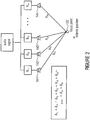
- Fig. 2 illustrates a plurality of loudspeakers 141, 142, 143, ..., 14n of a focus system according to an embodiment.
- Fig. 2 illustrates a basic idea of driving the loudspeakers of the focus system to create a focus effect.
- the basic idea for creating a focus effect is, that the delay of a loudspeaker signal plus the time a sound wave, emitted by the loudspeaker, needs to reach the focus point should be equal for all loudspeakers. In this case, it is ensured that the greatest possible constructive superposition of all sound waves of all loudspeakers happens in the focus point for all frequency ranges.
- ⁇ 21 be the time which a first sound wave emitted by the first loudspeaker 141 of the focus system needs to reach the focus point 150.
- ⁇ 11 be a first delay value calculated by the focused source renderer 120.
- ⁇ 22 be the time which a second sound wave emitted by the second loudspeaker 142 of the focus system needs to reach the focus point 150.
- ⁇ 12 be a second delay value calculated by the focused source renderer 120.
- the focused source renderer 120 is configured to generate the at least three focus group audio channels for the at least some of the loudspeakers 141, 142, 143 of the focus system based on the plurality of delay values ⁇ 1, ⁇ 2, ⁇ 3 and based on a focus audio base signal.
- the plurality of the delay values ⁇ 1 ⁇ 2, ⁇ 3 is a plurality of time delay values.
- the focused source renderer 120 is adapted to generate each of the focus group audio channels (focus audio channels) by time shifting the focus audio base signal by one of the time delays of the plurality of time delays.
- each of the focus group audio channels may represent the focus audio base signal, time-shifted by a different time delay value ⁇ 1, ⁇ 2, ⁇ 3 or ⁇ n, wherein the time-delay value is specific for the considered loudspeaker 141, 142, 143 or 14n of the focus system.
- the focus audio base signal may be represented in a frequency domain.
- the plurality of the delay values ⁇ 1, ⁇ 2, ⁇ 3 may be a plurality of phase values.
- the focused source renderer 120 may be adapted to generate each of the focus group audio channels by adding one of the phase values of the plurality of phase values to each phase value of a frequency-domain representation of the focus audio base signal.
- the focused source renderer 120 is configured to generate the at least three focus group audio channels for at least some of the loudspeakers 141, 142, 143 of the focus system based on the plurality of delay values ⁇ 1, ⁇ 2, ⁇ 3 and based on the focus audio base signal, so that sound waves emitted by the loudspeakers of the focus system, when being driven by the focus system audio channels F1, F2, F3, form a constructive superposition which creates a local maximum of a sum of energies of the sound waves in the focus point.
- the focused source renderer 120 generates the at least three focus group audio channels for at least some of the loudspeakers of the focus system to provide the focus system audio channels F1, F2, F3 for driving the loudspeakers of the focus system.
- the generated focus group audio channels may be (identical to) the focus system audio channels.
- Fig. 3a illustrates a relation between the focus system audio channels and the focus group audio channels according to a particular embodiment, where the generated focus group audio channels are identical to the focus system audio channels.
- the focus group audio channels may only be used to generate the focus system audio channels.
- the loudspeakers 141, 142, 143, ..., 14n of the focus system may reproduce, besides the audio content of the focus group audio channels, furthermore other audio content of one or more other audio signals.
- Each of the focus system audio channels may then result from a combination of the respective focus group audio channel and one of the one or more other audio signals.
- a combiner 171, 172, 173 exists for each of the loudspeakers 141, 142, 143, ..., 14n of the focus system and each combiner combines the respective focus group audio channel for the respective loudspeaker 141, 142, 143, ..., 14n of the focus system and one of the other audio signals, wherein exactly one of the other audio signals is assigned to each of the loudspeakers 141, 142, 143, ..., 14n of the focus system.
- each of the combiners 171, 172, 173 may moreover receive combination information, for example, one or more mixing coefficients to steer the mixing of the focus group audio channels and the one of the other audio signals.
- combination information for example, one or more mixing coefficients to steer the mixing of the focus group audio channels and the one of the other audio signals.
- the combining information is sufficient when it is clear that the structure of Fig. 3b can be applied multiple times.
- the focus system audio channels may result from a combination of the respective focus group audio channel and one of the one or more other audio signals, wherein each of the other audio signals is specific for one of the loudspeakers 141, 142, 143, ..., 14n of the focus system.
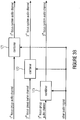
- Fig. 3b illustrates as an example a relation between the focus system audio channels and the focus group audio channels of such an embodiment, where the first focus system audio channel results from a combination conducted by a first combiner 171 of the first focus group audio channel and another audio signal, where the second focus system audio channel results from a combination conducted by a second combiner 172 of the second focus group audio channel and the other audio signal, and where the third focus system audio channel results from a combination conducted by a third combiner 173 of the third focus group audio channel and the other audio signal.
- the focused source renderer 120 may generate a first group of focus group audio channels to create a first focus effect at a first focus point. Moreover, at the same time, the focused source renderer 120 may generate a second group of focus group audio channels to create a second focus effect at a second focus point. For each loudspeaker 141, 142, 143 of the focus system, the audio content of the focus group audio channel of said loudspeaker of the first group and the audio content of the focus group audio channel of said loudspeaker of the second group may be reproduced at the same time by said loudspeaker.
- the focused source renderer 120 may generate a combination signal combining for each loudspeaker of the focus system the focus group audio channel of said loudspeaker of the first group and the focus group audio channel of said loudspeaker of the second group.
- the combination signals of the loudspeakers of the focus system may then be considered as a third group of focus group audio channels.
- the audio channels of the third group of focus group audio channels may then be the focus system audio channels.
- the first, second and third group of focus group audio channels may each comprise at least three focus group audio channels.
- Fig. 3c illustrates as an example a relation between the focus system audio channels and the focus group audio channels according to such an embodiment.
- a first combiner 181 is configured to combine a focus group audio channel of a first group of focus group audio channels for a first loudspeaker of the focus system and a focus group audio channel of a second group of focus group audio channels for the first loudspeaker of the focus system to obtain a focus group audio channel of a third group of focus group audio channels for the first loudspeaker of the focus system.
- Said focus group audio channel of the third group of focus group audio channels for the first loudspeaker of the focus system is the focus system audio channel for the first loudspeaker of the focus system.
- a second combiner 182 is configured to combine a focus group audio channel of a first group of focus group audio channels for a second loudspeaker of the focus system and a focus group audio channel of a second group of focus group audio channels for the second loudspeaker of the focus system to obtain a focus group audio channel of a third group of focus group audio channels for the second loudspeaker of the focus system.
- Said focus group audio channel of the third group of focus group audio channels for the second loudspeaker of the focus system is the focus system audio channel for the second loudspeaker of the focus system.
- a third combiner 183 is configured to combine a focus group audio channel of a first group of focus group audio channels for a third loudspeaker of the focus system and a focus group audio channel of a second group of focus group audio channels for the third loudspeaker of the focus system to obtain a focus group audio channel of a third group of focus group audio channels for the third loudspeaker of the focus system.
- Said focus group audio channel of the third group of focus group audio channels for the third loudspeaker of the focus system is the focus system audio channel for the third loudspeaker of the focus system.
- the basic system 110 is a stereo system
- the sound system may comprise two speakers 131, 132 of the stereo system as the at least two speakers of the basic system.
- the focused source renderer 120 may, for example, be adapted to generate the at least three focus group audio channels,F1, F2, F3 so that the position of the focus point 150 is closer to a position of a sweet spot 160 in the environment than any other position of one of the loudspeakers 131, 132 of the basic system and so that the position of the focus point 150 is closer to the position of the sweet spot 160 than any other position of one of the loudspeakers 141, 142, 143 of the focus system.
- Fig. 1b illustrates a further embodiment of an apparatus 100 for driving loudspeakers of a sound system according to an embodiment.
- the basic system is a 2.1 stereo system comprising two stereo loudspeakers 131, 132 and an additional subwoofer loudspeaker 135.
- the sound system comprises the two stereo loudspeakers 131, 132 and the additional subwoofer loudspeaker 135 of the 2.1 stereo system as the at least two speakers of the basic system.
- Fig. 1c illustrates an apparatus 100 for driving loudspeakers of a sound system according to another embodiment.
- the basic system is a surround system.
- the sound system comprises at least four speakers 131, 132, 133, 134 of the surround system as the at least two speakers of the basic system, and the basic channel provider may be a surround channel provider for providing surround system audio channels L, R, LS, RS as the basic system audio channels to drive the loudspeakers 131, 132, 133, 134 of the surround system.
- Fig. 1d provides another illustration of an apparatus 100 for driving loudspeakers of a sound system according to an embodiment.
- the basic channel provider 110 of the apparatus provides the basic system audio channels to the loudspeakers 131, 132, 134 of the basic system.
- the focused source renderer 120 of the apparatus receives a focus audio base signal, a focus point position and positions of the loudspeakers 141, 142, 143 of the focus system.
- the focused source renderer provides the focus system audio channels to the loudspeakers 141, 142, 143 of the focus system.
- the focus system comprises one or more sound bars, each of the sound bars comprising at least 3 loudspeakers in a single enclosure.
- Fig. 4a illustrates such a sound bar 190 in an embodiment.
- the sound bar 190 comprises the three loudspeakers 141, 142, 143 of the focus system.
- one or more focused sources are generated by steering sound energy from several loudspeakers into the room nearby the listener while playing back the main portion of audio through a conventional sound system (basic sound system). Since several loudspeakers with known relative position to each other may be needed to create focused sources, these loudspeakers may, for example, be mounted as an array in a single enclosure ("sound bar"). Since the reproduction of a focused source is only possible if the focus point is configured to be between the listener and the sound bar, multiple sound bars can be used to increase the reproduction area where focused sources can be placed around the listener position.
- the focus system comprises two sound bars that are placed on the left and right walls of the room (relative to the listener). This will enable the generation of a strong focus point for the left and right ear, respectively.
- Fig. 4b illustrates an apparatus 100 for driving loudspeakers of a sound system, wherein the sound system comprises two sound bars 192, 193.
- the basic channel provider 110 is configured to provide basic system audio channels to drive the loudspeakers 131, 132, 133, 134 of the basic system.
- the focused source renderer 120 is configured to provide focus system audio channels to the sound bars 192, 193 to drive the loudspeakers of the focus system.
- the loudspeakers of the focus system are comprised by the two sound bars 192, 193.
- the focus system comprises more than two sound bars, e.g. three, four or more sound bars.
- the rendering algorithm might need to take into account that the possible reproduction area of focused sound sources might be limited.
- the effort for building a sound system that integrates bars for proximity effects can therefore be scaled.
- a lower number of loudspeakers for the focus sound system will result in a less effective proximity illusion.
- the audio signals of both audio systems, the focus system and the basic system in combination produce an immersive audio scene.
- the proximate signals may be played back through the focus system while sources farer away or more ambient sounds are reproduced using the basic system.
- the focused source renderer 120 is adapted to adjust channel levels of the focus system audio channels F1, F2, F3 to drive the loudspeakers of the focus system.
- the basic channel provider 110 is configured to generate the basic system audio channels L, R, LS, RS based on the focus audio base signal and based on a panning factor ⁇ for blending the focus audio base signal between the basic system and the focus system.
- the focused source renderer 120 is configured to generate the at least three focus group audio channels based on the focus audio base signal and based on the panning factor ⁇ for blending the focus audio base signal between the basic system and the focus system.
- an auditory event from the basic system to the focus system and from the focus system to the basic system.
- This can be done by introducing a blend factor for panning the auditory event between the sound bar and the basic system, e.g. a surround system (surround setup).
- a blend factor for panning the auditory event between the sound bar and the basic system, e.g. a surround system (surround setup).
- An example for that effect would be having a sound starting in one direction in the distance, being rendered with conventional panning techniques through the surround system, that then gets panned to the sound bar, flying through the room and passing the head of the listener. Finally, the sound could be panned back to the conventional surround setup to appear more distant again.
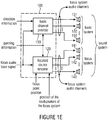
- Fig. 1e illustrates an apparatus 100 for driving loudspeakers of a sound system according to such an embodiment, wherein the basic channel provider 110 and the focused source renderer 120 are configured to receive panning information.
- the panning information may, for example, comprise a panning factor describing the mixing ratio of the focus audio base signal between the basic channel provider 110 and the focused source renderer 120.
- the panning factor may also have any other value, e.g. between 0 and 1.0, wherein the basic channel provider 110 may be configured to steer the sound level (or sound energy) of auditory event sound portions within the basic system audio channels depending on the panning factor, and/or wherein the focused source renderer 120 may be configured to steer the sound level (or sound energy) of auditory event sound portions within the focus system audio channels depending on the panning factor.
- the basic channel provider 110 may be configured to steer the sound level (or sound energy) of auditory event sound portions within the basic system audio channels depending on the panning factor
- the focused source renderer 120 may be configured to steer the sound level (or sound energy) of auditory event sound portions within the focus system audio channels depending on the panning factor.
- the panning information might be used to generate gain factors for the basic channel provider and the focused source renderer according to a panning law.
- the basic channel provider 110 is furthermore configured to receive direction information as meta data.
- the basic channel provider 110 may be configured to determine (e.g. calculate) the basic system audio channels based on the focus audio base signal and based on the direction information.
- the basic channel provider 110 may be configured to distribute the focus audio base signal to the basic system audio channels such that a direction impression is preserved.
- a focus audio base signal which shall be located at a front-left position will mainly be panned by the basic channel provider 110 to the left channel of a surround system.
- a focus audio base signal which shall have a position at a center-front position, will be panned by the basic channel provider 110 to the center channel of the surround system.
- the direction information may be determined based on the information on the position of the focus point.
- the direction information may be determined by determining the direction of the focus point position relative to a position of a listener. In another embodiment, however, the direction information is provided independently from the provided information on the position of the focus point.
- the focused source renderer 120 is adapted to generate the at least three focus group audio channels, so that the audio output produced by the focus system allows localizing the position of the focus point 150 by the listener in the environment, wherein the position of the focus point 150 is closer to a position of a sweet spot 160 in the environment than any other position of one of the loudspeakers 131, 132, 133, 134 of the basic system and closer to the position of the sweet spot 160 than any other position of one of the loudspeakers 141, 142, 143 of the focus system.
- Fig. 1c illustrates a scenario according to such an embodiment.
- the focus system is a Wave Field Synthesis system.
- the Wave Field Synthesis system may comprise a plurality of more than 10, more than 20 or more than 50 loudspeakers, and the focused source renderer 120 is configured to provide the focus system audio channels to some or all of the loudspeakers of the Wave Field Synthesis system.
- the focus system employs Higher Order Ambisonics.
- the basic system is a 5.1 surround system.
- the basic system comprises the six loudspeakers of the 5.1 surround system, and the basic channel provider 110 is configured to provide the basic system audio channels to some or all of the loudspeakers of the 5.1 surround system.
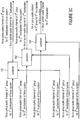
- Fig. 5a illustrates a spectrum of an audio effect signal according to an embodiment.
- the spectrum comprises the spectral values of the audio effect signal at different frequencies f.
- the focus audio base signal only comprises first frequency portions 201 of the audio effect signal, wherein the first frequency portions 201 only have frequencies which are higher than a first predetermined frequency value 210, and wherein at least some of the first frequency portions 201 have frequencies which are higher than a second predetermined frequency value 220.
- the second predetermined frequency value 220 is higher than or equal to the first predetermined frequency value 210.
- predetermined predetermined frequency value
- the basic channel provider 110 is configured to generate the basic system audio channels based on the secondary effect signal.
- the secondary effect signal only comprises second frequency portions 202 of the audio effect signal.
- the second frequency portions 202 only have frequencies which are lower than or equal to the second predetermined frequency value 220. At least some of the second frequency portions 202 have frequencies which are lower than or equal to the first predetermined frequency value 210.
- the frequency portions of a first frequency range 221 of the audio effect signal may e.g. only be comprised by the secondary effect signal for the basic system.
- the frequency portions of a second frequency range 223 may e.g. only be comprised by the focus audio base signal (and by the focus group audio channels) for the focus system.
- there may be an intermediate frequency range 222 such that the frequency portions of the intermediate frequency range 222 between the first predetermined frequency value 210 and the second predetermined frequency value 220 are comprised by both the secondary effect signal for the basic system and the focus audio base signal (and the focus group audio channels) for the focus system.
- the second predetermined frequency value 220 is equal to the first predetermined frequency value 210, and in such an embodiment, the intermediate frequency range 222 does not exist.
- Fig. 5b illustrates a spectral representation 231 of the secondary effect signal and a spectral representation 232 of the focus audio base signal according to an embodiment.
- a first frequency range 221 only the secondary effect signal has frequency components 231.
- a second frequency range 223 only the focus audio base signal has frequency components 232.
- there exists an intermediate frequency range 222 where both the secondary effect signal for the basic system as well as the focus audio base signal for the focus system have frequency components 231, 232.
- the secondary effect signal 231 and the focus audio base signal 232 may be generated by a filter unit 510 by filtering the audio effect signal, e.g. by employing a low-pass filter and a high-pass filter, respectively.
- the basic channel provider 110 is configured to generate the basic system audio channels based on a secondary effect signal, wherein the secondary effect signal only comprises second frequency portions of the audio effect signal, wherein the second frequency portions only have frequencies which are either lower than or equal to the second predetermined frequency value 220, or which are higher than a third predetermined frequency value 230.
- the first frequency portions only have frequencies which are lower than a fourth predetermined frequency value 240.
- the fourth predetermined frequency value 240 is higher than or equal to the third predetermined frequency value 230.
- the third predetermined frequency value 230 is higher than the second predetermined frequency value (220).
- Fig. 5c illustrates a spectral representation 231, 233 of the secondary effect signal and a spectral representation of the focus audio base signal 232 according to another embodiment.
- a first frequency range 221 only the secondary effect signal has frequency components 231.
- a second frequency range 223 only the focus audio base signal has frequency components 232.
- third frequency range 225 only the secondary effect signal has frequency components 233.
- there exists a first intermediate frequency range 222 where both the secondary effect signal for the basic system as well as the focus audio base signal for the focus system have frequency components 231, 232.
- both the secondary effect signal for the basic system as well as the focus audio base signal for the focus system have frequency components 232, 233.
- the secondary effect signal and the focus audio base signal may be generated by a filter unit 510 by filtering the audio effect signal, e.g. by employing a band-pass filter.
- Fig. 1f illustrates an apparatus 100 for driving loudspeakers of a basic system, wherein the apparatus comprises a filter unit 510, which is configured to receive an audio effect signal.
- the filter unit 510 is configured to filter the audio effect signal to obtain a secondary effect signal and a focus audio base signal.
- the filter unit 510 is configured to filter the audio effect signal to obtain the secondary effect signal and the focus audio base signal such that the focus audio base signal is different from the audio effect signal.
- the filter unit 510 may be configured to filter the audio effect signal such that the focus audio base signal only comprises first frequency portions of the audio effect signal and such that the secondary effect signal only comprises second frequency portions of the audio effect signal.
- at least some of the second frequency portions may relate to frequencies which are different from the frequencies the first frequency portions relate to.
- the filter unit 510 is configured to provide the secondary effect signal only to the basic channel provider 110, but not to the focused source renderer 120.
- the filter unit 510 is configured to provide the focus audio base signal to the focused source renderer 120 and to the basic channel provider 110.
- the basic channel provider 110 and the focused source renderer 120 receive panning information, e.g. a panning factor ⁇ .
- the focused source renderer 120 is configured to generate the at least three focus group audio channels based on the focus audio base signal and based on the panning information for blending the focus audio base signal between the basic system and the focus system.
- a panning factor ⁇ 0.5 may mean, that the focus audio base signal is reproduced by the focus system, but with a reduced sound level.
- the basic channel provider 110 is configured to generate the basic system audio channels based on the focus audio base signal and based on the panning information for blending the focus audio base signal between the basic system and the focus system.
- the basic channel provider 110 is configured to generate the basic system audio channels also based on the secondary effect signal.
- the basic channel provider 110 may be configured to modify the focus audio base signal such that the sound level of the focus audio base signal is reduced depending on the panning factor ⁇ to obtain a modified focus audio base signal.
- the basic channel provider 110 may moreover be configured to mix the modified focus audio base signal and the secondary effect signal to generate the basic system audio channels.
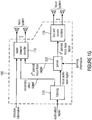
- Fig. 1g illustrates an apparatus 100 for driving loudspeakers of a basic system
- the apparatus comprises a filter unit 510, which is configured to receive an audio effect signal and a panner 520.
- the filter unit 510 is moreover configured to filter the audio effect signal to obtain a secondary effect signal and the focus audio base signal, such that the focus audio base signal is different from the audio effect signal.
- the panner 520 is configured to generate a first panned focus base signal and a second panned focus base signal by modifying the focus audio base signal depending on panning information.
- the focused source renderer 120 is configured to provide the focus system audio channels for the focus system based on the first panned focus base signal.
- the basic channel provider 110 is configured to provide the basic system audio channels for the basic system based on the secondary effect signal and based on the second panned focus base signal.
- Fig. 1g is similar to the embodiment of Fig. If, but differs from the embodiment of Fig. 1f in that the filter unit 510 is configured to feed the focus audio base signal into the panner 520.
- the panner 520 is configured to generate a first panned focus base signal and a second panned focus base signal based on the focus audio base signal and based on panning information, e.g. a panning factor ⁇ .
- a panning factor ⁇ of 0.5 ⁇ ⁇ ⁇ 1.0 may mean, that the panner 520 generates the first panned focus base signal and the second panned focus base signal such that the average sound level of the first panned focus base signal is greater than the average sound level of second panned focus base signal.
- a panning factor ⁇ of 0 ⁇ ⁇ ⁇ 0.5 may mean, that the panner 520 generates the first panned focus base signal and the second panned focus base signal such that the average sound level of the first panned focus base signal is smaller than the average sound level of second panned focus base signal.
- the panner 520 is, e.g., configured to feed the first panned focus base signal into the focused source renderer 120 and is moreover configured to feed the second panned focus base signal into the basic channel provider 110.
- the focused source renderer 120 is configured to generate the at least three focus group audio channels based on the first panned focus base signal.
- the basic channel provider 110 is, e.g., configured to generate the basic system audio channels based on the second panned focus base signal and based on the secondary effect signal.
- the basic channel provider 110 may be configured to mix the second panned focus base signal and the secondary effect signal to generate the basic system audio channels.
- the basic channel provider 110 of Fig. 1g is furthermore configured to receive direction information as meta data.
- the basic channel provider 110 of Fig. 1 g may use the direction information to determine (e.g. calculate) the basic system audio channels based on the second panned focus base signal (e.g., as described with reference to Fig. 1e for the focus audio base signal of Fig. 1e ) and based on the secondary effect signal.
- more than one focus point exists (e.g. a first and one or more further focus points) and different focus sounds (e.g. different focus audio base signals) are assigned to different focus points.
- the focused source renderer 120 is configured to calculate a further plurality of further delay values for the loudspeakers 141, 142, 143 of the focus system based on the positions of the loudspeakers 141, 142, 143 of the focus system and based on a further position of a further focus point.
- the focused source renderer 120 is configured to generate at least three further focus group audio channels for at least some of the loudspeakers 141, 142, 143 of the focus system based on the plurality of further delay values and based on a further focus audio base signal to provide the focus system audio channels.
- the at least three further focus group audio channels being assigned to the further focus point may be mixed with the at least three focus group audio channels relating to the first focus point to obtain the focus system audio channels.
- each of the at least three further focus group audio channels being assigned to the further focus point may be added to the respective one of the at least three focus group audio channels relating to the first focus point to obtain the focus system audio channels.
- audio object coding is employed, e.g. Spatial Audio Object Coding (SAOC), and each audio object may relate to a different focus point and a different focus audio base signal.
- SAOC Spatial Audio Object Coding
- the apparatus 100 is configured to receive a position of a listener from at least one tracking unit (not shown).
- the at least one tracking unit is arranged for determining the position of the listener.
- the apparatus 100 is adapted to shift the focus point 150 depending on the position of the listener.
- the at least one tracking unit is a head tracker unit arranged for determining the head position of the listener.
- a system is provided comprising such an apparatus and at least one tracking unit.
- At least one head tracker unit is arranged for determining a head position of the listener, wherein the apparatus is adapted to shift the focus point depending on the head position. This allows for keeping the sound focused to the listener regardless of his height, seating position and/or movement within the environment.
- the head tracker may comprise at least one camera.
- the tracking unit e.g. the head tracker unit (not shown) may be configured to determine a head position.
- the head tracker unit may be configured to determine head positions of the vehicle's occupants.
- the tracking unit e.g. the head tracker unit, may feed the head position directly into the focused source renderer 120, so that the focus points are determined by the focused source renderer 120 depending on the head position.
- the head tracker unit may feed the head position to a control unit, e.g. a board computer (not shown) so that the focus points are determined by this control unit and then forwarded to the focused source renderer.
- the apparatus is adapted to shift the focus point depending on the head position acquired by the tracking unit, e.g. by the head tracker unit.
- Fig. 6a illustrates an apparatus for driving loudspeakers of a sound system according to an embodiment, wherein the apparatus furthermore comprises a decoder 610 being configured to decode a data stream to obtain a first group of one or more audio input channels, a second group of one or more audio input channels and meta-data comprising information on the position of the focus point, wherein the information on the position of the focus point 150 is relative to a position of a listener.
- the decoder 610 is arranged to feed the first group of audio input channels into the basic channel provider 110.
- the basic channel provider 110 is configured to provide the basic system audio channels to the loudspeakers based on the first group of audio input channels.
- the decoder 610 is arranged to feed the second group of audio input channels and the information on the position of the focus point into the focused source renderer 120, and the focused source renderer 120 is configured to generate the at least three focus group audio channels based on the focus audio base signal, wherein the focus audio base signal depends on one or more audio input channels of the second group of audio input channels.
- the basic system may, for example, be a surround system and the basic channel provider may, for example, be a surround channel provider 110.
- the decoder 610 is configured to decode a data stream to obtain a first group of one or more audio input channels, a second group of one or more audio input channels and meta-data comprising information on the position of one or more focus points.
- the information on the position of each of the focus points 150 is relative to a position of a listener.
- Each of the audio input channels of the first group of audio input channels comprises basic channel information and first focus information, wherein each of the audio input channels of the second group of audio input channels comprises second focus information.
- the basic channel information may, for example, be surround channel information, as illustrated by Fig. 6b .
- the decoder 610 is configured to generate a third group of one or more modified audio channels based on the basic channel information (e.g. surround channel information) of the first group of the audio input channels, the second group of audio input channels and the information on the position of the focus points.
- the decoder 610 is arranged to feed the third group of modified audio channels into the basic channel provider 110 being a surround channel provider.
- the surround channel provider 110 is configured to provide the basic system audio channels to the loudspeakers based on the third group of modified audio channels.
- the decoder 610 is configured to generate a fourth group of modified audio channels based on the first focus information of the first group of audio input channels and based on the second focus information of the second group of audio input channels. Furthermore, the decoder 610 is arranged to feed the fourth group of modified audio channels and the information on the position of the focus point into the focused source renderer 120.
- the focused source renderer 120 is configured to generate the at least three focus group audio channels based on the focus audio base signal, wherein the focus audio base signal depends on one or more modified audio channels of the fourth group of modified audio channels.
- Fig. 6b illustrates an apparatus 100 for driving loudspeakers of a sound system.
- the decoder 610 may, for example, comprise a bitstream decoding unit 611 for decoding the data stream to obtain the first group of one or more audio input channels, the second group of one or more audio input channels and the meta-data comprising the information on the positions of the focus points.
- the filter 612 may, for example, separate the basic channel information (e.g. surround channel information) from the first focus information of the first group of audio input channels depending on the second group of audio input channels and the positions of the focus points.
- Fig. 6c illustrates an apparatus 100 for driving loudspeakers of a sound system located at a receiver side, and an encoding module 650 at a sender side.
- the basic channel provider 120 of the apparatus 100 for driving loudspeakers of a sound system is a surround channel provider.
- the apparatus 100 and the encoding module 650 form a system.
- the encoding module 650 comprises a downmix module 653, a mixer 652 and a bitstream encoding unit 651.
- a basic audio base signal e.g. a surround audio base signal
- the surround audio base signal may, for example, comprise 5 channels of a surround signal or may, for example comprise 6 channels of a 5.1 surround signal.
- the surround audio base signal may, for example, be an ordinary surround signal which may be played back by a surround system.
- a focus downmix is also fed into the mixer 652.
- the focus downmix may have the same number of channels as the surround audio base signal.
- the mixer 652 mixes the surround audio base signal and the focus downmix to obtain a basic audio mix signal, e.g. a surround audio mix signal.
- the surround audio mix signal comprising e.g. five or six channels, which represent the mix of the surround audio base signal and the focus downmix, are played back by the surround system.
- the surround system is used to play back the focus sound, when no decoder 610 and no focus system is present at a receiver side.
- the focus downmix may be generated by the downmix module 653 on the sender side.
- the downmix module 653 receives a position of a focus point and a focus audio base signal.
- the downmix module 653 generates from the focus audio base signal a plurality of channels of the focus downmix, wherein the number of channels of the focus downmix is equal to the number of channels of the surround audio base signal.
- Each of the channels of the focus downmix represents a signal portion of the focus audio base signal that shall be played back by the respective loudspeaker of the surround system, if no decoder 610 and no focus system is present on a receiver side.
- the bitstream encoding unit 651 receives the basic audio mix signal, e.g. the surround audio mix signal. Moreover, the bitstream encoding unit 651 also receives the focus audio base signal and the position of the focus point.
- the bitstream encoding unit 651 is configured to encode the basic audio mix signal (e.g. the surround audio mix signal), the focus audio base signal and the position of the focus point (the focus point position).
- the encoded surround audio mix signal, focus audio base signal and focus point position are then transmitted as a data stream from the sender side to the apparatus 100 for driving loudspeakers of a sound system located at the receiver side.
- the apparatus 100 for driving loudspeakers of a sound system e.g. comprises a surround channel provider 110 as a basic channel provider, a focused source renderer 120 and a decoder 610.
- the decoder 610 comprises a bitstream decoding unit 611 and a filter 612.
- the filter comprises a downmix module 613 and a subtractor 614.
- the bitstream decoding unit 611 receives the transmitted data stream and decodes the data stream to obtain the focus audio base signal, the position of the focus point (the focus point position), and the basic audio mix signal, e.g. the surround audio mix signal.
- the focus audio base signal and the position of the focus point are then fed into the focused source renderer 120 to obtain the focus system audio channels of the focus system.
- the focus audio base signal and the focus point position are also fed into the downmix module 613.
- the downmix module 613 generates a focus downmix comprising a plurality of channels from the focus audio base signal and the position of the focus point in the same way as the downmix module 653 did on the sender side.
- the downmix module 613 of the filter 612 generates the same focus downmix as the downmix module 653 on the sender side.
- the focus downmix is then fed into the subtractor 614.
- the basic audio mix signal e.g. the surround audio mix signal
- the subtractor 614 is configured to subtract the focus downmix from the basic audio mix signal, e.g. the surround audio mix signal, e.g. each respective channel of the focus downmix is subtracted from the corresponding channel of the basic audio mix signal, e.g. the surround audio mix signal.
- the portions of the basic audio mix signal e.g. the surround audio mix signal
- the basic audio base signal e.g. the surround audio base signal
- the basic audio base signal is then fed into the basic channel provider (e.g. the surround channel provider) 110, e.g. to steer the loudspeakers of the basic system, e.g. the surround system.
- the decoder 610 for example, the decoder 610 of the embodiment of Fig. 6a , Fig. 6b or Fig. 6c , is configured to decode the data stream to obtain six channels of an HDMI audio signal as the first group of audio input channels. Moreover, the decoder 610 is configured to decode the data stream to obtain two further channels of the HDMI audio signal as the second group of audio input channels.
- the decoder 610 e.g., the decoder 610 of the embodiment of Fig. 6a , Fig. 6b or Fig. 6c , is configured to decode the data stream to obtain six channels of a 5.1 surround signal as the first group of audio input channels. Moreover, the decoder 610 is arranged to feed the six channels of the 5.1 surround signal into the basic channel provider. Furthermore, the basic channel provider 110 is configured to provide the six channels of the 5.1 surround signal to drive the loudspeakers of the basic system being a surround system.
- the decoder 610 for example, the decoder 610 of the embodiment of Fig. 6a , Fig. 6b or Fig. 6c , is configured to decode the data stream to obtain a plurality of spatial audio object channels of a plurality of encoded spatial audio objects (regarding encoded spatial audio objects, see [7]). Moreover, the decoder 610 is configured to decode at least one object position information for at least one of the spatial audio object channels. Furthermore, the decoder 610 is arranged to feed the plurality of the spatial audio object channels and the at least one object position information into the focused source renderer 120.
- the focused source renderer 120 is configured to calculate the plurality of delay values for the loudspeakers of the focus system based on the positions of the loudspeakers of the focus system and based on one of the at least one object position information representing information on the position of the focus point. Furthermore, the focused source renderer 120 is configured to generate the at least three focus group audio channels for at least some of the loudspeakers of the focus system based on the focus audio base signal, wherein the focus audio base signal depends on one or more of the plurality of the spatial audio object channels.
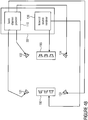
- Fig. 7 illustrates a sound system according to an embodiment.
- the sound system comprises a basic system 721 comprising at least four loudspeakers, a focus system 722 comprising at least three further loudspeakers, a first amplifier module 711, a second amplifier module 712, and an apparatus 100 for driving loudspeakers of a sound system according to one of the above-described embodiments.
- the first amplifier module 711 is arranged to receive the basic system audio channels provided by the basic channel provider 110 of the apparatus 100 for driving loudspeakers of a sound system, and wherein the first amplifier module 711 is configured to drive the loudspeakers of the basic system 721 based on the basic system audio channels.
- the second amplifier module 712 is arranged to receive the focus system audio channels provided by the focused source renderer 120 of the apparatus 100 for driving loudspeakers of a sound system, and wherein the second amplifier module 712 is configured to drive the loudspeakers of the focus system 722 based on the focus system audio channels.
- a decoder 610 according to some embodiments is considered.
- the audio is sent from a playback device, e.g. a gaming console or video player, and contains discrete audio channels for the basic system, being, for example, a surround system (surround setup), as well as additional audio channels enriched with meta-data describing how the focused sources should be reproduced.
- the meta-data includes parameters like the position relative to the head, the volume of the source and the panning factor for blending the auditory event between the sound bar and the basic system, e.g. a conventional surround setup.
- the discrete audio channels are direct signals to be used with the surround system loudspeakers (surround setup loudspeakers), the additional audio channels first need to be transformed into loudspeaker signals for the sound bar's speakers.
- the channels and meta-data can be encoded in several ways. Here are some examples of how the encoding could be done:
- the audio renderer is integrated into the generating device (e.g. a gaming console or other playback device)
- the generating device e.g. a gaming console or other playback device
- an encoding and decoding might not be necessary because the auditory events and surround audio channels can be accessed directly in memory and do not need to be transmitted from the playback device to the renderers.
- the focused source renderer 120 uses an algorithm to calculate filter coefficients for generating a plurality of loudspeaker signals which provide a sound field reproducing focused energy at a configurable point in the room.
- the filter defined by the coefficients is applied to the audio signal of an auditory event to create an output signal for one loudspeaker of the sound bar.
- a separate filter for each loudspeaker may be generated and applied to the focus audio base signal of the auditory event.
- the superposition of the loudspeaker signals will create a sound field in the room so that the audio energy in that sound field will be higher at the point where the auditory event should be localized compared to the sound energy in the surrounding area of that spot. If the source is positioned closely to the listener, the listener will get the impression as if the sound source really is positioned at that point. This leads to the illusion of the sound source being in the very proximity of the listener.
- Another approach for creating the illusion of proximity is to provide a high level difference between the audio perceived between the two ears of the listener. This loudness difference creates the illusion of the audio source being directly beneath the ear receiving the main signal energy.
- the position and orientation of the head is known, e.g. by using suitable tracking techniques, the position of the left and right ear can be estimated.
- the algorithm might control the signal processing in a way to achieve a level difference between these two points in space to the highest degree possible.
- a WFS (Wave Field Synthesis) based algorithm for creating focused sources is used to calculate the filter coefficients.
- the inputs of the algorithm may, e.g., be:
- the audio is provided in an object based way: the focus audio base signal is intended to be played back at a given position relative to the listener's head.
- the position of the listener's head can either be configured or measured using a suitable tracking technology.
- Using a tracking device will provide more flexibility to the user because the system is able to adjust the position of the focus point so that it is constant relative to the listener's head when the listener is moving.
- the focused signals of several auditory events are reproduced using the same focus system. This allows for using more than one focused auditory event to be placed nearby the listener at a time.
- the game or film might render as much events as processing power and bandwidth of the transmission channel to the renderers allows.
- the loudspeaker drivers need to be as small as possible to optimize the space needed. Since a small loudspeaker driver usually is not able to reproduce low frequency components with sufficient sound pressure level, the sound bar may need additional support from the basic system, e.g. a surround system / surround setup, for lower frequencies.
- An embodiment splits the signal of a focused auditory event into a high frequency and a low frequency component.
- the cross-over frequency between these components may differ depending on the size and quality of the used loudspeaker drivers in the sound bar.
- the low-frequency components are played through the surround system while the high frequency components are played as a focus effect through the focus system.
- the focus audio base signal can be blended between the focus system and the surround system by using (one or more) panning factors.
- the factors can be calculated by a panning law based on which the panning is applied to the two audio systems. Therefore, the distance perception at the listening position can be controlled by blending the signal between the focus system and the surround system. The listener will perceive the source to be closer when the blending is controlled so that more signal energy is played through the focus system and the corresponding focus point is close to the listener.
- the (one or more) panning factors for blending between the focus system and the surround system are calculated from positional meta-data, e.g. from the distance between the source and the listener. In this way, the position of the audio object (the focus point) is used to decide which of the two audio systems is involved and to what extend for providing the according loudspeaker signals.
- the blending can be made controllable in such a way that the content playback system, for example the gaming console, is sending the intended panning factors as meta-data along with the focus audio base signal.
- the (one or more) panning factors implicitly describe the distance of the audio effect.
- the focus point for the focus rendering might even be a static position and the movement is realized by blending the audio base signal between the statically positioned focus point and the corresponding surround system rendering.
- Another approach might use both the movement of the focus point and the panning factors to give the listener the impression of the audio source changing its distance.
- the surround system may, e.g., be in most cases involved in playing back a focus audio object.
- the focus base audio signal needs to be rendered to the surround system first to generate the surround system loudspeaker signals.
- a conventional surround panning technique can be used to provide surround channels that pan the sound of the audio object to the corresponding direction. The distance of the object will then be determined by using the mentioned panning factors between the focus system and the surround system.
- the blending for changing the distance of an object may, e.g., not include these low frequencies since the small loudspeaker drivers of the focus system usually may not be able to reproduce those low frequencies.
- an apparatus 100 for driving loudspeakers of a sound system comprises at least two loudspeakers 131, 132; 131, 132, 135; 131, 132, 133, 134 of a basic system, and at least three loudspeakers 141, 142, 143 of a focus system, wherein each of the loudspeakers of the basic system and of the focus system has a position in an environment.
- the apparatus 100 comprises a basic channel provider 110 for providing basic system audio channels to drive the loudspeakers 131, 132; 131, 132, 135; 131, 132, 133, 134 of the basic system; and a focused source renderer 120 for providing focus system audio channels to drive the loudspeakers 141, 142, 143 of the focus system.
- the focused source renderer 120 is configured to calculate a plurality of delay values ⁇ 11 , ⁇ 12 , ⁇ 13 for the loudspeakers 141, 142, 143 of the focus system based on the positions of the loudspeakers 141, 142, 143 of the focus system and based on a position I13130301PEP-2016111402.DOC of a focus point 150.
- the focused source renderer 120 is configured to generate at least three focus group audio channels for at least some of the loudspeakers 141, 142, 143 of the focus system based on the plurality of delay values ⁇ 11 , ⁇ 12 , ⁇ 13 and based on a focus audio base signal to provide the focus system audio channels.
- the basic channel provider 110 is configured to generate the basic system audio channels based on the focus audio base signal and based on panning information for blending the focus audio base signal between the basic system and the focus system.
- the focused source renderer 120 is configured to generate the at least three focus group audio channels based on the focus audio base signal and based on the panning information for blending the focus audio base signal between the basic system and the focus system.
- the panning information is a panning factor.
- the basic channel provider 110 is configured to reproduce the focus audio base signal by the basic system with a reduced sound level, when the panning factor has a predefined value.
- the focused source renderer 120 is configured to reproduce the focus audio base signal by the focus system with a reduced sound level, when the panning factor has the predefined value.
- one or more panning factors for blending between the focus system and the surround system are calculated from positional meta-data indicating the distance between a source and a listener.
- the focus audio base signal only comprises first frequency portions of an audio effect signal, wherein the first frequency portions only have frequencies which are higher than a first predetermined frequency value 210, and wherein at least some of the first frequency portions have frequencies which are higher than a second predetermined frequency value 220, wherein the second predetermined frequency value 220 is higher than or equal to the first predetermined frequency value 210.
- the focused source renderer 120 is configured to generate the at least three focus group audio channels based on the focus audio base signal such that the focus group audio channels only have frequencies which are higher than the first predetermined frequency value 210.
- the basic channel provider 110 is configured to generate the basic system audio channels based on a secondary effect signal, wherein the secondary effect signal only comprises second frequency portions of the audio effect signal, wherein the second frequency portions only have frequencies which are lower than or equal to the second predetermined frequency value 220, and wherein at least some of the second frequency portions have frequencies which are lower than or equal to the first predetermined frequency value 210.
- the second predetermined frequency value 220 is equal to the first predetermined frequency value 210.
- the basic channel provider 110 is configured to generate the basic system audio channels based on a secondary effect signal, wherein the secondary effect signal only comprises second frequency portions of the audio effect signal, wherein the second frequency portions only have frequencies which are either lower than or equal to the second predetermined frequency value 220, or which are higher than a third predetermined frequency value 230.
- the first frequency portions only have frequencies which are lower than a fourth predetermined frequency value 240.
- the fourth predetermined frequency value 240 is higher than or equal to the third predetermined frequency value 230, and wherein the third predetermined frequency value 230 is higher than the second predetermined frequency value 220.
- the apparatus 100 furthermore comprises a filter unit 510, wherein the filter unit 510 is configured to receive the audio effect signal, and wherein the filter unit 510 is configured to filter the audio effect signal to obtain the secondary effect signal and the focus audio base signal.
- an apparatus 100 for driving loudspeakers of a sound system comprises at least two loudspeakers 131, 132; 131, 132, 135; 131, 132, 133, 134 of a basic system, and at least three loudspeakers 141, 142, 143 of a focus system, wherein each of the loudspeakers of the basic system and of the focus system has a position in an environment.
- the apparatus 100 comprises a basic channel provider 110 for providing basic system audio channels to drive the loudspeakers 131, 132; 131, 132, 135; 131, 132, 133, 134 of the basic system; and a focused source renderer 120 for providing focus system audio channels to drive the loudspeakers 141, 142, 143 of the focus system.
- the focused source renderer 120 is configured to calculate a plurality of delay values ⁇ 11 , ⁇ 12 , ⁇ 13 for the loudspeakers 141, 142, 143 of the focus system based on the positions of the loudspeakers 141, 142, 143 of the focus system and based on a position of a focus point 150.
- the focused source renderer 120 is configured to generate at least three focus group audio channels for at least some of the loudspeakers 141, 142, 143 of the focus system based on the plurality of delay values ⁇ 11 , ⁇ 12 , ⁇ 13 and based on a focus audio base signal to provide the focus system audio channels.
- the focus audio base signal only comprises first frequency portions of an audio effect signal, wherein the first frequency portions only have frequencies which are higher than a first predetermined frequency value 210, and wherein at least some of the first frequency portions have frequencies which are higher than a second predetermined frequency value 220, wherein the second predetermined frequency value 220 is higher than or equal to the first predetermined frequency value 210.
- the focused source renderer 120 is configured to generate the at least three focus group audio channels based on the focus audio base signal such that the focus group audio channels only have frequencies which are higher than the first predetermined frequency value 210.
- the basic channel provider 110 is configured to generate the basic system audio channels based on a secondary effect signal, wherein the secondary effect signal only comprises second frequency portions of the audio effect signal, wherein the second frequency portions only have frequencies which are lower than or equal to the second predetermined frequency value 220, and wherein at least some of the second frequency portions have frequencies which are lower than or equal to the first predetermined frequency value 210.
- the second predetermined frequency value 220 is equal to the first predetermined frequency value 210.
- the basic channel provider 110 is configured to generate the basic system audio channels based on a secondary effect signal, wherein the secondary effect signal only comprises second frequency portions of the audio effect signal, wherein the second frequency portions only have frequencies which are either lower than or equal to the second predetermined frequency value 220, or which are higher than a third predetermined frequency value 230.
- the first frequency portions only have frequencies which are lower than a fourth predetermined frequency value 240.
- the fourth predetermined frequency value 240 is higher than or equal to the third predetermined frequency value 230, and wherein the third predetermined frequency value 230 is higher than the second predetermined frequency value 220.
- the apparatus 100 furthermore comprises a filter unit 510, wherein the filter unit 510 is configured to receive the audio effect signal, and wherein the filter unit 510 is configured to filter the audio effect signal to obtain the secondary effect signal and the focus audio base signal.
- an apparatus 100 for driving loudspeakers of a sound system comprises at least two loudspeakers 131, 132; 131, 132, 135; 131, 132, 133, 134 of a basic system, and at least three loudspeakers 141, 142, 143 of a focus system, wherein each of the loudspeakers of the basic system and of the focus system has a position in an environment.
- the apparatus 100 comprises a basic channel provider 110 for providing basic system audio channels to drive the loudspeakers 131, 132; 131, 132, 135; 131, 132, 133, 134 of the basic system; and a focused source renderer 120 for providing focus system audio channels to drive the loudspeakers 141, 142, 143 of the focus system.
- the focused source renderer 120 is configured to calculate a plurality of delay values ⁇ 11 , ⁇ 12 , ⁇ 13 for the loudspeakers 141, 142, 143 of the focus system based on the positions of the loudspeakers 141, 142, 143 of the focus system and based on a position of a focus point 150.
- the focused source renderer 120 is configured to generate at least three focus group audio channels for at least some of the loudspeakers 141, 142, 143 of the focus system based on the plurality of delay values ⁇ 11 , ⁇ 12 , ⁇ 13 and based on a focus audio base signal to provide the focus system audio channels.
- the apparatus furthermore comprises a filter unit 510 and a panner 520.
- the filter unit 510 is configured to receive an audio effect signal.
- the filter unit 510 is configured to filter the audio effect signal to obtain a secondary effect signal and the focus audio base signal, such that the focus audio base signal is different from the audio effect signal.
- the panner 520 is configured to generate a first panned focus base signal and a second panned focus base signal by modifying the focus audio base signal depending on panning information.
- the focused source renderer 120 is configured to provide the focus system audio channels based on the first panned focus base signal.
- the basic channel provider 110 is configured to provide the basic system audio channels based on the secondary effect signal and based on the second panned focus base signal.
- the focus audio base signal only comprises first frequency portions of the audio effect signal, wherein the first frequency portions only have frequencies which are higher than a first predetermined frequency value 210, and wherein at least some of the first frequency portions have frequencies which are higher than a second predetermined frequency value 220, wherein the second predetermined frequency value 220 is higher than or equal to the first predetermined frequency value 210.
- the secondary effect signal only comprises second frequency portions of the audio effect signal, wherein the second frequency portions only have frequencies which are lower than or equal to the second predetermined frequency value 220, and wherein at least some of the second frequency portions have frequencies which are lower than or equal to the first predetermined frequency value 210.
- the second predetermined frequency value 220 is equal to the first predetermined frequency value 210.
- the secondary effect signal only comprises second frequency portions of the audio effect signal, wherein the second frequency portions only have frequencies which are either lower than or equal to the second predetermined frequency value 220, or which are higher than a third predetermined frequency value 230.
- the first frequency portions only have frequencies which are lower than a fourth predetermined frequency value 240.
- the fourth predetermined frequency value 240 is higher than or equal to the third predetermined frequency value 230, and wherein the third predetermined frequency value 230 is higher than the second predetermined frequency value 220.
- an apparatus 100 for driving loudspeakers of a sound system comprises at least two loudspeakers 131, 132; 131, 132, 135; 131, 132, 133, 134 of a basic system, and at least three loudspeakers 141, 142, 143 of a focus system, wherein each of the loudspeakers of the basic system and of the focus system has a position in an environment.
- the apparatus 100 comprises a basic channel provider 110 for providing basic system audio channels to drive the loudspeakers 131, 132; 131, 132, 135; 131, 132, 133, 134 of the basic system, and a focused source renderer 120 for providing focus system audio channels to drive the loudspeakers 141, 142, 143 of the focus system.
- the focused source renderer 120 is configured to calculate a plurality of delay values ⁇ 11 , ⁇ 12 , ⁇ 13 for the loudspeakers 141, 142, 143 of the focus system based on the positions of the loudspeakers 141, 142, 143 of the focus system and based on a position of a focus point 150.
- the focused source renderer 120 is configured to generate at least three focus group audio channels for at least some of the loudspeakers 141, 142, 143 of the focus system based on the plurality of delay values ⁇ 11 , ⁇ 12 , ⁇ 13 and based on a focus audio base signal to provide the focus system audio channels.
- the apparatus 100 furthermore comprises a decoder 610.
- the decoder 610 comprises a bitstream decoding unit 611 and a filter 612.
- the filter 612 comprises a downmix module 613 and a subtractor 614.
- the bitstream decoding unit 611 is configured to decode a data stream to obtain a basic audio mix signal, the focus audio base signal and the position of the focus point.
- the decoder 610 is configured to feed the focus audio base signal and the position of the focus point into the focused source renderer 120.
- the downmix module 613 is configured to generate a focus downmix from the focus audio base signal and from the position of the focus point.
- the subtractor 614 is configured to subtract the focus downmix from the basic audio mix signal to obtain a basic audio base signal. Moreover, the subtractor 614 is configured to feed the basic audio base signal into the basic channel provider 110.
- the basic audio mix signal is a surround audio mix signal.
- the basic audio base signal is a surround audio base signal.
- the subtractor 614 is configured to subtract the focus downmix from the surround audio mix signal to obtain the surround audio base signal.
- the subtractor 614 is configured to feed the surround audio base signal into the basic channel provider 110 being a surround channel provider.
- an apparatus 100 for driving loudspeakers of a sound system comprises at least two loudspeakers 131, 132; 131, 132, 135; 131, 132, 133, 134 of a basic system, and at least three loudspeakers 141, 142, 143 of a focus system, wherein each of the loudspeakers of the basic system and of the focus system has a position in an environment.
- the apparatus 100 comprises a basic channel provider 110 for providing basic system audio channels to drive the loudspeakers 131, 132; 131, 132, 135; 131, 132, 133, 134 of the basic system; and a focused source renderer 120 for providing focus system audio channels to drive the loudspeakers 141, 142, 143 of the focus system.
- the focused source renderer 120 is configured to calculate a plurality of delay values ⁇ 11 , ⁇ 12 , ⁇ 13 for the loudspeakers 141, 142, 143 of the focus system based on the positions of the loudspeakers 141, 142, 143 of the focus system and based on a position of a focus point 150.
- the focused source renderer 120 is configured to generate at least three focus group audio channels for at least some of the loudspeakers 141, 142, 143 of the focus system based on the plurality of delay values ⁇ 11 , ⁇ 12 , ⁇ 13 and based on a focus audio base signal to provide the focus system audio channels.
- the apparatus 100 furthermore comprises a decoder 610 being configured to decode a data stream to obtain a first group of one or more audio input channels, a second group of one or more audio input channels and meta-data comprising information on the position of the focus point 150, wherein the information on the position of the focus point 150 is relative to a position of a listener.
- the decoder 610 is arranged to feed the first group of audio input channels into the basic channel provider 110, and wherein the basic channel provider 110 is configured to provide the basic system audio channels to the loudspeakers 131, 132, 133, 134 of the basic system based on the first group of audio input channels. Moreover, the decoder 610 is arranged to feed the second group of audio input channels and the information on the position of the focus point 150 into the focused source renderer 120, and wherein the focused source renderer 120 is configured to generate the at least three focus group audio channels based on the focus audio base signal, wherein the focus audio base signal depends on one or more audio input channels of the second group of audio input channels.
- the decoder 610 is configured to decode the data stream to obtain six channels of an HDMI audio signal as the first group of audio input channels, and wherein the decoder 610 is configured to decode the data stream to obtain two further channels of the HDMI audio signal as the second group of audio input channels.
- an apparatus 100 for driving loudspeakers of a sound system comprises at least two loudspeakers 131, 132; 131, 132, 135; 131, 132, 133, 134 of a basic system, and at least three loudspeakers 141, 142, 143 of a focus system, wherein each of the loudspeakers of the basic system and of the focus system has a position in an environment.
- the apparatus 100 comprises a basic channel provider 110 for providing basic system audio channels to drive the loudspeakers 131, 132; 131, 132, 135; 131, 132, 133, 134 of the basic system; and a focused source renderer 120 for providing focus system audio channels to drive the loudspeakers 141, 142, 143 of the focus system.
- the focused source renderer 120 is configured to calculate a plurality of delay values ⁇ 11 , ⁇ 12 , ⁇ 13 for the loudspeakers 141, 142, 143 of the focus system based on the positions of the loudspeakers 141, 142, 143 of the focus system and based on a position of a focus point 150.
- the focused source renderer 120 is configured to generate at least three focus group audio channels for at least some of the loudspeakers 141, 142, 143 of the focus system based on the plurality of delay values ⁇ 11 , ⁇ 12 , ⁇ 13 and based on a focus audio base signal to provide the focus system audio channels.
- the apparatus 100 furthermore comprises a decoder 610 being configured to decode a data stream to obtain a first group of one or more audio input channels, a second group of one or more audio input channels and meta-data comprising information on the position of the focus point 150, wherein the information on the position of the focus point 150 is relative to a position of a listener.
- Each of the audio input channels of the first group of audio input channels comprises basic channel information and first focus information, wherein each of the audio input channels of the second group of audio input channels comprises second focus information.
- the decoder 610 is configured to generate a third group of one or more modified audio channels based on the basic channel information of the first group of the audio input channels. Moreover, the decoder 610 is arranged to feed the third group of modified audio channels into the basic channel provider 110, and wherein the basic channel provider 110 is configured to provide the basic system audio channels to the loudspeakers of the basic system based on the third group of modified audio channels.
- the decoder 610 is configured to generate a fourth group of modified audio channels based on the first focus information of the first group of audio input channels and based on the second focus information of the second group of audio input channels. Moreover, the decoder 610 is arranged to feed the fourth group of modified audio channels and the information on the position of the focus point 150 into the focused source renderer 120, and wherein the focused source renderer 120 is configured to generate the at least three focus group audio channels based on the focus audio base signal, wherein the focus audio base signal depends on one or more modified audio channels of the fourth group of modified audio channels.
- the decoder 610 is configured to decode the data stream to obtain six channels of an HDMI audio signal as the first group of audio input channels, and wherein the decoder 610 is configured to decode the data stream to obtain two further channels of the HDMI audio signal as the second group of audio input channels.
- an apparatus 100 for driving loudspeakers of a sound system comprising at least two loudspeakers 131, 132; 131, 132, 135; 131, 132, 133, 134 of a basic system, and at least three loudspeakers 141, 142, 143 of a focus system, wherein each of the loudspeakers of the basic system and of the focus system has a position in an environment.
- the apparatus 100 comprises a basic channel provider 110 for providing basic system audio channels to drive the loudspeakers 131, 132; 131, 132, 135; 131, 132, 133, 134 of the basic system; and a focused source renderer 120 for providing focus system audio channels to drive the loudspeakers 141, 142, 143 of the focus system.
- the focused source renderer 120 is configured to calculate a plurality of delay values ⁇ 11 , ⁇ 12 , ⁇ 13 for the loudspeakers 141, 142, 143 of the focus system based on the positions of the loudspeakers 141, 142, 143 of the focus system and based on a position of a focus point 150.
- the focused source renderer 120 is configured to generate at least three focus group audio channels for at least some of the loudspeakers 141, 142, 143 of the focus system based on the plurality of delay values ⁇ 11 , ⁇ 12 , ⁇ 13 and based on a focus audio base signal to provide the focus system audio channels.
- the apparatus 100 furthermore comprises a decoder 610 being configured to decode a data stream to obtain a first group of one or more audio input channels, a second group of one or more audio input channels and meta-data comprising information on the position of the focus point 150, wherein the information on the position of the focus point 150 is relative to a position of a listener.
- the decoder 610 is arranged to feed the first group of audio input channels into the basic channel provider 110, and wherein the basic channel provider 110 is configured to provide the basic system audio channels to the loudspeakers 131, 132, 133, 134 of the basic system based on the first group of audio input channels. Moreover, the decoder 610 is arranged to feed the second group of audio input channels and the information on the position of the focus point 150 into the focused source renderer 120, and wherein the focused source renderer 120 is configured to generate the at least three focus group audio channels based on the focus audio base signal, wherein the focus audio base signal depends on one or more audio input channels of the second group of audio input channels.
- the decoder 610 is configured to decode the data stream to obtain six channels of a 5.1 surround signal as the first group of audio input channels. Moreover, the decoder 610 is arranged to feed the six channels of the 5.1 surround signal into the basic channel provider 110.
- the basic channel provider 110 is configured to provide the six channels of the 5.1 surround signal to drive the loudspeakers 131, 132; 131, 132, 135; 131, 132, 133, 134 of the basic system.
- an apparatus 100 for driving loudspeakers of a sound system comprises at least two loudspeakers 131, 132; 131, 132, 135; 131, 132, 133, 134 of a basic system, and at least three loudspeakers 141, 142, 143 of a focus system, wherein each of the loudspeakers of the basic system and of the focus system has a position in an environment.
- the apparatus 100 comprises a basic channel provider 110 for providing basic system audio channels to drive the loudspeakers 131, 132; 131, 132, 135; 131, 132, 133, 134 of the basic system; and a focused source renderer 120 for providing focus system audio channels to drive the loudspeakers 141, 142, 143 of the focus system.
- the focused source renderer 120 is configured to calculate a plurality of delay values ⁇ 11 , ⁇ 12 , ⁇ 13 for the loudspeakers 141, 142, 143 of the focus system based on the positions of the loudspeakers 141, 142, 143 of the focus system and based on a position of a focus point 150.
- the focused source renderer 120 is configured to generate at least three focus group audio channels for at least some of the loudspeakers 141, 142, 143 of the focus system based on the plurality of delay values ⁇ 11 , ⁇ 12 , ⁇ 13 and based on a focus audio base signal to provide the focus system audio channels.
- the apparatus 100 furthermore comprises a decoder 610 being configured to decode a data stream to obtain a first group of one or more audio input channels, a second group of one or more audio input channels and meta-data comprising information on the position of the focus point 150, wherein the information on the position of the focus point 150 is relative to a position of a listener.
- Each of the audio input channels of the first group of audio input channels comprises basic channel information and first focus information, wherein each of the audio input channels of the second group of audio input channels comprises second focus information.
- the decoder 610 is configured to generate a third group of one or more modified audio channels based on the basic channel information of the first group of the audio input channels. Moreover, the decoder 610 is arranged to feed the third group of modified audio channels into the basic channel provider 110, and wherein the basic channel provider 110 is configured to provide the basic system audio channels to the loudspeakers of the basic system based on the third group of modified audio channels.
- the decoder 610 is configured to generate a fourth group of modified audio channels based on the first focus information of the first group of audio input channels and based on the second focus information of the second group of audio input channels. Moreover, the decoder 610 is arranged to feed the fourth group of modified audio channels and the information on the position of the focus point 150 into the focused source renderer 120, and wherein the focused source renderer 120 is configured to generate the at least three focus group audio channels based on the focus audio base signal, wherein the focus audio base signal depends on one or more modified audio channels of the fourth group of modified audio channels. Furthermore, the decoder 610 is configured to decode the data stream to obtain six channels of a 5.1 surround signal as the first group of audio input channels.
- the decoder 610 is arranged to feed the six channels of the 5.1 surround signal into the basic channel provider 110.
- the basic channel provider 110 is configured to provide the six channels of the 5.1 surround signal to drive the loudspeakers 131, 132; 131, 132, 135; 131, 132, 133, 134 of the basic system.
- the decoder 610 is configured to decode the data stream to obtain a plurality of spatial audio object channels of a plurality of encoded spatial audio objects. Moreover, the decoder 610 is configured to decode at least one object position information for at least one of the spatial audio object channels. Furthermore, the decoder 610 is arranged to feed the plurality of the spatial audio object channels and the at least one object position information into the focused source renderer 120.
- the focused source renderer 120 is configured to calculate the plurality of delay values ⁇ 1, ⁇ 2, ⁇ 3 for the loudspeakers 141, 142, 143 of the focus system based on the positions of the loudspeakers 141, 142, 143 of the focus system and based on one of the at least one object position information representing information on the position of the focus point 150. Moreover, the focused source renderer 120 is configured to generate the at least three focus group audio channels for at least some of the loudspeakers 141, 142, 143 of the focus system based on the focus audio base signal, wherein the focus audio base signal depends on one or more of the plurality of the spatial audio object channels.
- the focused source renderer 120 is configured to generate the at least three focus group audio channels for the at least some of the loudspeakers 141, 142, 143 of the focus system based on the plurality of delay values ⁇ 11 , ⁇ 12 , ⁇ 13 and based on the focus audio base signal to provide the focus system audio channels, so that an audio output produced by the loudspeakers 141, 142, 143 of the focus system, when being driven by the focus system audio channels, allows localizing the position of the focus point 150 by a listener in the environment.
- the basic system is a surround system.
- the sound system comprises at least four speakers of the surround system as the at least two speakers of the basic system.
- the basic channel provider 110 is a surround channel provider for providing surround system audio channels as the basic system audio channels to drive the loudspeakers 131, 132, 133, 134 of the surround system.
- the basic system is a stereo system.
- the sound system comprises two speakers of the stereo system as the at least two speakers of the basic system.
- the basic system is a 2.1 stereo system comprising two stereo loudspeakers and an additional subwoofer loudspeaker.
- the sound system comprises the two stereo loudspeakers and the additional subwoofer loudspeaker of the 2.1 stereo system as the at least two speakers of the basic system.
- the focused source renderer 120 is adapted to generate the at least three focus group audio channels, so that the position of the focus point 150 is closer to a position of a sweet spot 160 in the environment than any other position of one of the loudspeakers 131, 132; 131, 132, 135; 131, 132, 133, 134 of the basic system and so that the position of the focus point 150 is closer to the position of the sweet spot 160 than any other position of one of the loudspeakers 141, 142, 143 of the focus system.
- the focused source renderer 120 is adapted to adjust channel levels of the focus system audio channels to drive the loudspeakers 141, 142, 143 of the focus system.
- the focus system comprises one or more sound bars, each of the sound bars comprising at least 3 of the loudspeakers 141, 142, 143 of the focus system in a single enclosure.
- the focus system is a Wave Field Synthesis system.
- the focus system employs Higher Order Ambisonics.
- the basic system is a 5.1 surround system.
- the plurality of the delay values ⁇ 1, ⁇ 2, ⁇ 3 is a plurality of time delay values
- the focused source renderer 120 is adapted to generate each of the focus group audio channels by time shifting the focus audio base signal by one of the time delays of the plurality of time delays.
- the plurality of the delay values ⁇ 11 , ⁇ 12 , ⁇ 13 is a plurality of phase values
- the focused source renderer 120 is adapted to generate each of the focus group audio channels by adding one of the phase values of the plurality of phase values to each phase value of a frequency-domain representation of the focus audio base signal.
- the focused source renderer 120 is configured to generate the at least three focus group audio channels for at least some of the loudspeakers 141, 142, 143 of the focus system based on the plurality of delay values ⁇ 11 , ⁇ 12 , ⁇ 13 and based on the focus audio base signal to provide the focus system audio channels, so that sound waves emitted by the loudspeakers 141, 142, 143 of the focus system, when being driven by the focus system audio channels, form a constructive superposition which creates a local maximum of a sum of energies of the sound waves in the focus point 150.
- the focused source renderer 120 is configured to calculate the plurality of delay values ⁇ 11 , ⁇ 12 , ⁇ 13 as a first group of delay values ⁇ 11 , ⁇ 12 , ⁇ 13 , wherein the position of the focus point 150 is a first position of a first focus point 150, and wherein the focus audio base signal is a first focus audio base signal.
- the focused source renderer 120 is furthermore configured to generate the at least three focus group audio channels as a first group of focus group audio channels.
- the focused source renderer 120 is furthermore configured to calculate a second group of delay values ⁇ 1, ⁇ 2, ⁇ 3 for the loudspeakers 141, 142, 143 of the focus system based on the positions of the loudspeakers 141, 142, 143 of the focus system and based on a second position of a second focus point 150.
- the focused source renderer 120 is furthermore configured to generate a second group of at least three focus group audio channels for at least some of the loudspeakers 141, 142, 143 of the focus system based on the plurality of delay values ⁇ 11 , ⁇ 12 , ⁇ 13 of the second group of delay values ⁇ 11 , ⁇ 12 , ⁇ 13 and based on a second focus audio base signal.
- the focused source renderer 120 is furthermore configured to generate a third group of at least three focus group audio channels for at least some of the loudspeakers 141, 142, 143 of the focus system, wherein each of the focus group audio channels of the third group of focus group audio channels is a combination of one of the focus group audio channels of the first group of focus group audio channels and one of the focus group audio channels of the second group of focus group audio channels. Furthermore, the focused source renderer 120 is adapted to provide the focus group audio channels of the third group of focus group audio channels as the focus system audio channels to drive the loudspeakers 141, 142, 143 of the focus system.
- the focused source renderer 120 is configured to calculate a further plurality of further delay values for the loudspeakers 141, 142, 143 of the focus system based on the positions of the loudspeakers 141, 142, 143 of the focus system and based on a further position of a further focus point.
- the focused source renderer 120 is configured to generate at least three further focus group audio channels for at least some of the loudspeakers 141, 142, 143 of the focus system based on the plurality of further delay values and based on a further focus audio base signal to provide the focus system audio channels.
- the basic channel provider 110 is configured to receive direction information as meta data.
- the basic channel provider 110 is configured to determine the basic system audio channels based on the focus audio base signal and based on the direction information.
- the apparatus 100 is configured to receive a position of a listener from at least one tracking unit, and wherein the apparatus 100 is adapted to shift the focus point 150 depending on the position of the listener.
- the at least one tracking unit is a head tracker unit arranged for determining the head position of the listener.
- a system comprising an apparatus according to one of the above-described embodiments, and at least one tracking unit.
- the apparatus 100 according to one of the above-described embodiments is configured to receive a position of a listener from the at least one tracking unit.
- the apparatus 100 according to one of the above-described embodiments is adapted to shift the focus point 150 depending on the position of the listener.
- an encoding module 650 for encoding a surround audio base signal, a focus audio base signal and a position of a focus point.
- the encoding module 650 comprises a downmix module 653 for generating a focus downmix, comprising a plurality of channels, based on the focus audio base signal and the position of the focus point, such that the focus downmix has the same number of channels as the surround audio base signal.
- the encoding module 650 comprises a mixer 652 for mixing the surround audio base signal and the focus downmix to obtain a surround audio mix signal.
- the encoding module 650 comprises a bitstream encoding unit 651 for encoding the surround audio mix signal, the focus audio base signal and the position of the focus point as a data stream.
- a system comprising an encoding module 650 as described above, and an apparatus 100 for driving loudspeakers of a sound system as described above.
- the encoding unit 650 as described above is configured to transmit a surround audio mix signal, a focus audio base signal and a position of a focus point as a data stream to the apparatus as described above.
- the bitstream decoding unit 611 of the apparatus 100 for driving loudspeakers of a sound system as described above is configured to decode the data stream to obtain the surround audio mix signal, the focus audio base signal and the position of the focus point.
- the decoder 610 of the apparatus 100 for driving loudspeakers of a sound system as described above is configured to feed the focus audio base signal and the position of the focus point into the focused source renderer 120 of the apparatus 100 for driving loudspeakers of a sound system as described above.
- the downmix module 613 of the apparatus 100 for driving loudspeakers of a sound system as described above is configured to generate a focus downmix from the focus audio base signal and from the position of the focus point.
- the subtractor 614 of the apparatus 100 for driving loudspeakers of a sound system as described above is configured to subtract the focus downmix from the surround audio mix signal to obtain a surround audio base signal.
- the subtractor 614 of the apparatus 100 for driving loudspeakers of a sound system as described above is configured to feed the surround audio base signal into the basic channel provider 110 of the apparatus 100 for driving loudspeakers of a sound system as described above, being a surround channel provider.
- a sound system comprises a basic system comprising at least two loudspeakers 131, 132; 131, 132, 135; 131, 132, 133, 134, a focus system comprising at least three further loudspeakers 141, 142, 143, a first amplifier module, a second amplifier module, and an apparatus 100 according to one of the above-described embodiments.
- the first amplifier module is arranged to receive the basic system audio channels provided by the basic channel provider 110 of the apparatus 100 according to one of the above-described embodiments, and wherein the first amplifier module is configured to drive the loudspeakers 131, 132; 131, 132, 135; 131, 132, 133, 134 of the basic system based on the basic system audio channels.
- the second amplifier module is arranged to receive the focus system audio channels provided by the focused source renderer 120 of the apparatus 100 according to one of the above-described embodiments, and wherein the second amplifier module is configured to drive the loudspeakers 141, 142, 143 of the focus system based on the focus system audio channels.
- a method for driving loudspeakers of a sound system comprises at least two loudspeakers 131, 132; 131, 132, 135; 131, 132, 133, 134 of a basic system, and at least three loudspeakers 141, 142, 143 of a focus system, wherein each of the loudspeakers of the basic system and of the focus system has a position in an environment, and wherein the method comprises:
- Generating the basic system audio channels is conducted based on the focus audio base signal and based on panning information for blending the focus audio base signal between the basic system and the focus system. Moreover, generating the at least three focus group audio channels is conducted based on the focus audio base signal and based on the panning information for blending the focus audio base signal between the basic system and the focus system.
- a method for driving loudspeakers of a sound system comprises at least two loudspeakers 131, 132; 131, 132, 135; 131, 132, 133, 134 of a basic system, and at least three loudspeakers 141, 142, 143 of a focus system, wherein each of the loudspeakers of the basic system and of the focus system has a position in an environment, and wherein the method comprises:
- the focus audio base signal only comprises first frequency portions of an audio effect signal, wherein the first frequency portions only have frequencies which are higher than a first predetermined frequency value 210, and wherein at least some of the first frequency portions have frequencies which are higher than a second predetermined frequency value 220, wherein the second predetermined frequency value 220 is higher than or equal to the first predetermined frequency value 210. Moreover, generating the at least three focus group audio channels based on the focus audio base signal is conducted such that the focus group audio channels only have frequencies which are higher than the first predetermined frequency value 210.
- a method for driving loudspeakers of a sound system comprises at least two loudspeakers 131, 132; 131, 132, 135; 131, 132, 133, 134 of a basic system, and at least three loudspeakers 141, 142, 143 of a focus system, wherein each of the loudspeakers of the basic system and of the focus system has a position in an environment.
- the method comprises:
- the method further comprises the steps:
- a method for driving loudspeakers of a sound system comprises at least two loudspeakers 131, 132; 131, 132, 135; 131, 132, 133, 134 of a basic system, and at least three loudspeakers 141, 142, 143 of a focus system, wherein each of the loudspeakers of the basic system and of the focus system has a position in an environment.
- the method comprises:
- the method further comprises the steps:
- a method for driving loudspeakers of a sound system comprises at least two loudspeakers 131, 132; 131, 132, 135; 131, 132, 133, 134 of a basic system, and at least three loudspeakers 141, 142, 143 of a focus system, wherein each of the loudspeakers of the basic system and of the focus system has a position in an environment.
- the method comprises:
- the method further comprises the steps:
- the data stream is decoded to obtain six channels of an HDMI audio signal as the first group of audio input channels and to obtain two further channels of the HDMI audio signal as the second group of audio input channels.
- a method for driving loudspeakers of a sound system comprises at least two loudspeakers 131, 132; 131, 132, 135; 131, 132, 133, 134 of a basic system, and at least three loudspeakers 141, 142, 143 of a focus system, wherein each of the loudspeakers of the basic system and of the focus system has a position in an environment.
- the method comprises:
- the method further comprises the steps:
- a method for driving loudspeakers of a sound system comprises at least two loudspeakers 131, 132; 131, 132, 135; 131, 132, 133, 134 of a basic system, and at least three loudspeakers 141, 142, 143 of a focus system, wherein each of the loudspeakers of the basic system and of the focus system has a position in an environment.
- the method comprises:
- the method further comprises the steps:
- a method for driving loudspeakers of a sound system comprises at least two loudspeakers 131, 132; 131, 132, 135; 131, 132, 133, 134 of a basic system, and at least three loudspeakers 141, 142, 143 of a focus system, wherein each of the loudspeakers of the basic system and of the focus system has a position in an environment.
- the method comprises:
- the method further comprises the steps:
- a method for encoding a surround audio base signal, a focus audio base signal and a position of a focus point comprises:
- aspects have been described in the context of an apparatus, it is clear that these aspects also represent a description of the corresponding method, where a block or device corresponds to a method step or a feature of a method step. Analogously, aspects described in the context of a method step also represent a description of a corresponding block or item or feature of a corresponding apparatus.
- the inventive decomposed signal can be stored on a digital storage medium or can be transmitted on a transmission medium such as a wireless transmission medium or a wired transmission medium such as the Internet.
- embodiments of the invention can be implemented in hardware or in software.
- the implementation can be performed using a digital storage medium, for example a floppy disk, a DVD, a CD, a ROM, a PROM, an EPROM, an EEPROM or a FLASH memory, having electronically readable control signals stored thereon, which cooperate (or are capable of cooperating) with a programmable computer system such that the respective method is performed.
- a digital storage medium for example a floppy disk, a DVD, a CD, a ROM, a PROM, an EPROM, an EEPROM or a FLASH memory, having electronically readable control signals stored thereon, which cooperate (or are capable of cooperating) with a programmable computer system such that the respective method is performed.
- Some embodiments according to the invention comprise a non-transitory data carrier having electronically readable control signals, which are capable of cooperating with a programmable computer system, such that one of the methods described herein is performed.
- embodiments of the present invention can be implemented as a computer program product with a program code, the program code being operative for performing one of the methods when the computer program product runs on a computer.
- the program code may for example be stored on a machine readable carrier.
- inventions comprise the computer program for performing one of the methods described herein, stored on a machine readable carrier.
- an embodiment of the inventive method is, therefore, a computer program having a program code for performing one of the methods described herein, when the computer program runs on a computer.
- a further embodiment of the inventive methods is, therefore, a data carrier (or a digital storage medium, or a computer-readable medium) comprising, recorded thereon, the computer program for performing one of the methods described herein.
- a further embodiment of the inventive method is, therefore, a data stream or a sequence of signals representing the computer program for performing one of the methods described herein.
- the data stream or the sequence of signals may for example be configured to be transferred via a data communication connection, for example via the Internet.
- a further embodiment comprises a processing means, for example a computer, or a programmable logic device, configured to or adapted to perform one of the methods described herein.
- a processing means for example a computer, or a programmable logic device, configured to or adapted to perform one of the methods described herein.
- a further embodiment comprises a computer having installed thereon the computer program for performing one of the methods described herein.
- a programmable logic device for example a field programmable gate array
- a field programmable gate array may cooperate with a microprocessor in order to perform one of the methods described herein.
- the methods are preferably performed by any hardware apparatus.
Landscapes
- Physics & Mathematics (AREA)
- Engineering & Computer Science (AREA)
- Acoustics & Sound (AREA)
- Signal Processing (AREA)
- Stereophonic System (AREA)
- Circuit For Audible Band Transducer (AREA)
Claims (15)
- Eine Vorrichtung (100) zum Ansteuern von Lautsprechern eines Schallsystems, wobei das Schallsystem zumindest zwei Lautsprecher (131, 132; 131, 132, 135; 131, 132, 133, 134) eines Basissystems und zumindest drei Lautsprecher (141, 142, 143) eines Fokussystems aufweist, wobei jeder der Lautsprecher des Basissystems und des Fokussystems eine Position in einer Umgebung aufweist und wobei die Vorrichtung (100) folgende Merkmale aufweist:eine Basiskanal-Bereitstellungsvorrichtung (110) zum Bereitstellen von Basissystem-Audiokanälen, um die Lautsprecher (131, 132; 131, 132, 135; 131, 132, 133, 134) des Basissystems anzusteuern,eine Fokussierte-Quelle-Aufbereitungsvorrichtung (120) zum Bereitstellen von Fokussystem-Audiokanälen, um die Lautsprecher (141, 142, 143) des Fokussystems anzusteuern,wobei die Fokussierte-Quelle-Aufbereitungsvorrichtung (120) konfiguriert ist, eine Mehrzahl von Verzögerungswerten (δ11, δ12, δ13) für die Lautsprecher (141, 142, 143) des Fokussystems auf der Basis der Positionen der Lautsprecher (141, 142, 143) des Fokussystems und auf der Basis einer Position eines Fokuspunkts (150) zu berechnen,wobei die Fokussierte-Quelle-Aufbereitungsvorrichtung (120) konfiguriert ist, zumindest drei Fokusgruppen-Audiokanäle für zumindest einige der Lautsprecher (141, 142, 143) des Fokussystems auf der Basis der Mehrzahl von Verzögerungswerten (δ11, δ12, δ13) und auf der Basis eines Fokusaudio-Basissignals zu erzeugen, um die Fokussystem-Audiokanäle bereitzustellen,wobei die Basiskanal-Bereitstellungsvorrichtung (110) konfiguriert ist, die Basissystem-Audiokanäle auf der Basis des Fokusaudio-Basissignals und auf der Basis von Schwenkinformationen zum Mischen des Fokusaudio-Basissignals zwischen dem Basissystem und dem Fokussystem zu erzeugen, undwobei die Fokussierte-Quelle-Aufbereitungsvorrichtung (120) konfiguriert ist, die zumindest drei Fokusgruppen-Audiokanäle auf der Basis des Fokusaudio-Basissignals und auf der Basis der Schwenkinformationen zum Mischen des Fokusaudio-Basissignals zwischen dem Basissystem und dem Fokussystem zu erzeugen.
- Eine Vorrichtung (100) gemäß Anspruch 1,
bei der die Schwenkinformationen ein Schwenkfaktor sind,
wobei die Basiskanal-Bereitstellungsvorrichtung (110) konfiguriert ist, das Fokusaudio-Basissignal seitens des Basissystems mit einem reduzierten Schallpegel zu reproduzieren, wenn der Schwenkfaktor einen vordefinierten Wert aufweist, und
bei der die Fokussierte-Quelle-Aufbereitungsvorrichtung (120) konfiguriert ist, das Fokusaudio-Basissignal durch das Fokussystem mit einem reduzierten Schallpegel zu reproduzieren, wenn der Schwenkfaktor den vordefinierten Wert aufweist. - Eine Vorrichtung (100) gemäß Anspruch 1 oder 2,
bei der das Fokusaudio-Basissignal lediglich erste Frequenzabschnitte eines Audioeffektsignals aufweist, wobei die ersten Frequenzabschnitte lediglich Frequenzen aufweisen, die höher als ein erster vorbestimmter Frequenzwert (210) sind, und wobei zumindest einige der ersten Frequenzabschnitte Frequenzen aufweisen, die höher als ein zweiter vorbestimmter Frequenzwert (220) sind, wobei der zweite vorbestimmte Frequenzwert (220) höher als oder gleich dem ersten vorbestimmten Frequenzwert (210) ist,
wobei die Fokussierte-Quelle-Aufbereitungsvorrichtung (120) konfiguriert ist, die zumindest drei Fokusgruppen-Audiokanäle auf der Basis des Fokusaudio-Basissignals derart zu erzeugen, dass die Fokusgruppen-Audiakanäle lediglich Frequenzen aufweisen, die höher als der erste vorbestimmte Frequenzwert (210) sind. - Eine Vorrichtung (100) zum Ansteuern von Lautsprecher eines Schallsystems, wobei das Schallsystem zumindest zwei Lautsprecher (131, 132; 131, 132, 135; 131, 132, 133, 134) eines Basissystems und zumindest drei Lautsprecher (141, 142, 143) eines Fokussystems aufweist, wobei jeder der Lautsprecher des Basissystems und des Fokussystems eine Position in einer Umgebung aufweist und wobei die Vorrichtung (100) folgende Merkmale aufweist:eine Basiskanal-Bereitstellungsvorrichtung (110) zum Bereitstellen von Basissystem-Audiokanälen, um die Lautsprecher (131, 132; 131, 132, 135; 131, 132, 133, 134) des Basissystems anzusteuern,eine Fokussierte-Quelle-Aufbereitungsvorrichtung (120) zum Bereitstellen von Fokussystem-Audiokanälen, um die Lautsprecher (141, 142, 143) des Fokussystems anzusteuern,wobei die Fokussierte-Quelle-Aufbereitungsvorrichtung (120) konfiguriert ist, eine Mehrzahl von Verzögerungswerten (δ11, δ12, δ13) für die Lautsprecher (141, 142, 143) des Fokussystems auf der Basis der Positionen der Lautsprecher (141, 142, 143) des Fokussystems und auf der Basis einer Position eines Fokuspunkts (150) zu berechnen,wobei die Fokussierte-Quelle-Aufbereitungsvorrichtung (120) konfiguriert ist, zumindest drei Fokusgruppen-Audiokanäle für zumindest einige der Lautsprecher (141, 142, 143) des Fokussystems auf der Basis der Mehrzahl von Verzögerungswerten (δ11, δ12, δ13) und auf der Basis eines Fokusaudio-Basissignals zu erzeugen, um die Fokussystem-Audiokanäle bereitzustellen,wobei die Vorrichtung weiterhin eine Filtereinheit (510) und eine Schwenkvorrichtung (520) aufweist,wobei die Filtereinheit (510) konfiguriert ist, ein Audioeffektsignal zu empfangen,wobei die Filterfeinheit (510) konfiguriert ist, das Audioeffektsignal zu filtern, um ein sekundäres Effektsignal und das Fokusaudio-Basissignal derart zu erhalten, dass das Fokusaudio-Basissignal von dem Audioeffektsignal verschieden ist,wobei die Schwenkvorrichtung (520) konfiguriert ist, ein erstes geschwenktes Fokusbasissignal und ein zweites geschwenktes Fokusbasissignal durch Modifizieren des Fokusaudio-Basissignals abhängig von Schwenkinformationen zu erzeugen,wobei die Fokussierte-Quelle-Aufbereitungsvorrichtung (120) konfiguriert ist, die Fokussystem-Audiokanäle auf der Basis des ersten geschwenkten Fokusbasissignals bereitzustellen, undwobei die Basiskanal-Bereitstellungsvorrichtung (110) konfiguriert ist, die Basissystem-Audiokanäle auf der Basis des sekundären Effektsignals und auf der Basis des zweiten geschwenkten Fokusbasissignals bereitzustellen.
- Eine Vorrichtung (100) gemäß Anspruch 4, bei der das Fokusaudio-Basissignal lediglich erste Frequenzabschnitte des Audioeffektsignals aufweist, wobei die ersten Frequenzabschnitte lediglich Frequenzen aufweisen, die höher als ein erster vorbestimmter Frequenzwert (210) sind, und wobei zumindest einige der ersten Frequenzabschnitte Frequenzen aufweisen, die höher als ein zweiter vorbestimmter Frequenzwert (220) sind, wobei der zweite vorbestimmte Frequenzwert (220) höher als oder gleich dem ersten vorbestimmten Frequenzwert (210) ist.
- Eine Vorrichtung (100) gemäß einem der vorhergehenden Ansprüche,
bei der das Basissystem ein Surroundsystem ist, das Schallsystem zumindest vier Lautsprecher des Surroundsystems als die zumindest zwei Lautsprecher des Basissystems aufweist und die Basiskanal-Bereitstellungsvorrichtung (110) eine Surroundkanal-Bereitstellungsvorrichtung zum Bereitstellen von Surroundsystem-Audiokanälen als die Basissystem-Audiokanäle ist, um die Lautsprecher (131, 132, 133, 134) des Surroundsystems anzusteuern, oder
wobei das Basissystem ein Stereosystem ist und das Schallsystem zwei Lautsprecher des Stereosystems als die zumindest zwei Lautsprecher des Basissystems aufweist oder
wobei das Basissystem ein 2.1-Stereosystem ist, das zwei Stereolautsprecher und einen zusätzlichen Subwoofer-Lautsprecher aufweist, und das Schallsystem die zwei Stereolautsprecher und den zusätzlichen Subwoofer-Lautsprecher des 2.1-Stereosystems als die zumindest zwei Lautsprecher des Basissystems aufweist. - Eine Vorrichtung gemäß einem der Ansprüche 1 bis 5, bei der das Basissystem ein 5.1-Surroundsystem ist.
- Eine Vorrichtung (100) gemäß einem der vorhergehenden Ansprüche, bei der das Fokussystem einen oder mehrere Tonbalken aufweist, wobei jeder der Tonbalken zumindest drei der Lautsprecher (141, 142, 143) des Fokussystems in einer einzigen Einfassung aufweist.
- Eine Vorrichtung (100) gemäß einem der vorhergehenden Ansprüche,
bei der das Fokussystem ein Wellenfeldsynthese-System ist oder
bei der das Fokussystem Ambisonics einer höheren Ordnung verwendet. - Eine Vorrichtung gemäß einem der vorhergehenden Ansprüche,
wobei die Vorrichtung (100) konfiguriert ist, eine Position eines Hörers von zumindest einer Nachverfolgungseinheit zu empfangen, und wobei die Vorrichtung (100) angepasst ist, den Fokuspunkt (150) abhängig von der Position des Hörers zu verschieben. - Ein System, das folgende Merkmale aufweist:eine Vorrichtung gemäß einem der Ansprüche 1 bis 9 undzumindest eine Nachverfolgungseinheit,wobei die Vorrichtung (100) gemäß einem der Ansprüche 1 bis 9 konfiguriert ist, eine Position eines Hörers von der zumindest einen Nachverfolgungseinheit zu empfangen, und wobei die Vorrichtung (100) gemäß einem der Ansprüche 1 bis 9 angepasst ist, den Fokuspunkt (150) abhängig von der Position des Hörers zu verschieben.
- Ein Schallsystem, das folgende Merkmale aufweist:ein Basissystem, das zumindest zwei Lautsprecher (131, 132; 131, 132, 135; 131, 132, 133, 134) aufweist,ein Fokussystem, das zumindest drei weitere Lautsprecher (141, 142, 143) aufweist,ein erstes Verstärkermodul,ein zweites Verstärkermodul undeine Vorrichtung (100) gemäß einem der Ansprüche 1 bis 10,wobei das erste Verstärkermodul angeordnet ist, um die Basissystem-Audiokanäle zu empfangen, die durch die Basiskanal-Bereitstellungsvorrichtung (110) der Vorrichtung (100) gemäß einem der Ansprüche 1 bis 10 bereitgestellt sind, und wobei das erste Verstärkermodul konfiguriert ist, die Lautsprecher (131, 132; 131, 132, 135; 131, 132, 133, 134) des Basissystems auf der Basis der Basissystem-Audiokanäle anzusteuern, undwobei das zweite Verstärkermodul angeordnet ist, um die Fokussystem-Audiokanäle zu empfangen, die durch die Fokussierte-Quelle-Aufbereitungsvorrichtung (120) der Vorrichtung (100) gemäß einem der Ansprüche 1 bis 10 bereitgestellt sind, und wobei das zweite Verstärkermodul konfiguriert ist, die Lautsprecher (141, 142, 143) des Fokussystems auf der Basis der Fokussystem-Audiokanäle anzusteuern.
- Ein Verfahren zum Ansteuern von Lautsprechern eines Schallsystems, wobei das Schallsystem zumindest zwei Lautsprecher (131, 132; 131, 132, 135; 131, 132, 133, 134) eine Basissystems und zumindest drei Lautsprecher (141, 142, 143) eines Fokussystems aufweist, wobei jeder der Lautsprecher des Basissystems und des Fokussystems eine Position in einer Umgebung aufweist und wobei das Verfahren folgende Schritte aufweist:Bereitstellen von Basissystem-Audiokanälen, um die Lautsprecher (131, 132; 131, 132, 135; 131, 132, 133, 134) des Basissystems anzusteuern,Bereitstellen von Fokussystem-Audiokanälen, um die Lautsprecher (141, 142, 143) des Fokussystems anzusteuern,Berechnen einer Mehrzahl von Verzögerungswerten (δ11, δ12, δ13) für die Lautsprecher (141, 142, 143) des Fokussystems auf der Basis der Positionen der Lautsprecher (141, 142, 143) des Fokussystems und auf der Basis einer Position eines Fokuspunkts (150) undErzeugen von zumindest drei Fokusgruppen-Audiokanälen für zumindest einige der Lautsprecher (141, 142, 143) des Fokussystems auf der Basis der Mehrzahl von Verzögerungswerten (δ11, δ12, δ13) und auf der Basis eines Fokusaudio-Basissignals, um die Fokussystem-Audiokanäle bereitzustellen,wobei das Erzeugen der Basissystem-Audiokanäle auf der Basis des Fokusaudio-Basissignals und auf der Basis von Schwenkinformationen zum Mischen des Fokusaudio-Basissignals zwischen dem Basissystem und dem Fokussystem durchgeführt wird undwobei das Erzeugen der zumindest drei Fokusgruppen-Audiokanäle auf der Basis des Fokusaudio-Basissignals und auf der Basis der Schwenkinformationen zum Mischen des Fokusaudio-Basissignals zwischen dem Basissystem und dem Fokussystem durchgeführt wird.
- Ein Verfahren zum Ansteuern von Lautsprechern eines Schallsystems, wobei das Schallsystem zumindest zwei Lautsprecher (131, 132; 131, 132, 135; 131, 132, 133, 134) eines Basissystems und zumindest drei Lautsprecher (141, 142, 143) eines Fokussystems aufweist, wobei jeder der Lautsprecher des Basissystems und des Fokussystems eine Position in einer Umgebung aufweist und wobei das Verfahren folgende Schritte aufweist:Bereitstellen von Basissystem-Audiokanälen, um die Lautsprecher (131, 132; 131, 132, 135; 131, 132, 133, 134) des Basissystems anzusteuern,Bereitstellen von Fokussystem-Audiokanälen, um die Lautsprecher (141, 142, 143) des Fokussystems anzusteuern,Berechnen einer Mehrzahl von Verzögerungswerten (δ11, δ12, δ13) für die Lautsprecher (141, 142, 143) des Fokussystems auf der Basis der Positionen der Lautsprecher (141, 142, 143) des Fokussystems und auf der Basis einer Position eines Fokuspunkts (150) undErzeugen von zumindest drei Fokusgruppen-Audiokanälen für zumindest einige der Lautsprecher (141, 142, 143) des Fokussystems auf der Basis der Mehrzahl von Verzögerungswerten (δ11, δ12, δ13) und auf der Basis eines Fokusaudio-Basissignals, um die Fokussystem-Audiokanäle bereitzustellen,wobei das Verfahren ferner die folgenden Schritte aufweist:Empfangen und Filtern eines Audioeffektsignals, um ein sekundäres Effektsignal und das Fokusaudio-Basissignal derart zu erhalten, dass das Fokusaudio-Basissignal von dem Audioeffektsignal verschieden ist,Erzeugen eines ersten geschwenkten Fokusbasissignals und eines zweiten geschwenkten Fokusbasissignals durch Modifizieren des Fokusaudio-Basissignals abhängig von Schwenkinformationen,Bereitstellen der Fokussystem-Audiokanäle auf der Basis des ersten geschwenkten Fokusbasissignals undBereitstellen der Basissystem-Audiokanäle auf der Basis des sekundären Effektsignals und auf der Basis des zweiten geschwenkten Fokusbasissignals.
- Ein Computerprogramm zum Implementieren eines Verfahrens gemäß Anspruch 13 oder 14, wenn das Computerprogramm durch einen Computer oder Signalprozessor ausgeführt wird.
Applications Claiming Priority (2)
| Application Number | Priority Date | Filing Date | Title |
|---|---|---|---|
| US201261618214P | 2012-03-30 | 2012-03-30 | |
| PCT/EP2013/056689 WO2013144286A2 (en) | 2012-03-30 | 2013-03-28 | Apparatus and method for creating proximity sound effects in audio systems |
Publications (2)
| Publication Number | Publication Date |
|---|---|
| EP2832115A2 EP2832115A2 (de) | 2015-02-04 |
| EP2832115B1 true EP2832115B1 (de) | 2017-07-05 |
Family
ID=47998466
Family Applications (2)
| Application Number | Title | Priority Date | Filing Date |
|---|---|---|---|
| EP13712572.0A Active EP2832115B1 (de) | 2012-03-30 | 2013-03-28 | Vorrichtung und verfahren zum erzeugen eines nahklangeffektes in einem audio-system |
| EP13712798.1A Active EP2837210B1 (de) | 2012-03-30 | 2013-03-28 | Vorrichtung und verfahren zum ansteuern von lautsprechern einer tonanlage in einem fahrzeug |
Family Applications After (1)
| Application Number | Title | Priority Date | Filing Date |
|---|---|---|---|
| EP13712798.1A Active EP2837210B1 (de) | 2012-03-30 | 2013-03-28 | Vorrichtung und verfahren zum ansteuern von lautsprechern einer tonanlage in einem fahrzeug |
Country Status (4)
| Country | Link |
|---|---|
| US (2) | US9578438B2 (de) |
| EP (2) | EP2832115B1 (de) |
| CN (2) | CN104756524B (de) |
| WO (2) | WO2013144286A2 (de) |
Families Citing this family (18)
| Publication number | Priority date | Publication date | Assignee | Title |
|---|---|---|---|---|
| EP3075173B1 (de) | 2013-11-28 | 2019-12-11 | Dolby Laboratories Licensing Corporation | Positionsbasierte verstärkungseinstellung zur steuerung objektbasierter audioinhalte und ringbasierter kanalaudioinhalte |
| US9769568B2 (en) * | 2014-12-22 | 2017-09-19 | 2236008 Ontario Inc. | System and method for speech reinforcement |
| CN105451152A (zh) * | 2015-11-02 | 2016-03-30 | 上海交通大学 | 基于听者位置跟踪的实时声场重建系统和方法 |
| JP2019503125A (ja) | 2015-12-07 | 2019-01-31 | クリエイティブ テクノロジー リミテッドCreative Technology Ltd | サウンドバー |
| DE102016121450A1 (de) | 2016-11-09 | 2018-05-09 | Visteon Global Technologies, Inc. | Adaptives Lautsprechersystem für ein Fahrzeug und Verfahren zur Wiedergabe von Audiodaten mit einem adaptiven Lautsprechersystem |
| US10080088B1 (en) * | 2016-11-10 | 2018-09-18 | Amazon Technologies, Inc. | Sound zone reproduction system |
| US10519082B2 (en) * | 2016-12-20 | 2019-12-31 | Uop Llc | Removal of feed treatment units in aromatics complex designs |
| US10252688B2 (en) * | 2017-03-22 | 2019-04-09 | Ford Global Technologies, Llc | Monitoring a vehicle cabin |
| GB2569214B (en) | 2017-10-13 | 2021-11-24 | Dolby Laboratories Licensing Corp | Systems and methods for providing an immersive listening experience in a limited area using a rear sound bar |
| DE102017124046A1 (de) * | 2017-10-16 | 2019-04-18 | Ask Industries Gmbh | Verfahren zur Durchführung eines Morphingvorgangs |
| WO2019170874A1 (en) * | 2018-03-08 | 2019-09-12 | Sony Corporation | Electronic device, method and computer program |
| EP3648479B1 (de) * | 2018-11-02 | 2023-09-27 | Ningbo Geely Automobile Research & Development Co. Ltd. | Audiokommunikation in einem fahrzeug |
| DE102019210554A1 (de) * | 2019-07-17 | 2021-01-21 | Psa Automobiles Sa | Verfahren zur Assistenz eines Fahrers eines Kraftfahrzeugs beim Einparken, Computerprogrammprodukt, Fahrerassistenzsystem sowie Kraftfahrzeug |
| EP4013073B1 (de) * | 2019-08-09 | 2025-10-01 | LG Electronics Inc. | Anzeigevorrichtung und betriebsverfahren dafür |
| CN110979178B (zh) * | 2019-12-16 | 2021-01-26 | 中国汽车工程研究院股份有限公司 | 一种基于声聚焦的智能车驾驶员语音提醒装置 |
| IT202100002636A1 (it) * | 2021-02-05 | 2022-08-05 | Ask Ind Spa | Impianto per la gestione adattativa di trasmissioni audio nell’abitacolo di un veicolo, e veicolo comprendente tale impianto |
| CN114697855B (zh) * | 2022-03-18 | 2025-05-27 | 蔚来汽车科技(安徽)有限公司 | 多通道车载音响系统 |
| EP4676088A4 (de) * | 2023-02-27 | 2026-04-15 | Nissan Motor | Tonsystem |
Family Cites Families (21)
| Publication number | Priority date | Publication date | Assignee | Title |
|---|---|---|---|---|
| US20020131608A1 (en) | 2001-03-01 | 2002-09-19 | William Lobb | Method and system for providing digitally focused sound |
| TWI230024B (en) * | 2001-12-18 | 2005-03-21 | Dolby Lab Licensing Corp | Method and audio apparatus for improving spatial perception of multiple sound channels when reproduced by two loudspeakers |
| US7822496B2 (en) * | 2002-11-15 | 2010-10-26 | Sony Corporation | Audio signal processing method and apparatus |
| DE10328335B4 (de) | 2003-06-24 | 2005-07-21 | Fraunhofer-Gesellschaft zur Förderung der angewandten Forschung e.V. | Wellenfeldsyntesevorrichtung und Verfahren zum Treiben eines Arrays von Lautsprechern |
| US20050221877A1 (en) * | 2004-04-05 | 2005-10-06 | Davis Scott B | Methods for controlling processing of outputs to a vehicle wireless communication interface |
| DE102004057500B3 (de) * | 2004-11-29 | 2006-06-14 | Fraunhofer-Gesellschaft zur Förderung der angewandten Forschung e.V. | Vorrichtung und Verfahren zur Ansteuerung einer Beschallungsanlage und Beschallungsanlage |
| US8126159B2 (en) * | 2005-05-17 | 2012-02-28 | Continental Automotive Gmbh | System and method for creating personalized sound zones |
| US7649444B1 (en) * | 2005-12-13 | 2010-01-19 | Nvidia Corporation | Positional audio cues for an vehicle indicator system |
| DE102006005584B4 (de) * | 2006-02-06 | 2010-09-23 | Airbus Deutschland Gmbh | Audiosystem für ein Passagierflugzeug und Verfahren zur Steuerung desselben |
| US20080232601A1 (en) * | 2007-03-21 | 2008-09-25 | Ville Pulkki | Method and apparatus for enhancement of audio reconstruction |
| US8724827B2 (en) * | 2007-05-04 | 2014-05-13 | Bose Corporation | System and method for directionally radiating sound |
| KR101292206B1 (ko) * | 2007-10-01 | 2013-08-01 | 삼성전자주식회사 | 어레이 스피커 시스템 및 그 구현 방법 |
| KR100943215B1 (ko) * | 2007-11-27 | 2010-02-18 | 한국전자통신연구원 | 음장 합성을 이용한 입체 음장 재생 장치 및 그 방법 |
| KR101445075B1 (ko) * | 2007-12-18 | 2014-09-29 | 삼성전자주식회사 | 어레이 스피커를 통한 음장 제어 방법 및 장치 |
| WO2009124773A1 (en) * | 2008-04-09 | 2009-10-15 | Fraunhofer-Gesellschaft zur Förderung der angewandten Forschung e.V. | Sound reproduction system and method for performing a sound reproduction using a visual face tracking |
| KR101805212B1 (ko) * | 2009-08-14 | 2017-12-05 | 디티에스 엘엘씨 | 객체-지향 오디오 스트리밍 시스템 |
| KR101387195B1 (ko) * | 2009-10-05 | 2014-04-21 | 하만인터내셔날인더스트리스인코포레이티드 | 오디오 신호의 공간 추출 시스템 |
| US9020152B2 (en) * | 2010-03-05 | 2015-04-28 | Stmicroelectronics Asia Pacific Pte. Ltd. | Enabling 3D sound reproduction using a 2D speaker arrangement |
| EP2405670B1 (de) | 2010-07-08 | 2012-09-12 | Harman Becker Automotive Systems GmbH | Fahrzeug-Audiosystem mit in der Kopfstütze eingebauten Lautsprechern |
| US9165558B2 (en) * | 2011-03-09 | 2015-10-20 | Dts Llc | System for dynamically creating and rendering audio objects |
| US8751106B2 (en) * | 2012-03-28 | 2014-06-10 | GM Global Technology Operations LLC | Directional horn and method of use |
-
2013
- 2013-03-28 EP EP13712572.0A patent/EP2832115B1/de active Active
- 2013-03-28 WO PCT/EP2013/056689 patent/WO2013144286A2/en not_active Ceased
- 2013-03-28 US US14/389,295 patent/US9578438B2/en not_active Expired - Fee Related
- 2013-03-28 CN CN201380028632.2A patent/CN104756524B/zh active Active
- 2013-03-28 WO PCT/EP2013/056649 patent/WO2013144269A1/en not_active Ceased
- 2013-03-28 CN CN201380024809.1A patent/CN104380763B/zh active Active
- 2013-03-28 EP EP13712798.1A patent/EP2837210B1/de active Active
-
2014
- 2014-09-30 US US14/503,093 patent/US9602944B2/en active Active
Also Published As
| Publication number | Publication date |
|---|---|
| CN104380763A (zh) | 2015-02-25 |
| US9602944B2 (en) | 2017-03-21 |
| US20150016643A1 (en) | 2015-01-15 |
| EP2837210B1 (de) | 2018-12-19 |
| CN104380763B (zh) | 2017-08-18 |
| US9578438B2 (en) | 2017-02-21 |
| US20150055807A1 (en) | 2015-02-26 |
| EP2832115A2 (de) | 2015-02-04 |
| CN104756524B (zh) | 2018-04-17 |
| CN104756524A (zh) | 2015-07-01 |
| WO2013144286A3 (en) | 2013-12-27 |
| WO2013144286A2 (en) | 2013-10-03 |
| WO2013144269A1 (en) | 2013-10-03 |
| EP2837210A1 (de) | 2015-02-18 |
Similar Documents
| Publication | Publication Date | Title |
|---|---|---|
| EP2832115B1 (de) | Vorrichtung und verfahren zum erzeugen eines nahklangeffektes in einem audio-system | |
| US11272309B2 (en) | Apparatus and method for mapping first and second input channels to at least one output channel | |
| US10748547B2 (en) | Methods and systems for generating and rendering object based audio with conditional rendering metadata | |
| US7668317B2 (en) | Audio post processing in DVD, DTV and other audio visual products | |
| EP3146730B1 (de) | Konfigurierung der wiedergabe von audio über ein heimaudiowiedergabesystem | |
| HK1248439A1 (en) | Apparatus and method for mapping first and second input channels to at least one output channel | |
| US11176951B2 (en) | Processing of a monophonic signal in a 3D audio decoder, delivering a binaural content | |
| JP7102024B2 (ja) | メタデータを利用するオーディオ信号処理装置 | |
| HK40078663A (en) | Apparatus and method for mapping first and second audio input channels to first and second output audio channels | |
| HK1224865B (en) | Apparatus, method, and computer program for mapping first and second input channels to at least one output channel | |
| HK1224865A1 (en) | Apparatus, method, and computer program for mapping first and second input channels to at least one output channel |
Legal Events
| Date | Code | Title | Description |
|---|---|---|---|
| PUAI | Public reference made under article 153(3) epc to a published international application that has entered the european phase |
Free format text: ORIGINAL CODE: 0009012 |
|
| 17P | Request for examination filed |
Effective date: 20141020 |
|
| AK | Designated contracting states |
Kind code of ref document: A2 Designated state(s): AL AT BE BG CH CY CZ DE DK EE ES FI FR GB GR HR HU IE IS IT LI LT LU LV MC MK MT NL NO PL PT RO RS SE SI SK SM TR |
|
| AX | Request for extension of the european patent |
Extension state: BA ME |
|
| RIN1 | Information on inventor provided before grant (corrected) |
Inventor name: STEFFENS, ROBERT |
|
| DAX | Request for extension of the european patent (deleted) | ||
| 19U | Interruption of proceedings before grant |
Effective date: 20141030 |
|
| 19W | Proceedings resumed before grant after interruption of proceedings |
Effective date: 20160104 |
|
| RAP1 | Party data changed (applicant data changed or rights of an application transferred) |
Owner name: BARCO N.V. |
|
| REG | Reference to a national code |
Ref country code: DE Ref legal event code: R079 Ref document number: 602013023091 Country of ref document: DE Free format text: PREVIOUS MAIN CLASS: H04S0003000000 Ipc: H04S0007000000 |
|
| RIC1 | Information provided on ipc code assigned before grant |
Ipc: H04S 7/00 20060101AFI20161212BHEP |
|
| GRAP | Despatch of communication of intention to grant a patent |
Free format text: ORIGINAL CODE: EPIDOSNIGR1 |
|
| INTG | Intention to grant announced |
Effective date: 20170120 |
|
| GRAS | Grant fee paid |
Free format text: ORIGINAL CODE: EPIDOSNIGR3 |
|
| GRAA | (expected) grant |
Free format text: ORIGINAL CODE: 0009210 |
|
| AK | Designated contracting states |
Kind code of ref document: B1 Designated state(s): AL AT BE BG CH CY CZ DE DK EE ES FI FR GB GR HR HU IE IS IT LI LT LU LV MC MK MT NL NO PL PT RO RS SE SI SK SM TR |
|
| REG | Reference to a national code |
Ref country code: GB Ref legal event code: FG4D |
|
| REG | Reference to a national code |
Ref country code: CH Ref legal event code: EP |
|
| REG | Reference to a national code |
Ref country code: AT Ref legal event code: REF Ref document number: 907374 Country of ref document: AT Kind code of ref document: T Effective date: 20170715 |
|
| REG | Reference to a national code |
Ref country code: IE Ref legal event code: FG4D |
|
| REG | Reference to a national code |
Ref country code: DE Ref legal event code: R096 Ref document number: 602013023091 Country of ref document: DE |
|
| REG | Reference to a national code |
Ref country code: NL Ref legal event code: MP Effective date: 20170705 |
|
| REG | Reference to a national code |
Ref country code: AT Ref legal event code: MK05 Ref document number: 907374 Country of ref document: AT Kind code of ref document: T Effective date: 20170705 |
|
| REG | Reference to a national code |
Ref country code: LT Ref legal event code: MG4D |
|
| PG25 | Lapsed in a contracting state [announced via postgrant information from national office to epo] |
Ref country code: NO Free format text: LAPSE BECAUSE OF FAILURE TO SUBMIT A TRANSLATION OF THE DESCRIPTION OR TO PAY THE FEE WITHIN THE PRESCRIBED TIME-LIMIT Effective date: 20171005 Ref country code: AT Free format text: LAPSE BECAUSE OF FAILURE TO SUBMIT A TRANSLATION OF THE DESCRIPTION OR TO PAY THE FEE WITHIN THE PRESCRIBED TIME-LIMIT Effective date: 20170705 Ref country code: FI Free format text: LAPSE BECAUSE OF FAILURE TO SUBMIT A TRANSLATION OF THE DESCRIPTION OR TO PAY THE FEE WITHIN THE PRESCRIBED TIME-LIMIT Effective date: 20170705 Ref country code: HR Free format text: LAPSE BECAUSE OF FAILURE TO SUBMIT A TRANSLATION OF THE DESCRIPTION OR TO PAY THE FEE WITHIN THE PRESCRIBED TIME-LIMIT Effective date: 20170705 Ref country code: SE Free format text: LAPSE BECAUSE OF FAILURE TO SUBMIT A TRANSLATION OF THE DESCRIPTION OR TO PAY THE FEE WITHIN THE PRESCRIBED TIME-LIMIT Effective date: 20170705 Ref country code: NL Free format text: LAPSE BECAUSE OF FAILURE TO SUBMIT A TRANSLATION OF THE DESCRIPTION OR TO PAY THE FEE WITHIN THE PRESCRIBED TIME-LIMIT Effective date: 20170705 Ref country code: LT Free format text: LAPSE BECAUSE OF FAILURE TO SUBMIT A TRANSLATION OF THE DESCRIPTION OR TO PAY THE FEE WITHIN THE PRESCRIBED TIME-LIMIT Effective date: 20170705 |
|
| PG25 | Lapsed in a contracting state [announced via postgrant information from national office to epo] |
Ref country code: PL Free format text: LAPSE BECAUSE OF FAILURE TO SUBMIT A TRANSLATION OF THE DESCRIPTION OR TO PAY THE FEE WITHIN THE PRESCRIBED TIME-LIMIT Effective date: 20170705 Ref country code: IS Free format text: LAPSE BECAUSE OF FAILURE TO SUBMIT A TRANSLATION OF THE DESCRIPTION OR TO PAY THE FEE WITHIN THE PRESCRIBED TIME-LIMIT Effective date: 20171105 Ref country code: LV Free format text: LAPSE BECAUSE OF FAILURE TO SUBMIT A TRANSLATION OF THE DESCRIPTION OR TO PAY THE FEE WITHIN THE PRESCRIBED TIME-LIMIT Effective date: 20170705 Ref country code: ES Free format text: LAPSE BECAUSE OF FAILURE TO SUBMIT A TRANSLATION OF THE DESCRIPTION OR TO PAY THE FEE WITHIN THE PRESCRIBED TIME-LIMIT Effective date: 20170705 Ref country code: RS Free format text: LAPSE BECAUSE OF FAILURE TO SUBMIT A TRANSLATION OF THE DESCRIPTION OR TO PAY THE FEE WITHIN THE PRESCRIBED TIME-LIMIT Effective date: 20170705 Ref country code: BG Free format text: LAPSE BECAUSE OF FAILURE TO SUBMIT A TRANSLATION OF THE DESCRIPTION OR TO PAY THE FEE WITHIN THE PRESCRIBED TIME-LIMIT Effective date: 20171005 Ref country code: GR Free format text: LAPSE BECAUSE OF FAILURE TO SUBMIT A TRANSLATION OF THE DESCRIPTION OR TO PAY THE FEE WITHIN THE PRESCRIBED TIME-LIMIT Effective date: 20171006 |
|
| REG | Reference to a national code |
Ref country code: FR Ref legal event code: PLFP Year of fee payment: 6 |
|
| REG | Reference to a national code |
Ref country code: DE Ref legal event code: R097 Ref document number: 602013023091 Country of ref document: DE |
|
| PG25 | Lapsed in a contracting state [announced via postgrant information from national office to epo] |
Ref country code: RO Free format text: LAPSE BECAUSE OF FAILURE TO SUBMIT A TRANSLATION OF THE DESCRIPTION OR TO PAY THE FEE WITHIN THE PRESCRIBED TIME-LIMIT Effective date: 20170705 Ref country code: CZ Free format text: LAPSE BECAUSE OF FAILURE TO SUBMIT A TRANSLATION OF THE DESCRIPTION OR TO PAY THE FEE WITHIN THE PRESCRIBED TIME-LIMIT Effective date: 20170705 Ref country code: DK Free format text: LAPSE BECAUSE OF FAILURE TO SUBMIT A TRANSLATION OF THE DESCRIPTION OR TO PAY THE FEE WITHIN THE PRESCRIBED TIME-LIMIT Effective date: 20170705 |
|
| PLBE | No opposition filed within time limit |
Free format text: ORIGINAL CODE: 0009261 |
|
| STAA | Information on the status of an ep patent application or granted ep patent |
Free format text: STATUS: NO OPPOSITION FILED WITHIN TIME LIMIT |
|
| PG25 | Lapsed in a contracting state [announced via postgrant information from national office to epo] |
Ref country code: SM Free format text: LAPSE BECAUSE OF FAILURE TO SUBMIT A TRANSLATION OF THE DESCRIPTION OR TO PAY THE FEE WITHIN THE PRESCRIBED TIME-LIMIT Effective date: 20170705 Ref country code: IT Free format text: LAPSE BECAUSE OF FAILURE TO SUBMIT A TRANSLATION OF THE DESCRIPTION OR TO PAY THE FEE WITHIN THE PRESCRIBED TIME-LIMIT Effective date: 20170705 Ref country code: SK Free format text: LAPSE BECAUSE OF FAILURE TO SUBMIT A TRANSLATION OF THE DESCRIPTION OR TO PAY THE FEE WITHIN THE PRESCRIBED TIME-LIMIT Effective date: 20170705 Ref country code: EE Free format text: LAPSE BECAUSE OF FAILURE TO SUBMIT A TRANSLATION OF THE DESCRIPTION OR TO PAY THE FEE WITHIN THE PRESCRIBED TIME-LIMIT Effective date: 20170705 |
|
| 26N | No opposition filed |
Effective date: 20180406 |
|
| PG25 | Lapsed in a contracting state [announced via postgrant information from national office to epo] |
Ref country code: SI Free format text: LAPSE BECAUSE OF FAILURE TO SUBMIT A TRANSLATION OF THE DESCRIPTION OR TO PAY THE FEE WITHIN THE PRESCRIBED TIME-LIMIT Effective date: 20170705 |
|
| REG | Reference to a national code |
Ref country code: CH Ref legal event code: PL |
|
| PG25 | Lapsed in a contracting state [announced via postgrant information from national office to epo] |
Ref country code: MC Free format text: LAPSE BECAUSE OF FAILURE TO SUBMIT A TRANSLATION OF THE DESCRIPTION OR TO PAY THE FEE WITHIN THE PRESCRIBED TIME-LIMIT Effective date: 20170705 |
|
| REG | Reference to a national code |
Ref country code: IE Ref legal event code: MM4A |
|
| PG25 | Lapsed in a contracting state [announced via postgrant information from national office to epo] |
Ref country code: LU Free format text: LAPSE BECAUSE OF NON-PAYMENT OF DUE FEES Effective date: 20180328 |
|
| PG25 | Lapsed in a contracting state [announced via postgrant information from national office to epo] |
Ref country code: IE Free format text: LAPSE BECAUSE OF NON-PAYMENT OF DUE FEES Effective date: 20180328 |
|
| PG25 | Lapsed in a contracting state [announced via postgrant information from national office to epo] |
Ref country code: LI Free format text: LAPSE BECAUSE OF NON-PAYMENT OF DUE FEES Effective date: 20180331 Ref country code: CH Free format text: LAPSE BECAUSE OF NON-PAYMENT OF DUE FEES Effective date: 20180331 |
|
| PG25 | Lapsed in a contracting state [announced via postgrant information from national office to epo] |
Ref country code: MT Free format text: LAPSE BECAUSE OF NON-PAYMENT OF DUE FEES Effective date: 20180328 |
|
| PG25 | Lapsed in a contracting state [announced via postgrant information from national office to epo] |
Ref country code: TR Free format text: LAPSE BECAUSE OF FAILURE TO SUBMIT A TRANSLATION OF THE DESCRIPTION OR TO PAY THE FEE WITHIN THE PRESCRIBED TIME-LIMIT Effective date: 20170705 |
|
| PG25 | Lapsed in a contracting state [announced via postgrant information from national office to epo] |
Ref country code: PT Free format text: LAPSE BECAUSE OF FAILURE TO SUBMIT A TRANSLATION OF THE DESCRIPTION OR TO PAY THE FEE WITHIN THE PRESCRIBED TIME-LIMIT Effective date: 20170705 |
|
| PG25 | Lapsed in a contracting state [announced via postgrant information from national office to epo] |
Ref country code: CY Free format text: LAPSE BECAUSE OF FAILURE TO SUBMIT A TRANSLATION OF THE DESCRIPTION OR TO PAY THE FEE WITHIN THE PRESCRIBED TIME-LIMIT Effective date: 20170705 Ref country code: MK Free format text: LAPSE BECAUSE OF NON-PAYMENT OF DUE FEES Effective date: 20170705 Ref country code: HU Free format text: LAPSE BECAUSE OF FAILURE TO SUBMIT A TRANSLATION OF THE DESCRIPTION OR TO PAY THE FEE WITHIN THE PRESCRIBED TIME-LIMIT; INVALID AB INITIO Effective date: 20130328 |
|
| PG25 | Lapsed in a contracting state [announced via postgrant information from national office to epo] |
Ref country code: AL Free format text: LAPSE BECAUSE OF FAILURE TO SUBMIT A TRANSLATION OF THE DESCRIPTION OR TO PAY THE FEE WITHIN THE PRESCRIBED TIME-LIMIT Effective date: 20170705 |
|
| PGFP | Annual fee paid to national office [announced via postgrant information from national office to epo] |
Ref country code: GB Payment date: 20260317 Year of fee payment: 14 |
|
| PGFP | Annual fee paid to national office [announced via postgrant information from national office to epo] |
Ref country code: DE Payment date: 20260320 Year of fee payment: 14 |
|
| PGFP | Annual fee paid to national office [announced via postgrant information from national office to epo] |
Ref country code: BE Payment date: 20260323 Year of fee payment: 14 |
|
| PGFP | Annual fee paid to national office [announced via postgrant information from national office to epo] |
Ref country code: FR Payment date: 20260325 Year of fee payment: 14 |