EP2833626A1 - Dispositif de commande, procédé de commande, programme et système de commande - Google Patents
Dispositif de commande, procédé de commande, programme et système de commande Download PDFInfo
- Publication number
- EP2833626A1 EP2833626A1 EP13768028.6A EP13768028A EP2833626A1 EP 2833626 A1 EP2833626 A1 EP 2833626A1 EP 13768028 A EP13768028 A EP 13768028A EP 2833626 A1 EP2833626 A1 EP 2833626A1
- Authority
- EP
- European Patent Office
- Prior art keywords
- content
- communication terminal
- application
- user
- control device
- Prior art date
- Legal status (The legal status is an assumption and is not a legal conclusion. Google has not performed a legal analysis and makes no representation as to the accuracy of the status listed.)
- Ceased
Links
Images









Classifications
-
- H—ELECTRICITY
- H04—ELECTRIC COMMUNICATION TECHNIQUE
- H04N—PICTORIAL COMMUNICATION, e.g. TELEVISION
- H04N21/00—Selective content distribution, e.g. interactive television or video on demand [VOD]
- H04N21/40—Client devices specifically adapted for the reception of or interaction with content, e.g. set-top-box [STB]; Operations thereof
- H04N21/43—Processing of content or additional data, e.g. demultiplexing additional data from a digital video stream; Elementary client operations, e.g. monitoring of home network or synchronising decoder's clock; Client middleware
- H04N21/433—Content storage operation, e.g. storage operation in response to a pause request, caching operations
- H04N21/4334—Recording operations
-
- H—ELECTRICITY
- H04—ELECTRIC COMMUNICATION TECHNIQUE
- H04L—TRANSMISSION OF DIGITAL INFORMATION, e.g. TELEGRAPHIC COMMUNICATION
- H04L12/00—Data switching networks
- H04L12/28—Data switching networks characterised by path configuration, e.g. LAN [Local Area Networks] or WAN [Wide Area Networks]
- H04L12/2803—Home automation networks
- H04L12/2807—Exchanging configuration information on appliance services in a home automation network
- H04L12/2812—Exchanging configuration information on appliance services in a home automation network describing content present in a home automation network, e.g. audio video content
-
- H—ELECTRICITY
- H04—ELECTRIC COMMUNICATION TECHNIQUE
- H04L—TRANSMISSION OF DIGITAL INFORMATION, e.g. TELEGRAPHIC COMMUNICATION
- H04L67/00—Network arrangements or protocols for supporting network services or applications
- H04L67/01—Protocols
- H04L67/10—Protocols in which an application is distributed across nodes in the network
-
- H—ELECTRICITY
- H04—ELECTRIC COMMUNICATION TECHNIQUE
- H04N—PICTORIAL COMMUNICATION, e.g. TELEVISION
- H04N21/00—Selective content distribution, e.g. interactive television or video on demand [VOD]
- H04N21/40—Client devices specifically adapted for the reception of or interaction with content, e.g. set-top-box [STB]; Operations thereof
- H04N21/43—Processing of content or additional data, e.g. demultiplexing additional data from a digital video stream; Elementary client operations, e.g. monitoring of home network or synchronising decoder's clock; Client middleware
- H04N21/433—Content storage operation, e.g. storage operation in response to a pause request, caching operations
- H04N21/4333—Processing operations in response to a pause request
-
- H—ELECTRICITY
- H04—ELECTRIC COMMUNICATION TECHNIQUE
- H04N—PICTORIAL COMMUNICATION, e.g. TELEVISION
- H04N21/00—Selective content distribution, e.g. interactive television or video on demand [VOD]
- H04N21/40—Client devices specifically adapted for the reception of or interaction with content, e.g. set-top-box [STB]; Operations thereof
- H04N21/43—Processing of content or additional data, e.g. demultiplexing additional data from a digital video stream; Elementary client operations, e.g. monitoring of home network or synchronising decoder's clock; Client middleware
- H04N21/436—Interfacing a local distribution network, e.g. communicating with another STB or one or more peripheral devices inside the home
- H04N21/43615—Interfacing a Home Network, e.g. for connecting the client to a plurality of peripherals
-
- H—ELECTRICITY
- H04—ELECTRIC COMMUNICATION TECHNIQUE
- H04N—PICTORIAL COMMUNICATION, e.g. TELEVISION
- H04N21/00—Selective content distribution, e.g. interactive television or video on demand [VOD]
- H04N21/40—Client devices specifically adapted for the reception of or interaction with content, e.g. set-top-box [STB]; Operations thereof
- H04N21/43—Processing of content or additional data, e.g. demultiplexing additional data from a digital video stream; Elementary client operations, e.g. monitoring of home network or synchronising decoder's clock; Client middleware
- H04N21/436—Interfacing a local distribution network, e.g. communicating with another STB or one or more peripheral devices inside the home
- H04N21/43622—Interfacing an external recording device
-
- H—ELECTRICITY
- H04—ELECTRIC COMMUNICATION TECHNIQUE
- H04N—PICTORIAL COMMUNICATION, e.g. TELEVISION
- H04N21/00—Selective content distribution, e.g. interactive television or video on demand [VOD]
- H04N21/40—Client devices specifically adapted for the reception of or interaction with content, e.g. set-top-box [STB]; Operations thereof
- H04N21/43—Processing of content or additional data, e.g. demultiplexing additional data from a digital video stream; Elementary client operations, e.g. monitoring of home network or synchronising decoder's clock; Client middleware
- H04N21/442—Monitoring of processes or resources, e.g. detecting the failure of a recording device, monitoring the downstream bandwidth, the number of times a movie has been viewed, the storage space available from the internal hard disk
- H04N21/44213—Monitoring of end-user related data
- H04N21/44218—Detecting physical presence or behaviour of the user, e.g. using sensors to detect if the user is leaving the room or changes his face expression during a TV programme
-
- H—ELECTRICITY
- H04—ELECTRIC COMMUNICATION TECHNIQUE
- H04N—PICTORIAL COMMUNICATION, e.g. TELEVISION
- H04N21/00—Selective content distribution, e.g. interactive television or video on demand [VOD]
- H04N21/40—Client devices specifically adapted for the reception of or interaction with content, e.g. set-top-box [STB]; Operations thereof
- H04N21/45—Management operations performed by the client for facilitating the reception of or the interaction with the content or administrating data related to the end-user or to the client device itself, e.g. learning user preferences for recommending movies, resolving scheduling conflicts
- H04N21/4508—Management of client data or end-user data
- H04N21/4532—Management of client data or end-user data involving end-user characteristics, e.g. viewer profile, preferences
-
- H—ELECTRICITY
- H04—ELECTRIC COMMUNICATION TECHNIQUE
- H04N—PICTORIAL COMMUNICATION, e.g. TELEVISION
- H04N21/00—Selective content distribution, e.g. interactive television or video on demand [VOD]
- H04N21/40—Client devices specifically adapted for the reception of or interaction with content, e.g. set-top-box [STB]; Operations thereof
- H04N21/47—End-user applications
- H04N21/478—Supplemental services, e.g. displaying phone caller identification, shopping application
- H04N21/4788—Supplemental services, e.g. displaying phone caller identification, shopping application communicating with other users, e.g. chatting
-
- H—ELECTRICITY
- H04—ELECTRIC COMMUNICATION TECHNIQUE
- H04N—PICTORIAL COMMUNICATION, e.g. TELEVISION
- H04N5/00—Details of television systems
- H04N5/76—Television signal recording
-
- H—ELECTRICITY
- H04—ELECTRIC COMMUNICATION TECHNIQUE
- H04N—PICTORIAL COMMUNICATION, e.g. TELEVISION
- H04N7/00—Television systems
- H04N7/10—Adaptations for transmission by electrical cable
- H04N7/106—Adaptations for transmission by electrical cable for domestic distribution
-
- H—ELECTRICITY
- H04—ELECTRIC COMMUNICATION TECHNIQUE
- H04L—TRANSMISSION OF DIGITAL INFORMATION, e.g. TELEGRAPHIC COMMUNICATION
- H04L12/00—Data switching networks
- H04L12/28—Data switching networks characterised by path configuration, e.g. LAN [Local Area Networks] or WAN [Wide Area Networks]
- H04L12/2803—Home automation networks
- H04L2012/2847—Home automation networks characterised by the type of home appliance used
- H04L2012/2849—Audio/video appliances
Definitions
- the present invention relates to a control device, a control method, a program, and a control system.
- Home networks for allowing multiple home appliances to cooperate with each other have recently been drawing attention.
- content stored in a personal computer (PC) or a mobile terminal can be viewed on a display device installed at a place away from the PC or the mobile terminal, for example.
- Patent Literature 1 discloses a control system which, in the case where it is detected that a user who was viewing content on a first display device has moved to another room, causes the first display device to automatically display the continuation of the content on a second display device placed in a room to which the user has moved.
- Patent Literature 1 JP 2011-114591A
- the attention of the user may be paid to another device.
- the attention of the user may be switched from the display device to the communication terminal.
- the attention of the user is switched from the display device to the communication terminal, the user misses the content displayed on the display device while using the communication terminal.
- the present disclosure proposes a control device, a control method, a program, and a control system which are novel and improved, and which are for allowing the use of the communication terminal to cooperate with processing related to the content.
- a control device including a detector configured to detect use of an application on a communication terminal, and a controller configured to control recording processing related to content that is being output from a content output device associated with the communication terminal in accordance with a detection result obtained by the detector.
- a control method including detecting use of an application on a communication terminal, and controlling recording processing related to content that is being output from a content output device associated with the communication terminal in accordance with a detection result obtained by the detector.
- a control system including a communication terminal, a content output device associated with the communication terminal, and a control device including a detector configured to detect use of an application on the communication terminal, and a controller configured to control recording processing related to content that is being output from the content output device in accordance with a detection result obtained by the detector.
- the use of the communication terminal can cooperate with processing related to the content.
- a control system includes a control device 10 including
- controller 1408 which controls recording processing related to content that is being output from a content output device associated with the communication terminal in accordance with a detection result obtained by the detector.
- the control system according to the first embodiment of the present disclosure is capable of allowing the use of the communication terminal to cooperate with processing related to the content on the basis of the control performed by the control device 10.
- FIG. 1 is an explanatory diagram showing a configuration of a control system according to the first embodiment.
- the control system according to the first embodiment includes a control device 10, a recording device 20, communication terminals 30A and 30B, and a display device 40.
- the communication terminal 30 includes one or two or more applications, and performs communication corresponding to the application.
- the application accompanies communication with an external device which is not included in the control system, and is different from an application for issuing an instruction to perform recording processing to the recording device 20.
- the communication terminal 30 may include a telephone application (audio communication application).
- the communication terminal 30 establishes a connection with another communication terminal in response to an outgoing call from the communication terminal 30 or an incoming call from the other communication terminal, and transmits/receives an audio to/from the other communication terminal.
- the communication terminal 30 may include an e-mail application.
- the communication terminal 30 transmits, as an e-mail, text data input by the user to an address designated by the user. Further, the e-mail application displays a confirmation screen of the received e-mails.
- the communication terminal 30 may include a browsing application.
- the communication terminal 30 may achieve acquisition and display of a web page designated by the user.
- the communication terminal 30 is capable of communicating through a transmission path such as a public line network such as the Internet, a telephone line network, or a satellite communication network, a local area network (LAN) including Ethernet (registered trademark), or a wide area network (WAN).
- a public line network such as the Internet
- a telephone line network such as the Internet
- a satellite communication network such as the Internet
- LAN local area network
- Ethernet registered trademark
- WAN wide area network
- FIG. 1 shows a mobile phone as the communication terminal 30, the communication terminal 30 is not limited to the mobile phone.
- the communication terminal 30 may be an information processing apparatus such as a smartphone, a personal handyphone system (PHS), a mobile music playback device, a mobile video processing device, or a mobile game console.
- PHS personal handyphone system
- the recording device 20 is a device having a function of recording content.
- the recording device 20 may acquire television broadcast content, and may record the acquired content in a storage medium.
- the television broadcast may be broadcast satellite (BS) broadcasting, communications satellite (CS) broadcasting, digital terrestrial broadcasting, analog terrestrial broadcasting, or cable broadcasting.
- BS broadcast satellite
- CS communications satellite
- the display device 40 is an example of a content output device which outputs content including a video and an audio, and performs video display of content, audio output of content, and the like. Further, the display device 40 includes an imaging part 42 which images a range that the display device 40 is capable of viewing. A captured image obtained by the imaging part 42 or a result obtained by analyzing the captured image is transmitted to the control device 10 for associating the display device 40 with the communication terminal 30.
- the control device 10 associates the communication terminal 30 with the display device 40, and, on the basis of information obtained from the communication terminal 30, the control device 10 controls recording processing and playback processing related to content.
- the control device 10 controls recording processing and playback processing related to content.
- the association of the communication terminal 30 with the display device 40, the control of recording processing, and the control of playback processing will be described briefly.
- the control device 10 is shown as a separate device from the display device 40 and the recording device 20, but a part of or the entire functions of the control device 10 can be implemented on another device such as the display device 40 or the recording device 20.
- the control device 10 associates the display device 40 with the communication terminal 30 of a user viewing content that is being output from the display device 40.
- the technique of performing association is not particularly limited.
- the control device 10 may specify a user included in a captured image obtained by the imaging part 42 of the display device 40 by image recognition, and the communication terminal 30 registered in advance as a device of the specified user may be associated with the display device 40.
- an ID of the user A, an ID (mobile phone A) of the communication terminal 30A, and an ID (TV A) of the display device 40 are associated with each other, and an ID of the user B, an ID (mobile phone B) of the communication terminal 30B, and an ID (TV A) of the display device 40 are associated with each other.
- control device 10 is also capable of associating the communication terminal 30 with the display device 40 using another technique.
- the control device 10 may acquire position information of the communication terminal 30, and may associate a display device 40 whose distance from the communication terminal 30 is less than or equal to a given value with the communication terminal 30.
- the association between the communication terminal 30 and the display device 40 may be set in advance by the user.
- the attention of the user wanders off from the display device 40 and the user misses the content.
- the user uses the telephone application in response to an incoming call to the communication terminal 30, there is a case where the user misses the content that is output during the phone call.
- the control device 10 issues, to the recording device 20, an instruction to perform recording of the content output by the display device 40.
- the recording of the content that the user may have missed is performed automatically, it becomes possible for the user to view afterward the part that the user has missed. Note that the detail of the recording processing will be described in "1-3. Configuration of control device” and "1-4. Control operation of recording processing".
- the control device 10 issues, to the recording device 20, an instruction to perform chasing playback of the content recorded in the recording processing.
- control device 10 determines which of the display device 40 and the user's communication terminal 30 is to output the content, in accordance with whether there is another user viewing the content on the display device 40. Note that the detail of the playback processing will be described in "1-3. Configuration of control device” and “1-5. Control operation of playback processing".
- FIG. 3 is a functional block diagram showing a configuration of the recording device 20 according to the first embodiment.
- the recording device 20 according to the first embodiment includes a content acquisition part 220, a communication part 224, a recording part 228, a content storage 232, a playback part 236, a playback frequency calculation part 240, and a playback frequency storage 244.
- the content acquisition part 220 acquires content to be recorded in the content storage 232.
- the content acquisition part 220 is a tuner connected to a broadcast reception antenna, for example, and acquires television broadcast content. Further, the content acquisition part 220 may also acquire content transmitted through a communication network such as the Internet.
- the communication part 224 is an interface to another device included in the control system.
- the communication part 224 functions as a receiver that receives an instruction to record content and an instruction to play back content from the control device 10, and as a transmitter that transmits information indicating a playback frequency, which will be described later, and a played back content.
- the recording part 228 records the content acquired by the content acquisition part 220 in the content storage 232.
- the recording part 228 records the designated content in the content storage 232.
- the recording part 228 records the content acquired by the content acquisition part 220 in the relevant channel in the content storage 232.
- the communication part 224 receives from the control device 10 as the instruction to record content, a user ID and a usage log indicating a usage purpose of the communication terminal 30, in addition to the information indicating content.
- the usage log of the communication terminal 30 indicates a usage purpose (use of telephone application or use of e-mail application) of the application which has been a trigger for the instruction of the relevant recording.
- the recording part 228 records, in addition to content, the usage log of the communication terminal 30 in association with the user ID in the content storage 232.
- the content storage 232 stores content, a user ID, and information indicating a usage purpose of the communication terminal 30 in association with each other.
- the content storage 232 may be a storage medium such as non-volatile memory, a magnetic disk, an optical disc, and a magneto optical (MO) disk.
- non-volatile memory include flash memory, an SD card, a micro SD card, USB memory, electrically erasable programmable read-only memory (EEPROM), and erasable programmable ROM (EPROM).
- Examples of the magnetic disk include a hard disk and a disc-shaped magnetic disk.
- Examples of the optical disc include a compact disc (CD), a digital versatile disc (DVD), and a Blu-Ray Disc (BD (registered trademark)).
- the content storage 232 and the playback frequency storage 244 are shown as separate functional blocks in FIG. 3 , the function of the content storage 232 and the function of the playback frequency storage 244 may be achieved with a single storage medium.
- the playback part 236 reads content stored in the content storage 232, and plays back the read content.
- the playback part 236 reads from the content storage 232 and plays back the designated content.
- the content played back by the playback part 236 is transmitted to another device included in the control system from the communication part 224.
- the content played back by the playback part 236 may be transmitted from the communication part 224 to the control device 10, and then transmitted to the display device 40 or the communication terminal 30, or the content played back by the playback part 236 may be transmitted directly to the display device 40 or the communication terminal 30.
- processing including at least one of reading, decoding, D/A conversion, and outputting may be referred to as "playback".
- the playback frequency calculation part 240 calculates an ex-post playback frequency of content recorded in the content storage 232 for each usage purpose of an application which has been a trigger for the content recording. That is, the playback frequency calculation part 240 calculates a playback frequency of content recorded with a trigger of the use of an e-mail application, a playback frequency of content recorded with a trigger of the use of a telephone application, and a playback frequency of content recorded with a trigger of the use of a browsing application.
- the playback frequency storage 244 stores the playback frequency for each usage purpose of an application calculated by the playback frequency calculation part 240. Specific explanation will be given with reference to FIG. 4 .
- FIG. 4 is an explanatory diagram showing a specific example of a playback frequency for each usage purpose of an application.
- the playback frequency of content recorded with the trigger of the use of the e-mail application is "45%”
- the playback frequency of content recorded with the trigger of the use of the telephone application is "72%”
- the playback frequency of content recorded with the trigger of the use of the browsing application is "12%”.
- the information indicating the playback frequency is transmitted from the communication part 224 to the control device 10 for control of the recording processing in the control device 10.
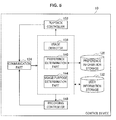
- FIG. 5 is a functional block diagram showing a configuration of the control device 10 according to the first embodiment.
- the control device 10 includes a communication part 124, a preference information storage 128, a user information storage 132, a usage detector 136, a preference determination part 140, a usage purpose determination part 144, a recording controller 148, and a playback controller 152.
- the communication part 124 is an interface to another device included in the control system. For example, the communication part 124 receives information indicating content output by the display device 40 from the display device 40, and receives information indicating an application usage status in the communication terminal 30 from the communication terminal 30. Further, the communication part 124 transmits an instruction to record content and an instruction to play back content to the recording device 20.
- the preference information storage 128 stores preference information for each user.
- the preference information storage 128 stores preference for each user about a genre or an actor/actress regarding content.
- the preference information of each user can be acquired from a past content viewing history.
- the preference information storage 128 may be a storage medium such as non-volatile memory, a magnetic disk, an optical disc, and an MO disk.
- the preference information storage 128 and the user information storage 132 are shown as separate functional blocks in FIG. 5 , the function of the preference information storage 128 and the function of the user information storage 132 may be achieved with a single storage medium.
- the user information storage 132 stores a user, a communication terminal 30, and a display device 40 in association with each other. Since the association of the user, the communication terminal 30, and the display device 40 has been described in "1-1. Overview of first embodiment" with reference to FIG. 2 , the detailed description will be omitted here.
- the usage detector 136 detects use of an application on the communication terminal 30 on the basis of information received by the communication part 124 from the communication terminal 30.
- the communication part 124 receives information indicating an application that is being used in the communication terminal 30, and the usage detector 136 detects, on the basis of the information, use of a telephone application or an e-mail application on the communication terminal 30.
- the use of application includes use responding to reception processing performed by the communication terminal 30, and use for transmission processing performed by the communication terminal 30.
- Examples of the use responding to reception processing performed by the communication terminal 30 include start of telephone communication responding to an incoming call from another communication terminal (use of telephone application), viewing of an incoming e-mail responding to reception of the e-mail (use of e-mail application), and viewing of a web page responding to acquisition of the web page (use of browsing application).
- examples of the use for transmission processing performed by the communication terminal 30 include an acceptance of an operation for performing outgoing call to another communication terminal (use of telephone application), creation of an outgoing e-mail (use of e-mail application), and designation of a web page to be acquired (use of browsing application).
- the preference determination part 140 determines whether content that is being output on the display device 40 matches preference of a user of the communication terminal 30 from which use of an application is detected, by referring to preference information of the user stored in the preference information storage 128.
- the usage purpose determination part 144 determines whether the usage purpose of the application detected by the usage detector 136 relates to content that is being output on the display device 40. For example, the usage purpose determination part 144 determines whether a keyword designated as a search word of the browsing application or a term included in an outgoing e-mail which is being created in the e-mail application relates to the content that is being output on the display device 40.
- the recording controller 148 controls content recording processing performed by the recording device 20, that is, the recording controller 148 controls recording. For example, on the basis of a detection result obtained by the usage detector 136 and a determination result obtained by the preference determination part 140 and the usage purpose determination part 144, the recording controller 148 issues an instruction to record content that is being output on the display device 40 to the recording device 20. The detail will be described later, and the recording controller 148 issues an instruction to record content in the case where it is estimated that the attention of the user wanders off from the content that is being output on the display device 40 on the basis of the detection result obtained by the usage detector 136, and the determination results obtained by the preference determination part 140 and the usage purpose determination part 144.
- the recording controller 148 may issue an instruction to stop recording the content at the time point that the attention of the user returns to the display device 40, or may cause the recording device 20 to continue recording until the end of the content for performing chasing playback.
- the recording controller 148 may determine whether to stop or continue the recording on the basis of the contents set in advance.
- the playback controller 152 controls playback processing of content recorded by the recording device 20. For example, in the case where, after the attention of the user has wandered off from the display device 40 and the recording processing has started, the attention of the user has returned to the display device 40, for example, in the case where the use of the application has terminated, the playback controller 152 issues an instruction to perform chasing playback of the content recorded in the recording processing to the recording device 20.
- the playback controller 152 determines which of the display device 40 and the user's communication terminal 30 is to output the content, in accordance with whether there is another user viewing the content on the display device 40. A specific flow will be described in "1-5. Control operation of playback processing".
- control device 10 the configuration of the control device 10 according to the present embodiment has been described. Next, a control operation of recording processing will be described.
- FIG. 6 is a flowchart showing a first control example of recording processing.
- the recording controller 148 issues an instruction to record content that is being output on the display device 40 associated with the communication terminal 30 through the communication part 124 to the recording device 20 (S308).
- the recording controller 148 determines whether the usage time period of the communication terminal 30 has been more than a given time period (S316).
- the recording controller 148 may determine the termination of the use of the communication terminal 30 based on the termination of e-mail transmission for an e-mail application and based on the termination of telephone communication for a telephone application. Further, in the case where an attitude indicating that the communication terminal 30 is placed on something is detected, the recording controller 148 may determine that the use of the communication terminal 30 is terminated.
- the recording controller 148 issues an instruction to delete the recorded data to the recording device 20 (S320). Note that it is also possible to add the following to the determination condition: whether the line of sight of the user turns toward the display device 40 by performing facial recognition on an image obtained by the imaging part 42 of the display device 40.
- the recording controller 148 issues an instruction to save the recorded data and to record a usage log to the recording device 20 (S324).
- the usage log will be described in detail with reference to FIG. 7 .
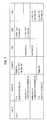
- FIG. 7 is an explanatory diagram showing a specific example of a usage log.
- the usage log indicates usage purposes and usage periods of a communication terminal 30 detected during output of content.
- the usage log shown in FIG. 7 indicates that while the display device 40 outputs Digital_8ch, the telephone application of the communication terminal 30 of the user A has been used.
- this usage log can be visually presented to the user.
- the control device 10 may acquire the usage log from the recording device 20 and, as shown in FIG. 8 , may cause the display device 40 or the communication terminal 30 to display the usage history of the communication terminal 30 on a time line. According to such a configuration, the user can intuitively grasp the usage history of the communication terminal 30.
- the control device 10 may cause the communication terminal 30 to display a screen showing a notice of executing content recording as shown in FIG. 9 , and may control the recording processing in accordance with an operation input performed by the user on the relevant screen.
- the control device 10 may issue an instruction to stop recording to the recording device 20. According to such a configuration, it becomes possible to notify the user that the recording is being performed and also to reflect the user's intention on the recording control.
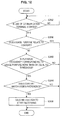
- FIG. 10 is a flowchart showing a second control example of recording processing.
- the usage detector 136 detects start of use of a communication terminal 30 (S352)
- the usage purpose determination part 144 determines whether a usage purpose of the communication terminal 30 detected by the usage detector 136 relates to content that is being output on the display device 40 (S356).
- the control device 10 does not issue an instruction to record the content.
- the usage purpose determination part 144 determines whether the playback frequency corresponding to the usage purpose of the communication terminal 30 is more than or equal to a threshold (S360). For example, in the case where the usage purpose of the communication terminal 30 is the use of the telephone application, the playback frequency corresponding to the use of the telephone application is "72%" as shown in FIG. 4 , and the threshold is 50%, the usage purpose determination part 144 determines that the playback frequency corresponding to the usage purpose of the communication terminal 30 is more than or equal to the threshold.
- the control device 10 does not issue an instruction to record the content.
- the preference determination part 140 determines whether the content that is being output on the display device 40 matches the preference of the user of the communication terminal 30 (S364).
- the control device 10 does not issue an instruction to record the content.
- the recording controller 148 issues an instruction to record the content that is being output on the display device 40 to the recording device 20 (S368).
- the recording controller 148 issues an instruction to record the content that is being output on the display device 40 to the recording device 20 (S368).
- FIG. 11 is a flowchart showing a control operation of playback processing. To be more specific, as described in "1-4. Control operation of recording processing", FIG. 11 shows a control operation in the case where, after the attention of the user A has wandered off from the display device 40 and the recording processing has started, the attention of the user A has returned to the display device 40.
- the playback controller 152 determines whether the user B is viewing content on the display device 40 (S404).
- the playback controller 152 can perform the determination using various techniques. For example, in the case where the usage detector 136 detects the use of the user B's communication terminal 30, it is considered that the attention of the user B wanders off from the display device 40, so the playback controller 152 may determine that the user B is not viewing the content on the display device 40. However, even if the user B uses the communication terminal 30, in the case where the relevant use relates to the content being output on the display device 40, it may be determined that the user B is viewing the content on the display device 40. Further, the playback controller 152 may perform the determination on the basis of whether the user B's communication terminal 30 is included in a LAN including the control device 10. Still further, the playback controller 152 can perform the determination using other absence detection technology or facial recognition technology.
- the playback controller 152 causes the user A's communication terminal 30 to display a chasing playback selection message as a confirmation screen for playing back content (S408).
- the playback controller 152 causes the user A's communication terminal 30 to display the content recorded by the recording device 20 (S416).
- the playback controller 152 may transmit the content received from the recording device 20 to the communication terminal 30, or may issue an instruction, to the recording device 20, to transmit the content to the communication terminal 30.
- the playback controller 152 may automatically start the playback of the content on the user A's communication terminal 30 without causing the user A's communication terminal 30 to display the chasing playback selection message. Further, even in the case where it is determined that the user B is viewing the content on the display device 40, the playback controller 152 may start the playback of the content on the display device 40 if an agreement from the user B has been confirmed. Further, the user may select a chapter from which the user wants to start watching from the chasing playback selection message. Further, the user may select a device to play back the content from the chasing playback selection message. In this case, the playback controller 152 causes the selected device to play back the content after the detection of the activation of the selected device.
- the chasing playback may be performed in normal playback speed, and may also be time reduction playback.
- Examples of the time reduction playback include digest playback, commercial skip playback, and fast-forward playback.
- the communication terminal 30 may display the fact that the playback position has been caught up. After that, according to such a configuration, multiple users can view the content played back by the display device 40 together. Further, in the case where the communication terminal 30 displays the content while the user operates the communication terminal 30, the content may be displayed on a small screen placed at a part of the display screen.
- the playback controller 152 causes the display device 40 to display a chasing playback selection message (S420).
- the playback controller 152 causes the display device 40 to display the content recorded by the recording device 20 (S428).
- the playback controller 152 may transmit the content received from the recording device 20 to the display device 40, or may issue an instruction, to the recording device 20, to transmit the content to the display device 40.
- the playback controller 152 may automatically start the playback of the content on the display device 40 without causing the display device 40 to display the chasing playback selection message. Further, the user may select a chapter from which the user wants to start watching from the chasing playback selection message. Further, the user may select a device to play back the content from the chasing playback selection message. In this case, the playback controller 152 causes the selected device to play back the content after the detection of the activation of the selected device. Further, the chasing playback may be performed in normal playback speed, and may also be time reduction playback.
- the display device 40 may display the content on a small screen placed at a part of the display screen.
- the first embodiment of the present disclosure has been described.
- a second embodiment of the present disclosure will be described.
- the example of recording content in accordance with the use of the communication terminal 30 has been described.
- a usage log that functions as timing data in accordance with the use of the communication terminal 30 can be recorded.
- the second embodiment will be described.
- FIG. 12 is an explanatory diagram showing a control system according to the second embodiment.
- the control system according to the second embodiment includes a communication network 12, a communication terminal 30, a display device 40, a control server 50, and a streaming server 60.
- the communication terminal 30, the display device 40, the control server 50, and the streaming server 60 are connected to each other through the communication network 12.
- the communication network 12 is a wired or wireless transmission path for information transmitted from devices connected to the communication network 12.
- the communication network 12 may include a public line network such as the Internet, a telephone line network, or a satellite communication network, a local area network (LAN) including Ethernet (registered trademark), or a wide area network (WAN).
- the communication network 12 may also include a leased line network such as the Internet protocol-virtual private network (IP-VPN).
- IP-VPN Internet protocol-virtual private network
- the communication terminal 30 has one or two or more applications, and performs communication corresponding to the application.
- the display device 40 is an example of a content output device which outputs content including a video and an audio, and performs video display of content, audio output of content, and the like. Further, the display device 40 includes an imaging part 42 which images a range that the display device 40 is capable of viewing. Such communication terminal 30 and display device 40 are described in the first embodiment, therefore, the detailed description will be omitted here.
- the streaming server 60 stores content, and stream-distributes the stored content.
- the content distributed from the streaming server 60 is output by the display device 40, for example.
- the streaming server 60 may start stream-distribution of the designated content in response to a request from the communication terminal 30, the display device 40, or the control server 50.
- the control server 50 associates the communication terminal 30 with the display device 40, and, on the basis of information obtained from the communication terminal 30, the control server 50 controls recording processing and playback processing related to content.
- the association of the communication terminal 30 with the display device 40 is as described in the first embodiment, therefore, there will be briefly described hereinafter the control of the recording processing and the control of the playback processing.
- the control server 50 is shown as a separate device from the display device 40 and the streaming server 60, but a part of or the entire functions of the control server 50 can be implemented on another device such as the display device 40 and the streaming server 60.
- the attention of the user wanders off from the display device 40 and the user misses the content.
- the user uses the telephone application in response to an incoming call to the communication terminal 30, there is a case where the user misses the content that is output during the phone call.
- the control server 50 records a usage log including timing data corresponding to the timing at which the use of the application of the communication terminal 30 associated with the display device 40 is detected.
- the control server 50 records a usage log indicating a timing at which the use of the application of the communication terminal 30 is started, and a timing at which the use of the application is terminated.
- the control server 50 issues, to the streaming server 60, an instruction to perform chasing playback of the content of which the control server 50 has recorded the usage log.
- control server 50 determines which of the display device 40 and the user's communication terminal 30 is to output the content, in accordance with whether there is another user viewing the content on the display device 40. Note that the detail of the playback processing will be described in "2-2. Configuration of control server” and "2-3. Operation of control system".
- control server 50 included in the control system according to the second embodiment.
- FIG. 13 is a functional block diagram showing a configuration of the control server 50 according to the second embodiment.
- the control server 50 includes a communication part 524, a preference information storage 128, a user information storage 132, a usage detector 136, a preference determination part 140, a usage purpose determination part 144, a usage log recording part 548, a usage log storage 550, and a playback controller 552.
- the preference information storage 128, the user information storage 132, the usage detector 136, the preference determination part 140, and the usage purpose determination part 144 are as described in the first embodiment, the detailed description will be omitted here.
- the communication part 524 is an interface to another device included in the control system. For example, the communication part 524 receives information indicating content output by the display device 40 from the display device 40 or the streaming server 60, and receives information indicating an application usage status in the communication terminal 30 from the communication terminal 30. Further, the communication part 524 transmits an instruction to play back content to the streaming server 60.
- the usage log recording part 548 stores a usage log indicating a usage history of the communication terminal 30 in the usage log storage 550.
- the usage log recording part 548 stores, in the usage log storage 550, the usage log related to the content that is being output on the display device 40, on the basis of a detection result obtained by the usage detector 136 and a determination result obtained by the preference determination part 140 and the usage purpose determination part 144.
- the usage log recording part 548 records the usage log in the usage log storage 550 in the case where it is estimated that the attention of the user wanders off from the content that is being output on the display device 40 on the basis of the detection result obtained by the usage detector 136, and the determination results obtained by the preference determination part 140 and the usage purpose determination part 144.
- the usage log recording part 548 may record the usage log in the usage log storage 550 in the case where the content which is likely to be played back by the user afterward is output. Note that, since the determination on whether the attention of the user wanders off from the content that is being output on the display device 40 and determination on the probability that the user plays back the content afterward are as described in "1-4. Control operation of recording processing", the detailed description will be omitted here.
- the usage log storage 550 stores a user, content, and a usage log of the communication terminal 30 in association with each other. With reference to FIG. 14 , the usage log will be described specifically.
- FIG. 14 is an explanatory diagram showing a specific example of a usage log according to the second embodiment.
- the usage log indicates the usage purpose and the usage period of the communication terminal 30 detected during output of content.
- the usage log shown in FIG. 14 indicates that the display device 40 is outputting content #X during the time period from 14:00:00 to 14:59:50, and a telephone application of the user A's communication terminal 30 has been used during the time period from 14:35:40 to 14:55:10. Based on this usage log, it can be estimated that the attention of the user A has been wandered off from the display device 40 during the time period from 35 minutes 40 seconds to 55 minutes 10 seconds from the playback start position of the content #X.
- FIG. 14 expresses the timing data in absolute time, the timing data may be expressed based on the content playback start time.
- control server 50 may cause the communication terminal 30 to display a screen showing a notice of executing recording of the usage log as shown in FIG. 15 , and may manage the usage log in accordance with an operation input performed by the user on the relevant screen.
- the control server 50 may erase the usage log. According to such a configuration, it becomes possible to notify the user that the recording of the usage log is being executed, and also to reflect the user's intention on the management of the usage log.
- the playback controller 552 controls streaming distribution performed by the streaming server 60. For example, in the case where, after the attention of the user has wandered off from the display device 40 and the recording of the usage log of the communication terminal 30 and the content in association with each other has been performed, the attention of the user has returned to the display device 40, for example, in the case where the use of the application has terminated, the playback controller 552 issues an instruction to perform chasing playback of the content associated with the usage log to the streaming server 60.
- the playback controller 552 determines which of the display device 40 and the user's communication terminal 30 is to output the content, in accordance with whether there is another user viewing the content on the display device 40.
- control server 50 According to the second embodiment, the configuration of the control server 50 according to the second embodiment has been described. Next, an operation related to playback of a control system according to the second embodiment will be described.
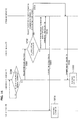
- FIG. 16 is an explanatory diagram showing an operation of the control system according to the second embodiment.
- the communication terminal 30 sends a request to perform chasing playback of content to the control server 50 (S508).
- the playback controller 552 of the control server 50 determines whether the user B is viewing the content on the display device 40 (S512).
- the playback controller 552 can perform the determination using various techniques. For example, in the case where the usage detector 136 detects the use of the user B's communication terminal 30, it can be considered that the attention of the user B wanders off from the display device 40, so the playback controller 152 may determine that the user B is not viewing the content on the display device 40. However, even if the user B uses the communication terminal 30, in the case where the relevant use relates to the content being output on the display device 40, it may be determined that the user B is viewing the content on the display device 40. Further, the playback controller 552 may perform the determination using other absence detection technology or facial recognition technology.
- the playback controller 552 sends, to the streaming server 60, a request to perform chasing playback of the content on the display device 40 (S516).
- the playback controller 552 sends, to the streaming server 60, a request to perform chasing playback on the display device 40 of a data portion from 35 minutes 40 seconds to 55 minutes 10 seconds of the content #X.
- the streaming server 60 starts streaming distribution of the data portion from 35 minutes 40 seconds to 55 minutes 10 seconds of the content #X to the display device 40 (S520), and the display device 40 starts playback of the content #X (S524).
- the playback controller 552 sends, to the streaming server 60, a request to perform chasing playback of the content on the communication terminal 30 (S528).
- the playback controller 552 sends, to the streaming server 60, a request to perform chasing playback on the communication terminal 30 of a data portion from 35 minutes 40 seconds to 55 minutes 10 seconds of the content #X.
- the streaming server 60 starts streaming distribution of the data portion from 35 minutes 40 seconds to 55 minutes 10 seconds of the content #X to the display device 40 (S532), and the communication terminal 30 starts playback of the content #X (S536).
- the communication terminal 30 displays a chasing playback confirmation screen for confirming whether to perform chasing playback to the user (S505), and, in the case where the user issues an instruction to perform the chasing playback on the chasing playback confirmation screen, the communication terminal 30 may send a request to perform chasing playback to the control server 50 (S506, S508). Further, in the chasing playback confirmation screen, it is also possible to select a device on which the content is to be played back.
- the chasing playback described above may be performed in normal playback speed, and may also be time reduction playback.
- Examples of the time reduction playback include digest playback and commercial skip playback.
- the control server 50 stores information indicating positions of a digest portion and a commercial portion in the content.
- FIG. 19 is an explanatory diagram showing an operation example of time reduction playback. As shown in FIG. 19 , in the case where the user issues an instruction to perform digest playback or commercial skip playback while the communication terminal 30 plays back the content #X, the communication terminal 30 sends a request to perform the digest playback or the commercial skip playback to the control server 50 (S544).
- the control server 50 refers to the information indicating the positions of the digest portion and the commercial portion, sets one section of the digest portion or one section of content between commercials as a first block, and sends a request to perform streaming to the streaming server 60 (S548).
- the streaming server 60 transmits the first block of the content to the communication terminal 30 in response to the request from the control server 50 (S552), and the communication terminal 30 plays back the first block of the content (S556).
- control server 50 sets the next section of the digest portion or one section of content between the next commercials as a second block, and sends a request to perform streaming to the streaming server 60 (S560).
- the streaming server 60 transmits the second block of the content to the communication terminal 30 in response to the request from the control server 50 (S564), and the communication terminal 30 plays back the second block of the content (S568).
- the time reduction playback such as the digest playback or the commercial skip playback is achieved.
- control device 10 and the control server 50 control recording processing related to content in the case where the attention of the user wanders off from the display device 40 or in the case where it is considered that the probability that the user plays back the recorded content afterward is high. According to such a configuration, it becomes possible for the user to view afterward the part of the content that the user has missed.
- the respective steps included in the processing of the control device 10 and the control server 50 according to the present specification are not necessarily processed in a time-series order in accordance with the sequence diagram or the flowcharts.
- the respective steps included in the processing of the control device 10 and the control server 50 may be processed in different order from the flowcharts or may be processed in a parallel manner.
- a computer program for causing hardware such as a CPU, ROM, and RAM, which are built in the control device 10 and the control server 50, to exhibit substantially the same functions as those of respective structures of the control device 10 and the control server 50 described above. Further, there is also provided a storage medium having the computer program stored therein.
- present technology may also be configured as below.
Landscapes
- Engineering & Computer Science (AREA)
- Signal Processing (AREA)
- Multimedia (AREA)
- Databases & Information Systems (AREA)
- Computer Networks & Wireless Communication (AREA)
- Automation & Control Theory (AREA)
- Social Psychology (AREA)
- Health & Medical Sciences (AREA)
- General Health & Medical Sciences (AREA)
- General Engineering & Computer Science (AREA)
- Two-Way Televisions, Distribution Of Moving Picture Or The Like (AREA)
- Information Transfer Between Computers (AREA)
- Television Signal Processing For Recording (AREA)
- Telephone Function (AREA)
Applications Claiming Priority (2)
| Application Number | Priority Date | Filing Date | Title |
|---|---|---|---|
| JP2012081698 | 2012-03-30 | ||
| PCT/JP2013/053945 WO2013145936A1 (fr) | 2012-03-30 | 2013-02-19 | Dispositif de commande, procédé de commande, programme et système de commande |
Publications (2)
| Publication Number | Publication Date |
|---|---|
| EP2833626A1 true EP2833626A1 (fr) | 2015-02-04 |
| EP2833626A4 EP2833626A4 (fr) | 2016-05-04 |
Family
ID=49259218
Family Applications (1)
| Application Number | Title | Priority Date | Filing Date |
|---|---|---|---|
| EP13768028.6A Ceased EP2833626A4 (fr) | 2012-03-30 | 2013-02-19 | Dispositif de commande, procédé de commande, programme et système de commande |
Country Status (4)
| Country | Link |
|---|---|
| US (1) | US9407952B2 (fr) |
| EP (1) | EP2833626A4 (fr) |
| JP (1) | JP6105555B2 (fr) |
| WO (1) | WO2013145936A1 (fr) |
Cited By (1)
| Publication number | Priority date | Publication date | Assignee | Title |
|---|---|---|---|---|
| EP2905967A4 (fr) * | 2013-11-05 | 2016-03-02 | Huawei Device Co Ltd | Procédé de commutation de dispositif de lecture, et terminal mobile |
Families Citing this family (18)
| Publication number | Priority date | Publication date | Assignee | Title |
|---|---|---|---|---|
| US9357159B2 (en) | 2011-08-23 | 2016-05-31 | Echostar Technologies L.L.C. | Grouping and presenting content |
| US9185331B2 (en) | 2011-08-23 | 2015-11-10 | Echostar Technologies L.L.C. | Storing multiple instances of content |
| US8660412B2 (en) | 2011-08-23 | 2014-02-25 | Echostar Technologies L.L.C. | System and method for dynamically adjusting recording parameters |
| US8437622B2 (en) | 2011-08-23 | 2013-05-07 | Echostar Technologies L.L.C. | Altering presentation of received content based on use of closed captioning elements as reference locations |
| US8447170B2 (en) | 2011-08-23 | 2013-05-21 | Echostar Technologies L.L.C. | Automatically recording supplemental content |
| US9621946B2 (en) | 2011-08-23 | 2017-04-11 | Echostar Technologies L.L.C. | Frequency content sort |
| US8627349B2 (en) | 2011-08-23 | 2014-01-07 | Echostar Technologies L.L.C. | User interface |
| US9489981B2 (en) | 2012-03-15 | 2016-11-08 | Echostar Technologies L.L.C. | Successive initialization of television channel recording |
| US8819722B2 (en) | 2012-03-15 | 2014-08-26 | Echostar Technologies L.L.C. | Smartcard encryption cycling |
| US8793724B2 (en) | 2012-11-08 | 2014-07-29 | Eldon Technology Limited | Image domain compliance |
| JP6236875B2 (ja) * | 2013-05-24 | 2017-11-29 | 富士通株式会社 | コンテンツ提供プログラム,コンテンツ提供方法及びコンテンツ提供装置 |
| US9628838B2 (en) | 2013-10-01 | 2017-04-18 | Echostar Technologies L.L.C. | Satellite-based content targeting |
| JP2015136020A (ja) * | 2014-01-16 | 2015-07-27 | Necパーソナルコンピュータ株式会社 | 情報処理装置、制御方法、及びプログラム |
| WO2015190566A1 (fr) * | 2014-06-13 | 2015-12-17 | シャープ株式会社 | Dispositif de distribution de publicité, système de distribution de publicité, procédé de distribution de publicité, programme de distribution de publicité, dispositif d'affichage de contenu, programme d'affichage de contenu, terminal de traitement d'informations, et programme de traitement d'informations |
| CN104270668B (zh) * | 2014-09-26 | 2018-03-20 | 广州创维平面显示科技有限公司 | 一种视频内容续播方法与系统 |
| US9833723B2 (en) * | 2014-12-31 | 2017-12-05 | Opentv, Inc. | Media synchronized control of peripherals |
| US9756378B2 (en) | 2015-01-07 | 2017-09-05 | Echostar Technologies L.L.C. | Single file PVR per service ID |
| US9898654B2 (en) * | 2016-03-29 | 2018-02-20 | International Business Machines Corporation | Translating procedural documentation into contextual visual and auditory guidance |
Family Cites Families (16)
| Publication number | Priority date | Publication date | Assignee | Title |
|---|---|---|---|---|
| JPH07130150A (ja) * | 1993-10-29 | 1995-05-19 | Ricoh Co Ltd | 情報機器 |
| JP2001339648A (ja) * | 2000-05-25 | 2001-12-07 | Hitachi Ltd | デジタル放送受信装置 |
| JP2002077323A (ja) * | 2000-08-29 | 2002-03-15 | Sony Corp | 通信制御装置、方法、記録媒体 |
| JP2002218363A (ja) * | 2001-01-22 | 2002-08-02 | Nec Corp | 放送自動記録方法、装置、プログラム及び記録媒体 |
| WO2002059785A1 (fr) * | 2001-01-23 | 2002-08-01 | Sony Corporation | Procede et appareil de communication, dispositif electronique et son procede de controle, et support d'enregistrement |
| JP2004206679A (ja) * | 2002-12-12 | 2004-07-22 | Sony Corp | 情報処理装置および方法、記録媒体、並びにプログラム |
| JP2005123754A (ja) * | 2003-10-15 | 2005-05-12 | Nec Corp | 放送通信複合端末 |
| EP1765008B1 (fr) * | 2004-06-02 | 2015-07-29 | Panasonic Intellectual Property Management Co., Ltd. | Dispositif terminal mobile, procédé de contrôle de celui-ci, programme, et dispositif semi-conducteur |
| JP5048338B2 (ja) | 2004-12-06 | 2012-10-17 | 株式会社電通 | 広告システム |
| JP3862027B2 (ja) * | 2005-01-25 | 2006-12-27 | 船井電機株式会社 | 放送信号受信システム |
| JP2007096852A (ja) * | 2005-09-29 | 2007-04-12 | Toshiba Corp | リモートコントロールシステム、携帯電話及び画像表示装置 |
| EP1991002A4 (fr) | 2006-02-14 | 2009-07-15 | Nec Corp | Dispositif mobile dote de fonctions televion, procede d'accumulation d'information de programme et programme |
| JP4818060B2 (ja) * | 2006-10-13 | 2011-11-16 | シャープ株式会社 | 携帯通信端末 |
| US8369249B2 (en) * | 2008-12-19 | 2013-02-05 | At&T Intellectual Property I, L.P. | Apparatus and method for managing a presentation of media content |
| US9014546B2 (en) * | 2009-09-23 | 2015-04-21 | Rovi Guides, Inc. | Systems and methods for automatically detecting users within detection regions of media devices |
| JP5541487B2 (ja) | 2009-11-27 | 2014-07-09 | ソニー株式会社 | 表示制御装置、及び、表示制御システム |
-
2013
- 2013-02-19 US US14/387,459 patent/US9407952B2/en not_active Expired - Fee Related
- 2013-02-19 WO PCT/JP2013/053945 patent/WO2013145936A1/fr not_active Ceased
- 2013-02-19 JP JP2014507514A patent/JP6105555B2/ja not_active Expired - Fee Related
- 2013-02-19 EP EP13768028.6A patent/EP2833626A4/fr not_active Ceased
Cited By (1)
| Publication number | Priority date | Publication date | Assignee | Title |
|---|---|---|---|---|
| EP2905967A4 (fr) * | 2013-11-05 | 2016-03-02 | Huawei Device Co Ltd | Procédé de commutation de dispositif de lecture, et terminal mobile |
Also Published As
| Publication number | Publication date |
|---|---|
| US20150040166A1 (en) | 2015-02-05 |
| JP6105555B2 (ja) | 2017-03-29 |
| JPWO2013145936A1 (ja) | 2015-12-10 |
| EP2833626A4 (fr) | 2016-05-04 |
| US9407952B2 (en) | 2016-08-02 |
| WO2013145936A1 (fr) | 2013-10-03 |
Similar Documents
| Publication | Publication Date | Title |
|---|---|---|
| EP2833626A1 (fr) | Dispositif de commande, procédé de commande, programme et système de commande | |
| US9635409B2 (en) | Playback device, playback method, and recording medium | |
| US9445143B2 (en) | Transferring a broadcast transmission to a remote device | |
| US12530168B2 (en) | Selecting options by uttered speech | |
| EP3416395A1 (fr) | Système de lecture automatique utilisé à des fins commerciales | |
| CN105578267A (zh) | 终端装置及其信息提供方法 | |
| US20150249851A1 (en) | Controlling method, server, and terminal for cloud sharing of terminal data | |
| KR20130033044A (ko) | 컨텐츠 공유 방법 및 그를 이용한 영상 표시 장치 | |
| US20160150284A1 (en) | Dynamic channel selection for live and previously broadcast content | |
| WO2017088404A1 (fr) | Procédé et appareil de commutation de programme de radiodiffusion à programme sur demande | |
| CN103533394A (zh) | 信息推送方法、装置和服务器 | |
| CN102193794A (zh) | 链接实时媒体情境到相关的应用程序和服务 | |
| US7508450B1 (en) | Method for closed captioning of audio video content on a portable playback device | |
| US8898259B2 (en) | Bookmarking system | |
| KR101615930B1 (ko) | 시청자들이 텔레비전에서 무엇을 시청하고 있는지 식별하기 위한 멀티미디어 검색 사용 | |
| CN105376588A (zh) | 一种视频直播方法、装置及电子设备 | |
| KR20190051379A (ko) | 전자 장치 및 그 제어 방법 | |
| CN103780951A (zh) | 一种在移动设备和其他设备中同时播放视频的方法和装置 | |
| CN105898363A (zh) | 视频播放的方法、服务器和终端设备 | |
| CN113099250B (zh) | 信息处理方法及电子设备 | |
| CN105430527B (zh) | 一种流媒体提醒方法及终端设备 | |
| EP2819421A1 (fr) | Dispositif de sortie vidéo, programme relatifs à des programmes de télévision et procédé de sortie vidéo | |
| WO2007125474A1 (fr) | configuration permettant de stocker UNE PARTIE D'informations audio / vidéo | |
| KR20160126483A (ko) | 디스플레이 장치 및 그의 디스플레이 방법 | |
| CN101563916B (zh) | 控制装置、电视视听装置、信息设备和控制方法 |
Legal Events
| Date | Code | Title | Description |
|---|---|---|---|
| PUAI | Public reference made under article 153(3) epc to a published international application that has entered the european phase |
Free format text: ORIGINAL CODE: 0009012 |
|
| 17P | Request for examination filed |
Effective date: 20141024 |
|
| AK | Designated contracting states |
Kind code of ref document: A1 Designated state(s): AL AT BE BG CH CY CZ DE DK EE ES FI FR GB GR HR HU IE IS IT LI LT LU LV MC MK MT NL NO PL PT RO RS SE SI SK SM TR |
|
| AX | Request for extension of the european patent |
Extension state: BA ME |
|
| DAX | Request for extension of the european patent (deleted) | ||
| RIC1 | Information provided on ipc code assigned before grant |
Ipc: H04N 7/173 20060101AFI20151203BHEP Ipc: H04N 5/76 20060101ALI20151203BHEP Ipc: H04M 11/00 20060101ALI20151203BHEP Ipc: G06F 13/00 20060101ALI20151203BHEP Ipc: H04Q 9/00 20060101ALI20151203BHEP |
|
| RA4 | Supplementary search report drawn up and despatched (corrected) |
Effective date: 20160404 |
|
| RIC1 | Information provided on ipc code assigned before grant |
Ipc: G06F 13/00 20060101ALI20160329BHEP Ipc: H04N 5/76 20060101ALI20160329BHEP Ipc: H04N 7/173 20060101AFI20160329BHEP Ipc: H04M 11/00 20060101ALI20160329BHEP Ipc: H04Q 9/00 20060101ALI20160329BHEP |
|
| 17Q | First examination report despatched |
Effective date: 20170329 |
|
| REG | Reference to a national code |
Ref country code: DE Ref legal event code: R003 |
|
| STAA | Information on the status of an ep patent application or granted ep patent |
Free format text: STATUS: THE APPLICATION HAS BEEN REFUSED |
|
| 18R | Application refused |
Effective date: 20200620 |