EP2834837B1 - Systèmes et méthodes d'acquisition séquentielle par fenêtres sur une gamme de masse grâce à un piège à ions - Google Patents
Systèmes et méthodes d'acquisition séquentielle par fenêtres sur une gamme de masse grâce à un piège à ions Download PDFInfo
- Publication number
- EP2834837B1 EP2834837B1 EP13772714.5A EP13772714A EP2834837B1 EP 2834837 B1 EP2834837 B1 EP 2834837B1 EP 13772714 A EP13772714 A EP 13772714A EP 2834837 B1 EP2834837 B1 EP 2834837B1
- Authority
- EP
- European Patent Office
- Prior art keywords
- mass
- ions
- windows
- adjacent
- overlapping
- Prior art date
- Legal status (The legal status is an assumption and is not a legal conclusion. Google has not performed a legal analysis and makes no representation as to the accuracy of the status listed.)
- Active
Links
Images







Classifications
-
- H—ELECTRICITY
- H01—ELECTRIC ELEMENTS
- H01J—ELECTRIC DISCHARGE TUBES OR DISCHARGE LAMPS
- H01J49/00—Particle spectrometers or separator tubes
- H01J49/0027—Methods for using particle spectrometers
-
- H—ELECTRICITY
- H01—ELECTRIC ELEMENTS
- H01J—ELECTRIC DISCHARGE TUBES OR DISCHARGE LAMPS
- H01J49/00—Particle spectrometers or separator tubes
- H01J49/0027—Methods for using particle spectrometers
- H01J49/0031—Step by step routines describing the use of the apparatus
-
- H—ELECTRICITY
- H01—ELECTRIC ELEMENTS
- H01J—ELECTRIC DISCHARGE TUBES OR DISCHARGE LAMPS
- H01J49/00—Particle spectrometers or separator tubes
- H01J49/004—Combinations of spectrometers, tandem spectrometers, e.g. MS/MS, MSn
-
- H—ELECTRICITY
- H01—ELECTRIC ELEMENTS
- H01J—ELECTRIC DISCHARGE TUBES OR DISCHARGE LAMPS
- H01J49/00—Particle spectrometers or separator tubes
- H01J49/26—Mass spectrometers or separator tubes
- H01J49/34—Dynamic spectrometers
- H01J49/36—Radio frequency spectrometers, e.g. Bennett-type spectrometers, Redhead-type spectrometers
-
- H—ELECTRICITY
- H01—ELECTRIC ELEMENTS
- H01J—ELECTRIC DISCHARGE TUBES OR DISCHARGE LAMPS
- H01J49/00—Particle spectrometers or separator tubes
- H01J49/26—Mass spectrometers or separator tubes
- H01J49/34—Dynamic spectrometers
- H01J49/42—Stability-of-path spectrometers, e.g. monopole, quadrupole, multipole, farvitrons
- H01J49/4205—Device types
- H01J49/422—Two-dimensional RF ion traps
Definitions
- a mass range of 400 to 1200 Daltons (Da) was divided into 32 adjacent 25 Dalton (Da) mass windows.
- a spectrum was accumulated for 100 milliseconds (ms) for each mass window using a quadrupole time-of-flight (TOF) mass spectrometer.
- the total time for the accumulation of a mass spectrum for the mass range was 3.2 seconds. In other words, the minimum time interval for the separation experiment was 3.2 seconds.
- the duty cycle or efficiency of a sequential windowed acquisition experiment is limited by the amount of time that is required to collect a TOF spectrum for a mass window that has the appropriate signal-to-noise ratio.
- quadrupole time-of-flight mass spectrometry still has a number of limitations. For example, the selection of each mass window involves a mass filtering step that is typically time consuming. In addition, the mass filtering step requires that a number of ions be wasted. As a result, if the ion flux from the source is low there may not be enough ions to obtain a spectrum with the desired signal-to-noise ratio for the entire mass range.
- US 2010/237237 A1 discloses a tandem ion trapping arrangement.
- US 2004/079874 A1 discloses a mass spectrometer, in which parent ions are fragmented and the resulting fragment ions are stored in two ion traps having different low mass cut-offs, thus enabling optimising the mass to charge ratio range of ions transmitted to a downstream mass analyser.
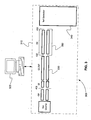
- FIG. 1 is a block diagram that illustrates a computer system 100, upon which embodiments of the present teachings may be implemented.
- Computer system 100 includes a bus 102 or other communication mechanism for communicating information, and a processor 104 coupled with bus 102 for processing information.
- Computer system 100 also includes a memory 106, which can be a random access memory (RAM) or other dynamic storage device, coupled to bus 102 for storing instructions to be executed by processor 104.
- Memory 106 also may be used for storing temporary variables or other intermediate information during execution of instructions to be executed by processor 104.
- Computer system 100 further includes a read only memory (ROM) 108 or other static storage device coupled to bus 102 for storing static information and instructions for processor 104.
- a storage device 110 such as a magnetic disk or optical disk, is provided and coupled to bus 102 for storing information and instructions.
- Computer system 100 may be coupled via bus 102 to a display 112, such as a cathode ray tube (CRT) or liquid crystal display (LCD), for displaying information to a computer user.
- a display 112 such as a cathode ray tube (CRT) or liquid crystal display (LCD)
- An input device 114 is coupled to bus 102 for communicating information and command selections to processor 104.
- cursor control 116 is Another type of user input device, such as a mouse, a trackball or cursor direction keys for communicating direction information and command selections to processor 104 and for controlling cursor movement on display 112.
- This input device typically has two degrees of freedom in two axes, a first axis (i.e., x) and a second axis (i.e., y), that allows the device to specify positions in a plane.
- a computer system 100 can perform the present teachings. Consistent with certain implementations of the present teachings, results are provided by computer system 100 in response to processor 104 executing one or more sequences of one or more instructions contained in memory 106. Such instructions may be read into memory 106 from another computer-readable medium, such as storage device 110. Execution of the sequences of instructions contained in memory 106 causes processor 104 to perform the process described herein. Alternatively hard-wired circuitry may be used in place of or in combination with software instructions to implement the present teachings. Thus implementations of the present teachings are not limited to any specific combination of hardware circuitry and software.
- Non-volatile media includes, for example, optical or magnetic disks, such as storage device 110.
- Volatile media includes dynamic memory, such as memory 106.
- Transmission media includes coaxial cables, copper wire, and fiber optics, including the wires that comprise bus 102.
- Computer-readable media include, for example, a floppy disk, a flexible disk, hard disk, magnetic tape, or any other magnetic medium, a CD-ROM, digital video disc (DVD), a Blu-ray Disc, any other optical medium, a thumb drive, a memory card, a RAM, PROM, and EPROM, a FLASH-EPROM, any other memory chip or cartridge, or any other tangible medium from which a computer can read.
- Various forms of computer readable media may be involved in carrying one or more sequences of one or more instructions to processor 104 for execution.
- the instructions may initially be carried on the magnetic disk of a remote computer.
- the remote computer can load the instructions into its dynamic memory and send the instructions over a telephone line using a modem.
- a modem local to computer system 100 can receive the data on the telephone line and use an infra-red transmitter to convert the data to an infra-red signal.
- An infra-red detector coupled to bus 102 can receive the data carried in the infra-red signal and place the data on bus 102.
- Bus 102 carries the data to memory 106, from which processor 104 retrieves and executes the instructions.
- the instructions received by memory 106 may optionally be stored on storage device 110 either before or after execution by processor 104.
- instructions configured to be executed by a processor to perform a method are stored on a computer-readable medium.
- the computer-readable medium can be a device that stores digital information.
- a computer-readable medium includes a compact disc read-only memory (CD-ROM) as is known in the art for storing software.
- CD-ROM compact disc read-only memory
- the computer-readable medium is accessed by a processor suitable for executing instructions configured to be executed.
- quadrupole time-of-flight mass spectrometry instruments allow a mass range to be accurately scanned within a small time interval of a separation experiment using multiple scans with adjacent or overlapping mass windows.
- a mass range of 400 to 1200 Daltons (Da) was divided into 32 adjacent 25 Dalton (Da) mass windows.
- a spectrum was accumulated for 100 milliseconds (ms) for each mass window. The total time for the accumulation of a mass spectrum for the entire mass range was, therefore, 3.2 seconds.
- sequential windowed acquisition is performed using an ion trap.
- an ion trap By using an ion trap, the time consuming mass filtering step is performed only once. Selection of mass windows is performed by the faster step of ejecting ions from the ion trap.
- An ion trap can be filled with all the ions from a mass range of 400 to 1200 Da in 111 ms, for example. This is the one mass filtering step. Each ejection of a 25 Da mass window of ions from the ion trap can be performed in 10 ms, for example. As a result, the total time for sequential windowed acquisition using an ion trap is 100 + 32 ⁇ 18 or 699 ms. This means that the duty cycle of sequential windowed acquisition using an ion trap is almost five times faster than the duty cycle of sequential windowed acquisition using a quadrupole time-of-flight, for example.
- an ion trap is used to collect ions within a mass range and to selectively eject the collected ions using two or more adjacent or overlapping mass windows that span a mass range.
- LIT linear ion trap
- a method for selective axial transport of ions in a linear ion trap (LIT) mass spectrometer is described in U.S. Patent No. 7,459,679 (hereinafter the "'679 patent"), for example.
- LIT linear ion trap
- '679 patent groups of ions having different mass-to-charge ratios are admitted into the LIT.
- a first group of ions having a first mass-to-charge ratio (m/z) is selected using a first radial excitement field and then ejected using an axial acceleration field.
- a second group of ions is ejected in the same manner.
- the m/z range of the first group of ions is disjoint from the m/z range of the second group of ions.
- the '679 patent therefore, describes ejecting groups of ions having different and disjoint m/z ranges at different times. Disjoint m/z ranges are m/z ranges that do not share a single m/z value or are m/z ranges that are not joined or adjacent, for example.
- the '679 patent does not suggest that the different m/z ranges of the ejected groups are selected to scan a continuous mass range of the ions admitted to the LIT. In other words, the '679 patent does not describe sequential windowed acquisition.
- a goal of sequential windowed acquisition is, for example, to quantify all species in a large mass range with the selectivity and specificity of a multiple reaction monitoring (MRM) experiment within a single analysis.
- Sequential windowed acquisition is, therefore, well suited for tandem mass spectrometry (MS/MS).
- MS/MS tandem mass spectrometry
- the ions selected in the different mass windows can be transferred to a collision cell for MS/MS fragmentation.
- the ion trap used for sequential windowed acquisition is a LIT.
- This LIT is similar to the LIT described in the '679 patent, for example.
- the LIT is used to collect ions within a large mass range, for example.
- a calculated amount of resolving direct current (DC) is applied to allow transmission of only those ions within the mass range.
- the LIT has the ability to selectively excite a trapped ion and then give it an axial push for ejection. This technique is called, for example, radial amplitude assisted transfer (RAAT).
- RAAT radial amplitude assisted transfer
- a wide mass range of ions can be excited in a RAAT trap by using a broadband excitation waveform, such as a filtered noise field (FNF).
- FNF filtered noise field
- the two or more mass windows that are used to eject ions and that span the mass range have the same mass width and are selected using variable excitation frequency ranges.
- the ions are trapped and cooled in a collision cell.
- the entire mass range is then transferred back to the LIT.
- RF radio frequency
- a first mass window to be ejected out of the LIT is from 400 to 425 Da, if uniform 25 Da windows are chosen.
- the mass at the center of that range (412.5 Da) can be set at a known q value (i.e. the LIT has a calibration q of 0.7045 and the drive frequency is 1.228 484 MHz).
- the first mass window therefore, requires a range of excitation frequencies from 355,925 Hz to 327,880 Hz.
- the last mass window, 1175 to 1200 Da requires a different range of excitation frequencies, however, and this range is decreased.
- Figure 2 is an exemplary table 200 that shows how the range of excitation frequencies decreases from the first mass window to the last mass window of two or more adjacent or overlapping mass windows that span a mass range, if each mass window of the two or more mass windows has the same mass width, in accordance with various embodiments.
- the decrease in the range of excitation frequencies is due to the fact that as the mass increases, the difference between q values calculated for two masses separated by 25 Da decreases.
- the two or more mass windows that are used to eject ions and that span the mass range have different mass widths and are selected using the same excitation frequency range.
- the frequency range is held constant and the mass window width is increased with increasing mass, for example. If the first mass window starts with a 25 Da (28,045 Hz) window width centered at 412.5 Da, then the last mass window that reaches 1200 Da has a mass width from 1129 to 1200 Da, or 71 Da, if the same excitation frequency range or waveform is used.
- the excitation frequency range is kept constant for a fraction of the mass range and then adjusted part way through the mass range.
- the mass range 400 to 1200 Da is split into two ranges: 400 to 800 Da and 800 to 1200 Da.
- the first range uses an excitation frequency range based on the mass window 400 to 425 Da while the second range would reset the frequency range to correspond to a 25 Da window ranging from 800 to 825 Da.
- the mass windows in first mass range vary from 25 Da (400 to 425 Da) up to 47.1 Da (752.9 to 800 Da).
- Allowing the mass widths of the different mass windows to vary instead of the excitation frequency range means the same waveform can be used for a number of windows. If the mass window is kept constant at a width of 25 Da then it is necessary to either re-construct the waveform each time or at least have a number of waveforms constructed and stored beforehand.
- the waveforms can be constructed using any standard technique for filtered noise fields.
- a RAAT LIT is used for sequential windowed acquisition.
- a radial excitement field is used to selected ions in each of the two or more mass windows and the ion are then ejected using an axial acceleration field.
- ions from two or more mass windows are ejected from a LIT using mass selective axial ejection (MSAE).
- MSAE mass selective axial ejection
- This technique is similar to RAAT, except that an axial field is not applied. Instead, the exit barrier is lowered in order to eject the ions of each mass window. For example, the exit barrier is lowered to a few volts or less.
- the excitation amplitudes are also decreased and the excitation periods are increased (at least a few tens of milliseconds).
- FIG. 3 is a schematic diagram of a mass spectrometry system 300 for sequential windowed acquisition, in accordance with various embodiments.
- System 300 includes mass spectrometer 310 and processor 320.
- Processor 320 is in communication with mass spectrometer 310.
- Processor 320 can be, but is not limited to, a computer, microprocessor, or any device capable of sending and receiving control signals and data to and from mass spectrometer 310 and processing data.
- Processor 320 instructs mass spectrometer 310 to perform a tandem mass spectrometry or MS/MS sequential windowed acquisition using a number of steps, for example.
- mass spectrometer 310 collects time-of-flight (TOF) mass spectrometry (MS) data for a sample. This is MS data collected in 100 ms, for example. A mass range of the MS data is selected for MS/MS.
- TOF time-of-flight
- MS mass spectrometry
- step 2 the radio frequency direct current (RFDC) component window is set on Q1 of mass spectrometer 310 in order to select ions in the mass range. This setting is applied in 1 ms, for example.
- step 3 Q2 of mass spectrometer 310 is filled with ions in the mass range and the ions are allowed to cool.
- the transfer and cooling of ions takes between 1 and 100 ms, for example.
- IQ1 and ST of mass spectrometer 310 are raised after the transfer of ions to Q2 in order to turn off the ion beam.
- Figure 4 is a schematic diagram depicting the location 400 of the ions of the selected mass range after step 3 of the MS/MS sequential windowed acquisition, in accordance with various embodiments.
- step 4 the ions in the selected mass range are transferred back to Q1 of mass spectrometer 310.
- Q1 is a LIT/RAAT, for example.
- the ions are transferred in 10 ms, for example.
- Figure 5 is a schematic diagram depicting the location 500 of the ions of the selected mass range during step 4 of the MS/MS sequential windowed acquisition, in accordance with various embodiments.
- step 5 the RF amplitude on Q1 of mass spectrometer 310 is adjusted to an appropriate level for the application of an excitation waveform to select ions of a mass window for MS/MS.
- the DC offset of Q2 of mass spectrometer 310 is adjusted to give a desired collision energy, and IQ3 is also adjusted. IQ3 is raised to provide a barrier for the trapping of ions in the Q2 collision cell.
- Figure 6 is a schematic diagram depicting the location 600 of the ions of the selected mass range after step 5 of the MS/MS sequential windowed acquisition, in accordance with various embodiments.
- step 6 the ions of the selected mass window are excited to a high radial amplitude.
- the ions are excited in 5 ms, for example.
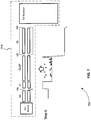
- Figure 7 is a schematic diagram depicting the location 700 of the ions of the selected mass range after step 6 of the MS/MS sequential windowed acquisition, in accordance with various embodiments.
- step 7 radial excitation is turned off and IQ2 of mass spectrometer 310 is adjusted to a desired level. These changes are made in 1 ms, for example.
- step 8 an axial field is turned on to eject the ions of the selected mass window from Q1 of mass spectrometer 310. Only those ions that are excited in step 6 to a higher radial amplitude feel the force of the pulsed axial field.
- the ions are sent to Q2 of mass spectrometer 310 where they are fragmented through high energy collisions.
- Q2 is a collision cell, for example.
- Step 8 is performed in 1 ms, for example.
- Figure 8 is a schematic diagram depicting the location 800 of the ions of the selected mass range during step 8 of the MS/MS sequential windowed acquisition, in accordance with various embodiments.
- TOF MS/MS data is collected for the ions of the selected mass window.
- the data is collected in 10 ms, for example.
- Figure 9 is a schematic diagram depicting the location 900 of the ions in an accelerator region (not shown) of the time-of-flight section of a mass spectrometer during the MS/MS sequential windowed acquisition, in accordance with various embodiments.
- Steps 5-9 are repeated until data is collected for all ions of the mass windows that span the selected mass range. Steps 2-4 require between 12 and 111 ms, for example. Each repeat of steps 5-9 requires 18 ms, for example.
- a quadrupole time-of-flight mass spectrometer requires about 3.2 s to collect the same MS/MS spectra. Therefore, MS/MS sequential windowed acquisition with an ion trap time-of-flight mass spectrometer is approximately 5 times faster than MS/MS sequential windowed acquisition with triple quadrupole. Also, the improvement of the duty cycle using an ion trap in comparison to quadrupole time-of-flight mass spectrometer increases nonlinearly as the mass widths of the two or more mass windows are decreased.
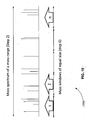
- the two or more mass windows selected in step 6 and used to span the mass range selected in step 2 can have uniform mass widths.
- the two or more mass windows selected in step 6 can have varying mass widths.
- Figure 10 is exemplary diagram 1000 depicting n mass windows that span a mass range and have uniform mass widths, in accordance with various embodiments.
- Figure 11 is exemplary diagram 1100 depicting n mass windows that span a mass range and have variable mass widths, in accordance with various embodiments.
- system 300 includes mass spectrometer 310 and processor 320.
- Mass spectrometer 310 includes ion trap 330, mass analyzer 340, and collision cell 350.
- Ion trap 330 is shown as a LIT. Ion trap 330, however, can be any type of ion trap. Other types of ion traps can include, but are not limited to, 3-D ion traps, toroidal ion traps, and electrostatic ion traps.
- Mass analyzer 340 is shown as a TOF mass analyzer. Similarly, mass analyzer 340 can be any type of mass analyzer.
- Mass analyzers can include, but are not limited to, linear ion traps, 3-D ion traps, electrostatic ion traps, or penning ion traps.
- Collision cell 350 is shown as a quadrupole. Similarly, collision cell 350 can be any type of collision cell.
- Processor 320 receives a mass range and a mass window width parameter for a sample.
- Processor 320 instructs mass spectrometer 310 to collect in ion trap 330 a plurality of ions from the sample that are within the mass range.
- Processor 320 calculates two or more adjacent or overlapping mass windows that span a mass range using the mass window width parameter. In other words, the two or more mass windows are joined or overlap by at least one m/z value in order to span the mass range.
- the mass window width parameter can include, but is not limited to, a width, a number of mass windows, or a function describing how mass window widths varying with mass.
- Processor 320 instructs mass spectrometer 310 to eject ions within each mass window of the two or more mass windows from ion trap 330.
- Processor 320 also instructs mass spectrometer 310 to detect a mass spectrum from the ejected ions of the each mass window with mass analyzer 340, producing a collection of mass spectra for the mass range.
- Each mass window of the two or more mass windows is then selected and analyzed sequentially, for example.
- Ion trap 330 can eject the ions within each mass window of the two or more mass windows either simultaneously or sequentially, for example.
- the two or more mass windows can all have the same width, can all have different widths, or can have at least two mass windows with different widths.
- processor 320 calculates a different waveform with a different excitation frequency range for each mass window of the two or more mass windows. A different waveform is then used to eject ions within each mass window of the two or more mass windows from ion trap 330.
- Processor 320 stores a different waveform with a different excitation frequency range for each mass window of the two or more mass windows on mass spectrometer 310 before mass spectrometer 310 ejects any ions from ion trap 330 in order to improve throughput speed.
- processor 320 calculates the same waveform with the same excitation frequency range for each mass window of the two or more mass windows. The same waveform is then used to eject ions within each mass window of the two or more mass windows from ion trap 330.
- the width of each mass window of the two or more mass windows can vary as a function of the mass range. For example, the width of each mass window of the two or more mass windows increases with increasing mass of the each mass window in the mass range.
- system 300 can perform tandem mass spectrometry or MS/MS.
- processor 320 further instructs mass spectrometer 310 to fragment the ejected ions of the each mass window in collision cell 350 before detecting the mass spectrum.
- a collection of tandem mass spectrometry mass spectra is then produced for the mass range.
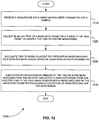
- Figure 12 is an exemplary flowchart showing a method 1200 for sequential windowed acquisition of mass spectrometry data, in accordance with various embodiments.
- step 1210 of method 1200 a mass range and a mass window width parameter are received for a sample.
- step 1220 a plurality of ions from the sample that are within the mass range are collected in an ion trap of a mass spectrometer.
- step 1230 two or more mass adjacent or overlapping windows are calculated that span the mass range using the mass window width parameter.
- step 1240 ions within each mass window of the two or more mass windows are ejected from the ion trap.
- a mass spectrum is then detected from the ejected ions of the each mass window with a mass analyzer of the mass spectrometer producing a collection of mass spectra for the mass range.
- a computer program product includes a non-transitory and tangible computer-readable storage medium whose contents include a program with instructions being executed on a processor so as to perform a method for sequential windowed acquisition of mass spectrometry data. This method is performed by a system that includes one or more distinct software modules.
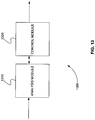
- Figure 13 is a schematic diagram of a system 1300 that includes one or more distinct software modules that perform a method for sequential windowed acquisition of mass spectrometry data, in accordance with various embodiments.
- System 1300 includes analysis module 1310 and control module 1320.
- Analysis module 1310 receives a mass range and a mass window width parameter for a sample.
- Control module 1320 collects in an ion trap of a mass spectrometer a plurality of ions from the sample that are within the mass range.
- Analysis module 1310 calculates two or more adjacent or overlapping mass windows that span a mass range using the mass window width parameter.
- Control module 1320 ejects ions within each mass window of the two or more mass windows from the ion trap.
- Control module 1320 detects a mass spectrum from the ejected ions of the each mass window with a mass analyzer of the mass spectrometer producing a collection of mass spectra for the mass range.
- the specification may have presented a method and/or process as a particular sequence of steps.
- the method or process should not be limited to the particular sequence of steps described.
- other sequences of steps may be possible. Therefore, the particular order of the steps set forth in the specification should not be construed as limitations on the claims.
- the claims directed to the method and/or process should not be limited to the performance of their steps in the order written, and one skilled in the art can readily appreciate that the sequences may be varied and still remain within the scope of the claims.
Landscapes
- Chemical & Material Sciences (AREA)
- Analytical Chemistry (AREA)
- Other Investigation Or Analysis Of Materials By Electrical Means (AREA)
- Electron Tubes For Measurement (AREA)
Claims (15)
- Système (300) d'acquisition séquentielle par fenêtre de données de spectrométrie de masse, comprenant :un spectromètre de masse (310) qui comprend un piège à ions linéaire (330), une cellule de collision (350) et un analyseur de masse (340) ; etun processeur (320) en communication avec le spectromètre de masse configuré pour :recevoir une plage de masse et un paramètre de largeur de fenêtre de masse pour un échantillon,ordonner au spectromètre de masse (310) de transmettre par le piège à ions linéaire (330) une pluralité d'ions à partir d'un faisceau d'ions à partir de l'échantillon, les ions sélectionnés étant dans la plage de masse, pour remplir ainsi la cellule de collision (350) avec lesdits ions sélectionnés et pour permettre aux ions sélectionnés de refroidir,ordonner au spectromètre de masse d'éteindre le faisceau d'ions,ordonner au spectromètre de masse de renvoyer les ions sélectionnés dans la plage de masse de la cellule de collision dans le piège à ions linéaire,calculer au moins deux fenêtres de masse adjacentes ou se chevauchant qui couvrent une plage de masse à l'aide du paramètre de largeur de fenêtre de masse,ordonner au spectromètre de masse d'appliquer une forme d'onde d'excitation RF au piège à ions linéaire pour sélectionner des ions dans chacune des deux ou plusieurs fenêtres de masse adjacentes ou se chevauchant,ordonner au spectromètre de masse d'éjecter les ions sélectionnés dans chacune des deux ou plusieurs fenêtres de masse adjacentes ou se chevauchant du piège à ions linéaire (330) dans la cellule de collision,ordonner au spectromètre de masse de fragmenter les ions sélectionnés dans chacune des deux ou plusieurs fenêtres de masse adjacentes ou se chevauchant dans la cellule de collision, etordonner au spectromètre de masse de détecter un spectre de masse à partir des fragments d'ions de chaque fenêtre de masse avec l'analyseur de masse, produisant une collection de spectres de masse pour la plage de masse.
- Système (300) selon la revendication 1, dans lequel les deux ou plusieurs fenêtres de masse adjacentes ou se chevauchant ont la même largeur.
- Système (300) selon la revendication 2, dans lequel le processeur (320) est configuré pour ordonner au spectromètre de masse (310) de sélectionner des ions dans chaque fenêtre de masse des deux ou plusieurs fenêtres de masse adjacentes ou se chevauchant du piège à ions linéaire (330) en utilisant une forme d'onde d'excitation RF différente avec une plage de fréquences d'excitation différente pour chaque fenêtre de masse des deux ou plusieurs fenêtres de masse adjacentes ou se chevauchant;
éventuellement dans lequel une forme d'onde d'excitation RF différente avec une plage de fréquences d'excitation différente est calculée par le processeur (320) pour chaque fenêtre de masse des deux ou plusieurs fenêtres de masse adjacentes ou se chevauchant et stockée sur le spectromètre de masse avant que le spectromètre de masse (310) n'éjecte l'un quelconque des ions à partir du piège à ions linéaire. - Système (300) selon la revendication 1, dans lequel les deux ou plusieurs fenêtres de masse adjacentes ou se chevauchant ont des largeurs différentes ;
éventuellement dans lequel le processeur (320) est configuré pour ordonner au spectromètre de masse (310) de sélectionner des ions dans chaque fenêtre de masse des deux ou plusieurs fenêtres de masse adjacentes ou se chevauchant à partir du piège à ions linéaire en utilisant la même forme d'onde d'excitation RF avec la même plage de fréquence d'excitation pour chaque fenêtre de masse des deux ou plusieurs fenêtres de masse adjacentes ou se chevauchant. - Système (300) selon la revendication 4, dans lequel une largeur de chaque fenêtre de masse des deux ou plusieurs fenêtres de masse adjacentes ou se chevauchant augmente avec l'augmentation de la masse de chaque fenêtre de masse dans la plage de masse.
- Système (300) selon la revendication 1, dans lequel le processeur est en outre configuré pour ordonner au spectromètre de masse de sélectionner et d'éjecter des ions dans chacune des deux ou plusieurs fenêtres de masse adjacentes ou se chevauchant à partir du piège à ions linéaire dans la cellule de collision en utilisant transfert assisté à amplitude radiale, RAAT, dans lequel dans le RAAT un champ d'excitation radial est utilisé pour sélectionner des ions dans chacune des deux ou plusieurs fenêtres de masse, et les ions sélectionnés sont ensuite éjectés en utilisant un champ d'accélération axiale.
- Système (300) selon la revendication 1, dans lequel le processeur (320) ordonne en outre au spectromètre de masse (310) de sélectionner et d'éjecter des ions dans chacune des deux ou plusieurs fenêtres de masse adjacentes ou se chevauchant à partir du piège à ions linéaire dans la cellule de collision en utilisant l'éjection axiale sélective de masse, MSAE, dans lequel dans la MSAE un champ d'excitation radial est utilisé pour sélectionner des ions dans chaque fenêtre de masse et la barrière de sortie entre le piège à ions linéaire et la cellule de collision est abaissée pour éjecter les ions de chaque fenêtre de masse à partir du piège à ions linéaire à la cellule de collision.
- Procédé d'acquisition séquentielle par fenêtre de données de spectrométrie de masse, comprenant :la réception d'une plage de masse et d'un paramètre de largeur de fenêtre de masse pour un échantillon,la transmission par un piège à ions linéaire (330) d'un spectromètre de masse (310) d'une pluralité d'ions sélectionnés à partir d'un faisceau d'ions de l'échantillon, les ions sélectionnés étant dans la plage de masse, remplissant ainsi une cellule de collision (350) avec lesdits ions sélectionnés et permettant aux ions sélectionnés de refroidir,la désactivation du faisceau d'ions,le transfert des ions sélectionnés dans la plage de masse à partir de la cellule de collision au piège à ions linéaire,le calcul d'au moins deux fenêtres de masse adjacentes ou se chevauchant qui couvrent la plage de masse à l'aide du paramètre de largeur de fenêtre de masse,l'application d'une forme d'onde d'excitation RF au piège à ions linéaire pour sélectionner des ions dans chacune des deux ou plusieurs fenêtres de masse adjacentes ou se chevauchant,l'expulsion des ions sélectionnés dans chacune des deux ou plusieurs fenêtres de masse adjacentes ou se chevauchant à partir du piège à ions linéaire (330) dans la cellule de collision,la fragmentation des ions sélectionnés dans chacune des deux ou plusieurs fenêtres de masse adjacentes ou se chevauchant dans la cellule de collision,la détection d'un spectre de masse à partir des ions fragments de chaque fenêtre de masse avec un analyseur de masse du spectromètre de masse (310), produisant une collection de spectres de masse pour la plage de masse.
- Procédé selon la revendication 8, dans lequel les deux ou plusieurs fenêtres de masse adjacentes ou se chevauchant ont la même largeur.
- Procédé selon la revendication 9, dans lequel la sélection d'ions dans chaque fenêtre de masse des deux ou plusieurs fenêtres de masse adjacentes ou se chevauchant à partir du piège à ions linéaire (330) comprend l'utilisation d'une forme d'onde d'excitation RF différente avec une plage de fréquences d'excitation différente pour chaque fenêtre de masse des deux ou plusieurs fenêtres de masse adjacentes ou se chevauchant ;
ledit procédé comprenant en outre éventuellement le calcul et le stockage sur le spectromètre de masse (310) d'une forme d'onde d'excitation RF différente avec une plage de fréquences d'excitation différente pour chaque fenêtre de masse des deux ou plusieurs fenêtres de masse adjacentes ou se chevauchant avant que le spectromètre de masse (310) n'éjecte l'un quelconque des ions à partir du piège à ions linéaire. - Procédé selon la revendication 8, dans lequel les deux ou plusieurs fenêtres de masse adjacentes ou se chevauchant ont des largeurs différentes ;
éventuellement dans lequel la sélection d'ions dans chaque fenêtre de masse des deux ou plusieurs fenêtres de masse adjacentes ou se chevauchant à partir du piège à ions linéaire comprend l'utilisation de la même forme d'onde d'excitation RF avec la même plage de fréquences d'excitation pour chaque fenêtre de masse des deux ou plusieurs fenêtres de masse adjacentes ou se chevauchant ;
éventuellement dans lequel une largeur de chaque fenêtre de masse des deux ou plusieurs fenêtres de masse adjacentes ou se chevauchant augmente avec l'augmentation de la masse de chaque fenêtre de masse dans la plage de masse. - Procédé selon la revendication 8, comprenant en outre la sélection et l'éjection d'ions dans chacune des deux ou plusieurs fenêtres de masse adjacentes ou se chevauchant à partir du piège à ions linéaire dans la cellule de collision en utilisant un transfert assisté à amplitude radiale, RAAT, dans lequel dans le RAAT un champ d'excitation radial est utilisé pour sélectionner des ions dans chacune des deux ou plusieurs fenêtres de masse, et les ions sélectionnés sont ensuite éjectés en utilisant un champ d'accélération axiale.
- Procédé selon la revendication 8, comprenant en outre la sélection et l'éjection d'ions dans chacune des deux ou plusieurs fenêtres de masse adjacentes ou se chevauchant à partir du piège à ions linéaire dans la cellule de collision en utilisant une éjection axiale sélective de masse, MSAE, dans lequel dans la MSAE un champ d'excitation radial est utilisé pour sélectionner des ions dans chaque fenêtre de masse et la barrière de sortie entre le piège à ions linéaire et la cellule de collision est abaissée pour éjecter les ions de chaque fenêtre de masse à partir du piège à ions linéaire vers la cellule de collision.
- Produit programme informatique, comprenant un support de stockage non transitoire et tangible lisible par ordinateur dont le contenu comprend un programme avec des instructions exécutées sur un processeur de manière à réaliser un procédé d'acquisition séquentielle fenêtrée de données de spectrométrie de masse, le procédé comprenant :la fourniture d'un système (1300), dans lequel le système comprend un ou plusieurs modules logiciels distincts, et dans lequel les modules logiciels distincts comprennent un module d'analyse (1310) et un module de commande (1320),la réception d'une plage de masse et d'un paramètre de largeur de fenêtre de masse pour un échantillon utilisant le module d'analyse (1310),la transmission, par un piège à ions linéaire (330) d'un spectromètre de masse (310), d'une pluralité d'ions sélectionnés à partir d'un faisceau d'ions de l'échantillon, les ions sélectionnés étant dans la plage de masse en utilisant le module de commande (1320), remplissant ainsi une cellule de collision (350) avec lesdits ions sélectionnés et permettant aux ions sélectionnés de refroidir,la désactivation du faisceau d'ions,le transfert à nouveau des ions sélectionnés dans la plage de masse à partir de la cellule de collision au piège à ions linéaire,le calcul de deux ou plusieurs fenêtres de masse adjacentes ou se chevauchant qui couvrent la plage de masse à l'aide du paramètre de largeur de fenêtre de masse à l'aide du module d'analyse (1310),l'application d'une forme d'onde d'excitation RF au piège à ions linéaire pour sélectionner des ions dans chacune des deux ou plusieurs fenêtres de masse adjacentes ou se chevauchant,l'expulsion des ions sélectionnés dans chacune des deux ou plusieurs fenêtres de masse adjacentes ou se chevauchant à partir du piège à ions linéaire (330) vers la cellule de collision,la fragmentation des ions sélectionnés dans chacune des deux ou plusieurs fenêtres de masse adjacentes ou se chevauchant dans la cellule de collision, etla détection d'un spectre de masse à partir des ions fragments de chaque fenêtre de masse avec un analyseur de masse du spectromètre de masse (310) en utilisant le module de commande (1320), produisant un collection de spectres de masse pour la plage de masse.
- Produit programme informatique selon la revendication 14, dans lequel les deux ou plusieurs fenêtres de masse adjacentes ou se chevauchant ont la même largeur.
Applications Claiming Priority (2)
| Application Number | Priority Date | Filing Date | Title |
|---|---|---|---|
| US201261619008P | 2012-04-02 | 2012-04-02 | |
| PCT/IB2013/000384 WO2013150351A1 (fr) | 2012-04-02 | 2013-03-15 | Systèmes et méthodes d'acquisition séquentielle par fenêtres sur une gamme de masse grâce à un piège à ions |
Publications (3)
| Publication Number | Publication Date |
|---|---|
| EP2834837A1 EP2834837A1 (fr) | 2015-02-11 |
| EP2834837A4 EP2834837A4 (fr) | 2015-12-09 |
| EP2834837B1 true EP2834837B1 (fr) | 2020-10-28 |
Family
ID=49300059
Family Applications (1)
| Application Number | Title | Priority Date | Filing Date |
|---|---|---|---|
| EP13772714.5A Active EP2834837B1 (fr) | 2012-04-02 | 2013-03-15 | Systèmes et méthodes d'acquisition séquentielle par fenêtres sur une gamme de masse grâce à un piège à ions |
Country Status (5)
| Country | Link |
|---|---|
| US (1) | US10297432B2 (fr) |
| EP (1) | EP2834837B1 (fr) |
| JP (2) | JP6133397B2 (fr) |
| CN (2) | CN107068531B (fr) |
| WO (1) | WO2013150351A1 (fr) |
Cited By (6)
| Publication number | Priority date | Publication date | Assignee | Title |
|---|---|---|---|---|
| US11709156B2 (en) | 2017-09-18 | 2023-07-25 | Waters Technologies Corporation | Use of vapor deposition coated flow paths for improved analytical analysis |
| US11709155B2 (en) | 2017-09-18 | 2023-07-25 | Waters Technologies Corporation | Use of vapor deposition coated flow paths for improved chromatography of metal interacting analytes |
| US11918936B2 (en) | 2020-01-17 | 2024-03-05 | Waters Technologies Corporation | Performance and dynamic range for oligonucleotide bioanalysis through reduction of non specific binding |
| US12180581B2 (en) | 2017-09-18 | 2024-12-31 | Waters Technologies Corporation | Use of vapor deposition coated flow paths for improved chromatography of metal interacting analytes |
| US12181452B2 (en) | 2017-09-18 | 2024-12-31 | Waters Technologies Corporation | Use of vapor deposition coated flow paths for improved chromatography of metal interacting analytes |
| US12352734B2 (en) | 2020-09-24 | 2025-07-08 | Waters Technologies Corporation | Chromatographic hardware improvements for separation of reactive molecules |
Families Citing this family (17)
| Publication number | Priority date | Publication date | Assignee | Title |
|---|---|---|---|---|
| EP2834837B1 (fr) * | 2012-04-02 | 2020-10-28 | DH Technologies Development Pte. Ltd. | Systèmes et méthodes d'acquisition séquentielle par fenêtres sur une gamme de masse grâce à un piège à ions |
| WO2015056065A1 (fr) * | 2013-10-16 | 2015-04-23 | Dh Technologies Development Pte. Ltd. | Systèmes et procédés s'appliquant au fenêtrage de transmission quadripolaire arbitraire |
| WO2015056067A1 (fr) * | 2013-10-16 | 2015-04-23 | Dh Technologies Development Pte. Ltd. | Isolation de précurseurs multiplexée pour la spectrométrie de masse |
| CA2925853A1 (fr) * | 2013-10-16 | 2015-04-23 | Dh Technologies Development Pte. Ltd. | Systemes et procedes permettant d'identifier des ions precurseurs a partir d'ions produits par fenetrage d'emission arbitraire |
| US20180095092A1 (en) * | 2015-05-13 | 2018-04-05 | DH Technologies Development Pte Ltd. | Top Down Protein Identification Method |
| EP3335237B1 (fr) * | 2015-08-13 | 2023-12-06 | DH Technologies Development PTE. Ltd. | Déconvolution de spectres mixtes |
| US10340130B2 (en) * | 2016-04-05 | 2019-07-02 | Thermo Finnigan Llc | Data independent acquisition with variable multiplexing degree |
| US10170290B2 (en) | 2016-05-24 | 2019-01-01 | Thermo Finnigan Llc | Systems and methods for grouping MS/MS transitions |
| WO2018134346A1 (fr) * | 2017-01-19 | 2018-07-26 | MAX-PLANCK-Gesellschaft zur Förderung der Wissenschaften e.V. | Spectrométrie de masse à gamme dynamique améliorée |
| JP6970334B2 (ja) * | 2017-03-21 | 2021-11-24 | 富士通株式会社 | シャッター、ファンユニット及び電子装置 |
| US11094516B2 (en) | 2017-07-10 | 2021-08-17 | Shimadzu Corporation | Mass spectrometer, mass spectrometry method, and mass spectrometry program |
| US11408853B2 (en) * | 2018-01-17 | 2022-08-09 | Dh Technologies Development Pte. Ltd. | DM-SWATH acquisition to improve MSMS confidence |
| EP3977628A4 (fr) | 2019-05-31 | 2023-06-28 | DH Technologies Development Pte. Ltd. | Procédé de codage en temps réel de données de bande de balayage et cadre probabiliste pour inférence de précurseur |
| WO2021094846A1 (fr) * | 2019-11-14 | 2021-05-20 | Dh Technologies Development Pte. Ltd. | Procédé d'analyse de masse - swath à méthodologie de fragmentation orthogonale |
| GB2621395B (en) * | 2022-08-12 | 2025-02-05 | Thermo Fisher Scient Bremen Gmbh | Methods and mass spectrometry systems for acquiring mass spectral data |
| WO2024161624A1 (fr) * | 2023-02-03 | 2024-08-08 | 株式会社島津製作所 | Procédé de spectrométrie de masse et dispositif de spectrométrie de masse |
| CN119725067B (zh) * | 2024-12-13 | 2025-10-10 | 中国科学院大连化学物理研究所 | 一种拓宽线性离子阱/飞行时间质谱注入质量范围的方法 |
Citations (4)
| Publication number | Priority date | Publication date | Assignee | Title |
|---|---|---|---|---|
| US6483109B1 (en) * | 1999-08-26 | 2002-11-19 | University Of New Hampshire | Multiple stage mass spectrometer |
| US20030066958A1 (en) * | 2001-10-10 | 2003-04-10 | Akihiko Okumura | Mass spectrometer and measurement system using the mass spectrometer |
| US20040079874A1 (en) * | 2002-08-08 | 2004-04-29 | Bateman Robert Harold | Mass spectrometer |
| US7482581B2 (en) * | 2004-03-26 | 2009-01-27 | Thermo Finnigan Llc | Fourier transform mass spectrometer and method for generating a mass spectrum therefrom |
Family Cites Families (22)
| Publication number | Priority date | Publication date | Assignee | Title |
|---|---|---|---|---|
| JPH02100318A (ja) | 1988-10-07 | 1990-04-12 | Fujitsu Ltd | 半導体装置の製造方法 |
| CA2340150C (fr) * | 2000-06-09 | 2005-11-22 | Micromass Limited | Methodes et appareil pour la spectrometrie de masse |
| JP4738326B2 (ja) * | 2003-03-19 | 2011-08-03 | サーモ フィニガン リミテッド ライアビリティ カンパニー | イオン母集団内複数親イオン種についてのタンデム質量分析データ取得 |
| US7365309B2 (en) * | 2003-12-22 | 2008-04-29 | Micromass Uk Limited | Mass spectrometer |
| CA2501003C (fr) * | 2004-04-23 | 2009-05-19 | F. Hoffmann-La Roche Ag | Analyse d'echantillons pour obtenir des donnees de caracterisation |
| US7456396B2 (en) * | 2004-08-19 | 2008-11-25 | Thermo Finnigan Llc | Isolating ions in quadrupole ion traps for mass spectrometry |
| JP4643206B2 (ja) * | 2004-09-03 | 2011-03-02 | 株式会社日立ハイテクノロジーズ | 質量分析装置 |
| JP4967288B2 (ja) * | 2004-09-30 | 2012-07-04 | 株式会社ニコン | 共通ズーム光学系、ズームレンズ、及びレンズシステム |
| EP1955359B1 (fr) * | 2005-11-30 | 2015-04-01 | DH Technologies Development Pte. Ltd. | Procede et dispositif pour transport axial par selection de masse au moyen d'un champ axial pulse |
| GB0622689D0 (en) * | 2006-11-14 | 2006-12-27 | Thermo Electron Bremen Gmbh | Method of operating a multi-reflection ion trap |
| DE102006059697B4 (de) * | 2006-12-18 | 2011-06-16 | Bruker Daltonik Gmbh | Lineare Hochfrequenz-Ionenfalle hoher Massenauflösung |
| GB2445169B (en) * | 2006-12-29 | 2012-03-14 | Thermo Fisher Scient Bremen | Parallel mass analysis |
| GB0701476D0 (en) * | 2007-01-25 | 2007-03-07 | Micromass Ltd | Mass spectrometer |
| US8853622B2 (en) | 2007-02-07 | 2014-10-07 | Thermo Finnigan Llc | Tandem mass spectrometer |
| GB0717146D0 (en) | 2007-09-04 | 2007-10-17 | Micromass Ltd | Mass spectrometer |
| US8073635B2 (en) | 2008-02-15 | 2011-12-06 | Dh Technologies Development Pte. Ltd. | Method of quantitation by mass spectrometry |
| US20110204221A1 (en) * | 2008-10-14 | 2011-08-25 | Hiroyuki Satake | Mass spectrometer and method of mass spectrometry |
| WO2010135829A1 (fr) * | 2009-05-27 | 2010-12-02 | Dh Technologies Development Pte. Ltd. | Procédé de spectroscopie de masse en tandem à haute efficacité |
| US8481926B2 (en) * | 2009-09-04 | 2013-07-09 | Dh Technologies Development Pte. Ltd. | Method, system and apparatus for filtering ions in a mass spectrometer |
| CN103109345B (zh) | 2010-09-15 | 2016-06-22 | Dh科技发展私人贸易有限公司 | 产物离子光谱的数据独立获取及参考光谱库匹配 |
| DE102010054580B3 (de) * | 2010-12-15 | 2012-04-26 | Bruker Daltonik Gmbh | Proteomanalyse in Massenspektrometern mit HF-Ionenfallen |
| EP2834837B1 (fr) * | 2012-04-02 | 2020-10-28 | DH Technologies Development Pte. Ltd. | Systèmes et méthodes d'acquisition séquentielle par fenêtres sur une gamme de masse grâce à un piège à ions |
-
2013
- 2013-03-15 EP EP13772714.5A patent/EP2834837B1/fr active Active
- 2013-03-15 CN CN201710080700.XA patent/CN107068531B/zh active Active
- 2013-03-15 CN CN201380010818.5A patent/CN104160473B/zh active Active
- 2013-03-15 JP JP2015502471A patent/JP6133397B2/ja not_active Expired - Fee Related
- 2013-03-15 US US14/380,689 patent/US10297432B2/en active Active
- 2013-03-15 WO PCT/IB2013/000384 patent/WO2013150351A1/fr not_active Ceased
-
2016
- 2016-12-01 JP JP2016233916A patent/JP6321121B2/ja active Active
Patent Citations (4)
| Publication number | Priority date | Publication date | Assignee | Title |
|---|---|---|---|---|
| US6483109B1 (en) * | 1999-08-26 | 2002-11-19 | University Of New Hampshire | Multiple stage mass spectrometer |
| US20030066958A1 (en) * | 2001-10-10 | 2003-04-10 | Akihiko Okumura | Mass spectrometer and measurement system using the mass spectrometer |
| US20040079874A1 (en) * | 2002-08-08 | 2004-04-29 | Bateman Robert Harold | Mass spectrometer |
| US7482581B2 (en) * | 2004-03-26 | 2009-01-27 | Thermo Finnigan Llc | Fourier transform mass spectrometer and method for generating a mass spectrum therefrom |
Cited By (8)
| Publication number | Priority date | Publication date | Assignee | Title |
|---|---|---|---|---|
| US11709156B2 (en) | 2017-09-18 | 2023-07-25 | Waters Technologies Corporation | Use of vapor deposition coated flow paths for improved analytical analysis |
| US11709155B2 (en) | 2017-09-18 | 2023-07-25 | Waters Technologies Corporation | Use of vapor deposition coated flow paths for improved chromatography of metal interacting analytes |
| US12180581B2 (en) | 2017-09-18 | 2024-12-31 | Waters Technologies Corporation | Use of vapor deposition coated flow paths for improved chromatography of metal interacting analytes |
| US12181452B2 (en) | 2017-09-18 | 2024-12-31 | Waters Technologies Corporation | Use of vapor deposition coated flow paths for improved chromatography of metal interacting analytes |
| US12416607B2 (en) | 2017-09-18 | 2025-09-16 | Waters Technologies Corporation | Use of vapor deposition coated flow paths for improved chromatography of metal interacting analytes |
| US12510520B2 (en) | 2017-09-18 | 2025-12-30 | Waters Technologies Corporation | Use of vapor deposition coated flow paths for improved analytical analysis |
| US11918936B2 (en) | 2020-01-17 | 2024-03-05 | Waters Technologies Corporation | Performance and dynamic range for oligonucleotide bioanalysis through reduction of non specific binding |
| US12352734B2 (en) | 2020-09-24 | 2025-07-08 | Waters Technologies Corporation | Chromatographic hardware improvements for separation of reactive molecules |
Also Published As
| Publication number | Publication date |
|---|---|
| CN104160473B (zh) | 2017-03-15 |
| JP6321121B2 (ja) | 2018-05-09 |
| JP2017050293A (ja) | 2017-03-09 |
| CN107068531B (zh) | 2019-05-07 |
| WO2013150351A1 (fr) | 2013-10-10 |
| EP2834837A1 (fr) | 2015-02-11 |
| JP6133397B2 (ja) | 2017-05-24 |
| US20150025813A1 (en) | 2015-01-22 |
| EP2834837A4 (fr) | 2015-12-09 |
| CN104160473A (zh) | 2014-11-19 |
| CN107068531A (zh) | 2017-08-18 |
| US10297432B2 (en) | 2019-05-21 |
| JP2015514210A (ja) | 2015-05-18 |
Similar Documents
| Publication | Publication Date | Title |
|---|---|---|
| US10297432B2 (en) | Systems and methods for sequential windowed acquisition across a mass range using an ion trap | |
| US11107666B2 (en) | Systems and methods for using variable mass selection window widths in tandem mass spectrometry | |
| EP3032567B1 (fr) | Détermination automatique de la matrice de démultiplexage pour spectrométrie de mobilité ionique et spectrométrie de masse | |
| US9576778B2 (en) | Data processing for multiplexed spectrometry | |
| US20100059673A1 (en) | Multiple Ion Isolation in Multi-Reflection Systems | |
| US20100301205A1 (en) | Linear ion trap for msms | |
| US20250299942A1 (en) | Dynamically Concentrating Ion Packets in the Extraction Region of a TOF Mass Analyzer in Targeted Acquisition | |
| EP4393003A1 (fr) | Procédé d'amélioration d'informations dans la spectrométrie de masse de dda | |
| EP3178106B1 (fr) | Extraction passe-bande d'un dispositif de piégeage d'ions et amélioration de sensibilité de spectromètre de masse à temps de vol | |
| EP2263250B1 (fr) | Systèmes et procédés pour analyser des substances à l'aide d'un spectromètre de masse | |
| EP3066682B1 (fr) | Multiplexage d'ions pour sensibilité améliorée | |
| US20240249929A1 (en) | Gain Calibration for Quantitation Using On-Demand/Dynamic Implementation of MS Sensitivity Improvement Techniques |
Legal Events
| Date | Code | Title | Description |
|---|---|---|---|
| PUAI | Public reference made under article 153(3) epc to a published international application that has entered the european phase |
Free format text: ORIGINAL CODE: 0009012 |
|
| 17P | Request for examination filed |
Effective date: 20140901 |
|
| AK | Designated contracting states |
Kind code of ref document: A1 Designated state(s): AL AT BE BG CH CY CZ DE DK EE ES FI FR GB GR HR HU IE IS IT LI LT LU LV MC MK MT NL NO PL PT RO RS SE SI SK SM TR |
|
| AX | Request for extension of the european patent |
Extension state: BA ME |
|
| DAX | Request for extension of the european patent (deleted) | ||
| RA4 | Supplementary search report drawn up and despatched (corrected) |
Effective date: 20151106 |
|
| RIC1 | Information provided on ipc code assigned before grant |
Ipc: H01J 49/00 20060101ALI20151102BHEP Ipc: G01N 27/62 20060101ALN20151102BHEP Ipc: H01J 49/26 20060101ALN20151102BHEP Ipc: H01J 49/42 20060101AFI20151102BHEP |
|
| STAA | Information on the status of an ep patent application or granted ep patent |
Free format text: STATUS: EXAMINATION IS IN PROGRESS |
|
| 17Q | First examination report despatched |
Effective date: 20180712 |
|
| RAP1 | Party data changed (applicant data changed or rights of an application transferred) |
Owner name: DH TECHNOLOGIES DEVELOPMENT PTE. LTD. |
|
| GRAP | Despatch of communication of intention to grant a patent |
Free format text: ORIGINAL CODE: EPIDOSNIGR1 |
|
| STAA | Information on the status of an ep patent application or granted ep patent |
Free format text: STATUS: GRANT OF PATENT IS INTENDED |
|
| INTG | Intention to grant announced |
Effective date: 20200506 |
|
| GRAS | Grant fee paid |
Free format text: ORIGINAL CODE: EPIDOSNIGR3 |
|
| GRAA | (expected) grant |
Free format text: ORIGINAL CODE: 0009210 |
|
| STAA | Information on the status of an ep patent application or granted ep patent |
Free format text: STATUS: THE PATENT HAS BEEN GRANTED |
|
| AK | Designated contracting states |
Kind code of ref document: B1 Designated state(s): AL AT BE BG CH CY CZ DE DK EE ES FI FR GB GR HR HU IE IS IT LI LT LU LV MC MK MT NL NO PL PT RO RS SE SI SK SM TR |
|
| REG | Reference to a national code |
Ref country code: GB Ref legal event code: FG4D |
|
| REG | Reference to a national code |
Ref country code: CH Ref legal event code: EP |
|
| REG | Reference to a national code |
Ref country code: AT Ref legal event code: REF Ref document number: 1329066 Country of ref document: AT Kind code of ref document: T Effective date: 20201115 |
|
| REG | Reference to a national code |
Ref country code: DE Ref legal event code: R096 Ref document number: 602013073623 Country of ref document: DE |
|
| REG | Reference to a national code |
Ref country code: IE Ref legal event code: FG4D |
|
| REG | Reference to a national code |
Ref country code: AT Ref legal event code: MK05 Ref document number: 1329066 Country of ref document: AT Kind code of ref document: T Effective date: 20201028 |
|
| REG | Reference to a national code |
Ref country code: NL Ref legal event code: MP Effective date: 20201028 |
|
| PG25 | Lapsed in a contracting state [announced via postgrant information from national office to epo] |
Ref country code: NL Free format text: LAPSE BECAUSE OF FAILURE TO SUBMIT A TRANSLATION OF THE DESCRIPTION OR TO PAY THE FEE WITHIN THE PRESCRIBED TIME-LIMIT Effective date: 20201028 Ref country code: NO Free format text: LAPSE BECAUSE OF FAILURE TO SUBMIT A TRANSLATION OF THE DESCRIPTION OR TO PAY THE FEE WITHIN THE PRESCRIBED TIME-LIMIT Effective date: 20210128 Ref country code: PT Free format text: LAPSE BECAUSE OF FAILURE TO SUBMIT A TRANSLATION OF THE DESCRIPTION OR TO PAY THE FEE WITHIN THE PRESCRIBED TIME-LIMIT Effective date: 20210301 Ref country code: RS Free format text: LAPSE BECAUSE OF FAILURE TO SUBMIT A TRANSLATION OF THE DESCRIPTION OR TO PAY THE FEE WITHIN THE PRESCRIBED TIME-LIMIT Effective date: 20201028 Ref country code: FI Free format text: LAPSE BECAUSE OF FAILURE TO SUBMIT A TRANSLATION OF THE DESCRIPTION OR TO PAY THE FEE WITHIN THE PRESCRIBED TIME-LIMIT Effective date: 20201028 Ref country code: GR Free format text: LAPSE BECAUSE OF FAILURE TO SUBMIT A TRANSLATION OF THE DESCRIPTION OR TO PAY THE FEE WITHIN THE PRESCRIBED TIME-LIMIT Effective date: 20210129 |
|
| REG | Reference to a national code |
Ref country code: LT Ref legal event code: MG4D |
|
| PG25 | Lapsed in a contracting state [announced via postgrant information from national office to epo] |
Ref country code: LV Free format text: LAPSE BECAUSE OF FAILURE TO SUBMIT A TRANSLATION OF THE DESCRIPTION OR TO PAY THE FEE WITHIN THE PRESCRIBED TIME-LIMIT Effective date: 20201028 Ref country code: PL Free format text: LAPSE BECAUSE OF FAILURE TO SUBMIT A TRANSLATION OF THE DESCRIPTION OR TO PAY THE FEE WITHIN THE PRESCRIBED TIME-LIMIT Effective date: 20201028 Ref country code: IS Free format text: LAPSE BECAUSE OF FAILURE TO SUBMIT A TRANSLATION OF THE DESCRIPTION OR TO PAY THE FEE WITHIN THE PRESCRIBED TIME-LIMIT Effective date: 20210228 Ref country code: SE Free format text: LAPSE BECAUSE OF FAILURE TO SUBMIT A TRANSLATION OF THE DESCRIPTION OR TO PAY THE FEE WITHIN THE PRESCRIBED TIME-LIMIT Effective date: 20201028 Ref country code: BG Free format text: LAPSE BECAUSE OF FAILURE TO SUBMIT A TRANSLATION OF THE DESCRIPTION OR TO PAY THE FEE WITHIN THE PRESCRIBED TIME-LIMIT Effective date: 20210128 Ref country code: ES Free format text: LAPSE BECAUSE OF FAILURE TO SUBMIT A TRANSLATION OF THE DESCRIPTION OR TO PAY THE FEE WITHIN THE PRESCRIBED TIME-LIMIT Effective date: 20201028 Ref country code: AT Free format text: LAPSE BECAUSE OF FAILURE TO SUBMIT A TRANSLATION OF THE DESCRIPTION OR TO PAY THE FEE WITHIN THE PRESCRIBED TIME-LIMIT Effective date: 20201028 |
|
| PG25 | Lapsed in a contracting state [announced via postgrant information from national office to epo] |
Ref country code: HR Free format text: LAPSE BECAUSE OF FAILURE TO SUBMIT A TRANSLATION OF THE DESCRIPTION OR TO PAY THE FEE WITHIN THE PRESCRIBED TIME-LIMIT Effective date: 20201028 |
|
| REG | Reference to a national code |
Ref country code: DE Ref legal event code: R097 Ref document number: 602013073623 Country of ref document: DE |
|
| PG25 | Lapsed in a contracting state [announced via postgrant information from national office to epo] |
Ref country code: CZ Free format text: LAPSE BECAUSE OF FAILURE TO SUBMIT A TRANSLATION OF THE DESCRIPTION OR TO PAY THE FEE WITHIN THE PRESCRIBED TIME-LIMIT Effective date: 20201028 Ref country code: EE Free format text: LAPSE BECAUSE OF FAILURE TO SUBMIT A TRANSLATION OF THE DESCRIPTION OR TO PAY THE FEE WITHIN THE PRESCRIBED TIME-LIMIT Effective date: 20201028 Ref country code: SM Free format text: LAPSE BECAUSE OF FAILURE TO SUBMIT A TRANSLATION OF THE DESCRIPTION OR TO PAY THE FEE WITHIN THE PRESCRIBED TIME-LIMIT Effective date: 20201028 Ref country code: LT Free format text: LAPSE BECAUSE OF FAILURE TO SUBMIT A TRANSLATION OF THE DESCRIPTION OR TO PAY THE FEE WITHIN THE PRESCRIBED TIME-LIMIT Effective date: 20201028 Ref country code: RO Free format text: LAPSE BECAUSE OF FAILURE TO SUBMIT A TRANSLATION OF THE DESCRIPTION OR TO PAY THE FEE WITHIN THE PRESCRIBED TIME-LIMIT Effective date: 20201028 Ref country code: SK Free format text: LAPSE BECAUSE OF FAILURE TO SUBMIT A TRANSLATION OF THE DESCRIPTION OR TO PAY THE FEE WITHIN THE PRESCRIBED TIME-LIMIT Effective date: 20201028 |
|
| PG25 | Lapsed in a contracting state [announced via postgrant information from national office to epo] |
Ref country code: DK Free format text: LAPSE BECAUSE OF FAILURE TO SUBMIT A TRANSLATION OF THE DESCRIPTION OR TO PAY THE FEE WITHIN THE PRESCRIBED TIME-LIMIT Effective date: 20201028 |
|
| PLBE | No opposition filed within time limit |
Free format text: ORIGINAL CODE: 0009261 |
|
| STAA | Information on the status of an ep patent application or granted ep patent |
Free format text: STATUS: NO OPPOSITION FILED WITHIN TIME LIMIT |
|
| 26N | No opposition filed |
Effective date: 20210729 |
|
| PG25 | Lapsed in a contracting state [announced via postgrant information from national office to epo] |
Ref country code: IT Free format text: LAPSE BECAUSE OF FAILURE TO SUBMIT A TRANSLATION OF THE DESCRIPTION OR TO PAY THE FEE WITHIN THE PRESCRIBED TIME-LIMIT Effective date: 20201028 Ref country code: AL Free format text: LAPSE BECAUSE OF FAILURE TO SUBMIT A TRANSLATION OF THE DESCRIPTION OR TO PAY THE FEE WITHIN THE PRESCRIBED TIME-LIMIT Effective date: 20201028 Ref country code: MC Free format text: LAPSE BECAUSE OF FAILURE TO SUBMIT A TRANSLATION OF THE DESCRIPTION OR TO PAY THE FEE WITHIN THE PRESCRIBED TIME-LIMIT Effective date: 20201028 |
|
| REG | Reference to a national code |
Ref country code: CH Ref legal event code: PL |
|
| PG25 | Lapsed in a contracting state [announced via postgrant information from national office to epo] |
Ref country code: SI Free format text: LAPSE BECAUSE OF FAILURE TO SUBMIT A TRANSLATION OF THE DESCRIPTION OR TO PAY THE FEE WITHIN THE PRESCRIBED TIME-LIMIT Effective date: 20201028 |
|
| REG | Reference to a national code |
Ref country code: BE Ref legal event code: MM Effective date: 20210331 |
|
| PG25 | Lapsed in a contracting state [announced via postgrant information from national office to epo] |
Ref country code: CH Free format text: LAPSE BECAUSE OF NON-PAYMENT OF DUE FEES Effective date: 20210331 Ref country code: LI Free format text: LAPSE BECAUSE OF NON-PAYMENT OF DUE FEES Effective date: 20210331 Ref country code: LU Free format text: LAPSE BECAUSE OF NON-PAYMENT OF DUE FEES Effective date: 20210315 Ref country code: IE Free format text: LAPSE BECAUSE OF NON-PAYMENT OF DUE FEES Effective date: 20210315 |
|
| PG25 | Lapsed in a contracting state [announced via postgrant information from national office to epo] |
Ref country code: IS Free format text: LAPSE BECAUSE OF FAILURE TO SUBMIT A TRANSLATION OF THE DESCRIPTION OR TO PAY THE FEE WITHIN THE PRESCRIBED TIME-LIMIT Effective date: 20210228 |
|
| PG25 | Lapsed in a contracting state [announced via postgrant information from national office to epo] |
Ref country code: BE Free format text: LAPSE BECAUSE OF NON-PAYMENT OF DUE FEES Effective date: 20210331 |
|
| PG25 | Lapsed in a contracting state [announced via postgrant information from national office to epo] |
Ref country code: HU Free format text: LAPSE BECAUSE OF FAILURE TO SUBMIT A TRANSLATION OF THE DESCRIPTION OR TO PAY THE FEE WITHIN THE PRESCRIBED TIME-LIMIT; INVALID AB INITIO Effective date: 20130315 |
|
| PG25 | Lapsed in a contracting state [announced via postgrant information from national office to epo] |
Ref country code: CY Free format text: LAPSE BECAUSE OF FAILURE TO SUBMIT A TRANSLATION OF THE DESCRIPTION OR TO PAY THE FEE WITHIN THE PRESCRIBED TIME-LIMIT Effective date: 20201028 |
|
| P01 | Opt-out of the competence of the unified patent court (upc) registered |
Effective date: 20230601 |
|
| PG25 | Lapsed in a contracting state [announced via postgrant information from national office to epo] |
Ref country code: MK Free format text: LAPSE BECAUSE OF FAILURE TO SUBMIT A TRANSLATION OF THE DESCRIPTION OR TO PAY THE FEE WITHIN THE PRESCRIBED TIME-LIMIT Effective date: 20201028 |
|
| PG25 | Lapsed in a contracting state [announced via postgrant information from national office to epo] |
Ref country code: TR Free format text: LAPSE BECAUSE OF FAILURE TO SUBMIT A TRANSLATION OF THE DESCRIPTION OR TO PAY THE FEE WITHIN THE PRESCRIBED TIME-LIMIT Effective date: 20201028 |
|
| PG25 | Lapsed in a contracting state [announced via postgrant information from national office to epo] |
Ref country code: MT Free format text: LAPSE BECAUSE OF FAILURE TO SUBMIT A TRANSLATION OF THE DESCRIPTION OR TO PAY THE FEE WITHIN THE PRESCRIBED TIME-LIMIT Effective date: 20201028 |
|
| PGFP | Annual fee paid to national office [announced via postgrant information from national office to epo] |
Ref country code: GB Payment date: 20260319 Year of fee payment: 14 |
|
| PGFP | Annual fee paid to national office [announced via postgrant information from national office to epo] |
Ref country code: DE Payment date: 20260320 Year of fee payment: 14 |
|
| PGFP | Annual fee paid to national office [announced via postgrant information from national office to epo] |
Ref country code: FR Payment date: 20260323 Year of fee payment: 14 |