EP2838295A2 - Appareil, procédé et système de dispositifs sans fil portables à faible puissance - Google Patents
Appareil, procédé et système de dispositifs sans fil portables à faible puissance Download PDFInfo
- Publication number
- EP2838295A2 EP2838295A2 EP20140180621 EP14180621A EP2838295A2 EP 2838295 A2 EP2838295 A2 EP 2838295A2 EP 20140180621 EP20140180621 EP 20140180621 EP 14180621 A EP14180621 A EP 14180621A EP 2838295 A2 EP2838295 A2 EP 2838295A2
- Authority
- EP
- European Patent Office
- Prior art keywords
- information
- wireless device
- access point
- wearable wireless
- aggregator
- Prior art date
- Legal status (The legal status is an assumption and is not a legal conclusion. Google has not performed a legal analysis and makes no representation as to the accuracy of the status listed.)
- Granted
Links
Images



Classifications
-
- H—ELECTRICITY
- H04—ELECTRIC COMMUNICATION TECHNIQUE
- H04W—WIRELESS COMMUNICATION NETWORKS
- H04W52/00—Power management, e.g. Transmission Power Control [TPC] or power classes
- H04W52/02—Power saving arrangements
- H04W52/0209—Power saving arrangements in terminal devices
- H04W52/0212—Power saving arrangements in terminal devices managed by the network, e.g. network or access point is leader and terminal is follower
-
- H—ELECTRICITY
- H04—ELECTRIC COMMUNICATION TECHNIQUE
- H04W—WIRELESS COMMUNICATION NETWORKS
- H04W4/00—Services specially adapted for wireless communication networks; Facilities therefor
- H04W4/80—Services using short range communication, e.g. near-field communication [NFC], radio-frequency identification [RFID] or low energy communication
-
- H—ELECTRICITY
- H04—ELECTRIC COMMUNICATION TECHNIQUE
- H04W—WIRELESS COMMUNICATION NETWORKS
- H04W52/00—Power management, e.g. Transmission Power Control [TPC] or power classes
- H04W52/02—Power saving arrangements
- H04W52/0209—Power saving arrangements in terminal devices
-
- H—ELECTRICITY
- H04—ELECTRIC COMMUNICATION TECHNIQUE
- H04W—WIRELESS COMMUNICATION NETWORKS
- H04W52/00—Power management, e.g. Transmission Power Control [TPC] or power classes
- H04W52/02—Power saving arrangements
- H04W52/0209—Power saving arrangements in terminal devices
- H04W52/0261—Power saving arrangements in terminal devices managing power supply demand, e.g. depending on battery level
- H04W52/0274—Power saving arrangements in terminal devices managing power supply demand, e.g. depending on battery level by switching on or off the equipment or parts thereof
- H04W52/028—Power saving arrangements in terminal devices managing power supply demand, e.g. depending on battery level by switching on or off the equipment or parts thereof switching on or off only a part of the equipment circuit blocks
-
- H—ELECTRICITY
- H04—ELECTRIC COMMUNICATION TECHNIQUE
- H04W—WIRELESS COMMUNICATION NETWORKS
- H04W72/00—Local resource management
- H04W72/12—Wireless traffic scheduling
-
- H—ELECTRICITY
- H04—ELECTRIC COMMUNICATION TECHNIQUE
- H04W—WIRELESS COMMUNICATION NETWORKS
- H04W72/00—Local resource management
- H04W72/50—Allocation or scheduling criteria for wireless resources
- H04W72/53—Allocation or scheduling criteria for wireless resources based on regulatory allocation policies
-
- H—ELECTRICITY
- H04—ELECTRIC COMMUNICATION TECHNIQUE
- H04B—TRANSMISSION
- H04B1/00—Details of transmission systems, not covered by a single one of groups H04B3/00 - H04B13/00; Details of transmission systems not characterised by the medium used for transmission
- H04B1/38—Transceivers, i.e. devices in which transmitter and receiver form a structural unit and in which at least one part is used for functions of transmitting and receiving
- H04B1/3827—Portable transceivers
- H04B1/385—Transceivers carried on the body, e.g. in helmets
- H04B2001/3866—Transceivers carried on the body, e.g. in helmets carried on the head
-
- H—ELECTRICITY
- H04—ELECTRIC COMMUNICATION TECHNIQUE
- H04W—WIRELESS COMMUNICATION NETWORKS
- H04W88/00—Devices specially adapted for wireless communication networks, e.g. terminals, base stations or access point devices
- H04W88/02—Terminal devices
- H04W88/06—Terminal devices adapted for operation in multiple networks or having at least two operational modes, e.g. multi-mode terminals
-
- Y—GENERAL TAGGING OF NEW TECHNOLOGICAL DEVELOPMENTS; GENERAL TAGGING OF CROSS-SECTIONAL TECHNOLOGIES SPANNING OVER SEVERAL SECTIONS OF THE IPC; TECHNICAL SUBJECTS COVERED BY FORMER USPC CROSS-REFERENCE ART COLLECTIONS [XRACs] AND DIGESTS
- Y02—TECHNOLOGIES OR APPLICATIONS FOR MITIGATION OR ADAPTATION AGAINST CLIMATE CHANGE
- Y02D—CLIMATE CHANGE MITIGATION TECHNOLOGIES IN INFORMATION AND COMMUNICATION TECHNOLOGIES [ICT], I.E. INFORMATION AND COMMUNICATION TECHNOLOGIES AIMING AT THE REDUCTION OF THEIR OWN ENERGY USE
- Y02D30/00—Reducing energy consumption in communication networks
- Y02D30/70—Reducing energy consumption in communication networks in wireless communication networks
Definitions
- the present disclosure relates to an apparatus, method, and system for low power wearable devices. More particularly, the present invention relates to an apparatus, method, and system for communicating with a wearable device using a low-powered communication protocol for non data-intensive information.
- Wearable wireless devices are developed to simultaneously provide wireless communication between users and a convenience associated with the wireless being wearable and thus highly mobile.
- wearable wireless devices utilize higher power wireless networks such as Bluetooth (BT), WiFi, 2G or 3G to transmit and receive cellular and internet data.
- BT Bluetooth
- WiFi Wireless Fidelity
- 2G Wireless Fidelity
- 3G Third Generation
- the wearable wireless devices tend to have insufficiently short device use time between battery recharges.
- Wearable wireless devices may incorporate lower power wireless network technologies such as Bluetooth Low Energy (BTLE).
- BTLE Bluetooth Low Energy
- wearable wireless devices suffer from a loss of important functionality (e.g., no voice call capability) due to lack of protocol support for data-intensive communication in BTLE single mode devices, and/or a loss of energy efficiency via BT/BTLE dual mode devices as BT/BTLE implementation according to the related art requires two devices equipped with dual mode devices to communicate using the higher power BT protocol.
- BT/BTLE dual mode devices do not support concurrent connection supporting both BT and BTLE protocols simultaneously. Consequently, wearable wireless devices suffer from a relatively short battery life, and excessive apparatus volume as device manufacturers design such wearable wireless devices to include increasingly large/oversized batteries to compensate for the relatively short battery life.
- an aspect of the present disclosure is to provide an apparatus and method for communicating with a wearable wireless device.
- a method for operating an aggregator to transmit information to a user includes receiving information from at least one data source, selecting a transmission policy according to which the information is to be transmitted to a user, and transmitting the information to the user according to the selected transmission policy.
- an apparatus for transmitting information to a user includes a communication unit configured to receive information from at least one data source, and to transmit the received information to the user, a storage unit configured to store the received information, and a control unit configured to select a transmission policy according to which the information is to be transmitted to a user, and to operatively control the communication unit to transmit the information to the user according to the selected transmission policy.
- a method for operating a wearable wireless device includes entering a power saving mode, powering on a low power communication unit while maintaining other non-essential units in the wearable wireless device in a power saving state, transmitting an inquiry to an access point inquiring whether the access point has information to transmit to the wearable wireless device, if the access point does not have information to transmit to the wearable wireless device, setting the low power communication unit to the power saving state; and if the access point has information to transmit to the wearable wireless device, exiting the power saving mode and communicating with the access point using one or more communication protocols.
- a wearable wireless device includes a storage unit configured to store information, a display unit configured to display a user interface with which a user may view information, a communication unit configured to wirelessly communicate with an access point, the communication unit including a lower power communication unit, and a control unit configured to control the wearable wireless device to enter a power saving mode when the wearable wireless device is not communicating with the access point, to power on the low power communication unit while maintaining other non-essential units in the wearable wireless device in a power saving state, to transmit an inquiry to the access point inquiring whether the access point has information to transmit to the wearable wireless device, to setting the lower power communication unit to the power saving state if the access point does not have information to transmit to the wearable wireless device, and to exit the power saving mode and communicate with the access point using one or more communication protocols if the access point has information to transmit to the wearable wireless device.
- a system for communicating with a wearable wireless device includes at least one data source, an aggregator configured to receive data from the at least one data source, and to communicate with an access point, the access point configured to communicate with the aggregator and to communicate with a wearable wireless device, the wearable wireless device configured to communicate with the access point so as to receive information from the aggregator through the access point.
- an access point in accordance with another aspect of the present disclosure, includes a communication unit configured to communicate with an aggregator and configured to communicate with a wearable wireless device, a storage unit configured to store information received from at least one of the aggregator and the wearable wireless device, and a control unit configured to communicate with the wearable wireless device using a combination of communication links according to a transmission policy.
- a method for operating an access point includes receiving information from an aggregator, receiving an inquiry from a wearable wireless device inquiring whether the access point has information to transmit to the wearable wireless device, transmitting a response to the inquiry from the wearable wireless device, and if the access point has information to transmit to the wearable wireless device, communicating the information to the wearable wireless device using one or more communication protocols.
- Various embodiments of the present disclosure include an apparatus, method, and system for low power wearable wireless devices.
- the system for communicating with a low power wearable wireless device includes an aggregator, an access point, and a wearable device.
- the aggregator receives voice data and non-voice data, and transmits the voice data and/or non-voice data to the wearable device according to a predefined (e.g., selected) rules or communication scheme, and/or according to queries received from the wearable wireless device.
- a predefined e.g., selected
- the aggregator may transmit the voice data and/or non-voice data to an access point with which the wearable wireless device is in communication. Thereafter, the access point transmits the voice data and/or non-voice data to the wearable wireless device.
- the aggregator and the access point may be integrated such that the wearable wireless device directly connects with the aggregator to transmit and receive voice data and/or non-voice data.
- the aggregator may reside remotely (e.g., the aggregator may be cloud-based). Alternatively, according to various embodiments of the present disclosure, the aggregator may reside locally. For example, the aggregator may be integrated with the access point device or within close proximity to the access point.
- the aggregator may perform information aggregation, scheduling, filtering, whitelisting and blacklisting on a user's (or wearable wireless device) voice data and non-voice data according to a user's preference settings. According to various embodiments of the present disclosure, the aggregator may transmit information to the wearable wireless device according to burst-oriented traffic patterns.
- the wearable wireless device may be configured to establish a plurality of connection links with the access point.
- the connection links between the wearable wireless device and the access point may support a plurality of concurrent connections.
- Each of the plurality of concurrent connections between the wearable wireless device and the access point may communicate information from different data sources.
- the different data sources may be independent data sources.
- the wearable wireless device may establish a connection with the access point for voice data, and a connection with the access point for non-voice data.
- the wearable wireless device may establish the connection for voice data and the connection for non-voice data so as to allow for simultaneous communication (e.g., transmission/reception) of voice data and non-voice data.
- the wearable wireless device may refer to a watch, a wrist band, a lanyard, a dongle, a head-mounted display, a headset, and the like capable of wireless communication or network communication consistent with that disclosed herein.
- the access point may refer to mobile devices such as a cellular phone, a Personal Digital Assistant (PDA), a digital camera, a portable game console, and an MP3 player, a Portable/Personal Multimedia Player (PMP), a handheld e-book, a portable lap-top PC, a tablet, a Global Positioning System (GPS) navigation, and devices such as a desktop PC, a High Definition television (HDTV), a game console, an optical disc player, a set-top box, and a dedicated communication network device such as a wireless router, a wireless hub, a wireless bridge, and the like capable of wireless communication or network communication consistent with that disclosed herein.
- PDA Personal Digital Assistant
- PMP Portable/Personal Multimedia Player
- HDTV High Definition television
- HDTV High Definition television
- game console a game console
- an optical disc player a set-top box
- a dedicated communication network device such as a wireless router, a wireless hub, a wireless bridge, and the like capable of wireless communication or network communication consistent with
- the wearable wireless device may transmit a message to at least one of an access point and an aggregator for inquiring whether the access point and/or aggregator has any pending information (e.g., a voice call, updates to subscribed services, and the like) to be transmitted to the wearable wireless device.
- the wearable wireless device may transmit the message using a low power wireless communication protocol.
- the wearable wireless device may transmit the message periodically according to a predetermined or selected schedule, and/or transmit the message according to user input (e.g., a request input by the user to update the status of a subscribed service, and the like).
- the aggregator may delay transmission of information to the wearable wireless device until the wearable wireless device transmits a message inquiring whether any pending information exists.
- the access point may communicate information with the wearable wireless device using various combinations of communication protocols.
- the combination of communication protocols with which information is communicated between the access point and the wearable wireless device may be selected according to the type of information being communicated. For example, non data-intensive information may be communicated using a low power communication protocol. As another example, data-intensive information may be communicated using a communication protocol that differs from the low power communication protocol.
- the non data-intensive information and the data-intensive information may be characterized according to various transmission policies, or according to user preferences.
- non data-intensive information may include Short Message Service (SMS) messages, and the like.
- data-intensive information may include voice data, media streaming, and the like.
- the threshold for determining whether information corresponds to non data-intensive information or data-intensive information may be applied according to various transmission policies or user preferences such that the spectrum of information corresponding to non data-intensive information and the spectrum of information corresponding to data-intensive information may vary according to user (e.g., wearable wireless device), according to access point, or the like.
- FIG. 1 is a diagram illustrating a system architecture for providing low power communication with a wearable device according to an exemplary embodiment of the present disclosure.
- the system 100 for providing low power communication with a wearable device includes an aggregator 110, an access point 120, and a wearable wireless device 130.
- the system 100 may also include a Voice over Internet Protocol (VoIP) server 140, a base station 150, and/or an internet or cloud-based server 160.
- VoIP Voice over Internet Protocol
- the system 100 offloads high-power communication traffic including both voice data and non-voice data to the access point 120 which thereafter relays (e.g., transmit) the voice data and/or non-voice data to the wearable wireless device via a combination of communication links including a low-power communication link so that the total energy consumed by transmitting the voice data and/or non-voice data is lower than the energy consumed when using a non-offloading scheme to communicate the information.
- the aggregator 110 may communicate with one or more access point devices 120, one or more VoIP servers 140, one or more base stations 150, one or more internet/cloud-based server 160, and the like.
- the aggregator 110 may receive voice data and non-voice data from one or more access point devices 120, one or more VoIP servers 140, one or more base stations 150, one or more internet/cloud-based server 160, and the like.
- the aggregator 110 may receive voice data, and/or non-voice data such as, for example, e-mails, Short Message Service (SMS) messages, Multimedia Messaging Service (MMS) messages, updates from web services such as social networking sites (e.g., Facebook, Twitter, Google+, LinkedIn, and the like), calendar updates, weather forecasts, instant messaging, Rich Site Summary (RSS) information, multimedia (e.g., images, photos, videos, audios), and the like via a connection with the access point 120, the VoIP server 140, the base station 150, the internet/cloud-based server 160, and the like, or any combination thereof.
- SMS Short Message Service
- MMS Multimedia Messaging Service
- RSS Rich Site Summary
- the aggregator 110 may transmit the voice data and/or voice data to the access point 120 operatively connected to an intended recipient wearable wireless device 130.
- the aggregator 110 may be configured to transmit the voice data and/or non-voice data to the access point 110 operatively connected to the intended recipient wearable wireless device according to a predefined or selected communication scheme.
- the aggregator 110 may perform information aggregation, scheduling, filtering, whitelisting, blacklisting in relation to the information (e.g., received voice data and/or non-voice data), and the like, or some combination thereof.
- the aggregator 110 may selectively perform such actions according to characteristics of the information (e.g., type of information, sender, and the like) and/or the context in which the wearable wireless device 130 operates (e.g., time, location, and the like).
- the aggregator 110 may selectively perform such actions according to user preferences which may be configurable by a user of the wearable wireless device 130.
- the aggregator 110 may aggregate information (e.g., received voice data and/or non-voice data) before relaying (e.g., transmitting) the information to the wearable wireless device 130 (e.g., operatively through the access point 120).
- the aggregator 110 may selectively aggregate information according to user preferences such that certain information is aggregated and other information is not aggregated (e.g., based on information characteristics, contextual characteristics of the wearable wireless device 130, and the like).
- the aggregator 110 may relay (e.g., transmit) the information to the access point 120 using burst-oriented traffic patterns, according to a predefined scheduling scheme, and the like.
- the aggregator 110 may relay (e.g., transmit) the information to the wearable wireless device 130 (e.g., operatively through the access point 120) according to predefined scheduling.
- the scheduling may be configured according to user preferences or according to a power optimizing scheme.
- the aggregator 110 may relay only some information, such as, for example, voice data (e.g., a phone call) to the wearable wireless device 130 between predefined or selected times (e.g., at nighttime), while delaying transmission of other (e.g., less time sensitive) information such as, for example, e-mails, Short Message Service (SMS) messages, Multimedia Messaging Service (MMS) messages, updates from web services such as social networking sites (e.g., Facebook, Twitter, Google+, LinkedIn, and the like), calendar updates, weather forecasts, instant messaging, Rich Site Summary (RSS) information, multimedia (e.g., mages, photos, videos, audios), and the like until a predefined or selected time (e.g., after nighttime passes).
- the user may configure the aggregator 110 to schedule the relay of specific information and to schedule the restriction or delay relay of other information.
- the aggregator 110 may relay (e.g., transmit) the information to the wearable wireless device 130 (e.g., operatively through the access point 120) according to a filtering scheme.
- the filtering scheme may be predefined or selected/configured by the user according to the user preferences. For example, the aggregator 110 may only relay information received from certain sources (e.g., contacts, services, and/or the like) and restrict or delay the relay of information received from other sources. According to various embodiments of the present disclosure, the aggregator 110 may immediately relay information from certain sources.
- the aggregator 110 may perform information aggregation, scheduling, filtering, whitelisting, blacklisting in relation to the information (e.g., received voice data and/or non-voice data), and the like, or some combination thereof on information from certain sources, and may perform another of aggregation, scheduling, filtering, whitelisting, blacklisting in relation to the information (e.g., received voice data and/or non-voice data), and the like, or a different combination thereof to information received from other sources.
- the aggregator 110 may filter the information such that information from certain sources is immediately relayed to the wearable wireless device 130, and information from other sources is aggregated and transmitted in bursts, and/or according to a predefined or selected scheduling scheme.
- the aggregator 110 may apply whitelisting and/or blacklisting to the received information such that information relayed (e.g., transmitted) to the wearable wireless device 130 (e.g., operatively through the access point 120) is relayed according to a whitelist and/or blacklist accessed by the aggregator 110.
- the whitelist and/or the blacklist may be stored locally at the aggregator 110 or may be stored remotely on a server accessible to the aggregator 110.
- the whitelist and/or blacklist may be configurable. For example, the user may configure the whitelist and/or blacklist according to user preferences.
- the whitelist may correspond to a list of contacts and/or services from which information may be relayed to the wearable wireless device 130.
- the whitelist may also identify specific types of information that may be relayed to the wearable wireless device 130.
- the whitelist may identify that a specific type of information from a predefined group of contacts and/or services may be relayed to the wearable wireless device 130.
- a blacklist may correspond to a list of contacts and/or services from which information may not be relayed (e.g., the relay of such information may be restricted or delayed).
- the blacklist may also identify specific types of information for which relay thereof may be restricted or delayed.
- the aggregator 110 may include a two-way communication link with the access point 120, a two-way communication link with the base station 150, a two-way communication link with the VoIP server 140, and a two-way communication link with the internet/cloud-based server 160 via an IP based communication protocol, and the like, or a combination thereof.
- the access point 120 may communicate with one or more aggregators 110, one or more wearable wireless device 130, one or more base stations 150, and the like, or any combination thereof.
- the access point 120 provides a wearable wireless device 130 with access to one or more voice data and/or non-voice data sources.
- the access point 120 may include a low power radio transceiver to communicate with the wearable wireless device 130 so as to transmit/receive non data-intensive information via a low power wireless communication protocol.
- a low power wireless communication protocol may include Bluetooth Low Energy (BTLE), ANT/ANT+, a proprietary protocol, and the like.
- the access point 120 may also include a secondary radio transceiver to communicate with the wearable wireless device 130 so as to transmit/receive data-intensive information via a secondary wireless communication protocol such as, for example, Bluetooth, WiFi, 2G, 3G, Long Term Evolution (LTE), and the like.
- a secondary wireless communication protocol such as, for example, Bluetooth, WiFi, 2G, 3G, Long Term Evolution (LTE), and the like.
- the wireless communication protocol by which the access point 120 communicates non data-intensive information with the wearable wireless device 130 is different from the wireless communication protocol (e.g., the secondary wireless communication protocol) by which the access point 120 communicates data-intensive information.
- the access point 120 may also include a tertiary short-range radio transceiver to communicate with the wearable wireless device 130 so as to transmit/receive data via a short range wireless communication protocol.
- the tertiary short-range radio transceiver may communicate using Near Field Communications (NFC), Radio Frequency Identification (RFID), and the like.
- the wireless communication protocol e.g., the short-range wireless communication protocol
- the wireless communication protocol e.g., the secondary wireless communication protocol
- the access point 120 may also include a communication link (e.g., two-way communication link) with the base station 150.
- a communication link e.g., two-way communication link
- the access point 120 may communicate with the base station 150 using a cellular communication protocol such as, for example, 2G, 3G, and LTE.
- the access point 120 includes a communication link for communicating with the aggregator 110.
- the access point 120 may communicate with the aggregator 110 using a dedicated wired or wireless communication link if the aggregator 110 resides locally with the access point 120.
- the access point 120 may include a radio transceiver with which the access point 120 communicates information with the aggregator 110 using an IP-based communication protocol.
- the access point 120 may communicate with the wearable wireless device 130 using any combination of the low power wireless communication protocol, the secondary wireless communication protocol, and the short-range communication protocol.
- the access point 120 may select the communication protocol with which to communicate the information with the wearable wireless device 130 according to the type of information.
- the access point 120 may concurrently transfer information over any combination of the three (or more) communication protocols so as to optimize the overall communication energy efficiency.
- the aggregator 110 and the access point 120 may be integrated such that a device provides functionality of both the aggregator 110 and the access point 120.
- the wearable wireless device 130 may operatively communicate information with one or more data sources so as to optimize the overall communication energy efficiency.
- the wearable wireless device 130 may communicate with the access point 120 using a communication protocol selected according to the type of information to be communicated.
- the wearable wireless device 130 may include a low power radio transceiver to communicate with the access point 120 so as to transmit/receive non data-intensive information via a low power wireless communication protocol.
- a low power wireless communication protocol may include BTLE, ANT/ANT+, a proprietary protocol, and the like.
- the wearable wireless device 130 may also a secondary radio transceiver to communicate with the access point 120 so as to transmit/receive data-intensive information via a secondary wireless communication protocol such as, for example, Bluetooth, WiFi, 2G, 3G, Long Term Evolution (LTE), and the like.
- a secondary wireless communication protocol such as, for example, Bluetooth, WiFi, 2G, 3G, Long Term Evolution (LTE), and the like.
- the wearable wireless device 130 may also include a tertiary short-range radio transceiver to communicate with the access point 120 so as to transmit/receive data via a short range wireless communication protocol.
- the tertiary short-range radio transceiver may communicate using Near Field Communications (NFC), Radio Frequency Identification (RFID), and the like.
- the wearable wireless device 130 may communicate with the access point 120 using any combination of the low power wireless communication protocol, the secondary wireless communication protocol, and the short-range communication protocol.
- the wearable wireless device 130 may select the communication protocol with which to communicate the information with the access point 120 according to the type of information.
- the wearable wireless device 130 may employ other energy efficiency optimizing techniques.
- the wearable wireless device 130 may be configured to place the radio transceivers included therein (e.g., the low power radio transceiver, the secondary radio transceiver, and the tertiary short-range radio transceiver) in a hibernation or a deep sleep state.
- the wearable wireless device 130 may automatically place the radio transceivers included therein in the hibernation of the deep sleep state.
- the wearable wireless device 130 may place any combination of the radio transceivers included therein in the hibernation or the deep sleep state.
- the wearable wireless device 130 may power on or resume use of the transceivers upon reception of an interrupt generated by one or more always-on timers, sensors, and/or user input devices.
- the wearable wireless device 130 may be configured to operate the transceivers included therein using a power duty cycling scheme.
- the wearable wireless device 130 may include one or more always-on timers that are configured (e.g., the value of which is set) according to the desired level of power duty cycling.
- the desired level of power duty cycling may be set according to energy or performance constraints of the applications stored on the wearable wireless device 130.
- the wearable wireless device 130 may be configured to power on or resume use of the transceivers included therein while keeping other systems included in the wearable wireless device 130 in the hibernation or deep sleep state.
- the wearable wireless device 130 may be configured to power on or resume use of the low power radio transceiver while keeping the other systems included in the wearable wireless device 130 in the hibernation or deep sleep state.
- the wearable wireless device 130 may power on or resume use of the low power radio transceiver upon reception of an interrupt generated by one or more always-on timers, sensors, and/or user input devices.
- the wearable wireless device 130 may transmit an inquiry to the access point 120 (or to the aggregator 110 via the access point 120) to determine whether there is any request to establish a communication session such as, for example, to receive an incoming call, to retrieve any updated information from a cloud service (e.g., a subscribed internet service), and the like.
- the wearable device 130 may transmit such inquiries using the low power wireless communication protocol.
- the VoIP server 140 may include one or more communication links (e.g., a two-way communication link) with the aggregator 130, and the base station 150.
- the VoIP server 140 may communicate voice data (or cellular data) with the aggregator 130 and/or the base station 150.
- the VoIP server 140 may communicate the voice data using an IP communication protocol, a cellular communication protocol such as, for example, 2G, 3G, LTE, and the like.
- the VoIP server 140 may perform cellular network authentication via one or more physical or soft Subscriber Identity Modules (SIMs).
- SIMs Subscriber Identity Modules
- the base station 150 may include one or more communication links with the aggregator 110, the access point 120, and the VoIP server 140.
- the base station 150 may transmit voice data and/or non-voice data to one or more of the aggregator 110, the access point 120, and the VoIP server 140.
- the base station 150 may communicate with the aggregator 110, the access point 120, and/or the VoIP server 140 using a wireless communication protocol such as, for example, 2G, 3G, LTE, and the like.
- the internet or cloud-based server 160 includes a communication link with the aggregator 110.
- the cloud-based server 160 may be configured to communicate non-voice data (e.g., internet data) to the wearable wireless device 130 (e.g., via the aggregator 110).
- the internet or cloud-based server 160 may provide a user with information relating to a service to which the user is subscribed.
- the internet or cloud-based server 160 may transmit to the aggregator 110 e-mails, SMS messages, MMS messages, updates from web services such as social networking sites (e.g., Facebook, Twitter, Google+, LinkedIn, and the like), calendar updates, weather forecasts, instant messaging, RSS information, multimedia (e.g., images, photos, videos, audios), and the like.
- web services such as social networking sites (e.g., Facebook, Twitter, Google+, LinkedIn, and the like), calendar updates, weather forecasts, instant messaging, RSS information, multimedia (e.g., images, photos, videos, audios), and the like.
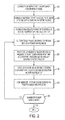
- FIG. 2 is a flowchart illustrating a low power communication method for communicating with a wearable wireless device according to an exemplary embodiment of the present disclosure.
- a VoIP server is operatively connected with an aggregator and/or a base station for handling two-way cellular and internet data traffic among the VoIP server, the aggregator, and the base station, or any combination thereof.
- the aggregator is operatively connected with an access point, the base station, the VoIP server, and/or internet or cloud, or any combination thereof for handling two-way cellular and internet data traffic among such devices.
- the aggregator may be configured to perform information aggregation, scheduling, filtering, whitelisting, and/or blacklisting, of any combination thereof on a user's cellular data and/or internet data according to the user's preference settings.
- the aggregator may be configured transmit cellular data and/or internet data using burst-oriented traffic patterns.
- the access point is operatively connected with a wearable wireless device, the aggregator, and/or the base station, or any combination thereof for handling two-way cellular data and/or internet data among such devices.
- the wearable wireless device is automatically placed in a power saving mode.
- the wearable wireless device may be configured to convert to a hibernation and/or a deep sleep state.
- the wearable wireless device may be automatically placed in the hibernation and/or a deep sleep state.
- the wearable wireless device may be configured such that when the wearable wireless device is in the hibernation and/or the deep sleep state, the wearable wireless device is ready to be powered on or resumed upon receiving an interrupt generated by one or more always-on timers, sensors, and/or user input devices.
- the wearable wireless device may power on or resume use of a low power radio transceiver while maintaining other systems in the hibernation and/or deep sleep state.
- the wearable wireless device may use the low power radio transceiver to receive non data-intensive information.
- the wearable wireless device may use the low power radio transceiver to transmit a message (e.g., an inquiry) with which the wearable wireless device queries the access point and/or aggregator to determine whether the access point and/or the aggregator has any information to be transmitted to the wearable wireless device.
- the wearable wireless device queries the access point and/or the aggregator to determine the access point and/or the aggregator has any request to establish a communication session (e.g., to receive an incoming call or to receive any updated information from, for example, a subscribed internet service).
- a communication session e.g., to receive an incoming call or to receive any updated information from, for example, a subscribed internet service.
- the access point determines whether the access point has received any requests for establishing a communication session from the aggregator and/or the base station. If the access point determines that the access point has received a request for establishing a communication session, then the access point responds to the wearable wireless device by attempting to establish a communication session with the wearable wireless device. In contrast, if the access point determines that the access point has not received a request for establishing a communication session, then the access point may indicate to the wearable wireless device that no request for a communication session exists. For example, the access point may transmit an indication that the access point has no outstanding requests for a communication session with the wearable wireless device.
- wearable wireless device receives an indication that a request for a communication session exists, then the wearable wireless device powers on or resumes use of the other systems that remained in the hibernation and/or deep sleep state. For example, at operation 260, the wearable wireless device establishes at least one communication link between the wearable wireless device and the access point and/or the aggregator.
- the wearable wireless device may establish communication links with the access point and/or the aggregator according to power management policies.
- the wearable wireless device may use a low power communication protocol (e.g., BTLE, ANT/ANT+, and the like) for communicating non data-intensive communications.
- the wearable wireless device may use a secondary communication protocol (e.g., Bluetooth, WiFi, 2G, 3G, LTE), which consumes more power during use relative to the low power communication protocol, for communicating data-intensive communications.
- the wearable wireless device communicates information with the access point and/or aggregator according to power management policies.
- the wearable wireless device may use any combination of communication protocols for transferring the information.
- the wearable wireless device may use the low power communication protocol and a secondary communication protocol to transfer information concurrently according to the type of information being communicated.
- the wearable wireless device determines whether to terminate the power saving mode. If the wearable wireless device determines not to terminate the power saving mode at operation 280, then after the wearable wireless device has communicated the outstanding information with the access point and/or the aggregator, then the wearable wireless device returns to operation 240 at which the enters the power saving mode.
- FIG. 3 is a flowchart illustrating a method of operating a wearable wireless device according to an exemplary embodiment of the present disclosure.
- the wearable wireless device connects to an access point for two-way communication of cellular data and/or internet data.
- the wearable wireless device enters a power saving mode.
- the wearable wireless device automatically places systems in a hibernation and/or deep sleep state.
- the wearable wireless device automatically places the wireless transceivers (e.g., radio transceivers) in the hibernation and/or deep sleep state.
- the wearable wireless device may be configured to power on or resume use of the wireless transceivers upon receiving an interruption generated by one or more always-on timers, sensors, and/or use input devices.
- the wearable wireless device powers on a low power communication unit (e.g., a low power transceiver).
- the wearable wireless device may power on the low power communication unit while maintaining other non-essential unit (e.g., other wireless transceivers) in the hibernation and/or deep sleep state.
- the wearable wireless device powers on the low power communication unit to receive non data-intensive information from the access point or to transmit a message (e.g., an inquiry) to the access point with which the wearable wireless device queries the access point to determine whether any outstanding requests for a communication session exists.
- the wearable wireless device receives a response to the inquiry that the wearable wireless device transmitted to the access point at operation 330.
- the wearable wireless device determines whether the access point has any outstanding requests for a communication session.
- the wearable wireless device determines that the access point does not have any outstanding requests for a communication session at operation 350, then the wearable wireless device returns to operation 320 at which the wearable wireless device enters the power saving mode.
- the wearable wireless device determines that the access point has an outstanding request for a communication session at operation 350, then the wearable wireless device proceeds to operation 360 at which the wearable wireless device exits the power saving mode and resumes communication with the access point using one or more communication protocols for such communication.
- the wearable wireless device may communicate with the access point using one or more communication protocols according to power management policies.
- the wearable wireless device may communicate with the access point using one or more communication protocols according to the type of information to be communicated between the wearable wireless device and the access point. For non data-intensive information, the wearable wireless device may communicate such information using a low power communication protocol. For data intensive information, the wearable wireless device may communicate such information using a secondary wireless communication protocol (e.g., Bluetooth, WiFi, 2G, 3G, LTE, and the like).
- a secondary wireless communication protocol e.g., Bluetooth, WiFi, 2G, 3G, LTE, and the like.
- the wearable wireless terminal determines whether to enter the power saving mode. For example, the wearable wireless terminal determines whether the information associated with the outstanding communication sessions are complete.
- the wearable wireless terminal determines to enter the power saving mode at operation 370, then the wearable wireless terminal returns to operation 320.
- FIG. 4 is a block diagram schematically illustrating a configuration of a wearable wireless device according to an exemplary embodiment of the present disclosure.
- the wearable wireless device 400 includes a control unit 410, a storage unit 420, a display unit 430, an input unit 440, and a communication unit 460.
- the wearable wireless device 400 may also include a sensor unit 450.
- the wearable wireless device 400 may also include an audio processing unit 470.
- the storage unit 420 can store user data, and the like, as well a program which performs operating functions according to various embodiments of the present disclosure.
- the storage unit 420 may store a program for controlling general operation of the wearable wireless device 400, an Operating System (OS) which boots the wearable wireless device 400, and application program for performing other optional functions such as a camera function, a sound replay function, an image or video replay function, a Near Field Communication (NFC) function, and the like.
- OS Operating System
- NFC Near Field Communication
- the storage unit 420 may store user data generated according to a user of the wearable wireless device 400, such as, for example, a text message, a game file, a music file, a movie file, and the like.
- the storage unit 420 may store information associated with power management policies.
- the storage unit 420 may store rules or associations relating to the operation of the wearable wireless device 400 for optimizing the energy efficiency thereof.
- the storage unit 420 may store information relating to which communication means (e.g., wireless transceivers, communication protocols, and the like) to use for communicating various types of data with an access point.
- the storage unit 420 may store information indicating that a low power communication protocol and/or low power wireless transceiver is to be used for communicating non data-intensive information with the access point, and indicating that secondary communication protocols (e.g., Bluetooth, 2G, 3G, LTE, and the like) and/or wireless transceivers are to be used for communicating data-intensive information.
- secondary communication protocols e.g., Bluetooth, 2G, 3G, LTE, and the like
- the display unit 430 displays information inputted by user or information to be provided to user as well as various menus or user interfaces of the wearable wireless device 400.
- the display unit 430 may provide various screens according to a use of the wearable wireless device 400, such as an idle screen, a message writing screen, a calling screen, and the like.
- the display unit 430 may display an interface which the user may manipulate or otherwise enter inputs via a touch screen to enter selection of the data that may be transferred or selection of devices to which the data may be transferred.
- the display unit 430 can be formed as a Liquid Crystal Display (LCD), an Organic Light Emitting Diode (OLED), an Active Matrix Organic Light Emitting Diode (AMOLED), and the like.
- LCD Liquid Crystal Display
- OLED Organic Light Emitting Diode
- AMOLED Active Matrix Organic Light Emitting Diode
- the display unit 430 can perform the function of the input unit 440 if the display unit 430 is formed as a touch screen
- the input unit 440 may include input keys and function keys for receiving user input.
- the input unit 440 may include input keys and function keys for receiving an input of numbers or various sets of letter information, setting various functions, and controlling functions of the wearable wireless device 400.
- the input unit 440 may include a calling key for requesting a voice call, a video call request key for requesting a video call, a termination key for requesting termination of a voice call or a video call, a volume key for adjusting output volume of an audio signal, a direction key, and the like.
- the input unit 440 may transmit to the control unit 410 signals related to selection of data to transfer and/or selection of devices to which the data may be transferred, and signals related to operation of the wearable wireless device 400.
- Such an input unit 440 may be formed by one or a combination of input means such as a touch pad, a touchscreen, a button-type key pad, a joystick, a wheel key, and the like.
- the audio processing unit 470 may be formed as an acoustic component.
- the audio processing unit 470 transmits and receives audio signals, and encodes and decodes the audio signals.
- the audio processing unit 470 may include a CODEC and an audio amplifier.
- the audio processing unit 470 is connected to a Speaker (SPK) 472 and a Microphone (MIC) 474.
- SPK Speaker
- MIC Microphone
- the audio processing unit 470 converts analog voice signals inputted from the MIC into digital voice signals, generates corresponding data for the digital voice signals, and transmits the data to the control unit 410. Further, the audio processing unit 470 converts digital voice signals inputted from the control unit 410 into analog voice signals, and outputs the analog voice signals through the SPK 472.
- the audio processing unit 470 may output various audio signals generated in the wearable wireless device 400 through the SPK 472.
- the audio processing unit 470 can output audio signals according to an audio file (e.g., MP3 file) replay, a moving picture file replay, and the like through the SPK.
- the audio processing unit 470 may receive an audio input (e.g., an audio command corresponding to a requested command from the user) through the MIC 474.
- the audio processing unit 470 may be operatively coupled to another input unit through which audio signals may be input.
- the audio processing unit 470 may be operatively coupled to a Bluetooth accessory (e.g., a Bluetooth headset, a Bluetooth microphone, etc.) and the like.
- a Bluetooth accessory e.g., a Bluetooth headset, a Bluetooth microphone, etc.
- the sensor unit 450 may include at least one sensor.
- the at least one sensor may detect and/or monitor a movement or change in position of the wearable wireless device 400.
- the at least one sensor may include a gyroscope, an accelerometer, a magnetometer, a barometer, a GPS sensor, an ambient light sensor, a temperature sensor, a galvanic sensor, a heart rate sensor, an optical blood flow sensor, and the like.
- the sensor unit 450 may provide various information to the control unit 410 with which the control unit 410 may determine a context within which the wearable wireless device 400 operates.
- the communication unit 460 may be configured for communicating with other devices.
- the communication unit 460 may be configured to communicate using various communication protocols and various communication transceivers.
- the communication unit 460 may communicate with other devices using a low power communication protocol such as, for example, BTLE, ANT/ANT+, and the like.
- the communication unit 460 may communicate with other devices using a secondary communication protocol which uses more power to communicate than the low power communication protocol.
- the secondary communication protocol may include Bluetooth, WiFi, 2G, 3G, LTE, and the like.
- the communication unit 460 may communicate with other devices using a tertiary short-range communication protocol.
- the tertiary short-range communication protocol may include NFC, RFID, and the like.
- the communication unit 460 may be configured to communicate with an access point.
- the communication unit 460 may communicate with the access point using one or more communication protocols.
- the communication unit 460 may selectively use a communication protocol according to the type of information being communicated between the wearable wireless device 400 and the access point, or otherwise according to a power management profile for improving (e.g., optimizing) energy efficiency of the wearable wireless device 400.
- the communication 460 unit may use a low power communication means and/or protocol for communicating non data-intensive information and the like.
- the communication unit 460 may use a secondary communication means and/or protocol for communicating data intensive information and the like.
- the communication unit 460 may include one or more communication transceivers each of which may be configured to communicate using one or more communication protocols.
- the communication unit 460 may include a low power radio transceiver 461, a secondary radio transceiver 462, and a tertiary short-range radio transceiver 463.
- the low power radio transceiver 461 may be configured to transmit and receive non data-intensive information.
- the low radio transceiver may be configured to transmit and receive the non data-intensive information using a low power communication protocol.
- the low power communication protocol may correspond to a protocol that uses relatively little power during communication.
- the low power communication protocol may be optimized for energy efficiency or otherwise designed with an important design consideration being energy efficiency.
- a low power communication protocol may be BLTE, ANT/ANT+, and the like.
- the secondary radio transceiver 462 may be configured to transmit and receive data-intensive information.
- the secondary radio transceiver 462 may be configured to transmit and receive the data-intensive information using a communication protocol such as, for example, Bluetooth, WiFi, 2G, 3G, LTE, and the like.
- the secondary radio transceiver 462 may be configured to use a communication protocol which is designed such that energy efficiency during communication is not a primary consideration; primary considerations may include speed of data transfer, and the like.
- the communication protocol used by the secondary radio transceiver 462 is different than the communication protocol being used by the low power radio transceiver 461.
- the tertiary short-range radio transceiver 463 may be configured to transmit information using a short-range wireless communication protocol.
- the short-range wireless communication protocol may be NFC, RFID, and the like.
- the communication protocol used by the tertiary short-range radio transceiver 463 is different than the communication protocol being used by the low power radio transceiver 461, and the communication protocol being used by the secondary radio transceiver 462.
- the communication unit 460 may use the low power radio transceiver 461, the secondary radio transceiver 462, and tertiary short-range radio transceiver 463, or any combination thereof to transmit information.
- the communication unit 460 may use such transceivers so as to optimize the overall communication energy efficiency.
- the communication unit 460 may use the low power radio transceiver 461, the secondary radio transceiver 462, and tertiary short-range radio transceiver 463, or any combination thereof, concurrently to transmit information (e.g., to the access point).
- the wearable wireless device 400 may also include a camera unit (not shown).
- the camera unit may be configured to capture camera images.
- the camera unit may capture preview images, still images, and video images.
- the camera unit may be controlled by the control unit 410. Such control may be based on user input through a camera application loaded on the wearable wireless device 400.
- the wearable wireless device 400 comprises at least one control unit 410.
- the at least one control unit 410 may be configured to operatively control the wearable wireless device 400.
- the control unit 410 may control operation of the various components or units included in the wearable wireless device 400.
- the control unit 410 may transmit a signal to the various components included in the wearable wireless device 400 and control a signal flow between internal blocks of the wearable wireless device 400.
- the control unit 410 may control the wearable wireless device 400 so as to operate in an energy efficient manner.
- the control unit 410 may control the communication unit 460 so as to selectively use various communication protocols according to the information being transmitted and/or the context in which the wearable wireless device 400 operates, and the like.
- the control unit 410 may control the wearable wireless device 400 to enter a power saving mode (e.g., when the wearable wireless device 400 is not transmitting information with, for example, an access point).
- the control unit 410 may control to place the communication unit 460 in hibernation and/or a deep sleep state when the wearable wireless device 400 enters the power saving mode.
- the control unit 410 may control to activate (e.g., power on or resume use of) the low power radio transceiver 461 to query the access point as to whether the access point has any outstanding communication session requests for communicating information to the wearable wireless device 400.
- control unit 410 may control to activate the low power radio transceiver 461 upon receiving an interrupt generated by one or more always-on timers, sensors, and/or user input devices.
- the control unit 410 may control to set values of timers according to the desired level of power duty cycling given energy/performance constraints set by applications being used or according to user preferences.
- the control unit 410 may control to awaken the wearable wireless device 400 (e.g., exit the power saving mode) when the control unit 410 determines that the access point has outstanding communication session requests (or otherwise has information to transmit to the wearable wireless device 400).
- the control unit 410 may control to manage communication with access point so as to selectively use various communication protocols according to power management policies.
- FIG. 5 is a flowchart illustrating a method of operating an aggregator according to an exemplary embodiment of the present disclosure.
- the aggregator receives data from a data source.
- the data may be cellular data, internet data, and the like.
- the aggregator may operatively receive the data from a VoIP server, a base station, the Internet (e.g., a web-based or cloud-based server), and the like.
- the aggregator compares the received data with transmission policies according to which the aggregator transmits information to users.
- the transmission policies may be stored locally or remotely, and may be configurable by a service or a user.
- the transmission policies may include, for example, performing information aggregation, scheduling, filtering, whitelisting, blacklisting, and the like.
- the aggregator determines whether to immediately transmit the received data (or a portion thereof) to the user (e.g., using the wearable wireless device). For example, the aggregator may determine that voice data from a specific contact (e.g., a contact provided on a whitelist), or an emergency call should be immediately transmitted to the user. As another example, the aggregator may determine that all incoming calls, SMS messages, MMS messages, and the like should be transmitted to the user upon receipt of the associated data by the aggregator. As another example, the aggregator may determine that internet data such as, for example, an email, an update from a social networking site, and the like should not be immediately transmitted to the user (e.g., transmission of such data may be delayed or restricted).
- voice data from a specific contact e.g., a contact provided on a whitelist
- the aggregator may determine that all incoming calls, SMS messages, MMS messages, and the like should be transmitted to the user upon receipt of the associated data by the aggregator.
- the aggregator may adopt a context-aware policy in addition to the transmission policy according to the type of information received (e.g., a call, a social update, and the like), in order to determine whether to immediately transmit the received data to the user.
- a context-aware policy in addition to the transmission policy according to the type of information received (e.g., a call, a social update, and the like), in order to determine whether to immediately transmit the received data to the user.
- such a context aware policy may consider a user's schedule (e.g., day of the week, time of the day, scheduled meetings, or the like), a user's location (e.g., the home, the office , or the like), a user's activity (e.g., driving), a sender of the information (e.g., family, friends, colleagues, or the like), location of the sender (e.g., a message from a sender who is listed as a contact in the user's terminal and who is located at the same location as the user may be immediately transmitted to the user), and/or the like.
- the aggregator may take into account the context of the user and/or terminal when determining whether to immediately transmit information or whether to delay or restrict transmission of such information.
- the aggregator may take into account a change in the context of the user and/or terminal when determining whether to immediately transmit information or whether to delay or restrict transmission of such information.
- the aggregator determines that the received data (or a portion thereof) should be immediately transmitted to the user at operation 530, then the aggregator proceeds to operation 540 at which the aggregator determines whether to use an energy efficient transmission scheme. For example, the aggregator may determine whether a burst oriented transmission should be used.
- the aggregator determines that the aggregator should not use (or is otherwise unnecessary to use) an energy efficient transmission scheme to transmit the information to be transmitted to the user immediately at operation 530, then the aggregator proceeds to operation 550 at which the aggregator transmits the data to the user (e.g., to the wearable wireless device).
- the aggregator determines that the aggregator should use an energy efficient transmission scheme to transmit the information to be transmitted to the user immediately at operation 530, then the aggregator proceeds to operation 560 at which the aggregator transmits the data to the user according to a selected energy efficient transmission schemes.
- the aggregator determines not to immediately transmit the data to the user at operation 530, then the aggregator proceeds to operation 570 at which the aggregator determines whether to store the data (e.g., until transmission is appropriate according to the applicable transmission policies).
- the aggregator determines to store the data at operation 570, then the aggregator proceeds to operation 580 at which the aggregator stores the data and transmits the data to the user (e.g., to the wearable wireless device) according to applicable transmission policies.
- the aggregator may apply an information aggregation transmission policy according to which the aggregator transmits the information to the user when a predetermined time duration has lapsed or upon aggregated data intended for the user meets or exceeds an aggregate size threshold.
- the aggregator may apply a transmission policy according to which the aggregator transmits the information upon receiving a request from the user to transmit information thereto (e.g., the aggregator stores the data until the user pulls the data thereto).
- the aggregator may apply a transmission policy according to which the aggregator transmits the information upon receiving an override request from the application or cloud service generating the stored information.
- Such an application and/or cloud service may also embed such an overriding request in the metadata section of the delivered information via which the adjusted priority of the said information (e.g., from stored and delivery to immediate delivery) will persist until the next priority adjustment occurs.
- the aggregator may apply a transmission policy according to which the aggregator transmits the information upon receiving a request from the access point and/or the wearable device detecting a change of user's location, activity, and/or state.
- the aggregator determines not to store the data at operation 570, then the aggregator proceeds to operation 590 at which the aggregator dumps the data not to be stored.
- the aggregator may determine not to store data for transmission to the user if the data is of a type which the user is unable to view/use on the wearable wireless device, if the data exceeds a certain size threshold, if the data corresponds to services (and updates thereof) which the user does not wish to receive on the wearable wireless device, if the data corresponds to data on a blacklist, and the like.
- FIG. 6 is a block diagram schematically illustrating a configuration of an aggregator according to an exemplary embodiment of the present disclosure.
- the aggregator 600 includes a control unit 610, a storage unit 620, and a communication unit 640. According to various embodiments of the present disclosure, the aggregator 600 may also include an input unit 630.
- the storage unit 620 can store user data, and the like, as well a program which performs operating functions according to various embodiments of the present disclosure.
- the storage unit 620 may store a program for controlling general operation of the aggregator 600, an Operating System (OS) which boots the aggregator 600, and application program for performing other optional functions.
- OS Operating System
- the storage unit 620 may store rules or associations relating to the operation of the aggregator 600 for optimizing the energy efficiency associated with transmission of data to the user.
- the storage unit 620 may store information relating to which communication means (e.g., wireless transceivers, communication protocols, and the like) to use for communicating various types of data to the wearable wireless device.
- communication means e.g., wireless transceivers, communication protocols, and the like
- the storage unit 620 may store information indicating that a low power communication protocol and/or low power wireless transceiver is to be used for communicating non data-intensive information with the wearable wireless device, and indicating that secondary communication protocols (e.g., Bluetooth, 2G, 3G, LTE, and the like) and/or wireless transceivers are to be used for communicating data-intensive information.
- secondary communication protocols e.g., Bluetooth, 2G, 3G, LTE, and the like
- the storage unit 620 may store transmission policies according to which the aggregator 600 transmits received data.
- the transmission policies may relate to applying information aggregation, scheduling, filtering, whitelisting, and blacklisting and the like on a user's cellular and/or internet data, and the like.
- the communication unit 640 may be configured for communicating with other devices.
- the communication unit 640 may be configured to communicate using various communication protocols and various communication transceivers.
- the communication unit 640 may communicate with other devices using a low power communication protocol such as, for example, BTLE, ANT/ANT+, and the like.
- the communication unit 640 may communicate with other devices using a secondary communication protocol which uses more power to communicate than the low power communication protocol.
- the secondary communication protocol may include Bluetooth, WiFi, 2G, 3G, LTE, and the like.
- the communication unit 640 may communicate with other devices using a tertiary short-range communication protocol.
- the tertiary short-range communication protocol may include NFC, RFID, and the like.
- the communication unit 640 may be configured to communicate with an access point, a base station, a VoIP server, the internet (e.g., a web-based or cloud-based server), and a wearable wireless device (e.g., if the aggregator and access point are integrated).
- an access point e.g., a base station, a VoIP server, the internet (e.g., a web-based or cloud-based server), and a wearable wireless device (e.g., if the aggregator and access point are integrated).
- the communication unit 640 may communicate with the wearable wireless device using one or more communication protocols.
- the communication unit 640 may selectively use a communication protocol according to the type of information being communicated between the wearable wireless device and the aggregator 600, or otherwise according to a transmission policy for improving (e.g., optimizing) energy efficiency of transmission with the wearable wireless device.
- the communication 640 unit may use a low power communication means and/or protocol for communicating non data-intensive information and the like.
- the communication unit 640 may use a secondary communication means and/or protocol for communicating data intensive information and the like.
- the communication unit 640 may include one or more communication transceivers each of which may be configured to communicate using one or more communication protocols.
- the communication unit 640 may include a low power radio transceiver, a secondary radio transceiver, and a tertiary short range radio transceiver.
- the low power radio transceiver may be configured to transmit and receive non data-intensive information.
- the low radio transceiver may be configured to transmit and receive the non data-intensive information using a low power communication protocol.
- the low power communication protocol may correspond to a protocol that uses relatively little power during communication.
- the low power communication protocol may be optimized for energy efficiency or otherwise designed with an important design consideration being energy efficiency.
- a low power communication protocol may be BLTE, ANT/ANT+, and the like.
- the secondary radio transceiver may be configured to transmit and receive data-intensive information.
- the secondary radio transceiver may be configured to transmit and receive the data-intensive information using a communication protocol such as, for example, Bluetooth, WiFi, 2G, 3G, LTE, and the like.
- the secondary radio transceiver may be configured to use a communication protocol which is designed such that energy efficiency during communication is not a primary consideration; primary considerations may include speed of data transfer, and the like.
- the communication protocol used by the secondary radio transceiver is different than the communication protocol being used by the low power radio transceiver.
- the tertiary short-range radio transceiver may be configured to transmit information using a short-range wireless communication protocol.
- the short-range wireless communication protocol may be NFC, RFID, and the like.
- the communication protocol used by the tertiary short-range radio transceiver is different than the communication protocol being used by the low power radio transceiver 461, and the communication protocol being used by the secondary radio transceiver 462.
- the communication unit 640 may use the low power radio transceiver, the secondary radio transceiver, and tertiary short-range radio transceiver, or any combination thereof to transmit information.
- the communication unit may use such transceivers so as to optimize the overall communication energy efficiency of transmissions with the wearable wireless device.
- the communication unit 640 may use the low power radio transceiver, the secondary radio transceiver, and tertiary short-range radio transceiver, or any combination thereof, concurrently to transmit information (e.g., to the wearable wireless device).
- the input unit 630 may include input keys and function keys for receiving user input.
- the input unit 630 may include input keys and function keys for receiving an input of numbers or various sets of letter information, setting various functions, and controlling functions of the aggregator 600.
- Such an input unit 630 may be formed by one or a combination of input means such as a touch pad, a touchscreen, a button-type key pad, a joystick, a wheel key, and the like.
- the aggregator 600 comprises at least one control unit 610.
- the at least one control unit 610 may be configured to operatively control the aggregator 600.
- the control unit 610 may control operation of the various components or units included in the aggregator 600.
- the control unit 610 may transmit a signal to the various components included in the aggregator 600 and control a signal flow between internal blocks of the aggregator 600.
- the control unit 610 may control the aggregator 600 so as to transmit data to a user (e.g., a wearable wireless device) in an energy efficient manner.
- the control unit 610 may control the communication unit 640 so as to selectively use various communication protocols according to the information being transmitted and/or the context in which the wearable wireless device operates, and the like.
- control unit 610 may control to transmit data to a user according to one or more predefined or selected transmission policies.
- FIG. 7 is a block diagram schematically illustrating a configuration of an access point according to an exemplary embodiment of the present disclosure.
- the access point 700 includes a control unit 710, a storage unit 720, and a communication unit 740. According to various embodiments of the present disclosure, the access point 700 may also include an input unit 730.
- the storage unit 720 can store user data, and the like, as well a program which performs operating functions according to various embodiments of the present disclosure.
- the storage unit 720 may store a program for controlling general operation of the access point 700, an OS which boots the access point 700, and an application program for performing other optional functions.
- the storage unit 720 may store rules or associations relating to the operation of the access point 700 for optimizing the energy efficiency associated with transmission of data to the user (e.g., the wearable wireless device).
- the storage unit 720 may store information relating to which communication means (e.g., wireless transceivers, communication protocols, and the like) to use for communicating various types of data to the wearable wireless device.
- communication means e.g., wireless transceivers, communication protocols, and the like
- the storage unit 720 may store information indicating that a low power communication protocol and/or low power wireless transceiver is to be used for communicating non data-intensive information with the wearable wireless device, and indicating that secondary communication protocols (e.g., Bluetooth, 2G, 3G, LTE, and the like) and/or wireless transceivers are to be used for communicating data-intensive information.
- secondary communication protocols e.g., Bluetooth, 2G, 3G, LTE, and the like
- the storage unit 720 may store transmission policies according to which the access point 700 transmits received data.
- the transmission policies may relate to applying information aggregation, scheduling, filtering, whitelisting, and blacklisting and the like on a user's cellular and/or internet data, and the like.
- the communication unit 740 may be configured for communicating with other devices.
- the communication unit 740 may be configured to communicate using various communication protocols and various communication transceivers.
- the communication unit 740 may communicate with other devices using a low power communication protocol such as, for example, BTLE, ANT/ANT+, and the like.
- the communication unit 740 may communicate with other devices using a secondary communication protocol which uses more power to communicate than the low power communication protocol.
- the secondary communication protocol may include Bluetooth, WiFi, 2G, 3G, LTE, and the like.
- the communication unit 740 may communicate with other devices using a tertiary short-range communication protocol.
- the tertiary short-range communication protocol may include NFC, RFID, and the like.
- the communication unit 740 may be configured to communicate with an aggregator, a base station, a VoIP server, the internet (e.g., a web-based or cloud-based server), and a wearable wireless device.
- the communication unit 740 may communicate with the wearable wireless device using one or more communication protocols.
- the communication unit 740 may communicate with the wearable wireless device using one or more communication protocols concurrently.
- the communication unit 740 may selectively use a communication protocol according to the type of information being communicated between the wearable wireless device and the access point 700, or otherwise according to a transmission policy for improving (e.g., optimizing) energy efficiency of transmission with the wearable wireless device.
- the communication 740 unit may use a low power communication means and/or protocol for communicating non data-intensive information and the like.
- the communication unit 740 may use a secondary communication means and/or protocol for communicating data intensive information and the like.
- the communication unit 740 may include one or more communication transceivers each of which may be configured to communicate using one or more communication protocols.
- the communication unit 740 may include a low power radio transceiver, a secondary radio transceiver, and a tertiary short range radio transceiver.
- the low power radio transceiver may be configured to transmit and receive non data-intensive information.
- the low radio transceiver may be configured to transmit and receive the non data-intensive information using a low power communication protocol.
- the low power communication protocol may correspond to a protocol that uses relatively little power during communication.
- the low power communication protocol may be optimized for energy efficiency or otherwise designed with an important design consideration being energy efficiency.
- a low power communication protocol may be BLTE, ANT/ANT+, and the like.
- the secondary radio transceiver may be configured to transmit and receive data-intensive information.
- the secondary radio transceiver may be configured to transmit and receive the data-intensive information using a communication protocol such as, for example, Bluetooth, WiFi, 2G, 3G, LTE, and the like.
- the secondary radio transceiver may be configured to use a communication protocol which is designed such that energy efficiency during communication is not a primary consideration; primary considerations may include speed of data transfer, and the like.
- the communication protocol used by the secondary radio transceiver is different than the communication protocol being used by the low power radio transceiver.
- the tertiary short-range radio transceiver may be configured to transmit information using a short-range wireless communication protocol.
- the short-range wireless communication protocol may be NFC, RFID, and the like.
- the communication protocol used by the tertiary short-range radio transceiver is different than the communication protocol being used by the low power radio transceiver, and the communication protocol being used by the secondary radio transceiver.
- the communication unit 740 may use the low power radio transceiver, the secondary radio transceiver, and tertiary short-range radio transceiver, or any combination thereof to transmit information.
- the communication unit may use such transceivers so as to optimize the overall communication energy efficiency of transmissions with the wearable wireless device.
- the communication unit 740 may use the low power radio transceiver, the secondary radio transceiver, and tertiary short-range radio transceiver, or any combination thereof, concurrently to transmit information (e.g., to the wearable wireless device).
- the input unit 730 may include input keys and function keys for receiving user input.
- the input unit 730 may include input keys and function keys for receiving an input of numbers or various sets of letter information, setting various functions, and controlling functions of the access point 700.
- Such an input unit 730 may be formed by one or a combination of input means such as a touch pad, a touchscreen, a button-type key pad, a joystick, a wheel key, and the like.
- the access point 700 comprises at least one control unit 710.
- the control unit 710 may be configured to operatively control the access point 700.
- the control unit 710 may control operation of the various components or units included in the access point 700.
- the control unit 710 may transmit a signal to the various components included in the access point 700 and control a signal flow between internal blocks of the access point 700.
- the control unit 710 may control the access point 700 so as to transmit data to a user (e.g., a wearable wireless device) in an energy efficient manner.
- the control unit 710 may control the communication unit 740 so as to selectively use various communication protocols according to the information being transmitted and/or the context in which the wearable wireless device operates, and the like.
- control unit 710 may control to transmit data to a user according to one or more predefined or selected transmission policies.
- a method for operating an aggregator to transmit information to a user comprising: receiving information from at least one data source; selecting a transmission policy according to which the information is to be transmitted to a user; and transmitting the information to the user according to the selected transmission policy.
- the selecting of the transmission policy comprises selecting at least one transmission policy according to which the information is to be transmitted to the user, the at least one transmission policy selected from: an information aggregation transmission policy; a scheduling transmission policy; a filtering transmission policy; a whitelist transmission policy; and a blacklist transmission policy.
- the aggregator aggregates applicable received information and transmits the aggregated information when a size of the aggregated information exceeds a selected size threshold.
- the selected at least one transmission policy includes the information scheduling policy, then the aggregator aggregates applicable received information and transmits the aggregated information according to a selected schedule.
- the aggregator filters the received information and applies a different transmission policy to each of the various filtered information.
- the selected transmission policy corresponds to a policy by which the aggregator aggregates applicable received information until the aggregator receives a request for transmission of such information from the user.
- the selected transmission policy corresponds to a policy by which the aggregator aggregates applicable received information and transmits the applicable received information upon detection of a change in context in which the user operates.
- the change in context in which the user operates comprises at least one of: a change in the user's location; a change in the user's activity; and a change in a state of at least one of the user and a terminal used by the user.
- the request to change the selected transmission policy is included in a metadata section of information received from the at least one data source.
- the request to change the selected transmission policy corresponds to a request to temporarily change the selected transmission policy for applicable information identified in the request to change the selected transmission policy.
- the aggregator transmits voice data and non-voice data according to different transmission policies.
- the aggregator immediately transmits voice data to the user, and wherein the aggregator stores non-voice data and transmits the non-voice data according to an applicable transmission policy.
- the transmission policy applicable to non-voice data includes waiting for the user to request transmission of the non-voice data.
- an apparatus for transmitting information to a user comprising: a communication unit configured to receive information from at least one data source, and to transmit the received information to the user; a storage unit configured to store the received information; and a control unit configured to select a transmission policy according to which the information is to be transmitted to a user, and to operatively control the communication unit to transmit the information to the user according to the selected transmission policy.
- the control unit is configured to select at least one transmission policy according to which the information is to be transmitted to the user, the at least one transmission policy selected from: an information aggregation transmission policy; a scheduling transmission policy; a filtering transmission policy; a whitelist transmission policy; and a blacklist transmission policy.
- the control unit aggregates applicable received information and operatively transmits the aggregated information when a size of the aggregated information exceeds a selected size threshold.
- the selected at least one transmission policy includes the information scheduling policy, then the control unit aggregates applicable received information and operatively transmits the aggregated information according to a selected schedule.
- the selected at least one transmission policy includes the information filtering policy, then the control unit filters the received information and applies a different transmission policy to each of the various filtered information.
- the selected transmission policy corresponds to a policy by which the control unit aggregates applicable received information until the control unit receives a request for transmission of such information from the user.
- the selected transmission policy corresponds to a policy by which the control unit aggregates applicable received information and transmits the applicable received information upon detection of a change in context in which the user operates.
- the change in context in which the user operates comprises at least one of: a change in the user's location; a change in the user's activity; and a change in a state of at least one of the user and a terminal used by the user.
- the control unit is further configured to receive a request to change the selected transmission policy.
- the request to change the selected transmission policy is included in a metadata section of information received from the at least one data source.
- the request to change the selected transmission policy corresponds to a request to temporarily change the selected transmission policy for applicable information identified in the request to change the selected transmission policy.
- control unit is further configured to control transmission of voice data and transmission of non-voice data according to different transmission policies.
- control unit is further configured to immediately transmit voice data to the user, and to control to store non-voice data and transmit the non-voice data according to an applicable transmission policy.
- transmission policy applicable to non-voice data includes waiting for the user to request transmission of the non-voice data.
- a method for operating a wearable wireless device comprising: entering a power saving mode; powering on a low power communication unit while maintaining other non-essential units in the wearable wireless device in a power saving state; transmitting an inquiry to an access point inquiring whether the access point has information to transmit to the wearable wireless device; if the access point does not have information to transmit to the wearable wireless device, setting the low power communication unit to the power saving state; and if the access point has information to transmit to the wearable wireless device, exiting the power saving mode and communicating with the access point using one or more communication protocols.
- the communicating with the access point using one or more communication protocols comprises: communicating non data-intensive information with the access point using a first communication protocol; and communicating data-intensive information with the access point using a second communication protocol.
- the first communication protocol and the second protocol are different.
- the first communication protocol corresponds to a low power communication protocol
- the second communication protocol corresponds to a communication protocol that uses more energy to transmit information than an amount of energy used by the low power communication protocol.
- the wearable wireless device communicates the voice data with the access point using the first protocol concurrently with communicating the non-voice data with the access point using the second communication protocol.
- a wearable wireless device comprising: a storage unit configured to store information; a display unit configured to display a user interface with which a user may view information; a communication unit configured to wirelessly communicate with an access point, the communication unit including a lower power communication unit; and a control unit configured to control the wearable wireless device to enter a power saving mode when the wearable wireless device is not communicating with the access point, to power on the low power communication unit while maintaining other non-essential units in the wearable wireless device in a power saving state, to transmit an inquiry to the access point inquiring whether the access point has information to transmit to the wearable wireless device, to setting the lower power communication unit to the power saving state if the access point does not have information to transmit to the wearable wireless device, and to exit the power saving mode and communicate with the access point using one or more communication protocols if the access point has information to transmit to the wearable wireless device.
- the communication further includes a secondary communication unit, wherein the control unit controls the communication unit to communicate non data-intensive information with the access point using the low power communication unit, and to communicate data-intensive information with the access point using the secondary communication unit.
- the low power communication unit and the secondary communication unit communicate using different protocols.
- the low power communication unit communicates using a low power communication protocol
- the secondary communication unit communicates using a communication protocol that uses more energy to transmit information than an amount of energy used by the low power communication protocol.
- the control unit controls to communicates the non data-intensive information with the access point using the low power communication unit concurrently with communicating the data-intensive information with the access point using the secondary communication unit.
- the communication further includes a tertiary short-range communication unit configured to communicate using a short-range wireless communication protocol.
- a system for communicating with a wearable wireless device comprising: at least one data source; an aggregator configured to receive data from the at least one data source, and to communicate with an access point; the access point configured to communicate with the aggregator and to communicate with a wearable wireless device; and the wearable wireless device configured to communicate with the access point so as to receive information from the aggregator through the access point.
- the aggregator comprises: a communication unit configured to receive information from the at least one data source, and to transmit the received information to the wearable wireless device; a storage unit configured to store the received information; and a control unit configured to select a transmission policy according to which the information is to be transmitted to the wearable wireless device, and to operatively control the communication unit to transmit the information to the wearable wireless device according to the selected transmission policy.
- the wearable wireless device comprises: a storage unit configured to store information; a display unit configured to display a user interface with which a user may view information; a communication unit configured to wirelessly communicate with the access point, the communication unit including a lower power communication unit; and a control unit configured to control the wearable wireless device to enter a power saving mode when the wearable wireless device is not communicating with the access point, to power on the low power communication unit while maintaining other non-essential units in the wearable wireless device in a power saving state, to transmit an inquiry to the access point inquiring whether the access point has information to transmit to the wearable wireless device, to setting the lower power communication unit to the power saving state if the access point does not have information to transmit to the wearable wireless device, and to exit the power saving mode and communicate with the access point using one or more communication protocols if the access point has information to transmit to the wearable wireless device.
- the at least one data source includes at least one of a Voice over Internet Protocol (VoIP) server, a base station, and a web-based server.
- VoIP Voice over Internet Protocol
- the web-based server provides the aggregator with services relating to email, calendar management, instant messaging, Rich Site Summary (RSS) information, weather forecast, social networks, and multimedia.
- RSS Rich Site Summary
- an access point comprising: a communication unit configured to communicate with an aggregator and configured to communicate with a wearable wireless device; a storage unit configured to store information received from at least one of the aggregator and the wearable wireless device; and a control unit configured to communicate with the wearable wireless device using a combination of communication links according to a transmission policy.
- the communication unit comprises a plurality of communication units that communicate with the wearable wireless device over separate communication links using different communication protocols.
- the plurality of communication units comprises: a primary low power communication unit configured to communicate non data-intensive information via a lower power wireless communication protocol; and a secondary communication unit configured to communicate data-intensive information using a secondary wireless communication protocol.
- the plurality of communication units further comprises: a tertiary short-range communication unit configured to communicate information via a short-range wireless communication protocol.
- the communication unit further comprises: a communication module configured to communicate with the aggregator, wherein if the aggregator resides locally in relation to the access point, the communication module configured to communicate with the aggregator corresponds to a dedicated wired or wireless communication link between the aggregator and the access point, and wherein if the aggregator resides remotely in relation to the access point, the communication module configured to communicate with the aggregator corresponds to a communication module configured to communicate via an Internet Protocol (IP) based communication protocol.
- IP Internet Protocol
- the communication unit further comprises: a communication module configured to communicate with a base station.
- a method for operating an access point comprising: receiving information from an aggregator; receiving an inquiry from a wearable wireless device inquiring whether the access point has information to transmit to the wearable wireless device; transmitting a response to the inquiry from the wearable wireless device; and if the access point has information to transmit to the wearable wireless device, communicating the information to the wearable wireless device using one or more communication protocols.
- the communicating with the wearable wireless device using one or more communication protocols comprises: communicating non data-intensive information with the wearable wireless device using a first communication protocol; and communicating data-intensive information with the wearable wireless device using a second communication protocol.
- the first communication protocol and the second protocol are different.
- the second communication protocol corresponds to a low power communication protocol
- the first communication protocol corresponds to a communication protocol that uses more energy to transmit information than an amount of energy used by the low power communication protocol.
- Any such software may be stored in a non-transitory computer readable storage medium.
- the non-transitory computer readable storage medium stores one or more programs (software modules), the one or more programs comprising instructions, which when executed by one or more processors in an electronic device, cause the electronic device to perform a method of the present disclosure.
- Any such software may be stored in the form of volatile or non-volatile storage such as, for example, a storage device like a Read Only Memory (ROM), whether erasable or rewritable or not, or in the form of memory such as, for example, Random Access Memory (RAM), memory chips, device or integrated circuits or on an optically or magnetically readable medium such as, for example, a Compact Disk (CD), Digital Versatile Disc (DVD), magnetic disk or magnetic tape or the like.
- ROM Read Only Memory
- RAM Random Access Memory
- CD Compact Disk
- DVD Digital Versatile Disc
- the storage devices and storage media are various embodiments of non-transitory machine-readable storage that are suitable for storing a program or programs comprising instructions that, when executed, implement various embodiments of the present disclosure. Accordingly, various embodiments provide a program comprising code for implementing apparatus or a method as claimed in any one of the claims of this specification and a non-transitory machine-readable storage storing such a program.
Landscapes
- Engineering & Computer Science (AREA)
- Computer Networks & Wireless Communication (AREA)
- Signal Processing (AREA)
- Telephone Function (AREA)
- Telephonic Communication Services (AREA)
- Mobile Radio Communication Systems (AREA)
- Remote Monitoring And Control Of Power-Distribution Networks (AREA)
Applications Claiming Priority (1)
| Application Number | Priority Date | Filing Date | Title |
|---|---|---|---|
| US13/966,662 US9485729B2 (en) | 2013-08-14 | 2013-08-14 | Selecting a transmission policy and transmitting information to a wearable device |
Publications (3)
| Publication Number | Publication Date |
|---|---|
| EP2838295A2 true EP2838295A2 (fr) | 2015-02-18 |
| EP2838295A3 EP2838295A3 (fr) | 2015-06-17 |
| EP2838295B1 EP2838295B1 (fr) | 2018-10-03 |
Family
ID=51383546
Family Applications (1)
| Application Number | Title | Priority Date | Filing Date |
|---|---|---|---|
| EP14180621.6A Not-in-force EP2838295B1 (fr) | 2013-08-14 | 2014-08-12 | Appareil, procédé et système de dispositifs sans fil portables à faible puissance |
Country Status (3)
| Country | Link |
|---|---|
| US (1) | US9485729B2 (fr) |
| EP (1) | EP2838295B1 (fr) |
| KR (1) | KR102202647B1 (fr) |
Cited By (4)
| Publication number | Priority date | Publication date | Assignee | Title |
|---|---|---|---|---|
| EP2863705B1 (fr) | 2013-10-16 | 2017-04-05 | Samsung Electronics Co., Ltd | Procédé, dispositif et support d'enregistrement lisible par ordinateur pour faire fonctionner un dispositif comme point d'accès |
| WO2022000124A1 (fr) * | 2020-06-28 | 2022-01-06 | Arris Enterprises Llc | Procédé d'assurance de fiabilité de voix par protocole internet après le passage à un mode d'économie d'énergie |
| CN114205546A (zh) * | 2020-09-18 | 2022-03-18 | 华为终端有限公司 | 一种设备控制系统 |
| EP4704450A4 (fr) * | 2023-12-11 | 2026-04-29 | Guangdong Coros Sports Tech Co Ltd | Procédé d'envoi de données, dispositif électronique, système de communication, support de stockage et puce |
Families Citing this family (16)
| Publication number | Priority date | Publication date | Assignee | Title |
|---|---|---|---|---|
| KR102109883B1 (ko) * | 2013-09-03 | 2020-05-12 | 삼성전자주식회사 | 컨텐츠 전송 방법 및 전자 장치 |
| KR102209814B1 (ko) * | 2013-12-13 | 2021-02-01 | 삼성전자주식회사 | 데이터 처리 방법 및 이를 지원하는 전자 장치 |
| US20150185944A1 (en) | 2013-12-27 | 2015-07-02 | Aleksander Magi | Wearable electronic device including a flexible interactive display |
| USD750069S1 (en) | 2013-12-28 | 2016-02-23 | Intel Corporation | Wearable computing device |
| USD751066S1 (en) | 2013-12-28 | 2016-03-08 | Intel Corporation | Wearable computing device |
| KR102356925B1 (ko) * | 2014-02-21 | 2022-01-28 | 삼성전자주식회사 | 전자 장치 및 전자 장치의 절전 방법 |
| US9649558B2 (en) | 2014-03-14 | 2017-05-16 | Sony Interactive Entertainment Inc. | Gaming device with rotatably placed cameras |
| US9621432B2 (en) * | 2014-07-31 | 2017-04-11 | Gci Communication Corp. | Diagnostics of deployed devices based on network traffic |
| US20170048731A1 (en) * | 2014-09-26 | 2017-02-16 | Hewlett Packard Enterprise Development Lp | Computing nodes |
| CN104320163B (zh) * | 2014-10-10 | 2017-01-25 | 安徽华米信息科技有限公司 | 一种通讯方法及装置 |
| US11457809B1 (en) * | 2015-12-08 | 2022-10-04 | Verily Life Sciences Llc | NFC beacons for bidirectional communication between an electrochemical sensor and a reader device |
| US10306690B2 (en) | 2016-12-30 | 2019-05-28 | Intel Corporation | Communication under multiple communication links |
| WO2019160946A1 (fr) * | 2018-02-13 | 2019-08-22 | Tadhg Kelly | Services voip oob |
| CN111343722B (zh) * | 2020-03-04 | 2023-02-14 | 西安邮电大学 | 边缘计算中基于认知无线电的能效优化方法 |
| KR102351571B1 (ko) * | 2020-10-23 | 2022-01-14 | (주)에스디플렉스 | 조립식 엣지 시스템 |
| US12621774B2 (en) | 2021-04-29 | 2026-05-05 | Google Llc | Managing energy usage of a user equipment device for wireless communications |
Family Cites Families (15)
| Publication number | Priority date | Publication date | Assignee | Title |
|---|---|---|---|---|
| US7330740B2 (en) | 2002-10-22 | 2008-02-12 | Broadcom Corporation | Cell phone wireless speaker-microphone sleep modes |
| US7492760B1 (en) * | 2003-03-31 | 2009-02-17 | Pmc-Sierra, Inc. | Memory egress self selection architecture |
| US7099689B2 (en) | 2003-06-30 | 2006-08-29 | Microsoft Corporation | Energy-aware communications for a multi-radio system |
| US20050249227A1 (en) | 2004-05-07 | 2005-11-10 | Wang Huai Y | Method for indicating buffer status in a WLAN access point |
| EP1603353B8 (fr) | 2004-06-03 | 2009-08-05 | Option | Procédé et appareil pour gérer des connexions simultanées d' une station de communication mobile à réseaux différents |
| US7656880B1 (en) * | 2004-06-09 | 2010-02-02 | Verizon Laboratories Inc. | Prioritized segmentation and reassembly methods and systems |
| US7613138B2 (en) * | 2005-05-23 | 2009-11-03 | Microsoft Corporation | Separating control and data in wireless networks |
| US8594318B2 (en) * | 2005-11-23 | 2013-11-26 | Bessy Wen-Han Liang | Method and apparatus for indicating a caller's intent |
| KR100753396B1 (ko) * | 2006-02-17 | 2007-08-30 | 삼성전자주식회사 | 복수의 정보를 포함하는 방송데이터 전송방법 및 그 장치 |
| US7826411B2 (en) | 2007-05-10 | 2010-11-02 | Broadcom Corporation | Cooperative transceiving between wireless interface devices of a host device with shared modules |
| US20080279130A1 (en) | 2007-05-11 | 2008-11-13 | Infineon Technologies Ag | Bluetooth and Wireless Network Coexistence |
| US8072913B2 (en) | 2008-02-03 | 2011-12-06 | Broadcom Corporation | Collaborative coexistence of co-located mobile WiMAX, wireless LAN, and/or bluetooth radios |
| JP4220575B1 (ja) * | 2008-09-12 | 2009-02-04 | 株式会社東芝 | 情報処理装置 |
| US10848398B2 (en) | 2011-11-10 | 2020-11-24 | Assia Spe, Llc | Method, apparatus, and system for optimizing performance of a communication unit by a remote server |
| US20140286178A1 (en) * | 2013-03-19 | 2014-09-25 | Unisys Corporation | Communication protocol for wireless sensor networks using communication and energy costs |
-
2013
- 2013-08-14 US US13/966,662 patent/US9485729B2/en active Active
-
2014
- 2014-08-07 KR KR1020140101909A patent/KR102202647B1/ko active Active
- 2014-08-12 EP EP14180621.6A patent/EP2838295B1/fr not_active Not-in-force
Non-Patent Citations (1)
| Title |
|---|
| None |
Cited By (6)
| Publication number | Priority date | Publication date | Assignee | Title |
|---|---|---|---|---|
| EP2863705B1 (fr) | 2013-10-16 | 2017-04-05 | Samsung Electronics Co., Ltd | Procédé, dispositif et support d'enregistrement lisible par ordinateur pour faire fonctionner un dispositif comme point d'accès |
| WO2022000124A1 (fr) * | 2020-06-28 | 2022-01-06 | Arris Enterprises Llc | Procédé d'assurance de fiabilité de voix par protocole internet après le passage à un mode d'économie d'énergie |
| US12192413B2 (en) | 2020-06-28 | 2025-01-07 | Arris Enterprises Llc | Method of ensuring Voice over Internet Protocol reliability after entering a power saving mode |
| CN114205546A (zh) * | 2020-09-18 | 2022-03-18 | 华为终端有限公司 | 一种设备控制系统 |
| CN114205546B (zh) * | 2020-09-18 | 2023-05-05 | 华为终端有限公司 | 一种设备控制系统 |
| EP4704450A4 (fr) * | 2023-12-11 | 2026-04-29 | Guangdong Coros Sports Tech Co Ltd | Procédé d'envoi de données, dispositif électronique, système de communication, support de stockage et puce |
Also Published As
| Publication number | Publication date |
|---|---|
| EP2838295B1 (fr) | 2018-10-03 |
| EP2838295A3 (fr) | 2015-06-17 |
| US20150049657A1 (en) | 2015-02-19 |
| KR20150020080A (ko) | 2015-02-25 |
| KR102202647B1 (ko) | 2021-01-14 |
| US9485729B2 (en) | 2016-11-01 |
Similar Documents
| Publication | Publication Date | Title |
|---|---|---|
| EP2838295B1 (fr) | Appareil, procédé et système de dispositifs sans fil portables à faible puissance | |
| CN109417762B (zh) | 搜索空间参数配置和调整方法及装置 | |
| US10187245B2 (en) | Method and apparatus for exchanging SIP option message for capability discovery of rich communication suite in portable terminal | |
| US11610491B2 (en) | Data transmission method and apparatus, and unmanned aerial vehicle | |
| CN105120065B (zh) | 消息处理方法及装置 | |
| CN109496453B (zh) | 定时器调整方法及装置 | |
| WO2018121148A1 (fr) | Procédé de sélection de ressources de communication, terminal intelligent portatif et dispositif d'accès | |
| US20140074921A1 (en) | Mechanism for facilitating customized policy-based notifications for computing systems | |
| WO2020142995A1 (fr) | Procédé et appareil permettant de déterminer une ressource de liaison latérale, équipement utilisateur et station de base | |
| US9356988B2 (en) | Internet protocol communication accessibility improvement | |
| WO2021030974A1 (fr) | Procédé et appareil de configuration de radiorecherche, dispositif de communication et support d'enregistrement | |
| WO2019113883A1 (fr) | Procédé et dispositif d'économie d'énergie d'équipement d'utilisateur, équipement d'utilisateur et station de base | |
| US10200843B1 (en) | Bluetooth audio role-based scheduling | |
| WO2021196133A1 (fr) | Procédé et dispositif de changement d'état de rrc, appareil de communication et support de stockage | |
| US9668228B2 (en) | Methods for controlling transmit power and electronic devices thereof | |
| WO2019100259A1 (fr) | Procédé de transmission de données, appareil, et véhicule aérien sans pilote | |
| CN114128366A (zh) | 寻呼参数确定方法、装置、通信设备和存储介质 | |
| CN111526573A (zh) | 通信数据的处理方法及装置、电子设备和存储介质 | |
| CN110192407B (zh) | 一种数据传输方法及设备 | |
| CN112534913B (zh) | Pusch接收方法和装置、pusch发送方法和装置 | |
| CN111699724B (zh) | 控制终端的方法及装置、存储介质 | |
| CN112911692B (zh) | 降低能耗的方法、移动终端及计算机可读存储介质 | |
| WO2024020807A1 (fr) | Procédé et dispositif de réception de service de multidiffusion inactif, et procédé et dispositif d'envoi de configuration de service de multidiffusion inactif | |
| CN115277922A (zh) | 处理方法、智能终端及存储介质 | |
| CN111642033A (zh) | 一种配置数据接收方式的方法、网络设备及终端设备 |
Legal Events
| Date | Code | Title | Description |
|---|---|---|---|
| PUAL | Search report despatched |
Free format text: ORIGINAL CODE: 0009013 |
|
| PUAF | Information related to the publication of a search report (a3 document) modified or deleted |
Free format text: ORIGINAL CODE: 0009199SEPU |
|
| 17P | Request for examination filed |
Effective date: 20140812 |
|
| AK | Designated contracting states |
Kind code of ref document: A2 Designated state(s): AL AT BE BG CH CY CZ DE DK EE ES FI FR GB GR HR HU IE IS IT LI LT LU LV MC MK MT NL NO PL PT RO RS SE SI SK SM TR |
|
| AX | Request for extension of the european patent |
Extension state: BA ME |
|
| PUAI | Public reference made under article 153(3) epc to a published international application that has entered the european phase |
Free format text: ORIGINAL CODE: 0009012 |
|
| AK | Designated contracting states |
Kind code of ref document: A3 Designated state(s): AL AT BE BG CH CY CZ DE DK EE ES FI FR GB GR HR HU IE IS IT LI LT LU LV MC MK MT NL NO PL PT RO RS SE SI SK SM TR |
|
| AX | Request for extension of the european patent |
Extension state: BA ME |
|
| RIC1 | Information provided on ipc code assigned before grant |
Ipc: H04W 52/02 20090101AFI20150204BHEP |
|
| D17D | Deferred search report published (deleted) | ||
| PUAL | Search report despatched |
Free format text: ORIGINAL CODE: 0009013 |
|
| AK | Designated contracting states |
Kind code of ref document: A3 Designated state(s): AL AT BE BG CH CY CZ DE DK EE ES FI FR GB GR HR HU IE IS IT LI LT LU LV MC MK MT NL NO PL PT RO RS SE SI SK SM TR |
|
| AX | Request for extension of the european patent |
Extension state: BA ME |
|
| RIC1 | Information provided on ipc code assigned before grant |
Ipc: H04W 72/04 20090101ALI20150513BHEP Ipc: H04W 52/02 20090101AFI20150513BHEP Ipc: H04W 88/06 20090101ALI20150513BHEP Ipc: H04W 4/00 20090101ALI20150513BHEP |
|
| STAA | Information on the status of an ep patent application or granted ep patent |
Free format text: STATUS: EXAMINATION IS IN PROGRESS |
|
| 17Q | First examination report despatched |
Effective date: 20170713 |
|
| GRAP | Despatch of communication of intention to grant a patent |
Free format text: ORIGINAL CODE: EPIDOSNIGR1 |
|
| STAA | Information on the status of an ep patent application or granted ep patent |
Free format text: STATUS: GRANT OF PATENT IS INTENDED |
|
| INTG | Intention to grant announced |
Effective date: 20180507 |
|
| GRAS | Grant fee paid |
Free format text: ORIGINAL CODE: EPIDOSNIGR3 |
|
| GRAA | (expected) grant |
Free format text: ORIGINAL CODE: 0009210 |
|
| STAA | Information on the status of an ep patent application or granted ep patent |
Free format text: STATUS: THE PATENT HAS BEEN GRANTED |
|
| AK | Designated contracting states |
Kind code of ref document: B1 Designated state(s): AL AT BE BG CH CY CZ DE DK EE ES FI FR GB GR HR HU IE IS IT LI LT LU LV MC MK MT NL NO PL PT RO RS SE SI SK SM TR |
|
| REG | Reference to a national code |
Ref country code: GB Ref legal event code: FG4D |
|
| REG | Reference to a national code |
Ref country code: CH Ref legal event code: EP Ref country code: AT Ref legal event code: REF Ref document number: 1050043 Country of ref document: AT Kind code of ref document: T Effective date: 20181015 |
|
| REG | Reference to a national code |
Ref country code: IE Ref legal event code: FG4D Ref country code: DE Ref legal event code: R096 Ref document number: 602014033267 Country of ref document: DE |
|
| REG | Reference to a national code |
Ref country code: NL Ref legal event code: FP |
|
| REG | Reference to a national code |
Ref country code: LT Ref legal event code: MG4D |
|
| REG | Reference to a national code |
Ref country code: AT Ref legal event code: MK05 Ref document number: 1050043 Country of ref document: AT Kind code of ref document: T Effective date: 20181003 |
|
| PG25 | Lapsed in a contracting state [announced via postgrant information from national office to epo] |
Ref country code: FI Free format text: LAPSE BECAUSE OF FAILURE TO SUBMIT A TRANSLATION OF THE DESCRIPTION OR TO PAY THE FEE WITHIN THE PRESCRIBED TIME-LIMIT Effective date: 20181003 Ref country code: AT Free format text: LAPSE BECAUSE OF FAILURE TO SUBMIT A TRANSLATION OF THE DESCRIPTION OR TO PAY THE FEE WITHIN THE PRESCRIBED TIME-LIMIT Effective date: 20181003 Ref country code: LV Free format text: LAPSE BECAUSE OF FAILURE TO SUBMIT A TRANSLATION OF THE DESCRIPTION OR TO PAY THE FEE WITHIN THE PRESCRIBED TIME-LIMIT Effective date: 20181003 Ref country code: HR Free format text: LAPSE BECAUSE OF FAILURE TO SUBMIT A TRANSLATION OF THE DESCRIPTION OR TO PAY THE FEE WITHIN THE PRESCRIBED TIME-LIMIT Effective date: 20181003 Ref country code: PL Free format text: LAPSE BECAUSE OF FAILURE TO SUBMIT A TRANSLATION OF THE DESCRIPTION OR TO PAY THE FEE WITHIN THE PRESCRIBED TIME-LIMIT Effective date: 20181003 Ref country code: BG Free format text: LAPSE BECAUSE OF FAILURE TO SUBMIT A TRANSLATION OF THE DESCRIPTION OR TO PAY THE FEE WITHIN THE PRESCRIBED TIME-LIMIT Effective date: 20190103 Ref country code: NO Free format text: LAPSE BECAUSE OF FAILURE TO SUBMIT A TRANSLATION OF THE DESCRIPTION OR TO PAY THE FEE WITHIN THE PRESCRIBED TIME-LIMIT Effective date: 20190103 Ref country code: ES Free format text: LAPSE BECAUSE OF FAILURE TO SUBMIT A TRANSLATION OF THE DESCRIPTION OR TO PAY THE FEE WITHIN THE PRESCRIBED TIME-LIMIT Effective date: 20181003 Ref country code: IS Free format text: LAPSE BECAUSE OF FAILURE TO SUBMIT A TRANSLATION OF THE DESCRIPTION OR TO PAY THE FEE WITHIN THE PRESCRIBED TIME-LIMIT Effective date: 20190203 Ref country code: LT Free format text: LAPSE BECAUSE OF FAILURE TO SUBMIT A TRANSLATION OF THE DESCRIPTION OR TO PAY THE FEE WITHIN THE PRESCRIBED TIME-LIMIT Effective date: 20181003 Ref country code: CZ Free format text: LAPSE BECAUSE OF FAILURE TO SUBMIT A TRANSLATION OF THE DESCRIPTION OR TO PAY THE FEE WITHIN THE PRESCRIBED TIME-LIMIT Effective date: 20181003 |
|
| PG25 | Lapsed in a contracting state [announced via postgrant information from national office to epo] |
Ref country code: PT Free format text: LAPSE BECAUSE OF FAILURE TO SUBMIT A TRANSLATION OF THE DESCRIPTION OR TO PAY THE FEE WITHIN THE PRESCRIBED TIME-LIMIT Effective date: 20190203 Ref country code: GR Free format text: LAPSE BECAUSE OF FAILURE TO SUBMIT A TRANSLATION OF THE DESCRIPTION OR TO PAY THE FEE WITHIN THE PRESCRIBED TIME-LIMIT Effective date: 20190104 Ref country code: RS Free format text: LAPSE BECAUSE OF FAILURE TO SUBMIT A TRANSLATION OF THE DESCRIPTION OR TO PAY THE FEE WITHIN THE PRESCRIBED TIME-LIMIT Effective date: 20181003 Ref country code: SE Free format text: LAPSE BECAUSE OF FAILURE TO SUBMIT A TRANSLATION OF THE DESCRIPTION OR TO PAY THE FEE WITHIN THE PRESCRIBED TIME-LIMIT Effective date: 20181003 Ref country code: AL Free format text: LAPSE BECAUSE OF FAILURE TO SUBMIT A TRANSLATION OF THE DESCRIPTION OR TO PAY THE FEE WITHIN THE PRESCRIBED TIME-LIMIT Effective date: 20181003 |
|
| REG | Reference to a national code |
Ref country code: DE Ref legal event code: R097 Ref document number: 602014033267 Country of ref document: DE |
|
| PG25 | Lapsed in a contracting state [announced via postgrant information from national office to epo] |
Ref country code: IT Free format text: LAPSE BECAUSE OF FAILURE TO SUBMIT A TRANSLATION OF THE DESCRIPTION OR TO PAY THE FEE WITHIN THE PRESCRIBED TIME-LIMIT Effective date: 20181003 Ref country code: DK Free format text: LAPSE BECAUSE OF FAILURE TO SUBMIT A TRANSLATION OF THE DESCRIPTION OR TO PAY THE FEE WITHIN THE PRESCRIBED TIME-LIMIT Effective date: 20181003 |
|
| PLBE | No opposition filed within time limit |
Free format text: ORIGINAL CODE: 0009261 |
|
| STAA | Information on the status of an ep patent application or granted ep patent |
Free format text: STATUS: NO OPPOSITION FILED WITHIN TIME LIMIT |
|
| PG25 | Lapsed in a contracting state [announced via postgrant information from national office to epo] |
Ref country code: SM Free format text: LAPSE BECAUSE OF FAILURE TO SUBMIT A TRANSLATION OF THE DESCRIPTION OR TO PAY THE FEE WITHIN THE PRESCRIBED TIME-LIMIT Effective date: 20181003 Ref country code: EE Free format text: LAPSE BECAUSE OF FAILURE TO SUBMIT A TRANSLATION OF THE DESCRIPTION OR TO PAY THE FEE WITHIN THE PRESCRIBED TIME-LIMIT Effective date: 20181003 Ref country code: SK Free format text: LAPSE BECAUSE OF FAILURE TO SUBMIT A TRANSLATION OF THE DESCRIPTION OR TO PAY THE FEE WITHIN THE PRESCRIBED TIME-LIMIT Effective date: 20181003 Ref country code: RO Free format text: LAPSE BECAUSE OF FAILURE TO SUBMIT A TRANSLATION OF THE DESCRIPTION OR TO PAY THE FEE WITHIN THE PRESCRIBED TIME-LIMIT Effective date: 20181003 |
|
| 26N | No opposition filed |
Effective date: 20190704 |
|
| PG25 | Lapsed in a contracting state [announced via postgrant information from national office to epo] |
Ref country code: SI Free format text: LAPSE BECAUSE OF FAILURE TO SUBMIT A TRANSLATION OF THE DESCRIPTION OR TO PAY THE FEE WITHIN THE PRESCRIBED TIME-LIMIT Effective date: 20181003 |
|
| PG25 | Lapsed in a contracting state [announced via postgrant information from national office to epo] |
Ref country code: TR Free format text: LAPSE BECAUSE OF FAILURE TO SUBMIT A TRANSLATION OF THE DESCRIPTION OR TO PAY THE FEE WITHIN THE PRESCRIBED TIME-LIMIT Effective date: 20181003 |
|
| PG25 | Lapsed in a contracting state [announced via postgrant information from national office to epo] |
Ref country code: LU Free format text: LAPSE BECAUSE OF NON-PAYMENT OF DUE FEES Effective date: 20190812 Ref country code: LI Free format text: LAPSE BECAUSE OF NON-PAYMENT OF DUE FEES Effective date: 20190831 Ref country code: MC Free format text: LAPSE BECAUSE OF FAILURE TO SUBMIT A TRANSLATION OF THE DESCRIPTION OR TO PAY THE FEE WITHIN THE PRESCRIBED TIME-LIMIT Effective date: 20181003 Ref country code: CH Free format text: LAPSE BECAUSE OF NON-PAYMENT OF DUE FEES Effective date: 20190831 |
|
| REG | Reference to a national code |
Ref country code: BE Ref legal event code: MM Effective date: 20190831 |
|
| PG25 | Lapsed in a contracting state [announced via postgrant information from national office to epo] |
Ref country code: IE Free format text: LAPSE BECAUSE OF NON-PAYMENT OF DUE FEES Effective date: 20190812 Ref country code: FR Free format text: LAPSE BECAUSE OF NON-PAYMENT OF DUE FEES Effective date: 20190831 |
|
| PG25 | Lapsed in a contracting state [announced via postgrant information from national office to epo] |
Ref country code: BE Free format text: LAPSE BECAUSE OF NON-PAYMENT OF DUE FEES Effective date: 20190831 |
|
| PGFP | Annual fee paid to national office [announced via postgrant information from national office to epo] |
Ref country code: NL Payment date: 20200722 Year of fee payment: 7 |
|
| PGFP | Annual fee paid to national office [announced via postgrant information from national office to epo] |
Ref country code: GB Payment date: 20200722 Year of fee payment: 7 Ref country code: DE Payment date: 20200721 Year of fee payment: 7 |
|
| PG25 | Lapsed in a contracting state [announced via postgrant information from national office to epo] |
Ref country code: CY Free format text: LAPSE BECAUSE OF FAILURE TO SUBMIT A TRANSLATION OF THE DESCRIPTION OR TO PAY THE FEE WITHIN THE PRESCRIBED TIME-LIMIT Effective date: 20181003 |
|
| PG25 | Lapsed in a contracting state [announced via postgrant information from national office to epo] |
Ref country code: MT Free format text: LAPSE BECAUSE OF FAILURE TO SUBMIT A TRANSLATION OF THE DESCRIPTION OR TO PAY THE FEE WITHIN THE PRESCRIBED TIME-LIMIT Effective date: 20181003 Ref country code: HU Free format text: LAPSE BECAUSE OF FAILURE TO SUBMIT A TRANSLATION OF THE DESCRIPTION OR TO PAY THE FEE WITHIN THE PRESCRIBED TIME-LIMIT; INVALID AB INITIO Effective date: 20140812 |
|
| REG | Reference to a national code |
Ref country code: DE Ref legal event code: R119 Ref document number: 602014033267 Country of ref document: DE |
|
| REG | Reference to a national code |
Ref country code: NL Ref legal event code: MM Effective date: 20210901 |
|
| GBPC | Gb: european patent ceased through non-payment of renewal fee |
Effective date: 20210812 |
|
| PG25 | Lapsed in a contracting state [announced via postgrant information from national office to epo] |
Ref country code: NL Free format text: LAPSE BECAUSE OF NON-PAYMENT OF DUE FEES Effective date: 20210901 Ref country code: MK Free format text: LAPSE BECAUSE OF FAILURE TO SUBMIT A TRANSLATION OF THE DESCRIPTION OR TO PAY THE FEE WITHIN THE PRESCRIBED TIME-LIMIT Effective date: 20181003 |
|
| PG25 | Lapsed in a contracting state [announced via postgrant information from national office to epo] |
Ref country code: GB Free format text: LAPSE BECAUSE OF NON-PAYMENT OF DUE FEES Effective date: 20210812 Ref country code: DE Free format text: LAPSE BECAUSE OF NON-PAYMENT OF DUE FEES Effective date: 20220301 |