EP2840836A1 - Verfahren, vorrichtung und system für mobile übergabeverwaltung in einem drahtlosen kommunikationsnetz - Google Patents
Verfahren, vorrichtung und system für mobile übergabeverwaltung in einem drahtlosen kommunikationsnetz Download PDFInfo
- Publication number
- EP2840836A1 EP2840836A1 EP13861987.9A EP13861987A EP2840836A1 EP 2840836 A1 EP2840836 A1 EP 2840836A1 EP 13861987 A EP13861987 A EP 13861987A EP 2840836 A1 EP2840836 A1 EP 2840836A1
- Authority
- EP
- European Patent Office
- Prior art keywords
- handover
- mobile device
- mobile
- cell
- motion
- Prior art date
- Legal status (The legal status is an assumption and is not a legal conclusion. Google has not performed a legal analysis and makes no representation as to the accuracy of the status listed.)
- Granted
Links
Images




Classifications
-
- H—ELECTRICITY
- H04—ELECTRIC COMMUNICATION TECHNIQUE
- H04W—WIRELESS COMMUNICATION NETWORKS
- H04W36/00—Hand-off or reselection arrangements
- H04W36/24—Reselection being triggered by specific parameters
- H04W36/32—Reselection being triggered by specific parameters by location or mobility data, e.g. speed data
- H04W36/322—Reselection being triggered by specific parameters by location or mobility data, e.g. speed data by location data
-
- H—ELECTRICITY
- H04—ELECTRIC COMMUNICATION TECHNIQUE
- H04W—WIRELESS COMMUNICATION NETWORKS
- H04W36/00—Hand-off or reselection arrangements
- H04W36/0005—Control or signalling for completing the hand-off
- H04W36/0083—Determination of parameters used for hand-off, e.g. generation or modification of neighbour cell lists
- H04W36/00838—Resource reservation for handover
-
- H—ELECTRICITY
- H04—ELECTRIC COMMUNICATION TECHNIQUE
- H04W—WIRELESS COMMUNICATION NETWORKS
- H04W36/00—Hand-off or reselection arrangements
- H04W36/34—Reselection control
-
- H—ELECTRICITY
- H04—ELECTRIC COMMUNICATION TECHNIQUE
- H04W—WIRELESS COMMUNICATION NETWORKS
- H04W4/00—Services specially adapted for wireless communication networks; Facilities therefor
- H04W4/02—Services making use of location information
- H04W4/029—Location-based management or tracking services
-
- H—ELECTRICITY
- H04—ELECTRIC COMMUNICATION TECHNIQUE
- H04W—WIRELESS COMMUNICATION NETWORKS
- H04W52/00—Power management, e.g. Transmission Power Control [TPC] or power classes
- H04W52/02—Power saving arrangements
- H04W52/0209—Power saving arrangements in terminal devices
- H04W52/0212—Power saving arrangements in terminal devices managed by the network, e.g. network or access point is leader and terminal is follower
- H04W52/0216—Power saving arrangements in terminal devices managed by the network, e.g. network or access point is leader and terminal is follower using a pre-established activity schedule, e.g. traffic indication frame
-
- H—ELECTRICITY
- H04—ELECTRIC COMMUNICATION TECHNIQUE
- H04W—WIRELESS COMMUNICATION NETWORKS
- H04W72/00—Local resource management
- H04W72/50—Allocation or scheduling criteria for wireless resources
- H04W72/51—Allocation or scheduling criteria for wireless resources based on terminal or device properties
-
- Y—GENERAL TAGGING OF NEW TECHNOLOGICAL DEVELOPMENTS; GENERAL TAGGING OF CROSS-SECTIONAL TECHNOLOGIES SPANNING OVER SEVERAL SECTIONS OF THE IPC; TECHNICAL SUBJECTS COVERED BY FORMER USPC CROSS-REFERENCE ART COLLECTIONS [XRACs] AND DIGESTS
- Y02—TECHNOLOGIES OR APPLICATIONS FOR MITIGATION OR ADAPTATION AGAINST CLIMATE CHANGE
- Y02D—CLIMATE CHANGE MITIGATION TECHNOLOGIES IN INFORMATION AND COMMUNICATION TECHNOLOGIES [ICT], I.E. INFORMATION AND COMMUNICATION TECHNOLOGIES AIMING AT THE REDUCTION OF THEIR OWN ENERGY USE
- Y02D30/00—Reducing energy consumption in communication networks
- Y02D30/70—Reducing energy consumption in communication networks in wireless communication networks
Definitions
- the present disclosure relates to a mobile handover management method, apparatus and system in a wireless communication network.
- the heterogeneous wireless access network can be classified into a Wide Area Network (WAN), a Metropolitan Area Network (MAN), a Local Area Network (LAN), a Personal Area Network (PAN) and the like in view of coverage range, and can be classified into a Point-to-Multipoint Single-hop Network, a Multi-hop Network, a Mesh Network, an Ad Hoc and the like in view of network architecture.
- WAN Wide Area Network
- MAN Metropolitan Area Network
- LAN Local Area Network
- PAN Personal Area Network
- Those heterogeneous wireless access networks form a three-dimensional coverage geographically, and cooperate to provide a user with a ubiquitous and content-rich wireless multimedia service.
- the network density and the complexity of the network layout are increased, causing a great challenge to mobile handover management, particularly to the mobile handover management of a mobile device that is moving in a middle or high speed.
- a mobile handover management method, apparatus and system in a wireless communication network in some embodiments of this disclosure, for realizing rapid and effective cell handover of a mobile device that is moving.
- a mobile handover management apparatus in a wireless communication network.
- the mobile handover management apparatus includes: a candidate cell determination unit configured to, for a mobile device in the wireless communication network, according to a motion trajectory of the mobile device obtained through prediction, select a plurality of candidate handover cells to be passed through by the motion trajectory in the wireless communication network to form a candidate handover cell sequence of the mobile device; and a target cell determination unit configured to generate a target handover cell sequence of the mobile device according to a motion velocity, a motion direction and the candidate handover cell sequence of the mobile device, the target handover cell sequence comprising a plurality of target handover cells to which the mobile device will hand over sequentially when moving along the motion trajectory.
- a mobile handover management method in a wireless communication network includes: for a mobile device in the wireless communication network, according to a motion trajectory of the mobile device obtained through prediction, selecting a plurality of candidate handover cells to be passed through by the motion trajectory in the wireless communication network to form a candidate handover cell sequence of the mobile device; and generating a target handover cell sequence of the mobile device according to a motion velocity, a motion direction and the candidate handover cell sequence of the mobile device, the target handover cell sequence comprising a plurality of target handover cells to which the mobile device will hand over sequentially when moving along the motion trajectory.
- a mobile user device in a wireless communication network.
- the mobile user device includes: a receiving unit configured to receive a target handover cell sequence for the mobile user device, which is generated by a mobile handover management entity in the wireless communication network according to a motion trajectory of the mobile user device obtained through prediction, the target handover cell sequence comprising a plurality of target handover cells to which the mobile device will hand over sequentially when moving along the motion trajectory; and a handover unit configured to hand over to a corresponding target handover cell sequentially according to the target handover cell sequence when the mobile user device moves along the motion trajectory.
- a mobile handover management method in a wireless communication network includes: receiving, by a mobile user device in the wireless communication network, a target handover cell sequence for the mobile user device, which is generated by a mobile handover management entity in the wireless communication network according to a motion trajectory of the mobile user device obtained through prediction, the target handover cell sequence comprising a plurality of target handover cells to which the mobile device will hand over sequentially when moving along the motion trajectory; and handing over to a corresponding target handover cell sequentially according to the target handover cell sequence when the mobile user device moves along the motion trajectory.
- the wireless communication system includes the mobile handover management apparatus and the mobile user device.
- a motion estimation apparatus for estimating a motion parameter of a mobile device in a wireless communication network.
- the motion estimation apparatus includes: a trajectory obtaining unit configured to obtain a motion trajectory of the mobile device in the wireless communication network; and an estimation unit configured to estimate the motion parameter of the mobile device according to a motion status of a projection point of the mobile device on the motion trajectory.
- a motion estimation method for estimating a motion parameter of a mobile device in a wireless communication network.
- the motion estimation method includes: obtaining a motion trajectory of the mobile device in the wireless communication network; and estimating the motion parameter of the mobile device according to a motion status of a projection point of the mobile device on the motion trajectory.
- a mobile handover management apparatus in a wireless communication network.
- the mobile handover management apparatus includes: an available resource determining module configured to determine an available resource of a candidate handover cell when a mobile device in the wireless communication network needs to perform cell handover; and a handover control module configured to control the cell handover of the mobile device according to the available resource of the candidate handover cell.
- a mobile handover management method in a wireless communication network includes: determining an available resource of a candidate handover cell when a mobile device in the wireless communication network needs to perform cell handover; and controlling the cell handover of the mobile device according to the available resource of the candidate handover cell.
- a computer program product at least in the form of a computer-readable medium, on which a computer program code for implementing any one of the above methods is recorded.
- a mobile handover management method, apparatus and system in a wireless communication network in some embodiments of the disclosure, for realizing rapid and effective cell handover of a mobile device that is moving.
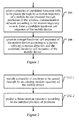
- FIG. 1 is a schematic flow chart showing a mobile handover management method in a wireless communication network according to an embodiment of the disclosure.
- the method shown in Figure 1 can be implemented by a mobile handover management entity (or referred to as a mobile handover management apparatus) in the wireless communication network.
- the wireless communication network described here may include one or more wireless communication system, such as a Global System for Mobile communication (GSM), a 3 rd Generation (3G) communication system, a Long Term Evolution (LTE) communication system or a WiFi communication network.
- the mobile handover management entity may be a wireless network controller or manager provided between the one or more wireless communication systems, such as a server which is interconnected with various wireless communication networks in a wired or wireless manner and has a mobile handover management function.
- the mobile handover management entity may be provided in a certain base station in the wireless communication network as a portion of the base station.
- the mobile handover management entity may be provided separately in a plurality of base stations in the wireless communication network. For example, when the mobile device is moving in a certain region of the wireless communication network, the function of the mobile handover management entity can be implemented by a certain cell (base station) in this region, and when the mobile device moves to another region in the wireless communication network, the function of the mobile handover management entity can be implemented by a certain cell (base station) in the another region.
- the function of the mobile handover management entity can be implemented by any one of the plurality of base stations.
- the mobile handover management entity can be interconnected with the cells in the wireless communication network via a backbone network for information exchange.
- the "mobile device” described herein refers to a user device that is moving in the wireless communication network (for example, an electronic apparatus, such as a mobile phone, or a portable computer, a tablet computer or a PDA accessing to the wireless communication network), and is also referred to as a "mobile user device”.
- the mobile handover management method includes step 104 and step 106.
- step 104 for a mobile device in the wireless communication network, according to a motion trajectory of the mobile device obtained through prediction, a plurality of candidate handover cells to be passed through by the motion trajectory are selected in the wireless communication network.
- a candidate handover cell sequence of the mobile device is formed by the selected plurality of candidate handover cells.
- a future motion trajectory of the mobile device can be acquired or predicted in many ways. For example, in the case of assistance of navigation information, the motion trajectory of the mobile device can be obtained based on the navigation information. As another example, in the case of no assistance of navigation information, the future motion trajectory of the mobile device can be predicted based on an existing motion trajectory thereof.
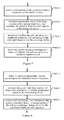
- FIG. 2 An example of a method for predicting a motion trajectory of a mobile device without assistance of navigation information is shown in Figure 2 .
- the mobile device itself has the ability to obtain a geographic position, for example, the mobile device is provided with a Global Positioning System (GPS)
- GPS Global Positioning System
- the position information of the mobile device can be provided by the mobile device actively to the mobile handover management entity.
- the position information of the mobile device can be provided to the mobile handover management entity by measuring via a network, for example, the position information of the mobile device can be obtained by a triangulation method or the like, which is not described in detail here.
- the sampling frequency it is assumed that the time interval between two adjacent sampling positions is referred to as the sampling frequency, and if a plurality of mobile devices is sampled at the same sampling frequency, this sampling is referred to as static sampling. If the mobile devices are classified into a plurality of types based on the motion rates of the mobile devices, and each type of mobile devices is sampled at the same sampling frequency, this sampling is referred to as half-static sampling.
- this sampling is referred to as dynamic sampling. For example, if the motion rate of the mobile device is relatively low, the sampling frequency can be decreased, and if the motion rate of the mobile device is relatively high, the sampling frequency can be increased.
- the advantage is that the calculation accuracy of the trajectory is improved and the calculation amount of the sampling and the subsequent trajectory calculation is reduced.
- step 202-2 the motion trajectory of the mobile device is predicted by fitting according to the sampled plurality of positions.
- fitting methods can be adopted. Generally, in a case of a short distance, the user will select to travel along a route with the shortest distance, and the motion trajectory can be fitted with a straight line. As an example, the fitting can be implemented using a least square method.
- FIG. 3 An example of a method for predicting a motion trajectory of a mobile device with assistance of navigation information is shown in Figure 3 .
- step 302-1 information on a source and destination of the mobile device are obtained.
- step 302-2 a navigation route corresponding to the source and destination is acquired according to the navigation information, as the motion trajectory of the mobile device.
- the navigation route is generally in the form of a polygonal line.
- the navigation route can be divided into a plurality of straight lines.
- the route is divided into a plurality of line segments according to the inflection points on the navigation route, and then operations are performed on each line segment.
- the above method for predicting the future motion trajectory of the mobile device can be implemented by the mobile handover management entity.
- the method may further include a step of predicting the motion trajectory of the mobile device (not shown in Figure 1 ).
- the future motion trajectory of the mobile device can also be predicted by other related device (such as the mobile device itself, a GPS device that can provide the navigation information or GPS information about the mobile device, or the like), and is sent to the mobile handover management entity. After the predicted motion trajectory of the mobile device is obtained, a plurality of candidate handover cells to be passed through by the motion trajectory can be selected.
- the respective candidate handover cells in the candidate handover cell sequence are the cells to be passed through by the motion trajectory of the mobile device. These candidate handover cells are arranged in an order in which these candidate handover cells are passed through by the motion trajectory (according to the motion direction of the mobile device), and thereby the candidate handover cell sequence is formed.
- the candidate handover cell sequence can be selected in many ways. For example, the candidate handover cells can be selected using the method described referring to Figures 4 to 6 hereinafter.
- FIG. 4 An example of selecting a candidate handover cell for a mobile device according to a predicted motion trajectory is shown in Figure 4 .
- all the cells in the wireless communication network are considered.
- step 404-1 distances from base stations of respective cells in the wireless communication network to the motion trajectory are estimated.
- the distances from respective base stations to the motion trajectory can be calculated by projecting the positions of the base stations onto the motion trajectory.
- the distance from the base station BS i to its projection point pptl(BS i , L) can be calculated as the distance from this base station to the motion trajectory.
- step 404-2 a cell which has a less distance to the motion trajectory than a coverage radius of the cell is selected as the candidate handover cell in the candidate handover cell sequence.
- a projection point of the base station BS i on the motion trajectory L is pptl(BS i , L)
- ⁇ r i is selected as a candidate handover cell.
- the base stations BS i that meet the above condition are arranged in an order of the coordinates of the projection points of the base stations according to the motion direction of the mobile device, and thereby the candidate handover cell sequence is formed.
- the base stations BS i are arranged in the ascending order of the horizontal coordinates of their projection points pptl(BS i , L); and else, the base stations BS i are arranged in the decreasing order of the horizontal coordinates of their projection points pptl(BS i , L).
- the method shown in Figure 4 can be implemented by the mobile handover management entity.
- the above step of calculating the distances from respective base stations to the motion trajectory can be implemented by respective base stations respectively.
- FIG 5 Such an example is shown in Figure 5 .
- the base station BS i of each cell receives information on the predicted motion trajectory L of the mobile device from the mobile handover management entity.
- the base station BS i calculates its projection point pptl(BS i , L) of the mobile device on the motion trajectory L, and calculates the distance from the base station BS i itself to the projection point.
- the base station BS i judges whether the base station BS i can serve as a candidate handover cell.
- the base station feeds back to the mobile handover management entity the information on whether the base station can serve as a candidate handover cell. If the base station BS i can serve as a candidate handover cell, the base station BS i also feeds back its projection point to the mobile handover management entity.
- the mobile handover management entity sends to the base stations of respective cells the information on the predicted motion trajectory L of the mobile device, and receives the information on whether the base stations of respective cells can serve as a candidate handover cell fed back from the base stations (and may also receive information on the projection points of the base stations on the motion trajectory).
- the respective candidate handover cells in the candidate handover cell sequence can be arranged in an order of the projection points of the base stations of respective candidate handover cells on the motion trajectory according to the motion direction of the mobile device.
- the mobile handover management entity arranges the base stations BS i that can serve as the candidate handover cell in an order of the projection points of the base stations according to the motion direction of the mobile device, so as to form the candidate handover cell sequence.
- FIG. 6 Another example of selecting a candidate handover cell for a mobile device according to a predicted motion trajectory is shown in Figure 6 .
- not all the cells in the wireless communication network are considered, but only the cells in the candidate geographic region through which the predicted motion trajectory passes are considered.
- step 604-1 a candidate geographic region along the motion trajectory is selected.
- the candidate geographic region can be estimated by the mobile handover management entity according to the predicted motion trajectory of the mobile device.
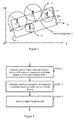
- An example of a candidate geographic region is shown in Figure 7 .
- the candidate geographic region can be indicated by a sliding window (a rectangular formed by straight lines L U and L D in parallel with the motion trajectory L of the mobile device and straight lines L L and L R perpendicular to L, as shown in the figure)
- the projection points of the base stations BS 1 , BS 2 , BS 3 and BS 4 of the cells in the sliding window as shown on the motion trajectory L can be calculated, and the distances from respective base stations to their projection points can be calculated, as the distances from the base stations to the motion trajectory.
- the distance w from L U and L D to L is not beyond the maximum value of the signal coverage range of all the cells; the crossing point P S between L L and L is the projection point of the mobile device on L currently; and the crossing point P D between L R and L is the end point of a piece of effective motion trajectory of the mobile device.
- inflection points of the navigation route can be selected as the end point of the effective motion trajectory.
- the end point of the effective motion trajectory is determined cooperatively by the prediction accuracy of the trajectory, the motion velocity of the mobile device, the calculating ability of the mobile handover management entity and the like. The higher the prediction accuracy is, the longer the path of the effective motion trajectory is, and vice versa. The higher the motion velocity of the mobile device is, the longer the path of the effective motion trajectory is, and vice versa. The stronger the calculating ability of the mobile handover management entity is, the longer the path of the effective motion trajectory is, and vice versa.
- BS i,x can be substituted into the equations of the four straight lines L U , L D , L L and L R , respectively obtaining BS U i,y , BS D i,y , BS L i,y , and BS R i,y .
- the base station BS i is in the sliding window of the candidate geographic region.
- step 604-2 distances from base stations of respective cells in the candidate geographic region to the motion trajectory are estimated. This step is similar to the method for calculating the distance in the above example, and is not described repeatedly. Then, in step 604-3, a cell which has a less distance to the motion trajectory than a coverage radius of the cell is selected as a candidate handover cell in the candidate handover cell sequence. Steps 604-2 and 604-3 can be implemented by the mobile handover management entity, and can also be implemented by respective base stations, which is not described repeatedly here.
- a target handover cell sequence of the mobile device is generated according to the motion velocity, the motion direction and the candidate handover cell sequence of the mobile device.
- the target handover cell sequence may include a plurality of target handover cells to which the mobile device will hand over sequentially when moving along the motion trajectory.
- the information on the motion velocity and the motion direction of the mobile device can be obtained in many ways.
- the information on the motion velocity and the motion direction of the mobile device can be submitted by the mobile device itself to the serving cell or the mobile handover management entity.
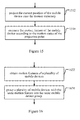
- the motion direction and the motion velocity of the mobile device can be estimated using the method to be described referring to Figure 15 hereinafter.
- the target handover cell sequence can be generated in various ways.
- the target handover cell sequence can be generated using the method to be described referring to Figures 8 to 12 hereinafter.
- the mobile handover management entity can notify respective target handover cells related to in this sequence of the information on the mobile device.
- the mobile device can hand over to the respective target handover cells in accordance with the target handover cell sequence sequentially when moving along the predicted motion trajectory.
- Figure 8 is a schematic flow chart showing an example of a method for generating a target handover cell sequence according to an embodiment of the disclosure. This method can be performed after the candidate handover cell sequence of the mobile device is formed using the method described above.
- the method for generating a target handover cell sequence may include steps 806-1, 806-2 and 806-3.
- arrival times when the mobile device will arrive at respective candidate handover cells and resident times during which the mobile device resides in respective candidate handover cells are estimated according to the motion direction and the motion velocity of the mobile device.
- the arrival time when the mobile device will arrive at a candidate handover cell can be estimated according to the motion velocity of the mobile device and the distance from the mobile device to the candidate handover cell along the motion trajectory.
- the distance for which the mobile device will move along the motion trajectory in the candidate handover cell can be estimated by the crossing point between the predicted motion trajectory and the coverage range of the candidate handover cell, and the resident time during which the mobile device resides in the candidate handover cell can be calculated according to the motion velocity of the mobile device.
- step 806-2 available resources of respective candidate handover cells for the mobile device are calculated according to the arrival times when the mobile device will arrive at the respective candidate handover cells and the resident times during which the mobile device resides in the respective candidate handover cells. For example, the resources that can be reserved for the mobile device by the candidate handover cell during the resident time are estimated according to the resource configuration of the candidate handover cell.
- the target handover cell is selected from the candidate handover cell sequence according to a position relationship between respective candidate handover cells on the motion trajectory and according to the available resources of respective candidate handover cells for the mobile device. For example, if it is predicted that the mobile device needs to perform cell handover at a certain position on the predicted motion trajectory and there are more than one candidate handover cells at this position, the candidate handover cell that can provide the best service for the mobile can be selected according to the available resources that are reserved by respective candidate handover cells for the mobile device, as the target handover cell at this position on the motion trajectory. If it is predicted that the mobile device needs to perform cell handover at a certain position on the predicted motion trajectory and there is only one candidate handover cell at this position, this candidate handover cell is selected as the target handover cell.
- relationships between available resources of respective candidate handover cells and bandwidth requirement of the mobile device can be calculated, and the target handover cell can be selected from respective candidate handover cells according to the relationships and/or the resident times.
- the relationship between an available resource and the bandwidth requirement of the mobile device may be a ratio therebetween, as a reserved request ratio with respect to the respective candidate handover cell, and the target handover cell can be selected from respective candidate handover cells according to the reserved request ratios and/or the resident times.
- the candidate handover cell having the maximum reserved request ratio can be selected as the target handover cell at this position on the motion trajectory.
- power levels required by the mobile device to move in respective candidate handover cells can be estimated, and the target handover cell can be selected from respective candidate handover cells according to one or more of the reserved request ratio, the resident time and the power level.
- FIG. 9 Another example of a method for generating a target handover cell sequence is shown in Figure 9 .
- step 906-1 an association relationship between respective candidate handover cells on the predicted motion trajectory of the mobile device is calculated.
- the association relationship between respective candidate handover cells on the motion trajectory refers to the relationship between crossing points between the signal coverage edges of respective candidate handover cells and the predicted motion trajectory of the mobile device.
- Three examples of such association relationship are shown in Figure 10 .
- the crossing points between the signal coverage edges of the cells BS i and BS j and the motion trajectory L are respectively P i,l , P i,r , and P j,l , P j,r .
- the cells BS i and BS j as shown in Figure 10(a) have no overlapped part on the motion trajectory L, and the corresponding crossing points on the motion trajectory are sequentially P i,l , P i,r , P j,l , and P j,r , and this position relationship between two cells is referred to as "non-adjacent", which means that the mobile device moving along the motion trajectory L can not hand over from cell BS i to cell BS j seamlessly.
- the cells BS i and BS j as shown in Figure 10(b) have a overlapped part on the motion trajectory L, and the corresponding crossing points on the motion trajectory are sequentially P i,l , P j,l , P i,r , and P j,r , and this position relationship between two cells is referred to as "adjacent", which means that the mobile device moving along the motion trajectory L can hand over from cell BS i to cell BS j .
- This adjacent relationship can be indicated as BS i ⁇ BS j using a directed arc.
- the part of BS j on the motion trajectory L is completely contained in the cell BS i shown in Figure 12 (c), and the corresponding crossing points on the motion trajectory L are sequentially P i,l , P j,l , P j,r , and P i,r , and this position relationship between two cells is referred to as "compatible", which means that the mobile device moving along the motion trajectory L can hand over from BS i to BS j and hand over back to BS i .
- This relationship can be indicated as BS i ⁇ BS j .
- step 906-1 the crossing points P i,l and P i,r between the coverage range of the candidate handover cell BS i and the motion trajectory L can be calculated firstly.
- An example of a method for calculating the crossing points is shown in Figure 11 .
- the base station BS i has a position of (BS i,x , BS i,y ) and a signal coverage radius r i , then two points on the trajectory L from which the distance to BS i is r i are obtained and respectively denoted as P i,l and P i,r , and the two points are the crossing points between the coverage range of this base station and the motion trajectory, where P i,l has a horizontal coordinate less than that of P i,r .
- the crossing points between the coverage range of the base stations in all the candidate handover cells and the motion trajectory are arranged in an ascending order of the horizontal coordinates, resulting in a crossing point sequence.
- an association relationship diagram between respective candidate handover cells on the motion trajectory L can be generated according to the association relationship between the cells as shown in Figure 10 .
- the nodes in the diagram is the cells, and the cells are connected by a directed arc for indicating the adjacent relationship (i.e., seamless handover can be implemented between the cells).
- Distribution of a plurality of candidate handover cells on a motion trajectory is shown in Figure 12(a)
- an association relationship diagram between respective candidate handover cells formed by the above method is shown in Figure 12(b) .
- a time parameter of the mobile device is calculated.
- the time parameter described here includes arrival times when the mobile device will arrive at respective candidate handover cells and resident times during which the mobile device resides in respective candidate handover cells.
- the crossing points between the edge of the coverage range of the cell BS i and the motion trajectory L are respectively P i,l and P i,r , then the distance from the mobile device to BS i is
- the resident time can be used as a first weight W i,1 of each node (i.e. cell) in the association relationship diagram as shown in Figure 12(b) .
- the handover operation it is further necessary to calculate the resident time during which the mobile device resides in the overlapped region of the cells.
- the overlapped distance on the motion trajectory L is
- the estimated resident time during which the mobile device resides in the overlapped region can be used as the weight W i ⁇ j of the directed arc in the association relationship diagram shown in Figure 12(b) .
- an available resource of the candidate handover cell for the mobile device is calculated, such as the resource that can be reserved by the candidate handover cell for the mobile device during the time period defined by the estimated arrival time and resident time.
- the mobile handover management entity can send the arrival time t i,arrival when the mobile device is predicted to arrive at the candidate handover cell and the resident time t i,residence may be sent to the base station BS i of the corresponding cell, and also send the current bandwidth requirement BW request of the mobile device to the base station BS i . It is predicted by the base station BS i whether enough reserved resource can be provided for the mobile device.
- the base station BS i It is determined by the base station BS i whether the system total resource capacity, other than that required for meeting the current user bandwidth requirement, that required for meeting the user bandwidth requirement generated by handovers before t i,arrival , and that required for meeting the user bandwidth requirement newly generated before t i,arrival , is enough to provide the reserved resource BW reserved for the mobile device.
- the respective candidate handover cells can be classified according to the relationship between the reserved resources and the bandwidth requirement of the mobile device.
- the candidate handover cell that can provide more reserved resources has a higher priority level
- the candidate handover cell that can provide less reserved resources has a lower priority level.
- BW current can be calculated according to the current actual user bandwidth requirement of the cell BS i ;
- BW HO_in and BW HO_out can be calculated according to the time and bandwidth request information provided by mobile users; and
- BW NEW_in and BW NEW_out can be calculated according to the statistical information of the cell BS i .
- the reserved request ratio can be used as a second weight W i,2 of each node in the association relationship diagram as shown in Figure 12(b) .
- a power level p i required by the mobile device to move in the candidate handover cell to communicate normally can also be predicted according to the motion feature of the mobile device (this prediction can be performed by the base station BS i in the cell, and can also be performed by mobile handover management entity).
- the predicted power level can be used as a third weight W i,3 of each node in the association relationship diagram as shown in Figure 12(b) .
- step 906-4 a target handover cell sequence is generated.
- each node represents one candidate handover cell BS i
- the cells BS i and BS j are connected via a directed arc for indicating the adjacent relationship.
- generating the target handover cell sequence is equivalent to obtaining a directed path in the association relationship diagram which complies with a predetermined optimization object.
- the optimization object may include: minimizing the handover times of the mobile device, maximizing the system capacity of all the cells on the motion trajectory L, or the like. It is a NP-hard problem to find an optimal solution of any optimization object on the association relationship diagram.
- an approximating method is provided for finding a sub-optimal solution, to achieve a compromise between the system performance and the calculation complexity.
- the first weight of the node can be used as a first criterion for classifying the candidate handover cells into a plurality of priority levels.
- the cells having the first priority level are selected and arranged in an order thereof along the motion trajectory L. If no directed arc exists between consecutive two cells BS i and BS j in this arrangement (that is, the association relationship thereof is non-adjacent), a directed path from BS i to BS j is searched for on the association relationship diagram.
- the first weights of the nodes of the cells BS 1 and BS 4 belong to the first priority level
- the cells BS 1 and BS 4 are selected according to the first criterion
- the directed path from BS 1 to BS 4 needs to be searched for.
- the second weights of the nodes can be used as the second criterion, and all the cells between the cells BS i and BS j are classified into a plurality of priority levels. The greater the second weight is, the higher the priority level is.
- the cells having the first priority level are selected and arranged in an order thereof along the motion trajectory L.
- the nodes with the second priority level are taken into consideration.
- the cells BS 2 and BS 3 both can form a directed path between the cells BS 1 and BS 4 , and the cell BS 2 has a higher second weight, then the cell BS 2 is selected according to the second criterion.
- the third weight of the node can be used as the third criterion, so that the cells having the lower power level have a higher priority level, for reducing the power consumption of the mobile device.
- the second weight of the node can be set as the first criterion
- the first weight of the node can be set as the second criterion
- the third weight of the node can be set as the third criterion.
- the target handover cell sequence of the mobile device when moving along the predicted motion trajectory can be obtained using the method as shown in Figure 8 or Figure 9 .
- the mobile handover management entity can notify the respective target handover cells related in the sequence that the respective cell has been selected as a target handover cell, and notify these cells of the information of the mobile device, such as the predicted arrival time, resident time, bandwidth requirement and the like.
- the mobile handover management entity may further notify the mobile device of the generated target handover cell sequence.
- the mobile device can take the target handover cell sequence as the preferred handover selection, that is, the mobile device can hand over sequentially according to the target handover cell sequence when moving along the predicted motion trajectory.
- the cell handover of the mobile device can be initiated by power measurement. For example, when the power of the current serving cell BS i received by the mobile device during the continuous measurement is lower than a threshold, the cell handover can be initiated, and the handover operation is performed by taking the next handover cell BS j in the target handover cell sequence as a preferred handover target.
- the handover can be initiated by motion information assistance power measurement.
- the power measurement is initiated, and when the power of the current serving cell BS i received by the mobile device is lower than the threshold, the cell handover is initiated, and the handover operation is performed by taking the next handover cell BS j in the target handover cell sequence as a preferred handover target.
- the handover may also be initiated by the motion information.
- the handover is initiated, and the handover operation is performed by taking the next handover cell BS j in the target handover cell sequence as a preferred handover target.
- the updating of handover management can be further initiated.
- the previously predicted motion trajectory L is not consistent with the actual motion trajectory, and the motion feature of the mobile device needs to be re-predicted.
- the position points of the mobile device can be re-sampled during the moving of the mobile device, and the actual motion trajectory L' is compared with the previously predicted motion trajectory L. The comparison is shown in Figure 13 .
- the motion trajectory can be re-predicted using the method described referring to Figures 2 and 3 above, which is not repeated here.
- the time parameters can be re-estimated, such as arrival times when the mobile device will arrive at respective candidate handover cells and/or resident times, and the target handover cell sequence is re-calculated.
- the actual motion velocity is compared with the previously predicted motion velocity v, and if the difference between the two velocities is greater then a preset threshold ⁇ velocity , the time parameters such as arrival times when the mobile device will arrive at respective candidate handover cells and/or resident times are re-estimated, and the target handover cell sequence is re-calculated.
- the time parameters can be re-calculated and the target handover cell sequence can be re-calculated using the method described above, which is not repeated here.
- the reserved request ratio of the available resource of the handover cell to the bandwidth requirement of the mobile device can be re-calculated, and the target handover cell sequence can be re-generated according to the re-calculated reserved request ratio.
- the reserved request ratio of the target handover cell can be re-calculated during the moving of the mobile device, and if the variation of the ratio is beyond a preset threshold, the target handover cell sequence is re-generated.
- the method in step 106 as shown in Figure 1 can be used to re-select a target handover cell.
- the various embodiments of the mobile handover management method described above can be applied to the scenario where the mobile device hands over between cells having the same Radio Access Technology (RAT).
- RAT Radio Access Technology
- FIG. 14 An embodiment of a mobile handover management method in a scenario where the wireless communication network include cells having different radio access technologies is shown in Figure 14 .
- the cell handover of the mobile device in the scenario where the wireless communication network include cells having different radio access technologies is referred to as vertical handover.
- the method shown in Figure 14 can be implemented by a mobile handover management apparatus.
- the mobile handover management apparatus can be connected to various wireless communication networks via a backbone network. That is to say, the mobile handover management apparatus can make information exchange with various wireless communication networks via the backbone network.
- step 1404 according to the predicted motion trajectory of the mobile device, a plurality of cells to be passed through by the motion trajectory in the wireless communication network is selected.
- This step is similar to step 104 described above, and the plurality of cells can be selected using the method described referring to Figures 4 to 6 above, which is not repeated here.
- the future motion trajectory of the mobile device can be predicted by the mobile handover management entity.
- the method may further include a step of predicting the motion trajectory of the mobile device (not shown in Figure 14 ).
- the future motion trajectory of the mobile device can be predicted by other related devices (such as the mobile device itself, a GPS device that can provide the navigation information or GPS information about the mobile device, or the like), and be sent to the mobile handover management entity.
- step 1405 it is determined whether the radio access technology and the transmission resource (such as frequency spectrum) of each one of the plurality of cells selected in step 1404 are available for the mobile device.
- the cells that having the radio access technologies and the transmission resources (such as frequency spectrums) available for the mobile device are selected from the plurality of cells, as the candidate handover cells, so as to form the candidate handover cell sequence of the mobile device.
- the information on the radio access technologies of various cells and the information on the frequency spectrums and variation thereof can be stored by the mobile handover management apparatus (for example, stored in the database of the mobile handover management apparatus or other types of storage devices), and can be extracted for the storage device or database when being used.
- the mobile handover management apparatus can make information exchange with the various wireless communication networks via the backbone network.
- the exchanged information may include the information on the radio access technologies available for the related cells (such as the candidate handover cells) and the information on the related handover cells such as the transmission resources and the variation thereof.
- the target handover cell sequence of the mobile device is generated according to the motion velocity, the motion direction and the candidate handover cell of the mobile device.
- the target handover cell sequence includes a plurality of target handover cells to be passes through by the mobile device when moving along the motion trajectory. This step is similar to step 106 described above, and the target handover cell sequence can be generated using the method described referring to Figures 8 to 12 above, which is not repeated here.
- the mobile handover management method described referring to Figure 14 can be applied to the application scenario where the mobile device hands over between the cells having different radio access technologies (i.e., the scenario where the wireless communication network includes the cells having different radio access technologies).
- the rapid and effective handover of the mobile device when moving can be realized, and the vertical handover of the mobile device can be realized.
- the target handover cell sequence needs to be re-generated. If the radio access technology supported by and the frequency spectrum of the candidate handover cell change but the communication of the mobile device can be supported, the reserved bandwidth for the mobile device can be re-calculated. If the reserved request ratio of the reserved bandwidth changes as compared with that of the previously calculated reserved bandwidth, the target handover cell sequence needs to be re-calculated.
- a method for estimating (calculating) a motion feature for example, including a motion velocity and a motion direction of a mobile device that is moving.
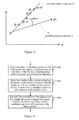
- a method for estimating a motion feature of a mobile device according to an embodiment is shown in Figure 15 .
- step 1512 the current position of the mobile device is projected onto the motion trajectory of the mobile device.
- step 1514 the motion direction and the motion velocity of the mobile device are estimated according to the motion status of the projection point of the mobile device on the motion trajectory.
- the motion estimation method may further include a step of obtaining the motion trajectory of the mobile device (not shown).
- the further motion trajectory of the mobile device can be predicted using the method described above, or the motion trajectory that has been passed through by the mobile device can be obtained using the method described above, which is not repeated here.
- the projection point of the position point on the motion trajectory L can be defined as the crossing point between L and the straight line which passes through the point p i and is perpendicular to L
- the projection point can be represents as pptl(p i , L).
- the motion direction of the mobile device is L (a,b), which indicating that the mobile device moves in the direction of the motion trajectory L
- the motion rate of the mobile device is v, which can be calculated by calculating the distance between the projection points of the sampling position points of the mobile device on the motion trajectory L.
- the mobile handover management method may further include a step of grouping a plurality of mobile devices with the same motion feature into the same mobile device group, and in the subsequent cell handover, the cell handover is performed on a plurality of mobile devices in the mobile device group in group.
- a plurality of user devices in the same moving vehicle or in a plurality of vehicles moving in the same route are the mobile devices with the same motion feature. Based on the same motion feature, it can be deduced that these mobile device have the same wireless access requirements, and thus the handover can be performed on these mobile devices in group.
- FIG. 16 An example of a method for grouping a plurality of mobile devices having the same motion feature into the same mobile device group according to an embodiment is shown in Figure 16 .
- step 1622 motion features of a plurality of mobile device are obtained (such as the sampled position points that have been passed through, the motion direction and the motion velocity).
- the motion features of each mobile device can be obtained or estimated using the method described above, which is not repeated here.
- step 1624 a plurality of mobile devices with the same motion feature is grouped into the same mobile device group. As an example, it can be determined whether the distances between respective mobile devices keep substantially consistent at a plurality of times. It is determined that the mobile devices have the same motion feature, if the distances between respective mobile devices keep substantially consistent at a plurality of times.
- the position sampling point sequence for a mobile device 1 and a mobile device 2 at a time sequence t 1 , t 2 , ..., t n are respectively p 1 , p 2 , ..., p n and q 1 , q 2 , ..., q n .
- is the distance between the mobile device 1 and the mobile device 2 at time t i .
- the expectation of the difference variable of the distance can be denoted as E(
- the motion directions and the motion velocities of the mobile device 1 and the mobile device 2 are respectively L l (a l ,b l ) and v 1 , and L 2 (a 2 ,b 2 ,) and v 2
- ⁇ v it can be determined that the two mobile devices are moving with the same motion feature.
- the mobile handover management methods according to some embodiments of the disclosure have been described above.
- the mobile handover management apparatus according to some embodiments of the disclosure are described in the following.
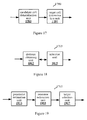
- FIG 17 is a schematic block diagram showing a mobile handover management apparatus 1700 in a wireless communication network according to an embodiment of the disclosure.
- the mobile handover management apparatus 1700 can implement the mobile handover management method as shown in Figure 1 .
- the mobile handover management apparatus can be a mobile handover management entity in a wireless communication network, or a part of the mobile handover management entity.
- the mobile handover management apparatus includes a candidate cell determination unit 1703 and a target cell determination unit 1705.
- the candidate cell determination unit 1703 is configured to select a plurality of candidate handover cells to be passed through by the predicted motion trajectory of the mobile device in the wireless communication network according to the motion trajectory.
- the selected plurality of candidate handover cells forms the candidate handover cell sequence of the mobile device.
- the future motion trajectory of the mobile device can be obtained in many ways.
- the motion trajectory of the mobile device in the case of assistance of navigation information, can be obtained based on the navigation information.
- the future motion trajectory of the mobile device can be predicted based on the existing motion trajectory thereof.
- the motion trajectory of the mobile device can be predicted using the method described referring to Figure 2 or 3 above, which is not repeated here.
- the prediction of the motion trajectory of the mobile device can be implemented by the mobile handover management apparatus.
- the mobile handover management apparatus 1700 can further include a trajectory prediction unit for predicting the motion trajectory of the mobile device (not shown).
- the future motion trajectory of the mobile device can also be predicted by other related device (such as the mobile device itself, a GPS device that can provide the navigation information or GPS information on the mobile device, or the like), and be sent to the mobile handover management apparatus 1700.
- the respective candidate handover cells in the candidate handover cell sequence are the cells to be passed through by the motion trajectory of the mobile device. These candidate handover cells are arranged in an order in which these candidate handover cells are passed through by the motion trajectory (according to the motion direction of the mobile device), and thereby the candidate handover cell sequence is formed.
- the candidate handover cell sequence can be selected in many ways.
- the candidate cell determination unit 1703 can select the candidate handover cells using the method described referring to Figures 4 to 7 above, which is not repeated here.
- the target cell determination unit 1705 is adapted to generate a target handover cell sequence of the mobile device according to a motion velocity, a motion direction and the candidate handover cell sequence of the mobile device.
- the target handover cell sequence may include a plurality of target handover cells to which the mobile device will hand over sequentially when moving along the motion trajectory.
- the target cell determination unit 1705 may obtain the information on the motion velocity and the motion direction of the mobile device in many ways. For example, the information on the motion velocity and the motion direction of the mobile device can be submitted by the mobile device itself to the serving cell or the mobile handover management entity. For another example, the motion direction and the motion velocity of the mobile device can be estimated using the method described referring to Figure 15 above. Moreover, the target cell determination unit 1705 may generate the target handover cell sequence in various ways. For example, the target handover cell sequence can be generated using the method described referring to Figures 8 to 12 above, which is not repeated here.
- the mobile handover management apparatus can notify respective target handover cells related to in this sequence of the information on the mobile device.
- the mobile device can hand over to the respective target handover cells in accordance with the target handover cell sequence sequentially when moving along the predicted motion trajectory.
- the candidate cell determination unit 1703 may include a distance obtaining unit 1813 and a selection unit 1815.
- the distance obtaining unit 1813 is adapted to obtain distances from base stations of respective cells in the wireless communication network to the motion trajectory
- the selection unit 1815 is adapted to select a cell which has a less distance to the motion trajectory than a coverage radius of the cell as a candidate handover cell in the candidate handover cell sequence.
- the selection unit 1815 is further adapted to select a candidate geographic region along the predicted motion trajectory.
- the distance obtaining unit 1813 is further adapted to estimate distances from base stations of respective cells in the candidate geographic region to the motion trajectory.
- the selection unit 1815 can be adapted to select a cell in the candidate geographic region which has a less distance to the motion trajectory than a coverage radius of the cell as a candidate handover cell in the candidate handover cell sequence.
- the target cell determination unit 1705 may include a parameter estimation unit 1913, a resource estimation unit 1915 and a target selection unit 1917.
- the parameter estimation unit 1913 can be adapted to estimate time parameters, such as arrival times when the mobile device will arrive at respective candidate handover cells and resident times during which the mobile device resides in respective candidate handover cells, according to the motion direction and the motion velocity of the mobile device. These time parameters can be estimated using the method described above, which is not repeated here.
- the resource estimation unit 1915 can be adapted to calculate available resources of respective candidate handover cells for the mobile device according to the arrival times when the mobile device will arrive at respective candidate handover cells and the resident times during which the mobile device resides in respective candidate handover cells. For example, the resources that can be reserved for the mobile device by the candidate handover cell during the resident time are estimated according to the resource configuration of the candidate handover cell.
- the target selection unit 1917 can be adapted to select the target handover cells from the candidate handover cell sequence according to a position relationship between respective candidate handover cells on the motion trajectory and according to the available resources of respective candidate handover cells for the mobile device.
- the target selection unit 1917 can be adapted to calculate a ratio between available resources of respective candidate handover cells and bandwidth requirement of the mobile device, as reserved request ratios with respect to respective candidate handover cells, and select the target handover cells from respective candidate handover cells according to the reserved request ratios and/or the resident times.
- the parameter estimation unit 1913 can be further adapted to estimate power levels required by the mobile device to move in respective candidate handover cells, and the target selection unit 1917 can be adapted to select the target handover cells from respective candidate handover cells according to one or more of the reserved request ratio, the resident time and the power level.
- the mobile handover management apparatus may initiate handover management updating.
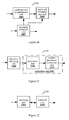
- a mobile handover management apparatus 2000 according to this embodiment is shown in Figure 20 .
- the mobile handover management apparatus 2000 includes a candidate cell determination unit 2003 and a target cell determination cell 2005, and may further include an updating initiation unit 2007.
- the candidate cell determination unit 2003 and the target cell determination cell 2005 respectively have the similar function and structure as that of the candidate cell determination unit 1703 and the target cell determination cell 1705 described above, which are not repeated here.
- the updating initiation unit 2007 is adapted to initiate updating of the handover information when it is detected that the mobile device or the handover cell changes.
- the updating initiation unit 2007 instructs the trajectory prediction unit 2001 to re-predict the motion trajectory of the mobile device.
- the trajectory prediction unit 2001 can re-predict the motion trajectory using the method described referring to Figures 2 and 3 above, which is not repeated here.
- the updating initiation unit 2007 may instruct the target cell determination unit 2005 (the parameter estimation unit) to re-estimate the time parameters, such as the arrival times when the mobile device will arrive at respective candidate handover cells and/or the resident times, and to re-calculate the target handover cell sequence.
- the updating initiation unit 2007 may instruct the target cell determination unit 2005 (the parameter estimation unit) to re-calculate the reserved request ratio of the available resource of the handover cell to the bandwidth requirement of the mobile device, and to re-generate the target handover cell sequence according to the re-calculated reserved request ratio.
- the mobile handover management apparatus described above can be applied to the scenario where the mobile device hands over between cells having the same Radio Access Technology (RAT).
- RAT Radio Access Technology
- the candidate cell determination unit 1703 or 2003 may be further adapted to determine whether the radio access technology and the frequency spectrum of each candidate handover cell are available for the mobile device. If it is determined that the radio access technology and the frequency spectrum of the candidate handover cell are available for the mobile device, the candidate handover cell is saved in the candidate handover cell sequence, and otherwise, the candidate handover cell is not saved in the candidate handover cell sequence. In other words, the cells that having the radio access technologies and the frequency spectrum available for the mobile device are selected as the candidate handover cells to form the candidate handover cell sequence of the mobile device.
- the mobile handover management apparatus can be applied to the application scenario where the mobile device hands over between the cells having different radio access technologies (i.e., the scenario where the cells having different radio access technologies are contained in the wireless communication network).
- the rapid and effective handover of the mobile device when moving can be realized, and the vertical handover of the mobile device can be realized.
- the mobile handover management apparatus 1700 or 2000 can be connected to various wireless communication networks via a backbone network. That is to say, the mobile handover management apparatus can make information exchange with various wireless communication networks via the backbone network.
- the information on the radio access technologies of various cells and the information on the frequency spectrums of the various cells and variation of the frequency spectrums can be stored by the mobile handover management apparatus 1700 or 2000 (for example, stored in the database or other types of storage devices of the mobile handover management apparatus (not shown)), and can be extracted for the storage device or database when being used.
- the mobile handover management apparatus can make information exchange with the various wireless communication networks via the backbone network.
- the exchanged information may include the information on the radio access technology available for the related cell (such as the candidate handover cell) and the information on the transmission resource and its variation of the related handover cell.
- the mobile handover management apparatus may further include an information obtaining unit (not shown), for obtaining via the backbone network the information on the radio access technology that can be supported by the related cell (such as the candidate handover cell) and the information on the transmission resource used by the related cell (and the variation thereof).
- an information obtaining unit for obtaining via the backbone network the information on the radio access technology that can be supported by the related cell (such as the candidate handover cell) and the information on the transmission resource used by the related cell (and the variation thereof).
- the target handover cell sequence needs to be re-generated. If the radio access technology supported by and the frequency spectrum of the candidate handover cell change but the communication of the mobile device can still be supported, the reserved bandwidth for the mobile device can be re-calculated. If the reserved request ratio with respect to the reserved bandwidth changes as compared with the reserved request ratio with respect to the previously calculated reserved bandwidth, the target handover cell sequence needs to be re-calculated.
- a motion estimation apparatus 2100 for estimating a motion feature of a mobile device according to an embodiment is shown in Figure 21 .
- the motion estimation apparatus 2100 includes a trajectory obtaining unit 2105 and an estimation unit 2107.
- the estimation unit 2107 may include a projection unit 2101 and a motion parameter estimation unit 2103.
- the trajectory obtaining unit 2105 is adapted to obtain the motion trajectory of the mobile device, for example using the method as shown in Figure 2 or 3 .
- the motion trajectory may also be predicted in the similar manner as the trajectory prediction unit 1701 or 2001, which is not repeated here.
- the estimation unit 2107 is adapted to estimate the motion direction and the motion velocity of the mobile device according to the motion status of the projection point of the mobile device on the motion trajectory.
- the projection unit 2101 is adapted to project the current position of the mobile device onto the predicted motion trajectory.
- the motion parameter estimation unit 2103 is adapted to estimate the motion direction and the motion velocity of the mobile device according to the motion status of the projection point of the mobile device on the motion trajectory.
- the motion parameter estimation unit 2103 may be adapted to estimate these motion parameters using the method described referring to Figure 15 above, which is not repeated here.
- the motion estimation apparatus 2100 shown in Figure 21 can be incorporated into the mobile handover management apparatus 1700 or 2000 described above, as a portion thereof.
- the mobile handover management apparatus 1700 or 2000 may further include a grouping unit (not shown) for grouping a plurality of mobile devices having the same motion feature into the same mobile device group.
- the cell handover can be performed on the plurality of mobile devices in the mobile device group in group.
- a plurality of user devices in the same moving vehicle or in a plurality of vehicles moving in the same route are the mobile devices with the same motion feature.
- the grouping unit can group a plurality of mobile devices having the same motion feature into the same mobile device group using the method described referring to Figure 16 above.
- the grouping unit can determine whether the distances between respective mobile devices keep substantially consistent at a plurality of times. If the distances between respective mobile devices keep substantially consistent at a plurality of times, it is determined that the mobile devices have the same motion feature. As another example, the grouping unit can determine whether the motion directions and the motion velocities of the mobile devices keep substantially consistent at a plurality of times. If the motion directions and the motion velocities of the mobile devices keep substantially consistent at a plurality of times, it is determined that the mobile devices have the same motion feature. No more details are repeated here.
- the mobile device 2200 may include a receiving unit 2201 and a handover unit 2203.
- the receiving unit 2201 may be adapted to receive a target handover cell sequence which is generated by a mobile handover management entity in the wireless communication network according to a predicted motion trajectory of the mobile user device.
- the receiving unit 2201 may receive the information on this sequence from the current serving cell, or from the mobile handover management entity directly.
- the handover cell 2203 may hand over to respective target handover cells sequentially according to the target handover cell sequence.
- a mobile handover management method in a wireless communication network includes: determining an available resource of a candidate handover cell when a mobile device in the wireless communication network needs to perform cell handover; and controlling the cell handover of the mobile device according to the available resource of the candidate handover cell.
- the available resource of the candidate handover cell can be determined using the method for determining the available resource in the embodiment disclosed in Figure 8 , and the cell handover of the mobile device can be controlled using the method for generating the target handover cell in the embodiment disclosed in Figure 8 , which is not repeated here.
- the determining an available resource of a candidate handover cell may include: estimating resident time period during which the mobile device resides in the candidate handover cell and determining the available resource of the candidate handover cell for the mobile device during the resident time period.
- controlling the cell handover of the mobile device according to the available resource for the candidate handover cell may include: selecting the candidate handover cell which can provide the available resource for the mobile device as a target handover cell of the mobile device.
- the estimating a resident time during which the mobile device resides in the candidate handover cell may include: estimating the resident time during which the mobile device resides in the candidate handover cell according to a motion direction and a motion velocity of the mobile device and coverage of the candidate handover cell.
- a mobile handover management apparatus for implementing the method in a wireless communication network in the another embodiment of the disclosure described above, and the apparatus includes: an available resource determining module configured to determine an available resource of a candidate handover cell when a mobile device in the wireless communication network needs to perform cell handover; and a handover control module configured to control the cell handover of the mobile device according to the available resource of the candidate handover cell.
- the available resource determining module may estimate a resident time period during which the mobile device resides in the candidate handover cell and determines the available resource of the candidate handover cell for the mobile device during the resident time period.
- the handover control module may select the candidate handover cell which can provide the available resource for the mobile device as a target handover cell of the mobile device.
- the available resource determining module may estimate the resident time period during which the mobile device resides in the candidate handover cell according to a motion direction and a motion velocity of the mobile device and coverage range of the candidate handover cell.
- respective steps of the above method and respective component modules and/or units of the above apparatus can be implemented as software, firmware, hardware or combination thereof.
- the programs composing the software for implementing the above method can be loaded onto a computer (such as the general computer 2300 shown in Figure 23 ) having a specified hardware structure from a storage medium or network.
- the computer can implement various functions and the like.
- the Center Processing Unit (CPU) 2301 performs various processes according to the program stored in the Read Only Memory (ROM) 2302 or the program loaded onto the Random Access Memory (RAM) 2303 from the storage portion 2308.
- ROM Read Only Memory
- RAM Random Access Memory
- the CPU 2301, the ROM 2302 and the RAM 2303 are connected to each other via a bus 2304.
- the input/output interface 2305 is also connected to the bus 2304.
- the following components are connected to the input/output interface 2305: an inputting portion 2306 (including a keyboard, a mouse and the like), an outputting portion 2307 (including a display, such as a Cathode Ray Tube (CRT), and Liquid Crystal Display (LCD), a speaker and the like), a storage portion 2308 (including a hard disk and the like), and a communication portion 2309 (including a network interface card, such as a LAN card, a modem and the like).
- the communication portion 2309 performs the communication process via a network such as Internet.
- the driver 2310 may also be connected to the input/output interface 2305 as required.
- a removable medium 2311 such as a magnetic disk, an optical disk, magnetic-optical disk, and semi-conductor storage can be mounted on the driver 2310 as required, so that the computer programs that are read out from there can be loaded into the storage portion 2308 as required.
- the programs composing the software can be installed from a network such as Internet or a storage medium such as a removable medium 2311.
- the storage medium is not limited to the removable medium 2311 in which the programs are stored and which is distributed separately from the device for providing the user with the program.
- the example of the removable medium 2311 includes a magnetic disk (including a soft disk (registered trademark)), an optical disk (including the Compact Disk Read Only Memory (CD-ROM) and the Digital Video Disk (DVD)), a magnetic-optical disk (including the Mini-Disk (MD) (registered trademark)) and a semi-conductor storage.
- the storage medium may be the hard disk included in the ROM 2302 and the storage portion 2308, and the like in which the programs are stored, and can be distributed to the user together with the device in which it is provided.
- machine-readable instruction codes are stored.
- the machine-readable instruction codes are read and executed by the machine, for implementing the method according to the embodiment of the disclosure described above.
- the storage medium for carrying the program product in which machine-readable instruction codes are stored is also included in the disclosure.
- the storage medium includes but not limited to a software disk, an optical disk, a magnetic-optical disk, a storage card, a storage stick and the like.
- the method of the disclosure is not limited to be performed sequentially in the temporal order described in the specification, and can also be performed in parallel or separately. Thus, the performing order of the method described in the specification does not limit the technical scope of the disclosure.
Landscapes
- Engineering & Computer Science (AREA)
- Computer Networks & Wireless Communication (AREA)
- Signal Processing (AREA)
- Mobile Radio Communication Systems (AREA)
Applications Claiming Priority (2)
| Application Number | Priority Date | Filing Date | Title |
|---|---|---|---|
| CN201210530182.4A CN103874149B (zh) | 2012-12-10 | 2012-12-10 | 无线通信网络中的移动切换管理方法、设备及系统 |
| PCT/CN2013/087028 WO2014090068A1 (zh) | 2012-12-10 | 2013-11-13 | 无线通信网络中的移动切换管理方法、设备及系统 |
Publications (3)
| Publication Number | Publication Date |
|---|---|
| EP2840836A1 true EP2840836A1 (de) | 2015-02-25 |
| EP2840836A4 EP2840836A4 (de) | 2016-01-06 |
| EP2840836B1 EP2840836B1 (de) | 2018-05-30 |
Family
ID=50912188
Family Applications (1)
| Application Number | Title | Priority Date | Filing Date |
|---|---|---|---|
| EP13861987.9A Active EP2840836B1 (de) | 2012-12-10 | 2013-11-13 | Verfahren und system für mobile übergabeverwaltung in einem drahtlosen kommunikationsnetz |
Country Status (6)
| Country | Link |
|---|---|
| US (1) | US10149223B2 (de) |
| EP (1) | EP2840836B1 (de) |
| JP (2) | JP6056874B2 (de) |
| KR (1) | KR101649057B1 (de) |
| CN (2) | CN103874149B (de) |
| WO (1) | WO2014090068A1 (de) |
Cited By (10)
| Publication number | Priority date | Publication date | Assignee | Title |
|---|---|---|---|---|
| DE102014219400A1 (de) * | 2014-09-25 | 2016-03-31 | Volkswagen Aktiengesellschaft | Vorrichtung, Fahrzeug, Mobilkommunikationssystem, Verfahren und Computerprogramm für einen mobilen Basisstations-Sendeempfänger |
| WO2016190793A1 (en) * | 2015-12-14 | 2016-12-01 | Telefonaktiebolaget Lm Ericsson (Publ) | Adjustment of planned movement based on radio network conditions |
| FR3072845A1 (fr) * | 2017-10-19 | 2019-04-26 | Renault S.A.S. | Gestion de transfert intercellulaire d'un equipement de communications sans fil situe dans un vehicule |
| EP3799471A1 (de) * | 2019-09-27 | 2021-03-31 | Fluidmesh Networks S.r.l. | Antennenschlüssellochverwaltung in der drahtlosen funkkommunikation |
| EP3869866A1 (de) * | 2015-12-22 | 2021-08-25 | Alfred Consulting, LLC | Systeme und verfahren zur verwendung von mobilitätsinformationen in heterogenen netzen |
| US11330498B2 (en) | 2015-12-22 | 2022-05-10 | Alfred Consulting LLC | System and method for using mobility information in heterogeneous networks |
| EP3968694A4 (de) * | 2019-06-06 | 2022-07-06 | Huawei Technologies Co., Ltd. | Verfahren und vorrichtung zur suche in einem kommunikationsnetz |
| US11483752B2 (en) | 2019-12-13 | 2022-10-25 | Fluidmesh Networks S.R.I. | Antenna keyhole management in wireless radio communication |
| WO2023000118A1 (en) | 2021-07-17 | 2023-01-26 | Nokia Shanghai Bell Co., Ltd. | Conditional handover |
| WO2026014807A1 (ko) * | 2024-07-08 | 2026-01-15 | 엘지전자 주식회사 | 무선 통신 시스템에서 장치가 통신을 수행하는 방법 및 이를 위한 장치 |
Families Citing this family (62)
| Publication number | Priority date | Publication date | Assignee | Title |
|---|---|---|---|---|
| CN103874149B (zh) * | 2012-12-10 | 2020-06-09 | 索尼公司 | 无线通信网络中的移动切换管理方法、设备及系统 |
| US9629104B2 (en) | 2013-11-27 | 2017-04-18 | At&T Intellectual Property I, Lp | Client-side scheduling for media transmissions according to client device states |
| CN106416360A (zh) * | 2014-06-25 | 2017-02-15 | 华为技术有限公司 | 一种资源预留方法、装置、接入点及网络服务器 |
| JP6468876B2 (ja) * | 2015-02-18 | 2019-02-13 | Kddi株式会社 | 移動分析装置、移動分析方法および移動分析プログラム |
| CN104853394B (zh) * | 2015-05-26 | 2019-06-07 | 新华三技术有限公司 | 一种链路切换方法及装置 |
| US20160380820A1 (en) * | 2015-06-29 | 2016-12-29 | Microsoft Technology Licensing, Llc | Reconfiguring Wireless Networks By Predicting Future User Locations and Loads |
| US20170086128A1 (en) * | 2015-09-23 | 2017-03-23 | Qualcomm Incorporated | Optimizing cell scanning and cell selection based on route of travel |
| CN105430694A (zh) * | 2015-11-02 | 2016-03-23 | 广东欧珀移动通信有限公司 | 移动网络切换方法及装置 |
| CN107046700B (zh) * | 2016-02-05 | 2020-04-21 | 中兴通讯股份有限公司 | 一种预测移动终端切换基站的方法和装置 |
| WO2017132997A1 (zh) * | 2016-02-05 | 2017-08-10 | 广东欧珀移动通信有限公司 | 用于切换的资源配置的方法、网络接入点以及移动台 |
| CN105744481B (zh) * | 2016-03-31 | 2019-10-11 | 北京邮电大学 | 一种异系统间的移动性管理方法 |
| US10725462B2 (en) | 2016-04-25 | 2020-07-28 | Invia Robotics, Inc. | Optimizing robotic movements based on an autonomous coordination of resources amongst robots |
| US9513627B1 (en) * | 2016-04-25 | 2016-12-06 | inVia Robotics, LLC | Autonomous coordination of resources amongst robots |
| CN107347200A (zh) * | 2016-05-06 | 2017-11-14 | 上海连尚网络科技有限公司 | 用于确定用户设备待接入的无线接入点的方法与设备 |
| US10341926B2 (en) * | 2016-05-24 | 2019-07-02 | Telefonaktiebolaget Lm Ericsson (Publ) | Handover in high speed scenario |
| CN105813086B (zh) * | 2016-05-31 | 2019-05-14 | 宇龙计算机通信科技(深圳)有限公司 | 目标网络覆盖检测方法及系统 |
| CN108282837B (zh) * | 2017-01-06 | 2020-03-10 | 维沃移动通信有限公司 | 一种小区切换方法、相关设备和系统 |
| US11520054B2 (en) * | 2017-03-13 | 2022-12-06 | Nec Solution Innovators, Ltd. | Position measuring system, position measuring method, and non-transitory program recording medium |
| CN109246590B (zh) * | 2017-06-15 | 2020-12-04 | 上海大唐移动通信设备有限公司 | 一种轨道交通用户识别方法和装置 |
| CN107509223B (zh) * | 2017-06-30 | 2020-09-01 | 清华大学 | 一种虚拟小区的构建方法和装置 |
| CN109391897A (zh) * | 2017-08-02 | 2019-02-26 | 中兴通讯股份有限公司 | 面向密集小站部署的站点选择方法、装置及存储介质 |
| CN109997391A (zh) * | 2017-10-31 | 2019-07-09 | 北京小米移动软件有限公司 | 位置关系确定方法及装置 |
| CN109842908A (zh) * | 2017-11-24 | 2019-06-04 | 华为技术有限公司 | 基于移动设备运动状态的基站切换方法和设备 |
| WO2019131259A1 (ja) * | 2017-12-26 | 2019-07-04 | 村田機械株式会社 | 通信システムの制御方法及び通信システム |
| CN108093449A (zh) * | 2017-12-26 | 2018-05-29 | 广东欧珀移动通信有限公司 | 网络切换方法及装置 |
| CN107911848A (zh) * | 2017-12-26 | 2018-04-13 | 广东欧珀移动通信有限公司 | 网络切换方法及装置 |
| CN109041153B (zh) * | 2018-08-13 | 2021-06-25 | 四川飞天联合系统技术有限公司 | 一种智能化的无线网络接入方法 |
| US12052616B2 (en) | 2018-11-01 | 2024-07-30 | Apple Inc. | Conditional handovers and cell re-selections along known routes |
| CN112740760B (zh) * | 2019-02-13 | 2023-05-09 | Oppo广东移动通信有限公司 | 用于小区切换的方法及设备 |
| GB2582188B (en) | 2019-03-11 | 2022-07-06 | Airspan Ip Holdco Llc | Handover analysis for a moving vehicle |
| GB2582284B (en) | 2019-03-11 | 2023-04-05 | Airspan Ip Holdco Llc | Frequency adjustment within a wireless communication system for a moving vehicle |
| CN113748710A (zh) | 2019-04-30 | 2021-12-03 | Oppo广东移动通信有限公司 | 无线通信方法、终端设备和网络设备 |
| WO2021018418A1 (en) * | 2019-07-28 | 2021-02-04 | Telefonaktiebolaget Lm Ericsson (Publ) | Notification of expected event |
| WO2021019498A1 (en) * | 2019-07-30 | 2021-02-04 | Telefonaktiebolaget Lm Ericsson (Publ) | Ue-assisted data collection for mobility prediction |
| WO2021026843A1 (en) * | 2019-08-14 | 2021-02-18 | Nokia Shanghai Bell Co., Ltd. | Handover of group of devices |
| CN112423372B (zh) * | 2019-08-22 | 2022-07-22 | 中国移动通信有限公司研究院 | 网络系统、小区的接入方法、终端及网络设备 |
| CN110708658B (zh) * | 2019-09-05 | 2020-12-15 | 中国联合网络通信集团有限公司 | 一种数据传输方法和基站 |
| CN110621006B (zh) * | 2019-09-27 | 2022-04-15 | 腾讯科技(深圳)有限公司 | 用户设备的接入处理方法、智能设备及计算机存储介质 |
| WO2021064713A1 (en) * | 2019-10-04 | 2021-04-08 | Telefonaktiebolaget Lm Ericsson (Publ) | Efficient 3d mobility support using reinforcement learning |
| EP4074079B1 (de) * | 2019-12-09 | 2024-07-17 | Koninklijke KPN N.V. | Orchestrierung der migration von edge-computing-ressourcen |
| CN111556441B (zh) * | 2020-05-22 | 2022-09-23 | 广州三星通信技术研究有限公司 | 用于移动终端的接入网络小区的方法及装置 |
| CN112004197B (zh) * | 2020-08-06 | 2022-03-22 | 重庆邮电大学 | 一种基于车辆轨迹预测的异构车联网切换方法 |
| CN111918352A (zh) * | 2020-08-06 | 2020-11-10 | Oppo广东移动通信有限公司 | 小区切换方法、装置、终端及存储介质 |
| US20230337076A1 (en) * | 2020-09-22 | 2023-10-19 | Telefonaktiebolaget Lm Ericsson (Publ) | Method and apparatus for handover management |
| CN114257287B (zh) * | 2020-09-24 | 2023-02-17 | 大唐移动通信设备有限公司 | 一种卫星通信系统的资源分配方法及设备 |
| EP3989640A3 (de) * | 2020-10-05 | 2022-08-17 | Nokia Technologies Oy | Verfahren und vorrichtungen zur zellmessung in einem zellularen netzwerk |
| JP2022064211A (ja) | 2020-10-13 | 2022-04-25 | 株式会社デンソー | 無線通信制御装置、無線通信装置、及び無線通信制御方法 |
| US11910346B2 (en) * | 2021-05-14 | 2024-02-20 | At&T Intellectual Property I, L.P. | Apparatuses and methods for managing network neighbor relations using a reported timing advance |
| CN113255989B (zh) * | 2021-05-21 | 2024-05-07 | 国网经济技术研究院有限公司 | 路网环境下基于有限服务范围的持续性服务资源分配方法 |
| US11737004B2 (en) * | 2021-05-27 | 2023-08-22 | GM Global Technology Operations LLC | Predictive Wi-Fi data offloading systems and methods |
| CN113543249B (zh) * | 2021-06-10 | 2023-03-21 | 联想(北京)有限公司 | 一种小区切换法、装置、系统及存储介质 |
| CN114025331B (zh) * | 2021-10-20 | 2024-04-26 | 武汉科技大学 | 基于异构网络的交通系统及异构网络环境下网络选择方法 |
| CN116264720A (zh) * | 2021-12-15 | 2023-06-16 | 中国电信股份有限公司 | 基站切换方法、装置、计算机可读存储介质及电子设备 |
| CN114286409B (zh) * | 2021-12-29 | 2022-10-21 | 广州爱浦路网络技术有限公司 | 用户终端附着基站的方法、系统、装置和存储介质 |
| US12231970B2 (en) * | 2022-01-13 | 2025-02-18 | Verizon Patent And Licensing Inc. | Systems and methods for determining a handover time period based on mobility prediction |
| WO2024033973A1 (ja) * | 2022-08-08 | 2024-02-15 | 日本電気株式会社 | 通信装置、通信システム、通信方法およびプログラム |
| EP4541091A4 (de) * | 2022-10-28 | 2025-10-08 | Samsung Electronics Co Ltd | System und verfahren zur adaptiven zellensuche auf der basis eines modells der künstlichen intelligenz einer elektronischen vorrichtung |
| CN119584228A (zh) * | 2023-09-05 | 2025-03-07 | 华为技术有限公司 | 用于小区切换的方法和通信装置 |
| WO2025137641A1 (en) * | 2023-12-23 | 2025-06-26 | Cisco Technology, Inc. | Inverse basic service set transition management for temporal roaming avoidance |
| JP2026000390A (ja) * | 2024-06-17 | 2026-01-05 | 株式会社デンソー | ハンドオーバ方法、ハンドオーバシステム、及びハンドオーバ装置 |
| CN119584230A (zh) * | 2024-11-19 | 2025-03-07 | 广东职业技术学院 | 一种基站选择方法、装置、系统和介质 |
| CN119815375B (zh) * | 2025-03-12 | 2025-05-16 | 山东省邮电工程有限公司 | 基于时空数据融合的通信网络优化系统及方法 |
Family Cites Families (24)
| Publication number | Priority date | Publication date | Assignee | Title |
|---|---|---|---|---|
| WO2001072081A1 (en) * | 2000-03-23 | 2001-09-27 | Siemens Mobile Communications S.P.A. | Handover procedures in a radio communication system |
| CN1128560C (zh) * | 2000-06-07 | 2003-11-19 | 深圳市中兴通讯股份有限公司 | 移动终端顺势越区切换的方法 |
| GB2370449A (en) * | 2000-12-15 | 2002-06-26 | Motorola Inc | Cell selection using kinetic characteristics |
| CN1274252C (zh) * | 2002-04-01 | 2006-09-13 | 赵学成 | 绿豆饮料的制备方法 |
| US7305238B2 (en) * | 2002-05-01 | 2007-12-04 | Agere Systems Inc. | Position-based capacity reservation in a mobile wireless system |
| US7251491B2 (en) * | 2003-07-31 | 2007-07-31 | Qualcomm Incorporated | System of and method for using position, velocity, or direction of motion estimates to support handover decisions |
| US8447301B2 (en) * | 2004-02-12 | 2013-05-21 | Samsung Electronics Co., Ltd | Apparatus and method for improved handoffs in an EV-DV wireless network |
| US20060083199A1 (en) * | 2004-10-15 | 2006-04-20 | Yang Jianhao M | System, method, and device for handing off between voice over internet protocol over wireless access sessions and CDMA circuit switched voice sessions |
| CN101316400A (zh) * | 2007-05-29 | 2008-12-03 | 大唐移动通信设备有限公司 | 一种进行小区重选和切换的方法、系统及装置 |
| KR100892069B1 (ko) * | 2007-08-16 | 2009-04-07 | 한국전자통신연구원 | 단말 이동 속도 기반 망 자원 예약 방법, 장치 및 시스템과이에 이용되는 이동 단말 |
| DE102008003639B4 (de) * | 2008-01-09 | 2011-11-24 | Continental Automotive Gmbh | Verfahren und eine Vorrichtung zum Betreiben eines Kommunikationssystems |
| JP4962383B2 (ja) | 2008-03-31 | 2012-06-27 | 富士通株式会社 | 通信制御装置および通信制御方法 |
| CN101635968A (zh) * | 2008-07-22 | 2010-01-27 | 株式会社Ntt都科摩 | 切换处理方法、基站及网络通信系统 |
| CN101483895A (zh) * | 2009-02-10 | 2009-07-15 | 北京交通大学 | 一种gsm-r网络越区切换优化方法 |
| JP2010187138A (ja) * | 2009-02-10 | 2010-08-26 | Kddi Corp | 移動局、通信方法および通信プログラム |
| US9084171B2 (en) * | 2009-09-10 | 2015-07-14 | At&T Mobility Ii Llc | Predictive hard and soft handover |
| JP5417214B2 (ja) | 2010-02-12 | 2014-02-12 | 株式会社Kddi研究所 | 移動通信システム |
| JP5366219B2 (ja) * | 2010-09-22 | 2013-12-11 | Necインフロンティア株式会社 | 無線通信システム及び通信端末、並びに、基地局接続方法及び基地局接続プログラム |
| CN102457918B (zh) * | 2010-10-20 | 2015-12-02 | 华为技术有限公司 | 确定目标小区的方法和设备 |
| EP2636250B1 (de) * | 2010-12-03 | 2017-04-26 | Huawei Technologies Co., Ltd. | System und verfahren zur mobilitätsunterstützung für eine benutzervorrichtung in einem heterogenen netzwerk |
| CN102572982B (zh) | 2010-12-08 | 2014-09-17 | 同济大学 | 一种用于异构车辆通信网络的多属性切换判决方法 |
| JP5557789B2 (ja) * | 2011-04-08 | 2014-07-23 | 株式会社日立製作所 | 無線通信方法及びシステム、基地局 |
| CN102300274A (zh) * | 2011-09-14 | 2011-12-28 | 北京邮电大学 | 一种基于地理位置信息的td-lte通信系统的快速切换方法 |
| CN103874149B (zh) * | 2012-12-10 | 2020-06-09 | 索尼公司 | 无线通信网络中的移动切换管理方法、设备及系统 |
-
2012
- 2012-12-10 CN CN201210530182.4A patent/CN103874149B/zh not_active Expired - Fee Related
- 2012-12-10 CN CN202010338154.7A patent/CN111586783B/zh not_active Expired - Fee Related
-
2013
- 2013-11-13 WO PCT/CN2013/087028 patent/WO2014090068A1/zh not_active Ceased
- 2013-11-13 KR KR1020147018735A patent/KR101649057B1/ko not_active Expired - Fee Related
- 2013-11-13 EP EP13861987.9A patent/EP2840836B1/de active Active
- 2013-11-13 US US14/649,143 patent/US10149223B2/en active Active
- 2013-11-13 JP JP2014553613A patent/JP6056874B2/ja active Active
-
2016
- 2016-12-05 JP JP2016236014A patent/JP6344459B2/ja active Active
Cited By (22)
| Publication number | Priority date | Publication date | Assignee | Title |
|---|---|---|---|---|
| US10181897B2 (en) | 2014-09-25 | 2019-01-15 | Volkswagen Ag | Device, vehicle, mobile communication system, method and computer program for a mobile base station transceiver |
| DE102014219400A1 (de) * | 2014-09-25 | 2016-03-31 | Volkswagen Aktiengesellschaft | Vorrichtung, Fahrzeug, Mobilkommunikationssystem, Verfahren und Computerprogramm für einen mobilen Basisstations-Sendeempfänger |
| US10432300B2 (en) | 2014-09-25 | 2019-10-01 | Volkswagen Aktiengesellschaft | Device, vehicle, mobile communication system, method and computer program for a mobile base station transceiver |
| US10866595B2 (en) | 2015-12-14 | 2020-12-15 | Telefonaktiebolaget Lm Ericsson (Publ) | Adjustment of planned movement based on radio network conditions |
| WO2016190793A1 (en) * | 2015-12-14 | 2016-12-01 | Telefonaktiebolaget Lm Ericsson (Publ) | Adjustment of planned movement based on radio network conditions |
| EP3137959A4 (de) * | 2015-12-14 | 2017-04-05 | Telefonaktiebolaget LM Ericsson (publ) | Justierung einer geplanten bewegung auf der basis von netzwerkbedingungen |
| US9927808B2 (en) | 2015-12-14 | 2018-03-27 | Telefonaktiebolaget Lm Ericsson (Publ) | Adjustment of planned movement based on radio network conditions |
| EP3470951A1 (de) * | 2015-12-14 | 2019-04-17 | Telefonaktiebolaget LM Ericsson (publ) | Anpassung einer geplanten bewegung auf basis von funknetzwerkbedingungen |
| EP3869866A1 (de) * | 2015-12-22 | 2021-08-25 | Alfred Consulting, LLC | Systeme und verfahren zur verwendung von mobilitätsinformationen in heterogenen netzen |
| US11706684B2 (en) | 2015-12-22 | 2023-07-18 | Alfred Consulting LLC | System and method for using mobility information in heterogeneous networks |
| US12167228B2 (en) | 2015-12-22 | 2024-12-10 | Alfred Consulting LLC | Device for transmitting mobility information in heterogeneous networks |
| US11330498B2 (en) | 2015-12-22 | 2022-05-10 | Alfred Consulting LLC | System and method for using mobility information in heterogeneous networks |
| US11765638B2 (en) | 2015-12-22 | 2023-09-19 | Alfred Consulting LLC | Device for transmitting mobility information in heterogeneous networks |
| FR3072845A1 (fr) * | 2017-10-19 | 2019-04-26 | Renault S.A.S. | Gestion de transfert intercellulaire d'un equipement de communications sans fil situe dans un vehicule |
| US11974214B2 (en) | 2019-06-06 | 2024-04-30 | Huawei Technologies Co., Ltd. | Communication network search method and apparatus |
| EP3968694A4 (de) * | 2019-06-06 | 2022-07-06 | Huawei Technologies Co., Ltd. | Verfahren und vorrichtung zur suche in einem kommunikationsnetz |
| EP3799471A1 (de) * | 2019-09-27 | 2021-03-31 | Fluidmesh Networks S.r.l. | Antennenschlüssellochverwaltung in der drahtlosen funkkommunikation |
| US11304110B2 (en) | 2019-09-27 | 2022-04-12 | Cisco Technology, Inc. | Antenna keyhole management in wireless radio communication |
| US11483752B2 (en) | 2019-12-13 | 2022-10-25 | Fluidmesh Networks S.R.I. | Antenna keyhole management in wireless radio communication |
| WO2023000118A1 (en) | 2021-07-17 | 2023-01-26 | Nokia Shanghai Bell Co., Ltd. | Conditional handover |
| EP4374610A4 (de) * | 2021-07-17 | 2025-01-22 | Nokia Technologies Oy | Bedingte übergabe |
| WO2026014807A1 (ko) * | 2024-07-08 | 2026-01-15 | 엘지전자 주식회사 | 무선 통신 시스템에서 장치가 통신을 수행하는 방법 및 이를 위한 장치 |
Also Published As
| Publication number | Publication date |
|---|---|
| EP2840836B1 (de) | 2018-05-30 |
| JP6344459B2 (ja) | 2018-06-20 |
| JP6056874B2 (ja) | 2017-01-11 |
| CN103874149B (zh) | 2020-06-09 |
| KR20140103139A (ko) | 2014-08-25 |
| US10149223B2 (en) | 2018-12-04 |
| EP2840836A4 (de) | 2016-01-06 |
| CN111586783B (zh) | 2022-07-19 |
| JP2015512177A (ja) | 2015-04-23 |
| CN103874149A (zh) | 2014-06-18 |
| JP2017063494A (ja) | 2017-03-30 |
| WO2014090068A1 (zh) | 2014-06-19 |
| CN111586783A (zh) | 2020-08-25 |
| US20150319668A1 (en) | 2015-11-05 |
| KR101649057B1 (ko) | 2016-08-17 |
Similar Documents
| Publication | Publication Date | Title |
|---|---|---|
| EP2840836B1 (de) | Verfahren und system für mobile übergabeverwaltung in einem drahtlosen kommunikationsnetz | |
| US9107132B2 (en) | Trajectory-aware location-based hand-offs | |
| JP4722956B2 (ja) | 端末移動速度に基づく網資源予約方法、網資源予約装置、及び、網資源予約システム、並びに、これに用いられる移動端末 | |
| US10149112B2 (en) | Method and system for providing indoor positioning service | |
| Ghosh et al. | Enabling seamless V2I communications: toward developing cooperative automotive applications in VANET systems | |
| KR20180093684A (ko) | 무선 통신 시스템에서 핸드오프를 수행하는 장치 및 이를 위한 방법 | |
| US20150133143A1 (en) | Mobile device positioning system | |
| US11032370B2 (en) | Wireless communications in a vehicular macro cloud | |
| KR102346094B1 (ko) | 무선 통신 시스템에서 경로를 제공하기 위한 장치 및 방법 | |
| JP2014011750A (ja) | 通信制御装置、通信制御システムおよび通信制御方法 | |
| KR101414415B1 (ko) | 모바일 네트워크의 데이터 사용 예측 | |
| US10254380B2 (en) | Path segment matching for wireless indoor location applications | |
| Li et al. | Deep reinforcement learning-based task scheduling and resource allocation for vehicular edge computing: A survey | |
| CN102724625B (zh) | 基于Lankmark的WIFI网络内移动标签定位跟踪方法 | |
| Hasbollah et al. | Mobility prediction method for vehicular network using Markov chain | |
| Qiu et al. | DCOA: Double-check offloading algorithm to road-side unit and vehicular micro-cloud in 5G networks | |
| Lee et al. | User-centric offloading to WLAN in WLAN/3G vehicular networks | |
| Rahman et al. | Traveling distance estimation to mitigate unnecessary handoff in mobile wireless networks | |
| US9288819B2 (en) | Communication control apparatus, communication system, and communication method | |
| KR101174157B1 (ko) | 무선 통신 시스템에서의 인접 기지국 정보 관리 시스템 및 방법 | |
| Araújo et al. | Efficient mobility management for mec orchestration in vehicular scenarios | |
| CN116781604B (zh) | 一种基于切换路径图的预先判决方法和装置 | |
| US20250386323A1 (en) | Radio communication system, control apparatus, move destination position determination method, and program | |
| US20230224790A1 (en) | Systems and methods for determining a handover time period based on mobility prediction | |
| EP3209062B1 (de) | Auslösung einer drahtloszugangspunkt-übergabe |
Legal Events
| Date | Code | Title | Description |
|---|---|---|---|
| PUAI | Public reference made under article 153(3) epc to a published international application that has entered the european phase |
Free format text: ORIGINAL CODE: 0009012 |
|
| 17P | Request for examination filed |
Effective date: 20141117 |
|
| AK | Designated contracting states |
Kind code of ref document: A1 Designated state(s): AL AT BE BG CH CY CZ DE DK EE ES FI FR GB GR HR HU IE IS IT LI LT LU LV MC MK MT NL NO PL PT RO RS SE SI SK SM TR |
|
| AX | Request for extension of the european patent |
Extension state: BA ME |
|
| RA4 | Supplementary search report drawn up and despatched (corrected) |
Effective date: 20151204 |
|
| RIC1 | Information provided on ipc code assigned before grant |
Ipc: H04W 36/32 20090101AFI20151130BHEP |
|
| DAX | Request for extension of the european patent (deleted) | ||
| STAA | Information on the status of an ep patent application or granted ep patent |
Free format text: STATUS: EXAMINATION IS IN PROGRESS |
|
| 17Q | First examination report despatched |
Effective date: 20170703 |
|
| GRAP | Despatch of communication of intention to grant a patent |
Free format text: ORIGINAL CODE: EPIDOSNIGR1 |
|
| STAA | Information on the status of an ep patent application or granted ep patent |
Free format text: STATUS: GRANT OF PATENT IS INTENDED |
|
| RIC1 | Information provided on ipc code assigned before grant |
Ipc: H04W 4/02 20090101ALI20171113BHEP Ipc: H04W 52/02 20090101ALN20171113BHEP Ipc: H04W 36/32 20090101AFI20171113BHEP |
|
| INTG | Intention to grant announced |
Effective date: 20171211 |
|
| GRAJ | Information related to disapproval of communication of intention to grant by the applicant or resumption of examination proceedings by the epo deleted |
Free format text: ORIGINAL CODE: EPIDOSDIGR1 |
|
| STAA | Information on the status of an ep patent application or granted ep patent |
Free format text: STATUS: EXAMINATION IS IN PROGRESS |
|
| GRAR | Information related to intention to grant a patent recorded |
Free format text: ORIGINAL CODE: EPIDOSNIGR71 |
|
| GRAS | Grant fee paid |
Free format text: ORIGINAL CODE: EPIDOSNIGR3 |
|
| STAA | Information on the status of an ep patent application or granted ep patent |
Free format text: STATUS: GRANT OF PATENT IS INTENDED |
|
| GRAA | (expected) grant |
Free format text: ORIGINAL CODE: 0009210 |
|
| STAA | Information on the status of an ep patent application or granted ep patent |
Free format text: STATUS: THE PATENT HAS BEEN GRANTED |
|
| INTC | Intention to grant announced (deleted) | ||
| RIC1 | Information provided on ipc code assigned before grant |
Ipc: H04W 4/029 20180101ALI20180417BHEP Ipc: H04W 36/32 20090101AFI20180417BHEP Ipc: H04W 4/02 20090101ALI20180417BHEP Ipc: H04W 52/02 20090101ALN20180417BHEP |
|
| AK | Designated contracting states |
Kind code of ref document: B1 Designated state(s): AL AT BE BG CH CY CZ DE DK EE ES FI FR GB GR HR HU IE IS IT LI LT LU LV MC MK MT NL NO PL PT RO RS SE SI SK SM TR |
|
| INTG | Intention to grant announced |
Effective date: 20180420 |
|
| REG | Reference to a national code |
Ref country code: GB Ref legal event code: FG4D |
|
| REG | Reference to a national code |
Ref country code: CH Ref legal event code: EP |
|
| REG | Reference to a national code |
Ref country code: AT Ref legal event code: REF Ref document number: 1004931 Country of ref document: AT Kind code of ref document: T Effective date: 20180615 |
|
| REG | Reference to a national code |
Ref country code: IE Ref legal event code: FG4D |
|
| REG | Reference to a national code |
Ref country code: DE Ref legal event code: R096 Ref document number: 602013038405 Country of ref document: DE |
|
| REG | Reference to a national code |
Ref country code: NL Ref legal event code: FP |
|
| REG | Reference to a national code |
Ref country code: LT Ref legal event code: MG4D |
|
| PG25 | Lapsed in a contracting state [announced via postgrant information from national office to epo] |
Ref country code: ES Free format text: LAPSE BECAUSE OF FAILURE TO SUBMIT A TRANSLATION OF THE DESCRIPTION OR TO PAY THE FEE WITHIN THE PRESCRIBED TIME-LIMIT Effective date: 20180530 Ref country code: BG Free format text: LAPSE BECAUSE OF FAILURE TO SUBMIT A TRANSLATION OF THE DESCRIPTION OR TO PAY THE FEE WITHIN THE PRESCRIBED TIME-LIMIT Effective date: 20180830 Ref country code: LT Free format text: LAPSE BECAUSE OF FAILURE TO SUBMIT A TRANSLATION OF THE DESCRIPTION OR TO PAY THE FEE WITHIN THE PRESCRIBED TIME-LIMIT Effective date: 20180530 Ref country code: CY Free format text: LAPSE BECAUSE OF FAILURE TO SUBMIT A TRANSLATION OF THE DESCRIPTION OR TO PAY THE FEE WITHIN THE PRESCRIBED TIME-LIMIT Effective date: 20180530 Ref country code: FI Free format text: LAPSE BECAUSE OF FAILURE TO SUBMIT A TRANSLATION OF THE DESCRIPTION OR TO PAY THE FEE WITHIN THE PRESCRIBED TIME-LIMIT Effective date: 20180530 Ref country code: SE Free format text: LAPSE BECAUSE OF FAILURE TO SUBMIT A TRANSLATION OF THE DESCRIPTION OR TO PAY THE FEE WITHIN THE PRESCRIBED TIME-LIMIT Effective date: 20180530 Ref country code: NO Free format text: LAPSE BECAUSE OF FAILURE TO SUBMIT A TRANSLATION OF THE DESCRIPTION OR TO PAY THE FEE WITHIN THE PRESCRIBED TIME-LIMIT Effective date: 20180830 |
|
| PG25 | Lapsed in a contracting state [announced via postgrant information from national office to epo] |
Ref country code: RS Free format text: LAPSE BECAUSE OF FAILURE TO SUBMIT A TRANSLATION OF THE DESCRIPTION OR TO PAY THE FEE WITHIN THE PRESCRIBED TIME-LIMIT Effective date: 20180530 Ref country code: LV Free format text: LAPSE BECAUSE OF FAILURE TO SUBMIT A TRANSLATION OF THE DESCRIPTION OR TO PAY THE FEE WITHIN THE PRESCRIBED TIME-LIMIT Effective date: 20180530 Ref country code: HR Free format text: LAPSE BECAUSE OF FAILURE TO SUBMIT A TRANSLATION OF THE DESCRIPTION OR TO PAY THE FEE WITHIN THE PRESCRIBED TIME-LIMIT Effective date: 20180530 Ref country code: GR Free format text: LAPSE BECAUSE OF FAILURE TO SUBMIT A TRANSLATION OF THE DESCRIPTION OR TO PAY THE FEE WITHIN THE PRESCRIBED TIME-LIMIT Effective date: 20180831 |
|
| REG | Reference to a national code |
Ref country code: AT Ref legal event code: MK05 Ref document number: 1004931 Country of ref document: AT Kind code of ref document: T Effective date: 20180530 |
|
| PG25 | Lapsed in a contracting state [announced via postgrant information from national office to epo] |
Ref country code: SK Free format text: LAPSE BECAUSE OF FAILURE TO SUBMIT A TRANSLATION OF THE DESCRIPTION OR TO PAY THE FEE WITHIN THE PRESCRIBED TIME-LIMIT Effective date: 20180530 Ref country code: RO Free format text: LAPSE BECAUSE OF FAILURE TO SUBMIT A TRANSLATION OF THE DESCRIPTION OR TO PAY THE FEE WITHIN THE PRESCRIBED TIME-LIMIT Effective date: 20180530 Ref country code: CZ Free format text: LAPSE BECAUSE OF FAILURE TO SUBMIT A TRANSLATION OF THE DESCRIPTION OR TO PAY THE FEE WITHIN THE PRESCRIBED TIME-LIMIT Effective date: 20180530 Ref country code: PL Free format text: LAPSE BECAUSE OF FAILURE TO SUBMIT A TRANSLATION OF THE DESCRIPTION OR TO PAY THE FEE WITHIN THE PRESCRIBED TIME-LIMIT Effective date: 20180530 Ref country code: AT Free format text: LAPSE BECAUSE OF FAILURE TO SUBMIT A TRANSLATION OF THE DESCRIPTION OR TO PAY THE FEE WITHIN THE PRESCRIBED TIME-LIMIT Effective date: 20180530 Ref country code: EE Free format text: LAPSE BECAUSE OF FAILURE TO SUBMIT A TRANSLATION OF THE DESCRIPTION OR TO PAY THE FEE WITHIN THE PRESCRIBED TIME-LIMIT Effective date: 20180530 Ref country code: DK Free format text: LAPSE BECAUSE OF FAILURE TO SUBMIT A TRANSLATION OF THE DESCRIPTION OR TO PAY THE FEE WITHIN THE PRESCRIBED TIME-LIMIT Effective date: 20180530 |
|
| PG25 | Lapsed in a contracting state [announced via postgrant information from national office to epo] |
Ref country code: SM Free format text: LAPSE BECAUSE OF FAILURE TO SUBMIT A TRANSLATION OF THE DESCRIPTION OR TO PAY THE FEE WITHIN THE PRESCRIBED TIME-LIMIT Effective date: 20180530 Ref country code: IT Free format text: LAPSE BECAUSE OF FAILURE TO SUBMIT A TRANSLATION OF THE DESCRIPTION OR TO PAY THE FEE WITHIN THE PRESCRIBED TIME-LIMIT Effective date: 20180530 |
|
| REG | Reference to a national code |
Ref country code: DE Ref legal event code: R097 Ref document number: 602013038405 Country of ref document: DE |
|
| PLBE | No opposition filed within time limit |
Free format text: ORIGINAL CODE: 0009261 |
|
| STAA | Information on the status of an ep patent application or granted ep patent |
Free format text: STATUS: NO OPPOSITION FILED WITHIN TIME LIMIT |
|
| 26N | No opposition filed |
Effective date: 20190301 |
|
| PG25 | Lapsed in a contracting state [announced via postgrant information from national office to epo] |
Ref country code: SI Free format text: LAPSE BECAUSE OF FAILURE TO SUBMIT A TRANSLATION OF THE DESCRIPTION OR TO PAY THE FEE WITHIN THE PRESCRIBED TIME-LIMIT Effective date: 20180530 |
|
| REG | Reference to a national code |
Ref country code: CH Ref legal event code: PL |
|
| PG25 | Lapsed in a contracting state [announced via postgrant information from national office to epo] |
Ref country code: MC Free format text: LAPSE BECAUSE OF FAILURE TO SUBMIT A TRANSLATION OF THE DESCRIPTION OR TO PAY THE FEE WITHIN THE PRESCRIBED TIME-LIMIT Effective date: 20180530 Ref country code: LU Free format text: LAPSE BECAUSE OF NON-PAYMENT OF DUE FEES Effective date: 20181113 |
|
| REG | Reference to a national code |
Ref country code: BE Ref legal event code: MM Effective date: 20181130 |
|
| REG | Reference to a national code |
Ref country code: IE Ref legal event code: MM4A |
|
| PG25 | Lapsed in a contracting state [announced via postgrant information from national office to epo] |
Ref country code: CH Free format text: LAPSE BECAUSE OF NON-PAYMENT OF DUE FEES Effective date: 20181130 Ref country code: LI Free format text: LAPSE BECAUSE OF NON-PAYMENT OF DUE FEES Effective date: 20181130 |
|
| PG25 | Lapsed in a contracting state [announced via postgrant information from national office to epo] |
Ref country code: IE Free format text: LAPSE BECAUSE OF NON-PAYMENT OF DUE FEES Effective date: 20181113 |
|
| PG25 | Lapsed in a contracting state [announced via postgrant information from national office to epo] |
Ref country code: AL Free format text: LAPSE BECAUSE OF FAILURE TO SUBMIT A TRANSLATION OF THE DESCRIPTION OR TO PAY THE FEE WITHIN THE PRESCRIBED TIME-LIMIT Effective date: 20180530 Ref country code: BE Free format text: LAPSE BECAUSE OF NON-PAYMENT OF DUE FEES Effective date: 20181130 |
|
| PG25 | Lapsed in a contracting state [announced via postgrant information from national office to epo] |
Ref country code: MT Free format text: LAPSE BECAUSE OF NON-PAYMENT OF DUE FEES Effective date: 20181113 |
|
| PG25 | Lapsed in a contracting state [announced via postgrant information from national office to epo] |
Ref country code: TR Free format text: LAPSE BECAUSE OF FAILURE TO SUBMIT A TRANSLATION OF THE DESCRIPTION OR TO PAY THE FEE WITHIN THE PRESCRIBED TIME-LIMIT Effective date: 20180530 |
|
| PG25 | Lapsed in a contracting state [announced via postgrant information from national office to epo] |
Ref country code: PT Free format text: LAPSE BECAUSE OF FAILURE TO SUBMIT A TRANSLATION OF THE DESCRIPTION OR TO PAY THE FEE WITHIN THE PRESCRIBED TIME-LIMIT Effective date: 20180530 |
|
| PG25 | Lapsed in a contracting state [announced via postgrant information from national office to epo] |
Ref country code: HU Free format text: LAPSE BECAUSE OF FAILURE TO SUBMIT A TRANSLATION OF THE DESCRIPTION OR TO PAY THE FEE WITHIN THE PRESCRIBED TIME-LIMIT; INVALID AB INITIO Effective date: 20131113 Ref country code: MK Free format text: LAPSE BECAUSE OF NON-PAYMENT OF DUE FEES Effective date: 20180530 |
|
| PG25 | Lapsed in a contracting state [announced via postgrant information from national office to epo] |
Ref country code: IS Free format text: LAPSE BECAUSE OF FAILURE TO SUBMIT A TRANSLATION OF THE DESCRIPTION OR TO PAY THE FEE WITHIN THE PRESCRIBED TIME-LIMIT Effective date: 20180930 |
|
| REG | Reference to a national code |
Ref country code: GB Ref legal event code: 746 Effective date: 20211108 |
|
| P01 | Opt-out of the competence of the unified patent court (upc) registered |
Effective date: 20230527 |
|
| PGFP | Annual fee paid to national office [announced via postgrant information from national office to epo] |
Ref country code: DE Payment date: 20231019 Year of fee payment: 11 |
|
| PGFP | Annual fee paid to national office [announced via postgrant information from national office to epo] |
Ref country code: NL Payment date: 20241022 Year of fee payment: 12 |
|
| PGFP | Annual fee paid to national office [announced via postgrant information from national office to epo] |
Ref country code: FR Payment date: 20241022 Year of fee payment: 12 |
|
| REG | Reference to a national code |
Ref country code: DE Ref legal event code: R119 Ref document number: 602013038405 Country of ref document: DE |
|
| PG25 | Lapsed in a contracting state [announced via postgrant information from national office to epo] |
Ref country code: DE Free format text: LAPSE BECAUSE OF NON-PAYMENT OF DUE FEES Effective date: 20250603 |
|
| PGFP | Annual fee paid to national office [announced via postgrant information from national office to epo] |
Ref country code: GB Payment date: 20251023 Year of fee payment: 13 |