EP2843545A1 - Représentation de plusieurs fichiers de langage de balisage qui diffèrent en structure et le contenu dans un fichier pour la production de fichiers de langage nouvelle de balisage - Google Patents
Représentation de plusieurs fichiers de langage de balisage qui diffèrent en structure et le contenu dans un fichier pour la production de fichiers de langage nouvelle de balisage Download PDFInfo
- Publication number
- EP2843545A1 EP2843545A1 EP14275178.3A EP14275178A EP2843545A1 EP 2843545 A1 EP2843545 A1 EP 2843545A1 EP 14275178 A EP14275178 A EP 14275178A EP 2843545 A1 EP2843545 A1 EP 2843545A1
- Authority
- EP
- European Patent Office
- Prior art keywords
- source files
- elements
- delta file
- preferred alignment
- structurally
- Prior art date
- Legal status (The legal status is an assumption and is not a legal conclusion. Google has not performed a legal analysis and makes no representation as to the accuracy of the status listed.)
- Granted
Links
Images



Classifications
-
- G—PHYSICS
- G06—COMPUTING OR CALCULATING; COUNTING
- G06F—ELECTRIC DIGITAL DATA PROCESSING
- G06F8/00—Arrangements for software engineering
- G06F8/70—Software maintenance or management
- G06F8/71—Version control; Configuration management
-
- G—PHYSICS
- G06—COMPUTING OR CALCULATING; COUNTING
- G06F—ELECTRIC DIGITAL DATA PROCESSING
- G06F16/00—Information retrieval; Database structures therefor; File system structures therefor
- G06F16/10—File systems; File servers
- G06F16/14—Details of searching files based on file metadata
- G06F16/148—File search processing
-
- G—PHYSICS
- G06—COMPUTING OR CALCULATING; COUNTING
- G06F—ELECTRIC DIGITAL DATA PROCESSING
- G06F40/00—Handling natural language data
- G06F40/10—Text processing
- G06F40/12—Use of codes for handling textual entities
- G06F40/131—Fragmentation of text files, e.g. creating reusable text-blocks; Linking to fragments, e.g. using XInclude; Namespaces
-
- G—PHYSICS
- G06—COMPUTING OR CALCULATING; COUNTING
- G06F—ELECTRIC DIGITAL DATA PROCESSING
- G06F40/00—Handling natural language data
- G06F40/10—Text processing
- G06F40/12—Use of codes for handling textual entities
- G06F40/14—Tree-structured documents
- G06F40/143—Markup, e.g. Standard Generalized Markup Language [SGML] or Document Type Definition [DTD]
-
- G—PHYSICS
- G06—COMPUTING OR CALCULATING; COUNTING
- G06F—ELECTRIC DIGITAL DATA PROCESSING
- G06F40/00—Handling natural language data
- G06F40/10—Text processing
- G06F40/194—Calculation of difference between files
-
- G—PHYSICS
- G06—COMPUTING OR CALCULATING; COUNTING
- G06F—ELECTRIC DIGITAL DATA PROCESSING
- G06F40/00—Handling natural language data
- G06F40/10—Text processing
- G06F40/197—Version control
Definitions
- the present invention relates to a method and system for representing two or more related markup language source files in a single file referred to herein as a delta file.
- the method and system ensure that any one of the original markup language files can be extracted from the delta file. More particularly the present invention is suited for use, but not exclusively, with XML documents/files.
- XML is now in widespread use as a storage or exchange format for documents and data. Such documents and data generally undergo changes and these changes need to be monitored and actions taken based on what changes have been made.
- XML comparison technology including that described in EP 1325432 which is an earlier development by the same inventor, the content of which is incorporated by reference, and others including Altova Spy DiffDog TM , Microsoft TM Diff and Patch, IBM Alphaworks TM , XMLcmp TM , Versim TM .
- these take two markup language documents and generate some representation of the differences between them, often referred to as a 'delta' file.
- EP 2174238 Another set of problems specifically relating to representing changes between three or more documents is addressed in EP 2174238 which is also an earlier development by the same inventor, the content of which is incorporated by reference. Alternative approaches to this set of problems generally involve the use of version control systems and their focus is on compact storage of changes and such mechanisms are typically not useful for processing changes.
- An earlier proposal by the inventor for a format for a multiple version document is DeltaXML Unified DeltaTM, described in " Russian Dolls and XML: Handling Multiple Versions of XML in XML” XML 2003, Dec, 2003, USA .
- This proposal was more suited to the processing of changes between versions and a generic solution was proposed in " A Generalized Grammar for Three-way XML Synchronization" XML 2005, USA .
- EP 2174238 provided an improvement on this previous work.
- a structural difference is a difference with respect to the element hierarchy, e.g. when a new element is introduced to wrap some existing content. Representing structural differences is a known issue and is referred to as the problem of "overlapping hierarchies", i.e. when a single tree structure is insufficient to describe two or more ways of structuring some information.
- Stand-off markup which is also known as remote markup or stand-off annotation, is the kind of markup that resides in a location different from the location of the data being described by it. It is thus the opposite of inline markup where data and annotations are intermingled within a single location [see http://wiki.teic.org/index.php/Stand-off markup] . Documenting changes to content as well as overlapping hierarchies is easier to do using stand-off markup because content fragments can be defined and then referenced from different hierarchies.
- the present invention seeks to address the problems identified above and to add to EP 2174238 the ability to handle changes to structural content.
- the present invention seeks to provide a method and a system capable of representing changes to textual content having commonality of structure and changes to structure having commonality of textual content in one document.
- the present invention further seeks to solve the problem of recording changes for overlapping hierarchies for cases where each of the original hierarchies are properly nested, i.e. a tree structure. This is not the only problem involving overlapping hierarchies but it is one of the most common.
- the present invention therefore provides a method of representing differences between two or more markup language source files in one markup language delta file, the method comprising the steps of:
- the present invention provides a tangible medium storing computer readable instructions for generating a delta file representing differences between two or more markup language source files, the computer readable instructions comprising:
- the present invention provides a tangible medium storing a computer readable delta file being a representation of differences between at least two markup language source files and having a document order, the document order of the delta file being defined by a preferred alignment of the at least two markup language source files, constrained by document order, the preferred alignment having been determined with respect to structurally significant elements and textual content in the at least two markup language source files, the delta file having a root element of the same type as the root element of one or more of the source files where element of the same type means an element with the same name and namespace; the delta file containing information about the contents of the at least two source files which is not common to all the source files wherein each element in the source files has the same type as the corresponding one or more elements in the delta file, elements of the same type being elements with the same name and namespace; each ancestor element in the source files has the same type as one or more corresponding ancestor elements in the delta file up to and including the root element; any text node or element directly or indirectly within
- At least one first part of the preferred alignment for the two or more source files is based upon structurally significant elements and at least one second part of the preferred alignment for the two or more source files is based upon textual content. Furthermore, the at least one second part of the preferred alignment may be nested within the at least one first part of the preferred alignment.
- structurally insignificant elements are not aligned other than as an inevitable consequence of alignment of the structurally significant elements and the textual content.
- structurally insignificant elements may be aligned but only where this does not alter the preferred alignment of structurally significant elements and textual content.
- a preferred alignment is selected in accordance with one or more predetermined rules.
- a structurally significant element in two or more source files which differs only in content is identified as a common but fragmented element.
- a structural attribute of an element not common to all the source files is recorded in the delta file only once.
- one or more attributes are preferably added to one or more of the elements in the delta file to indicate generalized equality relationships between each element as it appears in one or more of the source files.
- each element or text node in the delta file includes information indicating in which source files it appears and whether or not it is the same or different in each of the source files, except where this information is contained within information on the parent node.
- the structurally significant elements may be identified by identifying structurally insignificant elements and ignoring the structurally insignificant elements when determining the preferred alignment.
- any attribute, text string or subtree that is the same in all of the markup language source files is omitted from the delta file.
- the delta file may be adapted to enable one or more of the source files to be extracted using XQuery.
- the method and system of the present invention uses inline markup without any requirement for ID or similar references to indicate the relationship between every element in every source document.
- the present invention is able to represent any combination of textual content and structure in the source documents.
- deltatags are only needed when there are differences in the structural content, i.e. where an element tag appears in only some of the documents that are mentioned in the logdelta attribute for the element.
- the present invention is in addition able to document commonality of content within dissimilar structure.
- the multi-version document created using the method of the present invention is a delta file which is an improvement of the Logical DeltaTM file described in EP 2174238 , the contents of which is incorporated herein by reference.
- Generation of a delta file using the system and method described herein is applicable to any number of markup language source documents and has the important characteristic that when one or more documents are removed, the resultant delta file is still a delta document, i.e. it continues to adhere to the delta file requirements and as such is valid (reference herein to valid and validation is to be understood as reference to the file being valid as described at paragraph [0046]).
- a system for recording both content and structural changes to one or more markup language source files comprises: one or more processors 1 for performing the functional operations of the change recordal method described herein; program storage 2 in the form of any suitable read only or read/write tangible memory and including an element library 2a; a data storage device 3 in the form of any suitable read/write tangible memory which, for ease of reference, may be sub-divided into first 4, second 5 and third 6 etc. storage regions; additional cache in the form of RAM 7 for temporary storage of data whilst the program is running; a comparator 8c for comparing the contents of XML files; document precedence assigner 8a, a node aligner 8b, and user input and output interfaces 9, 10.
- the program is implemented on a conventional server or tabletop or laptop computer.
- the method of generating a delta document described herein is not restricted to such an implementation.
- attributes are used within the delta document (otherwise known as inline markup) to indicate the status of each element in terms of whether it is present in one or more of the original source documents and whether this element is 'equal' in the source documents.
- the attributes are able to indicate in which of the source documents the element is equal and in which of the source documents the element is not equal.
- Logical DeltaTM attributes are referred to herein as Logical DeltaTM attributes but it should be understood that the definition of 'equal' is potentially different for each of the Logical DeltaTM attributes.
- Logical DeltaTM attribute functionality is extended to additionally identify equality and differences in the source documents hierarchical structures.
- a deltatag is used to identify a difference in hierarchical structure between two or more source documents, with a separate deltatag being used for each structural difference.
- deltatag attribute There are four types of deltatag attribute as shown in Table 2 below. Note that 'dx:' is used as the normal convention for an element namespace prefix. Table 2 Attribute name Content Description dx:deltaTag A list of one or more comma-separated document identifers in alphabetical order, e.g. "A”, "B", "A,B” Indicates that the element tag was present in the document(s) identified, and all of its content is as included in this element in the delta file. dx:deltaTagStart As above Indicates that the element tag was present in the document(s) identified, but in that document the element contained not only the content here but more content.
- the additional content follows in zero or more elements marked dx:deltaTagMiddle and ending with an element marked dx:deltaTagEnd.
- dx:deltaTagMiddle Indicates that the content of this element was included in an element marked dx:deltaTagStart which precedes this element.
- additional content which follows in an element marked dx:deltaTagMiddle or dx:deltaTagEnd.
- dx:deltaTagEnd As above Indicates that the content of this element was included in an element marked dx:deltaTagStart which precedes this element and this element contains the last part of the content for this element.
- logdelta attribute In the delta document one Logical DeltaTM attribute is present explicitly or implicitly on every element, which is named the logdelta attribute.
- the definition of 'equal' for the logdelta attribute is deep-equal, as defined in [ XQuery 1.0 and XPath 2.0 Functions and Operators, W3C Recommendation 23 January 2007, http://www.w3.org/TR/2007/REC-xpath-functions-20070123/ "XPath 2.0", 2004, Michael Kay, Wiley ISBN 0-764-56910-4 ], the contents of which is incorporated herein by reference.
- For other Logical DeltaTM attributes both the name of the attribute and the definition of 'equal' will vary. The only requirements are that the definition of 'equal' adheres to the following:
- An example is the value for an element that occurs in two documents, where the documents have document identifiers 'A' and 'B'.
- the changes-only methodology maintains the concept of a 'changes only' delta and a 'full context' delta, as defined in EP1325432 and EP2174238 .
- the changes-only methodology suppresses unchanged data so is smaller than the full context delta and shows only changes i.e. content is excluded where all the documents are equal. Any one of the original source documents may then be combined with the 'changes only' delta file to generate any of the other source documents. Due to its smaller size, the changes only delta file provides a more secure form of information transfer.
- the canonical or full-content methodology is advantageous for most processing purposes as it holds text, attributes and subtrees that have no variations, either because they were present in only one document or because they were present in more than one but were equal in all of them, in the same structure as in the original document. There are some processing situations where it is advantageous to have all text and attributes in the same format, independent of changes. In these cases this methodology provides a canonical form whereby all text items and attributes are wrapped even when they have not changed.
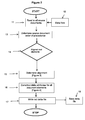
- FIG. 2 A method for constructing a delta document from two or more input files is illustrated in Figure 2 .
- First the markup language source documents 12 are read 11 into the data storage.
- Document precedence or order of priority is determined 13 for the source documents. This identifies the order in which the source documents are successively to be processed so as to maximise preservation of the hierarchy of the source document assigned the highest priority.
- a user may input a preferred order of importance for one or more of the source documents or the order of importance may be determined automatically based on one or more factors such as, but not limited to, the qualifications of the author or date of creation e.g. the most recent source document being assigned the highest priority.
- the next step is to determine, for each of the source documents which structural elements can be aligned with which structural elements in another source document (according to the alignment rules). For example, it might be determined that a particular structural element could only be matched to a structural element in another document which has exactly the same type, i.e. same local name and namespace. In another case, it may be determined that a structural element does not need to be mapped to any other structural element in another document because it is an optional part of the hierarchy, for example the ⁇ div> or ⁇ span> element in HTML. In another situation, structural elements that have similar meaning could be aligned with each other, for example the heading elements h1 and h2 in HTML. These rules will depend on the semantics of the document schema and the semantics of each element tag.
- each source document can be aligned with the root node in the other source documents.
- the root nodes will be the same type. Therefore root elements are aligned 14.
- element alignment is determined for each source document 15 as illustrated in greater detail in Figure 3
- delta elements are generated 16 by identifying equalities and inequalities between the source documents for each document element including the root element, as illustrated in greater detail in Figure 4 .
- the delta document is written out 17 and may be recorded on a disk or some other form of document storage 18 and the process is finished.
- Figure 3 illustrates how elements and textual content are aligned.
- a markup language source document is selected 20.
- the source document is selected in accordance with the order of precedence assigned to the source documents, so that when the process first starts the source document assigned highest priority is selected.
- Approaches to source document selection, not necessarily involving document precedence, may alternatively be employed.
- the first step is to identify automatically structurally insignificant (i.e. hierarchically insignificant) elements in the source document 21.
- Structurally insignificant elements include elements for which the document remains meaningful and useful if the element were to be omitted and/or elements having content that could exist as a child node of the element's parent. Structural insignificance is dependent on the specific use case and could vary depending on a particular user's requirements. Examples of structurally insignificant elements include, but are not limited to: optional wrapper elements such as ⁇ div> in HTML, formatting elements such as ⁇ bold> and ⁇ italic> and non-optional wrapper elements where content can flow between adjacent elements such as ⁇ p> or ⁇ para>.
- structurally insignificant elements in a source document are identified by comparing each element in the source document in turn with the contents of the element library 2a to identify matches.
- structurally insignificant elements in a source document may be identified by deleting each element, but not its content, of a source document in turn and checking whether the resulting source document remains meaningful and useful, and preferably is valid i.e. conforms to the relevant schema or document type definition. With all structurally insignificant elements identified, all remaining elements in a source document are deemed structurally significant elements.
- the next step is to determine automatically for each structurally significant element of the selected source document in turn (but not necessarily constrained by the element hierarchy) the zero or more structurally significant elements having the same type or meaning in each of the other source document(s) with which each element of the selected source document could be aligned 22. Note that each successive alignment must follow the previous alignment in document order for each source document i.e. the alignment determines a series of non-intersecting links between elements in different source documents.
- the next source document is selected 20 and the process described above is repeated: structurally insignificant elements in the next source document are identified 21 and then for each currently unaligned structurally significant element in the next source document it is determined 22 whether each one of the currently unaligned structurally significant elements could be aligned with none, one or more unaligned structurally significant elements in any other source documents.
- each element of a source document is, in turn, checked initially whether it is structurally insignificant. Where the element is determined not to be structurally insigificant, i.e. it is determined to be structurally significant, possible alignments of the structurally significant element are then identified. If, however, the element is determined to be structurally insignificant no possible alignments of the structurally insignficant element are identified and the process moves to check the structural signficance of the next element in the source document.
- one or more first parts of the delta file may reflect document differences based on structural alignment whereas one or more second parts of the delta file may reflect document differences based on content alignment. Moreover, the one or more second parts may be nested within the one or more first parts.
- an element may be aligned in a plurality of different ways.
- the system is programmed so that where there are different ways in which elements can be aligned, a choice is made automatically between the different alignment options.
- This choice can be programmed to take account of the intended use of the resultant delta file.
- a typical choice would be to minimise the size of the delta file in which case an alignment maximising the number of aligned elements is chosen.
- each element of the source documents is flattened 25. This is done by representing the start tag and the end tag and some linking mechanism between them such that the hierarchy of each one of the source documents can be reconstructed.
- the source documents are then merged into a single linear structure where the document order for each source document is preserved and the alignment (previously determined according to Figure 3 ) is preserved by not repeating aligned common structure or content..
- the source document with highest priority its hierarchy is reconstructed by reconstructing each element from its start tag and corresponding end tag 26. As each element is reconstructed, the delta attribute will be set according to the alignment of content across the documents and whether or not these are all equal. If the element tag does not appear in all of the source documents that are referenced within the delta attribute, then the deltaTag attribute will also need to be set accordingly.
- the next highest importance source document is selected and its hierarchy is reconstructed 27 although in this case some of its elements may be fragmented due to the previous hierarchy reconstruction. If an element is fragmented, it will be necessary to set the deltaTagStart, deltaTagMiddle, and deltaTagEnd attributes appropriately.
- structurally insignificant elements include optional wrapper elements such as ⁇ div> in HTML, formatting elements such as ⁇ bold> and ⁇ italic> and non-optional wrapper elements where content can flow between adjacent elements such as ⁇ p> or ⁇ para>.
- An optional wrapper element is one which can be removed from the hierarchy of the document and the document remains valid.
- Formatting elements such as, but not limited to, ⁇ bold>, ⁇ italic>, and ⁇ span> are also optional but typically have the following additional characteristics:
- a non-optional wrapper element or 'flow' wrapper element needs to be temporarily removed before comparison for alignment purposes, because it imparts structure to the document, but will be represented in the delta file and so can be reinstated as needed.
- An example of a non-optional wrapper element is ⁇ p> or ⁇ para>.
- content can 'flow' between adjacent elements of the same type. The following is a simple example of how the method and system described herein is able to avoid repetition of content (in comparison to conventional systems) flowing between adjacent non-optional wrapper elements of the same type.
- XHTML extensible hypertext markup language
- HTML HyperText Markup Language
- the markup language source file contains:
- Example 1 above shows that with the addition of the new deltaTag attribute, it is possible to indicate that the bold tag is only present in the B document.
- Another example in XHTML would be the addition of a ⁇ div> tag around multiple paragraphs and here the example clearly illustrates the advantage of being able to represent structural changes in the Delta file - remember that the ⁇ div> might have been put round a large part of a large document, rather than a couple of paragraphs as shown here.
- the markup language source file contains:
- This system and method for recording changes to markup language files extends to much more complex examples, in fact any form of structural difference between two documents where the content is the same can be represented without requiring the content to be deleted and represented.
- this system and method is an improvement of the method described in EP 2174238 , the improved system and method benefits from the advantages inherent in the earlier method.
- the system and method described herein is able to record changes to content as well as structure.
- the system and method described herein is scalable and is capable of recording separate changes in one, two, three or more related markup language source files.
- markup language source files A and B are represented using the system and method described herein by:
- Transformation between these two representations could be achieved quite easily in XSLT and as one form may be more suitable for certain types of output this provides an advantage. This scales to multiple documents in that the user would have a choice as to the priority in how hierarchies were represented in the delta according to the ongoing processing requirements. These could also be transformed as part of an output process.
- system and method described herein may be applied to two or more source documents.
- the following is an example in which the method is applied to three source documents showing a text change and two different hierarchies:
- markup language source files A, B and C are represented using the system and method described herein by:
- the system and method described herein is able to generate delta files for any combination of source documents with different hierarchies and can cater for changes in attributes and content for any element. Unlike existing methodologies, for each structural difference the present invention only applies a deltatag when an element tag is not present in all of the source documents that are referenced in the deltaV2 attribute, i.e. only when there is a structural change. In this way the need for every element to be separately tagged can be avoided.
Landscapes
- Engineering & Computer Science (AREA)
- Theoretical Computer Science (AREA)
- General Engineering & Computer Science (AREA)
- Physics & Mathematics (AREA)
- General Physics & Mathematics (AREA)
- Computational Linguistics (AREA)
- General Health & Medical Sciences (AREA)
- Health & Medical Sciences (AREA)
- Audiology, Speech & Language Pathology (AREA)
- Artificial Intelligence (AREA)
- Software Systems (AREA)
- Computer Security & Cryptography (AREA)
- Library & Information Science (AREA)
- Data Mining & Analysis (AREA)
- Databases & Information Systems (AREA)
- Information Retrieval, Db Structures And Fs Structures Therefor (AREA)
- Document Processing Apparatus (AREA)
Applications Claiming Priority (1)
| Application Number | Priority Date | Filing Date | Title |
|---|---|---|---|
| GBGB1315520.5A GB201315520D0 (en) | 2013-08-30 | 2013-08-30 | Representation of multiple markup language files that differ in structure and content in one file for the production of new markup language files |
Publications (3)
| Publication Number | Publication Date |
|---|---|
| EP2843545A1 true EP2843545A1 (fr) | 2015-03-04 |
| EP2843545B1 EP2843545B1 (fr) | 2024-04-24 |
| EP2843545C0 EP2843545C0 (fr) | 2024-04-24 |
Family
ID=49397104
Family Applications (1)
| Application Number | Title | Priority Date | Filing Date |
|---|---|---|---|
| EP14275178.3A Active EP2843545B1 (fr) | 2013-08-30 | 2014-08-28 | Représentation de plusieurs fichiers de langage de balisage qui diffèrent en structure et le contenu dans un fichier pour la production de fichiers de langage nouvelle de balisage |
Country Status (3)
| Country | Link |
|---|---|
| US (1) | US10073821B2 (fr) |
| EP (1) | EP2843545B1 (fr) |
| GB (1) | GB201315520D0 (fr) |
Families Citing this family (4)
| Publication number | Priority date | Publication date | Assignee | Title |
|---|---|---|---|---|
| US9922070B2 (en) * | 2015-05-04 | 2018-03-20 | International Business Machines Corporation | Maintaining consistency between a transactional database system and a non-transactional content repository for document objects |
| US10387139B2 (en) * | 2017-07-25 | 2019-08-20 | Aurora Labs Ltd. | Opportunistic software updates during select operational modes |
| US11200378B2 (en) * | 2018-10-11 | 2021-12-14 | International Business Machines Corporation | Methods and systems for processing language with standardization of source data |
| CN114489723B (zh) * | 2022-01-04 | 2025-08-01 | 武汉烽火技术服务有限公司 | 一种通用的配置差异比较方法和装置 |
Citations (4)
| Publication number | Priority date | Publication date | Assignee | Title |
|---|---|---|---|---|
| WO2002008890A2 (fr) * | 2000-07-21 | 2002-01-31 | Monsell Edm Ltd. | Procede et logiciel d'enregistrement et de validation de modifications apportees a des fichiers de langage de balisage |
| US20040205539A1 (en) * | 2001-09-07 | 2004-10-14 | Mak Mingchi Stephen | Method and apparatus for iterative merging of documents |
| US20060085402A1 (en) * | 2004-10-20 | 2006-04-20 | Microsoft Corporation | Using permanent identifiers in documents for change management |
| WO2009004386A2 (fr) * | 2007-07-04 | 2009-01-08 | Deltaxml Ltd | Représentation de plusieurs fichiers de langage de balisage dans un fichier pour la production de nouveaux fichiers de langage de balisage |
Family Cites Families (9)
| Publication number | Priority date | Publication date | Assignee | Title |
|---|---|---|---|---|
| JP2002024211A (ja) * | 2000-06-30 | 2002-01-25 | Hitachi Ltd | 文書管理方法およびシステム並びにその処理プログラムを格納した記憶媒体 |
| WO2003019411A2 (fr) * | 2001-08-23 | 2003-03-06 | Xmlcities, Inc. | Procede et dispositif de conception de feuilles de style xsl |
| CN100585662C (zh) * | 2003-06-20 | 2010-01-27 | 汤姆森普罗梅特里克公司 | 利用高速缓存和可高速缓存对象扩展测试驱动应用程序的功能的基于计算机测试的系统和方法 |
| US7464330B2 (en) * | 2003-12-09 | 2008-12-09 | Microsoft Corporation | Context-free document portions with alternate formats |
| US7747588B2 (en) * | 2005-09-12 | 2010-06-29 | Microsoft Corporation | Extensible XML format and object model for localization data |
| US8286132B2 (en) | 2008-09-25 | 2012-10-09 | International Business Machines Corporation | Comparing and merging structured documents syntactically and semantically |
| US7996435B2 (en) | 2008-12-01 | 2011-08-09 | Sap Ag | Apparatus and method for comparing computer documents using tree structures |
| US9201911B2 (en) * | 2012-03-29 | 2015-12-01 | International Business Machines Corporation | Managing test data in large scale performance environment |
| US10108590B2 (en) * | 2013-05-03 | 2018-10-23 | International Business Machines Corporation | Comparing markup language files |
-
2013
- 2013-08-30 GB GBGB1315520.5A patent/GB201315520D0/en not_active Ceased
-
2014
- 2014-08-28 EP EP14275178.3A patent/EP2843545B1/fr active Active
- 2014-09-02 US US14/474,377 patent/US10073821B2/en active Active
Patent Citations (4)
| Publication number | Priority date | Publication date | Assignee | Title |
|---|---|---|---|---|
| WO2002008890A2 (fr) * | 2000-07-21 | 2002-01-31 | Monsell Edm Ltd. | Procede et logiciel d'enregistrement et de validation de modifications apportees a des fichiers de langage de balisage |
| US20040205539A1 (en) * | 2001-09-07 | 2004-10-14 | Mak Mingchi Stephen | Method and apparatus for iterative merging of documents |
| US20060085402A1 (en) * | 2004-10-20 | 2006-04-20 | Microsoft Corporation | Using permanent identifiers in documents for change management |
| WO2009004386A2 (fr) * | 2007-07-04 | 2009-01-08 | Deltaxml Ltd | Représentation de plusieurs fichiers de langage de balisage dans un fichier pour la production de nouveaux fichiers de langage de balisage |
Also Published As
| Publication number | Publication date |
|---|---|
| US10073821B2 (en) | 2018-09-11 |
| US20150067479A1 (en) | 2015-03-05 |
| EP2843545B1 (fr) | 2024-04-24 |
| EP2843545C0 (fr) | 2024-04-24 |
| GB201315520D0 (en) | 2013-10-16 |
Similar Documents
| Publication | Publication Date | Title |
|---|---|---|
| World Wide Web Consortium | XSL transformations (XSLT) version 2.0 | |
| US7114123B2 (en) | User controllable data grouping in structural document translation | |
| US20030120686A1 (en) | Extensible stylesheet designs using meta-tag and/or associated meta-tag information | |
| US20060036631A1 (en) | High performance XML storage retrieval system and method | |
| WO2006028953A2 (fr) | Composition de document basee sur des requetes | |
| US20170154019A1 (en) | Template-driven transformation systems and methods | |
| US20240273094A1 (en) | Universal Container for Structured and Unstructured Data from Disparate Sources, and Methods for Querying Same | |
| US7426516B1 (en) | Mechanism for supporting indexed tagged content in a general purpose data store | |
| Baumann | THE" SON OF SUDA ON-LINE" | |
| EP2843545B1 (fr) | Représentation de plusieurs fichiers de langage de balisage qui diffèrent en structure et le contenu dans un fichier pour la production de fichiers de langage nouvelle de balisage | |
| Roisin | Authoring structured multimedia documents | |
| Pollock et al. | Metadata vocabulary for tabular data | |
| Dohrn et al. | Design and implementation of wiki content transformations and refactorings | |
| EP2174238B1 (fr) | Représentation de plusieurs fichiers de langage de balisage dans un fichier pour la production de nouveaux fichiers de langage de balisage | |
| Pikus et al. | Semi-automatic ontology-driven development documentation: generating documents from RDF data and DITA templates | |
| WO2010147453A1 (fr) | Systeme et procede de conception d'une interface graphique pour un programme d'application | |
| Ali et al. | A comparison of XML-based temporal models | |
| Simic et al. | Prospects of encoding Java source code in XML | |
| Thao | A configuration management system for software product lines | |
| Lam | XML and global name access control | |
| US20080005132A1 (en) | Method and system for describing and storing bursting metadata in a content management system | |
| Kesäniemi et al. | Exploring meta-analysis for historical corpus linguistics based on linked data | |
| Škrbić et al. | Bibliographic records editor in XML native environment | |
| US20240273076A1 (en) | Universal Container for Structured and Unstructured Data from Disparate Sources | |
| Cole et al. | Using XML and XSLT to process and render online journals |
Legal Events
| Date | Code | Title | Description |
|---|---|---|---|
| 17P | Request for examination filed |
Effective date: 20140828 |
|
| AK | Designated contracting states |
Kind code of ref document: A1 Designated state(s): AL AT BE BG CH CY CZ DE DK EE ES FI FR GB GR HR HU IE IS IT LI LT LU LV MC MK MT NL NO PL PT RO RS SE SI SK SM TR |
|
| AX | Request for extension of the european patent |
Extension state: BA ME |
|
| PUAI | Public reference made under article 153(3) epc to a published international application that has entered the european phase |
Free format text: ORIGINAL CODE: 0009012 |
|
| R17P | Request for examination filed (corrected) |
Effective date: 20150902 |
|
| RBV | Designated contracting states (corrected) |
Designated state(s): AL AT BE BG CH CY CZ DE DK EE ES FI FR GB GR HR HU IE IS IT LI LT LU LV MC MK MT NL NO PL PT RO RS SE SI SK SM TR |
|
| STAA | Information on the status of an ep patent application or granted ep patent |
Free format text: STATUS: EXAMINATION IS IN PROGRESS |
|
| 17Q | First examination report despatched |
Effective date: 20190121 |
|
| RAP1 | Party data changed (applicant data changed or rights of an application transferred) |
Owner name: DELTAMAN GROUP LIMITED |
|
| REG | Reference to a national code |
Ref country code: DE Ipc: G06F0008710000 Ref legal event code: R079 Ref document number: 602014090011 Country of ref document: DE Free format text: PREVIOUS MAIN CLASS: G06F0009440000 |
|
| GRAP | Despatch of communication of intention to grant a patent |
Free format text: ORIGINAL CODE: EPIDOSNIGR1 |
|
| STAA | Information on the status of an ep patent application or granted ep patent |
Free format text: STATUS: GRANT OF PATENT IS INTENDED |
|
| RIC1 | Information provided on ipc code assigned before grant |
Ipc: G06F 40/143 20200101ALI20231123BHEP Ipc: G06F 40/197 20200101ALI20231123BHEP Ipc: G06F 40/194 20200101ALI20231123BHEP Ipc: G06F 40/131 20200101ALI20231123BHEP Ipc: G06F 16/14 20190101ALI20231123BHEP Ipc: G06F 8/71 20180101AFI20231123BHEP |
|
| INTG | Intention to grant announced |
Effective date: 20231211 |
|
| GRAS | Grant fee paid |
Free format text: ORIGINAL CODE: EPIDOSNIGR3 |
|
| GRAA | (expected) grant |
Free format text: ORIGINAL CODE: 0009210 |
|
| STAA | Information on the status of an ep patent application or granted ep patent |
Free format text: STATUS: THE PATENT HAS BEEN GRANTED |
|
| AK | Designated contracting states |
Kind code of ref document: B1 Designated state(s): AL AT BE BG CH CY CZ DE DK EE ES FI FR GB GR HR HU IE IS IT LI LT LU LV MC MK MT NL NO PL PT RO RS SE SI SK SM TR |
|
| REG | Reference to a national code |
Ref country code: GB Ref legal event code: FG4D |
|
| REG | Reference to a national code |
Ref country code: CH Ref legal event code: EP |
|
| REG | Reference to a national code |
Ref country code: DE Ref legal event code: R096 Ref document number: 602014090011 Country of ref document: DE |
|
| REG | Reference to a national code |
Ref country code: IE Ref legal event code: FG4D |
|
| U01 | Request for unitary effect filed |
Effective date: 20240517 |
|
| U07 | Unitary effect registered |
Designated state(s): AT BE BG DE DK EE FI FR IT LT LU LV MT NL PT SE SI Effective date: 20240612 |
|
| U20 | Renewal fee for the european patent with unitary effect paid |
Year of fee payment: 11 Effective date: 20240626 |
|
| PG25 | Lapsed in a contracting state [announced via postgrant information from national office to epo] |
Ref country code: IS Free format text: LAPSE BECAUSE OF FAILURE TO SUBMIT A TRANSLATION OF THE DESCRIPTION OR TO PAY THE FEE WITHIN THE PRESCRIBED TIME-LIMIT Effective date: 20240824 |
|
| PG25 | Lapsed in a contracting state [announced via postgrant information from national office to epo] |
Ref country code: HR Free format text: LAPSE BECAUSE OF FAILURE TO SUBMIT A TRANSLATION OF THE DESCRIPTION OR TO PAY THE FEE WITHIN THE PRESCRIBED TIME-LIMIT Effective date: 20240424 |
|
| PG25 | Lapsed in a contracting state [announced via postgrant information from national office to epo] |
Ref country code: GR Free format text: LAPSE BECAUSE OF FAILURE TO SUBMIT A TRANSLATION OF THE DESCRIPTION OR TO PAY THE FEE WITHIN THE PRESCRIBED TIME-LIMIT Effective date: 20240725 |
|
| PG25 | Lapsed in a contracting state [announced via postgrant information from national office to epo] |
Ref country code: ES Free format text: LAPSE BECAUSE OF FAILURE TO SUBMIT A TRANSLATION OF THE DESCRIPTION OR TO PAY THE FEE WITHIN THE PRESCRIBED TIME-LIMIT Effective date: 20240424 |
|
| PG25 | Lapsed in a contracting state [announced via postgrant information from national office to epo] |
Ref country code: PL Free format text: LAPSE BECAUSE OF FAILURE TO SUBMIT A TRANSLATION OF THE DESCRIPTION OR TO PAY THE FEE WITHIN THE PRESCRIBED TIME-LIMIT Effective date: 20240424 |
|
| PG25 | Lapsed in a contracting state [announced via postgrant information from national office to epo] |
Ref country code: PL Free format text: LAPSE BECAUSE OF FAILURE TO SUBMIT A TRANSLATION OF THE DESCRIPTION OR TO PAY THE FEE WITHIN THE PRESCRIBED TIME-LIMIT Effective date: 20240424 Ref country code: NO Free format text: LAPSE BECAUSE OF FAILURE TO SUBMIT A TRANSLATION OF THE DESCRIPTION OR TO PAY THE FEE WITHIN THE PRESCRIBED TIME-LIMIT Effective date: 20240724 Ref country code: IS Free format text: LAPSE BECAUSE OF FAILURE TO SUBMIT A TRANSLATION OF THE DESCRIPTION OR TO PAY THE FEE WITHIN THE PRESCRIBED TIME-LIMIT Effective date: 20240824 Ref country code: HR Free format text: LAPSE BECAUSE OF FAILURE TO SUBMIT A TRANSLATION OF THE DESCRIPTION OR TO PAY THE FEE WITHIN THE PRESCRIBED TIME-LIMIT Effective date: 20240424 Ref country code: GR Free format text: LAPSE BECAUSE OF FAILURE TO SUBMIT A TRANSLATION OF THE DESCRIPTION OR TO PAY THE FEE WITHIN THE PRESCRIBED TIME-LIMIT Effective date: 20240725 Ref country code: ES Free format text: LAPSE BECAUSE OF FAILURE TO SUBMIT A TRANSLATION OF THE DESCRIPTION OR TO PAY THE FEE WITHIN THE PRESCRIBED TIME-LIMIT Effective date: 20240424 Ref country code: RS Free format text: LAPSE BECAUSE OF FAILURE TO SUBMIT A TRANSLATION OF THE DESCRIPTION OR TO PAY THE FEE WITHIN THE PRESCRIBED TIME-LIMIT Effective date: 20240724 |
|
| PG25 | Lapsed in a contracting state [announced via postgrant information from national office to epo] |
Ref country code: CZ Free format text: LAPSE BECAUSE OF FAILURE TO SUBMIT A TRANSLATION OF THE DESCRIPTION OR TO PAY THE FEE WITHIN THE PRESCRIBED TIME-LIMIT Effective date: 20240424 |
|
| PG25 | Lapsed in a contracting state [announced via postgrant information from national office to epo] |
Ref country code: RO Free format text: LAPSE BECAUSE OF FAILURE TO SUBMIT A TRANSLATION OF THE DESCRIPTION OR TO PAY THE FEE WITHIN THE PRESCRIBED TIME-LIMIT Effective date: 20240424 Ref country code: SK Free format text: LAPSE BECAUSE OF FAILURE TO SUBMIT A TRANSLATION OF THE DESCRIPTION OR TO PAY THE FEE WITHIN THE PRESCRIBED TIME-LIMIT Effective date: 20240424 |
|
| REG | Reference to a national code |
Ref country code: DE Ref legal event code: R097 Ref document number: 602014090011 Country of ref document: DE |
|
| PG25 | Lapsed in a contracting state [announced via postgrant information from national office to epo] |
Ref country code: SM Free format text: LAPSE BECAUSE OF FAILURE TO SUBMIT A TRANSLATION OF THE DESCRIPTION OR TO PAY THE FEE WITHIN THE PRESCRIBED TIME-LIMIT Effective date: 20240424 |
|
| PG25 | Lapsed in a contracting state [announced via postgrant information from national office to epo] |
Ref country code: SM Free format text: LAPSE BECAUSE OF FAILURE TO SUBMIT A TRANSLATION OF THE DESCRIPTION OR TO PAY THE FEE WITHIN THE PRESCRIBED TIME-LIMIT Effective date: 20240424 Ref country code: SK Free format text: LAPSE BECAUSE OF FAILURE TO SUBMIT A TRANSLATION OF THE DESCRIPTION OR TO PAY THE FEE WITHIN THE PRESCRIBED TIME-LIMIT Effective date: 20240424 Ref country code: RO Free format text: LAPSE BECAUSE OF FAILURE TO SUBMIT A TRANSLATION OF THE DESCRIPTION OR TO PAY THE FEE WITHIN THE PRESCRIBED TIME-LIMIT Effective date: 20240424 Ref country code: CZ Free format text: LAPSE BECAUSE OF FAILURE TO SUBMIT A TRANSLATION OF THE DESCRIPTION OR TO PAY THE FEE WITHIN THE PRESCRIBED TIME-LIMIT Effective date: 20240424 |
|
| PLBE | No opposition filed within time limit |
Free format text: ORIGINAL CODE: 0009261 |
|
| STAA | Information on the status of an ep patent application or granted ep patent |
Free format text: STATUS: NO OPPOSITION FILED WITHIN TIME LIMIT |
|
| REG | Reference to a national code |
Ref country code: CH Ref legal event code: PL |
|
| 26N | No opposition filed |
Effective date: 20250127 |
|
| PG25 | Lapsed in a contracting state [announced via postgrant information from national office to epo] |
Ref country code: MC Free format text: LAPSE BECAUSE OF FAILURE TO SUBMIT A TRANSLATION OF THE DESCRIPTION OR TO PAY THE FEE WITHIN THE PRESCRIBED TIME-LIMIT Effective date: 20240424 Ref country code: CH Free format text: LAPSE BECAUSE OF NON-PAYMENT OF DUE FEES Effective date: 20240831 |
|
| U20 | Renewal fee for the european patent with unitary effect paid |
Year of fee payment: 12 Effective date: 20250605 |
|
| PGFP | Annual fee paid to national office [announced via postgrant information from national office to epo] |
Ref country code: GB Payment date: 20250605 Year of fee payment: 12 |
|
| PG25 | Lapsed in a contracting state [announced via postgrant information from national office to epo] |
Ref country code: IE Free format text: LAPSE BECAUSE OF NON-PAYMENT OF DUE FEES Effective date: 20240828 |
|
| PG25 | Lapsed in a contracting state [announced via postgrant information from national office to epo] |
Ref country code: CY Free format text: LAPSE BECAUSE OF FAILURE TO SUBMIT A TRANSLATION OF THE DESCRIPTION OR TO PAY THE FEE WITHIN THE PRESCRIBED TIME-LIMIT; INVALID AB INITIO Effective date: 20140828 |
|
| PG25 | Lapsed in a contracting state [announced via postgrant information from national office to epo] |
Ref country code: HU Free format text: LAPSE BECAUSE OF FAILURE TO SUBMIT A TRANSLATION OF THE DESCRIPTION OR TO PAY THE FEE WITHIN THE PRESCRIBED TIME-LIMIT; INVALID AB INITIO Effective date: 20140828 |