EP2846381B1 - Électrode pour batterie secondaire, son procédé de fabrication, batterie secondaire et batterie secondaire à câble la comprenant - Google Patents
Électrode pour batterie secondaire, son procédé de fabrication, batterie secondaire et batterie secondaire à câble la comprenant Download PDFInfo
- Publication number
- EP2846381B1 EP2846381B1 EP14733954.3A EP14733954A EP2846381B1 EP 2846381 B1 EP2846381 B1 EP 2846381B1 EP 14733954 A EP14733954 A EP 14733954A EP 2846381 B1 EP2846381 B1 EP 2846381B1
- Authority
- EP
- European Patent Office
- Prior art keywords
- electrode
- secondary battery
- layer
- battery according
- active material
- Prior art date
- Legal status (The legal status is an assumption and is not a legal conclusion. Google has not performed a legal analysis and makes no representation as to the accuracy of the status listed.)
- Active
Links
Images


Classifications
-
- H—ELECTRICITY
- H01—ELECTRIC ELEMENTS
- H01M—PROCESSES OR MEANS, e.g. BATTERIES, FOR THE DIRECT CONVERSION OF CHEMICAL ENERGY INTO ELECTRICAL ENERGY
- H01M10/00—Secondary cells; Manufacture thereof
- H01M10/04—Construction or manufacture in general
- H01M10/0422—Cells or battery with cylindrical casing
-
- H—ELECTRICITY
- H01—ELECTRIC ELEMENTS
- H01M—PROCESSES OR MEANS, e.g. BATTERIES, FOR THE DIRECT CONVERSION OF CHEMICAL ENERGY INTO ELECTRICAL ENERGY
- H01M10/00—Secondary cells; Manufacture thereof
- H01M10/05—Accumulators with non-aqueous electrolyte
- H01M10/052—Li-accumulators
-
- H—ELECTRICITY
- H01—ELECTRIC ELEMENTS
- H01M—PROCESSES OR MEANS, e.g. BATTERIES, FOR THE DIRECT CONVERSION OF CHEMICAL ENERGY INTO ELECTRICAL ENERGY
- H01M10/00—Secondary cells; Manufacture thereof
- H01M10/05—Accumulators with non-aqueous electrolyte
- H01M10/056—Accumulators with non-aqueous electrolyte characterised by the materials used as electrolytes, e.g. mixed inorganic/organic electrolytes
-
- H—ELECTRICITY
- H01—ELECTRIC ELEMENTS
- H01M—PROCESSES OR MEANS, e.g. BATTERIES, FOR THE DIRECT CONVERSION OF CHEMICAL ENERGY INTO ELECTRICAL ENERGY
- H01M10/00—Secondary cells; Manufacture thereof
- H01M10/05—Accumulators with non-aqueous electrolyte
- H01M10/058—Construction or manufacture
-
- H—ELECTRICITY
- H01—ELECTRIC ELEMENTS
- H01M—PROCESSES OR MEANS, e.g. BATTERIES, FOR THE DIRECT CONVERSION OF CHEMICAL ENERGY INTO ELECTRICAL ENERGY
- H01M10/00—Secondary cells; Manufacture thereof
- H01M10/05—Accumulators with non-aqueous electrolyte
- H01M10/058—Construction or manufacture
- H01M10/0587—Construction or manufacture of accumulators having only wound construction elements, i.e. wound positive electrodes, wound negative electrodes and wound separators
-
- H—ELECTRICITY
- H01—ELECTRIC ELEMENTS
- H01M—PROCESSES OR MEANS, e.g. BATTERIES, FOR THE DIRECT CONVERSION OF CHEMICAL ENERGY INTO ELECTRICAL ENERGY
- H01M4/00—Electrodes
- H01M4/02—Electrodes composed of, or comprising, active material
-
- H—ELECTRICITY
- H01—ELECTRIC ELEMENTS
- H01M—PROCESSES OR MEANS, e.g. BATTERIES, FOR THE DIRECT CONVERSION OF CHEMICAL ENERGY INTO ELECTRICAL ENERGY
- H01M4/00—Electrodes
- H01M4/02—Electrodes composed of, or comprising, active material
- H01M4/04—Processes of manufacture in general
- H01M4/0402—Methods of deposition of the material
- H01M4/0404—Methods of deposition of the material by coating on electrode collectors
-
- H—ELECTRICITY
- H01—ELECTRIC ELEMENTS
- H01M—PROCESSES OR MEANS, e.g. BATTERIES, FOR THE DIRECT CONVERSION OF CHEMICAL ENERGY INTO ELECTRICAL ENERGY
- H01M4/00—Electrodes
- H01M4/02—Electrodes composed of, or comprising, active material
- H01M4/04—Processes of manufacture in general
- H01M4/043—Processes of manufacture in general involving compressing or compaction
-
- H—ELECTRICITY
- H01—ELECTRIC ELEMENTS
- H01M—PROCESSES OR MEANS, e.g. BATTERIES, FOR THE DIRECT CONVERSION OF CHEMICAL ENERGY INTO ELECTRICAL ENERGY
- H01M4/00—Electrodes
- H01M4/02—Electrodes composed of, or comprising, active material
- H01M4/13—Electrodes for accumulators with non-aqueous electrolyte, e.g. for lithium-accumulators; Processes of manufacture thereof
-
- H—ELECTRICITY
- H01—ELECTRIC ELEMENTS
- H01M—PROCESSES OR MEANS, e.g. BATTERIES, FOR THE DIRECT CONVERSION OF CHEMICAL ENERGY INTO ELECTRICAL ENERGY
- H01M4/00—Electrodes
- H01M4/02—Electrodes composed of, or comprising, active material
- H01M4/13—Electrodes for accumulators with non-aqueous electrolyte, e.g. for lithium-accumulators; Processes of manufacture thereof
- H01M4/139—Processes of manufacture
-
- H—ELECTRICITY
- H01—ELECTRIC ELEMENTS
- H01M—PROCESSES OR MEANS, e.g. BATTERIES, FOR THE DIRECT CONVERSION OF CHEMICAL ENERGY INTO ELECTRICAL ENERGY
- H01M4/00—Electrodes
- H01M4/02—Electrodes composed of, or comprising, active material
- H01M4/36—Selection of substances as active materials, active masses, active liquids
- H01M4/48—Selection of substances as active materials, active masses, active liquids of inorganic oxides or hydroxides
-
- H—ELECTRICITY
- H01—ELECTRIC ELEMENTS
- H01M—PROCESSES OR MEANS, e.g. BATTERIES, FOR THE DIRECT CONVERSION OF CHEMICAL ENERGY INTO ELECTRICAL ENERGY
- H01M4/00—Electrodes
- H01M4/02—Electrodes composed of, or comprising, active material
- H01M4/62—Selection of inactive substances as ingredients for active masses, e.g. binders, fillers
- H01M4/621—Binders
-
- H—ELECTRICITY
- H01—ELECTRIC ELEMENTS
- H01M—PROCESSES OR MEANS, e.g. BATTERIES, FOR THE DIRECT CONVERSION OF CHEMICAL ENERGY INTO ELECTRICAL ENERGY
- H01M4/00—Electrodes
- H01M4/02—Electrodes composed of, or comprising, active material
- H01M4/62—Selection of inactive substances as ingredients for active masses, e.g. binders, fillers
- H01M4/621—Binders
- H01M4/622—Binders being polymers
-
- H—ELECTRICITY
- H01—ELECTRIC ELEMENTS
- H01M—PROCESSES OR MEANS, e.g. BATTERIES, FOR THE DIRECT CONVERSION OF CHEMICAL ENERGY INTO ELECTRICAL ENERGY
- H01M4/00—Electrodes
- H01M4/02—Electrodes composed of, or comprising, active material
- H01M4/62—Selection of inactive substances as ingredients for active masses, e.g. binders, fillers
- H01M4/624—Electric conductive fillers
-
- H—ELECTRICITY
- H01—ELECTRIC ELEMENTS
- H01M—PROCESSES OR MEANS, e.g. BATTERIES, FOR THE DIRECT CONVERSION OF CHEMICAL ENERGY INTO ELECTRICAL ENERGY
- H01M4/00—Electrodes
- H01M4/02—Electrodes composed of, or comprising, active material
- H01M4/62—Selection of inactive substances as ingredients for active masses, e.g. binders, fillers
- H01M4/624—Electric conductive fillers
- H01M4/625—Carbon or graphite
-
- H—ELECTRICITY
- H01—ELECTRIC ELEMENTS
- H01M—PROCESSES OR MEANS, e.g. BATTERIES, FOR THE DIRECT CONVERSION OF CHEMICAL ENERGY INTO ELECTRICAL ENERGY
- H01M4/00—Electrodes
- H01M4/02—Electrodes composed of, or comprising, active material
- H01M4/64—Carriers or collectors
-
- H—ELECTRICITY
- H01—ELECTRIC ELEMENTS
- H01M—PROCESSES OR MEANS, e.g. BATTERIES, FOR THE DIRECT CONVERSION OF CHEMICAL ENERGY INTO ELECTRICAL ENERGY
- H01M4/00—Electrodes
- H01M4/02—Electrodes composed of, or comprising, active material
- H01M4/64—Carriers or collectors
- H01M4/66—Selection of materials
-
- H—ELECTRICITY
- H01—ELECTRIC ELEMENTS
- H01M—PROCESSES OR MEANS, e.g. BATTERIES, FOR THE DIRECT CONVERSION OF CHEMICAL ENERGY INTO ELECTRICAL ENERGY
- H01M4/00—Electrodes
- H01M4/02—Electrodes composed of, or comprising, active material
- H01M4/64—Carriers or collectors
- H01M4/66—Selection of materials
- H01M4/665—Composites
- H01M4/667—Composites in the form of layers, e.g. coatings
-
- H—ELECTRICITY
- H01—ELECTRIC ELEMENTS
- H01M—PROCESSES OR MEANS, e.g. BATTERIES, FOR THE DIRECT CONVERSION OF CHEMICAL ENERGY INTO ELECTRICAL ENERGY
- H01M4/00—Electrodes
- H01M4/02—Electrodes composed of, or comprising, active material
- H01M4/64—Carriers or collectors
- H01M4/70—Carriers or collectors characterised by shape or form
-
- H—ELECTRICITY
- H01—ELECTRIC ELEMENTS
- H01M—PROCESSES OR MEANS, e.g. BATTERIES, FOR THE DIRECT CONVERSION OF CHEMICAL ENERGY INTO ELECTRICAL ENERGY
- H01M4/00—Electrodes
- H01M4/02—Electrodes composed of, or comprising, active material
- H01M4/64—Carriers or collectors
- H01M4/70—Carriers or collectors characterised by shape or form
- H01M4/72—Grids
- H01M4/74—Meshes or woven material; Expanded metal
-
- H—ELECTRICITY
- H01—ELECTRIC ELEMENTS
- H01M—PROCESSES OR MEANS, e.g. BATTERIES, FOR THE DIRECT CONVERSION OF CHEMICAL ENERGY INTO ELECTRICAL ENERGY
- H01M4/00—Electrodes
- H01M4/02—Electrodes composed of, or comprising, active material
- H01M4/64—Carriers or collectors
- H01M4/70—Carriers or collectors characterised by shape or form
- H01M4/75—Wires, rods or strips
-
- H—ELECTRICITY
- H01—ELECTRIC ELEMENTS
- H01M—PROCESSES OR MEANS, e.g. BATTERIES, FOR THE DIRECT CONVERSION OF CHEMICAL ENERGY INTO ELECTRICAL ENERGY
- H01M4/00—Electrodes
- H01M4/02—Electrodes composed of, or comprising, active material
- H01M4/64—Carriers or collectors
- H01M4/70—Carriers or collectors characterised by shape or form
- H01M4/78—Shapes other than plane or cylindrical, e.g. helical
-
- H—ELECTRICITY
- H01—ELECTRIC ELEMENTS
- H01M—PROCESSES OR MEANS, e.g. BATTERIES, FOR THE DIRECT CONVERSION OF CHEMICAL ENERGY INTO ELECTRICAL ENERGY
- H01M4/00—Electrodes
- H01M4/02—Electrodes composed of, or comprising, active material
- H01M4/64—Carriers or collectors
- H01M4/70—Carriers or collectors characterised by shape or form
- H01M4/80—Porous plates, e.g. sintered carriers
- H01M4/806—Nonwoven fibrous fabric containing only fibres
-
- H—ELECTRICITY
- H01—ELECTRIC ELEMENTS
- H01M—PROCESSES OR MEANS, e.g. BATTERIES, FOR THE DIRECT CONVERSION OF CHEMICAL ENERGY INTO ELECTRICAL ENERGY
- H01M50/00—Constructional details or processes of manufacture of the non-active parts of electrochemical cells other than fuel cells, e.g. hybrid cells
- H01M50/40—Separators; Membranes; Diaphragms; Spacing elements inside cells
- H01M50/409—Separators, membranes or diaphragms characterised by the material
- H01M50/411—Organic material
- H01M50/414—Synthetic resins, e.g. thermoplastics or thermosetting resins
-
- H—ELECTRICITY
- H01—ELECTRIC ELEMENTS
- H01M—PROCESSES OR MEANS, e.g. BATTERIES, FOR THE DIRECT CONVERSION OF CHEMICAL ENERGY INTO ELECTRICAL ENERGY
- H01M50/00—Constructional details or processes of manufacture of the non-active parts of electrochemical cells other than fuel cells, e.g. hybrid cells
- H01M50/40—Separators; Membranes; Diaphragms; Spacing elements inside cells
- H01M50/409—Separators, membranes or diaphragms characterised by the material
- H01M50/446—Composite material consisting of a mixture of organic and inorganic materials
-
- H—ELECTRICITY
- H01—ELECTRIC ELEMENTS
- H01M—PROCESSES OR MEANS, e.g. BATTERIES, FOR THE DIRECT CONVERSION OF CHEMICAL ENERGY INTO ELECTRICAL ENERGY
- H01M50/00—Constructional details or processes of manufacture of the non-active parts of electrochemical cells other than fuel cells, e.g. hybrid cells
- H01M50/40—Separators; Membranes; Diaphragms; Spacing elements inside cells
- H01M50/409—Separators, membranes or diaphragms characterised by the material
- H01M50/449—Separators, membranes or diaphragms characterised by the material having a layered structure
-
- H—ELECTRICITY
- H01—ELECTRIC ELEMENTS
- H01M—PROCESSES OR MEANS, e.g. BATTERIES, FOR THE DIRECT CONVERSION OF CHEMICAL ENERGY INTO ELECTRICAL ENERGY
- H01M50/00—Constructional details or processes of manufacture of the non-active parts of electrochemical cells other than fuel cells, e.g. hybrid cells
- H01M50/40—Separators; Membranes; Diaphragms; Spacing elements inside cells
- H01M50/489—Separators, membranes, diaphragms or spacing elements inside the cells, characterised by their physical properties, e.g. swelling degree, hydrophilicity or shut down properties
- H01M50/491—Porosity
-
- H—ELECTRICITY
- H01—ELECTRIC ELEMENTS
- H01M—PROCESSES OR MEANS, e.g. BATTERIES, FOR THE DIRECT CONVERSION OF CHEMICAL ENERGY INTO ELECTRICAL ENERGY
- H01M10/00—Secondary cells; Manufacture thereof
- H01M10/04—Construction or manufacture in general
- H01M10/0431—Cells with wound or folded electrodes
-
- H—ELECTRICITY
- H01—ELECTRIC ELEMENTS
- H01M—PROCESSES OR MEANS, e.g. BATTERIES, FOR THE DIRECT CONVERSION OF CHEMICAL ENERGY INTO ELECTRICAL ENERGY
- H01M10/00—Secondary cells; Manufacture thereof
- H01M10/05—Accumulators with non-aqueous electrolyte
- H01M10/052—Li-accumulators
- H01M10/0525—Rocking-chair batteries, i.e. batteries with lithium insertion or intercalation in both electrodes; Lithium-ion batteries
-
- H—ELECTRICITY
- H01—ELECTRIC ELEMENTS
- H01M—PROCESSES OR MEANS, e.g. BATTERIES, FOR THE DIRECT CONVERSION OF CHEMICAL ENERGY INTO ELECTRICAL ENERGY
- H01M10/00—Secondary cells; Manufacture thereof
- H01M10/05—Accumulators with non-aqueous electrolyte
- H01M10/056—Accumulators with non-aqueous electrolyte characterised by the materials used as electrolytes, e.g. mixed inorganic/organic electrolytes
- H01M10/0564—Accumulators with non-aqueous electrolyte characterised by the materials used as electrolytes, e.g. mixed inorganic/organic electrolytes the electrolyte being constituted of organic materials only
- H01M10/0565—Polymeric materials, e.g. gel-type or solid-type
-
- H—ELECTRICITY
- H01—ELECTRIC ELEMENTS
- H01M—PROCESSES OR MEANS, e.g. BATTERIES, FOR THE DIRECT CONVERSION OF CHEMICAL ENERGY INTO ELECTRICAL ENERGY
- H01M10/00—Secondary cells; Manufacture thereof
- H01M10/05—Accumulators with non-aqueous electrolyte
- H01M10/056—Accumulators with non-aqueous electrolyte characterised by the materials used as electrolytes, e.g. mixed inorganic/organic electrolytes
- H01M10/0564—Accumulators with non-aqueous electrolyte characterised by the materials used as electrolytes, e.g. mixed inorganic/organic electrolytes the electrolyte being constituted of organic materials only
- H01M10/0566—Liquid materials
-
- H—ELECTRICITY
- H01—ELECTRIC ELEMENTS
- H01M—PROCESSES OR MEANS, e.g. BATTERIES, FOR THE DIRECT CONVERSION OF CHEMICAL ENERGY INTO ELECTRICAL ENERGY
- H01M10/00—Secondary cells; Manufacture thereof
- H01M10/05—Accumulators with non-aqueous electrolyte
- H01M10/056—Accumulators with non-aqueous electrolyte characterised by the materials used as electrolytes, e.g. mixed inorganic/organic electrolytes
- H01M10/0564—Accumulators with non-aqueous electrolyte characterised by the materials used as electrolytes, e.g. mixed inorganic/organic electrolytes the electrolyte being constituted of organic materials only
- H01M10/0566—Liquid materials
- H01M10/0567—Liquid materials characterised by the additives
-
- H—ELECTRICITY
- H01—ELECTRIC ELEMENTS
- H01M—PROCESSES OR MEANS, e.g. BATTERIES, FOR THE DIRECT CONVERSION OF CHEMICAL ENERGY INTO ELECTRICAL ENERGY
- H01M10/00—Secondary cells; Manufacture thereof
- H01M10/05—Accumulators with non-aqueous electrolyte
- H01M10/056—Accumulators with non-aqueous electrolyte characterised by the materials used as electrolytes, e.g. mixed inorganic/organic electrolytes
- H01M10/0564—Accumulators with non-aqueous electrolyte characterised by the materials used as electrolytes, e.g. mixed inorganic/organic electrolytes the electrolyte being constituted of organic materials only
- H01M10/0566—Liquid materials
- H01M10/0568—Liquid materials characterised by the solutes
-
- H—ELECTRICITY
- H01—ELECTRIC ELEMENTS
- H01M—PROCESSES OR MEANS, e.g. BATTERIES, FOR THE DIRECT CONVERSION OF CHEMICAL ENERGY INTO ELECTRICAL ENERGY
- H01M10/00—Secondary cells; Manufacture thereof
- H01M10/05—Accumulators with non-aqueous electrolyte
- H01M10/056—Accumulators with non-aqueous electrolyte characterised by the materials used as electrolytes, e.g. mixed inorganic/organic electrolytes
- H01M10/0564—Accumulators with non-aqueous electrolyte characterised by the materials used as electrolytes, e.g. mixed inorganic/organic electrolytes the electrolyte being constituted of organic materials only
- H01M10/0566—Liquid materials
- H01M10/0569—Liquid materials characterised by the solvents
-
- H—ELECTRICITY
- H01—ELECTRIC ELEMENTS
- H01M—PROCESSES OR MEANS, e.g. BATTERIES, FOR THE DIRECT CONVERSION OF CHEMICAL ENERGY INTO ELECTRICAL ENERGY
- H01M4/00—Electrodes
- H01M4/02—Electrodes composed of, or comprising, active material
- H01M2004/025—Electrodes composed of, or comprising, active material with shapes other than plane or cylindrical
-
- H—ELECTRICITY
- H01—ELECTRIC ELEMENTS
- H01M—PROCESSES OR MEANS, e.g. BATTERIES, FOR THE DIRECT CONVERSION OF CHEMICAL ENERGY INTO ELECTRICAL ENERGY
- H01M4/00—Electrodes
- H01M4/02—Electrodes composed of, or comprising, active material
- H01M2004/026—Electrodes composed of, or comprising, active material characterised by the polarity
- H01M2004/027—Negative electrodes
-
- H—ELECTRICITY
- H01—ELECTRIC ELEMENTS
- H01M—PROCESSES OR MEANS, e.g. BATTERIES, FOR THE DIRECT CONVERSION OF CHEMICAL ENERGY INTO ELECTRICAL ENERGY
- H01M4/00—Electrodes
- H01M4/02—Electrodes composed of, or comprising, active material
- H01M2004/026—Electrodes composed of, or comprising, active material characterised by the polarity
- H01M2004/028—Positive electrodes
-
- H—ELECTRICITY
- H01—ELECTRIC ELEMENTS
- H01M—PROCESSES OR MEANS, e.g. BATTERIES, FOR THE DIRECT CONVERSION OF CHEMICAL ENERGY INTO ELECTRICAL ENERGY
- H01M2300/00—Electrolytes
- H01M2300/0017—Non-aqueous electrolytes
- H01M2300/0065—Solid electrolytes
- H01M2300/0082—Organic polymers
-
- H—ELECTRICITY
- H01—ELECTRIC ELEMENTS
- H01M—PROCESSES OR MEANS, e.g. BATTERIES, FOR THE DIRECT CONVERSION OF CHEMICAL ENERGY INTO ELECTRICAL ENERGY
- H01M2300/00—Electrolytes
- H01M2300/0085—Immobilising or gelification of electrolyte
-
- H—ELECTRICITY
- H01—ELECTRIC ELEMENTS
- H01M—PROCESSES OR MEANS, e.g. BATTERIES, FOR THE DIRECT CONVERSION OF CHEMICAL ENERGY INTO ELECTRICAL ENERGY
- H01M4/00—Electrodes
- H01M4/02—Electrodes composed of, or comprising, active material
- H01M4/04—Processes of manufacture in general
- H01M4/0402—Methods of deposition of the material
- H01M4/0409—Methods of deposition of the material by a doctor blade method, slip-casting or roller coating
-
- H—ELECTRICITY
- H01—ELECTRIC ELEMENTS
- H01M—PROCESSES OR MEANS, e.g. BATTERIES, FOR THE DIRECT CONVERSION OF CHEMICAL ENERGY INTO ELECTRICAL ENERGY
- H01M4/00—Electrodes
- H01M4/02—Electrodes composed of, or comprising, active material
- H01M4/36—Selection of substances as active materials, active masses, active liquids
- H01M4/38—Selection of substances as active materials, active masses, active liquids of elements or alloys
- H01M4/381—Alkaline or alkaline earth metals elements
-
- H—ELECTRICITY
- H01—ELECTRIC ELEMENTS
- H01M—PROCESSES OR MEANS, e.g. BATTERIES, FOR THE DIRECT CONVERSION OF CHEMICAL ENERGY INTO ELECTRICAL ENERGY
- H01M4/00—Electrodes
- H01M4/02—Electrodes composed of, or comprising, active material
- H01M4/36—Selection of substances as active materials, active masses, active liquids
- H01M4/38—Selection of substances as active materials, active masses, active liquids of elements or alloys
- H01M4/381—Alkaline or alkaline earth metals elements
- H01M4/382—Lithium
-
- H—ELECTRICITY
- H01—ELECTRIC ELEMENTS
- H01M—PROCESSES OR MEANS, e.g. BATTERIES, FOR THE DIRECT CONVERSION OF CHEMICAL ENERGY INTO ELECTRICAL ENERGY
- H01M4/00—Electrodes
- H01M4/02—Electrodes composed of, or comprising, active material
- H01M4/36—Selection of substances as active materials, active masses, active liquids
- H01M4/38—Selection of substances as active materials, active masses, active liquids of elements or alloys
- H01M4/386—Silicon or alloys based on silicon
-
- H—ELECTRICITY
- H01—ELECTRIC ELEMENTS
- H01M—PROCESSES OR MEANS, e.g. BATTERIES, FOR THE DIRECT CONVERSION OF CHEMICAL ENERGY INTO ELECTRICAL ENERGY
- H01M4/00—Electrodes
- H01M4/02—Electrodes composed of, or comprising, active material
- H01M4/36—Selection of substances as active materials, active masses, active liquids
- H01M4/38—Selection of substances as active materials, active masses, active liquids of elements or alloys
- H01M4/387—Tin or alloys based on tin
-
- H—ELECTRICITY
- H01—ELECTRIC ELEMENTS
- H01M—PROCESSES OR MEANS, e.g. BATTERIES, FOR THE DIRECT CONVERSION OF CHEMICAL ENERGY INTO ELECTRICAL ENERGY
- H01M4/00—Electrodes
- H01M4/02—Electrodes composed of, or comprising, active material
- H01M4/36—Selection of substances as active materials, active masses, active liquids
- H01M4/38—Selection of substances as active materials, active masses, active liquids of elements or alloys
- H01M4/42—Alloys based on zinc
-
- H—ELECTRICITY
- H01—ELECTRIC ELEMENTS
- H01M—PROCESSES OR MEANS, e.g. BATTERIES, FOR THE DIRECT CONVERSION OF CHEMICAL ENERGY INTO ELECTRICAL ENERGY
- H01M4/00—Electrodes
- H01M4/02—Electrodes composed of, or comprising, active material
- H01M4/36—Selection of substances as active materials, active masses, active liquids
- H01M4/38—Selection of substances as active materials, active masses, active liquids of elements or alloys
- H01M4/44—Alloys based on cadmium
-
- H—ELECTRICITY
- H01—ELECTRIC ELEMENTS
- H01M—PROCESSES OR MEANS, e.g. BATTERIES, FOR THE DIRECT CONVERSION OF CHEMICAL ENERGY INTO ELECTRICAL ENERGY
- H01M4/00—Electrodes
- H01M4/02—Electrodes composed of, or comprising, active material
- H01M4/36—Selection of substances as active materials, active masses, active liquids
- H01M4/38—Selection of substances as active materials, active masses, active liquids of elements or alloys
- H01M4/46—Alloys based on magnesium or aluminium
- H01M4/466—Magnesium based
-
- H—ELECTRICITY
- H01—ELECTRIC ELEMENTS
- H01M—PROCESSES OR MEANS, e.g. BATTERIES, FOR THE DIRECT CONVERSION OF CHEMICAL ENERGY INTO ELECTRICAL ENERGY
- H01M4/00—Electrodes
- H01M4/02—Electrodes composed of, or comprising, active material
- H01M4/36—Selection of substances as active materials, active masses, active liquids
- H01M4/48—Selection of substances as active materials, active masses, active liquids of inorganic oxides or hydroxides
- H01M4/485—Selection of substances as active materials, active masses, active liquids of inorganic oxides or hydroxides of mixed oxides or hydroxides for inserting or intercalating light metals, e.g. LiTi2O4 or LiTi2OxFy
-
- H—ELECTRICITY
- H01—ELECTRIC ELEMENTS
- H01M—PROCESSES OR MEANS, e.g. BATTERIES, FOR THE DIRECT CONVERSION OF CHEMICAL ENERGY INTO ELECTRICAL ENERGY
- H01M4/00—Electrodes
- H01M4/02—Electrodes composed of, or comprising, active material
- H01M4/36—Selection of substances as active materials, active masses, active liquids
- H01M4/48—Selection of substances as active materials, active masses, active liquids of inorganic oxides or hydroxides
- H01M4/52—Selection of substances as active materials, active masses, active liquids of inorganic oxides or hydroxides of nickel, cobalt or iron
- H01M4/525—Selection of substances as active materials, active masses, active liquids of inorganic oxides or hydroxides of nickel, cobalt or iron of mixed oxides or hydroxides containing iron, cobalt or nickel for inserting or intercalating light metals, e.g. LiNiO2, LiCoO2 or LiCoOxFy
-
- H—ELECTRICITY
- H01—ELECTRIC ELEMENTS
- H01M—PROCESSES OR MEANS, e.g. BATTERIES, FOR THE DIRECT CONVERSION OF CHEMICAL ENERGY INTO ELECTRICAL ENERGY
- H01M4/00—Electrodes
- H01M4/02—Electrodes composed of, or comprising, active material
- H01M4/36—Selection of substances as active materials, active masses, active liquids
- H01M4/58—Selection of substances as active materials, active masses, active liquids of inorganic compounds other than oxides or hydroxides, e.g. sulfides, selenides, tellurides, halogenides or LiCoFy; of polyanionic structures, e.g. phosphates, silicates or borates
- H01M4/581—Chalcogenides or intercalation compounds thereof
-
- H—ELECTRICITY
- H01—ELECTRIC ELEMENTS
- H01M—PROCESSES OR MEANS, e.g. BATTERIES, FOR THE DIRECT CONVERSION OF CHEMICAL ENERGY INTO ELECTRICAL ENERGY
- H01M4/00—Electrodes
- H01M4/02—Electrodes composed of, or comprising, active material
- H01M4/36—Selection of substances as active materials, active masses, active liquids
- H01M4/58—Selection of substances as active materials, active masses, active liquids of inorganic compounds other than oxides or hydroxides, e.g. sulfides, selenides, tellurides, halogenides or LiCoFy; of polyanionic structures, e.g. phosphates, silicates or borates
- H01M4/583—Carbonaceous material, e.g. graphite-intercalation compounds or CFx
- H01M4/587—Carbonaceous material, e.g. graphite-intercalation compounds or CFx for inserting or intercalating light metals
-
- H—ELECTRICITY
- H01—ELECTRIC ELEMENTS
- H01M—PROCESSES OR MEANS, e.g. BATTERIES, FOR THE DIRECT CONVERSION OF CHEMICAL ENERGY INTO ELECTRICAL ENERGY
- H01M4/00—Electrodes
- H01M4/02—Electrodes composed of, or comprising, active material
- H01M4/62—Selection of inactive substances as ingredients for active masses, e.g. binders, fillers
- H01M4/621—Binders
- H01M4/622—Binders being polymers
- H01M4/623—Binders being polymers fluorinated polymers
-
- H—ELECTRICITY
- H01—ELECTRIC ELEMENTS
- H01M—PROCESSES OR MEANS, e.g. BATTERIES, FOR THE DIRECT CONVERSION OF CHEMICAL ENERGY INTO ELECTRICAL ENERGY
- H01M4/00—Electrodes
- H01M4/02—Electrodes composed of, or comprising, active material
- H01M4/64—Carriers or collectors
- H01M4/66—Selection of materials
- H01M4/661—Metal or alloys, e.g. alloy coatings
-
- H—ELECTRICITY
- H01—ELECTRIC ELEMENTS
- H01M—PROCESSES OR MEANS, e.g. BATTERIES, FOR THE DIRECT CONVERSION OF CHEMICAL ENERGY INTO ELECTRICAL ENERGY
- H01M4/00—Electrodes
- H01M4/02—Electrodes composed of, or comprising, active material
- H01M4/64—Carriers or collectors
- H01M4/66—Selection of materials
- H01M4/661—Metal or alloys, e.g. alloy coatings
- H01M4/662—Alloys
-
- H—ELECTRICITY
- H01—ELECTRIC ELEMENTS
- H01M—PROCESSES OR MEANS, e.g. BATTERIES, FOR THE DIRECT CONVERSION OF CHEMICAL ENERGY INTO ELECTRICAL ENERGY
- H01M4/00—Electrodes
- H01M4/02—Electrodes composed of, or comprising, active material
- H01M4/64—Carriers or collectors
- H01M4/66—Selection of materials
- H01M4/663—Selection of materials containing carbon or carbonaceous materials as conductive part, e.g. graphite, carbon fibres
-
- H—ELECTRICITY
- H01—ELECTRIC ELEMENTS
- H01M—PROCESSES OR MEANS, e.g. BATTERIES, FOR THE DIRECT CONVERSION OF CHEMICAL ENERGY INTO ELECTRICAL ENERGY
- H01M4/00—Electrodes
- H01M4/02—Electrodes composed of, or comprising, active material
- H01M4/64—Carriers or collectors
- H01M4/66—Selection of materials
- H01M4/668—Composites of electroconductive material and synthetic resins
-
- H—ELECTRICITY
- H01—ELECTRIC ELEMENTS
- H01M—PROCESSES OR MEANS, e.g. BATTERIES, FOR THE DIRECT CONVERSION OF CHEMICAL ENERGY INTO ELECTRICAL ENERGY
- H01M4/00—Electrodes
- H01M4/02—Electrodes composed of, or comprising, active material
- H01M4/64—Carriers or collectors
- H01M4/66—Selection of materials
- H01M4/669—Steels
-
- H—ELECTRICITY
- H01—ELECTRIC ELEMENTS
- H01M—PROCESSES OR MEANS, e.g. BATTERIES, FOR THE DIRECT CONVERSION OF CHEMICAL ENERGY INTO ELECTRICAL ENERGY
- H01M50/00—Constructional details or processes of manufacture of the non-active parts of electrochemical cells other than fuel cells, e.g. hybrid cells
- H01M50/40—Separators; Membranes; Diaphragms; Spacing elements inside cells
- H01M50/409—Separators, membranes or diaphragms characterised by the material
- H01M50/44—Fibrous material
-
- Y—GENERAL TAGGING OF NEW TECHNOLOGICAL DEVELOPMENTS; GENERAL TAGGING OF CROSS-SECTIONAL TECHNOLOGIES SPANNING OVER SEVERAL SECTIONS OF THE IPC; TECHNICAL SUBJECTS COVERED BY FORMER USPC CROSS-REFERENCE ART COLLECTIONS [XRACs] AND DIGESTS
- Y02—TECHNOLOGIES OR APPLICATIONS FOR MITIGATION OR ADAPTATION AGAINST CLIMATE CHANGE
- Y02E—REDUCTION OF GREENHOUSE GAS [GHG] EMISSIONS, RELATED TO ENERGY GENERATION, TRANSMISSION OR DISTRIBUTION
- Y02E60/00—Enabling technologies; Technologies with a potential or indirect contribution to GHG emissions mitigation
- Y02E60/10—Energy storage using batteries
-
- Y—GENERAL TAGGING OF NEW TECHNOLOGICAL DEVELOPMENTS; GENERAL TAGGING OF CROSS-SECTIONAL TECHNOLOGIES SPANNING OVER SEVERAL SECTIONS OF THE IPC; TECHNICAL SUBJECTS COVERED BY FORMER USPC CROSS-REFERENCE ART COLLECTIONS [XRACs] AND DIGESTS
- Y02—TECHNOLOGIES OR APPLICATIONS FOR MITIGATION OR ADAPTATION AGAINST CLIMATE CHANGE
- Y02P—CLIMATE CHANGE MITIGATION TECHNOLOGIES IN THE PRODUCTION OR PROCESSING OF GOODS
- Y02P70/00—Climate change mitigation technologies in the production process for final industrial or consumer products
- Y02P70/50—Manufacturing or production processes characterised by the final manufactured product
-
- Y—GENERAL TAGGING OF NEW TECHNOLOGICAL DEVELOPMENTS; GENERAL TAGGING OF CROSS-SECTIONAL TECHNOLOGIES SPANNING OVER SEVERAL SECTIONS OF THE IPC; TECHNICAL SUBJECTS COVERED BY FORMER USPC CROSS-REFERENCE ART COLLECTIONS [XRACs] AND DIGESTS
- Y02—TECHNOLOGIES OR APPLICATIONS FOR MITIGATION OR ADAPTATION AGAINST CLIMATE CHANGE
- Y02T—CLIMATE CHANGE MITIGATION TECHNOLOGIES RELATED TO TRANSPORTATION
- Y02T10/00—Road transport of goods or passengers
- Y02T10/60—Other road transportation technologies with climate change mitigation effect
- Y02T10/70—Energy storage systems for electromobility, e.g. batteries
Definitions
- the present disclosure relates to an electrode for a secondary battery, more specifically to an electrode for a secondary battery which can be prevented from the release of an electrode active material layer and have improved flexibility, a method of preparing the electrode, and a secondary battery and a cable-type secondary battery comprising the electrode.
- Secondary batteries are devices capable of storing energy in chemical form and of converting into electrical energy to generate electricity when needed.
- the secondary batteries are also referred to as rechargeable batteries because they can be recharged repeatedly.
- Common secondary batteries include lead accumulators, NiCd batteries, NiMH accumulators, Li-ion batteries, Li-ion polymer batteries, and the like. When compared with disposable primary batteries, not only are the secondary batteries more economically efficient, they are also more environmentally friendly.
- Secondary batteries are currently used in applications requiring low electric power, for example, equipment to start vehicles, mobile devices, tools, uninterruptible power supplies, and the like. Recently, as the development of wireless communication technologies has been leading to the popularization of mobile devices and even to the mobilization of many kinds of conventional devices, the demand for secondary batteries has been dramatically increasing. Secondary batteries are also used in environmentally friendly next-generation vehicles such as hybrid vehicles and electric vehicles to reduce the costs and weight and to increase the service life of the vehicles.
- secondary batteries have a cylindrical, prismatic, or pouch shape. This is associated with a fabrication process of the secondary batteries in which an electrode assembly composed of an anode, a cathode, and a separator is mounted in a cylindrical or prismatic metal casing or a pouch-shaped casing of an aluminum laminate sheet, and in which the casing is filled with electrolyte. Because a predetermined mounting space for the electrode assembly is necessary in this process, the cylindrical, prismatic or pouch shape of the secondary batteries is a limitation in developing various shapes of mobile devices. Accordingly, there is a need for secondary batteries of a new structure that are easily adaptable in shape.
- KR 2013 0045221 A and KR 2013 0045220 A discuss this type of batteries.
- the cable-type batteries are easy in shape variation, while being subject to stress due to external force for the shape variation.
- the electrode active material layer of cable-type batteries may be released by rapid volume expansion during charging and discharging processes. From these reasons, the capacity of the batteries may be reduced and the cycle life characteristics thereof may be deteriorated.
- Such a problem may be solved in a certain degree by increasing the amount of a binder used in the electrode active material layer to provide flexibility during bending or twisting.
- the increase of a binder amount in the electrode active material layer causes an electrode resistance rise to deteriorate battery performances.
- intense external forces for example, in the case that electrodes are completely folded, the release of the electrode active material layer cannot be prevented even though the amount of a binder becomes increased. Therefore, this method is insufficient to solve such problems.
- the present disclosure is designed to solve the problems of the related art, and therefore the present disclosure is directed to providing an electrode for a secondary battery which can be mitigated from crack generation in an electrode active material layer by external forces, and also can be prevented from the release of the electrode active material layer from a current collector even if severe cracks are present, a method of preparing the electrode, and a secondary battery and a cable-type secondary battery comprising the electrode.
- a sheet-form electrode for a secondary battery may be made of stainless steel, aluminum, nickel, titanium, sintered carbon, or copper; stainless steel treated with carbon, nickel, titanium or silver on the surface thereof; an aluminum-cadmium alloy; a non-conductive polymer treated with a conductive material on the surface thereof; a conductive polymer; a metal paste comprising metal powders of Ni, Al, Au, Ag, Pd/Ag, Cr, Ta, Cu, Ba or ITO; or a carbon paste comprising carbon powders of graphite, carbon black or carbon nanotube.
- the current collector may be in the form of a mesh.
- the current collector may further comprise a primer coating layer consisting of a conductive material and a binder.
- the conductive material may comprise any one selected from the group consisting of carbon black, acetylene black, ketjen black, carbon fiber, carbon nanotube, graphene and a mixture thereof.
- the binder may be selected from the group consisting of polyvinylidene fluoride (PVDF), polyvinylidene fluoride-co-hexafluoro propylene, polyvinylidene fluoride-co-trichloroethylene, polybutyl acrylate, polymethyl methacrylate, polyacrylonitrile, polyvinylpyrrolidone, polyvinylacetate, polyethylene-co-vinyl acetate, polyethylene oxide, polyarylate, cellulose acetate, cellulose acetate butyrate, cellulose acetate propionate, cyanoethylpullulan, cyanoethylpolyvinylalcohol, cyanoethylcellulose, cyanoethylsucrose, pullulan, carboxyl methyl cellulose, styrene-butadiene rubber, acrylonitrile-styrene-butadiene copolymer, polyimide and a mixture thereof.
- the current collector may have a plurality of recesses which are continuously patterned or intermittently patterned, on at least one surface thereof.
- the first supporting layer may be a mesh-form porous membrane or a non-woven fabric.
- the first supporting layer may be made of any one selected from the group consisting of high-density polyethylene, low-density polyethylene, linear low-density polyethylene, ultra-high molecular weight polyethylene, polypropylene, polyethylene terephthalate, polybutylene terephthalate, polyester, polyacetal, polyamide, polycarbonate, polyimide, polyetheretherketone, polyethersulfone, polyphenylene oxide, polyphenylene sulfide, polyethylene naphthalate, and a mixture thereof.
- the first supporting layer may further comprise a conductive material-coating layer having a conductive material and a binder thereon.
- the conductive material and the binder may be present in a weight ratio of 80:20 to 99:1.
- the second supporting layer may be a polymer film which may be made of any one selected from the group consisting of polyolefin, polyester, polyimide, polyamide and a mixture thereof.
- the conductive layer may be formed from a mixture of the conductive material and the binder in a weight ratio of 1:10 to 8:10.
- the conductive layer may be a porous layer having a pore size of 0.01 to 5 ⁇ m and a porosity of 5 to 70%.
- the conductive material may comprise any one selected from the group consisting of carbon black, acetylene black, ketjen black, carbon fiber, carbon nanotube, graphene and a mixture thereof.
- the binder may be selected from the group consisting of polyvinylidene fluoride (PVDF), polyvinylidene fluoride-co-hexafluoro propylene, polyvinylidene fluoride-co-trichloroethylene, polybutyl acrylate, polymethyl methacrylate, polyacrylonitrile, polyvinylpyrrolidone, polyvinylacetate, polyethylene-co-vinyl acetate, polyethylene oxide, polyarylate, cellulose acetate, cellulose acetate butyrate, cellulose acetate propionate, cyanoethylpullulan, cyanoethylpolyvinylalcohol, cyanoethylcellulose, cyanoethylsucrose, pullulan, carboxyl methyl cellulose, styrene-butadiene rubber, acrylonitrile-styrene-butadiene copolymer, polyimide and a mixture thereof.
- the first supporting layer may further comprise a porous coating layer comprising a mixture of inorganic particles and a binder polymer thereon.
- the sheet-form electrode comprises a second supporting layer on another surface of the current collector.
- the second supporting layer may be a polymer film which may be made of any one selected from the group consisting of polyolefin, polyester, polyimide, polyamide and a mixture thereof.
- the inner electrode may be an anode or a cathode
- the outer electrode may be a cathode or an anode corresponding to the inner electrode
- the electrode active material layer may comprise an active material selected from the group consisting of natural graphite, artificial graphite, or carbonaceous material; lithium-titanium complex oxide (LTO), and metals (Me) including Si, Sn, Li, Zn, Mg, Cd, Ce, Ni and Fe; alloys of the metals; an oxide (MeOx) of the metals; a complex of the metals and carbon; and a mixture thereof, and when the electrode for a secondary battery is used as a cathode, the electrode active material layer may comprise an active material selected from the group consisting of LiCoO 2 , LiNiO 2 , LiMn 2 O 4 , LiCoPO 4 , LiFePO 4 , LiNiMnCoO 2 , LiNi 1-x-y-z Co x M1 y M2 z O 2 (wherein M1 and M2 are each independently selected from the group consisting of Al, Ni, Co, Fe,
- a method of preparing a sheet-form electrode for a secondary battery comprising (S1) applying a slurry containing an electrode active material on one surface of the current collector, followed by drying, to form an electrode active material layer; (S2) applying a slurry containing a conductive material and a binder on the electrode active material layer; (S3) forming a first porous supporting layer on the applied slurry containing a conductive material and a binder; and (S4) compressing the resultant obtained in step (S3) to form a conductive layer which is adhered between the electrode active material layer and the first porous supporting layer to be integrated with each other.
- the first porous supporting layer may be formed on the applied conductive material slurry.
- step (S4) before the binder is cured, the resultant obtained in step (S3) is compressed by a coating blade to form a conductive material layer which is adhered between the electrode active material layer and the first porous supporting layer to be integrated with each other
- a second supporting layer may be further formed on another surface of the current collector by compression.
- a secondary battery comprising a cathode, an anode, a separator interposed between the cathode and the anode, and a non-aqueous electrolyte solution, wherein at least one of the cathode and the anode is the above-mentioned electrode for a secondary battery according to the present disclosure.
- a cable-type secondary battery comprising: an inner electrode; a separation layer surrounding the outer surface of the inner electrode to prevent a short circuit between electrodes; and an outer electrode spirally wound to surround the outer surface of the separation layer, wherein at least one of the inner electrode and the outer anode is formed from the above-mentioned electrode for a secondary battery according to the present disclosure.
- the outer electrode may be in the form of a uniaxially extended strip.
- the outer electrode may be spirally wound so that it is not overlapped in its width or overlapped in its width.
- the inner electrode may be a hollow structure whose central part is empty.
- the inner electrode may comprise one or more electrodes for a secondary battery, the electrodes being spirally wound.
- the inner electrode may be provided with a core of inner current collector, a core for supplying lithium ions, which comprises an electrolyte, or a filling core therein.
- the core for supplying lithium ions may further comprise a gel polymer electrolyte and a support, or may further comprise a liquid electrolyte and a porous carrier.
- the electrolyte which is used in the core for supplying lithium ions may be selected from a non-aqueous electrolyte solution using ethylene carbonate (EC), propylene carbonate (PC), butylenes carbonate (BC), vinylene carbonate (VC), diethyl carbonate (DEC), dimethyl carbonate (DMC), ethyl methyl carbonate (EMC), methyl formate (MF), ⁇ -butyrolactone ( ⁇ -BL), sulfolane, methyl acetate (MA) or methyl propionate (MP); a gel polymer electrolyte using PEO, PVdF, PVdF-HFP, PMMA, PAN, or PVAc; and a solid electrolyte using PEO, polypropylene oxide (PPO), polyether imine (PEI), polyethylene sulphide (PES), or polyvinyl acetate (PVAc).
- EC ethylene carbonate
- PC propylene carbonate
- BC butylenes carbonate
- the electrolyte may further comprise a lithium salt which may be selected from LiCl, LiBr, LiI, LiClO 4 , LiBF 4 , LiB 10 Cl 10 , LiPF 6 , LiCF 3 SO 3 , LiCF 3 CO 2 , LiAsF 6 , LiSbF 6 , LiAlCl 4 , CH 3 SO 3 Li, CF 3 SO 3 Li, (CF 3 SO 2 ) 2 NLi, lithium chloroborate, lower aliphatic lithium carbonate, lithium tetraphenylborate, and a mixture thereof.
- a lithium salt which may be selected from LiCl, LiBr, LiI, LiClO 4 , LiBF 4 , LiB 10 Cl 10 , LiPF 6 , LiCF 3 SO 3 , LiCF 3 CO 2 , LiAsF 6 , LiSbF 6 , LiAlCl 4 , CH 3 SO 3 Li, CF 3 SO 3 Li, (CF 3 SO 2 ) 2 NLi, lithium chlor
- the inner electrode may be an anode or a cathode
- the outer electrode may be a cathode or an anode corresponding to the inner electrode
- the separation layer may be an electrolyte layer or a separator.
- the electrolyte layer may comprise an electrolyte selected from a gel polymer electrolyte using PEO, PVdF, PMMA, PVdF-HFP, PAN, or PVAc; and a solid electrolyte using PEO, polypropylene oxide (PPO), polyether imine (PEI), polyethylene sulphide (PES), or polyvinyl acetate (PVAc).
- PEO polypropylene oxide
- PEI polyether imine
- PES polyethylene sulphide
- PVAc polyvinyl acetate
- the electrolyte layer may further comprise a lithium salt, which may be selected from the group consisting of LiCl, LiBr, LiI, LiClO 4 , LiBF 4 , LiB 10 Cl 10 , LiPF 6 , LiCF 3 SO 3 , LiCF 3 CO 2 , LiAsF 6 , LiSbF 6 , LiAlCl 4 , CH 3 SO 3 Li, CF 3 SO 3 Li, (CF 3 SO 2 ) 2 NLi, lithium chloroborate, lower aliphatic lithium carbonate, lithium tetraphenylborate, and a mixture thereof.
- a lithium salt which may be selected from the group consisting of LiCl, LiBr, LiI, LiClO 4 , LiBF 4 , LiB 10 Cl 10 , LiPF 6 , LiCF 3 SO 3 , LiCF 3 CO 2 , LiAsF 6 , LiSbF 6 , LiAlCl 4 , CH 3 SO 3 Li, CF 3 SO 3 Li, (CF
- the separator may be a porous polymer substrate made of a polyolefin-based polymer selected from the group consisting of ethylene homopolymers, propylene homopolymers, ethylene-butene copolymers, ethylene-hexene copolymers, and ethylene-methacrylate copolymers; a porous polymer substrate made of a polymer selected from the group consisting of polyesters, polyacetals, polyamides, polycarbonates, polyimides, polyether ether ketones, polyether sulfones, polyphenylene oxides, polyphenylene sulfides and polyethylene naphthalates; a porous substrate made of a mixture of inorganic particles and a binder polymer; or a separator having a porous coating layer formed on at least one surface of the porous polymer substrate and comprising inorganic particles and a binder polymer.
- a porous polymer substrate made of a polyolefin-based polymer selected from the group consist
- a cable-type secondary battery comprising: a core for supplying lithium ions, which comprise an electrolyte; an inner electrode surrounding the outer surface of the core for supplying lithium ions and comprising a current collector and an electrode active material layer; a separation layer surrounding the outer surface of the inner electrode to prevent a short circuit between electrodes; and an outer electrode spirally wound to surround the outer surface of the separation layer and comprising a current collector and an electrode active material layer, wherein at least one of the inner electrode and the outer anode is formed from the above-mentioned electrode for a secondary battery according to the present disclosure.
- a cable-type secondary battery comprising: two or more inner electrodes arranged in parallel to each other; a separation layer surrounding the outer surface of the inner electrodes to prevent a short circuit between electrodes; and an outer electrode spirally wound to surround the outer surface of the separation layer, wherein at least one of the inner electrode and the outer anode is formed from the above-mentioned electrode for a secondary battery according to the present disclosure.
- a cable-type secondary battery comprising: two or more cores for supplying lithium ions, which comprise an electrolyte; two or more inner electrodes arranged in parallel to each other, each inner electrode surrounding the outer surface of each core for supplying lithium ions and comprising a current collector and an electrode active material layer; a separation layer surrounding the outer surface of the inner electrodes to prevent a short circuit between electrodes; and an outer electrode spirally wound to surround the outer surface of the separation layer and comprising a current collector and an electrode active material layer, wherein at least one of the inner electrode and the outer anode is formed from the above-mentioned electrode for a secondary battery according to the present disclosure.
- the inner electrode may comprise one or more electrodes for a secondary battery, the electrodes being spirally wound.
- the sheet-form electrode for a secondary battery according to the present disclosure has supporting layers on at least one surface thereof to exhibit surprisingly improved flexibility.
- the supporting layers act as a buffer when intense external forces are applied to the electrode, e.g., during the complete folding of the electrode, to reduce crack generation in an electrode active material layer even though the amount of a binder in the electrode active material layer is not raised. Thereby, the release of the electrode active material layer from a current collector can be prevented.
- the sheet-form electrode can prevent a decrease in battery capacity and can improve the cycle life characteristic of batteries.
- the sheet-form electrode has a conductive layer on the top surface of its electrode active material layer to provide an increased conductivity, and the pore structure of the conductive layer allows the free inflow of an electrolyte solution.
- the sheet-form electrode has a porous supporting layer to allow good introduction of an electrolyte solution in an electrode active material layer, and also the electrolyte solution can be impregnated into the pores of the porous supporting layer to inhibit a resistance rise in the battery, thereby preventing the deterioration of battery performances.
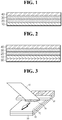
- FIGS. 1 and 2 show a cross-section of a sheet-form electrode for a secondary battery according to one embodiment of the present disclosure
- FIG. 3 schematically shows a preferred method of preparing a sheet-form electrode for a secondary battery according to one embodiment of the present disclosure.
- a sheet-form electrode for a secondary battery comprises a current collector 10; an electrode active material layer 20 formed on one surface of the current collector 10; a conductive layer 30 formed on the electrode active material layer 20 and comprising a conductive material and a binder; and a first porous supporting layer 40 formed on the conductive layer 30.
- the sheet-form electrode may further comprise a second supporting layer 50 formed on another surface of the current collector 10.
- electrodes used in the battery should have sufficient flexibility.
- an electrode active material layer is apt to be released by stress due to external force for the shape variation, or by its rapid volume expansion during charging and discharging processes when a high-capacity anode active material containing Si, Sn or the like is used. Such a release of the electrode active material layer reduces battery capacity and deteriorates cycle life characteristics. As an attempt for overcoming this problem, the amount of a binder in the electrode active material layer has been raised to provide flexibility during bending or twisting.
- the present inventors have designed the electrode for a secondary battery in the form of a sheet by comprising the first supporting layer 40 formed on the outer surface thereof and the second supporting layer 50 which may be further formed formed on another surface of the current collector 10.
- the first supporting layer 40 having porosity acts as a buffer capable of mitigating the external forces applied to the electrode active material layer 20, to prevent the release of the electrode active material layer 20, thereby improving the flexibility of the electrode.
- the second supporting layer 50 which may be further formed can inhibit a short circuit of the current collector 10, thereby more improving the flexibility of the electrode.
- the electrode of the present disclosure comprises a conductive layer 30 as an adhesive for adhering the first porous supporting layer 40 with the electrode active material layer to be integrated with each other, the conductive layer 30 being obtained by drying a slurry containing a conductive material and a binder.
- the adhesive acts as a resistant of the electrode to deteriorate battery performances.
- the conductive layer 30 can improve the conductivity of the electrode without such a problem.
- FIG. 3 shows that a conductive material layer is formed after the second supporting layer 50 is pre-formed, this case is just one embodiment of the present disclosure. As will be described below, a conductive material layer may be formed before the second supporting layer 50 is formed.
- a slurry containing an electrode active material is applied on one surface of the current collector 10, followed by drying, to form an electrode active material layer (S1).
- the current collector 10 may be made of stainless steel, aluminum, nickel, titanium, sintered carbon, or copper; stainless steel treated with carbon, nickel, titanium or silver on the surface thereof; an aluminum-cadmium alloy; a non-conductive polymer treated with a conductive material on the surface thereof; a conductive polymer; a metal paste comprising metal powders of Ni, Al, Au, Ag, Pd/Ag, Cr, Ta, Cu, Ba or ITO; or a carbon paste comprising carbon powders of graphite, carbon black or carbon nanotube.
- an electrode active material layer may be released from a current collector.
- large amounts of binder components are used in the electrode active material layer so as to provide flexibility in electrodes.
- large amounts of binder may be easily peeled off owing to swelling by an electrolyte solution, thereby deteriorating battery performances.
- the current collector 10 may further comprise a primer coating layer consisting of a conductive material and a binder.
- the conductive material and the binder used in the primer coating layer may be the same as those used in the formation of a conductive material-coating layer, which will be described below.
- the current collector may be in the form of a mesh, and may have a plurality of recesses on at least one surface thereof so as to more increase its surface area.
- the recesses may be continuously patterned or intermittently patterned. That is, continuous patterned recesses may be formed with spacing apart with each other in the longitudinal direction, or a plurality of holes may be formed in the form of intermittent patterns.
- the plurality of holes may be a circular or polygonal shape.
- the electrode active material layer may comprise an active material selected from the group consisting of natural graphite, artificial graphite, or carbonaceous material; lithium-titanium complex oxide (LTO), and metals (Me) including Si, Sn, Li, Zn, Mg, Cd, Ce, Ni and Fe; alloys of the metals; an oxide (MeOx) of the metals; a complex of the metals and carbon; and a mixture thereof, and when the electrode for a secondary battery is used as a cathode, the electrode active material layer may comprise an active material selected from the group consisting of LiCoO 2 , LiNiO 2 , LiMn 2 O 4 , LiCoPO 4 , LiFePO 4 , LiNiMnCoO 2 , LiNi 1-x-y-z Co x M1 y M2 z O 2 (wherein M1 and M2 are each independently selected from the group consisting of Al, Ni
- a slurry (30') containing a conductive material and a binder is applied on the electrode active material layer 20 (S2).
- the conductive material-containing slurry (30') is used as an adhesive. If only a general adhesive is used as the adhesive, it fails to form pores, making it difficult for an electrolyte solution to be introduced in the electrode active material layer, and therefore acts as a resistant of the electrode to deteriorate battery performances.
- the conductive material-containing slurry (30') forms a conductive layer 30 later, and it is obtained by mixing the conductive material and the binder in a weight ratio of 1:10 to 8:10.
- the conductive material may comprise any one selected from the group consisting of carbon black, acetylene black, ketjen black, carbon fiber, carbon nanotube, graphene and a mixture thereof.
- the binder may be selected from the group consisting of polyvinylidene fluoride (PVDF), polyvinylidene fluoride-co-hexafluoro propylene, polyvinylidene fluoride-co-trichloroethylene, polybutyl acrylate, polymethyl methacrylate, polyacrylonitrile, polyvinylpyrrolidone, polyvinylacetate, polyethylene-co-vinyl acetate, polyethylene oxide, polyarylate, cellulose acetate, cellulose acetate butyrate, cellulose acetate propionate, cyanoethylpullulan, cyanoethylpolyvinylalcohol, cyanoethylcellulose, cyanoethylsucrose, pullulan, carboxyl methyl cellulose, styrene-butadiene rubber, acrylonitrile-styrene-butadiene copolymer, polyimide and a mixture thereof.
- a first porous supporting layer 40 is formed on the applied conductive material-containing slurry (30').
- the first supporting layer 40 may be a mesh-form porous membrane or a non-woven fabric.
- Such a porous structure allows good introduction of an electrolyte solution in the electrode active material layer 20, and also the first supporting layer 40 itself has superior impregnation of the electrolyte solution to provide good ionic conductivity, thereby preventing an electrode resistance rise and eventually preventing the deterioration of battery performances.
- the first supporting layer 40 may be made of any one selected from the group consisting of high-density polyethylene, low-density polyethylene, linear low-density polyethylene, ultra-high molecular weight polyethylene, polypropylene, polyethylene terephthalate, polybutylene terephthalate, polyester, polyacetal, polyamide, polycarbonate, polyimide, polyetheretherketone, polyethersulfone, polyphenylene oxide, polyphenylene sulfide, polyethylene naphthalate, and a mixture thereof.
- the first supporting layer 40 may further comprise a conductive material-coating layer having a conductive material and a binderthereon.
- the conductive material-coating layer functions to improve the conductivity of an electrode active material layer and reduce electrode resistance, thereby preventing the deterioration of battery performances.
- the conductive material and the binder used in the conductive material-coating layer may be the same as those used in the conductive material-containing slurry which is mentioned above.
- Such conductive material-coating layer is more favorable when applied in a cathode because a cathode active material layer has low conductivity to intensify performance deterioration due to electrode resistance rise, than in an anode whose active material layer has relatively good conductivity and thus is not largely affected by the conductive material-coating layer to exhibit performances similar to conventional anodes.
- the conductive material and the binder may be present in a weight ratio of 80:20 to 99:1.
- the use of large amounts of binder may induce a severe rise in electrode resistance. Therefore, when such a numerical range is satisfied, electrode resistance can be prevented from its severe rise.
- the first supporting layer acts as a buffer which can prevent the release of an electrode active material layer, electrode flexibility is not largely affected by the use of the binder in a relative small amount.
- step (S3) is compressed to form a conductive layer 30 which is adhered between the electrode active material layer 20 and the first supporting layer 40 to be integrated with each other (S4).
- the conductive layer 30 improves the conductivity of the electrode to prevent the deterioration of battery performances.
- the conductive layer 30 may have a porous structure for good introduction of an electrolyte solution in an electrode active material layer, and have a pore size of 0.01 to 5 ⁇ m and a porosity of 5 to 70%.
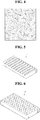
- FIG. 7 is a photograph showing a sheet-form electrode for a secondary battery prepared by one embodiment of the present disclosure.
- the binder component in the slurry (30') for adhering the electrode active material layer 20 with the first supporting layer 40 may be cured, making it difficult to maintain strong adhesion between such two layers.
- the first supporting layer 40 is placed on the top of the applied conductive material-containing slurry (30') before the binder component is cured, and then these are together coated by means of a coating blade 60, thereby forming the conductive layer 30 adhered between the electrode active material layer 20 and the first supporting layer 40 to be integrated with each other.
- the second supporting layer 50 may be further formed on another surface of the current collector by compression.
- the second supporting layer 50 can inhibit a short circuit of the current collector 10, thereby more improving the flexibility of the current collector 10.
- the second supporting layer 50 may be a polymer film which may be made of any one selected from the group consisting of polyolefin, polyester, polyimide, polyamide and a mixture thereof.
- the present disclosure provides a secondary battery comprising a cathode, an anode, a separator interposed between the cathode and the anode, and a non-aqueous electrolyte solution, wherein at least one of the cathode and the anode is the above-mentioned electrode for a secondary battery.
- the secondary battery of the present disclosure may be in the general form of stacking, winding or stacking/folding, and also it may be in the particular form of cable type.
- a cable-type secondary battery comprises an inner electrode; a separation layer surrounding the outer surface of the inner electrode to prevent a short circuit between electrodes; and an outer electrode spirally wound to surround the outer surface of the separation layer, wherein at least one of the inner electrode and the outer anode is formed from the above-mentioned electrode for a secondary battery according to the present disclosure.
- the outer electrode may be in the form of a uniaxially extended strip.
- the outer electrode may be spirally wound so that it is not overlapped in its width or overlapped in its width.
- the outer electrode may be spirally wound with space within the double length of its width so that it is not overlapped.
- the outer electrode may be spirally wound while overlapping in its width.
- the sheet-form outer electrode may be spirally wound so that the width of its overlapped part may be within 0.9 folds of the width of the sheet-form outer electrode itself.
- the inner electrode may be a hollow structure whose central part is empty.
- the inner electrode may comprise one or more electrodes for a secondary battery, the electrodes being spirally wound.
- the inner electrode may be provided with a core of inner current collector therein.
- the core of inner current collector may be made of carbon nanotube, stainless steel, aluminum, nickel, titanium, sintered carbon, or copper; stainless steel treated with carbon, nickel, titanium or silver on the surface thereof; an aluminum-cadmium alloy; a non-conductive polymer treated with a conductive material on the surface thereof; a conductive polymer.
- the inner electrode may be provided with a core for supplying lithium ions, which comprises an electrolyte therein.
- the core for supplying lithium ions may comprise a gel polymer electrolyte and a support.
- the core for supplying lithium ions may comprise a liquid electrolyte and a porous carrier.
- the inner electrode may be provided with a filling core therein.
- the filling core may be made of several materials for improving various performances of cable-type batteries, for example polymer resins, rubber and inorganics, besides materials forming the core of inner current collector and the core for supplying lithium ions, and also may have various forms including wire, fiber, powder, mesh and foam.
- FIG. 8 schematically shows a cable-type secondary battery according to one embodiment of the present disclosure in which a sheet-form inner electrode is wound on the outer surface of a core 110 for supplying lithium ions.
- the sheet-form inner electrode may be applied in cable-type secondary batteries as shown in FIG. 8 , and also the sheet-form inner electrode may be similarly wound on the outer surface of a separation layer.
- Such a cable-type secondary battery comprises a core for supplying lithium ions, which comprises an electrolyte; an inner electrode surrounding the outer surface of the core for supplying lithium ions and comprising a current collector and an electrode active material layer; a separation layer surrounding the outer surface of the inner electrode to prevent a short circuit between electrodes; and an outer electrode spirally wound to surround the outer surface of the separation layer and comprising a current collector and an electrode active material layer, wherein at least one of the inner electrode and the outer anode is formed from the above-mentioned electrode for a secondary battery according to the present disclosure.
- the cable-type secondary battery of the present disclosure has a horizontal cross section of a predetermined shape, a linear structure, which extends in the longitudinal direction, and flexibility, so it can freely change in shape.
- the term 'a predetermined shape' used herein is not limited to any particular shape, and refers to any shape that does not damage the nature of the present disclosure.
- a cable-type secondary battery 100 in which the above-mentioned electrode for a secondary battery is used as an inner electrode is shown in FIG. 9 .
- the cable-type secondary battery 100 comprises a core 110 for supplying lithium ions, which comprises an electrolyte; an inner electrode surrounding the outer surface of the core 110 for supplying lithium ions; a separation layer 170 surrounding the outer surface of the inner electrode to prevent a short circuit between electrodes; and an outer electrode spirally wound to surround the outer surface of the separation layer 170 and comprising an outer current collector 190 and an outer electrode active material layer 180, wherein the inner electrode comprises an inner current collector 120, an inner electrode active material layer 130 formed on one surface of the inner current collector 120, a conductive layer 140 formed on the top surface of the inner electrode active material layer 130 and comprising a conductive material and a binder, a first porous supporting layer 150 formed on the top surface of the conductive layer 140, and a second supporting layer 160 formed on another surface of the inner current collector 120.
- the inner electrode comprises an inner current collector 120, an inner electrode active material layer 130 formed on one surface of the inner current collector 120, a conductive layer 140 formed on the top surface of the inner electrode active material layer
- the sheet-form electrode for a secondary battery according to the present disclosure may be used as the outer electrode, not the inner electrode, or may be used as both of them.
- the core 110 for supplying lithium ions comprises an electrolyte which is not particularly limited to its kinds and may be selected from a non-aqueous electrolyte solution using ethylene carbonate (EC), propylene carbonate (PC), butylenes carbonate (BC), vinylene carbonate (VC), diethyl carbonate (DEC), dimethyl carbonate (DMC), ethyl methyl carbonate (EMC), methyl formate (MF), ⁇ -butyrolactone ( ⁇ -BL), sulfolane, methyl acetate (MA) or methyl propionate (MP); a gel polymer electrolyte using PEO, PVdF, PVdF-HFP, PMMA, PAN, or PVAc; and a solid electrolyte using PEO, polypropylene oxide (PPO), polyether imine (PEI), polyethylene sulphide (PES), or polyvinyl acetate (PVAc).
- EC ethylene carbonate
- PC propylene carbonate
- BC
- the electrolyte may further comprise a lithium salt which may be selected from LiCl, LiBr, LiI, LiClO 4 , LiBF 4 , LiB 10 Cl 10 , LiPF 6 , LiCF 3 SO 3 , LiCF 3 CO 2 , LiAsF 6 , LiSbF 6 , LiAlCl 4 , CH 3 SO 3 Li, CF 3 SO 3 Li, (CF 3 SO 2 ) 2 NLi, lithium chloroborate, lower aliphatic lithium carbonate, lithium tetraphenylborate, and a mixture thereof.
- the core 110 for supplying lithium ions may consist of only an electrolyte, and especially a liquid electrolyte may be formed by using a porous carrier.
- the inner electrode may be an anode or a cathode
- the outer electrode may be a cathode or an anode corresponding to the inner electrode
- Electrode active materials which may be used in the anode and the cathode are the same as those which are mentioned above.
- the separation layer may be an electrolyte layer or a separator.
- the electrolyte layer serving as an ion channel may be made of a gel-type polymer electrolyte using PEO, PVdF, PVdF-HFP, PMMA, PAN or PVAC, or a solid electrolyte using PEO, polypropylene oxide (PPO), polyethylene imine (PEI), polyethylene sulfide (PES) or polyvinyl acetate (PVAc).
- PEO polypropylene oxide
- PEI polyethylene imine
- PES polyethylene sulfide
- PVAc polyvinyl acetate
- the matrix of the solid electrolyte is preferably formed using a polymer or a ceramic glass as the backbone. In the case of typical polymer electrolytes, the ions move very slowly in terms of reaction rate, even when the ionic conductivity is satisfied.
- the gel-type polymer electrolyte which facilitates the movement of ions is preferably used compared to the solid electrolyte.
- the gel-type polymer electrolyte has poor mechanical properties and thus may comprise a support to improve poor mechanical properties, and the support may be a porous-structured support or a cross-linked polymer.
- the electrolyte layer of the present invention can serve as a separator, and thus an additional separator may be omitted.
- the electrolyte layer may further comprise a lithium salt.
- the lithium salt can improve an ionic conductivity and response time.
- Non-limiting examples of the lithium salt may include LiCl, LiBr, LiI, LiClO 4 , LiBF 4 , LiB 10 Cl 10 , LiPF 6 , LiCF 3 SO 3 , LiCF 3 CO 2 , LiAsF 6 , LiSbF 6 , LiAlCl 4 , CH 3 SO 3 Li, CF 3 SO 3 Li, (CF 3 SO 2 ) 2 NLi, lithium chloroborate, lower aliphatic lithium carbonate, and lithium tetraphenylb orate.
- the separator may include, but is not limited to, a porous polymer substrate made of a polyolefin-based polymer selected from the group consisting of ethylene homopolymers, propylene homopolymers, ethylene-butene copolymers, ethylene-hexene copolymers, and ethylene-methacrylate copolymers; a porous polymer substrate made of a polymer selected from the group consisting of polyesters, polyacetals, polyamides, polycarbonates, polyimides, polyether ether ketones, polyether sulfones, polyphenylene oxides, polyphenylene sulfides and polyethylene naphthalates; a porous substrate made of a mixture of inorganic particles and a binder polymer; or a separator having a porous coating layer formed on at least one surface of the porous polymer substrate and comprising inorganic particles and a binder polymer.
- the inorganic particles are bound to each other by the binder polymer (i.e., the binder polymer connects and immobilizes the inorganic particles), and also the porous coating layer maintains the state of binding with the first supporting layer by the binder polymer,
- the inorganic particles are filled in contact with each other, from which interstitial volumes are formed between the inorganic particles.
- the interstitial volumes between the inorganic particles become empty spaces to form pores.
- a non-woven fabric separator corresponding to the porous polymer substrate made of a polymer selected from the group consisting of polyesters, polyacetals, polyamides, polycarbonates, polyimides, polyether ether ketones, polyether sulfones, polyphenylene oxides, polyphenylene sulfides and polyethylene naphthalates.
- the cable-type secondary battery of the present disclosure has a protection coating 195.
- the protection coating 195 acts as an insulator and is formed to surround the outer current collector, thereby protecting the electrodes against moisture in the air and external impacts.
- the protection coating may be made of conventional polymer resins having a moisture-blocking layer.
- the moisture-blocking layer may be made of aluminum or a liquid-crystalline polymer which have good water-blocking ability, and the polymer resins may be PET, PVC, HDPE or epoxy resins.
- a cable-type secondary battery comprises two or more inner electrodes arranged in parallel to each other; a separation layer surrounding the outer surface of the inner electrodes to prevent a short circuit between electrodes; and an outer electrode spirally wound to surround the outer surface of the separation layer, wherein at least one of the inner electrode and the outer anode is formed from the above-mentioned electrode for a secondary battery according to the present disclosure.
- the present disclosure provides a cable-type secondary battery, comprising: two or more cores for supplying lithium ions, which comprise an electrolyte; two or more inner electrodes arranged in parallel to each other, each inner electrode surrounding the outer surface of each core for supplying lithium ions and comprising a current collector and an electrode active material layer; a separation layer surrounding the outer surface of the inner electrodes to prevent a short circuit between electrodes; and an outer electrode spirally wound to surround the outer surface of the separation layer and comprising a current collector and an electrode active material layer, wherein at least one of the inner electrode and the outer anode is formed from the above-mentioned electrode for a secondary battery according to the present disclosure.
- a cable-type secondary battery 200 in which the above-mentioned electrode for a secondary battery is used as an inner electrode is shown in FIG. 10 .
- the cable-type secondary battery 200 comprises two or more cores 210 for supplying lithium ions, which comprise an electrolyte; two or more inner electrodes arranged in parallel to each other, each inner electrode surrounding the outer surface of each core for supplying lithium ions; a separation layer 270 surrounding the outer surface of the inner electrodes to prevent a short circuit between electrodes; and an outer electrode spirally wound to surround the outer surface of the separation layer 270 and comprising an outer current collector 290 and an outer electrode active material layer 280, wherein each inner electrode comprises an inner current collector 220, an inner electrode active material layer 230 formed on one surface of the inner current collector 220, a conductive layer 240 formed on the top surface of the inner electrode active material layer 230 and comprising a conductive material and a binder, a first porous supporting layer 250 formed on the top surface of the conductive layer 240, and a second supporting layer 260 formed on another surface of the inner current collector 220.
- the sheet-form electrode for a secondary battery according to the present disclosure may be used as the outer electrode, not the inner electrode, or may be used as both of them.
- the number of the inner electrodes can be adjusted to control the loading amount of the electrode active material layers as well as battery capacity, and a probability of short circuit can be prevented owing to the presence of multiple electrodes.
- a polyethylene film was compressed on one surface of a sheet-form current collector being an aluminum foil, to form a second supporting layer.
- a cathode active material-containing slurry obtained by dispersing 80 wt% of LiCoO 2 as a cathode active material, 5 wt% of Denka black as a conductive material and 15 wt% of PVdF as a binder in NMP used as a solvent, followed by drying, to form a cathode active material layer.
- a conductive material-containing slurry obtained by mixing Denka black and PVdF in a weight ratio of 40:60 was applied on the top surface of the cathode active material layer, and then a PET non-woven fabric for composing a first porous supporting layer is placed on the slurry, followed by compression, to obtain a laminate having the second supporting layer, the current collector, the cathode active material layer, a layer of the conductive material slurry and the first supporting layer in order. Thereby, a sheet-form cathode for a secondary battery was prepared.
- a polyethylene separator was interposed between the sheet-form cathode prepared in step (1) and an anode consisting of a lithium foil, to obtain an electrode assembly.
- the electrode assembly was put in a battery case, to which 1M LiPF 6 of non-aqueous electrolyte solution was introduced, the electrolyte solution being obtained by mixing ethylene carbonate (EC) and diethyl carbonate (DEC) in a volume ratio of 1:2 and adding LiPF 6 to the resulting non-aqueous solvent until the concentration of LiPF 6 became 1M. Thereby, a coin-type half-cell was prepared.
- EC ethylene carbonate
- DEC diethyl carbonate
- a sheet-form current collector being an aluminum foil was coated with a cathode active material-containing slurry obtained by dispersing 80 wt% of LiCoO 2 as a cathode active material, 5 wt% of Denka black as a conductive material and 15 wt% of PVdF as a binder in NMP, followed by drying, to prepared a cathode.
- a cathode active material-containing slurry obtained by dispersing 80 wt% of LiCoO 2 as a cathode active material, 5 wt% of Denka black as a conductive material and 15 wt% of PVdF as a binder in NMP, followed by drying, to prepared a cathode.
- step (2) of the Example The procedures of step (2) of the Example were repeated except that the cathode prepared in the above step (1) of was used, to prepare a coin-type half-cell.
- step (1) of the Example The procedures of step (1) of the Example were repeated except that a slurring containing only a PVdF binder was used instead of the conductive material-containing slurry, to prepare a cathode.
- step (2) of the Example The procedures of step (2) of the Example were repeated except that the cathode prepared in step (1) of Comparative Example 1 was used, to prepare a coin-type half-cell.
- the cathodes prepared in the Example and Comparative Example 1 were folded in half, and the appearances thereof were observed.
- FIGS. 11 and 12 are photographs showing the appearances of the sheet-form electrodes prepared in the Example and Comparative Example 1, respectively, after folding them in half.
- the electrode of Comparative Example 1 was broken and severely cracked, whereas the electrode of the Example was not cracked and the electrode active layer thereof was well held by the first supporting layer made of a PET non-woven fabric. From this, the electrode of the Example was confirmed to have surprisingly improved flexibility.
- the half-cells prepared in the Example and the Comparative Examples were each evaluated for their charge/discharge characteristics.
- the batteries were charged with a current density of 0.5 C up to 4.25 V at constant current and then continuously charged with 4.25 V at constant voltage, and the charging process was completed when the current density reached 0.005C. Then, batteries were discharged with a current density of 0.5C up to 3.0 V at constant current. The charging/discharging was repeated 20 times under the same conditions.
- FIG. 13 shows the life characteristics of coin-type half cells prepared in the Example and the Comparative Examples.
- the cell of the Example exhibited life characteristic almost similar to that of Comparative Example 1, while the cell of Comparative Example 2 exhibited very poor performances.
- pores were not formed, making it difficult for an electrolyte solution to be impregnated in an electrode active material, and eventually
Landscapes
- Chemical & Material Sciences (AREA)
- Chemical Kinetics & Catalysis (AREA)
- Electrochemistry (AREA)
- General Chemical & Material Sciences (AREA)
- Engineering & Computer Science (AREA)
- Manufacturing & Machinery (AREA)
- Materials Engineering (AREA)
- Inorganic Chemistry (AREA)
- Composite Materials (AREA)
- Physics & Mathematics (AREA)
- Condensed Matter Physics & Semiconductors (AREA)
- General Physics & Mathematics (AREA)
- Dispersion Chemistry (AREA)
- Secondary Cells (AREA)
- Battery Electrode And Active Subsutance (AREA)
- Cell Electrode Carriers And Collectors (AREA)
- Cell Separators (AREA)
Claims (28)
- Électrode sous forme de feuille pour une batterie secondaire, comprenant :un collecteur de courant (10) ;une couche de matériau actif d'électrode (20) formée sur une surface du collecteur de courant (10) ;une couche conductrice (30) formée sur la couche de matériau actif d'électrode (20) et comprenant un matériau conducteur et un liant ; etune première couche de support poreuse (40) formée sur la couche conductrice (30), la couche conductrice (30) étant accolée entre la couche de matériau actif d'électrode (20) et la première couche de support poreuse (40) devant s'intégrer l'une à autre,caractérisé en ce quel'électrode comprend en outre une deuxième couche de support (50) formée sur une autre surface du collecteur de courant (10).
- Électrode pour une batterie secondaire selon la revendication 1, dans laquelle le collecteur de courant (10) est constitué d'acier inoxydable, d'aluminium, de nickel, de titane, de carbone fritté ; d'acier inoxydable traité au carbone, au nickel, au titane ou à l'argent sur sa surface ; d'un alliage d'aluminium-cadmium, d'un polymère non conducteur traité avec un matériau conducteur sur sa surface ; d'un polymère conducteur ; d'une pâte métallique comprenant des poudres métalliques de Ni, Al, Au, Ag, Pd/Ag, Cr, Ta, Cu, Ba ou ITO ; ou d'une pâte de carbone comprenant des poudres de carbone graphite, de carbone noir ou d'un nanotube de carbone.
- Électrode pour une batterie secondaire selon la revendication 1, dans laquelle le collecteur de courant (10) est sous la forme d'un maillage.
- Électrode pour une batterie secondaire selon la revendication 1, dans laquelle le collecteur de courant (10) comprend en outre une couche de revêtement primaire constituée d'un matériau conducteur et d'un liant.
- Électrode pour une batterie secondaire selon la revendication 4, dans laquelle le matériau conducteur de la couche de revêtement primaire comprend un composé quelconque sélectionné dans le groupe constitué de noir de carbone, de noir d'acétylène, de noir de Ketjen, d'une fibre de carbone, d'un nanotube de carbone, de graphène et d'un mélange de ceux-ci.
- Électrode pour une batterie secondaire selon la revendication 4, dans laquelle le liant de la couche de revêtement primaire est sélectionné dans le groupe constitué de polyfluorure de vinylidène (PVDF), de polyfluorure de vinylidène-co-hexafluoropropylène, de polyfluorure de vinylidène-co-trichloroéthylène, d'acrylate de polybutyle, de méthacrylate de polyméthyle, de polyacrylonitrile, de polyvinylpyrrolidone, d'acétate de polyvinyle, de polyéthylène-co-acétate de vinyle, d'oxyde de polyéthylène, de polyarylate, d'acétate de cellulose, de butyrate d'acétate de cellulose, de propionate d'acétate de cellulose, de cyanoéthylpullulane, d'alcool cyanoéthylpolyvinylique, de cyanoéthylcellulose, de cyanoéthylsucrose, de pullulane, de carboxyméthylcellose, de caoutchouc de styrène-butadiène, de copolymère d'acrylonitrile-styrène-butadiène, de polyimide et d'un mélange de ceux-ci.
- Électrode pour une batterie secondaire selon la revendication 1, dans laquelle le collecteur de courant (10) présente une pluralité d'évidements sur au moins l'une de ses surfaces.
- Électrode pour une batterie secondaire selon la revendication 7, dans laquelle la pluralité d'évidements est constituée d'évidements à motifs continus ou à motifs intermittents.
- Électrode pour une batterie secondaire selon la revendication 8, dans laquelle les évidements à motifs continus sont formés à une distance l'un de l'autre dans la direction longitudinale.
- Électrode pour une batterie secondaire selon la revendication 8, dans laquelle les évidements à motifs intermittents sont formés par une pluralité de trous.
- Électrode pour une batterie secondaire selon la revendication 10, dans laquelle la pluralité des trous sont chacun de forme circulaire ou polygonale.
- Électrode pour une batterie secondaire selon la revendication 1, dans laquelle la première couche de support (40) est une membrane poreuse en forme de maillage ou un tissu non tissé.
- Électrode pour une batterie secondaire selon la revendication 1, dans laquelle la première couche de support (40) est constituée de l'un quelconque des composés sélectionnés dans le groupe constitué de polyéthylène haute densité, de polyéthylène basse densité, de polyéthylène linéaire basse densité, de polyéthylène de poids moléculaire ultra-élevé, de polypropylène, de téréphtalate de polyéthylène, de téréphtalate de polybutylène, de polyester, de polyacétal, de polyamide, de polycarbonate, de polyimide, de polyétheréthercétone, de polyéthersulfone, d'oxyde de polyphénylène, de sulfure de polyphénylène, de naphtalate de polyéthylène et d'un mélange de ceux-ci.
- Électrode pour une batterie secondaire selon la revendication 1, dans laquelle la première couche de support (40) comprend en outre une couche de revêtement en matériau conducteur ayant un matériau conducteur et un liant sur celle-ci.
- Électrode pour une batterie secondaire selon la revendication 14, dans laquelle le matériau conducteur de la couche de revêtement en matériau conducteur et le liant de la couche de revêtement en matériau conducteur sont présents en un rapport de poids de 80/20 à 99/1 dans la couche de revêtement en matériau conducteur.
- Électrode pour une batterie secondaire selon la revendication 1, dans laquelle la couche conductrice (30) est formée d'un mélange du matériau conducteur et du liant dans un rapport de poids de 1/10 à 8/10.
- Électrode pour une batterie secondaire selon la revendication 1, dans laquelle la couche conductrice (30) a une taille de pores de 0,01 à 5 µm et une porosité de 5 à 70 %.
- Électrode pour une batterie secondaire selon la revendication 1, dans laquelle la première couche de support poreuse (40) comprend en outre une couche de revêtement poreuse comprenant un mélange de particules inorganiques et un polymère liant sur celle-ci.
- Électrode pour une batterie secondaire selon la revendication 1, dans laquelle la deuxième couche de support (50) est un film polymère.
- Électrode pour une batterie secondaire selon la revendication 19, dans laquelle le film polymère est constitué d'un composé quelconque sélectionné dans le groupe constitué de polyoléfine, de polyester, fer polyimide, de polyamide et d'un mélange de ceux-ci.
- Électrode pour une batterie secondaire selon la revendication 1, dans laquelle lorsque l'électrode pour une batterie secondaire est utilisée en tant qu'anode, la couche de matériau actif d'électrode (20) comprend un matériau actif sélectionné dans le groupe constitué de graphite naturel, de graphite artificiel ou de matériau carbonacé ; d'un oxyde complexe lithium-titane (LTO), et de métaux (Me) notamment de Si, Sn, Li, Zn, Mg, Cd, Ce, Ni et Fe ; d'alliages de métaux ; d'un oxyde (MeOx) des métaux ; d'un complexe des métaux et de carbone et d'un mélange de ceux-ci, et
lorsque l'électrode pour une batterie secondaire est utilisée en tant que cathode, la couche de matériau actif d'électrode (20) comprend un matériau actif sélectionné dans le groupe constitué de LiCoO2, LiNiO2, LiMn2O4, LiCoPO4, LiFePO4, LiNiMnCoO2, LiNi1-x-y-zCoxM1yM2zO2 (où M1 et M2 sont chacun indépendamment sélectionnés dans le groupe constitué de Al, Ni, Co, Fe, Mn, V, Cr, Ti, W, Ta, Mg et Mo, et x, y et z représentent chacun indépendamment une fraction atomique d'éléments formateurs d'oxyde, dans lesquels 0 ≤ x < 0,5, 0 ≤ y < 0,5, 0 ≤ z < 0,5, et x + y + z ≤ 1) et d'un mélange de ceux-ci. - Procédé de préparation d'une électrode de formation de feuille pour une batterie secondaire selon la revendication 1, comprenant les étapes consistant à:(S1) appliquer une suspension contenant un matériau actif d'électrode sur une surface d'un collecteur de courant (10), puis sécher de manière à former une couche de matériau actif d'électrode (20) ;(S2) appliquer une suspension (30') contenant un matériau conducteur et un liant sur la surface supérieure de la couche de matériau actif d'électrode ;(S3) former une première couche de support poreuse (40) sur la suspension appliquée (30) contenant un matériau conducteur et un liant ; et(S4) comprimer le matériau résultant obtenu à l'étape (S3) de manière à former une couche conductrice (30) qui est accolée entre la couche de matériau actif d'électrode (20) et la première couche de support poreuse (40) devant s'intégrer l'une à l'autre, dans lequel à l'étape de (S3), avant que le liant ne soit durci, la première couche de support poreuse (40) est formée sur la suspension de matériau conducteur (30') appliquée.
- Procédé selon la revendication 22, dans lequel à l'étape de (S4), avant que le liant ne soit durci, le matériau résultant obtenu à l'étape (S3) est comprimé par une lame de couchage (60) de manière à former une couche de matériau conducteur (30) qui est accolée entre la couche de matériau actif d'électrode (20) et la première couche de support poreuse (40) devant s'intégrer l'une à l'autre.
- Procédé selon la revendication 22, dans lequel avant l'étape de (S1) ou après l'étape de (S4), une deuxième couche de support (50) est en outre formée par compression sur une autre surface du collecteur de courant (10).
- Batterie secondaire comprenant une cathode, une anode, un séparateur interposé entre la cathode et l'anode et une solution électrolytique non aqueuse,
dans laquelle l'électrode pour une batterie secondaire selon l'une quelconque des revendications 1 à 21 est au moins l'une de la cathode et de l'anode. - Batterie secondaire selon la revendication 25, qui se présente sous la forme d'un câble.
- Batterie secondaire à câble ayant une coupe transversale horizontale d'une forme prédéterminée et s'étendant longitudinalement, comprenant :deux ou plusieurs noyaux (210) ayant chacun un électrolyte et servant à fournir des ions lithium ;deux ou plusieurs électrodes disposées en parallèle l'une à l'autre, chaque électrode interne entourant une surface externe de l'un des deux ou de plusieurs noyaux supplémentaires (210) et comprenant un collecteur de courant (220) et une couche de matériau actif d'électrode (230) ;une couche de séparation (270) entourant la surface externe respective des électrodes internes pour empêcher un court-circuit entre les électrodes ; etune électrode externe à enroulement hélicoïdal de manière à entourer une surface externe de la couche de séparation (270) et comprenant un collecteur de courant (290) et une couche de matériau actif d'électrode (280),dans laquelle l'électrode pour une batterie secondaire selon l'une quelconque des revendications 1 à 21 est au moins l'une des deux ou de plusieurs électrodes internes et de l'électrode externe.
- Batterie secondaire à câble selon la revendication 27, dans laquelle l'électrode pour une batterie secondaire selon l'une quelconque des revendications 1 à 21 est au moins l'une des deux ou de plusieurs électrodes internes.
Applications Claiming Priority (2)
| Application Number | Priority Date | Filing Date | Title |
|---|---|---|---|
| KR20130051564 | 2013-05-07 | ||
| PCT/KR2014/004046 WO2014182062A1 (fr) | 2013-05-07 | 2014-05-07 | Électrode pour batterie secondaire, son procédé de fabrication, batterie secondaire et batterie secondaire à câble la comprenant |
Publications (3)
| Publication Number | Publication Date |
|---|---|
| EP2846381A1 EP2846381A1 (fr) | 2015-03-11 |
| EP2846381A4 EP2846381A4 (fr) | 2016-02-10 |
| EP2846381B1 true EP2846381B1 (fr) | 2018-02-28 |
Family
ID=52441467
Family Applications (1)
| Application Number | Title | Priority Date | Filing Date |
|---|---|---|---|
| EP14733954.3A Active EP2846381B1 (fr) | 2013-05-07 | 2014-05-07 | Électrode pour batterie secondaire, son procédé de fabrication, batterie secondaire et batterie secondaire à câble la comprenant |
Country Status (6)
| Country | Link |
|---|---|
| US (2) | US9293783B2 (fr) |
| EP (1) | EP2846381B1 (fr) |
| JP (1) | JP6149106B2 (fr) |
| KR (3) | KR101470556B1 (fr) |
| CN (2) | CN204441378U (fr) |
| WO (1) | WO2014182062A1 (fr) |
Cited By (2)
| Publication number | Priority date | Publication date | Assignee | Title |
|---|---|---|---|---|
| EP4443529A1 (fr) * | 2023-04-07 | 2024-10-09 | Institut Mines-Télécom | Accumulateur électrochimique métal-ion, avec des électrodes avec des substrats électriquement conducteurs formant les collecteurs qui sont enroulés en hélice les uns autour des autres, séparés par un séparateur également enroulé en hélice et encapsulé dans une gaine |
| EP4503167A4 (fr) * | 2022-03-31 | 2026-04-01 | Contemporary Amperex Technology Co Ltd | Plaque d'électrode positive, batterie secondaire et dispositif électrique |
Families Citing this family (54)
| Publication number | Priority date | Publication date | Assignee | Title |
|---|---|---|---|---|
| KR101470554B1 (ko) | 2013-04-29 | 2014-12-10 | 주식회사 엘지화학 | 케이블형 이차전지용 패키징 및 그를 포함하는 케이블형 이차전지 |
| CN204441379U (zh) | 2013-05-07 | 2015-07-01 | 株式会社Lg化学 | 二次电池用电极以及包含其的二次电池和线缆型二次电池 |
| KR101465164B1 (ko) | 2013-05-07 | 2014-11-25 | 주식회사 엘지화학 | 케이블형 이차전지 |
| WO2014182063A1 (fr) | 2013-05-07 | 2014-11-13 | 주식회사 엘지화학 | Électrode pour batterie secondaire, procédé pour fabriquer celle-ci, et batterie secondaire et batterie secondaire de type câble comprenant celle-ci |
| BR112014017443B8 (pt) | 2013-05-07 | 2023-03-21 | Lg Chemical Ltd | Bateria secundária do tipo cabo |
| KR101465166B1 (ko) | 2013-05-07 | 2014-11-25 | 주식회사 엘지화학 | 케이블형 이차전지 및 그의 제조방법 |
| WO2014182064A1 (fr) * | 2013-05-07 | 2014-11-13 | 주식회사 엘지화학 | Électrode pour batterie secondaire, son procédé de fabrication, batterie secondaire et batterie secondaire de type câble la comprenant |
| KR101470556B1 (ko) | 2013-05-07 | 2014-12-10 | 주식회사 엘지화학 | 이차전지용 전극, 그의 제조방법, 그를 포함하는 이차전지 및 케이블형 이차전지 |
| KR101783922B1 (ko) * | 2014-06-19 | 2017-10-10 | 주식회사 엘지화학 | 케이블형 이차전지 |
| JP5952878B2 (ja) * | 2014-11-06 | 2016-07-13 | エルジー・ケム・リミテッド | ケーブル型二次電池 |
| KR102384975B1 (ko) * | 2014-11-28 | 2022-04-12 | 에스케이온 주식회사 | 리튬전극의 제조방법 및 이를 포함하는 리튬이차전지 |
| CN106469825B (zh) * | 2015-08-21 | 2019-03-29 | 北京好风光储能技术有限公司 | 一种高功率大容量锂离子电池及其制备方法 |
| CN108138302B (zh) * | 2015-10-02 | 2020-12-22 | 应用材料公司 | 用于制造柔性层堆叠的方法和设备、用于制造锂电池的负极的方法以及用于锂电池的负极 |
| WO2017069585A1 (fr) * | 2015-10-21 | 2017-04-27 | 주식회사 엘지화학 | Batterie rechargeable de type à câble |
| WO2017069586A1 (fr) * | 2015-10-21 | 2017-04-27 | 주식회사 엘지화학 | Pile rechargeable du type câble |
| KR102065733B1 (ko) * | 2015-10-21 | 2020-01-13 | 주식회사 엘지화학 | 전극 복합체, 그를 포함하는 이차전지 및 케이블형 전지 이차전지 |
| US11196051B2 (en) | 2015-11-30 | 2021-12-07 | Lg Chem, Ltd. | Positive electrode for secondary battery and secondary battery including the same |
| KR102638278B1 (ko) | 2016-02-26 | 2024-02-20 | 가부시키가이샤 한도오따이 에네루기 켄큐쇼 | 접속 부재, 전원 장치, 전자 기기, 및 시스템 |
| KR101950086B1 (ko) | 2016-03-15 | 2019-02-19 | 가부시끼가이샤 도시바 | 비수전해질 전지, 전지 팩 및 차량 |
| KR102614018B1 (ko) * | 2016-05-19 | 2023-12-13 | 삼성에스디아이 주식회사 | 이차 전지, 바이폴라 전극 및 바이폴라 전극 제조 방법 |
| JP6615337B2 (ja) * | 2016-05-23 | 2019-12-04 | 富士フイルム株式会社 | 固体電解質組成物、全固体二次電池用電極シートおよび全固体二次電池ならびに全固体二次電池用電極シートおよび全固体二次電池の製造方法 |
| KR101991934B1 (ko) * | 2016-07-15 | 2019-06-24 | 주식회사 엘지화학 | 전극 및 그 전극의 제조방법 |
| KR102160701B1 (ko) * | 2016-07-18 | 2020-09-28 | 주식회사 엘지화학 | 천공 구조의 집전체를 포함하는 전극, 이를 포함하는 리튬 이차전지 |
| CN106229464B (zh) * | 2016-07-27 | 2020-07-03 | 河南师范大学 | 一种导电聚合物膜及采用该导电聚合物膜修饰的正极极片 |
| KR102140122B1 (ko) | 2016-08-19 | 2020-07-31 | 주식회사 엘지화학 | 다중 보호층을 포함하는 음극 및 이를 포함하는 리튬 이차전지 |
| JP6972557B2 (ja) * | 2017-01-10 | 2021-11-24 | 三菱自動車工業株式会社 | 車両の制御装置 |
| KR102425003B1 (ko) * | 2017-02-02 | 2022-07-22 | 삼성에스디아이 주식회사 | 리튬 이차 전지 |
| KR102314029B1 (ko) | 2017-03-30 | 2021-10-18 | 주식회사 엘지에너지솔루션 | 고로딩 전극의 제조 방법 |
| EP3522267B1 (fr) | 2017-05-22 | 2023-11-01 | LG Energy Solution, Ltd. | Électrode négative flexible, son procédé de fabrication, et accumulateur la comprenant |
| WO2019045552A1 (fr) | 2017-09-04 | 2019-03-07 | 주식회사 엘지화학 | Procédé de fabrication de batterie flexible, et batterie flexible ainsi fabriquée |
| US20190198934A1 (en) * | 2017-12-21 | 2019-06-27 | GM Global Technology Operations LLC | Method of generating silicon thick electrodes with improved life performance |
| US11211606B2 (en) | 2017-12-28 | 2021-12-28 | The Hong Kong Polytechnic University | Electrode for battery and fabrication method thereof |
| CN108336361B (zh) * | 2017-12-28 | 2020-10-23 | 广州倬粤动力新能源有限公司 | 电镀式板栅纤维复合线 |
| KR102090572B1 (ko) * | 2018-03-12 | 2020-03-18 | (주)포스코케미칼 | 알루미늄으로 코팅된 1차 입자를 포함하는 리튬티탄 복합산화물 및 이의 제조 방법 |
| KR102255128B1 (ko) * | 2018-04-23 | 2021-05-21 | 삼성에스디아이 주식회사 | 리튬 이차 전지용 전극 및 이를 포함하는 리튬 이차 전지 |
| WO2019208110A1 (fr) * | 2018-04-26 | 2019-10-31 | 日立化成株式会社 | Composition de bouillie électrolytique, procédé de production de feuille d'électrolyte et procédé de production de batterie secondaire |
| KR102666367B1 (ko) * | 2018-08-28 | 2024-05-20 | 삼성전자주식회사 | 양극 및 이를 포함하는 리튬전지 |
| KR102355101B1 (ko) * | 2018-10-18 | 2022-02-04 | 주식회사 엘지에너지솔루션 | 삼차원 구조 전극 및 이를 포함하는 전기화학소자 |
| JP7127209B2 (ja) | 2018-12-03 | 2022-08-29 | エルジー エナジー ソリューション リミテッド | フレキシブル電極、それを含む二次電池及びフレキシブル二次電池 |
| CN112840480B (zh) * | 2019-01-28 | 2024-06-18 | 株式会社Lg新能源 | 负极和包含所述负极的锂二次电池 |
| CN112290029B (zh) * | 2019-04-28 | 2022-04-22 | 宁德时代新能源科技股份有限公司 | 正极集流体、正极极片、电化学装置、电动汽车及电子产品 |
| CN110943226B (zh) | 2019-04-28 | 2020-11-17 | 宁德时代新能源科技股份有限公司 | 正极集流体、正极极片及电化学装置 |
| WO2021029650A1 (fr) | 2019-08-12 | 2021-02-18 | 주식회사 엘지화학 | Cathode pour batterie secondaire au lithium et batterie secondaire au lithium la comprenant |
| KR102384659B1 (ko) * | 2019-09-19 | 2022-04-11 | 한국전자기술연구원 | 유연 전극, 그를 이용한 리튬이차전지 및 그의 제조 방법 |
| KR102452368B1 (ko) | 2020-07-30 | 2022-10-07 | 한국기계연구원 | 자가 보호층이 형성된 전극 제조방법 |
| JP7481649B2 (ja) | 2020-09-09 | 2024-05-13 | ダイキン工業株式会社 | 固体二次電池用結着剤、固体二次電池用スラリー、固体二次電池用層形成方法及び固体二次電池 |
| CN112038576A (zh) * | 2020-09-28 | 2020-12-04 | 合肥国轩高科动力能源有限公司 | 一种电极及其制造方法,以及包含该电极的锂离子电池 |
| KR102922381B1 (ko) * | 2021-01-06 | 2026-02-04 | 주식회사 엘지화학 | 리튬 이차전지용 세퍼레이터 및 이를 구비한 리튬 이차전지 |
| CN113097432B (zh) * | 2021-03-30 | 2022-06-24 | 宁德新能源科技有限公司 | 电化学装置和电子装置 |
| CN113130911A (zh) * | 2021-05-25 | 2021-07-16 | 厦门海辰新能源科技有限公司 | 一种集流体、极片以及锂电池 |
| EP4148844B1 (fr) * | 2021-07-14 | 2025-03-26 | Contemporary Amperex Technology (Hong Kong) Limited | Ensemble électrode, procédé et appareil de traitement, élément de batterie, batterie et dispositif électronique |
| CN115911371A (zh) * | 2021-08-20 | 2023-04-04 | 北京小米移动软件有限公司 | 电池正极材料及其制备方法、电池及电子设备 |
| CN114203957A (zh) * | 2021-12-08 | 2022-03-18 | 蔚来汽车科技(安徽)有限公司 | 用于电池的极片、半固态电池及极片的制备方法 |
| KR20250179398A (ko) * | 2024-06-21 | 2025-12-30 | 삼성에스디아이 주식회사 | 이차 전지용 전극, 이를 구비하는 이차 전지 및 이차 전지용 전극의 제조 방법 |
Citations (3)
| Publication number | Priority date | Publication date | Assignee | Title |
|---|---|---|---|---|
| US5008165A (en) * | 1988-08-31 | 1991-04-16 | Accumulatorenwerke Hoppecke Carl Zoeliner & Sohn Gmbh & Co. Kg | Electrochemical cell |
| WO2001082397A1 (fr) * | 2000-04-26 | 2001-11-01 | Quallion, Llc | Batterie a ion lithium appropriee pour des vehicules electriques hybrides |
| WO2008117974A1 (fr) * | 2007-03-26 | 2008-10-02 | Lg Chem, Ltd. | Ensemble d'électrodes de type roulé ayant une couche de matériau actif avec une quantité de charge différente |
Family Cites Families (93)
| Publication number | Priority date | Publication date | Assignee | Title |
|---|---|---|---|---|
| US3079456A (en) | 1960-10-28 | 1963-02-26 | Joseph C Pawlak | Deferred action battery |
| JPS4626452B1 (fr) * | 1968-07-23 | 1971-07-31 | ||
| US4522897A (en) | 1983-10-14 | 1985-06-11 | Cape Cod Research, Inc. | Rope batteries |
| FR2652450B1 (fr) | 1989-09-22 | 1991-11-29 | Accumulateurs Fixes | Procede de fabrication d'une electrode a support de type mousse pour generateur electrochimique et electrode obtenue par ce procede. |
| JP3371301B2 (ja) * | 1994-01-31 | 2003-01-27 | ソニー株式会社 | 非水電解液二次電池 |
| US5478676A (en) * | 1994-08-02 | 1995-12-26 | Rexam Graphics | Current collector having a conductive primer layer |
| JP3407501B2 (ja) | 1995-09-29 | 2003-05-19 | 松下電器産業株式会社 | ポリマ電解質およびそれを用いたリチウム・ポリマ電池 |
| EP0876683B1 (fr) | 1996-01-25 | 2002-09-25 | Danionics A/S | Electrode-collecteur de courant, produits stratifies pour un appareil electrochimique |
| JP3260319B2 (ja) | 1998-04-08 | 2002-02-25 | ティーディーケイ株式会社 | シート型電極・電解質構造体の製造方法 |
| US6277514B1 (en) | 1998-12-17 | 2001-08-21 | Moltech Corporation | Protective coating for separators for electrochemical cells |
| KR100329560B1 (ko) * | 1999-04-16 | 2002-03-20 | 김순택 | 집전체와 전극 및 이 전극을 이용한 이차전지 |
| WO2000079618A1 (fr) | 1999-06-22 | 2000-12-28 | Mitsubishi Denki Kabushiki Kaisha | Separateur de cellule, cellule, et procede de production dudit separateur |
| US6403263B1 (en) | 2000-09-20 | 2002-06-11 | Moltech Corporation | Cathode current collector for electrochemical cells |
| US20020164441A1 (en) | 2001-03-01 | 2002-11-07 | The University Of Chicago | Packaging for primary and secondary batteries |
| CN1260848C (zh) | 2002-03-28 | 2006-06-21 | Tdk株式会社 | 锂二次电池 |
| JP2004281156A (ja) | 2003-03-14 | 2004-10-07 | Toyo Aluminium Kk | 蓄電用容器、蓄電用容器集合体及びこれらの製造方法 |
| JP2005038612A (ja) | 2003-07-15 | 2005-02-10 | Ngk Spark Plug Co Ltd | リチウムイオン二次電池およびその製造方法 |
| JP4518865B2 (ja) | 2003-09-30 | 2010-08-04 | 三洋電機株式会社 | 非水電解質二次電池およびその製造方法 |
| TWI258238B (en) | 2003-11-05 | 2006-07-11 | Lg Chemical Ltd | Functional polymer film-coated electrode and electrochemical device using the same |
| KR100569188B1 (ko) | 2004-01-16 | 2006-04-10 | 한국과학기술연구원 | 탄소-다공성 지지체 복합 전극 및 그 제조방법 |
| KR100666821B1 (ko) | 2004-02-07 | 2007-01-09 | 주식회사 엘지화학 | 유/무기 복합 다공성 코팅층이 형성된 전극 및 이를포함하는 전기 화학 소자 |
| KR100625892B1 (ko) * | 2004-04-12 | 2006-09-20 | 경상대학교산학협력단 | 실형태의 가변형 전지 |
| US20060008702A1 (en) | 2004-06-23 | 2006-01-12 | Sang-Eun Cheon | Secondary battery |
| JP2006069559A (ja) | 2004-08-31 | 2006-03-16 | Toppan Printing Co Ltd | 積層体および包装材料 |
| US8247135B2 (en) | 2004-09-14 | 2012-08-21 | Case Western Reserve University | Light-weight, flexible edge collected fuel cells |
| CN101048898B (zh) | 2004-10-29 | 2012-02-01 | 麦德托尼克公司 | 锂离子电池及医疗装置 |
| KR100582557B1 (ko) | 2004-11-25 | 2006-05-22 | 한국전자통신연구원 | 표면 패터닝된 음극 집전체로 이루어지는 리튬금속 고분자이차전지용 음극 및 그 제조 방법 |
| EP1780820A4 (fr) | 2005-03-02 | 2009-09-09 | Panasonic Corp | Pile secondaire aux ions de lithium et procédé de fabrication idoine |
| JP4826214B2 (ja) | 2005-11-04 | 2011-11-30 | 日産自動車株式会社 | 駆動システム |
| JP5092457B2 (ja) | 2006-03-02 | 2012-12-05 | ソニー株式会社 | 電池素子外装材、これを用いた非水電解質二次電池及び電池パック |
| US8828591B2 (en) | 2006-03-02 | 2014-09-09 | Sony Corporation | External packaging material for battery device, nonaqueous electrolyte secondary battery using the same, and battery pack |
| JP2007280617A (ja) | 2006-04-03 | 2007-10-25 | Sony Corp | 電池パック |
| KR100879893B1 (ko) | 2006-07-10 | 2009-01-21 | 주식회사 엘지화학 | 실링부의 안전성이 향상된 이차전지 |
| KR100918751B1 (ko) * | 2006-07-26 | 2009-09-24 | 주식회사 엘지화학 | 분리막과의 계면 접착이 향상된 전극 및 이를 포함하는전기 화학 소자 |
| US7955731B2 (en) | 2006-08-14 | 2011-06-07 | Sony Corporation | Nonaqueous electrolyte secondary cell |
| WO2008049037A2 (fr) | 2006-10-17 | 2008-04-24 | Maxwell Technologies, Inc. | Électrode pour dispositif de stockage d'énergie |
| US7976976B2 (en) | 2007-02-07 | 2011-07-12 | Rosecreek Technologies Inc. | Composite current collector |
| WO2008143005A1 (fr) | 2007-05-10 | 2008-11-27 | Hitachi Maxell, Ltd. | Elément électrochimique et son procédé de fabrication |
| JP4301340B2 (ja) * | 2007-08-15 | 2009-07-22 | 日産自動車株式会社 | 組電池 |
| EP2026403B1 (fr) | 2007-08-15 | 2017-05-24 | Nissan Motor Co., Ltd. | Cellule et batterie incorporant la cellule |
| KR101147604B1 (ko) | 2007-10-12 | 2012-05-23 | 주식회사 엘지화학 | 젤리-롤형 전극조립체의 변형을 억제하기 위한 제조방법 |
| JP2011501383A (ja) | 2007-10-26 | 2011-01-06 | サイオン パワー コーポレイション | バッテリ電極用プライマー |
| EP2214248B1 (fr) | 2007-11-13 | 2015-04-29 | Sumitomo Electric Industries, Ltd. | Batterie au lithium et son procédé de fabrication |
| JP5153734B2 (ja) | 2008-07-29 | 2013-02-27 | パナソニック株式会社 | 非水電解質二次電池用集電体 |
| US9142819B2 (en) | 2008-09-03 | 2015-09-22 | Lg Chem, Ltd. | Separator having porous coating layer, and electrochemical device containing the same |
| JP5308753B2 (ja) | 2008-09-11 | 2013-10-09 | 株式会社イノアックコーポレーション | 蓄電装置用容器 |
| JP2010160984A (ja) * | 2009-01-08 | 2010-07-22 | Nissan Motor Co Ltd | リチウムイオン二次電池用負極およびこれを用いたリチウムイオン二次電池 |
| CN102388483B (zh) * | 2009-01-12 | 2016-04-06 | A123系统有限责任公司 | 叠层电池及其制备方法 |
| JP2010165471A (ja) * | 2009-01-13 | 2010-07-29 | Sanyo Electric Co Ltd | リチウム二次電池 |
| JP4527190B1 (ja) | 2009-01-14 | 2010-08-18 | パナソニック株式会社 | 非水系電池用正極板、非水系電池用電極群およびその製造方法、並びに、角形非水系二次電池およびその製造方法 |
| JP4835742B2 (ja) | 2009-02-20 | 2011-12-14 | ソニー株式会社 | 電池および電池パック |
| KR101036164B1 (ko) | 2009-04-24 | 2011-05-23 | 성균관대학교산학협력단 | 복합전극 및 이의 제조방법 |
| US8802268B2 (en) | 2009-04-28 | 2014-08-12 | Taiyo Yuden Co., Ltd. | Electrochemical device and manufacturing method thereof |
| JP5313761B2 (ja) * | 2009-05-08 | 2013-10-09 | パナソニック株式会社 | リチウムイオン電池 |
| KR101064986B1 (ko) | 2009-06-04 | 2011-09-15 | 강원대학교산학협력단 | 세라믹 다공성 지지체, 그를 이용한 강화 복합 전해질 막 및 그를 구비한 막-전극 어셈블리 |
| WO2011028251A2 (fr) | 2009-08-24 | 2011-03-10 | Sion Power Corporation | Système de démoulage pour cellules électrochimiques |
| JP5646831B2 (ja) | 2009-09-04 | 2014-12-24 | 日立マクセル株式会社 | リチウム二次電池およびその製造方法、並びにリチウム二次電池用セパレータ |
| WO2011039890A1 (fr) | 2009-10-02 | 2011-04-07 | トヨタ自動車株式会社 | Batterie secondaire au lithium et électrode positive pour ladite batterie |
| KR101115922B1 (ko) | 2010-02-02 | 2012-02-13 | 주식회사 엘지화학 | 케이블형 이차전지의 제조방법 |
| JP2011192620A (ja) * | 2010-03-17 | 2011-09-29 | Toyo Ink Sc Holdings Co Ltd | リチウムイオン二次電池電極用カーボンブラック分散体の製造方法 |
| KR101105355B1 (ko) | 2010-03-26 | 2012-01-16 | 국립대학법인 울산과학기술대학교 산학협력단 | 플렉서블한 전극용 집전체, 이의 제조방법 및 이를 이용한 음극 |
| KR20110127972A (ko) | 2010-05-20 | 2011-11-28 | 주식회사 엘지화학 | 금속 코팅된 고분자 집전체를 갖는 케이블형 이차전지 |
| EP2581979B1 (fr) | 2010-06-14 | 2016-09-14 | LG Chem, Ltd. | Électrolyte pour dispositif électrochimique, procédé de fabrication de celui-ci et dispositif électrochimique le comprenant |
| KR101432862B1 (ko) | 2010-06-15 | 2014-08-26 | 코오롱인더스트리 주식회사 | 다공성 지지체 및 그 제조방법 |
| FR2961637B1 (fr) | 2010-06-16 | 2012-07-27 | Commissariat Energie Atomique | Collecteur de courant avec moyens d'etancheite integres, batterie bipolaire comprenant un tel collecteur |
| KR20120000708A (ko) * | 2010-06-28 | 2012-01-04 | 주식회사 엘지화학 | 전기화학소자용 음극, 그 제조방법 및 이를 구비한 전기화학소자 |
| KR101351896B1 (ko) | 2010-06-28 | 2014-01-22 | 주식회사 엘지화학 | 케이블형 이차전지용 음극 및 이를 구비하는 케이블형 이차전지 |
| KR101252981B1 (ko) | 2010-08-05 | 2013-04-15 | 주식회사 엘지화학 | 안전성이 향상된 이차전지용 파우치 및 이를 이용한 파우치형 이차전지, 중대형 전지팩 |
| JP5605662B2 (ja) * | 2010-08-05 | 2014-10-15 | トヨタ自動車株式会社 | 二次電池 |
| WO2012020942A2 (fr) * | 2010-08-09 | 2012-02-16 | 주식회사 엘지화학 | Collecteur de courant cathodique recouvert d'une couche primaire et batterie rechargeable au magnésium contenant celui-ci |
| KR101322695B1 (ko) | 2010-08-25 | 2013-10-25 | 주식회사 엘지화학 | 케이블형 이차전지 |
| KR101322693B1 (ko) * | 2010-08-27 | 2013-10-25 | 주식회사 엘지화학 | 케이블형 이차전지 |
| US20120115259A1 (en) * | 2010-11-10 | 2012-05-10 | Keon Jae Lee | Method for fabricating flexible electronic device and electronic device fabricated thereby |
| KR101198806B1 (ko) | 2010-12-06 | 2012-11-07 | 현대자동차주식회사 | 다공절연층을 포함하는 이차전지 전극 및 그 제조 방법 |
| US20130288150A1 (en) | 2010-12-23 | 2013-10-31 | Garal Pty Ltd | Fuel cell and electrolyser structure |
| KR101655510B1 (ko) | 2010-12-31 | 2016-09-07 | 제너럴 일렉트릭 캄파니 | 다공성 지지체 상에 중합체 코팅을 형성시키기 위한 진공 챔버 방법 |
| JP5663672B2 (ja) | 2011-02-17 | 2015-02-04 | エルジー・ケム・リミテッド | ケーブル型二次電池 |
| KR101363388B1 (ko) | 2011-03-11 | 2014-02-14 | 주식회사 엘지화학 | 케이블형 이차전지 |
| KR20140002460A (ko) | 2011-03-16 | 2014-01-08 | 파나소닉 주식회사 | 권회식 전지 및 그 제조방법 |
| JP5761687B2 (ja) * | 2011-07-11 | 2015-08-12 | 学校法人武庫川学院 | 数式出力コンピュータ、数式出力方法、数式出力プログラム、および数式出力プログラムを記録したコンピュータ読取可能な記録媒体 |
| EP2768062B1 (fr) | 2011-10-13 | 2016-05-18 | LG Chem, Ltd. | Batterie secondaire à câble |
| EP2768058B1 (fr) | 2011-10-13 | 2016-05-18 | LG Chem, Ltd. | Batterie secondaire à câble |
| CN103891026B (zh) | 2011-10-13 | 2016-06-29 | 株式会社Lg化学 | 线缆型二次电池 |
| EP2768057B1 (fr) | 2011-10-13 | 2016-08-31 | LG Chem, Ltd. | Batterie secondaire à câble |
| WO2013062335A1 (fr) | 2011-10-25 | 2013-05-02 | 주식회사 엘지화학 | Cathode pour batterie secondaire et batterie secondaire comprenant cette cathode |
| WO2013062337A2 (fr) * | 2011-10-25 | 2013-05-02 | 주식회사 엘지화학 | Batterie secondaire de type câble |
| WO2013062334A1 (fr) | 2011-10-25 | 2013-05-02 | 주식회사 엘지화학 | Cathode pour batterie secondaire et batterie secondaire comprenant cette cathode |
| US8993172B2 (en) | 2011-12-10 | 2015-03-31 | Kalptree Energy, Inc. | Li-ion battery and battery active components on metal wire |
| US8895189B2 (en) | 2012-02-03 | 2014-11-25 | Nanotek Instruments, Inc. | Surface-mediated cells with high power density and high energy density |
| KR101470559B1 (ko) | 2012-08-30 | 2014-12-08 | 주식회사 엘지화학 | 케이블형 이차전지용 음극 및 그를 포함하는 케이블형 이차전지 |
| EP2770559B1 (fr) * | 2012-12-12 | 2017-11-22 | LG Chem, Ltd. | Batterie secondarie de type cable |
| KR101548789B1 (ko) | 2012-12-21 | 2015-09-01 | 주식회사 엘지화학 | 케이블형 이차전지 및 이의 제조 방법 |
| KR101470556B1 (ko) | 2013-05-07 | 2014-12-10 | 주식회사 엘지화학 | 이차전지용 전극, 그의 제조방법, 그를 포함하는 이차전지 및 케이블형 이차전지 |
-
2014
- 2014-05-07 KR KR1020140054278A patent/KR101470556B1/ko active Active
- 2014-05-07 WO PCT/KR2014/004046 patent/WO2014182062A1/fr not_active Ceased
- 2014-05-07 EP EP14733954.3A patent/EP2846381B1/fr active Active
- 2014-05-07 CN CN201420231809.0U patent/CN204441378U/zh not_active Expired - Lifetime
- 2014-05-07 JP JP2015515973A patent/JP6149106B2/ja active Active
- 2014-05-07 CN CN201410191049.XA patent/CN104466093B/zh active Active
- 2014-06-27 KR KR1020140079836A patent/KR101567970B1/ko active Active
- 2014-09-04 US US14/477,305 patent/US9293783B2/en active Active
- 2014-09-04 US US14/477,317 patent/US9065143B2/en active Active
-
2015
- 2015-05-19 KR KR1020150069809A patent/KR101735035B1/ko active Active
Patent Citations (3)
| Publication number | Priority date | Publication date | Assignee | Title |
|---|---|---|---|---|
| US5008165A (en) * | 1988-08-31 | 1991-04-16 | Accumulatorenwerke Hoppecke Carl Zoeliner & Sohn Gmbh & Co. Kg | Electrochemical cell |
| WO2001082397A1 (fr) * | 2000-04-26 | 2001-11-01 | Quallion, Llc | Batterie a ion lithium appropriee pour des vehicules electriques hybrides |
| WO2008117974A1 (fr) * | 2007-03-26 | 2008-10-02 | Lg Chem, Ltd. | Ensemble d'électrodes de type roulé ayant une couche de matériau actif avec une quantité de charge différente |
Cited By (2)
| Publication number | Priority date | Publication date | Assignee | Title |
|---|---|---|---|---|
| EP4503167A4 (fr) * | 2022-03-31 | 2026-04-01 | Contemporary Amperex Technology Co Ltd | Plaque d'électrode positive, batterie secondaire et dispositif électrique |
| EP4443529A1 (fr) * | 2023-04-07 | 2024-10-09 | Institut Mines-Télécom | Accumulateur électrochimique métal-ion, avec des électrodes avec des substrats électriquement conducteurs formant les collecteurs qui sont enroulés en hélice les uns autour des autres, séparés par un séparateur également enroulé en hélice et encapsulé dans une gaine |
Also Published As
| Publication number | Publication date |
|---|---|
| US20150017500A1 (en) | 2015-01-15 |
| KR101735035B1 (ko) | 2017-05-12 |
| CN204441378U (zh) | 2015-07-01 |
| KR20150063340A (ko) | 2015-06-09 |
| JP2015518643A (ja) | 2015-07-02 |
| US9293783B2 (en) | 2016-03-22 |
| EP2846381A4 (fr) | 2016-02-10 |
| EP2846381A1 (fr) | 2015-03-11 |
| KR20140132292A (ko) | 2014-11-17 |
| CN104466093B (zh) | 2017-06-23 |
| JP6149106B2 (ja) | 2017-06-14 |
| WO2014182062A1 (fr) | 2014-11-13 |
| KR20140132308A (ko) | 2014-11-17 |
| KR101567970B1 (ko) | 2015-11-10 |
| US9065143B2 (en) | 2015-06-23 |
| KR101470556B1 (ko) | 2014-12-10 |
| US20140370351A1 (en) | 2014-12-18 |
| CN104466093A (zh) | 2015-03-25 |
Similar Documents
| Publication | Publication Date | Title |
|---|---|---|
| EP2846381B1 (fr) | Électrode pour batterie secondaire, son procédé de fabrication, batterie secondaire et batterie secondaire à câble la comprenant | |
| US9972861B2 (en) | Electrode for secondary battery, preparation thereof, and secondary battery and cable-type secondary battery comprising the same | |
| US9755267B2 (en) | Cable-type secondary battery | |
| US9118084B2 (en) | Electrode for secondary battery, preparation thereof, and secondary battery and cable-type secondary battery comprising the same | |
| US9083061B2 (en) | Cable-type secondary battery | |
| EP2830144B1 (fr) | Batterie secondaire de type à câble et son procédé de fabrication | |
| US9054386B2 (en) | Electrode for secondary battery, preparation thereof, and secondary battery and cable-type secondary battery comprising the same |
Legal Events
| Date | Code | Title | Description |
|---|---|---|---|
| PUAI | Public reference made under article 153(3) epc to a published international application that has entered the european phase |
Free format text: ORIGINAL CODE: 0009012 |
|
| 17P | Request for examination filed |
Effective date: 20140708 |
|
| AK | Designated contracting states |
Kind code of ref document: A1 Designated state(s): AL AT BE BG CH CY CZ DE DK EE ES FI FR GB GR HR HU IE IS IT LI LT LU LV MC MK MT NL NO PL PT RO RS SE SI SK SM TR |
|
| AX | Request for extension of the european patent |
Extension state: BA ME |
|
| RA4 | Supplementary search report drawn up and despatched (corrected) |
Effective date: 20160112 |
|
| RIC1 | Information provided on ipc code assigned before grant |
Ipc: H01M 4/62 20060101ALI20160105BHEP Ipc: H01M 10/058 20100101ALI20160105BHEP Ipc: H01M 4/70 20060101ALI20160105BHEP Ipc: H01M 4/04 20060101AFI20160105BHEP Ipc: H01M 4/64 20060101ALI20160105BHEP Ipc: H01M 4/75 20060101ALI20160105BHEP Ipc: H01M 4/74 20060101ALI20160105BHEP Ipc: H01M 4/139 20100101ALI20160105BHEP Ipc: H01M 4/66 20060101ALN20160105BHEP Ipc: H01M 4/13 20100101ALI20160105BHEP Ipc: H01M 10/052 20100101ALI20160105BHEP Ipc: H01M 10/04 20060101ALI20160105BHEP |
|
| DAX | Request for extension of the european patent (deleted) | ||
| 17Q | First examination report despatched |
Effective date: 20161123 |
|
| REG | Reference to a national code |
Ref country code: DE Ref legal event code: R079 Ref document number: 602014021624 Country of ref document: DE Free format text: PREVIOUS MAIN CLASS: H01M0004130000 Ipc: H01M0004750000 |
|
| GRAP | Despatch of communication of intention to grant a patent |
Free format text: ORIGINAL CODE: EPIDOSNIGR1 |
|
| RIC1 | Information provided on ipc code assigned before grant |
Ipc: H01M 4/75 20060101AFI20171012BHEP Ipc: H01M 4/44 20060101ALN20171012BHEP Ipc: H01M 4/139 20100101ALI20171012BHEP Ipc: H01M 10/0565 20100101ALN20171012BHEP Ipc: H01M 4/485 20100101ALN20171012BHEP Ipc: H01M 4/38 20060101ALN20171012BHEP Ipc: H01M 10/0569 20100101ALN20171012BHEP Ipc: H01M 4/74 20060101ALI20171012BHEP Ipc: H01M 4/78 20060101ALI20171012BHEP Ipc: H01M 4/42 20060101ALN20171012BHEP Ipc: H01M 4/587 20100101ALN20171012BHEP Ipc: H01M 10/058 20100101ALI20171012BHEP Ipc: H01M 4/66 20060101ALI20171012BHEP Ipc: H01M 10/0566 20100101ALN20171012BHEP Ipc: H01M 2/16 20060101ALN20171012BHEP Ipc: H01M 10/0525 20100101ALN20171012BHEP Ipc: H01M 10/04 20060101ALI20171012BHEP Ipc: H01M 4/46 20060101ALN20171012BHEP Ipc: H01M 4/62 20060101ALI20171012BHEP Ipc: H01M 10/0567 20100101ALN20171012BHEP Ipc: H01M 10/0568 20100101ALN20171012BHEP Ipc: H01M 4/04 20060101ALI20171012BHEP Ipc: H01M 4/70 20060101ALI20171012BHEP Ipc: H01M 4/525 20100101ALN20171012BHEP Ipc: H01M 4/58 20100101ALN20171012BHEP |
|
| INTG | Intention to grant announced |
Effective date: 20171113 |
|
| GRAS | Grant fee paid |
Free format text: ORIGINAL CODE: EPIDOSNIGR3 |
|
| GRAA | (expected) grant |
Free format text: ORIGINAL CODE: 0009210 |
|
| AK | Designated contracting states |
Kind code of ref document: B1 Designated state(s): AL AT BE BG CH CY CZ DE DK EE ES FI FR GB GR HR HU IE IS IT LI LT LU LV MC MK MT NL NO PL PT RO RS SE SI SK SM TR |
|
| REG | Reference to a national code |
Ref country code: GB Ref legal event code: FG4D Ref country code: CH Ref legal event code: EP |
|
| REG | Reference to a national code |
Ref country code: AT Ref legal event code: REF Ref document number: 975061 Country of ref document: AT Kind code of ref document: T Effective date: 20180315 |
|
| REG | Reference to a national code |
Ref country code: IE Ref legal event code: FG4D |
|
| REG | Reference to a national code |
Ref country code: DE Ref legal event code: R096 Ref document number: 602014021624 Country of ref document: DE |
|
| REG | Reference to a national code |
Ref country code: FR Ref legal event code: PLFP Year of fee payment: 5 |
|
| REG | Reference to a national code |
Ref country code: NL Ref legal event code: MP Effective date: 20180228 |
|
| REG | Reference to a national code |
Ref country code: LT Ref legal event code: MG4D |
|
| REG | Reference to a national code |
Ref country code: AT Ref legal event code: MK05 Ref document number: 975061 Country of ref document: AT Kind code of ref document: T Effective date: 20180228 |
|
| PG25 | Lapsed in a contracting state [announced via postgrant information from national office to epo] |
Ref country code: ES Free format text: LAPSE BECAUSE OF FAILURE TO SUBMIT A TRANSLATION OF THE DESCRIPTION OR TO PAY THE FEE WITHIN THE PRESCRIBED TIME-LIMIT Effective date: 20180228 Ref country code: LT Free format text: LAPSE BECAUSE OF FAILURE TO SUBMIT A TRANSLATION OF THE DESCRIPTION OR TO PAY THE FEE WITHIN THE PRESCRIBED TIME-LIMIT Effective date: 20180228 Ref country code: CY Free format text: LAPSE BECAUSE OF FAILURE TO SUBMIT A TRANSLATION OF THE DESCRIPTION OR TO PAY THE FEE WITHIN THE PRESCRIBED TIME-LIMIT Effective date: 20180228 Ref country code: NL Free format text: LAPSE BECAUSE OF FAILURE TO SUBMIT A TRANSLATION OF THE DESCRIPTION OR TO PAY THE FEE WITHIN THE PRESCRIBED TIME-LIMIT Effective date: 20180228 Ref country code: FI Free format text: LAPSE BECAUSE OF FAILURE TO SUBMIT A TRANSLATION OF THE DESCRIPTION OR TO PAY THE FEE WITHIN THE PRESCRIBED TIME-LIMIT Effective date: 20180228 Ref country code: HR Free format text: LAPSE BECAUSE OF FAILURE TO SUBMIT A TRANSLATION OF THE DESCRIPTION OR TO PAY THE FEE WITHIN THE PRESCRIBED TIME-LIMIT Effective date: 20180228 Ref country code: NO Free format text: LAPSE BECAUSE OF FAILURE TO SUBMIT A TRANSLATION OF THE DESCRIPTION OR TO PAY THE FEE WITHIN THE PRESCRIBED TIME-LIMIT Effective date: 20180528 |
|
| PG25 | Lapsed in a contracting state [announced via postgrant information from national office to epo] |
Ref country code: AT Free format text: LAPSE BECAUSE OF FAILURE TO SUBMIT A TRANSLATION OF THE DESCRIPTION OR TO PAY THE FEE WITHIN THE PRESCRIBED TIME-LIMIT Effective date: 20180228 Ref country code: GR Free format text: LAPSE BECAUSE OF FAILURE TO SUBMIT A TRANSLATION OF THE DESCRIPTION OR TO PAY THE FEE WITHIN THE PRESCRIBED TIME-LIMIT Effective date: 20180529 Ref country code: BG Free format text: LAPSE BECAUSE OF FAILURE TO SUBMIT A TRANSLATION OF THE DESCRIPTION OR TO PAY THE FEE WITHIN THE PRESCRIBED TIME-LIMIT Effective date: 20180528 Ref country code: RS Free format text: LAPSE BECAUSE OF FAILURE TO SUBMIT A TRANSLATION OF THE DESCRIPTION OR TO PAY THE FEE WITHIN THE PRESCRIBED TIME-LIMIT Effective date: 20180228 Ref country code: LV Free format text: LAPSE BECAUSE OF FAILURE TO SUBMIT A TRANSLATION OF THE DESCRIPTION OR TO PAY THE FEE WITHIN THE PRESCRIBED TIME-LIMIT Effective date: 20180228 Ref country code: SE Free format text: LAPSE BECAUSE OF FAILURE TO SUBMIT A TRANSLATION OF THE DESCRIPTION OR TO PAY THE FEE WITHIN THE PRESCRIBED TIME-LIMIT Effective date: 20180228 |
|
| PG25 | Lapsed in a contracting state [announced via postgrant information from national office to epo] |
Ref country code: RO Free format text: LAPSE BECAUSE OF FAILURE TO SUBMIT A TRANSLATION OF THE DESCRIPTION OR TO PAY THE FEE WITHIN THE PRESCRIBED TIME-LIMIT Effective date: 20180228 Ref country code: PL Free format text: LAPSE BECAUSE OF FAILURE TO SUBMIT A TRANSLATION OF THE DESCRIPTION OR TO PAY THE FEE WITHIN THE PRESCRIBED TIME-LIMIT Effective date: 20180228 Ref country code: AL Free format text: LAPSE BECAUSE OF FAILURE TO SUBMIT A TRANSLATION OF THE DESCRIPTION OR TO PAY THE FEE WITHIN THE PRESCRIBED TIME-LIMIT Effective date: 20180228 Ref country code: EE Free format text: LAPSE BECAUSE OF FAILURE TO SUBMIT A TRANSLATION OF THE DESCRIPTION OR TO PAY THE FEE WITHIN THE PRESCRIBED TIME-LIMIT Effective date: 20180228 Ref country code: IT Free format text: LAPSE BECAUSE OF FAILURE TO SUBMIT A TRANSLATION OF THE DESCRIPTION OR TO PAY THE FEE WITHIN THE PRESCRIBED TIME-LIMIT Effective date: 20180228 |
|
| REG | Reference to a national code |
Ref country code: DE Ref legal event code: R097 Ref document number: 602014021624 Country of ref document: DE |
|
| PG25 | Lapsed in a contracting state [announced via postgrant information from national office to epo] |
Ref country code: DK Free format text: LAPSE BECAUSE OF FAILURE TO SUBMIT A TRANSLATION OF THE DESCRIPTION OR TO PAY THE FEE WITHIN THE PRESCRIBED TIME-LIMIT Effective date: 20180228 Ref country code: SM Free format text: LAPSE BECAUSE OF FAILURE TO SUBMIT A TRANSLATION OF THE DESCRIPTION OR TO PAY THE FEE WITHIN THE PRESCRIBED TIME-LIMIT Effective date: 20180228 Ref country code: SK Free format text: LAPSE BECAUSE OF FAILURE TO SUBMIT A TRANSLATION OF THE DESCRIPTION OR TO PAY THE FEE WITHIN THE PRESCRIBED TIME-LIMIT Effective date: 20180228 Ref country code: CZ Free format text: LAPSE BECAUSE OF FAILURE TO SUBMIT A TRANSLATION OF THE DESCRIPTION OR TO PAY THE FEE WITHIN THE PRESCRIBED TIME-LIMIT Effective date: 20180228 |
|
| REG | Reference to a national code |
Ref country code: CH Ref legal event code: PL |
|
| PLBE | No opposition filed within time limit |
Free format text: ORIGINAL CODE: 0009261 |
|
| STAA | Information on the status of an ep patent application or granted ep patent |
Free format text: STATUS: NO OPPOSITION FILED WITHIN TIME LIMIT |
|
| REG | Reference to a national code |
Ref country code: BE Ref legal event code: MM Effective date: 20180531 |
|
| PG25 | Lapsed in a contracting state [announced via postgrant information from national office to epo] |
Ref country code: MC Free format text: LAPSE BECAUSE OF FAILURE TO SUBMIT A TRANSLATION OF THE DESCRIPTION OR TO PAY THE FEE WITHIN THE PRESCRIBED TIME-LIMIT Effective date: 20180228 |
|
| 26N | No opposition filed |
Effective date: 20181129 |
|
| REG | Reference to a national code |
Ref country code: IE Ref legal event code: MM4A |
|
| PG25 | Lapsed in a contracting state [announced via postgrant information from national office to epo] |
Ref country code: CH Free format text: LAPSE BECAUSE OF NON-PAYMENT OF DUE FEES Effective date: 20180531 Ref country code: SI Free format text: LAPSE BECAUSE OF FAILURE TO SUBMIT A TRANSLATION OF THE DESCRIPTION OR TO PAY THE FEE WITHIN THE PRESCRIBED TIME-LIMIT Effective date: 20180228 Ref country code: LI Free format text: LAPSE BECAUSE OF NON-PAYMENT OF DUE FEES Effective date: 20180531 |
|
| PG25 | Lapsed in a contracting state [announced via postgrant information from national office to epo] |
Ref country code: LU Free format text: LAPSE BECAUSE OF NON-PAYMENT OF DUE FEES Effective date: 20180507 |
|
| PG25 | Lapsed in a contracting state [announced via postgrant information from national office to epo] |
Ref country code: IE Free format text: LAPSE BECAUSE OF NON-PAYMENT OF DUE FEES Effective date: 20180507 |
|
| PG25 | Lapsed in a contracting state [announced via postgrant information from national office to epo] |
Ref country code: BE Free format text: LAPSE BECAUSE OF NON-PAYMENT OF DUE FEES Effective date: 20180531 |
|
| PG25 | Lapsed in a contracting state [announced via postgrant information from national office to epo] |
Ref country code: MT Free format text: LAPSE BECAUSE OF NON-PAYMENT OF DUE FEES Effective date: 20180507 |
|
| PG25 | Lapsed in a contracting state [announced via postgrant information from national office to epo] |
Ref country code: TR Free format text: LAPSE BECAUSE OF FAILURE TO SUBMIT A TRANSLATION OF THE DESCRIPTION OR TO PAY THE FEE WITHIN THE PRESCRIBED TIME-LIMIT Effective date: 20180228 |
|
| PG25 | Lapsed in a contracting state [announced via postgrant information from national office to epo] |
Ref country code: PT Free format text: LAPSE BECAUSE OF FAILURE TO SUBMIT A TRANSLATION OF THE DESCRIPTION OR TO PAY THE FEE WITHIN THE PRESCRIBED TIME-LIMIT Effective date: 20180228 Ref country code: HU Free format text: LAPSE BECAUSE OF FAILURE TO SUBMIT A TRANSLATION OF THE DESCRIPTION OR TO PAY THE FEE WITHIN THE PRESCRIBED TIME-LIMIT; INVALID AB INITIO Effective date: 20140507 |
|
| PG25 | Lapsed in a contracting state [announced via postgrant information from national office to epo] |
Ref country code: MK Free format text: LAPSE BECAUSE OF NON-PAYMENT OF DUE FEES Effective date: 20180228 |
|
| PG25 | Lapsed in a contracting state [announced via postgrant information from national office to epo] |
Ref country code: IS Free format text: LAPSE BECAUSE OF FAILURE TO SUBMIT A TRANSLATION OF THE DESCRIPTION OR TO PAY THE FEE WITHIN THE PRESCRIBED TIME-LIMIT Effective date: 20180628 |
|
| P01 | Opt-out of the competence of the unified patent court (upc) registered |
Effective date: 20230323 |
|
| REG | Reference to a national code |
Ref country code: DE Ref legal event code: R081 Ref document number: 602014021624 Country of ref document: DE Owner name: LG ENERGY SOLUTION, LTD., KR Free format text: FORMER OWNER: LG CHEM, LTD., SEOUL, KR |
|
| REG | Reference to a national code |
Ref country code: GB Ref legal event code: 732E Free format text: REGISTERED BETWEEN 20230824 AND 20230831 |
|
| PGFP | Annual fee paid to national office [announced via postgrant information from national office to epo] |
Ref country code: DE Payment date: 20250422 Year of fee payment: 12 |
|
| PGFP | Annual fee paid to national office [announced via postgrant information from national office to epo] |
Ref country code: FR Payment date: 20250422 Year of fee payment: 12 |
|
| PGFP | Annual fee paid to national office [announced via postgrant information from national office to epo] |
Ref country code: GB Payment date: 20260324 Year of fee payment: 13 |