EP2848041B1 - Verfahren und vorrichtungen für mehrfachprioritätszugang in einem drahtlosen netzwerksystem - Google Patents
Verfahren und vorrichtungen für mehrfachprioritätszugang in einem drahtlosen netzwerksystem Download PDFInfo
- Publication number
- EP2848041B1 EP2848041B1 EP13722260.0A EP13722260A EP2848041B1 EP 2848041 B1 EP2848041 B1 EP 2848041B1 EP 13722260 A EP13722260 A EP 13722260A EP 2848041 B1 EP2848041 B1 EP 2848041B1
- Authority
- EP
- European Patent Office
- Prior art keywords
- access priority
- priority
- access
- wireless network
- registration request
- Prior art date
- Legal status (The legal status is an assumption and is not a legal conclusion. Google has not performed a legal analysis and makes no representation as to the accuracy of the status listed.)
- Active
Links
Images



Classifications
-
- H—ELECTRICITY
- H04—ELECTRIC COMMUNICATION TECHNIQUE
- H04W—WIRELESS COMMUNICATION NETWORKS
- H04W60/00—Affiliation to network, e.g. registration; Terminating affiliation with the network, e.g. de-registration
-
- H—ELECTRICITY
- H04—ELECTRIC COMMUNICATION TECHNIQUE
- H04W—WIRELESS COMMUNICATION NETWORKS
- H04W8/00—Network data management
- H04W8/02—Processing of mobility data, e.g. registration information at HLR [Home Location Register] or VLR [Visitor Location Register]; Transfer of mobility data, e.g. between HLR, VLR or external networks
- H04W8/06—Registration at serving network Location Register, VLR or user mobility server
-
- H—ELECTRICITY
- H04—ELECTRIC COMMUNICATION TECHNIQUE
- H04W—WIRELESS COMMUNICATION NETWORKS
- H04W48/00—Access restriction; Network selection; Access point selection
- H04W48/02—Access restriction performed under specific conditions
- H04W48/06—Access restriction performed under specific conditions based on traffic conditions
-
- H—ELECTRICITY
- H04—ELECTRIC COMMUNICATION TECHNIQUE
- H04W—WIRELESS COMMUNICATION NETWORKS
- H04W74/00—Wireless channel access
- H04W74/002—Transmission of channel access control information
- H04W74/006—Transmission of channel access control information in the downlink, i.e. towards the terminal
-
- H—ELECTRICITY
- H04—ELECTRIC COMMUNICATION TECHNIQUE
- H04W—WIRELESS COMMUNICATION NETWORKS
- H04W8/00—Network data management
- H04W8/22—Processing or transfer of terminal data, e.g. status or physical capabilities
-
- H—ELECTRICITY
- H04—ELECTRIC COMMUNICATION TECHNIQUE
- H04W—WIRELESS COMMUNICATION NETWORKS
- H04W4/00—Services specially adapted for wireless communication networks; Facilities therefor
- H04W4/70—Services for machine-to-machine communication [M2M] or machine type communication [MTC]
-
- H—ELECTRICITY
- H04—ELECTRIC COMMUNICATION TECHNIQUE
- H04W—WIRELESS COMMUNICATION NETWORKS
- H04W8/00—Network data management
- H04W8/18—Processing of user or subscriber data, e.g. subscribed services, user preferences or user profiles; Transfer of user or subscriber data
Definitions
- LTE Long Term Evolution
- UMTS Universal Mobile Telecommunications System
- mobile devices may be classified as being configured for low access priority.
- Devices configured for low access priority operate with reduced priority when accessing a wireless network relative to other devices with a higher access priority.
- a network may reject or restrict requests for network access from low access priority devices while still allowing access to normal and high priority requests.
- Such procedure is described in CA2787352 .
- MTC Machine Type Communication
- Devices configured for low access priority operate under low access priority unless special normal or high priority access is granted.
- special priority access may be granted to low access priority devices for emergency calls or Mobile Priority Service (MPS).
- MPS Mobile Priority Service
- low access priority devices may be able to operate in a normal access priority mode in certain additional situations.
- a device that typically operates with low access priority may have an application or event that needs to be reported to an application server using normal access priority mode.
- an application on the device that sends hourly or daily usage reports can send them using low access priority, and would use normal access priority to send high priority information such as information that the unit (e.g., utility box or vending machine) is being tampered or the resource is getting low (e.g., candy or soda).
- these low access priority devices need to be configured for dual access priority capability.
- 3GPP Rel 11 provide dual access priority capability for devices and networks.
- low access priority devices may abuse dual access priority capability.
- Embodiments relate to a method and/or device for accessing a wireless network and a method and/or apparatus for controlling use of priority access to a wireless network.
- the method for accessing a wireless network includes transmitting a registration request from a device configured for low access priority, and said device further supporting at least one higher access priority.
- the registration request includes a value indicating that the device supports multiple access priorities.
- the multiple access priorities include the low access priority and at least one higher access priority.
- the method further includes requesting access when connecting to the wireless network based on a response to the registration request.
- the response to the registration request indicates whether the wireless network permits multiple access priorities.
- the method further includes requesting, by the device, a low access priority service connection from the wireless network if the response to the registration request indicates that the wireless network does not permit multiple access priorities for the device.
- the method further includes selectively requesting, by the device, a service connection at the higher access priority if the response to the registration request indicates that the wireless network permits multiple access priorities.
- the method further includes receiving the response to the registration request.
- the method for controlling priority access to a wireless network includes receiving a registration request from a device configured for low access priority.
- the registration request includes a value indicating that the device supports multiple access priorities.
- the multiple access priorities include the low access priority and at least one higher access priority.
- the method further includes determining whether to permit a service connection to the device under the higher access authority.
- the method further includes transmitting a response to the registration request based on the determining.
- the method further includes receiving a service request requesting service at the higher access priority.
- the method further includes selectively granting the higher access priority for at least a duration required to respond to the service request.
- the determining of a service connection is based on a congestion level of at least one cell of the wireless network.
- the determining service connection is based on a core network congestion level of the wireless network.
- the response indicates that the higher access priority is not permitted for the device if the determining determines to not permit a service connection to the device under the higher access priority.
- the method may further include implementing a price control for the duration required to respond to the service request.
- a device for registering to a wireless network includes a processor and an associated memory.
- the processor is configured to transmit a registration request.
- the registration request includes a value indicating that the device is configured for low access priority and that the device supports multiple access priorities.
- the multiple access priorities include the low access priority and at least one higher access priority.
- the processor is further configured to request access to the wireless network based on a response to the registration request.
- the response to the registration request indicates whether the wireless network permits multiple access priorities.
- the processor is further configured to request only low priority service from the wireless network if the response to the registration request indicates that the wireless network does not permit multiple access priorities for the device.
- the processor is configured to selectively request a service connection from the wireless network at the higher access priority level if the response to the registration request indicates that the wireless network permits the device to have multiple access priorities.
- the processor is further configured to receive the response to the registration request.
- an apparatus for controlling usage of priority access to a wireless network includes a processor and an associated memory.
- the processor is configured to receive a registration request from a device configured for low access priority.
- the registration request includes a value indicating that the device supports multiple access priorities.
- the multiple access priorities include the low access priority and at least one higher access priority.
- the processor is further configured to determine whether to permit a service connection to the device under the higher access priority.
- the processor is further configured to transmit a response based on the determining.
- the processor is further configured to receive a service request requesting service at the higher access priority.
- the processor is further configured to selectively grant the higher access priority for at least a duration required to respond to the service request.
- the determining is based on a congestion level of at least one cell of the wireless network.
- the determining is based on a core network congestion level of the wireless network.
- the response indicates that the higher access priority service connection is not permitted for the device if the determining determines to not permit a service connection to the device under the higher access priority.
- the processor is further configured to implement a price control for the duration required to respond to the service request.
- first, second, etc. may be used herein to describe various elements, these elements should not be limited by these terms. These terms are only used to distinguish one element from another. For example, a first element could be termed a second element, and similarly, a second element could be termed a first element, without departing from the scope of this disclosure.
- the term "and/or,” includes any and all combinations of one or more of the associated listed items.
- a process may be terminated when its operations are completed, but may also have additional steps not included in the figure.
- a process may correspond to a method, function, procedure, subroutine, subprogram, etc.
- a process corresponds to a function
- its termination may correspond to a return of the function to the calling function or the main function.
- the term “storage medium” or “computer readable storage medium” may represent one or more devices for storing data, including read only memory (ROM), random access memory (RAM), magnetic RAM, core memory, magnetic disk storage mediums, optical storage mediums, flash memory devices and/or other tangible machine readable mediums for storing information.
- ROM read only memory
- RAM random access memory
- magnetic RAM magnetic RAM
- core memory magnetic disk storage mediums
- optical storage mediums flash memory devices and/or other tangible machine readable mediums for storing information.
- computer-readable medium may include, but is not limited to, portable or fixed storage devices, optical storage devices, and various other mediums capable of storing, containing or carrying instruction(s) and/or data.
- example embodiments may be implemented by hardware, software, firmware, middleware, microcode, hardware description languages, or any combination thereof.
- the program code or code segments to perform the necessary tasks may be stored in a machine or computer readable medium such as a computer readable storage medium.
- a processor or processors When implemented in software, a processor or processors will perform the necessary tasks.
- a code segment may represent a procedure, function, subprogram, program, routine, subroutine, module, software package, class, or any combination of instructions, data structures or program statements.
- a code segment may be coupled to another code segment or a hardware circuit by passing and/or receiving information, data, arguments, parameters or memory contents.
- Information, arguments, parameters, data, etc. may be passed, forwarded, or transmitted via any suitable means including memory sharing, message passing, token passing, network transmission, etc.
- Example embodiments may be utilized in conjunction with Radio Access Networks (RANs) such as: Worldwide Interoperability for Microwave Access (WiMAX); ultra mobile broadband (UMB); 3 rd Generation Partnership Project Long Term Evolution (3GPP LTE), etc.
- RANs Radio Access Networks
- WiMAX Worldwide Interoperability for Microwave Access
- UMB ultra mobile broadband
- 3GPP LTE 3 rd Generation Partnership Project Long Term Evolution
- a device may be classified as only being enabled for low access priority communications. Devices that support only low access priority communications may be prevented from accessing a wireless network during periods of congestion on at least one cell of that wireless network or congestion on the core network of the wireless network. However, low access priority devices may be granted higher priority access under special situations, for example, in an emergency.
- MNOs Mobile network operators
- dual access priority capabilities in the sense that the devices can operate under a normal access priority status in some situations, but under low access priority status in most situations.
- allowing dual access priority could lead to abuse in certain situations, and this could lead to exacerbation of network congestion or network failure due to denial of service attacks.
- the upgraded devices may appear to be attempting to access the network under an unauthorized priority status.
- the upgraded devices may therefore appear to be "misbehaving" devices from the point of view of the non-upgraded network, and these devices may therefore be denied any service, including low priority service, from the non-upgraded network.
- This situation may occur, for example, if upgraded devices are supported in dual access priority mode in their home networks, but roam into a non-upgraded network that does not support dual access priority.
- some MNOs may choose not to provide services to dual access priority devices on at least some of their networks because such devices may request higher access priority connections too often and thereby overload the relevant network.
- low access priority devices are typically only rejected for services when there are periods of congestion in the network. Therefore, if a great number of low access priority devices register as dual access priority devices and obtain higher access priority connections, network congestion may be exacerbated.
- a method in which user devices supporting dual access priority check whether dual access priority is permitted or supported on networks to which the devices are requesting registration. In example embodiments, such a check is done before the devices attempt communication on a network, so that the devices do not appear to be "misbehaving" devices from the point of view of the network. If the device does not receive an indication of dual access priority support from the network, then the device must remain in a low access priority mode and request services only with low access priority.
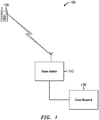
- FIG. 1 illustrates a system in which example embodiments are implemented.
- communications network 100 includes at least one base station 110.
- At least one user equipment (UE) 120 is connected to the at least one base station 110.
- the at least one base station 110 is further connected to a Core Network (CN) 130.
- the CN elements include, for example, one or more Mobility Management Entities (MME).
- MME Mobility Management Entities
- communications network 100 is illustrated as having only one base station 110, communications network 100 may have any number of base stations.
- the base station 110 serves a geographical region. It should be understood that there may be additional, adjacent base stations serving adjacent geographic regions.
- the system 100 may include one or more UEs 120.
- FIG. 2 is a diagram illustrating a structure of a UE 120 for implementing methods according to at least one example embodiment.
- the UE 120 may be any element that broadcasts to base stations 110 or CNs 130 connected to the wireless network.
- the transmitting unit 210, receiving unit 220, memory unit 230, and processing unit 240 may send data to and/or receive data from one another using the data bus 260.
- the transmitting unit 210 is a device that includes hardware and any necessary software for transmitting wired and/or wireless signals including, for example, data signals and control signals, via one or more wired and/or wireless connections to network elements in the wireless communications network 100.
- data signals transmitted by the transmitting unit 210 may include registration messages or service request messages for registering on a wireless network, for requesting services from the base station 110, or for providing location updates and other messages to the CN 130.
- the receiving unit 220 is a device that includes hardware and any necessary software for receiving wired and/or wireless signals including, for example, data signals and control signals, via one or more wired and/or wireless connections to network elements in the wireless communications network 100.
- the memory unit 230 may be any device capable of storing data including magnetic storage, flash storage, etc.
- the memory unit 230 may further store computer readable code.
- the processing unit 240 may be any device capable of processing data including, for example, a microprocessor configured to carry out specific operations based on input data, or capable of executing instructions included in computer readable code stored on the memory unit 230.
- a base station 110 and other network element such as a CN 130 includes similar, corresponding structures for transmitting signals to each other or to the UEs 120, and for receiving signals transmitted from the UEs 120.
- the base station 110 and CN 130 include transmitting units 210 for transmitting responses to registration requests or mobility updates to the UEs 120, according to at least one example embodiment.
- the base station 110 and CN 130 further include receiving units 220 for receiving registration requests or mobility updates from the UEs 120 according to at least one example embodiment.
- aspects of the example embodiments provide methods for network elements 110, 130 to prevent low access priority UEs 120 supporting dual access priority from obtaining network services using a higher, or "normal,” access priority.
- a network element 110, 130 may either not support dual access priority or the MNO may wish to not allow dual access priority on the corresponding network.
- Example embodiments provide methods for network elements 110, 130 to provide network services under a normal access priority to low access priority UEs 120 that support dual access priority.
- Example embodiments for preventing and allowing low access priority UEs 120 from receiving services under normal access priority are described below with respect to FIG. 3 .
- the UE 120 transmits a message 1 requesting registration to a network.
- the registration message may be an AttachRequest message.
- the UE 120 transmits the AttachRequest message to the base station 110.
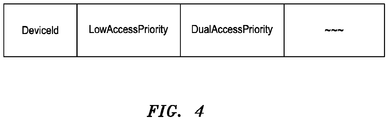
- the AttachRequest message is described in more detail below with respect to FIG. 4 .
- the UE 120 transmits a message 1 to a CN 130 to perform mobility management procedures. In at least this embodiment, the UE 120 transmits a Tracking Area Update message, a Routing Area Update message, or a Location Area Update message to the CN 130 depending on the 3GPP access technology used in the network 100.
- the AttachRequest message includes at least a parameter, DeviceId, which is an identifier of the UE 120 making the registration request.
- the AttachRequest message further includes a parameter, LowAccessPriority, which indicates that the UE 120 is a low access priority device.
- the AttachRequest message includes at least a parameter, DualAccessPriority, which indicates that the UE 120 supports dual access priority. Dual access priority indicates that the UE 120 is a low access priority device that further supports a higher, "normal" access priority mode. It will be understood that similar parameters will be included if message 1 is one of a Tracking Area Update, Routing Area Update, Location Area Update or other mobility update message.
- the network-side element in the wireless network is at least a base station 110 and CN 130.
- the CN 130 processes the AttachRequest and sends the response to base station 110, and the base station 110 transmits a response in message 2 to the AttachRequest message.
- the response is an AttachResponse message.
- the network-side element transmits a response message 2 to a Tracking Area Update, Routing Area Update, Location Area Update or other mobility update message.
- the response message 2 may take one of two forms. If the network does not allow or has not been upgraded to support low access priority UEs 120 with dual access priority, the base station 110 and CN 130 completes the registration procedure or the mobility management procedure with the device, without indicating that the UE 120 is allowed to use dual access priority. If this is the case, the response message takes the form of message 2a in FIG. 3 . If the network does allow low access priority UEs 120 to use dual access priority, the base station 110 and CN 130 complete the registration or mobility management procedure with the UE 120, by indicating that that the UE 120 is allowed to use dual access priority in the registration response or mobility management response message. In this case, the response message takes the form of message 2b, shown in FIG. 3 .
- the UE 120 may make any number of service connections using a low access priority mode according to message 3 .
- the UE 120 will continue to make service requests using a low access priority mode according to message 3 until higher priority access is desired.
- the UE 120 checks the registration response (response from Attach, Tracking Area Update%) stored in its memory unit 230 to determine whether the network indicated support for dual access priority. For example, the UE 120 may check a value stored in memory unit 230, where the UE 120 saved the results of the registration procedure or the mobility update procedure, or where the UE 120 saved parameters returned in the attachment response or mobility management response of message 2 .
- Message 4a may be a ServiceRequest message as shown in FIG. 5A .
- the ServiceRequest message 4a includes at least a parameter, DeviceId, that identifies the UE 120 making the service request.
- the ServiceRequest message 4a includes a parameter, LowAccessPriority, that indicates that the UE 120 is making at least this service request while operating in low access priority.
- the network 100 may experience elevated network congestion levels in which the network would otherwise have rejected low access priority service requests from the UE 120. In this case, in an example embodiment, service requests according to message 4a are rejected by the network 100.
- the base station 110 may determine cell-level congestion levels.
- the CN 130 may determine a core network congestion level. Either the cell-level congestion level or core network congestion level may be used to indicate whether network 100 is experiencing elevated congestion levels.
- the UE 120 sends message 4b.
- the UE 120 sends a ServiceRequest message as shown in FIG. 5B .
- the ServiceRequest message 4b includes at least the parameter DeviceId, which identifies the UE 120 making the current service request.
- message 4b does not include a parameter LowAccessPriority, because the UE 120 is requesting access under, for example, normal access priority. In this case, access will be provided to the network 100 according to normal, rather than low, access priority.
- the UE 120 using normal access priority may be allowed access while other UEs 120 using low access priority are not permitted any access to the network.
- the UE 120 may subsequently make future service requests with low access priority according to message 5. Further, the UE 120 may alternate between normal and low access priority requests according to the needs of the UE 120.
- the network elements 110, 130 will determine the level of congestion on the network and will grant or deny access on a case-by-case basis.
- the network-side element 110, 130 when the network-side element 110, 130 responds to the registration request or mobility update message 1 by indicating that dual access priority devices will not be supported, the UE 120 may nevertheless attempt connections using normal access priority according to message 4b.
- the network-side element 110, 130 may implement price controls such that the UE 120 is permitted access, but at a premium service fee.
- Normal access priority may therefore be used for certain types of transmissions according to the needs of user devices, subject to restrictions based on network congestion or mobile network operator preferences or policies. Normal access priority may further be provided to low access priority devices at a premium service charge.
- Illustrative embodiments described herein are directed methods in which two access priorities, low and normal, are supported. However, it will be understood that more than two access priorities may be supported in additional example embodiments. For example, a high access priority may be supported for service requests.
Landscapes
- Engineering & Computer Science (AREA)
- Computer Networks & Wireless Communication (AREA)
- Signal Processing (AREA)
- Databases & Information Systems (AREA)
- Computer Security & Cryptography (AREA)
- Mobile Radio Communication Systems (AREA)
Claims (8)
- Verfahren zum Zugreifen auf ein drahtloses Netz (100), wobei das Verfahren Folgendes umfasst:Übertragen einer Registrierungsanfrage von einer für eine niedrige Zugriffspriorität konfigurierten Einrichtung (120), wobei die Einrichtung ferner mindestens eine höhere Zugriffspriorität unterstützt,wobei die Registrierungsanfrage einen Wert beinhaltet, der anzeigt, dass die Einrichtung mehrere Zugriffsprioritäten unterstützt, wobei die mehreren Zugriffsprioritäten die niedrige Zugriffspriorität und mindestens eine höhere Zugriffspriorität beinhalten, undAnfragen eines Zugriffs auf das drahtlose Netz auf Grundlage einer Antwort auf die Registrierungsanfrage undselektives Anfragen einer Dienstverbindung mit der höheren Zugriffspriorität durch die Einrichtung, falls die Antwort auf die Registrierungsanfrage anzeigt, dass das drahtlose Netz gestattet, dass die Einrichtung mehrere Zugriffsprioritäten aufweist.
- Verfahren zum Steuern eines Prioritätszugriffs auf ein drahtloses Netz (100), wobei das Verfahren Folgendes umfasst:Empfangen einer Registrierungsanfrage von einer für eine niedrige Zugriffspriorität konfigurierten Einrichtung (120), wobei die Registrierungsanfrage einen Wert beinhaltet, der anzeigt, dass die Einrichtung mehrere Zugriffsprioritäten unterstützt, wobei die mehreren Zugriffsprioritäten die niedrige Zugriffspriorität und mindestens eine höhere Zugriffspriorität beinhalten,Bestimmen, ob eine Dienstverbindung mit der Einrichtung unter der höheren Zugriffspriorität gestattet werden soll, undÜbertragen einer Antwort auf die Registrierungsanfrage basierend auf der Bestimmung,Empfangen einer Dienstanfrage, die einen Dienst mit der höheren Zugriffspriorität anfragt, undselektives Gewähren der höheren Zugriffspriorität für zumindest eine zum Antworten auf die Dienstanfrage erforderliche Dauer.
- Verfahren nach Anspruch 2, wobei das Bestimmen auf einem Überlastungsgrad mindestens einer Zelle des drahtlosen Netzes beruht.
- Verfahren nach Anspruch 3, wobei das Bestimmen auf einem Kernnetz-Überlastungsgrad des drahtlosen Netzes beruht.
- Verfahren nach Anspruch 2, ferner umfassend:
Implementieren einer Preissteuerung für die zum Antworten auf die Dienstanfrage erforderliche Dauer. - Einrichtung (120) zum Zugreifen auf ein drahtloses Netz (100), wobei die Einrichtung für eine niedrige Zugriffspriorität konfiguriert ist und mindestens eine höhere Zugriffspriorität unterstützt, wobei die Einrichtung Folgendes umfasst:einen Prozessor und einen zugehörigen Speicher, wobei der Prozessor konfiguriert ist, umeine Registrierungsanfrage zu übertragen, wobei die Registrierungsanfrage einen Wert beinhaltet, der anzeigt, dass die Einrichtung für eine niedrige Zugriffspriorität konfiguriert ist und dass die Einrichtung mehrere Zugriffsprioritäten unterstützt, wobei die mehreren Zugriffsprioritäten die niedrige Zugriffspriorität und mindestens eine höhere Zugriffspriorität beinhalten, undauf Grundlage einer Antwort auf die Registrierungsanfrage einen Zugriff auf das drahtlose Netz anzufragen undselektiv eine Dienstverbindung von dem drahtlosen Netz mit der höheren Zugriffspriorität anzufragen, falls die Antwort auf die Registrierungsanfrage anzeigt, dass das drahtlose Netz gestattet, dass die Einrichtung mehrere Zugriffsprioritäten aufweist.
- Vorrichtung (110, 130) zum Steuern einer Nutzung eines Prioritätszugriffs auf ein drahtloses Netz (100), wobei die Vorrichtung Folgendes umfasst:einen Prozessor und einen zugehörigen Speicher, wobei der Prozessor konfiguriert ist, umeine Registrierungsanfrage von einer für eine niedrige Zugriffspriorität konfigurierten Einrichtung (120) zu empfangen, wobei die Registrierungsanfrage einen Wert beinhaltet, der anzeigt, dass die Einrichtung mehrere Zugriffsprioritäten unterstützt,wobei die mehreren Zugriffsprioritäten die niedrige Zugriffspriorität und mindestens eine höhere Zugriffspriorität beinhalten,zu bestimmen, ob eine Dienstverbindung mit der Einrichtung unter der höheren Zugriffspriorität gestattet werden soll, undeine Antwort auf Grundlage der Bestimmung zu übertragen,eine Dienstanfrage zu empfangen, die einen Dienst mit der höheren Zugriffspriorität anfragt, undselektiv die höhere Zugriffspriorität für zumindest eine zum Antworten auf die Dienstanfrage erforderliche Dauer zu gewähren.
- Vorrichtung nach Anspruch 7, wobei der Prozessor ferner konfiguriert ist, um:
für die zum Antworten auf die Dienstanfrage erforderliche Dauer eine Preissteuerung zu implementieren.
Applications Claiming Priority (2)
| Application Number | Priority Date | Filing Date | Title |
|---|---|---|---|
| US13/468,616 US9015395B2 (en) | 2012-05-10 | 2012-05-10 | Methods and apparatuses for multiple priority access in a wireless network system |
| PCT/US2013/039621 WO2013169615A1 (en) | 2012-05-10 | 2013-05-06 | Methods and apparatuses for multiple priority access in a wireless network system |
Publications (2)
| Publication Number | Publication Date |
|---|---|
| EP2848041A1 EP2848041A1 (de) | 2015-03-18 |
| EP2848041B1 true EP2848041B1 (de) | 2019-03-20 |
Family
ID=48428713
Family Applications (1)
| Application Number | Title | Priority Date | Filing Date |
|---|---|---|---|
| EP13722260.0A Active EP2848041B1 (de) | 2012-05-10 | 2013-05-06 | Verfahren und vorrichtungen für mehrfachprioritätszugang in einem drahtlosen netzwerksystem |
Country Status (7)
| Country | Link |
|---|---|
| US (1) | US9015395B2 (de) |
| EP (1) | EP2848041B1 (de) |
| JP (1) | JP5908166B2 (de) |
| KR (1) | KR101649166B1 (de) |
| CN (1) | CN104285473B (de) |
| TW (1) | TWI500348B (de) |
| WO (1) | WO2013169615A1 (de) |
Families Citing this family (6)
| Publication number | Priority date | Publication date | Assignee | Title |
|---|---|---|---|---|
| WO2015199584A1 (en) * | 2014-06-23 | 2015-12-30 | Telefonaktiebolaget L M Ericsson (Publ) | Prioritizing data traffic from and/or to devices in a wireless network |
| CN107251611B (zh) * | 2015-03-13 | 2020-04-14 | 华为技术有限公司 | 一种业务处理方法、相关装置和系统 |
| EP3669581B1 (de) * | 2017-08-14 | 2025-07-23 | Telefonaktiebolaget LM Ericsson (PUBL) | Verfahren und vorrichtungen zum registrieren eines benutzergeräts mit niedriger zugriffspriorität in einem auf internetprotokoll basierenden multimedia-subsystem ims |
| US10568018B1 (en) * | 2018-04-19 | 2020-02-18 | Sprint Spectrum L.P. | Methods and systems for preventing message overloading in wireless networks |
| US10897468B1 (en) * | 2018-12-12 | 2021-01-19 | Amazon Technologies, Inc. | Region management for distirbuted services in provider networks |
| CN112888018B (zh) * | 2021-01-22 | 2023-07-25 | Oppo广东移动通信有限公司 | 一种注网方法及终端设备 |
Family Cites Families (24)
| Publication number | Priority date | Publication date | Assignee | Title |
|---|---|---|---|---|
| WO2007112784A1 (en) * | 2006-04-06 | 2007-10-11 | Telefonaktiebolaget Lm Ericsson (Publ) | System, arrangements and method relating to access handling |
| US8711767B2 (en) * | 2007-10-09 | 2014-04-29 | Qualcomm Incorporated | Distributed mobile access point acquisition |
| US20100034160A1 (en) * | 2008-08-08 | 2010-02-11 | Qualcomm Incorporated | Updating frequency priority lists in wireless communications |
| KR101700196B1 (ko) | 2009-10-08 | 2017-02-13 | 엘지전자 주식회사 | 채널-점유-상태 기반 조기 회피 |
| US9125131B2 (en) * | 2010-02-08 | 2015-09-01 | Koninklijke Kpn N.V. | Method and telecommunications infrastructure enabling localized time controlled access for a device |
| EP2534904B1 (de) * | 2010-02-10 | 2014-07-23 | Telefonaktiebolaget L M Ericsson (publ) | Verfahren und anordnung in einem telekommunikationssystem |
| US8886167B2 (en) * | 2010-03-29 | 2014-11-11 | Panasonic Intellectual Property Corporation Of America | Communication node and network node |
| JP5755639B2 (ja) * | 2010-04-14 | 2015-07-29 | パナソニック インテレクチュアル プロパティ コーポレーション オブアメリカPanasonic Intellectual Property Corporation of America | 接続確立方法及び通信ノード |
| CN102223729B (zh) | 2010-04-16 | 2016-06-29 | 中兴通讯股份有限公司 | 控制机器类型通信设备接入网络的方法及系统 |
| JP5718322B2 (ja) * | 2010-04-30 | 2015-05-13 | パナソニック インテレクチュアル プロパティ コーポレーション オブアメリカPanasonic Intellectual Property Corporation of America | 通信装置、ネットワークノード並びに通信サーバ |
| US20120051235A1 (en) * | 2010-08-24 | 2012-03-01 | Verizon Patent And Licensing Inc. | Advanced admission control over all internet protocol (ip) wireless access networks |
| US8768290B2 (en) * | 2010-09-29 | 2014-07-01 | Htc Corporation | Apparatuses and methods for handling of an equivalent public land mobile network (PLMN) list |
| CN102438292B (zh) * | 2010-09-29 | 2015-06-10 | 中兴通讯股份有限公司 | 一种无线资源控制方法及系统 |
| US8670339B2 (en) * | 2010-10-15 | 2014-03-11 | Telefonaktiebolaget Lm Ericsson (Publ) | Implicit reject response |
| TWI448124B (zh) | 2010-10-28 | 2014-08-01 | Htc Corp | 處理無線通訊系統中低優先次序裝置及機器型態通訊裝置的方法及其通訊裝置 |
| CN102395209B (zh) * | 2010-11-08 | 2015-07-29 | 开曼群岛威睿电通股份有限公司 | 机器对机器应用的类别识别方法及其移动装置与服务网络 |
| TWI459836B (zh) * | 2010-11-15 | 2014-11-01 | Htc Corp | 處理一緊急承載服務之方法 |
| US8897237B2 (en) * | 2011-04-29 | 2014-11-25 | Motorola Solutions, Inc. | Granting scheduling requests in a wireless communication system |
| US8738075B2 (en) * | 2011-08-10 | 2014-05-27 | Nokia Siemens Networks Oy | Methods and apparatus for radio resource control |
| KR20140116409A (ko) * | 2012-01-18 | 2014-10-02 | 엘지전자 주식회사 | 무선 통신 시스템에서 다중 우선순위 제어 방법 및 장치 |
| US20130201870A1 (en) * | 2012-02-06 | 2013-08-08 | Vivek Gupta | Handling dual priority applications in a wireless communication network |
| KR101594942B1 (ko) * | 2012-02-06 | 2016-02-26 | 인텔 코포레이션 | 다운링크 협력 멀티포인트 통신의 구성을 위한 시그널링 |
| US9294213B2 (en) * | 2012-05-11 | 2016-03-22 | Intel Corporation | Packet data network connections for multi priority wireless devices |
| US8565689B1 (en) * | 2012-06-13 | 2013-10-22 | All Purpose Networks LLC | Optimized broadband wireless network performance through base station application server |
-
2012
- 2012-05-10 US US13/468,616 patent/US9015395B2/en active Active
-
2013
- 2013-05-06 EP EP13722260.0A patent/EP2848041B1/de active Active
- 2013-05-06 CN CN201380024585.4A patent/CN104285473B/zh active Active
- 2013-05-06 WO PCT/US2013/039621 patent/WO2013169615A1/en not_active Ceased
- 2013-05-06 TW TW102116072A patent/TWI500348B/zh active
- 2013-05-06 KR KR1020147031441A patent/KR101649166B1/ko active Active
- 2013-05-06 JP JP2015511558A patent/JP5908166B2/ja active Active
Non-Patent Citations (1)
| Title |
|---|
| None * |
Also Published As
| Publication number | Publication date |
|---|---|
| US20130304956A1 (en) | 2013-11-14 |
| JP5908166B2 (ja) | 2016-04-26 |
| CN104285473B (zh) | 2019-04-09 |
| TW201349914A (zh) | 2013-12-01 |
| WO2013169615A1 (en) | 2013-11-14 |
| CN104285473A (zh) | 2015-01-14 |
| EP2848041A1 (de) | 2015-03-18 |
| KR101649166B1 (ko) | 2016-08-18 |
| KR20140147129A (ko) | 2014-12-29 |
| JP2015516778A (ja) | 2015-06-11 |
| TWI500348B (zh) | 2015-09-11 |
| US9015395B2 (en) | 2015-04-21 |
Similar Documents
| Publication | Publication Date | Title |
|---|---|---|
| US11032858B2 (en) | Network access method, terminal, access network, and core network | |
| EP2826309B1 (de) | Verfahren und benutzergerät zur selektiven zugangskontrolle mit gesicherten dienstkontinuitätsgarantien | |
| EP2848041B1 (de) | Verfahren und vorrichtungen für mehrfachprioritätszugang in einem drahtlosen netzwerksystem | |
| EP3837805B1 (de) | Verfahren, vorrichtung und computerlesbare medien zur unterstützung von abonnements von ereignissen in einem kernnetzwerk | |
| EP3981198A1 (de) | Verfahren und vorrichtung zur durchsetzung der maximalen anzahl von benutzergeräten pro netzwerk-slice in einem kommunikationssystem | |
| US20130215742A1 (en) | Extended access barring (eab) signaling for a core network (cn) and node | |
| USRE49809E1 (en) | System and method for wifi authentication and selection | |
| US11388653B2 (en) | Method and apparatus providing access control | |
| US20160095046A1 (en) | Method and Apparatus for Use in Network Selection | |
| US20190268732A1 (en) | Methods, user equipment and application managing function node for managing transfer of message over radio interface | |
| KR20140024462A (ko) | 코어 네트워크에서의 정체 제어를 위한 시스템 및 방법 | |
| WO2018127233A1 (zh) | 一种接入控制方法及装置 | |
| KR20190082768A (ko) | 무선 원격 통신 장치들 및 방법들 | |
| EP3066847B1 (de) | Funkeinrichtung und verfahren zur mehr-domänen überwachung und zugriffsmanagement | |
| CN111052709A (zh) | 接入控制方法、装置及通信系统 | |
| US12574422B2 (en) | Priority call handling in wireless communication networks | |
| JP2020145761A (ja) | セルラネットワークにおいて無線デバイスを動作させる方法 | |
| WO2016189439A1 (en) | Systems, methods, and apparatuses for authorizing utilization of enhanced coverage |
Legal Events
| Date | Code | Title | Description |
|---|---|---|---|
| PUAI | Public reference made under article 153(3) epc to a published international application that has entered the european phase |
Free format text: ORIGINAL CODE: 0009012 |
|
| 17P | Request for examination filed |
Effective date: 20141210 |
|
| AK | Designated contracting states |
Kind code of ref document: A1 Designated state(s): AL AT BE BG CH CY CZ DE DK EE ES FI FR GB GR HR HU IE IS IT LI LT LU LV MC MK MT NL NO PL PT RO RS SE SI SK SM TR |
|
| AX | Request for extension of the european patent |
Extension state: BA ME |
|
| DAX | Request for extension of the european patent (deleted) | ||
| RAP1 | Party data changed (applicant data changed or rights of an application transferred) |
Owner name: GEMALTO SA |
|
| STAA | Information on the status of an ep patent application or granted ep patent |
Free format text: STATUS: EXAMINATION IS IN PROGRESS |
|
| 17Q | First examination report despatched |
Effective date: 20161206 |
|
| REG | Reference to a national code |
Ref country code: DE Ref legal event code: R079 Ref document number: 602013052578 Country of ref document: DE Free format text: PREVIOUS MAIN CLASS: H04W0048060000 Ipc: H04W0074000000 |
|
| RIC1 | Information provided on ipc code assigned before grant |
Ipc: H04W 8/06 20090101ALI20180904BHEP Ipc: H04W 4/70 20180101ALN20180904BHEP Ipc: H04W 74/00 20090101AFI20180904BHEP Ipc: H04W 8/18 20090101ALN20180904BHEP |
|
| GRAP | Despatch of communication of intention to grant a patent |
Free format text: ORIGINAL CODE: EPIDOSNIGR1 |
|
| STAA | Information on the status of an ep patent application or granted ep patent |
Free format text: STATUS: GRANT OF PATENT IS INTENDED |
|
| RIC1 | Information provided on ipc code assigned before grant |
Ipc: H04W 8/06 20090101ALI20181001BHEP Ipc: H04W 4/70 20180101ALN20181001BHEP Ipc: H04W 74/00 20090101AFI20181001BHEP Ipc: H04W 8/18 20090101ALN20181001BHEP |
|
| INTG | Intention to grant announced |
Effective date: 20181023 |
|
| GRAS | Grant fee paid |
Free format text: ORIGINAL CODE: EPIDOSNIGR3 |
|
| RIC1 | Information provided on ipc code assigned before grant |
Ipc: H04W 8/06 20090101ALI20181001BHEP Ipc: H04W 4/70 20180101ALN20181001BHEP Ipc: H04W 8/18 20090101ALN20181001BHEP Ipc: H04W 74/00 20090101AFI20181001BHEP |
|
| GRAA | (expected) grant |
Free format text: ORIGINAL CODE: 0009210 |
|
| STAA | Information on the status of an ep patent application or granted ep patent |
Free format text: STATUS: THE PATENT HAS BEEN GRANTED |
|
| AK | Designated contracting states |
Kind code of ref document: B1 Designated state(s): AL AT BE BG CH CY CZ DE DK EE ES FI FR GB GR HR HU IE IS IT LI LT LU LV MC MK MT NL NO PL PT RO RS SE SI SK SM TR |
|
| REG | Reference to a national code |
Ref country code: GB Ref legal event code: FG4D |
|
| REG | Reference to a national code |
Ref country code: CH Ref legal event code: EP |
|
| REG | Reference to a national code |
Ref country code: DE Ref legal event code: R096 Ref document number: 602013052578 Country of ref document: DE |
|
| REG | Reference to a national code |
Ref country code: AT Ref legal event code: REF Ref document number: 1111837 Country of ref document: AT Kind code of ref document: T Effective date: 20190415 |
|
| REG | Reference to a national code |
Ref country code: IE Ref legal event code: FG4D |
|
| REG | Reference to a national code |
Ref country code: NL Ref legal event code: MP Effective date: 20190320 |
|
| PG25 | Lapsed in a contracting state [announced via postgrant information from national office to epo] |
Ref country code: NO Free format text: LAPSE BECAUSE OF FAILURE TO SUBMIT A TRANSLATION OF THE DESCRIPTION OR TO PAY THE FEE WITHIN THE PRESCRIBED TIME-LIMIT Effective date: 20190620 Ref country code: FI Free format text: LAPSE BECAUSE OF FAILURE TO SUBMIT A TRANSLATION OF THE DESCRIPTION OR TO PAY THE FEE WITHIN THE PRESCRIBED TIME-LIMIT Effective date: 20190320 Ref country code: SE Free format text: LAPSE BECAUSE OF FAILURE TO SUBMIT A TRANSLATION OF THE DESCRIPTION OR TO PAY THE FEE WITHIN THE PRESCRIBED TIME-LIMIT Effective date: 20190320 Ref country code: LT Free format text: LAPSE BECAUSE OF FAILURE TO SUBMIT A TRANSLATION OF THE DESCRIPTION OR TO PAY THE FEE WITHIN THE PRESCRIBED TIME-LIMIT Effective date: 20190320 |
|
| REG | Reference to a national code |
Ref country code: LT Ref legal event code: MG4D |
|
| PG25 | Lapsed in a contracting state [announced via postgrant information from national office to epo] |
Ref country code: NL Free format text: LAPSE BECAUSE OF FAILURE TO SUBMIT A TRANSLATION OF THE DESCRIPTION OR TO PAY THE FEE WITHIN THE PRESCRIBED TIME-LIMIT Effective date: 20190320 Ref country code: LV Free format text: LAPSE BECAUSE OF FAILURE TO SUBMIT A TRANSLATION OF THE DESCRIPTION OR TO PAY THE FEE WITHIN THE PRESCRIBED TIME-LIMIT Effective date: 20190320 Ref country code: HR Free format text: LAPSE BECAUSE OF FAILURE TO SUBMIT A TRANSLATION OF THE DESCRIPTION OR TO PAY THE FEE WITHIN THE PRESCRIBED TIME-LIMIT Effective date: 20190320 Ref country code: BG Free format text: LAPSE BECAUSE OF FAILURE TO SUBMIT A TRANSLATION OF THE DESCRIPTION OR TO PAY THE FEE WITHIN THE PRESCRIBED TIME-LIMIT Effective date: 20190620 Ref country code: GR Free format text: LAPSE BECAUSE OF FAILURE TO SUBMIT A TRANSLATION OF THE DESCRIPTION OR TO PAY THE FEE WITHIN THE PRESCRIBED TIME-LIMIT Effective date: 20190621 Ref country code: RS Free format text: LAPSE BECAUSE OF FAILURE TO SUBMIT A TRANSLATION OF THE DESCRIPTION OR TO PAY THE FEE WITHIN THE PRESCRIBED TIME-LIMIT Effective date: 20190320 |
|
| REG | Reference to a national code |
Ref country code: AT Ref legal event code: MK05 Ref document number: 1111837 Country of ref document: AT Kind code of ref document: T Effective date: 20190320 |
|
| PG25 | Lapsed in a contracting state [announced via postgrant information from national office to epo] |
Ref country code: IT Free format text: LAPSE BECAUSE OF FAILURE TO SUBMIT A TRANSLATION OF THE DESCRIPTION OR TO PAY THE FEE WITHIN THE PRESCRIBED TIME-LIMIT Effective date: 20190320 Ref country code: EE Free format text: LAPSE BECAUSE OF FAILURE TO SUBMIT A TRANSLATION OF THE DESCRIPTION OR TO PAY THE FEE WITHIN THE PRESCRIBED TIME-LIMIT Effective date: 20190320 Ref country code: RO Free format text: LAPSE BECAUSE OF FAILURE TO SUBMIT A TRANSLATION OF THE DESCRIPTION OR TO PAY THE FEE WITHIN THE PRESCRIBED TIME-LIMIT Effective date: 20190320 Ref country code: AL Free format text: LAPSE BECAUSE OF FAILURE TO SUBMIT A TRANSLATION OF THE DESCRIPTION OR TO PAY THE FEE WITHIN THE PRESCRIBED TIME-LIMIT Effective date: 20190320 Ref country code: CZ Free format text: LAPSE BECAUSE OF FAILURE TO SUBMIT A TRANSLATION OF THE DESCRIPTION OR TO PAY THE FEE WITHIN THE PRESCRIBED TIME-LIMIT Effective date: 20190320 Ref country code: ES Free format text: LAPSE BECAUSE OF FAILURE TO SUBMIT A TRANSLATION OF THE DESCRIPTION OR TO PAY THE FEE WITHIN THE PRESCRIBED TIME-LIMIT Effective date: 20190320 Ref country code: PT Free format text: LAPSE BECAUSE OF FAILURE TO SUBMIT A TRANSLATION OF THE DESCRIPTION OR TO PAY THE FEE WITHIN THE PRESCRIBED TIME-LIMIT Effective date: 20190720 Ref country code: SK Free format text: LAPSE BECAUSE OF FAILURE TO SUBMIT A TRANSLATION OF THE DESCRIPTION OR TO PAY THE FEE WITHIN THE PRESCRIBED TIME-LIMIT Effective date: 20190320 |
|
| PG25 | Lapsed in a contracting state [announced via postgrant information from national office to epo] |
Ref country code: SM Free format text: LAPSE BECAUSE OF FAILURE TO SUBMIT A TRANSLATION OF THE DESCRIPTION OR TO PAY THE FEE WITHIN THE PRESCRIBED TIME-LIMIT Effective date: 20190320 Ref country code: PL Free format text: LAPSE BECAUSE OF FAILURE TO SUBMIT A TRANSLATION OF THE DESCRIPTION OR TO PAY THE FEE WITHIN THE PRESCRIBED TIME-LIMIT Effective date: 20190320 |
|
| REG | Reference to a national code |
Ref country code: CH Ref legal event code: PL |
|
| PG25 | Lapsed in a contracting state [announced via postgrant information from national office to epo] |
Ref country code: AT Free format text: LAPSE BECAUSE OF FAILURE TO SUBMIT A TRANSLATION OF THE DESCRIPTION OR TO PAY THE FEE WITHIN THE PRESCRIBED TIME-LIMIT Effective date: 20190320 Ref country code: IS Free format text: LAPSE BECAUSE OF FAILURE TO SUBMIT A TRANSLATION OF THE DESCRIPTION OR TO PAY THE FEE WITHIN THE PRESCRIBED TIME-LIMIT Effective date: 20190720 |
|
| REG | Reference to a national code |
Ref country code: DE Ref legal event code: R097 Ref document number: 602013052578 Country of ref document: DE |
|
| PLBE | No opposition filed within time limit |
Free format text: ORIGINAL CODE: 0009261 |
|
| STAA | Information on the status of an ep patent application or granted ep patent |
Free format text: STATUS: NO OPPOSITION FILED WITHIN TIME LIMIT |
|
| PG25 | Lapsed in a contracting state [announced via postgrant information from national office to epo] |
Ref country code: DK Free format text: LAPSE BECAUSE OF FAILURE TO SUBMIT A TRANSLATION OF THE DESCRIPTION OR TO PAY THE FEE WITHIN THE PRESCRIBED TIME-LIMIT Effective date: 20190320 Ref country code: CH Free format text: LAPSE BECAUSE OF NON-PAYMENT OF DUE FEES Effective date: 20190531 Ref country code: LI Free format text: LAPSE BECAUSE OF NON-PAYMENT OF DUE FEES Effective date: 20190531 Ref country code: MC Free format text: LAPSE BECAUSE OF FAILURE TO SUBMIT A TRANSLATION OF THE DESCRIPTION OR TO PAY THE FEE WITHIN THE PRESCRIBED TIME-LIMIT Effective date: 20190320 |
|
| REG | Reference to a national code |
Ref country code: BE Ref legal event code: MM Effective date: 20190531 |
|
| 26N | No opposition filed |
Effective date: 20200102 |
|
| PG25 | Lapsed in a contracting state [announced via postgrant information from national office to epo] |
Ref country code: SI Free format text: LAPSE BECAUSE OF FAILURE TO SUBMIT A TRANSLATION OF THE DESCRIPTION OR TO PAY THE FEE WITHIN THE PRESCRIBED TIME-LIMIT Effective date: 20190320 Ref country code: LU Free format text: LAPSE BECAUSE OF NON-PAYMENT OF DUE FEES Effective date: 20190506 |
|
| PG25 | Lapsed in a contracting state [announced via postgrant information from national office to epo] |
Ref country code: TR Free format text: LAPSE BECAUSE OF FAILURE TO SUBMIT A TRANSLATION OF THE DESCRIPTION OR TO PAY THE FEE WITHIN THE PRESCRIBED TIME-LIMIT Effective date: 20190320 |
|
| PG25 | Lapsed in a contracting state [announced via postgrant information from national office to epo] |
Ref country code: IE Free format text: LAPSE BECAUSE OF NON-PAYMENT OF DUE FEES Effective date: 20190506 |
|
| PG25 | Lapsed in a contracting state [announced via postgrant information from national office to epo] |
Ref country code: BE Free format text: LAPSE BECAUSE OF NON-PAYMENT OF DUE FEES Effective date: 20190531 |
|
| PG25 | Lapsed in a contracting state [announced via postgrant information from national office to epo] |
Ref country code: CY Free format text: LAPSE BECAUSE OF FAILURE TO SUBMIT A TRANSLATION OF THE DESCRIPTION OR TO PAY THE FEE WITHIN THE PRESCRIBED TIME-LIMIT Effective date: 20190320 |
|
| PG25 | Lapsed in a contracting state [announced via postgrant information from national office to epo] |
Ref country code: MT Free format text: LAPSE BECAUSE OF FAILURE TO SUBMIT A TRANSLATION OF THE DESCRIPTION OR TO PAY THE FEE WITHIN THE PRESCRIBED TIME-LIMIT Effective date: 20190320 Ref country code: HU Free format text: LAPSE BECAUSE OF FAILURE TO SUBMIT A TRANSLATION OF THE DESCRIPTION OR TO PAY THE FEE WITHIN THE PRESCRIBED TIME-LIMIT; INVALID AB INITIO Effective date: 20130506 |
|
| PG25 | Lapsed in a contracting state [announced via postgrant information from national office to epo] |
Ref country code: MK Free format text: LAPSE BECAUSE OF FAILURE TO SUBMIT A TRANSLATION OF THE DESCRIPTION OR TO PAY THE FEE WITHIN THE PRESCRIBED TIME-LIMIT Effective date: 20190320 |
|
| P01 | Opt-out of the competence of the unified patent court (upc) registered |
Effective date: 20230517 |
|
| PGFP | Annual fee paid to national office [announced via postgrant information from national office to epo] |
Ref country code: DE Payment date: 20250423 Year of fee payment: 13 |
|
| PGFP | Annual fee paid to national office [announced via postgrant information from national office to epo] |
Ref country code: GB Payment date: 20250423 Year of fee payment: 13 |
|
| PGFP | Annual fee paid to national office [announced via postgrant information from national office to epo] |
Ref country code: FR Payment date: 20250423 Year of fee payment: 13 |