EP2851369A2 - Verfahren für die Diagnose von Demenz und anderen neurologischen Erkrankungen - Google Patents
Verfahren für die Diagnose von Demenz und anderen neurologischen Erkrankungen Download PDFInfo
- Publication number
- EP2851369A2 EP2851369A2 EP20140187832 EP14187832A EP2851369A2 EP 2851369 A2 EP2851369 A2 EP 2851369A2 EP 20140187832 EP20140187832 EP 20140187832 EP 14187832 A EP14187832 A EP 14187832A EP 2851369 A2 EP2851369 A2 EP 2851369A2
- Authority
- EP
- European Patent Office
- Prior art keywords
- dementia
- metabolite
- metabolites
- sample
- patient
- Prior art date
- Legal status (The legal status is an assumption and is not a legal conclusion. Google has not performed a legal analysis and makes no representation as to the accuracy of the status listed.)
- Withdrawn
Links
- 206010012289 Dementia Diseases 0.000 title claims abstract description 278
- 238000000034 method Methods 0.000 title claims abstract description 143
- 238000003745 diagnosis Methods 0.000 title description 17
- 208000012902 Nervous system disease Diseases 0.000 title description 10
- 208000025966 Neurological disease Diseases 0.000 title description 10
- 239000000523 sample Substances 0.000 claims abstract description 124
- 239000013074 reference sample Substances 0.000 claims abstract description 84
- 230000007423 decrease Effects 0.000 claims abstract description 30
- 210000004369 blood Anatomy 0.000 claims abstract description 24
- 239000008280 blood Substances 0.000 claims abstract description 24
- 239000002207 metabolite Substances 0.000 claims description 407
- 210000002966 serum Anatomy 0.000 claims description 104
- 239000003550 marker Substances 0.000 claims description 50
- 238000004252 FT/ICR mass spectrometry Methods 0.000 claims description 30
- 238000002560 therapeutic procedure Methods 0.000 claims description 23
- 230000007935 neutral effect Effects 0.000 claims description 19
- 238000000065 atmospheric pressure chemical ionisation Methods 0.000 claims description 17
- 238000000132 electrospray ionisation Methods 0.000 claims description 17
- 238000000605 extraction Methods 0.000 claims description 11
- 239000007788 liquid Substances 0.000 claims description 9
- 238000000534 ion trap mass spectrometry Methods 0.000 claims description 8
- 238000004811 liquid chromatography Methods 0.000 claims description 7
- UFHFLCQGNIYNRP-UHFFFAOYSA-N Hydrogen Chemical compound [H][H] UFHFLCQGNIYNRP-UHFFFAOYSA-N 0.000 claims description 6
- 239000001257 hydrogen Substances 0.000 claims description 6
- 229910052739 hydrogen Inorganic materials 0.000 claims description 6
- 239000003960 organic solvent Substances 0.000 claims description 5
- 239000003125 aqueous solvent Substances 0.000 claims description 3
- 238000000752 ionisation method Methods 0.000 claims description 2
- 208000024827 Alzheimer disease Diseases 0.000 abstract description 225
- 238000004896 high resolution mass spectrometry Methods 0.000 abstract description 2
- 208000010877 cognitive disease Diseases 0.000 description 103
- 208000028698 Cognitive impairment Diseases 0.000 description 93
- 238000004885 tandem mass spectrometry Methods 0.000 description 87
- 239000000090 biomarker Substances 0.000 description 83
- 238000001228 spectrum Methods 0.000 description 64
- HZAXFHJVJLSVMW-UHFFFAOYSA-N 2-Aminoethan-1-ol Chemical compound NCCO HZAXFHJVJLSVMW-UHFFFAOYSA-N 0.000 description 58
- 101100424823 Arabidopsis thaliana TDT gene Proteins 0.000 description 50
- 150000002500 ions Chemical class 0.000 description 44
- 230000003247 decreasing effect Effects 0.000 description 40
- 238000012360 testing method Methods 0.000 description 40
- 210000004885 white matter Anatomy 0.000 description 39
- 210000001175 cerebrospinal fluid Anatomy 0.000 description 38
- -1 ethanolamine phospholipids Chemical class 0.000 description 38
- 238000004458 analytical method Methods 0.000 description 35
- 230000000694 effects Effects 0.000 description 29
- 150000001875 compounds Chemical class 0.000 description 24
- 230000007792 alzheimer disease pathology Effects 0.000 description 23
- 238000009826 distribution Methods 0.000 description 23
- 239000012634 fragment Substances 0.000 description 23
- OKKJLVBELUTLKV-UHFFFAOYSA-N Methanol Chemical compound OC OKKJLVBELUTLKV-UHFFFAOYSA-N 0.000 description 21
- 230000001149 cognitive effect Effects 0.000 description 21
- 230000000670 limiting effect Effects 0.000 description 21
- JZNWSCPGTDBMEW-UHFFFAOYSA-N Glycerophosphorylethanolamin Natural products NCCOP(O)(=O)OCC(O)CO JZNWSCPGTDBMEW-UHFFFAOYSA-N 0.000 description 19
- 239000000284 extract Substances 0.000 description 16
- 238000004895 liquid chromatography mass spectrometry Methods 0.000 description 16
- 238000003556 assay Methods 0.000 description 15
- 150000008104 phosphatidylethanolamines Chemical class 0.000 description 15
- 238000011888 autopsy Methods 0.000 description 14
- 208000037265 diseases, disorders, signs and symptoms Diseases 0.000 description 14
- 238000013467 fragmentation Methods 0.000 description 14
- 238000006062 fragmentation reaction Methods 0.000 description 14
- 208000024891 symptom Diseases 0.000 description 13
- 201000010099 disease Diseases 0.000 description 12
- 230000036541 health Effects 0.000 description 12
- 230000007170 pathology Effects 0.000 description 12
- 238000005481 NMR spectroscopy Methods 0.000 description 11
- MBMBGCFOFBJSGT-KUBAVDMBSA-N docosahexaenoic acid Natural products CC\C=C/C\C=C/C\C=C/C\C=C/C\C=C/C\C=C/CCC(O)=O MBMBGCFOFBJSGT-KUBAVDMBSA-N 0.000 description 11
- 210000004884 grey matter Anatomy 0.000 description 11
- 201000011240 Frontotemporal dementia Diseases 0.000 description 10
- 230000032683 aging Effects 0.000 description 10
- 238000001514 detection method Methods 0.000 description 10
- 238000003748 differential diagnosis Methods 0.000 description 10
- 235000020669 docosahexaenoic acid Nutrition 0.000 description 10
- 230000015654 memory Effects 0.000 description 10
- 206010067889 Dementia with Lewy bodies Diseases 0.000 description 9
- 201000002832 Lewy body dementia Diseases 0.000 description 9
- 210000004556 brain Anatomy 0.000 description 9
- 230000006735 deficit Effects 0.000 description 9
- VLKZOEOYAKHREP-UHFFFAOYSA-N n-Hexane Chemical compound CCCCCC VLKZOEOYAKHREP-UHFFFAOYSA-N 0.000 description 9
- XEKOWRVHYACXOJ-UHFFFAOYSA-N Ethyl acetate Chemical compound CCOC(C)=O XEKOWRVHYACXOJ-UHFFFAOYSA-N 0.000 description 8
- 238000004949 mass spectrometry Methods 0.000 description 8
- 208000027061 mild cognitive impairment Diseases 0.000 description 8
- 238000009825 accumulation Methods 0.000 description 7
- 238000001360 collision-induced dissociation Methods 0.000 description 7
- 238000004128 high performance liquid chromatography Methods 0.000 description 7
- 238000002347 injection Methods 0.000 description 7
- 239000007924 injection Substances 0.000 description 7
- 230000014759 maintenance of location Effects 0.000 description 7
- WTJKGGKOPKCXLL-RRHRGVEJSA-N phosphatidylcholine Chemical compound CCCCCCCCCCCCCCCC(=O)OC[C@H](COP([O-])(=O)OCC[N+](C)(C)C)OC(=O)CCCCCCCC=CCCCCCCCC WTJKGGKOPKCXLL-RRHRGVEJSA-N 0.000 description 7
- 150000003384 small molecules Chemical class 0.000 description 7
- 239000000126 substance Substances 0.000 description 7
- 208000037259 Amyloid Plaque Diseases 0.000 description 6
- IJGRMHOSHXDMSA-UHFFFAOYSA-N Atomic nitrogen Chemical compound N#N IJGRMHOSHXDMSA-UHFFFAOYSA-N 0.000 description 6
- 239000007789 gas Substances 0.000 description 6
- 238000005259 measurement Methods 0.000 description 6
- 239000000203 mixture Substances 0.000 description 6
- 239000013610 patient sample Substances 0.000 description 6
- 102000013498 tau Proteins Human genes 0.000 description 6
- 108010026424 tau Proteins Proteins 0.000 description 6
- LFQSCWFLJHTTHZ-UHFFFAOYSA-N Ethanol Chemical compound CCO LFQSCWFLJHTTHZ-UHFFFAOYSA-N 0.000 description 5
- 201000004810 Vascular dementia Diseases 0.000 description 5
- 239000012472 biological sample Substances 0.000 description 5
- 230000008859 change Effects 0.000 description 5
- 235000014113 dietary fatty acids Nutrition 0.000 description 5
- 238000005516 engineering process Methods 0.000 description 5
- 229930195729 fatty acid Natural products 0.000 description 5
- 239000000194 fatty acid Substances 0.000 description 5
- 150000004665 fatty acids Chemical class 0.000 description 5
- 230000001771 impaired effect Effects 0.000 description 5
- 210000002682 neurofibrillary tangle Anatomy 0.000 description 5
- 230000002981 neuropathic effect Effects 0.000 description 5
- 238000000926 separation method Methods 0.000 description 5
- 102000013455 Amyloid beta-Peptides Human genes 0.000 description 4
- 108010090849 Amyloid beta-Peptides Proteins 0.000 description 4
- KFZMGEQAYNKOFK-UHFFFAOYSA-N Isopropanol Chemical compound CC(C)O KFZMGEQAYNKOFK-UHFFFAOYSA-N 0.000 description 4
- 238000000692 Student's t-test Methods 0.000 description 4
- 230000001195 anabolic effect Effects 0.000 description 4
- 230000015572 biosynthetic process Effects 0.000 description 4
- 239000006227 byproduct Substances 0.000 description 4
- 230000015556 catabolic process Effects 0.000 description 4
- 230000019771 cognition Effects 0.000 description 4
- 230000007278 cognition impairment Effects 0.000 description 4
- 208000017004 dementia pugilistica Diseases 0.000 description 4
- 238000011161 development Methods 0.000 description 4
- 230000018109 developmental process Effects 0.000 description 4
- 235000004626 essential fatty acids Nutrition 0.000 description 4
- 230000006870 function Effects 0.000 description 4
- 125000004435 hydrogen atom Chemical group [H]* 0.000 description 4
- 208000015181 infectious disease Diseases 0.000 description 4
- 150000002632 lipids Chemical class 0.000 description 4
- BDAGIHXWWSANSR-UHFFFAOYSA-N methanoic acid Natural products OC=O BDAGIHXWWSANSR-UHFFFAOYSA-N 0.000 description 4
- 230000004770 neurodegeneration Effects 0.000 description 4
- 230000003557 neuropsychological effect Effects 0.000 description 4
- 230000003647 oxidation Effects 0.000 description 4
- 238000007254 oxidation reaction Methods 0.000 description 4
- 238000000899 pressurised-fluid extraction Methods 0.000 description 4
- 238000012545 processing Methods 0.000 description 4
- 230000002829 reductive effect Effects 0.000 description 4
- 230000007704 transition Effects 0.000 description 4
- 230000002378 acidificating effect Effects 0.000 description 3
- 125000002252 acyl group Chemical group 0.000 description 3
- 238000004587 chromatography analysis Methods 0.000 description 3
- 230000001419 dependent effect Effects 0.000 description 3
- 235000019439 ethyl acetate Nutrition 0.000 description 3
- 239000002038 ethyl acetate fraction Substances 0.000 description 3
- 238000011156 evaluation Methods 0.000 description 3
- 125000000524 functional group Chemical group 0.000 description 3
- 238000013537 high throughput screening Methods 0.000 description 3
- 238000005040 ion trap Methods 0.000 description 3
- 230000007787 long-term memory Effects 0.000 description 3
- 238000002595 magnetic resonance imaging Methods 0.000 description 3
- 238000002705 metabolomic analysis Methods 0.000 description 3
- 210000002569 neuron Anatomy 0.000 description 3
- 239000012071 phase Substances 0.000 description 3
- 238000002600 positron emission tomography Methods 0.000 description 3
- 230000006403 short-term memory Effects 0.000 description 3
- 238000003325 tomography Methods 0.000 description 3
- OSWFIVFLDKOXQC-UHFFFAOYSA-N 4-(3-methoxyphenyl)aniline Chemical compound COC1=CC=CC(C=2C=CC(N)=CC=2)=C1 OSWFIVFLDKOXQC-UHFFFAOYSA-N 0.000 description 2
- VHUUQVKOLVNVRT-UHFFFAOYSA-N Ammonium hydroxide Chemical compound [NH4+].[OH-] VHUUQVKOLVNVRT-UHFFFAOYSA-N 0.000 description 2
- 101710137189 Amyloid-beta A4 protein Proteins 0.000 description 2
- 101710151993 Amyloid-beta precursor protein Proteins 0.000 description 2
- 102100022704 Amyloid-beta precursor protein Human genes 0.000 description 2
- 239000004380 Cholic acid Substances 0.000 description 2
- 208000020406 Creutzfeldt Jacob disease Diseases 0.000 description 2
- 208000003407 Creutzfeldt-Jakob Syndrome Diseases 0.000 description 2
- 208000010859 Creutzfeldt-Jakob disease Diseases 0.000 description 2
- RTZKZFJDLAIYFH-UHFFFAOYSA-N Diethyl ether Chemical compound CCOCC RTZKZFJDLAIYFH-UHFFFAOYSA-N 0.000 description 2
- 206010061818 Disease progression Diseases 0.000 description 2
- 102000004190 Enzymes Human genes 0.000 description 2
- 108090000790 Enzymes Proteins 0.000 description 2
- 208000004547 Hallucinations Diseases 0.000 description 2
- 208000010496 Heart Arrest Diseases 0.000 description 2
- 208000005314 Multi-Infarct Dementia Diseases 0.000 description 2
- LRHPLDYGYMQRHN-UHFFFAOYSA-N N-Butanol Chemical compound CCCCO LRHPLDYGYMQRHN-UHFFFAOYSA-N 0.000 description 2
- 206010028980 Neoplasm Diseases 0.000 description 2
- SUHOOTKUPISOBE-UHFFFAOYSA-N O-phosphoethanolamine Chemical group NCCOP(O)(O)=O SUHOOTKUPISOBE-UHFFFAOYSA-N 0.000 description 2
- 208000018737 Parkinson disease Diseases 0.000 description 2
- 208000030886 Traumatic Brain injury Diseases 0.000 description 2
- QYKIQEUNHZKYBP-UHFFFAOYSA-N Vinyl ether Chemical compound C=COC=C QYKIQEUNHZKYBP-UHFFFAOYSA-N 0.000 description 2
- 239000002253 acid Substances 0.000 description 2
- 125000005257 alkyl acyl group Chemical group 0.000 description 2
- VREFGVBLTWBCJP-UHFFFAOYSA-N alprazolam Chemical compound C12=CC(Cl)=CC=C2N2C(C)=NN=C2CN=C1C1=CC=CC=C1 VREFGVBLTWBCJP-UHFFFAOYSA-N 0.000 description 2
- 239000000908 ammonium hydroxide Substances 0.000 description 2
- DZHSAHHDTRWUTF-SIQRNXPUSA-N amyloid-beta polypeptide 42 Chemical compound C([C@@H](C(=O)N[C@@H](C)C(=O)N[C@@H](CCC(O)=O)C(=O)N[C@@H](CC(O)=O)C(=O)N[C@H](C(=O)NCC(=O)N[C@@H](CO)C(=O)N[C@@H](CC(N)=O)C(=O)N[C@@H](CCCCN)C(=O)NCC(=O)N[C@@H](C)C(=O)N[C@H](C(=O)N[C@@H]([C@@H](C)CC)C(=O)NCC(=O)N[C@@H](CC(C)C)C(=O)N[C@@H](CCSC)C(=O)N[C@@H](C(C)C)C(=O)NCC(=O)NCC(=O)N[C@@H](C(C)C)C(=O)N[C@@H](C(C)C)C(=O)N[C@@H]([C@@H](C)CC)C(=O)N[C@@H](C)C(O)=O)[C@@H](C)CC)C(C)C)NC(=O)[C@H](CC=1C=CC=CC=1)NC(=O)[C@@H](NC(=O)[C@H](CC(C)C)NC(=O)[C@H](CCCCN)NC(=O)[C@H](CCC(N)=O)NC(=O)[C@H](CC=1N=CNC=1)NC(=O)[C@H](CC=1N=CNC=1)NC(=O)[C@@H](NC(=O)[C@H](CCC(O)=O)NC(=O)[C@H](CC=1C=CC(O)=CC=1)NC(=O)CNC(=O)[C@H](CO)NC(=O)[C@H](CC(O)=O)NC(=O)[C@H](CC=1N=CNC=1)NC(=O)[C@H](CCCNC(N)=N)NC(=O)[C@H](CC=1C=CC=CC=1)NC(=O)[C@H](CCC(O)=O)NC(=O)[C@H](C)NC(=O)[C@@H](N)CC(O)=O)C(C)C)C(C)C)C1=CC=CC=C1 DZHSAHHDTRWUTF-SIQRNXPUSA-N 0.000 description 2
- 238000013459 approach Methods 0.000 description 2
- YZXBAPSDXZZRGB-DOFZRALJSA-N arachidonic acid Chemical compound CCCCC\C=C/C\C=C/C\C=C/C\C=C/CCCC(O)=O YZXBAPSDXZZRGB-DOFZRALJSA-N 0.000 description 2
- 210000003050 axon Anatomy 0.000 description 2
- 239000003150 biochemical marker Substances 0.000 description 2
- 238000001574 biopsy Methods 0.000 description 2
- 238000004422 calculation algorithm Methods 0.000 description 2
- 210000004027 cell Anatomy 0.000 description 2
- 238000012512 characterization method Methods 0.000 description 2
- 238000006243 chemical reaction Methods 0.000 description 2
- 229960002471 cholic acid Drugs 0.000 description 2
- 238000013375 chromatographic separation Methods 0.000 description 2
- 238000001977 collision-induced dissociation tandem mass spectrometry Methods 0.000 description 2
- 238000012790 confirmation Methods 0.000 description 2
- 239000013068 control sample Substances 0.000 description 2
- 238000009795 derivation Methods 0.000 description 2
- 238000002405 diagnostic procedure Methods 0.000 description 2
- 238000007865 diluting Methods 0.000 description 2
- 229910001873 dinitrogen Inorganic materials 0.000 description 2
- 230000005750 disease progression Effects 0.000 description 2
- 208000035475 disorder Diseases 0.000 description 2
- 230000007717 exclusion Effects 0.000 description 2
- 230000001747 exhibiting effect Effects 0.000 description 2
- 238000013213 extrapolation Methods 0.000 description 2
- 238000004401 flow injection analysis Methods 0.000 description 2
- 235000019253 formic acid Nutrition 0.000 description 2
- 238000002599 functional magnetic resonance imaging Methods 0.000 description 2
- IPCSVZSSVZVIGE-UHFFFAOYSA-N hexadecanoic acid Chemical compound CCCCCCCCCCCCCCCC(O)=O IPCSVZSSVZVIGE-UHFFFAOYSA-N 0.000 description 2
- 230000013632 homeostatic process Effects 0.000 description 2
- 238000010191 image analysis Methods 0.000 description 2
- 238000003384 imaging method Methods 0.000 description 2
- 230000002458 infectious effect Effects 0.000 description 2
- 208000014674 injury Diseases 0.000 description 2
- 210000004558 lewy body Anatomy 0.000 description 2
- 238000012417 linear regression Methods 0.000 description 2
- 238000001294 liquid chromatography-tandem mass spectrometry Methods 0.000 description 2
- 239000003589 local anesthetic agent Substances 0.000 description 2
- 238000009593 lumbar puncture Methods 0.000 description 2
- 238000000816 matrix-assisted laser desorption--ionisation Methods 0.000 description 2
- 230000001431 metabolomic effect Effects 0.000 description 2
- 238000000874 microwave-assisted extraction Methods 0.000 description 2
- 238000002156 mixing Methods 0.000 description 2
- 238000002552 multiple reaction monitoring Methods 0.000 description 2
- 239000006199 nebulizer Substances 0.000 description 2
- 238000010855 neuropsychological testing Methods 0.000 description 2
- 229910052757 nitrogen Inorganic materials 0.000 description 2
- 238000000655 nuclear magnetic resonance spectrum Methods 0.000 description 2
- 150000007523 nucleic acids Chemical class 0.000 description 2
- 102000039446 nucleic acids Human genes 0.000 description 2
- 108020004707 nucleic acids Proteins 0.000 description 2
- 150000008105 phosphatidylcholines Chemical class 0.000 description 2
- 102000004169 proteins and genes Human genes 0.000 description 2
- 108090000623 proteins and genes Proteins 0.000 description 2
- 208000020016 psychiatric disease Diseases 0.000 description 2
- 230000001105 regulatory effect Effects 0.000 description 2
- 230000002441 reversible effect Effects 0.000 description 2
- 238000012216 screening Methods 0.000 description 2
- 230000035945 sensitivity Effects 0.000 description 2
- 239000002904 solvent Substances 0.000 description 2
- 238000000527 sonication Methods 0.000 description 2
- 230000003595 spectral effect Effects 0.000 description 2
- 238000000672 surface-enhanced laser desorption--ionisation Methods 0.000 description 2
- 210000001519 tissue Anatomy 0.000 description 2
- 231100000167 toxic agent Toxicity 0.000 description 2
- 239000003440 toxic substance Substances 0.000 description 2
- 230000008733 trauma Effects 0.000 description 2
- 230000002792 vascular Effects 0.000 description 2
- XLYOFNOQVPJJNP-UHFFFAOYSA-N water Substances O XLYOFNOQVPJJNP-UHFFFAOYSA-N 0.000 description 2
- MTCFGRXMJLQNBG-REOHCLBHSA-N (2S)-2-Amino-3-hydroxypropansäure Chemical compound OC[C@H](N)C(O)=O MTCFGRXMJLQNBG-REOHCLBHSA-N 0.000 description 1
- ZHRZLXZJVUFLNY-XAMCCFCMSA-N (2s)-2-[[(2s)-2-[[(2s)-2-[[(2s)-2-aminopropanoyl]amino]propanoyl]amino]propanoyl]amino]propanoic acid Chemical compound C[C@H](N)C(=O)N[C@@H](C)C(=O)N[C@@H](C)C(=O)N[C@@H](C)C(O)=O ZHRZLXZJVUFLNY-XAMCCFCMSA-N 0.000 description 1
- DNXIKVLOVZVMQF-UHFFFAOYSA-N (3beta,16beta,17alpha,18beta,20alpha)-17-hydroxy-11-methoxy-18-[(3,4,5-trimethoxybenzoyl)oxy]-yohimban-16-carboxylic acid, methyl ester Natural products C1C2CN3CCC(C4=CC=C(OC)C=C4N4)=C4C3CC2C(C(=O)OC)C(O)C1OC(=O)C1=CC(OC)=C(OC)C(OC)=C1 DNXIKVLOVZVMQF-UHFFFAOYSA-N 0.000 description 1
- 238000001644 13C nuclear magnetic resonance spectroscopy Methods 0.000 description 1
- 238000005160 1H NMR spectroscopy Methods 0.000 description 1
- 238000005084 2D-nuclear magnetic resonance Methods 0.000 description 1
- 208000006888 Agnosia Diseases 0.000 description 1
- 241001047040 Agnosia Species 0.000 description 1
- 235000009027 Amelanchier alnifolia Nutrition 0.000 description 1
- 244000068687 Amelanchier alnifolia Species 0.000 description 1
- 208000000044 Amnesia Diseases 0.000 description 1
- 208000031091 Amnestic disease Diseases 0.000 description 1
- 208000019901 Anxiety disease Diseases 0.000 description 1
- 206010003062 Apraxia Diseases 0.000 description 1
- 206010003805 Autism Diseases 0.000 description 1
- 208000020706 Autistic disease Diseases 0.000 description 1
- 208000020925 Bipolar disease Diseases 0.000 description 1
- 208000018652 Closed Head injury Diseases 0.000 description 1
- 238000001134 F-test Methods 0.000 description 1
- 101000941893 Felis catus Leucine-rich repeat and calponin homology domain-containing protein 1 Proteins 0.000 description 1
- 206010018341 Gliosis Diseases 0.000 description 1
- 206010019070 Hallucination, auditory Diseases 0.000 description 1
- 206010019075 Hallucination, visual Diseases 0.000 description 1
- 208000023105 Huntington disease Diseases 0.000 description 1
- 208000036626 Mental retardation Diseases 0.000 description 1
- 102000029749 Microtubule Human genes 0.000 description 1
- 108091022875 Microtubule Proteins 0.000 description 1
- 208000021384 Obsessive-Compulsive disease Diseases 0.000 description 1
- 229910019142 PO4 Inorganic materials 0.000 description 1
- 235000021314 Palmitic acid Nutrition 0.000 description 1
- LCQMZZCPPSWADO-UHFFFAOYSA-N Reserpilin Natural products COC(=O)C1COCC2CN3CCc4c([nH]c5cc(OC)c(OC)cc45)C3CC12 LCQMZZCPPSWADO-UHFFFAOYSA-N 0.000 description 1
- QEVHRUUCFGRFIF-SFWBKIHZSA-N Reserpine Natural products O=C(OC)[C@@H]1[C@H](OC)[C@H](OC(=O)c2cc(OC)c(OC)c(OC)c2)C[C@H]2[C@@H]1C[C@H]1N(C2)CCc2c3c([nH]c12)cc(OC)cc3 QEVHRUUCFGRFIF-SFWBKIHZSA-N 0.000 description 1
- MTCFGRXMJLQNBG-UHFFFAOYSA-N Serine Natural products OCC(N)C(O)=O MTCFGRXMJLQNBG-UHFFFAOYSA-N 0.000 description 1
- VYPSYNLAJGMNEJ-UHFFFAOYSA-N Silicium dioxide Chemical compound O=[Si]=O VYPSYNLAJGMNEJ-UHFFFAOYSA-N 0.000 description 1
- 238000000944 Soxhlet extraction Methods 0.000 description 1
- 235000021355 Stearic acid Nutrition 0.000 description 1
- 241001391849 Stegnosperma cubense Species 0.000 description 1
- 208000024799 Thyroid disease Diseases 0.000 description 1
- 210000000577 adipose tissue Anatomy 0.000 description 1
- 150000001298 alcohols Chemical class 0.000 description 1
- 102000003802 alpha-Synuclein Human genes 0.000 description 1
- 108090000185 alpha-Synuclein Proteins 0.000 description 1
- 230000006986 amnesia Effects 0.000 description 1
- 230000003941 amyloidogenesis Effects 0.000 description 1
- 208000007502 anemia Diseases 0.000 description 1
- 201000007201 aphasia Diseases 0.000 description 1
- 239000006286 aqueous extract Substances 0.000 description 1
- 239000012223 aqueous fraction Substances 0.000 description 1
- 229940114079 arachidonic acid Drugs 0.000 description 1
- 235000021342 arachidonic acid Nutrition 0.000 description 1
- 230000003140 astrocytic effect Effects 0.000 description 1
- 238000011952 auditory verbal learning test Methods 0.000 description 1
- 239000011324 bead Substances 0.000 description 1
- 230000008901 benefit Effects 0.000 description 1
- 210000000133 brain stem Anatomy 0.000 description 1
- 238000004364 calculation method Methods 0.000 description 1
- 150000001732 carboxylic acid derivatives Chemical class 0.000 description 1
- 150000005829 chemical entities Chemical class 0.000 description 1
- 238000011097 chromatography purification Methods 0.000 description 1
- 231100000876 cognitive deterioration Toxicity 0.000 description 1
- 230000003920 cognitive function Effects 0.000 description 1
- 230000006998 cognitive state Effects 0.000 description 1
- 210000001072 colon Anatomy 0.000 description 1
- 238000007398 colorimetric assay Methods 0.000 description 1
- 210000003618 cortical neuron Anatomy 0.000 description 1
- IDLFZVILOHSSID-OVLDLUHVSA-N corticotropin Chemical group C([C@@H](C(=O)N[C@@H](CO)C(=O)N[C@@H](CCSC)C(=O)N[C@@H](CCC(O)=O)C(=O)N[C@@H](CC=1NC=NC=1)C(=O)N[C@@H](CC=1C=CC=CC=1)C(=O)N[C@@H](CCCNC(N)=N)C(=O)N[C@@H](CC=1C2=CC=CC=C2NC=1)C(=O)NCC(=O)N[C@@H](CCCCN)C(=O)N1[C@@H](CCC1)C(=O)N[C@@H](C(C)C)C(=O)NCC(=O)N[C@@H](CCCCN)C(=O)N[C@@H](CCCCN)C(=O)N[C@@H](CCCNC(N)=N)C(=O)N[C@@H](CCCNC(N)=N)C(=O)N1[C@@H](CCC1)C(=O)N[C@@H](C(C)C)C(=O)N[C@@H](CCCCN)C(=O)N[C@@H](C(C)C)C(=O)N[C@@H](CC=1C=CC(O)=CC=1)C(=O)N1[C@@H](CCC1)C(=O)N[C@@H](CC(N)=O)C(=O)NCC(=O)N[C@@H](C)C(=O)N[C@@H](CCC(O)=O)C(=O)N[C@@H](CC(O)=O)C(=O)N[C@@H](CCC(O)=O)C(=O)N[C@@H](CO)C(=O)N[C@@H](C)C(=O)N[C@@H](CCC(O)=O)C(=O)N[C@@H](C)C(=O)N[C@@H](CC=1C=CC=CC=1)C(=O)N1[C@@H](CCC1)C(=O)N[C@@H](CC(C)C)C(=O)N[C@@H](CCC(O)=O)C(=O)N[C@@H](CC=1C=CC=CC=1)C(O)=O)NC(=O)[C@@H](N)CO)C1=CC=C(O)C=C1 IDLFZVILOHSSID-OVLDLUHVSA-N 0.000 description 1
- 238000013501 data transformation Methods 0.000 description 1
- 230000000593 degrading effect Effects 0.000 description 1
- 230000008021 deposition Effects 0.000 description 1
- 238000001212 derivatisation Methods 0.000 description 1
- 229940090949 docosahexaenoic acid Drugs 0.000 description 1
- 230000004064 dysfunction Effects 0.000 description 1
- 238000000537 electroencephalography Methods 0.000 description 1
- 238000010828 elution Methods 0.000 description 1
- 210000001353 entorhinal cortex Anatomy 0.000 description 1
- 206010015037 epilepsy Diseases 0.000 description 1
- 238000002474 experimental method Methods 0.000 description 1
- 210000001723 extracellular space Anatomy 0.000 description 1
- 238000002290 gas chromatography-mass spectrometry Methods 0.000 description 1
- 230000007387 gliosis Effects 0.000 description 1
- PEDCQBHIVMGVHV-UHFFFAOYSA-N glycerol group Chemical group OCC(O)CO PEDCQBHIVMGVHV-UHFFFAOYSA-N 0.000 description 1
- 210000004209 hair Anatomy 0.000 description 1
- 230000005802 health problem Effects 0.000 description 1
- 230000003862 health status Effects 0.000 description 1
- 230000007166 healthy aging Effects 0.000 description 1
- 208000003906 hydrocephalus Diseases 0.000 description 1
- 230000002055 immunohistochemical effect Effects 0.000 description 1
- 230000000977 initiatory effect Effects 0.000 description 1
- 238000011835 investigation Methods 0.000 description 1
- 230000002427 irreversible effect Effects 0.000 description 1
- 208000028867 ischemia Diseases 0.000 description 1
- 238000002955 isolation Methods 0.000 description 1
- 150000002576 ketones Chemical class 0.000 description 1
- 210000003734 kidney Anatomy 0.000 description 1
- 230000002197 limbic effect Effects 0.000 description 1
- 210000004185 liver Anatomy 0.000 description 1
- 210000004072 lung Anatomy 0.000 description 1
- 238000002582 magnetoencephalography Methods 0.000 description 1
- 208000024714 major depressive disease Diseases 0.000 description 1
- 238000001819 mass spectrum Methods 0.000 description 1
- 239000000463 material Substances 0.000 description 1
- 230000007246 mechanism Effects 0.000 description 1
- 206010027175 memory impairment Diseases 0.000 description 1
- 230000006996 mental state Effects 0.000 description 1
- 230000002503 metabolic effect Effects 0.000 description 1
- 238000007884 metabolite profiling Methods 0.000 description 1
- 210000004688 microtubule Anatomy 0.000 description 1
- 238000012986 modification Methods 0.000 description 1
- 230000004048 modification Effects 0.000 description 1
- 201000006417 multiple sclerosis Diseases 0.000 description 1
- WQEPLUUGTLDZJY-UHFFFAOYSA-N n-Pentadecanoic acid Natural products CCCCCCCCCCCCCCC(O)=O WQEPLUUGTLDZJY-UHFFFAOYSA-N 0.000 description 1
- 210000000478 neocortex Anatomy 0.000 description 1
- 230000001537 neural effect Effects 0.000 description 1
- 238000002610 neuroimaging Methods 0.000 description 1
- 230000007121 neuropathological change Effects 0.000 description 1
- 230000007171 neuropathology Effects 0.000 description 1
- QIQXTHQIDYTFRH-UHFFFAOYSA-N octadecanoic acid Chemical compound CCCCCCCCCCCCCCCCCC(O)=O QIQXTHQIDYTFRH-UHFFFAOYSA-N 0.000 description 1
- OQCDKBAXFALNLD-UHFFFAOYSA-N octadecanoic acid Natural products CCCCCCCC(C)CCCCCCCCC(O)=O OQCDKBAXFALNLD-UHFFFAOYSA-N 0.000 description 1
- 238000004806 packaging method and process Methods 0.000 description 1
- 210000000496 pancreas Anatomy 0.000 description 1
- 230000002093 peripheral effect Effects 0.000 description 1
- NBIIXXVUZAFLBC-UHFFFAOYSA-K phosphate Chemical compound [O-]P([O-])([O-])=O NBIIXXVUZAFLBC-UHFFFAOYSA-K 0.000 description 1
- 239000010452 phosphate Substances 0.000 description 1
- 238000003752 polymerase chain reaction Methods 0.000 description 1
- 238000006116 polymerization reaction Methods 0.000 description 1
- 238000002360 preparation method Methods 0.000 description 1
- 238000003825 pressing Methods 0.000 description 1
- 229930010796 primary metabolite Natural products 0.000 description 1
- 238000003672 processing method Methods 0.000 description 1
- 239000000047 product Substances 0.000 description 1
- 230000000750 progressive effect Effects 0.000 description 1
- 230000001737 promoting effect Effects 0.000 description 1
- 238000012207 quantitative assay Methods 0.000 description 1
- 230000009467 reduction Effects 0.000 description 1
- 238000011160 research Methods 0.000 description 1
- BJOIZNZVOZKDIG-MDEJGZGSSA-N reserpine Chemical compound O([C@H]1[C@@H]([C@H]([C@H]2C[C@@H]3C4=C([C]5C=CC(OC)=CC5=N4)CCN3C[C@H]2C1)C(=O)OC)OC)C(=O)C1=CC(OC)=C(OC)C(OC)=C1 BJOIZNZVOZKDIG-MDEJGZGSSA-N 0.000 description 1
- 229960003147 reserpine Drugs 0.000 description 1
- MDMGHDFNKNZPAU-UHFFFAOYSA-N roserpine Natural products C1C2CN3CCC(C4=CC=C(OC)C=C4N4)=C4C3CC2C(OC(C)=O)C(OC)C1OC(=O)C1=CC(OC)=C(OC)C(OC)=C1 MDMGHDFNKNZPAU-UHFFFAOYSA-N 0.000 description 1
- 210000003296 saliva Anatomy 0.000 description 1
- 229920006395 saturated elastomer Polymers 0.000 description 1
- 201000000980 schizophrenia Diseases 0.000 description 1
- 230000028327 secretion Effects 0.000 description 1
- 238000002603 single-photon emission computed tomography Methods 0.000 description 1
- 210000002027 skeletal muscle Anatomy 0.000 description 1
- 210000003491 skin Anatomy 0.000 description 1
- 210000002460 smooth muscle Anatomy 0.000 description 1
- 239000007787 solid Substances 0.000 description 1
- 239000007790 solid phase Substances 0.000 description 1
- 239000000243 solution Substances 0.000 description 1
- 241000894007 species Species 0.000 description 1
- 238000010183 spectrum analysis Methods 0.000 description 1
- 239000007921 spray Substances 0.000 description 1
- 238000007619 statistical method Methods 0.000 description 1
- 239000008117 stearic acid Substances 0.000 description 1
- 210000002784 stomach Anatomy 0.000 description 1
- 210000000701 subdural space Anatomy 0.000 description 1
- 238000000194 supercritical-fluid extraction Methods 0.000 description 1
- 239000004094 surface-active agent Substances 0.000 description 1
- 238000012353 t test Methods 0.000 description 1
- 230000002123 temporal effect Effects 0.000 description 1
- 210000001550 testis Anatomy 0.000 description 1
- 238000012546 transfer Methods 0.000 description 1
- 238000013519 translation Methods 0.000 description 1
- 230000009529 traumatic brain injury Effects 0.000 description 1
- 210000005239 tubule Anatomy 0.000 description 1
- 238000000825 ultraviolet detection Methods 0.000 description 1
- 210000002700 urine Anatomy 0.000 description 1
- 230000006441 vascular event Effects 0.000 description 1
- 230000000007 visual effect Effects 0.000 description 1
- 208000002670 vitamin B12 deficiency Diseases 0.000 description 1
- 230000001755 vocal effect Effects 0.000 description 1
- 238000003809 water extraction Methods 0.000 description 1
Images



















Classifications
-
- G—PHYSICS
- G16—INFORMATION AND COMMUNICATION TECHNOLOGY [ICT] SPECIALLY ADAPTED FOR SPECIFIC APPLICATION FIELDS
- G16H—HEALTHCARE INFORMATICS, i.e. INFORMATION AND COMMUNICATION TECHNOLOGY [ICT] SPECIALLY ADAPTED FOR THE HANDLING OR PROCESSING OF MEDICAL OR HEALTHCARE DATA
- G16H10/00—ICT specially adapted for the handling or processing of patient-related medical or healthcare data
- G16H10/40—ICT specially adapted for the handling or processing of patient-related medical or healthcare data for data related to laboratory analysis, e.g. patient specimen analysis
-
- C—CHEMISTRY; METALLURGY
- C07—ORGANIC CHEMISTRY
- C07F—ACYCLIC, CARBOCYCLIC OR HETEROCYCLIC COMPOUNDS CONTAINING ELEMENTS OTHER THAN CARBON, HYDROGEN, HALOGEN, OXYGEN, NITROGEN, SULFUR, SELENIUM OR TELLURIUM
- C07F9/00—Compounds containing elements of Groups 5 or 15 of the Periodic Table
- C07F9/02—Phosphorus compounds
- C07F9/06—Phosphorus compounds without P—C bonds
- C07F9/08—Esters of oxyacids of phosphorus
- C07F9/09—Esters of phosphoric acids
-
- C—CHEMISTRY; METALLURGY
- C07—ORGANIC CHEMISTRY
- C07F—ACYCLIC, CARBOCYCLIC OR HETEROCYCLIC COMPOUNDS CONTAINING ELEMENTS OTHER THAN CARBON, HYDROGEN, HALOGEN, OXYGEN, NITROGEN, SULFUR, SELENIUM OR TELLURIUM
- C07F9/00—Compounds containing elements of Groups 5 or 15 of the Periodic Table
- C07F9/02—Phosphorus compounds
- C07F9/06—Phosphorus compounds without P—C bonds
- C07F9/08—Esters of oxyacids of phosphorus
- C07F9/09—Esters of phosphoric acids
- C07F9/10—Phosphatides, e.g. lecithin
-
- C—CHEMISTRY; METALLURGY
- C07—ORGANIC CHEMISTRY
- C07F—ACYCLIC, CARBOCYCLIC OR HETEROCYCLIC COMPOUNDS CONTAINING ELEMENTS OTHER THAN CARBON, HYDROGEN, HALOGEN, OXYGEN, NITROGEN, SULFUR, SELENIUM OR TELLURIUM
- C07F9/00—Compounds containing elements of Groups 5 or 15 of the Periodic Table
- C07F9/02—Phosphorus compounds
- C07F9/06—Phosphorus compounds without P—C bonds
- C07F9/08—Esters of oxyacids of phosphorus
- C07F9/09—Esters of phosphoric acids
- C07F9/10—Phosphatides, e.g. lecithin
- C07F9/106—Adducts, complexes, salts of phosphatides
-
- G—PHYSICS
- G01—MEASURING; TESTING
- G01N—INVESTIGATING OR ANALYSING MATERIALS BY DETERMINING THEIR CHEMICAL OR PHYSICAL PROPERTIES
- G01N27/00—Investigating or analysing materials by the use of electric, electrochemical, or magnetic means
-
- G—PHYSICS
- G01—MEASURING; TESTING
- G01N—INVESTIGATING OR ANALYSING MATERIALS BY DETERMINING THEIR CHEMICAL OR PHYSICAL PROPERTIES
- G01N33/00—Investigating or analysing materials by specific methods not covered by groups G01N1/00 - G01N31/00
- G01N33/48—Biological material, e.g. blood, urine; Haemocytometers
- G01N33/483—Physical analysis of biological material
-
- G—PHYSICS
- G01—MEASURING; TESTING
- G01N—INVESTIGATING OR ANALYSING MATERIALS BY DETERMINING THEIR CHEMICAL OR PHYSICAL PROPERTIES
- G01N33/00—Investigating or analysing materials by specific methods not covered by groups G01N1/00 - G01N31/00
- G01N33/48—Biological material, e.g. blood, urine; Haemocytometers
- G01N33/50—Chemical analysis of biological material, e.g. blood, urine; Testing involving biospecific ligand binding methods; Immunological testing
- G01N33/68—Chemical analysis of biological material, e.g. blood, urine; Testing involving biospecific ligand binding methods; Immunological testing involving proteins, peptides or amino acids
- G01N33/6893—Chemical analysis of biological material, e.g. blood, urine; Testing involving biospecific ligand binding methods; Immunological testing involving proteins, peptides or amino acids related to diseases not provided for elsewhere
- G01N33/6896—Neurological disorders, e.g. Alzheimer's disease
-
- G—PHYSICS
- G01—MEASURING; TESTING
- G01N—INVESTIGATING OR ANALYSING MATERIALS BY DETERMINING THEIR CHEMICAL OR PHYSICAL PROPERTIES
- G01N37/00—Details not covered by any other group of this subclass
-
- G—PHYSICS
- G01—MEASURING; TESTING
- G01N—INVESTIGATING OR ANALYSING MATERIALS BY DETERMINING THEIR CHEMICAL OR PHYSICAL PROPERTIES
- G01N2800/00—Detection or diagnosis of diseases
- G01N2800/28—Neurological disorders
- G01N2800/2814—Dementia; Cognitive disorders
-
- G—PHYSICS
- G01—MEASURING; TESTING
- G01N—INVESTIGATING OR ANALYSING MATERIALS BY DETERMINING THEIR CHEMICAL OR PHYSICAL PROPERTIES
- G01N2800/00—Detection or diagnosis of diseases
- G01N2800/28—Neurological disorders
- G01N2800/2814—Dementia; Cognitive disorders
- G01N2800/2821—Alzheimer
-
- G—PHYSICS
- G01—MEASURING; TESTING
- G01N—INVESTIGATING OR ANALYSING MATERIALS BY DETERMINING THEIR CHEMICAL OR PHYSICAL PROPERTIES
- G01N2800/00—Detection or diagnosis of diseases
- G01N2800/50—Determining the risk of developing a disease
-
- G—PHYSICS
- G01—MEASURING; TESTING
- G01N—INVESTIGATING OR ANALYSING MATERIALS BY DETERMINING THEIR CHEMICAL OR PHYSICAL PROPERTIES
- G01N2800/00—Detection or diagnosis of diseases
- G01N2800/52—Predicting or monitoring the response to treatment, e.g. for selection of therapy based on assay results in personalised medicine; Prognosis
-
- G—PHYSICS
- G01—MEASURING; TESTING
- G01N—INVESTIGATING OR ANALYSING MATERIALS BY DETERMINING THEIR CHEMICAL OR PHYSICAL PROPERTIES
- G01N30/00—Investigating or analysing materials by separation into components using adsorption, absorption or similar phenomena or using ion-exchange, e.g. chromatography or field flow fractionation
- G01N30/02—Column chromatography
- G01N30/62—Detectors specially adapted therefor
- G01N30/72—Mass spectrometers
- G01N30/7233—Mass spectrometers interfaced to liquid or supercritical fluid chromatograph
-
- Y—GENERAL TAGGING OF NEW TECHNOLOGICAL DEVELOPMENTS; GENERAL TAGGING OF CROSS-SECTIONAL TECHNOLOGIES SPANNING OVER SEVERAL SECTIONS OF THE IPC; TECHNICAL SUBJECTS COVERED BY FORMER USPC CROSS-REFERENCE ART COLLECTIONS [XRACs] AND DIGESTS
- Y10—TECHNICAL SUBJECTS COVERED BY FORMER USPC
- Y10T—TECHNICAL SUBJECTS COVERED BY FORMER US CLASSIFICATION
- Y10T436/00—Chemistry: analytical and immunological testing
- Y10T436/16—Phosphorus containing
- Y10T436/163333—Organic [e.g., chemical warfare agents, insecticides, etc.]
Definitions
- the present invention relates to small molecules or metabolites that are found to have significantly different abundances between clinically diagnosed dementia or other neurological disorders, and normal patients.
- the present invention also relates to methods for diagnosing dementia and other neurological disorders.
- DSM-IV Diagnostic and Statistical Manual of Mental Disorders, 4th edition
- the clinical manifestation of dementia can result from neurodegeneration (e.g. Alzheimer's Disease [AD], dementia with Lewy bodies [DLB] and frontotemporal lobe dementia [FTLD]), vascular (e.g. multi-infarct dementia) or anoxic event (e.g. cardiac arrest), trauma to the brain (e.g. dementia pugilistica [boxer's dementia]), or exposure to an infectious (e.g. Creutzfeldt-Jakob Disease) or toxic agent (e.g. alcohol-induced dementia) [3].
- AD Alzheimer's Disease
- DLB dementia with Lewy bodies
- FTLD frontotemporal lobe dementia
- vascular e.g. multi-infarct dementia
- anoxic event e.g. cardiac arrest
- trauma to the brain e.g. dementia pugilistica [boxer's dementia]
- an infectious e.g. Creutzfeldt-Jakob Disease
- toxic agent e.g. alcohol-induced dementia
- AD Alzheimer's disease
- DLB vascular dementia
- FTLD vascular dementia
- the differential diagnosis of the types of dementia is not straightforward, and is typically based on exclusion of other disorders [5]. For example, blood chemistry values are measured to determine if Vitamin B 12 deficiency, anemia, infection, venereal disease or thyroid disorder may be possible reasons for the dementia symptoms.
- Various neuroimaging techniques may be employed, such as magnetic resonance imaging or computerized tomography scans to determine if the symptoms may be due to the presence of a tumor, infection or vascular event [4].
- AD dementia symptoms
- DLB or FTLD a diagnosis of AD, DLB or FTLD is made exclusively based on the clinical symptoms (e.g. frequency of falls, rapid onset, presence of visual or auditory hallucinations, etc). It is not until a histopathological evaluation of the brain during autopsy is performed that a definitive diagnosis can be obtained [5-7].
- AD Alzheimer's disease .
- tau intraneuronal neurofibrillary tangles
- SPs senile plaques
- Tau is important for the formation of microtubules in the neuronal axon by binding and promoting polymerization of tubules.
- tau becomes hyperphosphorylated thereby disrupting its main function.
- the tau accumulates and forms tangles within the axon. The neuron can no longer function and dies.
- Tau protein is released into the extracellular space where it can be detected in the cerebrospinal fluid (CSF) [9].
- CSF cerebrospinal fluid
- SPs cerebrospinal fluid
- APP amyloid precursor protein
- the formation and secretion of ⁇ -amyloid is closely regulated by homeostasis, but something occurs in AD that disrupts homeostasis resulting in the accumulation of the protein within the brain and disrupting the neurons within its vicinity [11-12].
- the increased amount of tau and the absence of ⁇ -amyloid in CSF have been proposed as possible diagnostic markers for AD, but results have not been consistent.
- the problem may be due to the presence of NFTs and SPs that increase in number during normal aging [13].
- NFTs and SPs In order for the NFTs and SPs to be diagnostic of AD, they must be localized together in specific areas of the brain (neocortex and limbic region) [12]. SPs without NFTs are present in the same area in individuals with mild cognitive impairment (MCI) and in 27% of non-demented individuals greater then 75 years old [13].
- MCI mild cognitive impairment
- a diagnosis of DLB is based on the presence of protein deposits called alpha-synuclein, which is referred to as Lewy Bodies, within brainstem and cortical neurons [6].
- the cognitive deficit corresponds to the amount of Lewy Bodies within the brain.
- FTLD is not characterized by a specific neuropathological feature. Typically, areas of the frontal/temporal cortices have neuronal loss, spongiform changes (microvacuolation) and severe astrocytic gliosis. The clinical symptoms in FTLD are dependent upon where the pathology is found rather than the type of pathology [7].
- ADAS Alzheimer's Disease Assessment Scale
- MMSE Folstein's Mini-Mental State Exam
- MCI is characterized by a prominent impairment in memory with normal cognitive functions [15]. MCI is considered a transitional stage between normal aging and several types of dementia since a large proportion of individuals with MCI are later diagnosed with AD, DLB, or FTLD and all individuals with fully developed dementia first exhibit mild dementia symptoms similar to MCI [16].
- AD-specific biomarkers in human serum would be extremely useful since it would be noninvasive and could be used to detect the presence of AD pathology prior to the manifestation of clinical symptoms and differentiate those patients who may have a different form of dementia but similar clinical symptoms.
- the present invention relates to small molecules or metabolites that are found to have significantly different abundances between clinically diagnosed dementia or other neurological disorders, and normal patients.
- the present invention also relates to methods for diagnosing dementia and other neurological disorders.
- the present invention provides a method of identifying one or more than one metabolite marker for differentially diagnosing AD dementia, non-AD dementia, cognitive impairment, or a combination thereof, comprising the steps of:
- the metabolites metabolite markers are selected from the metabolites listed in Tables 1-7,10-13, and 18, or any combination thereof.
- the method may further comprising selecting a minimal number of metabolite markers needed for optimal diagnosis.
- the high resolution mass spectrometer is a Fourier Transform Ion Cyclotron Resonance Mass Spectrometer (FTMS).
- the present invention also provides novel compounds selected from the group consisting of the metabolites listed in Tables 7-13.
- the metabolite may be selected from the group consisting of phosphatidylcholine-related compounds, ethanolamine plasmalogens, endogenous fatty acids, essential fatty acids, lipid oxidation byproducts, metabolite derivatives of said metabolite classes, and any metabolite that may contribute in any way to the anabolic/catabolic metabolism of said metabolite classes.
- the compounds maybe selected from the group consisting of metabolites with accurate masses measured in Daltons of, or substantially equivalent to, 541.3432, 569.3687, 699.5198, 723.5195, 723.5197, 751.5555, 803.568, 886.5582, 565.3394, 569.369, 801.555, and 857.6186.
- the metabolites with accurate masses measured in Daltons of, or substantially equivalent to, a) 541.3432, b) 569.3687, c) 699.5198, d) 723.5195, e) 751.5555, and f) 803.568 may also be characterized by
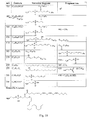
- the compounds as described above may also be further characterized by molecular formula a) C 25 H 51 NO 9 P, b) C 27 H 55 NO 9 P, c) C 39 H 74 NO 7 P, d) C 41 H 74 NO 7 P, e) C 43 H 78 NO 7 P, and f) C 43 H 81 NO 10 P, respectively; and/or by the structures shown in a) figure 12 ; b) figure 13 ; c) figure 17 ; d) figure 18 ; e) figure 19 ; and f) figure 14 , respectively.
- the compounds may also be selected from the group consisting of metabolites with accurate masses measured in Daltons of, or substantially equivalent to, a) 567.3547, b) 565.3394, c) 805.5832, d) 827.57, e) 829.5856, f) 831.5997, and g) 853.5854.
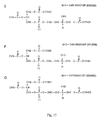
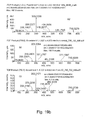
- These compounds may be further characterized by molecular formula a) C 27 H 55 NO 9 P, b) C 27 H 55 NO 9 P, c) C 43 H 83 NO 10 P, d) C 45 H 81 NO 10 P, e) C 45 H 83 NO 10 P, f) C 45 H 85 NO 10 P, and g) C 47 H 83 NO 10 P, respectively; and/or by the structure shown in a) Figure 15A ; b) Figure 15B ; c) Figure 15C ; d) Figure 15D ; e) Figure 15E ; f) Figure 15F ; and g) Figure 15G , respectively.
- the compounds may further be selected from the group consisting of metabolites M05 to M24 with accurate masses of, or substantially equivalent to those listed in Table 18.
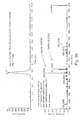
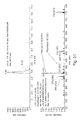
- the metabolites with accurate masses measured in Daltons of, or substantially equivalent to, a) 701.53591, b) 699.52026, c) 723.52026, d) 747.52026, e) 729.56721, f) 727.55156, g) 779.58286, and h) 775.55156 maybe further characterized by a MS/MS spectrum as shown in a) figure 21 ; b) figure 22 ; c) figure 23 ; d) figure 24 ; e) figure 25 ; f) figure 26 ; g) figure 27 ; and h) figure 28 , respectively.
- the compounds as described above may also be further characterized by molecular formula a) C 39 H 76 NO 7 P, b) C 39 H 74 NO 7 P, c) C 41 H 74 NO 7 P, d) C 43 H 74 NO 7 P, e) C 41 H 80 NO 7 P, f) C 41 H 78 NO 7 P, g) C 45 H 82 NO 7 P, and h) C 45 H 78 NO 7 P, respectively and/or by the structure respectively.
- novel compounds may also be selected from the group consisting of the metabolites listed in Table 30.
- the metabolites with accurate masses measured in Daltons of, or substantially equivalent to, 207.0822, 275.8712, 371.7311, 373.728, 432.1532, 485.5603, 487.6482, 562.46, 622.2539, 640.2637, 730.6493, and 742.2972 are of particular interest.
- One or more than one of the compounds of the present invention may be used for the differential diagnosis of dementia.
- the present invention provides a method for differentially diagnosing dementia or the risk of dementia in a patient, the method comprising the steps of:
- the the step of analyzing may comprise analyzing the sample by liquid chromatography mass spectrometry (LC-MS), or alternatively may comprise analyzing the sample by liquid chromatography and linear ion trap mass spectrometry when the method is a highthroughput method.
- LC-MS liquid chromatography mass spectrometry
- the one or more than one reference sample is a first reference sample obtained from a non-demented control individual.
- the one or more than one reference sample may also comprise a second reference sample obtained from a patient with clinically diagnosed AD-dementia; a third reference sample obtained from a patient with clinically diagnosed non-AD dementia; and/or a fourth reference sample obtained from a patient suffering from significant cognitive impairment.
- the sample and the reference sample are serum samples
- the one or more than one metabolite marker is selected from the metabolites listed in Tables 1 to 7, or a combination thereof.
- These metabolite markers may be selected from the group consisting of phosphatidylcholine-related compounds, ethanolamine plasmalogens, endogenous fatty acids, essential fatty acids, lipid oxidation byproducts, metabolite derivatives of said metabolite classes, and any metabolite that may contribute in any way to the anabolic/catabolic metabolism of said metabolite classes.
- the one or more than one metabolite marker needed for optimal diagnosis may comprise metabolites with accurate masses measured in Daltons of, or substantially equivalent to, 541.3432, 569.3687, 699.5198, 723.5195, 723.5197, 751.5555, 803.568, 886.5582 , and any combination thereof.
- the metabolite of accurate masses 699.5198, 723.5195, 723.5197, and 751.555 are ethanolamine plasmalogens and are specifically decreased in patients with AD dementia; and the metabolite markers of accurate masses 541.3432, 569.3687, 803.568, and 886.5582 are phosphatidylchoine metabolites, are decreased in patients with cognitive impairment on ADAS-cog, and severity of cognitive impairment correlates to the degree of decrease.
- the one or more than one metabolite marker may be the metabolites with accurate masses measured in Daltons of, or substantially equivalent to, a) 541.3432, b) 569.3687, c) 699.5198, d) 723.5195, e) 751.5555, and f) 803.568. These metabolites may be further characterized by
- the metabolite may also be further characterized by molecular formula a) C 25 H 51 NO 9 P, b) C 27 H 55 NO 9 P, c) C 39 H 74 NO 7 P, d) C 41 H 74 NO 7 P, e) C 43 H 78 NO 7 P, and f) C 43 H 81 NO 10 P, respectively; and/or by the structure shown in a) figure 12 ; b) figure 13 ; c) figure 17 ; d) figure 18 ; e) figure 19 ; and f) figure 14 , respectively.
- the sample and the reference sample may be cerebrospinal fluid (CSF) samples, and the one or more than one metabolite marker is selected from the metabolites listed in Table 13, or a combination thereof.
- CSF cerebrospinal fluid
- metabolite markers needed for optimal diagnosis may comprise metabolites with accurate masses measured in Daltons of, or substantially equivalent to, 207.0822, 275.8712, 371.7311, 373.728, 432.1532, 485.5603, 487.6482, 562.46, 622.2539, 640.2637, 730.6493, 742.2972, and any combination thereof.
- metabolite markers 207.0822, 432.1532, 562.46, 622.2539,640.2637, 730.6493, and 742.2972 are increased in patients with AD dementia; and metabolite markers 275.8712, 371.7311, 373.728, 485.5603, and 487.6482 are decreased in patients with AD dementia.
- the sample and the reference sample are serum samples
- the one or more than one metabolite marker may be selected from metabolites M05 to M24 with accurate masses of, or substantially equivalent to those listed in Table 18.
- the one or more than one metabolite marker of particular interest may comprise metabolites with accurate masses measured in Daltons of, or substantially equivalent to, a) 701.53591, b) 699.52026, c) 723.52026, d) 747.52026, e) 729.56721, f) 727.55156, g) 779.58286, and h) 775.55156, and wherein a decrease in the level of a) to h) indicates AD dementia with a severe cognitive impairment.
- the metabolites listed above may be further characterized by a MS/MS spectrum as shown in a) figure 21 , b) figure 22 , c) figure 23 , d) figure 24 , e) figure 25 , f) figure 26 , g) figure 27 , and h) figure 28 , respectively.
- the metabolites may also be further characterized by molecular formula a) C 39 H 76 NO 7 P, b) C 39 H 74 NO 7 P, c) C 41 H 74 NO 7 P, d) C 43 H 74 NO 7 P, e) C 41 H 80 NO 7 P, f) C 41 H 78 NO 7 P, g) C 45 H 82 NO 7 P, and h) C 45 H 78 NO 7 P, respectively; and/or by the structure respectively.
- a method for assessing dementia or the risk of dementia in a patient comprising the steps of:
- the the step of analyzing may comprise analyzing the sample by liquid chromatography mass spectrometry (LC-MS), or alternatively may comprise analyzing the sample by liquid chromatography and linear ion trap mass spectrometry when the method is a highthroughput method.
- LC-MS liquid chromatography mass spectrometry
- the one or more than one reference sample may be a first reference sample obtained from a non-demented control individual.
- the one or more than one reference sample may also further comprise a second reference sample obtained from a patient with cognitive impairment as measured by ADAS-cog, and/or a third reference sample obtained from a patient with with cognitive impairment as measured by MMSE.
- the one or more than one metabolite marker in the method described above may be selected from the metabolites listed in Tables 10-12, or a combination thereof.
- the one or more than one metabolite markers is selected from the group consisting of metabolites with accurate masses measured in Daltons of, or substantially equivalent to 541.3432, 569.3687, 699.5198, 723.5195, 723.5197, 751.5555, 803.568, 886.5582, 565.3394, 569.369, 801.555, 857.6186, and any combination thereof.
- a decrease in the patient sample in metabolite markers 699.5198, 723.5195, 723.5197, and 751.555 indicates AD pathology; a decrease in the patient sample in metabolite markers 541.3432, 569.3687, 803.568, and 886.5582 indicates cognitive impairment on ADAS-cog; and a decrease in the patient sample in metabolite markers 565.3394, 569.369, 801.555, and 857.6186 indicates cognitive impairment on MMSE.
- a method for differentially diagnosing dementia or the risk of dementia in a patient comprising the steps of:
- the the step of analyzing may comprise analyzing the sample by liquid chromatography mass spectrometry (LC-MS), or alternatively may comprise analyzing the sample by liquid chromatography and linear ion trap mass spectrometry when the method is a highthroughput method.
- LC-MS liquid chromatography mass spectrometry
- the one or more than one reference sample may be a first reference sample obtained from a non-demented control individual.
- the one or more than one reference sample may further comprise a second reference sample obtained from a patient with clinically diagnosed AD-dementia; a third reference sample obtained from a patient with clinically diagnosed non-AD dementia; and/or a fourth reference sample obtained from a patient suffering from significant cognitive impairment.
- the sample and the reference sample are serum samples
- the one or more than one metabolite marker is selected from metabolites M05 to M24 with accurate masses of, or substantially equivalent to those listed in Table 18.
- the one or more than one metabolite marker comprising metabolites with accurate masses measured in Daltons of, or substantially equivalent to, a) 701.53591, b) 699.52026, c) 723.52026, d) 747.52026, e) 729.56721, f) 727.55156, g) 779.58286, and h) 775.55156
- the internal control metabolite comprising the metabolite with accurate mass measured in Daltons of, or substantially equivalent to, 719.54648.
- the metabolites described above may be further characterized by a MS/MS spectrum as shown in a) figure 21 , b) figure 22 , c) figure 23 , d) figure 24 , e) figure 25 , f) figure 26 , g) figure 27 , and h) figure 28 , respectively.
- metabolites may also be further characterized by molecular formula a) C 39 H 76 NO 7 P, b) C 39 H 74 NO 7 P, c) C 41 H 74 NO 7 P, d) C 43 H 74 NO 7 P, e) C 41 H 80 NO 7 P, f) C 41 H 78 NO 7 P, g) C 45 H 82 NO 7 P, and h) C 45 H 78 NO 7 P, respectively, and the internal control metabolite may be characterized by molecular formula C 39 H 78 NO 8 P; and/or by the structure respectively, and the internal control metabolite may be further characterized by the structure
- a method for evaluating the efficacy of a therapy for treating dementia in a patient comprising:
- the the step of analyzing may comprise analyzing the sample by liquid chromatography mass spectrometry (LC-MS), or alternatively may comprise analyzing the sample by liquid chromatography and linear ion trap mass spectrometry when the method is a highthroughput method.
- LC-MS liquid chromatography mass spectrometry
- the one or more than one reference sample may be a plurality of samples obtained from from a non-demented control individuals; a plurality of samples obtained from from a clinically diagnosed AD patient; one or more than one pre-therapy baseline sample obtained from the patient; or any combination thereof.
- the sample and the reference sample are serum samples
- the one or more than one metabolite marker is selected from the metabolites listed in Tables 1 to 7, or a combination thereof.
- These metabolite marker markers needed for optimal diagnosis may be selected from the group consisting of phosphatidylcholine-related compounds, ethanolamineplasmalogens, endogenous fatty acids, essential fatty acids, lipid oxidation byproducts, metabolite derivatives of said metabolite classes, and any metabolite that may contribute in any way to the anabolic/catabolic metabolism of said metabolite classes.
- the sample and the reference sample are cerebrospinal fluid (CSF) samples
- the one or more than one metabolite marker is selected from the metabolites listed in Table 13, or a combination thereof.
- CSF cerebrospinal fluid
- the sample and the reference sample are serum samples
- the one or more than one metabolite marker maybe selected from metabolites M05 to M24 with accurate masses of, or substantially equivalent to those listed in Table 18.
- the metabolites with accurate masses measured in Daltons of, or substantially equivalent to, 701.53591, 699.52026, 723.52026, 747.52026, 729.56721, 727.55156, 779.58286, and 775.55156 maybe of particular interest.
- the present invention also provides a method for evaluating the efficacy of a therapy for treating dementia in a patient, comprising:
- the the step of analyzing may comprise analyzing the sample by liquid chromatography mass spectrometry (LC-MS), or alternatively may comprise analyzing the sample by liquid chromatography and linear ion trap mass spectrometry when the method is a highthroughput method.
- LC-MS liquid chromatography mass spectrometry
- the one or more than one reference sample may be a plurality of samples obtained from from a non-demented control individuals; a plurality of samples obtained from from a clinically diagnosed AD patient; one or more than one pre-therapy baseline sample obtained from the patient; or any combination thereof.
- the sample and said reference sample are serum samples
- the one or more than one metabolite marker may be selected from metabolites M05 to M24 with accurate masses of, or substantially equivalent to those listed in Table 18.
- the metabolites with accurate masses measured in Daltons of, or substantially equivalent to, 701.53591, 699.52026, 723.52026, 747.52026, 729.56721, 727.55156, 779.58286, and 775.55156 are the internal control metabolite with accurate mass measured in Daltons of, or substantially equivalent to, 719.54648.
- HTS assays can be used for the following, wherein the specific "health-state” in this application refers to, but is not limited to dementia:
- diagnosing a given health-state, or risk for development of a health-state by determining the levels of any combination of metabolite features disclosed from the FTMS analysis patient serum, using any method including but not limited to mass spectrometry, NMR, UV detection, ELISA (enzyme-linked immunosorbant assay), chemical reaction, image analysis, or other.
- the present invention relates to small molecules or metabolites that are found to have significantly different abundances between clinically diagnosed dementia or other neurological disorders, and normal patients.
- the present invention also relates to methods for diagnosing dementia and other neurological disorders.
- the present invention provides novel methods for discovering, validating, and implementing a metabolite markers for one or more diseases or particular health-states.
- a method for identifying specific biomarkers for differentially diagnosing AD dementia, non-AD dementia, cognitive impairment, or a combination thereof comprising the steps of: introducing one or more than one sample from one or more than one patient with clinically diagnosed AD dementia, clinically diagnosed non-AD dementia, or significant cognitive impairment, said sample containing a plurality of metabolites into a high resolution mass spectrometer (for example, and without wishing to be limiting, a Fourier Transform Ion Cyclotron Resonance Mass Spectrometer (FTMS)); obtaining, identifying and quantifying data for the metabolites; creating a database of said identifying and quantifying data; comparing the identifying and quantifying data from the sample with corresponding data from a sample from a non-demented normal patient; identifying one or more than one metabolites that differ.
- the metabolite markers for example, and without wishing
- a group of patients representative of the health state i.e. a particular disease
- a group of "normal" counterparts are required.
- Biological samples taken from the patients in the particular health-state category can then be compared to the same samples taken from the normal population as well as to patients in similar health-state category in the hopes of identifying biochemical differences between the two groups, by analyzing the biochemicals present in the samples using FTMS and/or LC-MS.
- the method for the discovery of metabolite markers as described above may be done using non-targeted metabolomic strategies or methods. Multiple non-targeted metabolomics strategies have been described in the scientific literature including NMR [18], GC-MS [19-21], LC-MS, and FTMS strategies [18, 22-24].
- the metabolic profiling strategy employed for the discovery of differentially expressed metabolites in the present invention was the non-targeted FTMS strategy by Phenomenome Discoveries [21,24-27; see also US Published Application No. 2004-0029120 A1 , Canadian Application No. 2,298,181 , and WO 0157518 ].
- Non-targeted analysis involves the measurement of as many molecules in a sample as possible, without any prior knowledge or selection of components prior to the analysis. Therefore, the potential for non-targeted analysis to discover novel metabolite biomarkers is high versus targeted methods, which detect a predefined list of molecules.
- the present invention uses anon-targeted method to identify metabolite components in serum samples that differ between clinically diagnosed AD individuals and non AD individuals. The same technology was used to identify metabolite components that differ between clinically diagnosed AD individuals with dementia from clinically diagnosed non-AD individuals with dementia in CSF samples.
- the present invention also provides a method for differentially diagnosing dementia or the risk of dementia in a patient, the method comprising the steps of:
- the step of analyzing the sample may comprise analyzing the sample using a mass spectrometer (MS).
- MS mass spectrometer
- mass spectrometer could be of the FTMS, orbitrap, time of flight (TOF) or quadrupole types.
- the mass spectrometer could be equipped with an additional pre-detector mass filter.
- Q-FTMS quadrupole-FTMS
- Q-TOF quadrupole -TOF
- TQ or QQQ triple quadrupole
- MSn refers to the situation where the parent ion is fragmented by collision induced dissociation (CID) or other fragmentation procedures to create fragment ions, and then one or more than one of said fragments are detected by the mass spectrometer. Such framents can then be further fragmented to create further fragments.
- the sample could be introduced into the mass spectrometer using a liquid or gas chromatographic system or by direct injection.
- differential diagnosis or “differentially diagnosing” it is meant that various aspects of a disease state may be distinguished from one another.
- the present invention allows for differential diagnosis a various states of dementia; for example and without wishing to be limiting, the present invention may provide differential diagnosis of AD dementia, non-AD dementia, cognitive impariment, or a combination thereof.
- AD dementia refers to dementia caused by Alzheimer's disease (AD, which may also be referred to herein as “SDAT”); types of “non-AD dementia” include, but are not limited to, dementia with Lewy bodies (DLB), frontotemporal lobe dementia (FTD), vascular induced dementia (e.g.
- multi-infarct dementia multi-infarct dementia
- anoxic event induced dementia e.g. cardiac arrest
- trauma to the brain induced dementia e.g. dementia pugilistica [boxer's dementia]
- Autism Multiple Sclerosis, Parkinson's Disease, Bipolar Disorder, Ischemia, Huntington's Chorea, Major Depressive Disorder, Closed Head Injury, Hydrocephalus, Amnesia, Anxiety Disorder, Traumatic Brain Injury, Obsessive Compulsive Disorder, Schizophrenia, Mental Retardation, and/or Epilepsy.
- AD dementia and FTD and DLB non-AD dementias.
- Cognitive impairment can be assessed by any method known in the art.
- ADAS Alzheimer's Disease Assessment Scale
- This neuropsychological testis used to test the language ability (speech and comprehension), memory, ability to copy geometric figures and orientation to current time and place. Errors on the test are recorded resulting in a reverse score impairment (i.e., the higher the score on ADAS, the greater the cognitive impairment).
- a score of 0-15 is considered normal, 16-47 is considered mild-moderate impairment and a score of 48-70 is considered moderate-severe impairment [28].
- Another neuropsychological test Folstein's Mini-Mental State Exam (MMSE), which measures cognitive impairment, may be used.
- MMSE Folstein's Mini-Mental State Exam
- the MMSE is widely used and is an extensively validated test of orientation, short and long-term memory, praxis, language and comprehension.
- additional neuropsychological assessment that measure aspects of the same cognitive deficit, such as, but not exclusive to, the Blessed Roth Dementia Rating Scale, the 7-Minute Screen, Wechsler Memory Scale (WMS), Halstead-Reitan Battery, Rey Auditory Verbal Learning Test, California Verbal Learning Test, Buschke Selective Reminding Test, Boston Naming Test, Clinical Evaluation of Language Functioning, Peabody Picture Vocabulary Tests, Mattis Dementia Rating Scale, Memory Assessment Scale, Tests of Memory and Learning, Wide Range Assessment of Memory and Learning, can also be used.
- any imaging technique that has the potential to show a cognitive impairment or structural change such as, but not exclusive to, structural magnetic resonance imaging (MRI), positron emission tomography (PET), computerized tomography (CT), functional magnetic resonance imaging (fMRI), electroencephalography (EEG), single positron emission tomography (SPECT), event related potentials, magnetoencephalography, multi-modal imaging, would be measuring the structural/regional brain areas that are responsible for that cognitive deficit and AD pathology, and therefore, would be related to the metabolites disclosed in this invention.
- MRI structural magnetic resonance imaging
- PET positron emission tomography
- CT computerized tomography
- fMRI functional magnetic resonance imaging
- EEG electroencephalography
- SPECT single positron emission tomography
- event related potentials magnetoencephalography
- multi-modal imaging would be measuring the structural/regional brain areas that are responsible for that cognitive deficit and AD pathology, and therefore, would be related to the metabolites disclosed in this invention.
- any type of biological sample that originates from anywhere within the body, for example but not limited to, blood (serum/plasma), CSF, urine, stool, breath, saliva, or biopsy of any solid tissue including tumor, adjacent normal, smooth and skeletal muscle, adipose tissue, liver, skin, hair, brain, kidney, pancreas, lung, colon, stomach, or other may be used.
- samples that are serum or CSF. While the term "serum” is used herein, those skilled in the art will recognize that plasma or whole blood or a sub-fraction of wholeblood may also be used.
- CSF may be obtained by a lumbar puncture requiring a local anesthetic.
- a blood sample when drawn from a patient there are several ways in which the sample can be processed.
- the range of processing can be as little as none (i.e. frozen whole blood) or as complex as the isolation of a particular cell type.
- the most common and routine procedures involve the preparation of either serum or plasma from whole blood. All blood sample processing methods, including spotting of blood samples onto solid-phase supports, such as filter paper or other immobile materials, are also contemplated by the present invention.
- CSF samples may be collected using a lumbar puncture procedure; a local anesthetic is applied to the lower back. A needle is then inserted into the numbed skin between the L4 and L5 vertebrae until it pierces the subdural space. The CSF may be collected into sterile tubes.
- a CSF assay used after a positive result on a AD-specific serum test a differential diagnosis between AD and non-AD has a higher degree of confirmation.
- the processed blood, serum or CSF sample described above may then be further processed to make it compatible with the methodical analysis technique to be employed in the detection and measurement of the metabolites contained within the processed serum or CSF sample.
- the types of processing can range from as little as no further processing to as complex as differential extraction and chemical derivatization.
- Extraction methods could include sonication, soxhlet extraction, microwave assisted extraction (MAE), supercritical fluid extraction (SFE), accelerated solvent extraction (ASE), pressurized liquid extraction (PLE), pressurized hot water extraction (PHWE) and/or surfactant assisted extraction (PHWE) in common solvents such as methanol, ethanol, mixtures of alcohols and water, or organic solvents such as ethyl acetate or hexane.
- a method of particular interest for extracting metabolites for FTMS non-targeted analysis is to perform a liquid/liquid extraction whereby non-polar metabolites dissolve in an organic solvent and polar metabolites dissolve in an aqueous solvent.
- the extracted samples may be analyzed using any suitable method know in the art.
- extracts of biological samples are amenable to analysis on essentially any mass spectrometry platform, either by direct injection or following chromatographic separation.
- Typical mass spectrometers are comprised of a source which ionizes molecules within the sample, and a detector for detecting the ionized molecules or fragments of molecules.
- Non-limiting examples of common sources include electron impact, electrospray ionization (ESI), atmospheric pressure chemical ionization (APCI), atmospheric pressure photo ionization (APPI), matrix assisted laser desorption ionization (MALDI), surface enhanced laser desorption ionization (SELDI), and derivations thereof.
- Common mass separation and detection systems can include quadrupole, quadrupole ion trap, linear ion trap, time-of-flight (TOF), magnetic sector, ion cyclotron (FTMS), Orbitrap, and derivations and combinations thereof
- TOF time-of-flight
- FTMS ion cyclotron
- Orbitrap derivations and combinations thereof
- metabolic it is meant specific small molecules, the levels or intensities of which are measured in a sample, and that may be used as markers to diagnose a disease state. These small molecules may also be referred to herein as “metabolite marker”, “metabolite component”, “biomarker”, or “biochemical marker”.
- the metabolites are generally characterized by their accurate mass, as measured by mass spectormetry technique used in the above method.
- the accurate mass may also be referred to as "accurate neutral mass” or “neutral mass”.
- the accurate mass of a metabolite is given herein in Daltons (Da), or a mass substantially equivalent thereto. By “substantially equivalent thereto”, it is meant that a +/- 5 ppm difference in the accurate mass would indicate the same metabolite, as would be recognized by a person of skill in the art.
- the accurate mass is given as the mass of the neutral metabolite.
- the ionization of the metabolites which occurs during analysis of the sample, the metabolite will cause either a loss or gain of one or more hydrogen atoms and a loss or gain of an electron.
- This changes the accurate mass to the "ionized mass” which differs from the accurate mass by the mass of hydrogens and electrons lost or gained during ionization.
- the accurate neutral mass will be refered to herein.
- Data is collected during analysis and quantifying data for one or more than one metabolite is obtained.
- Quantifying data is obtained by measuring the levels or intensities of specific metabolites present in a sample.
- the quantifying data is compared to correponding data from one or more than one reference sample.
- the "reference sample” is any suitable reference sample for the particular disease state.
- the reference sample may be a sample from a non-demented control individual, i.e., a person not suffering from AD dementia, non-AD dementia or cognitive impairment (also refered to herein as a " 'normal' counterpart"); the reference sample may also be a sample obtained from a patient with clinically diagnosed with AD, a patient with clinically diagnosed non-AD dementia, or a patient di agnosed with significant cognitive impairment.
- the one or more than one reference sample may be used for comparison to the quantifying data.
- the one or more than one reference sample may be a first reference sample obtained from a non-demented control individual.
- the one or more than one reference sample may further include a second reference sample obtained from a patient with clinically diagnosed AD-dementia, a third reference sample obtained from a patient with clinically diagnosed non-AD dementia, a fourth reference sample obtained from a patient suffering from significant cognitive impairment, or any combination thereof.
- the present invention also provides novel compounds, identified using the methods of the present invention.
- the novel compounds may be used as metabolite markers in the differential diagnosis of dementia, as described above.
- the compounds may be selected from the metabolites listed in Tables 1 to 7, or a combination thereof. These metabolites were identified in serum samples, and may be phosphatidylcholine-related compounds, ethanolamine plasmalogens, endogenous fatty acids, essential fatty acids, lipid oxidation byproducts, metabolite derivatives of said metabolite classes, and any metabolite that may contribute in any way to the anabolic/catabolic metabolism of said metabolite classes.
- an optimal panel of compounds may be indentified from those metabolites listed in Tables 1 to 7.
- the metabolite markers maybe metabolites with accurate masses measured in Daltons of, or substantially equivalent to, 541.3432, 569.3687, 699.5198, 723.5195, 723.5197, 751.5555, 803.568, 886.5582.
- the metabolites of accurate masses 699.5198, 723.5195, 723.5197, and 751.555 have presently been identified as ethanolamine plasmalogens, and are specifically decreased in patients with AD dementia.
- the metabolite markers of accurate masses 541.3432, 569.3687, 803.568, and 886.5582 have presently been identified as phosphatidylcholine related metabolites, and are decreased in patients with cognitive impairment on ADAS-cog, and severity of cognitive impairment correlates to the degree of decrease.
- the metabolites with accurate masses measured in Daltons of, or substantially equivalent to, a) 541.3432, b) 569.3687, c) 699.5198, d) 723.5195, e) 751.5555, f) 803.568, can be further characterized by
- the ethanolamine plasmalogen metabolites (neutral masses 699.5198, 723.5195, 751.5555) and the phosphatidylcholine metabolites (neutral masses 699.5198, 723.5195, 751.5555) are decreased in the serum of AD subjects exhibiting significant cognitive impairment. This is the first report of serum-based changes in these metabolites associated with AD and dementia. It is further shown that the decrease in the disclosed serum phospatidylcholine related metabolites occurs in all patients exhibiting a significant cognitive impairment as measured by the ADAS-cog regardless of AD status, and that the degree of decrease correlates with the severity of the cognitive impairment. However, the observed decrease in disclosed ethanolamine plasmalogens is independent of cognitive impairment, occurs specifically in subjects with AD and is therefore a true diagnostic of AD.
- Ethanolamine plasmalogens are a type of ethanolamine phospholipid. Ethanolamine phospholipids can be further differentiated based on their sn-1 configurations (either acyl, ether, or vinyl ether). The sn-2 position is typically acyl and the sn-3 position contains the phosphoethanolamine moiety. Therefore, the three classes are described as either diacyl (also referred to herein as PtdEt), alkyl-acyl (also referred to herein as plasmanyl) or alkenyl-acyl (also referred to herein as EtnPl or plasmenyl).
- Various basic structures of ethanolamine phospholipids are shown in Figure 20 , along with the standard naming convention used herein.
- a decrease in the disclosed ethanolamine plasmalogens may represent the initial or early stages AD, and can be detected non-invasively in living subjects by measuring serum levels of specific ethanolamine plasmalogens.
- cognitive impairment can be quantitated non-invasively by measuring the serum levels of specific phosphatidylcholine metabolites.
- metabolites have also been identified.
- metabolites specific to AD dementia (accurate masses 699.5198, 723.5195, 723.5197, 751.555) as ethanolamineplasmalogens
- metabolites M05 to M24 as listed and characterized (accurate mass, name/composition, molecular formula) in Table 18.
- the structure of the metabolite can be deduced based on the metabolite name as indicated in Table 18 and the nomenclature, as indicated in Figure 20 .
- those of particular interest include metabolites with accurate masses measured in Daltons of, or substantially equivalent to, a) 701.53591, b) 699.52026, c) 723.52026, d) 747.52026, e) 729.56721, f) 727.55156, g) 779.58286, and h) 775.55156, which can be further characterized by
- the compounds may be selected from the metabolites listed in Table 13, or a combination thereof. These metabolites were identified in CSF samples. Of particular interest are the metabolites with accurate masses measured in Daltons of, or substantially equivalent to, 207.0822, 275.8712, 371.7311, 373.728, 432.1532, 485.5603, 487.6482, 562.46, 622.2539, 640.2637, 730.6493, 742.2972.
- the metabolite markers 207.0822, 432.1532, 562.46,622.2539, 640.2637, 730.6493, and 742.2972 are increased in patients with AD dementia; and metabolite markers 275.8712, 371.7311, 373.728, 485.5603, and 487.6482 are decreased in patients with AD dementia.
- a method for assessing dementia or the risk of dementia in a patient comprises the steps of:
- the step of analyzing the sample (steb b)) may comprise analyzing the sample by liquid chromatography mass spectrometry (LC-MS).
- the step of analyzing the sample (step b)) may comprise analyzing the sample by linear ion trap mass spectrometry followed by liquid chromatograph, when the method is a highthroughput method.
- the one or more than one reference sample may include a first reference sample obtained from a non-demented control individual, a second reference sample obtained from a patient with cognitive impairment as measured by ADAS-cog, a third reference sample obtained from a patient with with cognitive impairment as measured by MMSE, or a combination of one or more of these.
- the one or more than one metabolite marker used to asses dementia or the risk of dementia may be selected from the metabolites listed in Tables 10-12, or a combination thereof.
- metabolites with accurate masses measured in Daltons of, or substantially equivalent to 541.3432, 569.3687, 699.5198, 723.5195, 723.5197, 751.5555, 803.568, 886.5582, 565.3394, 569.369, 801.555, 857.6186.
- a decrease in the patient sample in metabolite markers 699.5198,723.5195,723.5197, and 751.555 indicates AD pathology; a decrease in the patient sample in metabolite markers 541.3432,569.3687,803.568, and 886.5582 indicates cognitive impairment on ADAS-cog; and 565.3394, 569.369, 801.555, and 857.6186 indicates cognitive impairment on MMSE.
- a method for differentially diagnosing dementia or the risk of dementia in a patient comprising the steps of:
- the step of analyzing the sample may comprise analyzing the sample using a mass spectrometer (MS).
- MS mass spectrometer
- such mass spectrometer could be of the FTMS, orbitrap, time of flight (TOF) or quadrupole types.
- the mass spectrometer could be equipped with an additional pre-detector mass filter.
- Q-FTMS quadrupole-FTMS
- Q-TOF quadrupole-TOF
- TQ or QQQ triple quadrupole
- MSn refers to the situation where the parent ion is fragmented by collision induced dissociation (CID) or other fragmentation procedures to create fragment ions, and then one or more than one of said fragments are detected by the mass spectrometer. Such framents can then be further fragmented to create further fragments.
- the sample could be introduced into the mass spectrometer using a liquid or gas chromatographic system or by direct injection.
- the one or more than one reference sample may be a first reference sample obtained from a non-demented control individual.
- the one or more than one reference sample may further include a second reference sample obtained from a patient with clinically diagnosed AD-dementia, a third reference sample obtained from a patient with clinically diagnosed non-AD dementia, a fourth reference sample obtained from a patient suffering from significant cognitive impairment, or any combination thereof.
- the sample and reference sample maybe serum samples.
- the one or more than one metabolite marker may be selected from the metabolites as listed and characterized (accurate mass, name/composition, molecular formula) in Table 18.
- the "internal control metabolite” refers to an endogenous metabolite naturally present in the patient. Any suitable endogenous metabolite that does not vary over the disease states can be used as the internal control metabolite.
- the internal control metabolite may be phosphatidylethanolamine 16:0/18:0 (PtdEt 16:0/18:0, M01), as shown in Table 18; this internal control metabolite has a molecular formula of C 39 H 78 NO 8 P, and a structure characterized as
- those of particular interest in the above method include metabolites with accurate masses measured in Daltons of, or substantially equivalent to, a) 701.53591, b) 699.52026, c) 723.52026, d) 747.52026, e) 729.56721, f) 727.55156, g) 779.58286, and h) 775.55156.
- a decrease in the ratio of a) to h) to the internal control metabolite indicates AD dementia with a severe cognitive impairment.
- a method for evaluating the efficacy of a therapy for treating dementia in a patient comprising:
- a ratio for each of the one or more than one metabolite marker to an internal control metabolite may be obtained.
- each ratio of said one or more than one metabolite marker to the internal control metabolite to corresponding data obtained from one or more than one reference sample is compared to evaluate the efficacy of the therapy.
- the step of analyzing may comprise analyzing the sample by liquid chromatography mass spectrometry (LC-MS), or alternatively may comprise analyzing the sample by liquid chromatography and linear ion trap mass spectrometry when the method is a highthroughput method.
- LC-MS liquid chromatography mass spectrometry
- therapy it is meant any suitable course of therapy that may improve the health state or demented state of the patient being evaluated.
- the efficacy of the therapy the effect of the particular therapy in improving or degrading the health state of the patient will be measured. In doing so, a person of skill in the art would be capable of determining whether the therapy is effective for treating the demented state.
- the one or more than one reference sample may be any suitable reference sample.
- the reference sample may be a plurality of samples obtained from from non-demented control individuals; a plurality of samples obtained from clinically diagnosed AD patients; one or more than one pre-therapy baseline sample obtained from the patient; or any combination thereof.
- a pre-therapy baseline sample from the patient is particularly useful, as the variation in metabolites will then be specific to the patient.
- the sample and the reference sample may be serum samples.
- the one or more than one metabolite marker could be selected from the metabolites listed in Tables 1 to 7, or a combination thereof, for example, metabolite markers with accurate masses measured in Daltons of, or substantially equivalent to, 541.3432, 569.3687, 699.5198, 723.5195, 723.5197, 751.5555, 803.568, 886.5582.
- the metabolite markers may be selected from metabolites M05 to M24 with accurate masses of, or substantially equivalent to those listed in Table 18, for example, metabolites with accurate masses measured in Daltons of, or substantially equivalent to, 701.53591, 699.52026, 723.52026, 747.52026, 729.56721, 727.55156, 779.58286, and 775.55156.
- Metabolites M05-M24 could also be used when a ratio is obtained between the metabolites and the internal control metabolite; the internal metabolite could be, for example, metabolite M01, as described in Table 18.
- the sample and the reference sample may also be cerebrospinal fluid (CSF) samples.
- CSF cerebrospinal fluid
- the one or more than one metabolite marker could be selected from the metabolites listed in Table 13, or a combination thereof; for example, metabolites with accurate masses measured in Daltons of, or substantially equivalent to, 207.0822, 275.8712, 371.7311, 373.728, 432.1532, 485.5603, 487.6482, 562.46, 622.2539, 640.2637, 730.6493, 742.2972.
- the identified metabolites can be readily measured systemically. This point is of fundamental importance, since the majority of research pertaining to AD and other neurological disorders has ignored the peripheral systems.
- the ability to measure neurodegenerative processes within a blood sample is of substantial value in the diagnosis of dementia.
- these are a valid biochemical marker of AD pathology since this molecular species' content does not change in Parkinson's disease, a disease which is often accompanied by dementia [29].
- the specificity of the plasmalogen metabolites to AD indicates that its levels in serum could be readily measured longitudinally throughout the lifetime of an individual to assess the risk or for early detection of the disease prior to the emergence of clinical symptoms.
- the present invention also provides high throughput methods for differential diagnosis of AD dementia and non-AD dementia states.
- the method may involve fragmentation of the parent molecule; in a non-limiting example, this may be accomplished by a Q-TrapTM system.
- Detection of the metabolites may be performed using one of various assay platforms, including colorimetric chemical assays (UV, or other wavelength), antibody-based enzyme-linked immunosorbant assays (ELISAs), chip-based and polymerase-chain reaction for nucleic acid detection assays, bead-based nucleic-acid detection methods, dipstick chemical assays or other chemical reaction, image analysis such as magnetic resonance imaging (MRI), positron emission tomography (PET) scan, computerized tomography (CT) scan, nuclear magnetic resonance (NMR), and various mass spectrometry-based systems.
- MRI magnetic resonance imaging
- PET positron emission tomography
- CT computerized tomography
- NMR nuclear magnetic resonance
- a high-throughput method for determining the levels of the metabolites in a person's blood and comparing the levels to levels in a normal "reference" population can lead to a prediction of whether the person has AD or not. This can be carried out in several ways. One way is to use a prediction algorithm to classify the test sample, as previously described, which would output a percentage probability for having AD. A predictive approach would work independently of the assay method, as long as the intensities of the metabolites could be measured. Another method could simply be based on setting a threshold intensity level from the mass spectrometer, and determining whether a person's profile is above or below the threshold which would indicate their AD status.
- a preferred method is a truly quantitative assay could be performed to determine the molar concentration of the six metabolites in the non-demented normal and AD population.
- An absolute threshold concentration could then be determined for AD-positivity. In a clinical setting, this would mean that if the measured levels of the metabolites, or combinations of the metabolites, were below a certain concentration, there would be an associated probability that the individual is positive for AD. Therefore, the optimal diagnostic test could comprise a method of measuring the intensities of the metabolites in serum, and an algorithm for taking the intensity values and outputting a predicted probability for having AD as well as for being healthy (i.e., AD-negative).
- the methods and identified biomarkers of the present invention fulfills the criteria identified in 1999 for an ideal screening test [82], as development of assays capable of detecting specific metabolites is relatively simple and cost effective per assay.
- the test is minimally invasive and is indicative of cognitive impairment and of AD pathology.
- Translation of the method into a clinical assay compatible with current clinical chemistry laboratory hardware is commercially acceptable and effective.
- the method of the present invention does not require highly trained personnel to perform and interpret the test.
- Differentially expressed metabolites were identified in clinically diagnosed AD with and without significant cognitive impairment, clinically diagnosed non-AD and non-demented controls.
- samples were obtained from representative populations of non-demented healthy individuals and of clinically diagnosed AD and non-AD dementia patients.
- the biochemical markers of AD described in the invention were derived from the analysis of 75 serum samples from patients clinically diagnosed with probable AD (43 patients with significant cognitive impairment, 32 with no cognitive impairment), serum samples from 30 patients with clinically diagnosed non-AD dementia, and 31 serum samples from non-demented controls. Samples in the three groups were from a diverse population of individuals, ranging in age, ethnicity, weight, occupation, and displaying varying non-dementia-related health-states. All samples were single time-point collections. Cognitive impairment of the patients was also assessed using the Alzheimer's Disease Assessment Scale (ADAS)-cognitive subset.
- ADAS Alzheimer's Disease Assessment Scale
- samples were obtained from a group of patients that represented clinically diagnosed AD with dementia and non-AD patients with dementia.
- the biochemical markers of AD described in this invention were derived from the analysis of 6 CSF samples from clinically diagnosed AD patients with dementia and 5 CSF samples from clinically diagnosed non-AD patients with dementia.
- Samples in both groups were from a diverse population of individuals, ranging in age, ethnicity, weight, occupation, and displaying varying non-dementia-related health-states. All samples were single time-point collections. The metabolites contained within the 136 serum samples and 11 CSF samples used in this application were separated into polar and non-polar extracts through sonication and vigorous mixing (vortex mixing).
- Mass Spectrometry Analysis Analysis of serum extracts collected from 136 individuals (75 clinically diagnosed AD, 30 clinically diagnosed non-AD, and 31 non-demented healthy controls) and 11 CSF extracts (6 clinically-diagnosed AD and 5 clinically diagnosed non-AD patients) was performed by direct injection into a FTMS and ionization by either ESI or atmospheric pressure chemical ionization (APCI) in both positive and negative modes. Sample extracts were diluted either three or six-fold in methanol:0.1%(v/v) ammonium hydroxide (50:50, v/v) for negative ionization modes, or in methanol:0.1% (v/v) formic acid (50:50, v/v) for positive ionization modes.
- sample extracts were directly injected without diluting. All analyses were performed on a Bruker Daltonics APEX III Fourier transform ion cyclotron resonance mass spectrometer equipped with a 7.0 T actively shielded superconducting magnet (Bruker Daltonics, Billerica, MA). Samples were directly injected using electrospray ionization (ESI) and/or APCI at a flow rate of 1200 ⁇ L per hour. Ion transfer/detection parameters were optimized using a standard mix of serine, tetra-alanine, reserpine, Hewlett-Packard tuning mix and the adrenocorticotrophic hormone fragment 4-10.
- ESI electrospray ionization
- the instrument conditions were tuned to optimize ion intensity and broad-band accumulation over the mass range of 100-1000 amu according to the instrument manufacturer's recommendations.
- a mixture of the abovementioned standards was used to internally calibrate each sample spectrum for mass accuracy over the acquisition range of 100-1000 amu.
- Mass Spectrometry Data Processing Using a linear least-squares regression line, mass axis values were calibrated such that each internal standard mass peak had a mass error of ⁇ 1 p.p.m. compared with its theoretical mass. Using XMASS software from Bruker Daltonics Inc., data file sizes of 1 megaword were acquired and zero-filled to 2 megawords. A sinm data transformation was performed prior to Fourier transform and magnitude calculations. The mass spectra from each analysis were integrated, creating a peak list that contained the accurate mass and absolute intensity of each peak. Compounds in the range of 100-2000 m/z were analyzed.
- Tables 1-7 show biochemical markers whose concentrations or amounts in serum are significantly different (p ⁇ 0.05) between the tested populations and therefore have potential diagnostic utility for identifying each of the aforesaid populations.
- the features are described by their accurate mass and analysis mode, which together are sufficient to provide the putative molecular formulas and chemical characteristics (such as polarity and putative functional groups) for each metabolite.
- a combination of 8 metabolites fulfills the criteria for a serum dementia test: the combination can differentiate AD dementia from non-AD dementia, the early stages of AD and healthy controls.
- the best combination of 8 metabolites included the metabolites with neutral masses (measured in Daltons) 541.3432, 569.3687, 699.5198, 723.5195, 723.5197, 751.5555, 803.568, 886.5582. Although these are the actual masses, a person skilled in the art of this technology would recognize that +/- 5 ppm difference would indicate the same metabolite.
- the results of this invention show a clear distinction between the serum of individuals with clinically diagnosed AD WITH a significant cognitive impairment, individuals with clinically diagnosed AD WITHOUT a significant cognitive impairment (this could be early stage AD), individuals with non-AD dementia WITH a significant cognitive impairment, and non-demented controls. These findings are capable of identifying and distinguishing the different types of dementia from one another and from the early stages of cognitive impairment as described in this application. From the above results, it can be further concluded that the metabolite markers with masses 699.5198, 723.5195,723.5997,751.5555 are specific for AD pathology, while markers with masses of 541.3432, 569.3687, 803.568, 886.5582 are specific for cognitive impaired based on ADAS-cog testing.
- MMSE Folstein's Mini-Mental State Exam
- a total of three 4-biomarker panels can be applied to the 136 patients to classify them into one of 8 categories which will simultaneously indicate the presence of AD pathology (biomarkers 699.5198, 723.5195, 723.5997, 751.5555), cognitive impaired on ADAS-cog (541.3432, 569.3687, 803.568, 886.5582) and cognitive impaired on MMSE (565.3394, 569.369, 801.555, 857.6186).
- each patient can be labeled using a 3 digit code from "000” indicating no cognitive impairment and no AD pathology to "111" indicating both MMSE and ADAS-cog impairment and AD pathology.
- Table 9 indicates the separation of the patient samples into the 8 categories.
- a student's t-test was performed between the different clinical groups (p ⁇ 0.05).
- the 116 metabolites that met the p-value criteria for AD vs. non-AD pathology are listed in Table 10.
- Table 11 lists the 124 metabolites that met the p-value criteria for high ADAS score vs. low ADAS score, and Table 12 contains the list of 344 metabolites that met the p-value criteria for impaired score on MMSE and normal cognition on MMSE.
- biomarkers associated with ADAS-cog score and/or MMSE are related to the ability to conceive of, organize and initiate unfamiliar sequences, the awareness of one's self and environment, as well as memory and language ability. As such, these biomarkers are not exclusive to cognitive impairment associated with dementia; rather any condition that results in any type of praxis, orientation, memory and/or language deficit would show a similar reduction within a biological sample.
- the sample set (136 individuals) used for this discovery was not trivial, and was comprised of individuals of various ethnic and geographical backgrounds, and of varying age and health status. Therefore, there is sound reason to expect that the findings are representative of the general dementia population.
- the 12 biomarker panel was tested using 5 CSF samples from undiagnosed patients. The only information available on the samples was the subject's age, gender, and whether an individual had a co gnitive deficit. If the 12 biomarker panel was correct, the subject could be diagnosed as having AD dementia, non-AD dementia, or normal. From the 5 CSF samples provided by undiagnosed patients, 1 was diagnosed with non-AD dementia, 2 with AD dementia, and 2 as normal. The two normal subjects did not have a cognitive impairment as indicated by the Mini Mental State Examination (MMSE) score. Therefore, using a 12 metabolite feature set it was possible to both diagnose AD and non-AD dementia.
- MMSE Mini Mental State Examination
- FTMS-based platform was used in the identification and selection of the optimal metabolites in serum and CSF
- other methods of subsequently detecting the molecules including other MS-based platforms, ELISAs, colorimetric assays, etc can used to detect the molecules.
- An independent mass spectrometry method was used to verify the intensity differences between non-demented normal and clinically-diagnosed AD serums of the eight diagnostic metabolites discovered using the FTMS method.
- Eight representative clinically-diagnosed AD sample extracts and eight representative non-demented control sample extracts were analyzed by LC-MS using an HP 1100 high-performance liquid chromatography interfaced to an ABI Q-Star mass spectrometer.
- Aqueous fractions from five clinically-diagnosed AD and five non-demented control sample extracts were evaporated under nitrogen gas and reconstituted in 100 uL of methanol:water:formic acid (5:94.9:0.1).
- Five ⁇ L of the reconstituted sample was subjected to HPLC (Agilent Technologies) (HP 1100 with Metasil AQ 3u, 100 x 2 mm column) for full scan and 10 ⁇ L for MS/MS at a flow rate of 0.2 ml/min.
- Eluate from the HPLC was analyzed using an ABI Q-Star XL mass spectrometer fitted with a Turboion spray ion (ESI) source in negative mode.
- the scan type in full scan mode was time-of-flight (TOF) with an accumulation time of 1.0000 seconds, mass range between 50 and 1500 Da, and duration time of 70 min.
- Source parameters were as follows: Ion source gas 1 (GS1) 55; Ion source gas 2 (GS2) 90; Curtain gas (CUR) 40; Nebulizer Current (NC) 0; Temperature 450°C; Declustering Potential (DP) -55; Focusing Potential (FP) -265; Declustering Potential 2 (DP2) -15.
- the extracted ion chromatograms (EICs) for the sixbiomarkers are shown in Figure 4
- the top panel shows the eight non-demented control EICs, and the bottom panel of each shows the eight clinically-diagnosed AD EICs.
- the sensitivity of the Q-star is superior to the FTMS, resulting in a greater magnitude in intensity difference between the non-demented control subjects and clinically diagnosed AD population for the selected biomarkers.
- Figure 5 shows the average raw intensity of the six biomarkers of the eight non-demented control and eight clinically-diagnosed AD samples as detected on the FTMS and Q-Star.
- metabolites and their associations with the clinical variables described in this invention are further confirmed using an independent mass spectrometry system.
- Representative sample extracts from each variable group are re-analyzed by LC-MS using an HP 1050 high-performance liquid chromatography, or equivalent interfaced to an ABI Q-Star, or equivalent mass spectrometer to obtain mass and intensity information for the purpose of identifying metabolites that differ in intensity between the clinical variables under investigation.
- Characteristics that can be used for structure elucidation of metabolites include accurate mass and molecular formula determination, polarity, acid/base properties, NMR spectra, and MS/MS or MSn spectra. These data, and in particular theMS/MS spectrum, can be used as fingerprints of a particular metabolite and are unique identifiers of a particular metabolite regardless of whether the complete structure has been determined.
- the metabolite markers specific to the ADAS-cog scores have been assigned structures having a phosphatidylcholine-related backbone. From the CID MS/MS, the molecular formulae of 3 metabolites specific to the ADAS-cog scores (accurate neutral masses of 541.3432, 569.3687, 803.568) were determined to be C 25 H 51 NO 9 P, C 27 H 55 NO 9 P, and C 43 H 81 NO 10 P, respectively. Their structures are shown in Figures 12-14 . The putative structures of additional markers are shown in Figure 15 .
- the 3 metabolites specific to AD pathology were analyzed using FT-ICRMS and LC/MS techniques, and by HRAPCI-MS, and MS/MS spectral analysis.
- Daughter ions determined from the fragmentation pattern for each metabolite marker are shown in figures 16-18 .
- the molecular formulae were determined to be C 43 H 78 NO 7 P, C 39 H 74 NO 7 P, and C 41 H 74 NO 7 P, respectively. Based on the fragmentation pattern and masses, the metabolite markers specific to AD patehology have been assigned structures having an ethanolamine plasmalogen backbone.
- the HRAPCI-MS m/z measured was 750.5482 ([M - H]-, calcd. 750.5477 for C 43 H 77 NO 7 P).
- the relative intensity of the MS/MS fragment masses (MS/MS m/z) were measured as follows: 750 ([M-H]-, 25%), 482 (1%), 464 (12%), 446 (5%), 329 (8%), 303 (100%), 259 (12%), 205 (8%), 140 (8%).
- the MS/MS fragments are shown in Figure 16 .
- the HRAPCI-MS m/z measured was 698.5125 ([M - H]-, calcd. 698.5130 for C 39 H 73 NO 7 P).
- the relative intensity of the MS/MS m/z were measured as follows: 698 ([M-H] - , 8%), 536 (4%), 279 (100%), 255 (15%), 119 (10%).
- the MS/MS fragments are shown in Figure 17 .
- the structure of the 699.5198 metabolite was determined to be 1-O-1'-(Z)-hexadecenyl-2-linoleyl-sn-glycero-3-phosphoethanolamine.
- the HRAPCI-MS m/z measured was 722.5124 ([M-H] - , calcd. 722.5130 for C 41 H 73 NO 7 P).
- the relative intensity of the MS/MS m/z were measured as follows: 722 ([M - H] - , 12%), 482 (1%), 436 (15%), 418 (6%), 303 (100%), 279 (6%), 259 (15%), 255 (10%), 205 (4%), 140 (5%).
- the MS/MS fragments are shown in Figure 18 .
- NMR spectra The MS/MS fragmentation provides highly specific descriptive information about a metabolite.
- nuclear magnetic resonance (NMR) can assist in solving and confirming the structures of the metabolites.
- NMR analysis techniques are typically less sensitive than mass spectrometry techniques, multiple injections are performed on the HPLC and the retention time window corresponding to the metabolites of interest collected and combined. The combined extract is then evaporated to dryness and reconstituted in the appropriate solvent for NMR analysis.
- NMR techniques and instruments are available, for example, NMR spectral data are recorded on Bruker Avance 600 MHz spectrometer with cryogenic probe after the chromatographic separation and purification of the metabolites of interest.
- 1H NMR, 13C NMR, noe-difference spec, as well as 2-D NMR techniques like heteronuclear multiple quantum correlation (HMQC), and heteronuclear multiple bond correlation (HMBC) are used for structure elucidation work on the biomarkers.
- an Agilent 1100 HPLC system was used in combination with an Applied Biosystems QSTAR XL mass spectrometer.
- An Agilent Zorbax RX-SIL (4.6 x 150mm, 5 ⁇ m) column was used for normal phase chromatography.
- the column was heated to 35°C.
- the sample injection volume was 10 ⁇ L.
- Organic solvent extracts (ethyl acetate) of samples were evaporated to dryness under nitrogen gas and the residue was reconstituted in 100 ⁇ L of 55:40:5 isopropanol:hexane:H2O solution prior to injection.
- the QSTAR XL instrument was equipped with an APCI (Heated Nebulizer) source operating in negative mode. Values of major instrument parameters were DP, -60; FP, -265; DP2, -15; GS1, 75; GS2,15; CUR, 30; NC, -3; TEM, 400°C; Scan range, 50-1500amu; Accumulation time, 1 sec.
- APCI Heated Nebulizer
- ethanolamine phospholipids are described as diacyl (also referred to herein as PtdEt), alkyl-acyl (also referred to herein as plasmanyl) or alkenyl-acyl (also referred to herein as EtnPl or plasmenyl).
- Various basic structures of ethanolamine phospholipids are shown in Figure 20 , along with the standard naming convention used herein.
- Table 18 shows a list of plasmanyl and plasmenyl ethanolamine phospholipids (M5-M24) that are presently identified and are of particular interest.
- Figures 21-32 show structural information pertaining to selected metabolites detected in serum. These figures illustrate the retention time, MS/MS fragmentation patterns, and putative structures for selected molecules. Due to the conserved MS/MS fragmentation mechanism between these molecules, the theoretical MS/MS transition can be determined for any ethanolamine phospholipid by using a combination of the parent ion mass and the fragment mass of the moiety at either the sn-1 or sn-2 position.
- High throughput screening was performed with a linear ion trap mass spectrometer (Q-trap 4000, Applied Biosystem) coupled with Agilent 1100 LC system.
- Sample was prepared by adding 15uL of internal standard (5 ⁇ g/mL of (24-13C)-Cholic Acid in methanol) to 120uL ethyl acetate fraction of each sample.100 ul sample was injected by flow injection analysis (FIA), and monitored under negative APCI mode.
- FIA flow injection analysis
- the method was based on multiple reaction monitoring (MRM) scan mode of one parent/daughter transition for each metabolite and one internal standard. Each transition was scanned for 70 ms for a total cycle time of 2.475 sec.
- MRM multiple reaction monitoring
- the isocratic 10% EtOAc in MeOH elution was performed with a flow rate at 360 ⁇ l/min for 1min.
- the source parameters were set as follows: CUR: 10.0, CAD: 8, NC: -4.0, TEM: 400, GS1:30, GS2: 50, interface heater on.
- the compound parameters were set as follows: DP: -120.0, EP:-10, NC: -4.0, CE: -40, CXP: -15.
- Figure 33 illustrates a representative standard curve for this method for EtnPls 16:0/22:6 generated by diluting a normal serum sample while maintaining a constant concentration of internal standard (24-13C)-Cholic Acid).
- the effect of age was evaluated using a set of aged 30 to 95 subjects of untested cognitive status who did not suffer from dementia. Subjects were divided into one of five subgroups based upon their decade of life (30's, 40's, 50's, 60's, and ⁇ 70). The 40-49 cohort was used as the pre-dementia reference group due to the low incidence of dementia at this age. The metabolites of interest (see Table 18) were measured using the high throughput method described in Example 5.
- MMSE ⁇ 28 cognitively confirmed non-demented subjects
- ADAS-cog 6-70 MMSE 0-26
- 20 post-mortem confirmed SDAT 20 post-mortem confirmed controls.
- Brain white matter contains primarily 18:1- and 18:2-containing EtnPls with low levels of 20:4-containing and 22:6-containing EtnPls, whereas gray matter contains significantly higher levels of 20:4-containing and 22:6-containing EtnPls [34].
- increasing dementia appears to affect both white (18:2) and gray (20:4) matter EtnPls equally, whereas in males predominantly gray (22:6) matter EtnPls appear to be affected to a greater extent.
- Post-mortem collected serum samples from 20 pathologically confirmed AD subjects and 20 subjects containing minimal amyloid deposition were also analyzed. Both gray and white matter EtnPls were significantly decreased in post-mortem confirmed AD relative to age matched controls (see Tables 30 and 31).
- EtnPls to M01 ratios of all eight EtnPls (16:0/18:1 (M15), 16:0/18:2 (M16), 16:0/20:4 (M17), 16:0/22:6 (M19), 18:0/18:1 (M20), 18:0/18:2 (M21), 18:0/20:4 (M22), 18:0/22:6 (M24)) were significantly lower in the severely demented group relative to the low group while six of the eight were significantly lower in the severe group relative to the moderate group
- Example 7 The Grey and White Matter Score Distribution
- a white and gray matter specific EtnPl scoring system was developed whereby each EtnPl in each subject was normalized to their respective gender-specific cognitively normal mean, log2 transformed and mean centered.
- Each subject's white matter score was taken as the lowest such value of plasmenyl 16:0/18:1 (M15), 16:0/18:2 (M16), 18:0/18:1 (M20), and 18:0/18:2 (M21) EtnPls, and their gray matter score as the lowest of plasmenyl 16:0/20:4 (M17), 16:0/22:6 (M19), 18:0/20:4 (M22), and 18:0/22:6 (M24) EtnPls.
- risk prediction can be performed on both male and female subjects (Tables 49-50) where a cut-off value that results in approximately 20-30% of cognitively normal subj ects being classified as either intermediate or high risk is used. Using this cut-off value, a subject's white and gray matter score is evaluated. If the subject tests normal on both scores, the subject is deemed to be at low risk. If the subject tests positive on one of the scores, the subjects is deemed to be at intermediate risk and if the subject tests positive on both scores, the subject is deemed to be at high risk.
- the effect of dementia severity was determined using 324 subjects (176 female, 148 male) aged 56 to 95, comprised of 68 cognitively confirmed non-demented subjects (MMSE ⁇ 28) and 256 subjects currently diagnosed with AD (ADAS-cog 6-70, MMSE 0-26).
- Example 9 Population Distributions as a Function of Dementia Severity
- the serum 22:6-containing EtnPls levels in 209 subjects 110 male, 99 female, Table 19 of unknown cognitive status but currently not diagnosed with dementia was determined and compared to the clinical AD and CN cohorts ( Figure 38 ).
- the results of this analysis revealed a significant drop in serum 22:6-containing EtnPls in the aged 60-69 cohort versus the aged 50-59 cohort ( Figure 38A ).
- This cohort also had significantly lower levels versus the CN group even though the CN group was, on average, 13 years older.
- the aged 70-95 cohort was not significantly different from either the aged 50-59 cohort or the CN cohort, but had significantly higher levels than the SDAT cohort.
- the populations were assigned as: P1 - subjects with AD pathology and no remaining reserve capacity; P3 - subjects with little or no AD pathology; P2 - subjects that are transitioning from P3 to P1. These P2 subjects are hypothesized to have AD pathology and some level of reserve remaining.
- AD subjects have a life expectancy of less than 10 years from diagnosis [38, 39] and low 22:6-containing EtnPls are highly associated with AD severity
- the decreased number of P1 subjects observed in the aged 70-95 cohort is most likely due to differences in life expectancy between P1 and P2 or P3.
- the transitory nature of P2 is best illustrated by examining the different ratios between the percentages of subj ects present in P3 compared to P2, as observed in the lower three panels of Figure 7B . These three cohorts differ only in dementia status.
- the P3 to P2 ratio changes from 3:1 (68% versus 22%) in the confirmed cognitive normal group to an intermediate ratio of 1:1 (43% versus 46%) in the normal healthy elderly group of unknown cognitive status, to 0.6:1 (25% versus 40%) in the confirmed demented AD cohort.
- Ratio and T-test values between females of various levels of dementia AD All to CN, Female ADAS 5-19 to CN, Female ADAS 20-39 to CN, Female ADAS 40-70 to CN, Female Metabolite Code Ratio ttest Ratio ttest Ratio ttest Ratio ttest M01 0.963 5.2E-01 0.929 2.1E-01 0.951 4.4E-01 1.004 9.6E-01 M02 0.856 9.0E-02 0.806 4.5E-02 0.912 3.9E-01 0.833 1.2E-01 M03 0.772 5.2E-05 0.814 6.0E-03 0.775 8.0E-04 0.737 1.8E-04 M04 0.963 7.5E-01 0.912 3.8E-01 1.027 8.3E-01 0.932 6.2E-01 M05 0.893 1.1E-01 0.925 3.4E-01 0.895 2.1E-01 0.867 8.4E-02 M06 0.843 1.4E-02 0.910 2.2E-01
- the present invention provides a method of identifying one or more than one metabolite marker for differentially diagnosing AD dementia, non-AD dementia, cognitive impairment, or a combination thereof, comprising the steps of: introducing one or more than one sample from one or more than one patient with clinically diagnosed AD dementia, clinically diagnosed non-AD dementia, significant cognitive impairment, or any combination thereof, said sample containing a plurality of metabolites into a high resolution mass spectrometer; obtaining quantifying data for the metabolites; creating a database of said quantifying data; comparing the identifying and quantifying data from the sample with corresponding data from a sample from a reference sample; identifying one or more than one metabolite marker that differs between same sample and said reference sample, wherein the metabolite markers are selected from the metabolites listed in Tables 1-7, 10-13, and 18, or any combination thereof.
- This method may further comprise selecting a minimal number of metabolite markers needed for optimal diagnosis.
- the high resolution mass spectrometer may be a Fourier Transform Ion Cyclotron Resonance Mass Spectrometer (FTMS).
- FTMS Fourier Transform Ion Cyclotron Resonance Mass Spectrometer
Landscapes
- Chemical & Material Sciences (AREA)
- Health & Medical Sciences (AREA)
- Life Sciences & Earth Sciences (AREA)
- Engineering & Computer Science (AREA)
- General Health & Medical Sciences (AREA)
- Molecular Biology (AREA)
- Biochemistry (AREA)
- Organic Chemistry (AREA)
- Biomedical Technology (AREA)
- Immunology (AREA)
- Physics & Mathematics (AREA)
- Pathology (AREA)
- General Physics & Mathematics (AREA)
- Analytical Chemistry (AREA)
- Hematology (AREA)
- Urology & Nephrology (AREA)
- Food Science & Technology (AREA)
- Medicinal Chemistry (AREA)
- Medical Informatics (AREA)
- Public Health (AREA)
- Neurosurgery (AREA)
- Epidemiology (AREA)
- Microbiology (AREA)
- Primary Health Care (AREA)
- Cell Biology (AREA)
- Neurology (AREA)
- Biotechnology (AREA)
- Proteomics, Peptides & Aminoacids (AREA)
- Biophysics (AREA)
- Chemical Kinetics & Catalysis (AREA)
- Electrochemistry (AREA)
- Other Investigation Or Analysis Of Materials By Electrical Means (AREA)
- Investigating Or Analysing Biological Materials (AREA)
- Medicines Containing Antibodies Or Antigens For Use As Internal Diagnostic Agents (AREA)
- Medicines That Contain Protein Lipid Enzymes And Other Medicines (AREA)
Applications Claiming Priority (5)
| Application Number | Priority Date | Filing Date | Title |
|---|---|---|---|
| US77729006P | 2006-02-28 | 2006-02-28 | |
| US80477906P | 2006-06-14 | 2006-06-14 | |
| US88888307P | 2007-02-08 | 2007-02-08 | |
| EP07710657A EP1922325B1 (de) | 2006-02-28 | 2007-02-28 | Methoden für die diagnose von demenz und anderen neurologischen erkrankungen |
| EP10195818A EP2322531A3 (de) | 2006-02-28 | 2007-02-28 | Methoden für die diagnose von demenz und anderen neurologischen erkrankungen |
Related Parent Applications (2)
| Application Number | Title | Priority Date | Filing Date |
|---|---|---|---|
| EP07710657A Division EP1922325B1 (de) | 2006-02-28 | 2007-02-28 | Methoden für die diagnose von demenz und anderen neurologischen erkrankungen |
| EP10195818A Division EP2322531A3 (de) | 2006-02-28 | 2007-02-28 | Methoden für die diagnose von demenz und anderen neurologischen erkrankungen |
Publications (2)
| Publication Number | Publication Date |
|---|---|
| EP2851369A2 true EP2851369A2 (de) | 2015-03-25 |
| EP2851369A3 EP2851369A3 (de) | 2015-06-17 |
Family
ID=38458611
Family Applications (3)
| Application Number | Title | Priority Date | Filing Date |
|---|---|---|---|
| EP14187832.2A Withdrawn EP2851369A3 (de) | 2006-02-28 | 2007-02-28 | Verfahren für die Diagnose von Demenz und anderen neurologischen Erkrankungen |
| EP10195818A Ceased EP2322531A3 (de) | 2006-02-28 | 2007-02-28 | Methoden für die diagnose von demenz und anderen neurologischen erkrankungen |
| EP07710657A Active EP1922325B1 (de) | 2006-02-28 | 2007-02-28 | Methoden für die diagnose von demenz und anderen neurologischen erkrankungen |
Family Applications After (2)
| Application Number | Title | Priority Date | Filing Date |
|---|---|---|---|
| EP10195818A Ceased EP2322531A3 (de) | 2006-02-28 | 2007-02-28 | Methoden für die diagnose von demenz und anderen neurologischen erkrankungen |
| EP07710657A Active EP1922325B1 (de) | 2006-02-28 | 2007-02-28 | Methoden für die diagnose von demenz und anderen neurologischen erkrankungen |
Country Status (11)
| Country | Link |
|---|---|
| US (2) | US8304246B2 (de) |
| EP (3) | EP2851369A3 (de) |
| JP (3) | JP5496513B2 (de) |
| KR (1) | KR20080104350A (de) |
| AT (1) | ATE535535T1 (de) |
| AU (1) | AU2007219666A1 (de) |
| CA (2) | CA2689848A1 (de) |
| HK (1) | HK1208467A1 (de) |
| IL (1) | IL193426A0 (de) |
| NZ (1) | NZ570413A (de) |
| WO (1) | WO2007098585A1 (de) |
Cited By (1)
| Publication number | Priority date | Publication date | Assignee | Title |
|---|---|---|---|---|
| US20210121125A1 (en) * | 2018-07-13 | 2021-04-29 | Pst Inc. | Apparatus for estimating mental/neurological disease |
Families Citing this family (38)
| Publication number | Priority date | Publication date | Assignee | Title |
|---|---|---|---|---|
| EP2117527B1 (de) | 2007-02-08 | 2020-06-17 | Med-Life Discoveries LP | Verbindungen zur verwendung bei der behandlung von altersdemenz vom alzheimer-typ |
| CA2680748C (en) * | 2007-04-13 | 2012-08-28 | Phenomenome Discoveries Inc. | Methods for the diagnosis and risk assessment of plasmalogen deficiency mediated diseases of aging |
| JP5306345B2 (ja) * | 2007-07-26 | 2013-10-02 | フェノメノーム ディスカバリーズ インク | 自閉症スペクトラム障害の診断、リスク評価、及びモニタリングを行うための方法 |
| MX340916B (es) | 2008-01-18 | 2016-07-29 | President And Fellows Of Harvard College * | Metodos para detectar señales de identificacion de enfermedad o condiciones en fluidos corporales. |
| US20140365895A1 (en) | 2008-05-13 | 2014-12-11 | Apple Inc. | Device and method for generating user interfaces from a template |
| US9121844B1 (en) * | 2008-09-09 | 2015-09-01 | Sociedad Europea de Analisis Diferencial de Movilidad | Method to analyze and classify persons and organisms based on odor patterns from released vapors |
| TWI475989B (zh) | 2008-12-22 | 2015-03-11 | Phenomenome Discoveries Inc | 縮醛磷脂類化合物,含彼之醫藥組成物以及治療老化疾病的方法 |
| EP3124980A1 (de) | 2009-10-01 | 2017-02-01 | Phenomenome Discoveries Inc. | Mass-spectrophotometrische methode zur diagnose pancreatischem krebs |
| US20130203624A1 (en) | 2010-07-23 | 2013-08-08 | President And Fellows Of Harvard College | Methods of Detecting Prenatal or Pregnancy-Related Diseases or Conditions |
| EP2596132A4 (de) | 2010-07-23 | 2013-12-18 | Harvard College | Verfahren zur erkennung von anzeichen für krankheiten oder leiden in körperflüssigkeiten |
| AU2011280997A1 (en) | 2010-07-23 | 2013-02-28 | President And Fellows Of Harvard College | Methods of detecting autoimmune or immune-related diseases or conditions |
| TW201209171A (en) | 2010-07-23 | 2012-03-01 | Harvard College | Methods of detecting diseases or conditions using phagocytic cells |
| WO2012090625A1 (ja) * | 2010-12-28 | 2012-07-05 | 医療法人社団ブックス | 認知症を血液サンプルで判定するための検査方法 |
| AU2012321071B2 (en) * | 2011-11-17 | 2015-02-26 | Med-Life Discoveries Lp | Methods for the synthesis of 13C labeled plasmalogen |
| WO2013119651A1 (en) * | 2012-02-08 | 2013-08-15 | Nestec Sa | Methods for diagnosing cognitive impairment |
| US20150031572A1 (en) * | 2012-02-15 | 2015-01-29 | Basf Se | Means and methods for assessing neuronal toxicity |
| CN104246781B (zh) * | 2012-03-29 | 2019-06-14 | 皇家飞利浦有限公司 | 用于改进神经科医师的关于阿尔茨海默氏病的工作流程的系统与方法 |
| MX2014015434A (es) | 2012-06-15 | 2015-07-14 | Harry Stylli | Metodos para detectar enfermedades o condiciones utilizando celulas enfermas en circulacion. |
| JP2015522260A (ja) | 2012-06-15 | 2015-08-06 | ハリー スティリ, | 疾患または状態を検出する方法 |
| NZ771629A (en) | 2013-03-09 | 2022-12-23 | Harry Stylli | Methods of detecting cancer |
| WO2014164362A1 (en) | 2013-03-09 | 2014-10-09 | Harry Stylli | Methods of detecting prostate cancer |
| DE202014004560U1 (de) * | 2013-06-08 | 2014-09-12 | Apple Inc. | Vorrichtung und grafische Benutzerschnittstelle zum Synchronisieren zweier oder mehrerer Anzeigen |
| CA2926592A1 (en) * | 2013-11-14 | 2015-05-21 | Nestec S.A. | Lipid biomarkers of healthy ageing |
| WO2015138879A1 (en) * | 2014-03-13 | 2015-09-17 | Massachusetts Institute Of Technology | Compositions containing pufa, uridine and choline and methods of use thereof |
| US10626464B2 (en) | 2014-09-11 | 2020-04-21 | Cell Mdx, Llc | Methods of detecting prostate cancer |
| US10006925B2 (en) | 2016-05-30 | 2018-06-26 | Universal Diagnostics, S. L. | Methods and systems for metabolite and/or lipid-based detection of colorectal cancer and/or adenomatous polyps |
| GB201611596D0 (en) * | 2016-07-04 | 2016-08-17 | British American Tobacco Investments Ltd | Apparatus and method for classifying a tobacco sample into one of a predefined set of taste categories |
| US20200241011A1 (en) * | 2017-02-24 | 2020-07-30 | Mattias ARNOLD | Compositions and methods related to sex- specific metabolic drivers in alzheimers disease |
| WO2019060298A1 (en) | 2017-09-19 | 2019-03-28 | Neuroenhancement Lab, LLC | METHOD AND APPARATUS FOR NEURO-ACTIVATION |
| US11717686B2 (en) | 2017-12-04 | 2023-08-08 | Neuroenhancement Lab, LLC | Method and apparatus for neuroenhancement to facilitate learning and performance |
| US12280219B2 (en) | 2017-12-31 | 2025-04-22 | NeuroLight, Inc. | Method and apparatus for neuroenhancement to enhance emotional response |
| US11478603B2 (en) | 2017-12-31 | 2022-10-25 | Neuroenhancement Lab, LLC | Method and apparatus for neuroenhancement to enhance emotional response |
| US11364361B2 (en) | 2018-04-20 | 2022-06-21 | Neuroenhancement Lab, LLC | System and method for inducing sleep by transplanting mental states |
| US20190385711A1 (en) | 2018-06-19 | 2019-12-19 | Ellipsis Health, Inc. | Systems and methods for mental health assessment |
| JP7608171B2 (ja) | 2018-06-19 | 2025-01-06 | エリプシス・ヘルス・インコーポレイテッド | 精神的健康評価のためのシステム及び方法 |
| US11452839B2 (en) | 2018-09-14 | 2022-09-27 | Neuroenhancement Lab, LLC | System and method of improving sleep |
| US11786694B2 (en) | 2019-05-24 | 2023-10-17 | NeuroLight, Inc. | Device, method, and app for facilitating sleep |
| WO2022263927A2 (en) * | 2021-06-17 | 2022-12-22 | Phoska Biopharma Pte. Ltd. | Plasmalogen derivatives and uses thereof |
Citations (1)
| Publication number | Priority date | Publication date | Assignee | Title |
|---|---|---|---|---|
| CA2298181A1 (en) | 2000-02-02 | 2001-08-02 | Dayan Burke Goodnough | Non-targeted complex sample analysis |
Family Cites Families (13)
| Publication number | Priority date | Publication date | Assignee | Title |
|---|---|---|---|---|
| WO1994009371A1 (en) * | 1992-10-09 | 1994-04-28 | Massachusetts Institute Of Technology | Antemortem diagnostic test for alzheimer's disease |
| US5731354A (en) | 1996-05-06 | 1998-03-24 | Clarion Pharmaceuticals Inc. | Treatment for the inhibition of neuro-degenerative disease states |
| US6177476B1 (en) | 1998-08-27 | 2001-01-23 | Clarion Pharmaceuticals Inc. | Nutritional supplements for replenishing plasmalogens |
| US20020009740A1 (en) | 2000-04-14 | 2002-01-24 | Rima Kaddurah-Daouk | Methods for drug discovery, disease treatment, and diagnosis using metabolomics |
| AU2001286059A1 (en) * | 2000-09-08 | 2002-03-22 | Oxford Glycosciences (Uk) Ltd. | Automated identification of peptides |
| WO2002082075A2 (de) | 2001-04-06 | 2002-10-17 | Biovision Ag | Verfahren zum nachweis chronisch-demenzieller erkrankungen, zugehörige peptide und nachweisreagenzien |
| CA2446666A1 (en) * | 2001-05-09 | 2002-11-14 | Biovision Ag | Method for detecting progredient chronic dementia, and associated peptides and detection reagents |
| CA2745998C (en) * | 2002-08-23 | 2013-11-26 | Bayer Schering Pharma Aktiengesellschaft | Biomarkers for diagnosing alzheimer's disease |
| US7794948B2 (en) | 2003-11-07 | 2010-09-14 | Vermilllion, Inc. | Biomarkers for alzheimer's disease |
| WO2005085838A2 (en) * | 2004-03-02 | 2005-09-15 | Vanderbilt University | Computational analysis of mass spectroscopic lipid data |
| WO2005116659A2 (en) * | 2004-05-18 | 2005-12-08 | Neurodx, Llc | Compositions and methods relating to alzheimer’s disease |
| JP4176749B2 (ja) * | 2005-07-29 | 2008-11-05 | 学校法人帝京大学 | 疾病検査法 |
| US8026099B2 (en) * | 2007-07-26 | 2011-09-27 | Washington University | Lipid profile as a biomarker for early detection of neurological disorders |
-
2007
- 2007-02-28 CA CA2689848A patent/CA2689848A1/en not_active Abandoned
- 2007-02-28 EP EP14187832.2A patent/EP2851369A3/de not_active Withdrawn
- 2007-02-28 WO PCT/CA2007/000313 patent/WO2007098585A1/en not_active Ceased
- 2007-02-28 US US12/280,920 patent/US8304246B2/en active Active
- 2007-02-28 JP JP2008556622A patent/JP5496513B2/ja active Active
- 2007-02-28 EP EP10195818A patent/EP2322531A3/de not_active Ceased
- 2007-02-28 CA CA2640748A patent/CA2640748C/en active Active
- 2007-02-28 KR KR1020087023687A patent/KR20080104350A/ko not_active Withdrawn
- 2007-02-28 EP EP07710657A patent/EP1922325B1/de active Active
- 2007-02-28 AT AT07710657T patent/ATE535535T1/de active
- 2007-02-28 AU AU2007219666A patent/AU2007219666A1/en not_active Abandoned
- 2007-02-28 NZ NZ570413A patent/NZ570413A/en unknown
-
2008
- 2008-08-08 HK HK15109254.5A patent/HK1208467A1/en unknown
- 2008-08-13 IL IL193426A patent/IL193426A0/en unknown
-
2012
- 2012-07-31 JP JP2012169181A patent/JP2012255793A/ja active Pending
- 2012-09-25 US US13/626,703 patent/US20130110408A1/en not_active Abandoned
-
2014
- 2014-06-26 JP JP2014131876A patent/JP2014197018A/ja active Pending
Patent Citations (3)
| Publication number | Priority date | Publication date | Assignee | Title |
|---|---|---|---|---|
| CA2298181A1 (en) | 2000-02-02 | 2001-08-02 | Dayan Burke Goodnough | Non-targeted complex sample analysis |
| WO2001057518A2 (en) | 2000-02-02 | 2001-08-09 | Yol Bolsum Canada Inc. | Method of non-targeted complex sample analysis |
| US20040029120A1 (en) | 2000-02-02 | 2004-02-12 | Dayan Burke Goodenowe | Method of non-targeted complex sample analysis |
Non-Patent Citations (35)
| Title |
|---|
| "Canadian Study of Health and Aging: study methods and prevalence of dementia", CMAJ, vol. 150, 1994, pages 899 - 913 |
| "Diagnostic and Statistical Manual of Mental Disorders" |
| "Diagnostic and Statistical Manual of Mental Disorders", 1994, AMERICANPSYCHIATRIC ASSOCIATION |
| BENNETT, D.A. ET AL.: "Natural history of mild cognitive impairment in older persons", NEUROLOGY, vol. 59, 2002, pages 198 - 205 |
| CUMMINGS, J.L.; BENSON, D.F.: "Dementia: a clinical approach", 1992, BUTTERWORTH |
| CUMMINGS, J.L.; KAUFER, D.: "Neuropsychiatry aspects of Alzheimer's disease: the cholinergic hypothesis revisited", NEUROLOGY, vol. 47, no. 4, 1996, pages 876 - 83 |
| DEMEDIUK, P. ET AL.: "Membrane lipd changes in laminectomized and traumatized cat spinal cord", PROC NATL ACAD SCI USA, vol. 82, pages 7071 - 5 |
| DUGUE, M. ET AL.: "Review of Dementia", MT SINAI J MED, vol. 72, 2003, pages 45 - 53 |
| EMRE, M.: "Dementia associated with Parkinson's disease", LANCET NEUROL, vol. 2, no. 4, 2003, pages 229 - 37, XP004810321, DOI: doi:10.1016/S1474-4422(03)00351-X |
| FIEHN, O. ET AL.: "Metabolite profiling for plant functional genomics", NAT BIOTECHNOL, vol. 18, no. 11, 2000, pages 1157 - 61, XP002325275, DOI: doi:10.1038/81137 |
| GINSBERG, L. ET AL.: "Disease and anatomic specificity of ethanolamine plasmalogen deficiency in Alzheimer's disease brain", BRAIN RES, vol. 698, 1995, pages 223 - 6, XP022247477, DOI: doi:10.1016/0006-8993(95)00931-F |
| GINSBERG, L.; XUEREB, J.H.; GERSHFELD, N.L.: "Membrane instability, plasmalogen content, and Alzheimer's disease", J,NEUROCHEM, vol. 70, 1998, pages 2533 - 8, XP002606620 |
| GRAHAM, D.P. ET AL.: "The alzheimer's disease assessment scale - cognitive subscale: normative date for older adult controls", ALZHEIMER DIS ASSOC DISORD, vol. 18, 2004, pages 236 - 40 |
| GROWDON, J.H. ET AL.: "Application of the National Institute on Aging (NIA)- Reagan Institute criteria for the neuropathological diagnosis of Alzheimer disease", J NEUROPATHOL EXP NEUROL, vol. 58, 1999, pages 1147 - 55 |
| GUAN, Z. ET AL.: "Decrease and structural modifications of phosphatidylethanolamine plasmalogen in the brain with Alzheimer disease", J NEUROPATHOL EXP NEUROL, vol. 58, 1999, pages 740 - 7, XP008128120 |
| HAGER, J.W. ET AL.: "High-performance liquid chromatography-tandem mass spectrometry with a new quadrupole/linear ion trap instrument", J CHROMATOGR A, vol. 1020, no. 1, 2003, pages 3 - 9, XP004687425, DOI: doi:10.1016/S0021-9673(03)00426-6 |
| HOPFGARTNER, G. ET AL.: "Triple quadrupole linear ion trap mass spectrometer for the analysis of small molecules and macromolecules", J MASS SPECTROM, vol. 39, no. 8, 2004, pages 845 - 55, XP055005926, DOI: doi:10.1002/jms.659 |
| LEE, V.M.Y. ET AL.: "Neurodengerative tauopathies", ANNU REV NEUROSCI, vol. 24, 2001, pages 1121 - 59 |
| MCKEITH, LG. ET AL.: "Consensus guidelines for the clinical and pathologic diagnosis of dementia with Lewy bodies (DLB): report of the consortium on DLB internal workshop", NEUROLOGY, vol. 47, 1996, pages 1113 - 24 |
| MCKHANN, G. ET AL.: "Clinical diagnosis of Alzheimer's disease: report of the NINCDS-ADRDA Work Group under the auspices of Department of Health and Human Services Task Force on Alzheimer's Disease", NEUROLOGY, vol. 34, 1984, pages 939 - 44, XP000671871 |
| MORISHIMA-KAWASHIMA, M.; IHARA, Y.: "Alzheimer's disease: p-Amyloid protein and tau", J NEUROSCI RES, vol. 70, 2002, pages 392 - 410 |
| MORRIS, J.C. ET AL.: "Very mild Alzheimer's disease: informant-based clinical, psychometric, and pathological distinction from normal aging", NEUROLOGY, vol. 41, 1991, pages 469 - 78 |
| NEARY, D. ET AL.: "Frontotemporal lobar degeneration: a consensus on clinical diagnostic criteria", NEUROLOGY, vol. 51, 1998, pages 1546 - 54, XP009145335 |
| PETERSEN, R.C. ET AL.: "Mild cognitive impairment: clinical characterization and outcome", ARCH NEUROL, vol. 56, 1999, pages 303 - 8, XP008106161, DOI: doi:10.1001/archneur.56.3.303 |
| PETTEGREW, J.W. ET AL.: "Brain membrane phospholipid alterations in Alzheimer's disease", NEUROCHEM RES, vol. 26, 2001, pages 771 - 82, XP008115184, DOI: doi:10.1023/A:1011603916962 |
| POLVIKOSKI, T. ET AL.: "Prevalence of Alzheimer's disease in very elderly people: a prospective neuropathological study", NEUROLOGY, vol. 56, 2001, pages 1690 - 6 |
| PRICE, J.L. ET AL.: "Neuron number in the entorhinal cortex and CA1 in preclinical Alzheimer disease", ARCH NEUROL, vol. 58, 2001, pages 1395 - 402 |
| PRICE, J.L. ET AL.: "The distribution of tangles, plaques and related immunohistochemical markers in healthy aging and Alzheimer's disease", NEUROBIOL AGING, vol. 12, 1991, pages 295 - 312, XP025512924, DOI: doi:10.1016/0197-4580(91)90006-6 |
| PRICE, J.L.; MORRIS, J.C.: "Tangles and plaques in nondemented aging and ''preclinical'' Alzheimer's disease", ANN NEUROL, vol. 45, 1999, pages 358 - 68 |
| REO, N.V.: "NMR-based metabolomics", DRUG CHEM TOXICOL, vol. 25, no. 4, 2002, pages 375 - 82 |
| VIANI, P. ET AL.: "Effect of endothelin-1 induced ischemia on peroxidative damge and membrane properties in rat striatum synaptosomes", NEUROCHEM RES, vol. 20, 1995, pages 689 - 95 |
| WELLS, K. ET AL.: "Neural membrane phospholipids in Alzheimer disease", NEUROCHEM RES, vol. 20, 1995, pages 1329 - 33 |
| XIA, Y.Q. ET AL.: "Use of a quadrupole linear ion trap mass spectrometer in metabolite identification and bioanalysis", RAPID COMMUN MASS SPECTROM, vol. 17, no. 11, 2003, pages 1137 - 45 |
| ZHANG, J.-P.; SUN, G.Y.: "Free fatty acids, neutral glycerides, and phosphoglycerides in transient focal cerebral ischemia", J NEUROCHEM, vol. 64, 1995, pages 1688095 |
| ZHANG, M.Y. ET AL.: "Hybrid triple quadrupole-linear ion trap mass spectrometry in fragmentation mechanism studies: application to structure elucidation of buspirone and one of its metabolites", J MASS SPECTROM, vol. 40, no. 8, 2005, pages 1017 - 1029, XP055200199, DOI: doi:10.1002/jms.876 |
Cited By (2)
| Publication number | Priority date | Publication date | Assignee | Title |
|---|---|---|---|---|
| US20210121125A1 (en) * | 2018-07-13 | 2021-04-29 | Pst Inc. | Apparatus for estimating mental/neurological disease |
| US12029579B2 (en) * | 2018-07-13 | 2024-07-09 | Pst Inc. | Apparatus for estimating mental/neurological disease |
Also Published As
| Publication number | Publication date |
|---|---|
| EP2322531A2 (de) | 2011-05-18 |
| JP2009528517A (ja) | 2009-08-06 |
| JP2012255793A (ja) | 2012-12-27 |
| EP1922325A4 (de) | 2009-05-27 |
| JP5496513B2 (ja) | 2014-05-21 |
| EP1922325A1 (de) | 2008-05-21 |
| KR20080104350A (ko) | 2008-12-02 |
| ATE535535T1 (de) | 2011-12-15 |
| WO2007098585A1 (en) | 2007-09-07 |
| AU2007219666A1 (en) | 2007-09-07 |
| JP2014197018A (ja) | 2014-10-16 |
| IL193426A0 (en) | 2009-05-04 |
| EP2322531A3 (de) | 2011-09-07 |
| EP2851369A3 (de) | 2015-06-17 |
| NZ570413A (en) | 2011-07-29 |
| CA2640748A1 (en) | 2007-09-07 |
| HK1208467A1 (en) | 2016-03-04 |
| US20130110408A1 (en) | 2013-05-02 |
| CA2689848A1 (en) | 2007-09-07 |
| CA2640748C (en) | 2010-04-20 |
| EP1922325B1 (de) | 2011-11-30 |
| HK1113160A1 (en) | 2008-09-26 |
| US8304246B2 (en) | 2012-11-06 |
| US20100003761A1 (en) | 2010-01-07 |
Similar Documents
| Publication | Publication Date | Title |
|---|---|---|
| EP1922325B1 (de) | Methoden für die diagnose von demenz und anderen neurologischen erkrankungen | |
| US8026099B2 (en) | Lipid profile as a biomarker for early detection of neurological disorders | |
| JP5977795B2 (ja) | 多発性硬化症を診断するための生物マーカー、及びその方法 | |
| CN112834653B (zh) | 用于诊断脑白质病变的生物标志物f3及其应用 | |
| CN112798727B (zh) | 用于诊断脑白质病变的生物标志物f7及其应用 | |
| JP2010534826A (ja) | 自閉症スペクトラム障害の診断、リスク評価、及びモニタリングを行うための方法 | |
| Iriondo et al. | Isopropanol extraction for cerebrospinal fluid lipidomic profiling analysis | |
| Mill et al. | Recent advances in understanding of Alzheimer’s disease progression through mass spectrometry-based metabolomics | |
| WO2024109767A1 (zh) | 基于粪便代谢物的阿尔兹海默症标志物及其应用 | |
| EP3267200A1 (de) | Biomarker für demenz mit lewy-körpern | |
| CN101395163A (zh) | 诊断痴呆和其它神经病症的方法 | |
| Sarkar et al. | Clinical advances in analytical profiling of signature lipids: implications for severe non-communicable and neurodegenerative diseases | |
| AU2016206360B2 (en) | Methods for the diagnosis of dementia and other neurological disorders | |
| HK1154013A (en) | Methods for the diagnosis of dementia and other neurological disorders | |
| HK1113160B (en) | Methods for the diagnosis of dementia and other neurological disorders | |
| EP4370931B1 (de) | Biomarker für morbus alzheimer | |
| Huang | Mass Spectrometry-Based Metabolomics: Platform Development and Application to Neurodegenerative Disease | |
| HK1184435A (en) | Biomarkers for diagnosing multiple sclerosis, and methods thereof |
Legal Events
| Date | Code | Title | Description |
|---|---|---|---|
| PUAI | Public reference made under article 153(3) epc to a published international application that has entered the european phase |
Free format text: ORIGINAL CODE: 0009012 |
|
| 17P | Request for examination filed |
Effective date: 20141006 |
|
| AC | Divisional application: reference to earlier application |
Ref document number: 2322531 Country of ref document: EP Kind code of ref document: P Ref document number: 1922325 Country of ref document: EP Kind code of ref document: P |
|
| AK | Designated contracting states |
Kind code of ref document: A2 Designated state(s): AT BE BG CH CY CZ DE DK EE ES FI FR GB GR HU IE IS IT LI LT LU LV MC NL PL PT RO SE SI SK TR |
|
| PUAL | Search report despatched |
Free format text: ORIGINAL CODE: 0009013 |
|
| RIN1 | Information on inventor provided before grant (corrected) |
Inventor name: GOODENOWE, DAYAN Inventor name: COOK, LISA |
|
| AK | Designated contracting states |
Kind code of ref document: A3 Designated state(s): AT BE BG CH CY CZ DE DK EE ES FI FR GB GR HU IE IS IT LI LT LU LV MC NL PL PT RO SE SI SK TR |
|
| RIC1 | Information provided on ipc code assigned before grant |
Ipc: G01N 37/00 20060101ALI20150512BHEP Ipc: G01N 33/483 20060101ALI20150512BHEP Ipc: C07F 9/09 20060101AFI20150512BHEP Ipc: G01N 33/68 20060101ALI20150512BHEP Ipc: G01N 27/00 20060101ALI20150512BHEP |
|
| REG | Reference to a national code |
Ref country code: HK Ref legal event code: DE Ref document number: 1208467 Country of ref document: HK |
|
| R17P | Request for examination filed (corrected) |
Effective date: 20160401 |
|
| RBV | Designated contracting states (corrected) |
Designated state(s): AT BE BG CH CY CZ DE DK EE ES FI FR GB GR HU IE IS IT LI LT LU LV MC NL PL PT RO SE SI SK TR |
|
| STAA | Information on the status of an ep patent application or granted ep patent |
Free format text: STATUS: EXAMINATION IS IN PROGRESS |
|
| 17Q | First examination report despatched |
Effective date: 20170323 |
|
| STAA | Information on the status of an ep patent application or granted ep patent |
Free format text: STATUS: THE APPLICATION IS DEEMED TO BE WITHDRAWN |
|
| 18D | Application deemed to be withdrawn |
Effective date: 20171003 |
|
| 19U | Interruption of proceedings before grant |
Effective date: 20160225 |
|
| 19W | Proceedings resumed before grant after interruption of proceedings |
Effective date: 20220502 |
|
| PUAJ | Public notification under rule 129 epc |
Free format text: ORIGINAL CODE: 0009425 |
|
| 32PN | Public notification |
Free format text: COMMUNICATION PURSUANT TO RULE 142 EPC (RESUMPTION OF PROCEEDINGS UNDER RULE 142(2) EPC DATED 08.11.2021) |
|
| STAA | Information on the status of an ep patent application or granted ep patent |
Free format text: STATUS: EXAMINATION IS IN PROGRESS |
|
| D18D | Application deemed to be withdrawn (deleted) | ||
| REG | Reference to a national code |
Ref country code: HK Ref legal event code: WD Ref document number: 1208467 Country of ref document: HK |
|
| PUAJ | Public notification under rule 129 epc |
Free format text: ORIGINAL CODE: 0009425 |
|
| 32PN | Public notification |
Free format text: NOTING OF LOSS OF RIGHTS PURSUANT TO RULE 112(1) EPC (EPO FORM 2021A DATED 25/01/2023) |
|
| STAA | Information on the status of an ep patent application or granted ep patent |
Free format text: STATUS: THE APPLICATION IS DEEMED TO BE WITHDRAWN |
|
| 18D | Application deemed to be withdrawn |
Effective date: 20221103 |