EP2852691B1 - Souches de lactobacillus aux propriétés antifongiques - Google Patents
Souches de lactobacillus aux propriétés antifongiques Download PDFInfo
- Publication number
- EP2852691B1 EP2852691B1 EP13726447.9A EP13726447A EP2852691B1 EP 2852691 B1 EP2852691 B1 EP 2852691B1 EP 13726447 A EP13726447 A EP 13726447A EP 2852691 B1 EP2852691 B1 EP 2852691B1
- Authority
- EP
- European Patent Office
- Prior art keywords
- dsm
- lactobacillus
- propionibacterium
- cfu
- bacteria
- Prior art date
- Legal status (The legal status is an assumption and is not a legal conclusion. Google has not performed a legal analysis and makes no representation as to the accuracy of the status listed.)
- Active
Links
Images


Classifications
-
- C—CHEMISTRY; METALLURGY
- C12—BIOCHEMISTRY; BEER; SPIRITS; WINE; VINEGAR; MICROBIOLOGY; ENZYMOLOGY; MUTATION OR GENETIC ENGINEERING
- C12N—MICROORGANISMS OR ENZYMES; COMPOSITIONS THEREOF; PROPAGATING, PRESERVING, OR MAINTAINING MICROORGANISMS; MUTATION OR GENETIC ENGINEERING; CULTURE MEDIA
- C12N1/00—Microorganisms; Compositions thereof; Processes of propagating, maintaining or preserving microorganisms or compositions thereof; Processes of preparing or isolating a composition containing a microorganism; Culture media therefor
- C12N1/20—Bacteria; Culture media therefor
-
- A—HUMAN NECESSITIES
- A01—AGRICULTURE; FORESTRY; ANIMAL HUSBANDRY; HUNTING; TRAPPING; FISHING
- A01N—PRESERVATION OF BODIES OF HUMANS OR ANIMALS OR PLANTS OR PARTS THEREOF; BIOCIDES, e.g. AS DISINFECTANTS, AS PESTICIDES OR AS HERBICIDES; PEST REPELLANTS OR ATTRACTANTS; PLANT GROWTH REGULATORS
- A01N63/00—Biocides, pest repellants or attractants, or plant growth regulators containing microorganisms, viruses, microbial fungi, animals or substances produced by, or obtained from, microorganisms, viruses, microbial fungi or animals, e.g. enzymes or fermentates
- A01N63/20—Bacteria; Substances produced thereby or obtained therefrom
-
- A—HUMAN NECESSITIES
- A23—FOODS OR FOODSTUFFS; TREATMENT THEREOF, NOT COVERED BY OTHER CLASSES
- A23B—PRESERVATION OF FOODS, FOODSTUFFS OR NON-ALCOHOLIC BEVERAGES; CHEMICAL RIPENING OF FRUIT OR VEGETABLES
- A23B11/00—Preservation of milk or dairy products
- A23B11/60—Preservation of cheese or cheese preparations
- A23B11/65—Preservation of cheese or cheese preparations by addition of preservatives
-
- A—HUMAN NECESSITIES
- A23—FOODS OR FOODSTUFFS; TREATMENT THEREOF, NOT COVERED BY OTHER CLASSES
- A23B—PRESERVATION OF FOODS, FOODSTUFFS OR NON-ALCOHOLIC BEVERAGES; CHEMICAL RIPENING OF FRUIT OR VEGETABLES
- A23B2/00—Preservation of foods or foodstuffs, in general
- A23B2/70—Preservation of foods or foodstuffs, in general by treatment with chemicals
- A23B2/725—Preservation of foods or foodstuffs, in general by treatment with chemicals in the form of liquids or solids
- A23B2/729—Organic compounds; Microorganisms; Enzymes
-
- A—HUMAN NECESSITIES
- A23—FOODS OR FOODSTUFFS; TREATMENT THEREOF, NOT COVERED BY OTHER CLASSES
- A23C—DAIRY PRODUCTS, e.g. MILK, BUTTER OR CHEESE; MILK OR CHEESE SUBSTITUTES; PREPARATION THEREOF
- A23C19/00—Cheese; Cheese preparations; Making thereof
- A23C19/02—Making cheese curd
- A23C19/032—Making cheese curd characterised by the use of specific microorganisms, or enzymes of microbial origin
- A23C19/0321—Propionic acid bacteria
-
- A—HUMAN NECESSITIES
- A23—FOODS OR FOODSTUFFS; TREATMENT THEREOF, NOT COVERED BY OTHER CLASSES
- A23C—DAIRY PRODUCTS, e.g. MILK, BUTTER OR CHEESE; MILK OR CHEESE SUBSTITUTES; PREPARATION THEREOF
- A23C19/00—Cheese; Cheese preparations; Making thereof
- A23C19/02—Making cheese curd
- A23C19/032—Making cheese curd characterised by the use of specific microorganisms, or enzymes of microbial origin
- A23C19/0323—Making cheese curd characterised by the use of specific microorganisms, or enzymes of microbial origin using only lactic acid bacteria, e.g. Pediococcus and Leuconostoc species; Bifidobacteria; Microbial starters in general
-
- A—HUMAN NECESSITIES
- A23—FOODS OR FOODSTUFFS; TREATMENT THEREOF, NOT COVERED BY OTHER CLASSES
- A23C—DAIRY PRODUCTS, e.g. MILK, BUTTER OR CHEESE; MILK OR CHEESE SUBSTITUTES; PREPARATION THEREOF
- A23C9/00—Milk preparations; Milk powder or milk powder preparations
- A23C9/12—Fermented milk preparations; Treatment using microorganisms or enzymes
-
- A—HUMAN NECESSITIES
- A23—FOODS OR FOODSTUFFS; TREATMENT THEREOF, NOT COVERED BY OTHER CLASSES
- A23C—DAIRY PRODUCTS, e.g. MILK, BUTTER OR CHEESE; MILK OR CHEESE SUBSTITUTES; PREPARATION THEREOF
- A23C9/00—Milk preparations; Milk powder or milk powder preparations
- A23C9/12—Fermented milk preparations; Treatment using microorganisms or enzymes
- A23C9/123—Fermented milk preparations; Treatment using microorganisms or enzymes using only microorganisms of the genus lactobacteriaceae; Yoghurt
-
- A—HUMAN NECESSITIES
- A23—FOODS OR FOODSTUFFS; TREATMENT THEREOF, NOT COVERED BY OTHER CLASSES
- A23C—DAIRY PRODUCTS, e.g. MILK, BUTTER OR CHEESE; MILK OR CHEESE SUBSTITUTES; PREPARATION THEREOF
- A23C9/00—Milk preparations; Milk powder or milk powder preparations
- A23C9/12—Fermented milk preparations; Treatment using microorganisms or enzymes
- A23C9/127—Fermented milk preparations; Treatment using microorganisms or enzymes using microorganisms of the genus lactobacteriaceae and other microorganisms or enzymes, e.g. kefir, koumiss
-
- A—HUMAN NECESSITIES
- A23—FOODS OR FOODSTUFFS; TREATMENT THEREOF, NOT COVERED BY OTHER CLASSES
- A23L—FOODS, FOODSTUFFS OR NON-ALCOHOLIC BEVERAGES, NOT OTHERWISE PROVIDED FOR; PREPARATION OR TREATMENT THEREOF
- A23L29/00—Foods or foodstuffs containing additives; Preparation or treatment thereof
- A23L29/065—Microorganisms
-
- C—CHEMISTRY; METALLURGY
- C12—BIOCHEMISTRY; BEER; SPIRITS; WINE; VINEGAR; MICROBIOLOGY; ENZYMOLOGY; MUTATION OR GENETIC ENGINEERING
- C12N—MICROORGANISMS OR ENZYMES; COMPOSITIONS THEREOF; PROPAGATING, PRESERVING, OR MAINTAINING MICROORGANISMS; MUTATION OR GENETIC ENGINEERING; CULTURE MEDIA
- C12N1/00—Microorganisms; Compositions thereof; Processes of propagating, maintaining or preserving microorganisms or compositions thereof; Processes of preparing or isolating a composition containing a microorganism; Culture media therefor
- C12N1/20—Bacteria; Culture media therefor
- C12N1/205—Bacterial isolates
-
- A—HUMAN NECESSITIES
- A23—FOODS OR FOODSTUFFS; TREATMENT THEREOF, NOT COVERED BY OTHER CLASSES
- A23V—INDEXING SCHEME RELATING TO FOODS, FOODSTUFFS OR NON-ALCOHOLIC BEVERAGES AND LACTIC OR PROPIONIC ACID BACTERIA USED IN FOODSTUFFS OR FOOD PREPARATION
- A23V2002/00—Food compositions, function of food ingredients or processes for food or foodstuffs
-
- A—HUMAN NECESSITIES
- A23—FOODS OR FOODSTUFFS; TREATMENT THEREOF, NOT COVERED BY OTHER CLASSES
- A23V—INDEXING SCHEME RELATING TO FOODS, FOODSTUFFS OR NON-ALCOHOLIC BEVERAGES AND LACTIC OR PROPIONIC ACID BACTERIA USED IN FOODSTUFFS OR FOOD PREPARATION
- A23V2400/00—Lactic or propionic acid bacteria
- A23V2400/11—Lactobacillus
- A23V2400/165—Paracasei
-
- A—HUMAN NECESSITIES
- A23—FOODS OR FOODSTUFFS; TREATMENT THEREOF, NOT COVERED BY OTHER CLASSES
- A23V—INDEXING SCHEME RELATING TO FOODS, FOODSTUFFS OR NON-ALCOHOLIC BEVERAGES AND LACTIC OR PROPIONIC ACID BACTERIA USED IN FOODSTUFFS OR FOOD PREPARATION
- A23V2400/00—Lactic or propionic acid bacteria
- A23V2400/11—Lactobacillus
- A23V2400/169—Plantarum
-
- C—CHEMISTRY; METALLURGY
- C12—BIOCHEMISTRY; BEER; SPIRITS; WINE; VINEGAR; MICROBIOLOGY; ENZYMOLOGY; MUTATION OR GENETIC ENGINEERING
- C12R—INDEXING SCHEME ASSOCIATED WITH SUBCLASSES C12C - C12Q, RELATING TO MICROORGANISMS
- C12R2001/00—Microorganisms ; Processes using microorganisms
- C12R2001/01—Bacteria or Actinomycetales ; using bacteria or Actinomycetales
- C12R2001/225—Lactobacillus
-
- C—CHEMISTRY; METALLURGY
- C12—BIOCHEMISTRY; BEER; SPIRITS; WINE; VINEGAR; MICROBIOLOGY; ENZYMOLOGY; MUTATION OR GENETIC ENGINEERING
- C12R—INDEXING SCHEME ASSOCIATED WITH SUBCLASSES C12C - C12Q, RELATING TO MICROORGANISMS
- C12R2001/00—Microorganisms ; Processes using microorganisms
- C12R2001/01—Bacteria or Actinomycetales ; using bacteria or Actinomycetales
- C12R2001/225—Lactobacillus
- C12R2001/25—Lactobacillus plantarum
Definitions
- the present invention relates to a novel strain of the genus Lactobacillus (Lactobacillus plantarum DSM25833) as well as preparations and compositions, such as fermentation broths, protective cultures, final food or feed product with Lactobacillus alone or in combination with bacteria of the genus Propionibacterium.
- the present invention further relates to methods for the controlling of growth of a contaminant, such as a bacteria, yeast or mould in a food product by using this novel strain of Lactobacillus.
- Yeasts and moulds play a major role in spoilage of different types of dairy products, like yogurt, sweetened and sour cream and fresh and ripened cheese types and thus can lead to high economic losses.
- Chemical preservatives like organic acids and their salts (e.g. sorbate and propionate) are used to preserve dairy products and protect and prolong the shelf life.
- Drawbacks in using chemical preservatives are the labeling requirements (often as E numbers) and potential adverse effects on the sensory properties of the foodstuff.
- Lactic acid bacteria are known to produce various antimicrobial compounds, such as organic acids, hydrogen peroxide, diacetyl and bacteriocins. Lactic acid bacteria and products produced by lactic acid bacteria have been suggested as an alternative type additive to improve the shelf-life of food and animal feed.
- a commercial antimicrobial product, Nisaplin® (Danisco) is based on nisin purified from Lactococcus lactis.
- EP0302300 relates to process for preparing a yeast- and mold-inhibiting low-molecular weight product by culturing a Lactobacillus casei species and isolating the product from the medium.
- US2008286406 A1 relates to a Lactobacillus delbrueckii subsp. lactis strain having antifungal activity against mold of genus Penicillium, and its use in mold control in animal feed.
- US2008299098 A1 relates to a Lactobacillus johnsonii strain and its use as a probiotic, as a prophylactic agent or as a surface treatment of materials against various human and animal pathogens.
- US20110045134 A1 relates to a Lactobacillus casei ssp. paracasei strain which provides broad spectrum anti-fungal properties in dairy products.
- WO2009130423 relates to a Lactobacillus paracasei subsp. paracasei strain and its use as a probiotic.
- DE202006014937 relates to butterfat mixture with reduced fat content, comprises a butter and bio-protective cultures from lactic acid bacteria in the absence of preservatives.
- EP 0576780 a novel microorganism strain, Lactobacillus casei ssp. rhamnosus LC-705 (deposited at Deutsche Sammlung von Mikroorganismen und Zellkulturen GmbH (DSM) as DSM 7061), having a yeast and mould controlling effect.
- EP 0576780 also described the use of a protective culture to inhibit fungal growth using a mixture of the Lactobacillus casei ssp. rhamnosus strain and a Propionibacterium freudenreichii subsp. shermanii strain (DSM 7067).
- the specific characteristic of this co-culture was that the combination of the Lactobacillus and the Propionibacterium had better antifungal activity than the Lactobacillus rhamnosus alone.
- the culture was commercialized by Wiesby under the name "Bio Profit” and renamed into HOLDBACTM YM-B by Danisco.
- EP1308506 (Swiss Federal Institute of Technology (ETH) in Zurich, Switzerland) also describes the combination of lactobacilli and propionibacteria.
- WO 03/040349 relates to a mixture of bacteria being a non-starter culture which is free from metabolites and comprising the species Propionibacterium jensenii and a second bacterium selected from the genus Lactobacillus.
- the present invention relates to the bacterium of the genus Lactobacillus, Lactobacillus plantarum DSM 25833.
- the present invention relates to a bacterial preparation, characterized in that it comprises the Lactobacillus plantarum DSM 25833 strain alone or in combination with a bacterium of the genus Propionibacterium, with any other strain of the genus Lactobacillus, or with both.
- the present invention relates to the use of the Lactobacillus plantarum DSM 25833 strain, in the preparation of a final food or feed product.
- the present invention relates to the use of a bacterial preparation comprising the Lactobacillus plantarum DSM 25833 strain to control the growth of a contaminant, such as a bacteria, yeast or mould in a food product.
- a contaminant such as a bacteria, yeast or mould in a food product.
- the present invention relates to a method of controlling the growth of a contaminant, such as bacteria, yeast or mould, in a food product characterized by using a bacterial preparation comprising the Lactobacillus plantarum DSM 25833 strain, alone or in combination with a bacterium of the genus Propionibacterium, with another strain of the bacterium Lactobacillus, or with both.
- a contaminant such as bacteria, yeast or mould
- the method further comprises a step of purifying and/or concentrating said bacteria of the genus Lactobacillus.
- the present invention relates to the use of a preparation of viable Lactobacillus plantarum DSM 25833 bacteria, to control the growth of a contaminant, such as a bacteria, yeast or mould in a food product.
- a contaminant such as a bacteria, yeast or mould in a food product.
- the present invention relates to a method for controlling the growth of a contaminant, such as a bacteria, yeast or mould, in a composition, the method characterized by having in said composition the presence of viable Lactobacillus plantarum DSM 25833 bacteria
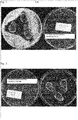
- Figure 1-8 are the results of overlayer assays. The clear zones around the LAB colonies are visible when antifungal metabolites were produced by the Lactobacilli.
- the present invention concerns an improved strain of Lactobacillus having inhibition activity against bacteria, yeast and moulds.
- the bacteria are suitable for the preservation of goods (e.g. food or feed).
- HOLDBACTM YM-B and YM-C have been demonstrated in various challenge studies in different types of fermented dairy products like yogurt, fresh cheese, sour cream and white brined cheese. Furthermore the application of HOLDBACTM YM-B and YM-C was evaluated in internal trials in Gouda-type cheese. The results demonstrated a delayed outgrowth of spoilage moulds on the cheeses prepared with either YM-B or YM-C compared to a reference without protective culture added. It is envisioned, that the mere presence of the Propionibacterium strain potentially may induce the formation of antifungal metabolites by the Lactobacillus strain. The inventors of the present invention have demonstrated that the major part of the antifungal activity is coming from the Lactobacillus.
- the strains were screened in an agar assay.
- the strains can be used to develop antifungal cultures especially for dairy applications.
- antifungal lactobacilli of the invention antifungal cultures based on the co-culture concept of HOLDBAC YM TM would be possible, for use in, e.g., yoghurt (including drinking yoghurt), sour cream, semi-hard and hard cheese, cottage cheese, fresh cheese, cream cheese, and white-brined cheese.
- Other food applications like e.g. sourdough may be a potential application as well as protection of feed products, such as e.g. silage.
- viable refers to bacterial cells with the potential to have an active metabolism, to survive, grow, or multiply.
- compositions comprising live Lactobacillus (pure cultures or culture concentrates), which is not a final food product suitable for consumption, but which is added to food products with the aim of reducing risks by pathogenic or toxinogenic microorganisms. Included within this definition are compositions, such as fermentation media and concentrated preparations thereof, wherein Lactobacillus is grown in a suitable media.
- the European Food and Feed Cultures Association has characterized protective cultures as follows: "The term “Protective Cultures” has been applied to microbial food cultures (MFC) exhibiting a metabolic activity contributing to inhibit or control the growth of undesired microorganisms in food. These undesired microorganisms could be pathogenic or toxinogenic bacteria and fungi but spoilage causing species may also be included.
- Protective cultures are considered as an integral part of starter cultures, which are the traditional tools of food technology used to produce fermented food such as cheese, yoghurt, certain sausages, wine etc. It is a general property of fermented foods that these possess a longer shelf life than the non-fermented raw materials (for instance cheese, has a much longer shelf-life than milk). This property is the result of the active metabolism of the fermenting culture, conducting its actions through a complex system of competition for nutrients and binding sites and by production of inhibitory metabolites like organic acids, hydrogen peroxide, diacetyl, reuterin and bacteriocins.
- the protective culture is added together with a starter culture to the food or feed matrix before the fermentation of the food or feed.
- the starter culture is needed to produce fermented foods like yogurt, cheese and sour cream and contributes to the desired product changes in taste, texture and flavor development.
- protective cultures are added to the food to limit the growth of pathogenic or spoilage bacteria and thus reduce the risk of food poisonings and protect the shelf-life.
- final food or feed product refers to a composition suitable for consumption, such as for human or animal consumption in the form of a food or feeding stuff.
- preparation refers to any composition or parts thereof derived from a medium conditioned by the growth of bacteria of the genus Lactobacillus or an extract thereof including extracts containing one or more non-viable bacterial cell components, such as lipids, proteins or nucleic acid components derived from the bacteria of the genus Lactobacillus. Included within this definition of preparations are both liquid preparations as well as dry powder preparations, wherein water has been essentially removed.
- contaminant refers to any unwanted and unintentional growth of any microorganism, such as bacteria, fungi, such as yeast or a mould. In some instances the contaminant may cause disease. However, often the contaminant just degrade and deteriorate the product wherein it is found and/or give an unpleasant and unwanted taste or mouth feel.
- the contaminant is a fungi selected from the list consisting of Penicillium spp., Penicillium brevicompactum, Penicillium solitum, Penicillium glabrum, Penicillium corylophilum, Penicillium roqueforti, Aspergillus sp.,Aspergillus ochraceus, Aspergillus parasiticus, Aspergillus versicolor, Aspergillus niger, Eurotium spp., Fusarium spp., Candida spp., Candida colliculosa, Candida famata, Candida guilliermondii, Candida kefyr, Candida lambica, Candida lipolytica, Candida lusitaniae, Candida sake, Candida sphaerica, Candida parapsilosis, Candida pelliculosa, Candida rugosa, Candida zeylanoides, Debaryomyces spp., Debaryomyces hansenii
- the contaminant is a bacteria different from the specific Lactobacillus strain used in the methods according to the invention, selected from the list consisting of Listeria monocytogenes, Pseudomonas sp., Staphylococcus aureus, Bacillus sp., Lactobacillus sp., Leuconostoc sp., Clostridium sp.. Enterobacteriaceae like Citrobacter sp., Enterobacter sp., Escherichia sp., Klebsiella sp., Salmonella sp.
- any other strain of the genus Lactobacillus or “any other strain of Lactobacillus” refers to any strain of the genus Lactobacillus, which is not a strain of Lactobacillus selected from the list consisting of: Lactobacillus paracasei DSM 25832, Lactobacillus plantarum DSM 25833, Lactobacillus plantarum DSM 25834, Lactobacillus plantarum DSM 25835, Lactobacillus plantarum DSM 25836 and Lactobacillus plantarum DSM 25837, such as strains of Lactobacillus that may be used for the production of yogurt, cheese, sauerkraut, pickles, beer, wine, cider, kimchi, cocoa, and other fermented foods, as well as animal feeds, such as silage.
- Lactobacillus is intended to encompass organisms described in (http://www.bacterio.cict.fr/I/ Lactobacillus. html), and in particular including L. acetotolerans, L. acidifarinae, L. acidipiscis, L. acidophilus, L. agilis, L. algidus, L. alimentarius, L. amylolyticus, L. amylophilus, L. amylotrophicus, L. amylovorus, L. animalis, L. antri, L. apodemi, L. aviarius, L. bifermentans, L. brevis, L. buchneri, L. camelliae, L. casei, L.
- Lactobacillus is intended to encompass any specific Lactobacillus strain described in EP0576780 , EP1308506 EP1796698 , EP2245943 , EP1530642 , EP1740726 , WO 03/040349 WO/2006/032542 , WO/2007/132359 , WO/2004/013343 , and WO/2010/081138 .
- any other Lactobacillus strain is selected from Lactobacillus paracasei subsp. paracasei DSM 14514, and Lactobacillus rhamnosus DSM 7061.
- a strain of the bacterium Propionibacterium refers to any strain of the genus Propionibacterium including the species Propionibacterium acidifaciens, Propionibacterium acidipropionici, Propionibacterium acnes, Propionibacterium australiense, Propionibacterium avidum, Propionibacterium cyclohexanicum, Propionibacterium freudenreichii subsp. freudenreichii, Propionibacterium freudenreichii subsp.
- Propionibacterium granulosum Propionibacterium jensenii, Propionibacterium microaerophilum, Propionibacterium propionicum, and Propionibacterium thoenii, as well as variants thereof.
- the term is intended to encompass specific Propionibacterium strains described in the present disclosure and in any of EP0576780 , EP1308506 , WO03/040349 , and US4728516 , including Propionibacterium freudenreichii subsp. shermanii DSM 7067.
- the present invention relates to a bacterial preparation comprising the Lactobacillus plantarum DSM 25833 bacteria.
- the present application also describes a bacterial preparation comprising a strain of Lactobacillus selected from Lactobacillus paracasei DSM 25832;; Lactobacillus plantarum DSM 25834; Lactobacillus plantarum DSM 25835; Lactobacillus plantarum DSM 25836; Lactobacillus plantarum DSM 25837; and a combination of any thereof.
- the bacterial preparation according to the present invention is a cell suspension in fermentation broth, alone or in combination with a bacterium of the genus Propionibacterium or any other strain of Lactobacillus.
- the bacterial preparation further comprises a strain of Propionibacterium selected from Propionibacterium acidipropionici DSM 25845; Propionibacterium freudenreichii DSM 25846; Propionibacterium freudenreichii DSM 25847; Propionibacterium thoenii DSM 25848; Propionibacterium thoenii DSM 25849, and Propionibacterium freudenreichii subsp. shermanii DSM 7067, or a combination of any thereof.
- the bacterial preparation according to the present invention comprises Lactobacillus plantarum DSM 25833 and a strain of Propionibacterium selected from Propionibacterium acidipropionici DSM 25845; Propionibacterium freudenreichii DSM 25846; Propionibacterium freudenreichii DSM 25847; Propionibacterium thoenii DSM 25848; and Propionibacterium thoenii DSM 25849, and Propionibacterium freudenreichii subsp. shermanii DSM 7067, or a combination of any thereof.
- the bacterial preparation comprises Lactobacillus paracasei DSM 25832 and a strain of Propionibacterium selected from Propionibacterium acidipropionici DSM 25845; Propionibacterium freudenreichii DSM 25846; Propionibacterium freudenreichii DSM 25847; Propionibacterium thoenii DSM 25848; and Propionibacterium thoenii DSM 25849, and Propionibacterium freudenreichii subsp. shermanii DSM 7067, or a combination of any thereof.
- the bacterial preparation comprises Lactobacillus plantarum DSM 25834 and a strain of Propionibacterium selected from Propionibacterium acidipropionici DSM 25845; Propionibacterium freudenreichii DSM 25846; Propionibacterium freudenreichii DSM 25847; Propionibacterium thoenii DSM 25848; and Propionibacterium thoenii DSM 25849, and Propionibacterium freudenreichii subsp. shermanii DSM 7067, or a combination of any thereof.
- the bacterial preparation comprises Lactobacillus plantarum DSM 25835 and a strain of Propionibacterium selected from Propionibacterium acidipropionici DSM 25845; Propionibacterium freudenreichii DSM 25846; Propionibacterium freudenreichii DSM 25847; Propionibacterium thoenii DSM 25848; and Propionibacterium thoenii DSM 25849, and Propionibacterium freudenreichii subsp. shermanii DSM 7067, or a combination of any thereof.
- the bacterial preparation comprises Lactobacillus plantarum DSM 25836 and a strain of Propionibacterium selected from Propionibacterium acidipropionici DSM 25845; Propionibacterium freudenreichii DSM 25846; Propionibacterium freudenreichii DSM 25847; Propionibacterium thoenii DSM 25848; and Propionibacterium thoenii DSM 25849, and Propionibacterium freudenreichii subsp. shermanii DSM 7067, or a combination of any thereof.
- the bacterial preparation comprises Lactobacillus plantarum DSM 25837 and a strain of Propionibacterium selected from Propionibacterium acidipropionici DSM 25845; Propionibacterium freudenreichii DSM 25846; Propionibacterium freudenreichii DSM 25847; Propionibacterium thoenii DSM 25848; and Propionibacterium thoenii DSM 25849, and Propionibacterium freudenreichii subsp. shermanii DSM 7067, or a combination of any thereof.
- the bacterial preparation according to the present invention is concentrated.
- the bacterial preparation according to the present invention is freeze-dried or frozen.
- the bacterial preparation according to the present invention is characterized in that it additionally comprises conventional agents used for yeast and mould control, such as propionate or phenylalanine.
- the composition according to the present invention is a protective culture of Lactobacillus and said viable bacteria of the genus Lactobacillus is present in an amount of at least 10 7 CFU/g or ml, such as at least 5x10 7 CFU/g or ml, such as at least 10 8 CFU/g or ml, such as at least 10 9 CFU/g or ml, such as at least 10 10 CFU/g or ml, such as at least 5x10 10 CFU/g or ml, such as at least 10 11 CFU/g or ml, such as at least 5x10 11 CFU/g or ml, such as at least 10 12 CFU/g or ml, such as at least 5x10 12 CFU/g or ml, such as at least 10 13 CFU/g or ml, such as at least 5x10 13 CFU/g or ml of composition.
- the composition according to the present invention is a final food or feed product and said viable bacteria of the genus Lactobacillus is present in an amount of at least 10 5 CFU/g or ml, such as at least 5x10 5 CFU/g or ml, such as at least 10 6 CFU/g or ml, such as at least 5x10⁶ CFU/g or ml, such as at least 10 7 CFU/g or ml, such as at least 5x10 7 CFU/g or ml, such as at least 10 8 CFU/g or ml, such as at least 5x10 8 CFU/g or ml, such as at least 10 9 CFU/g or ml, such as at least 5x10 9 CFU/g or ml, such as at least 10 10 CFU/g or ml, such as at least 5x10 10 CFU/g or ml, such as at least 5x10 10 CFU/g or ml, such as at least 5x10 10 CFU/g or
- composition or preparation according to the present invention is a protective culture of Lactobacillus.
- composition or preparation according to the present invention is a final food or feed product.
- composition according to the present invention is with or without cell remnants of said bacteria of the genus Propionibacterium.
- the composition according to the present invention is a protective culture of Lactobacillus and said viable bacteria of the genus Lactobacillus is present in an amount of at least 10 7 CFU/g or ml, such as at least 5x10 7 CFU/g or ml, such as at least 10 8 CFU/g or ml, such as at least 10 9 CFU/g or ml, such as at least 10 10 CFU/g or ml, such as at least 5x10 10 CFU/g or ml, such as at least 10 11 CFU/g or ml, such as at least 5x10 11 CFU/g or ml, such as at least 10 12 CFU/g or ml, such as at least 5x10 12 CFU/g or ml, such as at least 10 13 CFU/g or ml, such as at least 5x10 13 CFU/g or ml of composition.
- the composition according to the present invention is a final product and said viable bacteria of the genus Lactobacillus is present in an amount of at least 10 5 CFU/g or ml, such as at least 5x10 5 CFU/g or ml, such as at least 10 6 CFU/g or ml, such as at least 5x10 6 CFU/g or ml, such as at least 10 7 CFU/g or ml, such as at least 5x10 7 CFU/g or ml, such as at least 10 8 CFU/g or ml, such as at least 5x10 8 CFU/g or ml, such as at least 10 9 CFU/g or ml, such as at least 5x10 9 CFU/g or ml, such as at least 10 10 CFU/g or ml, such as at least 5x10 10 CFU/g or ml, such as at least 5x10 10 CFU/g or ml, such as at least 5x10 10 CFU/g or m
- the composition according to the present invention is a protective culture of Lactobacillus and said viable bacteria of the genus Lactobacillus is present in an amount of at least 10 7 CFU/g or ml, such as at least 5x10 7 CFU/g or ml, such as at least 10 8 CFU/g or ml, such as at least 10 9 CFU/g or ml, such as at least 10 10 CFU/g or ml, such as at least 5x10 10 CFU/g or ml, such as at least 10 11 CFU/g or ml, such as at least 5x10 11 CFU/g or ml, such as at least 10 12 CFU/g or ml, such as at least 5x10 12 CFU/g or ml, such as at least 10 13 CFU/g or ml, such as at least 5x10 13 CFU/g or ml of composition.
- the composition according to the present invention is a final product and said viable bacteria of the genus Lactobacillus is present in an amount of at least 10 5 CFU/g or ml, such as at least 5x10 5 CFU/g or ml, such as at least 10 6 CFU/g or ml, such as at least 5x10 6 CFU/g or ml, such as at least 10 7 CFU/g or ml, such as at least 5x10 7 CFU/g or ml, such as at least 10 8 CFU/g or ml, such as at least 5x10 8 CFU/g or ml, such as at least 10 9 CFU/g or ml, such as at least 5x10 9 CFU/g or ml, such as at least 10 10 CFU/g or ml, such as at least 5x10 10 CFU/g or ml, such as at least 5x10 10 CFU/g or ml, such as at least 5x10 10 CFU/g or m
- the composition or preparation according to the present invention is used for the preparation of a food product of feed product, such as a milk product.
- the food product is selected from the group consisting of dairy products, yoghurt, drinking yogurt, cheese, such as fresh cheese, cream cheese, cottage cheese, semi-soft and soft cheese, semi-hard and hard cheese, white brine cheese, sour milk products, and sour cream, sauerkraut, pickles, beer, wine, cider, kimchi, cocoa, sour dough and other fermented foods, as well as animal feeds, such as silage.
- the "any other bacteria of the genus Lactobacillus” is selected from Lactobacillus paracasei DSM 14514 and Lactobacillus rhamnosus DSM 7061.
- lactobacilli strains were used:
- the lactobacilli were propagated in MRS broth (Oxoid Limited, Basingstoke, United Kingdom) at 30°C. A passage was done by adding 0.1 ml from the pre-cultures to 10 ml MRS broth, cultivation as described above. The cultures were kept at 4 - 6°C prior to use.
- Table 1 List of yeast strains used in the screening for antifungal activity Strain Number Strain name Reference 205-J Candida lipolytica DuPont A/S 1 DCS 605 Debaryomyces hansenii DSM 70238 2 DCS 1037 Debaryomyces hansenii DuPont A/S DSC 1055 Candida sake DuPont A/S DSC 1057 Candida sake DuPont A/S DSC 1063 Rhodotorula mucilaginosa DuPont A/S DCS 1087 Rhodotorula mucilaginosa CFSQE 63 3 DCS 1088 Candida pulcherrima Miescher 4 DCS 1089 Kluyveromyces marxianus CBS 1555 5 DCS 1228 Saccharomyces cerevisiae DuPont A/S DCS 1518 Candida parapsilosis DuPont A/S 1) Danisco Nutrition Biosciences ApS, Brabrand, Denmark 2) Academic Sammlung von Mikroorganisme
- yeast strains Prior to use, the yeast strains were cultivated in a broth consisted of 2% glucose (vwr, Herlev, Denmark), 0.5% yeast extract (Oxoid Limited, Basingstoke, United Kingdom) and 0.01% peptone from casein (Oxoid) dissolved in a potassium di-hydrogen phosphate solution (312 ⁇ mol/l, pH 7.20 ⁇ 0.10). Sterile glycerol was added in a concentration of 33% v/v to the medium with grown yeast before storage in cryo tubes at -80°C. After freezing the yeast cultures were enumerated on malt extract agar (Oxoid).
- Table 2 List of mould strains used in the screening for antifungal activity Strain Number Strain name Origin DCS 434 Penicillium sp. DuPont A/S DCS 435 Penicillium sp. DuPont A/S DCS 436 Penicillium sp. DuPont A/S DCS 437 Penicillium sp. DuPont A/S DCS 708 Aspergillus ochraceus CBS 116.39 DCS 709 Aspergillus parasiticus CBS 100926 DCS 1065 Penicillium sp. DuPont A/S DCS 1066 Penicillium sp.
- the mould strains were cultivated on malt extract agar slants (Oxoid) until sporulation was visible.
- the spores were harvested by adding twice 5 ml sterile tap water supplemented with 0.01% Tween 80 (Merck). Sterile glycerol was added in a concentration of 33% v/v to the spore solutions before storage in cryo tubes at -80°C. A spore count was made after freezing on malt extract agar (Oxoid).
- lactobacilli test strains were spot inoculated (three spots per plate) on MRS agar. The plates were incubated at 30°C.
- malt extract soft agar consisted of 2% malt extract broth (Oxoid) and 0.8% agar agar (Merck KGaA, Darmstadt, Germany) tempered to 47°C containing either 10 4 yeast cells/ml or 10 4 mould spores/ml.
- the overlaid plates were incubated for 3 - 5 days at 25°C and inspected for inhibition zones around the test colonies.
- As a growth control agar plates without spotted test strains were prepared for each indicator organisms.
- the area of the zones was graded as follows: No inhibition, plate fully overgrown - No fungal growth on the spot (+) No fungal growth for 5 mm around the spot + No fungal growth for 10 mm around the spot ++ No fungal growth for 15 mm around the spot +++ No fungal growth above 15 mm around the spot ++++
- lactobacilli showed antifungal activity in the applied overlayer assay as summarised in Table 3. Lactobacillus plantarum DSM 25837 was assayed in a second trial and not all fungi were used thus some results are not available on this strain.
- lactobacilli showed different inhibition spectra. The highest activities were detected with Lactobacillus plantarum DSM 25833 followed by Lactobacillus plantarum DSM 25834 and Lactobacillus plantarum DSM 25836. Weaker activities were observed with Lactobacillus paracasei DSM 25832 compared to the Lactobacillus plantarum strains. Table 3: Antifungal activities of selected Lactobacillus strains in an overlayer assay Lb. paracasei DSM 25832 Lb. plantarum DSM 25833 Lb. plantarum DSM 25834 Lb. plantarum DSM 25835 Lb. plantarum DSM 25836 Lb.
- Rhodotorula mucilaginosa DCS 1063 +++ +++ +++ +++ +++ ++ ++ Rhodotorula mucilaginosa DCS 1087 - ++ ++ + + + + +
- Kluyveromyces marxianus DCS 1089 - + + + + - - Saccharomyces cerevisiae DCS 1228 ++ ++ +++ ++ + n.d.
- Candida parapsilosis DCS 1518 - ++ ++ ++ + n.d.
- Penicillium sp. DCS 437 + + (+) (+) + n.d.
- Aspergillus ochraceus DCS 708 +++ ++++ +++ ++ +++ ++ ++
- Aspergillus parasiticus DCS 709 (+) (+) (+) (+) + (+) Penicillium sp.
- DCS 1069 ++++ ++++ ++++ ++++++ +++ Eurotium sp.
- DCS 1105 +++ ++++ ++++ ++++ +++ Fusarium sp.
- DCS 1106 +++ ++++++++++++++++++++++++++++++++++++++++++++++++++++ Penicillium sp.
- the frozen concentrated samples of Lactobacillus paracasei subsp. paracasei DSM 14514 are evaluated for antifungal activity using an agar assay. A reference sample without antifungal cultures is included for comparison in the evaluation. The antifungal activity is assessed using the indicator strains listed in table 1.
- Table 1 List of yeast and mould strains used in the agar assay Strain Number Strain name Reference DCS 605 Debaryomyces hansenii DSM 70238 1 DCS 1065 Penicillium sp. DuPont A/S 2 DCS 1540 Penicillium sp. DuPont A/S DCS 1541 Penicillium sp.
- DuPont A/S 1) Deutsche Sammlung von Mikroorganismen und Zellkulturen GmbH, Braunschweig, GermanyPrior to use, Debaryomyces hansenii DCS 605 is grown in a broth consisted of 2% glucose (vwr, Herlev, Denmark), 0.5% yeast extract (Oxoid Limited, Basingstoke, United Kingdom) and 0.01% peptone from casein (Oxoid) dissolved in a potassium di-hydrogen phosphate solution (312 ⁇ mol/l, pH 7.20 ⁇ 0.10). Sterile glycerol is added in a concentration of 33% v/v to the medium with grown yeast before storage in cryo tubes at -80°C.
- Penicillium sp. DCS 1065, Penicillium sp. DCS 1540 and Penicillium sp. DCS 1541 are grown on malt extract agar slants (Oxoid) until sporulation is visible.
- the spores are harvested by adding twice 5 ml sterile tap water supplemented with 0.01% Tween 80 (Merck).
- Sterile glycerol is added in a concentration of 33% v/v to the spore solutions before storage in cryo tubes at -80°C. A spore count is made after freezing on malt extract agar (Oxoid).
- Portions of 750 g commercial available UHT milk with 3.5% fat are acidified with a commercial yogurt starter culture.
- the yogurt starter culture is consisting of strains of Streptococcus thermophilus and Lactobacillus delbgurii subsp. bulgaricus (Danisco A/S, Denmark).
- Test samples are inoculated additionally with the protective strains to give a level of 5.0 ⁇ 10 6 CFU/g.
- the fermentation is done for about 7 - 9 hours at 42°C until a pH of 4.50 is reached in the yogurt samples.
- the samples are shaken vigorously and 650 g yogurt is weighed in a sterile bottle.
- agar solution consisting of 25 g agar agar (Merck) per litre, tempered to 47°C is added to the yogurt and the bottles were shaken gently to get a homogenous mixture of yogurt and agar.
- the yogurt-agar mixture is poured into petri-dishes. After solidification of the yogurt agar, diluted yeast solutions and mould spore solutions are spotted on the agar plates and the growth of the indicator strains on the plates with and without antifungal cultures is compared after incubation at 25°C.
- the yeast strain Debaryomyces hansenii DCS 605 is spotted in concentrations of 5.0 ⁇ 10 1 CFU/spot, 5.0 ⁇ 10 2 CFU/spot and 5.0 ⁇ 10 3 CFU/spot in triplicates on the plates.
- the mould strains Penicillium sp. DCS 1540, Penicillium sp. 1541 and Penicillium sp. DCS 1065 are spotted in a concentration of 20 spores/spot on the plates.
- Lactobacillus plantarum DSM 25833 were evaluated for antifungal activity using a cheese model system. A reference sample without antifungal cultures was included for comparison in the evaluation. The antifungal activity was assessed using the indicator strains listed in table 2. Table 2: List of mould strains used Strain Number Strain name Reference DCS 1540 Penicillium sp. DuPont A/S DCS 1541 Penicillium sp. DuPont A/S DCS 1558 Penicillium sp. DuPont A/S
- Penicillium sp. DCS 1540, Penicillium sp. DCS 1541 and Penicillium sp. DCS 1558 were grown on malt extract agar slants (Oxoid) until sporulation was visible. The spores were harvested by adding twice 5 ml sterile tap water supplemented with 0.01% Tween 80 (Merck). Sterile glycerol was added in a concentration of 33% v/v to the spore solutions before storage at - 80°C. A spore count was made after freezing on malt extract agar (Oxoid). The cheese model was set-up with portions of 500 ml un-homogenised milk.
- the milk was filled in centrifuge bottles and heated to 32°C.
- the milk was inoculated with a commercial available mesophilic cheese starter culture.
- the cheese starter culture was consisting of strains of Lactococcus lactis (Danisco A/S, Denmark). Test samples were additional inoculated with the protective strains to give a level of 5.0 ⁇ 10 6 CFU/ml.
- the milk was coagulated with commercial available liquid animal rennet (Danisco A/S, Denmark). The curd was cut into cubes of roughly 1 cm x 1cm x 1 cm.
- the mixture of whey-curd particles was agitated for 20 min on a rolling stirrer at 10 rpm. Forty percent (approx.
- the cheeses were salted for 5 min by pouring 45 ml of sterile saturated brine (330 g/l NaCl; pH adjusted to 5.4; 12°C) into the bottle. Following, the cheeses were placed in a sterile box fitted with a grid to facilitate whey draining and stored overnight at 12°C. On the next day the cheeses were vacuum packaged and let to ripen at 12°C for 28 days. After ripening, the cheeses were surface inoculated with spore solutions of three different mould strains. The mould strains Penicillium sp. DCS 1540, Penicillium sp. DCS 1541 and Penicillium sp.
- DCS 1558 were spotted in concentrations of 5 spores/spot, 10 spores/spot and 50 spores/spot in triplicates on the cheeses. The cheeses were incubated at 12°C and growth of the moulds was examined visually.
- a trial in a cheese model system was set-up with Lactobacillus plantarum DSM 25833.
- the antifungal strains were added to un-homogenised milk at initial levels of 5.0 ⁇ 10 6 CFU/g.
- the milk was acidified with a commercial cheese starter culture, coagulated with commercial available liquid animal rennet and the curd was cut in cubes. Whey was removed by centrifugation and the cheeses were pressed and salted and afterwards ripened for 28 days. After ripening, the cheeses were surface inoculated with spore solutions of three different mould strains.
- the mould strains Penicillium sp. DCS 1540, Penicillium sp. DCS 1541 and Penicillium sp.
- DCS 1558 were spotted in concentrations of 5, 10 and 50 spores in triplicates on the cheeses. The cheeses were incubated at 12°C and growth of the moulds was examined visually. It was noted each time when one of the nine spots on the cheese surface showed visible growth of the mould. The average shelf life of the cheeses was calculated by taking the average of the storage days when mould growth was visible on the nine spots per cheese surface. The results are displayed in table 5. Table 5: Average shelf life of experimental cheeses prepared with and without antifungal cultures Reference Lb. plantarum DSM 25833 Average shelf life [d] Penicillium sp. DCS 1540 6 24 1 Penicillium sp. DCS 1541 7 16 Penicillium sp. DCS 1558 12 61 1,2 1 Mould growth not visible on all nine spots at the end of the experiment 2 Trial terminated after 61 days
- Lactobacillus plantarum DSM 25833 was added to the model cheeses delayed the outgrowth of the indictor moulds compared to the reference sample without antifungal cultures added.
Landscapes
- Life Sciences & Earth Sciences (AREA)
- Engineering & Computer Science (AREA)
- Chemical & Material Sciences (AREA)
- Health & Medical Sciences (AREA)
- Microbiology (AREA)
- Zoology (AREA)
- Wood Science & Technology (AREA)
- Polymers & Plastics (AREA)
- Food Science & Technology (AREA)
- Biotechnology (AREA)
- Bioinformatics & Cheminformatics (AREA)
- Genetics & Genomics (AREA)
- Organic Chemistry (AREA)
- General Health & Medical Sciences (AREA)
- Virology (AREA)
- Medicinal Chemistry (AREA)
- Tropical Medicine & Parasitology (AREA)
- Biomedical Technology (AREA)
- Biochemistry (AREA)
- General Engineering & Computer Science (AREA)
- Nutrition Science (AREA)
- Agronomy & Crop Science (AREA)
- Pest Control & Pesticides (AREA)
- Plant Pathology (AREA)
- Dentistry (AREA)
- Environmental Sciences (AREA)
- Micro-Organisms Or Cultivation Processes Thereof (AREA)
- Fodder In General (AREA)
- Medicines Containing Material From Animals Or Micro-Organisms (AREA)
Claims (12)
- Bactérie du genre Lactobacillus, étant Lactobacillus plantarum DSM 25833.
- Préparation bactérienne, caractérisée en ce qu'elle comprend des bactéries selon la revendication 1, seules ou en combinaison avec une bactérie du genre Propionibacterium, avec toute autre souche du genre Lactobacillus, ou avec les deux.
- Préparation bactérienne selon la revendication 2, qui est une suspension cellulaire en bouillon de fermentation, seule ou en combinaison avec une bactérie du genre Propionibacterium, avec une autre souche de Lactobacillus, ou avec les deux.
- Préparation bactérienne selon l'une quelconque des revendications 2 à 3, caractérisée en ce qu'elle comprend une souche de Propionibacterium choisie parmi Propionibacterium acidipropionici DSM 25845, Propionibacterium freudenreichii DSM 25846, Propionibacterium freudenreichii DSM 25847, Propionibacterium thoenii DSM 25848, Propionibacterium thoenii DSM 25849, Propionibacterium freudenreichii subsp. shermanii DSM 7067, ou une combinaison de souches quelconques parmi celles-ci.
- Préparation bactérienne selon l'une quelconque des revendications 2 à 4, laquelle préparation est concentrée.
- Préparation bactérienne selon l'une quelconque des revendications 2 à 4, laquelle préparation est lyophilisée.
- Préparation bactérienne selon l'une quelconque des revendications 2 à 6, caractérisée en ce qu'elle comprend en outre des agents classiques utilisés pour le contrôle des levures et des moisissures, tels que le propionate ou la phénylalanine.
- Utilisation de bactéries selon la revendication 1, dans la préparation d'un produit final pour l'alimentation humaine ou animale.
- Utilisation d'une préparation bactérienne comprenant des bactéries selon la revendication 1, afin de contrôler la croissance d'un contaminant, tel que des bactéries, des levures ou des moisissures, dans un produit alimentaire.
- Méthode de contrôle de la croissance d'un contaminant, tel que des bactéries, des levures ou des moisissures, dans un produit alimentaire, caractérisée par l'utilisation d'une préparation bactérienne comprenant des bactéries selon la revendication 1, seules ou en combinaison avec une bactérie du genre Propionibacterium, avec une autre souche du genre Lactobacillus, ou avec les deux.
- Utilisation d'une préparation de bactéries de Lactobacillus viables selon la revendication 1, afin de contrôler la croissance d'un contaminant, tel que des bactéries, des levures ou des moisissures, dans un produit alimentaire.
- Méthode de contrôle de la croissance d'un contaminant, tel que des bactéries, des levures ou des moisissures, dans une composition, la méthode étant caractérisée comme trouvant dans ladite composition la présence de bactéries de Lactobacillus viables selon la revendication 1.
Applications Claiming Priority (2)
| Application Number | Priority Date | Filing Date | Title |
|---|---|---|---|
| US201261649651P | 2012-05-21 | 2012-05-21 | |
| PCT/EP2013/060370 WO2013174792A1 (fr) | 2012-05-21 | 2013-05-21 | Souches de lactobacillus aux propriétés antifongiques |
Publications (2)
| Publication Number | Publication Date |
|---|---|
| EP2852691A1 EP2852691A1 (fr) | 2015-04-01 |
| EP2852691B1 true EP2852691B1 (fr) | 2017-08-23 |
Family
ID=48570072
Family Applications (1)
| Application Number | Title | Priority Date | Filing Date |
|---|---|---|---|
| EP13726447.9A Active EP2852691B1 (fr) | 2012-05-21 | 2013-05-21 | Souches de lactobacillus aux propriétés antifongiques |
Country Status (10)
| Country | Link |
|---|---|
| US (2) | US20150132270A1 (fr) |
| EP (1) | EP2852691B1 (fr) |
| CN (1) | CN104797705B (fr) |
| AU (1) | AU2013265387A1 (fr) |
| BR (1) | BR112014028837A2 (fr) |
| CA (1) | CA2874421A1 (fr) |
| DK (1) | DK2852691T3 (fr) |
| NZ (1) | NZ701895A (fr) |
| RU (1) | RU2642306C2 (fr) |
| WO (1) | WO2013174792A1 (fr) |
Families Citing this family (28)
| Publication number | Priority date | Publication date | Assignee | Title |
|---|---|---|---|---|
| WO2014172758A1 (fr) * | 2013-04-23 | 2014-10-30 | International Marketing Partnerships Pty Ltd | Souches bactériennes possédant une activité antimicrobienne et compositions de lutte biologique les comprenant |
| WO2015110483A1 (fr) * | 2014-01-21 | 2015-07-30 | Chr. Hansen A/S | Utilisation de lactobacillus plantarum comme agent antimicrobien dans le processus de vinification |
| WO2015161877A1 (fr) * | 2014-04-24 | 2015-10-29 | Molinos Rio De La Plata, S.A. | Composition synergique comprenant un mélange de bactéries des genres lactobacillus et propionibacterium freudenreichii ssp shermananii et leurs utilisations |
| GB201409468D0 (en) * | 2014-05-28 | 2014-07-09 | Dupont Nutrition Biosci Aps | Bacterium |
| CN104388344B (zh) * | 2014-11-05 | 2017-11-10 | 中国农业科学院哈尔滨兽医研究所 | 一株北里乳杆菌菌株及其用途 |
| CA2970995C (fr) * | 2014-12-29 | 2023-01-03 | Mofin S.R.L. | Production d'une pizza sans levure, tres digeste au moyen d'une pate contenant des bacteries lactiques |
| TW201635908A (zh) * | 2015-01-29 | 2016-10-16 | Meiji Co Ltd | 經改良酸味的乳油起司及其製造方法 |
| WO2017037046A1 (fr) * | 2015-08-31 | 2017-03-09 | Chr. Hansen A/S | Bactéries lactobacillus fermentum ayant une activité antifongique |
| CN105238712A (zh) * | 2015-09-30 | 2016-01-13 | 厦门和美科盛生物技术有限公司 | 植物乳杆菌L.plantarum HM60C1及其用途 |
| WO2017140796A1 (fr) * | 2016-02-17 | 2017-08-24 | Dupont Nutrition Biosciences Aps | Fabrication de pâte à fermentation lactique |
| JP6807160B2 (ja) * | 2016-03-15 | 2021-01-06 | 雪印種苗株式会社 | サイレージ調製用乳酸菌及びサイレージ調製用添加剤 |
| JP6262412B1 (ja) * | 2016-04-14 | 2018-01-17 | 株式会社明治 | 発酵乳の製造における発酵時間の短縮方法、及び発酵乳における酸味の上昇の抑制方法 |
| WO2018223087A1 (fr) * | 2017-06-02 | 2018-12-06 | Cytozyme Laboratories, Inc. | Produits de traitement de plantes et procédés correspondants |
| CN110241036A (zh) * | 2018-03-08 | 2019-09-17 | 深圳市肽素生物技术有限公司 | 一种母菌及培养物湿粉、由其制备得到的饮品及其应用 |
| IT201800007229A1 (it) * | 2018-07-16 | 2020-01-16 | Processo microbiologico per la produzione di pane d’api | |
| CN109536416A (zh) * | 2018-12-27 | 2019-03-29 | 南昌大学 | 一种降解构树叶单宁的青贮菌剂制备及其应用方法 |
| CN112006066A (zh) * | 2019-10-09 | 2020-12-01 | 江苏奕农生物股份有限公司 | 抑菌活性提高的混合发酵液及其制备方法和应用 |
| CN111187729A (zh) * | 2019-11-14 | 2020-05-22 | 华东师范大学 | 具有协同抑霉菌活性的丙酸杆菌和乳酸菌组合菌的筛选方法 |
| KR102778573B1 (ko) * | 2019-11-28 | 2025-03-07 | 건국대학교 산학협력단 | 락토바실러스 케피아노파시엔스 dn1 균주를 포함하는 사료 첨가제 조성물 |
| EP4228410A2 (fr) | 2020-10-16 | 2023-08-23 | Universität für Bodenkultur Wien | Utilisation de micro-organismes et de calcium d'amélioration de la santé et/ou de résilience des plantes contre des agents pathogènes de plantes |
| GEP20237469B (en) * | 2020-11-10 | 2023-02-10 | Dzala Llc | Novel compositions for neutralizing toxic effects of hydrogen peroxide in living cells or tissues |
| CN112322561B (zh) * | 2020-12-23 | 2023-05-02 | 新疆农业大学 | 一株克雷伯氏菌及其在果树梨火疫病防治中的应用 |
| US20240156109A1 (en) | 2021-03-18 | 2024-05-16 | Ab Enzymes Gmbh | Microorganisms for dough production |
| CN113278547B (zh) * | 2021-05-15 | 2022-06-07 | 吉林大学 | 一种禽乳杆菌y122及其对抗多种病原菌的医用用途 |
| WO2023152390A1 (fr) * | 2022-02-14 | 2023-08-17 | Dupont Nutrition Biosciences Aps | Combinaison de cultures protectrices |
| WO2023232677A1 (fr) * | 2022-05-31 | 2023-12-07 | Lactobio A/S | Souches, compositions et méthodes d'utilisation |
| CN118580985A (zh) * | 2023-03-01 | 2024-09-03 | 重庆市天友乳业股份有限公司 | 干酪乳杆菌ty-f14及其应用 |
| CN118580982A (zh) * | 2023-03-01 | 2024-09-03 | 重庆市天友乳业股份有限公司 | 副干酪乳杆菌ty-f15及其应用 |
Family Cites Families (25)
| Publication number | Priority date | Publication date | Assignee | Title |
|---|---|---|---|---|
| US3794739A (en) * | 1971-01-26 | 1974-02-26 | Us Agriculture | Controlled fermentation and prevention of undesirable bacterial growth in food |
| US4734361A (en) * | 1985-06-26 | 1988-03-29 | Meiji Milk Products Co., Ltd. | Low temperature-sensitive variant of lactobacillus bulgaricus and a selection method therefor |
| US4728516A (en) | 1986-08-11 | 1988-03-01 | Microlife Technigs, Inc. | Method for the preservation of creamed cottage cheese |
| CA1320165C (fr) | 1987-08-06 | 1993-07-13 | Microlife Technics, Inc. | Procede de production de levures nouvelles et des produits inhibiteurs de moisissures |
| JPH0732702B2 (ja) * | 1990-02-23 | 1995-04-12 | 雪印乳業株式会社 | 新規乳酸菌、その産生する抗菌物質、この乳酸菌を含有する発酵乳用スターター及びそれを用いた発酵乳の製造方法 |
| US5173319A (en) * | 1990-04-24 | 1992-12-22 | Microlife Technics, Inc. | Method and composition for extending the shelf life of processed meats |
| FI92498C (fi) * | 1992-06-10 | 1994-11-25 | Valio Meijerien | Uusi mikro-organismikanta, sitä sisältävät bakteerivalmisteet ja näiden käyttö hiivojen ja homeiden torjuntaan |
| US5382470A (en) * | 1993-04-09 | 1995-01-17 | Viskase Corporation | EVOH oxygen barrier stretched multilayer film |
| FI102807B1 (fi) * | 1994-08-25 | 1999-02-26 | Valio Oy | Lactobacillus rhamnosuksen käyttö elintarviketeollisuudessa klostridien estoon |
| US5989612A (en) * | 1996-10-11 | 1999-11-23 | Rodia Inc. | Foods including antimycotic agent |
| DK1423023T3 (da) * | 2001-07-13 | 2007-04-10 | Danisco | Sammensætning med bakteriostatisk og baktericid aktivitet mod bakterielle sporer og vegetative celler samt fremgangsmåde til behandling af födevarer dermed |
| EP1308506A1 (fr) | 2001-11-06 | 2003-05-07 | Eidgenössische Technische Hochschule Zürich | Mélange de Propionibacterium jensenii et Lactobacillus sp. avec activité antimicrobienne et son usage comme agent conservant naturel |
| US7780970B2 (en) | 2002-08-06 | 2010-08-24 | Danisco A/S | Composition |
| JP4199685B2 (ja) | 2004-03-04 | 2008-12-17 | 株式会社バイオバランス | 新規な乳酸菌 |
| US7919277B2 (en) | 2004-04-28 | 2011-04-05 | Danisco A/S | Detection and typing of bacterial strains |
| FR2875406B1 (fr) | 2004-09-21 | 2007-01-05 | Danisco | Souche de lactobacillus acidophilus ayant des proprietes analgesiques au niveau du systeme gastro-intestinal |
| US20090311227A1 (en) | 2006-05-12 | 2009-12-17 | Danisco A/S | Composition |
| DE202006014937U1 (de) | 2006-09-28 | 2006-11-30 | Meggle Ag | Fettreduzierte Butter |
| WO2008134450A2 (fr) | 2007-04-24 | 2008-11-06 | Kemin Industries, Inc. | Activité antibactérienne et antifongique à spectre large de lactobacillus johnsonii d115 |
| FR2924307B1 (fr) * | 2007-12-04 | 2010-08-27 | Gervais Danone Sa | Utilisation de l. casei ssp. paracasei comme antifongique |
| KR100986306B1 (ko) * | 2008-02-11 | 2010-10-07 | 주식회사 바이오리더스 | 김치유래 락토바실러스 플란타룸 bls41 및 그 용도 |
| FR2930264B1 (fr) | 2008-04-18 | 2013-02-22 | Gervais Danone Sa | Nouvelle souche de lactobacillus paracasei subsp. paracasei dotee de proprietes antimicrobiennes et immunomodulatrices. |
| CN102272332A (zh) | 2009-01-12 | 2011-12-07 | 丹尼斯科公司 | 乳酸菌及其在猪的直接饲喂微生物中的应用 |
| ATE541468T1 (de) | 2009-04-30 | 2012-02-15 | Danisco | Mikrobielle futterergänzungsmittel und verwendungen davon in verfahren zur verringerung und/oder verhinderung von azidose in polygastrischen pflanzenfressern |
| BR112014028871A2 (pt) * | 2012-05-21 | 2017-06-27 | Dupont Nutrition Biosci Aps | linhagens de propionibacterium. |
-
2013
- 2013-05-21 WO PCT/EP2013/060370 patent/WO2013174792A1/fr not_active Ceased
- 2013-05-21 BR BR112014028837A patent/BR112014028837A2/pt not_active IP Right Cessation
- 2013-05-21 DK DK13726447.9T patent/DK2852691T3/da active
- 2013-05-21 AU AU2013265387A patent/AU2013265387A1/en not_active Abandoned
- 2013-05-21 EP EP13726447.9A patent/EP2852691B1/fr active Active
- 2013-05-21 CA CA2874421A patent/CA2874421A1/fr not_active Abandoned
- 2013-05-21 NZ NZ701895A patent/NZ701895A/en not_active IP Right Cessation
- 2013-05-21 RU RU2014151746A patent/RU2642306C2/ru active
- 2013-05-21 CN CN201380032610.3A patent/CN104797705B/zh active Active
- 2013-05-21 US US14/402,625 patent/US20150132270A1/en not_active Abandoned
-
2017
- 2017-07-28 US US15/662,909 patent/US11224244B2/en active Active
Non-Patent Citations (1)
| Title |
|---|
| None * |
Also Published As
| Publication number | Publication date |
|---|---|
| CA2874421A1 (fr) | 2013-11-28 |
| NZ701895A (en) | 2016-07-29 |
| RU2642306C2 (ru) | 2018-01-24 |
| US11224244B2 (en) | 2022-01-18 |
| US20180020673A1 (en) | 2018-01-25 |
| RU2014151746A (ru) | 2016-07-10 |
| WO2013174792A1 (fr) | 2013-11-28 |
| CN104797705B (zh) | 2018-07-20 |
| EP2852691A1 (fr) | 2015-04-01 |
| BR112014028837A2 (pt) | 2017-06-27 |
| US20150132270A1 (en) | 2015-05-14 |
| CN104797705A (zh) | 2015-07-22 |
| AU2013265387A1 (en) | 2014-11-27 |
| DK2852691T3 (da) | 2017-11-27 |
Similar Documents
| Publication | Publication Date | Title |
|---|---|---|
| US11224244B2 (en) | Strains of Lactobacillus with antifungal properties | |
| EP2852290B1 (fr) | Compositions de lactobacillus | |
| Liu et al. | Inhibition of spoilage yeasts in cheese by killer yeast Williopsis saturnus var. saturnus | |
| US11707070B2 (en) | Inhibition of fungal growth by manganese depletion | |
| JP2026031922A (ja) | 真菌による腐敗を制御するための細菌組成物およびその使用 | |
| WO2023073187A1 (fr) | Bioprotection de produits laitiers | |
| US20250134121A1 (en) | Protective cultures combination | |
| Şatana | Preparation, production and industrial application of cheese protective cultures | |
| Zhao | Isolation of antifungal lactic acid bacteria from food sources and their use to inhibit mold growth in cheese | |
| EP4248761A1 (fr) | Inhibition de levure avec bacillus subtilis par déplétion de fer | |
| Goyal et al. | BIOPROTECTIVE CULTURES |
Legal Events
| Date | Code | Title | Description |
|---|---|---|---|
| PUAI | Public reference made under article 153(3) epc to a published international application that has entered the european phase |
Free format text: ORIGINAL CODE: 0009012 |
|
| 17P | Request for examination filed |
Effective date: 20141222 |
|
| AK | Designated contracting states |
Kind code of ref document: A1 Designated state(s): AL AT BE BG CH CY CZ DE DK EE ES FI FR GB GR HR HU IE IS IT LI LT LU LV MC MK MT NL NO PL PT RO RS SE SI SK SM TR |
|
| AX | Request for extension of the european patent |
Extension state: BA ME |
|
| DAX | Request for extension of the european patent (deleted) | ||
| 17Q | First examination report despatched |
Effective date: 20160212 |
|
| RAP1 | Party data changed (applicant data changed or rights of an application transferred) |
Owner name: DUPONT NUTRITION BIOSCIENCES APS |
|
| STAA | Information on the status of an ep patent application or granted ep patent |
Free format text: STATUS: EXAMINATION IS IN PROGRESS |
|
| GRAP | Despatch of communication of intention to grant a patent |
Free format text: ORIGINAL CODE: EPIDOSNIGR1 |
|
| STAA | Information on the status of an ep patent application or granted ep patent |
Free format text: STATUS: GRANT OF PATENT IS INTENDED |
|
| RIC1 | Information provided on ipc code assigned before grant |
Ipc: C12R 1/225 20060101ALI20170216BHEP Ipc: C12R 1/25 20060101AFI20170216BHEP |
|
| INTG | Intention to grant announced |
Effective date: 20170309 |
|
| GRAS | Grant fee paid |
Free format text: ORIGINAL CODE: EPIDOSNIGR3 |
|
| GRAJ | Information related to disapproval of communication of intention to grant by the applicant or resumption of examination proceedings by the epo deleted |
Free format text: ORIGINAL CODE: EPIDOSDIGR1 |
|
| GRAL | Information related to payment of fee for publishing/printing deleted |
Free format text: ORIGINAL CODE: EPIDOSDIGR3 |
|
| STAA | Information on the status of an ep patent application or granted ep patent |
Free format text: STATUS: EXAMINATION IS IN PROGRESS |
|
| GRAR | Information related to intention to grant a patent recorded |
Free format text: ORIGINAL CODE: EPIDOSNIGR71 |
|
| STAA | Information on the status of an ep patent application or granted ep patent |
Free format text: STATUS: GRANT OF PATENT IS INTENDED |
|
| GRAA | (expected) grant |
Free format text: ORIGINAL CODE: 0009210 |
|
| STAA | Information on the status of an ep patent application or granted ep patent |
Free format text: STATUS: THE PATENT HAS BEEN GRANTED |
|
| INTC | Intention to grant announced (deleted) | ||
| INTG | Intention to grant announced |
Effective date: 20170713 |
|
| AK | Designated contracting states |
Kind code of ref document: B1 Designated state(s): AL AT BE BG CH CY CZ DE DK EE ES FI FR GB GR HR HU IE IS IT LI LT LU LV MC MK MT NL NO PL PT RO RS SE SI SK SM TR |
|
| REG | Reference to a national code |
Ref country code: GB Ref legal event code: FG4D |
|
| REG | Reference to a national code |
Ref country code: CH Ref legal event code: EP |
|
| REG | Reference to a national code |
Ref country code: AT Ref legal event code: REF Ref document number: 921413 Country of ref document: AT Kind code of ref document: T Effective date: 20170915 |
|
| REG | Reference to a national code |
Ref country code: IE Ref legal event code: FG4D |
|
| REG | Reference to a national code |
Ref country code: DE Ref legal event code: R096 Ref document number: 602013025441 Country of ref document: DE |
|
| REG | Reference to a national code |
Ref country code: DK Ref legal event code: T3 Effective date: 20171123 |
|
| REG | Reference to a national code |
Ref country code: NL Ref legal event code: MP Effective date: 20170823 |
|
| REG | Reference to a national code |
Ref country code: LT Ref legal event code: MG4D |
|
| PG25 | Lapsed in a contracting state [announced via postgrant information from national office to epo] |
Ref country code: LT Free format text: LAPSE BECAUSE OF FAILURE TO SUBMIT A TRANSLATION OF THE DESCRIPTION OR TO PAY THE FEE WITHIN THE PRESCRIBED TIME-LIMIT Effective date: 20170823 Ref country code: NL Free format text: LAPSE BECAUSE OF FAILURE TO SUBMIT A TRANSLATION OF THE DESCRIPTION OR TO PAY THE FEE WITHIN THE PRESCRIBED TIME-LIMIT Effective date: 20170823 Ref country code: HR Free format text: LAPSE BECAUSE OF FAILURE TO SUBMIT A TRANSLATION OF THE DESCRIPTION OR TO PAY THE FEE WITHIN THE PRESCRIBED TIME-LIMIT Effective date: 20170823 Ref country code: SE Free format text: LAPSE BECAUSE OF FAILURE TO SUBMIT A TRANSLATION OF THE DESCRIPTION OR TO PAY THE FEE WITHIN THE PRESCRIBED TIME-LIMIT Effective date: 20170823 Ref country code: NO Free format text: LAPSE BECAUSE OF FAILURE TO SUBMIT A TRANSLATION OF THE DESCRIPTION OR TO PAY THE FEE WITHIN THE PRESCRIBED TIME-LIMIT Effective date: 20171123 Ref country code: FI Free format text: LAPSE BECAUSE OF FAILURE TO SUBMIT A TRANSLATION OF THE DESCRIPTION OR TO PAY THE FEE WITHIN THE PRESCRIBED TIME-LIMIT Effective date: 20170823 |
|
| PG25 | Lapsed in a contracting state [announced via postgrant information from national office to epo] |
Ref country code: LV Free format text: LAPSE BECAUSE OF FAILURE TO SUBMIT A TRANSLATION OF THE DESCRIPTION OR TO PAY THE FEE WITHIN THE PRESCRIBED TIME-LIMIT Effective date: 20170823 Ref country code: BG Free format text: LAPSE BECAUSE OF FAILURE TO SUBMIT A TRANSLATION OF THE DESCRIPTION OR TO PAY THE FEE WITHIN THE PRESCRIBED TIME-LIMIT Effective date: 20171123 Ref country code: GR Free format text: LAPSE BECAUSE OF FAILURE TO SUBMIT A TRANSLATION OF THE DESCRIPTION OR TO PAY THE FEE WITHIN THE PRESCRIBED TIME-LIMIT Effective date: 20171124 Ref country code: PL Free format text: LAPSE BECAUSE OF FAILURE TO SUBMIT A TRANSLATION OF THE DESCRIPTION OR TO PAY THE FEE WITHIN THE PRESCRIBED TIME-LIMIT Effective date: 20170823 Ref country code: ES Free format text: LAPSE BECAUSE OF FAILURE TO SUBMIT A TRANSLATION OF THE DESCRIPTION OR TO PAY THE FEE WITHIN THE PRESCRIBED TIME-LIMIT Effective date: 20170823 Ref country code: RS Free format text: LAPSE BECAUSE OF FAILURE TO SUBMIT A TRANSLATION OF THE DESCRIPTION OR TO PAY THE FEE WITHIN THE PRESCRIBED TIME-LIMIT Effective date: 20170823 Ref country code: IS Free format text: LAPSE BECAUSE OF FAILURE TO SUBMIT A TRANSLATION OF THE DESCRIPTION OR TO PAY THE FEE WITHIN THE PRESCRIBED TIME-LIMIT Effective date: 20171223 |
|
| REG | Reference to a national code |
Ref country code: FR Ref legal event code: PLFP Year of fee payment: 6 |
|
| PG25 | Lapsed in a contracting state [announced via postgrant information from national office to epo] |
Ref country code: CZ Free format text: LAPSE BECAUSE OF FAILURE TO SUBMIT A TRANSLATION OF THE DESCRIPTION OR TO PAY THE FEE WITHIN THE PRESCRIBED TIME-LIMIT Effective date: 20170823 Ref country code: RO Free format text: LAPSE BECAUSE OF FAILURE TO SUBMIT A TRANSLATION OF THE DESCRIPTION OR TO PAY THE FEE WITHIN THE PRESCRIBED TIME-LIMIT Effective date: 20170823 |
|
| REG | Reference to a national code |
Ref country code: DE Ref legal event code: R097 Ref document number: 602013025441 Country of ref document: DE |
|
| PG25 | Lapsed in a contracting state [announced via postgrant information from national office to epo] |
Ref country code: SM Free format text: LAPSE BECAUSE OF FAILURE TO SUBMIT A TRANSLATION OF THE DESCRIPTION OR TO PAY THE FEE WITHIN THE PRESCRIBED TIME-LIMIT Effective date: 20170823 Ref country code: EE Free format text: LAPSE BECAUSE OF FAILURE TO SUBMIT A TRANSLATION OF THE DESCRIPTION OR TO PAY THE FEE WITHIN THE PRESCRIBED TIME-LIMIT Effective date: 20170823 Ref country code: SK Free format text: LAPSE BECAUSE OF FAILURE TO SUBMIT A TRANSLATION OF THE DESCRIPTION OR TO PAY THE FEE WITHIN THE PRESCRIBED TIME-LIMIT Effective date: 20170823 |
|
| PLBE | No opposition filed within time limit |
Free format text: ORIGINAL CODE: 0009261 |
|
| STAA | Information on the status of an ep patent application or granted ep patent |
Free format text: STATUS: NO OPPOSITION FILED WITHIN TIME LIMIT |
|
| 26N | No opposition filed |
Effective date: 20180524 |
|
| PG25 | Lapsed in a contracting state [announced via postgrant information from national office to epo] |
Ref country code: SI Free format text: LAPSE BECAUSE OF FAILURE TO SUBMIT A TRANSLATION OF THE DESCRIPTION OR TO PAY THE FEE WITHIN THE PRESCRIBED TIME-LIMIT Effective date: 20170823 |
|
| REG | Reference to a national code |
Ref country code: CH Ref legal event code: PL |
|
| GBPC | Gb: european patent ceased through non-payment of renewal fee |
Effective date: 20180521 |
|
| REG | Reference to a national code |
Ref country code: BE Ref legal event code: MM Effective date: 20180531 |
|
| PG25 | Lapsed in a contracting state [announced via postgrant information from national office to epo] |
Ref country code: MC Free format text: LAPSE BECAUSE OF FAILURE TO SUBMIT A TRANSLATION OF THE DESCRIPTION OR TO PAY THE FEE WITHIN THE PRESCRIBED TIME-LIMIT Effective date: 20170823 |
|
| REG | Reference to a national code |
Ref country code: IE Ref legal event code: MM4A |
|
| PG25 | Lapsed in a contracting state [announced via postgrant information from national office to epo] |
Ref country code: LI Free format text: LAPSE BECAUSE OF NON-PAYMENT OF DUE FEES Effective date: 20180531 Ref country code: CH Free format text: LAPSE BECAUSE OF NON-PAYMENT OF DUE FEES Effective date: 20180531 |
|
| PG25 | Lapsed in a contracting state [announced via postgrant information from national office to epo] |
Ref country code: LU Free format text: LAPSE BECAUSE OF NON-PAYMENT OF DUE FEES Effective date: 20180521 |
|
| PG25 | Lapsed in a contracting state [announced via postgrant information from national office to epo] |
Ref country code: GB Free format text: LAPSE BECAUSE OF NON-PAYMENT OF DUE FEES Effective date: 20180521 Ref country code: IE Free format text: LAPSE BECAUSE OF NON-PAYMENT OF DUE FEES Effective date: 20180521 |
|
| PG25 | Lapsed in a contracting state [announced via postgrant information from national office to epo] |
Ref country code: BE Free format text: LAPSE BECAUSE OF NON-PAYMENT OF DUE FEES Effective date: 20180531 |
|
| PG25 | Lapsed in a contracting state [announced via postgrant information from national office to epo] |
Ref country code: MT Free format text: LAPSE BECAUSE OF NON-PAYMENT OF DUE FEES Effective date: 20180521 |
|
| REG | Reference to a national code |
Ref country code: AT Ref legal event code: UEP Ref document number: 921413 Country of ref document: AT Kind code of ref document: T Effective date: 20170823 |
|
| PG25 | Lapsed in a contracting state [announced via postgrant information from national office to epo] |
Ref country code: TR Free format text: LAPSE BECAUSE OF FAILURE TO SUBMIT A TRANSLATION OF THE DESCRIPTION OR TO PAY THE FEE WITHIN THE PRESCRIBED TIME-LIMIT Effective date: 20170823 |
|
| PG25 | Lapsed in a contracting state [announced via postgrant information from national office to epo] |
Ref country code: PT Free format text: LAPSE BECAUSE OF FAILURE TO SUBMIT A TRANSLATION OF THE DESCRIPTION OR TO PAY THE FEE WITHIN THE PRESCRIBED TIME-LIMIT Effective date: 20170823 Ref country code: HU Free format text: LAPSE BECAUSE OF FAILURE TO SUBMIT A TRANSLATION OF THE DESCRIPTION OR TO PAY THE FEE WITHIN THE PRESCRIBED TIME-LIMIT; INVALID AB INITIO Effective date: 20130521 |
|
| PG25 | Lapsed in a contracting state [announced via postgrant information from national office to epo] |
Ref country code: MK Free format text: LAPSE BECAUSE OF NON-PAYMENT OF DUE FEES Effective date: 20170823 Ref country code: CY Free format text: LAPSE BECAUSE OF FAILURE TO SUBMIT A TRANSLATION OF THE DESCRIPTION OR TO PAY THE FEE WITHIN THE PRESCRIBED TIME-LIMIT Effective date: 20170823 |
|
| PG25 | Lapsed in a contracting state [announced via postgrant information from national office to epo] |
Ref country code: AL Free format text: LAPSE BECAUSE OF FAILURE TO SUBMIT A TRANSLATION OF THE DESCRIPTION OR TO PAY THE FEE WITHIN THE PRESCRIBED TIME-LIMIT Effective date: 20170823 |
|
| REG | Reference to a national code |
Ref country code: FR Ref legal event code: PLFP Year of fee payment: 11 |
|
| P01 | Opt-out of the competence of the unified patent court (upc) registered |
Effective date: 20230530 |
|
| REG | Reference to a national code |
Ref country code: AT Ref legal event code: HC Ref document number: 921413 Country of ref document: AT Kind code of ref document: T Owner name: INTERNATIONAL N&H DENMARK APS, DK Effective date: 20240715 |
|
| REG | Reference to a national code |
Ref country code: DE Ref legal event code: R081 Ref document number: 602013025441 Country of ref document: DE Owner name: INTERNATIONAL N&H DENMARK APS, DK Free format text: FORMER OWNER: DUPONT NUTRITION BIOSCIENCES APS, KONGENS LYNGBY, DK Ref country code: DE Ref legal event code: R081 Ref document number: 602013025441 Country of ref document: DE Owner name: INTERNATIONAL N&H DENMARK APS, DK Free format text: FORMER OWNER: DUPONT NUTRITION BIOSCIENCES APS, COPENHAGEN, DK |
|
| PGFP | Annual fee paid to national office [announced via postgrant information from national office to epo] |
Ref country code: DE Payment date: 20250402 Year of fee payment: 13 |
|
| PGFP | Annual fee paid to national office [announced via postgrant information from national office to epo] |
Ref country code: DK Payment date: 20250516 Year of fee payment: 13 |
|
| PGFP | Annual fee paid to national office [announced via postgrant information from national office to epo] |
Ref country code: IT Payment date: 20250422 Year of fee payment: 13 |
|
| PGFP | Annual fee paid to national office [announced via postgrant information from national office to epo] |
Ref country code: FR Payment date: 20250401 Year of fee payment: 13 |
|
| PGFP | Annual fee paid to national office [announced via postgrant information from national office to epo] |
Ref country code: AT Payment date: 20250425 Year of fee payment: 13 |