EP2853063B1 - Vorrichtung und verfahren zur verbindung zweier teilnetzwerke - Google Patents
Vorrichtung und verfahren zur verbindung zweier teilnetzwerke Download PDFInfo
- Publication number
- EP2853063B1 EP2853063B1 EP13724569.2A EP13724569A EP2853063B1 EP 2853063 B1 EP2853063 B1 EP 2853063B1 EP 13724569 A EP13724569 A EP 13724569A EP 2853063 B1 EP2853063 B1 EP 2853063B1
- Authority
- EP
- European Patent Office
- Prior art keywords
- interconnection device
- sub
- address
- server
- port number
- Prior art date
- Legal status (The legal status is an assumption and is not a legal conclusion. Google has not performed a legal analysis and makes no representation as to the accuracy of the status listed.)
- Active
Links
Images


Classifications
-
- H—ELECTRICITY
- H04—ELECTRIC COMMUNICATION TECHNIQUE
- H04L—TRANSMISSION OF DIGITAL INFORMATION, e.g. TELEGRAPHIC COMMUNICATION
- H04L61/00—Network arrangements, protocols or services for addressing or naming
- H04L61/09—Mapping addresses
- H04L61/25—Mapping addresses of the same type
- H04L61/2503—Translation of Internet protocol [IP] addresses
- H04L61/2521—Translation architectures other than single NAT servers
- H04L61/2528—Translation at a proxy
-
- H—ELECTRICITY
- H04—ELECTRIC COMMUNICATION TECHNIQUE
- H04L—TRANSMISSION OF DIGITAL INFORMATION, e.g. TELEGRAPHIC COMMUNICATION
- H04L49/00—Packet switching elements
- H04L49/30—Peripheral units, e.g. input or output ports
- H04L49/3081—ATM peripheral units, e.g. policing, insertion or extraction
- H04L49/309—Header conversion, routing tables or routing tags
-
- H—ELECTRICITY
- H04—ELECTRIC COMMUNICATION TECHNIQUE
- H04L—TRANSMISSION OF DIGITAL INFORMATION, e.g. TELEGRAPHIC COMMUNICATION
- H04L12/00—Data switching networks
- H04L12/28—Data switching networks characterised by path configuration, e.g. LAN [Local Area Networks] or WAN [Wide Area Networks]
- H04L12/2803—Home automation networks
- H04L12/2807—Exchanging configuration information on appliance services in a home automation network
- H04L12/2809—Exchanging configuration information on appliance services in a home automation network indicating that an appliance service is present in a home automation network
-
- H—ELECTRICITY
- H04—ELECTRIC COMMUNICATION TECHNIQUE
- H04L—TRANSMISSION OF DIGITAL INFORMATION, e.g. TELEGRAPHIC COMMUNICATION
- H04L12/00—Data switching networks
- H04L12/28—Data switching networks characterised by path configuration, e.g. LAN [Local Area Networks] or WAN [Wide Area Networks]
- H04L12/2803—Home automation networks
- H04L12/283—Processing of data at an internetworking point of a home automation network
- H04L12/2832—Interconnection of the control functionalities between home networks
-
- H—ELECTRICITY
- H04—ELECTRIC COMMUNICATION TECHNIQUE
- H04L—TRANSMISSION OF DIGITAL INFORMATION, e.g. TELEGRAPHIC COMMUNICATION
- H04L45/00—Routing or path finding of packets in data switching networks
- H04L45/74—Address processing for routing
-
- H—ELECTRICITY
- H04—ELECTRIC COMMUNICATION TECHNIQUE
- H04L—TRANSMISSION OF DIGITAL INFORMATION, e.g. TELEGRAPHIC COMMUNICATION
- H04L49/00—Packet switching elements
- H04L49/15—Interconnection of switching modules
-
- H—ELECTRICITY
- H04—ELECTRIC COMMUNICATION TECHNIQUE
- H04L—TRANSMISSION OF DIGITAL INFORMATION, e.g. TELEGRAPHIC COMMUNICATION
- H04L61/00—Network arrangements, protocols or services for addressing or naming
- H04L61/09—Mapping addresses
- H04L61/25—Mapping addresses of the same type
- H04L61/2503—Translation of Internet protocol [IP] addresses
- H04L61/256—NAT traversal
- H04L61/2585—NAT traversal through application level gateway [ALG]
-
- H—ELECTRICITY
- H04—ELECTRIC COMMUNICATION TECHNIQUE
- H04L—TRANSMISSION OF DIGITAL INFORMATION, e.g. TELEGRAPHIC COMMUNICATION
- H04L61/00—Network arrangements, protocols or services for addressing or naming
- H04L61/50—Address allocation
- H04L61/5007—Internet protocol [IP] addresses
-
- H—ELECTRICITY
- H04—ELECTRIC COMMUNICATION TECHNIQUE
- H04L—TRANSMISSION OF DIGITAL INFORMATION, e.g. TELEGRAPHIC COMMUNICATION
- H04L61/00—Network arrangements, protocols or services for addressing or naming
- H04L61/59—Network arrangements, protocols or services for addressing or naming using proxies for addressing
Definitions
- the present invention relates to the implementation of exchanges according to the UPnP standard in an interconnection framework of first and second subnetworks, the first subnetwork being a local network to which is connected a gateway connecting the first subnetwork to a third subnet, such as the Internet.
- a femtocell (for femto-cell) is a cell of a mobile cellular system, offering limited radio coverage and generally dedicated to domestic use.
- the base station, called femto in charge of managing the femtocell connects to the network of the mobile operator via an Internet gateway ("Internet gateway" in English).
- UPnP defines data exchanges in HTTP ("HyperText Transfer Protocol” as defined in RFC 2616 normative document) which can be transported via UDP ("User Datagram Protocol” in English, as described in the normative document RFC 768) or via Transmission Control Protocol (TCP) as defined in the normative document RFC 793).
- HTTP HyperText Transfer Protocol
- UDP User Datagram Protocol
- TCP Transmission Control Protocol
- the invention relates to a method according to claim 1.
- the interconnection device subscribes beforehand, on each of the first and second sub-networks, to a predefined IP address and a port number to which are addressed the UDP multicast datagrams transmitted during the first phase.
- UPnP discovery and listens for UDP datagrams transmitted to said IP address of the interconnection device and the port number assigned by the interconnection device to said server.
- UDP multicast datagrams as well as UDP unicast datagrams that constitute the responses to these UDP multicast datagrams are then concerned.
- the interconnection device determines the IP addresses and effective port numbers of servers, from HTTP frames transported by TCP frames received by the interconnection device via said connections.
- the interconnection device performs the following steps: verifying whether the effective port number of a server is already allocated by the interconnection device to another server; assign to the server the same port number as said effective port number, in case of positive verification; assign the server another port number, otherwise.
- the interconnection device analyzes an HTTP header in the frames received by the interconnection device via one of said connections, and the interconnection device performs frame modification only if the field CONTENT-TYPE of the HTTP header is of type text.
- the interconnection device analyzes an HTTP header in the frames received by the interconnection device via a network. of said connections, and, if the HOST field is present in the HTTP header, the interconnection device performs the following steps: if the IP address contained in the HOST field is a server address, replace said IP address with an IP address of the interconnection device, operable to route the data on the other subnet than that to which said server is connected among said first and second sub-networks; and if the IP address contained in the HOST field is an IP address of the interconnection device, replace said IP address with the IP address of the server with which a said connection is established and which is connected to the other subnet the one from which said frames are received from said first and second sub-networks.
- the interconnection device after establishing said connections, performs the following steps: activating a predefined duration delay; checking whether at least one frame is received by the interconnection device via at least one of said connections; and closing said connections when no frame has been received by the interconnection device via at least one of said connections before said timer expires.
- the interconnection device further closes said connections when said interconnection device receives, via one of the connections, a connection closure request for said connection.
- the invention also relates to an interconnection device according to claim 9.
- the interconnection device comprises: a discovery assistant module adapted to analyze and modify UDP datagrams transmitted by servers during a UPnP discovery phase; an address translation module adapted to analyze and modify HTTP frames transmitted by servers via said connections.
- the invention also relates to a computer program, which can be stored on a medium and / or downloaded from a communication network, in order to be read by a processor.
- This computer program includes instructions for implementing the method mentioned above, when said program is executed by the processor.
- the invention also relates to storage means comprising such a computer program.
- an implementation of the invention is presented in the context of an interconnection between a first subnet of the LAN type and a second subnet 102 of the femto-cell or femtocell type, an Internet gateway being connected. to the first subnet.
- an Internet gateway being connected. to the first subnet.
- a variation not covered by the claims but useful for understanding the invention may also be implemented in the context of an interconnection between first and second sub-networks, for example both LAN type, a gateway connecting one of the subnetworks to a third subnet providing packet routing at the IP level and having no knowledge of the other subnet among the first and second subnetworks.
- the Fig. 1 schematically illustrates a communication network 100 in which the invention can be implemented.
- the communication network 100 comprises a first subnet 101 of the LAN type and a second subnet 102 of the femtocell type.
- the first 101 and second 102 subnetworks are interconnected by a base station 111, in charge of managing the second sub-network 102.
- the base station 111 is therefore an interconnection device between the first 101 and second 102 subsystems. networks.
- the base station 111 is subsequently called femto, the first subnet is called LAN and the second subnet femtocell .
- the LAN 101 is for example a network compliant with the Ethernet standard, as defined by the IEEE 802.3 standard, or with the WiFi standard, as defined by the IEEE 802.11 standard.
- An Internet gateway 110 is connected to the LAN 101 and allows interconnection of the LAN 101 with the Internet 103.
- the Internet gateway 110 provides routing IP packets between the LAN 101 and the Internet 103. It also preferably provides the dynamic configuration function of IP hosts through the DHCP protocol ("Dynamic Host Configuration Protocol" in English, as defined in the normative document RFC 1531 and its evolutions).
- the LAN 101 is further connected at least one device 140, 141 implementing the UPnP standard.
- the device 140 is a UPnP control point ("UPnP control point" in English).
- Femtocell 102 is connected to at least one mobile terminal 130, 131 also implementing the UPnP standard.
- the femto 111 includes a first module 121, called discovery assistant, allowing the UPnP devices connected to the LAN 101 to discover the UPnP mobile terminals connected to the femtocell 102 and their UPnP services, and vice versa.
- the femto 111 includes a second module 122, called NAT HTTP (where NAT stands for "Network Address Translator” or “Network Address Translator” in French), to ensure communication between the UPnP devices connected to the LAN 101 and the UPnP mobile terminals connected to the femtocell 102, and vice versa.
- NAT HTTP comes from the fact that the address translation takes place at the transport level, but also at the HTTP level.
- the behavior of the discovery wizard 121 and the NAT HTTP 122 is detailed below in relation to the Figs. 3 to 6 .
- the Fig. 2 schematically illustrates an example of architecture of femto 111.
- the femto 111 then comprises, connected by a communication bus 210: a processor or CPU ("Central Processing Unit” in English) 200; a Random Access Memory (RAM) 201; a ROM (Read Only Memory) 202; a storage unit or a storage medium reader, such as a hard disk drive HDD ("Hard Disk Drive”) 203; a communication interface 204 for creating the femtocell 102 and communicating with the mobile terminals 130, 131; and a communication interface 205 for connection to the LAN 101 and to communicate with the devices 140, 141.
- a communication bus 210 a processor or CPU ("Central Processing Unit" in English) 200; a Random Access Memory (RAM) 201; a ROM (Read Only Memory) 202; a storage unit or a storage medium reader, such as a hard disk drive HDD ("Hard Disk Drive") 203; a communication interface 204 for creating the fe
- the processor 200 is capable of executing instructions loaded into the RAM 201 from the ROM 202, an external memory (not shown), a storage medium, such as the HDD 203, or a communication network.
- the processor 200 is able to read RAM 201 instructions and execute them. These instructions form a computer program causing the processor 200 to implement all or part of the algorithms described below.
- All or part of the algorithms described below can be implemented in software form by executing a set of instructions by a programmable machine, such as a DSP ("Digital Signal Processor") or a microcontroller, or be implemented in hardware form by a machine or a dedicated component, such as a FPGA ("Field-Programmable Gate Array” in English) or an ASIC ("Application-Specific Integrated Circuit” in English).
- a programmable machine such as a DSP ("Digital Signal Processor") or a microcontroller
- a machine or a dedicated component such as a FPGA ("Field-Programmable Gate Array" in English) or an ASIC ("Application-Specific Integrated Circuit" in English).
- the Fig. 3 schematically illustrates an algorithm, implemented by femto 111, of HTTP server discovery. As part of the Fig. 1 , the algorithm is more particularly implemented by the discovery assistant 121.
- the discovery wizard 121 subscribes, on both femtocell 102 and the LAN 101, to the IP multicast address and the port to which the UPnP devices send discovery messages.
- this IP address is 239.255.255.250 and the port number is 1900.
- the discovery wizard 121 receives each corresponding UDP frame.
- the frames relating to the discovery are transmitted using SSDP protocol ("Simple Service Discovery Protocol" in English), that is to say in HTTP format encapsulated in UDP datagrams.
- the discovery wizard 121 performs these subscriptions, on both femtocell 102 and the LAN 101, when the femto 111 detects the presence of a mobile terminal UPnP in the femtocell 102.
- the discovery wizard 121 receives a multicast UDP frame for the IP address 239.255.255.250 and the port of number 1900.
- the discovery wizard 121 performs an HTTP server search in the received frame.
- the discovery wizard 121 then scans the received UDP frame to detect IP addresses of devices belonging to the subnet, femtocell 102 or LAN 101, from which it was transmitted.
- the discovery wizard 121 analyzes in particular the LOCATION field. If the IP address is accompanied by a port, an HTTP server is detected and the set formed by this IP address and this port number is provided to NAT HTTP 122.
- the NAT HTTP 122 then returns a port number, which the discovery wizard 121 obtains in a next step 304.
- the assignment of a port number by NAT HTTP 122 is described below in connection with the Fig. 5 .
- the discovery wizard 121 modifies the received UDP frame by replacing the IP address and the port number of the detected HTTP server with respectively an IP address of the femto and the port number provided by the HTTP NAT. 122.
- This IP address of the femto is that assigned to the femto on the other subnet, fcmtoccll 102 or LAN 101, that where the detected HTTP server is connected.
- the femto 11 has two IP addresses, one used for the routing of the IP frames in the femtocell 102 and the other used for the routing of the IP frames in the LAN 101.
- the steps 303 to 305 are repeated until that the received frame is completely traversed.
- the discovery wizard 121 transmits the modified UDP frame on the other subnet, femtocell 102 or LAN 101, that is to say the subnet that is not the one from from which it was received at step 302.
- the discovery wizard 121 determines whether the UDP frame received at step 305 requires a response. This is the case of search messages ("search messages" in English according to the UPnP standard, also called M-SEARCH messages). If this is the case, a step 308 is performed, otherwise the discovery wizard 121 waits for a new multicast UDP frame and the step 302 is repeated.
- the discovery wizard 121 listens for UDP datagrams transmitted to the IP address of the femto 111 and the port number assigned to the HTTP server, and receives the expected response.
- the discovery wizard 121 then performs, in a next step 309, an HTTP server search in the received response.
- the discovery wizard 121 scans the received response to detect device IP addresses. If the IP address is not an IP address of the femto 111 and is accompanied by a port, an HTTP server is detected and the set formed by this IP address and this port number is provided to NAT HTTP 122.
- the NAT HTTP 122 then returns a port number, which the discovery wizard 121 obtains in a next step 310.
- IP address is an IP address of femto 111
- this IP address and the port number associated with it in the response are provided to NAT HTTP 122.
- the NAT HTTP 122 provides in return the set formed by the The actual IP address and port number of the HTTP server.
- the discovery assistant 121 modifies the received response by replacing the IP address and the port number of the detected HTTP server with the IP address of the femto 111, which is used for routing the frames, respectively. IP on the other subnet than the one to which the detected HTTP server is connected, and the port number provided by the NAT HTTP 122, or by replacing the IP address of the femto 111 and the associated port number with respectively the l the actual IP address and port number of the HTTP server. Steps 309 to 311 are repeated until the response received is fully traveled.
- the discovery wizard 121 transmits the modified response on the other subnet, femtocell 102 or LAN 101, that is, the subnet that is not the one from which it has been received at step 308.
- the discovery wizard 121 then waits for a new multicast UDP frame and the step 302 is reiterated.
- the femto 111 By replacing the sets formed by the IP addresses and the port numbers of the devices of a subnet by the appropriate IP address of the femto 111 and the port numbers assigned by the femto 111, each UPnP service is seen from the the other side of femto 111 as if it were implemented by femto 111.
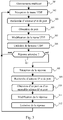
- the Fig. 4 schematically illustrates an algorithm, implemented by femto 111, modification of HTTP frames exchanged as part of the UPnP standard via TCP connections.
- the algorithm is more particularly implemented by the NAT HTTP 122.
- the NAT HTTP 122 receives a TCP connection request from a device or UPnP control point present on one of the subnetworks, femtocell 102 or LAN 101.
- messages exchanged under the UPnP standard use the TCP / IP protocol.
- This connection request is sent to the femto and specifies a port number.
- the NAT HTTP 122 finds the HTTP server to which this port number has been previously assigned, which indicates the HTTP server actually addressed.
- NAT HTTP 122 makes connections to the UPnP devices on either side of the femto.
- a first TCP connection is established between the requesting UPnP device and the femto 111
- a second TCP connection is established between the femto 111 and the actually addressed HTTP server, the femto 111 relaying between these TCP connections .
- these connections are associated with each other.
- NAT HTTP 122 starts a timer, of a predefined duration, and waits for TCP frames. If no TCP frame is received by the NAT HTTP 122 at the expiration of this timer, the NAT HTTP 122 closes the two associated connections in the context of the TCP relay in a step 405. Thus, only the TCP connections actually useful are maintained. The same is true if the NAT HTTP 122 receives a connection close request from the UPnP control point or the HTTP server. It is then terminated the algorithm. Otherwise, at least one TCP frame is then received, the NAT HTTP 122 performs a step 404.
- the NAT HTTP 122 receives a TCP frame from the UPnP device 140 or the UPnP mobile terminal 130, and in a next step 406, the NAT HTTP 122 analyzes this TCP frame to see if it is the first TCP frame of an HTTP frame. If so, the NAT HTTP 122 receives TCP frames until it has recovered the entire HTTP header. The NAT HTTP 122 analyzes this header to determine if the CONTENT-TYPE field indicates a MIME ("Multipurpose Internet Mail Extensions") extension of type "text" ("text" in French). Indeed, the CONTENT-TYPE field of the messages exchanged as part of the UPnP standard indicates a MIME extension of type "text”.
- MIME Multipurpose Internet Mail Extensions
- the NAT HTTP 122 checks whether the CONTENT-TYPE field indicates a MIME extension of type "text". If this is the case, a step 409 is performed; otherwise a step 408 is performed.
- NAT HTTP 122 retransmits the received TCP frame data to the other subnet without making any changes. Since the HTTP frame can be received on several TCP frames, all the data of these frames is retransmitted without modification on the other network. NAT HTTP 122 then waits for new data and step 403 is reiterated.
- NAT HTTP 122 retrieves the entire HTTP frame, which can be received via multiple TCP frames.
- the CONTENT-LENGTH field allows NAT HTTP 122 to determine the size of the HTTP frame.
- the NAT HTTP 122 performs an HTTP server lookup in the recovered HTTP frame.
- NAT HTTP 122 scans the received HTTP frame to detect device IP addresses. If the IP address is an IP address of femto 111, this IP address and the port number associated with it in the received HTTP frame allows NAT HTTP 122 to retrieve the set formed by the effective IP address and port number of the HTTP server. If the IP address is not an IP address of femto 111 and is accompanied by a port, an HTTP server is detected.
- the NAT HTTP 122 determines, in a next step 410, whether the HTTP server is already known, that is to say if it has for example been previously detected by the discovery assistant 121. If the HTTP server is already known from NAT HTTP 122, a step 413 is performed, otherwise a step 411 is performed.
- the NAT HTTP 122 assigns a port number to the detected HTTP server and adds it, in a step 412, to a list of known HTTP servers, in correspondence with the assigned port number and with the address IP of the femto 111 usable on the other subnet that the one to which the HTTP server is connected. This makes it possible to discover the UPnP devices directly during the data exchanges via the HTTP protocol transported in the TCP frames. Step 413 is then performed.
- the NAT HTTP 122 modifies the received HTTP frame by replacing the IP address and the port number of the detected HTTP server by respectively the IP address of the femto 111, usable on the other subnet that the one to which the HTTP server is connected, and the port number provided by the NAT HTTP 122, or by replacing the IP address of the femto 111 and the associated port number with respectively the IP address and the actual port number of the HTTP server. Steps 409 to 413 are repeated until the received HTTP frame is completely traversed.
- NAT HTTP 122 processes it as follows. If it is an IP address of a UPnP device or a UPnP mobile terminal on one of the subnets, it is replaced by the IP address of the routable femto 111 on the other subnet. -network. If it is an IP address of the femto, it is replaced by that of the HTTP server concerned. In this case, the NAT HTTP 122 does not need the port number, because the HOST field can only represent one of the devices of the associated TCP connections.
- the NAT HTTP 122 replaces it with an IP address of the interconnection device, which can be used to route the data on the other subnet than that to which said server HTTP is connected. And, if the IP address contained in the HOST field is an IP address of the femto 111, the NAT HTTP 122 replaces it with the IP address of the server with which a connection is established and which is connected to the other subnet that the one of which the HTTP frame is is received.
- the CONTENT-LENGTH field may need to be modified to reflect the new size of the HTTP frame.
- the NAT HTTP 122 sends the modified HTTP frame to the other subnet, femtocell 102 or LAN 101, i.e., the subnet which is not the one from which the HTTP frame was received at step 404.
- the HTTP frame is transported via the TCP protocol, thanks to the existing connection between the femto 111 and the UPnP device or the UPnP mobile terminal on the other subnet.
- NAT HTTP 122 then waits for new data and step 403 is reiterated.
- the Fig. 5 schematically illustrates an algorithm, implemented by femto 111, to obtain a port number assigned by femto 111 from an IP address and an actual port number of an HTTP server.
- the algorithm is more particularly implemented by the NAT HTTP 122.
- NAT HTTP 122 obtains a set consisting of an effective IP address and port number of an HTTP server. This information is provided by discovery wizard 121 at step 303 or step 309, or obtained by NAT HTTP 122 at step 409.
- the NAT HTTP 122 searches whether this HTTP server is listed in a list of HTTP servers known to NAT HTTP 102.
- This list contains the pairs of IP addresses and port numbers of HTTP servers known to NAT HTTP 102. , in correspondence with a port number that the NAT HTTP 102 has assigned to them and the IP address of the femto 111 usable on the other subnet than the one on which the HTTP server is connected.
- NAT HTTP 122 determines whether the HTTP server is known. If it is not, a step 504 is performed; otherwise, a step 506 is performed.
- NAT HTTP 122 assigns a port number to the HTTP server. For example, NAT HTTP 122 retains the port number of the HTTP server if it is not already assigned to another HTTP server that is on the same subnet and is present in the list of known HTTP servers. NAT HTTP 122; otherwise, the NAT HTTP 122 assigns another port number, which is not already assigned to an HTTP server that is on the same subnet and is present in the list.
- the NAT HTTP 122 adds the HTTP server to the list of HTTP servers known to NAT HTTP 122, i.e. the NAT HTTP 122 stores the actual IP address and port number of the HTTP server 122.
- HTTP server in correspondence with the port number assigned by the NAT HTTP 122 and the IP address of the femto 111 usable on the other subnet than the one on which the HTTP server is connected. Step 506 is then performed.
- step 506 the NAT HTTP 122 returns at least the port number that the NAT HTTP 122 has assigned to the HTTP server.
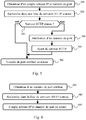
- the Fig. 6 schematically illustrates an algorithm, implemented by femto 111, to obtain an effective IP address and port number of an HTTP server, from a port number assigned by femto 111 and an IP address of femto 111.
- the algorithm is more particularly implemented by the NAT HTTP 122.
- the NAT HTTP 122 obtains a port number that NAT HTTP 122 has previously assigned to an HTTP server, as well as the IP address of the femto 111 to which this port is associated. This information is provided by discovery wizard 121 at step 309, or obtained by NAT HTTP 122 at step 409.
- the NAT HTTP 122 searches which HTTP server is listed in the list of known HTTP servers of the NAT HTTP 122 in correspondence with this IP address of the femto 111 and this port number assigned by the NAT HTTP 122.
- the NAT HTTP 122 returns the set of the effective IP address and port number of the HTTP server, as listed in the list of HTTP servers known to NAT HTTP 122.
Landscapes
- Engineering & Computer Science (AREA)
- Computer Networks & Wireless Communication (AREA)
- Signal Processing (AREA)
- Automation & Control Theory (AREA)
- Computing Systems (AREA)
- Data Exchanges In Wide-Area Networks (AREA)
Claims (12)
- Verfahren zur Verbindung eines ersten und eines zweiten Teilnetzwerks, wobei das erste Teilnetzwerk ein lokales Netzwerk (101) ist, auf dem ein Internet-Gateway angeschlossen ist, das das erste Teilnetzwerk mit einem dritten Teilnetzwerk (110) verbindet, wobei das zweite Teilnetzwerk eine Femto-Zelle (102) ist, wobei die ersten und zweiten Teilnetzwerke dazu vorgesehen sind, es zu ermöglichen, an sie UPnP-Vorrichtungen (130; 140) anzuschließen, wobei jede UPnP-Vorrichtung mindestens einen Server umfasst, der einer IP-Adresse und einer Portnummer zugeordnet ist, wobei das Verfahren derart ist, dass eine Verbindungsvorrichtung (111), die die ersten und zweiten Teilnetzwerke verbindet, die folgenden vorhergehenden Schritte ausführt, wenn die Verbindungsvorrichtung das Vorhandensein eines mobilen UPnP-Terminals in der Femto-Zelle erfasst:- auf jedem der ersten und zweiten Teilnetzwerke Anmeldung an einer vordefinierten IP-Adresse und Portnummer, an die die Multicast-UDP-Datagramme adressiert werden, die bei einer UPnP-Erkennungsphase übertragen werden, und- Abhören von UDP-Datagrammen, die in Richtung der IP-Adresse der Verbindungsvorrichtung übertragen werden, und der Portnummer, die von der Verbindungsvorrichtung dem Server zugeordnet wird;dann, nach dem Einsatz der vorhergehenden Schritte, führt die Verbindungsvorrichtung aus:- Bestimmung (303; 309; 409) für die ersten und zweiten Teilnetzwerke der effektiven IP-Adressen und Portnummern von Servern von UPnP-Vorrichtungen;- Zuordnung (504) einer Portnummer zu jedem der Server;- bei Empfang einer Verbindungsanfrage entsprechend einer Portnummer, die einem Server von der Verbindungsvorrichtung zugeordnet wurde, Herstellung (402) einer Verbindung zwischen der Verbindungsvorrichtung und dem Server und einer Verbindung zwischen der Verbindungsvorrichtung und der UPnP-Vorrichtung, die die Anfrage gesandt hat;und in mindestens einem Raster, der von der Verbindungsvorrichtung über eine der Verbindungen empfangen wird:- in dem Raster Ersatz (413) jeder effektiven IP-Adresse und Portnummer eines Servers, der dem Teilnetzwerk zum Senden des Rasters angehört, durch eine IP-Adresse der Verbindungsvorrichtung, die verwendbar ist, um die Daten auf das andere Teilnetzwerk als jenes, an das der Server angeschlossen ist, unter den ersten und zweiten Teilnetzwerken zu routen, und die Portnummer, die dem Server von der Verbindungsvorrichtung zugeordnet wurde, und- in dem Raster Ersatz (413) jeder IP-Adresse der Verbindungsvorrichtung, die auf dem Teilnetzwerk zum Senden des Rasters verwendbar ist, und Portnummer, die einem Server von der Verbindungsvorrichtung zugeordnet wurde, durch die IP-Adresse und Portnummer des entsprechenden Servers; und- Übertragung (414) des so veränderten Rasters auf einem Teilnetzwerk, das unter den ersten und zweiten Teilnetzwerken ausgewählt wird, wobei das ausgewählte Teilnetzwerk jenes ist, über das die Verbindungsvorrichtung den Raster nicht empfangen hat.
- Verbindungsverfahren nach Anspruch 1, dadurch gekennzeichnet, dass die Verbindungsvorrichtung die effektiven IP-Adressen und Portnummern von Servern auf Basis von UDP-Datagrammen, die von den Servern bei einer UPnP-Erkennungsphase übertragen wurden, bestimmt, und dass für jedes UDP-Datagramm die Verbindungsvorrichtung die folgenden Schritte ausführt:- Ersatz (305; 311) jeder effektiven IP-Adresse und Portnummer eines Servers, der dem Teilnetzwerk zum Senden des UDP-Datagramms angehört, durch eine IP-Adresse der Verbindungsvorrichtung, die verwendbar ist, um die Daten auf das andere Teilnetzwerk als jenes, an das der Server angeschlossen ist, unter den ersten und zweiten Teilnetzwerken zu routen, und die Portnummer, die dem Server von der Verbindungsvorrichtung zugeordnet wurde,- Ersatz (305; 311) jeder IP-Adresse der Verbindungsvorrichtung, die auf dem Teilnetzwerk zum Senden des UDP-Datagramms verwendbar ist, und Portnummer, die einem Server von der Verbindungsvorrichtung zugeordnet wurde, durch die IP-Adresse und Portnummer des entsprechenden Servers; und- Übertragung (306) des so veränderten UDP-Datagramms auf einem Teilnetzwerk, das unter den ersten und zweiten Teilnetzwerken ausgewählt wird, wobei das ausgewählte Teilnetzwerk jenes ist, über das die Verbindungsvorrichtung das UDP-Datagramm nicht empfangen hat.
- Verbindungsverfahren nach Anspruch 1 oder 2, dadurch gekennzeichnet, dass die Verbindungsvorrichtung die effektiven IP-Adressen und Portnummern von Servern auf Basis von http-Rastern bestimmt (409), die von TCP-Rastern transportiert werden, die von der Verbindungsvorrichtung über die Verbindungen empfangen werden.
- Verbindungsverfahren nach Anspruch 1, 2 oder 3, dadurch gekennzeichnet, dass die Verbindungsvorrichtung die folgenden Schritte ausführt:- Überprüfung, ob die effektive Portnummer eines Servers bereits von der Verbindungsvorrichtung einem anderen Server zugeordnet wurde;- Zuordnung derselben Portnummer wie die effektive Portnummer zu dem Server im Falle einer positiven Überprüfung;- andernfalls Zuordnung einer anderen Portnummer zu dem Server.
- Verbindungsverfahren nach einem der Ansprüche 1 bis 4, dadurch gekennzeichnet, dass die Verbindungsvorrichtung eine http-Kopfzeile in den von der Verbindungsvorrichtung über die Verbindungen empfangenen Rastern analysiert (406), und dass die Verbindungsvorrichtung eine Rasteränderung nur dann vornimmt, wenn das Feld CONTENT-TYPE der http-Kopfzeile vom Texttyp ist.
- Verbindungsverfahren nach einem der Ansprüche 1 bis 5, dadurch gekennzeichnet, dass die Verbindungsvorrichtung eine http-Kopfzeile in den von der Verbindungsvorrichtung über die Verbindungen empfangenen Rastern analysiert, und dass, wenn das HOST-Feld in der http-Kopfzeile vorhanden ist, die Verbindungsvorrichtung die folgenden Schritte ausführt:- wenn die in dem HOST-Feld enthaltene IP-Adresse eine Serveradresse ist, Ersatz der IP-Adresse durch eine IP-Adresse der Verbindungsvorrichtung, die verwendbar ist, um die Daten auf das andere Teilnetzwerk als jenes, an das der Server angeschlossen ist, unter den ersten und zweiten Teilnetzwerken zu routen, und- wenn die in dem HOST-Feld enthaltene IP-Adresse eine IP-Adresse der Verbindungsvorrichtung ist, Ersatz der IP-Adresse durch die IP-Adresse des Servers, mit dem eine Verbindung hergestellt ist, und der an das andere Teilnetzwerk als jenes, von dem die Raster empfangen werden, unter den ersten und zweiten Teilnetzwerken angeschlossen ist.
- Verbindungsverfahren nach einem der Ansprüche 1 bis 6, dadurch gekennzeichnet, dass, nachdem die Verbindungen hergestellt wurden, die Verbindungsvorrichtung die folgenden Schritte ausführt:- Aktivierung einer Verzögerung von vordefinierter Dauer;- Überprüfung, ob mindestens ein Raster von der Verbindungsvorrichtung über mindestens eine der Verbindungen empfangen wird; und- Schließen der Verbindungen, wenn kein Raster von der Verbindungsvorrichtung über mindestens eine der Verbindungen vor Ablauf der Verzögerung empfangen wird.
- Verbindungsverfahren nach Anspruch 7, dadurch gekennzeichnet, dass die Verbindungsvorrichtung ferner die Verbindungen schließt, wenn die Verbindungsvorrichtung über eine der Verbindungen eine Anfrage nach Schließen einer Verbindung für die Verbindung empfängt.
- Verbindungsvorrichtung (111), die dazu bestimmt ist, erste und zweite Teilnetzwerke zu verbinden, wobei das erste Teilnetzwerk ein lokales Netzwerk (101) ist, auf dem ein Internet-Gateway angeschlossen ist, das das erste Teilnetzwerk mit einem dritten Teilnetzwerk (110) verbindet, wobei das zweite Teilnetzwerk eine Femto-Zelle (102) ist, wobei die ersten und zweiten Teilnetzwerke dazu vorgesehen sind, es zu ermöglichen, an sie UPnP-Vorrichtungen (130; 140) anzuschließen, wobei jede UPnP-Vorrichtung mindestens einen Server umfasst, der einer IP-Adresse und einer Portnummer zugeordnet ist, wobei die Verbindungsvorrichtung Einsatzmittel umfasst, wenn die Verbindungsvorrichtung das Vorhandensein eines mobilen UPnP-Terminals in der Femto-Zelle erfasst, umfassend:- Mittel, um sich auf jedem der ersten und zweiten Teilnetzwerke an einer vordefinierten IP-Adresse und Portnummer anzumelden, an die die Multicast-UDP-Datagramme adressiert werden, die bei einer UPnP-Erkennungsphase übertragen werden,- Mittel, um UDP-Datagrammen, die in Richtung der IP-Adresse der Verbindungsvorrichtung übertragen werden, und die Portnummer, die von der Verbindungsvorrichtung dem Server zugeordnet wird, abzuhören;- Mittel zur Bestimmung (303; 309; 409) für die ersten und zweiten Teilnetzwerke der effektiven IP-Adressen und Portnummern von Servern von UPnP-Vorrichtungen;- Mittel zur Zuordnung (504) einer Portnummer zu jedem der Server;- bei Empfang einer Verbindungsanfrage entsprechend einer Portnummer, die einem Server von der Verbindungsvorrichtung zugeordnet wurde, Mittel zur Herstellung (402) einer Verbindung zwischen der Verbindungsvorrichtung und dem Server und einer Verbindung zwischen der Verbindungsvorrichtung und der UPnP-Vorrichtung, die die Anfrage gesandt hat;- Mittel zum Empfang mindestens eines Rasters über eine der Verbindungen;- in dem Raster Mittel zum Ersatz (413) jeder effektiven IP-Adresse und Portnummer eines Servers, der dem Teilnetzwerk zum Senden des Rasters angehört, durch eine IP-Adresse der Verbindungsvorrichtung, die verwendbar ist, um die Daten auf das andere Teilnetzwerk als jenes, an das der Server angeschlossen ist, unter den ersten und zweiten Teilnetzwerken zu routen, und die Portnummer, die dem Server von der Verbindungsvorrichtung zugeordnet wurde, und- in dem Raster Mittel zum Ersatz (413) jeder IP-Adresse der Verbindungsvorrichtung, die auf dem Teilnetzwerk zum Senden des Rasters verwendbar ist, und Portnummer, die einem Server von der Verbindungsvorrichtung zugeordnet wurde, durch die IP-Adresse und Portnummer des entsprechenden Servers; und- Mittel zur Übertragung (414) des so veränderten Rasters auf dem anderen Teilnetzwerk, das unter den ersten und zweiten Teilnetzwerken ausgewählt wird, wobei das ausgewählte Teilnetzwerk jenes ist, über das die Verbindungsvorrichtung den Raster nicht empfangen hat.
- Verbindungsvorrichtung nach Anspruch 9, dadurch gekennzeichnet, dass sie umfasst:- ein Assistenzerkennungsmodul (121), das dazu vorgesehen ist, UDP-Datagramme, die von Servern bei einer UPnP-Erkennungsphase übertragen werden, zu analysieren und zu verändern;- ein Adresstranslationsmodul (122), das dazu vorgesehen ist, http-Raster, die von Servern über die Verbindungen übertragen werden, zu analysieren und zu verändern.
- Computerprogrammprodukt, dadurch gekennzeichnet, dass es Anweisungen umfasst, um durch eine Verbindungsvorrichtung das Verfahren nach einem der Ansprüche 1 bis 8 einzusetzen, wenn das Programm von einem Prozessor der Verbindungsvorrichtung ausgeführt wird.
- Speichermittel, dadurch gekennzeichnet, dass sie ein Computerprogramm speichern, umfassend Anweisungen, um durch eine Verbindungsvorrichtung das Verfahren nach einem der Ansprüche 1 bis 8 einzusetzen, wenn das Programm von einem Prozessor der Verbindungsvorrichtung ausgeführt wird.
Applications Claiming Priority (2)
| Application Number | Priority Date | Filing Date | Title |
|---|---|---|---|
| FR1254654A FR2991124B1 (fr) | 2012-05-22 | 2012-05-22 | Dispositif et procede d'interconnexion de deux sous-reseaux |
| PCT/EP2013/060283 WO2013174758A1 (fr) | 2012-05-22 | 2013-05-17 | Dispositif et procede d'interconnexion de deux sous-reseaux |
Publications (2)
| Publication Number | Publication Date |
|---|---|
| EP2853063A1 EP2853063A1 (de) | 2015-04-01 |
| EP2853063B1 true EP2853063B1 (de) | 2018-10-24 |
Family
ID=47172739
Family Applications (1)
| Application Number | Title | Priority Date | Filing Date |
|---|---|---|---|
| EP13724569.2A Active EP2853063B1 (de) | 2012-05-22 | 2013-05-17 | Vorrichtung und verfahren zur verbindung zweier teilnetzwerke |
Country Status (5)
| Country | Link |
|---|---|
| US (1) | US11683275B2 (de) |
| EP (1) | EP2853063B1 (de) |
| CN (1) | CN104488232B (de) |
| FR (1) | FR2991124B1 (de) |
| WO (1) | WO2013174758A1 (de) |
Families Citing this family (5)
| Publication number | Priority date | Publication date | Assignee | Title |
|---|---|---|---|---|
| GB201022050D0 (en) * | 2010-12-29 | 2011-02-02 | Verenchikov Anatoly | Electrostatic trap mass spectrometer with improved ion injection |
| US9270605B2 (en) * | 2014-05-28 | 2016-02-23 | Robin Systems, Inc. | Method and system of setting network traffic flow quality of service by modifying port numbers |
| CN108093394B (zh) * | 2016-11-23 | 2020-11-06 | 中兴通讯股份有限公司 | 订购服务的方法及装置 |
| CN106656596B (zh) * | 2016-12-21 | 2019-11-01 | 瑞斯康达科技发展股份有限公司 | 基于dhcp服务器的snmp网络管理方法及装置 |
| CN108881519A (zh) * | 2018-08-08 | 2018-11-23 | 成都俊云科技有限公司 | 一种nat穿透方法及装置 |
Citations (1)
| Publication number | Priority date | Publication date | Assignee | Title |
|---|---|---|---|---|
| US20090268668A1 (en) * | 2008-04-24 | 2009-10-29 | Qualcomm Incorporated | Local ip access scheme |
Family Cites Families (5)
| Publication number | Priority date | Publication date | Assignee | Title |
|---|---|---|---|---|
| US7646775B2 (en) * | 2005-03-08 | 2010-01-12 | Leaf Networks, Llc | Protocol and system for firewall and NAT traversal for TCP connections |
| JP2008236344A (ja) * | 2007-03-20 | 2008-10-02 | Hitachi Ltd | プロキシ装置、ネットワークシステムおよび通信方法 |
| US7729366B2 (en) * | 2007-10-03 | 2010-06-01 | General Instrument Corporation | Method, apparatus and system for network mobility of a mobile communication device |
| FR2936387B1 (fr) * | 2008-09-25 | 2016-01-08 | Canon Kk | Procede de gestion d'espaces d'adressage lors d'une ouverture d'un tunnel de communication, tete de tunnel, produit programme d'ordinateur et moyen de stockage correspondant. |
| CN101834768B (zh) * | 2010-04-16 | 2012-04-18 | 中山大学 | 数字家庭网络设备间互发现方法 |
-
2012
- 2012-05-22 FR FR1254654A patent/FR2991124B1/fr not_active Expired - Fee Related
-
2013
- 2013-05-17 CN CN201380038692.2A patent/CN104488232B/zh not_active Expired - Fee Related
- 2013-05-17 WO PCT/EP2013/060283 patent/WO2013174758A1/fr not_active Ceased
- 2013-05-17 US US14/403,439 patent/US11683275B2/en active Active
- 2013-05-17 EP EP13724569.2A patent/EP2853063B1/de active Active
Patent Citations (1)
| Publication number | Priority date | Publication date | Assignee | Title |
|---|---|---|---|---|
| US20090268668A1 (en) * | 2008-04-24 | 2009-10-29 | Qualcomm Incorporated | Local ip access scheme |
Also Published As
| Publication number | Publication date |
|---|---|
| FR2991124A1 (fr) | 2013-11-29 |
| CN104488232B (zh) | 2018-10-09 |
| CN104488232A (zh) | 2015-04-01 |
| US20150120897A1 (en) | 2015-04-30 |
| FR2991124B1 (fr) | 2015-05-15 |
| US11683275B2 (en) | 2023-06-20 |
| WO2013174758A1 (fr) | 2013-11-28 |
| EP2853063A1 (de) | 2015-04-01 |
Similar Documents
| Publication | Publication Date | Title |
|---|---|---|
| EP2890092B1 (de) | Kooperative nat-verhaltensentdeckung | |
| US7492787B2 (en) | Method, apparatus, and medium for migration across link technologies | |
| US6822955B1 (en) | Proxy server for TCP/IP network address portability | |
| EP3257204B1 (de) | Verfahren zur auswahl von netzwerkverbindungsknoten | |
| EP3739843A1 (de) | Udp-kommunikationsverfahren über multiple kommunikationswege zwischen zwei endgeräten | |
| EP1723533A1 (de) | System und verfahren zur peer-to-peer-verbindung von clients hinter symmetrischen firewalls | |
| US20130016668A1 (en) | Simultaneous packet data network (pdn) access | |
| EP3284224B1 (de) | Verfahren zur emulation einer mehrwegverbindung | |
| EP2853063B1 (de) | Vorrichtung und verfahren zur verbindung zweier teilnetzwerke | |
| JP6101997B2 (ja) | リアルタイム通信セッションを確立する通信システム | |
| EP3682601B1 (de) | Datenumlenkung in einer anlage auf einem kundengelände unter verwendung von verbindungsaggregation | |
| EP3682600B1 (de) | Verwaltung der verbindung mit anderen residential gateways eines residential gateways mit verbindungsaggregation | |
| EP2997717A1 (de) | Verfahren und vorrichtung zur auswahl einer kommunikationsschnittstelle | |
| EP2052514B1 (de) | Pervasive dynamische host-konfiguration zwischen domänen | |
| EP1803276B1 (de) | Verfahren zur Adressierung eines IP-Netzwerks, das mit einem anderen IP-Netwerk verbindet | |
| Banoth et al. | The Transport Layer, Network Services, Network Communication Devices | |
| Ott et al. | The CHIANTI architecture for robust mobile Internet access | |
| CN113992461A (zh) | 一种数据隔离传输方法、系统及存储介质 | |
| Di et al. | Linyphi: creating IPv6 mesh networks with SSR | |
| Wang et al. | Application of IPv6 in GIS |
Legal Events
| Date | Code | Title | Description |
|---|---|---|---|
| PUAI | Public reference made under article 153(3) epc to a published international application that has entered the european phase |
Free format text: ORIGINAL CODE: 0009012 |
|
| 17P | Request for examination filed |
Effective date: 20141219 |
|
| AK | Designated contracting states |
Kind code of ref document: A1 Designated state(s): AL AT BE BG CH CY CZ DE DK EE ES FI FR GB GR HR HU IE IS IT LI LT LU LV MC MK MT NL NO PL PT RO RS SE SI SK SM TR |
|
| AX | Request for extension of the european patent |
Extension state: BA ME |
|
| DAX | Request for extension of the european patent (deleted) | ||
| RAP1 | Party data changed (applicant data changed or rights of an application transferred) |
Owner name: SAGEMCOM SAS |
|
| RAP1 | Party data changed (applicant data changed or rights of an application transferred) |
Owner name: SAGEMCOM BROADBAND SAS |
|
| 17Q | First examination report despatched |
Effective date: 20160721 |
|
| STAA | Information on the status of an ep patent application or granted ep patent |
Free format text: STATUS: EXAMINATION IS IN PROGRESS |
|
| GRAP | Despatch of communication of intention to grant a patent |
Free format text: ORIGINAL CODE: EPIDOSNIGR1 |
|
| STAA | Information on the status of an ep patent application or granted ep patent |
Free format text: STATUS: GRANT OF PATENT IS INTENDED |
|
| RIC1 | Information provided on ipc code assigned before grant |
Ipc: H04L 12/933 20130101ALI20180223BHEP Ipc: H04L 29/12 20060101ALI20180223BHEP Ipc: H04L 12/935 20130101ALI20180223BHEP Ipc: H04L 12/28 20060101AFI20180223BHEP Ipc: H04L 12/741 20130101ALI20180223BHEP |
|
| INTG | Intention to grant announced |
Effective date: 20180314 |
|
| GRAJ | Information related to disapproval of communication of intention to grant by the applicant or resumption of examination proceedings by the epo deleted |
Free format text: ORIGINAL CODE: EPIDOSDIGR1 |
|
| STAA | Information on the status of an ep patent application or granted ep patent |
Free format text: STATUS: EXAMINATION IS IN PROGRESS |
|
| GRAJ | Information related to disapproval of communication of intention to grant by the applicant or resumption of examination proceedings by the epo deleted |
Free format text: ORIGINAL CODE: EPIDOSDIGR1 |
|
| STAA | Information on the status of an ep patent application or granted ep patent |
Free format text: STATUS: GRANT OF PATENT IS INTENDED |
|
| GRAP | Despatch of communication of intention to grant a patent |
Free format text: ORIGINAL CODE: EPIDOSNIGR1 |
|
| INTC | Intention to grant announced (deleted) | ||
| INTG | Intention to grant announced |
Effective date: 20180518 |
|
| GRAS | Grant fee paid |
Free format text: ORIGINAL CODE: EPIDOSNIGR3 |
|
| GRAA | (expected) grant |
Free format text: ORIGINAL CODE: 0009210 |
|
| STAA | Information on the status of an ep patent application or granted ep patent |
Free format text: STATUS: THE PATENT HAS BEEN GRANTED |
|
| AK | Designated contracting states |
Kind code of ref document: B1 Designated state(s): AL AT BE BG CH CY CZ DE DK EE ES FI FR GB GR HR HU IE IS IT LI LT LU LV MC MK MT NL NO PL PT RO RS SE SI SK SM TR |
|
| REG | Reference to a national code |
Ref country code: CH Ref legal event code: EP |
|
| REG | Reference to a national code |
Ref country code: IE Ref legal event code: FG4D Free format text: LANGUAGE OF EP DOCUMENT: FRENCH |
|
| REG | Reference to a national code |
Ref country code: AT Ref legal event code: REF Ref document number: 1057987 Country of ref document: AT Kind code of ref document: T Effective date: 20181115 |
|
| REG | Reference to a national code |
Ref country code: DE Ref legal event code: R096 Ref document number: 602013045533 Country of ref document: DE |
|
| REG | Reference to a national code |
Ref country code: NL Ref legal event code: MP Effective date: 20181024 |
|
| REG | Reference to a national code |
Ref country code: LT Ref legal event code: MG4D |
|
| REG | Reference to a national code |
Ref country code: AT Ref legal event code: MK05 Ref document number: 1057987 Country of ref document: AT Kind code of ref document: T Effective date: 20181024 |
|
| PG25 | Lapsed in a contracting state [announced via postgrant information from national office to epo] |
Ref country code: NL Free format text: LAPSE BECAUSE OF FAILURE TO SUBMIT A TRANSLATION OF THE DESCRIPTION OR TO PAY THE FEE WITHIN THE PRESCRIBED TIME-LIMIT Effective date: 20181024 |
|
| PG25 | Lapsed in a contracting state [announced via postgrant information from national office to epo] |
Ref country code: FI Free format text: LAPSE BECAUSE OF FAILURE TO SUBMIT A TRANSLATION OF THE DESCRIPTION OR TO PAY THE FEE WITHIN THE PRESCRIBED TIME-LIMIT Effective date: 20181024 Ref country code: AT Free format text: LAPSE BECAUSE OF FAILURE TO SUBMIT A TRANSLATION OF THE DESCRIPTION OR TO PAY THE FEE WITHIN THE PRESCRIBED TIME-LIMIT Effective date: 20181024 Ref country code: LV Free format text: LAPSE BECAUSE OF FAILURE TO SUBMIT A TRANSLATION OF THE DESCRIPTION OR TO PAY THE FEE WITHIN THE PRESCRIBED TIME-LIMIT Effective date: 20181024 Ref country code: PL Free format text: LAPSE BECAUSE OF FAILURE TO SUBMIT A TRANSLATION OF THE DESCRIPTION OR TO PAY THE FEE WITHIN THE PRESCRIBED TIME-LIMIT Effective date: 20181024 Ref country code: HR Free format text: LAPSE BECAUSE OF FAILURE TO SUBMIT A TRANSLATION OF THE DESCRIPTION OR TO PAY THE FEE WITHIN THE PRESCRIBED TIME-LIMIT Effective date: 20181024 Ref country code: BG Free format text: LAPSE BECAUSE OF FAILURE TO SUBMIT A TRANSLATION OF THE DESCRIPTION OR TO PAY THE FEE WITHIN THE PRESCRIBED TIME-LIMIT Effective date: 20190124 Ref country code: ES Free format text: LAPSE BECAUSE OF FAILURE TO SUBMIT A TRANSLATION OF THE DESCRIPTION OR TO PAY THE FEE WITHIN THE PRESCRIBED TIME-LIMIT Effective date: 20181024 Ref country code: LT Free format text: LAPSE BECAUSE OF FAILURE TO SUBMIT A TRANSLATION OF THE DESCRIPTION OR TO PAY THE FEE WITHIN THE PRESCRIBED TIME-LIMIT Effective date: 20181024 Ref country code: NO Free format text: LAPSE BECAUSE OF FAILURE TO SUBMIT A TRANSLATION OF THE DESCRIPTION OR TO PAY THE FEE WITHIN THE PRESCRIBED TIME-LIMIT Effective date: 20190124 Ref country code: IS Free format text: LAPSE BECAUSE OF FAILURE TO SUBMIT A TRANSLATION OF THE DESCRIPTION OR TO PAY THE FEE WITHIN THE PRESCRIBED TIME-LIMIT Effective date: 20190224 |
|
| PG25 | Lapsed in a contracting state [announced via postgrant information from national office to epo] |
Ref country code: PT Free format text: LAPSE BECAUSE OF FAILURE TO SUBMIT A TRANSLATION OF THE DESCRIPTION OR TO PAY THE FEE WITHIN THE PRESCRIBED TIME-LIMIT Effective date: 20190224 Ref country code: GR Free format text: LAPSE BECAUSE OF FAILURE TO SUBMIT A TRANSLATION OF THE DESCRIPTION OR TO PAY THE FEE WITHIN THE PRESCRIBED TIME-LIMIT Effective date: 20190125 Ref country code: RS Free format text: LAPSE BECAUSE OF FAILURE TO SUBMIT A TRANSLATION OF THE DESCRIPTION OR TO PAY THE FEE WITHIN THE PRESCRIBED TIME-LIMIT Effective date: 20181024 Ref country code: SE Free format text: LAPSE BECAUSE OF FAILURE TO SUBMIT A TRANSLATION OF THE DESCRIPTION OR TO PAY THE FEE WITHIN THE PRESCRIBED TIME-LIMIT Effective date: 20181024 Ref country code: AL Free format text: LAPSE BECAUSE OF FAILURE TO SUBMIT A TRANSLATION OF THE DESCRIPTION OR TO PAY THE FEE WITHIN THE PRESCRIBED TIME-LIMIT Effective date: 20181024 |
|
| REG | Reference to a national code |
Ref country code: DE Ref legal event code: R097 Ref document number: 602013045533 Country of ref document: DE |
|
| PG25 | Lapsed in a contracting state [announced via postgrant information from national office to epo] |
Ref country code: CZ Free format text: LAPSE BECAUSE OF FAILURE TO SUBMIT A TRANSLATION OF THE DESCRIPTION OR TO PAY THE FEE WITHIN THE PRESCRIBED TIME-LIMIT Effective date: 20181024 Ref country code: IT Free format text: LAPSE BECAUSE OF FAILURE TO SUBMIT A TRANSLATION OF THE DESCRIPTION OR TO PAY THE FEE WITHIN THE PRESCRIBED TIME-LIMIT Effective date: 20181024 Ref country code: DK Free format text: LAPSE BECAUSE OF FAILURE TO SUBMIT A TRANSLATION OF THE DESCRIPTION OR TO PAY THE FEE WITHIN THE PRESCRIBED TIME-LIMIT Effective date: 20181024 |
|
| PG25 | Lapsed in a contracting state [announced via postgrant information from national office to epo] |
Ref country code: EE Free format text: LAPSE BECAUSE OF FAILURE TO SUBMIT A TRANSLATION OF THE DESCRIPTION OR TO PAY THE FEE WITHIN THE PRESCRIBED TIME-LIMIT Effective date: 20181024 Ref country code: SM Free format text: LAPSE BECAUSE OF FAILURE TO SUBMIT A TRANSLATION OF THE DESCRIPTION OR TO PAY THE FEE WITHIN THE PRESCRIBED TIME-LIMIT Effective date: 20181024 Ref country code: SK Free format text: LAPSE BECAUSE OF FAILURE TO SUBMIT A TRANSLATION OF THE DESCRIPTION OR TO PAY THE FEE WITHIN THE PRESCRIBED TIME-LIMIT Effective date: 20181024 Ref country code: RO Free format text: LAPSE BECAUSE OF FAILURE TO SUBMIT A TRANSLATION OF THE DESCRIPTION OR TO PAY THE FEE WITHIN THE PRESCRIBED TIME-LIMIT Effective date: 20181024 |
|
| PLBE | No opposition filed within time limit |
Free format text: ORIGINAL CODE: 0009261 |
|
| STAA | Information on the status of an ep patent application or granted ep patent |
Free format text: STATUS: NO OPPOSITION FILED WITHIN TIME LIMIT |
|
| 26N | No opposition filed |
Effective date: 20190725 |
|
| PG25 | Lapsed in a contracting state [announced via postgrant information from national office to epo] |
Ref country code: SI Free format text: LAPSE BECAUSE OF FAILURE TO SUBMIT A TRANSLATION OF THE DESCRIPTION OR TO PAY THE FEE WITHIN THE PRESCRIBED TIME-LIMIT Effective date: 20181024 |
|
| REG | Reference to a national code |
Ref country code: CH Ref legal event code: PL |
|
| PG25 | Lapsed in a contracting state [announced via postgrant information from national office to epo] |
Ref country code: LI Free format text: LAPSE BECAUSE OF NON-PAYMENT OF DUE FEES Effective date: 20190531 Ref country code: CH Free format text: LAPSE BECAUSE OF NON-PAYMENT OF DUE FEES Effective date: 20190531 Ref country code: MC Free format text: LAPSE BECAUSE OF FAILURE TO SUBMIT A TRANSLATION OF THE DESCRIPTION OR TO PAY THE FEE WITHIN THE PRESCRIBED TIME-LIMIT Effective date: 20181024 |
|
| REG | Reference to a national code |
Ref country code: BE Ref legal event code: MM Effective date: 20190531 |
|
| PG25 | Lapsed in a contracting state [announced via postgrant information from national office to epo] |
Ref country code: LU Free format text: LAPSE BECAUSE OF NON-PAYMENT OF DUE FEES Effective date: 20190517 |
|
| PG25 | Lapsed in a contracting state [announced via postgrant information from national office to epo] |
Ref country code: TR Free format text: LAPSE BECAUSE OF FAILURE TO SUBMIT A TRANSLATION OF THE DESCRIPTION OR TO PAY THE FEE WITHIN THE PRESCRIBED TIME-LIMIT Effective date: 20181024 |
|
| PG25 | Lapsed in a contracting state [announced via postgrant information from national office to epo] |
Ref country code: IE Free format text: LAPSE BECAUSE OF NON-PAYMENT OF DUE FEES Effective date: 20190517 |
|
| PG25 | Lapsed in a contracting state [announced via postgrant information from national office to epo] |
Ref country code: BE Free format text: LAPSE BECAUSE OF NON-PAYMENT OF DUE FEES Effective date: 20190531 |
|
| PG25 | Lapsed in a contracting state [announced via postgrant information from national office to epo] |
Ref country code: CY Free format text: LAPSE BECAUSE OF FAILURE TO SUBMIT A TRANSLATION OF THE DESCRIPTION OR TO PAY THE FEE WITHIN THE PRESCRIBED TIME-LIMIT Effective date: 20181024 |
|
| PG25 | Lapsed in a contracting state [announced via postgrant information from national office to epo] |
Ref country code: HU Free format text: LAPSE BECAUSE OF FAILURE TO SUBMIT A TRANSLATION OF THE DESCRIPTION OR TO PAY THE FEE WITHIN THE PRESCRIBED TIME-LIMIT; INVALID AB INITIO Effective date: 20130517 Ref country code: MT Free format text: LAPSE BECAUSE OF FAILURE TO SUBMIT A TRANSLATION OF THE DESCRIPTION OR TO PAY THE FEE WITHIN THE PRESCRIBED TIME-LIMIT Effective date: 20181024 |
|
| PG25 | Lapsed in a contracting state [announced via postgrant information from national office to epo] |
Ref country code: MK Free format text: LAPSE BECAUSE OF FAILURE TO SUBMIT A TRANSLATION OF THE DESCRIPTION OR TO PAY THE FEE WITHIN THE PRESCRIBED TIME-LIMIT Effective date: 20181024 |
|
| PGFP | Annual fee paid to national office [announced via postgrant information from national office to epo] |
Ref country code: DE Payment date: 20250423 Year of fee payment: 13 |
|
| PGFP | Annual fee paid to national office [announced via postgrant information from national office to epo] |
Ref country code: GB Payment date: 20250423 Year of fee payment: 13 |
|
| PGFP | Annual fee paid to national office [announced via postgrant information from national office to epo] |
Ref country code: FR Payment date: 20250423 Year of fee payment: 13 |